EP4059176B1 - Extended demodulation reference signal scrambling identifier for demodulation reference signal communication - Google Patents
Extended demodulation reference signal scrambling identifier for demodulation reference signal communication Download PDFInfo
- Publication number
- EP4059176B1 EP4059176B1 EP20820744.9A EP20820744A EP4059176B1 EP 4059176 B1 EP4059176 B1 EP 4059176B1 EP 20820744 A EP20820744 A EP 20820744A EP 4059176 B1 EP4059176 B1 EP 4059176B1
- Authority
- EP
- European Patent Office
- Prior art keywords
- dmrs
- pusch
- communication
- mapping
- sequences
- Prior art date
- Legal status (The legal status is an assumption and is not a legal conclusion. Google has not performed a legal analysis and makes no representation as to the accuracy of the status listed.)
- Active
Links
Images




Classifications
-
- H—ELECTRICITY
- H04—ELECTRIC COMMUNICATION TECHNIQUE
- H04L—TRANSMISSION OF DIGITAL INFORMATION, e.g. TELEGRAPHIC COMMUNICATION
- H04L5/00—Arrangements affording multiple use of the transmission path
- H04L5/003—Arrangements for allocating sub-channels of the transmission path
- H04L5/0048—Allocation of pilot signals, i.e. of signals known to the receiver
-
- H—ELECTRICITY
- H04—ELECTRIC COMMUNICATION TECHNIQUE
- H04L—TRANSMISSION OF DIGITAL INFORMATION, e.g. TELEGRAPHIC COMMUNICATION
- H04L5/00—Arrangements affording multiple use of the transmission path
- H04L5/003—Arrangements for allocating sub-channels of the transmission path
- H04L5/0048—Allocation of pilot signals, i.e. of signals known to the receiver
- H04L5/0051—Allocation of pilot signals, i.e. of signals known to the receiver of dedicated pilots, i.e. pilots destined for a single user or terminal
-
- H—ELECTRICITY
- H04—ELECTRIC COMMUNICATION TECHNIQUE
- H04L—TRANSMISSION OF DIGITAL INFORMATION, e.g. TELEGRAPHIC COMMUNICATION
- H04L27/00—Modulated-carrier systems
- H04L27/26—Systems using multi-frequency codes
- H04L27/2601—Multicarrier modulation systems
- H04L27/2602—Signal structure
- H04L27/2605—Symbol extensions, e.g. Zero Tail, Unique Word [UW]
-
- H—ELECTRICITY
- H04—ELECTRIC COMMUNICATION TECHNIQUE
- H04L—TRANSMISSION OF DIGITAL INFORMATION, e.g. TELEGRAPHIC COMMUNICATION
- H04L27/00—Modulated-carrier systems
- H04L27/26—Systems using multi-frequency codes
- H04L27/2601—Multicarrier modulation systems
- H04L27/2602—Signal structure
- H04L27/2605—Symbol extensions, e.g. Zero Tail, Unique Word [UW]
- H04L27/2607—Cyclic extensions
-
- H—ELECTRICITY
- H04—ELECTRIC COMMUNICATION TECHNIQUE
- H04L—TRANSMISSION OF DIGITAL INFORMATION, e.g. TELEGRAPHIC COMMUNICATION
- H04L27/00—Modulated-carrier systems
- H04L27/26—Systems using multi-frequency codes
- H04L27/2601—Multicarrier modulation systems
- H04L27/2602—Signal structure
- H04L27/261—Details of reference signals
- H04L27/2613—Structure of the reference signals
-
- H—ELECTRICITY
- H04—ELECTRIC COMMUNICATION TECHNIQUE
- H04L—TRANSMISSION OF DIGITAL INFORMATION, e.g. TELEGRAPHIC COMMUNICATION
- H04L27/00—Modulated-carrier systems
- H04L27/26—Systems using multi-frequency codes
- H04L27/2601—Multicarrier modulation systems
- H04L27/2626—Arrangements specific to the transmitter only
- H04L27/2627—Modulators
- H04L27/2634—Inverse fast Fourier transform [IFFT] or inverse discrete Fourier transform [IDFT] modulators in combination with other circuits for modulation
- H04L27/2636—Inverse fast Fourier transform [IFFT] or inverse discrete Fourier transform [IDFT] modulators in combination with other circuits for modulation with FFT or DFT modulators, e.g. standard single-carrier frequency-division multiple access [SC-FDMA] transmitter or DFT spread orthogonal frequency division multiplexing [DFT-SOFDM]
-
- H—ELECTRICITY
- H04—ELECTRIC COMMUNICATION TECHNIQUE
- H04L—TRANSMISSION OF DIGITAL INFORMATION, e.g. TELEGRAPHIC COMMUNICATION
- H04L27/00—Modulated-carrier systems
- H04L27/26—Systems using multi-frequency codes
- H04L27/2601—Multicarrier modulation systems
- H04L27/2647—Arrangements specific to the receiver only
- H04L27/2655—Synchronisation arrangements
- H04L27/2668—Details of algorithms
- H04L27/2673—Details of algorithms characterised by synchronisation parameters
- H04L27/2675—Pilot or known symbols
-
- H—ELECTRICITY
- H04—ELECTRIC COMMUNICATION TECHNIQUE
- H04L—TRANSMISSION OF DIGITAL INFORMATION, e.g. TELEGRAPHIC COMMUNICATION
- H04L5/00—Arrangements affording multiple use of the transmission path
- H04L5/0001—Arrangements for dividing the transmission path
- H04L5/0014—Three-dimensional division
- H04L5/0016—Time-frequency-code
-
- H—ELECTRICITY
- H04—ELECTRIC COMMUNICATION TECHNIQUE
- H04L—TRANSMISSION OF DIGITAL INFORMATION, e.g. TELEGRAPHIC COMMUNICATION
- H04L5/00—Arrangements affording multiple use of the transmission path
- H04L5/003—Arrangements for allocating sub-channels of the transmission path
- H04L5/0053—Allocation of signalling, i.e. of overhead other than pilot signals
-
- H—ELECTRICITY
- H04—ELECTRIC COMMUNICATION TECHNIQUE
- H04W—WIRELESS COMMUNICATION NETWORKS
- H04W72/00—Local resource management
- H04W72/04—Wireless resource allocation
- H04W72/044—Wireless resource allocation based on the type of the allocated resource
- H04W72/0466—Wireless resource allocation based on the type of the allocated resource the resource being a scrambling code
-
- H—ELECTRICITY
- H04—ELECTRIC COMMUNICATION TECHNIQUE
- H04W—WIRELESS COMMUNICATION NETWORKS
- H04W72/00—Local resource management
- H04W72/12—Wireless traffic scheduling
- H04W72/1263—Mapping of traffic onto schedule, e.g. scheduled allocation or multiplexing of flows
- H04W72/1268—Mapping of traffic onto schedule, e.g. scheduled allocation or multiplexing of flows of uplink data flows
-
- H—ELECTRICITY
- H04—ELECTRIC COMMUNICATION TECHNIQUE
- H04W—WIRELESS COMMUNICATION NETWORKS
- H04W72/00—Local resource management
- H04W72/20—Control channels or signalling for resource management
- H04W72/23—Control channels or signalling for resource management in the downlink direction of a wireless link, i.e. towards a terminal
-
- H—ELECTRICITY
- H04—ELECTRIC COMMUNICATION TECHNIQUE
- H04W—WIRELESS COMMUNICATION NETWORKS
- H04W74/00—Wireless channel access
- H04W74/002—Transmission of channel access control information
- H04W74/004—Transmission of channel access control information in the uplink, i.e. towards network
-
- H—ELECTRICITY
- H04—ELECTRIC COMMUNICATION TECHNIQUE
- H04B—TRANSMISSION
- H04B7/00—Radio transmission systems, i.e. using radiation field
- H04B7/02—Diversity systems; Multi-antenna system, i.e. transmission or reception using multiple antennas
- H04B7/04—Diversity systems; Multi-antenna system, i.e. transmission or reception using multiple antennas using two or more spaced independent antennas
- H04B7/06—Diversity systems; Multi-antenna system, i.e. transmission or reception using multiple antennas using two or more spaced independent antennas at the transmitting station
- H04B7/0613—Diversity systems; Multi-antenna system, i.e. transmission or reception using multiple antennas using two or more spaced independent antennas at the transmitting station using simultaneous transmission
- H04B7/0684—Diversity systems; Multi-antenna system, i.e. transmission or reception using multiple antennas using two or more spaced independent antennas at the transmitting station using simultaneous transmission using different training sequences per antenna
-
- H—ELECTRICITY
- H04—ELECTRIC COMMUNICATION TECHNIQUE
- H04L—TRANSMISSION OF DIGITAL INFORMATION, e.g. TELEGRAPHIC COMMUNICATION
- H04L25/00—Baseband systems
- H04L25/02—Details ; arrangements for supplying electrical power along data transmission lines
- H04L25/0202—Channel estimation
- H04L25/0224—Channel estimation using sounding signals
-
- H—ELECTRICITY
- H04—ELECTRIC COMMUNICATION TECHNIQUE
- H04L—TRANSMISSION OF DIGITAL INFORMATION, e.g. TELEGRAPHIC COMMUNICATION
- H04L25/00—Baseband systems
- H04L25/02—Details ; arrangements for supplying electrical power along data transmission lines
- H04L25/03—Shaping networks in transmitter or receiver, e.g. adaptive shaping networks
- H04L25/03828—Arrangements for spectral shaping; Arrangements for providing signals with specified spectral properties
- H04L25/03866—Arrangements for spectral shaping; Arrangements for providing signals with specified spectral properties using scrambling
-
- H—ELECTRICITY
- H04—ELECTRIC COMMUNICATION TECHNIQUE
- H04L—TRANSMISSION OF DIGITAL INFORMATION, e.g. TELEGRAPHIC COMMUNICATION
- H04L5/00—Arrangements affording multiple use of the transmission path
- H04L5/0001—Arrangements for dividing the transmission path
- H04L5/0003—Two-dimensional division
- H04L5/0005—Time-frequency
- H04L5/0007—Time-frequency the frequencies being orthogonal, e.g. OFDM(A) or DMT
- H04L5/001—Time-frequency the frequencies being orthogonal, e.g. OFDM(A) or DMT the frequencies being arranged in component carriers
-
- H—ELECTRICITY
- H04—ELECTRIC COMMUNICATION TECHNIQUE
- H04L—TRANSMISSION OF DIGITAL INFORMATION, e.g. TELEGRAPHIC COMMUNICATION
- H04L5/00—Arrangements affording multiple use of the transmission path
- H04L5/003—Arrangements for allocating sub-channels of the transmission path
- H04L5/0048—Allocation of pilot signals, i.e. of signals known to the receiver
- H04L5/005—Allocation of pilot signals, i.e. of signals known to the receiver of common pilots, i.e. pilots destined for multiple users or terminals
-
- H—ELECTRICITY
- H04—ELECTRIC COMMUNICATION TECHNIQUE
- H04W—WIRELESS COMMUNICATION NETWORKS
- H04W74/00—Wireless channel access
- H04W74/08—Non-scheduled access, e.g. ALOHA
- H04W74/0833—Random access procedures, e.g. with 4-step access
-
- H—ELECTRICITY
- H04—ELECTRIC COMMUNICATION TECHNIQUE
- H04W—WIRELESS COMMUNICATION NETWORKS
- H04W74/00—Wireless channel access
- H04W74/08—Non-scheduled access, e.g. ALOHA
- H04W74/0833—Random access procedures, e.g. with 4-step access
- H04W74/0836—Random access procedures, e.g. with 4-step access with 2-step access
Definitions
- aspects of the present disclosure generally relate to wireless communication and to techniques and apparatuses for extended demodulation reference signal (DMRS) scrambling identifier for DMRS communication in uplink grant free transmission.
- DMRS extended demodulation reference signal
- Wireless communication systems are widely deployed to provide various telecommunication services such as telephony, video, data, messaging, and broadcasts.
- Typical wireless communication systems may employ multiple-access technologies capable of supporting communication with multiple users by sharing available system resources (e.g., bandwidth, transmit power, and/or the like).
- multiple-access technologies include code division multiple access (CDMA) systems, time division multiple access (TDMA) systems, frequency-division multiple access (FDMA) systems, orthogonal frequency-division multiple access (OFDMA) systems, single-carrier frequency-division multiple access (SC-FDMA) systems, time division synchronous code division multiple access (TD-SCDMA) systems, and Long Term Evolution (LTE).
- LTE/LTE-Advanced is a set of enhancements to the Universal Mobile Telecommunications System (UMTS) mobile standard promulgated by the Third Generation Partnership Project (3GPP).
- UMTS Universal Mobile Telecommunications System
- a wireless communication network may include a number of base stations (BSs) that can support communication for a number of user equipment (UEs).
- a user equipment (UE) may communicate with a base station (BS) via the downlink and uplink.
- the downlink (or forward link) refers to the communication link from the BS to the UE
- the uplink (or reverse link) refers to the communication link from the UE to the BS.
- a BS may be referred to as a Node B, a gNB, an access point (AP), a radio head, a transmit receive point (TRP), a New Radio (NR) BS, a 5G Node B, and/or the like.
- New Radio which may also be referred to as 5G, is a set of enhancements to the LTE mobile standard promulgated by the Third Generation Partnership Project (3GPP).
- 3GPP Third Generation Partnership Project
- NR is designed to better support mobile broadband Internet access by improving spectral efficiency, lowering costs, improving services, making use of new spectrum, and better integrating with other open standards using orthogonal frequency division multiplexing (OFDM) with a cyclic prefix (CP) (CP-OFDM) on the downlink (DL), using CP-OFDM and/or SC-FDM (e.g., also known as discrete Fourier transform spread OFDM (DFT-s-OFDM)) on the uplink (UL), as well as supporting beamforming, multiple-input multiple-output (MIMO) antenna technology, and carrier aggregation.
- OFDM orthogonal frequency division multiplexing
- SC-FDM e.g., also known as discrete Fourier transform spread OFDM (DFT-s-OFDM)
- MIMO multiple-input multiple-output
- the invention relates to a method of wireless communication performed by a user equipment, the corresponding user equipment and computer program as defined in the appended independent claims.
- Embodiments representing particular realisations of the invention are defined in the appended dependent claims.
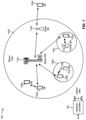
- Fig. 1 is a diagram illustrating a wireless network 100 in which aspects of the present disclosure may be practiced.
- the wireless network 100 may be an LTE network or some other wireless network, such as a 5G or NR network.
- the wireless network 100 may include a number of BSs 110 (shown as BS 110a, BS 110b, BS 110c, and BS 110d) and other network entities.
- a BS is an entity that communicates with user equipment (UEs) and may also be referred to as a base station, a NR BS, a Node B, a gNB, a 5G node B (NB), an access point, a transmit receive point (TRP), and/or the like.
- Each BS may provide communication coverage for a particular geographic area.
- the term "cell" can refer to a coverage area of a BS and/or a BS subsystem serving this coverage area, depending on the context in which the term is used.
- a BS may provide communication coverage for a macro cell, a pico cell, a femto cell, and/or another type of cell.
- a macro cell may cover a relatively large geographic area (e.g., several kilometers in radius) and may allow unrestricted access by UEs with service subscription.
- a pico cell may cover a relatively small geographic area and may allow unrestricted access by UEs with service subscription.
- a femto cell may cover a relatively small geographic area (e.g., a home) and may allow restricted access by UEs having association with the femto cell (e.g., UEs in a closed subscriber group (CSG)).
- a BS for a macro cell may be referred to as a macro BS.
- a BS for a pico cell may be referred to as a pico BS.
- a BS for a femto cell may be referred to as a femto BS or a home BS.
- a BS 110a may be a macro BS for a macro cell 102a
- a BS 110b may be a pico BS for a pico cell 102b
- a BS 110c may be a femto BS for a femto cell 102c.
- a BS may support one or multiple (e.g., three) cells.
- the terms "eNB”, “base station”, “NR BS”, “gNB”, “TRP”, “AP”, “node B", “5G NB”, and “cell” may be used interchangeably herein.
- a cell may not necessarily be stationary, and the geographic area of the cell may move according to the location of a mobile BS.
- the BSs may be interconnected to one another and/or to one or more other BSs or network nodes (not shown) in the wireless network 100 through various types of backhaul interfaces such as a direct physical connection, a virtual network, and/or the like using any suitable transport network.
- Wireless network 100 may also include relay stations.
- a relay station is an entity that can receive a transmission of data from an upstream station (e.g., a BS or a UE) and send a transmission of the data to a downstream station (e.g., a UE or a BS).
- a relay station may also be a UE that can relay transmissions for other UEs.
- a relay station 110d may communicate with macro BS 110a and a UE 120d in order to facilitate communication between BS 110a and UE 120d.
- a relay station may also be referred to as a relay BS, a relay base station, a relay, and/or the like.
- Wireless network 100 may be a heterogeneous network that includes BSs of different types, e.g., macro BSs, pico BSs, femto BSs, relay BSs, and/or the like. These different types of BSs may have different transmit power levels, different coverage areas, and different impacts on interference in wireless network 100.
- macro BSs may have a high transmit power level (e.g., 5 to 40 watts) whereas pico BSs, femto BSs, and relay BSs may have lower transmit power levels (e.g., 0.1 to 2 watts).
- a network controller 130 may couple to a set of BSs and may provide coordination and control for these BSs.
- Network controller 130 may communicate with the BSs via a backhaul.
- the BSs may also communicate with one another (directly or indirectly) via a wireless or wireline backhaul.
- UEs 120 may be dispersed throughout wireless network 100, and each UE may be stationary or mobile.
- a UE may also be referred to as an access terminal, a terminal, a mobile station, a subscriber unit, a station, and/or the like.
- a UE may be a cellular phone (e.g., a smart phone), a personal digital assistant (PDA), a wireless modem, a wireless communication device, a handheld device, a laptop computer, a cordless phone, a wireless local loop (WLL) station, a tablet, a camera, a gaming device, a netbook, a smartbook, an ultrabook, a medical device or equipment, biometric sensors/devices, wearable devices (smart watches, smart clothing, smart glasses, smart wrist bands, smart jewelry (e.g., smart ring, smart bracelet)), an entertainment device (e.g., a music or video device, or a satellite radio), a vehicular component or sensor, smart meters/sensors, industrial manufacturing equipment, a global positioning system device, or any other suitable device that is configured to communicate via a wireless or wired medium.
- a cellular phone e.g., a smart phone
- PDA personal digital assistant
- WLL wireless local loop
- MTC and eMTC UEs include, for example, robots, drones, remote devices, sensors, meters, monitors, location tags, and/or the like, that may communicate with a base station, another device (e.g., remote device), or some other entity.
- a wireless node may provide, for example, connectivity for or to a network (e.g., a wide area network such as Internet or a cellular network) via a wired or wireless communication link.
- Some UEs may be considered Internet-of-Things (IoT) devices, and/or may be implemented as NB-IoT (narrowband internet of things) devices.
- Some UEs may be considered a Customer Premises Equipment (CPE).
- UE 120 may be included inside a housing that houses components of UE 120, such as processor components, memory components, and/or the like.
- any number of wireless networks may be deployed in a given geographic area.
- Each wireless network may support a particular radio access technology (RAT) and may operate on one or more frequencies.
- a RAT may also be referred to as a radio technology, an air interface, and/or the like.
- a frequency may also be referred to as a carrier, a frequency channel, and/or the like.
- Each frequency may support a single RAT in a given geographic area in order to avoid interference between wireless networks of different RATs.
- NR or 5G RAT networks may be deployed.
- two or more UEs 120 may communicate directly using one or more sidelink channels (e.g., without using a base station 110 as an intermediary to communicate with one another).
- the UEs 120 may communicate using peer-to-peer (P2P) communications, device-to-device (D2D) communications, a vehicle-to-everything (V2X) protocol (e.g., which may include a vehicle-to-vehicle (V2V) protocol, a vehicle-to-infrastructure (V2I) protocol, vehicle-to-pedestrian (V2P) protocol, and/or the like), a mesh network, and/or the like), a mesh network, and/or the like).
- V2X vehicle-to-everything
- the UE 120 may perform scheduling operations, resource selection operations, and/or other operations described elsewhere herein as being performed by the base station 110.
- Fig. 1 is provided as an example. Other examples may differ from what is described with regard to Fig. 1 .
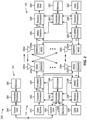
- Fig. 2 shows a block diagram of a design 200 of base station 110 and UE 120, which may be one of the base stations and one of the UEs in Fig. 1 .
- Base station 110 may be equipped with T antennas 234a through 234t
- UE 120 may be equipped with R antennas 252a through 252r, where in general T ⁇ 1 and R ⁇ 1.
- Each modulator 232 may further process (e.g., convert to analog, amplify, filter, and upconvert) the output sample stream to obtain a downlink signal.
- T downlink signals from modulators 232a through 232t may be transmitted via T antennas 234a through 234t, respectively.
- the synchronization signals can be generated with location encoding to convey additional information.
- antennas 252a through 252r may receive the downlink signals from base station 110 and/or other base stations and may provide received signals to demodulators (DEMODs) 254a through 254r, respectively.
- Each demodulator 254 may condition (e.g., filter, amplify, downconvert, and digitize) a received signal to obtain input samples.
- Each demodulator 254 may further process the input samples (e.g., for OFDM and/or the like) to obtain received symbols.
- a MIMO detector 256 may obtain received symbols from all R demodulators 254a through 254r, perform MIMO detection on the received symbols if applicable, and provide detected symbols.
- a transmit processor 264 may receive and process data from a data source 262 and control information (e.g., for reports comprising RSRP, RSSI, RSRQ, CQI, and/or the like) from controller/processor 280. Transmit processor 264 may also generate reference symbols for one or more reference signals. The symbols from transmit processor 264 may be precoded by a TX MIMO processor 266 if applicable, further processed by modulators 254a through 254r (e.g., for DFT-s-OFDM, CP-OFDM, and/or the like), and transmitted to base station 110.
- control information e.g., for reports comprising RSRP, RSSI, RSRQ, CQI, and/or the like
- Transmit processor 264 may also generate reference symbols for one or more reference signals.
- the symbols from transmit processor 264 may be precoded by a TX MIMO processor 266 if applicable, further processed by modulators 254a through 254r (e.g., for DFT-
- the uplink signals from UE 120 and other UEs may be received by antennas 234, processed by demodulators 232, detected by a MIMO detector 236 if applicable, and further processed by a receive processor 238 to obtain decoded data and control information sent by UE 120.
- Receive processor 238 may provide the decoded data to a data sink 239 and the decoded control information to controller/processor 240.
- Base station 110 may include communication unit 244 and communicate to network controller 130 via communication unit 244.
- Network controller 130 may include communication unit 294, controller/processor 290, and memory 292.
- memory 242 and/or memory 282 may comprise a non-transitory computer-readable medium storing one or more instructions for wireless communication.
- the one or more instructions when executed by one or more processors of the base station 110 and/or the UE 120, may perform or direct operations of, for example, process 700 of Fig. 7 and/or other processes as described herein.
- a scheduler 246 may schedule UEs for data transmission on the downlink and/or uplink.
- UE 120 may include means for receiving, from a base station (e.g., BS 110), information identifying a quantity of DMRS sequences supported per antenna panel of the BS or means for transmitting a DMRS communication having one or more DMRS sequences configured based at least in part on the quantity of DMRS sequences supported per antenna panel and scrambled using an extended DMRS scrambling identifier that is based at least in part on a physical random access channel preamble, among other examples.
- such means may include one or more components of UE 120 described in connection with Fig. 2 , such as controller/processor 280, transmit processor 264, TX MIMO processor 266, MOD 254, antenna 252, DEMOD 254, MIMO detector 256, receive processor 258, and/or the like.
- Fig. 3 is a diagram illustrating an example 300 of a channel structure for transmitting a physical random access channel (PRACH) message type A (msgA), in accordance with various aspects of the present disclosure.
- PRACH physical random access channel
- a channel structure for transmitting a PRACH msgA may include resources allocated for a preamble section ( msgA Preamble ) and a payload section ( msgA payload ).
- the preamble section which may include a cyclic prefix (CP), is in time and frequency resources allocated for PRACH transmission ( T PRACH ).
- the channel structure may include time and frequency resources allocated as a guard period and/or a gap period ( T G,1 and T gap,2 , respectively) to enable transitioning of a transmit chain from msgA preamble transmission to msgA payload transmission.
- the msgA payload section may include a DMRS transmission that is multiplexed with a physical uplink shared channel (PUSCH) transmission, as described in more detail herein.
- the msgA payload section may include a guard period ( T G,2 ) to enable a UE to transition from transmitting the PRACH msgA to transmitting another communication or receiving a communication.
- Fig. 3 is provided as an example. Other examples may differ from what is described with respect to Fig. 3 .
- Fig. 4 is a diagram illustrating an example 400 of a resource mapping for transmitting a PRACH msgA, in accordance with various aspects of the present disclosure.
- a msgA transmission occasion may include time resources and frequency resources that map to a synchronization signal block (SSB) of a set of SSBs.
- the msgA transmission occasion may occur in an initial or an active uplink bandwidth part (BWP) and may include a random access channel (RACH) slot with a set of RACH occasions (ROs).
- the msgA transmission occasion may include one or more different types of PUSCH configurations, such as an msgA PUSCH configuration #1 and an msgA PUSCH configuration #2.
- a BS may configure, when a UE is in a radio resource control (RRC) idle state or an RRC inactive state, a first set of two different transport block sizes (TBSs) for the msgA PUSCH in a system information.
- the first set of two different TBSs may be configured for transmission in an initial BWP.
- the BS may configure, when the UE is in an RRC connected state, a second set of two different TBSs for the msgA PUSCH.
- the BS may configure the second set of TBSs in RRC signaling for an active bandwidth part (e.g., which may be the same or different from the initial bandwidth part).
- the UE may select a particular TBS based at least in part on a layer 1 reference signal received power (RSRP) measurement, a content of a msgA data buffer, a satisfaction of a msgA group size parameter, and/or the like.
- RSRP layer 1 reference signal received power
- Fig. 4 is provided as an example. Other examples may differ from what is described with respect to Fig. 4 .
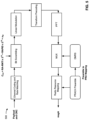
- Fig. 5 is a diagram illustrating an example 500 of a transmit chain for transmitting a PRACH msgA, in accordance with various aspects of the present disclosure.
- a UE such as UE 120, may include a transmit chain for transmitting msgA.
- the UE may receive, at the transmit chain, a payload and cyclic redundancy check (CRC) and may perform channel coding and rate matching on the payload and CRC to generate bits for transmission.
- CRC cyclic redundancy check
- the UE may use a scrambling sequence to scramble bits of the payload and CRC.
- C init represents an initial value of the scrambling sequence
- RA-RNTI is a random access (RA) radio network temporary identifier (RNTI)
- n ID represents an initialization value based at least in part on a UE identifier.
- the UE may perform linear modulation and, in some cases, transform precoding, as described in more detail herein.
- the UE may perform inverse fast-Fourier-transform (IFFT) processing.
- IFFT inverse fast-Fourier-transform
- the UE may multiplex a DMRS with the payload and CRC (e.g., symbols generated based at least in part on bits thereof).
- the UE may perform radio resource mapping to generate a msgA preamble based at least in part on a PRACH preamble and a msgA payload based at least in part on the payload and CRC and the DMRS.
- a UE may generate the DMRS for multiplexing with content of msgA using a DMRS scrambling identifier.
- the UE may determine the DMRS scrambling identifier based at least in part on a waveform of a corresponding physical uplink shared channel (PUSCH) of the msgA.
- PUSCH physical uplink shared channel
- a DMRS scrambling identifier based at least in part on a PUSCH waveform e.g., a discrete Fourier transform spread orthogonal frequency division multiplexing (DFT-s-OFDM) waveform or a cyclic prefix orthogonal frequency division multiplexing (CP-OFDM) waveform
- DFT-s-OFDM discrete Fourier transform spread orthogonal frequency division multiplexing
- CP-OFDM cyclic prefix orthogonal frequency division multiplexing
- some aspects described herein enable the UE to use an extended DMRS scrambling identifier, for a DMRS, that is determined based at least in part on a scrambling identifier for a msgA PUSCH that is to be multiplexed with the DMRS.
- the UE may determine the extended DMRS scrambling identifier based at least in part on the PRACH preamble, as shown. In this way, by reusing the PRACH preamble for determining the extended DMRS scrambling identifier, the UE reduces a likelihood of collision with increasing a processing and/or memory utilization associated with using other types of dedicated DMRS scrambling identifier for various waveforms.
- the UE may determine the extended DMRS scrambling identifier based at least in part on the quantity of DMRS sequences that are supported per antenna panel of the BS. In some aspects, the UE may map the PRACH preamble to a PUSCH resource unit (PRU) to determine the extended DMRS scrambling identifier and perform a DMRS generation procedure. In this way, the UE may generate an extended DMRS scrambling identifier that reduces a likelihood of collision during CBRA-based two-step RACH.
- PRU PUSCH resource unit
- Fig. 5 is provided as an example. Other examples may differ from what is described with respect to Fig. 5 .
- Fig. 6 is a diagram illustrating an example 600 of using an extended DMRS scrambling identifier for DMRS communication, in accordance with various aspects of the present disclosure.
- example 600 includes a BS 110 in communication with a UE 120.
- UE 120 receives information identifying the quantity of DMRS sequences supported per antenna panel of BS 110.
- BS 110 may transmit information identifying the quantity of DMRS sequences supported per antenna panel to a group of UEs 120 that includes the UE.
- UE 120 may receive DMRS sequence configuration information from BS 110 based at least in part on BS 110 configuring one or more DMRS sequences for a DMRS communication (e.g., by using a 'msgA-ScramblingID0' parameter or a 'msgA-ScramblingID1' parameter, or by configuring one or more additional DMRS positions, among other examples).
- BS 110 may configure the one or more DMRS sequences based at least in part on a quantity of DMRS sequences supported per antenna panel.
- UE 120 may receive information indicating that BS 110 supports 4 DMRS sequences per antenna panel, 8 DMRS sequences per antenna panel, and/or the like.
- a quantity of DMRS sequences may correspond to a quantity of DMRS scrambling identifiers (e.g., extended DMRS scrambling identifiers) supported per antenna panel.
- BS 110 may configure the extended DMRS scrambling identifiers on a per antenna port basis and provide system information or RRC signaling to UE 120 to identify the configured extended DMRS scrambling identifiers.
- UE 120 configures one or more DMRS sequences for a DMRS communication.
- UE 120 configures the one or more DMRS sequences based at least in part on the quantity of DMRS sequences supported per antenna panel. Additionally, or alternatively, UE 120 may configure the one or more DMRS sequences based at least in part on a PRACH preamble.
- UE 120 scrambles the one or more DMRS sequences using an extended DMRS scrambling identifier that is based at least in part on the PRACH preamble.
- UE 120 may reuse a scrambling identifier of a msgA PUSCH that is to be transmitted together with the DMRS communication, as described above.
- UE 120 may map the PRACH preamble to a PRU to reuse the scrambling identifier of the msgA PUSCH for the extended DMRS scrambling identifier.
- UE 120 supports one or more different possible mapping ratios.
- UE 120 may determine the mapping ratio based at least in part on a quantity of PRACH sequences assigned for a msgA preamble on valid RACH occasions (ROs) and a quantity of PRUs assigned for msgA payload on valid PUSCH occasions (POs).
- UE 120 may determine the mapping ratio based at least in part on a received broadcast from BS 110 (e.g., of a system information) or via RRC signaling from BS 110.
- UE 120 may determine the mapping ratio based at least in part on a validation rule and a mapping order (e.g., received from BS 110).
- each msgA PUSCH configuration in an initial or active bandwidth part may be associated with a single mapping ratio, and different msgA PUSCH configurations have different mapping ratios.
- the mapping ratio may be valid for at least a mapping period between msgA ROs and msgA PUSCH POs. In this case, the mapping period may be a common multiple of an SSB to RO association pattern period for each msgA PUSCH configuration.
- UE 120 may generate the DMRS communication using a particular DMRS pattern. For example, UE 120 may generate a type-I DMRS pattern-based DMRS, a type-II DMRS pattern-based DMRS, and/or the like.
- UE 120 reuses the bit scrambling sequence applied to the payload and CRC of the msgA, as described above. Additionally, or alternatively, UE 120 may determine the extended DMRS scrambling identifier based at least in part on an equation of the form: c init , msgA _ DMRS 2 17 N symb slot n s , f ⁇ + l + 1 ⁇ c init , msgA PUSCH K 1 + c init , msgA PUSCH K 2 mod 2 31 , where l is the OFDM symbol number within a slot, n s, f ⁇ is the slot number within a frame, and ⁇ is an inner quantity operator (e.g., truncating an inner quantity to K most significant bits (MSBs) or least significant bits (LSBs)). In this case, UE 120 determines the extended DMRS scrambling identifier based at least in part on the bit scram
- the quantity of DMRS sequences supported per antenna panel is 4 or 8.
Landscapes
- Engineering & Computer Science (AREA)
- Signal Processing (AREA)
- Computer Networks & Wireless Communication (AREA)
- Physics & Mathematics (AREA)
- Discrete Mathematics (AREA)
- General Physics & Mathematics (AREA)
- Mathematical Physics (AREA)
- Mobile Radio Communication Systems (AREA)
Applications Claiming Priority (3)
| Application Number | Priority Date | Filing Date | Title |
|---|---|---|---|
| US201962936243P | 2019-11-15 | 2019-11-15 | |
| US16/949,716 US11743004B2 (en) | 2019-11-15 | 2020-11-11 | Extended demodulation reference signal scrambling identifier for demodulation reference signal communication |
| PCT/US2020/070775 WO2021097485A1 (en) | 2019-11-15 | 2020-11-12 | Extended demodulation reference signal scrambling identifier for demodulation reference signal communication |
Publications (2)
| Publication Number | Publication Date |
|---|---|
| EP4059176A1 EP4059176A1 (en) | 2022-09-21 |
| EP4059176B1 true EP4059176B1 (en) | 2025-04-16 |
Family
ID=75909782
Family Applications (1)
| Application Number | Title | Priority Date | Filing Date |
|---|---|---|---|
| EP20820744.9A Active EP4059176B1 (en) | 2019-11-15 | 2020-11-12 | Extended demodulation reference signal scrambling identifier for demodulation reference signal communication |
Country Status (9)
| Country | Link |
|---|---|
| US (2) | US11743004B2 (https=) |
| EP (1) | EP4059176B1 (https=) |
| JP (2) | JP7699120B2 (https=) |
| KR (2) | KR102864639B1 (https=) |
| CN (1) | CN114651414B (https=) |
| BR (1) | BR112022008615A2 (https=) |
| PH (1) | PH12022550943A1 (https=) |
| TW (1) | TWI861283B (https=) |
| WO (1) | WO2021097485A1 (https=) |
Families Citing this family (2)
| Publication number | Priority date | Publication date | Assignee | Title |
|---|---|---|---|---|
| US20240267796A1 (en) * | 2023-02-06 | 2024-08-08 | Bank Of America Corporation | Mobility protocol for narrow-band internet of things (nb-iot) networks |
| CN116868550A (zh) * | 2023-04-04 | 2023-10-10 | 北京小米移动软件有限公司 | 一种上行通信方法、装置及存储介质 |
Family Cites Families (40)
| Publication number | Priority date | Publication date | Assignee | Title |
|---|---|---|---|---|
| CN102714527B (zh) * | 2010-01-22 | 2015-04-01 | Lg电子株式会社 | 用于在mimo无线通信系统中提供下行链路控制信息的方法和设备 |
| KR101915271B1 (ko) * | 2010-03-26 | 2018-11-06 | 삼성전자 주식회사 | 무선 통신 시스템에서 자원 할당을 위한 하향링크 제어 지시 방법 및 장치 |
| US9185694B2 (en) * | 2010-11-08 | 2015-11-10 | Lg Electronics Inc. | Method and device for transmitting and receiving data in wireless communication system |
| US9025551B2 (en) * | 2012-02-07 | 2015-05-05 | Samsung Electronics Co., Ltd. | Data transmission method and apparatus in network supporting coordinated transmission |
| KR102067061B1 (ko) * | 2012-02-21 | 2020-02-11 | 엘지전자 주식회사 | 하향링크 신호 수신 또는 전송 방법, 및 이를 위한 장치 |
| US9167561B2 (en) * | 2012-03-12 | 2015-10-20 | Zte (Usa) Inc. | Sequence initialization for demodulation reference signal |
| WO2014046516A1 (en) * | 2012-09-24 | 2014-03-27 | Lg Electronics Inc. | Method and apparatus for transmitting or receiving reference signal in wireless communication system |
| CN110445591B (zh) * | 2012-09-26 | 2021-12-28 | 华为技术有限公司 | 用于在异构通信系统中进行随机接入的系统和方法 |
| WO2014077577A1 (ko) * | 2012-11-13 | 2014-05-22 | 엘지전자 주식회사 | 데이터 전송 방법 및 장치와, 데이터 전송 방법 및 장치 |
| EP3186915B1 (en) * | 2014-08-29 | 2018-05-02 | Nokia Solutions and Networks Oy | Enhanced random access channel procedure |
| US11700641B2 (en) * | 2015-08-19 | 2023-07-11 | Lg Electronics Inc. | Random access procedure performing method in wireless communication system, and apparatus therefor |
| JP2019091957A (ja) * | 2016-03-30 | 2019-06-13 | シャープ株式会社 | 端末装置、基地局装置、通信方法、および、集積回路 |
| US11039478B2 (en) * | 2016-11-03 | 2021-06-15 | Lg Electronics Inc. | Method for performing initial access in wireless communication system, and apparatus therefor |
| EP3863258B1 (en) * | 2017-03-23 | 2023-09-06 | Guangdong Oppo Mobile Telecommunications Corp., Ltd. | Method and device for transmitting uplink demodulation reference signal |
| CN109274471B (zh) * | 2017-07-17 | 2024-01-02 | 华为技术有限公司 | 用于传输dmrs的方法和通信设备 |
| CN109995499B (zh) * | 2017-08-11 | 2020-04-03 | 华为技术有限公司 | 接收解调参考信号的方法、接收端、芯片、存储介质和通信系统 |
| KR102460664B1 (ko) * | 2017-11-07 | 2022-10-28 | 삼성전자주식회사 | 무선 통신 시스템에서 제어 정보 송수신 방법 |
| WO2019090774A1 (en) * | 2017-11-13 | 2019-05-16 | Nec Corporation | Methods and apparatuses for demodulation reference signal configuration |
| JP7177832B2 (ja) * | 2017-11-17 | 2022-11-24 | エルジー エレクトロニクス インコーポレイティド | 参照信号を送受信する方法およびそのための装置 |
| CN110035520B (zh) * | 2018-01-12 | 2021-10-15 | 维沃移动通信有限公司 | 数据传输方法、解扰方法、解调方法及设备 |
| US10849110B2 (en) * | 2018-02-16 | 2020-11-24 | Qualcomm Incorporated | Resource allocation for the physical uplink control channel |
| US11116015B2 (en) * | 2018-02-23 | 2021-09-07 | Qualcomm Incorporated | Efficient method of DL-CINR measurement and reporting in NB IoT |
| WO2020032653A1 (ko) * | 2018-08-08 | 2020-02-13 | 엘지전자 주식회사 | 사이드링크를 지원하는 무선통신시스템에서 단말이 무선 링크 모니터링을 수행하는 방법 및 이를 위한 장치 |
| JP2020047983A (ja) * | 2018-09-14 | 2020-03-26 | シャープ株式会社 | 基地局装置、端末装置および通信方法 |
| JP7342955B2 (ja) * | 2018-09-18 | 2023-09-12 | 日本電気株式会社 | 端末デバイス、ネットワークデバイス、及び方法 |
| CN110535589B (zh) * | 2018-09-27 | 2023-01-10 | 中兴通讯股份有限公司 | 指示方法、信息确定方法、装置、基站、终端及存储介质 |
| US11985017B2 (en) * | 2018-10-28 | 2024-05-14 | Indian Institute Of Technology Hyderabad (Iith) | Method and system for generating a transmit waveform for reference sequences |
| CN112970208B (zh) * | 2018-11-01 | 2024-05-14 | 高通股份有限公司 | 多端口群上行链路控制信息信令及相关系统和方法 |
| WO2020091577A1 (ko) * | 2018-11-02 | 2020-05-07 | 엘지전자 주식회사 | 무선 통신 시스템에서 참조 신호를 전송하는 방법 및 이에 대한 장치 |
| US20190149294A1 (en) * | 2019-01-14 | 2019-05-16 | Intel IP Corporation | Csi-rs sequence generation and mapping and dmrs scrambling id configuration |
| CN113383606A (zh) * | 2019-02-01 | 2021-09-10 | 株式会社Ntt都科摩 | 用户终端以及无线通信方法 |
| EP3922074B1 (en) * | 2019-02-08 | 2024-03-06 | Nokia Technologies Oy | Random access in wireless communication networks |
| WO2020191587A1 (zh) * | 2019-03-25 | 2020-10-01 | 北京小米移动软件有限公司 | 同步信号块传输方法、装置及存储介质 |
| EP3962197A4 (en) * | 2019-04-26 | 2023-01-11 | Ntt Docomo, Inc. | USER TERMINAL AND WIRELESS COMMUNICATION METHOD |
| EP3963742A1 (en) * | 2019-05-03 | 2022-03-09 | Nokia Technologies Oy | 2-step rach-based tx beam refinement procedure |
| KR20220018502A (ko) * | 2019-06-06 | 2022-02-15 | 가부시키가이샤 엔티티 도코모 | 단말 및 무선 통신 방법 |
| KR102816155B1 (ko) * | 2019-06-07 | 2025-06-02 | 퀄컴 인코포레이티드 | 랜덤 액세스 절차를 위한 적응적 재송신 |
| EP4000294B1 (en) * | 2019-07-16 | 2024-12-11 | Nokia Technologies Oy | Apparatus, method, and computer program for scrambling a transport blocked based on whether a previous transport block was successfully received |
| WO2021029067A1 (ja) * | 2019-08-15 | 2021-02-18 | 株式会社Nttドコモ | 端末及び通信方法 |
| WO2021088880A1 (en) * | 2019-11-07 | 2021-05-14 | Telefonaktiebolaget Lm Ericsson (Publ) | Method and apparatus for random access |
-
2020
- 2020-11-11 US US16/949,716 patent/US11743004B2/en active Active
- 2020-11-12 KR KR1020227013486A patent/KR102864639B1/ko active Active
- 2020-11-12 JP JP2022525488A patent/JP7699120B2/ja active Active
- 2020-11-12 KR KR1020257031470A patent/KR20250141852A/ko active Pending
- 2020-11-12 PH PH1/2022/550943A patent/PH12022550943A1/en unknown
- 2020-11-12 EP EP20820744.9A patent/EP4059176B1/en active Active
- 2020-11-12 WO PCT/US2020/070775 patent/WO2021097485A1/en not_active Ceased
- 2020-11-12 CN CN202080077555.XA patent/CN114651414B/zh active Active
- 2020-11-12 BR BR112022008615A patent/BR112022008615A2/pt unknown
- 2020-11-13 TW TW109139716A patent/TWI861283B/zh active
-
2023
- 2023-07-24 US US18/357,427 patent/US20230370224A1/en active Pending
-
2025
- 2025-06-16 JP JP2025100049A patent/JP2025157223A/ja active Pending
Non-Patent Citations (1)
| Title |
|---|
| "3rd Generation Partnership Project; Technical Specification Group Radio Access Network; NR; NR and NG-RAN Overall Description; Stage 2 (Release 15)", 26 September 2019 (2019-09-26), XP051799944, Retrieved from the Internet <URL:https://ftp.3gpp.org/3guInternal/3GPP_ultimate_versions_to_be_transposed/sentToDpc/38300-f70.zip 38300-f70.docx> [retrieved on 20190926] * |
Also Published As
| Publication number | Publication date |
|---|---|
| BR112022008615A2 (pt) | 2022-07-19 |
| US11743004B2 (en) | 2023-08-29 |
| KR20220099952A (ko) | 2022-07-14 |
| CN114651414B (zh) | 2024-04-16 |
| CN114651414A (zh) | 2022-06-21 |
| TW202126012A (zh) | 2021-07-01 |
| KR102864639B1 (ko) | 2025-09-24 |
| JP2025157223A (ja) | 2025-10-15 |
| KR20250141852A (ko) | 2025-09-29 |
| JP2023501249A (ja) | 2023-01-18 |
| JP7699120B2 (ja) | 2025-06-26 |
| PH12022550943A1 (en) | 2023-08-23 |
| TWI861283B (zh) | 2024-11-11 |
| US20230370224A1 (en) | 2023-11-16 |
| EP4059176A1 (en) | 2022-09-21 |
| US20210152304A1 (en) | 2021-05-20 |
| WO2021097485A1 (en) | 2021-05-20 |
Similar Documents
| Publication | Publication Date | Title |
|---|---|---|
| EP4005099B1 (en) | Frequency hopping for two-step random access | |
| EP4005314B1 (en) | Construction and mapping of compact uplink control information (uci) over physical uplink shared channel (pusch) | |
| EP3912420B1 (en) | Variable payload size for two-step random access | |
| CN114175831A (zh) | 支持用于pdcch有序无竞争随机接入过程的交叉tag调度和2步rach有效载荷发送 | |
| EP3949659B1 (en) | Random access for a non-terrestrial network | |
| US11558835B2 (en) | Multi-synchronization signal block operation | |
| JP2025157223A (ja) | 復調基準信号通信のための拡張された復調基準信号スクランブリング識別子 | |
| US11606820B2 (en) | Sharing a physical random access channel (PRACH) configuration for avoiding collisions of PRACH communications | |
| WO2021030933A1 (en) | Random access radio network temporary identifier for random access | |
| EP4094395B1 (en) | Synchronization signal block transmission using spatial division multiplexing | |
| EP4104539B1 (en) | Reporting for maximum permissible exposure | |
| WO2020024262A1 (en) | Demodulation reference signal generation in grant-free uplink non-orthogonal multiple access systems | |
| HK40076346A (en) | Random access for secondary user equipment | |
| CN114642078A (zh) | 用于辅用户设备的随机接入 |
Legal Events
| Date | Code | Title | Description |
|---|---|---|---|
| STAA | Information on the status of an ep patent application or granted ep patent |
Free format text: STATUS: UNKNOWN |
|
| STAA | Information on the status of an ep patent application or granted ep patent |
Free format text: STATUS: THE INTERNATIONAL PUBLICATION HAS BEEN MADE |
|
| PUAI | Public reference made under article 153(3) epc to a published international application that has entered the european phase |
Free format text: ORIGINAL CODE: 0009012 |
|
| STAA | Information on the status of an ep patent application or granted ep patent |
Free format text: STATUS: REQUEST FOR EXAMINATION WAS MADE |
|
| 17P | Request for examination filed |
Effective date: 20220414 |
|
| AK | Designated contracting states |
Kind code of ref document: A1 Designated state(s): AL AT BE BG CH CY CZ DE DK EE ES FI FR GB GR HR HU IE IS IT LI LT LU LV MC MK MT NL NO PL PT RO RS SE SI SK SM TR |
|
| DAV | Request for validation of the european patent (deleted) | ||
| DAX | Request for extension of the european patent (deleted) | ||
| REG | Reference to a national code |
Ref country code: DE Free format text: PREVIOUS MAIN CLASS: H04L0005000000 Ipc: H04B0007060000 Ref country code: DE Ref legal event code: R079 Ref document number: 602020049643 Country of ref document: DE Free format text: PREVIOUS MAIN CLASS: H04L0005000000 Ipc: H04B0007060000 |
|
| GRAP | Despatch of communication of intention to grant a patent |
Free format text: ORIGINAL CODE: EPIDOSNIGR1 |
|
| STAA | Information on the status of an ep patent application or granted ep patent |
Free format text: STATUS: GRANT OF PATENT IS INTENDED |
|
| RIC1 | Information provided on ipc code assigned before grant |
Ipc: H04L 25/03 20060101ALN20241121BHEP Ipc: H04L 25/02 20060101ALN20241121BHEP Ipc: H04W 74/0833 20240101ALN20241121BHEP Ipc: H04L 27/26 20060101ALI20241121BHEP Ipc: H04L 5/00 20060101ALI20241121BHEP Ipc: H04B 7/06 20060101AFI20241121BHEP |
|
| INTG | Intention to grant announced |
Effective date: 20241202 |
|
| RIC1 | Information provided on ipc code assigned before grant |
Ipc: H04L 25/03 20060101ALN20241125BHEP Ipc: H04L 25/02 20060101ALN20241125BHEP Ipc: H04W 74/0833 20240101ALN20241125BHEP Ipc: H04L 27/26 20060101ALI20241125BHEP Ipc: H04L 5/00 20060101ALI20241125BHEP Ipc: H04B 7/06 20060101AFI20241125BHEP |
|
| GRAS | Grant fee paid |
Free format text: ORIGINAL CODE: EPIDOSNIGR3 |
|
| GRAA | (expected) grant |
Free format text: ORIGINAL CODE: 0009210 |
|
| STAA | Information on the status of an ep patent application or granted ep patent |
Free format text: STATUS: THE PATENT HAS BEEN GRANTED |
|
| AK | Designated contracting states |
Kind code of ref document: B1 Designated state(s): AL AT BE BG CH CY CZ DE DK EE ES FI FR GB GR HR HU IE IS IT LI LT LU LV MC MK MT NL NO PL PT RO RS SE SI SK SM TR |
|
| REG | Reference to a national code |
Ref country code: GB Ref legal event code: FG4D |
|
| REG | Reference to a national code |
Ref country code: CH Ref legal event code: EP |
|
| REG | Reference to a national code |
Ref country code: IE Ref legal event code: FG4D |
|
| REG | Reference to a national code |
Ref country code: DE Ref legal event code: R096 Ref document number: 602020049643 Country of ref document: DE |
|
| REG | Reference to a national code |
Ref country code: NL Ref legal event code: MP Effective date: 20250416 |
|
| PG25 | Lapsed in a contracting state [announced via postgrant information from national office to epo] |
Ref country code: NL Free format text: LAPSE BECAUSE OF FAILURE TO SUBMIT A TRANSLATION OF THE DESCRIPTION OR TO PAY THE FEE WITHIN THE PRESCRIBED TIME-LIMIT Effective date: 20250416 |
|
| REG | Reference to a national code |
Ref country code: AT Ref legal event code: MK05 Ref document number: 1786524 Country of ref document: AT Kind code of ref document: T Effective date: 20250416 |
|
| PG25 | Lapsed in a contracting state [announced via postgrant information from national office to epo] |
Ref country code: FI Free format text: LAPSE BECAUSE OF FAILURE TO SUBMIT A TRANSLATION OF THE DESCRIPTION OR TO PAY THE FEE WITHIN THE PRESCRIBED TIME-LIMIT Effective date: 20250416 Ref country code: PT Free format text: LAPSE BECAUSE OF FAILURE TO SUBMIT A TRANSLATION OF THE DESCRIPTION OR TO PAY THE FEE WITHIN THE PRESCRIBED TIME-LIMIT Effective date: 20250818 Ref country code: ES Free format text: LAPSE BECAUSE OF FAILURE TO SUBMIT A TRANSLATION OF THE DESCRIPTION OR TO PAY THE FEE WITHIN THE PRESCRIBED TIME-LIMIT Effective date: 20250416 |
|
| REG | Reference to a national code |
Ref country code: LT Ref legal event code: MG9D |
|
| PG25 | Lapsed in a contracting state [announced via postgrant information from national office to epo] |
Ref country code: NO Free format text: LAPSE BECAUSE OF FAILURE TO SUBMIT A TRANSLATION OF THE DESCRIPTION OR TO PAY THE FEE WITHIN THE PRESCRIBED TIME-LIMIT Effective date: 20250716 Ref country code: GR Free format text: LAPSE BECAUSE OF FAILURE TO SUBMIT A TRANSLATION OF THE DESCRIPTION OR TO PAY THE FEE WITHIN THE PRESCRIBED TIME-LIMIT Effective date: 20250717 |
|
| PG25 | Lapsed in a contracting state [announced via postgrant information from national office to epo] |
Ref country code: PL Free format text: LAPSE BECAUSE OF FAILURE TO SUBMIT A TRANSLATION OF THE DESCRIPTION OR TO PAY THE FEE WITHIN THE PRESCRIBED TIME-LIMIT Effective date: 20250416 |
|
| PG25 | Lapsed in a contracting state [announced via postgrant information from national office to epo] |
Ref country code: BG Free format text: LAPSE BECAUSE OF FAILURE TO SUBMIT A TRANSLATION OF THE DESCRIPTION OR TO PAY THE FEE WITHIN THE PRESCRIBED TIME-LIMIT Effective date: 20250416 |
|
| PG25 | Lapsed in a contracting state [announced via postgrant information from national office to epo] |
Ref country code: HR Free format text: LAPSE BECAUSE OF FAILURE TO SUBMIT A TRANSLATION OF THE DESCRIPTION OR TO PAY THE FEE WITHIN THE PRESCRIBED TIME-LIMIT Effective date: 20250416 |
|
| PG25 | Lapsed in a contracting state [announced via postgrant information from national office to epo] |
Ref country code: AT Free format text: LAPSE BECAUSE OF FAILURE TO SUBMIT A TRANSLATION OF THE DESCRIPTION OR TO PAY THE FEE WITHIN THE PRESCRIBED TIME-LIMIT Effective date: 20250416 |
|
| PG25 | Lapsed in a contracting state [announced via postgrant information from national office to epo] |
Ref country code: RS Free format text: LAPSE BECAUSE OF FAILURE TO SUBMIT A TRANSLATION OF THE DESCRIPTION OR TO PAY THE FEE WITHIN THE PRESCRIBED TIME-LIMIT Effective date: 20250716 |
|
| PG25 | Lapsed in a contracting state [announced via postgrant information from national office to epo] |
Ref country code: IS Free format text: LAPSE BECAUSE OF FAILURE TO SUBMIT A TRANSLATION OF THE DESCRIPTION OR TO PAY THE FEE WITHIN THE PRESCRIBED TIME-LIMIT Effective date: 20250816 |
|
| PG25 | Lapsed in a contracting state [announced via postgrant information from national office to epo] |
Ref country code: LV Free format text: LAPSE BECAUSE OF FAILURE TO SUBMIT A TRANSLATION OF THE DESCRIPTION OR TO PAY THE FEE WITHIN THE PRESCRIBED TIME-LIMIT Effective date: 20250416 |
|
| PGFP | Annual fee paid to national office [announced via postgrant information from national office to epo] |
Ref country code: DE Payment date: 20251013 Year of fee payment: 6 |
|
| PGFP | Annual fee paid to national office [announced via postgrant information from national office to epo] |
Ref country code: GB Payment date: 20251009 Year of fee payment: 6 |
|
| PG25 | Lapsed in a contracting state [announced via postgrant information from national office to epo] |
Ref country code: DK Free format text: LAPSE BECAUSE OF FAILURE TO SUBMIT A TRANSLATION OF THE DESCRIPTION OR TO PAY THE FEE WITHIN THE PRESCRIBED TIME-LIMIT Effective date: 20250416 Ref country code: SM Free format text: LAPSE BECAUSE OF FAILURE TO SUBMIT A TRANSLATION OF THE DESCRIPTION OR TO PAY THE FEE WITHIN THE PRESCRIBED TIME-LIMIT Effective date: 20250416 |
|
| PGFP | Annual fee paid to national office [announced via postgrant information from national office to epo] |
Ref country code: FR Payment date: 20251013 Year of fee payment: 6 |
|
| REG | Reference to a national code |
Ref country code: DE Ref legal event code: R097 Ref document number: 602020049643 Country of ref document: DE |
|
| PG25 | Lapsed in a contracting state [announced via postgrant information from national office to epo] |
Ref country code: CZ Free format text: LAPSE BECAUSE OF FAILURE TO SUBMIT A TRANSLATION OF THE DESCRIPTION OR TO PAY THE FEE WITHIN THE PRESCRIBED TIME-LIMIT Effective date: 20250416 |
|
| PG25 | Lapsed in a contracting state [announced via postgrant information from national office to epo] |
Ref country code: EE Free format text: LAPSE BECAUSE OF FAILURE TO SUBMIT A TRANSLATION OF THE DESCRIPTION OR TO PAY THE FEE WITHIN THE PRESCRIBED TIME-LIMIT Effective date: 20250416 |
|
| PG25 | Lapsed in a contracting state [announced via postgrant information from national office to epo] |
Ref country code: SK Free format text: LAPSE BECAUSE OF FAILURE TO SUBMIT A TRANSLATION OF THE DESCRIPTION OR TO PAY THE FEE WITHIN THE PRESCRIBED TIME-LIMIT Effective date: 20250416 |
|
| PG25 | Lapsed in a contracting state [announced via postgrant information from national office to epo] |
Ref country code: IT Free format text: LAPSE BECAUSE OF FAILURE TO SUBMIT A TRANSLATION OF THE DESCRIPTION OR TO PAY THE FEE WITHIN THE PRESCRIBED TIME-LIMIT Effective date: 20250416 |
|
| PG25 | Lapsed in a contracting state [announced via postgrant information from national office to epo] |
Ref country code: RO Free format text: LAPSE BECAUSE OF FAILURE TO SUBMIT A TRANSLATION OF THE DESCRIPTION OR TO PAY THE FEE WITHIN THE PRESCRIBED TIME-LIMIT Effective date: 20250416 |
|
| PLBE | No opposition filed within time limit |
Free format text: ORIGINAL CODE: 0009261 |
|
| STAA | Information on the status of an ep patent application or granted ep patent |
Free format text: STATUS: NO OPPOSITION FILED WITHIN TIME LIMIT |
|
| REG | Reference to a national code |
Ref country code: CH Ref legal event code: L10 Free format text: ST27 STATUS EVENT CODE: U-0-0-L10-L00 (AS PROVIDED BY THE NATIONAL OFFICE) Effective date: 20260225 |
|
| 26N | No opposition filed |
Effective date: 20260119 |