EP4058307B1 - System for measuring the length of a footprint of a tyre and method thereof - Google Patents
System for measuring the length of a footprint of a tyre and method thereof Download PDFInfo
- Publication number
- EP4058307B1 EP4058307B1 EP20823966.5A EP20823966A EP4058307B1 EP 4058307 B1 EP4058307 B1 EP 4058307B1 EP 20823966 A EP20823966 A EP 20823966A EP 4058307 B1 EP4058307 B1 EP 4058307B1
- Authority
- EP
- European Patent Office
- Prior art keywords
- axis
- tyre
- electronic device
- time instant
- angular velocity
- Prior art date
- Legal status (The legal status is an assumption and is not a legal conclusion. Google has not performed a legal analysis and makes no representation as to the accuracy of the status listed.)
- Active
Links
Images





Classifications
-
- B—PERFORMING OPERATIONS; TRANSPORTING
- B60—VEHICLES IN GENERAL
- B60C—VEHICLE TYRES; TYRE INFLATION; TYRE CHANGING; CONNECTING VALVES TO INFLATABLE ELASTIC BODIES IN GENERAL; DEVICES OR ARRANGEMENTS RELATED TO TYRES
- B60C23/00—Devices for measuring, signalling, controlling, or distributing tyre pressure or temperature, specially adapted for mounting on vehicles; Arrangement of tyre inflating devices on vehicles, e.g. of pumps or of tanks; Tyre cooling arrangements
- B60C23/06—Signalling devices actuated by deformation of the tyre, e.g. tyre mounted deformation sensors or indirect determination of tyre deformation based on wheel speed, wheel-centre to ground distance or inclination of wheel axle
- B60C23/064—Signalling devices actuated by deformation of the tyre, e.g. tyre mounted deformation sensors or indirect determination of tyre deformation based on wheel speed, wheel-centre to ground distance or inclination of wheel axle comprising tyre mounted deformation sensors, e.g. to determine road contact area
-
- B—PERFORMING OPERATIONS; TRANSPORTING
- B60—VEHICLES IN GENERAL
- B60C—VEHICLE TYRES; TYRE INFLATION; TYRE CHANGING; CONNECTING VALVES TO INFLATABLE ELASTIC BODIES IN GENERAL; DEVICES OR ARRANGEMENTS RELATED TO TYRES
- B60C19/00—Tyre parts or constructions not otherwise provided for
-
- B—PERFORMING OPERATIONS; TRANSPORTING
- B60—VEHICLES IN GENERAL
- B60C—VEHICLE TYRES; TYRE INFLATION; TYRE CHANGING; CONNECTING VALVES TO INFLATABLE ELASTIC BODIES IN GENERAL; DEVICES OR ARRANGEMENTS RELATED TO TYRES
- B60C19/00—Tyre parts or constructions not otherwise provided for
- B60C2019/004—Tyre sensors other than for detecting tyre pressure
-
- B—PERFORMING OPERATIONS; TRANSPORTING
- B60—VEHICLES IN GENERAL
- B60Y—INDEXING SCHEME RELATING TO ASPECTS CROSS-CUTTING VEHICLE TECHNOLOGY
- B60Y2200/00—Type of vehicle
- B60Y2200/20—Off-Road Vehicles
- B60Y2200/22—Agricultural vehicles
Definitions
- the present invention relates to a structure of a system configured for measuring the length of a vehicle (particularly an agricultural vehicle), when the tyre is in use, on the basis of a chord subtending an angle arranged between an axis passing through the centre of the tyre and a first contact point between a portion of said tyre and the ground, and a second axis passing through the centre of a tyre and a second contact point between said portion of said tyre and the ground, beyond which said portion of said tyre loses contact with the ground.
- the system comprises at least a first electronic device, applied in use on the inner surface or outer surface of the tyre and a processing unit, external to said at least first electronic device.
- said system further comprises a second electronic device, applied on the rim, and each electronic device is configured at least to acquire, filter, store data and sent said data to the processing unit, and said processing unit is configured at least to acquire said data and process said data in order to measure the footprint of the tyre.
- footprint refers to a contact surface between the tyre and the ground.
- Said contact surface is a reduced surface with respect to the overall dimensions of the tyre.
- the present invention also relates to a method for measuring the length of the footprint of a tyre on the ground.
- the shape of the footprint of a tyre is defined by a length (i.e., the longitudinal dimension of the footprint) and a width (i.e., the transverse dimension of the footprint).
- the length of the footprint of said tyre varies according to the pressure with which the tyre is inflated:
- Figures 1A and 1B respectively show a tyre of an agricultural vehicle and its footprint when the pressure of said tyre is high.
- Figures 1C and 1D respectively show a tyre of an agricultural vehicle and its footprint when the pressure of said tyre is low.
- Factors such as traction, soil compaction and fuel consumption per unit of surface that is treated by an agricultural vehicle depend on the footprint of the agricultural vehicle.
- Said system comprises a monitoring unit associated with the tyre, in which said monitoring unit comprises a sensor for measuring at least a descriptive quantity of the deformations of the tyre in use.
- said quantity is measured within a certain time at a sampling frequency.
- the system is capable of determining if the measured quantity has a value representative of a passage of the monitoring unit in correspondence with said contact area, so as to obtain a first number of passages of the monitoring unit in correspondence with the contact area within a time interval.
- a parameter is estimated on the basis of the value of said number, of said sampling frequency and of said time interval and the monitoring of the tyre is based on said estimated parameter.
- the measurement of the length of said contact area is based on a statistical approach, in particular on the probability "p" that the monitoring unit is positioned in correspondence of the contact area during the rotation of the tyre.
- said known type system has a disadvantage due to the fact that it is not able to calculate the length of the footprint with high precision since the presence of the sensor in the footprint zone is not certain but is described by a probability.
- Aim of the present invention is to overcome said disadvantage, providing a system and a method for measuring the length of the footprint of a tyre of a vehicle on the ground, particularly an agricultural vehicle, so as to evaluate how this length varies according to the pressure of the tyre and/or the load acting on said tyre.
- Said first electronic device is configured at least to send data to said processing unit and comprises inside:
- Said second electronic device is configured at least to send data to said processing data and comprises inside:
- Said processing unit is configured at least to receive data from said first electronic device and from said second electronic device and comprises inside:
- the present invention relates also to a method for measuring the length of a footprint of a tyre, by means of the system above mentioned.
- Said method comprises the following steps:
- Said system comprises:
- a first reference system x 1 , y 1 , z 1 is associated with the first electronic device 1 in such a way that the axis x 1 is tangent to the rotation of a first point P1 which is a point of the tyre 10 in which said first electronic device 1 is applied, and the axis z 1 is perpendicular to said axis x 1
- a second reference system x 2 , y 2 , z 2 is associated with the second electronic device 2 in such a way that the axis x 2 is tangent to the rotation of a second point P2 which is a point of said rim 20 in which said second electronic device 2 is applied, and the axis z 2 is perpendicular to said axis x 2 .
- the angle between the first axis A1 and the second axis A2 is indicated with ⁇ .
- the axis x 1 and the axis z 1 of the first reference system are positioned on a same first plane.
- the axis x 2 and the axis z 2 of the second reference system are positioned on a same second plane.
- said second plane is parallel or substantially parallel to said first plane.
- said first electronic device 1 is arranged on the inner surface 10A of the tyre 10.
- said first electronic device can be arranged on the outer surface 10B of the tyre 10, without departing from the scope of the invention.
- the length of the footprint of the tyre 10 is calculated on the basis of an angle ⁇ arranged between a first axis B1 passing through the centre O of the tyre 10 and a first point of contact CP1 between a portion of said tyre 10 and the ground, when said portion of said tyre 10 comes into contact with the ground, and a second axis B2 passing through the centre of the tyre and a second point of contact CP2 between said portion of said tyre 10 and the ground, beyond which said portion of said tyre 10 loses contact with the ground (said contact points are shown in Figure 6 ).
- the length of the footprint of the tyre is substantially defined by the chord that subtends said angle, in which said chord is the chord arranged within a circumference that represents the tyre.
- said first electronic device 1 comprises inside:
- the first contact point CP1 is the initial contact point between a portion of said tyre 10 and the ground and the second contact point CP2 is the final contact point between the same portion of said tyre 10 and the ground (beyond said second contact point CP2, said portion of said tyre 10 loses contact with the ground).
- said first digital filter is a first IIR filter ( Infinite Impulse Response ) .
- said first IIR filter has a frequency between 0,1 Hz e 1 Hz.
- the first logic control unit 11 can be configured to send said time interval ⁇ t D to the processing unit 3, when the tyre 10 has completed a predetermined first number of revolutions.
- the transmission of data to the processing unit 3 by the first electronic device 1 after a predetermined first number of revolutions allows to obtain an energy saving.
- said first inertial measurement unit 12 comprises a first gyroscope 121 and is configured to:
- Figure 4A shows a sinusoid S1 which represents the linear acceleration along the x axis A 1x associated with the first electronic device 1 (i.e., the electronic device arranged on the inner surface 10A of the tyre 10).
- Said sinusoid S1 shows how the linear acceleration along the x axis A 1x associated with the first electronic device 1 varies over time.
- the sinusoid S1 periodically has a discontinuity due to a respective portion of the tyre 10 which first comes into contact with the ground and subsequently loses contact with the ground.
- the discontinuity is detected by means of the first electronic device 1 which is arranged on the inner surface 10A of the tyre 10.
- the sinusoid S 1F filtered by the first IIR filter shown in figure 4B , has the same discontinuity at a time interval ⁇ t D although less pronounced than the sinusoid S1 (i.e., the sinusoid when the first IIR filter was not applied).
- this time interval ⁇ t D is given by the time in which the portion of said tyre 10 contacts the ground and remains in contact with the ground until the same portion of said tyre loses contact with the ground.
- the tyre 10 performs a plurality of rotations.
- a first time instant t 1,1 D in which said portion of said tyre 10 comes into contact with the ground
- a second instant of time t 1,2 D in which said portion of said tyre 10 is still in contact with the ground, but beyond which said portion of said tyre 10 loses contact with the ground.
- the rotational movement of the tyre 10 is represented by a sinusoid and the time instants correspond to the points where the sinusoid intercepts the abscissa axis of a Cartesian plane, in which said abscissa axis is the time and the ordinate axis is the linear acceleration along the x axis A 1x associated with the first electronic device 1.
- said storage means 15 are external to the first control logic unit 11.
- said first storage means 15 can be included in said first logic control unit 11, without departing from the scope of the invention.
- said second electronic device 2 is arranged on a channel 20A of the rim 20.
- said second electronic device 2 can be arranged on the rim 20 in any position, for example on the outer surface of the rim, i.e., the surface facing outwards, or even on the disc of the rim, without leaving the scope of the invention.
- Said second electronic device 2 comprises inside:
- said second digital filter is a second IIR filter.
- said second IIR filter has a frequency between 0,1 Hz and 1 Hz.
- the storage step of the values of the filtered angular velocity around the y axis ⁇ 2y ' and the respective time instant t 2y ' can be performed in predetermined time intervals.
- Said predetermined time intervals can be chosen in such a way that the storage step is periodic.
- said second inertial measurement unit 22 comprises a second accelerometer 222 and is configured to:
- the second logic control unit 21 can be configured to send to the processing unit 3 the values of filtered angular velocity around the y axis ⁇ 2y ' and the respective time instants t 2y ' associated with each value of filtered angular velocity value around the y axis ⁇ 2y ', when the tyre 10 has completed a predetermined second number of revolutions.
- the transmission of data to the processing unit 3 by said second electronic device 2 after a predetermined second number of revolutions allows to obtain an energy saving.
- these IIR filters allow to eliminate the noise mainly due to vibrations, mechanical transmissions, and ground irregularities.
- each electronic device 1, 2 is respectively fixed to the tyre 10 and to the rim 20 by means of a respective fixing device resistant to dust and water (not shown).
- said processing unit 3 comprises inside:
- the footprint length is substantially the measure of the length of the chord that subtends the angle between the first axis B1 (i.e., the axis passing through the centre of the tyre and the first point of contact CP1 between said tyre 10 and the ground) and the second axis B2 (i.e., the axis passing through the centre of the tyre and the second contact point CP2 between said portion of said tyre 10 and the ground).
- Figure 6 is a schematic view of a tyre 10, represented by a circumference having centre O and rolling radius R 0 , in which the angle ⁇ is between the first axis B1 (passing through the centre of the tyre and the first contact point CP1) and the second axis B2 (passing through the centre of the tyre and the second contact point CP2).
- the length of the footprint of the tyre is approximated by the length of the chord which joins said first contact point CP1 and said second contact point CP2 and subtends said angle (delimited by the first axis B1 and the second axis B2).
- said first electronic device 1 can be provided with a first clock source 16, connected to the first logic control unit 11, and said second electronic device 2 can be provided with a second clock source 26, connected to the second logic unit control 21, and said processing unit 3 can be provided with a third clock source 36, connected to the third logic control unit.
- said first inertial measurement unit 12, included in the first electronic device 1, is configured for:
- Figure 7A shows a sinusoid S 1 ' which represents the linear acceleration along the z axis A 1z associated with the first electronic device 1 (i.e., the electronic device arranged on the inner surface 10A of the tyre 10) in said second embodiment.
- Said sinusoid S 1 ' shows how the linear acceleration along the z axis S 1 ' associated with the first electronic device 1 varies over time.
- the sinusoid S 1 ' periodically has a discontinuity due to a portion of said tyre 10 which first comes into contact with the ground and subsequently loses contact with the ground.
- the sinusoid filtered by the first digital filter and indicated by S 1F ' in Figure 7B has the same discontinuity in correspondence with a respective time interval ⁇ t D , although less pronounced than the sinusoid S 1 ' (i.e., the sinusoid when the first filter digital has not been applied).
- the operation of said second electronic device 2 is the same operation as the second electronic device described for the first embodiment.
- processing unit 3 With reference to the processing unit 3, the operation of said processing unit 3 is the same as the operation of the processing unit 3 described for the first embodiment.
- the time interval ⁇ t D between the first time instant t 1,1 D and the second time instant t 1,2 D is calculated by the value of the angular velocity around the y axis ⁇ 1y associated with the first electronic device 1.
- the first control logic unit 11 is configured to:
- Figures 8A and 8B show on a Cartesian plane a respective sinusoid S 1 ", S 1F " which represents the angular velocity around the y axis associated with the first electronic device 1 (in said third embodiment), respectively when the sinusoid is not filtered by a first digital filter and when the sinusoid is filtered by a first digital filter.
- the sinusoid S 1 " periodically has a discontinuity due to a respective portion of the tyre 10 which first comes into contact with the ground and subsequently loses contact with the ground.
- the sinusoid S 1F " filtered by the first digital filter, shown in Figure 8B has the same discontinuity at a time interval ⁇ t D although less pronounced than that of the sinusoid S 1 " (i.e., the sinusoid when the first digital filter has not been applied).
- Said time interval ⁇ t D is defined by a first time instant t 1,1 D in which the value of the angular velocity around the filtered y axis ⁇ 1y ' is maximum (indicated in Figure 8B with ⁇ MAX ) and by a second time instant t 1 , 2 D in which the value of the filtered angular velocity around the x axis ⁇ 1x ' is minimum (indicated in Figure 8B with ⁇ MIN ).
- the operation of said second electronic device 2 is the same operation as the second electronic device described for the first embodiment.
- processing unit 3 With reference to the processing unit 3, the operation of said processing unit 3 is the same as the operation of the processing unit 3 described for the first embodiment.
- the time interval ⁇ t D is defined by a first time instant t 1,1 D and by a second time instant t 1,2 D which, based on the applied embodiment, can be:
- said third logic control unit 31 of the processing unit 3 can be configured to:
- said synchronism signal prefferably to be sent periodically, for example when the tyre 10 has completed a predetermined number of revolutions.
- the sending of a synchronism signal is not necessary in the event that each of the electronic devices is configured only to send data to the processing unit 3 and the latter is configured to receive and process such data.
- each electronic device 1, 2 is configured only to acquire, filter and send data to the processing unit 3 and the latter is configured to receive and process such data to calculate the length of the footprint
- the first wireless transceiver module (arranged in the first electronic device 1) is replaced by a first wireless transmission module
- the second wireless transceiver module (arranged in the second electronic device 2) is replaced by a second wireless transmission module
- the third wireless transceiver module (arranged in the processing unit 3) is replaced by a wireless receiving module.
- each electronic device 1, 2 can be configured to acquire and send data (after filtering them) and the processing unit 3 to receive and process such data to calculate the length of the footprint of the tyre or each electronic device 1, 2 can be configured to acquire and transmit data (after filtering them), as well as to receive one or more signals from the processing unit (such as for example a synchronism signal) and the processing unit 3 can be configured to receive and process such data to calculate the length of the footprint, as well as to send one or more signals to each of said electronic devices (such as for example a synchronism signal).
- the system can be consisted of a first electronic device 1, a second electronic device 2 and a processing unit 3.
- the system comprises a first electronic device 1 and a processing unit 3.
- the second electronic device 2 coincides with the first electronic device 1, i.e., the electronic device arranged on the inner surface 10A of the tyre 10.
- the information on the time interval ⁇ t D and on the angular velocity around the y axis are obtained through a single electronic device, i.e., the electronic device applied to the inner surface 10A of the tyre 10.
- the system comprises a single electronic device, i.e., only the first electronic device 1, arranged inside the tyre 10, and a processing unit 3, external to said first electronic device 1.
- Said first electronic device 1 is configured to acquire and filter data and send signals/data to said processing unit 3 and the latter is configured to receive said signals/data and process such data.
- said first electronic device 1 it is possible to identify the first time instant, the second time instant and calculate the time interval between said two time instants but also acquire the values of the angular velocity around the y axis associated with said first electronic device 1 and the respective time instants to calculate the angle ⁇ .
- the filtered angular velocity around the y axis ⁇ 2y ' which, in the previous embodiments, is associated with the second electronic device 2 is equal to the angular velocity around the filtered y axis ⁇ 1y ' which, in the previous embodiments, is associated with the first electronic device 1, the only electronic device in this fourth embodiment.
- the mean value ⁇ ' 2 y of the filtered angular velocities around the y axis (at each time instant within said time interval ⁇ t D ) which, in the previous embodiments, is associated with the second electronic device 2 is equal to the mean value ⁇ ' 1 y of the filtered angular velocities around the y axis (at each time instant within said time interval ⁇ t D ) associated with the first electronic device 1, the only electronic device in this embodiment.
- Figure 10 shows on a Cartesian plane a sinusoid S 1F ′′′ which represents the filtered angular velocity around the y axis ⁇ 1y ' of the first and only electronic device 1.
- the sinusoid S 1F ′′′ filtered by the first digital filter shown in figure 10 , has a discontinuity in correspondence of a time interval ⁇ t D defined by a first time instant t 1,1 D in which the value of the filtered angular velocity around the y axis ⁇ 1y ' is maximum (indicated in Figure 10 with ⁇ MAX ) and by a second time instant t 1 , 2 D in which the value of the filtered angular velocity around the y axis ⁇ 1y ' is minimum (indicated in figure 10 with ⁇ MIN ).
- the mean value ⁇ ' 1 y of the angular velocities around the y axis can be given by the sum of the maximum value and the minimum value of the angular velocity around the y axis, divided by the number 2.
- the system can be constituted by said first electronic device 1 and said processing unit 3.
- the structure of the system is a simplified structure with respect to the structure of the system described in the previous embodiments.
- the energy consumption of said system is lower than the energy consumption of the systems described with reference to the previous embodiments.
- said first digital filter is a first IIR filter ( Infinite Impulse Response ) , as mentioned for the first embodiment described above.
- the present invention also refers to a method for measuring the length of a footprint of a tyre 10, by means of a system described above.
- Said method comprises the following steps:
- the acquired values will be values associated with the linear acceleration along the axis x A 1x of the first electronic device 1 (see the first embodiment of the system) or the values associated with the linear acceleration along the z axis A 1z of the first electronic device 1 (see the second embodiment of the system) or the values associated with the angular velocity around the y axis ⁇ 1y of the first electronic device 1.
- the step of filtering and the step of identifying of the first time instant of time t 1,1 D and of the second time instant t 1,2 D to be used for calculating the time interval ⁇ t D between said first time instant t 1,1 D and said second time instant t 1,2 D are performed on the values which have been acquired by means of one of the first three embodiments of the system described above.
- the step of identifying the first time instant and the second time instant, the step of calculating the time interval between said two time instants as well as the step of acquiring the values of the angular velocity around the y axis associated with the first electronic device 1 and the respective time instants to calculate the angle ⁇ are performed by a single electronic device, i.e., the first electronic device 1 and the same considerations already mentioned above with reference to this fourth embodiment.
- object of the invention it is possible to measure the length of a footprint of a tyre.
Landscapes
- Engineering & Computer Science (AREA)
- Mechanical Engineering (AREA)
- Length Measuring Devices With Unspecified Measuring Means (AREA)
- Arrangements For Transmission Of Measured Signals (AREA)
- Tires In General (AREA)
Description
- The present invention relates to a system for measuring the length of the footprint of a tyre.
- In particular, the present invention relates to a structure of a system configured for measuring the length of a vehicle (particularly an agricultural vehicle), when the tyre is in use, on the basis of a chord subtending an angle arranged between an axis passing through the centre of the tyre and a first contact point between a portion of said tyre and the ground, and a second axis passing through the centre of a tyre and a second contact point between said portion of said tyre and the ground, beyond which said portion of said tyre loses contact with the ground.
- The system comprises at least a first electronic device, applied in use on the inner surface or outer surface of the tyre and a processing unit, external to said at least first electronic device.
- Preferably, said system further comprises a second electronic device, applied on the rim, and each electronic device is configured at least to acquire, filter, store data and sent said data to the processing unit, and said processing unit is configured at least to acquire said data and process said data in order to measure the footprint of the tyre.
- The expression "footprint" refers to a contact surface between the tyre and the ground.
- Said contact surface is a reduced surface with respect to the overall dimensions of the tyre.
- The present invention also relates to a method for measuring the length of the footprint of a tyre on the ground.
- As is known, the shape of the footprint of a tyre is defined by a length (i.e., the longitudinal dimension of the footprint) and a width (i.e., the transverse dimension of the footprint).
- With the same load acting on a tyre, the length of the footprint of said tyre varies according to the pressure with which the tyre is inflated:
- i. if the tyre pressure is high, the length of the footprint of the tyre on the ground is reduced (in other words, the deflection of the tyre on the ground is limited),
- ii. if the tyre pressure is low, the length of the footprint of the tyre on the ground is greater than the length of the footprint in the situation above described (in other words the deflection of the tyre on the ground is high).
-
Figures 1A and 1B respectively show a tyre of an agricultural vehicle and its footprint when the pressure of said tyre is high. -
Figures 1C and 1D respectively show a tyre of an agricultural vehicle and its footprint when the pressure of said tyre is low. - Factors such as traction, soil compaction and fuel consumption per unit of surface that is treated by an agricultural vehicle depend on the footprint of the agricultural vehicle.
- Currently a system capable of measuring the length of a contact area between a tyre and the ground is known and described in the patent application
WO 2019/101849 A1 . - Said system comprises a monitoring unit associated with the tyre, in which said monitoring unit comprises a sensor for measuring at least a descriptive quantity of the deformations of the tyre in use.
- In particular, during the rotation of the tyre, said quantity is measured within a certain time at a sampling frequency. For each measurement of said quantity, the system is capable of determining if the measured quantity has a value representative of a passage of the monitoring unit in correspondence with said contact area, so as to obtain a first number of passages of the monitoring unit in correspondence with the contact area within a time interval.
- A parameter is estimated on the basis of the value of said number, of said sampling frequency and of said time interval and the monitoring of the tyre is based on said estimated parameter.
- The measurement of the length of said contact area is based on a statistical approach, in particular on the probability "p" that the monitoring unit is positioned in correspondence of the contact area during the rotation of the tyre.
- The greater the value of said parameter the greater the time that said monitoring unit is positioned in correspondence with said contact area within the time interval and therefore the greater the probability of finding the monitoring unit in correspondence of the contact area during rotation of the tyre.
- For example, this probability "p" can be equal to the ratio between the number of measurements representing the passages of the monitoring unit in correspondence with the contact area and the number of measurements, according to the following formula:

- However, said known type system has a disadvantage due to the fact that it is not able to calculate the length of the footprint with high precision since the presence of the sensor in the footprint zone is not certain but is described by a probability.
- Other systems for measuring the length of the footprint of a tyre are disclosed, for example, in documents
JP 2012-218682 A EP 2679411 A2 andFR 3042281 A1 - Aim of the present invention is to overcome said disadvantage, providing a system and a method for measuring the length of the footprint of a tyre of a vehicle on the ground, particularly an agricultural vehicle, so as to evaluate how this length varies according to the pressure of the tyre and/or the load acting on said tyre.
- It is therefore object of the invention a system for measuring the length of a footprint of a tyre, comprising:
- a first electronic device to be positioned, in use, on the inner surface or on the outer surface of the tyre,
- a second electronic device, to be positioned, in use, in contact with the rim, on which said tyre is mounted,
- a
processing unit 3, external to said electronic devices, - a first reference system x1, y1, z1 is associated with the first electronic device in such a way that the axis x1 is tangent to the rotation of a first point which is a point of said tyre in which said first electronic device is applied, and the axis z1 is perpendicular to said axis x1,
- a second reference system x2, y2, z2 is associated with the second electronic device in such a way that the axis x2 is tangent to the rotation of a second point which is a point of said rim in which said second electronic device is applied, and the axis z2 is perpendicular to said axis x2.
- Said first electronic device is configured at least to send data to said processing unit and comprises inside:
- a first inertial measurement unit comprising a first gyroscope and a first accelerometer, configured to acquire, by means of said first gyroscope, a plurality of values associated at least to the angular velocity around the y axis, or, by means of said first accelerometer, a plurality of values associated at least to the linear acceleration along the x axis or a plurality of values associated at least to the linear acceleration along z axis,
- first storage means for storing data,
- a first logic control unit, connected with said first inertial measurement and to said first storage means, and configured to:
- ∘ receive from said first inertial measurement unit:
- ▪ each value of said linear acceleration along the x axis, or
- ▪ each value of said linear acceleration along the z axis, or
- ▪ each value of said angular velocity around the y axis,
- ∘ filter by means of a first digital filter:
- ▪ each value of said linear acceleration along the x axis to obtain a filtered linear acceleration along the x axis, or
- ▪ each value of said linear acceleration along the z axis to obtain a filtered linear acceleration along the z axis, or
- ▪ each value of said angular velocity around the y axis to obtain a filtered linear angular velocity around the y axis,
- ∘ identify a first time instant in correspondence of a first contact point between a portion of said tyre and the ground, when said portion of said tyre comes into contact with the ground, and a second time instant, in correspondence of a second contact point between said portion of said tyre and the ground, beyond which said portion of said tyre loses contact with the ground; where said first time instant and said second time instant are respectively:
- ▪ the initial time instant and the final time instant of a discontinuity portion of a sinusoid associated with said filtered linear acceleration along the x axis, or
- ▪ the initial time instant and the final time instant of a discontinuity portion of a sinusoid associated with said filtered linear acceleration along the z axis, or
- ▪ the initial time instant and the final time instant of a discontinuity portion of a sinusoid associated with said filtered angular velocity around the y axis,
- ∘ calculate the time interval between said first time instant and said second time instant,
- ∘ store said first time instant, said second time instant and said time interval in said first storage means,
- ∘ send said first time instant, said second time instant and said time interval to said processing unit.
- ∘ receive from said first inertial measurement unit:
- Said second electronic device is configured at least to send data to said processing data and comprises inside:
- a second inertial measurement unit comprising a second gyroscope, configured to acquire, by means of said second gyroscope, a plurality of values associated at least to the angular velocity around the y axis,
- second storage means for storing data,
- a second logic control unit, connected to said second inertial measurement unit and to said second storage means, and configured to:
- ∘ receive from the second inertial measurement unit the values of said angular velocity around the y axis,
- ∘ filter by means of a second digital filter each value of said angular velocity around the axis y to obtain a respective filtered angular velocity around the y axis,
- ∘ identify a respective time instant t2y' associated with each value of said filtered angular velocity around the y axis,
- ∘ store in predetermined time intervals in said second storage means each value of said filtered angular velocity around the y axis and the respective time instant t2y',
- ∘ send to said processing unit each value of said filtered angular velocity around the y axis and the respective time instant t2y'.
- Said processing unit is configured at least to receive data from said first electronic device and from said second electronic device and comprises inside:
- third storage means for storing data,
- a third logic control unit, connected to said third storage means, and configured to:
- ∘ receive said first time instant, said second time instant and said time interval from said first electronic device,
- ∘ receive the values of said filtered angular velocity around the y axis sent by said second electronic device, as well as the respective time instants t2y',
- ∘ calculate the mean value of the filtered angular velocities around the y axis associated with said second electronic device in correspondence of each instant of time t2y' within said time interval,
- ∘ calculate an angle between a first axis passing through the centre of the tyre and said first contact point and a second axis passing through the centre of the tyre and said second contact point, according to the following formula:

- ∘ calculate the length of the footprint of the tyre with the following formula:

- Further preferred embodiments of the system are disclosed in the dependent claims.
- The present invention relates also to a method for measuring the length of a footprint of a tyre, by means of the system above mentioned.
- Said method comprises the following steps:
- A) acquiring:
- ▪ a plurality of values associated with the linear acceleration along the x axis associated with a first electronic device, or
- ▪ a plurality of values associated with the linear acceleration along the z axis associated with a first electronic device, or
- ▪ a plurality of values associated with the angular velocity around the y axis associated with a first electronic device,
- B) filtering:
- ▪ each value of said linear acceleration along the x axis to obtain a filtered linear acceleration along the x axis, or
- ▪ each value of said linear acceleration along the z axis to obtain a filtered linear acceleration along the z axis, or
- ▪ each value of said angular velocity around the y axis to obtain a filtered angular velocity around the y axis,
- C) identifying a first time instant, at a first contact point between a portion of said tyre and the ground, when said portion of said tyre comes into contact with the ground, and a second time instant, at a second contact point between said portion of said tyre and the ground, beyond which said portion of said tyre loses contact with the ground; where said first time instant and said second time instant are respectively:
- ▪ the initial time instant and the final time instant of a discontinuity portion of a sinusoid associated with said filtered linear acceleration along the x axis, or
- ▪ the initial time instant and the final time instant of a discontinuity portion of a sinusoid associated with said filtered linear acceleration along the z axis, or
- ▪ the initial time instant and the final time instant of a discontinuity portion of a sinusoid associated with said filtered angular velocity around the y axis,
- D) calculating the time interval between said first time instant and said second time instant,
- E) storing said first time instant, second time instant and said time interval,
- F) acquiring a plurality of values associated with at least said angular velocity around the y axis associated with the second electronic device,
- G) filtering each value of said angular velocity around the y axis to obtain a respective filtered angular velocity around the y axis,
- H) identifying a respective instant time t2y' associated with each value of said filtered angular velocity around the y axis,
- I) storing in predetermined time intervals each value of said filtered angular velocity around the y axis and the respective time instant t2y',
- J) calculating the mean value of the filtered angular velocities around the y axis associated with said second electronic device in correspondence of each time instant t2y' within said time interval,
- K) calculating an angle arranged between a first axis passing through the centre of the tyre and a first contact point, and a second axis, passing through the centre of the tyre and a second contact point, according to the following formula:

- L) calculating the length of the footprint of the tyre with the following formula:

- The present invention will be now described, for illustrative, but not limitative purposes, according to its embodiment, making particular reference to the enclosed figures, wherein:
-
Figures 1A and 1B respectively show a tyre of an agricultural vehicle and its footprint when the pressure of the tyre is high; -
Figures 1C and 1D respectively show a tyre of an agricultural vehicle and its footprint when the pressure of the tyre is low; -
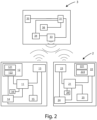
Figure 2 is a schematic view of the components of a first embodiment of the system, object of the invention, comprising a first electronic device, a second electronic device and a processing unit, external to said electronic devices, in which the length of the footprint is calculated on the basis of the information relating to the linear acceleration around the x axis associated with the first electronic device; -
Figure 3A is a perspective view of a wheel comprising a tyre and a rim, on which the tyre is mounted, showing the first electronic device, arranged inside the tyre so as to contact the inner surface of the tyre itself, the second electronic device, arranged on the channel of said rim, and a processing unit; -
Figure 3B is a side view of the wheel of Figure 2A; -
Figure 3C is a front view of the wheel of Figure 2A; -
Figure 4A shows on a Cartesian plane a sinusoid representing the linear acceleration along the x axis associated with the first electronic device, when the tyre is in use; -
Figure 4B shows on a Cartesian plane a sinusoid representing the linear acceleration along the x axis filtered by a first IIR filter, when the tyre is in use; -
Figure 5A shows the trend of two portions of angular velocity around the y axis, associated with the second electronic device, in a time interval ΔtD, respectively before and after the application of a second IIR filter, when the second electronic device is in use; -
Figure 5B shows on a Cartesian plane the trend of a portion of filtered angular velocity around the y axis, associated with the second electronic device, in said time interval ΔtD ; -
Figure 6 is a schematic view showing a tyre represented by a circumference and the length of the footprint of said tyre substantially equal to the length of a chord subtending an angle arranged between a first axis, passing through the centre of the tyre and a first point of contact between a portion of said tyre and the ground, and a second axis, passing through the centre of the tyre and a second point of contact between said portion of said tyre and the ground, beyond which said portion of said tyre loses its contact with the ground; -
Figure 7A shows on a Cartesian plane a sinusoid representing the linear acceleration along the z axis associated with the first electronic device, when the tyre is in use, where said sinusoid refers to a second embodiment of the system, object of the invention, in which the components of the system are the same components of the system ofFigure 2 (i.e., first electronic device, second electronic device and processing unit) and the length of the footprint is calculated on the basis of the information concerning said linear acceleration along the z axis; -
Figure 7B shows on a Cartesian plane a sinusoid representing the linear acceleration along the z axis filtered by a first IIR filter, when the tyre is in use; -
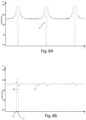
Figure 8A shows on a Cartesian plane a sinusoid representing the angular velocity around the y axis associated with the first electronic device, when the tyre is in use, where said sinusoid refers to a third embodiment of the system, object of the invention, in which the components of the system are the same components of the system ofFigure 2 (i.e., first electronic device, second electronic device and processing unit) and the length of the footprint is calculated on the basis of the information concerning said angular velocity around the x axis; -
Figure 8B shows on a Cartesian plane a sinusoid representing the angular velocity around the y axis filtered by a first IIR filter, when the tyre is in use; -
Figure 9 is a schematic view of the components of a fourth embodiment of the system, object of the invention, comprising a first electronic device and a processing unit, external to said electronic device; -
Figure 10 shows on a Cartesian plane a sinusoid representing the angular velocity around the y axis filtered by a first IIR filter, when the tyre is in use. - With reference to
Figures 2-6 a first embodiment of the system for measuring the length of the footprint of atyre 10. - Said system comprises:
- a first
electronic device 1, to be positioned, in use, on theinner surface 10A or on theouter surface 10B of thetyre 10, - a second
electronic device 2, to be positioned, in use, in contact with therim 20, in particular, in the embodiment being disclosed, on achannel 20A of therim 20, on which said tyre 10) is mounted, and - a
processing unit 3, external to saidelectronic devices - In the embodiment being disclosed, a first reference system x1, y1, z1 is associated with the first
electronic device 1 in such a way that the axis x1 is tangent to the rotation of a first point P1 which is a point of thetyre 10 in which said firstelectronic device 1 is applied, and the axis z1 is perpendicular to said axis x1, and a second reference system x2, y2, z2 is associated with the secondelectronic device 2 in such a way that the axis x2 is tangent to the rotation of a second point P2 which is a point of saidrim 20 in which said secondelectronic device 2 is applied, and the axis z2 is perpendicular to said axis x2. - The angle between the first axis A1 and the second axis A2 is indicated with α.
- The axis x1 and the axis z1 of the first reference system are positioned on a same first plane.
- The axis x2 and the axis z2 of the second reference system are positioned on a same second plane.
- In the embodiment being disclosed, said second plane is parallel or substantially parallel to said first plane.
- However, although not shown in Figures said first plane and said second plane can coincide.
- Furthermore, in the embodiment being disclosed, said first
electronic device 1 is arranged on theinner surface 10A of thetyre 10. - However, said first electronic device can be arranged on the
outer surface 10B of thetyre 10, without departing from the scope of the invention. - The length of the footprint of the
tyre 10 is calculated on the basis of an angle β arranged between a first axis B1 passing through the centre O of thetyre 10 and a first point of contact CP1 between a portion of saidtyre 10 and the ground, when said portion of saidtyre 10 comes into contact with the ground, and a second axis B2 passing through the centre of the tyre and a second point of contact CP2 between said portion of saidtyre 10 and the ground, beyond which said portion of saidtyre 10 loses contact with the ground (said contact points are shown inFigure 6 ). - In particular, the length of the footprint of the tyre is substantially defined by the chord that subtends said angle, in which said chord is the chord arranged within a circumference that represents the tyre.
- With reference to the first
electronic device 1, said firstelectronic device 1 comprises inside: - first supplying power means 14 for supplying power to said first
electronic device 1, - a first
wireless transceiver module 13 for transmitting and receiving signals/data to/from saidprocessing unit 3, - a first
inertial measurement unit 12, comprising afirst accelerometer 122, configured to:- o acquire, by means of said
first accelerometer 122, a plurality of values associated at least to the linear acceleration along the x axis A1x, where, in the embodiment described, the value of said first linear acceleration along the x axis A1x is a value normalized with respect to a unit value (i.e., the value of the first linear acceleration along the x axis A1x is between -1 and +1),
- o acquire, by means of said
- first storage means 15 for storing data,
- a first
logic control unit 11, connected with said firstinertial measurement 12, to said firstwireless transceiver module 13 and to said first storage means 15, and configured to:- o receive from said first
inertial measurement unit 12 of said firstelectronic device 1, the values of said linear acceleration along the x axis A1x, - o filter by means of a first digital filter each value of said linear acceleration along the x axis A1x to obtain a respective filtered linear acceleration along the x axis A1x',
- ∘ identify a first time instant t 1,1 D, in correspondence of a first contact point CP1 between a portion of said
tyre 10 and the ground, when said portion of saidtyre 10 comes into contact with the ground, and a second time instant t 1,2 D, in correspondence of a second contact point CP2 between said portion of saidtyre 10 and the ground, but beyond which said portion of saidtyre 10 loses contact with the ground, - ∘ calculate the time interval ΔtD between said first time instant t 1,1D and said second time instant t 1,2 D,
- ∘ store said first time instant t 1,1 D, said second time instant t 1,2D and said time interval ΔtD in said first storage means 15,
- ∘ send said first time instant t 1,1 D, said second time instant t 1,2D and said time interval ΔtD to said
processing unit 3.
- o receive from said first
- In other words, the first contact point CP1 is the initial contact point between a portion of said
tyre 10 and the ground and the second contact point CP2 is the final contact point between the same portion of saidtyre 10 and the ground (beyond said second contact point CP2, said portion of saidtyre 10 loses contact with the ground). - With reference to the first digital filter, in the embodiment being disclosed, said first digital filter is a first IIR filter (Infinite Impulse Response).
- In particular, it is preferable that said first IIR filter has a frequency between 0,1 Hz
e 1 Hz. - The first
logic control unit 11 can be configured to send said time interval ΔtD to theprocessing unit 3, when thetyre 10 has completed a predetermined first number of revolutions. - Advantageously, the transmission of data to the
processing unit 3 by the firstelectronic device 1 after a predetermined first number of revolutions allows to obtain an energy saving. - With reference to the first inertial measurement unit, said first
inertial measurement unit 12 comprises afirst gyroscope 121 and is configured to: - ∘ acquire, through said
first gyroscope 121, at least the angular velocity around the y axis ω1y, - ∘ send said at least one angular velocity around the y axis ω1y to said
processing unit 3. -
Figure 4A shows a sinusoid S1 which represents the linear acceleration along the x axis A1x associated with the first electronic device 1 (i.e., the electronic device arranged on theinner surface 10A of the tyre 10). - Said sinusoid S1 shows how the linear acceleration along the x axis A1x associated with the first
electronic device 1 varies over time. - As can be seen from
Figure 4A , the sinusoid S1 periodically has a discontinuity due to a respective portion of thetyre 10 which first comes into contact with the ground and subsequently loses contact with the ground. - The discontinuity is detected by means of the first
electronic device 1 which is arranged on theinner surface 10A of thetyre 10. - The sinusoid S1F filtered by the first IIR filter, shown in
figure 4B , has the same discontinuity at a time interval ΔtD although less pronounced than the sinusoid S1 (i.e., the sinusoid when the first IIR filter was not applied). - Consequently, the duration of this time interval ΔtD is given by the time in which the portion of said
tyre 10 contacts the ground and remains in contact with the ground until the same portion of said tyre loses contact with the ground. - In use, the
tyre 10 performs a plurality of rotations. - With reference to the first
electronic device 1, for each rotation of thetyre 10, two time instants are identified and stored: a first time instant t 1,1D in which said portion of saidtyre 10 comes into contact with the ground, and a second instant of time t 1,2D in which said portion of saidtyre 10 is still in contact with the ground, but beyond which said portion of saidtyre 10 loses contact with the ground. - The rotational movement of the
tyre 10 is represented by a sinusoid and the time instants correspond to the points where the sinusoid intercepts the abscissa axis of a Cartesian plane, in which said abscissa axis is the time and the ordinate axis is the linear acceleration along the x axis A1x associated with the firstelectronic device 1. - In the example that is described, said storage means 15 are external to the first
control logic unit 11. - However, said first storage means 15 can be included in said first
logic control unit 11, without departing from the scope of the invention. - With particular reference to the second
electronic device 2, as already mentioned, in the embodiment being disclosed, said secondelectronic device 2 is arranged on achannel 20A of therim 20. - However, said second
electronic device 2 can be arranged on therim 20 in any position, for example on the outer surface of the rim, i.e., the surface facing outwards, or even on the disc of the rim, without leaving the scope of the invention. - Said second
electronic device 2 comprises inside: - second supplying power means 24 for supplying power to said second
electronic device 2, - a second
wireless transceiver module 23 for transmitting and receiving signals/data to/from saidprocessing unit 3, - a second
inertial measurement unit 22, comprising asecond gyroscope 221, configured to:- ∘ acquire, through said
second gyroscope 221, a plurality of values associated at least with the angular velocity around the y axis ω2y,
- ∘ acquire, through said
- second storage means 25 for storing data,
- a second
logic control unit 21, connected to said secondinertial measurement unit 22, to said secondwireless transceiver module 23 and to said second storage means 25, and configured for:- o receive from the second
inertial measurement unit 22 the values of said angular velocity around the y axis ω2y, - ∘ filter each value of angular velocity around the y axis ω2y by means of a second digital filter to obtain a respective angular velocity around the y axis filtered ω2y',
- ∘ identify a respective time instant t2y' associated with each value of said angular velocity around the y axis filtered ω2y',
- ∘ storing in predetermined time intervals in said second storage means 25 the values of said filtered angular velocity around the y axis ω2y' and the respective time instants t2y',
- ∘ transmit to said
processing unit 3 the values of said filtered angular velocity around the filtered y axis ω2y' and the respective time instants t2y'.
- o receive from the second
- With reference to the second digital filter, in the embodiment being disclosed, said second digital filter is a second IIR filter.
- In particular, it is preferable that said second IIR filter has a frequency between 0,1 Hz and 1 Hz.
- The storage step of the values of the filtered angular velocity around the y axis ω2y' and the respective time instant t2y' can be performed in predetermined time intervals. Said predetermined time intervals can be chosen in such a way that the storage step is periodic.
- With reference to the second
inertial measurement unit 22, said secondinertial measurement unit 22 comprises asecond accelerometer 222 and is configured to: - ∘ acquire, through said
second accelerometer 222, a plurality of values associated to at least linear acceleration along the x axis A2x, - ∘ send the values of said linear acceleration along the x axis A2x to said
processing unit 3. - The second
logic control unit 21 can be configured to send to theprocessing unit 3 the values of filtered angular velocity around the y axis ω2y' and the respective time instants t2y' associated with each value of filtered angular velocity value around the y axis ω2y', when thetyre 10 has completed a predetermined second number of revolutions. - Advantageously, the transmission of data to the
processing unit 3 by said secondelectronic device 2 after a predetermined second number of revolutions allows to obtain an energy saving. - With reference to the digital filters, in particular to the IIR filters mentioned above, these IIR filters allow to eliminate the noise mainly due to vibrations, mechanical transmissions, and ground irregularities.
- With reference to both
electronic devices electronic device tyre 10 and to therim 20 by means of a respective fixing device resistant to dust and water (not shown). - With particular reference to the
processing unit 3, saidprocessing unit 3 comprises inside: - third power supplying means 34 for supplying power to said
processing unit 3, - a third
wireless transceiver module 33 for transmitting and receiving signals/data to/from said firstelectronic device 1 and said secondelectronic device 2, - third storage means 35 for storing data,
- a third
logic control unit 31, connected to said thirdwireless transceiver module 33, to said third power supplying means 34 and to said third storage means 35, and configured to:- ∘ receive said first time instant t 1,1D and said second time instant t 1,2D from said first
electronic device 1, as well as the time interval ΔtD, - ∘ receive the values of said filtered angular velocity around the y axis ω2y' by said second
electronic device 2, as well as the respective time instants t2y' associated with each value of filtered angular velocity around the y axis ω2y', - ∘ calculate the mean value
ω ' 2y of the filtered angular velocities around the y axis associated with said secondelectronic device 2 at each instant of time t2y' within said time interval ΔtD , - ∘ calculate an angle β between a first axis B1 passing through the centre O of the
tyre 10 and said first contact point CP1, and a second axis B2 passing through the centre O of thetyre 10 said second contact point CP2, according to the following formula:
- ∘ calculate the length of the footprint of the
tyre 10 with the following formula:
tyre 10.
- ∘ receive said first time instant t 1,1D and said second time instant t 1,2D from said first
- As can be seen, the footprint length is substantially the measure of the length of the chord that subtends the angle between the first axis B1 (i.e., the axis passing through the centre of the tyre and the first point of contact CP1 between said
tyre 10 and the ground) and the second axis B2 (i.e., the axis passing through the centre of the tyre and the second contact point CP2 between said portion of saidtyre 10 and the ground). -
Figure 6 is a schematic view of atyre 10, represented by a circumference having centre O and rolling radius R 0, in which the angle β is between the first axis B1 (passing through the centre of the tyre and the first contact point CP1) and the second axis B2 (passing through the centre of the tyre and the second contact point CP2). - As can be seen from
Figure 6 , the length of the footprint of the tyre is approximated by the length of the chord which joins said first contact point CP1 and said second contact point CP2 and subtends said angle (delimited by the first axis B1 and the second axis B2). - Furthermore, said first
electronic device 1 can be provided with afirst clock source 16, connected to the firstlogic control unit 11, and said secondelectronic device 2 can be provided with asecond clock source 26, connected to the secondlogic unit control 21, and saidprocessing unit 3 can be provided with athird clock source 36, connected to the third logic control unit. - In a second embodiment being described, differently from the first embodiment, said first
inertial measurement unit 12, included in the firstelectronic device 1, is configured for: - ∘ acquire, through said
first accelerometer 122, at least a first linear acceleration along the z axis A1z.
Consequently, the firstcontrol logic unit 11 is configured to: - ∘ receive from the first
inertial measurement unit 12 of said firstelectronic device 1, the value of said at least one linear acceleration along the axis z A1z, - ∘ filter through a first digital filter the value of said at least one linear acceleration along the z axis A1z to obtain a filtered linear acceleration along the z axis A1z',
- ∘ identify a first instant of time t 1,1 D, at a first point of contact CP1 between a portion of said
tyre 10 and the ground, when said portion of saidtyre 10 comes into contact with the ground, and a second instant of time t 1,2 D, at a second contact point CP2 between said portion of saidtyre 10 and the ground, but beyond which said portion of saidtyre 10 loses contact with the ground, - ∘ calculate the time interval ΔtD between said first time instant t 1,1D and said second time instant t 1,2 D,
- ∘ store said first time instant t 1,1 D, said second time instant t 1,2D and said time interval ΔtD in said first storage means 15,
- ∘ send said first time instant t 1,1 D, said second time instant t 1,2D and said time interval ΔtD to said
processing unit 3. -
Figure 7A shows a sinusoid S1' which represents the linear acceleration along the z axis A1z associated with the first electronic device 1 (i.e., the electronic device arranged on theinner surface 10A of the tyre 10) in said second embodiment. - Said sinusoid S1' shows how the linear acceleration along the z axis S1' associated with the first
electronic device 1 varies over time. - As can be seen from
Figure 7A , the sinusoid S1' periodically has a discontinuity due to a portion of saidtyre 10 which first comes into contact with the ground and subsequently loses contact with the ground. - The sinusoid filtered by the first digital filter and indicated by S1F' in
Figure 7B has the same discontinuity in correspondence with a respective time interval ΔtD, although less pronounced than the sinusoid S1' (i.e., the sinusoid when the first filter digital has not been applied). - With reference to the second
electronic device 2, the operation of said secondelectronic device 2 is the same operation as the second electronic device described for the first embodiment. - With reference to the
processing unit 3, the operation of saidprocessing unit 3 is the same as the operation of theprocessing unit 3 described for the first embodiment. - In a third embodiment, differently from the first embodiment and the second embodiment, the time interval ΔtD between the first time instant t 1,1D and the second time instant t 1,2D is calculated by the value of the angular velocity around the y axis ω1y associated with the first
electronic device 1. - Consequently, the first
control logic unit 11 is configured to: - o receive from the first
inertial measurement unit 12 of said firstelectronic device 1, the value of said angular velocity around the y axis ω1y, - o filter through said first digital filter the value of said angular velocity around the y axis ω1y, to obtain a filtered angular velocity around the y axis ω1y',
- ∘ identify a first time instant of time t 1,1D ,, at a first contact point CP1 between a portion of said
tyre 10 and the ground, when said portion of saidtyre 10 comes into contact with the ground, and a second time instant t 1,2 D, at a second contact point CP2 between said portion of saidtyre 10 and the ground, but beyond which said portion of saidtyre 10 loses contact with the ground, - ∘ calculate the time interval ΔtD between said first time instant t 1,1D and said second time instant t 1,2 D,
- ∘ store said first time instant t 1,1 D, said second time instant t 1,2D and said time interval ΔtD in first said storage means 15,
- ∘ send said first time instant t 1,1 D, said second time instant t 1,2D and said time interval ΔtD to said
processing unit 3. -
Figures 8A and 8B show on a Cartesian plane a respective sinusoid S1", S1F" which represents the angular velocity around the y axis associated with the first electronic device 1 (in said third embodiment), respectively when the sinusoid is not filtered by a first digital filter and when the sinusoid is filtered by a first digital filter. - As can be seen from
Figure 8A , the sinusoid S1" periodically has a discontinuity due to a respective portion of thetyre 10 which first comes into contact with the ground and subsequently loses contact with the ground. - The sinusoid S1F" filtered by the first digital filter, shown in
Figure 8B , has the same discontinuity at a time interval ΔtD although less pronounced than that of the sinusoid S1" (i.e., the sinusoid when the first digital filter has not been applied). - Said time interval ΔtD is defined by a first time instant t 1,1D in which the value of the angular velocity around the filtered y axis ω1y' is maximum (indicated in
Figure 8B with ωMAX) and by a second time instant t 1,2D in which the value of the filtered angular velocity around the x axis ω1x' is minimum (indicated inFigure 8B with ωMIN). - With reference to the second
electronic device 2, the operation of said secondelectronic device 2 is the same operation as the second electronic device described for the first embodiment. - With reference to the
processing unit 3, the operation of saidprocessing unit 3 is the same as the operation of theprocessing unit 3 described for the first embodiment. - With reference to the three embodiments described above, the time interval ΔtD is defined by a first time instant t 1,1D and by a second time instant t 1,2D which, based on the applied embodiment, can be:
- ▪ the initial instant time and the final time instant of a portion of discontinuity of a sinusoid S1F associated with the filtered linear acceleration along the x axis A1x' (see the first embodiment),
- ▪ the initial instant time and the final instant time of a portion of discontinuity of a sinusoid S1F' associated with the filtered linear acceleration along the z axis filtered A1z' (see the second embodiment),
- ▪ the initial instant time and the final instant time of a portion of discontinuity of a sinusoid S1F" associated with the filtered angular velocity around the y axis ω1y' (see the third embodiment).
- Furthermore, for each of the three embodiments described above, said third
logic control unit 31 of theprocessing unit 3 can be configured to: - send a synchronism signal to said first
electronic device 1 and to said secondelectronic device 2 to synchronize the respective clock sources to thethird clock source 36 of saidprocessing unit 3, so that all clock sources are synchronous, according to a predetermined temporal resolution, which may be required by the circumstances. - It is preferable for said synchronism signal to be sent periodically, for example when the
tyre 10 has completed a predetermined number of revolutions. - The sending of a synchronism signal is not necessary in the event that each of the electronic devices is configured only to send data to the
processing unit 3 and the latter is configured to receive and process such data. - In the variant in which each
electronic device processing unit 3 and the latter is configured to receive and process such data to calculate the length of the footprint, the first wireless transceiver module (arranged in the first electronic device 1) is replaced by a first wireless transmission module, the second wireless transceiver module (arranged in the second electronic device 2) is replaced by a second wireless transmission module and the third wireless transceiver module (arranged in the processing unit 3) is replaced by a wireless receiving module. - As is clear from the above, each
electronic device processing unit 3 to receive and process such data to calculate the length of the footprint of the tyre or eachelectronic device processing unit 3 can be configured to receive and process such data to calculate the length of the footprint, as well as to send one or more signals to each of said electronic devices (such as for example a synchronism signal). - Furthermore, for each of the embodiments described above, the system can be consisted of a first
electronic device 1, a secondelectronic device 2 and aprocessing unit 3. - In a fourth embodiment, shown in
Figure 9 , the system comprises a firstelectronic device 1 and aprocessing unit 3. - In this fourth embodiment, the second
electronic device 2 coincides with the firstelectronic device 1, i.e., the electronic device arranged on theinner surface 10A of thetyre 10. - Therefore, the information on the time interval ΔtD and on the angular velocity around the y axis are obtained through a single electronic device, i.e., the electronic device applied to the
inner surface 10A of thetyre 10. - Therefore, differently from the three embodiments described above, in said fourth embodiment, the system comprises a single electronic device, i.e., only the first
electronic device 1, arranged inside thetyre 10, and aprocessing unit 3, external to said firstelectronic device 1. - Said first
electronic device 1 is configured to acquire and filter data and send signals/data to saidprocessing unit 3 and the latter is configured to receive said signals/data and process such data. - Therefore, by means of said first
electronic device 1 it is possible to identify the first time instant, the second time instant and calculate the time interval between said two time instants but also acquire the values of the angular velocity around the y axis associated with said firstelectronic device 1 and the respective time instants to calculate the angle β. - Consequently, the filtered angular velocity around the y axis ω2y' which, in the previous embodiments, is associated with the second
electronic device 2 is equal to the angular velocity around the filtered y axis ω1y' which, in the previous embodiments, is associated with the firstelectronic device 1, the only electronic device in this fourth embodiment. - Hence, in the fourth embodiment the mean value
ω '2y of the filtered angular velocities around the y axis (at each time instant within said time interval ΔtD ) which, in the previous embodiments, is associated with the secondelectronic device 2 is equal to the mean valueω ' 1y of the filtered angular velocities around the y axis (at each time instant within said time interval ΔtD ) associated with the firstelectronic device 1, the only electronic device in this embodiment. -
Figure 10 shows on a Cartesian plane a sinusoid S1F‴ which represents the filtered angular velocity around the y axis ω1y' of the first and onlyelectronic device 1. - Similarly to the third embodiment, the sinusoid S1F‴ filtered by the first digital filter, shown in
figure 10 , has a discontinuity in correspondence of a time interval ΔtD defined by a first time instant t 1,1D in which the value of the filtered angular velocity around the y axis ω1y' is maximum (indicated inFigure 10 with ωMAX) and by a second time instant t 1,2D in which the value of the filtered angular velocity around the y axis ω1y' is minimum (indicated infigure 10 with ωMIN). - In this fourth embodiment, the mean value
ω ' 1y of the angular velocities around the y axis can be given by the sum of the maximum value and the minimum value of the angular velocity around the y axis, divided by thenumber 2. - With reference to
Figure 10 , said mean value can be calculated with the following formula:
- Alternatively, the system can be constituted by said first
electronic device 1 and saidprocessing unit 3. - Advantageously, with reference to said fourth embodiment, the structure of the system is a simplified structure with respect to the structure of the system described in the previous embodiments.
- Furthermore, the energy consumption of said system is lower than the energy consumption of the systems described with reference to the previous embodiments.
- With reference to the second embodiment (
Figures 7A and 7B ), to the third embodiment (Figures 8A and 8B ) and to the fourth embodiment (Figures 9 and10 ), said first digital filter is a first IIR filter (Infinite Impulse Response), as mentioned for the first embodiment described above. - This is also evident from the wording of Figures (mentioned in Figure list) associated with the respective embodiments.
- The present invention also refers to a method for measuring the length of a footprint of a
tyre 10, by means of a system described above. - Said method comprises the following steps:
- A) acquiring:
- ▪ a plurality of values associated with the linear acceleration along the x axis A1x associated with a first
electronic device 1, or - ▪ a plurality of values associated with the linear acceleration along the z axis A1z associated with a first
electronic device 1, or - ▪ a plurality of values associated with the angular velocity around the y axis ω1y associated with a first
electronic device 1,
- ▪ a plurality of values associated with the linear acceleration along the x axis A1x associated with a first
- B) filtering:
- ▪ each value of said linear acceleration along the x axis A1x to obtain a filtered linear acceleration along the x axis A1x', or
- ▪ each value of said linear acceleration along the z axis A1z to obtain a filtered linear acceleration along the z axis A1z', or
- ▪ each value of said angular velocity around the y axis ω1y to obtain a filtered angular velocity around the y axis ω1y',
- C) identifying a first time instant t 1,1 D, at a first contact point CP1 between a portion of said
tyre 10 and the ground, when said portion of saidtyre 10 comes into contact with the ground, and a second time instant t 1,2 D, at a second contact point CP2 between said portion of saidtyre 10 and the ground, beyond which said portion of saidtyre 10 loses contact with the ground; said first time instant t 1,1D and said second time instant t 1,2D being respectively:- ▪ the initial time instant and the final time instant of a discontinuity portion of a sinusoid S1F associated with said filtered linear acceleration along the x axis A1x', or
- ▪ the initial time instant and the final time instant of a discontinuity portion of a sinusoid S1F' associated with said filtered linear acceleration along the z axis A1z', or
- ▪ the initial time instant and the final time instant of a discontinuity portion of a sinusoid S1F" associated with said filtered angular velocity around the y axis ω1y',
- D) calculating the time interval ΔtD between said first time instant t 1,1D and said second time instant t 1,2 D,
- E) storing said first time instant t 1,1 D, second time instant t 1,2D and said time interval ΔtD,
- F) acquiring a plurality of values associated with at least said angular velocity around the y axis ω2y associated with the second
electronic device 2, - G) filtering each value of said angular velocity around the y axis ω2y to obtain a respective filtered angular velocity around the y axis ω2y',
- H) identifying a respective instant time t2y' associated with each value of said filtered angular velocity around the y axis ω2y',
- I) storing in predetermined time intervals each value of said filtered angular velocity around the y axis ω2y' and the respective time instant t2y',
- J) calculating the mean value
ω '2y of the filtered angular velocities around the y axis associated with said secondelectronic device 2 in correspondence of each time instant t2y' within said time interval ΔtD , - K) calculating an angle β arranged between a first axis B1 passing through the centre O of the
tyre 10 and a first contact point CP1, and a second axis B2, passing through the centre O of thetyre 10 and a second contact point CP2, according to the following formula:
- L) calculating the length of the footprint of the
tyre 10 with the following formula:
tyre 10. - With reference to the embodiments of the system described above, the acquired values will be values associated with the linear acceleration along the axis x A1x of the first electronic device 1 (see the first embodiment of the system) or the values associated with the linear acceleration along the z axis A1z of the first electronic device 1 (see the second embodiment of the system) or the values associated with the angular velocity around the y axis ω1y of the first
electronic device 1. - Consequently, the step of filtering and the step of identifying of the first time instant of time t 1,1D and of the second time instant t 1,2D to be used for calculating the time interval ΔtD between said first time instant t 1,1D and said second time instant t 1,2D are performed on the values which have been acquired by means of one of the first three embodiments of the system described above.
- In the fourth embodiment in which the second
electronic device 2 coincides with the firstelectronic device 1, the step of identifying the first time instant and the second time instant, the step of calculating the time interval between said two time instants as well as the step of acquiring the values of the angular velocity around the y axis associated with the firstelectronic device 1 and the respective time instants to calculate the angle β are performed by a single electronic device, i.e., the firstelectronic device 1 and the same considerations already mentioned above with reference to this fourth embodiment. - Advantageously, as already mentioned, by means of the system and the method, object of the invention, it is possible to measure the length of a footprint of a tyre.
- Consequently, it is possible to monitor the length of the footprint over time and if the value of the footprint length varies over time, for example due to a change in tyre pressure and/or the load acting on said tyre.
- The present invention has been described for illustrative, but not limitative purposes, according to its preferred embodiments, but it is to be understood that variations and/or modifications can be carried out by a skilled in the art, without departing from the scope thereof, as defined according to enclosed claims.
Claims (8)
- System for measuring the length of a footprint of a tyre (10), said system comprising:- a first electronic device (1) to be positioned, in use, on the inner surface (10A) or on the outer surface (10B) of the tyre (10),- a second electronic device (2), to be positioned, in use, in contact with the rim (20), on which said tyre (10) is mounted,- a processing unit (3), external to said electronic devices (1, 2),wherein:- a first reference system x1, y1, z1 is associated with the first electronic device (1) in such a way that the axis x1 is tangent to the rotation of a first point (P1) which is a point of said tyre (10) in which said first electronic device (1) is applied, and the axis z1 is perpendicular to said axis x1,- a second reference system x2, y2, z2 is associated to the second electronic device (2) in such a way that the axis x2 is tangent to the rotation of a second point (P2) which is a point of said rim (20) in which said second electronic device (2) is applied, and the axis z2 is perpendicular to said axis x2,said first electronic device (1) is configured at least to send data to said processing unit (3) and comprises inside:- a first inertial measurement unit (12) comprising a first gyroscope (121) and a first accelerometer (122), configured to acquire, by means of said first gyroscope (121), a plurality of values associated at least to the angular velocity around the y axis (ω1y), or, by means of said first accelerometer (122), a plurality of values associated at least to the linear acceleration along the x axis (A1x) or a plurality of values associated at least to the linear acceleration along z axis (A1z),- first storage means (15) for storing data,- a first logic control unit (11), connected with said first inertial measurement unit (12) and to said first storage means (15), and configured to:∘ receive from said first inertial measurement unit (12):▪ each value of said linear acceleration along the x axis (A1x), or▪ each value of said linear acceleration along the z axis (A1z), or▪ each value of said angular velocity around the y axis (ω1y),∘ filter by means of a first digital filter:▪ each value of said linear acceleration along the x axis (A1x) to obtain a filtered linear acceleration along the x axis (A1x'), or▪ each value of said linear acceleration along the z axis (A1z) to obtain a filtered linear acceleration along the z axis (A1z'), or▪ each value of said angular velocity around the y axis (ω1y) to obtain a filtered linear angular velocity around the y axis (ω1y'),o identify a first time instant (t 1,1D ), in correspondence of a first contact point (CP1) between a portion of said tyre (10) and the ground, when said portion of said tyre (10) comes into contact with the ground, and a second time instant (t 1,2D ), in correspondence of a second contact point (CP2) between said portion of said tyre (10) and the ground, beyond which said portion of said tyre (10) loses contact with the ground; said first time instant (t 1,1D ) and said second time instant (t 1,2D ) being respectively:▪ the initial time instant and the final time instant of a discontinuity portion of a sinusoid (S1F) associated with said filtered linear acceleration along the x axis (A1x'), or▪ the initial time instant and the final time instant of a discontinuity portion of a sinusoid (S1F') associated with said filtered linear acceleration along the z axis (A1z'), or▪ the initial time instant and the final time instant of a discontinuity portion of a sinusoid (S1F") associated with said filtered angular velocity around the y axis (ω1y'),∘ calculate the time interval (ΔtD ) between said first time instant (t 1,1D ) and said second time instant (t 1,2D ),∘ store said first time instant (t 1,1D ), said second time instant (t 1,2D ) and said time interval (ΔtD ) in said first storage means (15),∘ send said first time instant (t 1,1D ), said second time instant (t 1,2D ) and said time interval (ΔtD ) to said processing unit (3),said second electronic device (2) is configured at least to send data to said processing unit (3) and comprises inside:- a second inertial measurement unit (22) comprising a second gyroscope (221), configured to acquire, by means of said second gyroscope (221), a plurality of values associated at least to the angular velocity around the y axis (ω2y),- second storage means (25) for storing data,- a second logic control unit (21), connected to said second inertial measurement unit (22) and to said second storage means (25), and configured to:∘ receive from the second inertial measurement unit (22) the values of said angular velocity around the y axis (ω2y),∘ filter by means of a second digital filter each value of said angular velocity around the axis y (ω2y) to obtain a respective filtered angular velocity around the y axis (ω2y'),∘ identify a respective time instant t2y' associated with each value of said filtered angular velocity around the y axis (ω2y'),∘ store in predetermined time intervals in said second storage means (25) each value of said filtered angular velocity around the y axis (ω2y') and the respective time instant t2y',∘ send to said processing unit (3) each value of said filtered angular velocity around the y axis (ω2y') and the respective time instant t2y',said processing unit (3) is configured at least to receive data from said first electronic device (1) and from said second electronic device (2) and comprises inside:- third storage means (35) for storing data,- a third logic control unit (31), connected to said third storage means (35), and configured to:∘ receive said first time instant (t 1,1D ), said second time instant (t 1,2D ) and said time interval (ΔtD ) from said first electronic device (1),∘ receive the values of said filtered angular velocity around the y axis (ω2y') sent by said second electronic device (2), as well as the respective time instants t2y',∘ calculate the mean value (
ω ' 2y ) of the filtered angular velocities around the y axis associated with said second electronic device (2) in correspondence of each instant of time t2y' within said time interval (ΔtD ),∘ calculate an angle (β) between a first axis (B1) passing through the centre (O) of the tyre (10) and said first contact point (CP1) and a second axis (B2) passing through the centre (O) of the tyre (10) and said second contact point (CP2), according to the following formula: ∘ calculate the length of the footprint of the tyre (10) with the following formula:
- System according to claim 1, characterized in that:- the first logic control unit (11) of said first electronic device (1) is configured to send said time interval (ΔtD ) to the processing unit (3), when the tyre (10) has completed a predetermined first number of revolutions,and in that:- the second logic control unit (21) of said second electronic device (2) is configured to send to the processing unit (3) the values of said filtered angular velocity around the y axis (ω2y') and the respective time instant t2y', when the tyre (10) has completed a predetermined second number of revolutions.
- System according to claim 1 or 2, characterized in that:- said first digital filter is a first IIR filter; said first IIR filter having preferably a frequency between 0,1 Hz and 1 Hz,and in that:- said second digital filter is a second IIR filter; said second IIR filter having preferably a frequency between 0,1 Hz and 1 Hz.
- System according to any one of previous claims, characterized in that:- said first electronic device (1) is configured to receive one or more signals from said processing unit (3) and is provided with a first clock source (16), connected to the first logic control unit (11),- said second electronic device (2) is configured to receive one or more signals from said processing unit (3) and is provided with a second clock source (26), connected to the second logic control unit (21), and- said processing unit (3) is configured to send one or more signals to each of said electronic devices (1, 2) and is provided with a third clock source (36), said third clock source (36) being connected to said third control logic unit (31),and in that:- said third control logic unit (31) is configured to send a synchronism signal to said first electronic device (1) and to said second electronic device (2) to synchronize said first clock source (16) and said second clock source (26) to the third clock source (36).
- System according to claim 4, characterized in that the third logic control unit (31) of said processing unit (3) is configured to send said synchronism signal, when the tyre (10) has completed a predetermined number of revolutions.
- System according to any one of claims 1 to 3, characterized in that said second electronic device (2) coincides with said first electronic device (1), so that the value of the filtered angular velocity around the filtered y axis (ω2y') of the second electronic device (2) coincides with the value of the filtered angular velocity around the y axis (ω1y') of the first electronic device (1) and that the mean value (
ω ' 2y ) of the filtered angular velocities associated with said second electronic device (2) in correspondence of each time instant within said time interval (ΔtD ) coincides with the mean value (ω ' 1y ) of the filtered angular velocities associated with said first electronic device (1) in correspondence of each time instant within said time interval (ΔtD ). - System according to any one of claims 1 to 3, characterized in that said time interval (ΔtD ) is defined by a first time instant (t 1,1D ) in which the value of the filtered angular velocity around the y axis (ω1y') is maximum and a second time instant (t 1,2D ) in which the value of the filtered angular velocity around the y axis (ω1y') is minimum and the mean value of the angular velocities (
ω '1y ) is given by the sum of said maximum value and of said minimum value, divided by number 2. - Method for measuring the length of a footprint of a tyre (10), by means of a system according to any one of the previous claims, comprising the following steps:A) acquiring:▪ a plurality of values associated with the linear acceleration along the x axis (A1x) associated with a first electronic device (1), or▪ a plurality of values associated with the linear acceleration along the z axis (A1z) associated with a first electronic device (1), or▪ a plurality of values associated with the angular velocity around the y axis (ω1y) associated with a first electronic device (1),B) filtering:▪ each value of said linear acceleration along the x axis (A1x) to obtain a filtered linear acceleration along the x axis (A1x'), or▪ each value of said linear acceleration along the z axis (A1z) to obtain a filtered linear acceleration along the z axis (A1z'), or▪ each value of said angular velocity around the y axis (ω1y) to obtain a filtered angular velocity around the y axis (ω1y'),C) identifying a first time instant (t 1,1D ), at a first contact point (CP1) between a portion of said tyre (10) and the ground, when said portion of said tyre (10) comes into contact with the ground, and a second time instant (t 1,2D ), at a second contact point (CP2) between said portion of said tyre (10) and the ground, beyond which said portion of said tyre (10) loses contact with the ground; said first time instant (t 1,1D ) and said second time instant (t 1,2D ) being respectively:▪ the initial time instant and the final time instant of a discontinuity portion of a sinusoid (S1F) associated with said filtered linear acceleration along the x axis (A1x'), or▪ the initial time instant and the final time instant of a discontinuity portion of a sinusoid (S1F') associated with said filtered linear acceleration along the z axis (A1z'), or▪ the initial time instant and the final time instant of a discontinuity portion of a sinusoid (S1F") associated with said filtered angular velocity around the y axis (ω1y'),D) calculating the time interval (ΔtD ) between said first time instant (t 1,1D ) and said second time instant (t 1,2D ),E) storing said first time instant (t 1,1D ), second time instant (t 1,2D ) and said time interval (ΔtD ),F) acquiring a plurality of values associated with at least said angular velocity around the y axis (ω2y) associated with the second electronic device (2),G) filtering each value of said angular velocity around the y axis (ω2y) to obtain a respective filtered angular velocity around the y axis (ω2y'),H) identifying a respective instant time t2y' associated with each value of said filtered angular velocity around the y axis,I) storing in predetermined time intervals each value of said filtered angular velocity around the y axis (ω2y') and the respective time instant t2y',J) calculating the mean value (
ω '2y ) of the filtered angular velocities around the y axis associated with said second electronic device (2) in correspondence of each time instant t2y' within said time interval (ΔtD ),K) calculating an angle (β) arranged between a first axis (B1) passing through the centre (O) of the tyre (10) and a first contact point (CP1), and a second axis (B2), passing through the centre (O) of the tyre (10) and a second contact point (CP2), according to the following formula: L) calculating the length of the footprint of the tyre (10) with the following formula:
Applications Claiming Priority (2)
| Application Number | Priority Date | Filing Date | Title |
|---|---|---|---|
| IT201900021159 | 2019-11-14 | ||
| PCT/IT2020/050272 WO2021095074A1 (en) | 2019-11-14 | 2020-11-11 | System for measuring the length of a footprint of a tyre and method thereof |
Publications (3)
| Publication Number | Publication Date |
|---|---|
| EP4058307A1 EP4058307A1 (en) | 2022-09-21 |
| EP4058307B1 true EP4058307B1 (en) | 2023-10-04 |
| EP4058307C0 EP4058307C0 (en) | 2023-10-04 |
Family
ID=69903880
Family Applications (1)
| Application Number | Title | Priority Date | Filing Date |
|---|---|---|---|
| EP20823966.5A Active EP4058307B1 (en) | 2019-11-14 | 2020-11-11 | System for measuring the length of a footprint of a tyre and method thereof |
Country Status (9)
| Country | Link |
|---|---|
| US (1) | US12280620B2 (en) |
| EP (1) | EP4058307B1 (en) |
| JP (1) | JP7600231B2 (en) |
| KR (1) | KR20220093195A (en) |
| CN (1) | CN114502393B (en) |
| AU (1) | AU2020381987B2 (en) |
| ES (1) | ES2966342T3 (en) |
| PL (1) | PL4058307T3 (en) |
| WO (1) | WO2021095074A1 (en) |
Families Citing this family (1)
| Publication number | Priority date | Publication date | Assignee | Title |
|---|---|---|---|---|
| WO2023199287A1 (en) * | 2022-04-14 | 2023-10-19 | Mesomat Inc. | System and method for monitoring tires |
Family Cites Families (19)
| Publication number | Priority date | Publication date | Assignee | Title |
|---|---|---|---|---|
| EP1240036A1 (en) * | 1999-12-22 | 2002-09-18 | PIRELLI PNEUMATICI Società per Azioni | Method and system for monitoring the deformations of a tyre in motion |
| ATE309921T1 (en) * | 2000-02-22 | 2005-12-15 | Pirelli | SYSTEM AND METHOD FOR MONITORING THE DEFORMATION OF A TIRE IN MOTION |
| EP1617197B8 (en) | 2001-07-10 | 2009-04-15 | Commissariat A L'energie Atomique | Tyre incorporating a force measuring device |
| JP4118106B2 (en) * | 2002-09-04 | 2008-07-16 | 横浜ゴム株式会社 | Tire assembly related information acquisition system and tire assembly dynamic behavior measurement sensor unit |
| AU2003304318A1 (en) * | 2003-07-04 | 2005-01-28 | Pirelli Pneumatici S.P.A. | Method and system for determining a tyre load during the running of a motor vehicle |
| WO2005056311A2 (en) * | 2003-12-11 | 2005-06-23 | Conti Temic Microelectronic Gmbh | Sensor transponder and method for measuring tire contact lengths and wheel load |
| DE102008007775A1 (en) * | 2008-02-06 | 2009-08-13 | Robert Bosch Gmbh | Method and device for determining the change in the footprint of a tire |
| JP5012675B2 (en) | 2008-06-04 | 2012-08-29 | 横浜ゴム株式会社 | Tire attitude control apparatus and method |
| DE102009005904A1 (en) * | 2009-01-23 | 2010-07-29 | Continental Automotive Gmbh | Method and device for continuously determining wheel state variables of a wheel |
| DE102009059789A1 (en) * | 2009-12-21 | 2011-06-22 | Continental Automotive GmbH, 30165 | Wheel electronics, vehicle wheel and vehicle |
| JP2012218682A (en) * | 2011-04-13 | 2012-11-12 | Honda Motor Co Ltd | Wheel load value calculating device |
| JP2012240603A (en) * | 2011-05-23 | 2012-12-10 | Yokohama Rubber Co Ltd:The | Pneumatic tire |
| US9120356B2 (en) * | 2012-06-27 | 2015-09-01 | The Goodyear Tire & Rubber Company | Load estimation system and method for a vehicle tire |
| BR112017020459A2 (en) * | 2015-03-25 | 2018-06-26 | Provana Quality Center Srl | device for monitoring tire operation and monitoring method using this device |
| FR3042281B1 (en) | 2015-10-13 | 2017-10-27 | Continental Automotive France | METHOD FOR DETERMINING THE RADIAL ACCELERATION OF THE WHEEL OF A VEHICLE |
| CA2944497C (en) | 2015-10-15 | 2019-01-15 | Yi-Chuan LIN | Tire sensing system of kinetic parameters |
| JP2017161477A (en) * | 2016-03-11 | 2017-09-14 | 株式会社ブリヂストン | Tire load estimation method and tire load estimation device |
| US10549587B2 (en) * | 2017-10-19 | 2020-02-04 | Infineon Technologies Ag | Method, component, tire-mounted TPMS module, TPMS system, and machine readable storage or computer program for determining time information of at least one contact patch event of a rolling tire, method for locating a tire |
| US11472235B2 (en) * | 2019-01-22 | 2022-10-18 | American Tire Distributors, Inc. | Tire health monitoring systems and methods thereto |
-
2020
- 2020-11-11 KR KR1020227018829A patent/KR20220093195A/en active Pending
- 2020-11-11 US US17/756,028 patent/US12280620B2/en active Active
- 2020-11-11 EP EP20823966.5A patent/EP4058307B1/en active Active
- 2020-11-11 CN CN202080070908.3A patent/CN114502393B/en active Active
- 2020-11-11 ES ES20823966T patent/ES2966342T3/en active Active
- 2020-11-11 PL PL20823966.5T patent/PL4058307T3/en unknown
- 2020-11-11 AU AU2020381987A patent/AU2020381987B2/en active Active
- 2020-11-11 JP JP2022527961A patent/JP7600231B2/en active Active
- 2020-11-11 WO PCT/IT2020/050272 patent/WO2021095074A1/en not_active Ceased
Also Published As
| Publication number | Publication date |
|---|---|
| CN114502393A (en) | 2022-05-13 |
| WO2021095074A1 (en) | 2021-05-20 |
| KR20220093195A (en) | 2022-07-05 |
| JP7600231B2 (en) | 2024-12-16 |
| AU2020381987A1 (en) | 2022-04-21 |
| PL4058307T3 (en) | 2024-09-23 |
| BR112022005569A2 (en) | 2022-06-21 |
| AU2020381987B2 (en) | 2025-07-17 |
| EP4058307C0 (en) | 2023-10-04 |
| EP4058307A1 (en) | 2022-09-21 |
| ES2966342T3 (en) | 2024-04-22 |
| US20220402314A1 (en) | 2022-12-22 |
| CN114502393B (en) | 2024-03-08 |
| US12280620B2 (en) | 2025-04-22 |
| JP2023502919A (en) | 2023-01-26 |
Similar Documents
| Publication | Publication Date | Title |
|---|---|---|
| CN101878122B (en) | Method of identifying the location of a wheel module | |
| EP2217459B1 (en) | Method of identifying positions of wheel modules | |
| ES2342256T3 (en) | PRESSURE ESTIMATION OF TIRE. | |
| EP2436574B1 (en) | State monitoring apparatus and state monitoring method of railway car, and railway car | |
| US9459275B2 (en) | Method of sampling acceleration measurements of a motor vehicle wheel | |
| US6903653B2 (en) | Process and system for determining the onset of tread rubber separations of a pneumatic tire on a vehicle | |
| HUP0000903A2 (en) | Method and equipment for testing tubed tyres | |
| US12275280B2 (en) | Enhanced tracking of tire tread wear | |
| EP3800073B1 (en) | Tire wear measuring apparatus using irregularity of tire acceleration signal and tire wear measuring method using same | |
| US20140169715A1 (en) | Bearing, housing including a set of bearings, associated method and computer program | |
| EP2862731A1 (en) | Tire pressure sensor malfunction detection method and system | |
| EP2379380B1 (en) | Method and system for determining the potential friction between a vehicle tyre and a rolling surface | |
| EP4058307B1 (en) | System for measuring the length of a footprint of a tyre and method thereof | |
| EP4037922B1 (en) | System for measuring the slip of a tyre with respect to a rim, on which said tyre is mounted, and method thereof | |
| EP4217213B1 (en) | Adjustment of indirectly determined values of a tire monitoring system | |
| JPS62149503A (en) | Wheel air pressure detector | |
| RU2815560C1 (en) | System for measuring tire contact spot length and corresponding method | |
| WO2017061320A1 (en) | Tire state detection device | |
| RU2807608C1 (en) | System for measuring slippage of tire relative to rim on which tire is mounted, and corresponding method | |
| EP4271576B1 (en) | Method for monitoring a status of a tyre |
Legal Events
| Date | Code | Title | Description |
|---|---|---|---|
| STAA | Information on the status of an ep patent application or granted ep patent |
Free format text: STATUS: UNKNOWN |
|
| STAA | Information on the status of an ep patent application or granted ep patent |
Free format text: STATUS: THE INTERNATIONAL PUBLICATION HAS BEEN MADE |
|
| PUAI | Public reference made under article 153(3) epc to a published international application that has entered the european phase |
Free format text: ORIGINAL CODE: 0009012 |
|
| STAA | Information on the status of an ep patent application or granted ep patent |
Free format text: STATUS: REQUEST FOR EXAMINATION WAS MADE |
|
| 17P | Request for examination filed |
Effective date: 20220513 |
|
| AK | Designated contracting states |
Kind code of ref document: A1 Designated state(s): AL AT BE BG CH CY CZ DE DK EE ES FI FR GB GR HR HU IE IS IT LI LT LU LV MC MK MT NL NO PL PT RO RS SE SI SK SM TR |
|
| DAV | Request for validation of the european patent (deleted) | ||
| DAX | Request for extension of the european patent (deleted) | ||
| GRAP | Despatch of communication of intention to grant a patent |
Free format text: ORIGINAL CODE: EPIDOSNIGR1 |
|
| STAA | Information on the status of an ep patent application or granted ep patent |
Free format text: STATUS: GRANT OF PATENT IS INTENDED |
|
| INTG | Intention to grant announced |
Effective date: 20230421 |
|
| GRAJ | Information related to disapproval of communication of intention to grant by the applicant or resumption of examination proceedings by the epo deleted |
Free format text: ORIGINAL CODE: EPIDOSDIGR1 |
|
| STAA | Information on the status of an ep patent application or granted ep patent |
Free format text: STATUS: REQUEST FOR EXAMINATION WAS MADE |
|
| GRAP | Despatch of communication of intention to grant a patent |
Free format text: ORIGINAL CODE: EPIDOSNIGR1 |
|
| STAA | Information on the status of an ep patent application or granted ep patent |
Free format text: STATUS: GRANT OF PATENT IS INTENDED |
|
| INTC | Intention to grant announced (deleted) | ||
| GRAS | Grant fee paid |
Free format text: ORIGINAL CODE: EPIDOSNIGR3 |
|
| GRAA | (expected) grant |
Free format text: ORIGINAL CODE: 0009210 |
|
| STAA | Information on the status of an ep patent application or granted ep patent |
Free format text: STATUS: THE PATENT HAS BEEN GRANTED |
|
| INTG | Intention to grant announced |
Effective date: 20230810 |
|
| RAP3 | Party data changed (applicant data changed or rights of an application transferred) |
Owner name: YOKOHAMA TWS SOCIETA PER AZIONI |
|
| INTG | Intention to grant announced |
Effective date: 20230816 |
|
| AK | Designated contracting states |
Kind code of ref document: B1 Designated state(s): AL AT BE BG CH CY CZ DE DK EE ES FI FR GB GR HR HU IE IS IT LI LT LU LV MC MK MT NL NO PL PT RO RS SE SI SK SM TR |
|
| REG | Reference to a national code |
Ref country code: GB Ref legal event code: FG4D |
|
| REG | Reference to a national code |
Ref country code: CH Ref legal event code: EP |
|
| REG | Reference to a national code |
Ref country code: IE Ref legal event code: FG4D |
|
| REG | Reference to a national code |
Ref country code: DE Ref legal event code: R096 Ref document number: 602020018792 Country of ref document: DE |
|
| U01 | Request for unitary effect filed |
Effective date: 20231010 |
|
| U07 | Unitary effect registered |
Designated state(s): AT BE BG DE DK EE FI FR IT LT LU LV MT NL PT SE SI Effective date: 20231030 |
|
| U20 | Renewal fee for the european patent with unitary effect paid |
Year of fee payment: 4 Effective date: 20231030 |
|
| PG25 | Lapsed in a contracting state [announced via postgrant information from national office to epo] |
Ref country code: GR Free format text: LAPSE BECAUSE OF FAILURE TO SUBMIT A TRANSLATION OF THE DESCRIPTION OR TO PAY THE FEE WITHIN THE PRESCRIBED TIME-LIMIT Effective date: 20240105 |
|
| PG25 | Lapsed in a contracting state [announced via postgrant information from national office to epo] |
Ref country code: IS Free format text: LAPSE BECAUSE OF FAILURE TO SUBMIT A TRANSLATION OF THE DESCRIPTION OR TO PAY THE FEE WITHIN THE PRESCRIBED TIME-LIMIT Effective date: 20240204 |
|
| REG | Reference to a national code |
Ref country code: ES Ref legal event code: FG2A Ref document number: 2966342 Country of ref document: ES Kind code of ref document: T3 Effective date: 20240422 |
|
| PG25 | Lapsed in a contracting state [announced via postgrant information from national office to epo] |
Ref country code: IS Free format text: LAPSE BECAUSE OF FAILURE TO SUBMIT A TRANSLATION OF THE DESCRIPTION OR TO PAY THE FEE WITHIN THE PRESCRIBED TIME-LIMIT Effective date: 20240204 Ref country code: GR Free format text: LAPSE BECAUSE OF FAILURE TO SUBMIT A TRANSLATION OF THE DESCRIPTION OR TO PAY THE FEE WITHIN THE PRESCRIBED TIME-LIMIT Effective date: 20240105 |
|
| PG25 | Lapsed in a contracting state [announced via postgrant information from national office to epo] |
Ref country code: RS Free format text: LAPSE BECAUSE OF FAILURE TO SUBMIT A TRANSLATION OF THE DESCRIPTION OR TO PAY THE FEE WITHIN THE PRESCRIBED TIME-LIMIT Effective date: 20231004 Ref country code: NO Free format text: LAPSE BECAUSE OF FAILURE TO SUBMIT A TRANSLATION OF THE DESCRIPTION OR TO PAY THE FEE WITHIN THE PRESCRIBED TIME-LIMIT Effective date: 20240104 Ref country code: HR Free format text: LAPSE BECAUSE OF FAILURE TO SUBMIT A TRANSLATION OF THE DESCRIPTION OR TO PAY THE FEE WITHIN THE PRESCRIBED TIME-LIMIT Effective date: 20231004 |
|
| REG | Reference to a national code |
Ref country code: DE Ref legal event code: R097 Ref document number: 602020018792 Country of ref document: DE |
|
| PG25 | Lapsed in a contracting state [announced via postgrant information from national office to epo] |
Ref country code: SK Free format text: LAPSE BECAUSE OF FAILURE TO SUBMIT A TRANSLATION OF THE DESCRIPTION OR TO PAY THE FEE WITHIN THE PRESCRIBED TIME-LIMIT Effective date: 20231004 |
|
| PG25 | Lapsed in a contracting state [announced via postgrant information from national office to epo] |
Ref country code: SM Free format text: LAPSE BECAUSE OF FAILURE TO SUBMIT A TRANSLATION OF THE DESCRIPTION OR TO PAY THE FEE WITHIN THE PRESCRIBED TIME-LIMIT Effective date: 20231004 Ref country code: SK Free format text: LAPSE BECAUSE OF FAILURE TO SUBMIT A TRANSLATION OF THE DESCRIPTION OR TO PAY THE FEE WITHIN THE PRESCRIBED TIME-LIMIT Effective date: 20231004 |
|
| PLBE | No opposition filed within time limit |
Free format text: ORIGINAL CODE: 0009261 |
|
| STAA | Information on the status of an ep patent application or granted ep patent |
Free format text: STATUS: NO OPPOSITION FILED WITHIN TIME LIMIT |
|
| PG25 | Lapsed in a contracting state [announced via postgrant information from national office to epo] |
Ref country code: MC Free format text: LAPSE BECAUSE OF FAILURE TO SUBMIT A TRANSLATION OF THE DESCRIPTION OR TO PAY THE FEE WITHIN THE PRESCRIBED TIME-LIMIT Effective date: 20231004 |
|
| PG25 | Lapsed in a contracting state [announced via postgrant information from national office to epo] |
Ref country code: MC Free format text: LAPSE BECAUSE OF FAILURE TO SUBMIT A TRANSLATION OF THE DESCRIPTION OR TO PAY THE FEE WITHIN THE PRESCRIBED TIME-LIMIT Effective date: 20231004 |
|
| 26N | No opposition filed |
Effective date: 20240705 |
|
| REG | Reference to a national code |
Ref country code: IE Ref legal event code: MM4A |
|
| PG25 | Lapsed in a contracting state [announced via postgrant information from national office to epo] |
Ref country code: IE Free format text: LAPSE BECAUSE OF NON-PAYMENT OF DUE FEES Effective date: 20231111 |
|
| PG25 | Lapsed in a contracting state [announced via postgrant information from national office to epo] |
Ref country code: IE Free format text: LAPSE BECAUSE OF NON-PAYMENT OF DUE FEES Effective date: 20231111 |
|
| U20 | Renewal fee for the european patent with unitary effect paid |
Year of fee payment: 5 Effective date: 20241007 |
|
| PG25 | Lapsed in a contracting state [announced via postgrant information from national office to epo] |
Ref country code: CY Free format text: LAPSE BECAUSE OF FAILURE TO SUBMIT A TRANSLATION OF THE DESCRIPTION OR TO PAY THE FEE WITHIN THE PRESCRIBED TIME-LIMIT; INVALID AB INITIO Effective date: 20201111 |
|
| PG25 | Lapsed in a contracting state [announced via postgrant information from national office to epo] |
Ref country code: HU Free format text: LAPSE BECAUSE OF FAILURE TO SUBMIT A TRANSLATION OF THE DESCRIPTION OR TO PAY THE FEE WITHIN THE PRESCRIBED TIME-LIMIT; INVALID AB INITIO Effective date: 20201111 |
|
| U20 | Renewal fee for the european patent with unitary effect paid |
Year of fee payment: 6 Effective date: 20251002 |
|
| REG | Reference to a national code |
Ref country code: CH Ref legal event code: U11 Free format text: ST27 STATUS EVENT CODE: U-0-0-U10-U11 (AS PROVIDED BY THE NATIONAL OFFICE) Effective date: 20251201 |
|
| PGFP | Annual fee paid to national office [announced via postgrant information from national office to epo] |
Ref country code: GB Payment date: 20251127 Year of fee payment: 6 |
|
| PGFP | Annual fee paid to national office [announced via postgrant information from national office to epo] |
Ref country code: TR Payment date: 20251023 Year of fee payment: 6 |
|
| PGFP | Annual fee paid to national office [announced via postgrant information from national office to epo] |
Ref country code: CH Payment date: 20251201 Year of fee payment: 6 |
|
| PGFP | Annual fee paid to national office [announced via postgrant information from national office to epo] |
Ref country code: CZ Payment date: 20251023 Year of fee payment: 6 |
|
| PGFP | Annual fee paid to national office [announced via postgrant information from national office to epo] |
Ref country code: PL Payment date: 20251024 Year of fee payment: 6 |
|
| PGFP | Annual fee paid to national office [announced via postgrant information from national office to epo] |
Ref country code: RO Payment date: 20251028 Year of fee payment: 6 |
|
| PGFP | Annual fee paid to national office [announced via postgrant information from national office to epo] |
Ref country code: ES Payment date: 20251201 Year of fee payment: 6 |