EP4057591B1 - Verfahren zur identifikation und authentifizierung von objecten, und system zur implementierung des verfahrens - Google Patents
Verfahren zur identifikation und authentifizierung von objecten, und system zur implementierung des verfahrens Download PDFInfo
- Publication number
- EP4057591B1 EP4057591B1 EP21179126.4A EP21179126A EP4057591B1 EP 4057591 B1 EP4057591 B1 EP 4057591B1 EP 21179126 A EP21179126 A EP 21179126A EP 4057591 B1 EP4057591 B1 EP 4057591B1
- Authority
- EP
- European Patent Office
- Prior art keywords
- authentication
- physical entity
- user device
- identification
- physical
- Prior art date
- Legal status (The legal status is an assumption and is not a legal conclusion. Google has not performed a legal analysis and makes no representation as to the accuracy of the status listed.)
- Active
Links
Images




Classifications
-
- H—ELECTRICITY
- H04—ELECTRIC COMMUNICATION TECHNIQUE
- H04L—TRANSMISSION OF DIGITAL INFORMATION, e.g. TELEGRAPHIC COMMUNICATION
- H04L9/00—Cryptographic mechanisms or cryptographic arrangements for secret or secure communications; Network security protocols
- H04L9/32—Cryptographic mechanisms or cryptographic arrangements for secret or secure communications; Network security protocols including means for verifying the identity or authority of a user of the system or for message authentication, e.g. authorization, entity authentication, data integrity or data verification, non-repudiation, key authentication or verification of credentials
- H04L9/3234—Cryptographic mechanisms or cryptographic arrangements for secret or secure communications; Network security protocols including means for verifying the identity or authority of a user of the system or for message authentication, e.g. authorization, entity authentication, data integrity or data verification, non-repudiation, key authentication or verification of credentials involving additional secure or trusted devices, e.g. TPM, smartcard, USB or software token
-
- H—ELECTRICITY
- H04—ELECTRIC COMMUNICATION TECHNIQUE
- H04L—TRANSMISSION OF DIGITAL INFORMATION, e.g. TELEGRAPHIC COMMUNICATION
- H04L63/00—Network architectures or network communication protocols for network security
- H04L63/08—Network architectures or network communication protocols for network security for authentication of entities
-
- A—HUMAN NECESSITIES
- A63—SPORTS; GAMES; AMUSEMENTS
- A63F—CARD, BOARD, OR ROULETTE GAMES; INDOOR GAMES USING SMALL MOVING PLAYING BODIES; VIDEO GAMES; GAMES NOT OTHERWISE PROVIDED FOR
- A63F13/00—Video games, i.e. games using an electronically generated display having two or more dimensions
- A63F13/70—Game security or game management aspects
- A63F13/71—Game security or game management aspects using secure communication between game devices and game servers, e.g. by encrypting game data or authenticating players
-
- A—HUMAN NECESSITIES
- A63—SPORTS; GAMES; AMUSEMENTS
- A63F—CARD, BOARD, OR ROULETTE GAMES; INDOOR GAMES USING SMALL MOVING PLAYING BODIES; VIDEO GAMES; GAMES NOT OTHERWISE PROVIDED FOR
- A63F13/00—Video games, i.e. games using an electronically generated display having two or more dimensions
- A63F13/70—Game security or game management aspects
- A63F13/73—Authorising game programs or game devices, e.g. checking authenticity
-
- A—HUMAN NECESSITIES
- A63—SPORTS; GAMES; AMUSEMENTS
- A63F—CARD, BOARD, OR ROULETTE GAMES; INDOOR GAMES USING SMALL MOVING PLAYING BODIES; VIDEO GAMES; GAMES NOT OTHERWISE PROVIDED FOR
- A63F13/00—Video games, i.e. games using an electronically generated display having two or more dimensions
- A63F13/70—Game security or game management aspects
- A63F13/79—Game security or game management aspects involving player-related data, e.g. identities, accounts, preferences or play histories
-
- G—PHYSICS
- G06—COMPUTING OR CALCULATING; COUNTING
- G06F—ELECTRIC DIGITAL DATA PROCESSING
- G06F21/00—Security arrangements for protecting computers, components thereof, programs or data against unauthorised activity
- G06F21/30—Authentication, i.e. establishing the identity or authorisation of security principals
- G06F21/44—Program or device authentication
-
- G—PHYSICS
- G06—COMPUTING OR CALCULATING; COUNTING
- G06F—ELECTRIC DIGITAL DATA PROCESSING
- G06F21/00—Security arrangements for protecting computers, components thereof, programs or data against unauthorised activity
- G06F21/60—Protecting data
- G06F21/602—Providing cryptographic facilities or services
-
- G—PHYSICS
- G06—COMPUTING OR CALCULATING; COUNTING
- G06F—ELECTRIC DIGITAL DATA PROCESSING
- G06F21/00—Security arrangements for protecting computers, components thereof, programs or data against unauthorised activity
- G06F21/60—Protecting data
- G06F21/62—Protecting access to data via a platform, e.g. using keys or access control rules
- G06F21/6218—Protecting access to data via a platform, e.g. using keys or access control rules to a system of files or objects, e.g. local or distributed file system or database
-
- G—PHYSICS
- G06—COMPUTING OR CALCULATING; COUNTING
- G06N—COMPUTING ARRANGEMENTS BASED ON SPECIFIC COMPUTATIONAL MODELS
- G06N20/00—Machine learning
-
- G—PHYSICS
- G06—COMPUTING OR CALCULATING; COUNTING
- G06Q—INFORMATION AND COMMUNICATION TECHNOLOGY [ICT] SPECIALLY ADAPTED FOR ADMINISTRATIVE, COMMERCIAL, FINANCIAL, MANAGERIAL OR SUPERVISORY PURPOSES; SYSTEMS OR METHODS SPECIALLY ADAPTED FOR ADMINISTRATIVE, COMMERCIAL, FINANCIAL, MANAGERIAL OR SUPERVISORY PURPOSES, NOT OTHERWISE PROVIDED FOR
- G06Q30/00—Commerce
- G06Q30/018—Certifying business or products
-
- G—PHYSICS
- G06—COMPUTING OR CALCULATING; COUNTING
- G06V—IMAGE OR VIDEO RECOGNITION OR UNDERSTANDING
- G06V40/00—Recognition of biometric, human-related or animal-related patterns in image or video data
- G06V40/10—Human or animal bodies, e.g. vehicle occupants or pedestrians; Body parts, e.g. hands
- G06V40/12—Fingerprints or palmprints
- G06V40/1365—Matching; Classification
-
- H—ELECTRICITY
- H04—ELECTRIC COMMUNICATION TECHNIQUE
- H04L—TRANSMISSION OF DIGITAL INFORMATION, e.g. TELEGRAPHIC COMMUNICATION
- H04L63/00—Network architectures or network communication protocols for network security
- H04L63/08—Network architectures or network communication protocols for network security for authentication of entities
- H04L63/0876—Network architectures or network communication protocols for network security for authentication of entities based on the identity of the terminal or configuration, e.g. MAC address, hardware or software configuration or device fingerprint
-
- H—ELECTRICITY
- H04—ELECTRIC COMMUNICATION TECHNIQUE
- H04L—TRANSMISSION OF DIGITAL INFORMATION, e.g. TELEGRAPHIC COMMUNICATION
- H04L9/00—Cryptographic mechanisms or cryptographic arrangements for secret or secure communications; Network security protocols
- H04L9/08—Key distribution or management, e.g. generation, sharing or updating, of cryptographic keys or passwords
- H04L9/0894—Escrow, recovery or storing of secret information, e.g. secret key escrow or cryptographic key storage
- H04L9/0897—Escrow, recovery or storing of secret information, e.g. secret key escrow or cryptographic key storage involving additional devices, e.g. trusted platform module [TPM], smartcard or USB
-
- A—HUMAN NECESSITIES
- A63—SPORTS; GAMES; AMUSEMENTS
- A63F—CARD, BOARD, OR ROULETTE GAMES; INDOOR GAMES USING SMALL MOVING PLAYING BODIES; VIDEO GAMES; GAMES NOT OTHERWISE PROVIDED FOR
- A63F2300/00—Features of games using an electronically generated display having two or more dimensions, e.g. on a television screen, showing representations related to the game
- A63F2300/50—Features of games using an electronically generated display having two or more dimensions, e.g. on a television screen, showing representations related to the game characterized by details of game servers
- A63F2300/53—Features of games using an electronically generated display having two or more dimensions, e.g. on a television screen, showing representations related to the game characterized by details of game servers details of basic data processing
- A63F2300/532—Features of games using an electronically generated display having two or more dimensions, e.g. on a television screen, showing representations related to the game characterized by details of game servers details of basic data processing using secure communication, e.g. by encryption, authentication
-
- G—PHYSICS
- G06—COMPUTING OR CALCULATING; COUNTING
- G06Q—INFORMATION AND COMMUNICATION TECHNOLOGY [ICT] SPECIALLY ADAPTED FOR ADMINISTRATIVE, COMMERCIAL, FINANCIAL, MANAGERIAL OR SUPERVISORY PURPOSES; SYSTEMS OR METHODS SPECIALLY ADAPTED FOR ADMINISTRATIVE, COMMERCIAL, FINANCIAL, MANAGERIAL OR SUPERVISORY PURPOSES, NOT OTHERWISE PROVIDED FOR
- G06Q2220/00—Business processing using cryptography
Definitions
- the present invention relates to a method for identification and authentication of objects, and to a system for implementing the method.
- Patent US 10193695 B1 describes a system and a method of receiving object data representing one or more discriminating characteristics of a physical object or group of physical objects.
- the method includes: processing the object data by means of a machine-learning-based object recognition process to obtain discriminating data representing one or more collision-resistant virtual representations of the physical object or group of physical objects; comparing at least one of the discriminating data and an original hash value derived therefrom by application of a pre-determined cryptographic hash function thereto with corresponding reference data stored in one or more data repositories with restricted access; and, if said comparison with the reference data results in a match, outputting digitally signed identification data comprising said hash value.
- Patent US 8469282 B2 describes a security tag made by randomly distributing a mixture of large numbers of multi-coloured objects into a unique, non-reproducible geometric array and encapsulating it onto a substrate.
- the 3D aspect of the objects will prevent printing or 2D copying of the associated stamp.
- the data, saved to a secure database can be processed and quantities can be calculated from the field of binary data and can be affixed to the part that the stamp is affixed to.
- the array can be read out by the scanner and compared with values printed on the part of the object whereto the stamp is affixed.
- the array can be read out by optical scanner and compared with the data stored in the secure database.
- a security tag is capable of replacing 2D barcodes while containing only information capable of being scanned by 2D barcode scanners.
- Patent application WO 2019/211178 A1 relates to the field of tracing and anti-counterfeit protection of objects, e.g. products, and particularly to automatic recognition and authentication of such objects. Specifically, it relates to a system and a method of receiving object data representing one or more discriminating characteristics of a physical object or group of physical objects.
- the method comprises: processing the object data by means of a machine-learning-based object recognition process to obtain discriminating data representing one or more collision-resistant virtual representations of the physical object or group of physical objects; comparing at least one of the discriminating data and an original hash value derived therefrom by application of a pre-determined cryptographic hash function thereto with corresponding reference data stored in one or more data repositories with restricted access; and, if said comparison with the reference data results in a match, outputting digitally signed identification data comprising said hash value.
- Potential applications of the invention comprise, in particular, object authenticity checks for track & trace and anti-counterfeiting purposes, e.g. in the fields of automotive/aerospace spare parts, 3D-printed objects, pharmaceutical products or other health-related products, such as health-care products, lab disposables and clinical test disposables.
- Patent application WO 2004/066199 A3 relates to a visual tag having a processor for calculating a response string corresponding to a challenge string, and a changeable screen to display the response string in machine-readable symbols.
- An authentication device reads the displayed symbols, and authenticates the displayed contents corresponding to the challenge string.
- the challenge string is generated either according to a random generator within the authentication device or according to a real-time clock.
- a plurality of tags or objects can be authenticated and spotted within an image.
- the tag can also authenticate inputted messages and credentials.
- Patent application WO 2017/080975 A1 relates to authentication features that are visible, can be authenticated with a mobile equipment and yet are challenging to counterfeit.
- the surface of the authentication feature may have three-dimensional characteristics, which can be recognized by a hand-held camera, such as a smartphone camera, while it cannot be easily reproduced by a simple scan and print procedure.
- at least two different viewpoints of the authentication feature may be acquired using a smartphone camera and the resulting images may be analyzed using the smartphone processor to identify the three-dimensional characteristics of the authentication feature.
- the manufacturing of the feature may be performed at a low cost by embossing the three-dimensional structure on a surface.
- the authentication feature may be carried by a self-adhesive label or directly embedded on the product packaging.
- Patent US10074225 B2 describes a secure short-distance-based communication and enforcement system that validates users in a validation and enforcement area and can check if users in the validation and enforcement area have been validated.
- a flow of visual objects may be programmed into an enforcement computer and used for the validations.
- Patent application US 2005/0289061 A1 describes a system and a method for authenticating collectable items using a unique identifier housed within a collectable item or attached to a collectable item, a unique identifier reader, and an authentication authority database.
- Cryptographic techniques and unique authentication data increase the authentication strength of a collectable item and establish ownership lineage of a collectable item.
- the above-described known systems concern object identification and authentication solutions based either on tags affixed to objects or on worked surfaces of the object, for the purpose of facilitating the identification thereof.
- an anti-counterfeit solution is proposed herein which, by using a gamification-type stimulus, brings the users to authenticate the products they come in contact with.
- gamification typically refers to using game dynamics and mechanics in order to cause people to feel more involved in daily activities.
- game dynamics are used for the purpose of making the users more active.
- Gamification is enabled for identification and authentication of the object with which rights are associated which concern a number of services that allow gamification or even gaming mechanisms among those users who own such rights.
- a system and a method for providing services, including so-called gamification services, are thus provided for identified and authenticated objects, in order to prevent counterfeiting of such objects.
- the object is authenticated by means of both a secure chipset applied to the object and visual and/or sensory authentication of such object, and diversified services are provided which depend on the user's rights on the object.
- the method of the invention permits authenticating and identifying objects (e.g. fashion products) by establishing a connection between the characteristics of the object (shape, colour, or even dimensions) and a secure device (e.g. a chipset) that stores its digital characteristics, such as the unique identifier, digital security and, preferably, additional augmented reality or virtual reality contents customized in order to make that product unique.
- a secure device e.g. a chipset
- digital characteristics such as the unique identifier, digital security and, preferably, additional augmented reality or virtual reality contents customized in order to make that product unique.
- the additional contents that characterize the product are initially originated by the product manufacturer, but may be further modified, changed or customized by another subject, e.g. the owner of the object.
- the present system and method make it possible to authenticate and identify physical entities (i.e. objects) by means of a system operating on three layers:
- the user device activates the method by interrogating the first-layer system; in reply, it receives from the latter data useful for the authentication of one or more physical entities and conveys said data into messages that are sent to each individual physical entity.
- the user device collects the replies to said messages sent by the physical entities and performs, on the basis of parameters received from each physical entity, such as detection distance and geometric shape of the physical entity, an acquisition of a video (or even just a simple image) of the same entity, which is then sent, along with said messages, to the first-layer system.
- the digital identity of the physical entity is extracted from said messages, while from the video (or image) a visual recognition is performed by using fingerprinting or AI (Artificial Intelligence) techniques, or a combination thereof.
- fingerprinting or AI (Artificial Intelligence) techniques, or a combination thereof.
- AI Artificial Intelligence
- the visual recognition is compared with the visual recognition data stored in the database and relating to said digital identity; if they match, each entity will be individually identified and authenticated.
- different gamification services or gaming services and the like are preferably provided for the purpose of promoting the activity in question by the user.
- Such activities represent, in practice, a further measure against counterfeiting of the physical entities involved.
- the present invention concerns a method for identification and authentication of objects, which comprises:
- the present invention represents a solution against counterfeiting which, by using the gamification stimulus, brings the users to authenticate the products they come in contact with.
- Gamification is enabled for identification and authentication of the object with which rights are associated which concern a number of services that allow gamification or even gaming mechanisms among those users who own such rights.
- VR virtual reality
- AR augmented reality
- Virtual reality refers, as described in the technical literature, to which reference can be made for further details, to simulating the actual reality with the possibility of navigating or moving within the reality-simulating environment and interacting with objects that are present therein.
- virtual reality is created through the use of devices such as computers, gaming consoles, smartphones, visors, and the like, wherein the virtual context is displayed on normal screens.
- Augmented reality refers, as described in the technical literature, to which reference can be made for further details, to enriching the human sensory perception by means of information electronically conveyed on the fruition device.
- the elements that "augment" the visual reality can be added by means of a mobile device, e.g. a smartphone, or a PC equipped with a webcam or other sensors that add multimedia information to the normally perceived reality. Exploring cities by pointing a smartphone and robotic surgery are some examples of useful applications of augmented reality.
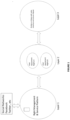
- the system of the invention comprises three main layers, as shown in Figure 1 .
- the first layer (layer 1) comprises a platform with a database of public and private keys associated with both the object identifiers (or, more in general, entities; for simplicity, the term "object” will be used below, which will however implicitly refer to many different entities, including plants, animals, people or things) and the devices controlled by the users for accessing services differentiated in accordance with the user's rights on such objects.
- the users' rights on the various objects are managed and stored in said database.
- the first layer preferably comprises an interface towards the most important social networks, from which the contacts of a given user can be downloaded, if requested and authorized by the same user, from which different categories of rights can be derived; for example, on a given platform (i.e. Facebook) the friends of the owner of the object (or entity) may be granted specific access rights and receive diversified services.
- a given platform i.e. Facebook
- the second layer (layer 2) comprises the user devices accessing the services.
- the user devices may be smartphones, tablets, PCs, gaming consoles, advanced visors - as well as future evolutions thereof - and the like, so long as they are equipped with a processor, a memory, a display apparatus, a camera and a reception/transmission system (including power supply units, amplifiers and any other thing normally used in common consumer electronics).
- the third layer (layer 3) comprises objects (entities or things) provided with a radio interface structure for transmitting and receiving signals, which is connected to a chipset-type device that contains, in a memory, encryption keys, typically public keys, the object identifier, and other parameters that will be defined below.
- the chipset is a secure chipset, like, for example, a SIM card or other counterfeit-proof chipsets.
- the radio interface may be an RFID, or a Bluetooth, Wi-Fi, LTE or 5G connection system or future evolutions thereof, or the like.
- Reception activation on the chipset applied to the object may be triggered by an electromagnetic transmission capable of activating the reception function, which can be implemented by using known technologies.
- semi-active RFID systems may be employed, which utilize the carrier of the transmission system to reply to the interrogation/activation, and which are typically powered by a battery and consume little power.
- An active RFID may be used as well.
- Even completely passive RFID systems may be used. It is also possible to use a small photoelectric cell which, when illuminated by the flash of a camera, for example, will activate the transmission/reception circuit of the system affixed to the object.
- the chipset and its radio interface may be either hidden within the object or visible.
- the three-layer system may be implemented by using user and object authentication techniques aimed at providing different service levels or types on the basis of the rights and authorizations owned by the users in relation to a specific object or entity.
- VR virtual reality
- AR augmented reality
- a content may be received on a device which will allow seeing the object in a specific environment (VR environment), conceived and/or authorized by the owner of the object, and/or displaying the object enriched in its design (AR) thanks to video or image contents also conceived and/or authorized by the holder of full rights on the object (i.e. the owner of the object).
- VR environment a specific environment
- AR augmented reality
- Customization of contents, whether images or videos, in any format, is only possible on the basis of rights of ownership of the object. On the contrary, visualization of the same is possible for anybody or, still in general terms, only for those that are “friends" of the object owner on some social platform.
- each object is unique thanks to both the identifier stored in the memory of the chipset affixed to the object itself and the peculiar characteristics of the contents enriching it, such contents being specific for that obj ect.
- the object may be an industrial product, it will differ from the other objects belonging to the same product line for the very presence of the enriching contents, e.g. in augmented reality, which characterize its uniqueness.
- the uniqueness of the object may be characterized by its image and also by a specific game associated with it, perhaps having specific graphics, which can be played simultaneously by different users, so long as they hold the right to.
- the game or the graphics whether in AU or VR mode, or the like, will be accessible from the user equipment, e.g. a smartphone.
- Said smartphone will display the object through its camera and will receive the AU and VR data or the game, which will all be displayed on the screen as if they were a single object consisting of a physical part, displayed via the camera, and a digital part, sent from the platform (layer 1) and stored in the database.
- the holder of all rights on the enriching contents is the owner of the object, who will have the power to modify such contents and allow them to be viewed by specific categories of users, e.g., as aforesaid, his/her friends on a given social network.
- Authorizations may also be handled on an on-demand basis, i.e. from time to time according to the received requests.
- the object may be displayed with a simple enriching content; the object may be entered into a virtual reality context, with or without enriching contents; or a game may be activated which represents a virtual reality with gaming interaction mechanisms, in which the object is entered with or without augmented contents.
- the visualization of the object in the different above-described contexts may be either simple or immersive, depending on the peripherals, the sensors and the devices in use.
- VR and AR are considered to be immersive when all or most human senses can be used for enriching or virtualizing the reality.
- the present patent may cover both simple and immersive AR and VR visualization cases.
- Identification and authentication of the object occur by means of authentication numerical identifiers and keys, stored in the chipset memory, and via simultaneous visual recognition of the object. To do so, it is necessary to acquire, by means of a camera of a user device belonging to the second layer (layer 2), a digital video or image of the object.
- visual recognition may occur by extracting one or more fingerprints from the image or, even better, from the video of the object.
- the "digital video fingerprinting" referred to herein is a per se known technique that uses software to identify, extract and synthesize the characteristic components of a video for the purpose of enabling the identification of such video.
- the fingerprint is extracted from the video of the object acquired by the user device, and is compared on the first layer with the fingerprint stored, for that specific object, in the database on the first layer.
- the fingerprint stored on the first layer is extracted from the image or video of the object during the production of the object or the configuration of the service.
- the identification and authentication technique of the invention envisages, therefore, the use of authenticated messages exchanged between the object, the user device and the platform, and simultaneous visual recognition of the same object based on fingerprinting or other AI (Artificial Intelligence) techniques, or a combination of both techniques (i.e. a combination of the fingerprinting technique with AI techniques used for visual recognition).
- AI Artificial Intelligence
- the method of the invention which uses the above-described system, therefore comprises the following phases:
- the visual recognition performed in phase d) operates as follows: once the augmented reality or virtual reality data have been received, which data may constitute, for example, images or videos, the union of the augmented reality images or videos with the video of the physical object results in a single image or video of the object "enriched" with the new data.
- the two video components i.e. the one of the physical entity and the one of the augmented (or virtual) reality, constitute the base from which a general visualization can be extracted, referred to herein as "holistic" visualization, which provides a new mode of identification and authentication based on, for example, fingerprinting (or another visual identification technique) of the physical object.
- the combination of the data of the physical object with a specific virtual/augmented reality is treated as a single entity.
- a fingerprint can be extracted not only from the video of the physical object, but also from the union of the same with augmented/virtual reality videos and images.
- the visual recognition performed in phase d), as specified for phase a), may utilize, instead of the fingerprinting technique, current techniques based on AI (Artificial Intelligence) algorithms for recognizing videos or images.
- AI Artificial Intelligence
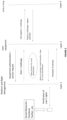
- Figure 2 illustrates the above-described method. Initially, from layer 2 a user device initiates a request for starting the service, after having been authenticated by the service platform on layer 1.
- CA certification authority
- Multiple digital authentication techniques are available, and techniques other than those of the standard X.509 format may be used for meeting lower or higher security requirements.
- the method of the present invention is independent of the specific digital authentication techniques that may be used, which will evolve over time.
- the platform sends an interrogation message and a challenge to the user device (layer 2), which in turn forwards them to the physical object (layer 3) whereto the chipset has been affixed.
- the first message from the user device to the object is also useful for activating the chipset affixed to the object.
- the radio interface of the system affixed to the layer-3 object may use, for example, a passive antenna which, when energized via radio by the active antenna of the layer-2 user device, will turn on and communicate with the latter antenna after having activated the local power supply and interpreted the challenge by using the encryption keys that were stored in the chipset during the initial configuration of the service.
- the user device After having received the reply to the challenge from the system affixed to the object and the object identifier (which identifier may also have been encrypted with the public key of the layer-1 platform), and before sending said reply to the layer-1 platform, the user device acquires, by means of its own camera, a video or an image of the object.
- Some parameters that define, for example, how the object should be framed in order to acquire the video may be communicated from the layer-3 object to the user device (layer 2). Such parameters may include the distance from which the video should be taken, the shape of the object, etc.
- said parameters may alternatively be directly supplied by the layer-1 platform in its reply to the first service request made by the layer-2 user device.
- the layer-1 platform performs the visual identification of the object by comparing the received information with the information stored in the database for the object associated with the identifier just received.
- the user device has the right to use services associated with the object identifier.
- the settings of the rights associated with the object identifier (ID) are checked and it is verified if there is a relationship with the authenticated user who is using the layer-2 user device.
- ID the rights associated with the object identifier
- A is not the owner, it will be verified is the owner wishes to allow other people to make use of some services, e.g. those included among the "acquaintances" or “friends” on a given social network platform (Twitter, Facebook, etc.) or other categories.
- the layer-1 platform will access a social network platform designated by the holder of the rights on the object and will verify that there is an actual relationship and a right associated therewith which may allow the user A to use all or some of the services associated with the object identified as shown in Figure 2 .
- One service example consists of games that, when used in virtual reality contexts, make use of the object in the game.
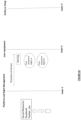
- Another example is the enrichment of the design of the object by adding graphics or videos. See the example of Figure 3 , wherein the object is placed in a virtual reality context or a graphic context with AR images in the presence of hyperlinks and/or with the possibility of navigating and interacting in the VR scenario.
- AR scenarios often include hyperlinks that allow interaction with the presented items.
- the video or the images enriching the design of the object may have a high-level aesthetic characterization that will make a piece of design even more beautiful.
- a game may utilize the object within a virtual reality, enriched with a number of aesthetic additions.
- the owner of the object has also, among his/her own rights, the right to modify and customize the object enriching contents (modifying augmented reality contents) or the possibility to modify or configure the game in which the object has been inserted.
- a typical application of the method of the present invention involves two or more users, one of whom may be the owner of the object, who establish an actual gamification with additional functions or games using the object within virtual reality contexts.
- Such gamification constitutes an indirect verification that the object is authentic and non-counterfeit.
- the additional or enriching data - including any virtual reality contexts that may constitute a background where the object is inserted - constitute, in conjunction with the object itself, the base for a unique visual identification.
- phase d an acquisition of a video or images is performed in order to visually identify the object, which in this case will not need to transmit its own identifier stored in the chipset because the enriched image (or video) and the object itself will constitute an unique item when compared with other objects of the same series and type.
- the object enriching data being peculiar for that specific object and unique, i.e. different from the enriching data associated with other objects, even belonging to the same product line, allow, in conjunction with the object itself, for fast and easy identification and authentication.
- a user who has identified and authenticated the object may, having received the object enriching data (or having activated a game based on the enriching data), offer the identification of the enriched object also for third parties.
- Said third parties may, in fact, display the object in the AR or VR enriched reality or in the game and, by visual recognition, quickly identify the object inserted in its digital context.
- the visual recognition by means of the above-described fingerprinting or AI techniques, or a combination thereof, is carried out on the user device.
- the user device instead of sending the video (or the image) of the object, the user device will send the result of the visual recognition to the layer-1 platform in order to have it verified that the visual recognition matches the information stored in the database.
- the procedure is articulated as follows among the three layers of the system.
- a secure connection is meant to be an authenticated connection using public-key encryption systems such as, for example, TLS ("Transport Layer Security").
- the user device requests the platform to start a given procedure.
- the procedure type may vary, and is specified in the message.
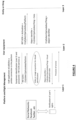
- the procedure described below is a general interrogation procedure, or INT GEN, as indicated in Figure 4 .
- the INT GEN message will include a specific service request, which may be of different types: visualization of information in AU, VR, games, etc.
- the layer-1 system i.e. the service platform, upon receiving the request from the application in the user device, verifies the authenticity of the user registered in the database and then sends, in reply, a token signed with its own private key.
- the message fields will also contain further information, e.g. a specific embodiment may include information necessary for performing the authentication of the user device.
- the token is generated by using common techniques, which make the token number pseudo-random, with which a time stamp and other typical information may be associated as necessary.
- the token When signed with the private key of the layer-1 platform, the token is indicated in Figure 4 as Cry(token1) privatekeyPlatform (i.e. token1 is encrypted by using the platform's private key). Said message is forwarded by the user device to the layer-3 object.
- This first message is also used for activating the reception apparatus of the layer-3 object.
- the apparatus affixed to the layer-3 object includes a semi-passive RFID
- the first transmission will turn on the reception system and the power supply of the chipset connected thereto.
- the secure chipset affixed to the object e.g. a SIM card
- stores the public key of the layer-1 system i.e. the certificate of the layer-1 platform.
- the system affixed to the object decrypts the message Cry(token1), thereby reading token1 and verifying that it is valid.
- the system affixed to the object replies by entering into the reply message, for example, the following information fields: token1 encrypted with the private key of the object ( Cry(token1) privatekeyThing ), a clear general identifier of the object (ID), and a set of parameters (also referred to as Data hereinafter and in the figures), which are useful to indicate to the application in the mobile device the modes of extraction of the fingerprinting information of the object, or at any rate the information necessary to permit a proper visual identification of the object (when AI techniques are also used for the visual recognition).
- parameters may be, without being limited thereto, the distance, the shape or the geometric outline of the object, or the angle from which the fingerprinting information should be extracted.
- the application in the user device to automatize the fingerprinting acquisition modality. For example, the user can see on his/her own device the outline and the angle from which the acquisition of the video (or image) useful for extracting the fingerprinting information should occur. Once the video (or one or more images) has been acquired, the device will send the received information (i.e. Cry(token1) privatekeyThing, ID, Data and the video) to the layer-1 platform by using the secure connection established when the procedure was started.
- Cry(token1) privatekeyThing, ID, Data and the video i.e. Cry(token1) privatekeyThing, ID, Data and the video
- the fingerprinting process may occur on the user device.
- the layer-1 platform will only be sent the result of such recognition, instead of the whole video.
- the user device has received, in the reply to the first message for starting the procedure, the data necessary for verifying, on the user device itself, the visual recognition; therefore, once the visual recognition has been completed on the user device, such recognition will be compared with the data received from the layer-1 platform. If the verification is successful, then the visual identification will be passed.
- the digital authentication of the physical entity or object may occur on the user device, in which case the user device receives from the central platform (layer 1 in Figure 2 ), in the initialization data message, also the keys necessary for authenticating the reply message that it will receive from the physical entity.
- this specific embodiment with authentication of the physical entity on the user device is only allowed by the layer-1 central system when the user device has full rights (e.g. of ownership) on the layer-3 physical object. If both verifications conducted on the user device, i.e. visual recognition and digital identifier authentication, are successful, then the layer-3 object will be directly authenticated by the user device, which will communicate such authentication to the layer-1 platform in the first reply message.
- the platform performs both the identification and the authentication, i.e. the platform receives the object identifier (ID) forwarded by the user device and, by accessing the database, extracts the public key corresponding to the object ID; with such key it then decrypts the message in order to verify that token1 is actually the one that was sent as a recognition challenge. Furthermore, the platform performs the visual recognition of the object on the basis of the received video (or images) by using either artificial intelligence techniques or fingerprinting techniques, or a combination thereof.
- ID object identifier
- the platform performs the visual recognition of the object on the basis of the received video (or images) by using either artificial intelligence techniques or fingerprinting techniques, or a combination thereof.
- the platform may receive the visual recognition directly from the user device.
- the platform compares the received (or made, according to the case) visual recognition with the one stored in the database in association with the object whose identifier ID it has received. If the visual recognition is successful, and if the received token matches the one that was sent, then the object can be considered as identified and authenticated and it will be possible to verify which rights are held by the user who started the general interrogation for the object.
- the object identifier may have a first identifier, which is sent in clear form by the object, and a second identifier, which is encrypted by using the object's private key.
- key-based authentication and visual recognition can be performed on both the layer-1 platform and the layer-2 user device, if the latter has previously received from the platform the reference information useful for the visual recognition and the keys.
- Several combinations are possible due to the flexibility of the system, i.e. visual identification on the user device and authentication based on encryption keys on the platform, or the opposite: visual identification on the platform and authentication based on encryption keys on the user device.
- other combinations are also allowed: both verifications on the user device or, as already described, both verifications on the layer-1 platform.
- the user may be the owner of the object and have full rights on the object, if he/she is of age. If the user is not an adult, he/she may not have full rights on the object.
- the user may be a friend, or an acquaintance, of the owner of the object on a given social platform (Facebook, Twitter, etc.). In order to verify this status, the user must have granted the platform access to his/her contacts on that specific social platform, so that it is possible to verify the existence of a relationship with the person that will make the interrogations.
- the user is a contact certified by the social platform, then he/she will be granted access to certain services related to the object.
- certain services related to the object For example, without limitation, games, augmented reality (or virtual reality) information or services may exist which can be accessed by the user by means of said interrogation of the object. Should no relationship exist between the user who started the procedure and the owner of the object, then the level of the services or games or information that can be displayed may vary extensively according to the rights that the owner of the object decided to grant.
- the platform will reply to the interrogation started by the user by signalling that the object is a counterfeit one.
- the platform will allow the user to gain access to services, contents or games in diversified modalities, according to said user's rights on the object.
- the user who interrogated the object may, for example, access and participate in a game owned by the owner of the object.
- the owner of the object may then allow third parties to gain access, via said interrogation, to games or information that he/she decided to bind to his/her availability of the object.
- the person who started the interrogation will receive in response a game which he/she can play in real time either alone or together with the owner of the object or other similarly entitled users.
- the person who started the procedure may receive, instead of a game, AR and VR information in which the object itself is placed, for example, so as to enrich the image or use thereof.
- Hyperlinks may be entered into the AR or VR contents, which can be clicked by the user to interact with or browse the contents, as shown in Figure 3 .
- AR may, for example, permit displaying, while the object is being displayed on the screen of the user device (e.g. the smartphone), other information which is typical and characteristic of the object in question, or even accessories for the object or the like, which could make it more precious or useful.
- the user device e.g. the smartphone
- the AR may display some (or all, if the number thereof is acceptable) accessories for the object, and the user may decide, by clicking on the accessory displayed in AR, to activate a process for displaying or even purchasing the displayed accessory, as schematized in Figure 3 .
- the accessory may also be purchased by a user other than the owner of the object, if he/she displays the object with his/her own user device with the associated AR (or VR, etc.).
- the purchase procedure requires also the indication of the beneficiary of the purchase of the item displayed in AR.
- the user who is activating the procedure may apply for purchasing the object from the holder of the rights on the object.
- the procedure will start with a different initial message: INT BID (interrogation for product acquisition), as opposed to a general interrogation.
- INT BID interrogation for product acquisition
- the first part of the procedure i.e. the one concerning the authentication and identification of the object, is the same as the one described for INT GEN, see Figure 4 .
- the reply sent from the layer-1 platform to the user who activated the INT BID procedure contains an actual payment proposal, with a price requested by the owner of the object.
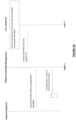
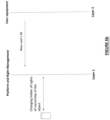
- the INT BID procedure is illustrated in Figures 5 and 5b .
- the owner of the object may have set beforehand the reply and the price that he/she intends to ask for selling the object, or he/she may reply in real time to the interrogation.
- the layer-1 platform will, prior to replying to the received interrogation, send a message to the owner of the object to verify if he/she wishes to sell the object and at which price. If the user replies affirmatively, the requested price will be forwarded to the user who started the procedure. If the user who started the procedure accepts to pay the requested price and the object is sold, then the layer-1 platform will update the property rights of the object, i.e. it will record into the database that the identified and authenticated object is now the property of the user who started the purchase procedure or another user designated by the payer, as shown in Figure 5b .
- the object payment procedure is integrated into the INT BID procedure, but will not be described herein because it uses technological solutions commonly available on the market. Payment may occur either concurrently with or prior to the transfer of the right of ownership, and the platform will notify the parties when the transaction has taken place.
- a specific embodiment of the present invention envisages the following procedure for transferring the rights of ownership of the object without a payment being made at system level; for example, the object may be transferred for free.
- INT DIR a message, referred to as INT DIR, that may refer either to a free-of-charge transfer of the object or to a payment for the object outside the procedure managed by the layer-1 platform.
- INT DIR a message, referred to as INT DIR
- the layer-1 platform activates the object identification and authentication procedure described for the INT GEN procedure.
- the INT DIR procedure is illustrated in Figures 6 and 6b .
- the platform interrogates the holder of the rights on the object and asks if he/she intends to transfer the rights of ownership of the object to the user who activated the procedure. If the holder of the rights decides to transfer them, then the platform will record into the database the new holder of the rights of ownership and will notify the parties about the transaction.
- the present invention can advantageously be implemented by means of a computer program, which comprises coding means for implementing one or more steps of the method when said program is executed by a computer. It is understood, therefore, that the protection scope extends to said computer program and also to computer-readable means that comprise a recorded message, said computer-readable means comprising program coding means for implementing one or more steps of the method when said program is executed by a computer.
Landscapes
- Engineering & Computer Science (AREA)
- Computer Security & Cryptography (AREA)
- Theoretical Computer Science (AREA)
- Multimedia (AREA)
- Software Systems (AREA)
- General Physics & Mathematics (AREA)
- Physics & Mathematics (AREA)
- General Engineering & Computer Science (AREA)
- Business, Economics & Management (AREA)
- Computer Hardware Design (AREA)
- Computer Networks & Wireless Communication (AREA)
- Signal Processing (AREA)
- General Business, Economics & Management (AREA)
- Computing Systems (AREA)
- Health & Medical Sciences (AREA)
- Bioethics (AREA)
- General Health & Medical Sciences (AREA)
- Evolutionary Computation (AREA)
- Mathematical Physics (AREA)
- Medical Informatics (AREA)
- Artificial Intelligence (AREA)
- Computer Vision & Pattern Recognition (AREA)
- Data Mining & Analysis (AREA)
- Human Computer Interaction (AREA)
- Power Engineering (AREA)
- Databases & Information Systems (AREA)
- Entrepreneurship & Innovation (AREA)
- Accounting & Taxation (AREA)
- Development Economics (AREA)
- Economics (AREA)
- Finance (AREA)
- Marketing (AREA)
- Strategic Management (AREA)
- Management, Administration, Business Operations System, And Electronic Commerce (AREA)
- Radar Systems Or Details Thereof (AREA)
- Collating Specific Patterns (AREA)
- Financial Or Insurance-Related Operations Such As Payment And Settlement (AREA)
Claims (8)
- Verfahren zur Identifizierung und Authentifizierung von Objekten, umfassend:- Bereitstellen eines zentralen elektronischen Systems, das eine Datenbank aufweist, wobei die Datenbank umfasst: Chiffrierschlüssel einer physischen Entität; und Daten über eine visuelle Erkennung der physischen Entität;- Bereitstellen mindestens einer elektronischen Benutzervorrichtung, wobei die Benutzervorrichtung mit einer Kamera versehen ist;- Bereitstellen einer oder mehrerer physischer Entitäten, wobei jede physische Entität mit einem System zum Empfangen und Senden von Nachrichten ausgestattet sind, das einen Sicherheitschipsatz umfasst, der Folgendes speichert:- digitale Kennungen einer jeweiligen physischen Entität;- Chiffrierschlüssel der jeweiligen physischen Entität; und- eine Entfernung, von der ein Video der jeweiligen physischen Entität aufgenommen werden sollte;wobei die mindestens eine Benutzervorrichtung konfiguriert ist zum:- Abfragen des zentralen elektronischen Systems, um Authentifizierungsdaten der einen oder der mehreren physischen Entitäten zu empfangen;- Empfangen der Authentifizierungsdaten und Senden von Authentifizierungsanforderungsnachrichten an die eine oder die mehreren physischen Entitäten;- Empfangen von Antworten auf die Authentifizierungsanforderungsnachrichten von mindestens einer der einen oder der mehreren physischen Entitäten, die die Entfernung und die digitalen Kennungen der mindestens einen physischen Entität umfassen,- Durchführen einer Erfassung mindestens eines Videobildes der mindestens einen physischen Entität basierend auf der Entfernung, von der ein Video der jeweiligen physischen Entität aufgenommen werden sollte;- Senden sowohl der digitalen Kennungen der mindestens einen physischen Entität als auch der Videoerfassung an das zentrale elektronische System;wobei das zentrale elektronische System konfiguriert ist zum:- Extrahieren einer digitalen Identität der mindestens einen physischen Entität und Authentifizieren der digitalen Identität der mindestens einen physischen Entität basierend auf Chiffrierschlüsseln, die in der Datenbank enthalten sind,- Durchführen einer visuellen Erkennung der Videoerfassung durch Verwenden von Techniken der Fingerabdruckerzeugung (FR) und/oder der künstlichen Intelligenz (KI), um dadurch das mindestens eine Videobild mit Daten über die visuelle Erkennung zu vergleichen, die in der Datenbank enthalten sind,- Identifizieren und Authentifizieren der mindestens einen physischen Entität, wenn die visuelle Erkennung erfolgreich ist.
- Verfahren zur Identifizierung und Authentifizierung von Objekten nach Anspruch 1, wobei der Sicherheitschipsatz außerdem eine Form der jeweiligen physischen Entität speichert;
und wobei die mindestens eine Benutzervorrichtung ferner konfiguriert ist zum:- Empfangen von Antworten auf die Authentifizierungsanforderungsnachrichten von mindestens einer der einen oder der mehreren physischen Entitäten, die die Entfernung, die Form und die digitalen Kennungen der mindestens einen physischen Entität umfassen, und- Durchführen einer Erfassung mindestens eines Videobildes der mindestens einen physischen Entität basierend auf der Entfernung, von der ein Video der jeweiligen physischen Entität aufgenommen werden sollte, und der Form der jeweiligen physischen Entität. - Verfahren zur Identifizierung und Authentifizierung von Objekten nach Anspruch 1 oder 2, wobei das zentrale elektronische System von der elektronischen Benutzervorrichtung innengehabte Rechte zum Durchführen der Vergleiche der abgefragten, identifizierten und authentifizierten physischen Entität verifiziert.
- Verfahren zur Identifizierung und Authentifizierung von Objekten nach Anspruch 3, wobei das zentrale elektronische System basierend auf den Rechten einen oder mehrere Gamifizierungsdienste und/oder Spieldienste und/oder Inhalte virtueller Realität (VR) und/oder erweiterter Realität (AR) bereitstellt, die mit der mindestens einen elektronischen Benutzervorrichtung assoziiert und verbunden sind.
- Verfahren zur Identifizierung und Authentifizierung von Objekten nach einem der vorhergehenden Ansprüche, wobei die zentrale elektronische Vorrichtung so konfiguriert ist, dass sie der elektronischen Benutzervorrichtung Zugang zu mindestens einer Plattform eines sozialen Netzwerks zur Interaktion mit anderen Benutzervorrichtung gewährt.
- Verfahren zur Identifizierung und Authentifizierung von Objekten nach Anspruch 4 bis 5, wobei die mindestens eine Benutzervorrichtung so konfiguriert ist, dass sie die Inhalte modifiziert und zulässt, dass sie auf anderen Benutzervorrichtungen abgespielt werden.
- Verfahren zur Identifizierung und Authentifizierung von Objekten nach einem der vorhergehenden Ansprüche, wobei die visuelle Erkennung umfasst:- Empfangen der Daten erweiterter Realität oder virtueller Realität als Bilder oder Videos;- Vereinigen der Bilder oder Videos mit Bildern und/oder Videos einer oder mehrerer physischer Entitäten des physischen Objekts, um dadurch ein um die neuen Daten bereichertes einziges Bild oder Video der einen oder der mehreren physischen Entitäten zu erzeugen;- wobei die Vereinigung eine Basis darstellt, aus der eine allgemeine Visualisierung der einen oder der mehreren physischen Entitäten als eine Identifizierungs- und Authentifizierungsmodalität extrahiert werden kann.
- System zur Identifizierung und Authentifizierung von Objekten, das zum Implementieren des Verfahrens nach einem der vorhergehenden Ansprüche ausgelegt ist und umfasst:- mindestens eines des zentralen elektronischen Systems, das eine Datenbank aufweist;- mindestens eine der elektronischen Benutzervorrichtung;- die eine oder die mehreren physischen Entitäten.
Applications Claiming Priority (1)
| Application Number | Priority Date | Filing Date | Title |
|---|---|---|---|
| IT102021000005492A IT202100005492A1 (it) | 2021-03-09 | 2021-03-09 | Metodo per l’identificazione e autenticazione di oggetti, e sistema per la realizzazione del metodo |
Publications (2)
| Publication Number | Publication Date |
|---|---|
| EP4057591A1 EP4057591A1 (de) | 2022-09-14 |
| EP4057591B1 true EP4057591B1 (de) | 2023-05-10 |
Family
ID=75937084
Family Applications (1)
| Application Number | Title | Priority Date | Filing Date |
|---|---|---|---|
| EP21179126.4A Active EP4057591B1 (de) | 2021-03-09 | 2021-06-11 | Verfahren zur identifikation und authentifizierung von objecten, und system zur implementierung des verfahrens |
Country Status (4)
| Country | Link |
|---|---|
| US (1) | US11909883B2 (de) |
| EP (1) | EP4057591B1 (de) |
| CN (1) | CN115040871A (de) |
| IT (1) | IT202100005492A1 (de) |
Families Citing this family (1)
| Publication number | Priority date | Publication date | Assignee | Title |
|---|---|---|---|---|
| US20240154808A1 (en) * | 2022-11-03 | 2024-05-09 | Change Healthcare Holdings, Llc | Systems and methods of trace id validation and trust |
Family Cites Families (13)
| Publication number | Priority date | Publication date | Assignee | Title |
|---|---|---|---|---|
| US7065645B2 (en) | 2003-01-20 | 2006-06-20 | Mordechai Teicher | System, method, and apparatus for visual authentication |
| US20050289061A1 (en) | 2004-06-24 | 2005-12-29 | Michael Kulakowski | Secure authentication system for collectable and consumer items |
| WO2007027151A1 (en) * | 2005-09-01 | 2007-03-08 | Stora Enso Oyj | Verification of a product identifier |
| US8469282B2 (en) | 2011-03-21 | 2013-06-25 | James Freeman | Optically readable identification security tag or stamp |
| WO2016197055A1 (en) * | 2015-06-04 | 2016-12-08 | Chronicled, Inc. | Open registry for identity of things |
| CN106682912B (zh) | 2015-11-10 | 2021-06-15 | 艾普维真股份有限公司 | 3d结构的认证方法 |
| US10037537B2 (en) * | 2016-02-19 | 2018-07-31 | Alitheon, Inc. | Personal history in track and trace system |
| US10074225B2 (en) | 2016-04-18 | 2018-09-11 | Accenture Global Solutions Limited | Validation in secure short-distance-based communication and enforcement system according to visual object flow |
| US10885531B2 (en) * | 2018-01-29 | 2021-01-05 | Accenture Global Solutions Limited | Artificial intelligence counterfeit detection |
| EP3564846A1 (de) | 2018-04-30 | 2019-11-06 | Merck Patent GmbH | Verfahren und systeme zur automatischen objekterkennung und authentifizierung |
| FI3823322T3 (fi) * | 2018-12-20 | 2023-04-27 | Merck Patent Gmbh | Menetelmiä ja järjestelmiä esineen todennuksen valmisteluun ja suorittamiseen |
| US20210110004A1 (en) * | 2019-10-15 | 2021-04-15 | Alitheon, Inc. | Rights management using digital fingerprints |
| US11075766B1 (en) * | 2021-01-22 | 2021-07-27 | Verisart, Inc. | Method and system for certification and authentication of objects |
-
2021
- 2021-03-09 IT IT102021000005492A patent/IT202100005492A1/it unknown
- 2021-06-11 EP EP21179126.4A patent/EP4057591B1/de active Active
- 2021-06-29 US US17/361,514 patent/US11909883B2/en active Active
-
2022
- 2022-03-03 CN CN202210207152.3A patent/CN115040871A/zh active Pending
Also Published As
| Publication number | Publication date |
|---|---|
| CN115040871A (zh) | 2022-09-13 |
| US11909883B2 (en) | 2024-02-20 |
| EP4057591A1 (de) | 2022-09-14 |
| IT202100005492A1 (it) | 2022-09-09 |
| US20220294633A1 (en) | 2022-09-15 |
Similar Documents
| Publication | Publication Date | Title |
|---|---|---|
| US12045832B2 (en) | System and method for augmented reality display of account information | |
| US20180108024A1 (en) | Open registry for provenance and tracking of goods in the supply chain | |
| US20180032759A1 (en) | Open registry for human identification | |
| US20160098723A1 (en) | System and method for block-chain verification of goods | |
| US7438237B2 (en) | Method for identification and authenticating without specific reader an identifier | |
| US20180349893A1 (en) | System for outputting product traceability code | |
| US20140100973A1 (en) | Smartphone virtual payment card | |
| CA2883010A1 (en) | Systems and methods relating to the authenticity and verification of photographic identity documents | |
| WO2018075403A1 (en) | Open registry for provenance and tracking of goods in the supply chain | |
| CN113597330B (zh) | 具有电子认证装置的娱乐卡牌 | |
| CN112825091B (zh) | 正品认证内容生成装置及使用此的综合认证系统 | |
| KR102033621B1 (ko) | Qr 코드 위변조 탐지 시스템 | |
| CN109615402A (zh) | 基于区块链技术的产品质量追溯防伪系统 | |
| US20180108080A1 (en) | Augmented reality device and method for product purchase facilitation | |
| WO2018067974A1 (en) | Open registry for human identification | |
| JP2017511548A (ja) | 商品の偽造防止検証システム | |
| JP2010079393A (ja) | データ処理装置、そのコンピュータプログラムおよびデータ処理方法 | |
| JP2010102726A (ja) | 二次元コード利用者認証方法、および二次元コード配信サーバ | |
| JP2006048390A (ja) | 二次元コード利用者認証方法、および二次元コード利用者認証システム | |
| JP6607629B2 (ja) | 3d認証システム及び3d認証装置 | |
| EP4057591B1 (de) | Verfahren zur identifikation und authentifizierung von objecten, und system zur implementierung des verfahrens | |
| US20250055713A1 (en) | Method for assigning information referring to a physical object to a nonfungible token | |
| CN110728524A (zh) | 一种物品追溯方法、电子设备和可读存储介质 | |
| JP2019169200A (ja) | 3d認証システム | |
| CN114641966B (zh) | 认证装置、认证方法、程序和信息处理装置 |
Legal Events
| Date | Code | Title | Description |
|---|---|---|---|
| PUAI | Public reference made under article 153(3) epc to a published international application that has entered the european phase |
Free format text: ORIGINAL CODE: 0009012 |
|
| STAA | Information on the status of an ep patent application or granted ep patent |
Free format text: STATUS: REQUEST FOR EXAMINATION WAS MADE |
|
| 17P | Request for examination filed |
Effective date: 20220201 |
|
| AK | Designated contracting states |
Kind code of ref document: A1 Designated state(s): AL AT BE BG CH CY CZ DE DK EE ES FI FR GB GR HR HU IE IS IT LI LT LU LV MC MK MT NL NO PL PT RO RS SE SI SK SM TR |
|
| REG | Reference to a national code |
Ref country code: DE Ref legal event code: R079 Free format text: PREVIOUS MAIN CLASS: H04L0029060000 Ipc: H04L0009400000 Ref document number: 602021002261 Country of ref document: DE |
|
| GRAP | Despatch of communication of intention to grant a patent |
Free format text: ORIGINAL CODE: EPIDOSNIGR1 |
|
| STAA | Information on the status of an ep patent application or granted ep patent |
Free format text: STATUS: GRANT OF PATENT IS INTENDED |
|
| INTG | Intention to grant announced |
Effective date: 20230217 |
|
| RIC1 | Information provided on ipc code assigned before grant |
Ipc: G06Q 30/00 20060101ALN20230203BHEP Ipc: G06Q 30/018 20230101ALI20230203BHEP Ipc: H04L 9/40 20220101AFI20230203BHEP |
|
| GRAS | Grant fee paid |
Free format text: ORIGINAL CODE: EPIDOSNIGR3 |
|
| GRAA | (expected) grant |
Free format text: ORIGINAL CODE: 0009210 |
|
| STAA | Information on the status of an ep patent application or granted ep patent |
Free format text: STATUS: THE PATENT HAS BEEN GRANTED |
|
| AK | Designated contracting states |
Kind code of ref document: B1 Designated state(s): AL AT BE BG CH CY CZ DE DK EE ES FI FR GB GR HR HU IE IS IT LI LT LU LV MC MK MT NL NO PL PT RO RS SE SI SK SM TR |
|
| REG | Reference to a national code |
Ref country code: GB Ref legal event code: FG4D |
|
| REG | Reference to a national code |
Ref country code: AT Ref legal event code: REF Ref document number: 1567827 Country of ref document: AT Kind code of ref document: T Effective date: 20230515 Ref country code: CH Ref legal event code: EP |
|
| REG | Reference to a national code |
Ref country code: DE Ref legal event code: R096 Ref document number: 602021002261 Country of ref document: DE |
|
| REG | Reference to a national code |
Ref country code: IE Ref legal event code: FG4D |
|
| REG | Reference to a national code |
Ref country code: NL Ref legal event code: FP |
|
| REG | Reference to a national code |
Ref country code: LT Ref legal event code: MG9D |
|
| REG | Reference to a national code |
Ref country code: AT Ref legal event code: MK05 Ref document number: 1567827 Country of ref document: AT Kind code of ref document: T Effective date: 20230510 |
|
| PG25 | Lapsed in a contracting state [announced via postgrant information from national office to epo] |
Ref country code: SE Free format text: LAPSE BECAUSE OF FAILURE TO SUBMIT A TRANSLATION OF THE DESCRIPTION OR TO PAY THE FEE WITHIN THE PRESCRIBED TIME-LIMIT Effective date: 20230510 Ref country code: PT Free format text: LAPSE BECAUSE OF FAILURE TO SUBMIT A TRANSLATION OF THE DESCRIPTION OR TO PAY THE FEE WITHIN THE PRESCRIBED TIME-LIMIT Effective date: 20230911 Ref country code: NO Free format text: LAPSE BECAUSE OF FAILURE TO SUBMIT A TRANSLATION OF THE DESCRIPTION OR TO PAY THE FEE WITHIN THE PRESCRIBED TIME-LIMIT Effective date: 20230810 Ref country code: ES Free format text: LAPSE BECAUSE OF FAILURE TO SUBMIT A TRANSLATION OF THE DESCRIPTION OR TO PAY THE FEE WITHIN THE PRESCRIBED TIME-LIMIT Effective date: 20230510 Ref country code: AT Free format text: LAPSE BECAUSE OF FAILURE TO SUBMIT A TRANSLATION OF THE DESCRIPTION OR TO PAY THE FEE WITHIN THE PRESCRIBED TIME-LIMIT Effective date: 20230510 |
|
| PG25 | Lapsed in a contracting state [announced via postgrant information from national office to epo] |
Ref country code: RS Free format text: LAPSE BECAUSE OF FAILURE TO SUBMIT A TRANSLATION OF THE DESCRIPTION OR TO PAY THE FEE WITHIN THE PRESCRIBED TIME-LIMIT Effective date: 20230510 Ref country code: PL Free format text: LAPSE BECAUSE OF FAILURE TO SUBMIT A TRANSLATION OF THE DESCRIPTION OR TO PAY THE FEE WITHIN THE PRESCRIBED TIME-LIMIT Effective date: 20230510 Ref country code: LV Free format text: LAPSE BECAUSE OF FAILURE TO SUBMIT A TRANSLATION OF THE DESCRIPTION OR TO PAY THE FEE WITHIN THE PRESCRIBED TIME-LIMIT Effective date: 20230510 Ref country code: LT Free format text: LAPSE BECAUSE OF FAILURE TO SUBMIT A TRANSLATION OF THE DESCRIPTION OR TO PAY THE FEE WITHIN THE PRESCRIBED TIME-LIMIT Effective date: 20230510 Ref country code: IS Free format text: LAPSE BECAUSE OF FAILURE TO SUBMIT A TRANSLATION OF THE DESCRIPTION OR TO PAY THE FEE WITHIN THE PRESCRIBED TIME-LIMIT Effective date: 20230910 Ref country code: HR Free format text: LAPSE BECAUSE OF FAILURE TO SUBMIT A TRANSLATION OF THE DESCRIPTION OR TO PAY THE FEE WITHIN THE PRESCRIBED TIME-LIMIT Effective date: 20230510 Ref country code: GR Free format text: LAPSE BECAUSE OF FAILURE TO SUBMIT A TRANSLATION OF THE DESCRIPTION OR TO PAY THE FEE WITHIN THE PRESCRIBED TIME-LIMIT Effective date: 20230811 |
|
| PG25 | Lapsed in a contracting state [announced via postgrant information from national office to epo] |
Ref country code: FI Free format text: LAPSE BECAUSE OF FAILURE TO SUBMIT A TRANSLATION OF THE DESCRIPTION OR TO PAY THE FEE WITHIN THE PRESCRIBED TIME-LIMIT Effective date: 20230510 |
|
| PG25 | Lapsed in a contracting state [announced via postgrant information from national office to epo] |
Ref country code: SK Free format text: LAPSE BECAUSE OF FAILURE TO SUBMIT A TRANSLATION OF THE DESCRIPTION OR TO PAY THE FEE WITHIN THE PRESCRIBED TIME-LIMIT Effective date: 20230510 |
|
| PG25 | Lapsed in a contracting state [announced via postgrant information from national office to epo] |
Ref country code: SM Free format text: LAPSE BECAUSE OF FAILURE TO SUBMIT A TRANSLATION OF THE DESCRIPTION OR TO PAY THE FEE WITHIN THE PRESCRIBED TIME-LIMIT Effective date: 20230510 Ref country code: SK Free format text: LAPSE BECAUSE OF FAILURE TO SUBMIT A TRANSLATION OF THE DESCRIPTION OR TO PAY THE FEE WITHIN THE PRESCRIBED TIME-LIMIT Effective date: 20230510 Ref country code: RO Free format text: LAPSE BECAUSE OF FAILURE TO SUBMIT A TRANSLATION OF THE DESCRIPTION OR TO PAY THE FEE WITHIN THE PRESCRIBED TIME-LIMIT Effective date: 20230510 Ref country code: EE Free format text: LAPSE BECAUSE OF FAILURE TO SUBMIT A TRANSLATION OF THE DESCRIPTION OR TO PAY THE FEE WITHIN THE PRESCRIBED TIME-LIMIT Effective date: 20230510 Ref country code: DK Free format text: LAPSE BECAUSE OF FAILURE TO SUBMIT A TRANSLATION OF THE DESCRIPTION OR TO PAY THE FEE WITHIN THE PRESCRIBED TIME-LIMIT Effective date: 20230510 Ref country code: CZ Free format text: LAPSE BECAUSE OF FAILURE TO SUBMIT A TRANSLATION OF THE DESCRIPTION OR TO PAY THE FEE WITHIN THE PRESCRIBED TIME-LIMIT Effective date: 20230510 |
|
| REG | Reference to a national code |
Ref country code: DE Ref legal event code: R097 Ref document number: 602021002261 Country of ref document: DE |
|
| PG25 | Lapsed in a contracting state [announced via postgrant information from national office to epo] |
Ref country code: MC Free format text: LAPSE BECAUSE OF FAILURE TO SUBMIT A TRANSLATION OF THE DESCRIPTION OR TO PAY THE FEE WITHIN THE PRESCRIBED TIME-LIMIT Effective date: 20230510 |
|
| PG25 | Lapsed in a contracting state [announced via postgrant information from national office to epo] |
Ref country code: MC Free format text: LAPSE BECAUSE OF FAILURE TO SUBMIT A TRANSLATION OF THE DESCRIPTION OR TO PAY THE FEE WITHIN THE PRESCRIBED TIME-LIMIT Effective date: 20230510 |
|
| PG25 | Lapsed in a contracting state [announced via postgrant information from national office to epo] |
Ref country code: LU Free format text: LAPSE BECAUSE OF NON-PAYMENT OF DUE FEES Effective date: 20230611 |
|
| PLBE | No opposition filed within time limit |
Free format text: ORIGINAL CODE: 0009261 |
|
| STAA | Information on the status of an ep patent application or granted ep patent |
Free format text: STATUS: NO OPPOSITION FILED WITHIN TIME LIMIT |
|
| REG | Reference to a national code |
Ref country code: IE Ref legal event code: MM4A |
|
| PG25 | Lapsed in a contracting state [announced via postgrant information from national office to epo] |
Ref country code: LU Free format text: LAPSE BECAUSE OF NON-PAYMENT OF DUE FEES Effective date: 20230611 |
|
| PG25 | Lapsed in a contracting state [announced via postgrant information from national office to epo] |
Ref country code: IE Free format text: LAPSE BECAUSE OF NON-PAYMENT OF DUE FEES Effective date: 20230611 |
|
| 26N | No opposition filed |
Effective date: 20240213 |
|
| PG25 | Lapsed in a contracting state [announced via postgrant information from national office to epo] |
Ref country code: IE Free format text: LAPSE BECAUSE OF NON-PAYMENT OF DUE FEES Effective date: 20230611 |
|
| PG25 | Lapsed in a contracting state [announced via postgrant information from national office to epo] |
Ref country code: SI Free format text: LAPSE BECAUSE OF FAILURE TO SUBMIT A TRANSLATION OF THE DESCRIPTION OR TO PAY THE FEE WITHIN THE PRESCRIBED TIME-LIMIT Effective date: 20230510 |
|
| PG25 | Lapsed in a contracting state [announced via postgrant information from national office to epo] |
Ref country code: SI Free format text: LAPSE BECAUSE OF FAILURE TO SUBMIT A TRANSLATION OF THE DESCRIPTION OR TO PAY THE FEE WITHIN THE PRESCRIBED TIME-LIMIT Effective date: 20230510 |
|
| PG25 | Lapsed in a contracting state [announced via postgrant information from national office to epo] |
Ref country code: BG Free format text: LAPSE BECAUSE OF FAILURE TO SUBMIT A TRANSLATION OF THE DESCRIPTION OR TO PAY THE FEE WITHIN THE PRESCRIBED TIME-LIMIT Effective date: 20230510 |
|
| PG25 | Lapsed in a contracting state [announced via postgrant information from national office to epo] |
Ref country code: BG Free format text: LAPSE BECAUSE OF FAILURE TO SUBMIT A TRANSLATION OF THE DESCRIPTION OR TO PAY THE FEE WITHIN THE PRESCRIBED TIME-LIMIT Effective date: 20230510 |
|
| REG | Reference to a national code |
Ref country code: CH Ref legal event code: PL |
|
| REG | Reference to a national code |
Ref country code: NL Ref legal event code: MM Effective date: 20240701 |
|
| PG25 | Lapsed in a contracting state [announced via postgrant information from national office to epo] |
Ref country code: NL Free format text: LAPSE BECAUSE OF NON-PAYMENT OF DUE FEES Effective date: 20240701 |
|
| PG25 | Lapsed in a contracting state [announced via postgrant information from national office to epo] |
Ref country code: NL Free format text: LAPSE BECAUSE OF NON-PAYMENT OF DUE FEES Effective date: 20240701 |
|
| PG25 | Lapsed in a contracting state [announced via postgrant information from national office to epo] |
Ref country code: CH Free format text: LAPSE BECAUSE OF NON-PAYMENT OF DUE FEES Effective date: 20240630 |
|
| PGFP | Annual fee paid to national office [announced via postgrant information from national office to epo] |
Ref country code: GB Payment date: 20250621 Year of fee payment: 5 |
|
| PGFP | Annual fee paid to national office [announced via postgrant information from national office to epo] |
Ref country code: BE Payment date: 20250621 Year of fee payment: 5 |
|
| PGFP | Annual fee paid to national office [announced via postgrant information from national office to epo] |
Ref country code: FR Payment date: 20250617 Year of fee payment: 5 |
|
| PG25 | Lapsed in a contracting state [announced via postgrant information from national office to epo] |
Ref country code: CY Free format text: LAPSE BECAUSE OF FAILURE TO SUBMIT A TRANSLATION OF THE DESCRIPTION OR TO PAY THE FEE WITHIN THE PRESCRIBED TIME-LIMIT; INVALID AB INITIO Effective date: 20210611 |
|
| PG25 | Lapsed in a contracting state [announced via postgrant information from national office to epo] |
Ref country code: HU Free format text: LAPSE BECAUSE OF FAILURE TO SUBMIT A TRANSLATION OF THE DESCRIPTION OR TO PAY THE FEE WITHIN THE PRESCRIBED TIME-LIMIT; INVALID AB INITIO Effective date: 20210611 |
|
| PGFP | Annual fee paid to national office [announced via postgrant information from national office to epo] |
Ref country code: DE Payment date: 20250630 Year of fee payment: 5 |
|
| PGFP | Annual fee paid to national office [announced via postgrant information from national office to epo] |
Ref country code: IT Payment date: 20250627 Year of fee payment: 5 |
|
| PG25 | Lapsed in a contracting state [announced via postgrant information from national office to epo] |
Ref country code: TR Free format text: LAPSE BECAUSE OF FAILURE TO SUBMIT A TRANSLATION OF THE DESCRIPTION OR TO PAY THE FEE WITHIN THE PRESCRIBED TIME-LIMIT Effective date: 20230510 |