EP4057250A1 - Intersection control system, intersection control method, and non-transitory storage medium - Google Patents
Intersection control system, intersection control method, and non-transitory storage medium Download PDFInfo
- Publication number
- EP4057250A1 EP4057250A1 EP22153242.7A EP22153242A EP4057250A1 EP 4057250 A1 EP4057250 A1 EP 4057250A1 EP 22153242 A EP22153242 A EP 22153242A EP 4057250 A1 EP4057250 A1 EP 4057250A1
- Authority
- EP
- European Patent Office
- Prior art keywords
- intersection
- information
- vehicle
- pieces
- control information
- Prior art date
- Legal status (The legal status is an assumption and is not a legal conclusion. Google has not performed a legal analysis and makes no representation as to the accuracy of the status listed.)
- Withdrawn
Links
- 238000000034 method Methods 0.000 title claims description 8
- 230000002452 interceptive effect Effects 0.000 claims abstract description 3
- 230000005540 biological transmission Effects 0.000 description 5
- 238000010586 diagram Methods 0.000 description 4
- 238000004891 communication Methods 0.000 description 3
- 238000001514 detection method Methods 0.000 description 2
- 230000006870 function Effects 0.000 description 2
- 238000005516 engineering process Methods 0.000 description 1
- 230000003287 optical effect Effects 0.000 description 1
- 239000013307 optical fiber Substances 0.000 description 1
- 239000004065 semiconductor Substances 0.000 description 1
Images





Classifications
-
- G—PHYSICS
- G08—SIGNALLING
- G08G—TRAFFIC CONTROL SYSTEMS
- G08G1/00—Traffic control systems for road vehicles
- G08G1/09—Arrangements for giving variable traffic instructions
- G08G1/0962—Arrangements for giving variable traffic instructions having an indicator mounted inside the vehicle, e.g. giving voice messages
- G08G1/0967—Systems involving transmission of highway information, e.g. weather, speed limits
- G08G1/096733—Systems involving transmission of highway information, e.g. weather, speed limits where a selection of the information might take place
- G08G1/096741—Systems involving transmission of highway information, e.g. weather, speed limits where a selection of the information might take place where the source of the transmitted information selects which information to transmit to each vehicle
-
- G—PHYSICS
- G08—SIGNALLING
- G08G—TRAFFIC CONTROL SYSTEMS
- G08G1/00—Traffic control systems for road vehicles
- G08G1/07—Controlling traffic signals
- G08G1/08—Controlling traffic signals according to detected number or speed of vehicles
-
- G—PHYSICS
- G08—SIGNALLING
- G08G—TRAFFIC CONTROL SYSTEMS
- G08G1/00—Traffic control systems for road vehicles
- G08G1/01—Detecting movement of traffic to be counted or controlled
- G08G1/0104—Measuring and analyzing of parameters relative to traffic conditions
- G08G1/0108—Measuring and analyzing of parameters relative to traffic conditions based on the source of data
- G08G1/0112—Measuring and analyzing of parameters relative to traffic conditions based on the source of data from the vehicle, e.g. floating car data [FCD]
-
- G—PHYSICS
- G08—SIGNALLING
- G08G—TRAFFIC CONTROL SYSTEMS
- G08G1/00—Traffic control systems for road vehicles
- G08G1/01—Detecting movement of traffic to be counted or controlled
- G08G1/0104—Measuring and analyzing of parameters relative to traffic conditions
- G08G1/0108—Measuring and analyzing of parameters relative to traffic conditions based on the source of data
- G08G1/0116—Measuring and analyzing of parameters relative to traffic conditions based on the source of data from roadside infrastructure, e.g. beacons
-
- G—PHYSICS
- G08—SIGNALLING
- G08G—TRAFFIC CONTROL SYSTEMS
- G08G1/00—Traffic control systems for road vehicles
- G08G1/01—Detecting movement of traffic to be counted or controlled
- G08G1/0104—Measuring and analyzing of parameters relative to traffic conditions
- G08G1/0137—Measuring and analyzing of parameters relative to traffic conditions for specific applications
- G08G1/0145—Measuring and analyzing of parameters relative to traffic conditions for specific applications for active traffic flow control
-
- G—PHYSICS
- G08—SIGNALLING
- G08G—TRAFFIC CONTROL SYSTEMS
- G08G1/00—Traffic control systems for road vehicles
- G08G1/09—Arrangements for giving variable traffic instructions
- G08G1/0962—Arrangements for giving variable traffic instructions having an indicator mounted inside the vehicle, e.g. giving voice messages
- G08G1/0967—Systems involving transmission of highway information, e.g. weather, speed limits
- G08G1/096708—Systems involving transmission of highway information, e.g. weather, speed limits where the received information might be used to generate an automatic action on the vehicle control
- G08G1/096725—Systems involving transmission of highway information, e.g. weather, speed limits where the received information might be used to generate an automatic action on the vehicle control where the received information generates an automatic action on the vehicle control
-
- G—PHYSICS
- G08—SIGNALLING
- G08G—TRAFFIC CONTROL SYSTEMS
- G08G1/00—Traffic control systems for road vehicles
- G08G1/09—Arrangements for giving variable traffic instructions
- G08G1/0962—Arrangements for giving variable traffic instructions having an indicator mounted inside the vehicle, e.g. giving voice messages
- G08G1/0967—Systems involving transmission of highway information, e.g. weather, speed limits
- G08G1/096766—Systems involving transmission of highway information, e.g. weather, speed limits where the system is characterised by the origin of the information transmission
- G08G1/096783—Systems involving transmission of highway information, e.g. weather, speed limits where the system is characterised by the origin of the information transmission where the origin of the information is a roadside individual element
-
- G—PHYSICS
- G08—SIGNALLING
- G08G—TRAFFIC CONTROL SYSTEMS
- G08G1/00—Traffic control systems for road vehicles
- G08G1/16—Anti-collision systems
- G08G1/164—Centralised systems, e.g. external to vehicles
-
- G—PHYSICS
- G08—SIGNALLING
- G08G—TRAFFIC CONTROL SYSTEMS
- G08G1/00—Traffic control systems for road vehicles
- G08G1/16—Anti-collision systems
- G08G1/166—Anti-collision systems for active traffic, e.g. moving vehicles, pedestrians, bikes
-
- G—PHYSICS
- G08—SIGNALLING
- G08G—TRAFFIC CONTROL SYSTEMS
- G08G1/00—Traffic control systems for road vehicles
- G08G1/01—Detecting movement of traffic to be counted or controlled
- G08G1/015—Detecting movement of traffic to be counted or controlled with provision for distinguishing between two or more types of vehicles, e.g. between motor-cars and cycles
-
- G—PHYSICS
- G08—SIGNALLING
- G08G—TRAFFIC CONTROL SYSTEMS
- G08G1/00—Traffic control systems for road vehicles
- G08G1/01—Detecting movement of traffic to be counted or controlled
- G08G1/056—Detecting movement of traffic to be counted or controlled with provision for distinguishing direction of travel
Definitions
- the present invention relates to an intersection control system, an intersection control method, and a non-transitory storage medium.
- JP 2011-159152 A discloses a traffic signal control system that controls multiple traffic signal lights installed at an intersection. Specifically, multiple vehicle sensors is installed on multiple roads connected to an intersection, and a control pattern suitable for controlling multiple traffic signal lights is selected based on sensor signals output from the vehicle sensors.
- the present invention provides a technique that increases the number of vehicles that can enter an intersection at the same time while avoiding at low cost a collision between or among multiple vehicles entering the intersection at the same time.
- An intersection control system includes: a storage storing multiple pieces of intersection control information that are different from each other, each of the pieces of the intersection control information including multiple pieces of permitted trajectory information that are different from each other, each of the pieces of the permitted trajectory information being information indicating a travel trajectory that a vehicle is permitted to follow when passing through an intersection, and a plurality of the travel trajectories indicated by the pieces of the permitted trajectory information included in each of the pieces of the intersection control information not interfering with each other; and one or more processors configured to control entry of the vehicle into the intersection using the pieces of the intersection control information by acquiring multiple pieces of travel trajectory information each of which indicates a travel trajectory that each of a plurality of the vehicles located near the intersection follows when passing through the intersection, selecting a piece of the intersection control information that matches the pieces of the travel trajectory information from among the pieces of the intersection control information, and sending the selected piece of the intersection control information to the vehicles located near the intersection.
- the travel trajectories indicated by the pieces of the permitted trajectory information included in each of the pieces of the intersection control information may neither merge with each other nor intersect each other According to the above configuration, a collision between or among multiple vehicles entering the intersection at the same time can be avoided.
- each of the pieces of the travel trajectory information may include pre-passage road identification information and post-passage road identification information.
- the pre-passage road identification information may indicate a road on which the vehicle travels before passing through the intersection
- the post-passage road identification information may indicate a road on which the vehicle travels after passing through the intersection.
- each of the pieces of the travel trajectory information may include pre-passage direction identification information and post-passage direction identification information.
- the pre-passage direction identification information may indicate a direction in which the vehicle travels before passing through the intersection
- the post-passage direction identification information may indicate a direction in which the vehicle travels after passing through the intersection.
- the one or more processors may be configured to, when there is no vehicle passing through the intersection, select, from among the pieces of the intersection control information, a piece of the intersection control information that matches the travel trajectory information indicating a travel trajectory of the vehicle that reaches the intersection earliest among the vehicles approaching the intersection.
- the one or more processors may be configured to when the one or more processors select a piece of the intersection control information different from the selected piece of the intersection control information, send entry prohibition information prohibiting entry to the intersection to the vehicles located near the intersection, and after elapse of a predetermined time since sending the entry prohibition information to the vehicles, send a piece of the intersection control information newly selected to the vehicles located near the intersection.
- the vehicles located in the intersection can be eliminated when the intersection control unit switches the intersection control information.
- the one or more processors may be configured to predict that a pedestrian is going to cross any one of multiple roads connected to the intersection, and when the one or more processors predict crossing of the pedestrian, prohibit passage of the vehicle on the road the pedestrian is going to cross such that the vehicle does not obstruct the crossing of the pedestrian. According to the above configuration, crossing of the pedestrian is prioritized.
- the one or more processors may be configured to, in a case where there is any vehicle prohibited from passing through the intersection and waiting before the intersection, select a piece of the intersection control information that allows the vehicle waiting before the intersection to pass through the intersection when selecting a piece of the intersection control information different from the selected piece of the intersection control information. According to the above configuration, the waiting time of the vehicle waiting before the intersection can be reduced.
- the one or more processors may be configured to, when an emergency vehicle is approaching the intersection, select a piece of the intersection control information that does not obstruct passage of the emergency vehicle. According to the above configuration, the emergency vehicle can pass through the intersection without waiting before the intersection.
- An intersection control method includes: storing multiple pieces of intersection control information that are different from each other; and controlling entry of a vehicle into an intersection using the pieces of the intersection control information.
- Each of the pieces of the intersection control information includes multiple pieces of permitted trajectory information that are different from each other,
- Each of the pieces of the permitted trajectory information is information indicating a travel trajectory that the vehicle is permitted to follow when passing through the intersection, and a plurality of the travel trajectories indicated by the pieces of the permitted trajectory information included in each of the pieces of the intersection control information do not interfere with each other.
- the controlling of entry of the vehicle into the intersection includes acquiring multiple pieces of travel trajectory information each of which indicates a travel trajectory that each of a plurality of the vehicles located near the intersection follows when passing through the intersection, selecting a piece of the intersection control information that matches the pieces of the travel trajectory information from among the pieces of the intersection control information, and sending the selected piece of the intersection control information to the vehicles located near the intersection. According to the above method, the number of vehicles that can enter an intersection at the same time can be increased while avoiding at low cost a collision between or among multiple vehicles entering the intersection at the same time.
- a non-transitory storage medium stores a program that is executable by a computer and that causes the computer to perform the intersection control method according to the second aspect.
- the number of vehicles that can enter an intersection at the same time can be increased while avoiding at low cost a collision between or among multiple vehicles entering the intersection at the same time.
- FIG. 1 shows multiple vehicles 2 traveling toward an intersection 1. That is, in FIG. 1 , the vehicles 2 are located near the intersection 1 and are approaching the intersection 1.
- the vehicle 2 traveling from north to south and approaching the intersection 1 is also referred to as the vehicle 2N.
- the vehicle 2 traveling from west to east and approaching the intersection 1 is also referred to as the vehicle 2W.
- the vehicle 2N turns left at the intersection 1
- the vehicle 2W turns right at the intersection 1.
- Each of the vehicles 2 is a vehicle that travels by autonomous driving control. However, the vehicles 2 may be driven by an occupant.
- an intersection control device 3 is provided near the intersection 1.
- intersection control device 3 is a specific example of an intersection control system.
- a traffic system 4 includes the intersection control device 3, and the vehicles 2 located near the intersection 1.
- the intersection control device 3 may be implemented by a single device or may be implemented by distributed processing using multiple devices.
- the intersection control device 3 and the vehicles 2 are configured to communicate bidirectionally by, for example, wireless communication technologies such as Wi-Fi (registered trademark) and Bluetooth (registered trademark).
- wireless communication technologies such as Wi-Fi (registered trademark) and Bluetooth (registered trademark).
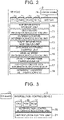
- FIG. 2 is a functional block diagram of the vehicle 2.
- the vehicle 2 includes a central processing unit (CPU) 2a, a random access memory (RAM) 2b that is a read-write memory, and a read-only memory (ROM) 2c.
- the vehicle 2 further includes a Global Positioning System (GPS) module 2d, a touch panel 2e, and a display 2f.
- GPS Global Positioning System
- the touch panel 2e and the display 2f are typically integrated on top of each other.
- the CPU 2a reads and executes a control program stored in the ROM 2c.
- the control program thus causes hardware such as CPU 2a to function as various functional units.
- the various functional units include a map information storage unit 10, a destination information acquisition unit 11, a current location information acquisition unit 12, a route information generation unit 13, an autonomous driving control unit 14, a vehicle speed information acquisition unit 15, a vehicle information transmission unit 16, an intersection control information reception unit 17, and an intersection entry determination unit 18.
- the map information storage unit 10 stores map information.
- the map information typically includes node information and link information.
- the node information represents feature points of a road
- the link information represents the shape of the road by connecting two nodes. Feature points of the road include intersections.
- the destination information acquisition unit 11 acquires destination information entered via the touch panel 2e.
- the current location information acquisition unit 12 acquires current location information of the vehicle 2 by using the GPS module 2d.
- the GPS module 2d is a specific example of a Global Navigation Satellite System (GNSS) module.
- GNSS Global Navigation Satellite System
- Specific examples of the GNSS module include a Global Navigation Satellite System (GLONASS) module, a Galileo module, a BeiDou module, and a Quasi-Zenith Satellite System (QZSS) module.
- the current location information acquisition unit 12 may estimate and acquire the current location information of the vehicle 2 based on the strength of a signal received from a radio base station and a beacon from the base station.
- the route information generation unit 13 refers to the map information stored in the map information storage unit 10, and generates route information from the current location to the destination based on the destination information acquired by the destination information acquisition unit 11 and the current location information acquired by the current location information acquisition unit 12.
- the route information includes multiple pieces of travel trajectory information.
- the pieces of travel trajectory information have one-to-one correspondence with multiple intersections through which the vehicle 2 passes.
- Each piece of travel trajectory information indicates a travel trajectory the vehicle 2 follows when passing through a corresponding intersection.
- Each piece of travel trajectory information typically includes pre-passage direction identification information and post-passage direction identification information.
- the pre-passage direction identification information indicates the direction in which the vehicle 2 travels before passing through the intersection.
- the post-passage direction identification information indicates the direction in which the vehicle 2 travels after passing through the intersection. For example, since the vehicle 2N shown in FIG. 1 turns left at the intersection 1, the pre-passage direction identification information of the travel trajectory information corresponding to the intersection 1 is "south," and the post-passage direction identification information of the travel trajectory information corresponding to the intersection 1 is "east.”
- each piece of travel trajectory information may include pre-passage road identification information and post-passage road identification information.
- the pre-passage road identification information indicates the road on which the vehicle 2 travels before passing through the intersection 1.
- the post-passage road information indicates the road on which the vehicle 2 travels after passing through the intersection 1. For example, it is herein assumed that the road identification (ID) of the road running north from the intersection 1 is "No. 1234,” and the road ID of the road running east from the intersection 1 is "No. 2345.” Since the vehicle 2N shown in FIG. 1 turns left at the intersection 1, the pre-passage road identification information of the travel trajectory information corresponding to the intersection 1 is "1234,” and the post-passage road identification information of the travel trajectory information corresponding to the intersection 1 is "2345.”
- the autonomous driving control unit 14 controls traveling of the vehicle 2 according to the route information generated by the route information generation unit 13.
- the vehicle speed information acquisition unit 15 acquires vehicle speed information of the vehicle 2 based on a detection signal from a vehicle speed sensor that detects the vehicle speed of the vehicle 2.
- the vehicle information transmission unit 16 sends the current location information acquired by the current location information acquisition unit 12 and the vehicle speed information acquired by the vehicle speed information acquisition unit 15 to the intersection control device 3 at predetermined intervals.
- the predetermined interval is, but not limited to, one second.
- the vehicle information transmission unit 16 further sends the travel trajectory information corresponding to the currently approaching intersection 1 to the intersection control device 3.
- intersection control information reception unit 17 receives intersection control information from the intersection control device 3.
- the intersection control information is information indicating a travel trajectory that the vehicle 2 is permitted to follow at the intersection 1, such as traffic signal lights installed at the intersection 1. This will be described in detail later.
- the intersection entry determination unit 18 determines whether the vehicle 2 can enter the intersection 1, based on the intersection control information received by the intersection control information reception unit 17.
- the autonomous driving control unit 14 causes the vehicle 2 to enter the intersection 1 or causes the vehicle 2 to wait before the intersection 1, based on the result of determination made by the intersection entry determination unit 18.
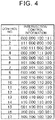
- FIG. 3 is a functional block diagram of the intersection control device 3.
- the intersection control device 3 includes a CPU 3a, a RAM 3b that is a read-write memory, and a ROM 3c.
- a camera 22 is connected to the intersection control device 3.
- the camera 22 captures an image of the intersection 1, the vehicle(s) 2 located near the intersection 1, and a pedestrian(s) crossing the road near the intersection 1.
- the CPU 3a reads and executes a control program stored in the ROM 3c.
- the control program thus causes hardware such as CPU 3a to function as the intersection control unit 21 and the intersection control information storage unit 20.
- the intersection control information storage unit 20 is a specific example of a storage unit.
- the intersection control unit 21 is a specific example of a control unit.
- the intersection control information storage unit 20 stores multiple pieces of intersection control information that are different from each other.
- Each piece of intersection control information includes multiple pieces of permitted trajectory information that are different from each other.
- Each piece of permitted trajectory information is information indicating a travel trajectory that the vehicle 2 is permitted to follow when passing through the intersection 1.
- the travel trajectories indicated by the pieces of permitted trajectory information included in each piece of intersection control information are set so as not to interfere with each other.
- "do not interfere with each other" may mean “do not merge with each other" and "do not intersect each other.”
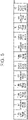
- FIG. 4 shows multiple pieces of intersection control information. That is, FIG. 4 shows multiple pieces of intersection control information identified by Control No. 1 to Control No. 17.
- each piece of intersection control information is a 12-bit array.
- Each piece of permitted trajectory information is represented by an index of the bit array of each piece of intersection control information and the value of the index.
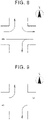
- FIG. 5 shows a bit array of a piece of intersection control information.
- Each piece of intersection control information may include intersection identification information identifying the intersection 1.
- Each piece of intersection control information may include valid time information indicating the start time when the intersection control information becomes valid and the end time when the intersection control information becomes no longer valid.
- Each piece of intersection control information may include permitted vehicle identification information identifying the type of vehicle that is permitted to pass through the intersection 1.
- the intersection control information of Control No. 1 indicates that "a travel trajectory along which the vehicle 2 enters the intersection 1 from the south and turns left at the intersection 1 is permitted,” “a travel trajectory along which the vehicle 2 enters the intersection 1 from the west and turns left at the intersection 1 is permitted,” “a travel trajectory along which the vehicle 2 enters the intersection 1 from the west and goes straight through the intersection 1 is permitted,” and “a travel trajectory along which the vehicle 2 enters the intersection 1 from the west and turns right at the intersection 1 is permitted.”
- a travel trajectory along which the vehicle 2 enters the intersection 1 from the south and turns left at the intersection 1 is permitted
- a travel trajectory along which the vehicle 2 enters the intersection 1 from the west and turns left at the intersection 1 is permitted
- a travel trajectory along which the vehicle 2 enters the intersection 1 from the west and goes straight through the intersection 1 is permitted
- a travel trajectory along which the vehicle 2 enters the intersection 1 from the west and turns right at the intersection 1 is permitted.
- the travel trajectories indicated by the four pieces of permitted trajectory information included in the intersection control information of Control No. 1 do not interfere with each other. Therefore, as long as the vehicles 2 travel according to the intersection control information of Control No. 1, the vehicles 2 will not collide with each other when passing through the intersection 1.
- the intersection control information of Control No. 5 indicates that "a travel trajectory along which the vehicle 2 enters the intersection 1 from the north and turns left at the intersection 1 is permitted,” “a travel trajectory along which the vehicle 2 enters the intersection 1 from the south and turns left at the intersection 1 is permitted,” “a travel trajectory along which the vehicle 2 enters the intersection 1 from the west and turns left at the intersection 1 is permitted,” and “a travel trajectory along which the vehicle 2 enters the intersection 1 from the west and turns right at the intersection 1 is permitted.” As shown in FIG.
- the intersection control information of Control No. 9 indicates that "a travel trajectory along which the vehicle 2 enters the intersection 1 from the north and turns left at the intersection 1 is permitted,” “a travel trajectory along which the vehicle 2 enters the intersection 1 from the east and turns left at the intersection 1 is permitted,” “a travel trajectory along which the vehicle 2 enters the intersection 1 from the east and goes straight through the intersection 1 is permitted,” and “a travel trajectory along which the vehicle 2 enters the intersection 1 from the west and turns left at the intersection 1 is permitted.” As shown in FIG.
- the travel trajectories indicated by the four pieces of permitted trajectory information included in the intersection control information of Control No. 9 do not interfere with each other. Therefore, as long as the vehicles 2 travel according to the intersection control information of Control No. 9, the vehicles 2 will not collide with each other when passing through the intersection 1.
- the intersection control information of Control No. 13 indicates that "a travel trajectory along which the vehicle 2 enters the intersection 1 from the east and turns left at the intersection 1 is permitted,” “a travel trajectory along which the vehicle 2 enters the intersection 1 from the east and goes straight through the intersection 1 is permitted,” “a travel trajectory along which the vehicle 2 enters the intersection 1 from the west and turns left at the intersection 1 is permitted,” and “a travel trajectory along which the vehicle 2 enters the intersection 1 from the west and goes straight through the intersection 1 is permitted.”
- a travel trajectory along which the vehicle 2 enters the intersection 1 from the east and turns left at the intersection 1 is permitted
- a travel trajectory along which the vehicle 2 enters the intersection 1 from the west and turns left at the intersection 1 is permitted
- a travel trajectory along which the vehicle 2 enters the intersection 1 from the west and goes straight through the intersection 1 is permitted.
- the travel trajectories indicated by the four pieces of permitted trajectory information included in the intersection control information of Control No. 13 do not interfere with each other. Therefore, as long as the vehicles 2 travel according to the intersection control information of Control No. 13, the vehicles 2 will not collide with each other when passing through the intersection 1.
- the intersection control information of Control No. 15 indicates that "a travel trajectory along which the vehicle 2 enters the intersection 1 from the north and turns right at the intersection 1 is permitted,” “a travel trajectory along which the vehicle 2 enters the intersection 1 from the east and turns left at the intersection 1 is permitted,” “a travel trajectory along which the vehicle 2 enters the intersection 1 from the south and turns right at the intersection 1 is permitted,” and “a travel trajectory along which the vehicle 2 enters the intersection 1 from the west and turns left at the intersection 1 is permitted.”
- a travel trajectory along which the vehicle 2 enters the intersection 1 from the north and turns right at the intersection 1 is permitted
- a travel trajectory along which the vehicle 2 enters the intersection 1 from the east and turns left at the intersection 1 is permitted
- a travel trajectory along which the vehicle 2 enters the intersection 1 from the south and turns right at the intersection 1 is permitted
- a travel trajectory along which the vehicle 2 enters the intersection 1 from the west and turns left at the intersection 1 is permitted.
- the travel trajectories indicated by the four pieces of permitted trajectory information included in the intersection control information of Control No. 15 do not interfere with each other. Therefore, as long as the vehicles 2 travel according to the intersection control information of Control No. 15, the vehicles 2 will not collide with each other when passing through the intersection 1.
- the intersection control information of Control No. 17 indicates that "a travel trajectory along which the vehicle 2 enters the intersection 1 from the north and turns left at the intersection 1 is permitted,” “a travel trajectory along which the vehicle 2 enters the intersection 1 from the east and turns left at the intersection 1 is permitted,” “a travel trajectory along which the vehicle 2 enters the intersection 1 from the south and turns left at the intersection 1 is permitted,” and “a travel trajectory along which the vehicle 2 enters the intersection 1 from the west and turns left at the intersection 1 is permitted.” As shown in FIG.
- the travel trajectories indicated by the four pieces of permitted trajectory information included in the intersection control information of Control No. 17 do not interfere with each other. Therefore, as long as the vehicles 2 travel according to the intersection control information of Control No. 17, the vehicles 2 will not collide with each other when passing through the intersection 1.
- intersection control unit 21 controls entry of the vehicle 2 into the intersection 1 using the pieces of intersection control information stored in the intersection control information storage unit 20. This will be specifically described below.
- the intersection control unit 21 acquires multiple pieces of travel trajectory information of the multiple vehicles 2 located near the intersection 1 that indicate the travel trajectories the vehicles 2 follows when passing through the intersection 1.
- the intersection control unit 21 receives the travel trajectory information from each vehicle 2 to acquire the travel trajectory information of each vehicle 2 corresponding to the intersection 1. That is, the intersection control unit 21 acquires multiple pieces of travel trajectory information from the multiple vehicles 2 located near the intersection 1.
- the intersection control unit 21 may determine whether a turn signal of each vehicle 2 located near the intersection 1 is on based on the captured image information output from the camera 22, and may generate the travel trajectory information of each vehicle 2 based on the determination result.
- the intersection control unit 21 selects the intersection control information that matches the acquired pieces of travel trajectory information from the pieces of intersection control information stored in the intersection control information storage unit 20.
- the intersection control information that matches the pieces of travel trajectory information of the vehicles 2N and 2W corresponding to the intersection 1 is, for example, the intersection control information of Control No. 5 shown in FIG. 4 .
- FIG. 7 as the pieces of permitted trajectory information included in the intersection control information of Control No. 5 are shown in FIG. 7 .
- the intersection control unit 21 broadcasts the selected intersection control information of Control No. 5 to the vehicles 2 located near the intersection 1.
- the intersection control unit 21 distributes the selected intersection control information of Control No. 5 to the vehicle 2N and the vehicle 2W.
- the vehicle information transmission unit 16 of the vehicle 2N sends the vehicle information of the vehicle 2N to the intersection control device 3.
- the vehicle information includes the current location information, the vehicle speed information, and the travel trajectory information corresponding to the intersection 1.
- the vehicle information transmission unit 16 of the vehicle 2W sends the vehicle information of the vehicle 2W to the intersection control device 3.
- the intersection control unit 21 of the intersection control device 3 calculates in how many seconds the vehicle 2N and the vehicle 2W will enter the intersection 1, based on the current location information and vehicle speed information received from each of the vehicle 2N and the vehicle 2W. For convenience of explanation, it is herein assumed that the vehicle 2N will enter the intersection 1 in one second and the vehicle 2W will enter the intersection 1 in three seconds.
- the intersection control unit 21 calculates whether the vehicle 2N and the vehicle 2W pass through the intersection 1 at the same time by calculating the time until the vehicle 2N and the vehicle 2W enter the intersection 1. As shown in FIG. 13 , the vehicle 2N and the vehicle 2W travel in the intersection 1 at the same time when passing through the intersection 1.
- intersection control unit 21 therefore determines that the vehicle 2N and the vehicle 2W pass through the intersection 1 at the same time. The intersection control unit 21 then selects a piece of the intersection control information that matches both the travel trajectory information of the vehicle 2N and the travel trajectory information of the vehicle 2W.
- intersection control unit 21 sends the selected piece of the intersection control information to the vehicle 2N and the vehicle 2W.
- intersection entry determination unit 18 of the vehicle 2N collates the travel trajectory information corresponding to the intersection 1 with the intersection control information received from the intersection control device 3, and determines whether the travel trajectory information substantially matches any one of the pieces of permitted trajectory information included in the intersection control information. When the travel trajectory information substantially matches any one of the pieces of permitted trajectory information included in the intersection control information (S150: YES), the intersection entry determination unit 18 determines that entry to the intersection 1 is permitted.
- step S150 since the intersection control unit 21 selects the intersection control information that matches the travel trajectory information of the vehicle 2N, the determination result of step S150 is YES.
- the intersection entry determination unit 18 of the vehicle 2W collates the travel trajectory information corresponding to the intersection 1 with the intersection control information received from the intersection control device 3, and determines whether the travel trajectory information substantially matches any one of the pieces of permitted trajectory information included in the intersection control information.
- the intersection entry determination unit 18 determines that entry to the intersection 1 is permitted.
- step S180 since the intersection control unit 21 selects the intersection control information that matches the travel trajectory information of the vehicle 2W, the determination result of step S180 is YES.
- the vehicle 2N and the vehicle 2W can pass through the intersection 1 according to the travel trajectory information of each vehicle 2 without waiting before the intersection 1.
- the intersection control device 3 includes the intersection control information storage unit 20 (storage unit) and the intersection control unit 21 (control unit).
- the intersection control information storage unit 20 stores multiple pieces of intersection control information that is different from each other.
- Each piece of intersection control information includes multiple pieces of permitted trajectory information that is different from each other.
- Each piece of permitted trajectory information is information indicating a travel trajectory that the vehicle 2 is permitted to follow when passing through the intersection 1.
- the travel trajectories indicated by the pieces of permitted trajectory information included in each piece of intersection control information do not interfere with each other.
- the intersection control unit 21 controls entry of the vehicle 2 into the intersection 1 using the pieces of intersection control information. Specifically, the intersection control unit 21 acquires multiple pieces of travel trajectory information of the multiple vehicles 2 located near the intersection 1.
- Each piece of travel trajectory information indicates a travel trajectory the vehicle 2 follows when passing through the intersection 1.
- the intersection control unit 21 selects the intersection control information that matches the acquired pieces of travel trajectory information from the pieces of intersection control information stored in the intersection control information storage unit 20.
- the intersection control unit 21 sends the selected intersection control information to the vehicles 2 located near the intersection 1. According to the above configuration, the number of vehicles 2 that can enter the intersection 1 at the same time can be increased while avoiding at low cost a collision between or among multiple vehicles 2 entering the intersection 1 at the same time.
- the intersection control unit 21 may select the intersection control information that matches the travel trajectory information of the vehicle 2 that reaches the intersection 1 earliest among multiple vehicles 2 approaching the intersection 1. According to the above configuration, when multiple vehicles 2 is approaching the intersection 1 at the same time and there is no intersection control information that satisfies all of the pieces of travel trajectory information of these vehicles 2 at the same time, the vehicle 2 to be preferentially permitted to enter the intersection 1 can be selected at low calculation cost.
- intersection control unit 21 may determine whether there is any vehicle passing through the intersection 1, based on the captured image information output from the camera 22.
- the intersection control unit 21 may determine whether there is any vehicle passing through the intersection 1, based on the current location information of each vehicle 2 received from each vehicle 2 located near the intersection 1.
- the intersection control unit 21 may send entry prohibition information prohibiting entry to the intersection 1 to the vehicles 2 located near the intersection 1. After elapse of a predetermined time since sending the entry prohibition information to the vehicles 2, the intersection control unit 21 may send the newly selected piece of the intersection control information to the vehicles 2 located near the intersection 1. According to the above configuration, the vehicles 2 located in the intersection 1 can be eliminated when the intersection control unit 21 switches the intersection control information.
- the predetermined time may be, for example, about three to five seconds.
- the intersection control unit 21 may select a piece of the intersection control information that allows the vehicle 2 waiting before the intersection 1 to pass through the intersection 1, when the intersection control unit 21 selects a piece of the intersection control information different from the currently selected piece of the intersection control information, namely the next time the intersection control unit 21 switches the intersection control information. According to the above configuration, the waiting time of the vehicle 2 waiting before the intersection 1 can be reduced.
- intersection control unit 21 may select a piece of the intersection control information that does not obstruct passage of the emergency vehicle. According to the above configuration, the emergency vehicle can pass through the intersection 1 without waiting before the intersection 1.
- the intersection control device 3 may further include a crossing prediction unit that predicts that a pedestrian(s) is going to cross any one of multiple roads connected to the intersection 1.
- the intersection control unit 21 corresponds to the crossing prediction unit.
- the intersection control unit 21 may correct the currently selected piece of the intersection control information and send the corrected piece of the intersection control information to the vehicles 2 located near the intersection 1.
- the intersection control unit 21 may predict that a pedestrian(s) will cross any one of the roads connected to the intersection 1, based on the captured image information output from the camera 22. For example, the intersection control unit 21 predicts that a pedestrian(s) will cross any one of the roads connected to the intersection 1 by detecting a pedestrian facing any of the roads connected to the intersection 1 by a known object detection technique.
- FIG. 14 shows a pedestrian who is about to cross the road running north from the intersection 1.
- the intersection control unit 21 corrects the intersection control information as shown in FIG. 15 so as to invalidate the piece of permitted trajectory information that interferes with the crossing of the pedestrian out of the pieces of permitted trajectory information included in the intersection control information shown in FIG. 14 .
- the intersection control unit 21 then sends the corrected intersection control information to the vehicles 2 located near the intersection 1. The crossing of the pedestrian(s) can thus be prioritized over the entry of the vehicle 2 into the intersection 1.
- intersection control information corresponding to the intersection 1 may be represented by a 20-bit array as shown in FIG. 17 .
- Each piece of permitted trajectory information included in each piece of intersection control information is represented by an index of the bit array of each piece of intersection control information and the value of the index.
- Each piece of permitted trajectory information is thus identified by the road ID of the road on the entrance side of the piece of permitted trajectory information and the road ID of the road on the exit side of the piece of permitted trajectory information. Accordingly, the permitted trajectory information can be represented without any problem even when the number of roads connected to the intersection 1 is large.
- the program can be stored and supplied to a computer using various types of non-transitory computer-readable medium.
- the non-transitory computer-readable medium includes various types of tangible storage medium. Examples of the non-transitory computer-readable medium include magnetic recording media (e.g., flexible disk, magnetic tape, hard disk drive) and magneto-optical recording media (e.g., magneto-optical disk). Examples of the non-transitory computer-readable medium further include a compact disc read-only memory (CD-ROM), a compact disc recordable (CD-R), a compact disc rewritable (CD-RW), and a semiconductor memory (including, e.g., a mask ROM).
- CD-ROM compact disc read-only memory
- CD-R compact disc recordable
- CD-RW compact disc rewritable
- semiconductor memory including, e.g., a mask ROM
- Examples of the non-transitory computer-readable medium further include a programmable ROM (PROM), an erasable PROM (EPROM), a flash ROM, and a random access memory (RAM).
- the program may also be supplied to the computer by various types of transitory computer-readable medium. Examples of the transitory computer-readable medium include electrical signals, optical signals, and electromagnetic waves.
- the transitory computer-readable medium can supply the program to the computer via a wired communication path such as electric wire and optical fiber, or a wireless communication path.
Landscapes
- Physics & Mathematics (AREA)
- General Physics & Mathematics (AREA)
- Chemical & Material Sciences (AREA)
- Analytical Chemistry (AREA)
- Life Sciences & Earth Sciences (AREA)
- Atmospheric Sciences (AREA)
- Traffic Control Systems (AREA)
Abstract
An intersection control system includes: a storage (20) storing multiple pieces of intersection control information that are different from each other, each piece of the intersection control information including multiple pieces of permitted trajectory information each of which indicates a permitted travel trajectory that a vehicle (2) is permitted to follow, and a plurality of the travel trajectories not interfering with each other; and one or more processors configured to acquire multiple pieces of travel trajectory information each of which indicates a travel trajectory that each of a plurality of the vehicles (2) located near the intersection (1) follows when passing through the intersection (1), select a piece of the intersection control information that matches the pieces of the travel trajectory information from among the pieces of the intersection control information, and send the selected piece of the intersection control information to the vehicles (2) located near the intersection (1).
Description
- The present invention relates to an intersection control system, an intersection control method, and a non-transitory storage medium.
-
Japanese Unexamined Patent Application Publication No. 2011-159152 JP 2011-159152 A - In the traffic signal control system of
JP 2011-159152 A - The present invention provides a technique that increases the number of vehicles that can enter an intersection at the same time while avoiding at low cost a collision between or among multiple vehicles entering the intersection at the same time.
- An intersection control system according to a first aspect of the present invention includes: a storage storing multiple pieces of intersection control information that are different from each other, each of the pieces of the intersection control information including multiple pieces of permitted trajectory information that are different from each other, each of the pieces of the permitted trajectory information being information indicating a travel trajectory that a vehicle is permitted to follow when passing through an intersection, and a plurality of the travel trajectories indicated by the pieces of the permitted trajectory information included in each of the pieces of the intersection control information not interfering with each other; and one or more processors configured to control entry of the vehicle into the intersection using the pieces of the intersection control information by acquiring multiple pieces of travel trajectory information each of which indicates a travel trajectory that each of a plurality of the vehicles located near the intersection follows when passing through the intersection, selecting a piece of the intersection control information that matches the pieces of the travel trajectory information from among the pieces of the intersection control information, and sending the selected piece of the intersection control information to the vehicles located near the intersection. According to the above configuration, the number of vehicles that can enter an intersection at the same time can be increased while avoiding at low cost a collision between or among multiple vehicles entering the intersection at the same time.
- In the above aspect, the travel trajectories indicated by the pieces of the permitted trajectory information included in each of the pieces of the intersection control information may neither merge with each other nor intersect each other According to the above configuration, a collision between or among multiple vehicles entering the intersection at the same time can be avoided.
- In the above aspect, each of the pieces of the travel trajectory information may include pre-passage road identification information and post-passage road identification information. The pre-passage road identification information may indicate a road on which the vehicle travels before passing through the intersection, and the post-passage road identification information may indicate a road on which the vehicle travels after passing through the intersection.
- In the above aspect, each of the pieces of the travel trajectory information may include pre-passage direction identification information and post-passage direction identification information. The pre-passage direction identification information may indicate a direction in which the vehicle travels before passing through the intersection, and the post-passage direction identification information may indicate a direction in which the vehicle travels after passing through the intersection.
- In the above aspect, the one or more processors may be configured to, when there is no vehicle passing through the intersection, select, from among the pieces of the intersection control information, a piece of the intersection control information that matches the travel trajectory information indicating a travel trajectory of the vehicle that reaches the intersection earliest among the vehicles approaching the intersection. According to the above configuration, when multiple vehicles is approaching the intersection at the same time and there is no intersection control information that satisfies all of the pieces of travel trajectory information of these vehicles at the same time, the vehicle to be permitted to enter the intersection can be selected at low calculation cost.
- In the above aspect, the one or more processors may be configured to when the one or more processors select a piece of the intersection control information different from the selected piece of the intersection control information, send entry prohibition information prohibiting entry to the intersection to the vehicles located near the intersection, and after elapse of a predetermined time since sending the entry prohibition information to the vehicles, send a piece of the intersection control information newly selected to the vehicles located near the intersection. According to the above configuration, the vehicles located in the intersection can be eliminated when the intersection control unit switches the intersection control information.
- In the above aspect, the one or more processors may be configured to predict that a pedestrian is going to cross any one of multiple roads connected to the intersection, and when the one or more processors predict crossing of the pedestrian, prohibit passage of the vehicle on the road the pedestrian is going to cross such that the vehicle does not obstruct the crossing of the pedestrian. According to the above configuration, crossing of the pedestrian is prioritized.
- In the above aspect, the one or more processors may be configured to, in a case where there is any vehicle prohibited from passing through the intersection and waiting before the intersection, select a piece of the intersection control information that allows the vehicle waiting before the intersection to pass through the intersection when selecting a piece of the intersection control information different from the selected piece of the intersection control information. According to the above configuration, the waiting time of the vehicle waiting before the intersection can be reduced.
- In the above aspect, the one or more processors may be configured to, when an emergency vehicle is approaching the intersection, select a piece of the intersection control information that does not obstruct passage of the emergency vehicle. According to the above configuration, the emergency vehicle can pass through the intersection without waiting before the intersection.
- An intersection control method according to a second aspect of the present invention includes: storing multiple pieces of intersection control information that are different from each other; and controlling entry of a vehicle into an intersection using the pieces of the intersection control information. Each of the pieces of the intersection control information includes multiple pieces of permitted trajectory information that are different from each other, Each of the pieces of the permitted trajectory information is information indicating a travel trajectory that the vehicle is permitted to follow when passing through the intersection, and a plurality of the travel trajectories indicated by the pieces of the permitted trajectory information included in each of the pieces of the intersection control information do not interfere with each other. The controlling of entry of the vehicle into the intersection includes acquiring multiple pieces of travel trajectory information each of which indicates a travel trajectory that each of a plurality of the vehicles located near the intersection follows when passing through the intersection, selecting a piece of the intersection control information that matches the pieces of the travel trajectory information from among the pieces of the intersection control information, and sending the selected piece of the intersection control information to the vehicles located near the intersection. According to the above method, the number of vehicles that can enter an intersection at the same time can be increased while avoiding at low cost a collision between or among multiple vehicles entering the intersection at the same time.
- A non-transitory storage medium according to a third aspect of the present invention stores a program that is executable by a computer and that causes the computer to perform the intersection control method according to the second aspect.
- According to the above configuration, the number of vehicles that can enter an intersection at the same time can be increased while avoiding at low cost a collision between or among multiple vehicles entering the intersection at the same time.
- Features, advantages, and technical and industrial significance of exemplary embodiments of the invention will be described below with reference to the accompanying drawings, in which like signs denote like elements, and wherein:
-
FIG. 1 is a plan view showing multiple vehicles approaching an intersection; -
FIG. 2 is a functional block diagram of a vehicle; -
FIG. 3 is a functional block diagram of an intersection control device; -
FIG. 4 shows intersection control information; -
FIG. 5 shows a bit array of intersection control information; -
FIG. 6 shows visualized intersection control information of Control No. 1; -
FIG. 7 shows visualized intersection control information of Control No. 5; -
FIG. 8 shows visualized intersection control information of Control No. 9; -
FIG. 9 shows visualized intersection control information of Control No. 13; -
FIG. 10 shows visualized intersection control information of Control No. 15; -
FIG. 11 shows visualized intersection control information of Control No. 17; -
FIG. 12 shows a control flow of a traffic control system; -
FIG. 13 shows vehicle entry information; -
FIG. 14 shows crossing of a pedestrian; -
FIG. 15 shows visualized corrected intersection control information; -
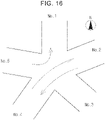
FIG. 16 is a plan view of a five-way intersection; and -
FIG. 17 shows a bit array of intersection control information. - Hereinafter, an embodiment of the present invention will be described with reference to the drawings.
FIG. 1 showsmultiple vehicles 2 traveling toward anintersection 1. That is, inFIG. 1 , thevehicles 2 are located near theintersection 1 and are approaching theintersection 1. Hereinafter, for convenience of explanation, thevehicle 2 traveling from north to south and approaching theintersection 1 is also referred to as thevehicle 2N. Similarly, thevehicle 2 traveling from west to east and approaching theintersection 1 is also referred to as thevehicle 2W. For convenience of explanation, it is assumed that thevehicle 2N turns left at theintersection 1 and thevehicle 2W turns right at theintersection 1. Each of thevehicles 2 is a vehicle that travels by autonomous driving control. However, thevehicles 2 may be driven by an occupant. As shown inFIG. 1 , anintersection control device 3 is provided near theintersection 1. - The
intersection control device 3 is a specific example of an intersection control system. Atraffic system 4 includes theintersection control device 3, and thevehicles 2 located near theintersection 1. Theintersection control device 3 may be implemented by a single device or may be implemented by distributed processing using multiple devices. - The
intersection control device 3 and thevehicles 2 are configured to communicate bidirectionally by, for example, wireless communication technologies such as Wi-Fi (registered trademark) and Bluetooth (registered trademark). -
FIG. 2 is a functional block diagram of thevehicle 2. As shown inFIG. 2 , thevehicle 2 includes a central processing unit (CPU) 2a, a random access memory (RAM) 2b that is a read-write memory, and a read-only memory (ROM) 2c. Thevehicle 2 further includes a Global Positioning System (GPS) module 2d, atouch panel 2e, and adisplay 2f. Thetouch panel 2e and thedisplay 2f are typically integrated on top of each other. The CPU 2a reads and executes a control program stored in the ROM 2c. The control program thus causes hardware such as CPU 2a to function as various functional units. - The various functional units include a map
information storage unit 10, a destinationinformation acquisition unit 11, a current locationinformation acquisition unit 12, a routeinformation generation unit 13, an autonomousdriving control unit 14, a vehicle speedinformation acquisition unit 15, a vehicleinformation transmission unit 16, an intersection controlinformation reception unit 17, and an intersectionentry determination unit 18. - The map
information storage unit 10 stores map information. The map information typically includes node information and link information. The node information represents feature points of a road, and the link information represents the shape of the road by connecting two nodes. Feature points of the road include intersections. - The destination
information acquisition unit 11 acquires destination information entered via thetouch panel 2e. - The current location
information acquisition unit 12 acquires current location information of thevehicle 2 by using the GPS module 2d. The GPS module 2d is a specific example of a Global Navigation Satellite System (GNSS) module. Specific examples of the GNSS module include a Global Navigation Satellite System (GLONASS) module, a Galileo module, a BeiDou module, and a Quasi-Zenith Satellite System (QZSS) module. The current locationinformation acquisition unit 12 may estimate and acquire the current location information of thevehicle 2 based on the strength of a signal received from a radio base station and a beacon from the base station. - The route
information generation unit 13 refers to the map information stored in the mapinformation storage unit 10, and generates route information from the current location to the destination based on the destination information acquired by the destinationinformation acquisition unit 11 and the current location information acquired by the current locationinformation acquisition unit 12. - The route information includes multiple pieces of travel trajectory information. The pieces of travel trajectory information have one-to-one correspondence with multiple intersections through which the
vehicle 2 passes. - Each piece of travel trajectory information indicates a travel trajectory the
vehicle 2 follows when passing through a corresponding intersection. Each piece of travel trajectory information typically includes pre-passage direction identification information and post-passage direction identification information. The pre-passage direction identification information indicates the direction in which thevehicle 2 travels before passing through the intersection. The post-passage direction identification information indicates the direction in which thevehicle 2 travels after passing through the intersection. For example, since thevehicle 2N shown inFIG. 1 turns left at theintersection 1, the pre-passage direction identification information of the travel trajectory information corresponding to theintersection 1 is "south," and the post-passage direction identification information of the travel trajectory information corresponding to theintersection 1 is "east." - Alternatively, each piece of travel trajectory information may include pre-passage road identification information and post-passage road identification information. The pre-passage road identification information indicates the road on which the
vehicle 2 travels before passing through theintersection 1. The post-passage road information indicates the road on which thevehicle 2 travels after passing through theintersection 1. For example, it is herein assumed that the road identification (ID) of the road running north from theintersection 1 is "No. 1234," and the road ID of the road running east from theintersection 1 is "No. 2345." Since thevehicle 2N shown inFIG. 1 turns left at theintersection 1, the pre-passage road identification information of the travel trajectory information corresponding to theintersection 1 is "1234," and the post-passage road identification information of the travel trajectory information corresponding to theintersection 1 is "2345." - The autonomous
driving control unit 14 controls traveling of thevehicle 2 according to the route information generated by the routeinformation generation unit 13. - The vehicle speed
information acquisition unit 15 acquires vehicle speed information of thevehicle 2 based on a detection signal from a vehicle speed sensor that detects the vehicle speed of thevehicle 2. - The vehicle
information transmission unit 16 sends the current location information acquired by the current locationinformation acquisition unit 12 and the vehicle speed information acquired by the vehicle speedinformation acquisition unit 15 to theintersection control device 3 at predetermined intervals. For example, the predetermined interval is, but not limited to, one second. The vehicleinformation transmission unit 16 further sends the travel trajectory information corresponding to the currently approachingintersection 1 to theintersection control device 3. - The intersection control
information reception unit 17 receives intersection control information from theintersection control device 3. The intersection control information is information indicating a travel trajectory that thevehicle 2 is permitted to follow at theintersection 1, such as traffic signal lights installed at theintersection 1. This will be described in detail later. - The intersection
entry determination unit 18 determines whether thevehicle 2 can enter theintersection 1, based on the intersection control information received by the intersection controlinformation reception unit 17. The autonomousdriving control unit 14 causes thevehicle 2 to enter theintersection 1 or causes thevehicle 2 to wait before theintersection 1, based on the result of determination made by the intersectionentry determination unit 18. -
FIG. 3 is a functional block diagram of theintersection control device 3. As shown inFIG. 3 , theintersection control device 3 includes aCPU 3a, aRAM 3b that is a read-write memory, and aROM 3c. Acamera 22 is connected to theintersection control device 3. Thecamera 22 captures an image of theintersection 1, the vehicle(s) 2 located near theintersection 1, and a pedestrian(s) crossing the road near theintersection 1. TheCPU 3a reads and executes a control program stored in theROM 3c. The control program thus causes hardware such asCPU 3a to function as theintersection control unit 21 and the intersection controlinformation storage unit 20. The intersection controlinformation storage unit 20 is a specific example of a storage unit. Theintersection control unit 21 is a specific example of a control unit. - The intersection control
information storage unit 20 stores multiple pieces of intersection control information that are different from each other. Each piece of intersection control information includes multiple pieces of permitted trajectory information that are different from each other. Each piece of permitted trajectory information is information indicating a travel trajectory that thevehicle 2 is permitted to follow when passing through theintersection 1. The travel trajectories indicated by the pieces of permitted trajectory information included in each piece of intersection control information are set so as not to interfere with each other. As used herein, "do not interfere with each other" may mean "do not merge with each other" and "do not intersect each other." -
FIG. 4 shows multiple pieces of intersection control information. That is,FIG. 4 shows multiple pieces of intersection control information identified by Control No. 1 to Control No. 17. - In the present embodiment, each piece of intersection control information is a 12-bit array. Each piece of permitted trajectory information is represented by an index of the bit array of each piece of intersection control information and the value of the index.
FIG. 5 shows a bit array of a piece of intersection control information. As shown inFIG. 5 , the value of the first bit (index = 1) of the intersection control information being "1" means that a travel trajectory along which thevehicle 2 enters theintersection 1 from the north and turns left at theintersection 1 is permitted. The value of the first bit (index = 1) of the intersection control information being "0" means that the travel trajectory along which thevehicle 2 enters theintersection 1 from the north and turns left at theintersection 1 is prohibited. The same applies to the second and subsequent bits of the intersection control information. Each piece of intersection control information may include intersection identification information identifying theintersection 1. Each piece of intersection control information may include valid time information indicating the start time when the intersection control information becomes valid and the end time when the intersection control information becomes no longer valid. Each piece of intersection control information may include permitted vehicle identification information identifying the type of vehicle that is permitted to pass through theintersection 1. - Referring back to
FIG. 4 , the 7th, 10th, 11th, and 12th bits of the intersection control information of Control No. 1 are "1," and the other bits of the intersection control information of Control No. 1 are "0." Therefore, as shown inFIG. 6 , the intersection control information of Control No. 1 indicates that "a travel trajectory along which thevehicle 2 enters theintersection 1 from the south and turns left at theintersection 1 is permitted," "a travel trajectory along which thevehicle 2 enters theintersection 1 from the west and turns left at theintersection 1 is permitted," "a travel trajectory along which thevehicle 2 enters theintersection 1 from the west and goes straight through theintersection 1 is permitted," and "a travel trajectory along which thevehicle 2 enters theintersection 1 from the west and turns right at theintersection 1 is permitted." As shown inFIG. 6 , the travel trajectories indicated by the four pieces of permitted trajectory information included in the intersection control information of Control No. 1 do not interfere with each other. Therefore, as long as thevehicles 2 travel according to the intersection control information of Control No. 1, thevehicles 2 will not collide with each other when passing through theintersection 1. - Referring back to
FIG. 4 , the 1st, 7th, 10th, and 12th bits of the intersection control information of Control No. 5 are "1," and the other bits of the intersection control information of Control No. 5 are "0." Therefore, as shown inFIG. 7 , the intersection control information of Control No. 5 indicates that "a travel trajectory along which thevehicle 2 enters theintersection 1 from the north and turns left at theintersection 1 is permitted," "a travel trajectory along which thevehicle 2 enters theintersection 1 from the south and turns left at theintersection 1 is permitted," "a travel trajectory along which thevehicle 2 enters theintersection 1 from the west and turns left at theintersection 1 is permitted," and "a travel trajectory along which thevehicle 2 enters theintersection 1 from the west and turns right at theintersection 1 is permitted." As shown inFIG. 7 , the travel trajectories indicated by the four pieces of permitted trajectory information included in the intersection control information of Control No. 5 do not interfere with each other. Therefore, as long as thevehicles 2 travel according to the intersection control information of Control No. 5, thevehicles 2 will not collide with each other when passing through theintersection 1. - Referring back to
FIG. 4 , the 1st, 4th, 5th, and 10th bits of the intersection control information of Control No. 9 are "1," and the other bits of the intersection control information of Control No. 9 are "0." Therefore, as shown inFIG. 8 , the intersection control information of Control No. 9 indicates that "a travel trajectory along which thevehicle 2 enters theintersection 1 from the north and turns left at theintersection 1 is permitted," "a travel trajectory along which thevehicle 2 enters theintersection 1 from the east and turns left at theintersection 1 is permitted," "a travel trajectory along which thevehicle 2 enters theintersection 1 from the east and goes straight through theintersection 1 is permitted," and "a travel trajectory along which thevehicle 2 enters theintersection 1 from the west and turns left at theintersection 1 is permitted." As shown inFIG. 8 , the travel trajectories indicated by the four pieces of permitted trajectory information included in the intersection control information of Control No. 9 do not interfere with each other. Therefore, as long as thevehicles 2 travel according to the intersection control information of Control No. 9, thevehicles 2 will not collide with each other when passing through theintersection 1. - Referring back to
FIG. 4 , the 4th, 5th, 10th, and 11th bits of the intersection control information of Control No. 13 are "1," and the other bits of the intersection control information of Control No. 13 are "0." Therefore, as shown inFIG. 9 , the intersection control information of Control No. 13 indicates that "a travel trajectory along which thevehicle 2 enters theintersection 1 from the east and turns left at theintersection 1 is permitted," "a travel trajectory along which thevehicle 2 enters theintersection 1 from the east and goes straight through theintersection 1 is permitted," "a travel trajectory along which thevehicle 2 enters theintersection 1 from the west and turns left at theintersection 1 is permitted," and "a travel trajectory along which thevehicle 2 enters theintersection 1 from the west and goes straight through theintersection 1 is permitted." As shown inFIG. 9 , the travel trajectories indicated by the four pieces of permitted trajectory information included in the intersection control information of Control No. 13 do not interfere with each other. Therefore, as long as thevehicles 2 travel according to the intersection control information of Control No. 13, thevehicles 2 will not collide with each other when passing through theintersection 1. - Referring back to
FIG. 4 , the 3rd, 4th, 9th, and 10th bits of the intersection control information of Control No. 15 are "1," and the other bits of the intersection control information of Control No. 15 are "0." Therefore, as shown inFIG. 10 , the intersection control information of Control No. 15 indicates that "a travel trajectory along which thevehicle 2 enters theintersection 1 from the north and turns right at theintersection 1 is permitted," "a travel trajectory along which thevehicle 2 enters theintersection 1 from the east and turns left at theintersection 1 is permitted," "a travel trajectory along which thevehicle 2 enters theintersection 1 from the south and turns right at theintersection 1 is permitted," and "a travel trajectory along which thevehicle 2 enters theintersection 1 from the west and turns left at theintersection 1 is permitted." As shown inFIG. 10 , the travel trajectories indicated by the four pieces of permitted trajectory information included in the intersection control information of Control No. 15 do not interfere with each other. Therefore, as long as thevehicles 2 travel according to the intersection control information of Control No. 15, thevehicles 2 will not collide with each other when passing through theintersection 1. - Referring back to
FIG. 4 , the 1st, 4th, 7th, and 10th bits of the intersection control information of Control No. 17 are "1," and the other bits of the intersection control information of Control No. 17 are "0." Therefore, as shown inFIG. 11 , the intersection control information of Control No. 17 indicates that "a travel trajectory along which thevehicle 2 enters theintersection 1 from the north and turns left at theintersection 1 is permitted," "a travel trajectory along which thevehicle 2 enters theintersection 1 from the east and turns left at theintersection 1 is permitted," "a travel trajectory along which thevehicle 2 enters theintersection 1 from the south and turns left at theintersection 1 is permitted," and "a travel trajectory along which thevehicle 2 enters theintersection 1 from the west and turns left at theintersection 1 is permitted." As shown inFIG. 11 , the travel trajectories indicated by the four pieces of permitted trajectory information included in the intersection control information of Control No. 17 do not interfere with each other. Therefore, as long as thevehicles 2 travel according to the intersection control information of Control No. 17, thevehicles 2 will not collide with each other when passing through theintersection 1. - The
intersection control unit 21 controls entry of thevehicle 2 into theintersection 1 using the pieces of intersection control information stored in the intersection controlinformation storage unit 20. This will be specifically described below. - First, the
intersection control unit 21 acquires multiple pieces of travel trajectory information of themultiple vehicles 2 located near theintersection 1 that indicate the travel trajectories thevehicles 2 follows when passing through theintersection 1. In the present embodiment, theintersection control unit 21 receives the travel trajectory information from eachvehicle 2 to acquire the travel trajectory information of eachvehicle 2 corresponding to theintersection 1. That is, theintersection control unit 21 acquires multiple pieces of travel trajectory information from themultiple vehicles 2 located near theintersection 1. Alternatively, theintersection control unit 21 may determine whether a turn signal of eachvehicle 2 located near theintersection 1 is on based on the captured image information output from thecamera 22, and may generate the travel trajectory information of eachvehicle 2 based on the determination result. - The
intersection control unit 21 selects the intersection control information that matches the acquired pieces of travel trajectory information from the pieces of intersection control information stored in the intersection controlinformation storage unit 20. As shown inFIG. 1 , since thevehicle 2N turns left at theintersection 1 and thevehicle 2W turns right at theintersection 1, the intersection control information that matches the pieces of travel trajectory information of thevehicles intersection 1 is, for example, the intersection control information of Control No. 5 shown inFIG. 4 . Refer alsoFIG. 7 as the pieces of permitted trajectory information included in the intersection control information of Control No. 5 are shown inFIG. 7 . - The
intersection control unit 21 broadcasts the selected intersection control information of Control No. 5 to thevehicles 2 located near theintersection 1. Theintersection control unit 21 distributes the selected intersection control information of Control No. 5 to thevehicle 2N and thevehicle 2W. - Next, the control flow of the
traffic system 4 will be described with reference toFIGS. 12 and 13 . It is herein assumed that thevehicle 2N and thevehicle 2W are autonomously driven according to the generated route information and are approaching theintersection 1. It is also assumed that thevehicle 2N and thevehicle 2W are traveling toward theintersection 1 such that thevehicle 2N and thevehicle 2W enter theintersection 1 at substantially the same time. - S100: First, the vehicle
information transmission unit 16 of thevehicle 2N sends the vehicle information of thevehicle 2N to theintersection control device 3. The vehicle information includes the current location information, the vehicle speed information, and the travel trajectory information corresponding to theintersection 1. - S110: The vehicle
information transmission unit 16 of thevehicle 2W sends the vehicle information of thevehicle 2W to theintersection control device 3. - S120: The
intersection control unit 21 of theintersection control device 3 calculates in how many seconds thevehicle 2N and thevehicle 2W will enter theintersection 1, based on the current location information and vehicle speed information received from each of thevehicle 2N and thevehicle 2W. For convenience of explanation, it is herein assumed that thevehicle 2N will enter theintersection 1 in one second and thevehicle 2W will enter theintersection 1 in three seconds. Theintersection control unit 21 calculates whether thevehicle 2N and thevehicle 2W pass through theintersection 1 at the same time by calculating the time until thevehicle 2N and thevehicle 2W enter theintersection 1. As shown inFIG. 13 , thevehicle 2N and thevehicle 2W travel in theintersection 1 at the same time when passing through theintersection 1. Theintersection control unit 21 therefore determines that thevehicle 2N and thevehicle 2W pass through theintersection 1 at the same time. Theintersection control unit 21 then selects a piece of the intersection control information that matches both the travel trajectory information of thevehicle 2N and the travel trajectory information of thevehicle 2W. - S130, S140: Referring back to
FIG. 12 , theintersection control unit 21 sends the selected piece of the intersection control information to thevehicle 2N and thevehicle 2W. - S150: The intersection
entry determination unit 18 of thevehicle 2N collates the travel trajectory information corresponding to theintersection 1 with the intersection control information received from theintersection control device 3, and determines whether the travel trajectory information substantially matches any one of the pieces of permitted trajectory information included in the intersection control information. When the travel trajectory information substantially matches any one of the pieces of permitted trajectory information included in the intersection control information (S150: YES), the intersectionentry determination unit 18 determines that entry to theintersection 1 is permitted. - S160: When the intersection
entry determination unit 18 determines that entry to theintersection 1 is permitted (S150: YES), the autonomousdriving control unit 14 controls thevehicle 2N so that thevehicle 2N will enter theintersection 1 without waiting before theintersection 1 and will turn left at theintersection 1 according to the travel trajectory information corresponding to theintersection 1. - In the present embodiment, since the
intersection control unit 21 selects the intersection control information that matches the travel trajectory information of thevehicle 2N, the determination result of step S150 is YES. - S170: When the intersection
entry determination unit 18 determines that entry to theintersection 1 is not permitted (S150: NO), the autonomousdriving control unit 14 controls thevehicle 2N so that thevehicle 2N will wait before theintersection 1. - S180: Similarly, the intersection
entry determination unit 18 of thevehicle 2W collates the travel trajectory information corresponding to theintersection 1 with the intersection control information received from theintersection control device 3, and determines whether the travel trajectory information substantially matches any one of the pieces of permitted trajectory information included in the intersection control information. When the travel trajectory information substantially matches any one of the pieces of permitted trajectory information included in the intersection control information (S180: YES), the intersectionentry determination unit 18 determines that entry to theintersection 1 is permitted. - S190: When the intersection
entry determination unit 18 determines that entry to theintersection 1 is permitted (S180: YES), the autonomousdriving control unit 14 controls thevehicle 2W so that thevehicle 2W will enter theintersection 1 without waiting before theintersection 1 and will turn right at theintersection 1 according to the travel trajectory information corresponding to theintersection 1. - In the present embodiment, since the
intersection control unit 21 selects the intersection control information that matches the travel trajectory information of thevehicle 2W, the determination result of step S180 is YES. - S200: When the intersection
entry determination unit 18 determines that entry to theintersection 1 is not permitted (S180: NO), the autonomousdriving control unit 14 controls thevehicle 2W so that thevehicle 2W will wait before theintersection 1. - As a result, the
vehicle 2N and thevehicle 2W can pass through theintersection 1 according to the travel trajectory information of eachvehicle 2 without waiting before theintersection 1. - Although the embodiment of the present invention is described above, the embodiment has the following features.
- The intersection control device 3 (intersection control system) includes the intersection control information storage unit 20 (storage unit) and the intersection control unit 21 (control unit). The intersection control
information storage unit 20 stores multiple pieces of intersection control information that is different from each other. Each piece of intersection control information includes multiple pieces of permitted trajectory information that is different from each other. Each piece of permitted trajectory information is information indicating a travel trajectory that thevehicle 2 is permitted to follow when passing through theintersection 1. The travel trajectories indicated by the pieces of permitted trajectory information included in each piece of intersection control information do not interfere with each other. Theintersection control unit 21 controls entry of thevehicle 2 into theintersection 1 using the pieces of intersection control information. Specifically, theintersection control unit 21 acquires multiple pieces of travel trajectory information of themultiple vehicles 2 located near theintersection 1. Each piece of travel trajectory information indicates a travel trajectory thevehicle 2 follows when passing through theintersection 1. Theintersection control unit 21 selects the intersection control information that matches the acquired pieces of travel trajectory information from the pieces of intersection control information stored in the intersection controlinformation storage unit 20. Theintersection control unit 21 sends the selected intersection control information to thevehicles 2 located near theintersection 1. According to the above configuration, the number ofvehicles 2 that can enter theintersection 1 at the same time can be increased while avoiding at low cost a collision between or amongmultiple vehicles 2 entering theintersection 1 at the same time. - The above embodiment may be modified as follows.
- For example, when there is no vehicle passing through the
intersection 1, theintersection control unit 21 may select the intersection control information that matches the travel trajectory information of thevehicle 2 that reaches theintersection 1 earliest amongmultiple vehicles 2 approaching theintersection 1. According to the above configuration, whenmultiple vehicles 2 is approaching theintersection 1 at the same time and there is no intersection control information that satisfies all of the pieces of travel trajectory information of thesevehicles 2 at the same time, thevehicle 2 to be preferentially permitted to enter theintersection 1 can be selected at low calculation cost. - In this case, the
intersection control unit 21 may determine whether there is any vehicle passing through theintersection 1, based on the captured image information output from thecamera 22. Theintersection control unit 21 may determine whether there is any vehicle passing through theintersection 1, based on the current location information of eachvehicle 2 received from eachvehicle 2 located near theintersection 1. - When the
intersection control unit 21 selects a piece of the intersection control information different from the currently selected piece of the intersection control information, theintersection control unit 21 may send entry prohibition information prohibiting entry to theintersection 1 to thevehicles 2 located near theintersection 1. After elapse of a predetermined time since sending the entry prohibition information to thevehicles 2, theintersection control unit 21 may send the newly selected piece of the intersection control information to thevehicles 2 located near theintersection 1. According to the above configuration, thevehicles 2 located in theintersection 1 can be eliminated when theintersection control unit 21 switches the intersection control information. - In this case, the predetermined time may be, for example, about three to five seconds.
- In the case where there is any
vehicle 2 prohibited from passing through theintersection 1 and thus waiting before theintersection 1, theintersection control unit 21 may select a piece of the intersection control information that allows thevehicle 2 waiting before theintersection 1 to pass through theintersection 1, when theintersection control unit 21 selects a piece of the intersection control information different from the currently selected piece of the intersection control information, namely the next time theintersection control unit 21 switches the intersection control information. According to the above configuration, the waiting time of thevehicle 2 waiting before theintersection 1 can be reduced. - When an emergency vehicle is approaching the
intersection 1, theintersection control unit 21 may select a piece of the intersection control information that does not obstruct passage of the emergency vehicle. According to the above configuration, the emergency vehicle can pass through theintersection 1 without waiting before theintersection 1. - The
intersection control device 3 may further include a crossing prediction unit that predicts that a pedestrian(s) is going to cross any one of multiple roads connected to theintersection 1. In the present embodiment, theintersection control unit 21 corresponds to the crossing prediction unit. When theintersection control unit 21 predicts the crossing of a pedestrian(s), theintersection control unit 21 prohibits passage of thevehicle 2 on the road the pedestrian(s) is going to cross such that thevehicle 2 does not obstruct the crossing of the pedestrian(s). Typically, theintersection control unit 21 may correct the currently selected piece of the intersection control information and send the corrected piece of the intersection control information to thevehicles 2 located near theintersection 1. - In this case, the
intersection control unit 21 may predict that a pedestrian(s) will cross any one of the roads connected to theintersection 1, based on the captured image information output from thecamera 22. For example, theintersection control unit 21 predicts that a pedestrian(s) will cross any one of the roads connected to theintersection 1 by detecting a pedestrian facing any of the roads connected to theintersection 1 by a known object detection technique. -
FIG. 14 shows a pedestrian who is about to cross the road running north from theintersection 1. In this case, theintersection control unit 21 corrects the intersection control information as shown inFIG. 15 so as to invalidate the piece of permitted trajectory information that interferes with the crossing of the pedestrian out of the pieces of permitted trajectory information included in the intersection control information shown inFIG. 14 . Theintersection control unit 21 then sends the corrected intersection control information to thevehicles 2 located near theintersection 1. The crossing of the pedestrian(s) can thus be prioritized over the entry of thevehicle 2 into theintersection 1. - When the
intersection 1 is a five-way intersection as shown inFIG. 16 , the intersection control information corresponding to theintersection 1 may be represented by a 20-bit array as shown inFIG. 17 . Each piece of permitted trajectory information included in each piece of intersection control information is represented by an index of the bit array of each piece of intersection control information and the value of the index. The value of the first bit (index = 1) of the intersection control information being "1" means that a travel trajectory along which thevehicle 2 enters theintersection 1 from the road with the road ID of 1 and travels to the road with the road ID of 2 is permitted. On the other hand, the value of the first bit (index = 1) of the intersection control information being "0" means that the travel trajectory along which thevehicle 2 enters theintersection 1 from the road with the road ID of 1 and travels to the road with the road ID of 2 is prohibited. Each piece of permitted trajectory information is thus identified by the road ID of the road on the entrance side of the piece of permitted trajectory information and the road ID of the road on the exit side of the piece of permitted trajectory information. Accordingly, the permitted trajectory information can be represented without any problem even when the number of roads connected to theintersection 1 is large. - In the above example, the program can be stored and supplied to a computer using various types of non-transitory computer-readable medium. The non-transitory computer-readable medium includes various types of tangible storage medium. Examples of the non-transitory computer-readable medium include magnetic recording media (e.g., flexible disk, magnetic tape, hard disk drive) and magneto-optical recording media (e.g., magneto-optical disk). Examples of the non-transitory computer-readable medium further include a compact disc read-only memory (CD-ROM), a compact disc recordable (CD-R), a compact disc rewritable (CD-RW), and a semiconductor memory (including, e.g., a mask ROM). Examples of the non-transitory computer-readable medium further include a programmable ROM (PROM), an erasable PROM (EPROM), a flash ROM, and a random access memory (RAM). The program may also be supplied to the computer by various types of transitory computer-readable medium. Examples of the transitory computer-readable medium include electrical signals, optical signals, and electromagnetic waves. The transitory computer-readable medium can supply the program to the computer via a wired communication path such as electric wire and optical fiber, or a wireless communication path.
Claims (11)
- An intersection control system comprising:a storage (20) storing multiple pieces of intersection control information that are different from each other, each of the pieces of the intersection control information including multiple pieces of permitted trajectory information that are different from each other, each of the pieces of the permitted trajectory information being information indicating a travel trajectory that a vehicle (2) is permitted to follow when passing through an intersection (1), and a plurality of the travel trajectories indicated by the pieces of the permitted trajectory information included in each of the pieces of the intersection control information not interfering with each other; andone or more processors configured to control entry of the vehicle (2) into the intersection (1) using the pieces of the intersection control information byacquiring multiple pieces of travel trajectory information each of which indicates a travel trajectory that each of a plurality of the vehicles (2) located near the intersection (1) follows when passing through the intersection (1),selecting a piece of the intersection control information that matches the pieces of the travel trajectory information from among the pieces of the intersection control information, andsending the selected piece of the intersection control information to the vehicles (2) located near the intersection (1).
- The intersection control system according to claim 1, wherein the travel trajectories indicated by the pieces of the permitted trajectory information included in each of the pieces of the intersection control information neither merge with each other nor intersect each other.
- The intersection control system according to claim 1 or 2, wherein each of the pieces of the travel trajectory information includes pre-passage road identification information and post-passage road identification information, the pre-passage road identification information indicating a road on which the vehicle (2) travels before passing through the intersection (1), and the post-passage road identification information indicating a road on which the vehicle (2) travels after passing through the intersection (1).
- The intersection control system according to claim 1 or 2, wherein each of the pieces of the travel trajectory information includes pre-passage direction identification information and post-passage direction identification information, the pre-passage direction identification information indicating a direction in which the vehicle (2) travels before passing through the intersection (1), and the post-passage direction identification information indicating a direction in which the vehicle (2) travels after passing through the intersection (1).
- The intersection control system according to any one of claims 1 to 4, wherein the one or more processors are configured to, when there is no vehicle (2) passing through the intersection (1), select, from among the pieces of the intersection control information, a piece of the intersection control information that matches the travel trajectory information indicating a travel trajectory of the vehicle (2) that reaches the intersection (1) earliest among the vehicles (2) approaching the intersection (1).
- The intersection control system according to any one of claims 1 to 5, wherein the one or more processors are configured towhen the one or more processors select a piece of the intersection control information different from the selected piece of the intersection control information, send entry prohibition information prohibiting entry to the intersection (1) to the vehicles (2) located near the intersection (1), andafter elapse of a predetermined time since sending the entry prohibition information to the vehicles (2), send a piece of the intersection control information newly selected to the vehicles (2) located near the intersection (1).
- The intersection control system according to any one of claims 1 to 6, wherein the one or more processors are configured topredict that a pedestrian is going to cross any one of multiple roads connected to the intersection (1), andwhen the one or more processors predict crossing of the pedestrian, prohibit passage of the vehicle (2) on the road the pedestrian is going to cross such that the vehicle (2) does not obstruct the crossing of the pedestrian.
- The intersection control system according to any one of claims 1 to 7, wherein the one or more processors are configured to, in a case where there is any vehicle (2) prohibited from passing through the intersection (1) and waiting before the intersection (1), select a piece of the intersection control information that allows the vehicle (2) waiting before the intersection (1) to pass through the intersection (1) when selecting a piece of the intersection control information different from the selected piece of the intersection control information.
- The intersection control system according to any one of claims 1 to 8, wherein the one or more processors are configured to, when an emergency vehicle is approaching the intersection (1), select a piece of the intersection control information that does not obstruct passage of the emergency vehicle.
- An intersection control method comprising:storing multiple pieces of intersection control information that are different from each other; andcontrolling entry of a vehicle (2) into an intersection (1) using the pieces of the intersection control information, wherein:each of the pieces of the intersection control information includes multiple pieces of permitted trajectory information that are different from each other;each of the pieces of the permitted trajectory information is information indicating a travel trajectory that the vehicle (2) is permitted to follow when passing through the intersection (1);a plurality of the travel trajectories indicated by the pieces of the permitted trajectory information included in each of the pieces of the intersection control information do not interfere with each other; andthe controlling of entry of the vehicle (2) into the intersection (1) includesacquiring multiple pieces of travel trajectory information each of which indicates a travel trajectory that each of a plurality of the vehicles (2) located near the intersection (1) follows when passing through the intersection (1),selecting a piece of the intersection control information that matches the pieces of the travel trajectory information from among the pieces of the intersection control information, andsending the selected piece of the intersection control information to the vehicles (2) located near the intersection (1).
- Anon-transitory storage medium storing a program that is executable by a computer and that causes the computer to perform the intersection control method according to claim 10.
Applications Claiming Priority (1)
| Application Number | Priority Date | Filing Date | Title |
|---|---|---|---|
| JP2021038864A JP7552449B2 (en) | 2021-03-11 | 2021-03-11 | Intersection control system, intersection control method, and program |
Publications (1)
| Publication Number | Publication Date |
|---|---|
| EP4057250A1 true EP4057250A1 (en) | 2022-09-14 |
Family
ID=80034753
Family Applications (1)
| Application Number | Title | Priority Date | Filing Date |
|---|---|---|---|
| EP22153242.7A Withdrawn EP4057250A1 (en) | 2021-03-11 | 2022-01-25 | Intersection control system, intersection control method, and non-transitory storage medium |
Country Status (4)
| Country | Link |
|---|---|
| US (1) | US12112625B2 (en) |
| EP (1) | EP4057250A1 (en) |
| JP (1) | JP7552449B2 (en) |
| CN (1) | CN115083180B (en) |
Families Citing this family (5)
| Publication number | Priority date | Publication date | Assignee | Title |
|---|---|---|---|---|
| US10909866B2 (en) * | 2018-07-20 | 2021-02-02 | Cybernet Systems Corp. | Autonomous transportation system and methods |
| JP7567856B2 (en) | 2022-05-13 | 2024-10-16 | トヨタ自動車株式会社 | Intersection control system, intersection control method, and program |
| JP7647702B2 (en) | 2022-07-14 | 2025-03-18 | トヨタ自動車株式会社 | Intersection control method and program |
| JP7634582B2 (en) * | 2023-02-15 | 2025-02-21 | 本田技研工業株式会社 | Driving assistance devices and in-vehicle devices |
| WO2025163831A1 (en) * | 2024-01-31 | 2025-08-07 | 三菱電機株式会社 | Virtual signal device, mobile body management system, mobile body, and mobile body management method |
Citations (4)
| Publication number | Priority date | Publication date | Assignee | Title |
|---|---|---|---|---|
| JP2011159152A (en) | 2010-02-02 | 2011-08-18 | Kyosan Electric Mfg Co Ltd | Traffic signal controller and traffic signal control method |
| US20200193813A1 (en) * | 2018-08-02 | 2020-06-18 | Beijing Tusen Weilai Technology Co., Ltd. | Navigation method, device and system for cross intersection |
| US20200294394A1 (en) * | 2019-03-13 | 2020-09-17 | Mitsubishi Electric Research Laboratories, Inc. | Joint Control of Vehicles Traveling on Different Intersecting Roads |
| US20200365015A1 (en) * | 2016-12-19 | 2020-11-19 | ThruGreen, LLC | Connected and adaptive vehicle traffic management system with digital prioritization |
Family Cites Families (82)
| Publication number | Priority date | Publication date | Assignee | Title |
|---|---|---|---|---|
| JP3653954B2 (en) * | 1997-10-23 | 2005-06-02 | トヨタ自動車株式会社 | Mobile device for mobile traffic control system, control station for mobile traffic control system, mobile traffic control system |
| JP3857402B2 (en) * | 1997-12-05 | 2006-12-13 | 富士通株式会社 | Intersection collision prevention method and system, storage medium storing intersection collision prevention program, and intersection apparatus |
| JP2000113396A (en) * | 1998-09-30 | 2000-04-21 | Nippon Signal Co Ltd:The | Support device for driving at intersection |
| JP2002024986A (en) * | 2000-07-06 | 2002-01-25 | Nippon Signal Co Ltd:The | Pedestrian detection device |
| JP3736463B2 (en) * | 2002-01-23 | 2006-01-18 | 石川島播磨重工業株式会社 | Pedestrian response signal control method |
| US7327280B2 (en) * | 2002-08-15 | 2008-02-05 | California Institute Of Technology | Emergency vehicle traffic signal preemption system |
| JP2004326172A (en) * | 2003-04-21 | 2004-11-18 | Mitsubishi Electric Corp | Signal controller |
| US20050131627A1 (en) * | 2003-12-15 | 2005-06-16 | Gary Ignatin | Traffic management in a roadway travel data exchange network |
| US20050187701A1 (en) * | 2004-02-23 | 2005-08-25 | Baney Douglas M. | Traffic communication system |
| JP4130441B2 (en) * | 2004-07-16 | 2008-08-06 | 三菱電機株式会社 | Map information processing device |
| US7603228B2 (en) * | 2006-05-25 | 2009-10-13 | Ford Global Technologies, Llc | Haptic apparatus and coaching method for improving vehicle fuel economy |
| JP2008003952A (en) * | 2006-06-23 | 2008-01-10 | Sumitomo Electric Ind Ltd | Traffic object detection device |
| JP4311451B2 (en) * | 2007-01-16 | 2009-08-12 | トヨタ自動車株式会社 | Vehicle and control method thereof |
| JP4863919B2 (en) * | 2007-04-12 | 2012-01-25 | 三菱電機株式会社 | Map information processing device |
| JP4872812B2 (en) | 2007-06-06 | 2012-02-08 | 住友電気工業株式会社 | Traffic signal control apparatus and method |
| CN101470963A (en) * | 2007-12-26 | 2009-07-01 | 奥城同立科技开发(北京)有限公司 | Intelligent traffic light control system |
| US8762035B2 (en) * | 2008-05-19 | 2014-06-24 | Waze Mobile Ltd. | System and method for realtime community information exchange |
| US7890241B2 (en) * | 2008-05-21 | 2011-02-15 | Ford Global Technologies, Llc | Boosted engine control responsive to driver selected performance |
| US8040254B2 (en) * | 2009-01-06 | 2011-10-18 | International Business Machines Corporation | Method and system for controlling and adjusting traffic light timing patterns |
| JP5088349B2 (en) * | 2009-06-01 | 2012-12-05 | トヨタ自動車株式会社 | Vehicle travel control device |
| US8258937B2 (en) * | 2009-06-09 | 2012-09-04 | Ford Global Technologies, Llc | System for transmitting data between a hybrid electric vehicle and a remote transceiver |
| US10198942B2 (en) * | 2009-08-11 | 2019-02-05 | Connected Signals, Inc. | Traffic routing display system with multiple signal lookahead |
| US20110043348A1 (en) * | 2009-08-20 | 2011-02-24 | Michael Blackard | Shift Prompt System |
| JP5509762B2 (en) * | 2009-09-18 | 2014-06-04 | 住友電気工業株式会社 | Traffic signal information providing system and information providing apparatus |
| KR20120065781A (en) * | 2010-12-13 | 2012-06-21 | 한국전자통신연구원 | Apparatus and method for guiding the entry and standby time to the crossroad and computer readable recording medium storing program thereof |
| US8700299B2 (en) * | 2011-02-24 | 2014-04-15 | Mitsubishi Electric Corporation | Navigation device, recommended speed arithmetic device, and recommended speed presentation device |
| JP5831290B2 (en) * | 2012-02-28 | 2015-12-09 | 株式会社デンソー | Branch probability prediction device |
| JP6095953B2 (en) * | 2012-07-23 | 2017-03-15 | 住友電工システムソリューション株式会社 | Light beacon |
| JP5949366B2 (en) | 2012-09-13 | 2016-07-06 | トヨタ自動車株式会社 | Road traffic control method, road traffic control system and in-vehicle terminal |
| CN103680162A (en) * | 2012-09-18 | 2014-03-26 | 王大海 | Self-adaptive coordination control system for traffic signal |
| JP5935636B2 (en) * | 2012-09-28 | 2016-06-15 | アイシン・エィ・ダブリュ株式会社 | Intersection guidance system, method and program |
| US8793062B2 (en) * | 2012-11-06 | 2014-07-29 | Apple Inc. | Routing based on detected stops |
| US9153128B2 (en) * | 2013-02-20 | 2015-10-06 | Holzmac Llc | Traffic signal device for driver/pedestrian/cyclist advisory message screen at signalized intersections |
| US9403482B2 (en) * | 2013-11-22 | 2016-08-02 | At&T Intellectual Property I, L.P. | Enhanced view for connected cars |
| US9349288B2 (en) * | 2014-07-28 | 2016-05-24 | Econolite Group, Inc. | Self-configuring traffic signal controller |
| US20160148507A1 (en) * | 2014-11-20 | 2016-05-26 | Blyncsy, Inc. | Traffic system for monitoring, analyzing, and modulating traffic patterns |
| US9528838B2 (en) * | 2014-12-09 | 2016-12-27 | Toyota Motor Engineering & Manufacturing North America, Inc. | Autonomous vehicle detection of and response to intersection priority |
| KR20160142182A (en) * | 2015-06-02 | 2016-12-12 | 사단법인 한국지능형교통체계협회 | Integrated control apparatus of its device and integrated control system of its device having the same |
| US10365115B2 (en) * | 2015-09-04 | 2019-07-30 | Nokia Technologies Oy | Method and apparatus for providing an alternative route based on traffic light status |
| US9824581B2 (en) * | 2015-10-30 | 2017-11-21 | International Business Machines Corporation | Using automobile driver attention focus area to share traffic intersection status |
| CN105869415B (en) * | 2015-11-30 | 2018-08-10 | 乐卡汽车智能科技(北京)有限公司 | Bus or train route cooperates with the control method of traffic lights and bus or train route collaboration traffic lights |
| US20200234582A1 (en) * | 2016-01-03 | 2020-07-23 | Yosef Mintz | Integrative system and methods to apply predictive dynamic city-traffic load balancing and perdictive parking control that may further contribute to cooperative safe driving |
| US10181264B2 (en) * | 2016-04-18 | 2019-01-15 | Ford Global Technologies, Llc | Systems and methods for intersection assistance using dedicated short range communications |
| EP3449436A1 (en) * | 2016-04-25 | 2019-03-06 | Telefonaktiebolaget LM Ericsson (PUBL) | Method and apparatus for automating physical equipment replacement and maintenance |
| CN105976062B (en) * | 2016-05-13 | 2018-10-30 | 腾讯科技(深圳)有限公司 | Method for digging, trip service implementing method and the device of signal lamp duration data |
| US20180253968A1 (en) * | 2016-08-30 | 2018-09-06 | Faraday&Future Inc. | Systems and methods for triggering traffic light sensors |
| GB201616097D0 (en) * | 2016-09-21 | 2016-11-02 | Univ Oxford Innovation Ltd | Segmentation of path proposals |
| US20200184238A1 (en) * | 2016-10-17 | 2020-06-11 | Panasonic Automotive System Company of America, Division of Corporation of North America (8 pp.) | Vehicle occupant monitoring system use cases |
| US10181263B2 (en) * | 2016-11-29 | 2019-01-15 | Here Global B.V. | Method, apparatus and computer program product for estimation of road traffic condition using traffic signal data |
| US10126746B2 (en) * | 2016-12-01 | 2018-11-13 | Walmart Apollo, Llc | Autonomous drone and tool selection and delivery |
| CN106846833B (en) * | 2017-04-12 | 2019-11-05 | 辛国臣 | Method for controlling traffic signal lights and system |
| SG11202000488YA (en) * | 2017-07-28 | 2020-02-27 | Sumitomo Electric Industries | On-vehicle control device, traveling speed control method, and computer program |
| US10681613B2 (en) * | 2017-09-12 | 2020-06-09 | Tango Network, Inc. | Vehicle-to-everything (V2X), vehicle-to-vehicle (V2V) and vehicle-to-infrastructure (V2I) policy for managing distracted driving |
| CN107464431B (en) * | 2017-09-17 | 2020-11-06 | 杨楚妮 | Two-phase passing method for plane intersection |
| JP6962127B2 (en) * | 2017-10-19 | 2021-11-05 | トヨタ自動車株式会社 | Traffic light information provision system, traffic light information provision method, and server used for it |
| WO2019092658A1 (en) * | 2017-11-10 | 2019-05-16 | C.R.F. Societa' Consortile Per Azioni | Warning and adjusting the longitudinal speed of a motor vehicle based on the recognized road traffic lights |
| CN108091155B (en) * | 2017-11-13 | 2020-04-28 | 华为技术有限公司 | Traffic flow control method and device in Internet of vehicles |
| US10198002B2 (en) * | 2017-11-21 | 2019-02-05 | GM Global Technology Operations LLC | Systems and methods for unprotected left turns in high traffic situations in autonomous vehicles |
| US10488861B2 (en) * | 2017-11-22 | 2019-11-26 | GM Global Technology Operations LLC | Systems and methods for entering traffic flow in autonomous vehicles |
| JP6962802B2 (en) * | 2017-12-08 | 2021-11-05 | トヨタ自動車株式会社 | Driving support equipment, driving support methods and programs |
| CN109979217A (en) * | 2017-12-28 | 2019-07-05 | 北京百度网讯科技有限公司 | cooperative intersection traffic control method, device and equipment |
| JP7276311B2 (en) * | 2018-02-23 | 2023-05-18 | 住友電気工業株式会社 | TRAFFIC SIGNAL CONTROL DEVICE, TRAFFIC SIGNAL CONTROL METHOD, AND COMPUTER PROGRAM |
| CN111902782B (en) * | 2018-02-26 | 2025-09-30 | 北美日产公司 | Centralized shared autonomous vehicle operations management |
| US10559197B2 (en) * | 2018-04-13 | 2020-02-11 | Toyota Jidosha Kabushiki Kaisha | Remote vehicle control at intersections |
| US11450201B2 (en) * | 2018-04-27 | 2022-09-20 | Cubic Corporation | Adaptively controlling traffic movements for pedestrian safety |
| CN111501447A (en) * | 2019-01-30 | 2020-08-07 | 周立新 | Novel traffic system and urban traffic system with same |
| US10733883B1 (en) * | 2018-06-22 | 2020-08-04 | Traffic Technology Services, Inc. | Configurable virtual traffic detection system under predictive signal states |
| CN108922177B (en) * | 2018-06-29 | 2021-08-10 | 东南大学 | Speed control system and method for unmanned vehicle passing through intersection |
| US10926777B2 (en) * | 2018-10-18 | 2021-02-23 | Toyota Research Institute, Inc. | Vehicles and methods of controlling a vehicle to accommodate vehicle cut-in |
| JP7054667B2 (en) * | 2018-10-23 | 2022-04-14 | 株式会社京三製作所 | Road traffic control system |
| US10997461B2 (en) * | 2019-02-01 | 2021-05-04 | Tesla, Inc. | Generating ground truth for machine learning from time series elements |
| US20200272159A1 (en) * | 2019-02-25 | 2020-08-27 | Denso International America, Inc. | Method and vehicle control system for intelligent vehicle control about a roundabout |
| US20200310448A1 (en) * | 2019-03-26 | 2020-10-01 | GM Global Technology Operations LLC | Behavioral path-planning for a vehicle |
| JP7271259B2 (en) * | 2019-03-28 | 2023-05-11 | 日産自動車株式会社 | Vehicle management system, vehicle management device, and vehicle management method |
| CN110009919B (en) * | 2019-03-30 | 2021-12-21 | 共享智能铸造产业创新中心有限公司 | Automatic control system for vehicle mixed with AGV at intersection and working method thereof |
| CN110910646B (en) * | 2019-12-11 | 2022-03-29 | 上海同济城市规划设计研究院有限公司 | Cooperative control method for unmanned buses at intersection |
| CN111681441B (en) * | 2020-05-11 | 2022-04-01 | 淮阴工学院 | Method for realizing preferential driving of right-turn vehicle based on left-turn lane dynamic stop line |
| US20220009491A1 (en) * | 2020-07-10 | 2022-01-13 | Toyota Research Institute, Inc. | Systems and methods for controlling a vehicle with respect to an intersection |
| US11636757B2 (en) * | 2020-08-31 | 2023-04-25 | Nissan North America, Inc. | System and method for optimizing traffic flow using vehicle signals |
| US12061847B2 (en) * | 2021-02-24 | 2024-08-13 | Zoox, Inc. | Agent conversions in driving simulations |
| US12060083B2 (en) * | 2021-04-23 | 2024-08-13 | Motional Ad Llc | Planning with dynamic state a trajectory of an autonomous vehicle |
| US12403908B2 (en) * | 2022-03-14 | 2025-09-02 | Garrett Transportation I Inc. | Non-selfish traffic lights passing advisory systems |
-
2021
- 2021-03-11 JP JP2021038864A patent/JP7552449B2/en active Active
-
2022
- 2022-01-13 US US17/574,776 patent/US12112625B2/en active Active
- 2022-01-17 CN CN202210049315.XA patent/CN115083180B/en active Active
- 2022-01-25 EP EP22153242.7A patent/EP4057250A1/en not_active Withdrawn
Patent Citations (4)
| Publication number | Priority date | Publication date | Assignee | Title |
|---|---|---|---|---|
| JP2011159152A (en) | 2010-02-02 | 2011-08-18 | Kyosan Electric Mfg Co Ltd | Traffic signal controller and traffic signal control method |
| US20200365015A1 (en) * | 2016-12-19 | 2020-11-19 | ThruGreen, LLC | Connected and adaptive vehicle traffic management system with digital prioritization |
| US20200193813A1 (en) * | 2018-08-02 | 2020-06-18 | Beijing Tusen Weilai Technology Co., Ltd. | Navigation method, device and system for cross intersection |
| US20200294394A1 (en) * | 2019-03-13 | 2020-09-17 | Mitsubishi Electric Research Laboratories, Inc. | Joint Control of Vehicles Traveling on Different Intersecting Roads |
Also Published As
| Publication number | Publication date |
|---|---|
| US20220292958A1 (en) | 2022-09-15 |
| CN115083180B (en) | 2023-11-24 |
| JP2022138782A (en) | 2022-09-26 |
| US12112625B2 (en) | 2024-10-08 |
| CN115083180A (en) | 2022-09-20 |
| JP7552449B2 (en) | 2024-09-18 |
Similar Documents
| Publication | Publication Date | Title |
|---|---|---|
| EP4057250A1 (en) | Intersection control system, intersection control method, and non-transitory storage medium | |
| US11543833B2 (en) | Vehicle control device, vehicle control method, and vehicle control system | |
| US11084489B2 (en) | Automated driving assist system | |
| JP7149790B2 (en) | Parking assistance method and parking assistance device | |
| US20170284814A1 (en) | Occupancy Based Navigation System | |
| JP4929870B2 (en) | Navigation device | |
| EP1223407A1 (en) | Vehicle-mounted position computing apparatus | |
| CN114026623A (en) | Traffic Control Devices and Signals | |
| US11511754B2 (en) | Seat determining apparatus, seat determining method, and computer program for determining seat | |
| JP2018173800A (en) | Automatic travel control device | |
| JP2013186638A (en) | Communication system | |
| JP2023126340A (en) | Information processing device, information processing method, program for information processing, and recording medium | |
| JP4306749B2 (en) | Light beacon | |
| WO2020012210A1 (en) | Travel assistance method and travel assistance device | |
| JP7567856B2 (en) | Intersection control system, intersection control method, and program | |
| JP2023115440A (en) | VEHICLE CONTROL DEVICE, AUTONOMOUS DISTRIBUTED TRAFFIC CONTROL SYSTEM AND VEHICLE CONTROL METHOD | |
| EP3848884B1 (en) | Device and method for providing audible guidance for a user to a meeting point with a vehicle | |
| EP4163751A1 (en) | Remote support system and remote support method | |
| CN114735021B (en) | Automatic driving system and abnormality determination method | |
| JP4631981B2 (en) | Distance recognition system, distance recognition method, road-vehicle communication system, and road-vehicle communication method | |
| JP4687669B2 (en) | Distance recognition system, optical beacon, in-vehicle device, and distance recognition method | |
| US12307887B2 (en) | Intersection control system, intersection control method, and program | |
| JP2021124944A (en) | Onboard apparatus and tandem travel control method | |
| JP2011137733A (en) | Navigation device and route search method thereof | |
| US12036889B2 (en) | Energy supply system, information processing apparatus, and method |
Legal Events
| Date | Code | Title | Description |
|---|---|---|---|
| PUAI | Public reference made under article 153(3) epc to a published international application that has entered the european phase |
Free format text: ORIGINAL CODE: 0009012 |
|
| STAA | Information on the status of an ep patent application or granted ep patent |
Free format text: STATUS: REQUEST FOR EXAMINATION WAS MADE |
|
| 17P | Request for examination filed |
Effective date: 20220210 |
|
| AK | Designated contracting states |
Kind code of ref document: A1 Designated state(s): AL AT BE BG CH CY CZ DE DK EE ES FI FR GB GR HR HU IE IS IT LI LT LU LV MC MK MT NL NO PL PT RO RS SE SI SK SM TR |
|
| STAA | Information on the status of an ep patent application or granted ep patent |
Free format text: STATUS: THE APPLICATION IS DEEMED TO BE WITHDRAWN |
|
| 18D | Application deemed to be withdrawn |
Effective date: 20230315 |