EP4055920B1 - Method and apparatus for improving network slice control accuracy in wireless communication system - Google Patents
Method and apparatus for improving network slice control accuracy in wireless communication system Download PDFInfo
- Publication number
- EP4055920B1 EP4055920B1 EP20888012.0A EP20888012A EP4055920B1 EP 4055920 B1 EP4055920 B1 EP 4055920B1 EP 20888012 A EP20888012 A EP 20888012A EP 4055920 B1 EP4055920 B1 EP 4055920B1
- Authority
- EP
- European Patent Office
- Prior art keywords
- nssai
- slice
- network
- network slice
- quota
- Prior art date
- Legal status (The legal status is an assumption and is not a legal conclusion. Google has not performed a legal analysis and makes no representation as to the accuracy of the status listed.)
- Active
Links
Images




Classifications
-
- H—ELECTRICITY
- H04—ELECTRIC COMMUNICATION TECHNIQUE
- H04W—WIRELESS COMMUNICATION NETWORKS
- H04W8/00—Network data management
- H04W8/18—Processing of user or subscriber data, e.g. subscribed services, user preferences or user profiles; Transfer of user or subscriber data
- H04W8/20—Transfer of user or subscriber data
-
- H—ELECTRICITY
- H04—ELECTRIC COMMUNICATION TECHNIQUE
- H04W—WIRELESS COMMUNICATION NETWORKS
- H04W60/00—Affiliation to network, e.g. registration; Terminating affiliation with the network, e.g. de-registration
-
- H—ELECTRICITY
- H04—ELECTRIC COMMUNICATION TECHNIQUE
- H04W—WIRELESS COMMUNICATION NETWORKS
- H04W48/00—Access restriction; Network selection; Access point selection
- H04W48/18—Selecting a network or a communication service
-
- H—ELECTRICITY
- H04—ELECTRIC COMMUNICATION TECHNIQUE
- H04W—WIRELESS COMMUNICATION NETWORKS
- H04W60/00—Affiliation to network, e.g. registration; Terminating affiliation with the network, e.g. de-registration
- H04W60/002—Registration for requesting network slices
-
- H—ELECTRICITY
- H04—ELECTRIC COMMUNICATION TECHNIQUE
- H04W—WIRELESS COMMUNICATION NETWORKS
- H04W8/00—Network data management
- H04W8/02—Processing of mobility data, e.g. registration information at HLR [Home Location Register] or VLR [Visitor Location Register]; Transfer of mobility data, e.g. between HLR, VLR or external networks
-
- H—ELECTRICITY
- H04—ELECTRIC COMMUNICATION TECHNIQUE
- H04W—WIRELESS COMMUNICATION NETWORKS
- H04W88/00—Devices specially adapted for wireless communication networks, e.g. terminals, base stations or access point devices
- H04W88/18—Service support devices; Network management devices
-
- H—ELECTRICITY
- H04—ELECTRIC COMMUNICATION TECHNIQUE
- H04W—WIRELESS COMMUNICATION NETWORKS
- H04W60/00—Affiliation to network, e.g. registration; Terminating affiliation with the network, e.g. de-registration
- H04W60/06—De-registration or detaching
Definitions
- the disclosure relates generally to a method and apparatus for improving network slice control accuracy in a wireless communication system.
- 5G or pre-5G communication systems are called “beyond 4G network” communication systems or “post Long Term Evolution (post-LTE)” systems.
- mmWave millimeter-wave
- GHz gigahertz
- various technologies such as beamforming, massive multiple-input and multiple-output (massive MIMO), full-dimension MIMO (FD-MIMO), array antennas, analog beamforming, and large-scale antennas are being studied.
- cloud RAN cloud radio access networks
- D2D device-to-device
- wireless backhaul moving networks
- CoMP coordinated multi-points
- ACM advanced coding modulation
- FQAM quadrature amplitude modulation
- SWSC sliding window superposition coding
- FBMC filter bank multi-carrier
- NOMA non-orthogonal multiple access
- SCMA sparse code multiple access
- NFs virtualized network functions
- DCs cloud or data centers
- the NFs may each be freely scaled (e.g., expanded or reduced), initiated, or terminated or expired according to service requirements, system capacities, and network loads.
- the NFs do not preclude physical configurations because they should be driven on basic physical configurations that are in the form of software.
- the NFs may be implemented in simple physical configurations, that is, in hardware alone.
- Network slicing is a technology that logically configures a network into a set of NFs to support a particular service and separates one slice from another slice.
- One terminal may access two or more slices when receiving various services.
- NOKIA ET AL "Solution on Kl#1: AMF/NSSF based counting of UEs in a Network Slice", 3GPP DRAFT; S2-1911237, vol. SA WG2, no. Reno, Nevada, USA; 20191118 - 20191122 8 November 2019 (2019-11-08 ), discusses AMF/NSSF based counting of UEs in a Network Slice.
- NOKIA NOKIA SHANGHAI BELL "KI on Limitation of number of UEs per Network Slice", 3GPP DRAFT; S2-1909291, vol. SA WG2, no. Split, Croatia; 20191014 - 20191018 4 October 2019 (2019-10-04 ), discusses KI on Limitation of number of UEs per Network Slice.
- CN 110 062 407 A discloses network slice performance management method and device.
- the expression "at least one of a, b or c" indicates only a, only b, only c, both a and b, both a and c, both b and c, all of a, b, and c, or variations thereof.
- Examples of a terminal may include a UE, a mobile station (MS), a cellular phone, a smartphone, a computer, or a multimedia system capable of performing a communication function.
- MS mobile station
- a cellular phone a smartphone
- a computer or a multimedia system capable of performing a communication function.
- a controller may also be referred to as a processor.
- a layer (or a layer apparatus) may also be referred to as an entity.
- each block of process flowchart diagrams and combinations of flowchart diagrams may be performed by computer program instructions. Because these computer program instructions may be mounted on a processor of a general-purpose computer, a special-purpose computer, or other programmable data processing equipment, the instructions executed through a processor of a computer or other programmable data processing equipment may generate a means of performing the functions described in the flowchart block(s).
- these computer program instructions may be stored in a computer-executable or computer-readable memory that may be oriented to a computer or other programmable data processing equipment to implement a function in a particular manner, the instructions stored in the computer-executable or computer-readable memory may also produce a production item containing an instruction means of performing the functions described in the flowchart block(s). Because the computer program instructions may also be mounted on a computer or other programmable data processing equipment, the instructions may perform a series of operations on the computer or other programmable data processing equipment to generate a computer-implemented process. The computer or other programmable data processing equipment may also provide operations for executing the functions described in the flowchart block(s).
- each block may represent a portion of a module, segment, or code including one or more executable instructions for executing one or more specified logical functions.
- the functions mentioned in the blocks may also occur in a different order in some alternative implementation examples. For example, two blocks illustrated in succession may actually be performed substantially at the same time or may sometimes be performed in the opposite order depending on the corresponding function.
- the term “unit” may mean a software component or a hardware component, such as a field-programmable gate array (FPGA) or an application-specific integrated circuit (ASIC), and the “unit” may perform some functions.
- the “unit” is not limited to software or hardware.
- the “unit” may be configured to be in an addressable storage medium or may be configured to operate one or more processors.
- the "unit” may include components such as software components, object-oriented software components, class components, and task components and may include processes, functions, attributes, procedures, subroutines, segments of program code, drivers, firmware, microcode, circuits, data, databases, data structures, tables, arrays, and variables.
- a function provided by the components and "unit” may be associated with a smaller number of components and “unit” or may be divided into additional components and “units”.
- the components and “units” may be implemented to operate one or more central processing units (CPUs) in a device or a security multimedia card.
- the "unit” may include one or more processors.
- the disclosure may use terms and names defined in the standards for 5G, new radio (NR), and LTE systems.
- the disclosure is not limited to those terms and names and may also be similarly applied to systems according to other standards.
- a proximity service (ProSe) layer described in the disclosure may mean an overall layer that performs a control operation for a device-to-device (D2D) or ProSe communication service.
- the ProSe layer may mean a layer that exists on an access stratum (AS) layer and exchanges signaling with the AS layer for a D2D communication connection.
- AS access stratum
- the 5G system considers supporting various services compared with the existing 4G system.
- the most representative services of the 5G system may include enhanced mobile broadband (eMBB) service, ultra-reliable and low-latency communication (URLLC) service, and massive machine type communication (mMTC) service, and evolved multimedia broadcast/multicast service (eMBMS).
- eMBB enhanced mobile broadband
- URLLC ultra-reliable and low-latency communication
- mMTC massive machine type communication
- eMBMS evolved multimedia broadcast/multicast service
- a system providing a URLLC service may be referred to as a URLLC system
- a system providing an eMBB service may be referred to as an eMBB system.
- the terms "service” and "system” may be used interchangeably.
- the disclosure relates to a method and apparatus for supporting various services in a wireless communication system.
- the disclosure describes a technology for supporting various services by supporting mobility of terminals in a wireless communication system.
- FIG. 1 is a diagram illustrating a wireless communication system, according to an embodiment.
- a radio access node (RAN) 110 and a UE 120 are illustrated as nodes using a radio channel in a wireless communication system.
- FIG. 1 illustrates only one RAN 110 and one UE 120, another RAN that is the same as or similar to the RAN 110 may be further included.
- FIG. 1 only a case in which one UE 120 communicates in one RAN 110 is illustrated. However, it may be apparent that a plurality of UEs may communicate in coverage of one RAN 110.
- the RAN 110 may be a network infrastructure that provides radio access to the UE 120.
- the RAN 110 may have a coverage defined as a certain geographic area based on a distance at which a signal may be transmitted.
- the RAN 110 may be referred to as an "access point” (AP), an "eNodeB” (eNB), a “5G node”, a “wireless point”, a “transmission/reception point” (TRP), or other terms having an equivalent technical meaning thereof.
- the UE 120 may be an apparatus used by a user and may perform communication with the RAN 110 through a radio channel. In some cases, the UE 120 may be operated without user involvement. For example, the UE 120 may be an apparatus performing machine type communication (MTC) and may not be carried by a user.
- MTC machine type communication
- the UE 120 illustrated in FIG. 1 may include at least one portable device carried by a user and may include at least one MTC.
- the UE 120 of FIG. 1 may be referred to as a "terminal", a "mobile station", a "subscriber station”, a "remote terminal”, a "wireless terminal", a "user device”, or other terms having an equivalent technical meaning thereof.
- An AMF entity 131 may be a network entity that manages the mobility of the UE 120.
- An SMF entity 132 may be a network entity that manages the connection of a packet data network for providing packet data to the UE 120.
- the connection between the UE 120 and the SMF 132 may be a protocol data unit (PDU) session.
- PDU protocol data unit
- a user plane function (UPF) entity 133 may be a gateway for transmitting packets transmitted/received by the UE 120 or a network entity functioning as a gateway.
- the UPF entity 133 may be connected to a data network (DN) 140 connected to the Internet to provide a path for transmitting/receiving data between the UE 120 and the DN 140.
- DN data network
- the UPF entity 133 may route data, which is to be transmitted to the Internet among the packets transmitted by the UE 120, to the Internet data network.
- An NSSF entity 134 may be a network entity that performs a network selection operation such as a network slice selection operation. The operation of the NSSF entity 134 will be described in more detail in the drawings described below.
- An authentication server function (AUSF) entity 151 may be a network entity that provides a subscriber authentication service.
- a network exposure function (NEF) entity 152 may be a network entity that may access information for managing the UE 120 in the 5G network and may transmit a subscription for a mobility management event of the UE, a subscription for a session management event of the UE, a request for session-related information, a charging information configuration of the UE, a PDU session policy change request for the UE, and a small amount of data about the UE.
- NEF network exposure function
- a network repository function (NRF) entity 153 may be an NF or network entity storing an NF profile containing detailed information of each NF or status information of an NF or an NF instance, and may transmit the NF profile or the status information stored therein at the request of another NF.
- NRF network repository function
- a unified data management (UDM) entity 155 may be a network entity that stores information about a subscriber and/or the UE 120.
- An application function (AF) entity 156 may be an NF (network entity) that has a function of providing a service to users by interworking with a mobile communication network.
- a service communication proxy (SCP) entity 157 may be an NF (network entity) that provides functions such as NF discovery for communication between NFs and message transmission between NFs.
- the SCP entity 157 may operate in an integrated form with the NRF (153) according to selection by the service provider, and in this case, the SCP entity 157 may include a function of the NRF entity 153 or the NRF entity 153 may include a function of the SCP entity 157.
- the NF may be, for example, at least one of an AMF entity, an SMF entity, or an NSSF entity.
- AMF entity an AMF entity
- SMF entity an SMF entity
- NSSF entity an NSSF entity
- embodiments of the disclosure may be equally applied even when the NF is actually implemented as an instance (e.g., an AMF instance, an SMF instance, or an NSSF instance).
- an "instance” may mean a state in which a particular NF exists in the form of software code and is capable of executing physical and/or logical resources allocated from a computing system in order to perform a function of an NF in a physical computing system existing on a core network.
- the AMF instance, the SMF instance, and the NSSF instance may mean capable of using physical and/or logical resources allocated from a particular computing system existing on the core network for an AMF operation, an SMF operation, and NSSF operations, respectively.
- the AMF instance, the SMF instance, and the NSSF instance which use physical and/or logical resources allocated from a particular computing system existing on the core network for AMF, SMF, and NSSF operations, may perform the same operations as in the case of physical AMF, SMF, and NSSF apparatuses.
- an item described as an NF an AMF, an SMF, a UPF, an NSSF, an NRF, or an SCP
- an item described as an NW slice may be replaced with an NW slice instance or an item described as an NW slice instance may be replaced with an NW slice.
- FIG. 2 is a diagram illustrating a configuration of a wireless communication system, according to an embodiment.
- a mobile communication system (a service provider network such as 5G or 4G) includes a radio base station, for example, a RAN 110, and one or more core network slices.
- a radio base station for example, a RAN 110
- core network slices 211, 212, ..., 21N are illustrated.
- the RAN 110 may transmit/receive data between a UE 120 and a DN 140 through at least one core network slice.
- a core network may be configured in the form of slices or without slices, and may coexist between them.
- One core network slice may basically include NFs of one or more core networks.
- NFs corresponding to one core network may include an AMF 131, an SMF 132, and a UPF 133.
- the NF may include at least one or more components among the AMF 131, the SMF 132, and the UPF 133.
- the NF may further include other network function entities in addition to the AMF 131, the SMF 132, and the UPF 133.
- the NF may include at least one or more components among the AMF 131, SMF 132, and UPF 133 and may further include at least one additional entity.
- Each of the network slices 211, 212, ..., 21N may provide a service suitable for each characteristic, and the capacities that may be simultaneously provided by the respective network slices 211, 212, ..., 21N may be different from each other.
- the capacity of each of the network slices 211, 212, ..., 21N may be, for example, the maximum number of UEs (subscribers) or the number of sessions.
- Each of the network slices 211, 212, ..., 21N may control access to the network according to its own capacity.
- a case in which a first network slice 211 may be accessed by 10,000 UEs and accommodate 30,000 sessions is illustrated.
- a case in which a second network slice 212 may be accessed by 50,000 UEs and accommodate 100,000 sessions is illustrated.
- a case in which an N th network slice 21N may be accessed by 1,000 UEs and accommodate 5,000 sessions is illustrated.
- each of the network slices 211, 212, ..., 21N may be configured differently for each slice according to the configuration of the mobile communication service provider.
- the capacity thereof may be set differently for each slice according to the service level agreement (SLA).
- SLA service level agreement
- the capacity (or quota) of one network slice may be expressed as at least one of the following five (5) parameters.
- the capacity of one network slice may be configured as the number of terminals that may be simultaneously connected (parameter 1) and the maximum number of sessions that may be simultaneously supported (parameter 2), as illustrated in FIG. 2 . Also, the capacity of one network slice may be configured by using at least one or two or more of the above parameters.
- parameters related to the session and flow may be expressed as a certain value for each slice (e.g., 10,000 sessions are supported per network slice) or may be expressed as a particular value per connected UE (e.g., up to four sessions are simultaneously supported for each UE connected to a network slice).
- the quota of a slice is configured as the maximum number of sessions that may be simultaneously accessed, when an access request exceeding the quota occurs, a technology for processing this may be required. For example, 1000 sessions may be generated for a particular slice, and a service A of high priority and a service B of low priority may be provided for the slice. In this case, when the maximum number of sessions is reached, when an access request occurs, it may be necessary to provide the service A to two subscribers rather than to provide both the services A and B to one subscriber.
- the number of sessions for each slice may be more particularly classified and controlled by the number of PDU sessions, the number of QoS flows, and the number of IP flows.
- the quota supportable in a particular slice is configured as the maximum number of simultaneously accessible sessions
- the number of sessions has already reached the maximum for the slice targeted for a session generation and/or addition requested by the UE, the following three (3) processes may be performed.
- a method of processing an access request generated when the maximum number of simultaneously connected accessors reaches a limit of the quota includes the following two (2) steps.
- the use of a particular slice may be explicitly stored/registered in the UDM during a PDU session generation process or a registration process of the UE, and accordingly, the status of each slice (the number of currently connected UEs or the number of currently used PDU sessions) may be determined and the access control may be performed when the status of each slice reaches the upper limit of the quota for each slice (the maximum number of supportable UEs or the maximum number of supportable PDU sessions).
- a PCF may be used and operate based on a policy for using the slice instead of subscription information; and whether to use the slice during the registration/session generation process, may be explicitly stored in the PCF, and accordingly, the status of each slice (the number of currently connected UEs or the number of currently used PDU sessions) may be determined and the access control may be performed according to a policy for the quota for each slice (the maximum number of supportable UEs or the maximum number of supportable PDU sessions).
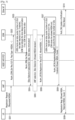
- FIG. 3 is a flowchart illustrating a method of performing network slice control, according to an embodiment.
- step S301 the UE transmits a registration request including information for accessing a particular slice (one or more) to the AMF.
- the AMF transmits a Nudm_SDM_Get request when it is necessary to receive subscription information from the UDM to process the registration request of the UE.
- the request transmitted by the AMF may include a UE (subscriber) ID (SUPI, SUCI, or GPSI .] ) and may indicate that subscription information for slice selection is included in the information requested by the AMF.
- the UDM may perform an operation for transmitting slice-related subscription information for a subscriber according to an AMF request.
- the subscription information is stored in a unified data repository (UDR)
- the UDM may transmit a query for reception to the UDR.
- the UDM may determine a current quota (the maximum allowed number of UEs for each slice or the maximum number of sessions) in the slice belonging to subscribed NSSAI (S-NSSAI) (a set of S-NSSAIs allowed to the subscriber in the subscription information) in the slice subscription information and may determine whether the upper limit of the quota has already been reached.
- S-NSSAI subscribed NSSAI
- the UDM may reserve the slice to allow the UE to use the slice, and a reservation state may be switched to a confirmed or in-use state when the slice (S-NSSAI) is included in the registration (Nudm_UECM_Registration) request for the UE received from the AMF. Also, the UDM may start a timer for slices in a reserved state and release the reserved state when an explicit registration request is not received until after the timer expires.
- step S304 the UDM transmits a Nudm_SDM_Get response containing the subscriber's subscription information in response to the AMF request.
- the response may contain subscription information that the AMF may use for slice selection, and particularly, when the upper limit of the quota has already been reached for a particular slice, information for notifying the same may be included for each slice.
- information for notifying the same may be included.
- step S305 the AMF performs a procedure such as AMF selection or slice selection (determination of allowed NSSAI) during the registration process by using the information received from the UDM in step S304.
- a procedure such as AMF selection or slice selection (determination of allowed NSSAI) during the registration process by using the information received from the UDM in step S304.
- the AMF may be changed to a new AMF
- the AMF selected to process registration for the UE transmits a Nudm_UECM_Registration request for registering itself as an AMF for the UE to the UDM, and in this case, the ID of the UE may be included and the NSSAI allowed for the UE may also be included.
- the slice (NSSAI) information may include only slices (S-NSSAIs) targeted for quota limitation.
- the UDM updates the availability of the slice to which the quota-based control is applied and the current status of use of the slice.
- the UDM may determine whether the received NSSAI is subject to quota limitation for each S-NSSAI included in the NSSAI, and in the case of a new slice that has not been used by the UE (subscriber), may determine whether the slice has not reached the upper limit of the quota limitation.
- the status of the slice may be updated (i.e., the number of UEs to be used may be increased).
- the status of the slice may be updated (i.e., the number of UEs to be used may be reduced).
- the status information may be notified to the AMF in step S308, and in this case, the status of the slice (i.e., the number of UEs to be used) may not be updated.
- subscriber-specific status information i.e., a context
- the UDM may store/update a list of subscribers in use for each slice (S-NSSAI).
- step S308 the UDM transmits a response AMF Nudm_UECM_Registration response based on the request of the AMF, and when there is a slice that has already reached the upper limit of the quota among the slices allowed for the UE in step S307, the response includes an indication for notifying the same.
- step S309 when the AMF has received an indication that the upper limit of the quota for the slice has already been reached among the information received from the UDM, the AMF determines at least one allowed NSSAI and at least one rejected NSSAI, in consideration of the received indication and transmits a registration response to the UE.
- the UDM stores current status information of a particular slice (the number of UEs currently in use for each slice, a list of subscriber identifiers in use for each slice, or whether the upper limit of the quota has been reached for each slice) and notifies the same to other NFs (for example, the UDR, the AMF, the SMF, the NSSF, and the NRF).
- the UDM may store slice use information in the UDR through a Nudr_DM_Update request, and the UDR may expose the same to another NF.
- other NFs are not limited thereto, and any network entity capable of performing a function related to slice control as well as the NF described above in FIG. 1 may be used.
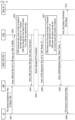
- FIG. 4 is a flowchart illustrating a method of performing network slice control, according to an embodiment.
- step S401 the UE transmits a PDU session establishment request including information for generating a PDU Session to the AMF, and the AMF transmits the same to the SMF.
- the SMF transmits a Nudm_SDM_Get request when it is necessary to receive subscription information from the UDM to process a PDU session generation request of the UE.
- the request transmitted by the SMF may include a UE (subscriber) ID (SUPI, SUCI, or GPSI), and the SMF may indicate that subscription information for selection management is included in the transmitted request information.
- S-NSSAI or DNN to be targeted for the session requested by the current UE may be included in the request information.
- the UDM performs an operation for transmitting session management-related subscription information for the subscriber according to an SMF request.
- the UDM may transmit a query for reception to the UDR.
- the request received from the SMF includes S-NSSAI (or S-NSSAI and DNN)
- the UDM may be determine a current quota (the maximum number of allowed UEs for each slice or the maximum number of sessions) with respect to the S-NSSAI (or S-NSSAI and DNN) and may determine whether the upper limit of the quota has already been reached.
- the UDM may reserve the slice to allow the UE to use the slice, and a reservation state may be switched to a confirmed or in-use state when the slice (S-NSSAI) is included in the registration (Nudm_UECM_Registration) request for the UE received from the SMF. Also, the UDM may start a timer for slices in a reserved state and release the reserved state when an explicit registration request is not received until the timer expires.
- the UDM transmits a Nudm_SDM_Get response including subscriber's subscription information in response to the request of the SMF.
- the response may include subscription information that the SMF may use for session generation, and particularly, when the upper limit of the quota has already been reached for a particular slice, information for notifying the same may be included for each slice.
- information for notifying the same is included in the response.
- step S405 the SMF performs procedures for session generation.
- the SMF transmits a Nudm_UECM_Registration request for registering itself as an SMF for the UE to the UDM, and in this case, the ID of the PDU Session, the ID of the UE, DNN, and S-NSSAI may be included in the request.
- the slice information (NSSAI) information may include only slices (S-NSSAIs) targeted for quota limitation.
- step S407 by using the S-NSSAI (or a combination of S-NSSAI and DNN) received from the SMF, the UDM may update the availability of the slice to which the quota-based control is applied and the current status of use of the slice. Particularly, with respect to the received S-NSSAI, the UDM may determine whether it is subject to the quota limitation (that is, the maximum number of PDU sessions that may be simultaneously provided), and when a session is generated in a new slice not used by the UE (subscriber), the UDM may determine whether the slice has not reached the upper limit of the quota limitation.
- the quota limitation that is, the maximum number of PDU sessions that may be simultaneously provided
- the status of the slice may be updated (i.e., the number of sessions to be used or the number of UEs may be increased).
- the quota of the slice is controlled by a combination of S-NSSAI and DNN, the above operation may be performed separately for each DNN.
- the status information may be notified to the SMF in step S408, and in this case, the status of the slice (i.e., the number of sessions to be used) may not be updated.
- the reservation may be released or updated to a confirmed or in-use status.
- subscriber-specific status information (context) may be stored including a list of sessions generated for each slice currently being used by the subscriber.
- the UDM may store/update a list of subscribers in use and the ID of a session for each slice (S-NSSAI).
- step S408 the UDM transmits an AMF Nudm_UECM_Registration response to the request of the SMF, and when there is a slice that has already reached the upper limit of the quota among the slices allowed for the UE in step S407, the response includes an indication for notifying the same.
- step S409 when the SMF receives an indication that the upper limit of the quota for the slice has already been reached among the information received from the UDM, the SMF performs an operation of determining whether to accept the generation of a PDU session, adjusting the QoS, or receiving a policy from the PCF.
- the UDM stores current status information of a particular slice (the number of sessions currently in use for each slice, a list of PDU sessions in use for each slice, or whether the upper limit of the quota has been reached for each slice) and notifies the same to other NFs (e.g., the UDR, the AMF, the SMF, the NSSF, and the NRF).
- the UDM may store slice use information in the UDR through a Nudr_DM_Update request, and the UDR may expose the same to another NF.
- other NFs are not limited thereto, and any network entity capable of performing a function related to slice control as well as the NF described above in FIG. 1 may be used.
- FIG. 5 is a flowchart illustrating a method of performing network slice control, according to an embodiment.
- step S501 the UE transmits a registration request including information for accessing one or more particular slices to the AMF.
- the AMF stores (or receives from another AMF) a UE context for the UE and the UE context may include allowed NSSAI.
- the AMF may know whether the requested NSSAI of the registration request transmitted by the UE is different from the stored allowed NSSAI (i.e., the UE requests access to another slice).
- the AMF transmits a Nudm_SDM_Get request when it is necessary to receive subscription information from the UDM to process the registration request of the UE.
- the request transmitted by the AMF may include a UE (subscriber) ID (SUPI, SUCI, or GPSI) and may indicate that subscription information for slice selection is included in the information requested by the AMF.
- the UDM performs an operation for transmitting slice-related subscription information for a subscriber according to an AMF request.
- the UDM may transmit a query for reception of the subscription information to the UDR.
- the UDM may be determine a current quota (the maximum allowed number of UEs for each slice or the maximum number of sessions) in the slice belonging to subscribed NSSAI (a set of S-NSSAIs allowed to the subscriber in the subscription information) in the slice subscription information and may determine whether the upper limit of the quota has already been reached.
- the UDM may reserve the slice to allow the UE to use the slice, and a reservation state may be switched to a confirmed or in-use state when the slice (S-NSSAI) is included in the registration (Nudm_UECM_Registration) request for the UE from the AMF. Also, the UDM may start a timer for slices in a reserved state and release the reserved state when an explicit registration request is not received until the timer expires.
- the UDM transmits a Nudm_SDM_Get response including subscriber's subscription information in response to the request of the AMF.
- the response may include subscription information that the AMF may use for slice selection, and particularly, when a particular slice has already reached the upper limit of the quota, information for notifying the same may be included in the response for each slice.
- information for notifying the same is included in the response.
- step S506 the AMF performs a procedure such as AMF selection or slice selection (allowed NSSAI determination) during the registration process by using the information received from the UDM.
- a procedure such as AMF selection or slice selection (allowed NSSAI determination) during the registration process by using the information received from the UDM.
- the AMF may be a new AMF that has been changed.
- step S507 when an AMF is changed, the AMF transmits a Nudm_UECM_Registration request for registering itself as an AMF for the UE to the UDM, and in this case, the ID of the UE may be included and the NSSAI allowed for the UE may also be included.
- the slice information (NSSAI) information may include only slices (S-NSSAIs) targeted for quota limitation.
- the AMF may transmit a Nudm_UECM_Update request for updating information about the UE (subscriber) to the UDM. This message may include the ID of the UE (subscriber) and the NSSAI updated for the UE.
- the updated NSSAI may include all of the allowed NSSAI updated while being performed up to step S506 or may explicitly include a difference from the allowed NSSAI about the UE (a newly added S-NSSAI or a missing S-NSSAI).
- the UDM updates the availability of the slice to which the quota-based control is applied and the current status of use of the slice. Particularly, with respect to the received NSSAI, the UDM may determine whether the received NSSAI is subject to quota limitation for each S-NSSAI included in the NSSAI, and in the case of a new slice that has not been used by the UE (subscriber), and may determine whether the slice has not reached the upper limit of the quota limitation. When the slice has not reached the upper limit, the status of the slice may be updated (i.e., the number of UEs to be used may be increased).
- the status of the slice may be updated (i.e., the number of UEs to be used may be reduced).
- the status information may be notified to the AMF in step S509, and in this case, the status of the slice (i.e., the number of UEs to be used) may not be updated.
- subscriber-specific status information (a context) may store a list of slices currently being used.
- the UDM may store/update a list of subscribers in use for each slice (S-NSSAI).
- step S509 the UDM transmits a response AMF Nudm_UECM_Registration or Nudm_UECM_Update Response to the request of the AMF, and when there is a slice that has already reached the upper limit of the quota among the slices in the response, an indication for notifying the same may be included therein.
- step S510 when the AMF has received an indication that the upper limit of the quota for the slice has already been reached among the information received from the UDM, the AMF determines allowed NSSAI and rejected NSSAI in consideration of the same and transmits a registration response to the UE.
- the UDM stores current status information of a particular slice (the number of UEs currently in use for each slice, a list of subscriber identifiers in use for each slice, or whether the upper limit of the quota has been reached for each slice) and notifies the same to other NFs (e.g., the UDR, the AMF, the SMF, the NSSF, and the NRF).
- the UDM may store slice use information in the UDR through a Nudr_DM_Update request, and the UDR may expose the same to another NF.
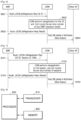
- FIG. 6 is a flowchart illustrating a terminal deregistration procedure, according to an embodiment.
- step S601 when deregistration is required for a particular UE (subscriber) (when a request is received from the UE or a condition for deregistration is satisfied in the network), the AMF transmits a message for requesting deregistration to the UDM, and in this case, a subscriber ID may be included therein.
- step S602 when the UDM receives a deregistration request for the UE from the AMF, or when a deregistration for the UE occurs due to other conditions, the UDM updates use information about the slice in the process of processing the same. That is, it may be determined whether each slice currently in use for the UE is subject to quota limitation, and in the case of a slice subject to quota limitation, the status of the slice may be updated (i.e., the number of UEs using the slice may be reduced). When the deregistration does not terminate or stop using the actual UE such as an AMF change, such an update process may be omitted or suspended.
- step S603 when the AMF requests deregistration, the UDM transmits a response thereto.
- the UDM stores/updates current status information of a particular slice (the number of UEs currently in use for each slice, a list of subscriber identifiers in use for each slice, or whether the upper limit of the quota has been reached for each slice) and notifies the same to other NFs (e.g., the UDR, the AMF, the SMF, the NSSF, and the NRF).
- the UDM may store information including slice use information in the UDR through a Nudr_DM_Update request, and the UDR may expose the information to another NF.
- FIG. 7 is a flowchart illustrating a terminal deregistration procedure, according to an embodiment.
- step S701 when deregistration is required for a particular UE (subscriber) (when a session deletion request is received from the UE or a condition for session deletion or deregistration is satisfied in the network), the SMF transmits a message for requesting deregistration to the UDM, and in this case, a PDU session ID may be included therein and a UE ID, DNN, or S-NSSAI may be included therein.
- step S702 when the UDM receives a deregistration request for the session from the SMF, or when a deregistration for the session occurs due to other conditions, the UDM updates use information about the slice in the process of processing the same. That is, the UDM may determine whether the UE is subject to the quota limitation for each slice currently in use (the maximum number of sessions in the present embodiment), and in the case of a slice subject to quota limitation, the status of the slice (i.e., the number of PDU sessions in use) may be updated and other slice information may be additionally updated (the number of UEs in use may be reduced). When the deregistration does not terminate or stop using the actual UE such as an SMF change, such an update process may be omitted or suspended.
- step S703 when the SMF requests deregistration, the UDM transmits a response thereto.
- the UDM stores/updates current status information of a particular slice (the number of UEs currently in use for each slice, a list of subscriber identifiers in use for each slice, or whether the upper limit of the quota has been reached for each slice) and notifies the same to other NFs (e.g., the UDR, the AMF, the SMF, the NSSF, and the NRF).
- the UDM may store slice use information in the UDR through a Nudr_DM_Update request, and the UDR may expose the same to another NF.
- FIG. 8 is a diagram illustrating a configuration of a terminal, according to an embodiment.
- a terminal includes a transceiver 810, a memory 820, and a processor 830.
- the processor 830, the transceiver 810, and the memory 820 of the terminal may operate according to the above communication method of the UE.
- the components of the terminal are not limited thereto.
- the terminal may include more components or fewer components than the above components.
- the processor 830, the transceiver 810, and the memory 820 may be implemented as a single chip.
- the transceiver 810 may collectively refer to a receiver and a transmitter of the terminal and may transmit/receive signals to/from a base station or a network entity.
- the signals transmitted/received to/from the base station may include control information and data.
- the transceiver 810 may include, for example, a radio frequency (RF) transmitter for up-converting and amplifying a transmitted signal and an RF receiver for low-noise-amplifying and down-converting a received signal.
- RF radio frequency
- the transceiver 810 may receive a signal through a radio channel and output the signal to the processor 830 and may transmit a signal output from the processor 830, through a radio channel.
- the memory 820 may store programs and data necessary for the operation of the terminal. Also, the memory 820 may store control information or data included in the signals obtained by the terminal.
- the memory 820 may include a storage medium or a combination of storage media such as a read only memory (ROM), a random access memory (RAM), a hard disk, a compact disc ROM (CD-ROM), and a digital versatile disc (DVD).
- ROM read only memory
- RAM random access memory
- CD-ROM compact disc ROM
- DVD digital versatile disc
- the processor 830 may control a series of processes such that the terminal may operate according to the above embodiments.
- the processor 830 may include one or more processors.
- the processor 830 may include a communication processor (CP) for performing control for communication and an application processor (AP) for controlling an upper layer such as an application program.
- CP communication processor
- AP application processor
- FIG. 9 is a diagram illustrating a configuration of a network entity, according to an embodiment.
- a network entity includes a transceiver 910, a memory 920, and a processor 930.
- the processor 930, the transceiver 910, and the memory 920 of the network entity may operate according to the above communication method of the network entity.
- the components of the network entity are not limited thereto.
- the network entity may include more components or fewer components than the above components.
- the processor 930, the transceiver 910, and the memory 920 may be implemented as a single chip.
- the network entity may include, but is not limited to, NFs such as the AMF, the SMF, the PCF, the NEF, the UDM, and the UPF described above.
- the network entity may include a base station.
- the transceiver 910 may collectively refer to a receiver and a transmitter of the network entity and may transmit/receive signals to/from the terminal or another network entity.
- the transmitted/received signals may include control information and data.
- the transceiver 910 may include, for example, an RF transmitter for up-converting and amplifying a transmitted signal and an RF receiver for low-noise-amplifying and down-converting a received signal.
- this is merely an embodiment of the transceiver 910, and the components of the transceiver 910 are not limited to the RF transmitter and the RF receiver.
- the transceiver 910 may include a wired/wireless transceiver and may include various components for transmitting/receiving signals.
- the transceiver 910 may receive a signal through a communication channel (e.g., a radio channel) and output the signal to the processor 930 and may transmit a signal output from the processor 930, through a communication channel.
- a communication channel e.g., a radio channel
- the memory 920 may store programs and data necessary for the operation of the network entity. Also, the memory 920 may store control information or data included in the signals obtained by the network entity.
- the memory 920 may include a storage medium or a combination of storage media such as ROM, RAM, hard disk, CD-ROM, and DVD.
- the processor 930 may control a series of processes such that the network entity may operate according to the above embodiments.
- the processor 930 may include at least one processor.
- a computer-readable storage medium may be provided to store one or more programs (software modules).
- the one or more programs stored in the computer-readable storage medium may be configured for execution by one or more processors in an electronic device.
- the one or more programs may include instructions for causing the electronic device to execute the methods according to the embodiments described in the specification or the claims.
- programs may be stored in RAMs, nonvolatile memories including flash memories, ROMs, electrically erasable programmable ROMs (EEPROMs), magnetic disc storage devices, CD-ROMs, DVDs, other types of optical storage devices, or magnetic cassettes.
- the programs may be stored in a memory configured by a combination of some or all of such storage devices. Also, a plurality of memories may be provided.
- the programs may be stored in an attachable storage device that may be accessed through a communication network such as the Internet, an intranet, a local area network (LAN), a wide area network (WAN), or a storage area network (SAN), or through a communication network configured by any combination thereof.
- a storage device may be connected through an external port to an apparatus performing an embodiment.
- a separate storage device on a communication network may be connected to an apparatus performing an embodiment.
- the components included in the disclosure are expressed in the singular or plural according to the particular embodiments of the disclosure.
- the singular or plural expressions are selected suitably according to the presented situations for convenience of description, the disclosure is not limited to the singular or plural components, and the components expressed in the plural may even be configured in the singular, or the components expressed in the singular may even be configured in the plural.
- services may be more effectively provided.
Landscapes
- Engineering & Computer Science (AREA)
- Computer Networks & Wireless Communication (AREA)
- Signal Processing (AREA)
- Databases & Information Systems (AREA)
- Computer Security & Cryptography (AREA)
- Mobile Radio Communication Systems (AREA)
Applications Claiming Priority (2)
| Application Number | Priority Date | Filing Date | Title |
|---|---|---|---|
| KR1020190146954A KR20210059467A (ko) | 2019-11-15 | 2019-11-15 | 무선 통신 시스템에서 네트워크 슬라이스 제어의 정확도를 높이는 방법 및 장치 |
| PCT/KR2020/016100 WO2021096325A1 (en) | 2019-11-15 | 2020-11-16 | Method and apparatus for improving network slice control accuracy in wireless communication system |
Publications (3)
| Publication Number | Publication Date |
|---|---|
| EP4055920A1 EP4055920A1 (en) | 2022-09-14 |
| EP4055920A4 EP4055920A4 (en) | 2023-01-04 |
| EP4055920B1 true EP4055920B1 (en) | 2025-05-21 |
Family
ID=75909810
Family Applications (1)
| Application Number | Title | Priority Date | Filing Date |
|---|---|---|---|
| EP20888012.0A Active EP4055920B1 (en) | 2019-11-15 | 2020-11-16 | Method and apparatus for improving network slice control accuracy in wireless communication system |
Country Status (7)
| Country | Link |
|---|---|
| US (1) | US20210153157A1 (https=) |
| EP (1) | EP4055920B1 (https=) |
| JP (1) | JP2023501683A (https=) |
| KR (1) | KR20210059467A (https=) |
| CN (1) | CN114731604A (https=) |
| AU (1) | AU2020384842B2 (https=) |
| WO (1) | WO2021096325A1 (https=) |
Families Citing this family (15)
| Publication number | Priority date | Publication date | Assignee | Title |
|---|---|---|---|---|
| WO2021125165A1 (en) * | 2019-12-20 | 2021-06-24 | Nec Corporation | Network slice quota management during network slice specific authentication and authorisation |
| CN114374610A (zh) * | 2019-12-30 | 2022-04-19 | 华为技术有限公司 | 一种切片控制方法及装置 |
| WO2021167233A1 (ko) * | 2020-02-18 | 2021-08-26 | 엘지전자 주식회사 | 네트워크 슬라이스와 관련된 통신 |
| CN116896771A (zh) * | 2020-04-24 | 2023-10-17 | 北京小米移动软件有限公司 | 切片业务处理方法、切片业务处理装置及存储介质 |
| US12273773B2 (en) * | 2020-05-22 | 2025-04-08 | Apple Inc. | Apparatus and method for dynamic data rate adjustment for a wireless slice |
| WO2021261913A1 (en) * | 2020-06-23 | 2021-12-30 | Samsung Electronics Co., Ltd. | Apparatus and method for managing user plane function in wireless communication system |
| EP4320895A1 (en) * | 2021-04-06 | 2024-02-14 | Telefonaktiebolaget LM Ericsson (publ) | Recovery from errors during network slice specific authentication and authorization (nssaa) |
| CN113098726B (zh) * | 2021-06-10 | 2021-09-03 | 深圳艾灵网络有限公司 | 网络切片方法、设备及存储介质 |
| CN115843029A (zh) * | 2021-09-18 | 2023-03-24 | 华为技术有限公司 | 网络验证的方法和装置 |
| US12213095B2 (en) * | 2021-11-17 | 2025-01-28 | Cisco Technology, Inc. | Slice resource management for reducing the negative impacts of slice quotas |
| CN117544975A (zh) * | 2022-08-01 | 2024-02-09 | 华为技术有限公司 | 一种网络切片的管理方法、通信装置及通信系统 |
| US12585835B2 (en) * | 2023-06-30 | 2026-03-24 | Verizon Patent And Licensing Inc. | Systems and methods for network-initiated modification of access for lost or stolen devices |
| JP2025125290A (ja) * | 2024-02-15 | 2025-08-27 | トヨタ自動車株式会社 | システム、及び、方法 |
| WO2025180857A1 (en) * | 2024-02-26 | 2025-09-04 | Nokia Technologies Oy | Apparatus, method and computer program |
| JP2025142526A (ja) * | 2024-03-18 | 2025-10-01 | Kddi株式会社 | ネットワークノード、ネットワークノードによる方法及びプログラム |
Family Cites Families (15)
| Publication number | Priority date | Publication date | Assignee | Title |
|---|---|---|---|---|
| EP3622754B1 (en) * | 2017-05-08 | 2023-02-15 | Motorola Mobility LLC | Methods and apparatuses for reconfiguring a data connection |
| CN110603851B (zh) * | 2017-05-09 | 2020-12-01 | 华为技术有限公司 | 一种基于切片的通信方法和设备 |
| CN110771251B (zh) * | 2017-06-16 | 2023-09-22 | 艾普拉控股有限公司 | 作为通信网络中的服务的小数据传送、数据缓冲及数据管理 |
| CN109257769B (zh) * | 2017-07-12 | 2020-09-01 | 维沃移动通信有限公司 | 一种处理网络切片拥塞的方法、相关设备和系统 |
| US10660016B2 (en) * | 2017-11-08 | 2020-05-19 | Ofinno, Llc | Location based coexistence rules for network slices in a telecommunication network |
| CN109951877B (zh) * | 2017-12-20 | 2023-06-02 | 华为技术有限公司 | 一种切片信息更新方法及装置 |
| US20190230556A1 (en) * | 2018-01-19 | 2019-07-25 | Electronics And Telecommunications Research Institute | Apparatus and method for network function profile management |
| CN110062407B (zh) | 2018-01-19 | 2022-05-13 | 华为技术有限公司 | 网络切片性能管理的方法和装置 |
| US10986506B2 (en) * | 2018-02-16 | 2021-04-20 | Lenovo (Singapore) Pte. Ltd. | Network slice selection assistance information configuration |
| US11019668B2 (en) * | 2018-04-09 | 2021-05-25 | Ofinno, Llc | PDU session establishment for cellular IoT |
| US10506506B2 (en) * | 2018-04-30 | 2019-12-10 | Ofinno, Llc | 5G policy control for restricted local operator services |
| CN118945216A (zh) * | 2019-03-13 | 2024-11-12 | 交互数字专利控股公司 | 动态网络能力配置 |
| US12063584B2 (en) * | 2019-06-10 | 2024-08-13 | Nokia Technologies Oy | Method and apparatus for enforcement of maximum number of user equipments per network slice in a communication system |
| EP4042765B1 (en) * | 2019-10-08 | 2025-12-03 | Telefonaktiebolaget LM Ericsson (publ) | Network slicing scalability attributes |
| US11963247B2 (en) * | 2019-11-07 | 2024-04-16 | Qualcomm Incorporated | Handling slice limitations |
-
2019
- 2019-11-15 KR KR1020190146954A patent/KR20210059467A/ko active Pending
-
2020
- 2020-11-16 EP EP20888012.0A patent/EP4055920B1/en active Active
- 2020-11-16 JP JP2022528135A patent/JP2023501683A/ja active Pending
- 2020-11-16 WO PCT/KR2020/016100 patent/WO2021096325A1/en not_active Ceased
- 2020-11-16 CN CN202080079258.9A patent/CN114731604A/zh active Pending
- 2020-11-16 US US17/099,027 patent/US20210153157A1/en not_active Abandoned
- 2020-11-16 AU AU2020384842A patent/AU2020384842B2/en active Active
Also Published As
| Publication number | Publication date |
|---|---|
| AU2020384842B2 (en) | 2025-12-04 |
| CN114731604A (zh) | 2022-07-08 |
| AU2020384842A1 (en) | 2022-06-23 |
| KR20210059467A (ko) | 2021-05-25 |
| US20210153157A1 (en) | 2021-05-20 |
| EP4055920A4 (en) | 2023-01-04 |
| JP2023501683A (ja) | 2023-01-18 |
| EP4055920A1 (en) | 2022-09-14 |
| WO2021096325A1 (en) | 2021-05-20 |
Similar Documents
| Publication | Publication Date | Title |
|---|---|---|
| EP4055920B1 (en) | Method and apparatus for improving network slice control accuracy in wireless communication system | |
| US20250193773A1 (en) | Method and device for providing service to user device by using network slice in communication system | |
| US12550094B2 (en) | Method and apparatus for controlling network slice in wireless communication system | |
| US12177714B2 (en) | Method and device for data rate control in network slice in wireless communication system | |
| US12302163B2 (en) | Method and device for controlling data rate in wireless communication system | |
| US20240214916A1 (en) | Method and apparatus for managing network slices in wireless communication system | |
| US11558813B2 (en) | Apparatus and method for network automation in wireless communication system | |
| US12483476B2 (en) | Slice control method and apparatus | |
| US12309691B2 (en) | Method and device for management and access control of network slice in wireless communication system | |
| US20210211970A1 (en) | Apparatus and method for controlling network slice data rate in wireless communication system | |
| US20240251341A1 (en) | Method and device for supporting network slice upon network interworking | |
| KR20220015350A (ko) | 슬라이스 연동을 지원하는 방법 및 장치 | |
| KR20210054972A (ko) | 무선 통신 시스템에서 네트워크 쿼터에 따라 세션을 제어하는 방법 및 장치 | |
| KR20210054967A (ko) | 무선통신 시스템에서 네트워크 슬라이스를 관리하는 방법 및 장치 | |
| KR20210034463A (ko) | 무선통신 시스템에서 데이터 속도 제어 방법 및 장치 | |
| KR20210054970A (ko) | 무선 통신 시스템에서 네트워크 슬라이스를 제어하는 방법 및 장치 | |
| KR20210034453A (ko) | 무선통신 시스템에서 데이터 속도 제어 방법 및 장치 |
Legal Events
| Date | Code | Title | Description |
|---|---|---|---|
| STAA | Information on the status of an ep patent application or granted ep patent |
Free format text: STATUS: THE INTERNATIONAL PUBLICATION HAS BEEN MADE |
|
| PUAI | Public reference made under article 153(3) epc to a published international application that has entered the european phase |
Free format text: ORIGINAL CODE: 0009012 |
|
| STAA | Information on the status of an ep patent application or granted ep patent |
Free format text: STATUS: REQUEST FOR EXAMINATION WAS MADE |
|
| 17P | Request for examination filed |
Effective date: 20220608 |
|
| AK | Designated contracting states |
Kind code of ref document: A1 Designated state(s): AL AT BE BG CH CY CZ DE DK EE ES FI FR GB GR HR HU IE IS IT LI LT LU LV MC MK MT NL NO PL PT RO RS SE SI SK SM TR |
|
| A4 | Supplementary search report drawn up and despatched |
Effective date: 20221205 |
|
| RIC1 | Information provided on ipc code assigned before grant |
Ipc: H04W 60/06 20090101ALN20221129BHEP Ipc: H04W 8/02 20090101ALN20221129BHEP Ipc: H04W 8/20 20090101ALI20221129BHEP Ipc: H04W 48/18 20090101ALI20221129BHEP Ipc: H04W 88/18 20090101ALI20221129BHEP Ipc: H04W 60/00 20090101AFI20221129BHEP |
|
| DAV | Request for validation of the european patent (deleted) | ||
| DAX | Request for extension of the european patent (deleted) | ||
| GRAP | Despatch of communication of intention to grant a patent |
Free format text: ORIGINAL CODE: EPIDOSNIGR1 |
|
| STAA | Information on the status of an ep patent application or granted ep patent |
Free format text: STATUS: GRANT OF PATENT IS INTENDED |
|
| INTG | Intention to grant announced |
Effective date: 20250102 |
|
| RIC1 | Information provided on ipc code assigned before grant |
Ipc: H04W 60/06 20090101ALN20241217BHEP Ipc: H04W 8/02 20090101ALN20241217BHEP Ipc: H04W 8/20 20090101ALI20241217BHEP Ipc: H04W 48/18 20090101ALI20241217BHEP Ipc: H04W 88/18 20090101ALI20241217BHEP Ipc: H04W 60/00 20090101AFI20241217BHEP |
|
| GRAS | Grant fee paid |
Free format text: ORIGINAL CODE: EPIDOSNIGR3 |
|
| GRAA | (expected) grant |
Free format text: ORIGINAL CODE: 0009210 |
|
| STAA | Information on the status of an ep patent application or granted ep patent |
Free format text: STATUS: THE PATENT HAS BEEN GRANTED |
|
| AK | Designated contracting states |
Kind code of ref document: B1 Designated state(s): AL AT BE BG CH CY CZ DE DK EE ES FI FR GB GR HR HU IE IS IT LI LT LU LV MC MK MT NL NO PL PT RO RS SE SI SK SM TR |
|
| REG | Reference to a national code |
Ref country code: GB Ref legal event code: FG4D |
|
| REG | Reference to a national code |
Ref country code: CH Ref legal event code: EP |
|
| REG | Reference to a national code |
Ref country code: DE Ref legal event code: R096 Ref document number: 602020051846 Country of ref document: DE |
|
| REG | Reference to a national code |
Ref country code: IE Ref legal event code: FG4D |
|
| REG | Reference to a national code |
Ref country code: NL Ref legal event code: FP |
|
| PG25 | Lapsed in a contracting state [announced via postgrant information from national office to epo] |
Ref country code: FI Free format text: LAPSE BECAUSE OF FAILURE TO SUBMIT A TRANSLATION OF THE DESCRIPTION OR TO PAY THE FEE WITHIN THE PRESCRIBED TIME-LIMIT Effective date: 20250521 Ref country code: PT Free format text: LAPSE BECAUSE OF FAILURE TO SUBMIT A TRANSLATION OF THE DESCRIPTION OR TO PAY THE FEE WITHIN THE PRESCRIBED TIME-LIMIT Effective date: 20250922 Ref country code: ES Free format text: LAPSE BECAUSE OF FAILURE TO SUBMIT A TRANSLATION OF THE DESCRIPTION OR TO PAY THE FEE WITHIN THE PRESCRIBED TIME-LIMIT Effective date: 20250521 |
|
| REG | Reference to a national code |
Ref country code: LT Ref legal event code: MG9D |
|
| PG25 | Lapsed in a contracting state [announced via postgrant information from national office to epo] |
Ref country code: NO Free format text: LAPSE BECAUSE OF FAILURE TO SUBMIT A TRANSLATION OF THE DESCRIPTION OR TO PAY THE FEE WITHIN THE PRESCRIBED TIME-LIMIT Effective date: 20250821 Ref country code: GR Free format text: LAPSE BECAUSE OF FAILURE TO SUBMIT A TRANSLATION OF THE DESCRIPTION OR TO PAY THE FEE WITHIN THE PRESCRIBED TIME-LIMIT Effective date: 20250822 |
|
| PG25 | Lapsed in a contracting state [announced via postgrant information from national office to epo] |
Ref country code: PL Free format text: LAPSE BECAUSE OF FAILURE TO SUBMIT A TRANSLATION OF THE DESCRIPTION OR TO PAY THE FEE WITHIN THE PRESCRIBED TIME-LIMIT Effective date: 20250521 |
|
| PG25 | Lapsed in a contracting state [announced via postgrant information from national office to epo] |
Ref country code: BG Free format text: LAPSE BECAUSE OF FAILURE TO SUBMIT A TRANSLATION OF THE DESCRIPTION OR TO PAY THE FEE WITHIN THE PRESCRIBED TIME-LIMIT Effective date: 20250521 |
|
| PG25 | Lapsed in a contracting state [announced via postgrant information from national office to epo] |
Ref country code: HR Free format text: LAPSE BECAUSE OF FAILURE TO SUBMIT A TRANSLATION OF THE DESCRIPTION OR TO PAY THE FEE WITHIN THE PRESCRIBED TIME-LIMIT Effective date: 20250521 |
|
| PG25 | Lapsed in a contracting state [announced via postgrant information from national office to epo] |
Ref country code: RS Free format text: LAPSE BECAUSE OF FAILURE TO SUBMIT A TRANSLATION OF THE DESCRIPTION OR TO PAY THE FEE WITHIN THE PRESCRIBED TIME-LIMIT Effective date: 20250821 |
|
| PG25 | Lapsed in a contracting state [announced via postgrant information from national office to epo] |
Ref country code: IS Free format text: LAPSE BECAUSE OF FAILURE TO SUBMIT A TRANSLATION OF THE DESCRIPTION OR TO PAY THE FEE WITHIN THE PRESCRIBED TIME-LIMIT Effective date: 20250921 |
|
| PG25 | Lapsed in a contracting state [announced via postgrant information from national office to epo] |
Ref country code: LV Free format text: LAPSE BECAUSE OF FAILURE TO SUBMIT A TRANSLATION OF THE DESCRIPTION OR TO PAY THE FEE WITHIN THE PRESCRIBED TIME-LIMIT Effective date: 20250521 |
|
| PGFP | Annual fee paid to national office [announced via postgrant information from national office to epo] |
Ref country code: NL Payment date: 20251020 Year of fee payment: 6 |
|
| REG | Reference to a national code |
Ref country code: AT Ref legal event code: MK05 Ref document number: 1797970 Country of ref document: AT Kind code of ref document: T Effective date: 20250521 |
|
| PGFP | Annual fee paid to national office [announced via postgrant information from national office to epo] |
Ref country code: DE Payment date: 20251020 Year of fee payment: 6 |
|
| PGFP | Annual fee paid to national office [announced via postgrant information from national office to epo] |
Ref country code: GB Payment date: 20251023 Year of fee payment: 6 |
|
| PG25 | Lapsed in a contracting state [announced via postgrant information from national office to epo] |
Ref country code: AT Free format text: LAPSE BECAUSE OF FAILURE TO SUBMIT A TRANSLATION OF THE DESCRIPTION OR TO PAY THE FEE WITHIN THE PRESCRIBED TIME-LIMIT Effective date: 20250521 Ref country code: DK Free format text: LAPSE BECAUSE OF FAILURE TO SUBMIT A TRANSLATION OF THE DESCRIPTION OR TO PAY THE FEE WITHIN THE PRESCRIBED TIME-LIMIT Effective date: 20250521 Ref country code: SM Free format text: LAPSE BECAUSE OF FAILURE TO SUBMIT A TRANSLATION OF THE DESCRIPTION OR TO PAY THE FEE WITHIN THE PRESCRIBED TIME-LIMIT Effective date: 20250521 |
|
| PG25 | Lapsed in a contracting state [announced via postgrant information from national office to epo] |
Ref country code: CZ Free format text: LAPSE BECAUSE OF FAILURE TO SUBMIT A TRANSLATION OF THE DESCRIPTION OR TO PAY THE FEE WITHIN THE PRESCRIBED TIME-LIMIT Effective date: 20250521 |
|
| PG25 | Lapsed in a contracting state [announced via postgrant information from national office to epo] |
Ref country code: EE Free format text: LAPSE BECAUSE OF FAILURE TO SUBMIT A TRANSLATION OF THE DESCRIPTION OR TO PAY THE FEE WITHIN THE PRESCRIBED TIME-LIMIT Effective date: 20250521 |
|
| PG25 | Lapsed in a contracting state [announced via postgrant information from national office to epo] |
Ref country code: SK Free format text: LAPSE BECAUSE OF FAILURE TO SUBMIT A TRANSLATION OF THE DESCRIPTION OR TO PAY THE FEE WITHIN THE PRESCRIBED TIME-LIMIT Effective date: 20250521 |
|
| PG25 | Lapsed in a contracting state [announced via postgrant information from national office to epo] |
Ref country code: IT Free format text: LAPSE BECAUSE OF FAILURE TO SUBMIT A TRANSLATION OF THE DESCRIPTION OR TO PAY THE FEE WITHIN THE PRESCRIBED TIME-LIMIT Effective date: 20250521 |
|
| PG25 | Lapsed in a contracting state [announced via postgrant information from national office to epo] |
Ref country code: RO Free format text: LAPSE BECAUSE OF FAILURE TO SUBMIT A TRANSLATION OF THE DESCRIPTION OR TO PAY THE FEE WITHIN THE PRESCRIBED TIME-LIMIT Effective date: 20250521 |
|
| REG | Reference to a national code |
Ref country code: DE Ref legal event code: R097 Ref document number: 602020051846 Country of ref document: DE |
|
| PLBE | No opposition filed within time limit |
Free format text: ORIGINAL CODE: 0009261 |
|
| STAA | Information on the status of an ep patent application or granted ep patent |
Free format text: STATUS: NO OPPOSITION FILED WITHIN TIME LIMIT |
|
| REG | Reference to a national code |
Ref country code: CH Ref legal event code: L10 Free format text: ST27 STATUS EVENT CODE: U-0-0-L10-L00 (AS PROVIDED BY THE NATIONAL OFFICE) Effective date: 20260402 |
|
| 26N | No opposition filed |
Effective date: 20260224 |