EP4055795B1 - Verringerung von falsch-positiven bei der fälschungssicherheit eines elektronischen tokens - Google Patents
Verringerung von falsch-positiven bei der fälschungssicherheit eines elektronischen tokens Download PDFInfo
- Publication number
- EP4055795B1 EP4055795B1 EP20807570.5A EP20807570A EP4055795B1 EP 4055795 B1 EP4055795 B1 EP 4055795B1 EP 20807570 A EP20807570 A EP 20807570A EP 4055795 B1 EP4055795 B1 EP 4055795B1
- Authority
- EP
- European Patent Office
- Prior art keywords
- token
- determining
- security token
- issuing authority
- sequence number
- Prior art date
- Legal status (The legal status is an assumption and is not a legal conclusion. Google has not performed a legal analysis and makes no representation as to the accuracy of the status listed.)
- Active
Links
Images



Classifications
-
- H—ELECTRICITY
- H04—ELECTRIC COMMUNICATION TECHNIQUE
- H04L—TRANSMISSION OF DIGITAL INFORMATION, e.g. TELEGRAPHIC COMMUNICATION
- H04L9/00—Cryptographic mechanisms or cryptographic arrangements for secret or secure communications; Network security protocols
- H04L9/32—Cryptographic mechanisms or cryptographic arrangements for secret or secure communications; Network security protocols including means for verifying the identity or authority of a user of the system or for message authentication, e.g. authorization, entity authentication, data integrity or data verification, non-repudiation, key authentication or verification of credentials
- H04L9/321—Cryptographic mechanisms or cryptographic arrangements for secret or secure communications; Network security protocols including means for verifying the identity or authority of a user of the system or for message authentication, e.g. authorization, entity authentication, data integrity or data verification, non-repudiation, key authentication or verification of credentials involving a third party or a trusted authority
- H04L9/3213—Cryptographic mechanisms or cryptographic arrangements for secret or secure communications; Network security protocols including means for verifying the identity or authority of a user of the system or for message authentication, e.g. authorization, entity authentication, data integrity or data verification, non-repudiation, key authentication or verification of credentials involving a third party or a trusted authority using tickets or tokens, e.g. Kerberos
-
- H—ELECTRICITY
- H04—ELECTRIC COMMUNICATION TECHNIQUE
- H04L—TRANSMISSION OF DIGITAL INFORMATION, e.g. TELEGRAPHIC COMMUNICATION
- H04L9/00—Cryptographic mechanisms or cryptographic arrangements for secret or secure communications; Network security protocols
- H04L9/32—Cryptographic mechanisms or cryptographic arrangements for secret or secure communications; Network security protocols including means for verifying the identity or authority of a user of the system or for message authentication, e.g. authorization, entity authentication, data integrity or data verification, non-repudiation, key authentication or verification of credentials
- H04L9/3234—Cryptographic mechanisms or cryptographic arrangements for secret or secure communications; Network security protocols including means for verifying the identity or authority of a user of the system or for message authentication, e.g. authorization, entity authentication, data integrity or data verification, non-repudiation, key authentication or verification of credentials involving additional secure or trusted devices, e.g. TPM, smartcard, USB or software token
-
- H—ELECTRICITY
- H04—ELECTRIC COMMUNICATION TECHNIQUE
- H04L—TRANSMISSION OF DIGITAL INFORMATION, e.g. TELEGRAPHIC COMMUNICATION
- H04L63/00—Network architectures or network communication protocols for network security
- H04L63/08—Network architectures or network communication protocols for network security for authentication of entities
- H04L63/0807—Network architectures or network communication protocols for network security for authentication of entities using tickets, e.g. Kerberos
-
- H—ELECTRICITY
- H04—ELECTRIC COMMUNICATION TECHNIQUE
- H04L—TRANSMISSION OF DIGITAL INFORMATION, e.g. TELEGRAPHIC COMMUNICATION
- H04L63/00—Network architectures or network communication protocols for network security
- H04L63/10—Network architectures or network communication protocols for network security for controlling access to devices or network resources
- H04L63/105—Multiple levels of security
-
- H—ELECTRICITY
- H04—ELECTRIC COMMUNICATION TECHNIQUE
- H04L—TRANSMISSION OF DIGITAL INFORMATION, e.g. TELEGRAPHIC COMMUNICATION
- H04L63/00—Network architectures or network communication protocols for network security
- H04L63/12—Applying verification of the received information
- H04L63/126—Applying verification of the received information the source of the received data
-
- H—ELECTRICITY
- H04—ELECTRIC COMMUNICATION TECHNIQUE
- H04L—TRANSMISSION OF DIGITAL INFORMATION, e.g. TELEGRAPHIC COMMUNICATION
- H04L9/00—Cryptographic mechanisms or cryptographic arrangements for secret or secure communications; Network security protocols
- H04L9/002—Countermeasures against attacks on cryptographic mechanisms
-
- H—ELECTRICITY
- H04—ELECTRIC COMMUNICATION TECHNIQUE
- H04L—TRANSMISSION OF DIGITAL INFORMATION, e.g. TELEGRAPHIC COMMUNICATION
- H04L9/00—Cryptographic mechanisms or cryptographic arrangements for secret or secure communications; Network security protocols
- H04L9/32—Cryptographic mechanisms or cryptographic arrangements for secret or secure communications; Network security protocols including means for verifying the identity or authority of a user of the system or for message authentication, e.g. authorization, entity authentication, data integrity or data verification, non-repudiation, key authentication or verification of credentials
- H04L9/3247—Cryptographic mechanisms or cryptographic arrangements for secret or secure communications; Network security protocols including means for verifying the identity or authority of a user of the system or for message authentication, e.g. authorization, entity authentication, data integrity or data verification, non-repudiation, key authentication or verification of credentials involving digital signatures
-
- H—ELECTRICITY
- H04—ELECTRIC COMMUNICATION TECHNIQUE
- H04L—TRANSMISSION OF DIGITAL INFORMATION, e.g. TELEGRAPHIC COMMUNICATION
- H04L9/00—Cryptographic mechanisms or cryptographic arrangements for secret or secure communications; Network security protocols
- H04L9/40—Network security protocols
-
- H—ELECTRICITY
- H04—ELECTRIC COMMUNICATION TECHNIQUE
- H04L—TRANSMISSION OF DIGITAL INFORMATION, e.g. TELEGRAPHIC COMMUNICATION
- H04L63/00—Network architectures or network communication protocols for network security
- H04L63/08—Network architectures or network communication protocols for network security for authentication of entities
- H04L63/0815—Network architectures or network communication protocols for network security for authentication of entities providing single-sign-on or federations
-
- H—ELECTRICITY
- H04—ELECTRIC COMMUNICATION TECHNIQUE
- H04L—TRANSMISSION OF DIGITAL INFORMATION, e.g. TELEGRAPHIC COMMUNICATION
- H04L63/00—Network architectures or network communication protocols for network security
- H04L63/14—Network architectures or network communication protocols for network security for detecting or protecting against malicious traffic
- H04L63/1441—Countermeasures against malicious traffic
- H04L63/1483—Countermeasures against malicious traffic service impersonation, e.g. phishing, pharming or web spoofing
Definitions
- Security tokens are a common mechanism for providing secure access to resources in modern computer systems. To ensure validity, security tokens are typically signed by an issuer of the security token. The issuer maintains a private key that is used to digitally sign the security token. Validation of the security token can include verifying the digital signature of the security token via a public key of the issuer. If the security token has been altered, or was not signed by the issuer, the validation of the digital signature will fail.
- Nefarious actors attempt to generate fraudulent security tokens to obtain unauthorized access to computer resources protected by security tokens; these fraudulent tokens must include a digital signature that appears to be generated by a valid token issuer. This can easily be achieved if the private key of the token issuer becomes compromised. Once the private key is known, these nefarious actors may fraudulently issue tokens that grant access to resources controlled by the token issuer. In some cases, access to the private key is obtained via other fraudulent techniques, such as obtaining access to system administrative accounts, or other back door mechanisms of obtaining unauthorized access to the private key data. Thus, methods for ensuring token issuing processes are not compromised, or detecting when they are compromised, are needed.
- US 2017/070534 A1 describes techniques for ascertaining legitimacy of communications received during a digital interaction with a client device.
- the techniques include: receiving a communication; identifying from the communication a first secured token; processing the first secured token by: obtaining, from the first secured token, information indicating a state of the digital interaction; and using the information indicating the state to determine whether the communication is from the client device; and when it is determined that the communication is from the client device, causing at least one action responsive to the communication to be performed; updating the information indicating the state of the digital interaction to obtain updated information indicating the state of the digital interaction; and providing a second secured token to the client device for use in a subsequent communication during the digital interaction, the second secured token comprising the updated information indicating the state of the digital interaction.
- US 2011/161289 A1 describes systems and methods for synchronizing verification data in a distributed database including client and server databases.
- the server database may exchange verification data regarding one-time passwords to multiple client databases.
- An update to the server database may be initiated based on information stored in the client database by pushing updated verification information from the client database to the server database via an SSL tunnel.
- An update to the client database may be initiated based on information stored in the server database by pulling updated verification data from the server database to the client database via an SSL tunnel.
- the client database and the server database may include a two-dimensional data field including the verification data and an associated key identifier, and a site ID.
- the site ID may include a unique identifier to identify the respective database in which it is included.
- the data field may include a sequence number assigned to each row of data that increases every time the row of information is updated.
- the client database and the server database may also include a replication tracking table including a record of the last known update to a remote database. Data fields that require updating may be determined based on the site ID and a comparison of the sequence numbers from the replication tracking table and the server's database.
- US 2018/375849 A1 provides an apparatus comprising a memory configured to store an encryption key and a list of access tokens and at least one processing core configured to select a first access token from the list of access tokens based, at least partly, on at least one of a current time and a sequence number, decide, based at least partly on the first access token, whether to grant a user device access to the apparatus, and cause the apparatus to receive a second list of access tokens from at least one of the user device and a second user device.
- the disclosed embodiments provide for detection of fraudulent electronic security tokens.
- a private key of a token issuing authority becomes compromised, and thus available to nefarious actors. These actors can then issue tokens that provide access to computer resources and appear valid, in that they include valid digital signatures.
- Detection of fraudulent security tokens can be performed both before access is provided based on the token, or after the token has been used to access computer resources. Evaluating tokens before their use works to decrease the unauthorized access of computer resources, but likely imposes some latency when accessing those resources. Evaluating tokens after their use avoids adding additional latency to access operations while allowing some authorized access before the fraudulent token is detected..
- security tokens used to access computer resources are evaluated after the access has occurred.
- these embodiments function as security forensics, identifying compromised tokens after their use but mitigating against additional future use of those tokens or, for example, tokens generated using an equivalent private key that may have been compromised.
- Other embodiments operate before access via a token occurs. These embodiments evaluate the token for indications of fraudulent activity, and disallow or invalid tokens that fail to meet certain validity criterion.
- Some embodiments track sequence numbers issued by a token issuing authority. For example, each token issued by a particular token issuing authority includes a unique sequence number. The unique sequence number ensures that multiple tokens from a token issuing authority are not duplicates of each other, and helps to prevent replay type attacks. These disclosed embodiments track the sequence numbers and are then able to predict sequence numbers issued by a particular token issuing authority going forward. In the event that the token issuing authority is not available to confirm the validity of a particular token, instead of rejecting the token, at least some of the disclosed embodiment compare the token's sequence number with a range of sequence numbers predicted by tracking of sequence numbers from this particular authority.
- a token issuing authority is defined by, in some aspects, a private key used by the token issuing authority to digitally sign tokens. Use of different private keys may represent different token issuing authorities in some aspects.
- Some embodiments also determine validity of a token based, at least in part, on a service or client attempting to access resources using the token. For example, some of the disclosed embodiments maintain reputation data for "users" of electronic tokens, and make determinations on whether a token is likely valid based on the "users" (e.g. service or client).
- Some of the disclosed embodiments utilize one or more of the techniques discussed above to reduce the incidence of false positives with regards to detection of fraudulent tokens. For example, some implementations may initially flag a token as invalid based on factors such as whether the token issuing authority is online and is able to validate the token. These implementations may determine the token is invalid if unable to validate the token with the token issuing authority. However, this approach results in a fair number of valid tokens categorized as invalid. To reduce the number of false positives, additional validations may be performed when these initial indications would otherwise indicate an invalid token. For example, as discussed above, if the token cannot be validated via the original token issuing authority, some of these implementations consider the client or service attempting to access computer resources using the token.
- the token may not be flagged as invalid even if the token issuing authority is not available to validate the token.
- the token issuing authority is not available, false positives are reduced by determining whether the token's sequence number is within a confidence interval of possible sequence numbers for the issuing time of the token and a history of token sequence numbers from the token issuing authority as further discussed above. If the sequence number falls within the confidence interval, the token is classified as valid (in at least some embodiments), even if other methods of token validation may not be available. This reduction in false positives can result in improved operational efficiencies. For example, some network operators may devote resources to manual investigations of tokens flagged as invalid.
- the disclosed embodiments not only improve operational efficiency, but also improve computer security, by increasing the resources available to pursue security vulnerabilities, such as invalid tokens resulting from a compromised private key of a token issuing authority.
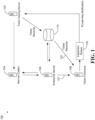
- FIG. 1 is an overview diagram of a system that implements one or more of the disclosed embodiments.
- the system 100 includes a token issuing server 102, service 104, enterprise server 106, and a token forensics server 108.
- the system 100 also includes a token datastore 110.
- the token issuing server 102 issues tokens and stores information relating to the issued tokens in the token datastore 110.
- multiple token issuing servers may issue tokens for a single token issuing authority (e.g. to achieve a desired throughput, multiple servers may be necessary).
- the token issuing server 102 issues tokens for a single token issuing authority.
- each token issuing authority has particular network connection information that provides connectivity to the token issuing authority. For example, a single token issue authority may accept token requests via a particular combination of hostname/Internet Protocol (IP) address and/or destination port number, for example.
- IP Internet Protocol
- the token issuing server provides tokens, on request in some embodiments, to the service 104.
- the service 104 requests particular functions from the enterprise server 106.
- the service 104 requests, in some embodiments, access to files, or the performance of certain computing operations or functions from the enterprise server 106.
- the enterprise server 106 requires a valid electronic security token be provided, such as a valid token provided by the token issuing server 102.
- the enterprise server 106 validates a token provided by the service 104 by, in part, consulting with the original token issuing server 102 or the token datastore 110.
- the token is digitally signed using a private key of the token issuing server.
- the enterprise server 106 identifies a public key of the token issuing server 102 in some embodiments, via the token datastore 110. After validating the token, the enterprise server 106 performs the service requested by the service 104. As mentioned, the validation of the token by the enterprise 106 includes confirmation that the token's digital signature is valid for the token issuing server 102. However, if the token issuing server's private key is compromised, a fraudulent actor may issue tokens and obtain nefarious access to the computer resources provided by the enterprise server 106.
- some of the disclosed embodiments provide log records 120 indicating use of tokens to a tokens forensics system 108.
- the token forensics system 108 performs one or more validity checks to confirm that a token used to access computer resources of the enterprise server 106 is valid. Furthermore, the token forensics system 108 implements these validity checks to reduce a probability of false positives being generated.
- the token data store 110 and/or the token issuing server 102 are inaccessible. This inaccessibility may result from a general network outage between the token forensics system 108 and the token datastore 110 and/or the token issuing server 102.
- the token datastore 110 and/or the token issuing server 102 may be unresponsive, due to an internal problem.
- the token forensics server 108 is unable to perform some validation functions when one or more of the token data store 110 and/or token issuing server 102 are unavailable.
- the token forensics server 108 would consider this situation to indicate that the token itself is invalid, and would provide the token to an inspection queue 130.
- the inspection queue becomes populated by one or more tokens that are in fact valid, but were falsely flagged as invalid due to the inaccessibility.
- some of the disclosed embodiments reduce the inclusion of valid tokens in the inspection queue 130 by performing additional checks when one or more of the token datastore 110 and/or token issuing server 102 are unavailable. This reduces the number of valid tokens included in the inspection queue 130.
- the reduction in false positives provided by the disclosed embodiments can provide substantial cost and personnel savings when compared to prior methods.
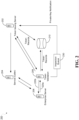
- FIG. 2 is an overview diagram of a system that implements one or more of the disclosed embodiments.
- the system 200 includes a token issuing server 202, service 204, enterprise server 206, and token validation server 208.
- the system 200 differs from the system 100 of FIG. 1 in that with system 200, the validation performed by the token validation server 208 occurs before computer resources are made accessible via the token.
- the enterprise server 106 upon receiving a request to access computer resources from the service 204, the enterprise server 106 provides the token to the token validation server 208 via a message 220a.
- the token validation server 208 then performs one or more verifications to determine whether the token is likely valid.
- the validations performed by the token validation server 208 rely on one or more of the token issuing server 202 and/or token datastore 210.
- the token validation server 208 provides a result of its validation back to the enterprise server 106 via a message 220b.
- the implementation of the system 200 of FIG. 2 differs from that of system 100 of FIG. 1 in that the implementation of FIG. 1 evaluates token validity after the token has been used to access computer resources.
- the system 100 provides for improved response time in access to those computer resources by reducing the amount of validation performed on a token before access is granted.
- the token forensics are then performed offline, without any latency requirements imposed by the need to access computer resources efficiently and quickly.
- the embodiment illustrated by system 200 and FIG. 2 results in increased latency in access to computer resources by performing additional token validation (e.g. via the token validation server 208), before access to computer resources is granted based on the token.
- the system 200 benefits from this additional token validation via a reduction in access to computer resources provided based on an invalid token.
- FIG. 3 shows data structures that may be implemented in one or more of the disclosed embodiments. While the discussion of the data structures illustrated in FIG. 3 refers to the data structures as relational database tables, one of skill would understand that a variety of data structure types are implemented in various embodiments. For example, various embodiments may utilize non-relational data stores, traditional in-memory data structures such as linked lists, trees, arrays, or other structures.
- FIG. 3 shows a token table 302, issuing authority table 311, and a client tracking table 321.
- the token table 302 stores records defining fields of a token.
- the token table 302 includes a token identifier field 304, digital signature 306, sequence number 308, issuing authority identifier 309, and issue time 310.
- the token identifier field 304 uniquely identifies a token.
- the digital signature 306 stores a digital signature of the token.
- the digital signature 306 is generated by a token issuing authority using a private key of the token issuing authority. In these embodiments, the digital signature is decoded via a public key of the token issuing authority as explained further below.
- the sequence number field 308 stores a sequence number of the token.
- the sequence number is assigned to a token by a token issuing authority. While the sequence number field 308 is described as a "number,” in some embodiments, the sequence number may not be a number per se, but may include at least both alpha and numeric characters.
- the issuing authority field 309 identifies an issuing authority of the token. For example, some embodiments may include multiple token issuing servers, such as the token issuing servers 102 and/or 202 discussed above with respect to FIGs. 1 and 2 respectively.
- the issue time field 310 stores an issue time for the particular token.
- the issuing authority table 311 includes an issuing authority identifier 312, public key field 314, baseline sequence number field 315, baseline time field 316, rate field 317, and an online indicator field 318.
- the issuing authority identifier field 312 uniquely identifies a token issuing authority. Thus, in embodiments implementing multiple token issuing authorities (e.g. token issuing server 102 and/or 202), the issuing authority identifier field 312 uniquely identifies a particular one of the token issuing authorities.
- the token issuing authority field 312 is cross referenceable with the token issuing authority field 309 of the token table 302.
- the public key field 314 stores a public key for the token issuing authority identified via the issuing authority identifier field 312.
- the baseline sequence number field 315 stores a base line sequence number for the token issuing authority.
- a baseline sequence number is a sequence number generated by the token issuing authority at a defined baseline time.
- the particular baseline time is indicated by the time field 316.
- the rate field 317 determines a rate of change for the baseline sequence number.
- the rate field specifies the rate, in various embodiments, as increments (or decrements) to the baseline sequence number per second, millisecond, or other predetermined time period.
- the rate field 317 stores a value that is, in some embodiments, used in conjunction with the baseline sequence number field 315 and the baseline time field 316 to extrapolate or predict a sequence number or sequence number range for tokens generated by the issuing authority (identified via 312) at an additional second time.
- the online flag field 318 indicates whether the issuing authority has been detected as being online or offline.
- the client tracking table 321 includes a client identifier 322, token validation result 324, time field 326, and issuing authority field 328.
- the client identifier field 322 uniquely identifies a particular client.
- a client is an entity that seeks access to computer resources via a token.
- the service 104 and/or service 204 are identified as a client in the client table 321 in at least some embodiments.
- the validation result field 324 stores a result of a token validation provided by the client. Thus, if a valid token is provided, the validity is stored in the validation result field, whereas if an invalid token is provided by the client, that invalidity is also recorded in the validation result field.
- the time field 326 stores a time when the validation result was recorded.
- the time field 326 is used in some embodiments to provide for a moving average of validation results for a particular client. Older results may be discounted relative to newer results, or may be eliminated from the determination of client reputation entirety and deleted from the client tracking table 321 entirely after reaching a threshold age.
- the issuing authority field 328 stores an issuing authority of a token that provided the token validation result stored in field 324. Storing the issuing authority field 328 in the client tracking table allows the client tracking table to perform an additional function, that of tracking validation results for a particular token issuing authority. For example, determinations of a percentage of token validations of tokens from a particular token issuing authority, within a threshold period of time are determined in some aspects to determine whether a token issuing authority is in good standing or not. As explained further below, if a percentage of token validations for tokens issued by the particular token issuing authority is above a threshold (or meets a criterion), the token issuing authority is considered to be in good standing, otherwise they are considered to not be in good standing.
- a separate row in the table 321 is provided for each token validation result.
- the client table 321 is used in some of the disclosed embodiments to establish a reputation for a particular client.
- a client with a track record of providing valid tokens may be more trustworthy than an unknown client or one with a history of presenting invalid tokens.
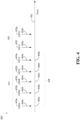
- FIG. 4 illustrates a method of predicting token sequence numbers that is implemented in at least some of the disclosed embodiments.
- FIG. 4 shows a series of tokens being issued sequentially in time. Time is shown via horizontal axis 402.
- Each of the tokens has a sequence number 403a-e.
- the sequence numbers 403a-e are shown increasing by two (2) with each issuance, although in some embodiments, how sequence numbers change sequentially may vary. For example, sequence numbers may increment by more or less than the illustrated two (2) units. In some embodiments, sequence numbers may decrease over time. Issuance of the series of tokens is represented by a series of vertical arrows 404a-e. The vertical arrows represent notifications in some embodiments.
- Some of the disclosed embodiments store information indicating a time at which each of the tokens is issued, shown as times 406a-e.
- Some of the disclosed embodiments determine an elapsed time 408 for a series of token issuances, as represented by 404a-e. These embodiments also note a difference 410 in token sequence numbers 403a-e that occur during the elapsed time 408. From this information, these embodiments determine a rate at which the sequence numbers 403a-e are changing. This rate information is used, in some embodiments, to predict sequence numbers generated by the token issuing authority. A baseline sequence number (e.g. 403e) is selected in some embodiments, from which additional sequence numbers and their respective issuance time are predicted. FIG. 4 shows predicted sequence numbers 420, including sequence numbers 403f and 403g, based on the determined rate information (e.g. stored in rate field 317) and baseline sequence number (e.g. stored in field 315) information.
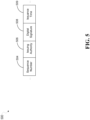
- FIG. 5 is an example portion of a token and/or notification and/or message that may be implemented in one or more of the disclosed embodiments.
- one or more of the notification 107 and/or the message 220a may include one or more of the fields discussed below with respect to the portion 500 and FIG. 5 .
- the portion 500 includes a sequence number field 504, issuing authority field 506, digital signature field 508 and issuance time field 509.
- the sequence number field 504 stores a sequence number for a token.
- token issuing authorities may, in some embodiments, include a unique sequence number with each token issued by the token issuing authority.
- the issuing authority is identified via field 506.
- the digital signature field 508 stores a digital signature.
- the digital signature is generated based on at least some of the contents of the portion 500 (sans the digital signature itself).
- the digital signature stored in field 508 is generated, in some embodiments, using a private key of the issuing authority (identified via field 506).
- the issuance time field 509 stores a value indicating a time that the token was issued.
- FIG. 6 is a flowchart of a process for validating a token that is implemented in one or more of the disclosed embodiments.
- One or more of the functions discussed below with respect to FIG. 6 is performed by hardware processing circuitry.
- instructions stored in an electronic memory configure the hardware processing circuitry to perform one or more of the functions discussed below with respect to FIG. 6 .
- this specification may label multiple determining, or other operations, as, for example, first determining, second determining, third determining in order to distinguish between the different determining (or other operations).
- this labeling using first, second, third, etc, should not be used to imply a particular order of the labeled operations. Instead, this labeling is simply to ensure clear identification of multiple operations with similar names or descriptions.
- a plurality of notifications are received.
- Each of the notifications indicate issuance of a token by a token issuing authority.
- the enterprise server 106 provides notifications 107 to the token forensics server 108.
- the notifications are read from a data store, such as the token datastore 110.
- the enterprise server 206 is described as providing a token to the token validation server 208 via a message 220a.
- the message 220a is considered a notification in at least some of the disclosed embodiments.
- a token sequence number is decoded from each of the notifications.
- the notification includes a token sequence number field 504 that may provide for decoding the token sequence number from each of the notification(s)/message(s).
- a rate of change of the token sequence numbers is determined.
- operation 625 determines an elapsed time between issuance of the plurality of tokens. For example, in some embodiments, an issuance time of each token is included in the respective notification for the token (e.g. such as issuance time field 509 of notification 500). Alternatively, the elapsed time is determined based on an elapsed time between reception of the notifications themselves. A difference in sequence numbers of the tokens received in the notifications is also determined. For example, with respect to the example token issuances illustrated in FIG.
- a difference between token sequence number 403a and 403e is determined in some embodiments, along with the elapsed time 408 between reception of notifications 404a and 404e for the respective token sequence numbers 403a and 403e.
- a rate of change of the token sequence number is then determined based on the elapsed time of token issuances or notifications and a change in the sequence numbers observed during the elapsed time.
- a first security token is received at a first time.
- the token forensics server 108 or the token validation server 208 receives token information from enterprise server 106 or 206 respectively.
- a digital signature of the first security token is validated. For example, in some embodiments, operation 635 determines a token issuing authority of the token via data included in the token itself (e.g. token/notification 500, field 508). From the issuing authority information, a public key of the issuing authority is determined (e.g. via field 314). Data of the token is then decoded based on the public key to ensure the validity of the digital signature.
- a token issuing authority of the token via data included in the token itself (e.g. token/notification 500, field 508). From the issuing authority information, a public key of the issuing authority is determined (e.g. via field 314). Data of the token is then decoded based on the public key to ensure the validity of the digital signature.
- the security token is validated (or invalidated) based on whether the sequence number of the first security token is within a predetermined confidence interval and/or a determined range as discussed above.
- FIG. 7 is a flowchart of a process for validating a token that is implemented in one or more of the disclosed embodiments.
- One or more of the functions discussed below with respect to FIG. 7 is performed by hardware processing circuitry.
- instructions stored in an electronic memory configure the hardware processing circuitry to perform one or more of the functions discussed below with respect to FIG. 7 .
- a security token is received.
- the token forensics server 108 and the token validation server 208 respectively receive token information from enterprise servers 106 and 206.
- an issuer of the token is determined. For example, as discussed above with respect to FIG. 5 , a notification or token includes an identifier of an issuer of the token in at least some embodiments.
- the field 506 facilitates the determination of operation 720 in at least some embodiments.
- Decision operation 730 determines whether the issuer is online. For example, some embodiment monitor connectivity with a token issuer, such as a token issuer running on the token issuing server 102 and/or 202. If the monitoring detects that the token issuer is unresponsive, then decision block 730 determines the issuer is not online. Otherwise, the token issuer is determined to be online, in which case process 700 moves to decision block 735.
- a token issuer such as a token issuer running on the token issuing server 102 and/or 202. If the monitoring detects that the token issuer is unresponsive, then decision block 730 determines the issuer is not online. Otherwise, the token issuer is determined to be online, in which case process 700 moves to decision block 735.
- Decision block 735 determines whether the issuer indicates the token is valid. For example, in some embodiments, a token issuer provides an API that provides for validation of tokens provided by the issuer. Thus, in some embodiments, decision operation 735 sends a message or otherwise invokes such an API provided by the token issuing authority to determine validity of the token. If the token is not valid, process 700 moves from decision block 735 to operation 790, discussed below. If the issuer indicates the token is valid, process 700 moves from decision operation 735 to decision operation 770, discussed below.
- process 700 moves from decision operation 730 to decision operation 740, which determines whether the issuer is in good standing. Whether the issuer is in good standing or not may relate to whether tokens issued by the issuer are generally determined to be valid.
- the client table tracks results of token validations and may include, in some embodiments, an identification of an issuer of each token subject to validation (e.g. via field 328). If the number or percentage of token issued by an issuer are determined to meet a predefined criterion (e.g. above a predetermined good standing threshold), then, in some embodiments, the issuer is considered to be in good standing.
- a predefined criterion e.g. above a predetermined good standing threshold
- process 700 moves from decision operation 740 to operation 790, discussed below. Otherwise, process 700 moves from decision operation 740 to decision operation 750 which determines how long the issuer has been down (offline).
- some embodiments monitor connectivity to a token issuing authority and track when/if a token issuing authority is available and/or unavailable. If the issuer has been down for longer than a predetermined downtime threshold, process 700 moves from decision operation 750 to operation 790, discussed below. Otherwise, process 700 moves from decision operation 750 to decision operation 760.
- Decision operation 760 determines whether a sequence number of the token is within a range or confidence interval. For example, as discussed above with respect to FIG. 6 , a confidence interval is determined, in some embodiments, for a token issuer based on a previous history of token issuances (e.g. as discussed above with respect to FIG. 4 ). In some embodiments, decision operation 760 implements one or more of the functions discussed above with respect to FIG. 6 .
- process 700 moves from decision operation 760 to operation 790, discussed below. If the sequence number of the tokens falls within the confidence interval, process 700 moves from decision operation 760 to decision operation 770, which determines whether a caller is trustworthy.
- some embodiments determine a percentage of caller token validation affects that succeed and/or fail. If the percentage meets a criterion or otherwise is above a trust threshold, some embodiments conclude that the caller (e.g. service 104 and/or service 204). In some embodiments, the percentage is determined based on a number of validation events that occur within a moving elapsed time (e.g. in the last one, two, three, four, or five minutes). If the caller is not determined to be trustworthy, process 700 moves from decision operation 770 to operation 990, otherwise, process 700 moves from decision operation 770 to 780.
- Operation 780 determines the token is valid while operation 790 determines the token is invalid.
- invalid tokens are added to an inspection queue (e.g. 130 or 230). If the token is confirmed to be invalid, some embodiments cause a reset and/or regeneration of a private/public key pair for the token issuing authority. In other words, if the digital signature of a token is valid, but the token itself is invalid (e.g. as determined by one or more of the decision operations 735, 740, 750, or 760), it may indicate the private key of the token issuing authority has been compromised, and a fraudulent or otherwise nefarious actor is generating fraudulent tokens.
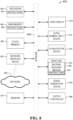
- FIG. 8 illustrates a block diagram of an example machine 800 upon which any one or more of the techniques (e.g., methodologies) discussed herein may perform.
- the machine 800 may operate as a standalone device or may be connected (e.g., networked) to other machines.
- the machine 800 may operate in the capacity of a server machine, a client machine, or both in server-client network environments.
- the machine 800 may act as a peer machine in peer-to-peer (P2P) (or other distributed) network environment.
- P2P peer-to-peer
- the machine 800 may be a personal computer (PC), a tablet PC, a set-top box (STB), a personal digital assistant (PDA), a mobile telephone, a smart phone, a web appliance, a network router, switch or bridge, a server computer, a database, conference room equipment, or any machine capable of executing instructions (sequential or otherwise) that specify actions to be taken by that machine.
- PC personal computer
- PDA personal digital assistant
- STB set-top box
- mobile telephone a smart phone
- web appliance a web appliance
- network router network router
- switch or bridge a server computer
- server computer a database
- conference room equipment or any machine capable of executing instructions (sequential or otherwise) that specify actions to be taken by that machine.
- machine 800 may perform one or more of the processes described above with respect to FIGs. 1-7 above.
- machine shall also be taken to include any collection of machines that individually or jointly execute a set (or multiple sets) of instructions to perform any one or more of the methodologies discussed herein, such as cloud computing, software as a service (SaaS), other computer cluster configurations.
- cloud computing software as a service
- SaaS software as a service
- Examples, as described herein, may include, or may operate on, logic or a number of components, modules, or mechanisms (all referred to hereinafter as "modules").
- Modules are tangible entities (e.g., hardware) capable of performing specified operations and may be configured or arranged in a certain manner.
- circuits may be arranged (e.g., internally or with respect to external entities such as other circuits) in a specified manner as a module.
- the whole or part of one or more computer systems (e.g., a standalone, client or server computer system) or one or more hardware processors may be configured by firmware or software (e.g., instructions, an application portion, or an application) as a module that operates to perform specified operations.
- the software may reside on a machine readable medium.
- the software when executed by the underlying hardware of the module, causes the hardware to perform the specified operations.
- module is understood to encompass a tangible entity, be that an entity that is physically constructed, specifically configured (e.g., hardwired), or temporarily (e.g., transitorily) configured (e.g., programmed) to operate in a specified manner or to perform part or all of any operation described herein.
- each of the modules need not be instantiated at any one moment in time.
- the modules comprise a general-purpose hardware processor configured using software
- the general-purpose hardware processor may be configured as respective different modules at different times.
- Software may accordingly configure a hardware processor, for example, to constitute a particular module at one instance of time and to constitute a different module at a different instance of time.
- Machine 800 may include a hardware processor 802 (e.g., a central processing unit (CPU), a graphics processing unit (GPU), a hardware processor core, or any combination thereof), a main memory 804 and a static memory 806, some or all of which may communicate with each other via an interlink (e.g., bus) 808.
- the machine 800 may further include a display unit 810, an alphanumeric input device 812 (e.g., a keyboard), and a user interface (UI) navigation device 814 (e.g., a mouse).
- the display unit 810, input device 812 and UI navigation device 814 may be a touch screen display.
- the machine 800 may additionally include a storage device (e.g., drive unit) 816, a signal generation device 818 (e.g., a speaker), a network interface device 820, and one or more sensors 821, such as a global positioning system (GPS) sensor, compass, accelerometer, or other sensor.
- the machine 800 may include an output controller 828, such as a serial (e.g., universal serial bus (USB), parallel, or other wired or wireless (e.g., infrared(IR), near field communication (NFC), etc.) connection to communicate or control one or more peripheral devices (e.g., a printer, card reader, etc.).
- a serial e.g., universal serial bus (USB), parallel, or other wired or wireless (e.g., infrared(IR), near field communication (NFC), etc.) connection to communicate or control one or more peripheral devices (e.g., a printer, card reader, etc.).
- USB universal serial bus
- NFC near field
- the storage device 816 may include a machine readable medium 822 on which is stored one or more sets of data structures or instructions 824 (e.g., software) embodying or utilized by any one or more of the techniques or functions described herein.
- the instructions 824 may also reside, completely or at least partially, within the main memory 804, within static memory 806, or within the hardware processor 802 during execution thereof by the machine 800.
- one or any combination of the hardware processor 802, the main memory 804, the static memory 806, or the storage device 816 may constitute machine readable media.
- machine readable medium 822 is illustrated as a single medium, the term “machine readable medium” may include a single medium or multiple media (e.g., a centralized or distributed database, and/or associated caches and servers) configured to store the one or more instructions 824.
- machine readable medium may include a single medium or multiple media (e.g., a centralized or distributed database, and/or associated caches and servers) configured to store the one or more instructions 824.
- machine readable medium may include any medium that is capable of storing, encoding, or carrying instructions for execution by the machine 800 and that cause the machine 800 to perform any one or more of the techniques of the present disclosure, or that is capable of storing, encoding or carrying data structures used by or associated with such instructions.
- Non-limiting machine readable medium examples may include solid-state memories, and optical and magnetic media.
- machine readable media may include: non-volatile memory, such as semiconductor memory devices (e.g., Electrically Programmable Read-Only Memory (EPROM), Electrically Erasable Programmable Read-Only Memory (EEPROM)) and flash memory devices; magnetic disks, such as internal hard disks and removable disks; magneto-optical disks; Random Access Memory (RAM); Solid State Drives (SSD); and CD-ROM and DVD-ROM disks.
- EPROM Electrically Programmable Read-Only Memory
- EEPROM Electrically Erasable Programmable Read-Only Memory
- flash memory devices e.g., Electrically Programmable Read-Only Memory (EPROM), Electrically Erasable Programmable Read-Only Memory (EEPROM)
- flash memory devices e.g., Electrically Programmable Read-Only Memory (EPROM), Electrically Erasable Programmable Read-Only Memory (EEPROM)
- flash memory devices e.g., Electrically Programmable Read-Only Memory (EPROM), Electrically Erasable Programmable
- the instructions 824 may further be transmitted or received over a communications network 826 using a transmission medium via the network interface device 820.
- the machine 800 may communicate with one or more other machines utilizing any one of a number of transfer protocols (e.g., frame relay, internet protocol (IP), transmission control protocol (TCP), user datagram protocol (UDP), hypertext transfer protocol (HTTP), etc.).
- transfer protocols e.g., frame relay, internet protocol (IP), transmission control protocol (TCP), user datagram protocol (UDP), hypertext transfer protocol (HTTP), etc.
- Example communication networks may include a local area network (LAN), a wide area network (WAN), a packet data network (e.g., the Internet), mobile telephone networks (e.g., cellular networks), Plain Old Telephone (POTS) networks, and wireless data networks (e.g., Institute of Electrical and Electronics Engineers (IEEE) 802.11 family of standards known as Wi-Fi ® , IEEE 802.16 family of standards known as WiMax ® ), IEEE 802.15.4 family of standards, a Long Term Evolution (LTE) family of standards, a Universal Mobile Telecommunications System (UMTS) family of standards, peer-to-peer (P2P) networks, among others.
- LAN local area network
- WAN wide area network
- POTS Plain Old Telephone
- wireless data networks e.g., Institute of Electrical and Electronics Engineers (IEEE) 802.11 family of standards known as Wi-Fi ® , IEEE 802.16 family of standards known as WiMax ®
- IEEE 802.15.4 family of standards e.g., a Long
- the network interface device 820 may include one or more physical jacks (e.g., Ethernet, coaxial, or phone jacks) or one or more antennas to connect to the communications network 826.
- the network interface device 820 may include a plurality of antennas to wirelessly communicate using at least one of single-input multiple-output (SIMO), multiple-input multiple-output (MIMO), or multiple-input single-output (MISO) techniques.
- SIMO single-input multiple-output
- MIMO multiple-input multiple-output
- MISO multiple-input single-output
- the network interface device 820 may wirelessly communicate using Multiple User MIMO techniques.
- Examples, as described herein, may include, or may operate on, logic or a number of components, modules, or mechanisms.
- Modules are tangible entities (e.g., hardware) capable of performing specified operations and may be configured or arranged in a certain manner.
- circuits may be arranged (e.g., internally or with respect to external entities such as other circuits) in a specified manner as a module.
- the whole or part of one or more computer systems e.g., a standalone, client, or server computer system
- one or more hardware processors may be configured by firmware or software (e.g., instructions, an application portion, or an application) as a module that operates to perform specified operations.
- the software may reside on a machine-readable medium.
- the software when executed by the underlying hardware of the module, causes the hardware to perform the specified operations.
- Various embodiments may be implemented fully or partially in software and/or firmware.
- This software and/or firmware may take the form of instructions contained in or on a non-transitory computer-readable storage medium. Those instructions may then be read and executed by one or more processors to enable performance of the operations described herein.
- the instructions may be in any suitable form, such as but not limited to source code, compiled code, interpreted code, executable code, static code, dynamic code, and the like.
- Such a computer-readable medium may include any tangible non-transitory medium for storing information in a form readable by one or more computers, such as but not limited to read only memory (ROM); random access memory (RAM); magnetic disk storage media; optical storage media; flash memory; etc.
Landscapes
- Engineering & Computer Science (AREA)
- Computer Security & Cryptography (AREA)
- Computer Networks & Wireless Communication (AREA)
- Signal Processing (AREA)
- Computer Hardware Design (AREA)
- Computing Systems (AREA)
- General Engineering & Computer Science (AREA)
- Data Exchanges In Wide-Area Networks (AREA)
Claims (15)
- Verfahren, das von einer Hardware-Verarbeitungsschaltung (802) durchgeführt wird, umfassend:Empfangen einer Vielzahl von Benachrichtigungen (500), wobei jede Benachrichtigung die Ausgabe eines Sicherheitstokens anzeigt, wobei ein Aussteller (506) jedes Sicherheitstokens eine erste Tokenausgabestelle ist;Dekodieren einer entsprechenden Vielzahl von Token-Sequenznummern (504) aus der Vielzahl von Benachrichtigungen (500);Bestimmen einer Änderungsrate (317) der Vielzahl von Token-Sequenznummern (500) aus der Vielzahl von Benachrichtigungen, wobei die Änderungsrate (517) eine Anzahl von Inkrementen oder Dekrementen einer Basislinien-Sequenznummer angibt, die pro Zeiteinheit auftreten;Empfangen eines ersten Sicherheitstokens (500) zu einem ersten Zeitpunkt;Bestimmen, dass ein Aussteller des ersten Sicherheitstokens die erste Tokenausgabestelle ist;Bestimmen, dass eine digitale Signatur (508) des ersten Sicherheitstokens (508) gültig ist;Bestimmen, dass die erste Tokenausgabestelle offline ist;als Reaktion auf das Bestimmen, dass die erste Tokenausgabestelle offline ist, Bestimmen eines Token-Sequenznummer-Konfidenzintervalls der ersten Sicherheitstokenausgabestelle (312), basierend auf der ersten Zeit und der Änderungsrate (317);Bestimmen, dass eine in dem ersten Sicherheitstoken enthaltene Token-Sequenznummer (504) innerhalb des Token-Sequenznummer-Konfidenzintervalls liegt; undValidieren des ersten Sicherheitstokens (500) basierend auf dem Bestimmen, dass die im ersten Sicherheitstoken (500) enthaltene Token-Sequenznummer (504) innerhalb des Token-Sequenznummer-Konfidenzintervalls liegt.
- Verfahren nach Anspruch 1, ferner umfassend:Bestimmen, dass eine zweite Sicherheitstokenausgabestelle während einer Zeitspanne offline ist;Empfangen eines zweiten Sicherheitstokens (500) während der Zeitspanne;Bestimmen, dass eine Aussteller (506) des zweiten Sicherheitstokens die zweite Sicherheitstokenausgabestelle ist; undValidieren des zweiten Sicherheitstokens.
- Verfahren nach Anspruch 1, ferner umfassend:Empfangen eines dritten Sicherheitstokens (500) von einem ersten Dienst;Bestimmen, dass eine Validierungsrate von Token, die von dem ersten Dienst empfangen werden, ein Kriterium erfüllt; undValidieren des dritten Sicherheitstokens (500) basierend auf dem Bestimmen, dass die Validierungsrate das Kriterium erfüllt.
- Verfahren nach Anspruch 3, wobei das erste Sicherheitstoken von einem zweiten Dienst empfangen wird, wobei das Verfahren ferner umfasst:Speichern eines Hinweises (324) auf einen Zusammenhang zwischen der Validierung des ersten Sicherheitstokens und dem zweiten Dienst;Bestimmen, basierend auf dem gespeicherten Hinweis (324), einer Validierungsrate von Token, die von dem zweiten Dienst empfangen werden; undValidieren eines vierten Sicherheitstokens (500) basierend auf der Validierungsrate.
- Verfahren nach Anspruch 1, ferner umfassend:Empfangen eines zweiten Sicherheitstokens zu einem zweiten Zeitpunkt;Validieren einer zweiten digitalen Signatur des zweiten Sicherheitstokens;Bestimmen einer zweiten Token-Sequenznummer des zweiten Sicherheitstokens;Bestimmen eines zweiten Bereichs von Token-Sequenznummern, basierend auf der zweiten Zeit und der Änderungsrate;Bestimmen, dass die zweite Token-Sequenznummer außerhalb des bestimmten zweiten Bereichs liegt; undErzeugen einer Benachrichtigung basierend auf dem Bestimmen, dass die zweite Token-Sequenznummer außerhalb des bestimmten zweiten Bereichs liegt, die anzeigt, dass der private Schlüssel der ersten Sicherheitstokenausgabestelle kompromittiert ist.
- Verfahren nach Anspruch 5, ferner umfassend:Empfangen eines dritten Sicherheitstokens von einem Dienst;Bestimmen, dass eine Validierungsrate von Token, die von dem Dienst empfangen werden, ein Kriterium erfüllt;Bestimmen, das ein Aussteller des dritten Sicherheitstokens eine zweite Sicherheitstokenausgabestelle ist; undErzeugen einer Benachrichtigung basierend auf dem Bestimmen, dass der Aussteller des dritten Sicherheitstokens eine zweite Sicherheitsausgabestelle ist, die anzeigt, dass der private Schlüssel der zweiten Sicherheitstokenausgabestelle kompromittiert ist.
- Verfahren nach Anspruch 1, ferner umfassend das Bestimmen eines Prozentsatzes gültiger Token, der anzeigt, dass ein Aussteller des jeweiligen gültigen Tokens die erste Sicherheitstokenausgabestelle ist, wobei das Bestimmen des Token-Sequenznummern-Konfidenzintervalls in Reaktion darauf erfolgt, dass der Prozentsatz ein Kriterium erfüllt.
- System, umfassend:eine Hardware-Verarbeitungsschaltung (802);einen oder mehrere Hardware-Speicher (804, 806), die Anweisungen (824) umfassen, die bei Ausführung die Hardware-Verarbeitungsschaltung (802) dazu konfigurieren, Operationen auszuführen, die Folgendes umfassen:Empfangen einer Vielzahl von Benachrichtigungen (500), wobei jede Benachrichtigung die Ausgabe eines Tokens anzeigt, wobei ein Aussteller (506) jedes Sicherheitstokens (500) eine erste Sicherheitstokenausgabestelle ist;Dekodieren einer entsprechenden Vielzahl von Token-Sequenznummern (504) aus der Vielzahl von Benachrichtigungen (500);Bestimmen einer Änderungsrate (317) der Vielzahl von Token-Sequenznummern (504) aus der Vielzahl von Benachrichtigungen (500), wobei die Änderungsrate eine Anzahl von Inkrementen oder Dekrementen einer Basislinien-Sequenznummer angibt, die pro Zeiteinheit auftreten;Empfangen eines ersten Sicherheitstokens (500) zu einem ersten Zeitpunkt;Bestimmen, dass eine Aussteller (506) des ersten Sicherheitstokens (500) die erste Sicherheitstokenausgabestelle ist;Bestimmen, dass eine digitale Signatur (508) des ersten Sicherheitstokens (500) gültig ist;Bestimmen, dass die erste Tokenstelle offline ist;als Reaktion auf das Bestimmen, dass die erste Tokenausgabestelle offline ist, Bestimmen eines Tokensequenznummer-Konfidenzintervalls der ersten Sicherheitstokenausgabestelle (506), basierend auf der ersten Zeit und der Änderungsrate (317);Bestimmen, dass eine in dem ersten Sicherheitstoken (500) enthaltene Token-Sequenznummer (504) innerhalb des Token-Sequenznummer-Konfidenzintervalls liegt; undValidieren des ersten Sicherheitstokens (500) basierend auf dem Bestimmen, dass die im ersten Sicherheitstoken enthaltene Token-Sequenznummer innerhalb des Token-Sequenznummer-Konfidenzintervalls liegt.
- System nach Anspruch 8, wobei die Operationen ferner Folgendes umfassen:Bestimmen, dass eine zweite Sicherheitstokenausgabestelle während einer ersten Zeitspanne offline ist;Empfangen eines zweiten Sicherheitstokens (500) während einer zweiten Zeitspanne;Bestimmen, dass ein Ausstellers (506) des zweiten Sicherheitstokens (500) die zweite Sicherheitstokenausgabestelle ist; undValidieren des zweiten Sicherheitstokens (500).
- System nach Anspruch 8, wobei die Operationen ferner Folgendes umfassen:Empfangen eines dritten Sicherheitstokens (500) von einem ersten Dienst;Bestimmen, dass eine Validierungsrate von Token, die von dem ersten Dienst empfangen werden, ein Kriterium erfüllt; undValidieren des dritten Sicherheitstokens (500) basierend auf dem Bestimmen, dass die Validierungsrate der von dem ersten Dienst empfangenen Token das Kriterium erfüllt.
- System nach Anspruch 10, wobei das erste Sicherheitstoken von einem zweiten Dienst empfangen wird, wobei die Operationen ferner umfassen:Speichern eines Hinweises auf einen Zusammenhang zwischen der Validierung des ersten Sicherheitstokens und dem zweiten Dienst (324);Bestimmen, basierend auf dem gespeicherten Hinweis (324), einer Validierungsrate von Token, die von dem zweiten Dienst empfangen werden; undValidieren eines vierten Sicherheitstokens (500) basierend auf der Validierungsrate.
- System nach Anspruch 8, wobei die Operationen ferner Folgendes umfassen:Empfangen eines zweiten Sicherheitstokens (500) zu einem zweiten Zeitpunkt;Validieren einer zweiten digitalen Signatur (508) des zweiten Sicherheitstokens;Bestimmen einer zweiten Token-Sequenznummer (504) des zweiten Sicherheitstokens;Bestimmen eines zweiten Bereichs von Token-Sequenznummern, basierend auf der zweiten Zeit und der Änderungsrate;Bestimmen, dass die zweite Token-Sequenznummer außerhalb des bestimmten zweiten Bereichs liegt; undErzeugen einer Benachrichtigung basierend auf dem Bestimmen, dass die zweite Token-Sequenznummer außerhalb des bestimmten zweiten Bereichs liegt, die anzeigt, dass der private Schlüssel der ersten Sicherheitstokenausgabestelle kompromittiert ist.
- System nach Anspruch 12, wobei die Operationen ferner Folgendes umfassen:Empfangen eines dritten Sicherheitstokens von einem Dienst;Bestimmen, dass eine Validierungsrate von Token, die von dem Dienst empfangen werden, ein Kriterium erfüllt;Bestimmen, dass eine Aussteller des dritten Sicherheitstokens eine zweite Tokenausgabestelle ist; undErzeugen einer Benachrichtigung basierend auf dem Bestimmen, dass der Aussteller des dritten Sicherheitstokens eine zweite Tokensausgabestelle ist, die anzeigt, dass der private Schlüssel der zweiten Tokenausgabestelle kompromittiert ist.
- System nach Anspruch 8, wobei die Operationen ferner das Bestimmen eines Prozentsatzes gültiger Token umfassen, der anzeigt, dass ein Aussteller des jeweiligen gültigen Tokens die erste Sicherheitstokenausgabestelle ist, wobei das Bestimmen des Token-Sequenznummern-Konfidenzintervalls in Reaktion darauf erfolgt, dass der Prozentsatz ein Kriterium erfüllt.
- Nicht-transitorisches, computerlesbares Speichermedium, das Anweisungen (824) umfasst, die, wenn sie ausgeführt werden, die Hardware-Verarbeitungsschaltung (802) so konfigurieren, dass sie Operationen nach einem der Ansprüche 1 bis 7 durchführt.
Applications Claiming Priority (2)
| Application Number | Priority Date | Filing Date | Title |
|---|---|---|---|
| US16/674,699 US11451396B2 (en) | 2019-11-05 | 2019-11-05 | False positive reduction in electronic token forgery detection |
| PCT/US2020/056683 WO2021091694A1 (en) | 2019-11-05 | 2020-10-21 | False positive reduction in electronic token forgery detection |
Publications (2)
| Publication Number | Publication Date |
|---|---|
| EP4055795A1 EP4055795A1 (de) | 2022-09-14 |
| EP4055795B1 true EP4055795B1 (de) | 2025-02-19 |
Family
ID=73449187
Family Applications (1)
| Application Number | Title | Priority Date | Filing Date |
|---|---|---|---|
| EP20807570.5A Active EP4055795B1 (de) | 2019-11-05 | 2020-10-21 | Verringerung von falsch-positiven bei der fälschungssicherheit eines elektronischen tokens |
Country Status (4)
| Country | Link |
|---|---|
| US (2) | US11451396B2 (de) |
| EP (1) | EP4055795B1 (de) |
| CN (2) | CN114616799B (de) |
| WO (1) | WO2021091694A1 (de) |
Families Citing this family (1)
| Publication number | Priority date | Publication date | Assignee | Title |
|---|---|---|---|---|
| US12294573B2 (en) * | 2021-12-10 | 2025-05-06 | International Business Machines Corporation | Securely preserving prior security tokens for recall |
Family Cites Families (30)
| Publication number | Priority date | Publication date | Assignee | Title |
|---|---|---|---|---|
| US7024552B1 (en) * | 2000-08-04 | 2006-04-04 | Hewlett-Packard Development Company, L.P. | Location authentication of requests to a web server system linked to a physical entity |
| US8006300B2 (en) * | 2006-10-24 | 2011-08-23 | Authernative, Inc. | Two-channel challenge-response authentication method in random partial shared secret recognition system |
| EP1990750A1 (de) * | 2007-05-09 | 2008-11-12 | Nokia Siemens Networks Oy | Verfahren und Vorrichtung zur Datenverarbeitung und Kommunikationssystem mit einer derartigen Vorrichtung |
| US20100205448A1 (en) * | 2009-02-11 | 2010-08-12 | Tolga Tarhan | Devices, systems and methods for secure verification of user identity |
| US8534564B2 (en) * | 2009-05-15 | 2013-09-17 | Ayman Hammad | Integration of verification tokens with mobile communication devices |
| AU2010292125B2 (en) * | 2009-09-10 | 2014-11-06 | Visa International Service Association | Secure communication of payment information to merchants using a verification token |
| US9286369B2 (en) * | 2009-12-30 | 2016-03-15 | Symantec Corporation | Data replication across enterprise boundaries |
| CN105243313B (zh) * | 2010-01-12 | 2018-12-25 | 维萨国际服务协会 | 用于对验证令牌的任何时候确认的方法 |
| US9021586B2 (en) | 2010-07-20 | 2015-04-28 | At&T Intellectual Property I, L.P. | Apparatus and methods for preventing cross-site request forgery |
| WO2012122994A1 (en) * | 2011-03-11 | 2012-09-20 | Kreft Heinz | Off-line transfer of electronic tokens between peer-devices |
| US8762731B2 (en) | 2012-09-14 | 2014-06-24 | Sap Ag | Multi-system security integration |
| US9104838B2 (en) | 2012-11-14 | 2015-08-11 | Google Inc. | Client token storage for cross-site request forgery protection |
| WO2014087381A1 (en) * | 2012-12-07 | 2014-06-12 | Visa International Service Association | A token generating component |
| CN104519018B (zh) | 2013-09-29 | 2018-09-18 | 阿里巴巴集团控股有限公司 | 一种防止针对服务器的恶意请求的方法、装置和系统 |
| US11533297B2 (en) * | 2014-10-24 | 2022-12-20 | Netflix, Inc. | Secure communication channel with token renewal mechanism |
| US9667635B2 (en) | 2015-03-26 | 2017-05-30 | Cisco Technology, Inc. | Creating three-party trust relationships for internet of things applications |
| US9660809B2 (en) | 2015-08-07 | 2017-05-23 | Adobe Systems Incorporated | Cross-site request forgery defense |
| US9749356B2 (en) * | 2015-09-05 | 2017-08-29 | Nudata Security Inc. | Systems and methods for detecting and scoring anomalies |
| WO2017093597A1 (en) | 2015-12-03 | 2017-06-08 | Nokia Technologies Oy | Access management |
| JP6476402B2 (ja) * | 2016-05-20 | 2019-03-06 | システムメトリックス株式会社 | 認証システム |
| US10574692B2 (en) * | 2016-05-30 | 2020-02-25 | Christopher Nathan Tyrwhitt Drake | Mutual authentication security system with detection and mitigation of active man-in-the-middle browser attacks, phishing, and malware and other security improvements |
| US20180060989A1 (en) * | 2016-08-30 | 2018-03-01 | MaaS Global Oy | System, method and device for digitally assisted personal mobility management |
| US10575179B2 (en) | 2016-11-30 | 2020-02-25 | Mastercard International Incorporated | System and method for device fraud prevention |
| US10587732B2 (en) | 2017-04-13 | 2020-03-10 | International Business Machines Corporation | Secure client-server communication |
| US11778460B2 (en) * | 2017-04-14 | 2023-10-03 | Giesecke+Devrient Mobile Security America, Inc. | Device and method for authenticating transport layer security communications |
| US20180300717A1 (en) * | 2017-04-18 | 2018-10-18 | Zeeshanul Haque | Cryptographically secure token exchange |
| US11316689B2 (en) | 2017-09-29 | 2022-04-26 | Oracle International Corporation | Trusted token relay infrastructure |
| CN111767533B (zh) * | 2019-04-01 | 2025-01-07 | 富泰华工业(深圳)有限公司 | 离线模式用户授权方法、装置、电子装置及存储介质 |
| CN110401629B (zh) * | 2019-05-20 | 2021-10-01 | 腾讯科技(深圳)有限公司 | 一种激活授权的方法及相关装置 |
| US11190522B2 (en) * | 2019-07-15 | 2021-11-30 | International Business Machines Corporation | Access delegation using offline token |
-
2019
- 2019-11-05 US US16/674,699 patent/US11451396B2/en active Active
-
2020
- 2020-10-21 CN CN202080076540.1A patent/CN114616799B/zh active Active
- 2020-10-21 CN CN202411551175.1A patent/CN119210735A/zh active Pending
- 2020-10-21 WO PCT/US2020/056683 patent/WO2021091694A1/en not_active Ceased
- 2020-10-21 EP EP20807570.5A patent/EP4055795B1/de active Active
-
2022
- 2022-08-10 US US17/885,391 patent/US11811940B2/en active Active
Also Published As
| Publication number | Publication date |
|---|---|
| WO2021091694A1 (en) | 2021-05-14 |
| EP4055795A1 (de) | 2022-09-14 |
| US20210135875A1 (en) | 2021-05-06 |
| US20220385473A1 (en) | 2022-12-01 |
| US11451396B2 (en) | 2022-09-20 |
| CN114616799A (zh) | 2022-06-10 |
| CN114616799B (zh) | 2024-11-15 |
| CN119210735A (zh) | 2024-12-27 |
| US11811940B2 (en) | 2023-11-07 |
Similar Documents
| Publication | Publication Date | Title |
|---|---|---|
| US10826684B1 (en) | System and method of validating Internet of Things (IOT) devices | |
| US11722496B2 (en) | Tracking or storing of equipment configuration data using immutable ledger functionality of blockchains | |
| US9491182B2 (en) | Methods and systems for secure internet access and services | |
| US9432358B2 (en) | System and method of authenticating user account login request messages | |
| US20220353281A1 (en) | Centralized threat intelligence | |
| US20190312737A1 (en) | Time-bound secure access | |
| NL2031466B1 (en) | System and method for active detection of malicious network resources | |
| US12348537B2 (en) | Determining trusted file awareness via loosely connected events and file attributes | |
| EP2779572A1 (de) | System und Verfahren zur Überwachung von Authentifizierungsversuchen | |
| US12155768B2 (en) | Zero trust based access management of infrastructure within enterprise using micro-segmentation and decentralized identifier network | |
| US20240259349A1 (en) | Tunneling and gateway access system optimized for distributed gateway environment, and method related thereto | |
| US20160125522A1 (en) | Automatic account lockout | |
| US20180176206A1 (en) | Dynamic Data Protection System | |
| US20180176197A1 (en) | Dynamic Data Protection System | |
| US12341781B2 (en) | Internet protocol (IP) curator | |
| JP2018073140A (ja) | ネットワーク監視装置、プログラム及び方法 | |
| US20180351978A1 (en) | Correlating user information to a tracked event | |
| US11811940B2 (en) | False positive reduction in electronic token forgery detection | |
| US11902084B2 (en) | System, method, and computer program product for detecting an anomaly in network activity | |
| EP3903468B1 (de) | Verhinderung des verlustes von zugangsdaten | |
| JP2020194478A (ja) | 異常検知システム、及び異常検知方法 | |
| US20200329056A1 (en) | Trusted advisor for improved security | |
| JP2018041316A (ja) | 不正アクセス検出装置、不正アクセス検出方法およびコンピュータプログラム | |
| US20250193204A1 (en) | System and method for authorization code location verification | |
| CN119316171B (zh) | 异常检测方法、装置、设备、介质和程序产品 |
Legal Events
| Date | Code | Title | Description |
|---|---|---|---|
| STAA | Information on the status of an ep patent application or granted ep patent |
Free format text: STATUS: UNKNOWN |
|
| STAA | Information on the status of an ep patent application or granted ep patent |
Free format text: STATUS: THE INTERNATIONAL PUBLICATION HAS BEEN MADE |
|
| PUAI | Public reference made under article 153(3) epc to a published international application that has entered the european phase |
Free format text: ORIGINAL CODE: 0009012 |
|
| STAA | Information on the status of an ep patent application or granted ep patent |
Free format text: STATUS: REQUEST FOR EXAMINATION WAS MADE |
|
| 17P | Request for examination filed |
Effective date: 20220406 |
|
| AK | Designated contracting states |
Kind code of ref document: A1 Designated state(s): AL AT BE BG CH CY CZ DE DK EE ES FI FR GB GR HR HU IE IS IT LI LT LU LV MC MK MT NL NO PL PT RO RS SE SI SK SM TR |
|
| DAV | Request for validation of the european patent (deleted) | ||
| DAX | Request for extension of the european patent (deleted) | ||
| REG | Reference to a national code |
Ref country code: DE Ref legal event code: R079 Free format text: PREVIOUS MAIN CLASS: H04L0029060000 Ipc: H04L0009400000 Ref country code: DE Ref legal event code: R079 Ref document number: 602020046419 Country of ref document: DE Free format text: PREVIOUS MAIN CLASS: H04L0029060000 Ipc: H04L0009400000 |
|
| GRAP | Despatch of communication of intention to grant a patent |
Free format text: ORIGINAL CODE: EPIDOSNIGR1 |
|
| STAA | Information on the status of an ep patent application or granted ep patent |
Free format text: STATUS: GRANT OF PATENT IS INTENDED |
|
| RIC1 | Information provided on ipc code assigned before grant |
Ipc: H04L 9/40 20220101AFI20241008BHEP |
|
| INTG | Intention to grant announced |
Effective date: 20241024 |
|
| P01 | Opt-out of the competence of the unified patent court (upc) registered |
Free format text: CASE NUMBER: APP_64160/2024 Effective date: 20241203 |
|
| GRAS | Grant fee paid |
Free format text: ORIGINAL CODE: EPIDOSNIGR3 |
|
| GRAA | (expected) grant |
Free format text: ORIGINAL CODE: 0009210 |
|
| STAA | Information on the status of an ep patent application or granted ep patent |
Free format text: STATUS: THE PATENT HAS BEEN GRANTED |
|
| AK | Designated contracting states |
Kind code of ref document: B1 Designated state(s): AL AT BE BG CH CY CZ DE DK EE ES FI FR GB GR HR HU IE IS IT LI LT LU LV MC MK MT NL NO PL PT RO RS SE SI SK SM TR |
|
| REG | Reference to a national code |
Ref country code: GB Ref legal event code: FG4D |
|
| REG | Reference to a national code |
Ref country code: CH Ref legal event code: EP |
|
| REG | Reference to a national code |
Ref country code: DE Ref legal event code: R096 Ref document number: 602020046419 Country of ref document: DE |
|
| REG | Reference to a national code |
Ref country code: IE Ref legal event code: FG4D |
|
| REG | Reference to a national code |
Ref country code: NL Ref legal event code: MP Effective date: 20250219 |
|
| PG25 | Lapsed in a contracting state [announced via postgrant information from national office to epo] |
Ref country code: RS Free format text: LAPSE BECAUSE OF FAILURE TO SUBMIT A TRANSLATION OF THE DESCRIPTION OR TO PAY THE FEE WITHIN THE PRESCRIBED TIME-LIMIT Effective date: 20250519 |
|
| PG25 | Lapsed in a contracting state [announced via postgrant information from national office to epo] |
Ref country code: FI Free format text: LAPSE BECAUSE OF FAILURE TO SUBMIT A TRANSLATION OF THE DESCRIPTION OR TO PAY THE FEE WITHIN THE PRESCRIBED TIME-LIMIT Effective date: 20250219 |
|
| PG25 | Lapsed in a contracting state [announced via postgrant information from national office to epo] |
Ref country code: PL Free format text: LAPSE BECAUSE OF FAILURE TO SUBMIT A TRANSLATION OF THE DESCRIPTION OR TO PAY THE FEE WITHIN THE PRESCRIBED TIME-LIMIT Effective date: 20250219 |
|
| PG25 | Lapsed in a contracting state [announced via postgrant information from national office to epo] |
Ref country code: ES Free format text: LAPSE BECAUSE OF FAILURE TO SUBMIT A TRANSLATION OF THE DESCRIPTION OR TO PAY THE FEE WITHIN THE PRESCRIBED TIME-LIMIT Effective date: 20250219 |
|
| REG | Reference to a national code |
Ref country code: LT Ref legal event code: MG9D |
|
| PG25 | Lapsed in a contracting state [announced via postgrant information from national office to epo] |
Ref country code: NO Free format text: LAPSE BECAUSE OF FAILURE TO SUBMIT A TRANSLATION OF THE DESCRIPTION OR TO PAY THE FEE WITHIN THE PRESCRIBED TIME-LIMIT Effective date: 20250519 Ref country code: IS Free format text: LAPSE BECAUSE OF FAILURE TO SUBMIT A TRANSLATION OF THE DESCRIPTION OR TO PAY THE FEE WITHIN THE PRESCRIBED TIME-LIMIT Effective date: 20250619 |
|
| PG25 | Lapsed in a contracting state [announced via postgrant information from national office to epo] |
Ref country code: NL Free format text: LAPSE BECAUSE OF FAILURE TO SUBMIT A TRANSLATION OF THE DESCRIPTION OR TO PAY THE FEE WITHIN THE PRESCRIBED TIME-LIMIT Effective date: 20250219 |
|
| PG25 | Lapsed in a contracting state [announced via postgrant information from national office to epo] |
Ref country code: HR Free format text: LAPSE BECAUSE OF FAILURE TO SUBMIT A TRANSLATION OF THE DESCRIPTION OR TO PAY THE FEE WITHIN THE PRESCRIBED TIME-LIMIT Effective date: 20250219 |
|
| PG25 | Lapsed in a contracting state [announced via postgrant information from national office to epo] |
Ref country code: LV Free format text: LAPSE BECAUSE OF FAILURE TO SUBMIT A TRANSLATION OF THE DESCRIPTION OR TO PAY THE FEE WITHIN THE PRESCRIBED TIME-LIMIT Effective date: 20250219 Ref country code: PT Free format text: LAPSE BECAUSE OF FAILURE TO SUBMIT A TRANSLATION OF THE DESCRIPTION OR TO PAY THE FEE WITHIN THE PRESCRIBED TIME-LIMIT Effective date: 20250620 |
|
| PG25 | Lapsed in a contracting state [announced via postgrant information from national office to epo] |
Ref country code: GR Free format text: LAPSE BECAUSE OF FAILURE TO SUBMIT A TRANSLATION OF THE DESCRIPTION OR TO PAY THE FEE WITHIN THE PRESCRIBED TIME-LIMIT Effective date: 20250520 Ref country code: BG Free format text: LAPSE BECAUSE OF FAILURE TO SUBMIT A TRANSLATION OF THE DESCRIPTION OR TO PAY THE FEE WITHIN THE PRESCRIBED TIME-LIMIT Effective date: 20250219 |
|
| REG | Reference to a national code |
Ref country code: AT Ref legal event code: MK05 Ref document number: 1769391 Country of ref document: AT Kind code of ref document: T Effective date: 20250219 |
|
| PG25 | Lapsed in a contracting state [announced via postgrant information from national office to epo] |
Ref country code: SE Free format text: LAPSE BECAUSE OF FAILURE TO SUBMIT A TRANSLATION OF THE DESCRIPTION OR TO PAY THE FEE WITHIN THE PRESCRIBED TIME-LIMIT Effective date: 20250219 |
|
| PG25 | Lapsed in a contracting state [announced via postgrant information from national office to epo] |
Ref country code: SM Free format text: LAPSE BECAUSE OF FAILURE TO SUBMIT A TRANSLATION OF THE DESCRIPTION OR TO PAY THE FEE WITHIN THE PRESCRIBED TIME-LIMIT Effective date: 20250219 |
|
| PG25 | Lapsed in a contracting state [announced via postgrant information from national office to epo] |
Ref country code: DK Free format text: LAPSE BECAUSE OF FAILURE TO SUBMIT A TRANSLATION OF THE DESCRIPTION OR TO PAY THE FEE WITHIN THE PRESCRIBED TIME-LIMIT Effective date: 20250219 |
|
| PG25 | Lapsed in a contracting state [announced via postgrant information from national office to epo] |
Ref country code: IT Free format text: LAPSE BECAUSE OF FAILURE TO SUBMIT A TRANSLATION OF THE DESCRIPTION OR TO PAY THE FEE WITHIN THE PRESCRIBED TIME-LIMIT Effective date: 20250219 |
|
| PGFP | Annual fee paid to national office [announced via postgrant information from national office to epo] |
Ref country code: GB Payment date: 20250923 Year of fee payment: 6 |
|
| PG25 | Lapsed in a contracting state [announced via postgrant information from national office to epo] |
Ref country code: AT Free format text: LAPSE BECAUSE OF FAILURE TO SUBMIT A TRANSLATION OF THE DESCRIPTION OR TO PAY THE FEE WITHIN THE PRESCRIBED TIME-LIMIT Effective date: 20250219 |
|
| PG25 | Lapsed in a contracting state [announced via postgrant information from national office to epo] |
Ref country code: EE Free format text: LAPSE BECAUSE OF FAILURE TO SUBMIT A TRANSLATION OF THE DESCRIPTION OR TO PAY THE FEE WITHIN THE PRESCRIBED TIME-LIMIT Effective date: 20250219 Ref country code: CZ Free format text: LAPSE BECAUSE OF FAILURE TO SUBMIT A TRANSLATION OF THE DESCRIPTION OR TO PAY THE FEE WITHIN THE PRESCRIBED TIME-LIMIT Effective date: 20250219 |
|
| PG25 | Lapsed in a contracting state [announced via postgrant information from national office to epo] |
Ref country code: RO Free format text: LAPSE BECAUSE OF FAILURE TO SUBMIT A TRANSLATION OF THE DESCRIPTION OR TO PAY THE FEE WITHIN THE PRESCRIBED TIME-LIMIT Effective date: 20250219 |
|
| PG25 | Lapsed in a contracting state [announced via postgrant information from national office to epo] |
Ref country code: SK Free format text: LAPSE BECAUSE OF FAILURE TO SUBMIT A TRANSLATION OF THE DESCRIPTION OR TO PAY THE FEE WITHIN THE PRESCRIBED TIME-LIMIT Effective date: 20250219 |
|
| REG | Reference to a national code |
Ref country code: DE Ref legal event code: R097 Ref document number: 602020046419 Country of ref document: DE |
|
| PLBE | No opposition filed within time limit |
Free format text: ORIGINAL CODE: 0009261 |
|
| STAA | Information on the status of an ep patent application or granted ep patent |
Free format text: STATUS: NO OPPOSITION FILED WITHIN TIME LIMIT |
|
| REG | Reference to a national code |
Ref country code: CH Ref legal event code: L10 Free format text: ST27 STATUS EVENT CODE: U-0-0-L10-L00 (AS PROVIDED BY THE NATIONAL OFFICE) Effective date: 20251231 |
|
| PGFP | Annual fee paid to national office [announced via postgrant information from national office to epo] |
Ref country code: DE Payment date: 20250923 Year of fee payment: 6 |
|
| 26N | No opposition filed |
Effective date: 20251120 |
|
| REG | Reference to a national code |
Ref country code: CH Ref legal event code: H13 Free format text: ST27 STATUS EVENT CODE: U-0-0-H10-H13 (AS PROVIDED BY THE NATIONAL OFFICE) Effective date: 20260527 |
|
| PG25 | Lapsed in a contracting state [announced via postgrant information from national office to epo] |
Ref country code: LU Free format text: LAPSE BECAUSE OF NON-PAYMENT OF DUE FEES Effective date: 20251021 |
|
| REG | Reference to a national code |
Ref country code: BE Ref legal event code: MM Effective date: 20251031 |
|
| PG25 | Lapsed in a contracting state [announced via postgrant information from national office to epo] |
Ref country code: LT Free format text: LAPSE BECAUSE OF FAILURE TO SUBMIT A TRANSLATION OF THE DESCRIPTION OR TO PAY THE FEE WITHIN THE PRESCRIBED TIME-LIMIT Effective date: 20250219 |
|
| PG25 | Lapsed in a contracting state [announced via postgrant information from national office to epo] |
Ref country code: MC Free format text: LAPSE BECAUSE OF FAILURE TO SUBMIT A TRANSLATION OF THE DESCRIPTION OR TO PAY THE FEE WITHIN THE PRESCRIBED TIME-LIMIT Effective date: 20250219 |
|
| PG25 | Lapsed in a contracting state [announced via postgrant information from national office to epo] |
Ref country code: BE Free format text: LAPSE BECAUSE OF NON-PAYMENT OF DUE FEES Effective date: 20251031 Ref country code: CH Free format text: LAPSE BECAUSE OF NON-PAYMENT OF DUE FEES Effective date: 20251031 |
|
| PG25 | Lapsed in a contracting state [announced via postgrant information from national office to epo] |
Ref country code: FR Free format text: LAPSE BECAUSE OF NON-PAYMENT OF DUE FEES Effective date: 20251031 |