EP4055489B1 - Autonomous vehicle interface using bus impedance to identify control units, and associated systems and methods - Google Patents
Autonomous vehicle interface using bus impedance to identify control units, and associated systems and methods Download PDFInfo
- Publication number
- EP4055489B1 EP4055489B1 EP20808197.6A EP20808197A EP4055489B1 EP 4055489 B1 EP4055489 B1 EP 4055489B1 EP 20808197 A EP20808197 A EP 20808197A EP 4055489 B1 EP4055489 B1 EP 4055489B1
- Authority
- EP
- European Patent Office
- Prior art keywords
- data
- bus
- vehicle
- shared
- ecu
- Prior art date
- Legal status (The legal status is an assumption and is not a legal conclusion. Google has not performed a legal analysis and makes no representation as to the accuracy of the status listed.)
- Active
Links
Images


Classifications
-
- G—PHYSICS
- G06—COMPUTING OR CALCULATING; COUNTING
- G06F—ELECTRIC DIGITAL DATA PROCESSING
- G06F13/00—Interconnection of, or transfer of information or other signals between, memories, input/output devices or central processing units
- G06F13/38—Information transfer, e.g. on bus
- G06F13/40—Bus structure
- G06F13/4063—Device-to-bus coupling
- G06F13/4068—Electrical coupling
-
- B—PERFORMING OPERATIONS; TRANSPORTING
- B60—VEHICLES IN GENERAL
- B60W—CONJOINT CONTROL OF VEHICLE SUB-UNITS OF DIFFERENT TYPE OR DIFFERENT FUNCTION; CONTROL SYSTEMS SPECIALLY ADAPTED FOR HYBRID VEHICLES; ROAD VEHICLE DRIVE CONTROL SYSTEMS FOR PURPOSES NOT RELATED TO THE CONTROL OF A PARTICULAR SUB-UNIT
- B60W50/00—Details of control systems for road vehicle drive control not related to the control of a particular sub-unit, e.g. process diagnostic or vehicle driver interfaces
- B60W50/08—Interaction between the driver and the control system
- B60W50/10—Interpretation of driver requests or demands
-
- H—ELECTRICITY
- H04—ELECTRIC COMMUNICATION TECHNIQUE
- H04L—TRANSMISSION OF DIGITAL INFORMATION, e.g. TELEGRAPHIC COMMUNICATION
- H04L12/00—Data switching networks
- H04L12/28—Data switching networks characterised by path configuration, e.g. LAN [Local Area Networks] or WAN [Wide Area Networks]
- H04L12/40—Bus networks
- H04L12/40006—Architecture of a communication node
- H04L12/40013—Details regarding a bus controller
-
- H—ELECTRICITY
- H04—ELECTRIC COMMUNICATION TECHNIQUE
- H04L—TRANSMISSION OF DIGITAL INFORMATION, e.g. TELEGRAPHIC COMMUNICATION
- H04L12/00—Data switching networks
- H04L12/28—Data switching networks characterised by path configuration, e.g. LAN [Local Area Networks] or WAN [Wide Area Networks]
- H04L12/40—Bus networks
- H04L12/40169—Flexible bus arrangements
- H04L12/40176—Flexible bus arrangements involving redundancy
- H04L12/40182—Flexible bus arrangements involving redundancy by using a plurality of communication lines
-
- B—PERFORMING OPERATIONS; TRANSPORTING
- B60—VEHICLES IN GENERAL
- B60W—CONJOINT CONTROL OF VEHICLE SUB-UNITS OF DIFFERENT TYPE OR DIFFERENT FUNCTION; CONTROL SYSTEMS SPECIALLY ADAPTED FOR HYBRID VEHICLES; ROAD VEHICLE DRIVE CONTROL SYSTEMS FOR PURPOSES NOT RELATED TO THE CONTROL OF A PARTICULAR SUB-UNIT
- B60W50/00—Details of control systems for road vehicle drive control not related to the control of a particular sub-unit, e.g. process diagnostic or vehicle driver interfaces
- B60W2050/0001—Details of the control system
- B60W2050/0043—Signal treatments, identification of variables or parameters, parameter estimation or state estimation
- B60W2050/0047—Digital-analogue (D/A) or analogue-digital (A/D) conversion
-
- H—ELECTRICITY
- H04—ELECTRIC COMMUNICATION TECHNIQUE
- H04L—TRANSMISSION OF DIGITAL INFORMATION, e.g. TELEGRAPHIC COMMUNICATION
- H04L12/00—Data switching networks
- H04L12/28—Data switching networks characterised by path configuration, e.g. LAN [Local Area Networks] or WAN [Wide Area Networks]
- H04L12/40—Bus networks
- H04L2012/40267—Bus for use in transportation systems
- H04L2012/40273—Bus for use in transportation systems the transportation system being a vehicle
Definitions
- the present technology is directed to an autonomous vehicle interface using bus impedance to identify control units, and associated systems and methods.
- Autonomous vehicles are developed to navigate and operate either unmanned or to assist a vehicle operator.
- the third-party may utilize the many different types of sensors, robotics, computer-controlled systems, and other mechanisms ordinarily found on the vehicle in order to effectuate autonomous control.
- automobile companies and other vehicle manufacturers often implement these computer-controlled systems and other mechanisms using proprietary technologies, and may provide only limited documentation or information regarding the operation of those systems. As a result of such limited information, it can be costly, difficult, and time consuming for third-parties to effectively interface with the existing systems found on the vehicle, and add autonomous capabilities to the vehicle.
- US2018/295011 Al discloses a frame based on-vehicle network using source identifier and data field.
- US8955130 B1 discloses to monitor resistive and capacitive bus states on a CAN bus on a vehicle to detect unauthorized connections.
- AVI autonomous vehicle interface
- the vehicle systems with which the AVI control system interfaces can correspond to different components and aspects of the vehicle.
- the vehicle can have one vehicle system corresponding to steering, another vehicle system corresponding to acceleration, another vehicle system corresponding to the engine, another vehicle system corresponding to the gear control, etc.
- the AVI control system enables control over the vehicle as a whole.
- the control can include, for example, longitudinal and latitudinal motion control and control of convenience features such as windows, sliding doors, climate controls, an infotainment systems.
- Each of the vehicle systems can include a sensor, transducer, and/or other component that detects the physical state of, and/or changes within, the system, as well as an electronic control unit (ECU) that transmits information about the detected state to other systems in the vehicle.
- ECU electronice control unit
- a sensor can generate a signal based on the position of a gear selector lever, which is translated to gear information (e.g., drive, neutral, park, reverse, etc.) by the corresponding ECU.
- gear information e.g., drive, neutral, park, reverse, etc.
- a sensor can generate a signal based on the extent to which an accelerator pedal has been depressed, which is translated to an acceleration amount by the corresponding ECU.
- the sensors may include range or distance finding sensors, such LIDAR, short range radar, long range radar, optical sensors, and lane keeping assist sensors.
- the ECUs can communicate with each other over a shared data bus, such as a controller area network (CAN) bus, to share information and influence other functions of the vehicle.
- a shared data bus such as a controller area network (CAN) bus
- acceleration data from the acceleration ECU can be received by the ECU for engine control, and thereby control engine operations.
- the information received by the ECU can be used to perform vehicle diagnostics and discern vehicle issues.
- the ECU may receive vehicle information regarding the failures or faults within one or more vehicle systems, perform diagnostics based on the received information, and determine any vehicle issues such as component failure, necessary maintenance, or system faults. These vehicle issues can be communicated to the AVI, and the AVI can also determine vehicle issues from information provided by the ECUs.
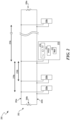
- FIG. 2 is a schematic diagram 200 of an embodiment of the present technology, implemented by the AVI control system, for identifying ECUs based on the observed impedance over a shared bus, such as a CAN bus 202.
- the CAN bus 202 found for example in an autonomous vehicle, can be a linear bus, comprised of two wires 204a and 204b, terminated at each end with resistors 206a and 206b. Data can be transmitted serially along the CAN bus 202 (e.g., one bit at a time).
- ECUs 208a, 208b, and 208c, associated with different components of the autonomous vehicle, are coupled to the CAN bus 202.
- An AVI 210 can also be coupled to the CAN bus 202.
- the AVI 210 can include an analog-to-digital converter 212, an FPGA 214, and memory 216.
- the AVI 210 observes different impedances on the CAN bus depending on which ECU is transmitting data at a given time. That is, a first ECU 208a, at a first distance 218a from the AVI 210 on the CAN bus 202, creates a first impedance (from the perspective of the AVI) when it is transmitting data over the CAN bus. The first impedance differs from a second impedance generated when a second ECU 208b, at a second distance 218b, transmits data over the CAN bus. Similarly, a third ECU 208c, at a third distance 218c from the AVI 210 on the CAN bus 202, generates a third impedance that differs from the impedance generated by the other ECUs.
- the AVI control system samples impedances over the CAN bus 202 and utilizes them to identify which ECU is transmitting at a given time. That is, the AVI control system uses observed impedances as a unique "fingerprint" to determine the source of data on the CAN bus, which is beneficial since, for example, data packets on the CAN bus do not include information indicating the source of the packet. In other words, the AVI control system can detect and/or determine that all data packets associated with a particular impedance originated at one ECU, while all data packets associated with a different impedance originated at a different ECU.
- the system determines whether the sampled information is an end of packet indicator. For example, when the bus is a CAN bus, the system can utilize a state machine that tracks different portions of a CAN frame, from a start-of-frame indicator to the end-of-frame indicator. If the system determines that the sampled information is not an end of packet indicator, then the process 300 returns to the block 325 to sample the next piece of information within the current packet. If the system determines that the sampled information is the end of packet indicator, then the process 300 returns to the block 305 to begin sampling information (and ultimately measuring the impedance) of the next packet (e.g., the next CAN frame).
- the next packet e.g., the next CAN frame
- the ECUs 406a-406c can also control the vehicle system with which they are associated based on instructions or communications from other ECUs. That is, for example, the ECU associated with engine control can adjust engine parameters based on communication from the ECU associated with acceleration (which conveys data regarding the extent to which the acceleration pedal is depressed).
- the ECUs can communicate with each other through a shared bus, such as a CAN bus 402.
- the AVI control system facilitates autonomously controlling the vehicle by controlling the various systems of the vehicle. That is, the AVI control system can enable autonomous control by controlling the ECU associated with steering, the ECU associated with engine control, the ECU associated with acceleration, etc. As described herein, the AVI control system effectuates control over the various ECUs by generating synthesized data that is used by those systems in place of ordinary data (e.g., data from a sensor or data from another ECU). The synthesized data can be generated, for example, by an AVI 404 that is also coupled to the CAN bus 402.
- the sensor interposers 410a and 410c operate to allow the unmodified signals from sensors 408a and 408c to drive the ECUs 406a and 406c.
- the system can generate synthesized data in the form of synthesized ECU data.
- ECU interposer 412 can be coupled "in between" ECU 406b and the CAN bus 402.
- the ECU 406b can generate ordinary data based on information from the sensor 408b, but as described herein, the output of the ECU 406b can be modified by the ECU interposer 412 before controlling the corresponding vehicle system and/or communicating with other systems.
- the ECU 406b can generate a CAN frame with data field based on the information from the sensor 408b.
- the ECU interposer 412 can overwrite the data field contents of the CAN frame before the data field is transmitted and consumed.
- the ECU interposer 412 operates to allow the unmodified data from the ECU 406b to pass though (e.g., "as is”) and drive other systems in the vehicle.
- Sensor interposers 410a and 410c, and ECU interposer 412 can be controlled by the AVI 404.
- the AVI 404 can control whether interposers should generate synthesized data (or in the alternative, allow the corresponding system to behave without influence from the interposer), and if so, the contents of the synthesized data. That is, the AVI 404 can trigger the generation of synthesized data to a steering control system to cause a vehicle to turn by certain amounts regardless of the state of the steering wheel. Similarly, the AVI 404 can trigger the generation of synthesized data to an acceleration system to cause a vehicle to accelerate by specified amounts regardless of the state of the accelerator pedal.
- the AVI 404 can communicate with the interposers over control channels 414a, 414b, and 414c, each of which link to an interposer.
- the control channels 414a-414c can be a physical point-to-point connection between the AVI 404 and interposers (e.g., a wired connection), a bus shared between the AVI and all of the interposers, a wireless connection between the AVI and interposers, and/or other suitable arrangements.
- the system can also "fail operationally," whereby the vehicle systems revert to a default operational state if components of the system (e.g., the AVI 404, the interposers, the control channels 414a-414c, and/or other elements) should fail. That is, if the AVI 404 or interposer that is controlling a system of the vehicle were to stop functioning or lose power, the AVI control system can provide that the impacted vehicle system be controlled by other vehicle components, e.g., the sensors or ECUs that would ordinarily control the system, absent the AVI control system. Operational failover is provided by failover switches 416a, 416b, and 416c, each of which is coupled to restore operational functionality in case of a failure.
- the AVI 404 or interposer that is controlling a system of the vehicle were to stop functioning or lose power
- the AVI control system can provide that the impacted vehicle system be controlled by other vehicle components, e.g., the sensors or ECUs that would ordinarily control the
- failover switch 416a can be coupled "in between" ECU 406a and sensor interposer 410a. In the case of a failure whereby the sensor interposer 410a no longer generates valid data, the failover switch 416a can switch to drive the ECU 406a with the output of sensor 408a, thereby bridging the sensor to the ECU around the source of invalid data.
- failover switch 416b can be coupled "in between” the CAN bus 402 and ECU interposer 412.
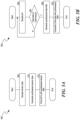
- Figure 5A is a flow chart of a representative process 500, implemented by the AVI control system, for controlling ECUs by interposing sensor data.
- Figure 5B is a flow chart of a representative process 550, implemented by the AVI control system, for controlling ECUs by interposing ECU data.
- the process begins at a block 555, where the system samples data of a CAN frame being transmitted by the ECU to be controlled.
- the system determines whether the sampled CAN frame data is from the data field (i.e., the payload) of the CAN frame. If the system determines that the sampled data is not from the data field, then the process 550 returns to the block 555 to sample the next data portion of the CAN frame. If the system determines that the sampled data is from the data field, then the process continues to a block 565.
- the system generates synthesized data for the ECU.
- the synthesized ECU data can be generated based on downstream user control, based on control from an AVI, based on the sampled data field of the CAN frame, etc.
- the system overwrites the data field of the CAN frame being transmitted by the ECU with the synthesized ECU data.
- the process 550 then ends.
Landscapes
- Engineering & Computer Science (AREA)
- Computer Networks & Wireless Communication (AREA)
- Signal Processing (AREA)
- Automation & Control Theory (AREA)
- Theoretical Computer Science (AREA)
- General Engineering & Computer Science (AREA)
- Mechanical Engineering (AREA)
- Transportation (AREA)
- Human Computer Interaction (AREA)
- Computer Hardware Design (AREA)
- Physics & Mathematics (AREA)
- General Physics & Mathematics (AREA)
- Small-Scale Networks (AREA)
- Selective Calling Equipment (AREA)
Description
- The present technology is directed to an autonomous vehicle interface using bus impedance to identify control units, and associated systems and methods.
- Autonomous vehicles are developed to navigate and operate either unmanned or to assist a vehicle operator. When autonomous capabilities are added by a third-party to a mainstream consumer vehicle that was not originally designed to operate autonomously, the third-party may utilize the many different types of sensors, robotics, computer-controlled systems, and other mechanisms ordinarily found on the vehicle in order to effectuate autonomous control. However, automobile companies and other vehicle manufacturers often implement these computer-controlled systems and other mechanisms using proprietary technologies, and may provide only limited documentation or information regarding the operation of those systems. As a result of such limited information, it can be costly, difficult, and time consuming for third-parties to effectively interface with the existing systems found on the vehicle, and add autonomous capabilities to the vehicle.
-
US2018/295011 Al discloses a frame based on-vehicle network using source identifier and data field. -
US8955130 B1 discloses to monitor resistive and capacitive bus states on a CAN bus on a vehicle to detect unauthorized connections. -
-
Figure 1 is a diagram of a representative environment in which a system for identifying and controlling electronic control units (ECUs) of a vehicle with an autonomous vehicle interface (AVI) (the "AVI control system") can operate. -
Figure 2 is a schematic diagram of an embodiment of the AVI control system for identifying ECUs based on the observed impedance over a shared bus, in accordance with representative embodiments of the present technology. -
Figure 3 is a flow chart of a process implemented by an AVI control system for uniquely identifying ECUs based on the observed impedance over a shared bus, in accordance with representative embodiments of the present technology. -
Figure 4 is a schematic diagram of an embodiment of an AVI control system for controlling ECUs, in accordance with representative embodiments of the present technology. -
Figures 5A-5B are flow charts of processes implemented by an AVI control system for controlling ECUs, in accordance with representative embodiments of the present technology. - In the present disclosure, the drawings have not necessarily been drawn to scale. Similarly, some components and/or operations can be separated into different blocks or combined into a single block for the purpose of discussion of some of the implementations of the present technology. Moreover, while the technology is amenable to various modifications and alternative forms, specific implementations have been shown by way of example in the drawings and are described in greater detail below. The invention, however, is defined by the appended claims.
- Systems that facilitate identifying and controlling the unique systems and subsystems in a vehicle, thereby enabling autonomous operation of the vehicle, using an autonomous vehicle interface (AVI) (the "AVI control system"), are disclosed herein. The vehicle systems with which the AVI control system interfaces can correspond to different components and aspects of the vehicle. For example, the vehicle can have one vehicle system corresponding to steering, another vehicle system corresponding to acceleration, another vehicle system corresponding to the engine, another vehicle system corresponding to the gear control, etc. By interfacing with and controlling each of these individual vehicle systems, the AVI control system enables control over the vehicle as a whole. The control can include, for example, longitudinal and latitudinal motion control and control of convenience features such as windows, sliding doors, climate controls, an infotainment systems.
- Each of the vehicle systems can include a sensor, transducer, and/or other component that detects the physical state of, and/or changes within, the system, as well as an electronic control unit (ECU) that transmits information about the detected state to other systems in the vehicle. For example, in the gear control system of a vehicle, a sensor can generate a signal based on the position of a gear selector lever, which is translated to gear information (e.g., drive, neutral, park, reverse, etc.) by the corresponding ECU. As a further example, in the accelerator system of a vehicle, a sensor can generate a signal based on the extent to which an accelerator pedal has been depressed, which is translated to an acceleration amount by the corresponding ECU. As another example, the sensors may include range or distance finding sensors, such LIDAR, short range radar, long range radar, optical sensors, and lane keeping assist sensors. The ECUs can communicate with each other over a shared data bus, such as a controller area network (CAN) bus, to share information and influence other functions of the vehicle. For example, acceleration data from the acceleration ECU can be received by the ECU for engine control, and thereby control engine operations. Moreover, the information received by the ECU can be used to perform vehicle diagnostics and discern vehicle issues. For example, the ECU may receive vehicle information regarding the failures or faults within one or more vehicle systems, perform diagnostics based on the received information, and determine any vehicle issues such as component failure, necessary maintenance, or system faults. These vehicle issues can be communicated to the AVI, and the AVI can also determine vehicle issues from information provided by the ECUs.
- As described herein, the AVI control system can provide information to an end-user regarding which ECU is active at a given time. For example, the AVI control system can include an AVI that is also coupled to the shared communications bus over which the vehicle ECUs communicate (e.g., the CAN bus). The AVI can observe the transmissions from ECUs over the CAN bus, and measure certain bus characteristics (e.g., impedance) to determine when different ECUs are transmitting over the bus. By identifying when one ECU versus another ECU is transmitting over the CAN, the system aids system integrators and/or installers in evaluating which vehicle systems correspond to which ECUs.
- The AVI control system also enables downstream user control over the vehicle ECUs, and by extension the corresponding vehicle systems. For example, the AVI control system can include one or more interposers, communicatively coupled to the AVI, that generate synthesized sensor data or synthesized ECU data in place of observed data. As described herein, the synthesized data is consumed by other vehicle systems (e.g., synthesized data from an acceleration ECU is consumed by the engine control ECU), thereby influencing vehicle operations. In other words, the presence of the AVI on the shared CAN bus facilitates communication with, and control over, the vehicle's systems by the AVI control system.
- Various implementations of the system will now be described. The following description provides specific details for a thorough understanding and an enabling description of these implementations. One skilled in the art will understand, however, that the system can be practiced without many of these details and/or with alternative approaches. Additionally, some well-known structures or functions may not be shown or described in detail so as to avoid unnecessarily obscuring the relevant description of the various implementations. The terminology used in the description presented below is intended to be interpreted in its broadest reasonable manner, even though it is being used in conjunction with a detailed description of certain specific implementations of the system.
-
Figure 1 and the following discussion provide a brief, general description of a suitable environment in which a system for vehicle communication and control using an autonomous vehicle interface can be implemented. Although not required, aspects of the system are described in the general context of computer-executable instructions, such as routines executed by a general-purpose computer, a personal computer, a server, and/or other computing system. The system can also be embodied in a special purpose computer or data processor that is specifically programmed, configured, and/or constructed to perform one or more of the computer-executable instructions explained in detail herein. Indeed, the terms "computer" and "computing device," as used generally herein, refer to devices that have a processor and non-transitory memory, like any of the above devices, as well as any data processor or any device capable of communicating with a network. Data processors include programmable general-purpose or special-purpose microprocessors, programmable controllers, application-specific integrated circuits (ASICs), programming logic devices (PLDs), field-programmable gate arrays (FPGAs) or the like, and/or any suitable combination of such devices. Computer-executable instructions may be stored in memory, such as random access memory (RAM), read-only memory (ROM), flash memory, or the like, and/or any suitable combination of such components. Computer-executable instructions may also be stored in one or more storage devices, such as magnetic or optical-based disks, flash memory devices, and/or any other suitable type of nonvolatile storage medium or non-transitory medium for data. Computer-executable instructions may include one or more program modules, which can include routines, programs, objects, components, data structures, and so on that perform particular tasks and/or implement particular abstract data types. -
Figure 1 illustrates anexample environment 100 in which systems in accordance with the present technology operate. Such systems facilitate identifying and controlling the unique systems and subsystems in a vehicle, thereby enabling autonomous operation of the vehicle, using an autonomous vehicle interface. The environment can include an autonomous vehicle 102 which has multiple components, including afirst component 104, asecond component 106, athird component 108, and so on to anNth component 110. The various components correspond to different systems of the autonomous vehicle 102. For example, as illustrated, thefirst component 104 corresponds to the vehicle's engine control system, thesecond component 106 corresponds to the vehicle's headlights, and thethird component 108 corresponds to the vehicle's air intake, etc. - The components of the autonomous vehicle 102 comprise one or more sensors that generate an output based on the physical state of the component (e.g., the amount of air flowing through an intake, the rotation angle of a steering wheel, the distance between the vehicle and other objects, the extent to which a pedal is depressed, etc.), and an electronic control unit (ECU) that interprets the sensor data and controls the component. For example, the autonomous vehicle 102 can include a
first ECU 112, asecond ECU 114, athird ECU 116, and so on to an Nth ECU 118, corresponding to the first-Nth components 104, 106, 108, 110. Each ECU can include elements to receive sensor data, interpret the sensor data, and exercise control over the component. Such elements can include a microcontroller, memory storage (e.g., SRAM, EEPROM, or Flash memory), inputs to sample the sensor data, actuator and H bridge drivers, and/or embedded software to control the ECU. The ECUs can also include elements to communicate with each other, such as via point-to-point communications or over a shared bus. For example, the ECUs can communicate with each other, as well as with other components of the autonomous vehicle 102, over a shared CAN bus 120. - The autonomous vehicle 102 can additionally include an AVI 122, which can be coupled to the CAN bus 120. The AVI 122 can include a field-programmable gate array (FPGA) configured to observe and parse information transmitted over the CAN bus 120, generate data for transmittal over the CAN bus, and/or communicate with other components of the system (e.g., ECU interposers and sensor interposers) via the CAN bus and/or other communication channels. The FPGA can also include high-speed I/O logic to enable sampling of data (e.g., data on the CAN bus 120) at a very high rate. The AVI 122 can additionally include an analog-to-digital converter for sampling analog signals over the CAN bus 120 (e.g., voltages across the bus, and/or the impedance of the bus) and generating digital values from the analog signals. The AVI 122 can evaluate the converted digital values (e.g., a voltage and/or impedance value) as part of a logic operation, and can store the converted digital values in memory and/or other storage area of the AVI. The AVI 122 can additionally receive instructions or commands from a downstream user, such as through the CAN bus 120 or through another suitable interface (not shown). The downstream user can issue commands to the AVI 122 to, for example, monitor and record all data transmitted by all or specific ECUs on the CAN bus 120, to control specific systems of the autonomous vehicle 102. That is, as described herein, the AVI can enable both sampling communications from other components of the autonomous vehicle 102 (e.g., over the CAN bus 120), as well as generating synthesized control over autonomous vehicle components.
-
Figure 2 is a schematic diagram 200 of an embodiment of the present technology, implemented by the AVI control system, for identifying ECUs based on the observed impedance over a shared bus, such as aCAN bus 202. TheCAN bus 202, found for example in an autonomous vehicle, can be a linear bus, comprised of twowires resistors ECUs CAN bus 202. AnAVI 210 can also be coupled to theCAN bus 202. TheAVI 210 can include an analog-to-digital converter 212, anFPGA 214, andmemory 216. - Due to differences in the internal electrical characteristics of the ECUs, as well as differences in the distances between each of the ECUs and the
AVI 210 along theCAN bus 202, theAVI 210 observes different impedances on the CAN bus depending on which ECU is transmitting data at a given time. That is, afirst ECU 208a, at afirst distance 218a from theAVI 210 on theCAN bus 202, creates a first impedance (from the perspective of the AVI) when it is transmitting data over the CAN bus. The first impedance differs from a second impedance generated when asecond ECU 208b, at asecond distance 218b, transmits data over the CAN bus. Similarly, athird ECU 208c, at athird distance 218c from theAVI 210 on theCAN bus 202, generates a third impedance that differs from the impedance generated by the other ECUs. - As described herein, the AVI control system samples impedances over the
CAN bus 202 and utilizes them to identify which ECU is transmitting at a given time. That is, the AVI control system uses observed impedances as a unique "fingerprint" to determine the source of data on the CAN bus, which is beneficial since, for example, data packets on the CAN bus do not include information indicating the source of the packet. In other words, the AVI control system can detect and/or determine that all data packets associated with a particular impedance originated at one ECU, while all data packets associated with a different impedance originated at a different ECU. - Sampling impedances on the
CAN bus 202 at theAVI 210 can be performed using the analog-to-digital converter 212. Sampling using the analog-to-digital converter 212 can further be controlled by theFPGA 214 to, for example, ensure that sampling occurs only when a single ECU is transmitting data over theCAN bus 202. For example, theCAN bus 202 can be a multi-master bus in which multiple ECUs can initiate a transfer over the bus at the same time. When multiple ECUs attempt to transmit data over theCAN bus 202 at the same time, then, during an arbitration phase of the transfer, all ECUs attempting to transfer data over the bus hold off, except the highest priority ECU, where priority is determined by an identifier originating from the ECU. That is, once arbitration has been completed, only a single ECU will drive its data payload onto theCAN bus 202. TheFPGA 214 can therefore observe transmissions over theCAN bus 202 to determine which portion of a data packet is currently being transmitted (e.g., the identifier used during arbitration, other header information, data payload, etc.), and identify when the associated data payload is being transmitted. Once the data payload is being transmitted,FPGA 214 can enable the analog-to-digital converter 212 to sample impedance data over theCAN bus 202, since only a single ECU will be transmitting at that time. The AVI control system can then save the converted impedance value to thememory 216. -
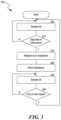
Figure 3 is a flow chart of aprocess 300 implemented by the AVI control system for uniquely identifying ECUs based on the observed impedance over a shared bus. - The
process 300 begins atblock 305, where the system samples information on the shared bus. The shared bus can, for example, be a CAN bus, over which information is transferred serially along the bus one or more bits at a time. In some embodiments, the bus is single-bit and asynchronous, with each bit transmitted according to a bit rate that can be fixed or programmed. - At a
decision block 310, the system determines whether the sampled information is from the data payload portion of a data packet, such as a CAN frame. That is, a data packet to be transmitted serially over the shared bus can include header information that is transmitted prior to the data payload. For example, a CAN frame includes information such a start-of-frame indicator, an identifier used to arbitrate message priority among multiple messages, frame formatting indicators, data length, etc., that are transferred prior to the CAN frame's data field. The CAN frame also includes information that is transferred after the data payload, such as cyclic redundancy check (CRC) information and an end-of-frame indicator. The system evaluates the information that it has sampled over the bus, for the current packet, to determine whether the currently-sampled information is from the data payload. For example, the system can utilize a state machine that tracks different portions of a CAN frame, from a start-of-frame indicator to an end-of-frame indicator, and recognizes when a data field of the CAN frame is being transmitted over the bus. As described herein, it is advantageous to determine when the data payload is being transmitted over a CAN bus, since that indicates only one actor (e.g., one ECU) is transmitting at that time. If the system determines that the sampled information is not from a data payload, then theprocess 300 returns to theblock 305 to sample the next transmittal over the bus (e.g., the next bit). If the system determines that the sample's information is from a data payload, then the process continues to block 315. - At a
block 315, the system measures the impedance of the bus. The system can measure the impedance, for example, with an analog-to-digital converter coupled to the bus. The analog-to-digital converter can be part of, for example, an AVI. - At a
block 320, the system stores the measured impedance. The system can store the impedance, for example, in a memory of the AVI. As described herein, the system facilitates the identification of ECUs transmitting over the bus using the measured and stored impedances. For example, in at least some embodiments, the system can store the data payload contents and corresponding impedance of all CAN frames observed over the CAN bus. The association of data payloads and impedances enables a downstream user of the system to identify which data payloads originated from the same source on the bus (i.e., which ECU). Furthermore, the downstream user can analyze the data to determine which specific ECU of an autonomous vehicle corresponds to which impedances and CAN frames. For example, a downstream can determine that a pattern of certain data originating from a first ECU indicates that the ECU is associated with the gear selector of the autonomous vehicle, while a different pattern of data originating from a second ECU indicates that the ECU is associated with the steering control of the autonomous vehicle. - At a
block 325, the system samples information on the shared bus. For example, when the shared bus is an asynchronous CAN bus, the system can sample a bit as dictated by the bus bit rate. - At a
decision block 330, the system determines whether the sampled information is an end of packet indicator. For example, when the bus is a CAN bus, the system can utilize a state machine that tracks different portions of a CAN frame, from a start-of-frame indicator to the end-of-frame indicator. If the system determines that the sampled information is not an end of packet indicator, then theprocess 300 returns to theblock 325 to sample the next piece of information within the current packet. If the system determines that the sampled information is the end of packet indicator, then theprocess 300 returns to theblock 305 to begin sampling information (and ultimately measuring the impedance) of the next packet (e.g., the next CAN frame). -
Figure 4 is a schematic diagram 400 of a representative embodiment, implemented by the AVI control system, for controlling ECUs in a vehicle. As described herein, the vehicle can includemultiple ECUs ECUs 406a-406c can control the vehicle system with which they are associated based on data from correspondingsensors ECUs 406a-406c can also control the vehicle system with which they are associated based on instructions or communications from other ECUs. That is, for example, the ECU associated with engine control can adjust engine parameters based on communication from the ECU associated with acceleration (which conveys data regarding the extent to which the acceleration pedal is depressed). The ECUs can communicate with each other through a shared bus, such as aCAN bus 402. - The AVI control system facilitates autonomously controlling the vehicle by controlling the various systems of the vehicle. That is, the AVI control system can enable autonomous control by controlling the ECU associated with steering, the ECU associated with engine control, the ECU associated with acceleration, etc. As described herein, the AVI control system effectuates control over the various ECUs by generating synthesized data that is used by those systems in place of ordinary data (e.g., data from a sensor or data from another ECU). The synthesized data can be generated, for example, by an
AVI 404 that is also coupled to theCAN bus 402. - In some embodiments, the system can generate synthesized data in the form of synthesized sensor data. For example,
sensor interposers ECUs sensors sensor interposers ECUs sensors ECUs sensor interposers sensor interposers sensors ECUs - In some embodiments, the system can generate synthesized data in the form of synthesized ECU data. For example,
ECU interposer 412 can be coupled "in between"ECU 406b and theCAN bus 402. TheECU 406b can generate ordinary data based on information from thesensor 408b, but as described herein, the output of theECU 406b can be modified by theECU interposer 412 before controlling the corresponding vehicle system and/or communicating with other systems. For example, theECU 406b can generate a CAN frame with data field based on the information from thesensor 408b. TheECU interposer 412, however, can overwrite the data field contents of the CAN frame before the data field is transmitted and consumed. When no synthesized ECU data is to be generated by the system, theECU interposer 412 operates to allow the unmodified data from theECU 406b to pass though (e.g., "as is") and drive other systems in the vehicle. -
Sensor interposers ECU interposer 412, can be controlled by theAVI 404. For example, theAVI 404 can control whether interposers should generate synthesized data (or in the alternative, allow the corresponding system to behave without influence from the interposer), and if so, the contents of the synthesized data. That is, theAVI 404 can trigger the generation of synthesized data to a steering control system to cause a vehicle to turn by certain amounts regardless of the state of the steering wheel. Similarly, theAVI 404 can trigger the generation of synthesized data to an acceleration system to cause a vehicle to accelerate by specified amounts regardless of the state of the accelerator pedal. TheAVI 404 can communicate with the interposers overcontrol channels control channels 414a-414c can be a physical point-to-point connection between theAVI 404 and interposers (e.g., a wired connection), a bus shared between the AVI and all of the interposers, a wireless connection between the AVI and interposers, and/or other suitable arrangements. - The system can also "fail operationally," whereby the vehicle systems revert to a default operational state if components of the system (e.g., the
AVI 404, the interposers, thecontrol channels 414a-414c, and/or other elements) should fail. That is, if theAVI 404 or interposer that is controlling a system of the vehicle were to stop functioning or lose power, the AVI control system can provide that the impacted vehicle system be controlled by other vehicle components, e.g., the sensors or ECUs that would ordinarily control the system, absent the AVI control system. Operational failover is provided byfailover switches failover switch 416a can be coupled "in between"ECU 406a andsensor interposer 410a. In the case of a failure whereby thesensor interposer 410a no longer generates valid data, thefailover switch 416a can switch to drive theECU 406a with the output ofsensor 408a, thereby bridging the sensor to the ECU around the source of invalid data. As a further example,failover switch 416b can be coupled "in between" theCAN bus 402 andECU interposer 412. In the case of a failure whereby theECU interposer 412 no longer generates valid data, thefailover switch 416b can switch to drive theCAN bus 402 with the output ofECU 406b, thereby bridging the ECU to the CAN bus around the source of invalid data. Thefailover switches 416a-416c can switch to the failover operational state when, for example, the switches detect a loss of power in the interposers or theAVI 404, or upon detecting an error condition in the interposers or the AVI. Thefailover switches 416a-416c can be high-speed switches such that, for example, the switches can enter the failover operational state without downstream components detecting a discontinuity in communication with the failing components. Thefailover switches 416a-416c can also be coupled to redundant power supplies (not shown), that enable the AVI control system to fail operationally even when the system is losing power. -
Figure 5A is a flow chart of arepresentative process 500, implemented by the AVI control system, for controlling ECUs by interposing sensor data. - The process begins at a
block 505, where the system samples data from the sensor associated with an ECU to be controlled. At ablock 510, the system generates synthesized sensor data for the ECU to be controlled. The synthesized sensor data can be generated based on downstream user control, based on control from an AVI, based on the sampled sensor data, and/or based on other suitable input sources. At ablock 515, the system drives the ECU to be controlled with the synthesized sensor data. Theprocess 500 then ends. -
Figure 5B is a flow chart of arepresentative process 550, implemented by the AVI control system, for controlling ECUs by interposing ECU data. - The process begins at a
block 555, where the system samples data of a CAN frame being transmitted by the ECU to be controlled. At adecision block 560, the system determines whether the sampled CAN frame data is from the data field (i.e., the payload) of the CAN frame. If the system determines that the sampled data is not from the data field, then theprocess 550 returns to theblock 555 to sample the next data portion of the CAN frame. If the system determines that the sampled data is from the data field, then the process continues to ablock 565. - At the
block 565, the system generates synthesized data for the ECU. The synthesized ECU data can be generated based on downstream user control, based on control from an AVI, based on the sampled data field of the CAN frame, etc. - At a
block 570, the system overwrites the data field of the CAN frame being transmitted by the ECU with the synthesized ECU data. Theprocess 550 then ends.
Claims (7)
- A method, performed by an autonomous vehicle interface (122, 210), to identify electronic control units (114, 116, 118, 208a, 208b, 208c) in a vehicle (102), the method comprising:sampling data from a data frame transmitted over a shared data control area network, CAN, bus (120, 202) in the vehicle (102), wherein multiple electronic control units (114, 116, 118, 208a, 208b, 208c) are coupled to the shared CAN bus (120, 202);determining whether the sampled data of the data frame is from a data field in the data frame;characterized in further comprising:measuring the impedance of the shared CAN bus (120, 202) in response to determining that the sampled data is from the data field of the data frame; anddetermining, based on the measured impedance, a transmitting control unit from the multiple electronic control units (114, 116, 118, 208a, 208b, 208c) coupled to the shared CAN bus (120, 202).
- The method of claim 1, further comprising storing the measured impedance in a system memory (216).
- The method of claim 1, wherein determining whether the sampled data of the data frame is from a data field in the data frame comprises determining whether the sampled data is from a data payload transmitted by an electronic control unit (114, 116, 118, 208a, 208b, 208c).
- The method of claim 3, further comprising, when it is determined that the sampled data is not from a data payload transmitted by an electronic control unit (114, 116, 118, 208a, 208b, 208c), sampling the next data frame transmitted over the shared CAN bus (120, 202).
- The method of claim 2, further comprising receiving a plurality of data payloads from the multiple electronic control units (114, 116, 118, 208a, 208b, 208c), and associating the data payloads with the stored, measured impedances.
- A system for identifying electronic control units (114, 116, 118, 208a, 208b, 208c) in a vehicle (102), the system comprising:a plurality of electronic control units (114, 116, 118, 208a, 208b, 208c),a shared control area network, CAN, bus (120, 202), wherein the plurality of electronic control units (114, 116, 118, 208a, 208b, 208c) are configured to transmit data frame over the shared CAN bus (120, 202), andan autonomous vehicle interface (122, 210) configured coupled to the shared communication bus (120, 202), wherein the autonomous vehicle interface (122, 210) is configured to:sample data from a data frame transmitted over the shared CAN bus (120, 202) in the vehicle (102),determine whether the sampled data of the data frame is from a data field in the data frame;the system being characterized in that the autonomous vehicle interface being further configured to:
measure the impedance of the shared CAN bus (120, 202) in response to determining that the sampled data is from the data field of the data frame; anddetermining, based on the measured impedance, a transmitting control unit (114, 116, 118, 208a, 208b, 208c) from the multiple electronic control units (114, 116, 118, 208a, 208b, 208c) coupled to the shared CAN bus (120, 202). - The system of claim 6, wherein the autonomous vehicle interface (122, 210) comprises an analog-to-digital converter (212) and a memory (216).
Applications Claiming Priority (2)
| Application Number | Priority Date | Filing Date | Title |
|---|---|---|---|
| US201962933266P | 2019-11-08 | 2019-11-08 | |
| PCT/IB2020/060494 WO2021090280A2 (en) | 2019-11-08 | 2020-11-06 | Autonomous vehicle interface using bus impedance to identify control units, and associated systems and methods |
Publications (2)
| Publication Number | Publication Date |
|---|---|
| EP4055489A2 EP4055489A2 (en) | 2022-09-14 |
| EP4055489B1 true EP4055489B1 (en) | 2025-07-09 |
Family
ID=73455758
Family Applications (1)
| Application Number | Title | Priority Date | Filing Date |
|---|---|---|---|
| EP20808197.6A Active EP4055489B1 (en) | 2019-11-08 | 2020-11-06 | Autonomous vehicle interface using bus impedance to identify control units, and associated systems and methods |
Country Status (3)
| Country | Link |
|---|---|
| US (2) | US11840211B2 (en) |
| EP (1) | EP4055489B1 (en) |
| WO (1) | WO2021090280A2 (en) |
Families Citing this family (5)
| Publication number | Priority date | Publication date | Assignee | Title |
|---|---|---|---|---|
| EP4055489B1 (en) * | 2019-11-08 | 2025-07-09 | Vay Technology GmbH | Autonomous vehicle interface using bus impedance to identify control units, and associated systems and methods |
| TWI812061B (en) * | 2022-03-11 | 2023-08-11 | 雷穎科技股份有限公司 | Medical care radar system |
| US20250175363A1 (en) * | 2022-06-29 | 2025-05-29 | Sabanto, Inc. | Systems and methods for improved operation of a working vehicle |
| CN117440345B (en) * | 2023-09-08 | 2024-07-23 | 重庆数智融合创新科技有限公司 | Automobile ECU software filling method and system based on 5G technology |
| WO2026009036A2 (en) | 2025-10-16 | 2026-01-08 | Wasfi Alshdaifat | Robotic tele control arrangement |
Citations (3)
| Publication number | Priority date | Publication date | Assignee | Title |
|---|---|---|---|---|
| US8955130B1 (en) * | 2014-04-10 | 2015-02-10 | Zephyr Technology Co., Limited | Method for protecting vehicle data transmission system from intrusions |
| DE112015006541T5 (en) * | 2015-05-15 | 2018-02-15 | Mitsubishi Electric Corporation | Attack detection device |
| US20180295011A1 (en) * | 2017-04-05 | 2018-10-11 | GM Global Technology Operations LLC | Architectures and methods for management of in-vehicle networked controllers and devices |
Family Cites Families (41)
| Publication number | Priority date | Publication date | Assignee | Title |
|---|---|---|---|---|
| US3474400A (en) * | 1965-03-31 | 1969-10-21 | Gen Signal Corp | Sonic presence detection system and method |
| US4342957A (en) * | 1980-03-28 | 1982-08-03 | Honeywell Information Systems Inc. | Automatic test equipment test probe contact isolation detection apparatus and method |
| US5594307A (en) * | 1994-02-10 | 1997-01-14 | Nissan Motor Co., Ltd. | Current servo amplification/control apparatus and method for reversible DC motor |
| US5645571B1 (en) * | 1995-08-01 | 1999-08-24 | Surviva Link Corp | Automated external defibrillator with lid activated self-test system |
| US5867089A (en) * | 1996-09-03 | 1999-02-02 | Chrysler Corporation | Base-to-remotely controlled vehicle communications for automated durability road (ADR) facility |
| DE19746719C1 (en) * | 1997-10-15 | 1999-05-06 | Siemens Ag | Power swing indication signal determination method e.g. for power supply network |
| US6912671B2 (en) * | 2001-05-07 | 2005-06-28 | Bisher-Rosemount Systems, Inc | Wiring fault detection, diagnosis and reporting for process control systems |
| US7593756B2 (en) * | 2003-10-16 | 2009-09-22 | Microsemi Corp.—Analog Mixed Signal Group Ltd. | Detection for high powered devices |
| US7259584B1 (en) * | 2005-02-18 | 2007-08-21 | Lsi Corporation | Methods and structure for selective impedance control of bus driver circuits |
| CN101248437A (en) * | 2005-08-24 | 2008-08-20 | Nxp股份有限公司 | Processor Hardware and Software |
| US7877788B1 (en) * | 2006-02-27 | 2011-01-25 | Teradici Corporation | Method and apparatus for securing a peripheral data interface |
| US7734841B2 (en) * | 2006-06-30 | 2010-06-08 | Palm, Inc. | System and method for providing serial bus connectivity |
| US7804355B2 (en) * | 2007-01-19 | 2010-09-28 | Z-Band, Inc. | Managed wideband radio frequency distribution system with signal level enabling interface device |
| US8120259B2 (en) * | 2007-04-19 | 2012-02-21 | Plasmart Co., Ltd. | Impedance matching methods and systems performing the same |
| KR100870121B1 (en) * | 2007-04-19 | 2008-11-25 | 주식회사 플라즈마트 | Impedance matching method and matching system for this method |
| US8140220B2 (en) * | 2008-05-30 | 2012-03-20 | Fujitsu Ten Limited | In-vehicle apparatus |
| TWI384721B (en) * | 2009-08-19 | 2013-02-01 | 立錡科技股份有限公司 | Charger and portable device having the same |
| US9035673B2 (en) * | 2010-01-25 | 2015-05-19 | Palo Alto Research Center Incorporated | Method of in-process intralayer yield detection, interlayer shunt detection and correction |
| US8494184B2 (en) * | 2010-07-18 | 2013-07-23 | Bose Corporation | Digital data transfer via audio signal conductors |
| US8494185B2 (en) * | 2010-07-18 | 2013-07-23 | Bose Corporation | Electro-acoustic transducer tuning and data storage |
| US10180460B1 (en) * | 2012-04-20 | 2019-01-15 | Motiv Power Systems, Inc. | Performing active interrogation of battery packs in situ to obtain precise SOC and SOH estimates |
| US9665151B1 (en) * | 2012-09-27 | 2017-05-30 | Maxim Integrated Products, Inc. | Power over ethernet powered device interface with non-power over ethernet supply detection |
| US20140260546A1 (en) * | 2013-03-15 | 2014-09-18 | Odosodo, Inc. | Combinational Array Gas Sensor |
| US8915428B1 (en) * | 2013-10-04 | 2014-12-23 | Square, Inc. | Wireless-enabled card reader |
| US10114058B2 (en) * | 2014-09-30 | 2018-10-30 | Ford Global Technologies, Llc | System and method for high voltage leakage detection |
| EP3159853B1 (en) * | 2015-10-23 | 2019-03-27 | Harman International Industries, Incorporated | Systems and methods for advanced driver assistance analytics |
| WO2017164380A1 (en) * | 2016-03-25 | 2017-09-28 | ヤマハ株式会社 | Speaker operation confirmation device and method |
| US11093021B2 (en) * | 2016-08-04 | 2021-08-17 | Signify Holding B.V. | Power management method and device for DC powered device arrangement |
| WO2018146747A1 (en) * | 2017-02-08 | 2018-08-16 | 三菱電機株式会社 | Information processing device, information processing method, and information processing program |
| US11068590B2 (en) * | 2017-08-02 | 2021-07-20 | Enigmatos Ltd. | System and processes for detecting malicious hardware |
| US10791002B2 (en) * | 2017-08-19 | 2020-09-29 | Nxp B.V. | Controller area network (CAN) device and method for operating a CAN device |
| US20190186287A1 (en) * | 2017-12-20 | 2019-06-20 | Plasma Igniter, LLC | Power-generation Turbine Including Resonator-based Diagnostics |
| GB2577870B (en) * | 2018-10-01 | 2021-03-10 | Ge Aviat Systems Ltd | Modular power tile and method of operating a power distribution system |
| US11068433B2 (en) * | 2018-10-18 | 2021-07-20 | Texas Instruments Incorporated | Serial bus repeater with low power state detection |
| CN110221179B (en) * | 2019-07-01 | 2020-06-09 | 西南交通大学 | A method for locating grounding short-circuit faults in grounding pole lines of high-voltage direct current transmission systems |
| EP3809638B1 (en) * | 2019-10-17 | 2023-05-17 | Volvo Car Corporation | Detecting manipulation of data on a can bus |
| EP4055489B1 (en) * | 2019-11-08 | 2025-07-09 | Vay Technology GmbH | Autonomous vehicle interface using bus impedance to identify control units, and associated systems and methods |
| EP3917100B1 (en) * | 2020-05-26 | 2025-04-30 | Nxp B.V. | Controller area network controller and transceiver |
| EP3968034B1 (en) * | 2020-09-15 | 2024-07-17 | Hitachi Energy Ltd | Method and device for estimating source impedances across one or more transmission lines |
| US11711107B2 (en) * | 2020-11-10 | 2023-07-25 | Qorvo Us, Inc. | Systems and methods for antenna impedance matching |
| US20230223784A1 (en) * | 2021-12-30 | 2023-07-13 | Sustainable Energy Technologies, Inc. | Supercapacitor system with temperature control |
-
2020
- 2020-11-06 EP EP20808197.6A patent/EP4055489B1/en active Active
- 2020-11-06 US US17/091,736 patent/US11840211B2/en active Active
- 2020-11-06 WO PCT/IB2020/060494 patent/WO2021090280A2/en not_active Ceased
-
2023
- 2023-10-31 US US18/385,772 patent/US20240059305A1/en active Pending
Patent Citations (3)
| Publication number | Priority date | Publication date | Assignee | Title |
|---|---|---|---|---|
| US8955130B1 (en) * | 2014-04-10 | 2015-02-10 | Zephyr Technology Co., Limited | Method for protecting vehicle data transmission system from intrusions |
| DE112015006541T5 (en) * | 2015-05-15 | 2018-02-15 | Mitsubishi Electric Corporation | Attack detection device |
| US20180295011A1 (en) * | 2017-04-05 | 2018-10-11 | GM Global Technology Operations LLC | Architectures and methods for management of in-vehicle networked controllers and devices |
Also Published As
| Publication number | Publication date |
|---|---|
| US11840211B2 (en) | 2023-12-12 |
| WO2021090280A3 (en) | 2021-06-10 |
| US20240059305A1 (en) | 2024-02-22 |
| EP4055489A2 (en) | 2022-09-14 |
| WO2021090280A2 (en) | 2021-05-14 |
| US20210139042A1 (en) | 2021-05-13 |
Similar Documents
| Publication | Publication Date | Title |
|---|---|---|
| US11840211B2 (en) | Autonomous vehicle interface using bus impedance to identify control units, and associated systems and methods | |
| US11097834B2 (en) | Fly-by-wire systems and related operating methods | |
| US8155909B2 (en) | Method and device for checking the plausibility of measured values in a motor vehicle environment | |
| JP2816313B2 (en) | Fault diagnosis device | |
| CN111907695B (en) | Failure-resilient redundant fly-by-wire control system | |
| JP4222154B2 (en) | Vehicle control system | |
| CN113415290B (en) | Driving assistance method, device, equipment and storage medium | |
| KR20200022674A (en) | Apparatus for controlling fail-operational of vehicle, and method thereof | |
| CN113341922B (en) | Domain controller fault diagnosis system based on LCM | |
| US9676357B2 (en) | Diagnosis of integrated driver circuits | |
| CN109017979A (en) | Rotating direction control method and system | |
| JP2022182015A (en) | Fault diagnosis device and fault diagnosis method for vehicle | |
| JPH06510101A (en) | Vehicle control device | |
| CN114578687B (en) | Machine learning methods and machine learning systems | |
| KR19990082637A (en) | How to check the function of the calculation unit | |
| CN117968935A (en) | Automatic driving torque calibration method, automatic driving monitoring system, vehicle and medium | |
| US6401017B1 (en) | Method and arrangement for detecting a changing quantity for motor vehicles | |
| CN120972853A (en) | Test methods, devices, vehicles, and storage media for transfer case control strategies | |
| WO2023138218A1 (en) | Daisy chain detection method, positioning detection method and circuit | |
| US20090195257A1 (en) | Method and device for monitoring a first voltage value | |
| KR102917603B1 (en) | Data processing Device and Vehicle having the same | |
| EP4099641A1 (en) | Transceiver device | |
| Zarrouki et al. | Fault-tolerance by graceful degradation for car platoons | |
| CN117639202B (en) | A dual-circuit power supply and diagnostic system for intelligent driving domain control | |
| US11774509B2 (en) | Management device, vehicle management system, vehicle management method, and recording medium in which program is recorded |
Legal Events
| Date | Code | Title | Description |
|---|---|---|---|
| STAA | Information on the status of an ep patent application or granted ep patent |
Free format text: STATUS: UNKNOWN |
|
| STAA | Information on the status of an ep patent application or granted ep patent |
Free format text: STATUS: THE INTERNATIONAL PUBLICATION HAS BEEN MADE |
|
| PUAI | Public reference made under article 153(3) epc to a published international application that has entered the european phase |
Free format text: ORIGINAL CODE: 0009012 |
|
| STAA | Information on the status of an ep patent application or granted ep patent |
Free format text: STATUS: REQUEST FOR EXAMINATION WAS MADE |
|
| 17P | Request for examination filed |
Effective date: 20220608 |
|
| AK | Designated contracting states |
Kind code of ref document: A2 Designated state(s): AL AT BE BG CH CY CZ DE DK EE ES FI FR GB GR HR HU IE IS IT LI LT LU LV MC MK MT NL NO PL PT RO RS SE SI SK SM TR |
|
| DAV | Request for validation of the european patent (deleted) | ||
| DAX | Request for extension of the european patent (deleted) | ||
| STAA | Information on the status of an ep patent application or granted ep patent |
Free format text: STATUS: EXAMINATION IS IN PROGRESS |
|
| 17Q | First examination report despatched |
Effective date: 20231127 |
|
| GRAP | Despatch of communication of intention to grant a patent |
Free format text: ORIGINAL CODE: EPIDOSNIGR1 |
|
| STAA | Information on the status of an ep patent application or granted ep patent |
Free format text: STATUS: GRANT OF PATENT IS INTENDED |
|
| INTG | Intention to grant announced |
Effective date: 20250217 |
|
| RAP3 | Party data changed (applicant data changed or rights of an application transferred) |
Owner name: VAY TECHNOLOGY GMBH |
|
| GRAS | Grant fee paid |
Free format text: ORIGINAL CODE: EPIDOSNIGR3 |
|
| GRAA | (expected) grant |
Free format text: ORIGINAL CODE: 0009210 |
|
| STAA | Information on the status of an ep patent application or granted ep patent |
Free format text: STATUS: THE PATENT HAS BEEN GRANTED |
|
| P01 | Opt-out of the competence of the unified patent court (upc) registered |
Free format text: CASE NUMBER: APP_25383/2025 Effective date: 20250528 |
|
| AK | Designated contracting states |
Kind code of ref document: B1 Designated state(s): AL AT BE BG CH CY CZ DE DK EE ES FI FR GB GR HR HU IE IS IT LI LT LU LV MC MK MT NL NO PL PT RO RS SE SI SK SM TR |
|
| REG | Reference to a national code |
Ref country code: GB Ref legal event code: FG4D |
|
| REG | Reference to a national code |
Ref country code: CH Ref legal event code: EP |
|
| REG | Reference to a national code |
Ref country code: IE Ref legal event code: FG4D |
|
| REG | Reference to a national code |
Ref country code: DE Ref legal event code: R096 Ref document number: 602020054280 Country of ref document: DE |
|
| REG | Reference to a national code |
Ref country code: NL Ref legal event code: MP Effective date: 20250709 |
|
| PG25 | Lapsed in a contracting state [announced via postgrant information from national office to epo] |
Ref country code: PT Free format text: LAPSE BECAUSE OF FAILURE TO SUBMIT A TRANSLATION OF THE DESCRIPTION OR TO PAY THE FEE WITHIN THE PRESCRIBED TIME-LIMIT Effective date: 20251110 |
|
| PG25 | Lapsed in a contracting state [announced via postgrant information from national office to epo] |
Ref country code: NL Free format text: LAPSE BECAUSE OF FAILURE TO SUBMIT A TRANSLATION OF THE DESCRIPTION OR TO PAY THE FEE WITHIN THE PRESCRIBED TIME-LIMIT Effective date: 20250709 |
|
| REG | Reference to a national code |
Ref country code: AT Ref legal event code: MK05 Ref document number: 1812487 Country of ref document: AT Kind code of ref document: T Effective date: 20250709 |
|
| PG25 | Lapsed in a contracting state [announced via postgrant information from national office to epo] |
Ref country code: IS Free format text: LAPSE BECAUSE OF FAILURE TO SUBMIT A TRANSLATION OF THE DESCRIPTION OR TO PAY THE FEE WITHIN THE PRESCRIBED TIME-LIMIT Effective date: 20251109 |
|
| PGFP | Annual fee paid to national office [announced via postgrant information from national office to epo] |
Ref country code: DE Payment date: 20251013 Year of fee payment: 6 |
|
| PG25 | Lapsed in a contracting state [announced via postgrant information from national office to epo] |
Ref country code: NO Free format text: LAPSE BECAUSE OF FAILURE TO SUBMIT A TRANSLATION OF THE DESCRIPTION OR TO PAY THE FEE WITHIN THE PRESCRIBED TIME-LIMIT Effective date: 20251009 |
|
| REG | Reference to a national code |
Ref country code: LT Ref legal event code: MG9D |
|
| PG25 | Lapsed in a contracting state [announced via postgrant information from national office to epo] |
Ref country code: AT Free format text: LAPSE BECAUSE OF FAILURE TO SUBMIT A TRANSLATION OF THE DESCRIPTION OR TO PAY THE FEE WITHIN THE PRESCRIBED TIME-LIMIT Effective date: 20250709 |
|
| PG25 | Lapsed in a contracting state [announced via postgrant information from national office to epo] |
Ref country code: FI Free format text: LAPSE BECAUSE OF FAILURE TO SUBMIT A TRANSLATION OF THE DESCRIPTION OR TO PAY THE FEE WITHIN THE PRESCRIBED TIME-LIMIT Effective date: 20250709 |
|
| PG25 | Lapsed in a contracting state [announced via postgrant information from national office to epo] |
Ref country code: HR Free format text: LAPSE BECAUSE OF FAILURE TO SUBMIT A TRANSLATION OF THE DESCRIPTION OR TO PAY THE FEE WITHIN THE PRESCRIBED TIME-LIMIT Effective date: 20250709 |
|
| PG25 | Lapsed in a contracting state [announced via postgrant information from national office to epo] |
Ref country code: GR Free format text: LAPSE BECAUSE OF FAILURE TO SUBMIT A TRANSLATION OF THE DESCRIPTION OR TO PAY THE FEE WITHIN THE PRESCRIBED TIME-LIMIT Effective date: 20251010 |
|
| PG25 | Lapsed in a contracting state [announced via postgrant information from national office to epo] |
Ref country code: SE Free format text: LAPSE BECAUSE OF FAILURE TO SUBMIT A TRANSLATION OF THE DESCRIPTION OR TO PAY THE FEE WITHIN THE PRESCRIBED TIME-LIMIT Effective date: 20250709 |
|
| PG25 | Lapsed in a contracting state [announced via postgrant information from national office to epo] |
Ref country code: LV Free format text: LAPSE BECAUSE OF FAILURE TO SUBMIT A TRANSLATION OF THE DESCRIPTION OR TO PAY THE FEE WITHIN THE PRESCRIBED TIME-LIMIT Effective date: 20250709 |
|
| PG25 | Lapsed in a contracting state [announced via postgrant information from national office to epo] |
Ref country code: BG Free format text: LAPSE BECAUSE OF FAILURE TO SUBMIT A TRANSLATION OF THE DESCRIPTION OR TO PAY THE FEE WITHIN THE PRESCRIBED TIME-LIMIT Effective date: 20250709 Ref country code: PL Free format text: LAPSE BECAUSE OF FAILURE TO SUBMIT A TRANSLATION OF THE DESCRIPTION OR TO PAY THE FEE WITHIN THE PRESCRIBED TIME-LIMIT Effective date: 20250709 |
|
| PG25 | Lapsed in a contracting state [announced via postgrant information from national office to epo] |
Ref country code: RS Free format text: LAPSE BECAUSE OF FAILURE TO SUBMIT A TRANSLATION OF THE DESCRIPTION OR TO PAY THE FEE WITHIN THE PRESCRIBED TIME-LIMIT Effective date: 20251009 |
|
| PG25 | Lapsed in a contracting state [announced via postgrant information from national office to epo] |
Ref country code: ES Free format text: LAPSE BECAUSE OF FAILURE TO SUBMIT A TRANSLATION OF THE DESCRIPTION OR TO PAY THE FEE WITHIN THE PRESCRIBED TIME-LIMIT Effective date: 20250709 |
|
| PG25 | Lapsed in a contracting state [announced via postgrant information from national office to epo] |
Ref country code: RO Free format text: LAPSE BECAUSE OF FAILURE TO SUBMIT A TRANSLATION OF THE DESCRIPTION OR TO PAY THE FEE WITHIN THE PRESCRIBED TIME-LIMIT Effective date: 20250709 |
|
| PG25 | Lapsed in a contracting state [announced via postgrant information from national office to epo] |
Ref country code: SM Free format text: LAPSE BECAUSE OF FAILURE TO SUBMIT A TRANSLATION OF THE DESCRIPTION OR TO PAY THE FEE WITHIN THE PRESCRIBED TIME-LIMIT Effective date: 20250709 |
|
| PG25 | Lapsed in a contracting state [announced via postgrant information from national office to epo] |
Ref country code: DK Free format text: LAPSE BECAUSE OF FAILURE TO SUBMIT A TRANSLATION OF THE DESCRIPTION OR TO PAY THE FEE WITHIN THE PRESCRIBED TIME-LIMIT Effective date: 20250709 |
|
| PG25 | Lapsed in a contracting state [announced via postgrant information from national office to epo] |
Ref country code: IT Free format text: LAPSE BECAUSE OF FAILURE TO SUBMIT A TRANSLATION OF THE DESCRIPTION OR TO PAY THE FEE WITHIN THE PRESCRIBED TIME-LIMIT Effective date: 20250709 |
|
| PG25 | Lapsed in a contracting state [announced via postgrant information from national office to epo] |
Ref country code: CZ Free format text: LAPSE BECAUSE OF FAILURE TO SUBMIT A TRANSLATION OF THE DESCRIPTION OR TO PAY THE FEE WITHIN THE PRESCRIBED TIME-LIMIT Effective date: 20250709 |
|
| PG25 | Lapsed in a contracting state [announced via postgrant information from national office to epo] |
Ref country code: SK Free format text: LAPSE BECAUSE OF FAILURE TO SUBMIT A TRANSLATION OF THE DESCRIPTION OR TO PAY THE FEE WITHIN THE PRESCRIBED TIME-LIMIT Effective date: 20250709 Ref country code: EE Free format text: LAPSE BECAUSE OF FAILURE TO SUBMIT A TRANSLATION OF THE DESCRIPTION OR TO PAY THE FEE WITHIN THE PRESCRIBED TIME-LIMIT Effective date: 20250709 |
|
| PLBE | No opposition filed within time limit |
Free format text: ORIGINAL CODE: 0009261 |
|
| STAA | Information on the status of an ep patent application or granted ep patent |
Free format text: STATUS: NO OPPOSITION FILED WITHIN TIME LIMIT |