EP4055485B1 - Verfahren zum ausführen einer transaktion - Google Patents
Verfahren zum ausführen einer transaktion Download PDFInfo
- Publication number
- EP4055485B1 EP4055485B1 EP20807829.5A EP20807829A EP4055485B1 EP 4055485 B1 EP4055485 B1 EP 4055485B1 EP 20807829 A EP20807829 A EP 20807829A EP 4055485 B1 EP4055485 B1 EP 4055485B1
- Authority
- EP
- European Patent Office
- Prior art keywords
- transaction
- cache
- data
- state
- cache line
- Prior art date
- Legal status (The legal status is an assumption and is not a legal conclusion. Google has not performed a legal analysis and makes no representation as to the accuracy of the status listed.)
- Active
Links
Images

Classifications
-
- G—PHYSICS
- G06—COMPUTING OR CALCULATING; COUNTING
- G06F—ELECTRIC DIGITAL DATA PROCESSING
- G06F12/00—Accessing, addressing or allocating within memory systems or architectures
- G06F12/02—Addressing or allocation; Relocation
- G06F12/08—Addressing or allocation; Relocation in hierarchically structured memory systems, e.g. virtual memory systems
- G06F12/0802—Addressing of a memory level in which the access to the desired data or data block requires associative addressing means, e.g. caches
- G06F12/0804—Addressing of a memory level in which the access to the desired data or data block requires associative addressing means, e.g. caches with main memory updating
-
- G—PHYSICS
- G06—COMPUTING OR CALCULATING; COUNTING
- G06F—ELECTRIC DIGITAL DATA PROCESSING
- G06F12/00—Accessing, addressing or allocating within memory systems or architectures
- G06F12/02—Addressing or allocation; Relocation
- G06F12/08—Addressing or allocation; Relocation in hierarchically structured memory systems, e.g. virtual memory systems
- G06F12/0802—Addressing of a memory level in which the access to the desired data or data block requires associative addressing means, e.g. caches
- G06F12/0806—Multiuser, multiprocessor or multiprocessing cache systems
- G06F12/0815—Cache consistency protocols
- G06F12/0817—Cache consistency protocols using directory methods
- G06F12/0822—Copy directories
-
- G—PHYSICS
- G06—COMPUTING OR CALCULATING; COUNTING
- G06F—ELECTRIC DIGITAL DATA PROCESSING
- G06F12/00—Accessing, addressing or allocating within memory systems or architectures
- G06F12/02—Addressing or allocation; Relocation
- G06F12/08—Addressing or allocation; Relocation in hierarchically structured memory systems, e.g. virtual memory systems
- G06F12/0802—Addressing of a memory level in which the access to the desired data or data block requires associative addressing means, e.g. caches
- G06F12/0866—Addressing of a memory level in which the access to the desired data or data block requires associative addressing means, e.g. caches for peripheral storage systems, e.g. disk cache
- G06F12/0868—Data transfer between cache memory and other subsystems, e.g. storage devices or host systems
-
- G—PHYSICS
- G06—COMPUTING OR CALCULATING; COUNTING
- G06F—ELECTRIC DIGITAL DATA PROCESSING
- G06F2212/00—Indexing scheme relating to accessing, addressing or allocation within memory systems or architectures
- G06F2212/10—Providing a specific technical effect
- G06F2212/1016—Performance improvement
Definitions
- the invention relates to the field of computer memory, in particular cache memory.
- the invention relates in particular to a method for writing data into the cache memory of a processor (or central processing unit, CPU) of a computer.
- Cache memory (or simply “cache") is used to temporarily store copies of data from persistent memory (or external memory), i.e. non-volatile memory, such as flash memory. This significantly reduces the access time for later reading of this data by the processor. Data is transferred between persistent memory and the cache in fixed-size blocks called “cache lines” or “cache blocks”.
- the processor When the processor wants to read data from an area of persistent memory, or write data to an area of persistent memory, it is checked to see if the cache contains this data. If it does, this data is transmitted back to the processor - this is called a "cache hit”. On the other hand, if the cache does not contain the data, this data is requested from persistent memory - this is called a "cache miss". The data is then copied from persistent memory to available cache lines, then transmitted from the cache to the processor.
- WO 2019/207285 A2 discloses the execution of a transaction by using different states associated with a cache line in order to filter cache lines corresponding to a previous transaction.
- a transaction corresponds to a series of operations, or instructions, which has certain properties.
- a transaction is atomic, that is to say that the series of operations is indivisible: the transaction is either validated (in English "commit"), or canceled (in English "abort”). When the transaction is canceled, all of the processed data returns to its initial state (rollback mechanism).
- the loading of a customer profile onto an eSIM card generally includes a plurality of transactions, which can be located either at the system level or at the application level. Other applications can be envisaged, such as making a payment from a secure element (or "secure element” in English).
- Each instruction may require copying data into cache lines, some of which may have already been modified in previous operations. Only transactions that require modifying a number of lines less than or equal to N are considered here, where N is the maximum number of cache lines physically available in the cache. Furthermore, it is considered here that transactions can be initiated, committed, rolled back, or suspended programmatically.
- Flushing cache lines in their entirety and systematically is very costly in terms of time and power consumption, and causes premature and excessive wear of persistent memory.
- instruction is meant a set of instructions that must be performed atomically, i.e., committed or canceled.
- the instructions considered in the context of the present invention are instructions requiring a writing of data to one or more cache lines - of course, the transaction in question may also include instructions that do not require such a writing of data.
- the above method applies to instructions that require writing data to one or more cache lines in which data corresponding to the transaction in question has not yet been written.
- the transaction may also include instructions that require modifying the content of lines in which transaction data has already been written: for these instructions, the content of these lines is simply modified with new data.
- the cache lines are associated with states, which indicate whether or not it is possible to write data into these cache lines.
- states which indicate whether or not it is possible to write data into these cache lines.
- it is proposed to flush only certain cache lines, only when necessary, i.e. when there are no cache lines remaining in which data can be written (or "copied"). For certain transactions, no flushing is thus necessary.
- Energy consumption is reduced, and components (in particular persistent memory) are less subject to wear. In the context of an operation involving a large number of transactions, the execution time of this operation is significantly reduced.
- said set comprises a number of lines strictly less than the total number of lines whose content has been modified with external data.
- said set includes all cache lines associated with a state representative of an allocation to data external to said transaction. In other words, all lines whose content has been modified with external data are purged.
- respective contents of the cache lines associated with the state representative of an allocation to data of said transaction cannot be deleted during execution of said transaction.
- Cache lines whose contents have been modified with transaction data are thus locked until the end of the transaction (commit or rollback), or until a power failure if applicable. Their contents can be modified, but cannot be deleted while the transaction is executing.
- the transaction initialization command can typically be an instruction read from the processor's persistent memory.
- the states that allow direct data writing may differ depending on whether or not the transaction can be rolled back. Determining the type of transaction to be performed (with or without rollback possible) is an advantageous way to determine which states allow direct data writing.
- transaction data can be directly copied into cache lines whose contents have been modified with external data. to the transaction.
- these states are the only ones allowing data to be copied directly.
- Data that has been modified as part of the transaction is, when the transaction commits, associated with a status indicating that it has been modified with external data. When a subsequent transaction executes, these rows may be purged if there are not enough rows available to write data to them directly.
- these states are the only ones that allow data to be copied directly.
- a status indicating that no data has been copied to the cache line corresponds to an "empty" line.
- cache lines that have been modified by data external to the transaction are not purged at the end of the transaction.
- a computer program product comprising instructions for implementing each of the steps of the preceding method, when this program is executed by a processor.
- a non-transitory, computer-readable recording medium on which such a program is recorded.
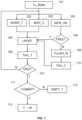
- FIG. 1 is an example flowchart of a method for executing a transaction, according to a first embodiment of the invention.
- step 101 a transaction initialization command is received.
- This transaction corresponds to a series of instructions (or "operations").
- instructions comprising a writing of data in one or more cache lines of the cache memory are considered (even if the transaction may include other instructions not requiring writing data in the cache).
- a first instruction in the series of instructions is then executed. It should be noted that, upon receiving the initialization command, the cache is not purged, unlike conventional methods of the prior art.
- states can be created, including an additional state corresponding to an empty line, i.e. not present in the cache (state V).
- a cache line associated with a state V is a line into which no data has been copied.
- Cache lines of different states can coexist in the cache, and the states can be updated with each new operation.
- the association of a A cache line to a state can be performed by a cache manager, for example via a marking system: as soon as a line is copied into the cache, a marking corresponding to the state of the line (M, T, C, V) is stored.
- a marking system as soon as a line is copied into the cache, a marking corresponding to the state of the line (M, T, C, V) is stored.
- the names given to the cache line states (M, T, C, V) have no technical meaning and the states can be called otherwise.
- the content of these lines can be directly updated (step 105) with the data corresponding to the current instruction.
- the updated cache line is then associated (step 106), if applicable, with a state T (in the case of a modification 102 of the content of a line T, this step is of course unnecessary).
- a write 104 of data on a new cache line it is first checked (step 108) whether there is at least one cache line available - in other words, whether there is at least one V or C line. If there are enough cache lines available to perform the writing of the data (arrow "Y" of step 108), the content of this (these) empty line(s) can be directly updated 105 from the data, and the line(s) is (are) then associated with a state T (step 106) as before.
- step 109 If there is no (or not enough) cache line available to perform the writing of the data (arrow "N" of step 108), a purge is performed (step 109) for all or part of the lines M. The content of these lines M is therefore copied to the persistent memory (synchronization) and the content of these lines is deleted. The lines are then associated (step 110) with a state C. The data corresponding to the current instruction can then be copied (step 105) into these newly available rows. The rows into which data have been copied are then associated with a state T (step 106).
- a flush is performed only if it is necessary to copy data to a new cache line and if there are no more lines available.
- a partial flush from cache to persistent memory is sufficient; and if there is sufficient space available in cache at the start of the transaction, no flush is even necessary.
- step 107 of the figure 1 in which it is tested whether there are any remaining instructions to be executed. Except in the case of a power failure (where the instruction sequence is interrupted and all lines are emptied), the last instruction executed corresponds to a validation or a cancellation. In step 111, it is checked which of these instructions (validation or cancellation) is received. If it is a validation instruction (arrow "Y" of step 111), the state of the lines T is modified and these lines are associated with a state M (step 113).
- the T lines are invalidated: their content is emptied (step 112) and the lines concerned become non-present - these lines are then associated with a state V. On the other hand, the content of the M lines is preserved.
- the method described above with reference to the Figure 1 is advantageous because it avoids a systematic purge of cache lines at the beginning of a transaction. In addition, it is not necessary to persistently store data before modification, unlike traditional methods.
- the lines M corresponding to data of the transaction to be modified can be directly modified and associated with a state T, without it being necessary to purge them beforehand.
- the number of purges to be performed on lines M is considerably reduced. Indeed, such a purge is only performed when the cache is full, and there are lines M which do not correspond to data of the transaction to be modified.
- Whether or not a transaction can be rolled back can be indicated by the application programming interface, or API, for example by using a markup.
- the API indicates what type of transaction should be performed (with or without possible rollback) and when From this indication, the modification of the content of lines M and the direct passage from a state M to a state T for a line can be authorized or not.
- the cache mechanism can be executed according to one or the other of the two preceding embodiments according to the type of transaction to be executed, this type being able to be indicated by the API.
- the invention and its various embodiments are particularly advantageous because they avoid a systematic purge of the cache at the start and/or end of a transaction.
- the system then gains in speed, the components are less subject to wear, and energy consumption is reduced.
- a 30% reduction in the loading time has been observed.
- this reduction in execution time can be as high as 50%.
- the invention circumvents this difficulty by modifying the model on the fly during the execution of the transaction.
- the transaction is executed without flushing the cache at the beginning of the transaction, and only when the cache is full, all or part of the M lines are flushed in order to recover clean and reusable entries for the current transaction.
- FIG 2 represents possible transitions for states associated with cache lines, according to several embodiments of the invention.
- the figure 2 shows the four states defined previously: M (element 204), T (element 203), C (element 201) and V (element 202).
- the solid arrows correspond to the transitions common to both embodiments
- the dotted arrow decorated with squares corresponds to a transition specific to the first embodiment presented above
- the dashed arrow represents a transition specific to the second embodiment above.
- a line in a T state (203) can further transition to a V state (202) when the transaction is rolled back.
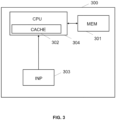
- FIG. 3 represents a device for executing a transaction according to one embodiment of the invention.
- the device 300 comprises a memory 301 for storing instructions allowing the implementation of the method, and temporary data for carrying out the different steps of the method as described previously.
- SOCs or system on chips are embedded systems that integrate all the components of an electronic system into a single chip.
- An ASIC is a specialized electronic circuit that groups together tailor-made functionalities for a given application. ASICs are generally configured during their manufacture and can only be simulated by the user. Programmable logic circuits such as FPGAs are electronic circuits that can be reconfigured by the user.
- Circuit 304 includes a cache memory 302. In some embodiments, circuit 304 may contain multiple caches, associated with multiple levels.
- the device 300 may further comprise an input interface 303 for receiving a command corresponding to one or more transactions (for example a profile loading command or a payment command).
- the device 300 may comprise, to allow easy interaction with a user, a screen and a keyboard (not shown).
- the keyboard is optional, particularly in the context of a computer in the form of a touch pad or a multifunction mobile (or “smartphone” in English), for example.
- the device 300 may be a computer, a computer network, an electronic component, or other apparatus having a processor operably coupled to a memory, and, depending on the embodiment selected, a data storage unit, and other associated hardware such as a network interface and a media reader for reading and writing to a removable storage medium (not shown in the figure).
- the removable storage medium may be, for example, a compact disc (CD), a digital video/versatile disc (DVD), a flash drive, a USB drive, etc.
- the memory, data storage unit or removable storage medium contains instructions which, when executed by the control circuit 304, cause the control circuit 304 to perform or control the input interface 303, data storage in the memory 301 and/or data processing portions of the exemplary implementations of the proposed method.
- the control circuit 304 may be a component implementing the control of the units 303 and 301 of the device 300.
- the functional diagram presented on the figure 1 is a typical example of a program some of whose instructions can be carried out with the device 300.
- the figure 1 may correspond to the flowchart of the general algorithm of a computer program within the meaning of the invention.
Landscapes
- Engineering & Computer Science (AREA)
- Theoretical Computer Science (AREA)
- Physics & Mathematics (AREA)
- General Engineering & Computer Science (AREA)
- General Physics & Mathematics (AREA)
- Memory System Of A Hierarchy Structure (AREA)
Claims (8)
- Verfahren, durchgeführt von einem Prozessor, um eine Transaktion ohne Abbruchmöglichkeit auszuführen, wobei die Transaktion eine Folge von Anweisungen enthält, wobei der Prozessor mit einem persistenten Speicher und mit einem Cache-Speicher verbunden ist, wobei der Cache-Speicher eine Vielzahl von Cache-Zeilen enthält und jede Cache-Zeile mit einem Zustand aus einer Gruppe von vordefinierten Zuständen verbunden ist, wobei das Verfahren für mindestens eine Anweisung der Folge von Anweisungen, die das Kopieren von Daten zu mindestens einer Cache-Zeile erfordert, die mit einem anderen Zustand als einem für eine Zuordnung zu Daten der Transaktion repräsentativen Zustand (203) verbunden ist, enthält:a. wenn mindestens eine Cache-Zeile mit einem Zustand verbunden ist, der es ermöglicht, Daten direkt in die mindestens eine Cache-Zeile zu kopieren:i. der Anweisung entsprechende Daten in die mindestens eine Cache-Zeile zu kopieren (105); undii. die mindestens eine Cache-Zeile mit einem Zustand (203) zu verbinden (106), der für eine Zuordnung zu Daten der Transaktion repräsentativ ist;b. wenn keine Cache-Zeile mit einem Zustand verbunden ist, der es ermöglicht, Daten direkt zu kopieren:i. der Anweisung entsprechende Daten in mindestens eine Cache-Zeile aus einer Gruppe von Cache-Zeilen zu kopieren (105), die mit einem Zustand (204) verbunden sind, der für eine Zuordnung zu Daten außerhalb der Transaktion repräsentativ ist; undii. die mindestens eine Cache-Zeile mit einem Zustand (203) zu verbinden (106), der für eine Zuordnung zu Daten der Transaktion repräsentativ ist.
- Verfahren nach Anspruch 1, wobei, wenn keine Cache-Zeile mit einem Zustand verbunden ist, der es ermöglicht, Daten direkt zu kopieren, die Gruppe alle Cache-Zeilen enthält, die mit einem Zustand (204) verbunden sind, der für eine Zuordnung zu Daten außerhalb der Transaktion repräsentativ ist.
- Verfahren nach einem der vorhergehenden Ansprüche, wobei Inhalte der Cache-Zeilen, die mit dem Zustand (203) verbunden sind, der für eine Zuordnung zu Daten der Transaktion repräsentativ ist, während der Ausführung der Transaktion nicht gelöscht werden können.
- Verfahren nach einem der vorhergehenden Ansprüche, das außerdem enthält:- Empfang (101) eines Initialisierungsbefehls der Transaktion;- als Antwort auf den Empfang des Initialisierungsbefehls, Aufbewahren eines aktuellen Inhalts des Cache-Speichers; und- Ausführen (103, 104) einer ersten Anweisung der Folge von Anweisungen gemäß Schritt a oder b, wobei die Ausführung der ersten Anweisung eine Änderung des aktuellen Inhalts des Cache-Speichers ausgehend von der ersten Anweisung entsprechenden Daten enthält.
- Verfahren nach Anspruch 4, das außerdem enthält:- Empfang einer Information, die anzeigt, dass der empfangene Initialisierungsbefehl einer Transaktion ohne Abbruchmöglichkeit entspricht.
- Verfahren nach Anspruch 6, das außerdem enthält:- Empfang einer Validierungsanweisung der Transaktion;- als Antwort auf den Empfang der Validierungsanweisung der Transaktion, Ändern (113) der Zustände der mit dem für eine Zuordnung zu Daten der Transaktion repräsentativen Zustand (203) verbundenen Cache-Zeilen, und ihre Verbindung mit dem für eine Zuordnung zu Daten außerhalb der Transaktion repräsentativen Zustand (204).
- EDV-Programmprodukt, das Anweisungen für die Durchführung jedes der Schritte des Verfahrens nach einem der Ansprüche 1 bis 6 aufweist, wenn das Programm von einem Prozessor ausgeführt wird.
- Vorrichtung (300) zur Ausführung einer Transaktion ohne Abbruchmöglichkeit, wobei die Transaktion eine Folge von Anweisungen enthält, wobei die Vorrichtung mit einem persistenten Speicher und mit einem Cache-Speicher verbunden ist, wobei der Cache-Speicher eine Vielzahl von Cache-Zeilen enthält und jede Cache-Zeile mit einem Zustand aus einer Gruppe von vordefinierten Zuständen verbunden ist, wobei die Vorrichtung eine Schaltung enthält, die konfiguriert ist, um:- für mindestens eine Anweisung der Folge von Anweisungen, die das Kopieren von Daten zu mindestens einer Cache-Zeile erfordert, die mit einem anderen Zustand als einem für eine Zuordnung zu Daten der Transaktion repräsentativen Zustand (203) verbunden ist:a. wenn mindestens eine Cache-Zeile mit einem Zustand verbunden ist, der es ermöglicht, Daten direkt in die mindestens eine Cache-Zeile zu kopieren:i. der Anweisung entsprechende Daten in die mindestens eine Cache-Zeile zu kopieren (105); undii. die mindestens eine Cache-Zeile mit einem Zustand (203) zu verbinden (106), der für eine Zuordnung zu Daten der Transaktion repräsentativ ist;b. wenn keine Cache-Zeile mit einem Zustand verbunden ist, der es ermöglicht, Daten direkt zu kopieren:i. der Anweisung entsprechende Daten in mindestens eine Cache-Zeile aus einer Vielzahl von Cache-Zeilen zu kopieren (105), die mit einem Zustand (204) verbunden sind, der für eine Zuordnung zu Daten außerhalb der Transaktion repräsentativ ist; undii. die mindestens eine Cache-Zeile mit einem Zustand (203) zu verbinden (106), der für eine Zuordnung zu Daten der Transaktion repräsentativ ist.
Applications Claiming Priority (2)
| Application Number | Priority Date | Filing Date | Title |
|---|---|---|---|
| FR1912338A FR3102868B1 (fr) | 2019-11-04 | 2019-11-04 | Procédé pour exécuter une transaction |
| PCT/FR2020/051936 WO2021089928A1 (fr) | 2019-11-04 | 2020-10-27 | Procédé pour exécuter une transaction |
Publications (2)
| Publication Number | Publication Date |
|---|---|
| EP4055485A1 EP4055485A1 (de) | 2022-09-14 |
| EP4055485B1 true EP4055485B1 (de) | 2025-01-08 |
Family
ID=69811013
Family Applications (1)
| Application Number | Title | Priority Date | Filing Date |
|---|---|---|---|
| EP20807829.5A Active EP4055485B1 (de) | 2019-11-04 | 2020-10-27 | Verfahren zum ausführen einer transaktion |
Country Status (5)
| Country | Link |
|---|---|
| US (1) | US11977490B2 (de) |
| EP (1) | EP4055485B1 (de) |
| KR (1) | KR20220091591A (de) |
| FR (1) | FR3102868B1 (de) |
| WO (1) | WO2021089928A1 (de) |
Family Cites Families (9)
| Publication number | Priority date | Publication date | Assignee | Title |
|---|---|---|---|---|
| US5375216A (en) * | 1992-02-28 | 1994-12-20 | Motorola, Inc. | Apparatus and method for optimizing performance of a cache memory in a data processing system |
| KR100856626B1 (ko) * | 2002-12-24 | 2008-09-03 | 엘지노텔 주식회사 | 캐시 플러시 시스템 및 방법 |
| FR2988878B1 (fr) * | 2012-04-02 | 2015-01-16 | Morpho | Procede de modification en memoire d'un ensemble de donnees |
| BR112017001991B1 (pt) * | 2014-08-15 | 2022-11-16 | Microsoft Technology Licensing, Llc | Método e dispositivo eletrônico compreendendo memória e armazenamento, e meio de armazenamento em computador |
| US9430396B2 (en) * | 2014-12-22 | 2016-08-30 | Intel Corporation | Updating persistent data in persistent memory-based storage |
| US10318295B2 (en) * | 2015-12-22 | 2019-06-11 | Intel Corporation | Transaction end plus commit to persistence instructions, processors, methods, and systems |
| US10430186B2 (en) * | 2017-10-27 | 2019-10-01 | Vmware, Inc. | Speeding up transactions in non-volatile memory using hardware transactional memory |
| US10481958B2 (en) * | 2017-12-29 | 2019-11-19 | Intel IP Corporation | Speculative execution tag for asynchronous DRAM refresh |
| US10445238B1 (en) | 2018-04-24 | 2019-10-15 | Arm Limited | Robust transactional memory |
-
2019
- 2019-11-04 FR FR1912338A patent/FR3102868B1/fr active Active
-
2020
- 2020-10-27 WO PCT/FR2020/051936 patent/WO2021089928A1/fr not_active Ceased
- 2020-10-27 US US17/755,654 patent/US11977490B2/en active Active
- 2020-10-27 KR KR1020227018906A patent/KR20220091591A/ko not_active Withdrawn
- 2020-10-27 EP EP20807829.5A patent/EP4055485B1/de active Active
Also Published As
| Publication number | Publication date |
|---|---|
| EP4055485A1 (de) | 2022-09-14 |
| WO2021089928A1 (fr) | 2021-05-14 |
| US20220300427A1 (en) | 2022-09-22 |
| FR3102868B1 (fr) | 2021-11-12 |
| FR3102868A1 (fr) | 2021-05-07 |
| US11977490B2 (en) | 2024-05-07 |
| KR20220091591A (ko) | 2022-06-30 |
Similar Documents
| Publication | Publication Date | Title |
|---|---|---|
| FR2881540A1 (fr) | Procede et systeme destines a empecher que des lignes de memoire cache soient videes jusqu'a ce que les donnees stockees dans celles-ci ne soient utilisees. | |
| EP3182292B1 (de) | Verfahren zur vorhersage einer dateninformation, die vorab in einen cache-speicher geladen werden muss | |
| US20090313501A1 (en) | Method and arrangement for processing transactions in a flash type memory device | |
| US20110004583A1 (en) | Database system, database update method, database, and database update program | |
| FR3055992A1 (fr) | Gestion d'index dans une memoire flash | |
| CN108369547A (zh) | 持久性主存储器中的日志的尾部 | |
| EP4055485B1 (de) | Verfahren zum ausführen einer transaktion | |
| FR2880963A1 (fr) | Points d'arrets logiciels destines a etre utilises avec des dispositifs a memoire | |
| EP0700554B1 (de) | Verfahren zum datenschreiben in einem nicht flüchtigen speicher | |
| FR3090929A1 (fr) | Actualisation de multiples enregistrements de données | |
| EP1341087B1 (de) | LogVerfahren und Vorrichtung zur Verwaltung eines persönlichen Ereignisslogbuches | |
| EP3671577B1 (de) | Analyseverfahren einer ausführungssimulation eines quantenschaltkreises | |
| EP1866770B1 (de) | Verfahren und system zur aufrechterhaltung der einheitlichkeit eines cache-speichers durch mehrere unabhängige prozesse | |
| FR3051574A1 (fr) | Gestion du stockage dans une memoire flash | |
| EP1376608A1 (de) | Programmierverfahren in einem nichtflüchtigen Speicher und System zur Realisierung eines solchen Verfahrens | |
| EP3215933B1 (de) | Verfahren für rekonfigurierbare grobkornarchitektur und vorrichtung zur ausführung eines anwendungscodes in seiner ganzheit | |
| FR3084496A1 (fr) | Procede et dispositif de generation d'instructions destinees a un dispositif pour realiser une mise a jour sur place d'un fichier de donnees | |
| EP3598314A1 (de) | Direkter speicherzugang | |
| FR3076003A1 (fr) | Acces multiples a un fichier de donnees stocke dans un systeme de stockage de donnees associe a un espace memoire tampon | |
| FR2908538A1 (fr) | Reserves secondaires. | |
| EP0889404B1 (de) | Verfahren zur Isolierung eines Speicherplatzes mit einem veralteten Datum | |
| JP4086600B2 (ja) | ロールバック可能fatファイルシステム及びプログラム | |
| FR3077892A1 (fr) | Système et procédé d'enregistrement d'une transaction associée à une mémoire non volatile orientée page | |
| EP1406445B1 (de) | System zur Verwaltung von zeitlichen, zu einem digitalen Inhalt verbundenen Rechten | |
| FR3063360A1 (fr) | Procede de caracterisation d'une unite de traitement electronique |
Legal Events
| Date | Code | Title | Description |
|---|---|---|---|
| STAA | Information on the status of an ep patent application or granted ep patent |
Free format text: STATUS: UNKNOWN |
|
| STAA | Information on the status of an ep patent application or granted ep patent |
Free format text: STATUS: THE INTERNATIONAL PUBLICATION HAS BEEN MADE |
|
| PUAI | Public reference made under article 153(3) epc to a published international application that has entered the european phase |
Free format text: ORIGINAL CODE: 0009012 |
|
| STAA | Information on the status of an ep patent application or granted ep patent |
Free format text: STATUS: REQUEST FOR EXAMINATION WAS MADE |
|
| 17P | Request for examination filed |
Effective date: 20220503 |
|
| AK | Designated contracting states |
Kind code of ref document: A1 Designated state(s): AL AT BE BG CH CY CZ DE DK EE ES FI FR GB GR HR HU IE IS IT LI LT LU LV MC MK MT NL NO PL PT RO RS SE SI SK SM TR |
|
| DAV | Request for validation of the european patent (deleted) | ||
| DAX | Request for extension of the european patent (deleted) | ||
| P01 | Opt-out of the competence of the unified patent court (upc) registered |
Effective date: 20230919 |
|
| GRAP | Despatch of communication of intention to grant a patent |
Free format text: ORIGINAL CODE: EPIDOSNIGR1 |
|
| STAA | Information on the status of an ep patent application or granted ep patent |
Free format text: STATUS: GRANT OF PATENT IS INTENDED |
|
| INTG | Intention to grant announced |
Effective date: 20241008 |
|
| GRAS | Grant fee paid |
Free format text: ORIGINAL CODE: EPIDOSNIGR3 |
|
| GRAA | (expected) grant |
Free format text: ORIGINAL CODE: 0009210 |
|
| STAA | Information on the status of an ep patent application or granted ep patent |
Free format text: STATUS: THE PATENT HAS BEEN GRANTED |
|
| AK | Designated contracting states |
Kind code of ref document: B1 Designated state(s): AL AT BE BG CH CY CZ DE DK EE ES FI FR GB GR HR HU IE IS IT LI LT LU LV MC MK MT NL NO PL PT RO RS SE SI SK SM TR |
|
| REG | Reference to a national code |
Ref country code: GB Ref legal event code: FG4D Free format text: NOT ENGLISH |
|
| REG | Reference to a national code |
Ref country code: CH Ref legal event code: EP |
|
| REG | Reference to a national code |
Ref country code: DE Ref legal event code: R096 Ref document number: 602020044581 Country of ref document: DE |
|
| REG | Reference to a national code |
Ref country code: IE Ref legal event code: FG4D Free format text: LANGUAGE OF EP DOCUMENT: FRENCH |
|
| REG | Reference to a national code |
Ref country code: DE Ref legal event code: R081 Ref document number: 602020044581 Country of ref document: DE Owner name: IDEMIA FRANCE, FR Free format text: FORMER OWNER: IDEMIA IDENTITY & SECURITY FRANCE, COURBEVOIE, FR |
|
| REG | Reference to a national code |
Ref country code: LT Ref legal event code: MG9D |
|
| REG | Reference to a national code |
Ref country code: NL Ref legal event code: MP Effective date: 20250108 |
|
| REG | Reference to a national code |
Ref country code: AT Ref legal event code: MK05 Ref document number: 1758788 Country of ref document: AT Kind code of ref document: T Effective date: 20250108 |
|
| PG25 | Lapsed in a contracting state [announced via postgrant information from national office to epo] |
Ref country code: NL Free format text: LAPSE BECAUSE OF FAILURE TO SUBMIT A TRANSLATION OF THE DESCRIPTION OR TO PAY THE FEE WITHIN THE PRESCRIBED TIME-LIMIT Effective date: 20250108 |
|
| PG25 | Lapsed in a contracting state [announced via postgrant information from national office to epo] |
Ref country code: RS Free format text: LAPSE BECAUSE OF FAILURE TO SUBMIT A TRANSLATION OF THE DESCRIPTION OR TO PAY THE FEE WITHIN THE PRESCRIBED TIME-LIMIT Effective date: 20250408 |
|
| PG25 | Lapsed in a contracting state [announced via postgrant information from national office to epo] |
Ref country code: FI Free format text: LAPSE BECAUSE OF FAILURE TO SUBMIT A TRANSLATION OF THE DESCRIPTION OR TO PAY THE FEE WITHIN THE PRESCRIBED TIME-LIMIT Effective date: 20250108 |
|
| PG25 | Lapsed in a contracting state [announced via postgrant information from national office to epo] |
Ref country code: PL Free format text: LAPSE BECAUSE OF FAILURE TO SUBMIT A TRANSLATION OF THE DESCRIPTION OR TO PAY THE FEE WITHIN THE PRESCRIBED TIME-LIMIT Effective date: 20250108 |
|
| PG25 | Lapsed in a contracting state [announced via postgrant information from national office to epo] |
Ref country code: ES Free format text: LAPSE BECAUSE OF FAILURE TO SUBMIT A TRANSLATION OF THE DESCRIPTION OR TO PAY THE FEE WITHIN THE PRESCRIBED TIME-LIMIT Effective date: 20250108 |
|
| PG25 | Lapsed in a contracting state [announced via postgrant information from national office to epo] |
Ref country code: NO Free format text: LAPSE BECAUSE OF FAILURE TO SUBMIT A TRANSLATION OF THE DESCRIPTION OR TO PAY THE FEE WITHIN THE PRESCRIBED TIME-LIMIT Effective date: 20250408 Ref country code: IS Free format text: LAPSE BECAUSE OF FAILURE TO SUBMIT A TRANSLATION OF THE DESCRIPTION OR TO PAY THE FEE WITHIN THE PRESCRIBED TIME-LIMIT Effective date: 20250508 |
|
| PG25 | Lapsed in a contracting state [announced via postgrant information from national office to epo] |
Ref country code: HR Free format text: LAPSE BECAUSE OF FAILURE TO SUBMIT A TRANSLATION OF THE DESCRIPTION OR TO PAY THE FEE WITHIN THE PRESCRIBED TIME-LIMIT Effective date: 20250108 |
|
| PG25 | Lapsed in a contracting state [announced via postgrant information from national office to epo] |
Ref country code: PT Free format text: LAPSE BECAUSE OF FAILURE TO SUBMIT A TRANSLATION OF THE DESCRIPTION OR TO PAY THE FEE WITHIN THE PRESCRIBED TIME-LIMIT Effective date: 20250508 Ref country code: LV Free format text: LAPSE BECAUSE OF FAILURE TO SUBMIT A TRANSLATION OF THE DESCRIPTION OR TO PAY THE FEE WITHIN THE PRESCRIBED TIME-LIMIT Effective date: 20250108 |
|
| PG25 | Lapsed in a contracting state [announced via postgrant information from national office to epo] |
Ref country code: GR Free format text: LAPSE BECAUSE OF FAILURE TO SUBMIT A TRANSLATION OF THE DESCRIPTION OR TO PAY THE FEE WITHIN THE PRESCRIBED TIME-LIMIT Effective date: 20250409 Ref country code: BG Free format text: LAPSE BECAUSE OF FAILURE TO SUBMIT A TRANSLATION OF THE DESCRIPTION OR TO PAY THE FEE WITHIN THE PRESCRIBED TIME-LIMIT Effective date: 20250108 |
|
| RAP2 | Party data changed (patent owner data changed or rights of a patent transferred) |
Owner name: IDEMIA FRANCE |
|
| PG25 | Lapsed in a contracting state [announced via postgrant information from national office to epo] |
Ref country code: AT Free format text: LAPSE BECAUSE OF FAILURE TO SUBMIT A TRANSLATION OF THE DESCRIPTION OR TO PAY THE FEE WITHIN THE PRESCRIBED TIME-LIMIT Effective date: 20250108 |
|
| PG25 | Lapsed in a contracting state [announced via postgrant information from national office to epo] |
Ref country code: SE Free format text: LAPSE BECAUSE OF FAILURE TO SUBMIT A TRANSLATION OF THE DESCRIPTION OR TO PAY THE FEE WITHIN THE PRESCRIBED TIME-LIMIT Effective date: 20250108 |
|
| PG25 | Lapsed in a contracting state [announced via postgrant information from national office to epo] |
Ref country code: SM Free format text: LAPSE BECAUSE OF FAILURE TO SUBMIT A TRANSLATION OF THE DESCRIPTION OR TO PAY THE FEE WITHIN THE PRESCRIBED TIME-LIMIT Effective date: 20250108 |
|
| REG | Reference to a national code |
Ref country code: DE Ref legal event code: R097 Ref document number: 602020044581 Country of ref document: DE |
|
| PG25 | Lapsed in a contracting state [announced via postgrant information from national office to epo] |
Ref country code: DK Free format text: LAPSE BECAUSE OF FAILURE TO SUBMIT A TRANSLATION OF THE DESCRIPTION OR TO PAY THE FEE WITHIN THE PRESCRIBED TIME-LIMIT Effective date: 20250108 |
|
| PGFP | Annual fee paid to national office [announced via postgrant information from national office to epo] |
Ref country code: FR Payment date: 20250924 Year of fee payment: 6 |
|
| PG25 | Lapsed in a contracting state [announced via postgrant information from national office to epo] |
Ref country code: CZ Free format text: LAPSE BECAUSE OF FAILURE TO SUBMIT A TRANSLATION OF THE DESCRIPTION OR TO PAY THE FEE WITHIN THE PRESCRIBED TIME-LIMIT Effective date: 20250108 Ref country code: EE Free format text: LAPSE BECAUSE OF FAILURE TO SUBMIT A TRANSLATION OF THE DESCRIPTION OR TO PAY THE FEE WITHIN THE PRESCRIBED TIME-LIMIT Effective date: 20250108 |
|
| PG25 | Lapsed in a contracting state [announced via postgrant information from national office to epo] |
Ref country code: RO Free format text: LAPSE BECAUSE OF FAILURE TO SUBMIT A TRANSLATION OF THE DESCRIPTION OR TO PAY THE FEE WITHIN THE PRESCRIBED TIME-LIMIT Effective date: 20250108 |
|
| PG25 | Lapsed in a contracting state [announced via postgrant information from national office to epo] |
Ref country code: SK Free format text: LAPSE BECAUSE OF FAILURE TO SUBMIT A TRANSLATION OF THE DESCRIPTION OR TO PAY THE FEE WITHIN THE PRESCRIBED TIME-LIMIT Effective date: 20250108 |
|
| PLBE | No opposition filed within time limit |
Free format text: ORIGINAL CODE: 0009261 |
|
| STAA | Information on the status of an ep patent application or granted ep patent |
Free format text: STATUS: NO OPPOSITION FILED WITHIN TIME LIMIT |
|
| 26N | No opposition filed |
Effective date: 20251009 |
|
| PGFP | Annual fee paid to national office [announced via postgrant information from national office to epo] |
Ref country code: DE Payment date: 20250923 Year of fee payment: 6 |
|
| PG25 | Lapsed in a contracting state [announced via postgrant information from national office to epo] |
Ref country code: IT Free format text: LAPSE BECAUSE OF FAILURE TO SUBMIT A TRANSLATION OF THE DESCRIPTION OR TO PAY THE FEE WITHIN THE PRESCRIBED TIME-LIMIT Effective date: 20250108 |