EP4053751B1 - Procédé et appareil d'apprentissage de modèle de récupération transmodale, dispositif et support d'enregistrement - Google Patents
Procédé et appareil d'apprentissage de modèle de récupération transmodale, dispositif et support d'enregistrement Download PDFInfo
- Publication number
- EP4053751B1 EP4053751B1 EP21201915.2A EP21201915A EP4053751B1 EP 4053751 B1 EP4053751 B1 EP 4053751B1 EP 21201915 A EP21201915 A EP 21201915A EP 4053751 B1 EP4053751 B1 EP 4053751B1
- Authority
- EP
- European Patent Office
- Prior art keywords
- modal
- sample
- loss function
- similarity
- soft margin
- Prior art date
- Legal status (The legal status is an assumption and is not a legal conclusion. Google has not performed a legal analysis and makes no representation as to the accuracy of the status listed.)
- Active
Links
Images



Classifications
-
- G—PHYSICS
- G06—COMPUTING OR CALCULATING; COUNTING
- G06F—ELECTRIC DIGITAL DATA PROCESSING
- G06F18/00—Pattern recognition
- G06F18/20—Analysing
- G06F18/25—Fusion techniques
- G06F18/254—Fusion techniques of classification results, e.g. of results related to same input data
- G06F18/256—Fusion techniques of classification results, e.g. of results related to same input data of results relating to different input data, e.g. multimodal recognition
-
- G—PHYSICS
- G06—COMPUTING OR CALCULATING; COUNTING
- G06N—COMPUTING ARRANGEMENTS BASED ON SPECIFIC COMPUTATIONAL MODELS
- G06N20/00—Machine learning
-
- G—PHYSICS
- G06—COMPUTING OR CALCULATING; COUNTING
- G06F—ELECTRIC DIGITAL DATA PROCESSING
- G06F16/00—Information retrieval; Database structures therefor; File system structures therefor
- G06F16/40—Information retrieval; Database structures therefor; File system structures therefor of multimedia data, e.g. slideshows comprising image and additional audio data
- G06F16/43—Querying
-
- G—PHYSICS
- G06—COMPUTING OR CALCULATING; COUNTING
- G06F—ELECTRIC DIGITAL DATA PROCESSING
- G06F16/00—Information retrieval; Database structures therefor; File system structures therefor
- G06F16/30—Information retrieval; Database structures therefor; File system structures therefor of unstructured textual data
- G06F16/36—Creation of semantic tools, e.g. ontology or thesauri
- G06F16/367—Ontology
-
- G—PHYSICS
- G06—COMPUTING OR CALCULATING; COUNTING
- G06F—ELECTRIC DIGITAL DATA PROCESSING
- G06F16/00—Information retrieval; Database structures therefor; File system structures therefor
- G06F16/40—Information retrieval; Database structures therefor; File system structures therefor of multimedia data, e.g. slideshows comprising image and additional audio data
- G06F16/43—Querying
- G06F16/432—Query formulation
-
- G—PHYSICS
- G06—COMPUTING OR CALCULATING; COUNTING
- G06F—ELECTRIC DIGITAL DATA PROCESSING
- G06F16/00—Information retrieval; Database structures therefor; File system structures therefor
- G06F16/40—Information retrieval; Database structures therefor; File system structures therefor of multimedia data, e.g. slideshows comprising image and additional audio data
- G06F16/43—Querying
- G06F16/438—Presentation of query results
-
- G—PHYSICS
- G06—COMPUTING OR CALCULATING; COUNTING
- G06F—ELECTRIC DIGITAL DATA PROCESSING
- G06F16/00—Information retrieval; Database structures therefor; File system structures therefor
- G06F16/40—Information retrieval; Database structures therefor; File system structures therefor of multimedia data, e.g. slideshows comprising image and additional audio data
- G06F16/48—Retrieval characterised by using metadata, e.g. metadata not derived from the content or metadata generated manually
- G06F16/483—Retrieval characterised by using metadata, e.g. metadata not derived from the content or metadata generated manually using metadata automatically derived from the content
-
- G—PHYSICS
- G06—COMPUTING OR CALCULATING; COUNTING
- G06F—ELECTRIC DIGITAL DATA PROCESSING
- G06F18/00—Pattern recognition
- G06F18/20—Analysing
- G06F18/21—Design or setup of recognition systems or techniques; Extraction of features in feature space; Blind source separation
- G06F18/214—Generating training patterns; Bootstrap methods, e.g. bagging or boosting
-
- G—PHYSICS
- G06—COMPUTING OR CALCULATING; COUNTING
- G06F—ELECTRIC DIGITAL DATA PROCESSING
- G06F18/00—Pattern recognition
- G06F18/20—Analysing
- G06F18/21—Design or setup of recognition systems or techniques; Extraction of features in feature space; Blind source separation
- G06F18/217—Validation; Performance evaluation; Active pattern learning techniques
- G06F18/2178—Validation; Performance evaluation; Active pattern learning techniques based on feedback of a supervisor
-
- G—PHYSICS
- G06—COMPUTING OR CALCULATING; COUNTING
- G06F—ELECTRIC DIGITAL DATA PROCESSING
- G06F18/00—Pattern recognition
- G06F18/20—Analysing
- G06F18/22—Matching criteria, e.g. proximity measures
-
- G—PHYSICS
- G06—COMPUTING OR CALCULATING; COUNTING
- G06N—COMPUTING ARRANGEMENTS BASED ON SPECIFIC COMPUTATIONAL MODELS
- G06N3/00—Computing arrangements based on biological models
- G06N3/02—Neural networks
- G06N3/04—Architecture, e.g. interconnection topology
- G06N3/042—Knowledge-based neural networks; Logical representations of neural networks
-
- G—PHYSICS
- G06—COMPUTING OR CALCULATING; COUNTING
- G06N—COMPUTING ARRANGEMENTS BASED ON SPECIFIC COMPUTATIONAL MODELS
- G06N3/00—Computing arrangements based on biological models
- G06N3/02—Neural networks
- G06N3/04—Architecture, e.g. interconnection topology
- G06N3/045—Combinations of networks
-
- G—PHYSICS
- G06—COMPUTING OR CALCULATING; COUNTING
- G06N—COMPUTING ARRANGEMENTS BASED ON SPECIFIC COMPUTATIONAL MODELS
- G06N3/00—Computing arrangements based on biological models
- G06N3/02—Neural networks
- G06N3/04—Architecture, e.g. interconnection topology
- G06N3/0464—Convolutional networks [CNN, ConvNet]
-
- G—PHYSICS
- G06—COMPUTING OR CALCULATING; COUNTING
- G06N—COMPUTING ARRANGEMENTS BASED ON SPECIFIC COMPUTATIONAL MODELS
- G06N3/00—Computing arrangements based on biological models
- G06N3/02—Neural networks
- G06N3/08—Learning methods
-
- G—PHYSICS
- G06—COMPUTING OR CALCULATING; COUNTING
- G06N—COMPUTING ARRANGEMENTS BASED ON SPECIFIC COMPUTATIONAL MODELS
- G06N3/00—Computing arrangements based on biological models
- G06N3/02—Neural networks
- G06N3/08—Learning methods
- G06N3/09—Supervised learning
-
- G—PHYSICS
- G06—COMPUTING OR CALCULATING; COUNTING
- G06V—IMAGE OR VIDEO RECOGNITION OR UNDERSTANDING
- G06V10/00—Arrangements for image or video recognition or understanding
- G06V10/70—Arrangements for image or video recognition or understanding using pattern recognition or machine learning
- G06V10/74—Image or video pattern matching; Proximity measures in feature spaces
- G06V10/761—Proximity, similarity or dissimilarity measures
-
- G—PHYSICS
- G06—COMPUTING OR CALCULATING; COUNTING
- G06V—IMAGE OR VIDEO RECOGNITION OR UNDERSTANDING
- G06V10/00—Arrangements for image or video recognition or understanding
- G06V10/70—Arrangements for image or video recognition or understanding using pattern recognition or machine learning
- G06V10/82—Arrangements for image or video recognition or understanding using pattern recognition or machine learning using neural networks
-
- G—PHYSICS
- G06—COMPUTING OR CALCULATING; COUNTING
- G06V—IMAGE OR VIDEO RECOGNITION OR UNDERSTANDING
- G06V20/00—Scenes; Scene-specific elements
- G06V20/40—Scenes; Scene-specific elements in video content
- G06V20/46—Extracting features or characteristics from the video content, e.g. video fingerprints, representative shots or key frames
Definitions
- the present disclosure relates to the field of computer technologies, and particularly relates to the field of artificial intelligence technologies, such as knowledge graph technologies, computer vision technologies, deep learning technologies, or the like, and particularly to a method and apparatus for training a cross-modal retrieval model, a device and a storage medium.
- artificial intelligence technologies such as knowledge graph technologies, computer vision technologies, deep learning technologies, or the like
- Artificial intelligence is a subject of researching how to cause a computer to simulate certain thought processes and intelligent behaviors (for example, learning, reasoning, thinking, planning, or the like) of a human, and includes both hardware-level technologies and software-level technologies.
- the hardware technologies of the Al include technologies, such as a sensor, a dedicated artificial intelligence chip, cloud computing, distributed storage, big data processing, or the like;
- the software technologies of the Al mainly include a computer vision technology, a voice recognition technology, a natural language processing technology, a machine learning/deep learning technology, a big data processing technology, a knowledge graph technology, or the like.
- Cross-modal retrieval refers to retrieval of data of one modal using data of another modal, such as retrieval of a video using a text.
- a cross-modal retrieval model may be used for the cross-modal retrieval, and data of one modal is input into the cross-modal retrieval model to output data of another modal.
- a contrastive loss function may be used, and a margin is one parameter of the contrastive loss function.
- the margin in the adopted contrastive loss function has a fixed value.
- WU YILING ET AL "Online Fast Adaptive Low-Rank Similarity Learning for Cross-Modal Retrieval", IEEE TRANSACTIONS ON MULTIMEDIA, IEEE, USA, vol. 22, no. 5, 20 September 2019, pages 1310-1322, ISSN: 1520-9210, DOI:10.1109/TMM2019.2942494 describes a Cross-Modal Online Low-Rank Similarity function learning (CMOLRS) method, which learns a low-rank bilinear similarity measurement for cross-modal retrieval.
- CMOLRS Cross-Modal Online Low-Rank Similarity function learning
- a computer-implemented method for training a cross-modal retrieval model according to claim 1.
- a non-transitory computer readable storage medium with computer instructions stored thereon, wherein the computer instructions are used for causing a computer to perform the method according to any one of the above-mentioned aspects.
- a computer program product including a computer program which, when executed by a processor, implements the method according to any one of the above-mentioned aspects.
- the technical solution according to the present disclosure may improve a retrieval effect of a training model of the cross-modal retrieval model.
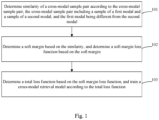
- Fig. 1 is a schematic diagram according to a first embodiment of the present disclosure.
- the present embodiment provides a method for training a cross-modal retrieval model, including:
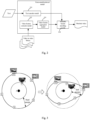
- a cross-modal retrieval system receives a text input by the user, such as "car”, and may find a video matched with the text using the cross-modal retrieval model, such as a video related to "car", and then feed the matched video back to the user.
- the cross-modal retrieval model may include: a text encoder model 201 which converts the text input by the user into a text representation; and a video encoder model which converts a video in a video library into a video representation.
- the video encoder model may include a video feature extractor model 202 configured to extract video features and a video feature aggregator model 203 configured to aggregate the video features.
- Corresponding semantic representation extractor models in a related art may be adopted as backbone structures of the text encoder model and the video feature extractor model; for example, the text encoder model is configured as a bidirectional encoder representations from transformers (BERT) model, and the video feature extractor model is configured as a convolutional neural network (CNN) model, such as resnet.
- CNN convolutional neural network
- the video feature aggregator model may also adopt a feature aggregation mode in the related art; for example, generally, the video feature extractor model extracts multi-modal video features, and the video feature aggregator module may perform weighted summation on the video feature of each modal to obtain an aggregated video feature, i.e., the video representation.
- Corresponding semantic representations i.e., the text representation and the video representation, may be obtained by the text encoder model and the video encoder model, and then, the video representation most matched with the text representation may be acquired by a semantic feature matching module 204, and a corresponding video is used as the video matched with the text input by the user.
- the semantic feature matching operation may also be implemented using various related arts, such as an approximate nearest neighbor (ANN) algorithm.
- ANN approximate nearest neighbor
- the cross-modal retrieval may be performed using the cross-modal retrieval model, and the present embodiment provides the method for training a cross-modal model, so as to provide a model with a better effect, thereby improving a cross-modal retrieval effect.
- a single device body such as a server, may serve as a subject for executing the present embodiment.
- the first modal and the second modal are two different modals, and according to the invention, the first modal is a text, and the second modal is a video.
- the usually used margin has a fixed value, and may be referred to as a hard margin; in the embodiment of the present disclosure, a margin may be determined based on the above-mentioned similarity, does not have a fixed value, and may be referred to as a soft margin.
- a loss function corresponding to the hard margin may be referred to as a hard margin loss function
- a loss function corresponding to the soft margin may be referred to as a soft margin loss function.
- a total loss function is calculated only based on the hard margin loss function.
- the soft margin and the soft margin loss function are introduced, such that the total loss function is calculated based on both the hard margin loss function and the soft margin loss function.
- the soft margin is determined based on the similarity of the cross-modal sample pair, the soft margin loss function is calculated based on the soft margin, and the total loss function is calculated based on the soft margin loss function, such that different margins may be selected according to different cross-modal sample pairs, thus avoiding a problem caused by the fixed margin, and improving the retrieval effect of the cross-modal retrieval model.
- the contrastive loss function may be a triplet contrastive loss function.
- the soft margin is determined based on a similarity distance which is a distance between similarity of a positive sample pair and similarity of a negative sample pair.
- At least one cross-modal sample pair includes a positive sample pair and a negative sample pair, the positive sample pair includes an anchor sample and a positive sample, the negative sample pair includes the anchor sample and a negative sample, the anchor sample has the first modal, and the positive sample and the negative sample have the second modal; the determining a soft margin based on the similarity includes: calculating a distance between similarity of the positive sample pair and similarity of the negative sample pair to obtain a similarity distance; and determining the soft margin based on the similarity distance.
- the sample may include an anchor sample, a positive sample, and a negative sample.
- the anchor sample, the positive sample and the negative sample are denoted by A, P and N respectively
- sample pair ⁇ A, P> formed by the anchor sample and the positive sample may be referred to as a positive sample pair
- sample pair ⁇ A, N> formed by the anchor sample and the negative sample may be referred to as a negative sample pair.
- the anchor sample is for example a text in a sample set; the positive sample refers to a video related to the text in the sample set; the negative sample is a randomly selected video in the sample set, and the video may or may not be related to the text.
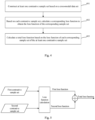
- the anchor sample is a text "car”
- the positive sample is denoted by P and is a video related to "car”
- the negative sample is denoted by N and is a randomly selected video (in the drawing, the video is denoted by video frames) which may or may not be related to "car”
- the negative sample includes a video (N1) related to "car” and a video (N2) not related to "car”.
- the margin has a fixed value and is a hard margin
- the margin does not have a fixed value and is a soft margin, and specifically, if one negative sample is related to the anchor sample, the margin corresponding to the related negative sample should be less than the margin corresponding to the unrelated negative sample.
- the negative sample may or may not be related to the anchor sample, if a fixed margin is used, a wrong learning direction may be caused, thus reducing the effect of the cross-modal retrieval model.
- the soft margin may be determined based on the similarity distance between the similarity of the positive sample pair and the similarity of the negative sample pair, which may be applicable to a scenario of the triplet contrastive loss function.
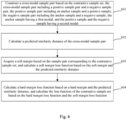
- Fig. 4 is a schematic diagram according to a fourth embodiment of the present disclosure, the present embodiment provides a method for training a cross-modal retrieval model, and as shown in Fig. 4 , the method includes: 401: constructing at least one contrastive sample set based on a cross-modal data set.
- the cross-modal data set is formed by a plurality of cross-modal matched sample pairs, each cross-modal matched sample pair includes two mutually matched samples with different modals, and assuming that the two different modals are a text and a video respectively, one cross-modal matched sample pair may be represented as (v, t), v representing the video, and t representing the text.
- each contrastive sample set includes an anchor sample, a positive sample and a negative sample
- the anchor sample is one sample in the cross-modal matched sample pair
- the positive sample is the other sample in the cross-modal matched sample pair where the anchor sample is located
- the negative sample is a sample which has a different modal from the anchor sample in the cross-modal matched sample pair where a randomly selected non-anchor sample is located.
- two cross-modal matched sample pairs are ⁇ v i , t i > and ⁇ v j , t j > respectively, and assuming that the selected anchor sample is t i , the positive sample is v i , and the negative sample is v j , such that the contrastive sample set may be (t i , v i , v j ).
- two contrastive sample sets corresponding to the cross-modal retrieval may be selected; that is, in addition to the above-mentioned contrastive sample set (t i , v i , v j ), another contrastive sample set (v i , t i , t j ) may be selected.
- the loss functions of the corresponding sample sets are added, and the added function is used as the total loss function.
- the two contrastive sample sets are referred to as a first contrastive sample set and a second contrastive sample set respectively, and the corresponding loss functions may be referred to as a first loss function and a second loss function; as shown in Fig. 5 , the first loss function and the second loss function may be added, and the added function is taken as the total loss function.
- L full L ⁇ full + L t full
- L full is the total loss function
- L ⁇ full , L t full are the first loss function and the second loss function respectively; that is, L ⁇ full is the loss function calculated based on (t i , v, v j ), and L t full is the loss function calculated based on (v', t i , t j ).
- the cross-modal retrieval model may be trained using the total loss function; that is, parameters of the text encoder model and parameters of the video encoder model are adjusted until the total loss function converges.
- the anchor sample is text "a car is shown", the positive sample is denoted by P, the negative sample is denoted by N, and both the positive sample and the negative sample in Fig. 7 are videos related to a car.
- the anchor sample is a text
- the anchor sample may be referred to as an anchor text
- the positive sample and the negative sample may be referred to as a positive video and a negative video respectively.
- the contrastive sample set (the anchor text, the positive video and the negative video) may be input into the cross-modal retrieval model
- the text encoder model encodes the anchor text to obtain a predicted text representation
- the video encoder model (the video feature extractor model and the video feature aggregator module) encodes the positive video and the negative video to obtain a first predicted video representation and a second predicted video representation
- similarity between the predicted text representation and the first predicted video representation is calculated as the first predicted similarity
- similarity between the predicted text representation and the second predicted video representation is calculated as the second predicted similarity
- a difference between the second predicted similarity and the first predicted similarity is calculated as the predicted similarity distance.
- 603 acquiring a soft margin based on the sample pair corresponding to the contrastive sample set, and calculating a soft margin loss function based on the soft margin and the predicted similarity distance.
- 604 calculating a hard margin loss function based on a hard margin and the predicted similarity distance, and calculating the loss function of the contrastive sample set based on the hard margin loss function and the soft margin loss function.
- the hard margin loss function refers to a contrastive loss function calculated based on a fixed margin, and may be realized using the related art.
- the soft margin loss function and the hard margin loss function may be added, and the loss function of the contrastive sample set is obtained based on the added loss function.
- the soft margin loss function may include a soft margin loss function for at least one state, and correspondingly, the soft margin loss functions for the states may be subjected to weighted summation, the result and the hard margin loss function are added, and then, the loss function of the contrastive sample set may be calculated based on the added loss function.
- the soft margin loss function for at least one state may include a static soft margin loss function and a dynamic soft margin loss function.
- the soft margin loss function may include the dynamic soft margin loss function and the static soft margin loss function which have similar calculation processes.
- the dynamic soft margin loss function l ⁇ s i j ⁇ d ⁇ d corresponds to a video and a text
- the present embodiment has a main idea of converting a cross-modal loss function into a summation operation of two loss functions in a single modal.
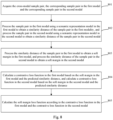
- a method for calculating the soft margin loss function may include: 801: acquiring the cross-modal sample pair, the corresponding sample pair in the first modal and the corresponding sample pair in the second modal.
- the acquisition may be performed based on sample pairs corresponding to a contrastive sample set, the sample pairs corresponding to the contrastive sample set include a sample pair corresponding to a positive sample and a sample pair corresponding to a negative sample, the sample pair corresponding to the positive sample includes the positive sample and a sample in a different modal from the positive sample, and the sample pair corresponding to the negative sample includes the negative sample and a sample in a different modal from the negative sample.
- the positive and negative samples are videos, and the other modal is a text
- the positive and negative samples may be referred to as a positive video and a negative video respectively
- the sample in a different modal from the positive sample may be referred to as a positive text
- the sample in a different modal from the negative sample may be referred to as a negative text
- the sample pair corresponding to the positive sample includes the positive video and the positive text
- the sample pair corresponding to the negative sample includes the negative video and the negative text.
- the sample pair corresponding to the positive sample includes positive video P and positive text "a car is shown”
- the sample pair corresponding to the negative sample includes negative video N and negative text "a car is being displayed”.
- the contrastive sample set across modal domains includes an anchor text, a positive video and a negative video
- the positive video corresponds to a positive text
- the negative video corresponds to a negative text
- corresponding content of the anchor text in the video modal domain is referred to as an anchor video
- the anchor video is the same as the positive video.
- the sample pairs in the first modal include ⁇ anchor text, positive text> and ⁇ anchor text, negative text>; the sample pairs in the second modal include ⁇ anchor video, positive video> and ⁇ anchor video, negative video>.
- the semantic representation model may also be referred to as a supervision expert for the corresponding state and the corresponding modal, such as a dynamic text supervision expert, or the like.
- the sample pairs in the first modal i.e., ⁇ anchor text, positive text> and ⁇ anchor text, negative text>
- the sample pairs in the second modal i.e., ⁇ anchor video, positive video> and ⁇ anchor video, negative video> are processed using a static video supervision expert.
- the static text supervision expert may obtain the similarity distance of the two sample pairs ( ⁇ anchor text, positive text> and ⁇ anchor text, negative text>) in the first modal.
- the static video supervision expert may obtain the similarity distance of the two sample pairs (anchor video, positive video> and ⁇ anchor video, negative video) in the second modal.
- ⁇ *> is an inner product operation
- the similarity distance of the sample pairs in the second modal may be obtained based on the static video supervision expert.
- the above shows a processing flow of the static supervision expert group, and a dynamic supervision expert group has a similar processing flow, except that the static supervision expert group adopts an existing pre-training model, such as the above-mentioned BERT model or the resnet-152 model, while the dynamic supervision expert group adopts the cross-modal retrieval model; that is, parameters of the cross-modal retrieval model are continuously adjusted, and for a current time, the sample pair in each modal may be processed using the current parameters existing at the current time. For example, the sample pair in the first modal is processed using the parameters of the existing text encoder model, and the sample pair in the second modal is processed using the parameters of the existing video encoder model.
- an existing pre-training model such as the above-mentioned BERT model or the resnet-152 model
- the dynamic supervision expert group adopts the cross-modal retrieval model
- the sample pair in each modal may be processed using the current parameters existing at the current time.
- the sample pair in the first modal is processed using the parameters of
- static text similarity distance ⁇ s ( i, j ) static text similarity distance
- static video similarity distance ⁇ s ( i , j ) dynamic text similarity distance
- dynamic video similarity distance ⁇ d ( i, j ) dynamic video similarity distance
- the similarity distance in a single modal may be calculated using the semantic representation model in the corresponding single modal.
- the similarity distance may be normalized to obtain the corresponding soft margin.
- F ( ⁇ (i, j) ; ⁇ , ⁇ ) is the normalized similarity distance, i.e., the corresponding soft margin; for example, F( ⁇ s (i, j ) ; ⁇ , ⁇ ) is a static text soft margin.
- Calculation modes of other soft margins are similar and are not detailed, and a static text soft margin, a static video soft margin, a dynamic text soft margin and a dynamic video soft margin may be obtained through normalization.
- the similarity distances under different modals may be balanced, thus having comparability.
- the contrastive loss function in the first modal and the contrastive loss function in the second modal may be added, and the added function may be used as the soft margin loss function.
- the above ⁇ (i, j), ⁇ (i, j) are ⁇ s (i, j), ⁇ s ( i, j) respectively; during the calculation of the dynamic soft margin loss function, the above ⁇ ( i, j), ⁇ ( i, j ) are ⁇ d (i, j ) , ⁇ d ( i, j ) respectively.
- Both the contrastive loss function in the first modal and the contrastive loss function in the second modal may be calculated using the above-mentioned calculation principle for the hard margin loss function, with a difference lying in that the margin of the hard margin loss function is a fixed value m, and the margins of the contrastive loss functions in the two modals are a corresponding soft margin F( ⁇ (i, j); ⁇ , ⁇ ).
- the calculation process of the soft margin loss function is converted into the sum of the contrastive loss function in the first modal and the contrastive loss function in the second modal, such that the calculation of the cross-modal loss function may be converted into the calculation of the loss function in the single modal, thus improving a calculation efficiency of the soft margin loss function.
- the soft margin loss function includes the dynamic soft margin loss function and the static soft margin loss function, such that the soft margin loss function may include knowledge of other models and knowledge of own models, thus improving the effect of the cross-modal retrieval model.
- the static similarity distance is acquired using the pre-training model, such that the knowledge of the existing model may be introduced using the existing model, and the knowledge of the own models may be introduced using the current parameters of the cross-modal retrieval model.
- Fig. 10 is a schematic diagram according to a tenth embodiment of the present disclosure
- the present embodiment provides an apparatus for training a cross-modal retrieval model
- the apparatus 1000 includes: a first computing module 1001 configured to determine similarity of a cross-modal sample pair according to the cross-modal sample pair, the cross-modal sample pair including a sample of a first modal and a sample of a second modal, and the first modal being different from the second modal; a second computing module 1002 configured to determine a soft margin based on the similarity, and determine a soft margin loss function based on the soft margin; and a training module 1003 configured to determine a total loss function based on the soft margin loss function, and train a cross-modal retrieval model according to the total loss function.
- At least one cross-modal sample pair includes a positive sample pair and a negative sample pair, the positive sample pair includes an anchor sample and a positive sample, the negative sample pair includes the anchor sample and a negative sample, the anchor sample has the first modal, and the positive sample and the negative sample have the second modal; the second computing module 1002 is specifically configured to: calculate a distance between similarity of the positive sample pair and similarity of the negative sample pair to obtain a similarity distance; and determine the soft margin based on the similarity distance.
- the second computing module 1002 is further specifically configured to: normalize the similarity distance to obtain a normalized similarity distance, and determine the normalized similarity distance as the soft margin.
- the similarity distance includes a similarity distance in the first modal and a similarity distance in the second modal; the second computing module 1002 is further specifically configured to: determine a soft margin in the first modal based on the similarity distance in the first modal, and calculate a contrastive loss function in the first modal based on the soft margin in the first modal; determine a soft margin in the second modal based on the similarity distance in the second modal, and calculate a contrastive loss function in the second modal based on the soft margin in the second modal; and calculate the soft margin loss function according to the contrastive loss function in the first modal and the contrastive loss function in the second modal.
- the first computing module 1001 is specifically configured to: acquire the cross-modal sample pair, the corresponding sample pair in the first modal and the corresponding sample pair in the second modal; process the sample pair in the first modal using a semantic representation model in the first modal to obtain the similarity distance in the first modal, and process the sample pair in the second modal using a semantic representation model in the second modal to obtain the similarity distance in the second modal.
- the cross-modal sample pair corresponds to at least one contrastive sample set
- the training module 1003 is specifically configured to: calculate a loss function of the corresponding contrastive sample set based on the soft margin loss function; and calculate the total loss function based on the loss function of each corresponding sample set of the at least one contrastive sample set.
- the soft margin loss function includes a soft margin loss function for at least one state
- the training module 1003 is further specifically configured to: perform weighted summation on the soft margin loss function for the at least one state to obtain a weighted summation function; add the weighted summation function and the hard margin loss function, and calculate the loss function of the corresponding contrastive sample set based on the added function.
- the similarity distance includes a static similarity distance and a dynamic similarity distance
- the soft margin loss function includes a static soft margin loss function and a dynamic soft margin loss function
- the static soft margin loss function is calculated based on the static similarity distance
- the dynamic soft margin loss function is calculated based on the dynamic similarity distance
- the second computing module 1002 is specifically configured to: calculate the distance between the similarity of the positive sample pair and the similarity of the negative sample pair using a pre-training model, so as to obtain the static similarity distance; and/or calculate the distance between the similarity of the positive sample pair and the similarity of the negative sample pair using current parameters of the cross-modal retrieval model to obtain the dynamic similarity distance.
- the soft margin is determined based on the similarity of the cross-modal sample pair, the soft margin loss function is calculated based on the soft margin, and the total loss function is calculated based on the soft margin loss function, such that different margins may be selected according to different cross-modal sample pairs, thus avoiding a problem caused by the fixed margin, and improving a retrieval effect of the cross-modal retrieval model.
- the soft margin may be determined based on the similarity distance between the similarity of the positive sample pair and the similarity of the negative sample pair, which may be applicable to a scenario of the triplet contrastive loss function.
- the total loss function is calculated based on the loss function of each corresponding sample set, such that composition conditions of different negative sample pairs may be considered, thus improving accuracy of the total loss function and then the effect of the cross-modal retrieval model.
- the similarity distance in a single modal may be calculated using the semantic representation model in the corresponding single modal.
- the total loss function is calculated based on the loss function of each corresponding sample set, such that composition conditions of different negative sample pairs may be considered, thus improving accuracy of the total loss function and then the effect of the cross-modal retrieval model.
- the calculation process of the soft margin loss function is converted into the sum of the contrastive loss function in the first modal and the contrastive loss function in the second modal, such that the calculation of the cross-modal loss function may be converted into the calculation of the loss function in the single modal, thus improving a calculation efficiency of the soft margin loss function.
- the soft margin loss function includes the dynamic soft margin loss function and the static soft margin loss function, such that the soft margin loss function may include knowledge of other models and knowledge of own models, thus improving the effect of the cross-modal retrieval model.
- the static similarity distance is acquired using the pre-training model, such that the knowledge of the existing model may be introduced using the existing model, and the knowledge of the own models may be introduced using the current parameters of the cross-modal retrieval model.
- an electronic device a readable storage medium and a computer program product.
- Fig. 11 shows a schematic block diagram of an exemplary electronic device 1100 which may be configured to implement the embodiments of the present disclosure.
- the electronic device is intended to represent various forms of digital computers, such as laptop computers, desktop computers, workstations, servers, blade servers, mainframe computers, and other appropriate computers.
- the electronic device may also represent various forms of mobile apparatuses, such as personal digital assistants, cellular telephones, smart phones, wearable devices, and other similar computing apparatuses.
- the components shown herein, their connections and relationships, and their functions, are meant to be exemplary only, and are not meant to limit implementation of the present disclosure described and/or claimed herein.
- the electronic device 1100 includes a computing unit 1101 which may perform various appropriate actions and processing operations according to a computer program stored in a read only memory (ROM) 1102 or a computer program loaded from a storage unit 508 into a random access memory (RAM) 1103.
- Various programs and data necessary for the operation of the electronic device 1100 may be also stored in the RAM 1103.
- the computing unit 1101, the ROM 1102, and the RAM 1103 are connected with one other through a bus 1104.
- An input/output (I/O) interface 1105 is also connected to the bus 1104.
- the plural components in the electronic device 1100 are connected to the I/O interface 1105, and include: an input unit 1106, such as a keyboard, a mouse, or the like; an output unit 1107, such as various types of displays, speakers, or the like; the storage unit 1108, such as a magnetic disk, an optical disk, or the like; and a communication unit 1109, such as a network card, a modem, a wireless communication transceiver, or the like.
- the communication unit 1109 allows the electronic device 1100 to exchange information/data with other devices through a computer network, such as the Internet, and/or various telecommunication networks.
- the computing unit 1101 may be a variety of general and/or special purpose processing components with processing and computing capabilities. Some examples of the computing unit 1101 include, but are not limited to, a central processing unit (CPU), a graphic processing unit (GPU), various dedicated artificial intelligence (AI) computing chips, various computing units running machine learning model algorithms, a digital signal processor (DSP), and any suitable processor, controller, microcontroller, or the like.
- the computing unit 1101 performs the methods and processing operations described above, such as the method for training a cross-modal retrieval model.
- the method for training a cross-modal retrieval model may be implemented as a computer software program tangibly contained in a machine readable medium, such as the storage unit 1108.
- part or all of the computer program may be loaded and/or installed into the electronic device 500 via the ROM 1102 and/or the communication unit 1109.
- the computer program When the computer program is loaded into the RAM 1103 and executed by the computing unit 1101, one or more steps for training a cross-modal retrieval model described above may be performed.
- the computing unit 1101 may be configured to train the cross-modal retrieval model by any other suitable means (for example, by means of firmware).
- Various implementations of the systems and technologies described herein above may be implemented in digital electronic circuitry, integrated circuitry, field programmable gate arrays (FPGA), application specific integrated circuits (ASIC), application specific standard products (ASSP), systems on chips (SOC), complex programmable logic devices (CPLD), computer hardware, firmware, software, and/or combinations thereof.
- the systems and technologies may be implemented in one or more computer programs which are executable and/or interpretable on a programmable system including at least one programmable processor, and the programmable processor may be special or general, and may receive data and instructions from, and transmit data and instructions to, a storage system, at least one input apparatus, and at least one output apparatus.
- Program codes for implementing the method according to the present disclosure may be written in any combination of one or more programming languages. These program codes may be provided to a processor or a controller of a general purpose computer, a special purpose computer, or other programmable data processing apparatuses, such that the program code, when executed by the processor or the controller, causes functions/operations specified in the flowchart and/or the block diagram to be implemented.
- the program code may be executed entirely on a machine, partly on a machine, partly on a machine as a stand-alone software package and partly on a remote machine, or entirely on a remote machine or a server.
- the machine readable medium may be a tangible medium which may contain or store a program for use by or in connection with an instruction execution system, apparatus, or device.
- the machine readable medium may be a machine readable signal medium or a machine readable storage medium.
- the machine readable medium may include, but is not limited to, an electronic, magnetic, optical, electromagnetic, infrared, or semiconductor system, apparatus, or device, or any suitable combination of the foregoing.
- machine readable storage medium may include an electrical connection based on one or more wires, a portable computer disk, a hard disk, a random access memory (RAM), a read only memory (ROM), an erasable programmable read only memory (EPROM or flash memory), an optical fiber, a portable compact disc read only memory (CD-ROM), an optical storage device, a magnetic storage device, or any suitable combination of the foregoing.
- RAM random access memory
- ROM read only memory
- EPROM or flash memory erasable programmable read only memory
- CD-ROM compact disc read only memory
- magnetic storage device or any suitable combination of the foregoing.
- a computer having: a display apparatus (for example, a cathode ray tube (CRT) or liquid crystal display (LCD) monitor) for displaying information to a user; and a keyboard and a pointing apparatus (for example, a mouse or a trackball) by which a user may provide input for the computer.
- a display apparatus for example, a cathode ray tube (CRT) or liquid crystal display (LCD) monitor
- a keyboard and a pointing apparatus for example, a mouse or a trackball
- Other kinds of apparatuses may also be used to provide interaction with a user; for example, feedback provided for a user may be any form of sensory feedback (for example, visual feedback, auditory feedback, or tactile feedback); and input from a user may be received in any form (including acoustic, speech or tactile input).
- the systems and technologies described here may be implemented in a computing system (for example, as a data server) which includes a back-end component, or a computing system (for example, an application server) which includes a middleware component, or a computing system (for example, a user computer having a graphical user interface or a web browser through which a user may interact with an implementation of the systems and technologies described here) which includes a front-end component, or a computing system which includes any combination of such back-end, middleware, or front-end components.
- the components of the system may be interconnected through any form or medium of digital data communication (for example, a communication network). Examples of the communication network include: a local area network (LAN), a wide area network (WAN) and the Internet.
- a computer system may include a client and a server.
- the client and the server are remote from each other and interact through the communication network.
- the relationship between the client and the server is generated by virtue of computer programs which run on respective computers and have a client-server relationship to each other.
- the server may be a cloud server, also called a cloud computing server or a cloud host, and is a host product in a cloud computing service system, so as to overcome the defects of high management difficulty and weak service expansibility in conventional physical host and virtual private server (VPS) service.
- the server may also be a server of a distributed system, or a server incorporating a blockchain.
Landscapes
- Engineering & Computer Science (AREA)
- Theoretical Computer Science (AREA)
- Physics & Mathematics (AREA)
- Data Mining & Analysis (AREA)
- General Physics & Mathematics (AREA)
- General Engineering & Computer Science (AREA)
- Evolutionary Computation (AREA)
- Artificial Intelligence (AREA)
- Life Sciences & Earth Sciences (AREA)
- Software Systems (AREA)
- Computer Vision & Pattern Recognition (AREA)
- Computing Systems (AREA)
- Mathematical Physics (AREA)
- Health & Medical Sciences (AREA)
- General Health & Medical Sciences (AREA)
- Databases & Information Systems (AREA)
- Multimedia (AREA)
- Computational Linguistics (AREA)
- Biophysics (AREA)
- Biomedical Technology (AREA)
- Molecular Biology (AREA)
- Evolutionary Biology (AREA)
- Bioinformatics & Computational Biology (AREA)
- Bioinformatics & Cheminformatics (AREA)
- Medical Informatics (AREA)
- Library & Information Science (AREA)
- Animal Behavior & Ethology (AREA)
- Information Retrieval, Db Structures And Fs Structures Therefor (AREA)
- Measurement And Recording Of Electrical Phenomena And Electrical Characteristics Of The Living Body (AREA)
Claims (7)
- Procédé mis en œuvre par ordinateur permettant d'entraîner un modèle d'extraction intermodale, caractérisé en ce qu'il comprend :la détermination (101) de la similarité d'une paire d'échantillons intermodaux en fonction de la paire d'échantillons intermodaux, la paire d'échantillons intermodaux comprenant un échantillon d'une première modalité et un échantillon d'une seconde modalité, et la première modalité étant différente de la seconde modalité, dans lequel la première modalité est un texte, et la seconde modalité est une vidéo, et la paire d'échantillons intermodaux comprend une paire d'échantillons positifs et une paire d'échantillons négatifs, la paire d'échantillons positifs comprend un échantillon d'ancrage et un échantillon positif, la paire d'échantillons négatifs comprend l'échantillon d'ancrage et un échantillon négatif, l'échantillon d'ancrage a la première modalité, et l'échantillon positif et l'échantillon négatif ont la seconde modalité, et dans lequel l'échantillon d'ancrage est un texte dans un ensemble d'échantillons, l'échantillon positif est une vidéo liée au texte dans l'ensemble d'échantillons, et l'échantillon négatif est une vidéo sélectionnée de manière aléatoire qui est liée ou non au texte dans l'ensemble d'échantillons ;la détermination (102) d'une marge souple sur la base de la similarité, et la détermination (102) d'une fonction de perte de marge souple sur la base de la marge souple ; etla détermination (103) d'une fonction de perte totale sur la base de la fonction de perte de marge souple, et l'entraînement (103) d'un modèle d'extraction multimodale en fonction de la fonction de perte totale,dans lequel la détermination d'une marge souple sur la base de la similarité comprend :le calcul d'une distance entre la similarité de la paire d'échantillons positifs et la similarité de la paire d'échantillons négatifs afin d'obtenir une distance de similarité ; etla normalisation de la distance de similarité afin d'obtenir une distance de similarité normalisée, et la détermination de la distance de similarité normalisée en tant que marge souple, etdans lequel la distance de similarité comprend une distance de similarité dans la première modalité et une distance de similarité dans la seconde modalité, la distance de similarité dans la première modalité étant obtenue en traitant la paire d'échantillons dans la première modalité à l'aide d'un modèle de représentation sémantique dans la première modalité et la distance de similarité dans la seconde modalité étant obtenue en traitant la paire d'échantillons dans la seconde modalité à l'aide d'un modèle de représentation sémantique dans la seconde modalité ;la détermination d'une marge souple sur la base de la similarité et la détermination d'une fonction de perte de marge souple sur la base de la marge souple comprend :la détermination d'une marge souple dans la première modalité sur la base de la distance de similarité dans la première modalité, et le calcul d'une fonction de perte contrastive dans la première modalité sur la base de la marge souple dans la première modalité ;la détermination d'une marge souple dans la seconde modalité sur la base de la distance de similarité dans la seconde modalité, et le calcul d'une fonction de perte contrastive dans la seconde modalité sur la base de la marge souple dans la seconde modalité ; etle calcul de la fonction de perte de marge souple en fonction de la fonction de perte contrastive dans la première modalité et de la fonction de perte contrastive dans la seconde modalité.
- Procédé selon la revendication 1, dans lequel la paire d'échantillons intermodaux correspond à au moins un ensemble d'échantillons contrastifs, et la détermination d'une fonction de perte totale sur la base de la fonction de perte de marge souple comprend :le calcul d'une fonction de perte de l'ensemble d'échantillons contrastifs correspondant sur la base de la fonction de perte de marge souple ; etle calcul de la fonction de perte totale sur la base de la fonction de perte de chaque ensemble d'échantillons correspondant de l'au moins un ensemble d'échantillons contrastifs.
- Procédé selon la revendication 2, dans lequel la fonction de perte de marge souple comprend une fonction de perte de marge souple dans au moins un état, et le calcul d'une fonction de perte de l'ensemble d'échantillons contrastifs correspondant sur la base de la fonction de perte de marge souple comprend :la réalisation d'une sommation pondérée sur la fonction de perte de marge souple pour l'au moins un état afin d'obtenir une fonction de sommation pondérée ; etl'ajout de la fonction de sommation pondérée et d'une fonction de perte de marge rigide, et le calcul de la fonction de perte de l'ensemble d'échantillons contrastifs correspondant sur la base de la fonction ajoutée.
- Procédé selon l'une quelconque des revendications 1 à 3, dans lequel la distance de similarité comprend une distance de similarité statique et une distance de similarité dynamique, la fonction de perte de marge souple comprend une fonction de perte de marge souple statique et une fonction de perte de marge souple dynamique, la fonction de perte de marge souple statique est calculée sur la base de la distance de similarité statique, la fonction de perte de marge souple dynamique est calculée sur la base de la distance de similarité dynamique, et le calcul d'une distance entre la similarité de la paire d'échantillons positifs et la similarité de la paire d'échantillons négatifs afin d'obtenir une distance de similarité comprend :le calcul de la distance entre la similarité de la paire d'échantillons positifs et la similarité de la paire d'échantillons négatifs à l'aide d'un modèle de pré-entraînement, de manière à obtenir la distance de similarité statique ; et/oule calcul de la distance entre la similarité de la paire d'échantillons positifs et la similarité de la paire d'échantillons négatifs à l'aide de paramètres actuels du modèle d'extraction intermodale afin d'obtenir la distance de similarité dynamique.
- Appareil (1000) permettant d'entraîner un modèle d'extraction intermodale, caractérisé en ce qu'il comprend :un premier module de calcul (1001) configuré pour déterminer la similarité d'une paire d'échantillons intermodaux en fonction de la paire d'échantillons intermodaux, la paire d'échantillons intermodaux comprenant un échantillon d'une première modalité et un échantillon d'une seconde modalité, et la première modalité étant différente de la seconde modalité, dans lequel la première modalité est un texte, et la seconde modalité est une vidéo, et la paire d'échantillons intermodaux comprend une paire d'échantillons positifs et une paire d'échantillons négatifs, la paire d'échantillons positifs comprend un échantillon d'ancrage et un échantillon positif, la paire d'échantillons négatifs comprend l'échantillon d'ancrage et un échantillon négatif, l'échantillon d'ancrage a la première modalité, et l'échantillon positif et l'échantillon négatif ont la seconde modalité, et dans lequel l'échantillon d'ancrage est un texte dans un ensemble d'échantillons, l'échantillon positif est une vidéo liée au texte dans l'ensemble d'échantillons, et l'échantillon négatif est une vidéo sélectionnée de manière aléatoire qui est liée ou non au texte dans l'ensemble d'échantillons ;un second module de calcul (1002) configuré pour déterminer une marge souple sur la base de la similarité, et déterminer une fonction de perte de marge souple sur la base de la marge souple ; etun module d'entraînement (1003) configuré pour déterminer une fonction de perte totale sur la base de la fonction de perte de marge souple, et entraîner un modèle d'extraction intermodale en fonction de la fonction de perte totale, le second module de calcul (1002) est spécifiquement configuré pour :calculer une distance entre la similarité de la paire d'échantillons positifs et la similarité de la paire d'échantillons négatifs afin d'obtenir une distance de similarité ; etnormaliser la distance de similarité afin d'obtenir une distance de similarité normalisée, et déterminer la distance de similarité normalisée en tant que marge souple,dans lequel la distance de similarité comprend une distance de similarité dans la première modalité et une distance de similarité dans la seconde modalité, la distance de similarité dans la première modalité étant obtenue en traitant la paire d'échantillons dans la première modalité à l'aide d'un modèle de représentation sémantique dans la première modalité et la distance de similarité dans la seconde modalité étant obtenue en traitant la paire d'échantillons dans la seconde modalité à l'aide d'un modèle de représentation sémantique dans la seconde modalité ;le second module de calcul (1002) est en outre spécifiquement configuré pour :déterminer une marge souple dans la première modalité sur la base de la distance de similarité dans la première modalité, et calculer une fonction de perte contrastive dans la première modalité sur la base de la marge souple dans la première modalité ;déterminer une marge souple dans la seconde modalité sur la base de la distance de similarité dans la seconde modalité, et calculer une fonction de perte contrastive dans la seconde modalité sur la base de la marge souple dans la seconde modalité ; etcalculer la fonction de perte de marge souple en fonction de la fonction de perte contrastive dans la première modalité et de la fonction de perte contrastive dans la seconde modalité.
- Support de stockage non transitoire lisible par ordinateur stockant des instructions informatiques, qui, lorsqu'elles sont exécutées par un processeur, amènent un ordinateur à effectuer le procédé selon l'une quelconque des revendications 1 à 4.
- Produit-programme informatique comprenant un programme informatique qui, lorsqu'il est exécuté par un processeur, met en œuvre le procédé selon l'une quelconque des revendications 1 à 4.
Applications Claiming Priority (1)
| Application Number | Priority Date | Filing Date | Title |
|---|---|---|---|
| CN202110244645.XA CN113033622B (zh) | 2021-03-05 | 2021-03-05 | 跨模态检索模型的训练方法、装置、设备和存储介质 |
Publications (3)
| Publication Number | Publication Date |
|---|---|
| EP4053751A1 EP4053751A1 (fr) | 2022-09-07 |
| EP4053751B1 true EP4053751B1 (fr) | 2025-03-19 |
| EP4053751B8 EP4053751B8 (fr) | 2025-05-07 |
Family
ID=76467941
Family Applications (1)
| Application Number | Title | Priority Date | Filing Date |
|---|---|---|---|
| EP21201915.2A Active EP4053751B8 (fr) | 2021-03-05 | 2021-10-11 | Procédé et appareil d'apprentissage de modèle de récupération transmodale, dispositif et support d'enregistrement |
Country Status (5)
| Country | Link |
|---|---|
| US (1) | US20220284246A1 (fr) |
| EP (1) | EP4053751B8 (fr) |
| JP (1) | JP7331975B2 (fr) |
| KR (1) | KR102922581B1 (fr) |
| CN (1) | CN113033622B (fr) |
Families Citing this family (24)
| Publication number | Priority date | Publication date | Assignee | Title |
|---|---|---|---|---|
| CN113407814B (zh) * | 2021-06-29 | 2023-06-16 | 抖音视界有限公司 | 文本搜索方法、装置、可读介质及电子设备 |
| CN113360683B (zh) * | 2021-06-30 | 2024-04-19 | 北京百度网讯科技有限公司 | 训练跨模态检索模型的方法以及跨模态检索方法和装置 |
| CN114282013A (zh) * | 2021-08-20 | 2022-04-05 | 腾讯科技(深圳)有限公司 | 一种数据处理方法、装置及存储介质 |
| CN113780194B (zh) * | 2021-09-15 | 2026-03-20 | 北京京东尚科信息技术有限公司 | 多模态预训练方法和装置 |
| CN114067233B (zh) * | 2021-09-26 | 2023-05-23 | 四川大学 | 一种跨模态匹配方法及系统 |
| CN114417878B (zh) * | 2021-12-29 | 2023-04-18 | 北京百度网讯科技有限公司 | 语义识别方法、装置、电子设备及存储介质 |
| CN114782719B (zh) * | 2022-04-26 | 2023-02-03 | 北京百度网讯科技有限公司 | 一种特征提取模型的训练方法、对象检索方法以及装置 |
| CN114840734B (zh) * | 2022-04-29 | 2023-04-25 | 北京百度网讯科技有限公司 | 多模态表示模型的训练方法、跨模态检索方法及装置 |
| KR102889811B1 (ko) * | 2022-12-23 | 2025-11-21 | 한양대학교 산학협력단 | 비디오 이해를 위한 구조 인식 기반 비디오 표현 학습 방법 및 장치 |
| CN115829058B (zh) * | 2022-12-23 | 2024-04-23 | 北京百度网讯科技有限公司 | 训练样本处理方法、跨模态匹配方法、装置、设备和介质 |
| CN115861995B (zh) * | 2023-02-08 | 2023-05-23 | 山东海量信息技术研究院 | 一种视觉问答方法、装置及电子设备和存储介质 |
| CN116340743A (zh) * | 2023-03-23 | 2023-06-27 | 平安科技(深圳)有限公司 | 跨模态模型表征能力的评估方法、装置、设备以及介质 |
| CN116628490B (zh) * | 2023-04-07 | 2025-11-18 | 中国科学院自动化研究所 | 图文音多模态预训练模型方法、装置、电子设备和介质 |
| US20240355004A1 (en) * | 2023-04-19 | 2024-10-24 | Sony Group Corporation | Variable rate compression of point cloud geometry |
| US20240394592A1 (en) * | 2023-05-25 | 2024-11-28 | Samsung Electronics Co., Ltd. | Cross-modal transfer with continuously weighted contrastive loss |
| CN117235305B (zh) * | 2023-07-07 | 2026-01-06 | 北京邮电大学 | 基于双重对比学习的视频文本跨模态检索方法及相关设备 |
| CN116776160B (zh) * | 2023-08-23 | 2023-11-10 | 腾讯科技(深圳)有限公司 | 一种数据处理方法和相关装置 |
| CN117392396B (zh) * | 2023-12-08 | 2024-03-05 | 安徽蔚来智驾科技有限公司 | 跨模态目标状态的检测方法、设备、智能设备和介质 |
| CN117633256B (zh) * | 2023-12-14 | 2024-08-02 | 九江学院 | 一种面向标签噪声的深度半监督跨模态哈希检索方法 |
| CN119648309B (zh) * | 2024-10-31 | 2025-11-21 | 平安科技(深圳)有限公司 | 基于多模态模型的投诉检测方法、装置、设备及存储介质 |
| CN119271829B (zh) * | 2024-12-06 | 2025-03-07 | 福建拓尔通软件有限公司 | 一种静动态特征融合的视频与文本跨模态检索方法及系统 |
| CN119537624B (zh) * | 2025-01-22 | 2025-04-11 | 潍坊学院 | 基于球面哈希的图文跨模态检索方法、设备和存储介质 |
| CN120104825B (zh) * | 2025-05-06 | 2025-07-18 | 中国海洋大学 | 基于假阴性样本软距离约束的图文跨模态检索方法及系统 |
| CN121388956B (zh) * | 2025-12-25 | 2026-04-03 | 成都理工大学 | 一种基于人工智能的垂直行业异常行为监督方法 |
Family Cites Families (13)
| Publication number | Priority date | Publication date | Assignee | Title |
|---|---|---|---|---|
| CN108182279B (zh) * | 2018-01-26 | 2019-10-01 | 有米科技股份有限公司 | 基于文本特征的对象分类方法、装置和计算机设备 |
| EP3794512A1 (fr) * | 2018-05-14 | 2021-03-24 | Quantum-Si Incorporated | Systèmes et procédés d'unification de modèles statistiques pour différentes modalités de données |
| CN109522850B (zh) * | 2018-11-22 | 2023-03-10 | 中山大学 | 一种基于小样本学习的动作相似度评估方法 |
| CN111325223B (zh) * | 2018-12-13 | 2023-10-24 | 中国电信股份有限公司 | 深度学习模型的训练方法、装置和计算机可读存储介质 |
| US11586927B2 (en) * | 2019-02-01 | 2023-02-21 | Google Llc | Training image and text embedding models |
| US11568315B2 (en) * | 2019-03-22 | 2023-01-31 | Royal Bank Of Canada | Systems and methods for learning user representations for open vocabulary data sets |
| JP2020177465A (ja) * | 2019-04-18 | 2020-10-29 | 国立大学法人 東京大学 | 情報処理装置、機械学習モデルの製造方法、及びプログラム |
| US11308353B2 (en) * | 2019-10-23 | 2022-04-19 | Adobe Inc. | Classifying digital images in few-shot tasks based on neural networks trained using manifold mixup regularization and self-supervision |
| CN111091010B (zh) * | 2019-11-22 | 2024-12-03 | 京东方科技集团股份有限公司 | 相似度确定、网络训练、查找方法及装置和存储介质 |
| CN111507218A (zh) | 2020-04-08 | 2020-08-07 | 中国人民大学 | 语音与人脸图像的匹配方法、装置、存储介质及电子设备 |
| US11544495B2 (en) * | 2020-07-10 | 2023-01-03 | Adobe Inc. | Attributionally robust training for weakly supervised localization and segmentation |
| CN111862175B (zh) * | 2020-07-13 | 2022-09-13 | 清华大学深圳国际研究生院 | 一种基于循环正则训练的跨模态医学图像配准方法及装置 |
| CN112148916B (zh) * | 2020-09-28 | 2024-12-13 | 华中科技大学 | 一种基于监督的跨模态检索方法、装置、设备及介质 |
-
2021
- 2021-03-05 CN CN202110244645.XA patent/CN113033622B/zh active Active
- 2021-10-11 EP EP21201915.2A patent/EP4053751B8/fr active Active
- 2021-10-15 US US17/502,385 patent/US20220284246A1/en active Pending
-
2022
- 2022-01-12 KR KR1020220004718A patent/KR102922581B1/ko active Active
- 2022-02-28 JP JP2022028920A patent/JP7331975B2/ja active Active
Also Published As
| Publication number | Publication date |
|---|---|
| CN113033622B (zh) | 2023-02-03 |
| JP2022135991A (ja) | 2022-09-15 |
| EP4053751B8 (fr) | 2025-05-07 |
| KR20220125673A (ko) | 2022-09-14 |
| JP7331975B2 (ja) | 2023-08-23 |
| CN113033622A (zh) | 2021-06-25 |
| KR102922581B1 (ko) | 2026-02-03 |
| US20220284246A1 (en) | 2022-09-08 |
| EP4053751A1 (fr) | 2022-09-07 |
Similar Documents
| Publication | Publication Date | Title |
|---|---|---|
| EP4053751B1 (fr) | Procédé et appareil d'apprentissage de modèle de récupération transmodale, dispositif et support d'enregistrement | |
| CN112906502B (zh) | 目标检测模型的训练方法、装置、设备以及存储介质 | |
| CN115359383B (zh) | 跨模态特征提取、检索以及模型的训练方法、装置及介质 | |
| EP4060565A1 (fr) | Procédé et appareil d'acquisition d'un modèle pre-entraîné | |
| CN113553412B (zh) | 问答处理方法、装置、电子设备和存储介质 | |
| CN113435208B (zh) | 学生模型的训练方法、装置及电子设备 | |
| CN113343803B (zh) | 模型训练方法、装置、设备和存储介质 | |
| US20240419839A1 (en) | Method and apparatus for jointly training natural language processing model based on privacy protection | |
| US20240177506A1 (en) | Method and Apparatus for Generating Captioning Device, and Method and Apparatus for Outputting Caption | |
| CN113204611A (zh) | 建立阅读理解模型的方法、阅读理解方法及对应装置 | |
| US20230412530A1 (en) | Training a bot orchestrator for chatbots | |
| US11068524B2 (en) | Computer-readable recording medium recording analysis program, information processing apparatus, and analysis method | |
| CN113515935B (zh) | 一种标题生成方法、装置、终端及介质 | |
| US12523483B2 (en) | Method and device for acquiring point of interest representation information, and method for training spatial relationship perception model for points of interest | |
| CN119226463B (zh) | 对话生成方法、装置、电子设备及存储介质 | |
| CN114238611A (zh) | 用于输出信息的方法、装置、设备以及存储介质 | |
| CN114078274A (zh) | 人脸图像检测方法、装置、电子设备以及存储介质 | |
| CN114461085A (zh) | 医疗输入推荐方法、装置、设备及存储介质 | |
| CN114220163A (zh) | 人体姿态估计方法、装置、电子设备及存储介质 | |
| CN117131264A (zh) | 资源推荐方法、装置、电子设备及存储介质 | |
| CN117636136A (zh) | 图像处理及模型蒸馏训练方法、装置、设备及存储介质 | |
| CN115115920B (zh) | 一种图数据自监督训练方法及装置 | |
| CN115482390A (zh) | 模型训练方法、图像分类方法、装置、电子设备和介质 | |
| CN115641640B (zh) | 动作识别模型训练方法和装置、动作识别方法和装置 | |
| CN115880506A (zh) | 图像生成方法、模型的训练方法、装置及电子设备 |
Legal Events
| Date | Code | Title | Description |
|---|---|---|---|
| PUAI | Public reference made under article 153(3) epc to a published international application that has entered the european phase |
Free format text: ORIGINAL CODE: 0009012 |
|
| STAA | Information on the status of an ep patent application or granted ep patent |
Free format text: STATUS: REQUEST FOR EXAMINATION WAS MADE |
|
| 17P | Request for examination filed |
Effective date: 20211011 |
|
| AK | Designated contracting states |
Kind code of ref document: A1 Designated state(s): AL AT BE BG CH CY CZ DE DK EE ES FI FR GB GR HR HU IE IS IT LI LT LU LV MC MK MT NL NO PL PT RO RS SE SI SK SM TR |
|
| REG | Reference to a national code |
Ref country code: DE Free format text: PREVIOUS MAIN CLASS: G06N0003040000 Ipc: G06N0003046400 Ref country code: DE Ref legal event code: R079 Ref document number: 602021027745 Country of ref document: DE Free format text: PREVIOUS MAIN CLASS: G06N0003040000 Ipc: G06N0003046400 |
|
| RIC1 | Information provided on ipc code assigned before grant |
Ipc: G06F 16/43 20190101ALI20241107BHEP Ipc: G06N 3/045 20230101ALI20241107BHEP Ipc: G06N 3/042 20230101ALI20241107BHEP Ipc: G06N 3/09 20230101ALI20241107BHEP Ipc: G06N 3/0464 20230101AFI20241107BHEP |
|
| GRAP | Despatch of communication of intention to grant a patent |
Free format text: ORIGINAL CODE: EPIDOSNIGR1 |
|
| STAA | Information on the status of an ep patent application or granted ep patent |
Free format text: STATUS: GRANT OF PATENT IS INTENDED |
|
| INTG | Intention to grant announced |
Effective date: 20241217 |
|
| GRAS | Grant fee paid |
Free format text: ORIGINAL CODE: EPIDOSNIGR3 |
|
| GRAA | (expected) grant |
Free format text: ORIGINAL CODE: 0009210 |
|
| STAA | Information on the status of an ep patent application or granted ep patent |
Free format text: STATUS: THE PATENT HAS BEEN GRANTED |
|
| AK | Designated contracting states |
Kind code of ref document: B1 Designated state(s): AL AT BE BG CH CY CZ DE DK EE ES FI FR GB GR HR HU IE IS IT LI LT LU LV MC MK MT NL NO PL PT RO RS SE SI SK SM TR |
|
| P01 | Opt-out of the competence of the unified patent court (upc) registered |
Free format text: CASE NUMBER: APP_6783/2025 Effective date: 20250210 |
|
| RAP3 | Party data changed (applicant data changed or rights of an application transferred) |
Owner name: BEIJING BAIDU NETCOM SCIENCE AND TECHNOLOGYCO., LTD. |
|
| REG | Reference to a national code |
Ref country code: GB Ref legal event code: FG4D |
|
| REG | Reference to a national code |
Ref country code: CH Ref legal event code: EP |
|
| REG | Reference to a national code |
Ref country code: DE Ref legal event code: R096 Ref document number: 602021027745 Country of ref document: DE |
|
| RAP4 | Party data changed (patent owner data changed or rights of a patent transferred) |
Owner name: BEIJING BAIDU NETCOM SCIENCE TECHNOLOGY CO., LTD. |
|
| REG | Reference to a national code |
Ref country code: IE Ref legal event code: FG4D |
|
| REG | Reference to a national code |
Ref country code: DE Ref legal event code: R081 Ref document number: 602021027745 Country of ref document: DE Owner name: BEIJING BAIDU NETCOM SCIENCE TECHNOLOGY CO., L, CN Free format text: FORMER OWNER: BEIJING BAIDU NETCOM SCIENCE AND TECHNOLOGY CO. LTD., BEIJING, CN |
|
| REG | Reference to a national code |
Ref country code: CH Ref legal event code: PK Free format text: BERICHTIGUNG B8 |
|
| PG25 | Lapsed in a contracting state [announced via postgrant information from national office to epo] |
Ref country code: RS Free format text: LAPSE BECAUSE OF FAILURE TO SUBMIT A TRANSLATION OF THE DESCRIPTION OR TO PAY THE FEE WITHIN THE PRESCRIBED TIME-LIMIT Effective date: 20250619 |
|
| PG25 | Lapsed in a contracting state [announced via postgrant information from national office to epo] |
Ref country code: FI Free format text: LAPSE BECAUSE OF FAILURE TO SUBMIT A TRANSLATION OF THE DESCRIPTION OR TO PAY THE FEE WITHIN THE PRESCRIBED TIME-LIMIT Effective date: 20250319 |
|
| REG | Reference to a national code |
Ref country code: LT Ref legal event code: MG9D |
|
| PG25 | Lapsed in a contracting state [announced via postgrant information from national office to epo] |
Ref country code: NO Free format text: LAPSE BECAUSE OF FAILURE TO SUBMIT A TRANSLATION OF THE DESCRIPTION OR TO PAY THE FEE WITHIN THE PRESCRIBED TIME-LIMIT Effective date: 20250619 |
|
| PG25 | Lapsed in a contracting state [announced via postgrant information from national office to epo] |
Ref country code: HR Free format text: LAPSE BECAUSE OF FAILURE TO SUBMIT A TRANSLATION OF THE DESCRIPTION OR TO PAY THE FEE WITHIN THE PRESCRIBED TIME-LIMIT Effective date: 20250319 |
|
| PG25 | Lapsed in a contracting state [announced via postgrant information from national office to epo] |
Ref country code: LV Free format text: LAPSE BECAUSE OF FAILURE TO SUBMIT A TRANSLATION OF THE DESCRIPTION OR TO PAY THE FEE WITHIN THE PRESCRIBED TIME-LIMIT Effective date: 20250319 |
|
| PG25 | Lapsed in a contracting state [announced via postgrant information from national office to epo] |
Ref country code: GR Free format text: LAPSE BECAUSE OF FAILURE TO SUBMIT A TRANSLATION OF THE DESCRIPTION OR TO PAY THE FEE WITHIN THE PRESCRIBED TIME-LIMIT Effective date: 20250620 Ref country code: BG Free format text: LAPSE BECAUSE OF FAILURE TO SUBMIT A TRANSLATION OF THE DESCRIPTION OR TO PAY THE FEE WITHIN THE PRESCRIBED TIME-LIMIT Effective date: 20250319 |
|
| REG | Reference to a national code |
Ref country code: NL Ref legal event code: MP Effective date: 20250319 |
|
| REG | Reference to a national code |
Ref country code: AT Ref legal event code: MK05 Ref document number: 1777561 Country of ref document: AT Kind code of ref document: T Effective date: 20250319 |
|
| PG25 | Lapsed in a contracting state [announced via postgrant information from national office to epo] |
Ref country code: NL Free format text: LAPSE BECAUSE OF FAILURE TO SUBMIT A TRANSLATION OF THE DESCRIPTION OR TO PAY THE FEE WITHIN THE PRESCRIBED TIME-LIMIT Effective date: 20250319 |
|
| PG25 | Lapsed in a contracting state [announced via postgrant information from national office to epo] |
Ref country code: SE Free format text: LAPSE BECAUSE OF FAILURE TO SUBMIT A TRANSLATION OF THE DESCRIPTION OR TO PAY THE FEE WITHIN THE PRESCRIBED TIME-LIMIT Effective date: 20250319 |
|
| PG25 | Lapsed in a contracting state [announced via postgrant information from national office to epo] |
Ref country code: SM Free format text: LAPSE BECAUSE OF FAILURE TO SUBMIT A TRANSLATION OF THE DESCRIPTION OR TO PAY THE FEE WITHIN THE PRESCRIBED TIME-LIMIT Effective date: 20250319 |
|
| PG25 | Lapsed in a contracting state [announced via postgrant information from national office to epo] |
Ref country code: ES Free format text: LAPSE BECAUSE OF FAILURE TO SUBMIT A TRANSLATION OF THE DESCRIPTION OR TO PAY THE FEE WITHIN THE PRESCRIBED TIME-LIMIT Effective date: 20250319 Ref country code: PT Free format text: LAPSE BECAUSE OF FAILURE TO SUBMIT A TRANSLATION OF THE DESCRIPTION OR TO PAY THE FEE WITHIN THE PRESCRIBED TIME-LIMIT Effective date: 20250721 |
|
| PG25 | Lapsed in a contracting state [announced via postgrant information from national office to epo] |
Ref country code: IT Free format text: LAPSE BECAUSE OF FAILURE TO SUBMIT A TRANSLATION OF THE DESCRIPTION OR TO PAY THE FEE WITHIN THE PRESCRIBED TIME-LIMIT Effective date: 20250319 Ref country code: PL Free format text: LAPSE BECAUSE OF FAILURE TO SUBMIT A TRANSLATION OF THE DESCRIPTION OR TO PAY THE FEE WITHIN THE PRESCRIBED TIME-LIMIT Effective date: 20250319 |
|
| PGFP | Annual fee paid to national office [announced via postgrant information from national office to epo] |
Ref country code: GB Payment date: 20250818 Year of fee payment: 5 |
|
| PG25 | Lapsed in a contracting state [announced via postgrant information from national office to epo] |
Ref country code: AT Free format text: LAPSE BECAUSE OF FAILURE TO SUBMIT A TRANSLATION OF THE DESCRIPTION OR TO PAY THE FEE WITHIN THE PRESCRIBED TIME-LIMIT Effective date: 20250319 |
|
| PGFP | Annual fee paid to national office [announced via postgrant information from national office to epo] |
Ref country code: FR Payment date: 20250820 Year of fee payment: 5 |
|
| PG25 | Lapsed in a contracting state [announced via postgrant information from national office to epo] |
Ref country code: CZ Free format text: LAPSE BECAUSE OF FAILURE TO SUBMIT A TRANSLATION OF THE DESCRIPTION OR TO PAY THE FEE WITHIN THE PRESCRIBED TIME-LIMIT Effective date: 20250319 |
|
| PG25 | Lapsed in a contracting state [announced via postgrant information from national office to epo] |
Ref country code: RO Free format text: LAPSE BECAUSE OF FAILURE TO SUBMIT A TRANSLATION OF THE DESCRIPTION OR TO PAY THE FEE WITHIN THE PRESCRIBED TIME-LIMIT Effective date: 20250319 |
|
| PG25 | Lapsed in a contracting state [announced via postgrant information from national office to epo] |
Ref country code: SK Free format text: LAPSE BECAUSE OF FAILURE TO SUBMIT A TRANSLATION OF THE DESCRIPTION OR TO PAY THE FEE WITHIN THE PRESCRIBED TIME-LIMIT Effective date: 20250319 |
|
| PG25 | Lapsed in a contracting state [announced via postgrant information from national office to epo] |
Ref country code: IS Free format text: LAPSE BECAUSE OF FAILURE TO SUBMIT A TRANSLATION OF THE DESCRIPTION OR TO PAY THE FEE WITHIN THE PRESCRIBED TIME-LIMIT Effective date: 20250719 |
|
| REG | Reference to a national code |
Ref country code: DE Ref legal event code: R097 Ref document number: 602021027745 Country of ref document: DE |
|
| PGFP | Annual fee paid to national office [announced via postgrant information from national office to epo] |
Ref country code: DE Payment date: 20251020 Year of fee payment: 5 |
|
| PG25 | Lapsed in a contracting state [announced via postgrant information from national office to epo] |
Ref country code: DK Free format text: LAPSE BECAUSE OF FAILURE TO SUBMIT A TRANSLATION OF THE DESCRIPTION OR TO PAY THE FEE WITHIN THE PRESCRIBED TIME-LIMIT Effective date: 20250319 |
|
| PLBE | No opposition filed within time limit |
Free format text: ORIGINAL CODE: 0009261 |
|
| STAA | Information on the status of an ep patent application or granted ep patent |
Free format text: STATUS: NO OPPOSITION FILED WITHIN TIME LIMIT |
|
| REG | Reference to a national code |
Ref country code: CH Ref legal event code: L10 Free format text: ST27 STATUS EVENT CODE: U-0-0-L10-L00 (AS PROVIDED BY THE NATIONAL OFFICE) Effective date: 20260128 |
|
| 26N | No opposition filed |
Effective date: 20251222 |