EP4053128B1 - 5-(2-(2,5-difluorophenyl)pyrrolidin-1-yl)-3-(1h-pyrazol-1-yl)pyrazolo[1,5-a]pyrimidine derivatives and related compounds as trk kinase inhibitors for treating cancer - Google Patents
5-(2-(2,5-difluorophenyl)pyrrolidin-1-yl)-3-(1h-pyrazol-1-yl)pyrazolo[1,5-a]pyrimidine derivatives and related compounds as trk kinase inhibitors for treating cancer Download PDFInfo
- Publication number
- EP4053128B1 EP4053128B1 EP22152688.2A EP22152688A EP4053128B1 EP 4053128 B1 EP4053128 B1 EP 4053128B1 EP 22152688 A EP22152688 A EP 22152688A EP 4053128 B1 EP4053128 B1 EP 4053128B1
- Authority
- EP
- European Patent Office
- Prior art keywords
- cancer
- alkyl
- pharmaceutically acceptable
- compound
- acceptable salt
- Prior art date
- Legal status (The legal status is an assumption and is not a legal conclusion. Google has not performed a legal analysis and makes no representation as to the accuracy of the status listed.)
- Active
Links
Classifications
-
- C—CHEMISTRY; METALLURGY
- C07—ORGANIC CHEMISTRY
- C07D—HETEROCYCLIC COMPOUNDS
- C07D487/00—Heterocyclic compounds containing nitrogen atoms as the only ring hetero atoms in the condensed system, not provided for by groups C07D451/00 - C07D477/00
- C07D487/02—Heterocyclic compounds containing nitrogen atoms as the only ring hetero atoms in the condensed system, not provided for by groups C07D451/00 - C07D477/00 in which the condensed system contains two hetero rings
- C07D487/04—Ortho-condensed systems
-
- A—HUMAN NECESSITIES
- A61—MEDICAL OR VETERINARY SCIENCE; HYGIENE
- A61K—PREPARATIONS FOR MEDICAL, DENTAL OR TOILETRY PURPOSES
- A61K31/00—Medicinal preparations containing organic active ingredients
- A61K31/33—Heterocyclic compounds
- A61K31/395—Heterocyclic compounds having nitrogen as a ring hetero atom, e.g. guanethidine or rifamycins
- A61K31/495—Heterocyclic compounds having nitrogen as a ring hetero atom, e.g. guanethidine or rifamycins having six-membered rings with two or more nitrogen atoms as the only ring heteroatoms, e.g. piperazine or tetrazines
- A61K31/505—Pyrimidines; Hydrogenated pyrimidines, e.g. trimethoprim
- A61K31/519—Pyrimidines; Hydrogenated pyrimidines, e.g. trimethoprim ortho- or peri-condensed with heterocyclic rings
-
- A—HUMAN NECESSITIES
- A61—MEDICAL OR VETERINARY SCIENCE; HYGIENE
- A61P—SPECIFIC THERAPEUTIC ACTIVITY OF CHEMICAL COMPOUNDS OR MEDICINAL PREPARATIONS
- A61P35/00—Antineoplastic agents
Definitions
- the present invention is directed to inhibitors of tropomyosin kinases (Trk) useful in the treatment of diseases or disorders associated with Trk kinases or Trk kinase fusions.
- Trk tropomyosin kinases
- the invention is concerned with compounds and compositions thereof, which inhibit Trk kinases or Trk kinase fusions, compounds and compostions thereof for use in methods of treating diseases or disorders associated with Trk kinases or Trk kinase fusions, and methods of synthesis of these compounds.
- the tropomyosin kinase receptor family includes TrkA, TrkB, TrkC and p75 and serves as high affinity cell surface receptors for the growth factors NGF, BDNF, NT3 and NT4, respectively.
- the Trk signaling pathway is regulated by a number of intracellular signaling cascades which include protein products encoded by proto-oncogenes and tumor suppressor genes, most of which are essential for neuronal development and tumorigenesis ( see, e.g., C Thiele, et. al. (2009) Clin. Cancer Res. 15: 5962 ).
- Growth factors are important signaling molecules that promote the growth, development and homeostasis of cellular systems.
- Inhibition of these receptors may lead to the modulation or inhibition of intracellular signaling cascades that regulate cell growth and proliferation, cellular communication between cells that regulate signaling, feedback mechanism and homeostasis.
- These growth factors have been implicated in the growth and proliferation of both neuronal and non-neuronal cells.
- the TPM3-NTRK1 gene fusion was found to be prevalent in colorectal cancer and lung adenocarcinoma cells, whereas the ETV6-NTRK3 gene fusion was found to be the dominant gene fusion in malignancies such secretory breast carcinoma and mammary analogue secretory carcinoma (MASC).
- MSC mammary analogue secretory carcinoma
- Inhibition of Trk with small molecule inhibitors therefore has the potential to be a treatment for inflammatory diseases, infections, autoimmune disorders, stroke, ischemia, cardiac disorder, neurological disorders, dermatological disorders, fibrogenic disorders, proliferative disorders, hyperproliferative disorders, non-cancer hyper- proliferative disorders, tumors, leukemias, neoplasms, cancers, carcinomas, metabolic diseases, malignant disease, vascular restenosis, psoriasis, atopic dermatitis, pruritis, eczema, Gorlin Syndrome, Netherton Syndrome, basal cell carcinoma, dermatomyocytis, cylindromas, atherosclerosis, rheumatoid arthritis, osteoarthritis, heart failure, chronic pain, neuropathic pain and other disorders. For this reason, there remains a considerable need for potent small molecule inhibitors of Trk kinases.
- WO 2016/097869 A1 discloses particular fused ring heteroaryl compounds and their use as Trk inhibitors.
- a first aspect of the claimed invention relates to a compound having a structure represented by a formula: or a pharmaceutically acceptable salt thereof, wherein:
- a second aspect of the claimed invention relates to a pharmaceutical composition
- a pharmaceutical composition comprising a compound according to the first aspect, or a pharmaceutically acceptable salt thereof, and a pharmaceutically acceptable carrier.
- Another aspect of the claimed invention relates to a compound according to the first aspect, or a pharmaceutically acceptable salt thereof, or a pharmaceutical composition according to the second aspect, for use in the treatment of cancer.
- Another aspect of the claimed invention relates to a compound according to the first aspect, or a pharmaceutically acceptable salt thereof, or a pharmaceutical composition according to the second aspect, for use in the treatment of cancer wherein the cancer has developed through the action of one or more gene fusions.
- Also disclosed herein is a method of treating a disease or disorder associated with the inhibition of a tropomyosin kinase (Trk).
- the method comprises administering to a patient in need of a treatment for diseases or disorders associated with modulation of a tropomyosin kinase an effective amount of a compound of Formula (IV), or a pharmaceutically acceptable salt, hydrate, solvate, stereoisomer, or tautomer thereof.
- a compound according to the first aspect, or a pharmaceutically acceptable salt thereof for use in a method of treating a disease or disorder associated with the inhibition of a tropomyosin kinase (Trk).
- Also disclosed herein is a method of treating a disease or disorder associated with the inhibition of one or more tropomyosin kinases (Trk).
- the method comprises administering to a patient in need of a treatment for diseases or disorders associated with modulation of a tropomyosin kinase an effective amount of a compound of Formula (IV), or a pharmaceutically acceptable salt, hydrate, solvate, stereoisomer, or tautomer thereof.
- a compound according to the first aspect, or a pharmaceutically acceptable salt thereof for use in a method of treating a disease or disorder associated with the inhibition of one or more tropomyosin kinases (Trk).
- Also disclosed herein is a method of preventing a disease or disorder associated with the inhibition of a tropomyosin kinase (Trk).
- the method comprises administering to a patient in need of a treatment for diseases or disorders associated with modulation of a tropomyosin kinase an effective amount of a compound of Formula (IV), or a pharmaceutically acceptable salt, hydrate, solvate, stereoisomer, or tautomer thereof.
- a compound according to the first aspect, or a pharmaceutically acceptable salt thereof for use in a method of preventing a disease or disorder associated with the inhibition of a tropomyosin kinase (Trk).
- Also disclosed herein is a method of preventing a disease or disorder associated with the inhibition of one or more tropomyosin kinases (Trk).
- the method comprises administering to a patient in need of a treatment for diseases or disorders associated with modulation of a tropomyosin kinase an effective amount of a compound of Formula (IV), or a pharmaceutically acceptable salt, hydrate, solvate, stereoisomer, or tautomer thereof.
- a compound according to the first aspect, or a pharmaceutically acceptable salt thereof for use in a method of preventing a disease or disorder associated with the inhibition of one or more tropomyosin kinases (Trk).
- Also disclosed herein is a method of inhibiting a tropomyosin kinase (Trk).
- the method involves administering to a patient in need thereof an effective amount of a compound of Formula (IV), or a pharmaceutically acceptable salt, hydrate, solvate, stereoisomer, or tautomer thereof.
- Also disclosed herein is a method of inhibiting one or more tropomyosin kinases (Trk).
- the method involves administering to a patient in need thereof an effective amount of a compound of Formula (IV), or a pharmaceutically acceptable salt, hydrate, solvate, stereoisomer, or tautomer thereof.
- compositions comprising a compound of Formula (IV), or a pharmaceutically acceptable salt, hydrate, solvate, stereoisomer, or tautomer thereof and a pharmaceutically acceptable carrier.
- the pharmaceutical acceptable carrier may further include an excipient, diluent, or surfactant.
- pharmaceutical compositions comprising a compound according to the first aspect, or a pharmaceutically acceptable salt, hydrate, solvate, stereoisomer, or tautomer thereof and a pharmaceutically acceptable carrier.
- the pharmaceutical acceptable carrier may further include an excipient, diluent, or surfactant.
- a compound of Formula (IV), or a pharmaceutically acceptable salt, hydrate, solvate, stereoisomer, or tautomer thereof for use in a method of treating a disease associated with inhibiting a tropomyosin kinase (Trk).
- Trk tropomyosin kinase
- a compound of Formula (IV), or a pharmaceutically acceptable salt, hydrate, solvate, stereoisomer, or tautomer thereof for use in a method of preventing a disease associated with inhibiting a tropomyosin kinase (Trk).
- a compound according to the first aspect, or a pharmaceutically acceptable salt thereof for use in a method of preventing a disease associated with inhibiting a tropomyosin kinase (Trk).
- a compound of Formula (IV), or a pharmaceutically acceptable salt, hydrate, solvate, stereoisomer, or tautomer thereof for use in a method of treating a disease associated with inhibiting one or more tropomyosin kinases (Trk).
- Trk tropomyosin kinases
- a compound of Formula (IV), or a pharmaceutically acceptable salt, hydrate, solvate, stereoisomer, or tautomer thereof for use in a method of preventing a disease associated with inhibiting one or more tropomyosin kinases (Trk).
- Trk tropomyosin kinases
- a compound of Formula (IV), or a pharmaceutically acceptable salt, hydrate, solvate, stereoisomer, or tautomer thereof in the manufacture of a medicament for treating a disease associated with inhibiting a tropomyosin kinase (Trk).
- a compound according to the first aspect, or a pharmaceutically acceptable salt thereof for use in the manufacture of a medicament for treating a disease associated with inhibiting a tropomyosin kinase (Trk).
- a compound of Formula (IV), or a pharmaceutically acceptable salt, hydrate, solvate, stereoisomer, or tautomer thereof in the manufacture of a medicament for preventing a disease associated with inhibiting a tropomyosin kinase (Trk).
- a compound according to the first aspect, or a pharmaceutically acceptable salt thereof for use in the manufacture of a medicament for preventing a disease associated with inhibiting a tropomyosin kinase (Trk).
- a compound of Formula (IV), or a pharmaceutically acceptable salt, hydrate, solvate, stereoisomer, or tautomer thereof in the manufacture of a medicament for treating a disease associated with inhibiting one or more tropomyosin kinases (Trk).
- a compound according to the first aspect, or a pharmaceutically acceptable salt thereof for use in the manufacture of a medicament for treating a disease associated with inhibiting one or more tropomyosin kinases (Trk).
- a compound of Formula (IV), or a pharmaceutically acceptable salt, hydrate, solvate, stereoisomer, or tautomer thereof in the manufacture of a medicament for preventing a disease associated with inhibiting one or more tropomyosin kinases (Trk).
- a compound according to the first aspect, or a pharmaceutically acceptable salt thereof for use in the manufacture of a medicament for preventing a disease associated with inhibiting one or more tropomyosin kinases (Trk).
- Also disclosed herein is a method of inhibiting of a Trk kinase.
- the method comprises administering to a subject in need thereof an effective amount of a compound of formula (IV), or a pharmaceutically acceptable salt thereof.
- a compound according to the first aspect, or a pharmaceutically acceptable salt thereof, for use in a method of inhibiting of a Trk kinase is also disclosed herein.
- Also disclosed herein is a method of inhibiting of one or more Trk kinases.
- the method comprises administering to a subject in need thereof an effective amount of a compound of formula (IV), or a pharmaceutically acceptable salt thereof.
- Also disclosed herein is a method of treating a disease or disorder associated with inhibiting of a Trk kinase.
- the method comprises administering to a subject in need thereof an effective amount of a compound of formula (IV), or a pharmaceutically acceptable salt thereof.
- a compound according to the first aspect, or a pharmaceutically acceptable salt thereof for use in a method of treating a disease or disorder associated with inhibiting of a Trk kinase.
- Also disclosed herein is a method of treating a disease or disorder associated with inhibiting of one or more Trk kinases.
- the method comprises administering to a subject in need thereof an effective amount of a compound of formula (IV), or a pharmaceutically acceptable salt thereof.
- a compound according to the first aspect, or a pharmaceutically acceptable salt thereof for use in a method of treating a disease or disorder associated with inhibiting of one or more Trk kinases.
- Also disclosed herein is a method of inhibiting a Trk kinase.
- the method comprises contacting the Trk kinase with an effective amount of a compound of formula (IV), or a pharmaceutically acceptable salt thereof.
- a compound according to the first aspect, or a pharmaceutically acceptable salt thereof for use in a method of inhibiting a Trk kinase.
- Also disclosed herein is a method of inhibiting a Trk kinase fusion.
- the method comprises contacting the Trk kinase fusion with an effective amount of a compound of formula (IV), or a pharmaceutically acceptable salt thereof.
- a compound according to the first aspect, or a pharmaceutically acceptable salt thereof, for use in a method of inhibiting a Trk kinase fusion is also disclosed herein.
- Also disclosed herein is a method of inhibiting a Trk kinase in a cell.
- the method comprises contacting the cell with an effective amount of a compound of formula (IV), or a pharmaceutically acceptable salt thereof.
- a compound according to the first aspect, or a pharmaceutically acceptable salt thereof for use in a method of inhibiting a Trk kinase in a cell.
- Also disclosed herein is a method of inhibiting a Trk kinase fusion in a cell.
- the method comprises contacting the cell with an effective amount of a compound of formula (IV), or a pharmaceutically acceptable salt thereof.
- a compound according to the first aspect, or a pharmaceutically acceptable salt thereof for use in a method of inhibiting a Trk kinase fusion in a cell.
- Also disclosed herein is a method of inhibiting of a Trk kinase in a subject.
- the method comprises administering to the subject in need thereof an effective amount of a compound of formula (IV), or a pharmaceutically acceptable salt thereof.
- a compound according to the first aspect, or a pharmaceutically acceptable salt thereof for use in a method of inhibiting of a Trk kinase in a subj ect.
- Also disclosed herein is a method of inhibiting of a Trk kinase fusion in a subject.
- the method comprises administering to the subject in need thereof an effective amount of a compound of formula (IV), or a pharmaceutically acceptable salt thereof.
- a compound according to the first aspect, or a pharmaceutically acceptable salt thereof for use in a method of inhibiting of a Trk kinase fusion in a subject.
- Also disclosed herein is a method of inhibiting one or more Trk kinases.
- the method comprises contacting the one or more Trk kinases with an effective amount of a compound of formula (IV), or a pharmaceutically acceptable salt thereof.
- the present disclsoure further provides a compound of Formula (IV), or a pharmaceutically acceptable salt, hydrate, solvate, stereoisomer, or tautomer thereof, for use in methods of treating a disease or disorder associated with modulation of one or more tropomyosin kinases (Trk) including, but not limited to, inflammatory diseases, infections, autoimmune disorders, stroke, ischemia, cardiac disorder, neurological disorders, dermatological disorders, fibrogenic disorders, proliferative disorders, hyperproliferative disorders, non-cancer hyper- proliferative disorders, tumors, leukemias, neoplasms, cancers, carcinomas, metabolic diseases, malignant disease, vascular restenosis, psoriasis, atopic dermatitis, pruritis, eczema, Gorlin Syndrome, Netherton Syndrome, basal cell carcinoma, dermatomyocytis, cylindromas, atherosclerosis, rheumatoid arthritis, osteoarthritis
- the present invention provides inhibitors of one or more tropomyosin kinases (Trk) that are therapeutic agents in the treatment of diseases such as inflammation, autoimmune diseases, cancer and other diseases associated with the modulation of one or more tropomyosin kinases (Trk).
- Trk tropomyosin kinases
- the present invention further provides compounds and compositions with an improved efficacy and safety profile relative to known tropomyosin kinase (Trk) inhibitors.
- the present disclosure also provides agents with novel mechanisms of action toward tropomyosin kinases (Trk) in the treatment of various types of diseases including, but not limited to, inflammatory diseases, infections, autoimmune disorders, stroke, ischemia, cardiac disorder, neurological disorders, dermatological disorders, fibrogenic disorders, proliferative disorders, hyperproliferative disorders, non-cancer hyper- proliferative disorders, tumors, leukemias, neoplasms, cancers, carcinomas, metabolic diseases, malignant disease, vascular restenosis, psoriasis, atopic dermatitis, pruritis, eczema, Gorlin Syndrome, Netherton Syndrome, basal cell carcinoma, dermatomyocytis, cylindromas, atherosclerosis, rheumatoid arthritis, osteoarthritis,
- the present invention relates to compounds and compositions that are capable of inhibiting the activity one or more tropomyosin kinases (Trk).
- the disclosure features a therapeutically effective amount of a compound of Formula (IV), or a pharmaceutically acceptable salt, hydrate, solvate, stereoisomer, or tautomer thereof, for use in methods of treating, preventing or ameliorating a disease or disorder in which one or more tropomyosin kinases (Trk) play a role.
- the compound of Formula (IV), or a pharmaceutically acceptable salt, hydrate, solvate, stereoisomer, or tautomer thereof, for use in methods of the present application can be used in the treatment of a variety of tropomyosin kinases (Trk) dependent diseases and disorders by inhibiting the activity of one or more tropomyosin kinases (Trk).
- Trk tropomyosin kinases
- Inhibition of tropomyosin kinases provides a novel approach to the treatment, prevention, or amelioration of diseases including, but not limited to, inflammatory diseases, infections, autoimmune disorders, stroke, ischemia, cardiac disorder, neurological disorders, dermatological disorders, fibrogenic disorders, proliferative disorders, hyperproliferative disorders, non-cancer hyper- proliferative disorders, tumors, leukemias, neoplasms, cancers, carcinomas, metabolic diseases, malignant disease, vascular restenosis, psoriasis, atopic dermatitis, pruritis, eczema, Gorlin Syndrome, Netherton Syndrome, basal cell carcinoma, dermatomyocytis, cylindromas, atherosclerosis, rheumatoid arthritis, osteoarthritis, heart failure, chronic pain, neuropathic and pain.
- diseases including, but not limited to, inflammatory diseases, infections, autoimmune disorders, stroke, ischemia, cardiac disorder, neurological disorders, dermatological
- the disclosure further features a therapeutically effective amount of a compound of Formula (IV), or a pharmaceutically acceptable salt, hydrate, solvate, stereoisomer, or tautomer thereof, for use in methods of treating, preventing or ameliorating a disease or disorder in which one or more tropomyosin kinases (Trk) play a role.
- a compound of Formula (IV) or a pharmaceutically acceptable salt, hydrate, solvate, stereoisomer, or tautomer thereof, for use in methods of treating, preventing or ameliorating a disease or disorder in which one or more tropomyosin kinases (Trk) play a role.
- Trk tropomyosin kinases
- an element means one element or more than one element.
- an alkyl group that is optionally substituted can be a fully saturated alkyl chain ( i.e., a pure hydrocarbon).
- the same optionally substituted alkyl group can have substituents different from hydrogen. For instance, it can, at any point along the chain be bounded to a halogen atom, a hydroxyl group, or any other substituent described herein.
- substituents used in the optional substitution of the described groups include, without limitation, halogen, oxo, -OH, -CN, -COOH, -CH 2 CN, -O-(C 1 -C 6 ) alkyl, (C 1 -C 6 ) alkyl, C 1 -C 6 alkoxy, (C 1 -C 6 ) haloalkyl, C 1 -C 6 haloalkoxy, -O-(C 2 -C 6 ) alkenyl, - O-(C 2 -C 6 ) alkynyl, (C 2 -C 6 ) alkenyl, (C 2 -C 6 ) alkynyl, -OH, -OP(O)(OH) 2 , -OC(O)(C 1 -C 6 ) alkyl,
- substituted means that the specified group or moiety bears one or more suitable substituents wherein the substituents may connect to the specified group or moiety at one or more positions.
- an aryl substituted with a cycloalkyl may indicate that the cycloalkyl connects to one atom of the aryl with a bond or by fusing with the aryl and sharing two or more common atoms.
- aryl refers to cyclic, aromatic hydrocarbon groups that have 1 to 3 aromatic rings, including monocyclic or bicyclic groups such as phenyl, biphenyl or naphthyl. Where containing two aromatic rings (bicyclic, etc.), the aromatic rings of the aryl group may be joined at a single point ( e.g ., biphenyl), or fused ( e.g ., naphthyl).
- the aryl group may be optionally substituted by one or more substituents, e.g ., 1 to 5 substituents, at any point of attachment.
- substituents include, but are not limited to, -H, -halogen, -O-(C 1 -C 6 ) alkyl, (C 1 -C 6 ) alkyl, -O-(C 2 -C 6 ) alkenyl, -O-(C 2 -C 6 ) alkynyl, (C 2 -C 6 ) alkenyl, (C 2 -C 6 ) alkynyl, -OH, -OP(O)(OH) 2 , -OC(O)(C 1 -C 6 ) alkyl, -C(O)(C 1 -C 6 ) alkyl, - OC(O)O(C 1 -C 6 ) alkyl, NH 2 , NH((C 1 -C 6 ) alkyl), N((C 1 -C 6 ) alkyl) 2 , -S(O) 2 -(C 1 -C 6 ) alkyl, NH
- aryl groups herein defined may have an unsaturated or partially saturated ring fused with a fully saturated ring.
- Exemplary ring systems of these aryl groups include, but are not limited to, phenyl, biphenyl, naphthyl, anthracenyl, phenalenyl, phenanthrenyl, indanyl, indenyl, tetrahydronaphthalenyl, tetrahydrobenzoannulenyl, and the like.
- heteroaryl means a monovalent monocyclic aromatic radical of 5 to 24 ring atoms or a polycyclic aromatic radical, containing one or more ring heteroatoms selected from N, O, or S, the remaining ring atoms being C.
- Heteroaryl as herein defined also means a bicyclic heteroaromatic group wherein the heteroatom is selected from N, O, or S.
- the aromatic radical is optionally substituted independently with one or more substituents described herein.
- Examples include, but are not limited to, furyl, thienyl, pyrrolyl, pyridyl, pyrazolyl, pyrimidinyl, imidazolyl, isoxazolyl, oxazolyl, oxadiazolyl, pyrazinyl, indolyl, thiophen-2-yl, quinolyl, benzopyranyl, isothiazolyl, thiazolyl, thiadiazole, indazole, benzimidazolyl, thieno[3,2-b]thiophene, triazolyl, triazinyl, imidazo[1,2-b]pyrazolyl, furo[2,3-c]pyridinyl, imidazo[1,2-a]pyridinyl, indazolyl, pyrrolo[2,3-c]pyridinyl, pyrrolo[3,2-c]pyridinyl, pyrazolo[3,4-c]pyridin
- the aryl groups herein defined may have an unsaturated or partially saturated ring fused with a fully saturated ring.
- exemplary ring systems of these heteroaryl groups include indolinyl, indolinonyl, dihydrobenzothiophenyl, dihydrobenzofuran, chromanyl, thiochromanyl, tetrahydroquinolinyl, dihydrobenzothiazine, 3,4-dihydro-1H-isoquinolinyl, 2,3-dihydrobenzofuran, indolinyl, indolyl, and dihydrobenzoxanyl.
- Halogen or "halo" refers to fluorine, chlorine, bromine, or iodine.
- Alkyl refers to a straight or branched chain saturated hydrocarbon containing 1-12 carbon atoms.
- Examples of a (C 1 -C 6 ) alkyl group include, but are not limited to, methyl, ethyl, propyl, butyl, pentyl, hexyl, isopropyl, isobutyl, sec-butyl, tert-butyl, isopentyl, neopentyl, and isohexyl.
- Alkoxy refers to a straight or branched chain saturated hydrocarbon containing 1-12 carbon atoms containing a terminal "O" in the chain, i.e., -O(alkyl).
- alkoxy groups include, without limitation, methoxy, ethoxy, propoxy, butoxy, t-butoxy, or pentoxy groups.
- Alkenyl refers to a straight or branched chain unsaturated hydrocarbon containing 2-12 carbon atoms.
- the "alkenyl” group contains at least one double bond in the chain.
- the double bond of an alkenyl group can be unconjugated or conjugated to another unsaturated group.
- alkenyl groups include ethenyl, propenyl, n-butenyl, iso-butenyl, pentenyl, or hexenyl.
- An alkenyl group can be unsubstituted or substituted.
- Alkenyl, as herein defined may be straight or branched.
- Alkynyl refers to a straight or branched chain unsaturated hydrocarbon containing 2-12 carbon atoms.
- the "alkynyl” group contains at least one triple bond in the chain.
- alkenyl groups include ethynyl, propargyl, n-butynyl, iso-butynyl, pentynyl, or hexynyl.
- An alkynyl group can be unsubstituted or substituted.
- alkylene or "alkylenyl” refers to a divalent alkyl radical. Any of the above mentioned monovalent alkyl groups may be an alkylene by abstraction of a second hydrogen atom from the alkyl. As herein defined, alkylene may also be a C 1 -C 6 alkylene. An alkylene may further be a C 1 -C 4 alkylene.
- Typical alkylene groups include, but are not limited to, -CH 2 -, -CH(CH 3 )-, -C(CH 3 ) 2 -, -CH 2 CH 2 -, -CH 2 CH(CH 3 )-, -CH 2 C(CH 3 ) 2 -, -CH 2 CH 2 CH 2 -, -CH 2 CH 2 CH 2 CH 2 -, and the like.
- aminoalkyl refers to an alkyl group, as defined herein, which is substituted one or more amino.
- aminoalkyl groups include, but are not limited to, aminomethyl, diaminomethyl, aminoethyl, 1,2-aminoethyl, etc.
- Cycloalkyl means monocyclic or polycyclic saturated carbon rings (e.g., fused, bridged, or spiro rings) containing 3-18 carbon atoms (e.g., C 3 -C 10 ).
- Examples of cycloalkyl groups include, without limitations, cyclopropyl, cyclobutyl, cyclopentyl, cyclohexyl, cycloheptanyl, cyclooctanyl, norboranyl, norborenyl, bicyclo[2.2.2]octanyl, or bicyclo[2.2.2]octenyl.
- Heterocyclyl or “heterocycloalkyl” means monocyclic or polycyclic rings (e.g., fused, bridged, or spiro rings) containing carbon and heteroatoms taken from oxygen, nitrogen, or sulfur and wherein there is not delocalized ⁇ electrons (aromaticity) shared among the ring carbon or heteroatoms.
- the heterocycloalkyl can be a 3-, 4-, 5-, 6-, 7-, 8-, 9- 10-, 11-, or 12-membered ring.
- the heterocycloalkyl ring structure may be substituted by one or more substituents. The substituents can themselves be optionally substituted.
- heterocyclyl rings include, but are not limited to, oxetanyl, azetadinyl, tetrahydrofuranyl, tetrahydropyranyl, pyrrolidinyl, oxazolinyl, oxazolidinyl, thiazolinyl, thiazolidinyl, pyranyl, thiopyranyl, tetrahydropyranyl, dioxalinyl, piperidinyl, morpholinyl, thiomorpholinyl, thiomorpholinyl S-oxide, thiomorpholinyl S-dioxide, piperazinyl, azepinyl, oxepinyl, diazepinyl, tropanyl, oxazolidinonyl, and homotropanyl.
- 3- to 10- membered heterocyclyl refers to saturated or partially saturated non aromatic rings structures containing between 3 and 10 atom
- hydroxyalkyl means an alkyl group as defined above, where the alkyl group is substituted with one or more -OH groups.
- hydroxyalkyl groups include HO-CH 2 -, HO-CH 2 -CH 2 - and CH 3 -CH(OH)-.
- haloalkyl refers to an alkyl group, as defined herein, which is substituted one or more halogen.
- haloalkyl groups include, but are not limited to, trifluoromethyl, difluoromethyl, pentafluoroethyl, trichloromethyl, etc.
- haloalkoxy refers to an alkoxy group, as defined herein, which is substituted one or more halogen.
- haloalkyl groups include, but are not limited to, trifluoromethoxy, difluoromethoxy, pentafluoroethoxy, trichloromethoxy, etc.
- amine refers to primary (R-NH 2 , R ⁇ H), secondary (R 2 -NH, R 2 ⁇ H) and tertiary (R 3 -N, R ⁇ H) amines.
- a substituted amine is intended to mean an amine where at least one of the hydrogen atoms has been replaced by the substituent.
- amino as used herein means a substituent containing at least one nitrogen atom. Specifically, NH 2 , -NH(alkyl) or alkylamino, -N(alkyl) 2 or dialkylamino, amide-, carbamide-, urea, and sulfamide substituents are included in the term "amino".
- dialkylamino refers to an amino or NH 2 group where both of the hydrogens have been replaced with alkyl groups, as defined herein above, i.e., - N(alkyl) 2 .
- alkyl groups on the amino group can be the same or different alkyl groups.
- alkylamino groups include, but are not limited to, dimethylamino ( i.e.
- Spirocycloalkyl or “spirocyclyl” means carbogenic bicyclic ring systems with both rings connected through a single atom.
- the ring can be different in size and nature, or identical in size and nature. Examples include spiropentane, spriohexane, spiroheptane, spirooctane, spirononane, or spirodecane.
- One or both of the rings in a spirocycle can be fused to another ring carbocyclic, heterocyclic, aromatic, or heteroaromatic ring.
- One or more of the carbon atoms in the spirocycle can be substituted with a heteroatom (e.g ., O, N, S, or P).
- a (C 3 -C 12 ) spirocycloalkyl is a spirocycle containing between 3 and 12 carbon atoms.
- One or more of the carbon atoms can be substituted with a heteroatom.
- spiroheterocycloalkyl or "spiroheterocyclyl” is understood to mean a spirocycle wherein at least one of the rings is a heterocycle (e.g ., at least one of the rings is furanyl, morpholinyl, or piperadinyl).
- solvate refers to a complex of variable stoichiometry formed by a solute and solvent. Such solvents for the purpose of the application may not interfere with the biological activity of the solute. Examples of suitable solvents include, but are not limited to, water, MeOH, EtOH, and AcOH. Solvates wherein water is the solvent molecule are typically referred to as hydrates. Hydrates include compositions containing stoichiometric amounts of water, as well as compositions containing variable amounts of water.
- the term "isomer” refers to compounds that have the same composition and molecular weight but differ in physical and/or chemical properties. The structural difference may be in constitution (geometric isomers) or in the ability to rotate the plane of polarized light (stereoisomers). With regard to stereoisomers, the compounds of Formula (IV) may have one or more asymmetric carbon atom and may occur as racemates, racemic mixtures and as individual enantiomers or diastereomers.
- compositions comprising an effective amount of a disclosed compound and a pharmaceutically acceptable carrier.
- pharmaceutically acceptable salts include, e.g ., water-soluble and water-insoluble salts, such as the acetate, amsonate (4,4-diaminostilbene-2,2-disulfonate), benzenesulfonate, benzonate, bicarbonate, bisulfate, bitartrate, borate, bromide, butyrate, calcium, calcium edetate, camsylate, carbonate, chloride, citrate, clavulariate, dihydrochloride, edetate, edisylate, estolate, esylate, fumerate, fiunarate, gluceptate, gluconate, glutamate, glycollylarsanilate, hexafluorophosphate, hexylresorcinate, hydrabamine, hydrobromide, hydrochloride, hydroxynaphth
- a "patient” or “subject” is a mammal, e.g ., a human, mouse, rat, guinea pig, dog, cat, horse, cow, pig, or non-human primate, such as a monkey, chimpanzee, baboon or rhesus.
- an "effective amount" when used in connection with a compound is an amount effective for treating or preventing a disease in a subject as described herein.
- carrier encompasses carriers, excipients, and diluents and means a material, composition or vehicle, such as a liquid or solid filler, diluent, excipient, solvent or encapsulating material, involved in carrying or transporting a pharmaceutical agent from one organ, or portion of the body, to another organ, or portion of the body of a subject.
- treating refers to improving at least one symptom of the subject's disorder. Treating includes curing, improving, or at least partially ameliorating the disorder.
- disorder is used in this disclosure to mean, and is used interchangeably with, the terms disease, condition, or illness, unless otherwise indicated.
- administer refers to either directly administering a disclosed compound or pharmaceutically acceptable salt of the disclosed compound or a composition to a subject.
- prodrug means a compound which is convertible in vivo by metabolic means (e.g ., by hydrolysis) to a disclosed compound.
- gene fusion refers to a chimeric genomic DNA, a chimeric messenger RNA, a truncated protein or a chimeric protein resulting from the fusion of at least a portion of a first gene to at least a portion of a second gene.
- gene fusions involve internal deletions of genomic DNA within a single gene (e.g., no second gene is involved in the fusion).
- the gene fusion need not include entire genes or exons of genes.
- fusion protein refers to a novel chimeric protein construct that is the result of combining two or more domains or linker regions from different proteins for the purpose of combining in one single polypeptide chain functions and recognition properties normally associated with two or more distinct polypeptides. This is most often accomplished by the adjacent molecular cloning of the nucleotide sequences encoding for the desired protein domains to result in the creation of a new polynucleotide sequence that codes for the desired protein. Alternatively, creation of a fusion protein may be accomplished by chemically joining two proteins together.
- the fusion protein can comprise a Trk kinase (e.g ., TrkA, TrkB, or TrkC) linked to another protein.
- cancer includes, but is not limited to, the following cancers: adrenocortical carcinoma, AIDS-related lymphoma, AIDS-related malignancies, anal cancer, cerebellar astrocytoma, extrahepatic bile duct cancer, bladder cancer, osteosarcoma/malignant fibrous histiocytoma, brain stem glioma, ependymoma, visual pathway and hypothalamic gliomas, breast cancer, bronchial adenomas/carcinoids, carcinoid tumors, gastrointestinal carcinoid tumors, carcinoma, adrenocortical, islet cell carcinoma, primary central nervous system lymphoma, cervical cancer, chronic lymphocytic leukemia, chronic myelogenous leukemia, clear cell sarcoma of tendon sheaths, colon cancer, colorectal cancer, cutaneous t-cell lymphoma, endometrial cancer, ependymoma,
- the cancer can be any cancer in any organ.
- the cancer can be selected from the group consisting of glioma, thyroid carcinoma, breast carcinoma, small-cell lung carcinoma, non-small-cell carcinoma, gastric carcinoma, colon carcinoma, gastrointestinal stromal carcinoma, pancreatic carcinoma, bile duct carcinoma, CNS carcinoma, ovarian carcinoma, endometrial carcinoma, prostate carcinoma, renal carcinoma, anaplastic large-cell lymphoma, leukemia, multiple myeloma, mesothelioma, and melanoma, and combinations thereof.
- the present invention relates to compounds or pharmaceutically acceptable salts, hydrates, solvates, stereoisomers, or tautomers thereof, capable of inhibiting one or more Trk kinases, which are useful for the treatment of diseases and disorders associated with modulation of one or more Trk kinases.
- the invention further relates to compounds, or pharmaceutically acceptable salts, hydrates, solvates, stereoisomers, or tautomers thereof, which are useful for inhibiting one or more Trk kinases.
- the compounds of Formula (IV) have the structure of formula (V): and pharmaceutically acceptable salts, hydrates, solvates, isotopes, stereoisomers, and tautomers thereof.
- the compounds of Formula (IV) have the structure of Formula (Va): and pharmaceutically acceptable salts, hydrates, solvates, isotopes, stereoisomers, and tautomers thereof.
- the compounds of Formula (IV) have the structure of Formula (Vb): and pharmaceutically acceptable salts, hydrates, solvates, isotopes, stereoisomers, and tautomers thereof.
- the compounds of Formula (IV) have the structure of Formula (Vc): and pharmaceutically acceptable salts, hydrates, solvates, isotopes, stereoisomers, and tautomers thereof.
- the compounds of Formula (IV) have the structure of Formula (Vd): and pharmaceutically acceptable salts, hydrates, solvates, isotopes, stereoisomers, and tautomers thereof.
- the compounds of Formula (IV) have the structure of Formula (Ve) or (Vf): and pharmaceutically acceptable salts, hydrates, solvates, isotopes, stereoisomers, and tautomers thereof.
- the compounds of Formula (IV) have the structure of Formula (VIa) or (VIb): and pharmaceutically acceptable salts, hydrates, solvates, isotopes, stereoisomers, and tautomers thereof.
- the compounds of Formula (IV) have the structure of Formula (VIc): and pharmaceutically acceptable salts, hydrates, solvates, isotopes, stereoisomers, and tautomers thereof.
- the compounds of Formula (IV) have the structure of Formula (VIIa) or (VIIb): and pharmaceutically acceptable salts, hydrates, solvates, isotopes, stereoisomers, and tautomers thereof.
- the compounds of Formula (IV) have the structure of Formula (VIIc): and pharmaceutically acceptable salts, hydrates, solvates, isotopes, stereoisomers, and tautomers thereof.
- the compounds of Formula (IV) have the structure of Formula (Villa): and pharmaceutically acceptable salts, hydrates, solvates, isotopes, stereoisomers, and tautomers thereof.
- the compounds of Formula (IV) have the structure of Formula (VIIIb): and pharmaceutically acceptable salts, hydrates, solvates, isotopes, stereoisomers, and tautomers thereof.
- the compounds of Formula (IV) have the structure of Formula (VIIIc): and pharmaceutically acceptable salts, hydrates, solvates, isotopes, stereoisomers, and tautomers thereof.
- X is H, (C 1 -C 2 ) alkyl, or halogen.
- X is H, methyl, ethyl, F, or Cl.
- X is H, methyl, or F.
- X is fluoro.
- X is H.
- X 1 is D. In another embodiment, X 1 is H.
- Y is H, D, C 1 -C 3 alkyl, or CN. In another embodiment, Y is H, D, methyl, ethyl, or CN. In yet another embodiment, Y is H, methyl, or CN. In another embodiment, Y is H.
- L is In another disclosure, L is -O(CR 3 R 4 )-(C 6 -C 10 ) aryl, -NR 5 -(CR 3 R 4 )-(C 6 -C 10 ) aryl, -O(CR 3 R 4 )-5- or 6-membered heteroaryl, or -NR 5 -(CR 3 R 4 )-5- or 6- membered heteroaryl, wherein the aryl and heteroaryl are optionally substituted with one to three R 6 .
- L is - O(CR 3 R 4 )-(C 6 -C 10 ) aryl or -O(CR 3 R 4 )-5- or 6-membered heteroaryl, wherein the aryl and heteroaryl are optionally substituted with one to three R 6 .
- L is -NR 5 -(CR 3 R 4 )-(C 6 -C 10 ) aryl or -NR 5 -(CR 3 R 4 )-5- or 6- membered heteroaryl, wherein the aryl and heteroaryl are optionally substituted with one to three R 6 .
- L is - O(CR 3 R 4 )-(C 6 -C 10 ) aryl or -NR 5 -(CR 3 R 4 )-(C 6 -C 10 ) aryl, wherein the aryl is optionally substituted with one to three R 6 .
- L is -O(CR 3 R 4 )-5- or 6-membered heteroaryl, or -NR 5 -(CR 3 R 4 )-5- or 6- membered heteroaryl, wherein the heteroaryl is optionally substituted with one to three R 6 .
- R 1 is H, (C 1 -C 3 ) alkyl, (C 1 -C 3 ) alkoxy, (C 1 -C 3 ) haloalkyl, (C 1 -C 3 ) haloalkoxy, halogen, or -OH.
- Ri is H, (C 1 -C 3 ) alkyl, -OH, or halogen.
- R 1 is H, -OH, or halogen.
- R 1 is H, -OH, F, or Cl.
- R 1 is H, -OH, or F.
- R 1 is H.
- R 1' is H, (C 1 -C 3 ) alkyl, (C 1 -C 3 ) alkoxy, (C 1 -C 3 ) haloalkyl, (C 1 -C 3 ) haloalkoxy, halogen, or -OH.
- Rr is H, (C 1 -C 3 ) alkyl, -OH, or halogen.
- Rr is H, -OH, or halogen.
- R 1' is H, -OH, F, or Cl.
- R 1' is H, -OH, or F.
- R 1' is H.
- R 2 is (C 6 -C 10 ) aryl optionally substituted with one to three R 7 .
- R 2 is 5- or 6-membered heteroaryl optionally substituted with one to three R 7 .
- R 2 is (C 6 -C 10 ) aryl substituted with one to three R 7 .
- R 2 is 5- or 6-membered heteroaryl substituted with one to three R 7 .
- R 2 is phenyl optionally substituted with one to three R 7 .
- R 2 is phenyl substituted with one to three R 7 .
- R 2 is pyridine optionally substituted with one to three R 7 .
- R 2 is pyridine substituted with one to three R 7 .
- R 2' is H, D, (C 1 -C 3 ) alkyl, or halogen. In another embodiment, R 2' is H, (C 1 -C 2 ) alkyl, or halogen. In another embodiment, R 2' is H or halogen. In another embodiment, R 2' is H or (C 1 -C 2 ) alkyl. In another embodiment, R 2' is H.
- R 3 is H or (C 1 -C 3 ) alkyl. In another disclosure, R 3 is H, methyl, or ethyl. In another disclosure, R 3 is H or methyl. In another disclosure, R 3 is H. In another disclosure, R 3 is methyl.
- R 4 is H or (C 1 -C 3 ) alkyl. In another disclosure, R 4 is H, methyl, or ethyl. In another disclosure, R 4 is H or methyl. In another disclosure, R 4 is H. In another embodiment, R 4 is methyl.
- R 5 is H or (C 1 -C 3 ) alkyl. In another disclosure, R 5 is H, methyl, or ethyl. In another disclosure, R 5 is H or methyl. In another disclosure, R 5 is H. In another embodiment, R 5 is methyl.
- each R 6 is independently at each occurrence (C 1 -C 3 ) alkyl, (C 1 -C 3 ) alkoxy, (C 1 -C 3 ) haloalkyl, (C 1 -C 3 ) haloalkoxy, or halogen.
- each R 6 is independently at each occurrence (C 1 -C 3 ) alkyl, (C 1 -C 3 ) haloalkyl, or halogen.
- each R 6 is independently at each occurrence (C 1 -C 3 ) alkyl or halogen.
- each R 6 is independently at each occurrence methyl, ethyl, F, or Cl.
- each R 6 is independently at each occurrence F or Cl.
- each R 7 is independently at each occurrence (C 1 -C 3 ) alkyl, (C 1 -C 3 ) alkoxy, (C 1 -C 3 ) haloalkyl, (C 1 -C 3 ) haloalkoxy, or halogen. In another embodiment, each R 7 is independently at each occurrence (C 1 -C 3 ) alkyl, (C 1 -C 3 ) haloalkyl, or halogen. In another embodiment, each R 7 is independently at each occurrence (C 1 -C 3 ) alkyl or halogen. In another embodiment, each R 7 is independently at each occurrence methyl, ethyl, F, or Cl. In another embodiment, each R 7 is independently at each occurrence F or Cl.
- A is a compound having the Formulae above.
- Q is C. In another embodiment, Q is N.
- R 8 at each occurrence, is H, halogen, cyano, (C 0 -C 6 )alkyl-OR a , (C 0 -C 6 )alkyl-NR a R b , (C 0 -C 6 )alkyl-C(O)R a , (C 0 -C 6 )alkyl-P(O)R a R b , (C 0 -C 6 )alkyl-S(O) p R a , NR e C(O)R a , NR e S(O)2R a , or R W , and R W is (C 1 -C 6 ) alkyl, (C 1 -C 6 ) haloalkyl, (C 3 -C 8 ) cycloalkyl, 3- to 8-membered heterocycloalkyl, (C 6 -C 10 ) aryl, or 5
- R 8 is (C 0 -C 6 )alkyl-OR a .
- R 8 is
- R 8 is (C 0 -C 6 )alkyl-NR a R b .
- R 8 is
- R 8 is (C 0 -C 6 )alkyl-C(O)R a .
- R 8 is
- R 8 is (C 0 -C 6 )alkyl-P(O)R a R b .
- R 8 is or
- R 8 is (C 0 -C 6 )alkyl-S(O) p R a .
- R 8 is
- R 8 is NR e C(O)R a .
- R 8 is
- R 8 is NR e S(O) 2 R a .
- R 8 is
- R W is (C 1 -C 6 ) alkyl optionally substituted with one or more R S2 . In some embodiments of the Formuale above, R W is (C 1 -C 3 ) alkyl optionally substituted with one or more R S2 . In some embodiments of the Formuale above, R W is methyl.
- R W is (C 1 -C 6 ) haloalkyl optionally substituted with one or more R S2 . In some embodiments of the Formuale above, R W is (C 1 -C 3 ) haloalkyl optionally substituted with one or more R S2 .
- R W is trifluoromethyl or difluoromethyl.
- R W is (C 3 -C 8 ) cycloalkyl optionally substituted with one or more R S2 . In some embodiments of the Formuale above, R W is (C 4 -C 6 ) cycloalkyl optionally substituted with one or more R S2 .
- R W is 3- to 8-membered heterocycloalkyl, optionally substituted with one or more R S2 . In some embodiments of the Formuale above, R W is 4- to 6-membered heterocycloalkyl, optionally substituted with one or more R S2 .
- R W is tetrahydrofuranyl, pyrrolidinyl, tetrahydrofuranyl, dihydrofuranyl, tetrahydropyranyl, dihydropyranyl, or morpholinyl.
- R W is
- R W is (C 6 -C 10 ) aryl optionally substituted with one or more R S2 .
- R W is 5 to 10-membered heteroaryl optionally substituted with one or more R S2 . In some embodiments of the Formuale above, R W is 5-membered heteroaryl optionally substituted with one or more R S2 . In some embodiments of the Formuale above, R W is 6-membered heteroaryl optionally substituted with one or more R S2 .
- R W is pyridyl, pyrazinyl, pyrimidinyl, pyridazinyl, thiophenyl, furanyl, oxadiazolyl, pyrazolyl, pyrrolyl, pyridinonyl, thiazolyl, imidazolyl, oxazolyl, or isoxazolyl.
- R W is or
- R 9 is H, halogen, cyano, (C 0 -C 6 )alkyl-OR a , (C 0 -C 6 )alkyl-NR a R b , (C 0 -C 6 )alkyl-C(O)R a , (C 0 -C 6 )alkyl-P(O)R a R b , (C 0 -C 6 )alkyl-S(O) p R a , NR e C(O)R a , NR e S(O)2R a , or R W , and R W is is (C 1 -C 6 ) alkyl, (C 1 -C 6 ) haloalkyl, (C 3 -C 8 ) cycloalkyl, 3- to 8-membered heterocycloalkyl, (C 6 -C 10 ) aryl, or
- R 9 is R W and R W is (C 1 -C 6 ) alkyl, (C 1 -C 6 ) haloalkyl, (C 3 -C 8 ) cycloalkyl, 3- to 8-membered heterocycloalkyl, (C 6 -C 10 ) aryl, or 5 to 10-membered heteroaryl, each of which is optionally substituted with one or more R S2 .
- Q is N and R 8 is is H, halogen, cyano, (C 0 -C 6 )alkyl-OR a , (C 0 -C 6 )alkyl-NR a R b , (C 0 -C 6 )alkyl-C(O)R a , (C 0 -C 6 )alkyl-P(O)R a R b , (C 0 -C 6 )alkyl-S(O) p R a , NR e C(O)R a , NR e S(O)2R a , or R W .
- Q is C
- R 8 is is H, halogen, cyano, (C 0 -C 6 )alkyl-OR a , (C 0 -C 6 )alkyl-NR a R b , (C 0 -C 6 )alkyl-C(O)R a , (C 0 -C 6 )alkyl-P(O)R a R b , (C 0 -C 6 )alkyl-S(O) p R a , NR e C(O)R a , NR e S(O)2R a , or R W
- R 9 is H, halogen, cyano, (C 0 -C 6 )alkyl-OR a , (C 0 -C 6 )alkyl-NR a R b , (C 0 -C 6 )alkyl-C(O)R a , (C
- R 8 and R 9 together with the atoms to which they are attached, form a 5-membered ring optionally comprising one or more heteroatoms selected from N, O, and S and optionally substituted with one or more R S1 .
- R 8 and R 9 together with the atoms to which they are attached, form a 6-membered ring optionally comprising one or more heteroatoms selected from N, O, and S and optionally substituted with one or more R S1 .
- R 8 and R 9 together with the atoms to which they are attached, form a 7-membered ring optionally comprising one or more heteroatoms selected from N, O, and S and optionally substituted with one or more R S1 .
- R S1 at each occurrence, is H, halogen, cyano, (C 1 -C 6 ) alkyl, (C 1 -C 6 ) haloalkyl, (C 0 -C 3 )alkyl-OR c , (C 0 -C 3 )alkyl-NR c R d , C(O)OR c , or C(O)NR c R d .
- R S2 at each occurrence, is H, halogen, cyano, (C 1 -C 6 ) alkyl, (C 1 -C 6 ) haloalkyl, (C 0 -C 3 )alkyl-OR c , (C 0 -C 3 )alkyl-NR c R d , C(O)OR c , or C(O)NR c R d .
- R a is R i , (C 3 -C 8 ) cycloalkyl, 3- to 8-membered heterocycloalkyl, (C 0 -C 3 )alkyl-OR g , or (C 0 -C 3 )alkyl-NR g NR h .
- R b is R 1 , (C 3 -C 8 ) cycloalkyl, 3- to 8-membered heterocycloalkyl, (C 0 -C 3 )alkyl-OR g , or (C 0 -C 3 )alkyl-NR g NR h .
- R c is R i , (C 3 -C 8 ) cycloalkyl, 3- to 8-membered heterocycloalkyl, (C 0 -C 3 )alkyl-OR g , or (C 0 -C 3 )alkyl-NR g NR h .
- R d is R i , (C 3 -C 8 ) cycloalkyl, 3- to 8-membered heterocycloalkyl, (C 0 -C 3 )alkyl-OR g , or (C 0 -C 3 )alkyl-NR g NR h .
- R a and R b together with the atoms to which they are attached form a 5 to 7-membered ring optionally comprising one or more heteroatoms selected from N, O, and S.
- R a and R b together with the atoms to which they are attached form a 5-membered ring optionally comprising one or more heteroatoms selected from N, O, and S.
- R a and R b together with the atoms to which they are attached form a 6-membered ring optionally comprising one or more heteroatoms selected from N, O, and S.
- R c and R d together with the atoms to which they are attached form a 5 to 7-membered ring optionally comprising one or more heteroatoms selected from N, O, and S.
- R c and R d together with the atoms to which they are attached form a 5-membered ring optionally comprising one or more heteroatoms selected from N, O, and S.
- R c and R d together with the atoms to which they are attached form a 6-membered ring optionally comprising one or more heteroatoms selected from N, O, and S.
- R e is H, (C 1 -C 6 ) alkyl or (C 1 -C 6 ) haloalkyl.
- R g is H, (C 1 -C 6 ) alkyl or (C 1 -C 6 ) haloalkyl.
- R h is H, (C 1 -C 6 ) alkyl or (C 1 -C 6 ) haloalkyl.
- R i is H, (C 1 -C 6 ) alkyl or (C 1 -C 6 ) haloalkyl.
- R j is H, (C 1 -C 6 ) alkyl or (C 1 -C 6 ) haloalkyl.
- n is 0. In another embodiment, n is 1. In another disclosure, n is 2. In another embodiment, n is 0, 1, or 2. In another embodiment, n is 1, 2, or 3. In another embodiment, n is 0 or 1. In another embodiment, n is 1 or 2.
- p is 0. In another embodiment, p is 1. In another embodiment, p is 2. In another embodiment, p is 0 or 1. In another embodiment, p is 1 or 2.
- X is H, F, or methyl. In another embodiment, X is H. In another disclosure, X is F.
- X 1 is H. In another embodiment, X 1 is H and X is H or F. In another embodiment, X 1 is H and X is H. In another disclosure, X 1 is H and X is F.
- A is a compound having the Formulae above.
- A is a compound having the Formulae above.
- A is. or
- X 1 is H, X is H or F, and Y is H, (C 1 -C 3 ) alkyl or CN. In another embodiment, X 1 is H, X is H or F, Y is H, (C 1 -C 3 ) alkyl or CN, and L is . In another embodiment, X 1 is H, X is H or F, Y is H, (C 1 -C 3 ) alkyl or CN, L is , and R 2' is H.
- X 1 is H
- X is H or F
- Y is H
- L is R 2' is H
- R 2 is phenyl or pyridinyl optionally substituted with one to three R7.
- X 1 is H, X is H or F, Y is H, (C 1 -C 3 ) alkyl or CN, L is R 2' is H, and R 2 is phenyl optionally substituted with one to three R 7 .
- X 1 is H, X is H or F, Y is H, (C 1 -C 3 ) alkyl or CN, L is R 2' is H, and R 2 is pyridinyl optionally substituted with one to three R 7 .
- X 1 is H, X is H or F, Y is H, (C 1 -C 3 ) alkyl or CN, L is R 2' is H, and R 2 is phenyl substituted with one to three R 7 .
- X 1 is H, X is H or F, Y is H, (C 1 -C 3 ) alkyl or CN, L is R 2' is H, and R 2 is pyridinyl substituted with one to three R 7 .
- X 1 is H, X is H or F, and Y is H. In another embodiment, X 1 is H, X is H or F, Y is H, and L is In another embodiment, X 1 is H, X is H or F, and Y is H. In another embodiment, X 1 is H, X is H or F, Y is H, L is and R 2' is H. In another embodiment, X 1 is H, X is H or F, and Y is H. In another embodiment, X 1 is H, X is H or F, Y is H, L is R 2' is H, and R 2 is phenyl or pyridinyl optionally substituted with one to three R 7 .
- X 1 is H, X is H or F, Y is H, L is R 2' is H, and R 2 is phenyl optionally substituted with one to three R 7 .
- X 1 is H, X is H or F, Y is H, L is R 2' is H, and R 2 is pyridinyl optionally substituted with one to three R 7 .
- X 1 is H, X is H or F, Y is H, L is R 2' is H, and R 2 is phenyl substituted with one to three R 7 .
- X 1 is H, X is H or F, Y is H, L is R 2' is H, and R 2 is pyridinyl substituted with one to three R 7 .
- X 1 is H, X is H, and Y is H, (C 1 -C 3 ) alkyl or CN.
- X 1 is H, X is H, Y is H, (C 1 -C 3 ) alkyl or CN, and L is
- X 1 is H, X is H, Y is H, (C 1 -C 3 ) alkyl or CN, L is and R 2' is H.
- X 1 is H, X is H, Y is H, (C 1 -C 3 ) alkyl or CN, L is R 2' is H, and R 2 is phenyl or pyridinyl optionally substituted with one to three R 7 .
- X 1 is H, X is H, Y is H, (C 1 -C 3 ) alkyl or CN, L is R 2' is H and R 2 is phenyl optionally substituted with one to three R 7 .
- X 1 is H, X is H, Y is H, (C 1 -C 3 ) alkyl or CN, L is R 2' is H, and R 2 is pyridinyl optionally substituted with one to three R 7 .
- X 1 is H, X is H, Y is H, (C 1 -C 3 ) alkyl or CN, L is R 2' is H, and R 2 is phenyl substituted with one to three R 7 .
- X 1 is H, X is H, Y is H, (C 1 -C 3 ) alkyl or CN, L is R 2' is H, and R 2 is pyridinyl substituted with one to three R 7 .
- X 1 is H, X is H, and Y is H. In another embodiment, X 1 is H, X is H, Y is H, and L is In another embodiment, X 1 is H, X is H, Y is H, L is and R 2' is H. In another embodiment, X 1 is H, X is H, Y is H, L is R 2' is H, and R 2 is phenyl or pyridinyl optionally substituted with one to three R7.
- X 1 is H, X is H, Y is H, L is and R 2 is H.
- X 1 is H, X is H, Y is H, L is R 2' is H, and R 2 is phenyl optionally substituted with one to three R 7 .
- X 1 is H, X is H, Y is H, L is and R 2' is H.
- X 1 is H, X is H, Y is H, L is R 2' is H, and R 2 is pyridinyl optionally substituted with one to three R 7 .
- X 1 is H, X is H, Y is H, L is and R 2' is H.
- X 1 is H, X is H, Y is H, L is R 2' is H, and R 2 is phenyl substituted with one to three R 7 .
- X 1 is H, X is H, Y is H, L is and R 2' is H.
- X 1 is H, X is H, Y is H, L is R 2' is H, and R 2 is pyridinyl substituted with one to three R 7 .
- X 1 is H, X is F, and Y is H, (C 1 -C 3 ) alkyl or CN.
- X 1 is H, X is F, Y is H, (C 1 -C 3 ) alkyl or CN, and L is In another disclosure, X 1 is H, X is F, Y is H, (C 1 -C 3 ) alkyl or CN, L is and R 2' is H.
- X 1 is H, X is F, Y is H, (C 1 -C 3 ) alkyl or CN, L is R 2' is H, and R 2 is phenyl or pyridinyl optionally substituted with one to three R 7 .
- X 1 is H, X is F, Y is H, (C 1 -C 3 ) alkyl or CN, L is R2, is H, and R 2 is phenyl optionally substituted with one to three R 7 .
- X 1 is H
- X is F
- Y is H
- L is R 2' is H
- R 2 is pyridinyl optionally substituted with one to three R 7 .
- X 1 is H, X is F, Y is H, (C 1 -C 3 ) alkyl or CN, L is R 2' is H, and R 2 is phenyl substituted with one to three R 7 .
- X 1 is H, X is F, Y is H, (C 1 -C 3 ) alkyl or CN, L is R 2' is H, and R 2 is pyridinyl substituted with one to three R 7 .
- X 1 is H, X is F, and Y is H. In another embodiment, X 1 is H, X is F, Y is H., and L is In another disclosure, X 1 is H, X is F, Y is H., and L is and R 2' is H. In another disclosure, X 1 is H, X is F, Y is H., and L is R 2' is H, and R 2 is phenyl or pyridinyl optionally substituted with one to three R7.
- X 1 is H, X is F, Y is H., and L is R 2' is H, and R 2 is phenyl optionally substituted with one to three R 7 .
- X 1 is H, X is F, Y is H., and L is R 2' is H, and R 2 is pyridinyl optionally substituted with one to three R 7 .
- X 1 is H, X is F, Y is H., and L is R 2' is H, and R 2 is phenyl substituted with one to three R 7 .
- X 1 is H, X is F, Y is H, L is R 2' is H, and R 2 is pyridinyl substituted with one to three R 7 .
- X 1 is H, X is H or F, Y is H, and L is -O(CR 3 R 4 )-phenyl optionally substituted with one or more R 6 .
- X 1 is H, X is H or F, and Y is H.
- X 1 is H, X is H or F, Y is H, and L is -O(CR 3 R 4 )-pyridinyl optionally substituted with one or more R 6 .
- X 1 is H, X is H or F, and Y is H.
- X 1 is H
- X is H or F
- Y is H
- L is -O(CR 3 R 4 )-phenyl or - O(CR 3 R 4 )-pyridinyl wherein the phenyl and pyridinyl are optionally substituted with one or more R 6 .
- X 1 is H, X is H, Y is H, and L is -O(CR 3 R 4 )-phenyl optionally substituted with one or more R 6 .
- X 1 is H, X is H, and Y is H.
- X 1 is H, X is H, Y is H, and L is -O(CR 3 R 4 )-pyridinyl optionally substituted with one or more R 6 .
- X 1 is H, X is H, and Y is H.
- X 1 is H
- X is H
- Y is H
- L is -O(CR 3 R 4 )-phenyl or -O(CR 3 R 4 )-pyridinyl wherein the phenyl and pyridinyl are optionally substituted with one or more R 6 .
- X 1 is H, X is F, Y is H, and L is -O(CR 3 R 4 )-phenyl optionally substituted with one or more R 6 .
- X 1 is H, X is F, Y is H, and L is - O(CR 3 R 4 )-pyridinyl optionally substituted with one or more R 6 .
- X 1 is H, X is F, and Y is H.
- X 1 is H
- X is F
- Y is H
- L is -O(CR 3 R 4 )-phenyl or -O(CR 3 R 4 )-pyridinyl wherein the phenyl and pyridinyl are optionally substituted with one or more R 6 .
- X 1 is H, X is H or F, Y is H, and L is -NR 5 - (CR 3 R 4 )-phenyl optionally substituted with one or more R 6 .
- X 1 is H, X is H or F, and Y is H.
- X 1 is H, X is H or F, Y is H, and L is -NR 5 -(CR 3 R 4 )-pyridinyl optionally substituted with one or more R 6 .
- X 1 is H, X is H or F, and Y is H.
- X 1 is H
- X is H or F
- Y is H
- L is -NR 5 -(CR 3 R 4 )-phenyl or - O(CR 3 R 4 )-pyridinyl wherein the phenyl and pyridinyl are optionally substituted with one or more R 6 .
- X 1 is H, X is H, Y is H, and L is -NR 5 - (CR 3 R 4 )-phenyl optionally substituted with one or more R 6 .
- X 1 is H, X is H, Y is H, and L is -NR 5 -(CR 3 R 4 )-pyridinyl optionally substituted with one or more R 6 .
- X 1 is H, X is H, and Y is H.
- X 1 is H
- X is H
- Y is H
- L is -NR 5 -(CR 3 R 4 )-phenyl or -O(CR 3 R 4 )-pyridinyl wherein the phenyl and pyridinyl are optionally substituted with one or more R 6 .
- X 1 is H, X is F, Y is H, and L is -NR 5 - (CR 3 R 4 )-phenyl optionally substituted with one or more R 6 .
- X 1 is H, X is F, and Y is H.
- X 1 is H, X is F, Y is H, and L is -NR 5 -(CR 3 R 4 )-pyridinyl optionally substituted with one or more R 6 .
- X 1 is H, X is F, and Y is H.
- X 1 is H
- X is F
- Y is H
- L is -NR 5 -(CR 3 R 4 )-phenyl or -O(CR 3 R 4 )-pyridinyl wherein the phenyl and pyridinyl are optionally substituted with one or more R 6 .
- X 1 is H, X is F, and Y is (C 1 -C 3 ) alkyl. In another disclosure, X 1 is H, X is F, and Y is CN. In another disclosure, X 1 is H, X is H, and Y is (C 1 -C 3 ) alkyl. In another disclosure, X 1 is H, X is H, and Y is CN. In another disclosure, X 1 is H, X is H or F, and Y is (C 1 -C 3 ) alkyl. In another disclosure, X 1 is H, X is H or F, and Y is CN.
- Non-limiting illustrative compounds of the application include: Cmp No. Structure I-147 I-148 I-149 Reference compound: I-150 Reference compound: I-151 I-152 I-153 Reference compound: I-154 I-155 I-156 I-157 I-158 I-159 I-160 I-161 I-162 I-163 I-164 I-165 Reference compound: I-166 Reference compound: I-167 I-168 I-169 I-170 I-171 I-172 I-173 I-174 I-175 I-176 I-177 I-178 I-179 I-180 I-181 Reference compound: I-182 Reference compound: I-183 Reference compound: I-184 I-185 I-186 I-187 I-188 I-189 I-190 I-191 Reference compound: I-192 Reference compound: I-193 I-194 Reference compound: I-195 Reference compound: I-196 I-197 I-198 I-199 I-200 I-201 I-202 I-203 I-204 I-205 Reference compound: I-206 Reference compound: I-207 I-208 Reference compound: I-209 I
- the compounds of Formula (IV) are enantiomers. In some disclsoures the compounds are the ( S )-enantiomer. In other disclosures the compounds are the ( R )-enantiomer. In yet other disclosures, the compounds of Formula (IV) may be (+) or (-) enantiomers.
- the substituent may be in the E or Z configuration. If the compound contains a disubstituted cycloalkyl, the cycloalkyl substituent may have a cis- or trans configuration. All tautomeric forms are also intended to be included.
- the compounds of the invention may contain further asymmetric or chiral centers, and, therefore, exist in different stereoisomeric forms. It is intended that all stereoisomeric forms of the compounds of the invention as well as mixtures thereof, including racemic mixtures, form part of the present invention.
- the present invention embraces all geometric isomers. For example, if a compound of the invention incorporates a double bond or a fused ring, both the cis- and trans-forms, as well as mixtures, are embraced within the scope of the invention.
- Each compound herein disclosed includes all the enantiomers that conform to the general structure of the compound.
- the compounds may be in a racemic or enantiomerically pure form, or any other form in terms of stereochemistry.
- the assay results may reflect the data collected for the racemic form, the enantiomerically pure form, or any other form in terms of stereochemistry.
- Diastereomeric mixtures can be separated into their individual diastereomers on the basis of their physical chemical differences by methods well known to those skilled in the art, such as, for example, by chromatography and/or fractional crystallization.
- Enantiomers can be separated by converting the enantiomeric mixture into a diastereomeric mixture by reaction with an appropriate optically active compound (e.g ., chiral auxiliary such as a chiral alcohol or Mosher's acid chloride), separating the diastereomers and converting ( e.g ., hydrolyzing) the individual diastereomers to the corresponding pure enantiomers.
- an appropriate optically active compound e.g ., chiral auxiliary such as a chiral alcohol or Mosher's acid chloride
- some of the compounds of the invention may be atropisomers (e.g ., substituted biaryls) and are considered as part of this invention.
- Enantiomers can also be separated by use of a
- the compounds of the invention may exist in different tautomeric forms, and all such forms are embraced within the scope of the invention. Also, for example, all keto-enol and imine-enamine forms of the compounds are included in the invention.
- All stereoisomers (for example, geometric isomers, optical isomers) of the present compounds include those of the salts, solvates, and esters of the compounds), such as those which may exist due to asymmetric carbons on various substituents, including enantiomeric forms (which may exist even in the absence of asymmetric carbons), rotameric forms, atropisomers, and diastereomeric forms, are contemplated within the scope of this invention.
- Individual stereoisomers of the compounds of the invention may, for example, be substantially free of other isomers, or may be admixed, for example, as racemates or with all other, or other selected, stereoisomers.
- the chiral centers of the present application can have the S or R configuration as defined by the IUPAC 1974 Recommendations.
- the use of the terms “salt”, “solvate”, “ester,” and the like, is intended to equally apply to the salt, solvate, and ester of enantiomers, stereoisomers, rotamers, tautomers, or racemates of the inventive compounds.
- the compounds of Formula (IV) may form salts which are also within the scope of this disclosure.
- Reference to a compound of the Formula herein is understood to include reference to salts thereof, unless otherwise indicated.
- the present invention relates to compounds which are modulators of one or more Trk kinases.
- the compounds of the present invention are inhibitors of a Trk kinase.
- the compounds of the present invention are inhibitors of more than one Trk kinase.
- the invention is directed to compounds as described herein and pharmaceutically acceptable salts, hydrates, solvates, or tautomers thereof, and pharmaceutical compositions comprising one or more compounds as described herein, or pharmaceutically acceptable salts, hydrates, solvates, stereoisomers, or tautomers thereof.
- the compounds of the present invention may be made by a variety of methods, including standard chemistry. Suitable synthetic routes are depicted in the Schemes given below.
- the compounds of Formula (IV) may be prepared by methods known in the art of organic synthesis as set forth in part by the following synthetic schemes. In the schemes described below, it is well understood that protecting groups for sensitive or reactive groups are employed where necessary in accordance with general principles or chemistry. Protecting groups are manipulated according to standard methods of organic synthesis ( T. W. Greene and P. G. M. Wuts, "Protective Groups in Organic Synthesis", Third edition, Wiley, New York 1999 ). These groups are removed at a convenient stage of the compound synthesis using methods that are readily apparent to those skilled in the art. The selection processes, as well as the reaction conditions and order of their execution, shall be consistent with the preparation of compounds of Formula (IV).
- the present application includes both possible stereoisomers (unless specified in the synthesis) and includes not only racemic compounds but the individual enantiomers and/or diastereomers as well.
- a compound When a compound is desired as a single enantiomer or diastereomer, it may be obtained by stereospecific synthesis or by resolution of the final product or any convenient intermediate. Resolution of the final product, an intermediate, or a starting material may be affected by any suitable method known in the art. See, for example, " Stereochemistry of Organic Compounds" by E. L. Eliel, S. H. Wilen, and L. N. Mander (Wiley-lnterscience, 1994 ).
- the compounds described herein may be made from commercially available starting materials or synthesized using known organic, inorganic, and/or enzymatic processes.
- the compounds of the present invention can be prepared in a number of ways well known to those skilled in the art of organic synthesis.
- compounds of the present invention can be synthesized using the methods described below, together with synthetic methods known in the art of synthetic organic chemistry, or variations thereon as appreciated by those skilled in the art. Preferred methods include but are not limited to those methods described below.
- Compounds of the present invention can be synthesized by following the steps outlined in General Scheme 1. Starting materials are either commercially available or made by known procedures in the reported literature or as illustrated. Abbreviations used in the following schemes and elsewhere herein are:
- Nucleophilic addition of 1c to 1b in the presence of metal catalyst e.g., copper iodide (CuI)), tripotassium phosphate, and (2,6-Dimethylanilino)(oxo)acetic Acid (DMPAO), in a solvent, i.e., dimethylsulfoxide (DMSO), at elevated temperature provides the desired compound of Formula (IV).
- metal catalyst e.g., copper iodide (CuI)
- tripotassium phosphate tripotassium phosphate
- DMPAO (2,6-Dimethylanilino)(oxo)acetic Acid
- a mixture of enantiomers, diastereomers, cis/trans isomers resulting from the process described above can be separated into their single components by chiral salt technique, chromatography using normal phase, reverse phase or chiral column, depending on the nature of the separation.
- Also disclosed herein is a method of treating or preventing a disease or disorder associated with modulation of a Trk kinase.
- the method comprises administering to a patient in need of a treatment for diseases or disorders associated with modulation of a Trk kinase an effective amount the compositions and compounds of Formula (IV), or a pharmaceutically acceptable salt, hydrate, solvate, stereoisomer, or tautomer thereof.
- a compound according to the first aspect, or a pharmaceutically acceptable salt thereof, or a pharmaceutical composition according to the second aspect for use in a method of treating or preventing a disease or disorder associated with modulation of a Trk kinase.
- Also disclosed herein is a method of treating or preventing a disease or disorder associated with modulation of one or more Trk kinases.
- the method comprises administering to a patient in need of a treatment for diseases or disorders associated with modulation of one or more Trk Kinases an effective amount the compositions and compounds of Formula (IV), or a pharmaceutically acceptable salt, hydrate, solvate, stereoisomer, or tautomer thereof.
- a compound according to the first aspect, or a pharmaceutically acceptable salt thereof, or a pharmaceutical composition according to the second aspect for use in a method of treating or preventing a disease or disorder associated with modulation of one or more Trk kinases.
- Also disclosed herein is a method of treating, preventing, inhibiting or eliminating a disease or disorder in a patient associated with the inhibition of a Trk kinase, the method comprising administering to a patient in need thereof an effective amount of a compound of Formula (IV), or a pharmaceutically acceptable salt, hydrate, solvate, stereoisomer, or tautomer thereof.
- a compound according to the first aspect, or a pharmaceutically acceptable salt thereof for use in a method of treating, preventing, inhibiting or eliminating a disease or disorder in a patient associated with the inhibition of a Trk kinase.
- the disease or disorder is cancer.
- Also disclosed herein is a method of treating, preventing, inhibiting or eliminating a disease or disorder in a patient associated with the inhibition of one or more Trk kinases, the method comprising administering to a patient in need thereof an effective amount of a compound of Formula (IV), or a pharmaceutically acceptable salt, hydrate, solvate, stereoisomer, or tautomer thereof.
- a compound according to the first aspect, or a pharmaceutically acceptable salt thereof for use in a method of treating, preventing, inhibiting or eliminating a disease or disorder in a patient associated with the inhibition of one or more Trk kinases.
- Also disclosed herein is a method of inhibiting a Trk kinase.
- the method involves administering to a patient in need thereof an effective amount of a compound of Formula (IV), or a pharmaceutically acceptable salt, hydrate, solvate, stereoisomer, or tautomer thereof.
- a compound according to the first aspect, or a pharmaceutically acceptable salt thereof, for use in a method of inhibiting a Trk kinase for use in a method of inhibiting a Trk kinase.
- Also disclosed herein is a method of inhibiting one or more Trk kinases.
- the method involves administering to a patient in need thereof an effective amount of a compound of Formula (IV), or a pharmaceutically acceptable salt , hydrate, solvate, stereoisomer, or tautomer thereof.
- a compound according to the first aspect, or a pharmaceutically acceptable salt thereof for use in a method of inhibiting one or more Trk kinases.
- Another disclosure of the present application relates to a compound of Formula (IV), or a pharmaceutically acceptable salt, hydrate, solvate, stereoisomer, or tautomer thereof, for use in a method of treating or preventing a disease associated with inhibiting a Trk kinase.
- the present application relates to a compound of Formula (IV), or a pharmaceutically acceptable salt, hydrate, solvate, stereoisomer, or tautomer thereof, for use in a method of treating or preventing a disease associated with inhibiting one or more Trk kinases.
- Also disclosed herein is the use of a compound of Formula (IV), or a pharmaceutically acceptable salt, hydrate, solvate, stereoisomer, or tautomer thereof, in the manufacture of a medicament for treating or preventing a disease associated with inhibiting a Trk kinase.
- Also disclosed herein is the use of a compound of Formula (IV), or a pharmaceutically acceptable salt, hydrate, solvate, stereoisomer, or tautomer thereof, in the manufacture of a medicament for treating or preventing a disease associated with inhibiting one or more Trk kinases.
- an inhibitor of a Trk kinase for the preparation of a medicament used in the treatment, prevention, inhibition or elimination of a disease or condition mediated by a Trk kinase, wherein the medicament comprises a compound of Formula (IV).
- the medicament comprises a compound of Formula (IV).
- a compound according to the first aspect, or a pharmaceutically acceptable salt thereof for use in the preparation of a medicament used in the treatment, prevention, inhibition or elimination of a disease or condition mediated by a Trk kinase.
- Also disclosed herein is the use of an inhibitor of one or more Trk kinases for the preparation of a medicament used in the treatment, prevention, inhibition or elimination of a disease or condition mediated by one or more Trk kinases, wherein the medicament comprises a compound of Formula (IV).
- the medicament comprises a compound of Formula (IV).
- the present disclosure relates to a method for the manufacture of a medicament for treating, preventing, inhibiting, or eliminating a disease or condition mediated by a Trk kinase, wherein the medicament comprises a compound of Formula (IV).
- the medicament comprises a compound of Formula (IV).
- a compound according to the first aspect, or a pharmaceutically acceptable salt thereof for use in the manufacture of a medicament for treating, preventing, inhibiting, or eliminating a disease or condition mediated by a Trk kinase.
- Also disclosed herein is a method for the manufacture of a medicament for treating, preventing, inhibiting, or eliminating a disease or condition mediated by one or more Trk kinases, wherein the medicament comprises a compound of Formula (IV).
- the medicament comprises a compound of Formula (IV).
- a compound according to the first aspect, or a pharmaceutically acceptable salt thereof for use in the manufacture of a medicament for treating, preventing, inhibiting, or eliminating a disease or condition mediated by one or more Trk kinases.
- Also disclosed herein is a method of treating or preventing a disease or disorder associated with modulation of a Trk kinase fusion.
- the method comprises administering to a patient in need of a treatment for diseases or disorders associated with modulation of a Trk kinase fusion an effective amount the compositions and compounds of Formula (IV), or a pharmaceutically acceptable salt, hydrate, solvate, stereoisomer, or tautomer thereof.
- a compound according to the first aspect, or a pharmaceutically acceptable salt thereof, or a pharmaceutical composition according to the second aspect for use in a method of treating or preventing a disease or disorder associated with modulation of a Trk kinase fusion.
- Also disclosed herein is a method of treating or preventing a disease or disorder associated with modulation of one or more Trk kinase fusions.
- the method comprises administering to a patient in need of a treatment for diseases or disorders associated with modulation of one or more Trk kinase fusions an effective amount the compositions and compounds of Formula (IV), or a pharmaceutically acceptable salt, hydrate, solvate, stereoisomer, or tautomer thereof.
- a compound according to the first aspect, or a pharmaceutically acceptable salt thereof, or a pharmaceutical composition according to the second aspect for use in a method of treating or preventing a disease or disorder associated with modulation of one or more Trk kinase fusions.
- Also disclosed herein is a method of treating, preventing, inhibiting or eliminating a disease or disorder in a patient associated with the inhibition of a Trk kinase fusion, the method comprising administering to a patient in need thereof an effective amount of a compound of Formula (IV), or a pharmaceutically acceptable salt, hydrate, solvate, stereoisomer, or tautomer thereof.
- a compound according to the first aspect, or a pharmaceutically acceptable salt thereof for use in a method of treating, preventing, inhibiting or eliminating a disease or disorder in a patient associated with the inhibition of a Trk kinase fusion.
- the disease or disorder is cancer.
- Also disclosed herein is a method of treating, preventing, inhibiting or eliminating a disease or disorder in a patient associated with the inhibition of one or more Trk kinase fusions, the method comprising administering to a patient in need thereof an effective amount of a compound of Formula (IV), or a pharmaceutically acceptable salt, hydrate, solvate, stereoisomer, or tautomer thereof.
- a compound according to the first aspect, or a pharmaceutically acceptable salt thereof for use in a method of treating, preventing, inhibiting or eliminating a disease or disorder in a patient associated with the inhibition of one or more Trk kinase fusions.
- Also disclosed herein is a method of inhibiting a Trk kinase fusion.
- the method involves administering to a patient in need thereof an effective amount of a compound of Formula (IV), or a pharmaceutically acceptable salt, hydrate, solvate, stereoisomer, or tautomer thereof.
- a compound according to the first aspect, or a pharmaceutically acceptable salt thereof, for use in a method of inhibiting a Trk kinase fusion for use in a method of inhibiting a Trk kinase fusion.
- Also disclosed herein is a method of inhibiting one or more Trk kinase fusions.
- the method involves administering to a patient in need thereof an effective amount of a compound of Formula (IV), or a pharmaceutically acceptable salt, hydrate, solvate, stereoisomer, or tautomer thereof.
- Another disclosure of the present application relates to a compound of Formula (IV), or a pharmaceutically acceptable salt, hydrate, solvate, , stereoisomer, or tautomer thereof, for use in a method of treating or preventing a disease associated with inhibiting a Trk kinase fusion.
- a compound according to the first aspect, or a pharmaceutically acceptable salt thereof for use in a method of treating or preventing a disease associated with inhibiting a Trk kinase fusion.
- Another disclosure of the present application relates to a compound of Formula (IV), or a pharmaceutically acceptable salt, hydrate, solvate, stereoisomer, or tautomer thereof, for use in a method of treating or preventing a disease associated with inhibiting one or more Trk kinase fusions.
- a compound according to the first aspect, or a pharmaceutically acceptable salt thereof for use in a method of treating or preventing a disease associated with inhibiting one or more Trk kinase fusions.
- a compound of Formula (IV), or a pharmaceutically acceptable salt, hydrate, solvate, stereoisomer, or tautomer thereof in the manufacture of a medicament for treating or preventing a disease associated with inhibiting a Trk kinase fusion.
- a compound according to the first aspect, or a pharmaceutically acceptable salt thereof for use in in the manufacture of a medicament for treating or preventing a disease associated with inhibiting a Trk kinase fusion.
- a compound of Formula (IV), or a pharmaceutically acceptable salt, hydrate, solvate, stereoisomer, or tautomer thereof in the manufacture of a medicament for treating or preventing a disease associated with inhibiting one or more Trk kinase fusions.
- a compound according to the first aspect, or a pharmaceutically acceptable salt thereof for use in the manufacture of a medicament for treating or preventing a disease associated with inhibiting one or more Trk kinase fusions.
- the present discloure also relates to the use of an inhibitor of a Trk kinase fusion for the preparation of a medicament used in the treatment, prevention, inhibition or elimination of a disease or condition mediated by a Trk kinase fusion, wherein the medicament comprises a compound of Formula (IV).
- a compound according to the first aspect, or a pharmaceutically acceptable salt thereof for use in the preparation of a medicament used in the treatment, prevention, inhibition or elimination of a disease or condition mediated by a Trk kinase fusion.
- the present disclosure also relates to the use of an inhibitor of one or more Trk kinase fusions for the preparation of a medicament used in the treatment, prevention, inhibition or elimination of a disease or condition mediated by one or more Trk kinase fusions, wherein the medicament comprises a compound of Formula (IV).
- the medicament comprises a compound of Formula (IV).
- a compound according to the first aspect, or a pharmaceutically acceptable salt thereof for use in the preparation of a medicament used in the treatment, prevention, inhibition or elimination of a disease or condition mediated by one or more Trk kinase fusions.
- the present disclosure relates to a method for the manufacture of a medicament for treating, preventing, inhibiting, or eliminating a disease or condition mediated by a Trk kinase fusion, wherein the medicament comprises a compound of Formula (IV).
- the medicament comprises a compound of Formula (IV).
- a compound according to the first aspect, or a pharmaceutically acceptable salt thereof for use in the manufacture of a medicament for treating, preventing, inhibiting, or eliminating a disease or condition mediated by a Trk kinase fusion.
- the present disclosure relates to a method for the manufacture of a medicament for treating, preventing, inhibiting, or eliminating a disease or condition mediated by one or more Trk kinase fusions, wherein the medicament comprises a compound of Formula (IV).
- the medicament comprises a compound of Formula (IV).
- a compound according to the first aspect, or a pharmaceutically acceptable salt thereof for use in the manufacture of a medicament for treating, preventing, inhibiting, or eliminating a disease or condition mediated by one or more Trk kinase fusions.
- the disease or disorder is selected from inflammatory diseases, infections, autoimmune disorders, stroke, ischemia, cardiac disorder, neurological disorders, fibrogenic disorders, proliferative disorders, hyperproliferative disorders, non-cancer hyper- proliferative disorders, tumors, leukemias, neoplasms, cancers, carcinomas, metabolic diseases, malignant disease, vascular restenosis, psoriasis, atherosclerosis, rheumatoid arthritis, osteoarthritis, heart failure, chronic pain, neuropathic pain, dry eye, closed angle glaucoma, and wide angle glaucoma.
- the cancer is selected from lung adenocarcinoma, intrahepatic cholangicarcinoma, colon, papillary thyroid cancer, pediatric glioma, sarcoma, glioblastoma, spitzoid neoplasms, astrocytoma, head and neck squamous cell carcinoma, low grade glioma, high grade glioma, acute myeloid leukemia, congenital mesoblastic nephroma, mammary analogue secretory carcinoma, thyroid cancer, Ewing sarcoma, adenoid cystic carcinoma, and cylindromas.
- an inhibitor of a Trk kinase for use in the preparation of a medicament used in treatment, prevention, inhibition or elimination of a disease or disorder associated with cancer.
- an inhibitor of one or more Trk kinases for use in the preparation of a medicament used in treatment, prevention, inhibition or elimination of a disease or disorder associated with cancer.
- the present disclosure relates to a compound of Formula (IV) or a pharmaceutical composition comprising a compound of the present disclosure and a pharmaceutically acceptable carrier used for the treatment of cancers.
- the cancer is selected from adrenocortical carcinoma, A anal cancer, cerebellar astrocytoma, extrahepatic bile duct cancer, bladder cancer, osteosarcoma/malignant fibrous histiocytoma, brain stem glioma, ependymoma, visual pathway and hypothalamic gliomas, breast cancer, bronchial adenomas/carcinoids, carcinoid tumors, gastrointestinal carcinoid tumors, carcinoma, adrenocortical, islet cell carcinoma, primary central nervous system lymphoma, cerebellar astrocytoma, cervical cancer, chronic lymphocytic leukemia, chronic myelogenous leukemia, clear cell sarcoma of tendon sheaths, colon cancer, colorectal cancer, cutaneous t-cell lymphoma, endometrial cancer, ependymoma, esophageal cancer, E
- the cancer is a non-small cell lung cancer. In other embodiments of the methods described herein, the cancer is a dedifferentiated ID-driven cancer. In yet other embodments, the cancer is a hematologic cancer. In other embodments, the cancer is a cancer that is sensitive to Trk kinase inhibiton.
- the cancer is selected from prostate cancer, pancreatic cancer, breast cancer, colorectal cancer, lung cancer, neuroblastoma, glioblastoma, medulloblastoma, adenocarcinomas, Ewing sarcoma, and leukemias.
- the cancer can be any cancer in any organ, for example, a cancer is selected from the group consisting of glioma, thyroid carcinoma, breast carcinoma, small-cell lung carcinoma, non-small-cell carcinoma, gastric carcinoma, colon carcinoma, gastrointestinal stromal carcinoma, pancreatic carcinoma, bile duct carcinoma, CNS carcinoma, ovarian carcinoma, endometrial carcinoma, prostate carcinoma, renal carcinoma, anaplastic large-cell lymphoma, leukemia, multiple myeloma, mesothelioma, and melanoma, and combinations thereof.
- a cancer is selected from the group consisting of glioma, thyroid carcinoma, breast carcinoma, small-cell lung carcinoma, non-small-cell carcinoma, gastric carcinoma, colon carcinoma, gastrointestinal stromal carcinoma, pancreatic carcinoma, bile duct carcinoma, CNS carcinoma, ovarian carcinoma, endometrial carcinoma, prostate carcinoma, renal carcinoma, anaplastic large-cell lymphoma, leukemia, multiple myeloma, mesotheliom
- the cancer can develop through the action of one or more gene fusions.
- gene fusions are often known as “driver fusions” or “driver gene fusions” and can include, but are not limited to, gene fusions involving genes that encode Trk kinases.
- Exemplary gene fusions include, but are not limited to, TPM3-NTRK1 , ETV6-NTRK3, MPRIP - NTRK1 , CD74-NTRK1 , RABGAP1L-NTRK1 , TPR-NTRK1 , TFG-NTRKI, PPL-NTRK1 , CHTOP-NTRK1 , ARHGEF2-NTRK1 , NFASC - NTRK1 BCAN-NTRK1 , LMNA-NTRK1 , TP53-NTRK1 , OKI-NTRK2 , NACC2-NTRK2, VCL-NTRK2, AGBL4-NTRK2, TRIM24-NTRK2, PAN3-NTRK2 , AFAP1 - NTRK2 , SQSTMI-NTRK2, BTB1-NTRK3, LYN-NTRK3, and RBPMS-NTRK3.
- the cancer is selected from liposarcoma, neuroblastoma, glioblastoma, bladder cancer, adrenocortical cancer, multiple myeloma, colorectal cancer, non-small cell lung cancer, gastric cancer, rectal cancer, thyroid cancer, Hodgkin lymphoma and diffuse large B-cell lymphoma.
- compositions comprising a compound of Formula (IV), or a pharmaceutically acceptable salt, hydrate, solvate, stereoisomer, or tautomer thereof, and a pharmaceutically acceptable carrier.
- the pharmaceutical acceptable carrier may further include an excipient, diluent, or surfactant.
- methods of treating a disease or disorder associated with modulation of one or more Trk kinases including, inflammatory diseases, infections, autoimmune disorders, stroke, ischemia, cardiac disorder, neurological disorders, fibrogenic disorders, proliferative disorders, hyperproliferative disorders, non-cancer hyper- proliferative disorders, tumors, leukemias, neoplasms, cancers, carcinomas, metabolic diseases, malignant disease, vascular restenosis, psoriasis, atherosclerosis, rheumatoid arthritis, osteoarthritis, heart failure, chronic pain, neuropathic pain, dry eye, closed angle glaucoma, and wide angle glaucoma, comprise administering to a patient suffering from at least one of said diseases or disorder a compound of Formula (IV).
- inflammatory diseases infections, autoimmune disorders, stroke, ischemia, cardiac disorder, neurological disorders, fibrogenic disorders, proliferative disorders, hyperproliferative disorders, non-cancer hyper- proliferative disorders, tumors, leukemias,
- One therapeutic use of the compounds or compositions of the present disclosure which inhibit one or more Trk kinases is to provide treatment to patients or subjects suffering from inflammatory diseases, infections, autoimmune disorders, stroke, ischemia, cardiac disorder, neurological disorders, fibrogenic disorders, proliferative disorders, hyperproliferative disorders, non-cancer hyper- proliferative disorders, tumors, leukemias, neoplasms, cancers, carcinomas, metabolic diseases, malignant disease, vascular restenosis, psoriasis, atherosclerosis, rheumatoid arthritis, osteoarthritis, heart failure, chronic pain, neuropathic pain, dry eye, closed angle glaucoma, or wide angle glaucoma.
- the disclosed compounds of the invention can be administered in effective amounts to treat or prevent a disorder and/or prevent the development thereof in subjects.
- Compounds of the invention can be administered in therapeutically effective amounts in a combinational therapy with one or more therapeutic agents (pharmaceutical combinations) or modalities, e.g ., non-drug therapies.
- therapeutic agents pharmaceutical combinations
- modalities e.g ., non-drug therapies.
- synergistic effects can occur with other anti-proliferative, anti-cancer, immunomodulatory or anti-inflammatory substances.
- dosages of the co-administered compounds will of course vary depending on the type of co-drug employed, on the specific drug employed, on the condition being treated and so forth.
- Combination therapy includes the administration of the subject compounds in further combination with other biologically active ingredients (such as, but not limited to, a second and different antineoplastic agent or a second agent that targets a Trk kinase-independent mechanism of DNA repair) and non-drug therapies (such as, but not limited to, surgery or radiation treatment).
- the compounds of the invention can be used in combination with other pharmaceutically active compounds, preferably compounds that are able to enhance the effect of the compounds of the invention.
- the compounds of the invention can be administered simultaneously (as a single preparation or separate preparation) or sequentially to the other drug therapy or treatment modality.
- a combination therapy envisions administration of two or more drugs during a single cycle or course of therapy.
- Administration of the disclosed compounds can be accomplished via any mode of administration for therapeutic agents. These modes include systemic or local administration such as oral, nasal, parenteral, transdermal, subcutaneous, vaginal, buccal, rectal or topical administration modes.
- compositions can be in solid, semi-solid or liquid dosage form, such as, for example, injectables, tablets, suppositories, pills, time-release capsules, elixirs, tinctures, emulsions, syrups, powders, liquids, suspensions, or the like, sometimes in unit dosages and consistent with conventional pharmaceutical practices.
- injectables tablets, suppositories, pills, time-release capsules, elixirs, tinctures, emulsions, syrups, powders, liquids, suspensions, or the like, sometimes in unit dosages and consistent with conventional pharmaceutical practices.
- they can also be administered in intravenous (both bolus and infusion), intraperitoneal, subcutaneous or intramuscular form, and all using forms well known to those skilled in the pharmaceutical arts.
- Illustrative pharmaceutical compositions are tablets and gelatin capsules comprising a Compound of the invention and a pharmaceutically acceptable carrier, such as a) a diluent, e.g., purified water, triglyceride oils, such as hydrogenated or partially hydrogenated vegetable oil, or mixtures thereof, corn oil, olive oil, sunflower oil, safflower oil, fish oils, such as EPA or DHA, or their esters or triglycerides or mixtures thereof, omega-3 fatty acids or derivatives thereof, lactose, dextrose, sucrose, mannitol, sorbitol, cellulose, sodium, saccharin, glucose and/or glycine; b) a lubricant, e.g ., silica, talcum, stearic acid, its magnesium or calcium salt, sodium oleate, sodium stearate, magnesium stearate, sodium benzoate, sodium acetate, sodium chloride and/or polyethylene glycol; for tablets also;
- Liquid, particularly injectable, compositions can, for example, be prepared by dissolution, dispersion, etc.
- the compound of the invention is dissolved in or mixed with a pharmaceutically acceptable solvent such as, for example, water, saline, aqueous dextrose, glycerol, ethanol, and the like, to thereby form an injectable isotonic solution or suspension.
- a pharmaceutically acceptable solvent such as, for example, water, saline, aqueous dextrose, glycerol, ethanol, and the like.
- Proteins such as albumin, chylomicron particles, or serum proteins can be used to solubilize the disclosed compounds.
- the compounds of the invention can be also formulated as a suppository that can be prepared from fatty emulsions or suspensions; using polyalkylene glycols such as propylene glycol, as the carrier.
- Parental injectable administration is generally used for subcutaneous, intramuscular or intravenous injections and infusions.
- Injectables can be prepared in conventional forms, either as liquid solutions or suspensions or solid forms suitable for dissolving in liquid prior to injection.
- compositions comprising a compound of Formula (IV) and a pharmaceutically acceptable carrier.
- the pharmaceutical acceptable carrier may further include an excipient, diluent, or surfactant.
- the dosage regimen utilizing the compound of the invention is selected in accordance with a variety of factors including type, species, age, weight, sex and medical condition of the patient; the severity of the condition to be treated; the route of administration; the renal or hepatic function of the patient; and the particular compound of the invention employed.
- a physician or veterinarian of ordinary skill in the art can readily determine and prescribe the effective amount of the drug required to prevent, counter or arrest the progress of the condition.
- Effective dosage amounts of the compounds of the invention when used for the indicated effects, range from about 0.5 mg to about 5000 mg of the disclosed compound as needed to treat the condition.
- Compositions for in vivo or in vitro use can contain about 0.5, 5, 20, 50, 75, 100, 150, 250, 500, 750, 1000, 1250, 2500, 3500, or 5000 mg of the compound of the invention, or, in a range of from one amount to another amount in the list of doses.
- the compositions are in the form of a tablet that can be scored.
- the reaction mixture was concentrated to dryness and the product was purified by reverse phase chromatography using 0-100% MeCN in water and the by normal phase chromatography using 0-5% MeOH in DCM. The product was lyophilized to afford a white solid (11.7 mg, 45%).
- a vial with a magnetic stir bar was charged with DMF (1.7 mL). The vial was then cooled in an ice bath, and POCl3 (0.05 mL, 0.478 mmol) was added dropwise. The mixture was stirred for 30 min at 0 °C, followed by dropwise addition of a solution of (R)-5-(2-(2,5-difluorophenyl)pyrrolidin-1-yl)-3-(1H-pyrazol-1-yl)pyrazolo[1,5-a]pyrimidine (5.0 g, 61 mmol) in DMF (1 mL) over 5 min. The mixture is then stirred at 70 °C for 18 h.
- reaction mixture was stirred at room temperature for 16 h then an additional portion of DAST (180 ⁇ L, 10 eq) was added. Then reaction mixture was stirred at room temperature for 16 h. Water was added and the mixture was extracted with DCM (3x). Combined organic layers were dried over MgSO4, filtered and concentrated under reduced pressure. The product was purified by normal chromatography using 30-100% AcOEt in hexanes and then by reverse chromatography using 20-70% MeCN in AmFor 10 mM buffer to afford product as an off-white solid (16 mg, 28%) after lyophilisation.
- Desired intermediate (R)-N'-acetyl-1-(5-(2-(2,5-difluorophenyl)pyrrolidin-1-yl)pyrazolo[1,5-a]pyrimidin-3-yl)-1H-pyrazole-4-carbohydrazide had formed with 80% as well as carboxamide side product.
- Burgess reagent 152 mg, 0.635 mmol was added and the reaction mixture was stirred at room temperature for 2 h. The mixture was diluted with EtOAc then washed with water (1x) and with brine (1x), dried over MgSO4, filtered and concentrated under reduced pressure.
- Step 1 Trityl chloride (692 mg, 2.48 mmol) was added to a solution of pyrazole-4-boronic acid pinacol ester (401 mg, 2.07 mmol), pyridine (0.33 mL, 4.10 mmol) and DMAP (13 mg, 0.11 mmol) in DCM (4 mL). The reaction mixture was stirred at room temperature for 16 h. The mixture was diluted with DCM then washed with water (1x) and saturated aqueous NH4Cl (1x), dried over MgSO4, filtered and concentrated under reduced pressure. The crude product was purified by trituration with hexanes to afford an off-white solid (804 mg, 89%).
- Step 2 A solution of 2.5 M aqueous NaOH (1.28 mL) and H2O2 (30% in water, 0.37 mL) were added to a solution of 4-(4,4,5,5-tetramethyl-1,3,2-dioxaborolan-2-yl)-1-trityl-1H-pyrazole (699 mg, 1.6 mmol) in THF at 0°C. The reaction mixture was stirred at room temperature for 2 h. 1N aqueous HCl was added and the mixture was extracted with EtOAc (3x). Combined organic layers were dried over MgSO4, filtered and concentrated under reduced pressure. The product was purified by normal chromatography using 0-50% EtOAc in hexanes to afford 1-trityl-1H-pyrazol-4-ol (425 mg, 81%) as an off-white solid.
- Step 3 3-Iodooxetane (0.2 mL, 2.27 mmol) was added to a solution of 1-trityl-1H-pyrazol-4-ol (356 mg, 1.09 mmol) and cesium carbonate (889 mg, 2.73 mmol) in DMF (5.5 mL) at room temperature. The reaction mixture was stirred for 64 h. The reaction mixture was diluted with EtOAc then washed with H2O (2x) and brine (1x). Organic layer was dried over MgSO4, filtered and concentrated under reduced pressure.
- Step 4 TFA was added to a solution of 4-(oxetan-3-yloxy)-1-trityl-1H-pyrazole (199 mg, 0.520 mmol) in DCM (2.6 mL) and MeOH (1.3 mL) at 0 °C. The reaction mixture was then stirred at room temperature for 1 h. Saturated aqueous NaHCO3 was added. The mixture was extracted with EtOAc (4x). Combined organic layers were dried with MgSO4, filtered and concentrated under reduced pressure. Crude material was used such as in next step.
- Example 15 Reference compounds (R)-2-(5-(2-(2,5-difluorophenyl)pyrrolidin-1-yl)pyrazolo[1,5-a]pyrimidin-3-yl)-2,4,6,7-tetrahydropyrano[4,3-c]pyrazole and (R)-1-(5-(2-(2,5-difluorophenyl)pyrrolidin-1-yl)pyrazolo[1,5-a]pyrimidin-3-yl)-1,4,6,7-tetrahydropyrano[4,3-c]pyrazole (I-183 and I-184):
- HATU (36 mg, 0.095 mmol) was added to a solution of (R)-1-(5-(2-(2,5-difluorophenyl)pyrrolidin-1-yl)pyrazolo[1,5-a]pyrimidin-3-yl)-1H-pyrazole-4-carboxylic acid (35 mg, 0.085 mmol), morpholine (11 uL, 0.126 mmol) and DIPEA (30 uL, 0.172 mmol) in THF (1.7 mL). The reaction mixture was stirred at room temperature for 16 h. The mixture was diluted with DCM then washed with water (1x) and with brine (1x), dried over MgSO4, filtered and concentrated under reduced pressure.
- Example 18 Reference compound (R)-N-methyl-3-(4-methyl-1H-pyrazol-1-yl)-N-(1-phenylethyl)pyrazolo[1,5-a]pyrimidin-5-amine (I-195):
- Example 21 Reference compound (R)-5-(2-(3,6-difluoropyridin-2-yl)pyrrolidin-1-yl)-3-(4-(5-methoxypyridin-3-yl)-1H-pyrazol-1-yl)pyrazolo[1,5-a]pyrimidine (I-206):
- Example 23 Reference compound 1-(1-(5-((R)-2-(3-fluoropyridin-2-yl)pyrrolidin-1-yl)pyrazolo[1,5-a]pyrimidin-3-yl)-1H-pyrazol-4-yl)pyrrolidin-3-ol (I-209):
- the mixture was diluted with EtOAc, washed with water dried over MgSO4, filtrated and concentrated.
- the residue was purified by normal phase chromatography using a gradient of 0 to 100% acetone in hexanes and then purified by reverse chromatography using 0-100% MeCN in AmFor 10 mM buffer and the product was lyophilized to dryness.
- the product was isolated as an off-white solid (57.2 mg, 55%).
- Example 28 Reference compound (R)-N-(1-(2,5-difluorophenyl)ethyl)-3-(4-(6-methoxypyridin-3-yl)-1H-pyrazol-1-yl)pyrazolo[1,5-a]pyrimidin-5-amine (I-220):
- Step 1 In a RBF containing the 1-(2,5-difluorophenyl)ethanone (910 mg, 5.828 mmol) under nitrogen at room temperature was added THF (14 mL) followed by (S)-2-methylpropane-2-sulfinamide (1060 mg, 8.743 mmol) and titanium ethoxide (1.83 mL, 8.743 mmol). Mixture stirred in a 70 °C oil bath for 20 h and the reaction was followed by TLC and LCMS. The flask was cooled with icy-water bath and saturated aqueous NH4Cl added (250 mL, white solid formation); diluted with EtOAc, sonicated and solid was removed by filtration. Filtrate diluted in EtOAc, washed with water and brine. Organic layer was dried over MgSO4, filtered and solvent evaporated to give as yellow oil (1.45 g).
- Step 2 (S,E)-N-(1-(2,5-difluorophenyl)ethylidene)-2-methylpropane-2-sulfinamide (1470 mg, 3.401 mmol) was dissolved in THF (13 mL) under nitrogen in a round bottom flask. Mixture cooled at -78 °C and slowly Super-H (4.1 mL, 4.08 mmol) was added dropwise (temperature never reach higher that -70 °C). Mixture stirred at -78 °C. After 2 hour, LCMS showed complete conversion to what seems to be only 1 product. The mixture was quenched with NH4Cl sat. and extracted with AcOEt. The crude material (1.63 g) was used such as in next step. NMR analysis showed a 10.2 : 1 ratio of diastereoisomers (dr).
- Step 3 To a solution of (S)-N-((R)-1-(2,5-difluorophenyl)ethyl)-2-methylpropane-2-sulfinamide (1638 mg, 6.268 mmol) in methanol (30 mL) was added HCl (6.3 mL, 25 mmol) (4N in dioxane). The mixture was stirred 60 min at 0 °C and it was concentrated. The whole was partitioned between HCl 1N and AcOEt and the aqueous layer was collected. The organic layer was extracted 3 times with HCl 1M. The combined aqueous layers were basified with NH4OH and the whole was extracted with fresh AcOEt. The combined organic layers were dried (MgSO4) and concentrated to afford (R)-1-(2,5-difluorophenyl)ethanamine as a yellow oil (990 mg, 90% overall in 3 setps).
- NIS (18.9 mg, 0.11 mmol) was added to a solution of (R)-5-(2-(3,6-difluoropyridin-2-yl)pyrrolidin-1-yl)-3-(1H-pyrazol-1-yl)pyrazolo[1,5-a]pyrimidine (39 mg, 0.11 mmol) in MeCN (3 mL). The mixture was stirred at room temperature for seven days. The mixture was concentrated and the residue was purified by normal phase chromatography using a gradient of 10 to 60% acetone in hexanes to afford title compound as yellow solid (157 mg, 44%).
- Step 1 To oxetan-3-ol (1.26 g, 17.046 mmol) in DMF (30 mL) under nitrogen at 25° C was added sodium hydride (60%, 727 mg, 18.183 mmol) portion-wise over 5 minutes. The reaction was stirred for 1 hour and a solution of 5-bromo-2-fluoropyridine (2 g, 11.364 mmol) in DMF (25 mL) was added over 10 minutes. The resulting mixture was heated at 130 °C for 5 hours and cooled to 25 °C and stirred until the next morning. The mixture was diluted with ether and washed with water and brine. The organic layer was dried (MgSO4), filtered, and concentrated to provide slightly over 2.6 g of the title compound (considered 100%) as yellow solid.
- Step2 To a solution of 5-bromo-2-(oxetan-3-yloxy)pyridine (1.626 g, 7.068 mole) in anhydrous THF (24 ml) was added dropwise n-BuLi (3.11 mL, 2.5M in THF) at -78 °C, the resulting mixture was stirred for 1 h. 2-Isopropoxy-4,4,5,5-tetramethyl-1,3,2-dioxaborolane (1.8 mL, 8.835 mmol) was added at -78 °C and the reaction mixture was warmed to room temperature and continued to stir for 2 h. The mixture was quenched with sat NH4Cl and extracted with AcOEt and the organic layer was dried and concentrated to afford product as a slight yellow oil which was used such as.
- TrkA kinase domain was supplied by SignalChem.
- Ulight PolyGT peptide substrate and Europium labeled W1024 antiphosphotyrosine antibody were supplied by Perkin Elmer.
- Assay buffer contained 50 mM HEPES, 10 mM MgCl 2 , 1 mM EGTA, 2 mM DTT, 0.1 mg/mL BSA, and 0.005% w/v tween 20, pH 7.5.
- Enzyme dilution buffer was made by supplementing assay buffer with 25% w/v glycerol.
- Antibody dilution buffer contained 20 mM Tris, 137 mM NaCl, and 0.05% w/v tween 20, pH 8.0. Buffers were prepared at room temperature.
- Enzyme solutions were made on ice, while other solutions were made at room temperature and all subsequent assay steps were performed at room temperature.
- the TrkA stock solution (0.1 mg/mL) was diluted 156x in enzyme dilution buffer and then 100x in assay buffer. Five ⁇ L/well of enzyme solution was added to the assay plate (Greiner black 384-well nonbinding plate), with buffer containing no enzyme added to negative control wells.
- Test compounds were serially diluted in DMSO at 300x final assay concentration. One ⁇ L of each test compound dilution was mixed with 99 ⁇ L assay buffer plus ATP (30 ⁇ M) and five ⁇ L of each test compound-ATP solution was added to wells containing enzyme. Positive control wells contained enzyme and substrates but no test compounds.
- Trk Kinase activity of compounds of the present disclosure in the Trk kinase biochemical assay indicates an IC 50 of less than about 10 nM, +++ indicates an IC 50 between about 10 nM and about 50 nM, ++ indicates an IC 50 between about 50 nM and about 500 nm, and + indicates an IC 50 greater than 500 nM.
- Table 1 Cmp No.
- TrkA WT IC 50 (nM) I-147 ++++ I-148 ++++ I-149 ++++ I-150 ++++ I-151 ++++ I-152 ++++ I-153 ++++ I-154 ++++ I-155 ++++ I-156 ++++ I-157 ++++ I-158 ++++ I-159 ++++ I-160 ++++ I-161 ++++ I-162 ++++ I-163 ++++ I-164 ++++ I-165 ++++ I-166 + I-167 + I-168 ++++ I-169 ++++ I-170 ++++ I-171 ++++ I-172 ++++ I-173 ++++ I-174 ++++ I-175 ++++ I-176 ++++++ I-177 ++++++ I-178 ++++ I-179 ++++ I-180 ++++ I-181 ++++ I-182 ++++++ I-183 ++++ I-184 ++++ I-185 ++ I-186 ++ I-187 ++
Landscapes
- Chemical & Material Sciences (AREA)
- Organic Chemistry (AREA)
- Health & Medical Sciences (AREA)
- Medicinal Chemistry (AREA)
- Pharmacology & Pharmacy (AREA)
- Life Sciences & Earth Sciences (AREA)
- Animal Behavior & Ethology (AREA)
- General Health & Medical Sciences (AREA)
- Public Health (AREA)
- Veterinary Medicine (AREA)
- General Chemical & Material Sciences (AREA)
- Chemical Kinetics & Catalysis (AREA)
- Nuclear Medicine, Radiotherapy & Molecular Imaging (AREA)
- Epidemiology (AREA)
- Pharmaceuticals Containing Other Organic And Inorganic Compounds (AREA)
- Nitrogen Condensed Heterocyclic Rings (AREA)
- Nitrogen And Oxygen Or Sulfur-Condensed Heterocyclic Ring Systems (AREA)
Description
- The application claims priority to, and the benefit of,
U.S. Provisional Application No. 62/599,490, filed on December 15, 2017 - The present invention is directed to inhibitors of tropomyosin kinases (Trk) useful in the treatment of diseases or disorders associated with Trk kinases or Trk kinase fusions. Specifically, the invention is concerned with compounds and compositions thereof, which inhibit Trk kinases or Trk kinase fusions, compounds and compostions thereof for use in methods of treating diseases or disorders associated with Trk kinases or Trk kinase fusions, and methods of synthesis of these compounds.
- The tropomyosin kinase receptor family includes TrkA, TrkB, TrkC and p75 and serves as high affinity cell surface receptors for the growth factors NGF, BDNF, NT3 and NT4, respectively. The Trk signaling pathway is regulated by a number of intracellular signaling cascades which include protein products encoded by proto-oncogenes and tumor suppressor genes, most of which are essential for neuronal development and tumorigenesis (see, e.g., C Thiele, et. al. (2009) Clin. Cancer Res. 15: 5962). Growth factors are important signaling molecules that promote the growth, development and homeostasis of cellular systems. Inhibition of these receptors may lead to the modulation or inhibition of intracellular signaling cascades that regulate cell growth and proliferation, cellular communication between cells that regulate signaling, feedback mechanism and homeostasis. These growth factors have been implicated in the growth and proliferation of both neuronal and non-neuronal cells.
- Advances in the detection of oncogenic mutations in tumors revealed onogenic alterations, such as gene fusions, for the genes encoding TrkA (NTRK1), TrkB (NTRK2), and TrkC (NTRK3) receptor tyrosine kinases across multiple tumor types (see, Vaishnavi, A. et al. (2015) Cancer Discov. 5(1): 1-10). Such gene fusions have been detected in a wide variety of cancer types and may be viable targets for precision chemotherapies. For example, the TPM3-NTRK1 gene fusion was found to be prevalent in colorectal cancer and lung adenocarcinoma cells, whereas the ETV6-NTRK3 gene fusion was found to be the dominant gene fusion in malignancies such secretory breast carcinoma and mammary analogue secretory carcinoma (MASC).
- Inhibition of Trk with small molecule inhibitors therefore has the potential to be a treatment for inflammatory diseases, infections, autoimmune disorders, stroke, ischemia, cardiac disorder, neurological disorders, dermatological disorders, fibrogenic disorders, proliferative disorders, hyperproliferative disorders, non-cancer hyper- proliferative disorders, tumors, leukemias, neoplasms, cancers, carcinomas, metabolic diseases, malignant disease, vascular restenosis, psoriasis, atopic dermatitis, pruritis, eczema, Gorlin Syndrome, Netherton Syndrome, basal cell carcinoma, dermatomyocytis, cylindromas, atherosclerosis, rheumatoid arthritis, osteoarthritis, heart failure, chronic pain, neuropathic pain and other disorders. For this reason, there remains a considerable need for potent small molecule inhibitors of Trk kinases.
-
WO 2016/097869 A1 discloses particular fused ring heteroaryl compounds and their use as Trk inhibitors. - A first aspect of the claimed invention relates to a compound having a structure represented by a formula:

- Q is N or CR9;
- wherein R9, when present, is H, halogen, cyano, (C0-C6)alkyl-ORa, (C0-C6)alkyl-NRaRb, (C0-C6)alkyl-C(O)Ra, (C0-C6)alkyl-P(O)RaRb, (C0-C6)alkyl-S(O)pRa, NReC(O)Ra, or NReS(O)2Ra, or RW;
- wherein RW, when present, is (C1-C6) alkyl, (C1-C6) haloalkyl, (C3-C8) cycloalkyl, 3-to 8-membered heterocycloalkyl, (C6-C10) aryl, or 5 to 10-membered heteroaryl, each of which is optionally substituted with one or more RS2;
- wherein each occurrence of RS2, when present, is independently H, halogen, cyano, (C1-C6) alkyl, (C1-C6) haloalkyl, (C0-C3)alkyl-ORc, (C0-C3)alkyl-NRcRd, C(O)ORc, or C(O)NRcRd;
- wherein each occurrence of Ra, Rb, Rc, and Rd, when present, is independently R1, (C3-C8) cycloalkyl, 3- to 8-membered heterocycloalkyl, (C0-C3)alkyl-ORg, or (C0-C3)alkyl-NRgNRh,
- or Ra and Rb or Rc and Rd together with the atoms to which they are attached form a 5 to 7-membered ring optionally comprising one or more heteroatoms selected from N, O, and S;
- wherein each occurrence of Re, Rg, Rh, and Ri, when present, is independently H, (C1-C6) alkyl or (C1-C6) haloalkyl; and
- wherein p is 0, 1, or 2.
- A second aspect of the claimed invention relates to a pharmaceutical composition comprising a compound according to the first aspect, or a pharmaceutically acceptable salt thereof, and a pharmaceutically acceptable carrier.
- Another aspect of the claimed invention relates to a compound according to the first aspect, or a pharmaceutically acceptable salt thereof, or a pharmaceutical composition according to the second aspect, for use in the treatment of cancer.
- Another aspect of the claimed invention relates to a compound according to the first aspect, or a pharmaceutically acceptable salt thereof, or a pharmaceutical composition according to the second aspect, for use in the treatment of cancer wherein the cancer has developed through the action of one or more gene fusions.
- Disclosed herein are compounds of formula (IV):

- and pharmaceutically acceptable salts, hydrates, solvates, isotopes, prodrugs, stereoisomers, and tautomers thereof,
- wherein:
- X is H, (C1-C6) alkyl, or halogen;
- X1 is H or D;
- Y is H, D, C1-C6 alkyl, or CN;
L is
- each R1 and R1' is independently H, (C1-C6) alkyl, (C1-C6) alkoxy, (C1-C6) haloalkyl, (C1-C6) haloalkoxy, halogen, or -OH;
R2 is (C6-C10) aryl or 5- or 6-membered heteroaryl, wherein the aryl and heteroaryl are optionally substituted with one or more R7; - R2' is H, D, (C1-C6) alkyl, or halogen;
- each R3, R4 and R5 at each occurrence is independently H or (C1-C6) alkyl;
- each R6 is independently at each occurrence (C1-C6) alkyl, (C1-C6) alkoxy, (C1-C6) haloalkyl, (C1-C6) haloalkoxy, or halogen;
- each R7 is independently at each occurrence (C1-C6) alkyl, (C1-C6) alkoxy, (C1-C6) haloalkyl, (C1-C6) haloalkoxy, or halogen;
- A is

- Q is N or CR9;
- each of R8 and R9, at each occurrence, independently is H, halogen, cyano, (C0-C6)alkyl-ORa, (C0-C6)alkyl-NRaRb, (C0-C6)alkyl-C(O)Ra, (C0-C6)alkyl-P(O)RaRb, (C0-C6)alkyl-S(O)pRa, NReC(O)Ra, NReS(O)2Ra, or RW,
- or R8 and R9, together with the atoms to which they are attached, form a 5- to 7-membered ring optionally comprising one or more heteroatoms selected from N, O, and S and optionally substituted with one or more RS1;
- each RW independently is (C1-C6) alkyl, (C1-C6) haloalkyl, (C3-C8) cycloalkyl, 3- to 8-membered heterocycloalkyl, (C6-C10) aryl, or 5 to 10-membered heteroaryl, each of which is optionally substituted with one or more RS2;
- each of RS1 and RS2, at each occurrence, independently is H, halogen, cyano, (C1-C6) alkyl, (C1-C6) haloalkyl, (C0-C3)alkyl-ORc, (C0-C3)alkyl-NRcRd, C(O)ORc, or C(O)NRcRd;
- each of Ra, Rb, Rc, and Rd independently is Ri, (C3-C8) cycloalkyl, 3- to 8-membered heterocycloalkyl, (C0-C3)alkyl-ORg, or (C0-C3)alkyl-NRgNRh,
- or Ra and Rb or Rc and Rd together with the atoms to which they are attached form a 5 to 7-membered ring optionally comprising one or more heteroatoms selected from N, O, and S;
- each of Re, Rf, Rg, Rh, Ri, and Rj independently is H, (C1-C6) alkyl or (C1-C6) haloalkyl;
- n is 0, 1, or 2; and
- p is 0, 1, or 2.
- Also disclosed herein is a method of treating a disease or disorder associated with the inhibition of a tropomyosin kinase (Trk). The method comprises administering to a patient in need of a treatment for diseases or disorders associated with modulation of a tropomyosin kinase an effective amount of a compound of Formula (IV), or a pharmaceutically acceptable salt, hydrate, solvate, stereoisomer, or tautomer thereof. In one embodiment of the claimed invention, there is provided a compound according to the first aspect, or a pharmaceutically acceptable salt thereof, for use in a method of treating a disease or disorder associated with the inhibition of a tropomyosin kinase (Trk).
- Also disclosed herein is a method of treating a disease or disorder associated with the inhibition of one or more tropomyosin kinases (Trk). The method comprises administering to a patient in need of a treatment for diseases or disorders associated with modulation of a tropomyosin kinase an effective amount of a compound of Formula (IV), or a pharmaceutically acceptable salt, hydrate, solvate, stereoisomer, or tautomer thereof. In one embodiment of the claimed invention, there is provided a compound according to the first aspect, or a pharmaceutically acceptable salt thereof, for use in a method of treating a disease or disorder associated with the inhibition of one or more tropomyosin kinases (Trk).
- Also disclosed herein is a method of preventing a disease or disorder associated with the inhibition of a tropomyosin kinase (Trk). The method comprises administering to a patient in need of a treatment for diseases or disorders associated with modulation of a tropomyosin kinase an effective amount of a compound of Formula (IV), or a pharmaceutically acceptable salt, hydrate, solvate, stereoisomer, or tautomer thereof. In one embodiment of the claimed invention, there is provided a compound according to the first aspect, or a pharmaceutically acceptable salt thereof, for use in a method of preventing a disease or disorder associated with the inhibition of a tropomyosin kinase (Trk).
- Also disclosed herein is a method of preventing a disease or disorder associated with the inhibition of one or more tropomyosin kinases (Trk). The method comprises administering to a patient in need of a treatment for diseases or disorders associated with modulation of a tropomyosin kinase an effective amount of a compound of Formula (IV), or a pharmaceutically acceptable salt, hydrate, solvate, stereoisomer, or tautomer thereof. In one embodiment of the claimed invention, there is provided a compound according to the first aspect, or a pharmaceutically acceptable salt thereof, for use in a method of preventing a disease or disorder associated with the inhibition of one or more tropomyosin kinases (Trk).
- Also disclosed herein is a method of inhibiting a tropomyosin kinase (Trk). The method involves administering to a patient in need thereof an effective amount of a compound of Formula (IV), or a pharmaceutically acceptable salt, hydrate, solvate, stereoisomer, or tautomer thereof. In one embodiment of the claimed invention, there is provided a compound according to the first aspect, or a pharmaceutically acceptable salt thereof, for use in a method of inhibiting a tropomyosin kinase (Trk).
- Also disclosed herein is a method of inhibiting one or more tropomyosin kinases (Trk). The method involves administering to a patient in need thereof an effective amount of a compound of Formula (IV), or a pharmaceutically acceptable salt, hydrate, solvate, stereoisomer, or tautomer thereof. In one embodiment of the claimed invention, there is provided a compound according to the first aspect, or a pharmaceutically acceptable salt thereof, for use in a method of inhibiting one or more tropomyosin kinases (Trk).
- Also disclosed herein are pharmaceutical compositions comprising a compound of Formula (IV), or a pharmaceutically acceptable salt, hydrate, solvate, stereoisomer, or tautomer thereof and a pharmaceutically acceptable carrier. The pharmaceutical acceptable carrier may further include an excipient, diluent, or surfactant. In one embodiment of the claimed invention, there are provided pharmaceutical compositions comprising a compound according to the first aspect, or a pharmaceutically acceptable salt, hydrate, solvate, stereoisomer, or tautomer thereof and a pharmaceutically acceptable carrier. The pharmaceutical acceptable carrier may further include an excipient, diluent, or surfactant.
- Also disclosed herein is a compound of Formula (IV), or a pharmaceutically acceptable salt, hydrate, solvate, stereoisomer, or tautomer thereof, for use in a method of treating a disease associated with inhibiting a tropomyosin kinase (Trk). In one embodiment of the claimed invention, there is a provided a compound according to the first aspect, or a pharmaceutically acceptable salt thereof, for use in a method of treating a disease associated with inhibiting a tropomyosin kinase (Trk).
- Also disclosed herein is a compound of Formula (IV), or a pharmaceutically acceptable salt, hydrate, solvate, stereoisomer, or tautomer thereof, for use in a method of preventing a disease associated with inhibiting a tropomyosin kinase (Trk). In one embodiment of the claimed invention, there is a provided a compound according to the first aspect, or a pharmaceutically acceptable salt thereof, for use in a method of preventing a disease associated with inhibiting a tropomyosin kinase (Trk).
- Also disclosed herein is a compound of Formula (IV), or a pharmaceutically acceptable salt, hydrate, solvate, stereoisomer, or tautomer thereof, for use in a method of treating a disease associated with inhibiting one or more tropomyosin kinases (Trk). In one embodiment of the claimed invention, there is a provided a compound of the first aspect, or a pharmaceutically acceptable salt thereof, for use in a method of treating a disease associated with inhibiting one or more tropomyosin kinases (Trk).
- Also disclosed herein is a compound of Formula (IV), or a pharmaceutically acceptable salt, hydrate, solvate, stereoisomer, or tautomer thereof, for use in a method of preventing a disease associated with inhibiting one or more tropomyosin kinases (Trk). In one embodiment of the claimed invention, there is a provided a compound according to the first aspect, or a pharmaceutically acceptable salt thereof, for use in a method of preventing a disease associated with inhibiting one or more tropomyosin kinases (Trk).
- Also disclosed herein is a compound of Formula (IV), or a pharmaceutically acceptable salt, hydrate, solvate, stereoisomer, or tautomer thereof, in the manufacture of a medicament for treating a disease associated with inhibiting a tropomyosin kinase (Trk). In one embodiment of the claimed invention, there is a provided a compound according to the first aspect, or a pharmaceutically acceptable salt thereof, for use in the manufacture of a medicament for treating a disease associated with inhibiting a tropomyosin kinase (Trk).
- Also disclosed herein is the use of a compound of Formula (IV), or a pharmaceutically acceptable salt, hydrate, solvate, stereoisomer, or tautomer thereof, in the manufacture of a medicament for preventing a disease associated with inhibiting a tropomyosin kinase (Trk). In one embodiment of the claimed invention, there is a provided a compound according to the first aspect, or a pharmaceutically acceptable salt thereof, for use in the manufacture of a medicament for preventing a disease associated with inhibiting a tropomyosin kinase (Trk).
- Also disclosed herein is the use of a compound of Formula (IV), or a pharmaceutically acceptable salt, hydrate, solvate, stereoisomer, or tautomer thereof, in the manufacture of a medicament for treating a disease associated with inhibiting one or more tropomyosin kinases (Trk). In one embodiment of the claimed invention, there is a provided a compound according to the first aspect, or a pharmaceutically acceptable salt thereof, for use in the manufacture of a medicament for treating a disease associated with inhibiting one or more tropomyosin kinases (Trk).
- Also disclosed herein is the use of a compound of Formula (IV), or a pharmaceutically acceptable salt, hydrate, solvate, stereoisomer, or tautomer thereof, in the manufacture of a medicament for preventing a disease associated with inhibiting one or more tropomyosin kinases (Trk). In one embodiment of the claimed invention, there is a provided a compound according to the first aspect, or a pharmaceutically acceptable salt thereof, for use in the manufacture of a medicament for preventing a disease associated with inhibiting one or more tropomyosin kinases (Trk).
- Also disclosed herein is a method of inhibiting of a Trk kinase. The method comprises administering to a subject in need thereof an effective amount of a compound of formula (IV), or a pharmaceutically acceptable salt thereof. In one embodiment of the claimed invention, there is a provided a compound according to the first aspect, or a pharmaceutically acceptable salt thereof, for use in a method of inhibiting of a Trk kinase.
- Also disclosed herein is a method of inhibiting of one or more Trk kinases. The method comprises administering to a subject in need thereof an effective amount of a compound of formula (IV), or a pharmaceutically acceptable salt thereof. In one embodiment of the claimed invention, there is a provided a compound according to the first aspect, or a pharmaceutically acceptable salt thereof, for use in a method of inhibiting of one or more Trk kinases.
- Also disclosed herein is a method of treating a disease or disorder associated with inhibiting of a Trk kinase. The method comprises administering to a subject in need thereof an effective amount of a compound of formula (IV), or a pharmaceutically acceptable salt thereof. In one embodiment of the claimed invention, there is a provided a compound according to the first aspect, or a pharmaceutically acceptable salt thereof, for use in a method of treating a disease or disorder associated with inhibiting of a Trk kinase.
- Also disclosed herein is a method of treating a disease or disorder associated with inhibiting of one or more Trk kinases. The method comprises administering to a subject in need thereof an effective amount of a compound of formula (IV), or a pharmaceutically acceptable salt thereof. In one embodiment of the claimed invention, there is a provided a compound according to the first aspect, or a pharmaceutically acceptable salt thereof, for use in a method of treating a disease or disorder associated with inhibiting of one or more Trk kinases.
- Also disclosed herein is a method of inhibiting a Trk kinase. The method comprises contacting the Trk kinase with an effective amount of a compound of formula (IV), or a pharmaceutically acceptable salt thereof. In one embodiment of the claimed invention, there is a provided a compound according to the first aspect, or a pharmaceutically acceptable salt thereof, for use in a method of inhibiting a Trk kinase.
- Also disclosed herein is a method of inhibiting a Trk kinase fusion. The method comprises contacting the Trk kinase fusion with an effective amount of a compound of formula (IV), or a pharmaceutically acceptable salt thereof. In one embodiment of the claimed invention, there is a provided a compound according to the first aspect, or a pharmaceutically acceptable salt thereof, for use in a method of inhibiting a Trk kinase fusion.
- Also disclosed herein is a method of inhibiting a Trk kinase in a cell. The method comprises contacting the cell with an effective amount of a compound of formula (IV), or a pharmaceutically acceptable salt thereof. In one embodiment of the claimed invention, there is a provided a compound according to the first aspect, or a pharmaceutically acceptable salt thereof, for use in a method of inhibiting a Trk kinase in a cell.
- Also disclosed herein is a method of inhibiting a Trk kinase fusion in a cell. The method comprises contacting the cell with an effective amount of a compound of formula (IV), or a pharmaceutically acceptable salt thereof. In one embodiment of the claimed invention, there is a provided a compound according to the first aspect, or a pharmaceutically acceptable salt thereof, for use in a method of inhibiting a Trk kinase fusion in a cell.
- Also disclosed herein is a method of inhibiting of a Trk kinase in a subject. The method comprises administering to the subject in need thereof an effective amount of a compound of formula (IV), or a pharmaceutically acceptable salt thereof. In one embodiment of the claimed invention, there is a provided a compound according to the first aspect, or a pharmaceutically acceptable salt thereof, for use in a method of inhibiting of a Trk kinase in a subj ect.
- Also disclosed herein is a method of inhibiting of a Trk kinase fusion in a subject. The method comprises administering to the subject in need thereof an effective amount of a compound of formula (IV), or a pharmaceutically acceptable salt thereof. In one embodiment of the claimed invention, there is a provided a compound according to the first aspect, or a pharmaceutically acceptable salt thereof, for use in a method of inhibiting of a Trk kinase fusion in a subject.
- Also disclosed herein is a method of inhibiting one or more Trk kinases. The method comprises contacting the one or more Trk kinases with an effective amount of a compound of formula (IV), or a pharmaceutically acceptable salt thereof. In one embodiment of the claimed invention, there is a provided a compound according to the first aspect, or a pharmaceutically acceptable salt thereof, for use in a method of inhibiting one or more Trk kinases.
- The present disclsoure further provides a compound of Formula (IV), or a pharmaceutically acceptable salt, hydrate, solvate, stereoisomer, or tautomer thereof, for use in methods of treating a disease or disorder associated with modulation of one or more tropomyosin kinases (Trk) including, but not limited to, inflammatory diseases, infections, autoimmune disorders, stroke, ischemia, cardiac disorder, neurological disorders, dermatological disorders, fibrogenic disorders, proliferative disorders, hyperproliferative disorders, non-cancer hyper- proliferative disorders, tumors, leukemias, neoplasms, cancers, carcinomas, metabolic diseases, malignant disease, vascular restenosis, psoriasis, atopic dermatitis, pruritis, eczema, Gorlin Syndrome, Netherton Syndrome, basal cell carcinoma, dermatomyocytis, cylindromas, atherosclerosis, rheumatoid arthritis, osteoarthritis, heart failure, chronic pain, neuropathic pain.
- The present invention provides inhibitors of one or more tropomyosin kinases (Trk) that are therapeutic agents in the treatment of diseases such as inflammation, autoimmune diseases, cancer and other diseases associated with the modulation of one or more tropomyosin kinases (Trk).
- The present invention further provides compounds and compositions with an improved efficacy and safety profile relative to known tropomyosin kinase (Trk) inhibitors. The present disclosure also provides agents with novel mechanisms of action toward tropomyosin kinases (Trk) in the treatment of various types of diseases including, but not limited to, inflammatory diseases, infections, autoimmune disorders, stroke, ischemia, cardiac disorder, neurological disorders, dermatological disorders, fibrogenic disorders, proliferative disorders, hyperproliferative disorders, non-cancer hyper- proliferative disorders, tumors, leukemias, neoplasms, cancers, carcinomas, metabolic diseases, malignant disease, vascular restenosis, psoriasis, atopic dermatitis, pruritis, eczema, Gorlin Syndrome, Netherton Syndrome, basal cell carcinoma, dermatomyocytis, cylindromas, atherosclerosis, rheumatoid arthritis, osteoarthritis, heart failure, chronic pain, and neuropathic pain. Ultimately the present application provides the medical community with a novel pharmacological strategy for the treatment of diseases and disorders associated with tropomyosin kinases (Trk).
- The present invention relates to compounds and compositions that are capable of inhibiting the activity one or more tropomyosin kinases (Trk). The disclosure features a therapeutically effective amount of a compound of Formula (IV), or a pharmaceutically acceptable salt, hydrate, solvate, stereoisomer, or tautomer thereof, for use in methods of treating, preventing or ameliorating a disease or disorder in which one or more tropomyosin kinases (Trk) play a role. The compound of Formula (IV), or a pharmaceutically acceptable salt, hydrate, solvate, stereoisomer, or tautomer thereof, for use in methods of the present application can be used in the treatment of a variety of tropomyosin kinases (Trk) dependent diseases and disorders by inhibiting the activity of one or more tropomyosin kinases (Trk). Inhibition of tropomyosin kinases (Trk) provides a novel approach to the treatment, prevention, or amelioration of diseases including, but not limited to, inflammatory diseases, infections, autoimmune disorders, stroke, ischemia, cardiac disorder, neurological disorders, dermatological disorders, fibrogenic disorders, proliferative disorders, hyperproliferative disorders, non-cancer hyper- proliferative disorders, tumors, leukemias, neoplasms, cancers, carcinomas, metabolic diseases, malignant disease, vascular restenosis, psoriasis, atopic dermatitis, pruritis, eczema, Gorlin Syndrome, Netherton Syndrome, basal cell carcinoma, dermatomyocytis, cylindromas, atherosclerosis, rheumatoid arthritis, osteoarthritis, heart failure, chronic pain, neuropathic and pain.
- The disclosure further features a therapeutically effective amount of a compound of Formula (IV), or a pharmaceutically acceptable salt, hydrate, solvate, stereoisomer, or tautomer thereof, for use in methods of treating, preventing or ameliorating a disease or disorder in which one or more tropomyosin kinases (Trk) play a role.
- In a first aspect of the claimed invention, there is provided a compound having a structure represented by a formula:

- In some disclosures, there is disclosed the compounds of Formula (IV):

- The details of the application are set forth in the accompanying description below. Although methods and materials similar or equivalent to those described herein can be used in the practice or testing of the present application, illustrative methods and materials are now described. Other features, objects, and advantages of the application will be apparent from the description and from the claims. In the specification and the appended claims, the singular forms also include the plural unless the context clearly dictates otherwise. Unless defined otherwise, all technical and scientific terms used herein have the same meaning as commonly understood by one of ordinary skill in the art to which this application belongs..
- The articles "a" and "an" are used in this disclosure to refer to one or more than one (i.e., to at least one) of the grammatical object of the article. By way of example, "an element" means one element or more than one element.
- The term "and/or" is used in this disclosure to mean either "and" or "or" unless indicated otherwise.
- The term "optionally substituted" is understood to mean that a given chemical moiety (e.g., an alkyl group) can (but is not required to) be bonded other substituents (e.g., heteroatoms). For instance, an alkyl group that is optionally substituted can be a fully saturated alkyl chain (i.e., a pure hydrocarbon). Alternatively, the same optionally substituted alkyl group can have substituents different from hydrogen. For instance, it can, at any point along the chain be bounded to a halogen atom, a hydroxyl group, or any other substituent described herein. Thus the term "optionally substituted" means that a given chemical moiety has the potential to contain other functional groups, but does not necessarily have any further functional groups. Suitable substituents used in the optional substitution of the described groups include, without limitation, halogen, oxo, -OH, -CN, -COOH, -CH2CN, -O-(C1-C6) alkyl, (C1-C6) alkyl, C1-C6 alkoxy, (C1-C6) haloalkyl, C1-C6 haloalkoxy, -O-(C2-C6) alkenyl, - O-(C2-C6) alkynyl, (C2-C6) alkenyl, (C2-C6) alkynyl, -OH, -OP(O)(OH)2, -OC(O)(C1-C6) alkyl, -C(O)(C1-C6) alkyl, -OC(O)O(C1-C6) alkyl, -NH2, -NH((C1-C6) alkyl), -N((C1-C6) alkyl)2, - NHC(O)(C1-C6) alkyl, -C(O)NH(C1-C6) alkyl, -S(O)2(C1-C6) alkyl, -S(O)NH(C1-C6) alkyl, and S(O)N((C1-C6) alkyl)2. The substituents can themselves be optionally substituted. "Optionally substituted" as used herein also refers to substituted or unsubstituted whose meaning is described below.
- As used herein, the term "substituted" means that the specified group or moiety bears one or more suitable substituents wherein the substituents may connect to the specified group or moiety at one or more positions. For example, an aryl substituted with a cycloalkyl may indicate that the cycloalkyl connects to one atom of the aryl with a bond or by fusing with the aryl and sharing two or more common atoms.
- As used herein, the term "unsubstituted" means that the specified group bears no substituents.
- Unless otherwise specifically defined, the term "aryl" refers to cyclic, aromatic hydrocarbon groups that have 1 to 3 aromatic rings, including monocyclic or bicyclic groups such as phenyl, biphenyl or naphthyl. Where containing two aromatic rings (bicyclic, etc.), the aromatic rings of the aryl group may be joined at a single point (e.g., biphenyl), or fused (e.g., naphthyl). The aryl group may be optionally substituted by one or more substituents, e.g., 1 to 5 substituents, at any point of attachment. Exemplary substituents include, but are not limited to, -H, -halogen, -O-(C1-C6) alkyl, (C1-C6) alkyl, -O-(C2-C6) alkenyl, -O-(C2-C6) alkynyl, (C2-C6) alkenyl, (C2-C6) alkynyl, -OH, -OP(O)(OH)2, -OC(O)(C1-C6) alkyl, -C(O)(C1-C6) alkyl, - OC(O)O(C1-C6) alkyl, NH2, NH((C1-C6) alkyl), N((C1-C6) alkyl)2, -S(O)2-(C1-C6) alkyl, - S(O)NH(C1-C6) alkyl, and S(O)N((C1-C6) alkyl)2. The substituents can themselves be optionally substituted. Furthermore when containing two fused rings the aryl groups herein defined may have an unsaturated or partially saturated ring fused with a fully saturated ring. Exemplary ring systems of these aryl groups include, but are not limited to, phenyl, biphenyl, naphthyl, anthracenyl, phenalenyl, phenanthrenyl, indanyl, indenyl, tetrahydronaphthalenyl, tetrahydrobenzoannulenyl, and the like.
- Unless otherwise specifically defined, "heteroaryl" means a monovalent monocyclic aromatic radical of 5 to 24 ring atoms or a polycyclic aromatic radical, containing one or more ring heteroatoms selected from N, O, or S, the remaining ring atoms being C. Heteroaryl as herein defined also means a bicyclic heteroaromatic group wherein the heteroatom is selected from N, O, or S. The aromatic radical is optionally substituted independently with one or more substituents described herein. Examples include, but are not limited to, furyl, thienyl, pyrrolyl, pyridyl, pyrazolyl, pyrimidinyl, imidazolyl, isoxazolyl, oxazolyl, oxadiazolyl, pyrazinyl, indolyl, thiophen-2-yl, quinolyl, benzopyranyl, isothiazolyl, thiazolyl, thiadiazole, indazole, benzimidazolyl, thieno[3,2-b]thiophene, triazolyl, triazinyl, imidazo[1,2-b]pyrazolyl, furo[2,3-c]pyridinyl, imidazo[1,2-a]pyridinyl, indazolyl, pyrrolo[2,3-c]pyridinyl, pyrrolo[3,2-c]pyridinyl, pyrazolo[3,4-c]pyridinyl, thieno[3,2-c]pyridinyl, thieno[2,3-c]pyridinyl, thieno[2,3-b]pyridinyl, benzothiazolyl, indolyl, indolinyl, indolinonyl, dihydrobenzothiophenyl, dihydrobenzofuranyl, benzofuran, chromanyl, thiochromanyl, tetrahydroquinolinyl, dihydrobenzothiazine, dihydrobenzoxanyl, quinolinyl, isoquinolinyl, 1,6-naphthyridinyl, benzo[de]isoquinolinyl, pyrido[4,3-b][1,6]naphthyridinyl, thieno[2,3-b]pyrazinyl, quinazolinyl, tetrazolo[1,5-a]pyridinyl, [1,2,4]triazolo[4,3-a]pyridinyl, isoindolyl, pyrrolo[2,3-b]pyridinyl, pyrrolo[3,4-b]pyridinyl, pyrrolo[3,2-b]pyridinyl, imidazo[5,4-b]pyridinyl, pyrrolo[1,2-a]pyrimidinyl, tetrahydro pyrrolo[1,2-a]pyrimidinyl, 3,4-dihydro-2H-1λ2-pyrrolo[2,1-b]pyrimidine, dibenzo[b,d] thiophene, pyridin-2-one, furo[3,2-c]pyridinyl, furo[2,3-c]pyridinyl, 1H-pyrido[3,4-b][1,4] thiazinyl, benzooxazolyl, benzoisoxazolyl, furo[2,3-b]pyridinyl, benzothiophenyl, 1,5-naphthyridinyl, furo[3,2-b]pyridine, [1,2,4]triazolo[1,5-a]pyridinyl, benzo [1,2,3]triazolyl, imidazo[1,2-a]pyrimidinyl, [1,2,4]triazolo[4,3-b]pyridazinyl, benzo[c][1,2,5]thiadiazolyl, benzo[c][1,2,5]oxadiazole, 1,3-dihydro-2H-benzo[d]imidazol-2-one, 3,4-dihydro-2H-pyrazolo [1,5-b][1,2]oxazinyl, 4,5,6,7-tetrahydropyrazolo[1,5-a]pyridinyl, thiazolo[5,4-d]thiazolyl, imidazo[2,1-b][1,3,4]thiadiazolyl, thieno[2,3-b]pyrrolyl, 3H-indolyl, and derivatives thereof. Furthermore when containing two fused rings the aryl groups herein defined may have an unsaturated or partially saturated ring fused with a fully saturated ring. Exemplary ring systems of these heteroaryl groups include indolinyl, indolinonyl, dihydrobenzothiophenyl, dihydrobenzofuran, chromanyl, thiochromanyl, tetrahydroquinolinyl, dihydrobenzothiazine, 3,4-dihydro-1H-isoquinolinyl, 2,3-dihydrobenzofuran, indolinyl, indolyl, and dihydrobenzoxanyl.
- Halogen or "halo" refers to fluorine, chlorine, bromine, or iodine.
- Alkyl refers to a straight or branched chain saturated hydrocarbon containing 1-12 carbon atoms. Examples of a (C1-C6) alkyl group include, but are not limited to, methyl, ethyl, propyl, butyl, pentyl, hexyl, isopropyl, isobutyl, sec-butyl, tert-butyl, isopentyl, neopentyl, and isohexyl.
- "Alkoxy" refers to a straight or branched chain saturated hydrocarbon containing 1-12 carbon atoms containing a terminal "O" in the chain, i.e., -O(alkyl). Examples of alkoxy groups include, without limitation, methoxy, ethoxy, propoxy, butoxy, t-butoxy, or pentoxy groups.
- "Alkenyl" refers to a straight or branched chain unsaturated hydrocarbon containing 2-12 carbon atoms. The "alkenyl" group contains at least one double bond in the chain. The double bond of an alkenyl group can be unconjugated or conjugated to another unsaturated group. Examples of alkenyl groups include ethenyl, propenyl, n-butenyl, iso-butenyl, pentenyl, or hexenyl. An alkenyl group can be unsubstituted or substituted. Alkenyl, as herein defined, may be straight or branched.
- "Alkynyl" refers to a straight or branched chain unsaturated hydrocarbon containing 2-12 carbon atoms. The "alkynyl" group contains at least one triple bond in the chain. Examples of alkenyl groups include ethynyl, propargyl, n-butynyl, iso-butynyl, pentynyl, or hexynyl. An alkynyl group can be unsubstituted or substituted.
- The term "alkylene" or "alkylenyl" refers to a divalent alkyl radical. Any of the above mentioned monovalent alkyl groups may be an alkylene by abstraction of a second hydrogen atom from the alkyl. As herein defined, alkylene may also be a C1-C6 alkylene. An alkylene may further be a C1-C4 alkylene. Typical alkylene groups include, but are not limited to, -CH2-, -CH(CH3)-, -C(CH3)2-, -CH2CH2-, -CH2CH(CH3)-, -CH2C(CH3)2-, -CH2CH2CH2-, -CH2CH2CH2CH2-, and the like.
- The term "aminoalkyl" as used herein refers to an alkyl group, as defined herein, which is substituted one or more amino. Examples of aminoalkyl groups include, but are not limited to, aminomethyl, diaminomethyl, aminoethyl, 1,2-aminoethyl, etc.
- "Cycloalkyl" means monocyclic or polycyclic saturated carbon rings (e.g., fused, bridged, or spiro rings) containing 3-18 carbon atoms (e.g., C3-C10). Examples of cycloalkyl groups include, without limitations, cyclopropyl, cyclobutyl, cyclopentyl, cyclohexyl, cycloheptanyl, cyclooctanyl, norboranyl, norborenyl, bicyclo[2.2.2]octanyl, or bicyclo[2.2.2]octenyl.
- "Heterocyclyl" or "heterocycloalkyl" means monocyclic or polycyclic rings (e.g., fused, bridged, or spiro rings) containing carbon and heteroatoms taken from oxygen, nitrogen, or sulfur and wherein there is not delocalized π electrons (aromaticity) shared among the ring carbon or heteroatoms. The heterocycloalkyl can be a 3-, 4-, 5-, 6-, 7-, 8-, 9- 10-, 11-, or 12-membered ring. The heterocycloalkyl ring structure may be substituted by one or more substituents. The substituents can themselves be optionally substituted. Examples of heterocyclyl rings include, but are not limited to, oxetanyl, azetadinyl, tetrahydrofuranyl, tetrahydropyranyl, pyrrolidinyl, oxazolinyl, oxazolidinyl, thiazolinyl, thiazolidinyl, pyranyl, thiopyranyl, tetrahydropyranyl, dioxalinyl, piperidinyl, morpholinyl, thiomorpholinyl, thiomorpholinyl S-oxide, thiomorpholinyl S-dioxide, piperazinyl, azepinyl, oxepinyl, diazepinyl, tropanyl, oxazolidinonyl, and homotropanyl. In accordance with the present application, 3- to 10- membered heterocyclyl refers to saturated or partially saturated non aromatic rings structures containing between 3 and 10 atoms in which there is at least one heteroatoms selected from the group N, O, or S.
- The term "hydroxyalkyl" means an alkyl group as defined above, where the alkyl group is substituted with one or more -OH groups. Examples of hydroxyalkyl groups include HO-CH2-, HO-CH2-CH2- and CH3-CH(OH)-.
- The term "haloalkyl" as used herein refers to an alkyl group, as defined herein, which is substituted one or more halogen. Examples of haloalkyl groups include, but are not limited to, trifluoromethyl, difluoromethyl, pentafluoroethyl, trichloromethyl, etc.
- The term "haloalkoxy" as used herein refers to an alkoxy group, as defined herein, which is substituted one or more halogen. Examples of haloalkyl groups include, but are not limited to, trifluoromethoxy, difluoromethoxy, pentafluoroethoxy, trichloromethoxy, etc.
- The term "cyano" as used herein means a substituent having a carbon atom joined to a nitrogen atom by a triple bond, i.e., C=N.
- The term "amine" as used herein refers to primary (R-NH2, R ≠ H), secondary (R2-NH, R2 ≠ H) and tertiary (R3-N, R ≠ H) amines. A substituted amine is intended to mean an amine where at least one of the hydrogen atoms has been replaced by the substituent.
- The term "amino" as used herein means a substituent containing at least one nitrogen atom. Specifically, NH2, -NH(alkyl) or alkylamino, -N(alkyl)2 or dialkylamino, amide-, carbamide-, urea, and sulfamide substituents are included in the term "amino".
- The term "dialkylamino" as used herein refers to an amino or NH2 group where both of the hydrogens have been replaced with alkyl groups, as defined herein above, i.e., - N(alkyl)2. The alkyl groups on the amino group can be the same or different alkyl groups. Example of alkylamino groups include, but are not limited to, dimethylamino (i.e., -N(CH3)2), diethylamino, dipropylamino, diiso-propylamino, di-n-butylamino, di-sec-butylamino, di-tert-butylamino, methyl(ethyl)amino, methyl(butylamino), etc.
- The term "oxo" as used herein refers to an "=O" group.
- "Spirocycloalkyl" or "spirocyclyl" means carbogenic bicyclic ring systems with both rings connected through a single atom. The ring can be different in size and nature, or identical in size and nature. Examples include spiropentane, spriohexane, spiroheptane, spirooctane, spirononane, or spirodecane. One or both of the rings in a spirocycle can be fused to another ring carbocyclic, heterocyclic, aromatic, or heteroaromatic ring. One or more of the carbon atoms in the spirocycle can be substituted with a heteroatom (e.g., O, N, S, or P). A (C3-C12) spirocycloalkyl is a spirocycle containing between 3 and 12 carbon atoms. One or more of the carbon atoms can be substituted with a heteroatom.
- The term "spiroheterocycloalkyl" or "spiroheterocyclyl" is understood to mean a spirocycle wherein at least one of the rings is a heterocycle (e.g., at least one of the rings is furanyl, morpholinyl, or piperadinyl).
- The term "solvate" refers to a complex of variable stoichiometry formed by a solute and solvent. Such solvents for the purpose of the application may not interfere with the biological activity of the solute. Examples of suitable solvents include, but are not limited to, water, MeOH, EtOH, and AcOH. Solvates wherein water is the solvent molecule are typically referred to as hydrates. Hydrates include compositions containing stoichiometric amounts of water, as well as compositions containing variable amounts of water.
- The term "isomer" refers to compounds that have the same composition and molecular weight but differ in physical and/or chemical properties. The structural difference may be in constitution (geometric isomers) or in the ability to rotate the plane of polarized light (stereoisomers). With regard to stereoisomers, the compounds of Formula (IV) may have one or more asymmetric carbon atom and may occur as racemates, racemic mixtures and as individual enantiomers or diastereomers.
- The disclosure also includes pharmaceutical compositions comprising an effective amount of a disclosed compound and a pharmaceutically acceptable carrier. Representative "pharmaceutically acceptable salts" include, e.g., water-soluble and water-insoluble salts, such as the acetate, amsonate (4,4-diaminostilbene-2,2-disulfonate), benzenesulfonate, benzonate, bicarbonate, bisulfate, bitartrate, borate, bromide, butyrate, calcium, calcium edetate, camsylate, carbonate, chloride, citrate, clavulariate, dihydrochloride, edetate, edisylate, estolate, esylate, fumerate, fiunarate, gluceptate, gluconate, glutamate, glycollylarsanilate, hexafluorophosphate, hexylresorcinate, hydrabamine, hydrobromide, hydrochloride, hydroxynaphthoate, iodide, isothionate, lactate, lactobionate, laurate, magnesium, malate, maleate, mandelate, mesylate, methylbromide, methylnitrate, methyl sulfate, mucate, napsylate, nitrate, N-methylglucamine ammonium salt, 3-hydroxy-2-naphthoate, oleate, oxalate, palmitate, pamoate (1,1-methene-bis-2-hydroxy-3-naphthoate, einbonate), pantothenate, phosphate/diphosphate, picrate, polygalacturonate, propionate, p-toluenesulfonate, salicylate, stearate, subacetate, succinate, sulfate, sulfosalicylate, suramate, tannate, tartrate, teoclate, tosylate, triethiodide, and valerate salts.
- A "patient" or "subject" is a mammal, e.g., a human, mouse, rat, guinea pig, dog, cat, horse, cow, pig, or non-human primate, such as a monkey, chimpanzee, baboon or rhesus.
- An "effective amount" when used in connection with a compound is an amount effective for treating or preventing a disease in a subject as described herein.
- The term "carrier", as used in this disclosure, encompasses carriers, excipients, and diluents and means a material, composition or vehicle, such as a liquid or solid filler, diluent, excipient, solvent or encapsulating material, involved in carrying or transporting a pharmaceutical agent from one organ, or portion of the body, to another organ, or portion of the body of a subject.
- The term "treating" with regard to a subject, refers to improving at least one symptom of the subject's disorder. Treating includes curing, improving, or at least partially ameliorating the disorder.
- The term "disorder" is used in this disclosure to mean, and is used interchangeably with, the terms disease, condition, or illness, unless otherwise indicated.
- The term "administer", "administering", or "administration" as used in this disclosure refers to either directly administering a disclosed compound or pharmaceutically acceptable salt of the disclosed compound or a composition to a subject.
- The term "prodrug," as used in this disclosure, means a compound which is convertible in vivo by metabolic means (e.g., by hydrolysis) to a disclosed compound.
- The term "gene fusion" refers to a chimeric genomic DNA, a chimeric messenger RNA, a truncated protein or a chimeric protein resulting from the fusion of at least a portion of a first gene to at least a portion of a second gene. In some embodiments, gene fusions involve internal deletions of genomic DNA within a single gene (e.g., no second gene is involved in the fusion). The gene fusion need not include entire genes or exons of genes.
- The term "fusion protein" as used herein refers to a novel chimeric protein construct that is the result of combining two or more domains or linker regions from different proteins for the purpose of combining in one single polypeptide chain functions and recognition properties normally associated with two or more distinct polypeptides. This is most often accomplished by the adjacent molecular cloning of the nucleotide sequences encoding for the desired protein domains to result in the creation of a new polynucleotide sequence that codes for the desired protein. Alternatively, creation of a fusion protein may be accomplished by chemically joining two proteins together. For example, the fusion protein can comprise a Trk kinase (e.g., TrkA, TrkB, or TrkC) linked to another protein.
- The term "cancer" includes, but is not limited to, the following cancers: adrenocortical carcinoma, AIDS-related lymphoma, AIDS-related malignancies, anal cancer, cerebellar astrocytoma, extrahepatic bile duct cancer, bladder cancer, osteosarcoma/malignant fibrous histiocytoma, brain stem glioma, ependymoma, visual pathway and hypothalamic gliomas, breast cancer, bronchial adenomas/carcinoids, carcinoid tumors, gastrointestinal carcinoid tumors, carcinoma, adrenocortical, islet cell carcinoma, primary central nervous system lymphoma, cervical cancer, chronic lymphocytic leukemia, chronic myelogenous leukemia, clear cell sarcoma of tendon sheaths, colon cancer, colorectal cancer, cutaneous t-cell lymphoma, endometrial cancer, ependymoma, esophageal cancer, Ewing's sarcoma/family of tumors, extracranial germ cell tumors, extragonadal germ cell tumors, extrahepatic bile duct cancer, eye cancers, including intraocular melanoma, and retinoblastoma, gallbladder cancer, gastrointestinal carcinoid tumor, ovarian germ cell tumor, gestational trophoblastic tumor, hairy cell leukemia, head and neck cancer, Hodgkin's disease, hypopharyngeal cancer, hypothalamic and visual pathway glioma, intraocular melanoma, Kaposi's sarcoma, laryngeal cancer, acute lymphoblastic leukemia, acute myeloid leukemia, liver cancer, non-small cell lung cancer, small cell lung cancer, non-Hodgkin's lymphoma, Waldenstrom's macroglobulinemia, malignant mesothelioma, malignant thymoma, medulloblastoma, melanoma, intraocular melanoma, merkel cell carcinoma, metastatic squamous neck cancer with occult primary, multiple endocrine neoplasia syndrome, multiple myeloma/plasma cell neoplasm, mycosis fungoides, myelodysplastic syndrome, chronic myelogenous leukemia, myeloid leukemia, multiple myeloma, myeloproliferative disorders, nasal cavity and paranasal sinus cancer, nasopharyngeal cancer, neuroblastoma, oral cancer, oral cavity and lip cancer, oropharyngeal cancer, osteosarcoma/malignant fibrous histiocytoma of bone, ovarian cancer, ovarian low malignant potential tumor, pancreatic cancer, paranasal sinus and nasal cavity cancer, parathyroid cancer, penile cancer, pheochromocytoma, pituitary tumor, pleuropulmonary blastoma, prostate cancer, rectal cancer, renal cell (kidney) cancer, transitional cell cancer (e.g., renal pelvis and ureter), retinoblastoma, rhabdomyosarcoma, salivary gland cancer, malignant fibrous histiocytoma of bone, soft tissue sarcoma, sezary syndrome, skin cancer, small intestine cancer, stomach (gastric) cancer, supratentorial primitive neuroectodennal and pineal tumors, cutaneous t-celllymphoma, testicular cancer, malignant thymoma, thyroid cancer, mammary analogue secretory carcinoma (MASC), lung adenocarcinoma, intrahepatic cholangicarcinoma, papillary thyroid cancer, pediatric glioma, sarcoma, glioblastoma, spitzoid neoplasms, astrocytoma, head and neck squamous cell carcinoma, low grade glioma, high grade glioma, congenital mesoblastic nephroma, adenoid cystic carcinoma, cylindromas, gestational trophoblastic tumor, urethral cancer, uterine sarcoma, vaginal cancer, vulvar cancer, and Wilms' tumor. In a preferred embodiment, the cancer is a non-small cell lung cancer.
- In any of the embodiments of the claimed invention, the cancer can be any cancer in any organ. For example, the cancer can be selected from the group consisting of glioma, thyroid carcinoma, breast carcinoma, small-cell lung carcinoma, non-small-cell carcinoma, gastric carcinoma, colon carcinoma, gastrointestinal stromal carcinoma, pancreatic carcinoma, bile duct carcinoma, CNS carcinoma, ovarian carcinoma, endometrial carcinoma, prostate carcinoma, renal carcinoma, anaplastic large-cell lymphoma, leukemia, multiple myeloma, mesothelioma, and melanoma, and combinations thereof.
- The present invention relates to compounds or pharmaceutically acceptable salts, hydrates, solvates, stereoisomers, or tautomers thereof, capable of inhibiting one or more Trk kinases, which are useful for the treatment of diseases and disorders associated with modulation of one or more Trk kinases. The invention further relates to compounds, or pharmaceutically acceptable salts, hydrates, solvates, stereoisomers, or tautomers thereof, which are useful for inhibiting one or more Trk kinases.
- In one disclosure, the compounds of Formula (IV) have the structure of formula (V):

- In another disclosure, the compounds of Formula (IV) have the structure of Formula (Va):

- In another disclosure, the compounds of Formula (IV) have the structure of Formula (Vb):

- In another disclosure, the compounds of Formula (IV) have the structure of Formula (Vc):

- In another disclosure, the compounds of Formula (IV) have the structure of Formula (Vd):

- In some disclosures or embodiments of the invention, the compounds of Formula (IV) have the structure of Formula (Ve) or (Vf):

- In another disclosure, the compounds of Formula (IV) have the structure of Formula (VIa) or (VIb):

- In another disclosure, the compounds of Formula (IV) have the structure of Formula (VIc):

- In another disclosure, the compounds of Formula (IV) have the structure of Formula (VIIa) or (VIIb):

- In another disclosure, the compounds of Formula (IV) have the structure of Formula (VIIc):

- In another disclosure, the compounds of Formula (IV) have the structure of Formula (Villa):

- In another disclosure, the compounds of Formula (IV) have the structure of Formula (VIIIb):

- In another disclosure, the compounds of Formula (IV) have the structure of Formula (VIIIc):

- In some embodiments of the Formulae above, X is H, (C1-C2) alkyl, or halogen. In another embodiment, X is H, methyl, ethyl, F, or Cl. In yet another embodiment, X is H, methyl, or F. In another disclosure, X is fluoro. In another embodiment, X is H.
- In some disclosures of the Formulae above, X1 is D. In another embodiment, X1 is H.
- In some embodiments of the Formulae above, Y is H, D, C1-C3 alkyl, or CN. In another embodiment, Y is H, D, methyl, ethyl, or CN. In yet another embodiment, Y is H, methyl, or CN. In another embodiment, Y is H.
- In some embodiments of the Formulae above, L is

- In some embodiments of the Formulae above, R1 is H, (C1-C3) alkyl, (C1-C3) alkoxy, (C1-C3) haloalkyl, (C1-C3) haloalkoxy, halogen, or -OH. In another embodiment, Ri is H, (C1-C3) alkyl, -OH, or halogen. In another embodiment, R1 is H, -OH, or halogen. In another embodiment, R1 is H, -OH, F, or Cl. In another embodiment, R1 is H, -OH, or F. In another embodiment, R1 is H.
- In some embodiments of the Formulae above, R1' is H, (C1-C3) alkyl, (C1-C3) alkoxy, (C1-C3) haloalkyl, (C1-C3) haloalkoxy, halogen, or -OH. In another embodiment, Rr is H, (C1-C3) alkyl, -OH, or halogen. In another embodiment, Rr is H, -OH, or halogen. In another embodiment, R1' is H, -OH, F, or Cl. In another embodiment, R1' is H, -OH, or F. In another embodiment, R1' is H.
- In some embodiments of the Formulae above, R2 is (C6-C10) aryl optionally substituted with one to three R7. In another disclosure, R2 is 5- or 6-membered heteroaryl optionally substituted with one to three R7. In another embodiment, R2 is (C6-C10) aryl substituted with one to three R7. In anotherdisclosure, R2 is 5- or 6-membered heteroaryl substituted with one to three R7. In another embodiment, R2 is phenyl optionally substituted with one to three R7. In another embodiment, R2 is phenyl substituted with one to three R7. In another disclosure, R2 is pyridine optionally substituted with one to three R7. In another disclosure, R2 is pyridine substituted with one to three R7.
- In some embodiments of the Formulae above, R2' is H, D, (C1-C3) alkyl, or halogen. In another embodiment, R2' is H, (C1-C2) alkyl, or halogen. In another embodiment, R2' is H or halogen. In another embodiment, R2' is H or (C1-C2) alkyl. In another embodiment, R2' is H.
- In some disclosures of the Formulae above, R3 is H or (C1-C3) alkyl. In another disclosure, R3 is H, methyl, or ethyl. In another disclosure, R3 is H or methyl. In another disclosure, R3 is H. In another disclosure, R3 is methyl.
- In some disclosures of the Formulae above, R4 is H or (C1-C3) alkyl. In another disclosure, R4 is H, methyl, or ethyl. In another disclosure, R4 is H or methyl. In another disclosure, R4 is H. In another embodiment, R4 is methyl.
- In some disclosures of the Formulae above, R5 is H or (C1-C3) alkyl. In another disclosure, R5 is H, methyl, or ethyl. In another disclosure, R5 is H or methyl. In another disclosure, R5 is H. In another embodiment, R5 is methyl.
- In some disclosures of the Formulae above, each R6 is independently at each occurrence (C1-C3) alkyl, (C1-C3) alkoxy, (C1-C3) haloalkyl, (C1-C3) haloalkoxy, or halogen. In another disclosuret, each R6 is independently at each occurrence (C1-C3) alkyl, (C1-C3) haloalkyl, or halogen. In another disclosure, each R6 is independently at each occurrence (C1-C3) alkyl or halogen. In another disclosure, each R6 is independently at each occurrence methyl, ethyl, F, or Cl. In another disclosure, each R6 is independently at each occurrence F or Cl.
- In some embodiments of the Formulae above, each R7 is independently at each occurrence (C1-C3) alkyl, (C1-C3) alkoxy, (C1-C3) haloalkyl, (C1-C3) haloalkoxy, or halogen. In another embodiment, each R7 is independently at each occurrence (C1-C3) alkyl, (C1-C3) haloalkyl, or halogen. In another embodiment, each R7 is independently at each occurrence (C1-C3) alkyl or halogen. In another embodiment, each R7 is independently at each occurrence methyl, ethyl, F, or Cl. In another embodiment, each R7 is independently at each occurrence F or Cl.
- In some embodiments of the Formulae above, A is

- In some embodiments of the Formulae above, Q is C. In another embodiment, Q is N.
- In some embodiments of the Formulae above, R8, at each occurrence, is H, halogen, cyano, (C0-C6)alkyl-ORa, (C0-C6)alkyl-NRaRb, (C0-C6)alkyl-C(O)Ra, (C0-C6)alkyl-P(O)RaRb, (C0-C6)alkyl-S(O)pRa, NReC(O)Ra, NReS(O)2Ra, or RW, and RW is (C1-C6) alkyl, (C1-C6) haloalkyl, (C3-C8) cycloalkyl, 3- to 8-membered heterocycloalkyl, (C6-C10) aryl, or 5 to 10-membered heteroaryl, each of which is optionally substituted with one or more RS2.
- In some embodiments of the Formuale above, R8 is (C0-C6)alkyl-ORa.
- In some embodiments of the Formuale above, R8 is


- In some embodiments of the Formuale above, R8 is (C0-C6)alkyl-NRaRb.
- In some embodiments of the Formuale above, R8 is

- In some embodiments of the Formuale above, R8 is (C0-C6)alkyl-C(O)Ra.
- In some embodiments of the Formuale above, R8 is
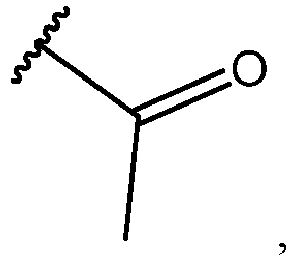

- In some embodiments of the Formuale above, R8 is (C0-C6)alkyl-P(O)RaRb.
- In some embodiments of the Formuale above, R8 is


- In some embodiments of the Formuale above, R8 is (C0-C6)alkyl-S(O)pRa.
- In some embodiments of the Formuale above, R8 is

- In some embodiments of the Formuale above, R8 is NReC(O)Ra.
- In some embodiments of the Formuale above, R8 is

- In some embodiments of the Formuale above, R8 is NReS(O)2Ra.
- In some embodiments of the Formuale above, R8 is

- In some embodiments of the Formuale above, RW is (C1-C6) alkyl optionally substituted with one or more RS2. In some embodiments of the Formuale above, RW is (C1-C3) alkyl optionally substituted with one or more RS2. In some embodiments of the Formuale above, RW is methyl.
- In some embodiments of the Formuale above, RW is (C1-C6) haloalkyl optionally substituted with one or more RS2. In some embodiments of the Formuale above, RW is (C1-C3) haloalkyl optionally substituted with one or more RS2.
- In some embodiments of the Formulae above, RW is trifluoromethyl or difluoromethyl.
- In some embodiments of the Formuale above, RW is (C3-C8) cycloalkyl optionally substituted with one or more RS2. In some embodiments of the Formuale above, RW is (C4 -C6) cycloalkyl optionally substituted with one or more RS2.
- In some embodiments of the Formuale above, RW is 3- to 8-membered heterocycloalkyl, optionally substituted with one or more RS2. In some embodiments of the Formuale above, RW is 4- to 6-membered heterocycloalkyl, optionally substituted with one or more RS2.
- In some embodiments of the Formuale above, RW is tetrahydrofuranyl, pyrrolidinyl, tetrahydrofuranyl, dihydrofuranyl, tetrahydropyranyl, dihydropyranyl, or morpholinyl.
- In some embodiments of the Formuale above, RW is


- In some embodiments of the Formuale above, RW is (C6-C10) aryl optionally substituted with one or more RS2.
- In some embodiments of the Formuale above, RW is 5 to 10-membered heteroaryl optionally substituted with one or more RS2. In some embodiments of the Formuale above, RW is 5-membered heteroaryl optionally substituted with one or more RS2. In some embodiments of the Formuale above, RW is 6-membered heteroaryl optionally substituted with one or more RS2.
- In some embodiments of the Formuale above, RW is pyridyl, pyrazinyl, pyrimidinyl, pyridazinyl, thiophenyl, furanyl, oxadiazolyl, pyrazolyl, pyrrolyl, pyridinonyl, thiazolyl, imidazolyl, oxazolyl, or isoxazolyl.
- In some embodiments of the Formuale above, RW is


- In some embodiments of the Formulae above, R9, at each occurrence, is H, halogen, cyano, (C0-C6)alkyl-ORa, (C0-C6)alkyl-NRaRb, (C0-C6)alkyl-C(O)Ra, (C0-C6)alkyl-P(O)RaRb, (C0-C6)alkyl-S(O)pRa, NReC(O)Ra, NReS(O)2Ra, or RW, and RW is is (C1-C6) alkyl, (C1-C6) haloalkyl, (C3-C8) cycloalkyl, 3- to 8-membered heterocycloalkyl, (C6-C10) aryl, or 5 to 10-membered heteroaryl, each of which is optionally substituted with one or more RS2.
- In some embodiments of the Formuale above, R9 is RW and RW is (C1-C6) alkyl, (C1-C6) haloalkyl, (C3-C8) cycloalkyl, 3- to 8-membered heterocycloalkyl, (C6-C10) aryl, or 5 to 10-membered heteroaryl, each of which is optionally substituted with one or more RS2.
- In some embodiments of the Formulae above, Q is N and R8 is is H, halogen, cyano, (C0-C6)alkyl-ORa, (C0-C6)alkyl-NRaRb, (C0-C6)alkyl-C(O)Ra, (C0-C6)alkyl-P(O)RaRb, (C0-C6)alkyl-S(O)pRa, NReC(O)Ra, NReS(O)2Ra, or RW.
- In some embodiments of the Formulae above, Q is C, R8 is is H, halogen, cyano, (C0-C6)alkyl-ORa, (C0-C6)alkyl-NRaRb, (C0-C6)alkyl-C(O)Ra, (C0-C6)alkyl-P(O)RaRb, (C0-C6)alkyl-S(O)pRa, NReC(O)Ra, NReS(O)2Ra, or RW, and R9 is H, halogen, cyano, (C0-C6)alkyl-ORa, (C0-C6)alkyl-NRaRb, (C0-C6)alkyl-C(O)Ra, (C0-C6)alkyl-P(O)RaRb, (C0-C6)alkylS(O)pRa, NReC(O)Ra, NReS(O)2Ra, or RW.
- In some disclosures of the Formulae above, R8 and R9, together with the atoms to which they are attached, form a 5-membered ring optionally comprising one or more heteroatoms selected from N, O, and S and optionally substituted with one or more RS1. In another disclosure, R8 and R9, together with the atoms to which they are attached, form a 6-membered ring optionally comprising one or more heteroatoms selected from N, O, and S and optionally substituted with one or more RS1. In another disclosure, R8 and R9, together with the atoms to which they are attached, form a 7-membered ring optionally comprising one or more heteroatoms selected from N, O, and S and optionally substituted with one or more RS1.
- In some disclosures of the Formulae above, RS1, at each occurrence, is H, halogen, cyano, (C1-C6) alkyl, (C1-C6) haloalkyl, (C0-C3)alkyl-ORc, (C0-C3)alkyl-NRcRd, C(O)ORc, or C(O)NRcRd.
- In some embodiments of the Formulae above, RS2, at each occurrence, is H, halogen, cyano, (C1-C6) alkyl, (C1-C6) haloalkyl, (C0-C3)alkyl-ORc, (C0-C3)alkyl-NRcRd, C(O)ORc, or C(O)NRcRd.
- In some embodiments of the Formulae above, Ra is Ri, (C3-C8) cycloalkyl, 3- to 8-membered heterocycloalkyl, (C0-C3)alkyl-ORg, or (C0-C3)alkyl-NRgNRh.
- In some embodiments of the Formulae above, Rb is R1, (C3-C8) cycloalkyl, 3- to 8-membered heterocycloalkyl, (C0-C3)alkyl-ORg, or (C0-C3)alkyl-NRgNRh.
- In some embodiments of the Formulae above, Rc is Ri, (C3-C8) cycloalkyl, 3- to 8-membered heterocycloalkyl, (C0-C3)alkyl-ORg, or (C0-C3)alkyl-NRgNRh.
- In some embodiments of the Formulae above, Rd is Ri, (C3-C8) cycloalkyl, 3- to 8-membered heterocycloalkyl, (C0-C3)alkyl-ORg, or (C0-C3)alkyl-NRgNRh.
- In some embodiments of the Formulae above, Ra and Rb together with the atoms to which they are attached form a 5 to 7-membered ring optionally comprising one or more heteroatoms selected from N, O, and S. In some embodiments of the Formulae above, Ra and Rb together with the atoms to which they are attached form a 5-membered ring optionally comprising one or more heteroatoms selected from N, O, and S. In some embodiments of the Formulae above, Ra and Rb together with the atoms to which they are attached form a 6-membered ring optionally comprising one or more heteroatoms selected from N, O, and S.
- In some embodiments of the Formulae above, Rc and Rd together with the atoms to which they are attached form a 5 to 7-membered ring optionally comprising one or more heteroatoms selected from N, O, and S. In some embodiments of the Formulae above, Rc and Rd together with the atoms to which they are attached form a 5-membered ring optionally comprising one or more heteroatoms selected from N, O, and S. In some embodiments of the Formulae above, Rc and Rd together with the atoms to which they are attached form a 6-membered ring optionally comprising one or more heteroatoms selected from N, O, and S.
- In some embodiments of the Formulae above, Re is H, (C1-C6) alkyl or (C1-C6) haloalkyl.
- In some embodiments of the Formulae above, Rg is H, (C1-C6) alkyl or (C1-C6) haloalkyl.
- In some embodiments of the Formulae above, Rh is H, (C1-C6) alkyl or (C1-C6) haloalkyl.
- In some embodiments of the Formulae above, Ri is H, (C1-C6) alkyl or (C1-C6) haloalkyl.
- In some disclosures of the Formulae above, Rj is H, (C1-C6) alkyl or (C1-C6) haloalkyl.
- In some embodiments of the Formulae above, n is 0. In another embodiment, n is 1. In another disclosure, n is 2. In another embodiment, n is 0, 1, or 2. In another embodiment, n is 1, 2, or 3. In another embodiment, n is 0 or 1. In another embodiment, n is 1 or 2.
- In some embodiments of the Formulae above, p is 0. In another embodiment, p is 1. In another embodiment, p is 2. In another embodiment, p is 0 or 1. In another embodiment, p is 1 or 2.
- In some embodiments of the Formulae above, X is H, F, or methyl. In another embodiment, X is H. In another disclosure, X is F.
- In some embodiments of the Formulae above, X1 is H. In another embodiment, X1 is H and X is H or F. In another embodiment, X1 is H and X is H. In another disclosure, X1 is H and X is F.
- In some embodiments of the Formulae above, A is

- In some embodiments of the Formulae above, A is

- In some embodiments of the Formulae above, A is.


- In another embodiment, X1 is H, X is H or F, and Y is H, (C1-C3) alkyl or CN. In another embodiment, X1 is H, X is H or F, Y is H, (C1-C3) alkyl or CN, and L is


- In another embodiment, X1 is H, X is H or F, Y is H, (C1-C3) alkyl or CN, L is


- In another embodiment, X1 is H, X is H or F, Y is H, (C1-C3) alkyl or CN, L is


- In another embodiment, X1 is H, X is H or F, and Y is H. In another embodiment, X1 is H, X is H or F, Y is H, and L is


- In another embodiment, X1 is H, X is H or F, Y is H, L is


- In another embodiment, X1 is H, X is H or F, Y is H, L is


- In another embodiment, X1 is H, X is H, and Y is H, (C1-C3) alkyl or CN. In another embodiment, X1 is H, X is H, Y is H, (C1-C3) alkyl or CN, and L is

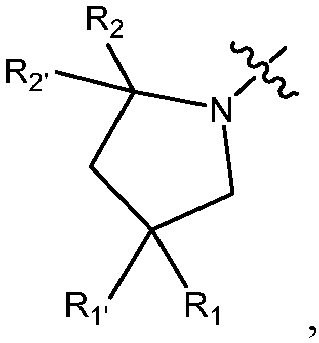
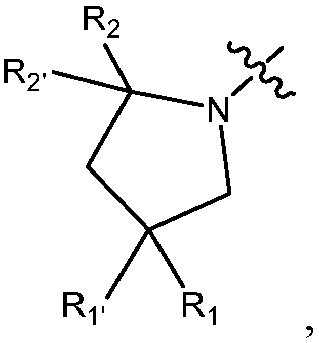
- In another embodiment, X1 is H, X is H, Y is H, (C1-C3) alkyl or CN, L is


- In another embodiment, X1 is H, X is H, Y is H, (C1-C3) alkyl or CN, L is


- In another embodiment, X1 is H, X is H, and Y is H. In another embodiment, X1 is H, X is H, Y is H, and L is


- In another embodiment, X1 is H, X is H, Y is H, L is


- In another embodiment, X1 is H, X is H, Y is H, L is


- In another disclosure, X1 is H, X is F, and Y is H, (C1-C3) alkyl or CN. In another disclosure, X1 is H, X is F, Y is H, (C1-C3) alkyl or CN, and L is


- In another disclosure, X1 is H, X is F, Y is H, (C1-C3) alkyl or CN, L is


- In another disclosure, X1 is H, X is F, Y is H, (C1-C3) alkyl or CN, L is


- In another disclosure, X1 is H, X is F, and Y is H. In another embodiment, X1 is H, X is F, Y is H., and L is


- In another disclosure, X1 is H, X is F, Y is H., and L is


- In another disclosure, X1 is H, X is H or F, Y is H, and L is -O(CR3R4)-phenyl optionally substituted with one or more R6. In another embodiment, X1 is H, X is H or F, and Y is H. In another disclosure, X1 is H, X is H or F, Y is H, and L is -O(CR3R4)-pyridinyl optionally substituted with one or more R6. In another embodiment, X1 is H, X is H or F, and Y is H. In another disclosure, X1 is H, X is H or F, Y is H, and L is -O(CR3R4)-phenyl or - O(CR3R4)-pyridinyl wherein the phenyl and pyridinyl are optionally substituted with one or more R6.
- In another disclosure, X1 is H, X is H, Y is H, and L is -O(CR3R4)-phenyl optionally substituted with one or more R6. In another embodiment, X1 is H, X is H, and Y is H. In another disclosure, X1 is H, X is H, Y is H, and L is -O(CR3R4)-pyridinyl optionally substituted with one or more R6. In another embodiment, X1 is H, X is H, and Y is H. In another disclosure, X1 is H, X is H, Y is H, and L is -O(CR3R4)-phenyl or -O(CR3R4)-pyridinyl wherein the phenyl and pyridinyl are optionally substituted with one or more R6.
- In another disclosure, X1 is H, X is F, Y is H, and L is -O(CR3R4)-phenyl optionally substituted with one or more R6. In another disclosure, X1 is H, X is F, Y is H, and L is - O(CR3R4)-pyridinyl optionally substituted with one or more R6. In another disclosure, X1 is H, X is F, and Y is H. In another disclosure, X1 is H, X is F, Y is H, and L is -O(CR3R4)-phenyl or -O(CR3R4)-pyridinyl wherein the phenyl and pyridinyl are optionally substituted with one or more R6.
- In another disclosure, X1 is H, X is H or F, Y is H, and L is -NR5- (CR3R4)-phenyl optionally substituted with one or more R6. In another embodiment, X1 is H, X is H or F, and Y is H. In another disclosure, X1 is H, X is H or F, Y is H, and L is -NR5-(CR3R4)-pyridinyl optionally substituted with one or more R6. In another embodiment, X1 is H, X is H or F, and Y is H. In another disclosure, X1 is H, X is H or F, Y is H, and L is -NR5-(CR3R4)-phenyl or - O(CR3R4)-pyridinyl wherein the phenyl and pyridinyl are optionally substituted with one or more R6.
- In another disclosure, X1 is H, X is H, Y is H, and L is -NR5- (CR3R4)-phenyl optionally substituted with one or more R6. In another disclosure, X1 is H, X is H, Y is H, and L is -NR5-(CR3R4)-pyridinyl optionally substituted with one or more R6. In another embodiment, X1 is H, X is H, and Y is H. In another disclosure, X1 is H, X is H, Y is H, and L is -NR5-(CR3R4)-phenyl or -O(CR3R4)-pyridinyl wherein the phenyl and pyridinyl are optionally substituted with one or more R6.
- In another disclosure, X1 is H, X is F, Y is H, and L is -NR5- (CR3R4)-phenyl optionally substituted with one or more R6. In another disclosure, X1 is H, X is F, and Y is H. In another disclosure, X1 is H, X is F, Y is H, and L is -NR5-(CR3R4)-pyridinyl optionally substituted with one or more R6. In another disclosure, X1 is H, X is F, and Y is H. In another disclosure, X1 is H, X is F, Y is H, and L is -NR5-(CR3R4)-phenyl or -O(CR3R4)-pyridinyl wherein the phenyl and pyridinyl are optionally substituted with one or more R6.
- In another disclosure, X1 is H, X is F, and Y is (C1-C3) alkyl. In another disclosure, X1 is H, X is F, and Y is CN. In another disclosure, X1 is H, X is H, and Y is (C1-C3) alkyl. In another disclosure, X1 is H, X is H, and Y is CN. In another disclosure, X1 is H, X is H or F, and Y is (C1-C3) alkyl. In another disclosure, X1 is H, X is H or F, and Y is CN.
- Non-limiting illustrative compounds of the application include:
Cmp No. Structure I-147 
I-148 
I-149 
Reference compound: I-150 
Reference compound: I-151 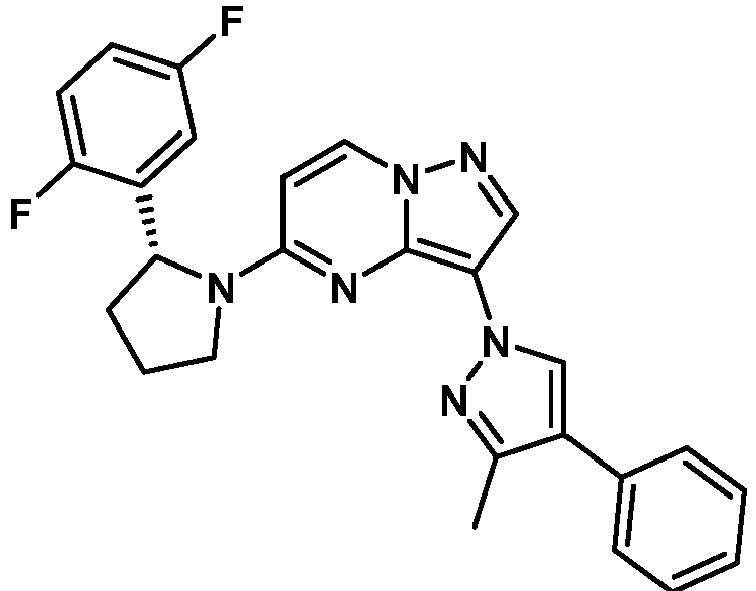
I-152 
I-153 
Reference compound: I-154 
I-155 
I-156 
I-157 
I-158 
I-159 
I-160 
I-161 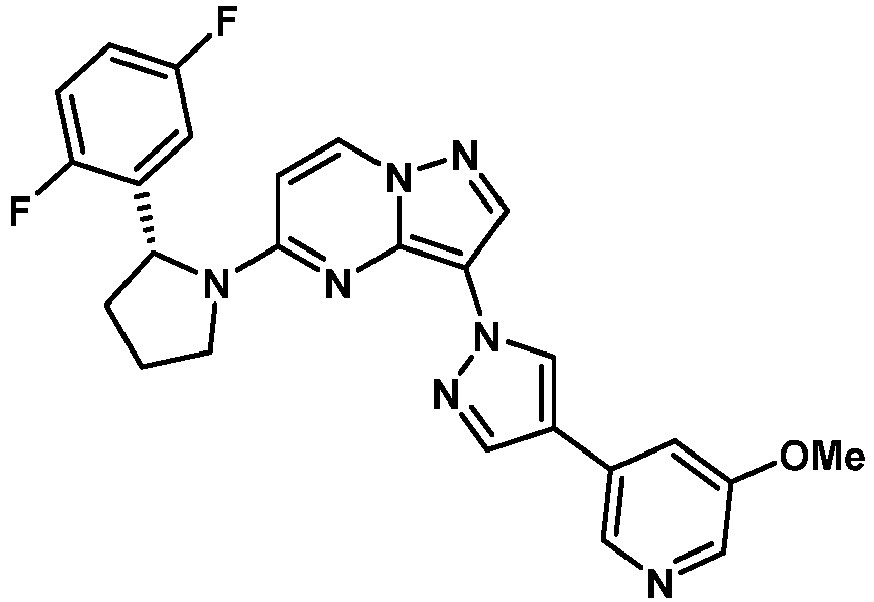
I-162 
I-163 
I-164 
I-165 
Reference compound: I-166 
Reference compound: I-167 
I-168 
I-169 
I-170 
I-171 
I-172 
I-173 
I-174 
I-175 
I-176 
I-177 
I-178 
I-179 
I-180 
I-181 
Reference compound: I-182 
Reference compound: I-183 
Reference compound: I-184 
I-185 
I-186 
I-187 
I-188 
I-189 
I-190 
I-191 
Reference compound: I-192 
Reference compound: I-193 
I-194 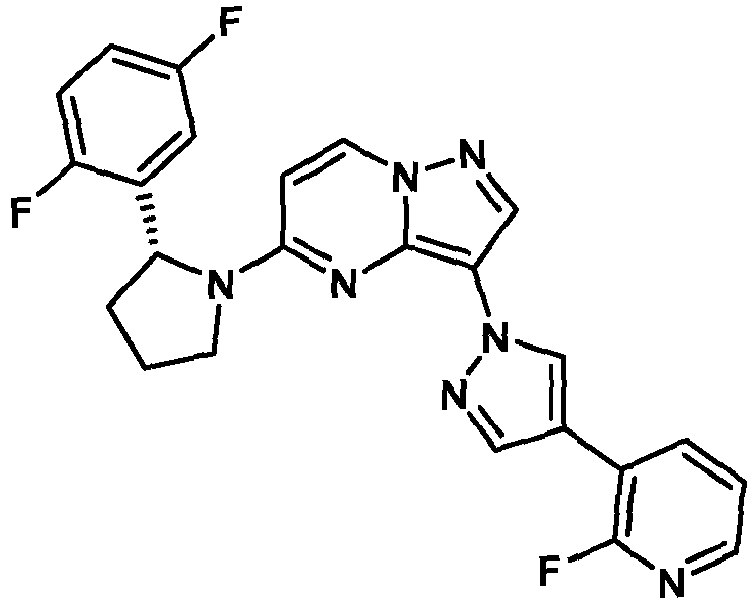
Reference compound: I-195 
Reference compound: I-196 
I-197 
I-198 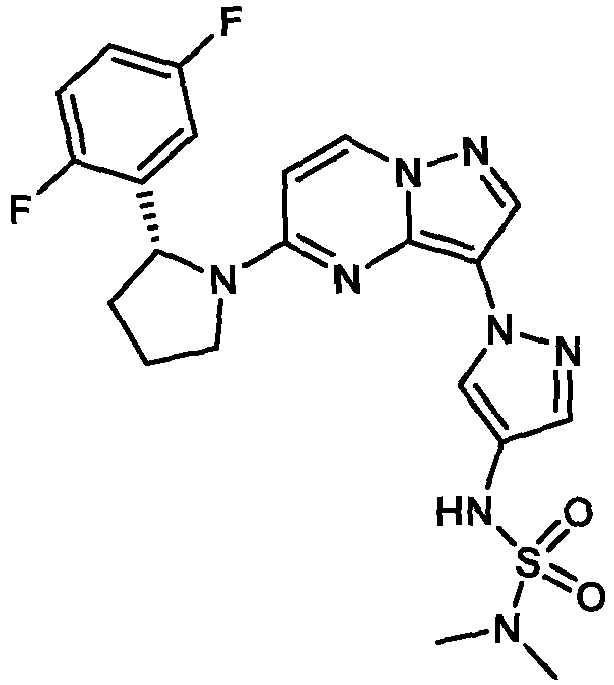
I-199 
I-200 
I-201 
I-202 
I-203 
I-204 
I-205 
Reference compound: I-206 
Reference compound: I-207 
I-208 
Reference compound: I-209 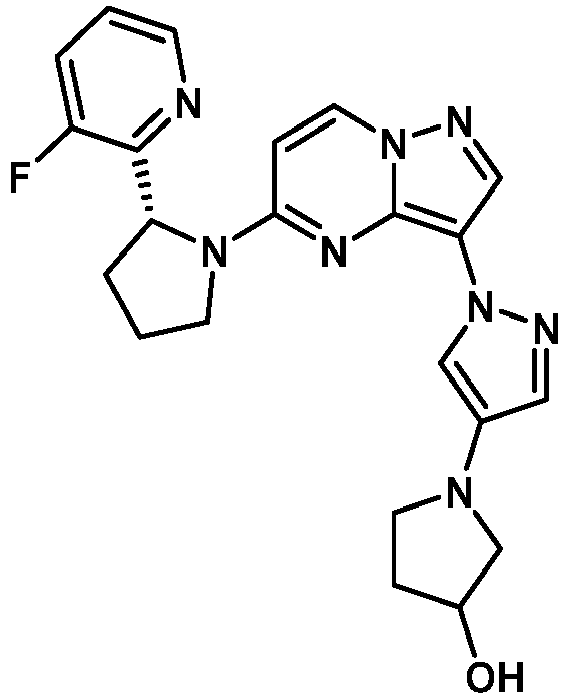
I-210 
Reference compound: I-211 
I-212 
Reference compound: I-213 
I-214 
Reference compound: I-215 
Reference compound: I-216 
Reference compound: I-217 
Reference compound: I-218 
I-219 
Reference compound: I-220 
Reference compound: I-221 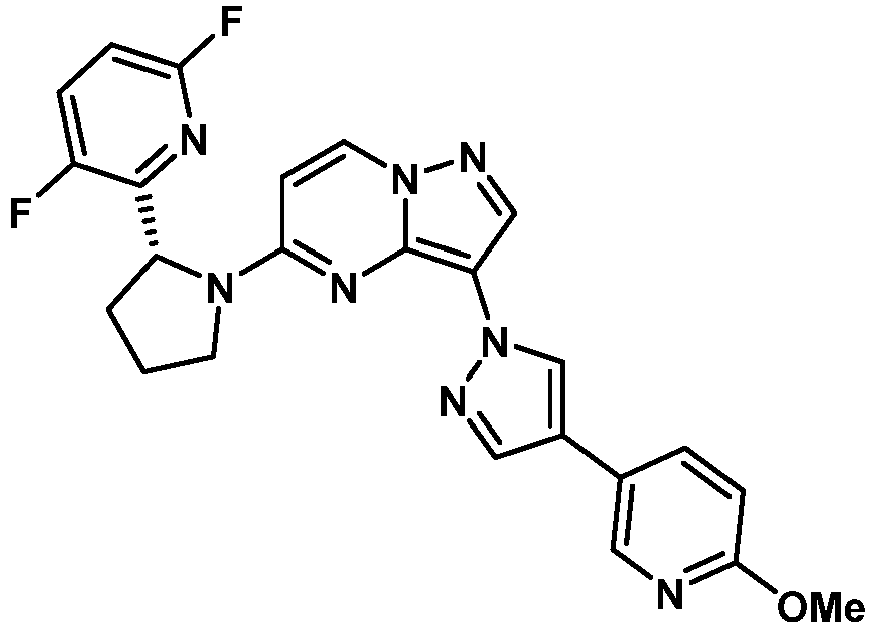
Reference compound: I-222 
I-223 
I-224 
I-225 
I-226 
- In another disclosure, the compounds of Formula (IV) are enantiomers. In some disclsoures the compounds are the (S)-enantiomer. In other disclosures the compounds are the (R)-enantiomer. In yet other disclosures, the compounds of Formula (IV) may be (+) or (-) enantiomers.
- If the compound contains a double bond, the substituent may be in the E or Z configuration. If the compound contains a disubstituted cycloalkyl, the cycloalkyl substituent may have a cis- or trans configuration. All tautomeric forms are also intended to be included.
- Compounds of the invention, and pharmaceutically acceptable salts, hydrates, solvates, and stereoisomers thereof may exist in their tautomeric form (for example, as an amide or imino ether). All such tautomeric forms are contemplated herein as part of the present invention.
- The compounds of the invention may contain further asymmetric or chiral centers, and, therefore, exist in different stereoisomeric forms. It is intended that all stereoisomeric forms of the compounds of the invention as well as mixtures thereof, including racemic mixtures, form part of the present invention. In addition, the present invention embraces all geometric isomers. For example, if a compound of the invention incorporates a double bond or a fused ring, both the cis- and trans-forms, as well as mixtures, are embraced within the scope of the invention. Each compound herein disclosed includes all the enantiomers that conform to the general structure of the compound. The compounds may be in a racemic or enantiomerically pure form, or any other form in terms of stereochemistry. The assay results may reflect the data collected for the racemic form, the enantiomerically pure form, or any other form in terms of stereochemistry.
- Diastereomeric mixtures can be separated into their individual diastereomers on the basis of their physical chemical differences by methods well known to those skilled in the art, such as, for example, by chromatography and/or fractional crystallization. Enantiomers can be separated by converting the enantiomeric mixture into a diastereomeric mixture by reaction with an appropriate optically active compound (e.g., chiral auxiliary such as a chiral alcohol or Mosher's acid chloride), separating the diastereomers and converting (e.g., hydrolyzing) the individual diastereomers to the corresponding pure enantiomers. Also, some of the compounds of the invention may be atropisomers (e.g., substituted biaryls) and are considered as part of this invention. Enantiomers can also be separated by use of a chiral HPLC column.
- It is also possible that the compounds of the invention may exist in different tautomeric forms, and all such forms are embraced within the scope of the invention. Also, for example, all keto-enol and imine-enamine forms of the compounds are included in the invention.
- All stereoisomers (for example, geometric isomers, optical isomers) of the present compounds (including those of the salts, solvates, and esters of the compounds), such as those which may exist due to asymmetric carbons on various substituents, including enantiomeric forms (which may exist even in the absence of asymmetric carbons), rotameric forms, atropisomers, and diastereomeric forms, are contemplated within the scope of this invention. Individual stereoisomers of the compounds of the invention may, for example, be substantially free of other isomers, or may be admixed, for example, as racemates or with all other, or other selected, stereoisomers. The chiral centers of the present application can have the S or R configuration as defined by the IUPAC 1974 Recommendations. The use of the terms "salt", "solvate", "ester," and the like, is intended to equally apply to the salt, solvate, and ester of enantiomers, stereoisomers, rotamers, tautomers, or racemates of the inventive compounds.
- The compounds of Formula (IV) may form salts which are also within the scope of this disclosure. Reference to a compound of the Formula herein is understood to include reference to salts thereof, unless otherwise indicated.
- The present invention relates to compounds which are modulators of one or more Trk kinases. In one embodiment, the compounds of the present invention are inhibitors of a Trk kinase. In another embodiment, the compounds of the present invention are inhibitors of more than one Trk kinase.
- The invention is directed to compounds as described herein and pharmaceutically acceptable salts, hydrates, solvates, or tautomers thereof, and pharmaceutical compositions comprising one or more compounds as described herein, or pharmaceutically acceptable salts, hydrates, solvates, stereoisomers, or tautomers thereof.
- The compounds of the present invention may be made by a variety of methods, including standard chemistry. Suitable synthetic routes are depicted in the Schemes given below.
- The compounds of Formula (IV) may be prepared by methods known in the art of organic synthesis as set forth in part by the following synthetic schemes. In the schemes described below, it is well understood that protecting groups for sensitive or reactive groups are employed where necessary in accordance with general principles or chemistry. Protecting groups are manipulated according to standard methods of organic synthesis (T. W. Greene and P. G. M. Wuts, "Protective Groups in Organic Synthesis", Third edition, Wiley, New York 1999). These groups are removed at a convenient stage of the compound synthesis using methods that are readily apparent to those skilled in the art. The selection processes, as well as the reaction conditions and order of their execution, shall be consistent with the preparation of compounds of Formula (IV).
- Those skilled in the art will recognize if a stereocenter exists in the compounds of Formula (IV). Accordingly, the present application includes both possible stereoisomers (unless specified in the synthesis) and includes not only racemic compounds but the individual enantiomers and/or diastereomers as well. When a compound is desired as a single enantiomer or diastereomer, it may be obtained by stereospecific synthesis or by resolution of the final product or any convenient intermediate. Resolution of the final product, an intermediate, or a starting material may be affected by any suitable method known in the art. See, for example, "Stereochemistry of Organic Compounds" by E. L. Eliel, S. H. Wilen, and L. N. Mander (Wiley-lnterscience, 1994).
- The compounds described herein may be made from commercially available starting materials or synthesized using known organic, inorganic, and/or enzymatic processes.
- The compounds of the present invention can be prepared in a number of ways well known to those skilled in the art of organic synthesis. By way of example, compounds of the present invention can be synthesized using the methods described below, together with synthetic methods known in the art of synthetic organic chemistry, or variations thereon as appreciated by those skilled in the art. Preferred methods include but are not limited to those methods described below. Compounds of the present invention can be synthesized by following the steps outlined in General Scheme 1. Starting materials are either commercially available or made by known procedures in the reported literature or as illustrated.
Abbreviations used in the following schemes and elsewhere herein are: - DCM
- dichloromethane
- DIPEA
- N,N-diisopropylethylamine
- DMF
- N,N-dimethylformamide
- DMSO
- dimethylsulfoxide
- DMPAO
- (2,6-Dimethylanilino)(oxo)acetic Acid
- ESI
- electrospray ionization
- EtOAc
- ethyl acetate
- EtOH
- ethanol
- h
- hours
- HCl
- hydrogen chloride
- HPLC
- high performance liquid chromatography
- IPA
- iso-propyl alcohol
- LCMS
- liquid chromatography-mass spectrometry
- MeCN
- acetonitrile
- MeOH
- methanol
- NBS
- N-bromosuccinimide
- NMP
- N-methyl-2-pyrrolidone
- min
- minutes
- MS
- mass spectrometry
- Rf
- retention factor
- Rt
- retention time
- THF
- tetrahydrofuran
- TFA
- trifluoroacetic acid
- LG
- leaving group
- PG
- protecting group
- The general way of preparing compounds of Formula (IV) wherein L is a pyrrolidine is outlined in General Scheme 1. Amination of 1a with L-H using a base, e.g., N,N-diisopropylethylamine (DIPEA) or sodium hydride (NaH), in a solvent, e.g., acetonitrile (MeCN), dioxane, at elevated temperature yields 1b. Nucleophilic addition of 1c to 1b in the presence of metal catalyst (e.g., copper iodide (CuI)), tripotassium phosphate, and (2,6-Dimethylanilino)(oxo)acetic Acid (DMPAO), in a solvent, i.e., dimethylsulfoxide (DMSO), at elevated temperature provides the desired compound of Formula (IV).
- A mixture of enantiomers, diastereomers, cis/trans isomers resulting from the process described above can be separated into their single components by chiral salt technique, chromatography using normal phase, reverse phase or chiral column, depending on the nature of the separation.
- It should be understood that in the description and formula shown above, the various groups A, L, Q, X, X1, Y R1, R1', R2, R2', R3-R7, R8, R9, n, and p, and other variables are as defined above, except where otherwise indicated. Furthermore, for synthetic purposes, the compounds of General Scheme 1 are mere representative with elected radicals to illustrate the general synthetic methodology of the compounds of Formula (IV) as defined herein.
- Also disclosed herein is a method of treating or preventing a disease or disorder associated with modulation of a Trk kinase. The method comprises administering to a patient in need of a treatment for diseases or disorders associated with modulation of a Trk kinase an effective amount the compositions and compounds of Formula (IV), or a pharmaceutically acceptable salt, hydrate, solvate, stereoisomer, or tautomer thereof. In one embodiment of the claimed invention, there is provided a compound according to the first aspect, or a pharmaceutically acceptable salt thereof, or a pharmaceutical composition according to the second aspect for use in a method of treating or preventing a disease or disorder associated with modulation of a Trk kinase.
- Also disclosed herein is a method of treating or preventing a disease or disorder associated with modulation of one or more Trk kinases. The method comprises administering to a patient in need of a treatment for diseases or disorders associated with modulation of one or more Trk Kinases an effective amount the compositions and compounds of Formula (IV), or a pharmaceutically acceptable salt, hydrate, solvate, stereoisomer, or tautomer thereof. In one embodiment of the claimed invention, there is provided a compound according to the first aspect, or a pharmaceutically acceptable salt thereof, or a pharmaceutical composition according to the second aspect for use in a method of treating or preventing a disease or disorder associated with modulation of one or more Trk kinases.
- Also disclosed herein is a method of treating, preventing, inhibiting or eliminating a disease or disorder in a patient associated with the inhibition of a Trk kinase, the method comprising administering to a patient in need thereof an effective amount of a compound of Formula (IV), or a pharmaceutically acceptable salt, hydrate, solvate, stereoisomer, or tautomer thereof. In one embodiment of the claimed invention, there is provided a compound according to the first aspect, or a pharmaceutically acceptable salt thereof, for use in a method of treating, preventing, inhibiting or eliminating a disease or disorder in a patient associated with the inhibition of a Trk kinase. In one embodiment, the disease or disorder is cancer.
- Also disclosed herein is a method of treating, preventing, inhibiting or eliminating a disease or disorder in a patient associated with the inhibition of one or more Trk kinases, the method comprising administering to a patient in need thereof an effective amount of a compound of Formula (IV), or a pharmaceutically acceptable salt, hydrate, solvate, stereoisomer, or tautomer thereof. In one embodiment of the claimed invention, there is provided a compound according to the first aspect, or a pharmaceutically acceptable salt thereof, for use in a method of treating, preventing, inhibiting or eliminating a disease or disorder in a patient associated with the inhibition of one or more Trk kinases.
- Also disclosed herein is a method of inhibiting a Trk kinase. The method involves administering to a patient in need thereof an effective amount of a compound of Formula (IV), or a pharmaceutically acceptable salt, hydrate, solvate, stereoisomer, or tautomer thereof. In one embodiment of the claimed invention, there is a provided a compound according to the first aspect, or a pharmaceutically acceptable salt thereof, for use in a method of inhibiting a Trk kinase.
- Also disclosed herein is a method of inhibiting one or more Trk kinases. The method involves administering to a patient in need thereof an effective amount of a compound of Formula (IV), or a pharmaceutically acceptable salt , hydrate, solvate, stereoisomer, or tautomer thereof. In one embodiment of the claimed invention, there is a provided a compound according to the first aspect, or a pharmaceutically acceptable salt thereof, for use in a method of inhibiting one or more Trk kinases.
- Another disclosure of the present application relates to a compound of Formula (IV), or a pharmaceutically acceptable salt, hydrate, solvate, stereoisomer, or tautomer thereof, for use in a method of treating or preventing a disease associated with inhibiting a Trk kinase.
- In another disclosure, the present application relates to a compound of Formula (IV), or a pharmaceutically acceptable salt, hydrate, solvate, stereoisomer, or tautomer thereof, for use in a method of treating or preventing a disease associated with inhibiting one or more Trk kinases.
- Also disclosed herein is the use of a compound of Formula (IV), or a pharmaceutically acceptable salt, hydrate, solvate, stereoisomer, or tautomer thereof, in the manufacture of a medicament for treating or preventing a disease associated with inhibiting a Trk kinase.
- Also disclosed herein is the use of a compound of Formula (IV), or a pharmaceutically acceptable salt, hydrate, solvate, stereoisomer, or tautomer thereof, in the manufacture of a medicament for treating or preventing a disease associated with inhibiting one or more Trk kinases.
- Also disclosed herein is the use of an inhibitor of a Trk kinase for the preparation of a medicament used in the treatment, prevention, inhibition or elimination of a disease or condition mediated by a Trk kinase, wherein the medicament comprises a compound of Formula (IV). In one embodiment of the claimed invention, there is a provided a compound according to the first aspect, or a pharmaceutically acceptable salt thereof, for use in the preparation of a medicament used in the treatment, prevention, inhibition or elimination of a disease or condition mediated by a Trk kinase.
- Also disclosed herein is the use of an inhibitor of one or more Trk kinases for the preparation of a medicament used in the treatment, prevention, inhibition or elimination of a disease or condition mediated by one or more Trk kinases, wherein the medicament comprises a compound of Formula (IV). In one embodiment of the claimed invention, there is a provided a compound according to the first aspect, or a pharmaceutically acceptable salt thereof, for use in the preparation of a medicament used in the treatment, prevention, inhibition or elimination of a disease or condition mediated by one or more Trk kinases.
- The present disclosure relates to a method for the manufacture of a medicament for treating, preventing, inhibiting, or eliminating a disease or condition mediated by a Trk kinase, wherein the medicament comprises a compound of Formula (IV). In one embodiment of the claimed invention, there is a provided a compound according to the first aspect, or a pharmaceutically acceptable salt thereof, for use in the manufacture of a medicament for treating, preventing, inhibiting, or eliminating a disease or condition mediated by a Trk kinase.
- Also disclosed herein is a method for the manufacture of a medicament for treating, preventing, inhibiting, or eliminating a disease or condition mediated by one or more Trk kinases, wherein the medicament comprises a compound of Formula (IV). In one embodiment of the claimed invention, there is a provided a compound according to the first aspect, or a pharmaceutically acceptable salt thereof, for use in the manufacture of a medicament for treating, preventing, inhibiting, or eliminating a disease or condition mediated by one or more Trk kinases.
- Also disclosed herein is a method of treating or preventing a disease or disorder associated with modulation of a Trk kinase fusion. The method comprises administering to a patient in need of a treatment for diseases or disorders associated with modulation of a Trk kinase fusion an effective amount the compositions and compounds of Formula (IV), or a pharmaceutically acceptable salt, hydrate, solvate, stereoisomer, or tautomer thereof. In one embodiment of the claimed invention, there is a provided a compound according to the first aspect, or a pharmaceutically acceptable salt thereof, or a pharmaceutical composition according to the second aspect for use in a method of treating or preventing a disease or disorder associated with modulation of a Trk kinase fusion.
- Also disclosed herein is a method of treating or preventing a disease or disorder associated with modulation of one or more Trk kinase fusions. The method comprises administering to a patient in need of a treatment for diseases or disorders associated with modulation of one or more Trk kinase fusions an effective amount the compositions and compounds of Formula (IV), or a pharmaceutically acceptable salt, hydrate, solvate, stereoisomer, or tautomer thereof. In one embodiment of the claimed invention, there is a provided a compound according to the first aspect, or a pharmaceutically acceptable salt thereof, or a pharmaceutical composition according to the second aspect for use in a method of treating or preventing a disease or disorder associated with modulation of one or more Trk kinase fusions.
- Also disclosed herein is a method of treating, preventing, inhibiting or eliminating a disease or disorder in a patient associated with the inhibition of a Trk kinase fusion, the method comprising administering to a patient in need thereof an effective amount of a compound of Formula (IV), or a pharmaceutically acceptable salt, hydrate, solvate, stereoisomer, or tautomer thereof. In one embodiment of the claimed invention, there is a provided a compound according to the first aspect, or a pharmaceutically acceptable salt thereof, for use in a method of treating, preventing, inhibiting or eliminating a disease or disorder in a patient associated with the inhibition of a Trk kinase fusion. In one embodiment, the disease or disorder is cancer.
- Also disclosed herein is a method of treating, preventing, inhibiting or eliminating a disease or disorder in a patient associated with the inhibition of one or more Trk kinase fusions, the method comprising administering to a patient in need thereof an effective amount of a compound of Formula (IV), or a pharmaceutically acceptable salt, hydrate, solvate, stereoisomer, or tautomer thereof. In one embodiment of the claimed invention, there is a provided a compound according to the first aspect, or a pharmaceutically acceptable salt thereof, for use in a method of treating, preventing, inhibiting or eliminating a disease or disorder in a patient associated with the inhibition of one or more Trk kinase fusions.
- Also disclosed herein is a method of inhibiting a Trk kinase fusion. The method involves administering to a patient in need thereof an effective amount of a compound of Formula (IV), or a pharmaceutically acceptable salt, hydrate, solvate, stereoisomer, or tautomer thereof. In one embodiment of the claimed invention, there is a provided a compound according to the first aspect, or a pharmaceutically acceptable salt thereof, for use in a method of inhibiting a Trk kinase fusion.
- Also disclosed herein is a method of inhibiting one or more Trk kinase fusions. The method involves administering to a patient in need thereof an effective amount of a compound of Formula (IV), or a pharmaceutically acceptable salt, hydrate, solvate, stereoisomer, or tautomer thereof. In one embodiment of the claimed invention, there is a provided a compound according to the first aspect, or a pharmaceutically acceptable salt thereof, for use in a method of inhibiting one or more Trk kinase fusions.
- Another disclosure of the present application relates to a compound of Formula (IV), or a pharmaceutically acceptable salt, hydrate, solvate, , stereoisomer, or tautomer thereof, for use in a method of treating or preventing a disease associated with inhibiting a Trk kinase fusion. In one embodiment of the claimed invention, there is a provided a compound according to the first aspect, or a pharmaceutically acceptable salt thereof, for use in a method of treating or preventing a disease associated with inhibiting a Trk kinase fusion.
- Another disclosure of the present application relates to a compound of Formula (IV), or a pharmaceutically acceptable salt, hydrate, solvate, stereoisomer, or tautomer thereof, for use in a method of treating or preventing a disease associated with inhibiting one or more Trk kinase fusions. In one embodiment of the claimed invention, there is a provided a compound according to the first aspect, or a pharmaceutically acceptable salt thereof, for use in a method of treating or preventing a disease associated with inhibiting one or more Trk kinase fusions.
- Also disclosed herein is the use of a compound of Formula (IV), or a pharmaceutically acceptable salt, hydrate, solvate, stereoisomer, or tautomer thereof, in the manufacture of a medicament for treating or preventing a disease associated with inhibiting a Trk kinase fusion. In one embodiment of the claimed invention, there is a provided a compound according to the first aspect, or a pharmaceutically acceptable salt thereof, for use in in the manufacture of a medicament for treating or preventing a disease associated with inhibiting a Trk kinase fusion.
- Also disclosed herein is the use of a compound of Formula (IV), or a pharmaceutically acceptable salt, hydrate, solvate, stereoisomer, or tautomer thereof, in the manufacture of a medicament for treating or preventing a disease associated with inhibiting one or more Trk kinase fusions. In one embodiment of the claimed invention, there is a provided a compound according to the first aspect, or a pharmaceutically acceptable salt thereof, for use in the manufacture of a medicament for treating or preventing a disease associated with inhibiting one or more Trk kinase fusions.
- The present discloure also relates to the use of an inhibitor of a Trk kinase fusion for the preparation of a medicament used in the treatment, prevention, inhibition or elimination of a disease or condition mediated by a Trk kinase fusion, wherein the medicament comprises a compound of Formula (IV). In one embodiment of the claimed invention, there is a provided a compound according to the first aspect, or a pharmaceutically acceptable salt thereof, for use in the preparation of a medicament used in the treatment, prevention, inhibition or elimination of a disease or condition mediated by a Trk kinase fusion.
- The present disclosure also relates to the use of an inhibitor of one or more Trk kinase fusions for the preparation of a medicament used in the treatment, prevention, inhibition or elimination of a disease or condition mediated by one or more Trk kinase fusions, wherein the medicament comprises a compound of Formula (IV). In one embodiment of the claimed invention, there is a provided a compound according to the first aspect, or a pharmaceutically acceptable salt thereof, for use in the preparation of a medicament used in the treatment, prevention, inhibition or elimination of a disease or condition mediated by one or more Trk kinase fusions.
- The present disclosure relates to a method for the manufacture of a medicament for treating, preventing, inhibiting, or eliminating a disease or condition mediated by a Trk kinase fusion, wherein the medicament comprises a compound of Formula (IV). In one embodiment of the claimed invention, there is a provided a compound according to the first aspect, or a pharmaceutically acceptable salt thereof, for use in the manufacture of a medicament for treating, preventing, inhibiting, or eliminating a disease or condition mediated by a Trk kinase fusion.
- The present disclosure relates to a method for the manufacture of a medicament for treating, preventing, inhibiting, or eliminating a disease or condition mediated by one or more Trk kinase fusions, wherein the medicament comprises a compound of Formula (IV). In one embodiment of the claimed invention, there is a provided a compound according to the first aspect, or a pharmaceutically acceptable salt thereof, for use in the manufacture of a medicament for treating, preventing, inhibiting, or eliminating a disease or condition mediated by one or more Trk kinase fusions.
- In some embodiments of the methods above, the disease or disorder is selected from inflammatory diseases, infections, autoimmune disorders, stroke, ischemia, cardiac disorder, neurological disorders, fibrogenic disorders, proliferative disorders, hyperproliferative disorders, non-cancer hyper- proliferative disorders, tumors, leukemias, neoplasms, cancers, carcinomas, metabolic diseases, malignant disease, vascular restenosis, psoriasis, atherosclerosis, rheumatoid arthritis, osteoarthritis, heart failure, chronic pain, neuropathic pain, dry eye, closed angle glaucoma, and wide angle glaucoma.
- In some embodiments, the cancer is selected from lung adenocarcinoma, intrahepatic cholangicarcinoma, colon, papillary thyroid cancer, pediatric glioma, sarcoma, glioblastoma, spitzoid neoplasms, astrocytoma, head and neck squamous cell carcinoma, low grade glioma, high grade glioma, acute myeloid leukemia, congenital mesoblastic nephroma, mammary analogue secretory carcinoma, thyroid cancer, Ewing sarcoma, adenoid cystic carcinoma, and cylindromas.
- In other embodiments or disclosures, is provided an inhibitor of a Trk kinase for use in the preparation of a medicament used in treatment, prevention, inhibition or elimination of a disease or disorder associated with cancer.
- In other embodiments or disclosures, is provided an inhibitor of one or more Trk kinases for use in the preparation of a medicament used in treatment, prevention, inhibition or elimination of a disease or disorder associated with cancer.
- In another disclosure, the present disclosure relates to a compound of Formula (IV) or a pharmaceutical composition comprising a compound of the present disclosure and a pharmaceutically acceptable carrier used for the treatment of cancers.
- In some embodiments of the methods described herein, the cancer is selected from adrenocortical carcinoma, A anal cancer, cerebellar astrocytoma, extrahepatic bile duct cancer, bladder cancer, osteosarcoma/malignant fibrous histiocytoma, brain stem glioma, ependymoma, visual pathway and hypothalamic gliomas, breast cancer, bronchial adenomas/carcinoids, carcinoid tumors, gastrointestinal carcinoid tumors, carcinoma, adrenocortical, islet cell carcinoma, primary central nervous system lymphoma, cerebellar astrocytoma, cervical cancer, chronic lymphocytic leukemia, chronic myelogenous leukemia, clear cell sarcoma of tendon sheaths, colon cancer, colorectal cancer, cutaneous t-cell lymphoma, endometrial cancer, ependymoma, esophageal cancer, Ewing's sarcoma/family of tumors, extracranial germ cell tumors, extragonadal germ cell tumors, extrahepatic bile duct cancer, eye cancers, including intraocular melanoma, and retinoblastoma, gallbladder cancer, gastrointestinal carcinoid tumor, ovarian germ cell tumor, gestational trophoblastic tumor, hairy cell leukemia, head and neck cancer, Hodgkin's disease, hypopharyngeal cancer, hypothalamic and visual pathway glioma, intraocular melanoma, Kaposi's sarcoma, laryngeal cancer, acute lymphoblastic leukemia, acute myeloid leukemia, liver cancer, non-small cell lung cancer, small cell lung cancer, non-Hodgkin's lymphoma, Waldenstrom's macroglobulinemia, malignant mesothelioma, malignant thymoma, medulloblastoma, melanoma, intraocular melanoma, merkel cell carcinoma, metastatic squamous neck cancer with occult primary, multiple endocrine neoplasia syndrome, multiple myeloma/plasma cell neoplasm, mycosis fungoides, myelodysplastic syndrome, chronic myelogenous leukemia, myeloid leukemia, multiple myeloma, myeloproliferative disorders, nasal cavity and paranasal sinus cancer, nasopharyngeal cancer, neuroblastoma, glioblastoma, oral cancer, oral cavity and lip cancer, oropharyngeal cancer, osteosarcoma/malignant fibrous histiocytoma of bone, ovarian cancer, ovarian low malignant potential tumor, pancreatic cancer, paranasal sinus and nasal cavity cancer, parathyroid cancer, penile cancer, pheochromocytoma, pituitary tumor, pleuropulmonary blastoma, prostate cancer, rectal cancer, renal cell (kidney) cancer, transitional cell cancer (e.g., renal pelvis and ureter), retinoblastoma, rhabdomyosarcoma, salivary gland cancer, malignant fibrous histiocytoma of bone, soft tissue sarcoma, sezary syndrome, skin cancer, small intestine cancer, stomach (gastric) cancer, supratentorial primitive neuroectodennal and pineal tumors, cutaneous t-celllymphoma, testicular cancer, malignant thymoma, thyroid cancer, gestational trophoblastic tumor, urethral cancer, uterine sarcoma, vaginal cancer, vulvar cancer, and Wilms' tumor. In other embodiments, the cancer is a non-small cell lung cancer. In other embodiments of the methods described herein, the cancer is a dedifferentiated ID-driven cancer. In yet other embodments, the cancer is a hematologic cancer. In other embodments, the cancer is a cancer that is sensitive to Trk kinase inhibiton.
- In some embodiments of the methods described herein, the cancer is selected from prostate cancer, pancreatic cancer, breast cancer, colorectal cancer, lung cancer, neuroblastoma, glioblastoma, medulloblastoma, adenocarcinomas, Ewing sarcoma, and leukemias.
- In any of the embodiments of the claimed invention, the cancer can be any cancer in any organ, for example, a cancer is selected from the group consisting of glioma, thyroid carcinoma, breast carcinoma, small-cell lung carcinoma, non-small-cell carcinoma, gastric carcinoma, colon carcinoma, gastrointestinal stromal carcinoma, pancreatic carcinoma, bile duct carcinoma, CNS carcinoma, ovarian carcinoma, endometrial carcinoma, prostate carcinoma, renal carcinoma, anaplastic large-cell lymphoma, leukemia, multiple myeloma, mesothelioma, and melanoma, and combinations thereof.
- In any of the embodiments of the claimed invention, the cancer can develop through the action of one or more gene fusions. Such gene fusions are often known as "driver fusions" or "driver gene fusions" and can include, but are not limited to, gene fusions involving genes that encode Trk kinases. Exemplary gene fusions include, but are not limited to, TPM3-NTRK1, ETV6-NTRK3, MPRIP-NTRK1, CD74-NTRK1, RABGAP1L-NTRK1, TPR-NTRK1, TFG-NTRKI, PPL-NTRK1, CHTOP-NTRK1, ARHGEF2-NTRK1, NFASC-NTRK1 BCAN-NTRK1, LMNA-NTRK1, TP53-NTRK1, OKI-NTRK2, NACC2-NTRK2, VCL-NTRK2, AGBL4-NTRK2, TRIM24-NTRK2, PAN3-NTRK2, AFAP1-NTRK2, SQSTMI-NTRK2, BTB1-NTRK3, LYN-NTRK3, and RBPMS-NTRK3.
- In other embodiments of the claimed invention, the cancer is selected from liposarcoma, neuroblastoma, glioblastoma, bladder cancer, adrenocortical cancer, multiple myeloma, colorectal cancer, non-small cell lung cancer, gastric cancer, rectal cancer, thyroid cancer, Hodgkin lymphoma and diffuse large B-cell lymphoma.
- Another aspect of the disclosure is directed to pharmaceutical compositions comprising a compound of Formula (IV), or a pharmaceutically acceptable salt, hydrate, solvate, stereoisomer, or tautomer thereof, and a pharmaceutically acceptable carrier. The pharmaceutical acceptable carrier may further include an excipient, diluent, or surfactant.
- In one disclosure, methods of treating a disease or disorder associated with modulation of one or more Trk kinases including, inflammatory diseases, infections, autoimmune disorders, stroke, ischemia, cardiac disorder, neurological disorders, fibrogenic disorders, proliferative disorders, hyperproliferative disorders, non-cancer hyper- proliferative disorders, tumors, leukemias, neoplasms, cancers, carcinomas, metabolic diseases, malignant disease, vascular restenosis, psoriasis, atherosclerosis, rheumatoid arthritis, osteoarthritis, heart failure, chronic pain, neuropathic pain, dry eye, closed angle glaucoma, and wide angle glaucoma, comprise administering to a patient suffering from at least one of said diseases or disorder a compound of Formula (IV).
- One therapeutic use of the compounds or compositions of the present disclosure which inhibit one or more Trk kinases is to provide treatment to patients or subjects suffering from inflammatory diseases, infections, autoimmune disorders, stroke, ischemia, cardiac disorder, neurological disorders, fibrogenic disorders, proliferative disorders, hyperproliferative disorders, non-cancer hyper- proliferative disorders, tumors, leukemias, neoplasms, cancers, carcinomas, metabolic diseases, malignant disease, vascular restenosis, psoriasis, atherosclerosis, rheumatoid arthritis, osteoarthritis, heart failure, chronic pain, neuropathic pain, dry eye, closed angle glaucoma, or wide angle glaucoma.
- The disclosed compounds of the invention can be administered in effective amounts to treat or prevent a disorder and/or prevent the development thereof in subjects.
- Compounds of the invention can be administered in therapeutically effective amounts in a combinational therapy with one or more therapeutic agents (pharmaceutical combinations) or modalities, e.g., non-drug therapies. For example, synergistic effects can occur with other anti-proliferative, anti-cancer, immunomodulatory or anti-inflammatory substances. Where the compounds of the invention are administered in conjunction with other therapies, dosages of the co-administered compounds will of course vary depending on the type of co-drug employed, on the specific drug employed, on the condition being treated and so forth.
- Combination therapy includes the administration of the subject compounds in further combination with other biologically active ingredients (such as, but not limited to, a second and different antineoplastic agent or a second agent that targets a Trk kinase-independent mechanism of DNA repair) and non-drug therapies (such as, but not limited to, surgery or radiation treatment). For instance, the compounds of the invention can be used in combination with other pharmaceutically active compounds, preferably compounds that are able to enhance the effect of the compounds of the invention. The compounds of the invention can be administered simultaneously (as a single preparation or separate preparation) or sequentially to the other drug therapy or treatment modality. In general, a combination therapy envisions administration of two or more drugs during a single cycle or course of therapy.
- Administration of the disclosed compounds can be accomplished via any mode of administration for therapeutic agents. These modes include systemic or local administration such as oral, nasal, parenteral, transdermal, subcutaneous, vaginal, buccal, rectal or topical administration modes.
- Depending on the intended mode of administration, the disclosed compositions can be in solid, semi-solid or liquid dosage form, such as, for example, injectables, tablets, suppositories, pills, time-release capsules, elixirs, tinctures, emulsions, syrups, powders, liquids, suspensions, or the like, sometimes in unit dosages and consistent with conventional pharmaceutical practices. Likewise, they can also be administered in intravenous (both bolus and infusion), intraperitoneal, subcutaneous or intramuscular form, and all using forms well known to those skilled in the pharmaceutical arts.
- Illustrative pharmaceutical compositions are tablets and gelatin capsules comprising a Compound of the invention and a pharmaceutically acceptable carrier, such as a) a diluent, e.g., purified water, triglyceride oils, such as hydrogenated or partially hydrogenated vegetable oil, or mixtures thereof, corn oil, olive oil, sunflower oil, safflower oil, fish oils, such as EPA or DHA, or their esters or triglycerides or mixtures thereof, omega-3 fatty acids or derivatives thereof, lactose, dextrose, sucrose, mannitol, sorbitol, cellulose, sodium, saccharin, glucose and/or glycine; b) a lubricant, e.g., silica, talcum, stearic acid, its magnesium or calcium salt, sodium oleate, sodium stearate, magnesium stearate, sodium benzoate, sodium acetate, sodium chloride and/or polyethylene glycol; for tablets also; c) a binder, e.g., magnesium aluminum silicate, starch paste, gelatin, tragacanth, methylcellulose, sodium carboxymethylcellulose, magnesium carbonate, natural sugars such as glucose or beta-lactose, corn sweeteners, natural and synthetic gums such as acacia, tragacanth or sodium alginate, waxes and/or polyvinylpyrrolidone, if desired; d) a disintegrant, e.g., starches, agar, methyl cellulose, bentonite, xanthan gum, algic acid or its sodium salt, or effervescent mixtures; e) absorbent, colorant, flavorant and sweetener; f) an emulsifier or dispersing agent, such as Tween 80, Labrasol, HPMC, DOSS, caproyl 909, labrafac, labrafil, peceol, transcutol, capmul MCM, capmul PG-12, captex 355, gelucire, vitamin E TGPS or other acceptable emulsifier; and/or g) an agent that enhances absorption of the compound such as cyclodextrin, hydroxypropyl-cyclodextrin, PEG400, and PEG200.
- Liquid, particularly injectable, compositions can, for example, be prepared by dissolution, dispersion, etc. For example, the compound of the invention is dissolved in or mixed with a pharmaceutically acceptable solvent such as, for example, water, saline, aqueous dextrose, glycerol, ethanol, and the like, to thereby form an injectable isotonic solution or suspension. Proteins such as albumin, chylomicron particles, or serum proteins can be used to solubilize the disclosed compounds.
- The compounds of the invention can be also formulated as a suppository that can be prepared from fatty emulsions or suspensions; using polyalkylene glycols such as propylene glycol, as the carrier.
- Parental injectable administration is generally used for subcutaneous, intramuscular or intravenous injections and infusions. Injectables can be prepared in conventional forms, either as liquid solutions or suspensions or solid forms suitable for dissolving in liquid prior to injection.
- Another aspect of the disclosure is directed to pharmaceutical compositions comprising a compound of Formula (IV) and a pharmaceutically acceptable carrier. The pharmaceutical acceptable carrier may further include an excipient, diluent, or surfactant.
- The dosage regimen utilizing the compound of the invention is selected in accordance with a variety of factors including type, species, age, weight, sex and medical condition of the patient; the severity of the condition to be treated; the route of administration; the renal or hepatic function of the patient; and the particular compound of the invention employed. A physician or veterinarian of ordinary skill in the art can readily determine and prescribe the effective amount of the drug required to prevent, counter or arrest the progress of the condition.
- Effective dosage amounts of the compounds of the invention, when used for the indicated effects, range from about 0.5 mg to about 5000 mg of the disclosed compound as needed to treat the condition. Compositions for in vivo or in vitro use can contain about 0.5, 5, 20, 50, 75, 100, 150, 250, 500, 750, 1000, 1250, 2500, 3500, or 5000 mg of the compound of the invention, or, in a range of from one amount to another amount in the list of doses. In one embodiment, the compositions are in the form of a tablet that can be scored.
- The disclosure is further illustrated by the following examples and synthesis schemes.
- Unless otherwise noted, reagents and solvents were used as received from commercial suppliers. Proton nuclear magnetic resonance (NMR) spectra were obtained on either Bruker or Varian spectrometers at 300 or 400 MHz. Spectra are given in ppm (δ) and coupling constants, J, are reported in Hertz. Tetramethylsilane (TMS) was used as an internal standard. Mass spectra were collected using a Waters ZQ Single Quad Mass Spectrometer (ion trap ESI). Purity and low resolution mass spectral data were measured using Waters Acquity i-class ultra-performance liquid chromatography (UPLC) system with Acquity Photo Diode Array Detector, Acquity Evaporative Light Scattering Detector (ELSD) and Waters ZQ Mass Spectrometer. Data was acquired using Waters MassLynx 4.1 software and purity characterized by UV wavelength 220 nm, ELSD and ESI. Column: Acquity UPLC BEH C18 1.7µm 2.1 × 50 mm; Flow rate 0.6 mL/min; Solvent A (95/5/0.1 10 mM ammonium formate/acetonitrile/formic acid), Solvent B (95/5/0.09 acetonitrile/water/formic acid); gradient: 5-100% B from 0 to 2 min, hold 100% B to 2.2 min, then 5% B at 2.21 min.
-

-

- To a solution of (R)-2-(2,5-difluorophenyl)pyrrolidine hydrochloride (4040 mg, 18.393 mmol) and 5-chloro-3-iodopyrazolo[1,5-a]pyrimidine (4.67 g, 16.721 mmol) in DMF (33 mL) was added DIPEA (11.7 mL, 66.88 mmol). The mixture was stirred at 90 °C for 3 hour and then cooled to rt. The mixture was poured over 1.2 L of water and the precipitate was collected by filtration. The filtrate was also extracted with AcOEt and concentrated and the materials were combined to afford product as a yellow solid (7.1 g, 100%) which was used such as.
-

- A solution of trans-N,N'-dimethylcyclohexane-1,2-diamine (7.0 mg, 0.049 mmol) in DMF (degassed, 1.2 mL) was added to (R)-5-(2-(2,5-difluorophenyl)pyrrolidin-1-yl)-3-iodopyrazolo[1,5-a]pyrimidine (104 mg, 0.244 mmol), 1H-pyrazole (33 mg, 0.485 mmol), copper iodide (9.3 mg, 0.049 mmol) and potassium carbonate (67 mg, 0.485 mmol). The mixture was degassed with N2 (10 min) then stirred at 120°C for 16 h. Additional portions of in pyrazole (33 mg, 2 eq), copper iodide (9.3 mg, 0.2 eq), potassium carbonate (67 mg, 2 eq) and trans-N,N'-dimethylcyclohexane-1,2-diamine (7.0 mg, 0.2 eq) were added. The reaction mixture was degassed with N2 (10 min) then stirred at 120°C for 16 h. Water was added. The mixture was extracted with EtOAc (3x). Combined organic layers were washed with water (1x) and with brine (1x), dried over MgSO4, filtered and concentrated under reduced pressure. The product was purified by normal chromatography using 30-100% EtOAc in hexanes and then by reverse chromatography using 30-80% MeCN in AmFor 10 mM buffer to afford title compound as a pale yellow solid (37 mg, 41%). 1H NMR (400 MHz, DMSO) δ 8.77 - 8.41 and 7.80 - 7.51 (m, 3H), 8.17 (s, 1H), 7.37 - 6.87 (m, 3H), 6.69 - 6.44 (m, 1H), 6.33 (s) and 6.11 - 5.96 (m) (1H), 5.46 - 5.29 (m, 1H), 4.01 (dt, J= 11.4, 5.8 Hz, 1H), 3.82 - 3.62 (m, 1H), 2.56 - 2.38 (m, 1H), 2.16 - 1.81 (m, 3H); MS (m/z): 367.2 [M+1]+, >99%.
-

-

- A suspension of diazabicyclo[2.2.2]octane (975 mg, 8.7 mmol) in dry TBME (11 mL) was cooled to -78 °C. n-BuLi (3.5 mL, 2.5 M in hexane, 8.7 mmol) was added dropwise to the suspension. The mixture was stirred for approximately 30 min at -78 °C and then treated dropwise with 2,5-difluoropyridine (1000 mg, 8.7 mmol) in dry TBME (0.5 mL). After 1 h, 4-chloro-N-methoxy-N-methylbutanamide (1439 mg, 8.7 mmol) in dry TBME (0.9 mL) was added dropwise to the mixture at -78 °C. The solution was stirred for 1 h, and the reaction was quenched with saturated aqueous NH4Cl (10 mL). The mixture was diluted with EtOAc (20 mL) and allowed to warm to room temperature overnight. The aqueous phase was extracted further with EtOAc (3 × 20 mL), and the combined organic phases were washed with saturated aqueous NaHCO3 (50 mL) and brine (50 mL), dried over MgSO4, and concentrated under reduced pressure to afford title compound as orange oil (1900 mg, 100%). Used without further purification.
-

- In a 50 mL RBF containing 4-chloro-1-(3,6-difluoropyridin-2-yl)butan-1-one (500 mg, 2.3 mmol) under nitrogen at room temperature was added THF (5.6 mL) followed by (S)-2-methylpropane-2-sulfinamide (414 mg, 3.4 mmol) and titanium ethoxide (0.72 mL, 3.4 mmol). Mixture stirred in a 70 °C oil bath for 20h and the reaction was done by TLC. The flask was cooled with icy-water bath and saturated aqueous NH4Cl added (~50 mL, white solid formation); diluted with EtOAc, sonicated and solid was filtered off. Filtrate diluted in EtOAc, washed with water and brine. Organic layer was dried over anh. Na2SO4, filtered and solvent evaporated to give as yellow oil. Crude purified on SiO2 using Combiflash (40g column, wetload, 0→30% EtOAc/Hex) to afford title compound as yellowish oil (365 mg, 50%).
-

- (S,E)-N-(4-chloro-1-(3,6-difluoropyridin-2-yl)butylidene)-2-methylpropane-2-sulfinamide (365 mg, 1.1 mmol) was dissolved in THF (4.2 mL) under nitrogen in a round bottom flask. Mixture cooled at -78 °C and slowly Super-H (1.1 mL, 1.1 mmol) was added dropwise (temperature never reach higher that -70 °C). Mixture stirred at - 78 °C. After 3 hour, LiHMDS (1.3 mL, 1.3 mmol) was then added dropwise at -78 °C, the mixture was stirred 30 min at -78 °C and the mixture was allowed to warm at 0°C over 30 min. After 1 hour at 0°C, the reaction was cooled back to -78 °C and saturated aqueous NH4Cl was added. The mixture was allowed to warm to rt and EtOAc was added. The aqueous layer was extracted 3 times with EtOAc. Combined organic layers were dried over anh. MgSO4, filtered. Then, silica is added and solvent evaporated. The residue was purified using a gradient of 0 to 25 % acetone in hexanes to afford title compound (141 mg, 43%) as transparent oil.
-
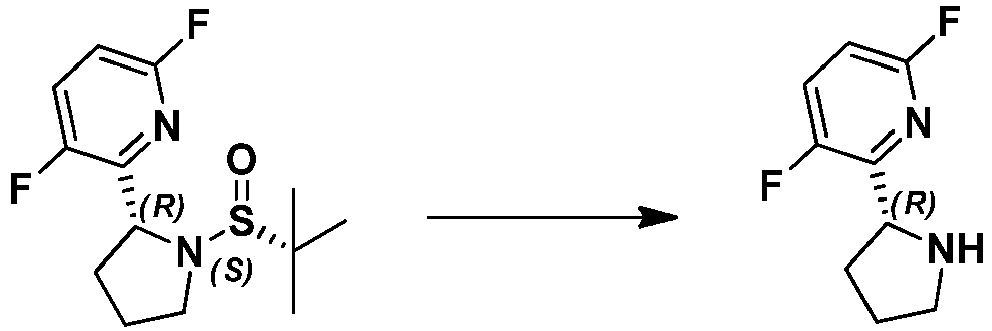
- To a solution of 2-((R)-1-((S)-tert-butylsulfinyl)pyrrolidin-2-yl)-3,6-difluoropyridine (138 mg, 0.048 mmol) in methanol (10 mL) was added HCl (480 uL, 1.91 mmol) in dioxane. The mixture was stirred 60 min at 0 °C and it was concentrated to give (R)-3,6-difluoro-2-(pyrrolidin-2-yl)pyridine: (88 mg, 100%) which was used without further purification.
-

- A mixture of 3-bromo-5-chloropyrazolo[1,5-a]pyrimidine (111 mg, 0.48 mmol), (R)-3,6-difluoro-2-(pyrrolidin-2-yl)pyridine (88 mg, 0.48 mmol) and DIPEA (340 uL, 1.91) in DMF (5 mL) was stirred at 20 °C for 3 days. The mixture was diluted with NH4CI, the aqueous layer was extracted three times with EtOAc, and the organic layer was dried over Na2SO4, filtered and concentrated. The residue was purified by normal phase chromatography using a gradient of 0 to 25% acetone in hexanes and by reverse phase chromatography using a gradient of 0 to 100% MeCN in a solution of 10 mM AmForm to afford title compound as white solid (140 mg, 77%).
-

- A mixture of copper iodide (2.8 mg, 0.015 mmol), potassium carbonate (30 mg, 0.217 mmol) and trans-N,N'-dimethylcyclohexane-1,2-diamine (4.7 mg, 0.033 mmol) in DMF (degassed, 0.10 mL) was stirred at room temperature for 10 min. 4-Methyl-1H-pyrazole (12 mg, 0.146 mmol) was added followed by a solution of (R)-3-bromo-5-(2-(3,6-difluoropyridin-2-yl)pyrrolidin-1-yl)pyrazolo[1,5-a]pyrimidine (31 mg, 0.073 mmol) in DMF (degassed, 0.26 mL). The reaction mixture was stirred at 120 °C for 16 h. Water was added to quench reaction. The mixture was extracted with EtOAc (3x). Combined organic layers were washed with water (1x) and with brine (1x), dried over MgSO4, filtered and concentrated under reduced pressure. The product was purified using normal chromatography using 30-80% AcOEt in hexanes and the by reverse chromatography using 40-70% MeCN in AmFor buffer to afford title compound as a pale yellow solid (3.5 mg, 13%) after lyophilisation.
- 1H NMR (400 MHz, DMSO) δ 8.68 (d, J = 7.5 Hz, 1H), 8.11 (s, 1H), 7.92 (dd, J = 15.7, 8.6 Hz, 1H), 7.68 (s, 1H), 7.37 (s, 1H), 7.12 - 7.05 (m, 1H), 6.60 (d, J = 7.7 Hz, 1H), 5.45 (dd, J = 8.5, 3.8 Hz, 1H), 3.89 - 3.80 (m, 1H), 3.79 - 3.71 (m, 1H), 2.31 - 2.19 (m, 1H), 2.12 (s, 3H), 2.17 - 2.04 (m, 2H), 2.00 - 1.90 (m, 1H); MS (m/z): 382.2 [M+1]+, >99%.
-

-

- (R)-5-(2-(2,5-difluorophenyl)pyrrolidin-1-yl)-3-(1H-pyrazol-1-yl)pyrazolo[1,5-a]pyrimidine (500 mg, 1.36 mmol) was dissolved in MeCN (14 mL) to which was added NBS (267 mg, 1.50 mmol) and the mixture was stirred at rt. Upon completion, the reaction diluted with ethyl acetate and washed (1X) with water/brine, dried over sodium sulfate, filtered and concentrated to dryness. The product was purified by normal chromatography using 0-3% MeOH in DCM to afford product as a yellow solid (434 mg, 72%).
-

- (R)-3-(4-bromo-1H-pyrazol-1-yl)-5-(2-(2,5-difluorophenyl)pyrrolidin-1-yl)pyrazolo[1,5-a]pyrimidine (25 mg, 0.056 mmol), Cs2CO3 (55 mg, 0.168 mmol), Pd(dppf)Cl2.dcm (8.2 mg, 0.012 mmol) and 3,5-dimethylisoxazole-4-boronic acid (12 mg, 0.084 mmol) were charged in a sealed tube. A solution of degassed dioxane/water (10/1, 0.6 mL) was added and the reaction was heated at 130 °C for 1 hour. The reaction mixture was concentrated to dryness and the product was purified by reverse phase chromatography using 0-100% MeCN in water and the by normal phase chromatography using 0-5% MeOH in DCM. The product was lyophilized to afford a white solid (11.7 mg, 45%). 1H NMR (500 MHz, DMSO) δ 8.85 - 8.63 (m, 1H), 8.62 - 8.50 (m, 1H), 8.35 - 8.14 (m, 1H), 7.99 - 7.82 (m, 1H), 7.81- 7.66 (m, 1H), 7.43 - 6.73 (m, 3H), 6.72 - 6.56 (m, 1H), 6.17 - 5.96 (m, 1H), 5.60 - 5.27 (m, 1H), 4.11 - 3.95 (m, 1H), 3.87 - 3.57 (m, 1H), 2.48 - 1.77 (m, 10H); MS (m/z): 462.2 [M+1]+, 96%.
-

-

- A mixture of (R)-3-(4-bromo-1H-pyrazol-1-yl)-5-(2-(2,5-difluorophenyl)pyrrolidin-1-yl)pyrazolo[1,5-a]pyrimidine (50 mg, 0.112 mmol), zinc cyanide (8 mg, 0.068 mmol), tris(dibenzylideneacetone)-dipalladium(0) (6.2 mg, 0.007 mmol) and 1,1-bis(diphenylphosphino)ferrocene (8.1 mg, 0.015 mmol) in DMF (1.2 mL, degassed) was stirred at at 120 °C for 16h. Water was added and the mixture was extracted with EtOAc (3x). Combined organic layers were washed with water (1x) and with brine (1x), dried over MgSO4, filtered and concentrated under reduced pressure. The product was purified by normal chromatography using 30-80% AcOEt in hexanes and then by reverse chromatography using 20-80% MeCN in AmFor 10 mM buffer to afford product as an off-white solid (22 mg, 49%) after lyophilisation. 1H NMR (400 MHz, DMSO) δ 9.16 - 9.07 (m) and 8.77 (d, J = 7.8 Hz) (1H), 8.65 - 8.54 and 8.36 - 8.19 (m, 3H), 7.39 - 7.05 and 6.99 - 6.86 (m, 3H), 6.68 (d, J = 7.6 Hz) and 6.14 - 6.05 (m) (1H), 5.48 - 5.31 (m, 1H), 4.11 - 3.96 (m, 1H), 3.87 - 3.64 (m, 1H), 2.57 - 2.40 (m, 1H), 2.21 - 1.81 (m, 3H); MS (m/z): 392.2 [M+1]+, >99%.
-

-

- 2.5 M aqueous NaOH (0.5 mL) was added to a mixture of (R)-1-(S-(2-(2,5-difluorophenyl)pyrrolidin-1-yl)pyrazolo[1,5-a]pyrimidin-3-yl)-1H-pyrazole-4-carbonitrile (31 mg, 0.079 mmol) in ethylene glycol (1.6 mL). The reaction mixture was stirred at 100 °C for 16 h. 1N aqueous HCl (4 mL) was added. Precipitate was collected by filtration and washed with water. The product was purified by reverse chromatography using 5-60% MeCN in AmFor 10 mM buffer to afford product as an off-white solid (1.7 mg, 5%) after lyophilisation. 1H NMR (400 MHz, DMSO) δ 8.84 - 8.67 (m, 1H), 8.63 - 8.50 and 8.31 - 8.15 (m, 2H), 8.10 - 7.92 (m, 1H), 7.80 - 7.69 and 7.55 - 7.44 and 7.39 - 6.89 (m, 5H), 6.69 - 6.58 and 6.13 - 6.02 (m, 1H), 5.58 - 5.29 (m, 1H), 4.11 - 3.95 (m, 1H), 3.87 - 3.60 (m, 1H), 2.58 - 2.40 (m, 1H), 2.16 - 1.82 (m, 3H); MS (m/z): 410.1 [M+1]+, >99%.
-

-

- A solution of dimethylphosphine oxide (12 mg, 0.154 mmol) in DMF (0.4 mL, degassed) was added to a mixture of (R)-3-(4-bromo-1H-pyrazol-1-yl)-5-(2-(2,5-difluorophenyl)pyrrolidin-1-yl)pyrazolo[1,5-a]pyrimidine (56 mg, 0.126 mmol), palladium acetate (1.4 mg, 0.006 mmol), Xantphos (7.2 mg, 0.012 mmol) and K3PO4 (32 mg, 0.151 mmol) in DMF (0.2 mL, degassed). The reaction mixture was then stirred at 150 °C (MW) for 45 min. Some drops of water were added and the product was purified by reverse chromatography using 5-70% MeCN in AmFor 10 mM buffer to afford product as an off-white solid (12.5 mg, 22%) after lyophilization. 1H NMR (400 MHz, DMSO) δ 8.81 - 8.66 (m, 1H), 8.64 - 8.53 and 8.14 - 8.06 (m, 1H), 8.30 - 8.20 (m, 1H), 7.99 - 7.82 (m, 1H), 7.40 - 7.26 (m, 1H), 7.24 - 6.91 (m, 2H), 6.71 - 6.58 and 6.13 - 6.02 (m, 1H), 5.61 - 5.49 and 5.41 - 5.31 (m, 1H), 4.11 - 3.98 (m, 1H), 3.85 - 3.57 (m, 1H), 2.56 - 2.38 (m, 1H), 2.15 - 1.82 (m, 3H), 1.76 - 1.56 (m, 6H); MS (m/z): 443.2 [M+1]+, >99%.
-

-
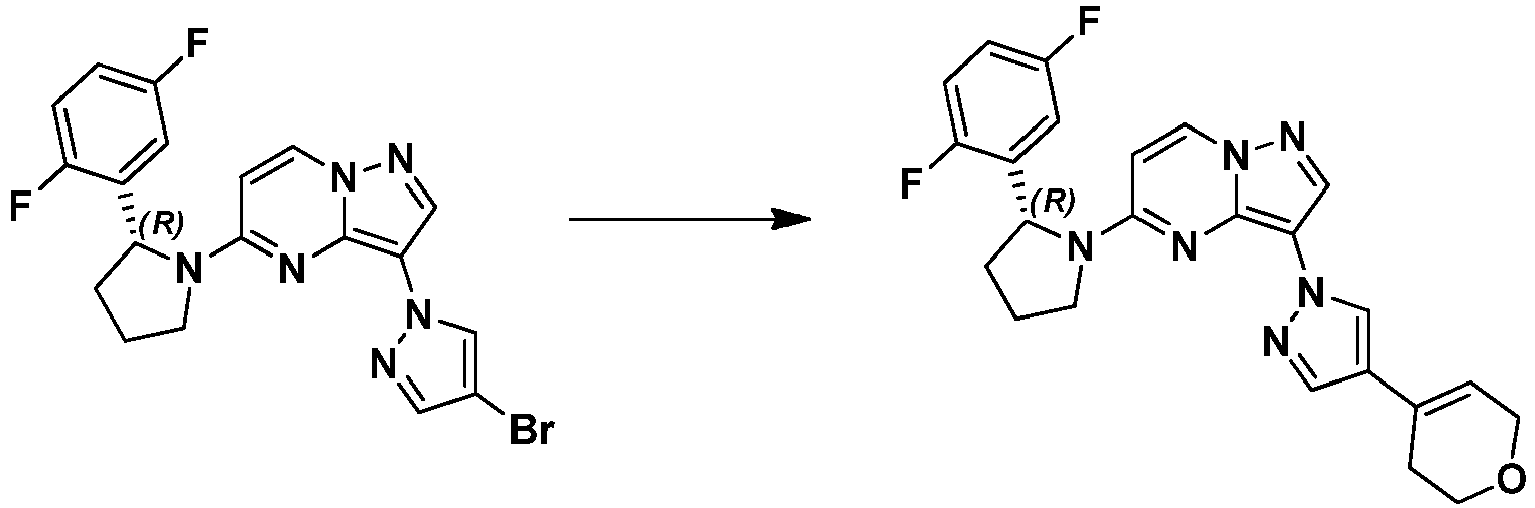
- A mixture of (R)-3-(4-bromo-1H-pyrazol-1-yl)-5-(2-(2,5-difluorophenyl)pyrrolidin-1-yl)pyrazolo[1,5-a]pyrimidine (100 mg, 0.225 mmol), 3,6-dihydro-2H-pyran-4-boronic acid pinacol ester (57 mg, 0.270 mmol), Pd(PPh3)4 (26 mg, 0.022 mmol) and Na2CO3 (119 mg, 1.123 mmol) was stirred under atmosphere of N2 and in degassed solution of dioxane and water (4:1; 2.25 mL) at 85 °C for 18 h. The mixture was diluted with EtOAc, washed with NH4Cl dried over MgSO4, filtrated and concentrated. The residue was purified by normal phase chromatography using a gradient of 0 to 100% acetone in hexanes to afford title compound as yellow solid (45 mg, 45%). 1H NMR (500 MHz, CDCl3) δ 8.63 - 7.83 (m, 3H), 7.74 - 7.57 (m, 1H), 7.10 - 6.82 (m, 2H), 6.76 - 6.64 (m, 1H), 6.41 - 6.14 (m, 1H), 6.06 - 5.73 (m, 1H), 5.75 - 5.13 (m, 1H), 4.33 (q, J = 2.7 Hz, 2H), 3.99 - 3.58 (m, 4H), 2.56 - 2.26 (m, 3H), 2.17 - 2.02 (m, 3H); MS (m/z): 449.3 [M+1]+, >99%.
-

-

- In a vial, (R)-5-(2-(2,5-difluorophenyl)pyrrolidin-1-yl)-3-(4-(3,6-dihydro-2H-pyran-4-yl)-1H-pyrazol-1-yl)pyrazolo[1,5-a]pyrimidine (30 mg, 0.067 mmol) was dissolved in MeOH (2 mL) to which was added 0.1 mL AcOH. Pd/C (10% per weight, 20 mg) and a balloon of hydrogen was fitted to the vial. The mixture is stirred for multiple days with refilling hydrogen as needed and the reaction is followed by lcms (7 min runs). After 5 days of stirring with hydrogen, 60% conversion had occurred and the reaction was stopped. The palladium was filtered out and the solvent evaporated. The product was purified by semi-prep HPLC using 40-55% MeCN in AmFor to affor product as an off-white solid (4.1 mg, 14%) after lyophilisation. 1H NMR (500 MHz, CDCl3) δ 8.37 - 8.08 (m, 2H), 7.73 (br s, 1H), 7.45 (br s, 1H), 7.11 - 6.68 (m, 3H), 6.42 - 5.79 (m, 1H), 5.72 - 5.09 (m, 1H), 4.14 - 4.01 (m, 2H), 3.99 - 3.61 (m, 2H), 3.62 - 3.50 (m, 2H), 2.92 - 2.59 (m, 2H), 2.55 - 2.39 (m, 1H), 2.20 - 1.98 (m, 3H), 1.90 - 1.69 (m, 3H); MS (m/z): 451.3 [M+1]+, >99%.
-

-

- A vial with a magnetic stir bar was charged with DMF (1.7 mL). The vial was then cooled in an ice bath, and POCl3 (0.05 mL, 0.478 mmol) was added dropwise. The mixture was stirred for 30 min at 0 °C, followed by dropwise addition of a solution of (R)-5-(2-(2,5-difluorophenyl)pyrrolidin-1-yl)-3-(1H-pyrazol-1-yl)pyrazolo[1,5-a]pyrimidine (5.0 g, 61 mmol) in DMF (1 mL) over 5 min. The mixture is then stirred at 70 °C for 18 h. The solution was then chilled to 0 °C, and saturated aqueous NaHCO3 was added until the reaction was no longer acidic. The resulting mixture was extracted with EtOAc (3 × 200 mL), and the extracts were dried over MgSO4 and concentrated in vacuo. The product (70.5 mg, 95%) was not purified further and was used such as.
-

- A solution of DAST (26 mg, 0.161 mmol) was added to a solution of (R)-1-(5-(2-(2,5-difluorophenyl)pyrrolidin-1-yl)pyrazolo[1,5-a]pyrimidin-3-yl)-1H-pyrazole-4-carbaldehyde (52.8 mg, 0.134 mmol) in DCM (2 mL) at 0 °C. The reaction mixture was stirred at room temperature for 7 h then an additional portion of DAST (53 µL, 3 eq) was added. The reaction mixture was stirred at room temperature for 16 h then an additional portion of DAST (90 µL, 5 eq) was added. The reaction mixture was stirred at room temperature for 16 h then an additional portion of DAST (180 µL, 10 eq) was added. Then reaction mixture was stirred at room temperature for 16 h. Water was added and the mixture was extracted with DCM (3x). Combined organic layers were dried over MgSO4, filtered and concentrated under reduced pressure. The product was purified by normal chromatography using 30-100% AcOEt in hexanes and then by reverse chromatography using 20-70% MeCN in AmFor 10 mM buffer to afford product as an off-white solid (16 mg, 28%) after lyophilisation. 1H NMR (400 MHz, DMSO) δ 8.81 - 8.69 (m, 1H), 8.64 - 8.52 (m) and 8.03 (s) (1H), 8.32 - 8.19 (m, 1H), 7.96 - 7.79 (m, 1H), 7.41 - 6.89 (m, 4H), 6.70 - 6.58 and 6.12 - 6.02 (m, 1H), 5.51 - 5.30 (m, 1H), 4.03 (dt, J= 11.4, 5.7 Hz, 1H), 3.82 - 3.63 (m, 1H), 2.57 - 2.39 (m, 1H), 2.18 - 1.82 (m, 3H); MS (m/z): 417.2 [M+1]+, >99%.
-

-

- 2.5 M aqueous NaOH (0.5 mL) was added to a mixture of (R)-1-(5-(2-(2,5-difluorophenyl)pyrrolidin-1-yl)pyrazolo[1,5-a]pyrimidin-3-yl)-1H-pyrazole-4-carbonitrile (31 mg, 0.079 mmol) in ethylene glycol (1.6 mL). The reaction mixture was stirred at 100 °C for 16 h. 1N aqueous HCl (4 mL) was added. Precipitate was collected by filtration and washed with water. The product was purified by reverse chromatography using 5-60% MeCN in AmFor 10 mM buffer to afford product as an off-white solid (6.3 mg, 19%) after lyophilisation.
-

- HATU (48 mg, 0.126 mmol) was added to a solution of (R)-1-(5-(2-(2,5-difluorophenyl)pyrrolidin-1-yl)pyrazolo[1,5-a]pyrimidin-3-yl)-1H-pyrazole-4-carboxylic acid (52 mg, 0.127 mmol), acethydrazide (14 mg, 0.189 mmol) and DIPEA (44 uL, 0.253 mmol) in THF (2.5 mL). The reaction mixture was stirred at room temperature for 3 h. Desired intermediate (R)-N'-acetyl-1-(5-(2-(2,5-difluorophenyl)pyrrolidin-1-yl)pyrazolo[1,5-a]pyrimidin-3-yl)-1H-pyrazole-4-carbohydrazide had formed with 80% as well as carboxamide side product. Burgess reagent (152 mg, 0.635 mmol) was added and the reaction mixture was stirred at room temperature for 2 h. The mixture was diluted with EtOAc then washed with water (1x) and with brine (1x), dried over MgSO4, filtered and concentrated under reduced pressure. The product was purified using reverse chromatography with 10-70% MeCN in AmFor 10 mM buffer to afford product as an off-white solid (24 mg, 43%) after lyophilisation. 1H NMR (400 MHz, DMSO) δ 9.05 - 8.97 and 8.84 - 8.74 (m, 1H), 8.65 - 8.56 and 8.45 - 8.15 (m, 3H), 7.40 - 7.17 (m, 1H), 7.09 - 6.94 (m, 2H), 6.68 (d, J = 7.9 Hz) and 6.17 - 6.05 (m) (1H), 5.55 - 5.33 (m, 1H), 4.11 - 3.98 (m, 1H), 3.83 - 3.64 (m, 1H), 2.65 (s, 3H), 2.71 - 2.39 (m, 1H), 2.16 - 1.82 (m, 3H); MS (m/z): 449.2 [M+1]+, >99%.
-

-

- Step 1: Trityl chloride (692 mg, 2.48 mmol) was added to a solution of pyrazole-4-boronic acid pinacol ester (401 mg, 2.07 mmol), pyridine (0.33 mL, 4.10 mmol) and DMAP (13 mg, 0.11 mmol) in DCM (4 mL). The reaction mixture was stirred at room temperature for 16 h. The mixture was diluted with DCM then washed with water (1x) and saturated aqueous NH4Cl (1x), dried over MgSO4, filtered and concentrated under reduced pressure. The crude product was purified by trituration with hexanes to afford an off-white solid (804 mg, 89%).
- Step 2: A solution of 2.5 M aqueous NaOH (1.28 mL) and H2O2 (30% in water, 0.37 mL) were added to a solution of 4-(4,4,5,5-tetramethyl-1,3,2-dioxaborolan-2-yl)-1-trityl-1H-pyrazole (699 mg, 1.6 mmol) in THF at 0°C. The reaction mixture was stirred at room temperature for 2 h. 1N aqueous HCl was added and the mixture was extracted with EtOAc (3x). Combined organic layers were dried over MgSO4, filtered and concentrated under reduced pressure. The product was purified by normal chromatography using 0-50% EtOAc in hexanes to afford 1-trityl-1H-pyrazol-4-ol (425 mg, 81%) as an off-white solid.
- Step 3: 3-Iodooxetane (0.2 mL, 2.27 mmol) was added to a solution of 1-trityl-1H-pyrazol-4-ol (356 mg, 1.09 mmol) and cesium carbonate (889 mg, 2.73 mmol) in DMF (5.5 mL) at room temperature. The reaction mixture was stirred for 64 h. The reaction mixture was diluted with EtOAc then washed with H2O (2x) and brine (1x). Organic layer was dried over MgSO4, filtered and concentrated under reduced pressure. The product was purified by normal chromatography using 0-30% AcOEt in hexanes to afford 4-(oxetan-3-yloxy)-1-trityl-1H-pyrazole (295 mg, 71%) as a white solid.
- Step 4: TFA was added to a solution of 4-(oxetan-3-yloxy)-1-trityl-1H-pyrazole (199 mg, 0.520 mmol) in DCM (2.6 mL) and MeOH (1.3 mL) at 0 °C. The reaction mixture was then stirred at room temperature for 1 h. Saturated aqueous NaHCO3 was added. The mixture was extracted with EtOAc (4x). Combined organic layers were dried with MgSO4, filtered and concentrated under reduced pressure. Crude material was used such as in next step.
-

- Prepared using procedure described in Example 001 using 4-(oxetan-3-yloxy)-1H-pyrazole prepared above to afford desired product as an off-white solid (17 mg, 4%). 1HNMR (400 MHz, DMSO) δ 8.77 - 8.66 and 8.59 - 8.44 (m, 1H), 8.22 - 8.06 (m, 1H), 7.51 - 7.26 (m, 3H), 7.21 - 6.89 (m, 2H), 6.74 - 6.58 and 6.09 - 5.98 (m, 1H), 5.56 - 5.30 (m, 1H), 5.23 - 5.11 and 4.99 - 4.74 (m, 3H), 4.63 - 4.47 (m, 2H), 4.07 - 3.95 (m, 1H), 3.82 - 3.57 (m, 1H), 2.56 - 2.37 (m, 1H), 2.12 - 1.83 (m, 3H); MS (m/z): 439.2 [M+1]+, >99%.
-
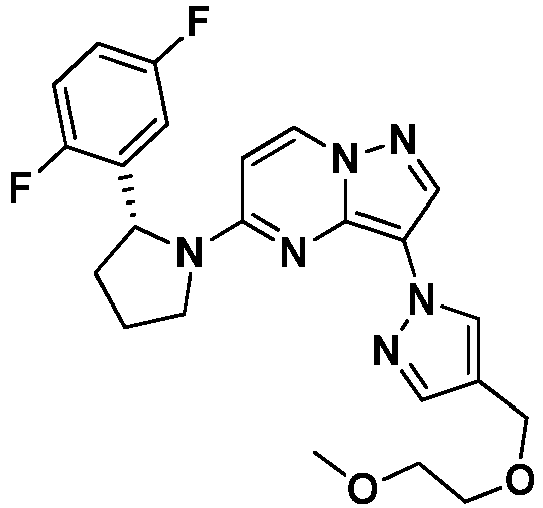
-

- Prepared using procedure described in Example 001 using (1H-pyrazol-4-yl)methanol to afford title compound as a pale yellow solid (24 mg, 51%) after lyophilisation.
-
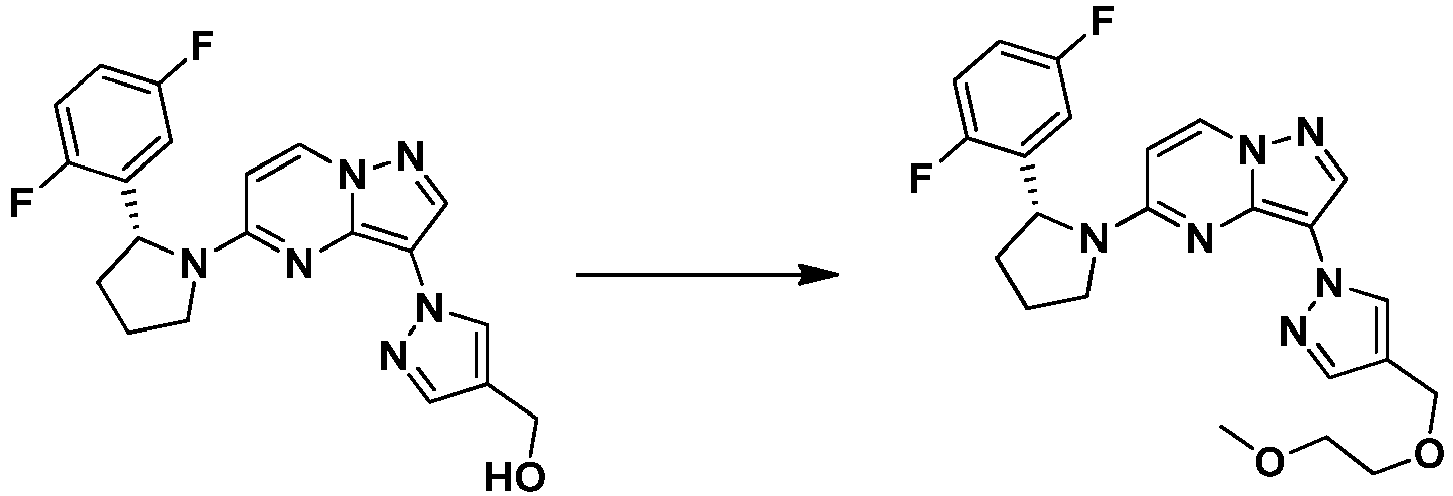
- NaH (7.6 mg, 0.190 mmol) was added to a solution of (R)-(1-(5-(2-(2,5-difluorophenyl)pyrrolidin-1-yl)pyrazolo[1,5-a]pyrimidin-3-yl)-1H-pyrazol-4-yl)methanol (50 mg, 0.126 mmol) in DMF (0.85 mL) at 0 °C. The reaction mixture was then stirred at room temperature for 20 min then 2-bromoethyl methyl ether was added. The reaction mixture was stirred at room temperature for 16 h. Water was added (some drops to quench NaH excess) then the mixture was directly loaded on C18 and was purified using 5-70% MeCN in AmFor 10 mM buffer to afford product as an orange solid (19 mg, 33%) after lyophilization. 1H NMR (400 MHz, DMSO) δ 8.72 (d, J = 7.3 Hz) and 8.61 - 8.51 (m) (1H), 8.48 - 8.36 (m) and 7.74 (s) (1H), 8.26 - 8.13 (m, 1H), 7.66 - 7.50 (m, 1H), 7.39 - 6.89 (m, 3H), 6.62 (d, J = 7.1 Hz) and 6.12 - 5.98 (m) (1H), 5.48 - 5.29 (m, 1H), 4.54 - 4.25 (m, 2H), 4.06 - 3.98 (m, 1H), 3.82 - 3.61 (m, 1H), 3.59 - 3.44 (m, 4H), 3.27 (s, 3H), 2.55 - 2.40 (m, 1H), 2.15 - 1.80 (m, 3H); MS (m/z): 455.2 [M+1]+, >99%.
-

-

- In a small vial, (R)-3-(4-bromo-1H-pyrazol-1-yl)-5-(2-(2,5-difluorophenyl)pyrrolidin-1-yl)pyrazolo[1,5-a]pyrimidine (50 mg, 0.11 mmol) in NMP (1.1 mL) was treated with Cul (83 mg, 0.44 mmol) and sodium methylsulfinate (46 mg, 0.45 mmol). Nitrogen was bubbled through the reaction mixture for approximately one minute and then the mixture in a sealed vial was heated at 140 °C in the oil bath. After 5 h, heating was stopped and the reaction was diluted with EtOAc. The organic layer was washed 3x with NH4OH/water 1:2 and the aqueous layer was extracted 3x with EtOAc. The organic layer was washed with NH4Cl, brine, dried over MgSO4 and concentrated. The residue was purified by normal phase chromatography using a gradient of 0 to 40% acetone in hexane and by reverse phase chromatography using a gradient of 0 to 100% MeCN in 10 mM AmForm to afford title compound as white solid (11.2 mg, 22%) after lyophilization. 1H NMR (500 MHz, CDCl3) δ 8.96 (s, 0.5H), 8.30 (s, 2H), 8.15 (s, 0.5H), 7.93 (s, 1H), 7.24 - 7.06 (m, 1H), 6.91 (s, 1H), 6.73 (ddd, J = 8.9, 5.9, 3.2 Hz, 1H), 6.37 (s, 0.6H), 5.91 (s, 0.4H), 5.61 (s, 0.6H), 5.22 (s, 0.4H), 4.15 - 3.83 (m, 2H), 3.71 (s, J = 4.7 Hz, 1H), 3.16 (s, 3H), 2.52 (s, 1H), 2.29 - 2.00 (m, 3H); MS (m/z): 445.2 [M+1]+, >99%.
-

- Prepared using procedure described in Example 002 using 3-fluoropyridine to afford title compound as a colorless oil (1.06 g, 1%).
-

- To a solution of (R)-3-fluoro-2-(pyrrolidin-2-yl)pyridine (1163 mg, 4.302 mmol) and 5-chloro-3-iodopyrazolo[1,5-a]pyrimidine (1.76 g, 6.298 mmol) in DMF (15 mL) was DIPEA (4.9 mL, 27.99 mmol). The mixture was stirred at 110 °C for 1 hour and then cooled to rt overnight. The mixture was extracted with AcOEt, dried and concentrated. The product was purified by column chromatography using 0-100% acetone in hexane. Product was isolated as an orange oil (1.42 g, 50%).

- Prepared using procedure described in Example 002 using (R)-5-(2-(3-fluoropyridin-2-yl)pyrrolidin-1-yl)-3-iodopyrazolo[1,5-a]pyrimidine and 4-methyl-1H-pyrazole to afford title compound as an off-white solid (11.4 mg, 43%) after lyophilization. 1H NMR (500 MHz, CDCl3) δ 8.34 - 8.13 (m, 3H), 7.78 (br s, 1H), 7.42 - 7.31 (m, 2H), 7.14 (br s, 1H), 6.27 (br s, 1H), 5.70 (br s, 1H), 4.02 - 3.92 (m, 1H), 3.81 - 3.67 (m, 1H), 2.57 - 2.35 (m, 2H), 2.18 (s, 3H), 2.17 - 2.00 (m, J = 24.4 Hz, 2H); MS (m/z): 364.2 [M+1]+, 98%.
-

-

-

- Prepared using procedure described in Example 001 using 1,4,6,7-tetrahydropyrano[4,3-c]pyrazole to afford (R)-2-(5-(2-(2,5-difluorophenyl)pyrrolidin-1-yl)pyrazolo[1,5-a]pyrimidin-3-yl)-2,4,6,7-tetrahydropyrano[4,3-c]pyrazole as a yellow solid (10.6 mg, 18%) after lyophilization: 1H NMR (500 MHz, CDCl3) δ 8.33 - 8.00 (m, 2H), 7.51 (s, 1H), 7.10 - 6.69 (m, 3H), 6.42 - 5.77 (m, 1H), 5.55 - 5.13 (m, 1H), 4.89 - 4.59 (m, 2H), 4.11 - 3.60 (m, 4H), 2.96 - 2.79 (m, 2H), 2.60 - 2.40 (m, 1H), 2.27 - 1.95 (m, 3H); MS (m/z): 423.3 [M+1]+, >99%, and (R)-1-(5-(2-(2,5-difluorophenyl)pyrrolidin-1-yl)pyrazolo[1,5-a]pyrimidin-3-yl)-1,4,6,7-tetrahydropyrano[4,3-c]pyrazole as a yellow solid (3.2 mg, 5%) after lyophilization: 1H NMR (500 MHz, CDCl3) δ 8.33 - 8.12 (m, 1H), 8.07 (s, 1H), 7.44 (br s, 1H), 7.10 - 7.01 (m, 1H), 6.96 - 6.86 (m, 1H), 6.72 - 6.62 (m, 1H), 6.39 - 5.83 (m, 1H), 5.58 - 5.13 (m, 1H), 4.84 - 4.59 (m, 2H), 4.00 - 3.48 (m, 5H), 2.97 - 2.74 (m, 1H), 2.51 - 2.34 (m, 1H), 2.12 - 1.94 (m, 3H).; MS (m/z): 423.3 [M+1]+, >99%.
-

-

- HATU (36 mg, 0.095 mmol) was added to a solution of (R)-1-(5-(2-(2,5-difluorophenyl)pyrrolidin-1-yl)pyrazolo[1,5-a]pyrimidin-3-yl)-1H-pyrazole-4-carboxylic acid (35 mg, 0.085 mmol), morpholine (11 uL, 0.126 mmol) and DIPEA (30 uL, 0.172 mmol) in THF (1.7 mL). The reaction mixture was stirred at room temperature for 16 h. The mixture was diluted with DCM then washed with water (1x) and with brine (1x), dried over MgSO4, filtered and concentrated under reduced pressure. The product was purified by reverse chromatography using 5-50% MeCN in AmFor 10 mM buffer to afford product as an off-white solid (15 mg, 37%) after lyophilisation. 1H NMR (400 MHz, DMSO) δ 8.81 - 8.68 (m, 1H), 8.65 - 8.54 and 8.06 - 7.98 (m, 1H), 8.34 - 8.18 (m, 1H), 7.96 - 7.89 and 7.84 - 7.75 (m, 1H), 7.40 - 6.91 (m, 3H), 6.71 - 6.60 and 6.14 - 6.02 (m, 1H), 5.51 - 5.31 (m, 1H), 4.07 - 3.97 (m, 1H), 3.79 - 3.52 (m, 9H), 2.58 - 2.39 (m, 1H), 2.13 - 1.83 (m, 3H); MS (m/z): 480.2 [M+1]+, >99%.
-

-

- Sodium triacetoxyborohydride (120 mg, 0.566 mmol) was added to a solution of (R)-1-(5-(2-(2,5-difluorophenyl)pyrrolidin-1-yl)pyrazolo[1,5-a]pyrimidin-3-yl)-1H-pyrazole-4-carbaldehyde (74 mg, 0.188 mmol) and dimethylamine (2M in THF, 0.11 mL, 0.22 mmol) in DCM (1 mL) at room temperature. The reaction mixture was then stirred for 2 h. Saturated aqueous NaHCO3 was added. The mixture was extracted with DCM (3x). Combined organic layers were dried over MgSO4, filtered and concentrated under reduced pressure. The product was purified by reverse chromatography using 5-40% MeCN in AmFor 10mM buffer to afford product as a yellow solid (19 mg, 24%) after lyophilisation. 1H NMR (400 MHz, DMSO) δ 8.72 (d, J = 7.4 Hz, 1H), 8.61 - 8.50 (m) and 7.69 (s) (1H) 8.42 - 8.30 (m) and 8.16 (s) (1H), 7.59 - 7.41 (m, 1H), 7.35 - 6.92 (m, 3H), 6.62 (d, J = 7.5 Hz) and 6.09 - 5.98 (m) (1H), 5.51 - 5.28 (m, 1H), 4.08 - 3.96 (m, 1H), 3.91 - 3.10 (m, 3H), 2.55 - 2.37 (m, 1H), 2.29 - 1.76 (m, 9H); MS (m/z): 424.2 [M+1]+, >99%.
-

-

- A mixture of 3-bromo-5-chloropyrazolo[1,5-a]pyrimidine (150 mg, 0.645 mmol), (R)-1-phenethanamine (117 mg, 0.968 mmol) and DIPEA (0.450 mL, 2.581 mmol) in DMF (3.2 mL) was stirred at 110 °C for 4 h. Very clean profile by LCMS. The reaction mixture was directly added to a reverse phase chromatography for purification using 0-100% MeCN in AmFor buffer to afford title compound as a yellow solid.
-

- (R)-3-bromo-N-(1-phenylethyl)pyrazolo[1,5-a]pyrimidin-5-amine (135 mg, 0.426 mmol) was dissolved in THF to which NaH (11 mg, 0.468 mmol) was added. The reaction was stirred for 30 min at rt and MeI (0.03 mL, 0.468 mmol) was added. Additionnal NaH (102 mg, 4.256 mmol) followed by MeI (0.78 mL, 1.234 mmol) was added to the reaction mixture and this was stirred at rt for 18 h. The reaction mixture was directly added to a reverse phase chromatography for purification. The combined desired fractions were frozen and lyophilized to afford product as a yellow semi-solid substance.
-

- Prepared using procedure described in Example 001 using (R)-3-bromo-N-methyl-N-(1-phenylethyl)pyrazolo[1,5-a]pyrimidin-5-amine and 4-methyl-1H-pyrazole to afford title compound as a yellow solid (32 mg, 24%) after lyophilisation. 1H NMR (500 MHz, CDCl3) δ 8.30 (s, 1H), 8.25 (d, J = 7.9 Hz, 1H), 8.07 (s, 1H), 7.45 (s, 1H), 7.40 - 7.27 (m, 5H), 6.33 (d, J = 7.9 Hz, 1H), 6.08 (br s, 1H), 2.90 (s, 3H), 2.15 (s, 3H), 1.65 (d, J = 7.0 Hz, 3H); MS (m/z): 333.2 [M+1]+, >99%.
-

-

- Prepared using procedure described in Example 001 using 1H-pyrazol-4-amine to afford title compound as a yellow oil (68 mg, 76%).
-

- Dissolve (R)-1-(5-(2-(2,5-difluorophenyl)pyrrolidin-1-yl)pyrazolo[1,5-a]pyrimidin-3-yl)-1H-pyrazol-4-amine (34 mg, 0.076 mmol) and triethylamine (0.02 mL, 0.152 mmol) in anhydrous CH2Cl2 (0.8 mL) and add dropwise dimethylcarbamic chloride (40 uL, 0.455 mmol) to the mixture using a syringe. The mixture is stirred at rt for 48 h. The whole was concentrated and the product was purified by column chromatography using acetone in hexanes to afford a light brown solid (9 mg, 26%) after lyophilisation. 1H NMR (500 MHz, CDCl3) δ 8.26 (s, 1H), 8.15 (br s, 1H), 7.76 - 7.61 (m, 1H), 7.14 - 6.78 (m, 5H), 6.16 (s, 1H), 5.84 (br s, 1H), 5.33 (br s, 1H), 4.14 - 3.90 (m, 2H), 3.07 (s, 6H), 2.58 - 2.47 (m, 1H), 2.16 - 1.91 (m, 3H); MS (m/z): 453.3 [M+1]+, >97%.
-

-
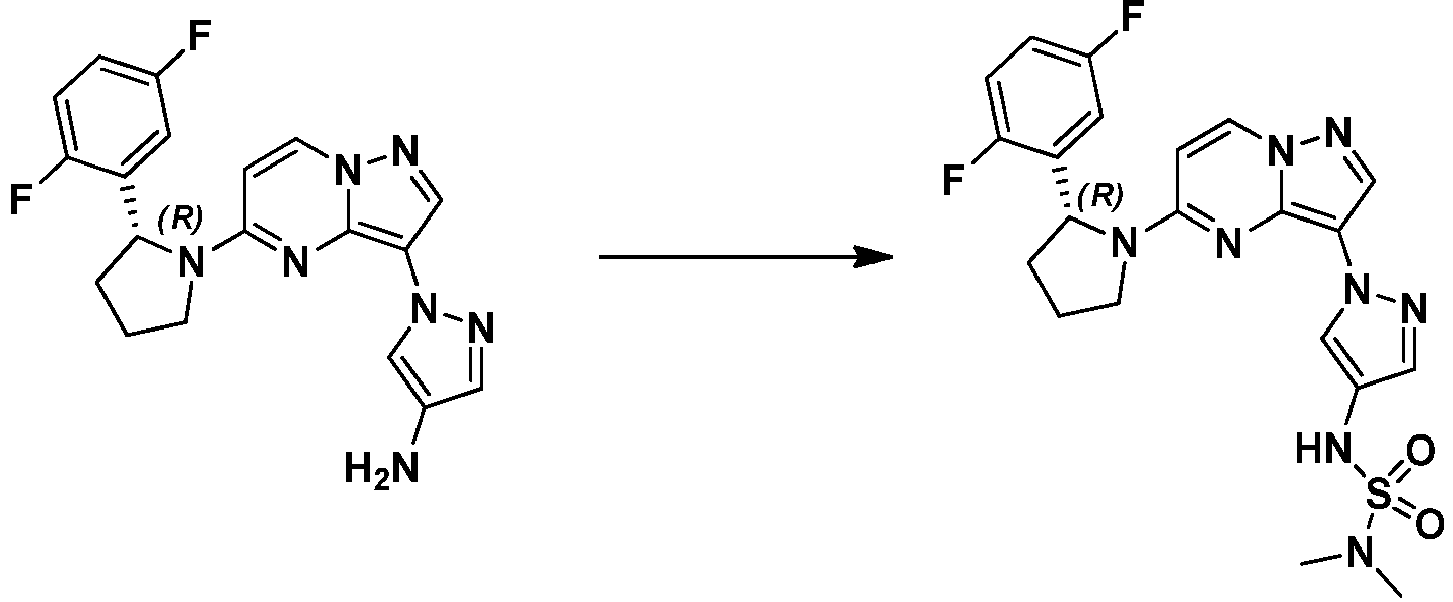
- Prepared using procedure described in Example 019 using dimethylsulfamoyl chloride to afford title compound as a white solid (26.7 mg, 68%) after lyophilisation. 1H NMR (500 MHz, CDCl3) δ 8.58 (br s, 0.5H), 8.33 - 8.09 (m, 2H), 7.86 (br s, 0.5H), 7.56 (s, 1H), 7.15 - 7.07 (m, 1H), 6.99 - 6.86 (m, 1H), 6.84 - 6.73 (m, 1H), 6.39 - 5.64 (m, 2H), 5.62 - 5.13 (m, 1H), 4.16 - 3.60 (m, 2H), 2.86 (s, 6H), 2.60 - 2.42 (m, 1H), 2.20 - 1.99 (m, 3H); MS (m/z): 489.3 [M+1]+, >97%.
-

-

- A mixture of (R)-3,6-difluoro-2-(pyrrolidin-2-yl)pyridine (10.3 g, 0.04 mol), 5-chloro-3-iodopyrazolo[1,5-a]pyrimidine (6.8 g, 0.04 mol) and DIPEA (26 mL, 0.15 mol) in DMF (370 mL) was stirred at 20 °C for 3 days. The mixture was slowly dropped into ice/water 1: 1 (2L) and a solid was crashed out. The aqueous phase was extracted with EtOAc and washed 3x with water. The organic phase was dried over MgSO4, filtered and concentrated. Both residue were combined and purified by normal phase chromatography using a gradient of 0 to 15% acetone in hexane to afford title compound as off-white solid (11.2 g, 71%).
-

- Prepared using procedure described in Example 001 using (R)-5-(2-(3,6-difluoropyridin-2-yl)pyrrolidin-1-yl)-3-iodopyrazolo[1,5-a]pyrimidine with 1H-pyrazole to afford title compound as a white solid (39 mg, 45%).
-

- NBS (18.9 mg, 0.11 mmol) was added to a solution of (R)-5-(2-(3,6-difluoropyridin-2-yl)pyrrolidin-1-yl)-3-(1H-pyrazol-1-yl)pyrazolo[1,5-a]pyrimidine (39 mg, 0.11 mmol) in MeCN (3 mL). The mixture was stirred at room temperature for 2 h. The mixture was concentrated and the residue was purified by normal phase chromatography using a gradient of 0 to 60% acetone in hexanes to afford title compound as yellow solid (45 mg, 95%).
-

- (R)-3-(4-bromo-1H-pyrazol-1-yl)-5-(2-(3,6-difluoropyridin-2-yl)pyrrolidin-1-yl)pyrazolo[1,5-a]pyrimidine (26 mg, 0.06 mmol), Cs2CO3 (57 mg, 0.17 mmol), Pd(dppf)Cl2.DCM (4.7 mg, 0.006 mmol) and 3-methoxy-5-(4,4,5,5-tetramethyl-1,3,2-dioxaborolan-2-yl)pyridine (21 mg, 0.09 mmol) charged in a sealed tube. Dioxane/water (5/1) (0.7 mL) degassed charged and reaction heated at 130 °C for 2 hour. The mixture was concentrated and purified by normal phase chromatography using a gradient of 0 to 100% acetone in hexanes and by prep HPLC using a gradient of 35 to 55% MeCN in 10 mM AmForm to afford title compound as white solid (10.8 mg, 39%) after lyophilisation. 1H NMR (500 MHz, CDCl3) δ 8.47 (s, 1H), 8.33 (s, 1H), 8.30 (s, 1H), 8.29 - 8.17 (m, 2H), 7.88 (s, 1H), 7.39 (s, 1H), 7.33 - 7.27 (m, 1H), 6.71 - 6.62 (m, 1H), 6.35 - 6.25 (m, 1H), 5.70 (s, 1H), 3.97 (s, 3H), 3.71 (s, 1H), 2.46 (s, 2H), 2.19 - 2.04 (m, 3H); MS (m/z): 475.2 [M+1]+, >99%.
-

-

- An oven-dried vial was charged with CuI (5 mg, 0.027 mmol), (R)-3-(4-bromo-1H-pyrazol-1-yl)-5-(2-(2,5-difluorophenyl)pyrrolidin-1-yl)pyrazolo[1,5-a]pyrimidine (20 mg, 0.045 mmol), K3PO4 (29 mg, 0.135 mmol), DMPAO (8 mg, 0.040 mmol) and pyrrolidin-3-ol (16 mg, 0.180 mmol). The vial was evacuated and backfilled with N2, and DMSO (1 mL) was added. The reaction mixture was degassed for 5 min. The reaction is stirred at 100 °C for 36 h. The mixture was extracted with AcOEt and washed with water and brine, dried, and concentrated. The product was purified by column chromatography using 0-100% acetone in hexane. The product was concentrated and lyophilized from MeCN and water to afford desired compound as an off white solid (5.24 mg, 26%). 1H NMR (500 MHz, CDCl3) δ 8.40 - 8.05 (m, 2H), 7.90 - 7.38 (m, 1H), 7.16 - 6.64 (m, 4H), 6.45 - 4.99 (m, 2H), 4.62 - 3.54 (m, 4H), 3.47 - 2.77 (m, 2H), 2.58 - 2.25 (m, 2H), 2.25 - 1.93 (m, 5H); MS (m/z): 452.2 [M+1]+, >99%.
-

-

- Prepared using procedure described in Example 014 using 1H-pyrazole to afford title compound as a beige solid (115 mg, 54%).
-

- NBS (58 mg, 0.326 mmol) was added to a solution of (R)-5-(2-(3-fluoropyridin-2-yl)pyrrolidin-1-yl)-3-(1H-pyrazol-1-yl)pyrazolo[1,5-a]pyrimidine (110 mg, 0.315 mmol) in MeCN (3 mL). The mixture was stirred at room temperature for 2 h. The reaction mixture was diluted with EtOAc then washed with saturated aqueous sodium bisulfite and with water/brine (1:1), dried over MgSO4, filtered and concentrated under reduced pressure. The product was purified by normal chromatography using 30-100% AcOEt in hexanes to afford product as an off-white solid (81 mg, 60%).
-

- Prepared using procedure described in Example 022 from (R)-3-(4-bromo-1H-pyrazol-1-yl)-5-(2-(3-fluoropyridin-2-yl)pyrrolidin-1-yl)pyrazolo[1,5-a]pyrimidine to afford title compound as a yellow solid (5.4 mg, 36%) after lyophilisation. 1H NMR (500 MHz, CDCl3) δ 8.38 - 7.93 (m, 3H), 7.63 - 7.27 (m, 2H), 7.23 - 7.07 (m, 2H), 6.37 - 6.15 (m, 1H), 5.88 - 5.56 (m, 1H), 4.63 - 4.52 (m, 1H), 4.15 - 3.57 (m, 3H), 3.47 - 3.38 (m, 1H), 3.31 - 3.24 (m, 1H), 3.24 - 3.17 (m, 1H), 3.11 - 3.00 (m, 1H), 2.57 - 2.43 (m, 1H), 2.36 - 2.25 (m, J = 6.6 Hz, 2H), 2.19 - 1.99 (m, 3H); MS (m/z): 435.3 [M+1]+, >99%.
-

-

- To a solution of (R)-5-(2-(2,5-difluorophenyl)pyrrolidin-1-yl)-3-(4-(5-methoxypyridin-3-yl)-1H-pyrazol-1-yl)pyrazolo[1,5-a]pyrimidine (10 mg, 0.021 mmol) in DCM (0.5 mL) at -78 °C was added a solution of BBr3 in DCM 1M (30 uL, 0.030 mmol). The mixture was warmed ON to rt and was stirred 7 days at the same temperature to archive 70% of conversion. The reaction was diluted with methanol and stirred ON at rt. Next morning, the reaction was concentrated and the residue was used without further purification. To a solution of the above (R)-5-(1-(5-(2-(2,5-difluorophenyl)pyrrolidin-1-yl)pyrazolo[1,5-a]pyrimidin-3-yl)-1H-pyrazol-4-yl)pyridin-3-ol (9.7 mg, 0.02 mmol) in DMF (2 mL) was added K2CO3 (60 mg, 0.44 mmol) and 3-iodooxetane (20 uL, 0.05 mmol). The mixture was stirred at 150 °C for 1h in an oil bath. The mixture was diluted with EtOAc and washed 3 times with water; the organic phase was dried over MgSO4, filtered and concentrated. The residue was purified by normal flash chromatography using a gradient of 10 to 100% acetone in hexanes and by prep HPLC using a gradient of 35 to 55% MeCN in 10 mM Amform to afford title compound as off-white solid (1.1 mg, 10%) after lyophilization. 1HNMR (500 MHz, CDCl3) δ 8.89 - 8.10 (m, 4H), 8.00 - 7.78 (m, 2H), 7.23 - 7.12 (m, 1H), 7.12 - 7.01 (m, 1H), 6.97 - 6.81 (m, 1H), 6.79 - 6.67 (m, 1H), 6.43 - 6.13 (m, 1H), 5.94 - 5.56 (m, 1H), 5.40 - 5.30 (m, 1H), 5.05 (t, J = 6.7 Hz, 2H), 4.88 - 4.81 (m, 2H), 4.08 - 3.61 (m, 2H), 2.58 - 2.46 (m, 1H), 2.26 - 2.01 (m, 3H); MS (m/z): 516.1 [M+1]+, >99%.
-

-

- In a vial was added MeOH (1 mL to which was added Na metal (8 mg). This was stirred under N2 until a clear solution. A 0.25 mL aliquot of the solution was added to (R)-5-(2-(3,6-difluoropyridin-2-yl)pyrrolidin-1-yl)-3-(4-methyl-1H-pyrazol-1-yl)pyrazolo[1,5-a]pyrimidine (16.7 mg, 0.044 mmol) in MeOH (1 mL) and the mixture is stirred at 100 °C over 2 d. The whole was concentrated and the product was eluted on normal flash chromatography using acetone in hexane and by reverse chromatography using 0-100% MeCN in AmFor. Product was lyophilized to afford title compound (7.28 mg, 42%) as an off-white solid. 1H NMR (500 MHz, CDCl3) δ 8.28 - 8.14 (m, 2H), 8.10 - 7.86 (m, 1H), 7.46 - 7.36 (m, 1H), 7.33 - 7.27 (m, 1H), 6.66 - 6.48 (m, 1H), 6.30 - 5.91 (m, 1H), 5.73 - 5.20 (m, 1H), 4.09 - 3.76 (m, 2H), 3.74 (s, 3H), 2.60 - 2.36 (m, 2H), 2.23 - 2.04 (m, 5H); MS (m/z): 394.2 [M+1]+, >99%.
-

-

- In a vial was added (R)-5-(2-(3,6-difluoropyridin-2-yl)pyrrolidin-1-yl)-3-(4-methyl-1H-pyrazol-1-yl)pyrazolo[1,5-a]pyrimidine (16.7 mg, 0.044 mmol) in DMF (1 mL) to which was added dimethylamine (2M, 0.05 mL, 0.096 mmol). This was stirred under N2 at 140 °C overnight. The whole was directly added to a reverse chromatography column and the product purified using 0-100% MeCN in AmFor. Product was lyophilized to afford an off-white solid (14 mg, 79%). 1H NMR (500 MHz, CDCl3) δ 8.26 - 8.14 (m, 2H), 8.06 - 7.94 (m, 1H), 7.47 - 7.36 (m, 1H), 7.21 - 7.14 (m, 1H), 6.36 - 6.20 (m, 1.7H), 6.02 - 5.95 (m, 0.3H), 5.72 - 5.63 (m, 0.7H), 5.22 - 5.16 (m, 0.3H), 4.05 - 3.67 (m, 2H), 2.92 (s, 6H), 2.58 - 2.29 (m, 2H), 2.24 - 2.02 (m, 5H); MS (m/z): 407.3 [M+1]+, >99%.
-

-

- A mixture of (R)-3-(4-bromo-1H-pyrazol-1-yl)-5-(2-(2,5-difluorophenyl)pyrrolidin-1-yl)pyrazolo[1,5-a]pyrimidine (100 mg, 0.225 mmol), (6-fluoropyridin-3-yl)boronic acid (71 mg, 0.449 mmol), Pd(PPh3)4 (26 mg, 0.022 mmol) and Na2CO3 (71 mg, 0.674 mmol) was stirred under atmosphere of N2 and in degassed solution of dioxane and water (4:1; 2 mL) at 100 °C for 18 h. The mixture was diluted with EtOAc, washed with water dried over MgSO4, filtrated and concentrated. The residue was purified by normal phase chromatography using a gradient of 0 to 100% acetone in hexanes and then purified by reverse chromatography using 0-100% MeCN in AmFor 10 mM buffer and the product was lyophilized to dryness. The product was isolated as an off-white solid (57.2 mg, 55%). 1H NMR (500 MHz, CDCl3) δ 8.91 - 7.71 (m, 6H), 7.16 - 6.67 (m, 4H), 6.44 - 5.82 (m, 1H), 5.75 - 5.13 (m, 1H), 4.15 - 3.60 (m, 2H), 2.60 - 2.42 (m, 1H), 2.21 - 1.98 (m, 3H); MS (m/z): 462.3 [M+1]+, >96%.
-

-

- Step 1: In a RBF containing the 1-(2,5-difluorophenyl)ethanone (910 mg, 5.828 mmol) under nitrogen at room temperature was added THF (14 mL) followed by (S)-2-methylpropane-2-sulfinamide (1060 mg, 8.743 mmol) and titanium ethoxide (1.83 mL, 8.743 mmol). Mixture stirred in a 70 °C oil bath for 20 h and the reaction was followed by TLC and LCMS. The flask was cooled with icy-water bath and saturated aqueous NH4Cl added (250 mL, white solid formation); diluted with EtOAc, sonicated and solid was removed by filtration. Filtrate diluted in EtOAc, washed with water and brine. Organic layer was dried over MgSO4, filtered and solvent evaporated to give as yellow oil (1.45 g).
- Step 2: (S,E)-N-(1-(2,5-difluorophenyl)ethylidene)-2-methylpropane-2-sulfinamide (1470 mg, 3.401 mmol) was dissolved in THF (13 mL) under nitrogen in a round bottom flask. Mixture cooled at -78 °C and slowly Super-H (4.1 mL, 4.08 mmol) was added dropwise (temperature never reach higher that -70 °C). Mixture stirred at -78 °C. After 2 hour, LCMS showed complete conversion to what seems to be only 1 product. The mixture was quenched with NH4Cl sat. and extracted with AcOEt. The crude material (1.63 g) was used such as in next step. NMR analysis showed a 10.2 : 1 ratio of diastereoisomers (dr).
- Step 3: To a solution of (S)-N-((R)-1-(2,5-difluorophenyl)ethyl)-2-methylpropane-2-sulfinamide (1638 mg, 6.268 mmol) in methanol (30 mL) was added HCl (6.3 mL, 25 mmol) (4N in dioxane). The mixture was stirred 60 min at 0 °C and it was concentrated. The whole was partitioned between HCl 1N and AcOEt and the aqueous layer was collected. The organic layer was extracted 3 times with HCl 1M. The combined aqueous layers were basified with NH4OH and the whole was extracted with fresh AcOEt. The combined organic layers were dried (MgSO4) and concentrated to afford (R)-1-(2,5-difluorophenyl)ethanamine as a yellow oil (990 mg, 90% overall in 3 setps).
-

- Prepared using procedure described in Example 001 from (R)-1-(2,5-difluorophenyl)ethanamine and 5-chloro-3-iodopyrazolo[1,5-a]pyrimidine to afford title compound as an orange oil (713 mg, 33%).
-

- Prepared using procedure described in Example 001 from (R)-N-(1-(2,5-difluorophenyl)ethyl)-3-iodopyrazolo[1,5-a]pyrimidin-5-amine and using 1H-pyrazole to afford title compound as an orange waxy solid (138.8 mg, 33%).
-

- NBS (80 mg, 0.448 mmol) was added to a solution of (R)-N-(1-(2,5-difluorophenyl)ethyl)-3-(1H-pyrazol-1-yl)pyrazolo[1,5-a]pyrimidin-5-amine (139 mg, 0.408 mmol) in MeCN (4 mL). The mixture was stirred at room temperature for 1 h. LCMS indicated complete conversion. The mixture was concentrated and the residue was purified by normal phase chromatography using a gradient of 0 to 100% acetone in hexanes to afford title compound as yellow solid (181 mg, 100%).
-

- Prepared using procedure described in Example 027 from (R)-3-(4-bromo-1H-pyrazol-1-yl)-N-(1-(2,5-difluorophenyl)ethyl)pyrazolo[1,5-a]pyrimidin-5-amine and using 2-methoxy-5-(4,4,5,5-tetramethyl-1,3,2-dioxaborolan-2-yl)pyridine to afford title compound as an off-white solid (12.0 mg, 28%) after lyophilisation. 1H NMR (500 MHz, CDCl3) δ 8.39 (d, J = 2.3 Hz, 1H), 8.33 (s, 1H), 8.31 (s, 1H), 8.21 (d, J = 7.6 Hz, 1H), 7.83 (s, 1H), 7.76 (dd, J = 8.5, 2.5 Hz, 1H), 7.03 (ddd, J = 8.8, 5.8, 3.1 Hz, 1H), 6.95 (td, J = 9.3, 4.4 Hz, 1H), 6.89 - 6.85 (m, 1H), 6.83 (d, J = 8.5 Hz, 1H), 6.12 (d, J = 7.6 Hz, 1H), 5.49 - 5.39 (m, 1H), 5.38 - 5.31 (m, 1H), 4.00 (s, 3H), 1.61 (d, J = 6.9 Hz, 3H); MS (m/z): 448.3 [M+1]+, >99%.
-

-

- NIS (18.9 mg, 0.11 mmol) was added to a solution of (R)-5-(2-(3,6-difluoropyridin-2-yl)pyrrolidin-1-yl)-3-(1H-pyrazol-1-yl)pyrazolo[1,5-a]pyrimidine (39 mg, 0.11 mmol) in MeCN (3 mL). The mixture was stirred at room temperature for seven days. The mixture was concentrated and the residue was purified by normal phase chromatography using a gradient of 10 to 60% acetone in hexanes to afford title compound as yellow solid (157 mg, 44%).
-

- Prepared using procedure described in Example 027 from (R)-5-(2-(3,6-difluoropyridin-2-yl)pyrrolidin-1-yl)-3-(4-iodo-1H-pyrazol-1-yl)pyrazolo[1,5-a]pyrimidine and 2-methoxy-5-(4,4,5,5-tetramethyl-1,3,2-dioxaborolan-2-yl)pyridine to afford title compound as an off-white solid (6.68 mg, 19%). 1H NMR (500 MHz, DMSO) δ 8.78 - 8.68 (m, 1H), 8.58 - 8.44 (m, 1H), 8.29 - 8.23 (m, 1H), 8.23 - 8.17 (m, 1H), 8.06 - 7.98 (m, 1H), 7.94 - 7.86 (m, 1H), 7.64 - 7.55 (m, 1H), 7.03 - 6.97 (m, 1H), 6.97 - 6.91 (m, 1H), 6.67 - 6.59 (m, 1H), 5.62 - 5.56 (m, 1H), 3.91 (s, 3H), 3.87 - 3.83 (m, 1H), 3.78 - 3.71 (m, 2H), 2.26 - 2.18 (m, 1H), 2.13 - 2.05 (m, 1H), 2.00 - 1.93 (m, 1H); MS (m/z): 475.3 [M+1]+, >99%.
-

-

- Step 1: To oxetan-3-ol (1.26 g, 17.046 mmol) in DMF (30 mL) under nitrogen at 25° C was added sodium hydride (60%, 727 mg, 18.183 mmol) portion-wise over 5 minutes. The reaction was stirred for 1 hour and a solution of 5-bromo-2-fluoropyridine (2 g, 11.364 mmol) in DMF (25 mL) was added over 10 minutes. The resulting mixture was heated at 130 °C for 5 hours and cooled to 25 °C and stirred until the next morning. The mixture was diluted with ether and washed with water and brine. The organic layer was dried (MgSO4), filtered, and concentrated to provide slightly over 2.6 g of the title compound (considered 100%) as yellow solid.
- Step2: To a solution of 5-bromo-2-(oxetan-3-yloxy)pyridine (1.626 g, 7.068 mole) in anhydrous THF (24 ml) was added dropwise n-BuLi (3.11 mL, 2.5M in THF) at -78 °C, the resulting mixture was stirred for 1 h. 2-Isopropoxy-4,4,5,5-tetramethyl-1,3,2-dioxaborolane (1.8 mL, 8.835 mmol) was added at -78 °C and the reaction mixture was warmed to room temperature and continued to stir for 2 h. The mixture was quenched with sat NH4Cl and extracted with AcOEt and the organic layer was dried and concentrated to afford product as a slight yellow oil which was used such as.
-

- Prepared using procedure described in Example 027 from (R)-5-(2-(2,5-difluorophenyl)pyrrolidin-1-yl)-3-(4-iodo-1H-pyrazol-1-yl)pyrazolo[1,5-a]pyrimidine and 2-(oxetan-3-yloxy)-5-(4,4,5,5-tetramethyl-1,3,2-dioxaborolan-2-yl)pyridine to afford title compound as a yellow solid (468.3 mg, 22%) after lyophilization. 1H NMR (400 MHz, CDCl3) δ 8.64 (br s, 0.5H), 8.43 - 8.01 (m, 3.5H), 7.88 - 7.62 (m, 2H), 7.13 - 6.80 (m, 3H), 6.77 - 6.68 (m, 1H), 6.34 (br s, 0.5H), 5.73 - 5.59 (m, 1.5H), 5.04 (t, J = 6.8 Hz, 2H), 4.83 - 4.73 (m, 2H), 4.20 - 3.55 (m, 2H), 2.50 (s, 1H), 2.20 - 1.99 (m, 3H); MS (m/z): 516.4 [M+1]+, 95%.
-
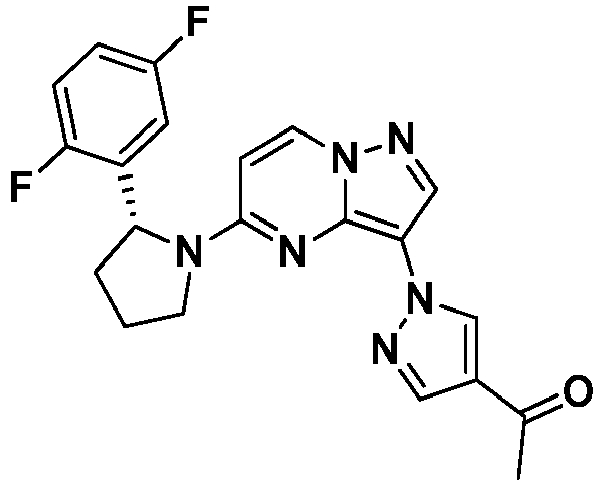
-

- A mixture of (R)-5-(2-(2,5-difluorophenyl)pyrrolidin-1-yl)-3-(4-iodo-1H-pyrazol-1-yl)pyrazolo[1,5-a]pyrimidine (40 mg, 0.081 mmol), tributyl(1-ethoxyvinyl)stannane (32 mg, 0.089 mmol), Pd(PPh3)4 (3 mg, 0.008 mmol) in dioxane was reacted in a sealed microwave vial at 100 °C for 18 hours. Then, the whole was stirred at rt when 2 mL of HCl 5% in water was added. This was stirred for 30 min to show by LCMS mostly desired product as well as side products. The whole was extracted with AcOEt and worked up. The product is purified by normal chromatography using 0-100% acetone in hexanes. Product was further purified using semi-prep HPLC using 40-60% MeCN in AmFor 10 mM buffer. The product was then lyophilized and isolated as a white solid (5.1 mg, 25%). 1H NMR (500 MHz, CDCl3) δ 9.06 - 8.82 (m, 0.4H), 8.44 - 7.94 (m, 3.6H), 7.10 (td, J = 9.2, 4.3 Hz, 1H), 7.02 - 6.83 (m, 1H), 6.77 - 6.66 (m, 1H), 6.46 - 6.27 (m, 0.6H), 5.98 - 5.81 (m, 0.4H), 5.75 - 5.56 (m, 0.6H), 5.31 - 5.12 (m, 0.4H), 4.16 - 3.60 (m, 2H), 2.50 (s, 4H), 2.22 - 2.03 (m, 3H); MS (m/z): 409.2 [M+1]+, >99%.
-

-

- To a mixture of DMSO (316 uL, 4.45 mmol) in DCM (10 mL), Oxalylchloride (229 uL, 2.67 mmol) was added and stirred at -78 °C for 15 min. Solution of (R)-(1-(5-(2-(2,5-difluorophenyl)pyrrolidin-1-yl)pyrazolo[1,5-a]pyrimidin-3-yl)-1H-pyrazol-4-yl)methanol (705.5 mg, 1.78 mmol) was then added with 8 mL of DCM and then triethylamine (1.25 mL, 8.899 mmol) was added and the mixture was brought to rt. Upon stirring for 1 h, LCMS indicated many products but no more SM. A major side product is observed at 1.65 min (m/z = 411) upon quenching with methanol. The whole was extracted with AcOEt and washed with water. The organic layer is dried and concentrated. The side product was purified by normal chromatography using 0-100% acetone hexanes and by reverse chromatography using 0-100% MeCN in AmFor buffer to afford title compound as an off-white solid (60.4 mg, 8%). 1H NMR (500 MHz, DMSO) δ 8.70 (d, J = 6.7 Hz, 1H), 8.46 - 8.13 (m, 1H), 7.75 (s, 1H), 7.65 - 7.46 (m, 1H), 7.28 (s, 1H), 7.20 - 6.87 (m,c 2H), 6.61 (d, J = 6.6 Hz, 1H), 5.50 - 5.25 (m, 1H), 4.49 - 4.19 (m, 2H), 4.01 (dt, J = 11.2, 5.8 Hz, 1H), 3.80 - 3.59 (m, 1H), 3.25 (s, 3H), 2.48 - 2.36 (m, 1H), 2.14 - 1.81 (m, 3H); MS (m/z): 411.3 [M+1]+, >99%.
Cmp. ID Prepared as in 1H NMR Purity (%) MS (m/z) I-147 Example 1 1H NMR (500 MHz, DMSO) δ 8.74 (d, J = 7.6 Hz, 1H), 8.62 - 8.17 (m, 2H), 8.03 (s, 1H), 7.39 - 6.89 (m, 3H), 6.64 (d, J = 7.7 Hz, 0.85H), 6.06 (br s, 0.15H), 5.44 (d, J = 6.9 Hz, 1H), 4.10 - 3.96 (m, 1H), 3.82 - 3.57 (m, 1H), 2.48 - 2.40 (m, 1H), 2.16 - 1.77 (m, 3H). 97 435.2 I-148 Example 1 1H NMR (400 MHz, DMSO) δ 8.75 - 8.46 (m, 1H), 8.28 - 8.10 (m, 1H), 7.55 (s, 1H), 7.48 - 7.26 (m, 2H), 7.22 - 6.89 (m, 2H), 6.61 (d, J = 7.4 Hz) and 6.10 - 5.95 (m) (1H), 5.46 - 5.29 (m, 1H), 4.05 - 3.97 (m, 1H), 3.84 - 3.59 (m, 1H), 2.58 - 2.39 (m, 1H), 2.22 - 2.00 (m, 5H), 1.97 - 1.80 (m, 1H). 100 381.2 I-149 Example 1 1H NMR (400 MHz, DMSO) δ 8.77 (d, J = 7.3 Hz) and 8.63 - 8.53 (m) (1H), 8.24 (s, 1H), 8.21 - 8.10 (m, 1H), 8.03 (s, 1H), 7.75 - 7.63 and 7.52 - 7.39 (m, 4H), 7.33 - 6.92 (m, 4H), 6.66 (d, J = 7.7 Hz) and 6.12 - 6.02 (m) (1H), 5.59 (d, J = 6.5 Hz) and 5.43 - 5.29 (m) (1H), 4.12 - 4.00 (m, 1H), 3.86 - 3.59 (m, 1H), 2.57 - 2.40 (m, 1H), 2.15 - 1.82 (m, 3H). 99 443.1 Reference compound: I-150 Example 1 1H NMR (400 MHz, DMSO) δ 8.74 - 8.64 (m, 1H), 8.14 - 8.05 (m, 1H), 7.47 (s, 1H), 7.37 - 7.25 (m, 1H), 7.17 - 7.00 (m, 2H), 6.66 - 6.56 (m, 1H), 5.44 - 5.33 (m, 1H), 4.04 - 3.96 (m, 1H), 3.76 - 3.61 (m, 1H), 2.55 - 2.41 (m, 1H), 2.18 - 2.02 (m, 5H), 1.96 (s, 3H), 1.91 - 1.81 (m, 1H). 98 395.2 Reference compound: I-151 Example 1 1H NMR (400 MHz, DMSO) δ 8.74 (d, J = 7.6 Hz) and 8.62 - 8.53 (m) (1H), 8.51 - 8.45 (m) and 8.19 (s) (1H), 7.92 (s, 1H), 7.56 - 7.45 (m, 2H), 7.38 - 7.28 (m, 3H), 7.22 - 6.94 and 6.87 - 6.72 (m, 3H), 6.64 (d, J = 7.6 Hz) and 6.10 - 6.01 (m) (1H), 5.56 - 5.49 and 5.41 - 5.31 (m, 1H), 4.09 - 3.98 (m, 1H), 3.77 - 3.58 (m, 1H), 2.54 - 2.30 (m, 4H), 2.12 - 1.80 (m, 3H). 97 457.0 I-153 Example 1 1H NMR (400 MHz, DMSO) δ 9.15 - 9.04 (m) and 8.90 (s) and 8.78 (d, J = 6.7 Hz) (2H), 8.71 - 8.56 (m, 1H), 8.53 - 8.46 (m, 2H), 8.41 - 8.23 (m, 2H), 7.41 - 6.93 (m, 3H), 6.67 (d, J = 8.4 Hz) and 6.13 - 6.05 (m) (1H), 5.62 - 5.52 and 5.41 - 5.30 (m, 1H), 4.14 - 3.99 (m, 1H), 3.87 - 3.62 (m, 1H), 2.54 - 2.39 (m, 1H), 2.12 - 1.83 (m, 3H). 100 445.4 I-155 Example 1 1H NMR (400 MHz, DMSO) δ 8.76 - 8.49 (m, 1H), 8.43 - 8.29 (m) and 7.67 (s) (1H), 8.15 (s, 1H), 7.59 - 7.46 (m, 1H), 7.37 - 6.91 (m, 3H), 6.68 - 6.56 and 6.10 - 5.96 (m, 1H), 5.47 - 5.30 (m, 1H), 5.01 - 4.82 (m, 1H), 4.53 - 4.32 (m, 2H), 4.06 - 3.98 (m, 1H), 3.81 - 3.62 (m, 1H), 2.55 - 2.41 (m, 1H), 2.17 - 1.82 (m, 3H). 100 397.2 I-156 Example 1 1H NMR (400 MHz, DMSO) δ 8.71 (d, J = 6.3 Hz) and 8.63 - 8.47 (m) (1H), 8.36 - 8.24 (m) 7.57 (s) (1H), 8.22 - 8.10 (m, 1H), 7.53 - 7.37 (m, 1H), 7.36 - 7.24 (m, 1H), 7.22 - 6.91 (m, 2H), 6.68 - 6.53 and 6.10 - 5.96 (m, 1H), 5.49 - 5.31 (m, 1H), 4.70 (t, J = 5.3 Hz, 1H), 4.02 (dt, J = 11.3, 5.7 Hz, 1H), 3.80 - 3.45 (m, 3H), 2.71 - 2.39 (m, 3H), 2.16 - 1.79 (m, 3H). 100 411.1 I-158 Example 3 1H NMR (500 MHz, DMSO) δ 8.82 - 8.47 (m, 1H), 8.29 - 8.13 (m, 1H), 8.09 - 7.50 (m, 4H), 7.42 - 6.88 (m, 3H), 6.73 - 6.55 and 6.19 - 5.94 (m, 1H), 5.67 - 5.26 (m, 1H), 4.12 - 3.97 (m, 1H), 3.97 - 3.83 (m, 3H), 3.83 - 3.59 (m, 1H), 2.48 - 2.40 (m, 1H), 2.21 - 1.80 (m, 3H). 100 447.2 I-159 Example 3 1H NMR (500 MHz, CDCl3) δ 8.96 - 8.44 (m, 2H), 8.40 - 8.08 (m, 3H), 7.99 - 7.72 (m, 2H), 7.45 - 7.31 (m, 1H), 7.09 - 6.81 (m, 2H), 6.78 - 6.69 (m, 1H), 6.42 - 5.81 (m, 1H), 5.75 - 5.16 (m, 1H), 4.14 - 3.65 (m, 2H), 2.57 - 2.43 (m, 1H), 2.22 - 2.03 (m, 3H). 100 444.3 I-160 Example 3 1H NMR (500 MHz, CDCl3) δ 9.03 - 8.54 (m, 2H), 8.50 - 8.08 (m, 3H), 8.07 - 7.88 (m, 1H), 7.80 - 7.33 (m, 2H), 7.12 - 6.78 (m, 2H), 6.77 - 6.64 (m, 1H), 6.46 - 5.85 (m, 1H), 5.78 - 5.16 (m, 1H), 4.18 - 3.63 (m, 2H), 2.59 - 2.45 (m, 1H), 2.23 - 2.05 (m, 3H). 100 444.3 I-161 Example 3 1H NMR (500 MHz, DMSO) δ 8.98 (br s, 0.3H), 8.80 (d, J= 7.2 Hz, 1H), 8.63 (br s, 0.7H), 8.47 - 8.32 (m, 2H), 8.31 - 8.20 (m, 3H), 7.80 (br s, 0.5H), 7.64 (s, 1H), 7.38 (br s, 0.5H), 7.24 (br s, 0.5H), 7.11 - 7.02 (m, 2H), 7.02 - 6.93 (m, 0.5H), 6.70 (d, J = 7.4 Hz, 1H), 6.12 (br s, 0.5H), 5.70 - 5.58 (m, 1H), 4.10 (s, 1H), 3.99 (s, 3H), 3.91 - 3.79 (m, 1H), 3.75 - 3.66 (m, 1H), 2.16 - 2.03 (m, 2H), 1.98 - 1.87 (m, 1H). 99 474.3 I-162 Example 3 1H NMR (500 MHz, DMSO) δ 8.85 - 8.65 (m, 1H), 8.63 - 7.89 (m, 3H), 7.77 - 6.88 (m, 6H), 6.72 - 6.58 and 6.13 - 5.99 (m, 1H), 5.66 - 5.29 (m, 1H), 4.13 - 3.99 (m, 1H), 3.91 - 3.58 (m, 1H), 2.48 - 2.39 (m, 1H), 2.16 - 1.80 (m, 3H). 99 449.1 I-163 Example 3 1H NMR (500 MHz, DMSO) δ 9.25 - 8.91 (m, 3H), 8.85 - 8.14 (m, 4H), 7.42 - 6.85 (m, 3H), 6.74 - 6.61 and 6.20 - 6.01 (m, 1H), 5.69 - 5.30 (m, 1H), 4.17 - 3.98 (m, 1H), 3.93 - 3.61 (m, 1H), 2.48 - 2.40 (m, 1H), 2.19 - 1.80 (m, 3H). 98 445.2 I-164 Example 3 1H NMR (500 MHz, DMSO) δ 8.84 - 8.49 (m, 1H), 8.33 - 7.96 (m, 2H), 7.96 - 7.82 (m, 1H), 7.80 - 7.65 (m, 1H), 7.41 - 6.86 (m, 3H), 6.72 - 6.58 (m, 1H), 6.15 - 6.00 (m, 1H), 5.63 - 5.28 (m, 1H), 4.12 - 3.97 (m, 1H), 3.89 - 3.58 (m, 1H), 2.78 - 2.62 (m, 3H), 2.47 - 2.40 (m, 1H), 2.15 - 1.81 (m, 3H). 97 464.1 I-165 Example 3 1H NMR (500 MHz, DMSO) δ 8.94 - 8.71 (m, 1H), 8.64 - 8.07 (m, 3H), 7.87 - 7.64 (m, 1H), 7.45 - 7.28 (m, 1H), 7.27 - 6.89 (m, 2H), 6.78 - 6.63 (m, 1H), 6.63 - 6.48 (m, 1H), 6.38 - 6.24 and 6.13 - 6.03 (m, 1H), 5.65 - 5.30 (m, 1H), 4.15 - 3.99 (m, 1H), 3.88 - 3.58 (m, 1H), 3.56 - 3.38 (m, 3H), 2.49 - 2.38 (m, 1H), 2.16 - 1.80 (m, 3H). 99 474.2 Reference compound: I-166 Example 1 1H NMR (500 MHz, CDCl3) δ 8.18 (br s, 1H), 8.00 (s, 1H), 7.09 - 6.79 (m, 2H), 6.75 - 6.60 (m, 1H), 6.37 - 5.68 (m, 1H), 5.64 - 5.12 (m, 2H), 3.90 (s, 4H), 3.78 - 3.60 (m, 1H), 2.53 - 2.35 (m, 1H), 2.11 - 1.96 (m, 3H), 1.79 - 1.48 (m, 3H). 100 411.2 Reference compound: I-167 Example 1 1H NMR (500 MHz, CDCl3) δ 8.15 (br s, 1H), 7.98 (s, 1H), 7.04 - 6.96 (m, 1H), 6.93 - 6.85 (m, 1H), 6.76 - 6.71 (m, 1H), 5.96 - 5.82 (m, 1H), 5.50 - 5.36 (m, 2H), 3.94 - 3.68 (m, 5H), 2.48 - 2.38 (m, 1H), 2.28 (s, 3H), 2.05 - 1.96 (m, 3H). 98 411.2 I-168 Example 1 1H NMR (400 MHz, DMSO) δ 9.09 - 9.00 (m) and 8.77 (d, J = 7.1 Hz) (1H), 8.64 - 8.55 (m) and 8.36 - 8.05 (m) (3H), 7.39 - 6.85 (m, 3H), 6.73 - 6.61 and 6.14 - 6.04 (m, 1H), 5.48 - 5.30 (m, 1H), 4.05 - 3.96 (m, 1H), 3.81 - 3.63 (m, 1H), 2.56 - 2.38 (m, 1H), 2.15 - 1.81 (m, 3H). 100 368.2 I-169 Example 1 1H NMR (400 MHz, DMSO) δ 8.78 - 8.67 and 8.59 - 8.50 (m, 1H), 8.37 - 8.28 (m) and 7.71 (s) (1H), 8.16 (s, 1H), 7.59 - 7.45 (m, 1H), 7.37 - 7.03 (m, 2H), 6.99 - 6.91 (m, 1H), 6.65 - 6.57 and 6.07 - 5.97 (m, 1H), 5.58 - 5.49 and 5.41 - 5.29 (m, 1H), 4.97 - 4.77 (m, 1H), 4.08 - 3.98 (m, 1H), 3.81 - 3.56 (m, 1H), 2.57 - 2.37 (m, 1H), 2.12 - 1.82 (m, 3H), 1.54 - 1.31 (m, 6H). 100 425.1 I-171 Example 3 1H NMR (500 MHz, DMSO) δ 13.04 - 12.70 (m, 1H), 8.81 - 8.48 (m, 1H), 8.30 - 7.57 (m, 5H), 7.37 - 6.80 (m, 3H), 6.71 - 6.53 and 6.13 - 5.96 (m, 1H), 5.65 - 5.28 (m, 1H), 4.11 - 3.98 (m, 1H), 3.86 - 3.61 (m, 1H), 2.48 - 2.41 (m, 1H), 2.14 - 1.81 (m, 3H) . 100 433.2 I-172 Example 1 1H NMR (400 MHz, DMSO) δ 8.77 - 8.66 and 8.60 - 8.48 (m, 1H), 8.23 - 8.10 (m, 1H), 7.56 (s, 1H), 7.47 - 6.90 (m, 4H), 6.68 - 6.53 and 6.09 - 5.97 (m, 1H), 5.58 - 5.28 (m, 1H), 4.08 - 3.97 (m, 1H), 3.86 - 3.57 (m, 1H), 3.66 (s, 3H), 2.57 - 2.37 (m, 1H), 2.14 - 1.78 (m, 3H). 100 397.2 I-177 Example 6 1H NMR (500 MHz, CDCl3) δ 8.38 - 7.97 (m, 3H), 7.75 (s, 1H), 7.08 (td, J = 9.2, 4.3 Hz, 1H), 7.01 - 6.81 (m, 1H), 6.74 - 6.66 (m, 1H), 6.42 - 6.19 (m, 0.5H), 5.97 - 5.76 (m, 0.5H), 5.71 - 5.50 (m, 0.5H), 5.27 - 5.09 (m, 0.5H), 4.13 - 3.54 (m, 2H), 2.58 - 2.34 (m, 1H), 2.15 - 1.83 (m, 7H), 1.30 - 1.10 (m, 6H). 99 471.3 I-188 Example 7 1H NMR (500 MHz, CDCl3) δ 8.37 - 8.14 (m, 2H), 7.90 (br s, 1H), 7.66 (br s, 1H), 7.13 - 7.03 (m, 1H), 6.96 - 6.84 (m, 1H), 6.78 - 6.66 (m, 1H), 6.43 - 6.20 (m, 1H), 6.03 - 5.83 (m, 1H), 5.74 - 5.54 (m, 1H), 5.02 - 4.62 (m, 4H), 4.04 - 3.63 (m, 2H), 2.59 - 2.39 (m, 1H), 2.22 - 2.00 (m, 3H). 100 435.3 I-189 Example 7 1H NMR (500 MHz, CDCl3) δ 8.37 - 8.21 (m, 2H), 8.02 (br s, 1H), 7.69 (br s, 1H), 7.63 (s, 1H), 7.49 (t, J = 1.7 Hz, 1H), 7.06 - 6.68 (m, 3H), 6.59 (s, 1H), 6.40 - 5.84 (m, 1H), 5.73 - 5.13 (m, 1H), 4.00 - 3.66 (m, 2H), 2.57 - 2.44 (m, 1H), 2.21 - 2.02 (m, 3H). 100 433.3 I-190 Example 3 1H NMR (500 MHz, CDCl3) δ 8.91 - 8.51 (m, 1.5H), 8.39 - 8.12 (m, 3.5H), 7.87 (s, 1H), 7.57 - 7.39 (m, 1H), 7.11 - 7.03 (m, 1H), 6.89 (s, 1H), 6.73 (s, 1H), 6.38 (s, 0.7H), 5.96 - 5.84 (m, 0.3H), 5.69 (s, 0.7H), 5.28 - 5.14 (m, 0.3H), 4.15 - 3.87 (m, 1H), 3.69 (s, 1H), 2.51 (s, 1H), 2.22 - 2.12 (m, 2H), 2.11 - 2.01 (m, 1H). 99 462.2 I-191 Example 3 1H NMR (500 MHz, CDCl3) δ 9.11 - 8.80 (m, 1H), 8.75 (d, J = 1.9 Hz, 1H), 8.49 - 8.06 (m, 3H), 8.01 - 7.85 (m, 2H), 7.12 (td, J = 9.3, 4.3 Hz, 1H), 6.90 (s, 1H), 6.73 (s, 97 469.2 1H), 6.38 (s, 0.7H), 6.01 - 5.82 (m, 0.3H), 5.71 (s, 0.7H), 5.32 - 5.16 (m, 0.3H), 3.93 (s, 1H), 3.70 (s, 1H), 2.50 (s, 1H), 2.23 - 2.01 (m, 3H). Reference compound: I-192 Example 14 1H NMR (400 MHz, DMSO) δ 8.79 - 8.74 (m) and 8.70 (d, J = 7.8 Hz) (1H), 8.53 - 8.47 (m) and 8.35 - 8.29 (m) and 8.28 - 8.17 (m) (3H), 8.15 - 8.09 (m) and 8.03 (s) (1H), 7.71 - 7.58 and 7.52 - 7.38 (m, 5H), 7.33 - 7.22 (m, 2H), 6.63 (d, J = 7.9 Hz) and 6.08 - 6.03 (m) (1H), 5.72 - 5.65 and 5.55 - 5.48 (m, 1H), 3.92 - 3.83 (m, 1H), 3.81 - 3.72 (m, 1H), 2.59 - 2.46 (m, 1H), 2.25 - 1.92 (m, 3H). 100 426.1 Reference compound: I-193 Example 2 1H NMR (400 MHz, DMSO) δ 8.80 - 8.69 (m, 1H), 8.59 - 8.48 (m) and 8.23 (s) and 8.21 (s) (2H), 8.15 - 8.08 (m) and 8.04 (s) (1H), 7.71 - 7.55 (m, 3H), 7.50 - 7.37 (m, 2H), 7.28 (t, J = 7.2 Hz, 1H), 7.07 - 6.99 (m, 1H), 6.64 (d, J = 7.7 Hz) and 6.13 - 6.05 (m) (1H), 5.60 (d, J = 6.8 Hz) and 5.49 - 5.41 (m) (1H), 3.98 - 3.82 (m, 1H), 3.74 (dd, J = 16.7, 7.2 Hz, 1H), 2.55 - 2.40 (m, 1H), 2.24 - 1.93 (m, 3H). 100 444.1 I-194 Example 3 1H NMR (400 MHz, DMSO) δ 9.06 - 8.96 and 8.81 - 8.72 (m, 1H), 8.64 - 8.54 and 8.48 - 8.24 and 8.19 - 8.04 (m, 5H), 7.53 - 7.42 (m, 1H), 7.39 - 7.28 (m) and 7.23 - 7.15 (m) and 7.08 - 6.94 (m) (3H), 6.66 (d, J = 7.8 Hz) and 6.10 - 6.04 (m) (1H), 5.61 - 5.51 and 5.41 - 5.31 (m, 1H), 4.11 - 3.98 (m, 1H), 3.87 - 3.61 (m, 1H), 2.57 - 2.39 (m, 1H), 2.13 - 1.83 (m, 3H). 99 462 Reference compound: I-196 Example 18 1H NMR (500 MHz, CDCl3) δ 8.22 (s, 1H), 8.15 (d, J = 7.6 Hz, 1H), 7.83 (s, 1H), 7.44 (s, 1H), 7.42 - 7.34 (m, 4H), 7.30 - 7.27 (m, 1H), 6.03 (d, J = 7.6 Hz, 1H), 5.25 (br s, 1H), 5.09 (br s, 1H), 2.18 (s, 3H), 1.61 (d, J = 6.8 Hz, 3H). 99 319.2 I-199 Example 3 1H NMR (500 MHz, CDCl3) δ 9.43 (br s, 0.3H), 9.24 (s, 0.7H), 9.14 (dd, J = 5.4, 1.1 Hz, 1H), 8.99 (br s, 0.5H), 8.48 - 8.30 (m, 2H), 8.17 (br s, 0.5H), 8.10 - 7.94 (m, 1H), 7.62 - 7.46 (m, 1H), 7.11 (td, J = 9.2, 4.3 Hz, 1H), 6.89 (s, 1H), 6.74 (s, 1H), 6.39 (s, 0.7H), 5.93 (br s, 0.3H), 5.72 (s, 0.7H), 5.24 (br s, 0.3H), 3.93 (s, 1H), 3.70 (s, 1H), 2.52 (s, 1H), 2.23 - 2.05 (m, 3H). 100 445.2 I-200 Example 3 1H NMR (500 MHz, CDCl3) δ 8.68 (br s, 0.5H), 8.46 - 8.01 (m, 3.5H), 7.90 - 7.59 (m, 2H), 7.12 - 6.84 (m, 2H), 6.82 (dd, J = 8.5, 0.7 Hz, 1H), 6.73 (s, 1H), 6.34 (br s, 0.6H), 5.90 (br s, 0.4H), 5.65 (br s, 0.6H), 5.23 (br s, 0.4H), 4.15 - 3.60 (m, 5H), 2.50 (s, 1H), 2.22 - 1.96 (m, 3H). 100 474.2 I-201 Example 3 1H NMR (500 MHz, CDCl3) δ 8.96 - 8.65 (m, 1H), 8.48 - 8.14 (m, 3H), 8.06 (s, 1H), 7.13 - 6.82 (m, 3H), 6.73 (s, 1H), 6.41 - 6.15 (m, 1H), 5.97 - 5.81 (m, 1H), 5.76 - 5.53 (m, 1H), 4.09 - 3.61 (m, 5H), 2.51 (s, 1H), 2.18 - 2.03 (m, 3H). 99.9 474.2 I-202 Example 3 1H NMR (500 MHz, CDCl3) δ 8.99 (br s, 1H), 8.35 (s, 1H), 8.22 (s, 1H), 8.11 - 8.03 (m, 2H), 7.83 (br s, 1H), 7.19 - 6.61 (m, 4H), 6.31 (br s, 0.4H), 5.91 (br s, 0.6H), 5.62 (br s, 0.4H), 5.30 (br s, 0.6H), 4.20 - 3.62 (m, 5H), 2.53 (s, 1H), 2.17 - 1.99 (m, 3H). 99.8 474.2 I-203 Example 3 1H NMR (500 MHz, CDCl3) δ 9.07 - 8.95 (m, 0.5H), 8.84 (s, 1H), 8.68 (s, 1H), 8.40 - 8.08 (m, 2.5H), 7.92 (s, 1H), 7.47 (br s, 0.5H), 7.16 - 6.88 (m, 1.5H), 6.75 (s, 1H), 6.35 (s, 1H), 5.95 - 5.57 (m, 3H), 5.20 (s, 1H), 4.20 - 3.86 (m, 2H), 3.82 - 3.56 (m, 1H), 2.52 (s, 1H), 2.17 - 2.04 (m, 2H). 100 487.2 I-204 Example 3 1H NMR (500 MHz, CDCl3) δ 9.04 (s, 0.5H), 8.45 - 8.08 (m, 4.5H), 7.58 - 7.29 (m, 1H), 7.13 - 6.64 (m, 3H), 6.34 (br s, 1H), 6.03 - 5.55 (m, 1H), 5.30 (br s, 1H), 4.20 - 3.55 (m, 5H), 2.53 (s, 1H), 2.20 - 1.98 (m, 3H). 100 474.2 I-205 Example 3 1H NMR (500 MHz, CDCl3) δ 9.17 - 8.96 (m, 0.5H), 8.58 - 8.14 (m, 4.5H), 8.07 (s, 1H), 7.63 - 7.35 (m, 1H), 7.16 - 6.80 (m, 2.5H), 6.74 (s, 1H), 6.37 (s, 0.5H), 5.89 (s, 0.5H), 5.80 - 5.60 (m, 0.5H), 5.37 - 5.14 (m, 1H), 3.99 - 3.63 (m, 2H), 2.62 - 2.43 (m, 1H), 2.19 - 2.06 (m, 3H). 100 462.3 Reference compound: I-207 Example 21 1H NMR (500 MHz, CDCl3) δ 8.65 (s, 2H), 8.48 (s, 1H), 8.31 (s, 1H), 8.27 (d, J = 6.7 Hz, 1H), 7.95 (s, 1H), 7.51 (s, 2H), 7.22 (s, 1H), 6.65 (s, 1H), 6.33 (d, J = 6.3 Hz, 1H), 5.73 (s, 1H), 3.97 (s, 1H), 3.73 (d, J = 6.8 Hz, 1H), 2.52 (s, 1H), 2.42 (s, 1H), 2.22 - 2.07 (m, 2H). 100 445.2 I-210 Example 8 1H NMR (500 MHz, CDCl3) δ 8.36 - 8.03 (m, 2H), 7.90 - 7.39 (m, 2H), 7.11 - 7.01 (m, 1H), 6.99 - 6.83 (m, 1H), 6.79 - 6.67 (m, 1H), 6.41 - 5.76 (m, 1H), 5.71 - 5.05 (m, 1H), 4.17 - 4.09 (m, 1H), 4.07 - 4.00 (m, 1H), 3.99 - 3.84 (m, 2H), 3.77 - 3.26 (m, 3H), 2.57 - 2.43 (m, 1H), 2.39 - 2.28 (m, 1H), 2.19 - 1.86 (m, 4H). 99 437.3 Reference compound: I-211 Example 21 1H NMR (500 MHz, CDCl3) δ 8.48 (s, 1H), 8.33 (s, 1H), 8.27 (s, 1H), 8.25 - 8.15 (m, 2.7H), 8.11 - 7.99 (m, 0.3H), 7.85 (s, 1H), 7.42 (s, 1H), 7.24 - 7.14 (m, 1H), 7.11 - 6.96 (m, 1H), 6.31 (s, 1H), 5.74 (s, 1H), 3.95 (s, 4H), 3.71 (s, 1H), 2.50 (s, 1H), 2.37 (s, 1H), 2.11 - 2.01 (m, J = 7.6 Hz, 2H). 97 457.8 I-212 Example 7 1H NMR (500 MHz, CDCl3) δ 8.30 (s, 2H), 7.92 - 7.48 (m, 2H), 7.10 - 7.02 (m, 1H), 6.94 - 6.81 (m, 1H), 6.77 - 6.69 (m, 1H), 6.68 - 6.60 (m, 1H), 6.41 - 6.00 (m, 1H), 5.85 - 5.47 (m, 1H), 4.48 (t, J = 9.5 Hz, 2H), 4.04 - 3.62 (m, 2H), 2.97 - 2.80 (m, 2H), 2.53 - 2.36 (m, 1H), 2.20 - 1.98 (m, 3H). 97 435.2 Reference compound: I-213 Example 21 1H NMR (500 MHz, CDCl3) δ 8.69 - 8.58 (m, 2H), 8.56 - 8.51 (m, 1H), 8.32 - 8.17 (m, 3H), 7.98 - 7.91 (m, 1H), 7.60 - 7.51 (m, 2H), 7.19 - 7.12 (m, 1H), 7.08 - 7.01 (m, 1H), 6.37 - 6.30 (m, 1H), 5.83 - 5.76 (m, 1H), 4.02 - 3.92 (m, 1H), 3.80 - 3.72 (m, 1H), 2.61 - 2.51 (m, 1H), 2.44 - 2.34 (m, 1H), 2.21 - 2.11 (m, 2H). 100 427.2 Reference compound: I-215 Example 14 1H NMR (500 MHz, CDCl3) δ 8.34 - 8.14 (m, J = 30.5 Hz, 3H), 7.81 - 7.70 (m, 1H), 7.43 - 7.32 (m, 1H), 7.18 - 7.08 (m, 1H), 6.38 - 6.29 (m, 1H), 5.76 - 5.66 (m, 1H), 4.06 - 3.92 (m, 1H), 3.78 - 3.68 (m, 1H), 2.57 - 2.37 (m, 2H), 2.24 - 2.03 (m, 2H). 99 418.2 Reference compound: I-218 Example 26 1H NMR (500 MHz, CDCl3) δ 8.29 - 7.92 (m, 3H), 7.46 - 7.32 (m, 1H), 7.22 - 7.09 (m, 1H), 6.29 - 5.91 (m, 2H), 5.64 - 5.10 (m, 1H), 4.39 - 4.20 (m, 1H), 4.04 - 3.61 (m, 2H), 2.84 - 2.70 (m, 3H), 2.53 - 2.28 (m, 2H), 2.19 (s, 3H), 2.16 - 2.01 (m, 2H) . 99 393.3 Reference compound: I-222 Example 21 1H NMR (500 MHz, CDCl3) δ 8.42 (dd, J = 2.4, 0.6 Hz, 1H), 8.32 - 7.95 (m, 4H), 7.85 - 7.75 (m, 2H), 7.21 - 6.99 (m, 2H), 6.84 (d, J = 8.5 Hz, 1H), 6.37 - 6.25 (m, 1H), 5.80 - 5.68 (m, 1H), 4.00 (s, 3H), 3.99 - 3.94 (m, 1H), 3.80 - 3.67 (m, 1H), 2.59 - 2.33 (m, 2H), 2.20 - 2.04 (m, 2H). 99.6 457.3 I-224 Example 3 1H NMR (500 MHz, CDCl3) δ 8.83 - 8.48 (m, 2H), 8.38 - 8.04 (m, 3H), 7.92 - 7.72 (m, 1H), 7.12 - 7.01 (m, 1H), 6.97 - 6.81 (m, 1H), 6.78 - 6.68 (m, 1H), 6.42 - 6.26 (m, 0.7H), 5.97 - 5.83 (m, 0.3H), 5.72 - 5.54 (m, 0.7H), 5.30 - 5.13 (m, 0.3H), 4.08 (s, 3H), 3.98 - 3.86 (m, 1H), 3.79 - 3.64 (m, 1H), 2.60 - 2.43 (m, 1H), 2.25 - 1.97 (m, 3H). 100 457.3 - TrkA kinase domain was supplied by SignalChem. Ulight PolyGT peptide substrate and Europium labeled W1024 antiphosphotyrosine antibody were supplied by Perkin Elmer. Assay buffer contained 50 mM HEPES, 10 mM MgCl2, 1 mM EGTA, 2 mM DTT, 0.1 mg/mL BSA, and 0.005% w/v tween 20, pH 7.5. Enzyme dilution buffer was made by supplementing assay buffer with 25% w/v glycerol. Antibody dilution buffer contained 20 mM Tris, 137 mM NaCl, and 0.05% w/v tween 20, pH 8.0. Buffers were prepared at room temperature. Enzyme solutions were made on ice, while other solutions were made at room temperature and all subsequent assay steps were performed at room temperature. The TrkA stock solution (0.1 mg/mL) was diluted 156x in enzyme dilution buffer and then 100x in assay buffer. Five µL/well of enzyme solution was added to the assay plate (Greiner black 384-well nonbinding plate), with buffer containing no enzyme added to negative control wells. Test compounds were serially diluted in DMSO at 300x final assay concentration. One µL of each test compound dilution was mixed with 99 µL assay buffer plus ATP (30 µM) and five µL of each test compound-ATP solution was added to wells containing enzyme. Positive control wells contained enzyme and substrates but no test compounds. After a 15 minute enzyme-test compound preincubation, five µL of substrate diluted in assay buffer was added to all wells. Final assay concentrations were 33 pM TrkA, 100 nM peptide substrate, and 10 µM ATP. After a five minute reaction, five µL of 80 mM EDTA was added, followed five minutes later by five µL two nM antibody solution. The ratio of fluorescence at 665 nm vs. 615 nM in each well was determined using a Tecan Infinite Pro F200 plate reader. For each test compound well, percent inhibition was calculated (% inhib. = 100-100*(test value-neg. control)/(pos. control-neg. control)). Percent inhibition values were fit to a four parameter logistic to determine IC50 values for each test compound.
- Table 1. Trk Kinase activity of compounds of the present disclosure in the Trk kinase biochemical assay. ++++ indicates an IC50 of less than about 10 nM, +++ indicates an IC50 between about 10 nM and about 50 nM, ++ indicates an IC50 between about 50 nM and about 500 nm, and + indicates an IC50 greater than 500 nM.
Table 1: Cmp No. TrkA WT IC50 (nM) I-147 ++++ I-148 ++++ I-149 ++++ I-150 ++++ I-151 ++++ I-152 ++++ I-153 ++++ I-154 ++++ I-155 ++++ I-156 ++++ I-157 ++++ I-158 ++++ I-159 ++++ I-160 ++++ I-161 ++++ I-162 ++++ I-163 ++++ I-164 ++++ I-165 ++++ I-166 + I-167 + I-168 ++++ I-169 ++++ I-170 ++++ I-171 ++++ I-172 ++++ I-173 ++++ I-174 ++++ I-175 ++++ I-176 ++++ I-177 ++++ I-178 ++++ I-179 ++++ I-180 ++++ I-181 ++++ I-182 ++++ I-183 ++++ I-184 ++++ I-185 ++++ I-186 ++++ I-187 ++++ I-188 ++++ I-189 ++++ I-190 ++++ I-191 ++++ I-192 ++++ I-193 ++++ I-194 ++++ I-195 ++++ I-196 ++++ I-197 ++++ I-198 ++++ I-199 ++++ I-200 ++++ I-201 ++++ I-202 ++++ I-203 ++++ I-204 ++++ I-205 ++++ I-206 ++++ I-207 ++++ I-208 ++++ I-209 ++++ I-210 ++++ I-211 ++++ I-212 ++++ I-213 ++++ I-214 ++++ I-215 ++++ I-216 ++++ I-217 ++++ I-218 ++++ I-219 ++++ I-220 ++++ I-221 ++++ I-222 ++++ I-223 ++++ I-224 ++++ I-225 ++++ I-226 ++++

Claims (13)
- A compound having a structure represented by a formula:
 Q is N or CR9;wherein R9, when present, is H, halogen, cyano, (C0-C6)alkyl-ORa, (C0-C6)alkyl-NRaRb, (C0-C6)alkyl-C(O)Ra, (C0-C6)alkyl-P(O)RaRb, (C0-C6)alkyl-S(O)pRa, NReC(O)Ra, or NReS(O)2Ra, or RW;wherein RW, when present, is (C1-C6) alkyl, (C1-C6) haloalkyl, (C3-C8) cycloalkyl, 3-to 8-membered heterocycloalkyl, (C6-C10) aryl, or 5 to 10-membered heteroaryl, each of which is optionally substituted with one or more RS2;wherein each occurrence of RS2, when present, is independently H, halogen, cyano, (C1-C6) alkyl, (C1-C6) haloalkyl, (C0-C3)alkyl-ORc, (C0-C3)alkyl-NRcRd, C(O)ORc, or C(O)NRcRd;wherein each occurrence of Ra, Rb, Rc, and Rd, when present, is independently Ri, (C3-C8) cycloalkyl, 3- to 8-membered heterocycloalkyl, (C0-C3)alkyl-ORg, or (C0-C3)alkyl-NRgNRh,or Ra and Rb or Rc and Rd together with the atoms to which they are attached form a 5 to 7-membered ring optionally comprising one or more heteroatoms selected from N, O, and S;wherein each occurrence of Re, Rg, Rh, and Ri, when present, is independently H, (C1-C6) alkyl or (C1-C6) haloalkyl; andwherein p is 0, 1, or 2.
 - The compound of claim 1, or a pharmaceutically acceptable salt thereof, wherein Q is CR9.
- The compound of claim 1 or 2, or a pharmaceutically acceptable salt thereof, wherein R9 is Rw.
- The compound of claim 3, or a pharmaceutically acceptable salt thereof, wherein Rw is (C1-C6) alkyl, (C1-C6) haloalkyl, (C3-C8) cycloalkyl, 3- to 8-membered heterocycloalkyl, (C6-C10) aryl, or 5 to 10-membered heteroaryl.
- The compound of claim 3, or a pharmaceutically acceptable salt thereof, wherein Rw is (C1-C6) haloalkyl.
- The compound of claim 1, wherein the compound is

- A pharmaceutical composition comprising, a compound of any one of claims 1 to 6, or a pharmaceutically acceptable salt thereof, and a pharmaceutically acceptable carrier.
- A compound of any one of claims 1 to 6, or a pharmaceutically acceptable salt thereof, or a pharmaceutical composition according to claim 7, for use in the treatment of cancer.
- A compound of any one of claims 1 to 6, or a pharmaceutically acceptable salt thereof, or a pharmaceutical composition according to claim 7, for use in the treatment of cancer wherein the cancer has developed through the action of one or more gene fusions.
- The compound, or pharmaceutically acceptable salt thereof, or the pharmaceutical composition for use according to claim 9 wherein one or more of the gene fusions involves one or more genes that encode a Trk kinase.
- The compound, or pharmaceutically acceptable salt thereof, or the pharmaceutical composition for use according to claim 10 wherein one or more of the gene fusions is selected from TPM3-NTRK1, ETV6-NTRK3, MPRIP-NTRK1, CD74-NTRK1, RABGAP1L-NTRK1, TPR-NTRK1, TFG-NTRK1, PPL-NTRK1, CHTOP-NTRK1, ARHGEF2-NTRK1, NFASC-NTRK1 BCAN-NTRK1, LMNA-NTRK1, TP53-NTRK1, QKI-NTRK2, NACC2-NTRK2, VCL-NTRK2, AGBL4-NTRK2, TRIM24-NTRK2, PAN3-NTRK2, AFAP1-NTRK2, SQSTM1-NTRK2, BTB1-NTRK3, LYN-NTRK3, and RBPMS-NTRK3.
- The compound, or pharmaceutically acceptable salt thereof, or the pharmaceutical composition for use according to any one of claims 8 to 11 wherein the cancer is adrenocortical carcinoma, AIDS-related lymphoma, AIDS-related malignancies, anal cancer, cerebellar astrocytoma, extrahepatic bile duct cancer, bladder cancer, osteosarcoma/malignant fibrous histiocytoma, brain stem glioma, ependymoma, visual pathway and hypothalamic gliomas, breast cancer, bronchial adenomas/carcinoids, carcinoid tumors, gastrointestinal carcinoid tumors, carcinoma, adrenocortical, islet cell carcinoma, primary central nervous system lymphoma, cervical cancer, chronic lymphocytic leukemia, chronic myelogenous leukemia, clear cell sarcoma of tendon sheaths, colon cancer, colorectal cancer, cutaneous t-cell lymphoma, endometrial cancer, ependymoma, esophageal cancer, Ewing's sarcoma/family of tumors, extracranial germ cell tumors, extragonadal germ cell tumors, extrahepatic bile duct cancer, eye cancers, including intraocular melanoma, and retinoblastoma, gallbladder cancer, gastrointestinal carcinoid tumor, ovarian germ cell tumor, gestational trophoblastic tumor, hairy cell leukemia, head and neck cancer, Hodgkin's disease, hypopharyngeal cancer, hypothalamic and visual pathway glioma, intraocular melanoma, Kaposi's sarcoma, laryngeal cancer, acute lymphoblastic leukemia, acute myeloid leukemia, liver cancer, non-small cell lung cancer, small cell lung cancer, non-Hodgkin's lymphoma, Waldenstrom's macroglobulinemia, malignant mesothelioma, malignant thymoma, medulloblastoma, melanoma, intraocular melanoma, merkel cell carcinoma, metastatic squamous neck cancer with occult primary, multiple endocrine neoplasia syndrome, multiple myeloma/plasma cell neoplasm, mycosis fungoides, myelodysplastic syndrome, chronic myelogenous leukemia, myeloid leukemia, multiple myeloma, myeloproliferative disorders, nasal cavity and paranasal sinus cancer, nasopharyngeal cancer, neuroblastoma, oral cancer, oral cavity and lip cancer, oropharyngeal cancer, osteosarcoma/malignant fibrous histiocytoma of bone, ovarian cancer, ovarian low malignant potential tumor, pancreatic cancer, paranasal sinus and nasal cavity cancer, parathyroid cancer, penile cancer, pheochromocytoma, pituitary tumor, pleuropulmonary blastoma, prostate cancer, rectal cancer, renal cell (kidney) cancer, transitional cell cancer (e.g., renal pelvis and ureter), retinoblastoma, rhabdomyosarcoma, salivary gland cancer, malignant fibrous histiocytoma of bone, soft tissue sarcoma, sezary syndrome, skin cancer, small intestine cancer, stomach (gastric) cancer, supratentorial primitive neuroectodennal and pineal tumors, cutaneous t-celllymphoma, testicular cancer, malignant thymoma, thyroid cancer, mammary analogue secretory carcinoma (MASC), lung adenocarcinoma, intrahepatic cholangicarcinoma, papillary thyroid cancer, pediatric glioma, sarcoma, glioblastoma, spitzoid neoplasms, astrocytoma, head and neck squamous cell carcinoma, low grade glioma, high grade glioma, congenital mesoblastic nephroma, adenoid cystic carcinoma, cylindromas, gestational trophoblastic tumor, urethral cancer, uterine sarcoma, vaginal cancer, vulvar cancer, or Wilms' tumor.
- The compound, or pharmaceutically acceptable salt thereof, or the pharmaceutical composition for use according to any one of claims 8 to 11 wherein the cancer is lung cancer, breast cancer, colorectal cancer, thyroid cancer, glioma or salivary gland cancer.
Priority Applications (4)
| Application Number | Priority Date | Filing Date | Title |
|---|---|---|---|
| RS20241146A RS66124B1 (en) | 2017-12-15 | 2018-12-12 | 5-(2-(2,5-difluorophenyl)pyrrolidin-1-yl)-3-(1h-pyrazol-1-yl)pyrazolo[1,5-a]pyrimidine derivatives and related compounds as trk kinase inhibitors for treating cancer |
| SM20240435T SMT202400435T1 (en) | 2017-12-15 | 2018-12-12 | 5-(2-(2,5-difluorophenyl)pyrrolidin-1-yl)-3-(1h-pyrazol-1-yl)pyrazolo[1,5-a]pyrimidine derivatives and related compounds as trk kinase inhibitors for treating cancer |
| HRP20241426TT HRP20241426T1 (en) | 2017-12-15 | 2018-12-12 | 5-(2-(2,5-DIFLUOROPHENYL)PYRROLIDIN-1-YL)-3-(1H-PYRAZOL-1-YL)PYRAZOLO[1,5-A]PYRIMIDINE DERIVATIVES AND RELATED COMPOUNDS AS TRK KINASE INHIBITORS FOR THE TREATMENT OF CANCER |
| SI201831163T SI4053128T1 (en) | 2017-12-15 | 2018-12-12 | 5-(2-(2,5-difluorophenyl)pyrrolidin-1-yl)-3-(1h-pyrazol-1-yl)pyrazolo[1,5-a]pyrimidine derivatives and related compounds as trk kinase inhibitors for treating cancer |
Applications Claiming Priority (3)
| Application Number | Priority Date | Filing Date | Title |
|---|---|---|---|
| US201762599490P | 2017-12-15 | 2017-12-15 | |
| EP18836977.1A EP3724191B9 (en) | 2017-12-15 | 2018-12-12 | 5-(2-(2,5-difluorophenyl)pyrrolidin-1-yl)-3-(1h-pyrazol-1-yl)pyrazolo[1,5-a]pyrimidine derivatives and related compounds as trk kinase inhibitors for treating cancer |
| PCT/US2018/065187 WO2019118584A1 (en) | 2017-12-15 | 2018-12-12 | 5-(2-(2,5-difluorophenyl)pyrrolidin-1 -yl)-3-(1h-pyrazol-1-yl)pyrazolo[1,5-a]pyrimidine derivatives and related compounds as trk kinase inhibitors for treating cancer |
Related Parent Applications (2)
| Application Number | Title | Priority Date | Filing Date |
|---|---|---|---|
| EP18836977.1A Division EP3724191B9 (en) | 2017-12-15 | 2018-12-12 | 5-(2-(2,5-difluorophenyl)pyrrolidin-1-yl)-3-(1h-pyrazol-1-yl)pyrazolo[1,5-a]pyrimidine derivatives and related compounds as trk kinase inhibitors for treating cancer |
| EP18836977.1A Division-Into EP3724191B9 (en) | 2017-12-15 | 2018-12-12 | 5-(2-(2,5-difluorophenyl)pyrrolidin-1-yl)-3-(1h-pyrazol-1-yl)pyrazolo[1,5-a]pyrimidine derivatives and related compounds as trk kinase inhibitors for treating cancer |
Publications (3)
| Publication Number | Publication Date |
|---|---|
| EP4053128A1 EP4053128A1 (en) | 2022-09-07 |
| EP4053128B1 true EP4053128B1 (en) | 2024-08-21 |
| EP4053128B8 EP4053128B8 (en) | 2024-10-02 |
Family
ID=65139120
Family Applications (2)
| Application Number | Title | Priority Date | Filing Date |
|---|---|---|---|
| EP18836977.1A Active EP3724191B9 (en) | 2017-12-15 | 2018-12-12 | 5-(2-(2,5-difluorophenyl)pyrrolidin-1-yl)-3-(1h-pyrazol-1-yl)pyrazolo[1,5-a]pyrimidine derivatives and related compounds as trk kinase inhibitors for treating cancer |
| EP22152688.2A Active EP4053128B8 (en) | 2017-12-15 | 2018-12-12 | 5-(2-(2,5-difluorophenyl)pyrrolidin-1-yl)-3-(1h-pyrazol-1-yl)pyrazolo[1,5-a]pyrimidine derivatives and related compounds as trk kinase inhibitors for treating cancer |
Family Applications Before (1)
| Application Number | Title | Priority Date | Filing Date |
|---|---|---|---|
| EP18836977.1A Active EP3724191B9 (en) | 2017-12-15 | 2018-12-12 | 5-(2-(2,5-difluorophenyl)pyrrolidin-1-yl)-3-(1h-pyrazol-1-yl)pyrazolo[1,5-a]pyrimidine derivatives and related compounds as trk kinase inhibitors for treating cancer |
Country Status (26)
| Country | Link |
|---|---|
| US (4) | US11230546B2 (en) |
| EP (2) | EP3724191B9 (en) |
| JP (1) | JP7321183B2 (en) |
| KR (1) | KR102738182B1 (en) |
| CN (1) | CN111819179B (en) |
| AU (1) | AU2018383571B2 (en) |
| CA (1) | CA3084814A1 (en) |
| DK (2) | DK4053128T3 (en) |
| EA (1) | EA202091475A1 (en) |
| ES (2) | ES2908773T3 (en) |
| FI (1) | FI4053128T3 (en) |
| HR (2) | HRP20220464T1 (en) |
| HU (2) | HUE059313T2 (en) |
| IL (1) | IL275059B2 (en) |
| LT (2) | LT3724191T (en) |
| MX (1) | MX2020006293A (en) |
| PL (2) | PL4053128T3 (en) |
| PT (2) | PT3724191T (en) |
| RS (1) | RS66124B1 (en) |
| SA (1) | SA520412192B1 (en) |
| SG (1) | SG11202005237SA (en) |
| SI (2) | SI3724191T1 (en) |
| SM (1) | SMT202400435T1 (en) |
| TW (1) | TWI848925B (en) |
| WO (1) | WO2019118584A1 (en) |
| ZA (2) | ZA202003483B (en) |
Families Citing this family (12)
| Publication number | Priority date | Publication date | Assignee | Title |
|---|---|---|---|---|
| RS66124B1 (en) | 2017-12-15 | 2024-11-29 | Biohaven Therapeutics Ltd | 5-(2-(2,5-difluorophenyl)pyrrolidin-1-yl)-3-(1h-pyrazol-1-yl)pyrazolo[1,5-a]pyrimidine derivatives and related compounds as trk kinase inhibitors for treating cancer |
| GB201813791D0 (en) * | 2018-08-23 | 2018-10-10 | Benevolental Bio Ltd | Organic compounds |
| CN111718350B (en) * | 2019-03-19 | 2021-04-13 | 华中师范大学 | Pyrazole-substituted pyrazolopyrimidine compound and pharmaceutical composition and application thereof |
| JP7209415B2 (en) * | 2019-03-19 | 2023-01-20 | セントラル チャイナ ノーマル ユニバーシティ | Pyrazolopyrimidine compounds, pharmaceutical compositions, and uses thereof |
| CN111848626B (en) * | 2019-04-30 | 2021-11-30 | 江苏柯菲平医药股份有限公司 | TRK kinase inhibitor and application thereof |
| CN112979654B (en) * | 2019-12-16 | 2024-03-19 | 赛诺哈勃药业(成都)有限公司 | Heteroaryl fused ring compounds, preparation method and application thereof |
| JP7767301B2 (en) * | 2020-04-15 | 2025-11-11 | ピラミッド バイオサイエンシズ インコーポレイテッド | Method for preparing tyrosine receptor kinase inhibitors |
| CN114437077B (en) * | 2020-11-04 | 2024-01-30 | 浙江同源康医药股份有限公司 | Compounds useful as kinase inhibitors and their uses |
| CN114437075B (en) * | 2020-11-03 | 2026-01-30 | 上海瑶琪生物科技有限公司 | Compounds used as NTRK kinase inhibitors and their applications |
| KR102541026B1 (en) * | 2020-11-11 | 2023-06-12 | 주식회사 한독 | A manufacturing method of TRK inhibitor compounds |
| CA3201690A1 (en) * | 2020-12-15 | 2022-06-23 | Children's Hospital Medical Center | Multi-cyclic irak and flt3 inhibiting compounds and uses thereof |
| KR20250056969A (en) * | 2022-09-07 | 2025-04-28 | 수저우 랑루이 바이오파마슈티컬 씨오 엘티디 | Macrocyclic imidazo[1,2-b]pyridazine derivatives and their preparation methods and uses |
Family Cites Families (23)
| Publication number | Priority date | Publication date | Assignee | Title |
|---|---|---|---|---|
| US4911920A (en) | 1986-07-30 | 1990-03-27 | Alcon Laboratories, Inc. | Sustained release, comfort formulation for glaucoma therapy |
| FR2588189B1 (en) | 1985-10-03 | 1988-12-02 | Merck Sharp & Dohme | LIQUID-GEL PHASE TRANSITION PHARMACEUTICAL COMPOSITION |
| DK0495421T3 (en) | 1991-01-15 | 1996-12-09 | Alcon Lab Inc | Use of carrageenans in topical ophthalmic compositions |
| US5212162A (en) | 1991-03-27 | 1993-05-18 | Alcon Laboratories, Inc. | Use of combinations gelling polysaccharides and finely divided drug carrier substrates in topical ophthalmic compositions |
| EP2300469B1 (en) | 2008-05-13 | 2015-06-24 | Novartis AG | Fused nitrogen containing heterocycles and compositions thereof as kinase inhibitors |
| HRP20140309T1 (en) | 2008-10-22 | 2014-05-09 | Array Biopharma, Inc. | SUBSTITUTED COMPOUNDS OF PIRAZOLO [1,5-a] PYRIMIDINE AS INHIBITORS OF TRK KINASE |
| CN102271515B (en) | 2008-10-31 | 2014-07-02 | 健泰科生物技术公司 | Pyrazolopyrimidine jak inhibitor compounds and methods |
| US8591943B2 (en) | 2009-04-09 | 2013-11-26 | Merck Sharp & Dohme Corp. | Pyrazolo[1,5-a]pyrimidine derivatives as mTOR inhibitors |
| AR077468A1 (en) | 2009-07-09 | 2011-08-31 | Array Biopharma Inc | PIRAZOLO COMPOUNDS (1,5-A) PYRIMIDINE SUBSTITUTED AS TRK-QUINASA INHIBITORS |
| US8865726B2 (en) | 2009-09-03 | 2014-10-21 | Array Biopharma Inc. | Substituted pyrazolo[1,5-a]pyrimidine compounds as mTOR inhibitors |
| WO2012034095A1 (en) * | 2010-09-09 | 2012-03-15 | Irm Llc | Compounds and compositions as trk inhibitors |
| WO2012125668A1 (en) * | 2011-03-17 | 2012-09-20 | Merck Sharp & Dohme Corp. | TrkA KINASE INHIBITORS, COMPOSITIONS AND METHODS THEREOF |
| IN2014DN07384A (en) | 2012-03-09 | 2015-04-24 | Lexicon Pharmaceuticals Inc | |
| US20140288043A1 (en) | 2013-03-19 | 2014-09-25 | Genentech, Inc. | Pyrazolopyridine compounds |
| WO2015143652A1 (en) | 2014-03-26 | 2015-10-01 | Merck Sharp & Dohme Corp. | TrkA KINASE INHIBITORS,COMPOSITIONS AND METHODS THEREOF |
| FR3029769A1 (en) * | 2014-12-10 | 2016-06-17 | Tornier Sa | KIT FOR A PROSTHESIS OF SHOULDER |
| ES2983908T3 (en) * | 2014-12-15 | 2024-10-28 | Cmg Pharmaceutical Co Ltd | Fused ring heteroaryl compounds and their use as TRK inhibitors |
| TWI698436B (en) | 2014-12-30 | 2020-07-11 | 美商佛瑪治療公司 | Pyrrolo and pyrazolopyrimidines as ubiquitin-specific protease 7 inhibitors |
| JP6475084B2 (en) | 2015-05-21 | 2019-02-27 | 臼井国際産業株式会社 | Torque sensor shaft manufacturing equipment and manufacturing method thereof |
| DE102016219374B4 (en) | 2016-10-06 | 2018-06-14 | Siemens Aktiengesellschaft | Long-term stable and cohesive current path connection for low-voltage, medium-voltage and / or high-voltage systems or switching devices by means of nanomaterials |
| RS66124B1 (en) | 2017-12-15 | 2024-11-29 | Biohaven Therapeutics Ltd | 5-(2-(2,5-difluorophenyl)pyrrolidin-1-yl)-3-(1h-pyrazol-1-yl)pyrazolo[1,5-a]pyrimidine derivatives and related compounds as trk kinase inhibitors for treating cancer |
| CN112398593B (en) | 2019-08-13 | 2024-08-16 | 上海朗帛通信技术有限公司 | Method and apparatus in a node for wireless communication |
| JP7767301B2 (en) | 2020-04-15 | 2025-11-11 | ピラミッド バイオサイエンシズ インコーポレイテッド | Method for preparing tyrosine receptor kinase inhibitors |
-
2018
- 2018-12-12 RS RS20241146A patent/RS66124B1/en unknown
- 2018-12-12 PL PL22152688.2T patent/PL4053128T3/en unknown
- 2018-12-12 SI SI201830632T patent/SI3724191T1/en unknown
- 2018-12-12 AU AU2018383571A patent/AU2018383571B2/en active Active
- 2018-12-12 FI FIEP22152688.2T patent/FI4053128T3/en active
- 2018-12-12 HU HUE18836977A patent/HUE059313T2/en unknown
- 2018-12-12 IL IL275059A patent/IL275059B2/en unknown
- 2018-12-12 US US16/772,253 patent/US11230546B2/en active Active
- 2018-12-12 TW TW107144769A patent/TWI848925B/en active
- 2018-12-12 PT PT188369771T patent/PT3724191T/en unknown
- 2018-12-12 PT PT221526882T patent/PT4053128T/en unknown
- 2018-12-12 MX MX2020006293A patent/MX2020006293A/en unknown
- 2018-12-12 SI SI201831163T patent/SI4053128T1/en unknown
- 2018-12-12 EP EP18836977.1A patent/EP3724191B9/en active Active
- 2018-12-12 LT LTEPPCT/US2018/065187T patent/LT3724191T/en unknown
- 2018-12-12 SG SG11202005237SA patent/SG11202005237SA/en unknown
- 2018-12-12 WO PCT/US2018/065187 patent/WO2019118584A1/en not_active Ceased
- 2018-12-12 PL PL18836977T patent/PL3724191T3/en unknown
- 2018-12-12 KR KR1020207020360A patent/KR102738182B1/en active Active
- 2018-12-12 DK DK22152688.2T patent/DK4053128T3/en active
- 2018-12-12 CA CA3084814A patent/CA3084814A1/en active Pending
- 2018-12-12 LT LTEP22152688.2T patent/LT4053128T/en unknown
- 2018-12-12 HU HUE22152688A patent/HUE069285T2/en unknown
- 2018-12-12 DK DK18836977.1T patent/DK3724191T3/en active
- 2018-12-12 SM SM20240435T patent/SMT202400435T1/en unknown
- 2018-12-12 JP JP2020551775A patent/JP7321183B2/en active Active
- 2018-12-12 EP EP22152688.2A patent/EP4053128B8/en active Active
- 2018-12-12 ES ES18836977T patent/ES2908773T3/en active Active
- 2018-12-12 ES ES22152688T patent/ES2992993T3/en active Active
- 2018-12-12 HR HRP20220464TT patent/HRP20220464T1/en unknown
- 2018-12-12 EA EA202091475A patent/EA202091475A1/en unknown
- 2018-12-12 CN CN201880080978.XA patent/CN111819179B/en active Active
- 2018-12-12 HR HRP20241426TT patent/HRP20241426T1/en unknown
-
2020
- 2020-06-10 ZA ZA2020/03483A patent/ZA202003483B/en unknown
- 2020-06-13 SA SA520412192A patent/SA520412192B1/en unknown
-
2021
- 2021-11-23 US US17/533,954 patent/US20220235055A1/en not_active Abandoned
-
2022
- 2022-05-27 ZA ZA2022/05900A patent/ZA202205900B/en unknown
- 2022-12-08 US US18/078,087 patent/US11739096B2/en active Active
-
2023
- 2023-08-11 US US18/233,226 patent/US12486276B2/en active Active
Also Published As
Similar Documents
| Publication | Publication Date | Title |
|---|---|---|
| EP3724191B9 (en) | 5-(2-(2,5-difluorophenyl)pyrrolidin-1-yl)-3-(1h-pyrazol-1-yl)pyrazolo[1,5-a]pyrimidine derivatives and related compounds as trk kinase inhibitors for treating cancer | |
| CN112638917B (en) | Heterocyclic compounds as kinase inhibitors, compositions including the heterocyclic compounds, and methods of using the same | |
| EP3672949B1 (en) | 3-(1-oxoisoindolin-2-yl)piperidine-2,6-dione derivatives and uses thereof | |
| US11117883B2 (en) | Benzimidazole compounds as c-Kit inhibitors | |
| EP2892891B1 (en) | Alkoxy pyrazoles as soluble guanylate cyclase activators | |
| ES2784477T3 (en) | Heterocyclic carboxylic acids as activators of soluble guanylate cyclase | |
| JP7446236B2 (en) | Aryl-bipyridine amine derivatives as phosphatidylinositol phosphate kinase inhibitors | |
| CA2921959A1 (en) | Furo- and thieno-pyridine carboxamide compounds useful as pim kinase inhibitors | |
| JP2021506978A (en) | Aminopyridine derivative as phosphatidylinositol phosphate kinase inhibitor | |
| EP4304588A1 (en) | Compounds having tetrahydroindolizine-1-carboxamide as bcl-2 inhibitors | |
| HK40070408B (en) | 5-(2-(2,5-difluorophenyl)pyrrolidin-1-yl)-3-(1h-pyrazol-1-yl)pyrazolo[1,5-a]pyrimidine derivatives and related compounds as trk kinase inhibitors for treating cancer | |
| HK40070408A (en) | 5-(2-(2,5-difluorophenyl)pyrrolidin-1-yl)-3-(1h-pyrazol-1-yl)pyrazolo[1,5-a]pyrimidine derivatives and related compounds as trk kinase inhibitors for treating cancer | |
| HK40029595B (en) | 5-(2-(2,5-difluorophenyl)pyrrolidin-1-yl)-3-(1h-pyrazol-1-yl)pyrazolo[1,5-a]pyrimidine derivatives and related compounds as trk kinase inhibitors for treating cancer | |
| EA043792B1 (en) | 5-(2-(2,5-DIFLUOROPHENYL)PYRROLIDIN-1-YL)-3-(1H-PYRAZOL-1-YL)PYRAZOLO[1,5-a]PYRIMIDINE DERIVATIVES AND RELATED COMPOUNDS AS TRK KINASE INHIBITORS FOR TREATMENT CANCER | |
| BR112020011775B1 (en) | (R)-5-(2-(2,5-difluorophenyl)pyrrolidin-1-yl)-3-(1-hpyrazol-1-yl)pyrazol[1,5-a]pyrimidin compounds derived from (R)-5-(2-(2,5-difluorophenyl)pyrrolidin-1-yl)-3-(1-hpyrazol-1-yl)pyrazol[1,5-a]pyrimidin, their uses and pharmaceutical composition comprising them. | |
| CN121226339A (en) | A benzofuran compound as a TRPM3 antagonist | |
| HK40046602A (en) | Heterocyclic compounds as kinase inhibitors, compositions comprising the heterocyclic compound, and methods of use thereof | |
| HK1216424B (en) | Thiazolecarboxamides and pyridinecarboxamide compounds useful as pim kinase inhibitors |
Legal Events
| Date | Code | Title | Description |
|---|---|---|---|
| REG | Reference to a national code |
Ref country code: HR Ref legal event code: TUEP Ref document number: P20241426T Country of ref document: HR |
|
| PUAI | Public reference made under article 153(3) epc to a published international application that has entered the european phase |
Free format text: ORIGINAL CODE: 0009012 |
|
| STAA | Information on the status of an ep patent application or granted ep patent |
Free format text: STATUS: THE APPLICATION HAS BEEN PUBLISHED |
|
| AC | Divisional application: reference to earlier application |
Ref document number: 3724191 Country of ref document: EP Kind code of ref document: P |
|
| AK | Designated contracting states |
Kind code of ref document: A1 Designated state(s): AL AT BE BG CH CY CZ DE DK EE ES FI FR GB GR HR HU IE IS IT LI LT LU LV MC MK MT NL NO PL PT RO RS SE SI SK SM TR |
|
| REG | Reference to a national code |
Ref country code: HK Ref legal event code: DE Ref document number: 40070408 Country of ref document: HK |
|
| STAA | Information on the status of an ep patent application or granted ep patent |
Free format text: STATUS: REQUEST FOR EXAMINATION WAS MADE |
|
| 17P | Request for examination filed |
Effective date: 20230306 |
|
| RBV | Designated contracting states (corrected) |
Designated state(s): AL AT BE BG CH CY CZ DE DK EE ES FI FR GB GR HR HU IE IS IT LI LT LU LV MC MK MT NL NO PL PT RO RS SE SI SK SM TR |
|
| RIC1 | Information provided on ipc code assigned before grant |
Ipc: A61P 35/00 20060101ALI20230712BHEP Ipc: A61K 31/519 20060101ALI20230712BHEP Ipc: C07D 487/04 20060101AFI20230712BHEP |
|
| STAA | Information on the status of an ep patent application or granted ep patent |
Free format text: STATUS: EXAMINATION IS IN PROGRESS |
|
| 17Q | First examination report despatched |
Effective date: 20230825 |
|
| GRAP | Despatch of communication of intention to grant a patent |
Free format text: ORIGINAL CODE: EPIDOSNIGR1 |
|
| STAA | Information on the status of an ep patent application or granted ep patent |
Free format text: STATUS: GRANT OF PATENT IS INTENDED |
|
| INTG | Intention to grant announced |
Effective date: 20240307 |
|
| GRAS | Grant fee paid |
Free format text: ORIGINAL CODE: EPIDOSNIGR3 |
|
| GRAA | (expected) grant |
Free format text: ORIGINAL CODE: 0009210 |
|
| STAA | Information on the status of an ep patent application or granted ep patent |
Free format text: STATUS: THE PATENT HAS BEEN GRANTED |
|
| AC | Divisional application: reference to earlier application |
Ref document number: 3724191 Country of ref document: EP Kind code of ref document: P |
|
| AK | Designated contracting states |
Kind code of ref document: B1 Designated state(s): AL AT BE BG CH CY CZ DE DK EE ES FI FR GB GR HR HU IE IS IT LI LT LU LV MC MK MT NL NO PL PT RO RS SE SI SK SM TR |
|
| RAP1 | Party data changed (applicant data changed or rights of an application transferred) |
Owner name: BIOHAVEN THERAPEUTICS LTD. |
|
| REG | Reference to a national code |
Ref country code: CH Ref legal event code: EP |
|
| P01 | Opt-out of the competence of the unified patent court (upc) registered |
Free format text: CASE NUMBER: APP_45056/2024 Effective date: 20240802 |
|
| REG | Reference to a national code |
Ref country code: IE Ref legal event code: FG4D |
|
| REG | Reference to a national code |
Ref country code: DE Ref legal event code: R096 Ref document number: 602018073530 Country of ref document: DE |
|
| REG | Reference to a national code |
Ref country code: CH Ref legal event code: PK Free format text: BERICHTIGUNG B8 |
|
| RAP4 | Party data changed (patent owner data changed or rights of a patent transferred) |
Owner name: BIOHAVEN THERAPEUTICS LTD. |
|
| REG | Reference to a national code |
Ref country code: PT Ref legal event code: SC4A Ref document number: 4053128 Country of ref document: PT Date of ref document: 20241015 Kind code of ref document: T Free format text: AVAILABILITY OF NATIONAL TRANSLATION Effective date: 20241009 |
|
| REG | Reference to a national code |
Ref country code: DK Ref legal event code: T3 Effective date: 20241017 |
|
| REG | Reference to a national code |
Ref country code: FI Ref legal event code: FGE |
|
| REG | Reference to a national code |
Ref country code: NL Ref legal event code: FP |
|
| REG | Reference to a national code |
Ref country code: CH Ref legal event code: PK Free format text: BERICHTIGUNG B8 |
|
| REG | Reference to a national code |
Ref country code: SE Ref legal event code: TRGR |
|
| RAP4 | Party data changed (patent owner data changed or rights of a patent transferred) |
Owner name: BIOHAVEN THERAPEUTICS LTD. |
|
| REG | Reference to a national code |
Ref country code: EE Ref legal event code: FG4A Ref document number: E024690 Country of ref document: EE Effective date: 20241022 |
|
| REG | Reference to a national code |
Ref country code: HR Ref legal event code: T1PR Ref document number: P20241426 Country of ref document: HR Ref country code: ES Ref legal event code: FG2A Ref document number: 2992993 Country of ref document: ES Kind code of ref document: T3 Effective date: 20241220 |
|
| REG | Reference to a national code |
Ref country code: GR Ref legal event code: EP Ref document number: 20240402564 Country of ref document: GR Effective date: 20241209 |
|
| REG | Reference to a national code |
Ref country code: SK Ref legal event code: T3 Ref document number: E 45423 Country of ref document: SK |
|
| REG | Reference to a national code |
Ref country code: HR Ref legal event code: ODRP Ref document number: P20241426 Country of ref document: HR Payment date: 20250109 Year of fee payment: 7 |
|
| REG | Reference to a national code |
Ref country code: HU Ref legal event code: AG4A Ref document number: E069285 Country of ref document: HU |
|
| REG | Reference to a national code |
Ref country code: DE Ref legal event code: R097 Ref document number: 602018073530 Country of ref document: DE |
|
| PLBE | No opposition filed within time limit |
Free format text: ORIGINAL CODE: 0009261 |
|
| STAA | Information on the status of an ep patent application or granted ep patent |
Free format text: STATUS: NO OPPOSITION FILED WITHIN TIME LIMIT |
|
| PG25 | Lapsed in a contracting state [announced via postgrant information from national office to epo] |
Ref country code: MC Free format text: LAPSE BECAUSE OF FAILURE TO SUBMIT A TRANSLATION OF THE DESCRIPTION OR TO PAY THE FEE WITHIN THE PRESCRIBED TIME-LIMIT Effective date: 20240821 |
|
| 26N | No opposition filed |
Effective date: 20250522 |
|
| PGFP | Annual fee paid to national office [announced via postgrant information from national office to epo] |
Ref country code: FR Payment date: 20250930 Year of fee payment: 8 |
|
| PGFP | Annual fee paid to national office [announced via postgrant information from national office to epo] |
Ref country code: NL Payment date: 20251003 Year of fee payment: 8 |
|
| PGFP | Annual fee paid to national office [announced via postgrant information from national office to epo] |
Ref country code: LU Payment date: 20251128 Year of fee payment: 8 |
|
| REG | Reference to a national code |
Ref country code: HR Ref legal event code: ODRP Ref document number: P20241426 Country of ref document: HR Payment date: 20251031 Year of fee payment: 8 |
|
| REG | Reference to a national code |
Ref country code: CH Ref legal event code: U11 Free format text: ST27 STATUS EVENT CODE: U-0-0-U10-U11 (AS PROVIDED BY THE NATIONAL OFFICE) Effective date: 20260101 |
|
| PGFP | Annual fee paid to national office [announced via postgrant information from national office to epo] |
Ref country code: IS Payment date: 20251211 Year of fee payment: 8 Ref country code: DE Payment date: 20250930 Year of fee payment: 8 |
|
| PGFP | Annual fee paid to national office [announced via postgrant information from national office to epo] |
Ref country code: LT Payment date: 20251023 Year of fee payment: 8 Ref country code: GB Payment date: 20251001 Year of fee payment: 8 |
|
| PGFP | Annual fee paid to national office [announced via postgrant information from national office to epo] |
Ref country code: NO Payment date: 20251210 Year of fee payment: 8 |
|
| PGFP | Annual fee paid to national office [announced via postgrant information from national office to epo] |
Ref country code: SM Payment date: 20251127 Year of fee payment: 8 Ref country code: MK Payment date: 20251027 Year of fee payment: 8 Ref country code: PT Payment date: 20251211 Year of fee payment: 8 Ref country code: AT Payment date: 20251126 Year of fee payment: 8 |
|
| PGFP | Annual fee paid to national office [announced via postgrant information from national office to epo] |
Ref country code: IT Payment date: 20251121 Year of fee payment: 8 Ref country code: FI Payment date: 20251211 Year of fee payment: 8 Ref country code: DK Payment date: 20251212 Year of fee payment: 8 |
|
| PGFP | Annual fee paid to national office [announced via postgrant information from national office to epo] |
Ref country code: HR Payment date: 20251031 Year of fee payment: 8 Ref country code: HU Payment date: 20251112 Year of fee payment: 8 |
|
| PGFP | Annual fee paid to national office [announced via postgrant information from national office to epo] |
Ref country code: TR Payment date: 20251205 Year of fee payment: 8 Ref country code: AL Payment date: 20251215 Year of fee payment: 8 Ref country code: GR Payment date: 20251114 Year of fee payment: 8 Ref country code: BE Payment date: 20251003 Year of fee payment: 8 |
|
| PGFP | Annual fee paid to national office [announced via postgrant information from national office to epo] |
Ref country code: SE Payment date: 20251001 Year of fee payment: 8 |
|
| PGFP | Annual fee paid to national office [announced via postgrant information from national office to epo] |
Ref country code: IE Payment date: 20251001 Year of fee payment: 8 Ref country code: CZ Payment date: 20251124 Year of fee payment: 8 Ref country code: CY Payment date: 20251105 Year of fee payment: 8 |
|
| PGFP | Annual fee paid to national office [announced via postgrant information from national office to epo] |
Ref country code: LV Payment date: 20251022 Year of fee payment: 8 Ref country code: MT Payment date: 20251218 Year of fee payment: 8 |
|
| PGFP | Annual fee paid to national office [announced via postgrant information from national office to epo] |
Ref country code: BG Payment date: 20251016 Year of fee payment: 8 Ref country code: PL Payment date: 20251010 Year of fee payment: 8 |
|
| PGFP | Annual fee paid to national office [announced via postgrant information from national office to epo] |
Ref country code: EE Payment date: 20251110 Year of fee payment: 8 |
|
| PGFP | Annual fee paid to national office [announced via postgrant information from national office to epo] |
Ref country code: RO Payment date: 20251113 Year of fee payment: 8 Ref country code: SK Payment date: 20251112 Year of fee payment: 8 |
|
| PGFP | Annual fee paid to national office [announced via postgrant information from national office to epo] |
Ref country code: RS Payment date: 20251119 Year of fee payment: 8 |
|
| PGFP | Annual fee paid to national office [announced via postgrant information from national office to epo] |
Ref country code: SI Payment date: 20251027 Year of fee payment: 8 |
|
| PGFP | Annual fee paid to national office [announced via postgrant information from national office to epo] |
Ref country code: ES Payment date: 20260113 Year of fee payment: 8 |
|
| PGFP | Annual fee paid to national office [announced via postgrant information from national office to epo] |
Ref country code: CH Payment date: 20260101 Year of fee payment: 8 |