EP4052948B1 - Active symmetrization via insulation monitoring for electrical vehicle interoperability with charging stations - Google Patents
Active symmetrization via insulation monitoring for electrical vehicle interoperability with charging stations Download PDFInfo
- Publication number
- EP4052948B1 EP4052948B1 EP22160006.7A EP22160006A EP4052948B1 EP 4052948 B1 EP4052948 B1 EP 4052948B1 EP 22160006 A EP22160006 A EP 22160006A EP 4052948 B1 EP4052948 B1 EP 4052948B1
- Authority
- EP
- European Patent Office
- Prior art keywords
- voltage
- imd
- electric vehicle
- contactor
- resistor
- Prior art date
- Legal status (The legal status is an assumption and is not a legal conclusion. Google has not performed a legal analysis and makes no representation as to the accuracy of the status listed.)
- Active
Links
Images




Classifications
-
- G—PHYSICS
- G01—MEASURING; TESTING
- G01R—MEASURING ELECTRIC VARIABLES; MEASURING MAGNETIC VARIABLES
- G01R31/00—Arrangements for testing electric properties; Arrangements for locating electric faults; Arrangements for electrical testing characterised by what is being tested not provided for elsewhere
- G01R31/12—Testing dielectric strength or breakdown voltage ; Testing or monitoring effectiveness or level of insulation, e.g. of a cable or of an apparatus, for example using partial discharge measurements; Electrostatic testing
- G01R31/1227—Testing dielectric strength or breakdown voltage ; Testing or monitoring effectiveness or level of insulation, e.g. of a cable or of an apparatus, for example using partial discharge measurements; Electrostatic testing of components, parts or materials
- G01R31/1263—Testing dielectric strength or breakdown voltage ; Testing or monitoring effectiveness or level of insulation, e.g. of a cable or of an apparatus, for example using partial discharge measurements; Electrostatic testing of components, parts or materials of solid or fluid materials, e.g. insulation films, bulk material; of semiconductors or LV electronic components or parts; of cable, line or wire insulation
- G01R31/1272—Testing dielectric strength or breakdown voltage ; Testing or monitoring effectiveness or level of insulation, e.g. of a cable or of an apparatus, for example using partial discharge measurements; Electrostatic testing of components, parts or materials of solid or fluid materials, e.g. insulation films, bulk material; of semiconductors or LV electronic components or parts; of cable, line or wire insulation of cable, line or wire insulation, e.g. using partial discharge measurements
-
- B—PERFORMING OPERATIONS; TRANSPORTING
- B60—VEHICLES IN GENERAL
- B60L—PROPULSION OF ELECTRICALLY-PROPELLED VEHICLES; SUPPLYING ELECTRIC POWER FOR AUXILIARY EQUIPMENT OF ELECTRICALLY-PROPELLED VEHICLES; ELECTRODYNAMIC BRAKE SYSTEMS FOR VEHICLES IN GENERAL; MAGNETIC SUSPENSION OR LEVITATION FOR VEHICLES; MONITORING OPERATING VARIABLES OF ELECTRICALLY-PROPELLED VEHICLES; ELECTRIC SAFETY DEVICES FOR ELECTRICALLY-PROPELLED VEHICLES
- B60L3/00—Electric devices on electrically-propelled vehicles for safety purposes; Monitoring operating variables, e.g. speed, deceleration or energy consumption
- B60L3/0023—Detecting, eliminating, remedying or compensating for drive train abnormalities, e.g. failures within the drive train
- B60L3/0069—Detecting, eliminating, remedying or compensating for drive train abnormalities, e.g. failures within the drive train relating to the isolation, e.g. ground fault or leak current
-
- B—PERFORMING OPERATIONS; TRANSPORTING
- B60—VEHICLES IN GENERAL
- B60L—PROPULSION OF ELECTRICALLY-PROPELLED VEHICLES; SUPPLYING ELECTRIC POWER FOR AUXILIARY EQUIPMENT OF ELECTRICALLY-PROPELLED VEHICLES; ELECTRODYNAMIC BRAKE SYSTEMS FOR VEHICLES IN GENERAL; MAGNETIC SUSPENSION OR LEVITATION FOR VEHICLES; MONITORING OPERATING VARIABLES OF ELECTRICALLY-PROPELLED VEHICLES; ELECTRIC SAFETY DEVICES FOR ELECTRICALLY-PROPELLED VEHICLES
- B60L53/00—Methods of charging batteries, specially adapted for electric vehicles; Charging stations or on-board charging equipment therefor; Exchange of energy storage elements in electric vehicles
- B60L53/20—Methods of charging batteries, specially adapted for electric vehicles; Charging stations or on-board charging equipment therefor; Exchange of energy storage elements in electric vehicles characterised by converters located in the vehicle
- B60L53/22—Constructional details or arrangements of charging converters specially adapted for charging electric vehicles
-
- B—PERFORMING OPERATIONS; TRANSPORTING
- B60—VEHICLES IN GENERAL
- B60L—PROPULSION OF ELECTRICALLY-PROPELLED VEHICLES; SUPPLYING ELECTRIC POWER FOR AUXILIARY EQUIPMENT OF ELECTRICALLY-PROPELLED VEHICLES; ELECTRODYNAMIC BRAKE SYSTEMS FOR VEHICLES IN GENERAL; MAGNETIC SUSPENSION OR LEVITATION FOR VEHICLES; MONITORING OPERATING VARIABLES OF ELECTRICALLY-PROPELLED VEHICLES; ELECTRIC SAFETY DEVICES FOR ELECTRICALLY-PROPELLED VEHICLES
- B60L53/00—Methods of charging batteries, specially adapted for electric vehicles; Charging stations or on-board charging equipment therefor; Exchange of energy storage elements in electric vehicles
- B60L53/20—Methods of charging batteries, specially adapted for electric vehicles; Charging stations or on-board charging equipment therefor; Exchange of energy storage elements in electric vehicles characterised by converters located in the vehicle
-
- B—PERFORMING OPERATIONS; TRANSPORTING
- B60—VEHICLES IN GENERAL
- B60L—PROPULSION OF ELECTRICALLY-PROPELLED VEHICLES; SUPPLYING ELECTRIC POWER FOR AUXILIARY EQUIPMENT OF ELECTRICALLY-PROPELLED VEHICLES; ELECTRODYNAMIC BRAKE SYSTEMS FOR VEHICLES IN GENERAL; MAGNETIC SUSPENSION OR LEVITATION FOR VEHICLES; MONITORING OPERATING VARIABLES OF ELECTRICALLY-PROPELLED VEHICLES; ELECTRIC SAFETY DEVICES FOR ELECTRICALLY-PROPELLED VEHICLES
- B60L53/00—Methods of charging batteries, specially adapted for electric vehicles; Charging stations or on-board charging equipment therefor; Exchange of energy storage elements in electric vehicles
- B60L53/60—Monitoring or controlling charging stations
- B60L53/62—Monitoring or controlling charging stations in response to charging parameters, e.g. current, voltage or electrical charge
-
- B—PERFORMING OPERATIONS; TRANSPORTING
- B60—VEHICLES IN GENERAL
- B60L—PROPULSION OF ELECTRICALLY-PROPELLED VEHICLES; SUPPLYING ELECTRIC POWER FOR AUXILIARY EQUIPMENT OF ELECTRICALLY-PROPELLED VEHICLES; ELECTRODYNAMIC BRAKE SYSTEMS FOR VEHICLES IN GENERAL; MAGNETIC SUSPENSION OR LEVITATION FOR VEHICLES; MONITORING OPERATING VARIABLES OF ELECTRICALLY-PROPELLED VEHICLES; ELECTRIC SAFETY DEVICES FOR ELECTRICALLY-PROPELLED VEHICLES
- B60L53/00—Methods of charging batteries, specially adapted for electric vehicles; Charging stations or on-board charging equipment therefor; Exchange of energy storage elements in electric vehicles
- B60L53/60—Monitoring or controlling charging stations
- B60L53/66—Data transfer between charging stations and vehicles
-
- B—PERFORMING OPERATIONS; TRANSPORTING
- B60—VEHICLES IN GENERAL
- B60L—PROPULSION OF ELECTRICALLY-PROPELLED VEHICLES; SUPPLYING ELECTRIC POWER FOR AUXILIARY EQUIPMENT OF ELECTRICALLY-PROPELLED VEHICLES; ELECTRODYNAMIC BRAKE SYSTEMS FOR VEHICLES IN GENERAL; MAGNETIC SUSPENSION OR LEVITATION FOR VEHICLES; MONITORING OPERATING VARIABLES OF ELECTRICALLY-PROPELLED VEHICLES; ELECTRIC SAFETY DEVICES FOR ELECTRICALLY-PROPELLED VEHICLES
- B60L58/00—Methods or circuit arrangements for monitoring or controlling batteries or fuel cells, specially adapted for electric vehicles
- B60L58/10—Methods or circuit arrangements for monitoring or controlling batteries or fuel cells, specially adapted for electric vehicles for monitoring or controlling batteries
- B60L58/18—Methods or circuit arrangements for monitoring or controlling batteries or fuel cells, specially adapted for electric vehicles for monitoring or controlling batteries of two or more battery modules
- B60L58/20—Methods or circuit arrangements for monitoring or controlling batteries or fuel cells, specially adapted for electric vehicles for monitoring or controlling batteries of two or more battery modules having different nominal voltages
-
- G—PHYSICS
- G01—MEASURING; TESTING
- G01R—MEASURING ELECTRIC VARIABLES; MEASURING MAGNETIC VARIABLES
- G01R31/00—Arrangements for testing electric properties; Arrangements for locating electric faults; Arrangements for electrical testing characterised by what is being tested not provided for elsewhere
- G01R31/005—Testing of electric installations on transport means
- G01R31/006—Testing of electric installations on transport means on road vehicles, e.g. automobiles or trucks
-
- G—PHYSICS
- G01—MEASURING; TESTING
- G01R—MEASURING ELECTRIC VARIABLES; MEASURING MAGNETIC VARIABLES
- G01R31/00—Arrangements for testing electric properties; Arrangements for locating electric faults; Arrangements for electrical testing characterised by what is being tested not provided for elsewhere
- G01R31/50—Testing of electric apparatus, lines, cables or components for short-circuits, continuity, leakage current or incorrect line connections
- G01R31/52—Testing for short-circuits, leakage current or ground faults
-
- H—ELECTRICITY
- H02—GENERATION; CONVERSION OR DISTRIBUTION OF ELECTRIC POWER
- H02J—ELECTRIC POWER NETWORKS; CIRCUIT ARRANGEMENTS OR SYSTEMS FOR SUPPLYING OR DISTRIBUTING ELECTRIC POWER; SYSTEMS FOR STORING ELECTRIC ENERGY
- H02J7/00—Circuit arrangements for charging or discharging batteries or for supplying loads from batteries
- H02J7/40—Circuit arrangements for charging or discharging batteries or for supplying loads from batteries characterised by the exchange of charge or discharge related data
-
- H—ELECTRICITY
- H02—GENERATION; CONVERSION OR DISTRIBUTION OF ELECTRIC POWER
- H02M—APPARATUS FOR CONVERSION BETWEEN AC AND AC, BETWEEN AC AND DC, OR BETWEEN DC AND DC, AND FOR USE WITH MAINS OR SIMILAR POWER SUPPLY SYSTEMS; CONVERSION OF DC OR AC INPUT POWER INTO SURGE OUTPUT POWER; CONTROL OR REGULATION THEREOF
- H02M1/00—Details of apparatus for conversion
- H02M1/32—Means for protecting converters other than automatic disconnection
-
- H—ELECTRICITY
- H02—GENERATION; CONVERSION OR DISTRIBUTION OF ELECTRIC POWER
- H02M—APPARATUS FOR CONVERSION BETWEEN AC AND AC, BETWEEN AC AND DC, OR BETWEEN DC AND DC, AND FOR USE WITH MAINS OR SIMILAR POWER SUPPLY SYSTEMS; CONVERSION OF DC OR AC INPUT POWER INTO SURGE OUTPUT POWER; CONTROL OR REGULATION THEREOF
- H02M3/00—Conversion of DC power input into DC power output
- H02M3/02—Conversion of DC power input into DC power output without intermediate conversion into AC
- H02M3/04—Conversion of DC power input into DC power output without intermediate conversion into AC by static converters
- H02M3/10—Conversion of DC power input into DC power output without intermediate conversion into AC by static converters using discharge tubes with control electrode or semiconductor devices with control electrode
- H02M3/145—Conversion of DC power input into DC power output without intermediate conversion into AC by static converters using discharge tubes with control electrode or semiconductor devices with control electrode using devices of a triode or transistor type requiring continuous application of a control signal
- H02M3/155—Conversion of DC power input into DC power output without intermediate conversion into AC by static converters using discharge tubes with control electrode or semiconductor devices with control electrode using devices of a triode or transistor type requiring continuous application of a control signal using semiconductor devices only
- H02M3/156—Conversion of DC power input into DC power output without intermediate conversion into AC by static converters using discharge tubes with control electrode or semiconductor devices with control electrode using devices of a triode or transistor type requiring continuous application of a control signal using semiconductor devices only with automatic control of output voltage or current, e.g. switching regulators
- H02M3/157—Conversion of DC power input into DC power output without intermediate conversion into AC by static converters using discharge tubes with control electrode or semiconductor devices with control electrode using devices of a triode or transistor type requiring continuous application of a control signal using semiconductor devices only with automatic control of output voltage or current, e.g. switching regulators with digital control
-
- B—PERFORMING OPERATIONS; TRANSPORTING
- B60—VEHICLES IN GENERAL
- B60L—PROPULSION OF ELECTRICALLY-PROPELLED VEHICLES; SUPPLYING ELECTRIC POWER FOR AUXILIARY EQUIPMENT OF ELECTRICALLY-PROPELLED VEHICLES; ELECTRODYNAMIC BRAKE SYSTEMS FOR VEHICLES IN GENERAL; MAGNETIC SUSPENSION OR LEVITATION FOR VEHICLES; MONITORING OPERATING VARIABLES OF ELECTRICALLY-PROPELLED VEHICLES; ELECTRIC SAFETY DEVICES FOR ELECTRICALLY-PROPELLED VEHICLES
- B60L2210/00—Converter types
- B60L2210/10—DC to DC converters
- B60L2210/14—Boost converters
-
- B—PERFORMING OPERATIONS; TRANSPORTING
- B60—VEHICLES IN GENERAL
- B60L—PROPULSION OF ELECTRICALLY-PROPELLED VEHICLES; SUPPLYING ELECTRIC POWER FOR AUXILIARY EQUIPMENT OF ELECTRICALLY-PROPELLED VEHICLES; ELECTRODYNAMIC BRAKE SYSTEMS FOR VEHICLES IN GENERAL; MAGNETIC SUSPENSION OR LEVITATION FOR VEHICLES; MONITORING OPERATING VARIABLES OF ELECTRICALLY-PROPELLED VEHICLES; ELECTRIC SAFETY DEVICES FOR ELECTRICALLY-PROPELLED VEHICLES
- B60L2270/00—Problem solutions or means not otherwise provided for
- B60L2270/20—Inrush current reduction, i.e. avoiding high currents when connecting the battery
-
- G—PHYSICS
- G01—MEASURING; TESTING
- G01R—MEASURING ELECTRIC VARIABLES; MEASURING MAGNETIC VARIABLES
- G01R31/00—Arrangements for testing electric properties; Arrangements for locating electric faults; Arrangements for electrical testing characterised by what is being tested not provided for elsewhere
- G01R31/40—Testing power supplies
-
- Y—GENERAL TAGGING OF NEW TECHNOLOGICAL DEVELOPMENTS; GENERAL TAGGING OF CROSS-SECTIONAL TECHNOLOGIES SPANNING OVER SEVERAL SECTIONS OF THE IPC; TECHNICAL SUBJECTS COVERED BY FORMER USPC CROSS-REFERENCE ART COLLECTIONS [XRACs] AND DIGESTS
- Y02—TECHNOLOGIES OR APPLICATIONS FOR MITIGATION OR ADAPTATION AGAINST CLIMATE CHANGE
- Y02T—CLIMATE CHANGE MITIGATION TECHNOLOGIES RELATED TO TRANSPORTATION
- Y02T10/00—Road transport of goods or passengers
- Y02T10/60—Other road transportation technologies with climate change mitigation effect
- Y02T10/70—Energy storage systems for electromobility, e.g. batteries
-
- Y—GENERAL TAGGING OF NEW TECHNOLOGICAL DEVELOPMENTS; GENERAL TAGGING OF CROSS-SECTIONAL TECHNOLOGIES SPANNING OVER SEVERAL SECTIONS OF THE IPC; TECHNICAL SUBJECTS COVERED BY FORMER USPC CROSS-REFERENCE ART COLLECTIONS [XRACs] AND DIGESTS
- Y02—TECHNOLOGIES OR APPLICATIONS FOR MITIGATION OR ADAPTATION AGAINST CLIMATE CHANGE
- Y02T—CLIMATE CHANGE MITIGATION TECHNOLOGIES RELATED TO TRANSPORTATION
- Y02T10/00—Road transport of goods or passengers
- Y02T10/60—Other road transportation technologies with climate change mitigation effect
- Y02T10/7072—Electromobility specific charging systems or methods for batteries, ultracapacitors, supercapacitors or double-layer capacitors
Definitions
- the disclosed subject matter relates to an electric vehicle and a method.
- Electric vehicles are becoming increasingly prevalent worldwide, and are poised to become one of the most common modes of transportation. EVs are beginning to utilize increasingly high voltage batteries, such as 800 volt batteries, however, most existing charging equipment utilizes 400 volts or fewer. Therefore, some electric vehicles boost charging equipment voltage to EV battery voltage.
- a symmetrical fault can occur when there is a resistive path to earth comprising approximately the same resistance below the limit specified in the particular standard from all phase conductors.
- An asymmetrical fault can occur when there is resistive path to earth comprising different resistances below the limit specified in the particular standard from the phase conductors to earth.
- Insulation resistance monitoring of charging equipment is known, for instance, from IEC 61851-23:2014 "Electric vehicle conductive charging system - Part 23: DC electric vehicle charging station", page 68 ⁇ CC.7, XP082002294
- an electric vehicle comprises a direct current to direct current (DC-DC) booster that boosts a first voltage of a charging station to a second voltage of a battery of the electric vehicle; and a first insulation monitoring device (IMD) comprising an active symmetrization circuit, wherein the first IMD is communicatively coupled to a second IMD of the charging station, and wherein the first IMD adjusts a third voltage on a negative side of insulation resistance of the electric vehicle to a fourth voltage on a negative side of insulation resistance of the charging station.
- DC-DC direct current to direct current
- IMD insulation monitoring device
- an electric vehicle charging system can comprise an electric vehicle comprising a direct current to direct current (DC-DC) booster that boosts a first voltage to a second voltage of a battery of the electric vehicle, and a first insulation monitoring device (IMD) comprising an active symmetrization circuit; and an electric vehicle supply equipment comprising a second IMD and an output voltage comprising the first voltage, wherein the first IMD is communicatively coupled to the second IMD, and wherein the first IMD adjusts a third voltage on a negative side of insulation resistance of the electric vehicle to a fourth voltage on a negative side of insulation resistance of the electric vehicle supply equipment.
- DC-DC direct current to direct current
- IMD insulation monitoring device
- a method comprises determining, by an insulation monitoring device comprising a processor, of an electric vehicle, a difference between a voltage of a negative side of insulation resistance of an electric vehicle supply equipment (EVSE) and a voltage of a negative side of insulation resistance of the electric vehicle; and in response to determining the difference, balancing, by the insulation monitoring device, the voltage of the negative side of insulation resistance of the EVSE and the voltage of the negative side of insulation resistance of the electric vehicle.
- EVSE electric vehicle supply equipment
- an element when an element is referred to as being “coupled” to another element, it can describe one or more different types of coupling including, but not limited to, chemical coupling, communicative coupling, capacitive coupling, electrical coupling, electromagnetic coupling, inductive coupling, operative coupling, optical coupling, physical coupling, thermal coupling, and/or another type of coupling.
- an "entity” can comprise a human, a client, a user, a computing device, a software application, an agent, a machine learning model, an artificial intelligence, and/or another entity. It should be appreciated that such an entity can facilitate implementation of the subject disclosure in accordance with one or more embodiments the described herein.
- the electric vehicle charging system 102 can comprise a charging station 104 (e.g., electric vehicle supply equipment (EVSE)) and/or an electric vehicle (EV) 106.
- the charging station 104 can comprise one or more of a positive connection 120, negative connection 122, resistor 112, resistor 114, supply voltage 108, capacitor 110, capacitor 146, capacitor 118, and/or ground 116.
- the EV 106 comprises one or more of a positive connection 124, negative connection 126, direct current to direct current (DC-DC) converter 148 (e.g., a DC voltage booster), contactor 128, contactor 130, ground 144, capacitor 132, capacitor 134, resistor 136, resistor 138, capacitor 140, and/or battery 142.
- DC-DC direct current to direct current
- one or more of the charging station 104, EV 106, positive connection 120, negative connection 122, resistor 112, resistor 114, supply voltage 108, capacitor 110, capacitor 146, capacitor 118, ground 116, a positive connection 124, negative connection 126, DC-DC converter 148, contactor 128, contactor 130, ground 144, capacitor 132, capacitor 134, resistor 136, resistor 138, capacitor 140, and/or battery 142 can be communicatively or operably coupled to one another to perform one or more functions of the electric vehicle charging system 102.
- charging station 104 can comprise a 400 volt charging station and battery 142 of the EV 106 can comprise an 800 volt battery, though other suitable voltages for the charging station 104 and EV 106 can be utilized (e.g., in which the battery 142 comprises a higher voltage (e.g., a first voltage) than a voltage (e.g., a second voltage) of the charging station 104).
- supply voltage 108 can comprise 400 volts.
- capacitor 146 can comprise 200 volts and capacitor 118 can comprise 200 volts.
- capacitor 132 can comprise 400 volts and capacitor 134 can comprise 400 volts.
- voltages of insulation resistances can be equal to each other.
- insulation resistances e.g., across resistor 112 and resistor 114.
- Revse,p can equal Revse,n
- Rev,p can equal Rev,n (see, e.g., FIG. 2 as later discussed in greater detail).
- connection is made between the charging station 104 and EV 106 (e.g., charging cable of charging station 104 is plugged into charging port of EV 106) (e.g., by connecting positive connection 120 to positive connection 124 and negative connection 122 to negative connection 126), voltage sharing can be disrupted.
- voltage across capacitor 132 and/or resistor 136 (e.g., a fifth voltage) (e.g., along positive connection 124) can comprise 100 volts, and voltage across capacitor 134 and resistor 138 (e.g., negative connection 126) can comprise 300 volts.
- voltage across capacitor 134 and resistor 138 (e.g., negative connection 126) can comprise 300 volts.
- the foregoing can damage the charging station 104.
- Such voltages are illustrated voltage chart 202 of FIG. 2 , in which Rev,p represents voltage across resistor 136, Revse,p represents voltage across resistor 112, Revse,n represents voltage across resistor 114 (e.g., a fourth voltage), and Rev,n represents voltage across resistor 138 (e.g., a third voltage).
- the voltage values in which Revse,n and Rev,n are balanced can depend on insulation resistance values herein, which can vary due to wear and tear on various components moisture presents, dust presence, or other factors, and can impact such set voltages.
- the capacitance of one or more capacitors herein e.g., Y-caps
- capacitor 110, capacitor 146, capacitor 118, capacitor 132, capacitor 134, and/or capacitor 140 can impact time to reach stable voltages herein.
- insulation resistances herein are not typically fixed. In this regard, insulation resistances can vary over time and/or can depend on presences of moisture, dust, etc. Further in this regard, voltages along a positive connection 124 of the EV 106 (e.g., across capacitor 132 and/or resistor 136) can differ from voltages along the negative connection 126 of the EV 106 (e.g., across capacitor 134 and/or resistor 138). According to an embodiment, if battery 142 comprises 800 volts, capacitor 132 and resistor 136 can experience 200 volts, and capacitor 134 and resistor 138 can experience 600 volts. In this regard Rev,n > Rev,p.
- the charging station 104 can comprise a maximum output voltage of 500 volts or another suitable voltage rating (e.g., of a 400 volt charging station or another suitable charging station).
- a 400 volt charging station can comprise a maximum output voltage of 500 volts.
- a high inrush current can flow through a capacitor in the charging station 104 once the EV 106 and charging station 104 are connected.
- a capacitor of the EV 106 e.g., capacitor 134
- another a capacitor of the charging station 104 e.g., capacitor 118
- the foregoing is illustrated in chart 302 of FIG.
- the DC-DC converter 148 can convert or boost a voltage of the charging station (e.g., supply voltage 108) to a voltage of the battery 142 (e.g., of the EV 106).
- the electric vehicle charging system 402 can comprise a charging station 404 (e.g., EVSE) and/or an EV 406.
- the charging station 404 can comprise one or more of an insulation monitoring device (IMD) 408, positive connection 120, negative connection 122, resistor 112, resistor 114, supply voltage 108, capacitor 110, capacitor 146, capacitor 118, and/or ground 116.
- IMD insulation monitoring device
- the EV 406 can comprise one or more of an IMD 426, positive connection 124, negative connection 126, DC-DC converter 148 (e.g., a DC voltage booster), contactor 128, contactor 130, ground 144, capacitor 132, capacitor 134, resistor 136, resistor 138, capacitor 140, and/or battery 142.
- the IMD 408 can comprise a resistor 410, switch 412, sensor 416 (e.g., a voltage sensor, such as a voltmeter), ground 414, switch 420, sensor 422 (e.g., a voltage sensor), ground 424, and/or resistor 418.
- the IMD 426 comprise an active symmetrization circuit, which can comprise one or more of a resistor 428, switch 432, sensor 430 (e.g., a voltage sensor), ground 434, switch 436, sensor 442 (e.g., a voltage sensor), ground 440, and/or resistor 438. Repetitive description of like elements is omitted for sake of brevity.
- one or more of the charging station 404, EV 406, IMD 408, positive connection 120, negative connection 122, resistor 112, resistor 114, supply voltage 108, capacitor 110, capacitor 146, capacitor 118, ground 116, IMD 426, positive connection 124, negative connection 126, DC-DC converter 148, contactor 128, contactor 130, ground 144, capacitor 132, capacitor 134, resistor 136, resistor 138, capacitor 140, battery 142, resistor 410, switch 412, sensor 416, ground 414, switch 420, sensor 422, ground 424, resistor 418, resistor 428, switch 432, sensor 430, ground 434, switch 436, sensor 442, ground 440, and/or resistor 438 can be communicatively or operably coupled to one another to perform one or more functions of the electric vehicle charging system 402.
- insulation monitoring herein can be performed by the IMD 408 and/or IMD 426 (e.g., independently, or collectively).
- the IMD 408 can facilitate insulation monitoring, for example, according to a defined charging standard (e.g., Combined Charging System (CCS), CHAdeMO, GB/T, Chaoji, or another suitable charging standard).
- a defined charging standard e.g., Combined Charging System (CCS), CHAdeMO, GB/T, Chaoji, or another suitable charging standard.
- a symmetrical fault can occur when there is a resistive path to earth comprising approximately the same resistance below the limit specified in the particular standard from all phase conductors. It is further noted that an asymmetrical fault can occur when there is resistive path to earth comprising different resistances below the limit specified in the particular standard from the phase conductors to earth.
- a boost function e.g., via DC-DC converter 1408
- accuracies in monitoring of insulation resistances by the IMD 408 can be reduced when the charging station 404 comprises a 400 volt charging station and the battery 142 comprises an 800 volt battery (or with other voltages in which the battery 142 comprises a higher voltage than that of the charging station 404).
- the foregoing can occur, for example, due to asymmetry of voltage sharing on insulation resistances herein. Such asymmetry can cause the IMD 408 to determine insulation resistances incorrectly.
- the IMD 426 can be activated to balance voltage sharing herein (e.g., in response to the charging station 404 and EV 406 being connected or communicatively coupled, for example, via the IMD 426 and IMD 408).
- the IMD 426 can balance voltage sharing (e.g., between a positive side of insulation resistance of the EV 406 and the negative side of insulation resistance of the EV) by switching the negative side of the resistances periodically (e.g., via opening or closing switch 436 or another suitable switch herein).
- opening or closing switch 436 can disable or enable the resistor 438 (e.g., or another suitable resistor herein) to facilitate balancing of voltage sharing herein (e.g., to increase a voltage of a positive side of insulation resistance and decrease a negative side of insulation resistance of the EV 406 to match the negative voltage of the charging station 404).
- the IMD 408 can be enabled to determine insulation resistances more accurately and/or adjust voltage sharing herein.
- the switch 436 (or another switch herein) can be opened or closed according to a defined frequency. In further embodiments, the switch 436 (or another switch herein) can be opened or closed according to a defined duty ratio.
- the IMD 426 can be communicatively coupled to the IMD 408 (e.g., via a communication component 512 later discussed in greater detail with respect to FIG. 5 ).
- the IMD 426 can receive (and/or transmit) data representative of a voltage along the negative connection 122 from the IMD 408 (e.g., and/or transmit or receive other suitable data).
- contactor 128 and contactor 130 can be closed (e.g., in response the voltage of the negative side (e.g., along negative connection 122) of insulation resistance of the charging station 404 and the voltage of the negative side (e.g., along negative connection 126) of insulation resistance of the EV 406).
- FIG. 5 illustrates a block diagram of an example, non-limiting IMD 502 in accordance with one or more embodiments described herein.
- IMD 502 can be similar to IMD 408 and/or IMD 426.
- IMD 502 can comprise an active symmetrization circuit, which can comprise one or more of a voltage sensor 506 (e.g., a voltmeter), processor 508, memory 510, communication component 512, switch 514, ground 516, resistor 522, switch 526, resistor 524, and/or switch 528.
- a voltage sensor 506 e.g., a voltmeter
- one or more of the voltage sensor 506, processor 508, memory 510, communication component 512, switch 514, ground 516, resistor 522, switch 526, resistor 524, and/or switch 528 can be communicatively or operably coupled to one another to perform one or more functions of the IMD 502.
- the IMD 502 can be activated to balance voltage sharing herein.
- the IMD 502 can balance voltage sharing by switching the negative side of the resistances periodically (e.g., via opening or closing switch 528 and/or switch 526).
- opening or closing switch 526 or switch 528 can disable or enable the resistor 524 or resistor 522 to facilitate balancing of voltage sharing herein.
- a second IMD can be enabled to determine insulation resistances more accurately and/or adjust the voltage sharing herein.
- the switch 528 or the switch 526 can be opened or closed according to a defined frequency. In further embodiments, the switch 528 or the switch 526 can be opened or closed according to a defined duty ratio.
- resistor 518 can comprise an unknown resistor or an unknown resistance value on a positive line 530 (e.g., a positive arm or positive connection 124), and resistor 520 can comprise an unknown resistor or an unknown resistance value on a negative line 532 (e.g., a negative arm or negative connection 126).
- the voltage sensor 506 can be utilized to measure voltage across positive line 530 and/or negative line 532.
- a known resistor e.g., resistor 522 and/or resistor 524
- insulation resistance herein can be determined (e.g., via determination of voltages on the positive line 530 and/or negative line 532).
- the processor 508 and/or memory 510 can be utilized to facilitate performance of one or more functions of the IMD 502.
- the communication component 512 can comprise the hardware required to implement a variety of communication protocols (e.g., infrared (“IR”), shortwave transmission, near-field communication (“NFC”), Bluetooth, Wi-Fi, long-term evolution (“LTE”), 3G, 4G, 5G, global system for mobile communications ("GSM”), code-division multiple access (“CDMA”), satellite, visual cues, radio waves, etc.).
- IR infrared
- NFC near-field communication
- LTE long-term evolution
- 3G, 4G, 5G global system for mobile communications
- GSM global system for mobile communications
- CDMA code-division multiple access
- satellite visual cues, radio waves, etc.
- the IMD 408 and/or IMD 426 can similarly comprise a processor 508, memory 510, and/or communication component 512.
- the communication component 512 can be utilized to communicate according to CCS, CHAdeMO, or another suitable standard, with other IMDs or devices.
- FIG. 6 illustrates a voltage chart 602 in accordance with one or more embodiments described herein.
- FIG. 6 illustrates a balanced condition (e.g., utilizing IMD 426 for symmetrization) (e.g., between Revse,p and Revse,n).
- FIG. 7 illustrates a voltage chart 702 in accordance with one or more embodiments described herein.
- the depicted voltage waveforms can comprise a result of correct insulation resistance calculation (e.g., by an IMD 408) when the IMD 426 is actively balancing one or more voltages herein (e.g., of one or more capacitors herein).
- FIG. 8 illustrates a flow diagram of an example, non-limiting balancing process 800 in accordance with one or more embodiments described herein. Repetitive description of like elements and/or processes employed in respective embodiments is omitted for sake of brevity.
- the process 800 can comprise determining, by an insulation monitoring device (e.g., IMD 426) comprising a processor, of an electric vehicle (e.g., EV 406), a difference between a voltage of a negative side (e.g., negative connection 122) of insulation resistance of an electric vehicle supply equipment (EVSE) (e.g., charging station 404) and a voltage of a negative side (e.g., negative connection 126) of insulation resistance of the electric vehicle.
- an insulation monitoring device e.g., IMD 426) comprising a processor, of an electric vehicle (e.g., EV 406), a difference between a voltage of a negative side (e.g., negative connection 122) of insulation resistance of an electric vehicle supply equipment (EVSE) (e
- the process 800 can comprise in response to determining the difference, balancing, by the insulation monitoring device (e.g., IMD 426), the voltage of the negative side (e.g., negative connection 122) of insulation resistance of the EVSE and the voltage of the negative side (e.g., negative connection 126) of insulation resistance of the electric vehicle.
- the insulation monitoring device e.g., IMD 426
- the voltage of the negative side e.g., negative connection 122
- the negative connection 126 of insulation resistance of the electric vehicle.
- Systems herein can comprise a memory which can store one or more computer/machine readable and/or executable components and/or instructions that, when executed by a processor (e.g., a classical processor, a quantum processor, etc.), can facilitate performance of operations defined by the executable component(s) and/or instruction(s).
- the memory can comprise volatile memory (e.g., random access memory (RAM), static RAM (SRAM), dynamic RAM (DRAM), etc.) and/or non-volatile memory (e.g., read only memory (ROM), programmable ROM (PROM), electrically programmable ROM (EPROM), electrically erasable programmable ROM (EEPROM), etc.) that can employ one or more memory architectures.
- Systems herein can comprise a processor which can comprise one or more types of processors and/or electronic circuitry (e.g., a classical processor, graphics processor, a quantum processor, etc.) that can implement one or more computer and/or machine readable, writable, and/or executable components and/or instructions that can be stored on a memory.
- the processor can perform various operations that can be specified by such computer and/or machine readable, writable, and/or executable components and/or instructions including, but not limited to, logic, control, input/output (I/O), arithmetic, and/or the like.
- processors herein can comprise one or more central processing unit, multi-core processor, microprocessor, dual microprocessors, microcontroller, System on a Chip (SOC), array processor, vector processor, quantum processor, and/or another type of processor.
- Systems described herein can be coupled (e.g., communicatively, electrically, operatively, optically, etc.) to one or more local or remote (e.g., external) systems, sources, and/or devices (e.g., electronic control systems (ECU), classical and/or quantum computing devices, communication devices, etc.).
- local or remote systems e.g., external
- sources e.g., sources, and/or devices
- devices e.g., electronic control systems (ECU), classical and/or quantum computing devices, communication devices, etc.
- systems herein can be coupled (e.g., communicatively, electrically, operatively, optically, etc.) to one or more local or remote (e.g., external) systems, sources, and/or devices using a data cable (e.g., High-Definition Multimedia Interface (HDMI), recommended standard (RS), Ethernet cable, etc.) and/or one or more wired networks described below.
- a data cable e.g., High-Definition Multimedia Interface (HDMI), recommended standard (RS), Ethernet cable, etc.
- systems herein can be coupled (e.g., communicatively, electrically, operatively, optically, etc.) to one or more local or remote (e.g., external) systems, sources, and/or devices (e.g., electronic control units (ECU), classical and/or quantum computing devices, communication devices, etc.) via a network.
- a network can comprise one or more wired and/or wireless networks, including, but not limited to, a cellular network, a wide area network (WAN) (e.g., the Internet), and/or a local area network (LAN).
- WAN wide area network
- LAN local area network
- a system herein can communicate with one or more local or remote (e.g., external) systems, sources, and/or devices, for instance, computing devices using such a network, which can comprise virtually any desired wired or wireless technology, including but not limited to: powerline ethernet, wireless fidelity (Wi-Fi), BLUETOOTH ® , fiber optic communications, global system for mobile communications (GSM), universal mobile telecommunications system (UMTS), worldwide interoperability for microwave access (WiMAX), enhanced general packet radio service (enhanced GPRS), third generation partnership project (3GPP) long term evolution (LTE), third generation partnership project 2 (3GPP2) ultra-mobile broadband (UMB), high speed packet access (HSPA), Zigbee and other 802.XX wireless technologies and/or legacy telecommunication technologies, Session Initiation Protocol (SIP), ZIGBEE ® , RF4CE protocol, WirelessHART protocol, 6LoWPAN (IPv6 over Low power Wireless Area Networks), Z-Wave,
- systems herein can thus include hardware (e.g., a central processing unit (CPU), a transceiver, a decoder, an antenna (e.g., a ultra-wideband (UWB) antenna, a BLUETOOTH ® low energy (BLE) antenna, etc.), quantum hardware, a quantum processor, etc.), software (e.g., a set of threads, a set of processes, software in execution, quantum pulse schedule, quantum circuit, quantum gates, etc.), or a combination of hardware and software that facilitates communicating information between a system herein and remote (e.g., external) systems, sources, and/or devices (e.g., computing and/or communication devices such as, for instance, a smart phone, a smart watch, wireless earbuds, etc.).
- hardware e.g., a central processing unit (CPU), a transceiver, a decoder, an antenna (e.g., a ultra-wideband (UWB) antenna, a BLU
- Systems herein can comprise one or more computer and/or machine readable, writable, and/or executable components and/or instructions that, when executed by processor (e.g., a classical processor, a quantum processor, etc.), can facilitate performance of operations defined by such component(s) and/or instruction(s).
- processor e.g., a classical processor, a quantum processor, etc.
- any component associated with a system herein, as described herein with or without reference to the various figures of the subject disclosure can comprise one or more computer and/or machine readable, writable, and/or executable components and/or instructions that, when executed by a processor, can facilitate performance of operations defined by such component(s) and/or instruction(s).
- any component associated with systems as disclosed herein can comprise such computer and/or machine readable, writable, and/or executable component(s) and/or instruction(s).
- a processor can employ a processor to execute such computer and/or machine readable, writable, and/or executable component(s) and/or instruction(s) to facilitate performance of one or more operations described herein with reference to system herein and/or any such components associated therewith.
- Systems herein can comprise any type of system, device, machine, apparatus, component, and/or instrument that comprises a processor and/or that can communicate with one or more local or remote electronic systems and/or one or more local or remote devices via a wired and/or wireless network. All such embodiments are envisioned.
- a system herein can comprise a computing device, a general-purpose computer, a special-purpose computer, an onboard computing device, a communication device, an onboard communication device, a server device, a quantum computing device (e.g., a quantum computer), a tablet computing device, a handheld device, a server class computing machine and/or database, a laptop computer, a notebook computer, a desktop computer, a cell phone, a smart phone, a consumer appliance and/or instrumentation, an industrial and/or commercial device, a digital assistant, a multimedia Internet enabled phone, a multimedia players, and/or another type of device.
- a computing device e.g., a quantum computer
- a tablet computing device e.g., a tablet computing device
- a handheld device e.g., a tablet computing device
- a server class computing machine and/or database e.g., a server class computing machine and/or database
- laptop computer e.g., a notebook computer, a desktop computer,
- FIG. 9 and the following discussion are intended to provide a brief, general description of a suitable computing environment 900 in which the various embodiments of the embodiment described herein can be implemented. While the embodiments have been described above in the general context of computer-executable instructions that can run on one or more computers, those skilled in the art will recognize that the embodiments can be also implemented in combination with other program modules and/or as a combination of hardware and software.
- program modules include routines, programs, components, data structures, etc., that perform particular tasks or implement particular abstract data types.
- inventive methods can be practiced with other computer system configurations, including single-processor or multiprocessor computer systems, minicomputers, mainframe computers, Internet of Things (IoT) devices, distributed computing systems, as well as personal computers, hand-held computing devices, microprocessor-based or programmable consumer electronics, and the like, each of which can be operatively coupled to one or more associated devices.
- IoT Internet of Things
- the illustrated embodiments of the embodiments herein can be also practiced in distributed computing environments where certain tasks are performed by remote processing devices that are linked through a communications network.
- program modules can be located in both local and remote memory storage devices.
- Computer-readable storage media or machine-readable storage media can be any available storage media that can be accessed by the computer and includes both volatile and nonvolatile media, removable and non-removable media.
- Computer-readable storage media or machine-readable storage media can be implemented in connection with any method or technology for storage of information such as computer-readable or machine-readable instructions, program modules, structured data, or unstructured data.
- Computer-readable storage media can include, but are not limited to, random access memory (RAM), read only memory (ROM), electrically erasable programmable read only memory (EEPROM), flash memory or other memory technology, compact disk read only memory (CD-ROM), digital versatile disk (DVD), Blu-ray disc (BD) or other optical disk storage, magnetic cassettes, magnetic tape, magnetic disk storage or other magnetic storage devices, solid state drives or other solid state storage devices, or other tangible and/or non-transitory media which can be used to store desired information.
- RAM random access memory
- ROM read only memory
- EEPROM electrically erasable programmable read only memory
- flash memory or other memory technology
- CD-ROM compact disk read only memory
- DVD digital versatile disk
- Blu-ray disc (BD) or other optical disk storage magnetic cassettes, magnetic tape, magnetic disk storage or other magnetic storage devices, solid state drives or other solid state storage devices, or other tangible and/or non-transitory media which can be used to store desired information.
- tangible or “non-transitory” herein as applied to storage, memory, or computer-readable media, are to be understood to exclude only propagating transitory signals per se as modifiers and do not relinquish rights to all standard storage, memory or computer-readable media that are not only propagating transitory signals per se.
- Computer-readable storage media can be accessed by one or more local or remote computing devices, e.g., via access requests, queries, or other data retrieval protocols, for a variety of operations with respect to the information stored by the medium.
- Communications media typically embody computer-readable instructions, data structures, program modules or other structured or unstructured data in a data signal such as a modulated data signal, e.g., a carrier wave or other transport mechanism, and includes any information delivery or transport media.
- modulated data signal or signals refers to a signal that has one or more of its characteristics set or changed in such a manner as to encode information in one or more signals.
- communication media include wired media, such as a wired network or direct-wired connection, and wireless media such as acoustic, RF, infrared and other wireless media.
- the example environment 900 for implementing various embodiments of the aspects described herein includes a computer 902, the computer 902 including a processing unit 904, a system memory 906 and a system bus 908.
- the system bus 908 couples system components including, but not limited to, the system memory 906 to the processing unit 904.
- the processing unit 904 can be any of various commercially available processors. Dual microprocessors and other multi-processor architectures can also be employed as the processing unit 904.
- the system bus 908 can be any of several types of bus structure that can further interconnect to a memory bus (with or without a memory controller), a peripheral bus, and a local bus using any of a variety of commercially available bus architectures.
- the system memory 906 includes ROM 910 and RAM 912.
- a basic input/output system (BIOS) can be stored in a non-volatile memory such as ROM, erasable programmable read only memory (EPROM), EEPROM, which BIOS contains the basic routines that help to transfer information between elements within the computer 902, such as during startup.
- the RAM 912 can also include a high-speed RAM such as static RAM for caching data.
- the computer 902 further includes an internal hard disk drive (HDD) 914 (e.g., EIDE, SATA), one or more external storage devices 916 (e.g., a magnetic floppy disk drive (FDD) 916, a memory stick or flash drive reader, a memory card reader, etc.) and an optical disk drive 920 (e.g., which can read or write from a CD-ROM disc, a DVD, a BD, etc.).
- HDD 914 e.g., EIDE, SATA
- external storage devices 916 e.g., a magnetic floppy disk drive (FDD) 916, a memory stick or flash drive reader, a memory card reader, etc.
- an optical disk drive 920 e.g., which can read or write from a CD-ROM disc, a DVD, a BD, etc.
- SSD solid-state drive
- the HDD 914, external storage device(s) 916 and optical disk drive 920 can be connected to the system bus 908 by an HDD interface 924, an external storage interface 926 and an optical drive interface 928, respectively.
- the interface 924 for external drive implementations can include at least one or both of Universal Serial Bus (USB) and Institute of Electrical and Electronics Engineers (IEEE) 1394 interface technologies. Other external drive connection technologies are within contemplation of the embodiments described herein.
- the drives and their associated computer-readable storage media provide nonvolatile storage of data, data structures, computer-executable instructions, and so forth.
- the drives and storage media accommodate the storage of any data in a suitable digital format.
- computer-readable storage media refers to respective types of storage devices, it should be appreciated by those skilled in the art that other types of storage media which are readable by a computer, whether presently existing or developed in the future, could also be used in the example operating environment, and further, that any such storage media can contain computer-executable instructions for performing the methods described herein.
- a number of program modules can be stored in the drives and RAM 912, including an operating system 930, one or more application programs 932, other program modules 934 and program data 936. All or portions of the operating system, applications, modules, and/or data can also be cached in the RAM 912.
- the systems and methods described herein can be implemented utilizing various commercially available operating systems or combinations of operating systems.
- Computer 902 can optionally comprise emulation technologies.
- a hypervisor (not shown) or other intermediary can emulate a hardware environment for operating system 930, and the emulated hardware can optionally be different from the hardware illustrated in FIG. 9 .
- operating system 930 can comprise one virtual machine (VM) of multiple VMs hosted at computer 902.
- VM virtual machine
- operating system 930 can provide runtime environments, such as the Java runtime environment or the .NET framework, for applications 932. Runtime environments are consistent execution environments that allow applications 932 to run on any operating system that includes the runtime environment.
- operating system 930 can support containers, and applications 932 can be in the form of containers, which are lightweight, standalone, executable packages of software that include, e.g., code, runtime, system tools, system libraries and settings for an application.
- computer 902 can be enable with a security module, such as a trusted processing module (TPM).
- TPM trusted processing module
- boot components hash next in time boot components, and wait for a match of results to secured values, before loading a next boot component.
- This process can take place at any layer in the code execution stack of computer 902, e.g., applied at the application execution level or at the operating system (OS) kernel level, thereby enabling security at any level of code execution.
- OS operating system
- a user can enter commands and information into the computer 902 through one or more wired/wireless input devices, e.g., a keyboard 938, a touch screen 940, and a pointing device, such as a mouse 942.
- Other input devices can include a microphone, an infrared (IR) remote control, a radio frequency (RF) remote control, or other remote control, a joystick, a virtual reality controller and/or virtual reality headset, a game pad, a stylus pen, an image input device, e.g., camera(s), a gesture sensor input device, a vision movement sensor input device, an emotion or facial detection device, a biometric input device, e.g., fingerprint or iris scanner, or the like.
- IR infrared
- RF radio frequency
- input devices are often connected to the processing unit 904 through an input device interface 944 that can be coupled to the system bus 908, but can be connected by other interfaces, such as a parallel port, an IEEE 1394 serial port, a game port, a USB port, an IR interface, a BLUETOOTH ® interface, etc.
- a monitor 946 or other type of display device can be also connected to the system bus 908 via an interface, such as a video adapter 948.
- a computer typically includes other peripheral output devices (not shown), such as speakers, printers, etc.
- the computer 902 can operate in a networked environment using logical connections via wired and/or wireless communications to one or more remote computers, such as a remote computer(s) 950.
- the remote computer(s) 950 can be a workstation, a server computer, a router, a personal computer, portable computer, microprocessor-based entertainment appliance, a peer device or other common network node, and typically includes many or all of the elements described relative to the computer 902, although, for purposes of brevity, only a memory/storage device 952 is illustrated.
- the logical connections depicted include wired/wireless connectivity to a local area network (LAN) 954 and/or larger networks, e.g., a wide area network (WAN) 956.
- LAN and WAN networking environments are commonplace in offices and companies, and facilitate enterprise-wide computer networks, such as intranets, all of which can connect to a global communications network, e.g., the Internet.
- the computer 902 can be connected to the local network 954 through a wired and/or wireless communication network interface or adapter 958.
- the adapter 958 can facilitate wired or wireless communication to the LAN 954, which can also include a wireless access point (AP) disposed thereon for communicating with the adapter 958 in a wireless mode.
- AP wireless access point
- the computer 902 can include a modem 960 or can be connected to a communications server on the WAN 956 via other means for establishing communications over the WAN 956, such as by way of the Internet.
- the modem 960 which can be internal or external and a wired or wireless device, can be connected to the system bus 908 via the input device interface 944.
- program modules depicted relative to the computer 902 or portions thereof can be stored in the remote memory/storage device 952. It will be appreciated that the network connections shown are example and other means of establishing a communications link between the computers can be used.
- the computer 902 can access cloud storage systems or other network-based storage systems in addition to, or in place of, external storage devices 916 as described above.
- a connection between the computer 902 and a cloud storage system can be established over a LAN 954 or WAN 956 e.g., by the adapter 958 or modem 960, respectively.
- the external storage interface 926 can, with the aid of the adapter 958 and/or modem 960, manage storage provided by the cloud storage system as it would other types of external storage.
- the external storage interface 926 can be configured to provide access to cloud storage sources as if those sources were physically connected to the computer 902.
- the computer 902 can be operable to communicate with any wireless devices or entities operatively disposed in wireless communication, e.g., a printer, scanner, desktop and/or portable computer, portable data assistant, communications satellite, any piece of equipment or location associated with a wirelessly detectable tag (e.g., a kiosk, news stand, store shelf, etc.), and telephone.
- any wireless devices or entities operatively disposed in wireless communication e.g., a printer, scanner, desktop and/or portable computer, portable data assistant, communications satellite, any piece of equipment or location associated with a wirelessly detectable tag (e.g., a kiosk, news stand, store shelf, etc.), and telephone.
- This can include Wireless Fidelity (Wi-Fi) and BLUETOOTH ® wireless technologies.
- the communication can be a predefined structure as with a conventional network or simply an ad hoc communication between at least two devices.
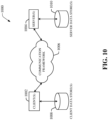
- the system 1000 includes one or more client(s) 1002, (e.g., computers, smart phones, tablets, cameras, PDA's).
- the client(s) 1002 can be hardware and/or software (e.g. , threads, processes, computing devices).
- the client(s) 1002 can house cookie(s) and/or associated contextual information by employing the specification, for example.
- the system 1000 also includes one or more server(s) 1004.
- the server(s) 1004 can also be hardware or hardware in combination with software (e.g ., threads, processes, computing devices).
- the servers 1004 can house threads to perform transformations of media items by employing aspects of this disclosure, for example.
- One possible communication between a client 1002 and a server 1004 can be in the form of a data packet adapted to be transmitted between two or more computer processes wherein data packets can include coded analyzed headspaces and/or input.
- the data packet can include a cookie and/or associated contextual information, for example.
- the system 1000 includes a communication framework 1006 (e.g., a global communication network such as the Internet) that can be employed to facilitate communications between the client(s) 1002 and the server(s) 1004.
- a communication framework 1006 e.g., a global communication network such as the Internet
- Communications can be facilitated via a wired (including optical fiber) and/or wireless technology.
- the client(s) 1002 are operatively connected to one or more client data store(s) 1008 that can be employed to store information local to the client(s) 1002 (e.g., cookie(s) and/or associated contextual information).
- the server(s) 1004 are operatively connected to one or more server data store(s) 1010 that can be employed to store information local to the servers 1004.
- a client 1002 can transfer an encoded file, (e.g., encoded media item), to server 1004.
- Server 1004 can store the file, decode the file, or transmit the file to another client 1002. It is to be appreciated, that a client 1002 can also transfer uncompressed file to a server 1004 and server 1004 can compress the file and/or transform the file in accordance with this disclosure.
- server 1004 can encode information and transmit the information via communication framework 1006 to one or more clients 1002.
- program modules can be located in both local and remote memory storage devices.
- the terms (including a reference to a "means") used to describe such components are intended to also include, unless otherwise indicated, any structure(s) which performs the specified function of the described component (e.g., a functional equivalent), even if not structurally equivalent to the disclosed structure.
- any structure(s) which performs the specified function of the described component e.g., a functional equivalent
- a particular feature of the disclosed subject matter may have been disclosed with respect to only one of several implementations, such feature can be combined with one or more other features of the other implementations as may be desired and advantageous for any given or particular application.
- exemplary and/or “demonstrative” as used herein are intended to mean serving as an example, instance, or illustration. For the avoidance of doubt, the subject matter disclosed herein is not limited by such examples.
- any aspect or design described herein as “exemplary” and/or “demonstrative” is not necessarily to be construed as preferred or advantageous over other aspects or designs, nor is it meant to preclude equivalent structures and techniques known to one skilled in the art.
- the terms “includes,” “has,” “contains,” and other similar words are used in either the detailed description or the claims, such terms are intended to be inclusive - in a manner similar to the term “comprising” as an open transition word - without precluding any additional or other elements.
- set as employed herein excludes the empty set, i.e., the set with no elements therein.
- a “set” in the subject disclosure includes one or more elements or entities.
- group as utilized herein refers to a collection of one or more entities.
Landscapes
- Engineering & Computer Science (AREA)
- Power Engineering (AREA)
- Transportation (AREA)
- Mechanical Engineering (AREA)
- Physics & Mathematics (AREA)
- General Physics & Mathematics (AREA)
- Life Sciences & Earth Sciences (AREA)
- Sustainable Development (AREA)
- Sustainable Energy (AREA)
- Chemical & Material Sciences (AREA)
- Combustion & Propulsion (AREA)
- Charge And Discharge Circuits For Batteries Or The Like (AREA)
Description
- The disclosed subject matter relates to an electric vehicle and a method.
- Electric vehicles (EVs) are becoming increasingly prevalent worldwide, and are poised to become one of the most common modes of transportation. EVs are beginning to utilize increasingly high voltage batteries, such as 800 volt batteries, however, most existing charging equipment utilizes 400 volts or fewer. Therefore, some electric vehicles boost charging equipment voltage to EV battery voltage. However, the foregoing can lead to one or more insulation faults. For example, a symmetrical fault can occur when there is a resistive path to earth comprising approximately the same resistance below the limit specified in the particular standard from all phase conductors. An asymmetrical fault can occur when there is resistive path to earth comprising different resistances below the limit specified in the particular standard from the phase conductors to earth.
- Further, unless a corresponding boost operation is galvanically isolated, one or more insulation monitoring issues can arise. For example, while 400 volt charging equipment is monitoring insulation resistances, and a connection made with an EV that utilizes an 800 volt battery, asymmetry of voltage sharing can occur on the insulation resistances. This asymmetry can lead to errors in calculation of insulation resistances, potentially damaging the charging equipment. Insulation resistance monitoring of charging equipment is known, for instance, from IEC 61851-23:2014 "Electric vehicle conductive charging system - Part 23: DC electric vehicle charging station", page 68 §CC.7, XP082002294
- The following presents a summary to provide a basic understanding of one or more embodiments of the invention. This summary is not intended to identify key or critical elements or delineate any scope of the particular embodiments or any scope of the claims. Its sole purpose is to present concepts in a simplified form as a prelude to the more detailed description that is presented later. As described, there exists a need for a system that monitors insulation resistances and accordingly balances system voltages, and various embodiments are described herein to this end and/or other ends.
- According to the disclosure, an electric vehicle comprises a direct current to direct current (DC-DC) booster that boosts a first voltage of a charging station to a second voltage of a battery of the electric vehicle; and a first insulation monitoring device (IMD) comprising an active symmetrization circuit, wherein the first IMD is communicatively coupled to a second IMD of the charging station, and wherein the first IMD adjusts a third voltage on a negative side of insulation resistance of the electric vehicle to a fourth voltage on a negative side of insulation resistance of the charging station. The disclosure is further as defined in claims 1-7.
- According to an embodiment, an electric vehicle charging system can comprise an electric vehicle comprising a direct current to direct current (DC-DC) booster that boosts a first voltage to a second voltage of a battery of the electric vehicle, and a first insulation monitoring device (IMD) comprising an active symmetrization circuit; and an electric vehicle supply equipment comprising a second IMD and an output voltage comprising the first voltage, wherein the first IMD is communicatively coupled to the second IMD, and wherein the first IMD adjusts a third voltage on a negative side of insulation resistance of the electric vehicle to a fourth voltage on a negative side of insulation resistance of the electric vehicle supply equipment.
- According to the disclosure, a method comprises determining, by an insulation monitoring device comprising a processor, of an electric vehicle, a difference between a voltage of a negative side of insulation resistance of an electric vehicle supply equipment (EVSE) and a voltage of a negative side of insulation resistance of the electric vehicle; and in response to determining the difference, balancing, by the insulation monitoring device, the voltage of the negative side of insulation resistance of the EVSE and the voltage of the negative side of insulation resistance of the electric vehicle. The disclosure is further as defined in claims 8 and 9.
-
-
FIG. 1 illustrates a block diagram of an example, non-limiting electric vehicle charging system in accordance with one or more embodiments described herein. -
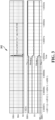
FIG. 2 illustrates a voltage chart in accordance with one or more embodiments described herein. -
FIG. 3 illustrates a voltage and current chart in accordance with one or more embodiments described herein. -
FIG. 4 illustrates a block diagram of an example, non-limiting electric vehicle charging system in accordance with one or more embodiments described herein. -
FIG. 5 illustrates a block diagram of an example, non-limiting insulation monitoring device in accordance with one or more embodiments described herein. -
FIG. 6 illustrates a voltage chart in accordance with one or more embodiments described herein. -
FIG. 7 illustrates a voltage chart in accordance with one or more embodiments described herein. -
FIG. 8 illustrates a flow diagram of an example, non-limiting balancing process in accordance with one or more embodiments described herein. -
FIG. 9 is an example, non-limiting computing environment in which one or more embodiments described herein can be implemented. -
FIG. 10 is an example, non-limiting networking environment in which one or more embodiments described herein can be implemented. - The following detailed description is merely illustrative and is not intended to limit embodiments and/or application or uses of embodiments. Furthermore, there is no intention to be bound by any expressed or implied information presented in the preceding Background or Summary sections, or in the Detailed Description section.
- One or more embodiments are now described with reference to the drawings, wherein like referenced numerals are used to refer to like elements throughout. In the following description, for purposes of explanation, numerous specific details are set forth in order to provide a more thorough understanding of the one or more embodiments. It is evident, however, in various cases, that the one or more embodiments can be practiced without these specific details.
- It will be understood that when an element is referred to as being "coupled" to another element, it can describe one or more different types of coupling including, but not limited to, chemical coupling, communicative coupling, capacitive coupling, electrical coupling, electromagnetic coupling, inductive coupling, operative coupling, optical coupling, physical coupling, thermal coupling, and/or another type of coupling. As referenced herein, an "entity" can comprise a human, a client, a user, a computing device, a software application, an agent, a machine learning model, an artificial intelligence, and/or another entity. It should be appreciated that such an entity can facilitate implementation of the subject disclosure in accordance with one or more embodiments the described herein.
- Turning now to
FIG. 1 , there is illustrated a block diagram of an example, non-limiting electricvehicle charging system 102 in accordance with one or more embodiments described herein. In various embodiments, the electricvehicle charging system 102 can comprise a charging station 104 (e.g., electric vehicle supply equipment (EVSE)) and/or an electric vehicle (EV) 106. In various embodiments, thecharging station 104 can comprise one or more of apositive connection 120,negative connection 122,resistor 112,resistor 114,supply voltage 108,capacitor 110,capacitor 146,capacitor 118, and/orground 116. According to the disclosure, theEV 106 comprises one or more of apositive connection 124,negative connection 126, direct current to direct current (DC-DC) converter 148 (e.g., a DC voltage booster),contactor 128,contactor 130,ground 144,capacitor 132,capacitor 134,resistor 136,resistor 138,capacitor 140, and/orbattery 142. - In various embodiments, one or more of the
charging station 104,EV 106,positive connection 120,negative connection 122,resistor 112,resistor 114,supply voltage 108,capacitor 110,capacitor 146,capacitor 118,ground 116, apositive connection 124,negative connection 126, DC-DC converter 148,contactor 128,contactor 130,ground 144,capacitor 132,capacitor 134,resistor 136,resistor 138,capacitor 140, and/orbattery 142 can be communicatively or operably coupled to one another to perform one or more functions of the electricvehicle charging system 102. - According to an embodiment,
charging station 104 can comprise a 400 volt charging station andbattery 142 of theEV 106 can comprise an 800 volt battery, though other suitable voltages for thecharging station 104 andEV 106 can be utilized (e.g., in which thebattery 142 comprises a higher voltage (e.g., a first voltage) than a voltage (e.g., a second voltage) of the charging station 104). In this regard,supply voltage 108 can comprise 400 volts. Further in this regard,capacitor 146 can comprise 200 volts andcapacitor 118 can comprise 200 volts. In one or more embodiments,capacitor 132 can comprise 400 volts andcapacitor 134 can comprise 400 volts. In this regard, voltages of insulation resistances (e.g., acrossresistor 136 and resistor 138) can be equal to each other. Similarly, insulation resistances (e.g., acrossresistor 112 and resistor 114) can be equal to each other. In this regard, Revse,p can equal Revse,n and Rev,p can equal Rev,n (see, e.g.,FIG. 2 as later discussed in greater detail). However, after connection is made between thecharging station 104 and EV 106 (e.g., charging cable ofcharging station 104 is plugged into charging port of EV 106) (e.g., by connectingpositive connection 120 topositive connection 124 andnegative connection 122 to negative connection 126), voltage sharing can be disrupted. In this regard, voltage acrosscapacitor 132 and/or resistor 136 (e.g., a fifth voltage) (e.g., along positive connection 124) can comprise 100 volts, and voltage acrosscapacitor 134 and resistor 138 (e.g., negative connection 126) can comprise 300 volts. The foregoing can damage thecharging station 104. Such voltages are illustratedvoltage chart 202 ofFIG. 2 , in which Rev,p represents voltage acrossresistor 136, Revse,p represents voltage acrossresistor 112, Revse,n represents voltage across resistor 114 (e.g., a fourth voltage), and Rev,n represents voltage across resistor 138 (e.g., a third voltage). The voltage values in which Revse,n and Rev,n are balanced can depend on insulation resistance values herein, which can vary due to wear and tear on various components moisture presents, dust presence, or other factors, and can impact such set voltages. The capacitance of one or more capacitors herein (e.g., Y-caps) (e.g.,capacitor 110,capacitor 146,capacitor 118,capacitor 132,capacitor 134, and/or capacitor 140 ) can impact time to reach stable voltages herein. - It is noted that insulation resistances herein are not typically fixed. In this regard, insulation resistances can vary over time and/or can depend on presences of moisture, dust, etc. Further in this regard, voltages along a
positive connection 124 of the EV 106 (e.g., acrosscapacitor 132 and/or resistor 136) can differ from voltages along thenegative connection 126 of the EV 106 (e.g., acrosscapacitor 134 and/or resistor 138). According to an embodiment, ifbattery 142 comprises 800 volts,capacitor 132 andresistor 136 can experience 200 volts, andcapacitor 134 andresistor 138 can experience 600 volts. In this regard Rev,n > Rev,p. In this scenario, if the chargingstation 104 is connected to theEV 106, damage can occur to the charging station 104 (e.g., toresistor 114 and/or capacitor 118) due to overloading, for example, if the chargingstation 104 only comprises a 400 volt charging station. In one or more embodiments, the chargingstation 104 can comprise a maximum output voltage of 500 volts or another suitable voltage rating (e.g., of a 400 volt charging station or another suitable charging station). For example, a 400 volt charging station can comprise a maximum output voltage of 500 volts. In this regard, a high inrush current can flow through a capacitor in the chargingstation 104 once theEV 106 and chargingstation 104 are connected. Due to differences in voltage levels, for example, a capacitor of the EV 106 (e.g., capacitor 134), comprising a higher voltage, can attempt to charge another a capacitor of the charging station 104 (e.g., capacitor 118), comprising a lower voltage, which can damage thecapacitor 118,capacitor 110,capacitor 118,resistor 114, or another component of the chargingstation 104. The foregoing is illustrated inchart 302 ofFIG. 3 , in which inrush current on the Y-cap in the EVSE (e.g.,capacitor 118 in the charging station 104) is experienced when a 400 volt EVSE (e.g., charging station 104) is connected to an EV (e.g., EV 106) comprising an 800 volt battery (e.g., battery 142) without symmetrization. - It is noted that in various embodiments, the DC-
DC converter 148 can convert or boost a voltage of the charging station (e.g., supply voltage 108) to a voltage of the battery 142 (e.g., of the EV 106). - Turning now to
FIG. 4 , there is illustrated a block diagram of an example, non-limiting electricvehicle charging system 402 in accordance with one or more embodiments described herein. In various embodiments, the electricvehicle charging system 402 can comprise a charging station 404 (e.g., EVSE) and/or anEV 406. In various embodiments, the chargingstation 404 can comprise one or more of an insulation monitoring device (IMD) 408,positive connection 120,negative connection 122,resistor 112,resistor 114,supply voltage 108,capacitor 110,capacitor 146,capacitor 118, and/orground 116. In one or more embodiments, theEV 406 can comprise one or more of anIMD 426,positive connection 124,negative connection 126, DC-DC converter 148 (e.g., a DC voltage booster),contactor 128,contactor 130,ground 144,capacitor 132,capacitor 134,resistor 136,resistor 138,capacitor 140, and/orbattery 142. In various embodiments, theIMD 408 can comprise aresistor 410,switch 412, sensor 416 (e.g., a voltage sensor, such as a voltmeter),ground 414,switch 420, sensor 422 (e.g., a voltage sensor),ground 424, and/orresistor 418. In one or more embodiments, theIMD 426 comprise an active symmetrization circuit, which can comprise one or more of aresistor 428,switch 432, sensor 430 (e.g., a voltage sensor),ground 434,switch 436, sensor 442 (e.g., a voltage sensor),ground 440, and/orresistor 438. Repetitive description of like elements is omitted for sake of brevity. - In various embodiments, one or more of the charging
station 404,EV 406,IMD 408,positive connection 120,negative connection 122,resistor 112,resistor 114,supply voltage 108,capacitor 110,capacitor 146,capacitor 118,ground 116,IMD 426,positive connection 124,negative connection 126, DC-DC converter 148,contactor 128,contactor 130,ground 144,capacitor 132,capacitor 134,resistor 136,resistor 138,capacitor 140,battery 142,resistor 410,switch 412,sensor 416,ground 414,switch 420,sensor 422,ground 424,resistor 418,resistor 428,switch 432,sensor 430,ground 434,switch 436,sensor 442,ground 440, and/orresistor 438 can be communicatively or operably coupled to one another to perform one or more functions of the electricvehicle charging system 402. - In various embodiments, insulation monitoring herein can be performed by the
IMD 408 and/or IMD 426 (e.g., independently, or collectively). In this regard, during a charging session of theEV 406 by the chargingstation 404, theIMD 408 can facilitate insulation monitoring, for example, according to a defined charging standard (e.g., Combined Charging System (CCS), CHAdeMO, GB/T, Chaoji, or another suitable charging standard). - It is noted that a symmetrical fault can occur when there is a resistive path to earth comprising approximately the same resistance below the limit specified in the particular standard from all phase conductors. It is further noted that an asymmetrical fault can occur when there is resistive path to earth comprising different resistances below the limit specified in the particular standard from the phase conductors to earth. In this regard, unless a corresponding boost function (e.g., via DC-DC converter 148) is galvanically isolated, accuracies in monitoring of insulation resistances by the
IMD 408 can be reduced when the chargingstation 404 comprises a 400 volt charging station and thebattery 142 comprises an 800 volt battery (or with other voltages in which thebattery 142 comprises a higher voltage than that of the charging station 404). The foregoing can occur, for example, due to asymmetry of voltage sharing on insulation resistances herein. Such asymmetry can cause theIMD 408 to determine insulation resistances incorrectly. - According to an embodiment, the
IMD 426 can be activated to balance voltage sharing herein (e.g., in response to the chargingstation 404 andEV 406 being connected or communicatively coupled, for example, via theIMD 426 and IMD 408). In various embodiments, theIMD 426 can balance voltage sharing (e.g., between a positive side of insulation resistance of theEV 406 and the negative side of insulation resistance of the EV) by switching the negative side of the resistances periodically (e.g., via opening or closingswitch 436 or another suitable switch herein). In this regard, opening or closing switch 436 (e.g., or another suitable switch herein) can disable or enable the resistor 438 (e.g., or another suitable resistor herein) to facilitate balancing of voltage sharing herein (e.g., to increase a voltage of a positive side of insulation resistance and decrease a negative side of insulation resistance of theEV 406 to match the negative voltage of the charging station 404). By balancing voltage sharing (e.g., using the IMD 426), theIMD 408 can be enabled to determine insulation resistances more accurately and/or adjust voltage sharing herein. In various embodiments, the switch 436 (or another switch herein) can be opened or closed according to a defined frequency. In further embodiments, the switch 436 (or another switch herein) can be opened or closed according to a defined duty ratio. - In one or more embodiments, the
IMD 426 can be communicatively coupled to the IMD 408 (e.g., via a communication component 512 later discussed in greater detail with respect toFIG. 5 ). In this regard, theIMD 426 can receive (and/or transmit) data representative of a voltage along thenegative connection 122 from the IMD 408 (e.g., and/or transmit or receive other suitable data). - According to an embodiment,
contactor 128 and contactor 130 (e.g., a pair of contactors) can be closed (e.g., in response the voltage of the negative side (e.g., along negative connection 122) of insulation resistance of the chargingstation 404 and the voltage of the negative side (e.g., along negative connection 126) of insulation resistance of the EV 406). -
FIG. 5 illustrates a block diagram of an example,non-limiting IMD 502 in accordance with one or more embodiments described herein. In various embodiments,IMD 502 can be similar toIMD 408 and/orIMD 426. In one or more embodiments,IMD 502 can comprise an active symmetrization circuit, which can comprise one or more of a voltage sensor 506 (e.g., a voltmeter),processor 508,memory 510, communication component 512,switch 514,ground 516,resistor 522,switch 526,resistor 524, and/orswitch 528. - In various embodiments, one or more of the
voltage sensor 506,processor 508,memory 510, communication component 512,switch 514,ground 516,resistor 522,switch 526,resistor 524, and/or switch 528 can be communicatively or operably coupled to one another to perform one or more functions of theIMD 502. - According to an embodiment, the
IMD 502 can be activated to balance voltage sharing herein. In various embodiments, theIMD 502 can balance voltage sharing by switching the negative side of the resistances periodically (e.g., via opening or closingswitch 528 and/or switch 526). In this regard, opening or closingswitch 526 or switch 528 can disable or enable theresistor 524 orresistor 522 to facilitate balancing of voltage sharing herein. By balancing voltage sharing (e.g., using the IMD 502 (e.g., a first IMD)), a second IMD can be enabled to determine insulation resistances more accurately and/or adjust the voltage sharing herein. In various embodiments, theswitch 528 or theswitch 526 can be opened or closed according to a defined frequency. In further embodiments, theswitch 528 or theswitch 526 can be opened or closed according to a defined duty ratio. - According to an embodiment,
resistor 518 can comprise an unknown resistor or an unknown resistance value on a positive line 530 (e.g., a positive arm or positive connection 124), andresistor 520 can comprise an unknown resistor or an unknown resistance value on a negative line 532 (e.g., a negative arm or negative connection 126). Thevoltage sensor 506 can be utilized to measure voltage acrosspositive line 530 and/ornegative line 532. Next, a known resistor (e.g.,resistor 522 and/or resistor 524) can be activated (e.g., via closing ofswitch 526 and/or switch 528, respectively) to measure voltage again. By comparing voltages, insulation resistance herein can be determined (e.g., via determination of voltages on thepositive line 530 and/or negative line 532). - It is noted that the
processor 508 and/ormemory 510 can be utilized to facilitate performance of one or more functions of theIMD 502. Further, the communication component 512 can comprise the hardware required to implement a variety of communication protocols (e.g., infrared ("IR"), shortwave transmission, near-field communication ("NFC"), Bluetooth, Wi-Fi, long-term evolution ("LTE"), 3G, 4G, 5G, global system for mobile communications ("GSM"), code-division multiple access ("CDMA"), satellite, visual cues, radio waves, etc.). In this regard, the communication component 512 can be utilized to communicate with other IMDs (e.g., other than the IMD 502). It is noted that while not depicted, theIMD 408 and/orIMD 426 can similarly comprise aprocessor 508,memory 510, and/or communication component 512. In this regard, the communication component 512 can be utilized to communicate according to CCS, CHAdeMO, or another suitable standard, with other IMDs or devices. -
FIG. 6 illustrates avoltage chart 602 in accordance with one or more embodiments described herein. In this regard,FIG. 6 illustrates a balanced condition (e.g., utilizingIMD 426 for symmetrization) (e.g., between Revse,p and Revse,n). In this regard, the voltage of insulation resistance on a negative side of the EV 406 (e.g., along negative connection 126) can be decreased to match voltage along thenegative connection 122 of the charging station 404 (e.g., before a connection is realized at t=1s, by closing thecontactor 128 and/or contactor 130). Aftercontactor 128 and/or contactor 130 (e.g., a pair of contactors) are closed (e.g., charging connection established between the chargingstation 404 and EV 406),resistor 438 in theIMD 426 can be switched periodically (e.g., via switch 436) to maintain the voltage of along thenegative connection 126 or as requested by theIMD 408.FIG. 7 illustrates avoltage chart 702 in accordance with one or more embodiments described herein. According to an embodiment, involtage chart 702, the depicted voltage waveforms can comprise a result of correct insulation resistance calculation (e.g., by an IMD 408) when theIMD 426 is actively balancing one or more voltages herein (e.g., of one or more capacitors herein). -
FIG. 8 illustrates a flow diagram of an example,non-limiting balancing process 800 in accordance with one or more embodiments described herein. Repetitive description of like elements and/or processes employed in respective embodiments is omitted for sake of brevity. At 802, theprocess 800 can comprise determining, by an insulation monitoring device (e.g., IMD 426) comprising a processor, of an electric vehicle (e.g., EV 406), a difference between a voltage of a negative side (e.g., negative connection 122) of insulation resistance of an electric vehicle supply equipment (EVSE) (e.g., charging station 404) and a voltage of a negative side (e.g., negative connection 126) of insulation resistance of the electric vehicle. At 804, theprocess 800 can comprise in response to determining the difference, balancing, by the insulation monitoring device (e.g., IMD 426), the voltage of the negative side (e.g., negative connection 122) of insulation resistance of the EVSE and the voltage of the negative side (e.g., negative connection 126) of insulation resistance of the electric vehicle. - Systems herein can comprise a memory which can store one or more computer/machine readable and/or executable components and/or instructions that, when executed by a processor (e.g., a classical processor, a quantum processor, etc.), can facilitate performance of operations defined by the executable component(s) and/or instruction(s). The memory can comprise volatile memory (e.g., random access memory (RAM), static RAM (SRAM), dynamic RAM (DRAM), etc.) and/or non-volatile memory (e.g., read only memory (ROM), programmable ROM (PROM), electrically programmable ROM (EPROM), electrically erasable programmable ROM (EEPROM), etc.) that can employ one or more memory architectures.
- Systems herein can comprise a processor which can comprise one or more types of processors and/or electronic circuitry (e.g., a classical processor, graphics processor, a quantum processor, etc.) that can implement one or more computer and/or machine readable, writable, and/or executable components and/or instructions that can be stored on a memory. For example, the processor can perform various operations that can be specified by such computer and/or machine readable, writable, and/or executable components and/or instructions including, but not limited to, logic, control, input/output (I/O), arithmetic, and/or the like. In some embodiments, processors herein can comprise one or more central processing unit, multi-core processor, microprocessor, dual microprocessors, microcontroller, System on a Chip (SOC), array processor, vector processor, quantum processor, and/or another type of processor.
- Systems described herein can be coupled (e.g., communicatively, electrically, operatively, optically, etc.) to one or more local or remote (e.g., external) systems, sources, and/or devices (e.g., electronic control systems (ECU), classical and/or quantum computing devices, communication devices, etc.). For example, systems herein (or other systems, controllers, processors, etc.) can be coupled (e.g., communicatively, electrically, operatively, optically, etc.) to one or more local or remote (e.g., external) systems, sources, and/or devices using a data cable (e.g., High-Definition Multimedia Interface (HDMI), recommended standard (RS), Ethernet cable, etc.) and/or one or more wired networks described below.
- In some embodiments, systems herein can be coupled (e.g., communicatively, electrically, operatively, optically, etc.) to one or more local or remote (e.g., external) systems, sources, and/or devices (e.g., electronic control units (ECU), classical and/or quantum computing devices, communication devices, etc.) via a network. In these embodiments, such a network can comprise one or more wired and/or wireless networks, including, but not limited to, a cellular network, a wide area network (WAN) (e.g., the Internet), and/or a local area network (LAN). For example, a system herein can communicate with one or more local or remote (e.g., external) systems, sources, and/or devices, for instance, computing devices using such a network, which can comprise virtually any desired wired or wireless technology, including but not limited to: powerline ethernet, wireless fidelity (Wi-Fi), BLUETOOTH®, fiber optic communications, global system for mobile communications (GSM), universal mobile telecommunications system (UMTS), worldwide interoperability for microwave access (WiMAX), enhanced general packet radio service (enhanced GPRS), third generation partnership project (3GPP) long term evolution (LTE), third generation partnership project 2 (3GPP2) ultra-mobile broadband (UMB), high speed packet access (HSPA), Zigbee and other 802.XX wireless technologies and/or legacy telecommunication technologies, Session Initiation Protocol (SIP), ZIGBEE®, RF4CE protocol, WirelessHART protocol, 6LoWPAN (IPv6 over Low power Wireless Area Networks), Z-Wave, an ANT, an ultra-wideband (UWB) standard protocol, and/or other proprietary and non-proprietary communication protocols. In this example, systems herein can thus include hardware (e.g., a central processing unit (CPU), a transceiver, a decoder, an antenna (e.g., a ultra-wideband (UWB) antenna, a BLUETOOTH® low energy (BLE) antenna, etc.), quantum hardware, a quantum processor, etc.), software (e.g., a set of threads, a set of processes, software in execution, quantum pulse schedule, quantum circuit, quantum gates, etc.), or a combination of hardware and software that facilitates communicating information between a system herein and remote (e.g., external) systems, sources, and/or devices (e.g., computing and/or communication devices such as, for instance, a smart phone, a smart watch, wireless earbuds, etc.).
- Systems herein can comprise one or more computer and/or machine readable, writable, and/or executable components and/or instructions that, when executed by processor (e.g., a classical processor, a quantum processor, etc.), can facilitate performance of operations defined by such component(s) and/or instruction(s). Further, in numerous embodiments, any component associated with a system herein, as described herein with or without reference to the various figures of the subject disclosure, can comprise one or more computer and/or machine readable, writable, and/or executable components and/or instructions that, when executed by a processor, can facilitate performance of operations defined by such component(s) and/or instruction(s). For example, any component associated with systems as disclosed herein (e.g., communicatively, electronically, operatively, and/or optically coupled with and/or employed by a system described herein), can comprise such computer and/or machine readable, writable, and/or executable component(s) and/or instruction(s). Consequently, according to numerous embodiments or systems herein and/or any components associated therewith as disclosed herein, can employ a processor to execute such computer and/or machine readable, writable, and/or executable component(s) and/or instruction(s) to facilitate performance of one or more operations described herein with reference to system herein and/or any such components associated therewith.
- Systems herein can comprise any type of system, device, machine, apparatus, component, and/or instrument that comprises a processor and/or that can communicate with one or more local or remote electronic systems and/or one or more local or remote devices via a wired and/or wireless network. All such embodiments are envisioned. For example, a system herein can comprise a computing device, a general-purpose computer, a special-purpose computer, an onboard computing device, a communication device, an onboard communication device, a server device, a quantum computing device (e.g., a quantum computer), a tablet computing device, a handheld device, a server class computing machine and/or database, a laptop computer, a notebook computer, a desktop computer, a cell phone, a smart phone, a consumer appliance and/or instrumentation, an industrial and/or commercial device, a digital assistant, a multimedia Internet enabled phone, a multimedia players, and/or another type of device.
- In order to provide additional context for various embodiments described herein,
FIG. 9 and the following discussion are intended to provide a brief, general description of asuitable computing environment 900 in which the various embodiments of the embodiment described herein can be implemented. While the embodiments have been described above in the general context of computer-executable instructions that can run on one or more computers, those skilled in the art will recognize that the embodiments can be also implemented in combination with other program modules and/or as a combination of hardware and software. - Generally, program modules include routines, programs, components, data structures, etc., that perform particular tasks or implement particular abstract data types. Moreover, those skilled in the art will appreciate that the inventive methods can be practiced with other computer system configurations, including single-processor or multiprocessor computer systems, minicomputers, mainframe computers, Internet of Things (IoT) devices, distributed computing systems, as well as personal computers, hand-held computing devices, microprocessor-based or programmable consumer electronics, and the like, each of which can be operatively coupled to one or more associated devices.
- The illustrated embodiments of the embodiments herein can be also practiced in distributed computing environments where certain tasks are performed by remote processing devices that are linked through a communications network. In a distributed computing environment, program modules can be located in both local and remote memory storage devices.
- Computing devices typically include a variety of media, which can include computer-readable storage media, machine-readable storage media, and/or communications media, which two terms are used herein differently from one another as follows. Computer-readable storage media or machine-readable storage media can be any available storage media that can be accessed by the computer and includes both volatile and nonvolatile media, removable and non-removable media. By way of example, and not limitation, computer-readable storage media or machine-readable storage media can be implemented in connection with any method or technology for storage of information such as computer-readable or machine-readable instructions, program modules, structured data, or unstructured data.
- Computer-readable storage media can include, but are not limited to, random access memory (RAM), read only memory (ROM), electrically erasable programmable read only memory (EEPROM), flash memory or other memory technology, compact disk read only memory (CD-ROM), digital versatile disk (DVD), Blu-ray disc (BD) or other optical disk storage, magnetic cassettes, magnetic tape, magnetic disk storage or other magnetic storage devices, solid state drives or other solid state storage devices, or other tangible and/or non-transitory media which can be used to store desired information. In this regard, the terms "tangible" or "non-transitory" herein as applied to storage, memory, or computer-readable media, are to be understood to exclude only propagating transitory signals per se as modifiers and do not relinquish rights to all standard storage, memory or computer-readable media that are not only propagating transitory signals per se.
- Computer-readable storage media can be accessed by one or more local or remote computing devices, e.g., via access requests, queries, or other data retrieval protocols, for a variety of operations with respect to the information stored by the medium.
- Communications media typically embody computer-readable instructions, data structures, program modules or other structured or unstructured data in a data signal such as a modulated data signal, e.g., a carrier wave or other transport mechanism, and includes any information delivery or transport media. The term "modulated data signal" or signals refers to a signal that has one or more of its characteristics set or changed in such a manner as to encode information in one or more signals. By way of example, and not limitation, communication media include wired media, such as a wired network or direct-wired connection, and wireless media such as acoustic, RF, infrared and other wireless media.
- With reference again to
FIG. 9 , theexample environment 900 for implementing various embodiments of the aspects described herein includes acomputer 902, thecomputer 902 including aprocessing unit 904, asystem memory 906 and asystem bus 908. Thesystem bus 908 couples system components including, but not limited to, thesystem memory 906 to theprocessing unit 904. Theprocessing unit 904 can be any of various commercially available processors. Dual microprocessors and other multi-processor architectures can also be employed as theprocessing unit 904. - The
system bus 908 can be any of several types of bus structure that can further interconnect to a memory bus (with or without a memory controller), a peripheral bus, and a local bus using any of a variety of commercially available bus architectures. Thesystem memory 906 includesROM 910 andRAM 912. A basic input/output system (BIOS) can be stored in a non-volatile memory such as ROM, erasable programmable read only memory (EPROM), EEPROM, which BIOS contains the basic routines that help to transfer information between elements within thecomputer 902, such as during startup. TheRAM 912 can also include a high-speed RAM such as static RAM for caching data. - The
computer 902 further includes an internal hard disk drive (HDD) 914 (e.g., EIDE, SATA), one or more external storage devices 916 (e.g., a magnetic floppy disk drive (FDD) 916, a memory stick or flash drive reader, a memory card reader, etc.) and an optical disk drive 920 (e.g., which can read or write from a CD-ROM disc, a DVD, a BD, etc.). While theinternal HDD 914 is illustrated as located within thecomputer 902, theinternal HDD 914 can also be configured for external use in a suitable chassis (not shown). Additionally, while not shown inenvironment 900, a solid-state drive (SSD) could be used in addition to, or in place of, anHDD 914. TheHDD 914, external storage device(s) 916 andoptical disk drive 920 can be connected to thesystem bus 908 by anHDD interface 924, anexternal storage interface 926 and anoptical drive interface 928, respectively. Theinterface 924 for external drive implementations can include at least one or both of Universal Serial Bus (USB) and Institute of Electrical and Electronics Engineers (IEEE) 1394 interface technologies. Other external drive connection technologies are within contemplation of the embodiments described herein. - The drives and their associated computer-readable storage media provide nonvolatile storage of data, data structures, computer-executable instructions, and so forth. For the
computer 902, the drives and storage media accommodate the storage of any data in a suitable digital format. Although the description of computer-readable storage media above refers to respective types of storage devices, it should be appreciated by those skilled in the art that other types of storage media which are readable by a computer, whether presently existing or developed in the future, could also be used in the example operating environment, and further, that any such storage media can contain computer-executable instructions for performing the methods described herein. - A number of program modules can be stored in the drives and
RAM 912, including anoperating system 930, one ormore application programs 932,other program modules 934 andprogram data 936. All or portions of the operating system, applications, modules, and/or data can also be cached in theRAM 912. The systems and methods described herein can be implemented utilizing various commercially available operating systems or combinations of operating systems. -
Computer 902 can optionally comprise emulation technologies. For example, a hypervisor (not shown) or other intermediary can emulate a hardware environment foroperating system 930, and the emulated hardware can optionally be different from the hardware illustrated inFIG. 9 . In such an embodiment,operating system 930 can comprise one virtual machine (VM) of multiple VMs hosted atcomputer 902. Furthermore,operating system 930 can provide runtime environments, such as the Java runtime environment or the .NET framework, forapplications 932. Runtime environments are consistent execution environments that allowapplications 932 to run on any operating system that includes the runtime environment. Similarly,operating system 930 can support containers, andapplications 932 can be in the form of containers, which are lightweight, standalone, executable packages of software that include, e.g., code, runtime, system tools, system libraries and settings for an application. - Further,
computer 902 can be enable with a security module, such as a trusted processing module (TPM). For instance, with a TPM, boot components hash next in time boot components, and wait for a match of results to secured values, before loading a next boot component. This process can take place at any layer in the code execution stack ofcomputer 902, e.g., applied at the application execution level or at the operating system (OS) kernel level, thereby enabling security at any level of code execution. - A user can enter commands and information into the
computer 902 through one or more wired/wireless input devices, e.g., akeyboard 938, atouch screen 940, and a pointing device, such as amouse 942. Other input devices (not shown) can include a microphone, an infrared (IR) remote control, a radio frequency (RF) remote control, or other remote control, a joystick, a virtual reality controller and/or virtual reality headset, a game pad, a stylus pen, an image input device, e.g., camera(s), a gesture sensor input device, a vision movement sensor input device, an emotion or facial detection device, a biometric input device, e.g., fingerprint or iris scanner, or the like. These and other input devices are often connected to theprocessing unit 904 through aninput device interface 944 that can be coupled to thesystem bus 908, but can be connected by other interfaces, such as a parallel port, an IEEE 1394 serial port, a game port, a USB port, an IR interface, a BLUETOOTH® interface, etc. - A
monitor 946 or other type of display device can be also connected to thesystem bus 908 via an interface, such as avideo adapter 948. In addition to themonitor 946, a computer typically includes other peripheral output devices (not shown), such as speakers, printers, etc. - The
computer 902 can operate in a networked environment using logical connections via wired and/or wireless communications to one or more remote computers, such as a remote computer(s) 950. The remote computer(s) 950 can be a workstation, a server computer, a router, a personal computer, portable computer, microprocessor-based entertainment appliance, a peer device or other common network node, and typically includes many or all of the elements described relative to thecomputer 902, although, for purposes of brevity, only a memory/storage device 952 is illustrated. The logical connections depicted include wired/wireless connectivity to a local area network (LAN) 954 and/or larger networks, e.g., a wide area network (WAN) 956. Such LAN and WAN networking environments are commonplace in offices and companies, and facilitate enterprise-wide computer networks, such as intranets, all of which can connect to a global communications network, e.g., the Internet. - When used in a LAN networking environment, the
computer 902 can be connected to thelocal network 954 through a wired and/or wireless communication network interface oradapter 958. Theadapter 958 can facilitate wired or wireless communication to theLAN 954, which can also include a wireless access point (AP) disposed thereon for communicating with theadapter 958 in a wireless mode. - When used in a WAN networking environment, the
computer 902 can include amodem 960 or can be connected to a communications server on theWAN 956 via other means for establishing communications over theWAN 956, such as by way of the Internet. Themodem 960, which can be internal or external and a wired or wireless device, can be connected to thesystem bus 908 via theinput device interface 944. In a networked environment, program modules depicted relative to thecomputer 902 or portions thereof, can be stored in the remote memory/storage device 952. It will be appreciated that the network connections shown are example and other means of establishing a communications link between the computers can be used. - When used in either a LAN or WAN networking environment, the
computer 902 can access cloud storage systems or other network-based storage systems in addition to, or in place of,external storage devices 916 as described above. Generally, a connection between thecomputer 902 and a cloud storage system can be established over aLAN 954 orWAN 956 e.g., by theadapter 958 ormodem 960, respectively. Upon connecting thecomputer 902 to an associated cloud storage system, theexternal storage interface 926 can, with the aid of theadapter 958 and/ormodem 960, manage storage provided by the cloud storage system as it would other types of external storage. For instance, theexternal storage interface 926 can be configured to provide access to cloud storage sources as if those sources were physically connected to thecomputer 902. - The
computer 902 can be operable to communicate with any wireless devices or entities operatively disposed in wireless communication, e.g., a printer, scanner, desktop and/or portable computer, portable data assistant, communications satellite, any piece of equipment or location associated with a wirelessly detectable tag (e.g., a kiosk, news stand, store shelf, etc.), and telephone. This can include Wireless Fidelity (Wi-Fi) and BLUETOOTH® wireless technologies. Thus, the communication can be a predefined structure as with a conventional network or simply an ad hoc communication between at least two devices. - Referring now to
FIG. 10 , there is illustrated a schematic block diagram of acomputing environment 1000 in accordance with this specification. Thesystem 1000 includes one or more client(s) 1002, (e.g., computers, smart phones, tablets, cameras, PDA's). The client(s) 1002 can be hardware and/or software (e.g., threads, processes, computing devices). The client(s) 1002 can house cookie(s) and/or associated contextual information by employing the specification, for example. - The
system 1000 also includes one or more server(s) 1004. The server(s) 1004 can also be hardware or hardware in combination with software (e.g., threads, processes, computing devices). Theservers 1004 can house threads to perform transformations of media items by employing aspects of this disclosure, for example. One possible communication between aclient 1002 and aserver 1004 can be in the form of a data packet adapted to be transmitted between two or more computer processes wherein data packets can include coded analyzed headspaces and/or input. The data packet can include a cookie and/or associated contextual information, for example. Thesystem 1000 includes a communication framework 1006 (e.g., a global communication network such as the Internet) that can be employed to facilitate communications between the client(s) 1002 and the server(s) 1004. - Communications can be facilitated via a wired (including optical fiber) and/or wireless technology. The client(s) 1002 are operatively connected to one or more client data store(s) 1008 that can be employed to store information local to the client(s) 1002 (e.g., cookie(s) and/or associated contextual information). Similarly, the server(s) 1004 are operatively connected to one or more server data store(s) 1010 that can be employed to store information local to the
servers 1004. - In one exemplary implementation, a
client 1002 can transfer an encoded file, (e.g., encoded media item), toserver 1004.Server 1004 can store the file, decode the file, or transmit the file to anotherclient 1002. It is to be appreciated, that aclient 1002 can also transfer uncompressed file to aserver 1004 andserver 1004 can compress the file and/or transform the file in accordance with this disclosure. Likewise,server 1004 can encode information and transmit the information viacommunication framework 1006 to one ormore clients 1002. - The illustrated aspects of the disclosure can also be practiced in distributed computing environments where certain tasks are performed by remote processing devices that are linked through a communications network. In a distributed computing environment, program modules can be located in both local and remote memory storage devices.
- The above description includes non-limiting examples of the various embodiments. It is, of course, not possible to describe every conceivable combination of components or methods for purposes of describing the disclosed subject matter, and one skilled in the art can recognize that further combinations and permutations of the various embodiments are possible. The disclosed subject matter is intended to embrace all such alterations, modifications, and variations that fall within the scope of the appended claims.
- With regard to the various functions performed by the above-described components, devices, circuits, systems, etc., the terms (including a reference to a "means") used to describe such components are intended to also include, unless otherwise indicated, any structure(s) which performs the specified function of the described component (e.g., a functional equivalent), even if not structurally equivalent to the disclosed structure. In addition, while a particular feature of the disclosed subject matter may have been disclosed with respect to only one of several implementations, such feature can be combined with one or more other features of the other implementations as may be desired and advantageous for any given or particular application.
- The terms "exemplary" and/or "demonstrative" as used herein are intended to mean serving as an example, instance, or illustration. For the avoidance of doubt, the subject matter disclosed herein is not limited by such examples. In addition, any aspect or design described herein as "exemplary" and/or "demonstrative" is not necessarily to be construed as preferred or advantageous over other aspects or designs, nor is it meant to preclude equivalent structures and techniques known to one skilled in the art. Furthermore, to the extent that the terms "includes," "has," "contains," and other similar words are used in either the detailed description or the claims, such terms are intended to be inclusive - in a manner similar to the term "comprising" as an open transition word - without precluding any additional or other elements.
- The term "or" as used herein is intended to mean an inclusive "or" rather than an exclusive "or." For example, the phrase "A or B" is intended to include instances of A, B, and both A and B. Additionally, the articles "a" and "an" as used in this application and the appended claims should generally be construed to mean "one or more" unless either otherwise specified or clear from the context to be directed to a singular form.
- The term "set" as employed herein excludes the empty set, i.e., the set with no elements therein. Thus, a "set" in the subject disclosure includes one or more elements or entities. Likewise, the term "group" as utilized herein refers to a collection of one or more entities.
- The description of illustrated embodiments of the subject disclosure as provided herein, including what is described in the Abstract, is not intended to be exhaustive or to limit the disclosed embodiments to the precise forms disclosed. While specific embodiments and examples are described herein for illustrative purposes, various modifications are possible that are considered within the scope of such embodiments and examples, as one skilled in the art can recognize. In this regard, while the subject matter has been described herein in connection with various embodiments and corresponding drawings, where applicable, it is to be understood that other similar embodiments can be used or modifications and additions can be made to the described embodiments for performing the same, similar, alternative, or substitute function of the disclosed subject matter without deviating therefrom. Therefore, the disclosed subject matter should not be limited to any single embodiment described herein, but rather should be construed in breadth and scope in accordance with the appended claims below.
Claims (15)
- An electric vehicle, comprising:a non-isolated direct current to direct current (DC-DC) booster (148) that boosts a first voltage of a charging station (404) to a second voltage of a battery (142) of the electric vehicle (406);a first insulation monitoring device (IMD) (426) comprising an active symmetrization circuit, a resistor (428, 438); and a switch (432, 436) that closes or opens to enable or disable the resistor (428, 438), anda first contactor (128) on a positive connection (124) and a second contactor (130) on a negative connection (126),wherein the first IMD (426) is communicatively coupled to a second IMD (408) of the charging station (404) through the first contactor (128) and the second contactor (130), and receives data indicative of a fourth voltage on a negative side of insulation resistance of the charging station (404) from the second IMD (408),wherein the first IMD (426) adjusts a third voltage on a negative side of insulation resistance of the electric vehicle (406) to the fourth voltage by opening or closing the switch (432, 436), andwherein the first contactor (128) and second contactor (130) close after the third voltage matches the fourth voltage.
- The electric vehicle of claim 1, wherein the first IMD (426) and the second IMD (408) communicate according to a defined charging standard.
- The electric vehicle of claim 1, wherein the first IMD (426) further comprises a voltage sensor (430, 442) that measures the third voltage.
- The electric vehicle of claim 1, wherein the switch (432, 436) opens or closes according to a defined frequency.
- The electric vehicle of claim 1, wherein the switch (432, 436) opens or closes according to a defined duty ratio.
- The electric vehicle of claim 1, wherein the first IMD (426) adjusts voltage sharing between a fifth voltage on a positive side of insulation resistance of the electric vehicle (406) and the fourth voltage on the negative side of insulation resistance of the electric vehicle (406).
- The electric vehicle of claim 6, wherein the fifth voltage is increased and the fourth voltage is decreased to match the third voltage to the fourth voltage.
- A method, comprising:providing a non-isolated direct current to direct current (DC-DC) booster (148) that boosts a first voltage of a charging station (404) to a second voltage of a battery (142) of an electric vehicle (406);providing a first contactor (128) on a positive connection (124) and a second contactor (130) on a negative connection (126),coupling a first insulation monitoring device (IMD) (426) of the electric vehicle (406) to a second IMD (408) of the charging station (404) through the first contactor (128) and the second contactor (130), the first IMD (426) comprising a processor, an active symmetrization circuit, a resistor (428, 438); and a switch (432, 436) that closes or opens to enable or disable the resistor (428, 438),determining, by the first IMD (426) a difference between a third voltage of a negative side of insulation resistance of an electric vehicle supply equipment (EVSE) (404) and a fourth voltage of a negative side of insulation resistance of the electric vehicle (406) received from the second IMD (408);
andin response to determining the difference,balancing the third voltage to the fourth voltage by opening or closing the switch (432, 436) by the first IMD (426), wherein the first contactor (128) and second contactor (130) close after the third voltage matches the fourth voltage. - The method of claim 8, wherein the balancing comprising periodically opening and closing, by the insulation monitoring device (426), the switch (432, 436) that closes or opens to enable or disable the resistor (428, 438) of the insulation monitoring device (426).
- The method of claim 8, wherein the first IMD (426) and the second IMD (408) communicate according to a defined charging standard.
- The method of claim 8, wherein the first IMD (426) further comprises a voltage sensor (430, 442) that measures the third voltage.
- The method of claim 8, wherein the switch (432, 436) opens or closes according to a defined frequency.
- The method of claim 8, wherein the switch (432, 436) opens or closes according to a defined duty ratio.
- The method of claim 8, wherein the first IMD (426) adjusts voltage sharing between a fifth voltage on a positive side of insulation resistance of the electric vehicle (406) and the fourth voltage on the negative side of insulation resistance of the electric vehicle (406).
- The method of claim 14, wherein the fifth voltage is increased and the fourth voltage is decreased to match the third voltage to the fourth voltage
Applications Claiming Priority (2)
| Application Number | Priority Date | Filing Date | Title |
|---|---|---|---|
| US202163157218P | 2021-03-05 | 2021-03-05 | |
| US17/651,496 US11971443B2 (en) | 2021-03-05 | 2022-02-17 | Active symmetrization via insulation monitoring for electrical vehicle interoperability with charging stations |
Publications (2)
| Publication Number | Publication Date |
|---|---|
| EP4052948A1 EP4052948A1 (en) | 2022-09-07 |
| EP4052948B1 true EP4052948B1 (en) | 2023-09-27 |
Family
ID=80629006
Family Applications (1)
| Application Number | Title | Priority Date | Filing Date |
|---|---|---|---|
| EP22160006.7A Active EP4052948B1 (en) | 2021-03-05 | 2022-03-03 | Active symmetrization via insulation monitoring for electrical vehicle interoperability with charging stations |
Country Status (3)
| Country | Link |
|---|---|
| US (1) | US11971443B2 (en) |
| EP (1) | EP4052948B1 (en) |
| CN (1) | CN115027298A (en) |
Families Citing this family (4)
| Publication number | Priority date | Publication date | Assignee | Title |
|---|---|---|---|---|
| CN116047167A (en) * | 2023-01-29 | 2023-05-02 | 浙江飞碟汽车制造有限公司 | A self-adaptive insulation detection circuit and detection method for electric vehicles |
| CN116699381A (en) * | 2023-05-29 | 2023-09-05 | 深蓝汽车科技有限公司 | High-voltage power-on detection circuit, method, device and vehicle |
| CN121340990A (en) * | 2024-07-08 | 2026-01-16 | 深圳引望智能技术有限公司 | Charging processing method and related devices |
| EP4733117A1 (en) * | 2024-10-24 | 2026-04-29 | Watt & Well | A supply equipment communication controller module in a charging station for batteries |
Family Cites Families (12)
| Publication number | Priority date | Publication date | Assignee | Title |
|---|---|---|---|---|
| KR0139662B1 (en) | 1995-04-27 | 1998-08-17 | 김광호 | Power balance circuit |
| EP2570289B1 (en) | 2011-09-16 | 2018-08-15 | Samsung SDI Co., Ltd. | Device for determining the insulation resistance of a high-voltage battery system |
| JP6753715B2 (en) | 2016-07-20 | 2020-09-09 | 株式会社東芝 | Leakage detection device and leakage detection method |
| CN207114697U (en) * | 2017-06-20 | 2018-03-16 | 联合汽车电子有限公司 | High-tension battery Insulation Inspection System |
| DE102017113533A1 (en) * | 2017-06-20 | 2018-12-20 | Dr. Ing. H.C. F. Porsche Aktiengesellschaft | Method and apparatus for compensating for mass offset in a high voltage vehicle system |
| DE102017119992A1 (en) | 2017-08-31 | 2019-02-28 | Lisa Dräxlmaier GmbH | A monitoring device for monitoring an electrical energy source in terms of its source voltage and its insulation resistances and high-voltage system and method for operating the monitoring device |
| US10513185B2 (en) * | 2017-12-20 | 2019-12-24 | Ford Global Technologies, Llc | Electrified vehicle ground fault monitoring system |
| DE102018116055B3 (en) * | 2018-07-03 | 2019-10-31 | Dr. Ing. H.C. F. Porsche Aktiengesellschaft | Method and insulation monitor for resistance-adaptive insulation monitoring |
| DE102018211625A1 (en) * | 2018-07-12 | 2020-01-16 | Audi Ag | Vehicle electrical system arrangement for a motor vehicle, motor vehicle and method for monitoring an electrical system symmetry |
| DE102019202892A1 (en) | 2019-03-04 | 2020-09-10 | Audi Ag | On-board network arrangement, motor vehicle and method for operating an on-board network arrangement |
| US20220402390A1 (en) * | 2019-11-14 | 2022-12-22 | Invertedpower Pty Ltd | A multimodal converter for interfacing with multiple energy sources |
| CN111762050B (en) * | 2020-09-02 | 2020-11-20 | 中认南信(江苏)检测技术有限公司 | Bidirectional testing system and method for BMS (battery management system) and DC (direct current) charging pile of electric automobile |
-
2022
- 2022-02-17 US US17/651,496 patent/US11971443B2/en active Active
- 2022-03-03 EP EP22160006.7A patent/EP4052948B1/en active Active
- 2022-03-04 CN CN202210207442.8A patent/CN115027298A/en active Pending
Also Published As
| Publication number | Publication date |
|---|---|
| US20220283216A1 (en) | 2022-09-08 |
| CN115027298A (en) | 2022-09-09 |
| EP4052948A1 (en) | 2022-09-07 |
| US11971443B2 (en) | 2024-04-30 |
Similar Documents
| Publication | Publication Date | Title |
|---|---|---|
| US11971443B2 (en) | Active symmetrization via insulation monitoring for electrical vehicle interoperability with charging stations | |
| US12316157B2 (en) | Vehicle-to-vehicle charging | |
| US12319162B2 (en) | Pre-charging using an on-board charger and electric-vehicle high-voltage architecture | |
| US12420655B2 (en) | Charging system of an electric vehicle using traction inverter and electric machine | |
| US12466264B2 (en) | Battery architecture without low voltage battery | |
| CN114987290B (en) | Balancing of electric vehicle battery systems | |
| EP4046856A1 (en) | Power integrated circuit for electric vehicle applications | |
| US10224575B2 (en) | Method of controlling different kinds of battery cells and electronic device for same | |
| US10298033B2 (en) | Information processing method, smart battery, terminal and computer storage medium | |
| KR102655717B1 (en) | Fast soft data by detecting leakage current and sensing time | |
| CN114977360A (en) | Controller integrated circuit for electric vehicle applications | |
| Horvath et al. | Battery consumption of smartphone sensors | |
| US12594857B2 (en) | System solution for two-phase electric machine used for vehicle propulsion | |
| CN116315185B (en) | Electronic device and battery management method | |
| US12401215B2 (en) | Voltage conversion system for battery electric powertrain with common minus-pole | |
| US20250260076A1 (en) | Functional safety for intelligent battery cell | |
| US20260116235A1 (en) | Externally displaying vehicle battery charge status using onboard vehicle display technology | |
| US11755544B1 (en) | Processing continuously generated data using a rolling transaction procedure | |
| US20250350135A1 (en) | Battery discharge system | |
| CN121643173A (en) | Two-phase motor with intelligent battery system | |
| CN118501677A (en) | Contactor sintering detection method, battery management system and battery system | |
| KR20150049221A (en) | Method for controlling a battery charge and an electronic device |
Legal Events
| Date | Code | Title | Description |
|---|---|---|---|
| PUAI | Public reference made under article 153(3) epc to a published international application that has entered the european phase |
Free format text: ORIGINAL CODE: 0009012 |
|
| STAA | Information on the status of an ep patent application or granted ep patent |
Free format text: STATUS: THE APPLICATION HAS BEEN PUBLISHED |
|
| AK | Designated contracting states |
Kind code of ref document: A1 Designated state(s): AL AT BE BG CH CY CZ DE DK EE ES FI FR GB GR HR HU IE IS IT LI LT LU LV MC MK MT NL NO PL PT RO RS SE SI SK SM TR |
|
| STAA | Information on the status of an ep patent application or granted ep patent |
Free format text: STATUS: REQUEST FOR EXAMINATION WAS MADE |
|
| 17P | Request for examination filed |
Effective date: 20230307 |
|
| RBV | Designated contracting states (corrected) |
Designated state(s): AL AT BE BG CH CY CZ DE DK EE ES FI FR GB GR HR HU IE IS IT LI LT LU LV MC MK MT NL NO PL PT RO RS SE SI SK SM TR |
|
| GRAP | Despatch of communication of intention to grant a patent |
Free format text: ORIGINAL CODE: EPIDOSNIGR1 |
|
| STAA | Information on the status of an ep patent application or granted ep patent |
Free format text: STATUS: GRANT OF PATENT IS INTENDED |
|
| RIC1 | Information provided on ipc code assigned before grant |
Ipc: B60L 58/20 20190101ALI20230404BHEP Ipc: H02M 1/36 20070101ALI20230404BHEP Ipc: B60L 53/20 20190101ALI20230404BHEP Ipc: B60L 53/66 20190101ALI20230404BHEP Ipc: B60L 53/62 20190101ALI20230404BHEP Ipc: G01R 31/52 20200101ALI20230404BHEP Ipc: G01R 31/00 20060101ALI20230404BHEP Ipc: B60L 3/00 20190101AFI20230404BHEP |
|
| INTG | Intention to grant announced |
Effective date: 20230425 |
|
| GRAS | Grant fee paid |
Free format text: ORIGINAL CODE: EPIDOSNIGR3 |
|
| GRAA | (expected) grant |
Free format text: ORIGINAL CODE: 0009210 |
|
| STAA | Information on the status of an ep patent application or granted ep patent |
Free format text: STATUS: THE PATENT HAS BEEN GRANTED |
|
| AK | Designated contracting states |
Kind code of ref document: B1 Designated state(s): AL AT BE BG CH CY CZ DE DK EE ES FI FR GB GR HR HU IE IS IT LI LT LU LV MC MK MT NL NO PL PT RO RS SE SI SK SM TR |
|
| REG | Reference to a national code |
Ref country code: GB Ref legal event code: FG4D |
|
| REG | Reference to a national code |
Ref country code: CH Ref legal event code: EP |
|
| REG | Reference to a national code |
Ref country code: DE Ref legal event code: R096 Ref document number: 602022000559 Country of ref document: DE |
|
| P01 | Opt-out of the competence of the unified patent court (upc) registered |
Effective date: 20230915 |
|
| REG | Reference to a national code |
Ref country code: IE Ref legal event code: FG4D |
|
| REG | Reference to a national code |
Ref country code: LT Ref legal event code: MG9D |
|
| PG25 | Lapsed in a contracting state [announced via postgrant information from national office to epo] |
Ref country code: GR Free format text: LAPSE BECAUSE OF FAILURE TO SUBMIT A TRANSLATION OF THE DESCRIPTION OR TO PAY THE FEE WITHIN THE PRESCRIBED TIME-LIMIT Effective date: 20231228 |
|
| PG25 | Lapsed in a contracting state [announced via postgrant information from national office to epo] |
Ref country code: SE Free format text: LAPSE BECAUSE OF FAILURE TO SUBMIT A TRANSLATION OF THE DESCRIPTION OR TO PAY THE FEE WITHIN THE PRESCRIBED TIME-LIMIT Effective date: 20230927 Ref country code: RS Free format text: LAPSE BECAUSE OF FAILURE TO SUBMIT A TRANSLATION OF THE DESCRIPTION OR TO PAY THE FEE WITHIN THE PRESCRIBED TIME-LIMIT Effective date: 20230927 Ref country code: NO Free format text: LAPSE BECAUSE OF FAILURE TO SUBMIT A TRANSLATION OF THE DESCRIPTION OR TO PAY THE FEE WITHIN THE PRESCRIBED TIME-LIMIT Effective date: 20231227 Ref country code: LV Free format text: LAPSE BECAUSE OF FAILURE TO SUBMIT A TRANSLATION OF THE DESCRIPTION OR TO PAY THE FEE WITHIN THE PRESCRIBED TIME-LIMIT Effective date: 20230927 Ref country code: LT Free format text: LAPSE BECAUSE OF FAILURE TO SUBMIT A TRANSLATION OF THE DESCRIPTION OR TO PAY THE FEE WITHIN THE PRESCRIBED TIME-LIMIT Effective date: 20230927 Ref country code: HR Free format text: LAPSE BECAUSE OF FAILURE TO SUBMIT A TRANSLATION OF THE DESCRIPTION OR TO PAY THE FEE WITHIN THE PRESCRIBED TIME-LIMIT Effective date: 20230927 Ref country code: GR Free format text: LAPSE BECAUSE OF FAILURE TO SUBMIT A TRANSLATION OF THE DESCRIPTION OR TO PAY THE FEE WITHIN THE PRESCRIBED TIME-LIMIT Effective date: 20231228 Ref country code: FI Free format text: LAPSE BECAUSE OF FAILURE TO SUBMIT A TRANSLATION OF THE DESCRIPTION OR TO PAY THE FEE WITHIN THE PRESCRIBED TIME-LIMIT Effective date: 20230927 |
|
| REG | Reference to a national code |
Ref country code: NL Ref legal event code: MP Effective date: 20230927 |
|
| REG | Reference to a national code |
Ref country code: AT Ref legal event code: MK05 Ref document number: 1615092 Country of ref document: AT Kind code of ref document: T Effective date: 20230927 |
|
| PG25 | Lapsed in a contracting state [announced via postgrant information from national office to epo] |
Ref country code: NL Free format text: LAPSE BECAUSE OF FAILURE TO SUBMIT A TRANSLATION OF THE DESCRIPTION OR TO PAY THE FEE WITHIN THE PRESCRIBED TIME-LIMIT Effective date: 20230927 |
|
| PG25 | Lapsed in a contracting state [announced via postgrant information from national office to epo] |
Ref country code: IS Free format text: LAPSE BECAUSE OF FAILURE TO SUBMIT A TRANSLATION OF THE DESCRIPTION OR TO PAY THE FEE WITHIN THE PRESCRIBED TIME-LIMIT Effective date: 20240127 |
|
| PG25 | Lapsed in a contracting state [announced via postgrant information from national office to epo] |
Ref country code: AT Free format text: LAPSE BECAUSE OF FAILURE TO SUBMIT A TRANSLATION OF THE DESCRIPTION OR TO PAY THE FEE WITHIN THE PRESCRIBED TIME-LIMIT Effective date: 20230927 |
|
| PG25 | Lapsed in a contracting state [announced via postgrant information from national office to epo] |
Ref country code: ES Free format text: LAPSE BECAUSE OF FAILURE TO SUBMIT A TRANSLATION OF THE DESCRIPTION OR TO PAY THE FEE WITHIN THE PRESCRIBED TIME-LIMIT Effective date: 20230927 |
|
| PG25 | Lapsed in a contracting state [announced via postgrant information from national office to epo] |
Ref country code: SM Free format text: LAPSE BECAUSE OF FAILURE TO SUBMIT A TRANSLATION OF THE DESCRIPTION OR TO PAY THE FEE WITHIN THE PRESCRIBED TIME-LIMIT Effective date: 20230927 Ref country code: RO Free format text: LAPSE BECAUSE OF FAILURE TO SUBMIT A TRANSLATION OF THE DESCRIPTION OR TO PAY THE FEE WITHIN THE PRESCRIBED TIME-LIMIT Effective date: 20230927 Ref country code: IS Free format text: LAPSE BECAUSE OF FAILURE TO SUBMIT A TRANSLATION OF THE DESCRIPTION OR TO PAY THE FEE WITHIN THE PRESCRIBED TIME-LIMIT Effective date: 20240127 Ref country code: ES Free format text: LAPSE BECAUSE OF FAILURE TO SUBMIT A TRANSLATION OF THE DESCRIPTION OR TO PAY THE FEE WITHIN THE PRESCRIBED TIME-LIMIT Effective date: 20230927 Ref country code: EE Free format text: LAPSE BECAUSE OF FAILURE TO SUBMIT A TRANSLATION OF THE DESCRIPTION OR TO PAY THE FEE WITHIN THE PRESCRIBED TIME-LIMIT Effective date: 20230927 Ref country code: CZ Free format text: LAPSE BECAUSE OF FAILURE TO SUBMIT A TRANSLATION OF THE DESCRIPTION OR TO PAY THE FEE WITHIN THE PRESCRIBED TIME-LIMIT Effective date: 20230927 Ref country code: AT Free format text: LAPSE BECAUSE OF FAILURE TO SUBMIT A TRANSLATION OF THE DESCRIPTION OR TO PAY THE FEE WITHIN THE PRESCRIBED TIME-LIMIT Effective date: 20230927 Ref country code: SK Free format text: LAPSE BECAUSE OF FAILURE TO SUBMIT A TRANSLATION OF THE DESCRIPTION OR TO PAY THE FEE WITHIN THE PRESCRIBED TIME-LIMIT Effective date: 20230927 Ref country code: PT Free format text: LAPSE BECAUSE OF FAILURE TO SUBMIT A TRANSLATION OF THE DESCRIPTION OR TO PAY THE FEE WITHIN THE PRESCRIBED TIME-LIMIT Effective date: 20240129 |
|
| PG25 | Lapsed in a contracting state [announced via postgrant information from national office to epo] |
Ref country code: PL Free format text: LAPSE BECAUSE OF FAILURE TO SUBMIT A TRANSLATION OF THE DESCRIPTION OR TO PAY THE FEE WITHIN THE PRESCRIBED TIME-LIMIT Effective date: 20230927 Ref country code: IT Free format text: LAPSE BECAUSE OF FAILURE TO SUBMIT A TRANSLATION OF THE DESCRIPTION OR TO PAY THE FEE WITHIN THE PRESCRIBED TIME-LIMIT Effective date: 20230927 |
|
| REG | Reference to a national code |
Ref country code: DE Ref legal event code: R097 Ref document number: 602022000559 Country of ref document: DE |
|
| PG25 | Lapsed in a contracting state [announced via postgrant information from national office to epo] |
Ref country code: DK Free format text: LAPSE BECAUSE OF FAILURE TO SUBMIT A TRANSLATION OF THE DESCRIPTION OR TO PAY THE FEE WITHIN THE PRESCRIBED TIME-LIMIT Effective date: 20230927 |
|
| PG25 | Lapsed in a contracting state [announced via postgrant information from national office to epo] |
Ref country code: DK Free format text: LAPSE BECAUSE OF FAILURE TO SUBMIT A TRANSLATION OF THE DESCRIPTION OR TO PAY THE FEE WITHIN THE PRESCRIBED TIME-LIMIT Effective date: 20230927 |
|
| PLBE | No opposition filed within time limit |
Free format text: ORIGINAL CODE: 0009261 |
|
| STAA | Information on the status of an ep patent application or granted ep patent |
Free format text: STATUS: NO OPPOSITION FILED WITHIN TIME LIMIT |
|
| 26N | No opposition filed |
Effective date: 20240628 |
|
| PG25 | Lapsed in a contracting state [announced via postgrant information from national office to epo] |
Ref country code: SI Free format text: LAPSE BECAUSE OF FAILURE TO SUBMIT A TRANSLATION OF THE DESCRIPTION OR TO PAY THE FEE WITHIN THE PRESCRIBED TIME-LIMIT Effective date: 20230927 |
|
| PG25 | Lapsed in a contracting state [announced via postgrant information from national office to epo] |
Ref country code: SI Free format text: LAPSE BECAUSE OF FAILURE TO SUBMIT A TRANSLATION OF THE DESCRIPTION OR TO PAY THE FEE WITHIN THE PRESCRIBED TIME-LIMIT Effective date: 20230927 |
|
| PG25 | Lapsed in a contracting state [announced via postgrant information from national office to epo] |
Ref country code: BG Free format text: LAPSE BECAUSE OF FAILURE TO SUBMIT A TRANSLATION OF THE DESCRIPTION OR TO PAY THE FEE WITHIN THE PRESCRIBED TIME-LIMIT Effective date: 20230927 |
|
| PG25 | Lapsed in a contracting state [announced via postgrant information from national office to epo] |
Ref country code: LU Free format text: LAPSE BECAUSE OF NON-PAYMENT OF DUE FEES Effective date: 20240303 |
|
| PG25 | Lapsed in a contracting state [announced via postgrant information from national office to epo] |
Ref country code: MC Free format text: LAPSE BECAUSE OF FAILURE TO SUBMIT A TRANSLATION OF THE DESCRIPTION OR TO PAY THE FEE WITHIN THE PRESCRIBED TIME-LIMIT Effective date: 20230927 |
|
| PG25 | Lapsed in a contracting state [announced via postgrant information from national office to epo] |
Ref country code: MC Free format text: LAPSE BECAUSE OF FAILURE TO SUBMIT A TRANSLATION OF THE DESCRIPTION OR TO PAY THE FEE WITHIN THE PRESCRIBED TIME-LIMIT Effective date: 20230927 Ref country code: LU Free format text: LAPSE BECAUSE OF NON-PAYMENT OF DUE FEES Effective date: 20240303 Ref country code: BG Free format text: LAPSE BECAUSE OF FAILURE TO SUBMIT A TRANSLATION OF THE DESCRIPTION OR TO PAY THE FEE WITHIN THE PRESCRIBED TIME-LIMIT Effective date: 20230927 |
|
| REG | Reference to a national code |
Ref country code: BE Ref legal event code: MM Effective date: 20240331 |
|
| PG25 | Lapsed in a contracting state [announced via postgrant information from national office to epo] |
Ref country code: BE Free format text: LAPSE BECAUSE OF NON-PAYMENT OF DUE FEES Effective date: 20240331 |
|
| PG25 | Lapsed in a contracting state [announced via postgrant information from national office to epo] |
Ref country code: IE Free format text: LAPSE BECAUSE OF NON-PAYMENT OF DUE FEES Effective date: 20240303 |
|
| PG25 | Lapsed in a contracting state [announced via postgrant information from national office to epo] |
Ref country code: IE Free format text: LAPSE BECAUSE OF NON-PAYMENT OF DUE FEES Effective date: 20240303 Ref country code: BE Free format text: LAPSE BECAUSE OF NON-PAYMENT OF DUE FEES Effective date: 20240331 |
|
| PG25 | Lapsed in a contracting state [announced via postgrant information from national office to epo] |
Ref country code: CY Free format text: LAPSE BECAUSE OF FAILURE TO SUBMIT A TRANSLATION OF THE DESCRIPTION OR TO PAY THE FEE WITHIN THE PRESCRIBED TIME-LIMIT; INVALID AB INITIO Effective date: 20220303 |
|
| REG | Reference to a national code |
Ref country code: CH Ref legal event code: H13 Free format text: ST27 STATUS EVENT CODE: U-0-0-H10-H13 (AS PROVIDED BY THE NATIONAL OFFICE) Effective date: 20251023 |
|
| PG25 | Lapsed in a contracting state [announced via postgrant information from national office to epo] |
Ref country code: TR Free format text: LAPSE BECAUSE OF FAILURE TO SUBMIT A TRANSLATION OF THE DESCRIPTION OR TO PAY THE FEE WITHIN THE PRESCRIBED TIME-LIMIT Effective date: 20230927 |
|
| PG25 | Lapsed in a contracting state [announced via postgrant information from national office to epo] |
Ref country code: CH Free format text: LAPSE BECAUSE OF NON-PAYMENT OF DUE FEES Effective date: 20250331 |
|
| PGFP | Annual fee paid to national office [announced via postgrant information from national office to epo] |
Ref country code: GB Payment date: 20260220 Year of fee payment: 5 |
|
| PGFP | Annual fee paid to national office [announced via postgrant information from national office to epo] |
Ref country code: DE Payment date: 20260219 Year of fee payment: 5 |
|
| PGFP | Annual fee paid to national office [announced via postgrant information from national office to epo] |
Ref country code: FR Payment date: 20260219 Year of fee payment: 5 |