EP4052350B1 - Uninterruptible power supply system having stranded power recovery - Google Patents
Uninterruptible power supply system having stranded power recovery Download PDFInfo
- Publication number
- EP4052350B1 EP4052350B1 EP20808248.7A EP20808248A EP4052350B1 EP 4052350 B1 EP4052350 B1 EP 4052350B1 EP 20808248 A EP20808248 A EP 20808248A EP 4052350 B1 EP4052350 B1 EP 4052350B1
- Authority
- EP
- European Patent Office
- Prior art keywords
- power
- ups
- recovered
- converter
- bus
- Prior art date
- Legal status (The legal status is an assumption and is not a legal conclusion. Google has not performed a legal analysis and makes no representation as to the accuracy of the status listed.)
- Active
Links
Images


Classifications
-
- H—ELECTRICITY
- H02—GENERATION; CONVERSION OR DISTRIBUTION OF ELECTRIC POWER
- H02J—ELECTRIC POWER NETWORKS; CIRCUIT ARRANGEMENTS OR SYSTEMS FOR SUPPLYING OR DISTRIBUTING ELECTRIC POWER; SYSTEMS FOR STORING ELECTRIC ENERGY
- H02J9/00—Circuit arrangements for emergency or stand-by power supply, e.g. for emergency lighting
- H02J9/04—Circuit arrangements for emergency or stand-by power supply, e.g. for emergency lighting in which the distribution system is disconnected from the normal source and connected to a standby source
- H02J9/06—Circuit arrangements for emergency or stand-by power supply, e.g. for emergency lighting in which the distribution system is disconnected from the normal source and connected to a standby source with automatic change-over, e.g. UPS systems
- H02J9/062—Circuit arrangements for emergency or stand-by power supply, e.g. for emergency lighting in which the distribution system is disconnected from the normal source and connected to a standby source with automatic change-over, e.g. UPS systems for AC powered loads
-
- G—PHYSICS
- G06—COMPUTING OR CALCULATING; COUNTING
- G06F—ELECTRIC DIGITAL DATA PROCESSING
- G06F1/00—Details not covered by groups G06F3/00 - G06F13/00 and G06F21/00
- G06F1/26—Power supply means, e.g. regulation thereof
- G06F1/30—Means for acting in the event of power-supply failure or interruption, e.g. power-supply fluctuations
-
- G—PHYSICS
- G06—COMPUTING OR CALCULATING; COUNTING
- G06F—ELECTRIC DIGITAL DATA PROCESSING
- G06F11/00—Error detection; Error correction; Monitoring
- G06F11/07—Responding to the occurrence of a fault, e.g. fault tolerance
- G06F11/16—Error detection or correction of the data by redundancy in hardware
- G06F11/20—Error detection or correction of the data by redundancy in hardware using active fault-masking, e.g. by switching out faulty elements or by switching in spare elements
- G06F11/2015—Redundant power supplies
-
- H—ELECTRICITY
- H02—GENERATION; CONVERSION OR DISTRIBUTION OF ELECTRIC POWER
- H02J—ELECTRIC POWER NETWORKS; CIRCUIT ARRANGEMENTS OR SYSTEMS FOR SUPPLYING OR DISTRIBUTING ELECTRIC POWER; SYSTEMS FOR STORING ELECTRIC ENERGY
- H02J3/00—Circuit arrangements for AC mains or AC distribution networks
- H02J3/38—Arrangements for feeding a single network from two or more generators or sources in parallel; Arrangements for feeding already energised networks from additional generators or sources in parallel
- H02J3/40—Synchronisation of generators for connection to a network or to another generator
-
- H—ELECTRICITY
- H02—GENERATION; CONVERSION OR DISTRIBUTION OF ELECTRIC POWER
- H02J—ELECTRIC POWER NETWORKS; CIRCUIT ARRANGEMENTS OR SYSTEMS FOR SUPPLYING OR DISTRIBUTING ELECTRIC POWER; SYSTEMS FOR STORING ELECTRIC ENERGY
- H02J9/00—Circuit arrangements for emergency or stand-by power supply, e.g. for emergency lighting
- H02J9/04—Circuit arrangements for emergency or stand-by power supply, e.g. for emergency lighting in which the distribution system is disconnected from the normal source and connected to a standby source
- H02J9/06—Circuit arrangements for emergency or stand-by power supply, e.g. for emergency lighting in which the distribution system is disconnected from the normal source and connected to a standby source with automatic change-over, e.g. UPS systems
- H02J9/068—Electronic means for switching from one power supply to another power supply, e.g. to avoid parallel connection
-
- H—ELECTRICITY
- H02—GENERATION; CONVERSION OR DISTRIBUTION OF ELECTRIC POWER
- H02J—ELECTRIC POWER NETWORKS; CIRCUIT ARRANGEMENTS OR SYSTEMS FOR SUPPLYING OR DISTRIBUTING ELECTRIC POWER; SYSTEMS FOR STORING ELECTRIC ENERGY
- H02J2105/00—Networks for supplying or distributing electric power characterised by their spatial reach or by the load
- H02J2105/40—Networks for supplying or distributing electric power characterised by their spatial reach or by the load characterised by the loads connecting to the networks or being supplied by the networks
- H02J2105/42—Home appliances
- H02J2105/425—Home appliances the loads being an Information and Communication Technology [ICT] facility
-
- Y—GENERAL TAGGING OF NEW TECHNOLOGICAL DEVELOPMENTS; GENERAL TAGGING OF CROSS-SECTIONAL TECHNOLOGIES SPANNING OVER SEVERAL SECTIONS OF THE IPC; TECHNICAL SUBJECTS COVERED BY FORMER USPC CROSS-REFERENCE ART COLLECTIONS [XRACs] AND DIGESTS
- Y04—INFORMATION OR COMMUNICATION TECHNOLOGIES HAVING AN IMPACT ON OTHER TECHNOLOGY AREAS
- Y04S—SYSTEMS INTEGRATING TECHNOLOGIES RELATED TO POWER NETWORK OPERATION, COMMUNICATION OR INFORMATION TECHNOLOGIES FOR IMPROVING THE ELECTRICAL POWER GENERATION, TRANSMISSION, DISTRIBUTION, MANAGEMENT OR USAGE, i.e. SMART GRIDS
- Y04S20/00—Management or operation of end-user stationary applications or the last stages of power distribution; Controlling, monitoring or operating thereof
- Y04S20/20—End-user application control systems
Definitions
- the present disclosure relates to uninterruptible power supply systems having a plurality of uninterruptible power supply modules, and more specifically to stranded power recovery in such systems.
- UPS uninterruptible power supply
- UPS system configuration has a plurality of UPS modules, often several, with each UPS module having a load associated therewith to which that UPS module provides power.
- UPS systems are often used in data centers. It is common for such UPS systems to have unused or stranded capacity that is not immediately available for delivery to a load. This can result from mistakes or insufficient information during design, unplanned changes in system configuration, or even intentional underutilization to allow for future growth.
- the un-utilized power may be a relatively small percentage of the capacity of any single UPS module included in a large UPS system.
- the underutilized capacity of each of the UPS modules when combined, can easily be enough to power any one of the system loads.
- One prior art approach to utilizing the stranded power is to recover the stranded power through the use of static switches (for example, solid state switches, relays, remotely controlled circuit breakers) to connect the AC power outputs of one or more of the UPS modules to a common AC power bus, referred to herein as a "recovered power bus.”
- This recovered power bus is then used as a source of backup or standby power.
- the load associated with that UPS module is switched away from the AC power output of that UPS module UPS and connected to the recovered power bus through a static transfer switch or circuit breaker.
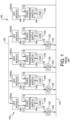
- FIG. 1 is a simplified block diagram of an example prior art UPS system 100 having such stranded power recovery.
- UPS system 100 includes a plurality of UPS modules 102.
- UPS system 100 has five UPS modules 102 - UPS modules 102(a) - 102(e).
- Each UPS module 102(a)-102(e) has a load 104 associated therewith for which that specific UPS module 102(a)-102(e) provides power.
- Each UPS module 102(a)-102(e) also has a static transfer switch 106 associated therewith.
- Each UPS module 102(a)-(e) has an AC power output 108 coupled to an AC power input 110 of the associated static transfer switch 106.
- Each static transfer switch 106 has an AC power output 112 coupled to the associated load 104.
- Each static transfer switch 106 has a second AC power input 114 coupled to a recovered power bus 116.
- UPS modules 102(a)-(e) is/are useable to provide stranded power to recovered power bus 116.
- Each UPS module 102(a)-(e) that is usable to provide stranded power to recovered power bus 116 has its AC power output 108 coupled to an AC power input 118 of an associated static switch 120.
- An AC power output 122 of each static switch 120 is coupled to recovered power bus 116.
- each UPS module 102(a)-102(e) that is not used to provide stranded power to recovered power bus 116 then would not have an associated static switch 120, and thus would also not be coupled to power sharing control bus 124, as illustratively shown by UPS module 102(e) in Figure 1 .
- UPS modules 102(a)-(e) that are usable to provide recovered stranded power to the recovered power bus 116 are effectively connected together through the static switches 120 and recovered power bus 116 when their associated static switches 120 are closed.
- This imposes certain constraints on the system design. For example, it requires that these UPS modules 102(a)-(e) must each have a power sharing control system connected between all the others, as well as being connectable to the recovered power bus 116. This is accomplished by coupling the power sharing control system of each UPS module 102(a)-(e) to a separate control bus, shown representatively in Figure 1 as power sharing control bus 124.
- UPS modules 102(a)-(e) when connected to the recovered power bus, are synchronized in regards to voltage, frequency, and phase relationship of their AC output voltages.
- the AC power provided by the recovered power bus has a nominal voltage and frequency, such as 480 VAC at 60Hz.
- a UPS module 102(a)-(e) When connected to the recovered power bus, it must provide the AC power at its output at the nominal voltage and frequency. The provided AC power must also be in phase with the AC power provided by the other UPS modules 102(a)-(e) connected to the recovered power bus.
- all these UPS modules 102 when connected to the recovered power bus, must be operating in the same mode (i.e., double conversion, economy mode, bypass, etc.).
- the power sharing system must be pre-installed or the UPS system must be shut down to install a power sharing system before stranded power recovery can be enabled.
- All of the UPS modules 102(a)-(e) that are usable to provide stranded power to the recovered power bus must have the same power rating (KVA size) for the power sharing to work properly. If any one of the UPS modules connected to the recovered power bus transitions to a different operating mode than the others that are connected to the recovered power bus, it must be disconnected from the recovered power bus and will no longer be available to contribute stranded power to the recovered power bus. It would therefore be desirable to have a UPS system having stranded power recovery that does not suffer from the above-described constraints.
- the present disclosure relates to an uninterruptible power supply system in communication with a recovered power bus.
- the system comprises a plurality of uninterruptible power supply (UPS) modules, with one or more of the UPS modules usable to provide stranded power to the recovered power bus.
- UPS uninterruptible power supply
- Each UPS module is usable to provide stranded power to the recovered power bus, and has associated therewith a static transfer switch, a load, and an AC/AC converter.
- the AC/AC converter receives a first AC power output from the UPS at an AC input thereof, and generates a second AC power output at an AC output thereof, which is applied to the recovered power bus.
- the UPS has the first AC power output coupled to a first AC power input of the static transfer switch, and a third AC power output associated with the static transfer switch is coupled to the load.
- a second AC power input of the static transfer switch is coupled to the recovered power bus.
- the present disclosure relates to an uninterruptible power supply system in communication with a recovered power bus.
- the system comprises a plurality of uninterruptible power supply (UPS) modules, with one or more of the UPS modules usable to provide stranded power to the recovered power bus.
- UPS uninterruptible power supply
- Each UPS module is usable to provide stranded power to the recovered power bus and has associated therewith a static transfer switch having first and second AC power inputs, and an AC output.
- Each UPS module further has an associated load and an associated AC/AC converter having an active rectifier front end and an inverter back end.
- the active rectifier front end has an input for receiving a first AC power output from the UPS, and the inverter back end generates a second AC power output which is applied to the recovered power bus.
- the UPS further has the first AC power output coupled to the first AC power input of the static transfer switch, and the second AC power input of the static transfer switch coupled to the recovered power bus, with the AC output of the static transfer switch being coupled to the load.
- any of the UPS modules is used to provide stranded power to the recovered power bus, its associated AC/AC converter provides, at its associated said AC power output, the second AC power output.
- the second AC power output is synchronized with other ones of the second power outputs being provided to the recovered power bus by each of the other AC/AC converters that are providing AC power to the recovered power bus. In this manner the second AC power outputs of all of the AC/AC converters that are being provided to the recovered power bus have the same voltage, the same frequency and the same phase.
- the present disclosure relates to a method for forming an uninterruptible power supply (UPS) system in communication with a recovered power bus.
- the method comprises using a plurality of UPS modules to each provide a first AC power output to a first input of an associated static transfer switch and to an input of an associated AC/AC converter.
- the method further includes using the AC/AC converters to each provide a second AC power output to the recovered power bus.
- the method further includes using the static transfer switches to receive power at a second input thereof from the recovered power bus, and using each of the static transfer switches to provide a third power output to a load associated therewith.
- the load associated therewith is further associated with a specific one of the UPSs.
- the method further includes controlling all of the AC/AC converters so that all of the second AC power outputs being applied to the recovered power bus are synchronized in at least one of voltage, frequency or phase.
- FIG 2 is a simplified block diagram of a UPS system 200 having stranded power recovery in accordance with an aspect of the present disclosure.
- UPS system 200 is the same as UPS system 100 and the components UPS system 200 has in common with UPS system 100 are identified in Figure 2 with the same reference numbers used in Figure 1 .
- UPS system 200 the UPS modules 102(a)-(e) that can provide stranded power to recovered power bus 116 have an associated AC/AC converter 202 instead of an associated static switch 120.
- the AC power output of each of these UPS modules 102(a)-(e) is coupled to an AC power input 204 of the associated AC/AC converter 202 and an AC power output 206 of each AC/AC converter 202 is coupled to recovered power bus 116.
- Figure 2 does not show UPS system 200 having power sharing control bus 124.
- the AC/AC converters 202 illustratively have an active rectifier front end 201 having AC power input 204 and an inverter back-end 203 having AC power output 206.
- the AC/AC converters 202 thus have the same topology as a double conversion uninterruptible power supply, but without a back-up DC power source or bypass.
- the active rectifier front end 201 of each AC/AC converter self-synchronizes to the output power provided by the associated UPS module 102 in known fashion in the same manner as the active rectifier of a double conversion UPS self-synchronizes to the input power.
- This is particularly advantageous when retrofitting a UPS system to add stranded power recovery as AC/AC converters 202 operate autonomously of the UPS's 102 and can be installed as stand-alone units without the need for any control interconnections with the UPS's 102(a)-(e).
- An AC/AC converter can connect to the output of any UPS module 102 without any modification of the UPS module 102(a)-(e).
- the UPS module 102(a)-(e) then simply sees its associated AC/AC converter 102 as another load.
- the outputs 206 of the AC/AC converters 202 are synchronized with each other so that the AC power at the AC power outputs of the AC/AC converters 202 all have the nominal voltage and nominal frequency at which AC power is to be provided on the recovered power bus 116, within industry accepted tolerances, such as no more than +/- 1% (RMS) for voltage and +/- 0.1% for frequency, and are all in phase.
- RMS +/- 1%
- each AC/AC converter 202 includes a controller 208 that is configured to control that AC/AC converter 202 so that the AC power at AC power output 206 of that AC/AC converter 202 has the nominal voltage, nominal frequency, and is in phase with the AC power at the AC power outputs of the other AC/AC converters 202 that are providing AC power to the recovered power bus 116.
- the AC/AC converters 202 each have a synchronization input 210 coupled to a common synchronization reference 212.
- common synchronization reference 212 provides an AC signal (analog or digitized), referred to herein as an AC reference signal, having a frequency that is the nominal frequency. For example if this nominal output frequency is 60 Hz, then the AC reference signal has a frequency of 60 Hz and if this nominal frequency is 50 Hz, then the AC reference signal has a frequency of 50 Hz.
- the AC reference signal is used by controllers 208 as a phase reference.
- the controllers 208 are configured to control their respective AC/AC converters 202 to synchronize the phase of the AC output power at the AC power output 206 to the phase of the AC reference signal so that the AC output power at the AC power outputs 206 of the AC/AC converters 202 are all in phase.
- the controllers 208 then are also configured to control their respective AC/AC converters 202 so that they all have the nominal voltage and frequency, and thus have the same voltage and frequency. It should be understood that controllers 208, for example, utilize a conventional control technique to control their respective AC/AC converters, such as by controlling parameters of a pulse width modulated signal(s) that switches power switching semiconductors of the AC/AC converters 202.
- the common synchronization reference 212 could be separate from the AC/AC converters 202 or could be implemented in one of controllers 208.
- the controller 208 of one of the AC/AC converters acts as a synchronization master and sends out a synchronization signal to the controllers 208 of each of the other AC/AC converters, which could also be an AC reference signal (analog or digitized).
- Each controller 208 monitors the AC power output by the UPS module 102 with which the AC/AC converter 202 having that controller 208 is associated.
- each controller 208 has inputs 214, 216 coupled to a voltage sensor 218 and a current sensor 220, respectively, which are coupled to the AC power output 108 of the associated UPS module 102.
- a power rating of the associated UPS module 102(a)-(e) is pre-programmed into controller 208 of the associated AC/AC converter 202.
- the power rating of a UPS module is the maximum power that the UPS module is rated to provide.
- controller 208 may receive an input, such as from its associated UPS module 102(a)-(e) or other device, that notifies the controller 208 in real-time what a present maximum available power capacity of the associated UPS module 102(a)-(e) is. This can be used for controlled load shedding. For example, if the associated UPS module 102(a) is in back-up power mode where power is being provided by the back-up DC power source of UPS module 102(a), such as a battery or generator, the maximum available power capacity of UPS module 102(a) may then be reduced and communicated to the controller 208 of its associated AC/AC converter 202. Controller 208 then, for example, reduces the amount of power that AC/AC converter 202 recovers from the associated UPS module 102(a).
- FIG. 3 is a flow chart of a control routine of illustrative control logic implemented in each controller 208 for controlling the operation of AC/AC converter 202.
- the control routine monitors the AC power being output by the specific UPS module 102(a)-(e) associated with that AC/AC converter 202.
- the control routine determines whether the associated UPS module 102(a)-(e) can be used to provide stranded power to the recovered power bus 116. If not, the control routine branches back to 300.
- the associated UPS module 102(a)-(e) may be offline and thus cannot provide stranded power to the recovered power bus 116, or the load 104 associated with that particular UPS module 102(a)-(e) may be drawing the maximum power that that particular UPS module 102(a)-(e) is rated to provide.
- control routine determines the associated UPS module 102(a)-(e) can be used to provide stranded power to recovered power bus 116
- control routine at operation 304 determines the stranded power available from the associated UPS module 102(a)-(e) by subtracting the amount of AC power being output by the associated UPS module 102(a)-(e) from the power rating of the associated UPS module 102(a)-(e) pre-programmed in controller 208.
- control routine synchronizes the AC power at AC power output 206 of that AC/AC converter 202 to the nominal voltage, nominal frequency and nominal phase so that it will have the same voltage, frequency and phase as the AC power at the AC power outputs 206 of the other AC/AC converters 202 providing power to the recovered power bus, and controls the AC/AC converter 202 to provide some or all of the stranded power to the recovered power bus 116.
- the control routine then branches back to 300.
- controller 208 is configured to control the AC/AC converter 202 to limit the power the AC/AC converter can draw from the associated UPS module 102(a)-(e) so that the power rating of the associated UPS module 102(a)-(e) is not exceeded.
- controller 208 is configured to control the AC/AC converter 202 so that the maximum power that it can draw from the associated UPS module 102(a)-(e) is less than the amount of stranded power available.
- controller 208 is configured so that the maximum power its associated AC/AC converter 202 can draw from its associated UPS module 102(a)-(e) is ten percent less than the amount of stranded power that controller 208 determines is available. It should be understood that this setting may be a calibratable setting.
- controllable breakers 222 are installed between the recovered power bus 116 and the second AC power inputs 114 of the static transfer switches 106 associated with ones of the UPS modules 102(a)-(e) that can be connected to the recovered power bus 116.
- the controllable breakers 222 are controlled so that they prevent any load 104 from being connected to the recovered power bus 116 that cannot be supported by the AC power available on the recovered power bus 116, which is the total unused or stranded power of the UPS modules 102(a)-(e) that are providing AC power to the recovered power bus 116 via their associated AC/AC converters 202.
- controllable breakers 222 may, for example, be controlled by controllers 208 or by a separate controller (not shown). Controllable breakers 222 may be, by way of example and not of limitation, remotely controlled circuit breakers, static AC switches or contactors. In an aspect of this variation, the controllers 208 of the AC/AC converters 202 communicate with each other, such as wirelessly or over a communication bus (not shown).
- each controller 208 can be or can include any of a digital signal processor (DSP), microprocessor, microcontroller, or other programmable device that is programmed with software implementing the above described methods. It should be understood that alternatively it is or includes other logic devices, such as a Field Programmable Gate Array (FPGA), a complex programmable logic device (CPLD), or application specific integrated circuit (ASIC).
- DSP digital signal processor
- FPGA Field Programmable Gate Array
- CPLD complex programmable logic device
- ASIC application specific integrated circuit
Landscapes
- Engineering & Computer Science (AREA)
- Power Engineering (AREA)
- Business, Economics & Management (AREA)
- Emergency Management (AREA)
- Theoretical Computer Science (AREA)
- Physics & Mathematics (AREA)
- General Engineering & Computer Science (AREA)
- General Physics & Mathematics (AREA)
- Quality & Reliability (AREA)
- Supply And Distribution Of Alternating Current (AREA)
- Inverter Devices (AREA)
- Stand-By Power Supply Arrangements (AREA)
Description
- The present disclosure relates to uninterruptible power supply systems having a plurality of uninterruptible power supply modules, and more specifically to stranded power recovery in such systems.
- This section provides background information related to the present disclosure which is not necessarily prior art. As used herein, "UPS" is "uninterruptible power supply."
- One common UPS system configuration has a plurality of UPS modules, often several, with each UPS module having a load associated therewith to which that UPS module provides power. Such UPS systems are often used in data centers. It is common for such UPS systems to have unused or stranded capacity that is not immediately available for delivery to a load. This can result from mistakes or insufficient information during design, unplanned changes in system configuration, or even intentional underutilization to allow for future growth. The un-utilized power may be a relatively small percentage of the capacity of any single UPS module included in a large UPS system. However, the underutilized capacity of each of the UPS modules, when combined, can easily be enough to power any one of the system loads. At any rate, it is desirable to have this total excess capacity available to power a load if a UPS module fails or requires maintenance shutdown. This excess capacity is commonly referred to as "stranded capacity" or "stranded power" and will be referred to herein as "stranded power."
- One prior art approach to utilizing the stranded power is to recover the stranded power through the use of static switches (for example, solid state switches, relays, remotely controlled circuit breakers) to connect the AC power outputs of one or more of the UPS modules to a common AC power bus, referred to herein as a "recovered power bus." This recovered power bus is then used as a source of backup or standby power. In the event of a failure or shutdown of a UPS module, the load associated with that UPS module is switched away from the AC power output of that UPS module UPS and connected to the recovered power bus through a static transfer switch or circuit breaker.
-
Figure 1 is a simplified block diagram of an example priorart UPS system 100 having such stranded power recovery. UPSsystem 100 includes a plurality ofUPS modules 102. In the example ofFigure 1 , UPSsystem 100 has five UPS modules 102 - UPS modules 102(a) - 102(e). Each UPS module 102(a)-102(e) has aload 104 associated therewith for which that specific UPS module 102(a)-102(e) provides power. Each UPS module 102(a)-102(e) also has astatic transfer switch 106 associated therewith. Each UPS module 102(a)-(e) has anAC power output 108 coupled to anAC power input 110 of the associatedstatic transfer switch 106. Eachstatic transfer switch 106 has anAC power output 112 coupled to theassociated load 104. Eachstatic transfer switch 106 has a secondAC power input 114 coupled to a recoveredpower bus 116. - One or more of the UPS modules 102(a)-(e) is/are useable to provide stranded power to recovered
power bus 116. Each UPS module 102(a)-(e) that is usable to provide stranded power to recoveredpower bus 116 has itsAC power output 108 coupled to anAC power input 118 of an associatedstatic switch 120. AnAC power output 122 of eachstatic switch 120 is coupled to recoveredpower bus 116. - It should be understood that there may be a UPS module(s) 102 that is not used to provide stranded power to recovered
power bus 116. In this regard, each UPS module 102(a)-102(e) that is not used to provide stranded power to recoveredpower bus 116 then would not have an associatedstatic switch 120, and thus would also not be coupled to powersharing control bus 124, as illustratively shown by UPS module 102(e) inFigure 1 . - It can be appreciated that all the UPS modules 102(a)-(e) that are usable to provide recovered stranded power to the recovered
power bus 116 are effectively connected together through thestatic switches 120 and recoveredpower bus 116 when their associatedstatic switches 120 are closed. This imposes certain constraints on the system design. For example, it requires that these UPS modules 102(a)-(e) must each have a power sharing control system connected between all the others, as well as being connectable to the recoveredpower bus 116. This is accomplished by coupling the power sharing control system of each UPS module 102(a)-(e) to a separate control bus, shown representatively inFigure 1 as powersharing control bus 124. It also requires that all these UPS modules 102(a)-(e), when connected to the recovered power bus, are synchronized in regards to voltage, frequency, and phase relationship of their AC output voltages. In this regard, the AC power provided by the recovered power bus has a nominal voltage and frequency, such as 480 VAC at 60Hz. When a UPS module 102(a)-(e) is connected to the recovered power bus, it must provide the AC power at its output at the nominal voltage and frequency. The provided AC power must also be in phase with the AC power provided by the other UPS modules 102(a)-(e) connected to the recovered power bus. Finally, all these UPSmodules 102, when connected to the recovered power bus, must be operating in the same mode (i.e., double conversion, economy mode, bypass, etc.). - These design constraints can create a number of undesirable limitations. For one, the power sharing system must be pre-installed or the UPS system must be shut down to install a power sharing system before stranded power recovery can be enabled. All of the UPS modules 102(a)-(e) that are usable to provide stranded power to the recovered power bus must have the same power rating (KVA size) for the power sharing to work properly. If any one of the UPS modules connected to the recovered power bus transitions to a different operating mode than the others that are connected to the recovered power bus, it must be disconnected from the recovered power bus and will no longer be available to contribute stranded power to the recovered power bus. It would therefore be desirable to have a UPS system having stranded power recovery that does not suffer from the above-described constraints.
WO2016/099938A1 in an abstract states that "Power is provided from a power source and a status of the power source is signaled by controlling a waveform of an AC voltage generated from the power source. The status may include, for example, a capacity of the power source. In some embodiments, a frequency of the AC voltage may be controlled to signal the status. The power source may include, for example, an uninterruptible power supply (UPS), and signaling a status of the power source may include controlling an inverter of the UPS to signal the status. Related systems are also described. - The present invention is set out in the independent claims, with some optional features set out in the claims dependent thereto.
- This section provides a general summary of the disclosure, and is not a comprehensive disclosure of its full scope or all of its features.
- In one aspect the present disclosure relates to an uninterruptible power supply system in communication with a recovered power bus. The system comprises a plurality of uninterruptible power supply (UPS) modules, with one or more of the UPS modules usable to provide stranded power to the recovered power bus. Each UPS module is usable to provide stranded power to the recovered power bus, and has associated therewith a static transfer switch, a load, and an AC/AC converter. The AC/AC converter receives a first AC power output from the UPS at an AC input thereof, and generates a second AC power output at an AC output thereof, which is applied to the recovered power bus. The UPS has the first AC power output coupled to a first AC power input of the static transfer switch, and a third AC power output associated with the static transfer switch is coupled to the load. A second AC power input of the static transfer switch is coupled to the recovered power bus. When any of the UPS modules is used to provide stranded power to the recovered power bus, its associated AC/AC converter provides, at its associated AC power output, the second AC power output. The second AC power out is synchronized with other ones of the second power outputs being provided to the recovered power bus by each of the other AC/AC converters that are providing AC power to the recovered power bus. In this manner the second AC power outputs of all of the AC/AC converters that are being provided to the recovered power bus have at least one of the same voltage, the same frequency, or the same phase.
- In another aspect the present disclosure relates to an uninterruptible power supply system in communication with a recovered power bus. The system comprises a plurality of uninterruptible power supply (UPS) modules, with one or more of the UPS modules usable to provide stranded power to the recovered power bus. Each UPS module is usable to provide stranded power to the recovered power bus and has associated therewith a static transfer switch having first and second AC power inputs, and an AC output. Each UPS module further has an associated load and an associated AC/AC converter having an active rectifier front end and an inverter back end. The active rectifier front end has an input for receiving a first AC power output from the UPS, and the inverter back end generates a second AC power output which is applied to the recovered power bus. The UPS further has the first AC power output coupled to the first AC power input of the static transfer switch, and the second AC power input of the static transfer switch coupled to the recovered power bus, with the AC output of the static transfer switch being coupled to the load. When any of the UPS modules is used to provide stranded power to the recovered power bus, its associated AC/AC converter provides, at its associated said AC power output, the second AC power output. The second AC power output is synchronized with other ones of the second power outputs being provided to the recovered power bus by each of the other AC/AC converters that are providing AC power to the recovered power bus. In this manner the second AC power outputs of all of the AC/AC converters that are being provided to the recovered power bus have the same voltage, the same frequency and the same phase.
- In still another aspect the present disclosure relates to a method for forming an uninterruptible power supply (UPS) system in communication with a recovered power bus. The method comprises using a plurality of UPS modules to each provide a first AC power output to a first input of an associated static transfer switch and to an input of an associated AC/AC converter. The method further includes using the AC/AC converters to each provide a second AC power output to the recovered power bus. The method further includes using the static transfer switches to receive power at a second input thereof from the recovered power bus, and using each of the static transfer switches to provide a third power output to a load associated therewith. The load associated therewith is further associated with a specific one of the UPSs. The method further includes controlling all of the AC/AC converters so that all of the second AC power outputs being applied to the recovered power bus are synchronized in at least one of voltage, frequency or phase.
- Further areas of applicability will become apparent from the description provided herein. The description and specific examples in this summary are intended for purposes of illustration only and are not intended to limit the scope of the present disclosure.
- The drawings described herein are for illustrative purposes only of selected embodiments and not all possible implementations, and are not intended to limit the scope of the present disclosure.
-
Figure 1 is a simplified block diagram of a prior art UPS system having stranded power recovery; -
Figure 2 is a simplified block diagram of a UPS system having stranded power recovery in accordance with an aspect of the present disclosure; and -
Figure 3 is a flow chart for control logic for control of AC/AC converters of the UPS system ofFigure 2 to provide stranded power recovery in accordance with an aspect of the present disclosure. - Example embodiments will now be described more fully with reference to the accompanying drawings. Corresponding reference numerals indicate corresponding parts throughout the several views of the drawings.
-
Figure 2 is a simplified block diagram of aUPS system 200 having stranded power recovery in accordance with an aspect of the present disclosure. With the differences discussed below,UPS system 200 is the same asUPS system 100 and thecomponents UPS system 200 has in common withUPS system 100 are identified inFigure 2 with the same reference numbers used inFigure 1 . - In
UPS system 200, the UPS modules 102(a)-(e) that can provide stranded power to recoveredpower bus 116 have an associated AC/AC converter 202 instead of an associatedstatic switch 120. The AC power output of each of these UPS modules 102(a)-(e) is coupled to anAC power input 204 of the associated AC/AC converter 202 and anAC power output 206 of each AC/AC converter 202 is coupled to recoveredpower bus 116. SinceUPS system 200 does not need a power sharing control system,Figure 2 does not showUPS system 200 having powersharing control bus 124. - The AC/
AC converters 202 illustratively have an active rectifierfront end 201 havingAC power input 204 and an inverter back-end 203 havingAC power output 206. The AC/AC converters 202 thus have the same topology as a double conversion uninterruptible power supply, but without a back-up DC power source or bypass. The active rectifierfront end 201 of each AC/AC converter self-synchronizes to the output power provided by the associatedUPS module 102 in known fashion in the same manner as the active rectifier of a double conversion UPS self-synchronizes to the input power. As such, there need not be, and in an aspect there is not, a synchronization signal from theUPS module 102 to the associated AC/AC converter 202 to synchronize the active rectifierfront end 201 of the AC/AC converter 202 to the associated UPS module 102(a)-(e), or any other type of control signal from theUPS module 102 to the associated AC/AC converter 202. This is particularly advantageous when retrofitting a UPS system to add stranded power recovery as AC/AC converters 202 operate autonomously of the UPS's 102 and can be installed as stand-alone units without the need for any control interconnections with the UPS's 102(a)-(e). An AC/AC converter can connect to the output of anyUPS module 102 without any modification of the UPS module 102(a)-(e). The UPS module 102(a)-(e) then simply sees its associated AC/AC converter 102 as another load. - The
outputs 206 of the AC/AC converters 202 are synchronized with each other so that the AC power at the AC power outputs of the AC/AC converters 202 all have the nominal voltage and nominal frequency at which AC power is to be provided on the recoveredpower bus 116, within industry accepted tolerances, such as no more than +/- 1% (RMS) for voltage and +/- 0.1% for frequency, and are all in phase. In this regard, each AC/AC converter 202 includes a controller 208 that is configured to control that AC/AC converter 202 so that the AC power atAC power output 206 of that AC/AC converter 202 has the nominal voltage, nominal frequency, and is in phase with the AC power at the AC power outputs of the other AC/AC converters 202 that are providing AC power to the recoveredpower bus 116. - In the example shown in
Figure 2 , the AC/AC converters 202 each have asynchronization input 210 coupled to acommon synchronization reference 212. By way of example and not of limitation,common synchronization reference 212 provides an AC signal (analog or digitized), referred to herein as an AC reference signal, having a frequency that is the nominal frequency. For example if this nominal output frequency is 60 Hz, then the AC reference signal has a frequency of 60 Hz and if this nominal frequency is 50 Hz, then the AC reference signal has a frequency of 50 Hz. By way of example and not of limitation, the AC reference signal is used by controllers 208 as a phase reference. The controllers 208 are configured to control their respective AC/AC converters 202 to synchronize the phase of the AC output power at theAC power output 206 to the phase of the AC reference signal so that the AC output power at the AC power outputs 206 of the AC/AC converters 202 are all in phase. The controllers 208 then are also configured to control their respective AC/AC converters 202 so that they all have the nominal voltage and frequency, and thus have the same voltage and frequency. It should be understood that controllers 208, for example, utilize a conventional control technique to control their respective AC/AC converters, such as by controlling parameters of a pulse width modulated signal(s) that switches power switching semiconductors of the AC/AC converters 202. - It should be understood that the
common synchronization reference 212 could be separate from the AC/AC converters 202 or could be implemented in one of controllers 208. In the latter example, the controller 208 of one of the AC/AC converters acts as a synchronization master and sends out a synchronization signal to the controllers 208 of each of the other AC/AC converters, which could also be an AC reference signal (analog or digitized). - Each controller 208 monitors the AC power output by the
UPS module 102 with which the AC/AC converter 202 having that controller 208 is associated. For example, each controller 208 hasinputs voltage sensor 218 and acurrent sensor 220, respectively, which are coupled to theAC power output 108 of the associatedUPS module 102. A power rating of the associated UPS module 102(a)-(e) is pre-programmed into controller 208 of the associated AC/AC converter 202. As is understood in the art, the power rating of a UPS module is the maximum power that the UPS module is rated to provide. - In a variation, controller 208 may receive an input, such as from its associated UPS module 102(a)-(e) or other device, that notifies the controller 208 in real-time what a present maximum available power capacity of the associated UPS module 102(a)-(e) is. This can be used for controlled load shedding. For example, if the associated UPS module 102(a) is in back-up power mode where power is being provided by the back-up DC power source of UPS module 102(a), such as a battery or generator, the maximum available power capacity of UPS module 102(a) may then be reduced and communicated to the controller 208 of its associated AC/
AC converter 202. Controller 208 then, for example, reduces the amount of power that AC/AC converter 202 recovers from the associated UPS module 102(a). -
Figure 3 is a flow chart of a control routine of illustrative control logic implemented in each controller 208 for controlling the operation of AC/AC converter 202. Atoperation 300, the control routine monitors the AC power being output by the specific UPS module 102(a)-(e) associated with that AC/AC converter 202. Atoperation 302, the control routine determines whether the associated UPS module 102(a)-(e) can be used to provide stranded power to the recoveredpower bus 116. If not, the control routine branches back to 300. For example, the associated UPS module 102(a)-(e) may be offline and thus cannot provide stranded power to the recoveredpower bus 116, or theload 104 associated with that particular UPS module 102(a)-(e) may be drawing the maximum power that that particular UPS module 102(a)-(e) is rated to provide. - If at 302 the control routine determines the associated UPS module 102(a)-(e) can be used to provide stranded power to recovered
power bus 116, the control routine atoperation 304 determines the stranded power available from the associated UPS module 102(a)-(e) by subtracting the amount of AC power being output by the associated UPS module 102(a)-(e) from the power rating of the associated UPS module 102(a)-(e) pre-programmed in controller 208. Atoperation 306 the control routine synchronizes the AC power atAC power output 206 of that AC/AC converter 202 to the nominal voltage, nominal frequency and nominal phase so that it will have the same voltage, frequency and phase as the AC power at the AC power outputs 206 of the other AC/AC converters 202 providing power to the recovered power bus, and controls the AC/AC converter 202 to provide some or all of the stranded power to the recoveredpower bus 116. The control routine then branches back to 300. - In an aspect, controller 208 is configured to control the AC/
AC converter 202 to limit the power the AC/AC converter can draw from the associated UPS module 102(a)-(e) so that the power rating of the associated UPS module 102(a)-(e) is not exceeded. In an aspect, controller 208 is configured to control the AC/AC converter 202 so that the maximum power that it can draw from the associated UPS module 102(a)-(e) is less than the amount of stranded power available. By way of example and not of limitation, controller 208 is configured so that the maximum power its associated AC/AC converter 202 can draw from its associated UPS module 102(a)-(e) is ten percent less than the amount of stranded power that controller 208 determines is available. It should be understood that this setting may be a calibratable setting. - In a variation, controllable breakers 222 (shown in phantom in
Figure 2 ) are installed between the recoveredpower bus 116 and the secondAC power inputs 114 of the static transfer switches 106 associated with ones of the UPS modules 102(a)-(e) that can be connected to the recoveredpower bus 116. Thecontrollable breakers 222 are controlled so that they prevent anyload 104 from being connected to the recoveredpower bus 116 that cannot be supported by the AC power available on the recoveredpower bus 116, which is the total unused or stranded power of the UPS modules 102(a)-(e) that are providing AC power to the recoveredpower bus 116 via their associated AC/AC converters 202. Thecontrollable breakers 222 may, for example, be controlled by controllers 208 or by a separate controller (not shown).Controllable breakers 222 may be, by way of example and not of limitation, remotely controlled circuit breakers, static AC switches or contactors. In an aspect of this variation, the controllers 208 of the AC/AC converters 202 communicate with each other, such as wirelessly or over a communication bus (not shown). - It should be understood that the logic for the foregoing control of AC/
AC converters 202 by their respective controllers 208 illustratively can be implemented in hardware logic, software logic, or a combination of hardware and software logic. In this regard, each controller 208 can be or can include any of a digital signal processor (DSP), microprocessor, microcontroller, or other programmable device that is programmed with software implementing the above described methods. It should be understood that alternatively it is or includes other logic devices, such as a Field Programmable Gate Array (FPGA), a complex programmable logic device (CPLD), or application specific integrated circuit (ASIC). When it is stated that controller 208 performs a function or is configured to perform a function, it should be understood that controller 208 is configured to do so with appropriate logic (such as in software, logic devices, or a combination thereof). - The terminology used herein is for the purpose of describing particular example embodiments only and is not intended to be limiting. As used herein, the singular forms "a," "an," and "the" may be intended to include the plural forms as well, unless the context clearly indicates otherwise. The terms "comprises," "comprising," "including," and "having," are inclusive and therefore specify the presence of stated features, integers, steps, operations, elements, and/or components, but do not preclude the presence or addition of one or more other features, integers, steps, operations, elements, components, and/or groups thereof. The method steps, processes, and operations described herein are not to be construed as necessarily requiring their performance in the particular order discussed or illustrated, unless specifically identified as an order of performance. It is also to be understood that additional steps may be employed.
- The foregoing description of the embodiments has been provided for purposes of illustration and description. It is not intended to be exhaustive or to limit the disclosure.
Claims (12)
- An uninterruptible power supply, UPS, system (200) in communication with a recovered power bus (116), the UPS system (200) comprising:a plurality of UPS modules (102(a)-(e)), one or more of the UPS modules (102(a)-(d)) usable to provide stranded power to the recovered power bus (116);and associated with each said UPS module (102(a)-(d)) which is usable to provide stranded power to the recovered power bus (116):a static transfer switch (106); anda load (104); each of the one or more UPS modules (102(a)-(d)) having a first AC power output (108) coupled to a first AC power input (110) of the associated static transfer switch (106), a third AC power output (112) associated with said static transfer switch (106) being coupled to the load (104), anda second AC power input (114) of said static transfer switch (106) being coupled to the recovered power bus (116);characterised in thatthe UPS system (200) further comprises, associated with each said UPS module (102(a)-(d)) which is usable to provide stranded power to the recovered power bus (116), an AC/AC converter (202) that is configured to receive the first AC power output (108) from the associated UPS module (102(a)-(d)) at an AC input (204) thereof, and that is configured to generate a second AC power output at an AC output (206) thereof, which is configured to be applied to the recovered power bus (116); andwhen any of the one or more of the UPS modules (102(a)-(d)) is used to provide stranded power to the recovered power bus (116), its associated said AC/AC converter (202) is configured to provide, at its associated said AC power output (206), the second AC power output, the second AC power out configured to be synchronized with other ones of the second power outputs being provided to the recovered power bus (116) by each of the other said AC/AC converters (202) that are providing AC power to the recovered power bus (116), so that the second AC power outputs of all of the AC/AC converters (202) that are being provided to the recovered power bus (116) have at least one of the same voltage, the same frequency, or the same phase.
- The UPS system (200) of claim 1, wherein the second AC power outputs (206) of all of the AC/AC converters (202) that are providing AC power to the recovered power bus (116) are all configured to have the same voltage, the same frequency and the same phase
- The UPS system (200) of claim 1, wherein each AC/AC converter (202) has an active rectifier front end (201) configured to receive the first AC power output (108) from the associated UPS module (102(a)-(d)), and an inverter back end (203) configured to generate the second AC power output.
- The UPS system (200) of claim 3, wherein each said AC/AC converter (202) is configured to operate autonomously of its associated said UPS module (102(a)-(d)), with its associated said active rectifier front end (201) configured to self-synchronize to its associated said first AC power output (108) of its associated said UPS module (102(a)-(d)), and without requiring any synchronization control signal from its associated said UPS module (102(a)-(d)).
- The UPS system (200) of claim 3, wherein each said AC/AC converter (202) has an associated controller (208), the associated controller (208) having a synchronization input (210) coupled to a common synchronization reference (212), the controller (208) of each said AC/AC converter (202) configured to synchronize the second AC power output being provided at the AC power output (206) of its associated said AC/AC converter (202) based on the common synchronization reference (212).
- The UPS system (200) of claim 5, wherein the controller 2. (208) of each said AC/AC converter (202) that is providing power to the recovered power bus (116) is configured to determine an amount of power to provide to the recovered power bus (116) based on a power rating of the UPS module (102(a)-(d)) associated with its said AC/AC converter (202), and an amount of AC power being output by its said associated UPS module (102(a)-(d)).
- The UPS system (208) of claim 6, wherein the controller 2. (208) of each said AC/AC converter (202) that is providing power to the recovered power bus (116) is configured to determine an amount of power to provide to the recovered power bus (116) based on an input indicative of a present maximum available power capacity of the UPS module (102(a)-(d)) associated with its said associated AC/AC converter (202), and an amount of AC power being output by said associated UPS module (102(a)-(d)) by way of the first AC power output (108).
- The UPS system (200) of claim 5, wherein the UPS system (200) further includes a separate circuit breaker (222) for each said static transfer switch (106); and
wherein each one of the separate circuit breakers (222) is coupled between the recovered power bus (116) and an associated one of the controllers (208), to control whether said UPS module (102(a)-(d)) associated with the circuit breaker (222) is able to couple the load (104) associated with its said associated UPS module(102(a)-(d)) to the recovered power bus (116). - A method for forming an uninterruptible power supply, UPS, system (200) in communication with a recovered power bus (116), the method comprising:using a plurality of UPS modules (102(a)-(d)) to each provide a first AC power output (108) to a first input (110) of an associated static transfer switch (106);using the static transfer switches (106) to receive power at a second input (114) thereof from the recovered power bus (116);using each of the static transfer switches (106) to provide a third power output (112) to a load (104) associated therewith, wherein the load (104) associated therewith is further associated with a specific one of the UPS modules (102(a)-(d));characterised by the method further comprising: Uusing the plurality of UPS modules (102(a)-(d)) to each provide the first AC power output (108) to an input (204) of an associated AC/AC converter (202); using the AC/AC converters (202) to each provide a second AC power output (206) to the recovered power bus (116); andfurther controlling all of the AC/AC converters (202) so that all of the second AC power outputs (206) being applied to the recovered power bus (116) are synchronized in at least one of voltage, frequency or phase.
- The method of claim 9, further controlling the AC/AC converters (202) so that all of the second power outputs (206) being applied to the recovered power bus (116) are synchronized in each of voltage, frequency and phase.
- The method of claim 9, wherein using an AC/AC converter (202) comprises using an AC/AC converter (202) having an active rectifier front end (201) to receive the first AC power output (108) from its associated said UPS module (102(a)-(d)).
- The method of claim 11, wherein using an AC/AC converter (202) comprises using an AC/AC converter (202) having an inverter back end (203) for generating the second AC power output (206) being applied to the recovered power bus (116).
Applications Claiming Priority (2)
| Application Number | Priority Date | Filing Date | Title |
|---|---|---|---|
| US201962926594P | 2019-10-28 | 2019-10-28 | |
| PCT/US2020/057717 WO2021086951A1 (en) | 2019-10-28 | 2020-10-28 | Uninterruptible power supply system having stranded power recovery |
Publications (2)
| Publication Number | Publication Date |
|---|---|
| EP4052350A1 EP4052350A1 (en) | 2022-09-07 |
| EP4052350B1 true EP4052350B1 (en) | 2023-12-06 |
Family
ID=73455809
Family Applications (1)
| Application Number | Title | Priority Date | Filing Date |
|---|---|---|---|
| EP20808248.7A Active EP4052350B1 (en) | 2019-10-28 | 2020-10-28 | Uninterruptible power supply system having stranded power recovery |
Country Status (4)
| Country | Link |
|---|---|
| US (2) | US11283289B2 (en) |
| EP (1) | EP4052350B1 (en) |
| CN (1) | CN114616742B (en) |
| WO (1) | WO2021086951A1 (en) |
Family Cites Families (14)
| Publication number | Priority date | Publication date | Assignee | Title |
|---|---|---|---|---|
| US20030227785A1 (en) | 2002-06-06 | 2003-12-11 | Johnson Robert W. | On-line uninterruptible power supplies with two-relay bypass circuit and methods of operation thereof |
| US7141892B2 (en) | 2002-08-20 | 2006-11-28 | Phoenixtec Power Co., Ltd. | Power supply method of a line interactive UPS and the line interactive UPS |
| US6813897B1 (en) * | 2003-07-29 | 2004-11-09 | Hewlett-Packard Development Company, L.P. | Supplying power to at least one cooling system component |
| TWI315118B (en) | 2006-07-12 | 2009-09-21 | Delta Electronics Inc | Method for controlling uninterruptible power supply apparatus |
| US7492058B2 (en) | 2006-11-17 | 2009-02-17 | Toshiba International Corp. | Modular uninterruptible power supply with loadsharing between modules |
| US20090200868A1 (en) * | 2008-02-13 | 2009-08-13 | Liebert Corporation | Uninterruptible power supply with rectifier fast walk in |
| US8345454B1 (en) * | 2009-11-21 | 2013-01-01 | The Boeing Company | Architecture and control method for dynamically conditioning multiple DC sources to driven an AC load |
| US8850237B2 (en) * | 2011-09-24 | 2014-09-30 | Eaton Corporation | Data processing system power distribution using UPS units selectively coupled to loads by reserve bus based on the load states |
| GB201301189D0 (en) | 2013-01-23 | 2013-03-06 | Eltek As | AC-AC converter device |
| WO2015066024A1 (en) * | 2013-10-28 | 2015-05-07 | Virtual Power Systems, Inc. | Multi-level data center consolidated power control |
| EP2887484B1 (en) * | 2013-12-20 | 2023-06-28 | Abb Ag | Switchgear assembly for AC and DC power distribution |
| US10447072B2 (en) * | 2014-12-19 | 2019-10-15 | Eaton Intelligent Power Limited | Power systems and methods using voltage waveform signaling |
| US10270285B2 (en) | 2015-07-31 | 2019-04-23 | Eaton Intelligent Power Limited | Multi-UPS systems with coordinated fault response and power sharing using paralleling bus |
| EP3142222B1 (en) * | 2015-09-11 | 2018-08-01 | ABB Schweiz AG | Uninterrupted power supply with switchable reference |
-
2020
- 2020-10-28 EP EP20808248.7A patent/EP4052350B1/en active Active
- 2020-10-28 CN CN202080075014.3A patent/CN114616742B/en active Active
- 2020-10-28 US US17/082,628 patent/US11283289B2/en active Active
- 2020-10-28 WO PCT/US2020/057717 patent/WO2021086951A1/en not_active Ceased
-
2022
- 2022-02-18 US US17/675,257 patent/US11611231B2/en active Active
Also Published As
| Publication number | Publication date |
|---|---|
| EP4052350A1 (en) | 2022-09-07 |
| CN114616742A (en) | 2022-06-10 |
| US11611231B2 (en) | 2023-03-21 |
| CN114616742B (en) | 2025-04-22 |
| US11283289B2 (en) | 2022-03-22 |
| US20220173610A1 (en) | 2022-06-02 |
| WO2021086951A1 (en) | 2021-05-06 |
| US20210126487A1 (en) | 2021-04-29 |
Similar Documents
| Publication | Publication Date | Title |
|---|---|---|
| EP1788688B1 (en) | Apparatus for synchronizing uninterruptible power supplies | |
| CN107005083B (en) | Power systems and methods for signalling using voltage waveforms | |
| CN102210081B (en) | Emergency power supply apparatus | |
| EP3190682B1 (en) | Power supply system and method | |
| US10554075B2 (en) | Uninterruptible power supply systems and methods using interconnected power routing units | |
| EP1833138B1 (en) | Nested redundant uninterruptible power supply apparatus and methods | |
| US20050043859A1 (en) | Modular uninterruptible power supply system and control method thereof | |
| US10468909B2 (en) | Data center power systems with dynamic source designation | |
| EP3539196B1 (en) | 3-wire multiphase ups with bypass | |
| CN102624075B (en) | Multimachine parallel connection method and scheme of modular UPS (uninterrupted power supply) system | |
| EP4342051A1 (en) | Electrical unit and backup power system | |
| EP4052350B1 (en) | Uninterruptible power supply system having stranded power recovery | |
| JP2023534476A (en) | Inverter with bistable switching unit | |
| US11070079B2 (en) | Integrated power supply system for auxiliary services for power converters | |
| JP2008022643A (en) | Uninterruptible power supply system | |
| CN216086256U (en) | Automatic power switching system | |
| JP7743365B2 (en) | Uninterruptible Power Supply System | |
| CN112703657A (en) | Power supply device and power supply system |
Legal Events
| Date | Code | Title | Description |
|---|---|---|---|
| STAA | Information on the status of an ep patent application or granted ep patent |
Free format text: STATUS: UNKNOWN |
|
| STAA | Information on the status of an ep patent application or granted ep patent |
Free format text: STATUS: THE INTERNATIONAL PUBLICATION HAS BEEN MADE |
|
| PUAI | Public reference made under article 153(3) epc to a published international application that has entered the european phase |
Free format text: ORIGINAL CODE: 0009012 |
|
| STAA | Information on the status of an ep patent application or granted ep patent |
Free format text: STATUS: REQUEST FOR EXAMINATION WAS MADE |
|
| 17P | Request for examination filed |
Effective date: 20220420 |
|
| AK | Designated contracting states |
Kind code of ref document: A1 Designated state(s): AL AT BE BG CH CY CZ DE DK EE ES FI FR GB GR HR HU IE IS IT LI LT LU LV MC MK MT NL NO PL PT RO RS SE SI SK SM TR |
|
| DAV | Request for validation of the european patent (deleted) | ||
| DAX | Request for extension of the european patent (deleted) | ||
| GRAP | Despatch of communication of intention to grant a patent |
Free format text: ORIGINAL CODE: EPIDOSNIGR1 |
|
| STAA | Information on the status of an ep patent application or granted ep patent |
Free format text: STATUS: GRANT OF PATENT IS INTENDED |
|
| INTG | Intention to grant announced |
Effective date: 20230706 |
|
| GRAS | Grant fee paid |
Free format text: ORIGINAL CODE: EPIDOSNIGR3 |
|
| GRAA | (expected) grant |
Free format text: ORIGINAL CODE: 0009210 |
|
| STAA | Information on the status of an ep patent application or granted ep patent |
Free format text: STATUS: THE PATENT HAS BEEN GRANTED |
|
| P01 | Opt-out of the competence of the unified patent court (upc) registered |
Effective date: 20230929 |
|
| AK | Designated contracting states |
Kind code of ref document: B1 Designated state(s): AL AT BE BG CH CY CZ DE DK EE ES FI FR GB GR HR HU IE IS IT LI LT LU LV MC MK MT NL NO PL PT RO RS SE SI SK SM TR |
|
| REG | Reference to a national code |
Ref country code: GB Ref legal event code: FG4D |
|
| REG | Reference to a national code |
Ref country code: CH Ref legal event code: EP |
|
| REG | Reference to a national code |
Ref country code: DE Ref legal event code: R096 Ref document number: 602020022427 Country of ref document: DE |
|
| REG | Reference to a national code |
Ref country code: IE Ref legal event code: FG4D |
|
| RAP4 | Party data changed (patent owner data changed or rights of a patent transferred) |
Owner name: VERTIV CORPORATION |
|
| REG | Reference to a national code |
Ref country code: LT Ref legal event code: MG9D |
|
| PG25 | Lapsed in a contracting state [announced via postgrant information from national office to epo] |
Ref country code: GR Free format text: LAPSE BECAUSE OF FAILURE TO SUBMIT A TRANSLATION OF THE DESCRIPTION OR TO PAY THE FEE WITHIN THE PRESCRIBED TIME-LIMIT Effective date: 20240307 |
|
| REG | Reference to a national code |
Ref country code: NL Ref legal event code: MP Effective date: 20231206 |
|
| PG25 | Lapsed in a contracting state [announced via postgrant information from national office to epo] |
Ref country code: LT Free format text: LAPSE BECAUSE OF FAILURE TO SUBMIT A TRANSLATION OF THE DESCRIPTION OR TO PAY THE FEE WITHIN THE PRESCRIBED TIME-LIMIT Effective date: 20231206 |
|
| PG25 | Lapsed in a contracting state [announced via postgrant information from national office to epo] |
Ref country code: ES Free format text: LAPSE BECAUSE OF FAILURE TO SUBMIT A TRANSLATION OF THE DESCRIPTION OR TO PAY THE FEE WITHIN THE PRESCRIBED TIME-LIMIT Effective date: 20231206 |
|
| PG25 | Lapsed in a contracting state [announced via postgrant information from national office to epo] |
Ref country code: LT Free format text: LAPSE BECAUSE OF FAILURE TO SUBMIT A TRANSLATION OF THE DESCRIPTION OR TO PAY THE FEE WITHIN THE PRESCRIBED TIME-LIMIT Effective date: 20231206 Ref country code: GR Free format text: LAPSE BECAUSE OF FAILURE TO SUBMIT A TRANSLATION OF THE DESCRIPTION OR TO PAY THE FEE WITHIN THE PRESCRIBED TIME-LIMIT Effective date: 20240307 Ref country code: ES Free format text: LAPSE BECAUSE OF FAILURE TO SUBMIT A TRANSLATION OF THE DESCRIPTION OR TO PAY THE FEE WITHIN THE PRESCRIBED TIME-LIMIT Effective date: 20231206 Ref country code: BG Free format text: LAPSE BECAUSE OF FAILURE TO SUBMIT A TRANSLATION OF THE DESCRIPTION OR TO PAY THE FEE WITHIN THE PRESCRIBED TIME-LIMIT Effective date: 20240306 |
|
| REG | Reference to a national code |
Ref country code: AT Ref legal event code: MK05 Ref document number: 1639329 Country of ref document: AT Kind code of ref document: T Effective date: 20231206 |
|
| PG25 | Lapsed in a contracting state [announced via postgrant information from national office to epo] |
Ref country code: NL Free format text: LAPSE BECAUSE OF FAILURE TO SUBMIT A TRANSLATION OF THE DESCRIPTION OR TO PAY THE FEE WITHIN THE PRESCRIBED TIME-LIMIT Effective date: 20231206 |
|
| PG25 | Lapsed in a contracting state [announced via postgrant information from national office to epo] |
Ref country code: SE Free format text: LAPSE BECAUSE OF FAILURE TO SUBMIT A TRANSLATION OF THE DESCRIPTION OR TO PAY THE FEE WITHIN THE PRESCRIBED TIME-LIMIT Effective date: 20231206 Ref country code: RS Free format text: LAPSE BECAUSE OF FAILURE TO SUBMIT A TRANSLATION OF THE DESCRIPTION OR TO PAY THE FEE WITHIN THE PRESCRIBED TIME-LIMIT Effective date: 20231206 Ref country code: NO Free format text: LAPSE BECAUSE OF FAILURE TO SUBMIT A TRANSLATION OF THE DESCRIPTION OR TO PAY THE FEE WITHIN THE PRESCRIBED TIME-LIMIT Effective date: 20240306 Ref country code: NL Free format text: LAPSE BECAUSE OF FAILURE TO SUBMIT A TRANSLATION OF THE DESCRIPTION OR TO PAY THE FEE WITHIN THE PRESCRIBED TIME-LIMIT Effective date: 20231206 Ref country code: LV Free format text: LAPSE BECAUSE OF FAILURE TO SUBMIT A TRANSLATION OF THE DESCRIPTION OR TO PAY THE FEE WITHIN THE PRESCRIBED TIME-LIMIT Effective date: 20231206 Ref country code: HR Free format text: LAPSE BECAUSE OF FAILURE TO SUBMIT A TRANSLATION OF THE DESCRIPTION OR TO PAY THE FEE WITHIN THE PRESCRIBED TIME-LIMIT Effective date: 20231206 |
|
| PG25 | Lapsed in a contracting state [announced via postgrant information from national office to epo] |
Ref country code: IS Free format text: LAPSE BECAUSE OF FAILURE TO SUBMIT A TRANSLATION OF THE DESCRIPTION OR TO PAY THE FEE WITHIN THE PRESCRIBED TIME-LIMIT Effective date: 20240406 |
|
| PG25 | Lapsed in a contracting state [announced via postgrant information from national office to epo] |
Ref country code: AT Free format text: LAPSE BECAUSE OF FAILURE TO SUBMIT A TRANSLATION OF THE DESCRIPTION OR TO PAY THE FEE WITHIN THE PRESCRIBED TIME-LIMIT Effective date: 20231206 Ref country code: CZ Free format text: LAPSE BECAUSE OF FAILURE TO SUBMIT A TRANSLATION OF THE DESCRIPTION OR TO PAY THE FEE WITHIN THE PRESCRIBED TIME-LIMIT Effective date: 20231206 |
|
| PG25 | Lapsed in a contracting state [announced via postgrant information from national office to epo] |
Ref country code: SK Free format text: LAPSE BECAUSE OF FAILURE TO SUBMIT A TRANSLATION OF THE DESCRIPTION OR TO PAY THE FEE WITHIN THE PRESCRIBED TIME-LIMIT Effective date: 20231206 |
|
| PG25 | Lapsed in a contracting state [announced via postgrant information from national office to epo] |
Ref country code: SM Free format text: LAPSE BECAUSE OF FAILURE TO SUBMIT A TRANSLATION OF THE DESCRIPTION OR TO PAY THE FEE WITHIN THE PRESCRIBED TIME-LIMIT Effective date: 20231206 Ref country code: SK Free format text: LAPSE BECAUSE OF FAILURE TO SUBMIT A TRANSLATION OF THE DESCRIPTION OR TO PAY THE FEE WITHIN THE PRESCRIBED TIME-LIMIT Effective date: 20231206 Ref country code: RO Free format text: LAPSE BECAUSE OF FAILURE TO SUBMIT A TRANSLATION OF THE DESCRIPTION OR TO PAY THE FEE WITHIN THE PRESCRIBED TIME-LIMIT Effective date: 20231206 Ref country code: IS Free format text: LAPSE BECAUSE OF FAILURE TO SUBMIT A TRANSLATION OF THE DESCRIPTION OR TO PAY THE FEE WITHIN THE PRESCRIBED TIME-LIMIT Effective date: 20240406 Ref country code: EE Free format text: LAPSE BECAUSE OF FAILURE TO SUBMIT A TRANSLATION OF THE DESCRIPTION OR TO PAY THE FEE WITHIN THE PRESCRIBED TIME-LIMIT Effective date: 20231206 Ref country code: CZ Free format text: LAPSE BECAUSE OF FAILURE TO SUBMIT A TRANSLATION OF THE DESCRIPTION OR TO PAY THE FEE WITHIN THE PRESCRIBED TIME-LIMIT Effective date: 20231206 Ref country code: AT Free format text: LAPSE BECAUSE OF FAILURE TO SUBMIT A TRANSLATION OF THE DESCRIPTION OR TO PAY THE FEE WITHIN THE PRESCRIBED TIME-LIMIT Effective date: 20231206 |
|
| PG25 | Lapsed in a contracting state [announced via postgrant information from national office to epo] |
Ref country code: PL Free format text: LAPSE BECAUSE OF FAILURE TO SUBMIT A TRANSLATION OF THE DESCRIPTION OR TO PAY THE FEE WITHIN THE PRESCRIBED TIME-LIMIT Effective date: 20231206 Ref country code: PT Free format text: LAPSE BECAUSE OF FAILURE TO SUBMIT A TRANSLATION OF THE DESCRIPTION OR TO PAY THE FEE WITHIN THE PRESCRIBED TIME-LIMIT Effective date: 20240408 |
|
| PG25 | Lapsed in a contracting state [announced via postgrant information from national office to epo] |
Ref country code: PT Free format text: LAPSE BECAUSE OF FAILURE TO SUBMIT A TRANSLATION OF THE DESCRIPTION OR TO PAY THE FEE WITHIN THE PRESCRIBED TIME-LIMIT Effective date: 20240408 Ref country code: PL Free format text: LAPSE BECAUSE OF FAILURE TO SUBMIT A TRANSLATION OF THE DESCRIPTION OR TO PAY THE FEE WITHIN THE PRESCRIBED TIME-LIMIT Effective date: 20231206 |
|
| REG | Reference to a national code |
Ref country code: DE Ref legal event code: R097 Ref document number: 602020022427 Country of ref document: DE |
|
| PG25 | Lapsed in a contracting state [announced via postgrant information from national office to epo] |
Ref country code: DK Free format text: LAPSE BECAUSE OF FAILURE TO SUBMIT A TRANSLATION OF THE DESCRIPTION OR TO PAY THE FEE WITHIN THE PRESCRIBED TIME-LIMIT Effective date: 20231206 |
|
| PLBE | No opposition filed within time limit |
Free format text: ORIGINAL CODE: 0009261 |
|
| STAA | Information on the status of an ep patent application or granted ep patent |
Free format text: STATUS: NO OPPOSITION FILED WITHIN TIME LIMIT |
|
| PG25 | Lapsed in a contracting state [announced via postgrant information from national office to epo] |
Ref country code: SI Free format text: LAPSE BECAUSE OF FAILURE TO SUBMIT A TRANSLATION OF THE DESCRIPTION OR TO PAY THE FEE WITHIN THE PRESCRIBED TIME-LIMIT Effective date: 20231206 |
|
| PG25 | Lapsed in a contracting state [announced via postgrant information from national office to epo] |
Ref country code: SI Free format text: LAPSE BECAUSE OF FAILURE TO SUBMIT A TRANSLATION OF THE DESCRIPTION OR TO PAY THE FEE WITHIN THE PRESCRIBED TIME-LIMIT Effective date: 20231206 Ref country code: DK Free format text: LAPSE BECAUSE OF FAILURE TO SUBMIT A TRANSLATION OF THE DESCRIPTION OR TO PAY THE FEE WITHIN THE PRESCRIBED TIME-LIMIT Effective date: 20231206 |
|
| 26N | No opposition filed |
Effective date: 20240909 |
|
| PG25 | Lapsed in a contracting state [announced via postgrant information from national office to epo] |
Ref country code: FI Free format text: LAPSE BECAUSE OF FAILURE TO SUBMIT A TRANSLATION OF THE DESCRIPTION OR TO PAY THE FEE WITHIN THE PRESCRIBED TIME-LIMIT Effective date: 20231207 |
|
| PGFP | Annual fee paid to national office [announced via postgrant information from national office to epo] |
Ref country code: MC Payment date: 20250929 Year of fee payment: 6 |
|
| REG | Reference to a national code |
Ref country code: CH Ref legal event code: U11 Free format text: ST27 STATUS EVENT CODE: U-0-0-U10-U11 (AS PROVIDED BY THE NATIONAL OFFICE) Effective date: 20251101 |
|
| PGFP | Annual fee paid to national office [announced via postgrant information from national office to epo] |
Ref country code: LU Payment date: 20251010 Year of fee payment: 6 |
|
| PGFP | Annual fee paid to national office [announced via postgrant information from national office to epo] |
Ref country code: DE Payment date: 20251024 Year of fee payment: 6 |
|
| PGFP | Annual fee paid to national office [announced via postgrant information from national office to epo] |
Ref country code: GB Payment date: 20251003 Year of fee payment: 6 |
|
| PGFP | Annual fee paid to national office [announced via postgrant information from national office to epo] |
Ref country code: IT Payment date: 20251014 Year of fee payment: 6 |
|
| PGFP | Annual fee paid to national office [announced via postgrant information from national office to epo] |
Ref country code: FR Payment date: 20251003 Year of fee payment: 6 |
|
| PGFP | Annual fee paid to national office [announced via postgrant information from national office to epo] |
Ref country code: BE Payment date: 20251001 Year of fee payment: 6 |
|
| PGFP | Annual fee paid to national office [announced via postgrant information from national office to epo] |
Ref country code: CH Payment date: 20251101 Year of fee payment: 6 |
|
| PGFP | Annual fee paid to national office [announced via postgrant information from national office to epo] |
Ref country code: IE Payment date: 20251003 Year of fee payment: 6 |
|
| PG25 | Lapsed in a contracting state [announced via postgrant information from national office to epo] |
Ref country code: HU Free format text: LAPSE BECAUSE OF FAILURE TO SUBMIT A TRANSLATION OF THE DESCRIPTION OR TO PAY THE FEE WITHIN THE PRESCRIBED TIME-LIMIT; INVALID AB INITIO Effective date: 20201028 |
|
| PG25 | Lapsed in a contracting state [announced via postgrant information from national office to epo] |
Ref country code: CY Free format text: LAPSE BECAUSE OF FAILURE TO SUBMIT A TRANSLATION OF THE DESCRIPTION OR TO PAY THE FEE WITHIN THE PRESCRIBED TIME-LIMIT; INVALID AB INITIO Effective date: 20201028 |