EP4051892B1 - System and method for operating a combustor with multiple liquid fuels - Google Patents
System and method for operating a combustor with multiple liquid fuels Download PDFInfo
- Publication number
- EP4051892B1 EP4051892B1 EP20804127.7A EP20804127A EP4051892B1 EP 4051892 B1 EP4051892 B1 EP 4051892B1 EP 20804127 A EP20804127 A EP 20804127A EP 4051892 B1 EP4051892 B1 EP 4051892B1
- Authority
- EP
- European Patent Office
- Prior art keywords
- fuel
- liquid fuel
- pump
- liquid
- speed
- Prior art date
- Legal status (The legal status is an assumption and is not a legal conclusion. Google has not performed a legal analysis and makes no representation as to the accuracy of the status listed.)
- Active
Links
Images


Classifications
-
- F—MECHANICAL ENGINEERING; LIGHTING; HEATING; WEAPONS; BLASTING
- F02—COMBUSTION ENGINES; HOT-GAS OR COMBUSTION-PRODUCT ENGINE PLANTS
- F02C—GAS-TURBINE PLANTS; AIR INTAKES FOR JET-PROPULSION PLANTS; CONTROLLING FUEL SUPPLY IN AIR-BREATHING JET-PROPULSION PLANTS
- F02C9/00—Controlling gas-turbine plants; Controlling fuel supply in air- breathing jet-propulsion plants
- F02C9/26—Control of fuel supply
- F02C9/40—Control of fuel supply specially adapted to the use of a special fuel or a plurality of fuels
-
- F—MECHANICAL ENGINEERING; LIGHTING; HEATING; WEAPONS; BLASTING
- F02—COMBUSTION ENGINES; HOT-GAS OR COMBUSTION-PRODUCT ENGINE PLANTS
- F02C—GAS-TURBINE PLANTS; AIR INTAKES FOR JET-PROPULSION PLANTS; CONTROLLING FUEL SUPPLY IN AIR-BREATHING JET-PROPULSION PLANTS
- F02C7/00—Features, components parts, details or accessories, not provided for in, or of interest apart form groups F02C1/00 - F02C6/00; Air intakes for jet-propulsion plants
- F02C7/22—Fuel supply systems
- F02C7/236—Fuel delivery systems comprising two or more pumps
-
- F—MECHANICAL ENGINEERING; LIGHTING; HEATING; WEAPONS; BLASTING
- F05—INDEXING SCHEMES RELATING TO ENGINES OR PUMPS IN VARIOUS SUBCLASSES OF CLASSES F01-F04
- F05D—INDEXING SCHEME FOR ASPECTS RELATING TO NON-POSITIVE-DISPLACEMENT MACHINES OR ENGINES, GAS-TURBINES OR JET-PROPULSION PLANTS
- F05D2220/00—Application
- F05D2220/30—Application in turbines
- F05D2220/32—Application in turbines in gas turbines
-
- F—MECHANICAL ENGINEERING; LIGHTING; HEATING; WEAPONS; BLASTING
- F05—INDEXING SCHEMES RELATING TO ENGINES OR PUMPS IN VARIOUS SUBCLASSES OF CLASSES F01-F04
- F05D—INDEXING SCHEME FOR ASPECTS RELATING TO NON-POSITIVE-DISPLACEMENT MACHINES OR ENGINES, GAS-TURBINES OR JET-PROPULSION PLANTS
- F05D2240/00—Components
- F05D2240/35—Combustors or associated equipment
-
- F—MECHANICAL ENGINEERING; LIGHTING; HEATING; WEAPONS; BLASTING
- F05—INDEXING SCHEMES RELATING TO ENGINES OR PUMPS IN VARIOUS SUBCLASSES OF CLASSES F01-F04
- F05D—INDEXING SCHEME FOR ASPECTS RELATING TO NON-POSITIVE-DISPLACEMENT MACHINES OR ENGINES, GAS-TURBINES OR JET-PROPULSION PLANTS
- F05D2260/00—Function
- F05D2260/60—Fluid transfer
Definitions
- the subject matter disclosed herein relates to gas turbine systems, and more particularly, to gas turbine systems that combust multiple liquid fuels.
- Gas turbine systems generally include a compressor, a combustor, and a turbine.
- the combustor combusts a mixture of compressed air and one or more fuels to produce hot combustion gases directed to the turbine to produce work, such as to drive an electrical generator or other load.
- the compressor compresses an oxidant flow (e.g., air), and subsequently directs the compressed oxidant to the combustor.
- Gas turbine systems may be configured to operate with various fuels. It may be desirable for efficiency, availability, and/or cost reasons to use some fuels during a first period of operation of the gas turbine system, and other fuels during a second period of operation of the gas turbine system. However, separate fuel supply systems for separate fuels may increase the cost and footprint of the gas turbine system. Moreover, it may be undesirable to shut down the gas turbine system to change the fuel source of the gas turbine system.
- EP 2 716 890 A2 discloses a system including a fuel supply system and a method for transitioning between liquid fuel flows supplied to a gas turbine system during operation of the gas turbine system.
- the fuel supply system includes a main fuel pump having an inlet and an outlet and a motor coupled to the main fuel pump.
- the fuel supply system also includes a first auxiliary fuel pump and a first fuel feeding valve configured to control a first flow of a first liquid fuel to the inlet of the main fuel pump based on first feeding valve control signals.
- the fuel supply system further includes a second auxiliary fuel pump and a second fuel feeding valve configured to control a second flow of a second liquid fuel to the inlet based on second feeding valve control signals.
- the fuel supply system further includes a controller coupled to and generating control signals for the motor, the first and second auxiliary fuel pumps and the first and second fuel feeding valves based on the load demand of the gas turbine system and the fuel parameters of the first and second liquid fuels, the controller being also configured to control a transition from the first flow to the inlet of the main fuel pump at a first time to a second flow at the inlet at a second time.
- US 2017/0184111 A1 discloses a ducted fan gas turbine engine system including a fuel supply system comprising a low pressure pump for supplying fuel at a raised pressure to a high pressure pump.
- the low pressure pump has a pumping mechanism which raises the pressure of fuel flowing though the mechanism.
- the low pressure pump further has an electrical motor which drives the pumping mechanism and a variable frequency motor drive which supplies electrical power to the electrical motor.
- the variable frequency motor drive measures the electrical power supplied to the electrical motor and a control unit controls the motor drive to control the power supplied to the electrical motor based on the measured electrical power and a predetermined reference power.
- a system including a fuel supply system includes a fuel pump having an inlet and an outlet.
- the fuel supply system also includes a first fuel feeding valve configured to control a first flow of a first liquid fuel to the inlet based at least in part on first feeding valve control signals.
- the fuel supply system further includes a second fuel feeding valve configured to control a second flow of a second liquid fuel to the inlet based at least in part on second feeding valve control signals.
- the fuel supply system includes a motor coupled to the fuel pump.
- the motor includes a variable frequency drive device configured to drive the motor.
- the motor is configured to drive the fuel pump based at least in part on pump speed control signals.
- the fuel supply system also includes a main fuel control valve configured to regulate fuel flow to fuel manifolds/nozzles of a gas turbine system based at least in part on main fuel valve control signals.
- the main fuel valve control signals are based at least in part on load demands of the gas turbine system.
- the fuel supply system further includes a controller coupled to the motor, the first fuel feeding valve, the second fuel feeding valve and the main fuel control valve.
- the controller is configured to generate the first feeding valve control signals, the second feeding valve control signals, the pump speed control signals, and the main fuel control valve signals based at least in part on first fuel parameters of the first liquid fuel and second fuel parameters of the second liquid fuel.
- the controller is also configured to control a transition from the first flow to the inlet at a first time to a second flow at the inlet at a second time.
- the system further comprises a pump discharge pressure sensor coupled to the outlet of the fuel pump, wherein the pump discharge pressure sensor is configured to provide feedback of a discharge pressure to the controller, and the controller is configured to generate the first feeding valve control signals, the second feeding valve control signals, and the pump speed control signals during the transition based at least in part on the feedback of the discharge pressure from the pump discharge pressure sensor.
- a method for transitioning between liquid fuel flows supplied to a gas turbine system during operation of the gas turbine system includes supplying a first liquid fuel to an inlet of a fuel pump through a first fuel feeding valve opened to a first liquid fuel threshold.
- the first liquid fuel threshold is based at least in part on a first fuel parameter of the first liquid fuel.
- the method also includes directing the first liquid fuel from an outlet of the fuel pump to a combustor of the gas turbine system.
- the method further includes combusting the first liquid fuel with an oxidant in the combustor to generate exhaust gas.
- the method includes expanding the exhaust gas through a turbine of the gas turbine system to drive a shaft coupled to the turbine and to a load.
- the method also includes transitioning over a transition period from combustion of the first liquid fuel in the combustor to combustion of a second liquid fuel in the combustor.
- the transitioning includes opening a second fuel feeding valve to a second liquid fuel threshold to supply the second liquid fuel to the inlet of the fuel pump while supplying the first liquid fuel to the inlet.
- the second liquid fuel threshold is based at least in part on a second fuel parameter of the second liquid fuel.
- the transitioning also includes closing the first fuel feeding valve from the first liquid fuel threshold to stop supplying the first liquid fuel to the inlet in response to opening the second fuel feeding valve to the second liquid fuel threshold.
- the transitioning further includes controlling a speed of a motor configured to drive the fuel pump to maintain a discharge pressure of a liquid fuel flow at the outlet to be within a range of a transition pressure.
- the liquid fuel flow includes the first liquid fuel, the second liquid fuel, or any combination thereof.
- Controlling the speed of the motor configured to drive the fuel pump includes sensing a pump discharge pressure at the outlet of the fuel pump and controlling the speed of the motor to maintain the discharge pressure within the range of the transition pressure based at least in part on the sensed pump discharge pressure.
- Gas turbine systems expand combustion gases through turbines to produce work that may drive one or more loads.
- Fuels provided to the gas turbine system may be provided to the combustor for generation of the combustion gases based on the chemical and physical parameters of the fuels, the cost of the fuels, and the availability of the fuels.
- Standardized fuels such as diesel, natural gas, gasoline, jet fuel, may be available with consistent fuel parameters desirable for startup and shutdown operations. However, these standardized fuels may be more costly or less available than other fuel sources, such as those that may otherwise be flared near the site of the gas turbine system unless supplied to the gas turbine system to generate the combustion gases.
- Separate fuel pumps and/or compressors to deliver fuel from other fuel sources for steady-state operation of the gas turbine system may increase the footprint of the fuel supply system.
- the fuel supply system may maintain a discharge pressure of liquid fuel from the fuel pump while transitioning between liquid fuel sources of the fuel supply system.
- the systems and methods of controlling the liquid fuel supply system described herein maintain the stability of operation of the gas turbine system throughout the transition between liquid fuel sources.
- FIG. 1 illustrates a block diagram of an embodiment of a gas turbine system 10.
- the diagram includes a compressor 12, a turbine combustor 14, and a turbine 16.
- the turbine combustor 14 include one or more fuel manifolds/nozzles 18, which route a liquid fuel and/or gas fuel (e.g., natural gas, syngas, or any other gaseous fuel) from a fuel supply system 30 into the turbine combustor 14.
- the turbine combustor 14 ignites and combusts an air-fuel mixture to create hot, pressurized combustion gases 24, which are subsequently directed into the turbine 16. It may be appreciated that while FIG.
- FIG. 1 illustrates one turbine combustor 14, certain embodiments of the gas turbine system 10 may include multiple turbine combustors 14 that direct the combustion gases 24 to the turbine 16.
- Turbine blades of the turbine 16 are coupled to one or more shafts 26, which may also be coupled to several other components throughout the gas turbine system 10, such as the compressor 12 with a compressor shaft 26c.
- the turbine 16 As the combustion gases 24 flow against the turbine blades in the turbine 16, the turbine 16 is driven into rotation, which causes a turbine shaft 26t to rotate.
- the combustion gases 24 exit the gas turbine system 10 as an exhaust gas 28.
- the turbine shaft 26t may be coupled to a load 32, which is powered via rotation of the turbine shaft 26t.
- the load 32 may be any suitable device that may generate power via the rotational output of the turbine system 10, such as a power generation plant or an external mechanical load.
- the load 32 may include an electrical generator, a propeller of a ship (e.g., in a marine application), and so forth.
- compressor blades are included as components of the compressor 12.
- the blades within the compressor 12 are coupled to the compressor shaft 26c and will rotate as the compressor shaft 26c is driven by the turbine 16, as described above.
- the rotation of the blades within the compressor 12 causes compression of a flow of air 20 received by the compressor 12 from an air intake 34, thereby forming pressurized airflow 36.
- a first stream of pressurized airflow 36a may be fed into the one or more combustors 14, where it is used to oxidize the fuel from one or more sources 38 of the fuel supply system 30 inside the combustor 14.
- a second stream of pressurized airflow 36b may be fed into the fuel manifolds/nozzles 18 in which this pressurized airflow 36b is premixed with the fuel from one or more sources 38 of the fuel system 30 to produce a suitable air-fuel mixture 40 for combustion so as not to waste fuel or produce excess emissions.
- the fuel supply system 30 of the present disclosure supplies fuel to the one or more fuel manifolds/nozzles 18 from the one or more fuel sources 38.
- the fuel supply system 30 may supply one or more liquid fuels to the fuel manifolds/nozzles 18 via a fuel pump 42.
- the fuel pump 42 may be a centrifugal or positive displacement pump coupled to a motor 44 via a pump shaft 46, controlling speed with a variable frequency control device 48, such as a variable frequency drive (VFD) motor, a switched reluctance (SR) motor, or a pump controlling the discharge pressure by adjusting the geometry on its discharge side.
- VFD variable frequency drive
- SR switched reluctance
- the fuel supply system 30 has only one fuel pump 42 configured to couple the one or more fuel sources 38 to a fuel control valve 50 directing the proper fuel flow to the one or more fuel manifolds/nozzles 18, thereby reducing a footprint of the fuel supply system 30 relative to a fuel supply system with multiple liquid fuel pumps in parallel.
- the VFD/SR 48 of the motor 44 which is used to control the variable speed of the motor 44 and to control the discharge pressure to the fuel control valve 50, may be monitored and controlled by a gas turbine controller 52.
- the controller 52 may regulate the discharge pressure by controlling the output speed of the pump shaft 46 and the fuel pump 42 by continuously monitoring the discharge pressure by means of a pressure transmitter 54, located near a discharge of the fuel pump 42, which provides feedback to the controller 52 to close the control loop of pressure regulation.
- a processor 56 of the controller 52 may execute instructions stored in a memory 58 of the controller 52 to control the signals on the motor control line 60.
- the controller 52 may execute the control functions described herein automatically, without human intervention, based solely on feedback from the sensors and transmitters described herein.
- the fuel pump 42 delivers fuel received at an inlet 62 of the fuel pump 42 to the one or more fuel manifolds/nozzles 18 via an outlet 64 of the fuel pump 42.
- the controller 52 may control which liquid fuels of the one or more liquid fuel sources 38 are directed to the inlet 62 via control of one or more respective fuel feeding valves 66 via signals (e.g., valve control signals) communicated on feeding valve control lines 68.
- the supply of a first fuel source 38a (e.g., diesel) to the inlet 62 is controlled by a first fuel feeding valve 66a
- the supply of a second fuel source 38b (e.g., liquid butane) to the inlet 62 is controlled by a second fuel feeding valve 66b
- the supply of a third fuel source 38c (e.g., naphtha) to the inlet 62 is controlled by a third fuel feeding valve 66c.
- any number of fuel sources 38 e.g., an N th fuel source 38d illustrated in FIG. 1
- corresponding fuel valves 66 may be used.
- one or more forwarding pumps 70 may be arranged between the fuel sources 38 and the inlet 62 of the fuel pump 42. Each forwarding pump 70 may increase the pressure of the liquid fuel from the respective liquid fuel source 38 to reduce or eliminate two phase flows into the inlet 62 of the fuel pump 42.
- the controller 52 may control operation of the one or more forwarding pumps 70 in conjunction with control of the fuel feeding valves 66. For example, the controller 52 may stop a forwarding pump 70 when the respective fuel feeding valve 66 is closed, and may start a forwarding pump 70 when the respective fuel feeding valve 66 is opened.
- the fuel supply system 30 of the present disclosure may supply gaseous fuel from one or multiple gas fuel sources 72.
- the controller 52 may command startup, shutdown, or steady-state operation with gaseous fuels, as well as command transfers from and to any of the multiple liquid fuels sources 38.
- the liquid fuels may range by specific gravity: e.g., between 0.2 and 2.0; may range by vapor pressure at 20 deg C (293 K): e.g., between 0.015 psi (0.103 kPa) and 35 psi (241 kPa); may range by lubricity: e.g., between 350 ⁇ m and 1000 ⁇ m on high frequency reciprocating rig (HFRR) method; and may range by lower heating value: e.g., between 8,000 BTU/lbm (18608 kJ/kg) and 20,000 BTU/lbm (46520 kJ/kg).
- specific gravity e.g., between 0.2 and 2.0
- This classification includes liquid hydrocarbons at ambient conditions, liquid alcohols at ambient conditions, liquid biofuels at ambient conditions, liquid fatty acids at ambient conditions, and so forth.
- Gas fuels may range by specific gravity: e.g., between 0.2 and 2.5; may range by hydrocarbon dew point at 14.696 psia (101.325 kPa): e.g., between -100 and 100 F (200 to 311 K); may range by Modified Wobbe Index (MWI): e.g., between 10 and 80; may range by lower heating value by mass: e.g., between 5,000 (11630) and 22,000 BTU/lbm (51172 kJ/kg); and may range by lower heating value by volume: e.g., between 290 BTU/scf (10.8 MJ/m 3 ) and 3700 BTU/scf (137 MJ/m3).
- MMI Modified Wobbe Index
- the processor 56 of the controller 52 may execute instructions from the memory 58 of the controller 52 to control quantities of the one or more fuel sources supplied to the liquid fuel pump 42 according to various control schemes.
- the controller 52 may control the fuel feeding valves 66 to provide fuel to the inlet 62 from only one fuel source 38, to mix fuels in the liquid fuel pump 42 from two or more fuel sources 38, and to transition between fuels or fuel mixtures provided to the inlet 62.
- the fuel supply system 30 may be controlled to control a transition from a first liquid fuel to a mixture of liquid fuels including the first liquid fuel, to control a transition from the first liquid fuel to a mixture of liquid fuels excluding the first liquid fuel, to control a transition from a mixture of liquid fuels to only the first liquid fuel of the mixture, or to control a transition from a mixture of liquid fuels to only a first liquid fuel that was not in the mixture.
- the controller may receive feedback from sensors, actuators, and/or input from an operator regarding the fuel parameters for each of the liquid fuels sources 38 of the fuel supply system 30.
- the fuel parameters for the liquid fuel sources 38 facilitate operation of the controller to determine the liquid fuel transition values that may affect the fuel feeding valve thresholds, the motor speed, the speed of the gas turbine system, the load on the gas turbine system, or any combination thereof.
- the controller 52 of the fuel supply system 30 may receive feedback from one or more sensors 74 throughout the fuel supply system 30 and the gas turbine system 10.
- the sensors 74 may include, but are not limited to, pressure sensors, composition sensors, flow meters, temperature sensors, load sensors, rotation sensors, or any combination thereof.
- the sensors 74 may provide feedback to the controller 52 regarding the temperature of the liquid fuel sources 38, the pressure of the liquid fuel sources 38, the discharge pressure at the outlet 64 of the one or more fuels directed from the liquid fuel pump 42 indicated by pressure transmitter 54, the position of the fuel control valve 50, the speed of the pump shaft 46, the speed of the compressor shaft 26c of the gas turbine system 10, the speed of the turbine shaft 26t of the gas turbine system 10, the load 32 on the gas turbine system 10, or any combination thereof.
- the controller 52 may control the liquid fuel pump 42, the fuel feeding valves 66, and the fuel control valve 50 based at least in part on feedback from the one or more sensors 74.
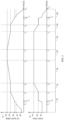
- FIG. 2 depicts a chart 75 that illustrates the speed the compressor shaft 26c of an embodiment of the gas turbine system 10 of FIG. 1 during operation of the gas turbine system 10, and a chart 76 that illustrates the speed of the pump shaft 46 during operation of the gas turbine system 10 of FIG. 1 .
- the gas turbine system 10 starts by combusting the first liquid fuel 38a (e.g., diesel) in the combustor 14 while the compressor shaft 26c is driven at a starter speed 80.
- the startup period 78 components of the gas turbine system 10 are heated through operation.
- combustion of the first fuel heats the combustor 14 and the turbine 16
- the compression of the air 20 in the compressor 12 heats the compressor 12
- friction may warm lubricants in the compressor shaft 26c, the turbine shaft 26t, and the driven load 32.
- the load on the gas turbine system during the startup and shutdown operations may be less than approximately 50, 40, 30, 25, 20, or 10 percent of a rated load of the gas turbine system.
- the compressor shaft 26c may be initially driven at the starter speed by a starter until combustion of the fuel in the combustor 14 produces enough combustion gases to drive the turbine 16 and the compressor shaft 26c at speeds greater than the starter speed 80.
- the controller 52 may control the VFD/SR 48 of the motor 44 to drive the fuel pump 42 at an initial pump speed 82.
- the starter speed 80 of the compressor shaft 26c may be approximately 2400 RPM.
- driving the pump shaft 46 at the initial pump speed 82 of approximately 3500 RPM causes the fuel pump 42 to direct the first liquid fuel 38a (e.g., diesel) to the fuel manifolds/nozzles 18 at approximately 600 psig (4136 kPa).
- the controller 52 may control the VFD/SR 48 of the motor 44 at T 2 to increase the pump speed from the initial pump speed 82 to a startup fuel speed 86 at T 3 .
- the idle speed 84 of the compressor shaft 26c of the gas turbine system 10 is between 6800 and 7000 RPM.
- driving the pump shaft 46 at the startup fuel speed 86 of approximately 5150 RPM causes the fuel pump 42 to direct the first liquid fuel 38a to the fuel manifolds/nozzles 18 at a transition pressure (e.g., approximately 1200 psig).
- the shaft speed may increase from the idle speed 84 at T 1 to a minimum load speed 88 between 7100 and 7500 RPM at T 2 in response to the control of the fuel from the pump to the combustor 14 at T 2 .
- the combustion gases from combustion of the first liquid fuel 38a in the combustor 14 may continue to increase the speed of the compressor shaft 26c from the minimum load speed 88 between 7100 and 7500 RPM at T 2 to a fuel transfer speed 90 at T 4 .
- the gas turbine system 10 may be configured stably operate and drive a fuel transfer with the first liquid fuel 38a, the second liquid fuel 38b, or any combination thereof.
- the fuel transfer speed 90 for stable operation of the gas turbine system 10 is between 8200 and 10000 RPM.
- the pressure of the first liquid fuel 38a provided by the variable-speed fuel pump 42 at the startup fuel speed 86 is determined based on a vapor pressure of the second liquid fuel 38b that is to be added with the first liquid fuel 38a during a first transition period 92. That is, the controller 52 may control the VFD/SR 48 linked to the fuel pump 42 to the startup fuel speed 86 with the first liquid fuel 38a during the startup period 78 to facilitate a transfer during the first transition period 92 from the first liquid fuel 38a to the second liquid fuel 38b without changing the phase of the first liquid fuel 38a or the second liquid fuel 38b.
- the fuel pump 42 may receive a two-phase flow in which the first liquid fuel 38a is received as a liquid and the second liquid fuel 38b is received as a gas.
- the controller 52 may control the VFD/SR 48 linked to the fuel pump 42 and the startup fuel speed 86 to avoid providing a two-phase flow to the fuel pump 42 from any of the fuel sources.
- the controller 52 may determine the startup fuel speed 86 based at least in part on feedback from the sensors of the fuel pressure of the fuel sources, the fuel temperatures of the fuel sources, fuel properties entered by the operator, or any combination thereof.
- the controller 52 may maintain a first flow of the first liquid fuel 38a to the fuel pump 42 and increase a second flow of the second liquid fuel 38b to the fuel pump 42.
- the controller 52 may control the VFD/SR 48 of the motor 44 to increase the speed of the fuel pump 42 during the transition period from the startup fuel speed 86 at T 4 to the primary fuel speed 94 at T 5 to facilitate directing the additional second liquid fuel 38b to the fuel pump 42 without adjusting the pressure (e.g., discharge pressure) of the fuels supplied by the fuel pump 42. That is, the controller 52 may control the VFD/SR 48 of the motor 44 to adjust the speed of the fuel pump 42 during the transition period to maintain the discharge pressure within a range of a desired pressure (e.g., transition pressure).
- a desired pressure e.g., transition pressure
- the primary fuel speed 94 may be approximately 6060 RPM.
- the controller 52 may determine the primary fuel speed 94 of the fuel pump 42 based at least in part on the fuel parameters of the one or more fuels directed to the combustor during the ramp up period 96, the steady-state period 100, and/or the ramp down period 102.
- the controller 52 determines the primary fuel speed 94 of the fuel pump based at least in part on the lower heating value of the second liquid fuel 38b, the lubricity of the second liquid fuel 38b, the specific gravity of the second liquid fuel 38b, or the vapor pressure of the second liquid fuel 38b, or any combination thereof. In certain embodiments, the controller 52 may determine the composition of the fuel from feedback of the sensors 74 and the pressure transmitter 54, then determine the one or more parameters of the fuel from a table that is stored in the memory 58 or is otherwise accessible by the processor 56 of the controller 52.
- the controller 52 may control the fuel feeding valves 66 to increase the quantity of the second liquid fuel 38b provided to the fuel pump 42 and to decrease the quantity of the first liquid fuel 38a provided to the fuel pump 42.
- the first transition period 92 is between 15 to 180 seconds, 30 to 150 seconds, or 60 to 120 seconds.
- the controller 52 may first increase the quantity of the second liquid fuel 38b provided to the fuel pump 42 from zero to a second quantity, then decrease the quantity of the first liquid fuel 38a provided to the fuel pump 42 from a first quantity to zero.
- the controller 52 is configured to ensure that the first liquid fuel 38a and the second liquid fuel 38b each remain in a liquid phase during the first transition period 92.
- the fuel transfer process described above may occur gradually with a predetermined ramp up from gas turbine shaft speed 88 to speed 90 without having to hold the gas turbine shaft speed at 90; that is, opening the second fuel feeding valve 38b to the second threshold value, while closing the first fuel feeding valve 38a from the first threshold value to zero.
- this process may be done in part by adjusting the speed of the pump 42 based on the fuel properties of the first and second fuel, the ambient properties and the gas turbine shaft ramp up speed rate.
- the controller 52 may control the gas turbine system 10 during a ramp up period 96 to increase the speed of the compressor shaft 26c from the fuel transfer speed 90 to an operating load speed 98 at T 6 .
- the operating load speed 98 is between 9500 and 15000 RPM.
- the gas turbine system 10 supplied by the second liquid fuel 38b is configured to drive the load during a steady-state period 100.
- the gas turbine system 10 may be configured to operate in the steady-state period 100 for hours, days, weeks, or more.
- the controller 52 may control the gas turbine system 10 during a ramp down period 102 to decrease the speed of the compressor shaft 26c from the operating load speed 98 to the fuel transfer speed 90 at T 8 .
- the controller 52 controls the fuel feeding valves 66 during a second transition period 104 to decrease the quantity of the second liquid fuel 38b provided to the fuel pump 42 and to increase the quantity of another liquid fuel of the fuel supply system 30 provided to the fuel pump 42.
- the charts 75, 76 of FIG. 2 illustrate an embodiment of the transition between the first liquid fuel 38a and the second liquid fuel 38b, the controller 52 may also control transitions among more than two liquid fuels.
- the controller 52 may control the feeding valves 66 to increase the quantity of the first liquid fuel 38a provided to the fuel pump 42 from zero to the first quantity, then decrease the quantity of the second liquid fuel 38b provided to the fuel pump 42 from the second quantity to zero.
- the controller 52 may control the gas turbine system 10 in a shutdown period 106 to decrease the speed of the compressor shaft 26c from the fuel transfer speed 90 to the minimum load speed 88 at T 10 .
- the controller 52 may decrease the speed of the pump shaft 46 at T 10 from the startup fuel speed 86 to the initial pump speed 82 at T 11 , thereby preparing the fuel supply system 30 for shutdown.
- the controller 52 may reduce the speed of the compressor shaft 26c and the pump speed 76 so that the speeds respectively decrease to be zero RPM at T 12 .
- FIG. 2 illustrates the speed of the compressor shaft 26c and the speed of the pump shaft 46 at zero RPM at T 12
- the controller 52 is configured to ensure that the first liquid fuel 38a and the second liquid fuel 38b each remain in a liquid phase during the second transition period 104.
- the availability and cost of the liquid fuel sources 38 may vary among sites for gas turbine systems 10.
- diesel fuel, kerosene, or gasoline may be utilized for standardized startup and shutdown procedures for the gas turbine system 10.
- some liquid fuels, such as diesel may have less availability, higher costs, or both less availability and higher costs relative to other liquid fuels, such as distillate fuels, jet fuels, naphthas, liquid butanes, liquid propanes, liquefied petroleum gas (LPG), and other hydrocarbons or hydrocarbon mixtures, or biofuels.
- the heating values of liquid fuels differ, such that a first liquid fuel with a higher heating value may be desired for operation with higher loads than a second liquid fuel with a lower heating value.
- the controller 52 may control the fuel feeding valves 66, the VFD/SR 48 and the fuel control valve 50 to transition from a first flow of one or more liquid fuels of the fuel supply system 30 to a second flow of one or more liquid fuels of the fuel supply system 30 based on the availability of the one or more liquid fuels, the cost of the one or more liquid fuels, and/or the desired load to be driven through combustion of the one or more liquid fuels.
- startup and shutdown may be performed with any gaseous fuel through the gas fuel system train.
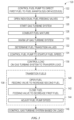
- FIG. 3 illustrates a flow chart of an embodiment of a method 120 of operating the gas turbine system from a startup with the first liquid fuel to driving a full load with the second liquid fuel or liquid fuel mixtures.
- the controller of the fuel supply system controls (block 122) the VFD/SR linked to the fuel pump to direct the first liquid fuel toward the one or more fuel manifolds or nozzles of the fuel supply system.
- the controller also opens (block 124) the fuel feeding control valve to permit flow of the first liquid fuel to the inlet of the fuel pump.
- the controller may execute blocks 122 and 124 at approximately the same time (e.g., within 1 to 10 seconds).
- the gas turbine system starts (block 126) the compressor and turbine of the gas turbine system, thereby initiating the rotation of the shaft of the gas turbine system.
- the controller that starts (block 126) the gas turbine system also controls the fuel supply system.
- the controller may control combustion (block 128) of the oxidant-fuel mixture in the combustor.
- the controller controls the fuel and the oxidant supplied to the combustor to warm up (block 130) components of the gas turbine engine, thereby increasing the stability of the gas turbine system.
- the controller determines (block 132) fuel transition values based at least in part on fuel parameters of the fuel sources of the fuel supply system. In certain embodiments, the controller determines (block 132) fuel transition values based at least in part on the fuel parameters and environmental parameters (e.g., temperature, pressure, humidity) of the ambient environment of the gas turbine system.
- the fuel transition values may include, but are not limited to, the startup fuel speed for the fuel pump to initiate the transition from the first liquid fuel to the second liquid fuel, the transfer load on the gas turbine system during the transition from the first liquid fuel to the second liquid fuel, a transition threshold for the one or more fuel feeding valves of the fuel supply system, a mixture of liquid fuels of the second liquid fuel provided to the combustor after the transition, or any combination thereof.
- the controller then controls (block 134) the VFD/SR linked to the fuel pump to the startup fuel speed based at least in part on fuel parameters of the first liquid fuel and the second liquid fuel.
- the startup fuel speed may be determined based on a vapor pressure of the second liquid fuel that is to be added with the first liquid fuel during a transition period.
- the controller may control (block 134) the VFD/SR linked to the fuel pump to the startup fuel speed that facilitates a transfer from the first liquid fuel to the second liquid fuel without supplying a multiphase fuel flow to the fuel pump or to the one or more fuel manifolds/nozzles.
- the main fuel control valve will regulate the startup fuel flow, the liquid fuel mixture flow during the transition, and the second liquid fuel flow to the manifolds/nozzles as a supplement to the variable-speed fuel pump for liquid fuel flow control purposes.
- the controller controls (block 136) the load on the gas turbine system to the transfer load at which the controller may stably transition the fuel supplied to the combustor from the first liquid fuel to the second liquid fuel by means of the main fuel control valve and the individual fuel feeding valves.
- the startup fuel may be diesel, kerosenes, or gasoline or a gaseous fuel, respectively.
- the second fuel may be a liquid fuel such as a butane, kerosene, or jet fuel, among others.
- the controller may determine (block 132) fuel transition values, like the transfer load, based at least in part on fuel parameters of the second liquid fuel.
- the transfer load may be the second idle load such that the gas turbine may stably provide the transfer load during the transition from the first liquid fuel to the second liquid fuel.
- the controller transitions (block 138) from the first liquid fuel to the second liquid fuel.
- the controller opens (block 140) a second fuel feeding valve for the second liquid fuel while maintaining stable operation of the gas turbine system.
- the controller closes (block 142) a first fuel feeding valve for the first liquid fuel while maintaining stable operation of the gas turbine system.
- the controller may gradually open (block 140) and close (block 142) the fuel feeding valves over respective transition periods.
- the transitions to open or close the fuel feeding valves may be 5, 10, 15, 20, 30, 45, or 60 seconds or more, such that the controller executes blocks 140 and 142 over a period of 10, 20, 30, 40, 60, 90, or 120 seconds or more.
- the controller may pause for 5, 10, 15, 30, or 60 seconds or more between opening (block 140) and closing (block 142) the fuel feeding valves during the transition (block 138).
- the second liquid fuel transition threshold for opening (block 140) the second fuel feeding valve may be approximately 50, 60, 70, 80, 90, or 100 percent open.
- the controller may adjust (block 144) the speed of the fuel pump by means of the VFD/SR while controlling the fuel feeding valves and the main fuel control valve over the transition periods. For example, the controller may increase the speed of the fuel pump during a transition to the second liquid fuel with a higher vapor pressure than the first liquid fuel while adjusting the position of the main fuel control valve to sustain the gas turbine load.
- the controller may increase the speed of the fuel pump to maintain a discharge pressure of the fuel supplied from the outlet of the pump to the combustor to be within a range (e.g., 0.5 to 10%) of a transition pressure during the transition periods, and to adjust the position of the main fuel control valve to maintain the gas turbine load.
- Maintaining the discharge pressure of the liquid fuel supplied to the combustor within a transition pressure range may facilitate stable combustion within the combustor during the transition period.
- a gaseous fuel may be used to startup and shutdown the gas turbine system and the transition to a liquid fuel source, allowing the gas turbine system to perform transition to a second liquid fuel or mixture of other liquid fuels at steady-state or at loads higher than the transition load for startup and shutdown processes.
- the controller may control (block 146) the gas turbine system based on a desired load while operating the gas turbine system with the second liquid fuel.
- the controller may adjust the quantity and/or pressure of the second liquid fuel supplied to the combustor during steady-state operation of the gas turbine system in response to changes in the load on the gas turbine system by means of the main fuel control valve.
- the controller may repeat blocks 132-144 as described above to transition from the second liquid fuel to the first liquid fuel, to a third liquid fuel, or to a mix of one or more liquid fuels of the fuel supply system.
- FIG. 4 illustrates a chart 160 of an embodiment of the control of the fuel feeding valves for the transition between liquid fuels described above.
- a first position 164 of a first fuel feeding valve configured to supply a first liquid fuel to the fuel pump is opened to a first liquid fuel threshold 166.
- the first liquid fuel threshold 166 may be determined by the controller of the fuel supply system based on a determined transfer load for the gas turbine system. As discussed above, the transfer load may be determined based on the fuel parameters of the first liquid fuel and the second liquid fuel and ambient conditions for the gas turbine system.
- the controller of the fuel supply system may determine from an analysis of the fuel parameters of the first liquid fuel and the second liquid fuel that a stable transition from the first liquid fuel to the second liquid fuel may occur at a transfer load that is supported by combustion of a first quantity of the first liquid fuel supplied when the first fuel feeding valve is opened to the first liquid fuel threshold.
- the controller may also determine from the analysis of the fuel parameters of the first liquid fuel and the second liquid fuel that the transfer load may be supported by combustion of a second quantity of the second liquid fuel when a second position 168 of the second fuel feeding valve is opened to a second liquid fuel threshold 170.
- the controller may analyze the fuel parameters of the first liquid fuel and the second liquid fuel based on feedback from the sensors monitoring the respective liquid fuels, from inputs to the controller associated with the fuel parameters of the respective liquid fuels, or any combination thereof.
- the first liquid fuel threshold 166 is between approximately 25, 30, 40, 50, 60, 70, 75, 80, 90, or 100% open.
- the second liquid fuel threshold 170 is between approximately 25, 30, 40, 50, 60, 70, 75, 80, 90, or 100% open.
- the first liquid fuel threshold 166 may be approximately 40% open, and the second liquid fuel threshold may be approximately 75% open.
- the controller adjusts the second position 168 of the second fuel feeding valve at T A to open the second fuel feeding valve.
- a second rate 172 of opening the second fuel feeding valve may be controlled based at least in part on the valve-type (e.g., butterfly, ball, gate, globe) of the second fuel feeding valve, the stability of the gas turbine system, and parameters (e.g., viscosity, vapor pressure, specific gravity, lubricity) of the second liquid fuel, or any combination thereof.
- a second transition period 174 for opening the second position 168 of the second fuel feeding valve to the second liquid fuel threshold 170 may be between approximately 5, 10, 15, 20, 30, 45, or 60 seconds.
- the controller opens the second fuel feeding valve to the second liquid fuel threshold 170 while the first feeding valve remains open to the first liquid fuel threshold 166.
- the second fuel feeding valve is opened to the second liquid fuel threshold 170 and the first fuel feeding valve remains opened to the first liquid fuel threshold 166.
- the first liquid fuel and the second liquid fuel are supplied to the fuel pump during the fuel transition 162.
- the speed of the fuel pump may be controlled by the VFD/SR during the fuel transition 162 based on fuel parameters of the first liquid fuel and the second liquid fuel, and based on the discharge pressure from the pressure transmitter, to avoid a two-phase flow within the fuel pump and/or downstream of the fuel pump.
- the gas turbine system combusts a mixture of the first liquid fuel and the second liquid fuel during the fuel transition 162.
- the controller adjusts the first position 164 of the first fuel feeding valve at T B to close the first fuel feeding valve as soon as the second fuel feeding valve is opened to the second liquid fuel threshold 170.
- the controller may pause at T B for a stability interval (e.g., between 1 and 60 seconds) to ensure combustion stability of the gas turbine system prior to adjusting the first position 164 of the first fuel feeding valve.
- a first rate 176 of closing the first fuel feeding valve may be controlled based at least in part on the valve-type (e.g., butterfly, ball, gate, globe) of the first fuel feeding valve, the stability of the gas turbine system, and parameters (e.g., viscosity, vapor pressure, specific gravity, lubricity) of the first liquid fuel, or any combination thereof.
- a first transition period 178 for closing the first position 164 of the first fuel feeding valve from the first liquid fuel threshold 166 to a fully closed position 180 may be between approximately 5, 10, 15, 20, 30, 45, or 60 seconds. The controller closes the first fuel feeding valve while the second feeding valve remains open to the second liquid fuel threshold 170.
- the controller may adjust the position of the main fuel control valve and the speed of the fuel pump by means of the VFD/SR to supply desired a quantity and pressure of the second liquid fuel to the combustor of the gas turbine system to drive a desired load.
- Technical effects of the present disclosure include transitioning from a first liquid fuel supplied to a combustor of a gas turbine system to a second liquid fuel supplied to the combustor utilizing one fuel pump configured to supply both fuels from one fuel pump during the transition without shutting down the gas turbine system.
- one fuel pump configured to supply both fuels from one fuel pump during the transition without shutting down the gas turbine system.
- the utilization of multiple liquid fuels during operation of a gas turbine system increase the operational flexibility of the gas turbine system by enabling the utilization of varied liquid fuel sources and/or local liquid fuel sources during a steady-state operation, yet utilizing standardized fuel sources (e.g., diesel, kerosene, gasoline and in some cases, gaseous fuels) for startup or shutdown procedures.
- standardized fuel sources e.g., diesel, kerosene, gasoline and in some cases, gaseous fuels
Landscapes
- Engineering & Computer Science (AREA)
- Chemical & Material Sciences (AREA)
- Combustion & Propulsion (AREA)
- Mechanical Engineering (AREA)
- General Engineering & Computer Science (AREA)
- Engine Equipment That Uses Special Cycles (AREA)
- Feeding And Controlling Fuel (AREA)
Description
- The subject matter disclosed herein relates to gas turbine systems, and more particularly, to gas turbine systems that combust multiple liquid fuels.
- Gas turbine systems generally include a compressor, a combustor, and a turbine. The combustor combusts a mixture of compressed air and one or more fuels to produce hot combustion gases directed to the turbine to produce work, such as to drive an electrical generator or other load. The compressor compresses an oxidant flow (e.g., air), and subsequently directs the compressed oxidant to the combustor. Gas turbine systems may be configured to operate with various fuels. It may be desirable for efficiency, availability, and/or cost reasons to use some fuels during a first period of operation of the gas turbine system, and other fuels during a second period of operation of the gas turbine system. However, separate fuel supply systems for separate fuels may increase the cost and footprint of the gas turbine system. Moreover, it may be undesirable to shut down the gas turbine system to change the fuel source of the gas turbine system.
-
EP 2 716 890 A2 discloses a system including a fuel supply system and a method for transitioning between liquid fuel flows supplied to a gas turbine system during operation of the gas turbine system. The fuel supply system includes a main fuel pump having an inlet and an outlet and a motor coupled to the main fuel pump. The fuel supply system also includes a first auxiliary fuel pump and a first fuel feeding valve configured to control a first flow of a first liquid fuel to the inlet of the main fuel pump based on first feeding valve control signals. The fuel supply system further includes a second auxiliary fuel pump and a second fuel feeding valve configured to control a second flow of a second liquid fuel to the inlet based on second feeding valve control signals. The fuel supply system further includes a controller coupled to and generating control signals for the motor, the first and second auxiliary fuel pumps and the first and second fuel feeding valves based on the load demand of the gas turbine system and the fuel parameters of the first and second liquid fuels, the controller being also configured to control a transition from the first flow to the inlet of the main fuel pump at a first time to a second flow at the inlet at a second time. -
US 2017/0184111 A1 discloses a ducted fan gas turbine engine system including a fuel supply system comprising a low pressure pump for supplying fuel at a raised pressure to a high pressure pump. The low pressure pump has a pumping mechanism which raises the pressure of fuel flowing though the mechanism. The low pressure pump further has an electrical motor which drives the pumping mechanism and a variable frequency motor drive which supplies electrical power to the electrical motor. The variable frequency motor drive measures the electrical power supplied to the electrical motor and a control unit controls the motor drive to control the power supplied to the electrical motor based on the measured electrical power and a predetermined reference power. - Certain embodiments commensurate in scope with the originally claimed subject matter are summarized below. These embodiments are not intended to limit the scope of the claims, but rather these embodiments are intended only to provide a brief summary of possible forms of the embodiments of the present disclosure.
- According to a first aspect of the invention, a system including a fuel supply system is presented. The fuel supply system includes a fuel pump having an inlet and an outlet. The fuel supply system also includes a first fuel feeding valve configured to control a first flow of a first liquid fuel to the inlet based at least in part on first feeding valve control signals. The fuel supply system further includes a second fuel feeding valve configured to control a second flow of a second liquid fuel to the inlet based at least in part on second feeding valve control signals. In addition, the fuel supply system includes a motor coupled to the fuel pump. The motor includes a variable frequency drive device configured to drive the motor. The motor is configured to drive the fuel pump based at least in part on pump speed control signals. The fuel supply system also includes a main fuel control valve configured to regulate fuel flow to fuel manifolds/nozzles of a gas turbine system based at least in part on main fuel valve control signals. The main fuel valve control signals are based at least in part on load demands of the gas turbine system. The fuel supply system further includes a controller coupled to the motor, the first fuel feeding valve, the second fuel feeding valve and the main fuel control valve. The controller is configured to generate the first feeding valve control signals, the second feeding valve control signals, the pump speed control signals, and the main fuel control valve signals based at least in part on first fuel parameters of the first liquid fuel and second fuel parameters of the second liquid fuel. The controller is also configured to control a transition from the first flow to the inlet at a first time to a second flow at the inlet at a second time. The system further comprises a pump discharge pressure sensor coupled to the outlet of the fuel pump, wherein the pump discharge pressure sensor is configured to provide feedback of a discharge pressure to the controller, and the controller is configured to generate the first feeding valve control signals, the second feeding valve control signals, and the pump speed control signals during the transition based at least in part on the feedback of the discharge pressure from the pump discharge pressure sensor.
- According to a further aspect of the invention, a method for transitioning between liquid fuel flows supplied to a gas turbine system during operation of the gas turbine system includes supplying a first liquid fuel to an inlet of a fuel pump through a first fuel feeding valve opened to a first liquid fuel threshold. The first liquid fuel threshold is based at least in part on a first fuel parameter of the first liquid fuel. The method also includes directing the first liquid fuel from an outlet of the fuel pump to a combustor of the gas turbine system. The method further includes combusting the first liquid fuel with an oxidant in the combustor to generate exhaust gas. In addition, the method includes expanding the exhaust gas through a turbine of the gas turbine system to drive a shaft coupled to the turbine and to a load. The method also includes transitioning over a transition period from combustion of the first liquid fuel in the combustor to combustion of a second liquid fuel in the combustor. The transitioning includes opening a second fuel feeding valve to a second liquid fuel threshold to supply the second liquid fuel to the inlet of the fuel pump while supplying the first liquid fuel to the inlet. The second liquid fuel threshold is based at least in part on a second fuel parameter of the second liquid fuel. The transitioning also includes closing the first fuel feeding valve from the first liquid fuel threshold to stop supplying the first liquid fuel to the inlet in response to opening the second fuel feeding valve to the second liquid fuel threshold. The transitioning further includes controlling a speed of a motor configured to drive the fuel pump to maintain a discharge pressure of a liquid fuel flow at the outlet to be within a range of a transition pressure. The liquid fuel flow includes the first liquid fuel, the second liquid fuel, or any combination thereof. Controlling the speed of the motor configured to drive the fuel pump includes sensing a pump discharge pressure at the outlet of the fuel pump and controlling the speed of the motor to maintain the discharge pressure within the range of the transition pressure based at least in part on the sensed pump discharge pressure.
- These and other features, aspects, and advantages of the present disclosure will become better understood when the following detailed description is read with reference to the accompanying drawings in which like characters represent like parts throughout the drawings, wherein:
-
FIG. 1 is a schematic block diagram of an embodiment of a gas turbine system with a fuel supply system having multiple fuels; -
FIG. 2 illustrate charts of speeds of a compressor shaft of the gas turbine system and a pump shaft of the multiple fuels supply system during operation of the gas turbine system; -
FIG. 3 is a flow chart of an embodiment to transition between fuel sources supplied from the fuel supply system to the gas turbine system; and -
FIG. 4 is a chart illustrating the control of fuel valves during the transition of fuel sources of the fuel supply system. - One or more specific embodiments of the present disclosure will be described below. To provide a concise description of these embodiments, all features of an actual implementation may not be described in the specification. It should be appreciated that in the development of any such actual implementation, as in any engineering or design project, numerous implementation-specific decisions must be made to achieve the developers' specific goals, such as compliance with system-related and business-related constraints, which may vary from one implementation to another. Moreover, it should be appreciated that such a development effort might be complex and time consuming, but would nevertheless be a routine undertaking of design, fabrication, and manufacture for those of ordinary skill having the benefit of this disclosure.
- When introducing elements of various embodiments of the present disclosure, the articles "a," "an," "the," and "said" are intended to mean that there are one or more of the elements. The terms "comprising," "including," and "having" are intended to be inclusive and mean that there may be additional elements other than the listed elements.
- Gas turbine systems expand combustion gases through turbines to produce work that may drive one or more loads. Fuels provided to the gas turbine system may be provided to the combustor for generation of the combustion gases based on the chemical and physical parameters of the fuels, the cost of the fuels, and the availability of the fuels. Standardized fuels, such as diesel, natural gas, gasoline, jet fuel, may be available with consistent fuel parameters desirable for startup and shutdown operations. However, these standardized fuels may be more costly or less available than other fuel sources, such as those that may otherwise be flared near the site of the gas turbine system unless supplied to the gas turbine system to generate the combustion gases. Separate fuel pumps and/or compressors to deliver fuel from other fuel sources for steady-state operation of the gas turbine system may increase the footprint of the fuel supply system. However, analysis of the fuel parameters of the fuel sources as described herein enables the fuel supply system to provide different fuels to the combustor while avoiding a multi-phase fuel flow. For operation with multiple liquid fuels, through control of a variable speed motor to drive the fuel pump, and fuel control valves, the fuel supply system may maintain a discharge pressure of liquid fuel from the fuel pump while transitioning between liquid fuel sources of the fuel supply system. The systems and methods of controlling the liquid fuel supply system described herein maintain the stability of operation of the gas turbine system throughout the transition between liquid fuel sources.
- Turning now to the drawings,
FIG. 1 illustrates a block diagram of an embodiment of agas turbine system 10. The diagram includes acompressor 12, aturbine combustor 14, and aturbine 16. Theturbine combustor 14 include one or more fuel manifolds/nozzles 18, which route a liquid fuel and/or gas fuel (e.g., natural gas, syngas, or any other gaseous fuel) from a fuel supply system 30 into theturbine combustor 14. Theturbine combustor 14 ignites and combusts an air-fuel mixture to create hot, pressurized combustion gases 24, which are subsequently directed into theturbine 16. It may be appreciated that whileFIG. 1 illustrates oneturbine combustor 14, certain embodiments of thegas turbine system 10 may includemultiple turbine combustors 14 that direct the combustion gases 24 to theturbine 16. Turbine blades of theturbine 16 are coupled to one or more shafts 26, which may also be coupled to several other components throughout thegas turbine system 10, such as thecompressor 12 with a compressor shaft 26c. As the combustion gases 24 flow against the turbine blades in theturbine 16, theturbine 16 is driven into rotation, which causes a turbine shaft 26t to rotate. Eventually, the combustion gases 24 exit thegas turbine system 10 as anexhaust gas 28. The turbine shaft 26t may be coupled to aload 32, which is powered via rotation of the turbine shaft 26t. For example, theload 32 may be any suitable device that may generate power via the rotational output of theturbine system 10, such as a power generation plant or an external mechanical load. In certain embodiments, theload 32 may include an electrical generator, a propeller of a ship (e.g., in a marine application), and so forth. - In an embodiment of the
gas turbine system 10, compressor blades are included as components of thecompressor 12. The blades within thecompressor 12 are coupled to the compressor shaft 26c and will rotate as the compressor shaft 26c is driven by theturbine 16, as described above. The rotation of the blades within thecompressor 12 causes compression of a flow ofair 20 received by thecompressor 12 from anair intake 34, thereby forming pressurized airflow 36. For example, in certain embodiments, a first stream of pressurized airflow 36a may be fed into the one ormore combustors 14, where it is used to oxidize the fuel from one or more sources 38 of the fuel supply system 30 inside thecombustor 14. In certain embodiments, a second stream of pressurized airflow 36b may be fed into the fuel manifolds/nozzles 18 in which this pressurized airflow 36b is premixed with the fuel from one or more sources 38 of the fuel system 30 to produce a suitable air-fuel mixture 40 for combustion so as not to waste fuel or produce excess emissions. - The fuel supply system 30 of the present disclosure supplies fuel to the one or more fuel manifolds/
nozzles 18 from the one or more fuel sources 38. The fuel supply system 30 may supply one or more liquid fuels to the fuel manifolds/nozzles 18 via afuel pump 42. Thefuel pump 42 may be a centrifugal or positive displacement pump coupled to amotor 44 via a pump shaft 46, controlling speed with a variablefrequency control device 48, such as a variable frequency drive (VFD) motor, a switched reluctance (SR) motor, or a pump controlling the discharge pressure by adjusting the geometry on its discharge side. In certain embodiments, the fuel supply system 30 has only onefuel pump 42 configured to couple the one or more fuel sources 38 to a fuel control valve 50 directing the proper fuel flow to the one or more fuel manifolds/nozzles 18, thereby reducing a footprint of the fuel supply system 30 relative to a fuel supply system with multiple liquid fuel pumps in parallel. - In certain embodiments, the VFD/
SR 48 of themotor 44, which is used to control the variable speed of themotor 44 and to control the discharge pressure to the fuel control valve 50, may be monitored and controlled by agas turbine controller 52. In certain embodiments, thecontroller 52 may regulate the discharge pressure by controlling the output speed of the pump shaft 46 and thefuel pump 42 by continuously monitoring the discharge pressure by means of apressure transmitter 54, located near a discharge of thefuel pump 42, which provides feedback to thecontroller 52 to close the control loop of pressure regulation. Aprocessor 56 of thecontroller 52 may execute instructions stored in a memory 58 of thecontroller 52 to control the signals on themotor control line 60. In certain embodiments, thecontroller 52 may execute the control functions described herein automatically, without human intervention, based solely on feedback from the sensors and transmitters described herein. - The
fuel pump 42 delivers fuel received at aninlet 62 of thefuel pump 42 to the one or more fuel manifolds/nozzles 18 via an outlet 64 of thefuel pump 42. Thecontroller 52 may control which liquid fuels of the one or more liquid fuel sources 38 are directed to theinlet 62 via control of one or more respective fuel feeding valves 66 via signals (e.g., valve control signals) communicated on feeding valve control lines 68. For example, in certain embodiments, the supply of a first fuel source 38a (e.g., diesel) to theinlet 62 is controlled by a first fuel feeding valve 66a, the supply of a second fuel source 38b (e.g., liquid butane) to theinlet 62 is controlled by a second fuel feeding valve 66b, and the supply of a third fuel source 38c (e.g., naphtha) to theinlet 62 is controlled by a third fuel feeding valve 66c. As illustrated inFIG. 1 , any number of fuel sources 38 (e.g., an Nth fuel source 38d illustrated inFIG. 1 ) and corresponding fuel valves 66 may be used. - In certain embodiments, one or more forwarding pumps 70 may be arranged between the fuel sources 38 and the
inlet 62 of thefuel pump 42. Each forwarding pump 70 may increase the pressure of the liquid fuel from the respective liquid fuel source 38 to reduce or eliminate two phase flows into theinlet 62 of thefuel pump 42. Thecontroller 52 may control operation of the one or more forwarding pumps 70 in conjunction with control of the fuel feeding valves 66. For example, thecontroller 52 may stop a forwarding pump 70 when the respective fuel feeding valve 66 is closed, and may start a forwarding pump 70 when the respective fuel feeding valve 66 is opened. - In addition, in certain embodiments, the fuel supply system 30 of the present disclosure may supply gaseous fuel from one or multiple gas fuel sources 72. The
controller 52 may command startup, shutdown, or steady-state operation with gaseous fuels, as well as command transfers from and to any of the multiple liquid fuels sources 38. - In certain embodiments, the liquid fuels may range by specific gravity: e.g., between 0.2 and 2.0; may range by vapor pressure at 20 deg C (293 K): e.g., between 0.015 psi (0.103 kPa) and 35 psi (241 kPa); may range by lubricity: e.g., between 350 µm and 1000 µm on high frequency reciprocating rig (HFRR) method; and may range by lower heating value: e.g., between 8,000 BTU/lbm (18608 kJ/kg) and 20,000 BTU/lbm (46520 kJ/kg). This classification includes liquid hydrocarbons at ambient conditions, liquid alcohols at ambient conditions, liquid biofuels at ambient conditions, liquid fatty acids at ambient conditions, and so forth. Gas fuels may range by specific gravity: e.g., between 0.2 and 2.5; may range by hydrocarbon dew point at 14.696 psia (101.325 kPa): e.g., between -100 and 100 F (200 to 311 K); may range by Modified Wobbe Index (MWI): e.g., between 10 and 80; may range by lower heating value by mass: e.g., between 5,000 (11630) and 22,000 BTU/lbm (51172 kJ/kg); and may range by lower heating value by volume: e.g., between 290 BTU/scf (10.8 MJ/m3) and 3700 BTU/scf (137 MJ/m3).
- As discussed in detail below, the
processor 56 of thecontroller 52 may execute instructions from the memory 58 of thecontroller 52 to control quantities of the one or more fuel sources supplied to theliquid fuel pump 42 according to various control schemes. For example, thecontroller 52 may control the fuel feeding valves 66 to provide fuel to theinlet 62 from only one fuel source 38, to mix fuels in theliquid fuel pump 42 from two or more fuel sources 38, and to transition between fuels or fuel mixtures provided to theinlet 62. Although the embodiments discussed below discuss transitions between a first liquid fuel and a second liquid fuel, it is appreciated that the fuel supply system 30 may be controlled to control a transition from a first liquid fuel to a mixture of liquid fuels including the first liquid fuel, to control a transition from the first liquid fuel to a mixture of liquid fuels excluding the first liquid fuel, to control a transition from a mixture of liquid fuels to only the first liquid fuel of the mixture, or to control a transition from a mixture of liquid fuels to only a first liquid fuel that was not in the mixture. For such transitions, the controller may receive feedback from sensors, actuators, and/or input from an operator regarding the fuel parameters for each of the liquid fuels sources 38 of the fuel supply system 30. The fuel parameters for the liquid fuel sources 38 facilitate operation of the controller to determine the liquid fuel transition values that may affect the fuel feeding valve thresholds, the motor speed, the speed of the gas turbine system, the load on the gas turbine system, or any combination thereof. - The
controller 52 of the fuel supply system 30 may receive feedback from one ormore sensors 74 throughout the fuel supply system 30 and thegas turbine system 10. Thesensors 74 may include, but are not limited to, pressure sensors, composition sensors, flow meters, temperature sensors, load sensors, rotation sensors, or any combination thereof. Thesensors 74 may provide feedback to thecontroller 52 regarding the temperature of the liquid fuel sources 38, the pressure of the liquid fuel sources 38, the discharge pressure at the outlet 64 of the one or more fuels directed from theliquid fuel pump 42 indicated bypressure transmitter 54, the position of the fuel control valve 50, the speed of the pump shaft 46, the speed of the compressor shaft 26c of thegas turbine system 10, the speed of the turbine shaft 26t of thegas turbine system 10, theload 32 on thegas turbine system 10, or any combination thereof. Thecontroller 52 may control theliquid fuel pump 42, the fuel feeding valves 66, and the fuel control valve 50 based at least in part on feedback from the one ormore sensors 74. -
FIG. 2 depicts achart 75 that illustrates the speed the compressor shaft 26c of an embodiment of thegas turbine system 10 ofFIG. 1 during operation of thegas turbine system 10, and a chart 76 that illustrates the speed of the pump shaft 46 during operation of thegas turbine system 10 ofFIG. 1 . During astartup period 78, thegas turbine system 10 starts by combusting the first liquid fuel 38a (e.g., diesel) in thecombustor 14 while the compressor shaft 26c is driven at astarter speed 80. During thestartup period 78, components of thegas turbine system 10 are heated through operation. For example, combustion of the first fuel heats thecombustor 14 and theturbine 16, the compression of theair 20 in thecompressor 12 heats thecompressor 12, and friction may warm lubricants in the compressor shaft 26c, the turbine shaft 26t, and the drivenload 32. The load on the gas turbine system during the startup and shutdown operations may be less than approximately 50, 40, 30, 25, 20, or 10 percent of a rated load of the gas turbine system. The compressor shaft 26c may be initially driven at the starter speed by a starter until combustion of the fuel in thecombustor 14 produces enough combustion gases to drive theturbine 16 and the compressor shaft 26c at speeds greater than thestarter speed 80. - The
controller 52 may control the VFD/SR 48 of themotor 44 to drive thefuel pump 42 at an initial pump speed 82. Thestarter speed 80 of the compressor shaft 26c may be approximately 2400 RPM. In certain embodiments, driving the pump shaft 46 at the initial pump speed 82 of approximately 3500 RPM causes thefuel pump 42 to direct the first liquid fuel 38a (e.g., diesel) to the fuel manifolds/nozzles 18 at approximately 600 psig (4136 kPa). After the combustion gases drive theturbine 16 and rotate the compressor shaft 26c at an idle speed 84 at T1, thecontroller 52 may control the VFD/SR 48 of themotor 44 at T2 to increase the pump speed from the initial pump speed 82 to astartup fuel speed 86 at T3. In certain embodiments, the idle speed 84 of the compressor shaft 26c of thegas turbine system 10 is between 6800 and 7000 RPM. In certain embodiments, driving the pump shaft 46 at thestartup fuel speed 86 of approximately 5150 RPM causes thefuel pump 42 to direct the first liquid fuel 38a to the fuel manifolds/nozzles 18 at a transition pressure (e.g., approximately 1200 psig). The shaft speed may increase from the idle speed 84 at T1 to aminimum load speed 88 between 7100 and 7500 RPM at T2 in response to the control of the fuel from the pump to thecombustor 14 at T2. - The combustion gases from combustion of the first liquid fuel 38a in the
combustor 14 may continue to increase the speed of the compressor shaft 26c from theminimum load speed 88 between 7100 and 7500 RPM at T2 to afuel transfer speed 90 at T4. At thefuel transfer speed 90, thegas turbine system 10 may be configured stably operate and drive a fuel transfer with the first liquid fuel 38a, the second liquid fuel 38b, or any combination thereof. In certain embodiments, thefuel transfer speed 90 for stable operation of thegas turbine system 10 is between 8200 and 10000 RPM. In certain embodiments, the pressure of the first liquid fuel 38a provided by the variable-speed fuel pump 42 at thestartup fuel speed 86 is determined based on a vapor pressure of the second liquid fuel 38b that is to be added with the first liquid fuel 38a during afirst transition period 92. That is, thecontroller 52 may control the VFD/SR 48 linked to thefuel pump 42 to thestartup fuel speed 86 with the first liquid fuel 38a during thestartup period 78 to facilitate a transfer during thefirst transition period 92 from the first liquid fuel 38a to the second liquid fuel 38b without changing the phase of the first liquid fuel 38a or the second liquid fuel 38b. It may be appreciated that if thefuel pump 42 receives the first liquid fuel 38a at a pressure less than the vapor pressure of the second liquid fuel 38b, then thefuel pump 42 may receive a two-phase flow in which the first liquid fuel 38a is received as a liquid and the second liquid fuel 38b is received as a gas. Thecontroller 52 may control the VFD/SR 48 linked to thefuel pump 42 and thestartup fuel speed 86 to avoid providing a two-phase flow to thefuel pump 42 from any of the fuel sources. Thecontroller 52 may determine thestartup fuel speed 86 based at least in part on feedback from the sensors of the fuel pressure of the fuel sources, the fuel temperatures of the fuel sources, fuel properties entered by the operator, or any combination thereof. - During the transition period, the
controller 52 may maintain a first flow of the first liquid fuel 38a to thefuel pump 42 and increase a second flow of the second liquid fuel 38b to thefuel pump 42. Thecontroller 52 may control the VFD/SR 48 of themotor 44 to increase the speed of thefuel pump 42 during the transition period from thestartup fuel speed 86 at T4 to theprimary fuel speed 94 at T5 to facilitate directing the additional second liquid fuel 38b to thefuel pump 42 without adjusting the pressure (e.g., discharge pressure) of the fuels supplied by thefuel pump 42. That is, thecontroller 52 may control the VFD/SR 48 of themotor 44 to adjust the speed of thefuel pump 42 during the transition period to maintain the discharge pressure within a range of a desired pressure (e.g., transition pressure). In an embodiment in which the first liquid fuel 38a is a diesel liquid fuel and the second liquid fuel 38b is a liquid butane fuel, theprimary fuel speed 94 may be approximately 6060 RPM. Thecontroller 52 may determine theprimary fuel speed 94 of thefuel pump 42 based at least in part on the fuel parameters of the one or more fuels directed to the combustor during the ramp upperiod 96, the steady-state period 100, and/or the ramp downperiod 102. In certain embodiments, thecontroller 52 determines theprimary fuel speed 94 of the fuel pump based at least in part on the lower heating value of the second liquid fuel 38b, the lubricity of the second liquid fuel 38b, the specific gravity of the second liquid fuel 38b, or the vapor pressure of the second liquid fuel 38b, or any combination thereof. In certain embodiments, thecontroller 52 may determine the composition of the fuel from feedback of thesensors 74 and thepressure transmitter 54, then determine the one or more parameters of the fuel from a table that is stored in the memory 58 or is otherwise accessible by theprocessor 56 of thecontroller 52. During thefirst transition period 92, thecontroller 52 may control the fuel feeding valves 66 to increase the quantity of the second liquid fuel 38b provided to thefuel pump 42 and to decrease the quantity of the first liquid fuel 38a provided to thefuel pump 42. In certain embodiments, thefirst transition period 92 is between 15 to 180 seconds, 30 to 150 seconds, or 60 to 120 seconds. As discussed in detail below, thecontroller 52 may first increase the quantity of the second liquid fuel 38b provided to thefuel pump 42 from zero to a second quantity, then decrease the quantity of the first liquid fuel 38a provided to thefuel pump 42 from a first quantity to zero. In general, via the control described herein, thecontroller 52 is configured to ensure that the first liquid fuel 38a and the second liquid fuel 38b each remain in a liquid phase during thefirst transition period 92. - In certain embodiments, the fuel transfer process described above may occur gradually with a predetermined ramp up from gas
turbine shaft speed 88 to speed 90 without having to hold the gas turbine shaft speed at 90; that is, opening the second fuel feeding valve 38b to the second threshold value, while closing the first fuel feeding valve 38a from the first threshold value to zero. In certain embodiments, this process may be done in part by adjusting the speed of thepump 42 based on the fuel properties of the first and second fuel, the ambient properties and the gas turbine shaft ramp up speed rate. - After the
first transition period 92 at T5, thecontroller 52 may control thegas turbine system 10 during a ramp upperiod 96 to increase the speed of the compressor shaft 26c from thefuel transfer speed 90 to anoperating load speed 98 at T6. In certain embodiments, theoperating load speed 98 is between 9500 and 15000 RPM. At theoperating load speed 98, thegas turbine system 10 supplied by the second liquid fuel 38b is configured to drive the load during a steady-state period 100. Thegas turbine system 10 may be configured to operate in the steady-state period 100 for hours, days, weeks, or more. At T7, thecontroller 52 may control thegas turbine system 10 during a ramp downperiod 102 to decrease the speed of the compressor shaft 26c from theoperating load speed 98 to thefuel transfer speed 90 at T8. At T8, thecontroller 52 controls the fuel feeding valves 66 during asecond transition period 104 to decrease the quantity of the second liquid fuel 38b provided to thefuel pump 42 and to increase the quantity of another liquid fuel of the fuel supply system 30 provided to thefuel pump 42. Although thecharts 75, 76 ofFIG. 2 illustrate an embodiment of the transition between the first liquid fuel 38a and the second liquid fuel 38b, thecontroller 52 may also control transitions among more than two liquid fuels. During thesecond transition period 104, thecontroller 52 may control the feeding valves 66 to increase the quantity of the first liquid fuel 38a provided to thefuel pump 42 from zero to the first quantity, then decrease the quantity of the second liquid fuel 38b provided to thefuel pump 42 from the second quantity to zero. At T9, thecontroller 52 may control thegas turbine system 10 in ashutdown period 106 to decrease the speed of the compressor shaft 26c from thefuel transfer speed 90 to theminimum load speed 88 at T10. Thecontroller 52 may decrease the speed of the pump shaft 46 at T10 from thestartup fuel speed 86 to the initial pump speed 82 at T11, thereby preparing the fuel supply system 30 for shutdown. At T11, thecontroller 52 may reduce the speed of the compressor shaft 26c and the pump speed 76 so that the speeds respectively decrease to be zero RPM at T12. AlthoughFIG. 2 illustrates the speed of the compressor shaft 26c and the speed of the pump shaft 46 at zero RPM at T12, it is appreciated that in certain embodiments of thegas turbine system 10, the speed of the compressor shaft 26c and the speed of the pump shaft 46 may decrease at different rates and decrease to zero RPM at different times during theshutdown period 106. In general, via the control described herein, thecontroller 52 is configured to ensure that the first liquid fuel 38a and the second liquid fuel 38b each remain in a liquid phase during thesecond transition period 104. - The availability and cost of the liquid fuel sources 38 may vary among sites for
gas turbine systems 10. For example, diesel fuel, kerosene, or gasoline may be utilized for standardized startup and shutdown procedures for thegas turbine system 10. However, some liquid fuels, such as diesel, may have less availability, higher costs, or both less availability and higher costs relative to other liquid fuels, such as distillate fuels, jet fuels, naphthas, liquid butanes, liquid propanes, liquefied petroleum gas (LPG), and other hydrocarbons or hydrocarbon mixtures, or biofuels. Furthermore, the heating values of liquid fuels differ, such that a first liquid fuel with a higher heating value may be desired for operation with higher loads than a second liquid fuel with a lower heating value. Accordingly, thecontroller 52 may control the fuel feeding valves 66, the VFD/SR 48 and the fuel control valve 50 to transition from a first flow of one or more liquid fuels of the fuel supply system 30 to a second flow of one or more liquid fuels of the fuel supply system 30 based on the availability of the one or more liquid fuels, the cost of the one or more liquid fuels, and/or the desired load to be driven through combustion of the one or more liquid fuels. When available and convenient to operators, startup and shutdown may be performed with any gaseous fuel through the gas fuel system train. -
FIG. 3 illustrates a flow chart of an embodiment of amethod 120 of operating the gas turbine system from a startup with the first liquid fuel to driving a full load with the second liquid fuel or liquid fuel mixtures. The controller of the fuel supply system controls (block 122) the VFD/SR linked to the fuel pump to direct the first liquid fuel toward the one or more fuel manifolds or nozzles of the fuel supply system. The controller also opens (block 124) the fuel feeding control valve to permit flow of the first liquid fuel to the inlet of the fuel pump. The controller may executeblocks startup period 78, the controller controls the fuel and the oxidant supplied to the combustor to warm up (block 130) components of the gas turbine engine, thereby increasing the stability of the gas turbine system. - The controller determines (block 132) fuel transition values based at least in part on fuel parameters of the fuel sources of the fuel supply system. In certain embodiments, the controller determines (block 132) fuel transition values based at least in part on the fuel parameters and environmental parameters (e.g., temperature, pressure, humidity) of the ambient environment of the gas turbine system. The fuel transition values may include, but are not limited to, the startup fuel speed for the fuel pump to initiate the transition from the first liquid fuel to the second liquid fuel, the transfer load on the gas turbine system during the transition from the first liquid fuel to the second liquid fuel, a transition threshold for the one or more fuel feeding valves of the fuel supply system, a mixture of liquid fuels of the second liquid fuel provided to the combustor after the transition, or any combination thereof. The controller then controls (block 134) the VFD/SR linked to the fuel pump to the startup fuel speed based at least in part on fuel parameters of the first liquid fuel and the second liquid fuel. As discussed above, the startup fuel speed may be determined based on a vapor pressure of the second liquid fuel that is to be added with the first liquid fuel during a transition period. The controller may control (block 134) the VFD/SR linked to the fuel pump to the startup fuel speed that facilitates a transfer from the first liquid fuel to the second liquid fuel without supplying a multiphase fuel flow to the fuel pump or to the one or more fuel manifolds/nozzles. For any of these scenarios, the main fuel control valve will regulate the startup fuel flow, the liquid fuel mixture flow during the transition, and the second liquid fuel flow to the manifolds/nozzles as a supplement to the variable-speed fuel pump for liquid fuel flow control purposes.
- The controller controls (block 136) the load on the gas turbine system to the transfer load at which the controller may stably transition the fuel supplied to the combustor from the first liquid fuel to the second liquid fuel by means of the main fuel control valve and the individual fuel feeding valves. The startup fuel may be diesel, kerosenes, or gasoline or a gaseous fuel, respectively. The second fuel may be a liquid fuel such as a butane, kerosene, or jet fuel, among others. As discussed above, the controller may determine (block 132) fuel transition values, like the transfer load, based at least in part on fuel parameters of the second liquid fuel. For example, if a first idle load supported by combustion of the first liquid fuel is less than a second idle load supported by combustion of the second liquid fuel, then the transfer load may be the second idle load such that the gas turbine may stably provide the transfer load during the transition from the first liquid fuel to the second liquid fuel. After the gas turbine system is supporting the transfer load, the controller transitions (block 138) from the first liquid fuel to the second liquid fuel. To transition between the fuels, the controller opens (block 140) a second fuel feeding valve for the second liquid fuel while maintaining stable operation of the gas turbine system. When the second fuel feeding valve has been opened to a second liquid fuel transition threshold, the controller closes (block 142) a first fuel feeding valve for the first liquid fuel while maintaining stable operation of the gas turbine system. To maintain stable operation of the gas turbine system, the controller may gradually open (block 140) and close (block 142) the fuel feeding valves over respective transition periods.
- The transitions to open or close the fuel feeding valves may be 5, 10, 15, 20, 30, 45, or 60 seconds or more, such that the controller executes
blocks - After the controller has closed (block 142) the first fuel feeding valve and the gas turbine system is operating fully through combustion of the second liquid fuel, the controller may control (block 146) the gas turbine system based on a desired load while operating the gas turbine system with the second liquid fuel. As may be appreciated, the controller may adjust the quantity and/or pressure of the second liquid fuel supplied to the combustor during steady-state operation of the gas turbine system in response to changes in the load on the gas turbine system by means of the main fuel control valve. The controller may repeat blocks 132-144 as described above to transition from the second liquid fuel to the first liquid fuel, to a third liquid fuel, or to a mix of one or more liquid fuels of the fuel supply system.
-
FIG. 4 illustrates a chart 160 of an embodiment of the control of the fuel feeding valves for the transition between liquid fuels described above. Prior to afuel transition 162, afirst position 164 of a first fuel feeding valve configured to supply a first liquid fuel to the fuel pump is opened to a first liquid fuel threshold 166. The first liquid fuel threshold 166 may be determined by the controller of the fuel supply system based on a determined transfer load for the gas turbine system. As discussed above, the transfer load may be determined based on the fuel parameters of the first liquid fuel and the second liquid fuel and ambient conditions for the gas turbine system. For example, the controller of the fuel supply system may determine from an analysis of the fuel parameters of the first liquid fuel and the second liquid fuel that a stable transition from the first liquid fuel to the second liquid fuel may occur at a transfer load that is supported by combustion of a first quantity of the first liquid fuel supplied when the first fuel feeding valve is opened to the first liquid fuel threshold. The controller may also determine from the analysis of the fuel parameters of the first liquid fuel and the second liquid fuel that the transfer load may be supported by combustion of a second quantity of the second liquid fuel when asecond position 168 of the second fuel feeding valve is opened to a secondliquid fuel threshold 170. The controller may analyze the fuel parameters of the first liquid fuel and the second liquid fuel based on feedback from the sensors monitoring the respective liquid fuels, from inputs to the controller associated with the fuel parameters of the respective liquid fuels, or any combination thereof. In certain embodiments, the first liquid fuel threshold 166 is between approximately 25, 30, 40, 50, 60, 70, 75, 80, 90, or 100% open. In certain embodiments, the secondliquid fuel threshold 170 is between approximately 25, 30, 40, 50, 60, 70, 75, 80, 90, or 100% open. For example, the first liquid fuel threshold 166 may be approximately 40% open, and the second liquid fuel threshold may be approximately 75% open. - To begin the
fuel transition 162, the controller adjusts thesecond position 168 of the second fuel feeding valve at TA to open the second fuel feeding valve. Asecond rate 172 of opening the second fuel feeding valve may be controlled based at least in part on the valve-type (e.g., butterfly, ball, gate, globe) of the second fuel feeding valve, the stability of the gas turbine system, and parameters (e.g., viscosity, vapor pressure, specific gravity, lubricity) of the second liquid fuel, or any combination thereof. Asecond transition period 174 for opening thesecond position 168 of the second fuel feeding valve to the secondliquid fuel threshold 170 may be between approximately 5, 10, 15, 20, 30, 45, or 60 seconds. The controller opens the second fuel feeding valve to the secondliquid fuel threshold 170 while the first feeding valve remains open to the first liquid fuel threshold 166. At TB, the second fuel feeding valve is opened to the secondliquid fuel threshold 170 and the first fuel feeding valve remains opened to the first liquid fuel threshold 166. Accordingly, the first liquid fuel and the second liquid fuel are supplied to the fuel pump during thefuel transition 162. As discussed above, the speed of the fuel pump may be controlled by the VFD/SR during thefuel transition 162 based on fuel parameters of the first liquid fuel and the second liquid fuel, and based on the discharge pressure from the pressure transmitter, to avoid a two-phase flow within the fuel pump and/or downstream of the fuel pump. The gas turbine system combusts a mixture of the first liquid fuel and the second liquid fuel during thefuel transition 162. - In certain embodiments, the controller adjusts the
first position 164 of the first fuel feeding valve at TB to close the first fuel feeding valve as soon as the second fuel feeding valve is opened to the secondliquid fuel threshold 170. In certain embodiments, the controller may pause at TB for a stability interval (e.g., between 1 and 60 seconds) to ensure combustion stability of the gas turbine system prior to adjusting thefirst position 164 of the first fuel feeding valve. Afirst rate 176 of closing the first fuel feeding valve may be controlled based at least in part on the valve-type (e.g., butterfly, ball, gate, globe) of the first fuel feeding valve, the stability of the gas turbine system, and parameters (e.g., viscosity, vapor pressure, specific gravity, lubricity) of the first liquid fuel, or any combination thereof. Afirst transition period 178 for closing thefirst position 164 of the first fuel feeding valve from the first liquid fuel threshold 166 to a fullyclosed position 180 may be between approximately 5, 10, 15, 20, 30, 45, or 60 seconds. The controller closes the first fuel feeding valve while the second feeding valve remains open to the secondliquid fuel threshold 170. At TC, the second fuel feeding valve remains opened to the secondliquid fuel threshold 170, and the first fuel feeding valve is commanded to the fullyclosed position 180. Accordingly, only the second liquid fuel is supplied to the fuel pump after thefuel transition 162. After Tc, the controller may adjust the position of the main fuel control valve and the speed of the fuel pump by means of the VFD/SR to supply desired a quantity and pressure of the second liquid fuel to the combustor of the gas turbine system to drive a desired load. - Technical effects of the present disclosure include transitioning from a first liquid fuel supplied to a combustor of a gas turbine system to a second liquid fuel supplied to the combustor utilizing one fuel pump configured to supply both fuels from one fuel pump during the transition without shutting down the gas turbine system. Through utilizing one fuel pump and adjusting the operation of the pump during the transition, the additional costs, size, and operational complexity associated with multiple liquid fuel trains to facilitate operation of the gas turbine system with multiple liquid fuels may be avoided. The utilization of multiple liquid fuels during operation of a gas turbine system increase the operational flexibility of the gas turbine system by enabling the utilization of varied liquid fuel sources and/or local liquid fuel sources during a steady-state operation, yet utilizing standardized fuel sources (e.g., diesel, kerosene, gasoline and in some cases, gaseous fuels) for startup or shutdown procedures.
- This written description uses examples to disclose the embodiments of the present disclosure, including the best mode, and also to enable any person skilled in the art to practice the present disclosure, including making and using any devices or systems and performing any incorporated methods. The patentable scope of the present disclosure is defined by the claims.
-
- 10 - gas turbine system
- 12 - compressor
- 14 - combustor(s)
- 16 - turbine
- 18 - fuel manifolds/nozzles
- 20 - air
- 24 - combustion gases
- 26c - compressor shaft
- 26t - gas turbine shaft
- 28 - exhaust gas
- 30 - fuel supply system
- 32 - load
- 34 - air intake
- 36 - pressurized airflow
- 38 - liquid fuel sources
- 40 - fuel or air-fuel mixture
- 42 - fuel pump
- 44 - motor
- 46 - pump shaft
- 48 - variable frequency driver (VFD) or switch reluctance (SR) motor speed variation device
- 50 - main fuel control valve
- 52 - controller
- 54 - pressure transmitter
- 56 - processor
- 58 - memory
- 60 - motor control line
- 62 - pump inlet
- 64 - pump outlet
- 66 - fuel feeding valve
- 68 - feeding valve control line
- 70 - forwarding pump
- 72 - gas fuel sources
- 74 - sensors
- 75 - gas turbine compressor shaft speed
- 76 - fuel pump shaft speed
- 78 - startup period
- 80 - starter speed
- 82 - initial pump speed
- 84 - idle speed (gas turbine shaft)
- 86 - startup fuel speed (pump)
- 88 - minimum load speed (gas turbine shaft)
- 90 - transfer load speed (gas turbine shaft)
- 92 - first transition period
- 94 - primary fuel speed (pump)
- 96 - ramp up period
- 98 - operating load speed (gas turbine shaft)
- 100 - steady state period
- 102 - ramp down period
- 104 - second transition period
- 106 - shut down period
- 120 - method
- 122 - control fuel pump to direct first fuel to fuel manifolds/nozzles
- 124 - open fuel feeding control valves
- 126 - start gas turbine system
- 128 - combust liquid fuel mixture
- 130 - warm up gas turbine system
- 132 - determine fuel transition values
- 134 - control fuel pump to startup fuel speed
- 136 - control load on gas turbine system to transfer load
- 138 - transition fuels during transition period
- 140 - open fuel feeding valve to increase second liquid fuel
- 142 - close fuel feeding valve to decrease first liquid fuel
- 144 - adjust fuel pump speed
- 146 - control gas turbine system based on load
- 160 - chart
- 162 - fuel transition period
- 164 - first fuel feeding valve position
- 166 - first liquid fuel threshold
- 168 - second fuel feeding valve position
- 170 - second liquid fuel threshold
- 172 - second rate (second liquid fuel)
- 174 - second transition period (second fuel feeding valve open)
- 176 - first rate (first liquid fuel)
- 178 - first transition period (first fuel feeding valve close)
- 180 - fully closed position (first fuel feeding valve)
Claims (14)
- A system comprising:
a fuel supply system (30) comprising:a fuel pump (42) comprising an inlet (62) and an outlet (64);a first fuel feeding valve (66a) configured to control a first flow of a first liquid fuel (38a) to the inlet (62) based at least in part on first feeding valve control signals;a second fuel feeding valve (66b) configured to control a second flow of a second liquid fuel (38b) to the inlet (62) based at least in part on second feeding valve control signals;a motor (44) coupled to the fuel pump (42), wherein the motor (44) comprises a variable frequency drive device (48) configured to drive the motor (44), wherein the motor (44) is configured to drive the fuel pump (42) based at least in part on pump speed control signals;a main fuel control valve (50) configured to regulate fuel flow to fuel manifolds/nozzles (18) of a gas turbine system (10) based at least in part on main fuel valve control signals, wherein the main fuel valve control signals are based at least in part on load demands of the gas turbine system (10); anda controller (52) coupled to the motor (44), the first fuel feeding valve (66a), the second fuel feeding valve (66b) and the main fuel control valve (50), wherein the controller (52) is configured to generate the first feeding valve control signals, the second feeding valve control signals, the pump speed control signals, and the main fuel control valve signals based at least in part on first fuel parameters of the first liquid fuel (38a) and second fuel parameters of the second liquid fuel (38b), wherein the controller (52) is configured to control a transition from the first flow to the inlet (62) at a first time to a second flow to the inlet (62) at a second time;wherein the system further comprises a pump discharge pressure sensor (54) coupled to the outlet (64) of the fuel pump (42), wherein the pump discharge pressure sensor (54) is configured to provide feedback of a discharge pressure to the controller (52), and the controller (52) is configured to generate the first feeding valve control signals, the second feeding valve control signals, and the pump speed control signals during the transition based at least in part on the feedback of the discharge pressure from the pump discharge pressure sensor (54). - The system of claim 1, wherein the first liquid fuel (38a) and the second liquid fuel (38b) each remain in a liquid phase during the transition.
- The system of claim 1, wherein the pump speed control signals are configured to control a speed of the motor (44), and wherein the fuel pump (42) comprises a centrifugal pump.
- The system of claim 1, wherein the controller (52) is configured to generate the pump speed control signals during the transition to control the discharge pressure at the outlet (64) to be within a transition pressure range.
- The system of claim 1, wherein the first flow consists essentially of the first liquid fuel (38a), and the second flow consists essentially of the second liquid fuel (38b).
- The system of claim 1, comprising one or more fuel sensors (74) configured to provide feedback to the controller (52) of the first fuel parameters, the second fuel parameters, or any combination thereof, wherein the controller (52) is configured to generate the first feeding valve control signals, the second feeding valve control signals, and the pump speed control signals during the transition based at least in part on the feedback from the one or more fuel sensors (74).
- The system of claim 1, wherein the fuel supply system (30) comprises a plurality of fuel feeding valves (66) configured to control a plurality of liquid fuels (38) to the inlet (62) based at least in part on a plurality of feeding valves control signals.
- The system of claim 1, comprising the gas turbine system (10), wherein the gas turbine system (10) comprises:a combustor (14) configured to receive a flow from the outlet (64) of the fuel pump (42), to combust a mixture of the flow and an oxidant to generate exhaust gas (24), and to expand the exhaust gas (24) through a turbine (16);the turbine (16) configured to expand the exhaust gas (24) to drive a shaft (26); andthe shaft (26) coupled to the turbine (16) and to a load (32), wherein the controller (52) is configured to generate the first feeding valve control signals, the second feeding valve control signals, the pump speed control signals, and the main fuel valve control signals during the transition based at least in part on a speed of the shaft (26), the load (32) on the shaft (26), or any combination thereof.
- A method for transitioning between liquid fuel flows (38) supplied to a gas turbine system (10) during operation of the gas turbine system (10), comprising:supplying a first liquid fuel (38a) to an inlet (62) of a fuel pump (42) through a first fuel feeding valve (66a) opened to a first liquid fuel threshold, wherein the first liquid fuel threshold is based at least in part on a first fuel parameter of the first liquid fuel (38a);directing the first liquid fuel (38a) from an outlet (64) of the fuel pump (42) to a combustor (14) of the gas turbine system (10);combusting the first liquid fuel (38a) with an oxidant in the combustor (14) to generate exhaust gas (24);expanding the exhaust gas (24) through a turbine (16) of the gas turbine system (10) to drive a shaft (26) coupled to the turbine (16) and to a load (32); andtransitioning over a transition period from combustion of the first liquid fuel (38a) in the combustor (14) to combustion of a second liquid fuel (38b) in the combustor (14), wherein transitioning comprises:opening a second fuel feeding valve (66b) to a second liquid fuel threshold to supply the second liquid fuel (38b) to the inlet (62) of the fuel pump (42) while supplying the first liquid fuel (38a) to the inlet (62), wherein the second liquid fuel threshold is based at least in part on a second fuel parameter of the second liquid fuel (38b);closing the first fuel feeding valve (66a) from the first liquid fuel threshold to stop supplying the first liquid fuel (38a) to the inlet (62) in response to opening the second fuel feeding valve (66b) to the second liquid fuel threshold; andcontrolling a speed of a motor (44) configured to drive the fuel pump (42) using a variable frequency drive device (48) configured to drive the motor (44) to maintain a discharge pressure of a liquid fuel flow at the outlet (64) to be within a range of a transition pressure, wherein the liquid fuel flow comprises the first liquid fuel (38a), the second liquid fuel (38b), or any combination thereof;wherein controlling the speed of the motor (44) configured to drive the fuel pump (42) includes sensing a pump discharge pressure at the outlet (64) of the fuel pump (42) and controlling the speed of the motor (44) to maintain the discharge pressure within the range of the transition pressure based at least in part on the sensed pump discharge pressure.
- The method of claim 9, comprising:monitoring the second liquid fuel (38b) with a sensor (74) to determine the second fuel parameter of the second liquid fuel (38b); anddetermining the second liquid fuel threshold.
- The method of claim 9, wherein the transition period is equal or less than 120 seconds.
- The method of claim 9, comprising:determining a first speed of the motor (44) based at least in part on the first fuel parameter of the first liquid fuel (38a);determining a second speed of the motor (44) based at least in part on the second fuel parameter of the second liquid fuel (38b);controlling the speed of the motor (44) from the first speed to the second speed prior to transitioning from combustion of the first liquid fuel (38a) in the combustor (14) to combustion of the second liquid fuel (38b) in the combustor (14).
- The method of claim 9, comprising:determining a transition load based at least in part on a first fuel parameter of the first liquid fuel (38a) and a second fuel parameter of the second liquid fuel (38b); andcontrolling the load (32) during the transition period based at least in part on the transition load.
- The method of claim 13, wherein the transition load ensures that the first liquid fuel (38a) and the second liquid fuel (38b) each remain in a liquid phase during the transition period.
Priority Applications (1)
| Application Number | Priority Date | Filing Date | Title |
|---|---|---|---|
| EP24193929.7A EP4435244A3 (en) | 2019-10-30 | 2020-10-22 | System and method for operating a combustor with multiple liquid fuels |
Applications Claiming Priority (2)
| Application Number | Priority Date | Filing Date | Title |
|---|---|---|---|
| PL431661A PL431661A1 (en) | 2019-10-30 | 2019-10-30 | System and method of operation for combustion chamber with many liquid fuels |
| PCT/US2020/056870 WO2021086715A1 (en) | 2019-10-30 | 2020-10-22 | System and method for operating a combustor with multiple liquid fuels |
Related Child Applications (2)
| Application Number | Title | Priority Date | Filing Date |
|---|---|---|---|
| EP24193929.7A Division-Into EP4435244A3 (en) | 2019-10-30 | 2020-10-22 | System and method for operating a combustor with multiple liquid fuels |
| EP24193929.7A Division EP4435244A3 (en) | 2019-10-30 | 2020-10-22 | System and method for operating a combustor with multiple liquid fuels |
Publications (2)
| Publication Number | Publication Date |
|---|---|
| EP4051892A1 EP4051892A1 (en) | 2022-09-07 |
| EP4051892B1 true EP4051892B1 (en) | 2024-11-27 |
Family
ID=73198539
Family Applications (2)
| Application Number | Title | Priority Date | Filing Date |
|---|---|---|---|
| EP20804127.7A Active EP4051892B1 (en) | 2019-10-30 | 2020-10-22 | System and method for operating a combustor with multiple liquid fuels |
| EP24193929.7A Pending EP4435244A3 (en) | 2019-10-30 | 2020-10-22 | System and method for operating a combustor with multiple liquid fuels |
Family Applications After (1)
| Application Number | Title | Priority Date | Filing Date |
|---|---|---|---|
| EP24193929.7A Pending EP4435244A3 (en) | 2019-10-30 | 2020-10-22 | System and method for operating a combustor with multiple liquid fuels |
Country Status (6)
| Country | Link |
|---|---|
| US (1) | US12385444B2 (en) |
| EP (2) | EP4051892B1 (en) |
| JP (1) | JP7650870B2 (en) |
| CN (1) | CN114599867A (en) |
| PL (1) | PL431661A1 (en) |
| WO (1) | WO2021086715A1 (en) |
Families Citing this family (2)
| Publication number | Priority date | Publication date | Assignee | Title |
|---|---|---|---|---|
| CN118234936A (en) * | 2021-11-22 | 2024-06-21 | 日立安斯泰莫株式会社 | Fuel supply system and method for controlling a fuel pump of a fuel supply system of an internal combustion engine |
| US12215637B2 (en) * | 2022-09-13 | 2025-02-04 | Ge Infrastructure Technology Llc | Liquid fuel system for a turbomachine |
Family Cites Families (25)
| Publication number | Priority date | Publication date | Assignee | Title |
|---|---|---|---|---|
| US2720750A (en) * | 1947-11-04 | 1955-10-18 | Helmut R Schelp | Revolving fuel injection system for jet engines and gas turbines |
| US3766734A (en) | 1972-03-01 | 1973-10-23 | Gen Electric | Dual fuel control system for a gas turbine |
| JPS55114848A (en) | 1979-02-26 | 1980-09-04 | Hitachi Ltd | Automatic fuel switching device |
| US5490387A (en) * | 1994-05-25 | 1996-02-13 | Coltec Industries Inc | Flame-out resistant fuel pumping system |
| US5469830A (en) * | 1995-02-24 | 1995-11-28 | The Cessna Aircraft Company | Fuel blending system method and apparatus |
| JP3789575B2 (en) * | 1996-12-12 | 2006-06-28 | 誠 南舘 | Gas turbine fuel supply system |
| US6079198A (en) | 1998-04-29 | 2000-06-27 | General Electric Co. | Pressure compensated fuel delivery system for the combustors of turbomachinery |
| JP4094196B2 (en) | 2000-01-07 | 2008-06-04 | 株式会社東芝 | Gas turbine fuel switching control device |
| US7216487B2 (en) * | 2004-09-16 | 2007-05-15 | Hamilton Sundstrand | Metering demand fuel system for gas turbine engines |
| JP4865683B2 (en) * | 2007-11-15 | 2012-02-01 | ヤンマー株式会社 | Fuel supply apparatus and fuel supply method |
| JP5115372B2 (en) * | 2008-07-11 | 2013-01-09 | トヨタ自動車株式会社 | Operation control device for gas turbine |
| US8340886B2 (en) | 2011-03-07 | 2012-12-25 | General Electric Company | System and method for transitioning between fuel supplies for a combustion system |
| ITMI20111576A1 (en) | 2011-09-02 | 2013-03-03 | Alstom Technology Ltd | METHOD TO SWITCH A COMBUSTION DEVICE |
| US20130074515A1 (en) * | 2011-09-23 | 2013-03-28 | General Electric Company | Gas turbine engine system and method of providing a fuel supplied to one or more combustors in a gas turbine engine system |
| US20130089437A1 (en) * | 2011-10-07 | 2013-04-11 | Robert C. Kennedy | Micro-sized fluid metering pump |
| US8973366B2 (en) * | 2011-10-24 | 2015-03-10 | General Electric Company | Integrated fuel and water mixing assembly for use in conjunction with a combustor |
| US20130186057A1 (en) * | 2012-01-25 | 2013-07-25 | Venkadesh Shanmugam | Naphtha and process gas/syngas mixture firing method for gas turbine engines |
| GB2501289A (en) * | 2012-04-18 | 2013-10-23 | Eaton Aerospace Ltd | Aircraft fuel supply system |
| US10156192B2 (en) * | 2012-10-05 | 2018-12-18 | General Electric Company | Gas turbine engine with a multiple fuel delivery system |
| EP3051103B1 (en) * | 2013-09-25 | 2019-03-27 | IHI Corporation | Fuel system |
| GB201420989D0 (en) * | 2014-11-26 | 2015-01-07 | Rolls Royce Plc | Aircraft engine fuel system |
| GB201518624D0 (en) * | 2015-10-21 | 2015-12-02 | Rolls Royce Controls & Data Services Ltd | Aero-engine low pressure pump |
| EP3179077B1 (en) * | 2015-12-11 | 2018-09-12 | Airbus Operations, S.L. | Fuel control system for a gas turbine engine of an aircraft |
| US10487760B2 (en) * | 2016-04-14 | 2019-11-26 | Ford Global Technologies, Llc | System and methods for reducing particulate matter emissions |
| US20180142627A1 (en) * | 2016-11-22 | 2018-05-24 | General Electric Company | System and method for determining fuel composition for fuel used in gas turbines |
-
2019
- 2019-10-30 PL PL431661A patent/PL431661A1/en unknown
-
2020
- 2020-10-22 CN CN202080073731.2A patent/CN114599867A/en active Pending
- 2020-10-22 WO PCT/US2020/056870 patent/WO2021086715A1/en not_active Ceased
- 2020-10-22 EP EP20804127.7A patent/EP4051892B1/en active Active
- 2020-10-22 JP JP2022520081A patent/JP7650870B2/en active Active
- 2020-10-22 EP EP24193929.7A patent/EP4435244A3/en active Pending
- 2020-10-22 US US17/755,306 patent/US12385444B2/en active Active
Also Published As
| Publication number | Publication date |
|---|---|
| PL431661A1 (en) | 2021-05-04 |
| WO2021086715A1 (en) | 2021-05-06 |
| JP7650870B2 (en) | 2025-03-25 |
| JP2023500432A (en) | 2023-01-06 |
| EP4435244A2 (en) | 2024-09-25 |
| EP4051892A1 (en) | 2022-09-07 |
| CN114599867A (en) | 2022-06-07 |
| EP4435244A3 (en) | 2024-11-13 |
| US12385444B2 (en) | 2025-08-12 |
| US20220389876A1 (en) | 2022-12-08 |
Similar Documents
| Publication | Publication Date | Title |
|---|---|---|
| US8534075B2 (en) | Wobbe control and enhanced operability through in-line fuel reforming | |
| CN104995376B (en) | Combustion gas turbine and operational approach in Mechanical Driven application | |
| US8261529B2 (en) | Gas turbine combustor and gaseous fuel supply method for gas turbine combustor | |
| CN101793197B (en) | Method and apparatus for controlling a heating value of a low energy fuel | |
| US9512784B2 (en) | Free gas turbine with constant temperature-corrected gas generator speed | |
| EP2846022A1 (en) | Gas turbine combustion system | |
| US20120036863A1 (en) | Method, apparatus and system for delivery of wide range of turbine fuels for combustion | |
| CN102953816A (en) | Power device and method of operation | |
| CN106762158B (en) | System and method for operating a gas turbine while maintaining emission standards | |
| CN103375271A (en) | Apparatus relating to reheat combustion turbine engines with exhaust gas recirculation system | |
| JP2007138949A (en) | Method and apparatus for operating a gas turbine engine system | |
| JP2015045331A (en) | System and method for controlling fuel distribution in a combustion chamber of a gas turbine engine | |
| US20090320489A1 (en) | Method and system for increasing modified wobbe index control range | |
| EP4051892B1 (en) | System and method for operating a combustor with multiple liquid fuels | |
| CN106536899B (en) | Control device, system and control method | |
| WO2015102882A1 (en) | Systems and methods to maintain stability of fuel flow in gas turbine engines | |
| CN101900036A (en) | Gas turbine combustion system with inline fuel reforming and method of use | |
| JP2025530897A (en) | Hydrogen Fuel Delivery System | |
| EP2339127A2 (en) | Method for starting a turbomachine | |
| CN102947572B (en) | Start or stop the method and apparatus of gas-turbine unit | |
| WO2013147944A2 (en) | Compressor guide vane and pilot control for gas turbine engine | |
| EP3885654B1 (en) | Gas turbine engine and methods of controlling emissions therefrom | |
| CN115917214B (en) | Combustion unit with gas turbine for generating flame for heat production systems | |
| US20260043351A1 (en) | Aircraft propulsion system |
Legal Events
| Date | Code | Title | Description |
|---|---|---|---|
| STAA | Information on the status of an ep patent application or granted ep patent |
Free format text: STATUS: UNKNOWN |
|
| STAA | Information on the status of an ep patent application or granted ep patent |
Free format text: STATUS: THE INTERNATIONAL PUBLICATION HAS BEEN MADE |
|
| PUAI | Public reference made under article 153(3) epc to a published international application that has entered the european phase |
Free format text: ORIGINAL CODE: 0009012 |
|
| STAA | Information on the status of an ep patent application or granted ep patent |
Free format text: STATUS: REQUEST FOR EXAMINATION WAS MADE |
|
| 17P | Request for examination filed |
Effective date: 20220419 |
|
| AK | Designated contracting states |
Kind code of ref document: A1 Designated state(s): AL AT BE BG CH CY CZ DE DK EE ES FI FR GB GR HR HU IE IS IT LI LT LU LV MC MK MT NL NO PL PT RO RS SE SI SK SM TR |
|
| DAV | Request for validation of the european patent (deleted) | ||
| DAX | Request for extension of the european patent (deleted) | ||
| RAP1 | Party data changed (applicant data changed or rights of an application transferred) |
Owner name: GENERAL ELECTRIC TECHNOLOGY GMBH |
|
| GRAP | Despatch of communication of intention to grant a patent |
Free format text: ORIGINAL CODE: EPIDOSNIGR1 |
|
| STAA | Information on the status of an ep patent application or granted ep patent |
Free format text: STATUS: GRANT OF PATENT IS INTENDED |
|
| INTG | Intention to grant announced |
Effective date: 20240718 |
|
| GRAS | Grant fee paid |
Free format text: ORIGINAL CODE: EPIDOSNIGR3 |
|
| GRAA | (expected) grant |
Free format text: ORIGINAL CODE: 0009210 |
|
| STAA | Information on the status of an ep patent application or granted ep patent |
Free format text: STATUS: THE PATENT HAS BEEN GRANTED |
|
| AK | Designated contracting states |
Kind code of ref document: B1 Designated state(s): AL AT BE BG CH CY CZ DE DK EE ES FI FR GB GR HR HU IE IS IT LI LT LU LV MC MK MT NL NO PL PT RO RS SE SI SK SM TR |
|
| REG | Reference to a national code |
Ref country code: GB Ref legal event code: FG4D |
|
| REG | Reference to a national code |
Ref country code: CH Ref legal event code: EP |
|
| REG | Reference to a national code |
Ref country code: DE Ref legal event code: R096 Ref document number: 602020042157 Country of ref document: DE |
|
| REG | Reference to a national code |
Ref country code: IE Ref legal event code: FG4D |
|
| REG | Reference to a national code |
Ref country code: LT Ref legal event code: MG9D |
|
| REG | Reference to a national code |
Ref country code: NL Ref legal event code: MP Effective date: 20241127 |
|
| PG25 | Lapsed in a contracting state [announced via postgrant information from national office to epo] |
Ref country code: PT Free format text: LAPSE BECAUSE OF FAILURE TO SUBMIT A TRANSLATION OF THE DESCRIPTION OR TO PAY THE FEE WITHIN THE PRESCRIBED TIME-LIMIT Effective date: 20250327 Ref country code: IS Free format text: LAPSE BECAUSE OF FAILURE TO SUBMIT A TRANSLATION OF THE DESCRIPTION OR TO PAY THE FEE WITHIN THE PRESCRIBED TIME-LIMIT Effective date: 20250327 Ref country code: HR Free format text: LAPSE BECAUSE OF FAILURE TO SUBMIT A TRANSLATION OF THE DESCRIPTION OR TO PAY THE FEE WITHIN THE PRESCRIBED TIME-LIMIT Effective date: 20241127 |
|
| PG25 | Lapsed in a contracting state [announced via postgrant information from national office to epo] |
Ref country code: FI Free format text: LAPSE BECAUSE OF FAILURE TO SUBMIT A TRANSLATION OF THE DESCRIPTION OR TO PAY THE FEE WITHIN THE PRESCRIBED TIME-LIMIT Effective date: 20241127 Ref country code: NL Free format text: LAPSE BECAUSE OF FAILURE TO SUBMIT A TRANSLATION OF THE DESCRIPTION OR TO PAY THE FEE WITHIN THE PRESCRIBED TIME-LIMIT Effective date: 20241127 |
|
| REG | Reference to a national code |
Ref country code: AT Ref legal event code: MK05 Ref document number: 1745917 Country of ref document: AT Kind code of ref document: T Effective date: 20241127 |
|
| PG25 | Lapsed in a contracting state [announced via postgrant information from national office to epo] |
Ref country code: BG Free format text: LAPSE BECAUSE OF FAILURE TO SUBMIT A TRANSLATION OF THE DESCRIPTION OR TO PAY THE FEE WITHIN THE PRESCRIBED TIME-LIMIT Effective date: 20241127 |
|
| PG25 | Lapsed in a contracting state [announced via postgrant information from national office to epo] |
Ref country code: ES Free format text: LAPSE BECAUSE OF FAILURE TO SUBMIT A TRANSLATION OF THE DESCRIPTION OR TO PAY THE FEE WITHIN THE PRESCRIBED TIME-LIMIT Effective date: 20241127 |
|
| PG25 | Lapsed in a contracting state [announced via postgrant information from national office to epo] |
Ref country code: NO Free format text: LAPSE BECAUSE OF FAILURE TO SUBMIT A TRANSLATION OF THE DESCRIPTION OR TO PAY THE FEE WITHIN THE PRESCRIBED TIME-LIMIT Effective date: 20250227 |
|
| PG25 | Lapsed in a contracting state [announced via postgrant information from national office to epo] |
Ref country code: LV Free format text: LAPSE BECAUSE OF FAILURE TO SUBMIT A TRANSLATION OF THE DESCRIPTION OR TO PAY THE FEE WITHIN THE PRESCRIBED TIME-LIMIT Effective date: 20241127 Ref country code: AT Free format text: LAPSE BECAUSE OF FAILURE TO SUBMIT A TRANSLATION OF THE DESCRIPTION OR TO PAY THE FEE WITHIN THE PRESCRIBED TIME-LIMIT Effective date: 20241127 Ref country code: GR Free format text: LAPSE BECAUSE OF FAILURE TO SUBMIT A TRANSLATION OF THE DESCRIPTION OR TO PAY THE FEE WITHIN THE PRESCRIBED TIME-LIMIT Effective date: 20250228 |
|
| PG25 | Lapsed in a contracting state [announced via postgrant information from national office to epo] |
Ref country code: PL Free format text: LAPSE BECAUSE OF FAILURE TO SUBMIT A TRANSLATION OF THE DESCRIPTION OR TO PAY THE FEE WITHIN THE PRESCRIBED TIME-LIMIT Effective date: 20241127 |
|
| PG25 | Lapsed in a contracting state [announced via postgrant information from national office to epo] |
Ref country code: RS Free format text: LAPSE BECAUSE OF FAILURE TO SUBMIT A TRANSLATION OF THE DESCRIPTION OR TO PAY THE FEE WITHIN THE PRESCRIBED TIME-LIMIT Effective date: 20250227 |
|
| PG25 | Lapsed in a contracting state [announced via postgrant information from national office to epo] |
Ref country code: SM Free format text: LAPSE BECAUSE OF FAILURE TO SUBMIT A TRANSLATION OF THE DESCRIPTION OR TO PAY THE FEE WITHIN THE PRESCRIBED TIME-LIMIT Effective date: 20241127 |
|
| PG25 | Lapsed in a contracting state [announced via postgrant information from national office to epo] |
Ref country code: DK Free format text: LAPSE BECAUSE OF FAILURE TO SUBMIT A TRANSLATION OF THE DESCRIPTION OR TO PAY THE FEE WITHIN THE PRESCRIBED TIME-LIMIT Effective date: 20241127 |
|
| PG25 | Lapsed in a contracting state [announced via postgrant information from national office to epo] |
Ref country code: EE Free format text: LAPSE BECAUSE OF FAILURE TO SUBMIT A TRANSLATION OF THE DESCRIPTION OR TO PAY THE FEE WITHIN THE PRESCRIBED TIME-LIMIT Effective date: 20241127 |
|
| PG25 | Lapsed in a contracting state [announced via postgrant information from national office to epo] |
Ref country code: RO Free format text: LAPSE BECAUSE OF FAILURE TO SUBMIT A TRANSLATION OF THE DESCRIPTION OR TO PAY THE FEE WITHIN THE PRESCRIBED TIME-LIMIT Effective date: 20241127 |
|
| PG25 | Lapsed in a contracting state [announced via postgrant information from national office to epo] |
Ref country code: SK Free format text: LAPSE BECAUSE OF FAILURE TO SUBMIT A TRANSLATION OF THE DESCRIPTION OR TO PAY THE FEE WITHIN THE PRESCRIBED TIME-LIMIT Effective date: 20241127 |
|
| PG25 | Lapsed in a contracting state [announced via postgrant information from national office to epo] |
Ref country code: CZ Free format text: LAPSE BECAUSE OF FAILURE TO SUBMIT A TRANSLATION OF THE DESCRIPTION OR TO PAY THE FEE WITHIN THE PRESCRIBED TIME-LIMIT Effective date: 20241127 |
|
| REG | Reference to a national code |
Ref country code: DE Ref legal event code: R097 Ref document number: 602020042157 Country of ref document: DE |
|
| PG25 | Lapsed in a contracting state [announced via postgrant information from national office to epo] |
Ref country code: SE Free format text: LAPSE BECAUSE OF FAILURE TO SUBMIT A TRANSLATION OF THE DESCRIPTION OR TO PAY THE FEE WITHIN THE PRESCRIBED TIME-LIMIT Effective date: 20241127 |
|
| RAP4 | Party data changed (patent owner data changed or rights of a patent transferred) |
Owner name: GE VERNOVA TECHNOLOGY GMBH |
|
| PLBE | No opposition filed within time limit |
Free format text: ORIGINAL CODE: 0009261 |
|
| STAA | Information on the status of an ep patent application or granted ep patent |
Free format text: STATUS: NO OPPOSITION FILED WITHIN TIME LIMIT |
|
| PGFP | Annual fee paid to national office [announced via postgrant information from national office to epo] |
Ref country code: IT Payment date: 20250923 Year of fee payment: 6 |
|
| PGFP | Annual fee paid to national office [announced via postgrant information from national office to epo] |
Ref country code: FR Payment date: 20250924 Year of fee payment: 6 |
|
| 26N | No opposition filed |
Effective date: 20250828 |
|
| PGFP | Annual fee paid to national office [announced via postgrant information from national office to epo] |
Ref country code: DE Payment date: 20250923 Year of fee payment: 6 |