EP4050458A1 - User interface providing device, method of providing discharge capacity of secondary battery system, and method of providing charge/discharge capacity of secondary battery system - Google Patents
User interface providing device, method of providing discharge capacity of secondary battery system, and method of providing charge/discharge capacity of secondary battery system Download PDFInfo
- Publication number
- EP4050458A1 EP4050458A1 EP19949858.5A EP19949858A EP4050458A1 EP 4050458 A1 EP4050458 A1 EP 4050458A1 EP 19949858 A EP19949858 A EP 19949858A EP 4050458 A1 EP4050458 A1 EP 4050458A1
- Authority
- EP
- European Patent Office
- Prior art keywords
- discharge capacity
- user
- charge
- user interface
- battery system
- Prior art date
- Legal status (The legal status is an assumption and is not a legal conclusion. Google has not performed a legal analysis and makes no representation as to the accuracy of the status listed.)
- Pending
Links
Images



Classifications
-
- H—ELECTRICITY
- H02—GENERATION; CONVERSION OR DISTRIBUTION OF ELECTRIC POWER
- H02J—ELECTRIC POWER NETWORKS; CIRCUIT ARRANGEMENTS OR SYSTEMS FOR SUPPLYING OR DISTRIBUTING ELECTRIC POWER; SYSTEMS FOR STORING ELECTRIC ENERGY
- H02J3/00—Circuit arrangements for AC mains or AC distribution networks
- H02J3/28—Arrangements for balancing of the load in networks by storage of energy
- H02J3/32—Arrangements for balancing of the load in networks by storage of energy using batteries or super capacitors with converting means
-
- H—ELECTRICITY
- H02—GENERATION; CONVERSION OR DISTRIBUTION OF ELECTRIC POWER
- H02J—ELECTRIC POWER NETWORKS; CIRCUIT ARRANGEMENTS OR SYSTEMS FOR SUPPLYING OR DISTRIBUTING ELECTRIC POWER; SYSTEMS FOR STORING ELECTRIC ENERGY
- H02J7/00—Circuit arrangements for charging or discharging batteries or for supplying loads from batteries
- H02J7/80—Circuit arrangements for charging or discharging batteries or for supplying loads from batteries including monitoring or indicating arrangements
- H02J7/82—Control of state of charge [SOC]
-
- H—ELECTRICITY
- H02—GENERATION; CONVERSION OR DISTRIBUTION OF ELECTRIC POWER
- H02J—ELECTRIC POWER NETWORKS; CIRCUIT ARRANGEMENTS OR SYSTEMS FOR SUPPLYING OR DISTRIBUTING ELECTRIC POWER; SYSTEMS FOR STORING ELECTRIC ENERGY
- H02J3/00—Circuit arrangements for AC mains or AC distribution networks
- H02J3/008—Circuit arrangements for power supply or distribution technologies responsive to energy trading
-
- G—PHYSICS
- G06—COMPUTING OR CALCULATING; COUNTING
- G06F—ELECTRIC DIGITAL DATA PROCESSING
- G06F3/00—Input arrangements for transferring data to be processed into a form capable of being handled by the computer; Output arrangements for transferring data from processing unit to output unit, e.g. interface arrangements
- G06F3/01—Input arrangements or combined input and output arrangements for interaction between user and computer
- G06F3/048—Interaction techniques based on graphical user interfaces [GUI]
- G06F3/0481—Interaction techniques based on graphical user interfaces [GUI] based on specific properties of the displayed interaction object or a metaphor-based environment, e.g. interaction with desktop elements like windows or icons, or assisted by a cursor's changing behaviour or appearance
-
- G—PHYSICS
- G06—COMPUTING OR CALCULATING; COUNTING
- G06F—ELECTRIC DIGITAL DATA PROCESSING
- G06F3/00—Input arrangements for transferring data to be processed into a form capable of being handled by the computer; Output arrangements for transferring data from processing unit to output unit, e.g. interface arrangements
- G06F3/01—Input arrangements or combined input and output arrangements for interaction between user and computer
- G06F3/048—Interaction techniques based on graphical user interfaces [GUI]
- G06F3/0484—Interaction techniques based on graphical user interfaces [GUI] for the control of specific functions or operations, e.g. selecting or manipulating an object, an image or a displayed text element, setting a parameter value or selecting a range
-
- Y—GENERAL TAGGING OF NEW TECHNOLOGICAL DEVELOPMENTS; GENERAL TAGGING OF CROSS-SECTIONAL TECHNOLOGIES SPANNING OVER SEVERAL SECTIONS OF THE IPC; TECHNICAL SUBJECTS COVERED BY FORMER USPC CROSS-REFERENCE ART COLLECTIONS [XRACs] AND DIGESTS
- Y02—TECHNOLOGIES OR APPLICATIONS FOR MITIGATION OR ADAPTATION AGAINST CLIMATE CHANGE
- Y02E—REDUCTION OF GREENHOUSE GAS [GHG] EMISSIONS, RELATED TO ENERGY GENERATION, TRANSMISSION OR DISTRIBUTION
- Y02E60/00—Enabling technologies; Technologies with a potential or indirect contribution to GHG emissions mitigation
- Y02E60/10—Energy storage using batteries
Definitions
- the present invention relates to a user interface providing device, a method of providing a discharge capacity of a secondary battery system, and a method of providing a charge-discharge capacity of secondary battery system.
- a NaS battery system including a natrium-sulfur (NaS) battery is used by an owner having the NaS battery system.
- the owner can recognize a state of the NaS battery system with reference to a screen displayed on a terminal provided with the NaS battery system in many cases, and operates the terminal, thereby being able to drive the NaS battery system.
- a user who can recognize the state of the NaS battery system and drive the NaS battery system is limited to the owner in many cases.
- Patent Document 1 relates to a method of borrowing a free capacity of a rechargeable battery.
- a consumer sets a free capacity and a free period of time of a lendable rechargeable battery and a price for lending.
- An electrical system operator determines a free capacity and a free period of time to borrow.
- a consumer side rechargeable battery charges and discharges a compensating amount of charge and discharge in accordance with an instruction from the electrical system operator.
- the electrical system operator measures a used electrical power amount and pays a price to the consumer.
- Patent Document 1 Japanese Patent Application Laid-Open No. 2013-176226 Summary
- the NaS battery can discharge large electrical power for a long period of time.
- the NaS battery system including the NaS battery potentially has a discharge capacity which can be provided to a plurality of users other than the owner.
- This problem also occurs in a secondary battery system other than the NaS battery system.
- the present invention therefore has been made to this problem.
- the problem solved by the present invention is to provide a scheme of providing a plurality of users other than a main user such as an owner with a discharge capacity which a secondary battery system potentially has.
- the present invention is directed to a user interface providing device.
- the user interface providing device includes an acquisition part, a receiving part, a determination part, and a generation part.
- the acquisition part acquires a discharge capacity capable of providing to a whole plurality of users other than a main user in a discharge capacity of a secondary battery system.
- the receiving part receives a logon of a user included in the plurality of users.
- the determination part determines a usable discharge capacity for the user described above from the discharge capacity capable of providing to the whole plurality of users.
- the generation part generates information indicating contents of a user interface screen including a screen element indicating the usable discharge capacity for the user described above.
- the acquisition part, the receiving part, the determination part, and the generation part constituting the user interface providing device may be made up of a plurality of apparatuses. Two or more elements included in the acquisition part, the receiving part, the determination part, and the generation part may be made up of one apparatus.
- the acquisition part, the receiving part, the determination part, and the generation part are made up of a plurality of apparatuses, the plurality of apparatuses are disposed in positions physically separated from each other, and communicably connected to each other via a communication line.
- the present invention is also directed to a method of providing a discharge capacity of secondary battery system, and a method of providing a charge-discharge capacity of secondary battery system.
- the user who has logged on can recognize the usable discharge capacity in the discharge capacity of the secondary battery system. Accordingly, the scheme of providing the plurality of users other than the main user such as the owner with the discharge capacity of the secondary battery system can be provided.
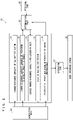
- Fig. 1 is a block diagram schematically illustrating a multiuse system according to a first embodiment.
- a multiuse system 1 according to the embodiment 1 in Fig. 1 includes a natrium-sulfur (NaS) battery system 11, a virtual server 12, and a plurality of clients 13.
- NaS natrium-sulfur
- the NaS battery system 11 discharges AC power.
- the discharged AC power is stepped up by a transformer 21.
- the stepped-up AC power is supplied to a system 22.
- the AC power supplied from the system 22 is stepped-down by the transformer 21.
- the NaS battery system 11 is charged by the stepped-down AC power.
- the NaS battery system 11 is one NaS battery system delivered in one arrangement position.
- the NaS battery system 11 may be a plurality of NaS battery systems delivered in a plurality of arrangement positions, respectively.
- a main user 31 of the NaS battery system 11 such as an owner thereof can monopolize the charge-discharge capacity of the NaS battery system 11, or can release the charge-discharge capacity of the NaS battery system 11 to a plurality of users 32 other than the main user 31.
- the main user 31 monopolizes the charge-discharge capacity of the NaS battery system 11
- the main user 31 can use the charge-discharge capacity of the NaS battery system 11, while the plurality of users 32 cannot use the charge-discharge capacity of the NaS battery system 11.
- the main user 31 releases the charge-discharge capacity of the NaS battery system 11 to the plurality of users 32 at least one user included in the main user 31 and the plurality of users 32 can use the charge-discharge capacity of the NaS battery system 11.
- the virtual server 12 acquires, from the NaS battery system 11, the charge-discharge capacity capable of providing to the whole plurality of users 32 in the charge-discharge capacity of the NaS battery system 11.
- the charge-discharge capacity capable of providing to the whole plurality of users 32 is a charge-discharge capacity obtained by subtracting the charge-discharge capacity used by the main user 31 from the charge-discharge capacity of the NaS battery system 11.
- the virtual server 12 receives a logon of a user 32L included in the plurality of users 32.
- the virtual server 12 determines the usable charge-discharge capacity for the logged-on user 32L from the charge-discharge capacity capable of providing to the whole plurality of users 32.
- the virtual server 12 provides the logged-on user 32L with a user interface screen indicating the usable charge-discharge capacity for the logged-on user 32L.
- the plurality of clients 13 can access to the virtual server 12.
- the plurality of users 32 are able to make the plurality of clients 13 access to the virtual server 12, respectively, and to log on the virtual server 12 via the plurality of clients 13, respectively. Two or more users may log on the virtual server 12 via one client.
- the user interface screen described above is provided to the logged-on user 32L to the virtual server 12 via a client 13L having access to the virtual server 12.
- the virtual server 12 and the plurality of clients 13 are connected to Internet.
- the virtual server 12 is a web human machine interface (web HMI) server providing user interface on Internet.
- An address of the virtual server 12 is open to the plurality of users 32. Accordingly, the plurality of users 32 are able to make the plurality of clients 13 have access to the virtual server 12, respectively.
- Each user 32i included in the plurality of users 32 has an account for logging on the virtual server 12.
- the account of each user 32i is set by the main user 31, and given from the main user 31 to each user 32i.
- the main user 31 sets the account given to each user 23i to a user interface providing device 51 described hereinafter.
- the account of each user 32i is set by an account manager other than the main user 31 and given from the account manager other than the main user 31 to each user 32i.
- the account manager other than the main user 31 may set the account given to each user 23i to the user interface providing device 51 described hereinafter.
- the virtual server 12 is built in the NaS battery system 11. It is also applicable that the virtual server 12 is not built in the NaS battery system 11 but may be replaced with a physical server communicably connected to the NaS battery system 11. Any connection is applicable as a connection of the physical server to the NaS battery system 11, thus any of wireless connection and wired connection is also applicable.
- the connection is performed using Internet or a mobile communication network, for example.
- the NaS battery system 11 includes a NaS battery 41, an AC-DC converter 42, a NaS battery control device 43, an AC-DC converter control device 44, and a terminal 45.
- the NaS battery 41 discharges DC power.
- the AC-DC converter 42 converts the discharged DC power into AC power discharged by the NaS battery system 11.
- the AC-DC converter 42 converts the AC power for charging the NaS battery system 11 into DC power.
- the NaS battery 41 is charged by the DC power.
- the AC-DC converter control device 44 controls the AC-DC converter 42.
- the NaS battery control device 43 acquires information from the NaS battery 41 and the AC-DC converter control device 44, controls the NaS battery 41, and transmits an instruction to the AC-DC converter 42 via the AC-DC converter control device 44.
- the NaS battery control device 43 calculates the charge-discharge capacity of the NaS battery system 11 and a state of the NaS battery system 11 other than the charge-discharge capacity of the NaS battery system 11 from the acquired information, the control which has been performed, and the transmitted instruction, for example.
- the terminal 45 receives an input of a plurality of priorities given to the plurality of users 32, respectively.
- the plurality of priorities are inputted by the main user 31.
- the plurality of priorities may be inputted by an account manager other than the main user 31.
- the NaS battery control device 43 acquires the inputted plurality of priorities, and calculates the charge-discharge capacity capable of providing to the whole plurality of users 32 in the charge-discharge capacity of the NaS battery system 11 and the usable charge-discharge capacity for each user 32i based on the acquired plurality of priorities.
- the virtual server 12 is installed in the terminal 45.
- a function of the virtual server 12 may be mounted on the NaS battery control device 43.
- the function of the virtual server 12 may be provided by a cloud system.
- the NaS battery system 11 having a configuration illustrated in Fig. 1 may be replaced with a NaS battery system having a configuration different from that illustrated in Fig. 1 .
- the NaS battery 41 is an example of a secondary battery
- the NaS battery system 11 including the NaS battery 41 is an example of a secondary battery system including the secondary battery.
- the NaS battery system 11 including the NaS battery 41 may be replaced with a secondary battery system including a secondary battery other than the NaS battery 41.
- the secondary battery other than the NaS battery 41 is a redox flow battery, a lithium battery, a nickel hydride battery, and a lead storage battery, for example.
- the NaS battery 41 has advantages that it has a large battery capacity, and can charge and discharge the battery for a long period of time, thus a future forecast of the battery capacity can be easily performed.
- the virtual server 12, the NaS battery control device 43, and the terminal 45 may be made up of one apparatus or a plurality of apparatuses.
- the NaS battery control device 43, and the terminal 45 are made up of the plurality of apparatuses, each of the virtual server 12, the NaS battery control device 43, and the terminal 45 may be made up of one apparatus, or two elements selected from the virtual server 12, the NaS battery control device 43, and the terminal 45 may be made up of one apparatus.
- Fig. 2 and Fig. 3 are block diagrams each schematically illustrating a user interface providing device included in the multiuse system according to the first embodiment.
- the user interface providing device 51 illustrated in Fig. 2 and Fig. 3 is made up of the virtual server 12 and the NaS battery control device 43.
- the user interface providing device 51 includes an acquisition part 61, a receiving part 62, a determination part 63, and a generation part 64. These elements may be made up of a computer executing a program, or may also be made up of hardware.
- the user interface providing device 51 handles a charge-discharge capacity 71 of the NaS battery system 11, a charge-discharge capacity 72 capable of providing to the whole plurality of users 32, a usable charge-discharge capacity 73 for the logged-on user 32L, a state 74 of the NaS battery system 11, a plurality of priorities 75 provided to the plurality of users 32, respectively, a charge-discharge capacity 76 desired by the logged-on user 32L to use, a usable charge-discharge capacity 77 for each user 32i, and information 78 indicating contents of a user interface screen.
- Each of the charge-discharge capacities 72, 73, 76, and 77 includes a charge capacity and a discharge capacity. Only discharge capacity may be handled in place of the charge-discharge capacities 72, 73, 76, and 77 including the charge capacity and the discharge capacity.
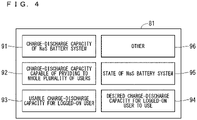
- Fig. 4 is a diagram schematically illustrating a user interface screen provided in the multiuse system according to the first embodiment.
- a user interface screen 81 illustrated in Fig. 4 is provided by the user interface providing device 51 illustrated in Fig. 2 and Fig. 3 .
- the user interface screen 81 includes a screen element 91 indicating the charge-discharge capacity 71 of the NaS battery system 11, a screen element 92 indicating the charge-discharge capacity 72 capable of providing to the whole plurality of users 32, a screen element 93 indicating the usable charge-discharge capacity 73 for the logged-on user 32L, a screen element 94 receiving an input of the charge-discharge capacity 76 desired by the logged-on user 32L to use, a screen element 95 indicating a state of the NaS battery system 11, and the other screen element 96.
- the screen element 91 and the screen element 92 may be included in the user interface screen 81 only when the user 32L who has logged on is the main user 31.
- the acquisition part 61 acquires, from the NaS battery control device 43, the charge-discharge capacity 72 capable of providing to the whole plurality of users 32 in the charge-discharge capacity 71 of the NaS battery system 11.
- the charge-discharge capacity 72 capable of providing to the whole plurality of users 32 includes a plurality of future periods of time and a forecast of the charge-discharge capacity capable of providing to the whole plurality of users 32 in each period of time included in the plurality of future periods of time.
- the forecast of the charge-discharge capacity includes a forecast of charge-discharge electrical power and/or charge-discharge electrical power amount.
- the receiving part 62 receives a logon of the user 32L included in the plurality of users 32.
- the determination part 63 determines the usable charge-discharge capacity 73 for the logged-on user 32L from the acquired charge-discharge capacity 72 capable of providing to the whole plurality of users 32.
- the usable charge-discharge capacity 73 for the logged-on user 32L is a charge-discharge capacity specific to the logged-on user 32L changing in accordance with the logged-on user 32L.
- the usable charge-discharge capacity 73 for the logged-on user 32L includes a plurality of future periods of time and a forecast of the usable charge-discharge capacity for the logged-on user 32L in each period of time included in the plurality of future periods of time.
- the forecast of the usable charge-discharge capacity includes a forecast of charge-discharge electrical power and/or charge-discharge electrical power amount.
- the generation part 64 generates the information 78 indicating the contents of the user interface screen 81 including the screen element 93 indicating the usable charge-discharge capacity 73 for the logged-on user 32L.
- the user interface screen 81 is a user interface screen specific to the logged-on user 32L changing in accordance with the logged-on user 32L.
- the information 78 indicating the contents of the user interface screen 81 includes a hypertext markup language (HTML) document, for example.
- the generation part 64 transmits the information 78 indicating the contents of the user interface screen 81 to the client 13L.
- the client 13L renders the information 78 indicating the contents of the user interface screen 81, and displays the user interface screen 81 including the contents indicated by the information 78.
- the logged-on user 32L can recognize the usable charge-discharge capacity 73 in the charge-discharge capacity 71 of the NaS battery system 11.
- This makes it possible to provide the scheme of providing the plurality of users 32 other than the main user 31 such as the owner with the charge-discharge capacity 71 of the NaS battery system 11. Accordingly, it becomes possible to use the NaS battery system 11 for a visual power plant (VPP) or an adjusting power project, for example.
- VPP visual power plant
- adjusting power project for example.
- the acquisition part 61 acquires the plurality of priorities 75 given to the plurality of users 32, respectively, from the terminal 45.
- the plurality of priorities 75 given to the plurality of users 32, respectively, are determined by consultations between the main user 31 and the plurality of users 32.
- An account manager other than the main user 31 may have a role in the determination of the plurality of priorities 75.
- the determination part 63 selects the priority given to the logged-on user 32L from the plurality of priorities 75 given to the plurality of users 32, respectively.
- the determination part 63 determines the usable charge-discharge capacity 73 for the logged-on user 32L so that the logged-on user 32L having higher priority can preferentially use the charge-discharge capacity 71 of the NaS battery system 11.
- the usable charge-discharge capacity for the first user is determined so that the charge-discharge capacity desired by the first user to use can be used by the first user.
- the generation part 64 generates the information 78 indicating the contents of the user interface screen 81 including the screen element 94 receiving the input of the charge-discharge capacity 76 desired by the logged-on user 32L to use.
- the determination part 63 determines the usable charge-discharge capacity 73 for each user 32i from the charge-discharge capacity 72 capable of providing to the whole plurality of users 32.
- the determination part 63 updates the usable charge-discharge capacity 77 for each user 32i, to reflect the charge-discharge capacity 76 desired by the logged-on user 32L to use on the usable charge-discharge capacity 77 for each user 32i.
- the charge-discharge capacity 76 desired by the logged-on user 32L to use includes a future period of time and a charge-discharge capacity desired by the logged-on user 32L to use in the future period of time.
- the charge-discharge capacity includes a charge-discharge electrical power and/or a charge-discharge electrical power amount.
- the acquisition part 61 acquires the charge-discharge capacity 71 of the NaS battery system 11 from the terminal 45.
- the charge-discharge capacity 71 of the NaS battery system 11 includes a plurality of future periods of time and a forecast of the charge-discharge capacity of the NaS battery system 11 in each period of time included in the plurality of future periods of time.
- the forecast of the charge-discharge capacity includes a forecast of charge-discharge electrical power and/or charge-discharge electrical power amount.
- the generation part 64 generates the information 78 indicating the contents of the user interface screen 81 including the screen element 91 indicating the charge-discharge capacity 71 of the NaS battery system 11.
- the acquisition part 61 acquires, from the terminal 45, the charge-discharge capacity 72 capable of providing to the whole plurality of users 32 as described above.
- the generation part 64 generates the information 78 indicating the contents of the user interface screen 81 including the screen element 92 indicating the charge-discharge capacity 72 capable of providing to the whole plurality of users 32.
- the acquisition part 61 acquires a state 74 of the NaS battery system 11 other than the charge-discharge capacity 71 of the NaS battery system 11.
- the state 74 of the NaS battery system 11 includes presence or absence of failure in the NaS battery system 11 and a current charge-discharge electrical power of the NaS battery system 11, for example.
- the generation part 64 generates the information 78 indicating the contents of the user interface screen 81 including the screen element 95 indicating the state 74 of the NaS battery system 11.
- the generation part 64 generates the information 78 indicating the contents of the user interface screen 81 including the other screen element 96 than the screen elements 91, 92, 93, 94, and 95 described above.
- the main user 31 has an authority of limiting an authority of each user 32i using the charge-discharge capacity 71 of the NaS battery system 11 at will. Thus, the main user 31 can change an account and a priority given to each user 32i at an optional timing and terminate an account given to each user 32i at an optional timing.
- the main user 31 can change the usable charge-discharge capacity 77 for each user 32i and the screen elements 91, 92, 93, 94, 95, and 96 included in the user interface screen 81 at an optional timing.
- Change of the charge-discharge capacity 77 includes change of a period of time in which the charge and discharge can be performed and change of the charge-discharge electrical power and/or charge-discharge electrical power amount in a period of time in which the charge and discharge can be performed.
- Change of the screen elements 91, 92, 93, 94, 95, and 96 includes limitation of the contents of the information indicated by the screen elements 91, 92, 93, 94, 95, and 96.
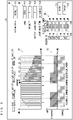
- Fig. 5 is a diagram schematically illustrating a user interface screen provided in the multiuse system according to the first embodiment.
- the user interface screen 81 illustrated in Fig. 5 includes the screen element 91 indicating the charge-discharge capacity 71 of the NaS battery system 11, the screen element 93 indicating the usable charge-discharge capacity 73 for the logged-on user 32L, the screen element 94 receiving the input of the charge-discharge capacity 76 desired by the logged-on user 32L to use, the screen element 95 indicating the state of the NaS battery system 11, and the other screen element 96.
- the screen element 91 indicating the charge-discharge capacity 71 of the NaS battery system 11 includes a graph.
- the graph includes a plurality of future periods of time and a forecast of the charge-discharge electrical power amount in which the NaS battery system 11 can charge and discharge the power in each period of time included in the plurality of future periods of time.
- the graph includes a plurality of past periods of time and a past record of the charge-discharge electrical power amount in which the NaS battery system 11 could charge and discharge the power in each period of time included in the plurality of past periods of time.
- the graph includes a current period of time and a past record of the charge-discharge electrical power amount in which the NaS battery system 11 can charge and discharge the power in the current period of time.
- the graph is drawn so that reliability of the forecast can be understood by a difference of a display state of a color, for example.
- the screen element 93 indicating the usable charge-discharge capacity 73 for the logged-on user 32L includes a graph.
- the graph includes a plurality of future periods of time and a forecast of the usable charge/discharge capacity for the logged-on user 32L in each period of time included in the plurality of future periods of time.
- the graph includes a plurality of past periods of time and a past record of the usable charge/discharge capacity for the logged-on user 32L in each period of time included in the plurality of past periods of time.
- the graph includes a current period of time and a past record of the usable charge/discharge electrical power for the logged-on user 32L in the current period of time.
- Each period of time has a length of thirty minutes.
- a segment number for identifying each period of time is given to each period of time.
- Each period of time may have any length longer than thirty minutes or any length shorter than thirty minutes.
- the screen element 94 receiving the input of the desired charge/discharge capacity 76 for the logged-on user 32L to use includes a graphical user interface (GUI) component 101 receiving an input whether or not the logged-on user 32L uses the charge/discharge capacity in each period of time for each period of time included in a plurality of periods of time and a GUI component 102 receiving an input of the desired charge-discharge electrical power for the logged-on user 32L to use in each period of time, for example.
- GUI graphical user interface
- the screen element 95 indicating the state of the NaS battery system 11 includes a display region 111 displaying presence or absence of failure in the NaS battery system 11, for example.
- the screen element 96 includes the display region 121 displaying the information for specifying the logged-on user 32L, a display region 122 displaying information indicating a priority given to the logged-on user 32L, a display region 123 displaying information indicating the number of logged-on users, and a display region 124 displaying information indicating a time for which the logged-on user 32L can maintain a logon state.
- the other screen element 96 includes an order button 131 and a cancel button 132, for example.
- an order button 131 When the order button 131 is operated, an instruction of requesting the charge and discharge at the charge-discharge electrical power corresponding to the input received by the GUI component 102 at the period of time corresponding to the input received by the GUI component 102 is transmitted to the NaS battery control device 43 via the virtual server 12.
- the cancel button 132 When the cancel button 132 is operated, an instruction of requesting cancelling of the charge and discharge at the charge-discharge electrical power corresponding to the input received by the GUI component 102 at the period of time corresponding to the input received by the GUI component 102 is transmitted to the NaS battery control device 43 via the virtual server 12. Contents of these instructions are reflected on a graph included in the screen element 91, a graph included in the screen element 93, and a graph illustrated in Fig. 6 described hereinafter.
- Fig. 6 is a graph indicating an example of a charge-discharge capacity of NaS battery system, a charge-discharge capacity set to be used by a main user, and a charge-discharge capacity set to be used by a plurality of users other than the main user in the multiuse system according to the first embodiment.
- Fig. 6 illustrates that a sum of the charge/discharge capacity set to be used by the main user 31 such as the owner and the charge/discharge capacity set to be used by the plurality of users 32 such as "USER A" and “USER C" is equal to or smaller than the charge/discharge capacity of the NaS battery system 11 illustrated by a broken line and the charge/discharge capacity set to be used by the plurality of users 32 is obtained by subtracting the charge/discharge capacity set to be used by the main user 31 from the charge/discharge capacity of the NaS battery system 11.
Landscapes
- Engineering & Computer Science (AREA)
- Power Engineering (AREA)
- General Engineering & Computer Science (AREA)
- Theoretical Computer Science (AREA)
- Human Computer Interaction (AREA)
- Physics & Mathematics (AREA)
- General Physics & Mathematics (AREA)
- Charge And Discharge Circuits For Batteries Or The Like (AREA)
- Supply And Distribution Of Alternating Current (AREA)
- Power Sources (AREA)
- Remote Monitoring And Control Of Power-Distribution Networks (AREA)
Abstract
Description
- The present invention relates to a user interface providing device, a method of providing a discharge capacity of a secondary battery system, and a method of providing a charge-discharge capacity of secondary battery system.
- A NaS battery system including a natrium-sulfur (NaS) battery is used by an owner having the NaS battery system. The owner can recognize a state of the NaS battery system with reference to a screen displayed on a terminal provided with the NaS battery system in many cases, and operates the terminal, thereby being able to drive the NaS battery system. A user who can recognize the state of the NaS battery system and drive the NaS battery system is limited to the owner in many cases.
-
Patent Document 1 relates to a method of borrowing a free capacity of a rechargeable battery. In the method of borrowing the free capacity of the rechargeable battery, a consumer sets a free capacity and a free period of time of a lendable rechargeable battery and a price for lending. An electrical system operator determines a free capacity and a free period of time to borrow. A consumer side rechargeable battery charges and discharges a compensating amount of charge and discharge in accordance with an instruction from the electrical system operator. The electrical system operator measures a used electrical power amount and pays a price to the consumer. - [Patent Document 1]
Japanese Patent Application Laid-Open No. 2013-176226 - The NaS battery can discharge large electrical power for a long period of time. Thus, the NaS battery system including the NaS battery potentially has a discharge capacity which can be provided to a plurality of users other than the owner.
- However, a scheme of providing the plurality of users other than the owner with the discharge capacity of the NaS battery system is not conventionally provided, thus the discharge capacity which the NaS battery system potentially has is not sufficiently used.
- This problem also occurs in a secondary battery system other than the NaS battery system.
- The present invention therefore has been made to this problem. The problem solved by the present invention is to provide a scheme of providing a plurality of users other than a main user such as an owner with a discharge capacity which a secondary battery system potentially has.
- The present invention is directed to a user interface providing device.
- The user interface providing device includes an acquisition part, a receiving part, a determination part, and a generation part.
- The acquisition part acquires a discharge capacity capable of providing to a whole plurality of users other than a main user in a discharge capacity of a secondary battery system.
- The receiving part receives a logon of a user included in the plurality of users.
- The determination part determines a usable discharge capacity for the user described above from the discharge capacity capable of providing to the whole plurality of users.
- The generation part generates information indicating contents of a user interface screen including a screen element indicating the usable discharge capacity for the user described above.
- The acquisition part, the receiving part, the determination part, and the generation part constituting the user interface providing device may be made up of a plurality of apparatuses. Two or more elements included in the acquisition part, the receiving part, the determination part, and the generation part may be made up of one apparatus. When the acquisition part, the receiving part, the determination part, and the generation part are made up of a plurality of apparatuses, the plurality of apparatuses are disposed in positions physically separated from each other, and communicably connected to each other via a communication line.
- The present invention is also directed to a method of providing a discharge capacity of secondary battery system, and a method of providing a charge-discharge capacity of secondary battery system.
- According to the present invention, the user who has logged on can recognize the usable discharge capacity in the discharge capacity of the secondary battery system. Accordingly, the scheme of providing the plurality of users other than the main user such as the owner with the discharge capacity of the secondary battery system can be provided.
- These and other objects, features, aspects and advantages of the present invention will become more apparent from the following detailed description of the present invention when taken in conjunction with the accompanying drawings.
-
- [
Fig. 1 ] A block diagram schematically illustrating a multiuse system according to a first embodiment. - [
Fig. 2 ] A block diagram schematically illustrating a user interface providing device included in the multiuse system according to the first embodiment. - [
Fig. 3 ] A block diagram schematically illustrating a user interface providing device included in the multiuse system according to the first embodiment. - [
Fig. 4 ] A diagram schematically illustrating a user interface screen provided in the multiuse system according to the first embodiment. - [
Fig. 5 ] A diagram schematically illustrating an example of the user interface screen provided in the multiuse system according to the first embodiment. - [
Fig. 6 ] A graph illustrating examples of a charge-discharge capacity of natrium-sulfur (NaS) battery system, a charge-discharge capacity used by a main user, and a usable charge-discharge capacity for a plurality of users other than the main user in the multiuse system according to the first embodiment. -
Fig. 1 is a block diagram schematically illustrating a multiuse system according to a first embodiment. - A
multiuse system 1 according to theembodiment 1 inFig. 1 includes a natrium-sulfur (NaS)battery system 11, avirtual server 12, and a plurality ofclients 13. - The
NaS battery system 11 discharges AC power. The discharged AC power is stepped up by atransformer 21. The stepped-up AC power is supplied to asystem 22. The AC power supplied from thesystem 22 is stepped-down by thetransformer 21. The NaSbattery system 11 is charged by the stepped-down AC power. - The NaS
battery system 11 is one NaS battery system delivered in one arrangement position. The NaSbattery system 11 may be a plurality of NaS battery systems delivered in a plurality of arrangement positions, respectively. - A
main user 31 of theNaS battery system 11 such as an owner thereof can monopolize the charge-discharge capacity of theNaS battery system 11, or can release the charge-discharge capacity of theNaS battery system 11 to a plurality ofusers 32 other than themain user 31. When themain user 31 monopolizes the charge-discharge capacity of theNaS battery system 11, themain user 31 can use the charge-discharge capacity of theNaS battery system 11, while the plurality ofusers 32 cannot use the charge-discharge capacity of theNaS battery system 11. When themain user 31 releases the charge-discharge capacity of theNaS battery system 11 to the plurality ofusers 32, at least one user included in themain user 31 and the plurality ofusers 32 can use the charge-discharge capacity of theNaS battery system 11. - The
virtual server 12 acquires, from the NaSbattery system 11, the charge-discharge capacity capable of providing to the whole plurality ofusers 32 in the charge-discharge capacity of theNaS battery system 11. The charge-discharge capacity capable of providing to the whole plurality ofusers 32 is a charge-discharge capacity obtained by subtracting the charge-discharge capacity used by themain user 31 from the charge-discharge capacity of theNaS battery system 11. Thevirtual server 12 receives a logon of auser 32L included in the plurality ofusers 32. Thevirtual server 12 determines the usable charge-discharge capacity for the logged-onuser 32L from the charge-discharge capacity capable of providing to the whole plurality ofusers 32. Thevirtual server 12 provides the logged-onuser 32L with a user interface screen indicating the usable charge-discharge capacity for the logged-onuser 32L. - The plurality of
clients 13 can access to thevirtual server 12. The plurality ofusers 32 are able to make the plurality ofclients 13 access to thevirtual server 12, respectively, and to log on thevirtual server 12 via the plurality ofclients 13, respectively. Two or more users may log on thevirtual server 12 via one client. The user interface screen described above is provided to the logged-onuser 32L to thevirtual server 12 via aclient 13L having access to thevirtual server 12. - The
virtual server 12 and the plurality ofclients 13 are connected to Internet. Thus, thevirtual server 12 is a web human machine interface (web HMI) server providing user interface on Internet. An address of thevirtual server 12 is open to the plurality ofusers 32. Accordingly, the plurality ofusers 32 are able to make the plurality ofclients 13 have access to thevirtual server 12, respectively. Eachuser 32i included in the plurality ofusers 32 has an account for logging on thevirtual server 12. The account of eachuser 32i is set by themain user 31, and given from themain user 31 to eachuser 32i. Themain user 31 sets the account given to each user 23i to a userinterface providing device 51 described hereinafter. It is also applicable that the account of eachuser 32i is set by an account manager other than themain user 31 and given from the account manager other than themain user 31 to eachuser 32i. The account manager other than themain user 31 may set the account given to each user 23i to the userinterface providing device 51 described hereinafter. - The
virtual server 12 is built in theNaS battery system 11. It is also applicable that thevirtual server 12 is not built in theNaS battery system 11 but may be replaced with a physical server communicably connected to theNaS battery system 11. Any connection is applicable as a connection of the physical server to theNaS battery system 11, thus any of wireless connection and wired connection is also applicable. The connection is performed using Internet or a mobile communication network, for example. - As illustrated in
Fig. 1 , theNaS battery system 11 includes aNaS battery 41, an AC-DC converter 42, a NaSbattery control device 43, an AC-DCconverter control device 44, and a terminal 45. - The
NaS battery 41 discharges DC power. The AC-DC converter 42 converts the discharged DC power into AC power discharged by theNaS battery system 11. The AC-DC converter 42 converts the AC power for charging theNaS battery system 11 into DC power. TheNaS battery 41 is charged by the DC power. The AC-DCconverter control device 44 controls the AC-DC converter 42. The NaSbattery control device 43 acquires information from theNaS battery 41 and the AC-DCconverter control device 44, controls theNaS battery 41, and transmits an instruction to the AC-DC converter 42 via the AC-DCconverter control device 44. The NaSbattery control device 43 calculates the charge-discharge capacity of theNaS battery system 11 and a state of theNaS battery system 11 other than the charge-discharge capacity of theNaS battery system 11 from the acquired information, the control which has been performed, and the transmitted instruction, for example. The terminal 45 receives an input of a plurality of priorities given to the plurality ofusers 32, respectively. The plurality of priorities are inputted by themain user 31. The plurality of priorities may be inputted by an account manager other than themain user 31. The NaSbattery control device 43 acquires the inputted plurality of priorities, and calculates the charge-discharge capacity capable of providing to the whole plurality ofusers 32 in the charge-discharge capacity of theNaS battery system 11 and the usable charge-discharge capacity for eachuser 32i based on the acquired plurality of priorities. - The
virtual server 12 is installed in the terminal 45. A function of thevirtual server 12 may be mounted on the NaSbattery control device 43. The function of thevirtual server 12 may be provided by a cloud system. - The
NaS battery system 11 having a configuration illustrated inFig. 1 may be replaced with a NaS battery system having a configuration different from that illustrated inFig. 1 . - The
NaS battery 41 is an example of a secondary battery, and theNaS battery system 11 including theNaS battery 41 is an example of a secondary battery system including the secondary battery. Thus, theNaS battery system 11 including theNaS battery 41 may be replaced with a secondary battery system including a secondary battery other than theNaS battery 41. The secondary battery other than theNaS battery 41 is a redox flow battery, a lithium battery, a nickel hydride battery, and a lead storage battery, for example. TheNaS battery 41 has advantages that it has a large battery capacity, and can charge and discharge the battery for a long period of time, thus a future forecast of the battery capacity can be easily performed. - The
virtual server 12, the NaSbattery control device 43, and the terminal 45 may be made up of one apparatus or a plurality of apparatuses. When thevirtual server 12, the NaSbattery control device 43, and the terminal 45 are made up of the plurality of apparatuses, each of thevirtual server 12, the NaSbattery control device 43, and the terminal 45 may be made up of one apparatus, or two elements selected from thevirtual server 12, the NaSbattery control device 43, and the terminal 45 may be made up of one apparatus. -
Fig. 2 andFig. 3 are block diagrams each schematically illustrating a user interface providing device included in the multiuse system according to the first embodiment. - The user
interface providing device 51 illustrated inFig. 2 andFig. 3 is made up of thevirtual server 12 and the NaSbattery control device 43. - The user
interface providing device 51 includes anacquisition part 61, a receivingpart 62, adetermination part 63, and ageneration part 64. These elements may be made up of a computer executing a program, or may also be made up of hardware. - The user
interface providing device 51 handles a charge-discharge capacity 71 of theNaS battery system 11, a charge-discharge capacity 72 capable of providing to the whole plurality ofusers 32, a usable charge-discharge capacity 73 for the logged-onuser 32L, astate 74 of theNaS battery system 11, a plurality ofpriorities 75 provided to the plurality ofusers 32, respectively, a charge-discharge capacity 76 desired by the logged-onuser 32L to use, a usable charge-discharge capacity 77 for eachuser 32i, andinformation 78 indicating contents of a user interface screen. Each of the charge-discharge capacities discharge capacities -
Fig. 4 is a diagram schematically illustrating a user interface screen provided in the multiuse system according to the first embodiment. - A
user interface screen 81 illustrated inFig. 4 is provided by the userinterface providing device 51 illustrated inFig. 2 andFig. 3 . - The
user interface screen 81 includes ascreen element 91 indicating the charge-discharge capacity 71 of theNaS battery system 11, ascreen element 92 indicating the charge-discharge capacity 72 capable of providing to the whole plurality ofusers 32, ascreen element 93 indicating the usable charge-discharge capacity 73 for the logged-onuser 32L, ascreen element 94 receiving an input of the charge-discharge capacity 76 desired by the logged-onuser 32L to use, ascreen element 95 indicating a state of theNaS battery system 11, and theother screen element 96. Thescreen element 91 and thescreen element 92 may be included in theuser interface screen 81 only when theuser 32L who has logged on is themain user 31. - 1.4 Display of usable charge-discharge capacity for logged-on user
- The
acquisition part 61 acquires, from the NaSbattery control device 43, the charge-discharge capacity 72 capable of providing to the whole plurality ofusers 32 in the charge-discharge capacity 71 of theNaS battery system 11. - The charge-
discharge capacity 72 capable of providing to the whole plurality ofusers 32 includes a plurality of future periods of time and a forecast of the charge-discharge capacity capable of providing to the whole plurality ofusers 32 in each period of time included in the plurality of future periods of time. The forecast of the charge-discharge capacity includes a forecast of charge-discharge electrical power and/or charge-discharge electrical power amount. - The receiving
part 62 receives a logon of theuser 32L included in the plurality ofusers 32. - The
determination part 63 determines the usable charge-discharge capacity 73 for the logged-onuser 32L from the acquired charge-discharge capacity 72 capable of providing to the whole plurality ofusers 32. - The usable charge-
discharge capacity 73 for the logged-onuser 32L is a charge-discharge capacity specific to the logged-onuser 32L changing in accordance with the logged-onuser 32L. - The usable charge-
discharge capacity 73 for the logged-onuser 32L includes a plurality of future periods of time and a forecast of the usable charge-discharge capacity for the logged-onuser 32L in each period of time included in the plurality of future periods of time. The forecast of the usable charge-discharge capacity includes a forecast of charge-discharge electrical power and/or charge-discharge electrical power amount. - The
generation part 64 generates theinformation 78 indicating the contents of theuser interface screen 81 including thescreen element 93 indicating the usable charge-discharge capacity 73 for the logged-onuser 32L. - The
user interface screen 81 is a user interface screen specific to the logged-onuser 32L changing in accordance with the logged-onuser 32L. - The
information 78 indicating the contents of theuser interface screen 81 includes a hypertext markup language (HTML) document, for example. Thegeneration part 64 transmits theinformation 78 indicating the contents of theuser interface screen 81 to theclient 13L. Theclient 13L renders theinformation 78 indicating the contents of theuser interface screen 81, and displays theuser interface screen 81 including the contents indicated by theinformation 78. - Accordingly, the logged-on
user 32L can recognize the usable charge-discharge capacity 73 in the charge-discharge capacity 71 of theNaS battery system 11. This makes it possible to provide the scheme of providing the plurality ofusers 32 other than themain user 31 such as the owner with the charge-discharge capacity 71 of theNaS battery system 11. Accordingly, it becomes possible to use theNaS battery system 11 for a visual power plant (VPP) or an adjusting power project, for example. - The
acquisition part 61 acquires the plurality ofpriorities 75 given to the plurality ofusers 32, respectively, from the terminal 45. The plurality ofpriorities 75 given to the plurality ofusers 32, respectively, are determined by consultations between themain user 31 and the plurality ofusers 32. An account manager other than themain user 31 may have a role in the determination of the plurality ofpriorities 75. - The
determination part 63 selects the priority given to the logged-onuser 32L from the plurality ofpriorities 75 given to the plurality ofusers 32, respectively. Thedetermination part 63 determines the usable charge-discharge capacity 73 for the logged-onuser 32L so that the logged-onuser 32L having higher priority can preferentially use the charge-discharge capacity 71 of theNaS battery system 11. - For example, in a case where the priority given to a first user is higher than that given to a second user, if the charge-discharge capacity desired by the first user to use and the charge-discharge capacity desired by the second user to use compete against each other, the usable charge-discharge capacity for the first user is determined so that the charge-discharge capacity desired by the first user to use can be used by the first user.
- The
generation part 64 generates theinformation 78 indicating the contents of theuser interface screen 81 including thescreen element 94 receiving the input of the charge-discharge capacity 76 desired by the logged-onuser 32L to use. - The
determination part 63 determines the usable charge-discharge capacity 73 for eachuser 32i from the charge-discharge capacity 72 capable of providing to the whole plurality ofusers 32. When the input of the charge-discharge capacity 76 desired by the logged-onuser 32L to use is received, thedetermination part 63 updates the usable charge-discharge capacity 77 for eachuser 32i, to reflect the charge-discharge capacity 76 desired by the logged-onuser 32L to use on the usable charge-discharge capacity 77 for eachuser 32i. - The charge-
discharge capacity 76 desired by the logged-onuser 32L to use includes a future period of time and a charge-discharge capacity desired by the logged-onuser 32L to use in the future period of time. The charge-discharge capacity includes a charge-discharge electrical power and/or a charge-discharge electrical power amount. - The
acquisition part 61 acquires the charge-discharge capacity 71 of theNaS battery system 11 from the terminal 45. - The charge-
discharge capacity 71 of theNaS battery system 11 includes a plurality of future periods of time and a forecast of the charge-discharge capacity of theNaS battery system 11 in each period of time included in the plurality of future periods of time. The forecast of the charge-discharge capacity includes a forecast of charge-discharge electrical power and/or charge-discharge electrical power amount. - The
generation part 64 generates theinformation 78 indicating the contents of theuser interface screen 81 including thescreen element 91 indicating the charge-discharge capacity 71 of theNaS battery system 11. - 1.8 Display of charge-discharge capacity capable of providing to the whole plurality of users
- The
acquisition part 61 acquires, from the terminal 45, the charge-discharge capacity 72 capable of providing to the whole plurality ofusers 32 as described above. - The
generation part 64 generates theinformation 78 indicating the contents of theuser interface screen 81 including thescreen element 92 indicating the charge-discharge capacity 72 capable of providing to the whole plurality ofusers 32. - The
acquisition part 61 acquires astate 74 of theNaS battery system 11 other than the charge-discharge capacity 71 of theNaS battery system 11. - The
state 74 of theNaS battery system 11 includes presence or absence of failure in theNaS battery system 11 and a current charge-discharge electrical power of theNaS battery system 11, for example. - The
generation part 64 generates theinformation 78 indicating the contents of theuser interface screen 81 including thescreen element 95 indicating thestate 74 of theNaS battery system 11. - The
generation part 64 generates theinformation 78 indicating the contents of theuser interface screen 81 including theother screen element 96 than thescreen elements - The
main user 31 has an authority of limiting an authority of eachuser 32i using the charge-discharge capacity 71 of theNaS battery system 11 at will. Thus, themain user 31 can change an account and a priority given to eachuser 32i at an optional timing and terminate an account given to eachuser 32i at an optional timing. Themain user 31 can change the usable charge-discharge capacity 77 for eachuser 32i and thescreen elements user interface screen 81 at an optional timing. Change of the charge-discharge capacity 77 includes change of a period of time in which the charge and discharge can be performed and change of the charge-discharge electrical power and/or charge-discharge electrical power amount in a period of time in which the charge and discharge can be performed. Change of thescreen elements screen elements -
Fig. 5 is a diagram schematically illustrating a user interface screen provided in the multiuse system according to the first embodiment. - The
user interface screen 81 illustrated inFig. 5 includes thescreen element 91 indicating the charge-discharge capacity 71 of theNaS battery system 11, thescreen element 93 indicating the usable charge-discharge capacity 73 for the logged-onuser 32L, thescreen element 94 receiving the input of the charge-discharge capacity 76 desired by the logged-onuser 32L to use, thescreen element 95 indicating the state of theNaS battery system 11, and theother screen element 96. - The
screen element 91 indicating the charge-discharge capacity 71 of theNaS battery system 11 includes a graph. The graph includes a plurality of future periods of time and a forecast of the charge-discharge electrical power amount in which theNaS battery system 11 can charge and discharge the power in each period of time included in the plurality of future periods of time. The graph includes a plurality of past periods of time and a past record of the charge-discharge electrical power amount in which theNaS battery system 11 could charge and discharge the power in each period of time included in the plurality of past periods of time. The graph includes a current period of time and a past record of the charge-discharge electrical power amount in which theNaS battery system 11 can charge and discharge the power in the current period of time. The graph is drawn so that reliability of the forecast can be understood by a difference of a display state of a color, for example. - The
screen element 93 indicating the usable charge-discharge capacity 73 for the logged-onuser 32L includes a graph. The graph includes a plurality of future periods of time and a forecast of the usable charge/discharge capacity for the logged-onuser 32L in each period of time included in the plurality of future periods of time. The graph includes a plurality of past periods of time and a past record of the usable charge/discharge capacity for the logged-onuser 32L in each period of time included in the plurality of past periods of time. The graph includes a current period of time and a past record of the usable charge/discharge electrical power for the logged-onuser 32L in the current period of time. - Each period of time has a length of thirty minutes. A segment number for identifying each period of time is given to each period of time. Each period of time may have any length longer than thirty minutes or any length shorter than thirty minutes.
- The
screen element 94 receiving the input of the desired charge/discharge capacity 76 for the logged-onuser 32L to use includes a graphical user interface (GUI)component 101 receiving an input whether or not the logged-onuser 32L uses the charge/discharge capacity in each period of time for each period of time included in a plurality of periods of time and aGUI component 102 receiving an input of the desired charge-discharge electrical power for the logged-onuser 32L to use in each period of time, for example. - The
screen element 95 indicating the state of theNaS battery system 11 includes adisplay region 111 displaying presence or absence of failure in theNaS battery system 11, for example. - The
screen element 96 includes thedisplay region 121 displaying the information for specifying the logged-onuser 32L, a display region 122 displaying information indicating a priority given to the logged-onuser 32L, adisplay region 123 displaying information indicating the number of logged-on users, and adisplay region 124 displaying information indicating a time for which the logged-onuser 32L can maintain a logon state. - The
other screen element 96 includes anorder button 131 and a cancelbutton 132, for example. When theorder button 131 is operated, an instruction of requesting the charge and discharge at the charge-discharge electrical power corresponding to the input received by theGUI component 102 at the period of time corresponding to the input received by theGUI component 102 is transmitted to the NaSbattery control device 43 via thevirtual server 12. When the cancelbutton 132 is operated, an instruction of requesting cancelling of the charge and discharge at the charge-discharge electrical power corresponding to the input received by theGUI component 102 at the period of time corresponding to the input received by theGUI component 102 is transmitted to the NaSbattery control device 43 via thevirtual server 12. Contents of these instructions are reflected on a graph included in thescreen element 91, a graph included in thescreen element 93, and a graph illustrated inFig. 6 described hereinafter. -
Fig. 6 is a graph indicating an example of a charge-discharge capacity of NaS battery system, a charge-discharge capacity set to be used by a main user, and a charge-discharge capacity set to be used by a plurality of users other than the main user in the multiuse system according to the first embodiment. -
Fig. 6 illustrates that a sum of the charge/discharge capacity set to be used by themain user 31 such as the owner and the charge/discharge capacity set to be used by the plurality ofusers 32 such as "USER A" and "USER C" is equal to or smaller than the charge/discharge capacity of theNaS battery system 11 illustrated by a broken line and the charge/discharge capacity set to be used by the plurality ofusers 32 is obtained by subtracting the charge/discharge capacity set to be used by themain user 31 from the charge/discharge capacity of theNaS battery system 11. - The present invention has been shown and described in detail, the foregoing description is in all aspects illustrative and not restrictive. It is therefore understood that numerous modifications and variations can be devised without departing from the scope of the invention.
-
- 1 multiuse system
- 11 natrium-sulfur (NaS) battery system
- 12 virtual server
- 13 plurality of clients
- 31 main user
- 32 plurality of users
- 41 NaS battery
- 42 AC-DC converter
- 43 NaS battery control device
- 44 AC-DC converter control device
- 45 terminal
- 51 user interface providing device
- 61 acquisition part
- 62 receiving part
- 63 determination part
- 64 generation part
- 81 user interface screen
Claims (15)
- A user interface providing device, comprising:an acquisition part acquiring a discharge capacity capable of providing to a whole of a plurality of users other than a main user in a discharge capacity of a secondary battery system;a receiving part receiving a logon of a user included in the plurality of users other than the main user;a determination part determining a usable discharge capacity for the user from the discharge capacity capable of providing to the whole of the plurality of users; anda generation part generating information indicating contents of a user interface screen including a screen element indicating the usable discharge capacity for the user.
- The user interface providing device according to claim 1, whereinthe acquisition part acquires a plurality of priorities given to the plurality of users, respectively, andthe determination part determines the usable discharge capacity for the user so that the user having higher priority can preferentially use the discharge capacity of the secondary battery system.
- The user interface providing device according to claim 1 or 2, whereinthe user interface screen includes a screen element receiving an input of a desired discharge capacity for the user to use,the determination part determines a usable discharge capacity for each user included in the plurality of users from the discharge capacity capable of providing to the whole of the plurality of users; andwhen the input is received, the determination part updates the usable discharge capacity for each the user, to reflect the desired discharge capacity for the user to use on the usable discharge capacity for each the user.
- The user interface providing device according to any one of claims 1 to 3, wherein
the user interface screen includes a screen element indicating the discharge capacity capable of providing to the whole of the plurality of users. - The user interface providing device according to any one of claims 1 to 4, wherein
the usable discharge capacity for the user includes a plurality of future periods of time and a forecast of the usable discharge capacity for the user in each period of time included in the plurality of future periods of time. - The user interface providing device according to any one of claims 1 to 5, whereinthe acquisition part acquires the discharge capacity capable of providing to the whole of the plurality of users in the discharge capacity of the secondary battery system,the determination part determines the usable discharge capacity for the user from the discharge capacity capable of providing to the whole of the plurality of users, andthe user interface screen includes a screen element indicating the usable discharge capacity for the user.
- The user interface providing device according to claim 6, whereinthe acquisition part acquires a plurality of priorities given to the plurality of users, respectively, andthe determination part determines a usable charge-discharge capacity for the user so that the user having higher priority can preferentially use the charge-discharge capacity of the secondary battery system.
- The user interface providing device according to claim 6 or 7, whereinthe user interface screen includes a screen element receiving an input of a charge-discharge capacity desired by the user to use,the determination part determines a usable charge-discharge capacity for each user included in the plurality of users from the charge-discharge capacity capable of providing to a whole of the plurality of users; andwhen the input is received, the determination part updates the usable charge-discharge capacity for each the user, to reflect the charge-discharge capacity desired by the user to use on the usable charge-discharge capacity for each the user.
- The user interface providing device according to any one of claims 6 to 8, wherein
the user interface screen includes a screen element indicating the charge-discharge capacity capable of providing to a whole of the plurality of users. - The user interface providing device according to any one of claims 6 to 9, wherein
the usable charge-discharge capacity for the user includes a plurality of future periods of time and a forecast of the usable charge-discharge capacity for the user in each period of time included in the plurality of future periods of time. - The user interface providing device according to any one of claims 1 to 10, whereinthe acquisition part acquires the charge-discharge capacity of the secondary battery system, andthe user interface screen includes a screen element indicating the charge-discharge capacity of the secondary battery system.
- The user interface providing device according to any one of claims 1 to 11, whereinthe acquisition part acquires a state of the secondary battery system other than the charge-discharge capacity of the secondary battery system, andthe user interface screen includes a screen element indicating the state of the secondary battery system.
- The user interface providing device according to any one of claims 1 to 12, wherein
the secondary battery system includes a natrium-sulfur battery system including a natrium-sulfur battery. - A method of providing a discharge capacity of a secondary battery system, comprising steps of:inputting the discharge capacity capable of providing to the whole of the plurality of users to the user interface providing device according to any one of claims 1 to 13; andsetting an account of a user, who can execute the logon, to the user interface providing device.
- A method of providing a charge-discharge capacity of a secondary battery system, comprising steps of:inputting the charge-discharge capacity capable of providing to the whole of the plurality of users to the user interface providing device according to any one of claims 6 to 10; andsetting an account of a user, who can execute the logon, to the user interface providing device.
Applications Claiming Priority (1)
| Application Number | Priority Date | Filing Date | Title |
|---|---|---|---|
| PCT/JP2019/041735 WO2021079467A1 (en) | 2019-10-24 | 2019-10-24 | User interface providing device, method of providing discharge capacity of secondary battery system, and method of providing charge/discharge capacity of secondary battery system |
Publications (2)
| Publication Number | Publication Date |
|---|---|
| EP4050458A1 true EP4050458A1 (en) | 2022-08-31 |
| EP4050458A4 EP4050458A4 (en) | 2023-07-12 |
Family
ID=75619721
Family Applications (1)
| Application Number | Title | Priority Date | Filing Date |
|---|---|---|---|
| EP19949858.5A Pending EP4050458A4 (en) | 2019-10-24 | 2019-10-24 | USER INTERFACE PROVISION DEVICE, METHOD OF PROVIDING DISCHARGE CAPACITY OF A SECONDARY BATTERY SYSTEM, AND METHOD OF PROVIDING CHARGE/DISCHARGE CAPACITY OF A SECONDARY BATTERY SYSTEM |
Country Status (4)
| Country | Link |
|---|---|
| US (1) | US11990783B2 (en) |
| EP (1) | EP4050458A4 (en) |
| JP (1) | JP7357068B2 (en) |
| WO (1) | WO2021079467A1 (en) |
Family Cites Families (16)
| Publication number | Priority date | Publication date | Assignee | Title |
|---|---|---|---|---|
| US7256516B2 (en) * | 2000-06-14 | 2007-08-14 | Aerovironment Inc. | Battery charging system and method |
| US6640185B2 (en) * | 2001-07-21 | 2003-10-28 | Alpine Electronics, Inc. | Display method and apparatus for navigation system |
| JP5379495B2 (en) * | 2009-01-09 | 2013-12-25 | 株式会社アルファ | Electric vehicle charging station |
| US8013570B2 (en) * | 2009-07-23 | 2011-09-06 | Coulomb Technologies, Inc. | Electrical circuit sharing for electric vehicle charging stations |
| CN103857985A (en) * | 2011-08-12 | 2014-06-11 | 丰田自动车株式会社 | Charging Information Provider |
| US9620970B2 (en) * | 2011-11-30 | 2017-04-11 | The Regents Of The University Of California | Network based management for multiplexed electric vehicle charging |
| JP6128856B2 (en) * | 2012-01-17 | 2017-05-17 | 学校法人慶應義塾 | Power network system |
| JP2013176226A (en) | 2012-02-24 | 2013-09-05 | Toshiba Corp | Rechargeable battery surplus capability borrowing method, power system operation method, power operation system, consumer side controller, program used for consumer side controller, system side controller and program used for system side controller |
| JP6315309B2 (en) * | 2014-01-24 | 2018-04-25 | 大日本印刷株式会社 | Interior building materials and daylighting systems |
| KR101521442B1 (en) * | 2014-03-07 | 2015-05-21 | 한국과학기술연구원 | Inorganic particle impregnated carbon felts and method thereof |
| EP3118962A4 (en) * | 2014-03-12 | 2017-11-01 | Nec Corporation | Storage battery sharing system, information processing device, storage battery sharing method, and recording medium recording storage battery sharing program |
| JP2018023188A (en) * | 2016-08-01 | 2018-02-08 | 富士通株式会社 | Charge / discharge plan setting program, charge / discharge plan setting method, and charge / discharge plan setting apparatus |
| KR20190086601A (en) * | 2018-01-02 | 2019-07-23 | 엘지전자 주식회사 | Vehicle control device mounted on vehicle and method for controlling the vehicle |
| CN112119435B (en) * | 2018-05-23 | 2022-08-19 | 住友电气工业株式会社 | Vehicle distribution apparatus, vehicle distribution method, computer program, and computer-readable storage medium |
| KR101930214B1 (en) * | 2018-06-27 | 2018-12-17 | 주식회사 제이에스영테크 | Hybrid energy storage module system with supplementary battery |
| US12018955B2 (en) * | 2019-08-14 | 2024-06-25 | Honda Motor Co., Ltd. | System and method for presenting electric vehicle charging options |
-
2019
- 2019-10-24 JP JP2021553235A patent/JP7357068B2/en active Active
- 2019-10-24 WO PCT/JP2019/041735 patent/WO2021079467A1/en not_active Ceased
- 2019-10-24 EP EP19949858.5A patent/EP4050458A4/en active Pending
-
2022
- 2022-04-12 US US17/658,878 patent/US11990783B2/en active Active
Also Published As
| Publication number | Publication date |
|---|---|
| EP4050458A4 (en) | 2023-07-12 |
| US20220239131A1 (en) | 2022-07-28 |
| JP7357068B2 (en) | 2023-10-05 |
| US11990783B2 (en) | 2024-05-21 |
| WO2021079467A1 (en) | 2021-04-29 |
| JPWO2021079467A1 (en) | 2021-04-29 |
Similar Documents
| Publication | Publication Date | Title |
|---|---|---|
| US10281507B2 (en) | Generator sizing | |
| JP6037013B2 (en) | CHARGE STATE MANAGEMENT METHOD, CHARGE STATE MANAGEMENT DEVICE, AND PROGRAM | |
| US20160250942A1 (en) | Charging state management method, charging state management device, and program | |
| JP6135763B2 (en) | Charging power control method, charging power control system and program | |
| EP3024115A1 (en) | Rapid charging method for storage cell, rapid charging system, and program | |
| CN111563764B (en) | An electricity price calculation method, device, power sharing system, and storage medium | |
| US20180254636A1 (en) | Management device and control method | |
| EP3780246A1 (en) | Control device, information processing device, and storage battery retrieval system | |
| JP6583805B2 (en) | Charge / discharge planning system, planning method and program | |
| EP3124984A1 (en) | Electric energy information provision system and method thereof | |
| CN107886424B (en) | Settlement data processing method and device, computer equipment and storage medium | |
| US20170012467A1 (en) | Power interchange management system and power interchange management method | |
| Exner et al. | Practical implementation of the management of local flexible generation and consumption units using a quota-based grid traffic light approach | |
| US11990783B2 (en) | User interface providing device, method of providing discharge capacity of secondary battery system, and method of providing charge/discharge capacity of secondary battery system | |
| CN110874737A (en) | Payment mode recommendation method and device, electronic equipment and storage medium | |
| CN118401951A (en) | Power management support device, program, and power management support method | |
| JP2007097347A (en) | Electric power information providing system and server | |
| CN121040010A (en) | A method of assigning account levels based on application usage | |
| EP2985858A1 (en) | Broad area management system, broad area management apparatus, building management apparatus, and broad area management method | |
| CN110068726A (en) | Power consumption metering system and metering method | |
| JPWO2021079467A5 (en) | ||
| US20160132837A1 (en) | Action encouragement method, apparatus, and program for encouraging user to move to facility suitable for schedule or task | |
| US6839696B1 (en) | Guarantee charge processing method and apparatus | |
| JP2018207709A (en) | Display processor, display processing method and display processing program | |
| JP2023022668A (en) | Charging method, charger, and charging system |
Legal Events
| Date | Code | Title | Description |
|---|---|---|---|
| STAA | Information on the status of an ep patent application or granted ep patent |
Free format text: STATUS: THE INTERNATIONAL PUBLICATION HAS BEEN MADE |
|
| PUAI | Public reference made under article 153(3) epc to a published international application that has entered the european phase |
Free format text: ORIGINAL CODE: 0009012 |
|
| STAA | Information on the status of an ep patent application or granted ep patent |
Free format text: STATUS: REQUEST FOR EXAMINATION WAS MADE |
|
| 17P | Request for examination filed |
Effective date: 20220420 |
|
| AK | Designated contracting states |
Kind code of ref document: A1 Designated state(s): AL AT BE BG CH CY CZ DE DK EE ES FI FR GB GR HR HU IE IS IT LI LT LU LV MC MK MT NL NO PL PT RO RS SE SI SK SM TR |
|
| DAV | Request for validation of the european patent (deleted) | ||
| DAX | Request for extension of the european patent (deleted) | ||
| REG | Reference to a national code |
Ref country code: DE Ref legal event code: R079 Free format text: PREVIOUS MAIN CLASS: G06F0001260000 Ipc: H02J0003320000 |
|
| A4 | Supplementary search report drawn up and despatched |
Effective date: 20230609 |
|
| RIC1 | Information provided on ipc code assigned before grant |
Ipc: G06F 3/0484 20220101ALN20230602BHEP Ipc: G06F 3/0481 20220101ALN20230602BHEP Ipc: H02J 7/00 20060101ALN20230602BHEP Ipc: H02J 3/32 20060101AFI20230602BHEP |