EP4050303B1 - Vehicle service system and related method of operation - Google Patents
Vehicle service system and related method of operation Download PDFInfo
- Publication number
- EP4050303B1 EP4050303B1 EP22158905.4A EP22158905A EP4050303B1 EP 4050303 B1 EP4050303 B1 EP 4050303B1 EP 22158905 A EP22158905 A EP 22158905A EP 4050303 B1 EP4050303 B1 EP 4050303B1
- Authority
- EP
- European Patent Office
- Prior art keywords
- calibration
- vehicle
- vehicle service
- cameras
- service system
- Prior art date
- Legal status (The legal status is an assumption and is not a legal conclusion. Google has not performed a legal analysis and makes no representation as to the accuracy of the status listed.)
- Active
Links
Images


Classifications
-
- G—PHYSICS
- G01—MEASURING; TESTING
- G01B—MEASURING LENGTH, THICKNESS OR SIMILAR LINEAR DIMENSIONS; MEASURING ANGLES; MEASURING AREAS; MEASURING IRREGULARITIES OF SURFACES OR CONTOURS
- G01B11/00—Measuring arrangements characterised by the use of optical techniques
- G01B11/26—Measuring arrangements characterised by the use of optical techniques for measuring angles or tapers; for testing the alignment of axes
- G01B11/275—Measuring arrangements characterised by the use of optical techniques for measuring angles or tapers; for testing the alignment of axes for testing wheel alignment
- G01B11/2755—Measuring arrangements characterised by the use of optical techniques for measuring angles or tapers; for testing the alignment of axes for testing wheel alignment using photoelectric detection means
-
- G—PHYSICS
- G01—MEASURING; TESTING
- G01S—RADIO DIRECTION-FINDING; RADIO NAVIGATION; DETERMINING DISTANCE OR VELOCITY BY USE OF RADIO WAVES; LOCATING OR PRESENCE-DETECTING BY USE OF THE REFLECTION OR RERADIATION OF RADIO WAVES; ANALOGOUS ARRANGEMENTS USING OTHER WAVES
- G01S13/00—Systems using the reflection or reradiation of radio waves, e.g. radar systems; Analogous systems using reflection or reradiation of waves whose nature or wavelength is irrelevant or unspecified
- G01S13/88—Radar or analogous systems specially adapted for specific applications
- G01S13/93—Radar or analogous systems specially adapted for specific applications for anti-collision purposes
- G01S13/931—Radar or analogous systems specially adapted for specific applications for anti-collision purposes of land vehicles
-
- G—PHYSICS
- G01—MEASURING; TESTING
- G01S—RADIO DIRECTION-FINDING; RADIO NAVIGATION; DETERMINING DISTANCE OR VELOCITY BY USE OF RADIO WAVES; LOCATING OR PRESENCE-DETECTING BY USE OF THE REFLECTION OR RERADIATION OF RADIO WAVES; ANALOGOUS ARRANGEMENTS USING OTHER WAVES
- G01S7/00—Details of systems according to groups G01S13/00, G01S15/00, G01S17/00
- G01S7/48—Details of systems according to groups G01S13/00, G01S15/00, G01S17/00 of systems according to group G01S17/00
- G01S7/497—Means for monitoring or calibrating
- G01S7/4972—Alignment of sensor
-
- G—PHYSICS
- G06—COMPUTING OR CALCULATING; COUNTING
- G06T—IMAGE DATA PROCESSING OR GENERATION, IN GENERAL
- G06T7/00—Image analysis
- G06T7/70—Determining position or orientation of objects or cameras
- G06T7/73—Determining position or orientation of objects or cameras using feature-based methods
-
- G—PHYSICS
- G06—COMPUTING OR CALCULATING; COUNTING
- G06T—IMAGE DATA PROCESSING OR GENERATION, IN GENERAL
- G06T7/00—Image analysis
- G06T7/80—Analysis of captured images to determine intrinsic or extrinsic camera parameters, i.e. camera calibration
-
- G—PHYSICS
- G06—COMPUTING OR CALCULATING; COUNTING
- G06T—IMAGE DATA PROCESSING OR GENERATION, IN GENERAL
- G06T7/00—Image analysis
- G06T7/80—Analysis of captured images to determine intrinsic or extrinsic camera parameters, i.e. camera calibration
- G06T7/85—Stereo camera calibration
-
- H—ELECTRICITY
- H04—ELECTRIC COMMUNICATION TECHNIQUE
- H04N—PICTORIAL COMMUNICATION, e.g. TELEVISION
- H04N13/00—Stereoscopic video systems; Multi-view video systems; Details thereof
- H04N13/20—Image signal generators
- H04N13/204—Image signal generators using stereoscopic image cameras
- H04N13/239—Image signal generators using stereoscopic image cameras using two two-dimensional [2D] image sensors having a relative position equal to or related to the interocular distance
-
- H—ELECTRICITY
- H04—ELECTRIC COMMUNICATION TECHNIQUE
- H04N—PICTORIAL COMMUNICATION, e.g. TELEVISION
- H04N23/00—Cameras or camera modules comprising electronic image sensors; Control thereof
- H04N23/60—Control of cameras or camera modules
- H04N23/695—Control of camera direction for changing a field of view, e.g. pan, tilt or based on tracking of objects
-
- H—ELECTRICITY
- H04—ELECTRIC COMMUNICATION TECHNIQUE
- H04N—PICTORIAL COMMUNICATION, e.g. TELEVISION
- H04N23/00—Cameras or camera modules comprising electronic image sensors; Control thereof
- H04N23/90—Arrangement of cameras or camera modules, e.g. multiple cameras in TV studios or sports stadiums
-
- B—PERFORMING OPERATIONS; TRANSPORTING
- B60—VEHICLES IN GENERAL
- B60W—CONJOINT CONTROL OF VEHICLE SUB-UNITS OF DIFFERENT TYPE OR DIFFERENT FUNCTION; CONTROL SYSTEMS SPECIALLY ADAPTED FOR HYBRID VEHICLES; ROAD VEHICLE DRIVE CONTROL SYSTEMS FOR PURPOSES NOT RELATED TO THE CONTROL OF A PARTICULAR SUB-UNIT
- B60W50/00—Details of control systems for road vehicle drive control not related to the control of a particular sub-unit, e.g. process diagnostic or vehicle driver interfaces
- B60W2050/0062—Adapting control system settings
- B60W2050/0075—Automatic parameter input, automatic initialising or calibrating means
- B60W2050/0083—Setting, resetting, calibration
-
- B—PERFORMING OPERATIONS; TRANSPORTING
- B60—VEHICLES IN GENERAL
- B60W—CONJOINT CONTROL OF VEHICLE SUB-UNITS OF DIFFERENT TYPE OR DIFFERENT FUNCTION; CONTROL SYSTEMS SPECIALLY ADAPTED FOR HYBRID VEHICLES; ROAD VEHICLE DRIVE CONTROL SYSTEMS FOR PURPOSES NOT RELATED TO THE CONTROL OF A PARTICULAR SUB-UNIT
- B60W50/00—Details of control systems for road vehicle drive control not related to the control of a particular sub-unit, e.g. process diagnostic or vehicle driver interfaces
-
- G—PHYSICS
- G01—MEASURING; TESTING
- G01C—MEASURING DISTANCES, LEVELS OR BEARINGS; SURVEYING; NAVIGATION; GYROSCOPIC INSTRUMENTS; PHOTOGRAMMETRY OR VIDEOGRAMMETRY
- G01C25/00—Manufacturing, calibrating, cleaning, or repairing instruments or devices referred to in the other groups of this subclass
-
- G—PHYSICS
- G01—MEASURING; TESTING
- G01S—RADIO DIRECTION-FINDING; RADIO NAVIGATION; DETERMINING DISTANCE OR VELOCITY BY USE OF RADIO WAVES; LOCATING OR PRESENCE-DETECTING BY USE OF THE REFLECTION OR RERADIATION OF RADIO WAVES; ANALOGOUS ARRANGEMENTS USING OTHER WAVES
- G01S15/00—Systems using the reflection or reradiation of acoustic waves, e.g. sonar systems
- G01S15/88—Sonar systems specially adapted for specific applications
- G01S15/93—Sonar systems specially adapted for specific applications for anti-collision purposes
- G01S15/931—Sonar systems specially adapted for specific applications for anti-collision purposes of land vehicles
-
- G—PHYSICS
- G01—MEASURING; TESTING
- G01S—RADIO DIRECTION-FINDING; RADIO NAVIGATION; DETERMINING DISTANCE OR VELOCITY BY USE OF RADIO WAVES; LOCATING OR PRESENCE-DETECTING BY USE OF THE REFLECTION OR RERADIATION OF RADIO WAVES; ANALOGOUS ARRANGEMENTS USING OTHER WAVES
- G01S17/00—Systems using the reflection or reradiation of electromagnetic waves other than radio waves, e.g. lidar systems
- G01S17/88—Lidar systems specially adapted for specific applications
- G01S17/93—Lidar systems specially adapted for specific applications for anti-collision purposes
- G01S17/931—Lidar systems specially adapted for specific applications for anti-collision purposes of land vehicles
-
- G—PHYSICS
- G01—MEASURING; TESTING
- G01S—RADIO DIRECTION-FINDING; RADIO NAVIGATION; DETERMINING DISTANCE OR VELOCITY BY USE OF RADIO WAVES; LOCATING OR PRESENCE-DETECTING BY USE OF THE REFLECTION OR RERADIATION OF RADIO WAVES; ANALOGOUS ARRANGEMENTS USING OTHER WAVES
- G01S13/00—Systems using the reflection or reradiation of radio waves, e.g. radar systems; Analogous systems using reflection or reradiation of waves whose nature or wavelength is irrelevant or unspecified
- G01S13/88—Radar or analogous systems specially adapted for specific applications
- G01S13/93—Radar or analogous systems specially adapted for specific applications for anti-collision purposes
- G01S13/931—Radar or analogous systems specially adapted for specific applications for anti-collision purposes of land vehicles
- G01S2013/9323—Alternative operation using light waves
-
- G—PHYSICS
- G01—MEASURING; TESTING
- G01S—RADIO DIRECTION-FINDING; RADIO NAVIGATION; DETERMINING DISTANCE OR VELOCITY BY USE OF RADIO WAVES; LOCATING OR PRESENCE-DETECTING BY USE OF THE REFLECTION OR RERADIATION OF RADIO WAVES; ANALOGOUS ARRANGEMENTS USING OTHER WAVES
- G01S13/00—Systems using the reflection or reradiation of radio waves, e.g. radar systems; Analogous systems using reflection or reradiation of waves whose nature or wavelength is irrelevant or unspecified
- G01S13/88—Radar or analogous systems specially adapted for specific applications
- G01S13/93—Radar or analogous systems specially adapted for specific applications for anti-collision purposes
- G01S13/931—Radar or analogous systems specially adapted for specific applications for anti-collision purposes of land vehicles
- G01S2013/9324—Alternative operation using ultrasonic waves
-
- G—PHYSICS
- G01—MEASURING; TESTING
- G01S—RADIO DIRECTION-FINDING; RADIO NAVIGATION; DETERMINING DISTANCE OR VELOCITY BY USE OF RADIO WAVES; LOCATING OR PRESENCE-DETECTING BY USE OF THE REFLECTION OR RERADIATION OF RADIO WAVES; ANALOGOUS ARRANGEMENTS USING OTHER WAVES
- G01S7/00—Details of systems according to groups G01S13/00, G01S15/00, G01S17/00
- G01S7/02—Details of systems according to groups G01S13/00, G01S15/00, G01S17/00 of systems according to group G01S13/00
- G01S7/40—Means for monitoring or calibrating
-
- G—PHYSICS
- G01—MEASURING; TESTING
- G01S—RADIO DIRECTION-FINDING; RADIO NAVIGATION; DETERMINING DISTANCE OR VELOCITY BY USE OF RADIO WAVES; LOCATING OR PRESENCE-DETECTING BY USE OF THE REFLECTION OR RERADIATION OF RADIO WAVES; ANALOGOUS ARRANGEMENTS USING OTHER WAVES
- G01S7/00—Details of systems according to groups G01S13/00, G01S15/00, G01S17/00
- G01S7/48—Details of systems according to groups G01S13/00, G01S15/00, G01S17/00 of systems according to group G01S17/00
- G01S7/497—Means for monitoring or calibrating
-
- G—PHYSICS
- G01—MEASURING; TESTING
- G01S—RADIO DIRECTION-FINDING; RADIO NAVIGATION; DETERMINING DISTANCE OR VELOCITY BY USE OF RADIO WAVES; LOCATING OR PRESENCE-DETECTING BY USE OF THE REFLECTION OR RERADIATION OF RADIO WAVES; ANALOGOUS ARRANGEMENTS USING OTHER WAVES
- G01S7/00—Details of systems according to groups G01S13/00, G01S15/00, G01S17/00
- G01S7/52—Details of systems according to groups G01S13/00, G01S15/00, G01S17/00 of systems according to group G01S15/00
- G01S7/52004—Means for monitoring or calibrating
-
- G—PHYSICS
- G06—COMPUTING OR CALCULATING; COUNTING
- G06T—IMAGE DATA PROCESSING OR GENERATION, IN GENERAL
- G06T2207/00—Indexing scheme for image analysis or image enhancement
- G06T2207/30—Subject of image; Context of image processing
- G06T2207/30248—Vehicle exterior or interior
- G06T2207/30252—Vehicle exterior; Vicinity of vehicle
Definitions
- the rotation of the radar panel 6b around the axis B determines a corresponding change in the angle between the flat ADAS calibration surface of the radar panel 6b and the axis S of the vehicle 4.
- the calibration apparatus 2 can further comprise a handling assembly 21 (schematically shown in Figure 4 ) designed, on command, to: rotate the support frame 15 around the axis A in order to adjust the angle of the calibration assistance assembly 17 (or of the calibration device 6) relative to the axis S of the vehicle 4, and/or move the support frame 16 along the axis A in order to adjust the height of the calibration assistance assembly 17 (or of the calibration device 6), and/or move the support frame 16 along the axis B (from and to the base 13) in order to adjust the horizontal position of the calibration assistance assembly 17 (or of the calibration device 6), and/or rotate the radar panel 6b around the axis B.
- a handling assembly 21 (schematically shown in Figure 4 ) designed, on command, to: rotate the support frame 15 around the axis A in order to adjust the angle of the calibration assistance assembly 17 (or of the calibration device 6) relative to the axis S of the vehicle 4, and/or move the support frame 16 along the axis A in order to adjust the height of the calibration assistance
- the handling assembly 21 is further designed, on command, to move the support frame 16 along the axis C in order to adjust the distance with respect to the vehicle 4.
- the handling assembly 21 can comprise a series of electric devices/motors and/or electric actuators (and/or slides) selectively controlled by the electronic control system 11 so as to carry out the positioning described above.
- the electronic control system 11 can conveniently be configured to control the handling assembly 21 based on the determined first position, so as to place the calibration assistance assembly 17 (and/or the calibration device 6) in the pre-established calibration position.
- the pre-established calibration position can comprise: a pre-established distance of the calibration apparatus 2 or of a calibration device 6 or of the calibration assistance assembly 7 with respect to the vehicle 4, a pre-established height of a calibration device 6 and/or of the calibration assistance assembly 7 with respect to the vehicle 4 or to the resting plane.
- the pre-established calibration position can further comprise a pre-established angle (for example, a ninety degree angle) between the axis S of the vehicle 4 and the flat calibration surface of a calibration device 6.
- the optical apparatuses 8 each comprise a column-shaped container body 22, which extends along an approximately vertical axis U and is arranged so as to rest on the service area 5 adjacent to a relative side of the vehicle 4.
- the container body 22 can have an approximately square or rectangular cross section, transverse to the vertical axis U, and has a preferably flat side or flank or wall 22a, which faces the calibration apparatus 2.
- the flat wall 22a approximately lies on a vertical plane, orthogonal to the axis K.
- the container body 22 comprises an oblong box-shaped body substantially having the shape of a vertical bar or rod.
- the container body 22 has not, namely lacks, horizontal protruding arms, which project from the box-shaped body. The Applicant found out that this compact shape reduces the space taken up, increases the sturdiness of the optical apparatus 8 and reduces the exposure of the camera to hits and, hence, to the risk of damages.
- the positioning target 9 of the optical apparatus 8 is arranged on the side, namely on the flat wall 22a of the container body 22.
- the positioning target 9 preferably is approximately planar, can comprise a two-dimensional (quadrangular) image representing a pre-established pattern and is rigidly/firmly fixed on the flat wall 22a.
- the optical apparatus 8 can be provided with two positioning targets 9, one of them being arranged on the flat wall 22a and the other one being arranged on the opposite flat wall.
- this configuration has, on the one hand, the technical effect of allowing operators to indifferently install each optical apparatus 8 in any position with no need to distinguish it from the others and, on the other hand, has the technical effect of being able to carry out the measurement of the position even when the calibration apparatus 2 is arranged at the back of the vehicle.
- the optical apparatuses 8 do no comprise, namely lack, cameras arranged so as to frame the calibration apparatus 2.
- the flat wall 22a of the container body 22, which has the positioning target 9, is free from cameras facing, directed towards the calibration apparatus 2 in order to frame it.
- the optical apparatuses 8 do not comprise cameras arranged so as to frame a wheel target, namely a target panel mounted on the wheel, for example the rear wheel of the vehicle.
- the flat wall of the container body 22 opposite the flat wall 22a on which the positioning target 9 is installed does not comprise, namely lacks, cameras arranged so as to frame a target mounted on the wheel of the vehicle.
- the pattern comprises a geometry containing predetermined graphic elements (squares) in a (black and white) almost chessboard-like arrangement.
- the optical image capturing device 23 comprises at least one camera 23a.
- the optical image capturing device 23 further comprises a camera 23b, which is vertically arranged at a pre-established distance under the camera 23a.
- the cameras 23a and 23b cooperate with the electronic control system 11 so as to implement a binocular stereoscopic vision method of the vehicle 4 in order to determine a three-dimensional 3D image of the vehicle 4, or of pre-established parts thereof, based on the images captured by the optical apparatuses 8.
- the operation of the binocular stereoscopic vision method by means of two cameras in order to construct a three-dimensional image is known and will not be described any further.
- the electronic processing system 11 can conveniently be designed to exchange (in a two-way manner) data/images/signals with the optical apparatuses 8 and/or with the electric/electronic devices of the calibration apparatus 2 by means of a wireless communication system (which is not shown herein).
- the camera 23a and the camera 23b are firmly arranged in the container body 22 so that the relative optical assemblies (lenses) face and are oriented on a common face/side 22b of the container body 22, which is orthogonal to the wall/side 22a, so as to frame a side of the vehicle 4.
- the cameras 23a and 23b can frame the side of the vehicle 4 through through openings made in the face/side of the container body 22.
- the cameras 23a and 23b are arranged in the container body 22 so as to be axially spaced apart from one another along the axis U at a pre-established distance.
- the optical image capturing device 23 can further comprise at least one light source 23c designed to emit a light beam to irradiate the side of the vehicle 4.
- the camera 23b is arranged in the support column 22 in a lower position.
- the camera 23a is arranged in the container body 22 in an upper position, immediately under the upper end of the column 22 itself.
- the light source 23c can vertically be arranged between the two cameras 23a and 23b.
- each optical apparatus 8 can comprise a plate-shaped element 24 (a plate), which is arranged so as to rest on the service area 5 and has, on its upper surface, a reference target 25 ( Figure 2A ).
- the container body 22 can be coupled to the plate-shaped element 24 in a position immediately adjacent to the target 25.
- the optical image capturing device 23 is arranged in the container body 22 so as to frame and capture, for example by means of the camera 23a, the image of the target 25 present on the plate-shaped element 24 arranged underneath.
- optical apparatuses 8 can advantageously be of the type shown and described in Italian patent application no. 102020000030578 filed by the Applicant.
- the electronic control system 11 receives the first images from the optical apparatuses 8 and processes them in order to determine the position of the vehicle 4 in the service area 5 with respect to a pre-established reference system.
- the pre-established reference system SR is represented, by mere way of example, by means of a Cartesian system with three axes X, Y and Z orthogonal to one another.
- the pre-established reference system SR is associated with an optical apparatus 8.
- the reference system SR can obviously be established by a processing algorithm implemented by the electronic control unit 11.
- the electronic control system 11 comprises memory devices (not shown), which contain first items of information indicative of the position of the optical apparatuses 8 with respect to the pre-established reference system SR (and/or reciprocal).
- the detection/determination and the storing of the first items of information indicative of the positions of the optical apparatuses 8 with respect to the pre-established reference system SR can be carried out during an initial adjustment phase.
- the initial adjustment can entail having the electronic control system 11 process the images of opposite adjustment targets (not shown), which are present on a panel vertically arranged on the central middle line of the service area 5 (axis K) and face the respective optical apparatuses 8.
- the processing of the images of the adjustment targets captured by the optical apparatuses 8, by the electronic control system 11, determines the position of each optical apparatus 8 with respect to the reference system SR.
- the electronic control system 11 can further determine, through the processing of the first images of the vehicle 4 captured by the optical apparatuses 8 and of the first items of information, second items of information indicative of the position of at least one of the following elements of the vehicle 4 with respect to the pre-established reference system SR: the front axle, the rear axle, the front logo, an ADAS sensor device (camera), a side-view mirror or similar elements.
- the electronic control system 11 is further designed to process the third items of information and the first items of information concerning the position of the optical apparatuses 8 provided with the positioning targets 9 with respect to the pre-established reference system SR, so as to determine fourth items of information indicative of the position of the calibration apparatus 2 and/or of the calibration assistance apparatus 17 and/or of the calibration device 6 with respect to the pre-established reference system SR.
- the operating method of the vehicle service system 1 described above basically entails placing the calibration apparatus 2 in the service area 5 ( Figures 1 and 3 ), for example in front of the vehicle 4; placing (if they are not already present) the optical apparatuses 8 in the relative positions in the service area 5, so that the relative positioning targets 9 are oriented towards and can be observed by the cameras 10 of the calibration apparatus 2.
Landscapes
- Engineering & Computer Science (AREA)
- Physics & Mathematics (AREA)
- General Physics & Mathematics (AREA)
- Radar, Positioning & Navigation (AREA)
- Remote Sensing (AREA)
- Theoretical Computer Science (AREA)
- Computer Vision & Pattern Recognition (AREA)
- Computer Networks & Wireless Communication (AREA)
- Multimedia (AREA)
- Signal Processing (AREA)
- Electromagnetism (AREA)
- Length Measuring Devices By Optical Means (AREA)
- Harvester Elements (AREA)
- Electric Propulsion And Braking For Vehicles (AREA)
- Automatic Cycles, And Cycles In General (AREA)
Description
- This patent application claims priority from
Italian patent application no. 102021000004388 filed on February 25, 2021 - The invention relates to the calibration and/or the alignment of ADAS sensors of an advanced driver assistance system of a vehicle.
- As it is known, last-generation vehicles are provided with advanced driver assistance systems, hereinafter referred to as ADAS systems. ADAS systems are generally provided with electronic sensor devices, such as radar sensors and optical sensors (cameras), hereinafter referred to a ADAS sensors, mounted on board the vehicle. ADAS systems are further provided with processing systems, which treat the information provided by the ADAS sensors in order to implement assistance functions that help drivers while driving so as to increase their safety.
- In order to re-align/re-calibrate the aforesaid ADAS sensors, for example following a crash of the vehicle, vehicle service system are further used, which are provided with an ADAS calibration apparatus.
- The ADAS calibration apparatus is generally provided with a vertical support structure, on which two target panels are mounted, which are structured so as to facilitate the calibration of the ADAS sensors.
- The calibration process entails, among different steps, an initial positioning step to position the ADAS calibration apparatus and the target panels in a predetermined calibration position with respect to the vehicle.
- The aforesaid calibration position is generally determined based on a series of calibration conditions, which are defined by the vehicle manufacturer and commonly correspond to a pre-established distance and orientation of the ADAS calibration apparatus and of the target panel with respect to a known point of the vehicle.
- An imprecise positioning of the ADAS calibration apparatus and/or of the target panels with respect to the provisions of the calibration conditions significantly affects the final result of the calibration of the ADAS sensor and can lead to significant errors that jeopardise the correct operation of the ADAS system.
- In some vehicle service system, the aforesaid positioning is manually carried out by an operator. This solution is subjected to a high risk of errors, since it basically depends on the precision and on the expertise of the operator carrying out the positioning operation.
- In order to overcome this drawback systems were conceived, such as for example the ones described in
US 7,382,913 B1 andEP 3 686 551 A1 , which facilitate the positioning of the ADAS calibration apparatus in front of the vehicle. - However, these systems, even though - on the one hand - they increased the level of positioning precision, on the other hand do not completely ensure the required degree of accuracy.
- Therefore, a different vehicle service system is needed, which is versatile, simple, ensures high performances and is capable of determining, with utmost precision, the position of the ADAS calibration apparatus and/or of the target panel with respect to the vehicle.
- Furthermore, the solution described in
EP3629053A1 is known, which discloses a system comprising an ADAS calibration apparatus arranged in front of the vehicle and two optical devices arranged on the side of the vehicle. The system further comprises two association cameras, which are arranged on the two optical devices and are oriented so as to observe two targets mounted on the ADAS calibration device. - Furthermore, the solutions described in
US 2013/325252A1 andWO2019/025062A1 are known, wherein the system comprises an ADAS calibration apparatus provided with two lateral targets, two wheel targets mounted on the rear wheels of the vehicle and two measuring devices, which are arranged on the side of the vehicle and are each provided with two front cameras observing the relative target mounted on the ADAS calibration apparatus and with two rear cameras observing the relative wheel target. - The object of the invention is to provide a vehicle service system provided with a calibration apparatus for an ADAS sensor of a vehicle, which meets the aforesaid needs.
- In accordance with this object, according to the invention, there are provided a vehicle service system and an operating method thereof, as defined in the relative independent claims and preferably, though not necessarily, in any one of the claims depending on them.
- The appended claims describe preferred embodiments of the invention and form an integral part of the description.
- The invention will now be described with reference to the accompanying drawings showing a non-limiting embodiment thereof, wherein:
-
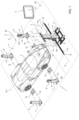
Figure 1 is a schematic perspective view of a vehicle service system according to the invention, -
Figure 2A is a perspective view, on a larger scale, of an optical apparatus of the vehicle service system shown inFigure 1 , -
Figure 2B is a lateral elevation view, on a larger scale, of an optical apparatus of the vehicle service system shown inFigure 1 , -
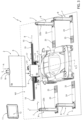
Figure 3 is a schematic perspective view of the vehicle service system according to the invention, according to an orientation that is different from the one ofFigure 1 , -
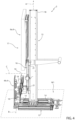
Figure 4 is a lateral elevation view, on a larger scale, of the calibration apparatus of the vehicle service system shown inFigure 1 , -
Figure 5 is a schematic perspective view of a vehicle service system according to a variant of the invention. - With reference to
figures 1 and3 ,number 1 indicates, as a whole, a vehicle service system comprising a calibration apparatus 2, which is designed to calibrate the electronic sensor devices, hereinafter indicated withADAS sensors 3, comprised in an advanced driver assistance system (ADAS) 100 of avehicle 4 arranged in aservice area 5. In the example shown herein, theservice area 5 has an axis K. - The ADAS
sensor 3 can comprise any sensor of the advanceddriver assistance system 100. For example, the ADASsensor 3 can comprise: a radar sensor, an optical sensor, a camera, a LIDAR sensor, an ultrasound sensor, an infrared (IR) sensor or any other similar sensor. - Obviously, according to this description, the "calibration" (and/or re-calibration) function carried out by the calibration apparatus 2 includes, in addition and/or alternatively, an "alignment" (or re-alignment) function for an
ADAS sensor 3. - With reference to
Figures 1 and3 , the calibration apparatus 2 is designed to move (and/or be moved) on a resting surface W1 adjacent (for example, horizontal and coplanar) to thevehicle service area 5 so as to face thevehicle 4. - The calibration apparatus 2 comprises one or
more calibration devices 6, which are designed to be detected by therelative ADAS sensors 3 of thevehicle 4 during their calibration process. - According to the invention, the
vehicle service system 1 further comprises a position detection system 7, which comprisesoptical apparatuses 8. According to an explanatory embodiment shown inFigures 1 and3 , the position detection system 7 comprises fouroptical apparatuses 8. Theoptical apparatuses 8 are arranged in theservice area 5 in such a way that each pair is opposite the other pair with respect to the longitudinal axis S of the vehicle 4 (or to the axis K of the service area 5). The axis S of thevehicle 4 can correspond to the symmetry axis or to the thrust axis of the vehicle. Theoptical apparatuses 8 are configured to capture first images containing lateral images of thevehicle 4. - According to the invention, the
optical apparatuses 8 haverespective positioning targets 9, which are oriented so as to face the calibration apparatus 2. According to a possible embodiment, the position detection system 7 comprises fouroptical apparatuses 8 and fourpositioning targets 9, each of which is associated with/firmly fixed on the relative optical apparatus 8 (in the way described in detail below) and is oriented so as to face (be directed towards) the calibration apparatus 2. According to the invention, thevehicle service system 1 further comprises two video cameras 10 (or cameras or the like), which are mounted in/on the calibration apparatus 2 so as to be arranged in lateral positions on opposite sides with the respect to the calibration device/s 6. - According to the invention, the two
cameras 10 are oriented/directed towards the respectiveoptical apparatuses 8 and are designed to capture/acquire second images, which contain thepositioning targets 9 present on the respectiveoptical apparatuses 8. - According to a possible embodiment, in which the position detection system 7 comprises four
optical apparatuses 8 and fourpositioning targets 9, the twocameras 10 are mounted in/on the calibration apparatus 2 so as to be oriented/directed towards the fouroptical apparatuses 8 in order to capture/acquire the second images, which contain the respective fourpositioning targets 9 of the fouroptical apparatuses 8. - According to the invention, the
vehicle service system 1 further comprises an electronic control system 11 (schematically indicated in the accompanying figures), which is configured so as to determine a first position, which is indicative of the position of the calibration apparatus 2 and/or of the position of the calibration devices 6 (and/or of thecalibration assistance assembly 17 described in detail below) with respect to thevehicle 4, based on the first images and the second images. - Conveniently, the
electronic control system 11 is further configured so as to control/guide the positioning of the calibration apparatus 2 and/or of the calibration devices 6 (and/or of thecalibration assistance assembly 17 described in detail below) in a pre-established calibration position based on the determined first position. - Conveniently, according to the invention, the
electronic control system 11 can further be configured so as to provide a user, by means of auser interface device 12, with information to assist/guide the positioning, namely the movement of the calibration apparatus 2 and/or the handling of the calibration device 6 (and/or of thecalibration assistance assembly 17 described in detail below) in/to the pre-established calibration position based on the determined first position. - According to a preferred embodiment of the invention shown in
Figures 1-4 , the calibration apparatus 2 comprises abase 13, which is designed to move on a resting plane W1. Thebase 13 can be designed to be moved by means of a manual push. To this regard, thebase 13 is movable and can be provided, at the bottom, withsupport wheels 14. Thewheels 14 can be, for example, cylindrical wheels and/or spherical wheels pivoting around a plurality of axes in order to allow thebase 13 to freely move on the resting plane W1 in any horizontal direction. Alternatively or in addition, thebase 13 can be designed to move in an autonomous manner (automatically) and be provided with motorised wheels, which are caused to rotate by motorised eclectic units (not shown herein) and are designed to be oriented, on command, by means of electronic/electromechanical guide members, which control the direction thereof. - According to a preferred explanatory embodiment shown in
Figures 1-4 , the calibration apparatus 2 comprises asupport frame 15. Thesupport frame 15 is preferably coupled/connected to thebase 13 and extends above the latter. - According to a preferred explanatory embodiment shown in
Figure 4 , the calibration apparatus 2 further comprises asupport frame 16, which is coupled to thesupport frame 15 and supports thecalibration devices 6 and thecameras 10. Thesupport frame 16, thecalibration devices 6 and thecameras 10 form acalibration assistance assembly 17. - According to a preferred explanatory embodiment shown in
Figure 4 , thesupport frame 16 is provided (at the bottom) with a straight rod orbar 19, which extends approximately horizontally. Thecameras 10 are firmly arranged at the two opposite free ends of thestraight bar 19 and are oriented so that they can observe the respective positioning targets 9. Thecameras 10 are firmly arranged at the two opposite free ends of thestraight bar 19 and are oriented so that they can capture the images of thepositioning targets 9 present on theoptical apparatuses 8. - The
support frame 15 can comprise acolumn 18, which extends along an approximately vertical axis A. Thecolumn 18 can be mounted on the base 13 so that it can rotate around the axis A. The rotation of thecolumn 18 relative to thebase 13 determines the rotation of thecalibration assistance assembly 17 around the axis A. The rotation of thecalibration assistance assembly 17 around the axis A determines a corresponding change in the angle present between the flat ADAS calibration surfaces associated with therespective calibration devices 6 and the axis S of thevehicle 4. - The
support frame 16 can be coupled to thesupport frame 15 in an easily removable (separable) manner. Thesupport frame 16 can be (mechanically) coupled to thesupport frame 15 so as to move along the axis A (in a vertical manner) from and to the base 13 arranged underneath. The movement of thesupport frame 16 along the axis A from and to thebase 13 determines a change in the height of the calibration assistance assembly 17 (measured vertically with respect to thevehicle 4 or the resting plane). Thesupport frame 16 can further be (mechanically) coupled to thesupport frame 15 so as to move along a horizontal axis B (which is orthogonal to the axis A). The movement of thesupport frame 16 along the axis B determines the horizontal movement of the calibration assistance assembly 17 (with respect to the base 13). - The
support frame 16 can further be (mechanically) coupled to thesupport frame 15 so as to move along a horizontal axis C (Figure 4 ), which is orthogonal to the axis A and B, in order to move the calibration assistance assembly 17 (with respect to the base 13) from and to thevehicle 4, thus adjusting the distance from the latter. - According to a preferred explanatory embodiment shown in the accompanying Figures, the
calibration devices 6 comprise atarget panel 6a suited for the calibration ofoptical ADAS sensors 3, preferably the cameras of thevehicle 4. According to an embodiment, thetarget panel 6a can comprise a monitor/display (flat-panel, LCD or OLED or the like) designed, in use, to display, on command, a digital image of a calibration target, which depends on theoptical ADAS sensor 3 to be calibrated. The flat ADAS calibration surface of thetarget panel 6a (shown inFigure 1 ) corresponds to the active surface of the monitor/display, which displays the pre-established image of the camera calibration target. According to a further embodiment, thetarget panel 6a can comprise a rectangular panel, whose flat ADAS calibration surface is used to create (for example, through printing) and/or project (by means of a projector that is not shown herein) the pre-established image of the camera calibration target of thevehicle 4. - In the example shown in
Figures 1 and3 , thecalibration device 6 comprises aradar panel 6b suited for the calibration of ADAS radar sensors. Theradar panel 6b is coupled to thesupport frame 16 so that it can rotate around the axis B. The flat ADAS calibration surface of theradar panel 6b is represented by the active radar refection surface facing the vehicle 4 (shown inFigure 1 ). - In use, the rotation of the
radar panel 6b around the axis B determines a corresponding change in the angle between the flat ADAS calibration surface of theradar panel 6b and the axis S of thevehicle 4. - The calibration apparatus 2 can further comprise a handling assembly 21 (schematically shown in
Figure 4 ) designed, on command, to: rotate thesupport frame 15 around the axis A in order to adjust the angle of the calibration assistance assembly 17 (or of the calibration device 6) relative to the axis S of thevehicle 4, and/or move thesupport frame 16 along the axis A in order to adjust the height of the calibration assistance assembly 17 (or of the calibration device 6), and/or move thesupport frame 16 along the axis B (from and to the base 13) in order to adjust the horizontal position of the calibration assistance assembly 17 (or of the calibration device 6), and/or rotate theradar panel 6b around the axis B. - The handling
assembly 21 is further designed, on command, to move thesupport frame 16 along the axis C in order to adjust the distance with respect to thevehicle 4. - The handling
assembly 21 can comprise a series of electric devices/motors and/or electric actuators (and/or slides) selectively controlled by theelectronic control system 11 so as to carry out the positioning described above. - The
electronic control system 11 can conveniently be configured to control the handlingassembly 21 based on the determined first position, so as to place the calibration assistance assembly 17 (and/or the calibration device 6) in the pre-established calibration position. - The pre-established calibration position can comprise: a pre-established distance of the calibration apparatus 2 or of a
calibration device 6 or of the calibration assistance assembly 7 with respect to thevehicle 4, a pre-established height of acalibration device 6 and/or of the calibration assistance assembly 7 with respect to thevehicle 4 or to the resting plane. The pre-established calibration position can further comprise a pre-established angle (for example, a ninety degree angle) between the axis S of thevehicle 4 and the flat calibration surface of acalibration device 6. - With reference to
Figures 2A and 2B , theoptical apparatuses 8 each comprise a column-shapedcontainer body 22, which extends along an approximately vertical axis U and is arranged so as to rest on theservice area 5 adjacent to a relative side of thevehicle 4. At least oneimage capturing device 23, which is oriented/directed towards thevehicle 4, is arranged in thecontainer body 22. - The
container body 22 can have an approximately square or rectangular cross section, transverse to the vertical axis U, and has a preferably flat side or flank orwall 22a, which faces the calibration apparatus 2. In the example shown inFigure 1 , theflat wall 22a approximately lies on a vertical plane, orthogonal to the axis K. - In the example shown herein, the
container body 22 comprises an oblong box-shaped body substantially having the shape of a vertical bar or rod. Preferably, in the example shown herein, thecontainer body 22 has not, namely lacks, horizontal protruding arms, which project from the box-shaped body. The Applicant found out that this compact shape reduces the space taken up, increases the sturdiness of theoptical apparatus 8 and reduces the exposure of the camera to hits and, hence, to the risk of damages. - The
positioning target 9 of theoptical apparatus 8 is arranged on the side, namely on theflat wall 22a of thecontainer body 22. Thepositioning target 9 preferably is approximately planar, can comprise a two-dimensional (quadrangular) image representing a pre-established pattern and is rigidly/firmly fixed on theflat wall 22a. - Obviously, according to a possible embodiment (which is not shown herein), the
optical apparatus 8 can be provided with twopositioning targets 9, one of them being arranged on theflat wall 22a and the other one being arranged on the opposite flat wall. The Applicant found out that this configuration has, on the one hand, the technical effect of allowing operators to indifferently install eachoptical apparatus 8 in any position with no need to distinguish it from the others and, on the other hand, has the technical effect of being able to carry out the measurement of the position even when the calibration apparatus 2 is arranged at the back of the vehicle. - Conveniently, the
optical apparatuses 8 do no comprise, namely lack, cameras arranged so as to frame the calibration apparatus 2. Theflat wall 22a of thecontainer body 22, which has thepositioning target 9, is free from cameras facing, directed towards the calibration apparatus 2 in order to frame it. Conveniently, theoptical apparatuses 8 do not comprise cameras arranged so as to frame a wheel target, namely a target panel mounted on the wheel, for example the rear wheel of the vehicle. The flat wall of thecontainer body 22 opposite theflat wall 22a on which thepositioning target 9 is installed does not comprise, namely lacks, cameras arranged so as to frame a target mounted on the wheel of the vehicle. - In the example shown herein, the pattern comprises a geometry containing predetermined graphic elements (squares) in a (black and white) almost chessboard-like arrangement.
- With reference to
Figure 2A , the opticalimage capturing device 23 comprises at least onecamera 23a. In the example shown inFigure 2A , the opticalimage capturing device 23 further comprises acamera 23b, which is vertically arranged at a pre-established distance under thecamera 23a. - According to a possible embodiment, the
cameras electronic control system 11 so as to implement a binocular stereoscopic vision method of thevehicle 4 in order to determine a three-dimensional 3D image of thevehicle 4, or of pre-established parts thereof, based on the images captured by theoptical apparatuses 8. The operation of the binocular stereoscopic vision method by means of two cameras in order to construct a three-dimensional image is known and will not be described any further. - The
electronic processing system 11 can conveniently be designed to exchange (in a two-way manner) data/images/signals with theoptical apparatuses 8 and/or with the electric/electronic devices of the calibration apparatus 2 by means of a wireless communication system (which is not shown herein). - According to a preferred embodiment shown in
Figures 2A and 2B , thecamera 23a and thecamera 23b are firmly arranged in thecontainer body 22 so that the relative optical assemblies (lenses) face and are oriented on a common face/side 22b of thecontainer body 22, which is orthogonal to the wall/side 22a, so as to frame a side of thevehicle 4. Preferably, thecameras vehicle 4 through through openings made in the face/side of thecontainer body 22. Thecameras container body 22 so as to be axially spaced apart from one another along the axis U at a pre-established distance. Preferably, the opticalimage capturing device 23 can further comprise at least onelight source 23c designed to emit a light beam to irradiate the side of thevehicle 4. - According to the preferred embodiment shown in
Figures 2A and 2B , thecamera 23b is arranged in thesupport column 22 in a lower position. Thecamera 23a is arranged in thecontainer body 22 in an upper position, immediately under the upper end of thecolumn 22 itself. Thelight source 23c can vertically be arranged between the twocameras - According to a possible embodiment, each
optical apparatus 8 can comprise a plate-shaped element 24 (a plate), which is arranged so as to rest on theservice area 5 and has, on its upper surface, a reference target 25 (Figure 2A ). Thecontainer body 22 can be coupled to the plate-shapedelement 24 in a position immediately adjacent to thetarget 25. The opticalimage capturing device 23 is arranged in thecontainer body 22 so as to frame and capture, for example by means of thecamera 23a, the image of thetarget 25 present on the plate-shapedelement 24 arranged underneath. - The
optical apparatuses 8 can advantageously be of the type shown and described inItalian patent application no. 102020000030578 - According to the embodiment shown in
Figures 1-4 , theelectronic control system 11 receives the first images from theoptical apparatuses 8 and processes them in order to determine the position of thevehicle 4 in theservice area 5 with respect to a pre-established reference system. InFigures 1 and3 , the pre-established reference system SR is represented, by mere way of example, by means of a Cartesian system with three axes X, Y and Z orthogonal to one another. InFigures 1 and3 , for the sole purpose of improving the comprehension of the invention, the pre-established reference system SR is associated with anoptical apparatus 8. The reference system SR can obviously be established by a processing algorithm implemented by theelectronic control unit 11. - The
electronic control system 11 comprises memory devices (not shown), which contain first items of information indicative of the position of theoptical apparatuses 8 with respect to the pre-established reference system SR (and/or reciprocal). Preferably, the detection/determination and the storing of the first items of information indicative of the positions of theoptical apparatuses 8 with respect to the pre-established reference system SR can be carried out during an initial adjustment phase. The initial adjustment can entail having theelectronic control system 11 process the images of opposite adjustment targets (not shown), which are present on a panel vertically arranged on the central middle line of the service area 5 (axis K) and face the respectiveoptical apparatuses 8. The processing of the images of the adjustment targets captured by theoptical apparatuses 8, by theelectronic control system 11, determines the position of eachoptical apparatus 8 with respect to the reference system SR. - According to a possible embodiment, the
electronic control system 11 can further determine, through the processing of the first images of thevehicle 4 captured by theoptical apparatuses 8 and of the first items of information, second items of information indicative of the position of at least one of the following elements of thevehicle 4 with respect to the pre-established reference system SR: the front axle, the rear axle, the front logo, an ADAS sensor device (camera), a side-view mirror or similar elements. Following the determination of the second items of information concerning the position of one or more elements of thevehicle 4, theelectronic control system 11 is capable of determining the position of the vehicle 4 (and/or pre-established vehicle reference element) in the reference system SR, for example based on a series of dimensional data of the vehicle contained, for example, in the memory devices and determined based on items of information identifying the vehicle (model or plate number or the like) given to users, for example, through theinterface device 12. - Conveniently, the determination of the second items of information indicative of the position of the
vehicle 4 by theelectronic control system 11 can be carried out in a static manner, namely by processing the first images in a discontinuous manner, i.e. at predetermined time intervals, or in a dynamic manner, namely by processing the first images in a substantially continuous manner (in real time). - According to a possible embodiment, the
electronic control system 11 controls thecameras 10 so as to capture the second images containing thepositioning targets 9 and determines, based on the processing of the second images, third items of information, which are indicative of the position of the calibration apparatus 2 and/or of thecalibration assistance assembly 17 and/or of acalibration device 6 with respect to thepositioning targets 9 of theoptical apparatuses 8. - In the example shown in
Figures 1 and3 , theoptical apparatuses 8 are respectively arranged in the area of, approximately adjacent to (facing) the four wheels of thevehicle 4. Preferably, thepositioning targets 9 are arranged on the two oppositeoptical apparatuses 8, which are adjacent to the front wheels of thevehicle 4, so that they can observed by thecameras 10. Obviously, according to a variant (which is not shown herein), thepositioning targets 9 can be arranged, in addition or alternatively, on the two oppositeoptical apparatuses 8, which are adjacent to the rear wheels of thevehicle 4, so that they can observed by thecameras 10. - The
electronic control system 11 is further designed to process the third items of information and the first items of information concerning the position of theoptical apparatuses 8 provided with thepositioning targets 9 with respect to the pre-established reference system SR, so as to determine fourth items of information indicative of the position of the calibration apparatus 2 and/or of thecalibration assistance apparatus 17 and/or of thecalibration device 6 with respect to the pre-established reference system SR. - The
electronic control system 11 is further designed to process the fourth items of information and the second items of information concerning the position of the vehicle 4 (and/or of a pre-established vehicle reference element) with respect to the pre-established reference system SR, so as to determine fifth items of information, which are indicative of the position of the calibration apparatus 2 and/or of thecalibration assistance apparatus 17 and/or of thecalibration device 6 with respect to thevehicle 4. - The fifth items of information can comprise: the distance of the calibration apparatus 2 and/or of the
calibration assistance assembly 17 and/or of thecalibration device 6 with respect to the vehicle 4 (and/or a pre-established vehicle reference element), the height of thecalibration assistance assembly 17 and/or of thecalibration device 6 with respect to the vehicle 4 (and/or a pre-established vehicle reference element), the angle present between the resting plane of the calibration surface of thecalibration device 6 and the axis S of thevehicle 4. - According to a possible embodiment, the
electronic control system 11 further is conveniently designed to determine the attitude of the wheels of thevehicle 4 based on the processing of the first images of thevehicle 4 captured by theoptical apparatuses 8. - According to a possible embodiment, the
electronic control system 11 can further be designed to determined the thrust axis of thevehicle 4 based on the attitude of the wheels of the rear axle, wherein the attitude is determined through the processing of the first images. - According to a possible embodiment, the
electronic control system 11 can further determine (instant by instant), based on the fifth items of information, the difference/deviation between the position of the calibration apparatus 2 with respect to thevehicle 4 and the pre-established calibration position (stored) in the memory means (which are not shown herein). - The
electronic control system 11 can provide movement control signals/data indicative of the movement to be made by the calibration apparatus 2 and/or by thecalibration assistance assembly 17 and/or by thecalibration device 6 with respect to the vehicle 4 (and/or a pre-established vehicle reference element) based on the difference/deviation, so as to reduce it/cause it to become zero in order to reach the pre-established calibration position. - According to a possible embodiment, the
electronic control system 11 can provide theuser interface device 12 with the movement control signals. Theuser interface device 12 can be configured to implement algorithms that process the movement control signals and transform/convert them into visual/visible guide signals/data (which can be observed by operators) and/or sound guide signals/data (intermittent messages or sounds). Said guide signals/data can be programmed so as to guide/assist operators in placing and/or adjusting the position of the calibration apparatus 2 and/or of thecalibration assistance apparatus 17 and/or of thecalibration device 6 with respect to thevehicle 4 in the pre-established calibration position. - The
electronic control system 11 is further configured to provide the handlingassembly 21 with the movement control signals in order to automatically control the movement of the calibration apparatus 2 and/or of thecalibration assistance assembly 17 and/or of thecalibration device 6 with respect to thevehicle 4 based on the difference/deviation, so as to reduce it/cause it to become zero in order to reach the pre-established calibration position. - In this way, the
system 1 conveniently is able to adjust/tune, in a completely automatic manner and with a high precision, the position of the calibration apparatus 2 and/or of thecalibration assistance assembly 17 and/or of thecalibration device 6 with respect to thevehicle 4, so as to cause it to reach the pre-established calibration position. - The operating method of the
vehicle service system 1 described above basically entails placing the calibration apparatus 2 in the service area 5 (Figures 1 and3 ), for example in front of thevehicle 4; placing (if they are not already present) theoptical apparatuses 8 in the relative positions in theservice area 5, so that therelative positioning targets 9 are oriented towards and can be observed by thecameras 10 of the calibration apparatus 2. - Obviously, the
vehicle service system 1 can entail the calibration step mentioned above, to which theoptical apparatuses 8 are subjected in order to determine and store the first items of information indicative of the position thereof with respect to the reference system SR. Conveniently, theoptical apparatuses 8 can be removed/separated from the plate-shapedelements 24 and mounted again in the same positions associated with the first items of information stored, whereas thetargets 25, during the separation, can conveniently remain firmly anchored on the surface of theservice area 5 by means of the plate-shapedelements 24. The images of thetargets 25 captured by theoptical apparatuses 8 and processed by theelectronic control system 11 following the re-installation of thecolumn container bodies 22 allow theoptical apparatuses 8 to be re-calibrated each time (without repeating the initial adjustment) in order to determine and/or correct the first items of information indicative of the actual positions of theoptical apparatuses 8 with respect to the reference system SR. In other words, the processed images of thetargets 25 allow the system to implement a self-zero algorithm, which determines, with utmost precision and with every installation of theoptical apparatuses 8, the position thereof with respect to the reference system SR. - The operating method of the
vehicle service system 1 further comprises the step of determining second items of information indicative of the position of thevehicle 4 with respect to the reference system SR based on the processing of the first images of the vehicle (images of the opposite sides) captured by theoptical apparatuses 8 and on the first items of information. - The operating method of the
vehicle service system 1 further comprises the step of determining third items of information indicative of the position of the calibration apparatus 2 and/or of thecalibration assistance assembly 17 and/or of thecalibration device 6 with respect to the optical apparatuses 8 (targets 9) based on the processing of the second images containing thepositioning targets 9 captured by thecameras 10. - The operating method of the
vehicle service system 1 further comprises the step of determining fourth items of information indicative of the position of the calibration apparatus 2 and/or of thecalibration assistance assembly 17 and/or of thecalibration device 6 with respect to the reference system SR based on the processing of the third and first items of information. - The operating method of the
vehicle service system 1 further comprises the step of determining fifth items of information indicative of the position of the calibration apparatus 2 and/or of thecalibration assistance assembly 17 and/or of thetarget devices 6 with respect to the vehicle 4 (and/or to the pre-established vehicle reference element) based on the fourth items of information and on the second items of information. - The operating method of the
vehicle service system 1 further can conveniently comprise the step of determining the deviation/difference between the pre-established calibration position of the calibration apparatus 2 and the determined position/orientation of the calibration apparatus 2 and/or of thecalibration assistance assembly 17 and/or of thecalibration device 6. - The operating method of the
vehicle service system 1 further can conveniently comprise the step of guiding operators through theinterface device 12 based on the deviation/difference between the pre-established calibration position of the calibration apparatus 2 and the determined position/orientation of the calibration apparatus 2 and/or of thecalibration assistance assembly 17 and/or of thecalibration device 6. Theinterface device 12 can guide operators in a controlled manner based on the aforesaid determined position/orientation so as to cause the aforesaid deviation/difference to become zero. - The operating method of the
vehicle service system 1 further can conveniently comprise the step of automatically controlling the handlingassembly 21 based on the deviation/difference between the pre-established calibration position of the calibration apparatus 2 and the determined position/orientation of the calibration apparatus 2 and/or of thecalibration assistance assembly 17 and/or of thecalibration device 6. - The handling
assembly 21 can be controlled by theelectronic control system 11 based on the determined position/orientation so as to cause the aforesaid deviation/difference to become zero. The handlingassembly 21 can move, in response to the control signal provided by theelectronic control system 11, in a selective and/or alternative manner: thecalibration assistance assembly 17 and/or thecalibration device 6 around the axis A and/or along the axis B and/or around the axis B and/or along the axis C until it reaches the relative calibration position. - The Applicant found out that the use of the cameras 10 (firmly) mounted on the calibration apparatus 2 to observe/capture the
positioning targets 9 mounted, in turn, on theoptical apparatuses 8, in order to determine the mutual position of the calibration apparatus and of the vehicle, leads to different advantages. - First of all, the overall costs of the vehicle service system can be reduced, especially when operators have to carry out the calibration of a plurality of vehicles arranged in different service areas by means of one single calibration apparatus. In this case, the system guides the positioning of the calibration apparatus in the areas with the aid of two
sole cameras 10, exploiting the positioning targets mounted on the optical apparatuses present in the areas. The Applicant found out that a different configuration from the one described above, entailing - for example - installing two positioning targets on the calibration apparatus and observing the positioning targets by means of the cameras mounted on the optical apparatuses, significantly increases the cost of the positioning system compared to the solution disclosed herein. - This technical problem affects, for example, the system described in
EP 3 629 053 A1EP 3 629 053 A1 - Therefore, the technical effect obtained by the invention thanks to the positioning of the targets on the optical apparatuses and to the installation of the two cameras on the calibration apparatus is that of conveniently using only two cameras in case of a series of service areas, so as to reduce costs.
- The Applicant further found out that the installation of the cameras on the calibration apparatus reduces the risk of damaging thereof. As a matter of fact, the cameras mounted on the optical apparatuses are exposed to hits by operators and, as a consequence, are subjected to damaging.
- The Applicant further found out that the use of the two cameras mounted on the calibration apparatus in front of the vehicle allows, in the configuration with four optical apparatuses and four targets, the measuring precision to be improved. In this case, indeed, the two cameras capture four images of targets associated with as many points that the system can process in order to determine the items of information concerning the position.
- Furthermore, the Applicant found out that the combined use of the targets arranged on the plate-shaped elements and of the positioning targets obtained on the support columns increases the measuring precision, since the targets define two references, which are conveniently used by system each time, for example with each new placing of the optical apparatus in the service are, in order to carry out a re-calibration so as to correct position errors (self-zero).
- Moreover, the system is conveniently simplified, besides being more precise, compared to those system that involve the use of reference targets mounted on the wheels. In these systems, indeed, an incorrect positioning of the target on the wheel leads to errors in the measurement of the position.
- Finally, the use of the optical apparatuses operating in a stereoscopic manner allows the service system to be used both to carry out the calibration of the ADAS sensors and to determine the attitude of the wheels of the vehicle and, if necessary, to automatically correct the error caused in the positioning of the calibration apparatus and/or of the calibration device and/or of the calibration assistance assembly also based on the actual attitude.
- Finally, it is clear that the system and the method described above can be subjected to changes and variants, without for this reason going beyond the scope of protection of the invention.
- The embodiment shown in
Figure 5 relates to avehicle service system 200, which is similar to thevehicle service system 1 shown inFigures 1 and3 and whose components are identified, when possible, with the same reference numbers as the ones indicating corresponding parts of thevehicle service system 1. The difference between thevehicle service system 200 and thevehicle service system 1 lies in that the position detection system, instead of comprising fouroptical apparatuses 8, comprises twooptical apparatuses 8 aligned with and opposite one another in respective intermediate axial positions of thevehicle 4 transverse to the axis S.
Claims (15)
- A vehicle service system (1) (200) comprising:- a calibration apparatus (2), which is designed to calibrate at least one ADAS sensor (3) comprised in an advanced driver assistance system (100) of a vehicle (4) arranged in a vehicle service area (5), said calibration apparatus (2) is designed to move on a resting plane adjacent to said vehicle service area (5) and comprises at least one calibration device (6), which is designed to be detected by said ADAS sensor (3) during the calibration of the ADAS sensor (3) itself,said vehicle service system is characterised in that it comprises a position detection system (7) comprising:- at least two optical apparatuses (8), which are arranged in the vehicle service area (5) on opposite sides of said vehicle (4) one with respect to the other, and are configured to capture first images containing images of the vehicle (4), said optical apparatuses (8) have respective positioning targets (9) which are orientated in order to be facing said calibration apparatus (2),- two cameras (10) which are mounted on said calibration apparatus (2) so as to be arranged in lateral positions, on opposite sides with respect to said calibration device (6); the two cameras (10) are optically orientated towards said optical apparatuses (8) to capture second images which contain said positioning targets (9) of said optical apparatuses (8),- electronic processing means (11) which are configured so as to determine a first position indicative of the position of said calibration apparatus (2) and/or of the position of said calibration device (6) with respect to said vehicle (4), based on said first images and said second images.
- Vehicle service system according to claim 1, wherein said electronic processing means (11) are designed to automatically control the movement of the calibration apparatus (2) and/or the movement of said calibration device (6) in a pre-established calibration position based on said first position.
- Vehicle service system according to claim 1 or 2, wherein said electronic processing means (11) are designed to provide a user, by interface means (12), with information for assisting/driving the movement of said calibration apparatus (2) and/or the movement of said calibration device (6) in a pre-established calibration position based on said first position.
- Vehicle service system according to any one of the preceding claims, wherein said calibration apparatus (2) comprises:- a moveable base (13) designed to move on said resting plane,- at least one support structure (16) which is mounted on said base (13) and supports said calibration device (6) and the two cameras (10),- handling means (21) designed to selectively move said support structure (16) and/or said calibration device (6) with respect to said base (13): at least along a first axis to vary its distance with respect to said vehicle (4), and/or along a second axis to vary its height with respect to said resting plane, and/or around a third axis to vary its angle with respect to the axis of symmetry or the axis of thrust of said vehicle (4).
- Vehicle service system according to claim 4, wherein said support structure (16), said at least one calibration device (6) and said cameras (10) form a calibration assistance assembly (17),
said electronic processing means (11) are configured so as to control said handling means (21) so as to automatically place the calibration assistance assembly (17) and/or the calibration device (6) in a pre-established calibration position based on said determined first position. - Vehicle service system according to any one of the preceding claims, wherein said optical apparatuses (8) each comprise an elongated shaped column container (22) which extends vertically and has at least one flat lateral surface portion (22a) which faces said calibration apparatus (2) so as to be viewed by a respective camera (10); said reference target (9) being firmly fixed on said flat lateral surface portion (22a) of the column container (22).
- Vehicle service system according to claim 6, wherein said container body (22) comprises an oblong box-shaped body substantially shaped like a vertical bar or rod; said container body (22) lacks horizontal protruding arms, which project from the box-shaped body.
- Vehicle service system according to claim 7, wherein said optical apparatuses (8) comprise at least two cameras (23a) (23b) operating in a stereoscopic manner, which are vertically arranged on top of one another in said column container (22); said electronic processing means (11) are configured so as to implement a binocular stereoscopic vision method of the vehicle (4) so as to determine a three-dimensional 3D image of the vehicle (4) based on the images captured by the optical apparatuses (8).
- Vehicle service system according to any one of the preceding claims, comprising four optical devices (8), which are arranged adjacent to the four wheels of said vehicle (4), respectively; said positioning targets (9) are arranged on at least two opposite optical apparatuses (8), which are adjacent to the front wheels of the vehicle (4), in order to be observed by said cameras (10).
- Vehicle service system according to any one of the preceding claims, wherein said optical apparatuses (8) do not comprise cameras which are arranged to frame said calibration apparatus (2).
- Vehicle service system according to any one of the preceding claims, wherein said optical apparatuses (8) do not comprise cameras arranged in order to frame a wheel target mounted on the rear wheel of the vehicle (4).
- Vehicle service system according to claim 6, wherein said optical apparatus comprises (8) and image capturing device (23) and a plate-shaped element (24), which is arranged so as to rest on the service area (5) and has, on the upper surface, a reference target (25); said column container (22) is coupled to the plate-shaped element (24) in a position immediately adjacent to said target (25); said optical image capturing device (23) is designed to frame the image of the target (25) present on said plate-lake element (24) arranged underneath.
- An operating method of a vehicle service system (1) comprising:- a calibration apparatus (2), which is designed to calibrate at least one ADAS sensor (3) comprised in an advanced driver assistance system (100) of a vehicle (4) arranged in a vehicle service area (5), said calibration apparatus (2) is designed to move on a resting plane adjacent to said vehicle service area (5) and comprises at least one calibration device (6), which is designed to be detected by said ADAS sensor (3) to facilitate the calibration of the same,said method is characterised in that it comprises the steps of:- arranging at least two optical apparatuses (8) in the vehicle service area (5) on opposite sides of said vehicle (4) one with respect to the other in order to capture first images containing images of the vehicle, said optical apparatuses (8) have respective positioning targets (9) orientated so as to be facing said calibration apparatus (2),- arranging two cameras (10) on said calibration apparatus (2) in lateral positions, on opposite sides with respect to said calibration device (6); the two cameras (10) are optically orientated towards said optical apparatuses (8) to capture second images which contain said positioning targets (9) of said optical apparatuses (8),- determining, by electronic processing means (11), a first position indicative of the position of said calibration apparatus (2) and/or of the position of said calibration device (6) with respect to said vehicle (4), based on said first images and second images.
- Method according to claim 13, comprising the step of automatically controlling, by said electronic processing means (11), the movement of said calibration apparatus (2) and/or the handling of said calibration device (6) in a pre-established calibration position based on said first position.
- Method according to claim 14, wherein said optical apparatuses (8) lack cameras arranged so as to frame said calibration apparatus (2).
Applications Claiming Priority (1)
| Application Number | Priority Date | Filing Date | Title |
|---|---|---|---|
| IT102021000004388A IT202100004388A1 (en) | 2021-02-25 | 2021-02-25 | VEHICLE SERVICE SYSTEM AND ITS METHOD OF OPERATION |
Publications (2)
| Publication Number | Publication Date |
|---|---|
| EP4050303A1 EP4050303A1 (en) | 2022-08-31 |
| EP4050303B1 true EP4050303B1 (en) | 2025-06-25 |
Family
ID=75769907
Family Applications (1)
| Application Number | Title | Priority Date | Filing Date |
|---|---|---|---|
| EP22158905.4A Active EP4050303B1 (en) | 2021-02-25 | 2022-02-25 | Vehicle service system and related method of operation |
Country Status (3)
| Country | Link |
|---|---|
| US (1) | US11921232B2 (en) |
| EP (1) | EP4050303B1 (en) |
| IT (1) | IT202100004388A1 (en) |
Families Citing this family (11)
| Publication number | Priority date | Publication date | Assignee | Title |
|---|---|---|---|---|
| USD1054895S1 (en) * | 2020-02-24 | 2024-12-24 | Autel Intelligent Technology Corp., Ltd. | Vehicle calibration device |
| USD1070623S1 (en) * | 2020-07-10 | 2025-04-15 | Autel Intelligent Technology Corp., Ltd. | Calibration support device |
| EP4348177B1 (en) * | 2022-08-12 | 2024-08-07 | Hunter Engineering Company | Vehicle inspection system dual column support structure |
| IT202300003192A1 (en) * | 2023-02-23 | 2024-08-23 | Space S R L Con Unico Socio | CALIBRATION EQUIPMENT AND METHOD OF VERIFYING THE POSITIONING OF A CALIBRATION DEVICE, IN PARTICULAR FOR THE CALIBRATION OF ONE OR MORE ADAS SENSORS |
| DE102023202933A1 (en) * | 2023-03-30 | 2024-10-02 | Robert Bosch Gesellschaft mit beschränkter Haftung | Optical measuring system and calibration device for calibrating a driver assistance system |
| DE102023203531A1 (en) * | 2023-04-18 | 2024-10-24 | Robert Bosch Gesellschaft mit beschränkter Haftung | Methods and devices for positioning a calibration device in front of a motor vehicle |
| DE102023115772B4 (en) * | 2023-06-16 | 2025-02-27 | Beissbarth Automotive Testing Solutions Gmbh | measuring bar |
| CN118687610A (en) * | 2024-07-29 | 2024-09-24 | 深圳市道通科技股份有限公司 | Method, device, equipment and storage medium for assisting in placing calibration tools |
| CN118706171A (en) * | 2024-07-29 | 2024-09-27 | 深圳市道通科技股份有限公司 | Method, device, equipment and storage medium for assisting in placing calibration tools |
| EP4707724A1 (en) | 2024-09-06 | 2026-03-11 | Texa S.p.A. | Vehicle service system |
| EP4707849A1 (en) * | 2024-09-06 | 2026-03-11 | Hella Gutmann Solutions GmbH | Device, diagnostic device and method for calibrating at least one radar sensor of a vehicle |
Family Cites Families (14)
| Publication number | Priority date | Publication date | Assignee | Title |
|---|---|---|---|---|
| EP1623185B1 (en) * | 2003-05-09 | 2010-08-11 | Snap-on Incorporated | Camera technique for adaptive cruise control (acc) sensor adjustment |
| US7382913B2 (en) | 2003-08-22 | 2008-06-03 | Hunter Engineering Company | Method and apparatus for guiding placement of vehicle service fixtures |
| DE102010062696A1 (en) * | 2010-12-09 | 2012-06-14 | Robert Bosch Gmbh | Method and device for calibrating and adjusting a vehicle environment sensor. |
| US9644952B2 (en) * | 2012-10-18 | 2017-05-09 | Hunter Engineering Company | Method for evaluating component calibration in machine vision vehicle wheel alignment system |
| EP3708949A1 (en) | 2016-10-04 | 2020-09-16 | Hunter Engineering Company | Vehicle measurement system instrumentation structure and method |
| DE102017213421A1 (en) * | 2017-08-02 | 2019-02-07 | Robert Bosch Gmbh | Method and apparatus for calibrating a reference target |
| US11243074B2 (en) * | 2018-04-30 | 2022-02-08 | BPG Sales and Technology Investments, LLC | Vehicle alignment and sensor calibration system |
| US11544870B2 (en) * | 2018-08-30 | 2023-01-03 | Hunter Engineering Company | System and method for verification of vehicle service target positioning |
| EP3742192B1 (en) * | 2018-09-28 | 2023-09-06 | NEXION S.p.A. | System for calibrating a vehicle camera |
| IT201900001167A1 (en) | 2019-01-25 | 2020-07-25 | Nexion Spa | APPARATUS FOR CALIBRATING A SENSOR OF AN ADVANCED ASSISTANCE SYSTEM DRIVING A VEHICLE |
| JP7336732B2 (en) * | 2019-03-27 | 2023-09-01 | パナソニックIpマネジメント株式会社 | Wireless communication device, roadside unit and wireless communication method |
| WO2021024286A1 (en) * | 2019-08-05 | 2021-02-11 | Texa Spa | Regulation apparatus for vehicle calibration devices |
| IT202000004834A1 (en) * | 2020-03-06 | 2021-09-06 | Nexion Spa | METHOD OF ALIGNING A SERVICE SYSTEM WITH A VEHICLE RELATIVE TO A VEHICLE |
| US12553713B2 (en) * | 2021-03-26 | 2026-02-17 | Hunter Engineering Company | System and method for detecting axle configuration on a multi-axle vehicle |
-
2021
- 2021-02-25 IT IT102021000004388A patent/IT202100004388A1/en unknown
-
2022
- 2022-02-24 US US17/679,669 patent/US11921232B2/en active Active
- 2022-02-25 EP EP22158905.4A patent/EP4050303B1/en active Active
Also Published As
| Publication number | Publication date |
|---|---|
| US11921232B2 (en) | 2024-03-05 |
| EP4050303A1 (en) | 2022-08-31 |
| US20220268885A1 (en) | 2022-08-25 |
| IT202100004388A1 (en) | 2022-08-25 |
Similar Documents
| Publication | Publication Date | Title |
|---|---|---|
| EP4050303B1 (en) | Vehicle service system and related method of operation | |
| US12467747B2 (en) | Wheel aligner with improved accuracy and no-stop positioning using a drive direction calculation | |
| EP3523604B1 (en) | Vehicle wheel alignment measurement system camera and adas calibration support structure | |
| EP3859298B1 (en) | Wheel aligner-based method for aligning calibration device with vehicle and calibration system | |
| US11420643B2 (en) | Device and method for calibrating vehicle assistance systems | |
| US11971250B2 (en) | System and method for operator guided identification of vehicle reference locations for ADAS sensor alignment | |
| US11835646B2 (en) | Target alignment for vehicle sensor calibration | |
| EP4012328B1 (en) | System and method of optical scanning of a vehicle for measuring and/or controlling the vehicle and/or parts thereof | |
| EP4165368A1 (en) | Apparatus and method for calibrating and aligning automotive sensors | |
| US11538188B1 (en) | Methods for spatial calibration of vehicle ADAS service system | |
| EP4180763B1 (en) | Vehicle measuring apparatus and operating method thereof | |
| EP4619774A1 (en) | Method and apparatus for calibrating an adas electronic device of an advanced driving assistance system of a vehicle | |
| EP4707730A1 (en) | Service-vehicle system | |
| JPH1073408A (en) | Displacement detecting device, wheel alignment measuring device, displacement detecting method, and wheel alignment measuring method | |
| EP4707724A1 (en) | Vehicle service system | |
| JP2026507964A (en) | Method and apparatus for aligning a three-dimensional reflector | |
| BR102023009240A2 (en) | METHOD FOR ALIGNING A VEHICLE TO AN ADAS CALIBRATION TARGET AND AN ADAS CALIBRATION SYSTEM |
Legal Events
| Date | Code | Title | Description |
|---|---|---|---|
| PUAI | Public reference made under article 153(3) epc to a published international application that has entered the european phase |
Free format text: ORIGINAL CODE: 0009012 |
|
| STAA | Information on the status of an ep patent application or granted ep patent |
Free format text: STATUS: THE APPLICATION HAS BEEN PUBLISHED |
|
| AK | Designated contracting states |
Kind code of ref document: A1 Designated state(s): AL AT BE BG CH CY CZ DE DK EE ES FI FR GB GR HR HU IE IS IT LI LT LU LV MC MK MT NL NO PL PT RO RS SE SI SK SM TR |
|
| STAA | Information on the status of an ep patent application or granted ep patent |
Free format text: STATUS: REQUEST FOR EXAMINATION WAS MADE |
|
| 17P | Request for examination filed |
Effective date: 20230221 |
|
| RBV | Designated contracting states (corrected) |
Designated state(s): AL AT BE BG CH CY CZ DE DK EE ES FI FR GB GR HR HU IE IS IT LI LT LU LV MC MK MT NL NO PL PT RO RS SE SI SK SM TR |
|
| P01 | Opt-out of the competence of the unified patent court (upc) registered |
Effective date: 20230607 |
|
| STAA | Information on the status of an ep patent application or granted ep patent |
Free format text: STATUS: EXAMINATION IS IN PROGRESS |
|
| 17Q | First examination report despatched |
Effective date: 20240417 |
|
| REG | Reference to a national code |
Ref country code: DE Ref legal event code: R079 Free format text: PREVIOUS MAIN CLASS: G01B0011275000 Ipc: G01S0007497000 Ref country code: DE Ref legal event code: R079 Ref document number: 602022016276 Country of ref document: DE Free format text: PREVIOUS MAIN CLASS: G01B0011275000 Ipc: G01S0007497000 |
|
| GRAP | Despatch of communication of intention to grant a patent |
Free format text: ORIGINAL CODE: EPIDOSNIGR1 |
|
| STAA | Information on the status of an ep patent application or granted ep patent |
Free format text: STATUS: GRANT OF PATENT IS INTENDED |
|
| RIC1 | Information provided on ipc code assigned before grant |
Ipc: G01S 13/931 20200101ALI20250110BHEP Ipc: G01S 15/931 20200101ALI20250110BHEP Ipc: G01S 7/52 20060101ALI20250110BHEP Ipc: G01B 11/275 20060101ALI20250110BHEP Ipc: G01S 7/40 20060101ALI20250110BHEP Ipc: G01S 7/497 20060101AFI20250110BHEP |
|
| INTG | Intention to grant announced |
Effective date: 20250123 |
|
| GRAS | Grant fee paid |
Free format text: ORIGINAL CODE: EPIDOSNIGR3 |
|
| GRAA | (expected) grant |
Free format text: ORIGINAL CODE: 0009210 |
|
| STAA | Information on the status of an ep patent application or granted ep patent |
Free format text: STATUS: THE PATENT HAS BEEN GRANTED |
|
| AK | Designated contracting states |
Kind code of ref document: B1 Designated state(s): AL AT BE BG CH CY CZ DE DK EE ES FI FR GB GR HR HU IE IS IT LI LT LU LV MC MK MT NL NO PL PT RO RS SE SI SK SM TR |
|
| REG | Reference to a national code |
Ref country code: GB Ref legal event code: FG4D |
|
| REG | Reference to a national code |
Ref country code: CH Ref legal event code: EP |
|
| REG | Reference to a national code |
Ref country code: CH Ref legal event code: EP |
|
| REG | Reference to a national code |
Ref country code: IE Ref legal event code: FG4D |
|
| REG | Reference to a national code |
Ref country code: DE Ref legal event code: R096 Ref document number: 602022016276 Country of ref document: DE |
|
| PG25 | Lapsed in a contracting state [announced via postgrant information from national office to epo] |
Ref country code: FI Free format text: LAPSE BECAUSE OF FAILURE TO SUBMIT A TRANSLATION OF THE DESCRIPTION OR TO PAY THE FEE WITHIN THE PRESCRIBED TIME-LIMIT Effective date: 20250625 |
|
| REG | Reference to a national code |
Ref country code: LT Ref legal event code: MG9D |
|
| PG25 | Lapsed in a contracting state [announced via postgrant information from national office to epo] |
Ref country code: NO Free format text: LAPSE BECAUSE OF FAILURE TO SUBMIT A TRANSLATION OF THE DESCRIPTION OR TO PAY THE FEE WITHIN THE PRESCRIBED TIME-LIMIT Effective date: 20250925 Ref country code: GR Free format text: LAPSE BECAUSE OF FAILURE TO SUBMIT A TRANSLATION OF THE DESCRIPTION OR TO PAY THE FEE WITHIN THE PRESCRIBED TIME-LIMIT Effective date: 20250926 |
|
| PG25 | Lapsed in a contracting state [announced via postgrant information from national office to epo] |
Ref country code: BG Free format text: LAPSE BECAUSE OF FAILURE TO SUBMIT A TRANSLATION OF THE DESCRIPTION OR TO PAY THE FEE WITHIN THE PRESCRIBED TIME-LIMIT Effective date: 20250625 |
|
| PG25 | Lapsed in a contracting state [announced via postgrant information from national office to epo] |
Ref country code: HR Free format text: LAPSE BECAUSE OF FAILURE TO SUBMIT A TRANSLATION OF THE DESCRIPTION OR TO PAY THE FEE WITHIN THE PRESCRIBED TIME-LIMIT Effective date: 20250625 |
|
| PG25 | Lapsed in a contracting state [announced via postgrant information from national office to epo] |
Ref country code: RS Free format text: LAPSE BECAUSE OF FAILURE TO SUBMIT A TRANSLATION OF THE DESCRIPTION OR TO PAY THE FEE WITHIN THE PRESCRIBED TIME-LIMIT Effective date: 20250925 |
|
| PG25 | Lapsed in a contracting state [announced via postgrant information from national office to epo] |
Ref country code: LV Free format text: LAPSE BECAUSE OF FAILURE TO SUBMIT A TRANSLATION OF THE DESCRIPTION OR TO PAY THE FEE WITHIN THE PRESCRIBED TIME-LIMIT Effective date: 20250625 |
|
| REG | Reference to a national code |
Ref country code: NL Ref legal event code: MP Effective date: 20250625 |
|
| PG25 | Lapsed in a contracting state [announced via postgrant information from national office to epo] |
Ref country code: NL Free format text: LAPSE BECAUSE OF FAILURE TO SUBMIT A TRANSLATION OF THE DESCRIPTION OR TO PAY THE FEE WITHIN THE PRESCRIBED TIME-LIMIT Effective date: 20250625 |
|
| PG25 | Lapsed in a contracting state [announced via postgrant information from national office to epo] |
Ref country code: PT Free format text: LAPSE BECAUSE OF FAILURE TO SUBMIT A TRANSLATION OF THE DESCRIPTION OR TO PAY THE FEE WITHIN THE PRESCRIBED TIME-LIMIT Effective date: 20251027 |
|
| REG | Reference to a national code |
Ref country code: AT Ref legal event code: MK05 Ref document number: 1807006 Country of ref document: AT Kind code of ref document: T Effective date: 20250625 |
|
| PG25 | Lapsed in a contracting state [announced via postgrant information from national office to epo] |
Ref country code: IS Free format text: LAPSE BECAUSE OF FAILURE TO SUBMIT A TRANSLATION OF THE DESCRIPTION OR TO PAY THE FEE WITHIN THE PRESCRIBED TIME-LIMIT Effective date: 20251025 |
|
| PG25 | Lapsed in a contracting state [announced via postgrant information from national office to epo] |
Ref country code: AT Free format text: LAPSE BECAUSE OF FAILURE TO SUBMIT A TRANSLATION OF THE DESCRIPTION OR TO PAY THE FEE WITHIN THE PRESCRIBED TIME-LIMIT Effective date: 20250625 Ref country code: SM Free format text: LAPSE BECAUSE OF FAILURE TO SUBMIT A TRANSLATION OF THE DESCRIPTION OR TO PAY THE FEE WITHIN THE PRESCRIBED TIME-LIMIT Effective date: 20250625 |
|
| PG25 | Lapsed in a contracting state [announced via postgrant information from national office to epo] |
Ref country code: CZ Free format text: LAPSE BECAUSE OF FAILURE TO SUBMIT A TRANSLATION OF THE DESCRIPTION OR TO PAY THE FEE WITHIN THE PRESCRIBED TIME-LIMIT Effective date: 20250625 |
|
| PG25 | Lapsed in a contracting state [announced via postgrant information from national office to epo] |
Ref country code: PL Free format text: LAPSE BECAUSE OF FAILURE TO SUBMIT A TRANSLATION OF THE DESCRIPTION OR TO PAY THE FEE WITHIN THE PRESCRIBED TIME-LIMIT Effective date: 20250625 |
|
| PG25 | Lapsed in a contracting state [announced via postgrant information from national office to epo] |
Ref country code: EE Free format text: LAPSE BECAUSE OF FAILURE TO SUBMIT A TRANSLATION OF THE DESCRIPTION OR TO PAY THE FEE WITHIN THE PRESCRIBED TIME-LIMIT Effective date: 20250625 |
|
| PG25 | Lapsed in a contracting state [announced via postgrant information from national office to epo] |
Ref country code: SK Free format text: LAPSE BECAUSE OF FAILURE TO SUBMIT A TRANSLATION OF THE DESCRIPTION OR TO PAY THE FEE WITHIN THE PRESCRIBED TIME-LIMIT Effective date: 20250625 |
|
| PG25 | Lapsed in a contracting state [announced via postgrant information from national office to epo] |
Ref country code: ES Free format text: LAPSE BECAUSE OF FAILURE TO SUBMIT A TRANSLATION OF THE DESCRIPTION OR TO PAY THE FEE WITHIN THE PRESCRIBED TIME-LIMIT Effective date: 20250625 |
|
| PGFP | Annual fee paid to national office [announced via postgrant information from national office to epo] |
Ref country code: GB Payment date: 20260223 Year of fee payment: 5 |
|
| PG25 | Lapsed in a contracting state [announced via postgrant information from national office to epo] |
Ref country code: DK Free format text: LAPSE BECAUSE OF FAILURE TO SUBMIT A TRANSLATION OF THE DESCRIPTION OR TO PAY THE FEE WITHIN THE PRESCRIBED TIME-LIMIT Effective date: 20250625 |
|
| PGFP | Annual fee paid to national office [announced via postgrant information from national office to epo] |
Ref country code: DE Payment date: 20260220 Year of fee payment: 5 |
|
| PGFP | Annual fee paid to national office [announced via postgrant information from national office to epo] |
Ref country code: IT Payment date: 20260206 Year of fee payment: 5 |
|
| PGFP | Annual fee paid to national office [announced via postgrant information from national office to epo] |
Ref country code: FR Payment date: 20260227 Year of fee payment: 5 |
|
| PLBE | No opposition filed within time limit |
Free format text: ORIGINAL CODE: 0009261 |
|
| STAA | Information on the status of an ep patent application or granted ep patent |
Free format text: STATUS: NO OPPOSITION FILED WITHIN TIME LIMIT |