EP4047342A1 - Scene reproduction test method, apparatus, device and program product of autonomous driving system - Google Patents
Scene reproduction test method, apparatus, device and program product of autonomous driving system Download PDFInfo
- Publication number
- EP4047342A1 EP4047342A1 EP21192729.8A EP21192729A EP4047342A1 EP 4047342 A1 EP4047342 A1 EP 4047342A1 EP 21192729 A EP21192729 A EP 21192729A EP 4047342 A1 EP4047342 A1 EP 4047342A1
- Authority
- EP
- European Patent Office
- Prior art keywords
- autonomous driving
- scene
- problematic
- data
- obstacle
- Prior art date
- Legal status (The legal status is an assumption and is not a legal conclusion. Google has not performed a legal analysis and makes no representation as to the accuracy of the status listed.)
- Granted
Links
Images


Classifications
-
- G—PHYSICS
- G06—COMPUTING OR CALCULATING; COUNTING
- G06V—IMAGE OR VIDEO RECOGNITION OR UNDERSTANDING
- G06V20/00—Scenes; Scene-specific elements
- G06V20/50—Context or environment of the image
- G06V20/56—Context or environment of the image exterior to a vehicle by using sensors mounted on the vehicle
- G06V20/58—Recognition of moving objects or obstacles, e.g. vehicles or pedestrians; Recognition of traffic objects, e.g. traffic signs, traffic lights or roads
-
- G—PHYSICS
- G01—MEASURING; TESTING
- G01M—TESTING STATIC OR DYNAMIC BALANCE OF MACHINES OR STRUCTURES; TESTING OF STRUCTURES OR APPARATUS, NOT OTHERWISE PROVIDED FOR
- G01M17/00—Testing of vehicles
- G01M17/007—Wheeled or endless-tracked vehicles
-
- G—PHYSICS
- G05—CONTROLLING; REGULATING
- G05B—CONTROL OR REGULATING SYSTEMS IN GENERAL; FUNCTIONAL ELEMENTS OF SUCH SYSTEMS; MONITORING OR TESTING ARRANGEMENTS FOR SUCH SYSTEMS OR ELEMENTS
- G05B23/00—Testing or monitoring of control systems or parts thereof
- G05B23/02—Electric testing or monitoring
- G05B23/0205—Electric testing or monitoring by means of a monitoring system capable of detecting and responding to faults
- G05B23/0208—Electric testing or monitoring by means of a monitoring system capable of detecting and responding to faults characterized by the configuration of the monitoring system
- G05B23/0213—Modular or universal configuration of the monitoring system, e.g. monitoring system having modules that may be combined to build monitoring program; monitoring system that can be applied to legacy systems; adaptable monitoring system; using different communication protocols
-
- B—PERFORMING OPERATIONS; TRANSPORTING
- B60—VEHICLES IN GENERAL
- B60W—CONJOINT CONTROL OF VEHICLE SUB-UNITS OF DIFFERENT TYPE OR DIFFERENT FUNCTION; CONTROL SYSTEMS SPECIALLY ADAPTED FOR HYBRID VEHICLES; ROAD VEHICLE DRIVE CONTROL SYSTEMS FOR PURPOSES NOT RELATED TO THE CONTROL OF A PARTICULAR SUB-UNIT
- B60W30/00—Purposes of road vehicle drive control systems not related to the control of a particular sub-unit, e.g. of systems using conjoint control of vehicle sub-units
- B60W30/08—Active safety systems predicting or avoiding probable or impending collision or attempting to minimise its consequences
- B60W30/095—Predicting travel path or likelihood of collision
-
- B—PERFORMING OPERATIONS; TRANSPORTING
- B60—VEHICLES IN GENERAL
- B60W—CONJOINT CONTROL OF VEHICLE SUB-UNITS OF DIFFERENT TYPE OR DIFFERENT FUNCTION; CONTROL SYSTEMS SPECIALLY ADAPTED FOR HYBRID VEHICLES; ROAD VEHICLE DRIVE CONTROL SYSTEMS FOR PURPOSES NOT RELATED TO THE CONTROL OF A PARTICULAR SUB-UNIT
- B60W60/00—Drive control systems specially adapted for autonomous road vehicles
- B60W60/001—Planning or execution of driving tasks
-
- G—PHYSICS
- G01—MEASURING; TESTING
- G01M—TESTING STATIC OR DYNAMIC BALANCE OF MACHINES OR STRUCTURES; TESTING OF STRUCTURES OR APPARATUS, NOT OTHERWISE PROVIDED FOR
- G01M17/00—Testing of vehicles
- G01M17/007—Wheeled or endless-tracked vehicles
- G01M17/06—Steering behaviour; Rolling behaviour
-
- G—PHYSICS
- G06—COMPUTING OR CALCULATING; COUNTING
- G06F—ELECTRIC DIGITAL DATA PROCESSING
- G06F11/00—Error detection; Error correction; Monitoring
- G06F11/30—Monitoring
- G06F11/3003—Monitoring arrangements specially adapted to the computing system or computing system component being monitored
- G06F11/3013—Monitoring arrangements specially adapted to the computing system or computing system component being monitored where the computing system is an embedded system, i.e. a combination of hardware and software dedicated to perform a certain function in mobile devices, printers, automotive or aircraft systems
-
- G—PHYSICS
- G06—COMPUTING OR CALCULATING; COUNTING
- G06F—ELECTRIC DIGITAL DATA PROCESSING
- G06F11/00—Error detection; Error correction; Monitoring
- G06F11/30—Monitoring
- G06F11/34—Recording or statistical evaluation of computer activity, e.g. of down time, of input/output operation ; Recording or statistical evaluation of user activity, e.g. usability assessment
- G06F11/3466—Performance evaluation by tracing or monitoring
-
- G—PHYSICS
- G06—COMPUTING OR CALCULATING; COUNTING
- G06F—ELECTRIC DIGITAL DATA PROCESSING
- G06F11/00—Error detection; Error correction; Monitoring
- G06F11/36—Prevention of errors by analysis, debugging or testing of software
- G06F11/3668—Testing of software
- G06F11/3672—Test management
- G06F11/3684—Test management for test design, e.g. generating new test cases
-
- G—PHYSICS
- G06—COMPUTING OR CALCULATING; COUNTING
- G06F—ELECTRIC DIGITAL DATA PROCESSING
- G06F11/00—Error detection; Error correction; Monitoring
- G06F11/36—Prevention of errors by analysis, debugging or testing of software
- G06F11/3668—Testing of software
- G06F11/3672—Test management
- G06F11/3688—Test management for test execution, e.g. scheduling of test suites
-
- G—PHYSICS
- G06—COMPUTING OR CALCULATING; COUNTING
- G06F—ELECTRIC DIGITAL DATA PROCESSING
- G06F30/00—Computer-aided design [CAD]
- G06F30/10—Geometric CAD
- G06F30/15—Vehicle, aircraft or watercraft design
-
- G—PHYSICS
- G06—COMPUTING OR CALCULATING; COUNTING
- G06F—ELECTRIC DIGITAL DATA PROCESSING
- G06F30/00—Computer-aided design [CAD]
- G06F30/20—Design optimisation, verification or simulation
-
- G—PHYSICS
- G06—COMPUTING OR CALCULATING; COUNTING
- G06F—ELECTRIC DIGITAL DATA PROCESSING
- G06F30/00—Computer-aided design [CAD]
- G06F30/20—Design optimisation, verification or simulation
- G06F30/27—Design optimisation, verification or simulation using machine learning, e.g. artificial intelligence, neural networks, support vector machines [SVM] or training a model
-
- B—PERFORMING OPERATIONS; TRANSPORTING
- B60—VEHICLES IN GENERAL
- B60W—CONJOINT CONTROL OF VEHICLE SUB-UNITS OF DIFFERENT TYPE OR DIFFERENT FUNCTION; CONTROL SYSTEMS SPECIALLY ADAPTED FOR HYBRID VEHICLES; ROAD VEHICLE DRIVE CONTROL SYSTEMS FOR PURPOSES NOT RELATED TO THE CONTROL OF A PARTICULAR SUB-UNIT
- B60W50/00—Details of control systems for road vehicle drive control not related to the control of a particular sub-unit, e.g. process diagnostic or vehicle driver interfaces
- B60W2050/0001—Details of the control system
- B60W2050/0002—Automatic control, details of type of controller or control system architecture
- B60W2050/0004—In digital systems, e.g. discrete-time systems involving sampling
- B60W2050/0005—Processor details or data handling, e.g. memory registers or chip architecture
-
- B—PERFORMING OPERATIONS; TRANSPORTING
- B60—VEHICLES IN GENERAL
- B60W—CONJOINT CONTROL OF VEHICLE SUB-UNITS OF DIFFERENT TYPE OR DIFFERENT FUNCTION; CONTROL SYSTEMS SPECIALLY ADAPTED FOR HYBRID VEHICLES; ROAD VEHICLE DRIVE CONTROL SYSTEMS FOR PURPOSES NOT RELATED TO THE CONTROL OF A PARTICULAR SUB-UNIT
- B60W50/00—Details of control systems for road vehicle drive control not related to the control of a particular sub-unit, e.g. process diagnostic or vehicle driver interfaces
- B60W2050/0001—Details of the control system
- B60W2050/0019—Control system elements or transfer functions
- B60W2050/0028—Mathematical models, e.g. for simulation
- B60W2050/0031—Mathematical model of the vehicle
-
- B—PERFORMING OPERATIONS; TRANSPORTING
- B60—VEHICLES IN GENERAL
- B60W—CONJOINT CONTROL OF VEHICLE SUB-UNITS OF DIFFERENT TYPE OR DIFFERENT FUNCTION; CONTROL SYSTEMS SPECIALLY ADAPTED FOR HYBRID VEHICLES; ROAD VEHICLE DRIVE CONTROL SYSTEMS FOR PURPOSES NOT RELATED TO THE CONTROL OF A PARTICULAR SUB-UNIT
- B60W2552/00—Input parameters relating to infrastructure
- B60W2552/50—Barriers
-
- B—PERFORMING OPERATIONS; TRANSPORTING
- B60—VEHICLES IN GENERAL
- B60W—CONJOINT CONTROL OF VEHICLE SUB-UNITS OF DIFFERENT TYPE OR DIFFERENT FUNCTION; CONTROL SYSTEMS SPECIALLY ADAPTED FOR HYBRID VEHICLES; ROAD VEHICLE DRIVE CONTROL SYSTEMS FOR PURPOSES NOT RELATED TO THE CONTROL OF A PARTICULAR SUB-UNIT
- B60W2554/00—Input parameters relating to objects
- B60W2554/40—Dynamic objects, e.g. animals, windblown objects
- B60W2554/404—Characteristics
-
- G—PHYSICS
- G05—CONTROLLING; REGULATING
- G05B—CONTROL OR REGULATING SYSTEMS IN GENERAL; FUNCTIONAL ELEMENTS OF SUCH SYSTEMS; MONITORING OR TESTING ARRANGEMENTS FOR SUCH SYSTEMS OR ELEMENTS
- G05B2219/00—Program-control systems
- G05B2219/20—Pc systems
- G05B2219/24—Pc safety
- G05B2219/24065—Real time diagnostics
Definitions
- the present application relates to autonomous driving technologies in the field of computer, and particularly to a scene reproduction test method, apparatus, device, and program product of an autonomous driving system.
- an autonomous driving vehicle may be controlled to perform a test on open roads, and an autonomous driving system in the autonomous driving vehicle may be adjusted according to a test result.
- the present application provides a scene reproduction test method, apparatus, device, and program product of an autonomous driving system, so as to solve the technical problem in the prior art that since scenes encountered on open roads are highly random, a scene where a problem occurs during a test is hard to encounter again, causing that after the problem is fixed, whether the problem has been effectively solved cannot be verified based on a real vehicle.
- a scene reproduction test method of an autonomous driving system including:
- a scene reproduction test apparatus of an autonomous driving system including:
- an electronic device including:
- a non-transitory computer-readable storage medium storing computer instructions, where the computer instructions are used to cause a computer to execute the scene reproduction test method of an autonomous driving system according to the first aspect.
- a computer program product includes: a computer program, the computer program is stored in a readable storage medium, at least one processor of an electronic device can read the computer program from the readable storage medium, and the at least one processor executes the computer program to cause the electronic device to perform the scene reproduction test method of an autonomous driving system according to the first aspect.
- the scene reproduction test method, apparatus, device, and program product of an autonomous driving system include: obtaining problematic scene data generated during a test on an autonomous driving vehicle equipped with a first autonomous driving system, and determining key obstacle information and non-key obstacle information according to the problematic scene data; generating, according to the non-key obstacle information, a virtual obstacle model and determining, according to the key obstacle information, a real device used to simulate a key obstacle; where the real device is a device that actually exists in a test environment; performing, by utilizing the virtual obstacle model and the real device, a reproduction test on an autonomous driving vehicle equipped with a second autonomous driving system; where the second autonomous driving system is a system obtained after the first autonomous driving system is optimized; and the reproduction test is used to perform a reproduction test in a problematic scene represented by the problematic scene data.
- the virtual obstacle model and the real device can be used to reproduce the problematic scene, then the autonomous driving vehicle equipped with the second autonomous driving system can be tested in the reproduced problematic scene.
- the test object is a real autonomous driving vehicle, and the key obstacle is a real device, and thus, the problematic scene can be better reproduced and thereby an accurate test result is obtained.
- a vehicle equipped with an autonomous driving system may be controlled to drive on an open road.
- an on-board computer equipped with the autonomous driving system can formulate a driving strategy according to an external environment of the vehicle, and then control the vehicle to drive.
- the problematic scene refers to a scene in which there is a safety problem when the vehicle is controlled to drive based on the autonomous driving system.
- FIG. 1 is an application scenario diagram shown in an illustrative embodiment of the present application.
- an autonomous driving system in the vehicle 11 determines a driving strategy based on a current road environment, which is to control the vehicle 11 to make a lane change and enter into a first lane 13.
- the vehicle 11 may collide with the obstacle 14.
- the autonomous driving system does not update the driving strategy to control the vehicle 11 to avoid the obstacle 14, the current scene may be regarded as a problematic scene.
- a tester may control the vehicle to avoid a traffic accident.
- the autonomous driving system cannot handle the problematic scene safely, the autonomous driving system may be optimized to solve the problem.
- a problematic scene encountered during a test on an open road is highly random, it is hard to encounter the problematic scene again.
- a regression test cannot be performed based on a vehicle equipped with the optimized autonomous driving system, and then it cannot be determined whether the problematic scene can be effectively solved.
- a virtual combination technology may be adopted to reproduce the problematic scene, and then a reproduction test can be performed on the vehicle equipped with the optimized autonomous driving system in the reproduced problematic scene.
- key obstacle information and non-key obstacle information may be determined according to problematic scene data generated during a test, and for a key obstacle, a real device may be used to reproduce it, and for a non-key obstacle, a virtual technology may be used to construct it, and then the problematic scene can be reproduced.
- the present application provides a scene reproduction test method, apparatus, device, and program product of an autonomous driving system, which are applied in autonomous driving technologies in the field of computer, so as to better reproduce a problematic scene encountered during a test on an autonomous driving vehicle equipped with the autonomous driving system on an open road, and then a reproduction test can be performed on the optimized autonomous driving system by utilizing the reproduced problematic scene.
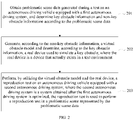
- FIG. 2 is a schematic flowchart of a scene reproduction test method of an autonomous driving system shown in an illustrative embodiment of the present application.
- the scene reproduction test method of an autonomous driving system includes: Step 201, obtain problematic scene data generated during a test on an autonomous driving vehicle equipped with a first autonomous driving system, and determine key obstacle information and non-key obstacle information according to the problematic scene data.
- the method provided in the present application may be set in a scene reproduction test system, and the scene reproduction test system may be provided in one or more electronic devices.
- the scene reproduction test system may include multiple modules, and the modules may be provided in different electronic devices.
- problematic scene data may be obtained firstly.
- the problematic scene data is problematic scene data generated during a test on the autonomous driving vehicle equipped with the first autonomous driving system.
- the first autonomous driving system may record road test data, for example, a driving state of the vehicle at each moment, and for another example, obstacle information in an external environment of the vehicle at each moment.
- the problematic scene data when the problem occurs may be obtained from the road test data.
- a tester may determine a time when the problem occurs during the driving of the vehicle according to an actual test situation, and thus corresponding problematic scene data may be obtained from the road test data according to the time. For example, if the time when a problem occurs is 12:00, data of 60 seconds before 12:00 and data of 60 seconds after 12:00 may be obtained from the road test data as the problematic scene data corresponding to the problematic scene.
- the scene reproduction test system may determine the key obstacle information and the non-key obstacle information according to the obtained problematic scene data.
- a rule used to distinguish between a key obstacle and a non-key obstacle may be set in advance.
- a moving obstacle may be taken as a key obstacle, and the moving obstacle may be, for example, a moving person, a moving car, etc.
- a stationary obstacle may be taken as a non-key obstacle, and the stationary obstacle may be, for example, a car that is not moving, and for another example, may be roadside vegetation, street lights and other devices.
- a key obstacle in the problematic scene data may be specified by a user according to the problematic scene data.
- the scene reproduction test system may visually display the problematic scene according to the problematic scene data, for example, the scene in which the vehicle is tested may be displayed by means of a video, obstacles around the vehicle are included in the displayed problematic scene, and the user may mark a key obstacle in the displayed problematic scene as required.
- an unmarked obstacle is a non-key obstacle.
- the scene reproduction test system may take information of a key obstacle in the problematic scene data as key obstacle information, and take information of a non-key obstacle in the problematic scene data as non-key obstacle information.
- Step 202 generate, according to the non-key obstacle information, a virtual obstacle model and determine, according to the key obstacle information, a real device used to simulate a key obstacle; where the real device is a device that actually exists in a test environment.
- the key obstacle may be regarded as an obstacle that has a great effect on formulation of a driving strategy by the autonomous driving system
- the non-key obstacle may be regarded as an obstacle that does not have great effect on formulation of the driving strategy by the autonomous driving system. Therefore, a real device may be used to simulate a key obstacle, and a virtual model may be used to simulate a non-key obstacle.
- the scene reproduction test system may generate a virtual obstacle model according to the non-key obstacle information, for example, generate a virtual obstacle model used to simulate a non-key obstacle according to a size, a contour, etc., of the non-key obstacle.
- a virtual scene generation controller may be provided, and the scene reproduction test system may utilize the virtual scene generation controller to generate a virtual obstacle model.
- the scene reproduction test system may also determine a real device used to simulate the key obstacle according to the key obstacle information.
- a real device that can simulate a corresponding key obstacle may be determined according to the contour and the size of the obstacle included in the key obstacle information.
- a controllable vehicle may be taken as a real device used to simulate the obstacle vehicle.
- a controllable robot may be taken as a real device used to simulate the pedestrian.
- the real device used to simulate the key obstacle is a device that actually exists in a test environment, such as a car, a robot, or other controllable devices.
- the real device may be placed in a closed road environment, and then the problematic scene may be highly reproduced in the closed road environment.
- Step 203 perform, by utilizing the virtual obstacle model and the real device, a reproduction test on an autonomous driving vehicle equipped with a second autonomous driving system; where the second autonomous driving system is a system obtained after the first autonomous driving system is optimized; the reproduction test is used to perform a reproduction test in a problematic scene represented by the problematic scene data.
- the first autonomous driving system may be optimized to obtain the second autonomous driving system, so that the autonomous driving system can deal with the problematic scene.
- a reproduction test may be performed on the autonomous driving vehicle equipped with the second autonomous driving system, so as to verify whether the second autonomous driving system can formulate a reasonable and safe driving strategy when the same problematic scene is encountered.
- the problematic scene may be reproduced by utilizing the generated virtual obstacle model and the determined real device, and then a reproduction test may be performed on the autonomous driving vehicle equipped with the second autonomous driving system in the reproduced problematic scene, where the reproduction test is specifically used to perform a reproduction test in the problematic scene represented by the problematic scene data.
- the virtual obstacle may be controlled to move by utilizing the non-key obstacle information corresponding to the virtual obstacle model.
- the real device may also be controlled to move by utilizing the key obstacle information corresponding to the real device. For example, if the key obstacle information determined according to the problematic scene data includes positions of a first key obstacle at respective moments of the problematic scene, a first real device that is used to simulate the first key obstacle may be controlled to move according to this information, so that the first real device can simulate a movement trajectory of the first key obstacle.
- the virtual obstacle model and the real device may also be controlled in conjunction with a start time of the autonomous driving vehicle equipped with the second autonomous driving system.
- the virtual obstacle model and the real device may be controlled to move according to relative positions between the autonomous driving vehicle and the virtual obstacle model as well as the real device after the autonomous driving vehicle is started.
- the virtual obstacle may be controlled to move by utilizing the non-key obstacle information corresponding to the virtual obstacle model and the real device may be controlled to move by utilizing the key obstacle information corresponding to the real device, when the relative positions between the autonomous driving vehicle and the virtual obstacle model as well as the real device meet relative positions between the vehicle and the obstacles represented by data corresponding to an initial moment in the problematic scene data.
- the test object is the autonomous driving vehicle equipped with the second autonomous driving system
- the key obstacle is a real device, thereby better reproducing the problematic scene and completing the test.
- the autonomous driving vehicle may be controlled to drive on a closed road, and then the reproduction test may be performed in the problematic scene, which is encountered on an open road, on the closed road.
- the scene reproduction test method of an autonomous driving system includes: obtaining problematic scene data generated during a test on an autonomous driving vehicle equipped with a first autonomous driving system, and determining key obstacle information and non-key obstacle information according to the problematic scene data; generating, according to the non-key obstacle information, a virtual obstacle model, and determining, according to the key obstacle information, a real device used to simulate a key obstacle; where the real device is a device that actually exists in a test environment; performing, by utilizing the virtual obstacle model and the real device, a reproduction test on an autonomous driving vehicle equipped with a second autonomous driving system; where the second autonomous driving system is a system obtained after the first autonomous driving system is optimized; and the reproduction test is used to perform a reproduction test in a problematic scene represented by the problematic scene data.
- the virtual obstacle model and the real device can be used to restore the problematic scene, and then the autonomous driving vehicle equipped with the second autonomous driving system can be tested in the reproduced problematic scene, where the test object is a real autonomous driving vehicle, and the key obstacle is a real device, and thus, the problematic scene can be better reproduced, and thereby an accurate test result is obtained.
- FIG. 3 is a schematic flowchart of a scene reproduction test method of an autonomous driving system shown in an illustrative embodiment of the present application.
- the scene reproduction test method of an autonomous driving system includes: Step 301, determine a problem time point corresponding to an autonomous driving vehicle equipped with a first autonomous driving system according to a problematic scene database.
- the method provided in the present application may be set in a scene reproduction test system, and the scene reproduction test system may be provided in one or more electronic devices.
- the scene reproduction test system may include multiple modules, and the modules may be provided in different electronic devices.
- a problematic scene database may be provided, and the problematic scene database may store information about multiple problematic scenes.
- a tester may enter information of the problematic scene according to a test situation.
- the tester finds that there is a problem when the autonomous driving system controls the vehicle to drive, for example, a situation of an unreasonable sudden brake, then the tester may enter a time when the situation occurs into the problematic scene database, and the tester may also add descriptive information of the problematic scene into the problematic scene database, for example, the descriptive information may be "an unreasonable sudden brake".
- a reproduction test may be performed on the second driving system.
- a problem time point corresponding to the autonomous driving vehicle equipped with the first autonomous driving system may be determined according to the data in the problematic scene database, and the problematic scene corresponding to the time point may be one or more optimized problematic scenes.
- Step 302 obtain, according to the problem time point, problematic scene data corresponding to the problem time point from road test data of the autonomous driving vehicle equipped with the first autonomous driving system.
- the road test data when the autonomous driving vehicle equipped with the first autonomous driving system is tested, the road test data is generated.
- the road test data may include a driving state of the vehicle, and may also include information about a surrounding environment sensed by the first autonomous driving system, for example, obstacle information, and the obstacle information may also specifically include information of any one or more of a size, a contour, a position, a speed and a course of the obstacle.
- the problematic scene data corresponding to the problem time point may be obtained from the road test data of the autonomous driving vehicle equipped with the first autonomous driving system. Then, data of the problematic scene encountered at the problem time point during the test is obtained.
- the problematic scene data corresponding to the problematic scene may be obtained accurately, and then the problematic scene can be reproduced based on the data generated during the actual road test, so that the reproduced scene is more similar to the actual road scene.
- first data which has a data generation time within a preset time period before the problem time point and second data which has a data generation time within a preset time period after the problem time point are taken as the problematic scene data.
- the preset time period may be set as required, for example, it may be set as 60s, and on this occasion, first data of 60s before the problem time point and second data of 60s after the problem time point may be obtained from the road test data and be taken as the problematic scene data.
- road test data generated before and after 14:00 on the test day may be obtained, for example, it may be data of 60s before 14:00 and data of 60s after 14:00, and be taken as the problematic scene data.
- the road test data within time periods before and after the problem time point may be extracted as the problematic scene data, the data can reflect changes of the vehicle and the surrounding environment in the problematic scene, and then the problematic scene can be reproduced based on the obtained problematic scene data, so that the reproduced scene is more similar to the actual road scene.
- Step 303 generate an obstacle parameter file according to the problematic scene data; where the obstacle parameter file includes key obstacle information and non-key obstacle information.
- the obstacle parameter file including the key obstacle information and the non-key obstacle information may be generated according to the problematic scene data.
- a key obstacle and a non-key obstacle in the scene may be determined according to the problematic scene data. Obstacles included in the scene may be determined according to the problematic scene data, and the obstacles may be distinguished to a key obstacle and a non-key obstacle, and then the obstacle parameter file may be generated according to information of the key obstacle and information of the non-key obstacle.
- the obstacles may be distinguished to the key obstacle and the non-key obstacle according to their respective types.
- a movable obstacle may be taken as a key obstacle
- an immovable obstacle may be taken as a non-key obstacle.
- an obstacle whose distance to the autonomous driving vehicle is less than a threshold may be taken as a key obstacle, and obstacles other than the key obstacle in the scene may be taken as non-key obstacles.
- the key obstacle and the non-key obstacle may be distinguished in the problematic scene, so that a real device can be utilized to simulate a key obstacle, and a virtual model can be utilized to simulate a non-key obstacle, and thus an environment similar to the actual problematic scene may be highly reproduced by means of virtual and real combination.
- the key obstacle in the problematic scene may also be determined by a user.
- the problematic scene may be generated and displayed according to information of respective obstacles in the problematic scene data; a key obstacle in the problematic scene may be marked in response to a marking instruction acting on the displayed problematic scene; and the obstacle parameter file is generated according to obstacle information and the marked key obstacle.
- the problematic scene may be displayed according to the problematic scene data, for example, the problematic scene may be dynamically displayed by means of a video. For example, if the problematic scene data is data with a length of 120s, a video with a length of 120s may be displayed.
- the user may operate in the displayed problematic scene, and mark a key obstacle therein. For example, the user may click to select a displayed obstacle, and the selected obstacle is the key obstacle. An unmarked obstacle is the non-key obstacle.
- the obstacle parameter file may be generated according to information of respective obstacles displayed in the problematic scene and the key obstacle marked by the user.
- the obstacle parameter file includes information of each key obstacle, and also includes information of each non-key obstacle.
- the user may observe the problematic scene, and then determine a key obstacle that has an effect on a normal driving of the vehicle from a perspective of driving the vehicle.
- Step 304 determine the key obstacle information and the non-key obstacle information according to the obstacle parameter file.
- the key obstacle information and the non-key obstacle information may be determined according to the obstacle parameter file.
- the obstacle parameter file may be generated by a scene data mining module, and the obstacle parameter file is utilized by a virtual-real combination test system to simulate the obstacles.
- the obstacle parameter file may include information of the obstacles, and may also include information about whether an obstacle is a key obstacle. For example, a variable i may be set to identify whether an obstacle is a key obstacle, and if the variable i of an obstacle is 1, the obstacle may be regarded as a key obstacle.
- information of the key obstacle may be regarded as the key obstacle information
- information of the non-key obstacle may be regarded as the non-key obstacle information
- Step 305 generate, by utilizing a virtual scene controller, a virtual obstacle model according to a contour and a size in the non-key obstacle information; determine, by utilizing a real device controller, a real device used to simulate the key obstacle according to the key obstacle information; where a real device is a device that actually exists in a test environment.
- a virtual scene controller may be set in advance, and the virtual scene controller can generate a virtual obstacle model.
- the non-key obstacle information of respective non-key obstacles may be input into the virtual scene controller, so that the virtual scene controller can generate virtual obstacle models corresponding to respective non-key obstacles.
- the non-key obstacle information may include the contour and the size of the obstacle, and the virtual scene controller may generate a virtual obstacle model similar in size and shape to a non-key obstacle according to the contour and the size of the non-key obstacle, so that the virtual obstacle model is more similar to the non-key obstacle encountered during the test in the problematic scene, and then the problematic scene can be reproduced more accurately.
- the real device controller may also be set in advance, and the key obstacle information of respective key obstacles may be input into the real device controller, so that the real device controller can determine real devices similar to the key obstacles, can also connect to these real devices, and then control the real devices.
- the key obstacle information may, for example, include information of a type or a contour, a size, etc., of a key obstacle
- the real device controller may determine a real device similar to the key obstacle according to the type or the contour and the size of the key obstacle, so that the real device is more similar to the key obstacle encountered during the test in the problematic scene, and then the problematic scene can be reproduced more accurately.
- the type of the key obstacle may be, for example, a vehicle, a pedestrian, etc.
- a real vehicle may be utilized to simulate a key obstacle whose type is a vehicle
- a robot may be utilized to simulate a key obstacle whose type is a pedestrian.
- Step 306 start an autonomous driving vehicle equipped with a second autonomous driving system; where the second autonomous driving system is a system obtained after the first autonomous driving system is optimized.
- the first autonomous driving system may not be able to handle some problematic scenes, or when it is found that the first autonomous driving system has problems during controlling the vehicle in a specific problematic scene, the first autonomous driving system may be optimized for these problems, to obtain the second autonomous driving system.
- a reproduction test may be performed on the autonomous driving vehicle equipped with the second autonomous driving system, so as to determine whether the second autonomous driving system can handle the above problematic scene reasonably.
- the autonomous driving vehicle equipped with the second autonomous driving system may be started, so that the autonomous driving vehicle can drive in the reproduced problematic scene.
- Step 307 control, according to the non-key obstacle information, the virtual obstacle model to move, and control, according to the key obstacle information, the real device to move, so as to simulate the problematic scene.
- the generated virtual obstacle model may be controlled, according to the non-key obstacle information, to move.
- the virtual obstacle model may be controlled to move, according to the non-key obstacle information corresponding to the virtual obstacle model.
- a first virtual obstacle model is generated based on first non-key obstacle information, and then the first virtual obstacle model may be controlled according to the first non-key obstacle information.
- the first virtual obstacle model may be controlled to take actions such as moving, rotating, etc.
- the virtual obstacle model is a model used to simulate a stationary obstacle, a position of the virtual obstacle model remains unchanged.
- the real device may be controlled, according to the key obstacle information, to move. Specifically, the real device may be controlled to move according to the key obstacle information corresponding to the real device. For example, a first real device is determined based on first key obstacle information, and then the first real device may be controlled according to the first key obstacle information. Specifically, the first real device may be controlled to take actions such as moving, rotating, etc.
- the problematic scene can be simulated in this way, and then a vehicle equipped with the second autonomous driving system may be tested based on the simulated problematic scene.
- the non-key obstacle information includes movement information corresponding to each moment of the problematic scene.
- the virtual obstacle model may be controlled to move according to the moment when the autonomous driving vehicle equipped with the second autonomous driving system is started and according to the movement information corresponding to each moment of the problematic scene in the non-key obstacle information.
- the key obstacle information includes movement information corresponding to each moment of the problematic scene.
- the real device may be controlled to move according to the moment when the autonomous driving vehicle equipped with the second autonomous driving system is started and according to the movement information corresponding to each moment of the problematic scene in the key obstacle information.
- a problematic scene may be constructed in real time according to the key obstacle information and the non-key obstacle information.
- the virtual obstacle model may be controlled to move directly according to movement information corresponding to each moment of the problematic scene in the non-key obstacle information, and the real device may be controlled to move according to movement information corresponding to each moment of the problematic scene in the key obstacle information.
- the movement information included in the key obstacle information and/or the non-key obstacle information may specifically include one or more of the following information: a speed, a course, and a position.
- a start moment of the vehicle may be taken as an initial moment t0 of the problematic scene.
- a moment when a driving speed of the autonomous driving vehicle reaches a specified speed may be taken as an initial moment t0 of the problematic scene, or a moment when relative positions between a position of the autonomous driving vehicle and each virtual obstacle model as well as each real device meet those in the real problematic scene may be taken as an initial moment t0 of the problematic scene.
- a position of the virtual obstacle model corresponding to the non-key obstacle information may be taken as a position corresponding to the moment t0, and when moment t1 reaches, the virtual obstacle model is controlled to move to a position corresponding to moment t1 in the non-key obstacle information at a speed and a course corresponding to moment t1 in the non-key obstacle information.
- the generated virtual obstacle model can be controlled, and a movement of the virtual obstacle model can be controlled to be consistent with the real problematic scene, then a non-key obstacle encountered when the vehicle drives on an open road can be reproduced accurately, and the problematic scene can be reproduced accurately.
- the real device controller may be utilized to control the real device to move.
- the real device controller may send controlling instructions to the real device, so as to control the real device to move.
- the real device controller may generate, according to the key obstacle information, controlling instructions used to control the real device.
- controlling instructions may be generated according to the initial moment t0 of the problematic scene in a real world, and according to a speed, a course, and a position corresponding to each moment in the problematic scene included in the key obstacle information.
- a first controlling instruction may be generated at moment t1 of the problematic scene
- a second controlling instruction may be generated at moment t2 of the problematic scene.
- the controlling instructions may include a moving direction, a moving speed, a target position, etc.
- the determined real device can be controlled, and a movement of the real device can be controlled to be consistent with the real problematic scene, then the key obstacle encountered when the vehicle drives on an open road can be reproduced accurately, and the problematic scene can be reproduced accurately.
- Step 308 control, based on the second autonomous driving system, the autonomous driving vehicle to drive in the simulated problematic scene.
- the second autonomous driving system on the autonomous driving vehicle may be utilized to formulate a driving strategy, and control the autonomous driving vehicle to drive in the simulated problematic scene.
- the autonomous driving vehicle may drive normally, the virtual obstacle model and the real device can be controlled to move according to a vehicle condition of the autonomous driving vehicle, so that the simulated scene can highly reproduce the problematic scene in the open road.
- the second autonomous driving system can sense the virtual obstacle model and the real device, and then formulate a driving strategy according to these obstacles, and control the driving of the vehicle. If the optimized second autonomous driving system can handle the problematic scene reasonably, the autonomous driving vehicle can drive smoothly and safely in the highly reproduced problematic scene.
- the method provided in the present application may further include: Step 309, obtain a driving state of the autonomous driving vehicle equipped with the second autonomous driving system in the simulated problematic scene, first movement data corresponding to the virtual obstacle model, and second movement data corresponding to the real device.
- data of the reproduction test may also be obtained, which may specifically include the driving state of the autonomous driving vehicle equipped with the second autonomous driving system in the simulated problematic scene, the first movement data corresponding to the virtual obstacle model, and the second movement data corresponding to the real device.
- the second autonomous driving system in the autonomous driving vehicle or other electronic devices provided in the autonomous driving vehicle may record a driving state of the vehicle.
- the driving state may specifically include a speed, a course, etc., of the vehicle, and may also include controlling information of the vehicle, for example, information for controlling the vehicle to brake suddenly, controlling the vehicle to accelerate, turn, etc.
- controlling information of the vehicle for example, information for controlling the vehicle to brake suddenly, controlling the vehicle to accelerate, turn, etc.
- Information about the surrounding environment sensed by the vehicle for example, information of an identified obstacle, a distance to a surrounding obstacle, etc., may also be included.
- the first movement data corresponding to each virtual obstacle model may also be obtained.
- information about a moving speed, a direction, a position, etc., of each virtual obstacle model at each moment during the test is obtained.
- the second movement data corresponding to each real device may also be obtained. For example, information about a moving speed, a direction, a position, etc., of each real device at each moment during the test is obtained.
- Step 310 generate a test report according to the driving state, the first movement data, and the second movement data.
- the method provided in the present application may also generate a test report for the reproduction test according to the driving state of the vehicle, the first movement data of the virtual obstacle, and the second movement data of the real device, so that the user can directly determine whether the second autonomous driving system can handle the problematic scene reasonably according to the test report, and the user doesn't need to analyze the data of the reproduction test and then determine whether the second autonomous driving system meets requirements.
- This implementation can improve an efficiency for analyzing the reproduction test result.
- test data corresponding to preset data may be generated according to the driving state, the first movement data, and the second movement data; the preset data is data being set in advance and corresponding to the problematic scene.
- the preset data corresponding to the problematic scene may be set in advance, for example, the preset data may be a speed of the vehicle, for example, in the problematic scene, when the autonomous driving vehicle is at a distance of 2 meters from the obstacle, the vehicle speed should be less than a preset vehicle speed. On this occasion, the preset vehicle speed is the preset data.
- the test data corresponding to the preset data may be generated according to the driving state, the first movement data, and the second movement data.
- the preset data is a vehicle speed under a specific condition
- a vehicle speed under the above specific condition may be generated according to the driving state of the vehicle during the test, the first movement data, and the second movement data, and in such case, the vehicle speed under the specific condition is the test data.
- test report may be generated according to the preset data and the test data. Specifically, a test report including the preset data and the test data may be generated by means of comparison, so that the user can intuitively understand whether the test data meets the preset data when a reproduction test is performed on the autonomous driving vehicle equipped with the second autonomous driving system, and then determine that the second autonomous driving system can handle the problematic scene reasonably.
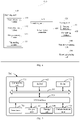
- FIG. 4 is a schematic diagram of a scene reproduction test system of an autonomous driving system shown in an illustrative embodiment of the present application.
- any of the above scene reproduction test methods of the autonomous driving system may be performed by the scene reproduction test system 400 of the autonomous driving system.
- a scene mining module 410 may be included in the scene reproduction test system 400 of the autonomous driving system.
- the scene mining module 410 may be connected to a problematic scene database 41, to obtain a problem time point 411 from the problematic scene database 41, and then obtain problematic scene data 412 according to the problem time point 411.
- the scene mining module 410 may also extract data from the problematic scene data 412, generate and display the problematic scene, so that a user can mark in the displayed problematic scene.
- the scene mining module 410 may generate an obstacle parameter file 413 including key obstacle information and non-key obstacle information according to a marking result of the user.
- a simulating module 420 may also be included.
- the simulating module 420 may read the obstacle parameter file 413 generated by the scene mining module 410, and specifically, may read parameters of obstacles from the obstacle parameter file 413.
- a virtual scene controller 421 is then utilized to generate a virtual obstacle model, and a real device controller 422 is utilized to determine a real device.
- a testing module 430 may also be included.
- the testing module 430 may connect an autonomous driving vehicle equipped with a second autonomous driving system to the simulating module 420, and then perform a test on the autonomous driving vehicle equipped with the second autonomous driving system by utilizing the problematic scene simulated by the simulating module 420.
- the connected autonomous driving vehicle may be started, and according to a start time of the autonomous driving vehicle or according to a driving state of the autonomous driving vehicle, the problematic scene may be constructed in real time by utilizing the virtual obstacle model and the real device.
- a report generating module 440 may also be included.
- the report generating module 440 may obtain a driving state of the autonomous driving vehicle during the test, and may also obtain first movement data corresponding to the virtual obstacle model, and second movement data corresponding to the real device, and generate a test report according the data.
- the above various modules of the scene reproduction test system 400 may be deployed in a same device, and may also be deployed in multiple devices, which is not limited in the present application.
- FIG. 5 is a structural diagram of a scene reproduction test apparatus of an autonomous driving system shown in an illustrative embodiment of the present application.
- the scene reproduction test apparatus 500 of the autonomous driving system includes:
- the scene reproduction test apparatus of the autonomous driving system provided by the present application is similar to the embodiment shown in FIG. 2 , and will not be repeated herein.
- FIG. 6 is a structural diagram of a scene reproduction test apparatus of an autonomous driving system shown in an illustrative embodiment of the present application.
- an obtaining unit 610 in this embodiment is similar to the obtaining unit 510 shown in FIG. 5
- a simulating unit 620 in this embodiment is similar to the simulating unit 520 shown in FIG. 5
- a testing unit 630 in this embodiment is similar to the testing unit 530 shown in FIG. 5 .
- the obtaining unit 610 includes:
- the time obtaining module 611 is specifically configured to: take, from the road test data of the autonomous driving vehicle equipped with the first autonomous driving system, first data which has a data generation time within a preset time period before the problem time point and second data which has a data generation time within a preset time period after the problem time point, as the problematic scene data.
- the obtaining unit 610 includes:
- the file generating module 613 is specifically configured to:
- the non-key obstacle information includes a contour and a size
- the simulating unit 620 includes a virtual scene controller 621, configured to: generate a virtual obstacle model according to the contour and the size in the non-key obstacle information.
- the testing unit 630 includes:
- the non-key obstacle information includes movement information corresponding to each moment of the problematic scene;
- the controlling module 632 is specifically configured to: control, according to a time when the autonomous driving vehicle equipped with the second autonomous driving system is started and the movement information corresponding to each moment of the problematic scene in the non-key obstacle information, the virtual obstacle model to move.
- the key obstacle information includes movement information corresponding to each moment of the problematic scene
- the apparatus 600 further includes:
- the report generating unit 650 includes:
- the present application also provides an electronic device and a readable storage medium.
- the present application also provides a computer program product, the computer program product includes: a computer program, the computer program is stored in a readable storage medium, at least one processor of an electronic device may read the computer program from the readable storage medium, and the at least one processor executes the computer program to cause the electronic device to perform the solution provided in any of the foregoing embodiments.
- FIG. 7 shows a schematic block diagram of an example electronic device 700 that may be used to implement embodiments of the present application.
- the electronic device is intended to represent various forms of digital computers, such as a laptop computer, a desktop computer, a workstation, a personal digital assistant, a server, a blade server, a mainframe computer, and other suitable computers.
- the electronic device may also represent various forms of mobile apparatuses, such as a personal digital assistant, a cellular phone, a smart phone, a wearable device, and other similar computing apparatuses.
- Components, their connections and relationships, and their functions shown herein are merely examples, and are not intended to limit implementation of the present application described and/or required herein.
- the electronic device 700 includes a computing unit 701, which may perform various appropriate actions and processing according to a computer program stored in a read-only memory (ROM) 702 or a computer program loaded from a storage unit 708 to a random-access memory (RAM) 703.
- ROM read-only memory
- RAM random-access memory
- various programs and data required for operations of the device 700 may also be stored.
- the computing unit 701, the ROM 702, and the RAM 703 are connected to each other by a bus 704.
- An input/output (I/O) interface 705 is also connected to the bus 704.
- a number of components in the device 700 are connected to the I/O interface 705, including: an input unit 706, for example, a keyboard, a mouse, etc.; an output unit 707, for example, various types of displays, speakers, etc.; a storage unit 708, for example, a disk, an optical disc, etc.; and a communication unit 709, for example, a network card, a modem, a wireless communication transceiver, etc.
- the communication unit 709 allows the device 700 to exchange information/data with other devices through a computer network such as the Internet and/or various telecommunication networks.
- the computing unit 701 may be various types of general-purpose and/or special-purpose processing components with processing and computing capabilities. Some examples of the computing unit 701 include, but are not limited to, a central processing unit (CPU), a graphics processing unit (GPU), various dedicated artificial intelligence (AI) computing chips, various computing units for running machine learning model algorithms, a digital signal processor (DSP), and any appropriate processor, controller, microcontroller, etc.
- the computing unit 701 executes the various methods and processing described above, for example, the scene reproduction test method of an autonomous driving system.
- the scene reproduction test method of an autonomous driving system may be implemented as a computer software program, which is tangibly contained in a machine-readable medium, for example, the storage unit 708.
- part or all of computer programs may be loaded into and/or installed on the device 700 via the ROM 702 and/or the communication unit 709.
- the computer program When the computer program is loaded into the RAM 703 and executed by the computing unit 701, one or more steps of the scene reproduction test method of the autonomous driving system described above may be performed.
- the computing unit 701 may be configured to perform the scene reproduction test method of the autonomous driving system by means of any other appropriate means (for example, by means of firmware).
- Various embodiments of the system and the technology described above herein may be implemented in a digital electronic circuit system, an integrated circuit system, a field programmable gate array (FPGA), an application specific integrated circuit (ASIC), an application specific standard product (ASSP), a system on chip (SOC), a load programmable logic device (CPLD), a computer hardware, firmware, software, and/or a combination thereof.
- FPGA field programmable gate array
- ASIC application specific integrated circuit
- ASSP application specific standard product
- SOC system on chip
- CPLD load programmable logic device
- These various embodiments may include: being implemented in one or more computer programs, where the one or more computer programs may be executed and/or interpreted on a programmable system including at least one programmable processor, and the programmable processor may be a dedicated or general-purpose programmable processor that may receive data and instructions from a storage system, at least one input apparatus and at least one output apparatus, and transmit data and instructions to the storage system, the at least one input apparatus and the at least one output apparatus.
- Program codes used to implement the method of the present disclosure may be written in any combination of one or more programming languages. These program codes may be provided to a processor or a controller of a general-purpose computer, a special-purpose computer, or other programmable data processing devices, so that when the program codes are executed by the processor or the controller, functions/operations specified in flowcharts and/or block diagrams are implemented.
- the program codes may be entirely executed on a machine, partly executed on the machine, and as independent software packages, partly executed on the machine and partly executed on a remote machine, or entirely executed on a remote machine or a server.
- a machine-readable medium may be a tangible medium, which may contain or store a program for use by an instruction execution system, apparatus, or device or for use in combination with the instruction execution system, apparatus, or device.
- the machine-readable medium may be a machine-readable signal medium or a machine-readable storage medium.
- the machine-readable medium may include, but is not limited to, an electronic, a magnetic, an optical, an electromagnetic, an infrared, or a semiconductor system, apparatus, or device, or any suitable combination of the foregoing.
- machine-readable storage media would include an electrical connection based on one or more wires, a portable computer disk, a hard disk, a random-access memory (RAM), a read-only memory (ROM), an erasable programmable read-only memory (EPROM or flash memory), an optical fiber, a portable compact disc read-only memory (CD-ROM), an optical storage device, a magnetic storage device, or any suitable combination of the foregoing.
- RAM random-access memory
- ROM read-only memory
- EPROM or flash memory erasable programmable read-only memory
- CD-ROM portable compact disc read-only memory
- magnetic storage device or any suitable combination of the foregoing.
- the system and the technology described herein may be implemented on a computer, the computer is equipped with: a displaying apparatus for displaying information to the user (for example, a CRT (cathode ray tube) or an LCD (liquid crystal display) monitor); and a keyboard and a pointing apparatus (for example, a mouse or a trackball) through which the user may provide input to the computer.
- a displaying apparatus for displaying information to the user for example, a CRT (cathode ray tube) or an LCD (liquid crystal display) monitor
- a keyboard and a pointing apparatus for example, a mouse or a trackball
- feedbacks provided to the user may be any form of sensory feedbacks (for example, a visual feedback, an auditory feedback, or a tactile feedback); and input from the user may be received in any form (including an acoustic input, a voice input, or a tactile input).
- the system and the technology described herein may be implemented in a computing system (for example, as a data server) that includes a back-end component, or a computing system (for example, an application server) that includes a middleware component, or a computing system (for example, a user computer with a graphical user interface or a web browser through which the user may interact with the embodiments of the system and the technology described herein) that includes a front-end component, or a computing system that includes any combination of the back-end component, the intermediate component or the front-end component.
- Components of the system may be connected to each other through digital data communication (for example, a communication network) of any form or medium. Examples of the communication network include: a local area network (LAN), a wide area network (WAN), and the Internet.
- a computer system may include a client and a server.
- the client and the server are generally far away from each other and usually interact through a communication network.
- a relationship between the client and the server is generated by computer programs that run on corresponding computers and have a client-server relationship with each other.
- the server may be a cloud server, also known as a cloud computing server or a cloud host, which is a host product in a cloud computing service system, to solve defects of high management difficulty and weak business scalability existing in services of a traditional physical host and a virtual private server (VPS).
- the server may also be a server of a distributed system, or a server combined with a block chain.
Landscapes
- Engineering & Computer Science (AREA)
- Physics & Mathematics (AREA)
- Theoretical Computer Science (AREA)
- General Physics & Mathematics (AREA)
- General Engineering & Computer Science (AREA)
- Automation & Control Theory (AREA)
- Computer Hardware Design (AREA)
- Geometry (AREA)
- Evolutionary Computation (AREA)
- Quality & Reliability (AREA)
- Transportation (AREA)
- Mechanical Engineering (AREA)
- Human Computer Interaction (AREA)
- Computing Systems (AREA)
- Multimedia (AREA)
- Medical Informatics (AREA)
- Software Systems (AREA)
- Aviation & Aerospace Engineering (AREA)
- Computational Mathematics (AREA)
- Mathematical Analysis (AREA)
- Mathematical Optimization (AREA)
- Pure & Applied Mathematics (AREA)
- Computer Vision & Pattern Recognition (AREA)
- Artificial Intelligence (AREA)
- Mathematical Physics (AREA)
- Traffic Control Systems (AREA)
- Control Of Driving Devices And Active Controlling Of Vehicle (AREA)
Abstract
Description
- The present application relates to autonomous driving technologies in the field of computer, and particularly to a scene reproduction test method, apparatus, device, and program product of an autonomous driving system.
- Currently, autonomous driving technologies are becoming more and more mature, and vehicles equipped with an autonomous driving system also rolled off production lines successfully. In order to ensure that these autonomous driving vehicles can drive on roads safely, it is necessary to test these autonomous driving vehicles.
- In the prior art, an autonomous driving vehicle may be controlled to perform a test on open roads, and an autonomous driving system in the autonomous driving vehicle may be adjusted according to a test result.
- Since scenes encountered on open roads are highly random, a scene where a problem occurs during a test is hard to encounter again, causing that after the problem is fixed, whether the problem has been effectively solved cannot be verified based on a real vehicle.
- The present application provides a scene reproduction test method, apparatus, device, and program product of an autonomous driving system, so as to solve the technical problem in the prior art that since scenes encountered on open roads are highly random, a scene where a problem occurs during a test is hard to encounter again, causing that after the problem is fixed, whether the problem has been effectively solved cannot be verified based on a real vehicle.
- According to a first aspect of the present application, there is provided a scene reproduction test method of an autonomous driving system, including:
- obtaining problematic scene data generated during a test on an autonomous driving vehicle equipped with a first autonomous driving system, and determining key obstacle information and non-key obstacle information according to the problematic scene data;
- generating, according to the non-key obstacle information, a virtual obstacle model, and determining, according to the key obstacle information, a real device used to simulate a key obstacle; where the real device is a device that actually exists in a test environment;
- performing, by utilizing the virtual obstacle model and the real device, a reproduction test on an autonomous driving vehicle equipped with a second autonomous driving system; where the second autonomous driving system is a system obtained after the first autonomous driving system is optimized; the reproduction test is used to perform a reproduction test in a problematic scene represented by the problematic scene data.
- According to a second aspect of the present application, there is provided a scene reproduction test apparatus of an autonomous driving system, including:
- an obtaining unit, configured to obtain problematic scene data generated during a test on an autonomous driving vehicle equipped with a first autonomous driving system, and determine key obstacle information and non-key obstacle information according to the problematic scene data;
- a simulating unit, configured to generate, according to the non-key obstacle information, a virtual obstacle model, and determine, according to the key obstacle information, a real device used to simulate a key obstacle; where the real device is a device that actually exists in a test environment;
- a testing unit, configured to perform, by utilizing the virtual obstacle model and the real device, a reproduction test on an autonomous driving vehicle equipped with a second autonomous driving system; where the second autonomous driving system is a system obtained after the first autonomous driving system is optimized; and the reproduction test is used to perform a reproduction test in a problematic scene represented by the problematic scene data.
- According to a third aspect of the present application, there is provided an electronic device, including:
- at least one processor; and
- a memory communicatively connected with the at least one processor; where,
- the memory stores instructions executable by the at least one processor, and the instructions are executed by the at least one processor to enable the at least one processor to execute the scene reproduction test method of an autonomous driving system according to the first aspect.
- According to a fourth aspect of the present application, there is provided a non-transitory computer-readable storage medium storing computer instructions, where the computer instructions are used to cause a computer to execute the scene reproduction test method of an autonomous driving system according to the first aspect.
- According to a fifth aspect of the present application, there is provided a computer program product, and the computer program product includes: a computer program, the computer program is stored in a readable storage medium, at least one processor of an electronic device can read the computer program from the readable storage medium, and the at least one processor executes the computer program to cause the electronic device to perform the scene reproduction test method of an autonomous driving system according to the first aspect.
- The scene reproduction test method, apparatus, device, and program product of an autonomous driving system provided by the present application include: obtaining problematic scene data generated during a test on an autonomous driving vehicle equipped with a first autonomous driving system, and determining key obstacle information and non-key obstacle information according to the problematic scene data; generating, according to the non-key obstacle information, a virtual obstacle model and determining, according to the key obstacle information, a real device used to simulate a key obstacle; where the real device is a device that actually exists in a test environment; performing, by utilizing the virtual obstacle model and the real device, a reproduction test on an autonomous driving vehicle equipped with a second autonomous driving system; where the second autonomous driving system is a system obtained after the first autonomous driving system is optimized; and the reproduction test is used to perform a reproduction test in a problematic scene represented by the problematic scene data. In the solution provided by the present application, the virtual obstacle model and the real device can be used to reproduce the problematic scene, then the autonomous driving vehicle equipped with the second autonomous driving system can be tested in the reproduced problematic scene. The test object is a real autonomous driving vehicle, and the key obstacle is a real device, and thus, the problematic scene can be better reproduced and thereby an accurate test result is obtained.
- It should be understood that content described in this section is neither intended to identify a key or important feature of embodiments of the present application, nor to limit the scope of the present application. Other features of the present application will become easy to understand through the following description.
- Drawings are used to better understand the present solution, and do not constitute a limitation to the present application. Among them:
-
FIG. 1 is an application scenario diagram shown in an illustrative embodiment of the present application; -
FIG. 2 is a schematic flowchart of a scene reproduction test method of an autonomous driving system shown in an illustrative embodiment of the present application; -
FIG. 3 is a schematic flowchart of a scene reproduction test method of an autonomous driving system shown in an illustrative embodiment of the present application; -
FIG. 4 is a schematic diagram of a scene reproduction test system of an autonomous driving system shown in an illustrative embodiment of the present application; -
FIG. 5 is a structural diagram of a scene reproduction test apparatus of an autonomous driving system shown in an illustrative embodiment of the present application; -
FIG. 6 is a structural diagram of a scene reproduction test apparatus of an autonomous driving system shown in an illustrative embodiment of the present application; and -
FIG. 7 is a block diagram of an electronic device used to implement the scene reproduction test method of an autonomous driving system according to an embodiment of the present application. - Exemplary embodiments of the present application are illustrated below in conjunction with the drawings, where various details of the embodiments of the present application are included to facilitate understanding, and they should be regarded as merely exemplary. Therefore, those of ordinary skill in the art should realize that various changes and modifications may be made to the embodiments described herein without departing from the scope of the present application. Likewise, for clarity and conciseness, descriptions of well-known functions and structures are omitted in the following description.
- In order to test an autonomous driving system, a vehicle equipped with an autonomous driving system may be controlled to drive on an open road. During the driving of the vehicle, an on-board computer equipped with the autonomous driving system can formulate a driving strategy according to an external environment of the vehicle, and then control the vehicle to drive.
- Due to the ever-changing road environment, the vehicle may encounter a problematic scene where the autonomous driving system cannot handle safely during driving. The problematic scene refers to a scene in which there is a safety problem when the vehicle is controlled to drive based on the autonomous driving system.
-
FIG. 1 is an application scenario diagram shown in an illustrative embodiment of the present application. - As shown in
FIG. 1 , there is anobstacle vehicle 12 in front of avehicle 11, and an autonomous driving system in thevehicle 11 determines a driving strategy based on a current road environment, which is to control thevehicle 11 to make a lane change and enter into afirst lane 13. - Assuming that there is an obstacle 14 in the first lane, if the
vehicle 11 enters into thefirst lane 13 based on the current driving strategy, the vehicle may collide with the obstacle 14. - In this case, if the autonomous driving system does not update the driving strategy to control the
vehicle 11 to avoid the obstacle 14, the current scene may be regarded as a problematic scene. - Specifically, if a problematic scene is encountered during a test, a tester may control the vehicle to avoid a traffic accident.
- Since the autonomous driving system cannot handle the problematic scene safely, the autonomous driving system may be optimized to solve the problem. However, since a problematic scene encountered during a test on an open road is highly random, it is hard to encounter the problematic scene again. As a result, even if the autonomous driving system is optimized, a regression test cannot be performed based on a vehicle equipped with the optimized autonomous driving system, and then it cannot be determined whether the problematic scene can be effectively solved.
- In order to solve the above technical problem, in the solution provided by the present application, a virtual combination technology may be adopted to reproduce the problematic scene, and then a reproduction test can be performed on the vehicle equipped with the optimized autonomous driving system in the reproduced problematic scene. Specifically, key obstacle information and non-key obstacle information may be determined according to problematic scene data generated during a test, and for a key obstacle, a real device may be used to reproduce it, and for a non-key obstacle, a virtual technology may be used to construct it, and then the problematic scene can be reproduced.
- The present application provides a scene reproduction test method, apparatus, device, and program product of an autonomous driving system, which are applied in autonomous driving technologies in the field of computer, so as to better reproduce a problematic scene encountered during a test on an autonomous driving vehicle equipped with the autonomous driving system on an open road, and then a reproduction test can be performed on the optimized autonomous driving system by utilizing the reproduced problematic scene.
-
FIG. 2 is a schematic flowchart of a scene reproduction test method of an autonomous driving system shown in an illustrative embodiment of the present application. - As shown in
FIG. 2 , the scene reproduction test method of an autonomous driving system provided by the present application includes:
Step 201, obtain problematic scene data generated during a test on an autonomous driving vehicle equipped with a first autonomous driving system, and determine key obstacle information and non-key obstacle information according to the problematic scene data. - The method provided in the present application may be set in a scene reproduction test system, and the scene reproduction test system may be provided in one or more electronic devices. For example, the scene reproduction test system may include multiple modules, and the modules may be provided in different electronic devices.
- Specifically, when a reproduction test is performed, problematic scene data may be obtained firstly. The problematic scene data is problematic scene data generated during a test on the autonomous driving vehicle equipped with the first autonomous driving system.
- Further, when the autonomous driving vehicle equipped with the first autonomous driving system is tested, the first autonomous driving system may record road test data, for example, a driving state of the vehicle at each moment, and for another example, obstacle information in an external environment of the vehicle at each moment.
- If there is a problem during the test, the problematic scene data when the problem occurs may be obtained from the road test data. For example, a tester may determine a time when the problem occurs during the driving of the vehicle according to an actual test situation, and thus corresponding problematic scene data may be obtained from the road test data according to the time. For example, if the time when a problem occurs is 12:00, data of 60 seconds before 12:00 and data of 60 seconds after 12:00 may be obtained from the road test data as the problematic scene data corresponding to the problematic scene.
- In practical applications, the scene reproduction test system may determine the key obstacle information and the non-key obstacle information according to the obtained problematic scene data.
- In an implementation, a rule used to distinguish between a key obstacle and a non-key obstacle may be set in advance.
- For example, a moving obstacle may be taken as a key obstacle, and the moving obstacle may be, for example, a moving person, a moving car, etc. A stationary obstacle may be taken as a non-key obstacle, and the stationary obstacle may be, for example, a car that is not moving, and for another example, may be roadside vegetation, street lights and other devices.
- For another example, it is also possible to take an obstacle whose distance to the autonomous driving vehicle is less than a distance threshold as a key obstacle, and take an obstacle whose distance to the autonomous driving vehicle is greater than the distance threshold as a non-key obstacle.
- In another implementation, a key obstacle in the problematic scene data may be specified by a user according to the problematic scene data. For example, the scene reproduction test system may visually display the problematic scene according to the problematic scene data, for example, the scene in which the vehicle is tested may be displayed by means of a video, obstacles around the vehicle are included in the displayed problematic scene, and the user may mark a key obstacle in the displayed problematic scene as required.
- In this implementation, an unmarked obstacle is a non-key obstacle.
- The scene reproduction test system may take information of a key obstacle in the problematic scene data as key obstacle information, and take information of a non-key obstacle in the problematic scene data as non-key obstacle information.
-
Step 202, generate, according to the non-key obstacle information, a virtual obstacle model and determine, according to the key obstacle information, a real device used to simulate a key obstacle; where the real device is a device that actually exists in a test environment. - Specifically, the key obstacle may be regarded as an obstacle that has a great effect on formulation of a driving strategy by the autonomous driving system, and the non-key obstacle may be regarded as an obstacle that does not have great effect on formulation of the driving strategy by the autonomous driving system. Therefore, a real device may be used to simulate a key obstacle, and a virtual model may be used to simulate a non-key obstacle.
- Further, the scene reproduction test system may generate a virtual obstacle model according to the non-key obstacle information, for example, generate a virtual obstacle model used to simulate a non-key obstacle according to a size, a contour, etc., of the non-key obstacle.
- A virtual scene generation controller may be provided, and the scene reproduction test system may utilize the virtual scene generation controller to generate a virtual obstacle model.
- In practical applications, the scene reproduction test system may also determine a real device used to simulate the key obstacle according to the key obstacle information. For example, a real device that can simulate a corresponding key obstacle may be determined according to the contour and the size of the obstacle included in the key obstacle information. For example, if the key obstacle is a car, a controllable vehicle may be taken as a real device used to simulate the obstacle vehicle. For another example, if a key obstacle is a pedestrian, a controllable robot may be taken as a real device used to simulate the pedestrian.
- Further, the real device used to simulate the key obstacle is a device that actually exists in a test environment, such as a car, a robot, or other controllable devices.
- The real device may be placed in a closed road environment, and then the problematic scene may be highly reproduced in the closed road environment.
-
Step 203, perform, by utilizing the virtual obstacle model and the real device, a reproduction test on an autonomous driving vehicle equipped with a second autonomous driving system; where the second autonomous driving system is a system obtained after the first autonomous driving system is optimized; the reproduction test is used to perform a reproduction test in a problematic scene represented by the problematic scene data. - In practical applications, if a problematic scene is found when the autonomous driving vehicle equipped with the first autonomous driving system is tested, the first autonomous driving system may be optimized to obtain the second autonomous driving system, so that the autonomous driving system can deal with the problematic scene.
- A reproduction test may be performed on the autonomous driving vehicle equipped with the second autonomous driving system, so as to verify whether the second autonomous driving system can formulate a reasonable and safe driving strategy when the same problematic scene is encountered.
- Specifically, the problematic scene may be reproduced by utilizing the generated virtual obstacle model and the determined real device, and then a reproduction test may be performed on the autonomous driving vehicle equipped with the second autonomous driving system in the reproduced problematic scene, where the reproduction test is specifically used to perform a reproduction test in the problematic scene represented by the problematic scene data.
- Further, during the test, the virtual obstacle may be controlled to move by utilizing the non-key obstacle information corresponding to the virtual obstacle model. The real device may also be controlled to move by utilizing the key obstacle information corresponding to the real device. For example, if the key obstacle information determined according to the problematic scene data includes positions of a first key obstacle at respective moments of the problematic scene, a first real device that is used to simulate the first key obstacle may be controlled to move according to this information, so that the first real device can simulate a movement trajectory of the first key obstacle.
- In practical applications, the virtual obstacle model and the real device may also be controlled in conjunction with a start time of the autonomous driving vehicle equipped with the second autonomous driving system. For example, the virtual obstacle model and the real device may be controlled to move according to relative positions between the autonomous driving vehicle and the virtual obstacle model as well as the real device after the autonomous driving vehicle is started.
- For example, the virtual obstacle may be controlled to move by utilizing the non-key obstacle information corresponding to the virtual obstacle model and the real device may be controlled to move by utilizing the key obstacle information corresponding to the real device, when the relative positions between the autonomous driving vehicle and the virtual obstacle model as well as the real device meet relative positions between the vehicle and the obstacles represented by data corresponding to an initial moment in the problematic scene data.
- In this implementation, the test object is the autonomous driving vehicle equipped with the second autonomous driving system, and the key obstacle is a real device, thereby better reproducing the problematic scene and completing the test.
- During the test, the autonomous driving vehicle may be controlled to drive on a closed road, and then the reproduction test may be performed in the problematic scene, which is encountered on an open road, on the closed road.
- The scene reproduction test method of an autonomous driving system provided by the present application includes: obtaining problematic scene data generated during a test on an autonomous driving vehicle equipped with a first autonomous driving system, and determining key obstacle information and non-key obstacle information according to the problematic scene data; generating, according to the non-key obstacle information, a virtual obstacle model, and determining, according to the key obstacle information, a real device used to simulate a key obstacle; where the real device is a device that actually exists in a test environment; performing, by utilizing the virtual obstacle model and the real device, a reproduction test on an autonomous driving vehicle equipped with a second autonomous driving system; where the second autonomous driving system is a system obtained after the first autonomous driving system is optimized; and the reproduction test is used to perform a reproduction test in a problematic scene represented by the problematic scene data. In the method provided in the present application, the virtual obstacle model and the real device can be used to restore the problematic scene, and then the autonomous driving vehicle equipped with the second autonomous driving system can be tested in the reproduced problematic scene, where the test object is a real autonomous driving vehicle, and the key obstacle is a real device, and thus, the problematic scene can be better reproduced, and thereby an accurate test result is obtained.
-
FIG. 3 is a schematic flowchart of a scene reproduction test method of an autonomous driving system shown in an illustrative embodiment of the present application. - As shown in
FIG. 3 , the scene reproduction test method of an autonomous driving system provided by the present application includes:
Step 301, determine a problem time point corresponding to an autonomous driving vehicle equipped with a first autonomous driving system according to a problematic scene database. - The method provided in the present application may be set in a scene reproduction test system, and the scene reproduction test system may be provided in one or more electronic devices. For example, the scene reproduction test system may include multiple modules, and the modules may be provided in different electronic devices.
- Specifically, a problematic scene database may be provided, and the problematic scene database may store information about multiple problematic scenes. During a test, a tester may enter information of the problematic scene according to a test situation.
- For example, when riding a vehicle equipped with an autonomous driving system and performing a road test, the tester finds that there is a problem when the autonomous driving system controls the vehicle to drive, for example, a situation of an unreasonable sudden brake, then the tester may enter a time when the situation occurs into the problematic scene database, and the tester may also add descriptive information of the problematic scene into the problematic scene database, for example, the descriptive information may be "an unreasonable sudden brake".
- Further, after the first autonomous driving system is optimized based on the problematic scene to obtain the second autonomous driving system, a reproduction test may be performed on the second driving system. During the test, specifically, a problem time point corresponding to the autonomous driving vehicle equipped with the first autonomous driving system may be determined according to the data in the problematic scene database, and the problematic scene corresponding to the time point may be one or more optimized problematic scenes.
-
Step 302, obtain, according to the problem time point, problematic scene data corresponding to the problem time point from road test data of the autonomous driving vehicle equipped with the first autonomous driving system. - In practical applications, when the autonomous driving vehicle equipped with the first autonomous driving system is tested, the road test data is generated. For example, the road test data may include a driving state of the vehicle, and may also include information about a surrounding environment sensed by the first autonomous driving system, for example, obstacle information, and the obstacle information may also specifically include information of any one or more of a size, a contour, a position, a speed and a course of the obstacle.
- According to the problem time point, the problematic scene data corresponding to the problem time point may be obtained from the road test data of the autonomous driving vehicle equipped with the first autonomous driving system. Then, data of the problematic scene encountered at the problem time point during the test is obtained. In this implementation, the problematic scene data corresponding to the problematic scene may be obtained accurately, and then the problematic scene can be reproduced based on the data generated during the actual road test, so that the reproduced scene is more similar to the actual road scene.
- Specifically, from the road test data of the autonomous driving vehicle equipped with the first autonomous driving system, first data which has a data generation time within a preset time period before the problem time point and second data which has a data generation time within a preset time period after the problem time point are taken as the problematic scene data. The preset time period may be set as required, for example, it may be set as 60s, and on this occasion, first data of 60s before the problem time point and second data of 60s after the problem time point may be obtained from the road test data and be taken as the problematic scene data. For example, if the problem time point is 14:00, road test data generated before and after 14:00 on the test day may be obtained, for example, it may be data of 60s before 14:00 and data of 60s after 14:00, and be taken as the problematic scene data.
- In this implementation, the road test data within time periods before and after the problem time point may be extracted as the problematic scene data, the data can reflect changes of the vehicle and the surrounding environment in the problematic scene, and then the problematic scene can be reproduced based on the obtained problematic scene data, so that the reproduced scene is more similar to the actual road scene.
-
Step 303, generate an obstacle parameter file according to the problematic scene data; where the obstacle parameter file includes key obstacle information and non-key obstacle information. - The obstacle parameter file including the key obstacle information and the non-key obstacle information may be generated according to the problematic scene data.
- Specifically, a key obstacle and a non-key obstacle in the scene may be determined according to the problematic scene data. Obstacles included in the scene may be determined according to the problematic scene data, and the obstacles may be distinguished to a key obstacle and a non-key obstacle, and then the obstacle parameter file may be generated according to information of the key obstacle and information of the non-key obstacle.
- For example, the obstacles may be distinguished to the key obstacle and the non-key obstacle according to their respective types. For example, a movable obstacle may be taken as a key obstacle, and an immovable obstacle may be taken as a non-key obstacle.
- For another example, an obstacle whose distance to the autonomous driving vehicle is less than a threshold may be taken as a key obstacle, and obstacles other than the key obstacle in the scene may be taken as non-key obstacles.
- In this implementation, the key obstacle and the non-key obstacle may be distinguished in the problematic scene, so that a real device can be utilized to simulate a key obstacle, and a virtual model can be utilized to simulate a non-key obstacle, and thus an environment similar to the actual problematic scene may be highly reproduced by means of virtual and real combination.
- In an optional implementation, the key obstacle in the problematic scene may also be determined by a user. Specifically, the problematic scene may be generated and displayed according to information of respective obstacles in the problematic scene data; a key obstacle in the problematic scene may be marked in response to a marking instruction acting on the displayed problematic scene; and the obstacle parameter file is generated according to obstacle information and the marked key obstacle.
- The problematic scene may be displayed according to the problematic scene data, for example, the problematic scene may be dynamically displayed by means of a video. For example, if the problematic scene data is data with a length of 120s, a video with a length of 120s may be displayed.
- Specifically, the user may operate in the displayed problematic scene, and mark a key obstacle therein. For example, the user may click to select a displayed obstacle, and the selected obstacle is the key obstacle. An unmarked obstacle is the non-key obstacle.
- The obstacle parameter file may be generated according to information of respective obstacles displayed in the problematic scene and the key obstacle marked by the user. The obstacle parameter file includes information of each key obstacle, and also includes information of each non-key obstacle. In this implementation, the user may observe the problematic scene, and then determine a key obstacle that has an effect on a normal driving of the vehicle from a perspective of driving the vehicle.
-
Step 304, determine the key obstacle information and the non-key obstacle information according to the obstacle parameter file. - When the obstacles are simulated by utilizing the real device and the virtual model, the key obstacle information and the non-key obstacle information may be determined according to the obstacle parameter file. For example, the obstacle parameter file may be generated by a scene data mining module, and the obstacle parameter file is utilized by a virtual-real combination test system to simulate the obstacles.
- The obstacle parameter file may include information of the obstacles, and may also include information about whether an obstacle is a key obstacle. For example, a variable i may be set to identify whether an obstacle is a key obstacle, and if the variable i of an obstacle is 1, the obstacle may be regarded as a key obstacle.
- Specifically, information of the key obstacle may be regarded as the key obstacle information, and information of the non-key obstacle may be regarded as the non-key obstacle information.
-
Step 305, generate, by utilizing a virtual scene controller, a virtual obstacle model according to a contour and a size in the non-key obstacle information; determine, by utilizing a real device controller, a real device used to simulate the key obstacle according to the key obstacle information; where a real device is a device that actually exists in a test environment. - Further, a virtual scene controller may be set in advance, and the virtual scene controller can generate a virtual obstacle model.
- In practical applications, the non-key obstacle information of respective non-key obstacles may be input into the virtual scene controller, so that the virtual scene controller can generate virtual obstacle models corresponding to respective non-key obstacles.
- The non-key obstacle information may include the contour and the size of the obstacle, and the virtual scene controller may generate a virtual obstacle model similar in size and shape to a non-key obstacle according to the contour and the size of the non-key obstacle, so that the virtual obstacle model is more similar to the non-key obstacle encountered during the test in the problematic scene, and then the problematic scene can be reproduced more accurately.
- Specifically, the real device controller may also be set in advance, and the key obstacle information of respective key obstacles may be input into the real device controller, so that the real device controller can determine real devices similar to the key obstacles, can also connect to these real devices, and then control the real devices.
- The key obstacle information may, for example, include information of a type or a contour, a size, etc., of a key obstacle, and the real device controller may determine a real device similar to the key obstacle according to the type or the contour and the size of the key obstacle, so that the real device is more similar to the key obstacle encountered during the test in the problematic scene, and then the problematic scene can be reproduced more accurately.
- The type of the key obstacle may be, for example, a vehicle, a pedestrian, etc. For example, a real vehicle may be utilized to simulate a key obstacle whose type is a vehicle, and for example, a robot may be utilized to simulate a key obstacle whose type is a pedestrian.
-
Step 306, start an autonomous driving vehicle equipped with a second autonomous driving system; where the second autonomous driving system is a system obtained after the first autonomous driving system is optimized. - Specifically, when it is found that the first autonomous driving system may not be able to handle some problematic scenes, or when it is found that the first autonomous driving system has problems during controlling the vehicle in a specific problematic scene, the first autonomous driving system may be optimized for these problems, to obtain the second autonomous driving system.
- Further, a reproduction test may be performed on the autonomous driving vehicle equipped with the second autonomous driving system, so as to determine whether the second autonomous driving system can handle the above problematic scene reasonably.
- In practical applications, the autonomous driving vehicle equipped with the second autonomous driving system may be started, so that the autonomous driving vehicle can drive in the reproduced problematic scene.
-
Step 307, control, according to the non-key obstacle information, the virtual obstacle model to move, and control, according to the key obstacle information, the real device to move, so as to simulate the problematic scene. - The generated virtual obstacle model may be controlled, according to the non-key obstacle information, to move. Specifically, the virtual obstacle model may be controlled to move, according to the non-key obstacle information corresponding to the virtual obstacle model. For example, a first virtual obstacle model is generated based on first non-key obstacle information, and then the first virtual obstacle model may be controlled according to the first non-key obstacle information. Specifically, the first virtual obstacle model may be controlled to take actions such as moving, rotating, etc.
- Specifically, if the virtual obstacle model is a model used to simulate a stationary obstacle, a position of the virtual obstacle model remains unchanged.
- Further, the real device may be controlled, according to the key obstacle information, to move. Specifically, the real device may be controlled to move according to the key obstacle information corresponding to the real device. For example, a first real device is determined based on first key obstacle information, and then the first real device may be controlled according to the first key obstacle information. Specifically, the first real device may be controlled to take actions such as moving, rotating, etc.
- In practical applications, the problematic scene can be simulated in this way, and then a vehicle equipped with the second autonomous driving system may be tested based on the simulated problematic scene.
- The non-key obstacle information includes movement information corresponding to each moment of the problematic scene. The virtual obstacle model may be controlled to move according to the moment when the autonomous driving vehicle equipped with the second autonomous driving system is started and according to the movement information corresponding to each moment of the problematic scene in the non-key obstacle information.
- Specifically, the key obstacle information includes movement information corresponding to each moment of the problematic scene. The real device may be controlled to move according to the moment when the autonomous driving vehicle equipped with the second autonomous driving system is started and according to the movement information corresponding to each moment of the problematic scene in the key obstacle information.
- Further, when the autonomous driving vehicle equipped with the second autonomous driving system is started, a problematic scene may be constructed in real time according to the key obstacle information and the non-key obstacle information.
- In practical applications, if a problematic scene needed to be constructed is a problematic scene encountered when a vehicle equipped with the first autonomous driving system is started, then, at a start moment of the autonomous driving vehicle equipped with the second autonomous driving system, the virtual obstacle model may be controlled to move directly according to movement information corresponding to each moment of the problematic scene in the non-key obstacle information, and the real device may be controlled to move according to movement information corresponding to each moment of the problematic scene in the key obstacle information.
- The movement information included in the key obstacle information and/or the non-key obstacle information may specifically include one or more of the following information: a speed, a course, and a position.
- In an optional implementation, a start moment of the vehicle may be taken as an initial moment t0 of the problematic scene.
- In another optional implementation, at the start moment of the vehicle, it is possible to prepare to control each virtual obstacle model and each real device. In addition, according to a real problematic scene, a moment when a driving speed of the autonomous driving vehicle reaches a specified speed may be taken as an initial moment t0 of the problematic scene, or a moment when relative positions between a position of the autonomous driving vehicle and each virtual obstacle model as well as each real device meet those in the real problematic scene may be taken as an initial moment t0 of the problematic scene.
- If there is a piece of non-key obstacle information, which specifically includes movement information corresponding to each moment of the problematic scene, for example, movement information corresponding to moment t0 to moment tn, a position of the virtual obstacle model corresponding to the non-key obstacle information may be taken as a position corresponding to the moment t0, and when moment t1 reaches, the virtual obstacle model is controlled to move to a position corresponding to moment t1 in the non-key obstacle information at a speed and a course corresponding to moment t1 in the non-key obstacle information.
- In this implementation, the generated virtual obstacle model can be controlled, and a movement of the virtual obstacle model can be controlled to be consistent with the real problematic scene, then a non-key obstacle encountered when the vehicle drives on an open road can be reproduced accurately, and the problematic scene can be reproduced accurately.
- In practical applications, the real device controller may be utilized to control the real device to move. For example, the real device controller may send controlling instructions to the real device, so as to control the real device to move.
- The real device controller may generate, according to the key obstacle information, controlling instructions used to control the real device. For example, controlling instructions may be generated according to the initial moment t0 of the problematic scene in a real world, and according to a speed, a course, and a position corresponding to each moment in the problematic scene included in the key obstacle information. For example, a first controlling instruction may be generated at moment t1 of the problematic scene, and a second controlling instruction may be generated at moment t2 of the problematic scene. The controlling instructions may include a moving direction, a moving speed, a target position, etc.
- In this implementation, the determined real device can be controlled, and a movement of the real device can be controlled to be consistent with the real problematic scene, then the key obstacle encountered when the vehicle drives on an open road can be reproduced accurately, and the problematic scene can be reproduced accurately.
-
Step 308, control, based on the second autonomous driving system, the autonomous driving vehicle to drive in the simulated problematic scene. - The second autonomous driving system on the autonomous driving vehicle may be utilized to formulate a driving strategy, and control the autonomous driving vehicle to drive in the simulated problematic scene.
- After the autonomous driving vehicle is started, the autonomous driving vehicle may drive normally, the virtual obstacle model and the real device can be controlled to move according to a vehicle condition of the autonomous driving vehicle, so that the simulated scene can highly reproduce the problematic scene in the open road.
- The second autonomous driving system can sense the virtual obstacle model and the real device, and then formulate a driving strategy according to these obstacles, and control the driving of the vehicle. If the optimized second autonomous driving system can handle the problematic scene reasonably, the autonomous driving vehicle can drive smoothly and safely in the highly reproduced problematic scene.
- Optionally, after the reproduction test is performed on the autonomous driving vehicle equipped with the second autonomous driving system, the method provided in the present application may further include:
Step 309, obtain a driving state of the autonomous driving vehicle equipped with the second autonomous driving system in the simulated problematic scene, first movement data corresponding to the virtual obstacle model, and second movement data corresponding to the real device. - Optionally, after the test on the autonomous driving vehicle equipped with the second autonomous driving system based on the reproduced problematic scene is completed, data of the reproduction test may also be obtained, which may specifically include the driving state of the autonomous driving vehicle equipped with the second autonomous driving system in the simulated problematic scene, the first movement data corresponding to the virtual obstacle model, and the second movement data corresponding to the real device.
- The second autonomous driving system in the autonomous driving vehicle or other electronic devices provided in the autonomous driving vehicle may record a driving state of the vehicle.
- The driving state may specifically include a speed, a course, etc., of the vehicle, and may also include controlling information of the vehicle, for example, information for controlling the vehicle to brake suddenly, controlling the vehicle to accelerate, turn, etc. Information about the surrounding environment sensed by the vehicle, for example, information of an identified obstacle, a distance to a surrounding obstacle, etc., may also be included.
- Specifically, the first movement data corresponding to each virtual obstacle model may also be obtained. For example, information about a moving speed, a direction, a position, etc., of each virtual obstacle model at each moment during the test is obtained.
- The second movement data corresponding to each real device may also be obtained. For example, information about a moving speed, a direction, a position, etc., of each real device at each moment during the test is obtained.
-
Step 310, generate a test report according to the driving state, the first movement data, and the second movement data. - Further, the method provided in the present application may also generate a test report for the reproduction test according to the driving state of the vehicle, the first movement data of the virtual obstacle, and the second movement data of the real device, so that the user can directly determine whether the second autonomous driving system can handle the problematic scene reasonably according to the test report, and the user doesn't need to analyze the data of the reproduction test and then determine whether the second autonomous driving system meets requirements. This implementation can improve an efficiency for analyzing the reproduction test result.
- In practical applications, test data corresponding to preset data may be generated according to the driving state, the first movement data, and the second movement data; the preset data is data being set in advance and corresponding to the problematic scene.
- The preset data corresponding to the problematic scene may be set in advance, for example, the preset data may be a speed of the vehicle, for example, in the problematic scene, when the autonomous driving vehicle is at a distance of 2 meters from the obstacle, the vehicle speed should be less than a preset vehicle speed. On this occasion, the preset vehicle speed is the preset data.
- Specifically, the test data corresponding to the preset data may be generated according to the driving state, the first movement data, and the second movement data. For example, if the preset data is a vehicle speed under a specific condition, then a vehicle speed under the above specific condition may be generated according to the driving state of the vehicle during the test, the first movement data, and the second movement data, and in such case, the vehicle speed under the specific condition is the test data.
- Further, the test report may be generated according to the preset data and the test data. Specifically, a test report including the preset data and the test data may be generated by means of comparison, so that the user can intuitively understand whether the test data meets the preset data when a reproduction test is performed on the autonomous driving vehicle equipped with the second autonomous driving system, and then determine that the second autonomous driving system can handle the problematic scene reasonably.
-
FIG. 4 is a schematic diagram of a scene reproduction test system of an autonomous driving system shown in an illustrative embodiment of the present application. - As shown in
FIG. 4 , any of the above scene reproduction test methods of the autonomous driving system may be performed by the scenereproduction test system 400 of the autonomous driving system. - In the scene
reproduction test system 400 of the autonomous driving system, ascene mining module 410 may be included. Thescene mining module 410 may be connected to aproblematic scene database 41, to obtain aproblem time point 411 from theproblematic scene database 41, and then obtainproblematic scene data 412 according to theproblem time point 411. - The
scene mining module 410 may also extract data from theproblematic scene data 412, generate and display the problematic scene, so that a user can mark in the displayed problematic scene. Thescene mining module 410 may generate anobstacle parameter file 413 including key obstacle information and non-key obstacle information according to a marking result of the user. - In the scene
reproduction test system 400 of the autonomous driving system, asimulating module 420 may also be included. Thesimulating module 420 may read theobstacle parameter file 413 generated by thescene mining module 410, and specifically, may read parameters of obstacles from theobstacle parameter file 413. Avirtual scene controller 421 is then utilized to generate a virtual obstacle model, and areal device controller 422 is utilized to determine a real device. - In the scene
reproduction test system 400 of the autonomous driving system, atesting module 430 may also be included. Thetesting module 430 may connect an autonomous driving vehicle equipped with a second autonomous driving system to thesimulating module 420, and then perform a test on the autonomous driving vehicle equipped with the second autonomous driving system by utilizing the problematic scene simulated by the simulatingmodule 420. Specifically, the connected autonomous driving vehicle may be started, and according to a start time of the autonomous driving vehicle or according to a driving state of the autonomous driving vehicle, the problematic scene may be constructed in real time by utilizing the virtual obstacle model and the real device. - In the scene
reproduction test system 400 of the autonomous driving system, areport generating module 440 may also be included. Thereport generating module 440 may obtain a driving state of the autonomous driving vehicle during the test, and may also obtain first movement data corresponding to the virtual obstacle model, and second movement data corresponding to the real device, and generate a test report according the data. - The above various modules of the scene
reproduction test system 400 may be deployed in a same device, and may also be deployed in multiple devices, which is not limited in the present application. -
FIG. 5 is a structural diagram of a scene reproduction test apparatus of an autonomous driving system shown in an illustrative embodiment of the present application. - As shown in
FIG. 5 , the scenereproduction test apparatus 500 of the autonomous driving system provided by the present application includes: - an obtaining
unit 510, configured to obtain problematic scene data generated during a test on an autonomous driving vehicle equipped with a first autonomous driving system, and determine key obstacle information and non-key obstacle information according to the problematic scene data; - a
simulating unit 520, configured to generate, according to the non-key obstacle information, a virtual obstacle model, and determine, according to the key obstacle information, a real device used to simulate a key obstacle; where the real device is a device that actually exists in a test environment; - a
testing unit 530, configured to perform, by utilizing the virtual obstacle model and the real device, a reproduction test on an autonomous driving vehicle equipped with a second autonomous driving system; where the second autonomous driving system is a system obtained after the first autonomous driving system is optimized; and the reproduction test is used to perform a reproduction test in a problematic scene represented by the problematic scene data. - The scene reproduction test apparatus of the autonomous driving system provided by the present application is similar to the embodiment shown in
FIG. 2 , and will not be repeated herein. -
FIG. 6 is a structural diagram of a scene reproduction test apparatus of an autonomous driving system shown in an illustrative embodiment of the present application. - As shown in
FIG. 6 , an obtainingunit 610 in this embodiment is similar to the obtainingunit 510 shown inFIG. 5 , a simulatingunit 620 in this embodiment is similar to thesimulating unit 520 shown inFIG. 5 , and atesting unit 630 in this embodiment is similar to thetesting unit 530 shown inFIG. 5 . - On this basis, in the scene
reproduction test apparatus 600 of an autonomous driving system provided in this embodiment, the obtainingunit 610 includes: - a
time obtaining module 611, configured to determine a problem time point corresponding to the autonomous driving vehicle equipped with the first autonomous driving system according to a problematic scene database; - a
data obtaining module 612, configured to obtain, according to the problem time point, the problematic scene data corresponding to the problem time point from road test data of the autonomous driving vehicle equipped with the first autonomous driving system; - where the problematic scene database is provided with time information of a problematic scene encountered during a test on the autonomous driving vehicle on an open road.
- Optionally, the
time obtaining module 611 is specifically configured to:
take, from the road test data of the autonomous driving vehicle equipped with the first autonomous driving system, first data which has a data generation time within a preset time period before the problem time point and second data which has a data generation time within a preset time period after the problem time point, as the problematic scene data. - Optionally, the obtaining
unit 610 includes: - a
file generating module 613, configured to generate an obstacle parameter file according to the problematic scene data; where the obstacle parameter file includes the key obstacle information and the non-key obstacle information; - a
file reading module 614, configured to determine the key obstacle information and the non-key obstacle information according to the obstacle parameter file. - Optionally, the
file generating module 613 is specifically configured to: - generate and display the problematic scene according to various obstacle information in the problematic scene data;
- mark the key obstacle in the problematic scene in response to a marking instruction acting on the displayed problematic scene;
- generate the obstacle parameter file according to the obstacle information and the marked key obstacle.
- Optionally, the non-key obstacle information includes a contour and a size;
the simulatingunit 620 includes avirtual scene controller 621, configured to:
generate a virtual obstacle model according to the contour and the size in the non-key obstacle information. - Optionally, the
testing unit 630 includes: - a starting
module 631, configured to start an autonomous driving vehicle equipped with a second autonomous driving system; - a controlling
module 632, configured to control, according to the non-key obstacle information, the virtual obstacle model to move, and control, according to the key obstacle information, the real device to move, to simulate the problematic scene; - the controlling
module 632 is also configured to control, based on the second autonomous driving system, the autonomous driving vehicle to drive in the simulated problematic scene. - Optionally, the non-key obstacle information includes movement information corresponding to each moment of the problematic scene; the controlling
module 632 is specifically configured to:
control, according to a time when the autonomous driving vehicle equipped with the second autonomous driving system is started and the movement information corresponding to each moment of the problematic scene in the non-key obstacle information, the virtual obstacle model to move. - Optionally, the key obstacle information includes movement information corresponding to each moment of the problematic scene;
- the controlling
module 632 is specifically configured to: - control, according to a time when the autonomous driving vehicle equipped with the second autonomous driving system is started and the movement information corresponding to each moment of the problematic scene in the key obstacle information, the real device to move.
- Optionally, the
apparatus 600 further includes: - a test
data obtaining unit 640, configured to obtain a driving state of the autonomous driving vehicle equipped with the second autonomous driving system in the simulated problematic scene, first movement data corresponding to the virtual obstacle model, and second movement data corresponding to the real device; - a
report generating unit 650, configured to generate a test report according to the driving state, the first movement data and the second movement data. - Optionally, the
report generating unit 650 includes: - an analyzing module 651, configured to generate test data corresponding to preset data according to the driving state, the first movement data and the second movement data; the preset data is data being set in advance and corresponding to the problematic scene;
- a generating module 652, configured to generate the test report according to the preset data and the test data.
- According to embodiments of the present application, the present application also provides an electronic device and a readable storage medium.
- According to an embodiment of the present application, the present application also provides a computer program product, the computer program product includes: a computer program, the computer program is stored in a readable storage medium, at least one processor of an electronic device may read the computer program from the readable storage medium, and the at least one processor executes the computer program to cause the electronic device to perform the solution provided in any of the foregoing embodiments.
-
FIG. 7 shows a schematic block diagram of an exampleelectronic device 700 that may be used to implement embodiments of the present application. The electronic device is intended to represent various forms of digital computers, such as a laptop computer, a desktop computer, a workstation, a personal digital assistant, a server, a blade server, a mainframe computer, and other suitable computers. The electronic device may also represent various forms of mobile apparatuses, such as a personal digital assistant, a cellular phone, a smart phone, a wearable device, and other similar computing apparatuses. Components, their connections and relationships, and their functions shown herein are merely examples, and are not intended to limit implementation of the present application described and/or required herein. - As shown in
FIG. 7 , theelectronic device 700 includes acomputing unit 701, which may perform various appropriate actions and processing according to a computer program stored in a read-only memory (ROM) 702 or a computer program loaded from astorage unit 708 to a random-access memory (RAM) 703. In theRAM 703, various programs and data required for operations of thedevice 700 may also be stored. Thecomputing unit 701, theROM 702, and theRAM 703 are connected to each other by abus 704. An input/output (I/O)interface 705 is also connected to thebus 704. - A number of components in the
device 700 are connected to the I/O interface 705, including: aninput unit 706, for example, a keyboard, a mouse, etc.; anoutput unit 707, for example, various types of displays, speakers, etc.; astorage unit 708, for example, a disk, an optical disc, etc.; and acommunication unit 709, for example, a network card, a modem, a wireless communication transceiver, etc. Thecommunication unit 709 allows thedevice 700 to exchange information/data with other devices through a computer network such as the Internet and/or various telecommunication networks. - The
computing unit 701 may be various types of general-purpose and/or special-purpose processing components with processing and computing capabilities. Some examples of thecomputing unit 701 include, but are not limited to, a central processing unit (CPU), a graphics processing unit (GPU), various dedicated artificial intelligence (AI) computing chips, various computing units for running machine learning model algorithms, a digital signal processor (DSP), and any appropriate processor, controller, microcontroller, etc. Thecomputing unit 701 executes the various methods and processing described above, for example, the scene reproduction test method of an autonomous driving system. For example, in some embodiments, the scene reproduction test method of an autonomous driving system may be implemented as a computer software program, which is tangibly contained in a machine-readable medium, for example, thestorage unit 708. In some embodiments, part or all of computer programs may be loaded into and/or installed on thedevice 700 via theROM 702 and/or thecommunication unit 709. When the computer program is loaded into theRAM 703 and executed by thecomputing unit 701, one or more steps of the scene reproduction test method of the autonomous driving system described above may be performed. Alternatively, in other embodiments, thecomputing unit 701 may be configured to perform the scene reproduction test method of the autonomous driving system by means of any other appropriate means (for example, by means of firmware). - Various embodiments of the system and the technology described above herein may be implemented in a digital electronic circuit system, an integrated circuit system, a field programmable gate array (FPGA), an application specific integrated circuit (ASIC), an application specific standard product (ASSP), a system on chip (SOC), a load programmable logic device (CPLD), a computer hardware, firmware, software, and/or a combination thereof. These various embodiments may include: being implemented in one or more computer programs, where the one or more computer programs may be executed and/or interpreted on a programmable system including at least one programmable processor, and the programmable processor may be a dedicated or general-purpose programmable processor that may receive data and instructions from a storage system, at least one input apparatus and at least one output apparatus, and transmit data and instructions to the storage system, the at least one input apparatus and the at least one output apparatus.
- Program codes used to implement the method of the present disclosure may be written in any combination of one or more programming languages. These program codes may be provided to a processor or a controller of a general-purpose computer, a special-purpose computer, or other programmable data processing devices, so that when the program codes are executed by the processor or the controller, functions/operations specified in flowcharts and/or block diagrams are implemented. The program codes may be entirely executed on a machine, partly executed on the machine, and as independent software packages, partly executed on the machine and partly executed on a remote machine, or entirely executed on a remote machine or a server.
- In the context of the present disclosure, a machine-readable medium may be a tangible medium, which may contain or store a program for use by an instruction execution system, apparatus, or device or for use in combination with the instruction execution system, apparatus, or device. The machine-readable medium may be a machine-readable signal medium or a machine-readable storage medium. The machine-readable medium may include, but is not limited to, an electronic, a magnetic, an optical, an electromagnetic, an infrared, or a semiconductor system, apparatus, or device, or any suitable combination of the foregoing. More specific examples of the machine-readable storage media would include an electrical connection based on one or more wires, a portable computer disk, a hard disk, a random-access memory (RAM), a read-only memory (ROM), an erasable programmable read-only memory (EPROM or flash memory), an optical fiber, a portable compact disc read-only memory (CD-ROM), an optical storage device, a magnetic storage device, or any suitable combination of the foregoing.
- In order to provide an interaction with a user, the system and the technology described herein may be implemented on a computer, the computer is equipped with: a displaying apparatus for displaying information to the user (for example, a CRT (cathode ray tube) or an LCD (liquid crystal display) monitor); and a keyboard and a pointing apparatus (for example, a mouse or a trackball) through which the user may provide input to the computer. Other types of apparatuses may also be used to provide an interaction with the user; for example, feedbacks provided to the user may be any form of sensory feedbacks (for example, a visual feedback, an auditory feedback, or a tactile feedback); and input from the user may be received in any form (including an acoustic input, a voice input, or a tactile input).
- The system and the technology described herein may be implemented in a computing system (for example, as a data server) that includes a back-end component, or a computing system (for example, an application server) that includes a middleware component, or a computing system (for example, a user computer with a graphical user interface or a web browser through which the user may interact with the embodiments of the system and the technology described herein) that includes a front-end component, or a computing system that includes any combination of the back-end component, the intermediate component or the front-end component. Components of the system may be connected to each other through digital data communication (for example, a communication network) of any form or medium. Examples of the communication network include: a local area network (LAN), a wide area network (WAN), and the Internet.
- A computer system may include a client and a server. The client and the server are generally far away from each other and usually interact through a communication network. A relationship between the client and the server is generated by computer programs that run on corresponding computers and have a client-server relationship with each other. The server may be a cloud server, also known as a cloud computing server or a cloud host, which is a host product in a cloud computing service system, to solve defects of high management difficulty and weak business scalability existing in services of a traditional physical host and a virtual private server (VPS). The server may also be a server of a distributed system, or a server combined with a block chain.
- It should be understood that various forms of procedures shown above may be used, and steps may be reordered, added or deleted. For example, each of the steps recorded in the present application may be performed in parallel, may also be performed sequentially, may also be performed in a different order, as long as a desired result of the technical solution disclosed in the present application may be realized, and this is not limited herein.
- The above specific embodiments do not constitute a limitation to the protection scope of the present application. Those skilled in the art should understand that various modifications, combinations, sub-combinations and substitutions may be made according to design requirements and other factors. Any modification, equivalent replacement, improvement and so on made within the principle of the present application shall be included in the protection scope of the present application.
Claims (15)
- A scene reproduction test method of an autonomous driving system, comprising:obtaining (201) problematic scene data generated during a test on an autonomous driving vehicle equipped with a first autonomous driving system, and determining key obstacle information and non-key obstacle information according to the problematic scene data;generating (202), according to the non-key obstacle information, a virtual obstacle model, and determining, according to the key obstacle information, a real device used to simulate a key obstacle; wherein the real device is a device that actually exists in a test environment;performing (203), by utilizing the virtual obstacle model and the real device, a reproduction test on an autonomous driving vehicle equipped with a second autonomous driving system; wherein the second autonomous driving system is a system obtained after the first autonomous driving system is optimized; and the reproduction test is used to perform a reproduction test in a problematic scene represented by the problematic scene data.
- The method according to claim 1, wherein the obtaining (201) the problematic scene data generated during the test on the autonomous driving vehicle equipped with the first autonomous driving system comprises:determining (301), according to a problematic scene database, a problem time point corresponding to the autonomous driving vehicle equipped with the first autonomous driving system;obtaining (302), according to the problem time point, the problematic scene data corresponding to the problem time point from road test data of the autonomous driving vehicle equipped with the first autonomous driving system;wherein the problematic scene database is provided with time information of a problematic scene encountered during a test on the autonomous driving vehicle on an open road.
- The method according to claim 2, wherein the obtaining (302), according to the problem time point, the problematic scene data corresponding to the problem time point from the road test data of the autonomous driving vehicle equipped with the first autonomous driving system comprises:
taking, from the road test data of the autonomous driving vehicle equipped with the first autonomous driving system, first data which has a data generation time within a preset time period before the problem time point and second data which has a data generation time within a preset time period after the problem time point as the problematic scene data. - The method according to claim 1, wherein the determining the key obstacle information and the non-key obstacle information according to the problematic scene data comprises:generating (303) an obstacle parameter file according to the problematic scene data; wherein the obstacle parameter file comprises the key obstacle information and the non-key obstacle information;determining (304) the key obstacle information and the non-key obstacle information according to the obstacle parameter file.
- The method according to claim 4, wherein the generating (303) the obstacle parameter file according to the problematic scene data comprises:generating and displaying the problematic scene according to various obstacle information in the problematic scene data;marking a key obstacle in the problematic scene in response to a marking instruction acting on the displayed problematic scene;generating the obstacle parameter file according to the obstacle information and the marked key obstacle.
- The method according to claim 1, wherein the non-key obstacle information comprises a contour and a size; the generating (202), according to the non-key obstacle information, the virtual obstacle model comprises:
generating (305), by utilizing a virtual scene controller, the virtual obstacle model according to the contour and the size in the non-key obstacle information. - The method according to claim 1, wherein the performing (203), by utilizing the virtual obstacle model and the real device, the reproduction test on the autonomous driving vehicle equipped with the second autonomous driving system comprises:starting (306) the autonomous driving vehicle equipped with the second autonomous driving system;controlling (307), according to the non-key obstacle information, the virtual obstacle model to move, and controlling, according to the key obstacle information, the real device to move, to simulate the problematic scene;controlling (308), based on the second autonomous driving system, the autonomous driving vehicle to drive in the simulated problematic scene.
- The method according to claim 7, wherein the non-key obstacle information comprises movement information corresponding to each moment of the problematic scene; the controlling, according to the non-key obstacle information, the virtual obstacle model to move comprises:
controlling, according to a moment when the autonomous driving vehicle equipped with the second autonomous driving system is started and the movement information corresponding to each moment of the problematic scene in the non-key obstacle information, the virtual obstacle model to move. - The method according to claim 7, wherein the key obstacle information comprises movement information corresponding to each moment of the problematic scene; the controlling, according to the key obstacle information, the real device to move comprises:
controlling, according to a moment when the autonomous driving vehicle equipped with the second autonomous driving system is started and the movement information corresponding to each moment of the problematic scene in the key obstacle information, the real device to move. - The method according to any one of claims 1-9, further comprising:obtaining (309) a driving state of the autonomous driving vehicle equipped with the second autonomous driving system in the simulated problematic scene, first movement data corresponding to the virtual obstacle model, and second movement data corresponding to the real device;generating (310) a test report according to the driving state, the first movement data, and the second movement data.
- The method according to claim 10, wherein the generating (310) the test report according to the driving state, the first movement data, and the second movement data comprises:generating test data corresponding to preset data according to the driving state, the first movement data, and the second movement data; wherein the preset data is data being set in advance and corresponding to the problematic scene;generating the test report according to the preset data and the test data.
- A scene reproduction test apparatus (500, 600) of an autonomous driving system, comprising:an obtaining unit (510, 610), configured to obtain problematic scene data generated during a test on an autonomous driving vehicle equipped with a first autonomous driving system, and determine key obstacle information and non-key obstacle information according to the problematic scene data;a simulating unit (520, 620), configured to generate, according to the non-key obstacle information, a virtual obstacle model, and determine, according to the key obstacle information, a real device used to simulate a key obstacle; wherein the real device is a device that actually exists in a test environment;a testing unit (530, 630), configured to perform, by utilizing the virtual obstacle model and the real device, a reproduction test on an autonomous driving vehicle equipped with a second autonomous driving system; wherein the second autonomous driving system is a system obtained after the first autonomous driving system is optimized; and the reproduction test is used to perform a reproduction test in a problematic scene represented by the problematic scene data.
- An electronic device (700), comprising:at least one processor; anda memory communicatively connected with the at least one processor; wherein,the memory stores instructions executable by the at least one processor, and the instructions are executed by the at least one processor to enable the at least one processor to execute the method according to any one of claims 1-11.
- A non-transitory computer-readable storage medium storing computer instructions, wherein the computer instructions are used to cause a computer to execute the method according to any one of claims 1-11.
- A computer program product, comprising a computer program that when executed by a processor implements the method according to any one of claims 1-11.
Applications Claiming Priority (1)
| Application Number | Priority Date | Filing Date | Title |
|---|---|---|---|
| CN202110187446.XA CN112965466B (en) | 2021-02-18 | 2021-02-18 | Reduction test method, device, equipment and program product of automatic driving system |
Publications (2)
| Publication Number | Publication Date |
|---|---|
| EP4047342A1 true EP4047342A1 (en) | 2022-08-24 |
| EP4047342B1 EP4047342B1 (en) | 2023-02-15 |
Family
ID=76284986
Family Applications (1)
| Application Number | Title | Priority Date | Filing Date |
|---|---|---|---|
| EP21192729.8A Active EP4047342B1 (en) | 2021-02-18 | 2021-08-24 | Scene reproduction test method, apparatus, device and program product of autonomous driving system |
Country Status (5)
| Country | Link |
|---|---|
| US (1) | US11893800B2 (en) |
| EP (1) | EP4047342B1 (en) |
| JP (1) | JP7305733B2 (en) |
| KR (1) | KR102601534B1 (en) |
| CN (1) | CN112965466B (en) |
Families Citing this family (38)
| Publication number | Priority date | Publication date | Assignee | Title |
|---|---|---|---|---|
| CN113589798A (en) * | 2021-08-12 | 2021-11-02 | 上海裹动科技有限公司 | Automatic test behavior generation method and server |
| CN113589707A (en) * | 2021-08-17 | 2021-11-02 | 北京三快在线科技有限公司 | Augmented reality automatic driving system testing method and device |
| CN114063613A (en) * | 2021-10-25 | 2022-02-18 | 浙江小族智能科技有限公司 | Amusement vehicle and its control method, device, storage medium and terminal |
| CN114244741B (en) * | 2021-12-16 | 2023-11-14 | 阿波罗智联(北京)科技有限公司 | Link testing method, device, system, electronic equipment and storage medium |
| CN114372410B (en) * | 2021-12-17 | 2025-09-05 | 东风汽车集团股份有限公司 | Method, device, equipment, and storage medium for constructing intersection collision accident simulation scenarios |
| CN114355864B (en) * | 2021-12-28 | 2024-05-03 | 重庆长安汽车股份有限公司 | Model-in-loop test method, system and computer readable storage medium for intelligent driving model development |
| CN114579088A (en) * | 2021-12-31 | 2022-06-03 | 杭州宏景智驾科技有限公司 | Unmanned algorithm development method based on data mining and test closed loop |
| CN114371015B (en) * | 2022-01-04 | 2024-06-04 | 一汽解放汽车有限公司 | Automatic driving test method, automatic driving test device, computer equipment and storage medium |
| CN114475660A (en) * | 2022-02-28 | 2022-05-13 | 苏州挚途科技有限公司 | Anti-collision method and device for automatically driving vehicle and electronic equipment |
| CN116736735A (en) * | 2022-03-01 | 2023-09-12 | 长沙中车智驭新能源科技有限公司 | Self-driving real vehicle in-the-loop testing method and system with customized virtual obstacles |
| CN114936515B (en) * | 2022-04-25 | 2023-09-19 | 北京宾理信息科技有限公司 | A method and system for generating simulated traffic scene files |
| CN114970112B (en) * | 2022-04-29 | 2023-05-09 | 阿波罗智能技术(北京)有限公司 | Method, device, electronic device and storage medium for automatic driving simulation |
| CN115145246B (en) * | 2022-06-27 | 2024-06-11 | 小米汽车科技有限公司 | Controller testing method, device, vehicle, storage medium and chip |
| CN115202234B (en) * | 2022-07-12 | 2023-10-17 | 小米汽车科技有限公司 | Simulation test method and device, storage medium and vehicle |
| CN115447591B (en) * | 2022-08-15 | 2025-10-21 | 广州文远知行科技有限公司 | Autonomous driving scene screening method, device, equipment and storage medium |
| CN115372019A (en) * | 2022-08-19 | 2022-11-22 | 广州文远知行科技有限公司 | Test method and device for automatic driving vehicle, storage medium and computer equipment |
| CN115686982B (en) * | 2022-08-25 | 2026-03-31 | 广州文远知行科技有限公司 | Methods, apparatus, equipment and readable storage media for testing vehicle-mounted system host |
| CN115470118B (en) * | 2022-08-30 | 2026-04-14 | 中汽创智科技有限公司 | Test analysis method, device, medium and equipment based on environment simulation scene |
| CN115509896B (en) * | 2022-08-31 | 2026-03-31 | 际络科技(上海)有限公司 | Methods and devices for acquiring autonomous driving data in human-machine co-driving vehicles |
| CN115523936A (en) * | 2022-09-21 | 2022-12-27 | 上海小马智行智能科技发展有限公司 | Test method and test device for autonomous driving vehicle |
| EP4607488A1 (en) | 2022-10-17 | 2025-08-27 | Astemo, Ltd. | Information processing device and information processing method |
| CN115617682B (en) * | 2022-10-29 | 2025-12-16 | 重庆长安汽车股份有限公司 | Test case design method, device, equipment and medium for automatic driving scene |
| CN115598998A (en) * | 2022-11-09 | 2023-01-13 | 国汽智控(北京)科技有限公司(Cn) | Simulation test method, system, equipment and storage medium |
| CN115752546B (en) * | 2022-11-22 | 2025-08-26 | 交控科技股份有限公司 | Test and verification system and method based on train perception system |
| CN115931383B (en) * | 2022-11-28 | 2026-03-03 | 重庆长安科技有限责任公司 | Automatic driving test method and device, electronic equipment and storage medium |
| CN115544817B (en) * | 2022-12-02 | 2023-03-28 | 广汽埃安新能源汽车股份有限公司 | Driving scene generation method and device, electronic equipment and computer readable medium |
| CN116165993B (en) * | 2022-12-19 | 2025-10-24 | 中汽创智科技有限公司 | Vehicle intelligent cockpit testing device, method and system |
| CN115952668A (en) * | 2022-12-28 | 2023-04-11 | 北京曼恒数字技术有限公司 | Simulation system, method, equipment and medium based on hardware-in-the-loop simulation |
| CN116147931B (en) * | 2023-01-19 | 2025-11-04 | 阿里巴巴达摩院(杭州)科技有限公司 | Testing methods and devices for autonomous vehicles |
| CN116305857A (en) * | 2023-02-14 | 2023-06-23 | 北京百度网讯科技有限公司 | Automatic driving simulation test method, device, equipment and storage medium |
| CN116106035B (en) * | 2023-02-22 | 2024-06-04 | 吉林大学 | Site test method, equipment and storage medium based on movable platform |
| CN118732638B (en) * | 2023-03-28 | 2025-10-21 | 中车株洲电力机车研究所有限公司 | A simulation test system and method for automatic train driving device |
| CN116415172A (en) * | 2023-04-12 | 2023-07-11 | 广州文远知行科技有限公司 | A problem classification method for automatic driving tasks and related devices |
| CN116229800B (en) * | 2023-05-08 | 2023-07-21 | 武汉木仓科技股份有限公司 | Driving test scene control method and related equipment |
| CN119722728A (en) * | 2023-09-26 | 2025-03-28 | 华为技术有限公司 | A scene generation method and related device |
| CN117593892B (en) * | 2024-01-19 | 2024-04-09 | 福思(杭州)智能科技有限公司 | Method and device for acquiring true value data, storage medium and electronic equipment |
| CN118627304A (en) * | 2024-06-25 | 2024-09-10 | 中国第一汽车股份有限公司 | Vehicle driving file testing method, device, processor and electronic device |
| CN118629284B (en) * | 2024-08-02 | 2024-11-08 | 徐州九鼎机电总厂 | Multi-first-class vehicle train driving tactical simulation training system |
Citations (5)
| Publication number | Priority date | Publication date | Assignee | Title |
|---|---|---|---|---|
| US20190009789A1 (en) * | 2017-07-05 | 2019-01-10 | Baidu Online Network Technology (Beijing) Co., Ltd. | Autonomous vehicle site test method and apparatus, device and readable medium |
| CN109781431A (en) * | 2018-12-07 | 2019-05-21 | 山东省科学院自动化研究所 | Automatic Pilot test method and system based on mixed reality |
| CN109993849A (en) * | 2019-03-22 | 2019-07-09 | 山东省科学院自动化研究所 | A kind of automatic driving test scene reproduction simulation method, device and system |
| WO2020168788A1 (en) * | 2019-02-20 | 2020-08-27 | 苏州风图智能科技有限公司 | Autonomous vehicle testing scenario obstacle simulation method and apparatus |
| EP3745231A1 (en) * | 2019-05-31 | 2020-12-02 | Tusimple, Inc. | Hybrid simulation system for autonomous vehicles |
Family Cites Families (19)
| Publication number | Priority date | Publication date | Assignee | Title |
|---|---|---|---|---|
| WO2017210222A1 (en) * | 2016-05-30 | 2017-12-07 | Faraday&Future Inc. | Generating and fusing traffic scenarios for automated driving systems |
| WO2018066351A1 (en) * | 2016-10-06 | 2018-04-12 | 株式会社アドバンスド・データ・コントロールズ | Simulation system, simulation program and simulation method |
| WO2018204544A1 (en) * | 2017-05-02 | 2018-11-08 | The Regents Of The University Of Michigan | Simulated vehicle traffic for autonomous vehicles |
| CN109495530B (en) | 2017-09-13 | 2022-03-04 | 杭州海康威视系统技术有限公司 | Real-time traffic data transmission method, transmission device and transmission system |
| US10586118B2 (en) | 2018-01-13 | 2020-03-10 | Toyota Jidosha Kabushiki Kaisha | Localizing traffic situation using multi-vehicle collaboration |
| KR102011664B1 (en) | 2018-06-07 | 2019-08-19 | 계명대학교 산학협력단 | Test evaluation apparatus for autonomous emergency braking system and control method thereof |
| CN109215092B (en) * | 2018-09-10 | 2020-03-13 | 百度在线网络技术(北京)有限公司 | Simulation scene generation method and device |
| US10996141B2 (en) | 2018-09-28 | 2021-05-04 | Intel Corporation | Method and an autonomous ground vehicle |
| CN111142402B (en) * | 2018-11-05 | 2023-12-15 | 百度在线网络技术(北京)有限公司 | Simulation scene construction method, device and terminal |
| US10890907B2 (en) | 2018-12-14 | 2021-01-12 | Toyota Jidosha Kabushiki Kaisha | Vehicle component modification based on vehicular accident reconstruction data |
| CN110276947B (en) | 2019-06-05 | 2021-03-23 | 中国科学院深圳先进技术研究院 | Traffic fusion analysis and prediction method, system and electronic equipment |
| CN110795818B (en) * | 2019-09-12 | 2022-05-17 | 腾讯科技(深圳)有限公司 | Method and device for determining virtual test scene, electronic equipment and storage medium |
| US11551414B2 (en) * | 2019-12-02 | 2023-01-10 | Woven Planet North America, Inc. | Simulation architecture for on-vehicle testing and validation |
| KR102139172B1 (en) | 2020-01-06 | 2020-07-29 | 주식회사 모라이 | Autonomous vehicle simulation method in virtual environment |
| CN111611711B (en) * | 2020-05-21 | 2023-06-20 | 北京百度网讯科技有限公司 | Automatic driving data processing method and device and electronic equipment |
| CN111859618B (en) * | 2020-06-16 | 2024-03-29 | 长安大学 | Virtual-real combined traffic comprehensive scene simulation test system and method for multi-terminal ring |
| CN112015164A (en) | 2020-08-24 | 2020-12-01 | 苏州星越智能科技有限公司 | Intelligent networking automobile complex test scene implementation system based on digital twin |
| CN112198859B (en) * | 2020-09-07 | 2022-02-11 | 西安交通大学 | Method, system and device for testing automatic driving vehicle in vehicle ring under mixed scene |
| US12139173B2 (en) * | 2021-01-19 | 2024-11-12 | Baidu Usa Llc | Dynamic model evaluation package for autonomous driving vehicles |
-
2021
- 2021-02-18 CN CN202110187446.XA patent/CN112965466B/en active Active
- 2021-08-24 EP EP21192729.8A patent/EP4047342B1/en active Active
- 2021-09-01 US US17/463,624 patent/US11893800B2/en active Active
- 2021-09-07 KR KR1020210118860A patent/KR102601534B1/en not_active Ceased
- 2021-12-09 JP JP2021200290A patent/JP7305733B2/en active Active
Patent Citations (5)
| Publication number | Priority date | Publication date | Assignee | Title |
|---|---|---|---|---|
| US20190009789A1 (en) * | 2017-07-05 | 2019-01-10 | Baidu Online Network Technology (Beijing) Co., Ltd. | Autonomous vehicle site test method and apparatus, device and readable medium |
| CN109781431A (en) * | 2018-12-07 | 2019-05-21 | 山东省科学院自动化研究所 | Automatic Pilot test method and system based on mixed reality |
| WO2020168788A1 (en) * | 2019-02-20 | 2020-08-27 | 苏州风图智能科技有限公司 | Autonomous vehicle testing scenario obstacle simulation method and apparatus |
| CN109993849A (en) * | 2019-03-22 | 2019-07-09 | 山东省科学院自动化研究所 | A kind of automatic driving test scene reproduction simulation method, device and system |
| EP3745231A1 (en) * | 2019-05-31 | 2020-12-02 | Tusimple, Inc. | Hybrid simulation system for autonomous vehicles |
Also Published As
| Publication number | Publication date |
|---|---|
| KR20210130113A (en) | 2021-10-29 |
| KR102601534B1 (en) | 2023-11-14 |
| JP7305733B2 (en) | 2023-07-10 |
| US11893800B2 (en) | 2024-02-06 |
| CN112965466A (en) | 2021-06-15 |
| CN112965466B (en) | 2022-08-30 |
| JP2022033945A (en) | 2022-03-02 |
| EP4047342B1 (en) | 2023-02-15 |
| US20210397856A1 (en) | 2021-12-23 |
Similar Documents
| Publication | Publication Date | Title |
|---|---|---|
| US11893800B2 (en) | Scene reproduction test method, apparatus, device and program product of autonomous driving system | |
| US11718306B2 (en) | Method and apparatus for acquiring sample deviation data, and electronic device | |
| CN108877374B (en) | Vehicle Queue Simulation System and Method Based on Virtual Reality and Driving Simulator | |
| JP2023055697A (en) | Automatic driving test method and apparatus, electronic apparatus and storage medium | |
| CN113408141A (en) | Automatic driving test method and device and electronic equipment | |
| US20220204000A1 (en) | Method for determining automatic driving feature, apparatus, device, medium and program product | |
| CN110209146A (en) | Test method, device, equipment and the readable storage medium storing program for executing of automatic driving vehicle | |
| CN110245406A (en) | Travel emulation mode, device and storage medium | |
| CN113032249A (en) | Test method, device and equipment of traffic flow monitoring system | |
| US20220289217A1 (en) | Vehicle-in-virtual-environment (vve) methods and systems for autonomous driving system | |
| CN110147085A (en) | A kind of test method of automatic Pilot, test device and test macro | |
| CN111695443B (en) | Intelligent traffic artificial intelligence open platform, method, medium and electronic device | |
| CN115329597A (en) | Method, device and equipment for simulation detection of high-precision map quality | |
| CN115468778B (en) | Vehicle testing method, device, electronic device and storage medium | |
| CN109297725A (en) | Test method, device, equipment, medium and the vehicle of vehicle boundary ability | |
| US20230205513A1 (en) | On-board data processing method, electronic device and storage medium | |
| EP3979227A2 (en) | Mobile device and method for assisting driving training, electronic device and computer program product | |
| CN111366374B (en) | Vehicle testing method and device, electronic equipment and storage medium | |
| US11610504B2 (en) | Systems and methods for scenario marker infrastructure | |
| Sinha et al. | Neural Network Modelling, Testing, and Simulation Study of an Autonomous Vehicle Using the Udacity Simulator | |
| CN115981271B (en) | Automatic driving simulation test system, method, equipment and storage medium | |
| CN110942700A (en) | Motor car simulation driving system based on virtual reality | |
| CN115909852B (en) | Automatic driving training method, device, system, equipment and storage medium | |
| CN110597295A (en) | Unmanned aerial vehicle power inspection method based on virtual remote control | |
| CN116822130A (en) | Test scene reproduction method and device, electronic equipment, storage medium and product |
Legal Events
| Date | Code | Title | Description |
|---|---|---|---|
| PUAI | Public reference made under article 153(3) epc to a published international application that has entered the european phase |
Free format text: ORIGINAL CODE: 0009012 |
|
| STAA | Information on the status of an ep patent application or granted ep patent |
Free format text: STATUS: REQUEST FOR EXAMINATION WAS MADE |
|
| 17P | Request for examination filed |
Effective date: 20210824 |
|
| AK | Designated contracting states |
Kind code of ref document: A1 Designated state(s): AL AT BE BG CH CY CZ DE DK EE ES FI FR GB GR HR HU IE IS IT LI LT LU LV MC MK MT NL NO PL PT RO RS SE SI SK SM TR |
|
| GRAP | Despatch of communication of intention to grant a patent |
Free format text: ORIGINAL CODE: EPIDOSNIGR1 |
|
| STAA | Information on the status of an ep patent application or granted ep patent |
Free format text: STATUS: GRANT OF PATENT IS INTENDED |
|
| RIC1 | Information provided on ipc code assigned before grant |
Ipc: G06F 30/15 20200101ALI20220919BHEP Ipc: G06F 11/34 20060101ALI20220919BHEP Ipc: G06F 11/30 20060101ALI20220919BHEP Ipc: G06F 11/36 20060101ALI20220919BHEP Ipc: G06F 30/27 20200101ALI20220919BHEP Ipc: G05D 1/00 20060101ALI20220919BHEP Ipc: G05B 17/02 20060101ALI20220919BHEP Ipc: G01M 17/06 20060101ALI20220919BHEP Ipc: G01M 17/007 20060101AFI20220919BHEP |
|
| INTG | Intention to grant announced |
Effective date: 20221012 |
|
| GRAS | Grant fee paid |
Free format text: ORIGINAL CODE: EPIDOSNIGR3 |
|
| GRAA | (expected) grant |
Free format text: ORIGINAL CODE: 0009210 |
|
| STAA | Information on the status of an ep patent application or granted ep patent |
Free format text: STATUS: THE PATENT HAS BEEN GRANTED |
|
| AK | Designated contracting states |
Kind code of ref document: B1 Designated state(s): AL AT BE BG CH CY CZ DE DK EE ES FI FR GB GR HR HU IE IS IT LI LT LU LV MC MK MT NL NO PL PT RO RS SE SI SK SM TR |
|
| REG | Reference to a national code |
Ref country code: CH Ref legal event code: EP Ref country code: GB Ref legal event code: FG4D |
|
| REG | Reference to a national code |
Ref country code: DE Ref legal event code: R096 Ref document number: 602021001408 Country of ref document: DE |
|
| REG | Reference to a national code |
Ref country code: AT Ref legal event code: REF Ref document number: 1548458 Country of ref document: AT Kind code of ref document: T Effective date: 20230315 Ref country code: IE Ref legal event code: FG4D |
|
| REG | Reference to a national code |
Ref country code: LT Ref legal event code: MG9D |
|
| REG | Reference to a national code |
Ref country code: NL Ref legal event code: MP Effective date: 20230215 |
|
| P01 | Opt-out of the competence of the unified patent court (upc) registered |
Effective date: 20230530 |
|
| REG | Reference to a national code |
Ref country code: AT Ref legal event code: MK05 Ref document number: 1548458 Country of ref document: AT Kind code of ref document: T Effective date: 20230215 |
|
| PG25 | Lapsed in a contracting state [announced via postgrant information from national office to epo] |
Ref country code: RS Free format text: LAPSE BECAUSE OF FAILURE TO SUBMIT A TRANSLATION OF THE DESCRIPTION OR TO PAY THE FEE WITHIN THE PRESCRIBED TIME-LIMIT Effective date: 20230215 Ref country code: PT Free format text: LAPSE BECAUSE OF FAILURE TO SUBMIT A TRANSLATION OF THE DESCRIPTION OR TO PAY THE FEE WITHIN THE PRESCRIBED TIME-LIMIT Effective date: 20230615 Ref country code: NO Free format text: LAPSE BECAUSE OF FAILURE TO SUBMIT A TRANSLATION OF THE DESCRIPTION OR TO PAY THE FEE WITHIN THE PRESCRIBED TIME-LIMIT Effective date: 20230515 Ref country code: NL Free format text: LAPSE BECAUSE OF FAILURE TO SUBMIT A TRANSLATION OF THE DESCRIPTION OR TO PAY THE FEE WITHIN THE PRESCRIBED TIME-LIMIT Effective date: 20230215 Ref country code: LV Free format text: LAPSE BECAUSE OF FAILURE TO SUBMIT A TRANSLATION OF THE DESCRIPTION OR TO PAY THE FEE WITHIN THE PRESCRIBED TIME-LIMIT Effective date: 20230215 Ref country code: LT Free format text: LAPSE BECAUSE OF FAILURE TO SUBMIT A TRANSLATION OF THE DESCRIPTION OR TO PAY THE FEE WITHIN THE PRESCRIBED TIME-LIMIT Effective date: 20230215 Ref country code: HR Free format text: LAPSE BECAUSE OF FAILURE TO SUBMIT A TRANSLATION OF THE DESCRIPTION OR TO PAY THE FEE WITHIN THE PRESCRIBED TIME-LIMIT Effective date: 20230215 Ref country code: ES Free format text: LAPSE BECAUSE OF FAILURE TO SUBMIT A TRANSLATION OF THE DESCRIPTION OR TO PAY THE FEE WITHIN THE PRESCRIBED TIME-LIMIT Effective date: 20230215 Ref country code: AT Free format text: LAPSE BECAUSE OF FAILURE TO SUBMIT A TRANSLATION OF THE DESCRIPTION OR TO PAY THE FEE WITHIN THE PRESCRIBED TIME-LIMIT Effective date: 20230215 |
|
| PG25 | Lapsed in a contracting state [announced via postgrant information from national office to epo] |
Ref country code: SE Free format text: LAPSE BECAUSE OF FAILURE TO SUBMIT A TRANSLATION OF THE DESCRIPTION OR TO PAY THE FEE WITHIN THE PRESCRIBED TIME-LIMIT Effective date: 20230215 Ref country code: PL Free format text: LAPSE BECAUSE OF FAILURE TO SUBMIT A TRANSLATION OF THE DESCRIPTION OR TO PAY THE FEE WITHIN THE PRESCRIBED TIME-LIMIT Effective date: 20230215 Ref country code: IS Free format text: LAPSE BECAUSE OF FAILURE TO SUBMIT A TRANSLATION OF THE DESCRIPTION OR TO PAY THE FEE WITHIN THE PRESCRIBED TIME-LIMIT Effective date: 20230615 Ref country code: GR Free format text: LAPSE BECAUSE OF FAILURE TO SUBMIT A TRANSLATION OF THE DESCRIPTION OR TO PAY THE FEE WITHIN THE PRESCRIBED TIME-LIMIT Effective date: 20230516 Ref country code: FI Free format text: LAPSE BECAUSE OF FAILURE TO SUBMIT A TRANSLATION OF THE DESCRIPTION OR TO PAY THE FEE WITHIN THE PRESCRIBED TIME-LIMIT Effective date: 20230215 |
|
| PG25 | Lapsed in a contracting state [announced via postgrant information from national office to epo] |
Ref country code: SM Free format text: LAPSE BECAUSE OF FAILURE TO SUBMIT A TRANSLATION OF THE DESCRIPTION OR TO PAY THE FEE WITHIN THE PRESCRIBED TIME-LIMIT Effective date: 20230215 Ref country code: RO Free format text: LAPSE BECAUSE OF FAILURE TO SUBMIT A TRANSLATION OF THE DESCRIPTION OR TO PAY THE FEE WITHIN THE PRESCRIBED TIME-LIMIT Effective date: 20230215 Ref country code: EE Free format text: LAPSE BECAUSE OF FAILURE TO SUBMIT A TRANSLATION OF THE DESCRIPTION OR TO PAY THE FEE WITHIN THE PRESCRIBED TIME-LIMIT Effective date: 20230215 Ref country code: DK Free format text: LAPSE BECAUSE OF FAILURE TO SUBMIT A TRANSLATION OF THE DESCRIPTION OR TO PAY THE FEE WITHIN THE PRESCRIBED TIME-LIMIT Effective date: 20230215 Ref country code: CZ Free format text: LAPSE BECAUSE OF FAILURE TO SUBMIT A TRANSLATION OF THE DESCRIPTION OR TO PAY THE FEE WITHIN THE PRESCRIBED TIME-LIMIT Effective date: 20230215 |
|
| REG | Reference to a national code |
Ref country code: DE Ref legal event code: R097 Ref document number: 602021001408 Country of ref document: DE |
|
| PG25 | Lapsed in a contracting state [announced via postgrant information from national office to epo] |
Ref country code: SK Free format text: LAPSE BECAUSE OF FAILURE TO SUBMIT A TRANSLATION OF THE DESCRIPTION OR TO PAY THE FEE WITHIN THE PRESCRIBED TIME-LIMIT Effective date: 20230215 |
|
| PLBE | No opposition filed within time limit |
Free format text: ORIGINAL CODE: 0009261 |
|
| STAA | Information on the status of an ep patent application or granted ep patent |
Free format text: STATUS: NO OPPOSITION FILED WITHIN TIME LIMIT |
|
| 26N | No opposition filed |
Effective date: 20231116 |
|
| PG25 | Lapsed in a contracting state [announced via postgrant information from national office to epo] |
Ref country code: SI Free format text: LAPSE BECAUSE OF FAILURE TO SUBMIT A TRANSLATION OF THE DESCRIPTION OR TO PAY THE FEE WITHIN THE PRESCRIBED TIME-LIMIT Effective date: 20230215 |
|
| PG25 | Lapsed in a contracting state [announced via postgrant information from national office to epo] |
Ref country code: MC Free format text: LAPSE BECAUSE OF FAILURE TO SUBMIT A TRANSLATION OF THE DESCRIPTION OR TO PAY THE FEE WITHIN THE PRESCRIBED TIME-LIMIT Effective date: 20230215 |
|
| PG25 | Lapsed in a contracting state [announced via postgrant information from national office to epo] |
Ref country code: MC Free format text: LAPSE BECAUSE OF FAILURE TO SUBMIT A TRANSLATION OF THE DESCRIPTION OR TO PAY THE FEE WITHIN THE PRESCRIBED TIME-LIMIT Effective date: 20230215 |
|
| PG25 | Lapsed in a contracting state [announced via postgrant information from national office to epo] |
Ref country code: LU Free format text: LAPSE BECAUSE OF NON-PAYMENT OF DUE FEES Effective date: 20230824 |
|
| PG25 | Lapsed in a contracting state [announced via postgrant information from national office to epo] |
Ref country code: LU Free format text: LAPSE BECAUSE OF NON-PAYMENT OF DUE FEES Effective date: 20230824 |
|
| REG | Reference to a national code |
Ref country code: BE Ref legal event code: MM Effective date: 20230831 |
|
| REG | Reference to a national code |
Ref country code: IE Ref legal event code: MM4A |
|
| PG25 | Lapsed in a contracting state [announced via postgrant information from national office to epo] |
Ref country code: IT Free format text: LAPSE BECAUSE OF FAILURE TO SUBMIT A TRANSLATION OF THE DESCRIPTION OR TO PAY THE FEE WITHIN THE PRESCRIBED TIME-LIMIT Effective date: 20230215 |
|
| PG25 | Lapsed in a contracting state [announced via postgrant information from national office to epo] |
Ref country code: IE Free format text: LAPSE BECAUSE OF NON-PAYMENT OF DUE FEES Effective date: 20230824 |
|
| PG25 | Lapsed in a contracting state [announced via postgrant information from national office to epo] |
Ref country code: IE Free format text: LAPSE BECAUSE OF NON-PAYMENT OF DUE FEES Effective date: 20230824 |
|
| PG25 | Lapsed in a contracting state [announced via postgrant information from national office to epo] |
Ref country code: BE Free format text: LAPSE BECAUSE OF NON-PAYMENT OF DUE FEES Effective date: 20230831 |
|
| PG25 | Lapsed in a contracting state [announced via postgrant information from national office to epo] |
Ref country code: BG Free format text: LAPSE BECAUSE OF FAILURE TO SUBMIT A TRANSLATION OF THE DESCRIPTION OR TO PAY THE FEE WITHIN THE PRESCRIBED TIME-LIMIT Effective date: 20230215 |
|
| PG25 | Lapsed in a contracting state [announced via postgrant information from national office to epo] |
Ref country code: BG Free format text: LAPSE BECAUSE OF FAILURE TO SUBMIT A TRANSLATION OF THE DESCRIPTION OR TO PAY THE FEE WITHIN THE PRESCRIBED TIME-LIMIT Effective date: 20230215 |
|
| REG | Reference to a national code |
Ref country code: CH Ref legal event code: PL |
|
| PG25 | Lapsed in a contracting state [announced via postgrant information from national office to epo] |
Ref country code: CH Free format text: LAPSE BECAUSE OF NON-PAYMENT OF DUE FEES Effective date: 20240831 |
|
| PGFP | Annual fee paid to national office [announced via postgrant information from national office to epo] |
Ref country code: FR Payment date: 20250603 Year of fee payment: 5 |
|
| PG25 | Lapsed in a contracting state [announced via postgrant information from national office to epo] |
Ref country code: CY Free format text: LAPSE BECAUSE OF FAILURE TO SUBMIT A TRANSLATION OF THE DESCRIPTION OR TO PAY THE FEE WITHIN THE PRESCRIBED TIME-LIMIT; INVALID AB INITIO Effective date: 20210824 |
|
| PGFP | Annual fee paid to national office [announced via postgrant information from national office to epo] |
Ref country code: DE Payment date: 20250819 Year of fee payment: 5 |
|
| PG25 | Lapsed in a contracting state [announced via postgrant information from national office to epo] |
Ref country code: TR Free format text: LAPSE BECAUSE OF FAILURE TO SUBMIT A TRANSLATION OF THE DESCRIPTION OR TO PAY THE FEE WITHIN THE PRESCRIBED TIME-LIMIT Effective date: 20230215 |
|
| PG25 | Lapsed in a contracting state [announced via postgrant information from national office to epo] |
Ref country code: HU Free format text: LAPSE BECAUSE OF FAILURE TO SUBMIT A TRANSLATION OF THE DESCRIPTION OR TO PAY THE FEE WITHIN THE PRESCRIBED TIME-LIMIT; INVALID AB INITIO Effective date: 20210824 |