EP4047166A1 - Information processing device, information processing method, and program - Google Patents
Information processing device, information processing method, and program Download PDFInfo
- Publication number
- EP4047166A1 EP4047166A1 EP21218389.1A EP21218389A EP4047166A1 EP 4047166 A1 EP4047166 A1 EP 4047166A1 EP 21218389 A EP21218389 A EP 21218389A EP 4047166 A1 EP4047166 A1 EP 4047166A1
- Authority
- EP
- European Patent Office
- Prior art keywords
- window
- opening degree
- information processing
- meteorological condition
- moving body
- Prior art date
- Legal status (The legal status is an assumption and is not a legal conclusion. Google has not performed a legal analysis and makes no representation as to the accuracy of the status listed.)
- Granted
Links
Images



Classifications
-
- E—FIXED CONSTRUCTIONS
- E05—LOCKS; KEYS; WINDOW OR DOOR FITTINGS; SAFES
- E05F—DEVICES FOR MOVING WINGS INTO OPEN OR CLOSED POSITION; CHECKS FOR WINGS; WING FITTINGS NOT OTHERWISE PROVIDED FOR, CONCERNED WITH THE FUNCTIONING OF THE WING
- E05F15/00—Power-operated mechanisms for wings
- E05F15/70—Power-operated mechanisms for wings with automatic actuation
-
- E—FIXED CONSTRUCTIONS
- E05—LOCKS; KEYS; WINDOW OR DOOR FITTINGS; SAFES
- E05F—DEVICES FOR MOVING WINGS INTO OPEN OR CLOSED POSITION; CHECKS FOR WINGS; WING FITTINGS NOT OTHERWISE PROVIDED FOR, CONCERNED WITH THE FUNCTIONING OF THE WING
- E05F15/00—Power-operated mechanisms for wings
- E05F15/70—Power-operated mechanisms for wings with automatic actuation
- E05F15/71—Power-operated mechanisms for wings with automatic actuation responsive to temperature changes, rain, wind or noise
-
- E—FIXED CONSTRUCTIONS
- E05—LOCKS; KEYS; WINDOW OR DOOR FITTINGS; SAFES
- E05Y—INDEXING SCHEME ASSOCIATED WITH SUBCLASSES E05D AND E05F, RELATING TO CONSTRUCTION ELEMENTS, ELECTRIC CONTROL, POWER SUPPLY, POWER SIGNAL OR TRANSMISSION, USER INTERFACES, MOUNTING OR COUPLING, DETAILS, ACCESSORIES, AUXILIARY OPERATIONS NOT OTHERWISE PROVIDED FOR, APPLICATION THEREOF
- E05Y2400/00—Electronic control; Electrical power; Power supply; Power or signal transmission; User interfaces
- E05Y2400/10—Electronic control
- E05Y2400/32—Position control, detection or monitoring
-
- E—FIXED CONSTRUCTIONS
- E05—LOCKS; KEYS; WINDOW OR DOOR FITTINGS; SAFES
- E05Y—INDEXING SCHEME ASSOCIATED WITH SUBCLASSES E05D AND E05F, RELATING TO CONSTRUCTION ELEMENTS, ELECTRIC CONTROL, POWER SUPPLY, POWER SIGNAL OR TRANSMISSION, USER INTERFACES, MOUNTING OR COUPLING, DETAILS, ACCESSORIES, AUXILIARY OPERATIONS NOT OTHERWISE PROVIDED FOR, APPLICATION THEREOF
- E05Y2400/00—Electronic control; Electrical power; Power supply; Power or signal transmission; User interfaces
- E05Y2400/80—User interfaces
- E05Y2400/81—Feedback to user, e.g. tactile
-
- E—FIXED CONSTRUCTIONS
- E05—LOCKS; KEYS; WINDOW OR DOOR FITTINGS; SAFES
- E05Y—INDEXING SCHEME ASSOCIATED WITH SUBCLASSES E05D AND E05F, RELATING TO CONSTRUCTION ELEMENTS, ELECTRIC CONTROL, POWER SUPPLY, POWER SIGNAL OR TRANSMISSION, USER INTERFACES, MOUNTING OR COUPLING, DETAILS, ACCESSORIES, AUXILIARY OPERATIONS NOT OTHERWISE PROVIDED FOR, APPLICATION THEREOF
- E05Y2900/00—Application of doors, windows, wings or fittings thereof
- E05Y2900/50—Application of doors, windows, wings or fittings thereof for vehicles
- E05Y2900/53—Type of wing
- E05Y2900/542—Roof panels
-
- E—FIXED CONSTRUCTIONS
- E05—LOCKS; KEYS; WINDOW OR DOOR FITTINGS; SAFES
- E05Y—INDEXING SCHEME ASSOCIATED WITH SUBCLASSES E05D AND E05F, RELATING TO CONSTRUCTION ELEMENTS, ELECTRIC CONTROL, POWER SUPPLY, POWER SIGNAL OR TRANSMISSION, USER INTERFACES, MOUNTING OR COUPLING, DETAILS, ACCESSORIES, AUXILIARY OPERATIONS NOT OTHERWISE PROVIDED FOR, APPLICATION THEREOF
- E05Y2900/00—Application of doors, windows, wings or fittings thereof
- E05Y2900/50—Application of doors, windows, wings or fittings thereof for vehicles
- E05Y2900/53—Type of wing
- E05Y2900/55—Windows
Definitions
- the present disclosure relates to an information processing device, an information processing method, and a program.
- An object of the present disclosure is to provide an information processing device, an information processing method, and a program capable of setting the opening degree of a window included in a moving body to an appropriate opening degree corresponding to a meteorological condition.
- An aspect of the present disclosure provides an information processing device including a control unit that executes: acquiring meteorological condition information that is information indicating a meteorological condition in a geographical area to which a position of a moving body belongs; and controlling an opening degree of a window included in the moving body based on the meteorological condition information.
- aspects of the present disclosure may include at least one of an information processing method, an information processing system, a program, and a recording medium on which the program is recorded that have the same characteristics as the information processing device.
- the opening degree of the window included in the moving body can be set to an appropriate opening degree corresponding to the meteorological condition.
- An information processing device executes acquiring meteorological condition information that is information indicating a meteorological condition in a geographical area to which a position of a moving body belongs, and controlling an opening degree of a window included in the moving body based on the meteorological condition information.
- the opening degree of the window included in the moving body is controlled in accordance with the meteorological condition information.
- the opening degree of the window can be controlled (adjusted) to the optimum state in accordance with short-term weather at that time that is indicated by the meteorological condition information.
- the meteorology indicates changes in the atmosphere such as changes in temperature and atmospheric pressure and phenomena such as rain and snow that result from changes in the atmosphere.
- the meteorological condition includes short-term weather, long-term weather, and climate.
- the short-term weather, the long-term weather, and the climate indicate states or conditions such as being clear or rainy, snow, temperature, humidity, and wind speed in an area (geographical area).
- the short-term weather, the long-term weather, and the climate are distinguished by length of the period (predetermined period) representing the meteorological condition.
- the short-term weather indicates meteorological conditions for several hours to several days.
- the long-term weather is longer than the short-term weather, but indicates meteorological conditions for a relatively short period such as one week or one month.
- the Japan Meteorological Agency states that the long-term weather represents an average short-term weather condition for about five days to one month.
- the climate refers to an average meteorological condition for a long period of one month or more.
- the climate can also be regarded as a season
- the moving body includes a vehicle, a train, and the like provided with windows.
- the windows included in the moving body are windows that can be opened and closed, and the number and installation positions of the windows are not specifically limited.
- the following configuration may be adopted for the information processing device. That is, the control unit sets the opening degree of the window when the meteorological condition information indicates the short-term weather of rainfall or snowfall to be smaller than the opening degree applied to the window in the short-term weather without rainfall or snowfall.
- the opening degree of the window is set to be smaller, which makes it difficult for rain or snow to enter the moving body.
- control unit sets the opening degree of the window to be smaller as the amount of rainfall or snowfall increases.
- the larger the amount of rainfall or snowfall the easier for the moving body to get wet. Therefore, by setting the opening degree of the window to be smaller, it is possible to suppress the moving body from getting wet.
- the following configuration may be adopted for the information processing device. That is, when the meteorological condition information indicates the short-term weather of rainfall or snowfall, the control unit sets the opening degree of the window provided in a roof of the moving body to be smaller than the opening degree applied to the window provided in the side surface of the moving body.
- the window provided in the roof is more likely to allow rain or snow to enter the moving body than the window provided in the side surface.
- the opening degree of the window provided in the roof it is possible to suppress the inside of the moving body from getting wet.
- the following configuration may be adopted for the information processing device. That is, when the meteorological condition information indicates the climate in which leaf fall occurs, the control unit sets the opening degree of the window to be smaller than the opening degree of the window applied in the climate other than the climate in which leaf fall occurs. By setting the opening degree of the window in the climate (season) in which leaf fall occurs to be smaller, it is possible to suppress the leaves from entering the moving body.
- the following configuration may be adopted for the information processing device. That is, when the meteorological condition information indicates the climate in which leaf fall occurs, the control unit sets the opening degree of the window provided in the roof of the moving body to be smaller than the opening degree applied to the window provided in the side surface of the moving body.
- the window provided in the roof is more likely to allow leaves to enter the moving body than the window provided in the side surface.
- the opening degree of the window provided in the roof is smaller, it is possible to suppress the leaves from entering the moving body.
- the following configuration may be adopted for the information processing device. That is, the control unit controls the opening degree of the window based on the information indicating the wind speed in the area to which the position of the moving body belongs.
- the ease of ventilation in the moving body changes depending on the wind speed. Therefore, by controlling (adjusting) the opening degree of the window according to the wind speed, it is possible to set an appropriate opening degree for ventilation.
- the opening degree of the window is not set to be larger than necessary, it is possible to suppress people other than the user (other people) and dust from entering the moving body.
- control unit performs control of notifying the inside or outside of the moving body of the information indicating opening or closing of the window when the window is opened or closed. Since people around the moving body can notice the opening and closing of the window, safety can be improved.
- control unit controls the opening degree of the window based on the position information of the moving body. For example, when the position of the moving body is in a place where there are many deciduous trees, entry of leaves can be suppressed by setting the opening degree of the window to be smaller than the opening degree of the window applied in a place where there is no deciduous tree.
- control unit performs control of opening or closing the window based on the meteorological condition information in response to an instruction from the terminal of the user.
- the window can be opened or closed automatically by setting a timer or the like.
- the following configuration may be adopted for the information processing device. That is, the control unit transmits the information regarding the result of the control of opening or closing the window to the terminal of the user.
- the window is not always opened or closed according to the instruction of the user. Therefore, by notifying the user of the result of opening or closing, the user can know the state of the window.
- FIG. 1 shows an example of an information processing system according to an embodiment.
- the information processing system includes a network 1, and a server 2, a terminal 3, and a terminal 4 that are connected to the network 1.
- the network 1 is, for example, a public communication network such as the Internet, and a wide area network (WAN) or other communication network may be adopted.
- the network 1 may include a cellular network such as Long Term Evolution (LTE) and 5G, or a wireless network (wireless path) such as a wireless local area network (LAN, including Wi-Fi) and Bluetooth Low Energy (BLE).
- LTE Long Term Evolution
- 5G Fifth Generation
- BLE Bluetooth Low Energy
- the terminal 3 is a terminal mounted on a vehicle 10 that is an example of the moving body, and can communicate with the server 2 and the terminal 4 via the network 1.
- the terminal 3 may be an in-vehicle terminal of the vehicle 10, or may be a terminal held by a driver or an occupant of the vehicle 10 at the time of boarding.
- the vehicle 10 is a vehicle owned or managed by a user 11 and includes windows 52 ( FIG. 2 ) that can be opened and closed by a power window device (window glass drive unit 51).
- the user 11 may send an opening or closing instruction of the windows 52 from a position (remote location) away from the vehicle 10 through communication from the terminal 4 of the user 11 to the terminal 3.
- the terminal 3 controls the opening and closing of the windows 52.
- the terminal 4 is a terminal owned or managed by the user 11, and is used for transmitting an instruction to open or close the windows 52 and receiving the result of the instruction.
- the vehicle 10 does not necessarily have to be in a stopped state, and may be driven by a driver other than the user 11 or may be moving by autonomous driving.
- the server 2 can be composed of a dedicated or general-purpose information processing device (computer) such as a personal computer (PC), a workstation (WS), or a server machine.
- the server 2 can communicate with the terminal 3 and the terminal 4 via the network 1 by the communication function.
- the connection to the network 1 may be wired or wireless.
- the server 2 may be a single information processing device or a set of two or more information processing devices (cloud).
- the server 2 may be a fixed terminal or a portable terminal.
- the server 2 supplies the meteorological condition information corresponding to the position of the vehicle 10 (terminal 3) to the terminal 3 in response to the request from the terminal 3 via the network 1.
- the meteorological condition information is information indicating the meteorological condition for a predetermined period (at least one of short-term weather, long-term weather, and climate) in the geographical area to which the position of the vehicle 10 (terminal 3) belongs.
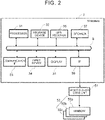
- FIG. 2 shows a configuration example of the terminal 3.
- the terminal 3 is, for example, a portable terminal having a wireless communication function (mobile terminal: a terminal having portability).
- the portable terminal is, for example, a smartphone, a tablet terminal, a laptop personal computer (PC), a personal digital assistant (PDA), or a wearable computer.
- the terminal 3 may be an in-vehicle terminal fixed (installed) on the vehicle 10.
- the terminal 3 includes a processor 31, a storage device 32, a communication interface (communication IF) 33, an input device 34, a display 35, a Global Positioning System (GPS) receiver 36, a speaker 37, and an interface circuit (IF) 38 that are connected to each other via a bus B.
- a processor 31 a storage device 32
- a communication interface (communication IF) 33 an input device 34
- a display 35 a Global Positioning System (GPS) receiver 36
- GPS Global Positioning System
- speaker 37 a speaker 37
- IF interface circuit
- the storage device 32 includes a main storage device and an auxiliary storage device.
- the main storage device is used as at least one of a storage area for programs and data, a deployment area for programs, a work area for programs, and a buffer area for communication data.
- the main storage device is composed of a random access memory (RAM) or a combination of a RAM and a read only memory (ROM).
- the auxiliary storage device is used as a storage area for data and programs.
- a non-volatile storage medium is applied to the auxiliary storage device.
- the non-volatile storage medium is, for example, a hard disk, a solid state drive (SSD), a flash memory, or an electrically erasable programmable read-only memory (EEPROM).
- the storage device 22 may include a drive device for a disk recording medium.
- the communication IF 33 is a circuit that performs communication processing.
- the communication IF 33 is a wireless communication circuit that performs wireless communication (LTE, 5G, wireless LAN (Wi-Fi), BLE, and the like).
- the input device 34 includes keys, buttons, a pointing device, a touch panel, and the like, and is used for inputting information.
- the display 35 is, for example, a liquid crystal display or the like, and displays information and data.
- the GPS receiver 36 receives a signal from a GPS satellite and measures position information.
- the speaker 37 is used for audio output.
- the IF 38 is electrically connected to the window glass drive unit 51 included in the vehicle 10.
- the window glass drive unit 51 includes a motor drive circuit, an actuator for opening and closing the window glass serving as the window 52, and the like.
- the window glass drive unit 51 drives and stops the motor with an operation amount corresponding to the opening degree of the window 52 to be opened or closed.
- the drive instruction of the motor is supplied from the processor 31.
- the windows 52 that can be opened and closed include a window 52a on the side surface at the driver seat, a window 52b on the side surface at the passenger seat, and a window 52c provided in the roof of the vehicle 10.
- the windows 52a to 52c are not distinguished from each other, the notation of the windows 52 is used.
- the number and the installation location of the windows 52 can be set as appropriate, and it is not an essential requirement that the roof is provided with the window 52.
- a case may be included where the roof is provided with the window 52 that can be opened and closed and the side surface is not provided with the window 52 that can be opened and closed.
- the windows on the side surface at the rear seat and the back surface of the vehicle 10 may be windows to be opened and closed.
- the processor 31 is, for example, a central processing unit (CPU).
- the CPU is also referred to as a microprocessor unit (MPU).
- the processor 31 may have a single processor configuration or a multiprocessor configuration. Further, a single physical CPU connected by a single socket may have a multi-core configuration.
- the processor 31 may include arithmetic devices of various circuit configurations such as a digital signal processor (DSP) or a graphics processing unit (GPU). Further, the processor 31 may have a configuration that cooperates with at least one of an integrated circuit (IC), another digital circuit, an analog circuit, and the like.
- the integrated circuit includes a large scale integration (LSI), an application-specific integrated circuit (ASIC), a programmable logic device (PLD), and the like.
- LSI large scale integration
- ASIC application-specific integrated circuit
- PLD programmable logic device
- the PLD includes, for example, a field-programmable gate array (FPGA).
- the processor 31 also includes a so-called microcontroller (MCU), a system-on-a-chip (SoC), a system LSI, a chipset, or the like.
- MCU microcontroller
- SoC system-on-a-chip
- LSI system LSI
- chipset chipset
- the processor 31 performs various processes by executing various programs stored in the storage device 32. For example, the processor 31 accesses the server 2 via the network 1 and performs a process of acquiring (receiving) the meteorological condition information of the area to which the position of the vehicle 10 belongs from the server 2. Further, in response to the opening-closing instruction from the terminal 4, the processor 31 performs a process of determining the opening degree of the window 52 to be opened or closed based on the meteorological condition information.
- the opening-closing instruction is an opening instruction or a closing instruction for one window 52 to be operated.
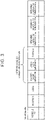
- FIG. 3 shows an example of a data structure of a table stored in the storage device 32 of the terminal 3.
- the table stores a record including a vehicle ID that is identification information of the vehicle 10, position information of the vehicle 10, information indicating the geographical area to which the position of the vehicle 10 belongs, the meteorological condition information, and information indicating the opening degree of each of the windows 52a, 52b, and 52c.
- the position information of the terminal 3 is used as the position information of the vehicle 10
- the position information of the vehicle 10 may be acquired using another GPS receiver provided in the vehicle 10. Further, the position information of the vehicle 10 may be acquired from the network 1 through communication.
- the meteorological condition information information indicating the meteorological condition (short-term weather, long-term weather, and climate) in the area is stored. However, it is not necessary to have all of the short-term weather, the long-term weather and the climate, and information of at least one of the short-term weather, the long-term weather, and the climate is sufficient as long as the opening degree can be determined appropriately.
- the information indicating the short-term weather as the meteorological condition information indicates changes in temperature, humidity, wind speed, and the like for several hours to several days (for example, on the day).
- the information indicating the long-term weather indicates, for example, an average short-term weather condition of about five days to one month.
- the information indicating the climate indicates the average state of the meteorology over a long period of one month or more, and includes information indicating the a season, especially the season of leaf fall.
- the storage device 32 includes information indicating the positions in the vehicle 10 (roofs or side surfaces) where the windows 52a, 52b, and 52c are respectively provided, and the opening degree may be determined in consideration of these positions.
- FIG. 4 shows a configuration example of the terminal 4 of the user 11.
- the terminal 4 is, for example, a portable terminal having a wireless communication function (mobile terminal: a terminal having portability), but may be a fixed terminal.
- the terminal 4 includes a processor 41, a storage device 42, a communication interface (communication IF) 43, an input device 44, and a display 45 that are connected to each other via a bus 46.
- a processor 41 a storage device 42
- a communication interface (communication IF) 43 an input device 44
- a display 45 that are connected to each other via a bus 46.
- the same configurations as those described for the processor 31, the storage device 32, the communication IF 33, the input device 34, and the display 35 can be applied.
- the configurations having different performance from those applied to the terminal 3 are applied depending on the difference in usage, purpose of use, and the like.
- the communication IF 43 may be a network interface card (NIC).
- the processor 31 executes the program stored in the storage device 32. Through the execution of the program, the terminal 3 performs a process of acquiring the meteorological condition information corresponding to the position information of the vehicle 10. Further, in response to the instruction to open or close the window 52 from the terminal 4 of the user 11, the processor 31 determines the opening degree of the window 52 to be opened or closed based on the meteorological condition information, and performs a process of controlling opening-closing operation.
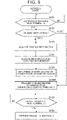
- FIG. 5 is a flowchart showing an example of the processing in the terminal 3.
- the processor 31 of the terminal 3 waits for a message including an opening-closing instruction (opening or closing instruction) of the window 52 from the terminal 4.
- an opening-closing instruction opening or closing instruction
- step S002 the processor 31 determines whether the opening-closing instruction is an opening instruction or a closing instruction with respect to the window 52 to be operated. When it is determined that the opening-closing instruction is an opening instruction, the process proceeds to step S003. When it is determined that the opening-closing instruction is a closing instruction, the process proceeds to step S006.
- step S003 the processor 31 acquires the position of the terminal 3 (vehicle 10) using a GPS receiver 36 and updates the position information of the table.
- step S004 the processor 31 acquires the meteorological condition information. That is, the terminal 3 transmits the position information of the vehicle 10 to the server 2.
- the server 2 acquires the meteorological condition information corresponding to the position information by reading from the storage device, acquisition through communication, or the like, and transmits the meteorological condition information to the terminal 3.
- the processor 31 acquires the meteorological condition information received from the server 2 through the communication IF 33 and stores the meteorological condition information in the storage device 32.
- step S005 the opening degree of the window to be opened or closed is determined.
- FIG. 6 is a flowchart showing an example of a subroutine for determining the opening degree of the window.
- step S101 the window 52 to be operated is specified based on the information included in the opening-closing instruction.
- step S102 it is determined whether the meteorological condition information stored in step S002 and the meteorological condition information stored in the table are the same, that is, whether there is a difference in the meteorological condition information.
- the processor 31 does not update the meteorological condition information in the table, reads from the table the opening degree of the window 52 to be opened or closed that is stored in the table, that is, the opening degree of the window 52 to be opened or closed that is calculated based on the previous meteorological condition information, and determines the read opening degree as an opening degree to be applied at this time. This reduces the load of calculating the opening degree. Then, the process returns to step S006.
- the processor 31 updates the meteorological condition information in the table with the meteorological condition information acquired in step S002. Further, the opening degree of the window 52 (any of the windows 52a to 52c) specified in step S101 is set as an initial value.
- the initial value of the opening degree indicates the opening degree in the case where it is not necessary to adjust the opening degree in consideration of rainfall or snowfall, leaf fall, a wind speed, and the like.
- step S104 the processor 31 determines whether it is necessary to adjust the opening degree due to rainfall or snowfall. That is, the processor 31 determines whether the information indicating the short-term weather in the meteorological condition information indicates the short-term weather of rainfall or snowfall. At this time, when it is determined that the information indicates the short-term weather of rainfall or snowfall, the process proceeds to step S105; otherwise, the process proceeds to step S106.
- step S105 the processor 31 sets the value of the opening degree to be smaller than the initial value, with the minimum opening degree (determined in advance) of the window 52 specified in step S101 set as a limit.
- the amount of decrease (adjustment amount) in opening degree at this time can be appropriately set, and the adjustment amount is determined in advance and stored in the storage device 32.
- the adjustment amount is set to such an amount that the opening degree of the window 52 in the case where the meteorological condition information indicates the short-term weather of rainfall or snowfall becomes smaller than the opening degree applied to the window 52 in the short-term weather without rainfall or snowfall.
- the processor 31 may be configured to select an opening degree to be applied from a plurality of adjustment opening degrees prepared in advance in the storage device 32 and the like such that the opening degree becomes smaller as the amount of rainfall or snowfall included in the meteorological condition information increases.
- the processor 31 may set the opening degree of the window 52c provided in the roof of the vehicle 10 to be smaller than the opening degree applied to the window 52a or 52b provided in the side surface of the vehicle 10, based on the position information of the windows 52 stored in the storage device 32.
- step S106 the processor 31 determines whether it is necessary to adjust the opening degree due to leaf fall. That is, the processor 31 determines whether the information indicating the short-term weather, the long-term weather, and the climate included in the meteorological condition information is information indicating the occurrence of leaf fall (first determination). For example, it is determined whether the information indicating the climate is information indicating the season of leaf fall.
- the processor 31 determines whether the position of the vehicle 10 belongs to a place with a large amount of leaf fall using the information indicating a place with a large amount of lead fall such as the inside or the vicinity of a deciduous forest that is stored in the storage device 32 and the like (second determination).
- the process proceeds to step S107; otherwise, the process proceeds to step S108.
- the processor 31 controls the opening degree of the window 52 based on the position information of the vehicle 10. In the present embodiment, an example in which the first and second determinations are made is shown, but at least one of the first and second determinations may be made.
- step S107 the processor 31 reduces the opening degree from the initial value by the adjustment amount determined in advance in accordance with leaf fall as in step S105, with the minimum opening degree set as the limit. That is, when the meteorological condition information indicates the climate in which leaf fall occurs, the processor 31 sets the opening degree of the window 52 to be smaller than the opening degree of the window 52 applied in the climate other than the climate in which leaf fall occurs.
- the processor 31 may set the opening degree of the window 52c to be smaller than the opening degree applied to the window 52a or 52b on the side surface of the vehicle 10.
- step S108 the processor 31 determines whether it is necessary to adjust the opening degree due to the wind speed in the area to which the position of the vehicle 10 belongs. That is, the processor 31 refers to, for example, information indicating the wind speed that is included as the short-term weather information in the meteorological condition information, to determine whether the wind speed exceeds a threshold value.
- step S109 When it is determined that the wind speed exceeds the threshold value, the process proceeds to step S109; otherwise, the process proceeds to step S110.
- a plurality of threshold values for the wind speed and an adjustment amount of the opening degree corresponding to each of the threshold values may be prepared such that the opening degree becomes smaller as the wind speed increases.
- step S109 the processor 31 reduces the opening degree from the initial value by the adjustment amount determined in advance as in step S105, with the minimum opening degree set as the limit.
- step S110 the processor 31 determines the opening degree at this point as a final opening degree, and ends the subroutine.
- the order of the processes of steps S104 and S105, the processes of steps S106 and S107, and the processes of steps S108 and S109 can be changed as appropriate.
- step S006 the processor 31 outputs a control signal for opening-closing operation.
- the processor 31 obtains a control amount (motor drive amount) corresponding to the opening degree of the window 52 calculated in step S005, and supplies a control signal indicating the drive amount to the window glass drive unit 51.
- the processor 31 obtains a control amount for closing the window 52 (making the opening degree 0%), and supplies a control signal indicating the control amount to the window glass drive unit 51.
- the window glass drive unit 51 drives a motor based on the control amount to cause the window glass to open or close. As a result, the window 52 is opened or closed.
- step S007 when the window 52 is opened or closed, the processor 31 outputs a sound indicating opening or closing of the window 52 from the speaker 37 to at least one of the inside and the outside of the vehicle 10. Thus, the person in or around the vehicle 10 is notified of opening or closing of the window.
- step S008 the processor 31 waits for the acquisition of information indicating the result of the opening or closing operation from the window glass drive unit 51.
- the processor 31 receives a signal or information indicating OK or NG of the opening or closing operation from the window glass drive unit 51, or receives a signal or information indicating NG (error) in the case of NG.
- step S009 the processor 31 performs a process of transmitting the information regarding the result of the control of opening or closing the window 52 to the terminal 4 of the user 11. That is, the processor 31 generates information indicating success (OK) or failure (NG) of the opening or closing operation in accordance with the signal or information obtained from the window glass drive unit 51, and transmits the information to the terminal 4 using the communication IF 33. As described above, in the present embodiment, the processor 31 performs the control of opening or closing the window 52 based on the meteorological condition information in response to the instruction from the terminal 4 of the user 11. Then, the processor 31 transmits the information regarding the result of the control of opening or closing the window 52 to the terminal 4 of the user 11.
- the opening degree of the window 52 included in the vehicle 10 is controlled in accordance with the meteorological condition information.
- the opening degree of the window can be controlled (adjusted) to the optimum state in accordance with the short-term weather at that time that is indicated by the meteorological condition information.
- the server 2 may have the same configuration as that of the terminal 4 shown in FIG. 4 .
- the storage device 42 of the server 2 is configured to store a vehicle database (vehicle DB) as shown in FIG. 7 .
- vehicle DB is configured to store information in the record stored in the table of the terminal 3 regarding one or more vehicles (including the vehicle 10).
- the processor 41 of the server 2 performs the processing as shown in FIG. 8 . In this way, the server 2 can centrally manage information on a plurality of vehicles.
- the server 2 (processor 41) waits for the reception of the opening-closing instruction of the window 52 from the terminal 4 (S001).
- the server 2 determines whether the opening-closing instruction is an opening instruction or a closing instruction for the window 52 that is specified by the opening-closing instruction (S002). In the case of an opening instruction, the server 2 performs the same processes as of steps S003 to S005 described above.
- the server 2 performs the process of step S006A instead of step S006. That is, the server 2 transmits the opening degree of the window 52 to be opened or closed (the opening degree obtained in S005 in the case of an opening instruction, the opening degree of 0% in the case of a closing instruction) to the terminal 3.
- the server 2 waits for the acquisition of the information indicating the result of the opening-closing operation from the terminal 3, and when acquiring the information indicating the result, the server 2 transmits (transfers) the information to the terminal 4.
- the terminal 3 does not perform the processes of steps S001 to S005 among the processes of FIG. 5 , and when receiving the information indicating the opening degree of the window 52 to be opened or closed from the server 2, the processor 31 performs the processes of steps S005 to S009 shown in FIG. 5 .
- the server 2 may be operated as the "information processing device".
- the processes described as being executed by one device may be shared and executed by a plurality of devices. Alternatively, the processes described as being executed by different devices may be executed by one device. In the computer system, it is possible to flexibly change the hardware configuration (server configuration) for realizing each function.
- the present disclosure can also be implemented by supplying a computer with a computer program that implements the functions described in the above embodiment and causing one or more processors of the computer to read and execute the program.
- a computer program may be provided to the computer by a non-transitory computer-readable storage medium connectable to the system bus of the computer, or may be provided to the computer via a network.
- the non-transitory computer-readable storage medium is a disc of any type such as a magnetic disc (floppy (registered trademark) disc, hard disk drive (HDD), and the like) and an optical disc (CD-ROM, DVD, Blu-ray disc, and the like).
- non-transitory computer-readable medium includes a read-only memory (ROM), a random access memory (RAM), an EPROM, an EEPROM, a magnetic card, a flash memory, an optical card, and a medium of any type that is appropriate for storing electrical commands.
Landscapes
- Power-Operated Mechanisms For Wings (AREA)
- Air-Conditioning For Vehicles (AREA)
Abstract
Description
- The present disclosure relates to an information processing device, an information processing method, and a program.
- There is a known power window device that can be remotely controlled. At the time of closing the window glass by remote control, the power window device once moves the window glass in the opening direction and then moves the window glass in the closing direction after outputting an alarm sound for a predetermined time (for example,
Japanese Unexamined Patent Application Publication No. 2007-016441 JP 2007-016441 A - An object of the present disclosure is to provide an information processing device, an information processing method, and a program capable of setting the opening degree of a window included in a moving body to an appropriate opening degree corresponding to a meteorological condition.
- An aspect of the present disclosure provides an information processing device including a control unit that executes: acquiring meteorological condition information that is information indicating a meteorological condition in a geographical area to which a position of a moving body belongs; and controlling an opening degree of a window included in the moving body based on the meteorological condition information.
- Aspects of the present disclosure may include at least one of an information processing method, an information processing system, a program, and a recording medium on which the program is recorded that have the same characteristics as the information processing device.
- According to the present disclosure, the opening degree of the window included in the moving body can be set to an appropriate opening degree corresponding to the meteorological condition.
- Features, advantages, and technical and industrial significance of exemplary embodiments of the invention will be described below with reference to the accompanying drawings, in which like signs denote like elements, and wherein:
-
FIG. 1 shows an example of an information processing system according to an embodiment; -
FIG. 2 shows a configuration example of aterminal 3 according to the embodiment; -
FIG. 3 shows an example of a data structure of a table; -
FIG. 4 shows a configuration example of aterminal 4 of a user; -
FIG. 5 is a flowchart showing an example of processing in theterminal 3; -
FIG. 6 is a flowchart showing an example of processing in theterminal 3; -
FIG. 7 shows an example of a data structure of a vehicle database included in aserver 2 in a modification; and -
FIG. 8 is a flowchart showing an example of processing in theserver 2 in the modification. - An information processing device according to an embodiment executes acquiring meteorological condition information that is information indicating a meteorological condition in a geographical area to which a position of a moving body belongs, and controlling an opening degree of a window included in the moving body based on the meteorological condition information.
- With the information processing device, the opening degree of the window included in the moving body is controlled in accordance with the meteorological condition information. Thereby, the opening degree of the window can be controlled (adjusted) to the optimum state in accordance with short-term weather at that time that is indicated by the meteorological condition information. Thus, it is possible to perform ventilation while suppressing objects (rain, snow, leaves, and the like) that may enter the moving body from entering the moving body when the window is open due to the meteorological condition.
- Here, the meteorology indicates changes in the atmosphere such as changes in temperature and atmospheric pressure and phenomena such as rain and snow that result from changes in the atmosphere. The meteorological condition includes short-term weather, long-term weather, and climate. The short-term weather, the long-term weather, and the climate indicate states or conditions such as being clear or rainy, snow, temperature, humidity, and wind speed in an area (geographical area). In addition, the short-term weather, the long-term weather, and the climate are distinguished by length of the period (predetermined period) representing the meteorological condition. In general, the short-term weather indicates meteorological conditions for several hours to several days. The long-term weather is longer than the short-term weather, but indicates meteorological conditions for a relatively short period such as one week or one month. The Japan Meteorological Agency states that the long-term weather represents an average short-term weather condition for about five days to one month. The climate refers to an average meteorological condition for a long period of one month or more. The climate can also be regarded as a season.
- The moving body includes a vehicle, a train, and the like provided with windows. The windows included in the moving body are windows that can be opened and closed, and the number and installation positions of the windows are not specifically limited.
- The following configuration may be adopted for the information processing device. That is, the control unit sets the opening degree of the window when the meteorological condition information indicates the short-term weather of rainfall or snowfall to be smaller than the opening degree applied to the window in the short-term weather without rainfall or snowfall. Thus, when it is raining or snowing, the opening degree of the window is set to be smaller, which makes it difficult for rain or snow to enter the moving body. Thus, it is possible to suppress the inside of the moving body from getting wet.
- The following configuration may be adopted for the information processing device. That is, the control unit sets the opening degree of the window to be smaller as the amount of rainfall or snowfall increases. The larger the amount of rainfall or snowfall, the easier for the moving body to get wet. Therefore, by setting the opening degree of the window to be smaller, it is possible to suppress the moving body from getting wet.
- The following configuration may be adopted for the information processing device. That is, when the meteorological condition information indicates the short-term weather of rainfall or snowfall, the control unit sets the opening degree of the window provided in a roof of the moving body to be smaller than the opening degree applied to the window provided in the side surface of the moving body. The window provided in the roof is more likely to allow rain or snow to enter the moving body than the window provided in the side surface. Thus, by setting the opening degree of the window provided in the roof to be smaller, it is possible to suppress the inside of the moving body from getting wet.
- The following configuration may be adopted for the information processing device. That is, when the meteorological condition information indicates the climate in which leaf fall occurs, the control unit sets the opening degree of the window to be smaller than the opening degree of the window applied in the climate other than the climate in which leaf fall occurs. By setting the opening degree of the window in the climate (season) in which leaf fall occurs to be smaller, it is possible to suppress the leaves from entering the moving body.
- The following configuration may be adopted for the information processing device. That is, when the meteorological condition information indicates the climate in which leaf fall occurs, the control unit sets the opening degree of the window provided in the roof of the moving body to be smaller than the opening degree applied to the window provided in the side surface of the moving body. The window provided in the roof is more likely to allow leaves to enter the moving body than the window provided in the side surface. Thus, by setting the opening degree of the window provided in the roof to be smaller, it is possible to suppress the leaves from entering the moving body.
- The following configuration may be adopted for the information processing device. That is, the control unit controls the opening degree of the window based on the information indicating the wind speed in the area to which the position of the moving body belongs. The ease of ventilation in the moving body changes depending on the wind speed. Therefore, by controlling (adjusting) the opening degree of the window according to the wind speed, it is possible to set an appropriate opening degree for ventilation. When the wind speed is high, ventilation is possible with a small opening degree. When the opening degree of the window is not set to be larger than necessary, it is possible to suppress people other than the user (other people) and dust from entering the moving body.
- The following configuration may be adopted for the information processing device. That is, the control unit performs control of notifying the inside or outside of the moving body of the information indicating opening or closing of the window when the window is opened or closed. Since people around the moving body can notice the opening and closing of the window, safety can be improved.
- The following configuration may be adopted for the information processing device. That is, the control unit controls the opening degree of the window based on the position information of the moving body. For example, when the position of the moving body is in a place where there are many deciduous trees, entry of leaves can be suppressed by setting the opening degree of the window to be smaller than the opening degree of the window applied in a place where there is no deciduous tree.
- The following configuration may be adopted for the information processing device. That is, the control unit performs control of opening or closing the window based on the meteorological condition information in response to an instruction from the terminal of the user. By opening or closing the window according to the instruction of the user, it is possible to suppress the window from being opened or closed more than necessary. However, the window can be opened or closed automatically by setting a timer or the like.
- The following configuration may be adopted for the information processing device. That is, the control unit transmits the information regarding the result of the control of opening or closing the window to the terminal of the user. The window is not always opened or closed according to the instruction of the user. Therefore, by notifying the user of the result of opening or closing, the user can know the state of the window.
- Hereinafter, the information processing device, the information processing method, and the program according to the embodiment will be described with reference to the drawings. The configuration of the embodiment is illustrative, and the present disclosure is not limited to the configuration of the embodiment.
-
FIG. 1 shows an example of an information processing system according to an embodiment. InFIG. 1 , the information processing system includes anetwork 1, and aserver 2, aterminal 3, and aterminal 4 that are connected to thenetwork 1. - The
network 1 is, for example, a public communication network such as the Internet, and a wide area network (WAN) or other communication network may be adopted. Thenetwork 1 may include a cellular network such as Long Term Evolution (LTE) and 5G, or a wireless network (wireless path) such as a wireless local area network (LAN, including Wi-Fi) and Bluetooth Low Energy (BLE). - The
terminal 3 is a terminal mounted on avehicle 10 that is an example of the moving body, and can communicate with theserver 2 and theterminal 4 via thenetwork 1. Theterminal 3 may be an in-vehicle terminal of thevehicle 10, or may be a terminal held by a driver or an occupant of thevehicle 10 at the time of boarding. - The
vehicle 10 is a vehicle owned or managed by auser 11 and includes windows 52 (FIG. 2 ) that can be opened and closed by a power window device (window glass drive unit 51). For ventilation and the like in thevehicle 10, theuser 11 may send an opening or closing instruction of thewindows 52 from a position (remote location) away from thevehicle 10 through communication from theterminal 4 of theuser 11 to theterminal 3. In response to this instruction, theterminal 3 controls the opening and closing of thewindows 52. - The
terminal 4 is a terminal owned or managed by theuser 11, and is used for transmitting an instruction to open or close thewindows 52 and receiving the result of the instruction. In the remote control of opening or closing thewindows 52 using theterminal 4, thevehicle 10 does not necessarily have to be in a stopped state, and may be driven by a driver other than theuser 11 or may be moving by autonomous driving. - The
server 2 can be composed of a dedicated or general-purpose information processing device (computer) such as a personal computer (PC), a workstation (WS), or a server machine. Theserver 2 can communicate with theterminal 3 and theterminal 4 via thenetwork 1 by the communication function. The connection to thenetwork 1 may be wired or wireless. Theserver 2 may be a single information processing device or a set of two or more information processing devices (cloud). Theserver 2 may be a fixed terminal or a portable terminal. Theserver 2 supplies the meteorological condition information corresponding to the position of the vehicle 10 (terminal 3) to theterminal 3 in response to the request from theterminal 3 via thenetwork 1. The meteorological condition information is information indicating the meteorological condition for a predetermined period (at least one of short-term weather, long-term weather, and climate) in the geographical area to which the position of the vehicle 10 (terminal 3) belongs. -
FIG. 2 shows a configuration example of theterminal 3. Theterminal 3 is, for example, a portable terminal having a wireless communication function (mobile terminal: a terminal having portability). The portable terminal is, for example, a smartphone, a tablet terminal, a laptop personal computer (PC), a personal digital assistant (PDA), or a wearable computer. However, theterminal 3 may be an in-vehicle terminal fixed (installed) on thevehicle 10. - The
terminal 3 includes aprocessor 31, astorage device 32, a communication interface (communication IF) 33, aninput device 34, adisplay 35, a Global Positioning System (GPS)receiver 36, aspeaker 37, and an interface circuit (IF) 38 that are connected to each other via a bus B. - The
storage device 32 includes a main storage device and an auxiliary storage device. The main storage device is used as at least one of a storage area for programs and data, a deployment area for programs, a work area for programs, and a buffer area for communication data. The main storage device is composed of a random access memory (RAM) or a combination of a RAM and a read only memory (ROM). The auxiliary storage device is used as a storage area for data and programs. A non-volatile storage medium is applied to the auxiliary storage device. The non-volatile storage medium is, for example, a hard disk, a solid state drive (SSD), a flash memory, or an electrically erasable programmable read-only memory (EEPROM). Further, the storage device 22 may include a drive device for a disk recording medium. - The communication IF 33 is a circuit that performs communication processing. For example, the communication IF 33 is a wireless communication circuit that performs wireless communication (LTE, 5G, wireless LAN (Wi-Fi), BLE, and the like).
- The
input device 34 includes keys, buttons, a pointing device, a touch panel, and the like, and is used for inputting information. Thedisplay 35 is, for example, a liquid crystal display or the like, and displays information and data. TheGPS receiver 36 receives a signal from a GPS satellite and measures position information. Thespeaker 37 is used for audio output. - The
IF 38 is electrically connected to the windowglass drive unit 51 included in thevehicle 10. The windowglass drive unit 51 includes a motor drive circuit, an actuator for opening and closing the window glass serving as thewindow 52, and the like. The windowglass drive unit 51 drives and stops the motor with an operation amount corresponding to the opening degree of thewindow 52 to be opened or closed. The drive instruction of the motor is supplied from theprocessor 31. - In the present embodiment, the
windows 52 that can be opened and closed include awindow 52a on the side surface at the driver seat, awindow 52b on the side surface at the passenger seat, and awindow 52c provided in the roof of thevehicle 10. When thewindows 52a to 52c are not distinguished from each other, the notation of thewindows 52 is used. However, the number and the installation location of thewindows 52 can be set as appropriate, and it is not an essential requirement that the roof is provided with thewindow 52. On the contrary, a case may be included where the roof is provided with thewindow 52 that can be opened and closed and the side surface is not provided with thewindow 52 that can be opened and closed. Further, the windows on the side surface at the rear seat and the back surface of thevehicle 10 may be windows to be opened and closed. - The
processor 31 is, for example, a central processing unit (CPU). The CPU is also referred to as a microprocessor unit (MPU). Theprocessor 31 may have a single processor configuration or a multiprocessor configuration. Further, a single physical CPU connected by a single socket may have a multi-core configuration. Theprocessor 31 may include arithmetic devices of various circuit configurations such as a digital signal processor (DSP) or a graphics processing unit (GPU). Further, theprocessor 31 may have a configuration that cooperates with at least one of an integrated circuit (IC), another digital circuit, an analog circuit, and the like. The integrated circuit includes a large scale integration (LSI), an application-specific integrated circuit (ASIC), a programmable logic device (PLD), and the like. The PLD includes, for example, a field-programmable gate array (FPGA). Theprocessor 31 also includes a so-called microcontroller (MCU), a system-on-a-chip (SoC), a system LSI, a chipset, or the like. - The
processor 31 performs various processes by executing various programs stored in thestorage device 32. For example, theprocessor 31 accesses theserver 2 via thenetwork 1 and performs a process of acquiring (receiving) the meteorological condition information of the area to which the position of thevehicle 10 belongs from theserver 2. Further, in response to the opening-closing instruction from theterminal 4, theprocessor 31 performs a process of determining the opening degree of thewindow 52 to be opened or closed based on the meteorological condition information. The opening-closing instruction is an opening instruction or a closing instruction for onewindow 52 to be operated. -
FIG. 3 shows an example of a data structure of a table stored in thestorage device 32 of theterminal 3. The table stores a record including a vehicle ID that is identification information of thevehicle 10, position information of thevehicle 10, information indicating the geographical area to which the position of thevehicle 10 belongs, the meteorological condition information, and information indicating the opening degree of each of thewindows terminal 3 is used as the position information of thevehicle 10, the position information of thevehicle 10 may be acquired using another GPS receiver provided in thevehicle 10. Further, the position information of thevehicle 10 may be acquired from thenetwork 1 through communication. - As the meteorological condition information, information indicating the meteorological condition (short-term weather, long-term weather, and climate) in the area is stored. However, it is not necessary to have all of the short-term weather, the long-term weather and the climate, and information of at least one of the short-term weather, the long-term weather, and the climate is sufficient as long as the opening degree can be determined appropriately. The information indicating the short-term weather as the meteorological condition information indicates changes in temperature, humidity, wind speed, and the like for several hours to several days (for example, on the day). The information indicating the long-term weather indicates, for example, an average short-term weather condition of about five days to one month. The information indicating the climate indicates the average state of the meteorology over a long period of one month or more, and includes information indicating the a season, especially the season of leaf fall.
- In addition, the information indicating the opening degree of each of the
windows storage device 32 includes information indicating the positions in the vehicle 10 (roofs or side surfaces) where thewindows -
FIG. 4 shows a configuration example of theterminal 4 of theuser 11. Theterminal 4 is, for example, a portable terminal having a wireless communication function (mobile terminal: a terminal having portability), but may be a fixed terminal. - The
terminal 4 includes aprocessor 41, astorage device 42, a communication interface (communication IF) 43, aninput device 44, and adisplay 45 that are connected to each other via abus 46. - To the
processor 41, thestorage device 42, the communication IF 43, theinput device 44, and thedisplay 45, the same configurations as those described for theprocessor 31, thestorage device 32, the communication IF 33, theinput device 34, and thedisplay 35 can be applied. However, the configurations having different performance from those applied to theterminal 3 are applied depending on the difference in usage, purpose of use, and the like. For example, when theterminal 4 is a fixed terminal, the communication IF 43 may be a network interface card (NIC). - In the
terminal 3, theprocessor 31 executes the program stored in thestorage device 32. Through the execution of the program, theterminal 3 performs a process of acquiring the meteorological condition information corresponding to the position information of thevehicle 10. Further, in response to the instruction to open or close thewindow 52 from theterminal 4 of theuser 11, theprocessor 31 determines the opening degree of thewindow 52 to be opened or closed based on the meteorological condition information, and performs a process of controlling opening-closing operation. -
FIG. 5 is a flowchart showing an example of the processing in theterminal 3. In step S001, theprocessor 31 of theterminal 3 waits for a message including an opening-closing instruction (opening or closing instruction) of thewindow 52 from theterminal 4. When the opening-closing instruction is received, the process proceeds to step S002. - In step S002, the
processor 31 determines whether the opening-closing instruction is an opening instruction or a closing instruction with respect to thewindow 52 to be operated. When it is determined that the opening-closing instruction is an opening instruction, the process proceeds to step S003. When it is determined that the opening-closing instruction is a closing instruction, the process proceeds to step S006. - In step S003, the
processor 31 acquires the position of the terminal 3 (vehicle 10) using aGPS receiver 36 and updates the position information of the table. In step S004, theprocessor 31 acquires the meteorological condition information. That is, theterminal 3 transmits the position information of thevehicle 10 to theserver 2. Theserver 2 acquires the meteorological condition information corresponding to the position information by reading from the storage device, acquisition through communication, or the like, and transmits the meteorological condition information to theterminal 3. At theterminal 3, theprocessor 31 acquires the meteorological condition information received from theserver 2 through the communication IF 33 and stores the meteorological condition information in thestorage device 32. - In step S005, the opening degree of the window to be opened or closed is determined.
FIG. 6 is a flowchart showing an example of a subroutine for determining the opening degree of the window. In step S101, thewindow 52 to be operated is specified based on the information included in the opening-closing instruction. - In step S102, it is determined whether the meteorological condition information stored in step S002 and the meteorological condition information stored in the table are the same, that is, whether there is a difference in the meteorological condition information. When it is determined that there is no difference (NO in S102), in step S111, the
processor 31 does not update the meteorological condition information in the table, reads from the table the opening degree of thewindow 52 to be opened or closed that is stored in the table, that is, the opening degree of thewindow 52 to be opened or closed that is calculated based on the previous meteorological condition information, and determines the read opening degree as an opening degree to be applied at this time. This reduces the load of calculating the opening degree. Then, the process returns to step S006. - On the other hand, when it is determined that there is a difference (YES in S102), the
processor 31 updates the meteorological condition information in the table with the meteorological condition information acquired in step S002. Further, the opening degree of the window 52 (any of thewindows 52a to 52c) specified in step S101 is set as an initial value. Here, the initial value of the opening degree indicates the opening degree in the case where it is not necessary to adjust the opening degree in consideration of rainfall or snowfall, leaf fall, a wind speed, and the like. - In step S104, the
processor 31 determines whether it is necessary to adjust the opening degree due to rainfall or snowfall. That is, theprocessor 31 determines whether the information indicating the short-term weather in the meteorological condition information indicates the short-term weather of rainfall or snowfall. At this time, when it is determined that the information indicates the short-term weather of rainfall or snowfall, the process proceeds to step S105; otherwise, the process proceeds to step S106. - In step S105, the
processor 31 sets the value of the opening degree to be smaller than the initial value, with the minimum opening degree (determined in advance) of thewindow 52 specified in step S101 set as a limit. The amount of decrease (adjustment amount) in opening degree at this time can be appropriately set, and the adjustment amount is determined in advance and stored in thestorage device 32. The adjustment amount is set to such an amount that the opening degree of thewindow 52 in the case where the meteorological condition information indicates the short-term weather of rainfall or snowfall becomes smaller than the opening degree applied to thewindow 52 in the short-term weather without rainfall or snowfall. - The
processor 31 may be configured to select an opening degree to be applied from a plurality of adjustment opening degrees prepared in advance in thestorage device 32 and the like such that the opening degree becomes smaller as the amount of rainfall or snowfall included in the meteorological condition information increases. - Further, when the meteorological condition information indicates the short-term weather of rainfall or snowfall, the
processor 31 may set the opening degree of thewindow 52c provided in the roof of thevehicle 10 to be smaller than the opening degree applied to thewindow vehicle 10, based on the position information of thewindows 52 stored in thestorage device 32. - In step S106, the
processor 31 determines whether it is necessary to adjust the opening degree due to leaf fall. That is, theprocessor 31 determines whether the information indicating the short-term weather, the long-term weather, and the climate included in the meteorological condition information is information indicating the occurrence of leaf fall (first determination). For example, it is determined whether the information indicating the climate is information indicating the season of leaf fall. - Further, the
processor 31 determines whether the position of thevehicle 10 belongs to a place with a large amount of leaf fall using the information indicating a place with a large amount of lead fall such as the inside or the vicinity of a deciduous forest that is stored in thestorage device 32 and the like (second determination). - When at least one of the first and second determinations is YES, that is, when it is determined that the meteorological condition is a meteorological condition in which leaf fall occurs or the
vehicle 10 is located in a place with a large amount of leaf fall, the process proceeds to step S107; otherwise, the process proceeds to step S108. As described above, in the present embodiment, theprocessor 31 controls the opening degree of thewindow 52 based on the position information of thevehicle 10. In the present embodiment, an example in which the first and second determinations are made is shown, but at least one of the first and second determinations may be made. - In step S107, the
processor 31 reduces the opening degree from the initial value by the adjustment amount determined in advance in accordance with leaf fall as in step S105, with the minimum opening degree set as the limit. That is, when the meteorological condition information indicates the climate in which leaf fall occurs, theprocessor 31 sets the opening degree of thewindow 52 to be smaller than the opening degree of thewindow 52 applied in the climate other than the climate in which leaf fall occurs. - Further, when the meteorological condition information indicates the climate in which leaf fall occurs and the
window 52 to be opened or closed is thewindow 52c on the roof of thevehicle 10, theprocessor 31 may set the opening degree of thewindow 52c to be smaller than the opening degree applied to thewindow vehicle 10. - In step S108, the
processor 31 determines whether it is necessary to adjust the opening degree due to the wind speed in the area to which the position of thevehicle 10 belongs. That is, theprocessor 31 refers to, for example, information indicating the wind speed that is included as the short-term weather information in the meteorological condition information, to determine whether the wind speed exceeds a threshold value. - When it is determined that the wind speed exceeds the threshold value, the process proceeds to step S109; otherwise, the process proceeds to step S110. A plurality of threshold values for the wind speed and an adjustment amount of the opening degree corresponding to each of the threshold values may be prepared such that the opening degree becomes smaller as the wind speed increases.
- In step S109, the
processor 31 reduces the opening degree from the initial value by the adjustment amount determined in advance as in step S105, with the minimum opening degree set as the limit. - In step S110, the
processor 31 determines the opening degree at this point as a final opening degree, and ends the subroutine. The order of the processes of steps S104 and S105, the processes of steps S106 and S107, and the processes of steps S108 and S109 can be changed as appropriate. - With reference to
FIG. 5 , in step S006, theprocessor 31 outputs a control signal for opening-closing operation. In the case of an opening instruction, theprocessor 31 obtains a control amount (motor drive amount) corresponding to the opening degree of thewindow 52 calculated in step S005, and supplies a control signal indicating the drive amount to the windowglass drive unit 51. In the case of a closing instruction, theprocessor 31 obtains a control amount for closing the window 52 (making theopening degree 0%), and supplies a control signal indicating the control amount to the windowglass drive unit 51. The windowglass drive unit 51 drives a motor based on the control amount to cause the window glass to open or close. As a result, thewindow 52 is opened or closed. - In step S007, when the
window 52 is opened or closed, theprocessor 31 outputs a sound indicating opening or closing of thewindow 52 from thespeaker 37 to at least one of the inside and the outside of thevehicle 10. Thus, the person in or around thevehicle 10 is notified of opening or closing of the window. - In step S008, the
processor 31 waits for the acquisition of information indicating the result of the opening or closing operation from the windowglass drive unit 51. For example, theprocessor 31 receives a signal or information indicating OK or NG of the opening or closing operation from the windowglass drive unit 51, or receives a signal or information indicating NG (error) in the case of NG. - In step S009, the
processor 31 performs a process of transmitting the information regarding the result of the control of opening or closing thewindow 52 to theterminal 4 of theuser 11. That is, theprocessor 31 generates information indicating success (OK) or failure (NG) of the opening or closing operation in accordance with the signal or information obtained from the windowglass drive unit 51, and transmits the information to theterminal 4 using the communication IF 33. As described above, in the present embodiment, theprocessor 31 performs the control of opening or closing thewindow 52 based on the meteorological condition information in response to the instruction from theterminal 4 of theuser 11. Then, theprocessor 31 transmits the information regarding the result of the control of opening or closing thewindow 52 to theterminal 4 of theuser 11. - With the
terminal 3 serving as the information processing device according to the embodiment, the opening degree of thewindow 52 included in thevehicle 10 is controlled in accordance with the meteorological condition information. Thereby, the opening degree of the window can be controlled (adjusted) to the optimum state in accordance with the short-term weather at that time that is indicated by the meteorological condition information. Thus, it is possible to perform ventilation while suppressing objects (rain, snow, leaves, and the like) that may enter thevehicle 10 from entering thevehicle 10 when thewindow 52 is open due to the meteorological condition. - In the above-described embodiment, an example is shown in which the
processor 31 of theterminal 3 operates as the "control unit of the information processing device". Instead of this configuration, a configuration (modification) in which theserver 2 determines the opening degree of thewindow 52 instead of theterminal 3 may be adopted. - In the modification, the
server 2 may have the same configuration as that of theterminal 4 shown inFIG. 4 . Thestorage device 42 of theserver 2 is configured to store a vehicle database (vehicle DB) as shown inFIG. 7 . The vehicle DB is configured to store information in the record stored in the table of theterminal 3 regarding one or more vehicles (including the vehicle 10). In this case, theprocessor 41 of theserver 2 performs the processing as shown inFIG. 8 . In this way, theserver 2 can centrally manage information on a plurality of vehicles. - In
FIG. 8 , the server 2 (processor 41) waits for the reception of the opening-closing instruction of thewindow 52 from the terminal 4 (S001). When receiving the opening-closing instruction, theserver 2 determines whether the opening-closing instruction is an opening instruction or a closing instruction for thewindow 52 that is specified by the opening-closing instruction (S002). In the case of an opening instruction, theserver 2 performs the same processes as of steps S003 to S005 described above. - The
server 2 performs the process of step S006A instead of step S006. That is, theserver 2 transmits the opening degree of thewindow 52 to be opened or closed (the opening degree obtained in S005 in the case of an opening instruction, the opening degree of 0% in the case of a closing instruction) to theterminal 3. - After that, the
server 2 waits for the acquisition of the information indicating the result of the opening-closing operation from theterminal 3, and when acquiring the information indicating the result, theserver 2 transmits (transfers) the information to theterminal 4. In this case, theterminal 3 does not perform the processes of steps S001 to S005 among the processes ofFIG. 5 , and when receiving the information indicating the opening degree of thewindow 52 to be opened or closed from theserver 2, theprocessor 31 performs the processes of steps S005 to S009 shown inFIG. 5 . However, in the modification, in step S009, the result is transmitted to theserver 2 instead of theterminal 4. In this way, theserver 2 may be operated as the "information processing device". - The above-described embodiment is merely an example, and the present disclosure may be appropriately modified and implemented without departing from the scope thereof.
- Further, the processes described as being executed by one device may be shared and executed by a plurality of devices. Alternatively, the processes described as being executed by different devices may be executed by one device. In the computer system, it is possible to flexibly change the hardware configuration (server configuration) for realizing each function.
- The present disclosure can also be implemented by supplying a computer with a computer program that implements the functions described in the above embodiment and causing one or more processors of the computer to read and execute the program. Such a computer program may be provided to the computer by a non-transitory computer-readable storage medium connectable to the system bus of the computer, or may be provided to the computer via a network. The non-transitory computer-readable storage medium is a disc of any type such as a magnetic disc (floppy (registered trademark) disc, hard disk drive (HDD), and the like) and an optical disc (CD-ROM, DVD, Blu-ray disc, and the like). Further, the non-transitory computer-readable medium includes a read-only memory (ROM), a random access memory (RAM), an EPROM, an EEPROM, a magnetic card, a flash memory, an optical card, and a medium of any type that is appropriate for storing electrical commands.
Claims (20)
- An information processing device comprising a control unit (31) that executes acquiring meteorological condition information that is information indicating a meteorological condition in a geographical area to which a position of a moving body (10) belongs, and
controlling an opening degree of a window (52) included in the moving body based on the meteorological condition information. - The information processing device according to claim 1, wherein the control unit (31) sets the opening degree of the window (52) when the meteorological condition information indicates short-term weather of rainfall or snowfall to be smaller than the opening degree applied to the window in short-term weather without rainfall or snowfall.
- The information processing device according to claim 2, wherein the control unit (31) sets the opening degree of the window (52) to be smaller as an amount of rainfall or snowfall increases.
- The information processing device according to any one of claims 1 to 3, wherein when the meteorological condition information indicates short-term weather of rainfall or snowfall, the control unit sets (31) the opening degree of the window (52c) provided in a roof of the moving body (10) to be smaller than the opening degree applied to the window (52a, 52b) provided in a side surface of the moving body.
- The information processing device according to any one of claims 1 to 4, wherein when the meteorological condition information indicates climate in which leaf fall occurs, the control unit sets (31) the opening degree of the window (52) to be smaller than the opening degree of the window applied in climate other than the climate in which leaf fall occurs.
- The information processing device according to any one of claims 1 to 5, wherein when the meteorological condition information indicates climate in which leaf fall occurs, the control unit (31) sets the opening degree of the window (52c) provided in a roof of the moving body to be smaller than the opening degree applied to the window (52a, 52b) provided in a side surface of the moving body.
- The information processing device according to any one of claims 1 to 6, wherein the control unit (31) controls the opening degree of the window (52) based on information indicating a wind speed in an area to which the position of the moving body (10) belongs.
- The information processing device according to any one of claims 1 to 7, wherein the control unit (31) performs control of notifying an inside or an outside of the moving body (10) of information indicating opening or closing of the window (52) when the window is opened or closed.
- The information processing device according to any one of claims 1 to 8, wherein the control unit (31) controls the opening degree of the window (52) based on position information of the moving body (10).
- The information processing device according to any one of claims 1 to 9, wherein the control unit (31) performs control of opening or closing the window (52) based on the meteorological condition information in response to an instruction from a terminal (4) of a user.
- The information processing device according to claim 10, wherein the control unit (31) transmits information regarding a result of the control of opening or closing the window (52) to the terminal (4) of the user.
- An information processing method, wherein an information processing device executes:acquiring meteorological condition information that is information indicating a meteorological condition in a geographical area to which a position of a moving body (10) belongs; andcontrolling an opening degree of a window (52) included in the moving body based on the meteorological condition information.
- The information processing method according to claim 12, wherein the information processing device sets the opening degree of the window (52) when the meteorological condition information indicates short-term weather of rainfall or snowfall to be smaller than the opening degree applied to the window in short-term weather without rainfall or snowfall.
- The information processing method according to claim 13, wherein the information processing device sets the opening degree of the window (52) to be smaller as an amount of rainfall or snowfall increases.
- The information processing method according to any one of claims 12 to 14, wherein when the meteorological condition information indicates short-term weather of rainfall or snowfall, the information processing device sets the opening degree of the window (52c) provided in a roof of the moving body to be smaller than the opening degree applied to the window (52a, 52b) provided in a side surface of the moving body (10).
- The information processing method according to any one of claims 12 to 15, wherein when the meteorological condition information indicates climate in which leaf fall occurs, the information processing device sets the opening degree of the window (52) to be smaller than the opening degree of the window applied in climate other than the climate in which leaf fall occurs.
- A program that causes a computer to execute:acquiring meteorological condition information that is information indicating a meteorological condition in a geographical area to which a position of a moving body (10) belongs; andcontrolling an opening degree of a window (52) included in the moving body based on the meteorological condition information.
- The program according to claim 17, wherein the program causes the computer to perform control of setting the opening degree of the window (52) when the meteorological condition information indicates short-term weather of rainfall or snowfall to be smaller than the opening degree applied to the window in short-term weather without rainfall or snowfall.
- The program according to claim 18, wherein the program causes the computer to perform control of setting the opening degree of the window (52) to be smaller as an amount of rainfall or snowfall increases.
- The program according to any one of claims 17 to 19, wherein when the meteorological condition information indicates short-term weather of rainfall or snowfall, the program causes the computer to perform control of setting the opening degree of the window (52c) provided in a roof of the moving body (10) to be smaller than the opening degree applied to the window (52a, 52b) provided in a side surface of the moving body.
Applications Claiming Priority (1)
| Application Number | Priority Date | Filing Date | Title |
|---|---|---|---|
| JP2021023671A JP7484762B2 (en) | 2021-02-17 | 2021-02-17 | Information processing device, information processing method, and program |
Publications (2)
| Publication Number | Publication Date |
|---|---|
| EP4047166A1 true EP4047166A1 (en) | 2022-08-24 |
| EP4047166B1 EP4047166B1 (en) | 2025-02-19 |
Family
ID=79927544
Family Applications (1)
| Application Number | Title | Priority Date | Filing Date |
|---|---|---|---|
| EP21218389.1A Active EP4047166B1 (en) | 2021-02-17 | 2021-12-30 | Information processing device, information processing method, and program |
Country Status (3)
| Country | Link |
|---|---|
| EP (1) | EP4047166B1 (en) |
| JP (1) | JP7484762B2 (en) |
| CN (1) | CN114941483B (en) |
Cited By (2)
| Publication number | Priority date | Publication date | Assignee | Title |
|---|---|---|---|---|
| CN115478757A (en) * | 2022-09-27 | 2022-12-16 | 上汽通用五菱汽车股份有限公司 | Vehicle control method, device, device and storage medium |
| CN115538888A (en) * | 2022-10-24 | 2022-12-30 | 重庆长安汽车股份有限公司 | Vehicle window control method, device, equipment and medium |
Families Citing this family (1)
| Publication number | Priority date | Publication date | Assignee | Title |
|---|---|---|---|---|
| JP2025032762A (en) * | 2023-08-28 | 2025-03-12 | トヨタ自動車株式会社 | Information processing device and system |
Citations (5)
| Publication number | Priority date | Publication date | Assignee | Title |
|---|---|---|---|---|
| JP2007016441A (en) | 2005-07-06 | 2007-01-25 | Toyota Motor Corp | Power window equipment |
| KR20150080930A (en) * | 2013-10-15 | 2015-07-13 | 현대모비스 주식회사 | Device for automatically controlling window and method thereof |
| DE102015016535A1 (en) * | 2015-12-18 | 2016-06-09 | Daimler Ag | Locking device for a motor vehicle |
| CN110836067A (en) * | 2019-11-27 | 2020-02-25 | 安徽江淮汽车集团股份有限公司 | Automobile window control method, automobile window control equipment, storage medium and device |
| US20210032922A1 (en) * | 2019-08-01 | 2021-02-04 | Ford Global Technologies, Llc | Vehicle window control |
Family Cites Families (11)
| Publication number | Priority date | Publication date | Assignee | Title |
|---|---|---|---|---|
| JP2002178745A (en) | 2000-12-14 | 2002-06-26 | Denso Corp | Vehicle air purifier |
| JP2002213141A (en) | 2001-01-18 | 2002-07-31 | Mazda Motor Corp | Automatic window control system for automobiles |
| JP2007046342A (en) | 2005-08-10 | 2007-02-22 | Toyota Motor Corp | Remote control device |
| JP6193684B2 (en) * | 2013-08-30 | 2017-09-06 | 三協立山株式会社 | Electric window |
| US9915091B2 (en) | 2013-12-27 | 2018-03-13 | Lenovo (Singapore) Pte. Ltd. | Low power environment management for an automobile |
| JP2019093786A (en) | 2017-11-20 | 2019-06-20 | 三菱自動車工業株式会社 | Ventilation device of vehicle |
| JP2019100130A (en) | 2017-12-06 | 2019-06-24 | アイシン・エィ・ダブリュ株式会社 | Vehicle control device and computer program |
| CN108222752A (en) * | 2017-12-21 | 2018-06-29 | 广东汇泰龙科技有限公司 | A kind of electric window interlock method and system based on cloud lock |
| CN109653630B (en) * | 2018-12-27 | 2020-12-29 | 重庆中祥门窗制造有限公司 | Anti-theft control method for smart home window system |
| JP7099333B2 (en) | 2019-01-10 | 2022-07-12 | トヨタ自動車株式会社 | Ventilation control system and ventilation control program |
| JP7400191B2 (en) | 2019-02-01 | 2023-12-19 | 株式会社アイシン | Vehicle ventilation control system |
-
2021
- 2021-02-17 JP JP2021023671A patent/JP7484762B2/en active Active
- 2021-12-30 EP EP21218389.1A patent/EP4047166B1/en active Active
-
2022
- 2022-01-20 CN CN202210065976.1A patent/CN114941483B/en active Active
Patent Citations (5)
| Publication number | Priority date | Publication date | Assignee | Title |
|---|---|---|---|---|
| JP2007016441A (en) | 2005-07-06 | 2007-01-25 | Toyota Motor Corp | Power window equipment |
| KR20150080930A (en) * | 2013-10-15 | 2015-07-13 | 현대모비스 주식회사 | Device for automatically controlling window and method thereof |
| DE102015016535A1 (en) * | 2015-12-18 | 2016-06-09 | Daimler Ag | Locking device for a motor vehicle |
| US20210032922A1 (en) * | 2019-08-01 | 2021-02-04 | Ford Global Technologies, Llc | Vehicle window control |
| CN110836067A (en) * | 2019-11-27 | 2020-02-25 | 安徽江淮汽车集团股份有限公司 | Automobile window control method, automobile window control equipment, storage medium and device |
Cited By (2)
| Publication number | Priority date | Publication date | Assignee | Title |
|---|---|---|---|---|
| CN115478757A (en) * | 2022-09-27 | 2022-12-16 | 上汽通用五菱汽车股份有限公司 | Vehicle control method, device, device and storage medium |
| CN115538888A (en) * | 2022-10-24 | 2022-12-30 | 重庆长安汽车股份有限公司 | Vehicle window control method, device, equipment and medium |
Also Published As
| Publication number | Publication date |
|---|---|
| JP2022125855A (en) | 2022-08-29 |
| EP4047166B1 (en) | 2025-02-19 |
| JP7484762B2 (en) | 2024-05-16 |
| CN114941483B (en) | 2024-04-23 |
| CN114941483A (en) | 2022-08-26 |
Similar Documents
| Publication | Publication Date | Title |
|---|---|---|
| EP4047166B1 (en) | Information processing device, information processing method, and program | |
| US8311780B2 (en) | Enhanced prediction of atmospheric parameters | |
| EP3183605B1 (en) | Method and apparatus for weather forecasting | |
| US9765562B2 (en) | Weather based notification systems and methods for home automation | |
| US20210094394A1 (en) | Sun tracking system for providing sun protection actions and vehicle services | |
| US9376117B1 (en) | Driver familiarity adapted explanations for proactive automated vehicle operations | |
| CN107054252B (en) | System and method for preventing precipitation inside a vehicle | |
| CN107060565A (en) | Vehicle window is managed | |
| JP7825653B2 (en) | Opening and closing control system | |
| EP4451741A1 (en) | Information processing device, program, information processing system, and information processing method | |
| US20160280220A1 (en) | Proactive autocomplete of a user's in-vehicle operations | |
| CN115059374A (en) | Vehicle window opening adjusting method, device, storage medium and device | |
| JP2018054206A (en) | Indoor environment adjustment system | |
| CN112955866A (en) | Parameter updating method, device, system and computer readable storage medium | |
| JP2011017508A (en) | Air conditioning equipment control device, method and program | |
| CN115467600A (en) | Vehicle window control method and device | |
| US20190176570A1 (en) | Vehicle system, vehicle, and information processing device | |
| CN114103849B (en) | Vehicle control method, device, vehicle and computer readable storage medium | |
| JP2023036446A (en) | Flying object control system, flying object control server, and flying object control method | |
| CN119428179A (en) | A control method, system, device and storage medium for displaying vehicle external temperature | |
| KR102119177B1 (en) | The smart window that can open and close automatically and operating method thereof | |
| CN114121141B (en) | Control method and control device for top protection assembly | |
| WO2014115551A1 (en) | Draft control device, draft system, and program | |
| EP4271125A1 (en) | Flight vehicle, communication management system, control system, and control method | |
| JP6421406B2 (en) | VEHICLE CONTROL DEVICE AND VEHICLE CONTROL METHOD |
Legal Events
| Date | Code | Title | Description |
|---|---|---|---|
| PUAI | Public reference made under article 153(3) epc to a published international application that has entered the european phase |
Free format text: ORIGINAL CODE: 0009012 |
|
| STAA | Information on the status of an ep patent application or granted ep patent |
Free format text: STATUS: REQUEST FOR EXAMINATION WAS MADE |
|
| 17P | Request for examination filed |
Effective date: 20211230 |
|
| AK | Designated contracting states |
Kind code of ref document: A1 Designated state(s): AL AT BE BG CH CY CZ DE DK EE ES FI FR GB GR HR HU IE IS IT LI LT LU LV MC MK MT NL NO PL PT RO RS SE SI SK SM TR |
|
| STAA | Information on the status of an ep patent application or granted ep patent |
Free format text: STATUS: EXAMINATION IS IN PROGRESS |
|
| 17Q | First examination report despatched |
Effective date: 20230616 |
|
| RAP3 | Party data changed (applicant data changed or rights of an application transferred) |
Owner name: TOYOTA JIDOSHA KABUSHIKI KAISHA |
|
| RIN1 | Information on inventor provided before grant (corrected) |
Inventor name: HADANO, HIROYASU Inventor name: KATOH, TATSUNORI |
|
| GRAP | Despatch of communication of intention to grant a patent |
Free format text: ORIGINAL CODE: EPIDOSNIGR1 |
|
| STAA | Information on the status of an ep patent application or granted ep patent |
Free format text: STATUS: GRANT OF PATENT IS INTENDED |
|
| INTG | Intention to grant announced |
Effective date: 20240925 |
|
| GRAS | Grant fee paid |
Free format text: ORIGINAL CODE: EPIDOSNIGR3 |
|
| GRAA | (expected) grant |
Free format text: ORIGINAL CODE: 0009210 |
|
| STAA | Information on the status of an ep patent application or granted ep patent |
Free format text: STATUS: THE PATENT HAS BEEN GRANTED |
|
| AK | Designated contracting states |
Kind code of ref document: B1 Designated state(s): AL AT BE BG CH CY CZ DE DK EE ES FI FR GB GR HR HU IE IS IT LI LT LU LV MC MK MT NL NO PL PT RO RS SE SI SK SM TR |
|
| REG | Reference to a national code |
Ref country code: GB Ref legal event code: FG4D |
|
| REG | Reference to a national code |
Ref country code: CH Ref legal event code: EP |
|
| REG | Reference to a national code |
Ref country code: IE Ref legal event code: FG4D |
|
| REG | Reference to a national code |
Ref country code: DE Ref legal event code: R096 Ref document number: 602021026331 Country of ref document: DE |
|
| P01 | Opt-out of the competence of the unified patent court (upc) registered |
Free format text: CASE NUMBER: APP_20536/2025 Effective date: 20250430 |
|
| REG | Reference to a national code |
Ref country code: NL Ref legal event code: MP Effective date: 20250219 |
|
| PG25 | Lapsed in a contracting state [announced via postgrant information from national office to epo] |
Ref country code: RS Free format text: LAPSE BECAUSE OF FAILURE TO SUBMIT A TRANSLATION OF THE DESCRIPTION OR TO PAY THE FEE WITHIN THE PRESCRIBED TIME-LIMIT Effective date: 20250519 |
|
| PG25 | Lapsed in a contracting state [announced via postgrant information from national office to epo] |
Ref country code: FI Free format text: LAPSE BECAUSE OF FAILURE TO SUBMIT A TRANSLATION OF THE DESCRIPTION OR TO PAY THE FEE WITHIN THE PRESCRIBED TIME-LIMIT Effective date: 20250219 |
|
| PG25 | Lapsed in a contracting state [announced via postgrant information from national office to epo] |
Ref country code: PL Free format text: LAPSE BECAUSE OF FAILURE TO SUBMIT A TRANSLATION OF THE DESCRIPTION OR TO PAY THE FEE WITHIN THE PRESCRIBED TIME-LIMIT Effective date: 20250219 |
|
| PG25 | Lapsed in a contracting state [announced via postgrant information from national office to epo] |
Ref country code: ES Free format text: LAPSE BECAUSE OF FAILURE TO SUBMIT A TRANSLATION OF THE DESCRIPTION OR TO PAY THE FEE WITHIN THE PRESCRIBED TIME-LIMIT Effective date: 20250219 |
|
| REG | Reference to a national code |
Ref country code: LT Ref legal event code: MG9D |
|
| PG25 | Lapsed in a contracting state [announced via postgrant information from national office to epo] |
Ref country code: NO Free format text: LAPSE BECAUSE OF FAILURE TO SUBMIT A TRANSLATION OF THE DESCRIPTION OR TO PAY THE FEE WITHIN THE PRESCRIBED TIME-LIMIT Effective date: 20250519 Ref country code: IS Free format text: LAPSE BECAUSE OF FAILURE TO SUBMIT A TRANSLATION OF THE DESCRIPTION OR TO PAY THE FEE WITHIN THE PRESCRIBED TIME-LIMIT Effective date: 20250619 |
|
| PG25 | Lapsed in a contracting state [announced via postgrant information from national office to epo] |
Ref country code: NL Free format text: LAPSE BECAUSE OF FAILURE TO SUBMIT A TRANSLATION OF THE DESCRIPTION OR TO PAY THE FEE WITHIN THE PRESCRIBED TIME-LIMIT Effective date: 20250219 |
|
| PG25 | Lapsed in a contracting state [announced via postgrant information from national office to epo] |
Ref country code: HR Free format text: LAPSE BECAUSE OF FAILURE TO SUBMIT A TRANSLATION OF THE DESCRIPTION OR TO PAY THE FEE WITHIN THE PRESCRIBED TIME-LIMIT Effective date: 20250219 |
|
| PG25 | Lapsed in a contracting state [announced via postgrant information from national office to epo] |
Ref country code: PT Free format text: LAPSE BECAUSE OF FAILURE TO SUBMIT A TRANSLATION OF THE DESCRIPTION OR TO PAY THE FEE WITHIN THE PRESCRIBED TIME-LIMIT Effective date: 20250620 Ref country code: LV Free format text: LAPSE BECAUSE OF FAILURE TO SUBMIT A TRANSLATION OF THE DESCRIPTION OR TO PAY THE FEE WITHIN THE PRESCRIBED TIME-LIMIT Effective date: 20250219 |
|
| PG25 | Lapsed in a contracting state [announced via postgrant information from national office to epo] |
Ref country code: GR Free format text: LAPSE BECAUSE OF FAILURE TO SUBMIT A TRANSLATION OF THE DESCRIPTION OR TO PAY THE FEE WITHIN THE PRESCRIBED TIME-LIMIT Effective date: 20250520 Ref country code: BG Free format text: LAPSE BECAUSE OF FAILURE TO SUBMIT A TRANSLATION OF THE DESCRIPTION OR TO PAY THE FEE WITHIN THE PRESCRIBED TIME-LIMIT Effective date: 20250219 |
|
| REG | Reference to a national code |
Ref country code: AT Ref legal event code: MK05 Ref document number: 1768421 Country of ref document: AT Kind code of ref document: T Effective date: 20250219 |
|
| PG25 | Lapsed in a contracting state [announced via postgrant information from national office to epo] |
Ref country code: SE Free format text: LAPSE BECAUSE OF FAILURE TO SUBMIT A TRANSLATION OF THE DESCRIPTION OR TO PAY THE FEE WITHIN THE PRESCRIBED TIME-LIMIT Effective date: 20250219 |
|
| REG | Reference to a national code |
Ref country code: DE Ref legal event code: R084 Ref document number: 602021026331 Country of ref document: DE |
|
| PG25 | Lapsed in a contracting state [announced via postgrant information from national office to epo] |
Ref country code: SM Free format text: LAPSE BECAUSE OF FAILURE TO SUBMIT A TRANSLATION OF THE DESCRIPTION OR TO PAY THE FEE WITHIN THE PRESCRIBED TIME-LIMIT Effective date: 20250219 |
|
| PG25 | Lapsed in a contracting state [announced via postgrant information from national office to epo] |
Ref country code: DK Free format text: LAPSE BECAUSE OF FAILURE TO SUBMIT A TRANSLATION OF THE DESCRIPTION OR TO PAY THE FEE WITHIN THE PRESCRIBED TIME-LIMIT Effective date: 20250219 |
|
| PG25 | Lapsed in a contracting state [announced via postgrant information from national office to epo] |
Ref country code: IT Free format text: LAPSE BECAUSE OF FAILURE TO SUBMIT A TRANSLATION OF THE DESCRIPTION OR TO PAY THE FEE WITHIN THE PRESCRIBED TIME-LIMIT Effective date: 20250219 |
|
| PG25 | Lapsed in a contracting state [announced via postgrant information from national office to epo] |
Ref country code: AT Free format text: LAPSE BECAUSE OF FAILURE TO SUBMIT A TRANSLATION OF THE DESCRIPTION OR TO PAY THE FEE WITHIN THE PRESCRIBED TIME-LIMIT Effective date: 20250219 |
|
| PG25 | Lapsed in a contracting state [announced via postgrant information from national office to epo] |
Ref country code: CZ Free format text: LAPSE BECAUSE OF FAILURE TO SUBMIT A TRANSLATION OF THE DESCRIPTION OR TO PAY THE FEE WITHIN THE PRESCRIBED TIME-LIMIT Effective date: 20250219 Ref country code: EE Free format text: LAPSE BECAUSE OF FAILURE TO SUBMIT A TRANSLATION OF THE DESCRIPTION OR TO PAY THE FEE WITHIN THE PRESCRIBED TIME-LIMIT Effective date: 20250219 |
|
| PG25 | Lapsed in a contracting state [announced via postgrant information from national office to epo] |
Ref country code: RO Free format text: LAPSE BECAUSE OF FAILURE TO SUBMIT A TRANSLATION OF THE DESCRIPTION OR TO PAY THE FEE WITHIN THE PRESCRIBED TIME-LIMIT Effective date: 20250219 |
|
| PG25 | Lapsed in a contracting state [announced via postgrant information from national office to epo] |
Ref country code: SK Free format text: LAPSE BECAUSE OF FAILURE TO SUBMIT A TRANSLATION OF THE DESCRIPTION OR TO PAY THE FEE WITHIN THE PRESCRIBED TIME-LIMIT Effective date: 20250219 |
|
| REG | Reference to a national code |
Ref country code: DE Ref legal event code: R097 Ref document number: 602021026331 Country of ref document: DE |
|
| PLBE | No opposition filed within time limit |
Free format text: ORIGINAL CODE: 0009261 |
|
| STAA | Information on the status of an ep patent application or granted ep patent |
Free format text: STATUS: NO OPPOSITION FILED WITHIN TIME LIMIT |
|
| PGFP | Annual fee paid to national office [announced via postgrant information from national office to epo] |
Ref country code: DE Payment date: 20251104 Year of fee payment: 5 |
|
| PGFP | Annual fee paid to national office [announced via postgrant information from national office to epo] |
Ref country code: GB Payment date: 20251114 Year of fee payment: 5 |
|
| PGFP | Annual fee paid to national office [announced via postgrant information from national office to epo] |
Ref country code: FR Payment date: 20251117 Year of fee payment: 5 |
|
| REG | Reference to a national code |
Ref country code: GB Ref legal event code: 746 Effective date: 20251231 |
|
| 26N | No opposition filed |
Effective date: 20251120 |