EP4044760B1 - Verbindungswiederaufnahmeverfahren und -vorrichtungen - Google Patents
Verbindungswiederaufnahmeverfahren und -vorrichtungen Download PDFInfo
- Publication number
- EP4044760B1 EP4044760B1 EP20884136.1A EP20884136A EP4044760B1 EP 4044760 B1 EP4044760 B1 EP 4044760B1 EP 20884136 A EP20884136 A EP 20884136A EP 4044760 B1 EP4044760 B1 EP 4044760B1
- Authority
- EP
- European Patent Office
- Prior art keywords
- message
- resume
- mac value
- base station
- indication information
- Prior art date
- Legal status (The legal status is an assumption and is not a legal conclusion. Google has not performed a legal analysis and makes no representation as to the accuracy of the status listed.)
- Active
Links
Images





Classifications
-
- H—ELECTRICITY
- H04—ELECTRIC COMMUNICATION TECHNIQUE
- H04W—WIRELESS COMMUNICATION NETWORKS
- H04W76/00—Connection management
- H04W76/20—Manipulation of established connections
- H04W76/27—Transitions between radio resource control [RRC] states
-
- H—ELECTRICITY
- H04—ELECTRIC COMMUNICATION TECHNIQUE
- H04W—WIRELESS COMMUNICATION NETWORKS
- H04W76/00—Connection management
- H04W76/10—Connection setup
- H04W76/19—Connection re-establishment
-
- H—ELECTRICITY
- H04—ELECTRIC COMMUNICATION TECHNIQUE
- H04W—WIRELESS COMMUNICATION NETWORKS
- H04W12/00—Security arrangements; Authentication; Protecting privacy or anonymity
- H04W12/10—Integrity
- H04W12/106—Packet or message integrity
-
- H—ELECTRICITY
- H04—ELECTRIC COMMUNICATION TECHNIQUE
- H04W—WIRELESS COMMUNICATION NETWORKS
- H04W12/00—Security arrangements; Authentication; Protecting privacy or anonymity
- H04W12/60—Context-dependent security
-
- H—ELECTRICITY
- H04—ELECTRIC COMMUNICATION TECHNIQUE
- H04W—WIRELESS COMMUNICATION NETWORKS
- H04W76/00—Connection management
- H04W76/30—Connection release
-
- H—ELECTRICITY
- H04—ELECTRIC COMMUNICATION TECHNIQUE
- H04W—WIRELESS COMMUNICATION NETWORKS
- H04W76/00—Connection management
- H04W76/40—Connection management for selective distribution or broadcast
-
- H—ELECTRICITY
- H04—ELECTRIC COMMUNICATION TECHNIQUE
- H04W—WIRELESS COMMUNICATION NETWORKS
- H04W8/00—Network data management
- H04W8/22—Processing or transfer of terminal data, e.g. status or physical capabilities
- H04W8/24—Transfer of terminal data
Definitions
- This application relates to the field of communications technologies, and in particular, to connection resume methods, communications apparatuses and a computer-readable storage medium.
- the 3rd Generation Partnership Project (3rd generation partnership project, 3GPP) defines suspend (suspend) and resume (resume) procedures of a terminal device.
- a base station may send a resume identifier (resume identifier, resume ID) to the terminal device.
- resume ID resume identifier
- EP 3 407 666 A1 discloses a method and an apparatus for performing a connection resumption procedure by a network node in a wireless communication system.
- INTERDIGITAL COMMUNICATIONS "Procedures for State Transition in RRC_INACTIVE", 3GPP DRAFT, R2-1702884, 3GPP, MOBILE COMPETENCE CENTRE; 650, ROUTE DES LUCIOLES; F-06921 SOPHIA-ANTIPOLIS CEDEX; FRANCE, vol. RAN WG2, no. Spokane, Washington, USA, 20170403 - 20170407 25 March 2017 (2017-03-25 ), discusses procedures for state transition in RRC_INACTIVE.
- this application provides a connection resume method according to claim 1, a connection resume method according to claim 4, a communications apparatus according to claim 8, a communications apparatus according to claim 11 and a computer-readable storage medium according to claim 15, to effectively ensure that a manner of verifying a resume MAC value by a network device is corresponding to a manner of calculating the resume MAC value by a terminal device.
- an embodiment of this application provides a connection resume method.
- the method includes: A terminal device sends a first message that carries first indication information to a first network device.
- the first indication information is used to indicate to calculate a resume message authentication code MAC value based on a first parameter set.
- the first parameter set includes one or more of a resume cause value or a radio resource control (radio resource control, RRC) resume request message.
- the terminal device receives a second message from the first network device.
- the terminal device sends an RRC resume request message that carries the resume MAC value to a second network device.
- the second indication information is used to indicate to verify the resume MAC value based on the first parameter set.
- the terminal device interacts with the first network device, so that the terminal device can learn whether the first network device supports verification of the resume message authentication code (message authentication code, MAC) value calculated by using an additional parameter (that is, the resume cause value or the RRC resume request), and the first network device can learn whether the terminal device supports calculation of the resume MAC value by introducing the additional parameter.
- the terminal device can protect the RRC resume request message in an appropriate manner, and the first network device can verify the RRC resume request message in an appropriate manner.
- the first message is an access stratum (access stratum, AS) security mode complete message, or the first message is a terminal device capability information message.
- AS access stratum
- the second message is an RRC release message, or the second message is a broadcast message.
- an embodiment of this application provides a connection resume method.
- the method includes: A first network device receives a first message that is from a terminal device and that carries first indication information.
- the first indication information is used to indicate to calculate a resume message authentication code MAC value based on a first parameter set.
- the first parameter set includes one or more of a resume cause value or a radio resource control RRC resume request message.
- the first network device sends a second message that carries second indication information to the terminal device.
- the second indication information is used to indicate to verify the resume MAC value based on the first parameter set.
- the method further includes: The first network device receives a retrieve UE context request message that carries the resume MAC value. The first network device verifies the resume MAC value based on the first parameter set.
- the first message is an access stratum AS security mode complete message, or the first message is a terminal device capability information message.
- the second message is an RRC connection release message, or the second message is a broadcast message.
- an embodiment of this application provides a communications apparatus.
- the apparatus includes: a sending unit, configured to send a first message that carries first indication information to a first network device, where the first indication information is used to indicate to calculate a resume message authentication code MAC value based on a first parameter set, and the first parameter set includes one or more of a resume cause value or a radio resource control RRC resume request message; a receiving unit, configured to receive a second message from the first network device.
- the sending unit is further configured to: when the second message carries second indication information, the terminal device sends an RRC resume request message that carries the resume MAC value to a second network device, where the second indication information is used to indicate to verify the resume MAC value based on the first parameter set.
- the first message is an access stratum AS security mode complete message, or the first message is a terminal device capability information message.
- the second message is an RRC release message, or the second message is a broadcast message.
- an embodiment of this application provides a communications apparatus.
- the apparatus includes: a receiving unit, configured to receive a first message that is from a terminal device and that carries first indication information, where the first indication information is used to indicate to calculate a resume message authentication code MAC value based on a first parameter set, and the first parameter set includes one or more of a resume cause value or a radio resource control RRC resume request message; and a sending unit, configured to send a second message that carries second indication information to the terminal device, where the second indication information is used to indicate to verify the resume MAC value based on the first parameter set.
- the receiving unit is further configured to receive a retrieve UE context request message that carries the resume MAC value.
- the apparatus further includes: a processing unit, configured to verify the resume MAC value based on the first parameter set.
- the first message is an access stratum AS security mode complete message, or the first message is a terminal device capability information message.
- the second message is an RRC release message, or the second message is a broadcast message.
- an embodiment of this application provides a computer-readable storage medium.
- the computer-readable storage medium is configured to store instructions. When the instructions are executed, the method according to the first aspect or any one of the possible implementations of the first aspect is implemented.
- At least one (item) means one or more
- a plurality of means two or more
- at least two (items) means two or three or more.
- the term “and/or” is used to describe an association relationship between associated objects and indicates that three relationships may exist. For example, “A and/or B” may indicate the following three cases: Only A exists, only B exists, and both A and B exist, where A and B may be singular or plural.
- the character “/” generally indicates an “or” relationship between the associated objects.
- At least one of the following items (pieces) or a similar expression thereof indicates any combination of these items, including a single item (piece) or any combination of a plurality of items (pieces).
- At least one item (piece) of a, b, or c may indicate: a, b, c, a and b, a and c, b and c, or a, b, and c, where a, b, and c may be singular or plural.
- a communications system used in this application may be understood as a wireless cellular communications system, a wireless communications system based on a cellular network architecture, or the like.
- a method provided in this application may be applied to various communications systems, for example, an internet of things (internet of things, loT) system, a narrowband internet of things (narrow band internet of things, NB-IoT) system, a long term evolution (long term evolution, LTE) system, a 5th generation (5th generation, 5G) communications system, an LTE and 5G hybrid architecture, a 5G new radio (new radio, NR) system, and a new communications system (for example, 6G) emerging in future communications development.
- FIG. 1 is a schematic diagram of a communications system according to an embodiment of this application.
- the communications system may include at least one network device, where only two network devices are shown, for example, a gNodeB (the next generation Node B, gNB) 1 and a gNB2 in FIG. 1 ; one or more terminal devices connected to the gNB1, for example, a terminal device 1 and a terminal device 2 in FIG. 1 ; and one or more terminal devices connected to the gNB2, for example, a terminal device 3 and a terminal device 4 in FIG. 1 .
- a gNodeB the next generation Node B, gNB
- gNB2 the next generation Node B
- the network device may be a device that can communicate with the terminal device.
- the network device may be any device having a wireless transceiver function, and includes but is not limited to a base station.
- the base station may be an eNB or an eNodeB (evolved NodeB) in long term evolution (long term evolution, LTE).
- the base station may be a gNB, or the base station is a base station in a future communications system.
- the network device may be an access node, a wireless relay node, a wireless backhaul node, or the like in a wireless local area network (wireless fidelity, Wi-Fi) system.
- the network device may be a radio controller in a cloud radio access network (cloud radio access network, CRAN) scenario.
- the network device may be a wearable device, a vehicle-mounted device, or the like.
- the network device may be a small cell, a transmission node (transmission reception point, TRP), or the like.
- the base station may alternatively be a base station in a future evolved public land mobile network (public land mobile network, PLMN), or the like.
- the network device may include a first network device and a second network device.
- the first network device may be understood as a source (source) network device (for example, a source base station).
- the second network device may be understood as a target (target) network device (for example, a target base station).
- the terminal device may also be referred to as user equipment (user equipment, UE), a terminal, or the like.
- the terminal device is a device having a wireless transceiver function.
- the terminal device may be deployed on land, and includes an indoor device, an outdoor device, a handheld device, a wearable device, or a vehicle-mounted device.
- the terminal device may alternatively be deployed on the water, for example, on a ship.
- the terminal device may alternatively be deployed in the air, for example, deployed on an airplane, a balloon, or a satellite.
- the terminal device may be a mobile phone (mobile phone), a tablet computer (Pad), a computer with a wireless transceiver function, a virtual reality (virtual reality, VR) terminal device, an augmented reality (augmented reality, AR) terminal device, a wireless terminal in industrial control (industrial control), a wireless terminal in self driving (self driving), a wireless terminal in telemedicine (remote medical), a wireless terminal in a smart grid (smart grid), a wireless terminal in transportation safety (transportation safety), a wireless terminal in a smart city (smart city), a wireless terminal in a smart home, or the like. It may be understood that the terminal device may alternatively be a terminal device in a future 5G network, a terminal device in a future evolved PLMN, or the like.
- the terminal device 1 and the terminal device 2 may further communicate by using a technology such as device to device (device to device, D2D), vehicle-to-everything (vehicle-to-everything, V2X) communication, or machine to machine (machine to machine, M2M).
- a communication method between the terminal device 1 and the terminal device 2 is not limited in this embodiment of this application. It may be understood that, in the communications system shown in FIG. 1 , the network device and the terminal device 1 may be configured to perform a connection resume method provided in embodiments of this application, for example, may perform the method shown in any one of FIG. 2 to FIG. 7 , and FIG. 13 . In addition, the network device and the terminal device 2 may also be configured to perform a connection resume method provided in embodiments of this application, for example, may perform the method shown in any one of FIG. 2 to FIG. 7 , and FIG. 13 .
- the 3GPP defines suspend (suspend) and resume (resume) procedures of a terminal device.
- a base station A may send a resume identifier (resume identifier, resume ID) to UE.
- resume ID resume identifier
- the resume request carries the resume identifier and a resume message authentication code (message authentication code, MAC) value that is calculated by using a security context shared between the UE and the base station A.
- MAC message authentication code
- the base station A and the base station B are a same base station, that is, a base station for performing a suspend procedure and a base station for the UE to perform a resume procedure are a same base station, the base station A verifies the resume MAC value.
- the base station B accepts the resume request of the UE after verification succeeds. If the base station A and the base station B are not a same base station, the base station B forwards, based on the resume identifier, the received resume MAC value to the base station A for verification. If verification succeeds, the base station B also accepts the resume request of the UE.
- Calculation parameters of the foregoing resume MAC value include:
- an additional parameter may be further introduced, for example, a resume cause (resume cause) value.
- a resume cause resume cause
- RRC resume request RRC resume request
- additional parameters may be further introduced, for example, a spare information bit (spare IE) and/or a channel quality indicator (channel quality indicator, CQI)-narrowband physical downlink control channel (narrowband physical downlink control channel, NPDCCH).
- the CQI may be used to feed back a quality status of a channel.
- the NPDCCH may be a channel carrying control signaling, including information such as uplink and downlink scheduling grants and paging (paging) signaling. That is, the CQI-NPDCCH may be used to indicate a channel quality indicator of a narrowband physical downlink control channel.
- the resume MAC value is calculated based on a first parameter set.
- the first parameter set includes a resume cause value and/or an RRC resume request message.
- the first parameter set includes the resume cause value.
- the first parameter set includes all or a part of information in the RRC resume request message.
- the first parameter set includes the resume cause value and the RRC resume request message. That the first parameter set includes all of information in the RRC resume request message may be understood as a manner of calculating the resume MAC value is obtained by using the entire RRC resume request message as an input parameter. In other words, the entire RRC resume request message has integrity protection.
- the first parameter set may further include the shared key K RRCint between the UE and the base station, and the input parameters such as the source cell radio network temporary identifier, the source cell radio network identifier, the source physical cell identifier, the resume constant, and the target cell identifier.
- the first parameter set may include any one or more of the resume cause value, the spare information bit, and the CQI-NPDCCH; and/or the first parameter set includes all or a part of information in the RRC resume request message.
- the RRC resume request message may include any one or more of the resume identifier (resume identifier, resume ID), the resume MAC value, the resume cause value, the spare information bit, or the CQI-NPDCCH.
- the RRC resume request message includes the resume cause value and the CQI-NPDCCH.
- the resume cause value may be used as an input parameter to calculate the resume MAC value.
- the RRC resume request message includes the resume cause value, the spare information bit, and the CQI-NPDCCH.
- the resume cause value and the spare information bit may be used as input parameters to obtain the resume MAC value.
- the resume cause value and the CQI-NPDCCH are used as input parameters to obtain the resume MAC value.
- all of the information in the RRC resume request message is used as an input parameter to obtain the resume MAC value.
- the resume MAC value is calculated based on a second parameter set.
- the second parameter set may include the shared key K RRCint between the UE and the base station, and the input parameters such as the source cell radio network temporary identifier, the source cell radio network identifier, the source physical cell identifier, the resume constant, and the target cell identifier.
- a specific parameter set is used by the UE to calculate the resume MAC value, and correspondingly, the base station also needs to use the specific parameter set to verify the resume MAC value. Therefore, the UE and the base station each may be classified into the following two types.
- the first-type UE does not support introduction of an additional parameter (for example, the resume cause value or the RRC resume request message) to calculate the resume message authentication code MAC value. That is, the resume MAC value may be obtained by using the second parameter set. It may be understood that the first-type UE may also be referred to as type-A UE or the like. A name of a classification is not limited in this embodiment of this application.
- the second-type UE supports introduction of an additional parameter to calculate the resume MAC value. That is, the resume MAC value may be obtained by using the first parameter set. It may be understood that the second-type UE may also be referred to as type-B UE or the like.
- the UE supports obtaining of the resume MAC value by using the first parameter set
- the UE supports a resume message protection support feature (resume message protection support feature).
- the UE has a resume message protection support feature.
- the resume message protection support feature may also be used as a capability of the UE.
- the UE reports capability information to the network device, the UE may also report whether the UE supports a capability of the resume message protection support feature.
- that the UE obtains (or calculates) the resume MAC value based on the first parameter set may also be understood as: The UE activates (activates) the resume message protection support feature.
- the first-type base station does not support verification of the resume MAC value calculated by introducing an additional parameter. That is, the first-type base station does not support verification of the resume MAC value obtained by using the first parameter set. It may be understood that the first-type base station may also be referred to as a type-A base station or the like.
- the second-type base station supports verification of the resume MAC value calculated by introducing an additional parameter. That is, the second-type base station supports verification of the resume MAC value obtained by using the first parameter set. It may be understood that the second-type base station may also be referred to as a type-B base station or the like.
- the network device supports verification of the resume MAC value by using the first parameter set, it may be understood that the network device supports a resume message protection support feature, it may be understood that the network device has a resume message protection support feature, or it may be understood that the network device has a RAN resume message protection support feature.
- the network device verifies the resume MAC value based on the first parameter set may also be understood as: The network device activates the (RAN) resume message protection support feature.
- a feature that supports calculation of the resume MAC value by using an additional parameter is referred to as a feature 1, that is, the feature supported by the second-type UE.
- a feature that supports verification of the resume MAC value calculated by using an additional parameter is referred to as a feature 2, that is, the feature supported by the second-type of base station.
- the second-type UE supports obtaining of the resume MAC value by using the first parameter set, and also supports obtaining of the resume MAC value by using the second parameter set.
- the second-type base station supports verification of the resume MAC value obtained by using the first parameter set, and also supports verification of the resume MAC value obtained by using the second parameter set. It may be understood that, for ease of description, when the connection resume method provided in embodiments of this application is described, the type-A UE, the type-B UE, the type-A base station, and the type-B base station are used as examples for description.
- the first-type UE there may be the first-type UE, the second-type UE, the first-type base station, and the second-type base station. Therefore, there may be a case in which the second-type UE does not know whether a base station connected to the UE is the first-type base station or the second-type base station. As a result, it cannot be determined which manner is used to calculate the resume MAC value. Similarly, the second-type base station does not know whether the UE is the first-type UE or the second-type UE, either. As a result, it cannot be determined which manner is used to verify the received resume MAC value.
- connection resume method so that the base station and the UE can determine, through negotiation, how to calculate the resume MAC value. Details are as follows.
- FIG. 2 shows a connection resume method according to an embodiment of this application.
- the method may be applied to the communications system shown in FIG. 1 .
- the method includes the following steps.
- UE sends a first message that carries first indication information to a source base station, where the first indication information may be used to indicate to calculate a resume MAC value based on a first parameter set.
- the source base station receives the first message that carries the first indication information.
- the first message may be a protected RRC message.
- the first message may be an access stratum AS security mode complete (AS security mode complete) message, a terminal device capability information (UE capability information) message, or the like.
- AS security mode complete access stratum AS security mode complete
- UE capability information terminal device capability information
- a specific type of the first message is not limited in this embodiment of this application.
- the first indication information is used to indicate to calculate the resume MAC value based on the first parameter set.
- the first indication information may be further understood as:
- the first indication information is used to indicate that the UE is type-B UE, or is used to indicate that the UE supports a feature 1, or is used to indicate the base station to verify the resume MAC value by using a feature 2.
- the source base station If the source base station supports verification of the resume MAC value obtained by using the first parameter set, the source base station sends a second message that carries second indication information to the UE, where the second indication information may be used to indicate to verify the resume MAC value based on the first parameter set.
- the UE receives the second message that carries the second indication information.
- the second message may be an RRC release (RRC release) message, a broadcast message, or the like.
- RRC release RRC release
- the broadcast message may include a system information block (system information block, SIB), a master information block (master information block, MIB), or the like.
- the second indication information may be further understood as: The second indication information is used to indicate that the base station is a type-B base station, or is used to indicate that the base station supports the feature 2, or is used to indicate the UE to protect a resume request message by using the feature 1.
- the UE may protect an RRC resume request message in a manner indicated by the source base station, and the source base station may also verify the RRC resume request message in a manner indicated by the UE.
- the UE obtains the resume MAC value by using the first parameter set, and the resume MAC value is included in the RRC resume request message. In this way, the RRC resume request message is protected.
- security negotiation may be performed between the UE and the base station, to perform an operation related to the resume MAC value, for example, RRC connection resume.
- the UE receives the second message that carries the second indication information
- the UE sends the RRC resume request message that carries the resume MAC value to a target base station.
- the second indication information may be used to indicate to verify the resume MAC value based on the first parameter set.
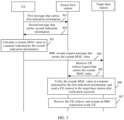
- FIG. 3 is a schematic flowchart of a connection resume method according to an embodiment of this application. The method may be applied to the communications system shown in FIG. 1 . As shown in FIG. 3 , the method includes the following steps.
- UE sends a first message that carries first indication information to a source base station, where the first indication information may be used to indicate to calculate a resume MAC value based on a first parameter set.
- the source base station receives the first message that carries the first indication information.
- the source base station If the source base station supports verification of the resume MAC value calculated by using the first parameter set, the source base station sends a second message that carries second indication information to the UE, where the second indication information may be used to indicate to verify the resume MAC value based on the first parameter set.
- the UE receives the second message that carries the second indication information.
- an RRC release message sent by the source base station to the UE may not include the second indication information.
- the UE may calculate the resume MAC value by using a second parameter set, and the source base station verifies, by using the second parameter set, the resume MAC value calculated by the UE by using the second parameter set.
- the UE calculates the resume MAC value in a manner indicated by the second indication information. To be specific, the UE calculates the resume MAC value based on the first parameter set.
- That the UE calculates the resume MAC value in a manner indicated by the second indication information may also be understood as:
- the UE activates a resume message protection support feature of the UE. It may be understood that the description is applicable to all the following embodiments.
- the UE sends an RRC resume request message that carries the resume MAC value to a target base station.
- the target base station receives the RRC resume request message that carries the MAC value.
- the target base station may not have a UE context, when receiving the RRC resume request message that carries the MAC value, the target base station may fail to verify the MAC value. Therefore, the method shown in FIG. 2 may further include the following methods.
- the target base station sends a retrieve UE context request (retrieve UE context request) message that carries the resume MAC value to the source base station.
- the source base station receives the retrieve UE context request message that carries the resume MAC value.
- the RRC resume request message further carries a resume ID.
- the target base station may learn, based on the resume ID, which base station is the source base station.
- the retrieve UE context request message may further carry all or a part of information in the RRC resume request message.
- the source base station may verify the resume MAC value based on the entire RRC resume request message.
- the source base station may activate a resume message protection support feature of the source base station based on the RRC resume request message.
- the retrieve UE context request message may further carry a resume cause value.
- the retrieve UE context request message may further carry a spare information bit (spare IE) and/or a CQI-MPDCCH.
- Any one or more parameters of the resume cause value, the spare information bit, or the CQI-NPDCCH are carried, so that the source base station may learn, when receiving a parameter in the retrieve UE context request message, to verify the resume MAC value based on the resume message protection support feature.
- the retrieve UE context request message may further carry tenth indication information.
- the tenth indication information may be used to indicate the source base station to activate the resume message protection support feature.
- the source base station verifies the resume MAC value in a manner indicated by the first indication information, to be specific, verifies the resume MAC value by using the first parameter set, and sends the UE context to the target base station after verification succeeds.
- that the source base station verifies the resume MAC value by using the first parameter set may be understood as: The source base station verifies the resume MAC value in the manner indicated by the first indication information.
- That the source base station verifies the resume MAC value in a manner indicated by the first indication information may also be understood as:
- the source base station activates the resume message protection support feature of the source base station. It may be understood that the description is applicable to all the following embodiments.
- the target base station receives the UE context, and resumes an RRC connection to the UE.
- the source base station may send the UE context to the target base station after verification of the resume MAC value succeeds. In this way, the target base station resumes the RRC connection to the UE.
- a terminal device interacts with a first terminal device, so that the terminal device can learn whether the first network device supports verification of a resume MAC value calculated by using an additional parameter (that is, a resume cause value or an RRC resume request message), and the first network device can learn whether the terminal device supports calculation of the resume MAC value by introducing the additional parameter.
- the terminal device can protect the RRC resume request message in an appropriate manner, and the first network device can verify the RRC resume request message in an appropriate manner.
- FIG. 4 is a schematic flowchart of a connection resume method according to an embodiment of this application. The method may be applied to the communications system shown in FIG. 1 . As shown in FIG. 4 , the method includes the following steps.
- a source base station sends an RRC release message that carries second indication information to a terminal device, where the second indication information is used to indicate that verification of a resume MAC value based on a first parameter set is supported.
- the terminal device receives the RRC release message that carries the second indication information.
- the first parameter set includes one or more of a resume cause value or a radio resource control RRC resume request message.
- a resume cause value or a radio resource control RRC resume request message.
- the source base station sends a broadcast message that carries the second indication information to the terminal device, where the second indication information is used to indicate that verification of the resume MAC value based on the first parameter set is supported.
- the terminal device receives the broadcast message that carries the second indication information. That is, the RRC release message may be replaced with the broadcast message.
- the broadcast message may be an MIB, an SIB, or the like.
- the terminal device calculates the resume MAC value in a manner indicated by the second indication information. To be specific, UE calculates the resume MAC value based on the first parameter set.
- the terminal device sends an RRC resume request message that carries first indication information and the resume MAC value to a target base station.
- the target base station receives the RRC resume request message that carries the first indication information and the resume MAC value.
- the first indication information may be carried in an unused bit in the RRC resume request message.
- the first indication information may be carried in an unused bit in a field of the resume cause value in the RRC resume request message.
- the first indication information may be carried in a newly added bit in the RRC resume request message, or the like.
- the target base station sends a retrieve UE context request (retrieve UE context request) message that carries the resume MAC value and the first indication information to the source base station.
- the source base station receives the retrieve UE context request message that carries the resume MAC value and the first indication information.
- step 404 may be alternatively replaced with the following:
- the target base station sends a retrieve UE context request (retrieve UE context request) message that carries the RRC resume request message and the first indication information to the source base station.
- the source base station receives the retrieve UE context request message that carries the resume MAC value and the first indication information. Therefore, after receiving the retrieve UE context request message that carries the RRC resume request message, the source base station may learn to verify the resume MAC value based on the resume cause value and/or the RRC resume request message.
- the source base station verifies the resume MAC value in a manner indicated by the first indication information, to be specific, verifies the resume MAC value by using the first parameter set, and sends a UE context to the target base station after verification succeeds.
- the target base station receives the UE context, and resumes an RRC connection to the UE.
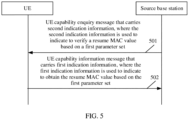
- FIG. 5 shows a connection resume method according to an embodiment of this application.
- the method may be applied to the communications system shown in FIG. 1 .
- the method includes the following steps.
- a source base station sends a UE capability enquiry (UE capability enquiry) message that carries second indication information to UE.
- the UE receives the UE capability enquiry message that carries the second indication information.
- the second indication information is used to indicate to verify a resume MAC value based on a first parameter set.
- the first parameter set includes one or more of a resume cause value or an RRC resume request message.
- the UE sends a UE capability (UE capability) information message that carries first indication information to the source base station.
- the source base station receives the UE capability information message that carries the first indication information.
- the first indication information is used to indicate to obtain the resume MAC value based on the first parameter set.
- the source base station may indicate to the UE that the source base station (that is, the source base station) supports verification of the resume AMC value by using the first parameter set, to indicate to the UE that the source base station supports a capability of verifying the RRC resume request message by using the first parameter set.
- the UE may send the UE capability information that carries the first indication information to the source base station, to indicate that the UE supports calculation of the resume MAC value by using the first parameter set, so as to implement a capability of protecting the RRC resume request message.
- the UE may not feed back the UE capability information message that carries the first indication information to the source base station. In this way, the source base station may learn that the UE does not support calculation of the resume MAC value by using the first parameter set.
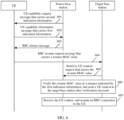
- FIG. 6 is a schematic flowchart of a connection resume method according to an embodiment of this application. As shown in FIG. 6 , the method includes the following steps.
- 601 and 602 refer to the method shown in FIG. 5 . Details are not described herein.
- a source base station sends an RRC release message to UE.
- the RRC release message may carry second indication information.
- the UE receives the RRC release message.
- the UE sends an RRC resume request message that carries a resume MAC value to a target base station.
- the target base station receives the RRC resume request message that carries the resume MAC value.
- the target base station sends a retrieve UE context request message that carries the resume MAC value to the source base station.
- the source base station receives the retrieve UE context request message that carries the resume MAC value.
- the source base station verifies the resume MAC value in a manner indicated by first indication information, to be specific, verifies the resume MAC value by using a first parameter set, and sends a UE context to the target base station after verification succeeds.
- the target base station receives the UE context, and resumes an RRC connection to the UE.
- the UE may protect the RRC resume request message in a manner indicated by the source base station, and the source base station may also verify the RRC resume request message in a manner indicated by the UE.
- the UE obtains the resume MAC value by using the first parameter set, and the resume MAC value is included in the RRC resume request message. In this way, the RRC resume request message is protected.
- FIG. 7 is a schematic flowchart of a connection resume method according to an embodiment of this application. The method may be applied to the communications system shown in FIG. 1 . As shown in FIG. 7 , the method includes the following steps.
- a source base station sends an RRC release message to UE.
- the UE receives the RRC release message.
- the UE calculates a resume MAC value based on a first parameter set.
- the UE sends an RRC resume request message that carries first indication information and the resume MAC value to a target base station.
- the target base station receives the RRC resume request message that carries the first indication information and the resume MAC value.
- the target base station sends a retrieve UE context request message that carries the first indication information and the resume MAC value to the source base station.
- the source base station receives the retrieve UE context request message that carries the first indication information and the resume MAC value.
- the source base station verifies the resume MAC value in a manner indicated by the first indication information, to be specific, verifies the resume MAC value by using the first parameter set, and sends a UE context to the target base station after verification succeeds.
- that the source base station verifies the resume MAC value by using the first parameter set may be understood as: The source base station verifies the resume MAC value in the manner indicated by the first indication information.
- the target base station receives the UE context, and resumes an RRC connection to the UE.
- the UE supports calculation of the resume MAC value based on the first parameter set.
- the source base station supports verification of the resume MAC value based on the first parameter set.
- the UE may also support calculation of the resume MAC value based on a second parameter set.
- the source base station may also support verification of the resume MAC value based on the second parameter set.
- the UE may directly use the RRC resume request message to carry the first indication information, to indicate the verification manner of the resume MAC value to the source base station, for example, a manner of verifying the resume MAC value by using the first parameter set. This improves verification efficiency of the source base station.
- FIG. 13 shows a connection resume method according to an embodiment of this application.
- the method may be applied to the communications system shown in FIG. 1 .
- the method includes the following steps.
- a source base station obtains capability information of UE.
- a source base station obtains capability information of UE may include:
- the UE reports the capability information to the source base station, where the capability information carries a resume message protection support feature of the UE.
- the source base station obtains the capability information of the UE from a core network device.
- the source base station may further send a UE capability enquiry message to the UE.
- the source base station obtains the capability information of the UE from the core network device. For example, during initial access of the UE, the capability information of the UE may be reported to a base station initially accessed by the UE, so that the initially base station accessed by the UE may send the capability information of the UE to the core network device. In this way, the core network device stores the capability information of the UE. If the source base station is the base station initially accessed by the UE, the source base station obtains the capability information of the UE in a manner of reporting the capability information by the UE.
- the foregoing description of carrying the resume message protection support feature of the UE may be further understood as:
- the capability information carries information that is used to indicate the resume message protection support feature of the UE.
- the source base station sends a twelfth message to the UE.
- the UE receives the twelfth message from the source base station.
- a target base station sends a thirteenth message to the UE.
- the UE receives the thirteenth message from the target base station.
- the UE activates the resume message protection support feature of the UE to obtain a resume MAC value.
- That the UE activates the resume message protection support feature may be understood as:
- the UE obtains the resume MAC value based on a first parameter set.
- the first parameter set For specific descriptions of the first parameter set, refer to the foregoing embodiment.
- the twelfth message may be, for example, a broadcast message or an RRC release message.
- the thirteenth message may be, for example, a broadcast message or another downlink RRC message.
- the source base station may further send the RRC release message to the UE.
- the twelfth message and the thirteenth message correspondingly, refer to the descriptions of the second message.
- the UE sends an RRC resume request message that carries the resume MAC value to the target base station.
- the target base station receives the RRC resume request message.
- the target base station sends a retrieve UE context request message that carries the resume MAC value to the source base station.
- the source base station receives the retrieve UE context request message.
- the retrieve UE context request message may further carry a third parameter set.
- the third parameter set may include all or a part of information in the RRC resume request message.
- the source base station may verify the resume MAC value based on the entire RRC resume request message.
- the source base station may activate the resume message protection support feature of the source base station based on the RRC resume request message.
- the retrieve UE context request message may further carry a resume cause value.
- the retrieve UE context request message may further carry a spare information bit (spare IE) and/or a CQI-MPDCCH.
- Any one or more parameters of the resume cause value, the spare information bit, or the CQI-NPDCCH are carried, so that the source base station may learn, when receiving a parameter in the retrieve UE context request message, to verify the resume MAC value based on the resume message protection support feature.
- the retrieve UE context request message may further carry tenth indication information.
- the tenth indication information may be used to indicate the source base station to activate the resume message protection support feature.
- the source base station activates the resume message protection support feature of the source base station, and verifies the resume MAC value. Further, the source base station may verify the resume MAC value based on the first parameter set.
- the source base station sends a UE context to the target base station, and the target base station receives the UE context.
- the target base station resumes an RRC connection to the UE.
- the UE when sending the RRC resume request message, the UE may further send the RRC resume request message to the source base station.
- the source base station when the UE sends the RRC resume request message that carries the resume MAC value to the source base station, the source base station may directly verify the resume MAC value based on the first parameter set. For example, steps 304 to 307 in FIG. 3 may be replaced with the following: The UE sends an RRC resume request message that carries the resume MAC value to the source base station.
- the source base station receives the RRC resume request message that carries the resume MAC value, verifies the resume MAC value in a manner indicated by the first indication information, and resumes an RRC connection to the UE after verification succeeds.
- steps 403 to 406 in FIG. 4 may be replaced with the following:
- the UE sends an RRC resume request message that carries first indication information and the resume MAC value to the source base station.
- the source base station receives the RRC resume request message that carries the first indication information and the resume MAC value, verifies the resume MAC value in a manner indicated by the first indication information, and resumes an RRC connection to the UE after verification succeeds.
- the methods shown in FIG. 6 and FIG. 7 may also be as shown above. Details are not described herein again.
- the methods and operations implemented by the terminal device may alternatively be implemented by a component (for example, a chip or a circuit) that can be used in the terminal device.
- the methods and operations implemented by the network device may alternatively be implemented by a component (for example, a chip or a circuit) of the network device.
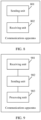
- FIG. 8 is a schematic diagram of a structure of a communications apparatus according to an embodiment of this application.
- the communications apparatus may be a terminal device, or may be a chip.
- the communications apparatus is configured to perform the method described in embodiments of this application. As shown in FIG. 8 , the communications apparatus includes:
- the sending unit 801 is further configured to: when the second message carries second indication information, the terminal device sends an RRC resume request message that carries the resume MAC value to a second network device, where the second indication information is used to indicate to verify the resume MAC value based on the first parameter set.
- the first message is an access stratum AS security mode complete message, or the first message is a terminal device capability information message.
- the second message is an RRC release message, or the second message is a broadcast message.
- the communications apparatus may further include a processing unit, which is not shown in FIG. 8 .
- the processing unit may be one or more processors.
- the sending unit 801 may be a transmitter.
- the receiving unit 802 may be a receiver.
- the sending unit 801 and the receiving unit 802 are integrated into one component, for example, a transceiver.
- the processing unit may be one or more processors.
- the sending unit 801 may be an output interface.
- the receiving unit 802 may be an input interface.
- the sending unit 801 and the receiving unit 802 are integrated into one unit, for example, an input/output interface, and the input/output interface is also referred to as a communications interface, an interface circuit, an interface, or the like.
- the units shown in FIG. 8 may be further configured to perform operations performed by the terminal device in any one of the method embodiments shown in FIG. 2 to FIG. 7 , and FIG. 13 . Details are not described herein one by one.
- FIG. 9 is a schematic diagram of a structure of a communications apparatus according to an embodiment of this application.
- the communications apparatus may be a first network device, or may be a chip.
- the communications apparatus is configured to perform the method described in embodiments of this application. As shown in FIG. 9 , the communications apparatus includes:
- the receiving unit 801 is further configured to receive a retrieve UE context request message that carries the resume MAC value.
- the apparatus further includes a processing unit 903.
- the processing unit 903 is configured to verify the resume MAC value based on the first parameter set.
- the first message is an access stratum AS security mode complete message, or the first message is a terminal device capability information message.
- the second message is an RRC release message, or the second message is a broadcast message.
- the processing unit 903 may be one or more processors.
- the sending unit 902 may be a transmitter.
- the receiving unit 901 may be a receiver.
- the sending unit 902 and the receiving unit 901 are integrated into one component, for example, a transceiver.
- the processing unit 903 may be one or more processors.
- the sending unit 902 may be an output interface.
- the receiving unit 901 may be an input interface.
- the sending unit 902 and the receiving unit 901 are integrated into one unit, for example, an input/output interface, and the input/output interface is also referred to as a communications interface, an interface circuit, an interface, or the like.
- the units shown in FIG. 9 may be further configured to perform operations performed by the first network device in any one of the method embodiments shown in FIG. 2 to FIG. 7 , and FIG. 13 . Details are not described herein one by one.
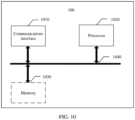
- FIG. 10 shows a communications apparatus 100 according to an embodiment of this application.
- the communications apparatus 100 is configured to implement functions of the terminal device in the foregoing method.
- the apparatus may be a terminal device, or may be an apparatus in a terminal device, or an apparatus that can be used together with a terminal device.
- the apparatus may alternatively be a chip system.
- the chip system may include a chip, or may include a chip and another discrete component.
- the apparatus 100 includes at least one processor 1020, configured to implement the functions of the terminal device in the method provided in embodiments of this application.
- the apparatus 100 may further include a communications interface 1010.
- the communications interface may be a transceiver, a circuit, a bus, a module, or a communications interface of another type, and is configured to communicate with another device through a transmission medium.
- the communications interface 1010 is used for an apparatus in the apparatus 100 to communicate with another device.
- the processor 1020 receives and sends data through the communications interface 1010, and is configured to implement the method in the foregoing method embodiment.
- the communications interface 1010 may be configured to perform the methods shown in FIG. 2 and FIG. 5 .
- the communications interface 1010 may be further configured to perform the method shown in 301 and 302 in FIG. 3 , may be further configured to perform the method shown in 401 in FIG. 4 , may be further configured to perform the method shown in 601 to 604 in FIG. 6 , and may be further configured to perform the method shown in 701 and 703 in FIG. 7 .
- the processor 1020 may be further configured to perform the corresponding methods shown in FIG. 3 , FIG. 4 , FIG. 6 , FIG. 7 , and FIG. 13 .
- the processor 1020 may be configured to perform the method shown in 303 in FIG. 3 .
- the processor 1020 may be further configured to perform the method shown in 402 in FIG. 4 . Details are not described herein one by one.
- the apparatus 100 may further include at least one memory 1030, configured to store program instructions and/or data.
- the memory 1030 is coupled to the processor 1020. Coupling in this embodiment of this application is indirect coupling or a communication connection between apparatuses, units, or modules, may be in electrical, mechanical, or other forms, and is used for information exchange between the apparatuses, the units, and the modules.
- the processor 1020 may cooperate with the memory 1030.
- the processor 1020 may execute the program instructions stored in the memory 1030. At least one of the at least one memory may be included in the processor.
- a specific connection medium between the communications interface 1010, the processor 1020, and the memory 1030 is not limited in this embodiment of this application.
- the memory 1030, the processor 1020, and the communications interface 1010 are connected through a bus 1040 in FIG. 10 .
- the bus is indicated by using a bold line in FIG. 10 .
- a connection manner between other components is merely an example for description, and is not limited thereto.
- the bus may be classified into an address bus, a data bus, a control bus, and the like. For ease of representation, only one bold line is used to indicate the bus in FIG. 10 , but this does not mean that there is only one bus or only one type of bus.
- the communications interface 1010 may output or receive a baseband signal.
- the communications interface 1010 may output or receive a radio frequency signal.
- the processor may be a general-purpose processor, a digital signal processor, an application-specific integrated circuit, a field programmable gate array or another programmable logic device, a discrete gate or transistor logic device, or a discrete hardware component.
- the processor can implement or execute the methods, steps, and logical block diagrams disclosed in embodiments of this application.
- the general-purpose processor may be a microprocessor or any conventional processor or the like. The steps of the methods disclosed with reference to embodiments of this application may be directly performed and completed by a hardware processor, or may be performed and completed by using a combination of hardware and software modules in the processor.
- FIG. 11 is a schematic diagram of a structure of a terminal device 1100 according to an embodiment of this application.
- the terminal device may perform the methods shown in FIG. 2 to FIG. 7 , and FIG. 13 , or the terminal device may perform the operations of the terminal device shown in FIG. 8 .
- FIG. 11 shows only main components of the terminal device.
- the terminal device 1100 includes a processor, a memory, a radio frequency circuit, an antenna, and an input/output apparatus.
- the processor is mainly configured to process a communications protocol and communications data, control the entire terminal device, execute a software program, and process data of the software program, for example, configured to support the terminal device in performing the procedures described in FIG. 2 to FIG. 7 , and FIG. 13 .
- the memory is mainly configured to store the software program and the data.
- the radio frequency circuit is mainly configured to perform conversion between a baseband signal and a radio frequency signal, and process the radio frequency signal.
- the antenna is mainly configured to receive and send the radio frequency signal in a form of an electromagnetic wave.
- the terminal device 1100 may further include the input/output apparatus, such as a touchscreen, a display screen, or a keyboard, and the input/output apparatus is mainly configured to receive data entered by a user and output data to the user. It should be noted that some types of terminal devices may not have input/output apparatuses.
- the processor may read the software program in a storage unit, interpret and execute the data of the software program, and process the data of the software program.
- the processor outputs a baseband signal to the radio frequency circuit.
- the radio frequency circuit After performing radio frequency processing on the baseband signal, the radio frequency circuit sends a radio frequency signal in a form of electromagnetic wave through the antenna.
- the radio frequency circuit receives the radio frequency signal through the antenna, converts the radio frequency signal into a baseband signal, and outputs the baseband signal to the processor.
- the processor converts the baseband signal into data and processes the data.
- FIG. 11 shows only one memory and one processor.
- An actual terminal device may include a plurality of processors and memories.
- the memory may also be referred to as a storage medium, a storage device, or the like. This is not limited in this embodiment of this application.
- the processor in this embodiment of this application may be an integrated circuit chip and has a signal processing capability.
- the steps in the foregoing method embodiments can be implemented by a hardware integrated logical circuit in the processor, or by using instructions in a form of software.
- the foregoing processor may be a general-purpose processor, a digital signal processor (DSP), an application-specific integrated circuit (ASIC), a field programmable gate array (FPGA) or another programmable logic device, a discrete gate or transistor logic device, or a discrete hardware component.
- the processor may implement or perform the methods, steps, and logical block diagrams that are disclosed in embodiments of this application.
- the general-purpose processor may be a microprocessor, or the processor may be any conventional processor or the like.
- the steps of the methods disclosed with reference to embodiments of this application may be directly performed and completed by a hardware decoding processor, or may be performed and completed by using a combination of hardware and software modules in the decoding processor.
- the software module may be located in a mature storage medium in the art, for example, a random access memory, a flash memory, a read-only memory, a programmable read-only memory, an electrically erasable programmable memory, or a register.
- the storage medium is located in the memory.
- the processor reads information in the memory and completes the steps in the foregoing methods in combination with hardware of the processor.
- the processor may include a baseband processor and a central processing unit (central processing unit, CPU).
- the baseband processor is mainly configured to process a communications protocol and communications data.
- the CPU is mainly configured to control the entire terminal device, execute a software program, and process data of the software program.
- the processor may alternatively be a network processor (network processor, NP) or a combination of a CPU and an NP.
- the processor may further include a hardware chip.
- the hardware chip may be an application-specific integrated circuit (application-specific integrated circuit, ASIC), a programmable logic device (programmable logic device, PLD), or a combination thereof.
- the PLD may be a complex programmable logic device (complex programmable logic device, CPLD), a field-programmable logic gate array (field-programmable gate array, FPGA), a generic array logic (generic array logic, GAL), or any combination thereof.
- the memory in this embodiment of this application may be a volatile memory or a nonvolatile memory, or may include both a volatile memory and a nonvolatile memory.
- the non-volatile memory may be a read-only memory (read-only memory, ROM), a programmable read-only memory (programmable ROM, PROM), an erasable programmable read-only memory (erasable PROM, EPROM), an electrically erasable programmable read-only memory (electrically EPROM, EEPROM), or a flash memory.
- the volatile memory may be a random access memory (random access memory, RAM), which is used as an external cache.
- RAMs are available, for example, a static random access memory (static RAM, SRAM), a dynamic random access memory (dynamic RAM, DRAM), a synchronous dynamic random access memory (synchronous DRAM, SDRAM), a double data rate synchronous dynamic random access memory (double data rate SDRAM, DDR SDRAM), an enhanced synchronous dynamic random access memory (enhanced SDRAM, ESDRAM), a synchlink dynamic random access memory (synchlink DRAM, SLDRAM), and a direct rambus random access memory (direct rambus RAM, DR RAM).
- static random access memory static random access memory
- DRAM dynamic random access memory
- DRAM dynamic random access memory
- SDRAM synchronous dynamic random access memory
- double data rate SDRAM double data rate SDRAM
- DDR SDRAM double data rate SDRAM
- ESDRAM enhanced synchronous dynamic random access memory
- synchlink dynamic random access memory synchlink dynamic random access memory
- direct rambus RAM direct rambus RAM
- the antenna and the radio frequency circuit that have transceiver functions may be considered as a transceiver unit 801 of the terminal device 1100.
- the processor that has a processing function may be considered as a processing unit 802 of the terminal device 1100.
- the terminal device 1100 may include the transceiver unit 801 and the processing unit 802.
- the transceiver unit may also be referred to as a transceiver, a transceiver machine, a transceiver apparatus, or the like.
- a component that is in the transceiver unit 801 and that is configured to implement a receiving function may be considered as a receiving unit.
- a component that is in the transceiver unit 801 and that is configured to implement a sending function may be considered as a sending unit. That is, the transceiver unit 801 includes the receiving unit and the sending unit.
- the receiving unit may also be referred to as a receiver machine, a receiver, a receiver circuit, or the like.
- the sending unit may be referred to as a transmitter machine, a transmitter, a transmitter circuit, or the like.
- the transceiver unit 801 and the processing unit 802 may be integrated into one device, or may be separated as different devices.
- the processor and the memory may be integrated into one device, or may be separated as different devices.
- the transceiver unit 801 may be configured to perform the methods shown in FIG. 2 and FIG. 5 .
- the transceiver unit 801 may be further configured to perform the method shown in 301 and 302 in FIG. 3 , may be further configured to perform the method shown in 401 in FIG. 4 , may be further configured to perform the method shown in 601 to 604 in FIG. 6 , and may be further configured to perform the method shown in 701 and 703 in FIG. 7 .
- the processing unit 802 may be further configured to perform the corresponding methods shown in FIG. 3 , FIG. 4 , FIG. 6 , and FIG. 7 .
- the processing unit 802 may be configured to perform the method shown in 303 in FIG. 3 .
- the processing unit 802 may be further configured to perform the method shown in 402 in FIG. 4 . Details are not described herein one by one.
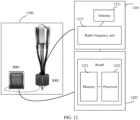
- FIG. 12 is a schematic diagram of a structure of a network device 1200 according to an embodiment of this application.
- the network device may perform operations of the first network device (for example, the source base station) in the methods shown in FIG. 2 to FIG. 7 , and FIG. 13 , or the network device may perform operations of the communications apparatus shown in FIG. 9 .
- the network device may perform operations of the second network device (for example, the target base station) in the methods shown in FIG. 2 to FIG. 7 , and FIG. 13 .
- the network device 1200 includes one or more remote radio units (remote radio units, RRUs) 1201 and one or more baseband units (baseband units, BBUs) 1202.
- the RRU 1201 may be referred to as a transceiver unit, a transceiver machine, a transceiver circuit, a transceiver, or the like, and may include at least one antenna 1212 and a radio frequency unit 1212.
- the RRU 1201 part is mainly configured to receive and send a radio frequency signal, and perform conversion between the radio frequency signal and a baseband signal.
- the BBU 1202 part is mainly configured to perform baseband processing, control the network device, and the like.
- the RRU 1201 and the BBU 1202 may be physically disposed together, or may be physically disposed separately, that is, may be distributed network devices.
- the BBU 1202 is a control center of the network device, may also be referred to as a processing unit, and is mainly configured to complete baseband processing functions such as channel coding, multiplexing, modulation, and spectrum spreading.
- the BBU 1202 may include one or more boards.
- a plurality of boards may jointly support a radio access network (such as an LTE network) of a single access standard, or may separately support radio access networks of different access standards.
- the BBU 1202 further includes a memory 1221 and a processor 1222.
- the memory 1221 is configured to store a necessary message and necessary data.
- the processor 1222 is configured to control the network device to perform a necessary action, for example, control the network device to perform a corresponding operation shown in FIG. 12 .
- the memory 1221 and the processor 1222 may serve the one or more boards. That is, the memory and the processor may be disposed individually on each board. Alternatively, the plurality of boards may share a same memory and processor.
- the processor may be a CPU, an NP, or a combination of a CPU and an NP.
- the processor may further include a hardware chip.
- the hardware chip may be an ASIC, a PLD, or a combination thereof.
- the PLD may be a CPLD, an FPGA, a GAL, or any combination thereof.
- the memory may include a volatile memory, such as a RAM.
- the memory may alternatively include a non-volatile memory, for example, a flash memory, a hard disk drive, or a solid-state drive.
- the memory may further include a combination of the foregoing types of memories.
- the network device shown in FIG. 12 is merely an example. In specific implementation, there may be another type of network device. Therefore, the network device shown in FIG. 12 should not be understood as a limitation on embodiments of this application.
- this application further provides a computer program product.
- the computer program product includes computer program code.
- the computer program code When the computer program code is run on a computer, the computer is enabled to perform the methods in the embodiments shown in FIG. 2 to FIG. 7 , and FIG. 13 . Further, the computer may be enabled to perform, based on the scenarios provided in embodiments of this application, the methods shown in FIG. 2 to FIG. 7 , and FIG. 13 .
- this application further provides a computer-readable medium.
- the computer-readable medium stores program code.
- the program code When the program code is run on a computer, the computer is enabled to perform the methods in the embodiments shown in FIG. 2 to FIG. 7 , and FIG. 13 . Further, the computer may be enabled to perform, based on the scenarios provided in embodiments of this application, the methods shown in FIG. 2 to FIG. 7 , and FIG. 13 .
- this application further provides a communications system, including the foregoing terminal device, the foregoing first network device, and the foregoing second network device.
- the terminal device may be configured to perform the methods shown in FIG. 2 to FIG. 7 , and FIG. 13 provided in embodiments of this application.
- the first network device may be configured to perform the methods of the source base station shown in FIG. 2 to FIG. 7 , and FIG. 13 according to embodiments of this application.
- the second network device may be configured to perform the methods of the target base station shown in FIG. 2 to FIG. 7 , and FIG. 13 according to embodiments of this application.
- All or a part of the foregoing embodiments may be implemented by software, hardware, firmware, or any combination thereof.
- all or a part of the embodiments may be implemented in a form of a computer program product.
- the computer program product includes one or more computer instructions.
- the computer may be a general-purpose computer, a dedicated computer, a computer network, or any other programmable apparatus.
- the computer instructions may be stored in a computer-readable storage medium or may be transmitted from a computer-readable storage medium to another computer-readable storage medium.
- the computer instructions may be transmitted from a website, computer, server, or data center to another website, computer, server, or data center in a wired (for example, a coaxial cable, an optical fiber, or a digital subscriber line (digital subscriber line, DSL)) or wireless (for example, infrared, radio, or microwave) manner.
- the computer-readable storage medium may be any usable medium accessible by the computer, or a data storage device, such as a server or a data center that integrates one or more usable media.
- the usable medium may be a magnetic medium (for example, a floppy disk, a hard disk drive, or a magnetic tape), an optical medium (for example, a high-density digital video disc (digital video disc, DVD)), a semiconductor medium (for example, a solid-state drive (solid state disc, SSD)), or the like.
- a magnetic medium for example, a floppy disk, a hard disk drive, or a magnetic tape
- an optical medium for example, a high-density digital video disc (digital video disc, DVD)
- a semiconductor medium for example, a solid-state drive (solid state disc, SSD)
Landscapes
- Engineering & Computer Science (AREA)
- Computer Networks & Wireless Communication (AREA)
- Signal Processing (AREA)
- Computer Security & Cryptography (AREA)
- Databases & Information Systems (AREA)
- Mobile Radio Communication Systems (AREA)
Claims (15)
- Verbindungswiederaufnahmeverfahren, wobei das Verfahren Folgendes umfasst:Senden (201), durch ein Endgerät, einer ersten Nachricht, die erste Anzeigeinformationen führt, an ein erstes Netzwerkgerät, wobei die ersten Anzeigeinformationen verwendet werden, um anzuzeigen, dass ein Wert eines Wiederaufnahmenachrichtenauthentifizierungscodes MAC basierend auf einem ersten Parametersatz berechnet werden soll, und der erste Parametersatz einen oder mehrere eines Wiederaufnahmegrundwerts oder einer Wiederaufnahmeanforderungsnachricht einer Funkressourcensteuerung RRC umfasst;Empfangen (202), durch das Endgerät, einer zweiten Nachricht von dem ersten Netzwerkgerät; undwenn die zweite Nachricht zweite Anzeigeinformationen führt, Senden, durch das Endgerät, einer RRC-Wiederaufnahmeanforderungsnachricht, die den Wiederaufnahme-MAC-Wert führt, an ein zweites Netzwerkgerät, wobei die zweiten Anzeigeinformationen verwendet werden, um anzuzeigen, dass der Wiederaufnahme-MAC-Wert basierend auf dem ersten Parametersatz verifiziert werden soll.
- Verfahren nach Anspruch 1, wobei die erste Nachricht eine Sicherheitsmodusabschlussnachricht einer Zugriffsschicht AS ist oder die erste Nachricht eine Endgerätfähigkeitsinformationsnachricht ist.
- Verfahren nach Anspruch 1 oder 2, wobei die zweite Nachricht eine RRC-Freigabenachricht ist oder die zweite Nachricht eine Rundsendenachricht ist.
- Verbindungswiederaufnahmeverfahren, wobei das Verfahren Folgendes umfasst:Empfangen (201), durch ein erstes Netzwerkgerät, einer ersten Nachricht, die von einem Endgerät stammt und die erste Anzeigeinformationen führt, wobei die ersten Anzeigeinformationen verwendet werden, um anzuzeigen, dass ein Wert eines Wiederaufnahmenachrichtenauthentifizierungscodes MAC basierend auf einem ersten Parametersatz berechnet werden soll, und der erste Parametersatz einen oder mehrere eines Wiederaufnahmegrundwerts oder einer Wiederaufnahmeanforderungsnachricht einer Funkressourcensteuerung RRC umfasst; undSenden (202), durch das erste Netzwerkgerät, einer zweiten Nachricht, die zweite Anzeigeinformationen führt, an das Endgerät, wobei die zweiten Anzeigeinformationen verwendet werden, um anzuzeigen, dass der Wiederaufnahme-MAC-Wert basierend auf dem ersten Parametersatz verifiziert werden soll.
- Verfahren nach Anspruch 4, wobei das Verfahren ferner Folgendes umfasst:
Empfangen, durch das erste Netzwerkgerät, einer UE-Kontextabrufanforderungsnachricht, die den Wiederaufnahme-MAC-Wert führt, und Verifizieren, durch das erste Netzwerkgerät, des Wiederaufnahme-MAC-Werts basierend auf dem ersten Parametersatz. - Verfahren nach Anspruch 4 oder 5, wobei die erste Nachricht eine Sicherheitsmodusabschlussnachricht einer Zugriffsschicht AS ist oder die erste Nachricht eine Endgerätfähigkeitsinformationsnachricht ist.
- Verfahren nach einem der Ansprüche 4 bis 6, wobei die zweite Nachricht eine RRC-Verbindungsfreigabenachricht ist oder die zweite Nachricht eine Rundsendenachricht ist.
- Kommunikationsvorrichtung, wobei die Vorrichtung Folgendes umfasst:eine Sendeeinheit (801), die dazu konfiguriert ist, eine erste Nachricht, die erste Anzeigeinformationen führt, an ein erstes Netzwerkgerät zu senden, wobei die ersten Anzeigeinformationen verwendet werden, um anzuzeigen, dass ein Wert eines Wiederaufnahmenachrichtenauthentifizierungscodes MAC basierend auf einem ersten Parametersatz berechnet werden soll, und der erste Parametersatz einen oder mehrere eines Wiederaufnahmegrundwerts oder einer Wiederaufnahmeanforderungsnachricht einer Funkressourcensteuerung RRC umfasst; undeine Empfangseinheit (802), die dazu konfiguriert ist, eine zweite Nachricht von dem ersten Netzwerkgerät zu empfangen, wobeidie Sendeeinheit (801) ferner zu Folgendem konfiguriert ist: wenn die zweite Nachricht zweite Anzeigeinformationen führt, Senden einer RRC-Wiederaufnahmeanforderungsnachricht, die den Wiederaufnahme-MAC-Wert führt, an ein zweites Netzwerkgerät, wobei die zweiten Anzeigeinformationen verwendet werden, um anzuzeigen, dass der Wiederaufnahme-MAC-Wert basierend auf dem ersten Parametersatz verifiziert werden soll.
- Vorrichtung nach Anspruch 8, wobei die erste Nachricht eine Sicherheitsmodusabschlussnachricht einer Zugriffsschicht AS ist oder die erste Nachricht eine Endgerätfähigkeitsinformationsnachricht ist.
- Vorrichtung nach Anspruch 8 oder 9, wobei die zweite Nachricht eine RRC-Freigabenachricht ist oder die zweite Nachricht eine Rundsendenachricht ist.
- Kommunikationsvorrichtung, wobei die Vorrichtung Folgendes umfasst:eine Empfangseinheit (901), die dazu konfiguriert ist, eine erste Nachricht zu empfangen, die von einem Endgerät stammt und die erste Anzeigeinformationen führt, wobei die ersten Anzeigeinformationen verwendet werden, um anzuzeigen, dass ein Wert eines Wiederaufnahmenachrichtenauthentifizierungscodes MAC basierend auf einem ersten Parametersatz berechnet werden soll, und der erste Parametersatz einen oder mehrere eines Wiederaufnahmegrundwerts oder einer Wiederaufnahmeanforderungsnachricht einer Funkressourcensteuerung RRC umfasst; undeine Sendeeinheit (902), die dazu konfiguriert ist, eine zweite Nachricht, die zweite Anzeigeinformationen führt, an das Endgerät zu senden, wobei die zweiten Anzeigeinformationen verwendet werden, um anzuzeigen, dass der Wiederaufnahme-MAC-Wert basierend auf dem ersten Parametersatz verifiziert werden soll.
- Vorrichtung nach Anspruch 11, wobeidie Empfangseinheit (901) ferner dazu konfiguriert ist, eine UE-Kontextabrufanforderungsnachricht zu empfangen, die den Wiederaufnahme-MAC-Wert führt, undwobei die Vorrichtung ferner Folgendes umfasst:
eine Verarbeitungseinheit (903), die dazu konfiguriert ist, den Wiederaufnahme-MAC-Wert basierend auf dem ersten Parametersatz zu verifizieren. - Vorrichtung nach Anspruch 11 oder 12, wobei die erste Nachricht eine Sicherheitsmodusabschlussnachricht einer Zugriffsschicht AS ist oder die erste Nachricht eine Endgerätfähigkeitsinformationsnachricht ist.
- Vorrichtung nach einem der Ansprüche 11 bis 13, wobei die zweite Nachricht eine RRC-Verbindungsfreigabenachricht ist oder die zweite Nachricht eine Rundsendenachricht ist.
- Computerlesbares Speichermedium, wobei das computerlesbare Speichermedium dazu konfiguriert ist, Anweisungen zu speichern, und wenn die Anweisungen ausgeführt werden, das Verfahren nach einem der Ansprüche 1 bis 7 implementiert wird.
Applications Claiming Priority (3)
| Application Number | Priority Date | Filing Date | Title |
|---|---|---|---|
| CN201911089532 | 2019-11-08 | ||
| CN202010075775.0A CN112788795B (zh) | 2019-11-08 | 2020-01-22 | 连接恢复方法及装置 |
| PCT/CN2020/110798 WO2021088471A1 (zh) | 2019-11-08 | 2020-08-24 | 连接恢复方法及装置 |
Publications (3)
| Publication Number | Publication Date |
|---|---|
| EP4044760A1 EP4044760A1 (de) | 2022-08-17 |
| EP4044760A4 EP4044760A4 (de) | 2022-12-14 |
| EP4044760B1 true EP4044760B1 (de) | 2024-10-09 |
Family
ID=75749253
Family Applications (1)
| Application Number | Title | Priority Date | Filing Date |
|---|---|---|---|
| EP20884136.1A Active EP4044760B1 (de) | 2019-11-08 | 2020-08-24 | Verbindungswiederaufnahmeverfahren und -vorrichtungen |
Country Status (5)
| Country | Link |
|---|---|
| US (1) | US12598665B2 (de) |
| EP (1) | EP4044760B1 (de) |
| JP (1) | JP7401669B2 (de) |
| CN (1) | CN112788795B (de) |
| WO (1) | WO2021088471A1 (de) |
Families Citing this family (2)
| Publication number | Priority date | Publication date | Assignee | Title |
|---|---|---|---|---|
| JP2023500194A (ja) * | 2019-11-11 | 2023-01-05 | テレフオンアクチーボラゲット エルエム エリクソン(パブル) | 無線リソース制御メッセージの完全性保護 |
| WO2023010531A1 (zh) * | 2021-08-06 | 2023-02-09 | 北京小米移动软件有限公司 | 无线资源控制rrc连接恢复的安全增强方法和通信装置 |
Family Cites Families (21)
| Publication number | Priority date | Publication date | Assignee | Title |
|---|---|---|---|---|
| WO2017126922A1 (ko) * | 2016-01-19 | 2017-07-27 | 엘지전자(주) | 무선 통신 시스템에서 연결 재개 방법 및 이를 위한 장치 |
| CN115665857B (zh) * | 2016-07-13 | 2026-02-03 | 三星电子株式会社 | 在移动通信中使用的接入控制方法和装置 |
| WO2018029621A1 (en) * | 2016-08-12 | 2018-02-15 | Telefonaktiebolaget Lm Ericsson (Publ) | Methods, devices and nodes for resuming a radio connection for a wireless device |
| CN108566309B (zh) * | 2017-01-26 | 2019-08-06 | 华为技术有限公司 | 一种接入目标小区的方法以及设备 |
| CN108633003B (zh) * | 2017-03-16 | 2021-10-01 | 华为技术有限公司 | 一种资源分配方法和装置以及终端设备 |
| CN109246802B (zh) * | 2017-05-05 | 2024-04-16 | 中兴通讯股份有限公司 | 无线资源控制连接释放方法及装置、基站和用户设备 |
| WO2018208076A1 (ko) * | 2017-05-10 | 2018-11-15 | 엘지전자 주식회사 | Rrc 연결을 요청하는 방법 및 이를 지원하는 장치 |
| US20200214070A1 (en) * | 2017-06-14 | 2020-07-02 | Samsung Electronics Co., Ltd | Method and user equipment (ue) for reconnecting rrc connection with radio access network (ran) node |
| US10904941B2 (en) * | 2017-07-30 | 2021-01-26 | Lg Electronics Inc. | Method and apparatus for resuming RRC connection in CU-DU division scenario |
| WO2019027296A1 (en) * | 2017-08-04 | 2019-02-07 | Lg Electronics Inc. | METHOD FOR EXECUTING RAN-BASED RADIO MESSAGING AND DEVICE SUPPORTING SAID METHOD |
| WO2019030727A1 (en) * | 2017-08-11 | 2019-02-14 | Telefonaktiebolaget Lm Ericsson (Publ) | METHOD FOR RECOVERING CONNECTION AFTER REJECTION |
| CN109803258B (zh) * | 2017-11-16 | 2021-10-19 | 华为技术有限公司 | 一种请求恢复连接的方法及装置 |
| CN109803456B (zh) | 2017-11-16 | 2021-05-11 | 华为技术有限公司 | 一种请求恢复连接的方法及装置 |
| CN109644354B (zh) * | 2018-03-20 | 2021-10-26 | Oppo广东移动通信有限公司 | 一种完整性验证方法、网络设备、ue及计算机存储介质 |
| WO2020141965A1 (ko) * | 2019-01-04 | 2020-07-09 | 엘지전자 주식회사 | 무선 통신 시스템에서 네트워크에 등록을 수행하는 방법 및 이를 위한 장치 |
| US11917410B2 (en) * | 2019-01-29 | 2024-02-27 | Google Llc | Integrity protection with message authentication codes having different lengths |
| CN111757552B (zh) * | 2019-03-28 | 2023-11-21 | 苹果公司 | 用于快速载波聚合和双连接配置的辅助信息 |
| EP3735049A1 (de) * | 2019-04-30 | 2020-11-04 | Comcast Cable Communications LLC | Drahtlose kommunikation für netzwerkzugangskonfiguration |
| WO2021030083A1 (en) * | 2019-08-13 | 2021-02-18 | Google Llc | Systems and methods for handling a radio resource control inactive state |
| WO2021046840A1 (en) * | 2019-09-13 | 2021-03-18 | Qualcomm Incorporated | Resume of dual connectivity from secondary node with delta configuration |
| WO2021092585A1 (en) * | 2019-11-07 | 2021-05-14 | Ofinno, Llc | Random access on multiple active protocol stacks |
-
2020
- 2020-01-22 CN CN202010075775.0A patent/CN112788795B/zh active Active
- 2020-08-24 EP EP20884136.1A patent/EP4044760B1/de active Active
- 2020-08-24 WO PCT/CN2020/110798 patent/WO2021088471A1/zh not_active Ceased
- 2020-08-24 JP JP2022526173A patent/JP7401669B2/ja active Active
-
2022
- 2022-05-06 US US17/738,673 patent/US12598665B2/en active Active
Also Published As
| Publication number | Publication date |
|---|---|
| JP2023500145A (ja) | 2023-01-04 |
| US12598665B2 (en) | 2026-04-07 |
| US20220264689A1 (en) | 2022-08-18 |
| JP7401669B2 (ja) | 2023-12-19 |
| CN112788795A (zh) | 2021-05-11 |
| EP4044760A1 (de) | 2022-08-17 |
| CN112788795B (zh) | 2023-04-07 |
| WO2021088471A1 (zh) | 2021-05-14 |
| EP4044760A4 (de) | 2022-12-14 |
Similar Documents
| Publication | Publication Date | Title |
|---|---|---|
| US12219655B2 (en) | Transmission method and apparatus of discovery signal and communication system | |
| EP3651404B1 (de) | Verfahren und vorrichtung zum konkurenzfreien zufallszugriff | |
| CN113132334B (zh) | 授权结果的确定方法及装置 | |
| CN113923750B (zh) | 接入小区的方法和装置 | |
| US20230107139A1 (en) | Relay discovery method and terminal | |
| US12408141B2 (en) | Paging method and apparatus, device, and storage medium | |
| EP4351192A1 (de) | Relaiskommunikationsverfahren, -vorrichtung und -system | |
| CN113395697B (zh) | 传输寻呼信息的方法和通信装置 | |
| WO2019086012A1 (zh) | 一种通信方法及装置 | |
| WO2021062730A1 (zh) | 无线通信方法和装置 | |
| JP2023040195A (ja) | 通信方法、及びユーザ装置 | |
| WO2022231684A1 (en) | Managing an unmanned aerial vehicle identity | |
| EP3849271A1 (de) | Kommunikationsverfahren und -vorrichtung | |
| CN116669034A (zh) | 检测伪基站的方法和装置 | |
| US12598665B2 (en) | Connection resume method and apparatus | |
| US11690024B2 (en) | Configuring client device regulation modes for sidelink communications | |
| US12414090B2 (en) | Resource indication method, resource determining method, and related apparatus | |
| EP3846577B1 (de) | Verfahren und vorrichtung zur frühzeitigen übertragung von downlink-daten | |
| US20240414616A1 (en) | Communication method and network device | |
| EP3703445B1 (de) | Datenübertragungsverfahren, endgerätevorrichtung und netzwerkvorrichtung | |
| KR20210118932A (ko) | 다중 대역 통신 방법 및 장치 | |
| CN114631398A (zh) | 一种通信方法,通信装置及通信系统 | |
| RU2711475C1 (ru) | Защита информации о местоположении | |
| CN113973270B (zh) | 消息发送、消息接收方法、装置及通信设备 | |
| US20250233689A1 (en) | Rate matching method and rate matching apparatus |
Legal Events
| Date | Code | Title | Description |
|---|---|---|---|
| STAA | Information on the status of an ep patent application or granted ep patent |
Free format text: STATUS: THE INTERNATIONAL PUBLICATION HAS BEEN MADE |
|
| PUAI | Public reference made under article 153(3) epc to a published international application that has entered the european phase |
Free format text: ORIGINAL CODE: 0009012 |
|
| STAA | Information on the status of an ep patent application or granted ep patent |
Free format text: STATUS: REQUEST FOR EXAMINATION WAS MADE |
|
| 17P | Request for examination filed |
Effective date: 20220512 |
|
| AK | Designated contracting states |
Kind code of ref document: A1 Designated state(s): AL AT BE BG CH CY CZ DE DK EE ES FI FR GB GR HR HU IE IS IT LI LT LU LV MC MK MT NL NO PL PT RO RS SE SI SK SM TR |
|
| REG | Reference to a national code |
Ref country code: DE Ref legal event code: R079 Free format text: PREVIOUS MAIN CLASS: H04W0076190000 Ipc: H04W0012060000 Ref country code: DE Ref legal event code: R079 Ref document number: 602020039326 Country of ref document: DE Free format text: PREVIOUS MAIN CLASS: H04W0076190000 Ipc: H04W0012060000 |
|
| A4 | Supplementary search report drawn up and despatched |
Effective date: 20221115 |
|
| RIC1 | Information provided on ipc code assigned before grant |
Ipc: H04W 76/27 20180101ALI20221109BHEP Ipc: H04W 12/06 20210101AFI20221109BHEP |
|
| DAV | Request for validation of the european patent (deleted) | ||
| DAX | Request for extension of the european patent (deleted) | ||
| REG | Reference to a national code |
Ref country code: DE Ref legal event code: R079 Free format text: PREVIOUS MAIN CLASS: H04W0012060000 Ipc: H04W0076270000 Ref country code: DE Ref legal event code: R079 Ref document number: 602020039326 Country of ref document: DE Free format text: PREVIOUS MAIN CLASS: H04W0012060000 Ipc: H04W0076270000 |
|
| GRAP | Despatch of communication of intention to grant a patent |
Free format text: ORIGINAL CODE: EPIDOSNIGR1 |
|
| STAA | Information on the status of an ep patent application or granted ep patent |
Free format text: STATUS: GRANT OF PATENT IS INTENDED |
|
| RIC1 | Information provided on ipc code assigned before grant |
Ipc: H04W 12/60 20210101ALI20240426BHEP Ipc: H04W 12/106 20210101ALI20240426BHEP Ipc: H04W 76/27 20180101AFI20240426BHEP |
|
| INTG | Intention to grant announced |
Effective date: 20240528 |
|
| GRAS | Grant fee paid |
Free format text: ORIGINAL CODE: EPIDOSNIGR3 |
|
| GRAA | (expected) grant |
Free format text: ORIGINAL CODE: 0009210 |
|
| STAA | Information on the status of an ep patent application or granted ep patent |
Free format text: STATUS: THE PATENT HAS BEEN GRANTED |
|
| P01 | Opt-out of the competence of the unified patent court (upc) registered |
Free format text: CASE NUMBER: APP_48769/2024 Effective date: 20240827 |
|
| AK | Designated contracting states |
Kind code of ref document: B1 Designated state(s): AL AT BE BG CH CY CZ DE DK EE ES FI FR GB GR HR HU IE IS IT LI LT LU LV MC MK MT NL NO PL PT RO RS SE SI SK SM TR |
|
| REG | Reference to a national code |
Ref country code: CH Ref legal event code: EP |
|
| REG | Reference to a national code |
Ref country code: DE Ref legal event code: R096 Ref document number: 602020039326 Country of ref document: DE |
|
| REG | Reference to a national code |
Ref country code: IE Ref legal event code: FG4D |
|
| REG | Reference to a national code |
Ref country code: LT Ref legal event code: MG9D |
|
| REG | Reference to a national code |
Ref country code: NL Ref legal event code: MP Effective date: 20241009 |
|
| REG | Reference to a national code |
Ref country code: AT Ref legal event code: MK05 Ref document number: 1732055 Country of ref document: AT Kind code of ref document: T Effective date: 20241009 |
|
| PG25 | Lapsed in a contracting state [announced via postgrant information from national office to epo] |
Ref country code: NL Free format text: LAPSE BECAUSE OF FAILURE TO SUBMIT A TRANSLATION OF THE DESCRIPTION OR TO PAY THE FEE WITHIN THE PRESCRIBED TIME-LIMIT Effective date: 20241009 |
|
| PG25 | Lapsed in a contracting state [announced via postgrant information from national office to epo] |
Ref country code: NL Free format text: LAPSE BECAUSE OF FAILURE TO SUBMIT A TRANSLATION OF THE DESCRIPTION OR TO PAY THE FEE WITHIN THE PRESCRIBED TIME-LIMIT Effective date: 20241009 |
|
| PG25 | Lapsed in a contracting state [announced via postgrant information from national office to epo] |
Ref country code: PT Free format text: LAPSE BECAUSE OF FAILURE TO SUBMIT A TRANSLATION OF THE DESCRIPTION OR TO PAY THE FEE WITHIN THE PRESCRIBED TIME-LIMIT Effective date: 20250210 Ref country code: HR Free format text: LAPSE BECAUSE OF FAILURE TO SUBMIT A TRANSLATION OF THE DESCRIPTION OR TO PAY THE FEE WITHIN THE PRESCRIBED TIME-LIMIT Effective date: 20241009 Ref country code: IS Free format text: LAPSE BECAUSE OF FAILURE TO SUBMIT A TRANSLATION OF THE DESCRIPTION OR TO PAY THE FEE WITHIN THE PRESCRIBED TIME-LIMIT Effective date: 20250209 |
|
| PG25 | Lapsed in a contracting state [announced via postgrant information from national office to epo] |
Ref country code: FI Free format text: LAPSE BECAUSE OF FAILURE TO SUBMIT A TRANSLATION OF THE DESCRIPTION OR TO PAY THE FEE WITHIN THE PRESCRIBED TIME-LIMIT Effective date: 20241009 |
|
| PG25 | Lapsed in a contracting state [announced via postgrant information from national office to epo] |
Ref country code: BG Free format text: LAPSE BECAUSE OF FAILURE TO SUBMIT A TRANSLATION OF THE DESCRIPTION OR TO PAY THE FEE WITHIN THE PRESCRIBED TIME-LIMIT Effective date: 20241009 |
|
| PG25 | Lapsed in a contracting state [announced via postgrant information from national office to epo] |
Ref country code: ES Free format text: LAPSE BECAUSE OF FAILURE TO SUBMIT A TRANSLATION OF THE DESCRIPTION OR TO PAY THE FEE WITHIN THE PRESCRIBED TIME-LIMIT Effective date: 20241009 |
|
| PG25 | Lapsed in a contracting state [announced via postgrant information from national office to epo] |
Ref country code: NO Free format text: LAPSE BECAUSE OF FAILURE TO SUBMIT A TRANSLATION OF THE DESCRIPTION OR TO PAY THE FEE WITHIN THE PRESCRIBED TIME-LIMIT Effective date: 20250109 |
|
| PG25 | Lapsed in a contracting state [announced via postgrant information from national office to epo] |
Ref country code: LV Free format text: LAPSE BECAUSE OF FAILURE TO SUBMIT A TRANSLATION OF THE DESCRIPTION OR TO PAY THE FEE WITHIN THE PRESCRIBED TIME-LIMIT Effective date: 20241009 Ref country code: AT Free format text: LAPSE BECAUSE OF FAILURE TO SUBMIT A TRANSLATION OF THE DESCRIPTION OR TO PAY THE FEE WITHIN THE PRESCRIBED TIME-LIMIT Effective date: 20241009 Ref country code: GR Free format text: LAPSE BECAUSE OF FAILURE TO SUBMIT A TRANSLATION OF THE DESCRIPTION OR TO PAY THE FEE WITHIN THE PRESCRIBED TIME-LIMIT Effective date: 20250110 |
|
| PG25 | Lapsed in a contracting state [announced via postgrant information from national office to epo] |
Ref country code: PL Free format text: LAPSE BECAUSE OF FAILURE TO SUBMIT A TRANSLATION OF THE DESCRIPTION OR TO PAY THE FEE WITHIN THE PRESCRIBED TIME-LIMIT Effective date: 20241009 |
|
| PG25 | Lapsed in a contracting state [announced via postgrant information from national office to epo] |
Ref country code: RS Free format text: LAPSE BECAUSE OF FAILURE TO SUBMIT A TRANSLATION OF THE DESCRIPTION OR TO PAY THE FEE WITHIN THE PRESCRIBED TIME-LIMIT Effective date: 20250109 |
|
| PG25 | Lapsed in a contracting state [announced via postgrant information from national office to epo] |
Ref country code: SM Free format text: LAPSE BECAUSE OF FAILURE TO SUBMIT A TRANSLATION OF THE DESCRIPTION OR TO PAY THE FEE WITHIN THE PRESCRIBED TIME-LIMIT Effective date: 20241009 |
|
| PG25 | Lapsed in a contracting state [announced via postgrant information from national office to epo] |
Ref country code: DK Free format text: LAPSE BECAUSE OF FAILURE TO SUBMIT A TRANSLATION OF THE DESCRIPTION OR TO PAY THE FEE WITHIN THE PRESCRIBED TIME-LIMIT Effective date: 20241009 |
|
| REG | Reference to a national code |
Ref country code: DE Ref legal event code: R097 Ref document number: 602020039326 Country of ref document: DE |
|
| PG25 | Lapsed in a contracting state [announced via postgrant information from national office to epo] |
Ref country code: EE Free format text: LAPSE BECAUSE OF FAILURE TO SUBMIT A TRANSLATION OF THE DESCRIPTION OR TO PAY THE FEE WITHIN THE PRESCRIBED TIME-LIMIT Effective date: 20241009 |
|
| PG25 | Lapsed in a contracting state [announced via postgrant information from national office to epo] |
Ref country code: RO Free format text: LAPSE BECAUSE OF FAILURE TO SUBMIT A TRANSLATION OF THE DESCRIPTION OR TO PAY THE FEE WITHIN THE PRESCRIBED TIME-LIMIT Effective date: 20241009 |
|
| PG25 | Lapsed in a contracting state [announced via postgrant information from national office to epo] |
Ref country code: SK Free format text: LAPSE BECAUSE OF FAILURE TO SUBMIT A TRANSLATION OF THE DESCRIPTION OR TO PAY THE FEE WITHIN THE PRESCRIBED TIME-LIMIT Effective date: 20241009 |
|
| PG25 | Lapsed in a contracting state [announced via postgrant information from national office to epo] |
Ref country code: CZ Free format text: LAPSE BECAUSE OF FAILURE TO SUBMIT A TRANSLATION OF THE DESCRIPTION OR TO PAY THE FEE WITHIN THE PRESCRIBED TIME-LIMIT Effective date: 20241009 |
|
| PG25 | Lapsed in a contracting state [announced via postgrant information from national office to epo] |
Ref country code: IT Free format text: LAPSE BECAUSE OF FAILURE TO SUBMIT A TRANSLATION OF THE DESCRIPTION OR TO PAY THE FEE WITHIN THE PRESCRIBED TIME-LIMIT Effective date: 20241009 |
|
| PLBE | No opposition filed within time limit |
Free format text: ORIGINAL CODE: 0009261 |
|
| STAA | Information on the status of an ep patent application or granted ep patent |
Free format text: STATUS: NO OPPOSITION FILED WITHIN TIME LIMIT |
|
| PG25 | Lapsed in a contracting state [announced via postgrant information from national office to epo] |
Ref country code: SE Free format text: LAPSE BECAUSE OF FAILURE TO SUBMIT A TRANSLATION OF THE DESCRIPTION OR TO PAY THE FEE WITHIN THE PRESCRIBED TIME-LIMIT Effective date: 20241009 |
|
| 26N | No opposition filed |
Effective date: 20250710 |
|
| PGFP | Annual fee paid to national office [announced via postgrant information from national office to epo] |
Ref country code: DE Payment date: 20250702 Year of fee payment: 6 |
|
| REG | Reference to a national code |
Ref country code: CH Ref legal event code: H13 Free format text: ST27 STATUS EVENT CODE: U-0-0-H10-H13 (AS PROVIDED BY THE NATIONAL OFFICE) Effective date: 20260324 |
|
| PG25 | Lapsed in a contracting state [announced via postgrant information from national office to epo] |
Ref country code: MC Free format text: LAPSE BECAUSE OF FAILURE TO SUBMIT A TRANSLATION OF THE DESCRIPTION OR TO PAY THE FEE WITHIN THE PRESCRIBED TIME-LIMIT Effective date: 20241009 |
|
| PG25 | Lapsed in a contracting state [announced via postgrant information from national office to epo] |
Ref country code: LU Free format text: LAPSE BECAUSE OF NON-PAYMENT OF DUE FEES Effective date: 20250824 |
|
| PG25 | Lapsed in a contracting state [announced via postgrant information from national office to epo] |
Ref country code: CH Free format text: LAPSE BECAUSE OF NON-PAYMENT OF DUE FEES Effective date: 20250831 |
|
| GBPC | Gb: european patent ceased through non-payment of renewal fee |
Effective date: 20250824 |