EP4043438A1 - Novel heterocyclic antiestrogens - Google Patents
Novel heterocyclic antiestrogens Download PDFInfo
- Publication number
- EP4043438A1 EP4043438A1 EP22164031.1A EP22164031A EP4043438A1 EP 4043438 A1 EP4043438 A1 EP 4043438A1 EP 22164031 A EP22164031 A EP 22164031A EP 4043438 A1 EP4043438 A1 EP 4043438A1
- Authority
- EP
- European Patent Office
- Prior art keywords
- phenyl
- methyl
- chromen
- hydrogen
- linear
- Prior art date
- Legal status (The legal status is an assumption and is not a legal conclusion. Google has not performed a legal analysis and makes no representation as to the accuracy of the status listed.)
- Pending
Links
Classifications
-
- C—CHEMISTRY; METALLURGY
- C07—ORGANIC CHEMISTRY
- C07D—HETEROCYCLIC COMPOUNDS
- C07D215/00—Heterocyclic compounds containing quinoline or hydrogenated quinoline ring systems
- C07D215/02—Heterocyclic compounds containing quinoline or hydrogenated quinoline ring systems having no bond between the ring nitrogen atom and a non-ring member or having only hydrogen atoms or carbon atoms directly attached to the ring nitrogen atom
- C07D215/12—Heterocyclic compounds containing quinoline or hydrogenated quinoline ring systems having no bond between the ring nitrogen atom and a non-ring member or having only hydrogen atoms or carbon atoms directly attached to the ring nitrogen atom with substituted hydrocarbon radicals attached to ring carbon atoms
-
- C—CHEMISTRY; METALLURGY
- C07—ORGANIC CHEMISTRY
- C07D—HETEROCYCLIC COMPOUNDS
- C07D405/00—Heterocyclic compounds containing both one or more hetero rings having oxygen atoms as the only ring hetero atoms, and one or more rings having nitrogen as the only ring hetero atom
- C07D405/02—Heterocyclic compounds containing both one or more hetero rings having oxygen atoms as the only ring hetero atoms, and one or more rings having nitrogen as the only ring hetero atom containing two hetero rings
- C07D405/10—Heterocyclic compounds containing both one or more hetero rings having oxygen atoms as the only ring hetero atoms, and one or more rings having nitrogen as the only ring hetero atom containing two hetero rings linked by a carbon chain containing aromatic rings
-
- A—HUMAN NECESSITIES
- A61—MEDICAL OR VETERINARY SCIENCE; HYGIENE
- A61K—PREPARATIONS FOR MEDICAL, DENTAL OR TOILETRY PURPOSES
- A61K31/00—Medicinal preparations containing organic active ingredients
- A61K31/33—Heterocyclic compounds
- A61K31/335—Heterocyclic compounds having oxygen as the only ring hetero atom, e.g. fungichromin
- A61K31/35—Heterocyclic compounds having oxygen as the only ring hetero atom, e.g. fungichromin having six-membered rings with one oxygen as the only ring hetero atom
- A61K31/352—Heterocyclic compounds having oxygen as the only ring hetero atom, e.g. fungichromin having six-membered rings with one oxygen as the only ring hetero atom condensed with carbocyclic rings, e.g. methantheline
-
- A—HUMAN NECESSITIES
- A61—MEDICAL OR VETERINARY SCIENCE; HYGIENE
- A61K—PREPARATIONS FOR MEDICAL, DENTAL OR TOILETRY PURPOSES
- A61K31/00—Medicinal preparations containing organic active ingredients
- A61K31/33—Heterocyclic compounds
- A61K31/38—Heterocyclic compounds having sulfur as a ring hetero atom
- A61K31/382—Heterocyclic compounds having sulfur as a ring hetero atom having six-membered rings, e.g. thioxanthenes
-
- A—HUMAN NECESSITIES
- A61—MEDICAL OR VETERINARY SCIENCE; HYGIENE
- A61K—PREPARATIONS FOR MEDICAL, DENTAL OR TOILETRY PURPOSES
- A61K31/00—Medicinal preparations containing organic active ingredients
- A61K31/33—Heterocyclic compounds
- A61K31/395—Heterocyclic compounds having nitrogen as a ring hetero atom, e.g. guanethidine or rifamycins
- A61K31/435—Heterocyclic compounds having nitrogen as a ring hetero atom, e.g. guanethidine or rifamycins having six-membered rings with one nitrogen as the only ring hetero atom
- A61K31/47—Quinolines; Isoquinolines
-
- A—HUMAN NECESSITIES
- A61—MEDICAL OR VETERINARY SCIENCE; HYGIENE
- A61P—SPECIFIC THERAPEUTIC ACTIVITY OF CHEMICAL COMPOUNDS OR MEDICINAL PREPARATIONS
- A61P35/00—Antineoplastic agents
-
- A—HUMAN NECESSITIES
- A61—MEDICAL OR VETERINARY SCIENCE; HYGIENE
- A61P—SPECIFIC THERAPEUTIC ACTIVITY OF CHEMICAL COMPOUNDS OR MEDICINAL PREPARATIONS
- A61P43/00—Drugs for specific purposes, not provided for in groups A61P1/00-A61P41/00
-
- C—CHEMISTRY; METALLURGY
- C07—ORGANIC CHEMISTRY
- C07D—HETEROCYCLIC COMPOUNDS
- C07D311/00—Heterocyclic compounds containing six-membered rings having one oxygen atom as the only hetero atom, condensed with other rings
- C07D311/02—Heterocyclic compounds containing six-membered rings having one oxygen atom as the only hetero atom, condensed with other rings ortho- or peri-condensed with carbocyclic rings or ring systems
- C07D311/04—Benzo[b]pyrans, not hydrogenated in the carbocyclic ring
- C07D311/58—Benzo[b]pyrans, not hydrogenated in the carbocyclic ring other than with oxygen or sulphur atoms in position 2 or 4
- C07D311/60—Benzo[b]pyrans, not hydrogenated in the carbocyclic ring other than with oxygen or sulphur atoms in position 2 or 4 with aryl radicals attached in position 2
-
- C—CHEMISTRY; METALLURGY
- C07—ORGANIC CHEMISTRY
- C07D—HETEROCYCLIC COMPOUNDS
- C07D335/00—Heterocyclic compounds containing six-membered rings having one sulfur atom as the only ring hetero atom
- C07D335/04—Heterocyclic compounds containing six-membered rings having one sulfur atom as the only ring hetero atom condensed with carbocyclic rings or ring systems
- C07D335/06—Benzothiopyrans; Hydrogenated benzothiopyrans
Definitions
- SERMs selective ER modulators
- SELD selective ER degraders
- AI aromatase inhibitors
- exemestane steroidal
- anastrozole anastrozole
- letrozole nonsteroidal
- the compounds of present invention are antagonists/degraders of estrogen receptors and can be used for the treatment of diseases which are related to modulation of ER.
- the present invention provides a compound of Formula I or salts or stereoisomers thereof wherein,
- R 1 can be mono or di-substitution on ring A. When R 1 is di-substitution, the two groups are independently selected from each other and can be same or different.
- the present invention provides compound of Formula I, wherein R 1 is selected from -OR 3 ,-OC(O)R 3 , -OC(O)N(R 3 ) 2 , and -OC(O)OR 3 .
- R 1 is selected from OH, OR 3 , or -OC(O)R 3 .
- R 1 is selected from -N(R 3 ) 2 , -NR 3 SO 2 R 3 , -NR 3 CHO and -NR 3 COR 3 .
- the present invention provides compound of Formula I, wherein is a double bond.
- C 1-20 linear, branched or cyclic alkyl includes groups wherein and linear or branched chain alkyl group is substituted with a cycloalkyl ring with total number of the carbon atoms in alkyl chain and cycloalkyl ring are equal to or less than 20. For instance, it refers to groups like, but not limited to, C 1-10 alkyl-C 3-6 cycloalkyl.
- R 9 and R 10 can be interrupted by one or more time with same group
- the present invention provides a compound of Formula Ia wherein R 1 , R 2 , R 4 , R 9 , R 10 , R 13 and L are groups as defined above.
- the present invention provides a compound of Formula Ib wherein R 1 , R 2 , R 4 , R 9 , R 10 , R 13 and L are groups as defined above.
- Compound (3) can be prepared by reacting compound (1) (where in Y is halide) with alcohol (2) by Sonogashira reaction in a presence of suitable catalyst, like Pd(PPh 3 ) 2 Cl 2 and CuI.
- Alcohol group of compound (3) can be converted to a suitable leaving group (LG) such as-OMs, -Cl, -Br, -I, -OTs, -OTf to produce compound (4).
- LG- is -OMs
- compound (4) may be converted to compound of formula (5) by reacting with suitable amine.
- Deprotection of compound (5) would give compound Ia.
- the reduction of compound of formula (5) using reducing agent such as Lindlar catalyst followed by deprotection can provide compound of Formula (Ib).
- the compounds of formula Ic can be prepared as described in the following Scheme 2.
- Step I 3-(3-Hydroxyphenyl)-2-(4-iodophenyl)-4-methyl- 2H -chromen-6-ol
Landscapes
- Chemical & Material Sciences (AREA)
- Organic Chemistry (AREA)
- Health & Medical Sciences (AREA)
- General Health & Medical Sciences (AREA)
- Public Health (AREA)
- Veterinary Medicine (AREA)
- Medicinal Chemistry (AREA)
- Animal Behavior & Ethology (AREA)
- Life Sciences & Earth Sciences (AREA)
- Pharmacology & Pharmacy (AREA)
- Epidemiology (AREA)
- Nuclear Medicine, Radiotherapy & Molecular Imaging (AREA)
- Chemical Kinetics & Catalysis (AREA)
- General Chemical & Material Sciences (AREA)
- Bioinformatics & Cheminformatics (AREA)
- Engineering & Computer Science (AREA)
- Pharmaceuticals Containing Other Organic And Inorganic Compounds (AREA)
- Plural Heterocyclic Compounds (AREA)
- Pyrane Compounds (AREA)
Abstract
Description
- This application claims the benefit of
Indian Patent Application no. 4058/MUM/2015 filed on October 27, 2015 - The present invention provides novel heterocyclic compounds as anticancer agents, especially as estrogen receptor (ER) antagonists/ degraders and process for their preparation.
- Endogenous estrogen, 17β-estradiol (E2) shows a wide variety of biological activities in the reproductive systems, bone metabolism, and the cardiovascular systems, as well as the central nervous system. The link between estrogen and breast cancer growth and development has been well established.
- A number of strategies to inhibit the action of endogenous estrogen in estrogen receptor (ER) positive breast cancer are in practice. These include, selective ER modulators (SERMs) such as tamoxifen, which act as selective tissue-specific antagonist of ER in the breast; selective ER degraders (SERD) such as fulvestrant, which promote ER turnover; and aromatase inhibitors (AI) such as exemestane (steroidal), anastrozole and letrozole (nonsteroidal) which inhibit estrogen biosynthesis and are primarily used for postmenopausal women with ER-positive breast cancer. Unfortunately, many women with breast cancer initially respond well to tamoxifen or AI therapy but develop resistance over a period of time during treatment. In resistant form of breast cancer there is evidence that pro-growth signaling pathways downstream of estrogen receptor still play a significant role. Recently, there has been increasing clinical evidence that following treatment with AIs, resistance develop due to mutations in the ligand-binding domain of ER-α rendering it constitutively active even in the absence of ligand, leading to resistance.
- Currently fulvestrant is considered as a first-in-class SERD. Unfortunately, significant pharmaceutical liabilities of fulvestrant (requiring intramuscular injection of large volume) limit its widespread use. Therefore, development of an orally bio-available ER-antagonist especially with ER degrading properties would be beneficial to patients who have developed resistance to currently available therapies targeting ER activity. Many non-steroidal ER antagonists are reported in prior art. For instance
US patent 5395842 discloses anti-estrogenic compounds and compositions. WIPO applicationWO 2014203132A1 ,WO2011156518A1 ,WO2013090829A1 , US patentsUS 5389646 ,US 5407947 and European patentEP 470310 - The present invention provides a compound of Formula I

- R1 is mono or di-substitution on ring A and is selected from a group comprising -R3, -OR3, halogen, -C1-6 haloalkyl, -OC1-6 haloalkyl, -CN, -N(R3)2, -NR3SO2R3, -NR3CHO, -NR3COR3, -OC(O)R3, -OC(O)N(R3)2, -OP(O)(OH)2 and -OC(O)OR3 wherein R3 at each occurrence is selected from hydrogen, and C1-6 linear, branched or cyclic alkyl;
- R2 is mono or di-substitution and is selected from a group comprising -R11, -OR11, halogen,-C1-6 haloalkyl, -OC1-6 haloalkyl, -CN, -N(R11)2, -NR11SO2R11, -NR11CHO, -NR11COR11,-OC(O)R11, -OC(O)N(R11)2, -OP(O)(OH)2 and -OC(O)OR11 wherein R11 at each occurrence is selected from hydrogen, and C1-6 linear, branched or cyclic alkyl;
- R4 is selected from hydrogen, -C1-5 alkyl, -C3-4 cycloalkyl, -OC1-5 alkyl, -C1-5 haloalkyl, halogen;
- L is selected from C1-7 linear or branched alkyl;
- R7 and R8 are absent or independently selected from hydrogen and C1-5 alkyl;
- R9 and R10 are independently selected from hydrogen or C1-20 linear, branched or cyclic alkyl or C1-20 haloalkyl optionally interrupted with one or more radicals independently selected from -O-, -NR5-, -S-, -SO-,-S(O2)-, -CR5=CR5-, -C=C-, -NR5CO-, -NR5CO-, -NR5CONR5-, NR5C(O)O-, and -OC(O)O-; wherein R5 at each occurrence is selected from a group comprising hydrogen or C1-6 linear, branched or cyclic alkyl;
- or R9 and R10 together with the nitrogen atom to which they are attached forms a 4 to 7 membered ring optionally containing 1 to 2 additional heteroatoms selected from oxygen, nitrogen or sulfur; and the ring is optionally substituted with one or more group selected from halogen, -OR6, -N(R6)2 and R6 wherein R6, at each occurrence is selected from a group comprising hydrogen, C1-20 linear, branched or cyclic alkyl optionally interrupted with one or more radicals independently selected from -O-, -NR5-, -S-, -SO-,-S(O)2-, -CR5=CR5-, -C=C-, -NR5CO-, -CONR5-, -NR5CONR5-, NR5C(O)O- and -OC(O)O-;
- optionally, R6 is further substituted with one or more groups selected from a group comprising halogen, -OR12, -N(R12)2, and -COOR12, -CON(R12)2 or -CON(R12)OH; wherein R12 at each occurrence is selected from hydrogen or C1-6 linear, branched or cyclic alkyl;
- is a double or a triple bond;

- R13 is selected from a group comprising -R14, -OR14, halogen, -C1-6 haloalkyl, -OC1-6 haloalkyl, -CN, -N(R14)2, -NR14SO2R14, -NR14CHO, -NR14COR14, -OC(O)R14, -OC(O)N(R14)2,-OP(O)(OH)2 and -OC(O)OR14 wherein R14 at each occurrence is selected from hydrogen, and C1-6 linear, branched or cyclic alkyl; and
- X is selected from NH, sulfur and oxygen;
- with a proviso that, when R13 is hydrogen, R1 and R2 are mono substitution and are hydroxyl group and R2 is present at 4 position of the ring C, then R1 is not at position 8 of the ring A.
- The compounds of present invention are antagonists/degraders of estrogen receptors and can be used for the treatment of diseases which are related to modulation of ER.
- The term " halogen ", as used herein includes chloro, fluoro, bromo and iodo. The term " haloalkyl " refers to alkyl group substituted with one or more halogen radicals.
- The term " alkyl " refers to a saturated hydrocarbon chain that includes carbon and hydrogen atoms in the backbone, either linear or branched, having from 1 to 20 carbon atoms, both inclusive unless defined otherwise. The length of the chain may vary and is defined by the expression, for example, C1-20 which means an alkyl chain having 1 to 20 carbon atoms. The term alkyl includes linear as well as branched alkyl. The examples of alkyl chain are methyl, ethyl, n-propyl, 1-methylethyl (isopropyl), n-butyl, n-pentyl, and 1,1-dimethylethyl (t-butyl). Unless set forth or recited to the contrary, all alkyl groups described or claimed herein may be substituted or unsubstituted. The numbers or the range written as subscript in terms like "C1-6" refers to the number of carbon atoms in the group. Thus the referred group may have 1, 2, 3, 4, 5 or 6 carbon atoms.
- The term " cycloalkyl " or "cyclic alkyl" denotes a non-aromatic monocyclic ring. The size of the ring is described by the expression, for example C3-4 which denotes that the ring may have 3 or 4 carbon atoms. Wherever the ring size is not defined, the cycloalkyl or cyclic alkyl ring may contain 3 to 8 carbon atoms. The examples of cycloalkyl ring include, but are not limited to, cylcopropyl, cyclobutyl, cyclopentyl and cyclohexyl. Unless set forth or recited to the contrary, all cycloalkyl groups described or claimed herein may be substituted or unsubstituted.
- In one aspect the present invention provides a compound of Formula I

- R1 is mono or di-substitution on ring A and is selected from a group comprising -R3, -OR3, halogen, -C1-6 haloalkyl, -OC1-6 haloalkyl, -CN, -N(R3)2, -NR3SO2R3, -NR3CHO, -NR3COR3, -OC(O)R3, -OC(O)N(R3)2, -OP(O)(OH)2 and -OC(O)OR3 wherein R3 at each occurrence is selected from hydrogen, and C1-6 linear, branched or cyclic alkyl;
- R2 is mono or di-substitution and is selected from a group comprising -R11, -OR11, halogen,-C1-6 haloalkyl, -OC1-6 haloalkyl, -CN, -N(R11)2, -NR11SO2R11, -NR11CHO, -NR11COR11,-OC(O)R11, -OC(O)N(R11)2, -OP(O)(OH)2 and -OC(O)OR11 wherein R11 at each occurrence is selected from hydrogen, and C1-6 linear, branched or cyclic alkyl;
- R4 is selected from hydrogen, -C1-5 alkyl, -C3-4 cycloalkyl, -OC1-5 alkyl, -C1-5 haloalkyl, halogen;
- L is selected from C1-7 linear or branched alkyl;
- R7 and R8 are absent or independently selected from hydrogen and C1-5 alkyl;
- R9 and R10 are independently selected from hydrogen or C1-20 linear, branched or cyclic alkyl or C1-20 haloalkyl optionally interrupted with one or more radicals independently selected from -O-, -NR5-, -S-, -SO-,-S(O2)-, -CR5=CR5-, -C=C-, -NR5CO-, -NR5CO-, -NR5CONR5-, NR5C(O)O-, and -OC(O)O-; wherein R5 at each occurrence is selected from a group comprising hydrogen or C1-6 linear, branched or cyclic alkyl;
- or R9 and R10 together with the nitrogen atom to which they are attached forms a 4 to 7 membered ring optionally containing 1 to 2 additional heteroatoms selected from oxygen, nitrogen or sulfur; and the ring is optionally substituted with one or more group selected from halogen, -OR6, -N(R6)2 and R6 wherein R6, at each occurrence is selected from a group comprising hydrogen, C1-20 linear, branched or cyclic alkyl optionally interrupted with one or more radicals independently selected from -O-, -NR5-, -S-, -SO-,-S(O)2-, -CR5=CR5-, -C=C-, -NR5CO-, -CONR5-, -NR5CONR5-, NR5C(O)O- and -OC(O)O-;
- optionally, R6 is further substituted with one or more groups selected from a group comprising halogen, -OR12, -N(R12)2, and -COOR12, -CON(R12)2 or -CON(R12)OH; wherein R12 at each occurrence is selected from hydrogen or C1-6 linear, branched or cyclic alkyl;
- is a double or a triple bond;

- R13 is selected from a group comprising -R14, -OR14, halogen, -C1-6 haloalkyl, -OC1-6 haloalkyl, -CN, -N(R14)2, -NR14SO2R14, -NR14CHO, -NR14COR14, -OC(O)R14, -OC(O)N(R14)2,-OP(O)(OH)2 and -OC(O)OR14 wherein R14 at each occurrence is selected from hydrogen, and C1-6 linear, branched or cyclic alkyl; and
- X is selected from NH, sulfur and oxygen;
- with a proviso that, when R13 is hydrogen, R1 and R2 are mono substitution and are hydroxyl group and R2 is present at 4 position of the ring C, then R1 is not at position 8 of the ring A.
- R1 can be mono or di-substitution on ring A. When R1 is di-substitution, the two groups are independently selected from each other and can be same or different. In one embodiment the present invention provides compound of Formula I, wherein R1 is selected from -OR3,-OC(O)R3, -OC(O)N(R3)2, and -OC(O)OR3. In another embodiment R1 is selected from OH, OR3, or -OC(O)R3. In another embodiment R1 is selected from -N(R3)2, -NR3SO2R3, -NR3CHO and -NR3COR3.
- R2 can be mono or di-substitution on ring C. When R2 is di-substitution, the two groups are independently selected from each other and can be same or different. In another embodiment the present invention provides compound of Formula I, wherein R2 is selected from -OR11,-OC(O)R11, -OC(O)N(R11)2, and -OC(O)OR11. In another embodiment R2 is selected from OR11 and -OC(O)R11.
- In another embodiment the present invention provides compound of Formula I, wherein R2 is selected from -N(R11)2, -NR11SO2R11, -NR11CHO and -NR11COR11.
- In another embodiment the present invention provides compound of Formula I, wherein R11 is selected from -C1-5 alkyl or -C1-5 haloalkyl.
- In another embodiment the present invention provides compound of Formula I, wherein R1 and R2 are hydroxyl group.
- The invention intends to exclude the compounds wherein when R13 is hydrogen, R1 and R2 are mono substitution and are hydroxyl group and R2 is present at 4 position of ring C, then R1 is not at position 8 of the ring A.
- In another embodiment the present invention provides compound of Formula I, wherein L is selected from C1-4 linear or branched alkyl.
- In another embodiment the present invention provides compound of Formula I, wherein R4 is -C1-5 alkyl. In another embodiment R4 is methyl.
- In another embodiment the present invention provides compound of Formula I, wherein

- In another embodiment the present invention provides compound of Formula I, wherein R7 and R8 are hydrogen.
- In one embodiment the present invention provides the compound of Formula I, wherein R9 and R10 are independently selected from a group comprising hydrogen or C1-20 linear, branched or cyclic alkyl or C1-20 haloalkyl optionally interrupted with one or more radicals independently selected from -O-, -NR5-, -S-, -SO-,-S(O2)-, -CR5=CR5-, -C≡C-, -NR5CO-, -NR5CO-,-NR5CONR5-, NR5C(O)O-, and -OC(O)O-; wherein R5 at each occurrence is selected from a group comprising hydrogen or C1-6 linear, branched or cyclic alkyl. The phrase "C1-20 linear, branched or cyclic alkyl" includes groups wherein and linear or branched chain alkyl group is substituted with a cycloalkyl ring with total number of the carbon atoms in alkyl chain and cycloalkyl ring are equal to or less than 20. For instance, it refers to groups like, but not limited to, C1-10 alkyl-C3-6 cycloalkyl. R9 and R10 can be interrupted by one or more time with same group
- The substitutions R9 and R10 together with the nitrogen to which they are attached may form a 4 to 7 membered ring optionally containing 1 to 2 additional heteroatoms selected from oxygen, nitrogen or sulfur. Examples of such rings include, but not limited to,


- In another embodiment R9 and R10 together with the nitrogen atom to which they are attached form a 5 to 6 membered ring optionally containing 1 additional heteroatom selected from oxygen, nitrogen and sulfur. When R9 and R10 together with the nitrogen atom to which they are attached forms a ring, the ring may be further substituted with R6, wherein R6 is a C1-15 linear or branched alkyl optionally interrupted with one or more radicals independently selected from -O-, -NR5-, -S- or -CR5=CR5-. In another embodiment R6 can be further substituted with one or more groups selected from a group comprising halogen, -OR5, -N(R5)2, and -COOR5,-CON(R5)2 or -CON(R5)OH;
- In another embodiment R9 is hydrogen or C1-3 alkyl and R10 is selected from C1-15 linear or branched alkyl optionally interrupted with one or more radicals selected from -O-, -NR5-, -Sand -CR5=CR5-.
- In another embodiment the present invention provides the compound of Formula I, wherein R13 is selected from a group comprising -R14, -OR14, halogen, -C1-6 haloalkyl, -OC1-6 haloalkyl, -CN, -N(R14)2, -NR14SO2R14, -NR14CHO, -NR14COR14, -OC(O)R14, -OC(O)N(R14)2,-OP(O)(OH)2 and -OC(O)OR14 wherein R14 at each occurrence is selected from hydrogen, and C1-6 linear, branched or cyclic alkyl. In another embodiment the R13 is a group selected from hydrogen, halogen, -C1-6 haloalkyl and -C1-6 alkyl.
- In another embodiment the present invention provides the compound of Formula I, wherein X is NH.
- In another embodiment the present invention provides a compound of Formula Ia

- In another embodiment the present invention provides a compound of Formula Ib

- In another embodiment the present invention provides a compound of Formula Ic
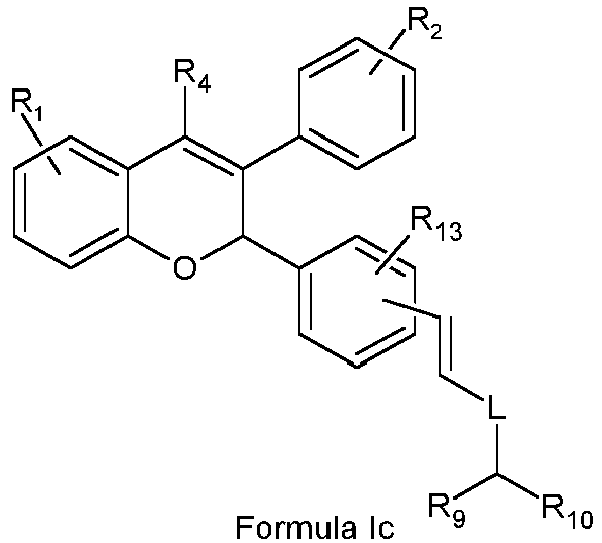
- In a preferred embodiment the present invention provides a compound of Formula Id

- In another preferred embodiment the present invention provides a compound of Formula Ie

- In another preferred embodiment the present invention provide a compound of Formula I, la, Ib, Ic, Id and Ie wherein the substitution on Ring D is at 4 position.
- In another embodiment, the compound of Formula Ia or Ib can be prepared by the route as depicted in the following Scheme 1.

- Compound (1) can be prepared by the processes reported in the art for example
US patent application publication 20140107095A1 and their obvious modifications. It is well under general purview of those skilled in the art that when the substituent groups R1 and R2 are selected from one which may interfere with the general course of the reaction scheme, the groups may be protected with a suitable protecting group such as provided in text book Greene's Protective Groups in Organic Chemistry by Peter G. M. Wuts and Theodora W Greene, 4th edition, published by Wiley Interscience. - Compound (3) can be prepared by reacting compound (1) (where in Y is halide) with alcohol (2) by Sonogashira reaction in a presence of suitable catalyst, like Pd(PPh3)2Cl2 and CuI. Alcohol group of compound (3) can be converted to a suitable leaving group (LG) such as-OMs, -Cl, -Br, -I, -OTs, -OTf to produce compound (4). In some embodiments, where LG- is -OMs, compound (4) may be converted to compound of formula (5) by reacting with suitable amine. Deprotection of compound (5) would give compound Ia. The reduction of compound of formula (5) using reducing agent such as Lindlar catalyst followed by deprotection can provide compound of Formula (Ib).
- In some embodiments, the compounds of formula Ic can be prepared as described in the following Scheme 2.

- The compound (3) can be reduced using reducing agent such as lithium aluminium hydride (LAH) in a suitable solvent to compound (6). Alcohol group of compound (6) is further converted to suitable leaving group like -OMs, -Cl, -Br, -I, -OTs, -OTf to yield compound (7). In some embodiments, where LG- is -OMs, compound (7) can be converted to compound of Formula (Ic) by reacting with suitable amine followed by deprotection.
- Alternatively the compound of Formula Ib can also be prepared as outlined in the following Scheme 3.

- The compound (1) (where in Y is halide) may be reacted with alkyne (8) in a presence of suitable catalyst, like Pd(PPh3)2Cl2 and CuI (Sonogashira reaction) to yield compound (9). It is then reduced to compound (10) using Lindlar catalyst. Compound (10) may be converted to amine (11) which may then be converted to compound of Formula Ib under suitable reaction condition which may include deprotection step.
- The substituents R1 and R2 are suitably protected with suitable protecting groups before proceeding for chemical transformations as and when it is required.
- Alternatively compounds described herein can also be prepared by Heck reaction, Stille or Suzuki coupling as shown in Scheme 4 (where M is hydrogen, -Sn(alkyl)3, -Cl, -Br, -I or -OTf)

- Table 1 provides few exemplary compounds of Formula I.
Table 1 
# R1 R2 
R4 X -C(R7)C(R8)- L R13 
1. -7-OH -3-OH -CH3- -O- -(Z) CH=CH- -CH2- H -NHCH3 2. -7-OH -3-OH -CH3- -O- -(Z) CH=CH- -CH2- H -N(CH3)2 3. -7-OH -3-OH -CH3- -O- -(Z) CH=CH- -CH2- H -NH(n-C12H25) 4. -7-OH -3-OH -CH3- -O- -(E) CH=CH- -CH2- H -NH(n-C12H25) 5. -7-OH -3-OH -CH3- -O- -(Z) CH=CH- -CH2- H 
6. -7-OH -3-OH -CH3- -O- -(Z) CH=CH- -CH2- H -NH(CH2)2N(CH3)2 7. -7-OH -3-OH -CR3- -O- -(Z) CH=CH- -CH2- H -NH(CH2)9S(CH2)3CF2CF3 8. -7-OH -3-OH -CH3- -O- -(E) CH=CH- -CH2- H -NH(CH2)9S(CH2)3CF2CF3 9. -7-OH -3-OH -CH3- -O- -(Z) CH=CH- -CH2- H 
10. -7-OH -3-OH -CH3- -O- -(E) CH=CH- -CH2- H 
11. -7-OH -3-OH -CH3- -O- -(Z) CH=CH- -CH2- H 
12. -7-OH -3-OH -CH3- -O- -(E) CH=CH- -CH2- H 
13. -7-OH -3-OH -CH3- -O- -(Z) CH=CH- -CH2- H 
14. -7-OH -3-OH -CH3- -O- -(Z) CH=CH- -CH2- H 
15. -7-OH -3-OH -CH3- -O- -(E) CH=CH- -CH2- H 
16. -7-OH -3-OH -CH3- -O- -(Z) CH=CH- -CH2- H 
17. -7-OH -3-OH -CH3- -O- -(Z) CH=CH- -CH2- H 
18. -7-OH -3-OH -CH3- -O- -(Z) CH=CH- -CH2- H 
19. -7-OC(-O)-t-Bu tBu -3-OC(=O)-t-Bu -CH3- -O- -(Z) CH=CH- -CH2- H 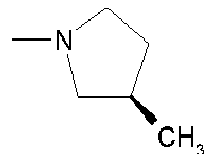
20. -7-OCH3 -3-OCH3 -CH3- -O- -(Z) CH=CH- -CH2- H 
21. -7-OH -3-OH -CH3- -O- -C≡C- -CH2- H -NHCH3 22. -7-OH -3-OH -CH3- -O- -C≡C- -CH2- H -NH(n-C12H25) 23. -7-OH -3-OH -CH3 -O- -C≡C- -CH2- H 
24. -7-OH -3-OH -CH3 -O- -C≡C- -CH2- H 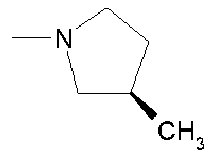
25. -7-OH -3-OH -CH3 -O- -C≡C- -CH2- H 
26. -7-OH -3-OH -CH3 -O- -C≡C- -CH2- H 
27. -7-OH -3-OH -CH3 -O- -C≡C- - (CH2) 2- H 
28. -7-OH -3-OCH3 -CH3 -O- -(Z) CH=CH- -CH2- H 
29. -7-OH -3-OH -CH3 -O- -(Z) CH=CH- -CH2- H 
30. -7-OH -3-OH -CH3 -O- -(E) CH=CH- -CH2- H 
31. -7-OH -3-OH -CH3 -O- -(Z) CH=CH- -CH2- H 
32. -7-OH -3-OH -CH3 -O- -(E) CH=CH- -CH2- H 
33. -7-OH -3-OH -CH3 -O- -(E) CH=CH- -CH2- H 
34. -7-OH -3-OH -CH3 -O- -(Z) CH=CH- -CH2- H 
35. -7-OH -3-OH -CH3 -O- -(E) CH=CH- -CH2- H -NH(n-C9H19) 36. -7-OH -3-OH -CH3 -O- -(E) CH=CH- -CH2- H 
37. -7-OH -3-OH -CH3 -O- -(Z) CH=CH- -CH2- H -NH(n-C9H19) 38. -7-OH -3-OH -CH3 -O- -(Z) CH=CH- -CH2- H -NH(CH2)8CH2F 39. -7-OH -3-OH -CH3 -O- -(E) CH=CH- -CH2- H -NH(CH2)8CH2F 40. -7-OH -3-OH -CH3 -O- -(Z) CH=CH- - CH(C H3)- H 
41. -7-OH -3-OH -CH3 -O- -(E) CH=CH- -CH2- H -NH(CH2)9CH2F 42. -7-OH -3-OH -CH3 -O- -C≡C- -CH2- H -NH(CH2)8CH2F 43. -7-OH -3-OH -CH3 -O- -(Z) CH=CH- -CH2- H -NH(CH2)9CH2F 44. -7-OH -3-OH -CH3 -O- -(E) CH=CH- -CH2- H -NH(CH2)8CHF2 45. -7-OH -3-OH -CH3 -O- -(E) CH=CH- -CH2- H -N(CH3)(CH2)8CH2F 46. -7-OH -3-OH -CH3 -O- -(Z) CH=CH- -CH2- H -NH(CH2)8CHF2 47. -7-OH -3-OCH3 -CH3 -O- -(E) CH=CH- -CH2- H -NH(CH2)8CH2F 48. -7-OH -3-OH -CH3 -O- -(Z) CH=CH- -CH2- H -N(CH3)(CH2)8CH2F 49. -7-OH -3-OH -CH3 -O- -(E) CH=CH- -CH2- H -NH(CH2)7CH2F 50. -7-OH -3-OH -CH3 -O- -(Z) CH=CH- -CH2- H -NH(CH2)7CH2F 51. -7-OH -3-OH -CH3 -O- -C≡C- -CH2- H -NH(CH2)7CH2F 52. -7-OH -3-OH -CH3 -O- -C≡C- -CH2- H -NH(CH2)9CH2F 53. -7-OH -3-OH -CH3 -O- -C≡C- -CH2- H -NCH3(CH2)9F 54. -7-OH -3-OH -CH3 -O- -C≡C- -CH2- H -NH(CH2)8CHF2 55. -7-OH -3-OH -CH3 -O- -(Z) CH=CH- -CH2- H 
56. -7-OH -3-OH -CH3 -O- -C≡C- -CH2- H 
57. -7-OH -3-OH -CH3 -O- -(Z) CH=CH- -CH2- H 
58. -7-OH -3-OH -CH3 -O- -(E) CH=CH- -CH2- H 
59. -7-OH -3-OH -CH3 -O- -(E) CH=CH- -CH2- H 
60. -7-OH -3-OH -CH3 -O- -(E) CH=CH- -CH2- H 
61. -7-OH -3-OH -CH3 -O- -C≡C- -CH2- H 
62. -7-OH -3-OH -CH3 -O- -(Z) CH=CH- -CH2- H 
63. -7-OH -3-OH -CH3 -O- -(E) CH=CH- -CH2- H 
64. -7-OH -3-OH -CH3 -O- -C≡C- -CH2- H 
65. -7-OH -3-OH -CH3 -O- -(E) CH=CH- -CH2- H 
66. -7-OH -3-OH -CH3 -O- -(Z) CH=CH- -CH2- H 
67. -7-OH -3-OH -CH3 -O- -(Z) CH=CH- -CH2- H 
68. -7-0C(=0)-t-Bu -3-OC(=O)-t-Bu -CH3 -O- -(E) CH=CH- -CH2- H -NH(CH2)10F 69. -7-OH -3-OH -CH3 -O- -C≡C- -CH2- H -N(CH3)(CH2)9CHF2 70. -7-OH -3-OH -CH3 -O- -(E) CH=CH- -CH2- H -N(CH3)(CH2)8CHF2 71. -7-OH -3-OH -CH3 -O- -(Z) CH=CH- -CH2- H -N(CH3)(CH2)8CHF2 72. -7-OH -3-OH -CH3 -O- -(Z) CH=CH- -CH2- H 
73. -7-C(=O)CH3 -3-OC(=O)CH3 -CH3 -O- -(Z) CH=CH- -CH2- H 
74. -7-OC(=O)CH3 -3-OC(=O)CH3 -CH3 -O- -(E) CH=CH- -CH2- H -NH(CH2)9F 75. -7-OH -3-OH -CH3 -O- -(Z) CH=CH- -CH2- H 
76. -7-OH -3-OH -CH3 -O- -(Z) CH=CH- -CH2- H 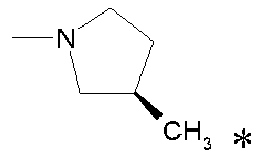
77. -7-OH -3-OH -CH3 -O- -(Z) CH=CH- -CH2- H 
78. -7-OH -3-OH -CH3 -O- -(Z) CH=CH- -CH2- H 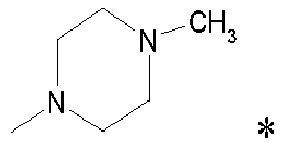
79. -7-OH -3-OH -CH3 -O- -(E) CH=CH- -CH2- H -NH(CH2)8CH2F # 80. -7-OH -3-OH -CH3 -O- -(E) CH=CH- -CH2- H -NH(CH2)8CH2F ∗ 81. -7-OH -3-OH,-5-F -CH3 -O- -(Z) CH=CH- -CH2- H 
82. -7-OH -3-OH,-5-F -CH3 -O- -(Z) CH=CH- -CH2- H 
83. -7-OH -3-F,-5-F -CH3 -O- -(Z) CH=CH- -CH2- H 
84. -7-OH -3-OH -CH3 -O- -(E) CH=CH- -CH2- H 
85. -7-OH -3-OH -CH3 -O- -(Z) CH=CH- -CH2- H 
86. -7-OH -3-OH -CH3 -O- -(Z) CH=CH- -CH2- 2-F 
87. -7-OH -3-OH -CH3 -O- -C≡C- -CH2- 2-F 
88. -7-OCH2F -3-OCH2F -CH3 -O- -C≡C- -CH2- H 
∗isomer A; #isomer B - The present invention is further illustrated in detail with reference to the following examples. It is desired that the examples are to be considered in all respects as illustrative and are not intended to limit the scope of the claimed invention.
- The compounds described herein, including compounds of Formula I can be prepared by reaction schemes depicted in Schemes 1, 2, 3 and 4. Furthermore, in the following examples, where specific acids, bases, reagents, coupling agents, solvents, etc. are mentioned, it is understood that other suitable acids, bases, reagents, coupling agents etc. may be used and are included within the scope of the present invention. Modifications to reaction conditions, for example, temperature, duration of the reaction or combinations thereof are envisioned as part of the present invention. The compounds obtained by using the general reaction scheme may be of insufficient purity. These compounds can be purified by any of the methods for purification of organic compounds known in the art, for example, crystallization or silica gel or alumina column chromatography using different solvents in suitable ratios. 2-(4-Iodophenyl)-4-methyl-6-(tetrahydropyran-2-yloxy)-3-[3-(tetrahydropyran-2-yloxy)phenyl]-2H-chromene is prepared in a manner similar to the process described in the
US patent application publication 20140107095A1 . -

-

- Bis(triphenylphosphine)palladium (II) dichloride (0.061 g, 0.081 mmol) was added to a stirred solution of 2-(4-iodophenyl)-4-methyl-6-(tetrahydropyran-2-yloxy)-3-[3-(tetrahydropyran-2-yloxy)phenyl]-2H-chromene (1.1 g, 1.76 mmol)(prepared as per the process provided in
US 20140107095A1 ), propargyl alcohol (0.30 g, 5.28 mmol) and cuprous (I) iodide (0.027 g, 0.142 mmol) in a mixture of tetrahydrofuran:triethylamine (1:1, 35 mL). Stirring was continued at ambient temperature for 1 hour. It was then concentrated under reduced pressure to get a crude residue which was purified by column chromatography (silica gel, toluene : ethyl acetate 85:15) to yield 3-(4-{4-methyl-6-(tetrahydropyran-2-yloxy)-3-[3-(tetrahydropyran-2-yloxy)phenyl]-2H-chromen-2-yl}phenyl)prop-2-yn-1-ol. -

- A solution of methanesulfonyl chloride (0.18 mL, 2.40 mmol) in dichloromethane (3 mL) was added to a solution of 3-(4-{4-methyl-6-(tetrahydropyran-2-yloxy)-3-[3-(tetrahydropyran-2-yloxy)phenyl]-2H-chromen-2-yl}phenyl)prop-2-yn-1-ol (1.1 g, 2.00 mmol) and triethyl amine (0.42 mL, 3.00 mmol) in dichloromethane (8 mL) at 0-5 °C. The reaction mixture was stirred at 0-5 °C for 30 minutes. Water was added to the reaction mixture and the organic layer was separated. The aqueous layer was extracted with dichloromethane. Combined organic layer was dried over anhydrous sodium sulfate and concentrated under reduced pressure to get methanesulfonicacid-3-(4-{4-methyl-6-(tetrahydropyran-2-yloxy)-3-[3-(tetrahydropyran-2-yloxy)phenyl]-2H-chromen-2-yl}phenyl)prop-2-ynylester.
- The solution of methanesulfonicacid-3-(4-{4-methyl-6-(tetrahydropyran-2-yloxy)-3-[3-(tetrahydropyran-2-yloxy)phenyl]-2H-chromen-2-yl}phenyl)prop-2-ynylester in acetonitrile (3 mL) was added to a slurry of piperidine (0.49 mL, 5.00 mmol) and potassium carbonate (0.714 g, 5.2 mmol) in acetonitrile (8 mL) at ambient temperature and stirred for 40 minutes. Water was added and was extracted with ethyl acetate. Combined organic layer was dried over anhydrous sodium sulfate and concentrated under reduced pressure to get crude which was purified by column chromatography (silica gel, dichloromethane : methanol 97:3) to get 1-[3-(4-{4-methyl-6-(tetrahydropyran-2-yloxy)-3-[3-(tetrahydropyran-2-yloxy)phenyl]-2H-chromen-2-yl}phenyl)prop-2-ynyl]piperidine.
-

- A solution of 1-[3-(4-{4-methyl-6-(tetrahydropyran-2-yloxy)-3-[3-(tetrahydropyran-2-yloxy)phenyl]-2H-chromen-2-yl}phenyl)prop-2-ynyl]piperidine (0.1 g, 0.16 mmol) in a mixture of sulfuric acid (0.05 mL) and methanol (5 mL) was stirred at ambient temperature for 10 minutes. The reaction mixture was made alkaline with saturated solution of sodium bicarbonate and extracted with ethyl acetate. Combined organic layer was dried over anhydrous sodium sulfate and concentrated under reduced pressure to get crude which was purified by column chromatography (silica gel, methanol: dichloromethane 12:88) to get 3-(3-hydroxyphenyl)-4-methyl-2-[4-(3-piperidin-1-ylprop-1-ynyl)phenyl]-2H-chromen-6-ol.
-

-

- Lindlar catalyst (0.24 g) was added to a solution of 1-[3-(4-{4-methyl-6-(tetrahydropyran-2-yloxy)-3-[3-(tetrahydropyran-2-yloxy)phenyl]-2H-chromen-2-y}lphenyl)prop-2-ynyl]piperidine (0.80 g, 1.29 mmol) (prepared same as per method A step I, II) and quinoline (0.1 g, 12.5 % w/w) in ethanol (30 mL). The reaction mixture was stirred under hydrogen atmosphere (70 psi) at ambient temperature for 5 hours. The reaction mixture was filtered and washed with ethanol (15 mL). Filtrate was concentrated under reduced pressure to get the crude which was purified by column chromatography (silica gel, dichloromethane : methanol 97:3) to yield 1-[(Z)-3-(4-{4-methyl-6-(tetrahydropyran-2-yloxy)-3 -[3-(tetrahydropyran-2-yloxy)phenyl]-2H-chromen-2-yl}phenyl)allyl]piperidine.
-

- A solution of 1-[(Z)-3-(4-{4-methyl-6-(tetrahydropyran-2-yloxy)-3-[3-(tetrahydropyran-2-yloxy)phenyl]-2H-chromen-2-yl}phenyl)allyl]piperidine (0.28 g, 0.45 mmol) in a mixture of acetic acid (5.6 mL) and water (1.4 mL) was heated at 75 °C for 20 minutes. The reaction mixture was concentrated under reduced pressure and made alkaline with saturated solution of sodium bicarbonate and extracted with ethyl acetate. Combined organic layer was dried over anhydrous sodium sulfate and concentrated under reduced pressure to get residue which was purified by column chromatography (silica gel, methanol : dichloromethane 1:9) to get 3-(3-hydroxyphenyl)-4-methyl-2-[4-((Z)-3-piperidin-1-ylpropenyl)phenyl]-2H-chromen-6-ol .
-

-

- Lithium aluminium hydride (0.35 g, 10.30 mmol) was added to a stirred solution of 3-(4-{4-methyl-6-(tetrahydropyran-2-yloxy)-3-[3-(tetrahydropyran-2-yloxy)phenyl]-2H-chromen-2-yl}phenyl)prop-2-yn-1-ol (1.15 g, 2.08 mmol) (prepared same as method A step-I) in tetrahydrofuran (33 mL) at 0-5 °C and the stirring was continued at ambient temperature for 30 minutes. Reaction mixture was again cooled to 0-5 °C, treated with ethyl acetate and aqueous sodium bicarbonate solution and was extracted with ethyl acetate. Combined organic layer was dried over anhydrous sodium sulfate and concentrated under reduced pressure to get crude which was purified by column chromatography (silica gel, ethyl acetate : toluene 17:83) to yield (E)-3-(4-{4-methyl-6-(tetrahydropyran-2-yloxy)-3 -[3-(tetrahydropyran-2-yloxy)phenyl]-2H-chromen-2-yl}phenyl)prop-2-en-1-ol.
-

- A solution of methanesulfonyl chloride (0.098 mL, 1.26 mmol) in dichloromethane (1mL) was added drop-wise to a stirred solution of (E)-3-(4-{4-methyl-6-(tetrahydropyran-2-yloxy)-3-[3-(tetrahydropyran-2-yloxy)-phenyl]-2H-chromen-2-yl}phenyl)prop-2-en-1-ol (0.58 g, 1.05 mmol) and triethylamine (0.25 mL, 1.80 mmol) in dichloromethane (17 mL) at 0-5 °C. The reaction mixture was further stirred at 0-5 °C for 20 minutes. Water was added to the reaction mixture and organic layer was separated. The aqueous layer was extracted with dichloromethane. Combined organic layer was dried over anhydrous sodium sulfate and concentrated under reduced pressure to get methanesulfonic acid (E)-3-(4-{4-methyl-6-(tetrahydropyran-2-yloxy)-3-[3-(tetrahydropyran-2-yloxy)phenyl]-2H-chromen-2-yl}phenyl)allylester.
- The solution of methanesulfonic acid (E)-3-(4-{4-methyl-6-(tetrahydropyran-2-yloxy)-3-[3-(tetrahydropyran-2-yloxy)phenyl]-2H-chromen-2-yl}phenyl)allylester in acetonitrile (6 mL) was added to a solution of potassium carbonate (0.432 g, 3.10 mmol) and piperidine (0.27 mL, 2.60 mmol) in acetonitrile (12 mL) at 0-5 °C. The reaction mixture was stirred at room temperature for 1.5 hours. Water was added and the mixture was extracted with ethyl acetate. Combined organic layer was dried over anhydrous sodium sulfate and concentrated under reduced pressure to get residue which was purified by column chromatography (silica gel, methanol: dichloromethane 6:94) to yield 1-[(E)-3-(4-{4-methyl-6-(tetrahydropyran-2-yloxy)-3-[3-(tetrahydropyran-2-yloxy)phenyl]-2H-chromen-2-yl}phenyl)allyl]piperidine.
-

- A solution of 1-[(E)-3-(4-{4-methyl-6-(tetrahydropyran-2-yloxy)-3-[3-(tetrahydropyran-2-yloxy)phenyl]-2H-chromen-2-yl}phenyl)allyl]piperidine (0.43 g, 0.70 mmol) in a mixture of sulfuric acid (0.05 mL) and methanol (5 mL) was stirred at ambient temperature for 10 minutes. The reaction mixture was made alkaline with saturated solution of sodium bicarbonate and extracted with ethyl acetate. The combined organic layer was dried over anhydrous sodium sulfate and concentrated under reduced pressure to get residue which was purified by column chromatography (silica gel, methanol : dichloromethane 14:86) to get 3-(3-hydroxyphenyl)-4-methyl-2-[4-((E)-3-piperidin-1-ylpropenyl)phenyl]-2H-chromen-6-ol.
-

-

- Bis(triphenylphosphine)palladium(II) dichloride (0.045 g,0.064 mmol) was added to a stirred solution of 2-(4-iodophenyl)-4-methyl-6-(tetrahydropyran-2-yloxy)-3-[3-(tetrahydropyran-2-yloxy)phenyl]-2H-chromene (0.8 g, 1.28 mmol) (prepared as of given in
US20140107095A1 ), 2-prop-2-ynylisoindole-1,3-dione (0.46 g, 2.50 mmol) and cuprous(I) iodide (0.02 g, 0.103 mmol) in a mixture of triethylamine :tetrahydrofuran (26 mL, 1:1) at ambient temperature. After stirring for 1 hour, 2-prop-2-ynyl-isoindole-1,3-dione (2x0.35 g) was added to the reaction mixture and stirring was continued for one more hour. Removal of solvent under reduced pressure yielded a viscous residue which was purified by column chromatography (silica gel, toluene:ethyl acetate 19:1) to get 2-[3-(4-{4-methyl-6-(tetrahydropyran-2-yloxy)-3-[3-(tetrahydropyran-2-yloxy)phenyl]-2H-chromen-2-yl}phenyl)prop-2-ynyl]isoindole-1,3-dione. -

- Lindlar catalyst (0.45 g) was added to a stirred solution of 2-[3-(4-{4-methyl-6-(tetrahydropyran-2-yloxy)-3-[3-(tetrahydropyran-2-yloxy)phenyl]-2H-chromen-2-yl}-phenyl)prop-2-ynyl]isoindole-1,3-dione (0.87 g, 1.28 mmol) and quinoline (0.087g, 10% w/w) in a mixture of ethyl acetate : ethanol (1:1, 34 mL). The reaction mixture was stirred under hydrogen atmosphere (70 psi) at ambient temperature for 24 hours. It was then filtered through celite bed and washed with ethyl acetate. Combined filtrate was concentrated under reduced pressure to get residue which was purified by column chromatography (silica gel, toluene : ethyl acetate 24:1) to get 2-[(Z)-3-(4-{4-methyl-6-(tetrahydropyran-2-yloxy)-3-[3-(tetrahydropyran-2-yloxy)phenyl]-2H-chromen-2-yl}phenyl)allyl]isoindole-1,3-dione.
-

- A solution of hydrazine hydrate (0.015 g, 0.31 mmol) in methanol (1 mL) was added to a stirred solution of 2-[(Z)-3-(4-{4-methyl-6-(tetrahydropyran-2-yloxy)-3-[3-(tetrahydropyran-2-yloxy)phenyl]-2H-chromen-2-yl}phenyl)allyl]isoindole-1,3-dione (0.084 g, 0.123 mmol) in tetrahydrofuran (10 mL). The reaction mixture was heated at 65-70 °C for 1.5 hours. Solvent was removed under reduced pressure to get crude which was suspended in diethyl ether and stirred for 10 minutes. It was then filtered and washed with diethyl ether (25 mL). Combined filtrate was concentrated under reduced pressure to get (Z)-3-(4-{4-methyl-6-(tetrahydropyran-2-yloxy)-3-[3-(tetrahydropyran-2-yloxy)phenyl]-2H-chromen-2-yl}-phenyl)allylamine
-
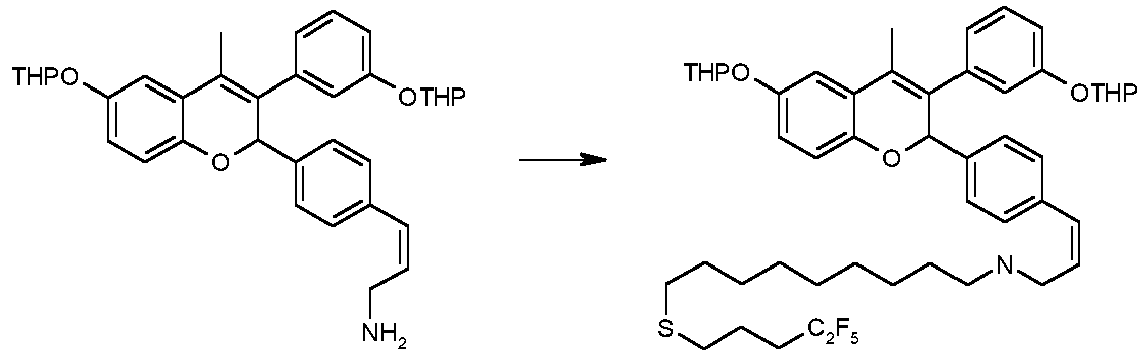
- 1-Bromo-9-(4,4,5,5,5-pentafluoropentylsulfanyl)nonane (0.036 g, 0.09 mmol) was added to a stirred solution of (Z)-3-(4-{4-methyl-6-(tetrahydropyran-2-yloxy)-3-[3-(tetrahydropyran-2-yloxy)phenyl]-2H-chromen-2-yl}phenyl)allylamine (0.05 g, 0.09 mmol) and potassium carbonate (0.033 g, 0.243 mmol) in N,N-dimethyl formamide (0.5 mL). The reaction mixture was heated at 85-90 °C for 1.5 hours. Solvent was removed under reduced pressure to get residue which was suspended in ethyl acetate and stirred for 30 minutes. It was then filtered and washed with ethyl acetate. Filtrate was concentrated under reduced pressure to get a crude which was purified by column chromatography (silica gel, methanol : dichloromethane 24:1) to get [(Z)-3-(4-{4-methyl-6-(tetrahydropyran-2-yloxy)-3-[3-(tetrahydropyran-2-yloxy)phenyl]-2H-chromen-2-yl}phenyl)allyl]-[9-(4,4,5,5,5-pentafluoropentylsulfanyl)nonyl]amine.
-

- A solution of [(Z)-3-(4-{4-methyl-6-(tetrahydropyran-2-yloxy)-3-[3-(tetrahydropyran-2-yloxy)phenyl]-2H-chromen-2-yl}phenyl)allyl]-[9-(4,4,5,5,5-pentafluoropentylsulfanyl) nonyl]amine (0.2 g, 0.23 mmol) in a mixture of sulfuric acid (0.035 mL) and methanol (5 mL) was stirred at room temperature for 10 minutes. The reaction mixture was made alkaline with saturated solution of sodium bicarbonate and extracted with ethyl acetate. Combined organic layer was dried over anhydrous sodium sulfate and concentrated under reduced pressure to get residue which was purified by column chromatography (silica gel, methanol : dichloromethane 8:92) to get 3-(3-hydroxyphenyl)-4-methyl-2-(4-{(Z)-3-[9-(4,4,5,5,5-pentafluoropentylsulfanyl)nonylamino]propenyl}phenyl)-2H-chromen-6-ol
-

- Pivoloyl chloride (0.054 mL, 0.44 mmol) was added to a stirred solution of 3-(3-hydroxyphenyl)-4-methyl-2-{4-[(Z)-3-((R)-3-methylpyrrolidin-1-yl)propenyl]phenyl}-2H-chromen-6-ol (0.09 g, 0.2 mmol) (prepared same as method B) and triethylamine (0.069 mL, 0.50 mmol) in dichloromethane (6 mL) at 0 °C under nitrogen atmosphere. The reaction mixture was stirred at ambient temperature for 2.5 hours. It was then treated with saturated sodium bicarbonate and organic layer was separated. The aqueous solution was extracted with dichloromethane. The combined organic layer was dried over sodium sulfate and concentrated under reduced pressure to get residue which was purified by column chromatography (silica gel, dichloromethane : methanol 19:1) to yield 2,2-dimethylpropionicacid-3-[3-(2,2-dimethyl propionyloxy)phenyl]-4-methyl-2-{4-[(Z)-3-((R)-3-methylpyrrolidin-1-yl)propenyl]phenyl}-2H-chromen-6-ylester.
-

-

- A solution of 2-(4-iodophenyl)-4-methyl-6-tetrahydropyran-2-yloxy)-3-[3-(tetrahydropyran-2-yloxy)phenyl]-2H-chromene (1.0 g, 1.60 mmol) (prepared same as method A) in sulfuric acid (0.1 ml) and methanol (10 ml) was stirred for 20 minutes at ambient temperature. Aqueous solution of sodium bicarbonate was added and extracted with ethyl acetate. Combined organic layer was washed with water and dried over anhydrous sodium sulfate. It was then concentrated under reduced pressure to get residue which was purified by column chromatography (silica gel, n-hexane : ethyl acetate 50:50) to yield 3-(3-hydroxyphenyl)-2-(4-iodophenyl)-4-methyl-2H-chromen-6-ol.
-

- Methyl iodide (0.82 mL, 13.1 mmol) was added to a stirred solution of 3-(3-hydroxyphenyl)-2-(4-iodophenyl)-4-methyl-2H-chromen-6-ol (0.6 g, 1.31 mmol) and potassium carbonate (0.54 g, 3.94 mmol) in N,N-dimethylformamide ( 6.0 mL) at 5-10 °C. The reaction mixture was stirred at ambient temperature for 4 hours. Water was added and extracted with ethyl acetate. Combined organic layer was washed with water and dried over anhydrous sodium sulfate. It was then concentrated under reduced pressure to get crude which was purified by column chromatography (silica gel, n-hexane : ethyl acetate 8:2) to give 2-(4-iodophenyl)-6-methoxy-3-(3-methoxyphenyl)-4-methyl-2H-chromene.
-

- (R)-1-(3-{4-[6-Methoxy-3-(3-methoxyphenyl)-4-methyl-2H-chromen-2-yl]phenyl}prop-2-ynyl)-3-methylpyrrolidine prepared same as that of step-I,II of method A using 2-(4-iodophenyl)-6-methoxy-3-(3-methoxyphenyl)-4-methyl-2H-chromene
-

- (R)-1-((Z)-2-{4-[6-methoxy-3-(3-methoxyphenyl)-4-methyl-2H-chromen-2-yl]phenyl}vinyl)-3-methylpyrrolidine prepared same as that of step-I of method B using (R)-1-(3-{4-[6-Methoxy-3-(3-methoxyphenyl)-4-methyl-2H-chromen-2-yl]phenyl}prop-2-ynyl)-3-methylpyrrolidine.
-

-

- Aqueous sodium hydroxide (3.5 mL, 10 %) was added to the stirred solution of 2-hydroxy-4-(tetrahydropyran-2-yloxy)-benzoic acid methyl ester (0.5 g, 1.98 mmol) in methanol (10 mL) at ambient temperature and heated to 50 °C for 4 hours. Solvent was removed under reduced pressure. Water was added to it and extracted with (ethyl acetate: n-hexane, 2:8). Aqueous layer was made acidic with acetic acid at 0-5 °C and extracted with ethyl acetate. Combined organic layer was dried over anhydrous sodium sulfate and concentrated under reduced pressure to get 2-hydroxy-4-(tetrahydropyran-2-yloxy)benzoic acid.
-

- Aqueous alkaline solution of N,O-dimethyl hydroxylamine hydrochloride (0.12 g, 1.3 mmol) in tetrahydrofuran (2 mL) was added to a stirred solution of 1-Hydroxy benzotriazole (0.17 g, 1.3 mmol), 1-ethyl-3-(3-dimethylaminopropyl)carbodiimide hydrochloride (0.24 g. 1.3 mmol) and 2-hydroxy-4-(tetrahydropyran-2-yloxy)benzoic acid (0.2 g, 0.8 mmol) in tetrahydrofuran (3 mL) at room temperature and stirred for 2 hours. Water (10 mL) was added to the reaction mixture and extracted with ethyl acetate. Combined organic layer was dried over anhydrous sodium sulfate and concentrated under reduced pressure to get crude which was purified by column chromatography (silica gel n-hexane : ethyl acetate 8:2) to get 2-hydroxy-N-methoxy-N-methyl-4-(tetrahydropyran-2-yloxy)benzamide.
-

- A solution of 3-methoxybenzyl chloride (1.10 g, 7.12 mmol) in diethyl ether (7.5 mL) was added to a stirred mixture of magnesium (0.216 g, 8.90 mmol), iodine (crystals) and 1,2-dibromoethane (0.1 mL) in diethyl ether (7.5 mL) as dropwise manner at 45-50 °C. The reaction mixture was refluxed for 1 hour. A solution of 2-hydroxy-N-methoxy-N-methyl-4-(tetrahydropyran-2-yloxy)benzamide (0.5 g, 1.78 mmol) in tetrahydrofuran (5 mL) was added dropwise to the reaction mixture at 0 °C followed by 1 hour room temperature stirring. Saturated ammonium chloride was added to the reaction mixture at 0-5 °C and extracted with ethyl acetate. Combined organic layer was dried over anhydrous sodium sulfate and concentrated under reduced pressure to get crude which was purified by column chromatography (silica gel, ethyl acetate n-hexane 2:8) to get 1-[2-hydroxy-4-(tetrahydropyran-2-yloxy)phenyl]-2-(3-methoxyphenyl)ethanone.
-

- 2-(4-Iodophenyl)-3-(3-methoxyphenyl)-4-methyl-7-(tetrahydropyran-2-yloxy)-2H-chromene prepared as per the process given in
US20140107095A1 using 1-[2-hydroxy-4-(tetrahydropyran-2-yloxy)phenyl]-2-(3-methoxyphenyl)ethanone. -

- 3-{4-[3-(3-Methoxyphenyl)-4-methyl-7-(tetrahydropyran-2-yloxy)-2H-chromen-2-yl]phenyl}prop-2-yn-1-ol was prepared same as that of step-I of method A using 2-(4-Iodophenyl)-3-(3-methoxyphenyl)-4-methyl-7-(tetrahydropyran-2-yloxy)-2H-chromene.
-

- 3-(3-Methoxyphenyl)-4-methyl-2-{4-[(Z)-3-((R)-3-methylpyrrolidin-1-yl)propenyl]phenyl}-2H-chromen-7-ol was prepared same as that of method B using 3-{4-[3-(3-Methoxyphenyl)-4-methyl-7-(tetrahydropyran-2-yloxy)-2H-chromen-2-yl]phenyl}prop-2-yn-1-ol
-

-

- Di-tert-butyl dicarbonate (0.19 g, 0.85 mmol) was added to a stirred solution of 2-{4-[(E)-3-(9-fluorononylamino)propenyl]phenyl}-3-(3-hydroxyphenyl)-4-methyl-2H-chromen-6-ol (0.41 g, 0.77 mmol) and triethylamine (0.09 g, 0.93 mmol) in dichloromethane (15 mL) at ambient temperature and was allowed to stirred at same temperature for 40 minutes. Solvent was removed under reduced pressure to get crude which was purified by column chromatography (silica gel, n-hexane:ethyl acetate, 6:4) to get (9-fluorononyl)-((E)-3-{4-[6-hydroxy-3-(3-hydroxyphenyl)-4-methyl-2H-chromen-2-yl]phenyl}allyl)carbamic acid tert-butyl ester.
-

- Acetyl chloride (0.04 g, 0.52 mmol) was added to a stirred solution of (9-fluorononyl)-((E)-3-{4-[6-hydroxy-3-(3-hydroxyphenyl)-4-methyl-2H-chromen-2-yl]phenyl}allyl)carbamic acid tert-butyl ester (0.11 g, 0.17 mmol) and triethylamine (0.07 g, 0.70 mmol) in dichloromethane (5 mL) at 0-5 °C and was stirred at ambient temperature for 1 hour. Saturated sodium bicarbonate solution was added to the reaction mixture and was extracted with dichloromethane. Combined organic layer was dried over anhydrous sodium sulfate and concentrated under reduced pressure to get crude which was purified by column chromatography (silica gel n-hexane : ethyl acetate 8:2) to yield acetic acid 3-[6-acetoxy-2-(4-{(E)-3-[tert-butoxycarbonyl-(9-fluorononyl)amino]propenyl}phenyl)-4-methyl-2H-chromen-3-yl]phenyl ester.
-

- Zinc bromide (0.15 g, 0.67 mmol) was added to a stirred solution of acetic acid 3-[6-acetoxy-2-(4-{(E)-3-[tert-butoxycarbonyl-(9-fluorononyl)amino]propenyl}phenyl)-4-methyl-2H-chromen-3-yl]phenyl ester (0.12 g, 0.17 mmol) in dichloromethane (3 mL) at ambient temperature and was allowed to stirred at same temperature for 4 hours. Water was added to reaction mixture and extracted with dichloromethane. Combined organic layer was dried over anhydrous sodium sulfate and concentrated under reduced pressure to get crude which was purified by column chromatography (silica gel, dichloromethane : methanol, 8:2) to yield acetic acid 3-(6-acetoxy-2-{4-[(E)-3-(9-fluorononylamino)propenyl]phenyl}1-4-methyl-2H-chromen-3-yl)phenyl ester.
Table 2 provides some of the representative compounds prepared as per the general process. Table 2: Com p # Chemical name NMR 1 3-(3-Hydroxyphenyl)-4-methyl-2-[4-((Z)-3-methylamino propenyl)phenyl]-2H-chromen-6-ol (d6-DMSO, 400 MHz); 2.10 (s, 3H); 2.33 (s, 3H); 3.34-3.46 (m, 3H); 5.72 (dt, J1=11.88 Hz, J2=6.32 Hz, 1H); 5.98 (s, 1H); 6.45 (d, J =11.92 Hz, 1H); 6.53-6.60 (m, 2H); 6.69-6.74 (m, 2H); 6.77 (d, J=7.72 Hz, 1H); 6.80 (d, J=2.12 Hz, 1H); 7.17-7.24 (m, 3H); 7.33 (d, J=8.24 Hz, 2H); 9.04 (s, 1H); 9.52 (s, 1H) 2 2-[4-((Z)-3-Dimethylamino propenyl)phenyl]-3-(3-hydroxyphenyl)-4-methyl-2H-chromen-6-ol (d6-DMSO, 400 MHz); 2.04 (s, 3H); 2.19 (s, 6H); 3.16-3.25 (m, 2H); 5.69 (dt, J1=11.95 Hz, J2=6.30 Hz, 1H); 5.93 (s, 1H); 6.44 (d, J =12.00 Hz, 1H); 6.48-6.55 (m, 2H); 6.62-6.70 (m, 2H); 6.70-6.79 (m, 2H); 7.10-7.21 (m, 3H); 7.28 (d, J=8.20 Hz, 2H); 8.98 (s, 1H); 9.46 (s, 1H) 3 2-[4-((Z)-3-Dodecylamino propenyl)phenyl]-3-(3-hydroxyphenyl)-4-methy l-2H-chromen-6-ol (d6-DMSO, 400 MHz); 0.91 (t, J=7.00 Hz, 3H); 1.22-1.35 (br m, 18H); 1.40-1.50 (br m, 2H); 2.10 (s, 3H); 2.64 (t, J=7.36 Hz, 2H); 3.56 (d, J =5.00 Hz, 2H); 5.74 (dt, J1=12.32 Hz; J2=6.36 Hz; 1H); 5.98 (s, 1H); 6.50 (d, J=11.92 Hz, 1H); 6.53-6.61 (m, 2H); 6.68-6.75 (m, 2H); 6.77 (d, J=7.64 Hz, 1H); 6.81 (d, J=1.84 Hz, 1H); 7.16-7.25 (m, 3H); 7.34 (d, J=8.20 Hz, 2H), 8.98-9.10 (br s, 1H); 9.46-9.62 (br s, 1H); one exchangeable proton 4 2-[4-((E)-3-Dodecylamino propenyl)phenyl]-3-(3-hydroxyphenyl)-4-methyl-2H-chromen-6-ol (d6-DMSO, 400 MHz); 0.90 (t, J=6.52 Hz, 3H); 1.23-1.38 (br m, 18H); 1.53-1.62 (br m, 2H); 2.09 (s, 3H); 2.83 (t, J=7.45 Hz, 2H); 3.61-3.67 (m, 2H); 5.97 (s, 1H); 6.26 (dt, J1 =15.89 Hz, J2 =6.92 Hz, 1H); 6.54-6.60 (m, 2H); 6.66-6.79 (m, 4H); 6.81 (br s, 1H); 7.19 (t, J=7.80 Hz, 1H); 7.32 (d, J=8.28 Hz, 2H); 7.38 (d, J=8.40 Hz, 2H); 9.05 (s, 1H); 9.53 (s, 1H), one exchangeable proton 5 2-{4-[(Z)-3-((E)-2,7-Dimethylocta-2,6-dienylamino)propenyl]ph enyl}-3-(3-hydroxyphenyl)-4-methyl-2H-chromen-6-ol (d6-DMSO, 400 MHz); 1.59 (s, 6H); 1.66 (s, 3H); 1.92-2.01 (m, 2H); 2.01-2.07 (m, 2H); 2.09 (s, 3H); 3.47 (d, J=7.08 Hz, 2H); 3.73 (d, J=5.80 Hz, 2H); 5.02-5.10 (br t, 1H); 5.13-5.21 (br t, 1H); 5.70-5.77 (m, 1H); 5.99 (s, 1H); 6.52-6.57 (m, 2H); 6.61-6.64 (br d, 1H); 6.68-6.80 (m, 4H); 7.19 (t, J=7.72 Hz, 1H); 7.21 (d, J=8.16 Hz, 2H); 7.34 (d, J=8.12, 2H); 9.05 (s, 1H); 9.54 (s,1H); one exchangeable proton 6 2-{4-[(Z)-3-(2-Dimethyl aminoethylamino)propen yl]phenyl}-3-(3-hydroxy phenyl)-4-methyl-2H-chromen-6-ol (d6-DMSO, 400 MHz); 2.09 (s, 3H); 2.14 (s, 6H); 2.31 (t, J =6.30 Hz, 2H); 2.58-2.63 (m, 2H); 3.41-3.46 (m, 2H); 5.73 (dt, J1=11.85 Hz, J2 =6.30 Hz, 1H); 5.97 (s, 1H); 6.42 (d, J =11.85 Hz, 1H); 6.52-6.59 (m, 2H); 6.68-6.73 (m, 2H); 6.77 (d, J=7.55 Hz, 1H); 6.80 (d, J=2.25 Hz, 1H); 7.18-7.23 (m, 3H); 7.32 (d, J=8.05 Hz, 2H); 9.02 (s, 1H); 9.51 (s, 1H); one exchangeable proton 7 3-(3-Hydroxyphenyl)-4-methyl-2-(4-{(Z)-3-[9-(4,4,5,5,5-pentafluoropentylsulfanyl )nonylamino]propenyl}ph enyl)-2H-chromen-6-ol (d6-DMSO, 400 MHz); 1.23-1.34 (br s, 8H); 1.33-1.43 (br m, 2H); 1.47-1.61 (br m, 4H); 1.81 (quintet, J=6,32 Hz, 2H); 2.10 (s, 3H); 2.27-2.45 (br m, 2H); 2.64 (t, J=7.12 Hz, 2H); 2.79 (t, J=7.76 Hz, 2H); 3.74 (d, J =5.24 Hz, 2H); 5.75 (dt, J1=11.84 Hz; J2=6.32 Hz; 1H); 6.00 (s, 1H); 6.54-6.58 (m, 2H); 6.62 (d, J=12.08 Hz, 1H); 6.70-6.84 (m, 4H); 7.20 (t, J=7.80 Hz, 1H); 7.24 (d, J=8.20 Hz, 2H); 7.36 (d, J=8.20 Hz, 2H); 9.05 (s, 1H), 9.54 (s, 1H); two protons are merged between 2.50-2.60, one exchangeable proton 8 3-(3-Hydroxyphenyl)-4-methyl-2-(4-{(E)-3-[9-(4,4,5,5,5-pentafluoro pentylsulfanyl)nonylamin o]propenyl}phenyl)-2H-chromen-6-ol (d6-DMSO, 400 MHz); 1.24-1.34 (br s, 8H); 1.34-1.43 (br m, 2H); 1.55 (quintet, J=7.25 Hz, 4H); 1.81 (quintet, J=7.70Hz, 2H); 2.09 (s, 3H); 2.28-2.44 (br m, 2H); 2.64 (t, J=7.15 Hz, 2H); 2.77 (t, J=7.35 Hz, 2H); 3.57 (d, J =6.50 Hz, 2H); 5.96 (s, 1H); 6.28 (dt, J1=15.85 Hz; J2=6.70 Hz; 1H); 6.52-6.58 (m, 2H); 6.66 (d, J=15.95 Hz, 1H); 6.68-6.77 (m, 3H); 6.81 (s, 1H); 7.19 (t, J=7.85 Hz, 1H); 7.32 (d, J=8.25 Hz, 2H); 7.36 (d, J=8.30 Hz, 2H); 9.05 (s, 1H), 9.52 (s, 1H); two protons are merged between 2.50-2.60, one exchangeable proton 9 3-(3-Hydroxyphenyl)-4-methyl-2-{4-[(Z)-3-((R)-3-methylpyrrolidin-1-yl)-propenyl]phenyl}-2H-chromen-6-ol (d6-DMSO, 400 MHz); 1.0 (d, J=6.76 Hz, 3H); 1.23-1.33 (m, 3H); 1.91-2.02 (m, 1H); 2.09 (s, 3H); 2.14-2.25 (m, 1H); 2.59-2.68 (br m, 1H); 2.74-2.83 (br t, 1H); 3.3-3.37 (br d, 2H); 5.74-5.82 (m, 1H); 5.97 (s, 1H); 6.41-6.47 (br d, 1H); 6.55-6.58 (m, 2H); 6.69-6.75 (m, 2H); 6.76-6.82 (m, 2H); 7.17-7.25 (m, 3H); 7.33 (d, J=8.24 Hz, 2H); 9.03 (s, 1H); 9.52 (s, 1H) 10 3-(3-Hydroxyphenyl)-4-methyl-2-{4-[(E)-3-((R)-3-methylpyrrolidin-1-yl)propenyl]phenyl}-2H-chromen-6-ol (d6-DMSO, 400 MHz); 1.01 (d, J=6.72 Hz, 3H); 1.27-1.33 (m, 3H); 1.93-2.03 (m, 1H); 2.09 (s, 3H); 2.15-2.25 (m, 1H); 2.60-2.68 (br m, 1H); 2.74-2.83 (br t, 1H); 3.23 (d, J=5.16 Hz, 2H); 5.94 (s, 1H); 6.26-6.36 (m, 1H); 6.50 (d, J=16.05 Hz, 1H); 6.55 (s, 2H); 6.67-6.83 (m, 4H); 7.19 (t, J=7.80 Hz, 1H); 7.28 (d, J=8.28 Hz, 2H); 7.35 (d, J=8.28 Hz, 2H); 9.02 (s, 1H); 9.51 (s,1H) 11 3-(3-Hydroxyphenyl)-4-methyl-2-[4-((Z)-3-piperidin-1-ylpropenyl) phenyl]-2H-chromen-6-ol (d6-DMSO, 400 MHz); 1.32-1.46 (br m, 2H); 1.46-1.59 (m, 4H); 2.10 (s, 3H); 2.26-2.46 (br m, 4H); 3.17 (dd, J1=6.24 Hz, J2=1.76 Hz, 2H); 5.75 (dt, J1=12.21 Hz, J2=6.25 Hz, 1H); 6.46 (d, J=12.04 Hz, 1H); 6.53-6.62 (m, 1H); 6.69-6.75 (m, 2H); 6.78 (d, J=7.68 Hz, 2H); 6.80 (d, J=2.28 Hz, 2H); 7.17-7.26 (m, 3H); 7.33 (d, J=8.24 Hz, 2H); 8.90-9.20 (br s, 1H); 9.38-9.70 (br s, 1H) 12 3-(3-Hydroxyphenyl)-4-methyl-2-[4-((E)-3-piperidin-1-yl propenyl)phenyl]-2H-chromen-6-ol (d6-DMSO, 400 MHz); 1.37-1.47 (br s, 2H); 1.50-1.62 (br s, 4H); 2.09 (s, 3H); 2.34-2.53 (br m, 4H); 3.05-3.22 (br s, 2H); 5.95 (s, 1H); 6.28 (dt, J1=15.89 Hz, J2=6.68 Hz, 1H); 6.51 (d, J=16.40 Hz; 1H); 6.54-6.58 (m, 2H); 6.67-6.83 (m, 4H); 7.19 (t, J=7.80 Hz, 1H); 7.28 (d, J=8.20 Hz, 2H); 7.36 (d, J=8.20 Hz, 2H); 9.03(s, 1H), 9.51(s, 1H) 13 3-(3-Hydroxyphenyl)-4-methyl-2-[4-((Z)-3-morpholin-4-ylpropenyl) phenyl]-2H-chromen-6-ol (d6-DMSO, 400 MHz); 2.10 (s, 3H); 2.34-2.44 (br s, 4H); 3.18-3.26 (m, 2H); 3.59 (t, J=4.44 Hz, 4H); 5.76 (dt, J1=12.20 Hz, J2=6.24 Hz, 1H); 5.98 (s, 1H); 6.49 (d, J=12.08 Hz, 1H); 6.53-6.61 (m, 2H); 6.67-6.84 (m, 4H); 7.15-7.27 (m, 3H); 7.33 (d, J=8.24 Hz, 2H); 9.03 (s, 1H); 9.51 (s, 1H) 14 3-(3-Hydroxyphenyl)-4-methyl-2-{4-[(Z)-3-(4-methylpiperazin-1-yl)propenyl]phenyl}-2H-chromen-6-ol (d6-DMSO, 400 MHz); 2.09 (s, 3H); 2.25 (s, 3H); 2.30-2.52 (br s, 8H); 3.21 (d, J=5.24 Hz, 2H); 5.74 (quintet, J=6.16 Hz, 1H); 5.98 (s, 1H); 6.47 (d, J=12.08 Hz, 1H); 6.55-6.59 (m, 2H); 6.70-6.82 (br m, 4H); 7.20 (t, J=7.96 Hz, 1H); 7.22 (d, J=8.20 Hz, 2H); 7.33 (d, J=8.12 Hz, 2H); 9.04 (s, 1H); 9.52 (s, 1H) 15 3-(3-Hydroxyphenyl)-4-methyl-2-{4-[(E)-3-(4-methylpiperazin-1-yl)propenyl]phenyl}-2H-chromen-6-ol (d6-DMSO, 400 MHz); 2.09 (s, 3H); 2.23 (s, 3H); 2.28-2.52 (br s, 8H); 3.10 (s, 2H); 5.94 (s, 1H); 6.20-6.33 (m, 1H); 6.49 (d, J=15.80 Hz, 1H); 6.55 (s, 2H); 6.66-6.83 (m, 4H); 7.19 (t, J=7.70 Hz, 1H); 7.27 (d, J=7.75 Hz, 2H); 7.35 (d, J=7.90 Hz, 2H); 9.03 (s, 1H); 9.51 (s, 1H) 16 2-{4-[(Z)-3-((R)-3-Amino piperidin-1-yl)propenyl]phenyl}-3-(3-hydroxyphenyl)-4-methyl-2H-chromen-6-ol (d6-DMSO, 400 MHz); 0.96-1.08 (br m, 1H); 1.40-1.52 (br m, 1H);1.58-1.68 (br m, 1H); 1.68-1.78 (br m, 2H); 1.86-1.98 (br m, 1H); 2.10 (s, 3H); 2.59-2.68 (br m, 1H); 2.68-2.80 (br m, 2H); 3.15-3.20 (m, 2H); 5.74 (dt, J1=12.20 Hz, J2=6.24 Hz, 1H); 5.98 (s, 1H); 6.47 (d, J=12.12 Hz, 1H); 6.53-6.60 (m, 2H); 6.69-6.74 (m, 2H); 6.77 (d, J=7.72 Hz, 1H); 6.80 (d, J=2.28 Hz, 1H); 7.16-7.24 (m, 3H); 7.32 (d, J=8.24 Hz, 2H); four exchangeable protons 17 2-(4-{(Z)-3-[4-(2-Hydroxy ethyl)piperazin-1-yl]-propenyl}phenyl)-3-(3-hydroxyphenyl)-4-methyl-2H-chromen-6-ol (d6-DMSO, 400 MHz); 2.09 (s, 3H); 2.20-2.50 (br m, 10H); 3.16-3.24 (br s, 2H); 3.51-3.60 (br s, 2H); 5.74 (dt, J1=11.95 Hz, J2=6.25 Hz, 1H); 5.97 (s, 1H); 6.47 (d, J=11.90 Hz, 1H); 6.52-6.59 (m, 2H); 6.68-6.75 (s merged with d, 2H); 6.77 (d, J=7.60 Hz, 1H); 6.80 (d, J=2.40 Hz, 1H); 7.20 (t, J=7.80 Hz, 1H); 7.22 (d, J=8.15 Hz, 2H); 7.33 (d, J=8.15 Hz, 2H); 9.04 (s, 1H); 9.52 (s, 1H); one exchangeable proton 18 3-(3-Hydroxyphenyl)-4-methyl-2-(4-{(Z)-3-[4-(4,4,5,5,5-pentafluoropentyl)piperaz in-1-yl]propenyl}phenyl)-2H-chromen-6-ol (d6-DMSO, 400 MHz); 1.68 (quintet, J=7.00 Hz, 2H); 2.09 (s, 3H); 2.13-2.32 (m, 3H); 2.32-2.50 (m, 8H); 3.19 (d, J=4.72 Hz, 2H); 5.74 (dt, J1=12.16 Hz, J2=6.16 Hz; 1H); 5.97 (s, 1H); 6.47 (d, J=12.08 Hz, 1H); 6.52-6.61 (m, 2H); 6.68-6.75 (m, 2H); 6.77 (d, J=7.64 Hz, 1H); 6.80 (d, J=2.32 Hz, 1H); 7.16-7.26 (m, 3H); 7.33 (d, J=8.24 Hz, 2H), 9.03 (s, 1H); 9.51 (s, 1H); one proton is merged between 2.50-2.60 19 2,2-Dimethyl propionic acid 3-[3-(2,2-dimethyl propionyloxy)-phenyl]-4 -methyl-2-{4-[(Z)-3-((R)-3-methyl pyrrolidin-1-yl)propenyl]-phenyl}-2 H-chromen-6-yl ester (d6-DMSO, 400 MHz); 0.96 (d, J=6.72 Hz, 3H); 1.20-1.34 (br s, 19H); 1.34-1.46 (m, 1H); 1.93-2.04 (m, 1H); 2.07 (s, 3H); 2.18-2.30 (br m, 1H); 2.90-3.10 (br m, 2H); 3.10-3.22 (br m, 1H); 3.74-3.89 (br s, 2H); 5.75 (dt, J1=12.20 Hz, J2=6.24 Hz, 1H); 6.20 (s, 1H); 6.57 (d, J=11.92 Hz, 1H); 6.74 (d, J=8.64 Hz, 1H); 6.83 (dd, J1=8.64 Hz, J2=2.68 Hz, 1H); 7.01 (dd, J1=8.12 Hz, J2=1.52 Hz, 1H); 7.06 (d, J=2.64 Hz, 1H); 7.12-7.16 (br m, 1H); 7.16-7.25 (m, 3H); 7.32 (d, J=8.20 Hz, 2H); 7.39 (t, J=7.88 Hz, 1H) 20 (R)-1-((Z)-3-{4-[6-Methoxy-3-(3-methoxy phenyl)-4-methyl-2H-chromen-2-yl]phenyl} allyl)-3-methyl pyrrolidine hydrochloride. (d6-DMSO, 400 MHz); 1.06 (dd, J1=11.20 Hz, J2=6.65 Hz, 3H); 1.45-1.65 (m, 1H); 2.02-2.12 (m, 1H); 2.16 (s, 3H); 2.25-2.50 (m, 1H); 2.94-3.20 (m, 2H); 3.47-3.67 (m, 2H); 3.78 (s, 3H); 3.79 (s, 3H); 4.10 (d, J=5.95 Hz, 2H); 5.82-5.90 (m, 1H); 6.17 (s, 1H); 6.68-6.78 (m, 3H); 6.90-6.97 (m, 4H); 7.24 (d, J=8.20 Hz, 2H); 7.34 (t, J=8.15 Hz, 1H);7.39 (d, J=7.45 Hz, 2H) 21 3-(3-Hydroxy phenyl)-4-methyl-2-[4-(3-methyl aminoprop-1-ynyl)phenyl]-2H-chromen-6-ol (d6-DMSO, 400 MHz); 2.08 (s, 3H); 2.35 (s, 3H); 3.51 (s, 2H); 5.98 (s, 1H); 6.54-6.60 (m, 2H); 6.66-6.69 (br s, 1H); 6.71-6.77 (m, 2H); 6.80 (d, J=2.30 Hz, 1H); 7.19 (t, J=7.85 Hz, 1H); 7.30-7.36 (m, 4H); 9.04 (s, 1H); 9.51 (s, 1H); one exchangeable proton 22 2-[4-(3-Dodecylamino-prop-1-ynyl)-phenyl]-3-(3-hydroxy-phenyl)-4-methyl-2H-chromen-6-ol (d6-DMSO, 400 MHz); 0.90 (t, J=6.64 Hz, 3H); 1.21-1.38 (m, 18H); 1.38-1.50 (m, 2H); 2.08 (s, 3H); 2.61 (t, J=7.08 Hz, 2H); 3.56 (s, 2H); 5.98 (s, 1H); 6.54-6.61 (m, 2H); 6.66-6.69 (br s, 1H); 6.70-6.77 (m, 2H); 6.80 (d, J=1.60 Hz, 1H); 7.19 (t, J=7.88 Hz, 1H); 7.29-7.35 (br s, 4H); 9.04 (s, 1H); 9.50 (s, 1H); one exchangeable proton 23 2-{4-[3-((E)-3,7-Dimethyl octa-2,6-dienylamino)-prop-1-ynyl]-phenyl}-3-(3-hydroxyphenyl)-4-methyl-2H-chromen-6-ol (d6-DMSO, 400 MHz); 1.60 (s, 3H); 1.67 (s, 3H); 1.69 (s, 3H); 2.00-2.07 (m, 2H); 2.07-2.14 (m, 5H); 3.33 (d, J=6.80 Hz, 2H); 3.40 (s, 2H); 5.08-5.14 (br t, 1H); 5.16-5.23 (br t, 1H); 6.00 (s, 1H); 6.54-6.60 (m, 2H); 6.67-6.82 (m, 4H); 7.20 (t, J=7.84, 1H); 7.32-7.38 (m, 4H); 9.06 (s, 1H); 9.52 (s,1H); one exchangeable proton 24 3-(3-Hydroxyphenyl)-4-methyl-2-{4-[3-((R)-3-methylpyrrolidin-1-yl)prop-1-ynyl]phenyl}-2H-chromen-6-ol (d6-DMSO, 400 MHz); 1.02 (d, J=6.50 Hz, 3H); 1.27-1.37 (br m, 1H); 1.94-2.05 (br m, 1H); 2.09 (s, 3H); 2.16-2.27 (br m, 2H); 2.62-2.72 (m, 2H); 2.80-2.91 (br t, 1H); 3.60 (s, 2H); 5.99 (s, 1H); 6.54-6.60 (m, 2H); 6.68 (d, J=1.75 Hz, 1H); 6.72 (dd, J1=8.10 Hz, J2=1.65 Hz, 1H); 6.76 (d, J=7.70 Hz, 1H); 6.80 (d, J=2.00 Hz, 1H); 7.20 (t, J=7.85 Hz, 1H); 7.32 (d, J=8.35 Hz, 2H), 7.35 (d, J=8.35 Hz, 2H); 9.04 (s, 1H); 9.51 (s, 1H) 25 3-(3-Hydroxyphenyl)-4-methyl-2-[4-(3-piperidin-1-yl-prop-1-ynyl)phenyl]-2H-chromen-6-ol (d6-DMSO, 400 MHz); 1.35-1.43 (m, 2H); 1.50-1.59 (m, 4H); 2.09 (s, 3H); 2.43-2.52 (m, 4H); 3.47 (s, 2H); 5.99 (s, 1H); 6.54-6.60 (m, 2H); 6.66-6.69 (br s, 1H); 6.70-6.78 (m, 2H); 6.80 (d, J=1.64 Hz, 1H); 7.19 (t, J=7.84 Hz, 1H); 7.31 (d, J=8.36 Hz, 2H); 7.35 (d, J=8.40 Hz, 2H); 9.05 (s, 1H); 9.52 (s, 1H) 26 3-(3-Hydroxyphenyl)-4-methyl-2-{4-[3-(4-methyl piperazin-1-yl)prop-1-ynyl]phenyl}-2H-chromen-6-ol (d6-DMSO, 400 MHz); 2.08 (s, 3H); 2.21 (s, 3H); 2.31-2.50 (br s, 3H); 3.50 (s, 2H); 5.98 (s, 1H); 6.52-6.61 (m, 2H); 6.68 (d, J=1.60 Hz, 1H); 6.72 (dd, J1=8.10 Hz, J2=1.95 Hz 1H); 6.74 (d, J=7.70 Hz, 1H); 6.80 (d, J=2.10 Hz, 1H); 7.19 (t, J=7.90 Hz, 1H); 7.32 (d, J=8.30 Hz, 2H); 7.35 (d, J=8.25 Hz, 2H); 9.04 (s, 1H); 9.51 (s, 1H); five protons are merged between 2.50-2.61 27 3-(3-Hydroxyphenyl)-4-methyl-2-{4-[4-(4-methyl piperazin-1-yl)-but-1-ynyl]phenyl}-2H-chromen-6-ol (d6-DMSO, 400 MHz); 2.08 (s, 3H); 2.26 (s, 3H); 2.37-2.53 (br m, 7H); 2.58-2.61 (br m, 5H); 5.97 (s, 1H); 6.54-6.59 (m, 2H); 6.66-6.68 (br m, 1H); 6.70-6.77 (m, 2H); 6.78-6.82 (br m, 1H); 7.19 (t, J=7.84 Hz, 1H); 7.30 (s, 4H); 9.06 (s, 1H); 9.52 (s, 1H) 28 3-(3-Methoxyphenyl)-4-methyl-2-{4-[(Z)-3-((R)-3-methylpyrrolidin-1-yl)propenyl]phenyl}-2H-chromen-6-ol. (d6-DMSO, 400 MHz); 1.04 (d, J=6.72 Hz, 3H); 1.41-1.56 (br m, 1H); 2.01-2.10 (br m, 1H); 2.11 (s, 3H); 2.23-2.39 (br m, 1H); 2.90-3.33 (br m, 4H); 3.79 (s, 3H); 3.82-4.02 (br s, 2H); 5.82 (q, J=5.36 Hz, 1H); 6.10 (s, 1H); 6.58 (d, J=2.52 Hz, 1H); 6.59 (s, 1H); 6.62-6.68 (br d, 1H); 6.82 (d, J=2.28 Hz, 1H); 6.88-6.96 (m, 3H); 7.23 (d, J=8.24 Hz, 2H); 7.33 (t, J=7.88 Hz, 1H); 7.37 (d, J=8.20 Hz, 2H); 9.07 (s, 1H) 29 3-(4-Hydroxyphenyl)-4-methyl-2-[4-((Z)-3-pyrrolidin-1-ylpropenyl)phenyl]-2H-chromen-6-ol (d6-DMSO, 400 MHz); 1.71-1.84 (br s, 4H); 2.10 (s, 3H); 2.63-2.81 (br s, 4H); 3.50-3.65 (br s, 2H); 5.82 (dt, J1 =10.12 Hz, J2 =6.28 Hz, 1H); 5.99 (s, 1H); 6.48-6.62 (d merged in m, 3H); 6.68-6.86 (m, 4H); 7.17-7.28 (d merged in t, 3H); 7.34 (d, J =8.16 Hz, 2H); 9.05 (s, 1H); 9.53 (s, 1H) 30 3-(4-Hydroxyphenyl)-4-methyl-2-[4-((E)-3-pyrrolidin-1-ylpropenyl)phenyl]-2H-chromen-6-ol (d6-DMSO, 400 MHz); 1.71-1.84 (br s, 4H); 2.09 (s, 3H); 2.60-2.74 (br s, 4H); 3.28-3.50 (br d, 2H); 5.95 (s, 1H); 6.33 (dt, J1 =13.28 Hz, J2 =6.59 Hz, 1H); 6.52-6.61 (m, 3H); 6.67-6.74 (m, 2H); 6.76 (d, J =7.72 Hz, 1H); 6.81 (s, 1H); 7.19 (t, J =7.83 Hz, 1H); 7.29 (d, J=8.23 Hz, 2H); 7.36 (d, J=8.23 Hz, 2H); 9.05 (s, 1H); 9.53 (s, 1H) 31 2-{4-[(Z)-3-(3-Butylamino pyrrolidin-1-yl)propenyl]phenyl}-3-(3-hydroxyphenyl)-4-methyl-2H-chromen-6-ol (d5-Pyridine, 400 MHz); 0.79 (t, J =7.32 Hz, 3H); 1.22-1.31 (m, 2H); 1.36-1.44 (m, 2H); 1.47-1.61 (br m, 1H); 1.90-2.01 (m, 1H); 2.13 (s, 3H); 2.33-2.42 (m, 2H); 2.42-2.58 (m, 3H); 2.63-2.70 (m, 1H); 3.18-3.34 (m, 3H); 5.84 (dt, J1=12.39 Hz, J2=5.99 Hz, 1H); 6.29 (s, 1H); 6.38 (d, J=12.01 Hz, 1H); 6.86-6.96 (m, 3H); 7.04 (dd, J1=7.88 Hz, J2=1.93 Hz, 1H); 7.18-7.30 (m, 5H); 7.60 (d, J=8.14 Hz, 2H); 10.99-11.45 (br s, 1H); 11.45-11.90 (br s, 1H) one exchangeable proton 32 2-{4-[(E)-3-(3-Butylamino pyrrolidin-1-yl)-propenyl]phenyl}-3-(3-hydroxyphenyl)-4-methyl-2H-chromen-6-ol (d5-Pyridine, 400 MHz); 0.74-0.81 (m, 3H); 1.21-1.32 (m, 2H); 1.36-1.46 (m, 2H); 1.53-1.64 (br m, 1H); 1.96-2.08 (m, 1H); 2.13 (s, 3H); 2.37-2.62 (br m, 5H); 2.70-2.77 (m, 1H); 3.08-3.16 (m, 2H); 3.21-3.32 (br m, 1H); 4.80-5.10 (br s, 1H); 6.23 (s, 1H); 6.25-6.48 (m, 1H); 6.48 (d, J=15.93 Hz, 1H); 6.88-6.97 (m, 2H); 7.02-7.39 (m, 7H); 7.52-7.56 (m, 2H); 10.97-11.18 (br s, 1H); 11.55-11.80 (br s, 1H) 33 3-(3-Hydroxyphenyl)-4-methyl-2-[4-((E)-3-thiomorpholin-4-yl-propenyl)phenyl]-2H-chromen-6-ol (d6-DMSO, 400 MHz); 2.09 (s, 3H); 2.60-2.71 (m, 8H); 3.11 (d, J=6.40 Hz, 2H); 5.94 (s, 1H); 6.26 (dt, J1=16.56 Hz, J2=6.48 Hz, 1H); 6.48 (d, J =15.96 Hz, 1H); 6.55 (s, 2H); 6.67-6.82 (m, 4H); 7.19 (t, J=7.80 Hz, 1H); 7.27 (d, J=8.24 Hz, 2H); 7.36 (d, J=8.24 Hz, 2H); 9.04 (s,1H); 9.52 (s,1H) 34 3-(3-Hydroxyphenyl)-4-methyl-2-{4-[(Z)-3-(4-methylpiperidin-1-yl)propenyl]phenyl}-2H-chromen-6-ol (d6-DMSO+Acetic acid, 400 MHz); 0.92 (d, J=6.55 Hz, 3H); 1.20-1.31 (br m, 2H); 1.37-1.50 (br s, 1H); 1.63-1.72 (br d, 2H); 2.10 (s, 3H); 2.25-2.36 (br t, 2H); 3.05 (d, J=11.35 Hz, 2H); 3.52 (d, J=5.55 Hz, 2H); 5.80 (dt, J1=11.90 Hz, J2=6.40 Hz, 1H); 5.99 (s, 1H); 6.54-6.62 (m, 3H); 6.68-6.75 (m, 2H); 6.77-6.83 (m, 2H); 7.16-7.25 (m, 3H); 7.34 (d, J=8.10 Hz, 2H); two exchangeable protons 35 3-(3-Hydroxyphenyl)-4-methyl-2-[4-((E)-3-nonylamino propenyl)phenyl]-2H-chromen-6-ol (d6-DMSO, 400 MHz); 0.90 (t, J=6.96 Hz, 3H); 1.25-1.37 (br s, 12H); 1.48-1.57 (br m, 2H); 2.09 (s, 3H); 2.72 ( t, J=7.56 Hz, 2H); 3.52 (d, J= 6.44 Hz, 2H);5.96 (s, 1H); 6.28 (dt, J1=15.88 Hz, J2=6.56 Hz, 1H); 6.56 (s, 2H); 6.62 (d, J=15.84 Hz, 1H); 6.68-6.85 (m, 4H); 7.20 (t, J=7.84 Hz, 1H); 7.31 (d, J=8.28 Hz, 2H); 7.36 (d, J=8.32 Hz, 2H); 9.05 (s, 1H); 9.53 (s, 1H); one exchangeable proton 36 3-(3-Hydroxyphenyl)-4-methyl-2-{4-[(E)-3-(4-methylpiperidin-1-yl)-propenyl]phenyl}-2H-chromen-6-ol (d6-DMSO, 400 MHz); 0.94 (d, J=6.50 Hz, 3H); 1.31-1.40 (br m, 2H); 1.52-1.64 (br s, 1H); 1.73-1.82 (br d, 2H); 2.09 (s, 3H); 2.73 (t, J=11.90 Hz, 2H); 3.28 (d, J=12.25 Hz, 2H); 3.68 (d, J=7.10 Hz, 2H); 5.97 (s, 1H); 6.32 (dt, J1=15.80 Hz, J2=7.25 Hz, 1H); 6.54-6.58 (m, 2H); 6.68-6.74 (m, 3H); 6.77 (d, J=7.70 Hz, 1H); 6.79-6.82 (br t, 1H); 7.19 (t, J=7.80 Hz, 1H); 7.33 (d, J=8.25 Hz, 2H); 7.41 (d, J=8.30 Hz, 2H); two exchangeable protons 37 3-(3-Hydroxyphenyl)-4-methyl-2-[4-((Z)-3-nonylamino propenyl)phenyl]-2H-chromen-6-ol (d6-DMSO, 400 MHz); 0.91 (t, J=6.60 Hz, 3H); 1.23-1.36 (br s, 12H); 1.50-1.62 (br m, 2H); 2.10 (s, 3H); 2.88 (t, J=7.48 Hz, 2H); 3.83 (d, J=5.04 Hz, 2H); 5.76 (dt, J1=12.36 Hz, J2 =6.36 Hz, 1H); 6.01 (s, 1H); 6.55-6.59 (m, 2H); 6.68 (d, J=12.40 Hz, 1H); 6.71-6.83 (m, 4H); 7.20 (t, J=7.72 Hz, 1H); 7.24 (d, J =8.24 Hz, 2H); 7.37 (d, J =8.28 Hz, 2H); 9.07 (s, 1H); 9.56 (s, 1H); one exchangeable proton 38 2-{4-[(Z)-3-(9-Fluorononyl amino)propenyl]phenyl}-3-(3-hydroxyphenyl)-4-methyl-2H-chromen-6-ol (d6-DMSO, 400 MHz); 1.26-1.42 (m, 10H): 1.50-1.59 (m, 2H); 1.62-1.73 (m, 2H); 2.10 (s, 3H); 2.82 (t, J=7.55 Hz, 2H); 3.73-3.80 (m, 2H); 4.48 (dt, J1 =47.56 Hz, J2 =6.10 Hz, 2H); 5.76 (dt, J1=11.90 Hz, J2=6.25 Hz, 1H); 6.00 (s, 1H); 6.53-6.67 (m, 3H); 6.70-6.82 (m, 4H); 7.20 (t, J =7.90 Hz, 1H); 7.24 (d, J =8.30 Hz, 2H); 7.36 (d, J=8.20 Hz, 2H); 9.05 (s,1H); 9.53 (s,1H); one exchangeable proton 39 2-{4-[(E)-3-(9-Fluoro nonylamino)propenyl]phe nyl}-3-(3-hydroxy phenyl)-4-methyl-2H-chromen-6-ol (d6-DMSO, 400 MHz); 1.26-1.40 (m, 10H); 1.54-1.61 (m, 2H); 1.61-1.72 (m, 2H); 2.09 (s, 3H); 2.83 (t, J=7.75 Hz, 2H); 3.64 (d, J=6.75 Hz, 2H); 4.47 (dt, J1=47.56 Hz, J2 =6.10 Hz, 2H); 5.97 (s, 1H); 6.27 (dt, J1 =15.90 Hz, J2 =6.70 Hz, 1H); 6.53-6.59 (br s, 2H); 6.67-6.83 (m, 5H); 7.19 (t, J =7.85 Hz, 1H); 7.33 (d, J=8.30 Hz, 2H); 7.38 (d, J=8.45 Hz, 2H); 9.07 (s,1H); 9.54 (s,1H); one exchangeable proton 40 3-(3-Hydroxy phenyl)-4-methyl-2-[4-((Z)-3-pyrrolidin-1-ylbut-1-enyl)phenyl]-2H-chromen-6-ol. (d6-DMSO+Acetic acid, 400 MHz); 1.33-1.41 (m, 3H); 1.74-1.86 (br m, 4H); 2.10 (s, 3H); 2.80-2.98 (m, 4H); 3.88-3.98 (m, 1H); 5.74 (m, 1H); 6.01 (s, 1H); 6.53-6.62 (m, 3H); 6.70-6.75 (m, 2H); 6.77-6.83 (m, 2H); 7.16-7.26 (m, 3H); 7.33-7.41 (m, 2H). two exchangeable protons 41 2-{4-[(E)-3-(10-Fluoro decylamino)propenyl]phe nyl}-3-(3-hydroxy phenyl)-4-methyl-2H-chromen-6-ol (d6-DMSO+Acetic acid, 400 MHz); 1.30 (s, 12H); 1.53-1.60 (br m, 2H); 1.61-1.72 (br m, 2H); 2.09 (s, 3H); 2.80 (t, J=7.65 Hz, 2H); 3.61 (d, J=6.70 Hz, 2H); 4.46 (t, J=47.56 Hz, J2=6.10 Hz, 2H); 5.97 (s, 1H); 6.27 (dt, J1 =15.90 Hz, J2=6.90 Hz, 1H); 6.56 (s, 2H); 6.65-6.79 (m, 4H); 6.81 (s, 1H); 7.19 (t, J=7.85 Hz, 2H); 7.32 (d, J=8.35 Hz, 2H); 7.37 (d, J=8.35 Hz, 2H); two exchangeable protons 42 2-{4-[3-(9-Fluoro nonylamino)prop-1-ynyl]phenyl}-3-(3hydroxy phenyl)-4-methyl-2H-chromen-6-ol. (d6-DMSO+Acetic acid); 1.24-1.41 (br m, 10H): 1.52-1.72 (m, 4H); 2.08 (s, 3H); 2.93 (t, J =7.75 Hz, 2H); 4.04 (s, 2H); 4.45 (dt, J1 =47.56 Hz, J2 =6.15 Hz, 2H); 6.01 (s, 1H); 6.54-6.61 (m, 2H); 6.66-6.83 (m, 4H); 7.19 (t, J =7.85 Hz, 1H); 7.36 (d, J=8.35 Hz, 2H); 7.40 (d, J=8.40 Hz, 2H); three exchangeable protons 43 2-{4-[(Z)-3-(10-Fluoro decylamino)propenyl]phe nyl}-3-(3-hydroxy phenyl)-4-methyl-2H-chromen-6-ol (d6-DMSO+Acetic acid, 400 MHz); 1.30 (s, 12H); 1.53-1.60 (br m, 2H); 1.61-1.72 (br m, 2H); 2.09 (s, 3H); 2.80 (t, J=7.65 Hz, 2H); 3.61 (d, J=6.70 Hz, 2H); 4.46 (t, J=47.56 Hz, J2=6.10 Hz, 2H); 5.97 (s, 1H); 6.27 (dt, J1 =15.90 Hz, J2=6.90 Hz, 1H); 6.56 (s, 2H); 6.65-6.79 (m, 4H); 6.81 (s,1H); 7.19 (t, J=7.85 Hz, 2H); 7.32 (d, J=8.35 Hz, 2H); 7.37 (d, J=8.35 Hz, 2H); two exchangeable protons 44 2-{4-[(E)-3-(9,9-Difluoro nonylamino)propenyl]phe nyl}-3-(3-hydroxy phenyl)-4-methyl-2H-chromen-6-ol (d6-DMSO+Acetic acid, 400 MHz); 1.24-1.47 (br m, 10H): 1.51-1.63 (m, 2H); 1.73-1.92 (m, 2H); 2.09 (s, 3H); 2.80 (t, J=7.60 Hz, 2H); 3.61 (d, J=6.56 Hz, 2H); 5.97 (s, 1H); 6.09 (tt, J1=56.90 Hz, J2=4.44 Hz, 1H); 6.27 (dt, J1 =15.89 Hz, J2 =6.76 Hz, 1H); 6.54-6.60 (m, 2H); 6.64-6.84 (m, 5H); 7.19 (t, J =7.80 Hz, 1H); 7.32 (d, J=8.36 Hz, 2H); 7.37 (d, J=8.36 Hz, 2H); three exchangeable protons 45 2-(4-{(E)-3-[(9-Fluoro nonyl)methylamino]-propenyl}phenyl)-3-(3-hydroxyphenyl)-4-methy l-2H-chromen-6-ol (d6-DMSO+Acetic acid, 400 MHz); 1.26-1.41 (br m, 10H); 1.45-1.56 (br m, 2H); 1.58-1.73 (m, 2H); 2.10 (s, 3H); 2.31 (s, 3H); 2.46-2.53 (m, 2H); 3.29 (d, J=6.40 Hz, 2H); 4.46 (dt, J1=47.54 Hz, J2=6.12 Hz, 2H); 5.96 (s, 1H); 6.29 (dt, J1=15.85 Hz, J2=6.80 Hz, 1H); 6.53-6.59 (m, 3H); 6.68-6.83 (m, 4H); 7.20 (t, J=7.84 HZ, 1H); 7.29 (d, J=8.28 Hz, 2H); 7.37 (d, J=8.32 Hz, 2H); two exchangeable protons 46 2-{4-[(Z)-3-(9,9-Difluoro nonylamino)propenyl]phe nyl}-3-(3-hydroxy phenyl)-4-methyl-2H-chromen-6-ol (d6-DMSO+Acetic acid, 400 MHz); 1.18-1.42 (brm, 10H): 1.44-1.55 (m, 2H); 1.69-1.87 (m, 2H); 2.05 (s, 3H); 2.81 (t, J=7.84 Hz, 2H); 3.76 (d, J =4.76 Hz, 2H); 5.70 (dt, J1=11.84 Hz, J2=6.40 Hz, 1H); 5.95 (s, 1H); 6.04 (tt, J1=56.94 Hz, J2=4.48 Hz, 1H); 6.48-6.55 (m, 2H); 6.58-6.78 (m, 5H); 7.12-7.21 (m, 3H); 7.3 (d, J=8.24 Hz, 2H); three exchangeable protons 47 2-{4-[(E)-3-(9-Fluoro nonylamino)propenyl]phe nyl}-3-(3-methoxyphenyl)-4-methyl-2H-chromen-6-ol (d6-DMSO+Acetic acid, 400 MHz); 1.24-1.42 (br m, 10H); 1.53-1.75 (m, 4H); 2.05 (s, 3H); 2.83 (t, J=7.88 Hz, 2H); 3.65 (d, J=7.36 Hz, 2H); 3.73 (s, 3H); 4.41 (dt, J1=47.54 Hz, J2=6.12 Hz, 2H); 6.01 (s, 1H); 6.20 (dt, J1 =15.93 Hz, J2=6.96 Hz, 1H); 6.55-6.59 (m, 2H); 6.68 (d, J=15.93 Hz, 1H); 6.80-6.85 (m, 1H); 6.87-6.94 (m, 3H); 7.28-7.42 (m, 5H); two exchangeable protons 48 2-(4-{(Z)-3-[(9-Fluorononyl)methyl amino]propenyl}phenyl)-3-(3-hydroxyphenyl)-4-methyl-2H-chromen-6-ol (d6-DMSO+Acetic acid, 400 MHz); 1.25-1.40 (br m, 10H); 1.40-1.48 (br m, 2H); 1.61-1.73 (m, 2H); 2.09 (s, 3H); 2.23 (s, 3H); 2.38-2.45 (m, 2H); 3.33 (d, J=4.98 Hz, 2H); 4.47 (dt, J1=47.56 Hz, J2=6.12 Hz, 2H); 5.75 (dt, J1=11.95 Hz, J2=6.15 Hz, 1H); 5.98 (s, 1H); 6.51 (d, J=11.98 HZ, 1H); 6.54-6.59 (m, 2H); 6.70-6.82 (m, 4H); 7.20 (t, J=7.78 HZ, 1H); 7.22 (d, J=8.32 Hz, 2H); 7.33 (d, J =8.22 Hz, 2H); two exchangeable protons 49 2-{4-[(E)-3-(8-Fluoro octylamino)-propenyl]phenyl}-3-(3-hydroxyphenyl)-4-methyl-2H-chromen-6-ol (d6-DMSO+Acetic acid, 400 MHz); 1.26-1.43 (m, 8H); 1.54-1.75 (m, 4H); 2.09 (s, 3H); 2.88 (t, J=7.60 Hz, 2H); 3.70 (d, J =6.76 Hz, 2H); 4.46 (dt, J1=47.54 Hz, J2=6.08 Hz, 2H); 5.98 (s, 1H); 6.26 (dt, J1=15.93 Hz, J2 =6.88 Hz, 1H); 6.54-6.59 (br s, 2H); 6.68-6.84 (m, 5H); 7.19 (t, J=7.80 Hz, 1H); 7.33 (d, J=8.32 Hz, 2H); 7.38 (d, J=8.48 Hz, 2H); three exchangeable protons 50 2-{4-[(Z)-3-(8-Fluoro octylamino)propenyl]phe nyl}-3-(3-hydroxyphenyl)-4-methyl-2H-chromen-6-ol (d6-DMSO+Acetic acid, 400 MHz); 1.23-1.42 (m, 8H); 1.48-1.58 (m, 2H); 1.60-1.73 (m, 2H); 2.10 (s, 3H); 2.84 (t, J=7.60 Hz, 2H); 3.80 (dd, J1=6.50 Hz, J2=1.75 Hz, 2H); 4.47 (dt, J1=47.51 Hz, J2=6.15 Hz, 2H); 5.74 (dt, J1=11.85 Hz, J2=6.35 Hz, 1H); 6.00 (s, 1H); 6.54-6.61 (m, 2H); 6.65 (d, J=12.00 Hz, 1H); 6.69-6.75 (m, 2H); 6.78 (d, J=7.65 Hz, 1H); 6.81 (d, J=2.40 Hz, 1H); 7.20 (t, J =7.85 Hz, 1H); 7.23 (d, J =8.25 Hz, 2H); 7.36 (d, J =8.20 Hz, 2H); three exchangeable protons 51 2-{4-[3-(8-Fluoro octylamino)prop-1-ynyl]phenyl}-3-(3hydroxy phenyl)-4-methyl-2H-chromen-6-ol (d6-DMSO+Acetic acid, 400 MHz); 1.28-1.40 (br m, 8H): 1.40-1.50 (br m, 2H); 1.58-1.75 (m, 2H); 2.02 (s, 3H); 2.60-2.69 (br m, 2H); 3.54-3.63 (br m, 2H); 4.40 (dt, J1 =47.58 Hz, J2=6.12 Hz, 2H); 5.93 (s, 1H); 6.55-6.59 (m, 2H); 6.66-6.82 (m, 4H); 7.14 (t, J=7.88 Hz, 1H); 7.31-7.37 (m, 4H); three exchangeable proton 52 2-{4-[3-(10-Fluoro decylamino)prop-1-ynyl]phenyl}-3-(3-hydroxyphenyl)-4-methyl-2H-chromen-6-ol (d6-DMSO+Acetic acid, 400 MHz); 1.27-1.42 (br m, 12H); 1.46-1.55 (m, 2H); 1.61-1.73 (m, 2H); 2.08 (s, 3H); 2.75 (t, J=7.25 HZ, 2H); 3.78 (s, 2H); 4.46 (dt, J1=47.36 Hz, J2=6.25 Hz, 2H); 6.00 (s, 1H); 6.54-6.60 (m, 2H); 6.67-6.82 (m, 4H); 7.19 (t, J=7.95 Hz, 1H); 7.33 (d, J=8.35 Hz, 2H); 7.36 (d, J =8.50 Hz, 2H); three exchangeable protons 53 2-(4-{3-[(9-Fluorononyl)methyl amino]prop-1-ynyl }phenyl)-3-(3-hydroxyphenyl)-4-methyl-2H-chromen-6-ol (d6-DMSO+Acetic acid, 400 MHz); 1.31 (s, 10H); 1.40-1.49 (br m, 2H); 1.60-1.71 (br m, 2H); 2.08 (s, 3H); ); 2.28 (s, 3H); 2.43 (t, J=7.50 Hz, 2H); 3.56 (s, 3H); 4.45 (dt, J1= 47.71 Hz, J2=6.10 Hz, 2H); 5.98 (s, 1H); 6.56 (s, 2H); 6.68 (t, J=1.80 Hz,1H); 6.72-6.78 (m, 2H); 6.80 (d, J=1.60 Hz, 2H); 7.20 (t, J=7.75 Hz, 1H); 7.34 (q, J=8.32 Hz, 2H); two exchangeable protons 54 2-{4-[3-(9,9-Difluoro nonylamino)prop-1-ynyl]phenyl}-3-(3-hydroxyphenyl)-4-methyl-2H-chromen-6-ol. (d6-DMSO+Acetic acid, 400 MHz); 1.25-1.44 (m, 10H); 1.46-1.56 (m, 2H); 1.76-1.90 (m, 2H); 2.08 (s, 3H); 2.74 (t, J=7.55 Hz, 2H); 3.76 (s, 2H); 6.00 (s, 1H); 6.08 (tt, J1 =56.86 Hz, J2=4.55 Hz, 1H); 6.54-6.60 (m, 2H); 6.66-6.78 (m, 3H); 6.81 (d, J=2.30 Hz, 1H); 7.20 (t, J=7.90 Hz, 1H); 7.33 (d, J =8.55 Hz, 2H); 7.36 (d, J=8.50 Hz, 2H); three exchangeable protons 55 2-{4-[(Z)-3-((R)-3-Fluoromethyl pyrrolidin-1-yl)-propenyl]phenyl}-3-(3-hydroxyphenyl)-4-methyl-2H-chromen-6-ol (d6-DMSO+Acetic acid, 400 MHz); 1.41-1.52 (m, 1H); 1.85-1.96 (m, 1H); 2.10 (s, 3H); 2.60-2.79 (m, 4H); 3.43-3.50 (m, 2H); 4.24-4.34 (m,1H); 4.36-4.46 (m,1H); 5.79 (dt, J1=11.88 Hz, J2=6.32 Hz, 1H); 5.98 (s, 1H); 6.48 (d, J=12.00 Hz, 1H); 6.53-6.60 (m, 2H); 6.70-6.83 (m, 4H); 7.17-7.25 (m, 3H); 7.34 (d, J=8.20 Hz, 2H); one proton is merged between 2.45-2.55; two exchangeable protons 56 2-{4-[3-(3,3-Difluoro pyrrolidin-1-yl)prop-1-ynyl]phenyl}-3-(3-hydroxyphenyl)-4-methyl-2H-chromen-6-ol (d6-DMSO+Acetic acid, 400 MHz); 2.09 (s, 3H); 2.23-2.37 (m, 2H); 2.84 (t, J=7.00 Hz, 2H); 3.02 (t, J=13.36 Hz, 2H); 3.69 (s, 2H); 5.99 (s, 1H); 6.53- 6.60 (br s, 2H); 6.67-6.82 (m, 4H); 7.20 (t, J=7.80 Hz, 1H); 7.33 (d, J=8.32 Hz, 2H); 7.38 (d, J=8.36 Hz, 2H); two exchangeable protons 57 2-{4-[(Z)-3-(3,3-Difluoro pyrrolidin-1-yl)propenyl]phenyl}-3-(3-hydroxyphenyl)-4-methyl-2H-chromen-6-ol (d6-DMSO+Acetic acid, 400 MHz); 2.09 (s, 3H); 2.19-2.32 (m, 2H); 2.73 (t, J=6.92 Hz, 2H); 2.91 (t, J=13.32 Hz, 2H); 3.37 (d, J=4.72 Hz, 2H); 5.76 (dt, J1=11.96 Hz, J2=6.40 Hz, 1H); 5.98 (s, 1H); 6.47 (d, J=12.00 Hz, 1H); 6.55-6.59 (m, 2H); 6.69-6.83 (m, 4H); 7.18 (d, J=7.96 Hz, 1H); 7.21 (d, J=8.24 Hz, 2H); 7.33(d, J=8.20 Hz, 2H); two exchangeable protons 58 2-{4-[(E)-3-(3,3-Difluoro pyrrolidin-1-yl)propenyl]phenyl}-3-(3-hydroxyphenyl)-4-methyl-2H-chromen-6-ol (d6-DMSO+Acetic acid, 400 MHz); 2.09 (s, 3H); 2.20-2.34 (m, 2H); 2.74 (t, J=7.00 Hz, 2H); 2.92 (t, J=13.28 Hz, 2H); 3.24 (d, J=7.00 Hz, 2H); 5.94 (s, 1H); 6.30 (dt, J1 =15.93 Hz, J2=6.48 Hz, 1H); 6.54 (s, 1H); 6.55 (s, 2H); 6.67-6.82 (m, 4H); 7.19 (t, J=7.88 Hz, 1H); 7.28 (d, J=8.24 Hz, 2H); 7.36(d, J=8.28 Hz, 2H); two exchangeable protons 59 2-{4-[(E)-3-((R)-3-Fluoromethyl pyrrolidin-1-yl)propenyl]phenyl}-3-(3-hydroxyphenyl)-4-methyl-2H-chromen-6-ol (d6-DMSO+Acetic acid, 400 MHz); 1.48-1.57 (m, 1H); 1.94-2.00 (m, 1H); 2.09 (s, 3H); 2.48-2.52 (m, 3H); 2.71-2.88 (m, 2H); 3.40 (d, J=6.50 Hz, 2H); 4.30-4.45 (m, 2H); 5.95 (s, 1H); 6.32 (dt, J1=15.80 Hz, J2=6.80 Hz, 1H); 6.53-6.61 (m, 3H); 6.68-6.83 (m, 4H); 7.20 (t, J=7.85 Hz, 1H); 7.29 (d, J=8.20 Hz, 2H); 7.37 (d, J=8.20 Hz, 2H); two exchangeable proton 60 2-{4-[(E)-3-((R)-3-Hydroxymethyl pyrrolidin-1-yl)propenyl]phenyl}-3-(3-hydroxyphenyl)-4-methyl-2H-chromen-6-ol (d6-DMSO+Acetic acid, 400 MHz); 1.55-1.67 (m, 1H); 1.94-2.02 (m, 1H); 2.09 (s, 3H); 2.32-2.46 (m, 1H); 2.71-2.82 (m, 1H); 2.95-3.04 (m, 2H); 3.04-3.13 (m, 1H); 3.32-3.45 (m, 2H); 3.63 (d, J=6.80 Hz, 2H); 5.97 (s, 1H); 6.31 (dt, J1=15.89 Hz, J2=6.84 Hz, 1H); 6.53-6.59 (br s, 2H); 6.65-6.83 (m, 5H); 7.20 (t, J =7.80 Hz, 1H); 7.32 (d, J=8.20 Hz, 2H); 7.39 (d, J=8.24 Hz, 2H); three exchangeable proton 61 2-(4-{3-[4-(4-Fluorobutoxy)butylamino ]prop-1-ynyl}phenyl)-3-(3-hydroxyphenyl)-4-methyl-2H-chromen-6-ol (d6-DMSO+Acetic acid, 400 MHz); 1.53-1.62 (br m, 6H); 1.62-1.76 (m, 2H); 2.08 (s, 3H); 2.80-2.88 (br s, 2H); 3.37-3.45 (m, 4H); 3.84-3.92 (br s, 2H); 4.46 (dt, J1=47.48 Hz, J2 =6.10 Hz, 2H); 6.01 (s, 1H); 6.54-6.61 (m, 2H); 6.67-6.71 (m, 1H); 6.71-6.78 (m, 2H); 6.80 (d, J=1.97 Hz, 1H); 7.20 (t, J=7.86 Hz, 1H); 7.35 (d, J=8.41 Hz, 2H); 7.38 (d, J =8.31 Hz, 2H); three exchangeable protons 62 2-{4-{(Z)-3-[4-(4-Fluorobutoxy)butylamino ]propenyl}phenyl)-3-(3-hydroxyphenyl)-4-methyl-2H-chromen-6-ol (d6-DMSO+Acetic acid, 400 MHz); 1.50-1.80 (br m, 8H); 2.10 (s, 3H); 2.93 (t, J=7.20 HZ, 2H); 3.34-3.45 (m, 4H); 3.84-3.90 (br m, 2H); 4.49 (dt, J1=47.46 Hz, J2=6.04 Hz, 2H); 5.74 (dt, J1=11.84 Hz, J2=6.32 Hz, 1H); 6.02 (s, 1H); 6.53-6.61 (m, 2H); 6.66-6.77 (m, 3H); 6.78-6.84 (m, 2H); 7.20 (t, J=8.44 Hz, 1H); 7.24 (d, J=8.24 Hz, 2H); 7.37 (d, J =8.24 Hz, 2H); three exchangeable protons 63 2-{4-{(E)-3-[4-(4-Fluorobutoxy)butylamino ]propenyl}phenyl)-3-(3-hydroxyphenyl)-4-methyl-2H-chromen-6-ol (d6-DMSO+Acetic acid, 400 MHz); 1.52-1.78 (m, 8H); 2.09 (s, 3H); 2.94 (t, J=7.55 HZ, 2H); 3.33-3.47 (m, 4H); 3.73 (d, J=6.75 HZ, 2H); 4.47 (dt, J1=47.46 Hz, J2=6.10 Hz, 2H); 5.98 (s, 1H); 6.25 (dt, J1=15.90 Hz, J2 =7.00 Hz, 1H); 6.53-6.59 (m, 2H); 6.68-6.84 (m, 5H); 7.19 (t, J=7.85 HZ, 1H); 7.34 (d, J =8.30 Hz, 2H); 7.39 (d, J=8.30 Hz, 2H); three exchangeable protons 64 2-{4-[3-((R)-3-Fluoromethyl pyrrolidin-1-yl)-prop-1-ynyl]phenyl}-3-(3-hydroxyphenyl)-4-methyl-2H-chromen-6-ol (CDCl3+CD3OD, 400 MHz); 1.41-1.52 (m, 1H); 1.86-1.94 (m, 1H); 2.09 (s, 3H); 2.60-2.80 (m, 5H); 3.65 (s, 2H); 4.26-4.32 (m, 1H); 4.39-4.45 (m, 1H); 5.99 (s, 1H); 6.54-6.61 (m, 2H); 6.67-6.82 (m, 4H); 7.20 (t, J =7.84 Hz, 1H); 7.32 (d, J=8.48 Hz, 2H); 7.36 (d, J=8.44 Hz, 2H); two exchangeable proton 65 3-(3-Hydroxyphenyl)-4-methyl-2-{4-[(E)-3-(3-trifluoromethyl pyrrolidin-1-yl)propenyl]phenyl}-2H-chromen-6-ol (CDCl3+CD3OD, 400 MHz); 1.83-1.93 (m, 1H); 1.95-2.01 (m, 1H); 2.03 (s, 3H); 2.40-2.50 (m, 2H); 2.80-2.92 (m, 2H); 3.12-3.24 (m, 2H); 3.35 (s, 1H); 5.79 (s, 1H); 6.15 (dt, J1=15.80 Hz, J2=6.75 Hz, 1H); 6.41 (d, J=15.85 Hz, 1H); 6.50-6.58 (m, 2H); 6.61 (s, 1H); 6.66 (t, J=8.10 Hz, 2H); 6.76 (s,1H); 7.10 (t, J=7.85 Hz, 1H); 7.16 (d, J=8.00 Hz, 2H); 7.20(d, J=8.00 Hz, 2H); two exchangeable protons 66 3-(3-Hydroxyphenyl)-4-methyl-2-{4-[(Z)-3-(3-trifluoromethyl pyrrolidin-1-yl)propenyl]phenyl}-2H-chromen-6-ol (CDCl3+CD3OD, 400 MHz); 1.82-1.90 (m,1H); 1.95-2.03(m, 1H); 2.04 (s, 3H); 2.38-2.48 (m, 2H); 2.67-2.75 (m, 1H); 2.78-2.90 (m, 2H); 3.28-3.40 (m, 2H); 5.68 (dt, J1 =11.85 Hz, J2=6.34 Hz, 1H); 5.82 (s, 1H); 6.41 (d, J=11.84 Hz, 1H); 6.52-6.62 (m, 3H); 6.65-6.69 (m, 2H); 6.77 (d, J=2.72 Hz, 1H); 7.02 (d, J=8.09 Hz, 2H); 7.11 (t, J=7.98 Hz, 1H); 7.23 (d, J=8.12 Hz, 2H); two exchangeable protons 67 2-{4-[(Z)-3-(3,3-Bis-fluoromethyl pyrrolidin-1-yl)propenyl]phenyl}-3-(3-hydroxyphenyl)-4-methyl-2H-chromen-6-ol (CDCl3+CD3OD, 400 MHz); 1.55-1.64 (br t, 2H); 2.05 (s, 3H); 2.40 (s, 2H); 2.53-2.62 (br t, 2H); 3.25-3.32 (m, 2H); 4.18-4.28 (m, 2H); 4.31-4.42 (m, 2H); 5.68 (dt, J1=11.88 Hz, J2 =6.48 Hz, 1H); 5.83 (s, 1H); 6.40 (d, J =11.72 Hz, 1H); 6.53-6.64 (m, 3H); 6.65-6.70 (m, 2H); 6.77 (d, J=2.68 Hz, 1H); 7.03 (d, J=8.12 Hz, 2H); 7.12 (t, J =7.84 Hz, 1H); 7.23 (d, J =8.20 Hz, 2H); two exchangeable proton 68 2,2-Dimethylpropionic acid-3-(6-(2,2-dimethylpropionyloxy)-2-{4-[(E)-3-(10-fluorodecylamino)propen yl]phenyl}-4-methyl-2H-chromen-3-yl)phenyl ester. (d6-DMSO, 400 MHz); 1.25-1.42 (m, 30H); 1.53-1.74 (br m, 4H); 2.13 (s, 3H); 2.86 (t, J=7.08 Hz, 2H); 3.67 (d, J=6.88 Hz, 2H); 4.43 (dt, J1=47.54 Hz, J2=6.12 Hz, 2H); 6.22-6.31 (m, 2H); 6.73 (d, J=16.05 Hz, 1H); 6.80 (d, J=8.64 Hz, 1H); 6.90 (dd, J1=8.64 Hz, J2 =2.68 Hz, 1H); 7.06-7.28 (m, 4H); 7.37 (d, J=8.28 Hz, 2H); 7.41 (d, J=8.40 Hz, 2H); 7.46 (t, J=7.96 Hz, 1H); one exchangeable proton 69 2-(4-{3-[(10,10-Difluoro decyl)methyl amino]prop-1-ynyl}phenyl)-3-(3-hydroxyphenyl)-4-methyl-2H-chromen-6-ol (d6-DMSO+Acetic acid, 400 MHz); 1.26-1.34 (br s, 10H); 1.34-1.50 (m, 4H); 1.74-1.92 (m, 2H); 2.08 (s, 3H); 2.31 (s, 3H); 2.46 (t, J=7.28 Hz, 2H); 3.60 (s, 2H); 5.98 (s, 1H); 6.08 (tt, J1=56.94 Hz, J2=4.52 Hz 1H); 6.54-6.60 (br s, 2H); 6.67-6.83 (m, 4H); 7.20 (t, J =7.88 Hz, 1H); 7.32 (d, J=8.48 Hz, 2H); 7.36 (d, J=8.40 Hz, 2H); two exchangeable proton 70 2-(4-{(E)-3-[(9,9-Difluorononyl)methy lamino]propenyl}phenyl) -3-(3-hydroxyphenyl)-4-methyl-2H-chromen-6-ol (d6-DMSO+Acetic acid, 400 MHz); 1.22-1.47 (m, 10H); 1.52-1.63 (m, 2H); 1.73-1.90 (br m, 2H); 2.09 (s, 3H); 2.79 (t, J=7.24 Hz, 2H); 3.60 (d, J=7.44 Hz, 2H); 5.97 (s, 1H); 6.08 (tt, J1=56.94 Hz, J2 =4.44 Hz, 1H); 6.31 (dt, J1=15.85 Hz, J2=7.04 Hz, 1H); 6.56 (s, 2H); 6.65-6.83(m, 5H); 7.19 (t, J=7.72 Hz, 1H); 7.32 (d, J=8.28 Hz, 2H); 7.41 (d, J=8.28 Hz, 2H); three protons are merged between 2.50-2.70, two exchangeable protons 71 2-(4-{(Z)-3-[(9,9-Difluorononyl)methylami no]propenyl}phenyl)-3-(3-hydroxyphenyl)-4-methyl-2H-chromen-6-ol (d6-DMSO+Acetic acid, 400 MHz); 1.20-1.45 (m, 10H); 1.45-1.56 (m, 2H); 1.75-1.90 (br m, 2H); 2.09 (s, 3H); 2.47 (s, 3H); 2.70 (t, J=7.72 Hz, 2H); 3.66 (d, J=5.72 Hz, 2H); 5.78 (dt, J1=11.92 Hz, J2 =6.12 Hz, 1H); 6.00 (s, 1H); 6.08 (tt, J1=56.94 Hz, J2=4.36 Hz, 1H); 6.54-6.60 (m, 2H); 6.64 (d, J=11.84 Hz, 1H); 6.70-6.83 (m, 4H); 7.18 (d, J=7.72 Hz, 1H); 7.22 (d, J=8.04 Hz, 2H); 7.35 (d, J=8.12 Hz, 2H); two exchangeable protons 72 2-{4-[(Z)-3-((R)-3-Hydroxymethyl pyrrolidin-1-yl)propenyl]phenyl}-3-(3-hydroxyphenyl)-4-methyl-2H-chromen-6-ol (d6-DMSO+Acetic acid, 400 MHz); 1.58-1.69 (m, 1H); 1.95-2.05 (m, 1H); 2.10 (s, 3H); 2.38-2.47 (m, 1H); 2.84-2.92 (m, 1H); 3.07-3.16 (br t, 2H); 3.32-3.46 (m, 2H); 3.88-3.97 (m, 2H); 5.80 (dt, J1=11.68 Hz, J2=6.60 Hz 1H); 6.01 (s, 1H); 6.54-6.61 (m, 2H); 6.64 (d, J=12.24 Hz, 1H); 6.70-6.77 (m, 2H); 6.77-6.83 (m, 2H); 7.17-7.27 (m, 3H); 7.36 (d, J=8.16 Hz, 2H); one proton is merged between 3.16-3.25; three exchangeable protons 73 Acetic acid 3-(6-acetoxy-4-methyl-2-{4-[(Z)-3-((R)-3-methyl pyrrolidin-1-yl)-propenyl]phenyl}-2H-chromen-3-yl)phenyl ester (d6-DMSO+Acetic acid, 400 MHz); 1.03 (d, J =6.60 Hz, 3H); 1.27-1.32 (br s, 1H); 1.42-1.53 (m, 1H); 2.13 (s, 3H); 2.30 (s, 3H); 2.31 (s, 3H); 2.63-2.69 (m, 1H); 3.15-3.21 (m, 2H); 3.75-4.10 (m, 2H); 5.79 (dt, J1=12.00 Hz, J2=5.92 Hz 1H); 6.28 (s, 1H); 6.60-6.70 (m, 1H); 6.81 (d, J=8.56 Hz, 1H); 6.92-6.96 (m, 1H); 7.10-7.15 (m, 1H); 7.18-7.21 (m, 1H); 7.21-7.28 (m, 3H); 7.29-7.34 (m, 1H); 7.38-7.50 (m, 3H); two protons are merged between 2.50-2.60 74 Acetic acid-3-(6-acetoxy-2-{4-[(E)-3-(9-fluorononyl amino)propenyl]phenyl}-4-methyl-2H-chromen-3-yl)phenyl ester (d6-DMSO+Acetic acid, 400 MHz); 1.23-1.37 (m, 10H); 1.54-1.74 (m, 4H); 2.12 (s, 3H); 2.30 (s, 3H); 2.31 (s, 3H); 2.91 (t, J=7.72 Hz, 2H); 3.72 (d, J=6.80 Hz, 2H); 4.47 (dt, J1=47.54 Hz, J2 =6.08 Hz, 2H); 6.20-6.30 (m, 2H); 6.76 (d, J=16.01 Hz, 1H); 6.80 (d, J=8.60 Hz, 1H); 6.93 (dd, J1=8.64 Hz, J2 =2.64 Hz, 1H); 7.11 (dd, J1=7.76 Hz, J2=1.56 Hz, 1H); 7.17-7.21 (br m, 2H); 7.28 (d, J=7.88 Hz, 1H); 7.37 (d, J=8.32 Hz, 2H); 7.41 (d, J=8.40 Hz, 2H); 7.45 (t, J=7.88 Hz, 1H); one exchangeable proton 75 3 -(3 -Hydroxyphenyl)-4-methyl-2-{4-[(Z)-3-((R)-3-methylpyrrolidin-1-yl)propenyl]phenyl}-2H-chromen-6-ol Isomer B (d6-DMSO, 400 MHz); 0.96 (d, J=6.60 Hz, 3H); 1.25-1.37 (br s, 1H); 1.89-2.00 (br s, 1H); 2.04 (s, 3H); 2.13-2.34 (br s, 2H); 2.60-2.85 (br d, 2H); 2.85-3.02 (br s, 1H); 3.45-3.65 (br s, 2H); 5.73 (dt, J1=12.25 Hz, J2=6.30 Hz, 1H); 5.93 (s, 1H); 6.40-6.55 (m, 3H); 6.63-6.70 (s merged with d, 2H); 6.72 (d, J=7.70 Hz, 1H); 6.75 (d, J=2.35 Hz, 1H); 7.13 (t, J=7.80 Hz, 1H); 7.16 (d, J=8.30 Hz, 2H); 7.29 (d, J=8.15 Hz, 2H); 8.98 (s, 1H); 9.47 (s, 1H) 76 3 -(3 -Hydroxyphenyl)-4-methyl-2-{4-[(Z)-3-((R)-3-methylpyrrolidin-1-yl)propenyl]phenyl}-2H-chromen-6-ol Isomer A (d6-DMSO, 400 MHz); 0.98 (d, J=6.70 Hz, 3H); 1.35-1.47 (br s, 1H); 1.93-2.01 (br s, 1H); 2.04 (s, 3H); 2.20-2.30 (br s, 1H); 2.45-2.55 (br s, 1H); 2.80-3.10 (br s, 2H); 3.10-3.25 (br s, 1H); 3.71-3.91 (br s, 2H); 5.77 (dt, J1=12.20 Hz, J2=6.25 Hz, 1H); 5.95(s, 1H); 6.49-6.60 (m, 3H); 6.65-6.69 (s merged with d, 2H); 6.73 (d, J=7.70 Hz, 1H); 6.75 (d, J=2.40 Hz, 1H); 7.15 (t, J=7.65 Hz, 1H); 7.18 (d, J=8.20 Hz, 2H); 7.30 (d, J=8.20 Hz, 2H); 9.00 (s, 1H); 9.49 (s, 1H) 77 3 -(3 -Hydroxyphenyl)-4-methyl-2-{4-[(Z)-3-(4-methylpiperazin-1-yl)-propenyl]phenyl}-2H-chromen-6-ol Isomer B (d6-DMSO+Acetic acid, 400 MHz); 2.09 (s, 3H); 2.43 (s, 3H); 2.46-2.54 (br m, 4H); 2.65-2.78 (br m, 4H); 3.24-3.29 (br d, 2H); 5.73 (dt, J1=11.94 Hz, J2=6.26 Hz, 1H); 5.98 (s, 1H); 6.49 (d, J=11.99 Hz, 1H); 6.52-6.60 (m, 2H); 6.66-6.83 (m, 4H); 7.15-7.24 (m, 3H); 7.33 (d, J=8.17 Hz, 2H); two exchangeable protons 78 3 -(3 -Hydroxyphenyl)-4-methyl-2-{4-[(Z)-3-(4-methy lpiperazin-1-yl)propenyl]phenyl}-2H-chromen-6-ol Isomer A (d6-DMSO+Acetic acid, 400 MHz); 2.09 (s, 3H); 2.49 (s, 3H); 2.74-2.88 (br m, 4H); 3.24-3.32 (m, 2H); 5.73 (dt, J1=12.08 Hz, J2=5.96 Hz, 1H); 6.04 (s, 1H); 6.50 (d, J=11.84 Hz, 1H); 6.55-6.59 (m, 2H); 6.70-6.83 (m, 2H); 7.11-7.26 (m, 5H); 7.30-7.37 (m, 2H); four protons are merged between 2.46-2.54; two exchangeable protons, 79 2-{4-[(E)-3-(9-Fluorononylamino)prope nyl]phenyl}-3-(3-hydroxyphenyl)-4-methyl-2H-chromen-6-ol Isomer B (d6-DMSO+Acetic acid, 400 MHz); 1.31 (s, 10H); 1.56-1.65 (br m, 3H); 1.66-1.73 (br m, 1H); 2.09 (s, 3H); 2.88 (t, J=7.56 Hz, 2H); 3.70 (d, J=6.80 Hz, 2H); 4.46 (t, J1=47.53 Hz, J2=6.12 Hz, 2H); 5.98 (s, 1H); 6.26 (dt, J1 =15.92 Hz, J2=6.96 Hz, 1H); 6.56 (s, 2H); 6.67-6.83 (m, 5H); 7.19 (t, J=7.84 Hz, 1H); 7.33 (d, J=8.32 Hz, 2H); 7.39 (d, J=8.40 Hz, 2H); three exchangeable protons 80 2-{4-[(E)-3-(9-Fluoronony lamino)prope nyl]phenyl}-3-(3-hydroxyphenyl)-4-methyl-2H-chromen-6-ol Isomer A (d6-DMSO+Acetic acid, 400 MHz); 1.31 (s, 10H); 1.56-1.65 (br m, 3H); 1.66-1.73 (br m, 1H); 2.09 (s, 3H); 2.88 (t, J=7.56 Hz, 2H); 3.70 (d, J=6.80 Hz, 2H); 4.46 (t, J1= 47.53 Hz, J2=6.12 Hz, 2H); 5.98 (s, 1H); 6.26 (dt, J1 =15.92 Hz, J2=6.96 Hz, 1H); 6.56 (s, 2H); 6.67-6.83 (m, 5H); 7.19 (t, J=7.84 Hz, 1H); 7.33 (d, J=8.32 Hz, 2H); 7.39 (d, J=8.40 Hz, 2H); three exchangeable protons 81 3-(3-Fluoro-5-hydroxyphenyl)-4-methyl-2-{4-[(Z)-3-((R)-3-methyl pyrrolidin-1-yl)propenyl]phenyl}-2H-chromen-6-ol (d6-DMSO+Acetic acid, 400 MHz); 1.02 (d, J =6.68 Hz, 3H); 1.38-1.49 (m, 1H); 1.98-2.09 (m, 1H); 2.11 (s, 3H); 2.23-2.34 (m, 1H); 2.41-2.51 (m, 1H); 2.89-3.04 (m, 2H); 3.09-3.17 (m, 1H); 3.51-3.59 (m, 2H); 5.77-5.84 (m, 1H); 6.02 (s, 1H); 6.51-6.67 (m, 6H); 6.82 (s, 1H); 7.23 (d, J=8.20 Hz, 2H); 7.35 (d, J=8.16 Hz, 2H); two exchangeable protons 82 3 -(3 -Fluoro-5-hydroxy phenyl)-4-methyl-2-{4-[(Z)-3-(4-methylpiperazin-1-yl)propenyl]phenyl}-2H-chromen-6-ol (d6-DMSO+Acetic acid, 400 MHz)2.10 (s, 3H); 2.31 (s, 3H); 3.20-3.26 (br m, 2H); 5.74 (dt, J1=11.96 Hz, J2=6.16 Hz, 1H); 5.99 (s, 1H); 6.44-6.66 (m, 6H); 6.79-6.84 (m, 1H); 7.22 (d, J=8.20 Hz, 2H); 7.33 (d, J=8.20 Hz, 2H); eight protons are merged between 2.40-2.70, two exchangeable protons 83 3-(3,5-Difluorophenyl)-4-methyl-2-{4-[(Z)-3-(4-methylpiperazin-1-yl)propenyl]phenyl}-2H-chromen-6-ol (d6-DMSO+Acetic acid, 400 MHz) 1.99 (s, 3H); 2.19-2.23 (m, 5H); 2.30-2.60 (br m, 6H); 3.17 (d, J=6.56 Hz, 2H); 5.64 (dt, J1 =11.88 Hz, J2=6.44 Hz, 1H); 5.78 (s, 1H); 6.44-6.53 (m, 3H); 6.68-6.80 (m, 4H); 7.04 (d, J =8.16 Hz, 2H); 7.18 (d, J =8.16 Hz, 2H); one exchangeable proton 84 3-(3-Hydroxyphenyl)-2-{4-[(E)-3-(4-{2-[2-(2-methoxyethoxy)ethoxy]et hyl}piperazin-1-yl)propenyl]phenyl}-4-methyl-2H-chromen-6-ol (d6-DMSO+Acetic acid, 400 MHz) 2.09 (s, 3H); 2.57-2.70 (m, 4H); 3.12-3.22 (br m, 2H); 3.26 (s, 3H); 3.43-3.49 (m, 2H); 3.52-3.62 (m, 8H); 5.94 (s, 1H); 6.27 (dt, J1 =15.81 Hz, J2 =6.72 Hz, 1H); 6.48-6.52 (m, 1H); 6.52-6.58 (m, 2H); 6.67-6.78 (m, 3H); 6.79-6.82 (m, 1H); 7.19 (d, J=7.84 Hz, 1H); 7.28 (d, J=8.12 Hz, 2H); 7.36 (d, J=8.28 Hz, 2H); six protons are merged between 2.50-2.57; two exchangeable protons 85 3 -(3 -Hydroxyphenyl)-2-{4-[(Z)-3-({2-[2-(2-methoxyethoxy)ethoxy]et hyl}-methylanuno) propenyl]phenyl}-4-methyl-2H-chromen-6-ol (d6-DMSO+Acetic acid, 400 MHz) 2.08-2.19 (m, 3H); 2.49 (s, 3H); 3.29 (s, 3H); 3.43-3.68 (m, 6H); 3.68-3.3.83 (m, 4H); 4.05-4.18 (m, 2H); 5.70-5.80 (m, 1H); 6.02-6.14 (br s, 1H); 6.53-7.03 (m, 8H); 7.16-7.29 (m, 2H); 7.29-7.44 (m, 2H); two protons are merged between 3.30-3.43 two exchangeable protons 86 2-[2-Fluoro-4-((Z)-3-pyrrolidin-1-ylpropenyl)phenyl]-3 -(3 - hydroxyphenyl)-4-methyl-2H-chromen-6-ol (d6-DMSO+Acetic acid, 400 MHz) 1.82-1.90 (br m, 4H); 2.12 (s, 3H); 2.97-3.06 (br m, 4H); 3.88 (d, J=6.04 Hz, 2H); 5.87 (dt, J1=12.00 Hz, J2 =6.24Hz, 1H); 6.26 (s, 1H); 6.54-6.59 (m, 2H); 6.60 (d, J=12.08 Hz 1H); 6.69-6.87 (m, 4H); 7.02-7.08 (m, 1H); 7.14-7.24 (m, 2H), 7.34 (t, J=7.88 Hz, 1H); two exchangeable protons. 87 2-[2-Fluoro-4-(3-pyrrolidin-1-ylprop-1-ynyl)phenyl]-3-(3-hydroxyphenyl)-4-methyl-2H-chromen-6-ol (d6-DMSO+Acetic acid, 400 MHz)1.71-1.84 (br m, 4H); 2.11 (s, 3H); 2.64-2.78 (br m, 4H); 3.72 (s, 2H); 6.23 (s, 1H); 6.54-6.59 (m, 2H); 6.66-6.79 (m, 3H); 6.82-6.86 (m, 1H); 7.15-7.23 (m, 2H); 7.27-7.35 (m, 2H); two exchangeable protons. 88 1-(3-{4-[6-Fluoromethoxy-3-(3-fluoromethoxyphenyl)-4-methyl-2H-chromen-2-yl]phenyl}prop-2-ynyl)pyrrolidine (d6-DMSO+Acetic acid, 400 MHz) 1.72-1.79 (m, 4H); 2.14 (s, 3H); 2.59-2.66 (m, 4H); 3.64 (s, 2H); 5.79-5.82 (m, 1H); 5.86 (dd, J1 =12.15 Hz, J2 =3.35 Hz, 1H); 5.90-5.93 (m, 1H); 5.96 (dd, J1 =12.30 Hz, J2 =3.35 Hz, 1H); 6.21 (s, 1H); 6.78 (d, J =8.70 Hz, 1H); 6.95 (dd, J1 =8.65 Hz, J2 =2.85 Hz, 1H); 7.07-7.12 (m, 3H); 7.15 (d, J =2.85 Hz, 1H); 7.35 (d, J =6.35 Hz, 2H); 7.37 (d, J =6.35 Hz, 2H); 7.42 (t, J =8.10 Hz, 1H). - MCF-7 cells were plated in 96 well plate in the presence of estradiol (1 nM) and incubated overnight. After 24 hours test compound was added at various concentrations and incubated for five days. On the fifth day, cell viability was evaluated using Presto Blue Cell Viability Reagent. Percentage growth inhibition was calculated as follows: 100 - [(O.D. of sample)∗100/ O.D. of vehicle control] wherein O.D. is optical density.
- Compounds of Formula I mostly showed growth inhibition more than 50% at 3 micromolar concentrations.
- Table 3 provides % inhibition at 1µM in MCF-7 cell growth inhibition assay for some of the representative compounds.
Table 3: % Inhibition at 1µM in MCF-7 cell growth inhibition assay Comp # % inhibition Comp # % inhibition Comp # % inhibition Comp # % inhibition Comp # % inhibition 1 64.1 17 43.4 33 22.8 49 67.3 65 55.4 2 62.2 18 51.3 34 35 50 57.3 66 12.9 3 68.5 19 29.4 35 68.6 51 61.1 67 30.1 4 56.2 20 15.4 36 38.8 52 74.3 69 19.8 5 47.7 21 60.1 37 57.2 53 38.6 70 16.9 6 55.5 22 29 38 49.9 54 67.5 71 56.8 7 85.3 23 36.8 39 89.7 55 67.1 72 31.9 8 59.1 24 62.5 40 29.3 56 44.9 75 74.4 9 79.8 25 42.5 41 77.6 57 24.3 76 67.5 10 52.3 26 55.2 42 62 58 37.9 77 46 11 65.1 27 28.8 43 47.9 59 73.5 79 64.8 12 57.6 28 55.9 44 67.2 60 55 80 53 13 5.5 29 12.97 45 71.4 61 39.3 81 77.4 14 79.1 30 19.1 46 88.6 62 53.1 82 46.8 15 52.2 31 19.9 47 67.4 63 41.8 83 12.9 16 56.7 32 27.4 48 58.9 64 47.2
Claims (8)
- A compound of Formula I
 R1 is mono or di-substitution on ring A and is selected from a group comprising -R3, -OR3, halogen, -C1-6 haloalkyl, -OC1-6 haloalkyl, -CN, -N(R3)2, -NR3SO2R3, -NR3CHO, -NR3COR3, -OC(O)R3, -OC(O)N(R3)2, -OP(O)(OH)2 and -OC(O)OR3 wherein R3 at each occurrence is selected from hydrogen, C1-6 linear, branched or cyclic alkyl and C1-6 linear, branched or cyclic haloalkyl;R2 is mono or di-substitution and is selected from a group comprising -R11, -OR11, halogen, - C1-6 haloalkyl, -OC1-6 haloalkyl, -CN, -N(R11)2, -NR11SO2R11, -NR11CHO, -NR11COR11, - OC(O)R11, -OC(O)N(R11)2, -OP(O)(OH)2 and -OC(O)OR11 wherein R11 at each occurrence is selected from hydrogen, C1-6 linear, branched or cyclic alkyl and C1-6 linear, branched or cyclic haloalkyl;R4 is selected from hydrogen, -C1-5 alkyl, -C3-4 cycloalkyl, -OC1-5 alkyl, -C1-5 haloalkyl, halogen;L is selected from C1-7 linear or branched alkyl;R7 and Rs are absent or independently selected from hydrogen and C1-5 alkyl;R9 and R10 are independently selected from hydrogen or C1-20 linear, branched or cyclic alkyl or C1-20 haloalkyl optionally interrupted with one or more radicals independently selected from -O-, -NR5-, -S-, -SO-,-S(O2)-, -CR5=CR5-, -C=C-, -NR5CO-, -NR5CO-, -NR5CONR5-, NR5C(O)O-, and -OC(O)O-; wherein R5 at each occurrence is selected from a group comprising hydrogen or C1-6 linear, branched or cyclic alkyl;or R9 and R10 together with the nitrogen atom to which they are attached forms a 4 to 7 membered ring optionally containing 1 to 2 additional heteroatoms selected from oxygen, nitrogen or sulfur; and the ring is optionally substituted with one or more group selected from halogen, -OR6, -N(R6)2 and R6 wherein R6, at each occurrence is selected from a group comprising hydrogen, C1-20 linear, branched or cyclic alkyl optionally interrupted with one or more radicals independently selected from -O-, -NR5-, -S-, -SO-,-S(O)2-, -CR5=CR5-, -C=C-, -NR5CO-, -CONR5-, -NR5CONR5-, NR5C(O)O- and -OC(O)O-;optionally, R6 is further substituted with one or more groups selected from a group comprising halogen, -OR12, -N(R12)2, and -COOR12, -CON(R12)2 or -CON(R12)OH; wherein R12 at each occurrence is selected from hydrogen or C1-6 linear, branched or cyclic alkyl;
 ring D is optionally further substituted with a group selected from -R13, -OR13, halogen, -C1-6 haloalkyl, -OC1-6 haloalkyl, -CN, -N(R13)2, -NR13SO2R13, -NR13CHO, -NR13COR13, - OC(O)R13, -OC(O)N(R13)2, -OP(O)(OH)2 and -OC(O)OR13 wherein R13 at each occurrence is selected from hydrogen, and C1-6 linear, branched or cyclic alkyl; andX is selected from NH, sulfur and oxygenwith a proviso that, when R13 is hydrogen, R1 and R2 are mono-substitution and are hydroxyl group and R2 is present at 4 position of the ring C, then R1 is not at position 8 of the ring A.
 - The compound of claim 1 wherein, R1 is selected from OH, OR3 and -OC(O)R3R2 is selected from halogen, OR11 and -OC(O)R11;R4 is selected from C1-5 alkyl or C1-5 haloalkyl;L is selected from C1-4 alkyl;R9 and R10 are independently selected from hydrogen, C1-20 linear alkyl and C1-20 haloalkyl optionally interrupted with one or more radicals selected from -O-, -NR5-, -S- and -CR5=CR5-, orR9 and R10 together with the nitrogen atom to which they are attached forms a 5-6 membered ring optionally containing 1 or 2 additional nitrogen atom and the ring is optionally substituted with one or more group selected from halogen, -OR6, -N(R6)2 and R6; wherein R6, at each occurrence is selected from hydrogen and C1-20 linear, branched or cyclic alkyl optionally interrupted with one or more radicals selected from -O-, -NR5-, -S- and -CR5=CR5-; optionally, R6 is further substituted with one or more groups selected from halogen, -OR12 and -N(R12)2;
 R7 and R8 are hydrogen or absent;R13 is a group selected from halogen and -C1-6 haloalkyl; andX is oxygen.
 - The compound of claim 1 wherein R9 and R10 together forms a 5 to 6 membered ring optionally containing 1 additional heteroatom selected from oxygen, nitrogen and sulfur; and the ring is further substituted with R6 wherein R6 is a C1-15 linear or branched alkyl optionally interrupted with one or more radicals selected from -O-, -NR5-, -S- or -CR5=CR5-.
- The compound of claim 1 wherein R9 is hydrogen or C1-3 alkyl and R10 is selected from C1-15 linear or branched alkyl optionally interrupted with one or more radicals selected from -O-, -NR5-, -S- and -CR5=CR5-.
- The compound of any preceding claims wherein X is O.
- The compound of any preceding claims wherein R2 is substituted at position 3 of ring C and R1 is substituted at position 7 of the ring A.
- The compound of any preceding claim for use as a medicament.
- The compound of claim 7 for use as an anticancer agent.
Applications Claiming Priority (3)
| Application Number | Priority Date | Filing Date | Title |
|---|---|---|---|
| IN4058MU2015 | 2015-10-27 | ||
| PCT/IN2016/050364 WO2017072792A1 (en) | 2015-10-27 | 2016-10-26 | Novel heterocyclic antiestrogens |
| EP16859220.2A EP3368519B1 (en) | 2015-10-27 | 2016-10-26 | Novel heterocyclic antiestrogens |
Related Parent Applications (1)
| Application Number | Title | Priority Date | Filing Date |
|---|---|---|---|
| EP16859220.2A Division EP3368519B1 (en) | 2015-10-27 | 2016-10-26 | Novel heterocyclic antiestrogens |
Publications (1)
| Publication Number | Publication Date |
|---|---|
| EP4043438A1 true EP4043438A1 (en) | 2022-08-17 |
Family
ID=58629986
Family Applications (2)
| Application Number | Title | Priority Date | Filing Date |
|---|---|---|---|
| EP16859220.2A Active EP3368519B1 (en) | 2015-10-27 | 2016-10-26 | Novel heterocyclic antiestrogens |
| EP22164031.1A Pending EP4043438A1 (en) | 2015-10-27 | 2016-10-26 | Novel heterocyclic antiestrogens |
Family Applications Before (1)
| Application Number | Title | Priority Date | Filing Date |
|---|---|---|---|
| EP16859220.2A Active EP3368519B1 (en) | 2015-10-27 | 2016-10-26 | Novel heterocyclic antiestrogens |
Country Status (28)
| Country | Link |
|---|---|
| US (2) | US10865199B2 (en) |
| EP (2) | EP3368519B1 (en) |
| JP (2) | JP6855475B2 (en) |
| KR (1) | KR20180088375A (en) |
| CN (1) | CN108699021B (en) |
| AU (1) | AU2016347679B2 (en) |
| BR (1) | BR112018008375B1 (en) |
| CA (1) | CA3001958A1 (en) |
| CY (1) | CY1125153T1 (en) |
| DK (1) | DK3368519T3 (en) |
| EA (1) | EA034131B1 (en) |
| ES (1) | ES2916223T3 (en) |
| HR (1) | HRP20220640T1 (en) |
| HU (1) | HUE059386T2 (en) |
| IL (2) | IL283559B (en) |
| LT (1) | LT3368519T (en) |
| MX (1) | MX385940B (en) |
| PH (1) | PH12018500829A1 (en) |
| PL (1) | PL3368519T3 (en) |
| PT (1) | PT3368519T (en) |
| RS (1) | RS63217B1 (en) |
| SA (1) | SA518391423B1 (en) |
| SG (2) | SG11201803119XA (en) |
| SI (1) | SI3368519T1 (en) |
| SM (1) | SMT202200213T1 (en) |
| UA (1) | UA122348C2 (en) |
| WO (1) | WO2017072792A1 (en) |
| ZA (1) | ZA201802615B (en) |
Families Citing this family (6)
| Publication number | Priority date | Publication date | Assignee | Title |
|---|---|---|---|---|
| US10865199B2 (en) * | 2015-10-27 | 2020-12-15 | Sun Pharma Advanced Research Company Limited | Heterocyclic antiestrogens |
| DK3386500T3 (en) | 2015-12-09 | 2022-12-12 | Univ Illinois | BENZOTHIOPHEN-BASED SELECTIVE ESTROGEN RECEPTOR DOWN-REGULATORS |
| WO2018081168A2 (en) | 2016-10-24 | 2018-05-03 | The Board Of Trustees Of The University Of Illinois | Benzothiophene-based selective mixed estrogen receptor downregulators |
| JP7229162B2 (en) | 2017-01-06 | 2023-02-27 | ジー1 セラピューティクス, インコーポレイテッド | Combination therapy for cancer treatment |
| KR20190117582A (en) | 2017-02-10 | 2019-10-16 | 쥐원 쎄라퓨틱스, 인크. | Benzothiophene Estrogen Receptor Modulator |
| US11014915B2 (en) * | 2019-07-22 | 2021-05-25 | Sun Pharma Advanced Research Company Limited | Selective estrogen receptor degrader |
Citations (8)
| Publication number | Priority date | Publication date | Assignee | Title |
|---|---|---|---|---|
| EP0470310A1 (en) | 1990-08-09 | 1992-02-12 | Council of Scientific and Industrial Research | Novel benzopyrans and process for their production |
| US5389646A (en) | 1993-12-30 | 1995-02-14 | Zymogenetics, Inc. | Methods for treatment and prevention of bone loss using 2,3-benzopyrans |
| US5395842A (en) | 1988-10-31 | 1995-03-07 | Endorecherche Inc. | Anti-estrogenic compounds and compositions |
| US5407947A (en) | 1993-11-05 | 1995-04-18 | Eli Lilly And Company | Methods for inhibiting bone loss using pyrolidine and piperidine substituted benzopyrans |
| WO2001068634A1 (en) * | 2000-03-15 | 2001-09-20 | Schering Aktiengesellschaft | 4-fluoroalkyl-2h-benzopyrans with anti-estrogenic activity |
| WO2011156518A2 (en) | 2010-06-10 | 2011-12-15 | Aragon Pharmaceuticals, Inc. | Estrogen receptor modulators and uses thereof |
| WO2013090829A1 (en) | 2011-12-14 | 2013-06-20 | Aragon Pharmaceuticals, Inc. | Estrogen receptor modulators and uses thereof |
| WO2014203132A1 (en) | 2013-06-19 | 2014-12-24 | Olema Pharmaceuticals, Inc. | Substituted benzopyran compounds, compositions and uses thereof |
Family Cites Families (12)
| Publication number | Priority date | Publication date | Assignee | Title |
|---|---|---|---|---|
| US6060503A (en) | 1991-12-02 | 2000-05-09 | Endorecherche, Inc. | Benzopyran-containing compounds and method for their use |
| US5916916A (en) * | 1996-10-10 | 1999-06-29 | Eli Lilly And Company | 1-aryloxy-2-arylnaphthyl compounds, intermediates, compositions, and methods |
| AU8102398A (en) | 1997-07-09 | 1999-02-08 | Central Drug Research Institute | (dl)-2,3-diaryl-2h-1-benzopyrans |
| WO2004091488A2 (en) * | 2003-04-14 | 2004-10-28 | Merck & Co., Inc. | Estrogen receptor modulators |
| US7399767B2 (en) * | 2005-01-21 | 2008-07-15 | Ortho-Mcneil Pharmaceutical, Inc. | Heterocyclic benzo[c]chromene derivatives useful as modulators of the estrogen receptors |
| US20100317635A1 (en) | 2009-06-16 | 2010-12-16 | Endorecherche, Inc. | Treatment of hot flushes, vasomotor symptoms, and night sweats with sex steroid precursors in combination with selective estrogen receptor modulators |
| BR112014014767A2 (en) | 2011-12-16 | 2017-06-13 | Olema Pharmaceuticals Inc | new benzopyran compounds, compositions and uses thereof |
| EA031077B1 (en) | 2013-06-19 | 2018-11-30 | Серагон Фармасьютикалз, Инк. | Estrogen receptor modulator and uses thereof |
| BR112015030595A2 (en) | 2013-06-19 | 2017-07-25 | Seragon Pharmaceuticals Inc | azetidine estrogen receptor modulators and uses thereof |
| CN107406433A (en) | 2014-12-18 | 2017-11-28 | 豪夫迈·罗氏有限公司 | Derivatives of 2,3-diphenylchromene for the treatment of cancer |
| JP6768711B2 (en) | 2015-05-26 | 2020-10-14 | エフ・ホフマン−ラ・ロシュ・アクチェンゲゼルシャフト | Heterocyclic estrogen receptor modulator and its use |
| US10865199B2 (en) * | 2015-10-27 | 2020-12-15 | Sun Pharma Advanced Research Company Limited | Heterocyclic antiestrogens |
-
2016
- 2016-10-26 US US15/770,824 patent/US10865199B2/en active Active
- 2016-10-26 IL IL283559A patent/IL283559B/en unknown
- 2016-10-26 SG SG11201803119XA patent/SG11201803119XA/en unknown
- 2016-10-26 EP EP16859220.2A patent/EP3368519B1/en active Active
- 2016-10-26 AU AU2016347679A patent/AU2016347679B2/en not_active Ceased
- 2016-10-26 BR BR112018008375-5A patent/BR112018008375B1/en not_active IP Right Cessation
- 2016-10-26 EP EP22164031.1A patent/EP4043438A1/en active Pending
- 2016-10-26 JP JP2018521529A patent/JP6855475B2/en not_active Expired - Fee Related
- 2016-10-26 CA CA3001958A patent/CA3001958A1/en active Pending
- 2016-10-26 SI SI201631534T patent/SI3368519T1/en unknown
- 2016-10-26 HR HRP20220640TT patent/HRP20220640T1/en unknown
- 2016-10-26 HU HUE16859220A patent/HUE059386T2/en unknown
- 2016-10-26 LT LTEPPCT/IN2016/050364T patent/LT3368519T/en unknown
- 2016-10-26 RS RS20220454A patent/RS63217B1/en unknown
- 2016-10-26 ES ES16859220T patent/ES2916223T3/en active Active
- 2016-10-26 CN CN201680072702.8A patent/CN108699021B/en not_active Expired - Fee Related
- 2016-10-26 WO PCT/IN2016/050364 patent/WO2017072792A1/en not_active Ceased
- 2016-10-26 SM SM20220213T patent/SMT202200213T1/en unknown
- 2016-10-26 KR KR1020187012256A patent/KR20180088375A/en not_active Ceased
- 2016-10-26 EA EA201890981A patent/EA034131B1/en unknown
- 2016-10-26 SG SG10201913001SA patent/SG10201913001SA/en unknown
- 2016-10-26 PT PT168592202T patent/PT3368519T/en unknown
- 2016-10-26 PL PL16859220T patent/PL3368519T3/en unknown
- 2016-10-26 DK DK16859220.2T patent/DK3368519T3/en active
- 2016-10-26 UA UAA201805396A patent/UA122348C2/en unknown
- 2016-10-26 MX MX2018005305A patent/MX385940B/en unknown
-
2018
- 2018-04-18 PH PH12018500829A patent/PH12018500829A1/en unknown
- 2018-04-19 ZA ZA2018/02615A patent/ZA201802615B/en unknown
- 2018-04-24 SA SA518391423A patent/SA518391423B1/en unknown
- 2018-04-26 IL IL258949A patent/IL258949B/en active IP Right Grant
-
2020
- 2020-10-28 US US17/082,488 patent/US11465990B2/en active Active
-
2021
- 2021-03-17 JP JP2021043019A patent/JP7052111B2/en not_active Expired - Fee Related
-
2022
- 2022-05-18 CY CY20221100339T patent/CY1125153T1/en unknown
Patent Citations (9)
| Publication number | Priority date | Publication date | Assignee | Title |
|---|---|---|---|---|
| US5395842A (en) | 1988-10-31 | 1995-03-07 | Endorecherche Inc. | Anti-estrogenic compounds and compositions |
| EP0470310A1 (en) | 1990-08-09 | 1992-02-12 | Council of Scientific and Industrial Research | Novel benzopyrans and process for their production |
| US5407947A (en) | 1993-11-05 | 1995-04-18 | Eli Lilly And Company | Methods for inhibiting bone loss using pyrolidine and piperidine substituted benzopyrans |
| US5389646A (en) | 1993-12-30 | 1995-02-14 | Zymogenetics, Inc. | Methods for treatment and prevention of bone loss using 2,3-benzopyrans |
| WO2001068634A1 (en) * | 2000-03-15 | 2001-09-20 | Schering Aktiengesellschaft | 4-fluoroalkyl-2h-benzopyrans with anti-estrogenic activity |
| WO2011156518A2 (en) | 2010-06-10 | 2011-12-15 | Aragon Pharmaceuticals, Inc. | Estrogen receptor modulators and uses thereof |
| US20140107095A1 (en) | 2010-06-10 | 2014-04-17 | Seragon Pharmaceuticals, Inc. | Estrogen receptor modulators and uses thereof |
| WO2013090829A1 (en) | 2011-12-14 | 2013-06-20 | Aragon Pharmaceuticals, Inc. | Estrogen receptor modulators and uses thereof |
| WO2014203132A1 (en) | 2013-06-19 | 2014-12-24 | Olema Pharmaceuticals, Inc. | Substituted benzopyran compounds, compositions and uses thereof |
Non-Patent Citations (1)
| Title |
|---|
| PETER G. M. WUTSTHEODORA W GREENE: "Greene's Protective Groups in Organic Chemistry", WILEY INTERSCIENCE |
Also Published As
Similar Documents
| Publication | Publication Date | Title |
|---|---|---|
| EP3368519B1 (en) | Novel heterocyclic antiestrogens | |
| RU2503660C2 (en) | Substituted 4-aminocyclohexane derivatives | |
| CA2690686C (en) | Amine compound and pharmaceutical use thereof | |
| AU2004232604B2 (en) | CaSR antagonists | |
| US20090312315A1 (en) | Pai-1 inhibitor | |
| BRPI0706365A2 (en) | CYCLEalkylamines as monoamine reuptake inhibitors | |
| HK1042891A1 (en) | Benzene derivatives, preparation method and pharmaceutical compositions containing same | |
| AU2005219562A1 (en) | Amino acid derivatives | |
| HK111793A (en) | Amine derivatives, processes for preparing the same and fungicides containing the same | |
| EP2192108A1 (en) | Novel dihydronaphthalene compound and use thereof | |
| NZ260968A (en) | Aromatic aminoketones and derivatives; cholesterol-lowering medicaments | |
| NZ585368A (en) | Process for preparing o-desmethylvenlafaxine | |
| EP1196403B1 (en) | Antipsychotic cyclic n-aralkyl amines | |
| EP1627871B1 (en) | Cyclic aminophenyl sulfamate derivative | |
| US5589500A (en) | Substituted 1,1,2-triphenylbutenes and their use in the treatment of cancer | |
| HK40078377A (en) | Novel heterocyclic antiestrogens | |
| PL130386B1 (en) | Process for preparing novel derivatives of 1,1,2-triphenyl-propane or-propene | |
| EP1982981A1 (en) | Process for production of lasofoxifene or analogue thereof | |
| JP2005112818A (en) | Substituted phenoxypropanolamines | |
| JPS5929666A (en) | Dihydrocarbostyryl derivative and its preparation | |
| HU192958B (en) | Process for preparing 1-aryl-2-amino-ethanol derivatives | |
| McGill | New routes for the synthesis of aziridines, oxazolines and thiazolines | |
| KR100519715B1 (en) | Preparation of 2-halo 1,3-diene from allenol | |
| POWERS | PART I. THE SYNTHESIS OF BENZO ANALOGS OF MUSCARINE AND MUSCARONE. PART II. THE ANTIBACTERIAL ACTIVITY OF NITROBENZOFURANS | |
| HK1149257B (en) | Substituted 4-aminocyclohexane derivatives |
Legal Events
| Date | Code | Title | Description |
|---|---|---|---|
| PUAI | Public reference made under article 153(3) epc to a published international application that has entered the european phase |
Free format text: ORIGINAL CODE: 0009012 |
|
| STAA | Information on the status of an ep patent application or granted ep patent |
Free format text: STATUS: THE APPLICATION HAS BEEN PUBLISHED |
|
| AC | Divisional application: reference to earlier application |
Ref document number: 3368519 Country of ref document: EP Kind code of ref document: P |
|
| AK | Designated contracting states |
Kind code of ref document: A1 Designated state(s): AL AT BE BG CH CY CZ DE DK EE ES FI FR GB GR HR HU IE IS IT LI LT LU LV MC MK MT NL NO PL PT RO RS SE SI SK SM TR |
|
| STAA | Information on the status of an ep patent application or granted ep patent |
Free format text: STATUS: REQUEST FOR EXAMINATION WAS MADE |
|
| 17P | Request for examination filed |
Effective date: 20230217 |
|
| RBV | Designated contracting states (corrected) |
Designated state(s): AL AT BE BG CH CY CZ DE DK EE ES FI FR GB GR HR HU IE IS IT LI LT LU LV MC MK MT NL NO PL PT RO RS SE SI SK SM TR |
|
| REG | Reference to a national code |
Ref country code: HK Ref legal event code: DE Ref document number: 40078377 Country of ref document: HK |
|
| STAA | Information on the status of an ep patent application or granted ep patent |
Free format text: STATUS: EXAMINATION IS IN PROGRESS |
|
| 17Q | First examination report despatched |
Effective date: 20260428 |