EP4040760A1 - Approche de repli automatique ipv6/ipv4 dans les réseaux proxy - Google Patents
Approche de repli automatique ipv6/ipv4 dans les réseaux proxy Download PDFInfo
- Publication number
- EP4040760A1 EP4040760A1 EP21208204.4A EP21208204A EP4040760A1 EP 4040760 A1 EP4040760 A1 EP 4040760A1 EP 21208204 A EP21208204 A EP 21208204A EP 4040760 A1 EP4040760 A1 EP 4040760A1
- Authority
- EP
- European Patent Office
- Prior art keywords
- computer
- address
- client
- proxy server
- proxy
- Prior art date
- Legal status (The legal status is an assumption and is not a legal conclusion. Google has not performed a legal analysis and makes no representation as to the accuracy of the status listed.)
- Ceased
Links
- 238000013459 approach Methods 0.000 title abstract description 48
- 238000004891 communication Methods 0.000 claims abstract description 102
- 238000000034 method Methods 0.000 claims abstract description 44
- 230000004044 response Effects 0.000 claims description 30
- 238000010586 diagram Methods 0.000 description 21
- 230000008569 process Effects 0.000 description 15
- 230000005540 biological transmission Effects 0.000 description 7
- 230000003287 optical effect Effects 0.000 description 7
- 238000013500 data storage Methods 0.000 description 6
- 238000012545 processing Methods 0.000 description 6
- 230000008901 benefit Effects 0.000 description 5
- 230000001413 cellular effect Effects 0.000 description 5
- 238000005516 engineering process Methods 0.000 description 5
- 230000006870 function Effects 0.000 description 5
- 238000004590 computer program Methods 0.000 description 4
- 230000007246 mechanism Effects 0.000 description 4
- 230000006855 networking Effects 0.000 description 4
- 230000033001 locomotion Effects 0.000 description 3
- 238000012986 modification Methods 0.000 description 3
- 230000004048 modification Effects 0.000 description 3
- 238000013461 design Methods 0.000 description 2
- 239000000835 fiber Substances 0.000 description 2
- 238000004519 manufacturing process Methods 0.000 description 2
- 238000005259 measurement Methods 0.000 description 2
- 238000012546 transfer Methods 0.000 description 2
- 238000013519 translation Methods 0.000 description 2
- RYGMFSIKBFXOCR-UHFFFAOYSA-N Copper Chemical compound [Cu] RYGMFSIKBFXOCR-UHFFFAOYSA-N 0.000 description 1
- 239000008186 active pharmaceutical agent Substances 0.000 description 1
- 235000013527 bean curd Nutrition 0.000 description 1
- 230000002457 bidirectional effect Effects 0.000 description 1
- 238000012937 correction Methods 0.000 description 1
- 230000008878 coupling Effects 0.000 description 1
- 238000010168 coupling process Methods 0.000 description 1
- 238000005859 coupling reaction Methods 0.000 description 1
- 230000001419 dependent effect Effects 0.000 description 1
- 230000000694 effects Effects 0.000 description 1
- 238000012905 input function Methods 0.000 description 1
- 230000002452 interceptive effect Effects 0.000 description 1
- 239000004973 liquid crystal related substance Substances 0.000 description 1
- 238000013507 mapping Methods 0.000 description 1
- 230000001404 mediated effect Effects 0.000 description 1
- 239000002184 metal Substances 0.000 description 1
- 229910052751 metal Inorganic materials 0.000 description 1
- 230000008520 organization Effects 0.000 description 1
- 230000002085 persistent effect Effects 0.000 description 1
- 239000007787 solid Substances 0.000 description 1
- 230000003068 static effect Effects 0.000 description 1
Images





Classifications
-
- H—ELECTRICITY
- H04—ELECTRIC COMMUNICATION TECHNIQUE
- H04L—TRANSMISSION OF DIGITAL INFORMATION, e.g. TELEGRAPHIC COMMUNICATION
- H04L61/00—Network arrangements, protocols or services for addressing or naming
- H04L61/59—Network arrangements, protocols or services for addressing or naming using proxies for addressing
-
- H—ELECTRICITY
- H04—ELECTRIC COMMUNICATION TECHNIQUE
- H04L—TRANSMISSION OF DIGITAL INFORMATION, e.g. TELEGRAPHIC COMMUNICATION
- H04L61/00—Network arrangements, protocols or services for addressing or naming
- H04L61/09—Mapping addresses
- H04L61/25—Mapping addresses of the same type
- H04L61/2503—Translation of Internet protocol [IP] addresses
- H04L61/251—Translation of Internet protocol [IP] addresses between different IP versions
-
- H—ELECTRICITY
- H04—ELECTRIC COMMUNICATION TECHNIQUE
- H04L—TRANSMISSION OF DIGITAL INFORMATION, e.g. TELEGRAPHIC COMMUNICATION
- H04L61/00—Network arrangements, protocols or services for addressing or naming
- H04L61/09—Mapping addresses
- H04L61/10—Mapping addresses of different types
-
- H—ELECTRICITY
- H04—ELECTRIC COMMUNICATION TECHNIQUE
- H04L—TRANSMISSION OF DIGITAL INFORMATION, e.g. TELEGRAPHIC COMMUNICATION
- H04L61/00—Network arrangements, protocols or services for addressing or naming
- H04L61/45—Network directories; Name-to-address mapping
- H04L61/4505—Network directories; Name-to-address mapping using standardised directories; using standardised directory access protocols
- H04L61/4511—Network directories; Name-to-address mapping using standardised directories; using standardised directory access protocols using domain name system [DNS]
-
- H—ELECTRICITY
- H04—ELECTRIC COMMUNICATION TECHNIQUE
- H04L—TRANSMISSION OF DIGITAL INFORMATION, e.g. TELEGRAPHIC COMMUNICATION
- H04L61/00—Network arrangements, protocols or services for addressing or naming
- H04L61/50—Address allocation
- H04L61/5061—Pools of addresses
-
- H—ELECTRICITY
- H04—ELECTRIC COMMUNICATION TECHNIQUE
- H04L—TRANSMISSION OF DIGITAL INFORMATION, e.g. TELEGRAPHIC COMMUNICATION
- H04L63/00—Network architectures or network communication protocols for network security
- H04L63/02—Network architectures or network communication protocols for network security for separating internal from external traffic, e.g. firewalls
- H04L63/0281—Proxies
-
- H—ELECTRICITY
- H04—ELECTRIC COMMUNICATION TECHNIQUE
- H04L—TRANSMISSION OF DIGITAL INFORMATION, e.g. TELEGRAPHIC COMMUNICATION
- H04L67/00—Network arrangements or protocols for supporting network services or applications
- H04L67/50—Network services
- H04L67/56—Provisioning of proxy services
- H04L67/59—Providing operational support to end devices by off-loading in the network or by emulation, e.g. when they are unavailable
-
- H—ELECTRICITY
- H04—ELECTRIC COMMUNICATION TECHNIQUE
- H04L—TRANSMISSION OF DIGITAL INFORMATION, e.g. TELEGRAPHIC COMMUNICATION
- H04L2101/00—Indexing scheme associated with group H04L61/00
- H04L2101/60—Types of network addresses
- H04L2101/686—Types of network addresses using dual-stack hosts, e.g. in Internet protocol version 4 [IPv4]/Internet protocol version 6 [IPv6] networks
Definitions
- the present disclosure relates to computer networking. More specifically, some embodiments of the present disclosure relate to an automated IPv6/IPv4 fallback approach in a proxy network.
- the proxy may mask an actual IP address of the client by associating an IP address of the client with one of the IP addresses of the proxy. For example, if the client IP address is "x.x.x.1," then the proxy may assign an "y.y.y. 1" IP address of the proxy to the "x.x.x.1" address.
- the assignment may be represented as: x . x . x .1 : y . y . y .1 .
- the proxy may mask the client's actual IP address by associating a tuple (comprising an IP address of the client and a port identifier of the port configured on the proxy and on which the proxy received a connection request from the client) with one of the IP addresses of the proxy.
- a tuple comprising an IP address of the client and a port identifier of the port configured on the proxy and on which the proxy received a connection request from the client
- the proxy may assign the proxy's "y.y.y. 1" IP address to a tuple comprising "x.x.x. 1" and the port ID.
- the assignment may be represented as: x . x . x .1 , port ID : y . y . y .1 .
- both the IPv6 addresses and IPv4 addresses of the proxy are used in the allocation policy.
- Using both an IPv6 address and an IPv4 address of a proxy in the address allocation assignment allows taking an advantage of a very large IPv6 address space and, and also allows the legacy computers and servers that are configured only with IPv4 addresses (but not with the IPv6 addresses) to be also supported by the proxies. For example, if a target computer supports the IPv6 protocol, then the proxy may establish an IPv6-based communications connection between the proxy and the target.
- the proxy may establish an IPv4-based communications connection between the proxy and the target based on the IPv4 address of the proxy and the IPv4 address of the target.
- Assigning a pair of IP addresses, including an IPv6 address and an IPv4 address of the proxy, to identification-information of a client provides many benefits that are unavailable in conventional systems.
- the proxy selects either one of its own IPv6 address or one of its own IPv4 address (but not both) and assigns the selected IP address to the client-identification-information.
- the association includes the client-identification-information and either an IPv6 address or an IPv4 address of the proxy, but not a pair of IP addresses including an IPv6 address and an IPv4 address of the proxy.
- a given network address may be registered in North America (continent), in the United States (country), in California (state/region), in San Francisco (city), and in postal code 94109.
- Target computer 108 may use such geolocation databases and services to block incoming network packets having a source network address that is not registered in a set of authorized geographic regions. For example, target computer 108 may block network packets with source network addresses registered in certain unauthorized geographic regions.
- the above-described computer hardware and software are presented for purposes of illustrating the basic underlying components that may be employed in a proxy network.
- the present approach is not limited to any particular proxy network configuration.
- the present approach may be implemented in any type of proxy network capable of supporting the methodologies of the described embodiments..
- the proxy server may use the authentication credentials of the client sending the request. This approach is applicable if the authentication credentials (usually a username) of the proxy is unique within a network in which the client and the proxy are implemented.
- the proxy Assigning a pair of IP addresses of a proxy to identification-information of a client trying to connect to a target computer via the proxy provides many benefits that are unavailable in conventional systems.
- the proxy selects either its own IPv4 address or its own IPv6 address and assigns the selected IP address to the identification-information of the client.
- the association includes the identification-information of the client and only one IP address of the proxy (either an IPv4 address or an IPv6 address of the proxy), but it does not include two addresses (i.e., both an IPv6 address and an IPv4 address of the proxy).
- the proxy may receive an authentication request from the client as the client attempts to establish a communications connection between the client and the proxy.
- the authentication request may include a username and user password. If the provided username is unique within a network in which the proxy and the client are implemented, then the proxy may associate the username with an IP address pair of the proxy selected from a pool of the proxy addresses. One of the addresses of the pair is the proxy IPv6 address and the other is the proxy IPv4 address.
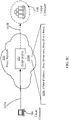
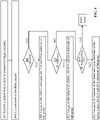
- proxy 102 may attempt to establish either an IPv6-based connection or an IPv4-based connection with target 108.
- proxy 102 uses its own IPv6 address (selected from the IP address pair assigned to the identification-information of the client) and an IPv6 address (if available) of target computer 108. If establishing of the IPv6-based connection fails, then proxy 102 may attempt to establish an IPv4-based connection using its own IPv4 address and an IPv4 address (if available) of target computer 108.
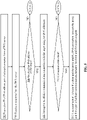
- step 410 the proxy determines that an IP address of a client executing on client computer 104 is not unique in a computer network in which the proxy, the client and the target are implemented, then the proxy proceeds to step 414, described below.
- proxy 102 assigns the pair of IP addresses of the proxy to the tuple as follows: IP address of client , Port ID : Proxy IPv 6 address , Proxy IPv 6 address .
- the proxy uses the already-established connection between the proxy and the client computer, and the IPv6-based connection established between the proxy and the target computer to facilitate communications between the client and the target computer.
- the connection between the proxy and the client computer may be either IPv6-based connection or an IPv4-based connection, as described before.
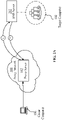
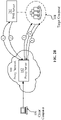
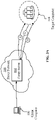
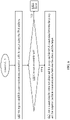
- FIG. 3B is a diagram depicting communications connections between a client and a target according to some embodiments.
- a communications connection 310A is established between client computer 106 and proxy 102, while an IPv4-based communications connection 310B is established between proxy 102 and target computer 108.
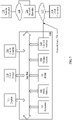
- FIG. 7 is a block diagram that illustrates an example computer system with which some embodiments may be implemented.
- a computer system 700 and instructions for implementing the disclosed technologies in hardware, software, or a combination of hardware and software are represented schematically, for example as boxes and circles, at the same level of detail that is commonly used by persons of ordinary skill in the art to which this disclosure pertains for communicating about computer architecture and computer systems implementations.
- At least one hardware processor 704 is coupled to I/O subsystem 702 for processing information and instructions.
- Hardware processor 704 may include, for example, a general-purpose microprocessor or microcontroller or a special-purpose microprocessor such as an embedded system or a graphics processing unit (GPU) or a digital signal processor or ARM processor.
- Processor 704 may comprise an integrated arithmetic logic unit (ALU) or may be coupled to a separate ALU.
- ALU arithmetic logic unit
- Non-volatile media includes, for example, optical or magnetic disks, such as storage 710.
- Volatile media includes dynamic memory, such as memory 706.
- Common forms of storage media include, for example, a hard disk, solid state drive, flash drive, magnetic data storage medium, any optical or physical data storage medium, memory chip, or the like.
- Storage media is distinct from but may be used in conjunction with transmission media.
- Transmission media participates in transferring information between storage media.
- transmission media includes coaxial cables, copper wire and fiber optics, including the wires that comprise a bus of I/O subsystem 702.
- transmission media can also take the form of acoustic or light waves, such as those generated during radio-wave and infra-red data communications.
- Computer system 700 also includes a communication interface 718 coupled to bus 702.
- Communication interface 718 provides a two-way data communication coupling to network link(s) 720 that are directly or indirectly connected to at least one communication network, such as a network 722 or a public or private cloud on the Internet.
- communication interface 718 may be an Ethernet networking interface, integrated-services digital network (ISDN) card, cable modem, satellite modem, or a modem to provide a data communication connection to a corresponding type of communications line, for example an Ethernet cable or a metal cable of any kind or a fiber-optic line or a telephone line.
- Network 722 broadly represents a local area network (LAN), wide-area network (WAN), campus network, internetwork, or any combination thereof.
- network link 720 may provide a connection through network 722 or to other computing devices via internetworking devices or computers that are operated by an Internet Service Provider (ISP) 726.
- ISP 726 provides data communication services through a world-wide packet data communication network represented as internet 728.
- Server 730 may comprise a web application server that hosts a presentation layer, application layer and data storage layer such as a relational database system using structured query language (SQL) or NoSQL, an object store, a graph database, a flat file system or other data storage.
- SQL structured query language
- NoSQL NoSQL
- Computer system 700 can send messages and receive data and instructions, including program code, through the network(s), network link 720 and communication interface 718.
- a server 730 might transmit a requested code for an application program through Internet 728, ISP 726, local network 722 and communication interface 718.
- the received code may be executed by processor 704 as it is received, or stored in storage 710, or other non-volatile storage for later execution.
Landscapes
- Engineering & Computer Science (AREA)
- Computer Networks & Wireless Communication (AREA)
- Signal Processing (AREA)
- Computer Hardware Design (AREA)
- Computer Security & Cryptography (AREA)
- Computing Systems (AREA)
- General Engineering & Computer Science (AREA)
- Data Exchanges In Wide-Area Networks (AREA)
- Small-Scale Networks (AREA)
Applications Claiming Priority (1)
| Application Number | Priority Date | Filing Date | Title |
|---|---|---|---|
| US17/167,474 US11522826B2 (en) | 2021-02-04 | 2021-02-04 | Automatic IPV6/IPV4 fallback approach in proxy networks |
Publications (1)
| Publication Number | Publication Date |
|---|---|
| EP4040760A1 true EP4040760A1 (fr) | 2022-08-10 |
Family
ID=78621777
Family Applications (1)
| Application Number | Title | Priority Date | Filing Date |
|---|---|---|---|
| EP21208204.4A Ceased EP4040760A1 (fr) | 2021-02-04 | 2021-11-15 | Approche de repli automatique ipv6/ipv4 dans les réseaux proxy |
Country Status (3)
| Country | Link |
|---|---|
| US (2) | US11522826B2 (fr) |
| EP (1) | EP4040760A1 (fr) |
| WO (1) | WO2022169805A1 (fr) |
Families Citing this family (1)
| Publication number | Priority date | Publication date | Assignee | Title |
|---|---|---|---|---|
| US11522826B2 (en) | 2021-02-04 | 2022-12-06 | Webshare Software Company | Automatic IPV6/IPV4 fallback approach in proxy networks |
Citations (3)
| Publication number | Priority date | Publication date | Assignee | Title |
|---|---|---|---|---|
| US20160150043A1 (en) * | 2014-11-26 | 2016-05-26 | Hughes Network Systems, Llc | Source ip address transparency systems and methods |
| US20180191672A1 (en) * | 2016-12-30 | 2018-07-05 | Hughes Network Systems Llc | System and method for improving proxy server performance using local domain name system (dns) cache and connectivity monitoring |
| CN109543121A (zh) * | 2018-11-09 | 2019-03-29 | 深圳万物云联科技有限公司 | 一种外链url资源调用方法及装置 |
Family Cites Families (6)
| Publication number | Priority date | Publication date | Assignee | Title |
|---|---|---|---|---|
| US8799470B2 (en) * | 2011-03-11 | 2014-08-05 | Qualcomm Incorporated | System and method using a client-local proxy-server to access a device having an assigned network address |
| US10230687B1 (en) * | 2011-11-16 | 2019-03-12 | Google Llc | Apparatus and method for correlating addresses of different Internet protocol versions |
| US9241044B2 (en) * | 2013-08-28 | 2016-01-19 | Hola Networks, Ltd. | System and method for improving internet communication by using intermediate nodes |
| US10897489B2 (en) * | 2017-12-07 | 2021-01-19 | Mcom Media Comunications Dmcc | Managing content casting |
| US11811806B2 (en) * | 2020-09-25 | 2023-11-07 | Barracuda Networks, Inc. | System and apparatus for internet traffic inspection via localized DNS caching |
| US11522826B2 (en) | 2021-02-04 | 2022-12-06 | Webshare Software Company | Automatic IPV6/IPV4 fallback approach in proxy networks |
-
2021
- 2021-02-04 US US17/167,474 patent/US11522826B2/en active Active
- 2021-11-15 EP EP21208204.4A patent/EP4040760A1/fr not_active Ceased
-
2022
- 2022-02-02 WO PCT/US2022/014848 patent/WO2022169805A1/fr not_active Ceased
- 2022-11-29 US US18/071,558 patent/US11736435B2/en active Active
Patent Citations (3)
| Publication number | Priority date | Publication date | Assignee | Title |
|---|---|---|---|---|
| US20160150043A1 (en) * | 2014-11-26 | 2016-05-26 | Hughes Network Systems, Llc | Source ip address transparency systems and methods |
| US20180191672A1 (en) * | 2016-12-30 | 2018-07-05 | Hughes Network Systems Llc | System and method for improving proxy server performance using local domain name system (dns) cache and connectivity monitoring |
| CN109543121A (zh) * | 2018-11-09 | 2019-03-29 | 深圳万物云联科技有限公司 | 一种外链url资源调用方法及装置 |
Non-Patent Citations (7)
| Title |
|---|
| BRZOZOWSKI C GRIFFITHS COMCAST J: "Comcast IPv6 Trial/Deployment Experiences; draft-jjmb-v6ops-comcast-ipv6-experiences-02.txt", COMCAST IPV6 TRIAL/DEPLOYMENT EXPERIENCES; DRAFT-JJMB-V6OPS-COMCAST-IPV6-EXPERIENCES-02.TXT, INTERNET ENGINEERING TASK FORCE, IETF; STANDARDWORKINGDRAFT, INTERNET SOCIETY (ISOC) 4, RUE DES FALAISES CH- 1205 GENEVA, SWITZERLAND, no. 2, 2 October 2011 (2011-10-02), pages 1 - 12, XP015078300 * |
| FIELDING UC IRVINE J GETTYS COMPAQ/W3C J MOGUL COMPAQ H FRYSTYK W3C/MIT L MASINTER XEROX P LEACH MICROSOFT T BERNERS-LEE W3C/MIT R: "Hypertext Transfer Protocol -- HTTP/1.1; rfc2616.txt", HYPERTEXT TRANSFER PROTOCOL -- HTTP/1.1; RFC2616.TXT, INTERNET ENGINEERING TASK FORCE, IETF; STANDARD, INTERNET SOCIETY (ISOC) 4, RUE DES FALAISES CH- 1205 GENEVA, SWITZERLAND, 1 June 1999 (1999-06-01), XP015008399 * |
| FRANKS NORTHWESTERN UNIVERSITY P HALLAM-BAKER VERISIGN J ET AL: "HTTP Authentication: Basic and Digest Access Authentication; rfc2617.txt", HTTP AUTHENTICATION: BASIC AND DIGEST ACCESS AUTHENTICATION; RFC2617.TXT, INTERNET ENGINEERING TASK FORCE, IETF; STANDARD, INTERNET SOCIETY (ISOC) 4, RUE DES FALAISES CH- 1205 GENEVA, SWITZERLAND, 1 June 1999 (1999-06-01), XP015008400 * |
| KITAMURA NEC CORPORATION H: "A SOCKS-based IPv6/IPv4 Gateway Mechanism; rfc3089.txt", A SOCKS-BASED IPV6/IPV4 GATEWAY MECHANISM; RFC3089.TXT, INTERNET ENGINEERING TASK FORCE, IETF; STANDARD, INTERNET SOCIETY (ISOC) 4, RUE DES FALAISES CH- 1205 GENEVA, SWITZERLAND, 1 April 2001 (2001-04-01), XP015008872 * |
| LEECH BELL-NORTHERN RESEARCH LTD M GANIS INTERNATIONAL BUSINESS MACHINES Y LEE NEC SYSTEMS LABORATORY R KURIS UNIFY CORPORATION D: "SOCKS Protocol Version 5; rfc1928.txt", SOCKS PROTOCOL VERSION 5; RFC1928.TXT, INTERNET ENGINEERING TASK FORCE, IETF; STANDARD, INTERNET SOCIETY (ISOC) 4, RUE DES FALAISES CH- 1205 GENEVA, SWITZERLAND, 1 March 1996 (1996-03-01), XP015007712 * |
| PAULY D SCHINAZI APPLE INC T: "An Update to Happy Eyeballs; draft-pauly-v6ops-happy-eyeballs-update-01.txt", AN UPDATE TO HAPPY EYEBALLS; DRAFT-PAULY-V6OPS-HAPPY-EYEBALLS-UPDATE-01.TXT, INTERNET ENGINEERING TASK FORCE, IETF; STANDARDWORKINGDRAFT, INTERNET SOCIETY (ISOC) 4, RUE DES FALAISES CH- 1205 GENEVA, SWITZERLAND, 13 March 2017 (2017-03-13), pages 1 - 8, XP015118572 * |
| WING A YOURTCHENKO CISCO D: "Happy Eyeballs: Success with Dual-Stack Hosts; rfc6555.txt", HAPPY EYEBALLS: SUCCESS WITH DUAL-STACK HOSTS; RFC6555.TXT, INTERNET ENGINEERING TASK FORCE, IETF; STANDARD, INTERNET SOCIETY (ISOC) 4, RUE DES FALAISES CH- 1205 GENEVA, SWITZERLAND, 6 April 2012 (2012-04-06), pages 1 - 15, XP015081488 * |
Also Published As
| Publication number | Publication date |
|---|---|
| US20220247715A1 (en) | 2022-08-04 |
| US11522826B2 (en) | 2022-12-06 |
| US11736435B2 (en) | 2023-08-22 |
| WO2022169805A1 (fr) | 2022-08-11 |
| US20230087327A1 (en) | 2023-03-23 |
Similar Documents
| Publication | Publication Date | Title |
|---|---|---|
| US12149406B2 (en) | Managing network connected devices | |
| US20220417220A1 (en) | Application-layer service traffic communication using datacenter network fabric as proxy | |
| US10637724B2 (en) | Managing network connected devices | |
| US10659301B2 (en) | Configuring container attribute data on network switches to enable networking functionality | |
| US9712486B2 (en) | Techniques for the deployment and management of network connected devices | |
| US11144340B2 (en) | Placement of container workloads triggered by network traffic for efficient computing at network edge devices | |
| JP2025506397A (ja) | マルチクラウドインフラストラクチャのクラウドリンクアダプタ | |
| US11575655B2 (en) | Endpoint bypass in a proxy network | |
| JP2025507289A (ja) | マルチクラウドアプリケーション用のグラフィカルユーザインターフェイスの生成 | |
| JP2025506395A (ja) | マルチクラウド制御プレーンネットワークアダプタのアーキテクチャ | |
| JP2025506384A (ja) | マルチクラウド制御プレーンアーキテクチャ | |
| US20250343789A1 (en) | Proxy direct connect | |
| US11736435B2 (en) | Automatic IPV6/IPV4 fallback approach in proxy networks | |
| US11637909B1 (en) | Preemptive TCP connections to reduce latency for proxies | |
| US12413578B1 (en) | Passwordless authentication across multiple layers and multiple directory services | |
| US20240356887A1 (en) | Sending dns traffic directly from end user device to service-specific dns server | |
| US11722577B2 (en) | Proxying TCP fingerprints | |
| US20240048625A1 (en) | Reducing latency and optimizing proxy networks |
Legal Events
| Date | Code | Title | Description |
|---|---|---|---|
| PUAI | Public reference made under article 153(3) epc to a published international application that has entered the european phase |
Free format text: ORIGINAL CODE: 0009012 |
|
| STAA | Information on the status of an ep patent application or granted ep patent |
Free format text: STATUS: REQUEST FOR EXAMINATION WAS MADE |
|
| 17P | Request for examination filed |
Effective date: 20220622 |
|
| AK | Designated contracting states |
Kind code of ref document: A1 Designated state(s): AL AT BE BG CH CY CZ DE DK EE ES FI FR GB GR HR HU IE IS IT LI LT LU LV MC MK MT NL NO PL PT RO RS SE SI SK SM TR |
|
| STAA | Information on the status of an ep patent application or granted ep patent |
Free format text: STATUS: EXAMINATION IS IN PROGRESS |
|
| 17Q | First examination report despatched |
Effective date: 20221007 |
|
| STAA | Information on the status of an ep patent application or granted ep patent |
Free format text: STATUS: THE APPLICATION HAS BEEN REFUSED |
|
| 18R | Application refused |
Effective date: 20240412 |