EP4040745B1 - Verfahren zur weiterleitung von dienstpaketen, vorrichtung und computerspeichermedium - Google Patents
Verfahren zur weiterleitung von dienstpaketen, vorrichtung und computerspeichermedium Download PDFInfo
- Publication number
- EP4040745B1 EP4040745B1 EP20881407.9A EP20881407A EP4040745B1 EP 4040745 B1 EP4040745 B1 EP 4040745B1 EP 20881407 A EP20881407 A EP 20881407A EP 4040745 B1 EP4040745 B1 EP 4040745B1
- Authority
- EP
- European Patent Office
- Prior art keywords
- sff
- virtual resource
- resource module
- identifier
- sid
- Prior art date
- Legal status (The legal status is an assumption and is not a legal conclusion. Google has not performed a legal analysis and makes no representation as to the accuracy of the status listed.)
- Active
Links
Images







Classifications
-
- H—ELECTRICITY
- H04—ELECTRIC COMMUNICATION TECHNIQUE
- H04L—TRANSMISSION OF DIGITAL INFORMATION, e.g. TELEGRAPHIC COMMUNICATION
- H04L45/00—Routing or path finding of packets in data switching networks
- H04L45/34—Source routing
-
- H—ELECTRICITY
- H04—ELECTRIC COMMUNICATION TECHNIQUE
- H04L—TRANSMISSION OF DIGITAL INFORMATION, e.g. TELEGRAPHIC COMMUNICATION
- H04L45/00—Routing or path finding of packets in data switching networks
- H04L45/302—Route determination based on requested QoS
- H04L45/306—Route determination based on the nature of the carried application
-
- H—ELECTRICITY
- H04—ELECTRIC COMMUNICATION TECHNIQUE
- H04L—TRANSMISSION OF DIGITAL INFORMATION, e.g. TELEGRAPHIC COMMUNICATION
- H04L47/00—Traffic control in data switching networks
- H04L47/10—Flow control; Congestion control
- H04L47/12—Avoiding congestion; Recovering from congestion
- H04L47/122—Avoiding congestion; Recovering from congestion by diverting traffic away from congested entities
-
- H—ELECTRICITY
- H04—ELECTRIC COMMUNICATION TECHNIQUE
- H04L—TRANSMISSION OF DIGITAL INFORMATION, e.g. TELEGRAPHIC COMMUNICATION
- H04L47/00—Traffic control in data switching networks
- H04L47/70—Admission control; Resource allocation
- H04L47/82—Miscellaneous aspects
- H04L47/828—Allocation of resources per group of connections, e.g. per group of users
-
- H—ELECTRICITY
- H04—ELECTRIC COMMUNICATION TECHNIQUE
- H04L—TRANSMISSION OF DIGITAL INFORMATION, e.g. TELEGRAPHIC COMMUNICATION
- H04L47/00—Traffic control in data switching networks
- H04L47/70—Admission control; Resource allocation
- H04L47/82—Miscellaneous aspects
- H04L47/829—Topology based
-
- H—ELECTRICITY
- H04—ELECTRIC COMMUNICATION TECHNIQUE
- H04L—TRANSMISSION OF DIGITAL INFORMATION, e.g. TELEGRAPHIC COMMUNICATION
- H04L45/00—Routing or path finding of packets in data switching networks
- H04L45/74—Address processing for routing
- H04L45/745—Address table lookup; Address filtering
- H04L45/7453—Address table lookup; Address filtering using hashing
-
- H—ELECTRICITY
- H04—ELECTRIC COMMUNICATION TECHNIQUE
- H04L—TRANSMISSION OF DIGITAL INFORMATION, e.g. TELEGRAPHIC COMMUNICATION
- H04L47/00—Traffic control in data switching networks
- H04L47/10—Flow control; Congestion control
- H04L47/12—Avoiding congestion; Recovering from congestion
- H04L47/125—Avoiding congestion; Recovering from congestion by balancing the load, e.g. traffic engineering
Definitions
- This application relates to the field of routing technologies, and in particular, to a service packet forwarding method, an apparatus, and a computer storage medium.
- the packet When a packet is transmitted in a network, to provide a user with a secure, fast, and stable network service, the packet needs to be processed sequentially based on a plurality of service functions (service functions, SFs) included in a configured service function chain (service function chain).
- the plurality of service functions may include service functions such as traffic cleaning, deep packet inspection, and network acceleration.
- a plurality of virtual resource modules for implementing the service function may be correspondingly configured.
- the packets need to be processed based on the service function, the packets are offloaded onto each virtual resource module, and each virtual resource module processes some received packets based on the service function, to improve packet processing efficiency. This process is also referred to as load balancing.
- the virtual resource module may be a virtual machine (virtual machine, VM), or may be a container (pod) in a virtual container network.
- a virtual resource module is connected to a service function forwarder (service function forwarder, SFF). Therefore, assuming that any SFF is connected to one virtual resource module corresponding to a service function 1, a control node may allocate a segment identifier (segment identifier, SID) to the virtual resource module based on a locator (locator) of the SFF in a segment routing (segment routing, SR) network.
- SFF service function forwarder
- control node may obtain a SID of each of a plurality of virtual resource modules corresponding to service functions on a service function chain, and then orchestrate, based on the SID of each of one or more virtual resource modules corresponding to the service functions, a plurality of segment routing policies (SR policies) that can be used to implement all services on the service function chain.
- SR policies segment routing policies
- Each segment routing policy is used to indicate a SID list, and a plurality of SIDs included in the SID list are in a one-to-one correspondence with the plurality of service functions on the service function chain.
- packets are offloaded on a service function chain ingress node according to a determined segment routing policy, and each offloaded packet is forwarded based on a SID list indicated by the corresponding segment routing policy, so that all the packets are processed based on the service functions on the service function chain.
- the service function chain ingress node steers the packet to an SFF for implementing a first service function on the service function chain.
- the control node needs to pre-orchestrate all segment routing policies.
- the service function chain includes more service functions, and each service function corresponds to more virtual resource modules, efficiency of orchestrating all the segment routing policies is very low.
- all the packets are offloaded on the service function chain ingress node according to the determined segment routing policy, and consequently pressure on the service function chain ingress node is high.
- the control node needs to re-orchestrate all segment routing policies. Consequently, a packet processing process becomes more complex.
- An upstream service function forwarder (SFF) node including a receiver configured to receive a packet, a processor operably coupled to the receiver and configured to implement a load distribution function (LDF), wherein the LDF is configured to select one of a plurality of service functions (SFs) of a same type on a downstream SFF node to process the packet, and a transmitter operably coupled to the processor and configured to transmit the packet to the downstream SFF node for processing by the one of the plurality of SFs selected.
- SFF upstream service function forwarder
- This application provides a service packet forwarding method, an apparatus, and a computer storage medium, to reduce data processing pressure on a service function chain ingress node, and reduce packet forwarding complexity when a virtual resource module correspondingly configured for a service function changes.
- the technical solutions are as follows:
- a service packet forwarding method is provided, and applied to a first SFF in a communications network.
- the first SFF is any SFF connected to one or more first virtual resource modules.
- the communications network further includes one or more second SFFs, and each second SFF is connected to one or more second virtual resource modules, or each second SFF is connected to one or more second virtual resource modules, and the first SFF is also connected to one or more second virtual resource modules.
- the first virtual resource module is a virtual resource module for implementing a first service function
- the second virtual resource module is a virtual resource module for implementing a second service function.
- the first SFF receives a packet sent by one first virtual resource module connected to the first SFF.
- the first SFF determines the second service function based on the packet.
- the first SFF obtains configuration information of the second virtual resource module for implementing the second service function.
- the first SFF forwards, based on the configuration information of the second virtual resource module, the packet to one second virtual resource module connected to the first SFF or one of the one or more second SFFs.
- an SFF connected to the second virtual resource module in the communications network is one or more second SFFs, or one or more second SFFs and a first SFF. Therefore, the configuration information of the second virtual resource module includes at least configuration information of the second virtual resource module connected to the second SFF in the communications network.
- the first SFF may dynamically determine a forwarding path of the packet based on the configuration information of the virtual resource module for implementing the second service function, to implement dynamic load balancing on the packet instead of uniformly performing load balancing by a service function chain ingress node, so as to reduce pressure on the service function chain ingress node.
- the configuration information of the second virtual resource module includes an identifier and a weight of each second virtual resource module connected to the first SFF, an identifier of each of the one or more second SFFs, and a weight of a second resource module connected to each second SFF.
- the first SFF forwards, based on the configuration information of the second virtual resource module, the packet to one second virtual resource module connected to the first SFF or one of the one or more second SFFs is specifically as follows: The first SFF forwards, based on the identifier and the weight of each second virtual resource module connected to the first SFF, the identifier of each of the one or more second SFFs, and the weight of the second resource module connected to each second SFF, the packet to the one second virtual resource module connected to the first SFF or the one of the one or more second SFFs.
- the first SFF may forward, based on the weight in the configuration information, the packet to the one second virtual resource module connected to the first SFF or the one of the one or more second SFFs, to implement dynamic load balancing on the packet, and improve packet forwarding efficiency.
- the configuration information of the second virtual resource module includes an identifier of each of the one or more second SFFs and a weight of a second resource module connected to each second SFF.
- the first SFF forwards, based on the configuration information of the second virtual resource module, the packet to one second virtual resource module connected to the first SFF or one of the one or more second SFFs is specifically as follows: The first SFF forwards the packet to the one of the one or more second SFFs based on the weight of the second resource module connected to each second SFF.
- the first SFF may also forward the packet to the one of the one or more second SFFs based on the weight in the configuration information, to implement dynamic load balancing on the packet, and improved packet forwarding efficiency.
- the configuration information of the second virtual resource module includes a plurality of entries, the plurality of entries include one or more local entries and one or more remote entries, each of the one or more local entries includes an identifier of the one second virtual resource module connected to the first SFF and a weight of the one second virtual resource module connected to the first SFF, and each of the one or more remote entries includes an identifier of one second SFF and a weight of a second virtual resource module connected to the second SFF corresponding to the identifier of the one second SFF
- the packet to the one second virtual resource module connected to the first SFF is specifically as follows:
- the first SFF determines, based on weights in the plurality of entries by using a hash algorithm, a first entry for forwarding the packet, where the first entry is
- the configuration information may be indicated by the local entry and the remote entry.
- an entry may be directly determined by using a hash algorithm, and the packet is forwarded based on the entry, to improve packet forwarding efficiency.
- the weight of the one second virtual resource module connected to the first SFF is a quantity 1
- the weight of the second virtual resource module connected to the second SFF corresponding to the identifier of the one second SFF is a quantity of second virtual resource modules connected to the second SFF corresponding to the identifier of the one second SFF
- the hash algorithm satisfies a condition that a ratio between probabilities of matching the packet with entities in the plurality of entries is the same as a ratio between quantities in entries in the plurality of entries.
- an SFF connected to the second virtual resource module in the communications network includes one or more second SFFs and a first SFF
- the weight of the one second virtual resource module connected to the first SFF is the quantity 1
- the weight of the second virtual resource module connected to the second SFF corresponding to the identifier of the one second SFF is the quantity of second virtual resource modules connected to the second SFF corresponding to the identifier of the one second SFF.
- the identifier of the one second virtual resource module connected to the first SFF is an interface identifier of the one second virtual resource module connected to the first SFF
- the identifier of the second SFF is a SID of the second SFF.
- the first SFF forwards, based on the first entry, the packet to the one second virtual resource module connected to the first SFF or the one of the one or more second SFFs is specifically as follows: The first SFF forwards, based on the interface identifier that is of the one second virtual resource module connected to the first SFF and that is included in the first entry and through a port indicated by the interface identifier, the packet to the one second virtual resource module connected to the first SFF.
- the first SFF forwards, based on the SID that is of the second SFF and that is included in the first entry, the packet to the second SFF indicated by the SID in the first entry.
- configuration information of a locally connected second virtual resource module may include the interface identifier of the one second virtual resource module connected to the first SFF, to improve packet forwarding efficiency, and configuration information of a remote second SFF may include the SID of the second SFF, so that the packet can be forwarded based on the SID, and packet forwarding efficiency can also be improved.
- the configuration information of the second virtual resource module includes at least two remote entries, and each of the at least two remote entries includes an identifier of one second SFF and a weight of a second virtual resource module connected to the second SFF corresponding to the identifier of the one second SFF.
- each of the at least two remote entries includes an identifier of one second SFF and a weight of a second virtual resource module connected to the second SFF corresponding to the identifier of the one second SFF.
- the first SFF determines, based on weights in the at least two remote entries by using a hash algorithm, a second entry for forwarding the packet, where the second entry is one of the at least two remote entries.
- the first SFF forwards, based on the second entry, the packet to the SFF corresponding to the identifier that is of the second SFF and that is in the second entry.
- the configuration information may be indicated by the remote entry.
- an entry may be directly determined by using a hash algorithm, and the packet is forwarded based on the entry, to improve packet forwarding efficiency.
- the weight of the second virtual resource module connected to the second SFF corresponding to the identifier of the one second SFF is a quantity of second virtual resource modules connected to the second SFF corresponding to the identifier of the one second SFF; and the hash algorithm satisfies a condition that a ratio between probabilities of matching the packet with remote entries in the at least two remote entries is the same as a ratio between quantities in remote entries in the at least two remote entries.
- the weight of the second virtual resource module connected to the second SFF corresponding to the identifier of the one second SFF is the quantity of second virtual resource modules connected to the second SFF corresponding to the identifier of the one second SFF.
- the identifier of the one second SFF is a SID of the one second SFF.
- configuration information of a remote second SFF may include the SID of the second SFF, so that the packet can be forwarded based on the SID, and packet forwarding efficiency can also be improved.
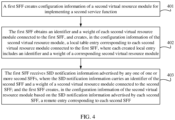
- the first SFF may further receive SID notification information advertised by each of the one or more second SFFs, where the SID notification information includes an identifier of a second SFF that advertises the SID notification information and a weight of a second virtual resource module connected to the second SFF that advertises the SID notification information.
- the first SFF creates, based on the SID notification information advertised by each second SFF, a remote entry corresponding to each second SFF.
- the first SFF may learn of, by using the SID notification information, the configuration information of the second virtual resource module connected to each second SFF, to dynamically perform load balancing subsequently.
- the first SFF may further obtain the identifier and the weight of each second virtual resource module connected to the first SFF.
- the first SFF creates, based on the identifier and the weight of each second virtual resource module connected to the first SFF, a local entry corresponding to each second virtual resource module.
- an SFF connected to the second virtual resource module in the communications network includes one or more second SFFs and a first SFF
- the first SFF further needs to create a local entry based on a locally connected second virtual resource module, to implement load balancing in a subsequent packet forwarding process.
- the first SFF may further advertise SID notification information to each second SFF, so that each second SFF learns of, by using the SID notification information, configuration information of the second virtual resource module connected to the first SFF, and each second SFF dynamically performs load balancing subsequently.
- the existing locator TLV may be extended, so that the locator TLV can carry the SID notification information, to help promote the service packet forwarding method provided in this embodiment of this application.
- An embodiment of this application further provides other configuration information of a second virtual resource module for implementing a second service function.
- the configuration information of the second virtual resource module includes an identifier of each second virtual resource module connected to the first SFF and an identifier of each second virtual resource module connected to the one or more second SFFs, or an identifier of each second virtual resource module connected to the one or more second SFFs.
- the first SFF may directly forward the packet based on the identifier of each second virtual resource module.
- the configuration information of the second virtual resource module includes a plurality of entries, and each entry includes an identifier of one second virtual resource module connected to the first SFF or any second SFF.
- that the first SFF selects an identifier of one second virtual resource module according to a load balancing policy is specifically as follows: The first SFF determines, by using a hash algorithm, a first entry for forwarding the packet, where the first entry includes the selected identifier of the second virtual resource module, the first entry is one of the plurality of entries, and the hash algorithm satisfies a condition that probabilities of matching the packet with entries in the plurality of entries are the same.
- configuration information of each second virtual resource module may be further indicated by an entry.
- an entry may be directly determined by using a hash algorithm, and the packet is forwarded based on the entry, to improve packet forwarding efficiency.
- the identifier of each second virtual resource module is a SID of each second virtual resource module.
- the first SFF forwards, based on the selected identifier of the second virtual resource module, the packet to the one second virtual resource module connected to the first SFF or the one of the one or more second SFFs is specifically as follows: The first SFF forwards, based on an interface identifier that is of the second virtual resource module and that is indicated by the selected SID of the second virtual resource module and through a port indicated by the interface identifier, the packet to the one second virtual resource module connected to the first SFF. Alternatively, the first SFF forwards, based on a destination address indicated by the selected SID of the second virtual resource module, the packet to a second SFF connected to a selected second virtual resource module.
- the packet needs to be forwarded based on the interface identifier that is of the second virtual resource module and that is indicated by the selected SID or the destination address indicated by the selected SID.
- the first SFF further receives SID notification information advertised by each of the one or more second SFFs, where the SID notification information includes an identifier of each second virtual resource module connected to a second SFF that advertises the SID notification information.
- the first SFF creates, based on the SID notification information advertised by each second SFF, an entry corresponding to each second virtual resource module connected to each second SFF.
- the first SFF may learn of, by using the SID notification information, the identifier of each second virtual resource module connected to each second SFF, to dynamically perform load balancing subsequently.
- the first SFF further obtains the identifier of each of the one or more second virtual resource modules connected to the first SFF, and creates, based on the identifier of each of the one or more second virtual resource modules connected to the first SFF, an entry corresponding to each of the one or more second virtual resource modules connected to the first SFF.
- an SFF connected to the second virtual resource module in the communications network includes one or more second SFFs and a first SFF
- the first SFF further needs to create an entry based on an identifier of each locally connected second virtual resource module, to implement load balancing in a subsequent packet forwarding process.
- the first SFF further advertises SID notification information to each of the one or more second SFFs, where the notification information includes one or more identifiers of the one or more second virtual resource modules connected to the first SFF.
- the first SFF may further advertise SID notification information to each second SFF, so that each second SFF learns of, by using the SID notification information, an identifier of each second virtual resource module connected to the first SFF, and each second SFF dynamically performs load balancing subsequently.
- the SID notification information is carried in a locator type-length-value TLV, the locator TLV includes a sub-TLV, the sub-TLV includes a SID field, the SID field is used to indicate an identifier of an SFF that advertises the locator TLV, the sub-TLV includes a sub-sub-TLV, the sub-sub-TLV includes a SID field, and the SID field in the sub-sub-TLV is used to indicate an identifier of a second virtual resource module connected to the SFF that advertises the locator TLV.
- the existing locator TLV may be extended, so that the locator TLV can carry the SID notification information, to help promote the service packet forwarding method provided in this embodiment of this application.
- a service packet forwarding method is provided, and is applied to a first SFF in a communications network.
- the first SFF is any SFF connected to one or more first virtual resource modules
- the communications network further includes one or more second SFFs, and each second SFF is connected to one or more second virtual resource modules, or each second SFF is connected to one or more second virtual resource modules, and the first SFF is also connected to one or more second virtual resource modules.
- the first virtual resource module is a virtual resource module for implementing a first service function
- the second virtual resource module is a virtual resource module for implementing a second service function.
- the first SFF receives SID notification information advertised by any one of the one or more second SFFs, where the SID notification information is used to indicate configuration information of a second virtual resource module connected to the any second SFF.
- the first SFF adds the configuration information of the second virtual resource module connected to the any second SFF to configuration information of the second virtual resource module for implementing the second service function.
- the first SFF and the any one of the one or more second SFFs each may advertise, configuration information of respectively connected virtual resource modules in the communications network by using the SID notification information, so that another SFF can learn of configuration information of a virtual resource module connected to an SFF other than the another SFF, to locally construct configuration information of a virtual resource module for implementing each service function, and therefore subsequently perform dynamic load balancing by using the service packet forwarding method provided in this embodiment of this application.
- each SFF determines the configuration information of the second virtual resource module
- the changed virtual resource module may also be notified by using the SID notification information, so that the another SFF updates local configuration information of the second virtual resource module.
- the foregoing process of updating the configuration information of the second virtual resource module only involves modification of related information of the changed second virtual resource module.
- a control node needs to re-orchestrate all segment routing policies. This processing process is for the entire second virtual resource module.
- the first SFF may also dynamically perform load balancing provided that the configuration information of the second virtual resource module is updated in a timely manner, and the control node does not need to re-orchestrate all segment routing policies, to simplify a processing process in this scenario, and improve packet forwarding efficiency in this scenario.
- the configuration information of the second virtual resource module for implementing the second service function includes a plurality of entries, the plurality of entries include one or more remote entries, and the SID notification information includes an identifier of the any second SFF and a weight of the second virtual resource module connected to the any second SFF.
- the first SFF adds the configuration information of the second virtual resource module connected to the any second SFF to configuration information of the second virtual resource module is specifically as follows: The first SFF creates, based on the SID notification information advertised by the any second SFF, a remote entry corresponding to the any second SFF, where the created remote entry includes the identifier of the any second SFF and the weight of the second virtual resource module connected to the any second SFF.
- the plurality of entries further include one or more local entries.
- the first SFF further obtains an identifier and a weight of each second virtual resource module connected to the first SFF.
- the first SFF creates, based on the identifier and the weight of each second virtual resource module connected to the first SFF, a local entry corresponding to each second virtual resource module connected to the first SFF, where each created local entry includes an identifier and a weight of a corresponding second virtual resource module.
- the first SFF further advertises SID notification information to each of the one or more second SFFs, where the notification information includes a weight of a second virtual resource module connected to the first SFF and an identifier of the first SFF.
- the SID notification information is carried in a locator type-length-value TLV, the locator TLV includes a sub-TLV, the sub-TLV includes a SID field and a resource weight field, the SID field is used to indicate a weight of an SFF that advertises the locator TLV, and the resource weight field is used to indicate a weight of a first virtual resource module connected to the SFF that advertises the locator TLV.
- the weight of the second virtual resource module connected to the any second SFF is a quantity of second virtual resource modules connected to the any second SFF, and the weight of each second virtual resource module connected to the first SFF is a quantity 1.
- the configuration information of the second virtual resource module for implementing the second service function includes an identifier of each second virtual resource module connected to the first SFF and an identifier of each second virtual resource module connected to the one or more second SFFs
- the SID notification information includes an identifier of each of the one or more second virtual resource modules connected to the any second SFF.
- the first SFF adds the configuration information of the second virtual resource module connected to the any second SFF to configuration information of the second virtual resource module is specifically as follows: The first SFF creates, based on the SID notification information advertised by the any second SFF, an entry corresponding to each second virtual resource module connected to the any second SFF, where each created entry includes an identifier of a corresponding second virtual resource module.
- the first SFF obtains an identifier of each of the one or more second virtual resource modules connected to the first SFF; and creates, based on the identifier of each of the one or more second virtual resource modules connected to the first SFF, an entry corresponding to each of the one or more second virtual resource modules connected to the first SFF, where each created entry includes an identifier of a corresponding second virtual resource module.
- the first SFF advertises SID notification information to each of the one or more second SFFs, where the notification information includes an identifier of each of the one or more second virtual resource modules connected to the first SFF.
- the SID notification information is carried in a locator type-length-value TLV
- the locator TLV includes a sub-TLV
- a SID field in the sub-TLV is used to indicate a SID of an SFF that advertises the locator TLV
- the sub-TLV includes a sub-sub-TLV
- a SID field in the sub-sub-TLV is used to indicate an identifier of a second virtual resource module connected to the SFF that advertises the locator TLV.
- a service packet forwarding method is provided, and is applied to any one of one or more second SFFs in a communications network.
- the communications network further includes a first SFF, the first SFF is any SFF connected to one or more first virtual resource modules, and each second SFF is connected to one or more second virtual resource modules, or each second SFF is connected to one or more second virtual resource modules, and the first SFF is also connected to one or more second virtual resource modules.
- the first virtual resource module is a virtual resource module for implementing a first service function
- the second virtual resource module is a virtual resource module for implementing a second service function.
- the any second SFF receives a packet sent by the first SFF.
- the any second SFF determines the second service function based on the packet.
- the any second SFF obtains configuration information of the second virtual resource module for implementing the second service function.
- the any second SFF forwards, based on the configuration information of the second virtual resource module, the packet to one second virtual resource module connected to the any second SFF.
- a service packet forwarding method is provided, and is applied to a control node in a communications network.
- the communications network further includes a service function chain ingress node.
- the control node determines a segment routing policy, where the segment routing policy is used to indicate a plurality of service functions on a service function chain.
- the control node delivers the segment routing policy to the service function chain ingress node, so that the service function chain ingress node adds the segment routing policy to a packet header of a received packet.
- a service packet forwarding method is provided, and is applied to a service function chain ingress node in a communications network.
- the communications network further includes a control node.
- the service function chain ingress node receives a segment routing policy delivered by the control node, where the segment routing policy is used to indicate a plurality of service functions on a service function chain.
- the service function chain ingress node receives a packet, and adds the segment routing policy to a packet header of the packet.
- the service function chain ingress node obtains configuration information of a first virtual resource module for implementing a first service function, where the first virtual resource module is a virtual resource module for implementing the first service function, and the first service function is a 1 st service function on the service function chain.
- the service function chain ingress node forwards, based on the configuration information of the first virtual resource module, the packet to one SFF connected to the first virtual resource module.
- a first SFF in a communications network is provided.
- the first SFF is any SFF connected to one or more first virtual resource modules
- the communications network further includes one or more second SFFs, and each second SFF is connected to one or more second virtual resource modules, or each second SFF is connected to one or more second virtual resource modules, and the first SFF is also connected to one or more second virtual resource modules.
- the first virtual resource module is a virtual resource module for implementing a first service function
- the second virtual resource module is a virtual resource module for implementing a second service function.
- the first SFF includes a memory and a processor.
- the memory is configured to store a computer program.
- the processor is configured to execute the program stored in the memory to perform the method according to the first aspect, or the method according to the second aspect.
- a second SFF in a communications network is provided.
- the communications network further includes a first SFF, the first SFF is any SFF connected to one or more first virtual resource modules, and each second SFF is connected to one or more second virtual resource modules, or each second SFF is connected to one or more second virtual resource modules, and the first SFF is also connected to one or more second virtual resource modules.
- the first virtual resource module is a virtual resource module for implementing a first service function
- the second virtual resource module is a virtual resource module for implementing a second service function.
- the second SFF includes a memory and a processor.
- the memory is configured to store a computer program.
- the processor is configured to execute the program stored in the memory, to perform the method according to the third aspect.
- a control node in a communications network includes a memory and a processor.
- the memory is configured to store a computer program.
- the processor is configured to execute the program stored in the memory, to perform the method according to the fourth aspect.
- a service function chain ingress node in a communications network includes a memory and a processor.
- the memory is configured to store a computer program.
- the processor is configured to execute the program stored in the memory, to perform the method according to the fifth aspect.
- a chip is provided.
- the chip is disposed in a first SFF in a communications network, the first SFF is any SFF connected to one or more first virtual resource modules, the communications network further includes one or more second SFFs, and each second SFF is connected to one or more second virtual resource modules, or each second SFF is connected to one or more second virtual resource modules, and the first SFF is also connected to one or more second virtual resource modules.
- the first virtual resource module is a virtual resource module for implementing a first service function
- the second virtual resource module is a virtual resource module for implementing a second service function.
- the chip includes a processor and an interface circuit.
- the interface circuit is configured to: receive instructions and transmit the instructions to the processor.
- the processor is configured to perform the method according to the first aspect, or the method according to the second aspect.
- a chip is provided.
- the chip is disposed in a second SFF in a communications network, the communications network further includes a first SFF, the first SFF is any SFF connected to one or more first virtual resource modules, and each second SFF is connected to one or more second virtual resource modules, or each second SFF is connected to one or more second virtual resource modules, and the first SFF is also connected to one or more second virtual resource modules.
- the first virtual resource module is a virtual resource module for implementing a first service function
- the second virtual resource module is a virtual resource module for implementing a second service function.
- the chip includes a processor and an interface circuit.
- the interface circuit is configured to: receive instructions and transmit the instructions to the processor.
- the processor is configured to perform the method according to the third aspect.
- a chip is provided.
- the chip is disposed in a control node in a communications network, and the chip includes a processor and an interface circuit.
- the interface circuit is configured to: receive instructions and transmit the instructions to the processor.
- the processor is configured to perform the method according to the fourth aspect.
- a chip is provided.
- the chip is disposed on a service function chain ingress node in a communications network, and the chip includes a processor and an interface circuit.
- the interface circuit is configured to: receive instructions and transmit the instructions to the processor.
- the processor is configured to perform the method according to the fifth aspect.
- a service packet forwarding system includes a first SFF and one or more second SFFs, the first SFF is any SFF connected to one or more first virtual resource modules, and each second SFF is connected to one or more second virtual resource modules, or each second SFF is connected to one or more second virtual resource modules, and the first SFF is also connected to one or more second virtual resource modules.
- the first virtual resource module is a virtual resource module for implementing a first service function
- the second virtual resource module is a virtual resource module for implementing a second service function.
- Any one of the one or more second SFFs is configured to advertise SID notification information, where the SID notification information is used to indicate configuration information of a second virtual resource module connected to the any second SFF.
- the first SFF is configured to: receive the SID notification information, and add the configuration information of the second virtual resource module connected to the any second SFF to configuration information of the second virtual resource module for implementing the second service function.
- the configuration information of the second virtual resource module for implementing the second service function includes a plurality of entries, the plurality of entries include one or more remote entries, and the SID notification information includes an identifier of the any second SFF and a weight of the second virtual resource module connected to the any second SFF.
- the first SFF is specifically configured to create, based on the SID notification information advertised by the any second SFF, a remote entry corresponding to the any second SFF, where the created remote entry includes the identifier of the any second SFF and the weight of the second virtual resource module connected to the any second SFF.
- the plurality of entries further include one or more local entries.
- the first SFF is further configured to: obtain an identifier and a weight of each second virtual resource module connected to the first SFF; and create, based on the identifier and the weight of each second virtual resource module connected to the first SFF, a local entry corresponding to each second virtual resource module connected to the first SFF, where each created local entry includes an identifier and a weight of a corresponding second virtual resource module.
- the first SFF is further configured to advertise SID notification information to each of the one or more second SFFs, where the notification information includes a weight of a second virtual resource module connected to the first SFF and an identifier of the first SFF.
- the SID notification information is carried in a locator type-length-value TLV, the locator TLV includes a sub-TLV, the sub-TLV includes a SID field and a resource weight field, the SID field is used to indicate a weight of an SFF that advertises the locator TLV, and the resource weight field is used to indicate a weight of a first virtual resource module connected to the SFF that advertises the locator TLV.
- the weight of the second virtual resource module connected to the any second SFF is a quantity of second virtual resource modules connected to the any second SFF, and the weight of each second virtual resource module connected to the first SFF is a quantity 1.
- the configuration information of the second virtual resource module for implementing the second service function includes an identifier of each second virtual resource module connected to the first SFF and an identifier of each second virtual resource module connected to the one or more second SFFs
- the SID notification information includes an identifier of each of the one or more second virtual resource modules connected to the any second SFF.
- the first SFF is specifically configured to create, based on the SID notification information advertised by the any second SFF, an entry corresponding to each second virtual resource module connected to the any second SFF, where each created entry includes an identifier of a corresponding second virtual resource module.
- the first SFF is further configured to: obtain an identifier of each of the one or more second virtual resource modules connected to the first SFF; and create, based on the identifier of each of the one or more second virtual resource modules connected to the first SFF, an entry corresponding to each of the one or more second virtual resource modules connected to the first SFF, where each created entry includes an identifier of a corresponding second virtual resource module.
- the first SFF is further configured to advertise SID notification information to each of the one or more second SFFs, where the notification information includes an identifier of each of the one or more second virtual resource modules connected to the first SFF.
- the SID notification information is carried in a locator type-length-value TLV
- the locator TLV includes a sub-TLV
- a SID field in the sub-TLV is used to indicate a SID of an SFF that advertises the locator TLV
- the sub-TLV includes a sub-sub-TLV
- a SID field in the sub-sub-TLV is used to indicate an identifier of a second virtual resource module connected to the SFF that advertises the locator TLV.
- a first SFF in a communications network is further provided.
- the first SFF is any SFF connected to one or more first virtual resource modules
- the communications network further includes one or more second SFFs, and each second SFF is connected to one or more second virtual resource modules, or each second SFF is connected to one or more second virtual resource modules, and the first SFF is also connected to one or more second virtual resource modules.
- the first virtual resource module is a virtual resource module for implementing a first service function
- the second virtual resource module is a virtual resource module for implementing a second service function.
- the first SFF includes:
- the configuration information of the second virtual resource module includes an identifier and a weight of each second virtual resource module connected to the first SFF, an identifier of each of the one or more second SFFs, and a weight of a second resource module connected to each second SFF.
- the sending module is specifically configured to forward, based on the identifier and the weight of each second virtual resource module connected to the first SFF, the identifier of each of the one or more second SFFs, and the weight of the second resource module connected to each second SFF, the packet to the one second virtual resource module connected to the first SFF or the one of the one or more second SFFs.
- the configuration information of the second virtual resource module includes an identifier of each of the one or more second SFFs and a weight of a second resource module connected to each second SFF.
- the sending module is specifically configured to forward the packet to the one of the one or more second SFFs based on the weight of the second resource module connected to each second SFF.
- the configuration information of the second virtual resource module includes a plurality of entries, the plurality of entries include one or more local entries and one or more remote entries, each of the one or more local entries includes an identifier of the one second virtual resource module connected to the first SFF and a weight of the one second virtual resource module connected to the first SFF, and each of the one or more remote entries includes an identifier of one second SFF and a weight of a second virtual resource module connected to the second SFF corresponding to the identifier of the one second SFF.
- the sending module is specifically configured to: determine, based on weights in the plurality of entries by using a hash algorithm, a first entry for forwarding the packet, where the first entry is one of the plurality of entries; and forward, based on the first entry, the packet to the one second virtual resource module connected to the first SFF or the one of the one or more second SFFs.
- the weight of the one second virtual resource module connected to the first SFF is a quantity 1
- the weight of the second virtual resource module connected to the second SFF corresponding to the identifier of the one second SFF is a quantity of second virtual resource modules connected to the second SFF corresponding to the identifier of the one second SFF
- the hash algorithm satisfies a condition that a ratio between probabilities of matching the packet with entities in the plurality of entries is the same as a ratio between quantities in entries in the plurality of entries.
- the identifier of the one second virtual resource module connected to the first SFF is an interface identifier of the one second virtual resource module connected to the first SFF
- the identifier of the second SFF is a SID of the second SFF
- the sending module is specifically configured to: forward, based on the interface identifier that is of the one second virtual resource module connected to the first SFF and that is included in the first entry and through a port indicated by the interface identifier, the packet to the one second virtual resource module connected to the first SFF; or forward, based on the SID that is of the second SFF and that is included in the first entry, the packet to the second SFF indicated by the SID in the first entry.
- the configuration information of the second virtual resource module includes at least two remote entries, and each of the at least two remote entries includes an identifier of one second SFF and a weight of a second virtual resource module connected to the second SFF corresponding to the identifier of the one second SFF.
- the sending module is specifically configured to: determine, based on weights in the at least two remote entries by using a hash algorithm, a second entry for forwarding the packet, where the second entry is one of the at least two remote entries; and forward, based on the second entry, the packet to the SFF corresponding to the identifier that is of the second SFF and that is in the second entry.
- the weight of the second virtual resource module connected to the second SFF corresponding to the identifier of the one second SFF is a quantity of second virtual resource modules connected to the second SFF corresponding to the identifier of the one second SFF; and the hash algorithm satisfies a condition that a ratio between probabilities of matching the packet with remote entries in the at least two remote entries is the same as a ratio between quantities in remote entries in the at least two remote entries.
- the identifier of the one second SFF is a SID of the one second SFF.
- the receiving module is further configured to receive SID notification information advertised by each of the one or more second SFFs, where the SID notification information includes an identifier of a second SFF that advertises the SID notification information and a weight of a second virtual resource module connected to the second SFF that advertises the SID notification information.
- the first SFF further includes a creation module, configured to create, based on the SID notification information advertised by each second SFF, a remote entry corresponding to each second SFF.
- the obtaining module is further configured to obtain the identifier and the weight of each second virtual resource module connected to the first SFF.
- the creation module is further configured to create, based on the identifier and the weight of each second virtual resource module connected to the first SFF, a local entry corresponding to each second virtual resource module.
- the sending module is further configured to advertise SID notification information to each of the one or more second SFFs, where the SID notification information includes a weight of a second virtual resource module connected to the first SFF and an identifier of the first SFF.
- the SID notification information is carried in a locator type-length-value TLV, the locator TLV includes a sub-TLV, the sub-TLV includes a SID field and a resource weight field, the SID field is used to indicate an identifier of an SFF that advertises the locator TLV, and the resource weight field is used to indicate a weight of a second virtual resource module connected to the SFF that advertises the locator TLV.
- the configuration information of the second virtual resource module includes an identifier of each second virtual resource module connected to the first SFF and an identifier of each second virtual resource module connected to the one or more second SFFs.
- the sending module is specifically configured to: select an identifier of one second virtual resource module according to a load balancing policy; and forward, based on the selected identifier of the second virtual resource module, the packet to the one second virtual resource module connected to the first SFF or the one of the one or more second SFFs.
- the configuration information of the second virtual resource module includes a plurality of entries, and each entry includes an identifier of one second virtual resource module connected to the first SFF or any second SFF.
- the sending module is specifically configured to determine, by using a hash algorithm, a first entry for forwarding the packet, where the first entry includes the selected identifier of the second virtual resource module, the first entry is one of the plurality of entries, and the hash algorithm satisfies a condition that probabilities of matching the packet with entries in the plurality of entries are the same.
- the identifier of each second virtual resource module is a SID of each second virtual resource module.
- the sending module is specifically configured to: forward, based on an interface identifier that is of the second virtual resource module and that is indicated by the selected SID of the second virtual resource module and through a port indicated by the interface identifier, the packet to the one second virtual resource module connected to the first SFF; or forward, based on a destination address indicated by the selected SID of the second virtual resource module, the packet to a second SFF connected to a selected second virtual resource module.
- the receiving module is further configured to receive SID notification information advertised by each of the one or more second SFFs, where the SID notification information includes an identifier of each second virtual resource module connected to a second SFF that advertises the SID notification information.
- the first SFF further includes a creation module, configured to create, based on the SID notification information advertised by each second SFF, an entry corresponding to each second virtual resource module connected to each second SFF.
- the obtaining module is further configured to obtain an identifier of each of the one or more second virtual resource modules connected to the first SFF.
- the creation module is further configured to create, based on the identifier of each of the one or more second virtual resource modules connected to the first SFF, an entry corresponding to each of the one or more second virtual resource modules connected to the first SFF.
- the sending module is further configured to advertise SID notification information to each of the one or more second SFFs, where the SID notification information includes one or more identifiers of the one or more second virtual resource modules connected to the first SFF.
- the SID notification information is carried in a locator type-length-value TLV, the locator TLV includes a sub-TLV, the sub-TLV includes a SID field, the SID field is used to indicate an identifier of an SFF that advertises the locator TLV, the sub-TLV includes a sub-sub-TLV, the sub-sub-TLV includes a SID field, and the SID field in the sub-sub-TLV is used to indicate an identifier of a second virtual resource module connected to the SFF that advertises the locator TLV.
- a first SFF in a communications network is provided.
- the first SFF is any SFF connected to one or more first virtual resource modules
- the communications network further includes one or more second SFFs, and each second SFF is connected to one or more second virtual resource modules, or each second SFF is connected to one or more second virtual resource modules, and the first SFF is also connected to one or more second virtual resource modules.
- the first virtual resource module is a virtual resource module for implementing a first service function
- the second virtual resource module is a virtual resource module for implementing a second service function.
- the first SFF includes:
- the configuration information of the second virtual resource module for implementing the second service function includes a plurality of entries, the plurality of entries include one or more remote entries, and the SID notification information includes an identifier of the any second SFF and a weight of the second virtual resource module connected to the any second SFF.
- the adding module is specifically configured to: create, based on the SID notification information advertised by the any second SFF, a remote entry corresponding to the any second SFF, where the created remote entry includes the identifier of the any second SFF and the weight of the second virtual resource module connected to the any second SFF.
- the plurality of entries further include one or more local entries.
- the first SFF further includes: an obtaining module, configured to obtain an identifier and a weight of each second virtual resource module connected to the first SFF.
- the adding module is further configured to create, based on the identifier and the weight of each second virtual resource module connected to the first SFF, a local entry corresponding to each second virtual resource module connected to the first SFF, where each created local entry includes an identifier and a weight of a corresponding second virtual resource module.
- the first SFF further includes a sending module, configured to advertise SID notification information to each of the one or more second SFFs, where the SID notification information includes a weight of a second virtual resource module connected to the first SFF and an identifier of the first SFF.
- a sending module configured to advertise SID notification information to each of the one or more second SFFs, where the SID notification information includes a weight of a second virtual resource module connected to the first SFF and an identifier of the first SFF.
- the SID notification information is carried in a locator type-length-value TLV, the locator TLV includes a sub-TLV, the sub-TLV includes a SID field and a resource weight field, the SID field is used to indicate a weight of an SFF that advertises the locator TLV, and the resource weight field is used to indicate a weight of a first virtual resource module connected to the SFF that advertises the locator TLV.
- the weight of the second virtual resource module connected to the any second SFF is a quantity of second virtual resource modules connected to the any second SFF, and the weight of each second virtual resource module connected to the first SFF is a quantity 1.
- the configuration information of the second virtual resource module for implementing the second service function includes an identifier of each second virtual resource module connected to the first SFF and an identifier of each second virtual resource module connected to the one or more second SFFs
- the SID notification information includes an identifier of each of the one or more second virtual resource modules connected to the any second SFF.
- the adding module is specifically configured to create, by the first SFF based on the SID notification information advertised by the any second SFF, an entry corresponding to each second virtual resource module connected to the any second SFF, where each created entry includes an identifier of a corresponding second virtual resource module.
- the first SFF further includes: an obtaining module, configured to obtain an identifier of each of the one or more second virtual resource modules connected to the first SFF.
- the adding module is configured to create, based on the identifier of each of the one or more second virtual resource modules connected to the first SFF, an entry corresponding to each of the one or more second virtual resource modules connected to the first SFF, where each created entry includes an identifier of a corresponding second virtual resource module.
- the first SFF further includes: a sending module, configured to advertise SID notification information to each of the one or more second SFFs, where the SID notification information includes an identifier of each of the one or more second virtual resource modules connected to the first SFF.
- a sending module configured to advertise SID notification information to each of the one or more second SFFs, where the SID notification information includes an identifier of each of the one or more second virtual resource modules connected to the first SFF.
- the SID notification information is carried in a locator type-length-value TLV
- the locator TLV includes a sub-TLV
- a SID field in the sub-TLV is used to indicate a SID of an SFF that advertises the locator TLV
- the sub-TLV includes a sub-sub-TLV
- a SID field in the sub-sub-TLV is used to indicate an identifier of a second virtual resource module connected to the SFF that advertises the locator TLV.
- any one of one or more second SFFs in a communications network is provided.
- the communications network further includes a first SFF, the first SFF is any SFF connected to one or more first virtual resource modules, and each second SFF is connected to one or more second virtual resource modules, or each second SFF is connected to one or more second virtual resource modules, and the first SFF is also connected to one or more second virtual resource modules.
- the first virtual resource module is a virtual resource module for implementing a first service function
- the second virtual resource module is a virtual resource module for implementing a second service function.
- the second SFF includes:
- a control node in a communications network is provided.
- the communications network further includes a service function chain ingress node.
- the control node includes:
- a service function chain ingress node in a communications network is provided.
- the communications network further includes a control node.
- the service function chain ingress node includes:
- a packet needs to be processed sequentially based on a plurality of SFs.
- user internet access traffic needs to be processed based on SFs such as Anti-DDoS (a traffic cleaning service), deep packet inspection (deep packet inspection, DPI), and network (WAN) acceleration.
- SFs such as Anti-DDoS (a traffic cleaning service), deep packet inspection (deep packet inspection, DPI), and network (WAN) acceleration.
- an SR technology is a routing technology in which a forwarding path is deployed at a network ingress.
- the SR technology may be applied to an internet protocol version 6 (internet protocol version 6, IPv6) network.
- IPv6 internet protocol version 6, IPv6 network.
- the network may also be referred to as an SRv6 network.
- An SRv6 header is encapsulated in a packet forwarded in the SRv6 network.
- the SRv6 header may carry a plurality of SIDs used to identify nodes, to indicate the packet to pass through the nodes along a specified forwarding path. Therefore, the SRv6 technology has inherent advantages in implementing a service function chain function. For an SF that cannot support SRv6, a service function chain proxy, such as an SFF, can be deployed to replace the SF to perform SRv6 data plane processing on a service function chain.
- SFF service function chain proxy
- an SF in a virtualized network function (virtualized network function, VNF) form gradually replaces an SF in a physical network function (physical network function, PNF) form.
- the SF usually has a scale-out (scale-out) capability.
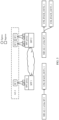
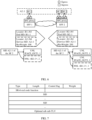
- a same SF is deployed in a plurality of VMs or containers, and the plurality of VMs or containers each independently implement a function of the SF. Load balancing needs to be performed on traffic among the plurality of VMs/containers, to maximize use of VM/container resources. As shown in FIG.
- an SF 1 is deployed on one VM/container, and SFs 2 are respectively deployed on three VMs/pods connected to an SFF 1 and an SFF 2.
- SF 1 ⁇ SF 2 After a packet entering a service function chain (SF 1 ⁇ SF 2) passes through the SF 1, load balancing is performed on the packet among the three VMs/containers of SF 2.
- the VM/container is referred to as a virtual resource module.
- the virtual resource module may alternatively be a resource module in another type of virtual network. Examples are not described one by one herein.
- the VM/container is a VM or a container.
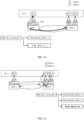
- FIG. 2 is a schematic diagram of an architecture of a communications network according to an embodiment of this application.
- the communications network 200 includes a control node 201, a service function chain ingress node 202, and a plurality of SFFs 203.
- SFFs 203 are used as an example for description.
- the communications network shown in FIG. 2 is a communications network used to implement service functions included in a service function chain.
- Each service function on the service function chain is implemented by a virtual resource module on one or more SFFs in FIG. 2 .
- Each SFF 203 is connected to one or more virtual resource modules.
- the one or more virtual resource modules connected to each SFF may be configured to implement a same service function, or may be configured to implement different service functions.
- Virtual resource modules connected to different SFFs may be configured to implement a same service function, or may be configured to implement different service functions.
- a virtual resource module corresponding to each service function may be a virtual resource module connected to a same SFF, or may be virtual resource modules connected to different SFFs.
- the communications network shown in FIG. 1 is a specific implementation of the communications network shown in FIG. 2 .
- the service function chain includes two service functions: SF 1 ⁇ SF 2, where the SF 1 is implemented by one virtual resource module on an SFF 1, and the SF 2 is implemented by one virtual resource module on the SFF 1 and two virtual resource modules on an SFF 2.
- both a virtual resource module connected to each SFF and a service function specifically implemented by the connected virtual resource module may be configured. Examples are not described one by one herein.
- the following uses the communications network shown in FIG. 1 as an example to describe a specific implementation in which each node in the communications network shown in FIG. 2 forwards a service packet.
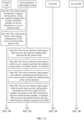
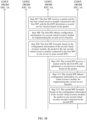
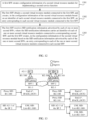
- FIG. 3A and FIG. 3B are a flowchart of a service packet forwarding method according to an embodiment of this application.
- the service packet forwarding method is applied to the communications network shown in FIG. 1 or FIG. 2 .
- the method includes the following steps.
- Step 301 A control node determines a segment routing policy, where the segment routing policy is used to indicate a plurality of service functions on a service function chain.
- the segment routing policy (SR policy) delivered by the control node only needs to indicate the plurality of service functions on the service function chain, and does not need to indicate a virtual resource module for specifically implementing each service function.
- a first service function is denoted as an SF 1
- a second service function is denoted as an SF 2.
- the service function chain includes two service functions: SF 1 ⁇ SF 2.
- a SID pre-configured by the control node for the SF 1 is A1::1
- a SID pre-configured by the control node for the SF 2 is A2::1.
- the segment routing policy is a SID list.
- the SID list includes A1::1 and A2::1, and A1::1 in the SID list is ranked before A2:: 1, to indicate that the SF 1 is processed and then the SF 2 is processed.
- Step 302 The control node delivers the segment routing policy to a service function chain ingress node.
- control node may use a packet to carry the segment routing policy, and then change a destination address of the packet to an address of the service function chain ingress node, to deliver the segment routing policy to the service function chain ingress node.
- control node may deliver the segment routing policy to the service function chain ingress node in another manner. Details are not described herein.
- Step 303 The service function chain ingress node receives the segment routing policy delivered by the control node.
- step 302 and step 303 the control node delivers the segment routing policy to the service function chain ingress node, so that the service function chain ingress node processes a received packet in step 304 to step 306.
- Step 304 The service function chain ingress node receives a packet, and adds the segment routing policy to a packet header of the packet.
- Step 305 The service function chain ingress node obtains configuration information of a first virtual resource module for implementing a first service function.
- the first service function is a 1 st service function on the service function chain
- the configuration information of the first virtual resource module is used to indicate configuration information of all first virtual resource modules for implementing the first service function on the service function chain in the communications network
- the first virtual resource module is a virtual resource module for implementing the first service function.
- Step 306 The service function chain ingress node forwards, based on the configuration information of the first virtual resource module, the packet to one SFF connected to the first virtual resource module, so that the SFF processes the packet based on the first virtual resource module connected to the SFF.
- the SFF may select, in step 310 to step 312, one first virtual resource module from one or more first virtual resource modules connected to the SFF to process the packet.
- the second SFF receives the packet sent by the service function chain ingress node.
- the selected first virtual resource module After the selected first virtual resource module processes the packet, the selected first virtual resource module returns the packet to the SFF, and the SFF may continue to perform next service function processing on the packet in step 307 to step 309.
- step 307 to step 312 how any SFF performs dynamic load balancing on a packet is described by using an example in which the first SFF receives a packet sent by one first virtual resource module connected to the first SFF, that is, by using an example of how to perform dynamic load balancing after the first SFF performs first service function processing on the packet to continue to perform next service function processing on the packet.
- Step 307 The first SFF receives a packet sent by one first virtual resource module connected to the first SFF, and the first SFF determines a second service function based on the packet.
- the packet carrying the segment routing policy further carries a field used to indicate a currently to-be-processed SID. Therefore, when receiving the packet, the first SFF determines the currently to-be-processed SID based on the field.
- Each SID in the segment routing policy indicates a service function. Therefore, the first SFF determines, based on the received packet, the currently to-be-processed second service function.
- the first service function may be any service function on the service function chain, and in this case, the second service function is a 1 st service function ranked after the first service function on the service function chain.
- a SID of each service function is pre-advertised by the control node in the communications network.
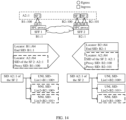
- the first SFF stores a correspondence between each service function and the SID. For example, the first SFF stores the SID A1::1 corresponding to the SF 1 and the SID A2::1 corresponding to the SF 2. Therefore, when determining, based on the packet, that the to-be-processed SID is A2::1, the first SFF may determine that a currently to-be-processed service function is the second service function SF 2.
- Step 308 The first SFF obtains configuration information of a second virtual resource module for implementing the second service function.
- the second virtual resource module is a virtual resource module for implementing the second service function.
- the configuration information of the second virtual resource module includes configuration information of all second virtual resource modules for implementing the second service function on the service function chain.
- An SFF connected to the second virtual resource module in the communications network is one or more second SFFs, or one or more second SFFs and a first SFF.
- the configuration information of the second virtual resource module includes configuration information of all second virtual resource modules connected to the first SFF and configuration information of all second virtual resource modules connected to the one or more second SFFs, or configuration information of all second virtual resource modules connected to the one or more second SFFs, so that the first SFF can perform dynamic load balancing on user traffic instead of uniformly performing load balancing by the service function chain ingress node.
- Step 309 The first SFF forwards, based on the configuration information of the second virtual resource module, the packet to the one second virtual resource module connected to the first SFF or one of one or more second SFFs.
- the configuration information of the second virtual resource module may include configuration information of a second virtual resource module connected to the first SFF, may include configuration information of a second virtual resource module connected to one or more second SFFs, or may include both configuration information of a second virtual resource module connected to the first SFF and configuration information of a second virtual resource module connected to one or more second SFFs.
- the configuration information of the second virtual resource module includes the configuration information of all the second virtual resource modules for implementing the second service function on the service function chain in the communications network.
- the first SFF may directly perform offloading on user traffic based on the configuration information of the second virtual resource module, so that the first SFF performs dynamic load balancing.
- step 307 to step 309 are described in the following embodiments, and are not described herein.
- Step 310 The second SFF receives a packet sent by the first SFF, and determines a second service function based on the packet.
- Step 311 The second SFF obtains configuration information of a second virtual resource module for implementing the second service function.
- Step 312 The second SFF forwards, based on the configuration information of the second virtual resource module, the packet to one second virtual resource module connected to the second SFF.
- Configuration information of all second virtual resource modules that can implement the second service function on the service function chain is also configured on the second SFF, that is, the configuration information of the second virtual resource module for implementing the second service function.
- Load balancing is performed on the packet that is sent by the first SFF and that is received by the second SFF. Therefore, in this case, the second SFF only needs to forward the packet to one second virtual resource module connected to the second SFF, and the second virtual resource module performs second service function processing on the packet.
- an SFF connected to the second virtual resource module in the communications network is one or more second SFFs, or one or more second SFFs and a first SFF. Therefore, the configuration information of the second virtual resource module includes at least configuration information of the second virtual resource module connected to the second SFF in the communications network.
- the first SFF may dynamically determine a forwarding path of the packet based on the configuration information of the virtual resource module for implementing the second service function, to implement dynamic load balancing on the packet instead of uniformly performing load balancing by a service function chain ingress node, so as to reduce pressure on the service function chain ingress node.
- the first SFF may also dynamically perform load balancing provided that the configuration information of the second virtual resource module is updated in a timely manner, and a control node does not need to re-orchestrate all segment routing policies, to simplify a processing process in this scenario, and improve packet forwarding efficiency in this scenario.
- the configuration information of the second virtual resource module includes configuration information of all second virtual resource modules connected to the first SFF and configuration information of all second virtual resource modules connected to the one or more second SFFs.
- the configuration information of the second virtual resource module includes the configuration information of all the second virtual resource modules for implementing the second service function on the service function chain in the communications network.
- a process of generating the configuration information of the second virtual resource module for implementing the second service function on the first SFF may be as follows:
- the first SFF receives SID notification information advertised by any one of the one or more second SFFs, where the SID notification information is used to indicate configuration information of each second virtual resource module connected to the any second SFF.
- the first SFF adds the configuration information of each second virtual resource module connected to any second SFF to the configuration information of the second virtual resource module for implementing the second service function.
- this embodiment of this application provides two specific implementations of generating the configuration information of the second virtual resource module.
- the following separately describes, based on configuration information corresponding to the two different service functions, the service packet forwarding method provided in this embodiment of this application.
- the following two embodiments are merely used as examples for description, and do not constitute a limitation on the configuration information of the second virtual resource module for implementing the second service function provided in this embodiment of this application. Any implementation that can indicate configuration information of all virtual resource modules for implementing a service function falls within the protection scope of the configuration information of the second virtual resource module for implementing the second service function provided in this embodiment of this application.
- configuration information of the second virtual resource module for implementing the second service function on the first SFF is configured.
- configuration information of a virtual resource module for implementing another service function on the first SFF and configuration information of a virtual resource module for implementing any service function on another SFF refer to the following embodiments. Details are not described in this embodiment of this application.
- the configuration information of the second virtual resource module when all the second virtual resource modules for implementing the second service function on the service function chain are deployed on both the first SFF and the one or more second SFFs, the configuration information of the second virtual resource module includes an identifier and a weight of each second virtual resource module connected to the first SFF, an identifier of each of the one or more second SFFs, and a weight of a second resource module connected to each second SFF.
- the configuration information of the second virtual resource module includes an identifier of each of the one or more second SFFs and a weight of a second resource module connected to each second SFF.
- the configuration information only needs to indicate a weight of a second virtual resource module connected to another SFF and a weight of each second virtual resource module connected to the first SFF, or a weight of a second virtual resource module connected to another SFF, so that load balancing is subsequently performed based on the weight in the configuration information.
- the following embodiment shown in FIG. 4 is used to describe the first specific implementation. It should be noted that the embodiment shown in FIG. 4 is merely an optional embodiment of the first specific implementation, and any embodiment that can be used to implement the configuration information in the first specific implementation falls within the protection scope of this application.
- the configuration information of the second virtual resource module for implementing the second service function on the first SFF includes an identifier of each second virtual resource module connected to the first SFF and an identifier of each second virtual resource module connected to the one or more second SFFs, or an identifier of each second virtual resource module connected to the one or more second SFFs.
- the configuration information of the second virtual resource module needs to indicate an identifier of each second virtual resource module in the communications network, so that load balancing is subsequently performed based on the identifier that is of each second virtual resource module and that is in the configuration information.
- FIG. 12 is used to describe the second specific implementation. It should be noted that the embodiment shown in FIG. 12 is merely an optional embodiment of the second specific implementation, and any embodiment that can be used to implement the configuration information in the second specific implementation falls within the protection scope of this application.
- FIG. 4 is a schematic diagram of a process of generating configuration information of a second virtual resource module for implementing a second service function according to an embodiment of this application, and is used to describe the first specific implementation in detail. As shown in FIG. 4 , the method includes the following several steps.
- Step 401 A first SFF creates configuration information of a second virtual resource module for implementing a second service function.
- the configuration information of the second virtual resource module for implementing the second service function only needs to indicate a weight of a second virtual resource module connected to another SFF and a weight of each second virtual resource module connected to the first SFF, or only needs to indicate a weight of a second virtual resource module connected to another SFF. Therefore, in a specific implementation, the created configuration information of the second virtual resource module for implementing the second service function has the following characteristic:
- the configuration information of the second virtual resource module includes a local entry and a remote entry. One local entry is used to store an identifier and a weight of one second virtual resource module connected to the first SFF, and one remote entry is used to store a weight of a second virtual resource module connected to any second SFF and an identifier of the second SFF.
- the identifier of the one second virtual resource module connected to the first SFF may be an interface identifier of the second virtual resource module, and the weight of the one second virtual resource module connected to the first SFF may be a quantity 1.
- the weight of the second virtual resource module connected to the any second SFF may be a quantity of second virtual resource modules connected to the second SFF, and the identifier of the second SFF is a SID of the second SFF.
- the identifier of the one second virtual resource module connected to the first SFF and the identifier of the any second SFF may also be indicated by other information that can uniquely identify the second virtual resource module or information that can uniquely identify the second SFF. Examples are not described one by one herein.
- the weight of the second virtual resource module may also be set to another value, provided that the weight of the one second virtual resource module connected to the first SFF can indicate the quantity 1, and the weight of the second virtual resource module connected to the any second SFF can indicate the quantity of second virtual resource modules connected to the second SFF.
- the local entry and the remote entry are indicated by an entry type.
- any entry in the configuration information includes an entry type, the entry type includes a first type or a second type, the first type is used to indicate that a corresponding entry is a local entry, and the second type is used to indicate that a corresponding entry is a remote entry.
- the configuration information that is of the second virtual resource module and that is created by the first SFF in step 401 is blank configuration information, that is, the configuration information that is of the second virtual resource module and that is created in step 401 merely indicates a specific format of each entry, so that an entry can be subsequently added to the blank configuration information in step 402 and step 403.
- Step 402 The first SFF obtains an identifier and a weight of each second virtual resource module connected to the first SFF, and creates, in the configuration information of the second virtual resource module, a local table entry corresponding to each second virtual resource module connected to the first SFF, where each created local entry includes an identifier and a weight of a corresponding second virtual resource module.
- the first SFF may be locally connected to one or more second virtual resource modules
- the first SFF needs to add, based on an identifier of each locally connected second virtual resource module, a local entry corresponding to each second virtual resource module to the configuration information of the second virtual resource module.
- FIG. 5 is a schematic diagram of adding a local entry according to an embodiment of this application. Descriptions are provided by using an example in which an identifier of each second virtual resource module connected to the first SFF is an interface identifier and a weight of each second virtual resource module connected to the first SFF is a quantity 1. As shown in FIG. 5 , the first SFF is denoted as an SFF 1, and the second SFF is denoted as an SFF 2. For the second service function SF 2, the SFF 1 is connected to one second virtual resource module for implementing the SF 2, the SFF 2 is connected to two second virtual resource modules for implementing the SF 2, and a SID of the SF 2 is A2:: 1.
- the SFF 1 learns that the SFF 1 is locally connected to one second virtual resource module, and an interface identifier of the second virtual resource module is IFACE_OUT1. Therefore, the SFF 1 may add an entry, that is, UNI, IFACE_OUT1, 1, to configuration information corresponding to A2::1 shown in FIG. 5 .
- UNI in the entry is used to indicate that an entry type is a first type, that is, the entry is a local entry, and 1 is used to indicate that a weight that is of a second virtual resource module and that corresponds to the entry is a quantity 1.
- configuration information corresponding to the second service function may be configured on each node, so that each node can dynamically perform load balancing. Therefore, as shown in FIG. 5 , the SFF 2 learns that the SFF 2 is locally connected to two second virtual resource modules, and interface identifiers of the two second virtual resource modules are IFACE_OUT2 and IFACE_OUT3. Therefore, the SFF 2 may add two entries, that is, UNI, IFACE_OUT2, 1 and UNI, IFACE_OUT3, 1, to local configuration information corresponding to A2:: 1 shown in FIG. 5 . UNI in each entry is used to indicate that an entry type is a first type, that is, the entry is a local entry, and 1 is used to indicate that a weight that is of a second virtual resource module and that corresponds to the entry is a quantity 1.
- the interface identifier in step 402 is an identifier of an egress from the first SFF to the connected second virtual resource module.
- the first SFF further includes an ingress from the second virtual resource module to the first SFF.
- the egress refers to a port on which the first SFF sends a packet to the second virtual resource module
- the ingress refers to a port on which the first SFF receives a packet sent by the second virtual resource module.
- Step 403 The first SFF receives SID notification information advertised by any one of one or more second SFFs, where the SID notification information carries an identifier of the second SFF and a weight of a second virtual resource module connected to the second SFF; and the first SFF creates, in the configuration information of the second virtual resource module based on the SID notification information advertised by each second SFF, a remote entry corresponding to each second SFF.
- an SFF connected to the second virtual resource module needs to advertise SID notification information in a network, so that another node can learn of related information of all SFFs connected to the second virtual resource modules. Therefore, when another second SFF is connected to the second virtual resource module, the first SFF further needs to add the remote entry to the configuration information of the second virtual resource module in step 403.
- the first SFF determines a weight of a locally connected second virtual resource module.
- the first SFF advertises the SID notification information based on the weight of the locally connected second virtual resource module and an identifier of the first SFF, to indicate another SFF to create, in configuration information that is of the second virtual resource module for implementing the second service function and that is of the another SFF, a remote entry corresponding to the first SFF.
- the weight of the second virtual resource module connected to the first SFF may be a quantity of second virtual resource modules connected to the first SFF.
- the identifier of the first SFF may be a SID of the first SFF.
- FIG. 6 is a schematic diagram of adding a remote entry according to an embodiment of this application.
- an SFF 1 learns, based on SID notification information advertised by an SFF 2, that the SFF 2 is connected to two second virtual resource modules, and a SID of the SFF 2 is B2:: 1.
- the SFF 1 may create a remote entry, that is, NNI, ⁇ B2::1>, 2, in local configuration information corresponding to A2:: 1.
- NNI in the entry is used to indicate that an entry type is a second type, that is, the entry is a remote entry, and 2 is used to indicate that a quantity that is of second virtual resource modules connected to the SFF 2 and that corresponds to the entry is 2.
- the SFF 2 learns, based on SID notification information advertised by the SFF 1, that the SFF 1 is connected to one second virtual resource module, and a SID of the SFF 1 is B1::1.
- the SFF 1 may add a remote entry, that is, NNI, ⁇ B1::1>, 1, in local configuration information corresponding to A2:: 1.
- NNI in the entry is used to indicate that an entry type is a second type, that is, the entry is a remote entry, and 1 is used to indicate that a quantity that is of second virtual resource modules connected to the SFF 1 and that corresponds to the entry is 1.
- an existing locator (Locator) TLV may be extended, to advertise the SID notification information by using the locator TLV.
- the SID notification information is carried in the locator TLV
- the locator TLV includes a sub-TLV
- the sub-TLV includes a SID field and a resource weight field
- the SID field is used to indicate a SID of an SFF that advertises the locator TLV, that is, an identifier of the SFF that advertises the locator TLV
- the resource weight field is used to indicate a weight of a second virtual resource module connected to the SFF that advertises the locator TLV.
- the locator TLV is extended by adding a sub-TLV, and the added sub-TLV is used to indicate the SID notification information.
- the added sub-TLV may also be denoted as a service SID sub-TLV.
- FIG. 7 is a schematic diagram of a structure of a sub-TLV according to an embodiment of this application.
- the sub-TLV includes a type (Type) field, a length (Length) field, a control flag (Flags) field, a resource weight (Resource Weight) field, a SID field, and another optional sub-sub-TLV.
- the type field may be a new type. To be specific, a new type is obtained through extension based on an existing type, and is used to indicate the sub-TLV provided in this embodiment of this application.
- An A bit in the control flag field may be set, and the A bit is set to anycast, to indicate that a SID carried in the sub-TLV is of an anycast type, that is, another SFF may also advertise the sub-TLV of this type.
- the SID field is used to indicate a SID of an SFF that advertises the locator TLV.
- the resource weight field is used to indicate a weight of a second virtual resource module connected to the SFF that advertises the locator TLV.
- the SFF 1 may use a SID list of the locator TLV to carry the SID (A2::1) of the second service function.
- the SFF 1 may use a SID list of the sub-TLV in the locator TLV to carry the SID (B 1:: 1) of the SFF 1.
- the SFF 1 may set the resource weight field in the sub-TLV to 100, to indicate that the SFF 1 is connected to one second virtual resource module.
- the SFF 2 may use a SID list of the locator TLV to carry the SID (A2::1) of the second service function.
- the SFF 2 may use a SID list of the sub-TLV in the locator TLV to carry the SID (B1::1) of the SFF 2.
- the SFF 2 may set the resource weight field in the sub-TLV to 200, to indicate that the SFF 2 is connected to two second virtual resource modules.
- each node when each node advertises the locator TLV, another node may obtain a status of a second virtual resource module connected to each node in the network, to add the remote entry to the configuration information.
- FIG. 7 is merely an example of extending the sub-TLV in the locator TLV according to this embodiment of this application.
- another extension manner may be used, so that the locator TLV can carry the SID notification information.
- another TLV may also be used to carry the SID notification information. Examples are not described one by one in this embodiment of this application.
- the configuration information that is of the second virtual resource module and that is determined in step 401 to step 403 includes only one or more local entries, each local entry corresponds to one second virtual resource module connected to the first SFF, and each local entry is used to store an interface identifier and a weight of the corresponding second virtual resource module.
- the configuration information that is of the second virtual resource module and that is determined in step 401 to step 403 includes only one or more remote entries, each remote entry corresponds to one second SFF, and each remote entry further includes a SID of the corresponding second SFF and a weight of a second virtual resource module connected to the corresponding second SFF.
- the configuration information that is of the second virtual resource module and that is determined in step 401 to step 403 includes one or more local entries and one or more remote entries.
- the first SFF and the any one of the one or more second SFFs may advertise configuration information of respectively connected virtual resource modules in the communications network by using the SID notification information in step 401 to step 403, so that another SFF can learn of configuration information of a virtual resource module connected to an SFF other than the another SFF, to locally construct configuration information of a virtual resource module for implementing each service function, and therefore subsequently perform dynamic load balancing in the following embodiment shown in FIG. 9 .
- each SFF determines the configuration information of the second virtual resource module in step 401 to step 403, if a second virtual resource module connected to the any second SFF changes, or a second virtual resource module connected to the first SFF changes, the changed virtual resource module may also be notified in step 401 to step 403, so that the another SFF updates local configuration information of the second virtual resource module.
- the foregoing process of updating the configuration information of the second virtual resource module only involves modification of related information of the changed second virtual resource module.
- a control node needs to re-orchestrate all segment routing policies. This processing process is for the entire second virtual resource module.
- an embodiment of this application further provides a service packet forwarding method. As shown in FIG. 9 , the method includes the following steps: Step 901: A first SFF receives a packet sent by one first virtual resource module connected to the first SFF, and the first SFF determines a second service function based on the packet.
- step 901 For an implementation of step 901, refer to an implementation of step 307 shown in FIG. 3B . Details are not described herein again.
- Step 902 The first SFF obtains configuration information of a second virtual resource module for implementing the second service function.
- the first node stores configuration information corresponding to a SID of each service on a service function chain. Therefore, in step 902, when determining that a currently to-be-processed second service function is the SF 2, the SFF 1 may search, based on the SID (A2:: 1) of the SF 2, the configuration information corresponding to the SID of each service on the service function chain for the configuration information corresponding to A2::1, to obtain the configuration information of the second virtual resource module for implementing the second service function.
- the configuration information of the second virtual resource module for implementing the second service function in step 902 is described in detail in the embodiment shown in FIG. 4 . Details are not described herein again.
- Step 903 The first SFF forwards, based on the configuration information of the second virtual resource module, the packet to one second virtual resource module connected to the first SFF or one of one or more second SFFs.
- the second virtual resource module corresponding to the second service function may be connected to both the first SFF and the second SFF, or may be connected to only the second SFF.
- the configuration information of the second virtual resource module for implementing the second service function includes different specific content. Therefore, step 903 is separately described below for the two scenarios.
- the second virtual resource module is connected to both the first SFF and the one or more second SFFs.
- the configuration information of the second virtual resource module in step 902 includes an identifier and a weight of each second virtual resource module connected to the first SFF, an identifier of each of the one or more second SFFs, and a weight of a second resource module connected to each second SFF.
- an implementation of step 903 may be as follows: The first SFF forwards, based on the identifier and the weight of each second virtual resource module connected to the first SFF, the identifier of each of the one or more second SFFs, and the weight of the second resource module connected to each second SFF, the packet to the one second virtual resource module connected to the first SFF or the one of the one or more second SFFs.
- the configuration information of the second virtual resource module may include a plurality of entries, each of the plurality of entries includes one entry type, the entry type includes a first type or a second type, the first type is used to indicate that a corresponding entry is a local entry, and the second type is used to indicate that a corresponding entry is a remote entry.
- One local entry corresponds to one second virtual resource module connected to the first SFF
- one remote entry corresponds to one second SFF.
- Each local entry further includes an identifier and a weight of a corresponding second virtual resource module
- each remote entry further includes an identifier of a corresponding second SFF and a weight of a second virtual resource module connected to the corresponding second SFF.
- an implementation of step 903 may be as follows: The first SFF determines, based on weights in the plurality of entries by using a hash algorithm, a first entry for forwarding the packet, where the first entry is one of the plurality of entries. The first SFF forwards, based on the first entry, the packet to the one second virtual resource module connected to the first SFF or the one of the one or more second SFFs.
- the weight of the one second virtual resource module connected to the first SFF may be specifically a quantity 1
- the weight of the second virtual resource module connected to the second SFF corresponding to the identifier of the second SFF may be specifically a quantity of second virtual resource modules connected to the second SFF corresponding to the identifier of the second SFF.
- the hash algorithm satisfies a condition that a ratio between probabilities of matching the packet with entities in the plurality of entries is the same as a ratio between quantities in entries in the plurality of entries. It may be understood that, in another implementation, different hash algorithms may be used, so that a ratio between probabilities of matching the packet with entries in the plurality of entries is different from a ratio between quantities in entries in the plurality of entries. Specifically, a specific type of hash algorithm may be determined according to a load balancing policy.
- an implementation in which the first SFF forwards, based on the first entry, the packet to the one second virtual resource module connected to the first SFF or the one of the one or more second SFFs may be as follows: The first SFF forwards, based on the interface identifier that is of the one second virtual resource module connected to the first SFF and that is included in the first entry and through a port indicated by the interface identifier, the packet to the one second virtual resource module connected to the first SFF. Alternatively, the first SFF forwards, based on the SID that is of the second SFF and that is included in the first entry, the packet to the second SFF indicated by the SID in the first entry.
- the configuration information of the second virtual resource module in step 902 includes an identifier of each of the one or more second SFFs and a weight of a second resource module connected to each second SFF.
- an implementation of step 903 may be as follows: The first SFF determines, based on weights in at least two remote entries by using a hash algorithm, a second entry for forwarding the packet, where the second entry is one of the at least two remote entries. The first SFF forwards, based on the second entry, the packet to the SFF corresponding to the identifier that is of the second SFF and that is in the second entry.
- the weight of the second virtual resource module connected to the second SFF corresponding to the identifier of the second SFF may be a quantity of second virtual resource modules connected to the second SFF corresponding to the identifier of the second SFF.
- the hash algorithm satisfies a condition that a ratio between probabilities of matching the packet with remote entries in the at least two remote entries is the same as a ratio between quantities in remote entries in the at least two remote entries.
- the identifier of the second SFF is a SID of the second SFF.
- that the first SFF forwards, based on the second entry, the packet to the SFF corresponding to the identifier that is of the second SFF and that is in the second entry means that the first SFF forwards, based on the second entry, the packet to the SFF corresponding to the SID that is of the second SFF and that is in the second entry.
- the packet is forwarded to a corresponding SFF 2 for second service function processing.
- the TInsert/Encaps operation includes a TInsert operation, a T.Insert.Red operation, a T.Encaps operation, or a T.Encaps.Red operation.
- Performing the TInsert operation, the T.Insert.Red operation, the T.Encaps operation, or the T.Encaps.Red operation can prevent a loop from occurring when traffic is returned to the SFF 1 in a traffic forwarding process. Details are not described herein.
- step 903 dynamic load balancing on user traffic can be implemented.
- the configuration information that corresponds to the second service function SF 2 and that is deployed on the SFF 1 shown in FIG. 6 includes two entries. As shown in FIG. 10 , an entry in the first row is a local entry and an entry in the second row is a remote entry. It is assumed that user traffic within a period of time is 120M.
- the 120M user traffic is divided into two parts based on a weight, one part is 80M, and the other part is 40M.
- the 80M user traffic corresponds to the remote entry, and the 40M user traffic corresponds to the local entry.
- the user traffic is divided based on the weight of 1:2.
- User traffic obtained through division based on a weight 1 corresponds to one virtual resource module connected to the SFF 1
- user traffic obtained through division based on a weight 2 corresponds to the remote entry.
- the first SFF processes user traffic corresponding to any local entry by using the second virtual resource module indicated by the interface identifier included in the local entry.
- the first SFF sends the user traffic corresponding to the local entry through an egress indicated by the interface identifier included in the local entry, so that a second virtual resource module connected to the egress processes the user traffic.
- the SFF 1 sends, based on the configuration information, the user traffic obtained based on the weight 1 to the second virtual resource module connected to the SFF 1.
- the first SFF may forward, based on a SID that is of a second SFF and that corresponds to the remote entry, the user traffic corresponding to the remote entry to the second SFF indicated by the SID of the second SFF.
- the SFF 1 sends the user traffic obtained based on the weight 2 to the SFF 2.
- FIG. 11 is a schematic diagram of a process in which a second SFF processes user traffic according to an embodiment of this application.
- the SFF 2 may also search, based on the SID, that is, A2:: 1, of the second service function, for locally stored configuration information of the second virtual resource module for implementing the second service function.
- the SFF 1 has performed offloading on the packet, the SFF 2 only needs to distribute the packet between entries whose entry types are UNI, and does not need to consider an entry whose entry type is NNI in the configuration information.
- This process may also be referred to as a "split horizon principle". Therefore, the second virtual resource module connected to the SFF 2 performs SF 2 service processing on the packet distributed to the SFF 2.
- an SFF connected to the second virtual resource module in the communications network is one or more second SFFs, or one or more second SFFs and a first SFF. Therefore, the configuration information of the second virtual resource module includes at least configuration information of the second virtual resource module connected to the second SFF in the communications network.
- the first SFF may dynamically determine a forwarding path of the packet based on the configuration information of the virtual resource module for implementing the second service function, to implement dynamic load balancing on the packet instead of uniformly performing load balancing by a service function chain ingress node, so as to reduce pressure on the service function chain ingress node.
- the first SFF may also dynamically perform load balancing provided that the configuration information of the second virtual resource module is updated in a timely manner, and a control node does not need to re-orchestrate all segment routing policies, to simplify a processing process in this scenario, and improve packet forwarding efficiency in this scenario.
- the following describes the service packet forwarding method based on other configuration information of a second virtual resource module for implementing a second service function provided in an embodiment of this application.
- FIG. 12 is a schematic diagram of another process of generating configuration information according to an embodiment of this application, and is used to describe the second specific implementation of the configuration information of the second virtual resource module for implementing the second service function. As shown in FIG. 12 , the method includes the following several steps.
- Step 1201 A first SFF creates configuration information of a second virtual resource module for implementing a second service function.
- the created configuration information of the second virtual resource module for implementing the second service function has the following characteristic:
- the configuration information includes a plurality of entries, and each entry is used to store an identifier of one second virtual resource module connected to the first SFF or any second SFF. Different from the configuration information of the second virtual resource module for implementing the second service function provided in FIG. 4 , each entry in the configuration information provided in FIG. 12 corresponds to one second virtual resource module.
- the second virtual resource module includes all second virtual resource modules that can implement a second service function on a service function chain in a communications network, and may be a second virtual resource module connected to the first SFF, or may be a second virtual resource module connected to another second SFF.
- an entry type may also be set for each entry in the configuration information, that is, each entry includes one entry type.
- the table type includes a first type or a second type, the first type is used to indicate that a corresponding entry is a local entry, and the second type is used to indicate that a corresponding entry is a remote entry.
- the local entry is used to store an identifier of one second virtual resource module connected to the first SFF
- the remote entry is used to store an identifier of one second virtual resource module connected to the second SFF.
- the identifier that is of the second virtual resource module and that is in the entry may be a SID of the corresponding second virtual resource module.
- the configuration information that is of the second virtual resource module for implementing the second service function and that is created by the first SFF in step 1201 is blank configuration information, that is, the configuration information that is of the second virtual resource module for implementing the second service function and that is created in step 1201 merely indicates a specific format of each entry, so that an entry can be subsequently added to the blank configuration information in step 1202 and step 1203.
- Step 1202 The first SFF obtains an identifier of a second virtual resource module connected to the first SFF, and creates, in the configuration information of the second virtual resource module based on the identifier of each second virtual resource module connected to the first SFF, an entry corresponding to each second virtual resource module connected to the first SFF.
- One or more virtual resource modules may be locally connected. Therefore, when the first SFF is locally connected to one or more virtual resource modules, the first SFF needs to create an entry in the configuration information based on a SID of each locally connected second virtual resource module. In this case, the created entry may still be denoted as a local entry by using an entry type.
- FIG. 13 is a schematic diagram of adding a local entry according to an embodiment of this application.
- the first SFF is denoted as an SFF 1
- the second SFF is denoted as an SFF 2.
- the SFF 1 is connected to one second virtual resource module for implementing the SF 2
- the SFF 2 is connected to two second virtual resource modules for implementing the SF 2
- a SID of the SF 2 is A2:: 1.
- the SFF 1 may allocate a SID, that is, B1::100, to the second virtual resource module based on related information of the second virtual resource module connected to the SFF 1.
- the related information includes an egress (IFACE_OUT1) from the SFF 1 to the second virtual resource module, an operation type (End.A*), and the like.
- the SID allocated to the second virtual resource module in FIG. 13 is referred to as a proxy SID (Proxy SID).
- the SFF 1 may add an entry to configuration information corresponding to the SID, that is, A2::1, of the SF 2.
- the added entry is UNI, SID-List ⁇ B1::100>.
- UNI is used to indicate that an entry type of the entry is a first type, that is, the entry is a local entry.
- SID-List ⁇ B1::100> is used to indicate that the SID, that is, B1::100, that is of the second virtual resource module and that is included in the entry is a SID in a SID list.
- the configuration information corresponding to the second service function may be configured on each node, so that each node can dynamically perform load balancing. Therefore, as shown in FIG. 13 , the SFF 2 may respectively allocate SIDs, that is, B2::100 and B2::101, to the two second virtual resource modules based on related information of the two second virtual resource modules connected to the SFF 2.
- the related information includes egresses (IFACE_OUT2 and IFACE_OUT3) from the SFF 2 to the second virtual resource modules, an operation type (End.A*), and the like.
- the SFF 2 may add two entries to local configuration information corresponding to the SID, that is, A2::1, of the SF 2. As shown in FIG. 13 , in this case, one added entry is UNI, SID-List ⁇ B2::100>, and the other added entry is UNI, SID-List ⁇ B2::101>.
- Step 1203 The first SFF receives SID notification information advertised by each of one or more second SFFs, where the SID notification information carries an identifier of each of one or more second virtual resource modules connected to a corresponding second SFF; and the first SFF creates, in the configuration information of the second virtual resource module based on the SID notification information advertised by each of the one or more second SFFs, an entry corresponding to each of the one or more second virtual resource modules connected to each second SFF.
- an SFF connected to the second virtual resource module needs to advertise SID notification information in a network, so that another node can learn of related information of all SFFs connected to the second virtual resource modules. Therefore, when the another second SFF is connected to the second virtual resource module, the first SFF further needs to create, in the configuration information in step 1203, an entry corresponding to each second virtual resource module connected to the another SFF.
- the first SFF when the first SFF is connected to the second virtual resource module, the first SFF also needs to advertise SID notification information in the network.
- An implementation in which the first SFF also needs to advertise the SID notification information in the network may be as follows: The first SFF advertises the SID notification information based on the obtained identifier of each of the second virtual resource modules, to indicate another SFF to create, in configuration information of the another SFF, an entry corresponding to each second virtual resource module connected to the first SFF. In this case, the created entry may still be denoted as a remote entry by using an entry type.
- FIG. 14 is a schematic diagram of adding a remote entry according to an embodiment of this application.
- the SFF 1 learns, based on SID notification information advertised by the SFF 2, that the SFF 2 is connected to two second virtual resource modules, a SID of the SFF 2 is B2::1, and SIDs allocated by the SFF 2 to the two second virtual resource modules are respectively B2::100 and B2::101.
- the SFF 1 may create two remote entries, that is, NNI, SID-List ⁇ B2::100> and NNI, SID-List ⁇ B2::101>, in local configuration information corresponding to A2::1.
- NNI in each of the two entries is used to indicate that an entry type is the second type, that is, the entry is a remote entry.
- the SFF 2 learns, based on SID notification information advertised by the SFF 1, that the SFF 1 is connected to one second virtual resource module, a SID of the SFF 1 is B1::1, and a SID allocated by the SFF 1 to the second virtual resource module is B1::100.
- the SFF 1 may create one remote entry, that is, NNI, SID-List ⁇ B1::100>, in local configuration information corresponding to A2::1.
- NNI in the entry is used to indicate that an entry type is a second type, that is, the entry is a remote entry.
- an existing locator (Locator) TLV may be extended, to advertise SID notification information by using the locator TLV.
- the SID notification information is carried in the locator TLV
- the locator TLV includes a sub-TLV
- a SID field in the sub-TLV is used to indicate a SID of an SFF that advertises the locator TLV, that is, an identifier of the SFF that advertises the locator TLV.
- the sub-TLV further includes a sub-sub-TLV, and a SID field in the sub-sub-TLV is used to indicate a SID of a second virtual resource module connected to the SFF that advertises the locator TLV.
- the sub-TLV is newly added to the locator TLV, and the sub-TLV is extended by adding the sub-sub-TLV.
- the sub-TLV and the sub-sub-TLV are used to indicate the SID notification information.
- the sub-TLV may also be denoted as a service SID sub-TLV, and the sub-sub-TLV may also be denoted as a service proxy sub-sub-TLV.
- FIG. 8 is a schematic diagram of a structure of a sub-sub-TLV according to an embodiment of this application.
- the sub-sub-TLV includes a type (Type) field, a length (Length) field, a control flag (Flags) field, and a SID field.
- the type field may indicate a new type
- the control flag field is used to indicate that the sub-sub-TLV is a sub-sub-TLV provided in this embodiment of this application.
- the SID field is used to indicate a SID of a second virtual resource module connected to an SFF that advertises a locator TLV.
- the SFF 1 may use a SID list of the locator TLV to carry the SID, that is, A2:: 1, of the second service function.
- the SFF 1 may use a SID list of the sub-TLV in the locator TLV to carry the SID, that is, B1:: 1, of the SFF 1, and use a SID list of the sub-sub-TLV in the sub-TLV to carry SIDs of second virtual resource modules connected to the SFF 1.
- the SFF 2 may use a SID list of the locator TLV to carry the SID, that is, A2:: 1, of the second service function.
- the SFF 2 may use a SID list of the sub-TLV in the locator TLV to carry the SID, that is, B1:: 1, of the SFF 2, and use a SID list of the sub-sub-TLV in the sub-TLV to carry SIDs of second virtual resource modules connected to the SFF 2.
- each node when each node advertises the locator TLV, another node may learn of a SID of a second virtual resource module connected to each node in a network, to add a remote entry to configuration information that is of the second virtual resource module and that is of the another node.
- FIG. 8 is merely an example of extending the locator TLV according to this embodiment of this application.
- another extension manner may be used, so that the locator TLV can carry the SID notification information.
- another TLV may also be used to carry the SID notification information. Examples are not described one by one in this embodiment of this application.
- the first SFF and the any one of the one or more second SFFs may advertise configuration information of respectively connected virtual resource modules in the communications network by using the SID notification information in step 1201 to step 1203, so that another SFF can learn of configuration information of a virtual resource module connected to an SFF other than the another SFF, to locally construct configuration information of a virtual resource module for implementing each service function, and therefore subsequently perform dynamic load balancing in the following embodiment shown in FIG. 15 .
- each SFF determines the configuration information of the second virtual resource module in step 1201 to step 1203, if a second virtual resource module connected to the any second SFF changes, or a second virtual resource module connected to the first SFF changes, the changed virtual resource module may also be notified in step 1201 to step 1203, so that the another SFF updates local configuration information of the second virtual resource module.
- the foregoing process of updating the configuration information of the second virtual resource module only involves modification of related information of the changed second virtual resource module.
- a control node needs to re-orchestrate all segment routing policies. This processing process is for the entire second virtual resource module.
- an embodiment of this application further provides a service packet forwarding method. As shown in FIG. 15 , the method includes the following steps.
- Step 1501 A first SFF receives a packet sent by one first virtual resource module connected to the first SFF, and the first SFF determines a second service function based on the packet.
- step 1501 For an implementation of step 1501, refer to an implementation of step 301 shown in FIG. 3A . Details are not described herein again.
- Step 1502 The first SFF obtains configuration information of a second virtual resource module for implementing the second service function.
- the first node stores configuration information corresponding to a SID of each service on a service function chain. Therefore, in step 1502, when determining that a currently to-be-processed second service function is the SF 2, the SFF 1 may search, based on the SID (A2::1) of the SF 2, the configuration information corresponding to the SID of each service on the service function chain for the configuration information corresponding to A2::1, to obtain the configuration information of the second virtual resource module for implementing the second service function.
- the configuration information of the second virtual resource module is the configuration information of the second virtual resource module that is provided in the embodiment shown in FIG. 12 .
- the configuration information includes a plurality of entries, each entry includes an identifier of one second virtual resource module connected to the first SFF or any second SFF, and the identifier of the second virtual resource module may be a SID of the second virtual resource module.
- the configuration information of the second virtual resource module is described in detail in the embodiment shown in FIG. 12 . Details are not described herein again.
- Step 1503 The first SFF selects an identifier of one second virtual resource module according to a load balancing policy.
- an implementation of step 1503 may be as follows: The first SFF determines, by using a hash algorithm, a first entry for forwarding the packet, where the first entry includes the selected identifier of the second virtual resource module, the first entry is one of the plurality of entries, and the hash algorithm satisfies a condition that probabilities of matching the packet with entries in the plurality of entries are the same. It may be understood that, in another implementation, different hash algorithms may be used, so that probabilities of matching the packet with entries in the plurality of entries are different. Specifically, a specific type of hash algorithm may be determined according to a load balancing policy.
- Step 1504 The first SFF forwards, based on the selected identifier of the second virtual resource module, the packet to the one second virtual resource module connected to the first SFF or one of one or more second SFFs.
- an implementation of step 1504 may be as follows: The first SFF forwards, based on an interface identifier that is of the second virtual resource module and that is indicated by the selected SID of the second virtual resource module and through a port indicated by the interface identifier, the packet to the one second virtual resource module connected to the first SFF. Alternatively, the first SFF forwards, based on a destination address indicated by the selected SID of the second virtual resource module, the packet to a second SFF connected to a selected second virtual resource module.
- the first SFF selects the identifier of the one second virtual resource module
- the selected second virtual resource module may be a local second virtual module or a remote second virtual resource module
- the first SFF forwards the packet in different manners. Therefore, when selecting the identifier of the one second virtual resource module, the first SFF needs to first determine whether the selected second virtual resource module is a local second virtual module or a remote second virtual resource module.
- the first SFF searches a local SID list for the selected SID, where the local SID list includes a SID of each virtual resource module that is for implementing any service function on a service function chain and that is locally connected to the first SFF.
- the first SFF finds the selected SID in the local SID list, it indicates that the selected second virtual resource module may be the local second virtual module. Therefore, the first SFF can obtain the interface identifier that is of the second virtual resource module and that is indicated by the selected SID, to subsequently send, through the port indicated by the obtained interface identifier, the packet to the second virtual resource module indicated by the selected SID.
- the first SFF when the first SFF does not find the selected SID in the local SID list, it indicates that the selected second virtual resource module is the remote second virtual resource module. Therefore, the first SFF can forward, based on the destination address indicated by the selected SID, the packet to the second SFF connected to the second virtual resource module indicated by the selected SID.
- the first entry determined after the hash operation is an entry in the first row, because a SID included in the entry in the first row is B 1:: 100, the SID is definitely in the local SID list of the SFF 1, and in this case, a second virtual resource module indicated by B1::100 is controlled to perform a second service function processing operation.
- This process is also referred to as an End.A* operation.
- Controlling the second virtual resource module indicated by B1::100 to perform the service processing operation is sending the packet to a corresponding second virtual resource module through an egress (IFACE_OUT1) used when B1::100 is allocated.
- IFACE_OUT1 egress 1
- the SID is definitely not in the local SID list of the SFF 1
- the packet is forwarded to a second virtual resource module that is on a corresponding SFF 2 and that is indicated by B2:: 100 for second service processing.
- a processing process is the same as the processing process used when the first entry determined after the hash operation is the entry in the second row. For the foregoing processing process, refer to FIG. 16 .
- FIG. 17 is a schematic diagram of a process in which a second SFF processes user traffic according to an embodiment of this application.
- the SFF 2 receives a packet distributed by the SFF 1, because the packet is user traffic on which the SFF 1 has performed offloading, the SFF 2 only needs to forward the packet to a corresponding second virtual resource module for processing, and does not return the packet to the SFF 1.
- the SFF 2 searches for an egress identifier corresponding to a SID (that is, a SID included in an entry that is in the first row and that is in the configuration information of the second virtual resource module on the SFF 2 in FIG. 17 ) included in the entry that is the second row and that is in the configuration information of the second virtual resource module on the SFF 1 in FIG. 16 , and sends, based on the egress identifier, the packet to a corresponding second virtual resource module for processing.
- the processing process is the same as the process in which the SFF 1 processes the packet whose first entry determined after the hash operation is the entry in the first row in FIG. 16 . Details are not described herein again.
- an SFF connected to the second virtual resource module in the communications network is one or more second SFFs, or one or more second SFFs and a first SFF. Therefore, the configuration information of the second virtual resource module includes at least configuration information of the second virtual resource module connected to the second SFF in the communications network.
- the first SFF may dynamically determine a forwarding path of the packet based on the configuration information of the virtual resource module for implementing the second service function, to implement dynamic load balancing on the packet instead of uniformly performing load balancing by a service function chain ingress node, so as to reduce pressure on the service function chain ingress node.
- the first SFF may also dynamically perform load balancing provided that the configuration information of the second virtual resource module is updated in a timely manner, and a control node does not need to re-orchestrate all segment routing policies, to simplify a processing process in this scenario, and improve packet forwarding efficiency in this scenario.
- FIG. 18 is a schematic diagram of a structure of a network device according to an embodiment of this application.
- the network device 1800 may be any SFF or service function chain ingress node in the embodiments shown in FIG. 1 to FIG. 15 .
- the network device 1800 may be a switch, a router, or another network device that forwards a packet.
- the network device 1800 includes a main control board 1810, an interface board 1830, and an interface board 1840.
- a switching board (not shown in the figure) may be included.
- the switching board is configured to complete data exchange between interface boards (the interface board is also referred to as a line card or a service board).
- the main control board 1810 is configured to complete functions such as system management, device maintenance, and protocol processing.
- the interface boards 1830 and 1840 are configured to: provide various service interfaces (for example, a POS interface, a GE interface, and an ATM interface), and forward a packet.
- the main control board 1810 mainly includes three types of functional units: a system management and control unit, a system clock unit, and a system maintenance unit.
- the main control board 1810, the interface board 1830, and the interface board 1840 are connected to a system backboard through a system bus to implement interworking.
- the interface board 1830 includes one or more processors 1831.
- the processor 1831 is configured to: control and manage the interface board, communicate with a central processing unit on the main control board, and forward a packet.
- a memory 1832 on the interface board 1830 is configured to store a forwarding entry, and the processor 1831 forwards a packet by searching the forwarding entry stored in the memory 1832.
- the interface board 1830 includes one or more network interfaces 1833, configured to: receive a packet sent by another device, and send the packet according to an indication of the processor 1831.
- steps 303, 304, 306, 307, 309, 310, and 312 in the embodiment shown in FIG. 3A and FIG. 3B step 403 in the embodiment shown in FIG. 4 , steps 901 and 903 in the embodiment shown in FIG. 9 , step 1203 in the embodiment shown in FIG. 12 , and steps 1501 and 1504 in the embodiment shown in FIG. 15 . Details are not described herein again.
- the processor 1831 is configured to perform processing steps and functions of any SFF or service function chain ingress node in the embodiments shown in FIG. 3A and FIG. 3B to FIG. 15 .
- step 305 processing performed when the processor 1831 is used as a service function chain ingress node
- step 308 processing performed when the processor 1831 is used as a first SFF
- step 311 processing performed when the processor 1831 is used as a second SFF
- steps 401 and 402 in the embodiment shown in FIG. 4 steps 902 in the embodiment shown in FIG. 9
- steps 1201 and 1202 in the embodiment shown in FIG. 12 steps 1502 and 1503 in the embodiment shown in FIG. 15 . Details are not described herein again.
- this embodiment includes a plurality of interface boards, and uses a distributed forwarding mechanism.
- operations on the interface board 1840 are basically similar to operations on the interface board 1830.
- the processor 1831 and/or the processor 1841 on the interface board 1830 in FIG. 18 may be dedicated hardware or a chip, for example, a network processor or an application-specific integrated circuit (application-specific integrated circuit), to implement the foregoing functions.
- This implementation is usually referred to as a manner of using dedicated hardware or a chip for processing on a forwarding plane.
- the processor 1831 and/or the processor 1841 may alternatively be a general-purpose processor, for example, a general-purpose CPU, to implement the foregoing functions.
- main control boards there may be one or more main control boards, and when there are a plurality of main control boards, the main control boards may include an active main control board and a standby main control board.
- main control boards There may be one or more interface boards, and a device having a stronger data processing capability provides more interface boards. If there are a plurality of interface boards, the plurality of interface boards can communicate with each other by using one or more switching boards, and the plurality of interface boards can jointly implement load balancing and redundancy backup.
- the device may not need the switching board, and the interface board provides a function of processing service data of an entire system.
- the device includes a plurality of interface boards.
- Data exchange between the plurality of interface boards may be implemented by using a switching board, and the plurality of interface boards can provide a large-capacity data exchange and processing capability. Therefore, a data access and processing capability of the network device in the distributed architecture is better than that of the device in the centralized architecture.
- a specific architecture that is to be used depends on a specific networking deployment scenario. This is not limited herein.
- the memory 1832 may be a read-only memory (read-only memory, ROM) or another type of static storage device that can store static information and instructions, or a random access memory (random access memory, RAM) or another type of dynamic storage device that can store information and instructions.
- ROM read-only memory
- RAM random access memory
- the memory 1832 may alternatively be an electrically erasable programmable read-only memory (electrically erasable programmable read-only memory, EEPROM), a compact disc read-only memory (compact disc read-only Memory, CD-ROM) or another compact disc storage, an optical disc storage (including a compact disc, a laser disc, an optical disc, a digital versatile disc, a Blu-ray disc, or the like), a magnetic disk or another magnetic storage device, or any other medium that can be used to carry or store expected program code in a form of an instruction or a data structure and that can be accessed by a computer.
- the memory 1832 is not limited thereto.
- the memory 1832 may exist independently, and is connected to the processor 1831 through a communications bus. Alternatively, the memory 1832 may be integrated into the processor 1831.
- the memory 1832 is configured to store program code, and execution is controlled by the processor 1831, to perform the path detection method provided in the foregoing embodiment.
- the processor 1831 is configured to execute the program code stored in the memory 1832.
- the program code may include one or more software modules.
- the one or more software modules may be software modules provided in either of the following embodiments in FIG. 21 and FIG. 22 .
- the network interface 1833 may be any apparatus such as a transceiver, and is configured to communicate with another device or a communications network, for example, the Ethernet, a radio access network (radio access network, RAN), or a wireless local area network (wireless local area network, WLAN).
- a radio access network radio access network
- WLAN wireless local area network
- FIG. 19 is a schematic diagram of a structure of another network device according to an embodiment of this application.
- the network device 1900 may be any SFF or service function chain ingress node in the embodiments shown in FIG. 1 to FIG. 15 .
- the network device 1900 may be a switch, a router, or another network device that forwards a packet.
- the network device 1900 includes a main control board 1910, an interface board 1930, a switching board 1920, and an interface board 1940.
- the main control board 1910 is configured to complete functions such as system management, device maintenance, and protocol processing.
- the switching board 1920 is configured to complete data exchange between interface boards (the interface board is also referred to as a line card or a service board).
- the interface boards 1930 and 1940 are configured to: provide various service interfaces (for example, a POS interface, a GE interface, and an ATM interface), and forward a data packet.
- a control plane includes management and control units on the main control board 1910 and management and control units on the interface boards 530 and 540.
- the main control board 510 mainly includes three types of functional units: a system management and control unit, a system clock unit, and a system maintenance unit.
- the main control board 1910, the interface boards 1930 and 1940, and the switching board 1920 are connected to a system backboard through a system bus to implement interworking.
- a central processing unit 1931 on the interface board 1930 is configured to: control and manage the interface board, and communicate with a central processing unit on the main control board.
- a forwarding entry memory 1934 on the interface board 1930 is configured to store a forwarding entry, and a network processor 1932 forwards a packet by searching the forwarding entry stored in the forwarding entry memory 1934.
- a physical interface card 1933 on the interface board 1930 is configured to receive a packet.
- steps 303, 304, 307, and 310 in the embodiment shown in FIG. 3A and FIG. 3B step 403 in the embodiment shown in FIG. 4 , step 901 in the embodiment shown in FIG. 9 , step 1203 in the embodiment shown in FIG. 12 , and step 1501 in the embodiment shown in FIG. 15 . Details are not described herein again.
- the network processor 1932 is configured to perform processing steps and functions of any SFF or service function chain ingress node in the embodiments shown in FIG. 2 to FIG. 15 .
- step 305 processing performed when the network processor 1932 is used as a service function chain ingress node
- step 308 processing performed when the network processor 1932 is used as a first SFF
- step 311 processing performed when the network processor 1932 is used as a second SFF
- steps 401 and 402 in the embodiment shown in FIG. 4 steps 902 in the embodiment shown in FIG. 9
- steps 1201 and 1202 in the embodiment shown in FIG. 12 steps 1502 and 1503 in the embodiment shown in FIG. 15 . Details are not described herein again.
- a packet is sent to another device by using the physical interface card 1933.
- steps 306, 309, and 312 in the embodiment shown in FIG. 3A and FIG. 3B step 903 in the embodiment shown in FIG. 9
- step 1504 in the embodiment shown in FIG. 15 . Details are not described herein again.
- this embodiment includes a plurality of interface boards, and uses a distributed forwarding mechanism.
- operations on the interface board 1940 are basically similar to operations on the interface board 1930.
- functions of the network processor 1932 and the network processor 1942 in FIG. 19 may be replaced with those of an application-specific integrated circuit (application-specific integrated circuit).
- main control boards there may be one or more main control boards, and when there are a plurality of main control boards, the main control boards may include an active main control board and a standby main control board. There may be one or more interface boards, and a device having a stronger data processing capability provides more interface boards. There may also be one or more physical interface cards on the interface board. There may be no switching board or one or more switching boards. When there are a plurality of switching boards, load balancing and redundancy backup may be implemented together.
- the device may not need the switching board, and the interface board provides a function of processing service data of an entire system.
- the device may include at least one switching board.
- Data exchange between a plurality of interface boards is implemented by using the switching board, to provide a large-capacity data exchange and processing capability. Therefore, a data access and processing capability of the network device in the distributed architecture is better than that of the device in the centralized architecture.
- a specific architecture that is to be used depends on a specific networking deployment scenario. This is not limited herein.
- FIG. 20 is a schematic diagram of a structure of an interface board 2000 in the network device shown in FIG. 19 according to an embodiment of this application.
- the network device in which the interface board 2000 is located may be any SFF or service function chain ingress node in the embodiments shown in FIG. 1 to FIG. 15 .
- the interface board 2000 may include a physical interface card (physical interface card, PIC) 2030, a network processor (network processor, NP) 2010, and a traffic management (traffic management) module 2020.
- PIC physical interface card
- NP network processor
- traffic management traffic management
- the physical interface card PIC (physical interface card, PIC) is configured to implement a physical layer interconnection function.
- Original traffic enters an interface board of the network device via the PIC, and a processed packet is sent from the PIC.
- the network processor NP 2010 is configured to implement packet forwarding processing.
- uplink packet processing includes packet ingress interface processing, and forwarding table searching (for example, obtaining the configuration information of the second virtual resource module for implementing the second service function in the foregoing embodiments); and downlink packet processing includes forwarding table searching (for example, obtaining the configuration information of the second virtual resource module for implementing the second service function in the foregoing embodiments), and the like.
- the traffic management TM module 2020 is configured to implement functions such as QoS, line-rate forwarding, large-capacity buffering, and queue management.
- uplink traffic management includes uplink QoS processing (such as congestion management and queue scheduling) and slice processing; and downlink traffic management includes packet assembly processing, multicast replication, and downlink QoS processing (such as congestion management and queue scheduling).
- the network device includes a plurality of interface boards 2000
- the plurality of interface boards 2000 may communicate with each other through a switched network 2040.
- FIG. 20 shows only an example of a processing procedure or modules inside the NP.
- a processing sequence of the modules in a specific implementation is not limited thereto.
- another module or processing procedure may be deployed based on a requirement. This is not limited in this embodiment of this application.
- FIG. 21 is a schematic diagram of a structure of a first SFF in a communications network according to an embodiment of this application.
- the first SFF is any SFF connected to one or more first virtual resource modules
- the communications network further includes one or more second SFFs, and each second SFF is connected to one or more second virtual resource modules, or each second SFF is connected to one or more second virtual resource modules, and the first SFF is also connected to one or more second virtual resource modules.
- the first virtual resource module is a virtual resource module for implementing a first service function
- the second virtual resource module is a virtual resource module for implementing a second service function.
- the first SFF 2100 includes:
- the configuration information of the second virtual resource module includes an identifier and a weight of each second virtual resource module connected to the first SFF, an identifier of each of the one or more second SFFs, and a weight of a second resource module connected to each second SFF.
- the sending module is specifically configured to forward, based on the identifier and the weight of each second virtual resource module connected to the first SFF, the identifier of each of the one or more second SFFs, and the weight of the second resource module connected to each second SFF, the packet to the one second virtual resource module connected to the first SFF or the one of the one or more second SFFs.
- the configuration information of the second virtual resource module includes an identifier of each of the one or more second SFFs and a weight of a second resource module connected to each second SFF.
- the sending module is specifically configured to forward the packet to the one of the one or more second SFFs based on the weight of the second resource module connected to each second SFF.
- the configuration information of the second virtual resource module includes a plurality of entries, the plurality of entries include one or more local entries and one or more remote entries, each of the one or more local entries includes an identifier of the one second virtual resource module connected to the first SFF and a weight of the one second virtual resource module connected to the first SFF, and each of the one or more remote entries includes an identifier of one second SFF and a weight of a second virtual resource module connected to the second SFF corresponding to the identifier of the one second SFF.
- the sending module is specifically configured to: determine, based on weights in the plurality of entries by using a hash algorithm, a first entry for forwarding the packet, where the first entry is one of the plurality of entries; and forward, based on the first entry, the packet to the one second virtual resource module connected to the first SFF or the one of the one or more second SFFs.
- the weight of the one second virtual resource module connected to the first SFF is a quantity 1
- the weight of the second virtual resource module connected to the second SFF corresponding to the identifier of the one second SFF is a quantity of second virtual resource modules connected to the second SFF corresponding to the identifier of the one second SFF
- the hash algorithm satisfies a condition that a ratio between probabilities of matching the packet with entities in the plurality of entries is the same as a ratio between quantities in entries in the plurality of entries.
- the identifier of the one second virtual resource module connected to the first SFF is an interface identifier of the one second virtual resource module connected to the first SFF
- the identifier of the second SFF is a SID of the second SFF
- the sending module is specifically configured to: forward, based on the interface identifier that is of the one second virtual resource module connected to the first SFF and that is included in the first entry and through a port indicated by the interface identifier, the packet to the one second virtual resource module connected to the first SFF; or forward, based on the SID that is of the second SFF and that is included in the first entry, the packet to the second SFF indicated by the SID in the first entry.
- the configuration information of the second virtual resource module includes at least two remote entries, and each of the at least two remote entries includes an identifier of one second SFF and a weight of a second virtual resource module connected to the second SFF corresponding to the identifier of the one second SFF.
- the sending module is specifically configured to: determine, based on weights in the at least two remote entries by using a hash algorithm, a second entry for forwarding the packet, where the second entry is one of the at least two remote entries; and forward, based on the second entry, the packet to the SFF corresponding to the identifier that is of the second SFF and that is in the second entry.
- the weight of the second virtual resource module connected to the second SFF corresponding to the identifier of the one second SFF is a quantity of second virtual resource modules connected to the second SFF corresponding to the identifier of the one second SFF; and the hash algorithm satisfies a condition that a ratio between probabilities of matching the packet with remote entries in the at least two remote entries is the same as a ratio between quantities in remote entries in the at least two remote entries.
- the identifier of the one second SFF is a SID of the one second SFF.
- the receiving module is further configured to receive SID notification information advertised by each of the one or more second SFFs, where the SID notification information includes an identifier of a second SFF that advertises the SID notification information and a weight of a second virtual resource module connected to the second SFF that advertises the SID notification information.
- the first SFF further includes a creation module, configured to create, based on the SID notification information advertised by each second SFF, a remote entry corresponding to each second SFF.
- the obtaining module is further configured to obtain the identifier and the weight of each second virtual resource module connected to the first SFF.
- the creation module is further configured to create, based on the identifier and the weight of each second virtual resource module connected to the first SFF, a local entry corresponding to each second virtual resource module.
- the sending module is further configured to advertise SID notification information to each of the one or more second SFFs, where the SID notification information includes a weight of a second virtual resource module connected to the first SFF and an identifier of the first SFF.
- the SID notification information is carried in a locator type-length-value TLV, the locator TLV includes a sub-TLV, the sub-TLV includes a SID field and a resource weight field, the SID field is used to indicate an identifier of an SFF that advertises the locator TLV, and the resource weight field is used to indicate a weight of a second virtual resource module connected to the SFF that advertises the locator TLV.
- the configuration information of the second virtual resource module includes an identifier of each second virtual resource module connected to the first SFF and an identifier of each second virtual resource module connected to the one or more second SFFs, or an identifier of each second virtual resource module connected to the one or more second SFFs.
- the sending module is specifically configured to: select an identifier of one second virtual resource module according to a load balancing policy; and forward, based on the selected identifier of the second virtual resource module, the packet to the one second virtual resource module connected to the first SFF or the one of the one or more second SFFs.
- the configuration information of the second virtual resource module includes a plurality of entries, and each entry includes an identifier of one second virtual resource module connected to the first SFF or any second SFF.
- the sending module is specifically configured to determine, by using a hash algorithm, a first entry for forwarding the packet, where the first entry includes the selected identifier of the second virtual resource module, the first entry is one of the plurality of entries, and the hash algorithm satisfies a condition that probabilities of matching the packet with entries in the plurality of entries are the same.
- the identifier of each second virtual resource module is a SID of each second virtual resource module.
- the sending module is specifically configured to: forward, based on an interface identifier that is of the second virtual resource module and that is indicated by the selected SID of the second virtual resource module and through a port indicated by the interface identifier, the packet to the one second virtual resource module connected to the first SFF; or forward, based on a destination address indicated by the selected SID of the second virtual resource module, the packet to a second SFF connected to a selected second virtual resource module.
- the receiving module is further configured to receive SID notification information advertised by each of the one or more second SFFs, where the SID notification information includes an identifier of each second virtual resource module connected to a second SFF that advertises the SID notification information.
- the first SFF further includes a creation module, configured to create, based on the SID notification information advertised by each second SFF, an entry corresponding to each second virtual resource module connected to each second SFF.
- the obtaining module is further configured to obtain the identifier of each of the one or more second virtual resource modules connected to the first SFF.
- the creation module is further configured to create, based on the identifier of each of the one or more second virtual resource modules connected to the first SFF, an entry corresponding to each of the one or more second virtual resource modules connected to the first SFF.
- the sending module is further configured to advertise SID notification information to each of the one or more second SFFs, where the SID notification information includes one or more identifiers of the one or more second virtual resource modules connected to the first SFF.
- the SID notification information is carried in a locator type-length-value TLV, the locator TLV includes a sub-TLV, the sub-TLV includes a SID field, the SID field is used to indicate an identifier of an SFF that advertises the locator TLV, the sub-TLV includes a sub-sub-TLV, the sub-sub-TLV includes a SID field, and the SID field in the sub-sub-TLV is used to indicate an identifier of a second virtual resource module connected to the SFF that advertises the locator TLV.
- an SFF connected to the second virtual resource module in the communications network is one or more second SFFs, or one or more second SFFs and a first SFF. Therefore, the configuration information of the second virtual resource module includes at least configuration information of the second virtual resource module connected to the second SFF in the communications network.
- the first SFF may dynamically determine a forwarding path of the packet based on the configuration information of the virtual resource module for implementing the second service function, to implement dynamic load balancing on the packet instead of uniformly performing load balancing by a service function chain ingress node, so as to reduce pressure on the service function chain ingress node.
- the first SFF may also dynamically perform load balancing provided that the configuration information of the second virtual resource module is updated in a timely manner, and a control node does not need to re-orchestrate all segment routing policies, to simplify a processing process in this scenario, and improve packet forwarding efficiency in this scenario.
- the first SFF provided in the foregoing embodiment forwards a service packet
- only division into the foregoing functional modules is used as an example for description.
- the foregoing functions may be allocated to different functional modules for implementation based on a requirement, that is, an internal structure of a device is divided into different functional modules, to complete all or some of the functions described above.
- the first SFF provided in the foregoing embodiment and the service packet forwarding method embodiment belong to a same concept. For a specific implementation process of the first SFF, refer to the method embodiment. Details are not described herein again.
- FIG. 22 is a schematic diagram of a structure of a first SFF in a communications network according to an embodiment of this application.
- the first SFF is any SFF connected to one or more first virtual resource modules
- the communications network further includes one or more second SFFs, and each second SFF is connected to one or more second virtual resource modules, or each second SFF is connected to one or more second virtual resource modules, and the first SFF is also connected to one or more second virtual resource modules.
- the first virtual resource module is a virtual resource module for implementing a first service function
- the second virtual resource module is a virtual resource module for implementing a second service function.
- the first SFF 2200 includes:
- the configuration information of the second virtual resource module for implementing the second service function includes a plurality of entries, the plurality of entries include one or more remote entries, and the SID notification information includes an identifier of the any second SFF and a weight of the second virtual resource module connected to the any second SFF.
- the adding module is specifically configured to: create, based on the SID notification information advertised by the any second SFF, a remote entry corresponding to the any second SFF, where the created remote entry includes the identifier of the any second SFF and the weight of the second virtual resource module connected to the any second SFF.
- the plurality of entries further include one or more local entries.
- the first SFF further includes: an obtaining module, configured to obtain an identifier and a weight of each second virtual resource module connected to the first SFF.
- the adding module is further configured to create, based on the identifier and the weight of each second virtual resource module connected to the first SFF, a local entry corresponding to each second virtual resource module connected to the first SFF, where each created local entry includes an identifier and a weight of a corresponding second virtual resource module.
- the first SFF further includes a sending module, configured to advertise SID notification information to each of the one or more second SFFs, where the SID notification information includes a weight of a second virtual resource module connected to the first SFF and an identifier of the first SFF.
- a sending module configured to advertise SID notification information to each of the one or more second SFFs, where the SID notification information includes a weight of a second virtual resource module connected to the first SFF and an identifier of the first SFF.
- the SID notification information is carried in a locator type-length-value TLV, the locator TLV includes a sub-TLV, the sub-TLV includes a SID field and a resource weight field, the SID field is used to indicate a weight of an SFF that advertises the locator TLV, and the resource weight field is used to indicate a weight of a first virtual resource module connected to the SFF that advertises the locator TLV.
- the weight of the second virtual resource module connected to the any second SFF is a quantity of second virtual resource modules connected to the any second SFF, and the weight of each second virtual resource module connected to the first SFF is a quantity 1.
- the configuration information of the second virtual resource module for implementing the second service function includes an identifier of each second virtual resource module connected to the first SFF and an identifier of each second virtual resource module connected to the one or more second SFFs
- the SID notification information includes an identifier of each of the one or more second virtual resource modules connected to the any second SFF.
- the adding module is specifically configured to create, by the first SFF based on the SID notification information advertised by the any second SFF, an entry corresponding to each second virtual resource module connected to the any second SFF, where each created entry includes an identifier of a corresponding second virtual resource module.
- the first SFF further includes: an obtaining module, configured to obtain an identifier of each of the one or more second virtual resource modules connected to the first SFF.
- the adding module is configured to create, based on the identifier of each of the one or more second virtual resource modules connected to the first SFF, an entry corresponding to each of the one or more second virtual resource modules connected to the first SFF, where each created entry includes an identifier of a corresponding second virtual resource module.
- the first SFF further includes: a sending module, configured to advertise SID notification information to each of the one or more second SFFs, where the SID notification information includes an identifier of each of the one or more second virtual resource modules connected to the first SFF.
- a sending module configured to advertise SID notification information to each of the one or more second SFFs, where the SID notification information includes an identifier of each of the one or more second virtual resource modules connected to the first SFF.
- the SID notification information is carried in a locator type-length-value TLV
- the locator TLV includes a sub-TLV
- a SID field in the sub-TLV is used to indicate a SID of an SFF that advertises the locator TLV
- the sub-TLV includes a sub-sub-TLV
- a SID field in the sub-sub-TLV is used to indicate an identifier of a second virtual resource module connected to the SFF that advertises the locator TLU.
- an SFF connected to the second virtual resource module in the communications network is one or more second SFFs, or one or more second SFFs and a first SFF. Therefore, the configuration information of the second virtual resource module includes at least configuration information of the second virtual resource module connected to the second SFF in the communications network.
- the first SFF may dynamically determine a forwarding path of the packet based on the configuration information of the virtual resource module for implementing the second service function, to implement dynamic load balancing on the packet instead of uniformly performing load balancing by a service function chain ingress node, so as to reduce pressure on the service function chain ingress node.
- the first SFF may also dynamically perform load balancing provided that the configuration information of the second virtual resource module is updated in a timely manner, and a control node does not need to re-orchestrate all segment routing policies, to simplify a processing process in this scenario, and improve packet forwarding efficiency in this scenario.
- the first SFF provided in the foregoing embodiment forwards a service packet
- only division into the foregoing functional modules is used as an example for description.
- the foregoing functions may be allocated to different functional modules for implementation based on a requirement, that is, an internal structure of a device is divided into different functional modules, to complete all or some of the functions described above.
- the first SFF provided in the foregoing embodiment and the service packet forwarding method embodiment belong to a same concept. For a specific implementation process of the first SFF, refer to the method embodiment. Details are not described herein again.
- an embodiment of this application further provides any one of one or more second SFFs in a communications network.
- the communications network further includes a first SFF, the first SFF is any SFF connected to one or more first virtual resource modules, and each second SFF is connected to one or more second virtual resource modules, or each second SFF is connected to one or more second virtual resource modules, and the first SFF is also connected to one or more second virtual resource modules.
- the first virtual resource module is a virtual resource module for implementing a first service function
- the second virtual resource module is a virtual resource module for implementing a second service function.
- the second SFF includes:
- an embodiment of this application further provides a control node in a communications network.
- the communications network further includes a service function chain ingress node.
- the control node includes:
- control node For a detailed implementation of functions of the control node, refer to the embodiment shown in FIG. 3A and FIG. 3B . Details are not described herein again.
- an embodiment of this application further provides a service function chain ingress node in a communications network.
- the communications network further includes a control node.
- the service function chain ingress node includes:
- an embodiment of this application further provides a service packet forwarding system.
- the system includes a first SFF and one or more second SFFs, the first SFF is any SFF connected to one or more first virtual resource modules, and each second SFF is connected to one or more second virtual resource modules, or each second SFF is connected to one or more second virtual resource modules, and the first SFF is also connected to one or more second virtual resource modules.
- the first virtual resource module is a virtual resource module for implementing a first service function
- the second virtual resource module is a virtual resource module for implementing a second service function.
- Any one of the one or more second SFFs is configured to advertise SID notification information, where the SID notification information is used to indicate configuration information of a second virtual resource module connected to the any second SFF.
- the first SFF is configured to: receive the SID notification information, and add the configuration information of the second virtual resource module connected to the any second SFF to configuration information of the second virtual resource module for implementing the second service function.
- the configuration information of the second virtual resource module includes a plurality of entries, the plurality of entries include one or more remote entries, and the SID notification information includes an identifier of the any second SFF and a weight of the second virtual resource module connected to the any second SFF.
- the first SFF is specifically configured to create, based on the SID notification information advertised by the any second SFF, a remote entry corresponding to the any second SFF, where the created remote entry includes the identifier of the any second SFF and the weight of the second virtual resource module connected to the any second SFF.
- the plurality of entries further include one or more local entries.
- the first SFF is further configured to: obtain an identifier and a weight of each second virtual resource module connected to the first SFF; and create, based on the identifier and the weight of each second virtual resource module connected to the first SFF, a local entry corresponding to each second virtual resource module connected to the first SFF, where each created local entry includes an identifier and a weight of a corresponding second virtual resource module.
- the first SFF is further configured to advertise SID notification information to each of the one or more second SFFs, where the notification information includes a weight of a second virtual resource module connected to the first SFF and an identifier of the first SFF.
- the SID notification information is carried in a locator type-length-value TLV, the locator TLV includes a sub-TLV, the sub-TLV includes a SID field and a resource weight field, the SID field is used to indicate a weight of an SFF that advertises the locator TLV, and the resource weight field is used to indicate a weight of a first virtual resource module connected to the SFF that advertises the locator TLV.
- the weight of the second virtual resource module connected to the any second SFF is a quantity of second virtual resource modules connected to the any second SFF, and the weight of each second virtual resource module connected to the first SFF is a quantity 1.
- the configuration information of the second virtual resource module includes an identifier of each second virtual resource module connected to the first SFF and an identifier of each second virtual resource module connected to the one or more second SFFs
- the SID notification information includes an identifier of each of the one or more second virtual resource modules connected to the any second SFF.
- the first SFF is specifically configured to create, based on the SID notification information advertised by the any second SFF, an entry corresponding to each second virtual resource module connected to the any second SFF, where each created entry includes an identifier of a corresponding second virtual resource module.
- the first SFF is further configured to: obtain an identifier of each of the one or more second virtual resource modules connected to the first SFF; and create, based on the identifier of each of the one or more second virtual resource modules connected to the first SFF, an entry corresponding to each of the one or more second virtual resource modules connected to the first SFF, where each created entry includes an identifier of a corresponding second virtual resource module.
- the first SFF is further configured to advertise SID notification information to each of the one or more second SFFs, where the notification information includes an identifier of each of the one or more second virtual resource modules connected to the first SFF.
- the SID notification information is carried in a locator type-length-value TLV
- the locator TLV includes a sub-TLV
- a SID field in the sub-TLV is used to indicate a SID of an SFF that advertises the locator TLV
- the sub-TLV includes a sub-sub-TLV
- a SID field in the sub-sub-TLV is used to indicate an identifier of a second virtual resource module connected to the SFF that advertises the locator TLU.
- system may further include a control node and a service function chain ingress node.
- FIG. 23 is a schematic diagram of a structure of a network device 2300 according to an embodiment of this application.
- the service function chain ingress node, the first SFF, and the second SFF in the embodiments in FIG. 1 to FIG. 17 may all be implemented by using the network device 2300 shown in FIG. 23 .
- the network device 2300 may be a switch, a router, or another network device that forwards a packet.
- the control node in the embodiments in FIG. 1 to FIG. 17 may also be implemented by using the network device 2300 shown in FIG. 23 .
- for a specific function of the network device 2300 refer to a specific implementation of the control node in any one of the embodiments in FIG. 1 to FIG. 17 . Details are not described herein again.
- the device includes at least one processor 2301, a communications bus 2302, a memory 2303, and at least one communications interface 2304.
- the processor 2301 may be a general-purpose central processing unit (central processing unit, CPU), an application-specific integrated circuit (application-specific integrated circuit, ASIC), or one or more integrated circuits for controlling program execution of the solutions of this application.
- CPU central processing unit
- ASIC application-specific integrated circuit
- the communications bus 2302 may include a path for transmitting information between the foregoing components.
- the memory 2303 may be a read-only memory (read-only memory, ROM) or another type of static storage device that can store static information and instructions, or a random access memory (random access memory, RAM) or another type of dynamic storage device that can store information and instructions.
- ROM read-only memory
- RAM random access memory
- the memory 2303 may alternatively be an electrically erasable programmable read-only memory (electrically erasable programmable read-only memory, EEPROM), a compact disc read-only memory (compact disc read-only Memory, CD-ROM) or another compact disc storage, an optical disc storage (including a compact disc, a laser disc, an optical disc, a digital versatile disc, a Blu-ray disc, or the like), a magnetic disk or another magnetic storage device, or any other medium that can be used to carry or store expected program code in a form of an instruction or a data structure and that can be accessed by a computer.
- the memory 2303 is not limited thereto.
- the memory 2303 may exist independently, and is connected to the processor 2301 through the communications bus 2302. Alternatively, the memory 2303 may be integrated into the processor 2301.
- the memory 2303 is configured to store program code, and execution is controlled by the processor 2301, to perform the path detection method provided in any one of the foregoing embodiments.
- the processor 2301 is configured to execute the program code stored in the memory 2303.
- the program code may include one or more software modules. Any node shown in the communications network in FIG. 2 may determine, by using the processor 2301 and the one or more software modules in the program code in the memory 2303, data used for developing an application.
- the one or more software modules may be the software modules provided in either of the embodiments in FIG. 21 and FIG. 22 .
- the communications interface 2304 is any apparatus such as a transceiver, and is configured to communicate with another device or a communications network such as the Ethernet, a radio access network (radio access network, RAN), or a wireless local area network (wireless local area network, WLAN).
- a communications network such as the Ethernet, a radio access network (radio access network, RAN), or a wireless local area network (wireless local area network, WLAN).
- the network device may include a plurality of processors, for example, the processor 2301 and a processor 2305 that are shown in FIG. 23 .
- Each of the processors may be a single-core processor (single-CPU) or a multi-core processor (multi-CPU).
- the processor herein may be one or more devices, circuits, and/or processing cores configured to process data (for example, computer program instructions).
- All or some of the foregoing embodiments may be implemented by using software, hardware, firmware, or any combination thereof.
- the software is used to implement the embodiments, all or some of the embodiments may be implemented in a form of a computer program product.
- the computer program product includes one or more computer instructions. When the computer instructions are loaded and executed on a computer, all or some of the procedures or functions according to the embodiments of this application are generated.
- the computer may be a general-purpose computer, a dedicated computer, a computer network, or another programmable apparatus.
- the computer instructions may be stored in a computer-readable storage medium or may be transmitted from a computer-readable storage medium to another computer-readable storage medium.
- the computer instructions may be transmitted from a website, computer, server, or data center to another website, computer, server, or data center in a wired (for example, a coaxial cable, an optical fiber, or a digital subscriber line (digital subscriber line, DSL)) or wireless (for example, infrared, radio, or microwave) manner.
- the computer-readable storage medium may be any usable medium accessible by a computer, or a data storage device, such as a server or a data center, integrating one or more usable media.
- the usable medium may be a magnetic medium (for example, a floppy disk, a hard disk, or a magnetic tape), an optical medium (for example, a digital versatile disc (digital versatile disc, DVD)), a semiconductor medium (for example, a solid-state drive (solid-state drive, SSD)), or the like.
- a magnetic medium for example, a floppy disk, a hard disk, or a magnetic tape
- an optical medium for example, a digital versatile disc (digital versatile disc, DVD)
- a semiconductor medium for example, a solid-state drive (solid-state drive, SSD)
- the program may be stored in a computer-readable storage medium.
- the storage medium may be a read-only memory, a magnetic disk, an optical disc, or the like.
Landscapes
- Engineering & Computer Science (AREA)
- Computer Networks & Wireless Communication (AREA)
- Signal Processing (AREA)
- Data Exchanges In Wide-Area Networks (AREA)
- Mobile Radio Communication Systems (AREA)
Claims (14)
- Verfahren zur Weiterleitung von Dienstpaketen, das auf einen ersten Service-Funktions-Forwarder (SFF) für ein Kommunikationsnetz angewendet wird, wobei der erste SFF ein beliebiger SFF ist, der mit einem oder mehreren ersten virtuellen Ressourcenmodulen verbunden ist, das Kommunikationsnetz ferner einen oder mehrere zweite SFFs umfasst und jeder zweite SFF mit einem oder mehreren zweiten virtuellen Ressourcenmodulen verbunden ist, oder jeder zweite SFF mit einem oder mehreren zweiten virtuellen Ressourcenmodulen verbunden ist und der erste SFF ebenfalls mit einem oder mehreren zweiten virtuellen Ressourcenmodulen verbunden ist;wobei das erste virtuelle Ressourcenmodul ein virtuelles Ressourcenmodul zur Implementierung einer ersten Service-Funktion ist und das zweite virtuelle Ressourcenmodul ein virtuelles Ressourcenmodul zur Implementierung einer zweiten Service-Funktion ist; undwobei das Verfahren Folgendes umfasst:Empfangen (307), durch den ersten SFF, eines Pakets, das von einem ersten virtuellen Ressourcenmodul gesendet wurde, das mit dem ersten SFF verbunden ist;Bestimmen (307), durch den ersten SFF, der zweiten Service-Funktion auf der Grundlage des Pakets;wobei das Paket ein Feld enthält, das dazu dient, einen aktuell zu verarbeitenden Segment-Identifikator (SID) anzuzeigen, der eine Service-Funktion angibt;wobei der erste SFF so ausgebildet ist, dass er eine Korrespondenz zwischen jeder Service-Funktion und dem SID speichert;Erhalten (308), durch den ersten SFF, von Konfigurationsinformationen des zweiten virtuellen Ressourcenmoduls zur Implementierung der zweiten Service-Funktion;wobei die Konfigurationsinformationen des zweiten virtuellen Ressourcenmoduls einen Identifikator und ein Gewicht jedes zweiten virtuellen Ressourcenmoduls, das mit dem ersten SFF verbunden ist, einen Bezeichner jedes des einen oder der mehreren zweiten SFFs und ein Gewicht eines zweiten virtuellen Ressourcenmoduls, das mit jedem zweiten SFF verbunden ist, umfassen; undWeiterleiten (309), durch den ersten SFF, des Pakets auf der Grundlage der Konfigurationsinformationen des zweiten virtuellen Ressourcenmoduls an ein zweites virtuelles Ressourcenmodul, das mit dem ersten SFF oder einem des einen oder der mehreren zweiten SFFs verbunden ist;wobei das Weiterleiten, durch den ersten SFF auf der Grundlage der Konfigurationsinformationen des zweiten virtuellen Ressourcenmoduls, des Pakets an ein zweites virtuelles Ressourcenmodul, das mit dem ersten SFF oder einem des einen oder der mehreren zweiten SFFs verbunden ist, Folgendes umfasst:
Weiterleiten, durch den ersten SFF auf der Grundlage des Identifikators und des Gewichts jedes zweiten virtuellen Ressourcenmoduls, das mit dem ersten SFF verbunden ist, des Identifikators jedes des einen oder der mehreren zweiten SFFs und des Gewichts des zweiten Ressourcenmoduls, das mit jedem zweiten SFF verbunden ist, des Pakets an das eine zweite virtuelle Ressourcenmodul, das mit dem ersten SFF oder dem einen des einen oder der mehreren zweiten SFFs verbunden ist. - Verfahren nach Anspruch 1, wobei die Konfigurationsinformationen des zweiten virtuellen Ressourcenmoduls einen Identifikator jedes des einen oder der mehreren zweiten SFFs und ein Gewicht eines zweiten Ressourcenmoduls, das mit jedem zweiten SFF verbunden ist, umfassen; und
wobei das Weiterleiten, durch den ersten SFF auf der Grundlage der Konfigurationsinformationen des zweiten virtuellen Ressourcenmoduls, des Pakets an ein zweites virtuelles Ressourcenmodul, das mit dem ersten SFF oder einem des einen oder der mehreren zweiten SFFs verbunden ist, Folgendes umfasst:
Weiterleiten, durch den ersten SFF, des Pakets an einen des einen oder der mehreren zweiten SFFs auf der Grundlage des Gewichts des zweiten Ressourcenmoduls, das mit jedem zweiten SFF verbunden ist. - Verfahren nach Anspruch 1, wobei die Konfigurationsinformationen des zweiten virtuellen Ressourcenmoduls eine Vielzahl von Einträgen umfassen, wobei die Vielzahl von Einträgen einen oder mehrere lokale Einträge und einen oder mehrere entfernte Einträge umfasst, wobei jeder der einen oder mehreren lokalen Einträge einen Identifikator des einen zweiten virtuellen Ressourcenmoduls, das mit dem ersten SFF verbunden ist, und ein Gewicht des einen zweiten virtuellen Ressourcenmoduls, das mit dem ersten SFF verbunden ist, umfasst, und jeder des einen oder der mehreren entfernten Einträge einen Identifikator eines zweiten SFF und ein Gewicht eines zweiten virtuellen Ressourcenmoduls, das mit dem zweiten SFF verbunden ist, entsprechend dem Identifikator des einen zweiten SFF umfasst; und
wobei das Weiterleiten, durch den ersten SFF auf der Grundlage des Identifikators und des Gewichts jedes zweiten virtuellen Ressourcenmoduls, das mit dem ersten SFF verbunden ist, des Identifikators jedes des einen oder der mehreren zweiten SFFs und des Gewichts des zweiten Ressourcenmoduls, das mit jedem zweiten SFF verbunden ist, des Pakets an das eine zweite virtuelle Ressourcenmodul, das mit dem ersten SFF verbunden ist, Folgendes umfasst:Bestimmen, durch den ersten SFF auf der Grundlage von Gewichten in der Vielzahl von Einträgen unter Verwendung eines Hash-Algorithmus, eines ersten Eintrags zum Weiterleiten des Pakets, wobei der erste Eintrag einer der Vielzahl von Einträgen ist; undWeiterleiten, durch den ersten SFF auf der Grundlage des ersten Eintrags, des Pakets an das eine zweite virtuelle Ressourcenmodul, das mit dem ersten SFF oder dem einen des einen oder der mehreren zweiten SFFs verbunden ist. - Verfahren nach Anspruch 3, wobei das Gewicht des einen zweiten virtuellen Ressourcenmoduls, das mit dem ersten SFF verbunden ist, eine Menge 1 ist, und das Gewicht des zweiten virtuellen Ressourcenmoduls, das mit dem zweiten SFF verbunden ist, der dem Identifikator des einen zweiten SFF entspricht, eine Menge von zweiten virtuellen Ressourcenmodulen ist, die mit dem zweiten SFF verbunden sind, die dem Identifikator des einen zweiten SFF entspricht; und
wobei der Hash-Algorithmus eine Bedingung erfüllt, dass ein Verhältnis zwischen den Wahrscheinlichkeiten der Übereinstimmung des Pakets mit Einträgen in der Vielzahl von Einträgen gleich einem Verhältnis zwischen den Mengen in Einträgen in der Vielzahl von Einträgen ist. - Verfahren gemäß einem der Ansprüche 1 bis 4, wobei das Verfahren ferner Folgendes umfasst:Empfangen, durch den ersten SFF, von SID-Benachrichtigungsinformationen, die von einem beliebigen des einen oder der mehreren zweiten SFFs angekündigt werden, wobei die SID-Benachrichtigungsinformationen verwendet werden, um Konfigurationsinformationen eines zweiten virtuellen Ressourcenmoduls anzuzeigen, das mit einem beliebigen zweiten SFF verbunden ist; undHinzufügen, durch den ersten SFF, der Konfigurationsinformationen des zweiten virtuellen Ressourcenmoduls, das mit einem beliebigen zweiten SFF verbunden ist, zu den Konfigurationsinformationen des zweiten virtuellen Ressourcenmoduls, um die zweite Service-Funktion zu implementieren.
- Verfahren nach Anspruch 5, wobei die Konfigurationsinformationen des zweiten virtuellen Ressourcenmoduls zum Implementieren der zweiten Service-Funktion eine Vielzahl von Einträgen umfasst, die Vielzahl von Einträgen einen oder mehrere entfernte Einträge umfasst und die SID-Benachrichtigungsinformation einen Identifikator eines beliebigen zweiten SFF und ein Gewicht des zweiten virtuellen Ressourcenmoduls umfasst, das mit dem beliebigen zweiten SFF verbunden ist; und das Hinzufügen, durch den ersten SFF, der Konfigurationsinformationen des zweiten virtuellen Ressourcenmoduls, das mit dem beliebigen zweiten SFF verbunden ist, zu den Konfigurationsinformationen des zweiten virtuellen Ressourcenmoduls zur Implementierung der zweiten Service-Funktion Folgendes umfasst:
Erzeugen eines entfernten Eintrags, der dem beliebigen zweiten SFF entspricht, durch den ersten SFF auf der Grundlage der von dem beliebigen zweiten SFF angekündigten SID-Benachrichtigungsinformationen, wobei der erzeugte entfernte Eintrag den Identifikator des beliebigen zweiten SFF und das Gewicht des mit dem beliebigen zweiten SFF verbundenen zweiten virtuellen Ressourcenmoduls umfasst. - Verfahren nach Anspruch 6, wobei die Vielzahl von Einträgen außerdem einen oder mehrere lokale Einträge umfasst; und
wobei das Verfahren ferner Folgendes umfasst:Ermitteln, durch den ersten SFF, eines Identifikators und eines Gewichts jedes zweiten virtuellen Ressourcenmoduls, das mit dem ersten SFF verbunden ist; undErzeugen, durch den ersten SFF auf der Grundlage des Identifikators und des Gewichts jedes zweiten virtuellen Ressourcenmoduls, das mit dem ersten SFF verbunden ist, eines lokalen Eintrags entsprechend jedem zweiten virtuellen Ressourcenmodul, das mit dem ersten SFF verbunden ist, wobei jeder erzeugte lokale Eintrag einen Identifikator und ein Gewicht eines entsprechenden zweiten virtuellen Ressourcenmoduls umfasst. - Verfahren gemäß Anspruch 6, wobei das Verfahren ferner Folgendes umfasst:
Ankündigen, durch den ersten SFF, von SID-Benachrichtigungsinformationen an jeden des einen oder der mehreren zweiten SFFs, wobei die SID-Benachrichtigungsinformationen ein Gewicht eines zweiten virtuellen Ressourcenmoduls, das mit dem ersten SFF verbunden ist, und einen Identifikator des ersten SFF umfassen. - Verfahren nach Anspruch 6 oder 8, wobei die SID-Benachrichtigungsinformation in einem Locator-Typ-Längenwert (TLV) übertragen wird, der Locator-TLV einen Sub-TLV umfasst, der Sub-TLV ein SID-Feld und ein Ressourcengewichtsfeld umfasst, das SID-Feld verwendet wird, um ein Gewicht eines SFF anzuzeigen, der den Locator-TLV ankündigt, und das Ressourcengewichtsfeld verwendet wird, um ein Gewicht eines ersten virtuellen Ressourcenmoduls anzuzeigen, das mit dem SFF verbunden ist, der den Locator-TLV ankündigt.
- Verfahren nach einem der Ansprüche 6 bis 9, wobei das Gewicht des zweiten virtuellen Ressourcenmoduls, das mit dem beliebigen zweiten SFF verbunden ist, eine Menge von zweiten virtuellen Ressourcenmodulen ist, die mit dem beliebigen zweiten SFF verbunden sind, und das Gewicht jedes zweiten virtuellen Ressourcenmoduls, das mit dem ersten SFF verbunden ist, eine Menge 1 ist.
- Verfahren nach Anspruch 10, wobei die Konfigurationsinformationen des zweiten virtuellen Ressourcenmoduls zum Implementieren der zweiten Service-Funktion einen Identifikator jedes zweiten virtuellen Ressourcenmoduls, das mit dem ersten SFF verbunden ist, und einen Identifikator jedes zweiten virtuellen Ressourcenmoduls, das mit dem einen oder den mehreren zweiten SFFs verbunden ist, umfassen, und die SID-Benachrichtigungsinformation einen Identifikator jedes der einen oder mehreren zweiten virtuellen Ressourcenmodule, die mit dem beliebigen zweiten SFF verbunden sind, umfasst; und
das Hinzufügen, durch den ersten SFF, der Konfigurationsinformationen des zweiten virtuellen Ressourcenmoduls, das mit dem beliebigen zweiten SFF verbunden ist, zu den Konfigurationsinformationen des zweiten virtuellen Ressourcenmoduls zur Implementierung der zweiten Service-Funktion Folgendes umfasst:
Erzeugen, durch den ersten SFF auf der Grundlage der SID-Benachrichtigungsinformationen, die von dem beliebigen zweiten SFF angekündigt wurden, eines Eintrags, der jedem zweiten virtuellen Ressourcenmodul entspricht, das mit dem beliebigen zweiten SFF verbunden ist, wobei jeder erzeugte Eintrag einen Identifikator eines entsprechenden zweiten virtuellen Ressourcenmoduls umfasst. - Verfahren gemäß Anspruch 11, wobei das Verfahren ferner Folgendes umfasst:Erhalten, durch den ersten SFF, eines Identifikators jedes der ein oder mehreren zweiten virtuellen Ressourcenmodule, die mit dem ersten SFF verbunden sind; undErzeugen, basierend auf dem Identifikator jedes der einen oder mehreren zweiten virtuellen Ressourcenmodule, die mit dem ersten SFF verbunden sind, eines Eintrags, der jedem des einen oder den mehreren zweiten virtuellen Ressourcenmodule entspricht, die mit dem ersten SFF verbunden sind, wobei jeder erzeugte Eintrag einen Identifikator eines entsprechenden zweiten virtuellen Ressourcenmoduls umfasst.
- Verfahren gemäß Anspruch 11, wobei das Verfahren ferner Folgendes umfasst:
Ankündigen, durch den ersten SFF, von SID-Benachrichtigungsinformationen an jeden des einen oder der mehreren zweiten SFFs, wobei die SID-Benachrichtigungsinformationen einen Identifikator jedes des einen oder der mehreren zweiten virtuellen Ressourcenmodule umfassen, die mit dem ersten SFF verbunden sind. - Erster Service-Funktions-Forwarder (SFF), für ein Kommunikationsnetz, wobei der erste SFF ein beliebiger SFF ist, der mit einem oder mehreren ersten virtuellen Ressourcenmodulen verbunden ist, das Kommunikationsnetz ferner einen oder mehrere zweite SFFs umfasst, und jeder zweite SFF mit einem oder mehreren zweiten virtuellen Ressourcenmodulen verbunden ist, oder jeder zweite SFF mit einem oder mehreren zweiten virtuellen Ressourcenmodulen verbunden ist, und der erste SFF ebenfalls mit einem oder mehreren zweiten virtuellen Ressourcenmodulen verbunden ist;wobei das erste virtuelle Ressourcenmodul ein virtuelles Ressourcenmodul zur Implementierung einer ersten Service-Funktion ist und das zweite virtuelle Ressourcenmodul ein virtuelles Ressourcenmodul zur Implementierung einer zweiten Service-Funktion ist; undder erste SFF einen Speicher und einen Prozessor umfasst, wobei der Speicher zum Speichern eines Computerprogramms ausgebildet ist; undder Prozessor so ausgebildet ist, dass er das im Speicher gespeicherte Programm ausführt, um das Verfahren nach einem der Ansprüche 1 bis 13 durchzuführen.
Applications Claiming Priority (2)
| Application Number | Priority Date | Filing Date | Title |
|---|---|---|---|
| CN201911039730.1A CN112751768B (zh) | 2019-10-29 | 2019-10-29 | 业务报文转发方法、装置及计算机存储介质 |
| PCT/CN2020/105842 WO2021082568A1 (zh) | 2019-10-29 | 2020-07-30 | 业务报文转发方法、装置及计算机存储介质 |
Publications (3)
| Publication Number | Publication Date |
|---|---|
| EP4040745A1 EP4040745A1 (de) | 2022-08-10 |
| EP4040745A4 EP4040745A4 (de) | 2022-11-23 |
| EP4040745B1 true EP4040745B1 (de) | 2024-10-02 |
Family
ID=75641029
Family Applications (1)
| Application Number | Title | Priority Date | Filing Date |
|---|---|---|---|
| EP20881407.9A Active EP4040745B1 (de) | 2019-10-29 | 2020-07-30 | Verfahren zur weiterleitung von dienstpaketen, vorrichtung und computerspeichermedium |
Country Status (4)
| Country | Link |
|---|---|
| US (1) | US12224939B2 (de) |
| EP (1) | EP4040745B1 (de) |
| CN (1) | CN112751768B (de) |
| WO (1) | WO2021082568A1 (de) |
Families Citing this family (4)
| Publication number | Priority date | Publication date | Assignee | Title |
|---|---|---|---|---|
| CN113079089B (zh) * | 2020-01-03 | 2025-01-07 | 华为技术有限公司 | 业务链的故障保护方法、装置、设备、系统及存储介质 |
| CN115812317B (zh) * | 2020-05-06 | 2025-03-18 | 上海诺基亚贝尔股份有限公司 | 用于防止网络切片中的网络攻击的方法和装置 |
| US11743067B2 (en) | 2021-12-06 | 2023-08-29 | Cisco Technology, Inc. | Systems and methods for preventing solicited-node multicast address collisions |
| CN118101555B (zh) * | 2024-04-22 | 2024-07-23 | 新华三技术有限公司 | 报文转发方法、装置、电子设备及计算机可读存储介质 |
Family Cites Families (20)
| Publication number | Priority date | Publication date | Assignee | Title |
|---|---|---|---|---|
| US9686181B2 (en) * | 2014-10-07 | 2017-06-20 | Cisco Technology, Inc. | Selective service bypass in service function chaining |
| US20170230252A1 (en) * | 2014-10-24 | 2017-08-10 | ZTE CORPORATION (CHINA) ZTE Plaza | Method and system for deep stats inspection (dsi) based smart analytics for network/service function chaining |
| US10374833B2 (en) * | 2014-12-03 | 2019-08-06 | Hewlett Packard Enterprise Development Lp | Modifying an address to forward a packet to a service function |
| US9749229B2 (en) * | 2015-07-01 | 2017-08-29 | Cisco Technology, Inc. | Forwarding packets with encapsulated service chain headers |
| CN106330714B (zh) * | 2015-07-02 | 2020-05-29 | 中兴通讯股份有限公司 | 一种实现业务功能链的方法和装置 |
| CN106487556B (zh) * | 2015-08-28 | 2020-05-22 | 中兴通讯股份有限公司 | 业务功能sf的部署方法及装置 |
| US10812393B2 (en) * | 2015-12-28 | 2020-10-20 | Hewlett Packard Enterprise Development Lp | Packet distribution based on an identified service function |
| US20170214627A1 (en) * | 2016-01-21 | 2017-07-27 | Futurewei Technologies, Inc. | Distributed Load Balancing for Network Service Function Chaining |
| US10164875B2 (en) * | 2016-02-22 | 2018-12-25 | Cisco Technology, Inc. | SR app-segment integration with service function chaining (SFC) header metadata |
| US9967136B2 (en) * | 2016-03-28 | 2018-05-08 | Dell Products L.P. | System and method for policy-based smart placement for network function virtualization |
| US10355983B2 (en) * | 2016-05-09 | 2019-07-16 | Cisco Technology, Inc. | Traceroute to return aggregated statistics in service chains |
| WO2018000443A1 (zh) * | 2016-07-01 | 2018-01-04 | 华为技术有限公司 | 基于业务功能链sfc的报文转发方法、装置和系统 |
| US10419550B2 (en) * | 2016-07-06 | 2019-09-17 | Cisco Technology, Inc. | Automatic service function validation in a virtual network environment |
| US10547563B2 (en) * | 2017-02-03 | 2020-01-28 | Fujitsu Limited | Efficient message forwarding for distributed resource orchestration |
| US10757105B2 (en) * | 2017-06-12 | 2020-08-25 | At&T Intellectual Property I, L.P. | On-demand network security system |
| US10454822B2 (en) * | 2017-07-27 | 2019-10-22 | Cisco Technology, Inc. | Full-path validation in segment routing |
| US10819573B2 (en) * | 2018-03-20 | 2020-10-27 | Ciena Corporation | Hierarchical coherency for network function virtualization |
| US11025545B2 (en) * | 2019-06-06 | 2021-06-01 | Cisco Technology, Inc. | Conditional composition of serverless network functions using segment routing |
| US11063662B2 (en) * | 2019-10-22 | 2021-07-13 | Hughes Network Systems, Llc | Satellite network acceleration and optimization |
| US11424986B2 (en) * | 2019-10-24 | 2022-08-23 | Cisco Technology, Inc. | Method and apparatus for mobile packet core mechanism for GiLAN network slices with segment routing |
-
2019
- 2019-10-29 CN CN201911039730.1A patent/CN112751768B/zh active Active
-
2020
- 2020-07-30 WO PCT/CN2020/105842 patent/WO2021082568A1/zh not_active Ceased
- 2020-07-30 EP EP20881407.9A patent/EP4040745B1/de active Active
-
2022
- 2022-04-28 US US17/732,066 patent/US12224939B2/en active Active
Also Published As
| Publication number | Publication date |
|---|---|
| EP4040745A1 (de) | 2022-08-10 |
| US12224939B2 (en) | 2025-02-11 |
| WO2021082568A1 (zh) | 2021-05-06 |
| CN112751768A (zh) | 2021-05-04 |
| EP4040745A4 (de) | 2022-11-23 |
| US20220255864A1 (en) | 2022-08-11 |
| CN112751768B (zh) | 2023-11-21 |
Similar Documents
| Publication | Publication Date | Title |
|---|---|---|
| US12368669B2 (en) | Packet sending method, device, and system | |
| CN113079089B (zh) | 业务链的故障保护方法、装置、设备、系统及存储介质 | |
| US12224939B2 (en) | Service packet forwarding method, apparatus, and computer storage medium | |
| CN114374634B (zh) | 报文转发方法以及网络设备 | |
| US20230208751A1 (en) | Packet forwarding method, device, and system | |
| US12568035B2 (en) | Method for forwarding service packet, method for sending SR policy, device, and system | |
| CN115865769A (zh) | 报文处理方法、网络设备及系统 | |
| US12068955B2 (en) | Method for controlling traffic forwarding, device, and system | |
| US20230412508A1 (en) | Packet processing method and related apparatus | |
| US20230291684A1 (en) | Packet transmission method and apparatus, device, and computer-readable storage medium | |
| US20240048479A1 (en) | Packet Forwarding Method and Apparatus, Network Device, and Storage Medium | |
| KR20230035674A (ko) | 경로 광고 방법 및 관련 디바이스 | |
| CN114024856B (zh) | 路由优化方法、物理网络设备及计算机可读存储介质 | |
| US12592880B2 (en) | Path identity allocation method, system, and apparatus, device, and storage medium | |
| KR20230035673A (ko) | 경로 광고 방법 및 관련 디바이스 | |
| WO2024087691A1 (zh) | 一种报文处理方法及相关设备 | |
| US12537761B2 (en) | Route selection method and related device | |
| CN112751766A (zh) | 报文转发方法、装置及计算机存储介质 | |
| CN113949634B (zh) | 一种报文传输的方法、装置及系统 | |
| WO2022262564A1 (zh) | 信息处理的方法、装置以及系统 | |
| US12615207B2 (en) | Packet transmission method and apparatus | |
| EP4179704A1 (de) | Identifizierung von knoten in einem disaggregierten system | |
| CN120567762A (zh) | 数据报文的传输方法、装置、计算机可读介质及电子设备 | |
| CN121967340A (zh) | 数据传输方法、设备、存储介质及程序产品 | |
| CN119449709A (zh) | 一种路由发布方法及相关设备 |
Legal Events
| Date | Code | Title | Description |
|---|---|---|---|
| STAA | Information on the status of an ep patent application or granted ep patent |
Free format text: STATUS: THE INTERNATIONAL PUBLICATION HAS BEEN MADE |
|
| PUAI | Public reference made under article 153(3) epc to a published international application that has entered the european phase |
Free format text: ORIGINAL CODE: 0009012 |
|
| STAA | Information on the status of an ep patent application or granted ep patent |
Free format text: STATUS: REQUEST FOR EXAMINATION WAS MADE |
|
| 17P | Request for examination filed |
Effective date: 20220503 |
|
| AK | Designated contracting states |
Kind code of ref document: A1 Designated state(s): AL AT BE BG CH CY CZ DE DK EE ES FI FR GB GR HR HU IE IS IT LI LT LU LV MC MK MT NL NO PL PT RO RS SE SI SK SM TR |
|
| A4 | Supplementary search report drawn up and despatched |
Effective date: 20221021 |
|
| RIC1 | Information provided on ipc code assigned before grant |
Ipc: H04L 47/122 20220101ALN20221017BHEP Ipc: H04L 47/125 20220101ALN20221017BHEP Ipc: H04L 45/00 20220101ALI20221017BHEP Ipc: H04L 45/302 20220101ALI20221017BHEP Ipc: H04L 45/7453 20220101AFI20221017BHEP |
|
| DAV | Request for validation of the european patent (deleted) | ||
| DAX | Request for extension of the european patent (deleted) | ||
| REG | Reference to a national code |
Ref country code: DE Ref legal event code: R079 Free format text: PREVIOUS MAIN CLASS: H04L0012743000 Ipc: H04L0045745300 Ref country code: DE Ref legal event code: R079 Ref document number: 602020038851 Country of ref document: DE Free format text: PREVIOUS MAIN CLASS: H04L0012743000 Ipc: H04L0045745300 |
|
| GRAP | Despatch of communication of intention to grant a patent |
Free format text: ORIGINAL CODE: EPIDOSNIGR1 |
|
| STAA | Information on the status of an ep patent application or granted ep patent |
Free format text: STATUS: GRANT OF PATENT IS INTENDED |
|
| RIC1 | Information provided on ipc code assigned before grant |
Ipc: H04L 47/122 20220101ALN20231123BHEP Ipc: H04L 47/125 20220101ALN20231123BHEP Ipc: H04L 45/00 20220101ALI20231123BHEP Ipc: H04L 45/302 20220101ALI20231123BHEP Ipc: H04L 45/7453 20220101AFI20231123BHEP |
|
| INTG | Intention to grant announced |
Effective date: 20231222 |
|
| RIC1 | Information provided on ipc code assigned before grant |
Ipc: H04L 47/122 20220101ALN20231214BHEP Ipc: H04L 47/125 20220101ALN20231214BHEP Ipc: H04L 45/00 20220101ALI20231214BHEP Ipc: H04L 45/302 20220101ALI20231214BHEP Ipc: H04L 45/7453 20220101AFI20231214BHEP |
|
| GRAJ | Information related to disapproval of communication of intention to grant by the applicant or resumption of examination proceedings by the epo deleted |
Free format text: ORIGINAL CODE: EPIDOSDIGR1 |
|
| STAA | Information on the status of an ep patent application or granted ep patent |
Free format text: STATUS: REQUEST FOR EXAMINATION WAS MADE |
|
| GRAS | Grant fee paid |
Free format text: ORIGINAL CODE: EPIDOSNIGR3 |
|
| INTC | Intention to grant announced (deleted) | ||
| STAA | Information on the status of an ep patent application or granted ep patent |
Free format text: STATUS: GRANT OF PATENT IS INTENDED |
|
| GRAP | Despatch of communication of intention to grant a patent |
Free format text: ORIGINAL CODE: EPIDOSNIGR1 |
|
| RIC1 | Information provided on ipc code assigned before grant |
Ipc: H04L 47/122 20220101ALN20240501BHEP Ipc: H04L 47/125 20220101ALN20240501BHEP Ipc: H04L 45/00 20220101ALI20240501BHEP Ipc: H04L 45/302 20220101ALI20240501BHEP Ipc: H04L 45/7453 20220101AFI20240501BHEP |
|
| INTG | Intention to grant announced |
Effective date: 20240517 |
|
| GRAA | (expected) grant |
Free format text: ORIGINAL CODE: 0009210 |
|
| STAA | Information on the status of an ep patent application or granted ep patent |
Free format text: STATUS: THE PATENT HAS BEEN GRANTED |
|
| AK | Designated contracting states |
Kind code of ref document: B1 Designated state(s): AL AT BE BG CH CY CZ DE DK EE ES FI FR GB GR HR HU IE IS IT LI LT LU LV MC MK MT NL NO PL PT RO RS SE SI SK SM TR |
|
| REG | Reference to a national code |
Ref country code: GB Ref legal event code: FG4D |
|
| REG | Reference to a national code |
Ref country code: CH Ref legal event code: EP |
|
| REG | Reference to a national code |
Ref country code: DE Ref legal event code: R096 Ref document number: 602020038851 Country of ref document: DE |
|
| REG | Reference to a national code |
Ref country code: IE Ref legal event code: FG4D |
|
| REG | Reference to a national code |
Ref country code: LT Ref legal event code: MG9D |
|
| REG | Reference to a national code |
Ref country code: NL Ref legal event code: MP Effective date: 20241002 |
|
| REG | Reference to a national code |
Ref country code: AT Ref legal event code: MK05 Ref document number: 1729274 Country of ref document: AT Kind code of ref document: T Effective date: 20241002 |
|
| PG25 | Lapsed in a contracting state [announced via postgrant information from national office to epo] |
Ref country code: NL Free format text: LAPSE BECAUSE OF FAILURE TO SUBMIT A TRANSLATION OF THE DESCRIPTION OR TO PAY THE FEE WITHIN THE PRESCRIBED TIME-LIMIT Effective date: 20241002 |
|
| PG25 | Lapsed in a contracting state [announced via postgrant information from national office to epo] |
Ref country code: NL Free format text: LAPSE BECAUSE OF FAILURE TO SUBMIT A TRANSLATION OF THE DESCRIPTION OR TO PAY THE FEE WITHIN THE PRESCRIBED TIME-LIMIT Effective date: 20241002 |
|
| PG25 | Lapsed in a contracting state [announced via postgrant information from national office to epo] |
Ref country code: PT Free format text: LAPSE BECAUSE OF FAILURE TO SUBMIT A TRANSLATION OF THE DESCRIPTION OR TO PAY THE FEE WITHIN THE PRESCRIBED TIME-LIMIT Effective date: 20250203 Ref country code: IS Free format text: LAPSE BECAUSE OF FAILURE TO SUBMIT A TRANSLATION OF THE DESCRIPTION OR TO PAY THE FEE WITHIN THE PRESCRIBED TIME-LIMIT Effective date: 20250202 Ref country code: HR Free format text: LAPSE BECAUSE OF FAILURE TO SUBMIT A TRANSLATION OF THE DESCRIPTION OR TO PAY THE FEE WITHIN THE PRESCRIBED TIME-LIMIT Effective date: 20241002 |
|
| PG25 | Lapsed in a contracting state [announced via postgrant information from national office to epo] |
Ref country code: FI Free format text: LAPSE BECAUSE OF FAILURE TO SUBMIT A TRANSLATION OF THE DESCRIPTION OR TO PAY THE FEE WITHIN THE PRESCRIBED TIME-LIMIT Effective date: 20241002 |
|
| PG25 | Lapsed in a contracting state [announced via postgrant information from national office to epo] |
Ref country code: BG Free format text: LAPSE BECAUSE OF FAILURE TO SUBMIT A TRANSLATION OF THE DESCRIPTION OR TO PAY THE FEE WITHIN THE PRESCRIBED TIME-LIMIT Effective date: 20241002 |
|
| PG25 | Lapsed in a contracting state [announced via postgrant information from national office to epo] |
Ref country code: ES Free format text: LAPSE BECAUSE OF FAILURE TO SUBMIT A TRANSLATION OF THE DESCRIPTION OR TO PAY THE FEE WITHIN THE PRESCRIBED TIME-LIMIT Effective date: 20241002 |
|
| PG25 | Lapsed in a contracting state [announced via postgrant information from national office to epo] |
Ref country code: NO Free format text: LAPSE BECAUSE OF FAILURE TO SUBMIT A TRANSLATION OF THE DESCRIPTION OR TO PAY THE FEE WITHIN THE PRESCRIBED TIME-LIMIT Effective date: 20250102 |
|
| PG25 | Lapsed in a contracting state [announced via postgrant information from national office to epo] |
Ref country code: LV Free format text: LAPSE BECAUSE OF FAILURE TO SUBMIT A TRANSLATION OF THE DESCRIPTION OR TO PAY THE FEE WITHIN THE PRESCRIBED TIME-LIMIT Effective date: 20241002 Ref country code: AT Free format text: LAPSE BECAUSE OF FAILURE TO SUBMIT A TRANSLATION OF THE DESCRIPTION OR TO PAY THE FEE WITHIN THE PRESCRIBED TIME-LIMIT Effective date: 20241002 Ref country code: GR Free format text: LAPSE BECAUSE OF FAILURE TO SUBMIT A TRANSLATION OF THE DESCRIPTION OR TO PAY THE FEE WITHIN THE PRESCRIBED TIME-LIMIT Effective date: 20250103 |
|
| PG25 | Lapsed in a contracting state [announced via postgrant information from national office to epo] |
Ref country code: PL Free format text: LAPSE BECAUSE OF FAILURE TO SUBMIT A TRANSLATION OF THE DESCRIPTION OR TO PAY THE FEE WITHIN THE PRESCRIBED TIME-LIMIT Effective date: 20241002 Ref country code: CZ Free format text: LAPSE BECAUSE OF FAILURE TO SUBMIT A TRANSLATION OF THE DESCRIPTION OR TO PAY THE FEE WITHIN THE PRESCRIBED TIME-LIMIT Effective date: 20241002 |
|
| PG25 | Lapsed in a contracting state [announced via postgrant information from national office to epo] |
Ref country code: RS Free format text: LAPSE BECAUSE OF FAILURE TO SUBMIT A TRANSLATION OF THE DESCRIPTION OR TO PAY THE FEE WITHIN THE PRESCRIBED TIME-LIMIT Effective date: 20250102 |
|
| PG25 | Lapsed in a contracting state [announced via postgrant information from national office to epo] |
Ref country code: SM Free format text: LAPSE BECAUSE OF FAILURE TO SUBMIT A TRANSLATION OF THE DESCRIPTION OR TO PAY THE FEE WITHIN THE PRESCRIBED TIME-LIMIT Effective date: 20241002 |
|
| REG | Reference to a national code |
Ref country code: DE Ref legal event code: R097 Ref document number: 602020038851 Country of ref document: DE |
|
| PG25 | Lapsed in a contracting state [announced via postgrant information from national office to epo] |
Ref country code: DK Free format text: LAPSE BECAUSE OF FAILURE TO SUBMIT A TRANSLATION OF THE DESCRIPTION OR TO PAY THE FEE WITHIN THE PRESCRIBED TIME-LIMIT Effective date: 20241002 |
|
| PG25 | Lapsed in a contracting state [announced via postgrant information from national office to epo] |
Ref country code: EE Free format text: LAPSE BECAUSE OF FAILURE TO SUBMIT A TRANSLATION OF THE DESCRIPTION OR TO PAY THE FEE WITHIN THE PRESCRIBED TIME-LIMIT Effective date: 20241002 |
|
| PG25 | Lapsed in a contracting state [announced via postgrant information from national office to epo] |
Ref country code: RO Free format text: LAPSE BECAUSE OF FAILURE TO SUBMIT A TRANSLATION OF THE DESCRIPTION OR TO PAY THE FEE WITHIN THE PRESCRIBED TIME-LIMIT Effective date: 20241002 |
|
| PG25 | Lapsed in a contracting state [announced via postgrant information from national office to epo] |
Ref country code: SK Free format text: LAPSE BECAUSE OF FAILURE TO SUBMIT A TRANSLATION OF THE DESCRIPTION OR TO PAY THE FEE WITHIN THE PRESCRIBED TIME-LIMIT Effective date: 20241002 |
|
| PG25 | Lapsed in a contracting state [announced via postgrant information from national office to epo] |
Ref country code: IT Free format text: LAPSE BECAUSE OF FAILURE TO SUBMIT A TRANSLATION OF THE DESCRIPTION OR TO PAY THE FEE WITHIN THE PRESCRIBED TIME-LIMIT Effective date: 20241002 |
|
| PLBE | No opposition filed within time limit |
Free format text: ORIGINAL CODE: 0009261 |
|
| STAA | Information on the status of an ep patent application or granted ep patent |
Free format text: STATUS: NO OPPOSITION FILED WITHIN TIME LIMIT |
|
| PG25 | Lapsed in a contracting state [announced via postgrant information from national office to epo] |
Ref country code: SE Free format text: LAPSE BECAUSE OF FAILURE TO SUBMIT A TRANSLATION OF THE DESCRIPTION OR TO PAY THE FEE WITHIN THE PRESCRIBED TIME-LIMIT Effective date: 20241002 |
|
| 26N | No opposition filed |
Effective date: 20250703 |
|
| PGFP | Annual fee paid to national office [announced via postgrant information from national office to epo] |
Ref country code: DE Payment date: 20250604 Year of fee payment: 6 |
|
| REG | Reference to a national code |
Ref country code: CH Ref legal event code: H13 Free format text: ST27 STATUS EVENT CODE: U-0-0-H10-H13 (AS PROVIDED BY THE NATIONAL OFFICE) Effective date: 20260224 |
|
| PG25 | Lapsed in a contracting state [announced via postgrant information from national office to epo] |
Ref country code: LU Free format text: LAPSE BECAUSE OF NON-PAYMENT OF DUE FEES Effective date: 20250730 |
|
| GBPC | Gb: european patent ceased through non-payment of renewal fee |
Effective date: 20250730 |
|
| REG | Reference to a national code |
Ref country code: BE Ref legal event code: MM Effective date: 20250731 |
|
| PG25 | Lapsed in a contracting state [announced via postgrant information from national office to epo] |
Ref country code: GB Free format text: LAPSE BECAUSE OF NON-PAYMENT OF DUE FEES Effective date: 20250730 |
|
| PG25 | Lapsed in a contracting state [announced via postgrant information from national office to epo] |
Ref country code: BE Free format text: LAPSE BECAUSE OF NON-PAYMENT OF DUE FEES Effective date: 20250731 |
|
| PG25 | Lapsed in a contracting state [announced via postgrant information from national office to epo] |
Ref country code: FR Free format text: LAPSE BECAUSE OF NON-PAYMENT OF DUE FEES Effective date: 20250731 |
|
| PG25 | Lapsed in a contracting state [announced via postgrant information from national office to epo] |
Ref country code: CH Free format text: LAPSE BECAUSE OF NON-PAYMENT OF DUE FEES Effective date: 20250731 |
|
| PG25 | Lapsed in a contracting state [announced via postgrant information from national office to epo] |
Ref country code: LT Free format text: LAPSE BECAUSE OF FAILURE TO SUBMIT A TRANSLATION OF THE DESCRIPTION OR TO PAY THE FEE WITHIN THE PRESCRIBED TIME-LIMIT Effective date: 20241002 |
|
| PG25 | Lapsed in a contracting state [announced via postgrant information from national office to epo] |
Ref country code: IE Free format text: LAPSE BECAUSE OF NON-PAYMENT OF DUE FEES Effective date: 20250730 |
|
| PG25 | Lapsed in a contracting state [announced via postgrant information from national office to epo] |
Ref country code: MC Free format text: LAPSE BECAUSE OF FAILURE TO SUBMIT A TRANSLATION OF THE DESCRIPTION OR TO PAY THE FEE WITHIN THE PRESCRIBED TIME-LIMIT Effective date: 20241002 |
|
| PG25 | Lapsed in a contracting state [announced via postgrant information from national office to epo] |
Ref country code: CY Free format text: LAPSE BECAUSE OF FAILURE TO SUBMIT A TRANSLATION OF THE DESCRIPTION OR TO PAY THE FEE WITHIN THE PRESCRIBED TIME-LIMIT Effective date: 20241002 |