EP4040740A1 - Einstellvorrichtung, kommunikationssystem, einstellverfahren und programm - Google Patents
Einstellvorrichtung, kommunikationssystem, einstellverfahren und programm Download PDFInfo
- Publication number
- EP4040740A1 EP4040740A1 EP19947749.8A EP19947749A EP4040740A1 EP 4040740 A1 EP4040740 A1 EP 4040740A1 EP 19947749 A EP19947749 A EP 19947749A EP 4040740 A1 EP4040740 A1 EP 4040740A1
- Authority
- EP
- European Patent Office
- Prior art keywords
- setting
- management unit
- information
- cpe
- communication apparatus
- Prior art date
- Legal status (The legal status is an assumption and is not a legal conclusion. Google has not performed a legal analysis and makes no representation as to the accuracy of the status listed.)
- Withdrawn
Links
Images








Classifications
-
- H—ELECTRICITY
- H04—ELECTRIC COMMUNICATION TECHNIQUE
- H04L—TRANSMISSION OF DIGITAL INFORMATION, e.g. TELEGRAPHIC COMMUNICATION
- H04L41/00—Arrangements for maintenance, administration or management of data switching networks, e.g. of packet switching networks
- H04L41/08—Configuration management of networks or network elements
- H04L41/0803—Configuration setting
-
- G—PHYSICS
- G16—INFORMATION AND COMMUNICATION TECHNOLOGY [ICT] SPECIALLY ADAPTED FOR SPECIFIC APPLICATION FIELDS
- G16Y—INFORMATION AND COMMUNICATION TECHNOLOGY SPECIALLY ADAPTED FOR THE INTERNET OF THINGS [IoT]
- G16Y40/00—IoT characterised by the purpose of the information processing
- G16Y40/30—Control
-
- H—ELECTRICITY
- H04—ELECTRIC COMMUNICATION TECHNIQUE
- H04L—TRANSMISSION OF DIGITAL INFORMATION, e.g. TELEGRAPHIC COMMUNICATION
- H04L41/00—Arrangements for maintenance, administration or management of data switching networks, e.g. of packet switching networks
- H04L41/08—Configuration management of networks or network elements
- H04L41/0895—Configuration of virtualised networks or elements, e.g. virtualised network function or OpenFlow elements
-
- H—ELECTRICITY
- H04—ELECTRIC COMMUNICATION TECHNIQUE
- H04L—TRANSMISSION OF DIGITAL INFORMATION, e.g. TELEGRAPHIC COMMUNICATION
- H04L67/00—Network arrangements or protocols for supporting network services or applications
- H04L67/01—Protocols
- H04L67/02—Protocols based on web technology, e.g. hypertext transfer protocol [HTTP]
- H04L67/025—Protocols based on web technology, e.g. hypertext transfer protocol [HTTP] for remote control or remote monitoring of applications
-
- H—ELECTRICITY
- H04—ELECTRIC COMMUNICATION TECHNIQUE
- H04L—TRANSMISSION OF DIGITAL INFORMATION, e.g. TELEGRAPHIC COMMUNICATION
- H04L67/00—Network arrangements or protocols for supporting network services or applications
- H04L67/01—Protocols
- H04L67/10—Protocols in which an application is distributed across nodes in the network
-
- H—ELECTRICITY
- H04—ELECTRIC COMMUNICATION TECHNIQUE
- H04L—TRANSMISSION OF DIGITAL INFORMATION, e.g. TELEGRAPHIC COMMUNICATION
- H04L67/00—Network arrangements or protocols for supporting network services or applications
- H04L67/01—Protocols
- H04L67/12—Protocols specially adapted for proprietary or special-purpose networking environments, e.g. medical networks, sensor networks, networks in vehicles or remote metering networks
Definitions
- the present disclosure relates to a setting apparatus for setting a communication apparatus and the like.
- IoT Internet of Things
- an IoT edge execution environment can be provided to the user's location side, and at the same time, the IoT edge execution environment and the cloud can be linked to realize distribution of IoT applications remotely.
- Patent Document 1 Japanese Patent Application Publication No. 2019-022205
- an object of the present invention is to provide a technique that enables the IoT edge execution environment to be operated in a communication apparatus without performing a complicated manual setting operation.
- a setting apparatus for setting a communication apparatus includes an acquiring unit configured to acquire auxiliary information from a management unit configured to execute processing for accessing a cloud, and a setting information management unit configured to transmit setting information including the auxiliary information to the communication apparatus.
- the auxiliary information is set to an IoT edge execution environment established in the communication apparatus.
- a technique that enables the IoT edge execution environment to be operated in a communication apparatus without performing a complicated manual setting operation is provided.
- FIG. 1 illustrates a system configuration according to a first embodiment.
- the system according to the first embodiment includes a Customer-Premises Equipment (CPE) apparatus 100 (which may be referred to as a CPE base 100) and a CPE management apparatus 200.
- the CPE apparatus 100 and the CPE management apparatus 200 each connect to a network and communicate with the CPE apparatus 100 and the CPE management apparatus 200 via a secure tunnel which will be described below.
- CPE Customer-Premises Equipment
- the CPE apparatus 100 is a platform provided at a user's location. If the user has multiple locations, the CPE apparatus 100 is provided at each location. Accordingly, in many cases, multiple CPE apparatus 100 exist and are distributed to each location.
- the CPE apparatus 100 may also be referred to as an IoT edge device.
- One or more IoT devices, such as sensors, are wired or wirelessly connected to the CPE apparatus 100.
- the CPE management apparatus 200 is centralized and basically multiple CPE apparatus 100 can be managed using a single CPE management apparatus 200. However, a configuration including multiple CPE management apparatus 200 may be employed, such as by redundant design.
- the CPE management apparatus 200 may be referred to as a setting apparatus, and the CPE apparatus 100 may be called a communication apparatus.
- a system including the CPE management apparatus 200 and the CPE apparatus 100 may be referred to as a communication system.
- the CPE apparatus 100 includes a virtual infrastructure management unit 110, an NW management unit 120, and a local agent 130.
- One or a plurality of IoT edge execution environments 111 are executed on the virtual infrastructure management unit 110, and the virtual infrastructure management unit 110 performs life cycle management of the one or the plurality of IoT edge execution environments 111.
- the IoT edge execution environment 111 provides an environment in which an IoT application actually operates.
- FIG. 2 and FIG. 3 illustrate two types of specific examples of the virtual infrastructure management unit 110 and the IoT edge execution environment 111.
- the virtual infrastructure management unit 110 and the IoT edge execution environment 111 are not limited to these two types.
- FIG. 2 illustrates Type 1 (Virtual Machine (VM) system).
- the virtual infrastructure management unit 110 is implemented in a Hypervisor such as a Kernel-based Virtual Machine (KVM), and the IoT edge execution environment 111 is implemented as a VM.
- KVM Kernel-based Virtual Machine
- FIG. 3 illustrates Type 2 (container-based system).
- the virtual infrastructure management unit 110 is implemented in an operating system (OS) such as Linux (registered trademark) in which Docker (registered trademark) is installed, and the IoT edge execution environment 111 is implemented in a container or the like.
- OS operating system
- Linux registered trademark
- Docker registered trademark
- the IoT application is assumed to be implemented in a container.
- the NW management unit 120 of the CPE apparatus 100 illustrated in FIG. 1 manages internal and external connections of the CPE apparatus 100.
- An internal connector 121 controls the connection between the IoT edge execution environment and a physical interface, or between the IoT edge execution environment and a logical interface.
- An external connector 121 controls the connection between the CPE apparatus 100 and the external system.
- an external connector 122 can be used to create a secure tunnel, such as an IPsec, between the CPE apparatus 100 and the CPE management apparatus 200.
- a secure tunnel such as an IPsec
- communication between the CPE apparatus 100 and the CPE management apparatus 200 is basically performed via the secure tunnel.
- communication between the CPE apparatus 100 and the CPE management apparatus 200 is performed via a secure tunnel.
- the local agent 130 of the CPE apparatus 100 serves as an application interface between the CPE apparatus 100 and an external system, and performs authentication of the CPE apparatus 100 and control of instructions from the CPE management apparatus 200 in cooperation with the CPE management apparatus 200 as illustrated in FIG. 1 .
- the CPE management apparatus 200 includes a CPE authentication unit 210, a gateway 220, and a template management unit 230.
- the CPE authentication unit 210 receives an authentication request sent from the CPE apparatus 100 and determines whether the CPE apparatus 100 may be connected to the CPE management apparatus 200.
- the gateway 220 serves as an entrance from the outside of the CPE management apparatus 200 and for example, in order to communicate with the CPE apparatus 100, a secure tunnel is created with the CPE apparatus 100 via the gateway 220.
- the gateway 220 may also be referred to as a tunnel creation unit.
- the template management unit 230 performs management such as generating, storing, reading, updating, and deleting of a CPE apparatus template that describes a parameter related to the CPE apparatus 100 and a service template that describes a parameter related to a service included in the CPE apparatus 100.
- the template management unit 230 may be referred to as a setting information management unit.
- the service template may be referred to as setting information.
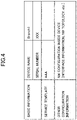
- FIG. 4 illustrates an example of the CPE apparatus template.
- the CPE apparatus template includes a device name of the CPE apparatus 100 to be managed by the CPE management apparatus 200 and a serial number of the device as basic information.
- the template management unit 230 can identify an individual CPE apparatus 100 by matching a serial number sent from the accessing CPE apparatus 100 with the serial number described in the CPE apparatus template.
- FIG. 4 illustrates information related to a single CPE apparatus 100, but in practice, there is the same amount of information as the number of CPE apparatus 100 to be managed by the CPE management apparatus 200.
- the CPE apparatus template includes a service template name (service name) associated with the corresponding CPE apparatus 100 in the item of the service template.
- the CPE apparatus template includes information of the NW configuration inside the device (interface information, NW topology, and the like) as other information.
- the service template will be described with reference to FIG. 5 and FIG. 6 .
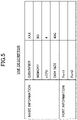
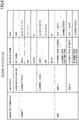
- the service template consists of a service descriptor ( FIG. 6 ) that describes a parameter of the configuration of the service and a VNF descriptor ( FIG. 5 ) that describes a parameter of the individual IoT edge execution environment constituting the service.
- the IoT edge execution environment 111 is assumed to be implemented in the VM, and the VNF descriptor ( FIG. 5 ) describes resource information (for example, vCPU, memory, disk size, and port) necessary for executing the IoT edge execution environment 111. Further, an identifier is used to identify the individual IoT edge execution environment 111.
- the service descriptor of the present embodiment indicates a configuration VNF, a subnet, and a link between the configuration VNF and the subnet.
- the subnet, the link, and the like indicate the configuration of the network connection in the CPE apparatus 100.
- FIG. 6 illustrates that the target VM (XXX) includes Port 1 and Port 2, Port 1 is connected to Connection 1 (a "connection" may be considered as a logical cable), and Port 2 is connected to Connection 2.
- a parameter of the subnet includes, but is not limited to, Class Inter-Domain Routing (CIDR), Gateway (GW), and VLAN. Further, an identifier is used to associate with the VNF descriptor of the configuration VNF.
- CIDR Class Inter-Domain Routing
- GW Gateway
- VLAN VLAN
- a CPE apparatus 100 called Branch 1 is provided, and a service AAA is included therein.
- the service AAA includes VNF XXX.
- Each of Port 1 and Port 2 of XXX indicates the service configuration that connects to Connection 1 and Connection 2 of the subnet.
- VNF VNF
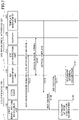
- the local agent 130 After the CPE apparatus 100 is connected to the external network, in S101, the local agent 130 transmits authentication information and an identifier (for example, a serial number) for identifying the CPE apparatus 100 to the CPE authentication unit 210 to perform authentication on the connection availability.
- an identifier for example, a serial number
- SSLVPN Secure Sockets Layer
- IPsec IP Security
- a certificate, a password, a Pre-shared key, and the like can also be used as the authentication information, but there is no limitation to this configuration.
- the authentication is considered successful.
- the NW management unit 120 creates a secure tunnel with the gateway 220 of the CPE management apparatus 200 through the external connector 122.
- IPsec with a pre-shared key can be used as a means for implementing a secure tunnel, but there is no limitation to this configuration.
- the template management unit 230 of the CPE management apparatus 200 specifies the CPE apparatus 100 using the identifier (for example, the serial number) received from the CPE apparatus 100 and the CPE apparatus template, and transmits the service template of the specified CPE apparatus 100 to the local agent 130 via the secure tunnel.
- the service template and the CPE apparatus template may be transmitted in S103.
- the local agent 130 sends an instruction to the virtual infrastructure management unit 110 and to the NW management unit 120 in accordance with the received service template (S104 and S105).
- the IoT edge execution environment 111 is established by the virtual infrastructure management unit 110 (S106), and related CPE internal connection is established by the NW management unit 120 (S107).
- the IoT edge execution environment 111 is established in accordance with the VNF descriptor, and the CPE internal connection is established in accordance with the service descriptor.
- the initial setting for the IoT edge execution environment 111 is performed.
- the initial setting may be performed according to the method of the second embodiment or the method of the third embodiment, which will be described later. Alternatively, the initial setting may be performed by other methods.
- an automatic input method of initial setting after the IoT edge execution environment is established and started, by using an initial setting management unit 115 will be described.
- the configuration and the procedure other than the configuration and the procedure related to the automatic input of the initial setting by using the initial setting management unit 115 are the same as that in the first embodiment.
- FIG. 8 illustrates a system configuration according to the second embodiment.
- a virtual infrastructure management unit 110 of a CPE apparatus 100 includes the initial setting management unit 115.
- the system configuration other than the initial setting management unit 115 is the same as the system configuration according to the first embodiment (i.e., FIG. 1 ).
- differences from the first embodiment will be mainly described.
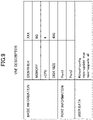
- FIG. 9 illustrates a VNF descriptor according to the second embodiment.
- information of user data is added to the VNF descriptor according to the first embodiment (i.e., FIG. 5 ).
- FIG. 9 a scenario is illustrated in which the setting of the IoT edge execution environment 111 is automatically updated after the IoT edge execution environment 111 (identifier: XXX) is started, but there is no limitation to this configuration.
- cloud-configuration is used as the user data, which is merely an example.
- the local agent 130 stores the initial setting information (for example, user data in the VNF descriptor) included in the service template in the initial setting management unit 115.
- the initial setting information for example, user data in the VNF descriptor
- the IoT edge execution environment 111 After the IoT edge execution environment 111 is established and started, the IoT edge execution environment 111 queries the initial setting management unit 1115 (S202) and acquires initial setting information (for example, the user data in the VNF descriptor) of the target (S203). The IoT edge execution environment 111 accesses the initial setting management unit 115 by using a predetermined IP address. However, the access may be implemented in a way other than using the predetermined IP addresses.
- the IoT edge execution environment 111 performs initial setting using the acquired initial setting information. For example, the IoT edge execution environment 111 performs the initialization by executing the commands described in the cloud-configuration.
- the initial setting of the IoT edge execution environment 111 is described.
- the method described in the second embodiment may be used for a setting not limited to the initial setting.
- the third embodiment describes an automatic input method of initial setting, after the IoT edge execution environment is established and started, by using the remote setting unit 240.
- the configuration and the procedure other than the configuration and the procedure related to the automatic input of the initial setting by using the remote setting unit 240 are the same as that in the first embodiment.
- the initial setting may be performed using the remote setting unit 240 according to the third embodiment.
- the initial setting may be performed using the remote setting unit 240 according to the third embodiment in addition to the initial setting using the initial setting management unit 115 according to the second embodiment.
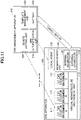
- FIG. 11 illustrates a system configuration according to the third embodiment.
- a CPE management apparatus 200 includes the remote setting unit 240.
- the system configuration other than the remote setting unit 240 is the same as the system configuration according to the first embodiment (e.g., FIG. 1 ).
- differences from the first embodiment will be mainly described.
- the remote setting unit 240 is configured to access an individual IoT edge execution environment 111 to input setting remotely.
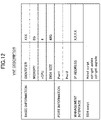
- FIG. 12 illustrates a VNF descriptor according to the third embodiment.
- management interface information specifically, an IP address of the IoT edge execution environment to be accessed
- an SSH script are added to the VNF descriptor according to the first embodiment (i.e., FIG. 5 ).
- FIG. 12 a scenario is illustrated in which the IoT edge execution environment 111 is automatically updated after the IoT edge execution environment 111 is started, but there is no limitation to this configuration.
- a shell script is used as the setting information to be input in the SSH connection, but the use of the shell script is merely an example.
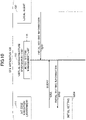
- the initial setting procedure for the IoT edge execution environment 111 according to the second embodiment will be described with reference to the sequence diagram of FIG. 13 .
- the IoT edge execution environment 111 is established and started by the procedure described in the first embodiment (S301).
- the remote setting unit 240 accesses a CPE apparatus 100 to monitor the startup state of the IoT edge execution environment 111.
- the remote setting unit 240 determines whether the IoT edge execution environment 111 is completely started. When it is determined that the IoT edge execution environment 111 has not been completely started (NO in S303), the remote setting unit 240 sets a timer, waits for a predetermined time, and then performs the determination of S303 again.
- Determination Method 1 As a method of determining whether the IoT edge execution environment 111 has been completely started, for example, the following Determination Method 1 and Determination Method 2 are provided. Either of Determination Method 1 or Determination Method 2 may be used.
- Determination Method 1 of complete startup Monitoring a specific process (for example, SSH) in the IoT edge execution environment 111 and determining that the specific process has been started, the IoT edge execution environment 111 is determined to have been completely started.
- a specific process for example, SSH
- Determination Method 2 of complete startup The IoT edge execution environment 111 is determined to have been completely started when a specific time (for example, 90 seconds) has elapsed from the start of the startup state monitoring.
- Determination Method 1 and Determination Method 2 assume that no error occurs in a predetermined process in the IoT edge execution environment 111.
- the remote setting unit 240 remotely logs in to the IoT edge execution environment 111 and inputs the setting information described in the SSH script of the VNF descriptor into the IoT edge execution environment 111.
- the IoT edge execution environment 111 performs the initial setting, for example, by executing the shell script.
- the third embodiment assumes that the SSH is used for initial setting of the IoT edge execution environment 111, but this is merely an example and Telnet or the like may be used.
- the initial setting of the IoT edge execution environment 111 is described.
- the method described in the third embodiment may be used for a setting not limited to the initial setting.
- an IoT edge management unit 300 is added, and a CPE management apparatus 200 works together with the IoT edge management unit 300 to perform provisioning of the IoT edge, including creation of configuration information for the IoT edge execution environment management, access authentication to the cloud of the IoT edge execution environment, remote distribution of the IoT application, and the like.
- the configuration and the procedure other than the configuration and the procedure involved in the implementation of the provisioning of the IoT edge are the same as that in the first embodiment and second embodiment. Further, in the fourth embodiment, the configuration and the procedure of the third embodiment may be applied instead of the configuration and the procedure of the second embodiment.
- differences from the first embodiment and from the second/third embodiment will be mainly described.
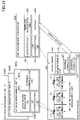
- FIG. 14 illustrates a system configuration according to the fourth embodiment.
- the IoT edge management unit 300 is provided, and the CPE management apparatus 200 includes an orchestrator 250.
- the system configuration other than these points is the same as the system configuration according to the first embodiment (e.g., FIG. 1 ).
- the initial setting management unit 115 is provided, and when the third embodiment is used, the remote setting unit 240 is provided.
- FIG. 14 illustrates IoT edge management units 300A, 300B, and 300C.
- a to C of the IoT edge management units 300A, 300B, and 300C are not distinguished, it is described as the IoT edge management unit 300.
- the IoT edge management unit 300 may be referred to as the IoT edge management unit 300. Further, the IoT edge management unit 300 may be referred to as the management unit.
- the IoT edge management unit 300 is assumed to be a function for accessing the cloud (a function such as creating a group, creating authentication information, implementing authentication) in a cloud service provided by a cloud service provider (for example, AWS (registered trademark)).
- a cloud service provider for example, AWS (registered trademark)
- the IoT edge management units 300A, 300B, and 300C correspond to a function provided by a cloud provider A, a function provided by a cloud provider B, and a function provided by a cloud provider C, respectively.
- the IoT edge execution environment 111 and the IoT edge management unit 300 have a one-to-one relationship.
- FIG. 14 illustrates an example in which an IoT edge execution environment 111A uses an IoT edge management unit 300A. Note that a single CPE apparatus 100 may use clouds of multiple cloud providers.
- the IoT edge management unit 300 may be a device provided as a device that executes the function regardless of the service of the cloud provider.
- the IoT edge management unit 300 includes an IoT authentication unit 310, an edge device management unit 320, and an external communication unit 330.
- the IoT authentication unit 310 determines whether the IoT edge execution environment 111 can access the IoT edge management unit 300.
- the edge device management unit 320 manages the individual IoT edge execution environment 111.
- the external communication unit 330 communicates with an external system such as the CPE management apparatus 200.
- the orchestrator 250 in the CPE management apparatus 200 controls the entire system including working together with the IoT edge management unit 300.
- the orchestrator 250 may be referred to as an acquiring unit.
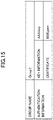
- FIG. 15 illustrates an example of configuration information for IoT edge environment management.
- the configuration information is managed (created, stored, changed, deleted, or the like) by the edge device management unit 320 of the IoT edge management unit 300.
- the configuration information includes a group name and authentication information related to the target IoT edge execution environment 111.
- the group name and the authentication information are merely examples, and the configuration information may include access information and identification information.
- the configuration information may also include any one or more of the group name, the authentication information, the access information, and the identification information.
- the configuration information may also include information other than the group name, the authentication information, the access information, and the identification information.
- the edge device management unit 320 when the edge device management unit 320 creates the configuration information for the IoT edge environment management, the group name is input from the CPE management apparatus 200 with respect to the edge device management unit 320.
- the edge device management unit 320 automatically generates the authentication information such as key information and a certificate.
- a group identified by the group name is used, for example, to define a range of operations.
- the fourth and fifth embodiments illustrate an example in which a single location (i.e., a single CPE apparatus 100) is a single group, a single location (i.e., a single CPE apparatus 100) may use multiple groups.
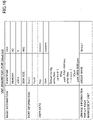
- FIG. 16 illustrates a VNF descriptor in a fourth embodiment. As illustrated in FIG. 16 , user data and linkage information for the IoT edge management unit are added to the VNF descriptor according to the first embodiment (i.e., FIG. 5 ).
- the key information (key) and the certificate (Cert) in the user data are in the form of variables because they are not determined when the service template is created by the template management unit (230).
- An example of a script in the user data is a script that enables the IoT edge execution environment 111 to automatically insert (to write into a file) the key information and the certificate after startup.
- the edge device management unit 320 creates the configuration information for the IoT edge environment management
- the authentication information such as the key information and the certificate is automatically generated. Therefore, the automatically generated key information and certificate are notified to the CPE management apparatus 200.
- the template management unit 200 of the CPE management apparatus 200 writes the key information and the certificate as the values of the variables "key” and "Cert" into the VNF descriptor to complement the VNF descriptor.
- group name is designated as the linkage information for the IoT edge management unit in order to associate the corresponding IoT edge execution environment 111 with the corresponding configuration information for the IoT edge execution environment management.
- a procedure of setting (provisioning) according to the fourth embodiment will be described with reference to the sequence diagram of FIG. 17 and FIG. 18 .
- FIG. 17 illustrates a procedure until the authentication information is reflected in the service template (specifically, the VNF descriptor). Note that reflecting the authentication information is merely an example.
- the information acquired by the CPE management apparatus 200 from the IoT edge management unit 300 and transmitted to the CPE apparatus 100 is used in the CPE apparatus 100 as information to assist environment establishment/setting, an access to a cloud, authentication, and the like. Therefore, this information may be collectively referred to as "auxiliary information.”
- the authentication information is an example of the "auxiliary information”.
- the orchestrator 250 of the CPE management apparatus 200 transmits an instruction that instructs the edge device management unit 320 to create the configuration information for the IoT edge execution environment management via the external communication unit 330 of the IoT edge management unit 300.
- This instruction includes the group name of the IoT edge execution environment 111 to be set.
- the edge device management unit 320 creates the configuration information (for example, FIG. 15 ) in S402.
- the edge device management unit 320 generates the authentication information (the key information and the certificate) of the IoT edge execution environment 111 to include in the configuration information.
- the edge device management unit 320 transmits the generated configuration information to the orchestrator 250 via the external communication unit 330.
- the orchestrator 250 that has received the configuration information acquires the authentication information to be used by the IoT edge execution environment 111 to access the corresponding edge device management unit 320 from the received configuration information. Then the acquired authentication information is reflected to the corresponding portion (the variable portion of the SSH script or user data) of the template of the service template in the template management unit 230 (S404).
- the template of the service template is transmitted to the CPE apparatus 100 according to the procedure described in the first embodiment.
- FIG. 18 illustrates a procedure from the initial setting to the module distribution.
- the initial setting is performed in S451.
- the authentication information (the key information and the certificate) described above is set to the IoT edge execution environment 111.
- the IoT edge execution environment 111 When the initial setting is performed by the initial setting management unit 115, as described in the second embodiment, the IoT edge execution environment 111 performs the initial setting by acquiring the user data (including the authentication information) from the initial setting management unit 115. In the case of performing the initial setting using the remote setting unit 240, as described in the third embodiment, the remote setting unit 240 remotely inputs the initial setting information (including the authentication information) with respect to the IoT edge execution environment 111.
- the IoT edge execution environment 111 connects to the IoT authentication unit 310, transmits the authentication information to the IoT authentication unit 310, and the IoT authentication unit 310 performs the authentication of the IoT edge execution environment 111 using the authentication information.
- the authentication is assumed to be successful (S453). Note that authentication using the authentication information as described above is an example of processing for accessing the cloud using the auxiliary information.
- the edge device management unit 320 accesses the corresponding IoT edge execution environment 111 and distributes a module for IoT processing.
- the module for IoT processing (which may be referred to as software or a program) is executed on the IoT edge execution environment 111 to perform the IoT processing.
- the IoT edge execution environment 111 executes, for example, a process of performing image recognition from photo data received from an IoT device and transmitting the recognition result to the cloud.
- a related data management unit 260 is added to perform batch provisioning at multiple locations using both the template management unit 230 and the related data management unit 260.
- the configuration and the procedure other than the configuration and the procedure involved in the batch provisioning are the same as that in the fourth embodiment.
- differences from the fourth embodiment will be mainly described.
- the techniques described in the fifth embodiment can be applied to any of the first to fourth embodiments.
- FIG. 19 illustrates a system configuration according to the fifth embodiment.
- a CPE management apparatus 200 includes a related data management unit 260.
- the system configuration other than the related data management unit 260 is the same as the system configuration according to the fourth embodiment (i.e., FIG. 14 ).
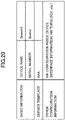
- FIG. 20 illustrates an example of a CPE apparatus template managed by the template management unit 230 in the fifth embodiment.
- some IoT edge-dependent parameter values in the example of FIG. 20 , a serial number, $serial
- the CPE apparatus template in the fifth embodiment is the same as the CPE apparatus template described in the first embodiment.
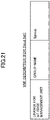
- FIG. 21 An example of a service template in the fifth embodiment is illustrated in FIG. 21 (VNF descriptor) and FIG. 22 (service descriptor). Similar to the CPE apparatus template, some IoT edge-dependent parameter values are not fixed values but variables with respect to the service template.
- a group name in the VNF descriptor illustrated in FIG. 21 is denoted by $group
- a CIDR and a GW in the service descriptor illustrated in FIG. 22 are denoted by a $cidr and $gw, respectively.
- the related data management unit 260 manages CPE apparatus-related data (such as generating, storing, changing, and deleting) as illustrated in FIG. 23 .
- the CPE apparatus-related data manages the values of the parameters depending on the individual CPE apparatus 100 and the IoT edge execution environment 111 included in the CPE apparatus 100.
- the CPE apparatus-related data includes the values of variable parameters ($serial, $group, $cidr, $gw) for each CPE apparatus 100 (CPE1, CPE2, CPE3).
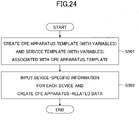
- FIG. 24 illustrates a flowchart of processing performed by the template management unit 230.
- the template management unit 230 creates the CPE apparatus template (with variables) (for example, FIG. 20 ) and the service template (with variables) (for example, FIG. 21 and FIG. 22 ).
- the CPE apparatus template (with variables) and service template (with variables) for example, if the service configuration is the same (specific values are different) in Location 1 and Location 2, the CPE apparatus template (with variables) and service template (with variables) common to Location 1 and Location 2 can be used.
- a common template may be referred to as common setting information.
- the related data management unit 260 creates the CPE apparatus-related data (for example, FIG. 23 ) using information specific to an individual CPE apparatus (IoT edge).
- provisioning to the multiple CPE apparatus 100 can be performed automatically for each location according to the method described above.
- the template management unit 230 reads out the value of CPE1 from the CPE apparatus-related data (for example, FIG. 23 ) in the related data management unit 260 and completes the CPE apparatus template and the service template by inputting values in the corresponding variables in the CPE apparatus template (with variables) and the service template (with variables).
- the IoT edge execution environment 111 in the CPE apparatus 100 can be established and started, and the setting to the IoT edge execution environment 111 can be performed.
- the CPE apparatus 100 described in the first to fifth embodiments may be implemented, for example, by causing a computer (for example, a server, a white switch, or the like) to execute a program.
- a computer for example, a server, a white switch, or the like
- the CPE apparatus management apparatus 200 described in the first to fifth embodiments may be implemented, for example, by causing a computer (for example, a server) to execute a program.
- the CPE apparatus management apparatus 200 may be implemented on a physical machine or may be implemented on a virtual machine.
- the CPE apparatus management apparatus 200 is not required to be a single device, but may be a device having a configuration in which multiple devices are connected to a network.
- the IoT edge management unit 300 (the IoT edge management apparatus) described in the first to fifth embodiments may be implemented, for example, by causing a computer (for example, a server) to execute a program.
- the IoT edge management unit 300 may be implemented on a physical machine or may be implemented on a virtual machine.
- each of the above-described devices may be implemented by executing a program corresponding to the processing performed by the devices using hardware resources such as CPU and memory embedded in the computer.
- the program may be recorded on a computer-readable storage medium (a portable memory, or the like), and then distributed and/or saved. Further, the program may be provided via a network, such as the Internet or e-mail.
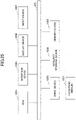
- FIG. 25 is a diagram illustrating an example of a hardware configuration of the above-described devices.
- the device of FIG. 25 includes a drive device 1000, an auxiliary storage device 1002, a memory device 1003, a CPU 1004, an interface device 1005, a display device 1006, an input device 1007, and the like, which are connected to each other by a bus B.
- Each of the above-described devices (such as the CPE apparatus 100, the CPE management apparatus 200, and the IoT edge management unit 300) may or may not be provided with the display device 1006 and the input device 1007.
- a program for implementing processing with each of the devices is provided by a recording medium 1001, such as a CD-ROM or a memory card.
- a recording medium 1001 on which the program is stored is set in the drive device 1000, the program is installed in the auxiliary storage device 1002 from the recording medium 1001 via the drive device 1000.
- the installation of the program is not necessarily be performed by the recording medium 1001, and the program may be downloaded from another computer via the network.
- the auxiliary storage device 1002 stores the installed program and stores necessary files, data, and the like.
- the memory device 1003 reads out and stores the program from the auxiliary storage device 1002 upon an instruction to start the program.
- the CPU 1004 implements the function of the appropriate device according to the program stored in the memory device 1003.
- An interface device 1005 is used as an interface for connecting to a network.
- the display device 1006 displays a Graphical User Interface (GUI) and the like according to the program.
- the input device 1007 includes a keyboard, a mouse, buttons, a touch panel, and the like. The input device 1007 is used to input various operating instructions.
- the present disclosure discloses at least the techniques of each of the following Appendix 1 and Appendix 2.
- a setting apparatus for setting a communication apparatus comprising:
- a setting apparatus for setting a communication apparatus comprising:
- a setting apparatus for setting a communication apparatus comprising:
- a setting method executed by a setting apparatus for setting a communication apparatus comprising:
Landscapes
- Engineering & Computer Science (AREA)
- Computer Networks & Wireless Communication (AREA)
- Signal Processing (AREA)
- Computing Systems (AREA)
- Health & Medical Sciences (AREA)
- General Health & Medical Sciences (AREA)
- Medical Informatics (AREA)
- Stored Programmes (AREA)
Applications Claiming Priority (1)
| Application Number | Priority Date | Filing Date | Title |
|---|---|---|---|
| PCT/JP2019/038797 WO2021064874A1 (ja) | 2019-10-01 | 2019-10-01 | 設定装置、通信システム、設定方法、及びプログラム |
Publications (2)
| Publication Number | Publication Date |
|---|---|
| EP4040740A1 true EP4040740A1 (de) | 2022-08-10 |
| EP4040740A4 EP4040740A4 (de) | 2023-06-07 |
Family
ID=75337843
Family Applications (1)
| Application Number | Title | Priority Date | Filing Date |
|---|---|---|---|
| EP19947749.8A Withdrawn EP4040740A4 (de) | 2019-10-01 | 2019-10-01 | Einstellvorrichtung, kommunikationssystem, einstellverfahren und programm |
Country Status (5)
| Country | Link |
|---|---|
| US (1) | US12047436B2 (de) |
| EP (1) | EP4040740A4 (de) |
| JP (1) | JP7437409B2 (de) |
| CN (1) | CN114270785B (de) |
| WO (1) | WO2021064874A1 (de) |
Families Citing this family (4)
| Publication number | Priority date | Publication date | Assignee | Title |
|---|---|---|---|---|
| CN114640672B (zh) * | 2022-02-11 | 2025-02-11 | 网宿科技股份有限公司 | 一种远程访问边缘设备的方法、设备及系统 |
| JP7675036B2 (ja) * | 2022-02-17 | 2025-05-12 | 株式会社日立製作所 | ネットワーク管理システム及び方法 |
| JP2024013980A (ja) * | 2022-07-21 | 2024-02-01 | エヌ・ティ・ティ・コミュニケーションズ株式会社 | 通信システム、制御装置、通信方法、及びプログラム |
| US12307263B2 (en) * | 2022-08-23 | 2025-05-20 | International Business Machines Corporation | Provisioning business function on edge |
Family Cites Families (13)
| Publication number | Priority date | Publication date | Assignee | Title |
|---|---|---|---|---|
| CN102474533B (zh) * | 2009-08-18 | 2015-11-25 | 富士通株式会社 | 信息管理装置、信息管理方法 |
| JP5626233B2 (ja) * | 2012-02-15 | 2014-11-19 | コニカミノルタ株式会社 | 情報処理システム、携帯情報端末およびプログラム |
| US9325575B2 (en) | 2012-10-31 | 2016-04-26 | Aruba Networks, Inc. | Zero touch provisioning |
| US9936047B2 (en) * | 2013-10-17 | 2018-04-03 | Ciena Corporation | Method and apparatus for provisioning virtual network functions from a network service provider |
| US20170169462A1 (en) * | 2015-12-11 | 2017-06-15 | At&T Mobility Ii Llc | Targeted advertising |
| US10042665B2 (en) * | 2016-06-13 | 2018-08-07 | Verizon Patent And Licensing Inc. | Customer premises equipment (CPE) with virtual machines for different service providers |
| US20180034698A1 (en) * | 2016-07-28 | 2018-02-01 | Charter Communications Operating, Llc | Automatic provisioning of customer premises equipment |
| CN109891336A (zh) * | 2016-10-31 | 2019-06-14 | 三菱电机株式会社 | 系统设计辅助装置、控制仪器、控制系统及操作画面 |
| EP3386219B1 (de) * | 2017-04-07 | 2021-03-31 | Telia Company AB | Verfahren und vorrichtungen zur bereitstellung eines dienstes an eine iot-vorrichtung |
| JP6943187B2 (ja) | 2017-07-11 | 2021-09-29 | 日本電信電話株式会社 | センシングデータ処理システムとそのエッジサーバ、伝送トラフィック削減方法およびプログラム |
| US11038757B2 (en) * | 2017-12-14 | 2021-06-15 | Arris Enterprises Llc | Soft configuration and data exchange for in-home devices |
| US11106441B2 (en) * | 2018-09-14 | 2021-08-31 | Microsoft Technology Licensing, Llc | Secure device-bound edge workload delivery |
| US11297147B2 (en) * | 2019-11-22 | 2022-04-05 | Amazon Technologies, Inc. | Managed data export to a remote network from edge devices |
-
2019
- 2019-10-01 EP EP19947749.8A patent/EP4040740A4/de not_active Withdrawn
- 2019-10-01 JP JP2021550821A patent/JP7437409B2/ja active Active
- 2019-10-01 WO PCT/JP2019/038797 patent/WO2021064874A1/ja not_active Ceased
- 2019-10-01 CN CN201980099595.1A patent/CN114270785B/zh active Active
-
2022
- 2022-02-07 US US17/650,113 patent/US12047436B2/en active Active
Also Published As
| Publication number | Publication date |
|---|---|
| EP4040740A4 (de) | 2023-06-07 |
| US20220159062A1 (en) | 2022-05-19 |
| CN114270785B (zh) | 2024-04-30 |
| JP7437409B2 (ja) | 2024-02-22 |
| CN114270785A (zh) | 2022-04-01 |
| US12047436B2 (en) | 2024-07-23 |
| WO2021064874A1 (ja) | 2021-04-08 |
| JPWO2021064874A1 (de) | 2021-04-08 |
Similar Documents
| Publication | Publication Date | Title |
|---|---|---|
| US12047436B2 (en) | Setting apparatus, communication system, setting method, and program | |
| US10367647B2 (en) | Certificate acquiring method and device | |
| WO2019184164A1 (zh) | 自动部署Kubernetes从节点的方法、装置、终端设备及可读存储介质 | |
| CN113196237A (zh) | 计算系统中的容器迁移 | |
| US20100030898A1 (en) | Network setting method and network setting apparatus | |
| CN115051846B (zh) | 基于超融合平台的k8s集群的部署方法及电子设备 | |
| JP2018166323A (ja) | ネットワークサービス構成方法およびネットワーク管理装置 | |
| CN121844535A (zh) | 利用非对称密钥验证证书包 | |
| WO2016023268A1 (zh) | 集中运维的方法、装置及存储介质 | |
| US20100036913A1 (en) | Network setting method and network setting apparatus | |
| CN114650223A (zh) | 一种Kubernetes集群的网络配置方法、装置及电子设备 | |
| WO2017066931A1 (zh) | 网络功能虚拟化架构中证书的管理方法及装置 | |
| CN114500623A (zh) | 网络靶场互联互通方法、装置、设备及可读存储介质 | |
| EP3063910A1 (de) | System und verfahren zur erzeugung von dienstketten und virtuellen netzwerken in der cloud | |
| JP2023518779A (ja) | 共通トレーニングモデルのトレーニング参加者のためのネットワーク接続方法及び装置 | |
| EP2911059A1 (de) | Betriebsüberprüfungsvorrichtung für virtuelle Vorrichtung und Betriebsüberprüfungssystem und Programm für virtuelle Vorrichtung | |
| CN112272177A (zh) | 一种批量部署蜜网诱捕节点的方法 | |
| WO2019042005A1 (zh) | 一种虚拟机的热迁移方法、装置和系统 | |
| US20220103415A1 (en) | Remote network and cloud infrastructure management | |
| CN112270000B (zh) | 密码服务提供方法、装置和计算机可读存储介质 | |
| US20250385903A1 (en) | Cross-realm proxying services in a virtual bootstrap environment | |
| US9736027B2 (en) | Centralized enterprise image upgrades for distributed campus networks | |
| US20220158868A1 (en) | Setting apparatus, communication system, setting method, and program | |
| CN109962788B (zh) | 多控制器调度方法、装置和系统及计算机可读存储介质 | |
| JP7581390B2 (ja) | プロバイダネットワークサービス拡張 |
Legal Events
| Date | Code | Title | Description |
|---|---|---|---|
| STAA | Information on the status of an ep patent application or granted ep patent |
Free format text: STATUS: THE INTERNATIONAL PUBLICATION HAS BEEN MADE |
|
| PUAI | Public reference made under article 153(3) epc to a published international application that has entered the european phase |
Free format text: ORIGINAL CODE: 0009012 |
|
| STAA | Information on the status of an ep patent application or granted ep patent |
Free format text: STATUS: REQUEST FOR EXAMINATION WAS MADE |
|
| 17P | Request for examination filed |
Effective date: 20220211 |
|
| AK | Designated contracting states |
Kind code of ref document: A1 Designated state(s): AL AT BE BG CH CY CZ DE DK EE ES FI FR GB GR HR HU IE IS IT LI LT LU LV MC MK MT NL NO PL PT RO RS SE SI SK SM TR |
|
| XX | Miscellaneous (additional remarks) |
Free format text: A REQUEST FOR CORRECTION OF THE DESCRIPTION HAS BEEN FILED PURSUANT TO RULE 139 EPC WHICH WILL BE DECIDED UPON BY THE EXAMINING DIVISION (GL, A-V, 3). |
|
| DAV | Request for validation of the european patent (deleted) | ||
| DAX | Request for extension of the european patent (deleted) | ||
| REG | Reference to a national code |
Ref country code: DE Ref legal event code: R079 Free format text: PREVIOUS MAIN CLASS: H04L0012700000 Ipc: H04L0041080300 |
|
| A4 | Supplementary search report drawn up and despatched |
Effective date: 20230508 |
|
| RIC1 | Information provided on ipc code assigned before grant |
Ipc: H04L 67/12 20220101ALI20230501BHEP Ipc: H04L 67/10 20220101ALI20230501BHEP Ipc: H04L 67/025 20220101ALI20230501BHEP Ipc: H04L 41/0895 20220101ALI20230501BHEP Ipc: H04L 41/0803 20220101AFI20230501BHEP |
|
| STAA | Information on the status of an ep patent application or granted ep patent |
Free format text: STATUS: EXAMINATION IS IN PROGRESS |
|
| 17Q | First examination report despatched |
Effective date: 20241024 |
|
| STAA | Information on the status of an ep patent application or granted ep patent |
Free format text: STATUS: THE APPLICATION IS DEEMED TO BE WITHDRAWN |
|
| 18D | Application deemed to be withdrawn |
Effective date: 20250425 |