EP4040566B1 - Detecting whether a battery management system is abnormal - Google Patents
Detecting whether a battery management system is abnormal Download PDFInfo
- Publication number
- EP4040566B1 EP4040566B1 EP21168550.8A EP21168550A EP4040566B1 EP 4040566 B1 EP4040566 B1 EP 4040566B1 EP 21168550 A EP21168550 A EP 21168550A EP 4040566 B1 EP4040566 B1 EP 4040566B1
- Authority
- EP
- European Patent Office
- Prior art keywords
- time
- time period
- control unit
- measured
- capacitor
- Prior art date
- Legal status (The legal status is an assumption and is not a legal conclusion. Google has not performed a legal analysis and makes no representation as to the accuracy of the status listed.)
- Active
Links
Images





Classifications
-
- H—ELECTRICITY
- H01—ELECTRIC ELEMENTS
- H01M—PROCESSES OR MEANS, e.g. BATTERIES, FOR THE DIRECT CONVERSION OF CHEMICAL ENERGY INTO ELECTRICAL ENERGY
- H01M10/00—Secondary cells; Manufacture thereof
- H01M10/42—Methods or arrangements for servicing or maintenance of secondary cells or secondary half-cells
- H01M10/425—Structural combination with electronic components, e.g. electronic circuits integrated to the outside of the casing
- H01M10/4264—Structural combination with electronic components, e.g. electronic circuits integrated to the outside of the casing with capacitors
-
- G—PHYSICS
- G01—MEASURING; TESTING
- G01R—MEASURING ELECTRIC VARIABLES; MEASURING MAGNETIC VARIABLES
- G01R31/00—Arrangements for testing electric properties; Arrangements for locating electric faults; Arrangements for electrical testing characterised by what is being tested not provided for elsewhere
- G01R31/36—Arrangements for testing, measuring or monitoring the electrical condition of accumulators or electric batteries, e.g. capacity or state of charge [SoC]
- G01R31/3644—Constructional arrangements
- G01R31/3648—Constructional arrangements comprising digital calculation means, e.g. for performing an algorithm
-
- G—PHYSICS
- G01—MEASURING; TESTING
- G01R—MEASURING ELECTRIC VARIABLES; MEASURING MAGNETIC VARIABLES
- G01R31/00—Arrangements for testing electric properties; Arrangements for locating electric faults; Arrangements for electrical testing characterised by what is being tested not provided for elsewhere
- G01R31/36—Arrangements for testing, measuring or monitoring the electrical condition of accumulators or electric batteries, e.g. capacity or state of charge [SoC]
- G01R31/382—Arrangements for monitoring battery or accumulator variables, e.g. SoC
- G01R31/3835—Arrangements for monitoring battery or accumulator variables, e.g. SoC involving only voltage measurements
-
- G—PHYSICS
- G01—MEASURING; TESTING
- G01R—MEASURING ELECTRIC VARIABLES; MEASURING MAGNETIC VARIABLES
- G01R31/00—Arrangements for testing electric properties; Arrangements for locating electric faults; Arrangements for electrical testing characterised by what is being tested not provided for elsewhere
- G01R31/36—Arrangements for testing, measuring or monitoring the electrical condition of accumulators or electric batteries, e.g. capacity or state of charge [SoC]
- G01R31/385—Arrangements for measuring battery or accumulator variables
-
- G—PHYSICS
- G01—MEASURING; TESTING
- G01R—MEASURING ELECTRIC VARIABLES; MEASURING MAGNETIC VARIABLES
- G01R35/00—Testing or calibrating of apparatus covered by the other groups of this subclass
-
- H—ELECTRICITY
- H01—ELECTRIC ELEMENTS
- H01M—PROCESSES OR MEANS, e.g. BATTERIES, FOR THE DIRECT CONVERSION OF CHEMICAL ENERGY INTO ELECTRICAL ENERGY
- H01M10/00—Secondary cells; Manufacture thereof
- H01M10/42—Methods or arrangements for servicing or maintenance of secondary cells or secondary half-cells
- H01M10/48—Accumulators combined with arrangements for measuring, testing or indicating the condition of cells, e.g. the level or density of the electrolyte
-
- H—ELECTRICITY
- H02—GENERATION; CONVERSION OR DISTRIBUTION OF ELECTRIC POWER
- H02J—ELECTRIC POWER NETWORKS; CIRCUIT ARRANGEMENTS OR SYSTEMS FOR SUPPLYING OR DISTRIBUTING ELECTRIC POWER; SYSTEMS FOR STORING ELECTRIC ENERGY
- H02J7/00—Circuit arrangements for charging or discharging batteries or for supplying loads from batteries
- H02J7/50—Circuit arrangements for charging or discharging batteries or for supplying loads from batteries acting upon multiple batteries simultaneously or sequentially
- H02J7/52—Circuit arrangements for charging or discharging batteries or for supplying loads from batteries acting upon multiple batteries simultaneously or sequentially for charge balancing, e.g. equalisation of charge between batteries
-
- H—ELECTRICITY
- H02—GENERATION; CONVERSION OR DISTRIBUTION OF ELECTRIC POWER
- H02J—ELECTRIC POWER NETWORKS; CIRCUIT ARRANGEMENTS OR SYSTEMS FOR SUPPLYING OR DISTRIBUTING ELECTRIC POWER; SYSTEMS FOR STORING ELECTRIC ENERGY
- H02J7/00—Circuit arrangements for charging or discharging batteries or for supplying loads from batteries
- H02J7/60—Circuit arrangements for charging or discharging batteries or for supplying loads from batteries including safety or protection arrangements
-
- H—ELECTRICITY
- H02—GENERATION; CONVERSION OR DISTRIBUTION OF ELECTRIC POWER
- H02J—ELECTRIC POWER NETWORKS; CIRCUIT ARRANGEMENTS OR SYSTEMS FOR SUPPLYING OR DISTRIBUTING ELECTRIC POWER; SYSTEMS FOR STORING ELECTRIC ENERGY
- H02J7/00—Circuit arrangements for charging or discharging batteries or for supplying loads from batteries
- H02J7/80—Circuit arrangements for charging or discharging batteries or for supplying loads from batteries including monitoring or indicating arrangements
-
- G—PHYSICS
- G01—MEASURING; TESTING
- G01R—MEASURING ELECTRIC VARIABLES; MEASURING MAGNETIC VARIABLES
- G01R31/00—Arrangements for testing electric properties; Arrangements for locating electric faults; Arrangements for electrical testing characterised by what is being tested not provided for elsewhere
- G01R31/36—Arrangements for testing, measuring or monitoring the electrical condition of accumulators or electric batteries, e.g. capacity or state of charge [SoC]
- G01R31/396—Acquisition or processing of data for testing or for monitoring individual cells or groups of cells within a battery
-
- H—ELECTRICITY
- H01—ELECTRIC ELEMENTS
- H01M—PROCESSES OR MEANS, e.g. BATTERIES, FOR THE DIRECT CONVERSION OF CHEMICAL ENERGY INTO ELECTRICAL ENERGY
- H01M10/00—Secondary cells; Manufacture thereof
- H01M10/42—Methods or arrangements for servicing or maintenance of secondary cells or secondary half-cells
- H01M10/425—Structural combination with electronic components, e.g. electronic circuits integrated to the outside of the casing
- H01M2010/4271—Battery management systems including electronic circuits, e.g. control of current or voltage to keep battery in healthy state, cell balancing
-
- H—ELECTRICITY
- H02—GENERATION; CONVERSION OR DISTRIBUTION OF ELECTRIC POWER
- H02J—ELECTRIC POWER NETWORKS; CIRCUIT ARRANGEMENTS OR SYSTEMS FOR SUPPLYING OR DISTRIBUTING ELECTRIC POWER; SYSTEMS FOR STORING ELECTRIC ENERGY
- H02J7/00—Circuit arrangements for charging or discharging batteries or for supplying loads from batteries
- H02J7/50—Circuit arrangements for charging or discharging batteries or for supplying loads from batteries acting upon multiple batteries simultaneously or sequentially
- H02J7/52—Circuit arrangements for charging or discharging batteries or for supplying loads from batteries acting upon multiple batteries simultaneously or sequentially for charge balancing, e.g. equalisation of charge between batteries
- H02J7/54—Passive balancing, e.g. using resistors or parallel MOSFETs
Definitions
- a nickel tape or a wire is used as a connecting wire to connect a battery management system with each cell, to enable the battery management system to measure the voltage of each cell and to perform a corresponding protection operation if needed. If the connecting wire and/or related components in the battery management system are abnormal, the measured voltage of each cell will not be accurate, in which case the battery management system may perform the wrong protection operation.
- the voltage value on a capacitor in the battery management system is compared with the cell tap open threshold V CTO , to determine whether the measured voltage of each cell is accurate.
- the conventional method only can determine the inaccuracy of the measured voltage of each cell caused by an abnormal connection.
- the conventional method results in an incorrect diagnosis, which will cause the battery management system to perform the incorrect protection operation.
- US 2018/0316197 A1 refers to a method for detecting whether a battery management system is abnormal, including (a) generating a control signal by a control unit, to turn on a first balance switch for a first time period; (b) generating the control signal with the control unit, to turn off the first balance switch for a second time period; (c) measuring a voltage value on a first capacitor, with a measure unit; (d) if the voltage value on the first capacitor is less than an open cell threshold, then determining with the control unit that the first cell has an open cell failure; (e) for each cell of the cells, repeating steps (a)-(d); and (f) if at least one cell of the cells has an open cell failure, then determining with the control unit that the battery management system has an open cell failure.
- JP 2015-175676 A refers to an electronic control device which is setup to execute a procedure of diagnosing a fault of a terminal capacitor in an electronic control device having an input process circuit connectable to an external sensor for each input terminal and provided with a terminal capacitor, a pull-up resistor or a pull-down resistor for each input terminal.
- Embodiments in accordance with the present invention provide methods for detecting whether a battery management system is abnormal that addresses the problem with the conventional method discussed above.
- a method for detecting whether a battery management system is abnormal comprising: calculating, using the control unit, a value of a theoretical time constant corresponding to the first cell; determining, a preset range of the theoretical time constant according to the value of the theoretical time constant; controlling, using the control unit, the first switch to successively turn off for a first time period, turn on for a second time period, and turn off for a third time period; controlling, using the control unit, the measure unit to measure a voltage value on the first capacitor at the end of the first time period, to produce a measured voltage value of the first cell; controlling, using the control unit, the measure unit to measure voltage values on
- a battery management system includes: a measure unit; a control unit coupled to the measure unit; a first monitoring resistor coupled to the measure unit; a second monitoring resistor coupled to the measure unit; a first capacitor coupled to the measure unit; a first switch coupled to the measure unit; and a first balance resistor coupled to the measure unit, where a first cell in a battery pack is coupled to the first monitoring resistor, the second monitoring resistor, the first capacitor, the first switch, and the first balance resistor, where the battery management system is configured to execute a method including: calculating, using the control unit, a value of a theoretical time constant corresponding to the first cell; determining a preset range of the theoretical time constant according to the value of the theoretical time constant; controlling, using the control unit, the first switch to successively turn off for a first time period, turn on for a second time period, and turn off for a third time period; controlling, using the control unit, the measure unit to measure a voltage value on the first capacitor at the end of the first time period, to
- FIG. 1 shows a block diagram illustrating a battery management system 100, in accordance with embodiments of the present invention.
- the present invention includes methods for detecting whether the battery management system 100 is abnormal.
- a method includes: a preset range of a theoretical time constant is determined when the battery management system 100 is normal; a measured time constant is determined; and a determination is made as to whether the battery management system 100 is abnormal by comparing the measured time constant with the preset range of the theoretical time constant.
- the battery pack includes a cell CELL1, CELL 2, ..., CELLn, which are coupled in series.
- the battery management system 100 includes monitoring resistors RFC, RF1, ..., RFn, capacitors CF1, CF2, ..., CFn, balance resistors RB1, RB2, ..., RBn, switches SW1, SW2, ..., SWn, a measure unit 120, and a control unit 110.
- a monitoring resistor RF0 is coupled to a negative electrode of a cell CELL1.
- the monitoring resistors RFC, RF1, ..., RFn and capacitors CF1, CF2, ..., CFn together form Resistor-Capacitance (RC) filters.
- the RC filters are operable for filtering out the high frequency components of voltages provided by the cells, thus eliminating unwanted noise components.
- the measure unit 120 is coupled to the monitoring resistors RFC, RF1, ..., RFn, and is operable for measuring voltages of the cells in the battery pack. For example, the measure unit 120 determines a voltage V CELL2 of the cell CELL2 by measuring the difference between a voltage at a node N2 and a voltage at a node N1.
- V CELL2 e.g., 3V
- V CELL1 e.g., 3.4V
- both the balance resistor RBj and the switch SWj are operable for detecting whether the battery management system 100 is abnormal. A detailed description is given below.
- the control unit 110 includes a memory 111 and a microcontroller unit 112. Program codes are written into the microcontroller unit 112.
- the microcontroller unit 112 is configured to include or execute a timer 113, to enable the microcontroller unit 112 to run the program code according to the time sequence set by the timer 113, thereby realizing the control function and the data processing function.
- the memory 111 is operable for storing data, such as the theoretical time constant.
- control unit 110 controls the switches SW1, SW2, ..., SWn to turn on/off, controls the measure unit 120 to measure a voltage on the capacitor CFj, and determines the measured time constant. Because the theoretical time constant and the preset range of the theoretical time constant are determined experimentally (e.g., before the battery management system 100 is put into use), they are stored in the memory 111. If the measured time constant is in the preset range of the theoretical time constant, then the control unit 110 determines the battery management system 100 is normal; otherwise, the battery management system 100 is abnormal.
- Embodiments according to the present invention are not limited to the configuration of FIG. 1 .
- the methods described herein are applicable when the connection mode of the capacitor CFj in FIG. 1 is different, e.g., a terminal of the capacitor CFj is connected to the monitoring resistor RFj, and the other terminal is connected to ground of the battery management system 100.
- FIG. 2 shows a circuit diagram illustrating a detection performed on a cell CELLj to determine whether a battery management system is abnormal, in accordance with embodiments of the present invention.
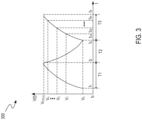
- FIG. 3 shows an example of the variation of the voltage values as a function of time (variation curve) on a capacitor CFj when a battery management system 100 is normal, in accordance with embodiments of the present invention, where the X-axis represents time and the Y-axis represents voltage values on the capacitor CFj.
- FIG. 3 is described in conjunction with FIG. 2 .
- the battery management system 100 is normal.
- the control unit 110 controls the switch SW j to turn off, and the cell CELLj charges the capacitor CFj.
- the capacitor CFj is fully charged at time t 2 .
- the measure unit 120 measures the voltage value on the capacitor CFj (a difference between a voltage at a node N(j-1) and a voltage at a node Nj) as the voltage V CELLj of the cell CELLj.
- the control unit 110 controls the switch SWj to turn on, and the capacitor CFj discharges.
- the capacitor CFj does not discharge any more at time t 3 .
- V E V CELLj • R RBj /(R RBj + R RFj + R RF(j-i) ), where R RF(j-1) represents a resistance value of the monitoring resistor RF(j-1), R RFj represents a resistance value of the monitoring resistor RFj, and R RBj represents a resistance value of the monitoring resistor RBj.
- the control unit 110 controls the switch SW j to turn off, and the cell CELLj charges the capacitor CFj.
- the capacitor CFj is fully charged at time t 4 .
- the voltage value on the capacitor CFj is recovered from V E to V CELLj .
- time t 31 , time t 32 , ..., time t 3n are selected in the time period from t 3 to t 4 , and the measure unit 120 respectively measures voltage values V 1 , V 2 , ..., V n , on the capacitor CFj at time t 31 , time t 32 , ..., time t 3n , to determine (V 1 , ⁇ t 1 ), (V 2 , ⁇ t 2 ), ..., (V n , ⁇ t n ), where ⁇ t 1 represents the length of time between time t 3 and time t 31 , ⁇ t 2 represents the length of time between time t 3 and time t 32 , ..., and ⁇ t n represents the length of time between time t 3 and time t 3n .
- the monitoring resistors RFj, RF(j-1) and the capacitor CFj form a RC circuit
- the theoretical time constant ⁇ ⁇ t i /ln[K/(V CELLj - V i )]
- K represents a coefficient
- i 1, 2, ..., n.
- V 1 , ⁇ t 1 ), (V 2 , ⁇ t 2 ), ..., (V n , ⁇ t n ) are substituted in the above equation to determine the coefficient K and the theoretical time constant ⁇ .
- K V CELLj - V E .
- each RC circuit is located in a different position in the battery management system 100, so the theoretical time constant ⁇ corresponding to each RC circuit is not equal.
- Abnormities include an abnormal connection and an abnormal component. If the two terminals of the cell CELLj are not properly connected to the battery management system 100 (e.g., broken or degraded or not operating satisfactorily), then the connection between the battery management system 100 and the cell CELLj is referred to herein as an abnormal connection. If any of the capacitor CFj, the monitoring resistor RFj, and the monitoring resistor RF(j-1) is inoperative (e.g., a leakage current of the capacitor CFj, the resistance values of the monitoring resistor RFj, and/or the monitoring resistor RF(j-1) are increased/decreased), then this condition is referred to herein as an abnormal component.
- an abnormal component e.g., a leakage current of the capacitor CFj, the resistance values of the monitoring resistor RFj, and/or the monitoring resistor RF(j-1) are increased/decreased
- the capacitor CFj cannot be charged in the time period from t 3 to t 4 and the voltage value on the capacitor CFj remains unchanged from time t 3 . Therefore, under ideal conditions, if the connection between the battery management system 100 and the cell CELLj is broken, then the voltage value on the capacitor CFj remains unchanged in the time period from t 3 to t 4 .
- the voltage value on the capacitor CFj is less than V E at time t 3 and cannot be recovered to V CELLj at time t 4 .
- the resistance value R RFj of the monitoring resistor RFj and/or the resistance value R RF(j-1) of the monitoring resistor RF(j-1) are increased, then the voltage value on the capacitor CFj can decrease to a voltage value near V E at time t 3 and cannot be recovered to V CELLj at time t 4 .
- the voltage value on the capacitor CFj can decrease to a voltage value near V E at time t 3 and can be recovered to V CELLj before time t 4 . Therefore, if one or more components among the capacitor CFj, the monitoring resistor RFj, and the monitoring resistor RF(j-1) cannot work effectively, then the variation curve of the voltage values on the capacitor CFj in the time period from t 3 to t 4 will deviate from the curve of FIG. 3 when the battery management system 100 is normal.
- the variation curve of the voltage values on the capacitor CFj in the time period from t 3 to t 4 will deviate from the FIG. 3 curve when the battery management system 100 is normal. Because the variation curve of the voltage values on the capacitor CFj can be reflected by the time constant (that is, the variation curve of the voltage values on the capacitor CFj varies with the time constants), embodiments of the present invention compare the measured time constant with the preset range of the theoretical time constant to determine whether the battery management system 100 is abnormal.
- methods in accordance with the present invention can accurately determine whether any of the above abnormities has occurred in the battery management system 100, to avoid an incorrect diagnosis and improve the detection accuracy.
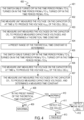
- FIG. 4 shows a flowchart 400 of a method for detecting whether a battery management system 100 is abnormal, in accordance with embodiments of the present invention.
- FIG. 4 is described in conjunction with FIG. 2 and FIG. 5 .
- step 402 the control unit 110 controls the measure unit 120 to measure the voltage value on the capacitor CFj at time t 2 , to produce the voltage V CELLj of the cell CELLj.
- the control unit 110 controls the measure unit 120 to measure the voltage values on the capacitor CFj at least at one time point in the time period from t 3 to t 4 , to produce measured capacitance voltage value(s).
- the control unit 110 determines a theoretical time constant according to at least one measured capacitance voltage value and the measured voltage value V CELLj of the cell CELLj.
- the theoretical time constant is an experimentally determined value. Methods for determining the measured time constant are described in conjunction with the embodiments in FIG. 6 , FIG. 7 , FIG. 8 , FIG. 9 , and FIG. 11 .
- step 404 a preset range of the theoretical time constant is determined according to the theoretical time constant. Both the theoretical time constant and the preset range of the theoretical time constant are stored in the memory 111 of the control unit 110.
- step 406 the control unit 110 controls the measure unit 120 to measure the voltage value on the capacitor CFj at time t 6 , to produce the voltage V CELLj of the cell CELLj.
- the control unit 110 controls the measure unit 120 to measure the voltage values on the capacitor CFj at least at one time point in the time period from t 7 to t 8 , to produce measured capacitance voltage values.
- the control unit 110 determines a measured time constant according to at least one measured capacitance voltage and the measured voltage value of the cell CELLj. Methods for determining the measured time constant are described in conjunction with the embodiments in FIG. 6 , FIG. 7 , FIG. 8 , FIG. 9 , and FIG. 11 .
- step 408 the control unit 110 determines whether the measured time constant is in the preset range of the theoretical time constant. If yes, then step 408 is followed by step 410; otherwise, step 408 is followed by step 409.
- step 409 the control unit 110 determines that the battery management system 100 is abnormal, and generates an alarm to alert the users.
- step 410 the control unit 110 determines that the battery management system 100 is normal.
- step 411 the control unit 110 determines whether all of the cells are detected. If yes, then step 411 is followed by step 413; otherwise, step 411 is followed by step 412.
- step 412 the battery management system 100 starts to detect the next cell, and the method returns to step 405.
- step 413 the detection process of FIG. 4 is finished.
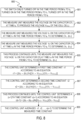
- FIG. 6 shows a flowchart 600 of a method for detecting whether a battery management system 100 is abnormal, in accordance with embodiments of the present invention.
- FIG. 6 is described in conjunction with FIG. 2 and FIG. 5 .
- step 602 the control unit 110 controls the measure unit 120 to measure the voltage value on the capacitor CFj at time t 6 , to produce the voltage V CELLj of the cell CELLj.
- step 603 the control unit 110 controls the measure unit 120 to measure the voltage value V 1 on the capacitor CFj at time t 71 in the time period from t 7 to t 8 , to determine (V 1 , ⁇ t 1 ), where ⁇ t 1 is the length of time between t 1 and t 71 .
- K V CELLj - V E .
- FIG. 7 shows a flowchart 700 of a method for detecting whether a battery management system 100 is abnormal, in accordance with embodiments of the present invention.
- FIG. 7 is described in conjunction with FIG. 2 and FIG. 5 . If the length of time of the third time period T3 is long enough for the control unit 110 to complete the calculation, the method of FIG. 7 can be used to determine the measured time constant. Compared with the embodiment of FIG. 6 , the embodiment of FIG. 7 can further improve the accuracy of the measured time constant, thereby improving the detection accuracy.
- step 702 the control unit 110 controls the measure unit 120 to measure the voltage values on the capacitor CFj at time t 6 , to produce the voltage V CELLj of the cell CELLj.
- step 703 the control unit 110 controls the measure unit 120 to measure the voltage value V 1 on the capacitor CFj at time t 71 in the time period from t 7 to t 8 , to determine (V 1 , ⁇ t 1 ), where ⁇ t 1 is the length of time between t 7 and t 71 .
- step 704 the control unit 110 controls the measure unit 120 to measure the voltage value V 2 on the capacitor CFj at time t 72 in the time period from t 7 to t 8 , to determine (V 2 , ⁇ t 2 ), where ⁇ t 2 is the length of time between t 7 and t 72 , and ⁇ t 2 is not equal to ⁇ t 1 .
- FIG. 8 shows a flowchart 800 of a method for detecting whether a battery management system 100 is abnormal, in accordance with embodiments of the present invention.
- FIG. 8 is described in conjunction with FIG. 2 and FIG. 5 . If the length of time of the third time period T3 is long enough for the control unit 110 to complete the calculation, the method of FIG. 8 can be used to determine the measured time constant. Compared with the embodiment of FIG. 7 , the embodiment of FIG. 8 can further improve the accuracy of the measured time constant, thereby improving the detection accuracy.
- step 802 the control unit 110 controls the measure unit 120 to measure the voltage value on the capacitor CFj at time t 6 , to produce the voltage V CELLj of the cell CELLj.
- step 803 the control unit 110 controls the measure unit 120 to measure the voltage value V 1 on the capacitor CFj at time t 71 in the time period from t 7 to t 8 , to determine (V 1 , ⁇ t 1 ), where ⁇ t 1 is the length of time between t 7 and t 71 .
- step 804 the control unit 110 controls the measure unit 120 to measure the voltage value V 2 on the capacitor CFj at time t 72 in the time period from t 7 to t 8 , to determine (V 2 , ⁇ t 2 ), where ⁇ t 2 is the length of time between t 7 and t 72 , and ⁇ t 2 is not equal to ⁇ t 1 .
- step 805 this process continues until the control unit 110 controls the measure unit 120 to measure the voltage value V n on the capacitor CFj at time t 7n in the time period from t 7 to t 8 , to determine (V n , ⁇ t n ), where ⁇ t n is the length of time between t 7 and t 7n .
- ⁇ t 1 , ⁇ t 2 , ..., ⁇ t n are not equal to each other.
- two adjacent time periods are not equal.
- step 809 the control unit 110 averages ⁇ 1, ⁇ 2, ..., ⁇ (n-1) to determine the measured time constant.
- other methods can be used to calculate ⁇ 1, ⁇ 2, ..., ⁇ (n-1) to determine the measured time constant.
- FIG. 9 shows a flowchart 900 of a method for detecting whether a battery management system 100 is abnormal, in accordance with embodiments of the present invention.
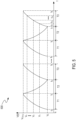
- FIG. 9 is described in conjunction with FIG. 2 and FIG. 10 .
- the embodiment of FIG. 9 can reduce uncertainty in the measured time constant that may be introduced by uncertainty in the coefficient K, thereby improving the detection accuracy.
- step 902 the control unit 110 controls the measure unit 120 to measure the voltage value on the capacitor CFj at time t 6 , to produce the voltage V CELLj of the cell CELLj.
- step 903 the control unit 110 controls the measure unit 120 to measure the voltage value V 1 on the capacitor CFj at time t 71 in the time period from t 7 to t 8 , to determine (V 1 , ⁇ t 1 ), where ⁇ t 1 is the length of time between t 7 and t 71 .
- step 904 the control unit 110 controls the measure unit 120 to measure the voltage value V 2 on the capacitor CFj at time t 72 in the time period from t 9 to t 10 , to determine (V 2 , ⁇ t 2 ), where ⁇ t 2 is the length of time between t 9 and t 72 , and ⁇ t 2 is not equal to ⁇ t 1 .
- FIG. 11 shows a flowchart 1100 of a method for detecting whether a battery management system 100 is abnormal, in accordance with embodiments of the present invention.
- FIG. 11 is described in conjunction with FIG. 2 and FIG. 10 .
- the embodiment of FIG. 11 can further improve the accuracy of the measured time constant, thereby improving detection accuracy.
- step 1102 the control unit 110 controls the measure unit 120 to measure the voltage value V 1 on the capacitor CFj at time t 71 in the time period from t 7 to t 8 , to determine (V 1 , ⁇ t 1 ), where ⁇ t 1 is the length of time between t 7 and t 71 .
- step 1103 the control unit 110 controls the measure unit 120 to measure the voltage value V 2 on the capacitor CFj at time t 72 in the time period from t 9 to t 10 , to determine (V 2 , ⁇ t 2 ), where ⁇ t 2 is the length of time between t 9 and t 72 , and ⁇ t 2 is not equal to ⁇ t 1 .
- step 1104 this process continues until the control unit 110 controls the measure unit 120 to measure the voltage value V n on the capacitor CFj at time t 7n in the time period from t (5+2n) to t (6+2n) , to determine (V n , ⁇ t n ), where ⁇ t n is the length of time between t (5+2n) and t 7n .
- ⁇ t 1 , ⁇ t 2 , ..., ⁇ t n are not equal to each other. In other embodiments, two or more of ⁇ t 1 , ⁇ t 2 , ..., ⁇ t n can be equal.
- step 1105 based on (V 1 , ⁇ t 1 ), (V 2 , ⁇ t 2 ), ..., (V n , ⁇ t n ), the control unit 110 uses the least square method to fit the variation curve of the voltage value on the capacitor CFj, to determine the measured time constant.
- other methods can be used to fit the variation curve of the voltage value on the capacitor CFj based on (V 1 , ⁇ t 1 ), (V 2 , ⁇ t 2 ), ..., (V n , ⁇ t n ), to determine the measured time constant.
- FIG. 12 shows a flowchart 1200 of a method for detecting whether a battery management system 100 is abnormal.
- FIG. 12 is described in conjunction with FIG. 1 .
- the method includes a first stage 1210 and a second stage 1220.
- the first stage 1210 includes steps 1201 and 1202.
- step 1201 the control unit 110 determines a theoretical time constant corresponding to the first cell CELL1, when the battery management system 100 is normal.
- step 1202 a preset range of the theoretical time constant is determined according to the theoretical time constant.
- the second stage 1220 includes steps 1203 through 1207.
- step 1203 the control unit 110 controls the first switch SW1 to successively turn off for a first time period T1, turn on for a second time period T2, and turn off for a third time period T3.
- step 1204 the control unit 110 controls the measure unit 120 to measure a voltage value on the first capacitor CF1 at the end of the first time period T1, to produce a measured voltage value of the first cell CELL1.
- step 1205 the control unit 110 controls the measure unit 120 to measure voltage values on the first capacitor CF1 at least at one time point in the third time period T3, to produce measured capacitance voltage values.
- step 1206 the control unit 110 determines a value of a measured time constant according to at least one measured capacitance voltage value and the measured voltage value of the first cell CELL1.
- step 1207 the control unit 110 determines that the battery management system 100 is abnormal, if the value of the measured time constant exceeds the preset range of the theoretical time constant.
- embodiments according to the present invention pertain to methods for detecting whether a battery management system is abnormal.
- the method can accurately detect whether the battery management system is abnormal (e.g., the connection between the battery management system and a cell CELLj is degraded or broken, the R RFJ and/or the R RF(j-! are increased/decreased, or a leakage current of the capacitor CFj), thereby improving the detection accuracy.
Landscapes
- Engineering & Computer Science (AREA)
- Physics & Mathematics (AREA)
- General Physics & Mathematics (AREA)
- Power Engineering (AREA)
- Chemical Kinetics & Catalysis (AREA)
- Chemical & Material Sciences (AREA)
- Manufacturing & Machinery (AREA)
- Electrochemistry (AREA)
- General Chemical & Material Sciences (AREA)
- Microelectronics & Electronic Packaging (AREA)
- Measurement Of Current Or Voltage (AREA)
- Charge And Discharge Circuits For Batteries Or The Like (AREA)
- Secondary Cells (AREA)
Description
- Usually, a nickel tape or a wire is used as a connecting wire to connect a battery management system with each cell, to enable the battery management system to measure the voltage of each cell and to perform a corresponding protection operation if needed. If the connecting wire and/or related components in the battery management system are abnormal, the measured voltage of each cell will not be accurate, in which case the battery management system may perform the wrong protection operation.
- In a conventional method, the voltage value on a capacitor in the battery management system is compared with the cell tap open threshold VCTO, to determine whether the measured voltage of each cell is accurate. However, the conventional method only can determine the inaccuracy of the measured voltage of each cell caused by an abnormal connection. Thus, the conventional method results in an incorrect diagnosis, which will cause the battery management system to perform the incorrect protection operation.
US 2018/0316197 A1 refers to a method for detecting whether a battery management system is abnormal, including (a) generating a control signal by a control unit, to turn on a first balance switch for a first time period; (b) generating the control signal with the control unit, to turn off the first balance switch for a second time period; (c) measuring a voltage value on a first capacitor, with a measure unit; (d) if the voltage value on the first capacitor is less than an open cell threshold, then determining with the control unit that the first cell has an open cell failure; (e) for each cell of the cells, repeating steps (a)-(d); and (f) if at least one cell of the cells has an open cell failure, then determining with the control unit that the battery management system has an open cell failure.JP 2015-175676 A - Embodiments in accordance with the present invention provide methods for detecting whether a battery management system is abnormal that addresses the problem with the conventional method discussed above.
- In embodiments, a method for detecting whether a battery management system is abnormal, wherein the battery management system comprises a measure unit, a control unit, a first monitoring resistor, a second monitoring resistor, a first capacitor, a first switch and a first balance resistor, where a first cell in a battery pack is coupled to the first monitoring resistor, the second monitoring resistor, the first capacitor, the first switch and the first balance resistor, the method comprising: calculating, using the control unit, a value of a theoretical time constant corresponding to the first cell; determining, a preset range of the theoretical time constant according to the value of the theoretical time constant; controlling, using the control unit, the first switch to successively turn off for a first time period, turn on for a second time period, and turn off for a third time period; controlling, using the control unit, the measure unit to measure a voltage value on the first capacitor at the end of the first time period, to produce a measured voltage value of the first cell; controlling, using the control unit, the measure unit to measure voltage values on the first capacitor at least at one time point in the third time period, to produce measured capacitance voltage values; determining, using the control unit, a value of a measured time constant according to at least one of the measured capacitance voltage values and the measured voltage value of the first cell; and determining, using the control unit, whether the battery management system is abnormal, where the battery management system is abnormal if the value of the measured time constant exceeds the preset range of the theoretical time constant, wherein said calculating a value of a theoretical time constant corresponding to said first cell comprises:
- controlling, using said control unit, said first switch to successively turn off for a fourth time period, turn on for a fifth time period, and turn off for a sixth time period, wherein
- said fourth time period is equal in length to said first time period, said fifth time period is equal in length to said second time period, and said sixth time period is equal in length to said third time period;
- controlling, using said control unit, said measure unit to measure voltage value on said first capacitor at the end of said fourth time period, to produce a second measured voltage value of said first cell;
- controlling, using said control unit, said measure unit to measure voltage values on said first capacitor at least at one time point in said sixth time period, to produce second measured capacitance voltage values; and
- determining, using said control unit, said theoretical time constant according to at least one of said second measured capacitance voltages and said second measured voltage value of said first cell.
- In embodiments, a battery management system, includes: a measure unit; a control unit coupled to the measure unit; a first monitoring resistor coupled to the measure unit; a second monitoring resistor coupled to the measure unit; a first capacitor coupled to the measure unit; a first switch coupled to the measure unit; and a first balance resistor coupled to the measure unit, where a first cell in a battery pack is coupled to the first monitoring resistor, the second monitoring resistor, the first capacitor, the first switch, and the first balance resistor, where the battery management system is configured to execute a method including: calculating, using the control unit, a value of a theoretical time constant corresponding to the first cell; determining a preset range of the theoretical time constant according to the value of the theoretical time constant; controlling, using the control unit, the first switch to successively turn off for a first time period, turn on for a second time period, and turn off for a third time period; controlling, using the control unit, the measure unit to measure a voltage value on the first capacitor at the end of the first time period, to produce a measured voltage value of the first cell; controlling, using the control unit, the measure unit to measure voltage values on the first capacitor at least at one time point in the third time period, to produce measured capacitance voltage values; determining, using the control unit, a value of a measured time constant according to at least one of the measured capacitance voltage values and the measured voltage value of the first cell; and determining, using the control unit, whether the battery management system is abnormal, where the battery management system is abnormal if the value of the measured time constant exceeds the preset range of the theoretical time constant, wherein said calculating a value of a theoretical time constant corresponding to said first cell comprises:
- controlling, using said control unit, said first switch to successively turn off for a fourth time period, turn on for a fifth time period, and turn off for a sixth time period, wherein
- said fourth time period is equal in length to said first time period, said fifth time period is equal in length to said second time period, and said sixth time period is equal in length to said third time period;
- controlling, using said control unit, said measure unit to measure voltage value on said first capacitor at the end of said fourth time period, to produce a second measured voltage value of said first cell;
- controlling, using said control unit, said measure unit to measure voltage values on said first capacitor at least at one time point in said sixth time period, to produce second measured capacitance voltage values; and
- determining, using said control unit, said theoretical time constant according to at least one of said second measured capacitance voltages and said second measured voltage value of said first cell.
- Features and advantages of embodiments of the present invention will become apparent as the following detailed description proceeds, and upon reference to the drawings, wherein like numerals depict like parts, and in which:
-
FIG. 1 shows a block diagram illustrating a battery management system, in accordance with embodiments of the present invention; -
FIG. 2 shows a circuit diagram illustrating a detection performed on a cell to determine whether a battery management system is abnormal, in accordance with embodiments of the present invention; -
FIG. 3 shows a curve of an example of voltage values versus time on a capacitor when a battery management system is normal, in accordance with embodiments of the present invention; -
FIG. 4 shows a flowchart of a method for detecting whether a battery management system is abnormal, in accordance with embodiments of the present invention; -
FIG. 5 shows an example of voltage values versus time on a capacitor, in accordance with embodiments of the present invention; -
FIG. 6 shows a flowchart of a method for detecting whether a battery management system is abnormal, in accordance with embodiments of the present invention; -
FIG. 7 shows a flowchart of a method for detecting whether a battery management system is abnormal, in accordance with embodiments of the present invention; -
FIG. 8 shows a flowchart of a method for detecting whether a battery management system is abnormal, in accordance with embodiments of the present invention; -
FIG. 9 shows a flowchart of a method for detecting whether a battery management system is abnormal, in accordance with embodiments of the present invention; -
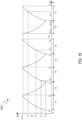
FIG. 10 shows a curve of an example of voltage values versus time on a capacitor, in accordance with embodiments of the present invention; -
FIG. 11 shows a flowchart of a method for detecting whether a battery management system is abnormal, in accordance with embodiments of the present invention; and -
FIG. 12 shows a flowchart of a method for detecting whether a battery management system is abnormal, in accordance with embodiments of the present invention. - Reference will now be made in detail to the embodiments of the present invention. While the invention will be described in combination with these embodiments, it will be understood that they are not intended to limit the invention to these embodiments. On the contrary, the invention is intended to cover alternatives, modifications and equivalents, which may be included within the spirit and scope of the invention as defined by the appended claims.
- Furthermore, in the following detailed description of the present invention, numerous specific details are set forth in order to provide a thorough understanding of the present invention. However, it will be recognized by one of ordinary skill in the art that the present invention may be practiced without these specific details. In other instances, well known methods, procedures, components, and circuits have not been described in detail as not to unnecessarily obscure aspects of the present invention.
- Some portions of the detailed descriptions that follow are presented in terms of procedures, logic blocks, processing, and other symbolic representations of operations on data bits within a computer memory. These descriptions and representations are the means used by those skilled in the data processing arts to most effectively convey the substance of their work to others skilled in the art. In the present application, a procedure, logic block, process, or the like, is conceived to be a self-consistent sequence of steps or instructions leading to a desired result. The steps are those utilizing physical manipulations of physical quantities. Usually, although not necessarily, these quantities take the form of electrical or magnetic signals capable of being stored, transferred, combined, compared, and otherwise manipulated in a computing system. It has proven convenient at times, principally for reasons of common usage, to refer to these signals as transactions, bits, values, elements, symbols, characters, samples, pixels, or the like.
- It should be borne in mind, however, that all of these and similar terms are to be associated with the appropriate physical quantities and are merely convenient labels applied to these quantities. Unless specifically stated otherwise as apparent from the following discussions, it is appreciated that throughout the present disclosure, discussions utilizing terms such as "acquiring," "determining," "controlling," "measuring," "averaging," "calculating," or the like, refer to actions and processes of a computing system or similar electronic computing device or processor. A computing system or similar electronic computing device manipulates and transforms data represented as physical (electronic) quantities within the computing system memories, registers or other such information storage, transmission or display devices.
-
FIG. 1 shows a block diagram illustrating abattery management system 100, in accordance with embodiments of the present invention. The present invention includes methods for detecting whether thebattery management system 100 is abnormal. In embodiments, such a method includes: a preset range of a theoretical time constant is determined when thebattery management system 100 is normal; a measured time constant is determined; and a determination is made as to whether thebattery management system 100 is abnormal by comparing the measured time constant with the preset range of the theoretical time constant. - In an embodiment, the battery pack includes a cell CELL1, CELL 2, ..., CELLn, which are coupled in series. The
battery management system 100 includes monitoring resistors RFC, RF1, ..., RFn, capacitors CF1, CF2, ..., CFn, balance resistors RB1, RB2, ..., RBn, switches SW1, SW2, ..., SWn, ameasure unit 120, and acontrol unit 110. - A monitoring resistor RFj (j = 1, 2, ..., n) is coupled to a positive electrode of a cell CELLj or a negative electrode of a cell CELL(j+1). A monitoring resistor RF0 is coupled to a negative electrode of a cell CELL1. A capacitor CFj (j = 1, 2, ..., n) is connected between a monitoring resistor RF(j-1) and a monitoring resistor RFj. The monitoring resistors RFC, RF1, ..., RFn and capacitors CF1, CF2, ..., CFn together form Resistor-Capacitance (RC) filters. The RC filters are operable for filtering out the high frequency components of voltages provided by the cells, thus eliminating unwanted noise components.
- The
measure unit 120 is coupled to the monitoring resistors RFC, RF1, ..., RFn, and is operable for measuring voltages of the cells in the battery pack. For example, themeasure unit 120 determines a voltage VCELL2 of the cell CELL2 by measuring the difference between a voltage at a node N2 and a voltage at a node N1. - A balance resistor RBj (j = 1, 2, ..., n) is coupled to a switch SWj in series. Both a balance resistor RBj and the switch SWj are operable for balancing a voltage of the cell CELLj. For example, in the discharging process, if a difference between a voltage VCELL2 (e.g., 3V) of the cell CELL2 and a voltage VCELL1 (e.g., 3.4V) of the cell CELL1 is greater than a balance threshold (e.g., 0.1V), then the switch SW1 is turned on and the switch SW2 is turned off, the cell CELL1 discharges and a discharge current flows through a balance resistor RB1. Consequently, the difference between VCELL2 and VCELL1 decreases, until the difference is less than the balance threshold. In an embodiment of the present invention, both the balance resistor RBj and the switch SWj are operable for detecting whether the
battery management system 100 is abnormal. A detailed description is given below. - The
control unit 110 includes a memory 111 and amicrocontroller unit 112. Program codes are written into themicrocontroller unit 112. Themicrocontroller unit 112 is configured to include or execute atimer 113, to enable themicrocontroller unit 112 to run the program code according to the time sequence set by thetimer 113, thereby realizing the control function and the data processing function. The memory 111 is operable for storing data, such as the theoretical time constant. - Specifically, the
control unit 110 controls the switches SW1, SW2, ..., SWn to turn on/off, controls themeasure unit 120 to measure a voltage on the capacitor CFj, and determines the measured time constant. Because the theoretical time constant and the preset range of the theoretical time constant are determined experimentally (e.g., before thebattery management system 100 is put into use), they are stored in the memory 111. If the measured time constant is in the preset range of the theoretical time constant, then thecontrol unit 110 determines thebattery management system 100 is normal; otherwise, thebattery management system 100 is abnormal. - Embodiments according to the present invention are not limited to the configuration of
FIG. 1 . For example, the methods described herein are applicable when the connection mode of the capacitor CFj inFIG. 1 is different, e.g., a terminal of the capacitor CFj is connected to the monitoring resistor RFj, and the other terminal is connected to ground of thebattery management system 100. -
FIG. 2 shows a circuit diagram illustrating a detection performed on a cell CELLj to determine whether a battery management system is abnormal, in accordance with embodiments of the present invention.FIG. 3 shows an example of the variation of the voltage values as a function of time (variation curve) on a capacitor CFj when abattery management system 100 is normal, in accordance with embodiments of the present invention, where the X-axis represents time and the Y-axis represents voltage values on the capacitor CFj.FIG. 3 is described in conjunction withFIG. 2 . - In the time period from t1 to t2 (where the time period from t1 to t2 is the first time period T1 of
FIG. 3 ), thecontrol unit 110 controls the switch SWj to turn off, and the cell CELLj charges the capacitor CFj. In the present embodiment, the capacitor CFj is fully charged at time t2. At time t2, themeasure unit 120 measures the voltage value on the capacitor CFj (a difference between a voltage at a node N(j-1) and a voltage at a node Nj) as the voltage VCELLj of the cell CELLj. - In the time period from t2 to t3 (where the time period from t2 to t3 is the second time period T2 of
FIG. 3 ), thecontrol unit 110 controls the switch SWj to turn on, and the capacitor CFj discharges. In the present embodiment, the capacitor CFj does not discharge any more at time t3. At time t3, the voltage value on the capacitor CFj reaches a stable voltage value VE = VCELLj • RRBj/(RRBj + RRFj + RRF(j-i)), where RRF(j-1) represents a resistance value of the monitoring resistor RF(j-1), RRFj represents a resistance value of the monitoring resistor RFj, and RRBj represents a resistance value of the monitoring resistor RBj. - In the time period from t3 to t4 (where the time period from t3 to t4 is the third time period T3 of
FIG. 3 ), thecontrol unit 110 controls the switch SWj to turn off, and the cell CELLj charges the capacitor CFj. In the present embodiment, the capacitor CFj is fully charged at time t4. The voltage value on the capacitor CFj is recovered from VE to VCELLj. - In the present embodiment, time t31, time t32, ..., time t3n are selected in the time period from t3 to t4, and the
measure unit 120 respectively measures voltage values V1, V2, ..., Vn, on the capacitor CFj at time t31, time t32, ..., time t3n, to determine (V1, Δt1), (V2, Δt2), ..., (Vn, Δtn), where Δt1 represents the length of time between time t3 and time t31, Δt2 represents the length of time between time t3 and time t32, ..., and Δtn represents the length of time between time t3 and time t3n. In the time period from t3 to t4, the monitoring resistors RFj, RF(j-1) and the capacitor CFj form a RC circuit, and the theoretical time constant τ = Δti/ln[K/(VCELLj - Vi)], where K represents a coefficient, i = 1, 2, ..., n. (V1, Δt1), (V2, Δt2), ..., (Vn, Δtn) are substituted in the above equation to determine the coefficient K and the theoretical time constant τ. In the present embodiment, K = VCELLj - VE. - The preset range of the theoretical time constant τ is determined by an allowable limit of error. For example, if the theoretical time constant τ is equal to A and the allowable limit of error is ±1/5, the preset range of the theoretical time constant τ = A ± 1/5. In addition, each RC circuit is located in a different position in the
battery management system 100, so the theoretical time constant τ corresponding to each RC circuit is not equal. - Abnormities include an abnormal connection and an abnormal component. If the two terminals of the cell CELLj are not properly connected to the battery management system 100 (e.g., broken or degraded or not operating satisfactorily), then the connection between the
battery management system 100 and the cell CELLj is referred to herein as an abnormal connection. If any of the capacitor CFj, the monitoring resistor RFj, and the monitoring resistor RF(j-1) is inoperative (e.g., a leakage current of the capacitor CFj, the resistance values of the monitoring resistor RFj, and/or the monitoring resistor RF(j-1) are increased/decreased), then this condition is referred to herein as an abnormal component. - For example, if the connection between the
battery management system 100 and the cell CELLj is broken, then the capacitor CFj cannot be charged in the time period from t3 to t4 and the voltage value on the capacitor CFj remains unchanged from time t3. Therefore, under ideal conditions, if the connection between thebattery management system 100 and the cell CELLj is broken, then the voltage value on the capacitor CFj remains unchanged in the time period from t3 to t4. - For example, if a leakage current flows through the capacitor CFj, then the voltage value on the capacitor CFj is less than VE at time t3 and cannot be recovered to VCELLj at time t4. For example, if the resistance value RRFj of the monitoring resistor RFj and/or the resistance value RRF(j-1) of the monitoring resistor RF(j-1) are increased, then the voltage value on the capacitor CFj can decrease to a voltage value near VE at time t3 and cannot be recovered to VCELLj at time t4. For example, if the resistance value RRFj of the monitoring resistor RFj and/or the resistance value RRF(j-1) of the monitoring resistor RF(j-1) are decreased, then the voltage value on the capacitor CFj can decrease to a voltage value near VE at time t3 and can be recovered to VCELLj before time t4. Therefore, if one or more components among the capacitor CFj, the monitoring resistor RFj, and the monitoring resistor RF(j-1) cannot work effectively, then the variation curve of the voltage values on the capacitor CFj in the time period from t3 to t4 will deviate from the curve of
FIG. 3 when thebattery management system 100 is normal. - In summary, if any of the above abnormities has occurred in the
battery management system 100, then the variation curve of the voltage values on the capacitor CFj in the time period from t3 to t4 will deviate from theFIG. 3 curve when thebattery management system 100 is normal. Because the variation curve of the voltage values on the capacitor CFj can be reflected by the time constant (that is, the variation curve of the voltage values on the capacitor CFj varies with the time constants), embodiments of the present invention compare the measured time constant with the preset range of the theoretical time constant to determine whether thebattery management system 100 is abnormal. Compared with the conventional method (which compares the voltage values on the capacitor CFj with the cell tap open thresthod VCTO), methods in accordance with the present invention can accurately determine whether any of the above abnormities has occurred in thebattery management system 100, to avoid an incorrect diagnosis and improve the detection accuracy. -
FIG. 4 shows aflowchart 400 of a method for detecting whether abattery management system 100 is abnormal, in accordance with embodiments of the present invention.FIG. 4 is described in conjunction withFIG. 2 andFIG. 5 . - In
step 401, when thebattery management 100 is normal, thecontrol unit 110 controls the switch SWj to turn off in the time period from t1 to t2, turn on in the time period from t2 to t3, and turn off in the time period from t3 to t4, where t2 - t1 = T1, t3 - t2 = T2, and t4 - t3 = T3. - In
step 402, thecontrol unit 110 controls themeasure unit 120 to measure the voltage value on the capacitor CFj at time t2, to produce the voltage VCELLj of the cell CELLj. - In
step 403, thecontrol unit 110 controls themeasure unit 120 to measure the voltage values on the capacitor CFj at least at one time point in the time period from t3 to t4, to produce measured capacitance voltage value(s). According to the invention, thecontrol unit 110 determines a theoretical time constant according to at least one measured capacitance voltage value and the measured voltage value VCELLj of the cell CELLj. In an embodiment, the theoretical time constant is an experimentally determined value. Methods for determining the measured time constant are described in conjunction with the embodiments inFIG. 6 ,FIG. 7 ,FIG. 8 ,FIG. 9 , andFIG. 11 . - In
step 404, a preset range of the theoretical time constant is determined according to the theoretical time constant. Both the theoretical time constant and the preset range of the theoretical time constant are stored in the memory 111 of thecontrol unit 110. - In
step 405, when detecting whether thebattery management system 100 is abnormal, thecontrol unit 110 controls the switch SWj to turn off in the time period from t5 to t6, turn on in the time period from t6 to t7, and turn off in the time period from t7 to t8, where t6 - t5 = t2 - t1 = T1, t7 - t6 = t3 - t2 = T2, and t8 - t7 = t4 - t3 = T3. - In
step 406, thecontrol unit 110 controls themeasure unit 120 to measure the voltage value on the capacitor CFj at time t6, to produce the voltage VCELLj of the cell CELLj. - In
step 407, thecontrol unit 110 controls themeasure unit 120 to measure the voltage values on the capacitor CFj at least at one time point in the time period from t7 to t8, to produce measured capacitance voltage values. Thecontrol unit 110 determines a measured time constant according to at least one measured capacitance voltage and the measured voltage value of the cell CELLj. Methods for determining the measured time constant are described in conjunction with the embodiments inFIG. 6 ,FIG. 7 ,FIG. 8 ,FIG. 9 , andFIG. 11 . - In
step 408, thecontrol unit 110 determines whether the measured time constant is in the preset range of the theoretical time constant. If yes, then step 408 is followed bystep 410; otherwise,step 408 is followed bystep 409. - In
step 409, thecontrol unit 110 determines that thebattery management system 100 is abnormal, and generates an alarm to alert the users. - In
step 410, thecontrol unit 110 determines that thebattery management system 100 is normal. - In
step 411, thecontrol unit 110 determines whether all of the cells are detected. If yes, then step 411 is followed bystep 413; otherwise,step 411 is followed bystep 412. - In
step 412, thebattery management system 100 starts to detect the next cell, and the method returns to step 405. - In
step 413, the detection process ofFIG. 4 is finished. - Methods for determining the theoretical time constant are similar to the methods for determining the measured time constant.
FIG. 6 shows aflowchart 600 of a method for detecting whether abattery management system 100 is abnormal, in accordance with embodiments of the present invention.FIG. 6 is described in conjunction withFIG. 2 andFIG. 5 . - In
step 601, thecontrol unit 110 controls the switch SWj to turn off in the time period from t5 to t6, turn on from t6 to t7, and turn off in the time period from t7 to t8, where t6 - t5 = t2 - t1 = T1, t7 - t6 = t3 - t2 = T2, and t8 - t7 = t4 - t3 = T3. - In
step 602, thecontrol unit 110 controls themeasure unit 120 to measure the voltage value on the capacitor CFj at time t6, to produce the voltage VCELLj of the cell CELLj. - In
step 603, thecontrol unit 110 controls themeasure unit 120 to measure the voltage value V1 on the capacitor CFj at time t71 in the time period from t7 to t8, to determine (V1, Δt1), where Δt1 is the length of time between t1 and t71. - In
step 604, thecontrol unit 110 determines the measured time constant according to the equation τ = Δt1/ln[K/(VcELLj - V1)]. In the present embodiment, K = VCELLj - VE. -
FIG. 7 shows aflowchart 700 of a method for detecting whether abattery management system 100 is abnormal, in accordance with embodiments of the present invention.FIG. 7 is described in conjunction withFIG. 2 andFIG. 5 . If the length of time of the third time period T3 is long enough for thecontrol unit 110 to complete the calculation, the method ofFIG. 7 can be used to determine the measured time constant. Compared with the embodiment ofFIG. 6 , the embodiment ofFIG. 7 can further improve the accuracy of the measured time constant, thereby improving the detection accuracy. - In
step 701, thecontrol unit 110 controls the switch SWj to turn off in the time period from t5 to t6, turn on in the time period from t6 to t7, and turn off in the time period from t7 to t8, where t6 - t5 = t2 - t1 = T1, t7 - t6 = t3 - t2 = T2, and t8 - t7 = t4 - t3 = T3. - In
step 702, thecontrol unit 110 controls themeasure unit 120 to measure the voltage values on the capacitor CFj at time t6, to produce the voltage VCELLj of the cell CELLj. - In
step 703, thecontrol unit 110 controls themeasure unit 120 to measure the voltage value V1 on the capacitor CFj at time t71 in the time period from t7 to t8, to determine (V1, Δt1), where Δt1 is the length of time between t7 and t71. - In
step 704, thecontrol unit 110 controls themeasure unit 120 to measure the voltage value V2 on the capacitor CFj at time t72 in the time period from t7 to t8, to determine (V2, Δt2), where Δt2 is the length of time between t7 and t72, and Δt2 is not equal to Δt1. - In
step 705, thecontrol unit 110 determines the measured time constant τ according to the equation τ = (Δt2 - Δt1)/ln[(V1 - VCELLj)/(V2 - VCELLj)]. -
FIG. 8 shows aflowchart 800 of a method for detecting whether abattery management system 100 is abnormal, in accordance with embodiments of the present invention.FIG. 8 is described in conjunction withFIG. 2 andFIG. 5 . If the length of time of the third time period T3 is long enough for thecontrol unit 110 to complete the calculation, the method ofFIG. 8 can be used to determine the measured time constant. Compared with the embodiment ofFIG. 7 , the embodiment ofFIG. 8 can further improve the accuracy of the measured time constant, thereby improving the detection accuracy. - In
step 801, thecontrol unit 110 controls the switch SWj to turn off in the time period from t5 to t6, turn on in the time period from t6 to t7, and turn off in the time period from t7 to t8, where t6 - t5 = t2 - t1 = T1, t7 - t6 = t3 - t2 = T2, and t8 - t7 = t4 - t3 = T3. - In
step 802, thecontrol unit 110 controls themeasure unit 120 to measure the voltage value on the capacitor CFj at time t6, to produce the voltage VCELLj of the cell CELLj. - In
step 803, thecontrol unit 110 controls themeasure unit 120 to measure the voltage value V1 on the capacitor CFj at time t71 in the time period from t7 to t8, to determine (V1, Δt1), where Δt1 is the length of time between t7 and t71. - In
step 804, thecontrol unit 110 controls themeasure unit 120 to measure the voltage value V2 on the capacitor CFj at time t72 in the time period from t7 to t8, to determine (V2, Δt2), where Δt2 is the length of time between t7 and t72, and Δt2 is not equal to Δt1. - In
step 805, this process continues until thecontrol unit 110 controls themeasure unit 120 to measure the voltage value Vn on the capacitor CFj at time t7n in the time period from t7 to t8, to determine (Vn, Δtn), where Δtn is the length of time between t7 and t7n. In the embodiment, Δt1, Δt2, ..., Δtn are not equal to each other. In other embodiments, Δtn ≠ Δ(tn-1), ..., Δt3 ≠ Δt2, Δt2 ≠ Δt1.Here, two adjacent time periods are not equal. - In
step 806, thecontrol unit 110 determines a first time constant τ1 according to the equation τ1 = (Δt2 - Δt1)/ln[(V1 - VCELLj)/(V2 - VCELLj)]. - In
step 807, thecontrol unit 110 determines a second time constant τ2 according to the equation τ2 = (Δt3 - Δt2)/ln[(V2 - VCELLj)/(V3 - VCELLj)]. - In
step 808, this process continues until thecontrol unit 110 determines a (n-1)th time constant τ(n-1) according to the equation τ(n-1) = (Δtn - Δt(n-1))/In[(V(n-1) - VCELLj)/(Vn - VCELLj)]. - In
step 809, thecontrol unit 110 averages τ1, τ2, ..., τ(n-1) to determine the measured time constant. In other embodiments, other methods can be used to calculate τ1, τ2, ..., τ(n-1) to determine the measured time constant. -
FIG. 9 shows aflowchart 900 of a method for detecting whether abattery management system 100 is abnormal, in accordance with embodiments of the present invention.FIG. 9 is described in conjunction withFIG. 2 andFIG. 10 . Compared with the embodiment ofFIG. 6 , the embodiment ofFIG. 9 can reduce uncertainty in the measured time constant that may be introduced by uncertainty in the coefficient K, thereby improving the detection accuracy. - In
step 901, thecontrol unit 110 controls the switch SWj to turn off in the time period from t5 to t6, from t7 to t8, and from t9 to t10, and turn on in the time period from t6 to t7 and from t8 to t9, where t6 - t5 = T1, t9 - t8 = t7 - t6 = T2, and t10 - t9 = t8 - t7 = T3. - In
step 902, thecontrol unit 110 controls themeasure unit 120 to measure the voltage value on the capacitor CFj at time t6, to produce the voltage VCELLj of the cell CELLj. - In
step 903, thecontrol unit 110 controls themeasure unit 120 to measure the voltage value V1 on the capacitor CFj at time t71 in the time period from t7 to t8, to determine (V1, Δt1), where Δt1 is the length of time between t7 and t71. - In
step 904, thecontrol unit 110 controls themeasure unit 120 to measure the voltage value V2 on the capacitor CFj at time t72 in the time period from t9 to t10, to determine (V2, Δt2), where Δt2 is the length of time between t9 and t72, and Δt2 is not equal to Δt1. - In
step 905, thecontrol unit 110 determines the measured time constant τ according to the equation τ = (Δt2 - Δt1)/ln[(V1 - VCELLj)/(V2 - VCELLj)]. -
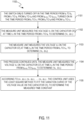
FIG. 11 shows aflowchart 1100 of a method for detecting whether abattery management system 100 is abnormal, in accordance with embodiments of the present invention.FIG. 11 is described in conjunction withFIG. 2 andFIG. 10 . Compared with the embodiment ofFIG. 9 , the embodiment ofFIG. 11 can further improve the accuracy of the measured time constant, thereby improving detection accuracy. - In
step 1101, thecontrol unit 110 controls the switch SWj to turn off in the time period from t5 to t6, from t7 to t8, from t9 to t10, and from t(5+2n) to t(6+2n), and turn on in the time period from t6 to t7, from t8 to t9, and from t10 to t11, n = 3, 4, ..., where t6 - t5 = T1, t(5+2n) - t(4+2n) = t9 - t8 = t7 - t6 = T2, and t(6+2n) - t(5+2n) = t10 - t9 = t8 - t7 = T3. - In
step 1102, thecontrol unit 110 controls themeasure unit 120 to measure the voltage value V1 on the capacitor CFj at time t71 in the time period from t7 to t8, to determine (V1, Δt1), where Δt1 is the length of time between t7 and t71. - In
step 1103, thecontrol unit 110 controls themeasure unit 120 to measure the voltage value V2 on the capacitor CFj at time t72 in the time period from t9 to t10, to determine (V2, Δt2), where Δt2 is the length of time between t9 and t72, and Δt2 is not equal to Δt1. - In
step 1104, this process continues until thecontrol unit 110 controls themeasure unit 120 to measure the voltage value Vn on the capacitor CFj at time t7n in the time period from t(5+2n) to t(6+2n), to determine (Vn, Δtn), where Δtn is the length of time between t(5+2n) and t7n. In an embodiment, Δt1, Δt2, ..., Δtn are not equal to each other. In other embodiments, two or more of Δt1, Δt2, ..., Δtn can be equal. - In
step 1105, based on (V1, Δt1), (V2, Δt2), ..., (Vn, Δtn), thecontrol unit 110 uses the least square method to fit the variation curve of the voltage value on the capacitor CFj, to determine the measured time constant. In other embodiments, other methods can be used to fit the variation curve of the voltage value on the capacitor CFj based on (V1, Δt1), (V2, Δt2), ..., (Vn, Δtn), to determine the measured time constant. -
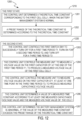
FIG. 12 shows aflowchart 1200 of a method for detecting whether abattery management system 100 is abnormal.FIG. 12 is described in conjunction withFIG. 1 . The method includes afirst stage 1210 and asecond stage 1220. - The
first stage 1210 includessteps - In
step 1201, thecontrol unit 110 determines a theoretical time constant corresponding to the first cell CELL1, when thebattery management system 100 is normal. - In
step 1202, a preset range of the theoretical time constant is determined according to the theoretical time constant. - The
second stage 1220 includessteps 1203 through 1207. - In
step 1203, thecontrol unit 110 controls the first switch SW1 to successively turn off for a first time period T1, turn on for a second time period T2, and turn off for a third time period T3. - In
step 1204, thecontrol unit 110 controls themeasure unit 120 to measure a voltage value on the first capacitor CF1 at the end of the first time period T1, to produce a measured voltage value of the first cell CELL1. - In
step 1205, thecontrol unit 110 controls themeasure unit 120 to measure voltage values on the first capacitor CF1 at least at one time point in the third time period T3, to produce measured capacitance voltage values. - In
step 1206, thecontrol unit 110 determines a value of a measured time constant according to at least one measured capacitance voltage value and the measured voltage value of the first cell CELL1. - In
step 1207, thecontrol unit 110 determines that thebattery management system 100 is abnormal, if the value of the measured time constant exceeds the preset range of the theoretical time constant. - As mentioned above, embodiments according to the present invention pertain to methods for detecting whether a battery management system is abnormal. The method can accurately detect whether the battery management system is abnormal (e.g., the connection between the battery management system and a cell CELLj is degraded or broken, the RRFJ and/or the RRF(j-!) are increased/decreased, or a leakage current of the capacitor CFj), thereby improving the detection accuracy.
- While the foregoing description and drawings represent embodiments of the present invention, it will be understood that various additions, modifications, and substitutions may be made within the scope of the present invention as defined in the accompanying claims.
Claims (10)
- A method for detecting whether a battery management system (100) is abnormal, wherein said battery management system (100) comprises a measure unit (120), a control unit (110), a first monitoring resistor (RF1), a second monitoring resistor (RF2), a first capacitor (CF1), a first switch (SW1) and a first balance resistor (RB1), wherein a first cell (CELL1) in a battery pack is coupled to said first monitoring resistor (RF1), said second monitoring resistor (RF2), said first capacitor (CF1), said first switch (SW1) and said first balance resistor (RB1), said method comprising:calculating, using said control unit (110), a value of a theoretical time constant corresponding to said first cell (CELL1);determining a preset range of said theoretical time constant according to said value of said theoretical time constant;controlling, using said control unit (110), said first switch (SW1) to successively turn off for a first time period, turn on for a second time period, and turn off for a third time period;controlling, using said control unit (110), said measure unit (120) to measure a voltage value on said first capacitor (CF1) at the end of said first time period, to produce a measured voltage value of said first cell (CELL1);controlling, using said control unit (110), said measure unit to measure voltage values on said first capacitor (CF1) at least at one time point in said third time period, to produce measured capacitance voltage values;determining, using said control unit (110), a value of a measured time constant according to at least one of said measured capacitance voltage values and said measured voltage value of said first cell (CELL1); anddetermining, using said control unit (110), whether said battery management system (100) is abnormal, wherein said battery management system (100) is abnormal if said value of said measured time constant exceeds said preset range of said theoretical time constant, wherein said calculating a value of a theoretical time constant corresponding to said first cell (CELL1) comprises:controlling, using said control unit (110), said first switch (SW1) to successively turn off for a fourth time period, turn on for a fifth time period, and turn off for a sixth time period, wherein said fourth time period is equal in length to said first time period, said fifth time period is equal in length to said second time period, and said sixth time period is equal in length to said third time period;controlling, using said control unit (110), said measure unit (120) to measure voltage value on said first capacitor (CF1) at the end of said fourth time period, to produce a second measured voltage value of said first cell (CELL1);controlling, using said control unit (110), said measure unit (120) to measure voltage values on said first capacitor (CF1) at least at one time point in said sixth time period, to produce second measured capacitance voltage values; anddetermining, using said control unit (110), said theoretical time constant according to at least one of said second measured capacitance voltages and said second measured voltage value of said first cell (CELL1).
- The method of claim 1, wherein said controlling said measure unit to measure voltage values on said first capacitor at least at one time point in said third time period comprises:measuring, using said measure unit, a first voltage value V1 on said first capacitor at a time point in said third time period, wherein a length of time between a starting time of said third time period and said time point is Δt1; anddetermining, using said control unit, said measured time constant according to an equation τ = Δt1/ln[K/(VCELL1 - V1)], wherein τ is said measured time constant, VCELL1 is said measured voltage value of said first cell, and K is a coefficient.
- The method of claim 2, wherein K is equal to VCELL1 minus VE, and wherein VE is said voltage value on said first capacitor measured at the end of said second time period.
- The method of claim 1, wherein said controlling said measure unit to measure voltage values on said first capacitor at least at one time point in said third time period comprises:measuring, using said measure unit, a first voltage value V1 on said first capacitor at a first time point in said third time period, wherein a length of time between a starting time of said third time period and said first time point is Δt1;measuring, using said measure unit, a second voltage value V2 on said first capacitor at a second time point in said third time period, wherein a length of time between a starting time of said third time period and said second time point is Δt2, wherein, Δt1 is not equal to Δt2; anddetermining, using said control unit, said measured time constant according to an equation τ = (Δt2 - Δt1)/ln[(V1 - VCELL1)/(V2 - VCELL1)], wherein τ is said measured time constant, and wherein VCELL1 is said measured voltage value of said first cell..
- The method of claim 1, further comprising:controlling, using said control unit, said first switch to turn on for a fourth time period and then turn off for a fifth time period, wherein said fourth time period is equal in length to said second time period, and wherein said fifth time period is equal in length to said third time period;measuring, using said measure unit, a first voltage value V1 on said first capacitor at a first time point in said third time period, wherein a length of time between a starting time of said third time period and said first time point is Δt1;measuring, using said measure unit, a second voltage value V2 on said first capacitor at a second time point in said fifth time period, wherein a length of time between a starting time of said fifth time period and said second time point is Δt2, wherein, Δt1 is not equal to Δt2; anddetermining, using said control unit, said measured time constant according to an equation τ = (Δt2 - Δt1)/ln[(V1 - VCELL1)/(V2 - VCELL1)], wherein τ is said measured time constant, and wherein VCELL1 is said measured voltage value of said first cell.
- The method of claim 1, wherein said controlling said measure unit to measure voltage values on said first capacitor at least at one time point in said third time period comprises:measuring, using said measure unit, a first voltage value V1 on said first capacitor at a first time point in said third time period, wherein a length of time between a starting time of said third time period and said first time point is Δt1;measuring, using said measure unit, a second voltage value V2 on said first capacitor at a second time point in said third time period, wherein a length of time between a starting time of said third time period and said second time point is Δt2, wherein, Δt1 is not equal to Δt2;measuring, using said measure unit, a third voltage value V3 on said first capacitor at a third time point in said third time period, wherein a length of time between a starting time of said third time period and said third time point is Δt3, wherein, Δt1 is not equal to Δt2, and wherein Δt2 is not equal to Δt3;determining, using said control unit, a first time constant according to an equation τ = (Δt2 - Δt1)/In[(V1 - VCELL1)/(V2 - VCELL1)], wherein τ is said measured time constant, and wherein VCELL1 is said measured voltage value of said first cell;determining, using said control unit, a second time constant according to an equation τ = (Δt3 - Δt2)/ln[(V2 - VCELL1)/(V3 - VCELL1)], wherein τ is said measured time constant, and wherein VCELL1 is said measured voltage value of said first cell; anddetermining, using said control unit, said measured time constant according to said first time constant and said second time constant.
- The method of claim 6, wherein said determining said measured time constant according to said first time constant and said second time constant comprises:
averaging, using said control unit, said first time constant and said second time constant to determine said measured time constant. - The method of claim 6 or 7, further comprising:
determining, using said control unit, said measured time constant using the least square method to process (V1, Δt1), (V2, Δt2), and (V3, Δt3). - The method of claim 1, further comprising:controlling, using said control unit, said first switch to successively turn on for a fourth time period, turn off for a fifth time period, turn on for a sixth time period, and turn off for a seventh time period, wherein said fourth time period and said sixth time period are each equal in length to said second time period, and wherein said fifth time period and said seventh time period are each equal in length to said third time period;measuring, using said measure unit, a first voltage value V1 on said first capacitor at a first time point in said third time period, wherein a length of time from a starting time of said third time period to said first time point is Δt1;measuring, using said measure unit, a second voltage value V2 on said first capacitor at a second time point in said fifth time period, wherein a length of time from a starting time of said fifth time period to said second time point is Δt2, wherein Δt2 not equal to Δt1;measuring, using said measure unit, a third voltage value V3 on said first capacitor at a third time point in said seventh time period, wherein a length of time from a starting time of said seventh time period to said third time point is Δt3, wherein Δt3 is not equal to Δt2 and wherein Δt2 is not equal to Δt1;determining, using said control unit, a first time constant according to an equation τ1 = (Δt2 - Δt1)/In[(V1 - VCELL1)/(V2 - VCELL1)], wherein VCELL1 is said measured voltage value of said first cell;determining, using said control unit, a second time constant according to an equation τ2 = (Δt3 - Δt2)/ln[(V2 - VCELL1)/(V3 - VCELL1)1, wherein τ is said measured time constant, and wherein VCELL1 is said measured voltage value of said first cell;determining, using said control unit, said measured time constant according to said first time constant and said second time constant.
- A battery management system (100), comprisinga measure unit (120);a control unit (110) coupled to said measure unit (120);a first monitoring resistor (RF1) coupled to said measure unit (120);a second monitoring resistor (RF2) coupled to said measure unit (120);a first capacitor (CF1) coupled to said measure unit (120);a first switch (SW1) coupled to said measure unit (120); anda first balance resistor (RB1)coupled to said measure unit (120), wherein a first cell (CELL1) in a battery pack is coupled to said first monitoring resistor (RF1), said second monitoring resistor (RF2), said first capacitor (CF1), said first switch (SW1), and said first balance resistor (RB1), wherein said battery management system (100) is configured to execute a method according to any one of claims 1 to 9.
Applications Claiming Priority (2)
| Application Number | Priority Date | Filing Date | Title |
|---|---|---|---|
| CN202110175863.2A CN114910790B (en) | 2021-02-09 | 2021-02-09 | Abnormality detection method in battery management system and battery management system |
| US17/204,759 US12061237B2 (en) | 2018-04-20 | 2021-03-17 | Detecting whether a battery management system is abnormal |
Publications (2)
| Publication Number | Publication Date |
|---|---|
| EP4040566A1 EP4040566A1 (en) | 2022-08-10 |
| EP4040566B1 true EP4040566B1 (en) | 2024-08-07 |
Family
ID=75539152
Family Applications (1)
| Application Number | Title | Priority Date | Filing Date |
|---|---|---|---|
| EP21168550.8A Active EP4040566B1 (en) | 2021-02-09 | 2021-04-15 | Detecting whether a battery management system is abnormal |
Country Status (2)
| Country | Link |
|---|---|
| US (1) | US12061237B2 (en) |
| EP (1) | EP4040566B1 (en) |
Families Citing this family (2)
| Publication number | Priority date | Publication date | Assignee | Title |
|---|---|---|---|---|
| US20240175924A1 (en) * | 2022-11-30 | 2024-05-30 | O2Micro Inc. | Battery monitoring circuits |
| KR20260018604A (en) * | 2024-07-31 | 2026-02-09 | 삼성에스디아이 주식회사 | Apparatus and method for battery cell ballancing, battery management system |
Family Cites Families (3)
| Publication number | Priority date | Publication date | Assignee | Title |
|---|---|---|---|---|
| JP6420960B2 (en) | 2014-03-14 | 2018-11-07 | 日立オートモティブシステムズ株式会社 | Electronic control unit |
| EP3270171B1 (en) * | 2015-03-11 | 2022-07-20 | Hitachi Astemo, Ltd. | Battery managing device, battery monitoring circuit, control system |
| CN108732448A (en) * | 2017-04-24 | 2018-11-02 | 凹凸电子(武汉)有限公司 | Wire break detection method and broken string in battery management system release detection method |
-
2021
- 2021-03-17 US US17/204,759 patent/US12061237B2/en active Active
- 2021-04-15 EP EP21168550.8A patent/EP4040566B1/en active Active
Also Published As
| Publication number | Publication date |
|---|---|
| EP4040566A1 (en) | 2022-08-10 |
| US12061237B2 (en) | 2024-08-13 |
| US20210199722A1 (en) | 2021-07-01 |
Similar Documents
| Publication | Publication Date | Title |
|---|---|---|
| US11927642B2 (en) | Open cell detection method and open cell recovery detection method in a battery management system | |
| US12095047B2 (en) | Determining a status of connection between a battery unit and a battery management system | |
| CN114514433B (en) | Device and method for diagnosing a battery | |
| US11984743B2 (en) | Battery pack and charging method for a battery pack | |
| US10989761B2 (en) | Method for estimating the state of health of a battery | |
| US9018959B2 (en) | Insulating state detection unit having failure detector | |
| US8305035B2 (en) | Energy storage device | |
| EP4040566B1 (en) | Detecting whether a battery management system is abnormal | |
| US20130041606A1 (en) | Detecting an open wire between a battery cell and an external circuit | |
| US10573936B2 (en) | Remaining battery life prediction device and battery pack | |
| CN113748353B (en) | Battery cell diagnosis device and method and battery pack including the device | |
| JP2020527228A (en) | Contactor life diagnosis system and method using contactor coil current | |
| CN108966670A (en) | Voltameter and its current acquisition calibration circuit and calibration method | |
| JP3890503B2 (en) | Insulation detector for ungrounded power supply | |
| JP4048970B2 (en) | Flying capacitor voltage detection circuit | |
| CN114910790B (en) | Abnormality detection method in battery management system and battery management system | |
| US20040263216A1 (en) | Integrated circuit having a voltage monitoring circuit and a method for monitoring an internal burn-in voltage | |
| JP3962991B2 (en) | Insulation detector for ungrounded power supply | |
| JP6195547B2 (en) | Earth leakage detector | |
| US20240151781A1 (en) | Failure detecting apparatus and failure detecting method | |
| JP7331543B2 (en) | BUILD BATTERY MONITORING SYSTEM AND BATTERY FAILURE DETERMINATION METHOD | |
| JP2024136183A (en) | Battery deterioration determination device, storage battery system, and battery deterioration determination method | |
| JPH09226514A (en) | Diagnosis device of electronic control device for air bags system | |
| CN112240955A (en) | Insulation detection circuit and method | |
| JP2018077100A (en) | Clock signal determination device |
Legal Events
| Date | Code | Title | Description |
|---|---|---|---|
| PUAI | Public reference made under article 153(3) epc to a published international application that has entered the european phase |
Free format text: ORIGINAL CODE: 0009012 |
|
| STAA | Information on the status of an ep patent application or granted ep patent |
Free format text: STATUS: THE APPLICATION HAS BEEN PUBLISHED |
|
| AK | Designated contracting states |
Kind code of ref document: A1 Designated state(s): AL AT BE BG CH CY CZ DE DK EE ES FI FR GB GR HR HU IE IS IT LI LT LU LV MC MK MT NL NO PL PT RO RS SE SI SK SM TR |
|
| STAA | Information on the status of an ep patent application or granted ep patent |
Free format text: STATUS: REQUEST FOR EXAMINATION WAS MADE |
|
| 17P | Request for examination filed |
Effective date: 20230207 |
|
| RBV | Designated contracting states (corrected) |
Designated state(s): AL AT BE BG CH CY CZ DE DK EE ES FI FR GB GR HR HU IE IS IT LI LT LU LV MC MK MT NL NO PL PT RO RS SE SI SK SM TR |
|
| REG | Reference to a national code |
Ref country code: DE Ref legal event code: R079 Free format text: PREVIOUS MAIN CLASS: H01M0010420000 Ipc: G01R0031383500 Ref country code: DE Ref legal event code: R079 Ref document number: 602021016671 Country of ref document: DE Free format text: PREVIOUS MAIN CLASS: H01M0010420000 Ipc: G01R0031383500 |
|
| GRAP | Despatch of communication of intention to grant a patent |
Free format text: ORIGINAL CODE: EPIDOSNIGR1 |
|
| STAA | Information on the status of an ep patent application or granted ep patent |
Free format text: STATUS: GRANT OF PATENT IS INTENDED |
|
| RIC1 | Information provided on ipc code assigned before grant |
Ipc: H02J 7/00 20060101ALN20240227BHEP Ipc: H01M 10/48 20060101ALI20240227BHEP Ipc: H01M 10/42 20060101ALI20240227BHEP Ipc: G01R 35/00 20060101ALI20240227BHEP Ipc: G01R 31/3835 20190101AFI20240227BHEP |
|
| INTG | Intention to grant announced |
Effective date: 20240314 |
|
| RIC1 | Information provided on ipc code assigned before grant |
Ipc: H02J 7/00 20060101ALN20240304BHEP Ipc: H01M 10/48 20060101ALI20240304BHEP Ipc: H01M 10/42 20060101ALI20240304BHEP Ipc: G01R 35/00 20060101ALI20240304BHEP Ipc: G01R 31/3835 20190101AFI20240304BHEP |
|
| RIN1 | Information on inventor provided before grant (corrected) |
Inventor name: ZHANG, YINGGUO Inventor name: ZENG, XIAOJUN Inventor name: LI, GUOXING |
|
| GRAS | Grant fee paid |
Free format text: ORIGINAL CODE: EPIDOSNIGR3 |
|
| GRAA | (expected) grant |
Free format text: ORIGINAL CODE: 0009210 |
|
| STAA | Information on the status of an ep patent application or granted ep patent |
Free format text: STATUS: THE PATENT HAS BEEN GRANTED |
|
| AK | Designated contracting states |
Kind code of ref document: B1 Designated state(s): AL AT BE BG CH CY CZ DE DK EE ES FI FR GB GR HR HU IE IS IT LI LT LU LV MC MK MT NL NO PL PT RO RS SE SI SK SM TR |
|
| REG | Reference to a national code |
Ref country code: GB Ref legal event code: FG4D |
|
| REG | Reference to a national code |
Ref country code: CH Ref legal event code: EP |
|
| REG | Reference to a national code |
Ref country code: DE Ref legal event code: R096 Ref document number: 602021016671 Country of ref document: DE |
|
| REG | Reference to a national code |
Ref country code: IE Ref legal event code: FG4D |
|
| REG | Reference to a national code |
Ref country code: SE Ref legal event code: TRGR |
|
| REG | Reference to a national code |
Ref country code: LT Ref legal event code: MG9D |
|
| REG | Reference to a national code |
Ref country code: NL Ref legal event code: MP Effective date: 20240807 |
|
| PG25 | Lapsed in a contracting state [announced via postgrant information from national office to epo] |
Ref country code: NO Free format text: LAPSE BECAUSE OF FAILURE TO SUBMIT A TRANSLATION OF THE DESCRIPTION OR TO PAY THE FEE WITHIN THE PRESCRIBED TIME-LIMIT Effective date: 20241107 |
|
| REG | Reference to a national code |
Ref country code: AT Ref legal event code: MK05 Ref document number: 1711523 Country of ref document: AT Kind code of ref document: T Effective date: 20240807 |
|
| PG25 | Lapsed in a contracting state [announced via postgrant information from national office to epo] |
Ref country code: PT Free format text: LAPSE BECAUSE OF FAILURE TO SUBMIT A TRANSLATION OF THE DESCRIPTION OR TO PAY THE FEE WITHIN THE PRESCRIBED TIME-LIMIT Effective date: 20241209 Ref country code: NL Free format text: LAPSE BECAUSE OF FAILURE TO SUBMIT A TRANSLATION OF THE DESCRIPTION OR TO PAY THE FEE WITHIN THE PRESCRIBED TIME-LIMIT Effective date: 20240807 Ref country code: FI Free format text: LAPSE BECAUSE OF FAILURE TO SUBMIT A TRANSLATION OF THE DESCRIPTION OR TO PAY THE FEE WITHIN THE PRESCRIBED TIME-LIMIT Effective date: 20240807 Ref country code: PL Free format text: LAPSE BECAUSE OF FAILURE TO SUBMIT A TRANSLATION OF THE DESCRIPTION OR TO PAY THE FEE WITHIN THE PRESCRIBED TIME-LIMIT Effective date: 20240807 Ref country code: GR Free format text: LAPSE BECAUSE OF FAILURE TO SUBMIT A TRANSLATION OF THE DESCRIPTION OR TO PAY THE FEE WITHIN THE PRESCRIBED TIME-LIMIT Effective date: 20241108 |
|
| PG25 | Lapsed in a contracting state [announced via postgrant information from national office to epo] |
Ref country code: BG Free format text: LAPSE BECAUSE OF FAILURE TO SUBMIT A TRANSLATION OF THE DESCRIPTION OR TO PAY THE FEE WITHIN THE PRESCRIBED TIME-LIMIT Effective date: 20240807 |
|
| PG25 | Lapsed in a contracting state [announced via postgrant information from national office to epo] |
Ref country code: LV Free format text: LAPSE BECAUSE OF FAILURE TO SUBMIT A TRANSLATION OF THE DESCRIPTION OR TO PAY THE FEE WITHIN THE PRESCRIBED TIME-LIMIT Effective date: 20240807 |
|
| PG25 | Lapsed in a contracting state [announced via postgrant information from national office to epo] |
Ref country code: AT Free format text: LAPSE BECAUSE OF FAILURE TO SUBMIT A TRANSLATION OF THE DESCRIPTION OR TO PAY THE FEE WITHIN THE PRESCRIBED TIME-LIMIT Effective date: 20240807 Ref country code: IS Free format text: LAPSE BECAUSE OF FAILURE TO SUBMIT A TRANSLATION OF THE DESCRIPTION OR TO PAY THE FEE WITHIN THE PRESCRIBED TIME-LIMIT Effective date: 20241207 |
|
| PG25 | Lapsed in a contracting state [announced via postgrant information from national office to epo] |
Ref country code: HR Free format text: LAPSE BECAUSE OF FAILURE TO SUBMIT A TRANSLATION OF THE DESCRIPTION OR TO PAY THE FEE WITHIN THE PRESCRIBED TIME-LIMIT Effective date: 20240807 |
|
| PG25 | Lapsed in a contracting state [announced via postgrant information from national office to epo] |
Ref country code: ES Free format text: LAPSE BECAUSE OF FAILURE TO SUBMIT A TRANSLATION OF THE DESCRIPTION OR TO PAY THE FEE WITHIN THE PRESCRIBED TIME-LIMIT Effective date: 20240807 Ref country code: RS Free format text: LAPSE BECAUSE OF FAILURE TO SUBMIT A TRANSLATION OF THE DESCRIPTION OR TO PAY THE FEE WITHIN THE PRESCRIBED TIME-LIMIT Effective date: 20241107 |
|
| PG25 | Lapsed in a contracting state [announced via postgrant information from national office to epo] |
Ref country code: RS Free format text: LAPSE BECAUSE OF FAILURE TO SUBMIT A TRANSLATION OF THE DESCRIPTION OR TO PAY THE FEE WITHIN THE PRESCRIBED TIME-LIMIT Effective date: 20241107 Ref country code: PT Free format text: LAPSE BECAUSE OF FAILURE TO SUBMIT A TRANSLATION OF THE DESCRIPTION OR TO PAY THE FEE WITHIN THE PRESCRIBED TIME-LIMIT Effective date: 20241209 Ref country code: PL Free format text: LAPSE BECAUSE OF FAILURE TO SUBMIT A TRANSLATION OF THE DESCRIPTION OR TO PAY THE FEE WITHIN THE PRESCRIBED TIME-LIMIT Effective date: 20240807 Ref country code: NO Free format text: LAPSE BECAUSE OF FAILURE TO SUBMIT A TRANSLATION OF THE DESCRIPTION OR TO PAY THE FEE WITHIN THE PRESCRIBED TIME-LIMIT Effective date: 20241107 Ref country code: NL Free format text: LAPSE BECAUSE OF FAILURE TO SUBMIT A TRANSLATION OF THE DESCRIPTION OR TO PAY THE FEE WITHIN THE PRESCRIBED TIME-LIMIT Effective date: 20240807 Ref country code: LV Free format text: LAPSE BECAUSE OF FAILURE TO SUBMIT A TRANSLATION OF THE DESCRIPTION OR TO PAY THE FEE WITHIN THE PRESCRIBED TIME-LIMIT Effective date: 20240807 Ref country code: IS Free format text: LAPSE BECAUSE OF FAILURE TO SUBMIT A TRANSLATION OF THE DESCRIPTION OR TO PAY THE FEE WITHIN THE PRESCRIBED TIME-LIMIT Effective date: 20241207 Ref country code: HR Free format text: LAPSE BECAUSE OF FAILURE TO SUBMIT A TRANSLATION OF THE DESCRIPTION OR TO PAY THE FEE WITHIN THE PRESCRIBED TIME-LIMIT Effective date: 20240807 Ref country code: GR Free format text: LAPSE BECAUSE OF FAILURE TO SUBMIT A TRANSLATION OF THE DESCRIPTION OR TO PAY THE FEE WITHIN THE PRESCRIBED TIME-LIMIT Effective date: 20241108 Ref country code: FI Free format text: LAPSE BECAUSE OF FAILURE TO SUBMIT A TRANSLATION OF THE DESCRIPTION OR TO PAY THE FEE WITHIN THE PRESCRIBED TIME-LIMIT Effective date: 20240807 Ref country code: ES Free format text: LAPSE BECAUSE OF FAILURE TO SUBMIT A TRANSLATION OF THE DESCRIPTION OR TO PAY THE FEE WITHIN THE PRESCRIBED TIME-LIMIT Effective date: 20240807 Ref country code: BG Free format text: LAPSE BECAUSE OF FAILURE TO SUBMIT A TRANSLATION OF THE DESCRIPTION OR TO PAY THE FEE WITHIN THE PRESCRIBED TIME-LIMIT Effective date: 20240807 Ref country code: AT Free format text: LAPSE BECAUSE OF FAILURE TO SUBMIT A TRANSLATION OF THE DESCRIPTION OR TO PAY THE FEE WITHIN THE PRESCRIBED TIME-LIMIT Effective date: 20240807 |
|
| PG25 | Lapsed in a contracting state [announced via postgrant information from national office to epo] |
Ref country code: DK Free format text: LAPSE BECAUSE OF FAILURE TO SUBMIT A TRANSLATION OF THE DESCRIPTION OR TO PAY THE FEE WITHIN THE PRESCRIBED TIME-LIMIT Effective date: 20240807 Ref country code: SM Free format text: LAPSE BECAUSE OF FAILURE TO SUBMIT A TRANSLATION OF THE DESCRIPTION OR TO PAY THE FEE WITHIN THE PRESCRIBED TIME-LIMIT Effective date: 20240807 |
|
| PG25 | Lapsed in a contracting state [announced via postgrant information from national office to epo] |
Ref country code: EE Free format text: LAPSE BECAUSE OF FAILURE TO SUBMIT A TRANSLATION OF THE DESCRIPTION OR TO PAY THE FEE WITHIN THE PRESCRIBED TIME-LIMIT Effective date: 20240807 |
|
| PG25 | Lapsed in a contracting state [announced via postgrant information from national office to epo] |
Ref country code: CZ Free format text: LAPSE BECAUSE OF FAILURE TO SUBMIT A TRANSLATION OF THE DESCRIPTION OR TO PAY THE FEE WITHIN THE PRESCRIBED TIME-LIMIT Effective date: 20240807 |
|
| PG25 | Lapsed in a contracting state [announced via postgrant information from national office to epo] |
Ref country code: SK Free format text: LAPSE BECAUSE OF FAILURE TO SUBMIT A TRANSLATION OF THE DESCRIPTION OR TO PAY THE FEE WITHIN THE PRESCRIBED TIME-LIMIT Effective date: 20240807 |
|
| REG | Reference to a national code |
Ref country code: DE Ref legal event code: R097 Ref document number: 602021016671 Country of ref document: DE |
|
| PLBE | No opposition filed within time limit |
Free format text: ORIGINAL CODE: 0009261 |
|
| STAA | Information on the status of an ep patent application or granted ep patent |
Free format text: STATUS: NO OPPOSITION FILED WITHIN TIME LIMIT |
|
| PGFP | Annual fee paid to national office [announced via postgrant information from national office to epo] |
Ref country code: DE Payment date: 20250429 Year of fee payment: 5 |
|
| PGFP | Annual fee paid to national office [announced via postgrant information from national office to epo] |
Ref country code: GB Payment date: 20250428 Year of fee payment: 5 |
|
| 26N | No opposition filed |
Effective date: 20250508 |
|
| PGFP | Annual fee paid to national office [announced via postgrant information from national office to epo] |
Ref country code: FR Payment date: 20250425 Year of fee payment: 5 |
|
| PGFP | Annual fee paid to national office [announced via postgrant information from national office to epo] |
Ref country code: SE Payment date: 20250507 Year of fee payment: 5 |
|
| REG | Reference to a national code |
Ref country code: CH Ref legal event code: H13 Free format text: ST27 STATUS EVENT CODE: U-0-0-H10-H13 (AS PROVIDED BY THE NATIONAL OFFICE) Effective date: 20251125 |
|
| PG25 | Lapsed in a contracting state [announced via postgrant information from national office to epo] |
Ref country code: LU Free format text: LAPSE BECAUSE OF NON-PAYMENT OF DUE FEES Effective date: 20250415 |
|
| PG25 | Lapsed in a contracting state [announced via postgrant information from national office to epo] |
Ref country code: MC Free format text: LAPSE BECAUSE OF FAILURE TO SUBMIT A TRANSLATION OF THE DESCRIPTION OR TO PAY THE FEE WITHIN THE PRESCRIBED TIME-LIMIT Effective date: 20240807 |
|
| REG | Reference to a national code |
Ref country code: BE Ref legal event code: MM Effective date: 20250430 |
|
| PG25 | Lapsed in a contracting state [announced via postgrant information from national office to epo] |
Ref country code: BE Free format text: LAPSE BECAUSE OF NON-PAYMENT OF DUE FEES Effective date: 20250430 |
|
| PG25 | Lapsed in a contracting state [announced via postgrant information from national office to epo] |
Ref country code: CH Free format text: LAPSE BECAUSE OF NON-PAYMENT OF DUE FEES Effective date: 20250430 |
|
| PG25 | Lapsed in a contracting state [announced via postgrant information from national office to epo] |
Ref country code: IT Free format text: LAPSE BECAUSE OF FAILURE TO SUBMIT A TRANSLATION OF THE DESCRIPTION OR TO PAY THE FEE WITHIN THE PRESCRIBED TIME-LIMIT Effective date: 20240807 |
|
| PG25 | Lapsed in a contracting state [announced via postgrant information from national office to epo] |
Ref country code: IE Free format text: LAPSE BECAUSE OF NON-PAYMENT OF DUE FEES Effective date: 20250415 |
|
| PG25 | Lapsed in a contracting state [announced via postgrant information from national office to epo] |
Ref country code: RO Free format text: LAPSE BECAUSE OF FAILURE TO SUBMIT A TRANSLATION OF THE DESCRIPTION OR TO PAY THE FEE WITHIN THE PRESCRIBED TIME-LIMIT Effective date: 20240807 |