EP4040318B1 - Klonanwendungserkennungsmechanismus zur sicherung vertrauenswürdiger ausführungsumgebungen gegen ein bösartiges betriebssystem - Google Patents
Klonanwendungserkennungsmechanismus zur sicherung vertrauenswürdiger ausführungsumgebungen gegen ein bösartiges betriebssystem Download PDFInfo
- Publication number
- EP4040318B1 EP4040318B1 EP21207827.3A EP21207827A EP4040318B1 EP 4040318 B1 EP4040318 B1 EP 4040318B1 EP 21207827 A EP21207827 A EP 21207827A EP 4040318 B1 EP4040318 B1 EP 4040318B1
- Authority
- EP
- European Patent Office
- Prior art keywords
- cache
- tee
- application
- thread
- computing device
- Prior art date
- Legal status (The legal status is an assumption and is not a legal conclusion. Google has not performed a legal analysis and makes no representation as to the accuracy of the status listed.)
- Active
Links
Images


Classifications
-
- G—PHYSICS
- G06—COMPUTING OR CALCULATING; COUNTING
- G06F—ELECTRIC DIGITAL DATA PROCESSING
- G06F21/00—Security arrangements for protecting computers, components thereof, programs or data against unauthorised activity
- G06F21/50—Monitoring users, programs or devices to maintain the integrity of platforms, e.g. of processors, firmware or operating systems
- G06F21/52—Monitoring users, programs or devices to maintain the integrity of platforms, e.g. of processors, firmware or operating systems during program execution, e.g. stack integrity ; Preventing unwanted data erasure; Buffer overflow
- G06F21/53—Monitoring users, programs or devices to maintain the integrity of platforms, e.g. of processors, firmware or operating systems during program execution, e.g. stack integrity ; Preventing unwanted data erasure; Buffer overflow by executing in a restricted environment, e.g. sandbox or secure virtual machine
-
- G—PHYSICS
- G06—COMPUTING OR CALCULATING; COUNTING
- G06N—COMPUTING ARRANGEMENTS BASED ON SPECIFIC COMPUTATIONAL MODELS
- G06N20/00—Machine learning
-
- G—PHYSICS
- G06—COMPUTING OR CALCULATING; COUNTING
- G06F—ELECTRIC DIGITAL DATA PROCESSING
- G06F2221/00—Indexing scheme relating to security arrangements for protecting computers, components thereof, programs or data against unauthorised activity
- G06F2221/03—Indexing scheme relating to G06F21/50, monitoring users, programs or devices to maintain the integrity of platforms
- G06F2221/033—Test or assess software
Definitions
- the present invention relates to a method, system and computer-readable medium for detecting a clone application running in a trusted execution environment (TEE), in particular to enable an application running in another TEE of the same host to have security against forking attacks by a malicious operating system (OS).
- TEE trusted execution environment
- OS operating system
- TEEs such as Software Guard Extensions (SGX) by the company INTEL (in which the TEEs are referred to by the term “enclaves”) enable applications to run in isolation from any other software on the same platform. Furthermore, applications running in TEEs benefit from encrypted and authenticated storage (also referred to by the term “sealing”) and cryptographic mechanisms (also referred to by the term “remote attestation”) that allow remote third parties to verify the software configuration of the application running in the TEE.
- SSL Software Guard Extensions
- INTEL In which the TEEs are referred to by the term “enclaves”
- enclaves enable applications to run in isolation from any other software on the same platform.
- applications running in TEEs benefit from encrypted and authenticated storage (also referred to by the term “sealing”) and cryptographic mechanisms (also referred to by the term “remote attestation”) that allow remote third parties to verify the software configuration of the application running in the TEE.
- EnclaveDB A Secure Database using SGX
- the integrity and freshness of data stored in the database can be checked by a protocol.
- no means are shown for detecting a clone application run within the TEE, that do not rely on an outside entity.
- US 2019/0243963 A1 relates to a method for commissioning and decommissioning instances of an application within a TEE.
- the application has to be approved once and any future instances are processed by a service layer.
- the document does not show that malicious clones of the application can be found within the same host by the TEE.
- the present invention provides a method for detecting, by a trusted execution environment, TEE, application on a computing device, a clone application operating on the computing device as disclosed by claim 1.
- Embodiments of the present invention enable an application running on a TEE to detect whether a clone application is running on another TEE on the same host. This is achieved by monitoring contention on shared cache so that each application racing for the same cache locations may easily detect the presence of its clone applications. Detecting the presence of clone applications enables enhancement of the security of the TEE and the application running therein, as well as conserves computational resources by enabling to prevent such clones and the computational resources they demand.
- the OS is responsible for setting up and scheduling the TEE-application to execute. Similarly, the OS mediates access to storage, network communication, and other peripherals by the TEE-application. As such, there is no mechanism that prevents a malicious OS from setting up and executing multiple instances as clones of the same TEE-application. Further, as the OS mediates TEE-application access to storage and other peripherals, it can selectively deliver inputs to different instances/clones to influence their behavior. Such malicious conduct is known as a "forking attack”. Preventing TEE-application cloning can effectively prevent forking attacks in the scope of TEEs.
- a banking server application running in a TEE is used as an example.
- a client with an account balance of $1,000 requests two consecutive transfers of $600 and $500 to other clients.
- the second transfer request should be denied, as not enough funds are available on the client's account after the first transfer has been completed.
- a malicious OS runs two instances of the banking server application, and routes each request to each of the instances, both requests can be granted.
- TEE implementations such as INTEL SGX, prevent cross-host cloning by sealing, which uses per-platform keys that prevent a malicious party from copying or transferring one TEE-application instance and its state from one host to another.
- a clone application is any TEE application that is running exactly the same code as another TEE application, although they might be processing different inputs.
- a TEE offers an execution space that provides a high level of security and privacy for applications.
- a trusted execution environment provides security features such as integrity of applications and confidentiality of the application's assets.
- Many of today's trusted execution environments are realized by dedicated, protected parts of a CPU, including the computer's caches and main memory, which is isolated and encrypted.
- a prominent example of a trusted execution environment is provided by SGX and is referred to as an enclave.
- Victor Costan, et al., "Intel SGX Explained,” Cryptology ePrint Archive, Report 2016/086 (2016 ) describe SGX in great detail, with section 5 providing an overview of using SGX from a programmer's perspective, and also overview other trusted execution environments.
- the fast protected memory of the CPU's trusted execution environment is usually limited and applications often cannot dynamically allocate protected memory.
- the fast protected memory in SGX is referred to as the Enclave Page Cache (EPC), which is currently limited to at most 128 MB.
- EPC Enclave Page Cache
- swapping must be supported by the underlying host operating system and encryption operations are required. Swapping, and in particular encryption, is usually expensive in terms of computational resources and cost and could significantly harm system performance.
- SGX below as a prominent example of a trusted execution environment, it is to be understood that such description is applicable also to other trusted execution environments which can be used in embodiments of the present invention.
- TEEs such as INTEL SGX
- network-enabled devices such as smartphones, tablets, laptops, personal computers or servers, for example remotely located or running in the cloud.
- Software and code are executed in the secure TEEs running on the devices.
- TEE and enclave are used interchangeably herein and both refer to the secure environment on the devices running the software and code.
- the expressions TEEs and enclave, as well as secure environment, trusted space or trusted container, as used herein refer to areas running on machines/devices which are able to execute code in isolation from the rest of the software running on the same machine/device.
- This code can then allocate protected memory (within the reserved memory ELRANGE) when it runs. This code should be checked after it is copied into the protected memory and before it runs (remote attestation, see sections 3.3 and 5.8 of the above-referenced paper by Victor Costan, et al.). Further, SGX has the physical protected memory called enclave page cache (EPC), which is referred to herein also as "the fast protected memory,” which is reserved at boot time with a limit of 128MB. Pages can be swapped in and out of the EPC. The swapping must be supported by the operating system as discussed in section 5.5 of the above-referenced paper by Victor Costan, et al. The EPC is shared between all enclaves.
- EPC enclave page cache
- the CPU can make sure that an enclave only accesses EPC parts which contain data from the enclave.
- Setting up the TEE may also include the configuration of the code that runs in the TEE, such as choosing a strategy for swapping segments between protected and unprotected memory.
- the strategy can also be fixed within the code.
- Remote attestation is standard and may differ between different TEEs.
- a key feature of remote attestation is the measurement of the initially loaded code and data to the TEE. This measurement usually comprises a hash of the loaded binary and data, which is checked against a previously registered hash.
- there are multiple components involved in the attestation e.g., the enclave, the application of the enclave, a verifier, and an attestation service).
- attestation for enclaves is provided in Anati, Ittai, et al., "Innovative Technology for CPU Based Attestation and Sealing," INTEL CORPORATION (2013 ).
- the TEE e.g., INTEL SGX
- two enclave identities e.g., MRENCLAVE and MRSIGNER, are created.
- MRENCLAVE is a SHA-256 value of enclave code, data and other measurements when the enclave is built.
- MRSIGNER is the second enclave identity which includes sealing authority (an entity that signs the enclave).
- the two enclave identities are created by the trusted computing base (TCB), a hardware component of INTEL SGX security architecture.
- INTEL SGX provides instructions to create REPORT, a signed structure which includes enclave identities, user data and other additional enclave attributes, for the attestation process.
- the user data field in the REPORT contains binding information of enclave identities and data inside the enclaves and additional information, e.g., public Diffie-Hellman keys to form a secure channel between the enclave and another enclave.
- INTEL SGX provides two attestation mechanisms: intra-platform (local) enclave attestation and inter-platform (remote) attestation.
- local attestation the REPORT is signed by a symmetric key.
- remote attestation INTEL SGX provides a special enclave called a quoting enclave.
- the quoting enclave verifies REPORT and then creates a QUOTE and signs it with asymmetric key.
- the signed QUOTE is sent to verifying enclave.
- the verifying enclave needs to communicate with a trusted third party, e.g., INTEL Attestation Service (IAS) to verify this QUOTE.
- IAS INTEL Attestation Service
- Embodiments of the present invention enable a TEE-application to verify that no clone is running on the same host, thereby preventing forking attacks by a malicious OS.
- Embodiments of the present invention ensure that two TEEs that are running the same code (e.g., two clone applications) are able to generate and detect contention on shared hardware resources, and in particular on a memory cache. Based on a TEE detecting such contention, the TEE may infer the existence of a clone. Contention is caused by forcing data to be stored at specific cache locations and it is detected by checking whether another process is also forcing other data to be stored at those locations.
- Contention detection leverages the time of access to the data because in some instances, that access to cached data is appreciably faster than access to non-cached data.
- a TEE writes data to memory, thereby loading it into the cache at a specific location, and later on reads that same data.
- the data was present in the cache and the TEE infers that no clone application is running.
- the data was not present in the cache, as it was likely evicted by another process forcing its data to be stored at those cache locations, and the TEE infers that a clone application is running.
- the present invention provides a method for detecting a trusted execution environment (TEE) clone application operating on a computing device.
- the method includes the steps of: based on executing a first auxiliary thread of a TEE application on the computing device, measuring a plurality of read time periods associated with a plurality of monitored cache sets within a memory cache, each of the read time periods indicating a time period that is used to read data within one of the monitored cache sets; comparing the read time periods with a time threshold to determine one or more cache misses; and detecting whether the TEE clone application is operating on the computing device based on the determined cache misses.
- TEE trusted execution environment
- the TEE application comprises a main thread of execution, the first auxiliary thread, and a second auxiliary thread of execution.
- the first auxiliary thread of execution is a monitoring and detection thread and the second auxiliary thread of execution is a timer and counting thread.
- the method further comprises: assigning the TEE application to a processor of the computing device; and concurrently executing, by the processor, the main thread of execution, the monitoring and detection thread, and the timer and counting thread.
- executing the timer and counting thread comprises incrementing a counter variable at each cycle of the processor.
- the processor is a central processing unit (CPU) and measuring the read time periods is based on the counter variable.
- the method further comprises: generating an array indicating storage locations to be monitored by the first auxiliary thread, wherein the storage locations are based on the plurality of monitored cache sets and a number of lines to be monitored within each of the plurality of monitored cache sets, wherein the plurality of monitored cache sets are a group of cache sets to be monitored within the memory cache. Further, measuring the read time periods associated with the plurality of monitored cache sets within the memory cache is based on storing contents of the array within the storage locations indicated by the array.
- measuring the plurality of read time periods associated with the plurality of monitored cache sets within the memory cache comprises: determining, using a variable associated with a timer and counting thread, each of the plurality of read time periods based on an access time of reading a storage location, of the storage locations, associated with an element of the array.
- comparing the read time periods with the time threshold comprises: determining whether each of the plurality of read time periods is a cache miss or a cache hit based on whether the associated read time period exceeds the time threshold, wherein the cache miss indicates an associated read time period for reading data within a monitored cache set exceeds the time threshold and the cache hit indicates the associated read time period for reading the data within the monitored cache set does not exceed the time threshold; and populating a list indicating whether each of the plurality of read time periods is the cache miss or the cache hit.
- the method further comprises: based on the list having a predefined element threshold, inputting elements of the list into a classifier to generate an output indicating whether a TEE clone application is operating on the computing device.
- the classifier is a numerical threshold and inputting the elements of the list into the classifier to generate the output comprises comparing the numerical threshold with the elements of the list indicating the cache misses to determine whether the TEE clone application is operating on the computing device.
- the classifier is a trained machine learning algorithm and inputting the elements of the list into the classifier comprises inputting the elements of the list into the machine learning algorithm to generate the output indicating whether the TEE clone application is operating on the computing device.
- the method further comprises: loading arbitrary data into the memory cache of the computing device; determining a plurality of access times associated with a plurality of cache misses and a plurality of cache hits based on using a counter value; and determining the time threshold based on computing a mean value associated with the plurality of access times.
- the method further comprises: collecting training data based on performing a plurality of iterations of executing the TEE application, wherein at least a portion of the plurality of iterations comprises executing the TEE application with a concurrently operating TEE clone application; and training a classifier to determine the existence of the one or more TEE clone applications based on the training data.
- the method further comprises: tuning a plurality of parameters based on the training data, wherein determining the one or more cache misses is based on the plurality of parameters.
- the present invention provides a system for determining an existence of one or more trusted execution environment (TEE) clone applications.
- the system comprises a computing device comprising a processor.
- the processor comprises a memory cache and one or more processor cores configured to: based on executing a first auxiliary thread of a TEE application on the computing device, measure a plurality of read time periods associated with a plurality of monitored cache sets within the memory cache, each of the read time periods indicating a time period that is used to read data within an associated one of the monitored cache sets; compare the read time periods with a time threshold to determine one or more cache misses; and detect whether the TEE clone application is operating on the computing device based on the determined cache misses.
- TEE trusted execution environment
- a tangible, non-transitory computer-readable medium having instructions thereon which, upon being executed by one or more processors, alone or in combination, provide for execution of a method according to any embodiment of the present invention.
- FIG. 1 schematically illustrates a system 100 (e.g., system model) for detecting a clone application according to an embodiment of the present invention.
- Multiple TEE applications are installed and run on a host and are managed by a potentially malicious OS.
- Software resides on the main memory while it is running (on the dedicated enclave page cache (EPC) in case of the enclave's code) and cache memories hold a copy of recently used data, e.g., the instructions or data of the main memory that has just being used.
- EPC dedicated enclave page cache
- cache memories hold a copy of recently used data, e.g., the instructions or data of the main memory that has just being used.
- a TEE may be referred to as an enclave.
- the OS 110 schedules the enclaves (e.g., the Enclave1 and the Enclave 2) to run on one of the available cores (e.g., Core1 or Core2 of the hardware 104).
- TEEs have access to per-core L1/L2 caches and system-wide L3 cache. The time needed for cache access is unable to be manipulated by a potentially malicious OS and depends on the hardware.
- the system 100 includes software 102 and hardware 104.
- the system 100 may be and/or include one or more computing devices such as computing platforms, systems, servers, desktops, laptops, tablets, mobile devices (e.g., smartphone device, or other mobile device), or any other type of computing device that generally comprises one or more processing components and one or more memory components.
- the hardware 104 may be and/or include one or more processors such as a central processing unit (CPU), controller, module, and so on. Each processor may include one or more processing cores (e.g., Core1, Core2, Core3, or Core4) and associated cache memory (e.g., caches).
- each core may have dedicated caches (e.g., an L1 cache and an L2 cache) that are capable of storing data including temporary data for the individual core.
- the hardware 104 may include an L3 cache that is capable of storing data for any of the cores (e.g., Core1 through Core 4) for the particular hardware 104 (e.g., the one or more processors).
- cache memory are physical storage locations for storing the data and may be separate from the main memory of the system 100.
- the software 102 includes an OS 110 that manages and schedules the execution of applications and/or enclaves such as a first application 106 and/or a second application 108.
- the OS 110 may determine that Core1 and Core3 are available (e.g., not executing another application) and may use a scheduler to assign Core1 to execute the first application 106 and assign Core3 to execute the second application 108.
- Core1 and Core3 have access to their respective L1/L2 caches as well as the L3 cache for the hardware 104.
- Core1 and Core3 may store data into the L1, L2, and L3 caches as well as access this data at a later time.
- the time that is used for the cores to access the stored data is unable to be manipulated by a potentially malicious OS (e.g., a potentially malicious OS 110) as it depends on the hardware itself.
- a potentially malicious OS 110 may be able to delay retrieval of data from the main memory of the system 100.
- the OS 110 is unable to influence or manipulate the time used by the cores to actually access the cache data.
- embodiments of the present invention may use this to determine whether two clone applications (e.g., application 108 is a clone application of application 106) are executing on the system 100. In other words, the time required to obtain the data depends on whether it is cached or not. If it is on the cache, the access time is faster and the OS, including a malicious OS, is unable to change this.
- FIG. 2 shows the internal layout of a TEE (which is here referred to as an enclave such as in INTEL SGX) according to an embodiment of the present invention.
- the TEE includes two auxiliary threads besides the main thread, which is the one that carries out the intended computations of the TEE.
- the auxiliary threads execute concurrently with the main thread such that the clone detection mechanism according to embodiments of the present invention does not adversely affect operation of the TEE-application, while at the same time securing that TEE-application against clone applications and attacks by a malicious OS.
- One of the auxiliary threads acts as a timer thread and the second one of the auxiliary threads uses that timer to measure cache access times and to derive a sequence of cache hits/misses.
- the cache hits/misses sequence is used to determine whether a clone application is running on the same host.
- the enclave of an application may include a main thread as well as two auxiliary threads.
- Each thread may be a thread of execution that comprises a set or sequence of programmed instructions or code.
- the OS 110 assigns the application / enclave (e.g., application 106) to a processing core (e.g., Core 1)
- the processing core may execute the threads (e.g., by executing these threads concurrently).
- the main thread may be the one that carries out the intended computations of the TEE / enclave (e.g., perform the intended functionalities of the application such as application 106) and the present invention does not need to modify nor instrument this thread.
- the present invention uses the two auxiliary threads (e.g., the timer thread and the detection thread), which will be described in further detail below, to detect clone applications running on the same host based on cache access times.
- the timer thread is a process that tracks cycles of the hardware 104 such as a CPU. For instance, the timer thread may continuously increment a shared variable C. As a result, the value of the variable C increments by one at each cycle of the CPU. Any other process with access to the variable C can measure the CPU cycles required to complete a specific operation OP. In particular, the process may read the variable C right before and right after executing the operation OP and the difference between the two values returned by reading the variable C determines the number of CPU cycles required to perform OP.
- the timer thread may include instructions for incrementing a variable C.
- the processing core e.g., Core1
- the processing core may also execute the timer thread. For instance, during execution, the processing core may continuously increment a variable C by one for each cycle (e.g., each clock cycle) of the processor (e.g., CPU).
- the processor e.g., CPU
- the monitoring/detection thread (indicated in FIG. 2 as the detection thread) is in charge of observing the state of the cache (e.g., locations within the cache) and determining whether there is a clone application operating based on its observations.
- Caches in modern processors may be divided in "sets" and each set may be allocate up to N "lines”. Any data read or written to the cache memory is placed in the cache at a specific set and line. Both the set and line are determined by the memory address of the data. Some of the bits of this address that identify the set are not controlled by the TEE developer and the actual number of "unknown" bits depends on the architecture.
- the monitoring/detection thread monitors a group of cache sets S and, for each of the monitored cache sets, a number of lines B. To do so, the monitoring/detection thread uses an array ARR of
- the array ARR may be built, for example, in accordance with the discussion by Liu, Fangfei, et al., "Last-Level Cache Side-Channel Attacks are Practical," In Proceedings of the 2015 IEEE Symposium on Security and Privacy, pp. 605-622 (July 17, 2015 ).
- the monitoring/detection thread is monitoring six cache sets (shadowed and labeled from 1 to 6 on FIG. 3 ).
- must be chosen to ensure all the sets whose set numbers are not known (considering the memory address of the data) are included. For example, if 2 bits are unknown then
- the monitoring/detection thread reads each element of the array ARR in a loop and measures the access time by means of the timer thread. This allows the monitoring/detection thread to define a sequence of cache hits and misses that is used to infer the presence of a clone application. Before starting to measure access time to elements of the array ARR, the monitoring/detection thread reads all elements of the array ARR to place them in the cache. Further, the monitoring/detection thread periodically uses the sequence of cache hits/misses and a pre-trained classifier to determine whether a clone application is running in another TEE on the same host.
- a setup operation is carried out only once and is used to define the array ARR of
- the execution phase is carried out by the monitoring/detection thread preferably while the main application is being executed.
- the execution phase can be carried out in accordance with the following steps:
- the classifier which is part of the monitoring / detection thread, takes as input a sequence of W cache hit/misses and determines whether a clone application is running on the same host.
- the classifier may be based on a threshold. In this case, if the number of cache misses in the sequence is higher than a threshold, then it is considered that there is a clone application running in a TEE on the same host. It is possible in accordance with embodiments of the present invention to use other classifiers such as support vector machines (SVMs), Neural Networks, Naive Bayes, decision tree or random forests.
- SVMs support vector machines
- Neural Networks Neural Networks
- Naive Bayes decision tree or random forests.
- the classifier may apply more weight on consecutive cache misses (or a sequence of misses) to better determine whether a clone application is running. In some variations, the number of total misses might be weighted more importantly than an order of misses such as an order of consecutive cache misses.
- the classifier may consider consecutive sequences and/or may increase the size of the observation window such that the entire performance may be evaluated based on the weights and/or consecutive misses.
- offline training phases may be implemented.
- an offline training phase is run for each of the possible configurations of the parameters S, B, W and T. For instance, after the sets to be monitored S is defined, then the location of the data in the cache may be determined (e.g., the location of the data in the cache may depend on the set number).
- the application is run multiple times, some with a clone application running on the same host and some without a clone application, and the sequences of cache hits and misses are collected.
- Each of the collected sequences of cache hits and misses is used as a trace whereby the determination that a clone application was running (or not running) at the same time is used as a positive (or negative) label.
- the pairs of traces and labels are then used as the training data to train the classifier. Eventually, the configuration of parameters that produces the best classification accuracy is used during the online detection phase.
- Cache hits and miss times may be hardware dependent and might not have anything to do with the presence of clones. So, it is the enclave the code is running on that determines these times. The procedure is slightly different to estimate the time for a cache miss because data may need to be ensured to be loaded from the main memory instead of the cache so it is a cache miss. Therefore, the cache may be flushed beforehand.
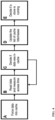
- FIG. 4 shows a detection phase according to an embodiment of the present inventions with the operation of the detection tool at runtime in the form of a flow chart or block diagram.
- Embodiments of the present invention may be used for detection of multiple application instances.
- the clone detection tool may be used also to detect a number of clone applications above a given threshold.
- the detection tool is useable to detect whether more than N (with N>1) clones are running on the same host.
- the offline training phase is modified to collect traces of cache hits and misses while M (with 0 ⁇ M ⁇ N) clones are running on the same host.
- Each trace includes W samples, where each sample is a hit or a miss value and a label that indicates the number of clones.
- the labels may be used to set the proper value(s) of the threshold within the window.
- embodiments of the present invention monitor and use the cache in a particular way, and measure the amount of cache misses observed on fixed locations, to derive the existence of a clone application running on the same machine or host platform. Even if a malicious OS would be aware of this countermeasure and disrupt it by polluting the cache locations, this would trigger a false positive because the TEE secured by the measures according embodiments of the present invention would infer the existence of a clone application, where, in reality, there is no clone application. This triggering of false positive would be contrary to the goal of a malicious OS to run clones and bypass detection. Apart from this, there is no other way the OS can manipulate the measurements.
- embodiments of the present invention are particularly secure against a malicious OS even in a case where the malicious OS has knowledge of the detection mechanism, in addition to preventing forking attacks and the other improvements discussed herein.
- embodiments of the present invention provide for monitoring a number of sets of cache locations and checking cache content modifications in those locations to infer whether a clone application is running in another TEE on the same machine or host platform. Also in contrast to existing TEE implementations, embodiments of the present invention may also provide for checking the access patterns on cache to determine the exact number of clones running on the machine. In contrast to an alternative possibility to assign dynamic identifiers (IDs) to each operation of the TEE for monitoring, embodiments of the present invention do not require changing the protocols.
- IDs dynamic identifiers
- the present invention provides a method for determining the existence of a clone application running in a TEE on a physical host, the method comprising the following steps:
- Embodiments of the present invention can especially advantageously be used to detect clone applications in consensus protocols that rely on TEEs (such as a fast Byzantine fault-tolerant (FastBFT), min-Byzantine fault-tolerant (MinBFT), cheap Byzantine fault-tolerant (CheapBFT)), for example, being implemented on machines which are part of a blockchain network which uses the consensus protocol.
- TEEs such as a fast Byzantine fault-tolerant (FastBFT), min-Byzantine fault-tolerant (MinBFT), cheap Byzantine fault-tolerant (CheapBFT)
- a TEE application may include a plurality of threads of execution including a main thread of execution, a first auxiliary thread of execution, and a second auxiliary thread of execution.
- the main thread of execution may be the main application (e.g., the code that performs the functionality of the TEE application) and may be unaltered by the present invention.
- the first auxiliary thread of execution may be a monitoring and detection thread that determines whether there is an existence of one or more TEE clone applications operating on the computing device.
- the second auxiliary thread may be a timer and counting thread (e.g., a timer thread and/or a counting thread).
- the timer and counting thread may comprise instructions for incrementing a counter variable (e.g., variable C described above) at each processor cycle (e.g., each cycle of the CPU).
- the computing device may assign the TEE application, including the three threads, for execution. After, the computing device may execute the TEE application including the three threads. In some instances, the computing device may execute these three threads concurrently (e.g., the main thread may be executed at the same time that the first and second auxiliary threads are being execute so as to detect clone TEE applications).
- the enclave may measure a plurality of read time periods associated with a plurality of monitored cache sets within a memory cache. For instance, the computing device may determine (e.g., generate, define, and/or retrieve from memory) an array (e.g., array ARR).
- the array may be based on the group of cache sets to be monitored (e.g., S described above) and the number of lines to be monitored in each of the monitored cache sets (e.g., B described above).
- the array may indicate 6 storage locations (e.g., monitored cache sets) within a memory cache (e.g., the L3 cache) for the first auxiliary thread (e.g., the monitoring and detection thread) to monitor.
- the first auxiliary thread may read / store contents of the array within the storage locations indicated by the array.
- the monitoring and detection auxiliary thread may determine the plurality of read time periods based on storing the contents of the array within the storage locations. For instance, the thread may determine a value of the variable C associated with the counting thread. Then, the thread may read a first element of the array ARR / read the storage location indicated by the first element of the array ARR (e.g., referring to FIG. 3 , the thread may read the contents within the storage location labeled as "1"). Following the read operation, thread may determine the value of the variable C.
- the thread may determine the number of CPU cycles to perform a read operation of the L3 cache at a particular storage location (e.g., storage location "1") using the variable C.
- the read time period (e.g., an access time) may be the number of CPU cycles to perform a read operation of the L3 cache.
- the thread may then compare access time / read time period to a time threshold (e.g., the parameter T). Based on the access time being equal or greater than T, then the thread may append a "miss" (e.g., a cache miss) for that particular read operation of the array element.
- the thread may append a "hit” (e.g., a cache hit).
- the thread may populate a list L based on the determination of whether the access time (e.g., the read time period) is a cache hit or a cache miss.
- the thread may repeat the above for the next element of the array ARR (e.g., for the storage location labeled as "2" in FIG. 3 ) and determine a cache hit / miss as well as populate the list L with the cache hit / miss.
- the thread may continue to repeat by processing through the array ARR (e.g., "3", "4", "5", "6"). Once it reaches the end of the array ARR, it may repeat starting at the beginning of the array ARR again.
- the thread may provide at least a portion of the list (e.g., the last W elements) indicating the cache hits and misses to a classifier.
- the classifier may determine whether one or more TEE clone applications are running on the same host (e.g., the same computing device) based on the elements of the list indicating the cache hits and misses. For instance, the processing core may input the elements of the list (e.g., the last W elements) into the classifier to generate an output indicating whether there is a clone TEE application operating on the same computing device.
- the classifier may be a numerical threshold.
- the detection thread may then compare the number of cache misses to the numerical threshold and if the number of cache misses exceeds the numerical threshold, the thread may determine that a clone TEE application is operating on the same computing device.
- the classifier may be a machine learning algorithm (e.g., SVMs and/or Neural Networks).
- the thread may input the elements of the list into the machine learning trained algorithm to generate an output indicating whether a clone TEE application is operating on the same computing device.
- the computing device may determine the time threshold T that is used to determine whether a read time period is a cache hit or miss. For instance, arbitrary data may be loaded into the memory cache of the computing device. Then, the computing device may determine a plurality of access times associated with a plurality of cache misses and a plurality of cache hits based on using a counter value (e.g., value C from the timer thread). The computing device may determine a mean value associated with the plurality of access times and the time threshold may be the mean value.
- a counter value e.g., value C from the timer thread
- an offline training phase may be performed to determine one or more parameters used above (e.g., W, T, S, and B) and/or to train the classifier.
- the computing device or another computing device may execute the TEE application numerous times (e.g., a plurality of iterations). In some iterations, the TEE application may be executed while also executing one or more clone TEE applications.
- the computing device or another computing device may collect training data based on performing these iterations and collect the sequences of cache hits and misses. Based on the collected training data, the computing device or another computing device may determine / train a classifier (e.g., a machine learning model such as a neural network).
- a classifier e.g., a machine learning model such as a neural network
- the computing device or another computing device may adjust the parameters (e.g., W, T, S, and B) and determine the best / most optimal parameters (e.g., the set of parameters S, B, W, and T that are capable of most accurately detecting that a clone TEE application is executing on a same host computing device as the TEE application) for use within the TEE application.
- the computing device or another computing device may generate the first / second auxiliary thread based on the best / most optimal parameters that are determined during the offline training phase.
- the embodiments may include one or more computer entities (e.g., systems, user interfaces, computing apparatus, devices, servers, special-purpose computers, smartphones, tablets or computers configured to perform functions specified herein) comprising one or more processors and memory.
- the processors can include one or more distinct processors, each having one or more cores, and access to memory. Each of the distinct processors can have the same or different structure.
- the processors can include one or more central processing units (CPUs), one or more graphics processing units (GPUs), circuitry (e.g., application specific integrated circuits (ASICs)), digital signal processors (DSPs), and the like.
- the processors can be mounted to a common substrate or to multiple different substrates.
- Processors are configured to perform a certain function, method, or operation (e.g., are configured to provide for performance of a function, method, or operation) at least when one of the one or more of the distinct processors is capable of performing operations embodying the function, method, or operation.
- Processors can perform operations embodying the function, method, or operation by, for example, executing code (e.g., interpreting scripts) stored on memory and/or trafficking data through one or more ASICs.
- Processors can be configured to perform, automatically, any and all functions, methods, and operations disclosed herein. Therefore, processors can be configured to implement any of (e.g., all) the protocols, devices, mechanisms, systems, and methods described herein. For example, when the present disclosure states that a method or device performs operation or task "X" (or that task "X" is performed), such a statement should be understood to disclose that processor is configured to perform task "X".
- the recitation of "at least one of A, B and C” should be interpreted as one or more of a group of elements consisting of A, B and C, and should not be interpreted as requiring at least one of each of the listed elements A, B and C, regardless of whether A, B and C are related as categories or otherwise.
- the recitation of "A, B and/or C" or "at least one of A, B or C” should be interpreted as including any singular entity from the listed elements, e.g., A, any subset from the listed elements, e.g., A and B, or the entire list of elements A, B and C.
Landscapes
- Engineering & Computer Science (AREA)
- Software Systems (AREA)
- Theoretical Computer Science (AREA)
- Computer Security & Cryptography (AREA)
- Physics & Mathematics (AREA)
- General Engineering & Computer Science (AREA)
- General Physics & Mathematics (AREA)
- Computer Hardware Design (AREA)
- Artificial Intelligence (AREA)
- Computer Vision & Pattern Recognition (AREA)
- Data Mining & Analysis (AREA)
- Evolutionary Computation (AREA)
- Medical Informatics (AREA)
- Computing Systems (AREA)
- Mathematical Physics (AREA)
- Memory System Of A Hierarchy Structure (AREA)
Claims (15)
- Verfahren zum Erkennen, durch eine Anwendung in einer vertrauenswürdigen Ausführungsumgebung, TEE, auf einer Rechenvorrichtung, einer TEE-Klonanwendung, die auf der Rechenvorrichtung läuft, wobei das Verfahren Folgendes umfasst:Messen, durch die TEE-Anwendung, basierend auf der Ausführung eines ersten Hilfs-Threads der TEE-Anwendung auf der Rechenvorrichtung, einer Vielzahl von Lesezeitdauern, die mit einer Vielzahl von überwachten Cache-Sätzen innerhalb eines Speicher-Caches der Rechenvorrichtung assoziiert sind, wobei jede der Lesezeitdauern eine Zeitdauer angibt, die zum Lesen von Daten innerhalb eines der überwachten Cache-Sätze verwendet wird;Vergleichen der Lesezeitdauern mit einem Zeitschwellenwert durch die TEE-Anwendung, um einen oder mehrere Cache-Fehlschläge zu ermitteln; undFeststellen, durch die TEE-Anwendung, ob die TEE-Klonanwendung auf der Rechenvorrichtung läuft, basierend auf einem Vergleichen der Anzahl der ermittelten Cache-Fehlschläge mit einem numerischen Schwellenwert.
- Verfahren nach Anspruch 1, wobei die TEE-Anwendung einen Hauptausführungs-Thread, den ersten Hilfs-Thread und einen zweiten Hilfsausführungs-Thread umfasst, wobei der erste Hilfsausführungs-Thread ein Überwachungs- und Erfassungs-Thread und der zweite Hilfsausführungs-Thread ein Zeitgeber- und Zähl-Thread ist.
- Verfahren nach Anspruch 2, weiterhin umfassend:Zuweisen der TEE-Anwendung an einen Prozessor der Rechenvorrichtung; undgleichzeitiges Ausführen des Hauptausführungs-Threads, des Überwachungs- und Erfassungs-Threads und des Zeitgeber- und Zähl-Threads durch den Prozessor.
- Verfahren nach Anspruch 3, wobei das Ausführen des Zeitgeber- und Zähl-Threads das Inkrementieren einer Zählervariablen bei jedem Zyklus des Prozessors umfasst, wobei der Prozessor eine zentrale Verarbeitungseinheit, CPU, ist, und
wobei das Messen der Lesezeitdauern auf der Zählervariablen basiert. - Verfahren nach einem der Ansprüche 1 bis 4, weiterhin umfassend:Erzeugen eines Arrays, das Speicherplätze anzeigt, die durch den ersten Hilfs-Thread zu überwachen sind, wobei die Speicherplätze auf der Vielzahl von überwachten Cache-Sätzen und einer Anzahl von Zeilen basieren, die innerhalb jedes der Vielzahl von überwachten Cache-Sätzen zu überwachen sind, wobei die Vielzahl von überwachten Cache-Sätzen eine Gruppe von Cache-Sätzen sind, die innerhalb des Speicher-Caches zu überwachen sind, undwobei das Messen der mit der Vielzahl von überwachten Cache-Sätzen innerhalb des Speicher-Caches assoziierten Lesezeitdauern auf einem Speichern von Inhalten des Arrays innerhalb der durch das Array angezeigten Speicherplätze basiert.
- Verfahren nach Anspruch 5, wobei das Messen der Vielzahl von mit der Vielzahl von überwachten Cache-Sätzen innerhalb des Speicher-Caches assoziierten Lesezeitdauern folgendes umfasst:
Ermitteln, unter Verwendung einer mit einem Zeitgeber- und Zähl-Thread assoziierten Variablen, jeder der Vielzahl von Lesezeitdauern auf der Grundlage einer Zugriffszeit des Lesens eines mit einem Element des Arrays assoziierten Speicherplatzes der Speicherplätze. - Verfahren nach Anspruch 6, wobei das Vergleichen der Lesezeitdauern mit dem Zeitschwellenwert folgendes umfasst:Ermitteln, ob jede der Vielzahl von Lesezeitdauern ein Cache-Fehlschlag oder ein Cache-Treffer ist, basierend darauf, ob die zugehörige Lesezeitdauer den Zeitschwellenwert überschreitet, wobei der Cache-Fehlschlag anzeigt, dass eine zugehörige Lesezeitdauer zum Lesen von Daten innerhalb eines überwachten Cache-Satzes den Zeitschwellenwert überschreitet, und der Cache-Treffer anzeigt, dass die zugehörige Lesezeitdauer zum Lesen der Daten innerhalb des überwachten Cache-Satzes den Zeitschwellenwert nicht überschreitet; undAuffüllen einer Liste, die anzeigt, ob jede der Vielzahl von Lesezeitdauern der Cache-Fehlschlag oder der Cache-Treffer ist.
- Verfahren nach Anspruch 7, weiterhin umfassend:
basierend auf der Liste, die einen vordefinierten Element-Schwellenwert hat, Eingeben von Elementen der Liste in einen Klassifikator, um eine Ausgabe zu erzeugen, die angibt, ob eine TEE-Klonanwendung auf der Rechenvorrichtung läuft. - Verfahren nach Anspruch 8, wobei der Klassifikator ein numerischer Schwellenwert ist und wobei das Eingeben der Elemente der Liste in den Klassifikator zum Erzeugen der Ausgabe das Vergleichen des numerischen Schwellenwerts mit den Elementen der Liste umfasst, die die Cache-Fehlschläge anzeigen, um zu bestimmen, ob die TEE-Klonanwendung auf der Rechenvorrichtung läuft.
- Verfahren nach Anspruch 8, wobei der Klassifikator ein trainierter maschineller Lernalgorithmus ist, und wobei das Eingeben der Elemente der Liste in den Klassifikator das Eingeben der Elemente der Liste in den maschinellen Lernalgorithmus umfasst, um die Ausgabe zu erzeugen, die angibt, ob die TEE-Klonanwendung auf der Rechenvorrichtung läuft.
- Verfahren nach einem der Ansprüche 1 bis 10, weiterhin umfassend:Laden beliebiger Daten in den Cache-Speicher der Rechenvorrichtung;Bestimmen, durch die TEE-Anwendung, einer Vielzahl von Zugriffszeiten, die mit einer Vielzahl von Cache-Fehlschlägen und einer Vielzahl von Cache-Treffern assoziiert sind, basierend auf der Verwendung eines Zählerwertes; undBestimmen des Zeitschwellenwerts durch die TEE-Anwendung auf der Grundlage des Berechnens eines mit der Vielzahl von Zugriffszeiten assoziierten Mittelwerts.
- Verfahren nach einem der Ansprüche 1 bis 11, weiterhin umfassend:Sammeln von Trainingsdaten basierend auf der Durchführung einer Vielzahl von Iterationen der Ausführung der TEE-Anwendung, wobei mindestens ein Teil der Vielzahl von Iterationen die Ausführung der TEE-Anwendung mit einer gleichzeitig laufenden TEE-Klonanwendung umfasst; undTrainieren eines Klassifikators, um das Vorhandensein der einen oder mehreren TEE-Klonanwendungen auf der Grundlage der Trainingsdaten zu ermitteln.
- Verfahren nach Anspruch 12, weiterhin umfassend:
Abstimmen einer Vielzahl von Parametern auf der Grundlage der Trainingsdaten, wobei das Ermitteln des einen oder der mehreren Cache-Fehlschläge auf der Grundlage der Vielzahl von Parametern erfolgt. - System zum Ermitteln einer Existenz von einer oder mehrerer Klonanwendungen in einer vertrauenswürdigen Ausführungsumgebung, TEE, wobei das System Folgendes umfasst:
eine Rechenvorrichtung mit:
einem Prozessor mit:einem Speicher-Cache; undeinem oder mehreren Prozessorkernen, die so konfiguriert sind, dass sie das Verfahren nach den Ansprüchen 1-13 ausführen. - Physisches, nicht-transitorisches, computerlesbares Medium mit darauf befindlichen Anweisungen, die bei Ausführung durch einen oder mehrere Prozessoren, allein oder in Kombination, die Ausführung des Verfahrens nach den Ansprüchen 1-13 ermöglichen.
Applications Claiming Priority (2)
| Application Number | Priority Date | Filing Date | Title |
|---|---|---|---|
| US202163145506P | 2021-02-04 | 2021-02-04 | |
| US17/336,395 US11836244B2 (en) | 2021-02-04 | 2021-06-02 | Clone application detection mechanism for securing trusted execution environments against a malicious operating system |
Publications (2)
| Publication Number | Publication Date |
|---|---|
| EP4040318A1 EP4040318A1 (de) | 2022-08-10 |
| EP4040318B1 true EP4040318B1 (de) | 2023-08-16 |
Family
ID=78617207
Family Applications (1)
| Application Number | Title | Priority Date | Filing Date |
|---|---|---|---|
| EP21207827.3A Active EP4040318B1 (de) | 2021-02-04 | 2021-11-11 | Klonanwendungserkennungsmechanismus zur sicherung vertrauenswürdiger ausführungsumgebungen gegen ein bösartiges betriebssystem |
Country Status (3)
| Country | Link |
|---|---|
| US (1) | US11836244B2 (de) |
| EP (1) | EP4040318B1 (de) |
| JP (1) | JP2022119718A (de) |
Families Citing this family (8)
| Publication number | Priority date | Publication date | Assignee | Title |
|---|---|---|---|---|
| US12591709B2 (en) | 2013-11-01 | 2026-03-31 | Anonos Innovations Llc | Systems and methods for functionally separating geospatial information for lawful and trustworthy analytics, artificial intelligence and machine learning |
| US12093426B2 (en) * | 2013-11-01 | 2024-09-17 | Anonos Ip Llc | Systems and methods for functionally separating heterogeneous data for analytics, artificial intelligence, and machine learning in global data ecosystems |
| US11169812B2 (en) * | 2019-09-26 | 2021-11-09 | Advanced Micro Devices, Inc. | Throttling while managing upstream resources |
| US12045337B2 (en) * | 2021-05-21 | 2024-07-23 | Samsung Electronics Co., Ltd. | Apparatus and method for providing secure execution environment for NPU |
| US11650809B2 (en) * | 2021-06-15 | 2023-05-16 | International Business Machines Corporation | Autonomous and optimized cloning, reinstating, and archiving of an application in a containerized platform |
| EP4167086A1 (de) * | 2021-10-13 | 2023-04-19 | Microsoft Technology Licensing, LLC | Enklavenklonierung |
| SE546686C2 (en) * | 2022-03-03 | 2025-01-14 | Crunchfish Digital Cash Ab | Preventing fraudulent use by cloning of a trusted application |
| US12547781B2 (en) | 2023-09-29 | 2026-02-10 | Nec Corporation | Secure setup for distributed monotonic counter services |
Family Cites Families (7)
| Publication number | Priority date | Publication date | Assignee | Title |
|---|---|---|---|---|
| US8839429B2 (en) * | 2011-11-07 | 2014-09-16 | Qualcomm Incorporated | Methods, devices, and systems for detecting return-oriented programming exploits |
| GB201801676D0 (en) * | 2018-02-01 | 2018-03-21 | Microsoft Technology Licensing Llc | Database system |
| US11126699B2 (en) | 2018-02-07 | 2021-09-21 | Nec Corporation | Replica trusted execution environment: enabling seamless replication of trusted execution environment (TEE)-based enclaves in the cloud |
| CN112005230B (zh) * | 2018-04-30 | 2024-05-03 | 谷歌有限责任公司 | 通过统一的安全区接口管理安全区创建 |
| US10922088B2 (en) * | 2018-06-29 | 2021-02-16 | Intel Corporation | Processor instruction support to defeat side-channel attacks |
| US11362841B2 (en) * | 2018-07-06 | 2022-06-14 | Nec Corporation | Method and system for providing security in trusted execution environments |
| US11588623B2 (en) * | 2020-06-24 | 2023-02-21 | Red Hat, Inc. | Secure reliable trusted execution environments |
-
2021
- 2021-06-02 US US17/336,395 patent/US11836244B2/en active Active
- 2021-11-11 EP EP21207827.3A patent/EP4040318B1/de active Active
-
2022
- 2022-01-07 JP JP2022001656A patent/JP2022119718A/ja active Pending
Also Published As
| Publication number | Publication date |
|---|---|
| US11836244B2 (en) | 2023-12-05 |
| JP2022119718A (ja) | 2022-08-17 |
| US20220245237A1 (en) | 2022-08-04 |
| EP4040318A1 (de) | 2022-08-10 |
Similar Documents
| Publication | Publication Date | Title |
|---|---|---|
| EP4040318B1 (de) | Klonanwendungserkennungsmechanismus zur sicherung vertrauenswürdiger ausführungsumgebungen gegen ein bösartiges betriebssystem | |
| US11777705B2 (en) | Techniques for preventing memory timing attacks | |
| US11775659B2 (en) | Cryptographic separation of memory on device with use in DMA protection | |
| US10831889B2 (en) | Secure memory implementation for secure execution of virtual machines | |
| Irazoqui et al. | Systematic reverse engineering of cache slice selection in Intel processors | |
| Maurice et al. | Reverse engineering Intel last-level cache complex addressing using performance counters | |
| US11455392B2 (en) | Methods and apparatus of anomalous memory access pattern detection for translational lookaside buffers | |
| CN109587106B (zh) | 密码分区的云中的跨域安全性 | |
| JP4876053B2 (ja) | トラステッド・デバイス集積回路 | |
| CN107949832B (zh) | 用于仅执行事务存储器的技术 | |
| US11782829B2 (en) | Cryptographic separation of MMIO on device | |
| CN109558372B (zh) | 用于安全处理器的设备和方法 | |
| KR20170033891A (ko) | 보호 영역에서의 메모리 초기화 | |
| CN110447032A (zh) | 管理程序与虚拟机之间的存储器页转换监测 | |
| US20160188874A1 (en) | System and method for secure code entry point control | |
| CN109643348A (zh) | 系统监测器 | |
| EP3913513A1 (de) | Sichere fehlerbeseitigung eines fpga-designs | |
| US20210200872A1 (en) | Identify Malicious Software | |
| CN107430555A (zh) | 用于存储器保护的高速缓存和数据组织 | |
| Side et al. | Lockeddown: Exploiting contention on host-gpu pcie bus for fun and profit | |
| CN110008758A (zh) | 一种id获取方法、装置、电子设备及存储介质 | |
| Trampert et al. | Browser-based CPU fingerprinting | |
| CN116502188A (zh) | 远程证明的方法、设备及系统 | |
| Heckel et al. | Verifying DRAM Addressing in Software | |
| US11907371B2 (en) | Microarchitectural attacks detection mechanism for trusted execution environments |
Legal Events
| Date | Code | Title | Description |
|---|---|---|---|
| PUAI | Public reference made under article 153(3) epc to a published international application that has entered the european phase |
Free format text: ORIGINAL CODE: 0009012 |
|
| STAA | Information on the status of an ep patent application or granted ep patent |
Free format text: STATUS: THE APPLICATION HAS BEEN PUBLISHED |
|
| AK | Designated contracting states |
Kind code of ref document: A1 Designated state(s): AL AT BE BG CH CY CZ DE DK EE ES FI FR GB GR HR HU IE IS IT LI LT LU LV MC MK MT NL NO PL PT RO RS SE SI SK SM TR |
|
| STAA | Information on the status of an ep patent application or granted ep patent |
Free format text: STATUS: REQUEST FOR EXAMINATION WAS MADE |
|
| 17P | Request for examination filed |
Effective date: 20230112 |
|
| RBV | Designated contracting states (corrected) |
Designated state(s): AL AT BE BG CH CY CZ DE DK EE ES FI FR GB GR HR HU IE IS IT LI LT LU LV MC MK MT NL NO PL PT RO RS SE SI SK SM TR |
|
| REG | Reference to a national code |
Ref country code: DE Ref legal event code: R079 Free format text: PREVIOUS MAIN CLASS: G06F0021540000 Ipc: G06F0021530000 Ref document number: 602021004320 Country of ref document: DE |
|
| GRAP | Despatch of communication of intention to grant a patent |
Free format text: ORIGINAL CODE: EPIDOSNIGR1 |
|
| STAA | Information on the status of an ep patent application or granted ep patent |
Free format text: STATUS: GRANT OF PATENT IS INTENDED |
|
| RIC1 | Information provided on ipc code assigned before grant |
Ipc: G06F 21/53 20130101AFI20230222BHEP |
|
| INTG | Intention to grant announced |
Effective date: 20230317 |
|
| GRAJ | Information related to disapproval of communication of intention to grant by the applicant or resumption of examination proceedings by the epo deleted |
Free format text: ORIGINAL CODE: EPIDOSDIGR1 |
|
| STAA | Information on the status of an ep patent application or granted ep patent |
Free format text: STATUS: REQUEST FOR EXAMINATION WAS MADE |
|
| GRAP | Despatch of communication of intention to grant a patent |
Free format text: ORIGINAL CODE: EPIDOSNIGR1 |
|
| STAA | Information on the status of an ep patent application or granted ep patent |
Free format text: STATUS: GRANT OF PATENT IS INTENDED |
|
| INTC | Intention to grant announced (deleted) | ||
| GRAS | Grant fee paid |
Free format text: ORIGINAL CODE: EPIDOSNIGR3 |
|
| INTG | Intention to grant announced |
Effective date: 20230609 |
|
| GRAA | (expected) grant |
Free format text: ORIGINAL CODE: 0009210 |
|
| STAA | Information on the status of an ep patent application or granted ep patent |
Free format text: STATUS: THE PATENT HAS BEEN GRANTED |
|
| RAP3 | Party data changed (applicant data changed or rights of an application transferred) |
Owner name: NEC CORPORATION |
|
| AK | Designated contracting states |
Kind code of ref document: B1 Designated state(s): AL AT BE BG CH CY CZ DE DK EE ES FI FR GB GR HR HU IE IS IT LI LT LU LV MC MK MT NL NO PL PT RO RS SE SI SK SM TR |
|
| REG | Reference to a national code |
Ref country code: CH Ref legal event code: EP |
|
| REG | Reference to a national code |
Ref country code: DE Ref legal event code: R096 Ref document number: 602021004320 Country of ref document: DE |
|
| REG | Reference to a national code |
Ref country code: IE Ref legal event code: FG4D |
|
| REG | Reference to a national code |
Ref country code: LT Ref legal event code: MG9D |
|
| REG | Reference to a national code |
Ref country code: NL Ref legal event code: MP Effective date: 20230816 |
|
| REG | Reference to a national code |
Ref country code: AT Ref legal event code: MK05 Ref document number: 1600763 Country of ref document: AT Kind code of ref document: T Effective date: 20230816 |
|
| PG25 | Lapsed in a contracting state [announced via postgrant information from national office to epo] |
Ref country code: GR Free format text: LAPSE BECAUSE OF FAILURE TO SUBMIT A TRANSLATION OF THE DESCRIPTION OR TO PAY THE FEE WITHIN THE PRESCRIBED TIME-LIMIT Effective date: 20231117 |
|
| PG25 | Lapsed in a contracting state [announced via postgrant information from national office to epo] |
Ref country code: IS Free format text: LAPSE BECAUSE OF FAILURE TO SUBMIT A TRANSLATION OF THE DESCRIPTION OR TO PAY THE FEE WITHIN THE PRESCRIBED TIME-LIMIT Effective date: 20231216 |
|
| PG25 | Lapsed in a contracting state [announced via postgrant information from national office to epo] |
Ref country code: SE Free format text: LAPSE BECAUSE OF FAILURE TO SUBMIT A TRANSLATION OF THE DESCRIPTION OR TO PAY THE FEE WITHIN THE PRESCRIBED TIME-LIMIT Effective date: 20230816 Ref country code: RS Free format text: LAPSE BECAUSE OF FAILURE TO SUBMIT A TRANSLATION OF THE DESCRIPTION OR TO PAY THE FEE WITHIN THE PRESCRIBED TIME-LIMIT Effective date: 20230816 Ref country code: PT Free format text: LAPSE BECAUSE OF FAILURE TO SUBMIT A TRANSLATION OF THE DESCRIPTION OR TO PAY THE FEE WITHIN THE PRESCRIBED TIME-LIMIT Effective date: 20231218 Ref country code: NO Free format text: LAPSE BECAUSE OF FAILURE TO SUBMIT A TRANSLATION OF THE DESCRIPTION OR TO PAY THE FEE WITHIN THE PRESCRIBED TIME-LIMIT Effective date: 20231116 Ref country code: NL Free format text: LAPSE BECAUSE OF FAILURE TO SUBMIT A TRANSLATION OF THE DESCRIPTION OR TO PAY THE FEE WITHIN THE PRESCRIBED TIME-LIMIT Effective date: 20230816 Ref country code: LV Free format text: LAPSE BECAUSE OF FAILURE TO SUBMIT A TRANSLATION OF THE DESCRIPTION OR TO PAY THE FEE WITHIN THE PRESCRIBED TIME-LIMIT Effective date: 20230816 Ref country code: LT Free format text: LAPSE BECAUSE OF FAILURE TO SUBMIT A TRANSLATION OF THE DESCRIPTION OR TO PAY THE FEE WITHIN THE PRESCRIBED TIME-LIMIT Effective date: 20230816 Ref country code: IS Free format text: LAPSE BECAUSE OF FAILURE TO SUBMIT A TRANSLATION OF THE DESCRIPTION OR TO PAY THE FEE WITHIN THE PRESCRIBED TIME-LIMIT Effective date: 20231216 Ref country code: HR Free format text: LAPSE BECAUSE OF FAILURE TO SUBMIT A TRANSLATION OF THE DESCRIPTION OR TO PAY THE FEE WITHIN THE PRESCRIBED TIME-LIMIT Effective date: 20230816 Ref country code: GR Free format text: LAPSE BECAUSE OF FAILURE TO SUBMIT A TRANSLATION OF THE DESCRIPTION OR TO PAY THE FEE WITHIN THE PRESCRIBED TIME-LIMIT Effective date: 20231117 Ref country code: FI Free format text: LAPSE BECAUSE OF FAILURE TO SUBMIT A TRANSLATION OF THE DESCRIPTION OR TO PAY THE FEE WITHIN THE PRESCRIBED TIME-LIMIT Effective date: 20230816 Ref country code: AT Free format text: LAPSE BECAUSE OF FAILURE TO SUBMIT A TRANSLATION OF THE DESCRIPTION OR TO PAY THE FEE WITHIN THE PRESCRIBED TIME-LIMIT Effective date: 20230816 |
|
| PG25 | Lapsed in a contracting state [announced via postgrant information from national office to epo] |
Ref country code: PL Free format text: LAPSE BECAUSE OF FAILURE TO SUBMIT A TRANSLATION OF THE DESCRIPTION OR TO PAY THE FEE WITHIN THE PRESCRIBED TIME-LIMIT Effective date: 20230816 |
|
| PG25 | Lapsed in a contracting state [announced via postgrant information from national office to epo] |
Ref country code: ES Free format text: LAPSE BECAUSE OF FAILURE TO SUBMIT A TRANSLATION OF THE DESCRIPTION OR TO PAY THE FEE WITHIN THE PRESCRIBED TIME-LIMIT Effective date: 20230816 |
|
| PG25 | Lapsed in a contracting state [announced via postgrant information from national office to epo] |
Ref country code: SM Free format text: LAPSE BECAUSE OF FAILURE TO SUBMIT A TRANSLATION OF THE DESCRIPTION OR TO PAY THE FEE WITHIN THE PRESCRIBED TIME-LIMIT Effective date: 20230816 Ref country code: RO Free format text: LAPSE BECAUSE OF FAILURE TO SUBMIT A TRANSLATION OF THE DESCRIPTION OR TO PAY THE FEE WITHIN THE PRESCRIBED TIME-LIMIT Effective date: 20230816 Ref country code: ES Free format text: LAPSE BECAUSE OF FAILURE TO SUBMIT A TRANSLATION OF THE DESCRIPTION OR TO PAY THE FEE WITHIN THE PRESCRIBED TIME-LIMIT Effective date: 20230816 Ref country code: EE Free format text: LAPSE BECAUSE OF FAILURE TO SUBMIT A TRANSLATION OF THE DESCRIPTION OR TO PAY THE FEE WITHIN THE PRESCRIBED TIME-LIMIT Effective date: 20230816 Ref country code: DK Free format text: LAPSE BECAUSE OF FAILURE TO SUBMIT A TRANSLATION OF THE DESCRIPTION OR TO PAY THE FEE WITHIN THE PRESCRIBED TIME-LIMIT Effective date: 20230816 Ref country code: CZ Free format text: LAPSE BECAUSE OF FAILURE TO SUBMIT A TRANSLATION OF THE DESCRIPTION OR TO PAY THE FEE WITHIN THE PRESCRIBED TIME-LIMIT Effective date: 20230816 Ref country code: SK Free format text: LAPSE BECAUSE OF FAILURE TO SUBMIT A TRANSLATION OF THE DESCRIPTION OR TO PAY THE FEE WITHIN THE PRESCRIBED TIME-LIMIT Effective date: 20230816 |
|
| REG | Reference to a national code |
Ref country code: DE Ref legal event code: R097 Ref document number: 602021004320 Country of ref document: DE |
|
| PLBE | No opposition filed within time limit |
Free format text: ORIGINAL CODE: 0009261 |
|
| STAA | Information on the status of an ep patent application or granted ep patent |
Free format text: STATUS: NO OPPOSITION FILED WITHIN TIME LIMIT |
|
| PG25 | Lapsed in a contracting state [announced via postgrant information from national office to epo] |
Ref country code: MC Free format text: LAPSE BECAUSE OF FAILURE TO SUBMIT A TRANSLATION OF THE DESCRIPTION OR TO PAY THE FEE WITHIN THE PRESCRIBED TIME-LIMIT Effective date: 20230816 |
|
| PG25 | Lapsed in a contracting state [announced via postgrant information from national office to epo] |
Ref country code: LU Free format text: LAPSE BECAUSE OF NON-PAYMENT OF DUE FEES Effective date: 20231111 |
|
| 26N | No opposition filed |
Effective date: 20240517 |
|
| PG25 | Lapsed in a contracting state [announced via postgrant information from national office to epo] |
Ref country code: MC Free format text: LAPSE BECAUSE OF FAILURE TO SUBMIT A TRANSLATION OF THE DESCRIPTION OR TO PAY THE FEE WITHIN THE PRESCRIBED TIME-LIMIT Effective date: 20230816 Ref country code: LU Free format text: LAPSE BECAUSE OF NON-PAYMENT OF DUE FEES Effective date: 20231111 Ref country code: IT Free format text: LAPSE BECAUSE OF FAILURE TO SUBMIT A TRANSLATION OF THE DESCRIPTION OR TO PAY THE FEE WITHIN THE PRESCRIBED TIME-LIMIT Effective date: 20230816 Ref country code: SI Free format text: LAPSE BECAUSE OF FAILURE TO SUBMIT A TRANSLATION OF THE DESCRIPTION OR TO PAY THE FEE WITHIN THE PRESCRIBED TIME-LIMIT Effective date: 20230816 |
|
| REG | Reference to a national code |
Ref country code: BE Ref legal event code: MM Effective date: 20231130 |
|
| REG | Reference to a national code |
Ref country code: IE Ref legal event code: MM4A |
|
| PG25 | Lapsed in a contracting state [announced via postgrant information from national office to epo] |
Ref country code: IE Free format text: LAPSE BECAUSE OF NON-PAYMENT OF DUE FEES Effective date: 20231111 |
|
| PG25 | Lapsed in a contracting state [announced via postgrant information from national office to epo] |
Ref country code: BE Free format text: LAPSE BECAUSE OF NON-PAYMENT OF DUE FEES Effective date: 20231130 |
|
| PG25 | Lapsed in a contracting state [announced via postgrant information from national office to epo] |
Ref country code: FR Free format text: LAPSE BECAUSE OF NON-PAYMENT OF DUE FEES Effective date: 20231130 |
|
| PG25 | Lapsed in a contracting state [announced via postgrant information from national office to epo] |
Ref country code: IE Free format text: LAPSE BECAUSE OF NON-PAYMENT OF DUE FEES Effective date: 20231111 Ref country code: FR Free format text: LAPSE BECAUSE OF NON-PAYMENT OF DUE FEES Effective date: 20231130 Ref country code: BE Free format text: LAPSE BECAUSE OF NON-PAYMENT OF DUE FEES Effective date: 20231130 |
|
| PG25 | Lapsed in a contracting state [announced via postgrant information from national office to epo] |
Ref country code: BG Free format text: LAPSE BECAUSE OF FAILURE TO SUBMIT A TRANSLATION OF THE DESCRIPTION OR TO PAY THE FEE WITHIN THE PRESCRIBED TIME-LIMIT Effective date: 20230816 |
|
| PG25 | Lapsed in a contracting state [announced via postgrant information from national office to epo] |
Ref country code: BG Free format text: LAPSE BECAUSE OF FAILURE TO SUBMIT A TRANSLATION OF THE DESCRIPTION OR TO PAY THE FEE WITHIN THE PRESCRIBED TIME-LIMIT Effective date: 20230816 |
|
| REG | Reference to a national code |
Ref country code: CH Ref legal event code: PL |
|
| REG | Reference to a national code |
Ref country code: CH Ref legal event code: PL |
|
| PG25 | Lapsed in a contracting state [announced via postgrant information from national office to epo] |
Ref country code: CH Free format text: LAPSE BECAUSE OF NON-PAYMENT OF DUE FEES Effective date: 20241130 |
|
| PG25 | Lapsed in a contracting state [announced via postgrant information from national office to epo] |
Ref country code: CY Free format text: LAPSE BECAUSE OF FAILURE TO SUBMIT A TRANSLATION OF THE DESCRIPTION OR TO PAY THE FEE WITHIN THE PRESCRIBED TIME-LIMIT; INVALID AB INITIO Effective date: 20211111 |
|
| PG25 | Lapsed in a contracting state [announced via postgrant information from national office to epo] |
Ref country code: TR Free format text: LAPSE BECAUSE OF FAILURE TO SUBMIT A TRANSLATION OF THE DESCRIPTION OR TO PAY THE FEE WITHIN THE PRESCRIBED TIME-LIMIT Effective date: 20230816 |
|
| PGFP | Annual fee paid to national office [announced via postgrant information from national office to epo] |
Ref country code: DE Payment date: 20251119 Year of fee payment: 5 |
|
| PG25 | Lapsed in a contracting state [announced via postgrant information from national office to epo] |
Ref country code: HU Free format text: LAPSE BECAUSE OF FAILURE TO SUBMIT A TRANSLATION OF THE DESCRIPTION OR TO PAY THE FEE WITHIN THE PRESCRIBED TIME-LIMIT; INVALID AB INITIO Effective date: 20211111 |