EP4038501B1 - Ressourcenoptimierung für serverlose anfrageverarbeitung - Google Patents
Ressourcenoptimierung für serverlose anfrageverarbeitung Download PDFInfo
- Publication number
- EP4038501B1 EP4038501B1 EP20751813.5A EP20751813A EP4038501B1 EP 4038501 B1 EP4038501 B1 EP 4038501B1 EP 20751813 A EP20751813 A EP 20751813A EP 4038501 B1 EP4038501 B1 EP 4038501B1
- Authority
- EP
- European Patent Office
- Prior art keywords
- query
- resource
- execution
- resources
- peak
- Prior art date
- Legal status (The legal status is an assumption and is not a legal conclusion. Google has not performed a legal analysis and makes no representation as to the accuracy of the status listed.)
- Active
Links
Images




Classifications
-
- G—PHYSICS
- G06—COMPUTING OR CALCULATING; COUNTING
- G06F—ELECTRIC DIGITAL DATA PROCESSING
- G06F9/00—Arrangements for program control, e.g. control units
- G06F9/06—Arrangements for program control, e.g. control units using stored programs, i.e. using an internal store of processing equipment to receive or retain programs
- G06F9/46—Multiprogramming arrangements
- G06F9/48—Program initiating; Program switching, e.g. by interrupt
- G06F9/4806—Task transfer initiation or dispatching
- G06F9/4843—Task transfer initiation or dispatching by program, e.g. task dispatcher, supervisor, operating system
- G06F9/4881—Scheduling strategies for dispatcher, e.g. round robin, multi-level priority queues
- G06F9/4887—Scheduling strategies for dispatcher, e.g. round robin, multi-level priority queues involving deadlines, e.g. rate based, periodic
-
- G—PHYSICS
- G06—COMPUTING OR CALCULATING; COUNTING
- G06F—ELECTRIC DIGITAL DATA PROCESSING
- G06F16/00—Information retrieval; Database structures therefor; File system structures therefor
- G06F16/20—Information retrieval; Database structures therefor; File system structures therefor of structured data, e.g. relational data
- G06F16/24—Querying
- G06F16/245—Query processing
- G06F16/2453—Query optimisation
-
- G—PHYSICS
- G06—COMPUTING OR CALCULATING; COUNTING
- G06F—ELECTRIC DIGITAL DATA PROCESSING
- G06F16/00—Information retrieval; Database structures therefor; File system structures therefor
- G06F16/20—Information retrieval; Database structures therefor; File system structures therefor of structured data, e.g. relational data
- G06F16/24—Querying
- G06F16/245—Query processing
- G06F16/2453—Query optimisation
- G06F16/24534—Query rewriting; Transformation
- G06F16/24542—Plan optimisation
- G06F16/24545—Selectivity estimation or determination
-
- G—PHYSICS
- G06—COMPUTING OR CALCULATING; COUNTING
- G06F—ELECTRIC DIGITAL DATA PROCESSING
- G06F9/00—Arrangements for program control, e.g. control units
- G06F9/06—Arrangements for program control, e.g. control units using stored programs, i.e. using an internal store of processing equipment to receive or retain programs
- G06F9/46—Multiprogramming arrangements
- G06F9/48—Program initiating; Program switching, e.g. by interrupt
- G06F9/4806—Task transfer initiation or dispatching
- G06F9/4843—Task transfer initiation or dispatching by program, e.g. task dispatcher, supervisor, operating system
- G06F9/485—Task life-cycle, e.g. stopping, restarting, resuming execution
-
- G—PHYSICS
- G06—COMPUTING OR CALCULATING; COUNTING
- G06F—ELECTRIC DIGITAL DATA PROCESSING
- G06F9/00—Arrangements for program control, e.g. control units
- G06F9/06—Arrangements for program control, e.g. control units using stored programs, i.e. using an internal store of processing equipment to receive or retain programs
- G06F9/46—Multiprogramming arrangements
- G06F9/50—Allocation of resources, e.g. of the central processing unit [CPU]
- G06F9/5005—Allocation of resources, e.g. of the central processing unit [CPU] to service a request
-
- G—PHYSICS
- G06—COMPUTING OR CALCULATING; COUNTING
- G06F—ELECTRIC DIGITAL DATA PROCESSING
- G06F9/00—Arrangements for program control, e.g. control units
- G06F9/06—Arrangements for program control, e.g. control units using stored programs, i.e. using an internal store of processing equipment to receive or retain programs
- G06F9/46—Multiprogramming arrangements
- G06F9/50—Allocation of resources, e.g. of the central processing unit [CPU]
- G06F9/5061—Partitioning or combining of resources
- G06F9/5072—Grid computing
-
- G—PHYSICS
- G06—COMPUTING OR CALCULATING; COUNTING
- G06N—COMPUTING ARRANGEMENTS BASED ON SPECIFIC COMPUTATIONAL MODELS
- G06N20/00—Machine learning
-
- G—PHYSICS
- G06—COMPUTING OR CALCULATING; COUNTING
- G06N—COMPUTING ARRANGEMENTS BASED ON SPECIFIC COMPUTATIONAL MODELS
- G06N5/00—Computing arrangements using knowledge-based models
- G06N5/04—Inference or reasoning models
-
- G—PHYSICS
- G06—COMPUTING OR CALCULATING; COUNTING
- G06F—ELECTRIC DIGITAL DATA PROCESSING
- G06F2209/00—Indexing scheme relating to G06F9/00
- G06F2209/50—Indexing scheme relating to G06F9/50
- G06F2209/501—Performance criteria
-
- G—PHYSICS
- G06—COMPUTING OR CALCULATING; COUNTING
- G06F—ELECTRIC DIGITAL DATA PROCESSING
- G06F2209/00—Indexing scheme relating to G06F9/00
- G06F2209/50—Indexing scheme relating to G06F9/50
- G06F2209/5019—Workload prediction
-
- G—PHYSICS
- G06—COMPUTING OR CALCULATING; COUNTING
- G06F—ELECTRIC DIGITAL DATA PROCESSING
- G06F9/00—Arrangements for program control, e.g. control units
- G06F9/06—Arrangements for program control, e.g. control units using stored programs, i.e. using an internal store of processing equipment to receive or retain programs
- G06F9/46—Multiprogramming arrangements
- G06F9/50—Allocation of resources, e.g. of the central processing unit [CPU]
- G06F9/5005—Allocation of resources, e.g. of the central processing unit [CPU] to service a request
- G06F9/5027—Allocation of resources, e.g. of the central processing unit [CPU] to service a request the resource being a machine, e.g. CPUs, Servers, Terminals
- G06F9/5038—Allocation of resources, e.g. of the central processing unit [CPU] to service a request the resource being a machine, e.g. CPUs, Servers, Terminals considering the execution order of a plurality of tasks, e.g. taking priority or time dependency constraints into consideration
Definitions
- the present disclosure relates generally to query processing systems, and more particularly, to serverless query processing.
- Embodiments provide methods, apparatuses, and computer-readable mediums for serverless query processing optimization.
- a method of serverless query processing in a serverless query processing system comprising at least one processor and at least one memory, the at least one memory comprising instructions executed by the at least one processor to process queries.
- the method includes receiving a query.
- the method further includes determining whether the query is a recurring query or a non-recurring query.
- the method further includes predicting, in response to determining that the query is the recurring query, a peak resource requirement during an execution of the query.
- the method further includes computing, in response to determining that the query is the non-recurring query, a tight resource requirement corresponding to an amount of resources that satisfy a performance requirement over the execution of the query, wherein the tight resource requirement is less than the peak resource requirement.
- the method further includes allocating resources to the query based on an applicable one of the peak resource requirement or the tight resource requirement.
- the method further includes starting the execution of the query using the resources.
- a device in a serverless query processing system includes at least one processor; and at least one memory in communication with the at least one processor.
- the at least one memory comprises instructions executed by the at least one processor to process queries including receiving a query; determining whether the query is a recurring query or a non-recurring query; predicting, in response to determining that the query is the recurring query, a peak resource requirement during an execution of the query; computing, in response to determining that the query is the non-recurring query, a tight resource requirement corresponding to an amount of resources that satisfy a performance requirement over the execution of the query, wherein the tight resource requirement is less than the peak resource requirement; allocating resources to the query based on an applicable one of the peak resource requirement or the tight resource requirement; and starting the execution of the query using the resources.
- a serverless query processing apparatus includes a memory and at least one processor coupled to the memory.
- the at least one processor is configured to process queries including receiving a query; determining whether the query is a recurring query or a non-recurring query; predicting, in response to determining that the query is the recurring query, a peak resource requirement during an execution of the query; computing, in response to determining that the query is the non-recurring query, a tight resource requirement corresponding to an amount of resources that satisfy a performance requirement over the execution of the query, wherein the tight resource requirement is less than the peak resource requirement; allocating resources to the query based on an applicable one of the peak resource requirement or the tight resource requirement; and starting the execution of the query using the resources.
- a computer-readable medium stores instructions that, when executed by at least one processor of a serverless query processing system, cause the serverless query processing system to process queries including receiving a query; determining whether the query is a recurring query or a non-recurring query; predicting, in response to determining that the query is the recurring query, a peak resource requirement during an execution of the query; computing, in response to determining that the query is the non-recurring query, a tight resource requirement corresponding to an amount of resources that satisfy a performance requirement over the execution of the query, wherein the tight resource requirement is less than the peak resource requirement; allocating resources to the query based on an applicable one of the peak resource requirement or the tight resource requirement; and starting the execution of the query using the resources.
- a query method in a query system comprising at least one processor and at least one memory, the at least one memory comprising instructions executed by the at least one processor to run queries.
- the query method includes transmitting a query to a serverless query processing system.
- the query method further includes skipping transmission, to the serverless query processing system, of an amount of resources required for an execution of the query, wherein the skipping is configured to cause the serverless query processing system to determine and allocate the amount of resources required for the execution of the query.
- the query method further includes receiving results of the execution of the query from the serverless query processing system.
- a query device in another aspect, includes at least one processor and at least one memory in communication with the at least one processor.
- the at least one memory comprises instructions executed by the at least one processor to run queries including transmitting a query to a serverless query processing system; skipping transmission, to the serverless query processing system, of an amount of resources required for an execution of the query, wherein the skipping is configured to cause the serverless query processing system to determine and allocate the amount of resources required for the execution of the query; and receiving results of the execution of the query from the serverless query processing system.
- a query apparatus includes a memory and at least one processor coupled to the memory.
- the at least one processor is configured to run queries including transmitting a query to a serverless query processing system; skipping transmission, to the serverless query processing system, of an amount of resources required for an execution of the query, wherein the skipping is configured to cause the serverless query processing system to determine and allocate the amount of resources required for the execution of the query; and receiving results of the execution of the query from the serverless query processing system.
- a computer-readable medium stores instructions that, when executed by at least one processor of a query system, cause the query system to run queries including transmitting a query to a serverless query processing system; skipping transmission, to the serverless query processing system, of an amount of resources required for an execution of the query, wherein the skipping is configured to cause the serverless query processing system to determine and allocate the amount of resources required for the execution of the query; and receiving results of the execution of the query from the serverless query processing system.
- the one or more aspects comprise the features hereinafter fully described and particularly pointed out in the claims.
- the following description and the annexed drawings set forth in detail certain illustrative features of the one or more aspects. These features are indicative, however, of but a few of the various ways in which the principles of various aspects may be employed, and this description is intended to include all such aspects and their equivalents.
- the present aspects provide a serverless query processing system that uses machine learning models for predicting peak resource requirements in recurring queries using features from a query plan and input data. Some aspects further provide a tuning algorithm for computing tight allocations (the minimum possible allocation that does not cause any noticeable degradation in performance) in ad-hoc queries by simulating the scheduling behavior of a query plan at compile time. Further, in some aspects, an adaptive algorithm is used to re-compute a peak (or tight) allocation as the query execution progresses and to release any redundant resources. Accordingly, in the present aspects, an end-to-end resource optimization system provides offline training and extensions to compiler, optimizer, scheduler, and job manager, for automatic resource optimization.
- a serverless query processing system automatically provisions a set of resources for a query, without having users manage the resources for their computation tasks.
- a resource may refer to a computing resource, such as a virtual machine (VM), memory, etc.
- a resource may refer to a "container" which is a collection of processing cores and RAM.
- a container may provide the functionality of a "light" VM, which is a VM that can be started and stopped cheaply/quickly.
- a serverless query processing system may provide, for example, an exabyte-scale big data analytics platform where the users specify declarative queries and the system runs the queries in a massively distributed environment.
- a serverless query processing system may include an engine that decides the number of containers (also known as tokens) to use for each job.
- a serverless query processing system may process, for example, hundreds of thousands of jobs per day using hundreds of thousands of virtual machines.
- a job may be an analytical job such as building an index of information downloaded from the Internet, computing a statistical function (e.g., average) of numerical data, etc.
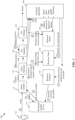
- FIG. 1 is an example end-to-end resource optimization and query processing system 100 including a resource predictor 102 that predicts the maximum required resources for recurring jobs, a resource shaper 106 that dynamically shapes the resource allocation during the execution of a job based on the query execution graph, and a resource tuner 104 that finds a tight resource allocation (corresponding to an amount of resources that satisfy a performance requirement over the execution of the query) for non-recurring jobs, according to some present aspects.
- the system 100 first identifies recurring and non-recurring workloads from a workload repository 108 that includes query plans, stage graphs, and associated telemetry from previous job executions. Using this data, the system 100 learns the models for the resource predictor 102 for each recurring job at Step 1.
- the system 100 uses the non-recurring jobs to trigger the resource tuner 104 at Step 2.
- the models for the resource predictor 102 are serialized and stored into a workload insight service 110 at Step 3.
- a query compiler 114 looks up the insight service 110 at Step 5, and loads the resource predictor model for that job at Step 6.
- the query compiler 114 passes the compiled abstract syntax tree (AST) along with the predictor model to a query optimizer 116 at Step 7, which infers the peak resource requirement using the predictor model at Step 8.
- the query optimizer 116 invokes the resource tuner 104 at Step 9.
- the query optimizer 116 passes the peak resource requirement hints, obtained either from the resource predictor 102 or the resource tuner 104, to a job scheduler 118 at Step 10, which schedules the job with the peak resource requirement.
- a job manager 120 invokes the resource shaper 106 at Step 11, and in case of excess resources, releases the excess resources via the job scheduler 118 at Step 12.
- the logs from each of the query processing components are collected into the workload repository 108 at Step 13 to train the models (e.g., the peak resource requirement models for the resource predictor 102) and further improve the future decisions.
- the resource shaper 106 may also mine the resource skylines from the workload repository 108 and use them during resource shaping.
- the system 100 continuously learns from the past workloads and may therefore optimize performance for different subsets of the workload and fix errors in the early predictions.
- the system 100 is fully automatic and does not require any manual supervision or tuning from the users 112.
- the system 100 may provide compiler flags where the users 112 may choose to explicitly opt-in or opt-out of resource optimization on a per job basis.
- the system 100 may split the past workload into "training,” “validation,” and “test” sets, and apply filters for models that perform poorly on the "validation” set.
- the system 100 may consider the different subsets of workloads from different customers (e.g., virtual clusters), and filter out the workload subsets (or customers) that do not benefit from resource optimization. This is because either the workloads may be too ad-hoc in nature or the customer has their own custom machinery for resource optimizations.
- the job manager 120 may observe the actual peak resource requirements and inform the workload insights service 110 to disable a model that produces incorrect predictions.
- the system 100 may retrain the predictor models, e.g., every day, for an initial deployment phase, thereby fixing errors in model predictions with newer training data.
- the resource shaper 106 may be made more resilient by adding the previously seen skyline in similar jobs and using that, in combination with the stage graph, to estimate the remaining peak needed for the job.
- the resource shaper 106 may use more accurate cost estimates of each stage as well as run the actual job manager code in simulation mode (wherever possible) to mimic the runtime behavior more accurately. Further details of the operation of the components of the system 100 are provided below.
- the system 100 implements serverless query processing to shift the responsibility of resource allocation from the users 112 to query engines.
- Conventional serverless query processing includes estimating the fine-grained resource requirements for each query at compile time.
- the estimates in a conventional query optimizer are often off by orders of magnitudes, in particular in big data systems.
- allocating and de-allocating resources is expensive, making a change in the allocation for a query undesirable.
- a resource change may trigger query plan changes to use the new set of resources, which may adversely affect the overall performance.
- a query runs for a relatively small time duration, there is not much room for adjusting the resources. In particular, if the resources are under-allocated, query performance may have suffered already before any resource adjustments could be applied.
- a conventional serverless query processor may address some of these issues by relying on a user-specified resource limit, e.g., the maximum number of tokens that a query may use, and reserves them as guaranteed resources before starting the query execution.
- a user-specified resource limit e.g., the maximum number of tokens that a query may use
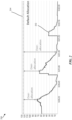
- an example token usage skyline 200 over time in a typical example job indicates a large gap between the user supplied tokens (corresponding to a default allocation 204 requested by the user 112), and the actual token consumption 202.
- the resource consumption and the resulting gap between allocated and used tokens changes significantly as the query progresses. Over-provisioning of tokens results in high queuing latencies and resource wastage.
- a serverless query processor may attempt to opportunistically use spare tokens. However, under-allocation may still result in poor and unpredictable query performance.
- the system 100 in FIG. 1 properly sizes the tokens for each recurring job, thus leading to opportunistic capacity (bonus tokens) for speeding up existing jobs and spare capacity for newer jobs, thereby significantly improving the overall system efficiency.
- the system 100 determines the resource requirements of a job based on the characteristics of each job or how the resource requirements change in different stages of a job and/or over time.
- the system 100 uses resource modeling and optimization to build resource cost models for selecting resources for a given query plan and adapt over the course of job execution (e.g., during runtime).
- the system 100 allows for dynamic re-allocation of resources using a lightweight simulator that uses cost estimates of each stage from the query optimizer and replays the vertex scheduling strategy. In case the cost estimates are inaccurate, the system 100 may fix them separately using learned cost models.
- the system 100 finds the optimal resources for each operator in the query plan as part of query optimization by considering a transformation of operators into a stage graph and how cost varies with varying resources on the stage graph.
- the system 100 provides built-in resource optimization for systematic resource allocation for serverless query processing.
- the system 100 predicts a peak allocation for recurring jobs using machine learning models built from the telemetry of past jobs (e.g., query plans, runtime statistics, etc.).
- the system 100 computes a tight allocation which is the minimum possible allocation that does not cause noticeable degradation in performance.
- the system 100 may dynamically adapt the allocations based on the query execution graph. For this, the system 100 re-computes a new peak or tight allocation expected for the remainder of the query as the query execution progresses. At any time, if the newer computed allocation is lower than the current allocation, the system 100 releases the excess resources.
- an example job includes stages 402 that are connected in a directed acyclic graph (DAG) 400 with the data flow being from top to bottom.
- Each stage 402 includes one or more physical operators that may be processed locally in a single container.
- Instances of a stage 402 (also referred to as vertices) may process different partitions of data in parallel.
- One non-limiting example aspect may consider maximum degree of parallelism (also referred to as tokens) as the unit of resource.
- VM virtual machine
- a job may reserve a user-provided maximum number of tokens (the allocated resources) before the job starts executing.
- 40% to 60% of the jobs may be over-allocated by as much as 1000x, indicating significant opportunities for right-sizing the resource allocation.
- 70% to 85% of jobs may be over-allocated with respect to their average resource consumption.
- Reducing over-allocation improves the operational efficiency in big data analytics.
- guaranteed resources may be freed up and used to submit more jobs. Additionally, the queuing time of jobs may be reduced by having the jobs request for less resources.
- tight allocation may increase the allocation for significantly under-allocated jobs. This not only improves the job performance but also makes job performance more predictable, since right-sizing the allocation reduces the dependence on opportunistic resource allocation. Accordingly, some present aspects provide resource prediction to enable peak allocation, resource shaping to enable adaptive allocation, and resource tuning to enable tight allocation. Further details are provided below.
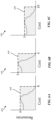
- the resource predictor 102 predicts the peak resources (e.g., peak allocation 302 in FIG. 3A ) that would be required in a recurring job, e.g., jobs that are executed periodically with changing inputs and parameters.
- recurring jobs may include jobs that process logs from one or more products and drive business decisions. Since the structure of the job remains the same, the peak resource requirements may be modeled as a function of the inputs and parameters.
- the system 100 is plan-aware and identifies the recurring jobs. In an aspect, for example, the system 100 uses a hash of the logical query plan of the job to identify recurring instances. In some aspects, since the inputs and the parameters may change, the system 100 may ignore the inputs and the parameters in the hash. Such a hash (also referred to as a signature) may be used for identifying common sub-expressions.
- a job may be identified as recurring if the corresponding hash value appears at least twice in the training dataset.
- a model is trained using feature values and actual peak resource usage information from jobs with that hash value.
- feature values from the target job are used to predict peak resource usage using the model trained for that hash value. If the model does not exist, either because this is a different job or because the hash value appeared only once in the training set, a default value requested/provided by the user may be used.
- the system 100 may consider different data characteristics such as cardinality, plan characteristics such as parameters, and optimizer-derived characteristics such as number of partitions, plan cost, etc.
- plan characteristics such as parameters
- optimizer-derived characteristics such as number of partitions, plan cost, etc.
- the system 100 may consider multiple signatures in order to improve coverage of the models. For example, instead of using the hash of the entire query plan, the system 100 may consider a relaxed hash that only includes the root operator and leaf-level inputs. Queries having the same relaxed hash may have the same inputs but different plan shapes, which may indicate their peak resource requirements. In an aspect, the system 100 captures plan characteristics such as plan costs, partitions, etc., which may be indicators of resource requirements. The system 100 may also consider other types of relaxed hashes to group similar jobs and improve the coverage of the models.
- the system 100 may consider regression models such as Linear Regression, AdaBoost Regression, Extra-Trees Regression, Gradient Boosting Regression, and Random Forest Regression.
- regression models such as Linear Regression, AdaBoost Regression, Extra-Trees Regression, Gradient Boosting Regression, and Random Forest Regression.
- the system 100 may implement linear regression with standard normalization.
- each recurring job in the training dataset may be classified into multiple groups, one for each hash value computed for the job. Then, models are built for each group. During prediction, for each job, hash values are considered in succession, stopping when the corresponding model is found which is then used to predict the peak resource usage/requirement for the job. If no model is found, the default value is used.
- the resource predictor 102 may accurately predict the peak resource usage/requirement for jobs.
- the resource predictor 102 may scale gracefully with the changes in data characteristics such as input sizes, etc.
- the resource shaper 106 dynamically shapes the resource allocation based on the query execution graph (e.g., as in FIG. 3B ). For example, in an aspect, the resource shaper 106 estimates the peak resource usage/requirement in the remaining of the job execution, and any excess resources are released. In an alternative aspect, instead of only releasing resources, the resource curve may be used to both release and request resources. As compared to requesting resources, releasing resources is a more lightweight operation without incurring the request overheads on the job manager 120 or the queuing overheads on the job execution. Therefore, the resource shaper 106 may passively inform the job manager 120 of the spare resources which may be recycled at any time. To detect the peak for the remaining query, the resource shaper 106 may invoke a query graph-based peak resource requirement estimator at any point during query execution, and excess resources may be released via communication with the job manager 120 and the job scheduler 118.
- the resource shaper 106 may invoke a query graph-based peak resource requirement estimator at any point during query execution, and excess resources may be
- the resource shaper 106 may estimate the peak resources for the remaining of the job by converting a job graph into one or more trees. For example, the resource shaper 106 may perform "tree-ification" by removing one of the output edges of the Spool operators in the job graph, since Spool is the only operator that may have more than one consumers. For example, the resource shaper 106 may remove one of the output Spool edges since a stage containing the Spool operator cannot run concurrently with its consumer stages. In an aspect, the resource shaper 106 removes the edge with the consumer that has the maximum in-degree. In case of a tie, the resource shaper 106 may select a consumer at random. In an aspect, if the maximum in-degree of spool consumers is one, then no edge can be removed since the sub-graph is already a tree.
- the resource shaper 106 may determine a max-cut on the DAG of a job.
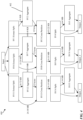
- a stage graph 500 e.g., DAG
- stages S2, S6, and S8 have spool operators, since they have two downstream consumers each.
- the resource shaper 106 may remove one of the outgoing edges of the spools. For S8, for example, the resource shaper 106 may remove the edge with S11, since this edge has a higher in-degree than S10.
- the resource shaper 106 may pick an edge at random since their consumers have equal in-degrees of 2. This results in three trees 514 corresponding to the three outputs 506.
- the number of vertices are indicated in square brackets for each of the stages 502.
- the numbers 508 in brackets denote the completed vertices
- the numbers 510 in brackets denote the running vertices
- the numbers 512 in brackets denote vertices that are yet to be scheduled.
- the resource shaper 106 may compute the maximum remaining peak resource requirement by computing the maximum width of each of the trees 514, which is 30, 50, and 50 respectively, and then takes the sum of the individual tree widths, e.g., 130. If the job started with, for example, 200 containers, then the system 100 may release 70 containers at this point in execution.
- the below example code provides an example implementation of the resource shaper 106 in an aspect.
- Algorithm 1 is the control loop of the resource shaper 106 that first converts the job graph into tree(s) and then recursively computes the remaining peak resource requirement in each of the tree root nodes. If the total remaining peak resource requirement is less than the current resources, then the job manager 120 makes the call to give up excess resources. Further, Algorithm 2 finds the remaining peak resource requirement by iteratively adding the peak resource requirements of the children of each parent node (Lines 3-5 in the above example code), and returns the max of the children and parent peak resource requirements (Line 6 in the above example code). Accordingly, the peak resource requirement estimation finds the max-cut in each of the trees generated from the job graph and takes the sum.
- the resource tuner 104 finds the tight allocation (e.g., as in FIG. 3C ) for non-recurring jobs, e.g., jobs that are not SLA sensitive and do not have a resource predictor anyways. In an aspect, for example, almost 40% of the workloads may be non-recurring.
- the resource tuner 104 is plan-aware and hence may also be used for increasing the allocation to improve performance in under-allocated jobs. In an aspect, for example, starting from an original resource-cost curve, the resource tuner 104 may modify the resource-cost area and either tune cost with extra resources or tune resources for extra cost.
- the resource tuner 104 may increase the resources up to a limit to obtain a first modified resource-cost skyline 604 if it helps to reduce the cost of the job, or decrease resources to obtain a second modified resource-cost skyline 606 if the increase in cost is within a limit. In either case, the resource tuner 106 attempts to decrease the total area of the resource-cost rectangle 608. For example, in FIGs.
- the first modified resource-cost skyline 604 causes 25% increase in resources for a 25% reduction in cost
- the second modified resource-cost skyline 606 causes 25% decrease in resources for a 25% increase in cost.
- the total area of the resource-cost rectangle 608 decreases from 32 to 30, and hence either of these may be valid resource tunings.
- the resource tuner 104 may choose cost reduction over resource reduction and pick the first modified resource-cost skyline 604 over the second modified resource-cost skyline 606.
- the below example code provides an example implementation of iterative tuning in the resource tuner 104 in an aspect.
- Algorithm 3 finds the tight allocation for a job. Specifically, the resource tuner 104 simulates the job scheduler 118 to estimate the same sequence of vertex executions as would happen in the real environment. Algorithm 3 starts with an initial set of resources and iteratively (Lines 5-18 in the above example code) finds the alternate resource allocation that would improve the area of the resource-cost rectangle 608 while keeping cost and resource overheads within a threshold ⁇ (Lines 13-15 in the above example code).
- the threshold may be specified by the user 112. In an alternative aspect, the threshold may be a default threshold, e.g., 10%.
- Algorithm 3 simulates two components from the job manager 120: (i) priority assignment for different stages in the job graph (Line 2 in the above example code), and (ii) priority queue based on execution of different vertices in each stage (Lines 3 and 10 in the above example code). Further details are provided below.
- Algorithm 3 may be adapted to other exploration strategies, e.g., simulated annealing or even exhaustive search if the resource space is not too large.
- the below example code provides an example implementation of the priority assignment in the iterative tuning of Algorithm 3 in the resource tuner 104 in an aspect.
- Algorithm 4 implements the priority assignment logic that emulates the job manager 120.
- the leaf stages are assigned a priority of zero (e.g., most important), and all other stages are assigned a priority of one more than the maximum priority of any respective child stages.
- a priority assignment ensures that all child stages have been executed before the parent stage starts executing.
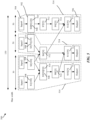
- the resource tuner 104 may perform priority assignment over the example job graph 500 in FIG. 5 , starting from a priority zero for all input stages 516 and ending with a priority 3 for all output stages 518.
- the resource tuner 104 may estimate the cost of a job with different resource allocations by simulating the execution of different stages in the job manager 120. For example, in an aspect, the resource tuner 104 may put all stages, along with their priorities in a priority queue, and schedule the stage at the top of the queue as soon as resources are available.
- the below example code provides an example implementation of cost simulation in the resource tuner 104 in an aspect.
- Algorithm 5 provides the simulated run of a job with a given set of resources. Algorithm 5 adds all job stages into a priority queue (Line 1 in Algorithm 5) and then loops until the queue is empty (Lines 7-26 in Algorithm 5). In each iteration, Algorithm 5 first checks whether there are resources available to schedule more tasks (Line 8 in Algorithm 5). If there are, then Algorithm 5 considers the highest priority stages and schedules one of their next vertices (Lines 9-19 in Algorithm 5). For a stage vertex to be scheduled, all its dependency stages (the parent stages) need to be executed before (Lines 10-14 in Algorithm 5).
- Algorithm 5 simulates task progress by picking the smallest cost task and advancing all other tasks by that cost (Lines 20-26 in Algorithm 5). This minimum cost is added to the overall cost (Line 26 in Algorithm 5) and returned in the end when the queue gets empty (Line 27 in Algorithm 5). In some aspects, Algorithm 5 may ignore data skew, stage pipelining, vertex scheduling overheads, and/or other randomizations.
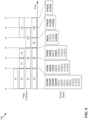
- FIG. 8 is an example cost simulation 800 of Algorithm 5 over the priority-assigned stage graph of FIG. 7 for a resource allocation of 400 containers.
- the cost simulation 800 starts with scheduling stages S1 to S4 utilizing all 400 containers. Once these stages finish, their downstream stages S5, S5, and S6 are scheduled. Stage S9 gets scheduled as soon as stage S7 finishes. However, stage S12 which is the downstream stage of stage S7 needs to wait for stage S6 to finish. Except for the initial time interval of t1 - t2, the 400 containers are not all used at the same time, and resource shaping may still be applied after resource tuning.
- the present aspects are not limited to the job manager scheduling examples described herein, and are applicable to other scheduling strategies for computing the corresponding estimated costs.
- FIGs. 9 and 10 provide flowcharts of example query methods 900 and 1000 in a serverless query processing system comprising at least one processor and at least one memory, the at least one memory comprising instructions executed by the at least one processor to process queries.
- the following description of the example methods 900 and 1000 makes reference to the systems and components described above with reference to FIGs. 1-8 or described below with reference to FIG. 11 .
- each one of the example methods 900 and 1000 may be performed by components of the example serverless query processing system 100, and is accordingly described with reference to FIGs. 1-8 , as non-limiting examples of an environment for carrying out each one of the example methods 900 and 1000.
- each one of the example methods 900 and 1000 may be implemented on a computing device (see e.g., computing device 10 of FIG. 11 ) operating in the example serverless query processing system 100, and subcomponents of the computing device may also be described below.
- the method 900 includes receiving a query.
- the processor 4, the query component 1100, the communications component 8, and/or the user interface component 12 may receive a query.
- the processor 4, the query component 1100, the communications component 8, and/or the user interface component 12 may provide means for receiving a query.
- the system 100 may receive a query from the user 112 (which may be a person or an application) that interacts with the system 100.
- the method 900 includes determining whether the query is a recurring query or a non-recurring query.
- the processor 4 and/or the query component 1100 may determine whether the query is a recurring query or a non-recurring query. Accordingly, the processor 4 and/or the query component 1100 may provide means for determining whether the query is a recurring query or a non-recurring query.
- the system 100 may determine whether a query received from the user 112 is a recurring query or a no-recurring query.
- the system 100 may identify recurring and non-recurring workloads from a workload repository 108 that includes query plans, stage graphs, and associated telemetry from previous job executions.
- the method 900 may include predicting, in response to determining that the query is the recurring query, a peak resource requirement during an execution of the query.
- the processor 4 and/or the query component 1100 may predict, in response to determining that the query is the recurring query, a peak resource requirement during an execution of the query.
- the processor 4 and/or the query component 1100 may provide means for predicting, in response to determining that the query is the recurring query, a peak resource requirement during an execution of the query.
- the processor 4 and/or the query component 1100 may provide means for predicting, in response to determining that the query is the recurring query, a peak resource requirement during an execution of the query.
- a query compiler 114 may look up the insight service 110 and load the resource predictor model for a job, and pass the compiled AST along with the predictor model to a query optimizer 116, which infers the peak resource requirement using the predictor model.
- the method 900 may include computing, in response to determining that the query is the non-recurring query, a tight resource requirement corresponding to an amount of resources that satisfy a performance requirement over the execution of the query, wherein the tight resource requirement is less than the peak resource requirement.
- the processor 4 and/or the query component 1100 may compute, in response to determining that the query is the non-recurring query, a tight resource requirement corresponding to an amount of resources that satisfy a performance requirement over the execution of the query, wherein the tight resource requirement is less than the peak resource requirement.
- the processor 4 and/or the query component 1100 may provide means for computing, in response to determining that the query is the non-recurring query, a tight resource requirement corresponding to an amount of resources that satisfy a performance requirement over the execution of the query, wherein the tight resource requirement is less than the peak resource requirement.
- the query optimizer 116 may invoke the resource tuner 104 that finds a tight resource allocation corresponding to an amount of resources that satisfy a performance requirement over the execution of the query.
- the tight resource requirement in a tight allocation 306 is less than the peak resource requirement in a peak allocation 302.
- the method 900 includes allocating resources to the query based on an applicable one of the peak resource requirement or the tight resource requirement.
- the processor 4 and/or the query component 1100 may allocate resources to the query based on an applicable one of the peak resource requirement or the tight resource requirement.
- the processor 4 and/or the query component 1100 may provide means for allocating resources to the query based on an applicable one of the peak resource requirement or the tight resource requirement.
- a job scheduler 118 may schedule a job with the applicable one of the peak resource requirement or the tight resource requirement.
- the method 900 includes starting an execution of the query using the resources.
- the processor 4 and/or the query component 1100 may start an execution of the query using the resources.
- the processor 4 and/or the query component 1100 may provide means for starting an execution of the query using the resources.
- a job manager 120 may start executing the job using the allocated resources.
- determining whether the query is the recurring query or the non-recurring query at 904 may further include determining that the query is the recurring query in response to a hash of a logical query plan of the query appearing more than once in a training dataset.
- the processor 4 and/or the query component 1100 may determine that the query is the recurring query in response to a hash of a logical query plan of the query appearing more than once in a training dataset.
- the processor 4 and/or the query component 1100 may provide means for determining that the query is the recurring query in response to a hash of a logical query plan of the query appearing more than once in a training dataset.
- the system 100 uses a hash of the logical query plan of a job to identify recurring instances. In some aspects, since the inputs and the parameters may change, the system 100 may ignore the inputs and the parameters in the hash.
- predicting the peak resource requirement at 906 may further include predicting the peak resource requirement using a machine learning model that is trained using past feature values and past actual peak resource usage information of past jobs that are associated with the hash.
- the processor 4 and/or the query component 1100 may predict the peak resource requirement using a machine learning model that is trained using past feature values and past actual peak resource usage information of past jobs that are associated with the hash.
- the processor 4 and/or the query component 1100 may provide means for predicting the peak resource requirement using a machine learning model that is trained using past feature values and past actual peak resource usage information of past jobs that are associated with the hash.
- the system 100 predicts a peak allocation for recurring jobs using machine learning models built from the telemetry of past jobs.
- predicting the peak resource requirement at 906 may further include predicting the peak resource requirement using the machine learning model and feature values of the query.
- the processor 4 and/or the query component 1100 may predict the peak resource requirement using the machine learning model and feature values of the query. Accordingly, the processor 4 and/or the query component 1100 may provide means for predicting the peak resource requirement using the machine learning model and feature values of the query.
- the system 100 predicts a peak allocation for recurring jobs using machine learning models built from the telemetry of past jobs including query plans, runtime statistics, etc. For each recurring job, the system 100 may consider different data characteristics such as cardinality, plan characteristics such as parameters, and optimizer-derived characteristics such as number of partitions, plan cost, etc.
- predicting the peak resource requirement at 906 may further include predicting the peak resource requirement at compile time using the machine learning model and feature values of the query that are available at compile time.
- the processor 4 and/or the query component 1100 may predict the peak resource requirement at compile time using the machine learning model and feature values of the query that are available at compile time.
- the processor 4 and/or the query component 1100 may provide means for predicting the peak resource requirement at compile time using the machine learning model and feature values of the query that are available at compile time.
- the peak resource requirement is predicted at compile-time, only the features that are available at compile-time for each recurring job are considered, and runtime characteristics such as actual execution time are excluded.
- the method 900 may further include, subsequent to the starting, dynamically updating the allocation of the resource for a remainder of the execution of the query based on a query execution graph of the query.
- the processor 4 and/or the query component 1100 may, subsequent to the starting, dynamically update the allocation of the resource for a remainder of the execution of the query based on a query execution graph of the query.
- the processor 4 and/or the query component 1100 may provide means for, subsequent to the starting, dynamically updating the allocation of the resource for a remainder of the execution of the query based on a query execution graph of the query.
- the job manager 120 may invoke the resource shaper 106, and in case of excess resources, releases the excess resources via the job scheduler 118.
- the system 100 may dynamically adapt the allocations based on the query execution graph.
- the method 900 may further include re-computing the applicable one of the peak resource requirement or the tight resource requirement based on the query execution graph; and releasing any excess resources.
- the processor 4 and/or the query component 1100 may re-compute the applicable one of the peak resource requirement or the tight resource requirement based on the query execution graph; and release any excess resources.
- the processor 4 and/or the query component 1100 may provide means for re-computing the applicable one of the peak resource requirement or the tight resource requirement based on the query execution graph; and releasing any excess resources.
- the processor 4 and/or the query component 1100 may provide means for re-computing the applicable one of the peak resource requirement or the tight resource requirement based on the query execution graph; and releasing any excess resources.
- the job manager 120 may invoke the resource shaper 106, and in case of excess resources, releases the excess resources via the job scheduler 118.
- the system 100 re-computes a new peak or tight allocation expected for the remainder of the query as the query execution progresses. At any time, if the newer computed allocation is lower than the current allocation, the system 100 releases the excess resources.
- the re-computing may further include converting the query execution graph into one or more trees by removing one edge from output edges of each operator that has more than one consumer; and computing a maximum remaining peak resource requirement by computing a maximum width of each tree and summing the maximum width of all trees.
- the processor 4 and/or the query component 1100 may convert the query execution graph into one or more trees by removing one edge from output edges of each operator that has more than one consumer; and compute a maximum remaining peak resource requirement by computing a maximum width of each tree and summing the maximum width of all trees.
- the processor 4 and/or the query component 1100 may provide means for converting the query execution graph into one or more trees by removing one edge from output edges of each operator that has more than one consumer; and computing a maximum remaining peak resource requirement by computing a maximum width of each tree and summing the maximum width of all trees.
- the resource shaper 106 may estimate the peak resources for the remaining of the job by converting a job graph into one or more trees. For example, the resource shaper 106 may perform "tree-ification" by removing one of the output edges of the Spool operators in the job graph, since Spool is the only operator that may have more than one consumers. In an aspect, for example, as described above with reference to FIG.
- the resource shaper 106 may compute the maximum remaining peak resource requirement by computing the maximum width of each of the trees 514, which is 30, 50, and 50 respectively, and then takes the sum of the individual tree widths, e.g., 130.
- computing the tight resource requirement at 908 may further include computing the tight resource requirement that corresponds to a minimum amount of resources that satisfy the performance requirement over the execution of the query.
- the processor 4 and/or the query component 1100 may compute the tight resource requirement that corresponds to a minimum amount of resources that satisfy the performance requirement over the execution of the query.
- the processor 4 and/or the query component 1100 may provide means for computing the tight resource requirement that corresponds to a minimum amount of resources that satisfy the performance requirement over the execution of the query.
- the system 100 computes a tight allocation which is the minimum possible allocation that does not cause noticeable degradation in performance.
- computing the tight resource requirement at 908 may further include estimating a sequence of vertex executions in a query execution graph of the query by simulating a job scheduler; and starting with an initial set of resources, iteratively finding an alternative resource allocation that decreases an area of a resource-cost rectangle circumscribing a resource-cost curve of the execution of the query while keeping cost and resource overheads within a threshold.
- the processor 4 and/or the query component 1100 may estimate a sequence of vertex executions in a query execution graph of the query by simulating a job scheduler; and starting with an initial set of resources, iteratively find an alternative resource allocation that decreases an area of a resource-cost rectangle circumscribing a resource-cost curve of the execution of the query while keeping cost and resource overheads within a threshold.
- the processor 4 and/or the query component 1100 may provide means for estimating a sequence of vertex executions in a query execution graph of the query by simulating a job scheduler; and starting with an initial set of resources, iteratively finding an alternative resource allocation that decreases an area of a resource-cost rectangle circumscribing a resource-cost curve of the execution of the query while keeping cost and resource overheads within a threshold.
- the resource tuner 106 attempts to decrease the total area of the resource-cost rectangle 608.
- the resource tuner 104 simulates the job scheduler 118 to estimate the same sequence of vertex executions as would happen in the real environment, including starting with an initial set of resources and iteratively finding the alternate resource allocation that would improve the area of the resource-cost rectangle 608 while keeping cost and resource overheads within a threshold.
- computing the tight resource requirement at 908 may further include assigning priorities to each stage in the query execution graph of the query, wherein a priority assigned to a stage is one more than a maximum priority assigned to child stages of the stage.
- the processor 4 and/or the query component 1100 may assign priorities to each stage in the query execution graph of the query, wherein a priority assigned to a stage is one more than a maximum priority assigned to child stages of the stage.
- the processor 4 and/or the query component 1100 may provide means for assigning priorities to each stage in the query execution graph of the query, wherein a priority assigned to a stage is one more than a maximum priority assigned to child stages of the stage. In an aspect, for example, as described above with reference to FIGs.
- the resource tuner 106 assigns a priority of zero (e.g., most important) to the leaf stages, and all other stages are assigned a priority of one more than the maximum priority of any respective child stages. Such a priority assignment ensures that all child stages have been executed before the parent stage starts executing.
- the resource tuner 104 may perform priority assignment over the example job graph 500 in FIG. 5 , starting from a priority zero for all input stages 516 and ending with a priority 3 for all output stages 518.
- computing the tight resource requirement at 908 may further include queuing stages of the query execution graph of the query in a priority queue based on the priorities.
- the processor 4 and/or the query component 1100 may queue stages of the query execution graph of the query in a priority queue based on the priorities.
- the processor 4 and/or the query component 1100 may provide means for queueing stages of the query execution graph of the query in a priority queue based on the priorities.
- the resource tuner 104 may estimate the cost of a job with different resource allocations by simulating the execution of different stages in the job manager 120.
- the resource tuner 104 may put all stages, along with their priorities in a priority queue.
- computing the tight resource requirement at 908 may further include processing the priority queue comprising scheduling any stages at a top of the priority queue based on an availability of resources.
- the processor 4 and/or the query component 1100 may process the priority queue comprising scheduling any stages at a top of the priority queue based on an availability of resources.
- the processor 4 and/or the query component 1100 may provide means for processing the priority queue comprising scheduling any stages at a top of the priority queue based on an availability of resources.
- the resource tuner 104 may schedule the stage at the top of the queue as soon as resources are available.
- computing the tight resource requirement at 908 may further include, for each candidate resource allocation, estimating a cost of the processing of the priority queue.
- the processor 4 and/or the query component 1100 may, for each candidate resource allocation, estimate a cost of the processing of the priority queue.
- the processor 4 and/or the query component 1100 may provide means for, for each candidate resource allocation, estimating a cost of the processing of the priority queue.
- the resource tuner 104 may implement cost simulation 800 over the priority-assigned stage graph of FIG. 7 for a resource allocation of 400 containers.
- the method 1000 includes transmitting a query to a serverless query processing system.
- the processor 4, the query component 1100, the communications component 8, and/or the user interface component 12 may transmit a query to a serverless query processing system.
- the processor 4, the query component 1100, the communications component 8, and/or the user interface component 12 may provide means for transmitting a query to a serverless query processing system.
- a user 112 (which may be a person or an application) that interacts with the system 100 may send a query to the system 100.
- the method 1000 includes skipping transmission, to the serverless query processing system, of an amount of resources required for an execution of the query, wherein the skipping is configured to cause the serverless query processing system to determine and allocate the amount of resources required for the execution of the query.
- the processor 4, the query component 1100, the communications component 8, and/or the user interface component 12 may skip transmission, to the serverless query processing system, of an amount of resources required for an execution of the query, wherein the skipping is configured to cause the serverless query processing system to determine and allocate the amount of resources required for the execution of the query.
- the processor 4, the query component 1100, the communications component 8, and/or the user interface component 12 may provide means for skipping transmission, to the serverless query processing system, of an amount of resources required for an execution of the query, wherein the skipping is configured to cause the serverless query processing system to determine and allocate the amount of resources required for the execution of the query.
- the user 112 may not indicate the amount of resources required for the execution of the query. Instead, the system 100 may determine whether a query received from the user 112 is a recurring query or a no-recurring query.
- a query compiler 114 may look up the insight service 110 and load the resource predictor model for a job, and pass the compiled AST along with the predictor model to a query optimizer 116, which infers the peak resource requirement using the predictor model.
- the query optimizer 116 may invoke the resource tuner 104 that finds a tight resource allocation corresponding to an amount of resources that satisfy a performance requirement over the execution of the query.
- the method 1000 includes receiving results of the execution of the query from the serverless query processing system.
- the processor 4, the query component 1100, the communications component 8, and/or the user interface component 12 may receive results of the execution of the query from the serverless query processing system.
- the processor 4, the query component 1100, the communications component 8, and/or the user interface component 12 may provide means for receiving results of the execution of the query from the serverless query processing system.
- a job scheduler 118 schedules the job with the peak resource requirement, and a job manager 120 outputs the results which may be provided back to the user 112.
- the method 1000 may further include transmitting, to the serverless query processing system, a selection of a mode of operation for the serverless query processing system to determine and allocate the amount of resources required for the execution of the query.
- the processor 4, the query component 1100, the communications component 8, and/or the user interface component 12 may transmit, to the serverless query processing system, a selection of a mode of operation for the serverless query processing system to determine and allocate the amount of resources required for the execution of the query.
- the processor 4, the query component 1100, the communications component 8, and/or the user interface component 12 may provide means for transmitting, to the serverless query processing system, a selection of a mode of operation for the serverless query processing system to determine and allocate the amount of resources required for the execution of the query.
- the system 100 may provide compiler flags where the users 112 may choose to explicitly opt-in or opt-out of resource optimization on a per job basis.
- transmitting the selection of the mode of operation may further include indicating to the serverless query processing system whether to adaptively change the amount of resources during the execution of the query.
- the processor 4, the query component 1100, the communications component 8, and/or the user interface component 12 may indicate to the serverless query processing system whether to adaptively change the amount of resources during the execution of the query.
- the processor 4, the query component 1100, the communications component 8, and/or the user interface component 12 may provide means for indicating to the serverless query processing system whether to adaptively change the amount of resources during the execution of the query.
- the user 112 may select the adaptive allocation 304.
- the described apparatus and methods introduce a novel way for serverless query processing optimization.
- FIG. 11 illustrates an example computing device 10 including additional optional component details as those shown in FIG. 1 .
- the computing device 10 may include a processor 4 for carrying out processing functions associated with one or more of components and functions described herein.
- the processor 4 may include a single or multiple set of processors or multi-core processors.
- the processor 4 may be implemented as an integrated processing system and/or a distributed processing system.
- the processor 4 may perform the function of a query component 1100 which may be configured to perform the function of any component described above, such as the user 112, the resource predictor 102, the resource tuner 104, the resource shaper 106, the workload insights service 110, the query compiler 114, the query optimizer 116, the job scheduler 118, the job manager 120, or any other component described above.
- a query component 1100 which may be configured to perform the function of any component described above, such as the user 112, the resource predictor 102, the resource tuner 104, the resource shaper 106, the workload insights service 110, the query compiler 114, the query optimizer 116, the job scheduler 118, the job manager 120, or any other component described above.
- the computing device 10 may further include memory 6, such as for storing local versions of applications being executed by the processor 4, related instructions, parameters, etc.
- the memory 6 may include a type of memory usable by a computer, such as random access memory (RAM), read only memory (ROM), tapes, magnetic discs, optical discs, volatile memory, non-volatile memory, and any combination thereof.
- the processor 4 and the memory 6 may include and execute an operating system executing on the processor 4, one or more applications, display drivers, etc., as described herein, and/or other components of the computing device 10.
- the computing device 10 may include a communications component 8 that provides for establishing and maintaining communications with one or more other devices, parties, entities, etc. utilizing hardware, software, and services as described herein.
- the communications component 8 may carry communications between components on the computing device 10, as well as between the computing device 10 and external devices, such as devices located across a communications network and/or devices serially or locally connected to the computing device 10.
- the communications component 8 may include one or more buses, and may further include transmit chain components and receive chain components associated with a wireless or wired transmitter and receiver, respectively, operable for interfacing with external devices.
- the computing device 10 may include a data store 102, which can be any suitable combination of hardware and/or software, that provides for mass storage of information, databases, and programs employed in connection with examples described herein.
- a data store 14 may be or may include a data repository for applications and/or related parameters not currently being executed by processor 4.
- the data store 14 may be a data repository for an operating system, application, display driver, etc., executing on the processor 4, and/or one or more other components of the computing device 10.
- the computing device 10 may also include a user interface component 12 operable to receive inputs from a user of the computing device 10 and further operable to generate outputs for presentation to the user (e.g., via a display interface to a display device).
- the user interface component 12 may include one or more input devices, including but not limited to a keyboard, a number pad, a mouse, a touch-sensitive display, a navigation key, a function key, a microphone, a voice recognition component, or any other mechanism capable of receiving an input from a user, or any combination thereof.
- the user interface component 12 may include one or more output devices, including but not limited to a display interface, a speaker, a haptic feedback mechanism, a printer, any other mechanism capable of presenting an output to a user, or any combination thereof.
- processors include microprocessors, microcontrollers, digital signal processors (DSPs), field programmable gate arrays (FPGAs), programmable logic devices (PLDs), state machines, gated logic, discrete hardware circuits, and other suitable hardware configured to perform the various functionality described throughout this disclosure.
- DSPs digital signal processors
- FPGAs field programmable gate arrays
- PLDs programmable logic devices
- state machines gated logic, discrete hardware circuits, and other suitable hardware configured to perform the various functionality described throughout this disclosure.
- One or more processors in the processing system may execute software.
- Software shall be construed broadly to mean instructions, instruction sets, code, code segments, program code, programs, subprograms, software modules, applications, software applications, software packages, routines, subroutines, objects, executables, threads of execution, procedures, functions, etc., whether referred to as software, firmware, middleware, microcode, hardware description language, or otherwise.
- one or more of the functions described may be implemented in hardware, software, firmware, or any combination thereof. If implemented in software, the functions may be stored on or encoded as one or more instructions or code on a computer-readable medium.
- Computer-readable media includes computer storage media. Storage media may be any available media that can be accessed by a computer. By way of example, and not limitation, such computer-readable media can comprise RAM, ROM, EEPROM, CD-ROM or other optical disk storage, magnetic disk storage or other magnetic storage devices, or any other medium that can be used to carry or store desired program code in the form of instructions or data structures and that can be accessed by a computer.
- Disk and disc includes compact disc (CD), laser disc, optical disc, digital versatile disc (DVD), and floppy disk where disks usually reproduce data magnetically, while discs reproduce data optically with lasers. Combinations of the above should also be included within the scope of computer-readable media.
- Combinations such as "at least one of A, B, or C,” “one or more of A, B, or C,” “at least one of A, B, and C,” “one or more of A, B, and C,” and "A, B, C, or any combination thereof” include any combination of A, B, and/or C, and may include multiples of A, multiples of B, or multiples of C.
- combinations such as “at least one of A, B, or C,” “one or more of A, B, or C,” “at least one of A, B, and C,” “one or more of A, B, and C,” and “A, B, C, or any combination thereof” may be A only, B only, C only, A and B, A and C, B and C, or A and B and C, where any such combinations may contain one or more member or members of A, B, or C.
Landscapes
- Engineering & Computer Science (AREA)
- Theoretical Computer Science (AREA)
- Software Systems (AREA)
- Physics & Mathematics (AREA)
- General Engineering & Computer Science (AREA)
- General Physics & Mathematics (AREA)
- Data Mining & Analysis (AREA)
- Computational Linguistics (AREA)
- Mathematical Physics (AREA)
- Artificial Intelligence (AREA)
- Evolutionary Computation (AREA)
- Computing Systems (AREA)
- Databases & Information Systems (AREA)
- Operations Research (AREA)
- Computer Vision & Pattern Recognition (AREA)
- Medical Informatics (AREA)
- Information Retrieval, Db Structures And Fs Structures Therefor (AREA)
Claims (10)
- Verfahren zur serverlosen Anfrageverarbeitung in einem serverlosen Anfrageverarbeitungssystem, das mindestens einen Prozessor und mindestens einen Speicher umfasst, wobei der mindestens eine Speicher Anweisungen umfasst, die von dem mindestens einen Prozessor zur Verarbeitung von Anfragen ausgeführt werden, wobei das Verfahren umfasst:Empfangen (902) einer Anfrage;Bestimmen (904), ob die Anfrage eine wiederkehrende oder eine nicht wiederkehrende Anfrage ist;Vorhersagen (906) eines Peak-Ressourcenbedarfs (302) während einer Ausführung der Anfrage als Reaktion auf das Bestimmen, dass es sich bei der Anfrage um die wiederkehrende Anfrage handelt, wobei der Peak-Ressourcenbedarf basierend auf einem abfragespezifischen Vorhersagemodell vorhergesagt wird, das aus Daten von früheren Ausführungen der Anfrage gelernt wurde;Berechnen (908), als Reaktion auf das Bestimmen, dass die Anfrage die nicht wiederkehrende Anfrage ist, eines engen Ressourcenbedarfs (306), der einer Menge von Ressourcen entspricht, die eine Leistungsanforderung über die Ausführung der Anfrage erfüllen, ausgehend von einer ursprünglichen RessourcenKosten-Kurve;Zuweisung (910) von Ressourcen zu der Anfrage basierend auf dem Peak-Ressourcenbedarf oder dem engen Ressourcenbedarf;Starten (912) der Ausführung der Anfrage unter Verwendung der Ressourcen; und dynamisches Aktualisieren der Zuweisung der Ressource für einen Rest der Ausführung der Anfrage basierend auf einem Diagramm (500) zur Ausführung der Anfrage, einschließlich des erneuten Berechnens des anwendbaren Peak-Ressourcenbedarfs oder des engen Ressourcenbedarfs basierend auf dem Diagramm zur Ausführung der Anfrage; undFreisetzen jeglicher überschüssiger Ressourcen.
- Verfahren nach Anspruch 1, wobei das Bestimmen das Bestimmen umfasst, dass es sich bei der Anfrage um die wiederkehrende Anfrage handelt, und zwar in Reaktion auf einen Hash eines logischen Anfrageplans der Anfrage, der mehr als einmal in einem Trainingsdatensatz erscheint.
- Verfahren nach einem der Ansprüche 1 bis 2, wobei das Vorhersagen das Vorhersagen des Peak-Ressourcenbedarfs unter Verwendung eines Maschinenlernmodells umfasst, das unter Verwendung vergangener Merkmalswerte und vergangener tatsächlicher Peak-Ressourcennutzungsinformationen vergangener Jobs, die dem Hash zugeordnet sind, trainiert wird.
- Verfahren nach einem der Ansprüche 1 bis 3, wobei das Vorhersagen ferner das Vorhersagen des Peak-Ressourcenbedarfs unter Verwendung des Maschinenlernmodells und der Merkmalswerte der Anfrage umfasst.
- Verfahren nach einem der Ansprüche 1 bis 4, wobei das Vorhersagen ferner das Vorhersagen des Peak-Ressourcenbedarfs zur Kompilierungszeit unter Verwendung des Maschinenlernmodells und der Merkmalswerte der Anfrage, die zur Kompilierungszeit verfügbar sind, umfasst.
- Verfahren nach einem der Ansprüche 1-5, wobei das erneute Berechnen umfasst:Umwandeln des Diagramms zur Ausführung der Anfrage in einen oder mehrere Bäume durch Entfernen einer Kante von den Ausgabekanten jedes Operators, der mehr als einen Verbraucher aufweist; undBerechnen eines maximalen verbleibenden Peak-Ressourcenbedarfs durch Berechnen einer maximalen Breite jedes Baums und Summieren der maximalen Breite aller Bäume.
- Verfahren nach einem der Ansprüche 1-6, wobei das Berechnen das Berechnen des engen Ressourcenbedarfs umfasst, der einer Mindestmenge an Ressourcen entspricht, die die Leistungsanforderung bei der Ausführung der Anfrage erfüllen.
- Verfahren nach einem der Ansprüche 1-7, wobei das Berechnen des engen Ressourcenbedarfs umfasst:Schätzen einer Sequenz von Scheitelpunkten in dem Diagramm zum Planen der Anfrage durch Simulieren eines Jobplaners; undausgehend von einem anfänglichen Satz von Ressourcen, iteratives Finden einer alternativen Ressourcenzuweisung, die einen Bereich eines Ressourcenkosten-Rechtecks verkleinert, das eine Ressourcenkosten-Kurve der Ausführung der Anfrage umschreibt, während die Kosten und der Ressourcen-Overhead innerhalb eines Schwellenwertes bleiben.
- Verfahren nach Anspruch 8, wobei das Berechnen des engen Ressourcenbedarfs ferner umfasst:Zuweisen von Prioritäten zu jeder Stufe im Diagramm zur Ausführung der Anfrage, wobei eine einer Stufe zugewiesene Priorität um eins höher ist als eine maximale Priorität, die den untergeordneten Stufen der Stufe zugewiesen ist;Einreihen von Stufen des Diagramms zur Ausführung der Anfrage in eine auf den Prioritäten basierende Warteschlange;Verarbeiten der Prioritäts-Warteschlange, umfassend das Planen jeglicher Stufen an der Spitze der Prioritäts-Warteschlange basierend auf der Verfügbarkeit von Ressourcen; undfür jede kandidierende Ressourcenzuweisung, Schätzen der Kosten für die Verarbeitung der Prioritätswarteschlange.
- Vorrichtung in einem serverlosen Anfrageverarbeitungssystem, umfassend:mindestens einen Prozessor; undmindestens einen Speicher, der mit dem mindestens einen Prozessor kommuniziert, wobei der mindestens eine Speicher Anweisungen umfasst, die von dem mindestens einen Prozessor ausgeführt werden, um das Verfahren nach einem der Ansprüche 1 bis 9 durchzuführen.
Applications Claiming Priority (3)
| Application Number | Priority Date | Filing Date | Title |
|---|---|---|---|
| US201962908336P | 2019-09-30 | 2019-09-30 | |
| US16/697,960 US11455192B2 (en) | 2019-09-30 | 2019-11-27 | Resource optimization for serverless query processing |
| PCT/US2020/037994 WO2021066900A1 (en) | 2019-09-30 | 2020-06-17 | Resource optimization for serverless query processing |
Publications (2)
| Publication Number | Publication Date |
|---|---|
| EP4038501A1 EP4038501A1 (de) | 2022-08-10 |
| EP4038501B1 true EP4038501B1 (de) | 2025-02-26 |
Family
ID=75163361
Family Applications (1)
| Application Number | Title | Priority Date | Filing Date |
|---|---|---|---|
| EP20751813.5A Active EP4038501B1 (de) | 2019-09-30 | 2020-06-17 | Ressourcenoptimierung für serverlose anfrageverarbeitung |
Country Status (3)
| Country | Link |
|---|---|
| US (2) | US11455192B2 (de) |
| EP (1) | EP4038501B1 (de) |
| WO (1) | WO2021066900A1 (de) |
Families Citing this family (9)
| Publication number | Priority date | Publication date | Assignee | Title |
|---|---|---|---|---|
| US10789195B1 (en) * | 2019-07-17 | 2020-09-29 | Capital One Services, Llc | Article, device, and techniques for serverless streaming message processing |
| EP4089549A4 (de) * | 2020-01-14 | 2023-01-25 | Guangdong Oppo Mobile Telecommunications Corp., Ltd. | Verfahren und vorrichtung zur ressourcenplanung sowie lesbares speichermedium |
| US12591461B2 (en) * | 2020-08-31 | 2026-03-31 | Synopsys, Inc. | Adaptive scheduling with dynamic partition-load balancing for fast partition compilation |
| CN112199196B (zh) * | 2020-10-21 | 2022-03-18 | 上海交通大学 | 一种资源配置方法、介质及服务端 |
| US11782918B2 (en) * | 2020-12-11 | 2023-10-10 | International Business Machines Corporation | Selecting access flow path in complex queries |
| US11294723B1 (en) | 2021-06-25 | 2022-04-05 | Sedai Inc. | Autonomous application management for distributed computing systems |
| US12405827B2 (en) * | 2022-01-07 | 2025-09-02 | International Business Machines Corporation | Cognitive allocation of specialized hardware resources |
| US11620289B1 (en) * | 2022-09-07 | 2023-04-04 | Snowflake Inc. | Data-driven query-execution scheduling |
| US20240118929A1 (en) * | 2022-09-29 | 2024-04-11 | Royal Bank Of Canada | System and method for a machine learning architecture for resource allocation |
-
2019
- 2019-11-27 US US16/697,960 patent/US11455192B2/en active Active
-
2020
- 2020-06-17 WO PCT/US2020/037994 patent/WO2021066900A1/en not_active Ceased
- 2020-06-17 EP EP20751813.5A patent/EP4038501B1/de active Active
-
2022
- 2022-08-24 US US17/894,628 patent/US11934874B2/en active Active
Non-Patent Citations (2)
| Title |
|---|
| KAUSHIK RAJAN ET AL: "PerfOrator : eloquent performance models for Resource Optimization", PROCEEDINGS OF THE SEVENTH ACM SYMPOSIUM ON CLOUD COMPUTING, SOCC '16, 5 October 2016 (2016-10-05), New York, New York, USA, pages 415 - 427, XP055733021, ISBN: 978-1-4503-4525-5, DOI: 10.1145/2987550.2987566 * |
| RUI OLIVEIRA ET AL: "Optimus : an efficient dynamic resource scheduler for deep learning clusters", EUROSYS '18: PROCEEDINGS OF THE THIRTEENTH EUROSYS CONFERENCE; APRIL 23-26, 2018; PORTO, POTUGAL, 23 April 2018 (2018-04-23) - 26 April 2018 (2018-04-26), New York, New York, USA, pages 1 - 14, XP055733027, ISBN: 978-1-4503-5584-1, DOI: 10.1145/3190508.3190517 * |
Also Published As
| Publication number | Publication date |
|---|---|
| EP4038501A1 (de) | 2022-08-10 |
| US20220413914A1 (en) | 2022-12-29 |
| US20210096915A1 (en) | 2021-04-01 |
| US11934874B2 (en) | 2024-03-19 |
| US11455192B2 (en) | 2022-09-27 |
| WO2021066900A1 (en) | 2021-04-08 |
Similar Documents
| Publication | Publication Date | Title |
|---|---|---|
| EP4038501B1 (de) | Ressourcenoptimierung für serverlose anfrageverarbeitung | |
| US20230091261A1 (en) | Orchestration and scheduling of services | |
| US11175953B2 (en) | Determining an allocation of computing resources for a job | |
| US20190347137A1 (en) | Task assignment in virtual gpu enabled systems | |
| US12346730B2 (en) | System and method for infrastructure scaling | |
| US10691647B2 (en) | Distributed file system metering and hardware resource usage | |
| US8966462B2 (en) | Memory management parameters derived from system modeling | |
| US9043788B2 (en) | Experiment manager for manycore systems | |
| US11663051B2 (en) | Workflow pipeline optimization based on machine learning operation for determining wait time between successive executions of the workflow | |
| US20090125619A1 (en) | Autonomic definition and management of distributed appication information | |
| CN117157624A (zh) | 自动容器迁移系统 | |
| Ardagna et al. | A multi-model optimization framework for the model driven design of cloud applications | |
| US12566640B2 (en) | Allocating of computing resources for applications | |
| US20250278304A1 (en) | Clustering Computational Workloads for Efficient Allocation of Hardware Resources | |
| CN116755893B (zh) | 面向深度学习的分布式计算系统的作业调度方法和装置 | |
| US12436801B2 (en) | Deep learning scheduler toolkit | |
| Kaminski et al. | A framework for black-box SLO tuning of multi-tenant applications in Kubernetes | |
| Islam | Cost-efficient Management of Cloud Resources for Big Data Applications. | |
| CN119829296B (zh) | 存算一体超融合服务器的负载均衡方法及系统 | |
| Li | Towards Efficient Resource Management for Cloud-Native Applications | |
| Kaufmann | Improving the Efficiency of Heterogeneous Clouds | |
| Coleman et al. | Evaluating the Impact of Algorithmic Components on Task Graph Scheduling | |
| Prajapati et al. | Multi-Criteria Deep Reinforcement Learning Energy-Aware and QoS-Driven Scheduling for Containerized Microservices in Docker Swarm Clusters | |
| Benhari et al. | Adaptive Carbon-Aware Scheduling Policies for HPC Systems | |
| Weng | Optimize Resource Scheduling in Multi-Tenant Clusters at Scale |
Legal Events
| Date | Code | Title | Description |
|---|---|---|---|
| STAA | Information on the status of an ep patent application or granted ep patent |
Free format text: STATUS: UNKNOWN |
|
| STAA | Information on the status of an ep patent application or granted ep patent |
Free format text: STATUS: THE INTERNATIONAL PUBLICATION HAS BEEN MADE |
|
| PUAI | Public reference made under article 153(3) epc to a published international application that has entered the european phase |
Free format text: ORIGINAL CODE: 0009012 |
|
| STAA | Information on the status of an ep patent application or granted ep patent |
Free format text: STATUS: REQUEST FOR EXAMINATION WAS MADE |
|
| 17P | Request for examination filed |
Effective date: 20220322 |
|
| AK | Designated contracting states |
Kind code of ref document: A1 Designated state(s): AL AT BE BG CH CY CZ DE DK EE ES FI FR GB GR HR HU IE IS IT LI LT LU LV MC MK MT NL NO PL PT RO RS SE SI SK SM TR |
|
| DAV | Request for validation of the european patent (deleted) | ||
| DAX | Request for extension of the european patent (deleted) | ||
| GRAP | Despatch of communication of intention to grant a patent |
Free format text: ORIGINAL CODE: EPIDOSNIGR1 |
|
| STAA | Information on the status of an ep patent application or granted ep patent |
Free format text: STATUS: GRANT OF PATENT IS INTENDED |
|
| RIC1 | Information provided on ipc code assigned before grant |
Ipc: G06F 16/2453 20190101ALN20240930BHEP Ipc: G06F 9/48 20060101ALI20240930BHEP Ipc: G06F 9/50 20060101AFI20240930BHEP |
|
| INTG | Intention to grant announced |
Effective date: 20241014 |
|
| RIC1 | Information provided on ipc code assigned before grant |
Ipc: G06F 16/2453 20190101ALN20241004BHEP Ipc: G06F 9/48 20060101ALI20241004BHEP Ipc: G06F 9/50 20060101AFI20241004BHEP |
|
| P01 | Opt-out of the competence of the unified patent court (upc) registered |
Free format text: CASE NUMBER: APP_59871/2024 Effective date: 20241105 |
|
| GRAS | Grant fee paid |
Free format text: ORIGINAL CODE: EPIDOSNIGR3 |
|
| GRAA | (expected) grant |
Free format text: ORIGINAL CODE: 0009210 |
|
| STAA | Information on the status of an ep patent application or granted ep patent |
Free format text: STATUS: THE PATENT HAS BEEN GRANTED |
|
| AK | Designated contracting states |
Kind code of ref document: B1 Designated state(s): AL AT BE BG CH CY CZ DE DK EE ES FI FR GB GR HR HU IE IS IT LI LT LU LV MC MK MT NL NO PL PT RO RS SE SI SK SM TR |
|
| REG | Reference to a national code |
Ref country code: GB Ref legal event code: FG4D |
|
| REG | Reference to a national code |
Ref country code: CH Ref legal event code: EP |
|
| REG | Reference to a national code |
Ref country code: DE Ref legal event code: R096 Ref document number: 602020046777 Country of ref document: DE |
|
| REG | Reference to a national code |
Ref country code: IE Ref legal event code: FG4D |
|
| REG | Reference to a national code |
Ref country code: NL Ref legal event code: MP Effective date: 20250226 |
|
| PG25 | Lapsed in a contracting state [announced via postgrant information from national office to epo] |
Ref country code: RS Free format text: LAPSE BECAUSE OF FAILURE TO SUBMIT A TRANSLATION OF THE DESCRIPTION OR TO PAY THE FEE WITHIN THE PRESCRIBED TIME-LIMIT Effective date: 20250526 |
|
| PG25 | Lapsed in a contracting state [announced via postgrant information from national office to epo] |
Ref country code: FI Free format text: LAPSE BECAUSE OF FAILURE TO SUBMIT A TRANSLATION OF THE DESCRIPTION OR TO PAY THE FEE WITHIN THE PRESCRIBED TIME-LIMIT Effective date: 20250226 |
|
| PG25 | Lapsed in a contracting state [announced via postgrant information from national office to epo] |
Ref country code: PL Free format text: LAPSE BECAUSE OF FAILURE TO SUBMIT A TRANSLATION OF THE DESCRIPTION OR TO PAY THE FEE WITHIN THE PRESCRIBED TIME-LIMIT Effective date: 20250226 |
|
| PGFP | Annual fee paid to national office [announced via postgrant information from national office to epo] |
Ref country code: DE Payment date: 20250520 Year of fee payment: 6 |
|
| PG25 | Lapsed in a contracting state [announced via postgrant information from national office to epo] |
Ref country code: ES Free format text: LAPSE BECAUSE OF FAILURE TO SUBMIT A TRANSLATION OF THE DESCRIPTION OR TO PAY THE FEE WITHIN THE PRESCRIBED TIME-LIMIT Effective date: 20250226 |
|
| PGFP | Annual fee paid to national office [announced via postgrant information from national office to epo] |
Ref country code: GB Payment date: 20250520 Year of fee payment: 6 |
|
| REG | Reference to a national code |
Ref country code: LT Ref legal event code: MG9D |
|
| PG25 | Lapsed in a contracting state [announced via postgrant information from national office to epo] |
Ref country code: NO Free format text: LAPSE BECAUSE OF FAILURE TO SUBMIT A TRANSLATION OF THE DESCRIPTION OR TO PAY THE FEE WITHIN THE PRESCRIBED TIME-LIMIT Effective date: 20250526 Ref country code: IS Free format text: LAPSE BECAUSE OF FAILURE TO SUBMIT A TRANSLATION OF THE DESCRIPTION OR TO PAY THE FEE WITHIN THE PRESCRIBED TIME-LIMIT Effective date: 20250626 |
|
| PG25 | Lapsed in a contracting state [announced via postgrant information from national office to epo] |
Ref country code: NL Free format text: LAPSE BECAUSE OF FAILURE TO SUBMIT A TRANSLATION OF THE DESCRIPTION OR TO PAY THE FEE WITHIN THE PRESCRIBED TIME-LIMIT Effective date: 20250226 |
|
| PG25 | Lapsed in a contracting state [announced via postgrant information from national office to epo] |
Ref country code: HR Free format text: LAPSE BECAUSE OF FAILURE TO SUBMIT A TRANSLATION OF THE DESCRIPTION OR TO PAY THE FEE WITHIN THE PRESCRIBED TIME-LIMIT Effective date: 20250226 |
|
| PG25 | Lapsed in a contracting state [announced via postgrant information from national office to epo] |
Ref country code: PT Free format text: LAPSE BECAUSE OF FAILURE TO SUBMIT A TRANSLATION OF THE DESCRIPTION OR TO PAY THE FEE WITHIN THE PRESCRIBED TIME-LIMIT Effective date: 20250626 Ref country code: LV Free format text: LAPSE BECAUSE OF FAILURE TO SUBMIT A TRANSLATION OF THE DESCRIPTION OR TO PAY THE FEE WITHIN THE PRESCRIBED TIME-LIMIT Effective date: 20250226 |
|
| PG25 | Lapsed in a contracting state [announced via postgrant information from national office to epo] |
Ref country code: GR Free format text: LAPSE BECAUSE OF FAILURE TO SUBMIT A TRANSLATION OF THE DESCRIPTION OR TO PAY THE FEE WITHIN THE PRESCRIBED TIME-LIMIT Effective date: 20250527 Ref country code: BG Free format text: LAPSE BECAUSE OF FAILURE TO SUBMIT A TRANSLATION OF THE DESCRIPTION OR TO PAY THE FEE WITHIN THE PRESCRIBED TIME-LIMIT Effective date: 20250226 |
|
| REG | Reference to a national code |
Ref country code: AT Ref legal event code: MK05 Ref document number: 1771318 Country of ref document: AT Kind code of ref document: T Effective date: 20250226 |
|
| PG25 | Lapsed in a contracting state [announced via postgrant information from national office to epo] |
Ref country code: SE Free format text: LAPSE BECAUSE OF FAILURE TO SUBMIT A TRANSLATION OF THE DESCRIPTION OR TO PAY THE FEE WITHIN THE PRESCRIBED TIME-LIMIT Effective date: 20250226 |
|
| PG25 | Lapsed in a contracting state [announced via postgrant information from national office to epo] |
Ref country code: SM Free format text: LAPSE BECAUSE OF FAILURE TO SUBMIT A TRANSLATION OF THE DESCRIPTION OR TO PAY THE FEE WITHIN THE PRESCRIBED TIME-LIMIT Effective date: 20250226 |
|
| PG25 | Lapsed in a contracting state [announced via postgrant information from national office to epo] |
Ref country code: DK Free format text: LAPSE BECAUSE OF FAILURE TO SUBMIT A TRANSLATION OF THE DESCRIPTION OR TO PAY THE FEE WITHIN THE PRESCRIBED TIME-LIMIT Effective date: 20250226 |
|
| PG25 | Lapsed in a contracting state [announced via postgrant information from national office to epo] |
Ref country code: IT Free format text: LAPSE BECAUSE OF FAILURE TO SUBMIT A TRANSLATION OF THE DESCRIPTION OR TO PAY THE FEE WITHIN THE PRESCRIBED TIME-LIMIT Effective date: 20250226 |
|
| PG25 | Lapsed in a contracting state [announced via postgrant information from national office to epo] |
Ref country code: AT Free format text: LAPSE BECAUSE OF FAILURE TO SUBMIT A TRANSLATION OF THE DESCRIPTION OR TO PAY THE FEE WITHIN THE PRESCRIBED TIME-LIMIT Effective date: 20250226 |
|
| PG25 | Lapsed in a contracting state [announced via postgrant information from national office to epo] |
Ref country code: EE Free format text: LAPSE BECAUSE OF FAILURE TO SUBMIT A TRANSLATION OF THE DESCRIPTION OR TO PAY THE FEE WITHIN THE PRESCRIBED TIME-LIMIT Effective date: 20250226 Ref country code: CZ Free format text: LAPSE BECAUSE OF FAILURE TO SUBMIT A TRANSLATION OF THE DESCRIPTION OR TO PAY THE FEE WITHIN THE PRESCRIBED TIME-LIMIT Effective date: 20250226 |
|
| PG25 | Lapsed in a contracting state [announced via postgrant information from national office to epo] |
Ref country code: RO Free format text: LAPSE BECAUSE OF FAILURE TO SUBMIT A TRANSLATION OF THE DESCRIPTION OR TO PAY THE FEE WITHIN THE PRESCRIBED TIME-LIMIT Effective date: 20250226 |
|
| PG25 | Lapsed in a contracting state [announced via postgrant information from national office to epo] |
Ref country code: SK Free format text: LAPSE BECAUSE OF FAILURE TO SUBMIT A TRANSLATION OF THE DESCRIPTION OR TO PAY THE FEE WITHIN THE PRESCRIBED TIME-LIMIT Effective date: 20250226 |
|
| REG | Reference to a national code |
Ref country code: DE Ref legal event code: R097 Ref document number: 602020046777 Country of ref document: DE |
|
| PLBE | No opposition filed within time limit |
Free format text: ORIGINAL CODE: 0009261 |
|
| STAA | Information on the status of an ep patent application or granted ep patent |
Free format text: STATUS: NO OPPOSITION FILED WITHIN TIME LIMIT |
|
| REG | Reference to a national code |
Ref country code: CH Ref legal event code: L10 Free format text: ST27 STATUS EVENT CODE: U-0-0-L10-L00 (AS PROVIDED BY THE NATIONAL OFFICE) Effective date: 20260107 |
|
| REG | Reference to a national code |
Ref country code: CH Ref legal event code: H13 Free format text: ST27 STATUS EVENT CODE: U-0-0-H10-H13 (AS PROVIDED BY THE NATIONAL OFFICE) Effective date: 20260127 |
|
| PG25 | Lapsed in a contracting state [announced via postgrant information from national office to epo] |
Ref country code: MC Free format text: LAPSE BECAUSE OF FAILURE TO SUBMIT A TRANSLATION OF THE DESCRIPTION OR TO PAY THE FEE WITHIN THE PRESCRIBED TIME-LIMIT Effective date: 20250226 |
|
| 26N | No opposition filed |
Effective date: 20251127 |
|
| PG25 | Lapsed in a contracting state [announced via postgrant information from national office to epo] |
Ref country code: LU Free format text: LAPSE BECAUSE OF NON-PAYMENT OF DUE FEES Effective date: 20250617 |
|
| REG | Reference to a national code |
Ref country code: BE Ref legal event code: MM Effective date: 20250630 |
|
| PG25 | Lapsed in a contracting state [announced via postgrant information from national office to epo] |
Ref country code: IE Free format text: LAPSE BECAUSE OF NON-PAYMENT OF DUE FEES Effective date: 20250617 |
|
| PG25 | Lapsed in a contracting state [announced via postgrant information from national office to epo] |
Ref country code: BE Free format text: LAPSE BECAUSE OF NON-PAYMENT OF DUE FEES Effective date: 20250630 |
|
| PG25 | Lapsed in a contracting state [announced via postgrant information from national office to epo] |
Ref country code: FR Free format text: LAPSE BECAUSE OF NON-PAYMENT OF DUE FEES Effective date: 20250630 |
|
| PG25 | Lapsed in a contracting state [announced via postgrant information from national office to epo] |
Ref country code: CH Free format text: LAPSE BECAUSE OF NON-PAYMENT OF DUE FEES Effective date: 20250630 |