EP4038282B1 - EVAPORATIVE EMISSION PUMP - Google Patents
EVAPORATIVE EMISSION PUMP Download PDFInfo
- Publication number
- EP4038282B1 EP4038282B1 EP20871195.2A EP20871195A EP4038282B1 EP 4038282 B1 EP4038282 B1 EP 4038282B1 EP 20871195 A EP20871195 A EP 20871195A EP 4038282 B1 EP4038282 B1 EP 4038282B1
- Authority
- EP
- European Patent Office
- Prior art keywords
- pump
- plates
- intermediate plate
- bore
- sides
- Prior art date
- Legal status (The legal status is an assumption and is not a legal conclusion. Google has not performed a legal analysis and makes no representation as to the accuracy of the status listed.)
- Active
Links
Images



Classifications
-
- F—MECHANICAL ENGINEERING; LIGHTING; HEATING; WEAPONS; BLASTING
- F01—MACHINES OR ENGINES IN GENERAL; ENGINE PLANTS IN GENERAL; STEAM ENGINES
- F01C—ROTARY-PISTON OR OSCILLATING-PISTON MACHINES OR ENGINES
- F01C21/00—Component parts, details or accessories not provided for in groups F01C1/00 - F01C20/00
- F01C21/10—Outer members for co-operation with rotary pistons; Casings
- F01C21/104—Stators; Members defining the outer boundaries of the working chamber
- F01C21/108—Stators; Members defining the outer boundaries of the working chamber with an axial surface, e.g. side plates
-
- F—MECHANICAL ENGINEERING; LIGHTING; HEATING; WEAPONS; BLASTING
- F02—COMBUSTION ENGINES; HOT-GAS OR COMBUSTION-PRODUCT ENGINE PLANTS
- F02M—SUPPLYING COMBUSTION ENGINES IN GENERAL WITH COMBUSTIBLE MIXTURES OR CONSTITUENTS THEREOF
- F02M25/00—Engine-pertinent apparatus for adding non-fuel substances or small quantities of secondary fuel to combustion-air, main fuel or fuel-air mixture
- F02M25/08—Engine-pertinent apparatus for adding non-fuel substances or small quantities of secondary fuel to combustion-air, main fuel or fuel-air mixture adding fuel vapours drawn from engine fuel reservoir
- F02M25/0809—Judging failure of purge control system
- F02M25/0818—Judging failure of purge control system having means for pressurising the evaporative emission space
-
- F—MECHANICAL ENGINEERING; LIGHTING; HEATING; WEAPONS; BLASTING
- F02—COMBUSTION ENGINES; HOT-GAS OR COMBUSTION-PRODUCT ENGINE PLANTS
- F02M—SUPPLYING COMBUSTION ENGINES IN GENERAL WITH COMBUSTIBLE MIXTURES OR CONSTITUENTS THEREOF
- F02M25/00—Engine-pertinent apparatus for adding non-fuel substances or small quantities of secondary fuel to combustion-air, main fuel or fuel-air mixture
- F02M25/08—Engine-pertinent apparatus for adding non-fuel substances or small quantities of secondary fuel to combustion-air, main fuel or fuel-air mixture adding fuel vapours drawn from engine fuel reservoir
- F02M25/0836—Arrangement of valves controlling the admission of fuel vapour to an engine, e.g. valve being disposed between fuel tank or absorption canister and intake manifold
-
- F—MECHANICAL ENGINEERING; LIGHTING; HEATING; WEAPONS; BLASTING
- F02—COMBUSTION ENGINES; HOT-GAS OR COMBUSTION-PRODUCT ENGINE PLANTS
- F02M—SUPPLYING COMBUSTION ENGINES IN GENERAL WITH COMBUSTIBLE MIXTURES OR CONSTITUENTS THEREOF
- F02M25/00—Engine-pertinent apparatus for adding non-fuel substances or small quantities of secondary fuel to combustion-air, main fuel or fuel-air mixture
- F02M25/08—Engine-pertinent apparatus for adding non-fuel substances or small quantities of secondary fuel to combustion-air, main fuel or fuel-air mixture adding fuel vapours drawn from engine fuel reservoir
- F02M25/089—Layout of the fuel vapour installation
-
- F—MECHANICAL ENGINEERING; LIGHTING; HEATING; WEAPONS; BLASTING
- F04—POSITIVE - DISPLACEMENT MACHINES FOR LIQUIDS; PUMPS FOR LIQUIDS OR ELASTIC FLUIDS
- F04C—ROTARY-PISTON, OR OSCILLATING-PISTON, POSITIVE-DISPLACEMENT MACHINES FOR LIQUIDS; ROTARY-PISTON, OR OSCILLATING-PISTON, POSITIVE-DISPLACEMENT PUMPS
- F04C18/00—Rotary-piston pumps specially adapted for elastic fluids
- F04C18/30—Rotary-piston pumps specially adapted for elastic fluids having the characteristics covered by two or more of groups F04C18/02, F04C18/08, F04C18/22, F04C18/24, F04C18/48, or having the characteristics covered by one of these groups together with some other type of movement between co-operating members
- F04C18/34—Rotary-piston pumps specially adapted for elastic fluids having the characteristics covered by two or more of groups F04C18/02, F04C18/08, F04C18/22, F04C18/24, F04C18/48, or having the characteristics covered by one of these groups together with some other type of movement between co-operating members having the movement defined in group F04C18/08 or F04C18/22 and relative reciprocation between the co-operating members
- F04C18/344—Rotary-piston pumps specially adapted for elastic fluids having the characteristics covered by two or more of groups F04C18/02, F04C18/08, F04C18/22, F04C18/24, F04C18/48, or having the characteristics covered by one of these groups together with some other type of movement between co-operating members having the movement defined in group F04C18/08 or F04C18/22 and relative reciprocation between the co-operating members with vanes reciprocating with respect to the inner member
- F04C18/3446—Rotary-piston pumps specially adapted for elastic fluids having the characteristics covered by two or more of groups F04C18/02, F04C18/08, F04C18/22, F04C18/24, F04C18/48, or having the characteristics covered by one of these groups together with some other type of movement between co-operating members having the movement defined in group F04C18/08 or F04C18/22 and relative reciprocation between the co-operating members with vanes reciprocating with respect to the inner member the inner and outer member being in contact along more than one line or surface
-
- F—MECHANICAL ENGINEERING; LIGHTING; HEATING; WEAPONS; BLASTING
- F04—POSITIVE - DISPLACEMENT MACHINES FOR LIQUIDS; PUMPS FOR LIQUIDS OR ELASTIC FLUIDS
- F04C—ROTARY-PISTON, OR OSCILLATING-PISTON, POSITIVE-DISPLACEMENT MACHINES FOR LIQUIDS; ROTARY-PISTON, OR OSCILLATING-PISTON, POSITIVE-DISPLACEMENT PUMPS
- F04C29/00—Component parts, details or accessories of pumps or pumping installations, not provided for in groups F04C18/00 - F04C28/00
- F04C29/0092—Removing solid or liquid contaminants from the gas under pumping, e.g. by filtering or deposition; Purging; Scrubbing; Cleaning
-
- F—MECHANICAL ENGINEERING; LIGHTING; HEATING; WEAPONS; BLASTING
- F04—POSITIVE - DISPLACEMENT MACHINES FOR LIQUIDS; PUMPS FOR LIQUIDS OR ELASTIC FLUIDS
- F04C—ROTARY-PISTON, OR OSCILLATING-PISTON, POSITIVE-DISPLACEMENT MACHINES FOR LIQUIDS; ROTARY-PISTON, OR OSCILLATING-PISTON, POSITIVE-DISPLACEMENT PUMPS
- F04C2220/00—Application
- F04C2220/10—Vacuum
Definitions
- the disclosure relates to a rotary vane pump that is used, for example, to create a vacuum or pressure condition during a leak test procedure in an evaporative emissions systems of a gasoline powered vehicle.
- Evaporative emissions systems have long been required for gasoline powered vehicles.
- the system must undergo a leak test during a vehicle start-up procedure to ensure that fuel vapors will not leak into the atmosphere.
- a pump is used either to create a vacuum or pressurize the system.
- An external filter is used to prevent contamination that could damage the pump or other components of the system during operation.
- Various valves may be closed during this test procedure to maintain system pressure, and the pressure is monitored to determine if there are any leaks.
- the pump used in such a system may be relatively expensive to produce as many of the pump's dimensions are critical, requiring machining. Furthermore, if a multi-plate configuration is used, the plates are unique with respect to one another.
- US3386648 A teaches a rotor which is eccentric with respect to the axis of the rotor chamber.
- a housing section is shiftable relative to the end plates to regulate the minimum spacing between the rotor and the housing wall and the degree of fluid seal at that location.
- the shaft bearings are radial type bearings arranged to transmit axial thrust to the housing to relieve the rotor and vanes of end loading; and the bearings, together with the fluid seals carried on a removable collar, can be removed from the housing for servicing.
- US3552895 A teaches a dry rotary vane pump having an aluminum bore and rotor with a hard aluminum oxide coating to inhibit wear caused by sliding friction between parts.
- a Teflon or like plastic coating may be applied to external surfaces of the rotor to further reduce wear and eliminate the need for wear plates at the ends of the rotor.
- US4286933 A teaches a rotary fluid pump of the type having a housing body and a pair of recessed end heads assembled to opposite ends of the housing.
- a pair of resilient sealing plates may be disposed between the side of the housing and the recessed end heads to define a rotor chamber having a rotor with slidable vanes mounted thereon.
- Fluid inlet and outlet ports adapted to communicate with the rotor chamber are formed either in the sealing plates or in the end heads to provide pairs of inlet and outlet ports.
- US2004/170516 A1 teaches a rotary vane pump which has an open ended pump cylinder mounting a drive motor at one end and a ported end plate and sound chamber at the other end.
- the cylinder contains a rotor mounted to an eccentric drive shaft and having vane grooves receiving slidable vanes contacting an inner diameter of the cylinder.
- the end plate has an outlet port and primary and secondary inlet ports in communication with the cylinder interior, the inlet ports being in communication with an area of net expansion.
- the sound chamber has an intake port and an exhaust port in communication with the respective outlet and primary and secondary inlet ports of the end plate.
- the sound chamber is partitioned to define a number of internal cavities through which the incoming air is routed to the secondary inlet port.
- a method comprises conducting a test for undesired evaporative emissions stemming from a fuel system of a vehicle via in a first operating mode, evacuating the fuel system to a variable vacuum level through an entirety of a fuel vapor canister configured to capture and store fuel vapors, and in a second operating mode, evacuating the fuel system to the variable vacuum level through a portion of the fuel vapor canister.
- a rotary vane pump according to appended claim 1.
- At least one of the first and second sides includes a pocket with a filter.
- the pocket is fluidly arranged in one of the first and second passages.
- first and second plates and the intermediate plate include holes with fasteners that are disposed therein to clamp the first and second plates to the intermediate plate.
- a motor is mounted to the first plate.
- the first and second plates and the intermediate plate include locating holes that are configured to receive pins during a rotary pump assembly procedure.
- the bore is elliptically shaped.
- the rotor separates the bore into first and second cavities that are respectively in fluid communication with the first and second passageways.
- the bore is circular that provides a singular cavity having a crescent shape.
- first and second plates and the intermediate plate are plastic.
- the first and second sides respectively abut the first and second plates without any additional sealing structure therebetween.
- first and second sides respectively include first and second surfaces that are unmachined.
- first and second surfaces are provided by injection molding.
- Another exemplary embodiment is an evaporative emissions system according to appended claim 10.
- the evaporative component includes at least one of a charcoal canister and a fuel tank, and includes at least one valve that is arranged a closed position during the leak detection procedure.
- the at least one valve is a check valve and another valve.
- the check valve is arranged downstream from the outlet port.
- the system includes is a pressure gauge in communication with the controller and is configured to monitor a system pressure during the leak test procedure.
- At least one of the first and second sides includes a pocket with a filter.
- the pocket is fluidly arranged in one of the first and second passages.
- first and second plates and the intermediate plate are plastic.
- the first and second sides respectively abut the first and second plates without any additional sealing structure therebetween.
- the first and second sides respectively include first and second surfaces that are unmachined.
- a method of assembling a rotary vane pump includes arranging a first plate into abutting engagement with either a first side or a second side of an intermediate plate that is reversible with respect to the first plate.
- the method also includes disposing a rotor with slidable vanes into a bore in the intermediate plate.
- the method further includes arranging a second plate into abutting engagement with the other of the first and second sides.
- the method further includes securing the first and second plates about the intermediate plate and rotor.
- the method includes a step of mounting a motor to the first plate.
- the motor is coupled to the rotor.
- At least one of the first and second sides includes a pocket with a filter.
- FIG. 1 schematically illustrates a portion of an example evaporative fuel system 10.
- the system 10 includes a fuel tank 12 having a fuel filler 14 with a fill cap 16.
- a fuel pump 18 supplies gasoline, for example, from the fuel tank 12 to an internal combustion engine 20.
- the system 10 is configured to capture and regulate the flow of fuel vapors within the system.
- a fuel tank isolation valve 24 is arranged fluidly between the fuel tank 12 and a charcoal canister 22, which captures and stores fuel vapors for later use by the engine 20.
- a purge valve 26 is fluidly connected between the charcoal canister 22 and the engine 20.
- a controller 11 regulates a position of the purge valve 26 to selectively provide the fuel vapors to the engine 20 during operation to make use of these fuel vapors.
- LDM leak detection module
- the module 28 includes a pump 32, which receives atmospheric air through an inlet port 34.
- the pump provides pressurized air to an outlet port 36, which may be supplied through a check valve 38 to the charcoal canister 22 or other evaporative component of the system 10.
- the pump 32 has a housing 40 that is constructed from first and second plates 42, 44 secured on either side of an intermediate plate 46.
- the inlet and outlet ports 34, 36 are provided on an edge of the intermediate plate 46 rather than being provided on one or both of the first and second plates 42, 44.
- the intermediate plate 46 has a first side 46a adjacent to and in abutment with the first plate 42, and a second side 46b is adjacent to and in abutment with the second plate 44.
- the first and second sides 46a, 46b abut and engage the first and second plates 42, 44 without any additional sealing structure (e.g., gaskets or sealant) therebetween.
- a motor 48 is mounted to the first plate and rotationally drives a rotor 52 received in a bore 62 of the intermediate plate 46 via a shaft 50.
- the first, second, and intermediate plates 42, 44, 46 are constructed from a plastic material, such as nylon or polypropylene, for example, which may be graphite- or Teflon-filled.
- the plastic is injection molded, which provides surfaces having characteristics that are identifiable and indicative of the molding process (such as shrinkage and flow lines).
- the plates 42, 44, 46 include at least two locator holes 54 that are each configured to temporarily receive a through-pin during assembly of the pump 32 to precisely align the plates with one another.
- Fasteners 56 are received in fastener holes 58 in the first, second, and intermediate plates 42, 44, 46.
- the ends 60 of the fasteners 56 which may be metal, are plastically deformed to securely retain the first and second plates 42, 44 in a clamping relationship about the intermediate plate 46. Threaded fasteners, rivets or other types of fastening may also be used.
- the example pump 32 is a rotary vane configuration.
- an elliptical bore 62 is illustrated.
- the rotor 52 includes multiple slots 64 about its circumference.
- the slots 64 slidably receive vanes 66 that are moveable within the slot to seal against the periphery of the bore 62 from centrifugal forces, as is known in rotary vane pumps.
- two cavities 80, 82 are provided to create a two-chamber configuration that balances pressure across the rotor 52.
- the intermediate plate 46 is reversible such that either side 46a, 46b may mate with either the first and second plate 42, 44. That is, the intermediate plate 46 is symmetrical about an axis A such that first and second surfaces 72a, 72b respectively provided by the first and second sides 46a, 46b and their corresponding fluid passages are the same if rotated 180° about the axis A.
- these surfaces 72a, 72b are unmachined (i.e., left as-molded, without lapping) as the disclosed pump configuration is sufficiently leak-tight such that more precise surfaces are not needed. But, machining may be used, if desired, to make the pump more leak-tight.
- a first passage 74a on the first side 46a fluidly connects the inlet 34 to the bore 62, as shown in Figures 3A and 4A .
- the first passage 74a includes a first passageway 76a fluidly connected to the ambient side V of first cavity 80 and a second passageway 78a fluidly connected to the ambient side V the second cavity 82.
- the pocket 68a is arranged in the first passage 74a fluidly between the inlet port 34 and the bore 62.
- a second passage 74b on the second side 46b fluidly connects the outlet 36 to the bore 62, as shown in Figure 4B .
- the second passage 74b includes a first passageway 76b fluidly connected pressure side P of the second cavity 82 and a second passageway 78b fluidly connected to the pressure side P of the first cavity 80.
- the pocket 68b is arranged in the second passage 74b fluidly between the outlet port 36 and the bore 62.
- At least one of the pockets 68a, 68b receives a filter 70 (e.g., foam), but both pockets 68a, 68b may include a filter 70 if desired.
- a filter 70 e.g., foam
- both pockets 68a, 68b may include a filter 70 if desired.
- contaminants are filtered from the system 10 and no external lines or fittings are needed as the internal filter is contained within the pump 32.
- the LDM 28 does not require protection against ISO ultrafine dust (1-22 micron) due to its lack of a calibration orifice, which is incorporated in some types of leak detection pumps.
- the type of foam filter elements which may be incorporated into the LDM 28 may not prevent ultrafine dust from entering the pump assembly. But, this is not a risk to pump performance due to the relatively low concentration of dust relative to the volume of air passing through the pump 32.
- FIG. 5 Another rotary vane configuration is shown in Figure 5 , which illustrates an intermediate plate 146 with a circular bore 162 having a single crecent-shaped cavity.
- the first side 146a and its first surface 172a have a first passage 174a fluidly connecting the pocket 68a to ambient side V of the bore 162.
- the intermediate plate 146 is reversible.
- the second side 146b and its second surface 172b have a second passage 174b fluidly connecting the pocket 68b to pressure side P of the bore 162.
- the first plate 42 is arranged into abutting engagement with either the first side 46a or the second side 46b of the intermediate plate 46. That is, the intermediate plate is reversible with respect to the first and second plates 42, 44.
- the rotor 52 is disposed along with slidable vanes 66 into the bore 62.
- the second plate 44 is arranged into abutting engagement with the other of the first and second sides 46a, 46b.
- the first and second plates 42, 44 are secured about the intermediate plate 46 and rotor 52.
- the motor 48 is mounted to the first plate 42, coupling the motor 48 to the rotor 52.
Landscapes
- Engineering & Computer Science (AREA)
- Mechanical Engineering (AREA)
- General Engineering & Computer Science (AREA)
- Chemical & Material Sciences (AREA)
- Combustion & Propulsion (AREA)
- Rotary Pumps (AREA)
- Applications Or Details Of Rotary Compressors (AREA)
- Supplying Secondary Fuel Or The Like To Fuel, Air Or Fuel-Air Mixtures (AREA)
Description
- The disclosure relates to a rotary vane pump that is used, for example, to create a vacuum or pressure condition during a leak test procedure in an evaporative emissions systems of a gasoline powered vehicle.
- Evaporative emissions systems have long been required for gasoline powered vehicles. The system must undergo a leak test during a vehicle start-up procedure to ensure that fuel vapors will not leak into the atmosphere. A pump is used either to create a vacuum or pressurize the system. An external filter is used to prevent contamination that could damage the pump or other components of the system during operation. Various valves may be closed during this test procedure to maintain system pressure, and the pressure is monitored to determine if there are any leaks.
- The pump used in such a system may be relatively expensive to produce as many of the pump's dimensions are critical, requiring machining. Furthermore, if a multi-plate configuration is used, the plates are unique with respect to one another.
-
US3386648 A teaches a rotor which is eccentric with respect to the axis of the rotor chamber. A housing section is shiftable relative to the end plates to regulate the minimum spacing between the rotor and the housing wall and the degree of fluid seal at that location. The shaft bearings are radial type bearings arranged to transmit axial thrust to the housing to relieve the rotor and vanes of end loading; and the bearings, together with the fluid seals carried on a removable collar, can be removed from the housing for servicing. -
US3552895 A teaches a dry rotary vane pump having an aluminum bore and rotor with a hard aluminum oxide coating to inhibit wear caused by sliding friction between parts. A Teflon or like plastic coating may be applied to external surfaces of the rotor to further reduce wear and eliminate the need for wear plates at the ends of the rotor. -
US4286933 A teaches a rotary fluid pump of the type having a housing body and a pair of recessed end heads assembled to opposite ends of the housing. A pair of resilient sealing plates may be disposed between the side of the housing and the recessed end heads to define a rotor chamber having a rotor with slidable vanes mounted thereon. Fluid inlet and outlet ports adapted to communicate with the rotor chamber are formed either in the sealing plates or in the end heads to provide pairs of inlet and outlet ports. -
US2004/170516 A1 teaches a rotary vane pump which has an open ended pump cylinder mounting a drive motor at one end and a ported end plate and sound chamber at the other end. The cylinder contains a rotor mounted to an eccentric drive shaft and having vane grooves receiving slidable vanes contacting an inner diameter of the cylinder. The end plate has an outlet port and primary and secondary inlet ports in communication with the cylinder interior, the inlet ports being in communication with an area of net expansion. The sound chamber has an intake port and an exhaust port in communication with the respective outlet and primary and secondary inlet ports of the end plate. The sound chamber is partitioned to define a number of internal cavities through which the incoming air is routed to the secondary inlet port. -
US2019/186422 A1 teaches methods and systems for diagnosing a vehicle fuel system for a presence or absence of undesired evaporative emissions. In one example, a method comprises conducting a test for undesired evaporative emissions stemming from a fuel system of a vehicle via in a first operating mode, evacuating the fuel system to a variable vacuum level through an entirety of a fuel vapor canister configured to capture and store fuel vapors, and in a second operating mode, evacuating the fuel system to the variable vacuum level through a portion of the fuel vapor canister. - In one exemplary embodiment is a rotary vane pump according to appended claim 1.
- In a further example, at least one of the first and second sides includes a pocket with a filter. The pocket is fluidly arranged in one of the first and second passages.
- In a further example of any of the above, the first and second plates and the intermediate plate include holes with fasteners that are disposed therein to clamp the first and second plates to the intermediate plate. A motor is mounted to the first plate.
- In a further example of any of the above, the first and second plates and the intermediate plate include locating holes that are configured to receive pins during a rotary pump assembly procedure.
- In a further example of any of the above, the bore is elliptically shaped. The rotor separates the bore into first and second cavities that are respectively in fluid communication with the first and second passageways.
- In a further example of any of the above, the bore is circular that provides a singular cavity having a crescent shape.
- In a further example of any of the above, the first and second plates and the intermediate plate are plastic. The first and second sides respectively abut the first and second plates without any additional sealing structure therebetween.
- In a further example of any of the above, the first and second sides respectively include first and second surfaces that are unmachined.
- In a further example of any of the above, the first and second surfaces are provided by injection molding.
- Another exemplary embodiment is an evaporative emissions system according to appended
claim 10. - In a further example of any of the above, the evaporative component includes at least one of a charcoal canister and a fuel tank, and includes at least one valve that is arranged a closed position during the leak detection procedure.
- In a further example of any of the above, the at least one valve is a check valve and another valve. The check valve is arranged downstream from the outlet port.
- In a further example of any of the above, the system includes is a pressure gauge in communication with the controller and is configured to monitor a system pressure during the leak test procedure.
- In a further example of any of the above, at least one of the first and second sides includes a pocket with a filter. The pocket is fluidly arranged in one of the first and second passages.
- In a further example of any of the above, the first and second plates and the intermediate plate are plastic. The first and second sides respectively abut the first and second plates without any additional sealing structure therebetween. The first and second sides respectively include first and second surfaces that are unmachined.
- In an example out with the scope of the claims, but included for reference purposes, is a method of assembling a rotary vane pump includes arranging a first plate into abutting engagement with either a first side or a second side of an intermediate plate that is reversible with respect to the first plate. The method also includes disposing a rotor with slidable vanes into a bore in the intermediate plate. The method further includes arranging a second plate into abutting engagement with the other of the first and second sides. The method further includes securing the first and second plates about the intermediate plate and rotor.
- In a further example of the above, the method includes a step of mounting a motor to the first plate. The motor is coupled to the rotor.
- In a further example of any of the above, at least one of the first and second sides includes a pocket with a filter.
- The disclosure can be further understood by reference to the following detailed description when considered in connection with the accompanying drawings wherein:
-
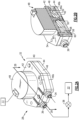
Figure 1 schematically illustrates portions of one example evaporative fuel system. -
Figure 2A is a perspective view of one example rotary vane pump. -
Figure 2B is a cross-sectional view of the pump ofFigure 2A taken alonglines 2B-2B. -
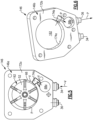
Figure 3A illustrates an elevation view of the pump with a first plate removed, exposing a rotor in an intermediate plate. -
Figure 3B is a perspective view of the intermediate plate with a filter installed. -
Figures 4A and 4B respectively are first and second side perspective views of the intermediate plate shown inFigure 3B . -
Figure 5 is an elevation view of a single cavity pump with a round bore in the intermediate plate. -
Figure 6 illustrates an opposite side of the intermediate plate to the side shown inFigure 5 . - The embodiments, examples and alternatives of the preceding paragraphs, the claims, or the following description and drawings, including any of their various aspects or respective individual features, may be taken independently or in any combination. Features described in connection with one embodiment are applicable to all embodiments, unless such features are incompatible. Like reference numbers and designations in the various drawings indicate like elements.
-
Figure 1 schematically illustrates a portion of an exampleevaporative fuel system 10. Thesystem 10 includes afuel tank 12 having afuel filler 14 with afill cap 16. Afuel pump 18 supplies gasoline, for example, from thefuel tank 12 to aninternal combustion engine 20. - The
system 10 is configured to capture and regulate the flow of fuel vapors within the system. In one example, a fueltank isolation valve 24 is arranged fluidly between thefuel tank 12 and acharcoal canister 22, which captures and stores fuel vapors for later use by theengine 20. Apurge valve 26 is fluidly connected between thecharcoal canister 22 and theengine 20. Acontroller 11 regulates a position of thepurge valve 26 to selectively provide the fuel vapors to theengine 20 during operation to make use of these fuel vapors. - The integrity of the
system 10 must be periodically tested. One type ofsystem 10 uses a leak detection module (LDM) 28, which can be used to pull a vacuum and/or pressurize the system to determine whether a leak exists, for example, using a pressure transducer 30. In one example leak test procedure, thepurge valve 26 is closed and thecontroller 11 operates theleak detection module 28 to pressurize the system. Any change in pressure detected by the pressure transducer 30, which is monitored by thecontroller 11, is indicative of a leak. - One example
leak detection module 28 is shown in more detail inFigure 2A . Themodule 28 includes apump 32, which receives atmospheric air through aninlet port 34. The pump provides pressurized air to anoutlet port 36, which may be supplied through acheck valve 38 to thecharcoal canister 22 or other evaporative component of thesystem 10. - The
pump 32 has ahousing 40 that is constructed from first andsecond plates intermediate plate 46. In the example, the inlet andoutlet ports intermediate plate 46 rather than being provided on one or both of the first andsecond plates Figures 2A and 2B , theintermediate plate 46 has afirst side 46a adjacent to and in abutment with thefirst plate 42, and asecond side 46b is adjacent to and in abutment with thesecond plate 44. In the example, the first andsecond sides second plates motor 48 is mounted to the first plate and rotationally drives arotor 52 received in abore 62 of theintermediate plate 46 via ashaft 50. - In the example, the first, second, and
intermediate plates plates locator holes 54 that are each configured to temporarily receive a through-pin during assembly of thepump 32 to precisely align the plates with one another.Fasteners 56 are received in fastener holes 58 in the first, second, andintermediate plates fasteners 56, which may be metal, are plastically deformed to securely retain the first andsecond plates intermediate plate 46. Threaded fasteners, rivets or other types of fastening may also be used. - The
example pump 32 is a rotary vane configuration. Referring toFigures 3A and 3B , anelliptical bore 62 is illustrated. Therotor 52 includesmultiple slots 64 about its circumference. Theslots 64 slidably receivevanes 66 that are moveable within the slot to seal against the periphery of thebore 62 from centrifugal forces, as is known in rotary vane pumps. For theelliptical bore 62, twocavities rotor 52. - Referring to
Figure 4A , theintermediate plate 46 is reversible such that eitherside second plate intermediate plate 46 is symmetrical about an axis A such that first andsecond surfaces second sides surfaces - A
first passage 74a on thefirst side 46a fluidly connects theinlet 34 to thebore 62, as shown inFigures 3A and4A . Thefirst passage 74a includes afirst passageway 76a fluidly connected to the ambient side V offirst cavity 80 and asecond passageway 78a fluidly connected to the ambient side V thesecond cavity 82. Thepocket 68a is arranged in thefirst passage 74a fluidly between theinlet port 34 and thebore 62. - In a similar manner, a
second passage 74b on thesecond side 46b fluidly connects theoutlet 36 to thebore 62, as shown inFigure 4B . Thesecond passage 74b includes afirst passageway 76b fluidly connected pressure side P of thesecond cavity 82 and asecond passageway 78b fluidly connected to the pressure side P of thefirst cavity 80. Thepocket 68b is arranged in thesecond passage 74b fluidly between theoutlet port 36 and thebore 62. - At least one of the
pockets pockets filter 70 if desired. In this manner, contaminants are filtered from thesystem 10 and no external lines or fittings are needed as the internal filter is contained within thepump 32. TheLDM 28 does not require protection against ISO ultrafine dust (1-22 micron) due to its lack of a calibration orifice, which is incorporated in some types of leak detection pumps. The type of foam filter elements which may be incorporated into theLDM 28 may not prevent ultrafine dust from entering the pump assembly. But, this is not a risk to pump performance due to the relatively low concentration of dust relative to the volume of air passing through thepump 32. - Another rotary vane configuration is shown in
Figure 5 , which illustrates anintermediate plate 146 with acircular bore 162 having a single crecent-shaped cavity. In this example, thefirst side 146a and itsfirst surface 172a have afirst passage 174a fluidly connecting thepocket 68a to ambient side V of thebore 162. Theintermediate plate 146 is reversible. As shown inFigure 6 , thesecond side 146b and itssecond surface 172b have asecond passage 174b fluidly connecting thepocket 68b to pressure side P of thebore 162. - During manufacturing of the pump, the
first plate 42 is arranged into abutting engagement with either thefirst side 46a or thesecond side 46b of theintermediate plate 46. That is, the intermediate plate is reversible with respect to the first andsecond plates rotor 52 is disposed along withslidable vanes 66 into thebore 62. Thesecond plate 44 is arranged into abutting engagement with the other of the first andsecond sides second plates intermediate plate 46 androtor 52. Themotor 48 is mounted to thefirst plate 42, coupling themotor 48 to therotor 52. - Although the different examples have specific components shown in the illustrations, embodiments of this invention are not limited to those particular combinations. It is possible to use some of the components or features from one of the examples in combination with features or components from another one of the examples while remaining within the scope of the appended claims. For example, the disclosed pump may be used in applications other than vehicle evaporative systems.
Claims (13)
- A rotary vane pump (32) , which receives a fluid through an inlet port (34) and provides the pressurized fluid to an outlet port (36), comprising:a housing (40) including first and second plates (42, 44) respectively secured to first and second opposing sides (46a, 46b) of an intermediate plate (46);wherein the intermediate plate (46) includes a bore (62) and the inlet and outlet ports (34, 36), the first and second sides (46a, 46b) respectively having first and second passages (74a, 74b) that are respectively in fluid communication with the inlet and outlet ports (34, 36), and the first and second passages (74a, 74b) are in fluid communication with the bore (62), wherein the intermediate plate (46) is reversible with respect to the first and second plates (42, 44), such that either of the first and second sides (46a, 46b) may mate with either of the first and second plates (42, 44); anda rotor (52) arranged in the bore (62), the rotor (52) supporting slidable vanes (66) configured to pump the fluid between the inlet and outlet ports (34, 36);wherein the intermediate plate (46) is symmetrical about an axis (A) such that first and second surfaces (72a, 72b) respectively provided by the first and second sides (46a, 46b) and their corresponding first and second passages (74a, 74b) are the same if rotated 180° about the axis (A).
- The rotary pump (32) of claim 1, wherein at least one of the first and second sides (46a, 46b) includes a pocket (68a or 68b) with a filter (70), the pocket (68a or 68b) fluidly arranged in one of the first and second passages (74a, 74b).
- The rotary pump (32) of claim 1, wherein the first and second plates (42, 44) and the intermediate plate (46) include holes (58) with fasteners (56) disposed therein to clamp the first and second plates (42, 44) to the intermediate plate (46), and a motor (48) mounted to the first plate (42).
- The rotary pump (32) of claim 3, wherein the first and second plates (42, 44) and the intermediate plate (46) include locating holes (54) configured to receive pins during a rotary pump assembly procedure.
- The rotary pump (32) of claim 1, wherein the bore (62) is elliptically shaped, and the rotor (52) separates the bore (62) into first and second cavities (80, 82) that are respectively in fluid communication with first and second passageways (76a, 78a and 76b, 78b) provided by each of the first and second passages (74a, 74b).
- The rotary pump (32) of claim 1, wherein the bore (162) is circular providing a singular cavity having a crescent shape.
- The rotary pump (32) of claim 1, wherein the first and second plates (42, 44) and the intermediate plate (46) are plastic, and the first and second sides (46a, 46b) respectively abut the first and second plates (42, 44) without any additional sealing structure therebetween.
- The rotary pump (32) of claim 7, wherein the first and second sides (46a, 46b) respectively include first and second surfaces (72a, 72b) that are unmachined.
- The rotary pump (32) of claim 8, wherein the first and second surfaces (72a, 72b) are provided by injection molding.
- An evaporative emissions system (10) comprising the rotary vane pump (32) of claim 1, further comprising:an evaporative component;the rotary vane pump (32) fluidly connected to the evaporative component; anda controller (11) in communication with the pump (32), the controller (11) configured to maintain a pressure on the system (10) during a leak test procedure.
- The evaporative emissions system of claim 10, wherein the evaporative component includes at least one of a charcoal canister (22) and a fuel tank (12), and comprising at least one valve arranged a closed position during the leak test procedure.
- The evaporative emissions system of claim 11, wherein the at least one valve is a check valve (38) and another valve (26), the check valve (38) arranged downstream from the outlet port (36).
- The evaporative emissions system of claim 10, comprising a pressure gauge in communication with the controller (11) and configured to monitor a system pressure during the leak test procedure.
Applications Claiming Priority (2)
| Application Number | Priority Date | Filing Date | Title |
|---|---|---|---|
| US201962910708P | 2019-10-04 | 2019-10-04 | |
| PCT/US2020/050882 WO2021067031A1 (en) | 2019-10-04 | 2020-09-15 | Pump for evaporative emissions system |
Publications (3)
| Publication Number | Publication Date |
|---|---|
| EP4038282A1 EP4038282A1 (en) | 2022-08-10 |
| EP4038282A4 EP4038282A4 (en) | 2022-12-07 |
| EP4038282B1 true EP4038282B1 (en) | 2025-04-30 |
Family
ID=75337336
Family Applications (1)
| Application Number | Title | Priority Date | Filing Date |
|---|---|---|---|
| EP20871195.2A Active EP4038282B1 (en) | 2019-10-04 | 2020-09-15 | EVAPORATIVE EMISSION PUMP |
Country Status (6)
| Country | Link |
|---|---|
| US (1) | US12209561B2 (en) |
| EP (1) | EP4038282B1 (en) |
| JP (1) | JP7664911B2 (en) |
| KR (1) | KR102871683B1 (en) |
| CN (1) | CN114630962A (en) |
| WO (1) | WO2021067031A1 (en) |
Families Citing this family (3)
| Publication number | Priority date | Publication date | Assignee | Title |
|---|---|---|---|---|
| US20240200680A1 (en) * | 2021-05-21 | 2024-06-20 | Stoneridge, Inc. | Fluid valve with hall sensor for evaporative emissions system |
| WO2023048839A1 (en) | 2021-09-24 | 2023-03-30 | Stoneridge Control Devices, Inc. | Evaporative emissions leak check module with integrated control and communication system |
| US12085045B1 (en) * | 2023-08-02 | 2024-09-10 | Stoneridge Control Devices, Inc. | Low stiction vane pump for evaporative emissions system |
Citations (1)
| Publication number | Priority date | Publication date | Assignee | Title |
|---|---|---|---|---|
| US20050036897A1 (en) * | 2003-08-11 | 2005-02-17 | Kasmer Thomas E. | Rotary vane pump seal |
Family Cites Families (30)
| Publication number | Priority date | Publication date | Assignee | Title |
|---|---|---|---|---|
| US1409548A (en) * | 1920-10-20 | 1922-03-14 | Imhoff Floyd Nelson | Rotary pump |
| US2312961A (en) * | 1939-11-08 | 1943-03-02 | David S Cowherd | Fluid pump or motor |
| US2588430A (en) * | 1945-10-15 | 1952-03-11 | Odin Corp | Rotary blade pump |
| US3386648A (en) * | 1967-01-31 | 1968-06-04 | Walter J. Van Rossem | Rotary vane type pump |
| US3552895A (en) | 1969-05-14 | 1971-01-05 | Lear Siegler Inc | Dry rotary vane pump |
| JPS54161102A (en) * | 1978-06-09 | 1979-12-20 | Nippon Piston Ring Co Ltd | Rotary fluid pump |
| US5408866A (en) | 1992-11-25 | 1995-04-25 | Nissan Motor Co., Ltd. | Leak diagnosis system for evaporative emission control system |
| US5474050A (en) | 1995-01-13 | 1995-12-12 | Siemens Electric Limited | Leak detection pump with integral vent seal |
| US6044314A (en) | 1997-09-05 | 2000-03-28 | Siemens Canada Ltd. | Automotive evaporative emission leak detection system and method |
| US5987968A (en) | 1997-09-05 | 1999-11-23 | Siemens Canada Limited | Automotive evaporative emission leak detection system module |
| JP3896588B2 (en) | 2002-06-28 | 2007-03-22 | 株式会社デンソー | Eva Pollyk Check System |
| US6821099B2 (en) | 2002-07-02 | 2004-11-23 | Tilia International, Inc. | Rotary pump |
| US6790019B1 (en) * | 2003-02-28 | 2004-09-14 | Thomas Industries Inc. | Rotary vane pump with multiple sound dampened inlet ports |
| JP2005330895A (en) * | 2004-05-20 | 2005-12-02 | Matsushita Electric Ind Co Ltd | Vane rotary air pump |
| US7594500B2 (en) | 2006-01-17 | 2009-09-29 | Stoneridge, Inc. | Air control module |
| JP4821672B2 (en) | 2007-03-27 | 2011-11-24 | パナソニック電工株式会社 | Vane pump |
| JP2009144677A (en) * | 2007-12-18 | 2009-07-02 | Mitsubishi Electric Corp | Gas pump and air conditioner |
| US8348645B2 (en) | 2009-08-11 | 2013-01-08 | Woodward, Inc. | Balanced pressure, variable displacement, dual lobe, single ring, vane pump |
| WO2011154237A2 (en) | 2010-06-09 | 2011-12-15 | Mahle International Gmbh | Rotary vane pump |
| JP5776651B2 (en) * | 2012-08-30 | 2015-09-09 | 株式会社デンソー | Evaporative fuel processing equipment |
| US9291128B2 (en) | 2013-10-15 | 2016-03-22 | Ford Global Technologies, Llc | System and methods for evaporative emissions leak detection based on a vehicle location |
| US9458801B2 (en) | 2013-10-31 | 2016-10-04 | Ford Global Technologies, Llc | Fuel system leak check based on fuel reid vapor pressure |
| US9587595B2 (en) | 2013-12-11 | 2017-03-07 | Continental Automotive Systems, Inc. | Active purge pump system module for evaporative emission control system |
| JP5991310B2 (en) | 2013-12-18 | 2016-09-14 | 株式会社デンソー | Rotary pump and fuel vapor leak detection device using the same |
| JP5962694B2 (en) | 2014-03-07 | 2016-08-03 | 株式会社デンソー | Fuel vapor leak detection device |
| US9822737B2 (en) | 2014-04-08 | 2017-11-21 | Ford Global Technologies, Llc | System and methods for a leak check module comprising a reversible vacuum pump |
| JP6287581B2 (en) | 2014-05-27 | 2018-03-07 | 日産自動車株式会社 | Evaporative fuel processing equipment |
| US20160281715A1 (en) * | 2015-03-27 | 2016-09-29 | Charles H. Tuckey | Vane Pump Assembly |
| JP6536476B2 (en) * | 2016-05-13 | 2019-07-03 | 株式会社デンソー | EVAPOLAKE CHECK SYSTEM, AND EVAPOLAKE CHECK METHOD USING THE SAME |
| US10508618B2 (en) | 2017-12-18 | 2019-12-17 | Ford Global Technologies, Llc | Systems and methods for vehicle fuel system and evaporative emissions system diagnostics |
-
2020
- 2020-09-15 JP JP2022520856A patent/JP7664911B2/en active Active
- 2020-09-15 EP EP20871195.2A patent/EP4038282B1/en active Active
- 2020-09-15 WO PCT/US2020/050882 patent/WO2021067031A1/en not_active Ceased
- 2020-09-15 KR KR1020227015153A patent/KR102871683B1/en active Active
- 2020-09-15 US US17/765,628 patent/US12209561B2/en active Active
- 2020-09-15 CN CN202080070376.3A patent/CN114630962A/en active Pending
Patent Citations (1)
| Publication number | Priority date | Publication date | Assignee | Title |
|---|---|---|---|---|
| US20050036897A1 (en) * | 2003-08-11 | 2005-02-17 | Kasmer Thomas E. | Rotary vane pump seal |
Non-Patent Citations (1)
| Title |
|---|
| WANG JUN ET AL: "Geometric design and analysis of a novel sliding vane vacuum pump with three chambers", MECHANISM AND MACHINE THEORY, PERGAMON, AMSTERDAM, NL, vol. 141, 9 July 2019 (2019-07-09), pages 52 - 66, XP085795339, ISSN: 0094-114X, [retrieved on 20190709], DOI: 10.1016/J.MECHMACHTHEORY.2019.07.003 * |
Also Published As
| Publication number | Publication date |
|---|---|
| US12209561B2 (en) | 2025-01-28 |
| US20220403801A1 (en) | 2022-12-22 |
| KR102871683B1 (en) | 2025-10-22 |
| EP4038282A1 (en) | 2022-08-10 |
| KR20220116147A (en) | 2022-08-22 |
| JP2022550481A (en) | 2022-12-01 |
| JP7664911B2 (en) | 2025-04-18 |
| CN114630962A (en) | 2022-06-14 |
| WO2021067031A1 (en) | 2021-04-08 |
| EP4038282A4 (en) | 2022-12-07 |
Similar Documents
| Publication | Publication Date | Title |
|---|---|---|
| EP4038282B1 (en) | EVAPORATIVE EMISSION PUMP | |
| US3820924A (en) | Rotary vane refrigerant gas compressor | |
| US9057270B2 (en) | Compressor including suction baffle | |
| CN117377825A (en) | Radial piston pumps, especially radial piston compressors | |
| US20240240623A1 (en) | Radial piston pump, and process for manufacturing a radial piston pump | |
| US8459973B2 (en) | Vane pump having an oil supply passage communicating with a gas passage in the stopping state | |
| CA2565576C (en) | One-way valve | |
| KR102180393B1 (en) | Internal combustion engine comprising a venturi nozzle provided inside a fluid-guiding component which is fluidally connected with a tank vent line | |
| EP3895992B1 (en) | Air cycle machine module air gate seal for environmental control systems | |
| KR101698914B1 (en) | Dual outlet pump | |
| EP2249041B1 (en) | Sliding vane vacuum pump with an oil relief valve | |
| JP5299362B2 (en) | Vane type pump and EVA POLYK check system using the same | |
| CN102080615B (en) | Fuel tank | |
| US20090313991A1 (en) | Turbocharger cleaning | |
| US8807972B2 (en) | Housingless positive displacement pump assembly | |
| US12085045B1 (en) | Low stiction vane pump for evaporative emissions system | |
| WO1987003651A1 (en) | Intermittent service screw compressor | |
| US20240229791A1 (en) | Piston compressor, in particular radial piston compressor | |
| CN113646564B (en) | Valve device | |
| EP1482151A2 (en) | Pressure balanced bearing | |
| JPH05172075A (en) | compressor | |
| CN106233045B (en) | The dynamic sealing of the pressure control of fluid transfer pipe with capture | |
| CN224189468U (en) | A leak diagnosis module | |
| JP6579304B2 (en) | Water leakage prevention member | |
| KR101697148B1 (en) | Hybrid vane fluid machinery of centrifugal suction type |
Legal Events
| Date | Code | Title | Description |
|---|---|---|---|
| STAA | Information on the status of an ep patent application or granted ep patent |
Free format text: STATUS: THE INTERNATIONAL PUBLICATION HAS BEEN MADE |
|
| PUAI | Public reference made under article 153(3) epc to a published international application that has entered the european phase |
Free format text: ORIGINAL CODE: 0009012 |
|
| STAA | Information on the status of an ep patent application or granted ep patent |
Free format text: STATUS: REQUEST FOR EXAMINATION WAS MADE |
|
| 17P | Request for examination filed |
Effective date: 20220422 |
|
| AK | Designated contracting states |
Kind code of ref document: A1 Designated state(s): AL AT BE BG CH CY CZ DE DK EE ES FI FR GB GR HR HU IE IS IT LI LT LU LV MC MK MT NL NO PL PT RO RS SE SI SK SM TR |
|
| A4 | Supplementary search report drawn up and despatched |
Effective date: 20221104 |
|
| RIC1 | Information provided on ipc code assigned before grant |
Ipc: F02M 25/08 20060101ALI20221028BHEP Ipc: F04C 18/344 20060101AFI20221028BHEP |
|
| DAV | Request for validation of the european patent (deleted) | ||
| DAX | Request for extension of the european patent (deleted) | ||
| P01 | Opt-out of the competence of the unified patent court (upc) registered |
Effective date: 20230529 |
|
| REG | Reference to a national code |
Ref legal event code: R079 Ref country code: DE Ref legal event code: R079 Ref document number: 602020050593 Country of ref document: DE Free format text: PREVIOUS MAIN CLASS: F04C0018344000 Ipc: F01C0021100000 |
|
| GRAP | Despatch of communication of intention to grant a patent |
Free format text: ORIGINAL CODE: EPIDOSNIGR1 |
|
| STAA | Information on the status of an ep patent application or granted ep patent |
Free format text: STATUS: GRANT OF PATENT IS INTENDED |
|
| RIC1 | Information provided on ipc code assigned before grant |
Ipc: F04C 29/00 20060101ALI20241025BHEP Ipc: F04C 18/344 20060101ALI20241025BHEP Ipc: F02M 25/08 20060101ALI20241025BHEP Ipc: F01C 21/10 20060101AFI20241025BHEP |
|
| INTG | Intention to grant announced |
Effective date: 20241129 |
|
| GRAS | Grant fee paid |
Free format text: ORIGINAL CODE: EPIDOSNIGR3 |
|
| GRAA | (expected) grant |
Free format text: ORIGINAL CODE: 0009210 |
|
| STAA | Information on the status of an ep patent application or granted ep patent |
Free format text: STATUS: THE PATENT HAS BEEN GRANTED |
|
| AK | Designated contracting states |
Kind code of ref document: B1 Designated state(s): AL AT BE BG CH CY CZ DE DK EE ES FI FR GB GR HR HU IE IS IT LI LT LU LV MC MK MT NL NO PL PT RO RS SE SI SK SM TR |
|
| REG | Reference to a national code |
Ref country code: CH Ref legal event code: EP Ref country code: GB Ref legal event code: FG4D |
|
| REG | Reference to a national code |
Ref country code: DE Ref legal event code: R096 Ref document number: 602020050593 Country of ref document: DE |
|
| REG | Reference to a national code |
Ref country code: IE Ref legal event code: FG4D |
|
| REG | Reference to a national code |
Ref country code: NL Ref legal event code: MP Effective date: 20250430 |
|
| REG | Reference to a national code |
Ref country code: AT Ref legal event code: MK05 Ref document number: 1790181 Country of ref document: AT Kind code of ref document: T Effective date: 20250430 |
|
| PG25 | Lapsed in a contracting state [announced via postgrant information from national office to epo] |
Ref country code: FI Free format text: LAPSE BECAUSE OF FAILURE TO SUBMIT A TRANSLATION OF THE DESCRIPTION OR TO PAY THE FEE WITHIN THE PRESCRIBED TIME-LIMIT Effective date: 20250430 Ref country code: PT Free format text: LAPSE BECAUSE OF FAILURE TO SUBMIT A TRANSLATION OF THE DESCRIPTION OR TO PAY THE FEE WITHIN THE PRESCRIBED TIME-LIMIT Effective date: 20250901 Ref country code: ES Free format text: LAPSE BECAUSE OF FAILURE TO SUBMIT A TRANSLATION OF THE DESCRIPTION OR TO PAY THE FEE WITHIN THE PRESCRIBED TIME-LIMIT Effective date: 20250430 |
|
| REG | Reference to a national code |
Ref country code: LT Ref legal event code: MG9D |
|
| PG25 | Lapsed in a contracting state [announced via postgrant information from national office to epo] |
Ref country code: GR Free format text: LAPSE BECAUSE OF FAILURE TO SUBMIT A TRANSLATION OF THE DESCRIPTION OR TO PAY THE FEE WITHIN THE PRESCRIBED TIME-LIMIT Effective date: 20250731 Ref country code: NO Free format text: LAPSE BECAUSE OF FAILURE TO SUBMIT A TRANSLATION OF THE DESCRIPTION OR TO PAY THE FEE WITHIN THE PRESCRIBED TIME-LIMIT Effective date: 20250730 |
|
| PG25 | Lapsed in a contracting state [announced via postgrant information from national office to epo] |
Ref country code: PL Free format text: LAPSE BECAUSE OF FAILURE TO SUBMIT A TRANSLATION OF THE DESCRIPTION OR TO PAY THE FEE WITHIN THE PRESCRIBED TIME-LIMIT Effective date: 20250430 Ref country code: NL Free format text: LAPSE BECAUSE OF FAILURE TO SUBMIT A TRANSLATION OF THE DESCRIPTION OR TO PAY THE FEE WITHIN THE PRESCRIBED TIME-LIMIT Effective date: 20250430 |
|
| PG25 | Lapsed in a contracting state [announced via postgrant information from national office to epo] |
Ref country code: BG Free format text: LAPSE BECAUSE OF FAILURE TO SUBMIT A TRANSLATION OF THE DESCRIPTION OR TO PAY THE FEE WITHIN THE PRESCRIBED TIME-LIMIT Effective date: 20250430 |
|
| PG25 | Lapsed in a contracting state [announced via postgrant information from national office to epo] |
Ref country code: HR Free format text: LAPSE BECAUSE OF FAILURE TO SUBMIT A TRANSLATION OF THE DESCRIPTION OR TO PAY THE FEE WITHIN THE PRESCRIBED TIME-LIMIT Effective date: 20250430 |
|
| PG25 | Lapsed in a contracting state [announced via postgrant information from national office to epo] |
Ref country code: AT Free format text: LAPSE BECAUSE OF FAILURE TO SUBMIT A TRANSLATION OF THE DESCRIPTION OR TO PAY THE FEE WITHIN THE PRESCRIBED TIME-LIMIT Effective date: 20250430 |
|
| PG25 | Lapsed in a contracting state [announced via postgrant information from national office to epo] |
Ref country code: RS Free format text: LAPSE BECAUSE OF FAILURE TO SUBMIT A TRANSLATION OF THE DESCRIPTION OR TO PAY THE FEE WITHIN THE PRESCRIBED TIME-LIMIT Effective date: 20250731 |
|
| PG25 | Lapsed in a contracting state [announced via postgrant information from national office to epo] |
Ref country code: IS Free format text: LAPSE BECAUSE OF FAILURE TO SUBMIT A TRANSLATION OF THE DESCRIPTION OR TO PAY THE FEE WITHIN THE PRESCRIBED TIME-LIMIT Effective date: 20250830 |
|
| PG25 | Lapsed in a contracting state [announced via postgrant information from national office to epo] |
Ref country code: LV Free format text: LAPSE BECAUSE OF FAILURE TO SUBMIT A TRANSLATION OF THE DESCRIPTION OR TO PAY THE FEE WITHIN THE PRESCRIBED TIME-LIMIT Effective date: 20250430 |
|
| PGFP | Annual fee paid to national office [announced via postgrant information from national office to epo] |
Ref country code: DE Payment date: 20251020 Year of fee payment: 6 |
|
| PG25 | Lapsed in a contracting state [announced via postgrant information from national office to epo] |
Ref country code: SM Free format text: LAPSE BECAUSE OF FAILURE TO SUBMIT A TRANSLATION OF THE DESCRIPTION OR TO PAY THE FEE WITHIN THE PRESCRIBED TIME-LIMIT Effective date: 20250430 Ref country code: DK Free format text: LAPSE BECAUSE OF FAILURE TO SUBMIT A TRANSLATION OF THE DESCRIPTION OR TO PAY THE FEE WITHIN THE PRESCRIBED TIME-LIMIT Effective date: 20250430 |
|
| PG25 | Lapsed in a contracting state [announced via postgrant information from national office to epo] |
Ref country code: CZ Free format text: LAPSE BECAUSE OF FAILURE TO SUBMIT A TRANSLATION OF THE DESCRIPTION OR TO PAY THE FEE WITHIN THE PRESCRIBED TIME-LIMIT Effective date: 20250430 |
|
| PG25 | Lapsed in a contracting state [announced via postgrant information from national office to epo] |
Ref country code: EE Free format text: LAPSE BECAUSE OF FAILURE TO SUBMIT A TRANSLATION OF THE DESCRIPTION OR TO PAY THE FEE WITHIN THE PRESCRIBED TIME-LIMIT Effective date: 20250430 |
|
| PG25 | Lapsed in a contracting state [announced via postgrant information from national office to epo] |
Ref country code: SK Free format text: LAPSE BECAUSE OF FAILURE TO SUBMIT A TRANSLATION OF THE DESCRIPTION OR TO PAY THE FEE WITHIN THE PRESCRIBED TIME-LIMIT Effective date: 20250430 |
|
| PG25 | Lapsed in a contracting state [announced via postgrant information from national office to epo] |
Ref country code: IT Free format text: LAPSE BECAUSE OF FAILURE TO SUBMIT A TRANSLATION OF THE DESCRIPTION OR TO PAY THE FEE WITHIN THE PRESCRIBED TIME-LIMIT Effective date: 20250430 |
|
| REG | Reference to a national code |
Ref country code: DE Ref legal event code: R097 Ref document number: 602020050593 Country of ref document: DE |
|
| PG25 | Lapsed in a contracting state [announced via postgrant information from national office to epo] |
Ref country code: RO Free format text: LAPSE BECAUSE OF FAILURE TO SUBMIT A TRANSLATION OF THE DESCRIPTION OR TO PAY THE FEE WITHIN THE PRESCRIBED TIME-LIMIT Effective date: 20250430 |
|
| PLBE | No opposition filed within time limit |
Free format text: ORIGINAL CODE: 0009261 |
|
| STAA | Information on the status of an ep patent application or granted ep patent |
Free format text: STATUS: NO OPPOSITION FILED WITHIN TIME LIMIT |
|
| REG | Reference to a national code |
Ref country code: CH Ref legal event code: L10 Free format text: ST27 STATUS EVENT CODE: U-0-0-L10-L00 (AS PROVIDED BY THE NATIONAL OFFICE) Effective date: 20260311 |
|
| 26N | No opposition filed |
Effective date: 20260202 |