EP4037925B1 - Assisted thrust system for carriages or for loads in general moved on wheels - Google Patents
Assisted thrust system for carriages or for loads in general moved on wheels Download PDFInfo
- Publication number
- EP4037925B1 EP4037925B1 EP20771922.0A EP20771922A EP4037925B1 EP 4037925 B1 EP4037925 B1 EP 4037925B1 EP 20771922 A EP20771922 A EP 20771922A EP 4037925 B1 EP4037925 B1 EP 4037925B1
- Authority
- EP
- European Patent Office
- Prior art keywords
- drive wheel
- disc
- carriage
- permanent magnets
- group
- Prior art date
- Legal status (The legal status is an assumption and is not a legal conclusion. Google has not performed a legal analysis and makes no representation as to the accuracy of the status listed.)
- Active
Links
Images



Classifications
-
- B—PERFORMING OPERATIONS; TRANSPORTING
- B60—VEHICLES IN GENERAL
- B60K—ARRANGEMENT OR MOUNTING OF PROPULSION UNITS OR OF TRANSMISSIONS IN VEHICLES; ARRANGEMENT OR MOUNTING OF PLURAL DIVERSE PRIME-MOVERS IN VEHICLES; AUXILIARY DRIVES FOR VEHICLES; INSTRUMENTATION OR DASHBOARDS FOR VEHICLES; ARRANGEMENTS IN CONNECTION WITH COOLING, AIR INTAKE, GAS EXHAUST OR FUEL SUPPLY OF PROPULSION UNITS IN VEHICLES
- B60K7/00—Disposition of motor in, or adjacent to, traction wheel
-
- B—PERFORMING OPERATIONS; TRANSPORTING
- B62—LAND VEHICLES FOR TRAVELLING OTHERWISE THAN ON RAILS
- B62B—HAND-PROPELLED VEHICLES, e.g. HAND CARTS OR PERAMBULATORS; SLEDGES
- B62B5/00—Accessories or details specially adapted for hand carts
- B62B5/0026—Propulsion aids
- B62B5/0033—Electric motors
- B62B5/0036—Arrangements of motors
- B62B5/004—Arrangements of motors in wheels
-
- B—PERFORMING OPERATIONS; TRANSPORTING
- B60—VEHICLES IN GENERAL
- B60K—ARRANGEMENT OR MOUNTING OF PROPULSION UNITS OR OF TRANSMISSIONS IN VEHICLES; ARRANGEMENT OR MOUNTING OF PLURAL DIVERSE PRIME-MOVERS IN VEHICLES; AUXILIARY DRIVES FOR VEHICLES; INSTRUMENTATION OR DASHBOARDS FOR VEHICLES; ARRANGEMENTS IN CONNECTION WITH COOLING, AIR INTAKE, GAS EXHAUST OR FUEL SUPPLY OF PROPULSION UNITS IN VEHICLES
- B60K7/00—Disposition of motor in, or adjacent to, traction wheel
- B60K7/0007—Disposition of motor in, or adjacent to, traction wheel the motor being electric
-
- B—PERFORMING OPERATIONS; TRANSPORTING
- B62—LAND VEHICLES FOR TRAVELLING OTHERWISE THAN ON RAILS
- B62B—HAND-PROPELLED VEHICLES, e.g. HAND CARTS OR PERAMBULATORS; SLEDGES
- B62B5/00—Accessories or details specially adapted for hand carts
- B62B5/0026—Propulsion aids
- B62B5/0033—Electric motors
- B62B5/0036—Arrangements of motors
- B62B5/0043—One motor drives one wheel
-
- B—PERFORMING OPERATIONS; TRANSPORTING
- B62—LAND VEHICLES FOR TRAVELLING OTHERWISE THAN ON RAILS
- B62B—HAND-PROPELLED VEHICLES, e.g. HAND CARTS OR PERAMBULATORS; SLEDGES
- B62B5/00—Accessories or details specially adapted for hand carts
- B62B5/0026—Propulsion aids
- B62B5/0033—Electric motors
- B62B5/0036—Arrangements of motors
- B62B5/0046—One motor drives two wheels
-
- B—PERFORMING OPERATIONS; TRANSPORTING
- B62—LAND VEHICLES FOR TRAVELLING OTHERWISE THAN ON RAILS
- B62B—HAND-PROPELLED VEHICLES, e.g. HAND CARTS OR PERAMBULATORS; SLEDGES
- B62B5/00—Accessories or details specially adapted for hand carts
- B62B5/0026—Propulsion aids
- B62B5/0033—Electric motors
- B62B5/0053—Arrangements of batteries
-
- B—PERFORMING OPERATIONS; TRANSPORTING
- B62—LAND VEHICLES FOR TRAVELLING OTHERWISE THAN ON RAILS
- B62B—HAND-PROPELLED VEHICLES, e.g. HAND CARTS OR PERAMBULATORS; SLEDGES
- B62B5/00—Accessories or details specially adapted for hand carts
- B62B5/0026—Propulsion aids
- B62B5/0066—Transmission of movement
-
- B—PERFORMING OPERATIONS; TRANSPORTING
- B62—LAND VEHICLES FOR TRAVELLING OTHERWISE THAN ON RAILS
- B62B—HAND-PROPELLED VEHICLES, e.g. HAND CARTS OR PERAMBULATORS; SLEDGES
- B62B5/00—Accessories or details specially adapted for hand carts
- B62B5/0026—Propulsion aids
- B62B5/0069—Control
-
- B—PERFORMING OPERATIONS; TRANSPORTING
- B60—VEHICLES IN GENERAL
- B60K—ARRANGEMENT OR MOUNTING OF PROPULSION UNITS OR OF TRANSMISSIONS IN VEHICLES; ARRANGEMENT OR MOUNTING OF PLURAL DIVERSE PRIME-MOVERS IN VEHICLES; AUXILIARY DRIVES FOR VEHICLES; INSTRUMENTATION OR DASHBOARDS FOR VEHICLES; ARRANGEMENTS IN CONNECTION WITH COOLING, AIR INTAKE, GAS EXHAUST OR FUEL SUPPLY OF PROPULSION UNITS IN VEHICLES
- B60K17/00—Arrangement or mounting of transmissions in vehicles
- B60K17/02—Arrangement or mounting of transmissions in vehicles characterised by arrangement, location, or kind of clutch
-
- B—PERFORMING OPERATIONS; TRANSPORTING
- B60—VEHICLES IN GENERAL
- B60K—ARRANGEMENT OR MOUNTING OF PROPULSION UNITS OR OF TRANSMISSIONS IN VEHICLES; ARRANGEMENT OR MOUNTING OF PLURAL DIVERSE PRIME-MOVERS IN VEHICLES; AUXILIARY DRIVES FOR VEHICLES; INSTRUMENTATION OR DASHBOARDS FOR VEHICLES; ARRANGEMENTS IN CONNECTION WITH COOLING, AIR INTAKE, GAS EXHAUST OR FUEL SUPPLY OF PROPULSION UNITS IN VEHICLES
- B60K17/00—Arrangement or mounting of transmissions in vehicles
- B60K17/04—Arrangement or mounting of transmissions in vehicles characterised by arrangement, location or kind of gearing
- B60K17/043—Transmission unit disposed in on near the vehicle wheel, or between the differential gear unit and the wheel
-
- B—PERFORMING OPERATIONS; TRANSPORTING
- B60—VEHICLES IN GENERAL
- B60K—ARRANGEMENT OR MOUNTING OF PROPULSION UNITS OR OF TRANSMISSIONS IN VEHICLES; ARRANGEMENT OR MOUNTING OF PLURAL DIVERSE PRIME-MOVERS IN VEHICLES; AUXILIARY DRIVES FOR VEHICLES; INSTRUMENTATION OR DASHBOARDS FOR VEHICLES; ARRANGEMENTS IN CONNECTION WITH COOLING, AIR INTAKE, GAS EXHAUST OR FUEL SUPPLY OF PROPULSION UNITS IN VEHICLES
- B60K7/00—Disposition of motor in, or adjacent to, traction wheel
- B60K2007/0038—Disposition of motor in, or adjacent to, traction wheel the motor moving together with the wheel axle
-
- B—PERFORMING OPERATIONS; TRANSPORTING
- B60—VEHICLES IN GENERAL
- B60K—ARRANGEMENT OR MOUNTING OF PROPULSION UNITS OR OF TRANSMISSIONS IN VEHICLES; ARRANGEMENT OR MOUNTING OF PLURAL DIVERSE PRIME-MOVERS IN VEHICLES; AUXILIARY DRIVES FOR VEHICLES; INSTRUMENTATION OR DASHBOARDS FOR VEHICLES; ARRANGEMENTS IN CONNECTION WITH COOLING, AIR INTAKE, GAS EXHAUST OR FUEL SUPPLY OF PROPULSION UNITS IN VEHICLES
- B60K7/00—Disposition of motor in, or adjacent to, traction wheel
- B60K2007/0069—Disposition of motor in, or adjacent to, traction wheel the motor axle being perpendicular to the wheel axle
-
- B—PERFORMING OPERATIONS; TRANSPORTING
- B60—VEHICLES IN GENERAL
- B60K—ARRANGEMENT OR MOUNTING OF PROPULSION UNITS OR OF TRANSMISSIONS IN VEHICLES; ARRANGEMENT OR MOUNTING OF PLURAL DIVERSE PRIME-MOVERS IN VEHICLES; AUXILIARY DRIVES FOR VEHICLES; INSTRUMENTATION OR DASHBOARDS FOR VEHICLES; ARRANGEMENTS IN CONNECTION WITH COOLING, AIR INTAKE, GAS EXHAUST OR FUEL SUPPLY OF PROPULSION UNITS IN VEHICLES
- B60K7/00—Disposition of motor in, or adjacent to, traction wheel
- B60K2007/0069—Disposition of motor in, or adjacent to, traction wheel the motor axle being perpendicular to the wheel axle
- B60K2007/0084—Disposition of motor in, or adjacent to, traction wheel the motor axle being perpendicular to the wheel axle the motor axle being vertical
-
- B—PERFORMING OPERATIONS; TRANSPORTING
- B60—VEHICLES IN GENERAL
- B60Y—INDEXING SCHEME RELATING TO ASPECTS CROSS-CUTTING VEHICLE TECHNOLOGY
- B60Y2200/00—Type of vehicle
- B60Y2200/40—Special vehicles
- B60Y2200/49—Movable platforms, Load ramps, e.g. working platforms
-
- B—PERFORMING OPERATIONS; TRANSPORTING
- B60—VEHICLES IN GENERAL
- B60Y—INDEXING SCHEME RELATING TO ASPECTS CROSS-CUTTING VEHICLE TECHNOLOGY
- B60Y2200/00—Type of vehicle
- B60Y2200/60—Industrial applications, e.g. pipe inspection vehicles
- B60Y2200/62—Conveyors, floor conveyors
-
- B—PERFORMING OPERATIONS; TRANSPORTING
- B60—VEHICLES IN GENERAL
- B60Y—INDEXING SCHEME RELATING TO ASPECTS CROSS-CUTTING VEHICLE TECHNOLOGY
- B60Y2200/00—Type of vehicle
- B60Y2200/90—Vehicles comprising electric prime movers
- B60Y2200/91—Electric vehicles
-
- B—PERFORMING OPERATIONS; TRANSPORTING
- B60—VEHICLES IN GENERAL
- B60Y—INDEXING SCHEME RELATING TO ASPECTS CROSS-CUTTING VEHICLE TECHNOLOGY
- B60Y2400/00—Special features of vehicle units
- B60Y2400/42—Clutches or brakes
- B60Y2400/423—Electromagnetic clutches, e.g. powder type clutches
-
- B—PERFORMING OPERATIONS; TRANSPORTING
- B62—LAND VEHICLES FOR TRAVELLING OTHERWISE THAN ON RAILS
- B62B—HAND-PROPELLED VEHICLES, e.g. HAND CARTS OR PERAMBULATORS; SLEDGES
- B62B2202/00—Indexing codes relating to type or characteristics of transported articles
- B62B2202/67—Service trolleys, e.g. in aircraft
-
- B—PERFORMING OPERATIONS; TRANSPORTING
- B62—LAND VEHICLES FOR TRAVELLING OTHERWISE THAN ON RAILS
- B62B—HAND-PROPELLED VEHICLES, e.g. HAND CARTS OR PERAMBULATORS; SLEDGES
- B62B5/00—Accessories or details specially adapted for hand carts
- B62B5/04—Braking mechanisms; Locking devices against movement
- B62B5/0404—Braking mechanisms; Locking devices against movement automatic
- B62B5/0414—Braking mechanisms; Locking devices against movement automatic dead man's brakes
Definitions
- the invention relates to an assisted thrust system for moving loads, for example for moving food carriages or carriages in general with a loading surface on which loads to be moved can be arranged.
- an assisted traction device for mine carriages comprises a motor fitted to the rotation axis of at least one wheel of a mine carriage.
- the rotation axle of the wheel is connected directly to the shaft of the motor.
- the respective motors are applied to a pair of opposite wheels of the carriage.
- the motor, or the motors have sufficient power to move the carriage, such that by starting up the motor, or the motors, the carriage can be used, without the need for the intervention of a thrust by a carriage operator.
- the motors are applied directly to the axle of the wheels, the motor torque required to move the carriages and accordingly the power of the motors is high, making the traction device expensive.
- JP S63215459 discloses a carriage for conveying loads that comprises a base on which the load to be conveyed is rested, a grip that an operator grasps to apply a force to the carriage, and a force sensor arranged between the base and the grip.
- the carriage further comprises a pair of directional wheels and a pair of drive wheels.
- the directional wheels are driven by a first motor fixed to the base of the carriage and connected to a steering system by means of which it is possible to modify the movement direction of the directional wheels; the drive wheels are driven by a second motor fitted to the axle of the drive wheels.
- the first and the second motor are controlled by a control unit that, on the basis of the intensity and the direction of the force applied to the carriage by the operator, controls driving the first and second motor to steer the directional wheels, if necessary, and to advance, or retract the carriage by cancelling the force exerted by the operator on the grip.
- the drive system of the carriage is very complex and expensive.
- CN 205737609 U discloses a light electric carriage for activities of moving a load comprising a frame, a motor, a controller, and a battery.
- the motor and the battery are respectively coupled with the controller.
- the motor comprises a left motor and a right motor each fitted to the axle of one of the rear wheels of the carriage.
- the control device comprises a start/stop switch, a switch for selecting the control mode, a backwards-forwards selection switch.
- the user selects the operating mode of the carriage through the start/stop switch, the switch for selecting the control mode and the backwards/forwards selection switch.
- a microcontroller After detecting the control signal, a microcontroller sends a control signal to the electronic unit that controls the driving of the motors to enable the carriage to be started up.
- the start/stop switch is used to transmit an activation/deactivation signal
- the switch for selecting the control mode is for transmitting a push/command control mode signal
- the backwards/forwards selection switch is used to transmit an advance and backward movement signal.
- US 6276219 discloses a conveying carriage comprising a load positioning portion and a portion where the components of the carriage drive are positioned.
- a drive wheel is driven by a motor that can be for example an electric motor powered by a rechargeable battery.
- the carriage is further provided with a steering pole that can be rotated around an axle. At the free end of the steering pole a grip is provided with operating buttons to raise and lower the steering pole.
- the steering pole is further provided with sensor means that measures the force with which an operator pulls or pushes the carriage.
- the sensor means transmits an output signal that is transmitted to a feedback control unit.
- the feedback control unit contains software associated with the drive components.
- the feedback control unit processes and transforms the signal received from the sensor means into a drive signal that is sent to the motor so that a force (torque) is applied to the wheels connected to the motor.
- the feedback control unit is able to compensate the force of the operator by driving the motor so that the force applied to the steering pole and measured by the sensor means is substantially nil or very small.
- US2019/092365 discloses a lift-enabled motorized wheel assembly and material handling cart.
- a drive wheel is supported on an axel between a fixed leg and a floating leg. The axel passes through the fixed leg without interference, but is captured in the floating leg by a self-aligning bearing.
- the axle is driven by a drive motor that is bolted to the fixed leg through a right-angle gearbox.
- a vertical suspension unit provides compliance for drive wheel traction.
- a lifter sub-assembly alternately raises and lowers the drive wheel into and out of contact with the ground.
- the lift-enabled motorized wheel assembly is attached to the bottom of a cart frame, along with a plurality of caster wheels.
- the cart includes a tow-bar that is moveable between raised and lowered positions. When the tow-bar is lowered, the drive wheel automatically lifts out of contact with the ground.
- EP 1818185 discloses a device for the optional guiding of at least one self-steering wheel of a trolley.
- the wheel is of the type that is mounted on a support that pivots around a vertical axis.
- the device combines the following elements: a push bar which forms a dual-articulated steering member that can be accessed by the user; means for rotating a first clutch part about the vertical axis in response to steering member movements; and means which can be used at will to couple and uncouple the first clutch part in relation to a second clutch part which is solidly connected to the aforementioned support of the wheel, in response to other steering member movements.
- a coin-operated locking device for preventing the movement of the trolley is built into a casing which houses a transmission element of the guiding device and which is fixed to the push bar of the trolley.
- the carriages disclosed in the documents mentioned above moreover have the drawback that once the motor, or the motors, connected to the wheels of the carriage are started, if the operator for any reason loses a grip on the carriage, the carriage can move autonomously, thus constituting a hazard for the people who are near the carriage.
- One object of the present invention is to provide an assisted thrust system for loads moved on wheels that is simple and cheap to make.
- Another object of the present invention is to provide an assisted thrust system that is easy and safe for an operator to use who has to move a load placed on the carriage.
- an assisted thrust system is provided that is easy and cheap to make, which assists an operator in moving loads on a carriage, significantly reducing the effort required for the operator to move the carriage.
- the system according to the invention is simple to use, because it does not require complex operations from the operator to activate or deactivate the system.
- the system is secure because the carriage cannot move autonomously if, for example, the operator loses grip of the carriage because the push that the system exerts on the carriage is not sufficient to move the carriage autonomously, i.e. without a push by the operator, but is used only to reduce the effort required for the operator to move the carriage.
- a food carriage 1 is illustrated that is provided with the assisted thrust system according to the invention.
- the carriage 1 comprises a first directional wheel 2 and a second directional wheel 3 that are used to enable the carriage 1 to change direction during motion.
- the first directional wheel 2 is fitted to a first support element 4 connected to a base 6 of the carriage 1 so as to be able to rotate around a first rotation axis 7 perpendicular to the base 6.
- the second directional wheel 3 is fitted to a second support element 5 connected to a base 6 of the carriage 1 so as to be able to rotate around a second rotation axis 8 perpendicular to the base 6.
- the carriage 1 further comprises a first drive wheel 9 fitted to a third support element 11 stiffly fixed to the base 6 of the carriage 1 and a second drive wheel 10 fitted to a fourth support element 12 which is also fixed stiffly to the base 6.
- the assisted thrust system comprises a first gearmotor unit 13, 15, designed to drive the first drive wheel 9, constituted by a first motor 13 and by a first gear reducer unit 15.
- the first gearmotor unit 13, 15 is fixed to the third support element 11 by a plurality of screws 30.
- the first gearmotor unit 13, 15 transmits the motion to the first drive wheel 9 by a first magnetic coupling device, which is disclosed below.
- the first gear reducer unit 15 has a first outlet shaft 17, supported on the third support element 11 by a first pair of bearings 18 and 19.
- the first drive wheel 9 is arranged, fitted free to rotate on the first outlet shaft 17, by a second pair of bearings 28, 29.
- the first disc 22 is inserted with clearance into a first seat 45 ( Figure 8 ) obtained in the first drive wheel 9, so as to be able to rotate with respect to the first drive wheel 9.
- the second disc 23 is inserted with clearance into a second seat 24 obtained in the first drive wheel 9 in a position opposite the first seat 45, so as to be able to rotate with respect to the first drive wheel 9.
- the first drive wheel 9 is provided with a plurality of first housings 27 into which a first group of permanent magnets 25 is inserted, which faces the first disc 22, and a second group of permanent magnets 26 is inserted, which faces the second disc 23.
- the first disc 22, the second disc 23, the first group of permanent magnets 25 and the second group of permanent magnets 26 constitute the first magnetic coupling device for transmitting motion from the first gearmotor unit 13, 15 to the first drive wheel 9.
- the first motor 13 When the first motor 13 is driven, the first motor 13 rotates the outlet shaft 17 of the first gear reducer unit 15, which rotates the first disc 22 and the second disc 23 in the magnetic fields generated by the first group of permanent magnets 25 and by the second group of permanent magnets 26.
- the rotation of the first disc 22 and of the second disc 23 inside the aforesaid magnetic fields determines the formation of eddy currents in the first disc 22 and in the second disc 23.
- the magnetic fields generated by the eddy currents interact with the magnetic fields of the first group of permanent magnets 25 and of the second group of permanent magnets 26, rotating the first drive wheel 9 and generating a thrust on the carriage that reduces the thrust required for an operator to move the carriage.
- the assisted thrust system according to the invention applied to the second drive wheel 10 is disclosed, which is substantially the same as the assisted thrust system applied to the first drive wheel 9.
- the assisted thrust system applied to the second drive wheel 10 comprises a second gearmotor unit 14, 16, designed to drive the second drive wheel 10, constituted by a second motor 14 and by a second gear reducer unit 16.
- the second gearmotor unit 14, 16 is fixed to the fourth support element 12 by a plurality of screws 42.
- the second gearmotor unit 14, 16 transmits the motion to the second drive wheel 10 by a second magnetic coupling device substantially the same as that disclosed previously with reference to the first drive wheel 9.
- the second gear reducer unit 16 has a second outlet shaft 31, supported on the fourth support element 12 by a third pair of bearings 38 and 39.
- a third disc 32 made of electrically conductive metal material, for example aluminium, and a fourth disc 33, which is also made of electrically conductive metal material, for example aluminium, are keyed onto the second outlet shaft 31 by respective second keys 40, 41.
- the second drive wheel 10 is arranged, fitted free to rotate on the second outlet shaft 31, by a fourth pair of bearings 43, 44.
- the third disc 32 is inserted with clearance into a third seat 46 obtained in the second drive wheel 10, so as to be able to rotate with respect to the first drive wheel 10.
- the fourth disc 33 is inserted with clearance into a fourth seat 34 obtained in the second drive wheel 10 in a position opposite the third seat 46, so as to be able to rotate with respect to the second drive wheel 10.
- the second drive wheel 10 is provided with a plurality of second housings 37 into which a third group of permanent magnets 35 that faces the third disc 32, and a fourth group of permanent magnets 36, that faces the fourth disc 33 are inserted.
- the third disc 32, the fourth disc 33, the third group of permanent magnets 35 and the fourth group of permanent magnets 36 constitute the second magnetic coupling device for transmitting motion from the second gearmotor unit 14, 16 to the second drive wheel 10.
- the second gear reducer unit 16 rotates the second outlet shaft 31, which rotates the third disc 32 and the fourth disc 33 in the magnetic fields generated by the third group of permanent magnets 35 and by the fourth group of permanent magnets 36.
- the rotation of the third disc 32 and of the fourth disc 33 inside the aforesaid magnetic fields determines the formation of eddy currents in the third disc 32 and in the fourth disc 33.
- the magnetic fields generated by the eddy currents interact with the magnetic fields of the third group of permanent magnets 35 and of the fourth group of permanent magnets 36, rotating the second drive wheel 10 and generating a thrust on the carriage that reduces the thrust required for an operator to move the carriage.
- the first drive wheel 9 and the second drive wheel 10 are fitted free to rotate at opposite ends of an axle 47.
- the axle 47 is supported on a base 6 of the carriage 1 by the first support element 11 and the second support element 12.
- the assisted thrust system comprises a single gearmotor unit 48, 49, constituted by a third electric motor 48 powered by batteries with which the carriage 1 is provided and by a third gear reducer unit 49 the outlet shaft of which is connected to the axle 47, for example by a joint.
- Motion is transmitted to the drive wheels 9 and 10 by respective magnetic coupling devices that are the same as the disclosed magnetic coupling devices with reference to the version of the thrust system according to the invention illustrated in Figures 1 to 13 .
- respective magnetic coupling devices that are the same as the disclosed magnetic coupling devices with reference to the version of the thrust system according to the invention illustrated in Figures 1 to 13 .
- FIG. 16 to 20 a control system is illustrated that enables an operator to start up and stop the assisted thrust system according to the invention, choosing also the rotation direction of the first electric motor 13 and the second electric motor 14, or of the third electric motor 48.
- the control system comprises a handle 51 fixed to the frame 55 of the carriage 1 at a front wall 52 of the carriage 1 on which a control panel 50 can be installed, for example in the case of a carriage for distributing hot meals or refrigerated foods.
- the handle 51 comprises a grip 56 to the ends of which a first plate 57 and a second plate 58 are fixed that are arranged perpendicular to the grip 56.
- the first plate 57 is provided with a first seat 67 that can be coupled with a first support element 53 fixed to the frame 55 and the second plate 58 is provided with a second seat 68 that can be coupled with a second support element 54 fixed to the frame 55.
- the first support element 53 and the second support element 54 are used to fix the handle 51 to the frame 55 of the carriage 1. Fixing is achieved by a first pin 59 that is inserted into a hole 66 of the first plate 57 and into a corresponding hole 60 of the first support element, and by a second pin 61 that is inserted into corresponding holes (that are not visible in the figures) of the second plate 58 and of the second support element 54.
- a first switch 62 for example a microswitch and to a second switch 63, for example a microswitch, which are normally open are fixed, which are used to command, respectively, the start-up of the first electric motors 13 and the second electric motor 14, or of the third electric motor 48, in a first rotation direction and in a second rotation direction opposite the first rotation direction.
- first tilted plane 69 designed to interact with the first microswitch 62 and a second tilted plane 70 designed to interact with the second microswitch 63 are provided. Similar tilted planes (that are not visible in the Figures) are provided in the second seat 68.
- first spring 62 and a second spring 63 are further fitted, whereas a third spring and a fourth spring (that are not visible in Figures) are fitted to the second support element 54.
- Said springs are maintained compressed by the tilted planes provided in the first seat 67 and in the second seat 68, so as to return the handle 56 to a neutral position, visible in Figure 16 , if the operator stops exerting a force on the handle 51, as will be explained below.
- the operator starts the third electric motor 48 or the first electric motor 13 and the second electric motor 14 by acting on the handle 51. If the operator exerts on the handle 51 a thrust to the wall 52 of the carriage, in the direction of the arrow F4 in Figure 20 , starting from the neutral position, shown in Figure 16 , the handle 51 rotates around the pins 59 and 61 in a first rotation direction F2, so that the second tilted plane 70 presses on the second switch 63, taking the second switch 63 to the closed position so as to start up the first electric motor 13 and the second electric motor 14, or the third electric motor 48, with a rotation direction that is consistent, for example, with a forward movement of the carriage 1.
- the handle 51 rotates around the pins 59 and 61 in a second rotation direction F1 opposite the first rotation direction F2, so that the first tilted plane 69 presses on the first switch 62 by taking the first switch 62 to the closed position to start up the first electric motor 13 and the second electric motor 14, or the third electric motor 48, with a rotation direction that is consistent with backward movement of the carriage 1.
- the first electric motor 13 and the second electric motor 14, or the third electric motor 48 remain in operation as along as the operator continues to exert a thrust or traction on the handle 51.
- the first spring 64, the second spring 65, the third spring and the fourth spring return the handle 51 to the neutral position, in which the handle 51 does not interact with the microswitches 62, 63, which thus return to the open position, causing the first electric motor 13 and the second electric motor 14, or the third electric motor 48, to stop.
- This has the significant advantage that the risk is eliminated completely that the carriage may move autonomously without control by the operator, thus ensuring maximum security in use of the assisted thrust system according to the invention.
- starting and stopping the first electric motor 13 and the second electric motor 14, or the third electric motor 48, and the choice of the rotation direction thereof can be performed by control buttons arranged in positions that are ergonomically suitable for an operator, depending on the shape and structure of the carriage 1, to enable the operator to conveniently access said control buttons.
- the third electric motor 48 or the first and second electric motors 13, 14, are dimensioned in such a manner as to provide a drive torque that is not sufficient to move the carriage independently, but useful for helping the operator in pushing. Also this feature makes handling of the carriage simpler and safer because it contributes to eliminate the risk that the carriage can move autonomously without the thrust of the operator.
- motion to the drive wheels is transmitted by magnetic coupling, thus without the use of any mechanical element that is subject to wear.
- the drive wheels can rotate freely without any friction generated by the system. This has the significant advantage that if the energy source that supplies the assisted thrust system becomes exhausted, the carriage can be anyway moved easily without resorting to mechanical releases the presence of which is necessary in systems like those disclosed in the aforementioned prior art documents.
- the system according to the invention does not require a differential u that is normally used in motorized systems and is necessary to modify the rotation speed of the drive wheels on a curve.
- the speed between one drive wheel and the other varies automatically owing to the magnetic coupling between the third electric motor 48, or the first and second electric motors 13, 14, and the drive wheels 9, 10 of the carriage.
- the present invention has been disclosed with reference to a food carriage, but it must be understood that the assisted thrust system according to the invention can be used on any type of carriage for moving loads.
Landscapes
- Engineering & Computer Science (AREA)
- Chemical & Material Sciences (AREA)
- Combustion & Propulsion (AREA)
- Transportation (AREA)
- Mechanical Engineering (AREA)
- Handcart (AREA)
Description
- The invention relates to an assisted thrust system for moving loads, for example for moving food carriages or carriages in general with a loading surface on which loads to be moved can be arranged.
- From
CN 106428301 , an assisted traction device for mine carriages is known that comprises a motor fitted to the rotation axis of at least one wheel of a mine carriage. The rotation axle of the wheel is connected directly to the shaft of the motor. Preferably, the respective motors are applied to a pair of opposite wheels of the carriage. The motor, or the motors, have sufficient power to move the carriage, such that by starting up the motor, or the motors, the carriage can be used, without the need for the intervention of a thrust by a carriage operator. As the motors are applied directly to the axle of the wheels, the motor torque required to move the carriages and accordingly the power of the motors is high, making the traction device expensive. -
JP S63215459 -
CN 205737609 U discloses a light electric carriage for activities of moving a load comprising a frame, a motor, a controller, and a battery. The motor and the battery are respectively coupled with the controller. The motor comprises a left motor and a right motor each fitted to the axle of one of the rear wheels of the carriage. - The control device comprises a start/stop switch, a switch for selecting the control mode, a backwards-forwards selection switch.
- The user selects the operating mode of the carriage through the start/stop switch, the switch for selecting the control mode and the backwards/forwards selection switch. After detecting the control signal, a microcontroller sends a control signal to the electronic unit that controls the driving of the motors to enable the carriage to be started up.
- The start/stop switch is used to transmit an activation/deactivation signal, the switch for selecting the control mode is for transmitting a push/command control mode signal, and the backwards/forwards selection switch is used to transmit an advance and backward movement signal. The user is assisted in all the carriage movement steps after activating the aforesaid switches, but the controls of the motor comprising three switches make handling the carriage complicated.
-
US 6276219 discloses a conveying carriage comprising a load positioning portion and a portion where the components of the carriage drive are positioned. A drive wheel is driven by a motor that can be for example an electric motor powered by a rechargeable battery. The carriage is further provided with a steering pole that can be rotated around an axle. At the free end of the steering pole a grip is provided with operating buttons to raise and lower the steering pole. - The steering pole is further provided with sensor means that measures the force with which an operator pulls or pushes the carriage. The sensor means transmits an output signal that is transmitted to a feedback control unit. The feedback control unit contains software associated with the drive components. The feedback control unit processes and transforms the signal received from the sensor means into a drive signal that is sent to the motor so that a force (torque) is applied to the wheels connected to the motor. The feedback control unit is able to compensate the force of the operator by driving the motor so that the force applied to the steering pole and measured by the sensor means is substantially nil or very small.
- In an emergency situation, for example in the event of a reversal of the movement direction, it is possible to activate a brake that stops the carriage immediately.
- Also in this case the drive system of the carriage is complex and costly.
-
US2019/092365 discloses a lift-enabled motorized wheel assembly and material handling cart. A drive wheel is supported on an axel between a fixed leg and a floating leg. The axel passes through the fixed leg without interference, but is captured in the floating leg by a self-aligning bearing. The axle is driven by a drive motor that is bolted to the fixed leg through a right-angle gearbox. A vertical suspension unit provides compliance for drive wheel traction. A lifter sub-assembly alternately raises and lowers the drive wheel into and out of contact with the ground. The lift-enabled motorized wheel assembly is attached to the bottom of a cart frame, along with a plurality of caster wheels. The cart includes a tow-bar that is moveable between raised and lowered positions. When the tow-bar is lowered, the drive wheel automatically lifts out of contact with the ground. -
EP 1818185 discloses a device for the optional guiding of at least one self-steering wheel of a trolley. The wheel is of the type that is mounted on a support that pivots around a vertical axis. The device combines the following elements: a push bar which forms a dual-articulated steering member that can be accessed by the user; means for rotating a first clutch part about the vertical axis in response to steering member movements; and means which can be used at will to couple and uncouple the first clutch part in relation to a second clutch part which is solidly connected to the aforementioned support of the wheel, in response to other steering member movements. In addition, a coin-operated locking device for preventing the movement of the trolley is built into a casing which houses a transmission element of the guiding device and which is fixed to the push bar of the trolley. - The carriages disclosed in the documents mentioned above moreover have the drawback that once the motor, or the motors, connected to the wheels of the carriage are started, if the operator for any reason loses a grip on the carriage, the carriage can move autonomously, thus constituting a hazard for the people who are near the carriage.
- One object of the present invention is to provide an assisted thrust system for loads moved on wheels that is simple and cheap to make.
- Another object of the present invention is to provide an assisted thrust system that is easy and safe for an operator to use who has to move a load placed on the carriage.
- The objects of the present invention are achieved with an assisted thrust system according to
claim 1. - Owing to the invention, an assisted thrust system is provided that is easy and cheap to make, which assists an operator in moving loads on a carriage, significantly reducing the effort required for the operator to move the carriage.
- The system according to the invention is simple to use, because it does not require complex operations from the operator to activate or deactivate the system.
- Further, the system is secure because the carriage cannot move autonomously if, for example, the operator loses grip of the carriage because the push that the system exerts on the carriage is not sufficient to move the carriage autonomously, i.e. without a push by the operator, but is used only to reduce the effort required for the operator to move the carriage.
- Further features and advantages of the present invention will result from the following description, with reference to the enclosed drawings in which:
-
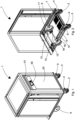
Figure 1 is a perspective view of a food carriage to which the assisted thrust system according to the present invention is applied; -
Figure 2 is a perspective bottom view of the carriage ofFigure 1 ; -
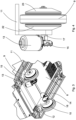
Figure 3 is an enlarged detail ofFigure 2 ; -
Figure 4 is an elevation view of a first drive wheel of the carriage ofFigure 1 , with the assisted thrust system according to the invention; -
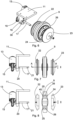
Figure 5 is an exploded view of the first drive wheel ofFigure 4 with the assisted thrust system according to the invention; -
Figure 6 is a partially exploded perspective view of the first drive wheel ofFigure 4 with the assisted thrust system according to the invention; -
Figure 7 is a partially exploded elevation view of the first drive wheel ofFigure 4 with the assisted thrust system according to the invention; -
Figure 8 is a view like that ofFigure 7 , partially sectioned along the line A-A ofFigure 7 ; -
Figure 9 is an elevation view of a second drive wheel of the carriage ofFigure 1 , with the assisted thrust system according to the invention; -
Figure 10 is an exploded view of the second drive wheel ofFigure 9 with the assisted thrust system according to the invention; -
Figure 11 is a partially exploded perspective view of the second drive wheel ofFigure 9 with the assisted thrust system according to the invention; -
Figure 12 is a partially exploded elevation view of the second drive wheel ofFigure 9 with the assisted thrust system according to the invention; -
Figure 13 is a view like that ofFigure 12 , partially sectioned along line B-B ofFigure 12 ; -
Figures 14 and 15 illustrate a version of the assisted thrust system according to the invention, applied to a carriage like that ofFigure 1 ; -
Figures 16 to 20 illustrate a command system that enables an operator to start up and stop the assisted thrust system according to the invention, - In
Figures 1 to 3 , by way of non-limiting example, afood carriage 1 is illustrated that is provided with the assisted thrust system according to the invention. - The
carriage 1 comprises a firstdirectional wheel 2 and a seconddirectional wheel 3 that are used to enable thecarriage 1 to change direction during motion. - The first
directional wheel 2 is fitted to afirst support element 4 connected to abase 6 of thecarriage 1 so as to be able to rotate around afirst rotation axis 7 perpendicular to thebase 6. - The second
directional wheel 3 is fitted to asecond support element 5 connected to abase 6 of thecarriage 1 so as to be able to rotate around asecond rotation axis 8 perpendicular to thebase 6. - The
carriage 1 further comprises afirst drive wheel 9 fitted to athird support element 11 stiffly fixed to thebase 6 of thecarriage 1 and asecond drive wheel 10 fitted to afourth support element 12 which is also fixed stiffly to thebase 6. - With reference to
Figures 4 to 8 , the assisted thrust system according to the invention applied to thefirst drive wheel 9 is now disclosed. - The assisted thrust system comprises a
first gearmotor unit first drive wheel 9, constituted by afirst motor 13 and by a firstgear reducer unit 15. Thefirst gearmotor unit third support element 11 by a plurality ofscrews 30. - The
first gearmotor unit first drive wheel 9 by a first magnetic coupling device, which is disclosed below. - The first
gear reducer unit 15 has afirst outlet shaft 17, supported on thethird support element 11 by a first pair ofbearings - A
first disc 22 made of electrically conductive metal material, for example aluminium and asecond disc 23, which is also made of electrically conductive metal material, for example aluminium, are keyed onto thefirst outlet shaft 17 by respectivefirst keys first outlet shaft 17, between thefirst disc 22 and thesecond disc 23, thefirst drive wheel 9 is arranged, fitted free to rotate on thefirst outlet shaft 17, by a second pair ofbearings - The
first disc 22 is inserted with clearance into a first seat 45 (Figure 8 ) obtained in thefirst drive wheel 9, so as to be able to rotate with respect to thefirst drive wheel 9. - The
second disc 23 is inserted with clearance into asecond seat 24 obtained in thefirst drive wheel 9 in a position opposite thefirst seat 45, so as to be able to rotate with respect to thefirst drive wheel 9. - The
first drive wheel 9 is provided with a plurality offirst housings 27 into which a first group ofpermanent magnets 25 is inserted, which faces thefirst disc 22, and a second group ofpermanent magnets 26 is inserted, which faces thesecond disc 23. - The
first disc 22, thesecond disc 23, the first group ofpermanent magnets 25 and the second group ofpermanent magnets 26 constitute the first magnetic coupling device for transmitting motion from thefirst gearmotor unit first drive wheel 9. - When the
first motor 13 is driven, thefirst motor 13 rotates theoutlet shaft 17 of the firstgear reducer unit 15, which rotates thefirst disc 22 and thesecond disc 23 in the magnetic fields generated by the first group ofpermanent magnets 25 and by the second group ofpermanent magnets 26. - The rotation of the
first disc 22 and of thesecond disc 23 inside the aforesaid magnetic fields determines the formation of eddy currents in thefirst disc 22 and in thesecond disc 23. The magnetic fields generated by the eddy currents interact with the magnetic fields of the first group ofpermanent magnets 25 and of the second group ofpermanent magnets 26, rotating thefirst drive wheel 9 and generating a thrust on the carriage that reduces the thrust required for an operator to move the carriage. - With reference to
Figures 9 to 13 , the assisted thrust system according to the invention applied to thesecond drive wheel 10 is disclosed, which is substantially the same as the assisted thrust system applied to thefirst drive wheel 9. - The assisted thrust system applied to the
second drive wheel 10 comprises asecond gearmotor unit second drive wheel 10, constituted by asecond motor 14 and by a secondgear reducer unit 16. Thesecond gearmotor unit fourth support element 12 by a plurality ofscrews 42. - The
second gearmotor unit second drive wheel 10 by a second magnetic coupling device substantially the same as that disclosed previously with reference to thefirst drive wheel 9. - The second
gear reducer unit 16 has asecond outlet shaft 31, supported on thefourth support element 12 by a third pair ofbearings - A
third disc 32 made of electrically conductive metal material, for example aluminium, and afourth disc 33, which is also made of electrically conductive metal material, for example aluminium, are keyed onto thesecond outlet shaft 31 by respectivesecond keys second outlet shaft 31, between thethird disc 32 and thefourth disc 33, thesecond drive wheel 10 is arranged, fitted free to rotate on thesecond outlet shaft 31, by a fourth pair ofbearings - The
third disc 32 is inserted with clearance into athird seat 46 obtained in thesecond drive wheel 10, so as to be able to rotate with respect to thefirst drive wheel 10. - The
fourth disc 33 is inserted with clearance into afourth seat 34 obtained in thesecond drive wheel 10 in a position opposite thethird seat 46, so as to be able to rotate with respect to thesecond drive wheel 10. - The
second drive wheel 10 is provided with a plurality ofsecond housings 37 into which a third group ofpermanent magnets 35 that faces thethird disc 32, and a fourth group ofpermanent magnets 36, that faces thefourth disc 33 are inserted. - The
third disc 32, thefourth disc 33, the third group ofpermanent magnets 35 and the fourth group ofpermanent magnets 36 constitute the second magnetic coupling device for transmitting motion from thesecond gearmotor unit second drive wheel 10. - When the
second motor 14 is driven, the secondgear reducer unit 16 rotates thesecond outlet shaft 31, which rotates thethird disc 32 and thefourth disc 33 in the magnetic fields generated by the third group ofpermanent magnets 35 and by the fourth group ofpermanent magnets 36. - The rotation of the
third disc 32 and of thefourth disc 33 inside the aforesaid magnetic fields determines the formation of eddy currents in thethird disc 32 and in thefourth disc 33. The magnetic fields generated by the eddy currents interact with the magnetic fields of the third group ofpermanent magnets 35 and of the fourth group ofpermanent magnets 36, rotating thesecond drive wheel 10 and generating a thrust on the carriage that reduces the thrust required for an operator to move the carriage. - In
Figures 14 and 15 , a variation is illustrated of the assisted thrust system according to the invention applied, merely by way of non-limiting example, to thefood carriage 1. - In the
carriage 1, in this version, thefirst drive wheel 9 and thesecond drive wheel 10 are fitted free to rotate at opposite ends of anaxle 47. Theaxle 47 is supported on abase 6 of thecarriage 1 by thefirst support element 11 and thesecond support element 12. - The assisted thrust system according to the invention comprises a
single gearmotor unit electric motor 48 powered by batteries with which thecarriage 1 is provided and by a thirdgear reducer unit 49 the outlet shaft of which is connected to theaxle 47, for example by a joint. Motion is transmitted to thedrive wheels Figures 1 to 13 . For the constructional details and the operation of the assisted thrust system applied to thedrive wheels Figures 1 to 13 . - In
Figures 16 to 20 , a control system is illustrated that enables an operator to start up and stop the assisted thrust system according to the invention, choosing also the rotation direction of the firstelectric motor 13 and the secondelectric motor 14, or of the thirdelectric motor 48. - The control system comprises a
handle 51 fixed to theframe 55 of thecarriage 1 at afront wall 52 of thecarriage 1 on which acontrol panel 50 can be installed, for example in the case of a carriage for distributing hot meals or refrigerated foods. - The
handle 51 comprises agrip 56 to the ends of which afirst plate 57 and asecond plate 58 are fixed that are arranged perpendicular to thegrip 56. - The
first plate 57 is provided with afirst seat 67 that can be coupled with afirst support element 53 fixed to theframe 55 and thesecond plate 58 is provided with asecond seat 68 that can be coupled with asecond support element 54 fixed to theframe 55. Thefirst support element 53 and thesecond support element 54 are used to fix thehandle 51 to theframe 55 of thecarriage 1. Fixing is achieved by afirst pin 59 that is inserted into ahole 66 of thefirst plate 57 and into a correspondinghole 60 of the first support element, and by asecond pin 61 that is inserted into corresponding holes (that are not visible in the figures) of thesecond plate 58 and of thesecond support element 54. - On the first support element 53 a
first switch 62, for example a microswitch and to asecond switch 63, for example a microswitch, which are normally open are fixed, which are used to command, respectively, the start-up of the firstelectric motors 13 and the secondelectric motor 14, or of the thirdelectric motor 48, in a first rotation direction and in a second rotation direction opposite the first rotation direction. - In the first seat 67 a first tilted
plane 69 designed to interact with thefirst microswitch 62 and a second tiltedplane 70 designed to interact with thesecond microswitch 63 are provided. Similar tilted planes (that are not visible in the Figures) are provided in thesecond seat 68. - To the first support element 53 a
first spring 62 and asecond spring 63 are further fitted, whereas a third spring and a fourth spring (that are not visible in Figures) are fitted to thesecond support element 54. Said springs are maintained compressed by the tilted planes provided in thefirst seat 67 and in thesecond seat 68, so as to return thehandle 56 to a neutral position, visible inFigure 16 , if the operator stops exerting a force on thehandle 51, as will be explained below. - When an operator has to handle the
carriage 1, the operator starts the thirdelectric motor 48 or the firstelectric motor 13 and the secondelectric motor 14 by acting on thehandle 51. If the operator exerts on the handle 51 a thrust to thewall 52 of the carriage, in the direction of the arrow F4 inFigure 20 , starting from the neutral position, shown inFigure 16 , thehandle 51 rotates around thepins plane 70 presses on thesecond switch 63, taking thesecond switch 63 to the closed position so as to start up the firstelectric motor 13 and the secondelectric motor 14, or the thirdelectric motor 48, with a rotation direction that is consistent, for example, with a forward movement of thecarriage 1. If on the other hand the operator exerts on the handle 51 a traction away from thewall 52 of the carriage, in the direction of the arrow F3 inFigure 20 , thehandle 51 rotates around thepins plane 69 presses on thefirst switch 62 by taking thefirst switch 62 to the closed position to start up the firstelectric motor 13 and the secondelectric motor 14, or the thirdelectric motor 48, with a rotation direction that is consistent with backward movement of thecarriage 1. The firstelectric motor 13 and the secondelectric motor 14, or the thirdelectric motor 48, remain in operation as along as the operator continues to exert a thrust or traction on thehandle 51. - If the operator stops exerting a thrust or traction on the
handle 51, thefirst spring 64, thesecond spring 65, the third spring and the fourth spring, as explained previously, return thehandle 51 to the neutral position, in which thehandle 51 does not interact with themicroswitches electric motor 13 and the secondelectric motor 14, or the thirdelectric motor 48, to stop. This has the significant advantage that the risk is eliminated completely that the carriage may move autonomously without control by the operator, thus ensuring maximum security in use of the assisted thrust system according to the invention. - Alternatively, starting and stopping the first
electric motor 13 and the secondelectric motor 14, or the thirdelectric motor 48, and the choice of the rotation direction thereof can be performed by control buttons arranged in positions that are ergonomically suitable for an operator, depending on the shape and structure of thecarriage 1, to enable the operator to conveniently access said control buttons. - It should be noted that in
Figure 18 themicroswitches first spring 64 and thesecond spring 65 are shown inside thefirst seat 67, i.e. in the position in which they are located when thehandle 51 is fitted to thesupport elements - Owing to the magnetic coupling between the
aluminium discs permanent magnets drive wheels - In order to brake the carriage, it is sufficient for the operator to reverse the rotation direction of the first and second
electric motors electric motor 48. - It should be noted that the third
electric motor 48, or the first and secondelectric motors - Further, when the assisted thrust system is switched off, the drive wheels can rotate freely without any friction generated by the system. This has the significant advantage that if the energy source that supplies the assisted thrust system becomes exhausted, the carriage can be anyway moved easily without resorting to mechanical releases the presence of which is necessary in systems like those disclosed in the aforementioned prior art documents.
- Further, the system according to the invention does not require a differential u that is normally used in motorized systems and is necessary to modify the rotation speed of the drive wheels on a curve. In the assisted thrust system according to the invention, the speed between one drive wheel and the other varies automatically owing to the magnetic coupling between the third
electric motor 48, or the first and secondelectric motors drive wheels
The present invention has been disclosed with reference to a food carriage, but it must be understood that the assisted thrust system according to the invention can be used on any type of carriage for moving loads.
Claims (9)
- Assisted thrust system for a carriage (1) provided with wheels, wherein the carriage (1) comprises a base (6) to which a first directional wheel (2) and a second directional wheel (3) are fixed that are connected to the base (6) by respective support elements (4, 5) that can rotate in relation to the base (6) around a respective axis (7, 8) that is perpendicular to the base (6), wherein a first drive wheel (9) and a second drive wheel (10) are further fixed to the base (6) and rotated by at least one gearmotor unit (13, 15; 14, 16; 48, 49), wherein said at least one gearmotor unit drives said first drive wheel (9) by a first magnetic coupling device (22, 23, 24, 25) and said second drive wheel (10) by a second magnetic coupling device (32, 33, 34, 35), wherein said at least one gearmotor unit comprises a first gearmotor unit (13, 15) that drives said first drive wheel (9) and a second gearmotor unit (14, 16) that drives said second drive wheel, characterized in that said first magnetic coupling device (22, 23, 24, 25) comprises a first disc (22) made of electrically conductive material and a second disc (23) made of electrically conductive material that are fitted on an a first outlet shaft (17) of the first gearmotor unit (13, 15), a first group of permanent magnets (25) and a second group of permanent magnets (26) inserted into respective first seats (27) with which the first drive wheel (9) is provided, wherein said first drive wheel (9) is arranged between said first disc (22) and said second disc (23) on said first outlet shaft (17) free to rotate in relation thereto, wherein said first disc (22) is inserted with clearance into a first seat (45) obtained in said first drive wheel (9) and faces said first group of permanent magnets (25), wherein said second disc (23) is inserted with clearance into a second seat (24) obtained in said first drive wheel (9) in a position opposite said first seat (45) and faces said second group of permanent magnets (26), and characterized in that said second magnetic coupling device (32, 33, 34, 35) comprises a third disc (32) made of electrically conductive material and a fourth disc (33) made of electrically conductive material that are fitted on second outlet shaft (31) of the second gearmotor unit (14, 16), a third group of permanent magnets (35) and a fourth group of permanent magnets (36) inserted into respective second seats (37) with which the second drive wheel (10) is provided, wherein said second drive wheel (10) is arranged between said third disc (32) and said fourth disc (33) on said second outlet shaft (31) and is free to rotate in relation thereto, in which said third disc (32) is inserted with clearance into a third seat (46) obtained in said second drive wheel (10) and faces said third group of permanent magnets (35), wherein said fourth disc (33) is inserted with clearance into a fourth seat (34) obtained in said second drive wheel (10) in a position opposite said third seat (46) and faces said fourth group of permanent magnets (36).
- Assisted thrust system for a carriage (1) provided with wheels, wherein the carriage (1) comprises a base (6) to which a first directional wheel (2) and a second directional wheel (3) are fixed that are connected to the base (6) by respective support elements (4, 5) that can rotate in relation to the base (6) around a respective axis (7, 8) that is perpendicular to the base (6), wherein a first drive wheel (9) and a second drive wheel (10) are fixed to the base (6) and rotated by at least one gearmotor unit (13, 15; 14, 16; 48, 49), wherein said at least one gearmotor unit drives said first drive wheel (9) by a first magnetic coupling device (22, 23, 24, 25) and said second drive wheel (10) by a second magnetic coupling device (32, 33, 34, 35), wherein said at least one gearmotor unit comprises a single gearmotor unit (48, 49) that drives both said first drive wheel (9) and said second drive wheel (10), wherein said first drive wheel (9) and said second drive wheel (10) are arranged at opposite ends of an axle (47) free to rotate in relation thereto, said axle (47) being rotated by said single gearmotor unit (48, 49), characterized in that said first magnetic coupling device (22, 23, 24, 25) comprises a first disc (22) made of electrically conductive material and a second disc (23) made of electrically conductive material that are fitted on said axle (47), a first group of permanent magnets (25) and a second group of permanent magnets (26) inserted into respective seats (27) provided in the first drive wheel (9), wherein said first drive wheel (9) is arranged between said first disc (22) and said second disc (23) on said axle (47) and is free to rotate in relation thereto, in which said first disc (22) is inserted with clearance into a first seat (45) obtained in said first drive wheel (9) and faces said first group of permanent magnets (25), in which said second disc (23) is inserted with clearance into a second seat (24) obtained in said first drive wheel (9) in a position opposite said first seat (45) and faces said second group of permanent magnets (26), wherein said second magnetic coupling device (32, 33, 34, 35) comprises a first disc (32) made of electrically conductive material and a second disc (33) made of electrically conductive material that are fitted on said axle (47), a first group of permanent magnets (35) and a second group of permanent magnets (36) inserted into respective seats (37) provided in the second drive wheel (10), wherein said second drive wheel (10) is arranged between said first disc (32) and said second disc (33) on said axle (47) and is free to rotate in relation thereto, in which said first disc (32) is inserted with clearance into a first seat (46) obtained in said second drive wheel (10) and faces said first group of permanent magnets (35), wherein said second disc (33) is inserted with clearance into a second seat (34) obtained in said second drive wheel (10) in a position opposite said first seat (46) and faces said second group of permanent magnets (36).
- Assisted thrust system according to claim 1 or 2, wherein said electrically conductive material is aluminium.
- Assisted thrust system according to one of the preceding claims, wherein said at least one gearmotor unit (13, 15; 14, 16; 48, 49) comprises an electric motor (13, 14,48) powered by a battery arranged on said carriage (1).
- Assisted thrust system according to any one of the preceding claims, wherein said at least one gearmotor unit (13, 15; 14, 16; 48, 49) is sized so as to develop a drive torque on said first drive wheel (9) and second drive wheel (10) that is not sufficient to move the carriage (1) without the help of the thrust of an operator.
- Assisted thrust system according to any one of the preceding claims, wherein said at least one gearmotor unit (13, 15; 14, 16; 48, 49) can be activated or deactivated by an operator acting on a handle (51) fixed to a frame (55) of the carriage (1), wherein said handle (51) is fixed to a first support element (53) and to a second support element (54) fixed to the frame (55), said handle (51) being able to rotate with respect to said first support element (53) and to said second support element (54), wherein on at least one of said first support element (53) and said second support element (54) a first normally open switch (62) and a second normally open switch (63) are fixed, wherein said first switch (62) is closed by exerting traction on said handle (51) so as to rotate the handle (51) in a second rotation direction (F1), and said second switch (63) is closed by exerting a thrust on said handle (51) so as to rotate said handle (51) in a first rotation direction (F2) opposite said second rotation direction (F1), said rotating occurring from a neutral position of said handle (51), at which said first switch (62) and said second switch (63) are both in an open position.
- Assisted thrust system according to claim 6, wherein said first switch (62) is maintained in a closed position as long as traction is exerted on the handle (51), wherein said second switch (63) is maintained in a closed position as long as a thrust is exerted on the handle (51).
- Assisted thrust system according to claim 6, or 7, wherein on said first support element (53) a first spring (64) and a second spring (65) are fixed, wherein on said second support element (54) a third spring and a fourth spring are fixed, in which said first spring (64), said second spring (65), said third spring and said fourth spring interact with said handle (51) to return said handle (51) to said neutral position when traction or thrust stops being exerted on the handle (51).
- Assisted thrust system according to one of claims 1 to 5, wherein activation or deactivation of said at least one gearmotor unit (13, 15; 14, 16; 48, 49) and a choice of the rotation direction thereof can be achieved by an operator by control buttons arranged on the carriage (1) in ergonomically suitable positions for an operator, depending on the form and structure of the carriage (1).
Applications Claiming Priority (2)
| Application Number | Priority Date | Filing Date | Title |
|---|---|---|---|
| IT201900017933 | 2019-10-03 | ||
| PCT/IB2020/058442 WO2021064496A1 (en) | 2019-10-03 | 2020-09-11 | Assisted thrust system for carriages or for loads in general moved on wheels |
Publications (3)
| Publication Number | Publication Date |
|---|---|
| EP4037925A1 EP4037925A1 (en) | 2022-08-10 |
| EP4037925C0 EP4037925C0 (en) | 2025-01-08 |
| EP4037925B1 true EP4037925B1 (en) | 2025-01-08 |
Family
ID=69570724
Family Applications (1)
| Application Number | Title | Priority Date | Filing Date |
|---|---|---|---|
| EP20771922.0A Active EP4037925B1 (en) | 2019-10-03 | 2020-09-11 | Assisted thrust system for carriages or for loads in general moved on wheels |
Country Status (5)
| Country | Link |
|---|---|
| US (1) | US11753059B2 (en) |
| EP (1) | EP4037925B1 (en) |
| KR (1) | KR102921510B1 (en) |
| CN (1) | CN114502447B (en) |
| WO (1) | WO2021064496A1 (en) |
Family Cites Families (30)
| Publication number | Priority date | Publication date | Assignee | Title |
|---|---|---|---|---|
| GB1198905A (en) * | 1968-05-16 | 1970-07-15 | Raymond George Biddle | Improvements in Wheelchairs |
| JPS63215459A (en) | 1987-03-05 | 1988-09-07 | 松下電器産業株式会社 | Conveying device |
| US5045742A (en) * | 1990-02-23 | 1991-09-03 | General Electric Company | Electric motor with optimum core dimensions |
| ATE125502T1 (en) * | 1991-09-13 | 1995-08-15 | Mubir Ag Masch & App | BLOCKING DEVICE ON ROLLERS FOR HAND-MOVED TRANSPORT TROLLEYS WITH A FEEDER THAT ONLY TOUCHES THE ROAD WHEN NEEDED. |
| DE9311075U1 (en) | 1993-07-24 | 1994-11-24 | Strothmann, Rolf, Dr., 66123 Saarbrücken | Electric drive of a hand-drawn or pushed, mobile object |
| US6276219B1 (en) | 1996-03-01 | 2001-08-21 | Jung Heinrich Ag | Motion controller for a motor-driven, pole-conducted transportation truck or trolley |
| JPH11122719A (en) * | 1997-10-17 | 1999-04-30 | Tokico Ltd | Transfer device |
| DE10204915A1 (en) * | 2002-02-07 | 2003-09-11 | Zahnradfabrik Friedrichshafen | Drive unit for vehicle, in particular auxiliary drive for hand pallet trucks |
| ITMI20041757A1 (en) * | 2004-09-15 | 2004-12-15 | Moreno Fernando Esteban Araya | OPTIONAL DRIVING DEVICE OF AT LEAST ONE SELF-DIRECTIONAL WHEEL OF A TROLLEY |
| JP2006189064A (en) * | 2004-12-28 | 2006-07-20 | Gkn ドライブライン トルクテクノロジー株式会社 | Driving force transmission device |
| DE102005017723A1 (en) * | 2005-04-15 | 2006-10-26 | Zf Friedrichshafen Ag | Drive unit for an industrial truck |
| GB2456350B (en) * | 2008-01-14 | 2012-12-19 | Protean Electric Ltd | Electric in-wheel drive arrangement |
| KR101331696B1 (en) * | 2011-10-28 | 2013-11-20 | 삼성전기주식회사 | Apparatus of Driving Wheels for in-wheel System |
| US8983740B2 (en) * | 2013-03-14 | 2015-03-17 | Arthur Eidelson | Driven loadable construct system and method for using the same |
| JP2016525977A (en) * | 2013-05-21 | 2016-09-01 | アルジョ ホスピタル イクイップメント アクチエボラグArjo Hospital Equipment AB | Auxiliary propulsion system, method and chassis |
| US9358169B2 (en) * | 2013-10-04 | 2016-06-07 | Gendron, Inc. | Drive system for bed |
| KR101638242B1 (en) | 2014-09-30 | 2016-07-11 | 가천대학교 산학협력단 | Method of Controlling Motor Driven Power Assisted Safe Stroller and Apparatus for the Same |
| US10377403B2 (en) * | 2015-11-06 | 2019-08-13 | Caster Concepts, Inc. | Powered utility cart and compliant drive wheel therefor |
| EP3444497B1 (en) * | 2016-04-15 | 2021-03-03 | Minebea Mitsumi Inc. | Wheel module |
| CN205737609U (en) | 2016-04-29 | 2016-11-30 | 华中农业大学 | A kind of light-duty carrying dolly of walking electric based on wheel hub motor and controller |
| US9969212B2 (en) * | 2016-06-20 | 2018-05-15 | Long Yue Cast-Press Co., Ltd. | Resistance force control structure of driven pulley device |
| CN106428301A (en) | 2016-11-11 | 2017-02-22 | 天津星马汽车有限公司 | Assisted traction device special for mine car carriage |
| AU2017361121B2 (en) * | 2016-11-15 | 2023-01-05 | Concourse IP Pty Ltd | Electrically motorised wheel, transmission and control module, kit, vehicle and system |
| JP7156787B2 (en) * | 2017-09-08 | 2022-10-19 | Ntn株式会社 | Wheel bearing device and vehicle equipped with this wheel bearing device |
| IT201700114497A1 (en) * | 2017-10-11 | 2019-04-11 | Piaggio Fast Forward Inc | TWO-WHEEL VEHICLE WITH LINEAR STABILIZATION SYSTEM |
| CN107618356B (en) * | 2017-10-23 | 2020-01-21 | 山东理工大学 | Electric automobile wheel limit motor |
| US10479138B2 (en) * | 2017-12-12 | 2019-11-19 | Kevin Christy | Electromagnetic wheel assembly |
| CN109080444B (en) * | 2018-08-08 | 2020-07-17 | 中国科学院深圳先进技术研究院 | Carrying device, carrying system and carrying method based on hub motor driving |
| US10246117B1 (en) * | 2018-08-09 | 2019-04-02 | Li-Sheng Chien | Hand-driven, wheeled carrier deceleration device and hand-driven, wheeled carrier having the same |
| US11098793B1 (en) * | 2020-09-22 | 2021-08-24 | Dana Heavy Vehicle Systems Group, Llc | Inter-axle differential and method for operation of said inter-axle differential |
-
2020
- 2020-09-11 CN CN202080063401.5A patent/CN114502447B/en active Active
- 2020-09-11 EP EP20771922.0A patent/EP4037925B1/en active Active
- 2020-09-11 WO PCT/IB2020/058442 patent/WO2021064496A1/en not_active Ceased
- 2020-09-11 KR KR1020227006746A patent/KR102921510B1/en active Active
- 2020-09-11 US US17/753,507 patent/US11753059B2/en active Active
Also Published As
| Publication number | Publication date |
|---|---|
| EP4037925C0 (en) | 2025-01-08 |
| EP4037925A1 (en) | 2022-08-10 |
| US20220332358A1 (en) | 2022-10-20 |
| US11753059B2 (en) | 2023-09-12 |
| CN114502447A (en) | 2022-05-13 |
| KR20220077121A (en) | 2022-06-08 |
| CN114502447B (en) | 2023-09-22 |
| WO2021064496A1 (en) | 2021-04-08 |
| KR102921510B1 (en) | 2026-02-04 |
Similar Documents
| Publication | Publication Date | Title |
|---|---|---|
| KR102041723B1 (en) | Heavy-goods conveying device capable of autonomous omni-directional travel without turning the wheels | |
| US7686145B2 (en) | Drive device for electrically movable vehicles and electric wheelchair having same | |
| KR20060019520A (en) | Steer / Pull Cargo Power Drive Units | |
| US5161630A (en) | Wheelchair drive assembly | |
| EP0653341A1 (en) | Motordriven trolley | |
| WO2009113009A1 (en) | Assistive drive system | |
| US4582154A (en) | Drive apparatus | |
| JP6737408B1 (en) | Drive wheels, carts and equipment | |
| EP2399803B1 (en) | Lift truck | |
| EP4037925B1 (en) | Assisted thrust system for carriages or for loads in general moved on wheels | |
| CN110357005B (en) | Electric fork truck driving system and electric fork truck | |
| WO2018126298A1 (en) | "dual driven wheels load mover" | |
| JP2018100076A (en) | Driving wheel and dolly | |
| KR20010061743A (en) | A cart having a motor driven system | |
| NZ198960A (en) | Wheeled lifting apparatus with cam activated scissors action and high manoeuverability | |
| US3291243A (en) | Power operated vehicle | |
| KR100956139B1 (en) | Electric moving cart with improved driving capability | |
| GB2599721A (en) | Drive unit for wheeled article | |
| JP6807287B2 (en) | Vehicle moving trolley | |
| US20250170001A1 (en) | Wheelchair propulsion system | |
| EP3756634B1 (en) | Manoeuvre device for moving transport structures, of the type used in health facilities or similar | |
| JP3002902B2 (en) | An electric car that gets over a step | |
| JPH0247599Y2 (en) | ||
| JP3674913B2 (en) | Low lift truck | |
| GB2367274A (en) | Lightweight manoeuvrable powered wheelchair |
Legal Events
| Date | Code | Title | Description |
|---|---|---|---|
| STAA | Information on the status of an ep patent application or granted ep patent |
Free format text: STATUS: UNKNOWN |
|
| STAA | Information on the status of an ep patent application or granted ep patent |
Free format text: STATUS: THE INTERNATIONAL PUBLICATION HAS BEEN MADE |
|
| PUAI | Public reference made under article 153(3) epc to a published international application that has entered the european phase |
Free format text: ORIGINAL CODE: 0009012 |
|
| STAA | Information on the status of an ep patent application or granted ep patent |
Free format text: STATUS: REQUEST FOR EXAMINATION WAS MADE |
|
| 17P | Request for examination filed |
Effective date: 20220331 |
|
| AK | Designated contracting states |
Kind code of ref document: A1 Designated state(s): AL AT BE BG CH CY CZ DE DK EE ES FI FR GB GR HR HU IE IS IT LI LT LU LV MC MK MT NL NO PL PT RO RS SE SI SK SM TR |
|
| DAV | Request for validation of the european patent (deleted) | ||
| DAX | Request for extension of the european patent (deleted) | ||
| GRAP | Despatch of communication of intention to grant a patent |
Free format text: ORIGINAL CODE: EPIDOSNIGR1 |
|
| STAA | Information on the status of an ep patent application or granted ep patent |
Free format text: STATUS: GRANT OF PATENT IS INTENDED |
|
| RIC1 | Information provided on ipc code assigned before grant |
Ipc: B62B 5/04 20060101ALN20240816BHEP Ipc: B62D 5/04 20060101ALN20240816BHEP Ipc: B62B 5/00 20060101ALN20240816BHEP Ipc: B62B 3/00 20060101ALN20240816BHEP Ipc: B60K 17/02 20060101ALN20240816BHEP Ipc: B60K 17/04 20060101ALN20240816BHEP Ipc: B60K 7/00 20060101AFI20240816BHEP |
|
| INTG | Intention to grant announced |
Effective date: 20240919 |
|
| GRAS | Grant fee paid |
Free format text: ORIGINAL CODE: EPIDOSNIGR3 |
|
| GRAA | (expected) grant |
Free format text: ORIGINAL CODE: 0009210 |
|
| STAA | Information on the status of an ep patent application or granted ep patent |
Free format text: STATUS: THE PATENT HAS BEEN GRANTED |
|
| AK | Designated contracting states |
Kind code of ref document: B1 Designated state(s): AL AT BE BG CH CY CZ DE DK EE ES FI FR GB GR HR HU IE IS IT LI LT LU LV MC MK MT NL NO PL PT RO RS SE SI SK SM TR |
|
| REG | Reference to a national code |
Ref country code: GB Ref legal event code: FG4D |
|
| REG | Reference to a national code |
Ref country code: CH Ref legal event code: EP |
|
| REG | Reference to a national code |
Ref country code: DE Ref legal event code: R096 Ref document number: 602020044542 Country of ref document: DE |
|
| REG | Reference to a national code |
Ref country code: IE Ref legal event code: FG4D |
|
| U01 | Request for unitary effect filed |
Effective date: 20250115 |
|
| U07 | Unitary effect registered |
Designated state(s): AT BE BG DE DK EE FI FR IT LT LU LV MT NL PT RO SE SI Effective date: 20250121 |
|
| PG25 | Lapsed in a contracting state [announced via postgrant information from national office to epo] |
Ref country code: RS Free format text: LAPSE BECAUSE OF FAILURE TO SUBMIT A TRANSLATION OF THE DESCRIPTION OR TO PAY THE FEE WITHIN THE PRESCRIBED TIME-LIMIT Effective date: 20250408 |
|
| PG25 | Lapsed in a contracting state [announced via postgrant information from national office to epo] |
Ref country code: PL Free format text: LAPSE BECAUSE OF FAILURE TO SUBMIT A TRANSLATION OF THE DESCRIPTION OR TO PAY THE FEE WITHIN THE PRESCRIBED TIME-LIMIT Effective date: 20250108 |
|
| PG25 | Lapsed in a contracting state [announced via postgrant information from national office to epo] |
Ref country code: ES Free format text: LAPSE BECAUSE OF FAILURE TO SUBMIT A TRANSLATION OF THE DESCRIPTION OR TO PAY THE FEE WITHIN THE PRESCRIBED TIME-LIMIT Effective date: 20250108 |
|
| PG25 | Lapsed in a contracting state [announced via postgrant information from national office to epo] |
Ref country code: NO Free format text: LAPSE BECAUSE OF FAILURE TO SUBMIT A TRANSLATION OF THE DESCRIPTION OR TO PAY THE FEE WITHIN THE PRESCRIBED TIME-LIMIT Effective date: 20250408 Ref country code: IS Free format text: LAPSE BECAUSE OF FAILURE TO SUBMIT A TRANSLATION OF THE DESCRIPTION OR TO PAY THE FEE WITHIN THE PRESCRIBED TIME-LIMIT Effective date: 20250508 |
|
| PG25 | Lapsed in a contracting state [announced via postgrant information from national office to epo] |
Ref country code: HR Free format text: LAPSE BECAUSE OF FAILURE TO SUBMIT A TRANSLATION OF THE DESCRIPTION OR TO PAY THE FEE WITHIN THE PRESCRIBED TIME-LIMIT Effective date: 20250108 |
|
| PG25 | Lapsed in a contracting state [announced via postgrant information from national office to epo] |
Ref country code: GR Free format text: LAPSE BECAUSE OF FAILURE TO SUBMIT A TRANSLATION OF THE DESCRIPTION OR TO PAY THE FEE WITHIN THE PRESCRIBED TIME-LIMIT Effective date: 20250409 |
|
| PG25 | Lapsed in a contracting state [announced via postgrant information from national office to epo] |
Ref country code: SM Free format text: LAPSE BECAUSE OF FAILURE TO SUBMIT A TRANSLATION OF THE DESCRIPTION OR TO PAY THE FEE WITHIN THE PRESCRIBED TIME-LIMIT Effective date: 20250108 |
|
| PG25 | Lapsed in a contracting state [announced via postgrant information from national office to epo] |
Ref country code: CZ Free format text: LAPSE BECAUSE OF FAILURE TO SUBMIT A TRANSLATION OF THE DESCRIPTION OR TO PAY THE FEE WITHIN THE PRESCRIBED TIME-LIMIT Effective date: 20250108 |
|
| PG25 | Lapsed in a contracting state [announced via postgrant information from national office to epo] |
Ref country code: SK Free format text: LAPSE BECAUSE OF FAILURE TO SUBMIT A TRANSLATION OF THE DESCRIPTION OR TO PAY THE FEE WITHIN THE PRESCRIBED TIME-LIMIT Effective date: 20250108 |
|
| U20 | Renewal fee for the european patent with unitary effect paid |
Year of fee payment: 6 Effective date: 20250930 |
|
| PLBE | No opposition filed within time limit |
Free format text: ORIGINAL CODE: 0009261 |
|
| STAA | Information on the status of an ep patent application or granted ep patent |
Free format text: STATUS: NO OPPOSITION FILED WITHIN TIME LIMIT |
|
| 26N | No opposition filed |
Effective date: 20251009 |