EP4037331A1 - Verfahren und vorrichtung zur videoverarbeitung - Google Patents
Verfahren und vorrichtung zur videoverarbeitung Download PDFInfo
- Publication number
- EP4037331A1 EP4037331A1 EP22153893.7A EP22153893A EP4037331A1 EP 4037331 A1 EP4037331 A1 EP 4037331A1 EP 22153893 A EP22153893 A EP 22153893A EP 4037331 A1 EP4037331 A1 EP 4037331A1
- Authority
- EP
- European Patent Office
- Prior art keywords
- computing device
- video
- frame
- video content
- blocks
- Prior art date
- Legal status (The legal status is an assumption and is not a legal conclusion. Google has not performed a legal analysis and makes no representation as to the accuracy of the status listed.)
- Pending
Links
Images



Classifications
-
- H—ELECTRICITY
- H04—ELECTRIC COMMUNICATION TECHNIQUE
- H04N—PICTORIAL COMMUNICATION, e.g. TELEVISION
- H04N19/00—Methods or arrangements for coding, decoding, compressing or decompressing digital video signals
- H04N19/10—Methods or arrangements for coding, decoding, compressing or decompressing digital video signals using adaptive coding
- H04N19/102—Methods or arrangements for coding, decoding, compressing or decompressing digital video signals using adaptive coding characterised by the element, parameter or selection affected or controlled by the adaptive coding
- H04N19/103—Selection of coding mode or of prediction mode
- H04N19/112—Selection of coding mode or of prediction mode according to a given display mode, e.g. for interlaced or progressive display mode
-
- H—ELECTRICITY
- H04—ELECTRIC COMMUNICATION TECHNIQUE
- H04N—PICTORIAL COMMUNICATION, e.g. TELEVISION
- H04N19/00—Methods or arrangements for coding, decoding, compressing or decompressing digital video signals
- H04N19/10—Methods or arrangements for coding, decoding, compressing or decompressing digital video signals using adaptive coding
- H04N19/134—Methods or arrangements for coding, decoding, compressing or decompressing digital video signals using adaptive coding characterised by the element, parameter or criterion affecting or controlling the adaptive coding
- H04N19/156—Availability of hardware or computational resources, e.g. encoding based on power-saving criteria
-
- H—ELECTRICITY
- H04—ELECTRIC COMMUNICATION TECHNIQUE
- H04N—PICTORIAL COMMUNICATION, e.g. TELEVISION
- H04N19/00—Methods or arrangements for coding, decoding, compressing or decompressing digital video signals
- H04N19/60—Methods or arrangements for coding, decoding, compressing or decompressing digital video signals using transform coding
- H04N19/61—Methods or arrangements for coding, decoding, compressing or decompressing digital video signals using transform coding in combination with predictive coding
-
- H—ELECTRICITY
- H04—ELECTRIC COMMUNICATION TECHNIQUE
- H04N—PICTORIAL COMMUNICATION, e.g. TELEVISION
- H04N21/00—Selective content distribution, e.g. interactive television or video on demand [VOD]
- H04N21/20—Servers specifically adapted for the distribution of content, e.g. VOD servers; Operations thereof
- H04N21/23—Processing of content or additional data; Elementary server operations; Server middleware
- H04N21/234—Processing of video elementary streams, e.g. splicing of video streams or manipulating encoded video stream scene graphs
- H04N21/2343—Processing of video elementary streams, e.g. splicing of video streams or manipulating encoded video stream scene graphs involving reformatting operations of video signals for distribution or compliance with end-user requests or end-user device requirements
- H04N21/234345—Processing of video elementary streams, e.g. splicing of video streams or manipulating encoded video stream scene graphs involving reformatting operations of video signals for distribution or compliance with end-user requests or end-user device requirements the reformatting operation being performed only on part of the stream, e.g. a region of the image or a time segment
-
- H—ELECTRICITY
- H04—ELECTRIC COMMUNICATION TECHNIQUE
- H04N—PICTORIAL COMMUNICATION, e.g. TELEVISION
- H04N21/00—Selective content distribution, e.g. interactive television or video on demand [VOD]
- H04N21/20—Servers specifically adapted for the distribution of content, e.g. VOD servers; Operations thereof
- H04N21/23—Processing of content or additional data; Elementary server operations; Server middleware
- H04N21/234—Processing of video elementary streams, e.g. splicing of video streams or manipulating encoded video stream scene graphs
- H04N21/2343—Processing of video elementary streams, e.g. splicing of video streams or manipulating encoded video stream scene graphs involving reformatting operations of video signals for distribution or compliance with end-user requests or end-user device requirements
- H04N21/23439—Processing of video elementary streams, e.g. splicing of video streams or manipulating encoded video stream scene graphs involving reformatting operations of video signals for distribution or compliance with end-user requests or end-user device requirements for generating different versions
-
- H—ELECTRICITY
- H04—ELECTRIC COMMUNICATION TECHNIQUE
- H04N—PICTORIAL COMMUNICATION, e.g. TELEVISION
- H04N21/00—Selective content distribution, e.g. interactive television or video on demand [VOD]
- H04N21/20—Servers specifically adapted for the distribution of content, e.g. VOD servers; Operations thereof
- H04N21/23—Processing of content or additional data; Elementary server operations; Server middleware
- H04N21/24—Monitoring of processes or resources, e.g. monitoring of server load, available bandwidth, upstream requests
- H04N21/2402—Monitoring of the downstream path of the transmission network, e.g. bandwidth available
-
- H—ELECTRICITY
- H04—ELECTRIC COMMUNICATION TECHNIQUE
- H04N—PICTORIAL COMMUNICATION, e.g. TELEVISION
- H04N21/00—Selective content distribution, e.g. interactive television or video on demand [VOD]
- H04N21/80—Generation or processing of content or additional data by content creator independently of the distribution process; Content per se
- H04N21/83—Generation or processing of protective or descriptive data associated with content; Content structuring
- H04N21/845—Structuring of content, e.g. decomposing content into time segments
- H04N21/8456—Structuring of content, e.g. decomposing content into time segments by decomposing the content in the time domain, e.g. in time segments
-
- H—ELECTRICITY
- H04—ELECTRIC COMMUNICATION TECHNIQUE
- H04N—PICTORIAL COMMUNICATION, e.g. TELEVISION
- H04N7/00—Television systems
- H04N7/01—Conversion of standards, e.g. involving analogue television standards or digital television standards processed at pixel level
- H04N7/0102—Conversion of standards, e.g. involving analogue television standards or digital television standards processed at pixel level involving the resampling of the incoming video signal
-
- H—ELECTRICITY
- H04—ELECTRIC COMMUNICATION TECHNIQUE
- H04N—PICTORIAL COMMUNICATION, e.g. TELEVISION
- H04N7/00—Television systems
- H04N7/01—Conversion of standards, e.g. involving analogue television standards or digital television standards processed at pixel level
- H04N7/0135—Conversion of standards, e.g. involving analogue television standards or digital television standards processed at pixel level involving interpolation processes
Definitions
- a user device requesting a transcoded video may request a video encoded at a particular bit rate, but the user device may have very little knowledge of its network's capacity. If a user device selects a video fragment with a bit rate that is too high for their network, the video playback experience may be poor. More efficient video processing methods are desired.
- Content may be encoded/transcoded for delivery to a computing device that requested content.
- the content may be encoded as temporally interlaced blocks, which interlaces frames in the content with respect to time. Because the frames are temporally interlaced, receiving only a portion of the temporally interlaced blocks is still sufficient to play back a full-length video at a reduced quality (e.g., at a reduced bit rate or lower resolution).
- the CDN or computing device may also dynamically select the video bit rate by terminating the network connection. For example, if network conditions are poor, the CDN or computing device may terminate the network connection causing the computing device to decode the partially received temporally interlaced blocks and play back the reduced quality version of the video content.
- Content may be encoded/transcoded for delivery via a network (e.g., the content origin, CDN, or other intermediary service) to a playback device such as a computing device.
- the computing device may decode and/or display the content.
- transcode and encode may be used interchangeably herein.
- the techniques for video processing described herein may be applicable to any delivery method including but not limited to Dynamic Adaptive Streaming over Hypertext Transfer Protocol (HTTP) (DASH), HTTP Live Streaming (HLS), the QAM digital television standard, and ABR streaming.
- HTTP Dynamic Adaptive Streaming over Hypertext Transfer Protocol
- HLS HTTP Live Streaming
- ABR streaming ABR streaming.
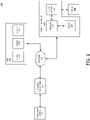
- FIG. 1 shows system 100 configured for video processing.
- the system 100 may comprise a video data source 102, an encoder/transcoder 104, a CDN 108, and a computing device 110.
- the CDN 108 may comprise a CDN or other intermediary service.
- the video data source 102, the encoder/transcoder 104, the CDN 108, the computing device 110, and/or any other component of the system 100 may be interconnected via a network 106.
- the network 106 may comprise a wired network, a wireless network, or any combination thereof.
- the network 106 may comprise a public network, such as the Internet.
- the network 106 may comprise a private network, such as a content provider's distribution system.
- the network 106 may communicate using technologies such as WLAN technology based on the Institute of Electrical and Electronics Engineers (IEEE) 802.11 standard, wireless cellular technology, Bluetooth, coaxial cable, Ethernet, fiber optics, microwave, satellite, Public Switched Telephone Network (PTSN), Digital Subscriber Line (DSL), BPL, or any other appropriate technologies.
- IEEE Institute of Electrical and Electronics Engineers
- IEEE 802.11 standard
- wireless cellular technology Bluetooth
- coaxial cable Ethernet
- fiber optics microwave
- satellite Public Switched Telephone Network
- PTSN Public Switched Telephone Network
- DSL Digital Subscriber Line
- BPL BPL
- the computing device 110 may comprise a user device, a client device, a television, a monitor, a laptop, a desktop, a smart phone, a set-top box, a cable modem, a gateway, a tablet, a wearable computing device, a mobile computing device, any computing device configured to receive and/or playback video, the like, and/or any combination of the foregoing.
- the computing device 110 may comprise a decoder 112, a buffer 114, and a video player 116.
- the computing device 110 (e.g., the video player 116) may be communicatively connected to a display 118.
- the display 118 may be a separate and discrete component from the computing device 110, such as a television display connected to a set-top box.
- the display 118 may be integrated with the computing device 110.
- the decoder 112, the video player 116, the buffer 114, and the display 118 may be realized in a single device, such as a laptop or mobile device.
- the decoder 112 may decompress/decode encoded video content.
- the encoded video content may be received from the encoder/transcoder 104 or the CDN 108.
- the CDN 108 may comprise one or more computing devices such as servers 120A, 120B, 120C.
- the one or more servers 120A, 120B, 120C of the CDN 108 may be configured to act as intermediary servers located between the computing device 110 and the video data source 102.
- the one or more servers 120A, 120B, 120C of the CDN 108 may serve cached content to the computing device 110.
- the cached content may comprise video content such as one or more video fragments.
- the CDN 108 may receive a request for content from the computing device 110.
- the CDN 108 may authorize/authenticate the request and/or the computing device 110 from which the request originated.
- the request for content may comprise a request for video content, a channel, a video on-demand asset, a website address, a video asset associated with a streaming service, the like, and/or any combination of the foregoing.
- the CDN 108 may send the request to the video data source 102.
- the video data source 102 may comprise a broadcast source, a headend, a server (e.g., a server streaming video or a video on-demand server), a cable modem termination system, the like, and/or any combination of the foregoing.
- the video data source 102 may send uncompressed, raw video data comprising a sequence of frames.
- the frames may comprise pixels.
- a pixel may comprise a smallest controllable element of a frame.
- a frame may comprise bits for controlling each associated pixel.
- a portion of the bits for an associated pixel may control a luma value (e.g., light intensity) of each associated pixel.
- a portion of the bits for an associated pixel may control one or more chrominance value (e.g., color) of the pixel.
- the video data source 102 may receive requests for content (e.g., video data) from the encoder/transcoder 104, the computing device 110, or the CDN 108.
- the video data source 102 may send uncompressed video data to the encoder/transcoder 104 based on a request for content from the encoder/transcoder 104, the computing device 110, or the CDN 108.
- the video data source 102, the encoder/transcoder 104, and the CDN 108 may also be co-located at a premises in multiple devices or a single device, located at separate premises, or associated with separate instances in the cloud.
- the encoder/transcoder 104 may encode/transcode the content received from the video data source 102.
- the encoder/transcoder 104 may receive uncompressed video data (e.g., plurality of frames) from the video data source 102 (either through the same channel/format or via different channels).
- the encoder/transcoder 104 may encode (e.g., compress) the uncompressed video data to generate encoded content.
- the encoder/transcoder 104 may comprise a codec comprising an encoder and decoder.
- the codecs described herein may be based on standards including but not limited to H.265/MPEG - High Efficiency Video Coding (HEVC), H.264/MPEG - Advanced Video Coding (AVC), or Versatile Video Coding (VVC).
- HEVC High Efficiency Video Coding
- AVC H.264/MPEG - Advanced Video Coding
- VVC Versatile Video Coding
- Transcoding video may result in video fragments encoded at numerous bit rates.
- Computing devices may request a video fragment at a bit rate based on the performance of their network. For example, computing devices communicating via networks with higher available bandwidth may request higher quality video fragments (e.g., video fragments transcoded at higher bit rates). If a video fragment is selected with a bit rate that is too high for their network, the video playback experience may be poor. For example, the time-to-first-frame may be undesirably long. Further, because these video fragments are temporally linear, if a video fragment download fails, the same video fragment must be requested again, or playback of the video content may be disrupted or incomplete.
- the system 100 may be configured to process content encoded in a plurality of temporally interlaced blocks.
- Spatial interlacing involves interlacing an image such that the entire image can be displayed at various levels of quality as the image file is received. For example, spatial interlacing allows web browsers to display a fuzzy-but-complete image when the image is only partially downloaded and to display a progressively clearer image as the full file is completely downloaded.
- Temporally interlacing video comprises spatially interlacing each frame of the video with respect to time.
- Video file formats typically include the entire first frame, followed by the entire second frame, and so on.
- a temporally interlaced video file may comprise a portion of each of one or more frames.
- a temporally interlaced video file may comprise a portion of the first frame, followed by a portion of the second frame, and so on.
- a temporally interlaced video file may comprise one byte of the first frame, followed by one byte of the second frame, and so on.
- Encoding video into temporally interlaced blocks may enable dynamic selection of a video bit rate.
- encoding video into temporally interlaced blocks may enable the content origin such as the video data source 102, the CDN 108 (or other intermediary service), or the computing device 110 to select a video bit rate dynamically.
- the bit rate may be determined dynamically by displaying a portion of a video file causing a reduced quality version of the video to be displayed. The bit rate may be selected dynamically based on network conditions.
- the computing device 110 may still view a reduced quality version of the full-length video if the frames have been temporally interlaced based on the techniques disclosed herein.
- the encoder/transcoder 104 may encode the content into a plurality of blocks.
- the plurality of blocks may be temporally interlaced.
- Each block of the plurality of blocks may comprise a portion of a frame of the plurality of frames.
- the portion may comprise a plurality of bytes of the frame.
- the encoder/transcoder 104 may send the encoded content to the requesting component, such as the CDN 108 or the computing device 110.
- the decoder may receive the compressed video and decode the video (e.g., into a decompressed format). Because the blocks are temporally interlaced, the computing device 110 may receive portions of each frame in a video before receiving further portions of the same frame. As a result, once the computing device 110 receives a number of blocks matching the total number of frames in the video, the computing device 110 has enough video data to decode/display a complete image/fragment of the video, at least at a reduced quality.
- FIG. 2 shows an example video file format 200 for video content encoded as a plurality of temporally interlaced blocks.
- the video file format may comprise one or more of the following: information indicating a time to display each frame 210, information indicating a quantity of frames in the video 220, and the encoded plurality of temporally interlaced blocks 230.
- the quantity of frames in the video 220 may be encoded, to indicate to a playback computing device where a second block for the first frame begins. For example, if each block is 5 bytes, and there are 10 frames in the video, then the first block for the first frame comprises bytes 1-5 and the second block of the first frame comprises bytes 51-55, and so on.
- FIG. 3 shows an example data format 300 for video content encoded as a plurality of temporally interlaced blocks.
- Each temporally interlaced block, of the plurality of temporally interlaced blocks may comprise a portion of one of the three frames of the video content.
- each temporally interlaced block may comprise a portion of the bytes in a frame.
- FIG. 3 shows an example data format 300 for video content encoded as a plurality of temporally interlaced blocks.
- Each temporally interlaced block, of the plurality of temporally interlaced blocks may comprise a portion of one of the three frames of the video content.
- each temporally interlaced block may comprise a portion of the bytes in a frame.
- each block comprises a portion of one of the three frames: a first block for the first frame (frame 0, block 0 301), a first block for the second frame (frame 1, block 0 302), a first block for the third frame (frame 2, block 0 303), a second block for the first frame (frame 0, block 1 311), a second block for the second frame (frame 1, block 1 312), a second block for the third frame (frame 2, block 1 313), a third block for the first frame (frame 0, block 2 321), a third block for the second frame (frame 1, block 2 322), and a third block for the third frame (frame 2, block 2 323).
- FIG. 4 shows an example method 400 for encoding.
- FIG. 4 shows the input video 401 and the output video 402.
- the input video may comprise frame 0 comprising blocks 0-4 403, frame 1 comprising blocks 0-4 404, and frame 2 comprising blocks 0-4 405.
- an encoding device e.g., a computing device comprising a codec or an encoder
- the determination may indicate the milliseconds per frame and the other metadata.
- the determining may be based on a request for content from a computing device.
- the request may be received by a content origin, CDN, or other intermediary service.
- the frames per time interval may indicate that there are 10 frames per time interval 421.
- the metadata may comprise other format information associated with the video content.
- the encoding device may determine the number of frames in the video.
- the number of frames in the video may comprise 3 frames 422.
- the encoding device may encode the first block for each frame.
- a first plurality of temporally interlaced blocks 423 may comprise frame 0, block 0; frame 1, block 0; and frame 2, block 0.
- the first plurality of temporally interlaced blocks 423 may comprise a first portion of each frame of the input video 401.
- the encoding device may encode a second plurality of temporally interlaced blocks 424.
- the second block for each frame 424 may comprise frame 0, block 1; frame 1, block 1; and frame 2, block 1.
- the second plurality of temporally interlaced blocks 424 may comprise a second portion of each frame of the input video 401.
- the encoding device may continue encoding blocks for the remaining portions of the frames to complete encoding of the output video 402.
- the remaining blocks may comprise the third block of each frame 425 comprising frame 0, block 2; frame 1, block 2; and frame 2, block 2.
- the remaining blocks may comprise the fourth block of each frame 426 comprising frame 0, block 3; frame 1, block 3; and frame 2, block 3.
- the remaining blocks may comprise the fifth block of each frame 427 comprising frame 0, block 4; frame 1, block 4; and frame 2, block 4.
- FIG. 5 shows an example method 500. While each step in the method 500 of FIG. 5 is shown and described separately, multiple steps may be executed in a different order than what is shown, in parallel with each other, concurrently with each other, or serially with each other.
- the example method 500 depicts streaming video from a CDN 502 to a computing device 501 with a high bandwidth connection.
- a request for video content may be received by the CDN 502 and from the computing device 501.
- the computing device 501 may comprise any device comprising a codec/decoder.
- the video content may comprise a plurality of video fragments.
- the video content may comprise a 12 MB, 2-second video fragment.
- the CDN 502 may comprise a CDN or other intermediary service.
- the CDN 502 may encode the video fragment as a plurality of temporally interlaced blocks.
- Each temporally interlaced block, of the temporally interlaced plurality of blocks may comprise a portion of a frame of the video content.
- each temporally interlaced block may comprise a portion of the bytes in a frame.
- the CDN 502 may encode a first block for a first frame, a first block for a second frame, and a first block for every subsequent frame in the video content. Once every first block for every frame is encoded, the CDN 502 may encode a second block for the first frame, a second block for the second frame, and a second block for every subsequent frame in the video content.
- the CDN 502 may continue encoding blocks for each remaining portion of each frame.
- the CDN 502 may stream the encoded 12 MB video fragment to the computing device 501.
- the CDN 502 may have a stable connection with the computing device 501 enabling the CDN 502 to stream the full video fragment to the computing device 501 in 1 second. This may cause the computing device 501 to successfully receive the highest video bit rate in sufficient time to play back the full video.
- FIG. 6 shows an example method 600. While each step in the method 600 of FIG. 6 is shown and described separately, multiple steps may be executed in a different order than what is shown, in parallel with each other, concurrently with each other, or serially with each other.
- the example method 600 depicts streaming video from a CDN 602 to a computing device 601 that may have a network connection with insufficient bandwidth for playback of a high bit rate video.
- a request for video content may be received by the CDN 602 and from the computing device 601.
- the computing device 601 may comprise any device comprising a codec/decoder.
- the video content may comprise a plurality of video fragments.
- the video content may comprise a 12 MB, 2-second video fragment.
- the CDN 602 may comprise a CDN or other intermediary service.
- the CDN may encode the video fragment as a plurality of temporally interlaced blocks.
- Each temporally interlaced block, of the temporally interlaced plurality of blocks may comprise a portion of a frame of the video content.
- each temporally interlaced block may comprise a portion of the bytes in a frame.
- the CDN 602 may encode a first block for a first frame, a first block for a second frame, and a first block for every subsequent frame in the video content. Once every first block for every frame is encoded, the CDN 602 may encode a second block for the first frame, a second block for the second frame, and a second block for every subsequent frame in the video content.
- the CDN 602 may continue encoding blocks for each remaining portion of each frame.
- the CDN 602 may stream the encoded 12 MB video fragment to the computing device 601.
- the CDN 602 may have a poor connection with the computing device 601 enabling the CDN 602 to only stream 6 MB of the 12MB video fragment to the computing device 601 in 1.9 seconds. This performance may cause the computing device 601 to have insufficient time to play back the full video. This poor performance may be based on low bandwidth available in the network.
- the CDN 602 may determine that the computing device 601 will be unable to playback the full 2-second video fragment because it will take longer than 2 seconds to stream the full video to the computing device 601.
- the CDN 602 may terminate the connection with the computing device 601. Terminating the connection may terminate streaming of video fragment. Because the video fragment was encoded as a plurality of temporally interlaced blocks, terminating the connection may cause playback, by the computing device 601, of the video fragment at the highest possible bit rate for the computing device 601. For example, decoding each first block of every frame causes the video fragment to be played back at a reduced quality (e.g., at a low quality bit rate or resolution).
- a reduced quality e.g., at a low quality bit rate or resolution
- the video fragment may be played back at increasingly improved quality until the computing device 601 reaches the highest bit rate that it is capable of playing back. For example, the video fragment may be played back at a lower quality (e.g., a low quality bit rate or resolution) than the original 12 MB video fragment.
- a lower quality e.g., a low quality bit rate or resolution
- FIG. 7 shows an example method 700. While each step in the method 700 of FIG. 7 is shown and described separately, multiple steps may be executed in a different order than what is shown, in parallel with each other, concurrently with each other, or serially with each other.
- the example method 700 depicts streaming video from a CDN 702 to a computing device 701 that may have a network connection with insufficient bandwidth for reception of a high bit rate video from the content origin 703.
- a request for video content may be received by the CDN 702 and from the computing device 701.
- the computing device 701 may comprise any device comprising a codec/decoder.
- the video content may comprise a plurality of video fragments.
- the video content may comprise a 12 MB, 2-second video fragment.
- the CDN 702 may comprise a CDN or other intermediary service.
- the CDN 702 may request the video fragment from the content origin 703.
- the content origin 703 may encode the video fragment as a plurality of temporally interlaced blocks.
- Each temporally interlaced block, of the temporally interlaced plurality of blocks may comprise a portion of a frame of the video content.
- each temporally interlaced block may comprise a portion of the bytes in a frame.
- the content origin 703 may encode a first block for a first frame, a first block for a second frame, and a first block for every subsequent frame in the video content.
- the content origin 703 may encode a second block for the first frame, a second block for the second frame, and a second block for every subsequent frame in the video content.
- the content origin 703 may continue encoding blocks for each remaining portion of each frame.
- the content origin 703 may send, in one second, only 6 MB of the 12 MB, 2-second video fragment. This performance may cause the computing device 701 to have insufficient time to play back the full video. This poor performance may be based on low bandwidth available in the network.
- the CDN 702 may determine that it would take at least one second to respond to the computing device 701.
- the CDN 702 may stream the 6 MB of the video fragment providing the computing device 702 with a dynamically determined bit rate. The bit rate is dynamically determined because the video fragment was encoded as a plurality of temporally interlaced blocks causing the computing device 701 to play back the full video fragment even though only 6 MB of the 12 MB video was delivered.
- decoding each first block of every frame causes the video fragment to be played back at a reduced quality (e.g., at a low quality bit rate or resolution).
- a reduced quality e.g., at a low quality bit rate or resolution
- the video is played back at increasingly improved quality until the computing device 701 decodes the 6 MB video fragment.
- the content origin 703 may stream, to the CDN 702, the remaining 6MB of the video content.
- a maximum bit rate version of the video may then be stored in the CDN 702 (e.g., in a cache).
- the CDN 702 may then provide the full 12 MB video to other computing devices in response to future requests.
- FIG. 8 shows an example method 800. While each step in the method 800 of FIG. 8 is shown and described separately, multiple steps may be executed in a different order than what is shown, in parallel with each other, concurrently with each other, or serially with each other.
- the example method 800 depicts streaming video from a CDN 802 to a computing device 801 that may have received only a portion of the video from the content origin 803.
- a request for video content may be received by the CDN 802 and from the computing device 801.
- the computing device 801 may comprise any device comprising a codec/decoder.
- the video content may comprise a plurality of video fragments.
- the video content may comprise a 12 MB, 2-second video fragment.
- the CDN 802 may comprise a CDN or other intermediary service.
- the CDN 802 may request the video fragment from the content origin 803.
- the content origin 803 may encode the video fragment as a plurality of temporally interlaced blocks.
- Each temporally interlaced block, of the temporally interlaced plurality of blocks may comprise a portion of a frame of the video content.
- each temporally interlaced block may comprise a portion of the bytes in a frame.
- the content origin 803 may encode a first block for a first frame, a first block for a second frame, and a first block for every subsequent frame in the video content.
- the content origin 803 may encode a second block for the first frame, a second block for the second frame, and a second block for every subsequent frame in the video content.
- the content origin 803 may continue encoding blocks for each remaining portion of each frame.
- the content origin 803 may send, in one second, 11 MB of the 12 MB, 2-second video fragment, and then the connection between the content origin 803 and CDN 802 may fail.
- the CDN 802 may determine that 11/12 of the video is sufficient to send to the computing device 801. For example, this determination may be made heuristically.
- the CDN 802 may stream the 11 MB of the video fragment providing the computing device 802 with a dynamically determined bit rate that is at a slightly reduced quality.
- the bit rate is dynamically determined because the video fragment was encoded as a plurality of temporally interlaced blocks causing the computing device 801 to play back the full video fragment even though a slightly reduced quality version of the video was provided (11 MB of the 12 MB). For example, decoding each first block of every frame causes the video fragment to be played back at a reduced quality (e.g., at a low quality bit rate or resolution). By decoding each subsequent block of every frame of the 11 MB video fragment, the video is played back at increasingly improved quality until the computing device 801 decodes the 11 MB video fragment.
- the CDN 802 may send a request for the remaining bytes of the video.
- the request may, for example, comprise a range request or other partial data request mechanism.
- a maximum bit rate version of the video may then be stored in the CDN 802 (e.g., in a cache). The CDN 802 may then provide the full 12 MB video to other computing devices in response to future requests.
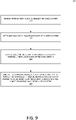
- FIG. 9 shows an example method 900.
- the method 900 of FIG. 9 may be performed by any device, for example, by any of the devices depicted in FIGs. 1-8 or described herein. While each step in the method 900 of FIG. 9 is shown and described separately, multiple steps may be executed in a different order than what is shown, in parallel with each other, concurrently with each other, or serially with each other.
- a request for video content may be received from a computing device.
- a CDN may receive a request for video content from a computing device. The CDN may send the request to a content origin.
- the video content may comprise at least one of: one or more video fragments; one or more video segments; or streamed video content such as a program, show, or movie.
- a quantity of frames, associated with the video content may be determined.
- the CDN or the content origin may determine the quantity of frames associated with the video content.
- the quantity of frames may represent a time interval within a video or the full length of the video.
- a plurality of temporally interlaced blocks of the video content may be encoded.
- Each temporally interlaced block, of the temporally interlaced plurality of blocks may comprise a portion of a frame of the video content.
- Each temporally interlaced block may comprise a portion of the bytes in a frame.
- the plurality of temporally interlaced blocks may comprise a sequence of each portion of each frame of video content.
- the CDN or the content origin may encode a first block of a first frame, a first block of a second frame, and a first block of every subsequent frame in the video content.
- the CDN or content origin may encode a second block of the first frame, a second block of a second frame, and a second block of every subsequent frame in the video content.
- the CDN or content origin may continue encoding blocks for each remaining portion of each frame.
- the bit rate of the video content may be determined dynamically.
- the CDN or the content origin encoding the video the video may select the bit rate of the video content.
- the CDN or the content origin may use a determination of the computing device's bandwidth and/or latency, factored with the quantity of frames (e.g., the length of the video content or video fragment length), to determine the bit rate.
- the CDN or the content origin may use a hard-coded or configurable bit rate when encoding video, which may be less than the true maximum bit rate or file size that is being encoded.
- the CDN may terminate the connection to the computing device as though the complete file had been sent, which causes the computing device to display the blocks received prior to the termination. If the quantity of blocks is as least as much as the determined quantity of frames, a full-length fragment of the video content is able to be displayed, at least at a low quality (e.g., low quality bit rate or resolution). This allows the CDN to serve a partially successful result, which represents the complete video fragment length at a reduced quality (e.g., at a low quality bit rate or resolution), but without temporal interlacing, the CDN cannot send the complete video length.
- a reduced quality e.g., at a low quality bit rate or resolution
- a CDN or the content origin cannot choose a bit rate, and it serves whichever files the computing device requests.
- the techniques disclosed herein enable a CDN or the content origin to select a bit rate. This results in reduced computational cost because the CDN or the content origin encodes the video content with a single transcoding/encoding instead encoding more than one variant. This feature allows the CDN or the content origin to select a bit rate and effectively transcode on the fly with zero computational cost.
- the CDN may store only one copy of each video to cache.
- the CDN caches multiple variant manifests for every bit rate, as well as fragments of the same video at every encoded bit rate.
- variants become unnecessary, and so the CDN may cache only a single copy of the video, reducing not only storage costs, but also reducing origin requests, internal CDN tier traffic, and computing device requests. Reduced storage costs on a CDN also result in increased cache efficiency.
- a content origin may provide an 4K resolution video. Instead of transcoding the full 4K resolution video, the content origin may determine that it may only serve a 1080p resolution at the time. This determination may be based on network conditions at that time.
- the content origin may encode a single 4K video at its highest resolution, and send a 1080p video to the CDN and to computing devices for playback, simply by encoding the video content as a plurality of temporally interlaced blocks and truncating and only sending 1/4 of the file.
- This may cause decoding/display, by the computing device, of a full-length fragment of the video content.
- decoding each first block of every frame causes a full-length fragment of the video content to be displayed at a reduced quality (e.g., low quality bit rate or resolution).
- a computing device may receive each first block of every frame from a CDN, and the connection to the CDN may terminate.
- the computing device may decode each first block of every frame causing display of a full-length fragment of the video content to be displayed at a low quality (e.g., low quality bit rate or resolution).
- the CDN or the computing device may reestablish the connection so that the remaining blocks of the plurality of blocks are sent.
- This technique may enable the computing device to select a bit rate for the video content.
- the bit rate selection may be based on the computing device's connection determination.
- the computing device may select the bit rate by, for example, terminating the connection after a given number of bytes are received or by sending an HTTP Range Request or other partial data request mechanism.
- the computing device may select the bit rate, but this may require a new HTTP and potentially new TCP connection.
- the computing device also needs to know the desired bit rate before the request is initiated, and it may require the computing device to request multiple bit rates in order to quickly downshift variants.
- the computing device may playback a same quantity of the encoded plurality of temporally interlaced blocks as the quantity of frames to allow the computing device to watch an uninterrupted video (at a reduced quality), where an intermittent network would otherwise make a traditional video fragment result in black screens for the missing period of time.
- the computing device may also shift quality of video without a new request, by continuing to receive a file as long as the computing device has the capability to play it back (for example up to 2 seconds for a 2-second fragment). This enables the computing device to more efficiently upshift and downshift requests. With traditional video fragments, the computing device must send a new request, incurring the overhead of a new HTTP request and potentially new TCP connection.
- the computing device may determine to upshift or downshift during a request, and simply terminate the connection sooner or later, without requiring a new request for the new bit rate.
- the computing device may achieve a dynamic time-to-first-frame.
- the computing device may receive a same quantity of the encoded plurality of temporally interlaced blocks as the quantity of frames (e.g., a portion of the bytes of the full video), then determine a tradeoff between how high quality the computing device desired to display the first frame, versus how long to wait with a black screen until displaying the first frame.
- the computing device may select a low time-to-first-frame for a first fragment of the video and receive more bytes for a highest possible bit rate for its bandwidth with the next fragment.
- the computing device may also dynamically determine latency and bandwidth during the first request and terminate it if the computing device determines it has reached the desired ratio of quality to time.
- the computing device must predict beforehand its network performance, and if the prediction is incorrect, the time-to-first-frame will be longer than necessary, or the quality poorer than necessary.
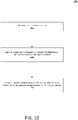
- FIG. 10 shows an example method 1000.
- the method 1000 of FIG. 10 may be performed by any device, for example, by any of the devices depicted in FIGs. 1-8 or described herein. While each step in the method 1000 of FIG. 10 is shown and described separately, multiple steps may be executed in a different order than what is shown, in parallel with each other, concurrently with each other, or serially with each other.
- a request for video content may be sent.
- a computing device may send the request to a CDN.
- the CDN may send the request to a content origin.
- the video content may comprise at least one of: one or more video fragments; one or more video segments; or streamed video content such as a program, show, or movie.
- a plurality of temporally interlaced blocks of the video content may be received.
- Each temporally interlaced block, of the temporally interlaced plurality of blocks may comprise a portion of a frame of the requested video content.
- Each temporally interlaced block may comprise a portion of the bytes in a frame.
- the plurality of temporally interlaced blocks may comprise a sequence of each portion of each frame of video content.
- the plurality of temporally interlaced blocks may comprise at least a same quantity as a quantity of frames associated with the video content.
- the CDN or the content origin may have encoded a first block of a first frame, a first block of a second frame, and a first block of every subsequent frame in the video content.
- the CDN or content origin may have encoded a second block of the first frame, a second block of a second frame, and a second block of every subsequent frame in the video content.
- the CDN or content origin may have continued encoding blocks for each remaining portion of each frame.
- the bit rate of the video content may be determined dynamically.
- the CDN or the content origin encoding the video the video may select the bit rate of the video content.
- the CDN or the content origin may use a determination of the computing device's bandwidth and/or latency, factored with the quantity of frames (e.g., the length of the video content or video fragment length), to determine the bit rate.
- the CDN or the content origin may use a hard-coded or configurable bit rate when encoding video, which may be less than the true maximum bit rate or file size that is being encoded.
- the CDN may terminate the connection to the computing device as though the complete file had been sent, which causes the computing device to display the blocks received prior to the termination. If the quantity of blocks is as least as much as the determined quantity of frames, a full-length fragment of the video content is able to be displayed, at least at a low quality (e.g., low quality bit rate or resolution). This allows the CDN to serve a partially successful result, which represents the complete video fragment length at a reduced quality (e.g., at a low quality bit rate or resolution), but without temporal interlacing, the CDN cannot send the complete video length.
- a reduced quality e.g., at a low quality bit rate or resolution
- the plurality of temporally interlaced blocks may be decoded by the computing device. This may cause output, by the computing device, of a full-length fragment of the video content. For example, decoding each first block of every frame causes a full-length fragment of the video content to be displayed at a reduced quality (e.g., low quality bit rate or resolution). By decoding each subsequent block of every frame, the full-length fragment of the video content is displayed at increasingly improved quality. For example, the computing device may receive each first block of every frame from a CDN, and the connection to the CDN may terminate.
- a reduced quality e.g., low quality bit rate or resolution
- the computing device may decode each first block of every frame causing display of a full-length fragment of the video content to be displayed at a low quality (e.g., low quality bit rate or resolution).
- the CDN or the computing device may reestablish the connection so that the remaining blocks of the plurality of blocks are sent.
- This technique may enable the computing device to select a bit rate for the video content.
- the bit rate selection may be based on the computing device's connection determination.
- the computing device may select the bit rate by, for example, terminating the connection after a given number of bytes are received or by sending an HTTP Range Request or other partial data request mechanism.
- the computing device may select the bit rate, but this may require a new HTTP request and potentially new TCP connection.
- the computing device also needs to know the desired bit rate before the request is initiated, and it may require the computing device to request multiple bit rates in order to quickly downshift variants.
- the computing device may playback a same quantity of the encoded plurality of temporally interlaced blocks as the quantity of frames to allow the computing device to watch an uninterrupted video (at a reduced quality), where an intermittent network would otherwise make a traditional video fragment result in black screens for the missing period of time.
- the computing device may also shift quality of video without a new request, by continuing to receive a file as long as the computing device has the capability to play it back (for example up to 2 seconds for a 2-second fragment). This enables the computing device to more efficiently upshift and downshift requests. With traditional video fragments, the computing device must send a new request, incurring the overhead of a new HTTP request and potentially new TCP connection.
- the computing device may determine to upshift or downshift during a request, and simply terminate the connection sooner or later, without requiring a new request for the new bit rate.
- the computing device may achieve a dynamic time-to-first-frame.
- the computing device may receive a same quantity of the encoded plurality of temporally interlaced blocks as the quantity of frames (e.g., a portion of the bytes of the full video), then determine a tradeoff between how high quality the computing device desired to display the first frame, versus how long to wait with a black screen until displaying the first frame.
- the computing device may select a low time-to-first-frame for a first fragment of the video and receive more bytes for a highest possible bit rate for its bandwidth with the next fragment.
- the computing device may also dynamically determine latency and bandwidth during the first request and terminate it if the computing device determines it has reached the desired ratio of quality to time.
- the computing device must predict beforehand its network performance, and if the prediction is incorrect, the time-to-first-frame will be longer than necessary, or the quality poorer than necessary.
- FIG. 11 shows an example method 1100.
- the method 1100 of FIG. 11 may be performed by any device, for example, by any of the devices depicted in FIGs. 1-8 or described herein. While each step in the method 1100 of FIG. 11 is shown and described separately, multiple steps may be executed in a different order than what is shown, in parallel with each other, concurrently with each other, or serially with each other.
- a quantity of frames, associated with video content may be determined. The quantity of frames may be determined based on a request for the video content.
- a CDN may receive a request for video content from a computing device. The CDN may send the request to a content origin.
- the video content may comprise at least one of: one or more video fragments; one or more video segments; or streamed video content such as a program, show, or movie.
- the CDN or the content origin may determine the quantity of frames associated with the video content.
- the quantity of frames may represent a time interval within a video or the full length of the video.
- a plurality of temporally interlaced blocks of the video content may be encoded.
- Each temporally interlaced block, of the temporally interlaced plurality of blocks may comprise a portion of a frame of the video content.
- Each temporally interlaced block may comprise a portion of the bytes in a frame.
- the plurality of temporally interlaced blocks may comprise a sequence of each portion of each frame of video content.
- the CDN or the content origin may encode a first block of a first frame, a first block of a second frame, and a first block of every subsequent frame in the video content.
- the CDN or content origin may encode a second block of the first frame, a second block of a second frame, and a second block of every subsequent frame in the video content.
- the CDN or content origin may continue encoding blocks for each remaining portion of each frame.
- bandwidth associated with a connection to a computing device may be determined to be insufficient to send the plurality of temporally interlaced blocks.
- the bit rate of the video content may be determined dynamically.
- the CDN or the content origin encoding the video the video may select the bit rate of the video content.
- the CDN or the content origin may use the determination of the computing device's bandwidth and/or latency, factored with the quantity of frames (e.g., the length of the video content or video fragment length), to determine the bit rate.
- the CDN or the content origin may use a hard-coded or configurable bit rate when encoding video, which may be less than the true maximum bit rate or file size that is being encoded.
- the CDN may terminate the connection to the computing device as though the complete file had been sent, which causes the computing device to display the blocks received prior to the termination. If the quantity of blocks is as least as much as the determined quantity of frames, a full-length fragment of the video content is able to be displayed, at least at a low quality (e.g., low quality bit rate or resolution). This allows the CDN to serve a partially successful result, which represents the complete video fragment length at a reduced quality (e.g., at a low quality bit rate or resolution), but without temporal interlacing, the CDN cannot send the complete video length.
- a reduced quality e.g., at a low quality bit rate or resolution
- a same quantity of the plurality of temporally interlaced blocks as the quantity of frames may be sent, to the computing device and based on the bandwidth.
- This may cause decoding/display, by the computing device, of a full-length fragment of the video content.
- decoding each first block of every frame causes a full-length fragment of the video content to be displayed at a reduced quality (e.g., low quality bit rate or resolution).
- a computing device may receive each first block of every frame from a CDN, and the connection to the CDN may terminate.
- the computing device may decode each first block of every frame causing display of a full-length fragment of the video content to be displayed at a low quality (e.g., low quality bit rate or resolution).
- the CDN or the computing device may reestablish the connection so that the remaining blocks of the plurality of blocks are sent.
- This technique may also enable the computing device to select a bit rate for the video content.
- the bit rate selection may be based on the computing device's connection determination.
- the computing device may select the bit rate by, for example, terminating the connection after a given number of bytes are received or by sending an HTTP Range Request or other partial data request mechanism.
- the computing device may select the bit rate, but this may require a new HTTP and potentially new TCP connection.
- the computing device also needs to know the desired bit rate before the request is initiated, and it may require the computing device to request multiple bit rates in order to quickly downshift variants.
- the computing device may playback a same quantity of the encoded plurality of temporally interlaced blocks as the quantity of frames to allow the computing device to watch an uninterrupted video (at a reduced quality), where an intermittent network would otherwise make a traditional video fragment result in black screens for the missing period of time.
- the computing device may also shift quality of video without a new request, by continuing to receive a file as long as the computing device has the capability to play it back (for example up to 2 seconds for a 2-second fragment). This enables the computing device to more efficiently upshift and downshift requests. With traditional video fragments, the computing device must send a new request, incurring the overhead of a new HTTP request and potentially new TCP connection.
- the computing device may determine to upshift or downshift during a request, and simply terminate the connection sooner or later, without requiring a new request for the new bit rate.
- the computing device may achieve a dynamic time-to-first-frame.
- the computing device may receive a same quantity of the encoded plurality of temporally interlaced blocks as the quantity of frames (e.g., a portion of the bytes of the full video), then determine a tradeoff between how high quality the computing device desired to display the first frame, versus how long to wait with a black screen until displaying the first frame.
- the computing device may select a low time-to-first-frame for a first fragment of the video and receive more bytes for a highest possible bit rate for its bandwidth with the next fragment.
- the computing device may also dynamically determine latency and bandwidth during the first request and terminate it if the computing device determines it has reached the desired ratio of quality to time.
- the computing device must predict beforehand its network performance, and if the prediction is incorrect, the time-to-first-frame will be longer than necessary, or the quality poorer than necessary.
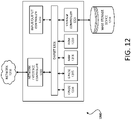
- FIG. 12 depicts a computing device 1200 that may be used in various aspects, such as the servers, modules, and/or devices depicted in any of the depicted in FIGs. 1-8 .
- the devices may each be implemented in an instance of a computing device 1200 of FIG. 12 .
- the computer architecture shown in FIG. 12 shows a conventional server computer, workstation, desktop computer, laptop, tablet, network appliance, PDA, e-reader, digital cellular phone, or other computing node, and may be utilized to execute any aspects of the computers described herein, such as to implement the methods described in relation to FIGs. 4-11 .
- the computing device 1200 may include a baseboard, or "motherboard,” which is a printed circuit board to which a multitude of components or devices may be connected by way of a system bus or other electrical communication paths.
- a baseboard or "motherboard”
- CPUs central processing units
- the CPU(s) 1204 may be standard programmable processors that perform arithmetic and logical operations necessary for the operation of the computing device 1200.
- the CPU(s) 1204 may perform the necessary operations by transitioning from one discrete physical state to the next through the manipulation of switching elements that differentiate between and change these states.
- Switching elements may generally include electronic circuits that maintain one of two binary states, such as flip-flops, and electronic circuits that provide an output state based on the logical combination of the states of one or more other switching elements, such as logic gates. These basic switching elements may be combined to create more complex logic circuits including registers, adders-subtractors, arithmetic logic units, floating-point units, and the like.
- the CPU(s) 1204 may be augmented with or replaced by other processing units, such as GPU(s) 1205.
- the GPU(s) 1205 may comprise processing units specialized for but not necessarily limited to highly parallel computations, such as graphics and other visualization-related processing.
- a chipset 1206 may provide an interface between the CPU(s) 1204 and the remainder of the components and devices on the baseboard.
- the chipset 1206 may provide an interface to a random access memory (RAM) 1208 used as the main memory in the computing device 1200.
- the chipset 1206 may further provide an interface to a computer-readable storage medium, such as a read-only memory (ROM) 1220 or non-volatile RAM (NVRAM) (not shown), for storing basic routines that may help to start up the computing device 1200 and to transfer information between the various components and devices.
- ROM 1220 or NVRAM may also store other software components necessary for the operation of the computing device 1200 in accordance with the aspects described herein.
- the computing device 1200 may operate in a networked environment using logical connections to remote computing nodes and computer systems through local area network (LAN) 1216.
- the chipset 1206 may include functionality for providing network connectivity through a network interface controller (NIC) 1222, such as a gigabit Ethernet adapter.
- NIC network interface controller
- a NIC 1222 may be capable of connecting the computing device 1200 to other computing nodes over a network 1216. It should be appreciated that multiple NICs 1222 may be present in the computing device 1200, connecting the computing device to other types of networks and remote computer systems.
- the computing device 1200 may be connected to a mass storage device 1228 that provides non-volatile storage for the computer.
- the mass storage device 1228 may store system programs, application programs, other program modules, and data, which have been described in greater detail herein.
- the mass storage device 1228 may be connected to the computing device 1200 through a storage controller 1224 connected to the chipset 1206.
- the mass storage device 1228 may consist of one or more physical storage units.
- a storage controller 1224 may interface with the physical storage units through a serial attached SCSI (SAS) interface, a serial advanced technology attachment (SATA) interface, a fiber channel (FC) interface, or other type of interface for physically connecting and transferring data between computers and physical storage units.
- SAS serial attached SCSI
- SATA serial advanced technology attachment
- FC fiber channel
- the computing device 1200 may store data on a mass storage device 1228 by transforming the physical state of the physical storage units to reflect the information being stored.
- the specific transformation of a physical state may depend on various factors and on different implementations of this description. Examples of such factors may include, but are not limited to, the technology used to implement the physical storage units and whether the mass storage device 1228 is characterized as primary or secondary storage and the like.
- the computing device 1200 may store information to the mass storage device 1228 by issuing instructions through a storage controller 1224 to alter the magnetic characteristics of a particular location within a magnetic disk drive unit, the reflective or refractive characteristics of a particular location in an optical storage unit, or the electrical characteristics of a particular capacitor, transistor, or other discrete component in a solid-state storage unit.
- a storage controller 1224 may alter the magnetic characteristics of a particular location within a magnetic disk drive unit, the reflective or refractive characteristics of a particular location in an optical storage unit, or the electrical characteristics of a particular capacitor, transistor, or other discrete component in a solid-state storage unit.
- Other transformations of physical media are possible without departing from the scope of the present description, with the foregoing examples provided only to facilitate this description.
- the computing device 1200 may further read information from the mass storage device 1228 by detecting the physical states or characteristics of one or more particular locations within the physical storage units.
- the computing device 1200 may have access to other computer-readable storage media to store and retrieve information, such as program modules, data structures, or other data. It should be appreciated by those skilled in the art that computer-readable storage media may be any available media that provides for the storage of non-transitory data and that may be accessed by the computing device 1200.
- Computer-readable storage media may include volatile and non-volatile, transitory computer-readable storage media and non-transitory computer-readable storage media, and removable and non-removable media implemented in any method or technology.
- Computer-readable storage media includes, but is not limited to, RAM, ROM, erasable programmable ROM (“EPROM”), electrically erasable programmable ROM (“EEPROM”), flash memory or other solid-state memory technology, compact disc ROM (“CD-ROM”), digital versatile disk (“DVD”), high definition DVD (“HD-DVD”), BLU-RAY, or other optical storage, magnetic cassettes, magnetic tape, magnetic disk storage, other magnetic storage devices, or any other medium that may be used to store the desired information in a non-transitory fashion.
- a mass storage device such as the mass storage device 1228 depicted in FIG. 12 , may store an operating system utilized to control the operation of the computing device 1200.
- the operating system may comprise a version of the LINUX operating system.
- the operating system may comprise a version of the WINDOWS SERVER operating system from the MICROSOFT Corporation.
- the operating system may comprise a version of the UNIX operating system.
- Various mobile phone operating systems such as IOS and ANDROID, may also be utilized. It should be appreciated that other operating systems may also be utilized.
- the mass storage device 1228 may store other system or application programs and data utilized by the computing device 1200.
- the mass storage device 1228 or other computer-readable storage media may also be encoded with computer-executable instructions, which, when loaded into the computing device 1200, transforms the computing device from a general-purpose computing system into a special-purpose computer capable of implementing the aspects described herein. These computer-executable instructions transform the computing device 1200 by specifying how the CPU(s) 1204 transition between states, as described herein.
- the computing device 1200 may have access to computer-readable storage media storing computer-executable instructions, which, when executed by the computing device 1200, may perform the methods described in relation to FIGs. 4-11 .
- a computing device such as the computing device 1200 depicted in FIG. 12 , may also include an input/output controller 1232 for receiving and processing input from a number of input devices, such as a keyboard, a mouse, a touchpad, a touch screen, an electronic stylus, or other type of input device. Similarly, an input/output controller 1232 may provide output to a display, such as a computer monitor, a flat-panel display, a digital projector, a printer, a plotter, or other type of output device. It will be appreciated that the computing device 1200 may not include all of the components shown in FIG. 12 , may include other components that are not explicitly shown in FIG. 12 , or may utilize an architecture completely different than that shown in FIG. 12 .
- a computing device may be a physical computing device, such as the computing device 1200 of FIG. 12 .
- a computing node may also include a virtual machine host process and one or more virtual machine instances.
- Computer-executable instructions may be executed by the physical hardware of a computing device indirectly through interpretation and/or execution of instructions stored and executed in the context of a virtual machine.
- the methods and systems may take the form of an entirely hardware embodiment, an entirely software embodiment, or an embodiment combining software and hardware aspects.
- the methods and systems may take the form of a computer program product on one or more computer-readable storage media having computer-readable program instructions (e.g., computer software) embodied in the one or more storage media.
- the present methods and systems may take the form of web-implemented computer software. Any suitable computer-readable storage medium may be utilized including hard disks, CD-ROMs, optical storage devices, or magnetic storage devices.
- These computer program instructions may also be stored in a computer-readable memory that may direct a computer or other programmable data processing apparatus to function in a particular manner, such that the instructions stored in the computer-readable memory produce an article of manufacture including computer-readable instructions for implementing the function specified in the flowchart block or blocks.
- the computer program instructions may also be loaded onto a computer or other programmable data processing apparatus to cause a series of operational steps to be performed on the computer or other programmable apparatus to produce a computer-implemented process such that the instructions that execute on the computer or other programmable apparatus provide steps for implementing the functions specified in the flowchart block or blocks.
- some or all of the systems and/or modules may be implemented or provided in other ways, such as at least partially in firmware and/or hardware, including, but not limited to, one or more application-specific integrated circuits ("ASICs”), standard integrated circuits, controllers (e.g., by executing appropriate instructions, and including microcontrollers and/or embedded controllers), field-programmable gate arrays ("FPGAs”), complex programmable logic devices (“CPLDs”), etc.
- ASICs application-specific integrated circuits
- controllers e.g., by executing appropriate instructions, and including microcontrollers and/or embedded controllers
- FPGAs field-programmable gate arrays
- CPLDs complex programmable logic devices
- Some or all of the modules, systems, and data structures may also be stored (e.g., as software instructions or structured data) on a computer-readable medium, such as a hard disk, a memory, a network, or a portable media article to be read by an appropriate device or via an appropriate connection.
- the systems, modules, and data structures may also be transmitted as generated data signals (e.g., as part of a carrier wave or other analog or digital propagated signal) on a variety of computer-readable transmission media, including wireless-based and wired/cable-based media, and may take a variety of forms (e.g., as part of a single or multiplexed analog signal, or as multiple discrete digital packets or frames).
- generated data signals e.g., as part of a carrier wave or other analog or digital propagated signal
- Such computer program products may also take other forms in other embodiments. Accordingly, the present invention may be practiced with other computer system configurations.
Landscapes
- Engineering & Computer Science (AREA)
- Multimedia (AREA)
- Signal Processing (AREA)
- Computing Systems (AREA)
- Theoretical Computer Science (AREA)
- Two-Way Televisions, Distribution Of Moving Picture Or The Like (AREA)
- Compression Or Coding Systems Of Tv Signals (AREA)
Applications Claiming Priority (1)
| Application Number | Priority Date | Filing Date | Title |
|---|---|---|---|
| US17/248,575 US12401787B2 (en) | 2021-01-29 | 2021-01-29 | Method and apparatus for encoding or decoding interlaced blocks of video |
Publications (1)
| Publication Number | Publication Date |
|---|---|
| EP4037331A1 true EP4037331A1 (de) | 2022-08-03 |
Family
ID=80122411
Family Applications (1)
| Application Number | Title | Priority Date | Filing Date |
|---|---|---|---|
| EP22153893.7A Pending EP4037331A1 (de) | 2021-01-29 | 2022-01-28 | Verfahren und vorrichtung zur videoverarbeitung |
Country Status (3)
| Country | Link |
|---|---|
| US (2) | US12401787B2 (de) |
| EP (1) | EP4037331A1 (de) |
| CA (1) | CA3146816A1 (de) |
-
2021
- 2021-01-29 US US17/248,575 patent/US12401787B2/en active Active
-
2022
- 2022-01-27 CA CA3146816A patent/CA3146816A1/en active Pending
- 2022-01-28 EP EP22153893.7A patent/EP4037331A1/de active Pending
-
2025
- 2025-07-29 US US19/284,418 patent/US20250358412A1/en active Pending
Non-Patent Citations (1)
| Title |
|---|
| FRANCOIS E ET AL: "Interlaced coding in SVC", 21. JVT MEETING; 78. MPEG MEETING; 20-10-2006 - 27-10-2006; HANGZHOU,CN; (JOINT VIDEO TEAM OF ISO/IEC JTC1/SC29/WG11 AND ITU-T SG.16 ),, no. JVT-U146, 20 October 2006 (2006-10-20), XP030006792 * |
Also Published As
| Publication number | Publication date |
|---|---|
| US20220248005A1 (en) | 2022-08-04 |
| CA3146816A1 (en) | 2022-07-29 |
| US20250358412A1 (en) | 2025-11-20 |
| US12401787B2 (en) | 2025-08-26 |
Similar Documents
| Publication | Publication Date | Title |
|---|---|---|
| US12155712B2 (en) | Methods, systems, and apparatuses for adaptive bitrate ladder construction based on dynamically adjustable neural networks | |
| US20220394073A1 (en) | Method and apparatus for determining bitrate switch points | |
| US20250142083A1 (en) | Methods, systems, and apparatuses for enhanced adaptive bitrate segmentation | |
| EP3843412B1 (de) | Verfahren und vorrichtung zur verwaltung redundanter segmentierter ströme | |
| EP3709660B1 (de) | Verfahren und vorrichtung zur inhaltsadaptiven verlängerung der rahmendauer | |
| EP4037331A1 (de) | Verfahren und vorrichtung zur videoverarbeitung | |
| US20240393967A1 (en) | Method and system for efficient layout of stored video segments | |
| US12284239B2 (en) | Video encoding for low-concurrency linear channels | |
| US12184906B2 (en) | Method and system for detecting and managing similar content | |
| US12328353B2 (en) | Method and apparatus for mobile device as temporary content origin | |
| EP4164223A1 (de) | Verfahren, systeme und vorrichtungen zur inhaltsadaptiven mehrschichtigen codierung auf basis neuronaler netzwerke | |
| US20250238957A1 (en) | Dynamic compression in user interfaces |
Legal Events
| Date | Code | Title | Description |
|---|---|---|---|
| PUAI | Public reference made under article 153(3) epc to a published international application that has entered the european phase |
Free format text: ORIGINAL CODE: 0009012 |
|
| STAA | Information on the status of an ep patent application or granted ep patent |
Free format text: STATUS: THE APPLICATION HAS BEEN PUBLISHED |
|
| AK | Designated contracting states |
Kind code of ref document: A1 Designated state(s): AL AT BE BG CH CY CZ DE DK EE ES FI FR GB GR HR HU IE IS IT LI LT LU LV MC MK MT NL NO PL PT RO RS SE SI SK SM TR |
|
| STAA | Information on the status of an ep patent application or granted ep patent |
Free format text: STATUS: REQUEST FOR EXAMINATION WAS MADE |
|
| 17P | Request for examination filed |
Effective date: 20230203 |
|
| RBV | Designated contracting states (corrected) |
Designated state(s): AL AT BE BG CH CY CZ DE DK EE ES FI FR GB GR HR HU IE IS IT LI LT LU LV MC MK MT NL NO PL PT RO RS SE SI SK SM TR |
|
| P01 | Opt-out of the competence of the unified patent court (upc) registered |
Effective date: 20230504 |
|
| STAA | Information on the status of an ep patent application or granted ep patent |
Free format text: STATUS: EXAMINATION IS IN PROGRESS |
|
| 17Q | First examination report despatched |
Effective date: 20240112 |