EP4036772A1 - Erkennung von zufälligen und/oder algorithmisch erzeugten zeichenfolgen in domänennamen - Google Patents
Erkennung von zufälligen und/oder algorithmisch erzeugten zeichenfolgen in domänennamen Download PDFInfo
- Publication number
- EP4036772A1 EP4036772A1 EP21218399.0A EP21218399A EP4036772A1 EP 4036772 A1 EP4036772 A1 EP 4036772A1 EP 21218399 A EP21218399 A EP 21218399A EP 4036772 A1 EP4036772 A1 EP 4036772A1
- Authority
- EP
- European Patent Office
- Prior art keywords
- domain
- computing platform
- seed
- domains
- string
- Prior art date
- Legal status (The legal status is an assumption and is not a legal conclusion. Google has not performed a legal analysis and makes no representation as to the accuracy of the status listed.)
- Pending
Links
Images




Classifications
-
- G—PHYSICS
- G06—COMPUTING OR CALCULATING; COUNTING
- G06F—ELECTRIC DIGITAL DATA PROCESSING
- G06F21/00—Security arrangements for protecting computers, components thereof, programs or data against unauthorised activity
- G06F21/50—Monitoring users, programs or devices to maintain the integrity of platforms, e.g. of processors, firmware or operating systems
- G06F21/57—Certifying or maintaining trusted computer platforms, e.g. secure boots or power-downs, version controls, system software checks, secure updates or assessing vulnerabilities
- G06F21/577—Assessing vulnerabilities and evaluating computer system security
-
- G—PHYSICS
- G06—COMPUTING OR CALCULATING; COUNTING
- G06F—ELECTRIC DIGITAL DATA PROCESSING
- G06F40/00—Handling natural language data
- G06F40/30—Semantic analysis
-
- G—PHYSICS
- G06—COMPUTING OR CALCULATING; COUNTING
- G06F—ELECTRIC DIGITAL DATA PROCESSING
- G06F40/00—Handling natural language data
- G06F40/20—Natural language analysis
- G06F40/205—Parsing
- G06F40/216—Parsing using statistical methods
-
- G—PHYSICS
- G06—COMPUTING OR CALCULATING; COUNTING
- G06F—ELECTRIC DIGITAL DATA PROCESSING
- G06F40/00—Handling natural language data
- G06F40/20—Natural language analysis
- G06F40/279—Recognition of textual entities
- G06F40/284—Lexical analysis, e.g. tokenisation or collocates
-
- G—PHYSICS
- G06—COMPUTING OR CALCULATING; COUNTING
- G06N—COMPUTING ARRANGEMENTS BASED ON SPECIFIC COMPUTATIONAL MODELS
- G06N20/00—Machine learning
- G06N20/20—Ensemble learning
-
- H—ELECTRICITY
- H04—ELECTRIC COMMUNICATION TECHNIQUE
- H04L—TRANSMISSION OF DIGITAL INFORMATION, e.g. TELEGRAPHIC COMMUNICATION
- H04L63/00—Network architectures or network communication protocols for network security
- H04L63/14—Network architectures or network communication protocols for network security for detecting or protecting against malicious traffic
- H04L63/1441—Countermeasures against malicious traffic
- H04L63/1483—Countermeasures against malicious traffic service impersonation, e.g. phishing, pharming or web spoofing
-
- H—ELECTRICITY
- H04—ELECTRIC COMMUNICATION TECHNIQUE
- H04L—TRANSMISSION OF DIGITAL INFORMATION, e.g. TELEGRAPHIC COMMUNICATION
- H04L61/00—Network arrangements, protocols or services for addressing or naming
- H04L61/30—Managing network names, e.g. use of aliases or nicknames
- H04L61/3015—Name registration, generation or assignment
- H04L61/3025—Domain name generation or assignment
-
- H—ELECTRICITY
- H04—ELECTRIC COMMUNICATION TECHNIQUE
- H04L—TRANSMISSION OF DIGITAL INFORMATION, e.g. TELEGRAPHIC COMMUNICATION
- H04L61/00—Network arrangements, protocols or services for addressing or naming
- H04L61/45—Network directories; Name-to-address mapping
- H04L61/4505—Network directories; Name-to-address mapping using standardised directories; using standardised directory access protocols
- H04L61/4511—Network directories; Name-to-address mapping using standardised directories; using standardised directory access protocols using domain name system [DNS]
Definitions
- aspects of the disclosure relate to digital data processing systems, data processing methods, cybersecurity, and preventing unauthorized access to secure information systems and resources.
- one or more aspects of the disclosure relate to detecting random and/or algorithmically-generated character sequences in domain names.
- An enterprise organization may seek to protect its legitimate domain(s) from being copied, impersonated, and/or otherwise maliciously used by external actors. To do this, the organization might monitor - or engage a cybersecurity firm to monitor - other domain names that might pose a risk to the organization, its domains, and/or its brands. This monitoring and the analysis that flows from it, however, may be a computationally expensive endeavor given the vast amount of data involved and the resources required to process it in an efficient and effective manner. Additionally, in such a domain discovery process, if there are actual organization domains that are short and/or not unique, these actual domains may collide with randomly generated domain names that do not pose a risk, at least in terms of an infringement on the organization's domain rights. In many instances, however, it may be difficult to filter out false positive matches with randomly generated domains, particularly when an organization has actual domains that are short and/or not unique.
- One or more aspects of the disclosure address one or more of the above and/or other problems, and their associated technical implementation challenges, by providing systems, methods, computer-readable media, and/or other technology for detecting random and/or algorithmically-generated character sequences in domain names.
- a seed may be a starting point for a domain analysis - e.g., the seed "slb” for the domain “slb.com” - where the goal is to find infringing domains for an organization associated with the domain “slb.com.”
- a domain “slb1.com” would generate a match that presents an infringement risk for which action may be taken, whereas a domain "asldkslb.com” would be considered a random string that does not pose a risk (and which therefore might not require further action).
- this likelihood - which may be algorithmically determined, as illustrated below - may be a factor in a larger domain discovery process and/or used by other cybersecurity systems and/or algorithms that are deployed to protect the organization's secure information systems and resources.
- the desired output may be one or more notifications that alert one or more users linked to the organization (e.g., the owner of "slb.com” in this example) about potentially infringing domains, phishing attempts, and/or other malicious sites.
- the organization e.g., the owner of "slb.com” in this example
- one or more aspects described in greater detail below provide techniques for decomposing domain names into segments and analyzing the segments to arrive at an overall analysis result (which may, e.g., indicate whether a given name is random or not random).
- one or more aspects described in greater detail below provide a flexible approach to this analysis problem, as they account for variability across different languages. For instance, beyond just classifying an input as being random vs. being an English word, some aspects may be extended to apply to international use cases with other languages (e.g., because the model is trained on one or more dictionaries and can adapt to the language of the dictionary used in the training process).
- a computing platform having at least one processor, a communication interface, and memory may train a machine learning model based on a set of semantically-meaningful words. Subsequently, the computing platform may receive a seed string and a set of domains to be analyzed in connection with the seed string. Based on the machine learning model, the computing platform may apply a classification algorithm to the seed string and the set of domains, where applying the classification algorithm to the seed string and the set of domains produces a classification result. Thereafter, the computing platform may store the classification result.
- the set of semantically-meaningful words may include words selected from a dictionary.
- training the machine learning model may include training the machine learning model based on the set of semantically-meaningful words and a set of random strings with the same length distribution as the set of semantically-meaningful words.
- training the machine learning model may include accessing a dictionary of words. Subsequently, based on accessing the dictionary of words, the computing platform may generate a plurality of counterpart samples for training purposes, where each counterpart sample is a scrambled version of a word from the dictionary of words.
- training the machine learning model may include training a bagging classifier associated with ensemble meta-algorithms.
- receiving the seed string and the set of domains to be analyzed in connection with the seed string may include receiving the seed string and the set of domains to be analyzed from a cybersecurity server or one or more user devices.
- receiving the seed string and the set of domains to be analyzed in connection with the seed string may include receiving a set of seed-domain string pairs to investigate.
- receiving the seed string and the set of domains to be analyzed in connection with the seed string may include preparing a feature vector for each string pair in the set of seed-domain string pairs.
- applying the classification algorithm to the seed string and the set of domains may include calculating similarity scores for each domain segment in the set of domains in view of all seed segments in the seed string and preliminarily classifying each domain segment as random or not-random based on its corresponding similarity score.
- the computing platform may input a set of domain segments preliminarily classified as random into the machine learning model to obtain a prediction score for each domain segment in the set of domain segments. Then, the computing platform may calculate a weighted summation based on the similarity scores and the prediction scores.
- the computing platform may calculate a weighted average based on the weighted summation, where the weighted average is a numerical value between 0 and 1 and indicative of whether a given domain is classified as random, indeterminate, or not-random.
- storing the classification result may include identifying a first domain as being classified as indeterminate and adding the first domain to set of domains requiring further investigation.
- storing the classification result may include identifying a second domain as being classified as not-random and generating an alert to an entity associated with the second domain.
- storing the classification result may include updating tuning data that causes the computing platform to improve modeling results associated with the machine learning model.
- the computing platform may send, via the communication interface, to a cybersecurity server, the classification result, where sending the classification result to the cybersecurity server causes the cybersecurity server to update one or more security algorithms.
- the computing platform may send, via the communication interface, to a user device, the classification result, where sending the classification result to the user device causes the user device to present an analysis user interface.
- One or more aspects of the disclosure relate to systems and methods for identifying domain names that include character sequences that are random and/or algorithmically generated. Such identification may be particularly applicable in domain discovery processes in which a set of domains are monitored and/or analyzed to determine whether the domains are maliciously similar to a particular seed string (and, e.g., thereby pose an impersonation and/or infringement risk to the seed domain) or merely coincidentally similar to the seed string (and, e.g., thereby classifiable as indeterminate or not malicious).
- domains that include randomly-generated sequences of characters may be identified and subsequently removed as false positives from a set of domains being analyzed.
- variations of a customer's domain name(s) may be identified and monitored so as to alert the customer about potentially infringing domains, phishing attempts, and/or other malicious sites.
- semantically-meaningful domain names e.g., regular or real domain names
- random-looking domain names e.g., algorithmic domain names
- one or more aspects of the disclosure provide a multi-segment analysis process that employs statistics and machine learning to calculate a prediction probability score that may then be used to classify a domain (which may, e.g., be identified as a variant of a domain name being monitored, such as a domain of a customer) as random, indeterminate, or not random. If a domain under analysis is classified as random, this may indicate that the domain is not owned or operated by a legitimate business and/or might not have a legitimate purpose for being similar to a domain name (e.g., a seed domain) being monitored. In these instances, a takedown request and/or other action may be warranted.
- a domain which may, e.g., be identified as a variant of a domain name being monitored, such as a domain of a customer
- a domain under analysis is classified as random, this may indicate that the domain is not owned or operated by a legitimate business and/or might not have a legitimate purpose for being similar to a domain name (e.g
- the domain under analysis is classified as not random, this may indicate that the domain should not be excluded from being owned or operated by a legitimate business and may have a legitimate purpose for being similar to the domain name being monitored. If the domain is classified as indeterminate, further investigation may be needed.
- one or more aspects of the disclosure effectively process domain names that include non-language sequences of characters and/or language-based sequences of characters, because some aspects involve splitting a domain under analysis into different segments and applying a similarity-based detection algorithm as well as a language-based classifier algorithm to the different segments (and weighting the results of the two algorithms to produce an overall result).
- using a seed string as a reference and/or factor in determining this classification further distinguishes one or more aspects of the disclosure from other potential approaches.
- FIG. 1 depicts an illustrative operating environment for detecting random and/or algorithmically-generated character sequences in domain names in accordance with one or more example embodiments.
- computing environment 100 may include various computer systems, computing devices, networks, and/or other operating infrastructure.
- computing environment 100 may include domain analysis computing platform 110, message server 120, cybersecurity server 130, user device 140, user device 150, external domain servers 160, and network 190.
- Network 190 may include one or more wired networks and/or one or more wireless networks that interconnect domain analysis computing platform 110, message server 120, cybersecurity server 130, user device 140, user device 150, external domain servers 160, and/or other computer systems and/or devices.
- domain analysis computing platform 110, message server 120, cybersecurity server 130, user device 140, user device 150, and external domain servers 160 may be special purpose computing devices configured to perform specific functions, as illustrated in greater detail below, and may include specific computing components such as processors, memories, communication interfaces, and/or the like.
- Domain analysis computing platform 110 may include one or more processor(s) 111, one or more memory(s) 112, and one or more communication interface(s) 113.
- domain analysis computing platform 110 may be made up of a plurality of different computing devices (e.g., a cloud-based server platform), which may be distributed within a single data center or a plurality of different data centers.
- the one or more processor(s) 111, one or more memory(s) 112, and one or more communication interface(s) 113 included in domain analysis computing platform 110 may be part of and/or otherwise associated with the different computing devices that form domain analysis computing platform 110.
- processor(s) 111 may control operations of domain analysis computing platform 110.
- Memory(s) 112 may store instructions that, when executed by processor(s) 111, cause domain analysis computing platform 110 to perform one or more functions, as discussed below.
- Communication interface(s) 113 may include one or more wired and/or wireless network interfaces, and communication interface(s) 113 may connect domain analysis computing platform 110 to one or more networks (e.g., network 190) and/or enable domain analysis computing platform 110 to exchange information and/or otherwise communicate with one or more devices connected to such networks.
- memory(s) 112 may store and/or otherwise provide a plurality of modules (which may, e.g., include instructions that may be executed by processor(s) 111 to cause domain analysis computing platform 110 to perform various functions) and/or databases (which may, e.g., store data used by domain analysis computing platform 110 in performing various functions).
- memory(s) 112 may store and/or otherwise provide a domain analysis module 112a and a domain analysis database 112b.
- domain analysis module 112a may store instructions that cause domain analysis computing platform 110 to execute one or more of the functions described herein.
- domain analysis database 112b may store data that is used by domain analysis computing platform 110 in executing one or more of the functions described herein.
- Message server 120 may include one or more processors, memories, communication interfaces, and/or other computer components.
- message server 120 may be configured to receive, process, and/or send email messages and/or other communications.
- message server 120 may be linked to an organization, such as a customer of a cybersecurity organization that may configure, deploy, and/or operate domain analysis computing platform 110.
- message server 120 may provide domain names, uniform resource locators (URLs), message content, and/or other information to domain analysis computing platform 110 and/or other systems and/or devices for analysis.
- URLs uniform resource locators
- Cybersecurity server 130 may include one or more processors, memories, communication interfaces, and/or other computer components.
- cybersecurity server 130 may be configured to monitor emails and/or other communications that are received, processed, and/or sent by message server 120. Additionally or alternatively, cybersecurity server 130 may be configured to send and/or otherwise provide domains and/or URLs for analysis to domain analysis computing platform 110 (e.g., based on the emails and/or other communications that are monitored by cybersecurity server 130).
- User device 140 may include one or more processors, memories, communication interfaces, and/or other computer components. In addition, user device 140 may be configured to initiate training and/or analysis processes on domain analysis computing platform 110. Additionally or alternatively, user device 140 may be configured to generate, display, and/or otherwise present one or more graphical user interfaces that include domain analysis results information and/or other information.
- User device 150 may include one or more processors, memories, communication interfaces, and/or other computer components. In addition, user device 150 may be configured to initiate training and/or analysis processes on domain analysis computing platform 110. Additionally or alternatively, user device 150 may be configured to generate, display, and/or otherwise present one or more graphical user interfaces that include domain analysis results information and/or other information. In some instances, user device 150 may be linked to a different user (e.g., a second user) than user device 140 (which may, e.g., be linked to a first user).
- a different user e.g., a second user
- user device 140 which may, e.g., be linked to a first user.
- External domain servers 160 may include one or more processors, memories, communication interfaces, and/or other computer components.
- external domain servers 160 may include multiple computer servers (e.g., physical servers and/or virtual servers) that may be linked to various different domains. Such domains may, for instance, be analyzed by domain analysis computing platform 110, as discussed in greater detail below.
- domains and/or other resources hosted by external domain servers 160 may be crawled by domain analysis computing platform 110 and/or other computer systems to support analysis processes performed by domain analysis computing platform 110.
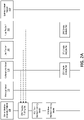
- FIGS. 2A-2C depict an illustrative event sequence for detecting random and/or algorithmically-generated character sequences in domain names in accordance with one or more example embodiments.
- domain analysis computing platform 110 may receive a training data set from cybersecurity server 130, user device 140, and/or user device 150.
- domain analysis computing platform 110 may train one or more machine learning models based on the training data set received from cybersecurity server 130, user device 140, and/or user device 150. For example, at step 202, domain analysis computing platform 110 may train a machine learning model based on a set of semantically-meaningful words.
- a machine learning model may be built and/or otherwise trained (e.g., by domain analysis computing platform 110) based on a set of known, semantically-meaningful words.
- semantically-meaningful words may, for instance, include words in English and/or any other language and may be obtained from one or more dictionaries.
- domain analysis computing platform 110 may also add and/or otherwise incorporate into the model various random strings with the same length distribution of the set of known, semantically-meaningful words. Such random strings may, for instance, be generated by domain analysis computing platform 110 based on the set of known, semantically-meaningful words.
- domain analysis computing platform 110 may form a plurality of feature vectors.
- a feature vector may be formed by domain analysis computing platform 110 by combining different n-grams from each word string and each random string that are generated.
- Naive Bayes is a computationally efficient learning algorithm, and it may be used by domain analysis computing platform 110 in building a Multivariate Event Model for addressing one or more aspects of the string classification problem described herein.
- domain analysis computing platform 110 may verify one or more aspects of the model by performing a verification process. Based on the classification accuracy of the trained model (which may, e.g., be determined by domain analysis computing platform 110 during the verification process), the feature selection and the feature vector preparation may be optimized iteratively by domain analysis computing platform 110. Then, once the training process and the verification process are completed, the trained model may be stored, saved, and/or otherwise output by domain analysis computing platform 110. In some instances, the final trained model (which may, e.g., be stored, saved, and/or otherwise output by domain analysis computing platform 110) may be a bagging classifier associated with ensemble meta-algorithms, which may reduce variance and avoid overfitting. In some instances, in outputting the model, domain analysis computing platform 110 may load the trained model as a random domain classifier and may place the model on standby.
- the trained model which may, e.g., be determined by domain analysis computing platform 110 during the verification process
- the feature selection and the feature vector preparation may be optimized iteratively by
- the set of semantically-meaningful words may include words selected from a dictionary
- training the machine learning model may include training the machine learning model based on the set of semantically-meaningful words and a set of random strings with the same length distribution as the set of semantically-meaningful words.
- the set of semantically-meaningful words (which may, e.g., be used by domain analysis computing platform 110 at step 202 in training the machine learning model) may include words selected from a dictionary (e.g., a dataset corresponding to an English-language dictionary and/or a dictionary in an alternate language).
- domain analysis computing platform 110 may train the machine learning model based on the set of semantically-meaningful words and a set of random strings with the same length distribution as the set of semantically-meaningful words, as discussed above.
- training the machine learning model may include: accessing a dictionary of words; and based on accessing the dictionary of words, generating a plurality of counterpart samples for training purposes, where each counterpart sample is a scrambled version of a word from the dictionary of words.
- domain analysis computing platform 110 may access a dictionary of words (e.g., by accessing and/or downloading one or more dictionary files from one or more remote sources and/or loading such dictionary files from one or more databases). Additionally, based on accessing the dictionary of words, domain analysis computing platform 110 may generate a plurality of counterpart samples for training purposes, where each counterpart sample is a scrambled version of a word from the dictionary of words.
- these counterpart samples may function as 'random' strings that can be used in training the model (e.g., by applying a label of 1 to these 'random' strings) in addition to the corresponding 'actual' strings (which may, e.g., be real words from the dictionary to which a label of 0 is applied).
- the "0" and "1" labels applied to the different strings may be scores used by domain analysis computing platform 110 in training the model, because ultimately, when the model is applied, domain analysis computing platform 110 may output scores closer to 1 when a string is likely random and scores closer to 0 when a string is likely not random.
- training the machine learning model may include training a bagging classifier associated with ensemble meta-algorithms.
- domain analysis computing platform 110 may train a bagging classifier associated with ensemble meta-algorithms.
- Such a bagging classifier may, for instance, function as an ensemble classifier that fits multiple different estimators onto different subsets of the training data set. In some instances, such a bagging classifier may be particularly well adapted to the problem of distinguishing random strings from not-random strings.
- domain analysis computing platform 110 may store the machine learning model.
- domain analysis computing platform 110 may store the machine learning model trained at step 202.
- one or more of cybersecurity server 130, user device 140, and/or user device 150 may create an analysis set.
- Such an analysis set may, for instance, include one or more domains to be analyzed by domain analysis computing platform 110 as well as other information to be analyzed (e.g., seed strings and/or other information).
- domain analysis computing platform 110 may receive the analysis set from one or more of cybersecurity server 130, user device 140, and/or user device 150.
- domain analysis computing platform 110 may receive a seed string and a set of domains to be analyzed in connection with the seed string.
- the seed string and the set of domains may, for instance, be received from one or more of cybersecurity server 130, user device 140, and/or user device 150 based on domains that have been identified during cybersecurity monitoring and/or domain discovery processes.
- domain analysis computing platform 110 may receive information that includes a set of (seed, domain) string pairs and subsequently may prepare feature vectors based on this information. For instance, domain analysis computing platform 110 may receive information identifying one or more (seed, domain) string pairs to investigate. This information may, in some instances, come from a separate process and/or system. In preparing a feature vector for each received (seed, domain) string pair, domain analysis computing platform 110 may decompose the seed string to a list of segments, and decompose the domain string to a list of segments. In some instances, domain analysis computing platform 110 may perform this decomposition using Natural Language Toolkit (NLTK) functionalities.
- NLTK Natural Language Toolkit
- the matched domain strings 'f4ehs0td3ddgmu0doeslbl8vu86a5h6m' and 'g674slb355pbuhaum1ed19a6mgbbife0' may be decomposed to ['f4ehs0td3ddgmu0', 'does', 'Ibl8vu86a5h6m'] and [g674slb355pbuhaum1ed19a6', 'mgbbife0'] respectively.
- the same features as used during the modeling process may be selected by domain analysis computing platform 110, for instance, and the same feature extraction techniques as used during the modeling process may also be applied by domain analysis computing platform 110 to prepare the corresponding feature vector.
- receiving the seed string and the set of domains to be analyzed in connection with the seed string may include receiving the seed string and the set of domains to be analyzed from a cybersecurity server or one or more user devices.
- domain analysis computing platform 110 may receive the seed string and the set of domains to be analyzed from a cybersecurity server (e.g., cybersecurity server 130) or one or more user devices (e.g., user device 140, user device 150), as illustrated above.
- receiving the seed string and the set of domains to be analyzed in connection with the seed string may include receiving a set of seed-domain string pairs to investigate.
- domain analysis computing platform 110 may receive a set of seed-domain string pairs to investigate, as illustrated above.
- receiving the seed string and the set of domains to be analyzed in connection with the seed string may include preparing a feature vector for each string pair in the set of seed-domain string pairs.
- domain analysis computing platform 110 may prepare a feature vector for each string pair in the set of seed-domain string pairs. Domain analysis computing platform 110 may prepare such feature vectors by decomposing the seed string to a first list of segments and decomposing the domain string to a second list of segments, as illustrated above.
- domain analysis computing platform 110 may apply a classification algorithm. For example, at step 206, based on the machine learning model (which may, e.g., have been trained at step 202 and stored at step 203), domain analysis computing platform 110 may apply a classification algorithm to the seed string and the set of domains, and applying the classification algorithm to the seed string and the set of domains may produce a classification result. For instance, domain analysis computing platform 110 may classify the identified domain name as random or not random under the given reference information of the seed string.
- domain analysis computing platform 110 may analyze multiple seed strings at once (e.g., substantially contemporaneously).
- the input (which may, e.g., be provided by domain analysis computing platform 110 to the classification algorithm) may be a list of domain segments followed by a set of seed segment lists.
- Each seed segment list may be generated by domain analysis computing platform 110 from one of the multiple seed strings.
- domain analysis computing platform 110 may calculate one or more similarity scores to make preliminary classifications and subsequently calculate additional scores that drive the classification of a given domain as random, indeterminate, or not-random, as illustrated in greater detail below.
- similarity scores may be calculated by domain analysis computing platform 110 for each domain segment in view of all the seed segments of a seed string.
- a string similarity algorithm used with a domain filter may be applied by domain analysis computing platform 110 to calculate a similarity score between 0.0 and 1.0 for two given segment strings.
- a fuzzy string matching algorithm may be used by domain analysis computing platform 110 to find the Levenshtein ratio, which may be used as the similarity score.
- additional or alternative methods may be used by domain analysis computing platform 110 to calculate such a similarity score.
- the domain segment may be classified by domain analysis computing platform 110 as not random. This means that if a domain segment is very similar to any given seed segment, the domain segment might not be treated as likely to contribute to a random domain name.
- the prediction score in instances where the domain segment is classified as random may be defined as (1.0 - the max score).
- the operator of 'is_contained' or 'is_equal' may be used by domain analysis computing platform 110 to check if the domain segment is random. For example, if a domain segment is the same as at least one of the seed segments of the seed string, the prediction score of the domain segment being random may be zero.
- the domain segment may be further analyzed by domain analysis computing platform 110 using the trained model to determine a prediction score for the segment, as illustrated in greater detail below.
- the predetermined threshold e.g., ⁇ 0.5
- domain analysis computing platform 110 may input by domain analysis computing platform 110 into the trained model, which in turn may output a prediction score (between 0.0 and 1.0) for each segment, for instance.
- the practical effect of this prediction score may be that if a given domain segment is not phonetically similar to a word in the dictionary (which may, e.g., be in English and/or in other languages, as noted above), the segment is more likely to be a random segment of a domain being analyzed.
- a weighted summation of the scores obtained in the first and second steps discussed above may be calculated by domain analysis computing platform 110.
- a weighted average may be computed by domain analysis computing platform 110 based on the weighted summation.
- This weighted average then may, for instance, have a value between 0.0 and 1.0. This value may indicate whether a given domain is classified by domain analysis computing platform 110 as random, indeterminate, or not random, given a particular seed string as a reference.
- a value less than 0.5- ⁇ may indicate that a particular domain is classified as not random
- a value in [0.5- ⁇ , 0.5 + ⁇ ] may indicate that a particular domain is classified as indeterminate
- a value greater than 0.5 + ⁇ may indicate that a particular domain is classified as random.
- domain analysis computing platform 110 may analyze the domain "f4ehs0td3ddgmu0doeslbl8vu86a5h6m.com” in view of the seed string “slb.com” and may obtain a final score of 0.8752362520413002 and therefore classify the domain as random.
- domain analysis computing platform 110 may analyze the domain "backgroundcheckexpert.com” in view of the seed string “backgroundchecks.com” and may obtain a final score 8.368724470440051e-11 and therefore classify the domain as not-random.
- applying the classification algorithm to the seed string and the set of domains may include: calculating similarity scores for each domain segment in the set of domains in view of all seed segments in the seed string and preliminarily classifying each domain segment as random or not-random based on its corresponding similarity score; inputting a set of domain segments preliminarily classified as random into the machine learning model to obtain a prediction score for each domain segment in the set of domain segments; calculating a weighted summation based on the similarity scores and the prediction scores; and calculating a weighted average based on the weighted summation, where the weighted average is a numerical value between 0 and 1 and indicative of whether a given domain is classified as random, indeterminate, or not-random.
- domain analysis computing platform 110 may calculate similarity scores for each domain segment in the set of domains in view of all seed segments in the seed string and may preliminarily classify each domain segment as random or not-random based on its corresponding similarity score, as illustrated above. Subsequently, domain analysis computing platform 110 may input a set of domain segments preliminarily classified as random into the machine learning model to obtain a prediction score for each domain segment in the set of domain segments, as illustrated above. Then, domain analysis computing platform 110 may calculate a weighted summation based on the similarity scores and the prediction scores.
- domain analysis computing platform 110 may calculate a weighted average based on the weighted summation, where the weighted average is a numerical value between 0 and 1 and indicative of whether a given domain is classified as random, indeterminate, or not-random, as illustrated above.
- domain analysis computing platform 110 may store the classification result. For example, at step 207, domain analysis computing platform 110 may store the classification result produced by domain analysis computing platform 110 at step 206. In some instances, in storing the classification result, domain analysis computing platform 110 may update one or more datasets based on the classification process described above. For example, if a domain name is classified as indeterminate, domain analysis computing platform 110 may add the domain name to (or otherwise include the domain name in) a dataset of domains requiring further investigation. Additionally or alternatively, domain analysis computing platform 110 may generate one or more alerts and/or reports to report the domain name (e.g., to a customer or organization that might experience an infringement risk from the domain name). In instances in which an indeterminate domain name is confirmed as being either random or not random, such a domain name may be added by domain analysis computing platform 110 to a database for training to improve modeling results during a next iteration of the classification algorithm being executed.
- domain analysis computing platform 110 may update one or more datasets based on the classification process described above. For example,
- storing the classification result may include identifying a first domain as being classified as indeterminate and adding the first domain to set of domains requiring further investigation.
- domain analysis computing platform 110 may identify a first domain as being classified as indeterminate and may add the first domain to set of domains requiring further investigation, as illustrated above.
- storing the classification result may include identifying a second domain as being classified as not-random and generating an alert to an entity associated with the second domain.
- domain analysis computing platform 110 may identify a second domain as being classified as not-random and may generate an alert to an entity associated with the second domain, as illustrated above.
- storing the classification result may include updating tuning data that causes the computing platform to improve modeling results associated with the machine learning model.
- domain analysis computing platform 110 may update tuning data that causes domain analysis computing platform 110 to improve modeling results associated with the machine learning model, as illustrated above.
- domain analysis computing platform 110 may send the classification result to one or more servers, devices, and/or other systems (e.g., cybersecurity server 130, user device 140, user device 150.
- domain analysis computing platform 110 may send, via the communication interface (e.g., communication interface 113), to a cybersecurity server (e.g., cybersecurity server 130), the classification result.
- a cybersecurity server e.g., cybersecurity server 130
- domain analysis computing platform 110 may cause the cybersecurity server (e.g., cybersecurity server 130) to update one or more security algorithms.
- security algorithms may, for instance, be executed by cybersecurity server 130 in performing cybersecurity monitoring and/or domain discovery processes.
- domain analysis computing platform 110 may send, via the communication interface (e.g., communication interface 113), to a user device (e.g., user device 140, user device 150), the classification result.
- a user device e.g., user device 140, user device 150
- domain analysis computing platform 110 may cause the user device (e.g., user device 140, user device 150) to present an analysis user interface.
- Such a user interface may, for instance, be presented by user device 140 and/or user device 150 to allow a user to view one or more results of the domain analysis processes discussed above.
- cybersecurity server 130 may store the classification result received from domain analysis computing platform 110.
- cybersecurity server 130 may update one or more security algorithms based on the classification result received from domain analysis computing platform 110.
- cybersecurity server 130 may trigger and/or otherwise cause one or more alerts to be generated, displayed, and/or otherwise presented (e.g., to warn a customer or organization about a potentially infringing domain).
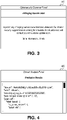
- domain analysis computing platform 110 and/or cybersecurity server 130 may trigger and/or otherwise cause a user device to display and/or otherwise present a graphical user interface similar to graphical user interface 300, which is illustrated in FIG.
- graphical user interface 300 may include text and/or other information indicating that a potentially infringing domain has been identified and one or more user-selectable options that allow a user to access additional information about the domain and/or the analysis process (e.g., "A potentially infringing domain name has been detected. Our domain security support team is working to remediate the situation and will contact you with a status update soon.”).
- user device 140 and/or user device 150 may store the classification result received from domain analysis computing platform 110.
- user device 140 and/or user device 150 may display and/or otherwise present one or more analysis interfaces based on the classification result received from domain analysis computing platform 110.
- user device 140 and/or user device 150 may display and/or otherwise present a graphical user interface similar to graphical user interface 400, which is illustrated in FIG. 4 .
- graphical user interface 400 may include text and/or other information indicating one or more prediction results produced by domain analysis computing platform 110 during a domain analysis process and/or one or more user-selectable options that allow a user to access and/or control particular elements of the analysis process.
- aspects of the approach described above might not require efforts to collect and label a relatively large set of real domain name strings for modeling. This may, for instance, provide advantages over alternative and/or conventional approaches to domain name analysis.
- the input to the predictor/classifier may be a two-element tuple: ([domain segment 1, domain segment 2, ...], [seed segment 1, seed segment 2, ...]).
- domain analysis computing platform 110 may input such a two-element tuple into the machine learning model in applying the classification algorithm described above.
- the first step of the four-part analysis process discussed above may be skipped by domain analysis computing platform 110 and all domain segments may be analyzed by domain analysis computing platform 110 using the second step of the analysis process discussed above (where, e.g., the remaining segments are input into the trained model).
- domain analysis computing platform 110 may analyze the whole domain string and seed string as two single-element lists. In these instances, the input to the classifier may become a two-element tuple of ([domain string], [seed string]). This may serve as one base model in instances where an ensemble approach is used.
- FIG. 5 depicts an illustrative method for detecting random and/or algorithmically-generated character sequences in domain names in accordance with one or more example embodiments.
- a computing platform having at least one processor, a communication interface, and memory may train a machine learning model based on a set of semantically-meaningful words.
- the computing platform may receive a seed string and a set of domains to be analyzed in connection with the seed string.
- the computing platform may apply a classification algorithm to the seed string and the set of domains, where applying the classification algorithm to the seed string and the set of domains produces a classification result.
- the computing platform may store the classification result.
- One or more aspects of the disclosure may be embodied in computer-usable data or computer-executable instructions, such as in one or more program modules, executed by one or more computers or other devices to perform the operations described herein.
- Program modules may include routines, programs, objects, components, data structures, and the like that perform particular tasks or implement particular abstract data types when executed by one or more processors in a computer or other data processing device.
- the computer-executable instructions may be stored as computer-readable instructions on a computer-readable medium such as a hard disk, optical disk, removable storage media, solid-state memory, RAM, and the like.
- the functionality of the program modules may be combined or distributed as desired in various embodiments.
- the functionality may be embodied in whole or in part in firmware or hardware equivalents, such as integrated circuits, application-specific integrated circuits (ASICs), field programmable gate arrays (FPGA), and the like.
- ASICs application-specific integrated circuits
- FPGA field programmable gate arrays
- Particular data structures may be used to more effectively implement one or more aspects of the disclosure, and such data structures are contemplated to be within the scope of computer executable instructions and computer-usable data described herein.
- One or more aspects described herein may be embodied as a method, an apparatus, or as one or more computer-readable media storing computer-executable instructions. Accordingly, those aspects may take the form of an entirely hardware embodiment, an entirely software embodiment, an entirely firmware embodiment, or an embodiment combining software, hardware, and firmware aspects in any combination.
- various signals representing data or events as described herein may be transferred between a source and a destination in the form of light or electromagnetic waves traveling through signal-conducting media such as metal wires, optical fibers, or wireless transmission media (e.g., air or space).
- the one or more computer-readable media may be and/or include one or more non-transitory computer-readable media.
- the various methods and acts may be operative across one or more computing servers and one or more networks.
- the functionality may be distributed in any manner, or may be located in a single computing device (e.g., a server, a client computer, and the like).
- a single computing device e.g., a server, a client computer, and the like.
- one or more of the computing platforms discussed above may be combined into a single computing platform, and the various functions of each computing platform may be performed by the single computing platform.
- any and/or all of the above-discussed communications between computing platforms may correspond to data being accessed, moved, modified, updated, and/or otherwise used by the single computing platform.
- one or more of the computing platforms discussed above may be implemented in one or more virtual machines that are provided by one or more physical computing devices.
- each computing platform may be performed by the one or more virtual machines, and any and/or all of the above-discussed communications between computing platforms may correspond to data being accessed, moved, modified, updated, and/or otherwise used by the one or more virtual machines.
Landscapes
- Engineering & Computer Science (AREA)
- Theoretical Computer Science (AREA)
- General Engineering & Computer Science (AREA)
- Physics & Mathematics (AREA)
- General Physics & Mathematics (AREA)
- Artificial Intelligence (AREA)
- Software Systems (AREA)
- Health & Medical Sciences (AREA)
- Audiology, Speech & Language Pathology (AREA)
- Computational Linguistics (AREA)
- General Health & Medical Sciences (AREA)
- Computer Security & Cryptography (AREA)
- Computing Systems (AREA)
- Computer Hardware Design (AREA)
- Data Mining & Analysis (AREA)
- Evolutionary Computation (AREA)
- Medical Informatics (AREA)
- Computer Vision & Pattern Recognition (AREA)
- Mathematical Physics (AREA)
- Probability & Statistics with Applications (AREA)
- Computer Networks & Wireless Communication (AREA)
- Signal Processing (AREA)
- Machine Translation (AREA)
- Information Retrieval, Db Structures And Fs Structures Therefor (AREA)
Applications Claiming Priority (2)
| Application Number | Priority Date | Filing Date | Title |
|---|---|---|---|
| US202163143610P | 2021-01-29 | 2021-01-29 | |
| US17/529,947 US12026469B2 (en) | 2021-01-29 | 2021-11-18 | Detecting random and/or algorithmically-generated character sequences in domain names |
Publications (1)
| Publication Number | Publication Date |
|---|---|
| EP4036772A1 true EP4036772A1 (de) | 2022-08-03 |
Family
ID=80112184
Family Applications (1)
| Application Number | Title | Priority Date | Filing Date |
|---|---|---|---|
| EP21218399.0A Pending EP4036772A1 (de) | 2021-01-29 | 2021-12-30 | Erkennung von zufälligen und/oder algorithmisch erzeugten zeichenfolgen in domänennamen |
Country Status (2)
| Country | Link |
|---|---|
| US (2) | US12026469B2 (de) |
| EP (1) | EP4036772A1 (de) |
Cited By (1)
| Publication number | Priority date | Publication date | Assignee | Title |
|---|---|---|---|---|
| US12388850B1 (en) * | 2024-12-16 | 2025-08-12 | Wiz, Inc. | Cybersecurity root cause analysis using computing resource name correlation |
Families Citing this family (2)
| Publication number | Priority date | Publication date | Assignee | Title |
|---|---|---|---|---|
| US20250131093A1 (en) * | 2023-10-19 | 2025-04-24 | Royal Bank Of Canada | System and method for saas data control platform |
| CN119766774B (zh) * | 2024-11-28 | 2025-10-10 | 中国电信股份有限公司 | 随机域名检测方法、装置、非易失性存储介质及电子设备 |
Citations (1)
| Publication number | Priority date | Publication date | Assignee | Title |
|---|---|---|---|---|
| US20200267119A1 (en) * | 2017-08-28 | 2020-08-20 | Proofpoint, Inc. | Domain name classification systems and methods |
Family Cites Families (9)
| Publication number | Priority date | Publication date | Assignee | Title |
|---|---|---|---|---|
| US9531581B1 (en) * | 2007-12-18 | 2016-12-27 | Amazon Technologies, Inc. | Method and system for identifying and automatically registering domain names |
| CN105338123B (zh) * | 2014-05-28 | 2018-10-02 | 国际商业机器公司 | 用于在网络中解析域名的方法、装置和系统 |
| US9571452B2 (en) * | 2014-07-01 | 2017-02-14 | Sophos Limited | Deploying a security policy based on domain names |
| US9769193B2 (en) * | 2015-06-18 | 2017-09-19 | Microsoft Technology Licensing, Llc | Advanced security for domain names |
| WO2018141942A1 (en) * | 2017-02-03 | 2018-08-09 | Koninklijke Philips N.V. | Classifier training |
| US10609081B1 (en) * | 2017-06-20 | 2020-03-31 | Cisco Technology, Inc. | Applying computer network security policy using domain name to security group tag mapping |
| US11240257B2 (en) * | 2019-03-07 | 2022-02-01 | Lookout, Inc. | Domain name and URL visual verification for increased security |
| US11539745B2 (en) * | 2019-03-22 | 2022-12-27 | Proofpoint, Inc. | Identifying legitimate websites to remove false positives from domain discovery analysis |
| US11316891B2 (en) * | 2019-07-18 | 2022-04-26 | Bank Of America Corporation | Automated real-time multi-dimensional cybersecurity threat modeling |
-
2021
- 2021-11-18 US US17/529,947 patent/US12026469B2/en active Active
- 2021-12-30 EP EP21218399.0A patent/EP4036772A1/de active Pending
-
2024
- 2024-05-24 US US18/673,524 patent/US20240311572A1/en active Pending
Patent Citations (1)
| Publication number | Priority date | Publication date | Assignee | Title |
|---|---|---|---|---|
| US20200267119A1 (en) * | 2017-08-28 | 2020-08-20 | Proofpoint, Inc. | Domain name classification systems and methods |
Non-Patent Citations (2)
| Title |
|---|
| JEFFREY PENNINGTON ET AL: "GloVe: Global Vectors for Word Representation", WEB ARCHIVE COPY OF WEBPAGE, 25 September 2016 (2016-09-25), XP055444350, Retrieved from the Internet <URL:http://web.archive.org/web/20160925004021/https://nlp.stanford.edu/projects/glove/> [retrieved on 20180125] * |
| KHORMALI AMINOLLAH ET AL: "Domain name system security and privacy: A contemporary survey", COMPUTER NETWORKS, ELSEVIER, AMSTERDAM, NL, vol. 185, 2 December 2020 (2020-12-02), XP086441073, ISSN: 1389-1286, [retrieved on 20201202], DOI: 10.1016/J.COMNET.2020.107699 * |
Cited By (2)
| Publication number | Priority date | Publication date | Assignee | Title |
|---|---|---|---|---|
| US12388850B1 (en) * | 2024-12-16 | 2025-08-12 | Wiz, Inc. | Cybersecurity root cause analysis using computing resource name correlation |
| US12519811B1 (en) * | 2024-12-16 | 2026-01-06 | Wiz, Inc. | Cybersecurity root cause analysis using computing resource name correlation |
Also Published As
| Publication number | Publication date |
|---|---|
| US20240311572A1 (en) | 2024-09-19 |
| US12026469B2 (en) | 2024-07-02 |
| US20220245351A1 (en) | 2022-08-04 |
Similar Documents
| Publication | Publication Date | Title |
|---|---|---|
| EP4217893B1 (de) | Systeme und verfahren zur triaging von softwareschwachstellen | |
| US11983105B2 (en) | Systems and methods for generating and executing a test case plan for a software product | |
| US20240311572A1 (en) | Detecting Random and/or Algorithmically-Generated Character Sequences in Domain Names | |
| EP4022476B1 (de) | Kontextbewusste erkennung von anormalem endpunktverhalten | |
| US12505206B2 (en) | Automatic graph-based detection of potential security threats | |
| US12585977B2 (en) | Building a complementary model for aggregating topics from textual content | |
| US11580222B2 (en) | Automated malware analysis that automatically clusters sandbox reports of similar malware samples | |
| US11941491B2 (en) | Methods and apparatus for identifying an impact of a portion of a file on machine learning classification of malicious content | |
| US20220318387A1 (en) | Method and Computer for Learning Correspondence Between Malware and Execution Trace of the Malware | |
| Agrawal et al. | Neural sequential malware detection with parameters | |
| US12619734B2 (en) | Automatic classification of security vulnerabilities | |
| US11720825B2 (en) | Framework for multi-tenant data science experiments at-scale | |
| US11841949B2 (en) | System and method for antimalware application adversarial machine learning | |
| US20250068720A1 (en) | Password discovery system using a generative adversarial network | |
| Čeponis et al. | Evaluation of deep learning methods efficiency for malicious and benign system calls classification on the AWSCTD | |
| CN113836522A (zh) | 监控设备的密码管理方法及装置 | |
| US20260105113A1 (en) | Random strings classification for detecting suspicious network activities | |
| US10291483B2 (en) | Entity embedding-based anomaly detection for heterogeneous categorical events | |
| WO2024025669A1 (en) | Increasing security of a computer program using unstructured text | |
| US12585785B2 (en) | Code vulnerability evaluator | |
| US20240064170A1 (en) | Suspicious domain detection for threat intelligence | |
| US20250298611A1 (en) | System and method for generating information identifying a set of tasks associated with the development of a feature of software using a set of artificial intelligence (ai) bots | |
| CN118200021B (zh) | 用于防范网络攻击的方法、装置、设备、介质和程序产品 | |
| EP4647949A1 (de) | Systeme und verfahren zur textklassifizierung | |
| US20250390538A1 (en) | Technologies for privacy search and remediation |
Legal Events
| Date | Code | Title | Description |
|---|---|---|---|
| PUAI | Public reference made under article 153(3) epc to a published international application that has entered the european phase |
Free format text: ORIGINAL CODE: 0009012 |
|
| STAA | Information on the status of an ep patent application or granted ep patent |
Free format text: STATUS: THE APPLICATION HAS BEEN PUBLISHED |
|
| AK | Designated contracting states |
Kind code of ref document: A1 Designated state(s): AL AT BE BG CH CY CZ DE DK EE ES FI FR GB GR HR HU IE IS IT LI LT LU LV MC MK MT NL NO PL PT RO RS SE SI SK SM TR |
|
| STAA | Information on the status of an ep patent application or granted ep patent |
Free format text: STATUS: REQUEST FOR EXAMINATION WAS MADE |
|
| 17P | Request for examination filed |
Effective date: 20230203 |
|
| RBV | Designated contracting states (corrected) |
Designated state(s): AL AT BE BG CH CY CZ DE DK EE ES FI FR GB GR HR HU IE IS IT LI LT LU LV MC MK MT NL NO PL PT RO RS SE SI SK SM TR |
|
| STAA | Information on the status of an ep patent application or granted ep patent |
Free format text: STATUS: EXAMINATION IS IN PROGRESS |
|
| 17Q | First examination report despatched |
Effective date: 20241105 |