EP4036193A1 - Procédé de lubrification d'un arbre de balancier amagnétique d'une pièce d'horlogerie - Google Patents
Procédé de lubrification d'un arbre de balancier amagnétique d'une pièce d'horlogerie Download PDFInfo
- Publication number
- EP4036193A1 EP4036193A1 EP22153289.8A EP22153289A EP4036193A1 EP 4036193 A1 EP4036193 A1 EP 4036193A1 EP 22153289 A EP22153289 A EP 22153289A EP 4036193 A1 EP4036193 A1 EP 4036193A1
- Authority
- EP
- European Patent Office
- Prior art keywords
- mpa
- process according
- lubricant
- oil
- balance shaft
- Prior art date
- Legal status (The legal status is an assumption and is not a legal conclusion. Google has not performed a legal analysis and makes no representation as to the accuracy of the status listed.)
- Granted
Links
Images

Classifications
-
- G—PHYSICS
- G04—HOROLOGY
- G04B—MECHANICALLY-DRIVEN CLOCKS OR WATCHES; MECHANICAL PARTS OF CLOCKS OR WATCHES IN GENERAL; TIME PIECES USING THE POSITION OF THE SUN, MOON OR STARS
- G04B31/00—Bearings; Point suspensions or counter-point suspensions; Pivot bearings; Single parts therefor
- G04B31/08—Lubrication
-
- C—CHEMISTRY; METALLURGY
- C10—PETROLEUM, GAS OR COKE INDUSTRIES; TECHNICAL GASES CONTAINING CARBON MONOXIDE; FUELS; LUBRICANTS; PEAT
- C10M—LUBRICATING COMPOSITIONS; USE OF CHEMICAL SUBSTANCES EITHER ALONE OR AS LUBRICATING INGREDIENTS IN A LUBRICATING COMPOSITION
- C10M105/00—Lubricating compositions characterised by the base-material being a non-macromolecular organic compound
- C10M105/02—Well-defined hydrocarbons
- C10M105/04—Well-defined hydrocarbons aliphatic
-
- C—CHEMISTRY; METALLURGY
- C10—PETROLEUM, GAS OR COKE INDUSTRIES; TECHNICAL GASES CONTAINING CARBON MONOXIDE; FUELS; LUBRICANTS; PEAT
- C10M—LUBRICATING COMPOSITIONS; USE OF CHEMICAL SUBSTANCES EITHER ALONE OR AS LUBRICATING INGREDIENTS IN A LUBRICATING COMPOSITION
- C10M127/00—Lubricating compositions characterised by the additive being a non- macromolecular hydrocarbon
- C10M127/02—Lubricating compositions characterised by the additive being a non- macromolecular hydrocarbon well-defined aliphatic
-
- C—CHEMISTRY; METALLURGY
- C10—PETROLEUM, GAS OR COKE INDUSTRIES; TECHNICAL GASES CONTAINING CARBON MONOXIDE; FUELS; LUBRICANTS; PEAT
- C10M—LUBRICATING COMPOSITIONS; USE OF CHEMICAL SUBSTANCES EITHER ALONE OR AS LUBRICATING INGREDIENTS IN A LUBRICATING COMPOSITION
- C10M2203/00—Organic non-macromolecular hydrocarbon compounds and hydrocarbon fractions as ingredients in lubricant compositions
- C10M2203/04—Well-defined cycloaliphatic compounds
- C10M2203/045—Well-defined cycloaliphatic compounds used as base material
-
- C—CHEMISTRY; METALLURGY
- C10—PETROLEUM, GAS OR COKE INDUSTRIES; TECHNICAL GASES CONTAINING CARBON MONOXIDE; FUELS; LUBRICANTS; PEAT
- C10N—INDEXING SCHEME ASSOCIATED WITH SUBCLASS C10M RELATING TO LUBRICATING COMPOSITIONS
- C10N2030/00—Specified physical or chemical properties which is improved by the additive characterising the lubricating composition, e.g. multifunctional additives
- C10N2030/06—Oiliness; Film-strength; Anti-wear; Resistance to extreme pressure
-
- C—CHEMISTRY; METALLURGY
- C10—PETROLEUM, GAS OR COKE INDUSTRIES; TECHNICAL GASES CONTAINING CARBON MONOXIDE; FUELS; LUBRICANTS; PEAT
- C10N—INDEXING SCHEME ASSOCIATED WITH SUBCLASS C10M RELATING TO LUBRICATING COMPOSITIONS
- C10N2030/00—Specified physical or chemical properties which is improved by the additive characterising the lubricating composition, e.g. multifunctional additives
- C10N2030/56—Boundary lubrication or thin film lubrication
-
- C—CHEMISTRY; METALLURGY
- C10—PETROLEUM, GAS OR COKE INDUSTRIES; TECHNICAL GASES CONTAINING CARBON MONOXIDE; FUELS; LUBRICANTS; PEAT
- C10N—INDEXING SCHEME ASSOCIATED WITH SUBCLASS C10M RELATING TO LUBRICATING COMPOSITIONS
- C10N2040/00—Specified use or application for which the lubricating composition is intended
- C10N2040/06—Instruments or other precision apparatus, e.g. damping fluids
Definitions
- the present invention relates to the field of watchmaking and relates, more particularly, to a method of lubricating a non-magnetic balance shaft of a timepiece.
- the lubrication of timepieces is based on knowledge acquired over many years through experimentation and also empiricism.
- the tribology of a system depends on many parameters, the surface conditions of the interacting parts, the speeds and contact pressure, the lubricant (chemical nature, viscosity, etc.).
- the complexity of these interactions induces that when a tribological system has been optimized to give satisfaction, it is difficult to develop it at an industrial level. Indeed, experience shows that a modification of a parameter can completely unbalance the system and the search for a new system with the same performance is particularly difficult.
- the system that works traditionally comprises a carbon steel shaft of type 20AP, the pivots of which have been rolled and then polished to give them a shape, a specific hardness and surface condition. These pivots cooperate with ruby/corundum stones, and the whole is generally lubricated with an oil supplied by the manufacturer Moebius, under the reference Synt-A-Lube 9010. At present, all of these parameters make it possible to have a high-performance tribosystem, and an oil with satisfactory chemical stability so that performance is sustainable.
- the document CN111019744 describes a lubricant comprising multi-alkylated cyclopentanes (MAC) for the lubrication of micro-electromechanical systems of space machines, in particular because of its low volatility which therefore makes it particularly suitable for uses in space or in a low pressure environment.
- MAC multi-alkylated cyclopentanes
- the present invention aims to solve the aforementioned problems.
- a first aspect of the invention relates to a method of lubricating a non-magnetic balance shaft of a timepiece as claimed in the claims, as well as a use of a specific lubricant in a such goal.
- a lubricant whose composition comprises at least one multi-alkylated cyclopentane (MAC), is particularly advantageous in a watchmaking context, for lubricating a non-magnetic balance shaft.
- MAC multi-alkylated cyclopentane
- the INV oil gives exceptional results for lubricating a contact between a Cr, Mn base steel and a ruby, and also gives satisfactory results with the other test specimens in 20AP type steel or in Cr, Ni base steel.
- the 9010 oil to lubricate a 20AP steel on ruby, determines the current reference.
- it does not conform to expectations for a Cr, Mn or Cr, Ni base steel, and that it can therefore only be suitable for a limited number of tribosystems.
- Oxidation stability tests were also carried out, using equipment known as RapidOxy, which consists of applying a defined pressure of oxygen, under a certain temperature. A drop in pressure corresponding to the absorption of oxygen by the lubricant is measured, which makes it possible to detect the sensitivity to oxidation of the lubricant.
- RapidOxy which consists of applying a defined pressure of oxygen, under a certain temperature. A drop in pressure corresponding to the absorption of oxygen by the lubricant is measured, which makes it possible to detect the sensitivity to oxidation of the lubricant.
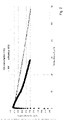
- the picture 2 shows us the results of these tests for INV oil, compared to the reference Synt-A-Lub 9010, for a pressure of 700kPa, at 100°C, with a target pressure difference of 10%. It can be seen that the drop in pressure is much slower for INV oil than for Synt-A-Lub 9010 oil, with a factor of 2 between the two. This means that INV oil resists oxidation much better and therefore also ages better.
- the MAC-based lubricant tested presents, with a Cr, Mn base steel shaft, much better performance than the current reference (Moebius 9010 + 20AP shaft).
- the results are substantially at the level of the reference and therefore make it possible to obtain results that comply with the specifications.
- this family of lubricant still has optimization ranges depending on the desired uses. It is known in fact that it is preferable to adapt the viscosity of a lubricant according to the contact speeds and the pressures undergone, according to the intended application.
- oils of the MAC type that is to say comprising at least one multi-alkylated cyclopentane, of different viscosities (in the present application, unless otherwise stated, all the viscosities are given for a temperature of 40°C), between 40 mPa.s and 2200 mPa.s, with or without additives, chosen from the following additives: anti-wear, anti-oxidation, friction modifier, an Extreme-Pressure additive and a viscosity index modifier.
- oils of the MAC type as base oils, to form greases, with a thickening agent chosen, for example, from organic or inorganic thickening particles, waxes or metallic soaps. More particularly, PTFE particles dispersed in the base oil can be used as a thickener. It is possible, for example, to work with greases having a grade comprised between 3 and 00, preferably a grade comprised between 2 and 1 according to the NLGI scale (National Lubricating Grease Institute).
- the viscosity ranges can be optimized according to the type of contacts to be lubricated.
- a viscosity range comprised between 40 mPa.s and 250 mPa.s, preferably comprised between 50 mPa.s and 120 mPa.s.
- a viscosity range of between 40 mPa.s and 250 mPa.s, preferably between 50 mPa.s and 120 mPa.s, can be chosen.
- a viscosity range of between 40mPa.s and 120mPa.s, preferably between 45 and 60mPa.s, can be chosen.
- the latter comprise at least 50% Nickel, between 13 and 30% Chromium and elements chosen from among Fe, Mo, Nb, Ta, Co, Mn, Cu, Al, Ti, Si , C, S, P and B. More particularly, the suitable alloys can be an inconel 718.
- This alloy comprises between 50 and 55% Nickel, between 17 and 21% Chromium, between 2.8 and 3.3% Molybdenum, between 4.75 and 5.50% Niobium, between 0 and 1.0% Cobalt, between 0 and 0.35% Manganese, between 0 and 0.30% Copper, between 0.20 and 0 80% Aluminum, between 0.65 and 1.15% Titanium, between 0 and 0.35% Silicon, between 0 and 0.08% Carbon, between 0 and 0.015% Sulphur, between 0 and 0.015% Phosphorus, and between 0 and 0.006% Boron, and the balance Iron.
- the various materials above can also be treated on their surface, either by structuring or by chemical modification (diffusion of atoms in the original matrix, for example by ion implantation as described in application CH0883/20 to the plaintiff's name).
- the application of a coating aimed at further improving the tribology is not excluded, for example a layer of CuSnZn alloy, as described in application CH0284/20 in the name of the applicant).
- Fluorescent tracers can also be incorporated in order to provide better possibilities for monitoring the lubrication process.
Landscapes
- Chemical & Material Sciences (AREA)
- Oil, Petroleum & Natural Gas (AREA)
- Engineering & Computer Science (AREA)
- Chemical Kinetics & Catalysis (AREA)
- General Chemical & Material Sciences (AREA)
- Organic Chemistry (AREA)
- Physics & Mathematics (AREA)
- General Physics & Mathematics (AREA)
- Lubricants (AREA)
- Sliding-Contact Bearings (AREA)
Abstract
Description
- La présente invention se rapporte au domaine de l'horlogerie et concerne, plus particulièrement, un procédé de lubrification d'un arbre de balancier amagnétique d'une pièce d'horlogerie.
- La lubrification des pièces d'horlogerie repose sur des connaissances acquises depuis de nombreuses années au gré d'expérimentation et également d'empirisme. La tribologie d'un système dépend de nombreux paramètres, des états de surfaces des parties interagissant, des vitesses et pression de contact, du lubrifiant (nature chimique, viscosité...). La complexité de ces interactions induit que lorsqu'un système tribologique a été optimisé pour donner satisfaction, il est difficile de le faire évoluer à un niveau industriel. En effet, l'expérience montre qu'une modification d'un paramètre peut complètement déséquilibrer le système et la recherche d'un nouveau système ayant les mêmes performances est particulièrement difficile.
- En pratique, si on prend l'exemple de la lubrification de l'arbre de balancier, le système qui fonctionne traditionnellement comprend un arbre en acier au carbone de type 20AP, dont les pivots ont été roulés puis polis pour leur donner une forme, une dureté et un état de surface spécifiques. Ces pivots coopèrent avec des pierres en rubis/corindon, et le tout est généralement lubrifié avec une huile fournie par le fabricant Moebius, sous la référence Synt-A-Lube 9010. A l'heure actuelle, l'ensemble de ces paramètres permet d'avoir un tribosystème performant, et une huile ayant une stabilité chimique satisfaisante pour que les performances soient durables.
- Avec l'augmentation importante de la présence des champs magnétiques dans l'environnement moderne, du fait des ondes de tout genre, les mouvements horlogers réalisés avec des matériaux traditionnels, à base de fer et présentant une grande sensibilité aux champs magnétiques, peuvent être déréglés après une exposition à ces champs magnétiques. Une des manières de pallier ce défaut, est de mettre en œuvre des matériaux amagnétiques sur certaines pièces spécifiques du mouvement horloger, notamment sur des éléments de l'organe réglant ou sur des éléments en mouvement.
- Ainsi, des acteurs de l'horlogerie travaillent aujourd'hui à de nouveaux matériaux pour réaliser des composants horlogers, notamment des arbres de balancier, et on relève un nombre toujours plus grand de demandes de brevet sur ces sujets. Toutefois, avec ces matériaux, les lubrifiants habituels ne donnent pas toujours satisfaction, soit en termes de frottement, soit en termes de vieillissement des pivots. De manière contre-intuitive, ces deux paramètres ne vont pas de paire et on peut avoir un lubrifiant qui permet de réduire les frottements d'un système tribologique, tout en laissant observer une usure prématurée de l'arbre ou du palier.
- De plus, pour des questions de logistique, on comprend également que sur les plateformes des marques horlogères assurant les services d'entretien des pièces d'horlogerie en circulation, on devra bientôt être en capacité de s'occuper de pièces d'horlogerie présentant des composants en acier, de type conventionnel, et de pièces d'horlogerie présentant des composants en matériaux amagnétiques. Vu la complexité des paramètres en jeux évoquée ci-dessus, il découle qu'il semble inéluctable de devoir gérer des lubrifiants différents, à mettre en œuvre en fonction du tribosystème. A l'échelle internationale, le suivi de l'approvisionnement de plusieurs références est en soi un enjeu. Identifier un lubrifiant qui pourrait fonctionner avec une performance équivalente, dans des tribosystèmes différents, présenterait un avantage déterminant.
- Pour le surplus, le document
CN111019744 décrit un lubrifiant comprenant des cyclopentanes multi-alkylés (MAC) pour la lubrification de systèmes micro-électromécaniques de machines spatiales, notamment en raison de sa faible volatilité qui le destine donc particulièrement bien pour des utilisations dans l'espace ou dans un environnement à faible pression. Cependant, il n'y a aucune indication dans ce document qu'un tel lubrifiant convienne pour la lubrification d'un arbre de balancier, ou même pour une utilisation dans l'horlogerie mécanique considérée plus généralement. D'autant que, comme on l'a expliqué ci-dessus, la modification d'un des paramètres d'un système tribologique n'est pas du tout évidente si l'on veut obtenir des performances similaires, voire les améliorer. - La présente invention a pour but de résoudre les problèmes susmentionnés.
- De façon plus précise, un premier aspect de l'invention concerne un procédé de lubrification d'un arbre de balancier amagnétique d'une pièce d'horlogerie tel que revendiqué dans les revendications, ainsi qu'une utilisation d'un lubrifiant spécifique dans un tel but.
- D'autres détails de l'invention apparaîtront plus clairement à la lecture de la description qui suit, faite en référence au dessin annexé dans lequel :
- la
figure 1 représente des résultats comparatifs de tests au tribomètre, de différents lubrifiants, dans différents tribosystèmes, - la
figure 2 représente des résultats de tests d'oxydation de différents lubrifiants. - Face au besoin de trouver des lubrifiants qui permettent de résoudre les problèmes exposés dans l'introduction de la présente demande, la demanderesse a identifié des lubrifiants d'un nouveau type pour l'horlogerie, présentant des résultats particulièrement intéressants.
- Ainsi, comme nous allons le détailler par la suite, un lubrifiant dont la composition comprend au moins un cyclopentane multi-alkylés (MAC), est particulièrement intéressant dans un contexte horloger, pour lubrifier un arbre de balancier amagnétique.
- On a représenté sur la
figure 1 des résultats comparatifs présentant des essais sur tribomètre, établissant des conditions tribologiques similaires à celles d'un arbre de balancier frottant dans son palier. Ces tests sont effectués avec un tribomètre Tribolab commercialisé par Brücker, avec un contact métal-rubis lubrifié, de type sphère/plan. Le mouvement relatif entre le métal et le rubis est de type linéaire alternatif, pour être comparable aux frottements réels d'un arbre de balancier dans son palier. On mesure ensuite le volume de métal entamé par le frottement, sur une certaine période. - Ces résultats indiquent en abscisse le volume usé sur le pion de mesure et le coefficient de frottement mesuré entre le pion et la surface de base. Le domaine situé à gauche de la figure, et indiqué par un domaine délimité par un trait mixe., correspondant à une usure non quantifiable ou à une usure acceptable, indique des couples matière/lubrifiant qui satisfont au cahier des charges.
- La figure indique donc les points obtenus pour les lubrifiants suivants :
- INV, qui est une huile de type MAC selon l'invention,
- Synt-A-Lube 9010, qui est l'huile de référence, commercialisée par Moebius,
- On constate que l'huile INV donne des résultats exceptionnels pour lubrifier un contact entre un acier base Cr, Mn et un rubis, et donne également des résultats satisfaisants avec les autres éprouvettes en acier de type 20AP ou en acier base Cr, Ni. L'huile 9010, pour lubrifier un acier 20AP sur du rubis, détermine la référence actuelle. Toutefois, on remarque également qu'elle n'est pas conforme aux attentes pour un acier base Cr, Mn ou Cr, Ni, et qu'elle ne peut donc convenir qu'à un nombre restreint de tribosystèmes.
- On a également effectué des tests de stabilité à l'oxydation, via l'équipement connu sous le nom de RapidOxy, qui consiste à appliquer une pression d'oxygène définie, sous une certaine température. On mesure une baisse de pression correspondant à l'absorption de l'oxygène par le lubrifiant, ce qui permet de détecter la sensibilité à l'oxydation du lubrifiant.
- La
figure 2 nous montre le résultat de ces tests pour l'huile INV, comparée à la référence Synt-A-Lub 9010, pour une pression de 700kPa, à 100°C, avec comme différence de pression cible, une baisse de 10%. On constate que la baisse de pression est bien plus lente pour l'huile INV que pour l'huile Synt-A-Lub 9010, avec un facteur 2 entre les deux. Cela signifie que l'huile INV résiste beaucoup mieux à l'oxydation et donc vieillit mieux également. - Ainsi, le lubrifiant à base de MAC testé présente, avec un arbre en acier base Cr, Mn, des performances bien meilleures que la référence actuelle (Moebius 9010 + arbre 20AP). Avec des arbres d'autres natures, les résultats sont sensiblement au niveau de la référence et permettent donc d'obtenir des résultats conformes au cahier des charges.
- En outre, cette famille de lubrifiant présente encore des plages d'optimisation en fonction des utilisations souhaitées. On sait en effet qu'il est préférable d'adapter la viscosité d'un lubrifiant en fonction des vitesses de contact et des pressions subies, selon l'application visée.
- De manière particulièrement avantageuse, on peut formuler, des huiles de type MAC, c'est-à-dire comprenant au moins un cyclopentane multi-alkylés, de différentes viscosité (dans la présente demande, sauf mention contraire, toutes les viscosités sont données pour une température de 40°C), comprises entre 40 mPa.s et 2200 mPa.s, avec ou sans additifs, choisis parmi les additifs suivants : anti-usure, anti-oxydation, modificateur de frottement, un additif Extrême-Pression et un modificateur d'indice de viscosité.
- On peut également utiliser des huiles de type MAC comme huiles de base, pour former des graisses, avec un agent épaississant choisi, par exemple, parmi des particules épaississantes organiques ou inorganiques, des cires ou des savons métalliques. Plus particulièrement, on pourra utiliser comme épaississant des particules de PTFE dispersées dans l'huile de base. On pourra par exemple travailler avec des graisses présentant un grade compris entre 3 et 00, de préférence un grade compris entre 2 et 1 selon l'échelle NLGI (National Lubricating Grease Institute).
- Avec ces différentes possibilités, outre l'arbre de balancier amagnétique visé par l'invention, on peut également lubrifier tous les composants de la montre qui sont en mouvement ou qui sont sujets à friction. On peut nommer à titre d'exemple les roues, et notamment les surfaces de travail de certains engrenages, par exemple d'un mécanisme de remontage ; les coussinets empierrés ou simples et les arbres de mobiles qui y sont logés ; les organes d'échappement comprenant les dents de la roue d'échappement et les palettes ; le ressort moteur et le barillet, le roulement de masse oscillante. Cette liste d'exemples ne fait pas partie de l'invention et n'est pas exhaustive.
- Ainsi, on pourra optimiser les plages de viscosité en fonction de la typologie des contacts à lubrifier. Par exemple, pour l'arbre de balancier, on pourra choisir une plage de viscosité comprise entre 40mPa.s et 250mPa.s, préférentiellement comprise entre 50mPa.s et 120mPa.s.
- Pour les pivots de rouage rapide (échappement, balancier, roue de seconde...), on pourra choisir une plage de viscosité comprise entre 40mPa.s et 250mPa.s, préférentiellement comprise entre 50mPa.s et 120mPa.s.
- Pour les mécanismes de remontage, paliers avec et/ou sans huilier (métal/rubis et/ou métal/métal), on pourra citer notamment le système automatique (excentrique, pivot), les pivots de rouage lent (barillet, roues de moyenne, minuterie...), on pourra choisir une plage de viscosité comprise entre 200mPa.s et 2200mPa.s, préférentiellement comprise entre 350mPa.s et 2100mPa.s, et encore plus préférentiellement comprise entre 380mPa.s et 2080mPa.s
- Pour les roulements de masse, en Acier ou en Céramique, on pourra choisir une plage de viscosité comprise entre 40mPa.s et 120mPa.s, préférentiellement comprise entre 45 et 60mPa.s.
- En termes de matières avec lesquelles les lubrifiants à base de MAC peuvent donner des bons résultats, on peut notamment citer des arbres de balancier amagnétiques réalisés dans les alliages suivants :
- Base Mn et alliage Mn-Cr (Biodur),
- Base Cr et alliage Cr-Ni (Inox),
- Base Co (Nivaflex, Phynox,...),
- Base Pd (Isoplus) ;
- Des verres métalliques massifs (c'est-à-dire des métaux amorphes massifs, aussi connu par l'anglais « bulk metallic glasses ») amagnétiques ;
- Des céramiques ;
- Des alliages Inconel amagnétiques ;
- Des alliages ISO P, ISO S et ISO H amagnétiques ;
- Des alliages inoxydables austénitiques.
- En ce qui concerne les alliages Inconel, ces derniers comprennent au moins 50% de Nickel, entre 13 et 30% de Chrome et des éléments choisis parmi le Fe, Mo, Nb, Ta, Co, Mn, Cu, Al, Ti, Si, C, S, P et B. Plus particulièrement, les alliages appropriés peuvent être un inconel 718. Cet alliage comprend entre 50 et 55% de Nickel, entre 17 et 21% de Chrome, entre 2,8 et 3,3% de Molybdène, entre 4,75 et 5,50% de Niobium, entre 0 et 1,0% de Cobalt, entre 0 et 0,35% de Manganèse, entre 0 et 0,30% de Cuivre, entre 0,20 et 0,80% d'Aluminium, entre 0,65 et 1,15% de Titane, entre 0 et 0,35% de Silicium, entre 0 et 0,08% de Carbone, entre 0 et 0,015% de Souffre, entre 0 et 0,015% de Phosphore, et entre 0 et 0,006% de Bore, et le solde de Fer.
- En ce qui concerne les autres alliages mentionnés ci-dessus, les matières suivantes peuvent être utilisées :
- ISO P : Aciers fortement alliés (> 5% d'éléments d'alliage), recuits, trempés et revenus ;
- ISO S : Superalliages réfractaires hors titane (Base fer, base nickel, base Cobalt), recuits, vieillis, coulés ;
- ISO H : Aciers trempés, trempés et revenus, fonte en coquille (coulée ou coulée et vieillie) ;
- Aciers inoxydables austénitiques : 1.4472 et Biodur®108 .
- Les différents matériaux ci-dessus peuvent en outre être traités à leur surface, soit par de la structuration ou par modification chimique (diffusion d'atomes dans la matrice d'origine, par exemple par implantation ionique comme décrit dans la demande CH0883/20 au nom de la demanderesse). L'application d'un revêtement visant à améliorer encore la tribologie, n'est pas exclue, par exemple une couche d'alliage CuSnZn, comme décrit dans la demande CH0284/20 au nom de la demanderesse).
- On pourra également incorporer des traceurs fluorescents afin de donner des meilleures possibilités de suivi du process de lubrification.
- La présente description a été donnée à titre d'illustration non limitative de l'invention. L'homme du métier pourra apporter des compléments à sa portée, sans toutefois sortir du cadre de l'invention défini par les revendications.
Claims (12)
- Procédé de lubrification d'un arbre de balancier d'une pièce d'horlogerie mettant en œuvre un lubrifiant dont la composition comprend un cyclopentane multi-alkylés (MAC), ledit arbre de balancier étant en matériau amagnétique.
- Procédé selon la revendication 1, caractérisé en ce que le lubrifiant est une huile.
- Procédé selon la revendication 2, caractérisé en ce que ladite huile présente une viscosité comprise entre 40 mPa.s et 2200 mPa.s à 40°C.
- Procédé selon la revendication 3, caractérisé en ce que ladite huile présente une viscosité comprise entre 40 et 250 mPa.s, de préférence entre 50 et 120 mPa.s à 40°C.
- Procédé selon l'une des revendications 2 à 4, caractérisé en ce que l'huile comprend au moins un additif parmi les additifs suivants : anti-usure, anti-oxydation, modificateur de frottement, un additif Extrême-Pression et un modificateur d'indice de viscosité.
- Procédé selon la revendication 1, caractérisé en ce que le lubrifiant est une graisse, comprenant une huile de base dont la composition comprend au moins un cyclopentane multi-alkylés et un agent épaississant.
- Procédé selon la revendication 6, caractérisé en ce que l'agent épaississant est choisi parmi des particules inorganiques ou organiques, des cires ou des savons métalliques.
- Procédé selon la revendication 7, caractérisé en ce que l'agent épaississant est des particules de PTFE.
- Procédé selon l'une des revendications 7 et 9, caractérisé en ce que la graisse présente un grade compris entre 3 et 00, selon l'échelle NLGI (National Lubricating Grease Institute).
- Procédé selon l'une des revendications précédentes, caractérisé en ce que ledit arbre de balancier est en verre métallique massif, en céramique, en un alliage Inconel, en un alliage ISO P, en un alliage ISO S, en un alliage ISO H ou en un alliage acier inoxydable austénitique.
- Procédé selon la revendication 10, caractérisé en que le lubrifiant est une huile dont la viscosité est comprise entre 40mPa.s et 250mPa.s, préférentiellement comprise entre 50mPa.s et 120mPa.s, à 40°C.
- Utilisation d'un lubrifiant dont la composition comprend un cyclopentane multi-alkylés (MAC) pour la lubrification d'un arbre de balancier d'une pièce d'horlogerie, ledit arbre de balancier étant en matériau amagnétique.
Applications Claiming Priority (1)
| Application Number | Priority Date | Filing Date | Title |
|---|---|---|---|
| CH00094/21A CH718320A1 (fr) | 2021-02-02 | 2021-02-02 | Procédé de lubrification d'une pièce d'horlogerie. |
Publications (2)
| Publication Number | Publication Date |
|---|---|
| EP4036193A1 true EP4036193A1 (fr) | 2022-08-03 |
| EP4036193B1 EP4036193B1 (fr) | 2025-08-13 |
Family
ID=74858159
Family Applications (1)
| Application Number | Title | Priority Date | Filing Date |
|---|---|---|---|
| EP22153289.8A Active EP4036193B1 (fr) | 2021-02-02 | 2022-01-25 | Procédé de lubrification d'un arbre de balancier amagnétique d'une pièce d'horlogerie |
Country Status (2)
| Country | Link |
|---|---|
| EP (1) | EP4036193B1 (fr) |
| CH (1) | CH718320A1 (fr) |
Citations (2)
| Publication number | Priority date | Publication date | Assignee | Title |
|---|---|---|---|---|
| US20130130951A1 (en) * | 2011-11-23 | 2013-05-23 | National University Of Singapore | Su-8 nano-composites with improved tribological and mechanical properties |
| CN111019744A (zh) | 2019-11-27 | 2020-04-17 | 中国科学院兰州化学物理研究所 | 一种多烷基环戊烷润滑油组合物及其制备方法和应用 |
-
2021
- 2021-02-02 CH CH00094/21A patent/CH718320A1/fr unknown
-
2022
- 2022-01-25 EP EP22153289.8A patent/EP4036193B1/fr active Active
Patent Citations (2)
| Publication number | Priority date | Publication date | Assignee | Title |
|---|---|---|---|---|
| US20130130951A1 (en) * | 2011-11-23 | 2013-05-23 | National University Of Singapore | Su-8 nano-composites with improved tribological and mechanical properties |
| CN111019744A (zh) | 2019-11-27 | 2020-04-17 | 中国科学院兰州化学物理研究所 | 一种多烷基环戊烷润滑油组合物及其制备方法和应用 |
Also Published As
| Publication number | Publication date |
|---|---|
| CH718320A1 (fr) | 2022-08-15 |
| EP4036193B1 (fr) | 2025-08-13 |
Similar Documents
| Publication | Publication Date | Title |
|---|---|---|
| Fontanari et al. | Investigation of the lubricated wear behavior of ductile cast iron and quenched and tempered alloy steel for possible use in worm gearing | |
| Fontanari et al. | Tribological behavior of the bronze–steel pair for worm gearing | |
| CA3001158C (fr) | Acier, produit realise en cet acier, et son procede de fabrication | |
| EP3743538B1 (fr) | Axe de pivotement d'un organe reglant et son procédé de fabrication | |
| CH698230B1 (fr) | Montre. | |
| US11473031B2 (en) | Motor oil blend and method for reducing wear on steel and eliminating ZDDP in motor oils by modifying the plastic response of steel | |
| EP4036193B1 (fr) | Procédé de lubrification d'un arbre de balancier amagnétique d'une pièce d'horlogerie | |
| Ould et al. | Tribological behavior of DLC film models in base oils: Analysis of influence of sp3/sp2 ratio and hydrogen content | |
| Kumar et al. | Nanometer-thick base oil tribofilms with acrylamide additive as lubricants for AZ91 Mg alloy | |
| JP2016151351A (ja) | 潤滑構造及び変速機 | |
| CH713671B1 (fr) | Composant horloger lubrifié. | |
| Castro et al. | Analysis of the tribological performances of biodegradable hydraulic oils HEES and HEPR in the sliding of Cu–Zn/WC–CoCr alloys using the Stribeck curve | |
| KAlbArczyK et al. | The influence of oils on the scuffing of concentrated friction joints with low-friction coated elements | |
| EP3511780A1 (fr) | Procede de lubrification d'un echappement | |
| US20190033791A1 (en) | Watch pivot device | |
| CH714551B1 (fr) | Procédé de lubrification d'un mécanisme horloger. | |
| RU2651398C1 (ru) | Способ приработки червячных передач | |
| HAILU et al. | SURFACE CHARACTERIZATION AND WEAR INVESTIGATION ON NI-DOPED CR-MO ALLOY STEEL IN GEAR APPLICATIONS | |
| AU2016211474B2 (en) | Motor oil blend and method for reducing wear on steel and eliminating ZDDP in motor oils by modifying the plastic response of steel | |
| 李庆忠 et al. | Effect of Heat Treatment Method on Dry Friction and Wear Properties of GCr15 Steel Against Si 3 N 4 | |
| Kržan et al. | Tribological behaviour of tungsten-doped DLC coated gears | |
| Papke et al. | Tribological Film Formation on Hydrogenated DLC/Steel Contacts From Fully Formulated Automotive Lubricants | |
| Fontanari et al. | Tribological behaviour of ductile cast iron-steel pair for worm gearing | |
| JPS5813621B2 (ja) | 電子時計 | |
| CH721290A2 (fr) | Axe de pivotement revêtu et son procédé de fabrication |
Legal Events
| Date | Code | Title | Description |
|---|---|---|---|
| PUAI | Public reference made under article 153(3) epc to a published international application that has entered the european phase |
Free format text: ORIGINAL CODE: 0009012 |
|
| STAA | Information on the status of an ep patent application or granted ep patent |
Free format text: STATUS: THE APPLICATION HAS BEEN PUBLISHED |
|
| AK | Designated contracting states |
Kind code of ref document: A1 Designated state(s): AL AT BE BG CH CY CZ DE DK EE ES FI FR GB GR HR HU IE IS IT LI LT LU LV MC MK MT NL NO PL PT RO RS SE SI SK SM TR |
|
| STAA | Information on the status of an ep patent application or granted ep patent |
Free format text: STATUS: REQUEST FOR EXAMINATION WAS MADE |
|
| 17P | Request for examination filed |
Effective date: 20230201 |
|
| RBV | Designated contracting states (corrected) |
Designated state(s): AL AT BE BG CH CY CZ DE DK EE ES FI FR GB GR HR HU IE IS IT LI LT LU LV MC MK MT NL NO PL PT RO RS SE SI SK SM TR |
|
| STAA | Information on the status of an ep patent application or granted ep patent |
Free format text: STATUS: EXAMINATION IS IN PROGRESS |
|
| 17Q | First examination report despatched |
Effective date: 20240104 |
|
| RIC1 | Information provided on ipc code assigned before grant |
Ipc: C10N 40/06 20060101ALN20250120BHEP Ipc: C10N 30/00 20060101ALN20250120BHEP Ipc: C10N 30/06 20060101ALN20250120BHEP Ipc: G04B 31/08 20060101ALI20250120BHEP Ipc: C10M 105/04 20060101AFI20250120BHEP |
|
| GRAP | Despatch of communication of intention to grant a patent |
Free format text: ORIGINAL CODE: EPIDOSNIGR1 |
|
| STAA | Information on the status of an ep patent application or granted ep patent |
Free format text: STATUS: GRANT OF PATENT IS INTENDED |
|
| INTG | Intention to grant announced |
Effective date: 20250310 |
|
| GRAS | Grant fee paid |
Free format text: ORIGINAL CODE: EPIDOSNIGR3 |
|
| GRAA | (expected) grant |
Free format text: ORIGINAL CODE: 0009210 |
|
| STAA | Information on the status of an ep patent application or granted ep patent |
Free format text: STATUS: THE PATENT HAS BEEN GRANTED |
|
| AK | Designated contracting states |
Kind code of ref document: B1 Designated state(s): AL AT BE BG CH CY CZ DE DK EE ES FI FR GB GR HR HU IE IS IT LI LT LU LV MC MK MT NL NO PL PT RO RS SE SI SK SM TR |
|
| REG | Reference to a national code |
Ref country code: GB Ref legal event code: FG4D Free format text: NOT ENGLISH |
|
| REG | Reference to a national code |
Ref country code: CH Ref legal event code: EP |
|
| REG | Reference to a national code |
Ref country code: DE Ref legal event code: R096 Ref document number: 602022019209 Country of ref document: DE |
|
| REG | Reference to a national code |
Ref country code: IE Ref legal event code: FG4D Free format text: LANGUAGE OF EP DOCUMENT: FRENCH |
|
| REG | Reference to a national code |
Ref country code: NL Ref legal event code: MP Effective date: 20250813 |
|
| PG25 | Lapsed in a contracting state [announced via postgrant information from national office to epo] |
Ref country code: IS Free format text: LAPSE BECAUSE OF FAILURE TO SUBMIT A TRANSLATION OF THE DESCRIPTION OR TO PAY THE FEE WITHIN THE PRESCRIBED TIME-LIMIT Effective date: 20251213 |
|
| PG25 | Lapsed in a contracting state [announced via postgrant information from national office to epo] |
Ref country code: NO Free format text: LAPSE BECAUSE OF FAILURE TO SUBMIT A TRANSLATION OF THE DESCRIPTION OR TO PAY THE FEE WITHIN THE PRESCRIBED TIME-LIMIT Effective date: 20251113 |
|
| REG | Reference to a national code |
Ref country code: LT Ref legal event code: MG9D |
|
| PG25 | Lapsed in a contracting state [announced via postgrant information from national office to epo] |
Ref country code: PT Free format text: LAPSE BECAUSE OF FAILURE TO SUBMIT A TRANSLATION OF THE DESCRIPTION OR TO PAY THE FEE WITHIN THE PRESCRIBED TIME-LIMIT Effective date: 20251215 |
|
| PG25 | Lapsed in a contracting state [announced via postgrant information from national office to epo] |
Ref country code: FI Free format text: LAPSE BECAUSE OF FAILURE TO SUBMIT A TRANSLATION OF THE DESCRIPTION OR TO PAY THE FEE WITHIN THE PRESCRIBED TIME-LIMIT Effective date: 20250813 |
|
| PG25 | Lapsed in a contracting state [announced via postgrant information from national office to epo] |
Ref country code: HR Free format text: LAPSE BECAUSE OF FAILURE TO SUBMIT A TRANSLATION OF THE DESCRIPTION OR TO PAY THE FEE WITHIN THE PRESCRIBED TIME-LIMIT Effective date: 20250813 Ref country code: NL Free format text: LAPSE BECAUSE OF FAILURE TO SUBMIT A TRANSLATION OF THE DESCRIPTION OR TO PAY THE FEE WITHIN THE PRESCRIBED TIME-LIMIT Effective date: 20250813 |
|
| PG25 | Lapsed in a contracting state [announced via postgrant information from national office to epo] |
Ref country code: GR Free format text: LAPSE BECAUSE OF FAILURE TO SUBMIT A TRANSLATION OF THE DESCRIPTION OR TO PAY THE FEE WITHIN THE PRESCRIBED TIME-LIMIT Effective date: 20251114 |
|
| PG25 | Lapsed in a contracting state [announced via postgrant information from national office to epo] |
Ref country code: SE Free format text: LAPSE BECAUSE OF FAILURE TO SUBMIT A TRANSLATION OF THE DESCRIPTION OR TO PAY THE FEE WITHIN THE PRESCRIBED TIME-LIMIT Effective date: 20250813 |
|
| PG25 | Lapsed in a contracting state [announced via postgrant information from national office to epo] |
Ref country code: LV Free format text: LAPSE BECAUSE OF FAILURE TO SUBMIT A TRANSLATION OF THE DESCRIPTION OR TO PAY THE FEE WITHIN THE PRESCRIBED TIME-LIMIT Effective date: 20250813 |
|
| PG25 | Lapsed in a contracting state [announced via postgrant information from national office to epo] |
Ref country code: PL Free format text: LAPSE BECAUSE OF FAILURE TO SUBMIT A TRANSLATION OF THE DESCRIPTION OR TO PAY THE FEE WITHIN THE PRESCRIBED TIME-LIMIT Effective date: 20250813 Ref country code: BG Free format text: LAPSE BECAUSE OF FAILURE TO SUBMIT A TRANSLATION OF THE DESCRIPTION OR TO PAY THE FEE WITHIN THE PRESCRIBED TIME-LIMIT Effective date: 20250813 |
|
| PG25 | Lapsed in a contracting state [announced via postgrant information from national office to epo] |
Ref country code: RS Free format text: LAPSE BECAUSE OF FAILURE TO SUBMIT A TRANSLATION OF THE DESCRIPTION OR TO PAY THE FEE WITHIN THE PRESCRIBED TIME-LIMIT Effective date: 20251113 |
|
| PG25 | Lapsed in a contracting state [announced via postgrant information from national office to epo] |
Ref country code: ES Free format text: LAPSE BECAUSE OF FAILURE TO SUBMIT A TRANSLATION OF THE DESCRIPTION OR TO PAY THE FEE WITHIN THE PRESCRIBED TIME-LIMIT Effective date: 20250813 |
|
| REG | Reference to a national code |
Ref country code: CH Ref legal event code: U11 Free format text: ST27 STATUS EVENT CODE: U-0-0-U10-U11 (AS PROVIDED BY THE NATIONAL OFFICE) Effective date: 20260201 |
|
| REG | Reference to a national code |
Ref country code: AT Ref legal event code: MK05 Ref document number: 1824666 Country of ref document: AT Kind code of ref document: T Effective date: 20250813 |
|
| PG25 | Lapsed in a contracting state [announced via postgrant information from national office to epo] |
Ref country code: SM Free format text: LAPSE BECAUSE OF FAILURE TO SUBMIT A TRANSLATION OF THE DESCRIPTION OR TO PAY THE FEE WITHIN THE PRESCRIBED TIME-LIMIT Effective date: 20250813 |
|
| PGFP | Annual fee paid to national office [announced via postgrant information from national office to epo] |
Ref country code: GB Payment date: 20260123 Year of fee payment: 5 |
|
| PG25 | Lapsed in a contracting state [announced via postgrant information from national office to epo] |
Ref country code: DK Free format text: LAPSE BECAUSE OF FAILURE TO SUBMIT A TRANSLATION OF THE DESCRIPTION OR TO PAY THE FEE WITHIN THE PRESCRIBED TIME-LIMIT Effective date: 20250813 |
|
| PGFP | Annual fee paid to national office [announced via postgrant information from national office to epo] |
Ref country code: DE Payment date: 20260121 Year of fee payment: 5 |
|
| PG25 | Lapsed in a contracting state [announced via postgrant information from national office to epo] |
Ref country code: AT Free format text: LAPSE BECAUSE OF FAILURE TO SUBMIT A TRANSLATION OF THE DESCRIPTION OR TO PAY THE FEE WITHIN THE PRESCRIBED TIME-LIMIT Effective date: 20250813 |
|
| PG25 | Lapsed in a contracting state [announced via postgrant information from national office to epo] |
Ref country code: IT Free format text: LAPSE BECAUSE OF FAILURE TO SUBMIT A TRANSLATION OF THE DESCRIPTION OR TO PAY THE FEE WITHIN THE PRESCRIBED TIME-LIMIT Effective date: 20250813 |
|
| PGFP | Annual fee paid to national office [announced via postgrant information from national office to epo] |
Ref country code: FR Payment date: 20260123 Year of fee payment: 5 |
|
| PG25 | Lapsed in a contracting state [announced via postgrant information from national office to epo] |
Ref country code: CZ Free format text: LAPSE BECAUSE OF FAILURE TO SUBMIT A TRANSLATION OF THE DESCRIPTION OR TO PAY THE FEE WITHIN THE PRESCRIBED TIME-LIMIT Effective date: 20250813 |
|
| PGFP | Annual fee paid to national office [announced via postgrant information from national office to epo] |
Ref country code: CH Payment date: 20260201 Year of fee payment: 5 |
|
| PG25 | Lapsed in a contracting state [announced via postgrant information from national office to epo] |
Ref country code: SK Free format text: LAPSE BECAUSE OF FAILURE TO SUBMIT A TRANSLATION OF THE DESCRIPTION OR TO PAY THE FEE WITHIN THE PRESCRIBED TIME-LIMIT Effective date: 20250813 Ref country code: EE Free format text: LAPSE BECAUSE OF FAILURE TO SUBMIT A TRANSLATION OF THE DESCRIPTION OR TO PAY THE FEE WITHIN THE PRESCRIBED TIME-LIMIT Effective date: 20250813 |