EP4035371B1 - Arithmetische codierbyte-stopfsignalisierung für videocodierung - Google Patents
Arithmetische codierbyte-stopfsignalisierung für videocodierung Download PDFInfo
- Publication number
- EP4035371B1 EP4035371B1 EP20788941.1A EP20788941A EP4035371B1 EP 4035371 B1 EP4035371 B1 EP 4035371B1 EP 20788941 A EP20788941 A EP 20788941A EP 4035371 B1 EP4035371 B1 EP 4035371B1
- Authority
- EP
- European Patent Office
- Prior art keywords
- video
- unit
- video data
- block
- prediction
- Prior art date
- Legal status (The legal status is an assumption and is not a legal conclusion. Google has not performed a legal analysis and makes no representation as to the accuracy of the status listed.)
- Active
Links
Images

Classifications
-
- H—ELECTRICITY
- H04—ELECTRIC COMMUNICATION TECHNIQUE
- H04N—PICTORIAL COMMUNICATION, e.g. TELEVISION
- H04N19/00—Methods or arrangements for coding, decoding, compressing or decompressing digital video signals
- H04N19/10—Methods or arrangements for coding, decoding, compressing or decompressing digital video signals using adaptive coding
- H04N19/102—Methods or arrangements for coding, decoding, compressing or decompressing digital video signals using adaptive coding characterised by the element, parameter or selection affected or controlled by the adaptive coding
- H04N19/13—Adaptive entropy coding, e.g. adaptive variable length coding [AVLC] or context adaptive binary arithmetic coding [CABAC]
-
- H—ELECTRICITY
- H04—ELECTRIC COMMUNICATION TECHNIQUE
- H04N—PICTORIAL COMMUNICATION, e.g. TELEVISION
- H04N19/00—Methods or arrangements for coding, decoding, compressing or decompressing digital video signals
- H04N19/10—Methods or arrangements for coding, decoding, compressing or decompressing digital video signals using adaptive coding
- H04N19/169—Methods or arrangements for coding, decoding, compressing or decompressing digital video signals using adaptive coding characterised by the coding unit, i.e. the structural portion or semantic portion of the video signal being the object or the subject of the adaptive coding
- H04N19/17—Methods or arrangements for coding, decoding, compressing or decompressing digital video signals using adaptive coding characterised by the coding unit, i.e. the structural portion or semantic portion of the video signal being the object or the subject of the adaptive coding the unit being an image region, e.g. an object
- H04N19/172—Methods or arrangements for coding, decoding, compressing or decompressing digital video signals using adaptive coding characterised by the coding unit, i.e. the structural portion or semantic portion of the video signal being the object or the subject of the adaptive coding the unit being an image region, e.g. an object the region being a picture, frame or field
-
- H—ELECTRICITY
- H04—ELECTRIC COMMUNICATION TECHNIQUE
- H04N—PICTORIAL COMMUNICATION, e.g. TELEVISION
- H04N19/00—Methods or arrangements for coding, decoding, compressing or decompressing digital video signals
- H04N19/10—Methods or arrangements for coding, decoding, compressing or decompressing digital video signals using adaptive coding
- H04N19/169—Methods or arrangements for coding, decoding, compressing or decompressing digital video signals using adaptive coding characterised by the coding unit, i.e. the structural portion or semantic portion of the video signal being the object or the subject of the adaptive coding
- H04N19/17—Methods or arrangements for coding, decoding, compressing or decompressing digital video signals using adaptive coding characterised by the coding unit, i.e. the structural portion or semantic portion of the video signal being the object or the subject of the adaptive coding the unit being an image region, e.g. an object
- H04N19/174—Methods or arrangements for coding, decoding, compressing or decompressing digital video signals using adaptive coding characterised by the coding unit, i.e. the structural portion or semantic portion of the video signal being the object or the subject of the adaptive coding the unit being an image region, e.g. an object the region being a slice, e.g. a line of blocks or a group of blocks
-
- H—ELECTRICITY
- H04—ELECTRIC COMMUNICATION TECHNIQUE
- H04N—PICTORIAL COMMUNICATION, e.g. TELEVISION
- H04N19/00—Methods or arrangements for coding, decoding, compressing or decompressing digital video signals
- H04N19/10—Methods or arrangements for coding, decoding, compressing or decompressing digital video signals using adaptive coding
- H04N19/169—Methods or arrangements for coding, decoding, compressing or decompressing digital video signals using adaptive coding characterised by the coding unit, i.e. the structural portion or semantic portion of the video signal being the object or the subject of the adaptive coding
- H04N19/182—Methods or arrangements for coding, decoding, compressing or decompressing digital video signals using adaptive coding characterised by the coding unit, i.e. the structural portion or semantic portion of the video signal being the object or the subject of the adaptive coding the unit being a pixel
-
- H—ELECTRICITY
- H04—ELECTRIC COMMUNICATION TECHNIQUE
- H04N—PICTORIAL COMMUNICATION, e.g. TELEVISION
- H04N19/00—Methods or arrangements for coding, decoding, compressing or decompressing digital video signals
- H04N19/10—Methods or arrangements for coding, decoding, compressing or decompressing digital video signals using adaptive coding
- H04N19/169—Methods or arrangements for coding, decoding, compressing or decompressing digital video signals using adaptive coding characterised by the coding unit, i.e. the structural portion or semantic portion of the video signal being the object or the subject of the adaptive coding
- H04N19/184—Methods or arrangements for coding, decoding, compressing or decompressing digital video signals using adaptive coding characterised by the coding unit, i.e. the structural portion or semantic portion of the video signal being the object or the subject of the adaptive coding the unit being bits, e.g. of the compressed video stream
-
- H—ELECTRICITY
- H04—ELECTRIC COMMUNICATION TECHNIQUE
- H04N—PICTORIAL COMMUNICATION, e.g. TELEVISION
- H04N19/00—Methods or arrangements for coding, decoding, compressing or decompressing digital video signals
- H04N19/70—Methods or arrangements for coding, decoding, compressing or decompressing digital video signals characterised by syntax aspects related to video coding, e.g. related to compression standards
Definitions
- Digital video capabilities can be incorporated into a wide range of devices, including digital televisions, digital direct broadcast systems, wireless broadcast systems, personal digital assistants (PDAs), laptop or desktop computers, tablet computers, e-book readers, digital cameras, digital recording devices, digital media players, video gaming devices, video game consoles, cellular or satellite radio telephones, so-called "smart phones," video teleconferencing devices, video streaming devices, and the like.
- Digital video devices implement video coding techniques, such as those described in the standards defined by MPEG-2, MPEG-4, ITU-T H.263, ITU-T H.264/MPEG-4, Part 10, Advanced Video Coding (AVC), ITU-T H.265/High Efficiency Video Coding (HEVC), and extensions of such standards.
- the video devices may transmit, receive, encode, decode, and/or store digital video information more efficiently by implementing such video coding techniques.
- Video blocks in an inter-coded (P or B) slice of a picture may use spatial prediction with respect to reference samples in neighboring blocks in the same picture or temporal prediction with respect to reference samples in other reference pictures.
- Pictures may be referred to as frames, and reference pictures may be referred to as reference frames.
- the purpose of the cabac_zero_words insertion is to keep the proper rate of bins vs. bits at frame level.
- the authors of the document propose to remove cabac_zero_word from the rbsp_trailing_bits(), and recommend using filler_data RBSP to achieve the bin vs. bit ratio, as filler_data RBSP is out of the current slice_data NAL unit.
- the authors of the document state that the benefit of the proposal is to reduce the cycles for error detection, and using filler_data RBSP makes the implementation of byte stuffmg process simpler, with lower implementation cost.
- Arithmetic coders such as CABAC have high complexity. Some video coding systems limit the ratio of bins coded by the arithmetic coder to bits of encoded data. In order to do so, extra padding or stuffing data is added to the bitstream. Embodiments include ways order to reduce the overhead of such padding, embodiments include ways of processing a video bitstream without including the padding data.
- This excerpt specifies an upper bound on bin to bit ratio at picture level for context adaptive binary arithmetic coding (CABAC).
- CABAC context adaptive binary arithmetic coding
- VCL Video Coding Layer
- NAL Network Abstraction Layer
- BinCountInNalUnits ⁇ 4 3 NumBitsInVclUnits + RawBitsInPicture
- NumBitsInVclUnits ⁇ 4 3 RawBitsInPicture
- NumBitsInVclUnits is 8xNumberBytesINNalUnit
- RawBitsInPicture is the total number of bits representing raw coded picture with BitDepth Y for luma samples and BitDepthc for chroma samples.
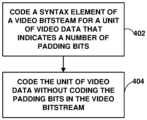
- a number of padding (stuffing) bytes that would be added by inserting cabac_zero_words can instead be signalled without actually sending the stuffing bits.
- the encoder or decoder is configured to process the picture as if the encoder has actually generated the extra number of bytes signalled in the video bitstream at the end of the picture, saving sending of cabac_zero words.
- the number of extra stuffed bytes or bits can be represented by a number that represents a number of bytes or a number of cabac_zerowords (0x0000) or number of bits.
- the value representing the number of data units can be represented by a fixed number of bits. For example, 32 bits or 16 bits.
- the syntax element can be represented by a variable number of bits using entropy coding (e.g., ue(v)) codes).
- the number assumed by the encoder for the number of stuffed bits or bytes can be either the number of bits represented by this value or the value plus the length of the number representing number of stuffing bytes or bits or any other representing number of bytes or bits e.g. group of bytes etc.
- syntax may include:
- slice_layer_rbsp( ) Descriptor slice_header( ) slice_data( ) rbsp_slice_trailing_bits( ) ⁇
- rbsp_slice_trailing_bits( ) Descriptor rbsp_trailing_bits( ) num_stuffing_bytes f(32) ⁇
- num_stuffing_bytes number of bytes stuffed.
- rbsp_trailing_bits process is as follows:
- rbsp_trailing_bits( ) Descriptor rbsp_stop_one_bit /* equal to 1 */ f(1) while( !byte_aligned( ) ) rbsp_alignment_zero_bit /* equal to 0 */ f(1) ⁇
- rbsp_trailing_bits( ) Descriptor rbsp_stop_one_bit /* equal to 1 */ f(1) num _ tuffing _ bytes _ flag f(1) while( !byte_aligned( ) ) rbsp_alignment_zero_bit /* equal to 0 */ f(1) ⁇
- num_stuffing_bytes_flag When set to 1, num_stuffing_bytes field is present.
- rbsp_slice_trailing_bits( ) Descriptor rbsp_trailing_bits( ) if( num_stuffing_bytes_flag ) num_stuffing_bytes f(32) ⁇
- a byte can precede the num_stuffing_units field indicating its presence and potentially the length of the num_stuffing_bytes field (The table below illustrates one embodiment using italic and strikethrough to show changes versus certain draft versions of VVC):
- rbsp_slice_trailing_bits( ) Descriptor rbsp_trailing_bits( ) stuffing_bytes_field_length f(8) if( stuffing_bytes_field_length ) num_stuffing_bytes f(v) ⁇
- stuffing_bytes_field_length Indicates number of bytes to represent num_stuffing_bytes. Zero values indicates that num_stuffing_bytes field is not present.
- access_unit_delimiter_rbsp( ) Descripto r pic_type u(3) num_stuffing_bytes_flag f(1) if( num_stuffing_bytes_flag ) num_stuffing_bytes f(32) rbsp_trailing_bits( ) ⁇
- BinCountsInNalUnits may be signalled in the access unit delimiter and may be signalled per picture at the beginning of the picture, or in access unit delimiter rbsp field.
- One example could be to indicate it as follows (The table below illustrates one embodiment using italic and strikethrough to show changes versus certain draft versions of VVC): access_unit_delimiter_rbsp( ) ⁇ Descripto r pic_type u(3) bin_count_presence_flag f(1) if( bin_count_presence_flag ) num_bin_in_nal_units f(32) rbsp_trailing_bits( ) ⁇ Or access_unit_delimiter_rbsp( ) ⁇ Descriptor pic_type u(3) num_bin_in_nal_units f(32) rbsp_trailing_bits( ) ⁇
- the CABAC engine in VVC is improved over the one used in AVC and HEVC, it makes sense to increase the bin-to-bit ratio limit.
- the ratio may be increased and specified as in one of the following examples:
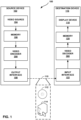
- system 100 includes a source device 102 that provides encoded video data to be decoded and displayed by a destination device 116, in this example.
- source device 102 provides the video data to destination device 116 via a computer-readable medium 110.
- Source device 102 and destination device 116 may comprise any of a wide range of devices, including desktop computers, notebook (i.e., laptop) computers, tablet computers, set-top boxes, telephone handsets such smartphones, televisions, cameras, display devices, digital media players, video gaming consoles, video streaming device, or the like.
- source device 102 and destination device 116 may be equipped for wireless communication, and thus may be referred to as wireless communication devices.
- source device 102 includes video source 104, memory 106, video encoder 200, and output interface 108.
- video encoder 200 of source device 102 and video decoder 300 of destination device 116 may be configured to apply the techniques for disclosed herein.
- source device 102 represents an example of a video encoding device
- destination device 116 represents an example of a video decoding device.
- a source device and a destination device may include other components or arrangements.
- source device 102 may receive video data from an external video source, such as an external camera.
- destination device 116 may interface with an external display device, rather than including an integrated display device.
- Video encoder 200 may rearrange the pictures from the received order (sometimes referred to as "display order") into a coding order for coding. Video encoder 200 may generate a bitstream including encoded video data. Source device 102 may then output the encoded video data via output interface 108 onto computer-readable medium 110 for reception and/or retrieval by, e.g., input interface 122 of destination device 116.
- source device 102 may output encoded data from output interface 108 to storage device 116.
- destination device 116 may access encoded data from storage device 116 via input interface 122.
- Storage device 116 may include any of a variety of distributed or locally accessed data storage media such as a hard drive, Blu-ray discs, DVDs, CD-ROMs, flash memory, volatile or non-volatile memory, or any other suitable digital storage media for storing encoded video data.
- This may include a wireless channel (e.g., a Wi-Fi connection), a wired connection (e.g., DSL, cable modem, etc.), or a combination of both that is suitable for accessing encoded video data stored on file server 114.
- File server 114 and input interface 122 may be configured to operate according to a streaming transmission protocol, a download transmission protocol, or a combination thereof.
- output interface 108 comprises a wireless transmitter
- output interface 108 and input interface 122 may be configured to transfer data, such as encoded video data, according to other wireless standards, such as an IEEE 802.11 specification, an IEEE 802.15 specification (e.g., ZigBee TM ), a Bluetooth TM standard, or the like.
- source device 102 and/or destination device 116 may include respective system-on-a-chip (SoC) devices.
- SoC system-on-a-chip
- source device 102 may include an SoC device to perform the functionality attributed to video encoder 200 and/or output interface 108
- destination device 116 may include an SoC device to perform the functionality attributed to video decoder 300 and/or input interface 122.
- Input interface 122 of destination device 116 receives an encoded video bitstream from computer-readable medium 110 (e.g., storage device 112, file server 114, or the like).
- the encoded video bitstream computer-readable medium 110 may include signaling information defined by video encoder 200, which is also used by video decoder 300, such as syntax elements having values that describe characteristics and/or processing of video blocks or other coded units (e.g., slices, pictures, groups of pictures, sequences, or the like).
- Display device 118 displays decoded pictures of the decoded video data to a user.
- video encoder 200 and video decoder 300 may each be integrated with an audio encoder and/or audio decoder, and may include appropriate MUX-DEMUX units, or other hardware and/or software, to handle multiplexed streams including both audio and video in a common data stream. If applicable, MUX-DEMUX units may conform to the ITU H.223 multiplexer protocol, or other protocols such as the user datagram protocol (UDP).
- MUX-DEMUX units may conform to the ITU H.223 multiplexer protocol, or other protocols such as the user datagram protocol (UDP).
- Video encoder 200 and video decoder 300 may operate according to a video coding standard, such as ITU-T H.265, also referred to as High Efficiency Video Coding (HEVC) or extensions thereto, such as the multi-view and/or scalable video coding extensions.
- video encoder 200 and video decoder 300 may operate according to other proprietary or industry standards, such as the Joint Exploration Test Model (JEM) or ITU-T H.266, also referred to as Versatile Video Coding (VVC).
- JEM Joint Exploration Test Model
- VVC Versatile Video Coding
- VVC Draft 3 “Versatile Video Coding (Draft 3)," Joint Video Experts Team (JVET) of ITU-T SG 16 WP 3 and ISO/IEC JTC 1/SC 29/WG 11, 12th Meeting: Macao, CN, 3-12 October 2018 , JVET-L1001-v9 (hereinafter "VVC Draft 3).
- VVC Draft 3 Joint Video Experts Team
- video encoder 200 and video decoder 300 may perform block-based coding of pictures.
- the term "block” generally refers to a structure including data to be processed (e.g., encoded, decoded, or otherwise used in the encoding and/or decoding process).
- a block may include a two-dimensional matrix of samples of luminance and/or chrominance data.
- video encoder 200 and video decoder 300 may code video data represented in a YUV (e.g., Y, Cb, Cr) format.
- YUV e.g., Y, Cb, Cr
- blocks may be partitioned using a quadtree (QT) partition, a binary tree (BT) partition, and one or more types of triple tree (TT) partitions.
- a triple tree partition is a partition where a block is split into three sub-blocks. In some examples, a triple tree partition divides a block into three sub-blocks without dividing the original block through the center.
- the partitioning types in MTT e.g., QT, BT, and TT
- Video encoder 200 and video decoder 300 may be configured to use quadtree partitioning per HEVC, QTBT partitioning, MTT partitioning, or other partitioning structures.
- quadtree partitioning per HEVC, QTBT partitioning, MTT partitioning, or other partitioning structures.
- the description of the techniques of this disclosure is presented with respect to QTBT partitioning.
- the techniques of this disclosure may also be applied to video coders configured to use quadtree partitioning, or other types of partitioning as well.
- JEM and VVC also provide an affine motion compensation mode, which may be considered an inter-prediction mode.
- affine motion compensation mode video encoder 200 may determine two or more motion vectors that represent non-translational motion, such as zoom in or out, rotation, perspective motion, or other irregular motion types.
- video encoder 200 may calculate residual data for the block.
- the residual data such as a residual block, represents sample by sample differences between the block and a prediction block for the block, formed using the corresponding prediction mode.
- Video encoder 200 may apply one or more transforms to the residual block, to produce transformed data in a transform domain instead of the sample domain.
- video encoder 200 may apply a discrete cosine transform (DCT), an integer transform, a wavelet transform, or a conceptually similar transform to residual video data.
- DCT discrete cosine transform
- an integer transform an integer transform
- wavelet transform or a conceptually similar transform
- Video encoder 200 may further generate syntax data, such as block-based syntax data, picture-based syntax data, and sequence-based syntax data, to video decoder 300, e.g., in a picture header, a block header, a slice header, or other syntax data, such as a sequence parameter set (SPS), picture parameter set (PPS), or video parameter set (VPS).
- Video decoder 300 may likewise decode such syntax data to determine how to decode corresponding video data.
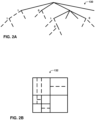
- the binary tree splitting of one node can be iterated until the nodes resulting from the split reach the minimum allowed binary tree leaf node size (MinBTSize) or the maximum allowed binary tree depth (MaxBTDepth).
- MinBTSize minimum allowed binary tree leaf node size
- MaxBTDepth maximum allowed binary tree depth
- the example of QTBT structure 130 represents such nodes as having dashed lines for branches.
- the binary tree leaf node is referred to as a coding unit (CU), which is used for prediction (e.g., intra-picture or inter-picture prediction) and transform, without any further partitioning.
- CUs may also be referred to as "video blocks" or "blocks.”
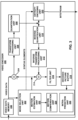
- FIG. 3 is a block diagram illustrating an example video encoder 200 that may perform the techniques of this disclosure.
- FIG. 3 is provided for purposes of explanation and should not be considered limiting of the techniques as broadly exemplified and described in this disclosure.
- this disclosure describes video encoder 200 in the context of video coding standards such as the HEVC video coding standard and the H.266 video coding standard in development.
- video coding standards such as the HEVC video coding standard and the H.266 video coding standard in development.
- the techniques of this disclosure are not limited to these video coding standards, and are applicable generally to video encoding and decoding.
- video encoder 200 includes video data memory 230, mode selection unit 202, residual generation unit 204, transform processing unit 206, quantization unit 208, inverse quantization unit 210, inverse transform processing unit 212, reconstruction unit 214, filter unit 216, decoded picture buffer (DPB) 218, and entropy encoding unit 220.
- Any or all of video data memory 230, mode selection unit 202, residual generation unit 204, transform processing unit 206, quantization unit 208, inverse quantization unit 210, inverse transform processing unit 212, reconstruction unit 214, filter unit 216, DPB 218, and entropy encoding unit 220 may be implemented in one or more processors or in processing circuitry.
- video encoder 200 may include additional or alternative processors or processing circuitry to perform these and other functions.
- reference to video data memory 230 should not be interpreted as being limited to memory internal to video encoder 200, unless specifically described as such, or memory external to video encoder 200, unless specifically described as such. Rather, reference to video data memory 230 should be understood as reference memory that stores video data that video encoder 200 receives for encoding (e.g., video data for a current block that is to be encoded). Memory 106 of FIG. 1 may also provide temporary storage of outputs from the various units of video encoder 200.
- the various units of FIG. 3 are illustrated to assist with understanding the operations performed by video encoder 200.
- the units may be implemented as fixed-function circuits, programmable circuits, or a combination thereof.
- Fixed-function circuits refer to circuits that provide particular functionality, and are preset on the operations that can be performed.
- Programmable circuits refer to circuits that can programmed to perform various tasks, and provide flexible functionality in the operations that can be performed.
- programmable circuits may execute software or firmware that cause the programmable circuits to operate in the manner defined by instructions of the software or firmware.
- Fixed-function circuits may execute software instructions (e.g., to receive parameters or output parameters), but the types of operations that the fixed-function circuits perform are generally immutable.
- the one or more of the units may be distinct circuit blocks (fixed-function or programmable), and in some examples, the one or more units may be integrated circuits.
- Mode selection unit 202 includes a motion estimation unit 222, motion compensation unit 224, and an intra-prediction unit 226. Mode selection unit 202 may include additional functional units to perform video prediction in accordance with other prediction modes. As examples, mode selection unit 202 may include a palette unit, an intra-block copy unit (which may be part of motion estimation unit 222 and/or motion compensation unit 224), an affine unit, a linear model (LM) unit, or the like.
- LM linear model
- Video encoder 200 may partition a picture retrieved from video data memory 230 into a series of CTUs, and encapsulate one or more CTUs within a slice.
- Mode selection unit 210 may partition a CTU of the picture in accordance with a tree structure, such as the QTBT structure or the quad-tree structure of HEVC described above.
- video encoder 200 may form one or more CUs from partitioning a CTU according to the tree structure.
- Such a CU may also be referred to generally as a "video block" or "block.”
- motion estimation unit 222 may calculate a value representative of how similar a potential reference block is to the current block, e.g., according to sum of absolute difference (SAD), sum of squared differences (SSD), mean absolute difference (MAD), mean squared differences (MSD), or the like. Motion estimation unit 222 may generally perform these calculations using sample-by-sample differences between the current block and the reference block being considered. Motion estimation unit 222 may identify a reference block having a lowest value resulting from these calculations, indicating a reference block that most closely matches the current block.
- SAD sum of absolute difference
- SSD sum of squared differences
- MAD mean absolute difference
- MSD mean squared differences
- Video encoder 200 may output a bitstream that includes the entropy encoded syntax elements needed to reconstruct blocks of a slice or picture.
- entropy encoding unit 220 may output the bitstream.
- Video encoder 200 represents an example of a device configured to encode video data including a memory configured to store video data, and one or more processing units implemented in circuitry and configured to encode a number of extra bits that are not signaled but which the encoder is configured to assume were signaled in order to satisfy the bin to bit ratio constraint.
- video decoder 300 includes coded picture buffer (CPB) memory 320, entropy decoding unit 302, prediction processing unit 304, inverse quantization unit 306, inverse transform processing unit 308, reconstruction unit 310, filter unit 312, and decoded picture buffer (DPB) 314.
- CPB memory 320, entropy decoding unit 302, prediction processing unit 304, inverse quantization unit 306, inverse transform processing unit 308, reconstruction unit 310, filter unit 312, and DPB 314 may be implemented in one or more processors or in processing circuitry.
- video decoder 300 may include additional or alternative processors or processing circuitry to perform these and other functions.
- CPB memory 320 may store video data, such as an encoded video bitstream, to be decoded by the components of video decoder 300.
- the video data stored in CPB memory 320 may be obtained, for example, from computer-readable medium 110 ( FIG. 1 ).
- CPB memory 320 may include a CPB that stores encoded video data (e.g., syntax elements) from an encoded video bitstream.
- CPB memory 320 may store video data other than syntax elements of a coded picture, such as temporary data representing outputs from the various units of video decoder 300.
- DPB 314 generally stores decoded pictures, which video decoder 300 may output and/or use as reference video data when decoding subsequent data or pictures of the encoded video bitstream.
- the various units shown in FIG. 4 are illustrated to assist with understanding the operations performed by video decoder 300.
- the units may be implemented as fixed-function circuits, programmable circuits, or a combination thereof. Similar to FIG. 3 , fixed-function circuits refer to circuits that provide particular functionality, and are preset on the operations that can be performed.
- Programmable circuits refer to circuits that can programmed to perform various tasks, and provide flexible functionality in the operations that can be performed. For instance, programmable circuits may execute software or firmware that cause the programmable circuits to operate in the manner defined by instructions of the software or firmware.
- Fixed-function circuits may execute software instructions (e.g., to receive parameters or output parameters), but the types of operations that the fixed-function circuits perform are generally immutable.
- the one or more of the units may be distinct circuit blocks (fixed-function or programmable), and in some examples, the one or more units may be integrated circuits.
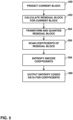
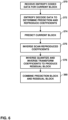
- video encoder 200 may entropy encode the coefficients (358). For example, video encoder 200 may encode the coefficients using CAVLC or CABAC. Video encoder 200 may then output the entropy coded data of the block (360).
- such computer-readable storage media can comprise RAM, ROM, EEPROM, CD-ROM or other optical disk storage, magnetic disk storage, or other magnetic storage devices, flash memory, or any other medium that can be used to store desired program code in the form of instructions or data structures and that can be accessed by a computer.
- any connection is properly termed a computer-readable medium.
- a computer-readable medium For example, if instructions are transmitted from a website, server, or other remote source using a coaxial cable, fiber optic cable, twisted pair, digital subscriber line (DSL), or wireless technologies such as infrared, radio, and microwave, then the coaxial cable, fiber optic cable, twisted pair, DSL, or wireless technologies such as infrared, radio, and microwave are included in the definition of medium.
- DSL digital subscriber line
Landscapes
- Engineering & Computer Science (AREA)
- Multimedia (AREA)
- Signal Processing (AREA)
- Compression Or Coding Systems Of Tv Signals (AREA)
Claims (15)
- Verfahren zum Encodieren von Videodaten, wobei das Verfahren Folgendes beinhaltet:Encodieren (402), in einen Videobitstrom, eines Syntaxelements für eine Einheit von Videodaten, das eine Anzahl von Füllbits angibt, wobei die Anzahl von Bits, mit denen das Syntaxelement in den Videobitstrom encodiert wird, sich von der durch das Syntaxelement angegebenen Anzahl von Füllbits unterscheidet; undEncodieren (404) der Videodateneinheit in den Videobitstrom, ohne die Füllbits in den Videobitstrom einzuschließen.
- Verfahren nach Anspruch 1, wobei das Syntaxelement mit einer festen Anzahl von Bits unabhängig vom Wert des Syntaxelements in den Videobitstrom encodiert wird.
- Verfahren nach Anspruch 1, wobei das Syntaxelement mit Entropiecodierung in den Videobitstrom encodiert wird.
- Verfahren nach Anspruch 1, wobei die Videodateneinheit ein Bild oder ein Slice ist.
- Verfahren nach Anspruch 4, das ferner das Berechnen eines Bin-zu-Bit-Verhältnisses für die Videodateneinheit auf der Basis einer Anzahl von Bits für die Videodateneinheit beinhaltet, die die Anzahl der genannten Füllbits enthält.
- Verfahren nach Anspruch 1, wobei das Encodieren des Syntaxelements das Encodieren des Syntaxelements in eine Videocodierschicht des Videobitstroms beinhaltet.
- Verfahren zum Decodieren von Videodaten, wobei das Verfahren Folgendes beinhaltet:Decodieren (402), aus einem Videobitstrom, eines Syntaxelements für eine Einheit von Videodaten, das eine Anzahl von Füllbits angibt, wobei die Anzahl von Bits, mit denen das Syntaxelement in den Videobitstrom encodiert ist, sich von der durch das Syntaxelement angegebenen Anzahl von Füllbits unterscheidet; undDecodieren (404) der Videodateneinheit aus dem Videobitstrom, ohne die Füllbits zu decodieren.
- Verfahren nach Anspruch 7, wobei das Syntaxelement mit einer festen Anzahl von Bits unabhängig vom Wert des Syntaxelements in den Videobitstrom encodiert wird.
- Verfahren nach Anspruch 7, wobei das Syntaxelement mit Entropiecodierung in den Videobitstrom encodiert wird.
- Verfahren nach Anspruch 7, wobei die Videodateneinheit ein Bild oder ein Slice ist.
- Verfahren nach Anspruch 7, wobei das Decodieren des Syntaxelements das Decodieren des Syntaxelements aus einer Videocodierschicht des Videobitstroms beinhaltet.
- Vorrichtung zum Encodieren von Videodaten, wobei die Vorrichtung Folgendes umfasst:einen Speicher, der zum Speichern einer mit einem Videobitstrom assoziierten Videodateneinheit konfiguriert ist; undeinen Videoprozessor, konfiguriert zum:Encodieren (402) eines Syntaxelements für eine Einheit von Videodaten, das eine Anzahl von Füllbits angibt, wobei die Anzahl von Bits, mit denen das Syntaxelement in den Videobitstrom encodiert wird, sich von der durch das Syntaxelement angegebenen Anzahl von Füllbits unterscheidet; undEncodieren (404) der Videodateneinheit in den Videobitstrom, ohne die Füllbits im Videobitstrom zu encodieren.
- Vorrichtung nach Anspruch 12, die ferner mindestens eines umfasst von:einer Kamera, die zum Aufnehmen eines die Videodaten enthaltenden Bildes konfiguriert ist; undeinem Sender, der zum Übertragen des Videodatenstroms konfiguriert ist.
- Vorrichtung zum Decodieren von Videodaten, wobei die Vorrichtung Folgendes umfasst:einen Speicher, der zum Speichern einer mit einem Videobitstrom assoziierten Videodateneinheit konfiguriert ist; undeinen Videoprozessor, konfiguriert zum:Decodieren (402) eines Syntaxelements des Videobitstroms für eine Einheit von Videodaten, das eine Anzahl von Füllbits angibt, wobei die Anzahl von Bits, mit denen das Syntaxelement in den Videobitstrom encodiert ist, sich von der durch das Syntaxelement angegebenen Anzahl von Füllbits unterscheidet; undDecodieren (404) der Videodateneinheit, ohne die Füllbits im Videobitstrom zu decodieren.
- Vorrichtung nach Anspruch 14, die ferner mindestens eines umfasst von:einem Display, das zum Anzeigen des die Videodaten enthaltenden Bildes konfiguriert ist; undeinen Empfänger, der zum Empfangen des Videobitstroms konfiguriert ist.
Applications Claiming Priority (3)
| Application Number | Priority Date | Filing Date | Title |
|---|---|---|---|
| US201962904549P | 2019-09-23 | 2019-09-23 | |
| US17/028,899 US11412263B2 (en) | 2019-09-23 | 2020-09-22 | Arithmetic coder byte stuffing signaling for video coding |
| PCT/US2020/052255 WO2021061799A1 (en) | 2019-09-23 | 2020-09-23 | Arithmetic coder byte stuffing signaling for video coding |
Publications (3)
| Publication Number | Publication Date |
|---|---|
| EP4035371A1 EP4035371A1 (de) | 2022-08-03 |
| EP4035371C0 EP4035371C0 (de) | 2025-04-16 |
| EP4035371B1 true EP4035371B1 (de) | 2025-04-16 |
Family
ID=74880224
Family Applications (1)
| Application Number | Title | Priority Date | Filing Date |
|---|---|---|---|
| EP20788941.1A Active EP4035371B1 (de) | 2019-09-23 | 2020-09-23 | Arithmetische codierbyte-stopfsignalisierung für videocodierung |
Country Status (4)
| Country | Link |
|---|---|
| US (1) | US11412263B2 (de) |
| EP (1) | EP4035371B1 (de) |
| CN (1) | CN114402602B (de) |
| WO (1) | WO2021061799A1 (de) |
Families Citing this family (3)
| Publication number | Priority date | Publication date | Assignee | Title |
|---|---|---|---|---|
| US11973955B2 (en) * | 2019-12-20 | 2024-04-30 | Fraunhofer-Gesellschaft zur Förderung der angewandten Forschung e.V. | Video coding in relation to subpictures |
| JP7582576B2 (ja) * | 2021-04-26 | 2024-11-13 | ホアウェイ・テクノロジーズ・カンパニー・リミテッド | 算術エンコーディング及びデコーディングにおける末尾ビットの操作 |
| CN118646900A (zh) * | 2023-03-13 | 2024-09-13 | 华为技术有限公司 | 编解码方法和装置 |
Family Cites Families (12)
| Publication number | Priority date | Publication date | Assignee | Title |
|---|---|---|---|---|
| US7366961B1 (en) * | 2000-01-24 | 2008-04-29 | Ati Technologies, Inc. | Method and system for handling errors |
| US6687384B1 (en) * | 2000-03-27 | 2004-02-03 | Sarnoff Corporation | Method and apparatus for embedding data in encoded digital bitstreams |
| PT3468045T (pt) * | 2002-09-20 | 2022-05-31 | Ntt Docomo Inc | Método e aparelho para codificação aritmética |
| WO2008156257A2 (en) * | 2007-06-18 | 2008-12-24 | Samsung Electronics Co., Ltd. | Method and apparatus for transporting mobile broadcasting service, and method and apparatus for receiving mobile broadcasting service |
| CN101394550B (zh) * | 2007-09-17 | 2010-08-11 | 华为技术有限公司 | 视频数据的打包方法及装置 |
| US9819968B2 (en) * | 2011-01-12 | 2017-11-14 | Texas Instruments Incorporated | Method and apparatus for error detection in CABAC |
| US20130272619A1 (en) * | 2012-04-13 | 2013-10-17 | Sharp Laboratories Of America, Inc. | Devices for identifying a leading picture |
| US9686542B2 (en) * | 2012-09-05 | 2017-06-20 | Qualcomm Incorporated | Network abstraction layer header design |
| JP6059572B2 (ja) * | 2013-03-22 | 2017-01-11 | 株式会社メガチップス | 画像処理装置 |
| US10924781B2 (en) * | 2014-06-27 | 2021-02-16 | Satellite Investors, Llc | Method and system for real-time transcoding of MPEG-DASH on-demand media segments while in transit from content host to dash client |
| EP3293981A1 (de) * | 2016-09-08 | 2018-03-14 | Koninklijke KPN N.V. | Verfahren, vorrichtung und system zur partiellen videodecodierung |
| FR3071997A1 (fr) * | 2017-10-02 | 2019-04-05 | Orange | Signalisation d’une requete d’adaptation d’une session de communication en voixsur ip |
-
2020
- 2020-09-22 US US17/028,899 patent/US11412263B2/en active Active
- 2020-09-23 EP EP20788941.1A patent/EP4035371B1/de active Active
- 2020-09-23 WO PCT/US2020/052255 patent/WO2021061799A1/en not_active Ceased
- 2020-09-23 CN CN202080064957.6A patent/CN114402602B/zh active Active
Also Published As
| Publication number | Publication date |
|---|---|
| US20210092454A1 (en) | 2021-03-25 |
| CN114402602A (zh) | 2022-04-26 |
| EP4035371C0 (de) | 2025-04-16 |
| WO2021061799A1 (en) | 2021-04-01 |
| US11412263B2 (en) | 2022-08-09 |
| EP4035371A1 (de) | 2022-08-03 |
| CN114402602B (zh) | 2025-05-06 |
Similar Documents
| Publication | Publication Date | Title |
|---|---|---|
| US11563980B2 (en) | General constraint information syntax in video coding | |
| US11310533B2 (en) | Quantization parameter signaling for joint chroma residual mode in video coding | |
| US20220109860A1 (en) | Joint-component neural network based filtering during video coding | |
| US20210235124A1 (en) | Decoded picture buffer (dpb) parameter signaling for video coding | |
| US11128876B2 (en) | Joint coefficient coding of transform skip and BDPCM mode for 4:4:4 color formats | |
| EP4082207B1 (de) | Intra-direktzugriffsbild eines bildheaders und schrittweise decoder-aufrischungssignalisierung in der videocodierung | |
| US11128866B2 (en) | Scans and last coefficient position coding for zero-out transforms | |
| KR20220024122A (ko) | 비디오 코딩에서 단순화된 인트라 크로마 모드 코딩 | |
| US20210195179A1 (en) | Picture header signaling for video coding | |
| US11632540B2 (en) | Reference picture scaling ratios for reference picture resampling in video coding | |
| EP3997878B1 (de) | Speicherbeschränkung zur anpassung von parametersätzen zur videocodierung | |
| EP3984233B1 (de) | Codierung von clipping-indizes für adaptive schleifenfilter in der videocodierung | |
| EP4035370A1 (de) | Rice-parameter-ableitung für verlustlose/verlustbehaftete codierungsmodi für videocodierung | |
| US11785205B2 (en) | Shared decoder picture buffer for multiple layers | |
| WO2021133979A1 (en) | Wraparound offsets for reference picture resampling in video coding | |
| KR20220073755A (ko) | 비디오 코딩을 위한 변환 스킵에서 잔차 값들을 위한 코딩 스킴 시그널링 | |
| WO2019246091A1 (en) | Coefficient coding with grouped bypass bins | |
| EP4035371B1 (de) | Arithmetische codierbyte-stopfsignalisierung für videocodierung | |
| US11563963B2 (en) | Determining whether to code picture header data of pictures of video data in slice headers | |
| EP3981154A1 (de) | Unterstützung der räumlichen skalierbarkeit in der videocodierung und -decodierung | |
| KR20220024041A (ko) | 변환 스킵 잔차 코딩에서의 이진화 | |
| WO2021061968A1 (en) | Parameter set signaling for video coding | |
| US11863787B2 (en) | Maximum allowed block size for BDPCM mode | |
| US20200213589A1 (en) | Buffer update of stored adaptive loop filter (alf) coefficients for random access coding in video coding |
Legal Events
| Date | Code | Title | Description |
|---|---|---|---|
| STAA | Information on the status of an ep patent application or granted ep patent |
Free format text: STATUS: UNKNOWN |
|
| STAA | Information on the status of an ep patent application or granted ep patent |
Free format text: STATUS: THE INTERNATIONAL PUBLICATION HAS BEEN MADE |
|
| PUAI | Public reference made under article 153(3) epc to a published international application that has entered the european phase |
Free format text: ORIGINAL CODE: 0009012 |
|
| STAA | Information on the status of an ep patent application or granted ep patent |
Free format text: STATUS: REQUEST FOR EXAMINATION WAS MADE |
|
| 17P | Request for examination filed |
Effective date: 20220321 |
|
| AK | Designated contracting states |
Kind code of ref document: A1 Designated state(s): AL AT BE BG CH CY CZ DE DK EE ES FI FR GB GR HR HU IE IS IT LI LT LU LV MC MK MT NL NO PL PT RO RS SE SI SK SM TR |
|
| DAV | Request for validation of the european patent (deleted) | ||
| DAX | Request for extension of the european patent (deleted) | ||
| GRAP | Despatch of communication of intention to grant a patent |
Free format text: ORIGINAL CODE: EPIDOSNIGR1 |
|
| STAA | Information on the status of an ep patent application or granted ep patent |
Free format text: STATUS: GRANT OF PATENT IS INTENDED |
|
| INTG | Intention to grant announced |
Effective date: 20241111 |
|
| GRAJ | Information related to disapproval of communication of intention to grant by the applicant or resumption of examination proceedings by the epo deleted |
Free format text: ORIGINAL CODE: EPIDOSDIGR1 |
|
| GRAS | Grant fee paid |
Free format text: ORIGINAL CODE: EPIDOSNIGR3 |
|
| GRAA | (expected) grant |
Free format text: ORIGINAL CODE: 0009210 |
|
| STAA | Information on the status of an ep patent application or granted ep patent |
Free format text: STATUS: THE PATENT HAS BEEN GRANTED |
|
| AK | Designated contracting states |
Kind code of ref document: B1 Designated state(s): AL AT BE BG CH CY CZ DE DK EE ES FI FR GB GR HR HU IE IS IT LI LT LU LV MC MK MT NL NO PL PT RO RS SE SI SK SM TR |
|
| INTG | Intention to grant announced |
Effective date: 20241111 |
|
| REG | Reference to a national code |
Ref country code: GB Ref legal event code: FG4D |
|
| REG | Reference to a national code |
Ref country code: CH Ref legal event code: EP Ref country code: DE Ref legal event code: R096 Ref document number: 602020049606 Country of ref document: DE |
|
| REG | Reference to a national code |
Ref country code: IE Ref legal event code: FG4D |
|
| U01 | Request for unitary effect filed |
Effective date: 20250505 |
|
| U07 | Unitary effect registered |
Designated state(s): AT BE BG DE DK EE FI FR IT LT LU LV MT NL PT RO SE SI Effective date: 20250512 |
|
| U20 | Renewal fee for the european patent with unitary effect paid |
Year of fee payment: 6 Effective date: 20250811 |
|
| PG25 | Lapsed in a contracting state [announced via postgrant information from national office to epo] |
Ref country code: ES Free format text: LAPSE BECAUSE OF FAILURE TO SUBMIT A TRANSLATION OF THE DESCRIPTION OR TO PAY THE FEE WITHIN THE PRESCRIBED TIME-LIMIT Effective date: 20250416 |
|
| PG25 | Lapsed in a contracting state [announced via postgrant information from national office to epo] |
Ref country code: NO Free format text: LAPSE BECAUSE OF FAILURE TO SUBMIT A TRANSLATION OF THE DESCRIPTION OR TO PAY THE FEE WITHIN THE PRESCRIBED TIME-LIMIT Effective date: 20250716 Ref country code: GR Free format text: LAPSE BECAUSE OF FAILURE TO SUBMIT A TRANSLATION OF THE DESCRIPTION OR TO PAY THE FEE WITHIN THE PRESCRIBED TIME-LIMIT Effective date: 20250717 |
|
| PG25 | Lapsed in a contracting state [announced via postgrant information from national office to epo] |
Ref country code: PL Free format text: LAPSE BECAUSE OF FAILURE TO SUBMIT A TRANSLATION OF THE DESCRIPTION OR TO PAY THE FEE WITHIN THE PRESCRIBED TIME-LIMIT Effective date: 20250416 |
|
| PGFP | Annual fee paid to national office [announced via postgrant information from national office to epo] |
Ref country code: GB Payment date: 20250814 Year of fee payment: 6 |
|
| PG25 | Lapsed in a contracting state [announced via postgrant information from national office to epo] |
Ref country code: HR Free format text: LAPSE BECAUSE OF FAILURE TO SUBMIT A TRANSLATION OF THE DESCRIPTION OR TO PAY THE FEE WITHIN THE PRESCRIBED TIME-LIMIT Effective date: 20250416 |
|
| PG25 | Lapsed in a contracting state [announced via postgrant information from national office to epo] |
Ref country code: RS Free format text: LAPSE BECAUSE OF FAILURE TO SUBMIT A TRANSLATION OF THE DESCRIPTION OR TO PAY THE FEE WITHIN THE PRESCRIBED TIME-LIMIT Effective date: 20250716 |
|
| PGFP | Annual fee paid to national office [announced via postgrant information from national office to epo] |
Ref country code: IE Payment date: 20250808 Year of fee payment: 6 |
|
| PG25 | Lapsed in a contracting state [announced via postgrant information from national office to epo] |
Ref country code: IS Free format text: LAPSE BECAUSE OF FAILURE TO SUBMIT A TRANSLATION OF THE DESCRIPTION OR TO PAY THE FEE WITHIN THE PRESCRIBED TIME-LIMIT Effective date: 20250816 |
|
| PG25 | Lapsed in a contracting state [announced via postgrant information from national office to epo] |
Ref country code: SM Free format text: LAPSE BECAUSE OF FAILURE TO SUBMIT A TRANSLATION OF THE DESCRIPTION OR TO PAY THE FEE WITHIN THE PRESCRIBED TIME-LIMIT Effective date: 20250416 |
|
| PG25 | Lapsed in a contracting state [announced via postgrant information from national office to epo] |
Ref country code: CZ Free format text: LAPSE BECAUSE OF FAILURE TO SUBMIT A TRANSLATION OF THE DESCRIPTION OR TO PAY THE FEE WITHIN THE PRESCRIBED TIME-LIMIT Effective date: 20250416 |
|
| PG25 | Lapsed in a contracting state [announced via postgrant information from national office to epo] |
Ref country code: SK Free format text: LAPSE BECAUSE OF FAILURE TO SUBMIT A TRANSLATION OF THE DESCRIPTION OR TO PAY THE FEE WITHIN THE PRESCRIBED TIME-LIMIT Effective date: 20250416 |
|
| PLBE | No opposition filed within time limit |
Free format text: ORIGINAL CODE: 0009261 |
|
| STAA | Information on the status of an ep patent application or granted ep patent |
Free format text: STATUS: NO OPPOSITION FILED WITHIN TIME LIMIT |
|
| REG | Reference to a national code |
Ref country code: CH Ref legal event code: L10 Free format text: ST27 STATUS EVENT CODE: U-0-0-L10-L00 (AS PROVIDED BY THE NATIONAL OFFICE) Effective date: 20260225 |
|
| 26N | No opposition filed |
Effective date: 20260119 |