EP4033734A2 - Verfahren und vorrichtung zur vermessung einer kommunikationsfrequenz zwischen benutzerkonten - Google Patents
Verfahren und vorrichtung zur vermessung einer kommunikationsfrequenz zwischen benutzerkonten Download PDFInfo
- Publication number
- EP4033734A2 EP4033734A2 EP22175399.9A EP22175399A EP4033734A2 EP 4033734 A2 EP4033734 A2 EP 4033734A2 EP 22175399 A EP22175399 A EP 22175399A EP 4033734 A2 EP4033734 A2 EP 4033734A2
- Authority
- EP
- European Patent Office
- Prior art keywords
- accounts
- intimacy
- account
- graph
- generating
- Prior art date
- Legal status (The legal status is an assumption and is not a legal conclusion. Google has not performed a legal analysis and makes no representation as to the accuracy of the status listed.)
- Withdrawn
Links
Images


Classifications
-
- H—ELECTRICITY
- H04—ELECTRIC COMMUNICATION TECHNIQUE
- H04L—TRANSMISSION OF DIGITAL INFORMATION, e.g. TELEGRAPHIC COMMUNICATION
- H04L51/00—User-to-user messaging in packet-switching networks, transmitted according to store-and-forward or real-time protocols, e.g. e-mail
- H04L51/04—Real-time or near real-time messaging, e.g. instant messaging [IM]
- H04L51/046—Interoperability with other network applications or services
-
- H—ELECTRICITY
- H04—ELECTRIC COMMUNICATION TECHNIQUE
- H04L—TRANSMISSION OF DIGITAL INFORMATION, e.g. TELEGRAPHIC COMMUNICATION
- H04L51/00—User-to-user messaging in packet-switching networks, transmitted according to store-and-forward or real-time protocols, e.g. e-mail
- H04L51/04—Real-time or near real-time messaging, e.g. instant messaging [IM]
-
- G—PHYSICS
- G06—COMPUTING OR CALCULATING; COUNTING
- G06Q—INFORMATION AND COMMUNICATION TECHNOLOGY [ICT] SPECIALLY ADAPTED FOR ADMINISTRATIVE, COMMERCIAL, FINANCIAL, MANAGERIAL OR SUPERVISORY PURPOSES; SYSTEMS OR METHODS SPECIALLY ADAPTED FOR ADMINISTRATIVE, COMMERCIAL, FINANCIAL, MANAGERIAL OR SUPERVISORY PURPOSES, NOT OTHERWISE PROVIDED FOR
- G06Q10/00—Administration; Management
- G06Q10/40—Business processes related to social networking or social networking services
-
- G—PHYSICS
- G06—COMPUTING OR CALCULATING; COUNTING
- G06F—ELECTRIC DIGITAL DATA PROCESSING
- G06F16/00—Information retrieval; Database structures therefor; File system structures therefor
- G06F16/20—Information retrieval; Database structures therefor; File system structures therefor of structured data, e.g. relational data
- G06F16/24—Querying
- G06F16/245—Query processing
- G06F16/2457—Query processing with adaptation to user needs
- G06F16/24578—Query processing with adaptation to user needs using ranking
-
- G—PHYSICS
- G06—COMPUTING OR CALCULATING; COUNTING
- G06F—ELECTRIC DIGITAL DATA PROCESSING
- G06F16/00—Information retrieval; Database structures therefor; File system structures therefor
- G06F16/20—Information retrieval; Database structures therefor; File system structures therefor of structured data, e.g. relational data
- G06F16/24—Querying
- G06F16/248—Presentation of query results
-
- G—PHYSICS
- G06—COMPUTING OR CALCULATING; COUNTING
- G06F—ELECTRIC DIGITAL DATA PROCESSING
- G06F16/00—Information retrieval; Database structures therefor; File system structures therefor
- G06F16/90—Details of database functions independent of the retrieved data types
- G06F16/901—Indexing; Data structures therefor; Storage structures
- G06F16/9024—Graphs; Linked lists
-
- G—PHYSICS
- G06—COMPUTING OR CALCULATING; COUNTING
- G06F—ELECTRIC DIGITAL DATA PROCESSING
- G06F16/00—Information retrieval; Database structures therefor; File system structures therefor
- G06F16/90—Details of database functions independent of the retrieved data types
- G06F16/95—Retrieval from the web
- G06F16/953—Querying, e.g. by the use of web search engines
- G06F16/9535—Search customisation based on user profiles and personalisation
-
- G—PHYSICS
- G06—COMPUTING OR CALCULATING; COUNTING
- G06F—ELECTRIC DIGITAL DATA PROCESSING
- G06F16/00—Information retrieval; Database structures therefor; File system structures therefor
- G06F16/90—Details of database functions independent of the retrieved data types
- G06F16/95—Retrieval from the web
- G06F16/953—Querying, e.g. by the use of web search engines
- G06F16/9538—Presentation of query results
-
- G—PHYSICS
- G06—COMPUTING OR CALCULATING; COUNTING
- G06F—ELECTRIC DIGITAL DATA PROCESSING
- G06F16/00—Information retrieval; Database structures therefor; File system structures therefor
- G06F16/90—Details of database functions independent of the retrieved data types
- G06F16/95—Retrieval from the web
- G06F16/957—Browsing optimisation, e.g. caching or content distillation
-
- G—PHYSICS
- G06—COMPUTING OR CALCULATING; COUNTING
- G06N—COMPUTING ARRANGEMENTS BASED ON SPECIFIC COMPUTATIONAL MODELS
- G06N3/00—Computing arrangements based on biological models
- G06N3/02—Neural networks
- G06N3/04—Architecture, e.g. interconnection topology
- G06N3/0464—Convolutional networks [CNN, ConvNet]
-
- G—PHYSICS
- G06—COMPUTING OR CALCULATING; COUNTING
- G06Q—INFORMATION AND COMMUNICATION TECHNOLOGY [ICT] SPECIALLY ADAPTED FOR ADMINISTRATIVE, COMMERCIAL, FINANCIAL, MANAGERIAL OR SUPERVISORY PURPOSES; SYSTEMS OR METHODS SPECIALLY ADAPTED FOR ADMINISTRATIVE, COMMERCIAL, FINANCIAL, MANAGERIAL OR SUPERVISORY PURPOSES, NOT OTHERWISE PROVIDED FOR
- G06Q50/00—Information and communication technology [ICT] specially adapted for implementation of business processes of specific business sectors, e.g. utilities or tourism
- G06Q50/10—Services
-
- H—ELECTRICITY
- H04—ELECTRIC COMMUNICATION TECHNIQUE
- H04L—TRANSMISSION OF DIGITAL INFORMATION, e.g. TELEGRAPHIC COMMUNICATION
- H04L51/00—User-to-user messaging in packet-switching networks, transmitted according to store-and-forward or real-time protocols, e.g. e-mail
- H04L51/07—User-to-user messaging in packet-switching networks, transmitted according to store-and-forward or real-time protocols, e.g. e-mail characterised by the inclusion of specific contents
- H04L51/18—Commands or executable codes
-
- H—ELECTRICITY
- H04—ELECTRIC COMMUNICATION TECHNIQUE
- H04L—TRANSMISSION OF DIGITAL INFORMATION, e.g. TELEGRAPHIC COMMUNICATION
- H04L51/00—User-to-user messaging in packet-switching networks, transmitted according to store-and-forward or real-time protocols, e.g. e-mail
- H04L51/21—Monitoring or handling of messages
- H04L51/216—Handling conversation history, e.g. grouping of messages in sessions or threads
-
- H—ELECTRICITY
- H04—ELECTRIC COMMUNICATION TECHNIQUE
- H04L—TRANSMISSION OF DIGITAL INFORMATION, e.g. TELEGRAPHIC COMMUNICATION
- H04L51/00—User-to-user messaging in packet-switching networks, transmitted according to store-and-forward or real-time protocols, e.g. e-mail
- H04L51/52—User-to-user messaging in packet-switching networks, transmitted according to store-and-forward or real-time protocols, e.g. e-mail for supporting social networking services
Definitions
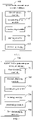
- step S202 a communication frequency between accounts in the set of accounts within a preset time period is obtained.
- steps S201-S202 in this embodiment are the same as steps S101-S102 in the foregoing embodiment, whose details are not repeated here.
- the total communication frequency of the account is calculated based on the communication frequency between the accounts obtained in step S202.
- step S204 an account having total communication frequency less than or equal to a preset communication frequency threshold is deleted from the set of accounts.
- step S205 a communication network graph is generated based on the communication frequency.
- step S208 a community to which each account belongs is determined with a community division algorithm based on the communication network graph.
- the intimacy level between the accounts is determined based on the intimacy between the accounts generated in step S207.
- the intimacy level between accounts may be determined according to an intimacy score corresponding to the intimacy between the accounts, and each intimacy level corresponds to a score range of the intimacy.
- the levels and score ranges are not limited in the disclosure.
- the intimacy levels can be divided as in Table 1 below. Table 1 Division of Intimacy Score and Intimacy Level Intimacy Score Intimacy Level [1,0.8] high (0.8,0.6] medium (0.6,0] low
- step S301 a first cosine similarity between the accounts is obtained based on the embedding vector output by the Node2Vec graph model.
- the first cosine similarity between the accounts (that is, the cosine value of the embeddings of the two accounts) is calculated according to the embedding vector of the account output by the Node2Vec graph model. It should be noted here that the first cosine similarity between the accounts can reflect the intimacy between the accounts. The larger the value of the first cosine similarity, the closer the embedding s of a pair of accounts, that is, the higher the intimacy between the accounts.
- step S302 a second cosine similarity between the accounts is obtained based on the embedding vector output by the graph attention model.
- step S303 the intimacy between the accounts is generated based on the first cosine similarity and the second cosine similarity.
- the intimacy between the accounts is generated based on the first cosine similarity calculated in step S301 and the second cosine similarity calculated in S302.
- the intimacy between the accounts may be obtained by linearly calculating the first cosine similarity and the second cosine similarity.
- the first cosine similarity is a
- the second cosine similarity is b
- the nonlinear transformation function (Sigmoid) is used as a weight adjustment module, namely sigmoid(c ⁇ a + d ⁇ b), to generate the intimacy between the accounts
- "generating an intimacy between the accounts based on the embedding vector" in the above step S207 may specifically include: generating the intimacy between the accounts based on the embedding vector of the account and the statistical characteristics of the account.
- the embedding vector of the account and the statistical characteristics of the account are integrated through the weight adjustment module to generate the intimacy between the accounts.
- the shortest reachable distance N is the reachable distance between two nodes in the communication network graph through at least N intermediate nodes.
- the shortest reachable path is the shortest path that communicates the nodes in the network graph. It is not difficult to understand that the above shortest reachable path corresponds to a node sequence.
- the betweenness centrality value is a node is located in the shortest paths of how many pairs of nodes in the whole graph. In the specific implementation, statistical characteristics such as the shortest reachable path, the shortest reachable distance, and the betweenness centrality value can be obtained from the communication network graph through the networkx toolkit. In the communication network diagram shown in FIG.
- the caller when the caller needs to obtain the intimacy of an account, it can obtain the stored intimacy, intimacy level, statistical characteristics, and community of the account from the database, and return them to the caller.
- the set of accounts in the IM group is obtained.
- the communication frequency between accounts in the set of accounts within the preset time period is obtained.
- the communication network graph is built based on the communication frequency.
- the embedding vector of each account output by the graph model is obtained, in which the graph model is trained based on the communication network graph.
- the intimacy between the accounts is generated based on the embedding vector.
- the communication network graph constructed according to the communication frequency between accounts is used to train the graph model, the account intimacy model can be independently generated without binding with a downstream business.
- the embodiment of the disclosure models the account intimacy relationship based on the graph neural network, which can effectively use the graph model to mine the association between the accounts, to capture the local characteristics and the global characteristics in the communication network graph, and improve the generation accuracy of intimacy between the accounts.
- the community to which the account belongs can be determined with the community division algorithm, and the social network analysis result of the account can be determined, which further improves the generation accuracy of the intimacy of the account.
- FIG. 5 is a schematic diagram of a scenario of a method for generating an account intimacy according to an embodiment of the disclosure.
- the method for generating an account intimacy according to the embodiment of the disclosure is divided into two stages: online service and offline model update.
- the online service stage when an account initiates a request for obtaining an intimacy, the server directly retrieves data related to the intimacy of account from the database, such as the intimacy between accounts related to the account, the intimacy level between accounts, the community to which the account belongs and statistical characteristics of the account, which are generated in the offline model update stage, returns the related data to the caller.
- the communication frequency between the accounts is adopted to construct the communication network graph, and calculate the statistical characteristics corresponding to the communication network graph, and train the Node2Vec graph model and the graph attention model according to the communication network graph, to obtain the embedding vectors output by the two models respectively.
- the embedding vectors and statistical characteristics output by the two models are input into the weight adjustment module to generate the intimacy between the accounts.
- the intimacy level between the accounts is determined based on the intimacy between the accounts, and the community division algorithm is adopted to determine the community to which the account belongs, and the data related to the intimacy of account, such as the intimacy between the accounts, the intimacy level between the accounts, the community to which the account belongs, and the statistical characteristics of the account, are stored in the database.
- FIG. 6 is a block diagram of an apparatus for generating an account intimacy according to Embodiment 1 of the disclosure.
- an apparatus 600 for generating an account intimacy includes: a first obtaining module 601, a second obtaining module 602, a constructing module 603, a training module 604 and a generating module 605.
- the first obtaining module 601 is configured to obtain a set of accounts in an instant messaging (IM) group.
- IM instant messaging
- the second obtaining module 602 is configured to obtain a communication frequency between accounts in the set of accounts within a preset time period.
- the constructing module 603 is configured to generate a communication network graph based on the communication frequency.
- the training module 604 is configured to obtain an embedding vector of each account output by a graph model, the graph model is trained based on the communication network graph.
- the generating module 605 is configured to generate an intimacy between the accounts based on the embedding vector.
- the set of accounts in the IM group is obtained.
- the communication frequency between accounts in the set of accounts within the preset time period is obtained.
- the communication network graph is built based on the communication frequency.
- the embedding vector of each account output by the graph model is obtained, in which the graph model is trained based on the communication network graph.
- the intimacy between the accounts is generated based on the embedding vector.
- the communication network graph constructed according to the communication frequency between accounts is used to train the graph model, the account intimacy model can be independently generated without binding with a downstream business.
- the embodiment of the disclosure models the account intimacy relationship based on the graph neural network, which can effectively use the graph model to mine the association between the accounts, to capture the local characteristics and the global characteristics in the communication network graph, and to improve the generation accuracy of intimacy between the accounts.
- FIG. 7 is a block diagram of an apparatus for generating an account intimacy according to Embodiment 2 of the disclosure.
- an apparatus 700 for generating an account intimacy includes: a second obtaining module 701, a second obtaining module 702, a constructing module 703, a training module 704 and a generating module 705.
- the first obtaining module 701 has the same structure and function as the first obtaining module 601 in the above embodiments.
- the second obtaining module 702 has the same structure and function as the second obtaining module 602 in the previous embodiments.
- the constructing module 703 has the same structure and function as the constructing module 603 in the previous embodiments.
- the training module 704 has the same structure and function as the training module 604 in the previous embodiments.
- the generating module 705 has the same structure and function as the generating module 605 in the previous embodiments.
- the apparatus 700 for generating an account intimacy further includes: a counting module and a deleting module.
- the counting module is configured to determine a total communication frequency of an account based on communication frequencies between the accounts.
- the deleting module is configured to delete an account having a total communication frequency less than or equal to a preset communication frequency threshold from the set of accounts.
- the graph model includes at least one of a Node2Vec graph model and a graph attention model
- the generating module 705 includes: a first counting unit, a second counting unit and a first generating unit.
- the first counting unit is configured to obtain a first cosine similarity between the accounts based on the embedding vector output by the Node2Vec graph model.
- the second counting unit is configured to obtain a second cosine similarity between the accounts based on the embedding vector output by the graph attention model.
- the first generating unit is configured to generate the intimacy between the accounts based on the first cosine similarity and the second cosine similarity.
- the generating module 705 further includes: a second generating unit, configured to generate the intimacy between the accounts based on the embedding vector and statistical characteristics of accounts.
- the statistical characteristics includes one or more of: the communication frequency, a shortest reachable distance, a shortest reachable path, a betweenness centrality value, and a time difference between the last communication time and current time.
- the apparatus 700 for generating an account intimacy further includes: a first determining module 706, configured to determine a community to which each account belongs with a community division algorithm based on the communication network graph.
- the apparatus 700 for generating an account intimacy further includes: a second determining module, configured to determine an intimacy level based on the intimacy between the accounts.
- the embodiment of the disclosure models the account intimacy relationship based on the graph neural network, which can effectively use the graph model to mine the association between the accounts, to capture the local characteristics and the global characteristics in the communication network graph, and to improve the generation accuracy of intimacy between the accounts.
- the community to which the account belongs can be determined with the community division algorithm, and the social network analysis result of the account can be determined, which further improves the generation accuracy of the intimacy between the accounts.
- the disclosure also provides an electronic device, a readable storage medium and a computer program product.
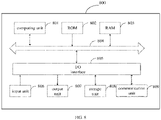
- FIG. 8 is a block diagram of an electronic device 800 according to embodiments of the disclosure.
- Electronic devices are intended to represent various forms of digital computers, such as laptop computers, desktop computers, workbenches, personal digital assistants, servers, blade servers, mainframe computers, and other suitable computers.
- Electronic devices may also represent various forms of mobile devices, such as personal digital processing, cellular phones, smart phones, wearable devices, and other similar computing devices.
- the components shown here, their connections and relations, and their functions are merely examples, and are not intended to limit the implementation of the disclosure described and/or required herein.
- the device 800 includes a computing unit 801 performing various appropriate actions and processes based on computer programs stored in a read-only memory (ROM) 802 or computer programs loaded from the storage unit 808 to a random access memory (RAM) 803.
- ROM read-only memory
- RAM random access memory
- various programs and data required for the operation of the device 800 are stored.
- the computing unit 801, the ROM 802, and the RAM 803 are connected to each other through a bus 804.
- An input/output (I/O) interface 805 is also connected to the bus 804.
- Components in the device 800 are connected to the I/O interface 805, including: an inputting unit 806, such as a keyboard, a mouse; an outputting unit 807, such as various types of displays, speakers; a storage unit 808, such as a disk, an optical disk; and a communication unit 809, such as network cards, modems, wireless communication transceivers, and the like.
- the communication unit 809 allows the device 800 to exchange information/data with other devices through a computer network such as the Internet and/or various telecommunication networks.
- the computing unit 801 may be various general-purpose and/or dedicated processing components with processing and computing capabilities. Some examples of computing unit 801 include, but are not limited to, a central processing unit (CPU), a graphics processing unit (GPU), various dedicated AI computing chips, various computing units that run machine learning model algorithms, and a digital signal processor (DSP), and any appropriate processor, controller and microcontroller.
- the computing unit 801 executes the various methods and processes described above, such as the method for generating an account intimacy.
- the method may be implemented as a computer software program, which is tangibly contained in a machine-readable medium, such as the storage unit 808.
- part or all of the computer program may be loaded and/or installed on the device 800 via the ROM 802 and/or the communication unit 809.
- the computer program When the computer program is loaded on the RAM 803 and executed by the computing unit 801, one or more steps of the method described above may be executed.
- the computing unit 801 may be configured to perform the method for generating an account intimacy in any other suitable manner (for example, by means of firmware).
- Various implementations of the systems and techniques described above may be implemented by a digital electronic circuit system, an integrated circuit system, Field Programmable Gate Arrays (FPGAs), Application Specific Integrated Circuits (ASICs), Application Specific Standard Products (ASSPs), System on Chip (SOCs), Load programmable logic devices (CPLDs), computer hardware, firmware, software, and/or a combination thereof.
- FPGAs Field Programmable Gate Arrays
- ASICs Application Specific Integrated Circuits
- ASSPs Application Specific Standard Products
- SOCs System on Chip
- CPLDs Load programmable logic devices
- programmable system including at least one programmable processor, which may be a dedicated or general programmable processor for receiving data and instructions from the storage system, at least one input device and at least one output device, and transmitting the data and instructions to the storage system, the at least one input device and the at least one output device.
- programmable processor which may be a dedicated or general programmable processor for receiving data and instructions from the storage system, at least one input device and at least one output device, and transmitting the data and instructions to the storage system, the at least one input device and the at least one output device.
- a machine-readable medium may be a tangible medium that may contain or store a program for use by or in connection with an instruction execution system, apparatus, or device.
- the machine-readable medium may be a machine-readable signal medium or a machine-readable storage medium.
- a machine-readable medium may include, but is not limited to, an electronic, magnetic, optical, electromagnetic, infrared, or semiconductor system, apparatus, or device, or any suitable combination of the foregoing.
- machine-readable storage media include electrical connections based on one or more wires, portable computer disks, hard disks, random access memories (RAM), read-only memories (ROM), electrically programmable read-only-memory (EPROM), flash memory, fiber optics, compact disc read-only memories (CD-ROM), optical storage devices, magnetic storage devices, or any suitable combination of the foregoing.
- RAM random access memories
- ROM read-only memories
- EPROM electrically programmable read-only-memory
- flash memory fiber optics
- CD-ROM compact disc read-only memories
- optical storage devices magnetic storage devices, or any suitable combination of the foregoing.
- the disclosure also provides a computer program product including computer programs.
- the computer programs are executed by a processor, the method for generating an account intimacy according to the foregoing embodiments of the disclosure is implemented.
Landscapes
- Engineering & Computer Science (AREA)
- Theoretical Computer Science (AREA)
- Databases & Information Systems (AREA)
- Physics & Mathematics (AREA)
- General Physics & Mathematics (AREA)
- General Engineering & Computer Science (AREA)
- Data Mining & Analysis (AREA)
- Business, Economics & Management (AREA)
- Computer Networks & Wireless Communication (AREA)
- Signal Processing (AREA)
- Computational Linguistics (AREA)
- Tourism & Hospitality (AREA)
- Software Systems (AREA)
- General Health & Medical Sciences (AREA)
- Health & Medical Sciences (AREA)
- Human Resources & Organizations (AREA)
- General Business, Economics & Management (AREA)
- Strategic Management (AREA)
- Marketing (AREA)
- Economics (AREA)
- Computing Systems (AREA)
- Biophysics (AREA)
- Artificial Intelligence (AREA)
- Biomedical Technology (AREA)
- Life Sciences & Earth Sciences (AREA)
- Evolutionary Computation (AREA)
- Molecular Biology (AREA)
- Primary Health Care (AREA)
- Mathematical Physics (AREA)
- Entrepreneurship & Innovation (AREA)
- Operations Research (AREA)
- Quality & Reliability (AREA)
- Information Retrieval, Db Structures And Fs Structures Therefor (AREA)
- Management, Administration, Business Operations System, And Electronic Commerce (AREA)
Applications Claiming Priority (1)
| Application Number | Priority Date | Filing Date | Title |
|---|---|---|---|
| CN202110738468.0A CN113572679B (zh) | 2021-06-30 | 2021-06-30 | 账户亲密度的生成方法、装置、电子设备和存储介质 |
Publications (2)
| Publication Number | Publication Date |
|---|---|
| EP4033734A2 true EP4033734A2 (de) | 2022-07-27 |
| EP4033734A3 EP4033734A3 (de) | 2022-12-14 |
Family
ID=78163208
Family Applications (1)
| Application Number | Title | Priority Date | Filing Date |
|---|---|---|---|
| EP22175399.9A Withdrawn EP4033734A3 (de) | 2021-06-30 | 2022-05-25 | Verfahren und vorrichtung zur erzeugung von kontointimität |
Country Status (5)
| Country | Link |
|---|---|
| US (1) | US20220286416A1 (de) |
| EP (1) | EP4033734A3 (de) |
| JP (1) | JP7413438B2 (de) |
| KR (1) | KR20220070177A (de) |
| CN (1) | CN113572679B (de) |
Families Citing this family (2)
| Publication number | Priority date | Publication date | Assignee | Title |
|---|---|---|---|---|
| US12259926B2 (en) | 2023-04-20 | 2025-03-25 | Discover Financial Services | Computer systems and methods for building and analyzing data graphs |
| CN117056810B (zh) * | 2023-08-16 | 2025-12-30 | 中国工商银行股份有限公司 | 群体分类方法及装置 |
Family Cites Families (24)
| Publication number | Priority date | Publication date | Assignee | Title |
|---|---|---|---|---|
| KR100835375B1 (ko) * | 2007-02-08 | 2008-06-04 | 삼성전자주식회사 | 휴대 단말기의 인간관계 중심 사용자 인터페이스 구성 방법 |
| JP2013003635A (ja) * | 2011-06-13 | 2013-01-07 | Sony Corp | 情報処理装置、情報処理方法及びプログラム |
| JP6145614B2 (ja) * | 2012-09-27 | 2017-06-14 | 株式会社コナミデジタルエンタテインメント | 端末装置、メッセージ表示システム、端末装置の制御方法およびプログラム |
| CN103559407B (zh) * | 2013-11-14 | 2016-08-31 | 北京航空航天大学深圳研究院 | 一种用于度量有向加权图中节点亲密度的推荐系统及方法 |
| US10127300B2 (en) * | 2013-12-23 | 2018-11-13 | International Business Machines Corporation | Mapping relationships using electronic communications data |
| CN105335438A (zh) * | 2014-08-11 | 2016-02-17 | 天津科技大学 | 一种基于局部最短回路的社会网络群体划分方法 |
| US10002292B2 (en) * | 2015-09-30 | 2018-06-19 | Microsoft Technology Licensing, Llc | Organizational logo enrichment |
| CN109660582B (zh) * | 2017-10-09 | 2021-05-11 | 腾讯科技(深圳)有限公司 | 帐号信号的推送方法、装置、存储介质和电子设备 |
| CN109218169B (zh) * | 2018-10-12 | 2020-12-22 | 广州酷狗计算机科技有限公司 | 即时通讯方法、装置及存储介质 |
| CN109933666B (zh) * | 2019-03-18 | 2022-12-30 | 西安电子科技大学 | 一种好友自动分类方法、装置、计算机设备和存储介质 |
| CN110097125B (zh) * | 2019-05-07 | 2022-10-14 | 郑州轻工业学院 | 一种基于嵌入表示的跨网络账户关联方法 |
| CN110515986B (zh) * | 2019-08-27 | 2023-01-06 | 腾讯科技(深圳)有限公司 | 一种社交网络图的处理方法、装置及存储介质 |
| CN111192153B (zh) * | 2019-12-19 | 2023-08-29 | 浙江大搜车软件技术有限公司 | 人群关系网络构建方法、装置、计算机设备和存储介质 |
| CN111222049B (zh) * | 2020-01-08 | 2021-10-01 | 东北大学 | 语义增强的异构信息网络上Top-k相似度搜索方法 |
| US11521516B2 (en) * | 2020-05-15 | 2022-12-06 | Capital One Services, Llc | Nuance-based augmentation of sign language communication |
| CN111651671B (zh) * | 2020-05-27 | 2023-11-21 | 腾讯科技(深圳)有限公司 | 用户对象推荐方法、装置、计算机设备和存储介质 |
| CN111930957A (zh) * | 2020-06-28 | 2020-11-13 | 国家计算机网络与信息安全管理中心 | 实体间亲密度的分析方法、装置、电子设备以及存储介质 |
| CN111882446B (zh) * | 2020-07-28 | 2023-05-16 | 哈尔滨工业大学(威海) | 一种基于图卷积网络的异常账户检测方法 |
| CN112087371B (zh) * | 2020-09-10 | 2022-11-18 | 北京百度网讯科技有限公司 | 一种即时通讯群组的搜索方法、装置、设备和存储介质 |
| CN112132606B (zh) * | 2020-09-10 | 2023-01-13 | 上海风秩科技有限公司 | 一种基于图注意力算法的动态调价方法及系统 |
| CN112468523B (zh) * | 2021-02-02 | 2021-07-06 | 北京明略昭辉科技有限公司 | 异常流量检测方法、装置、设备及存储介质 |
| US20220284340A1 (en) * | 2021-03-02 | 2022-09-08 | Adobe Inc. | Determining digital personas utilizing data-driven analytics |
| US20220351142A1 (en) * | 2021-04-30 | 2022-11-03 | Slack Technologies, Inc. | Group-based communication platform interaction graphing |
| US11647240B2 (en) * | 2021-07-19 | 2023-05-09 | Raters Group Ltd. | Apparatus for outputting content |
-
2021
- 2021-06-30 CN CN202110738468.0A patent/CN113572679B/zh active Active
-
2022
- 2022-05-11 KR KR1020220057832A patent/KR20220070177A/ko not_active Withdrawn
- 2022-05-12 JP JP2022078878A patent/JP7413438B2/ja active Active
- 2022-05-25 US US17/824,570 patent/US20220286416A1/en not_active Abandoned
- 2022-05-25 EP EP22175399.9A patent/EP4033734A3/de not_active Withdrawn
Also Published As
| Publication number | Publication date |
|---|---|
| EP4033734A3 (de) | 2022-12-14 |
| CN113572679A (zh) | 2021-10-29 |
| US20220286416A1 (en) | 2022-09-08 |
| KR20220070177A (ko) | 2022-05-30 |
| JP2022106992A (ja) | 2022-07-20 |
| JP7413438B2 (ja) | 2024-01-15 |
| CN113572679B (zh) | 2023-04-07 |
Similar Documents
| Publication | Publication Date | Title |
|---|---|---|
| US20230089268A1 (en) | Semantic understanding method, electronic device, and storage medium | |
| EP4123474A1 (de) | Verfahren zum erfassen eines strukturierten frage-antwort-modells, frage-antwort-verfahren und entsprechende vorrichtung | |
| JP2023017921A (ja) | コンテンツ推薦とソートモデルトレーニング方法、装置、機器、記憶媒体及びコンピュータプログラム | |
| EP3958145A1 (de) | Verfahren und gerät zur semantischen abfrage, vorrichtung und speichermedium | |
| WO2023065859A1 (zh) | 物品推荐方法、装置及存储介质 | |
| CN115309877A (zh) | 对话生成方法、对话模型训练方法及装置 | |
| CN113987154B (zh) | 基于UniLM与对比学习的相似句生成模型训练方法及相关设备 | |
| JP2022169743A (ja) | 情報抽出方法、装置、電子機器及び記憶媒体 | |
| JP2025036308A (ja) | ヒューマンマシンインタラクション方法、装置、電子デバイス及び記憶媒体 | |
| JP2022173453A (ja) | ディープラーニングモデルのトレーニング方法、自然言語処理方法及び装置、電子機器、記憶媒体及びコンピュータプログラム | |
| EP4131083A2 (de) | Verfahren und gerät zur erzeugung eines föderalen lernmodells | |
| CN115329876A (zh) | 一种设备故障处理方法、装置、计算机设备及存储介质 | |
| CN117555897A (zh) | 基于大模型的数据查询方法、装置、设备和存储介质 | |
| EP3992814A2 (de) | Verfahren und vorrichtung zum erstellen von benutzerinteressensprofilen, elektronisches gerät und speichermedium | |
| CN116561288A (zh) | 事件查询方法、装置、计算机设备、存储介质及程序产品 | |
| US20220286416A1 (en) | Method and apparatus for generating account intimacy | |
| US20250217376A1 (en) | Method and apparatus for intent recognition based on a large language model (llm), electronic device, and storage medium | |
| CN114490969A (zh) | 基于表格的问答方法、装置以及电子设备 | |
| US20250307570A1 (en) | Method of performing task based on large model and electronic device | |
| CN111008213A (zh) | 用于生成语言转换模型的方法和装置 | |
| CN116684330A (zh) | 基于人工智能的流量预测方法、装置、设备及存储介质 | |
| CN114490965B (zh) | 问题处理方法、装置、电子设备和存储介质 | |
| CN120561240A (zh) | 一种基于检索增强生成智能体与外挂推理引擎协同机制的问答系统和方法 | |
| CN118363977A (zh) | 结构化查询语言语句生成方法、装置、设备及存储介质 | |
| CN114756691A (zh) | 结构图生成方法、模型的训练方法、图谱生成方法及装置 |
Legal Events
| Date | Code | Title | Description |
|---|---|---|---|
| PUAI | Public reference made under article 153(3) epc to a published international application that has entered the european phase |
Free format text: ORIGINAL CODE: 0009012 |
|
| STAA | Information on the status of an ep patent application or granted ep patent |
Free format text: STATUS: THE APPLICATION HAS BEEN PUBLISHED |
|
| AK | Designated contracting states |
Kind code of ref document: A2 Designated state(s): AL AT BE BG CH CY CZ DE DK EE ES FI FR GB GR HR HU IE IS IT LI LT LU LV MC MK MT NL NO PL PT RO RS SE SI SK SM TR |
|
| PUAL | Search report despatched |
Free format text: ORIGINAL CODE: 0009013 |
|
| AK | Designated contracting states |
Kind code of ref document: A3 Designated state(s): AL AT BE BG CH CY CZ DE DK EE ES FI FR GB GR HR HU IE IS IT LI LT LU LV MC MK MT NL NO PL PT RO RS SE SI SK SM TR |
|
| RIC1 | Information provided on ipc code assigned before grant |
Ipc: H04L 51/52 20220101ALN20221110BHEP Ipc: H04L 51/18 20220101ALI20221110BHEP Ipc: H04L 51/216 20220101ALI20221110BHEP Ipc: H04L 51/04 20220101AFI20221110BHEP |
|
| STAA | Information on the status of an ep patent application or granted ep patent |
Free format text: STATUS: THE APPLICATION IS DEEMED TO BE WITHDRAWN |
|
| 18D | Application deemed to be withdrawn |
Effective date: 20230615 |