EP4033598B1 - Battery module, battery pack, and apparatus using secondary battery - Google Patents
Battery module, battery pack, and apparatus using secondary battery Download PDFInfo
- Publication number
- EP4033598B1 EP4033598B1 EP20929221.8A EP20929221A EP4033598B1 EP 4033598 B1 EP4033598 B1 EP 4033598B1 EP 20929221 A EP20929221 A EP 20929221A EP 4033598 B1 EP4033598 B1 EP 4033598B1
- Authority
- EP
- European Patent Office
- Prior art keywords
- busbar
- battery
- disposed
- along
- battery module
- Prior art date
- Legal status (The legal status is an assumption and is not a legal conclusion. Google has not performed a legal analysis and makes no representation as to the accuracy of the status listed.)
- Active
Links
Images




Classifications
-
- H—ELECTRICITY
- H01—ELECTRIC ELEMENTS
- H01M—PROCESSES OR MEANS, e.g. BATTERIES, FOR THE DIRECT CONVERSION OF CHEMICAL ENERGY INTO ELECTRICAL ENERGY
- H01M50/00—Constructional details or processes of manufacture of the non-active parts of electrochemical cells other than fuel cells, e.g. hybrid cells
- H01M50/20—Mountings; Secondary casings or frames; Racks, modules or packs; Suspension devices; Shock absorbers; Transport or carrying devices; Holders
- H01M50/204—Racks, modules or packs for multiple batteries or multiple cells
- H01M50/207—Racks, modules or packs for multiple batteries or multiple cells characterised by their shape
- H01M50/209—Racks, modules or packs for multiple batteries or multiple cells characterised by their shape adapted for prismatic or rectangular cells
-
- H—ELECTRICITY
- H01—ELECTRIC ELEMENTS
- H01M—PROCESSES OR MEANS, e.g. BATTERIES, FOR THE DIRECT CONVERSION OF CHEMICAL ENERGY INTO ELECTRICAL ENERGY
- H01M50/00—Constructional details or processes of manufacture of the non-active parts of electrochemical cells other than fuel cells, e.g. hybrid cells
- H01M50/50—Current conducting connections for cells or batteries
- H01M50/502—Interconnectors for connecting terminals of adjacent batteries; Interconnectors for connecting cells outside a battery casing
- H01M50/503—Interconnectors for connecting terminals of adjacent batteries; Interconnectors for connecting cells outside a battery casing characterised by the shape of the interconnectors
-
- H—ELECTRICITY
- H01—ELECTRIC ELEMENTS
- H01M—PROCESSES OR MEANS, e.g. BATTERIES, FOR THE DIRECT CONVERSION OF CHEMICAL ENERGY INTO ELECTRICAL ENERGY
- H01M50/00—Constructional details or processes of manufacture of the non-active parts of electrochemical cells other than fuel cells, e.g. hybrid cells
- H01M50/50—Current conducting connections for cells or batteries
- H01M50/572—Means for preventing undesired use or discharge
-
- H—ELECTRICITY
- H01—ELECTRIC ELEMENTS
- H01M—PROCESSES OR MEANS, e.g. BATTERIES, FOR THE DIRECT CONVERSION OF CHEMICAL ENERGY INTO ELECTRICAL ENERGY
- H01M50/00—Constructional details or processes of manufacture of the non-active parts of electrochemical cells other than fuel cells, e.g. hybrid cells
- H01M50/20—Mountings; Secondary casings or frames; Racks, modules or packs; Suspension devices; Shock absorbers; Transport or carrying devices; Holders
- H01M50/233—Mountings; Secondary casings or frames; Racks, modules or packs; Suspension devices; Shock absorbers; Transport or carrying devices; Holders characterised by physical properties of casings or racks, e.g. dimensions
- H01M50/242—Mountings; Secondary casings or frames; Racks, modules or packs; Suspension devices; Shock absorbers; Transport or carrying devices; Holders characterised by physical properties of casings or racks, e.g. dimensions adapted for protecting batteries against vibrations, collision impact or swelling
-
- H—ELECTRICITY
- H01—ELECTRIC ELEMENTS
- H01M—PROCESSES OR MEANS, e.g. BATTERIES, FOR THE DIRECT CONVERSION OF CHEMICAL ENERGY INTO ELECTRICAL ENERGY
- H01M50/00—Constructional details or processes of manufacture of the non-active parts of electrochemical cells other than fuel cells, e.g. hybrid cells
- H01M50/20—Mountings; Secondary casings or frames; Racks, modules or packs; Suspension devices; Shock absorbers; Transport or carrying devices; Holders
- H01M50/249—Mountings; Secondary casings or frames; Racks, modules or packs; Suspension devices; Shock absorbers; Transport or carrying devices; Holders specially adapted for aircraft or vehicles, e.g. cars or trains
-
- H—ELECTRICITY
- H01—ELECTRIC ELEMENTS
- H01M—PROCESSES OR MEANS, e.g. BATTERIES, FOR THE DIRECT CONVERSION OF CHEMICAL ENERGY INTO ELECTRICAL ENERGY
- H01M50/00—Constructional details or processes of manufacture of the non-active parts of electrochemical cells other than fuel cells, e.g. hybrid cells
- H01M50/30—Arrangements for facilitating escape of gases
-
- H—ELECTRICITY
- H01—ELECTRIC ELEMENTS
- H01M—PROCESSES OR MEANS, e.g. BATTERIES, FOR THE DIRECT CONVERSION OF CHEMICAL ENERGY INTO ELECTRICAL ENERGY
- H01M50/00—Constructional details or processes of manufacture of the non-active parts of electrochemical cells other than fuel cells, e.g. hybrid cells
- H01M50/30—Arrangements for facilitating escape of gases
- H01M50/35—Gas exhaust passages comprising elongated, tortuous or labyrinth-shaped exhaust passages
- H01M50/367—Internal gas exhaust passages forming part of the battery cover or case; Double cover vent systems
-
- H—ELECTRICITY
- H01—ELECTRIC ELEMENTS
- H01M—PROCESSES OR MEANS, e.g. BATTERIES, FOR THE DIRECT CONVERSION OF CHEMICAL ENERGY INTO ELECTRICAL ENERGY
- H01M50/00—Constructional details or processes of manufacture of the non-active parts of electrochemical cells other than fuel cells, e.g. hybrid cells
- H01M50/50—Current conducting connections for cells or batteries
- H01M50/502—Interconnectors for connecting terminals of adjacent batteries; Interconnectors for connecting cells outside a battery casing
- H01M50/505—Interconnectors for connecting terminals of adjacent batteries; Interconnectors for connecting cells outside a battery casing comprising a single busbar
-
- H—ELECTRICITY
- H01—ELECTRIC ELEMENTS
- H01M—PROCESSES OR MEANS, e.g. BATTERIES, FOR THE DIRECT CONVERSION OF CHEMICAL ENERGY INTO ELECTRICAL ENERGY
- H01M50/00—Constructional details or processes of manufacture of the non-active parts of electrochemical cells other than fuel cells, e.g. hybrid cells
- H01M50/50—Current conducting connections for cells or batteries
- H01M50/528—Fixed electrical connections, i.e. not intended for disconnection
-
- H—ELECTRICITY
- H01—ELECTRIC ELEMENTS
- H01M—PROCESSES OR MEANS, e.g. BATTERIES, FOR THE DIRECT CONVERSION OF CHEMICAL ENERGY INTO ELECTRICAL ENERGY
- H01M50/00—Constructional details or processes of manufacture of the non-active parts of electrochemical cells other than fuel cells, e.g. hybrid cells
- H01M50/50—Current conducting connections for cells or batteries
- H01M50/543—Terminals
-
- H—ELECTRICITY
- H01—ELECTRIC ELEMENTS
- H01M—PROCESSES OR MEANS, e.g. BATTERIES, FOR THE DIRECT CONVERSION OF CHEMICAL ENERGY INTO ELECTRICAL ENERGY
- H01M50/00—Constructional details or processes of manufacture of the non-active parts of electrochemical cells other than fuel cells, e.g. hybrid cells
- H01M50/50—Current conducting connections for cells or batteries
- H01M50/572—Means for preventing undesired use or discharge
- H01M50/574—Devices or arrangements for the interruption of current
- H01M50/581—Devices or arrangements for the interruption of current in response to temperature
-
- H—ELECTRICITY
- H01—ELECTRIC ELEMENTS
- H01M—PROCESSES OR MEANS, e.g. BATTERIES, FOR THE DIRECT CONVERSION OF CHEMICAL ENERGY INTO ELECTRICAL ENERGY
- H01M2200/00—Safety devices for primary or secondary batteries
- H01M2200/10—Temperature sensitive devices
- H01M2200/103—Fuse
-
- H—ELECTRICITY
- H01—ELECTRIC ELEMENTS
- H01M—PROCESSES OR MEANS, e.g. BATTERIES, FOR THE DIRECT CONVERSION OF CHEMICAL ENERGY INTO ELECTRICAL ENERGY
- H01M2220/00—Batteries for particular applications
- H01M2220/20—Batteries in motive systems, e.g. vehicle, ship, plane
-
- Y—GENERAL TAGGING OF NEW TECHNOLOGICAL DEVELOPMENTS; GENERAL TAGGING OF CROSS-SECTIONAL TECHNOLOGIES SPANNING OVER SEVERAL SECTIONS OF THE IPC; TECHNICAL SUBJECTS COVERED BY FORMER USPC CROSS-REFERENCE ART COLLECTIONS [XRACs] AND DIGESTS
- Y02—TECHNOLOGIES OR APPLICATIONS FOR MITIGATION OR ADAPTATION AGAINST CLIMATE CHANGE
- Y02E—REDUCTION OF GREENHOUSE GAS [GHG] EMISSIONS, RELATED TO ENERGY GENERATION, TRANSMISSION OR DISTRIBUTION
- Y02E60/00—Enabling technologies; Technologies with a potential or indirect contribution to GHG emissions mitigation
- Y02E60/10—Energy storage using batteries
Definitions
- This application relates to the field of batteries, and in particular, to a battery module, a battery pack, and a device using a secondary battery.
- rechargeable batteries have been widely used to provide power for high-power devices such as an electric vehicle.
- a plurality of battery cells are generally connected to electrode terminals by a busbar to form at least one of a serial connection or a parallel connection.
- the battery expands. The expansion causes a tensile force exerted by the busbar on the electrode terminals, thereby affecting reliability of the battery in use.
- the battery module comprises a battery and a confluence component, a plurality of batteries are sequentially arranged in the longitudinal direction, and each battery comprises a first electrode terminal and a second electrode terminal.
- the plurality of batteries includes a first battery and a second battery, and a first electrode terminal of the first battery and a first electrode terminal of the second battery are arranged in a longitudinal direction.
- the plurality of bus members includes a first bus member including a first portion, a second portion, and a third portion. The first portion is connected to a first electrode terminal of the first battery, the second portion is connected to a second electrode terminal of the second battery, and the third portion connects the first portion and the second portion. Through holes are formed in the third part.
- the battery connection piece comprises connection parts (2) and a fusing part (1), wherein the connection parts (2) are arranged at two ends of the battery connection piece, the fusing part (1) is arranged between the two connection parts (2), weaken holes (3) are formed in the fusing part so that the cross area of the fusing part is smaller than the cross areas of the connection parts.
- CN109768206A discloses a power battery pack.
- the power battery pack comprises an even number of cell groups, the even number of cell groups comprise an odd number of first cell groups and a second cell group, the first cell groups and the second cell group are connected in series, the first cell groups are arranged in a positive and negative crossed manner to enable positive electrodes and negative electrodes of each two adjacent first cell groups to face each other, the second cell group is arranged at one side of one first cell group, the positive electrode of the first cell group faces the positive electrode of the second cell group, and the power battery pack also comprises a first overcurrent row connected to the electrodes of the same side and a second overcurrent row connected to the electrodes of the diagonal side.
- WO2019187312A1 discloses a battery module.
- the battery module is provided with: a plurality of battery cells having electrode terminals (2); and bus bars that connect the electrode terminals (2) of the adjacent battery cells to each other in a state where the plurality of battery cells are layered, wherein the bus bars include a first bus bar having a first thickness and a second bus bar having a second thickness larger than the first thickness, and the first bus bar is connected to the electrode terminals (2) of the adjacent battery cells while the second bus bar is not in contact with any of the electrode terminals (2) of the battery cells.
- EP2202825A1 discloses a battery pack, in which external connection terminals are arrayed in the same direction in the module having the plurality of cells connected in series and a wiring that cuts across the module is not generated, and, in which improvement of the workability and reduction of connection failures are achieved by only connecting between the units by means of a bus bar when creating the module.
- Three pieces of flat-plate cells 2a to 2c are arranged in parallel to configure a threepiece unit 1.
- a positive electrode terminal 3 and negative electrode terminal 4 are provided at the top of each of the cells 2a to 2c.
- the negative electrode terminal 4 of the first cell 2a and the positive electrode terminal 3 of the second cell 2b are connected with each other by a first bus bar 5 disposed in an oblique direction, and the negative electrode terminal 4 of the second cell 2b and the positive electrode terminal of the third cell 2c are connected with each other by a second bus bar 6 disposed in a direction perpendicular to the longitudinal direction of the cells.
- Two pieces of flat-plate cells 12a, 12b are arranged in parallel to configure a two-piece unit 11.
- the positive electrode terminals 13 and the negative electrode terminals 14 of the cells 12a, 12b are connected with each other by a second bus bar 16.
- Cooling part 91. Cooling plate; 92. Inlet pipe; 93. Outlet pipe; 10. Constraint part; 101. Position limiting portion; 102. Mounting portion; and 103. Reinforcing rib.
- a plurality of means two or more; the terms such as “upper”, “lower”, “left”, “right”, “inner”, and “outer” indicating a direction or a position relationship are merely intended for ease or brevity of description of this application, but do not indicate or imply that the device or component referred to must be located in the specified direction or constructed or operated in the specified direction. Therefore, such terms shall not be understood as a limitation on this application.
- the terms “first”, “second”, and “third” are merely intended for descriptive purposes, but are not intended to indicate or imply relative importance.
- Perfect is not exactly perpendicular, but within an error tolerance range.
- Parallel is not exactly parallel, but within an error tolerance range.
- connection may be a fixed connection, a detachable connection, or an integrated connection, and may be a direct connection or an indirect connection implemented through an intermediary.
- this application provides a device using a secondary battery.
- the battery includes a battery module 2 or a battery pack.
- the battery pack may include a box assembly 1 and a battery module 2.
- One or more battery modules 2 are disposed in the box assembly 1.
- Devices using a secondary battery include a vehicle, a ship, an energy storage cabinet, an unmanned aerial vehicle, and the like. This application aims to improve the working performance of the device by improving the working reliability and safety of the battery module 2 or the battery pack.
- the battery pack includes a box assembly 1, a constraint part 10, an upper cover 13, and a plurality of battery cells 20.
- the box assembly 1 includes a box 11 and a beam 12.
- the box 11 contains an opening end.
- the beam 12 is fixed in the box 11.
- One or more beams 12 may be disposed to partition an internal space of the box 11 into a plurality of accommodation cavities Q.
- the battery cells 20 may be divided into a plurality of groups. Each group of battery cells 20 is disposed in a different accommodation cavity Q.
- a constraint part 10 is disposed corresponding to each group of battery cells 20.
- the constraint part 10 overlays the group of battery cells 20 and is fixed to the beam 12 and is configured to provide a steady pressing force to the battery cells 20, so as to restrict the battery cells 20 from expanding and increase the service life of the battery pack.
- the constraint part 10 includes a position limiting portion 101 and two mounting portions 102.
- the position limiting portion 101 overlays the battery cells 20 in a corresponding group.
- the two mounting portions 102 are connected to two sides of the position limiting portion 101 along a grouping direction of the battery cells 20 respectively, and are fixed to the beams 12 at two sides of the battery cells 20 in the corresponding group along the grouping direction respectively.
- the position limiting portion 101 as a whole protrudes against the two mounting portions 102 away from the battery cells 20.
- An expansion force received by the constraint part 10 is very large when the entire module expands. Therefore, the constraint part 10 herein is fixed by riveting and gluing.
- This fixing method can greatly improve the connection strength of a pressure plate, and can reduce the number of fasteners and reduce costs in contrast to a practice of fixing by using a rivet nut followed by a screw.
- a fixing method other than the riveting and gluing method may be applied, that is, the two mounting portions 102 of the constraint part 10 are directly welded to the beam 12 by means of laser welding as long as the strength permits, thereby implementing the fixing method without a fastener.
- the constraint part 10 may be formed by bending a flat plate.
- a reinforcing rib 103 may be disposed on the position limiting portion 101.
- the reinforcing rib 103 is disposed on an outer surface of the position limiting portion 101 and may be formed by stamping.
- the structural strength of the constraint part 10 can be increased by disposing the reinforcing rib 103, thereby reducing weight and increasing rigidity and deflection of the entire constraint part 10.
- the upper cover 13 is disposed at a side that is of the constraint part 10 and that is away from the box 11, and is snap-fitted to the opening end of the box 11 along a height direction of the battery pack to close off the opening end of the box 11.
- "Close off” here means a hermetic connection between the upper cover 13 and the box 11, and can prevent external liquid and moisture from entering the battery pack, and improve the safety performance of the battery pack.
- the box 11 and the upper cover 13 may be connected by a bolt or by other detachable connection means.
- the battery cells 20 in the battery pack can form a battery module 2 as a modular structure.
- the battery module 2 may be disposed in the battery pack or used independently.
- the battery module 2 includes a battery cell assembly 2A and a first busbar 3.
- the battery cell assembly 2A includes at least two battery cells 20 arranged along a third direction z.
- Each of the battery cells 20 includes two electrode terminals 242: a positive electrode terminal and a negative electrode terminal.
- the first busbar 3 includes a main portion 32 and two connecting portions 31. An extension direction of the first busbar 3 tilts against the third direction z at a preset angle.
- the first busbar 3 and a second busbar 4 to be mentioned later may also be referred to as electrical connecting plates, aluminum bars, busbars, or the like.
- the first busbar 3 may be formed in a strip-shaped sheet structure.
- the two connecting portions 31 are connected to the electrode terminals 242 of the two battery cells 20 in the same battery cell assembly 2A respectively. As shown in FIG. 4 , in the same battery cell assembly 2A, the largest lateral surfaces of two adjacent battery cells 20 are disposed opposite to each other.
- the first busbar 3 is connected to the staggered electrode terminals 242 on the two battery cells 20.
- the main portion 32 is located between the two connecting portions 31.
- a deformation inducing portion is disposed on the main portion 32.
- the deformation inducing portion is configured to reduce at least a force required for deforming the main portion 32 along a first direction x.
- the first direction x is parallel to a lateral surface of the battery cell 20 and perpendicular to the third direction z, where the lateral surface is a surface on which the electrode terminals 242 are disposed.
- the first busbar 3 tilts against the third direction z at a preset angle.
- the generated expansion force is exerted on the first busbar 3 through the electrode terminal 242. Consequently, the first busbar 3 receives an external force along the length direction and an external force along the width direction concurrently.
- the busbar is generally disposed parallel to the third direction z.
- the design of the busbar can reduce merely the force required to deform the busbar along the length direction. If such busbar tilts when connecting to the battery cell 20, a considerable force is still received in the width direction of the busbar when the battery cell 20 expands.
- a deformation inducing portion is disposed on the main portion 32.
- the first busbar 3 is easily deformable in the first direction x to absorb the external force, thereby reducing the tensile force exerted on the electrode terminals 242 and ensuring high reliability of the connection between the electrode terminals 242 and the electrode assembly.
- the size of the battery cell 20 along the third direction z is smaller than the size along the first direction x. Therefore, when the battery cell 20 expands along the third direction z, the first busbar 3 receives the external force along the first direction x and the external force along the third direction z concurrently, where the external force along the first direction x is greater than the external force along the third direction z. With the deformation inducing portion disposed, the first busbar 3 is easily deformable in the first direction x to absorb a majority of the external force, thereby significantly reducing the tensile force exerted on the electrode terminals 242 and ensuring high reliability of the connection between the electrode terminals 242 and the electrode assembly.
- the battery cell 20 further includes a first explosion-proof valve 243.
- the first explosion-proof valve 243 is disposed between the two electrode terminals 242.
- the first busbar 3 is connected to the two staggered electrode terminals 242 on the two battery cells 20. Therefore, by this connection method, the first busbar 3 is closer to the first explosion-proof valves 243 of the two battery cells 20 connected to the first busbar. At the first explosion-proof valves, heat is concentrated.
- the first busbar 3 breaks off more easily in a case of thermal runaway, so as to break a high-voltage circuit of the entire battery module 2, raise a thermal runaway alarm and take protection measures in time, and improve safety of the battery in operation.
- the deformation inducing portion is symmetric with respect to a lengthwise middle position of the main portion (32), so that the first busbar 3 receives a force evenly and brings the same acting effect on the two battery cells 20.
- the middle position is a thermal stress concentration point of a thermal field due to the deformation inducing portion disposed, and can fuse off the first busbar 3 quickly to break the high-voltage circuit of the entire module, thereby allowing enough time to raise a thermal runaway alarm and take protection measures.
- the deformation inducing portion in this embodiment of this application may be in various forms of structure.
- at least one of a groove, a through-groove, a gap 33, a blind hole, or a via hole is disposed on a lateral surface that is of the main portion 32 and that is perpendicular to the thickness direction; or, a recess 34 is disposed on a lateral surface that is of the main portion 32 and that is perpendicular to the width direction.
- All variations fall within the protection scope of this application as long as the first busbar 3 is formed of an appropriate material and contains a deformation inducing portion that can reduce the rigidity of the main portion 32 along the first direction (x).
- the deformation inducing portion includes a gap 33.
- the gap 33 runs through along the thickness direction of the main portion 32.
- a cross-sectional area of the first busbar 3 at a position where the deformation inducing portion is disposed is configured to satisfy the current-carrying capacity of the first busbar 3.
- the cross-sectional area of the first busbar 3 along the width direction is reduced, so as to reduce the rigidity along the width direction.
- the width direction of the first busbar 3 tilts against the third direction z. Therefore, the force required for deforming the main portion 32 along the first direction x and the third direction z can be reduced concurrently, thereby reducing the tensile force on the electrode terminals 242.
- a fragile portion where the gap 33 is located can fuse off more easily to break the circuit.
- the gap 33 includes two transverse grooves 331.
- the two transverse grooves 331 extend along the width direction of the first busbar 3 and are spaced apart along the length direction of the first busbar 3.
- the two transverse grooves 331 may be disposed in a middle region of the main portion 32 along the width direction.
- the transverse grooves 331 extending along the width direction of the first busbar 3 can effectively reduce the cross-sectional area of the first busbar 3 along the width direction in a local region, so as to reduce the rigidity along the width direction. In this way, the force required for deforming the main portion 32 along the first direction x and the third direction z can be reduced effectively, thereby reducing the tensile force on the electrode terminals 242.
- the two transverse grooves 331 are disposed at positions close to the two electrode terminals 242 on the main portion 32 along the length direction. In this way, when any electrode terminal 242 exerts an external force on the connected first busbar 3, the first busbar 3 is easily deformable effectively to reduce the tensile force on the electrode terminal 242.
- the gap 33 further includes a longitudinal groove 332.
- the longitudinal groove 332 extends along the length direction of the first busbar 3, and two ends of the longitudinal groove 332 communicate with the two transverse grooves 331 respectively. Both the longitudinal groove 332 and the two transverse grooves 331 may be disposed in a middle region of the main portion 32 along the width direction.
- the longitudinal groove 332 extending along the length direction of the first busbar 3 is added, so as to evenly reduce the cross-sectional area of the first busbar 3 along the width direction within a section of a preset length of the main portion 32, and reduce the rigidity in the section of such length of the main portion along the width direction.
- the first busbar 3 can evenly deform as a whole when subjected to an external force, so as to reduce the tensile force on the electrode terminals 242, and prevent the first busbar 3 from affecting the service life due to large local deformation.
- the longitudinal groove 332 can also reduce the impact on the current-carrying capacity of the first busbar 3.
- the length of the longitudinal groove 332 may be increased as much as practicable.
- the width of the longitudinal groove 332 is relatively large, the current-carrying capacity of the first busbar 3 will be affected.
- the rigidity of the first busbar 3 is further reduced on the basis of ensuring the current-carrying capacity of the first busbar 3, thereby minimizing the tensile force exerted on the electrode terminals 242 and making it easier to break off the first busbar in a case of thermal runaway.
- the gap 33 further includes two longitudinal grooves 332.
- the two longitudinal grooves 332 extend along the length direction of the first busbar 3 and are spaced apart. One end of each longitudinal groove 332 communicates with a corresponding transverse groove 331.
- the two longitudinal grooves 332 extend opposite to each other.
- the longitudinal groove 332 and each transverse groove 331 that communicate with each other form a T-shaped groove.
- the two T-shaped grooves are disposed symmetrically with respect to a lengthwise middle position of the main portion 32, and are both located in a widthwise middle region of the main portion 32.
- Such a structure can improve the connection reliability of the electrode terminals 242 while reducing the rigidity of the first busbar 3.
- the deformation inducing portion includes a recess 34.
- the recess 34 is disposed at a side of the main portion 32 along the width direction, and is configured to reduce the width of the first busbar 3.
- a sidewall of the recess 34 may be arc-shaped, hyperbola-shaped, parabolashaped, or the like to mitigate stress concentration, or may be polygonal.
- the effect of the gap 33 is strengthened, the rigidity of the first busbar 3 along the width direction can be further reduced, and the force required for deforming the main portion 32 along the first direction x and the third direction z can be further reduced. Therefore, the tensile force on the electrode terminals 242 is reduced, and the reliability of the connection between the first busbar 3 and each electrode terminal 242 is improved. In addition, in a case of thermal runaway, the first busbar can break off more easily to break the circuit, thereby improving the reliability and safety of the battery module 2 in operation.
- the recess 34 may be disposed at a middle position of the main portion 32 along the length direction.
- the recess 34 is disposed at both sides of the main portion 32 along the width direction.
- the first busbar 3 is structurally symmetric with respect to a midline between the two widthwise sides and thereby receives the force evenly. Moreover, the rigidity at the middle position along the length direction can be reduced. When either of the electrode terminals 242 exerts an external force on the first busbar 3, deformation occurs more easily. In addition, the middle position is relatively close to the first explosion-proof valves 243 of both battery cells 20 connected to the first busbar, so that the first busbar 3 can fuse off more easily in a case of thermal runaway.
- the deformation inducing portion includes a bend portion 35.
- the bend portion 35 protrudes against the connecting portion 31 toward at least one side in the thickness direction of the first busbar 3. That is, the bend portion 35 arches outward against the main portion 32.
- the bend portion 35 may be arc-shaped, U-shaped, rectangular, trapezoidal, or the like
- the bend portion 35 when the battery cell 20 expands and exerts an external force on the first busbar 3 along the length direction through the electrode terminals 242, the bend portion 35 protrudes to form an elastic structure, so as to be easily stretched to absorb the external force received by the first busbar 3 along the length direction when the battery cell 20 expands, and reduce the tensile force on the electrode terminals 242. Moreover, the bend portion 35 increases a surface area of the main portion 32 to absorb more heat more easily. Because the recess portion 34 reduces the width of the bend portion 35, the first busbar 3 can break off easily at the recess when the battery cell 20 is thermally runaway, thereby improving the safety of the battery module 2 in operation.
- the bend portion 35 as a whole protrudes against the connecting portion 31 away from the battery cell 20.
- This structure enables the first busbar 3 to be disposed closer to the battery cell 20, so that the connection between the first busbar 3 and each electrode terminal 242 is stable and reliable.
- the space at a side that is of the first busbar 3 and that is away from the battery cell 20 is sufficient for disposing the bend portion 35 to meet the need of deformation.
- the bend portion 35 is located at the middle position of the main portion 32 along the length direction.
- the bend portion 35 disposed can concurrently absorb the external force exerted by the two electrode terminals 242 on the first busbar 3 along the length direction.
- the deformation inducing portion includes a gap 33, a recess 34, and a bend portion 35.
- the bend portion 35 is located at the middle position of the main portion 32 along the length direction.
- the gap 33 is disposed symmetrically along the length direction of the first busbar 3 with respect to the bend portion 35.
- the two transverse grooves 331 of the gap 33 are located at two sides of the bend portion 35 respectively, and the two ends of the longitudinal groove 332 pass through the bend portion 35 along the length direction and communicate with the two transverse grooves 331 respectively.
- At least a part of the recess 34 is disposed at a side of the bend portion 35 along the width direction of the first busbar 3 and is configured to reduce the width of the first busbar 3.
- the first busbar 3 when the battery cell 20 expands along the third direction z, the first busbar 3 receives an external force along the first direction x and the third direction z. Through combined action of the gap 33, the recess 34, and the bend portion 35, the first busbar 3 is allowed to deform to effectively absorb the external force received in the first direction x and the third direction z, thereby minimizing the force on the electrode terminals 242 and improving the reliability of the battery module 2 in operation.
- the battery cell 20 further includes a first explosion-proof valve 243.
- the first explosion-proof valves 243 of the two battery cells 20 connected to the first busbar 3 are located at two sides of the first busbar 3 in the width direction respectively.
- the first busbar 3 at least partly overlays the first explosion-proof valve 243 of the battery cell 20 connected to the first busbar.
- first explosion-proof valve 243 When either the upper battery cell 20 or the lower battery cell connected to the first busbar 3 is thermally runaway, heat, sparks, and dust in the battery cell 20 will be ejected through the first explosion-proof valve 243 and directly act on the first busbar 3, thereby making it easier to fuse off the first busbar 3.
- the battery module 2 further includes a second busbar 4 and a plurality of battery cell assemblies 2A arranged along the first direction x. Two adjacent battery cell assemblies 2A are electrically connected by the second busbar 4.
- the second busbar 4 extends along the first direction x.
- each first busbar 3 and each second busbar 4 are alternately arranged along the first direction x.
- the battery cells 20 are serially connected. Two adjacent first busbars 3 tilt in opposite directions.
- the second busbar 4 may adopt a structure similar to that of the first busbar 3, or may omit the deformation inducing portion.
- the battery module 2 further includes two output electrodes 5 configured to output a positive electrode and a negative electrode of the battery module 2 formed by connecting the battery cells 20.
- a battery pack may include at least one battery module 2.
- the battery modules 2 may be arranged alongside or spaced apart along the second direction y.
- two battery modules 2 may be disposed between two adjacent beams 12.
- the largest lateral surfaces of the battery cells 20 may be approximately parallel to the bottom surface of the box 11.
- This placement method is also known as flat placement.
- the height of the battery cell 20 in the third direction z is relatively small. Therefore, the flat placement method reduces the overall height of the battery module 2, and is more suitable for a device in which the battery installation space is relatively short.
- a box assembly 1 includes a box 11 and a beam 12.
- the beam 12 is fixed in the box 11, and partitions an internal space of the box 11 into a plurality of accommodation cavities Q.
- At least one battery module 2 is disposed in each accommodation cavity Q.
- the battery pack further includes a connecting piece 6 configured to connect the output electrodes 5 in each battery module 2 to implement serial connection or parallel connection of the battery modules 2, so as to achieve electrical performance required by the battery pack.
- a first mounting hole 111 may be disposed on the box 11, and is configured to mount an electrical connector 7.
- the electrode terminals 242 of each battery cell 20 in each battery module 2 are disposed toward the beam 12, and a preset interval L exists between the battery cell 20 and a lateral surface on which the electrode terminals 242 are disposed, and a sidewall of the beam 12, to form an exhaust duct B.
- the heat, sparks, and dust ejected through the first explosion-proof valve 243 may fuse off the first busbar 3.
- An airflow flows toward two sides along the exhaust dust B, and flows to the second explosion-proof valve 8 through the gap between the end of the beam 12 and the inner wall of the box 11, and is finally expelled outward through the second explosion-proof valve 8 to reduce the temperature in the box 11 and improve battery safety.
- At least one second mounting hole 112 is disposed on the box 11.
- the second explosion-proof valve 8 is mounted on the box 11 through the second mounting hole 112.
- the battery pack further includes a cooling part 9.
- the cooling part 9 includes a cooling plate 91, in which a cooling cavity is disposed. Both an inlet pipe 92 and an outlet pipe 93 communicate with the cooling cavity of the cooling plate 91.
- two adjacent battery modules 2 may be mounted with the electrode terminals 242 being away from each other, thereby saving installation space.
- the cooling plate 91 may be disposed between two adjacent battery modules 2 so that the two adjacent battery modules 2 are cooled concurrently by one cooling plate 91.
- the two adjacent battery modules 2 may be mounted with the electrode terminals 242 facing each other. A safe distance needs to be reserved between the electrode terminals 242 of the adjacent battery modules 2.
- a cooling plate 91 may be respectively disposed at lateral surfaces that are of the two battery modules 2 and that are away from the electrode terminals 242.
- the method of connection between the first busbar 3 and the second busbar 4 and the battery cell 20 as well as the structural forms, which are described in this application, are applicable not only to a structure in which the battery cells 20 are placed flatly, but also to the battery module 2 in which the battery cells 20 are arranged vertically.
- each battery cell 20 includes a housing 21 and an electrode assembly 22 disposed in the housing 21.
- the housing 21 may be in a hexahedral shape or other shapes, and contains an opening.
- the electrode assembly 22 is accommodated in the housing 21.
- the opening of the housing 21 is covered with a cap assembly 24.
- the cap assembly 24 includes a cap 241 and two electrode terminals 242 disposed on the cap 241.
- the two electrode terminals 242 are a first electrode terminal and a second electrode terminal.
- the first electrode terminal may be a positive electrode terminal, and the second electrode terminal may be a negative electrode terminal. In other embodiments, the first electrode terminal may be a negative electrode terminal, and the second electrode terminal may be a positive electrode terminal.
- An adapter strip 23 is disposed between the cap assembly 24 and the electrode assembly 22. Tabs of the electrode assembly 22 are electrically connected to the electrode terminals on the cap 241 through the adapter strip 23.
- a first explosion-proof valve 243 is disposed between the two electrode terminals 242 on the cap 241.
- two electrode assemblies 22 are disposed in the housing 21.
- the two electrode assemblies 22 are stacked along a height direction (Z direction) of the battery cells 20.
- the height direction of the battery cells 20 is identical to the height direction of the battery pack. Nevertheless, in other embodiments, one electrode assembly 22 may be disposed in the housing 21, or at least three electrode assemblies 22 are disposed in the housing 21.
- a plurality of electrode assemblies 22 are stacked in the height direction (z direction) of the battery cells 20.
- the electrode assembly 22 includes a first electrode plate 221, a second electrode plate 222, and a separator 223 disposed between the first electrode plate 221 and the second electrode plate 222.
- the first electrode plate 221 may be a positive electrode plate and the second electrode plate 222 may be a negative electrode plate. In other embodiments, the first electrode plate 221 may be a negative electrode plate, and the second electrode plate 222 may be a positive electrode plate.
- the separator 223 is an insulator between the first electrode plate 221 and the second electrode plate 222.
- An active material of the positive electrode plate may be coated onto a coated region of the positive electrode plate, and an active material of the negative electrode plate may be coated onto a coated region of the negative electrode plate.
- a part extending from the coated region of the positive electrode plate serves as a positive tab, and a part extending from the coated region of the negative electrode plate serves as a negative tab.
- the positive tab is connected to the positive electrode terminal on the cap assembly 24 through the positive adapter strip.
- the negative tab is connected to the negative electrode terminal on the cap assembly 24 through the negative adapter strip.
- the electrode assembly 22 is jell-roll structure.
- the first electrode plate 221, the separator 223, and the second electrode plate 222 are all strapshaped structures.
- the first electrode plate 221, the separator 223, and the second electrode plate 222 are sequentially stacked and wound for at least two circles to form an electrode assembly 22.
- the electrode assembly 22 is flat.
- the electrode assembly 22 may be wound into a flat shape directly, or wound into a hollow cylindrical structure first and then calendered into a flat shape.
- FIG. 10 is a schematic outline of the electrode assembly 22.
- Outer surfaces of the electrode assembly 22 include two flattened faces 224.
- the two flattened faces 224 are disposed opposite to each other along the height direction (z direction) of the battery cells 20.
- the electrode assembly 22 is an approximately hexahedral structure.
- the flattened faces 224 are approximately parallel to a winding axis and are outer surfaces that are largest in area.
- the flattened faces 224 may be surfaces that are relatively flat, but not necessarily exactly planar.
- the electrode assembly 22 is a stacked structure.
- the electrode assembly 22 contains a plurality of first electrode plates 221 and a plurality of second electrode plates 222.
- a separator 223 is disposed between a first electrode plate 221 and a second electrode plate 222.
- the first electrode plate 221 and the second electrode plate 222 are stacked along the height direction (z direction) of the battery cells 20.
- the electrode assembly 22 In a charge or discharge process, the electrode assembly 22 inevitably expands along the thickness direction of the electrode plate. The expansion amounts of all electrode plates are accumulated. The expansion amount accumulated in the height direction is larger than the expansion amount accumulated in other directions, so that an external force is exerted on the first busbar 3 through the electrode terminal 242.
Landscapes
- Chemical & Material Sciences (AREA)
- Chemical Kinetics & Catalysis (AREA)
- Electrochemistry (AREA)
- General Chemical & Material Sciences (AREA)
- Engineering & Computer Science (AREA)
- Aviation & Aerospace Engineering (AREA)
- Battery Mounting, Suspending (AREA)
- Connection Of Batteries Or Terminals (AREA)
- Gas Exhaust Devices For Batteries (AREA)
Description
- This application relates to the field of batteries, and in particular, to a battery module, a battery pack, and a device using a secondary battery.
- In recent years, rechargeable batteries have been widely used to provide power for high-power devices such as an electric vehicle. To achieve a relatively high capacity or power of a rechargeable battery, a plurality of battery cells are generally connected to electrode terminals by a busbar to form at least one of a serial connection or a parallel connection. However, in a process of using the battery, as the number of charge and discharge cycles increases, the battery expands. The expansion causes a tensile force exerted by the busbar on the electrode terminals, thereby affecting reliability of the battery in use.
-
CN209104250U discloses a battery module. The battery module comprises a battery and a confluence component, a plurality of batteries are sequentially arranged in the longitudinal direction, and each battery comprises a first electrode terminal and a second electrode terminal. There are a plurality of bus members and the plurality of batteries are connected to the bus members. The plurality of batteries includes a first battery and a second battery, and a first electrode terminal of the first battery and a first electrode terminal of the second battery are arranged in a longitudinal direction. The plurality of bus members includes a first bus member including a first portion, a second portion, and a third portion. The first portion is connected to a first electrode terminal of the first battery, the second portion is connected to a second electrode terminal of the second battery, and the third portion connects the first portion and the second portion. Through holes are formed in the third part. -
CN107305938A discloses a battery connection piece. The battery connection piece comprises connection parts (2) and a fusing part (1), wherein the connection parts (2) are arranged at two ends of the battery connection piece, the fusing part (1) is arranged between the two connection parts (2), weaken holes (3) are formed in the fusing part so that the cross area of the fusing part is smaller than the cross areas of the connection parts. -
CN109768206A discloses a power battery pack. The power battery pack comprises an even number of cell groups, the even number of cell groups comprise an odd number of first cell groups and a second cell group, the first cell groups and the second cell group are connected in series, the first cell groups are arranged in a positive and negative crossed manner to enable positive electrodes and negative electrodes of each two adjacent first cell groups to face each other, the second cell group is arranged at one side of one first cell group, the positive electrode of the first cell group faces the positive electrode of the second cell group, and the power battery pack also comprises a first overcurrent row connected to the electrodes of the same side and a second overcurrent row connected to the electrodes of the diagonal side. -
WO2019187312A1 discloses a battery module. The battery module is provided with: a plurality of battery cells having electrode terminals (2); and bus bars that connect the electrode terminals (2) of the adjacent battery cells to each other in a state where the plurality of battery cells are layered, wherein the bus bars include a first bus bar having a first thickness and a second bus bar having a second thickness larger than the first thickness, and the first bus bar is connected to the electrode terminals (2) of the adjacent battery cells while the second bus bar is not in contact with any of the electrode terminals (2) of the battery cells. -
EP2202825A1 discloses a battery pack, in which external connection terminals are arrayed in the same direction in the module having the plurality of cells connected in series and a wiring that cuts across the module is not generated, and, in which improvement of the workability and reduction of connection failures are achieved by only connecting between the units by means of a bus bar when creating the module. Three pieces of flat-plate cells 2a to 2c are arranged in parallel to configure athreepiece unit 1. Apositive electrode terminal 3 andnegative electrode terminal 4 are provided at the top of each of the cells 2a to 2c. Thenegative electrode terminal 4 of the first cell 2a and thepositive electrode terminal 3 of the second cell 2b are connected with each other by afirst bus bar 5 disposed in an oblique direction, and thenegative electrode terminal 4 of the second cell 2b and the positive electrode terminal of the third cell 2c are connected with each other by asecond bus bar 6 disposed in a direction perpendicular to the longitudinal direction of the cells. Two pieces of flat-plate cells 12a, 12b are arranged in parallel to configure a two-piece unit 11. Thepositive electrode terminals 13 and the negative electrode terminals 14 of the cells 12a, 12b are connected with each other by a second bus bar 16. - The scope of the invention is defined by the appended set of claims.
- To describe the technical solutions in the embodiments of this application more clearly, the following outlines the drawings used in the embodiments of this application. Evidently, the drawings outlined below are merely a part of embodiments of this application. A person of ordinary skill in the art may derive other drawings from the outlined drawings without making any creative efforts.
-
FIG. 1 is an exploded view of a battery pack according to some embodiments of this application; -
FIG. 2 is a top view of an internal structure of a battery pack according to some embodiments of this application; -
FIG. 3 is a local detailed view of a part A of a battery pack shown inFIG. 2 ; -
FIG. 4 is a schematic structural diagram of a battery module according to some embodiments of this application; -
FIG. 5 is a three-dimensional view of a first busbar according to some embodiments; -
FIG. 6 is a rear view of a first busbar shown inFIG. 5 ; -
FIG. 7 is a schematic structural diagram of a first busbar according to other embodiments; -
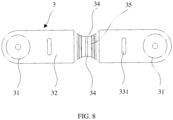
FIG. 8 is a schematic structural diagram of a first busbar according to still other embodiments; -
FIG. 9 is an exploded view of a battery cell in a battery pack according to an embodiment of this application; -
FIG. 10 is a schematic structural diagram of an electrode assembly in a battery cell according to some embodiments; and -
FIG. 11 is a schematic structural diagram of an electrode assembly in a battery cell according to other embodiments. - The drawings are not drawn to scale.
- Reference numerals: 1. Box assembly; 11. Box; 111. First mounting hole; 112. Second mounting hole; 12. Beam; 13. Upper cover; Q. Accommodation cavity; 2. Battery module; 2A. Battery cell assembly; 20. Battery cell; 21. Housing; 22. Electrode assembly; 221. First electrode plate; 222. Second electrode plate; 223. Separator; 224. Flattened face; 23. Adapter strip; 24. Cap assembly; 241. Cap; 242. Electrode terminal; 243. First explosion-proof valve; 3. First busbar; 31. Connecting portion; 32. Main portion; 33. Gap; 331. Transverse groove; 332. Longitudinal groove; 333. T-shaped groove; 34. Recess; 35. Bend portion; 4. Second busbar; 5. Output electrode; 6. Connecting piece; 7. Electrical connector; 8. Second explosion-proof valve; 9. Cooling part; 91. Cooling plate; 92. Inlet pipe; 93. Outlet pipe; 10. Constraint part; 101. Position limiting portion; 102. Mounting portion; and 103. Reinforcing rib.
- The following gives a more detailed description of implementations of this application with reference to accompanying drawings and embodiments. The detailed description of the following embodiments and the accompanying drawings are intended to exemplarily describe the principles of this application, but not to limit the scope of this application. Therefore, this application is not limited to the described embodiments.
- In the description of this application, unless otherwise specified, "a plurality of" means two or more; the terms such as "upper", "lower", "left", "right", "inner", and "outer" indicating a direction or a position relationship are merely intended for ease or brevity of description of this application, but do not indicate or imply that the device or component referred to must be located in the specified direction or constructed or operated in the specified direction. Therefore, such terms shall not be understood as a limitation on this application. In addition, the terms "first", "second", and "third" are merely intended for descriptive purposes, but are not intended to indicate or imply relative importance. "Perpendicular" is not exactly perpendicular, but within an error tolerance range. "Parallel" is not exactly parallel, but within an error tolerance range.
- The directional terms appearing in the following description indicate the directions shown in the drawings, but are not intended to limit specific structures in this application. In the context of this application, unless otherwise expressly specified, the terms "mount", "concatenate", and "connect" are understood in a broad sense. For example, a "connection" may be a fixed connection, a detachable connection, or an integrated connection, and may be a direct connection or an indirect connection implemented through an intermediary. A person of ordinary skill in the art can understand the specific meanings of the terms in this application according to specific situations.
- As shown in
FIG. 1 , this application provides a device using a secondary battery. The battery includes abattery module 2 or a battery pack. The battery pack may include abox assembly 1 and abattery module 2. One ormore battery modules 2 are disposed in thebox assembly 1. Devices using a secondary battery include a vehicle, a ship, an energy storage cabinet, an unmanned aerial vehicle, and the like. This application aims to improve the working performance of the device by improving the working reliability and safety of thebattery module 2 or the battery pack. - To make a person of ordinary skill in the art more clearly understand the improvements made by this application, the following describes a battery pack first before describing a
battery module 2. - As shown in
FIG. 1 , this application provides a battery pack. In some embodiments, the battery pack includes abox assembly 1, aconstraint part 10, anupper cover 13, and a plurality ofbattery cells 20. - The
box assembly 1 includes abox 11 and abeam 12. Thebox 11 contains an opening end. Thebeam 12 is fixed in thebox 11. One ormore beams 12 may be disposed to partition an internal space of thebox 11 into a plurality of accommodation cavities Q. Thebattery cells 20 may be divided into a plurality of groups. Each group ofbattery cells 20 is disposed in a different accommodation cavity Q.A constraint part 10 is disposed corresponding to each group ofbattery cells 20. Theconstraint part 10 overlays the group ofbattery cells 20 and is fixed to thebeam 12 and is configured to provide a steady pressing force to thebattery cells 20, so as to restrict thebattery cells 20 from expanding and increase the service life of the battery pack. - Still referring to
FIG. 1 , theconstraint part 10 includes aposition limiting portion 101 and two mountingportions 102. Theposition limiting portion 101 overlays thebattery cells 20 in a corresponding group. The two mountingportions 102 are connected to two sides of theposition limiting portion 101 along a grouping direction of thebattery cells 20 respectively, and are fixed to thebeams 12 at two sides of thebattery cells 20 in the corresponding group along the grouping direction respectively. Theposition limiting portion 101 as a whole protrudes against the two mountingportions 102 away from thebattery cells 20. An expansion force received by theconstraint part 10 is very large when the entire module expands. Therefore, theconstraint part 10 herein is fixed by riveting and gluing. This fixing method can greatly improve the connection strength of a pressure plate, and can reduce the number of fasteners and reduce costs in contrast to a practice of fixing by using a rivet nut followed by a screw. In addition, a fixing method other than the riveting and gluing method may be applied, that is, the two mountingportions 102 of theconstraint part 10 are directly welded to thebeam 12 by means of laser welding as long as the strength permits, thereby implementing the fixing method without a fastener. For example, theconstraint part 10 may be formed by bending a flat plate. In order to improve deformation resistance of theconstraint part 10, a reinforcingrib 103 may be disposed on theposition limiting portion 101. For example, the reinforcingrib 103 is disposed on an outer surface of theposition limiting portion 101 and may be formed by stamping. The structural strength of theconstraint part 10 can be increased by disposing the reinforcingrib 103, thereby reducing weight and increasing rigidity and deflection of theentire constraint part 10. - The
upper cover 13 is disposed at a side that is of theconstraint part 10 and that is away from thebox 11, and is snap-fitted to the opening end of thebox 11 along a height direction of the battery pack to close off the opening end of thebox 11. "Close off" here means a hermetic connection between theupper cover 13 and thebox 11, and can prevent external liquid and moisture from entering the battery pack, and improve the safety performance of the battery pack. Thebox 11 and theupper cover 13 may be connected by a bolt or by other detachable connection means. - As shown in
FIG. 4 , thebattery cells 20 in the battery pack can form abattery module 2 as a modular structure. Thebattery module 2 may be disposed in the battery pack or used independently. - In some embodiments, as shown in
FIG. 4 , thebattery module 2 includes abattery cell assembly 2A and afirst busbar 3. Thebattery cell assembly 2A includes at least twobattery cells 20 arranged along a third direction z. Each of thebattery cells 20 includes two electrode terminals 242: a positive electrode terminal and a negative electrode terminal. - As shown in
FIG. 5 , thefirst busbar 3 includes amain portion 32 and two connectingportions 31. An extension direction of thefirst busbar 3 tilts against the third direction z at a preset angle. Thefirst busbar 3 and asecond busbar 4 to be mentioned later may also be referred to as electrical connecting plates, aluminum bars, busbars, or the like. Thefirst busbar 3 may be formed in a strip-shaped sheet structure. - The two connecting
portions 31 are connected to theelectrode terminals 242 of the twobattery cells 20 in the samebattery cell assembly 2A respectively. As shown inFIG. 4 , in the samebattery cell assembly 2A, the largest lateral surfaces of twoadjacent battery cells 20 are disposed opposite to each other. Thefirst busbar 3 is connected to the staggeredelectrode terminals 242 on the twobattery cells 20. - The
main portion 32 is located between the two connectingportions 31. A deformation inducing portion is disposed on themain portion 32. The deformation inducing portion is configured to reduce at least a force required for deforming themain portion 32 along a first direction x. The first direction x is parallel to a lateral surface of thebattery cell 20 and perpendicular to the third direction z, where the lateral surface is a surface on which theelectrode terminals 242 are disposed. - In this embodiment of this application, the
first busbar 3 tilts against the third direction z at a preset angle. When thebattery cell 20 expands along the third direction z, the generated expansion force is exerted on thefirst busbar 3 through theelectrode terminal 242. Consequently, thefirst busbar 3 receives an external force along the length direction and an external force along the width direction concurrently. - In a technical solution in the related art, if the battery cells are arranged along the third direction z, the busbar is generally disposed parallel to the third direction z. When a battery cell expands, merely an external force along the length direction is exerted on the busbar, and the design of the busbar can reduce merely the force required to deform the busbar along the length direction. If such busbar tilts when connecting to the
battery cell 20, a considerable force is still received in the width direction of the busbar when thebattery cell 20 expands. In this embodiment of this application, a deformation inducing portion is disposed on themain portion 32. Therefore, thefirst busbar 3 is easily deformable in the first direction x to absorb the external force, thereby reducing the tensile force exerted on theelectrode terminals 242 and ensuring high reliability of the connection between theelectrode terminals 242 and the electrode assembly. - As shown in
FIG. 4 , the size of thebattery cell 20 along the third direction z is smaller than the size along the first direction x. Therefore, when thebattery cell 20 expands along the third direction z, thefirst busbar 3 receives the external force along the first direction x and the external force along the third direction z concurrently, where the external force along the first direction x is greater than the external force along the third direction z. With the deformation inducing portion disposed, thefirst busbar 3 is easily deformable in the first direction x to absorb a majority of the external force, thereby significantly reducing the tensile force exerted on theelectrode terminals 242 and ensuring high reliability of the connection between theelectrode terminals 242 and the electrode assembly. - Moreover, as shown in
FIG. 4 , thebattery cell 20 further includes a first explosion-proof valve 243. The first explosion-proof valve 243 is disposed between the twoelectrode terminals 242. Thefirst busbar 3 is connected to the twostaggered electrode terminals 242 on the twobattery cells 20. Therefore, by this connection method, thefirst busbar 3 is closer to the first explosion-proof valves 243 of the twobattery cells 20 connected to the first busbar. At the first explosion-proof valves, heat is concentrated. In addition, with the deformation inducing portion disposed, thefirst busbar 3 breaks off more easily in a case of thermal runaway, so as to break a high-voltage circuit of theentire battery module 2, raise a thermal runaway alarm and take protection measures in time, and improve safety of the battery in operation. - As shown in
FIG. 5 , the deformation inducing portion is symmetric with respect to a lengthwise middle position of the main portion (32), so that thefirst busbar 3 receives a force evenly and brings the same acting effect on the twobattery cells 20. Moreover, when thebattery cell 20 is thermally runaway, the middle position is a thermal stress concentration point of a thermal field due to the deformation inducing portion disposed, and can fuse off thefirst busbar 3 quickly to break the high-voltage circuit of the entire module, thereby allowing enough time to raise a thermal runaway alarm and take protection measures. - The deformation inducing portion in this embodiment of this application may be in various forms of structure. For example, at least one of a groove, a through-groove, a
gap 33, a blind hole, or a via hole is disposed on a lateral surface that is of themain portion 32 and that is perpendicular to the thickness direction; or, arecess 34 is disposed on a lateral surface that is of themain portion 32 and that is perpendicular to the width direction. All variations fall within the protection scope of this application as long as thefirst busbar 3 is formed of an appropriate material and contains a deformation inducing portion that can reduce the rigidity of themain portion 32 along the first direction (x). - As shown in
FIG. 5 , the deformation inducing portion includes agap 33. Thegap 33 runs through along the thickness direction of themain portion 32. A cross-sectional area of thefirst busbar 3 at a position where the deformation inducing portion is disposed is configured to satisfy the current-carrying capacity of thefirst busbar 3. - In this embodiment, with the
gap 33 disposed, the cross-sectional area of thefirst busbar 3 along the width direction is reduced, so as to reduce the rigidity along the width direction. The width direction of thefirst busbar 3 tilts against the third direction z. Therefore, the force required for deforming themain portion 32 along the first direction x and the third direction z can be reduced concurrently, thereby reducing the tensile force on theelectrode terminals 242. Moreover, when thermal runaway occurs, a fragile portion where thegap 33 is located can fuse off more easily to break the circuit. - As shown in
FIG. 5 to FIG. 8 , thegap 33 includes twotransverse grooves 331. The twotransverse grooves 331 extend along the width direction of thefirst busbar 3 and are spaced apart along the length direction of thefirst busbar 3. The twotransverse grooves 331 may be disposed in a middle region of themain portion 32 along the width direction. - The
transverse grooves 331 extending along the width direction of thefirst busbar 3 can effectively reduce the cross-sectional area of thefirst busbar 3 along the width direction in a local region, so as to reduce the rigidity along the width direction. In this way, the force required for deforming themain portion 32 along the first direction x and the third direction z can be reduced effectively, thereby reducing the tensile force on theelectrode terminals 242. - As shown in
FIG. 8 , the twotransverse grooves 331 are disposed at positions close to the twoelectrode terminals 242 on themain portion 32 along the length direction. In this way, when anyelectrode terminal 242 exerts an external force on the connectedfirst busbar 3, thefirst busbar 3 is easily deformable effectively to reduce the tensile force on theelectrode terminal 242. - As shown in
FIG. 5 andFIG. 6 , thegap 33 further includes alongitudinal groove 332. Thelongitudinal groove 332 extends along the length direction of thefirst busbar 3, and two ends of thelongitudinal groove 332 communicate with the twotransverse grooves 331 respectively. Both thelongitudinal groove 332 and the twotransverse grooves 331 may be disposed in a middle region of themain portion 32 along the width direction. - The
longitudinal groove 332 extending along the length direction of thefirst busbar 3 is added, so as to evenly reduce the cross-sectional area of thefirst busbar 3 along the width direction within a section of a preset length of themain portion 32, and reduce the rigidity in the section of such length of the main portion along the width direction. In this way, thefirst busbar 3 can evenly deform as a whole when subjected to an external force, so as to reduce the tensile force on theelectrode terminals 242, and prevent thefirst busbar 3 from affecting the service life due to large local deformation. Moreover, thelongitudinal groove 332 can also reduce the impact on the current-carrying capacity of thefirst busbar 3. - On the basis of ensuring high connection strength, the length of the
longitudinal groove 332 may be increased as much as practicable. When the width of thelongitudinal groove 332 is relatively large, the current-carrying capacity of thefirst busbar 3 will be affected. With thetransverse grooves 331 disposed, the rigidity of thefirst busbar 3 is further reduced on the basis of ensuring the current-carrying capacity of thefirst busbar 3, thereby minimizing the tensile force exerted on theelectrode terminals 242 and making it easier to break off the first busbar in a case of thermal runaway. - As shown in
FIG. 7 , thegap 33 further includes twolongitudinal grooves 332. The twolongitudinal grooves 332 extend along the length direction of thefirst busbar 3 and are spaced apart. One end of eachlongitudinal groove 332 communicates with a correspondingtransverse groove 331. For example, the twolongitudinal grooves 332 extend opposite to each other. Thelongitudinal groove 332 and eachtransverse groove 331 that communicate with each other form a T-shaped groove. The two T-shaped grooves are disposed symmetrically with respect to a lengthwise middle position of themain portion 32, and are both located in a widthwise middle region of themain portion 32. - Such a structure can improve the connection reliability of the
electrode terminals 242 while reducing the rigidity of thefirst busbar 3. - On this basis, as shown in
FIG. 6 to FIG. 8 , the deformation inducing portion includes arecess 34. Therecess 34 is disposed at a side of themain portion 32 along the width direction, and is configured to reduce the width of thefirst busbar 3. For example, a sidewall of therecess 34 may be arc-shaped, hyperbola-shaped, parabolashaped, or the like to mitigate stress concentration, or may be polygonal. - With the
recess 34 disposed, the effect of thegap 33 is strengthened, the rigidity of thefirst busbar 3 along the width direction can be further reduced, and the force required for deforming themain portion 32 along the first direction x and the third direction z can be further reduced. Therefore, the tensile force on theelectrode terminals 242 is reduced, and the reliability of the connection between thefirst busbar 3 and eachelectrode terminal 242 is improved. In addition, in a case of thermal runaway, the first busbar can break off more easily to break the circuit, thereby improving the reliability and safety of thebattery module 2 in operation. - Still referring to
FIG. 6 to FIG. 8 , therecess 34 may be disposed at a middle position of themain portion 32 along the length direction. For example, therecess 34 is disposed at both sides of themain portion 32 along the width direction. - In this structure, the
first busbar 3 is structurally symmetric with respect to a midline between the two widthwise sides and thereby receives the force evenly. Moreover, the rigidity at the middle position along the length direction can be reduced. When either of theelectrode terminals 242 exerts an external force on thefirst busbar 3, deformation occurs more easily. In addition, the middle position is relatively close to the first explosion-proof valves 243 of bothbattery cells 20 connected to the first busbar, so that thefirst busbar 3 can fuse off more easily in a case of thermal runaway. - As shown in
FIG. 5 , the deformation inducing portion includes abend portion 35. Thebend portion 35 protrudes against the connectingportion 31 toward at least one side in the thickness direction of thefirst busbar 3. That is, thebend portion 35 arches outward against themain portion 32. For example, thebend portion 35 may be arc-shaped, U-shaped, rectangular, trapezoidal, or the like - In this embodiment, with the
bend portion 35 disposed, when thebattery cell 20 expands and exerts an external force on thefirst busbar 3 along the length direction through theelectrode terminals 242, thebend portion 35 protrudes to form an elastic structure, so as to be easily stretched to absorb the external force received by thefirst busbar 3 along the length direction when thebattery cell 20 expands, and reduce the tensile force on theelectrode terminals 242. Moreover, thebend portion 35 increases a surface area of themain portion 32 to absorb more heat more easily. Because therecess portion 34 reduces the width of thebend portion 35, thefirst busbar 3 can break off easily at the recess when thebattery cell 20 is thermally runaway, thereby improving the safety of thebattery module 2 in operation. - As shown in
FIG. 4 , thebend portion 35 as a whole protrudes against the connectingportion 31 away from thebattery cell 20. This structure enables thefirst busbar 3 to be disposed closer to thebattery cell 20, so that the connection between thefirst busbar 3 and eachelectrode terminal 242 is stable and reliable. Moreover, the space at a side that is of thefirst busbar 3 and that is away from thebattery cell 20 is sufficient for disposing thebend portion 35 to meet the need of deformation. - As shown in
FIG. 5 , thebend portion 35 is located at the middle position of themain portion 32 along the length direction. Thebend portion 35 disposed can concurrently absorb the external force exerted by the twoelectrode terminals 242 on thefirst busbar 3 along the length direction. - For the
battery module 2 shown inFIG. 4 and FIG. 5 , the deformation inducing portion includes agap 33, arecess 34, and abend portion 35. Thebend portion 35 is located at the middle position of themain portion 32 along the length direction. Thegap 33 is disposed symmetrically along the length direction of thefirst busbar 3 with respect to thebend portion 35. For example, the twotransverse grooves 331 of thegap 33 are located at two sides of thebend portion 35 respectively, and the two ends of thelongitudinal groove 332 pass through thebend portion 35 along the length direction and communicate with the twotransverse grooves 331 respectively. At least a part of therecess 34 is disposed at a side of thebend portion 35 along the width direction of thefirst busbar 3 and is configured to reduce the width of thefirst busbar 3. - With the
battery module 2 according to this embodiment, when thebattery cell 20 expands along the third direction z, thefirst busbar 3 receives an external force along the first direction x and the third direction z. Through combined action of thegap 33, therecess 34, and thebend portion 35, thefirst busbar 3 is allowed to deform to effectively absorb the external force received in the first direction x and the third direction z, thereby minimizing the force on theelectrode terminals 242 and improving the reliability of thebattery module 2 in operation. - As shown in
FIG. 4 , thebattery cell 20 further includes a first explosion-proof valve 243. The first explosion-proof valves 243 of the twobattery cells 20 connected to thefirst busbar 3 are located at two sides of thefirst busbar 3 in the width direction respectively. With this structure, when either theupper battery cell 20 or the lower battery cell connected to thefirst busbar 3 is thermally runaway, thefirst busbar 3 can fuse off to protectother battery cells 20. - Still referring to
FIG. 4 , thefirst busbar 3 at least partly overlays the first explosion-proof valve 243 of thebattery cell 20 connected to the first busbar. When either theupper battery cell 20 or the lower battery cell connected to thefirst busbar 3 is thermally runaway, heat, sparks, and dust in thebattery cell 20 will be ejected through the first explosion-proof valve 243 and directly act on thefirst busbar 3, thereby making it easier to fuse off thefirst busbar 3. - As shown in
FIG. 4 , thebattery module 2 further includes asecond busbar 4 and a plurality ofbattery cell assemblies 2A arranged along the first direction x. Two adjacentbattery cell assemblies 2A are electrically connected by thesecond busbar 4. Thesecond busbar 4 extends along the first direction x. For the battery module shown inFIG. 4 , eachfirst busbar 3 and eachsecond busbar 4 are alternately arranged along the first direction x. Thebattery cells 20 are serially connected. Two adjacentfirst busbars 3 tilt in opposite directions. Thesecond busbar 4 may adopt a structure similar to that of thefirst busbar 3, or may omit the deformation inducing portion. - As shown in
FIG. 4 , thebattery module 2 further includes twooutput electrodes 5 configured to output a positive electrode and a negative electrode of thebattery module 2 formed by connecting thebattery cells 20. - On the basis of the foregoing embodiment, as shown in
FIG. 1 , a battery pack may include at least onebattery module 2. Thebattery modules 2 may be arranged alongside or spaced apart along the second direction y. For example, twobattery modules 2 may be disposed between twoadjacent beams 12. The largest lateral surfaces of thebattery cells 20 may be approximately parallel to the bottom surface of thebox 11. This placement method is also known as flat placement. The height of thebattery cell 20 in the third direction z is relatively small. Therefore, the flat placement method reduces the overall height of thebattery module 2, and is more suitable for a device in which the battery installation space is relatively short. - The
battery modules 2 described in the foregoing embodiments may be disposed in a battery pack. As shown inFIG. 1 , abox assembly 1 includes abox 11 and abeam 12. Thebeam 12 is fixed in thebox 11, and partitions an internal space of thebox 11 into a plurality of accommodation cavities Q. At least onebattery module 2 is disposed in each accommodation cavity Q. As shown inFIG. 1 andFIG. 2 , the battery pack further includes a connectingpiece 6 configured to connect theoutput electrodes 5 in eachbattery module 2 to implement serial connection or parallel connection of thebattery modules 2, so as to achieve electrical performance required by the battery pack. A first mountinghole 111 may be disposed on thebox 11, and is configured to mount anelectrical connector 7. - The
electrode terminals 242 of eachbattery cell 20 in eachbattery module 2 are disposed toward thebeam 12, and a preset interval L exists between thebattery cell 20 and a lateral surface on which theelectrode terminals 242 are disposed, and a sidewall of thebeam 12, to form an exhaust duct B. - As shown in
FIG. 3 , when thebattery cell 20 is thermally runaway, the heat, sparks, and dust ejected through the first explosion-proof valve 243 may fuse off thefirst busbar 3. An airflow flows toward two sides along the exhaust dust B, and flows to the second explosion-proof valve 8 through the gap between the end of thebeam 12 and the inner wall of thebox 11, and is finally expelled outward through the second explosion-proof valve 8 to reduce the temperature in thebox 11 and improve battery safety. At least onesecond mounting hole 112 is disposed on thebox 11. The second explosion-proof valve 8 is mounted on thebox 11 through thesecond mounting hole 112. - To take away the heat generated by the battery in operation, as shown in
FIG. 1 andFIG. 2 , the battery pack further includes acooling part 9. The coolingpart 9 includes acooling plate 91, in which a cooling cavity is disposed. Both aninlet pipe 92 and anoutlet pipe 93 communicate with the cooling cavity of the coolingplate 91. In a plane formed by the first direction x and the second direction y, twoadjacent battery modules 2 may be mounted with theelectrode terminals 242 being away from each other, thereby saving installation space. In addition, in disposing the coolingplate 91, the coolingplate 91 may be disposed between twoadjacent battery modules 2 so that the twoadjacent battery modules 2 are cooled concurrently by onecooling plate 91. - In some embodiments, the two
adjacent battery modules 2 may be mounted with theelectrode terminals 242 facing each other. A safe distance needs to be reserved between theelectrode terminals 242 of theadjacent battery modules 2. When cooling is needed, a coolingplate 91 may be respectively disposed at lateral surfaces that are of the twobattery modules 2 and that are away from theelectrode terminals 242. - In addition, the method of connection between the
first busbar 3 and thesecond busbar 4 and thebattery cell 20 as well as the structural forms, which are described in this application, are applicable not only to a structure in which thebattery cells 20 are placed flatly, but also to thebattery module 2 in which thebattery cells 20 are arranged vertically. - The following describes applicable structures of the
battery cells 20 described in the foregoing embodiments. - Referring to the schematic exploded view shown in
FIG. 9 , eachbattery cell 20 includes ahousing 21 and anelectrode assembly 22 disposed in thehousing 21. Thehousing 21 may be in a hexahedral shape or other shapes, and contains an opening. Theelectrode assembly 22 is accommodated in thehousing 21. The opening of thehousing 21 is covered with acap assembly 24. Thecap assembly 24 includes acap 241 and twoelectrode terminals 242 disposed on thecap 241. The twoelectrode terminals 242 are a first electrode terminal and a second electrode terminal. The first electrode terminal may be a positive electrode terminal, and the second electrode terminal may be a negative electrode terminal. In other embodiments, the first electrode terminal may be a negative electrode terminal, and the second electrode terminal may be a positive electrode terminal. Anadapter strip 23 is disposed between thecap assembly 24 and theelectrode assembly 22. Tabs of theelectrode assembly 22 are electrically connected to the electrode terminals on thecap 241 through theadapter strip 23. In this embodiment, there are two adapter strips 23: a positive adapter strip and a negative adapter strip. A first explosion-proof valve 243 is disposed between the twoelectrode terminals 242 on thecap 241. - As shown in
FIG. 9 , twoelectrode assemblies 22 are disposed in thehousing 21. The twoelectrode assemblies 22 are stacked along a height direction (Z direction) of thebattery cells 20. The height direction of thebattery cells 20 is identical to the height direction of the battery pack. Nevertheless, in other embodiments, oneelectrode assembly 22 may be disposed in thehousing 21, or at least threeelectrode assemblies 22 are disposed in thehousing 21. A plurality ofelectrode assemblies 22 are stacked in the height direction (z direction) of thebattery cells 20. - As shown in
FIG. 10 and FIG. 11 , theelectrode assembly 22 includes afirst electrode plate 221, asecond electrode plate 222, and aseparator 223 disposed between thefirst electrode plate 221 and thesecond electrode plate 222. Thefirst electrode plate 221 may be a positive electrode plate and thesecond electrode plate 222 may be a negative electrode plate. In other embodiments, thefirst electrode plate 221 may be a negative electrode plate, and thesecond electrode plate 222 may be a positive electrode plate. Theseparator 223 is an insulator between thefirst electrode plate 221 and thesecond electrode plate 222. An active material of the positive electrode plate may be coated onto a coated region of the positive electrode plate, and an active material of the negative electrode plate may be coated onto a coated region of the negative electrode plate. A part extending from the coated region of the positive electrode plate serves as a positive tab, and a part extending from the coated region of the negative electrode plate serves as a negative tab. The positive tab is connected to the positive electrode terminal on thecap assembly 24 through the positive adapter strip. Likewise, the negative tab is connected to the negative electrode terminal on thecap assembly 24 through the negative adapter strip. - As shown in
FIG. 10 , theelectrode assembly 22 is jell-roll structure. Thefirst electrode plate 221, theseparator 223, and thesecond electrode plate 222 are all strapshaped structures. Thefirst electrode plate 221, theseparator 223, and thesecond electrode plate 222 are sequentially stacked and wound for at least two circles to form anelectrode assembly 22. Theelectrode assembly 22 is flat. During preparation of theelectrode assembly 22, theelectrode assembly 22 may be wound into a flat shape directly, or wound into a hollow cylindrical structure first and then calendered into a flat shape.FIG. 10 is a schematic outline of theelectrode assembly 22. Outer surfaces of theelectrode assembly 22 include two flattened faces 224. The two flattenedfaces 224 are disposed opposite to each other along the height direction (z direction) of thebattery cells 20. Theelectrode assembly 22 is an approximately hexahedral structure. The flattened faces 224 are approximately parallel to a winding axis and are outer surfaces that are largest in area. The flattened faces 224 may be surfaces that are relatively flat, but not necessarily exactly planar. - As shown in
FIG. 11 , theelectrode assembly 22 is a stacked structure. To be specific, theelectrode assembly 22 contains a plurality offirst electrode plates 221 and a plurality ofsecond electrode plates 222. Aseparator 223 is disposed between afirst electrode plate 221 and asecond electrode plate 222. Thefirst electrode plate 221 and thesecond electrode plate 222 are stacked along the height direction (z direction) of thebattery cells 20. - In a charge or discharge process, the
electrode assembly 22 inevitably expands along the thickness direction of the electrode plate. The expansion amounts of all electrode plates are accumulated. The expansion amount accumulated in the height direction is larger than the expansion amount accumulated in other directions, so that an external force is exerted on thefirst busbar 3 through theelectrode terminal 242. By improving the connection relationship and structure of the busbar between the battery cells, this embodiment of this application can improve the reliability and safety of the battery in operation. - Although this application has been described with reference to exemplary embodiments, various improvements may be made to the embodiments without departing from the scope of the claims.
- Particularly, to the extent that no structural conflict exists, various technical features mentioned in various embodiments can be combined in any manner. This application is not limited to the specific embodiments of this application, but includes all technical solutions falling within the scope of the claims.
Claims (13)
- A battery module (2), comprising:a battery cell assembly (2A), comprising at least two battery cells (20) arranged along a third direction (z), wherein each of the battery cells (20) comprises electrode terminals (242); anda first busbar (3), comprising a main portion (32) and two connecting portions (31), wherein the first busbar (3) is set at an angle with respect to the third direction (z), the two connecting portions (31) are connected to the electrode terminals (242) of the two battery cells (20) in an identical battery cell assembly (2A) respectively, the main portion (32) is connected between the two connecting portions (31), a deformation inducing portion is disposed on the main portion (32), and the deformation inducing portion is configured to reduce at least a force required for deforming the main portion (32) along a first direction (x), and the first direction (x) is parallel to a lateral surface of the battery cell (20) and perpendicular to the third direction (z), wherein the lateral surface is a surface on which the electrode terminals (242) are disposed;wherein the deformation inducing portion comprises a gap (33), and the gap (33) runs through along a thickness direction of the main portion (32), the gap (33) comprises two transverse grooves (331), and the two transverse grooves (331) extend along a width direction of the first busbar (3) and are spaced apart along a length direction of the first busbar (3).
- The battery module (2) according to claim 1, wherein the gap (33) further comprises a longitudinal groove (332), the longitudinal groove (332) extends along the length direction of the first busbar (3), and two ends of the longitudinal groove (332) communicate with the two transverse grooves (331) respectively; or
the gap (33) further comprises two longitudinal grooves (332), the two longitudinal grooves (332) extend along the length direction of the first busbar (3) and are spaced apart, and one end of each longitudinal groove (332) communicates with a corresponding transverse groove (331). - The battery module (2) according to claim 1 or 2, wherein the deformation inducing portion comprises a recess (34), and the recess (34) is disposed at a widthwise side of the main portion (32) and is configured to reduce a width of the main portion (32).
- The battery module (2) according to claim 3, wherein the recess (34) is disposed at both widthwise sides of the main portion (32).
- The battery module (2) according to any one of claims 1 to 4, wherein the deformation inducing portion comprises a bend portion (35), and the bend portion (35) protrudes against the connecting portion (31) along a thickness direction of the first busbar (3).
- The battery module (2) according to claim 5, wherein the bend portion (35) protrudes against the connecting portion (31) away from the battery cell (20).
- The battery module (2) according to claim 5 or 6, wherein the bend portion (35) is located at a lengthwise middle position of the main portion (32);the deformation inducing portion further comprises a gap (33), and the gap (33) is disposed symmetrically along a length direction of the first busbar (3) with respect to the bend portion (35); and/orthe deformation inducing portion further comprises a recess (34), and at least a part of the recess (34) is disposed at a side of the bend portion (35) along a width direction of the first busbar (3), and is configured to reduce a width of the first busbar (3).
- The battery module (2) according to any one of claims 1 to 7, wherein the battery cell (20) further comprises a first explosion-proof valve (243), and first explosion-proof valves (243) of the two battery cells (20) connected to the first busbar (3) are located at two widthwise sides of the first busbar (3) respectively.
- The battery module (2) according to any one of claims 1 to 7, wherein the battery cell (20) further comprises a first explosion-proof valve (243), and the first busbar (3) at least partly overlays the first explosion-proof valve (243) of the battery cell (20) connected to the first busbar.
- The battery module (2) according to any one of claims 1 to 9, further comprising a second busbar (4) and a plurality of battery cell assemblies (2A) arranged along the first direction (x), two adjacent battery cell assemblies (2A) are electrically connected by the second busbar (4), and the second busbar (4) extends along the first direction (x).
- A battery pack, comprising:a box assembly (1); andthe battery module (2) according to any one of claims 1 to 10, disposed in the box assembly (1).
- The battery pack according to claim 11, wherein the box assembly (1) comprises a box (11) and a beam (12), and the beam (12) is disposed inside the box (11) and partitions the box (11) into a plurality of accommodation cavities (Q); and
at least one battery module (2) is disposed in each accommodation cavity (Q), the electrode terminals (242) of each battery cell (20) in each battery module (2) are disposed toward the beam (12), and a preset interval (L) exists between the battery cell (20) and a sidewall of the beam (12) to form an exhaust duct (B). - A device using a secondary battery, comprising:the battery module (2) according to any one of claims 1 to 10; and/orthe battery pack according to claim 11 or 12.
Applications Claiming Priority (2)
| Application Number | Priority Date | Filing Date | Title |
|---|---|---|---|
| CN202010259301.1A CN112310575B (en) | 2020-04-03 | 2020-04-03 | Battery module, battery pack, and device using secondary battery |
| PCT/CN2020/141800 WO2021196796A1 (en) | 2020-04-03 | 2020-12-30 | Battery module, battery pack, and apparatus using secondary battery |
Publications (4)
| Publication Number | Publication Date |
|---|---|
| EP4033598A1 EP4033598A1 (en) | 2022-07-27 |
| EP4033598A4 EP4033598A4 (en) | 2023-01-18 |
| EP4033598C0 EP4033598C0 (en) | 2024-01-31 |
| EP4033598B1 true EP4033598B1 (en) | 2024-01-31 |
Family
ID=74336753
Family Applications (1)
| Application Number | Title | Priority Date | Filing Date |
|---|---|---|---|
| EP20929221.8A Active EP4033598B1 (en) | 2020-04-03 | 2020-12-30 | Battery module, battery pack, and apparatus using secondary battery |
Country Status (6)
| Country | Link |
|---|---|
| US (1) | US12334591B2 (en) |
| EP (1) | EP4033598B1 (en) |
| JP (2) | JP7618672B2 (en) |
| KR (1) | KR102874831B1 (en) |
| CN (1) | CN112310575B (en) |
| WO (1) | WO2021196796A1 (en) |
Families Citing this family (30)
| Publication number | Priority date | Publication date | Assignee | Title |
|---|---|---|---|---|
| CN112310575B (en) * | 2020-04-03 | 2022-11-29 | 宁德时代新能源科技股份有限公司 | Battery module, battery pack, and device using secondary battery |
| US11764431B2 (en) | 2020-10-22 | 2023-09-19 | Apple Inc. | Battery pack structures and systems |
| EP4068491A4 (en) * | 2021-02-09 | 2023-06-14 | Contemporary Amperex Technology Co., Limited | BATTERY, ELECTRICAL DEVICE AND BATTERY MANUFACTURING METHOD AND DEVICE |
| JP7548050B2 (en) * | 2021-02-19 | 2024-09-10 | トヨタ自動車株式会社 | Battery pack |
| CN113036313B (en) * | 2021-03-05 | 2023-03-21 | 中创新航技术研究院(江苏)有限公司 | Battery module |
| US20230307804A1 (en) * | 2021-03-12 | 2023-09-28 | Lg Energy Solution, Ltd. | Bus bar assembly, battery pack comprising bus bar assembly, and vehicle comprising battery pack |
| JP7600391B2 (en) * | 2021-08-26 | 2024-12-16 | エルジー エナジー ソリューション リミテッド | Battery pack with improved safety |
| US12463283B2 (en) | 2021-10-12 | 2025-11-04 | Lg Energy Solution, Ltd. | Battery pack and vehicle including the same |
| US20230111495A1 (en) * | 2021-10-12 | 2023-04-13 | Lg Energy Solution, Ltd. | Battery pack and vehicle including the same |
| CN114188196B (en) * | 2021-11-26 | 2024-07-02 | 星恒电源股份有限公司 | Tension current limiting protector and lithium battery module |
| US20230198100A1 (en) * | 2021-12-22 | 2023-06-22 | Our Next Energy, Inc. | Off-axis and off-plane compliant busbar |
| WO2023122119A1 (en) * | 2021-12-22 | 2023-06-29 | Our Next Energy, Inc. | Off-axis and off-plane compliant busbar |
| WO2023123006A1 (en) * | 2021-12-29 | 2023-07-06 | 宁德时代新能源科技股份有限公司 | Battery, electrical apparatus, and battery manufacturing method and device |
| CN216720146U (en) * | 2022-01-12 | 2022-06-10 | 宁德时代新能源科技股份有限公司 | Battery and electric equipment |
| JP7593959B2 (en) * | 2022-02-04 | 2024-12-03 | プライムプラネットエナジー&ソリューションズ株式会社 | Battery pack |
| US20230387554A1 (en) * | 2022-05-31 | 2023-11-30 | Apple Inc. | Battery pack bus systems |
| CN119731871A (en) * | 2022-08-23 | 2025-03-28 | 株式会社 Lg新能源 | Bridging structure and secondary battery comprising same |
| CN115498370B (en) * | 2022-10-19 | 2026-02-06 | 中航锂电(洛阳)有限公司 | Busbar, busbar assembly, battery module, battery pack and electric equipment |
| CN115810839A (en) * | 2022-12-09 | 2023-03-17 | 东莞市信准检测技术服务有限公司 | Power battery pack |
| KR102843860B1 (en) * | 2022-12-12 | 2025-08-06 | 주식회사 엘지에너지솔루션 | Battery rack |
| CN115832627B (en) * | 2022-12-16 | 2023-12-29 | 厦门海辰储能科技股份有限公司 | Bus bar and battery module |
| WO2024130499A1 (en) * | 2022-12-19 | 2024-06-27 | 宁德时代新能源科技股份有限公司 | Battery and electric device |
| CN115911775B (en) * | 2023-02-09 | 2023-05-16 | 深圳海润新能源科技有限公司 | Current collecting component, energy storage device and electric equipment |
| WO2024214245A1 (en) * | 2023-04-13 | 2024-10-17 | 日産自動車株式会社 | Battery module |
| KR20240153152A (en) * | 2023-04-14 | 2024-10-22 | 삼성에스디아이 주식회사 | Rechargeable battery module |
| CN222394913U (en) * | 2024-04-12 | 2025-01-24 | 宁德时代新能源科技股份有限公司 | Cells, batteries, covers and electrical equipment |
| CN222813866U (en) * | 2024-04-25 | 2025-04-29 | 宁德时代新能源科技股份有限公司 | Batteries and electrical devices |
| WO2026025382A1 (en) * | 2024-07-31 | 2026-02-05 | 宁德时代新能源科技股份有限公司 | Battery device and electric apparatus |
| CN119400482B (en) * | 2024-12-31 | 2025-04-18 | 江苏正力新能电池技术股份有限公司 | Busbar, welding method thereof and battery pack |
| CN121035536B (en) * | 2025-10-29 | 2026-04-07 | 宁德时代新能源科技股份有限公司 | Battery devices and electrical appliances |
Family Cites Families (32)
| Publication number | Priority date | Publication date | Assignee | Title |
|---|---|---|---|---|
| KR100571238B1 (en) * | 2003-10-20 | 2006-04-13 | 삼성에스디아이 주식회사 | Secondary battery |
| JP4400235B2 (en) * | 2004-02-03 | 2010-01-20 | 新神戸電機株式会社 | Connection structure between batteries |
| JP2009087720A (en) | 2007-09-28 | 2009-04-23 | Toshiba Corp | Battery pack |
| JP2011070872A (en) | 2009-09-25 | 2011-04-07 | Panasonic Corp | Battery module |
| JP2013020731A (en) | 2011-07-07 | 2013-01-31 | Panasonic Corp | Secondary battery |
| KR20130023562A (en) * | 2011-08-29 | 2013-03-08 | 삼성에스디아이 주식회사 | Battery cell and battery module using the same |
| JP2013073929A (en) | 2011-09-29 | 2013-04-22 | Gs Yuasa Corp | Battery pack |
| KR101241467B1 (en) * | 2011-10-13 | 2013-03-11 | 엘지이노텍 주식회사 | Solar cell and preparing method of the same |
| DE102012205021A1 (en) | 2012-03-28 | 2013-10-02 | Robert Bosch Gmbh | Cell connector for a battery system or for a battery cell of an electrical energy storage, battery and motor vehicle |
| CN107516726A (en) * | 2012-08-01 | 2017-12-26 | 株式会社东芝 | Battery connector and the secondary battery device for possessing the battery connector |
| JP6040728B2 (en) * | 2012-11-21 | 2016-12-07 | Tdk株式会社 | Bus bar substrate and battery module using bus bar substrate |
| JP6135246B2 (en) * | 2013-03-29 | 2017-05-31 | 株式会社Gsユアサ | Power storage device |
| FR3011129B1 (en) * | 2013-09-24 | 2021-05-07 | Valeo Systemes Thermiques | BATTERY MODULE FOR ELECTRIC OR HYBRID VEHICLE TO ENSURE CELL COOLING, AND ASSOCIATED BATTERY |
| KR102211369B1 (en) | 2014-03-19 | 2021-02-03 | 삼성에스디아이 주식회사 | Battery Module |
| KR101613499B1 (en) * | 2014-12-11 | 2016-04-19 | 삼성에스디아이 주식회사 | Secondary battery pack comprising bended connector |
| KR102002448B1 (en) * | 2015-09-02 | 2019-07-23 | 주식회사 엘지화학 | Battery pack |
| JP2017195056A (en) | 2016-04-19 | 2017-10-26 | 株式会社東芝 | Connector structure, bus bar member, and battery module |
| CN107305938A (en) * | 2016-04-25 | 2017-10-31 | 比亚迪股份有限公司 | Cell connector, battery modules and electrokinetic cell bag |
| CN205583030U (en) * | 2016-05-09 | 2016-09-14 | 华霆(合肥)动力技术有限公司 | A electrode slice and group battery for group battery is connected |
| JP2018037160A (en) | 2016-08-29 | 2018-03-08 | カルソニックカンセイ株式会社 | Bus bar |
| CN108023055A (en) * | 2016-11-01 | 2018-05-11 | 宁德时代新能源科技股份有限公司 | Secondary battery |
| CN206610860U (en) | 2017-03-10 | 2017-11-03 | 浙江谷神能源科技股份有限公司 | A kind of lithium ion battery insures connection sheet |
| WO2018167886A1 (en) * | 2017-03-15 | 2018-09-20 | 矢崎総業株式会社 | Bus bar module and battery pack |
| KR102428417B1 (en) | 2017-10-11 | 2022-08-01 | 주식회사 엘지에너지솔루션 | Battery Module and Manufacturing Method for the Same |
| KR20190112579A (en) * | 2018-03-26 | 2019-10-07 | 에이치엘그린파워 주식회사 | Sensing bus bar for reducing voltage deviation |
| JP7200222B2 (en) | 2018-03-30 | 2023-01-06 | 三洋電機株式会社 | Battery module, vehicle equipped with same, and bus bar |
| CN209071486U (en) | 2018-09-30 | 2019-07-05 | 郑州深澜动力科技有限公司 | A kind of battery modules and its electric connecting sheet |
| CN209104250U (en) * | 2018-11-19 | 2019-07-12 | 宁德时代新能源科技股份有限公司 | battery module |
| CN109768206A (en) * | 2018-12-20 | 2019-05-17 | 深圳市溢骏科技有限公司 | Power battery pack |
| CN209730034U (en) * | 2019-01-18 | 2019-12-03 | 宁德时代新能源科技股份有限公司 | a battery module |
| CN209963117U (en) * | 2019-06-27 | 2020-01-17 | 宁德时代新能源科技股份有限公司 | Battery packs and vehicles |
| CN112310575B (en) * | 2020-04-03 | 2022-11-29 | 宁德时代新能源科技股份有限公司 | Battery module, battery pack, and device using secondary battery |
-
2020
- 2020-04-03 CN CN202010259301.1A patent/CN112310575B/en active Active
- 2020-12-30 EP EP20929221.8A patent/EP4033598B1/en active Active
- 2020-12-30 JP JP2022530958A patent/JP7618672B2/en active Active
- 2020-12-30 KR KR1020227018432A patent/KR102874831B1/en active Active
- 2020-12-30 WO PCT/CN2020/141800 patent/WO2021196796A1/en not_active Ceased
-
2022
- 2022-05-03 US US17/735,511 patent/US12334591B2/en active Active
-
2025
- 2025-01-08 JP JP2025002883A patent/JP2025061115A/en active Pending
Also Published As
| Publication number | Publication date |
|---|---|
| JP7618672B2 (en) | 2025-01-21 |
| CN112310575A (en) | 2021-02-02 |
| EP4033598C0 (en) | 2024-01-31 |
| WO2021196796A1 (en) | 2021-10-07 |
| KR102874831B1 (en) | 2025-10-21 |
| JP2023503628A (en) | 2023-01-31 |
| CN112310575B (en) | 2022-11-29 |
| JP2025061115A (en) | 2025-04-10 |
| US12334591B2 (en) | 2025-06-17 |
| EP4033598A1 (en) | 2022-07-27 |
| US20220263201A1 (en) | 2022-08-18 |
| EP4033598A4 (en) | 2023-01-18 |
| KR20220092581A (en) | 2022-07-01 |
Similar Documents
| Publication | Publication Date | Title |
|---|---|---|
| EP4033598B1 (en) | Battery module, battery pack, and apparatus using secondary battery | |
| US11329347B2 (en) | Battery pack and vehicle | |
| US11894510B2 (en) | Battery pack and vehicle | |
| EP3790070B1 (en) | Battery pack, method for manufacturing same, and vehicle | |
| US11387502B2 (en) | Battery module comprising a heat transfer component and a thermal expansion material between cells | |
| EP2068381B1 (en) | Battery system | |
| EP1701404B1 (en) | Battery module | |
| JP5405102B2 (en) | Battery system | |
| KR101182426B1 (en) | Battery module and battery pack having the same | |
| EP2575191B1 (en) | Battery module | |
| US11251493B2 (en) | Battery pack | |
| EP3686948B1 (en) | Battery module and battery pack | |
| US20200136108A1 (en) | Energy storage apparatus | |
| EP4723360A2 (en) | Battery module and battery pack | |
| KR20190001424A (en) | Battery module | |
| US20250364663A1 (en) | Battery, and electrical device | |
| US20240072401A1 (en) | Battery module and battery pack comprising same | |
| JP2002373710A (en) | Battery module | |
| EP4249314A1 (en) | Battery module and electric vehicle | |
| KR20240046898A (en) | Methods and equipment for manufacturing batteries, electrical devices, and batteries | |
| CN223898535U (en) | Energy storage devices and electrical equipment | |
| CN121862979A (en) | Battery packs and electrical equipment | |
| US20240204323A1 (en) | Battery Module and Battery System | |
| JP2025528275A (en) | Battery pack | |
| KR20240173395A (en) | Battery pack |
Legal Events
| Date | Code | Title | Description |
|---|---|---|---|
| STAA | Information on the status of an ep patent application or granted ep patent |
Free format text: STATUS: THE INTERNATIONAL PUBLICATION HAS BEEN MADE |
|
| PUAI | Public reference made under article 153(3) epc to a published international application that has entered the european phase |
Free format text: ORIGINAL CODE: 0009012 |
|
| STAA | Information on the status of an ep patent application or granted ep patent |
Free format text: STATUS: REQUEST FOR EXAMINATION WAS MADE |
|
| 17P | Request for examination filed |
Effective date: 20220420 |
|
| AK | Designated contracting states |
Kind code of ref document: A1 Designated state(s): AL AT BE BG CH CY CZ DE DK EE ES FI FR GB GR HR HU IE IS IT LI LT LU LV MC MK MT NL NO PL PT RO RS SE SI SK SM TR |
|
| XX | Miscellaneous (additional remarks) |
Free format text: THE APPLICANT HAS FILED A TEXT WITH WHICH IT IS INTENDED TO BRING THE TRANSLATION INTO CONFORMITY WITH THE APPLICATION AS FILED (ART. 14(2) EPC). |
|
| A4 | Supplementary search report drawn up and despatched |
Effective date: 20221220 |
|
| RIC1 | Information provided on ipc code assigned before grant |
Ipc: H01M 50/528 20210101ALI20221214BHEP Ipc: H01M 50/572 20210101AFI20221214BHEP |
|
| DAV | Request for validation of the european patent (deleted) | ||
| DAX | Request for extension of the european patent (deleted) | ||
| GRAP | Despatch of communication of intention to grant a patent |
Free format text: ORIGINAL CODE: EPIDOSNIGR1 |
|
| STAA | Information on the status of an ep patent application or granted ep patent |
Free format text: STATUS: GRANT OF PATENT IS INTENDED |
|
| GRAS | Grant fee paid |
Free format text: ORIGINAL CODE: EPIDOSNIGR3 |
|
| INTG | Intention to grant announced |
Effective date: 20231129 |
|
| GRAA | (expected) grant |
Free format text: ORIGINAL CODE: 0009210 |
|
| STAA | Information on the status of an ep patent application or granted ep patent |
Free format text: STATUS: THE PATENT HAS BEEN GRANTED |
|
| RAP3 | Party data changed (applicant data changed or rights of an application transferred) |
Owner name: CONTEMPORARY AMPEREX TECHNOLOGY CO., LIMITED |
|
| AK | Designated contracting states |
Kind code of ref document: B1 Designated state(s): AL AT BE BG CH CY CZ DE DK EE ES FI FR GB GR HR HU IE IS IT LI LT LU LV MC MK MT NL NO PL PT RO RS SE SI SK SM TR |
|
| REG | Reference to a national code |
Ref country code: GB Ref legal event code: FG4D Ref country code: CH Ref legal event code: EP |
|
| XX | Miscellaneous (additional remarks) |
Free format text: THE APPLICANT HAS FILED A TEXT WITH WHICH IT IS INTENDED TO BRING THE TRANSLATION INTO CONFORMITY WITH THE APPLICATION AS FILED (ART. 14(2) EPC). |
|
| REG | Reference to a national code |
Ref country code: DE Ref legal event code: R096 Ref document number: 602020025219 Country of ref document: DE |
|
| REG | Reference to a national code |
Ref country code: IE Ref legal event code: FG4D |
|
| U01 | Request for unitary effect filed |
Effective date: 20240222 |
|
| U07 | Unitary effect registered |
Designated state(s): AT BE BG DE DK EE FI FR IT LT LU LV MT NL PT SE SI Effective date: 20240301 |
|
| REG | Reference to a national code |
Ref country code: LT Ref legal event code: MG9D |
|
| PG25 | Lapsed in a contracting state [announced via postgrant information from national office to epo] |
Ref country code: IS Free format text: LAPSE BECAUSE OF FAILURE TO SUBMIT A TRANSLATION OF THE DESCRIPTION OR TO PAY THE FEE WITHIN THE PRESCRIBED TIME-LIMIT Effective date: 20240531 |
|
| PG25 | Lapsed in a contracting state [announced via postgrant information from national office to epo] |
Ref country code: GR Free format text: LAPSE BECAUSE OF FAILURE TO SUBMIT A TRANSLATION OF THE DESCRIPTION OR TO PAY THE FEE WITHIN THE PRESCRIBED TIME-LIMIT Effective date: 20240501 |
|
| PG25 | Lapsed in a contracting state [announced via postgrant information from national office to epo] |
Ref country code: RS Free format text: LAPSE BECAUSE OF FAILURE TO SUBMIT A TRANSLATION OF THE DESCRIPTION OR TO PAY THE FEE WITHIN THE PRESCRIBED TIME-LIMIT Effective date: 20240430 Ref country code: HR Free format text: LAPSE BECAUSE OF FAILURE TO SUBMIT A TRANSLATION OF THE DESCRIPTION OR TO PAY THE FEE WITHIN THE PRESCRIBED TIME-LIMIT Effective date: 20240131 |
|
| PG25 | Lapsed in a contracting state [announced via postgrant information from national office to epo] |
Ref country code: ES Free format text: LAPSE BECAUSE OF FAILURE TO SUBMIT A TRANSLATION OF THE DESCRIPTION OR TO PAY THE FEE WITHIN THE PRESCRIBED TIME-LIMIT Effective date: 20240131 |
|
| PG25 | Lapsed in a contracting state [announced via postgrant information from national office to epo] |
Ref country code: RS Free format text: LAPSE BECAUSE OF FAILURE TO SUBMIT A TRANSLATION OF THE DESCRIPTION OR TO PAY THE FEE WITHIN THE PRESCRIBED TIME-LIMIT Effective date: 20240430 Ref country code: NO Free format text: LAPSE BECAUSE OF FAILURE TO SUBMIT A TRANSLATION OF THE DESCRIPTION OR TO PAY THE FEE WITHIN THE PRESCRIBED TIME-LIMIT Effective date: 20240430 Ref country code: IS Free format text: LAPSE BECAUSE OF FAILURE TO SUBMIT A TRANSLATION OF THE DESCRIPTION OR TO PAY THE FEE WITHIN THE PRESCRIBED TIME-LIMIT Effective date: 20240531 Ref country code: HR Free format text: LAPSE BECAUSE OF FAILURE TO SUBMIT A TRANSLATION OF THE DESCRIPTION OR TO PAY THE FEE WITHIN THE PRESCRIBED TIME-LIMIT Effective date: 20240131 Ref country code: GR Free format text: LAPSE BECAUSE OF FAILURE TO SUBMIT A TRANSLATION OF THE DESCRIPTION OR TO PAY THE FEE WITHIN THE PRESCRIBED TIME-LIMIT Effective date: 20240501 Ref country code: ES Free format text: LAPSE BECAUSE OF FAILURE TO SUBMIT A TRANSLATION OF THE DESCRIPTION OR TO PAY THE FEE WITHIN THE PRESCRIBED TIME-LIMIT Effective date: 20240131 |
|
| PG25 | Lapsed in a contracting state [announced via postgrant information from national office to epo] |
Ref country code: PL Free format text: LAPSE BECAUSE OF FAILURE TO SUBMIT A TRANSLATION OF THE DESCRIPTION OR TO PAY THE FEE WITHIN THE PRESCRIBED TIME-LIMIT Effective date: 20240131 |
|
| PG25 | Lapsed in a contracting state [announced via postgrant information from national office to epo] |
Ref country code: PL Free format text: LAPSE BECAUSE OF FAILURE TO SUBMIT A TRANSLATION OF THE DESCRIPTION OR TO PAY THE FEE WITHIN THE PRESCRIBED TIME-LIMIT Effective date: 20240131 |
|
| REG | Reference to a national code |
Ref country code: GB Ref legal event code: 732E Free format text: REGISTERED BETWEEN 20240829 AND 20240904 |
|
| RAP2 | Party data changed (patent owner data changed or rights of a patent transferred) |
Owner name: CONTEMPORARY AMPEREX TECHNOLOGY(HONG KONG) LIMITED |
|
| U1K | Transfer of rights of the unitary patent after the registration of the unitary effect |
Owner name: CONTEMPORARY AMPEREX TECHNOLOGY(HONG KONG) LIMITED; HK |
|
| PG25 | Lapsed in a contracting state [announced via postgrant information from national office to epo] |
Ref country code: SM Free format text: LAPSE BECAUSE OF FAILURE TO SUBMIT A TRANSLATION OF THE DESCRIPTION OR TO PAY THE FEE WITHIN THE PRESCRIBED TIME-LIMIT Effective date: 20240131 |
|
| PG25 | Lapsed in a contracting state [announced via postgrant information from national office to epo] |
Ref country code: CZ Free format text: LAPSE BECAUSE OF FAILURE TO SUBMIT A TRANSLATION OF THE DESCRIPTION OR TO PAY THE FEE WITHIN THE PRESCRIBED TIME-LIMIT Effective date: 20240131 |
|
| PG25 | Lapsed in a contracting state [announced via postgrant information from national office to epo] |
Ref country code: SK Free format text: LAPSE BECAUSE OF FAILURE TO SUBMIT A TRANSLATION OF THE DESCRIPTION OR TO PAY THE FEE WITHIN THE PRESCRIBED TIME-LIMIT Effective date: 20240131 |
|
| PG25 | Lapsed in a contracting state [announced via postgrant information from national office to epo] |
Ref country code: SM Free format text: LAPSE BECAUSE OF FAILURE TO SUBMIT A TRANSLATION OF THE DESCRIPTION OR TO PAY THE FEE WITHIN THE PRESCRIBED TIME-LIMIT Effective date: 20240131 Ref country code: SK Free format text: LAPSE BECAUSE OF FAILURE TO SUBMIT A TRANSLATION OF THE DESCRIPTION OR TO PAY THE FEE WITHIN THE PRESCRIBED TIME-LIMIT Effective date: 20240131 Ref country code: RO Free format text: LAPSE BECAUSE OF FAILURE TO SUBMIT A TRANSLATION OF THE DESCRIPTION OR TO PAY THE FEE WITHIN THE PRESCRIBED TIME-LIMIT Effective date: 20240131 Ref country code: CZ Free format text: LAPSE BECAUSE OF FAILURE TO SUBMIT A TRANSLATION OF THE DESCRIPTION OR TO PAY THE FEE WITHIN THE PRESCRIBED TIME-LIMIT Effective date: 20240131 |
|
| REG | Reference to a national code |
Ref country code: DE Ref legal event code: R097 Ref document number: 602020025219 Country of ref document: DE |
|
| PLBE | No opposition filed within time limit |
Free format text: ORIGINAL CODE: 0009261 |
|
| STAA | Information on the status of an ep patent application or granted ep patent |
Free format text: STATUS: NO OPPOSITION FILED WITHIN TIME LIMIT |
|
| 26N | No opposition filed |
Effective date: 20241101 |
|
| U20 | Renewal fee for the european patent with unitary effect paid |
Year of fee payment: 5 Effective date: 20241213 |
|
| PG25 | Lapsed in a contracting state [announced via postgrant information from national office to epo] |
Ref country code: MC Free format text: LAPSE BECAUSE OF FAILURE TO SUBMIT A TRANSLATION OF THE DESCRIPTION OR TO PAY THE FEE WITHIN THE PRESCRIBED TIME-LIMIT Effective date: 20240131 |
|
| REG | Reference to a national code |
Ref country code: CH Ref legal event code: PL |
|
| PG25 | Lapsed in a contracting state [announced via postgrant information from national office to epo] |
Ref country code: CH Free format text: LAPSE BECAUSE OF NON-PAYMENT OF DUE FEES Effective date: 20241231 |
|
| PG25 | Lapsed in a contracting state [announced via postgrant information from national office to epo] |
Ref country code: IE Free format text: LAPSE BECAUSE OF NON-PAYMENT OF DUE FEES Effective date: 20241230 |
|
| PGFP | Annual fee paid to national office [announced via postgrant information from national office to epo] |
Ref country code: GB Payment date: 20251211 Year of fee payment: 6 |
|
| U20 | Renewal fee for the european patent with unitary effect paid |
Year of fee payment: 6 Effective date: 20251217 |