EP4033403B1 - System und verfahren zur aufmerksamkeitsbasierten segmentierung von oberflächenrissen - Google Patents
System und verfahren zur aufmerksamkeitsbasierten segmentierung von oberflächenrissen Download PDFInfo
- Publication number
- EP4033403B1 EP4033403B1 EP22151349.2A EP22151349A EP4033403B1 EP 4033403 B1 EP4033403 B1 EP 4033403B1 EP 22151349 A EP22151349 A EP 22151349A EP 4033403 B1 EP4033403 B1 EP 4033403B1
- Authority
- EP
- European Patent Office
- Prior art keywords
- feature maps
- encoder
- fused
- stage
- network
- Prior art date
- Legal status (The legal status is an assumption and is not a legal conclusion. Google has not performed a legal analysis and makes no representation as to the accuracy of the status listed.)
- Active
Links
Images




Classifications
-
- G—PHYSICS
- G06—COMPUTING OR CALCULATING; COUNTING
- G06V—IMAGE OR VIDEO RECOGNITION OR UNDERSTANDING
- G06V10/00—Arrangements for image or video recognition or understanding
- G06V10/40—Extraction of image or video features
- G06V10/44—Local feature extraction by analysis of parts of the pattern, e.g. by detecting edges, contours, loops, corners, strokes or intersections; Connectivity analysis, e.g. of connected components
- G06V10/443—Local feature extraction by analysis of parts of the pattern, e.g. by detecting edges, contours, loops, corners, strokes or intersections; Connectivity analysis, e.g. of connected components by matching or filtering
- G06V10/449—Biologically inspired filters, e.g. difference of Gaussians [DoG] or Gabor filters
- G06V10/451—Biologically inspired filters, e.g. difference of Gaussians [DoG] or Gabor filters with interaction between the filter responses, e.g. cortical complex cells
- G06V10/454—Integrating the filters into a hierarchical structure, e.g. convolutional neural networks [CNN]
-
- G—PHYSICS
- G06—COMPUTING OR CALCULATING; COUNTING
- G06V—IMAGE OR VIDEO RECOGNITION OR UNDERSTANDING
- G06V10/00—Arrangements for image or video recognition or understanding
- G06V10/20—Image preprocessing
- G06V10/26—Segmentation of patterns in the image field; Cutting or merging of image elements to establish the pattern region, e.g. clustering-based techniques; Detection of occlusion
-
- G—PHYSICS
- G06—COMPUTING OR CALCULATING; COUNTING
- G06F—ELECTRIC DIGITAL DATA PROCESSING
- G06F18/00—Pattern recognition
- G06F18/20—Analysing
- G06F18/24—Classification techniques
- G06F18/241—Classification techniques relating to the classification model, e.g. parametric or non-parametric approaches
- G06F18/2413—Classification techniques relating to the classification model, e.g. parametric or non-parametric approaches based on distances to training or reference patterns
- G06F18/24133—Distances to prototypes
-
- G—PHYSICS
- G06—COMPUTING OR CALCULATING; COUNTING
- G06T—IMAGE DATA PROCESSING OR GENERATION, IN GENERAL
- G06T7/00—Image analysis
- G06T7/0002—Inspection of images, e.g. flaw detection
- G06T7/0004—Industrial image inspection
-
- G—PHYSICS
- G06—COMPUTING OR CALCULATING; COUNTING
- G06T—IMAGE DATA PROCESSING OR GENERATION, IN GENERAL
- G06T7/00—Image analysis
- G06T7/10—Segmentation; Edge detection
- G06T7/13—Edge detection
-
- G—PHYSICS
- G06—COMPUTING OR CALCULATING; COUNTING
- G06V—IMAGE OR VIDEO RECOGNITION OR UNDERSTANDING
- G06V10/00—Arrangements for image or video recognition or understanding
- G06V10/20—Image preprocessing
- G06V10/28—Quantising the image, e.g. histogram thresholding for discrimination between background and foreground patterns
-
- G—PHYSICS
- G06—COMPUTING OR CALCULATING; COUNTING
- G06V—IMAGE OR VIDEO RECOGNITION OR UNDERSTANDING
- G06V10/00—Arrangements for image or video recognition or understanding
- G06V10/40—Extraction of image or video features
- G06V10/44—Local feature extraction by analysis of parts of the pattern, e.g. by detecting edges, contours, loops, corners, strokes or intersections; Connectivity analysis, e.g. of connected components
-
- G—PHYSICS
- G06—COMPUTING OR CALCULATING; COUNTING
- G06V—IMAGE OR VIDEO RECOGNITION OR UNDERSTANDING
- G06V10/00—Arrangements for image or video recognition or understanding
- G06V10/70—Arrangements for image or video recognition or understanding using pattern recognition or machine learning
- G06V10/77—Processing image or video features in feature spaces; using data integration or data reduction, e.g. principal component analysis [PCA] or independent component analysis [ICA] or self-organising maps [SOM]; Blind source separation
- G06V10/7715—Feature extraction, e.g. by transforming the feature space, e.g. multi-dimensional scaling [MDS]; Mappings, e.g. subspace methods
-
- G—PHYSICS
- G06—COMPUTING OR CALCULATING; COUNTING
- G06V—IMAGE OR VIDEO RECOGNITION OR UNDERSTANDING
- G06V10/00—Arrangements for image or video recognition or understanding
- G06V10/70—Arrangements for image or video recognition or understanding using pattern recognition or machine learning
- G06V10/77—Processing image or video features in feature spaces; using data integration or data reduction, e.g. principal component analysis [PCA] or independent component analysis [ICA] or self-organising maps [SOM]; Blind source separation
- G06V10/80—Fusion, i.e. combining data from various sources at the sensor level, preprocessing level, feature extraction level or classification level
- G06V10/806—Fusion, i.e. combining data from various sources at the sensor level, preprocessing level, feature extraction level or classification level of extracted features
-
- G—PHYSICS
- G06—COMPUTING OR CALCULATING; COUNTING
- G06V—IMAGE OR VIDEO RECOGNITION OR UNDERSTANDING
- G06V10/00—Arrangements for image or video recognition or understanding
- G06V10/70—Arrangements for image or video recognition or understanding using pattern recognition or machine learning
- G06V10/82—Arrangements for image or video recognition or understanding using pattern recognition or machine learning using neural networks
-
- G—PHYSICS
- G06—COMPUTING OR CALCULATING; COUNTING
- G06T—IMAGE DATA PROCESSING OR GENERATION, IN GENERAL
- G06T2207/00—Indexing scheme for image analysis or image enhancement
- G06T2207/20—Special algorithmic details
- G06T2207/20084—Artificial neural networks [ANN]
-
- G—PHYSICS
- G06—COMPUTING OR CALCULATING; COUNTING
- G06T—IMAGE DATA PROCESSING OR GENERATION, IN GENERAL
- G06T2207/00—Indexing scheme for image analysis or image enhancement
- G06T2207/30—Subject of image; Context of image processing
- G06T2207/30108—Industrial image inspection
- G06T2207/30132—Masonry; Concrete
Definitions
- the disclosure herein generally relates to field of infrastructure monitoring using computer vision, and, more particularly, to a system and method for attention-based surface crack segmentation.
- Infrastructures are facilities and services which are set up and operated in various countries, to support their economy and living conditions.
- Some of the examples of the infrastructures include bridges, dams, rail corridors, tunnels, pavements and roads, towers, and buildings etc., which are vast man-made objects, designed for long life after commissioning.
- it is required to detect any fault which is developing over time and attend such faults, via repairs, before it manifests into a catastrophe.
- periodic health inspections which can detect and quantify faults in a timely manner, are carried out, to provide aid in prioritizing and planning of infrastructure maintenance tasks.
- periodic health monitoring of vast infrastructures is an important safety-related task, which is generally carried out via remote visual surveillance.
- cracks also do not have any specific shape and size due to which, detection of crack pixels becomes a highly challenging task because there is no specific pattern to be learned by the machine learning algorithm.
- UNet-MSAM introduced an attention mechanism to model the relationship between the channel and position on the low-level features of the crack, instead of simply integrating the low-level and high-level features of the crack like UNet.
- the F1 score of UNet-MSAM on DeepCrack dataset was 84.13%, and the Mean Intersection over Union (MIOU) was 85.61%, which was better than the other three methods such as UNet.
- MIOU Mean Intersection over Union
- the invention is defined by the independent claim 1.
- the invention is defined by the independent claim 6.
- the invention is defined by the independent claim 11.
- the embodiments herein provide a system and method for attention-based surface crack segmentation.
- the present invention solves the surface crack segmentation problem by employing an attention-based mechanism in multi-scale feature space.
- the present invention utilizes a combination of a soft-IoU (intersection-over-union) loss and a focal loss for a crack semantic segmentation task to reduce the pixel-level shift in the output and handle the data imbalance respectively as well as together, using an encoder-decoder network with a multi-task learning framework.
- a focal loss was designed for use in an object detection task.
- the present invention include a binary edge map of an input image, to give a noisy initialization of tentative locations of the crack pixels as a prior information to a network.
- FIG. 1 through FIG. 5 where similar reference characters denote corresponding features consistently throughout the figures, there are shown preferred embodiments and these embodiments are described in the context of the following exemplary system and/or method.
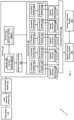
- FIG. 1 illustrates an exemplary system for an attention-based surface crack segmentation, according to an embodiment.
- the system 100 includes the surface crack segmentation unit 102 to solve the automatic surface crack segmentation problem using the attention-based surface crack segmentation method, in accordance with embodiments.
- the surface crack segmentation unit 102 includes or is otherwise in communication with a memory 104, a communication interface 106, and a processor 108.
- the memory 104, communication interface 106, and the processor 108 may be coupled by a system bus 110 or a similar mechanism.
- FIG.1 shows example components of the surface crack segmentation unit 102, in other implementations, system 100 may contain fewer components, additional components, different components, or differently arranged components than depicted in FIG.1 .
- the processor 108 may be implemented as one or more microprocessors, microcomputers, microcontrollers, digital signal processors, central processing units, state machines, logic circuitries, and/or any devices that facilitates in designing polymeric carrier for controlled release of molecules. Further, the processor 108 may comprise a multi-core architecture. Among other capabilities, the processor 108 is configured to fetch and execute computer-readable instructions or modules stored in the memory 104. The processor 108 may include circuitry implementing, among others, audio and logic functions associated with the communication.
- the processor 108 may include, but are not limited to, one or more digital signal processors (DSPs), one or more microprocessor, one or more special-purpose computer chips, one or more field-programmable gate arrays (FPGAs), one or more application-specific integrated circuits (ASICs), one or more computer(s), various analog to digital converters, digital to analog converters, and/or other support circuits.
- DSPs digital signal processors
- FPGAs field-programmable gate arrays
- ASICs application-specific integrated circuits
- the processor 108 thus may also include the functionality to encode messages and/or data or information.
- the processor 108 may include, among other things, a clock, an arithmetic logic unit (ALU) and logic gates configured to support operation of the processor 108.
- the processor 108 may include functionality to execute one or more software programs, which may be stored in the memory 104 or otherwise accessible to the processor 108.
- the memory 104 may store any number of pieces of information, and data, used by the system 100 to implement the functions of the system 100.
- the memory 104 may include any computer-readable medium known in the art including, for example, volatile memory, such as static random-access memory (SRAM) and dynamic random-access memory (DRAM), and/or nonvolatile memory, such as read only memory (ROM), erasable programmable ROM, flash memories, hard disks, optical disks, and magnetic tapes. Examples of volatile memory may include but are not limited to volatile random-access memory (RAM).
- the non-volatile memory may additionally or alternatively comprise an electrically erasable programmable read only memory (EEPROM), flash memory, hard drive, or the like.
- EEPROM electrically erasable programmable read only memory
- the memory 104 may be configured to store information, data, applications, instructions, or the like for enabling the system 100 to carry out various functions in accordance with various example embodiments. Additionally, or alternatively, the memory 104 may be configured to store instructions which when executed by the processor 108 causes the system 100 to behave in a manner as described in various embodiments.
- the communication interface(s) 106 can facilitate multiple communications within a wide variety of networks and protocol types, including wired networks, for example, local area network (LAN), cable, etc., and wireless networks, such as Wireless LAN (WLAN), cellular, or satellite.
- the communication interface (s) 106 may include one or more ports.
- One or more functionalities of the system 100 and components thereof, is further explained in detail with respect to block diagram described in FIG.2 .
- FIG.2 is a functional block diagram of various modules stored in the surface crack segmentation unit 102 of the system 100 of FIG. 1 in accordance with some embodiments.
- the surface crack segmentation unit 102 comprises of various modules that include an input image 112, an edge detection module 114, a concatenation module 116, a network 118, a convolution module 148, a plurality of sigmoid activation functions (e.g., sigmoid activation function1 158, sigmoid activation function2 160.
- the network 118 of the surface crack segmentation unit 102 further includes an encoder 120, a decoder 122, an enhancement encoder 124 and a fused network 126.
- the fused network 126 of the network 118 further includes one or more convolution modules (e.g., a convolution module1 128, a convolution module2 130, a convolution module3 132, a convolution module4 134, a convolution modules 136, and the like), and one or more deconvolution modules (e.g., a deconvolution module1 138, a deconvolution module2 140, a deconvolution modules 142, a deconvolution module4 144, a deconvolution modules 146, and the like).
- the encoder 120 further comprises of a plurality of attention modules 154A-N and the decoder 122 further comprises of a plurality of attention modules 156A-N.
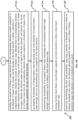
- FIGS. 3A and 3B with reference to FIGS. 1-2 , is an exemplary flow diagram 200 illustrating a method for attention-based surface crack segmentation using the system 100 of FIG. 1 .
- the system 100 comprises one or more data storage devices or the memory 104 operatively coupled to the one or more processors 108 and is configured to store instructions for execution of steps of the method by the surface crack segmentation unit 102.
- the steps of the method will now be explained with reference to the components of the system 100 and the steps 202-220 as depicted in FIGS. 1-2 , and the flow diagram as depicted in FIG.3A and 3B .
- Operations of the flowchart, and combinations of operation in the flowchart may be implemented by various means, such as hardware, firmware, processor, circuitry and/or other device associated with execution of software including one or more computer program instructions.
- one or more of the procedures described in various embodiments may be embodied by computer program instructions.
- the computer program instructions, which embody the procedures, described in various embodiments may be stored by at least one memory device of a system and executed by at least one processor in the system. Any such computer program instructions may be loaded onto a computer or other programmable system (for example, hardware) to produce a machine, such that the resulting computer or other programmable system embody means for implementing the operations specified in the flowchart.
- the operations of the method 200 are described with help of system 102. However, the operations of the method 200 can be described and/or practiced by using any other system.
- the disclosed method 200 relates to the attention-based surface crack segmentation.
- one or more hardware processors 108 receive a m-channel (e.g., 3 channel RGB (Red, Green and Blue) image (input image)) image.
- the input image 112 depicted in FIG.2 may include a 3 channel RGB (Red, Green and Blue) image as input.
- the one or more hardware processors 108 pass the received m-channel image through an edge detection algorithm to obtain a binary edge map of the m-channel image.
- the method uses the Holistically Edge Detection (HED) method (as known in the art method) to generate the binary edge map of the input image 112 which is depicted by the module edge detection module 114 of FIG.2 .
- HED Holistically Edge Detection
- input pixels of red, green, and blue channels are normalized between -1 and +1 (known in the art) which is a standard trivial preprocessing step on a RGB data.
- a binary (each pixel is either 0 or 1) edge map is used as the 4th channel wherein, the pixels of the edge map/edge channel information are binarized and not normalized.
- the one or more hardware processors 108 concatenate the obtained binary edge map along with a channel dimension to obtain a (m+1)-channel image (e.g., a 4-channel image), which is the input to the network 118.
- a (m+1)-channel image e.g., a 4-channel image
- the 3 channel RGB (m-channel) image is concatenated with the corresponding single channel binary edge map and hence the input becomes a 4-channel image ((m+1)-channel).
- the cracks do not have any specific shape and size and can occur naturally with random shapes and sizes, and like edges, cracks are thin, which is likely to be of 1 to 3-pixels width.
- the method biases the network's input data with the edge-like structures and uses the 4-channel image instead of the RGB image (e.g., 3 channel RGB image) as an input to the neural network (for example, the network 118), the fourth channel being the binary edge map of the RGB image.
- the output of the network 118 is the final fused feature map which is passed through the sigmoid activation function module 150 to obtain the final fused probability map.
- the obtained final fused probability map gives a per-pixel probability of being a crack pixel.
- the one or more hardware processors 108 extract a first set of feature maps from a plurality of stages of an encoder and a decoder by feeding the obtained (m+1)-channel image into a network, wherein the network comprises of the encoder, the decoder, an enhancement encoder, and a fused network.
- the network comprises of the encoder, the decoder, an enhancement encoder, and a fused network.
- Each of the plurality of stages of the encoder and the decoder comprises of a corresponding attention module (e.g., refer attention modules 154A-N and 156A-N respectively).
- Such stages of encoders, decoders and attention modules shall not be construed as limiting the scope of the present disclosure.
- the method implements the network 118 which uses the encoder-decoder network architecture as the base network.
- the network 118 includes 4 sub-networks, the encoder 120, the decoder 122, the enhancement encoder 124, and the fused network 126 as described in earlier sections and as depicted FIG 2 . It is to be understood by a person having ordinary skill in the art or person skilled in the art the examples of such network(s) implementation(s) shall not be construed as limiting the scope of the present invention.
- the encoder 120 is the most important part of the network 118, which extracts discriminative features from the (m+1)-channel image (for e.g., 4-channel image). Further the encoder 120 encodes the information from the (m+1)-channel image (for e.g., 4-channel image).
- the purpose of the encoder 120 is to extract features maps from the (m+1)-channel image (for e.g., 4-channel image), which are unique to the foreground and background objects.
- the extracted first set of features maps are further processed and used by the further components of the network 118 to label each pixel as a crack or background pixel.
- the one or more hardware processors 108 convolve the extracted first set of feature maps with an attention mask to obtain a second set of feature maps by passing the first set of feature maps through the corresponding attention module comprised in each of the plurality of stages of the encoder and the decoder respectively.
- the one or more hardware processors 108 merge the second set of feature maps from the corresponding attention module comprised in the plurality of stages of the encoder and the decoder in the fused network to obtain a plurality of merged feature maps.
- the second set of feature maps obtained from the corresponding attention module comprised in the plurality of stages of the encoder is fed into the enhancement encoder to obtain an output, wherein the obtained output serves as an input to the fused network.
- the second set of feature maps from the corresponding attention module comprised in the plurality of stages of the decoder is sequentially fed into the fused network.
- the feature maps from the enhancement encoder 124 and the decoder 122 are merged using a corresponding convolutional module at each stage as depicted by the convolution module1 128, the convolution module2 130, the convolution module3 132, the convolution module4 134 and the convolution module5 136 as depicted in FIG. 2 .
- the one or more hardware processors 108 up sample the plurality of merged feature maps by passing each of the merged feature maps through each of a deconvolutional layer comprised in the fused network as depicted by the fused network 126, the deconvolution module1 138, the deconvolution module2 140, the deconvolution module3 142, the deconvolution module4 144, the deconvolution module5 146, the sigmoid activation function module 150 and the convolution modules (from 128 to 136) of the FIG. 2 . Further, the plurality of up sampled feature maps are passed through the plurality of sigmoid activation functions (e.g., sigmoid activation function1 158, sigmoid activation function2 160.
- sigmoid activation functions e.g., sigmoid activation function1 158, sigmoid activation function2 160.
- crack detection problem is inherently a data imbalance problem. Therefore, to efficiently handle this problem the focal loss, is used to reduce the dominance of background pixels during training and efficiently handle the data imbalance. Further, during training the focal loss does not give equal weights to positive and negative class. Rather it gives more weight to examples of the positive class, which are in minority and gives less weight to examples of the negative class, which are in brute majority.
- the one or more hardware processors 108 concatenate the plurality of up sampled feature maps and pass the concatenated feature maps through a convolution layer to obtain a final fused feature map.
- the convolutional module 148 is used to fuse the concatenated features maps from the five stages of the fused network 126 into a single feature map as depicted in the FIG. 2 . It is to be note that such stages of the fused network shall not be construed as limiting scope of the present disclosure.
- the one or more hardware processors 108 pass the final fused feature map through a sigmoid activation function to obtain a final fused probability map.
- the final fused probability map is further used for calculating a focal loss and a soft-IoU loss, wherein the soft-IoU loss is used to reduce the shift at pixel level between predictions and the single-channel binary ground truth.
- the sigmoid activation function module 150 of the surface crack segmentation unit 102 of FIG. 2 is used to obtain a final fused probability map. It is to be noted that the plurality of sigmoid activation functions (e.g., sigmoid activation function1 158, sigmoid activation function2 160.
- the one or more hardware processors 108 iteratively thresholding the final fused probability map using a plurality of threshold values to obtain an optimal threshold value wherein the obtained optimal threshold value is used to obtain a binary predicted image that indicates a set of predicted crack pixels as depicted by the iterative threshold module 152 of FIG. 2 .
- the final fused probability map is thresholded to obtain a binary output or the binary predicted image.
- the term 'iterative' is used here, as a plurality of thresholds values are used or tested, to choose/select a good threshold. In an example embodiment of the present disclosure, 100 values of threshold are tested. However, such values of threshold are not construed as the limiting scope of the present disclosure.
- a corresponding binary predicted image is obtained, wherein a F-score is calculated between the single-channel binary ground-truth and obtained binary predicted image corresponding to each of the plurality of thresholds values.
- the threshold value corresponding to a maximum F- score is selected as an optimal threshold value which is explained in detail in the later sections of the present disclosure.
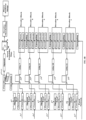
- FIGS. 4A and 4B shows a network diagram of a SCNet (Supervised CrackNet) Architecture illustrating the system and method for attention-based surface crack segmentation.
- the present invention implements the network 118 which uses the encoder-decoder network architecture as the base network as depicted in FIG. 4A and 4B and as described above in the earlier sections.
- the input to the network is a 4-channel image and the output of the network is a single-channel segmented image of the same size, in which white pixels represent the crack pixels and black pixels represent the non-crack pixels.
- the encoder contains 5 encoder blocks with 13 convolutional layers in total, placed sequentially, as depicted in FIG. 4A .
- a max-pooling layer is used to down sample the size of the feature maps to half of its size.
- the encoder 120 encodes the information from the 4-channel image and extracts the feature maps wherein the extracted features are further processed to give relative weights to the pixels as described above in the earlier sections.
- the decoder 122 aims to unpack the information from the extracted feature maps and the network 118 includes 5 decoder blocks, as depicted in FIG. 4B .
- an up-sampling layer is used to up-sample the size of the feature maps. Since both encoder and decoder have five stages, in an embodiment of the present invention, and each stage represents feature maps of different sizes, intuitively encoder and decoder also represent the scale-space representation of the feature maps.
- the network 118 uses an enhancement encoder subnetwork (i.e., the enhancement encoder 124 of FIG.2 ).
- the feature maps from the encoder at each stage first passes through a set of attention modules as depicted in FIG. 4A . Further the attention modules generate new refined feature maps from the original feature maps and are used at both the encoder 120 and the decoder 122 side wherein this attention-driven refinement highlights the details of the foreground objects in the feature space.
- the refined feature maps are then fed into the enhancement encoder subnetwork (i.e., the enhancement encoder 124 of FIG.2 ), pre-existing in the base network (network 118).
- the purpose of having the enhancement encoder 124 is to extract meaningful information from the feature maps of the deeper stages, because cracks are thin and lowdimensional objects and are represented well with the shallower-level features maps, so inside the enhancement encoder 124, the feature maps from the deeper layers are improved by merging them with the feature maps of the shallower-layers.
- the "meaningful information” refers to the discriminative information which can be obtained from the feature maps. Further, the discriminative information assists the network 118 to distinguish between the crack pixels and non-crack pixels i.e., the per-pixel classification task.
- the feature maps from the earlier stages are concatenated along the channel dimension with the feature maps from the lower stages and passed forward for further stages.
- the use of max-pooling layers inside the enhancement encoder is done to downsample the concatenated maps to bring their spatial size equivalent to the size of the feature maps of the lower stage as depicted in FIG.4A .
- both encoder 120 and decoder 122 have 5 stages.
- the fused subnetwork i.e., fused network 126
- the refined feature maps from each stage of the encoder are merged with the feature maps from the corresponding stage of the decoder. Therefore, the fused network also has 5 stages. Such stages of fused network shall not be construed as limiting the scope of the present invention.
- the feature maps from the i -th stage of the encoder are concatenated with the feature maps from the i-th stage of the decoder along the channel dimension.
- the concatenated feature maps are then passed through a 1x1 convolutional layer, deconvolutional layer, and sigmoid activation function as depicted in FIG. 4B .
- the convolutional layer is used to fuse the concatenated feature maps
- deconvolutional layer is used to up sample the feature map to the original size of the input image.
- the final fused feature map is then passed through the sigmoid activation function 150 to obtain a final fused probability map as depicted in FIG. 4B .
- CE ⁇ log p t ⁇ log 1 ⁇ p otherwise
- ⁇ p t y 1 1 ⁇ p t otherwise
- the present invention uses the focal loss, a pixel-wise adaptation of a loss calculated over bounding boxes, originally introduced for the object detection task.
- the focal loss gives less importance to the negative samples, which are in brute majority, and gives more attention to positive samples, which are in minority, thus indirectly handling the problem of data imbalance.
- p t is the probability of a pixel being a crack pixel
- L IoU the problem with L IoU is its non-differentiable nature because of True Positives (TP), False positives (FP), False Negatives (FN) being discrete values. Due to the nondifferentiability of the loss, it is not possible to calculate the gradients which are needed for back propagation. To incorporate the L IoU in the total loss, it is required to have L IoU in the continuous form.
- the present invention uses the Soft-IoU loss, which is a continuous approximation of the L IoU . Therefore, the final loss is the combination of focal loss and soft-IoU Loss.
- the total loss function is a combination of the focal loss and the soft-IoU loss.
- the focal loss is calculated between the final fused probability map, P fused and the single-channel binary ground-truth and between the probability maps, P i at each stage of the fused network 126 and the single-channel binary ground-truth.
- the soft-IoU loss is calculated between the final fused probability map, P fused and the single-channel binary ground-truth.
- the probability map at i-th stage is defined as follows.
- the final fused probability map gives the final probability of the input pixel being a crack pixel or the background pixel. Further, the final fused probability map is obtained from the final fused feature map obtained by passing the final fused feature map through a sigmoid activation function.
- Each probability map from the plurality of probability maps P i and the single-channel ground-truth, Y is used to calculate the focal loss at each stage of the fused network.
- L focal i denote the focal loss obtained at the i-th scale using P' and single-channel ground-truth Y
- L focal fused denotes the focal loss obtained using the final fused probability map, P fused and the single-channel binary ground-truth.
- the size of an input image is M x N .
- IoU IoU p fused
- Y L total L focal total + L IoU
- w i are scalar weights used to give relative importance to the individual stage in training.
- the training details of the attention-based model for surface crack segmentation as implemented and described herein is as follows:
- the per-pixel accuracy is used to be a common metric for the image segmentation task.
- the per-pixel accuracy metric gives a better model when using the balanced dataset.
- a F-score is used, which is a suitable metric for the image segmentation task when using an imbalanced dataset.
- F-score is the name of an output metric/performance measure, which is used to compare different methods in the image segmentation task and using F-score the dominance of majority pixels can be ignored.
- the final fused probability map is thresholded using the iterative thresholding process which is depicted by the iterative threshold module 152 of FIG.2 , and obtain the true positives (TP), false positives (FP), and true negatives (TN) by comparing with the corresponding single-channel binary ground-truth.
- the F-score is measured using the harmonic mean of precision and recall.
- FIG. 5 is a use case example illustrating proposed surface crack segmentation according to some embodiments.
- the leftmost image is the actual RGB image
- the image in the middle represents the single-channel binary ground-truth
- the rightmost image is the final fused crack probability image.
- the rightmost image is thresholded and compared with the single-channel binary ground-truth, to obtain true positives, false positives and false negatives.
- Table 1 represents the comparison of the described approach of the present disclosure against other two recent crack-detection works on three different datasets. Below Table 1 gives details of the comparison wherein the performance of each method is measured using F-score. Table 1: Performance Comparison with recent crack-detection works. Methods Datasets Codebrim Deepcrack Crackforest METU Wessex Water HCNN 57.14 87.58 79.56 65.40 87.23 DeepCrack - 1 61.14 86 85.75 66.10 90.38 DeepCrack -2 54.88 84.8 64 57.86 89.91 Method of the present disclosure 64.08 90.85 89.23 69.13 94.43
- the present invention addresses an open aspect of automatic crack segmentation problem, that of generalizing and improving the performance of segmentation across a variety of scenarios. More specifically, the present invention implements a generalized approach for surface crack segmentation.
- the present invention is validated on a variety of datasets related to surveillance of different infrastructures, under varying conditions to compare the performance of the attention-based model of the present invention with other state of art models. Further, the attention-based model as implemented and described herein is validated from both semantic segmentation and anomaly detection point of views, since crack is also a surface anomaly and occurs as a rare spatial event.
- the present invention further uses a single baseline architecture, which is derived from SegNet.
- Such computer-readable storage means contain program-code means for implementation of one or more steps of the method, when the program runs on a server or mobile device or any suitable programmable device.
- the hardware device can be any kind of device which can be programmed including e.g., any kind of computer like a server or a personal computer, or the like, or any combination thereof.
- the device may also include means which could be e.g., hardware means like e.g., an application-specific integrated circuit (ASIC), a field-programmable gate array (FPGA), or a combination of hardware and software means, e.g., an ASIC and an FPGA, or at least one microprocessor and at least one memory with software processing components located therein.
- the means can include both hardware means and software means.
- the method embodiments described herein could be implemented in hardware and software.
- the device may also include software means. Alternatively, the embodiments may be implemented on different hardware devices, e.g., using a plurality of CPUs.
- the embodiments herein can comprise hardware and software elements.
- the embodiments that are implemented in software include but are not limited to, firmware, resident software, microcode, etc.
- the functions performed by various components described herein may be implemented in other components or combinations of other components.
- a computer-usable or computer readable medium can be any apparatus that can comprise, store, communicate, propagate, or transport the program for use by or in connection with the instruction execution system, apparatus, or device.
- a computer-readable storage medium refers to any type of physical memory on which information or data readable by a processor may be stored.
- a computer-readable storage medium may store instructions for execution by one or more processors, including instructions for causing the processor(s) to perform steps or stages consistent with the embodiments described herein.
- the term "computer-readable medium” should be understood to include tangible items and exclude carrier waves and transient signals, i.e., be non-transitory. Examples include random access memory (RAM), read-only memory (ROM), volatile memory, nonvolatile memory, hard drives, CD ROMs, DVDs, flash drives, disks, and any other known physical storage media.
Landscapes
- Engineering & Computer Science (AREA)
- Theoretical Computer Science (AREA)
- General Physics & Mathematics (AREA)
- Computer Vision & Pattern Recognition (AREA)
- Physics & Mathematics (AREA)
- Multimedia (AREA)
- Evolutionary Computation (AREA)
- Artificial Intelligence (AREA)
- General Health & Medical Sciences (AREA)
- Health & Medical Sciences (AREA)
- Medical Informatics (AREA)
- Databases & Information Systems (AREA)
- Computing Systems (AREA)
- Software Systems (AREA)
- Data Mining & Analysis (AREA)
- Life Sciences & Earth Sciences (AREA)
- Bioinformatics & Computational Biology (AREA)
- Bioinformatics & Cheminformatics (AREA)
- Evolutionary Biology (AREA)
- General Engineering & Computer Science (AREA)
- Quality & Reliability (AREA)
- Biodiversity & Conservation Biology (AREA)
- Biomedical Technology (AREA)
- Molecular Biology (AREA)
- Image Analysis (AREA)
Claims (12)
- Prozessorimplementiertes Verfahren (300), umfassend:Empfangen, über einen oder mehrere Hardwareprozessoren, eines m-Kanal-Bildes (302);Leiten, über den einen oder die mehreren Hardwareprozessoren, des empfangenen m-Kanal-Bildes durch einen Kantendetektionsalgorithmus, um eine binäre Kantenkarte des m-Kanal-Bildes (304) zu erhalten;Verketten, über den einen oder die mehreren Hardwareprozessoren, der erhaltenen binären Kantenkarte zusammen mit einer Kanaldimension, um ein (m+1)-Kanalbild (306) zu erhalten;Extrahieren, über den einen oder die mehreren Hardwareprozessoren, eines ersten Satzes von Merkmalskarten aus einer Mehrzahl von Stufen eines Codierers und eines Decodierers durch Einspeisen des erhaltenen (m+1)-Kanalbildes in ein Netzwerk, wobei das Netzwerk den Codierer, den Decodierer, einen Verbesserungscodierer und ein verschmolzenes Netzwerk umfasst, und wobei jede der Mehrzahl von Stufen des Codierers und des Decodierers ein entsprechendes Aufmerksamkeitsmodul (308) umfasst, und wobei der erste Satz von Merkmalskarten an jeder Stufe des Codierers zuerst durch das entsprechende Aufmerksamkeitsmodul, das der jeweiligen Stufe des Codierers zugeordnet ist, geleitet wird, und der erste Satz von Merkmalskarten an jeder Stufe des Decodierers zuerst durch das entsprechende Aufmerksamkeitsmodul, das der jeweiligen Stufe des Decodierers zugeordnet ist, geleitet wird;Falten, über den einen oder die mehreren Hardwareprozessoren, des extrahierten ersten Satzes von Merkmalskarten aus der Mehrzahl von Stufen des Codierers und des Decodierers mit einer Aufmerksamkeitsmaske, um einen zweiten Satz von Merkmalskarten durch Leiten des ersten Satzes von Merkmalskarten durch das entsprechende Aufmerksamkeitsmodul, das in jeder der Mehrzahl von Stufen des Codierers bzw. des Decodierers enthalten ist, zu erhalten (310);Zusammenführen, über den einen oder die mehreren Hardwareprozessoren, des zweiten Satzes von Merkmalskarten, der von dem entsprechenden Aufmerksamkeitsmodul erhalten wird, das in der Mehrzahl von Stufen des Codierers und des Decodierers enthalten ist, in dem verschmolzenen Netzwerk, um eine Mehrzahl von zusammengeführten Merkmalskarten zu erhalten, wobei der zweite Satz von Merkmalskarten, der von dem entsprechenden Aufmerksamkeitsmodul erhalten wird, das in der Mehrzahl von Stufen des Codierers enthalten ist, in den Verbesserungscodierer eingespeist wird, um eine Ausgabe zu erhalten, wobei die erhaltene Ausgabe als eine Eingabe in eine entsprechende Stufe des verschmolzenen Netzwerks dient, wobei der Verbesserungscodierer unterscheidende Informationen aus dem zweiten Satz von Merkmalskarten extrahiert, die dem Netzwerk helfen, zwischen Risspixeln und Nicht-Risspixeln zu unterscheiden, durch Verketten entlang der Kanalrichtung der Merkmalskarten aus den flacheren Stufen des Codierers mit den Merkmalskarten aus den tieferen Stufen des Codierers, wobei Max-Pooling verwendet wird, um die Größen der verketteten Merkmalskarten äquivalent zu machen, wobei der zweite Satz von Merkmalskarten von dem entsprechenden Aufmerksamkeitsmodul, das in der Mehrzahl von Stufen des Decodierers enthalten ist, sequentiell in eine entsprechende Stufe des verschmolzenen Netzwerks eingespeist wird (312), wobei der Satz von Merkmalen aus jeder Stufe des Verbesserungscodierers und der zweite Satz von Merkmalen aus einer entsprechenden Stufe des Decodierers unter Verwendung eines entsprechenden Faltungsmoduls an jeder Stufe des verschmolzenen Netzwerks zusammengeführt werden und jede der zusammengeführten Merkmalskarten durch jede einer Entfaltungsschicht an jeder Stufe des verschmolzenen Netzwerks hochgetastet wird (314), und wobei jede der Mehrzahl von hochgetasteten Merkmalskarten durch eine entsprechende Sigmoid-Aktivierungsfunktion geleitet wird, um eine Mehrzahl von Wahrscheinlichkeitskarten zu erhalten, Pi , an jeder Stufe des verschmolzenen Netzwerks, wobei jede Wahrscheinlichkeitskarte aus der Mehrzahl von Wahrscheinlichkeitskarten und eine binäre Ein-Kanal-Ground-Truth verwendet werden, um einen Fokalverlust an jeder Stufe des verschmolzenen Netzwerks zu berechnen;Verketten, über den einen oder die mehreren Hardwareprozessoren, der Mehrzahl von hochabgetasteten Merkmalskarten und Leiten der verketteten Merkmalskarten durch eine Faltungsschicht, um eine endgültige verschmolzene Merkmalskarte (316) zu erhalten;Leiten, über den einen oder die mehreren Hardwareprozessoren, der endgültigen verschmolzenen Merkmalskarte durch eine Sigmoid-Aktivierungsfunktion, um eine endgültige verschmolzene Wahrscheinlichkeitskarte (318) zu erhalten, wobei sich die entsprechende Sigmoid-Aktivierungsfunktion, die verwendet wird, um die Mehrzahl von Wahrscheinlichkeitskarten Pi zu erhalten, in jeder Stufe des verschmolzenen Netzwerks von der Sigmoid-Aktivierungsfunktion unterscheidet, die verwendet wird, um die endgültige verschmolzene Wahrscheinlichkeitskarte aus der endgültigen verschmolzenen Merkmalskarte zu erhalten; unditeratives Schwellenwertbilden, über den einen oder die mehreren Hardwareprozessoren, der endgültigen verschmolzenen Wahrscheinlichkeitskarte unter Verwendung einer Mehrzahl von Schwellenwerten, um einen optimalen Schwellenwert zu erhalten, wobei der erhaltene optimale Schwellenwert verwendet wird, um ein binäres vorhergesagtes Bild zu erhalten, das einen Satz von vorhergesagten Risspixeln (320) anzeigt.
- Prozessorimplementiertes Verfahren nach Anspruch 1, wobei der Fokalverlust verwendet wird, um die Dominanz von Hintergrundpixeln während des Trainings zu reduzieren.
- Prozessorimplementiertes Verfahren nach Anspruch 1, wobei der Schritt des Leitens der endgültigen verschmolzenen Merkmalskarte durch die Sigmoid-Aktivierungsfunktion, um die endgültige verschmolzene Wahrscheinlichkeitskarte zu erhalten, das Berechnen eines Fokalverlusts und eines Soft-Intersection-over-Union-(Soft-IoU)-Verlusts umfasst.
- Prozessorimplementiertes Verfahren nach Anspruch 3, wobei der Soft-IoU-Verlust verwendet wird, um die Verschiebung auf Pixelebene zwischen Vorhersagen und der binären Ein-Kanal-Ground-Truth zu reduzieren.
- System (100), umfassend:einen Speicher (104), der Anweisungen speichert;eine oder mehrere Kommunikationsschnittstellen (106); undeinen oder mehrere Hardwareprozessoren (108), die über die eine oder die mehreren Kommunikationsschnittstellen (106) mit dem Speicher (104) gekoppelt sind, wobei der eine oder die mehreren Hardwareprozessoren (108) durch die Anweisungen konfiguriert sind zum:Empfangen eines m-Kanal-Bildes;Leiten des empfangenen m-Kanal-Bildes durch einen Kantendetektionsalgorithmus, um eine binäre Kantenkarte des m-Kanal-Bildes zu erhalten;Verketten der erhaltenen binären Kantenkarte zusammen mit einer Kanaldimension, um ein (m+1)-Kanalbild zu erhalten;Extrahieren eines ersten Satzes von Merkmalskarten aus einer Mehrzahl von Stufen eines Codierers und eines Decodierers durch Einspeisen des erhaltenen (m+1)-Kanalbildes in ein Netzwerk, wobei das Netzwerk den Codierer, den Decodierer, einen Verbesserungscodierer und ein verschmolzenen Netzwerk umfasst, und wobei jede der Mehrzahl von Stufen des Codierers und des Decodierers ein entsprechendes Aufmerksamkeitsmodul umfasst, und wobei der erste Satz von Merkmalskarten an jeder Stufe des Codierers zuerst durch das entsprechende Aufmerksamkeitsmodul, das der jeweiligen Stufe des Codierers zugeordnet ist, geleitet wird, und der erste Satz von Merkmalskarten an jeder Stufe des Decodierers zuerst durch das entsprechende Aufmerksamkeitsmodul, das der jeweiligen Stufe des Decodierers zugeordnet ist, geleitet wird;Falten des extrahierten ersten Satzes von Merkmalskarten aus der Mehrzahl von Stufen des Codierers und des Decodierers mit einer Aufmerksamkeitsmaske, um einen zweiten Satz von Merkmalskarten durch Leiten des ersten Satzes von Merkmalskarten durch das entsprechende Aufmerksamkeitsmodul, das in jeder der Mehrzahl von Stufen des Codierers bzw. des Decodierers enthalten ist, zu erhalten;Zusammenführen des zweiten Satzes von Merkmalskarten aus dem entsprechenden Aufmerksamkeitsmodul, das in der Mehrzahl von Stufen des Codierers enthalten ist, und des zweiten Satzes von Merkmalskarten aus dem entsprechenden Aufmerksamkeitsmodul, das in der Mehrzahl von Stufen des Decodierers enthalten ist, in dem verschmolzenen Netzwerk, um eine Mehrzahl von zusammengeführten Merkmalskarten zu erhalten, wobei der zweite Satz von Merkmalskarten, der aus dem entsprechenden Aufmerksamkeitsmodul erhalten wird, das in der Mehrzahl von Stufen des Codierers enthalten ist, in den Verbesserungscodierer eingespeist wird, um eine Ausgabe zu erhalten, wobei die erhaltene Ausgabe als eine Eingabe in eine entsprechende Stufe des verschmolzenen Netzwerks dient, und wobei der Verbesserungscodierer unterscheidende Informationen aus dem zweiten Satz von Merkmalskarten extrahiert, die dem Netzwerk helfen, zwischen Risspixeln und Nicht-Risspixeln zu unterscheiden, indem die Merkmalskarten aus den flacheren Stufen des Codierers mit den Merkmalskarten aus den tieferen Stufen des Codierers entlang der Kanalrichtung verkettet werden, wobei Max-Pooling verwendet wird, um die Größen der verketteten Merkmalskarten äquivalent zu machen, wobei der zweite Satz von Merkmalskarten aus dem entsprechenden Aufmerksamkeitsmodul, das in der Mehrzahl von Stufen des Decodierers enthalten ist, sequentiell in eine entsprechende Stufe des verschmolzenen Netzwerks eingespeist wird, wobei der Satz von Merkmalen aus jeder Stufe des Verbesserungscodierers und der zweite Satz von Merkmalen aus einer entsprechenden Stufe des Decodierers unter Verwendung eines entsprechenden Faltungsmoduls an jeder Stufe des verschmolzenen Netzwerks zusammengeführt werden und jede der zusammengeführten Merkmalskarten durch jede einer Entfaltungsschicht an jeder Stufe des verschmolzenen Netzwerks hochgetaktet wird, und wobei jede der Mehrzahl von hochgetakteten Merkmalskarten durch eine entsprechende Sigmoid-Aktivierungsfunktion geleitet wird, um eine Mehrzahl von Wahrscheinlichkeitskarten, Pi , an jeder Stufe des verschmolzenen Netzwerks zu erhalten, wobei jede Wahrscheinlichkeitskarte aus der Mehrzahl von Wahrscheinlichkeitskarten und eine binäre Ein-Kanal-Ground-Truth verwendet werden, um einen Fokalverlust an jeder Stufe des verschmolzenen Netzwerks zu berechnen;Verketten der Mehrzahl von hochabgetasteten Merkmalskarten und Leiten der verketteten Merkmalskarten durch eine Faltungsschicht, um eine endgültige verschmolzene Merkmalskarte zu erhalten;Leiten der endgültigen verschmolzenen Merkmalskarte durch eine Sigmoid-Aktivierungsfunktion, um eine endgültige verschmolzene Wahrscheinlichkeitskarte zu erhalten, wobei sich die entsprechende Sigmoid-Aktivierungsfunktion, die verwendet wird, um die Mehrzahl von Wahrscheinlichkeitskarten Pi zu erhalten, in jeder Stufe des verschmolzenen Netzwerks von der Sigmoid-Aktivierungsfunktion unterscheidet, die verwendet wird, um die endgültige verschmolzene Wahrscheinlichkeitskarte aus der endgültigen verschmolzenen Merkmalskarte zu erhalten; unditeratives Schwellenwertbilden der endgültigen verschmolzenen Wahrscheinlichkeitskarte unter Verwendung einer Mehrzahl von Schwellenwerten, um einen optimalen Schwellenwert zu erhalten, wobei der erhaltene optimale Schwellenwert verwendet wird, um ein binäres vorhergesagtes Bild zu erhalten, das einen Satz von vorhergesagten Risspixeln anzeigt.
- System nach Anspruch 5, wobei der Fokalverlust verwendet wird, um die Dominanz von Hintergrundpixeln während des Trainings zu reduzieren.
- System nach Anspruch 5, wobei der Schritt des Leitens der endgültigen verschmolzenen Merkmalskarte durch die Sigmoid-Aktivierungsfunktion, um die endgültige verschmolzene Wahrscheinlichkeitskarte zu erhalten, das Berechnen eines Fokalverlusts und eines Soft-Intersection-over-Union-(Soft-IoU)-Verlusts umfasst.
- System nach Anspruch 7, wobei der Soft-IoU-Verlust verwendet wird, um die Verschiebung auf Pixelebene zwischen Vorhersagen und der binären Ein-Kanal-Ground-Truth zu reduzieren.
- Ein oder mehrere nichtflüchtige maschinenlesbare Informationsspeichermedien, die eine oder mehrere Anweisungen umfassen, die, wenn sie von einem oder mehreren Hardwareprozessoren ausgeführt werden, bewirken:Empfangen eines m-Kanal-Bildes;Leiten des empfangenen m-Kanal-Bildes durch einen Kantendetektionsalgorithmus, um eine binäre Kantenkarte des m-Kanal-Bildes zu erhalten;Verketten der erhaltenen binären Kantenkarte zusammen mit einer Kanaldimension, um ein (m+1)-Kanalbild zu erhalten;Extrahieren eines ersten Satzes von Merkmalskarten aus einer Mehrzahl von Stufen eines Codierers und eines Decodierers durch Einspeisen des erhaltenen (m+1)-Kanalbildes in ein Netzwerk, wobei das Netzwerk den Codierer, den Decodierer, einen Verbesserungscodierer und ein verschmolzenen Netzwerk umfasst, und wobei jede der Mehrzahl von Stufen des Codierers und des Decodierers ein entsprechendes Aufmerksamkeitsmodul umfasst, und wobei der erste Satz von Merkmalskarten an jeder Stufe des Codierers zuerst durch das entsprechende Aufmerksamkeitsmodul, das der jeweiligen Stufe des Codierers zugeordnet ist, geleitet wird, und der erste Satz von Merkmalskarten an jeder Stufe des Decodierers zuerst durch das entsprechende Aufmerksamkeitsmodul, das der jeweiligen Stufe des Decodierers zugeordnet ist, geleitet wird;Falten des extrahierten ersten Satzes von Merkmalskarten aus der Mehrzahl von Stufen des Codierers und des Decodierers mit einer Aufmerksamkeitsmaske, um einen zweiten Satz von Merkmalskarten durch Leiten des ersten Satzes von Merkmalskarten durch das entsprechende Aufmerksamkeitsmodul, das in jeder der Mehrzahl von Stufen des Codierers bzw. des Decodierers enthalten ist, zu erhalten;Zusammenführen des zweiten Satzes von Merkmalskarten, der aus dem entsprechenden Aufmerksamkeitsmodul erhalten wird, das in der Mehrzahl von Stufen des Codierers und des Decodierers enthalten ist, in dem verschmolzenen Netzwerk, um eine Mehrzahl von zusammengeführten Merkmalskarten zu erhalten, wobei der zweite Satz von Merkmalskarten, der aus dem entsprechenden Aufmerksamkeitsmodul erhalten wird, das in der Mehrzahl von Stufen des Codierers enthalten ist, in den Verbesserungscodierer eingespeist wird, um eine Ausgabe zu erhalten, wobei die erhaltene Ausgabe als eine Eingabe in eine entsprechende Stufe des verschmolzenen Netzwerks dient, wobei der Verbesserungscodierer unterscheidende Informationen aus dem zweiten Satz von Merkmalskarten extrahiert, die dem Netzwerk helfen, zwischen Risspixeln und Nicht-Risspixeln zu unterscheiden, indem die Merkmalskarten aus den flacheren Stufen des Codierers mit den Merkmalskarten aus den tieferen Stufen des Codierers entlang der Kanalrichtung verkettet werden, wobei Max-Pooling verwendet wird, um die Größen der verketteten Merkmalskarten äquivalent zu machen, wobei der zweite Satz von Merkmalskarten aus dem entsprechenden Aufmerksamkeitsmodul, das in der Mehrzahl von Stufen des Decodierers enthalten ist, sequentiell in eine entsprechende Stufe des verschmolzenen Netzwerks eingespeist wird, wobei der Satz von Merkmalen aus jeder Stufe des Verbesserungscodierers und der zweite Satz von Merkmalen aus einer entsprechenden Stufe des Decodierers unter Verwendung eines entsprechenden Faltungsmoduls an jeder Stufe des verschmolzenen Netzwerks zusammengeführt werden und jede der zusammengeführten Merkmalskarten durch jede einer Entfaltungsschicht an jeder Stufe des verschmolzenen Netzwerks hochgetaktet wird, und wobei jede der Mehrzahl von hochgetakteten Merkmalskarten durch eine entsprechende Sigmoid-Aktivierungsfunktion geleitet wird, um eine Mehrzahl von Wahrscheinlichkeitskarten, Pi , an jeder Stufe des verschmolzenen Netzwerks zu erhalten, wobei jede Wahrscheinlichkeitskarte aus der Mehrzahl von Wahrscheinlichkeitskarten und eine binäre Ein-Kanal-Ground-Truth verwendet werden, um einen Fokalverlust an jeder Stufe des verschmolzenen Netzwerks zu berechnen;Verketten der Mehrzahl von hochabgetasteten Merkmalskarten und Leiten der verketteten Merkmalskarten durch eine Faltungsschicht, um eine endgültige verschmolzene Merkmalskarte zu erhalten;Leiten der endgültigen verschmolzenen Merkmalskarte durch eine Sigmoid-Aktivierungsfunktion, um eine endgültige verschmolzene Wahrscheinlichkeitskarte zu erhalten, wobei sich die entsprechende Sigmoid-Aktivierungsfunktion, die verwendet wird, um die Mehrzahl von Wahrscheinlichkeitskarten Pi zu erhalten, in jeder Stufe des verschmolzenen Netzwerks von der Sigmoid-Aktivierungsfunktion unterscheidet, die verwendet wird, um die endgültige verschmolzene Wahrscheinlichkeitskarte aus der endgültigen verschmolzenen Merkmalskarte zu erhalten; unditeratives Schwellenwertbilden der endgültigen verschmolzenen Wahrscheinlichkeitskarte unter Verwendung einer Mehrzahl von Schwellenwerten, um einen optimalen Schwellenwert zu erhalten, wobei der erhaltene optimale Schwellenwert verwendet wird, um ein binäres vorhergesagtes Bild zu erhalten, das einen Satz von vorhergesagten Risspixeln anzeigt.
- Ein oder mehrere nichtflüchtige maschinenlesbare Informationsspeichermedien nach Anspruch 9, wobei der Fokalverlust verwendet wird, um die Dominanz von Hintergrundpixeln während des Trainings zu reduzieren.
- Ein oder mehrere nichtflüchtige maschinenlesbare Informationsspeichermedien nach Anspruch 9, wobei der Schritt des Leitens der endgültigen verschmolzenen Merkmalskarte durch die Sigmoid-Aktivierungsfunktion, um die endgültige verschmolzene Wahrscheinlichkeitskarte zu erhalten, das Berechnen eines Fokalverlusts und eines Soft-Intersection-over-Union-(Soft-IoU)-Verlusts umfasst.
- Ein oder mehrere nichtflüchtige maschinenlesbare Informationsspeichermedien nach Anspruch 11, wobei der Soft-IoU-Verlust verwendet wird, um die Verschiebung auf Pixelebene zwischen Vorhersagen und der binären Ein-Kanal-Ground-Truth zu reduzieren.
Applications Claiming Priority (1)
| Application Number | Priority Date | Filing Date | Title |
|---|---|---|---|
| IN202121001816 | 2021-01-14 |
Publications (3)
| Publication Number | Publication Date |
|---|---|
| EP4033403A1 EP4033403A1 (de) | 2022-07-27 |
| EP4033403B1 true EP4033403B1 (de) | 2024-08-07 |
| EP4033403C0 EP4033403C0 (de) | 2024-08-07 |
Family
ID=79602295
Family Applications (1)
| Application Number | Title | Priority Date | Filing Date |
|---|---|---|---|
| EP22151349.2A Active EP4033403B1 (de) | 2021-01-14 | 2022-01-13 | System und verfahren zur aufmerksamkeitsbasierten segmentierung von oberflächenrissen |
Country Status (2)
| Country | Link |
|---|---|
| US (1) | US12051229B2 (de) |
| EP (1) | EP4033403B1 (de) |
Families Citing this family (59)
| Publication number | Priority date | Publication date | Assignee | Title |
|---|---|---|---|---|
| US12254673B1 (en) * | 2021-01-19 | 2025-03-18 | Given Imaging Ltd | Systems and methods for classifying or selecting images based on image segmentation |
| US12147504B2 (en) * | 2021-08-31 | 2024-11-19 | University Of South Florida | Systems and methods for classifying mosquitoes based on extracted masks of anatomical components from images |
| CN115294052A (zh) * | 2022-08-02 | 2022-11-04 | 中国农业银行股份有限公司 | 一种屏幕破损区域的检测方法、装置和存储介质 |
| CN115293991B (zh) * | 2022-08-31 | 2026-04-17 | 北京地平线信息技术有限公司 | 原始图像的处理方法、模型、装置、电子设备和存储介质 |
| CN116110088B (zh) * | 2022-09-10 | 2026-04-03 | 中国科学院计算技术研究所 | 一种基于人脸的族群识别方法和族群识别模型的训练方法 |
| CN115375999B (zh) * | 2022-10-25 | 2023-02-14 | 城云科技(中国)有限公司 | 应用于危化品车检测的目标检测模型、方法及装置 |
| CN115661623A (zh) * | 2022-11-01 | 2023-01-31 | 中公高科养护科技股份有限公司 | 一种路面裂缝检测方法、介质及系统 |
| WO2024092590A1 (zh) * | 2022-11-03 | 2024-05-10 | 华为技术有限公司 | 一种图像处理方法、模型训练方法、装置及终端设备 |
| CN115932140A (zh) * | 2022-11-16 | 2023-04-07 | 福建省杭氟电子材料有限公司 | 一种电子级六氟丁二烯的质检系统及其方法 |
| CN115761233B (zh) * | 2022-11-21 | 2025-10-31 | 南京信息工程大学 | 融合CBAM的轻量化UNet裂缝图像分割方法 |
| CN115797670B (zh) * | 2022-11-22 | 2025-10-31 | 华能伊敏煤电有限责任公司 | 基于卷积神经网络的斗轮性能监测方法及其系统 |
| CN115754108B (zh) * | 2022-11-23 | 2023-06-09 | 福建省杭氟电子材料有限公司 | 一种电子级六氟丁二烯的酸度测定系统及其方法 |
| CN115760810B (zh) * | 2022-11-24 | 2024-04-12 | 江南大学 | 医学图像分割装置、方法及计算机可读存储介质 |
| CN115953357B (zh) * | 2022-12-06 | 2026-02-10 | 哈尔滨工业大学 | 一种金属表面缺陷语义分割网络及相应策略 |
| CN116228635B (zh) * | 2022-12-09 | 2025-03-04 | 太原理工大学 | 基于多尺度拓扑感知神经网络的表面裂纹检测方法 |
| CN115984233B (zh) * | 2023-01-12 | 2025-08-26 | 长沙理工大学 | 一种基于分组归一化和移位的图像裂缝检测方法 |
| CN116258854B (zh) * | 2023-02-16 | 2026-03-10 | 西安中创新能网络科技有限责任公司 | 一种基于密集连接策略和图像梯度的路面裂缝分割方法 |
| CN116167995B (zh) * | 2023-02-17 | 2025-10-24 | 南京信息工程大学 | 一种基于特征图自优化和多层特征逐级加权融合的裂缝检测方法 |
| CN116152498B (zh) * | 2023-02-28 | 2026-02-10 | 哈尔滨工业大学 | 基于数据驱动的金属表面缺陷语义分割网络的训练方法 |
| CN115880557B (zh) * | 2023-03-02 | 2023-05-30 | 中国科学院地理科学与资源研究所 | 基于深度学习的路面裂缝提取方法和装置 |
| CN116012266B (zh) * | 2023-03-29 | 2023-06-16 | 中国科学技术大学 | 图像去噪方法、系统、设备及存储介质 |
| CN116433630B (zh) * | 2023-04-07 | 2025-07-15 | 中国长江三峡集团有限公司 | 一种光伏面板缺陷检测模型确定和缺陷检测方法、装置 |
| CN116503432A (zh) * | 2023-04-14 | 2023-07-28 | 东北大学 | 一种基于密集网络的图像边缘检测模型及方法 |
| CN116823717B (zh) * | 2023-04-15 | 2025-11-21 | 西北工业大学 | 用于缺陷检测的神经网络模型及其训练方法、系统和设备 |
| US20240354997A1 (en) * | 2023-04-21 | 2024-10-24 | Samsung Electronics Co., Ltd. | High-fidelity neural rendering of images |
| CN116645577B (zh) * | 2023-04-24 | 2025-12-30 | 山西大学 | 一种面向复杂场景基于浅层特征增强的小目标检测方法 |
| CN116563318B (zh) * | 2023-05-15 | 2026-03-24 | 山东师范大学 | 一种基于边缘特征注意力引导的医学图像分割方法及系统 |
| CN116612082A (zh) * | 2023-05-18 | 2023-08-18 | 重庆交通大学 | 一种基于高低层特征关联的混凝土桥梁网状裂缝检测方法 |
| CN116612351B (zh) * | 2023-05-24 | 2026-01-13 | 西南交通大学 | 基于多尺度掩码特征自编码器的城轨车底异常检测方法 |
| CN117011696B (zh) * | 2023-05-25 | 2025-08-26 | 三峡大学 | 基于CNN和Transformer的多层级融合建筑物变化检测方法 |
| CN116630296B (zh) * | 2023-06-11 | 2024-01-23 | 中国海洋大学 | 基于轻量化网络的水下船体像素级缺陷检测方法及系统 |
| CN116883678B (zh) * | 2023-06-29 | 2026-04-14 | 广州大学 | 用于像素级裂缝分割的多尺度三注意网络构建方法及装置 |
| CN117115435B (zh) * | 2023-06-30 | 2025-07-18 | 重庆理工大学 | 一种基于注意力和多尺度特征提取的实时语义分割方法 |
| CN116580328B (zh) * | 2023-07-12 | 2023-09-19 | 江西省水利科学院(江西省大坝安全管理中心、江西省水资源管理中心) | 基于多任务辅助的热红外图像堤坝渗漏险情智能识别方法 |
| CN117058375B (zh) * | 2023-08-01 | 2025-09-26 | 湖南大学 | 特征融合网络交互式图像分割方法、电子设备及存储介质 |
| CN116977319A (zh) * | 2023-08-14 | 2023-10-31 | 哈尔滨工业大学 | 面向金属管材表面裂纹缺陷的视觉检测系统 |
| CN116912130B (zh) * | 2023-08-24 | 2025-12-30 | 中国人民解放军国防科技大学 | 基于多感受野特征融合和混合注意力的图像去雾方法 |
| CN117115444B (zh) * | 2023-09-08 | 2024-04-16 | 北京卓视智通科技有限责任公司 | 一种多任务图像分割方法、系统、计算机设备和存储介质 |
| CN117152616B (zh) * | 2023-09-12 | 2024-08-20 | 电子科技大学 | 一种基于光谱增强和双路编码的遥感图像典型地物提取方法 |
| US20250086956A1 (en) * | 2023-09-13 | 2025-03-13 | Qualcomm Incorporated | Multi-view convolutional neural networks for video processing |
| CN116912257B (zh) * | 2023-09-14 | 2023-12-29 | 东莞理工学院 | 基于深度学习的混凝土路面裂缝识别方法及存储介质 |
| CN117292281B (zh) * | 2023-10-11 | 2024-06-11 | 南京农业大学 | 基于无人机图像的露地瓜菜检测方法、装置、设备及介质 |
| CN117092612B (zh) * | 2023-10-18 | 2024-01-26 | 湘潭大学 | 基于激光雷达的自动驾驶导航方法 |
| CN117173200B (zh) * | 2023-11-03 | 2024-02-02 | 成都数之联科技股份有限公司 | 一种图像分割方法、装置、设备和介质 |
| CN117893902B (zh) * | 2024-01-16 | 2024-10-29 | 北京首发公路养护工程有限公司 | 基于道路养护下的裂缝检测方法及系统 |
| CN117635953B (zh) * | 2024-01-26 | 2024-04-26 | 泉州装备制造研究所 | 一种基于多模态无人机航拍的电力系统实时语义分割方法 |
| CN117764988B (zh) * | 2024-02-22 | 2024-04-30 | 山东省计算中心(国家超级计算济南中心) | 基于异核卷积多感受野网络的道路裂缝检测方法及系统 |
| CN118247490A (zh) * | 2024-04-15 | 2024-06-25 | 北京地平线信息技术有限公司 | 对图像中的目标物进行识别的方法、装置、设备和介质 |
| CN118230060B (zh) * | 2024-04-15 | 2025-05-09 | 西南交通大学 | 一种隧道裂缝检测方法及系统 |
| CN118396973B (zh) * | 2024-05-21 | 2024-10-22 | 华南理工大学 | 基于UMamba的水壶缺陷语义分割检测系统及方法 |
| CN118520357B (zh) * | 2024-07-23 | 2024-09-24 | 湖南科技大学 | 基于表征引导的轴承故障诊断方法、系统及存储介质 |
| CN118762288B (zh) * | 2024-09-06 | 2024-11-15 | 华东交通大学 | 基于位置感知循环卷积与级联融合的路面裂缝检测方法 |
| CN118941561B (zh) * | 2024-10-12 | 2025-01-28 | 中公高科养护科技股份有限公司 | 路面病害识别方法、装置、设备、存储介质及程序产品 |
| CN119048530B (zh) * | 2024-10-28 | 2025-04-01 | 江西师范大学 | 一种基于细节复原网络的息肉图像分割方法及系统 |
| CN119399217B (zh) * | 2025-01-03 | 2025-04-01 | 武汉理工大学三亚科教创新园 | 一种跨空间协同学习轻量级海岸堤坝裂缝分割方法 |
| CN119579609B (zh) * | 2025-02-10 | 2025-04-18 | 江西省交投养护科技集团有限公司 | 一种基于沥青路面图像的裂缝检测方法及系统 |
| CN119904462B (zh) * | 2025-04-01 | 2025-06-17 | 山东浪潮科学研究院有限公司 | 基于半参考边缘检测的图像质量评估方法、设备及介质 |
| CN121094778A (zh) * | 2025-08-05 | 2025-12-09 | 西钓智能合创科技(北京)有限公司 | 一种火力发电厂输煤线的机器人巡检方法及装置 |
| CN121010601B (zh) * | 2025-10-27 | 2026-02-24 | 大连理工大学 | 一种面向混凝土结构的U-Net轻量化裂缝检测方法 |
Family Cites Families (15)
| Publication number | Priority date | Publication date | Assignee | Title |
|---|---|---|---|---|
| JP6969865B2 (ja) * | 2016-09-07 | 2021-11-24 | 東芝インフラシステムズ株式会社 | ひび割れ解析装置、ひび割れ解析方法及びひび割れ解析プログラム |
| JP7048357B2 (ja) * | 2018-03-06 | 2022-04-05 | 東芝インフラシステムズ株式会社 | 撮影画像事前確認システム及び撮影画像事前確認方法 |
| US11245888B2 (en) * | 2018-03-19 | 2022-02-08 | Ricoh Company, Ltd. | Information processing apparatus, image capture apparatus, image processing system, and method of processing a plurality of captured images of a traveling surface where a moveable apparatus travels |
| CN110503637B (zh) * | 2019-08-13 | 2022-12-06 | 中山大学 | 一种基于卷积神经网络的道路裂缝自动检测方法 |
| CN111179244B (zh) * | 2019-12-25 | 2023-04-14 | 汕头大学 | 一种基于空洞卷积的自动化裂缝检测方法 |
| CN111222580A (zh) * | 2020-01-13 | 2020-06-02 | 西南科技大学 | 一种高精度的裂缝检测方法 |
| CN111353396A (zh) | 2020-02-20 | 2020-06-30 | 江苏东印智慧工程技术研究院有限公司 | 一种基于SCSEOCUnet的混凝土裂缝分割方法 |
| CN212084165U (zh) | 2020-03-30 | 2020-12-04 | 山东高速工程检测有限公司 | 一种基于神经网络的检测沥青道路路面的裂缝的设备 |
| US12577742B2 (en) * | 2020-09-29 | 2026-03-17 | Nec Corporation | Road surface management device, road surface management method, and recording medium |
| CN112232391B (zh) | 2020-09-29 | 2022-04-08 | 河海大学 | 一种基于U-net网络和SC-SAM注意力机制的大坝裂缝检测方法 |
| CN112634292B (zh) | 2021-01-06 | 2021-08-24 | 烟台大学 | 一种基于深度卷积神经网络的沥青路面裂缝图像分割方法 |
| CN112819762B (zh) | 2021-01-22 | 2022-10-18 | 南京邮电大学 | 一种基于伪孪生密集连接注意力机制的路面裂缝检测方法 |
| CN113222904B (zh) | 2021-04-21 | 2023-04-07 | 重庆邮电大学 | 改进PoolNet网络结构的混凝土路面裂缝检测方法 |
| CN113284107B (zh) | 2021-05-25 | 2022-10-11 | 重庆邮电大学 | 一种引入注意力机制改进型U-net的混凝土裂缝实时检测方法 |
| CN113610778B (zh) | 2021-07-20 | 2024-03-26 | 武汉工程大学 | 一种基于语义分割的桥梁表面裂纹检测方法与系统 |
-
2022
- 2022-01-13 US US17/574,856 patent/US12051229B2/en active Active
- 2022-01-13 EP EP22151349.2A patent/EP4033403B1/de active Active
Also Published As
| Publication number | Publication date |
|---|---|
| US12051229B2 (en) | 2024-07-30 |
| EP4033403A1 (de) | 2022-07-27 |
| US20220222914A1 (en) | 2022-07-14 |
| EP4033403C0 (de) | 2024-08-07 |
Similar Documents
| Publication | Publication Date | Title |
|---|---|---|
| EP4033403A1 (de) | System und verfahren zur aufmerksamkeitsbasierten segmentierung von oberflächenrissen | |
| Guo et al. | A novel transformer-based network with attention mechanism for automatic pavement crack detection | |
| CN111696094B (zh) | 免疫组化pd-l1膜染色病理切片图像处理方法、装置和设备 | |
| Chow et al. | Artificial intelligence-empowered pipeline for image-based inspection of concrete structures | |
| CN110569899B (zh) | 坝面缺陷分类模型训练方法及装置 | |
| CN108776772B (zh) | 一种跨时间建筑物变化检测建模方法以及检测装置、方法及存储介质 | |
| US11308714B1 (en) | Artificial intelligence system for identifying and assessing attributes of a property shown in aerial imagery | |
| CN114141339B (zh) | 膜性肾病的病理图像分类方法、装置、设备及存储介质 | |
| CN110991447B (zh) | 基于深度学习的列车车号精确定位与识别方法 | |
| CN114596252B (zh) | 用于缺陷检测的分层图像分解 | |
| CN113887472B (zh) | 基于级联颜色及纹理特征注意力的遥感图像云检测方法 | |
| CN114118410B (zh) | 图结构的节点特征提取方法、设备及存储介质 | |
| CN111027539A (zh) | 一种基于空间位置信息的车牌字符分割方法 | |
| Sinha et al. | Flood image segmentation of uav aerial images using deep learning | |
| CN113192018B (zh) | 基于快速分割卷积神经网络的水冷壁表面缺陷视频识别方法 | |
| CN116385889B (zh) | 基于铁路识别的电力巡检方法、装置、电子设备 | |
| Ren et al. | Climbing robot-assisted quantitative identification of sheath surface defects of stay cables | |
| CN117788817A (zh) | 一种基于边缘特征增强的遥感影像语义分割方法 | |
| CN114821351A (zh) | 铁路危险源识别方法、装置、电子设备及存储介质 | |
| Amini et al. | Debris segmentation using post‐hurricane aerial imagery | |
| Temenos et al. | Identifying false negative flood events using interpretable deep learning framework | |
| CN111145178A (zh) | 高分辨率遥感图像多尺度分割方法 | |
| Ge et al. | DDNet: disaster damage detection for buildings based on dual-temporal joint attention network | |
| Prokop et al. | End-to-end system for monitoring the state of rivers using a drone | |
| CN111931721A (zh) | 年检标签颜色和个数的检测方法、装置及电子设备 |
Legal Events
| Date | Code | Title | Description |
|---|---|---|---|
| PUAI | Public reference made under article 153(3) epc to a published international application that has entered the european phase |
Free format text: ORIGINAL CODE: 0009012 |
|
| STAA | Information on the status of an ep patent application or granted ep patent |
Free format text: STATUS: THE APPLICATION HAS BEEN PUBLISHED |
|
| AK | Designated contracting states |
Kind code of ref document: A1 Designated state(s): AL AT BE BG CH CY CZ DE DK EE ES FI FR GB GR HR HU IE IS IT LI LT LU LV MC MK MT NL NO PL PT RO RS SE SI SK SM TR |
|
| STAA | Information on the status of an ep patent application or granted ep patent |
Free format text: STATUS: REQUEST FOR EXAMINATION WAS MADE |
|
| 17P | Request for examination filed |
Effective date: 20221014 |
|
| RBV | Designated contracting states (corrected) |
Designated state(s): AL AT BE BG CH CY CZ DE DK EE ES FI FR GB GR HR HU IE IS IT LI LT LU LV MC MK MT NL NO PL PT RO RS SE SI SK SM TR |
|
| REG | Reference to a national code |
Free format text: PREVIOUS MAIN CLASS: G06K0009620000 Ref country code: DE Ref legal event code: R079 Ref document number: 602022005034 Country of ref document: DE Free format text: PREVIOUS MAIN CLASS: G06K0009620000 Ipc: G06V0010440000 |
|
| GRAP | Despatch of communication of intention to grant a patent |
Free format text: ORIGINAL CODE: EPIDOSNIGR1 |
|
| STAA | Information on the status of an ep patent application or granted ep patent |
Free format text: STATUS: GRANT OF PATENT IS INTENDED |
|
| RIC1 | Information provided on ipc code assigned before grant |
Ipc: G06T 7/13 20170101ALI20240229BHEP Ipc: G06F 18/2413 20230101ALI20240229BHEP Ipc: G06T 7/00 20170101ALI20240229BHEP Ipc: G06V 10/82 20220101ALI20240229BHEP Ipc: G06V 10/44 20220101AFI20240229BHEP |
|
| INTG | Intention to grant announced |
Effective date: 20240326 |
|
| GRAS | Grant fee paid |
Free format text: ORIGINAL CODE: EPIDOSNIGR3 |
|
| GRAA | (expected) grant |
Free format text: ORIGINAL CODE: 0009210 |
|
| STAA | Information on the status of an ep patent application or granted ep patent |
Free format text: STATUS: THE PATENT HAS BEEN GRANTED |
|
| AK | Designated contracting states |
Kind code of ref document: B1 Designated state(s): AL AT BE BG CH CY CZ DE DK EE ES FI FR GB GR HR HU IE IS IT LI LT LU LV MC MK MT NL NO PL PT RO RS SE SI SK SM TR |
|
| REG | Reference to a national code |
Ref country code: GB Ref legal event code: FG4D |
|
| REG | Reference to a national code |
Ref country code: CH Ref legal event code: EP |
|
| REG | Reference to a national code |
Ref country code: IE Ref legal event code: FG4D |
|
| REG | Reference to a national code |
Ref country code: DE Ref legal event code: R096 Ref document number: 602022005034 Country of ref document: DE |
|
| U01 | Request for unitary effect filed |
Effective date: 20240807 |
|
| U07 | Unitary effect registered |
Designated state(s): AT BE BG DE DK EE FI FR IT LT LU LV MT NL PT SE SI Effective date: 20240814 |
|
| PG25 | Lapsed in a contracting state [announced via postgrant information from national office to epo] |
Ref country code: NO Free format text: LAPSE BECAUSE OF FAILURE TO SUBMIT A TRANSLATION OF THE DESCRIPTION OR TO PAY THE FEE WITHIN THE PRESCRIBED TIME-LIMIT Effective date: 20241107 |
|
| PG25 | Lapsed in a contracting state [announced via postgrant information from national office to epo] |
Ref country code: PL Free format text: LAPSE BECAUSE OF FAILURE TO SUBMIT A TRANSLATION OF THE DESCRIPTION OR TO PAY THE FEE WITHIN THE PRESCRIBED TIME-LIMIT Effective date: 20240807 Ref country code: GR Free format text: LAPSE BECAUSE OF FAILURE TO SUBMIT A TRANSLATION OF THE DESCRIPTION OR TO PAY THE FEE WITHIN THE PRESCRIBED TIME-LIMIT Effective date: 20241108 |
|
| PG25 | Lapsed in a contracting state [announced via postgrant information from national office to epo] |
Ref country code: IS Free format text: LAPSE BECAUSE OF FAILURE TO SUBMIT A TRANSLATION OF THE DESCRIPTION OR TO PAY THE FEE WITHIN THE PRESCRIBED TIME-LIMIT Effective date: 20241207 |
|
| PG25 | Lapsed in a contracting state [announced via postgrant information from national office to epo] |
Ref country code: HR Free format text: LAPSE BECAUSE OF FAILURE TO SUBMIT A TRANSLATION OF THE DESCRIPTION OR TO PAY THE FEE WITHIN THE PRESCRIBED TIME-LIMIT Effective date: 20240807 |
|
| PG25 | Lapsed in a contracting state [announced via postgrant information from national office to epo] |
Ref country code: ES Free format text: LAPSE BECAUSE OF FAILURE TO SUBMIT A TRANSLATION OF THE DESCRIPTION OR TO PAY THE FEE WITHIN THE PRESCRIBED TIME-LIMIT Effective date: 20240807 Ref country code: RS Free format text: LAPSE BECAUSE OF FAILURE TO SUBMIT A TRANSLATION OF THE DESCRIPTION OR TO PAY THE FEE WITHIN THE PRESCRIBED TIME-LIMIT Effective date: 20241107 |
|
| PG25 | Lapsed in a contracting state [announced via postgrant information from national office to epo] |
Ref country code: RS Free format text: LAPSE BECAUSE OF FAILURE TO SUBMIT A TRANSLATION OF THE DESCRIPTION OR TO PAY THE FEE WITHIN THE PRESCRIBED TIME-LIMIT Effective date: 20241107 Ref country code: PL Free format text: LAPSE BECAUSE OF FAILURE TO SUBMIT A TRANSLATION OF THE DESCRIPTION OR TO PAY THE FEE WITHIN THE PRESCRIBED TIME-LIMIT Effective date: 20240807 Ref country code: NO Free format text: LAPSE BECAUSE OF FAILURE TO SUBMIT A TRANSLATION OF THE DESCRIPTION OR TO PAY THE FEE WITHIN THE PRESCRIBED TIME-LIMIT Effective date: 20241107 Ref country code: IS Free format text: LAPSE BECAUSE OF FAILURE TO SUBMIT A TRANSLATION OF THE DESCRIPTION OR TO PAY THE FEE WITHIN THE PRESCRIBED TIME-LIMIT Effective date: 20241207 Ref country code: HR Free format text: LAPSE BECAUSE OF FAILURE TO SUBMIT A TRANSLATION OF THE DESCRIPTION OR TO PAY THE FEE WITHIN THE PRESCRIBED TIME-LIMIT Effective date: 20240807 Ref country code: GR Free format text: LAPSE BECAUSE OF FAILURE TO SUBMIT A TRANSLATION OF THE DESCRIPTION OR TO PAY THE FEE WITHIN THE PRESCRIBED TIME-LIMIT Effective date: 20241108 Ref country code: ES Free format text: LAPSE BECAUSE OF FAILURE TO SUBMIT A TRANSLATION OF THE DESCRIPTION OR TO PAY THE FEE WITHIN THE PRESCRIBED TIME-LIMIT Effective date: 20240807 |
|
| U20 | Renewal fee for the european patent with unitary effect paid |
Year of fee payment: 4 Effective date: 20250127 |
|
| PG25 | Lapsed in a contracting state [announced via postgrant information from national office to epo] |
Ref country code: SM Free format text: LAPSE BECAUSE OF FAILURE TO SUBMIT A TRANSLATION OF THE DESCRIPTION OR TO PAY THE FEE WITHIN THE PRESCRIBED TIME-LIMIT Effective date: 20240807 |
|
| PG25 | Lapsed in a contracting state [announced via postgrant information from national office to epo] |
Ref country code: CZ Free format text: LAPSE BECAUSE OF FAILURE TO SUBMIT A TRANSLATION OF THE DESCRIPTION OR TO PAY THE FEE WITHIN THE PRESCRIBED TIME-LIMIT Effective date: 20240807 |
|
| PG25 | Lapsed in a contracting state [announced via postgrant information from national office to epo] |
Ref country code: SK Free format text: LAPSE BECAUSE OF FAILURE TO SUBMIT A TRANSLATION OF THE DESCRIPTION OR TO PAY THE FEE WITHIN THE PRESCRIBED TIME-LIMIT Effective date: 20240807 |
|
| PLBE | No opposition filed within time limit |
Free format text: ORIGINAL CODE: 0009261 |
|
| STAA | Information on the status of an ep patent application or granted ep patent |
Free format text: STATUS: NO OPPOSITION FILED WITHIN TIME LIMIT |
|
| 26N | No opposition filed |
Effective date: 20250508 |
|
| PG25 | Lapsed in a contracting state [announced via postgrant information from national office to epo] |
Ref country code: MC Free format text: LAPSE BECAUSE OF FAILURE TO SUBMIT A TRANSLATION OF THE DESCRIPTION OR TO PAY THE FEE WITHIN THE PRESCRIBED TIME-LIMIT Effective date: 20240807 |
|
| PG25 | Lapsed in a contracting state [announced via postgrant information from national office to epo] |
Ref country code: IE Free format text: LAPSE BECAUSE OF NON-PAYMENT OF DUE FEES Effective date: 20250113 |
|
| REG | Reference to a national code |
Ref country code: CH Ref legal event code: U11 Free format text: ST27 STATUS EVENT CODE: U-0-0-U10-U11 (AS PROVIDED BY THE NATIONAL OFFICE) Effective date: 20260201 |
|
| U20 | Renewal fee for the european patent with unitary effect paid |
Year of fee payment: 5 Effective date: 20260126 |
|
| PGFP | Annual fee paid to national office [announced via postgrant information from national office to epo] |
Ref country code: GB Payment date: 20260126 Year of fee payment: 5 |
|
| PG25 | Lapsed in a contracting state [announced via postgrant information from national office to epo] |
Ref country code: RO Free format text: LAPSE BECAUSE OF FAILURE TO SUBMIT A TRANSLATION OF THE DESCRIPTION OR TO PAY THE FEE WITHIN THE PRESCRIBED TIME-LIMIT Effective date: 20240807 |
|
| PGFP | Annual fee paid to national office [announced via postgrant information from national office to epo] |
Ref country code: CH Payment date: 20260201 Year of fee payment: 5 |