EP4032873B1 - Method for performing addition reaction between acetylene and ketone compound - Google Patents
Method for performing addition reaction between acetylene and ketone compound Download PDFInfo
- Publication number
- EP4032873B1 EP4032873B1 EP19946135.1A EP19946135A EP4032873B1 EP 4032873 B1 EP4032873 B1 EP 4032873B1 EP 19946135 A EP19946135 A EP 19946135A EP 4032873 B1 EP4032873 B1 EP 4032873B1
- Authority
- EP
- European Patent Office
- Prior art keywords
- acetylene
- reaction
- gas
- ketone compound
- bubble tubular
- Prior art date
- Legal status (The legal status is an assumption and is not a legal conclusion. Google has not performed a legal analysis and makes no representation as to the accuracy of the status listed.)
- Active
Links
Images

Classifications
-
- C—CHEMISTRY; METALLURGY
- C07—ORGANIC CHEMISTRY
- C07C—ACYCLIC OR CARBOCYCLIC COMPOUNDS
- C07C29/00—Preparation of compounds having hydroxy or O-metal groups bound to a carbon atom not belonging to a six-membered aromatic ring
- C07C29/36—Preparation of compounds having hydroxy or O-metal groups bound to a carbon atom not belonging to a six-membered aromatic ring increasing the number of carbon atoms by reactions with formation of hydroxy groups, which may occur via intermediates being derivatives of hydroxy, e.g. O-metal
- C07C29/38—Preparation of compounds having hydroxy or O-metal groups bound to a carbon atom not belonging to a six-membered aromatic ring increasing the number of carbon atoms by reactions with formation of hydroxy groups, which may occur via intermediates being derivatives of hydroxy, e.g. O-metal by reaction with aldehydes or ketones
- C07C29/42—Preparation of compounds having hydroxy or O-metal groups bound to a carbon atom not belonging to a six-membered aromatic ring increasing the number of carbon atoms by reactions with formation of hydroxy groups, which may occur via intermediates being derivatives of hydroxy, e.g. O-metal by reaction with aldehydes or ketones with compounds containing triple carbon-to-carbon bonds, e.g. with metal-alkynes
-
- B—PERFORMING OPERATIONS; TRANSPORTING
- B01—PHYSICAL OR CHEMICAL PROCESSES OR APPARATUS IN GENERAL
- B01J—CHEMICAL OR PHYSICAL PROCESSES, e.g. CATALYSIS OR COLLOID CHEMISTRY; THEIR RELEVANT APPARATUS
- B01J10/00—Chemical processes in general for reacting liquid with gaseous media other than in the presence of solid particles, or apparatus specially adapted therefor
- B01J10/002—Chemical processes in general for reacting liquid with gaseous media other than in the presence of solid particles, or apparatus specially adapted therefor carried out in foam, aerosol or bubbles
-
- B—PERFORMING OPERATIONS; TRANSPORTING
- B01—PHYSICAL OR CHEMICAL PROCESSES OR APPARATUS IN GENERAL
- B01J—CHEMICAL OR PHYSICAL PROCESSES, e.g. CATALYSIS OR COLLOID CHEMISTRY; THEIR RELEVANT APPARATUS
- B01J19/00—Chemical, physical or physico-chemical processes in general; Their relevant apparatus
- B01J19/0006—Controlling or regulating processes
- B01J19/0013—Controlling the temperature of the process
-
- B—PERFORMING OPERATIONS; TRANSPORTING
- B01—PHYSICAL OR CHEMICAL PROCESSES OR APPARATUS IN GENERAL
- B01J—CHEMICAL OR PHYSICAL PROCESSES, e.g. CATALYSIS OR COLLOID CHEMISTRY; THEIR RELEVANT APPARATUS
- B01J19/00—Chemical, physical or physico-chemical processes in general; Their relevant apparatus
- B01J19/24—Stationary reactors without moving elements inside
- B01J19/2415—Tubular reactors
- B01J19/242—Tubular reactors in series
-
- C—CHEMISTRY; METALLURGY
- C07—ORGANIC CHEMISTRY
- C07C—ACYCLIC OR CARBOCYCLIC COMPOUNDS
- C07C29/00—Preparation of compounds having hydroxy or O-metal groups bound to a carbon atom not belonging to a six-membered aromatic ring
- C07C29/36—Preparation of compounds having hydroxy or O-metal groups bound to a carbon atom not belonging to a six-membered aromatic ring increasing the number of carbon atoms by reactions with formation of hydroxy groups, which may occur via intermediates being derivatives of hydroxy, e.g. O-metal
- C07C29/38—Preparation of compounds having hydroxy or O-metal groups bound to a carbon atom not belonging to a six-membered aromatic ring increasing the number of carbon atoms by reactions with formation of hydroxy groups, which may occur via intermediates being derivatives of hydroxy, e.g. O-metal by reaction with aldehydes or ketones
-
- C—CHEMISTRY; METALLURGY
- C07—ORGANIC CHEMISTRY
- C07C—ACYCLIC OR CARBOCYCLIC COMPOUNDS
- C07C33/00—Unsaturated compounds having hydroxy or O-metal groups bound to acyclic carbon atoms
- C07C33/04—Acyclic alcohols with carbon-to-carbon triple bonds
- C07C33/042—Acyclic alcohols with carbon-to-carbon triple bonds with only one triple bond
-
- C—CHEMISTRY; METALLURGY
- C07—ORGANIC CHEMISTRY
- C07C—ACYCLIC OR CARBOCYCLIC COMPOUNDS
- C07C41/00—Preparation of ethers; Preparation of compounds having groups, groups or groups
- C07C41/01—Preparation of ethers
- C07C41/18—Preparation of ethers by reactions not forming ether-oxygen bonds
- C07C41/26—Preparation of ethers by reactions not forming ether-oxygen bonds by introduction of hydroxy or O-metal groups
-
- C—CHEMISTRY; METALLURGY
- C07—ORGANIC CHEMISTRY
- C07C—ACYCLIC OR CARBOCYCLIC COMPOUNDS
- C07C41/00—Preparation of ethers; Preparation of compounds having groups, groups or groups
- C07C41/48—Preparation of compounds having groups
-
- C—CHEMISTRY; METALLURGY
- C07—ORGANIC CHEMISTRY
- C07C—ACYCLIC OR CARBOCYCLIC COMPOUNDS
- C07C43/00—Ethers; Compounds having groups, groups or groups
- C07C43/02—Ethers
- C07C43/03—Ethers having all ether-oxygen atoms bound to acyclic carbon atoms
- C07C43/14—Unsaturated ethers
- C07C43/178—Unsaturated ethers containing hydroxy or O-metal groups
- C07C43/1785—Unsaturated ethers containing hydroxy or O-metal groups having more than one ether bound
-
- B—PERFORMING OPERATIONS; TRANSPORTING
- B01—PHYSICAL OR CHEMICAL PROCESSES OR APPARATUS IN GENERAL
- B01J—CHEMICAL OR PHYSICAL PROCESSES, e.g. CATALYSIS OR COLLOID CHEMISTRY; THEIR RELEVANT APPARATUS
- B01J2219/00—Chemical, physical or physico-chemical processes in general; Their relevant apparatus
- B01J2219/00002—Chemical plants
- B01J2219/00027—Process aspects
- B01J2219/00033—Continuous processes
-
- B—PERFORMING OPERATIONS; TRANSPORTING
- B01—PHYSICAL OR CHEMICAL PROCESSES OR APPARATUS IN GENERAL
- B01J—CHEMICAL OR PHYSICAL PROCESSES, e.g. CATALYSIS OR COLLOID CHEMISTRY; THEIR RELEVANT APPARATUS
- B01J2219/00—Chemical, physical or physico-chemical processes in general; Their relevant apparatus
- B01J2219/00049—Controlling or regulating processes
- B01J2219/00051—Controlling the temperature
- B01J2219/00074—Controlling the temperature by indirect heating or cooling employing heat exchange fluids
- B01J2219/00087—Controlling the temperature by indirect heating or cooling employing heat exchange fluids with heat exchange elements outside the reactor
- B01J2219/00094—Jackets
Definitions
- the disclosure relates to the technical field of organic synthesis, in particular to a method for an addition reaction of acetylene and a ketone compound.
- Acetylene is a colorless and aromatic flammable gas with a flash point of -17.78 °C and a spontaneous combustion point of 305 °C.
- the explosion limit in air is 2.3% to 72.3%.
- acetylene In the liquid and solid state, or in the gaseous state and under certain pressure, acetylene has a risk of violent explosion, and an explosion can be triggered when acetylene is subject to heat, vibration, electric sparks and other factors.
- acetylene is very important in the field of organic synthesis.
- a key step in the synthesis of a potential anti-HIV reagent 3', 4'-Di-O-(-)-camphanoyl-(+)-cis-khellacton (DCK, deoxycytidine kinase)
- DCK deoxycytidine kinase
- Acetylene is an extremely flammable gas and has the risk of violent explosion under certain pressure. It is difficult for acetylene to be used directly in industrial production due to the great safety risks.
- acetylene gas it is common to first enable acetylene gas to react with the strong base, for example, an acetylene-based Grignard reagent is prepared through reaction of acetylene and a Grignard reagent, and then the addition reaction of ketones and the acetylene-based Grignard reagent is completed.
- the above process method is described in the following document: Organic Letters 2013vol. 15# 2p. 238-241 .
- acetylene gas is still needed in the process method, and therefore a great safety risk still exists in the large-scale production process. If the acetylene-based Grignard reagent is directly procured for use, the process cost is bound to multiply due to the high cost of the acetylene-based Grignard reagent.
- CN1312784 describes a method for preparing an alkyne diol by reacting a ketone with an alkyne, such as acetylene, in the presence of a base comprising a potassium alkoxide of a primary and/or secondary alcohol, such as potassium butoxide.
- a reaction kettle when industrial production is carried out, a reaction kettle usually has a huge reaction volume of more than several thousand liters.
- the structural design of the traditional batch reaction kettle is not suitable for gas-liquid two-phase reaction under the normal pressure, and acetylene gas needs to be fed into a reaction system all the time during the reaction.
- the acetylene gas is greatly excessive and has a low utilization rate, and it is likely for acetylene to accumulate in a reaction pipeline of the reaction kettle, as a result, a great safety hazard is caused.
- the disclosure aims to provide a method for addition reaction of acetylene and a ketone compound, so that the addition reaction of acetylene and the ketone compound can be carried out safely.
- a method for carrying out an addition reaction of acetylene and the ketone compound includes the following steps: S1, providing a continuous reaction device, wherein the continuous reaction device includes a plurality of bubble tubular reactors arranged in series, the plurality of bubble tubular reactors being connected with each other through connecting tubes; S2, feeding a raw material solution containing the ketone compound and alkali into the plurality of bubble tubular reactors; and S3, under normal pressure, pumping acetylene from the bottom of the first bubble tubular reactor for the addition reaction.
- the raw material solution is placed in a raw material tank, and the raw material solution is pumped into the plurality of bubble tubular reactors by a raw material pump.
- a temperature control jacket is provided on the periphery of the plurality of bubble tubular reactors.
- the method further includes the step of S4: feeding the reaction product discharged from the bubble tubular reactor into a gas-liquid separator for gas-liquid separation.
- acetylene separated in the gas-liquid separator is diluted with nitrogen gas and then discharged.
- he ketone compound is an alkyl ketone compound or a ketone compound with halogen or an alkoxy functional group; and preferably, the alkali is potassium/sodium tert-butoxide or potassium/sodium tert-pentoxide.
- the reaction time is controlled to be 0.5 to 4h
- the molar ratio of to acetylene is controlled to be (1.0-0.2):1.
- the reaction temperature of the bubble tubular reactors is controlled to be 10 to 15 °C
- the reaction time is controlled to be 0.5 to 4h
- the molar ratio of to acetylene is controlled to be (1.0-0.2):1.
- the reaction temperature of the bubble tubular reactors is controlled to be minus 40 to 30 °C
- the reaction time is controlled to be 0.5 to 4h
- the molar ratio of to acetylene is controlled to be (1.0-0.2):1.
- acetylene reacts with the ketone compound in the plurality of bubble tubular reactors arranged in series, which can ensure the sufficient gas-liquid contact time, and thus making full use of the acetylene gas, improving the utilization rate thereof, effectively reduing the amount of acetylene, reducing costs, and further improving the safety.
- Fig.1 illustrates a schematic structural drawing of a continuous reaction device of one embodiment of the disclosure.
- the present disclosure provides a gas-liquid two-phase continuous reaction process which can achieve efficient utilization of acetylene gas under normal pressure and can avoid the danger of accumulation of a large amount of acetylene gas during the reaction process, so that the process safety can be greatly improved, thus making the process more suitable for industrial production.
- a method for the addition reaction of acetylene and the ketone compound includes the following steps: S1, providing a continuous reaction device, wherein the continuous reaction device includes a plurality of bubble tubular reactors arranged in series, the plurality of bubble tubular reactors being connected with each other through connecting tubes; S2, feeding a raw material solution containing the ketone compound and alkali into the plurality of bubble tubular reactors; and S3, under normal pressure, pumping acetylene from the bottom of the first bubble tubular reactor for the addition reaction.
- acetylene reacts with the ketone compound in the plurality of bubble tubular reactors arranged in series, which can ensure the sufficient gas-liquid contact time, and thus making full use of the acetylene gas, improving the utilization rate thereof, effectively reduing the amount of acetylene, reducing costs, and further improving the safety.
- the disclosure adopts a continuous reaction device, the production of thousands of liters of reaction system can be completed through a smaller reactor volume, for example, the volume of the reactor of the production level of the continuous reaction device can be only 100L, and can be reduced to be smaller according to the production requirements, so that accumulation of acetylene gas and solution after dissolution of acetylene gas can be effectively avoided, and danger can be controlled more easily.
- the number of bubble tubular reactors can be increased or decreased according to the process needs, with the aim of ensuring sufficient gas-liquid contact time to maximize the acetylene utilization rate.
- the raw material solution is placed in a raw material tank, and the raw material solution is pumped into the plurality of bubble tubular reactors by a raw material pump to facilitate industrial production.
- a temperature control jacket is arranged on the periphery of the plurality of bubble tubular reactors.
- the method further includes the step of S4: tfeeding the reaction product discharged from the bubble tubular reactor into a gas-liquid separator for gas-liquid separation, and the small amount of acetylene tail gas produced during the process operation can be evacuated in the gas-liquid separator after sufficient dilution by nitrogen gas to maximize the process safety.
- ketone compound that is compatible with strong alkaline reagents, such as potassium tert-butoxide, and potassium acetylide, wherein ketone compound includes an alkyl ketone compound, and the ketone compound with a halogen or an alkoxy functional group, etc.
- strong alkaline reagents such as potassium tert-butoxide, and potassium acetylide
- specific reaction conditions need to be determined according to the specific ketone compound.
- the reaction time is controlled to be 0.5 to 4h, preferably 2h, and the molar ratio of to acetylene is controlled to be (1.0-0.2):1;
- the ketone compound is the reaction temperature of the bubble tubular reactors is controlled to be 10 to15 °C and the reaction time is controlled to be 0.5 to 4h, preferably 30 minutes, and the molar ratio of to acetylene is controlled to be (1.0-0.2):1;
- the reaction time is controlled to be 0.5 to 4h, preferably 3h, and the molar ratio of to acetylene is controlled to be (1.0-0.2):1.
- the continuous reaction device is shown in Fig.1 and includes a power system and a continuous reactor, and further includes a raw material tank 11, an acetylene gas cylinder 12, a nitrogen gas cylinder 13, a receiving tank 14 and a temperature control jacket 41 for controlling the reactor temperature, wherein the power system includes a raw material pump 21, a first bubble tubular reactor 31, a second bubble tubular reactor and a third bubble tubular reactor jointly constitute a continuous gas-liquid two-phase reactor.
- the first bubble tubular reactor 31, the second bubble tube reactor and the third bubble tube reactor with larger diameters are connected in series via a connecting tube with a smaller diameter.
- the raw material tank 11 is used for storing the prepared main raw material/strong alkali solution.
- the raw material is pumped into the reactor by the raw material pump 21 after the technological process is started.
- the flow rate of acetylene in the acetylene gas cylinder 12 can be controlled by any gas flow rate controller, e.g. a gas mass flow meter.
- the acetylene gas released from the acetylene gas cylinder 12 is mixed with the raw material solution and enters from the lower end of the first bubble tubular reactor 31.
- the temperatures required by the first bubble tubular reactor 31, the second bubble tubular reactor and the third bubble tubular reactor are controlled by the temperature control jacket 41.
- acetylene gas flows upward in a bubble shape.
- the raw material solution flows upward as a continuous phase.
- the reaction system When reaching the upper end of a tubular reactor, the reaction system reaches the bottom of the next second bubble tubular reactor through a thinner connecting tube 32 between the first bubble tubular reactor 31 and the second bubble tubular reactor.
- the reaction system continuously flows to the outlet ends of the reactors in a reciprocating manner.
- the acetylene gas is in a bubble shape in the first bubble tubular reactor 31 and the flow rate of acetylene gas is greater than that of liquid.
- the acetylene gas and liquid flow in a sectional type, and the flow rate of acetylene gas is the same as that of liquid.
- the number of the bubble tubular reactors can be adjusted according to the required reaction time (gas-liquid contact time).
- the acetylene gas can be fully utilized instead of excessive acetylene gas needed in the conventional batch reaction process.
- Fig.1 there are a large quantity of acetylene gas in the first bubble tubular reactor 31.
- the outlet of the third bubble tubular reactor is connected to a gas-liquid separator 33.
- Excessive acetylene gas can be diluted here by nitrogen to compliance and then evacuated.
- the reacted system is received by the receiving tank 14.
- the reaction is carried out by adopting the device (continuous reaction device) and a batch reaction process shown in Fig.1 , and the specific parameters and results are shown in Table 1.
- the raw materials namely ketones and potassium tert-butoxide are dissolved in tetrahydrofuran, and the formed solution is named as SM solution, wherein the volume of tetrahydrofuran is ten times of that of ketones.
- the SM solution is connected with a feed pump in the reaction device.
- the temperature of the reaction device is adjusted to a specified temperature.
- the feed rate of the SM solution is calculated according to the size of the reactor and the required reaction time.
- the feed rate of acetylene is calculated according to the feed rate of the SM solution and the required equivalent weight acetylene.
- An SM solution feed pump and the acetylene cylinder are started at the same time, and the reaction device is fed at the same time according to the set flow rate.
- the reaction is carried out by adopting the device shown in Fig.1 , for the steps, read the embodiment 1 for reference, and the specific parameters and results are shown in Table 2.
- Table 2 Process type Production scale Reactor Temperature t-BuOK Acetylene Reaction time or residence time Yield Acetylene utilization rate
- Batch reaction process 10g 500 mL of glass bottle 10-15 °C 1.0eq. 20eq. 1h 83% 5%
- Continuous reaction process 10g Continuous gas-liquid two-phase reactor, and liquid holdup: 35mL 10-15 °C 1.0eq. 1.5eq. 30min 91% 66.7% 10g Continuous gas-liquid two-phase reactor, and liquid holdup: 35mL 10-15 °C 1.0eq. 1.0eq.
- the reaction is carried out by adopting the device shown in Fig.1 , for the steps, read the embodiment 1 for reference, and the specific parameters and results are shown in Table 3.
- Table 3 Process type Production scale Reactor Temperature t-BuOK Acetylene Reaction time or residence time Yield Acetylene utilization rate
- Batch reaction process 10g 500 mL of glass bottle -40 to 30 °C 10.eq. 8eq. 5h 75% 12.5%
- Continuous reaction process 10g Continuous gas-liquid two-phase reactor, and liquid holdup: 35mL -40 to 30 °C 10.eq. 1.1eq. 3h 86% 90.9% 10g Continuous gas-liquid two-phase reactor, and liquid holdup: 35mL -40 to 30 °C 10.eq.
- the above embodiments indicate that the reaction can be successfully applied to large-scale production above 100Kg level, the amplification effect is avoided, and the process is safe and reliable.
- the direct application of acetylene gas in the production level synthesis is successfully achieved.
- the acetylene utilization rate is greatly improved compared to the batch process, and further, the cost is saved and the process safety is improved.
Landscapes
- Chemical & Material Sciences (AREA)
- Organic Chemistry (AREA)
- Chemical Kinetics & Catalysis (AREA)
- Dispersion Chemistry (AREA)
- Organic Low-Molecular-Weight Compounds And Preparation Thereof (AREA)
Description
- The disclosure relates to the technical field of organic synthesis, in particular to a method for an addition reaction of acetylene and a ketone compound.
- Acetylene is a colorless and aromatic flammable gas with a flash point of -17.78 °C and a spontaneous combustion point of 305 °C. The explosion limit in air is 2.3% to 72.3%. In the liquid and solid state, or in the gaseous state and under certain pressure, acetylene has a risk of violent explosion, and an explosion can be triggered when acetylene is subject to heat, vibration, electric sparks and other factors.
- The addition reaction between acetylene and the ketone compound is very important in the field of organic synthesis. For example, a key step in the synthesis of a potential anti-HIV reagent, 3', 4'-Di-O-(-)-camphanoyl-(+)-cis-khellacton (DCK, deoxycytidine kinase), is the addition reaction of acetylene gas and ketones under the action of a strong base. Acetylene, however, is an extremely flammable gas and has the risk of violent explosion under certain pressure. It is difficult for acetylene to be used directly in industrial production due to the great safety risks. For example, in Bioorganic and Medicinal Chemistry Letters 2004 vol.14# 23p.5855-5857, it is documented that during laboratory studies, the demanded compounds are produced by direct addition reaction of acetylene gas and ketones by using potassium tert-butoxide as a strong base. However, this method is only limited to laboratory preparative application and cannot be popularized industrially on a large scale.
- Therefore, in the field of organic synthesis, it is common to first enable acetylene gas to react with the strong base, for example, an acetylene-based Grignard reagent is prepared through reaction of acetylene and a Grignard reagent, and then the addition reaction of ketones and the acetylene-based Grignard reagent is completed. The above process method is described in the following document: Organic Letters 2013vol. 15# 2p. 238-241. However, acetylene gas is still needed in the process method, and therefore a great safety risk still exists in the large-scale production process. If the acetylene-based Grignard reagent is directly procured for use, the process cost is bound to multiply due to the high cost of the acetylene-based Grignard reagent.
-
CN1312784 describes a method for preparing an alkyne diol by reacting a ketone with an alkyne, such as acetylene, in the presence of a base comprising a potassium alkoxide of a primary and/or secondary alcohol, such as potassium butoxide. - In addition, according to a traditional batch reaction process, when industrial production is carried out, a reaction kettle usually has a huge reaction volume of more than several thousand liters. The structural design of the traditional batch reaction kettle is not suitable for gas-liquid two-phase reaction under the normal pressure, and acetylene gas needs to be fed into a reaction system all the time during the reaction. The acetylene gas is greatly excessive and has a low utilization rate, and it is likely for acetylene to accumulate in a reaction pipeline of the reaction kettle, as a result, a great safety hazard is caused.
- The disclosure aims to provide a method for addition reaction of acetylene and a ketone compound, so that the addition reaction of acetylene and the ketone compound can be carried out safely.
- In order to achieve the above purpose, according to one aspect of the disclosure, a method for carrying out an addition reaction of acetylene and the ketone compound is provided. The method includes the following steps: S1, providing a continuous reaction device, wherein the continuous reaction device includes a plurality of bubble tubular reactors arranged in series, the plurality of bubble tubular reactors being connected with each other through connecting tubes; S2, feeding a raw material solution containing the ketone compound and alkali into the plurality of bubble tubular reactors; and S3, under normal pressure, pumping acetylene from the bottom of the first bubble tubular reactor for the addition reaction.
- Further, in S2, the raw material solution is placed in a raw material tank, and the raw material solution is pumped into the plurality of bubble tubular reactors by a raw material pump.
- Further, a temperature control jacket is provided on the periphery of the plurality of bubble tubular reactors.
- Further, the method further includes the step of S4: feeding the reaction product discharged from the bubble tubular reactor into a gas-liquid separator for gas-liquid separation.
- Further, acetylene separated in the gas-liquid separator is diluted with nitrogen gas and then discharged.
- Further, he ketone compound is an alkyl ketone compound or a ketone compound with halogen or an alkoxy functional group; and preferably, the alkali is potassium/sodium tert-butoxide or potassium/sodium tert-pentoxide.
- Further, when the ketone compound is
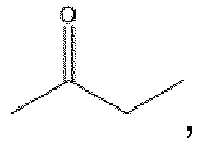

- Further, when the ketone compound is


- Further, when the ketone compound is


- By applying the technical solution of the disclosure, acetylene reacts with the ketone compound in the plurality of bubble tubular reactors arranged in series, which can ensure the sufficient gas-liquid contact time, and thus making full use of the acetylene gas, improving the utilization rate thereof, effectively reduing the amount of acetylene, reducing costs, and further improving the safety.
- The disclosure will be further explained by the accompanying drawings constituting one part of the disclosure. The illustrative embodiments of the disclosure and descriptions are used to explain the disclosure and do not constitute an improper limitation to the disclosure. In the accompanying drawings:
Fig.1 illustrates a schematic structural drawing of a continuous reaction device of one embodiment of the disclosure. - It is noted that the embodiments and features of the embodiments in the present disclosure can be combined with each other without conflict. The disclosure will be described in detail below with reference to the accompanying drawings and in conjunction with the embodiments.
- In response to a series of technical problems described in the background technology, the present disclosure provides a gas-liquid two-phase continuous reaction process which can achieve efficient utilization of acetylene gas under normal pressure and can avoid the danger of accumulation of a large amount of acetylene gas during the reaction process, so that the process safety can be greatly improved, thus making the process more suitable for industrial production.
- According to a typical embodiment of the disclosure, a method for the addition reaction of acetylene and the ketone compound is provided. The method includes the following steps: S1, providing a continuous reaction device, wherein the continuous reaction device includes a plurality of bubble tubular reactors arranged in series, the plurality of bubble tubular reactors being connected with each other through connecting tubes; S2, feeding a raw material solution containing the ketone compound and alkali into the plurality of bubble tubular reactors; and S3, under normal pressure, pumping acetylene from the bottom of the first bubble tubular reactor for the addition reaction.
- By applying the technical solution of the disclosure, acetylene reacts with the ketone compound in the plurality of bubble tubular reactors arranged in series, which can ensure the sufficient gas-liquid contact time, and thus making full use of the acetylene gas, improving the utilization rate thereof, effectively reduing the amount of acetylene, reducing costs, and further improving the safety. In addition, the disclosure adopts a continuous reaction device, the production of thousands of liters of reaction system can be completed through a smaller reactor volume, for example, the volume of the reactor of the production level of the continuous reaction device can be only 100L, and can be reduced to be smaller according to the production requirements, so that accumulation of acetylene gas and solution after dissolution of acetylene gas can be effectively avoided, and danger can be controlled more easily.
- The number of bubble tubular reactors can be increased or decreased according to the process needs, with the aim of ensuring sufficient gas-liquid contact time to maximize the acetylene utilization rate. Preferably, in S2, the raw material solution is placed in a raw material tank, and the raw material solution is pumped into the plurality of bubble tubular reactors by a raw material pump to facilitate industrial production.
- In order to facilitate the temperature control, a temperature control jacket is arranged on the periphery of the plurality of bubble tubular reactors.
- Preferably, the method further includes the step of S4: tfeeding the reaction product discharged from the bubble tubular reactor into a gas-liquid separator for gas-liquid separation, and the small amount of acetylene tail gas produced during the process operation can be evacuated in the gas-liquid separator after sufficient dilution by nitrogen gas to maximize the process safety.
- The technical solution of the disclosure can be applied to the ketone compound that is compatible with strong alkaline reagents, such as potassium tert-butoxide, and potassium acetylide, wherein ketone compound includes an alkyl ketone compound, and the ketone compound with a halogen or an alkoxy functional group, etc.
- When the technical solution of the disclosure is applied, specific reaction conditions need to be determined according to the specific ketone compound. For example, when the ketone compound is


- In one embodiment of the disclosure, the continuous reaction device is shown in
Fig.1 and includes a power system and a continuous reactor, and further includes araw material tank 11, anacetylene gas cylinder 12, anitrogen gas cylinder 13, areceiving tank 14 and atemperature control jacket 41 for controlling the reactor temperature, wherein the power system includes araw material pump 21, a first bubbletubular reactor 31, a second bubble tubular reactor and a third bubble tubular reactor jointly constitute a continuous gas-liquid two-phase reactor. In the whole set of reactors, the first bubbletubular reactor 31, the second bubble tube reactor and the third bubble tube reactor with larger diameters are connected in series via a connecting tube with a smaller diameter. Theraw material tank 11 is used for storing the prepared main raw material/strong alkali solution. The raw material is pumped into the reactor by theraw material pump 21 after the technological process is started. The flow rate of acetylene in theacetylene gas cylinder 12 can be controlled by any gas flow rate controller, e.g. a gas mass flow meter. The acetylene gas released from theacetylene gas cylinder 12 is mixed with the raw material solution and enters from the lower end of the first bubbletubular reactor 31. The temperatures required by the first bubbletubular reactor 31, the second bubble tubular reactor and the third bubble tubular reactor are controlled by thetemperature control jacket 41. In the first bubbletubular reactor 31, acetylene gas flows upward in a bubble shape. The raw material solution flows upward as a continuous phase. When reaching the upper end of a tubular reactor, the reaction system reaches the bottom of the next second bubble tubular reactor through a thinner connectingtube 32 between the first bubbletubular reactor 31 and the second bubble tubular reactor. The reaction system continuously flows to the outlet ends of the reactors in a reciprocating manner. The acetylene gas is in a bubble shape in the first bubbletubular reactor 31 and the flow rate of acetylene gas is greater than that of liquid. In the second bubble tubular reactor, the acetylene gas and liquid flow in a sectional type, and the flow rate of acetylene gas is the same as that of liquid. For the whole set of reactors, the number of the bubble tubular reactors can be adjusted according to the required reaction time (gas-liquid contact time). Since the set of reactors can ensure sufficient gas-liquid contact time, the acetylene gas can be fully utilized instead of excessive acetylene gas needed in the conventional batch reaction process. As shown inFig.1 , there are a large quantity of acetylene gas in the firstbubble tubular reactor 31. As the acetylene gas and liquid flow backward, the number of bubbles in the second bubble tubular reactor and the third bubble tubular reactor gradually decreases. The outlet of the third bubble tubular reactor is connected to a gas-liquid separator 33. Excessive acetylene gas can be diluted here by nitrogen to compliance and then evacuated. Finally, the reacted system is received by the receivingtank 14. - The beneficial effects of the disclosure will be further illustrated below in combination with the embodiments.
-

- According to the above reaction formula, the reaction is carried out by adopting the device (continuous reaction device) and a batch reaction process shown in
Fig.1 , and the specific parameters and results are shown in Table 1. - The raw materials namely ketones and potassium tert-butoxide are dissolved in tetrahydrofuran, and the formed solution is named as SM solution, wherein the volume of tetrahydrofuran is ten times of that of ketones. The SM solution is connected with a feed pump in the reaction device. The temperature of the reaction device is adjusted to a specified temperature. The feed rate of the SM solution is calculated according to the size of the reactor and the required reaction time. The feed rate of acetylene is calculated according to the feed rate of the SM solution and the required equivalent weight acetylene. An SM solution feed pump and the acetylene cylinder are started at the same time, and the reaction device is fed at the same time according to the set flow rate. Samples are taken at a sampling point at the outlet of the reaction device, and the reaction condition is tracked and monitored. After all the SM solution is pumped into the reaction device, the solvent tetrahydrofuran is continuously pumped into the reaction device to displace the whole reaction system to a receiving bottle or a receiving kettle.
Table 1 Process type Production scale Reactor Temperature t-BuOK Acetylene Reaction time or residence time Yield Acetylene utilization rate Batch reaction process 10g 500 mL of glass bottle 0-5 °C 1.0eq. 10eq. 2h 95% 10% Continuous reaction process 10g Continuous gas-liquid two-phase reactor, and liquid holdup: 35mL 0-5 °C 1.0eq. 1.2eq. 2h 96% 83.3% 10g Continuous gas-liquid two-phase reactor, and liquid holdup: 35mL 0-5 °C 1.0eq. 1.0eq. 2h 91% 95% 10g Continuous gas-liquid two-phase reactor, and liquid holdup: 35mL 0-5 °C 1.0eq. 5.0eq. 2h 96% 20% 10g Continuous gas-liquid two-phase reactor, and liquid holdup: 35mL 0-5 °C 1.0eq. 1.2eq. 0.5h 88% 76% 10g Continuous gas-liquid two-phase reactor, and liquid holdup: 35mL 0-5 °C 1.0eq. 1.2eq. 4h 95% 83.3% 100Kg Continuous gas-liquid two-phase reactor, and liquid holdup: 50L 0-5 °C 1.0eq. 1.2eq. 2h 95% 83.3% -

- According to the above reaction formula, the reaction is carried out by adopting the device shown in
Fig.1 , for the steps, read the embodiment 1 for reference, and the specific parameters and results are shown in Table 2.Table 2 Process type Production scale Reactor Temperature t-BuOK Acetylene Reaction time or residence time Yield Acetylene utilization rate Batch reaction process 10g 500 mL of glass bottle 10-15 °C 1.0eq. 20eq. 1h 83% 5% Continuous reaction process 10g Continuous gas-liquid two-phase reactor, and liquid holdup: 35mL 10-15 °C 1.0eq. 1.5eq. 30min 91% 66.7% 10g Continuous gas-liquid two-phase reactor, and liquid holdup: 35mL 10-15 °C 1.0eq. 1.0eq. 30min 87% 64% 10g Continuous gas-liquid two-phase reactor, and liquid holdup: 35mL 10-15 °C 1.0eq. 5.0eq. 30min 91% 20% 10g Continuous gas-liquid two-phase reactor, and liquid holdup: 35mL 10-15 °C 1.0eq. 1.5eq. 2h 90% 66.7% 10g Continuous gas-liquid two-phase reactor, and liquid holdup: 35mL 10-15 °C 1.0eq. 1.5eq. 4h 90% 66.7% 100Kg Continuous gas-liquid two-phase reactor, and liquid holdup: 50L 10-15 °C 1.0eq. 1.5eq. 30min 93% 66.7% -

- According to the above reaction formula, the reaction is carried out by adopting the device shown in
Fig.1 , for the steps, read the embodiment 1 for reference, and the specific parameters and results are shown in Table 3.Table 3 Process type Production scale Reactor Temperature t-BuOK Acetylene Reaction time or residence time Yield Acetylene utilization rate Batch reaction process 10g 500 mL of glass bottle -40 to 30 °C 10.eq. 8eq. 5h 75% 12.5% Continuous reaction process 10g Continuous gas-liquid two-phase reactor, and liquid holdup: 35mL -40 to 30 °C 10.eq. 1.1eq. 3h 86% 90.9% 10g Continuous gas-liquid two-phase reactor, and liquid holdup: 35mL -40 to 30 °C 10.eq. 1.0eq. 3h 84% 88.8% 10g Continuous gas-liquid two-phase reactor, and liquid holdup: 35mL -40 to 30 °C 10.eq. 5.0eq. 3h 86% 90.9% 10g Continuous gas-liquid two-phase reactor, and liquid holdup: 35mL -40 to 30 °C 10.eq. 1.1eq. 0.5h 80% 84.6% 10g Continuous gas-liquid two-phase reactor, and liquid holdup: 35mL -40 to 30 °C 10.eq. 1.1eq. 4h 86% 90.9% 100Kg Continuous gas-liquid two-phase reactor, and liquid holdup: 50L -40 to 30 °C 10.eq. 1.1eq. 3h 85% 90.9% - The above embodiments indicate that the reaction can be successfully applied to large-scale production above 100Kg level, the amplification effect is avoided, and the process is safe and reliable. The direct application of acetylene gas in the production level synthesis is successfully achieved. In addition, the acetylene utilization rate is greatly improved compared to the batch process, and further, the cost is saved and the process safety is improved.
- From the above descriptions, it can be seen that the above embodiments of the disclosure achieve the following technical effects:
- 1) the small size of the reactor can effectively avoid the accumulation of large amounts of acetylene to minimize the danger in the reaction process;
- 2) the utilization rate of acetylene can be improved, the amount of acetylene can be effectively reduced, and the safety is further improved while saving the cost;
- 3) the slightly excessive acetylene gas does not accumulate, but is continuously diluted by diluted nitrogen gas and then evacuated at the gas-liquid separator during the process operation.
Claims (10)
- A method for addition reaction of acetylene and a ketone compound, comprising the steps of:S1, providing a continuous reaction device, the continuous reaction device comprising a plurality of bubble tubular reactors arranged in series, the plurality of bubble tubular reactors being connected with each other through connecting tubes;S2, feeding a raw material solution containing the ketone compound and alkali into the plurality of bubble tubular reactors, andS3, under normal pressure, pumping acetylene from the bottom of the first bubble tubular reactor for the addition reaction.
- The method of claim 1, wherein in S2, the raw material solution is placed in a raw material tank, and the raw material solution is pumped into the plurality of bubble tubular reactors by a raw material pump.
- The method of claim 1, wherein a temperature control jacket is provided on the periphery of the plurality of bubble tubular reactors.
- The method of claim 1, wherein the method further comprises: S4, feeding the reaction product discharged from the bubble tubular reactor into a gas-liquid separator for gas-liquid separation.
- The method of claim 4, wherein acetylene separated in the gas-liquid separator is diluted with nitrogen gas and then discharged.
- The method of claim 1, wherein the ketone compound is an alkyl ketone compound or a ketone compound with halogen or an alkoxy functional group.
- The method of claim 6, wherein the alkali is potassium/sodium tert-butoxide or potassium/sodium tert-pentoxide.
- The method of claim 6, wherein controlling the reaction temperature of the bubble tubular reactors to 0 to 5 °C and the reaction time to 0.5 to 4 h when the ketone compound is


- The method of claim 1, wherein controlling the reaction temperature of the bubble tubular reactors to 10 to 15 °C and the reaction time to 0.5 to 4 h when the ketone compound is


- The method of claim 1, wherein controlling the reaction temperature of the bubble tubular reactors to -40 to 30 °C and the reaction time to 0.5 to 4 h when the ketone compound is


Priority Applications (1)
| Application Number | Priority Date | Filing Date | Title |
|---|---|---|---|
| HUE19946135A HUE066856T2 (en) | 2019-09-17 | 2019-09-17 | Method for carrying out the addition reaction between acetylene and a ketone compound |
Applications Claiming Priority (1)
| Application Number | Priority Date | Filing Date | Title |
|---|---|---|---|
| PCT/CN2019/106220 WO2021051275A1 (en) | 2019-09-17 | 2019-09-17 | Method for performing addition reaction between acetylene and ketone compound |
Publications (3)
| Publication Number | Publication Date |
|---|---|
| EP4032873A1 EP4032873A1 (en) | 2022-07-27 |
| EP4032873A4 EP4032873A4 (en) | 2023-06-28 |
| EP4032873B1 true EP4032873B1 (en) | 2024-02-21 |
Family
ID=74883429
Family Applications (1)
| Application Number | Title | Priority Date | Filing Date |
|---|---|---|---|
| EP19946135.1A Active EP4032873B1 (en) | 2019-09-17 | 2019-09-17 | Method for performing addition reaction between acetylene and ketone compound |
Country Status (8)
| Country | Link |
|---|---|
| US (1) | US12404226B2 (en) |
| EP (1) | EP4032873B1 (en) |
| JP (1) | JP7350998B2 (en) |
| KR (1) | KR102656545B1 (en) |
| CA (1) | CA3150254C (en) |
| HU (1) | HUE066856T2 (en) |
| PT (1) | PT4032873T (en) |
| WO (1) | WO2021051275A1 (en) |
Family Cites Families (17)
| Publication number | Priority date | Publication date | Assignee | Title |
|---|---|---|---|---|
| NL7414755A (en) * | 1973-11-20 | 1975-05-22 | Basf Ag | PROCEDURE FOR ETHYNYLATION. |
| JPS516123A (en) * | 1974-07-06 | 1976-01-19 | Nippon Steel Corp | |
| JPS5911569B2 (en) | 1980-03-14 | 1984-03-16 | 株式会社クラレ | Propargyl alcohol and its production method |
| JPS56156226A (en) | 1980-05-08 | 1981-12-02 | Dainippon Ink & Chem Inc | Treating method of ethynylcarbinol compound solution |
| JPS5955840A (en) * | 1982-09-24 | 1984-03-31 | Ube Ind Ltd | Preparation of optically active propargyl alcohol |
| JPS6379852A (en) * | 1986-09-24 | 1988-04-09 | Idemitsu Petrochem Co Ltd | Production of trimellitic acid |
| DE19837211A1 (en) | 1998-08-17 | 2000-02-24 | Basf Ag | Production of alkyne diol involves reaction of ketone with acetylenic compound and potassium alcoholate in a stoichiometric ratio selected to give gel like adducts with a spherical surface |
| DE19907532A1 (en) * | 1999-02-22 | 2000-08-31 | Basf Ag | Process for the production of acetylene alcohols and their secondary products |
| JP3659109B2 (en) | 2000-01-19 | 2005-06-15 | 三菱化学株式会社 | Co-production method of ethylene glycol and carbonate |
| DE10123066A1 (en) | 2001-05-11 | 2002-11-14 | Basf Ag | Process for the production of higher alpha, beta-unsaturated alcohols |
| US6949685B2 (en) | 2001-09-28 | 2005-09-27 | Werner Bonrath | Ethynylation process |
| CN102076701B (en) | 2008-07-01 | 2014-11-26 | 莫门蒂夫性能材料股份有限公司 | Hydrosilylation process for gaseous unsaturated hydrocarbons |
| WO2010119448A1 (en) | 2009-04-17 | 2010-10-21 | Hindustan Organic Chemicals Limited | An 'in-situ' prepared, improved catalyst for low pressure continuous butynediol synthesis |
| CN105924330B (en) | 2016-06-29 | 2018-12-07 | 西南化工研究设计院有限公司 | A kind of reactor and reaction system of synthesizing methyl butynol |
| CN109796304A (en) | 2019-02-22 | 2019-05-24 | 重庆弛源化工有限公司 | A kind of synthetic method of BED |
| CN109897010B (en) | 2019-03-04 | 2021-02-19 | 天津凯莱英制药有限公司 | Continuous synthesis method of 1,2, 3-triazole compound |
| CN110540489B (en) | 2019-09-17 | 2022-09-02 | 凯莱英生命科学技术(天津)有限公司 | Method for addition reaction of acetylene and ketone compound |
-
2019
- 2019-09-17 KR KR1020227012829A patent/KR102656545B1/en active Active
- 2019-09-17 PT PT199461351T patent/PT4032873T/en unknown
- 2019-09-17 WO PCT/CN2019/106220 patent/WO2021051275A1/en not_active Ceased
- 2019-09-17 HU HUE19946135A patent/HUE066856T2/en unknown
- 2019-09-17 EP EP19946135.1A patent/EP4032873B1/en active Active
- 2019-09-17 US US17/642,937 patent/US12404226B2/en active Active
- 2019-09-17 CA CA3150254A patent/CA3150254C/en active Active
- 2019-09-17 JP JP2022517223A patent/JP7350998B2/en active Active
Also Published As
| Publication number | Publication date |
|---|---|
| PT4032873T (en) | 2024-06-14 |
| CA3150254C (en) | 2024-01-02 |
| US12404226B2 (en) | 2025-09-02 |
| KR20220065015A (en) | 2022-05-19 |
| US20220380280A1 (en) | 2022-12-01 |
| HUE066856T2 (en) | 2024-09-28 |
| EP4032873A4 (en) | 2023-06-28 |
| KR102656545B1 (en) | 2024-04-09 |
| CA3150254A1 (en) | 2021-03-25 |
| WO2021051275A1 (en) | 2021-03-25 |
| JP7350998B2 (en) | 2023-09-26 |
| EP4032873A1 (en) | 2022-07-27 |
| JP2022548164A (en) | 2022-11-16 |
Similar Documents
| Publication | Publication Date | Title |
|---|---|---|
| CN113563197B (en) | A method and microreaction equipment for preparing 3-nitro-4-chlorotrifluorotoluene by continuous adiabatic nitrification | |
| US9371259B2 (en) | Method for preparing vinyl chloride from acetylene and dichlorethane | |
| CN210787302U (en) | Device for continuously producing high-purity potassium alkoxide or sodium alkoxide by using microchannel reactor | |
| CN103739450A (en) | Preparation method of hydrofluoroether | |
| CN113372192B (en) | Synthetic method of low-carbon sodium alkoxide | |
| CN220835498U (en) | Device for continuously synthesizing 2-methyl-alpha-hydroxy iminobenzyl cyanide sodium salt | |
| CN115784181A (en) | Continuous reaction rectification preparation system of phosphorus pentafluoride and preparation thereof | |
| CN112225642A (en) | Method for preparing resorcinol through microchannel reaction | |
| CN109438223B (en) | Method and equipment for continuously preparing pivaloyl chloride | |
| CN110540489B (en) | Method for addition reaction of acetylene and ketone compound | |
| CN103694094B (en) | A kind of preparation method of the chloro-2 pentanone of 5- | |
| EP4032873A1 (en) | Method for performing addition reaction between acetylene and ketone compound | |
| CN117504780A (en) | A kind of glycol ether preparation device and preparation method | |
| CN114195675B (en) | Method for preparing ethyl hydrazine by continuous flow of microreactor | |
| JP3268890B2 (en) | Method for producing 1,3-cyclohexanedicarboxylic acid | |
| CN113754512A (en) | Preparation method of o-bromobenzotrifluoride | |
| CN102875494A (en) | Method for synthesizing epichlorohydrin by using microchannel reactor | |
| WO2004033408A1 (en) | A process for the preparation of monochloroacetic acid | |
| CN218981525U (en) | Continuous flow synthesis system of nitromethane | |
| CN216404266U (en) | Fluorinated polyether carboxylic acid microchannel preparation device for fluorinated ethylene propylene | |
| CN118495538A (en) | Preparation method of disilane | |
| CN113620825B (en) | Microchannel reactor and method for preparing ethyl dimethylaminoacetate by using microchannel reactor | |
| CN105152884B (en) | Preparation method of 4-methoxycyclohexanon | |
| CN121269719A (en) | Preparation method of high-purity silane suitable for small experimental device | |
| CN219463377U (en) | A device for safely preparing heptafluoroisobutyramide |
Legal Events
| Date | Code | Title | Description |
|---|---|---|---|
| STAA | Information on the status of an ep patent application or granted ep patent |
Free format text: STATUS: THE INTERNATIONAL PUBLICATION HAS BEEN MADE |
|
| PUAI | Public reference made under article 153(3) epc to a published international application that has entered the european phase |
Free format text: ORIGINAL CODE: 0009012 |
|
| STAA | Information on the status of an ep patent application or granted ep patent |
Free format text: STATUS: REQUEST FOR EXAMINATION WAS MADE |
|
| 17P | Request for examination filed |
Effective date: 20220314 |
|
| AK | Designated contracting states |
Kind code of ref document: A1 Designated state(s): AL AT BE BG CH CY CZ DE DK EE ES FI FR GB GR HR HU IE IS IT LI LT LU LV MC MK MT NL NO PL PT RO RS SE SI SK SM TR |
|
| DAV | Request for validation of the european patent (deleted) | ||
| DAX | Request for extension of the european patent (deleted) | ||
| A4 | Supplementary search report drawn up and despatched |
Effective date: 20230526 |
|
| RIC1 | Information provided on ipc code assigned before grant |
Ipc: C07C 43/178 20060101ALI20230522BHEP Ipc: C07C 33/40 20060101ALI20230522BHEP Ipc: C07C 41/26 20060101ALI20230522BHEP Ipc: C07C 29/42 20060101AFI20230522BHEP |
|
| GRAP | Despatch of communication of intention to grant a patent |
Free format text: ORIGINAL CODE: EPIDOSNIGR1 |
|
| STAA | Information on the status of an ep patent application or granted ep patent |
Free format text: STATUS: GRANT OF PATENT IS INTENDED |
|
| INTG | Intention to grant announced |
Effective date: 20231201 |
|
| RIC1 | Information provided on ipc code assigned before grant |
Ipc: C07C 43/178 20060101ALI20231117BHEP Ipc: C07C 33/40 20060101ALI20231117BHEP Ipc: C07C 41/26 20060101ALI20231117BHEP Ipc: C07C 29/42 20060101AFI20231117BHEP |
|
| GRAS | Grant fee paid |
Free format text: ORIGINAL CODE: EPIDOSNIGR3 |
|
| GRAA | (expected) grant |
Free format text: ORIGINAL CODE: 0009210 |
|
| STAA | Information on the status of an ep patent application or granted ep patent |
Free format text: STATUS: THE PATENT HAS BEEN GRANTED |
|
| AK | Designated contracting states |
Kind code of ref document: B1 Designated state(s): AL AT BE BG CH CY CZ DE DK EE ES FI FR GB GR HR HU IE IS IT LI LT LU LV MC MK MT NL NO PL PT RO RS SE SI SK SM TR |
|
| REG | Reference to a national code |
Ref country code: GB Ref legal event code: FG4D |
|
| REG | Reference to a national code |
Ref country code: CH Ref legal event code: EP |
|
| REG | Reference to a national code |
Ref country code: DE Ref legal event code: R096 Ref document number: 602019047154 Country of ref document: DE |
|
| REG | Reference to a national code |
Ref country code: IE Ref legal event code: FG4D |
|
| REG | Reference to a national code |
Ref country code: LT Ref legal event code: MG9D |
|
| REG | Reference to a national code |
Ref country code: PT Ref legal event code: SC4A Ref document number: 4032873 Country of ref document: PT Date of ref document: 20240614 Kind code of ref document: T Free format text: AVAILABILITY OF NATIONAL TRANSLATION Effective date: 20240605 |
|
| PG25 | Lapsed in a contracting state [announced via postgrant information from national office to epo] |
Ref country code: IS Free format text: LAPSE BECAUSE OF FAILURE TO SUBMIT A TRANSLATION OF THE DESCRIPTION OR TO PAY THE FEE WITHIN THE PRESCRIBED TIME-LIMIT Effective date: 20240621 |
|
| REG | Reference to a national code |
Ref country code: NL Ref legal event code: FP |
|
| PG25 | Lapsed in a contracting state [announced via postgrant information from national office to epo] |
Ref country code: LT Free format text: LAPSE BECAUSE OF FAILURE TO SUBMIT A TRANSLATION OF THE DESCRIPTION OR TO PAY THE FEE WITHIN THE PRESCRIBED TIME-LIMIT Effective date: 20240221 |
|
| PG25 | Lapsed in a contracting state [announced via postgrant information from national office to epo] |
Ref country code: GR Free format text: LAPSE BECAUSE OF FAILURE TO SUBMIT A TRANSLATION OF THE DESCRIPTION OR TO PAY THE FEE WITHIN THE PRESCRIBED TIME-LIMIT Effective date: 20240522 |
|
| REG | Reference to a national code |
Ref country code: AT Ref legal event code: MK05 Ref document number: 1659010 Country of ref document: AT Kind code of ref document: T Effective date: 20240221 |
|
| PG25 | Lapsed in a contracting state [announced via postgrant information from national office to epo] |
Ref country code: HR Free format text: LAPSE BECAUSE OF FAILURE TO SUBMIT A TRANSLATION OF THE DESCRIPTION OR TO PAY THE FEE WITHIN THE PRESCRIBED TIME-LIMIT Effective date: 20240221 Ref country code: RS Free format text: LAPSE BECAUSE OF FAILURE TO SUBMIT A TRANSLATION OF THE DESCRIPTION OR TO PAY THE FEE WITHIN THE PRESCRIBED TIME-LIMIT Effective date: 20240521 |
|
| PG25 | Lapsed in a contracting state [announced via postgrant information from national office to epo] |
Ref country code: ES Free format text: LAPSE BECAUSE OF FAILURE TO SUBMIT A TRANSLATION OF THE DESCRIPTION OR TO PAY THE FEE WITHIN THE PRESCRIBED TIME-LIMIT Effective date: 20240221 |
|
| PG25 | Lapsed in a contracting state [announced via postgrant information from national office to epo] |
Ref country code: AT Free format text: LAPSE BECAUSE OF FAILURE TO SUBMIT A TRANSLATION OF THE DESCRIPTION OR TO PAY THE FEE WITHIN THE PRESCRIBED TIME-LIMIT Effective date: 20240221 |
|
| PG25 | Lapsed in a contracting state [announced via postgrant information from national office to epo] |
Ref country code: RS Free format text: LAPSE BECAUSE OF FAILURE TO SUBMIT A TRANSLATION OF THE DESCRIPTION OR TO PAY THE FEE WITHIN THE PRESCRIBED TIME-LIMIT Effective date: 20240521 Ref country code: NO Free format text: LAPSE BECAUSE OF FAILURE TO SUBMIT A TRANSLATION OF THE DESCRIPTION OR TO PAY THE FEE WITHIN THE PRESCRIBED TIME-LIMIT Effective date: 20240521 Ref country code: LT Free format text: LAPSE BECAUSE OF FAILURE TO SUBMIT A TRANSLATION OF THE DESCRIPTION OR TO PAY THE FEE WITHIN THE PRESCRIBED TIME-LIMIT Effective date: 20240221 Ref country code: IS Free format text: LAPSE BECAUSE OF FAILURE TO SUBMIT A TRANSLATION OF THE DESCRIPTION OR TO PAY THE FEE WITHIN THE PRESCRIBED TIME-LIMIT Effective date: 20240621 Ref country code: HR Free format text: LAPSE BECAUSE OF FAILURE TO SUBMIT A TRANSLATION OF THE DESCRIPTION OR TO PAY THE FEE WITHIN THE PRESCRIBED TIME-LIMIT Effective date: 20240221 Ref country code: GR Free format text: LAPSE BECAUSE OF FAILURE TO SUBMIT A TRANSLATION OF THE DESCRIPTION OR TO PAY THE FEE WITHIN THE PRESCRIBED TIME-LIMIT Effective date: 20240522 Ref country code: FI Free format text: LAPSE BECAUSE OF FAILURE TO SUBMIT A TRANSLATION OF THE DESCRIPTION OR TO PAY THE FEE WITHIN THE PRESCRIBED TIME-LIMIT Effective date: 20240221 Ref country code: ES Free format text: LAPSE BECAUSE OF FAILURE TO SUBMIT A TRANSLATION OF THE DESCRIPTION OR TO PAY THE FEE WITHIN THE PRESCRIBED TIME-LIMIT Effective date: 20240221 Ref country code: BG Free format text: LAPSE BECAUSE OF FAILURE TO SUBMIT A TRANSLATION OF THE DESCRIPTION OR TO PAY THE FEE WITHIN THE PRESCRIBED TIME-LIMIT Effective date: 20240221 Ref country code: AT Free format text: LAPSE BECAUSE OF FAILURE TO SUBMIT A TRANSLATION OF THE DESCRIPTION OR TO PAY THE FEE WITHIN THE PRESCRIBED TIME-LIMIT Effective date: 20240221 |
|
| PG25 | Lapsed in a contracting state [announced via postgrant information from national office to epo] |
Ref country code: PL Free format text: LAPSE BECAUSE OF FAILURE TO SUBMIT A TRANSLATION OF THE DESCRIPTION OR TO PAY THE FEE WITHIN THE PRESCRIBED TIME-LIMIT Effective date: 20240221 |
|
| PG25 | Lapsed in a contracting state [announced via postgrant information from national office to epo] |
Ref country code: SE Free format text: LAPSE BECAUSE OF FAILURE TO SUBMIT A TRANSLATION OF THE DESCRIPTION OR TO PAY THE FEE WITHIN THE PRESCRIBED TIME-LIMIT Effective date: 20240221 Ref country code: PL Free format text: LAPSE BECAUSE OF FAILURE TO SUBMIT A TRANSLATION OF THE DESCRIPTION OR TO PAY THE FEE WITHIN THE PRESCRIBED TIME-LIMIT Effective date: 20240221 Ref country code: LV Free format text: LAPSE BECAUSE OF FAILURE TO SUBMIT A TRANSLATION OF THE DESCRIPTION OR TO PAY THE FEE WITHIN THE PRESCRIBED TIME-LIMIT Effective date: 20240221 |
|
| REG | Reference to a national code |
Ref country code: DE Ref legal event code: R082 Ref document number: 602019047154 Country of ref document: DE Representative=s name: BRAUN GREDING PATENTANWAELTE PARTNERSCHAFT MBB, DE Ref country code: DE Ref legal event code: R082 Ref document number: 602019047154 Country of ref document: DE Representative=s name: BRAUN GREDING PATENTANWAELTE GBR, DE Ref country code: DE Ref legal event code: R082 Ref document number: 602019047154 Country of ref document: DE Representative=s name: BERGGREN PATENTANWAELTE PARTNERSCHAFT MBB, DE |
|
| REG | Reference to a national code |
Ref country code: HU Ref legal event code: AG4A Ref document number: E066856 Country of ref document: HU |
|
| PG25 | Lapsed in a contracting state [announced via postgrant information from national office to epo] |
Ref country code: DK Free format text: LAPSE BECAUSE OF FAILURE TO SUBMIT A TRANSLATION OF THE DESCRIPTION OR TO PAY THE FEE WITHIN THE PRESCRIBED TIME-LIMIT Effective date: 20240221 |
|
| PG25 | Lapsed in a contracting state [announced via postgrant information from national office to epo] |
Ref country code: SM Free format text: LAPSE BECAUSE OF FAILURE TO SUBMIT A TRANSLATION OF THE DESCRIPTION OR TO PAY THE FEE WITHIN THE PRESCRIBED TIME-LIMIT Effective date: 20240221 |
|
| PG25 | Lapsed in a contracting state [announced via postgrant information from national office to epo] |
Ref country code: EE Free format text: LAPSE BECAUSE OF FAILURE TO SUBMIT A TRANSLATION OF THE DESCRIPTION OR TO PAY THE FEE WITHIN THE PRESCRIBED TIME-LIMIT Effective date: 20240221 Ref country code: CZ Free format text: LAPSE BECAUSE OF FAILURE TO SUBMIT A TRANSLATION OF THE DESCRIPTION OR TO PAY THE FEE WITHIN THE PRESCRIBED TIME-LIMIT Effective date: 20240221 |
|
| PG25 | Lapsed in a contracting state [announced via postgrant information from national office to epo] |
Ref country code: SK Free format text: LAPSE BECAUSE OF FAILURE TO SUBMIT A TRANSLATION OF THE DESCRIPTION OR TO PAY THE FEE WITHIN THE PRESCRIBED TIME-LIMIT Effective date: 20240221 |
|
| PG25 | Lapsed in a contracting state [announced via postgrant information from national office to epo] |
Ref country code: SM Free format text: LAPSE BECAUSE OF FAILURE TO SUBMIT A TRANSLATION OF THE DESCRIPTION OR TO PAY THE FEE WITHIN THE PRESCRIBED TIME-LIMIT Effective date: 20240221 Ref country code: SK Free format text: LAPSE BECAUSE OF FAILURE TO SUBMIT A TRANSLATION OF THE DESCRIPTION OR TO PAY THE FEE WITHIN THE PRESCRIBED TIME-LIMIT Effective date: 20240221 Ref country code: RO Free format text: LAPSE BECAUSE OF FAILURE TO SUBMIT A TRANSLATION OF THE DESCRIPTION OR TO PAY THE FEE WITHIN THE PRESCRIBED TIME-LIMIT Effective date: 20240221 Ref country code: EE Free format text: LAPSE BECAUSE OF FAILURE TO SUBMIT A TRANSLATION OF THE DESCRIPTION OR TO PAY THE FEE WITHIN THE PRESCRIBED TIME-LIMIT Effective date: 20240221 Ref country code: DK Free format text: LAPSE BECAUSE OF FAILURE TO SUBMIT A TRANSLATION OF THE DESCRIPTION OR TO PAY THE FEE WITHIN THE PRESCRIBED TIME-LIMIT Effective date: 20240221 Ref country code: CZ Free format text: LAPSE BECAUSE OF FAILURE TO SUBMIT A TRANSLATION OF THE DESCRIPTION OR TO PAY THE FEE WITHIN THE PRESCRIBED TIME-LIMIT Effective date: 20240221 |
|
| REG | Reference to a national code |
Ref country code: DE Ref legal event code: R097 Ref document number: 602019047154 Country of ref document: DE |
|
| PLBE | No opposition filed within time limit |
Free format text: ORIGINAL CODE: 0009261 |
|
| STAA | Information on the status of an ep patent application or granted ep patent |
Free format text: STATUS: NO OPPOSITION FILED WITHIN TIME LIMIT |
|
| 26N | No opposition filed |
Effective date: 20241122 |
|
| PG25 | Lapsed in a contracting state [announced via postgrant information from national office to epo] |
Ref country code: SI Free format text: LAPSE BECAUSE OF FAILURE TO SUBMIT A TRANSLATION OF THE DESCRIPTION OR TO PAY THE FEE WITHIN THE PRESCRIBED TIME-LIMIT Effective date: 20240221 Ref country code: MC Free format text: LAPSE BECAUSE OF FAILURE TO SUBMIT A TRANSLATION OF THE DESCRIPTION OR TO PAY THE FEE WITHIN THE PRESCRIBED TIME-LIMIT Effective date: 20240221 |
|
| PG25 | Lapsed in a contracting state [announced via postgrant information from national office to epo] |
Ref country code: LU Free format text: LAPSE BECAUSE OF NON-PAYMENT OF DUE FEES Effective date: 20240917 |
|
| REG | Reference to a national code |
Ref country code: BE Ref legal event code: MM Effective date: 20240930 |
|
| PG25 | Lapsed in a contracting state [announced via postgrant information from national office to epo] |
Ref country code: BE Free format text: LAPSE BECAUSE OF NON-PAYMENT OF DUE FEES Effective date: 20240930 |
|
| PG25 | Lapsed in a contracting state [announced via postgrant information from national office to epo] |
Ref country code: IE Free format text: LAPSE BECAUSE OF NON-PAYMENT OF DUE FEES Effective date: 20240917 |
|
| REG | Reference to a national code |
Ref country code: CH Ref legal event code: U11 Free format text: ST27 STATUS EVENT CODE: U-0-0-U10-U11 (AS PROVIDED BY THE NATIONAL OFFICE) Effective date: 20251002 |
|
| PGFP | Annual fee paid to national office [announced via postgrant information from national office to epo] |
Ref country code: PT Payment date: 20250911 Year of fee payment: 7 |
|
| PGFP | Annual fee paid to national office [announced via postgrant information from national office to epo] |
Ref country code: NL Payment date: 20250930 Year of fee payment: 7 |
|
| PGFP | Annual fee paid to national office [announced via postgrant information from national office to epo] |
Ref country code: HU Payment date: 20250905 Year of fee payment: 7 Ref country code: GB Payment date: 20250929 Year of fee payment: 7 |
|
| PGFP | Annual fee paid to national office [announced via postgrant information from national office to epo] |
Ref country code: FR Payment date: 20250929 Year of fee payment: 7 |
|
| PGFP | Annual fee paid to national office [announced via postgrant information from national office to epo] |
Ref country code: DE Payment date: 20251029 Year of fee payment: 7 |
|
| PGFP | Annual fee paid to national office [announced via postgrant information from national office to epo] |
Ref country code: IT Payment date: 20250929 Year of fee payment: 7 |
|
| PGFP | Annual fee paid to national office [announced via postgrant information from national office to epo] |
Ref country code: CH Payment date: 20251002 Year of fee payment: 7 |
|
| PG25 | Lapsed in a contracting state [announced via postgrant information from national office to epo] |
Ref country code: CY Free format text: LAPSE BECAUSE OF FAILURE TO SUBMIT A TRANSLATION OF THE DESCRIPTION OR TO PAY THE FEE WITHIN THE PRESCRIBED TIME-LIMIT; INVALID AB INITIO Effective date: 20190917 |