EP4032700A1 - Method for manufacturing silicon nitride substrate - Google Patents
Method for manufacturing silicon nitride substrate Download PDFInfo
- Publication number
- EP4032700A1 EP4032700A1 EP20866693.3A EP20866693A EP4032700A1 EP 4032700 A1 EP4032700 A1 EP 4032700A1 EP 20866693 A EP20866693 A EP 20866693A EP 4032700 A1 EP4032700 A1 EP 4032700A1
- Authority
- EP
- European Patent Office
- Prior art keywords
- forming
- silicon nitride
- stacked structure
- mixture
- slurry
- Prior art date
- Legal status (The legal status is an assumption and is not a legal conclusion. Google has not performed a legal analysis and makes no representation as to the accuracy of the status listed.)
- Pending
Links
Images




Classifications
-
- C—CHEMISTRY; METALLURGY
- C04—CEMENTS; CONCRETE; ARTIFICIAL STONE; CERAMICS; REFRACTORIES
- C04B—LIME, MAGNESIA; SLAG; CEMENTS; COMPOSITIONS THEREOF, e.g. MORTARS, CONCRETE OR LIKE BUILDING MATERIALS; ARTIFICIAL STONE; CERAMICS; REFRACTORIES; TREATMENT OF NATURAL STONE
- C04B35/00—Shaped ceramic products characterised by their composition; Ceramics compositions; Processing powders of inorganic compounds preparatory to the manufacturing of ceramic products
- C04B35/515—Shaped ceramic products characterised by their composition; Ceramics compositions; Processing powders of inorganic compounds preparatory to the manufacturing of ceramic products based on non-oxide ceramics
- C04B35/58—Shaped ceramic products characterised by their composition; Ceramics compositions; Processing powders of inorganic compounds preparatory to the manufacturing of ceramic products based on non-oxide ceramics based on borides, nitrides, i.e. nitrides, oxynitrides, carbonitrides or oxycarbonitrides or silicides
- C04B35/584—Shaped ceramic products characterised by their composition; Ceramics compositions; Processing powders of inorganic compounds preparatory to the manufacturing of ceramic products based on non-oxide ceramics based on borides, nitrides, i.e. nitrides, oxynitrides, carbonitrides or oxycarbonitrides or silicides based on silicon nitride
-
- C—CHEMISTRY; METALLURGY
- C04—CEMENTS; CONCRETE; ARTIFICIAL STONE; CERAMICS; REFRACTORIES
- C04B—LIME, MAGNESIA; SLAG; CEMENTS; COMPOSITIONS THEREOF, e.g. MORTARS, CONCRETE OR LIKE BUILDING MATERIALS; ARTIFICIAL STONE; CERAMICS; REFRACTORIES; TREATMENT OF NATURAL STONE
- C04B35/00—Shaped ceramic products characterised by their composition; Ceramics compositions; Processing powders of inorganic compounds preparatory to the manufacturing of ceramic products
- C04B35/515—Shaped ceramic products characterised by their composition; Ceramics compositions; Processing powders of inorganic compounds preparatory to the manufacturing of ceramic products based on non-oxide ceramics
- C04B35/58—Shaped ceramic products characterised by their composition; Ceramics compositions; Processing powders of inorganic compounds preparatory to the manufacturing of ceramic products based on non-oxide ceramics based on borides, nitrides, i.e. nitrides, oxynitrides, carbonitrides or oxycarbonitrides or silicides
- C04B35/584—Shaped ceramic products characterised by their composition; Ceramics compositions; Processing powders of inorganic compounds preparatory to the manufacturing of ceramic products based on non-oxide ceramics based on borides, nitrides, i.e. nitrides, oxynitrides, carbonitrides or oxycarbonitrides or silicides based on silicon nitride
- C04B35/593—Shaped ceramic products characterised by their composition; Ceramics compositions; Processing powders of inorganic compounds preparatory to the manufacturing of ceramic products based on non-oxide ceramics based on borides, nitrides, i.e. nitrides, oxynitrides, carbonitrides or oxycarbonitrides or silicides based on silicon nitride obtained by pressure sintering
- C04B35/5935—Shaped ceramic products characterised by their composition; Ceramics compositions; Processing powders of inorganic compounds preparatory to the manufacturing of ceramic products based on non-oxide ceramics based on borides, nitrides, i.e. nitrides, oxynitrides, carbonitrides or oxycarbonitrides or silicides based on silicon nitride obtained by pressure sintering obtained by gas pressure sintering
-
- B—PERFORMING OPERATIONS; TRANSPORTING
- B32—LAYERED PRODUCTS
- B32B—LAYERED PRODUCTS, i.e. PRODUCTS BUILT-UP OF STRATA OF FLAT OR NON-FLAT, e.g. CELLULAR OR HONEYCOMB, FORM
- B32B18/00—Layered products essentially comprising ceramics, e.g. refractory products
-
- B—PERFORMING OPERATIONS; TRANSPORTING
- B32—LAYERED PRODUCTS
- B32B—LAYERED PRODUCTS, i.e. PRODUCTS BUILT-UP OF STRATA OF FLAT OR NON-FLAT, e.g. CELLULAR OR HONEYCOMB, FORM
- B32B3/00—Layered products comprising a layer with external or internal discontinuities or unevennesses, or a layer of non-planar shape; Layered products comprising a layer having particular features of form
- B32B3/26—Layered products comprising a layer with external or internal discontinuities or unevennesses, or a layer of non-planar shape; Layered products comprising a layer having particular features of form characterised by a particular shape of the outline of the cross-section of a continuous layer; characterised by a layer with cavities or internal voids ; characterised by an apertured layer
- B32B3/30—Layered products comprising a layer with external or internal discontinuities or unevennesses, or a layer of non-planar shape; Layered products comprising a layer having particular features of form characterised by a particular shape of the outline of the cross-section of a continuous layer; characterised by a layer with cavities or internal voids ; characterised by an apertured layer characterised by a layer formed with recesses or projections, e.g. hollows, grooves, protuberances, ribs
-
- B—PERFORMING OPERATIONS; TRANSPORTING
- B32—LAYERED PRODUCTS
- B32B—LAYERED PRODUCTS, i.e. PRODUCTS BUILT-UP OF STRATA OF FLAT OR NON-FLAT, e.g. CELLULAR OR HONEYCOMB, FORM
- B32B38/00—Ancillary operations in connection with laminating processes
-
- B—PERFORMING OPERATIONS; TRANSPORTING
- B32—LAYERED PRODUCTS
- B32B—LAYERED PRODUCTS, i.e. PRODUCTS BUILT-UP OF STRATA OF FLAT OR NON-FLAT, e.g. CELLULAR OR HONEYCOMB, FORM
- B32B5/00—Layered products characterised by the non- homogeneity or physical structure, i.e. comprising a fibrous, filamentary, particulate or foam layer; Layered products characterised by having a layer differing constitutionally or physically in different parts
- B32B5/16—Layered products characterised by the non- homogeneity or physical structure, i.e. comprising a fibrous, filamentary, particulate or foam layer; Layered products characterised by having a layer differing constitutionally or physically in different parts characterised by features of a layer formed of particles, e.g. chips, powder or granules
-
- B—PERFORMING OPERATIONS; TRANSPORTING
- B32—LAYERED PRODUCTS
- B32B—LAYERED PRODUCTS, i.e. PRODUCTS BUILT-UP OF STRATA OF FLAT OR NON-FLAT, e.g. CELLULAR OR HONEYCOMB, FORM
- B32B5/00—Layered products characterised by the non- homogeneity or physical structure, i.e. comprising a fibrous, filamentary, particulate or foam layer; Layered products characterised by having a layer differing constitutionally or physically in different parts
- B32B5/22—Layered products characterised by the non- homogeneity or physical structure, i.e. comprising a fibrous, filamentary, particulate or foam layer; Layered products characterised by having a layer differing constitutionally or physically in different parts characterised by the presence of two or more layers which are next to each other and are fibrous, filamentary, formed of particles or foamed
- B32B5/30—Layered products characterised by the non- homogeneity or physical structure, i.e. comprising a fibrous, filamentary, particulate or foam layer; Layered products characterised by having a layer differing constitutionally or physically in different parts characterised by the presence of two or more layers which are next to each other and are fibrous, filamentary, formed of particles or foamed one layer being formed of particles, e.g. chips, granules, powder
-
- B—PERFORMING OPERATIONS; TRANSPORTING
- B32—LAYERED PRODUCTS
- B32B—LAYERED PRODUCTS, i.e. PRODUCTS BUILT-UP OF STRATA OF FLAT OR NON-FLAT, e.g. CELLULAR OR HONEYCOMB, FORM
- B32B9/00—Layered products comprising a layer of a particular substance not covered by groups B32B11/00 - B32B29/00
- B32B9/005—Layered products comprising a layer of a particular substance not covered by groups B32B11/00 - B32B29/00 comprising one layer of ceramic material, e.g. porcelain, ceramic tile
-
- B—PERFORMING OPERATIONS; TRANSPORTING
- B32—LAYERED PRODUCTS
- B32B—LAYERED PRODUCTS, i.e. PRODUCTS BUILT-UP OF STRATA OF FLAT OR NON-FLAT, e.g. CELLULAR OR HONEYCOMB, FORM
- B32B9/00—Layered products comprising a layer of a particular substance not covered by groups B32B11/00 - B32B29/00
- B32B9/04—Layered products comprising a layer of a particular substance not covered by groups B32B11/00 - B32B29/00 comprising such particular substance as the main or only constituent of a layer, which is next to another layer of the same or of a different material
-
- C—CHEMISTRY; METALLURGY
- C04—CEMENTS; CONCRETE; ARTIFICIAL STONE; CERAMICS; REFRACTORIES
- C04B—LIME, MAGNESIA; SLAG; CEMENTS; COMPOSITIONS THEREOF, e.g. MORTARS, CONCRETE OR LIKE BUILDING MATERIALS; ARTIFICIAL STONE; CERAMICS; REFRACTORIES; TREATMENT OF NATURAL STONE
- C04B35/00—Shaped ceramic products characterised by their composition; Ceramics compositions; Processing powders of inorganic compounds preparatory to the manufacturing of ceramic products
- C04B35/622—Forming processes; Processing powders of inorganic compounds preparatory to the manufacturing of ceramic products
-
- C—CHEMISTRY; METALLURGY
- C04—CEMENTS; CONCRETE; ARTIFICIAL STONE; CERAMICS; REFRACTORIES
- C04B—LIME, MAGNESIA; SLAG; CEMENTS; COMPOSITIONS THEREOF, e.g. MORTARS, CONCRETE OR LIKE BUILDING MATERIALS; ARTIFICIAL STONE; CERAMICS; REFRACTORIES; TREATMENT OF NATURAL STONE
- C04B35/00—Shaped ceramic products characterised by their composition; Ceramics compositions; Processing powders of inorganic compounds preparatory to the manufacturing of ceramic products
- C04B35/622—Forming processes; Processing powders of inorganic compounds preparatory to the manufacturing of ceramic products
- C04B35/62218—Forming processes; Processing powders of inorganic compounds preparatory to the manufacturing of ceramic products obtaining ceramic films, e.g. by using temporary supports
-
- C—CHEMISTRY; METALLURGY
- C04—CEMENTS; CONCRETE; ARTIFICIAL STONE; CERAMICS; REFRACTORIES
- C04B—LIME, MAGNESIA; SLAG; CEMENTS; COMPOSITIONS THEREOF, e.g. MORTARS, CONCRETE OR LIKE BUILDING MATERIALS; ARTIFICIAL STONE; CERAMICS; REFRACTORIES; TREATMENT OF NATURAL STONE
- C04B35/00—Shaped ceramic products characterised by their composition; Ceramics compositions; Processing powders of inorganic compounds preparatory to the manufacturing of ceramic products
- C04B35/622—Forming processes; Processing powders of inorganic compounds preparatory to the manufacturing of ceramic products
- C04B35/626—Preparing or treating the powders individually or as batches ; preparing or treating macroscopic reinforcing agents for ceramic products, e.g. fibres; mechanical aspects section B
- C04B35/62605—Treating the starting powders individually or as mixtures
- C04B35/6261—Milling
-
- C—CHEMISTRY; METALLURGY
- C04—CEMENTS; CONCRETE; ARTIFICIAL STONE; CERAMICS; REFRACTORIES
- C04B—LIME, MAGNESIA; SLAG; CEMENTS; COMPOSITIONS THEREOF, e.g. MORTARS, CONCRETE OR LIKE BUILDING MATERIALS; ARTIFICIAL STONE; CERAMICS; REFRACTORIES; TREATMENT OF NATURAL STONE
- C04B35/00—Shaped ceramic products characterised by their composition; Ceramics compositions; Processing powders of inorganic compounds preparatory to the manufacturing of ceramic products
- C04B35/622—Forming processes; Processing powders of inorganic compounds preparatory to the manufacturing of ceramic products
- C04B35/626—Preparing or treating the powders individually or as batches ; preparing or treating macroscopic reinforcing agents for ceramic products, e.g. fibres; mechanical aspects section B
- C04B35/62605—Treating the starting powders individually or as mixtures
- C04B35/6261—Milling
- C04B35/62615—High energy or reactive ball milling
-
- C—CHEMISTRY; METALLURGY
- C04—CEMENTS; CONCRETE; ARTIFICIAL STONE; CERAMICS; REFRACTORIES
- C04B—LIME, MAGNESIA; SLAG; CEMENTS; COMPOSITIONS THEREOF, e.g. MORTARS, CONCRETE OR LIKE BUILDING MATERIALS; ARTIFICIAL STONE; CERAMICS; REFRACTORIES; TREATMENT OF NATURAL STONE
- C04B35/00—Shaped ceramic products characterised by their composition; Ceramics compositions; Processing powders of inorganic compounds preparatory to the manufacturing of ceramic products
- C04B35/622—Forming processes; Processing powders of inorganic compounds preparatory to the manufacturing of ceramic products
- C04B35/626—Preparing or treating the powders individually or as batches ; preparing or treating macroscopic reinforcing agents for ceramic products, e.g. fibres; mechanical aspects section B
- C04B35/62605—Treating the starting powders individually or as mixtures
- C04B35/62625—Wet mixtures
-
- C—CHEMISTRY; METALLURGY
- C04—CEMENTS; CONCRETE; ARTIFICIAL STONE; CERAMICS; REFRACTORIES
- C04B—LIME, MAGNESIA; SLAG; CEMENTS; COMPOSITIONS THEREOF, e.g. MORTARS, CONCRETE OR LIKE BUILDING MATERIALS; ARTIFICIAL STONE; CERAMICS; REFRACTORIES; TREATMENT OF NATURAL STONE
- C04B35/00—Shaped ceramic products characterised by their composition; Ceramics compositions; Processing powders of inorganic compounds preparatory to the manufacturing of ceramic products
- C04B35/622—Forming processes; Processing powders of inorganic compounds preparatory to the manufacturing of ceramic products
- C04B35/626—Preparing or treating the powders individually or as batches ; preparing or treating macroscopic reinforcing agents for ceramic products, e.g. fibres; mechanical aspects section B
- C04B35/62605—Treating the starting powders individually or as mixtures
- C04B35/62685—Treating the starting powders individually or as mixtures characterised by the order of addition of constituents or additives
-
- C—CHEMISTRY; METALLURGY
- C04—CEMENTS; CONCRETE; ARTIFICIAL STONE; CERAMICS; REFRACTORIES
- C04B—LIME, MAGNESIA; SLAG; CEMENTS; COMPOSITIONS THEREOF, e.g. MORTARS, CONCRETE OR LIKE BUILDING MATERIALS; ARTIFICIAL STONE; CERAMICS; REFRACTORIES; TREATMENT OF NATURAL STONE
- C04B35/00—Shaped ceramic products characterised by their composition; Ceramics compositions; Processing powders of inorganic compounds preparatory to the manufacturing of ceramic products
- C04B35/622—Forming processes; Processing powders of inorganic compounds preparatory to the manufacturing of ceramic products
- C04B35/626—Preparing or treating the powders individually or as batches ; preparing or treating macroscopic reinforcing agents for ceramic products, e.g. fibres; mechanical aspects section B
- C04B35/63—Preparing or treating the powders individually or as batches ; preparing or treating macroscopic reinforcing agents for ceramic products, e.g. fibres; mechanical aspects section B using additives specially adapted for forming the products, e.g.. binder binders
- C04B35/6303—Inorganic additives
-
- C—CHEMISTRY; METALLURGY
- C04—CEMENTS; CONCRETE; ARTIFICIAL STONE; CERAMICS; REFRACTORIES
- C04B—LIME, MAGNESIA; SLAG; CEMENTS; COMPOSITIONS THEREOF, e.g. MORTARS, CONCRETE OR LIKE BUILDING MATERIALS; ARTIFICIAL STONE; CERAMICS; REFRACTORIES; TREATMENT OF NATURAL STONE
- C04B35/00—Shaped ceramic products characterised by their composition; Ceramics compositions; Processing powders of inorganic compounds preparatory to the manufacturing of ceramic products
- C04B35/622—Forming processes; Processing powders of inorganic compounds preparatory to the manufacturing of ceramic products
- C04B35/626—Preparing or treating the powders individually or as batches ; preparing or treating macroscopic reinforcing agents for ceramic products, e.g. fibres; mechanical aspects section B
- C04B35/63—Preparing or treating the powders individually or as batches ; preparing or treating macroscopic reinforcing agents for ceramic products, e.g. fibres; mechanical aspects section B using additives specially adapted for forming the products, e.g.. binder binders
- C04B35/632—Organic additives
- C04B35/634—Polymers
- C04B35/63404—Polymers obtained by reactions only involving carbon-to-carbon unsaturated bonds
- C04B35/6342—Polyvinylacetals, e.g. polyvinylbutyral [PVB]
-
- C—CHEMISTRY; METALLURGY
- C04—CEMENTS; CONCRETE; ARTIFICIAL STONE; CERAMICS; REFRACTORIES
- C04B—LIME, MAGNESIA; SLAG; CEMENTS; COMPOSITIONS THEREOF, e.g. MORTARS, CONCRETE OR LIKE BUILDING MATERIALS; ARTIFICIAL STONE; CERAMICS; REFRACTORIES; TREATMENT OF NATURAL STONE
- C04B35/00—Shaped ceramic products characterised by their composition; Ceramics compositions; Processing powders of inorganic compounds preparatory to the manufacturing of ceramic products
- C04B35/622—Forming processes; Processing powders of inorganic compounds preparatory to the manufacturing of ceramic products
- C04B35/626—Preparing or treating the powders individually or as batches ; preparing or treating macroscopic reinforcing agents for ceramic products, e.g. fibres; mechanical aspects section B
- C04B35/63—Preparing or treating the powders individually or as batches ; preparing or treating macroscopic reinforcing agents for ceramic products, e.g. fibres; mechanical aspects section B using additives specially adapted for forming the products, e.g.. binder binders
- C04B35/632—Organic additives
- C04B35/636—Polysaccharides or derivatives thereof
- C04B35/6365—Cellulose or derivatives thereof
-
- C—CHEMISTRY; METALLURGY
- C04—CEMENTS; CONCRETE; ARTIFICIAL STONE; CERAMICS; REFRACTORIES
- C04B—LIME, MAGNESIA; SLAG; CEMENTS; COMPOSITIONS THEREOF, e.g. MORTARS, CONCRETE OR LIKE BUILDING MATERIALS; ARTIFICIAL STONE; CERAMICS; REFRACTORIES; TREATMENT OF NATURAL STONE
- C04B35/00—Shaped ceramic products characterised by their composition; Ceramics compositions; Processing powders of inorganic compounds preparatory to the manufacturing of ceramic products
- C04B35/622—Forming processes; Processing powders of inorganic compounds preparatory to the manufacturing of ceramic products
- C04B35/626—Preparing or treating the powders individually or as batches ; preparing or treating macroscopic reinforcing agents for ceramic products, e.g. fibres; mechanical aspects section B
- C04B35/63—Preparing or treating the powders individually or as batches ; preparing or treating macroscopic reinforcing agents for ceramic products, e.g. fibres; mechanical aspects section B using additives specially adapted for forming the products, e.g.. binder binders
- C04B35/638—Removal thereof
-
- C—CHEMISTRY; METALLURGY
- C04—CEMENTS; CONCRETE; ARTIFICIAL STONE; CERAMICS; REFRACTORIES
- C04B—LIME, MAGNESIA; SLAG; CEMENTS; COMPOSITIONS THEREOF, e.g. MORTARS, CONCRETE OR LIKE BUILDING MATERIALS; ARTIFICIAL STONE; CERAMICS; REFRACTORIES; TREATMENT OF NATURAL STONE
- C04B35/00—Shaped ceramic products characterised by their composition; Ceramics compositions; Processing powders of inorganic compounds preparatory to the manufacturing of ceramic products
- C04B35/622—Forming processes; Processing powders of inorganic compounds preparatory to the manufacturing of ceramic products
- C04B35/64—Burning or sintering processes
-
- C—CHEMISTRY; METALLURGY
- C04—CEMENTS; CONCRETE; ARTIFICIAL STONE; CERAMICS; REFRACTORIES
- C04B—LIME, MAGNESIA; SLAG; CEMENTS; COMPOSITIONS THEREOF, e.g. MORTARS, CONCRETE OR LIKE BUILDING MATERIALS; ARTIFICIAL STONE; CERAMICS; REFRACTORIES; TREATMENT OF NATURAL STONE
- C04B41/00—After-treatment of mortars, concrete, artificial stone or ceramics; Treatment of natural stone
- C04B41/45—Coating or impregnating, e.g. injection in masonry, partial coating of green or fired ceramics, organic coating compositions for adhering together two concrete elements
- C04B41/4501—Coating or impregnating, e.g. injection in masonry, partial coating of green or fired ceramics, organic coating compositions for adhering together two concrete elements with preformed sheet-like elements
-
- B—PERFORMING OPERATIONS; TRANSPORTING
- B32—LAYERED PRODUCTS
- B32B—LAYERED PRODUCTS, i.e. PRODUCTS BUILT-UP OF STRATA OF FLAT OR NON-FLAT, e.g. CELLULAR OR HONEYCOMB, FORM
- B32B2260/00—Layered product comprising an impregnated, embedded, or bonded layer wherein the layer comprises an impregnation, embedding, or binder material
- B32B2260/02—Composition of the impregnated, bonded or embedded layer
- B32B2260/025—Particulate layer
-
- B—PERFORMING OPERATIONS; TRANSPORTING
- B32—LAYERED PRODUCTS
- B32B—LAYERED PRODUCTS, i.e. PRODUCTS BUILT-UP OF STRATA OF FLAT OR NON-FLAT, e.g. CELLULAR OR HONEYCOMB, FORM
- B32B2264/00—Composition or properties of particles which form a particulate layer or are present as additives
- B32B2264/10—Inorganic particles
- B32B2264/102—Oxide or hydroxide
-
- B—PERFORMING OPERATIONS; TRANSPORTING
- B32—LAYERED PRODUCTS
- B32B—LAYERED PRODUCTS, i.e. PRODUCTS BUILT-UP OF STRATA OF FLAT OR NON-FLAT, e.g. CELLULAR OR HONEYCOMB, FORM
- B32B2264/00—Composition or properties of particles which form a particulate layer or are present as additives
- B32B2264/10—Inorganic particles
- B32B2264/102—Oxide or hydroxide
- B32B2264/1024—Zirconia
-
- B—PERFORMING OPERATIONS; TRANSPORTING
- B32—LAYERED PRODUCTS
- B32B—LAYERED PRODUCTS, i.e. PRODUCTS BUILT-UP OF STRATA OF FLAT OR NON-FLAT, e.g. CELLULAR OR HONEYCOMB, FORM
- B32B2264/00—Composition or properties of particles which form a particulate layer or are present as additives
- B32B2264/10—Inorganic particles
- B32B2264/107—Ceramic
-
- B—PERFORMING OPERATIONS; TRANSPORTING
- B32—LAYERED PRODUCTS
- B32B—LAYERED PRODUCTS, i.e. PRODUCTS BUILT-UP OF STRATA OF FLAT OR NON-FLAT, e.g. CELLULAR OR HONEYCOMB, FORM
- B32B2307/00—Properties of the layers or laminate
- B32B2307/20—Properties of the layers or laminate having particular electrical or magnetic properties, e.g. piezoelectric
- B32B2307/206—Insulating
-
- B—PERFORMING OPERATIONS; TRANSPORTING
- B32—LAYERED PRODUCTS
- B32B—LAYERED PRODUCTS, i.e. PRODUCTS BUILT-UP OF STRATA OF FLAT OR NON-FLAT, e.g. CELLULAR OR HONEYCOMB, FORM
- B32B2307/00—Properties of the layers or laminate
- B32B2307/30—Properties of the layers or laminate having particular thermal properties
- B32B2307/302—Conductive
-
- B—PERFORMING OPERATIONS; TRANSPORTING
- B32—LAYERED PRODUCTS
- B32B—LAYERED PRODUCTS, i.e. PRODUCTS BUILT-UP OF STRATA OF FLAT OR NON-FLAT, e.g. CELLULAR OR HONEYCOMB, FORM
- B32B2307/00—Properties of the layers or laminate
- B32B2307/70—Other properties
- B32B2307/72—Density
-
- B—PERFORMING OPERATIONS; TRANSPORTING
- B32—LAYERED PRODUCTS
- B32B—LAYERED PRODUCTS, i.e. PRODUCTS BUILT-UP OF STRATA OF FLAT OR NON-FLAT, e.g. CELLULAR OR HONEYCOMB, FORM
- B32B2307/00—Properties of the layers or laminate
- B32B2307/70—Other properties
- B32B2307/732—Dimensional properties
-
- B—PERFORMING OPERATIONS; TRANSPORTING
- B32—LAYERED PRODUCTS
- B32B—LAYERED PRODUCTS, i.e. PRODUCTS BUILT-UP OF STRATA OF FLAT OR NON-FLAT, e.g. CELLULAR OR HONEYCOMB, FORM
- B32B2457/00—Electrical equipment
-
- B—PERFORMING OPERATIONS; TRANSPORTING
- B32—LAYERED PRODUCTS
- B32B—LAYERED PRODUCTS, i.e. PRODUCTS BUILT-UP OF STRATA OF FLAT OR NON-FLAT, e.g. CELLULAR OR HONEYCOMB, FORM
- B32B3/00—Layered products comprising a layer with external or internal discontinuities or unevennesses, or a layer of non-planar shape; Layered products comprising a layer having particular features of form
-
- B—PERFORMING OPERATIONS; TRANSPORTING
- B32—LAYERED PRODUCTS
- B32B—LAYERED PRODUCTS, i.e. PRODUCTS BUILT-UP OF STRATA OF FLAT OR NON-FLAT, e.g. CELLULAR OR HONEYCOMB, FORM
- B32B37/00—Methods or apparatus for laminating, e.g. by curing or by ultrasonic bonding
- B32B37/06—Methods or apparatus for laminating, e.g. by curing or by ultrasonic bonding characterised by the heating method
-
- B—PERFORMING OPERATIONS; TRANSPORTING
- B32—LAYERED PRODUCTS
- B32B—LAYERED PRODUCTS, i.e. PRODUCTS BUILT-UP OF STRATA OF FLAT OR NON-FLAT, e.g. CELLULAR OR HONEYCOMB, FORM
- B32B37/00—Methods or apparatus for laminating, e.g. by curing or by ultrasonic bonding
- B32B37/10—Methods or apparatus for laminating, e.g. by curing or by ultrasonic bonding characterised by the pressing technique, e.g. using action of vacuum or fluid pressure
-
- B—PERFORMING OPERATIONS; TRANSPORTING
- B32—LAYERED PRODUCTS
- B32B—LAYERED PRODUCTS, i.e. PRODUCTS BUILT-UP OF STRATA OF FLAT OR NON-FLAT, e.g. CELLULAR OR HONEYCOMB, FORM
- B32B5/00—Layered products characterised by the non- homogeneity or physical structure, i.e. comprising a fibrous, filamentary, particulate or foam layer; Layered products characterised by having a layer differing constitutionally or physically in different parts
-
- B—PERFORMING OPERATIONS; TRANSPORTING
- B32—LAYERED PRODUCTS
- B32B—LAYERED PRODUCTS, i.e. PRODUCTS BUILT-UP OF STRATA OF FLAT OR NON-FLAT, e.g. CELLULAR OR HONEYCOMB, FORM
- B32B9/00—Layered products comprising a layer of a particular substance not covered by groups B32B11/00 - B32B29/00
-
- C—CHEMISTRY; METALLURGY
- C04—CEMENTS; CONCRETE; ARTIFICIAL STONE; CERAMICS; REFRACTORIES
- C04B—LIME, MAGNESIA; SLAG; CEMENTS; COMPOSITIONS THEREOF, e.g. MORTARS, CONCRETE OR LIKE BUILDING MATERIALS; ARTIFICIAL STONE; CERAMICS; REFRACTORIES; TREATMENT OF NATURAL STONE
- C04B2103/00—Function or property of ingredients for mortars, concrete or artificial stone
-
- C—CHEMISTRY; METALLURGY
- C04—CEMENTS; CONCRETE; ARTIFICIAL STONE; CERAMICS; REFRACTORIES
- C04B—LIME, MAGNESIA; SLAG; CEMENTS; COMPOSITIONS THEREOF, e.g. MORTARS, CONCRETE OR LIKE BUILDING MATERIALS; ARTIFICIAL STONE; CERAMICS; REFRACTORIES; TREATMENT OF NATURAL STONE
- C04B2103/00—Function or property of ingredients for mortars, concrete or artificial stone
- C04B2103/30—Water reducers, plasticisers, air-entrainers, flow improvers
-
- C—CHEMISTRY; METALLURGY
- C04—CEMENTS; CONCRETE; ARTIFICIAL STONE; CERAMICS; REFRACTORIES
- C04B—LIME, MAGNESIA; SLAG; CEMENTS; COMPOSITIONS THEREOF, e.g. MORTARS, CONCRETE OR LIKE BUILDING MATERIALS; ARTIFICIAL STONE; CERAMICS; REFRACTORIES; TREATMENT OF NATURAL STONE
- C04B2235/00—Aspects relating to ceramic starting mixtures or sintered ceramic products
- C04B2235/02—Composition of constituents of the starting material or of secondary phases of the final product
- C04B2235/30—Constituents and secondary phases not being of a fibrous nature
- C04B2235/32—Metal oxides, mixed metal oxides, or oxide-forming salts thereof, e.g. carbonates, nitrates, (oxy)hydroxides, chlorides
- C04B2235/3205—Alkaline earth oxides or oxide forming salts thereof, e.g. beryllium oxide
- C04B2235/3206—Magnesium oxides or oxide-forming salts thereof
-
- C—CHEMISTRY; METALLURGY
- C04—CEMENTS; CONCRETE; ARTIFICIAL STONE; CERAMICS; REFRACTORIES
- C04B—LIME, MAGNESIA; SLAG; CEMENTS; COMPOSITIONS THEREOF, e.g. MORTARS, CONCRETE OR LIKE BUILDING MATERIALS; ARTIFICIAL STONE; CERAMICS; REFRACTORIES; TREATMENT OF NATURAL STONE
- C04B2235/00—Aspects relating to ceramic starting mixtures or sintered ceramic products
- C04B2235/02—Composition of constituents of the starting material or of secondary phases of the final product
- C04B2235/30—Constituents and secondary phases not being of a fibrous nature
- C04B2235/32—Metal oxides, mixed metal oxides, or oxide-forming salts thereof, e.g. carbonates, nitrates, (oxy)hydroxides, chlorides
- C04B2235/3224—Rare earth oxide or oxide forming salts thereof, e.g. scandium oxide
- C04B2235/3225—Yttrium oxide or oxide-forming salts thereof
-
- C—CHEMISTRY; METALLURGY
- C04—CEMENTS; CONCRETE; ARTIFICIAL STONE; CERAMICS; REFRACTORIES
- C04B—LIME, MAGNESIA; SLAG; CEMENTS; COMPOSITIONS THEREOF, e.g. MORTARS, CONCRETE OR LIKE BUILDING MATERIALS; ARTIFICIAL STONE; CERAMICS; REFRACTORIES; TREATMENT OF NATURAL STONE
- C04B2235/00—Aspects relating to ceramic starting mixtures or sintered ceramic products
- C04B2235/02—Composition of constituents of the starting material or of secondary phases of the final product
- C04B2235/30—Constituents and secondary phases not being of a fibrous nature
- C04B2235/32—Metal oxides, mixed metal oxides, or oxide-forming salts thereof, e.g. carbonates, nitrates, (oxy)hydroxides, chlorides
- C04B2235/3231—Refractory metal oxides, their mixed metal oxides, or oxide-forming salts thereof
- C04B2235/3244—Zirconium oxides, zirconates, hafnium oxides, hafnates, or oxide-forming salts thereof
-
- C—CHEMISTRY; METALLURGY
- C04—CEMENTS; CONCRETE; ARTIFICIAL STONE; CERAMICS; REFRACTORIES
- C04B—LIME, MAGNESIA; SLAG; CEMENTS; COMPOSITIONS THEREOF, e.g. MORTARS, CONCRETE OR LIKE BUILDING MATERIALS; ARTIFICIAL STONE; CERAMICS; REFRACTORIES; TREATMENT OF NATURAL STONE
- C04B2235/00—Aspects relating to ceramic starting mixtures or sintered ceramic products
- C04B2235/02—Composition of constituents of the starting material or of secondary phases of the final product
- C04B2235/30—Constituents and secondary phases not being of a fibrous nature
- C04B2235/38—Non-oxide ceramic constituents or additives
- C04B2235/3852—Nitrides, e.g. oxynitrides, carbonitrides, oxycarbonitrides, lithium nitride, magnesium nitride
- C04B2235/3873—Silicon nitrides, e.g. silicon carbonitride, silicon oxynitride
-
- C—CHEMISTRY; METALLURGY
- C04—CEMENTS; CONCRETE; ARTIFICIAL STONE; CERAMICS; REFRACTORIES
- C04B—LIME, MAGNESIA; SLAG; CEMENTS; COMPOSITIONS THEREOF, e.g. MORTARS, CONCRETE OR LIKE BUILDING MATERIALS; ARTIFICIAL STONE; CERAMICS; REFRACTORIES; TREATMENT OF NATURAL STONE
- C04B2235/00—Aspects relating to ceramic starting mixtures or sintered ceramic products
- C04B2235/60—Aspects relating to the preparation, properties or mechanical treatment of green bodies or pre-forms
- C04B2235/602—Making the green bodies or pre-forms by moulding
- C04B2235/6025—Tape casting, e.g. with a doctor blade
-
- C—CHEMISTRY; METALLURGY
- C04—CEMENTS; CONCRETE; ARTIFICIAL STONE; CERAMICS; REFRACTORIES
- C04B—LIME, MAGNESIA; SLAG; CEMENTS; COMPOSITIONS THEREOF, e.g. MORTARS, CONCRETE OR LIKE BUILDING MATERIALS; ARTIFICIAL STONE; CERAMICS; REFRACTORIES; TREATMENT OF NATURAL STONE
- C04B2235/00—Aspects relating to ceramic starting mixtures or sintered ceramic products
- C04B2235/60—Aspects relating to the preparation, properties or mechanical treatment of green bodies or pre-forms
- C04B2235/608—Green bodies or pre-forms with well-defined density
-
- C—CHEMISTRY; METALLURGY
- C04—CEMENTS; CONCRETE; ARTIFICIAL STONE; CERAMICS; REFRACTORIES
- C04B—LIME, MAGNESIA; SLAG; CEMENTS; COMPOSITIONS THEREOF, e.g. MORTARS, CONCRETE OR LIKE BUILDING MATERIALS; ARTIFICIAL STONE; CERAMICS; REFRACTORIES; TREATMENT OF NATURAL STONE
- C04B2235/00—Aspects relating to ceramic starting mixtures or sintered ceramic products
- C04B2235/70—Aspects relating to sintered or melt-casted ceramic products
- C04B2235/94—Products characterised by their shape
- C04B2235/945—Products containing grooves, cuts, recesses or protusions
-
- C—CHEMISTRY; METALLURGY
- C04—CEMENTS; CONCRETE; ARTIFICIAL STONE; CERAMICS; REFRACTORIES
- C04B—LIME, MAGNESIA; SLAG; CEMENTS; COMPOSITIONS THEREOF, e.g. MORTARS, CONCRETE OR LIKE BUILDING MATERIALS; ARTIFICIAL STONE; CERAMICS; REFRACTORIES; TREATMENT OF NATURAL STONE
- C04B2237/00—Aspects relating to ceramic laminates or to joining of ceramic articles with other articles by heating
- C04B2237/30—Composition of layers of ceramic laminates or of ceramic or metallic articles to be joined by heating, e.g. Si substrates
- C04B2237/32—Ceramic
- C04B2237/36—Non-oxidic
- C04B2237/368—Silicon nitride
-
- C—CHEMISTRY; METALLURGY
- C04—CEMENTS; CONCRETE; ARTIFICIAL STONE; CERAMICS; REFRACTORIES
- C04B—LIME, MAGNESIA; SLAG; CEMENTS; COMPOSITIONS THEREOF, e.g. MORTARS, CONCRETE OR LIKE BUILDING MATERIALS; ARTIFICIAL STONE; CERAMICS; REFRACTORIES; TREATMENT OF NATURAL STONE
- C04B2237/00—Aspects relating to ceramic laminates or to joining of ceramic articles with other articles by heating
- C04B2237/50—Processing aspects relating to ceramic laminates or to the joining of ceramic articles with other articles by heating
- C04B2237/56—Using constraining layers before or during sintering
-
- C—CHEMISTRY; METALLURGY
- C04—CEMENTS; CONCRETE; ARTIFICIAL STONE; CERAMICS; REFRACTORIES
- C04B—LIME, MAGNESIA; SLAG; CEMENTS; COMPOSITIONS THEREOF, e.g. MORTARS, CONCRETE OR LIKE BUILDING MATERIALS; ARTIFICIAL STONE; CERAMICS; REFRACTORIES; TREATMENT OF NATURAL STONE
- C04B2237/00—Aspects relating to ceramic laminates or to joining of ceramic articles with other articles by heating
- C04B2237/50—Processing aspects relating to ceramic laminates or to the joining of ceramic articles with other articles by heating
- C04B2237/56—Using constraining layers before or during sintering
- C04B2237/561—Constraining layers not covering the whole surface of the layers to be sintered, e.g. constraining layers with holes
-
- C—CHEMISTRY; METALLURGY
- C04—CEMENTS; CONCRETE; ARTIFICIAL STONE; CERAMICS; REFRACTORIES
- C04B—LIME, MAGNESIA; SLAG; CEMENTS; COMPOSITIONS THEREOF, e.g. MORTARS, CONCRETE OR LIKE BUILDING MATERIALS; ARTIFICIAL STONE; CERAMICS; REFRACTORIES; TREATMENT OF NATURAL STONE
- C04B2237/00—Aspects relating to ceramic laminates or to joining of ceramic articles with other articles by heating
- C04B2237/50—Processing aspects relating to ceramic laminates or to the joining of ceramic articles with other articles by heating
- C04B2237/56—Using constraining layers before or during sintering
- C04B2237/568—Using constraining layers before or during sintering made of non-oxide ceramics
-
- C—CHEMISTRY; METALLURGY
- C04—CEMENTS; CONCRETE; ARTIFICIAL STONE; CERAMICS; REFRACTORIES
- C04B—LIME, MAGNESIA; SLAG; CEMENTS; COMPOSITIONS THEREOF, e.g. MORTARS, CONCRETE OR LIKE BUILDING MATERIALS; ARTIFICIAL STONE; CERAMICS; REFRACTORIES; TREATMENT OF NATURAL STONE
- C04B2237/00—Aspects relating to ceramic laminates or to joining of ceramic articles with other articles by heating
- C04B2237/50—Processing aspects relating to ceramic laminates or to the joining of ceramic articles with other articles by heating
- C04B2237/70—Forming laminates or joined articles comprising layers of a specific, unusual thickness
- C04B2237/704—Forming laminates or joined articles comprising layers of a specific, unusual thickness of one or more of the ceramic layers or articles
-
- C—CHEMISTRY; METALLURGY
- C04—CEMENTS; CONCRETE; ARTIFICIAL STONE; CERAMICS; REFRACTORIES
- C04B—LIME, MAGNESIA; SLAG; CEMENTS; COMPOSITIONS THEREOF, e.g. MORTARS, CONCRETE OR LIKE BUILDING MATERIALS; ARTIFICIAL STONE; CERAMICS; REFRACTORIES; TREATMENT OF NATURAL STONE
- C04B35/00—Shaped ceramic products characterised by their composition; Ceramics compositions; Processing powders of inorganic compounds preparatory to the manufacturing of ceramic products
-
- C—CHEMISTRY; METALLURGY
- C04—CEMENTS; CONCRETE; ARTIFICIAL STONE; CERAMICS; REFRACTORIES
- C04B—LIME, MAGNESIA; SLAG; CEMENTS; COMPOSITIONS THEREOF, e.g. MORTARS, CONCRETE OR LIKE BUILDING MATERIALS; ARTIFICIAL STONE; CERAMICS; REFRACTORIES; TREATMENT OF NATURAL STONE
- C04B35/00—Shaped ceramic products characterised by their composition; Ceramics compositions; Processing powders of inorganic compounds preparatory to the manufacturing of ceramic products
- C04B35/622—Forming processes; Processing powders of inorganic compounds preparatory to the manufacturing of ceramic products
- C04B35/626—Preparing or treating the powders individually or as batches ; preparing or treating macroscopic reinforcing agents for ceramic products, e.g. fibres; mechanical aspects section B
- C04B35/62605—Treating the starting powders individually or as mixtures
- C04B35/62625—Wet mixtures
- C04B35/6263—Wet mixtures characterised by their solids loadings, i.e. the percentage of solids
-
- C—CHEMISTRY; METALLURGY
- C04—CEMENTS; CONCRETE; ARTIFICIAL STONE; CERAMICS; REFRACTORIES
- C04B—LIME, MAGNESIA; SLAG; CEMENTS; COMPOSITIONS THEREOF, e.g. MORTARS, CONCRETE OR LIKE BUILDING MATERIALS; ARTIFICIAL STONE; CERAMICS; REFRACTORIES; TREATMENT OF NATURAL STONE
- C04B35/00—Shaped ceramic products characterised by their composition; Ceramics compositions; Processing powders of inorganic compounds preparatory to the manufacturing of ceramic products
- C04B35/622—Forming processes; Processing powders of inorganic compounds preparatory to the manufacturing of ceramic products
- C04B35/626—Preparing or treating the powders individually or as batches ; preparing or treating macroscopic reinforcing agents for ceramic products, e.g. fibres; mechanical aspects section B
- C04B35/62605—Treating the starting powders individually or as mixtures
- C04B35/62625—Wet mixtures
- C04B35/6264—Mixing media, e.g. organic solvents
-
- C—CHEMISTRY; METALLURGY
- C04—CEMENTS; CONCRETE; ARTIFICIAL STONE; CERAMICS; REFRACTORIES
- C04B—LIME, MAGNESIA; SLAG; CEMENTS; COMPOSITIONS THEREOF, e.g. MORTARS, CONCRETE OR LIKE BUILDING MATERIALS; ARTIFICIAL STONE; CERAMICS; REFRACTORIES; TREATMENT OF NATURAL STONE
- C04B41/00—After-treatment of mortars, concrete, artificial stone or ceramics; Treatment of natural stone
Definitions
- the present invention relates to a method for manufacturing a silicon nitride substrate.
- a ceramic material having high electrical insulation and thermal conductivity may be used as a heating medium that quickly transfers heat generated from a device.
- the ceramic material is used for a substrate of a device for transport machines, a substrate for highly integrated electronic circuits, a heat dissipation component for laser oscillation parts, a reaction container component for semiconductor manufacturing apparatuses, and a precision machine component.
- a ceramic substrate used for high output power devices is required to have high insulation, high voltage resistance, high thermal conductivity, high strength, and a low dielectric constant.
- the ceramic substrate suitable for the above-described needs includes an aluminum nitride substrate, an alumina substrate, and a silicon nitride substrate.
- the silicon nitride (Si 3 N 4 ) substrate has high strength (500 MPa to 800 MPa), high ductility (5 MPa•m to 8 MPa•m), and excellent consistency of a thermal expansion coefficient with silicon (Si). Furthermore, the silicon nitride (Si 3 N 4 ) substrate has high thermal conductivity (70 W/mK to 170 W/mK). That is, the silicon nitride (Si 3 N 4 ) substrate is suitable for a material of a next generation high output power device.
- the present invention provides a method for manufacturing a high quality silicon nitride substrate.
- a method for manufacturing a silicon nitride substrate includes: forming a slurry by mixing silicon nitride powder, a ceramic additive, and a solvent; molding the slurry to form sheets; sandwiching at least one of the sheets between a lower plate and an upper plate to form a stacked structure; degreasing the stacked structure; and sintering the stacked structure.
- at least one of the lower plate and the upper plate includes a plurality of protrusions provided on one surface thereof, and the protrusions extend in parallel to each other in one direction.
- the method for manufacturing the silicon nitride substrate may sandwich the silicon nitride sheet by using the lower plate and the upper plate, each of which has the patterned surface.
- the degreasing process and the sintering process are performed on the stacked structure formed as described above, the degreasing process and the sintering process may be further effectively performed.
- the present invention can provide the high quality silicon nitride substrate.
- FIG. 1 is a flowchart for explaining a method for manufacturing a silicon nitride substrate according to embodiments of the present invention.
- the method for manufacturing the silicon nitride substrate may include: a first step S110 of preparing a ceramic additive; a second step S120 of forming a slurry by mixing silicon nitride powder, the ceramic additive, and a solvent; a third step S130 of molding the slurry by a tape casting process to form sheets; a fourth step S140 of stacking the sheets and performing a lamination process thereon to form a laminate sheet; a fifth step S150 of sandwiching the laminate sheet between a lower plate and an upper plate to form a stacked structure; a sixth step S160 of performing a degreasing process on the stacked structure; and a seventh step S170 of performing a sintering process on the stacked structure.
- FIG. 2 is a schematic view for explaining the first step of FIG. 1 .
- first balls BA1 and a first mixture MI1 may be provided in a first container CON1.
- the first mixture MI1 may include ceramic powder and a solvent.
- the first balls BA1 and the solvent may be put into the first container CON1.
- the ceramic power may be put into the solvent.
- the first balls BA1 may include ceramic such as zirconia.
- the solvent may be an organic solvent, e.g., ethanol.
- the ceramic powder may include an yttrium oxide (Y 2 O 3 ), a magnesium oxide (MgO), and a zirconium oxide (ZrO 2 ). According to another embodiment of the present invention, the zirconium oxide (ZrO 2 ) in the ceramic powder may be omitted.
- the ceramic powder may be uniformly mixed in the first mixture MI1 by mixing the first mixture MI1 using a mixer.
- the first balls BA1 may physically assist the ceramic powder to be uniformly mixed.
- the yttrium oxide, the magnesium oxide, and the zirconium oxide may be uniformly mixed in the first mixture MI1.
- the ceramic additive SA in the form of powder may be obtained in the step S110.
- the ceramic additive SA may include the yttrium oxide (Y 2 O 3 ), the magnesium oxide (MgO), and the zirconium oxide (ZrO 2 ). According to another embodiment of the present invention, the zirconium oxide (ZrO 2 ) in the ceramic additive SA may be omitted.
- a weight ratio of the yttrium oxide to the ceramic additive SA may be 0.5 to 0.8.
- a weight ratio of the magnesium oxide to the ceramic additive SA may be 0. 1 to 0.4.
- a weight ratio of the zirconium oxide to the ceramic additive SA may be 0 to 0.3 (i.e., equal to or less than 0.3).
- the weight ratio of the zirconium oxide may be 0.
- the weight ratio of the zirconium oxide to the ceramic additive SA may be 0.1 to 0.3.
- the yttrium oxide may have a weight ratio of about 56 wt%
- the magnesium oxide may have a weight ratio of about 22 wt%
- the zirconium oxide may have a weight ratio of about 22 wt% in the ceramic additive SA.
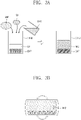
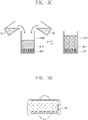
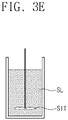
- FIGS. 3a to 3e are schematic views for explaining the second step of FIG. 1 .
- second balls BA2 and a solvent SV may be provided in a second container CON2.
- the solvent SV may be an organic solvent, e.g., isopropyl alcohol and toluene.
- the isopropyl alcohol and the toluene may be mixed with a volume ratio of 4:6.
- the second balls BA2 may include a silicon nitride.
- a second mixture MI2 may be prepared by putting silicon nitride (Si 3 N 4 ) powder SNP, the ceramic additive SA, and a dispersant DIS into the solvent SV in the second container CON2.
- the ceramic additive SA may be prepared through the previous first step S110.
- the dispersant DIS may include a commercially available dispersant DIS, e.g., BYK-111.
- the solvent SV may have a volume ratio of 40 vol% to 60 vol% to an entire volume of the second mixture MI2.
- the silicon nitride powder SNP may have a volume ratio of 15 vol% to 25 vol% to the entire volume of the second mixture MI2.
- the ceramic additive SA may have a weight ratio of 5 wt% to 10 wt% to a weight of the second mixture MI2.
- the second mixture MI2 may be uniformly mixed by performing a first ball milling process on the second mixture MI2.
- the second balls BA2 may physically assist the second mixture MI2 to be uniformly mixed.
- the first ball milling process may include a process of rotating the second container CON2 in which the second mixture MI2 is stored at a predetermined speed by using a ball milling machine. As the second container CON2 is rotated, mechanical grinding and uniform mixing may be performed by the second balls BA2 in the second container CON2.
- the ball milling machine may have a rotation speed of 100 rpm to 500 rpm.
- the binder BI may include at least one of a cellulose derivative such as ethyl cellulose, methyl cellulose, nitro cellulose, and carboxy cellulose, a resin such as polyvinyl alcohol, acrylic acid ester, methacrylic acid ester, polyvinyl butyral, and a mixture of the derivative and the resin.
- the binder BI may include polyvinyl butyral (PVB).
- the plasticizer PL may include dibutyl phthalate or deoctyl phthalate.
- the added plasticizer PL may have a weight of about 50% of a weight of the binder BI. Additionally, a solvent may be further added to the second mixture MI2.
- the third mixture MI3 may be uniformly mixed by performing a second ball milling process on the third mixture MI3.
- a slurry SL may be formed in the step S120.
- the second ball milling process may be substantially the same as or similar to the above-described first ball milling process. Thereafter, the second balls BA2 may be removed.
- a volatile gas may be removed from the slurry SL by aging the slurry SL formed through the second ball milling process. While the slurry SL is aged, the slurry SL may be stirred by using a stirrer SIT. The aging may be performed during about 24 hours.
- FIG. 4 is a schematic view for explaining the third step of FIG. 1 .
- a sheet SH may be formed by molding the slurry SL prepared in the second step 120 in a tape casting process.
- the tape casting process may include pouring the slurry SL to a blade that is set as a predetermined dam height, and applying the slurry SL on a moving substrate film.
- the molded sheet SH may be obtained.
- a stainless steel tape, an oilpaper tape, or a polymer tape such as polyester may be used as the substrate film.
- the slurry may be poured to a doctor blade that is set at a dam height of about 0.3 mm, and the slurry may be applied on the substrate film moving at a predetermined speed (e.g., 0.1 m/min to 1 m/min). Thereafter, as a drying process and a process of peeling the substrate film are performed, the sheet SH may be obtained.
- a predetermined speed e.g., 0.1 m/min to 1 m/min.
- the tape casting process may be performed at a temperature of 30°C to 80°C.
- the sheet SH formed through the tape casting process may be cut into an appropriate size.
- the sheet SH may have a thickness of 0.1 mm to 0.16 mm.
- FIG. 5 is a schematic view for explaining the fourth step of FIG. 1 .
- a plurality of sheets SH prepared in the third step S130 may be stacked.
- a laminate sheet SSH may be formed in the step S140.
- the laminate sheet SSH may be configured by laminating three to five sheets SH.
- the lamination process may be performed at a temperature of about 60°C with a pressure of about 10 MPa.
- the laminate sheet SSH may be pressed.
- the pressing process may use a warm isostatic press (WIP).
- WIP warm isostatic press
- the pressing process may be performed at a temperature of about 70°C with a pressure of about 30 MPa.
- the laminate sheet SSH may have a thickness TH of 0.3 mm to 4 mm.
- FIG. 6 is a schematic view for explaining the fifth step of FIG. 1 .
- a stacked structure SS may be prepared.
- the stacked structure SS may include a lower plate PLT1, an upper plate PLT2, and the laminate sheet SSH disposed therebetween.
- the process of preparing the stacked structure SS may include sandwiching the laminate sheet SSH prepared in the fourth step S140 between the lower plate PLT1 and the upper plate PLT2.
- one laminate sheet SSH is disposed between the lower plate PLT1 and the upper plate PLT2 as an example in FIG. 6
- the present invention is not limited thereto.
- two or more laminate sheets SSH may be disposed between the lower plate PLT1 and the upper plate PLT2.
- a boron nitride BN may be evenly applied onto the laminate sheet SSH.
- Each of the lower plate PLT1 and the upper plate PLT2 may include the boron nitride.
- Each of the lower plate PLT1 and the upper plate PLT2 may have a density of 1.4 g/cm 3 to 1.7 g/cm 3 .
- Each of the lower plate PLT1 and the upper plate PLT2 may have an area of 1.00 times to 1.02 times of an area of the laminate sheet SSH.
- At least one of the lower plate PLT1 and the upper plate PLT2 may include a plurality of protrusions PP provided on one surface thereof.
- One surface of the laminate sheet SSH may contact the protrusions PP.
- the protrusions PP may extend in parallel to each other in one direction.
- a recess RS may be defined between the protrusions PP adjacent to each other.
- at least one of the lower plate PLT1 and the upper plate PLT2 may have a patterned surface.
- the protrusions PP may be omitted.
- Each of the protrusions PP may have a first width W1.
- the recess RS may have a second width W2.
- the first width W1 and the second width W2 may be equal to or different from each other.
- the first width W1 may be 0 mm to 15 mm, preferably 0.1 mm to 15 mm, and more preferably 4 mm to 15 mm.
- the second width W2 may be 0 mm to 15 mm, preferably 0.1 mm to 15 mm, and more preferably 4 mm to 15 mm.
- the protrusions PP may be arranged with a predetermined pitch PI.
- the pitch PI of the protrusions PP may be a sum of the first width W1 and the second width W2.
- the protrusion PP may have a rounded cross-sectional shape.
- the protrusion PP may have a polygonal (triangular or rectangular) cross-sectional shape
- the stacked structure SS may include a first gap GA1 between the lower plate PLT1 and the laminate sheet SSH and a second gap GA2 between the upper plate PLT2 and the laminate sheet SSH.
- the first gap GA1 may be defined by the adjacent protrusions PP and the recess RS defined therebetween of the lower plate PLT1.
- the second gap GA2 may be defined by the adjacent protrusions PP and the recess RS defined therebetween of the upper plate PLT2.
- FIG. 7 is a schematic view for explaining the sixth step of FIG. 1 .
- a degreasing process (e.g., binder burn out (B.B.O.)) may be performed on the stacked structure SS prepared in the fifth step S150 in the step S160.
- a degreasing process e.g., binder burn out (B.B.O.)
- B.B.O. binder burn out
- the degassing process may be performed at a temperature of about 600°C for 12 hours in an atmospheric furnace (AF). That is, the degassing process may be performed under the atmosphere (air).
- the first gap GA1 may be secured on a bottom surface of the laminate sheet SSH
- the second gap GA1 may be secured on a top surface of the laminate sheet SSH.
- the degreasing process may be smoothly performed through the first gap GA1 and the second gap GA2.
- a heated gas i.e., air
- the heated gas may contact a bottom surface and a top surface of the laminate sheet SSH through the first gap GA1 and the second gap GA2.
- FIG. 8 is a schematic view for explaining the seventh step of FIG. 1 .
- the stacked structure SS may be provided in a crucible CRU.
- the bedding powder BNP As bedding powder BNP is put into the crucible CRU, the stacked structure SS may be buried in the bedding powder BNP.
- the bedding powder BNP may include boron nitride powder, silicon nitride powder, or a mixture thereof.
- the bedding powder BNP is the mixture of the boron nitride powder and the silicon nitride powder, the boron nitride powder and the silicon nitride powder may be mixed with a ratio of 1:1.
- a sintering process may be performed on the stacked structure SS by heating the crucible CRU in the step S170. Accordingly, as the laminate sheet SSH is sintered a silicon nitride substrate may be formed. The sintering process may be performed at a temperature of about 1900°C for 6 hours. The sintering process may be performed under a nitrogen atmosphere.
- the first gap GA1 may be secured on the bottom surface of the laminate sheet SSH, and the second gap GA1 may be secured on the bottom surface of the laminate sheet SSH.
- the laminate sheet SSH is sandwiched by the lower plate PLT1 and the upper plate PLT2, the sintering process may be smoothly performed through the first gap GA1 and the second gap GA2.
Landscapes
- Chemical & Material Sciences (AREA)
- Engineering & Computer Science (AREA)
- Ceramic Engineering (AREA)
- Manufacturing & Machinery (AREA)
- Organic Chemistry (AREA)
- Materials Engineering (AREA)
- Structural Engineering (AREA)
- Inorganic Chemistry (AREA)
- Physics & Mathematics (AREA)
- Fluid Mechanics (AREA)
- Life Sciences & Earth Sciences (AREA)
- Wood Science & Technology (AREA)
- Chemical Kinetics & Catalysis (AREA)
- Ceramic Products (AREA)
Abstract
Description
- The present invention relates to a method for manufacturing a silicon nitride substrate.
- A ceramic material having high electrical insulation and thermal conductivity may be used as a heating medium that quickly transfers heat generated from a device. The ceramic material is used for a substrate of a device for transport machines, a substrate for highly integrated electronic circuits, a heat dissipation component for laser oscillation parts, a reaction container component for semiconductor manufacturing apparatuses, and a precision machine component.
- Particularly, a ceramic substrate used for high output power devices is required to have high insulation, high voltage resistance, high thermal conductivity, high strength, and a low dielectric constant. The ceramic substrate suitable for the above-described needs includes an aluminum nitride substrate, an alumina substrate, and a silicon nitride substrate.
- The silicon nitride (Si3N4) substrate has high strength (500 MPa to 800 MPa), high ductility (5 MPa•m to 8 MPa•m), and excellent consistency of a thermal expansion coefficient with silicon (Si). Furthermore, the silicon nitride (Si3N4) substrate has high thermal conductivity (70 W/mK to 170 W/mK). That is, the silicon nitride (Si3N4) substrate is suitable for a material of a next generation high output power device.
- The present invention provides a method for manufacturing a high quality silicon nitride substrate.
- According to the concept of the present invention, a method for manufacturing a silicon nitride substrate includes: forming a slurry by mixing silicon nitride powder, a ceramic additive, and a solvent; molding the slurry to form sheets; sandwiching at least one of the sheets between a lower plate and an upper plate to form a stacked structure; degreasing the stacked structure; and sintering the stacked structure. Here, at least one of the lower plate and the upper plate includes a plurality of protrusions provided on one surface thereof, and the protrusions extend in parallel to each other in one direction.
- The method for manufacturing the silicon nitride substrate may sandwich the silicon nitride sheet by using the lower plate and the upper plate, each of which has the patterned surface. As the degreasing process and the sintering process are performed on the stacked structure formed as described above, the degreasing process and the sintering process may be further effectively performed. As a result, the present invention can provide the high quality silicon nitride substrate.
-
-
FIG. 1 is a flowchart for explaining a method for manufacturing a silicon nitride substrate according to embodiments of the present invention. -
FIG. 2 is a schematic view for explaining a first step ofFIG. 1 . -
FIGS. 3a to 3e are schematic views for explaining a second step ofFIG. 1 . -
FIG. 4 is a schematic view for explaining a third step ofFIG. 1 . -
FIG. 5 is a schematic view for explaining a fourth step ofFIG. 1 . -
FIG. 6 is a schematic view for explaining a fifth step ofFIG. 1 . -
FIG. 7 is a schematic view for explaining a sixth step ofFIG. 1 . -
FIG. 8 is a schematic view for explaining a seventh step ofFIG. 1 . - Hereinafter, embodiments of the present invention will be described with reference to the accompanying drawings so as to sufficiently understand constitutions and effects of the present invention. The present invention may, however, be embodied in different forms and should not be construed as limited to the embodiments set forth herein. Rather, these embodiments are provided so that this disclosure will be thorough and complete, and will fully convey the scope of the present invention to those skilled in the art. Further, the present invention is only defined by scopes of claims.
- Also, though terms like a first, a second, and a third are used to describe various regions and layers in various embodiments of the inventive concept, the regions and the layers are not limited to these terms. These terms are only used to distinguish one component from another component. An embodiment described and exemplified herein includes a complementary embodiment thereof.
- In the following description, the technical terms are used only for explaining a specific exemplary embodiment while not limiting the present invention. In the specification, the terms of a singular form may include plural forms unless referred to the contrary. Also, the meaning of "include," "comprise," "including," or "comprising," specifies a property, a region, a fixed number, a step, a process, an element and/or a component but does not exclude other properties, regions, fixed numbers, steps, processes, elements and/or components.
-
FIG. 1 is a flowchart for explaining a method for manufacturing a silicon nitride substrate according to embodiments of the present invention. - Referring to
FIG. 1 , the method for manufacturing the silicon nitride substrate according to embodiments of the present invention may include: a first step S110 of preparing a ceramic additive; a second step S120 of forming a slurry by mixing silicon nitride powder, the ceramic additive, and a solvent; a third step S130 of molding the slurry by a tape casting process to form sheets; a fourth step S140 of stacking the sheets and performing a lamination process thereon to form a laminate sheet; a fifth step S150 of sandwiching the laminate sheet between a lower plate and an upper plate to form a stacked structure; a sixth step S160 of performing a degreasing process on the stacked structure; and a seventh step S170 of performing a sintering process on the stacked structure. -
FIG. 2 is a schematic view for explaining the first step ofFIG. 1 . - Referring to
FIGS. 1 and2 , first balls BA1 and a first mixture MI1 may be provided in a first container CON1. The first mixture MI1 may include ceramic powder and a solvent. Specifically, the first balls BA1 and the solvent may be put into the first container CON1. The ceramic power may be put into the solvent. The first balls BA1 may include ceramic such as zirconia. The solvent may be an organic solvent, e.g., ethanol. The ceramic powder may include an yttrium oxide (Y2O3), a magnesium oxide (MgO), and a zirconium oxide (ZrO2). According to another embodiment of the present invention, the zirconium oxide (ZrO2) in the ceramic powder may be omitted. - The ceramic powder may be uniformly mixed in the first mixture MI1 by mixing the first mixture MI1 using a mixer. The first balls BA1 may physically assist the ceramic powder to be uniformly mixed. Specifically, the yttrium oxide, the magnesium oxide, and the zirconium oxide may be uniformly mixed in the first mixture MI1.
- After the mixing is completed, the first balls BA1 may be removed. The entire solvent may be evaporated by drying the first mixture MI1. As a result, the ceramic additive SA in the form of powder may be obtained in the step S110. The ceramic additive SA may include the yttrium oxide (Y2O3), the magnesium oxide (MgO), and the zirconium oxide (ZrO2). According to another embodiment of the present invention, the zirconium oxide (ZrO2) in the ceramic additive SA may be omitted.
- A weight ratio of the yttrium oxide to the ceramic additive SA may be 0.5 to 0.8. A weight ratio of the magnesium oxide to the ceramic additive SA may be 0. 1 to 0.4. A weight ratio of the zirconium oxide to the ceramic additive SA may be 0 to 0.3 (i.e., equal to or less than 0.3). When the ceramic additive SA does not contain the zirconium oxide, the weight ratio of the zirconium oxide may be 0. According to an embodiment of the present invention, the weight ratio of the zirconium oxide to the ceramic additive SA may be 0.1 to 0.3.
- For example, the yttrium oxide may have a weight ratio of about 56 wt%, the magnesium oxide may have a weight ratio of about 22 wt%, and the zirconium oxide may have a weight ratio of about 22 wt% in the ceramic additive SA.
-
FIGS. 3a to 3e are schematic views for explaining the second step ofFIG. 1 . - Referring to
FIGS. 1 and3a , second balls BA2 and a solvent SV may be provided in a second container CON2. The solvent SV may be an organic solvent, e.g., isopropyl alcohol and toluene. The isopropyl alcohol and the toluene may be mixed with a volume ratio of 4:6. The second balls BA2 may include a silicon nitride. - A second mixture MI2 may be prepared by putting silicon nitride (Si3N4) powder SNP, the ceramic additive SA, and a dispersant DIS into the solvent SV in the second container CON2. The ceramic additive SA may be prepared through the previous first step S110. The dispersant DIS may include a commercially available dispersant DIS, e.g., BYK-111.
- The solvent SV may have a volume ratio of 40 vol% to 60 vol% to an entire volume of the second mixture MI2. The silicon nitride powder SNP may have a volume ratio of 15 vol% to 25 vol% to the entire volume of the second mixture MI2. The ceramic additive SA may have a weight ratio of 5 wt% to 10 wt% to a weight of the second mixture MI2.
- Referring to
FIGS. 1 and3b , the second mixture MI2 may be uniformly mixed by performing a first ball milling process on the second mixture MI2. The second balls BA2 may physically assist the second mixture MI2 to be uniformly mixed. - Specifically, the first ball milling process may include a process of rotating the second container CON2 in which the second mixture MI2 is stored at a predetermined speed by using a ball milling machine. As the second container CON2 is rotated, mechanical grinding and uniform mixing may be performed by the second balls BA2 in the second container CON2. The ball milling machine may have a rotation speed of 100 rpm to 500 rpm.
- Referring to
FIGS. 1 and3c , after the first ball milling process, a third mixture - MI3 may be prepared by adding a binder BI and a plasticizer PL. The binder BI may include at least one of a cellulose derivative such as ethyl cellulose, methyl cellulose, nitro cellulose, and carboxy cellulose, a resin such as polyvinyl alcohol, acrylic acid ester, methacrylic acid ester, polyvinyl butyral, and a mixture of the derivative and the resin. For example, the binder BI may include polyvinyl butyral (PVB). The plasticizer PL may include dibutyl phthalate or deoctyl phthalate. The added plasticizer PL may have a weight of about 50% of a weight of the binder BI. Additionally, a solvent may be further added to the second mixture MI2.
- Referring to
FIGS. 1 and3d , the third mixture MI3 may be uniformly mixed by performing a second ball milling process on the third mixture MI3. As the third mixture MI3 is uniformly mixed through the second ball milling process, a slurry SL may be formed in the step S120. The second ball milling process may be substantially the same as or similar to the above-described first ball milling process. Thereafter, the second balls BA2 may be removed. - Referring to
FIGS. 1 and3e , a volatile gas may be removed from the slurry SL by aging the slurry SL formed through the second ball milling process. While the slurry SL is aged, the slurry SL may be stirred by using a stirrer SIT. The aging may be performed during about 24 hours. -
FIG. 4 is a schematic view for explaining the third step ofFIG. 1 . - Referring to
FIGS. 1 and4 , a sheet SH may be formed by molding the slurry SL prepared in thesecond step 120 in a tape casting process. Specifically, the tape casting process may include pouring the slurry SL to a blade that is set as a predetermined dam height, and applying the slurry SL on a moving substrate film. As the solvent is volatilized from the slurry SL applied on the substrate film, and the substrate film is peeled, the molded sheet SH may be obtained. A stainless steel tape, an oilpaper tape, or a polymer tape such as polyester may be used as the substrate film. For example, the slurry may be poured to a doctor blade that is set at a dam height of about 0.3 mm, and the slurry may be applied on the substrate film moving at a predetermined speed (e.g., 0.1 m/min to 1 m/min). Thereafter, as a drying process and a process of peeling the substrate film are performed, the sheet SH may be obtained. - The tape casting process may be performed at a temperature of 30°C to 80°C. The sheet SH formed through the tape casting process may be cut into an appropriate size. The sheet SH may have a thickness of 0.1 mm to 0.16 mm.
-
FIG. 5 is a schematic view for explaining the fourth step ofFIG. 1 . - Referring to
FIGS. 1 and5 , a plurality of sheets SH prepared in the third step S130 may be stacked. As a lamination process is performed on the stacked sheets SH, a laminate sheet SSH may be formed in the step S140. For example, the laminate sheet SSH may be configured by laminating three to five sheets SH. The lamination process may be performed at a temperature of about 60°C with a pressure of about 10 MPa. - The laminate sheet SSH may be pressed. The pressing process may use a warm isostatic press (WIP). The pressing process may be performed at a temperature of about 70°C with a pressure of about 30 MPa. Finally, the laminate sheet SSH may have a thickness TH of 0.3 mm to 4 mm.
-
FIG. 6 is a schematic view for explaining the fifth step ofFIG. 1 . - Referring to
FIGS. 1 and6 , a stacked structure SS may be prepared. The stacked structure SS may include a lower plate PLT1, an upper plate PLT2, and the laminate sheet SSH disposed therebetween. The process of preparing the stacked structure SS may include sandwiching the laminate sheet SSH prepared in the fourth step S140 between the lower plate PLT1 and the upper plate PLT2. Although one laminate sheet SSH is disposed between the lower plate PLT1 and the upper plate PLT2 as an example inFIG. 6 , the present invention is not limited thereto. For example, two or more laminate sheets SSH may be disposed between the lower plate PLT1 and the upper plate PLT2. - Before the stacked structure SS is prepared, a boron nitride BN may be evenly applied onto the laminate sheet SSH. Each of the lower plate PLT1 and the upper plate PLT2 may include the boron nitride. Each of the lower plate PLT1 and the upper plate PLT2 may have a density of 1.4 g/cm3 to 1.7 g/cm3. Each of the lower plate PLT1 and the upper plate PLT2 may have an area of 1.00 times to 1.02 times of an area of the laminate sheet SSH.
- At least one of the lower plate PLT1 and the upper plate PLT2 may include a plurality of protrusions PP provided on one surface thereof. One surface of the laminate sheet SSH may contact the protrusions PP. The protrusions PP may extend in parallel to each other in one direction. A recess RS may be defined between the protrusions PP adjacent to each other. In other words, at least one of the lower plate PLT1 and the upper plate PLT2 may have a patterned surface. In another embodiment of the present invention, the protrusions PP may be omitted.
- Each of the protrusions PP may have a first width W1. The recess RS may have a second width W2. The first width W1 and the second width W2 may be equal to or different from each other. The first width W1 may be 0 mm to 15 mm, preferably 0.1 mm to 15 mm, and more preferably 4 mm to 15 mm. The second width W2 may be 0 mm to 15 mm, preferably 0.1 mm to 15 mm, and more preferably 4 mm to 15 mm. The protrusions PP may be arranged with a predetermined pitch PI. The pitch PI of the protrusions PP may be a sum of the first width W1 and the second width W2.
- The protrusion PP may have a rounded cross-sectional shape. For another example, the protrusion PP may have a polygonal (triangular or rectangular) cross-sectional shape
- The stacked structure SS may include a first gap GA1 between the lower plate PLT1 and the laminate sheet SSH and a second gap GA2 between the upper plate PLT2 and the laminate sheet SSH. The first gap GA1 may be defined by the adjacent protrusions PP and the recess RS defined therebetween of the lower plate PLT1. The second gap GA2 may be defined by the adjacent protrusions PP and the recess RS defined therebetween of the upper plate PLT2.
-
FIG. 7 is a schematic view for explaining the sixth step ofFIG. 1 . - Referring to
FIGS. 1 and7 , a degreasing process (e.g., binder burn out (B.B.O.)) may be performed on the stacked structure SS prepared in the fifth step S150 in the step S160. Thus, all of organic materials such as the binder, the dispersant, and the plasticizer in the laminate sheet SSH may be burnt and removed. The degassing process may be performed at a temperature of about 600°C for 12 hours in an atmospheric furnace (AF). That is, the degassing process may be performed under the atmosphere (air). - As described above, the first gap GA1 may be secured on a bottom surface of the laminate sheet SSH, and the second gap GA1 may be secured on a top surface of the laminate sheet SSH. Although the laminate sheet SSH is sandwiched by the lower plate PLT1 and the upper plate PLT2, the degreasing process may be smoothly performed through the first gap GA1 and the second gap GA2. For example, a heated gas (i.e., air) may pass through the first gap GA1 and the second gap GA2. The heated gas may contact a bottom surface and a top surface of the laminate sheet SSH through the first gap GA1 and the second gap GA2.
-
FIG. 8 is a schematic view for explaining the seventh step ofFIG. 1 . - Referring to
FIGS. 1 and8 , after the sixth step S160, the stacked structure SS may be provided in a crucible CRU. As bedding powder BNP is put into the crucible CRU, the stacked structure SS may be buried in the bedding powder BNP. The bedding powder BNP may include boron nitride powder, silicon nitride powder, or a mixture thereof. When the bedding powder BNP is the mixture of the boron nitride powder and the silicon nitride powder, the boron nitride powder and the silicon nitride powder may be mixed with a ratio of 1:1. - A sintering process may be performed on the stacked structure SS by heating the crucible CRU in the step S170. Accordingly, as the laminate sheet SSH is sintered a silicon nitride substrate may be formed. The sintering process may be performed at a temperature of about 1900°C for 6 hours. The sintering process may be performed under a nitrogen atmosphere.
- As described above, the first gap GA1 may be secured on the bottom surface of the laminate sheet SSH, and the second gap GA1 may be secured on the bottom surface of the laminate sheet SSH. Although the laminate sheet SSH is sandwiched by the lower plate PLT1 and the upper plate PLT2, the sintering process may be smoothly performed through the first gap GA1 and the second gap GA2.
- The description of the present invention is intended to be illustrative, and those with ordinary skill in the technical field of the present invention will be understood that the present invention can be carried out in other specific forms without changing the technical idea or essential features. Therefore, the embodiments described above include examples in all respects and not restrictive, but it should be understood.
Claims (12)
- A method for manufacturing a silicon nitride substrate, comprising:forming a slurry by mixing silicon nitride powder, a ceramic additive, and a solvent;molding the slurry to form sheets;forming a stacked structure by sandwiching at least one of the sheets between a lower plate and an upper platestacked structure;performing degreasing process on the stacked structure; andperforming sintering process on the stacked structure,wherein at least one of the lower plate and the upper plate comprises a plurality of protrusions provided on one surface thereof, andthe protrusions extend in parallel to each other in one direction.
- The method of claim 1, wherein the ceramic additive comprises a yttrium oxide (Y2O3), a magnesium oxide (MgO), and a zirconium oxide (ZrO2),a weight ratio of the yttrium oxide to the ceramic additive is 0.5 to 0.8,a weight ratio of the magnesium oxide to the ceramic additive is 0.1 to 0.4, anda weight ratio of the zirconium oxide to the ceramic additive is 0.3 or less.
- The method of claim 1, wherein the forming of the slurry comprises adding a binder and a plasticizer.
- The method of claim 1, wherein the forming of the slurry comprises:forming a first mixture by adding silicon nitride powder, the ceramic additive, and a dispersant to the solvent;performing a first ball milling process on the first mixture;forming a second mixture by adding a binder and a plasticizer to the first mixture on which the first ball milling process is completed; andperforming a second ball milling process on the second mixture.
- The method of claim 1, wherein the molding of the slurry comprises a tape casting process.
- The method of claim 1, further comprising forming a laminate sheet by stacking the sheets and performing a lamination process thereon, before the forming of the stacked structure.
- The method of claim 1, wherein each of the lower plate and the upper plate has a density of 1.4 g/cm3 to 1.7 g/cm3.
- The method of claim 1, wherein each of the lower plate and the upper plate has an area of 1.00 times to 1.02 times of an area of the sheet.
- The method of claim 1, wherein a recess is defined between the protrusions adjacent to each other, and
the stacked structure comprises a gap defined by the adjacent protrusions, the recess, and one surface of the sheet. - The method of claim 9, wherein the protrusion has a first width, the recess has a second width,the first width is 0 mm to 15 mm, andthe second width is 0 mm to 15 mm.
- The method of claim 9, wherein a heated gas contacts the one surface of the sheet through the gap during the degreasing process.
- The method of claim 1, wherein the protrusions are arranged with a predetermined pitch.
Applications Claiming Priority (2)
| Application Number | Priority Date | Filing Date | Title |
|---|---|---|---|
| KR1020190116131A KR102752202B1 (en) | 2019-09-20 | 2019-09-20 | Method for manufacturing silicon nitride substrate |
| PCT/KR2020/012666 WO2021054788A1 (en) | 2019-09-20 | 2020-09-18 | Method for manufacturing silicon nitride substrate |
Publications (2)
| Publication Number | Publication Date |
|---|---|
| EP4032700A1 true EP4032700A1 (en) | 2022-07-27 |
| EP4032700A4 EP4032700A4 (en) | 2023-10-25 |
Family
ID=74883641
Family Applications (1)
| Application Number | Title | Priority Date | Filing Date |
|---|---|---|---|
| EP20866693.3A Pending EP4032700A4 (en) | 2019-09-20 | 2020-09-18 | Method for manufacturing silicon nitride substrate |
Country Status (6)
| Country | Link |
|---|---|
| US (1) | US12679774B2 (en) |
| EP (1) | EP4032700A4 (en) |
| JP (1) | JP7377961B2 (en) |
| KR (1) | KR102752202B1 (en) |
| CN (1) | CN114423723A (en) |
| WO (1) | WO2021054788A1 (en) |
Cited By (1)
| Publication number | Priority date | Publication date | Assignee | Title |
|---|---|---|---|---|
| EP4545504A4 (en) * | 2022-06-22 | 2025-10-15 | Oci Co Ltd | METHOD FOR CONTROLLING THE THERMAL CONDUCTIVITY AND FLEXURAL STRENGTH OF A SILICON NITRIDE SUBSTRATE |
Families Citing this family (8)
| Publication number | Priority date | Publication date | Assignee | Title |
|---|---|---|---|---|
| JP7770422B2 (en) * | 2021-05-06 | 2025-11-14 | アモテック シーオー,エルティーディー | Method for manufacturing silicon nitride substrate and silicon nitride substrate manufactured using the same |
| KR102727296B1 (en) * | 2022-06-22 | 2024-11-08 | 오씨아이 주식회사 | Method for Regenerating silicon nitride substrate |
| KR102735535B1 (en) * | 2022-06-22 | 2024-12-02 | 오씨아이 주식회사 | method for analyzing silicon nitride substrate |
| CN116161970A (en) * | 2022-12-29 | 2023-05-26 | 无锡海古德新技术有限公司 | Lamination sintering process method of high-performance silicon nitride ceramic substrate |
| KR102793751B1 (en) * | 2023-01-31 | 2025-04-08 | 한국재료연구원 | Composition for preparation of pressureless sintered silicon nitride sintered body with high thermal conductivity and preparation method of silicon nitride sintered body using the same |
| WO2025095438A1 (en) * | 2023-10-31 | 2025-05-08 | 오씨아이 주식회사 | Green sheet, method of manufacturing silicon nitride substrate with reduced warpage, and silicon nitride substrate manufactured thereby |
| WO2025095437A1 (en) * | 2023-10-31 | 2025-05-08 | 오씨아이 주식회사 | Laminate structure for manufacturing silicon nitride substrate, method for manufacturing silicon nitride substrate having reduced warpage, and silicon nitride substrate manufactured thereby |
| EP4553058A1 (en) * | 2023-11-10 | 2025-05-14 | CeramTec GmbH | Sintered body based on silicon nitride |
Family Cites Families (45)
| Publication number | Priority date | Publication date | Assignee | Title |
|---|---|---|---|---|
| SE333437B (en) * | 1969-03-03 | 1971-03-15 | Asea Ab | |
| US3935358A (en) * | 1973-03-29 | 1976-01-27 | E. I. Du Pont De Nemours & Co. | Process for preparing a hollow, rib-reinforced laminated structure |
| JPS6054976A (en) * | 1983-09-02 | 1985-03-29 | 日本碍子株式会社 | Silicon nitride sintered body and manufacture |
| US5236687A (en) * | 1989-10-17 | 1993-08-17 | Kureha Kagaku Kogyo Kabushiki Kaisha | Flat plate-like ribbed porous carbon material |
| US5506046A (en) * | 1992-08-11 | 1996-04-09 | E. Khashoggi Industries | Articles of manufacture fashioned from sheets having a highly inorganically filled organic polymer matrix |
| SE509518C2 (en) * | 1997-06-13 | 1999-02-08 | Asea Brown Boveri | Device for thermostatic pressing |
| CN1416604B (en) * | 2000-03-07 | 2010-09-01 | 松下电器产业株式会社 | Polymer electrolyte fuel cell and manufacturing method thereof |
| US20020190431A1 (en) * | 2001-06-13 | 2002-12-19 | Ngk Insulators, Ltd. | Mold for molding substrate, method for producing a substrate using the mold and the substrate |
| US6893762B2 (en) * | 2002-01-16 | 2005-05-17 | Alberta Research Council, Inc. | Metal-supported tubular micro-fuel cell |
| TWI241284B (en) * | 2002-06-06 | 2005-10-11 | Ngk Insulators Ltd | A method of producing sintered bodies, a method of producing shaped bodies, shaped bodies, corrosion resistant members and a method of producing ceramic member |
| US7279027B2 (en) * | 2003-03-21 | 2007-10-09 | Air Products And Chemicals, Inc. | Planar ceramic membrane assembly and oxidation reactor system |
| JP4086701B2 (en) * | 2003-04-11 | 2008-05-14 | 日本特殊陶業株式会社 | Manufacturing method of ceramic heater |
| JP2005225748A (en) * | 2004-01-13 | 2005-08-25 | Ngk Insulators Ltd | Method for producing ceramic body and firing tool |
| JP2006029611A (en) * | 2004-07-12 | 2006-02-02 | Noritake Co Ltd | Tabular structure, and its manufacturing method |
| US8518603B2 (en) * | 2005-12-05 | 2013-08-27 | Nanotek Instruments, Inc. | Sheet molding compound flow field plate, bipolar plate and fuel cell |
| CN100398491C (en) * | 2006-11-28 | 2008-07-02 | 武汉理工大学 | A kind of silicon nitride non-water-based casting slurry and preparation method thereof |
| GB2447021B (en) * | 2007-02-27 | 2010-03-17 | Rolls Royce Plc | A mould lining |
| CN101353259B (en) * | 2007-07-27 | 2012-08-22 | 日本碍子株式会社 | Ceramic moulding body, ceramic component, and manufacturing method of ceramic moulding body and ceramic component |
| JP5439729B2 (en) | 2008-03-10 | 2014-03-12 | 日立金属株式会社 | Silicon nitride substrate, manufacturing method thereof, silicon nitride circuit substrate and semiconductor module using the same |
| US7948075B2 (en) * | 2008-03-10 | 2011-05-24 | Hitachi Metals, Ltd. | Silicon nitride substrate, method of manufacturing the same, and silicon nitride circuit board and semiconductor module using the same |
| KR100997173B1 (en) * | 2008-08-13 | 2010-11-29 | 부산대학교 산학협력단 | Fastener of Fuel Cell Stack |
| JP5499374B2 (en) * | 2008-09-24 | 2014-05-21 | 日立金属株式会社 | Silicon nitride circuit board and semiconductor module using the same |
| JP5339214B2 (en) * | 2010-03-01 | 2013-11-13 | 日立金属株式会社 | Method for manufacturing silicon nitride substrate and silicon nitride substrate |
| JP5458050B2 (en) * | 2011-03-30 | 2014-04-02 | 日本碍子株式会社 | Manufacturing method of electrostatic chuck |
| WO2013054852A1 (en) * | 2011-10-11 | 2013-04-18 | 日立金属株式会社 | Silicon nitride substrate and method for manufacturing silicon nitride substrate |
| JP6032903B2 (en) | 2012-02-29 | 2016-11-30 | 株式会社ニッカトー | Setter for firing |
| KR101652616B1 (en) * | 2012-03-28 | 2016-08-30 | 우베 고산 가부시키가이샤 | Silicon nitride powder production method, silicon nitride powder, silicon nitride sintered body and circuit substrate using same |
| CN202716133U (en) | 2012-06-26 | 2013-02-06 | 福建华科光电有限公司 | Upper disc plate structure of optical lens |
| JP2016038194A (en) | 2014-08-12 | 2016-03-22 | 東北セラミック株式会社 | Setter for defatting and firing |
| WO2016094863A1 (en) * | 2014-12-11 | 2016-06-16 | Nitto Denko Corporation | Nitride phosphor element for light emitting diodes |
| WO2016117553A1 (en) * | 2015-01-23 | 2016-07-28 | 株式会社東芝 | Silicon nitride sintered compact having high thermal conductivity, silicon nitride substrate and silicon nitride circuit substrate using same, and semiconductor device |
| JP6373212B2 (en) * | 2015-03-26 | 2018-08-15 | 日本碍子株式会社 | Method for producing alumina sintered body and alumina sintered body |
| CN204596618U (en) | 2015-04-30 | 2015-08-26 | 湖北华磁电子科技有限公司 | A kind of magnetic ferrite magnetic core sintering supports backing plate |
| JP6792794B2 (en) * | 2015-09-25 | 2020-12-02 | 日立金属株式会社 | Manufacturing equipment for silicon nitride ceramic assembly substrate and manufacturing method for silicon nitride ceramic assembly substrate |
| CN205300269U (en) | 2016-01-26 | 2016-06-08 | 桐乡市朗基电子材料有限公司 | Soft magnetic ferrite magnetic core sintering bearing structure |
| KR20170135105A (en) | 2016-05-30 | 2017-12-08 | 한국세라믹기술원 | Manufacturing method of sheet-type silicon nitride subststrate |
| CN206192127U (en) | 2016-08-20 | 2017-05-24 | 汕头市瑞升电子有限公司 | Sagger |
| CN106588090A (en) | 2016-11-23 | 2017-04-26 | 湖南仁海科技材料发展有限公司 | Preparation method for ceramic aluminum oxide load-bearing board with multiple slotted holes in surface |
| CN107522495B (en) | 2017-02-16 | 2020-08-14 | 李军廷 | Method for preparing aluminum nitride electronic ceramic substrate by using tape casting method and solvent for preparing ceramic by using tape casting method |
| KR102125964B1 (en) * | 2017-09-20 | 2020-06-23 | 주식회사 엘지화학 | Tape casting slurry composition for manufacturing silicon nitride sintered body |
| CN107857595A (en) | 2017-11-29 | 2018-03-30 | 上海大学 | Silicon nitride ceramics slurry and preparation method thereof and the application for preparing Silicon Nitride Slips by Tape Casting |
| KR102139194B1 (en) * | 2018-08-17 | 2020-07-30 | (주) 존인피니티 | Production method of nitride ceramics active metal brazing substrate |
| JP6676835B1 (en) * | 2018-09-27 | 2020-04-08 | 日本碍子株式会社 | Manufacturing method of wafer mounting table |
| CN109133904B (en) | 2018-11-08 | 2021-04-02 | 横店集团东磁股份有限公司 | A kind of ferrite sintered sheet, its preparation method and use |
| KR102727291B1 (en) * | 2022-06-22 | 2024-11-08 | 오씨아이 주식회사 | Method for controlling thermal conductivity and bending strength of silicon nitride substrate |
-
2019
- 2019-09-20 KR KR1020190116131A patent/KR102752202B1/en active Active
-
2020
- 2020-09-18 WO PCT/KR2020/012666 patent/WO2021054788A1/en not_active Ceased
- 2020-09-18 US US17/761,783 patent/US12679774B2/en active Active
- 2020-09-18 JP JP2022517842A patent/JP7377961B2/en active Active
- 2020-09-18 CN CN202080065937.0A patent/CN114423723A/en active Pending
- 2020-09-18 EP EP20866693.3A patent/EP4032700A4/en active Pending
Cited By (1)
| Publication number | Priority date | Publication date | Assignee | Title |
|---|---|---|---|---|
| EP4545504A4 (en) * | 2022-06-22 | 2025-10-15 | Oci Co Ltd | METHOD FOR CONTROLLING THE THERMAL CONDUCTIVITY AND FLEXURAL STRENGTH OF A SILICON NITRIDE SUBSTRATE |
Also Published As
| Publication number | Publication date |
|---|---|
| KR20210035356A (en) | 2021-04-01 |
| JP7377961B2 (en) | 2023-11-10 |
| CN114423723A (en) | 2022-04-29 |
| WO2021054788A1 (en) | 2021-03-25 |
| KR102752202B1 (en) | 2025-01-14 |
| US20220371963A1 (en) | 2022-11-24 |
| US12679774B2 (en) | 2026-07-14 |
| JP2022550701A (en) | 2022-12-05 |
| EP4032700A4 (en) | 2023-10-25 |
Similar Documents
| Publication | Publication Date | Title |
|---|---|---|
| JP7377961B2 (en) | Method of manufacturing silicon nitride substrate | |
| EP0479219B1 (en) | Method for reducing shrinkage during firing of ceramic bodies | |
| TWI575634B (en) | Ceramic heater, heater electrode and ceramic heater system | |
| JP5803700B2 (en) | Inorganic all-solid secondary battery | |
| KR20170135105A (en) | Manufacturing method of sheet-type silicon nitride subststrate | |
| US20140284320A1 (en) | Ceramic heater and method for producing the same | |
| CN106007683A (en) | Method for producing alumina sintered body and alumina sintered body | |
| EP4545504A1 (en) | Method for controlling thermal conductivity and flexural strength of silicon nitride substrate | |
| JP7203286B2 (en) | Aluminum nitride sintered body and its manufacturing method, circuit board, and jointed board | |
| KR101559243B1 (en) | Ceramic composition, ceramic sinter and manufacturing method thereof | |
| KR102727296B1 (en) | Method for Regenerating silicon nitride substrate | |
| JP7211549B2 (en) | silicon nitride substrate | |
| KR102735535B1 (en) | method for analyzing silicon nitride substrate | |
| JP5797050B2 (en) | Manufacturing method of ceramic sheet | |
| JP7168090B2 (en) | Electrolyte sheet for solid oxide fuel cell, method for producing electrolyte sheet for solid oxide fuel cell, and single cell for solid oxide fuel cell | |
| KR20250064087A (en) | Green sheet, method of manufacturing silicon nitride substrate with reduced warpage and silicon nitride substrate manufactured thereby | |
| KR20250064086A (en) | Laminate structure for manufacturing silicon nitride substrate, method of manufacturing silicon nitride substrate with reduced warpage and silicon nitride substrate manufactured thereby | |
| JP2026035008A (en) | Silicon nitride plate and method for producing silicon nitride plate | |
| JP7255688B2 (en) | Electrolyte sheet for solid oxide fuel cell and single cell for solid oxide fuel cell | |
| JP2009208981A (en) | Manufacturing method of green sheet, green sheet and silicon nitride ceramic substrate | |
| WO2025047102A1 (en) | Silicon nitride substrate and silicon nitriide substrate production method | |
| JP2023030140A (en) | silicon nitride substrate | |
| JP2025100156A (en) | Manufacturing method of resin-filled board, and resin-filled board | |
| JP2023068013A (en) | silicon nitride substrate | |
| JP2025124399A (en) | Silicon nitride sintered body and circuit board |
Legal Events
| Date | Code | Title | Description |
|---|---|---|---|
| STAA | Information on the status of an ep patent application or granted ep patent |
Free format text: STATUS: THE INTERNATIONAL PUBLICATION HAS BEEN MADE |
|
| PUAI | Public reference made under article 153(3) epc to a published international application that has entered the european phase |
Free format text: ORIGINAL CODE: 0009012 |
|
| STAA | Information on the status of an ep patent application or granted ep patent |
Free format text: STATUS: REQUEST FOR EXAMINATION WAS MADE |
|
| 17P | Request for examination filed |
Effective date: 20220318 |
|
| AK | Designated contracting states |
Kind code of ref document: A1 Designated state(s): AL AT BE BG CH CY CZ DE DK EE ES FI FR GB GR HR HU IE IS IT LI LT LU LV MC MK MT NL NO PL PT RO RS SE SI SK SM TR |
|
| DAV | Request for validation of the european patent (deleted) | ||
| DAX | Request for extension of the european patent (deleted) | ||
| A4 | Supplementary search report drawn up and despatched |
Effective date: 20230922 |
|
| RIC1 | Information provided on ipc code assigned before grant |
Ipc: B32B 37/10 20060101ALI20230915BHEP Ipc: B32B 37/06 20060101ALI20230915BHEP Ipc: B32B 5/30 20060101ALI20230915BHEP Ipc: B32B 5/16 20060101ALI20230915BHEP Ipc: C04B 35/636 20060101ALI20230915BHEP Ipc: C04B 35/634 20060101ALI20230915BHEP Ipc: C04B 35/63 20060101ALI20230915BHEP Ipc: C04B 35/638 20060101ALI20230915BHEP Ipc: C04B 35/626 20060101ALI20230915BHEP Ipc: C04B 35/622 20060101ALI20230915BHEP Ipc: C04B 35/584 20060101ALI20230915BHEP Ipc: B32B 38/00 20060101ALI20230915BHEP Ipc: B32B 3/30 20060101ALI20230915BHEP Ipc: B32B 18/00 20060101AFI20230915BHEP |
|
| STAA | Information on the status of an ep patent application or granted ep patent |
Free format text: STATUS: EXAMINATION IS IN PROGRESS |
|
| 17Q | First examination report despatched |
Effective date: 20260326 |