EP4029580A1 - Account access method and apparatus, storage medium, and electronic device - Google Patents
Account access method and apparatus, storage medium, and electronic device Download PDFInfo
- Publication number
- EP4029580A1 EP4029580A1 EP21809337.5A EP21809337A EP4029580A1 EP 4029580 A1 EP4029580 A1 EP 4029580A1 EP 21809337 A EP21809337 A EP 21809337A EP 4029580 A1 EP4029580 A1 EP 4029580A1
- Authority
- EP
- European Patent Office
- Prior art keywords
- server
- account
- connecting device
- target
- data
- Prior art date
- Legal status (The legal status is an assumption and is not a legal conclusion. Google has not performed a legal analysis and makes no representation as to the accuracy of the status listed.)
- Pending
Links
Images



Classifications
-
- A—HUMAN NECESSITIES
- A63—SPORTS; GAMES; AMUSEMENTS
- A63F—CARD, BOARD, OR ROULETTE GAMES; INDOOR GAMES USING SMALL MOVING PLAYING BODIES; VIDEO GAMES; GAMES NOT OTHERWISE PROVIDED FOR
- A63F13/00—Video games, i.e. games using an electronically generated display having two or more dimensions
- A63F13/30—Interconnection arrangements between game servers and game devices; Interconnection arrangements between game devices; Interconnection arrangements between game servers
- A63F13/35—Details of game servers
- A63F13/352—Details of game servers involving special game server arrangements, e.g. regional servers connected to a national server or a plurality of servers managing partitions of the game world
-
- A—HUMAN NECESSITIES
- A63—SPORTS; GAMES; AMUSEMENTS
- A63F—CARD, BOARD, OR ROULETTE GAMES; INDOOR GAMES USING SMALL MOVING PLAYING BODIES; VIDEO GAMES; GAMES NOT OTHERWISE PROVIDED FOR
- A63F13/00—Video games, i.e. games using an electronically generated display having two or more dimensions
- A63F13/30—Interconnection arrangements between game servers and game devices; Interconnection arrangements between game devices; Interconnection arrangements between game servers
- A63F13/34—Interconnection arrangements between game servers and game devices; Interconnection arrangements between game devices; Interconnection arrangements between game servers using peer-to-peer connections
-
- A—HUMAN NECESSITIES
- A63—SPORTS; GAMES; AMUSEMENTS
- A63F—CARD, BOARD, OR ROULETTE GAMES; INDOOR GAMES USING SMALL MOVING PLAYING BODIES; VIDEO GAMES; GAMES NOT OTHERWISE PROVIDED FOR
- A63F13/00—Video games, i.e. games using an electronically generated display having two or more dimensions
- A63F13/30—Interconnection arrangements between game servers and game devices; Interconnection arrangements between game devices; Interconnection arrangements between game servers
- A63F13/35—Details of game servers
- A63F13/355—Performing operations on behalf of clients with restricted processing capabilities, e.g. servers transform changing game scene into an encoded video stream for transmitting to a mobile phone or a thin client
-
- A—HUMAN NECESSITIES
- A63—SPORTS; GAMES; AMUSEMENTS
- A63F—CARD, BOARD, OR ROULETTE GAMES; INDOOR GAMES USING SMALL MOVING PLAYING BODIES; VIDEO GAMES; GAMES NOT OTHERWISE PROVIDED FOR
- A63F13/00—Video games, i.e. games using an electronically generated display having two or more dimensions
- A63F13/30—Interconnection arrangements between game servers and game devices; Interconnection arrangements between game devices; Interconnection arrangements between game servers
- A63F13/35—Details of game servers
- A63F13/358—Adapting the game course according to the network or server load, e.g. for reducing latency due to different connection speeds between clients
-
- A—HUMAN NECESSITIES
- A63—SPORTS; GAMES; AMUSEMENTS
- A63F—CARD, BOARD, OR ROULETTE GAMES; INDOOR GAMES USING SMALL MOVING PLAYING BODIES; VIDEO GAMES; GAMES NOT OTHERWISE PROVIDED FOR
- A63F13/00—Video games, i.e. games using an electronically generated display having two or more dimensions
- A63F13/70—Game security or game management aspects
- A63F13/73—Authorising game programs or game devices, e.g. checking authenticity
-
- A—HUMAN NECESSITIES
- A63—SPORTS; GAMES; AMUSEMENTS
- A63F—CARD, BOARD, OR ROULETTE GAMES; INDOOR GAMES USING SMALL MOVING PLAYING BODIES; VIDEO GAMES; GAMES NOT OTHERWISE PROVIDED FOR
- A63F13/00—Video games, i.e. games using an electronically generated display having two or more dimensions
- A63F13/70—Game security or game management aspects
- A63F13/79—Game security or game management aspects involving player-related data, e.g. identities, accounts, preferences or play histories
-
- H—ELECTRICITY
- H04—ELECTRIC COMMUNICATION TECHNIQUE
- H04L—TRANSMISSION OF DIGITAL INFORMATION, e.g. TELEGRAPHIC COMMUNICATION
- H04L67/00—Network arrangements or protocols for supporting network services or applications
- H04L67/01—Protocols
- H04L67/131—Protocols for games, networked simulations or virtual reality
-
- A—HUMAN NECESSITIES
- A63—SPORTS; GAMES; AMUSEMENTS
- A63F—CARD, BOARD, OR ROULETTE GAMES; INDOOR GAMES USING SMALL MOVING PLAYING BODIES; VIDEO GAMES; GAMES NOT OTHERWISE PROVIDED FOR
- A63F2300/00—Features of games using an electronically generated display having two or more dimensions, e.g. on a television screen, showing representations related to the game
- A63F2300/50—Features of games using an electronically generated display having two or more dimensions, e.g. on a television screen, showing representations related to the game characterized by details of game servers
- A63F2300/53—Features of games using an electronically generated display having two or more dimensions, e.g. on a television screen, showing representations related to the game characterized by details of game servers details of basic data processing
- A63F2300/534—Features of games using an electronically generated display having two or more dimensions, e.g. on a television screen, showing representations related to the game characterized by details of game servers details of basic data processing for network load management, e.g. bandwidth optimization, latency reduction
-
- A—HUMAN NECESSITIES
- A63—SPORTS; GAMES; AMUSEMENTS
- A63F—CARD, BOARD, OR ROULETTE GAMES; INDOOR GAMES USING SMALL MOVING PLAYING BODIES; VIDEO GAMES; GAMES NOT OTHERWISE PROVIDED FOR
- A63F2300/00—Features of games using an electronically generated display having two or more dimensions, e.g. on a television screen, showing representations related to the game
- A63F2300/50—Features of games using an electronically generated display having two or more dimensions, e.g. on a television screen, showing representations related to the game characterized by details of game servers
- A63F2300/55—Details of game data or player data management
- A63F2300/5546—Details of game data or player data management using player registration data, e.g. identification, account, preferences, game history
Definitions
- This application relates to the field of computers, and in particular, to an account connecting method and apparatus, a storage medium, and an electronic device.
- the cloud technology is a collective name of a network technology, an information technology, an integration technology, a management platform technology, an application technology, and the like based on an application of a cloud computing business mode, and may form a resource pool, which is used as required, and is flexible and convenient.
- a cloud computing technology will become an important support. Background services of a technology network system require a lot of computing and storage resources, such as a video website, a picture website, and more portal websites. With the rapid development and application of the Internet industry, each item may have its own identification mark in the future, and the identification marks are required to be transmitted to a background system for logical processing. Data of different levels will be processed separately, and all kinds of industry data require a strong system support, which can only be achieved by means of the cloud computing.
- a central Internet data center is generally selected as a public server cluster, which includes all other servers except a player versus player (PvP) server, such as a match server and a data storage server.
- PvP player versus player
- the PvP server is deployed in each of the other IDCs for new single-round access by a user, and a round-trip time (RTT) of the user to each pre-established PvP server is displayed on a main interface.
- RTT round-trip time
- the user manually selects, according to his or her own situation for matching, the server he or she wants to enter, and performs the matching in the public server cluster. After the matching succeeds, the user enters the PVP server of the selected IDC for a single scenario interaction.
- the user can only manually select, according to his or her own situation for the single scenario interaction, a server in a region he or she wants to enter.
- a server in a region he or she wants to enter.
- the user accounts in the same region can be selected for access for the single scenario interaction, and the accounts from a plurality of different geographic regions are not allowed for access for the same scenario interaction.
- a game scenario is used as an example.
- the accounts from the plurality of different geographic regions are not allowed to enter a same game for game interaction. Therefore, the conventional method is excessively limited.
- an account connecting method and apparatus a storage medium, and an electronic device are provided.
- an account connecting method including:
- an account connecting apparatus in an application disposed in an electronic device including:
- one or more computer-readable storage media are further provided.
- the computer-readable storage medium stores computer-readable instructions, the computer-readable instructions, when being run, performing the account connecting method.
- an electronic device including a memory and one or more processors, the memory storing computer-readable instructions, and the one or more processors being configured to perform the account connecting method by using the computer-readable instructions.
- the cloud technology is a hosting technology that unifies a series of resources such as hardware, software, and networks in a wide area network or a local area network to implement computing, storage, processing, and sharing of data.
- Cloud computing is a delivery and usage mode of IT infrastructures, which is to obtain required resources by using a network in an on-demand and easily expandable manner.
- cloud computing in a broad sense is a delivery and usage mode of services, which is to obtain required services by using a network in an on-demand and easily expandable manner. Such services may be related to the IT, software, and the Internet, or may be other services.
- Cloud computing is a product of development and integration of conventional computer and network technologies such as grid computing, distributed computing, parallel computing, utility computing, network storage technologies, virtualization, load balance, and the like.
- Cloud gaming also referred to as gaming on demand, is an online gaming technology based on the cloud computing technology.
- the cloud gaming technology enables a thin client with relatively limited graphics processing and data computing capabilities to run a high-quality game.
- the game is run on the cloud server rather than a game terminal of a player, and the cloud server renders the game scenario into a video and audio stream, and transmits the video and audio stream to the game terminal of the player by using the network.
- the game terminal of the player is not required to have powerful graphics computing and data processing capabilities, but only required to have a basic streaming media playback capability and the capability of acquiring instructions inputted by the player and sending the instructions to the cloud server.
- a round-trip time is used to describe a network delay of a round trip of a network packet from a user to a server.
- An Internet data center a service platform having complete devices (including a high-speed Internet access bandwidth, a high-performance local area network, a safe and reliable computer room environment, and the like), professional management, and complete applications.
- PC Peering connection
- VPC virtual private cloud
- a global application acceleration platform relies on a high-speed channel, a forwarding cluster, and an intelligent routing technology among global nodes to implement nearby access for users in various places and to go directly to an origin site region through the high-speed channel, helping to resolve problems of access freeze or an excessively long delay for global users.
- VPC virtual private cloud
- the cloud connect network provides an intranet interconnection service between the VPC networks and between the VPC and the IDC, which has the capabilities of full-mesh multipoint interconnection, routing self-learning, link optimization, rapid fault convergence, and the like. Compared with docking connection, the cloud connect network can implement interconnection among a plurality of VPCs.
- a zone server is a server to which a player is directly connected, which is mainly responsible for processing of all non-single-round operations of users in the game application, including logic of login, purchase, backpack, mail, task processing, and the like.
- a match server is responsible for a server process of single-round matching on matching requests of users in a global multiplayer game on a same server.
- a player versus player (PvP) mode is a game mode in which a player fights against a player in a single round.
- a domain name system is a distributed network directory service, and is mainly used for mutual conversion of domain names and IP addresses.
- Cloud load balancing is a service of distributing traffic to a plurality of cloud servers, which may expand an external service capability of an application system by means of traffic distribution, and improve availability of the application system by eliminating the failure of single points.
- VIP virtual IP
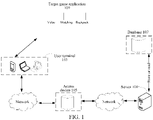
- an account connecting method may be applicable to a hardware environment composed of a server 101, a user terminal 103, and a connecting device 105 shown in FIG. 1 .
- the server 101 and the terminal 103 are connected to the connecting device 105 by using a network, so as to provide a service for the user terminal or a client installed on the user terminal.
- a target client may be a video client, an instant messaging client, a browser client, an education client, and the like.
- a database 107 may be disposed on the server or independently of the server to provide a data storage service for the server 101.
- the foregoing network may include but is not limited to a wired network and a wireless network.
- the wired network includes a local area network, a metropolitan area network, and a wide area network.
- the wireless network includes Bluetooth, WIFI, and other networks that can implement wireless communication.
- the user terminal 103 may be a terminal configured with the target client, which may include but is not limited to at least one of the following: a mobile phone (such as an Android mobile phone, an iOS mobile phone, or the like), a notebook computer, a tablet computer, a palmtop, a mobile Internet device (MID), a PAD, a desktop computer, a smart TV, or the like.
- the foregoing server may be a single server, or may be a server cluster composed of a plurality of servers, or a cloud server.
- the foregoing account connecting method includes: acquiring, on a first connecting device, a first data request transmitted by a first account, the first data request being used for requesting to start a scenario interaction in a target application; transmitting, on the first connecting device, the first data request to a first type of first server, the first server being configured to determine a first group of accounts as accounts about to participate in the scenario interaction, and determine an address of a second type of second server, the second server being configured to create an interaction scenario for realizing the scenario interaction, the first group of accounts including accounts from a first group of different geographic regions, the first group of accounts including the first account, each of the first group of accounts being used for transmitting a respective one of data requests to the first server by using a respective one of connecting devices, the corresponding data request being used for requesting to start the scenario interaction, and the corresponding connecting devices including connecting devices from a second group of different geographic regions; acquiring, on a target connecting device, the address of the second server transmitted by the first server after the interaction scenario is created on the
- the method in this embodiment of this application may be applicable to a game scenario.
- the target application may be a target game application.
- a request to start a scenario interaction may be a request to start a game.
- Creating an interaction scenario for realizing a scenario interaction may be creating a game.
- An account about to participate in a scenario interaction may be an account about to participate in a game. That is, the first group of accounts may be accounts about to participate in a game. Forwarding the interaction data in a scenario interaction transmitted by the first account may be forwarding game interaction data in a game transmitted by the first account.
- the method may also be applicable to a livestreaming scenario or an online conference scenario.
- the target application may be a target livestreaming application or a target conference application.
- the request to start a scenario interaction may be a request to start a livestreaming or an online conference.
- the creating an interaction scenario for realizing a scenario interaction may be creating a livestreaming interaction scenario for realizing a livestreaming or creating a conference interaction scenario for realizing an online conference.
- the account about to participate in a scenario interaction may be an account about to participate in a livestreaming or a conference. That is, the first group of accounts may be accounts about to participate in a livestreaming or a conference.
- the interaction data in the scenario interaction may be a livestreaming or livestreaming interaction data in a conference or conference interaction data.
- the first data request transmitted by the first account is acquired on the first connecting device, and is transmitted to the first type of first server.
- the first server determines accounts (including the first account) from different geographic regions as the accounts about to participate in a scenario interaction.
- the address of the second server transmitted by the first server is acquired on the target connecting device after the interaction scenario for realizing the scenario interaction is created on the second server, the address of the second server is transmitted to the first account, and the interaction data in the scenario interaction transmitted by the first account is forwarded to the second server.
- the connecting devices are bound across domains, and the interaction data required to be exchanged is forwarded between a target application and an associated server by using a target connecting device having a lowest network delay with an account with which the connecting device is required to interact.
- the accounts in the different geographic regions are connected to the same interaction scenario to perform a scenario interaction, and an average network delay of a plurality of accounts in the different geographic regions during the scenario interaction is reduced.
- the transmitting, on the first connecting device, the first data request to a first type of first server includes: transmitting, on a first CLB, the first data request to the first server by using a cloud connect network in a case that the first connecting device is the first CLB.
- the first CLB is located in a first geographic region in the first group of different geographic regions.
- the transmitting, on a first CLB, the first data request to the first server by using a cloud connect network includes: transmitting, on the first CLB, the first data request to a second CLB by using the cloud connect network, the second CLB being connected to a plurality of servers in a first server cluster where the first server is located; transmitting, on the second CLB, the first data request to a third type of third server in the first server cluster, the third server being configured to provide a service other than a single scenario interaction in the target application; and transmitting, on the third server, the first data request to the first server.
- a single scenario interaction may be a single-round game. That is, the third server is configured to provide a game service other than the single-round game in the target game application.
- the method before the first data request transmitted by the first account is acquired on the first connecting device, the method further includes: acquiring, on the first connecting device, a first login request transmitted by the first account; transmitting, on the first connecting device, the first login request to a third server in the first server cluster; acquiring, on the first connecting device, target data transmitted by the third server, the target data including data of the first account in the target application acquired by the third server from a target database; and transmitting, on the first connecting device, a first login response to the first account, the first login response being used for indicating successful login to the first account, and the first login response including the target data.
- the target data may be target game data. That is, the target game data transmitted by the third server is acquired on the first connecting device.
- the target game data includes game data of the first account in a target game application acquired by the third server from the target database.
- the transmitting, on the first connecting device, the first data request to a first type of first server includes: transmitting, on a first global application acceleration platform (GAAP), the first data request to the first server by using a second CLB in a case that the first connecting device is the first GAAP.
- the second CLB is connected to a plurality of servers in a first server cluster, the plurality of servers include the first server, the first server cluster is connected to a plurality of CLBs by using a cloud connect network, and the plurality of CLBs are respectively located in different geographic regions.
- GAP global application acceleration platform
- the method further includes: acquiring a list of first group of network delays on the first server, the list of first group of network delays including a network delay during data transmission between a connecting device corresponding to each of the first group of accounts and each of a plurality of second type servers; and determining an address of a second type server having a lowest network delay as the address of the second server in a case that the first group of accounts are the same account.
- the method further includes: acquiring identifiers of second type servers having a lowest network delay with connecting terminals corresponding to all of a plurality of accounts in a case that the first group of accounts include the plurality of accounts, to obtain a plurality of second type server identifiers; and determining, in a case that a quantity of the second type server identifiers indicating the same second type server exceeds a first threshold, an address of the same indicated second type server as the address of the second server.
- the method further includes: determining the address of the second type server in the plurality of second type servers having a highest network delay evaluation parameter as the address of the second server in a case that the quantity of the second type server identifiers indicating the same second type server does not exceed the first threshold.
- the method further includes: acquiring, on the first connecting device, a second data request transmitted by the first account, the second data request being used for requesting to add target virtual objects to the scenario interaction; transmitting, on the first connecting device, the second data request to the first server, the first server being further configured to determine the address of the second server as an address of a fourth type of fourth server, and the fourth server being configured to create the target virtual objects; transmitting, on the target connecting device, the address of the fourth server to the first account, and forwarding, to the fourth server, the interaction data in the scenario interaction transmitted by the first account; and creating, by the fourth server, the target virtual objects under a preset condition according to the interaction data.
- the target virtual objects may be target virtual game objects.
- the interaction data is the game interaction data.
- the second data request is used for requesting to add the target virtual game objects to a game.
- the fourth server creates the target virtual game objects under a preset condition according to the game interaction data.
- the preset condition includes at least one of the following:
- the scenario interaction in the foregoing preset conditions may be a game
- the target virtual objects may be the target virtual game objects.
- the method further includes: acquiring, on the first connecting device, a third data request transmitted by the first account, the third data request being used for requesting to record a video of the scenario interaction; transmitting, on the first connecting device, the third data request to the first server, the first server being further configured to determine the address of the second server as an address of a fifth type of fifth server, and the fifth server being configured to create a video file of the scenario interaction; transmitting, on the target connecting device, the address of the fifth server to the first account, and forwarding, to the fifth server, the interaction data in the scenario interaction transmitted by the first account; and creating, by the fifth server, the video file of the scenario interaction according to the interaction data.
- the scenario interaction may be a game
- the interaction data may be the game interaction data.
- the interaction data in the scenario interaction may be the game interaction data in a game.
- an application executed on the target client is a game application by way of example.
- a target game application 109 is displayed by using the user terminal 103, and the account in the game application may be used to access the service from an entry of the target game application 109 configured on the terminal.
- the foregoing is merely an example, which is not limited in this embodiment.
- the account connecting method includes the following steps.
- S202 Acquire, on a first connecting device, a first data request transmitted by a first account, the first data request being used for requesting to start a game in a target game application.
- the first connecting device and the target connecting device may include, but are not limited to, a GAAP connecting device or a CLB connecting device.
- the first connecting device and the target connecting device may be the same or different.
- the target game application may include, but is not limited to, a shooting game application, a chess and card game application, a role play game application, a strategy game application, and the like, or may be a combination of the plurality of types of game applications.
- the first account may include, but is not limited to, an account that has been preregistered with a relevant server of the game application, or may include, but is not limited to, an account that has been registered with the relevant server of the game application while the data request is being transmitted.
- the foregoing description is only an example and is not limited in this embodiment.
- the first data request may include, but is not limited to, a request to start a game, or the first group of accounts formed by the first account with other accounts for requesting to start the game.
- the other accounts and the first account may be in the same geographic region or in different geographic regions.
- S204 Transmit, on the first connecting device, the first data request to a first type of first server, the first server being configured to determine a first group of accounts as accounts about to participate in the game, and determine an address of a second type of second server, the second server being configured to create a game, the first group of accounts including accounts from a first group of different geographic regions, the first group of accounts including the first account, each of the first group of accounts being used for transmitting a respective one of data requests to the first server by using a respective one of connecting devices, the corresponding data request being used for requesting to start the game, and the corresponding connecting devices including connecting devices from a second group of different geographic regions.
- the first type of server may include, but is not limited to, a zone server or a pre-configured server for performing game account matching.
- the second type of server may include, but is not limited to, a PvP server, a player versus environment (PvE) server, and the like configured to create a game and exchange game data with a corresponding server participating in the game.
- each of the first group of accounts corresponds to a connecting device. Locations where the connecting device corresponding to the each account and each account are located may include but are not limited to the same geographic region or adjacent geographic regions.
- a network delay of the each account with the connecting device corresponding to the account is less than a network delay of the each account with other connecting devices except the connecting device corresponding to the account.
- the each account corresponds to a connecting device in a plurality of connecting devices having a lowest network delay. Since the data is transmitted by using a network, geographic regions where the each account and the connecting device corresponding to the account having the lowest network delay are located are geographic regions relatively close to each other.
- S206 Acquire, on the target connecting device, the address of the second server transmitted by the first server after the game is created on the second server, network delays between the second server and the corresponding connecting devices being all less than a first delay threshold.
- the target connecting device is a connecting device having a lowest network delay with the first account. It is to be understood that in a case that the network delay between the first connecting device and the first account is the lowest, then the target connecting device may be the first connecting device. In a case that the network delay between one of the other connecting devices and the first account is the lowest, then the first connecting device is not the target connecting device.
- the first delay threshold may be preset by the system, and a specific value may be set separately according to different game applications. For example, in a shooting game application, the first delay threshold is set to a smaller threshold. In this way, users in wider geographic regions can play a game on the same server as much as possible while ensuring game experience of a participant. In an education game application, the first delay threshold is set to a larger threshold, so as to allow more worldwide users to participate in the game with a relatively normal network delay.
- a specific game application scenario is not limited in this application.
- the first server determines the network delay between each of the first group of accounts and each of second type servers according to the first data request, determines the second type server in the plurality of second type servers having a highest network delay parameter as the second server, and then acquires the address of the second server.
- the network delay parameter may be automatically determined by the system according to the network delay.
- S208 Transmit, on the target connecting device, the address of the second server to the first account, and forward, to the second server, game interaction data in the game transmitted by the first account.
- the game interaction data may include, but is not limited to, the game interaction data transmitted to the server by each account participating in the current game during the game.
- the target game application is used as a chess and card game by way of example.
- the game interaction data may include, but is not limited to, game data such as card information of the first account, chat information of the first account, a name of the first account, a head portrait, virtual items in a backpack, and the like that can perform interaction.
- the first data request transmitted by the first account is acquired on the first connecting device, and is transmitted to the first type of first server.
- the first server determines accounts (including the first account) from different geographic regions as the accounts about to participate in the game. The accounts in the different geographic regions about to participate in the same game, by using corresponding connecting devices in the different geographic regions, the first server to start the game.
- the address of the second server transmitted by the first server is acquired on the target connecting device, the address of the second server is transmitted to the first account, and the game interaction data in the game transmitted by the first account is forwarded to the second server.
- the connecting devices are bound across domains, and the game data required to be exchanged is forwarded between a target game application and an associated server by using a target connecting device having a lowest network delay with an account with which the connecting device is required to play the game.
- the accounts in the different geographic regions are connected to the same game to perform interaction, and an average network delay of a plurality of accounts in the different geographic regions during the game is reduced.
- the transmitting, on the first connecting device, the first data request to a first type of first server includes: transmitting, on a first CLB, the first data request to the first server by using a cloud connect network in a case that the first connecting device is the first CLB.
- the first CLB is located in a first geographic region in the first group of different geographic regions, and the first server cluster where the first server is located is connected to a plurality of CLBs by using the cloud connect network.
- the plurality of CLBs include the first CLB, and the plurality of CLBs are respectively located in different geographic regions.
- the first connecting device in a case that the first connecting device and the first server use a same operator service, is determined as the first CLB.
- the first CLB may be bound to the corresponding geographic region by means of cross-domain binding.
- the binding relationship is registered and stored in a DNS server.
- a CLB address having a lowest delay with the first account is obtained by means of DNS server resolution, and the first data request is forwarded to the first server by using the CLB.
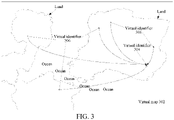
- FIG. 3 is a schematic diagram of an optional account connecting method according to an embodiment of this application.
- a virtual map 302 is used for representing location information of a server associated with a target game application.
- a virtual identifier 304 is used for representing a geographic location of the first server in this embodiment.
- the address of the second server is determined as an address of a second type server corresponding to the geographic region of the virtual identifier 304.
- CLBs corresponding to a plurality of virtual identifiers 306 are connected to each other by using corresponding special lines in a form of cloud networking.
- the CLBs are bound across domains to forward the first data request between a terminal where the account is located and the first server corresponding to the first data request.
- the transmitting, on a first CLB, the first data request to the first server by using a cloud connect network includes: transmitting, on the first CLB, the first data request to a second CLB by using the cloud connect network, the second CLB being connected to a plurality of servers in a first server cluster; transmitting, on the second CLB, the first data request to a third server in the first server cluster, the third server being configured to provide a game service other than a single-round game in the target game application; and transmitting, on the third server, the first data request to the first server.
- the disaster tolerance capability of a point-to-point special line failure is implemented by introducing the "cloud networking" solution.
- the first CLB is located in Silicon Valley
- the second CLB is located in Frankfurt
- the third server is located in Singapore
- automatic dispatch is performed from Silicon Valley to Frankfurt
- a data exchange service is performed by using a special line from Frankfurt to Singapore.
- the method before the first data request transmitted by the first account is acquired on the first connecting device, the method further includes: acquiring, on a first CLB, a first login request transmitted by the first account; transmitting, on the first CLB, the first login request to a third server in the first server cluster, the third server being configured to provide a game service other than a single-round game in the target game application; acquiring, on the first CLB, target game data transmitted by the third server, the target game data including game data of the first account in the target game application acquired by the third server from a target database; and transmitting, on the first CLB, a first login response to the first account, the first login response being used for indicating successful login to the first account, and the first login response including the target game data.
- the third server may include, but is not limited to, a zone server, that is, used in a public service cluster.
- a connection from a user side to the public service cluster is implemented by using a public network link.
- the login request for connecting the public service cluster is forwarded by using the CLB, and the CLB is used to implement data forwarding between the user side and the public service cluster.
- the CLB is connected to the third server by using the special line.
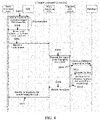
- FIG. 4 is a schematic flowchart of another optional account connecting method according to an embodiment of this application. As shown in FIG. 4 , a further description is given by using the first account as a North American user by way of example.
- S402 A North American user (corresponding to the first account) initiates a network request to trigger DNS resolution.
- a DNS server returns an IP address (a VIP address) of a North American CLB (corresponding to the target connecting device) to the North American user according to an IP address of the North American user.
- S406 Acquire the login request initiated by the North American user.
- S408 The North American CLB forwards the login request to a Singapore zone server (corresponding to the third server).
- S410 The Singapore zone server accesses a database according to the login request to acquire user data.
- S412 The database returns the user data to the Singapore zone server.
- S414 The zone server processes the user data according to service logic.
- S416 The Singapore zone server returns login response information to the North American CLB.
- the technical problem of freeze during association of some game accounts with the public service cluster due to the request delay of the account being positively correlated with the distance from the account to the public service and routing quality of the public network link can be resolved.
- the transmitting, on the first connecting device, the first data request to a first type of first server includes: transmitting, on a first global application acceleration platform (GAAP), the first data request to the first server by using a second CLB in a case that the first connecting device is the first GAAP.
- the second CLB is connected to a plurality of servers in a first server cluster, the plurality of servers include the first server, the first server cluster is connected to a plurality of CLBs by using a cloud connect network, and the plurality of CLBs are respectively located in different geographic regions.
- GAP global application acceleration platform
- the first connecting device is determined as the first GAAP.
- the first GAAP may be directly connected to the second CLB and then connected to the first server cluster including the first server.
- the first account is connected to the first server cluster by using the GAAP by using the special line between different operators.
- An address of the GAAP is registered and stored in the DNS server.
- an address of the GAAP having a lowest delay with the first account is obtained by means of the DNS server resolution, and the first data request is forwarded to the first server by using the GAAP.
- FIG. 5 is a schematic diagram of another optional account connecting method according to an embodiment of this application.
- a virtual map 502 is used for representing location information of a server associated with a target game application
- a virtual identifier 504 is used for representing a geographic location of the first GAAP in this embodiment
- a virtual identifier 506 is used for representing a geographic location of the first server in this embodiment
- a virtual identifier 508 is used for representing a geographic location of the second CLB in this embodiment.
- the address of the second server is determined as the address of the second type server corresponding to the geographic region of the virtual identifier 504.
- the first GAAP corresponding to the virtual identifier 504 is connected to the CLB or the server corresponding to the virtual identifier 506 and the virtual identifier 508 by using the special lines corresponding to different operators.
- an account of the GAAP is required to be used for being directly connected to the CLB in Singapore from the GAAP in South America by using the special line, and then directly accesses the zone server.
- the account can be connected to the public service cluster in Singapore from Silicon Valley without a detour from South America to Silicon Valley, so that the technical problem of interconnection of VPCs between different cloud providers is resolved.
- the method before the first data request transmitted by the first account is acquired on the first connecting device, the method further includes: acquiring, on a first GAAP, a second login request transmitted by the first account; transmitting, on the first GAAP, the second login request to a third server in the first server cluster, the third server being configured to provide a game service other than a single-round game in a target game application; acquiring, on the first GAAP, target game data transmitted by the third server, the target game data including game data of the first account in the target game application acquired by the third server from a target database; and transmitting, on a first CLB, a second login response to the first account, the second login response being used for indicating successful login to the first account, and the second login response including the target game data.
- the third server may include, but is not limited to, a zone server, that is, used in a public service cluster.
- a connection from a user side to the public service cluster is implemented by using a public network link.
- the login request for connecting to the public service cluster is forwarded by using the GAAP, and the GAAP is used to implement data forwarding between the user side and the public service cluster.
- the GAAP is connected to the third server by using the special line.
- FIG. 6 is a schematic flowchart of still another optional account connecting method according to an embodiment of this application. As shown in FIG. 6 , a further description is given by using the first account as a South American user by way of example.
- S602 A South American user (corresponding to the first account) initiates a network request to trigger DNS resolution.
- a DNS server returns an IP address of a South American GAAP to the South American user according to an IP address of the South American user.
- S606 Acquire the login request initiated by the South American user.
- S608 The South American GAAP (corresponding to the target connecting device) forwards the login request to a Singapore zone server (corresponding to the third server).
- S610 The Singapore zone server accesses a database according to the login request to acquire user data.
- S612 The database returns the user data to the Singapore zone server.
- S614 The zone server processes the user data according to service logic.
- S616 The Singapore zone server returns login response information to the South American GAAP.
- the technical problem of freeze during association of some game accounts with the public service cluster due to the request delay of the account being positively correlated with the distance from the account to the public service and routing quality of the public network link can be resolved, thereby achieving the technical effect of reducing the user network delay.
- the method further includes: acquiring, on the first server, a list of first group of network delays during data transmission between a connecting device corresponding to each of the first group of accounts and each of a plurality of second type servers; determining an address of the second type server having a lowest network delay as an address of the second server in a case that the first group of accounts include one account, and network delays between a connecting terminal corresponding to the account and the plurality of second type servers are recorded in the list of first group of network delays; or acquiring identifiers of a plurality of second type servers having a lowest delay in the network delays between connecting terminals corresponding to all of the plurality of accounts and the plurality of second type servers in a case that the first group of accounts include a plurality of accounts, and network delays between the connecting terminals corresponding to all of the plurality of accounts and the plurality of second type servers are recorded in the list of first group of network delays; determining the address of
- the plurality of connecting devices corresponding to the account are sorted according to the network delays, and the connecting device having the lowest network delay is determined as the connecting device corresponding to the account.
- the first group of accounts include a plurality of accounts
- the first group of accounts include a first account located in Southeast Asia, a second account located in North America, and a third account located in South America.
- the connecting device corresponding to the first account is set in Southeast Asia
- the connecting device corresponding to the second account is set in North America
- the connecting device corresponding to the third account is set in South America.
- a network delay between the first account and the connecting device in South America is 300 ms
- a network delay between the first account and the connecting device in North America is 200 ms
- a network delay between the first account and the connecting device in Southeast Asia is 50 ms.
- the network delay parameter corresponding to the connecting device in South America is set to 40, the network delay parameter corresponding to the connecting device in North America is set to 70, and the network delay parameter corresponding to the connecting device in Southeast Asia is set to 100.
- the network delay between the second account and the connecting device in South America is 100 ms, the network delay with the connecting device in North America is 50 ms, and the network delay with the connecting device in Southeast Asia is 200s.
- the network delay parameter corresponding to the connecting device in South America is set to 85, the network delay parameter corresponding to the connecting device in North America is set to 100, and the network delay parameter corresponding to the connecting device in Southeast Asia is set to 40.
- the network delay parameters of the connecting devices in Southeast Asia are determined as 210 in total, and the network delay parameters of the connecting devices in North America are determined as 225 in total. Since the network delay parameter of the connecting device located in North America is higher than the network delay parameter of the connecting device located in Southeast Asia, the second server is determined as the second type server located in North America, and the address of the second type server is acquired as the address of the second server.
- a specific method for selecting an optimal second type server may further include, but is not limited to, other second type servers that can indicate that the determined network delay of the second type server is optimal relative to the plurality of accounts, which is not specifically limited in this embodiment.
- the first threshold and the second threshold may be the same or different, which is not specifically limited in this application.
- the optimal second type server is directly selected by using a hand raising mechanism, and in a case that the optimal second type server cannot be directly selected, the corresponding network delay parameter is configured for each second type server, and then the address of the second server is determined. In this way, the efficiency is improved, and a waste of system resources caused by repeated determination is avoided.
- the method further includes: acquiring, on the first connecting device, a second data request transmitted by the first account, the second data request being used for requesting to add target virtual game objects to a game; transmitting, on the first connecting device, the second data request to the first server, the first server being further configured to determine the address of the second server as an address of a fourth type of fourth server, and the fourth server being configured to create the target virtual game objects; transmitting, on the target connecting device, the address of the fourth server to the first account, and forward, to the fourth server, game interaction data in the game transmitted by the first account; and creating, by the fourth server, the target virtual game objects under a preset condition according to the game interaction data, the preset condition including at least one of the following: a quantity of target virtual game objects in a game is less than a first quantity threshold; an account in the first group of accounts having a connection failure number exceeding a second quantity threshold exists in the game; and an account in the first group of accounts having an attribute being a target account exists in the game, the
- the fourth server is configured to configure, in the game, the target virtual objects capable of simulating behaviors of virtual objects controlled by the first account.
- the target virtual objects capable of simulating behaviors of virtual objects controlled by the first account.
- the fourth server and the second server are deployed in the same VPC, so that the overheads of special line traffic can be reduced, thereby reducing operating costs.
- the method further includes: acquiring, on the first connecting device, a third data request transmitted by the first account, the third data request being used for requesting to record a video of the game; transmitting, on the first connecting device, the third data request to the first server, the first server being further configured to determine the address of the second server as an address of a fifth type of fifth server, and the fifth server being configured to create a video file of the game; transmitting, on the target connecting device, the address of the fifth server to the first account, and forwarding, to the fifth server, game interaction data in the game transmitted by the first account; and creating, by the fifth server, the video file of the game according to the game interaction data.
- the fifth server is configured to save a single-round operation of the account in the game, and a video file is formed for the user to review and share after the single round ends.
- the fifth server and the second server are deployed in the same VPC, so that the overheads of special line traffic can be reduced, thereby reducing the costs.
- modules that frequently interact with the second server and can be decoupled from the public cluster are adjusted to each VPC, so that the traffic of the special line can be reduced.
- the method of dispersing the requests is adopted to achieve cost optimization.
- FIG. 7 is a schematic flowchart of still another optional account connecting method according to an embodiment of this application. As shown in FIG. 7 , a further description is given by using the first account as a North American user by way of example.
- S702 A North American user initiates a network request to trigger DNS resolution.
- a DNS server returns an IP address of a North American CLB (corresponding to a first connecting device) to the North American user according to an IP address of the North American user.
- S706 Acquire the login request initiated by the North American user.
- S708 The North American CLB forwards the login request to a Singapore zone server (corresponding to the third server).
- S710 The Singapore zone server accesses a database according to the login request to acquire user data.
- S712 The database returns the user data to the Singapore zone server.
- S714 The zone server processes the user data according to service logic.
- S716 The Singapore zone server returns login response information to the North American CLB.
- S720 Acquire a matching request (corresponding to the first data request) initiated by the North American user.
- S722 The North American CLB forwards the matching request to the Singapore zone server.
- S724 The Singapore zone server forwards the matching request information to a Singapore match server (corresponding to the first server).
- the Singapore match server transmits, to a Singapore single-round server (corresponding to the second server), a request to establish a game.
- S725b Return, to the Singapore match server, a response message indicating successful creation after the Singapore single-round server creates a game after determining that a number of players is sufficient.
- S728 The Singapore zone server returns the response message to the North American CLB.
- S730 The North American CLB forwards the response message to the first account.
- the first account transmits, to the North American CLB, data request information for starting a single-round game.
- S734 The North American CLB forwards the request information to the Singapore single-round server (corresponding to the second server).
- the network delays corresponding to accounts in different geographic regions can be counted by using the solutions, and then targeted configuration is performed for a region having a relatively high network delay, so as to achieve the technical effect of data transmission in the case of a lower network delay.
- an account connecting apparatus in a target application for implementing the account connecting method is further provided, disposed in an electronic device. As shown in FIG. 8 , the apparatus includes:
- FIG. 9 is a schematic structural diagram of an account connecting apparatus in another optional application according to an embodiment of this application.
- the transmitting module 804 includes: a first transmitting unit 902, configured to transmit, on a first CLB, a first data request to a first server by using a cloud connect network in a case that the first connecting device is a first CLB.
- the first CLB is located in a first geographic region in a first group of different geographic regions, and a first server cluster where the first server is located is connected to a plurality of CLBs by using the cloud connect network.
- the plurality of CLBs include the first CLB, and the plurality of CLBs are respectively located in different geographic regions.
- the first transmitting unit 902 is configured to transmit, on the first CLB, the first data request to the first server by using a cloud connect network by performing the following operations: transmitting, on the first CLB, the first data request to a second CLB by using the cloud connect network, the second CLB being connected to a plurality of servers in a first server cluster; transmitting, on the second CLB, the first data request to a third server in the first server cluster, the third server being configured to provide a service other than a single scenario interaction in a target application; and transmitting, on the third server, the first data request to the first server.
- the acquisition module is further configured to acquire, on the first connecting device, a first login request transmitted by the first account before acquiring the first data request transmitted by the first account on the first connecting device.
- the transmitting module is further configured to transmit, on the first connecting device, the first login request to a third type of third server in the first server cluster, the third server being configured to provide a service other than the single scenario interaction in the target application.
- the acquisition module is further configured to acquire, on the first connecting device, target data transmitted by the third server.
- the target data includes data of the first account in the target application acquired by the third server from a target database.
- the transmitting module is further configured to transmit, on the first connecting device, a first login response to the first account, the first login response being used for indicating successful login to the first account, and the first login response including the target data.
- the transmitting module 804 includes: a second transmitting unit 904, configured to transmit, on a first GAAP, the first data request to the first server by using a second CLB in a case that the first connecting device is the first GAAP.
- the second CLB is connected to a plurality of servers in a first server cluster, the plurality of servers include the first server, the first server cluster is connected to a plurality of CLBs by using a cloud connect network, and the plurality of CLBs are respectively located in different geographic regions.
- the acquisition module is further configured to acquire, on the first GAAP, a second login request transmitted by the first account.
- the transmitting module is further configured to transmit, on the first GAAP, the second login request to the third server in the first server cluster.
- the third server is configured to provide a service other than a single scenario interaction in the target application.
- the acquisition module is further configured to acquire, on the first GAAP, target data transmitted by the third server.
- the target data includes data of the first account in the target application acquired by the third server from the target database.
- the transmitting module is further configured to transmit, on the first GAAP, a second login response to the first account.
- the second login response is used for indicating successful login to the first account, and the second login response includes the target data.
- the acquisition module is further configured to: acquire a list of first group of network delays on the first server, the list of first group of network delays including a network delay during data transmission between a connecting device corresponding to each of the first group of accounts and each of a plurality of second type servers; determine an address of a second type server having a lowest network delay as the address of the second server in a case that the first group of accounts are the same account; acquire identifiers of second type servers having a lowest network delay with connecting terminals corresponding to all of a plurality of accounts in a case that the first group of accounts include the plurality of accounts, to obtain a plurality of second type server identifiers; determine, in a case that a quantity of the second type server identifiers indicating the same second type server exceeds a first threshold, an address of the same indicated second type server as the address of the second server; and determine the address of the second type server in the plurality of second type servers having a highest network delay evaluation parameter as the address of the second server in a
- the acquisition module is further configured to: acquire, on the first connecting device, a second data request transmitted by the first account, the second data request being used for requesting to add target virtual objects to the scenario interaction; transmit, on the first connecting device, the second data request to the first server, the first server being further configured to determine the address of the second server as an address of a fourth type of fourth server, and the fourth server being configured to create the target virtual objects; transmit, on the target connecting device, the address of the fourth server to the first account, and forward, to the fourth server, interaction data in the scenario interaction transmitted by the first account; and create, by the fourth server, the target virtual objects under a preset condition according to the interaction data.
- the preset condition includes at least one of the following: a quantity of the target virtual objects in the scenario interaction is less than a first quantity threshold; an account in the first group of accounts having a connection failure number exceeding a second quantity threshold exists in the scenario interaction; and an account in the first group of accounts having an attribute being a target account exists in the scenario interaction, the target account being an account that is required to interact with the target virtual objects.
- the apparatus is further configured to: acquire, on the first connecting device, a third data request transmitted by the first account, the third data request being used for requesting to record a video of a scenario interaction; transmit, on the first connecting device, the third data request to the first server, the first server being further configured to determine the address of the second server as an address of a fifth type of fifth server, and the fifth server being configured to create a video file of the scenario interaction; transmit, on the target connecting device, the address of the fifth server to the first account, and forward, to the fifth server, interaction data in the scenario interaction transmitted by the first account; and create, by the fifth server, the video file of the scenario interaction according to the interaction data.
- an electronic device for implementing the account connecting method is further provided.
- the electronic device may be the terminal device or the server shown in FIG. 1 .
- the electronic device includes a memory 1002 and a processor 1004.
- the memory 1002 stores computer-readable instructions.
- the processor 1004 is configured to perform the steps in any one of the foregoing method embodiments by using the computer-readable instructions.
- the foregoing electronic device may be located in at least one of a plurality of network devices in a computer network.
- the electronic device may be a terminal device such as a smartphone (for example, an Android phone, or an iOS phone), a tablet computer, a palmtop computer, a mobile Internet device (MID), or a PAD.
- FIG. 10 does not constitute a limitation on the structure of the electronic device.
- the electronic device may further include more or fewer components (such as a network interface) than those shown in FIG. 10 , or have a configuration different from that shown in FIG. 10 .
- the memory 1002 may be configured to store the computer-readable instructions and modules, such as the computer-readable instructions/modules corresponding to the account connecting method and apparatus in the embodiments of this application.
- the processor 1004 performs various function applications and data processing by running the computer-readable instructions and the modules stored in the memory 1002, so as to implement the account connecting method.
- the memory 1002 may include a high-speed random memory, and may also include a nonvolatile memory such as one or more magnetic storage apparatuses, a flash memory, or another nonvolatile solid-state memory.
- the memory 1002 may further include memories remotely disposed relative to the processor 1004, and these remote memories may be connected to the terminal through a network.
- the memory 1002 may specifically be, but is not limited to, being configured to store information such as the related information of the first group of accounts and the target virtual operation objects.
- the memory 1002 may include, but is not limited to, the acquisition module 802, the transmitting module 804, or the acquisition module 802 and the transmitting module 804 in the account connecting apparatus in the target application.
- the memory may further include, but is not limited to, other module units in the account connecting apparatus in the target application, and the details are not described again in this example.
- a transmission apparatus 1006 is configured to receive or transmit data through a network.
- a specific example of the foregoing network may include a wired network and a wireless network.
- the transmission apparatus 1006 includes an NIC.
- the NIC may be connected to another network device and a router by using a network cable, to communicate with the Internet or a local area network.
- the transmission apparatus 1006 is an RF module, which communicates with the Internet in a wireless manner.
- the electronic device further includes: a display 1008, configured to display the target application; and a connection bus 1010, configured to connect various module components in the electronic device.
- the terminal or server may be a node in a distributed system.
- the distributed system may be a blockchain system.
- the blockchain system may be a distributed system formed by the plurality of nodes connected in the form of network communication.
- a peer to peer (P2P) network may be formed between the nodes.
- a computing device in any form, for example, an electronic device such as a server or a terminal, may become a node in the blockchain system by joining the P2P network.
- a computer-readable storage medium stores computer-readable instructions, the computer-readable instructions, when being run, performing the steps in any one of the method embodiments.
- a person of ordinary skill in the art can understand that all or some of the steps of the methods in the foregoing embodiments can be implemented by computer-readable instructions instructing relevant hardware of a terminal device.
- the computer-readable instructions may be stored in a computer-readable storage medium, and the storage medium may include a flash drive, a ROM, a RAM, a magnetic disk, a compact disc, or the like.
- the integrated unit in the foregoing embodiments is implemented in the form of a software function unit and sold or used as an independent product
- the integrated unit may be stored in the foregoing computer-readable storage medium.
- the computer software product is stored in a storage medium and includes several instructions for instructing one or more computer devices (which may be a PC, a server, a network device, or the like) to perform all or some of steps of the methods in the embodiments of this application.
- the disclosed client may be implemented in another manner.
- the described apparatus embodiments are merely exemplary.
- the unit division is merely logical function division, and may use other division manners during actual implementation.
- a plurality of units or components may be combined or integrated into another system, or some features may be omitted or not performed.
- the coupling, or direct coupling, or communication connection between the displayed or discussed components may be the indirect coupling or communication connection by means of some interfaces, units, or modules, and may be in electrical or other forms.
- the units described as separate parts may or may not be physically separate, and components displayed as units may or may not be physical units, that is, may be located in one position, or may be distributed on a plurality of network units. Some or all of the units may be selected according to an actual requirement to achieve the objectives of the solutions in the embodiments.
- functional units in the embodiments of this application can be integrated into one processing unit, or each of the units can exist alone physically, or two or more units are integrated into one unit.
- the integrated unit may be implemented in a form of hardware, or may be implemented in a form of a software function unit.
Landscapes
- Engineering & Computer Science (AREA)
- Multimedia (AREA)
- Computer Security & Cryptography (AREA)
- Business, Economics & Management (AREA)
- General Business, Economics & Management (AREA)
- Computer Networks & Wireless Communication (AREA)
- Signal Processing (AREA)
- Health & Medical Sciences (AREA)
- Child & Adolescent Psychology (AREA)
- Software Systems (AREA)
- Information Transfer Between Computers (AREA)
Abstract
Description
- This application claims priority to
Chinese Patent Application No. 202010443207.1, filed with the China National Intellectual Property Administration on May 22, 2020 - This application relates to the field of computers, and in particular, to an account connecting method and apparatus, a storage medium, and an electronic device.
- The cloud technology is a collective name of a network technology, an information technology, an integration technology, a management platform technology, an application technology, and the like based on an application of a cloud computing business mode, and may form a resource pool, which is used as required, and is flexible and convenient. A cloud computing technology will become an important support. Background services of a technology network system require a lot of computing and storage resources, such as a video website, a picture website, and more portal websites. With the rapid development and application of the Internet industry, each item may have its own identification mark in the future, and the identification marks are required to be transmitted to a background system for logical processing. Data of different levels will be processed separately, and all kinds of industry data require a strong system support, which can only be achieved by means of the cloud computing.
- In a current scenario interaction application service, a central Internet data center (IDC) is generally selected as a public server cluster, which includes all other servers except a player versus player (PvP) server, such as a match server and a data storage server. The PvP server is deployed in each of the other IDCs for new single-round access by a user, and a round-trip time (RTT) of the user to each pre-established PvP server is displayed on a main interface. The user manually selects, according to his or her own situation for matching, the server he or she wants to enter, and performs the matching in the public server cluster. After the matching succeeds, the user enters the PVP server of the selected IDC for a single scenario interaction.
- However, in the related art, the user can only manually select, according to his or her own situation for the single scenario interaction, a server in a region he or she wants to enter. In this way, only the user accounts in the same region can be selected for access for the single scenario interaction, and the accounts from a plurality of different geographic regions are not allowed for access for the same scenario interaction. For example, a game scenario is used as an example. The accounts from the plurality of different geographic regions are not allowed to enter a same game for game interaction. Therefore, the conventional method is excessively limited.
- According to various embodiments provided in this application, an account connecting method and apparatus, a storage medium, and an electronic device are provided.
- According to one aspect of the embodiments of this application, an account connecting method is provided, including:
- acquiring, on a first connecting device, a first data request transmitted by a first account, the first data request being used for requesting to start a scenario interaction in a target application; transmitting, on the first connecting device, the first data request to a first type of first server, the first server being configured to determine a first group of accounts as accounts about to participate in the scenario interaction, and determine an address of a second type of second server, the second server being configured to create an interaction scenario for realizing the scenario interaction, the first group of accounts including accounts from a first group of different geographic regions, the first group of accounts including the first account, each of the first group of accounts being used for transmitting a respective one of data requests to the first server by using a respective one of connecting devices, the corresponding data request being used for requesting to start the scenario interaction, and the corresponding connecting devices including connecting devices from a second group of different geographic regions; acquiring, on a target connecting device, the address of the second server transmitted by the first server after the interaction scenario is created on the second server, network delays between the second server and the corresponding connecting devices being all less than a first delay threshold, and the target connecting device being a connecting device having a lowest network delay with the first account; and transmitting, on the target connecting device, the address of the second server to the first account, and forwarding, to the second server, interaction data in the scenario interaction transmitted by the first account.
- According to another aspect of the embodiments of this application, an account connecting apparatus in an application disposed in an electronic device is further provided, including:
- an acquisition module, configured to acquire, on a first connecting device, a first data request transmitted by a first account, the first data request being used for requesting to start a scenario interaction in a target application; and
- a transmitting module, configured to transmit, on the first connecting device, the first data request to a first type of first server, the first server being configured to determine a first group of accounts as accounts about to participate in the scenario interaction, and determine an address of a second type of second server, the second server being configured to create an interaction scenario, the first group of accounts including accounts from a first group of different geographic regions, the first group of accounts including the first account, each of the first group of accounts being used for transmitting a respective one of data requests to the first server by using a respective one of connecting devices, the corresponding data request being used for requesting to start the scenario interaction, and the corresponding connecting devices including connecting devices from a second group of different geographic regions;
- the acquisition module being further configured to acquire, on the target connecting device, the address of the second server transmitted by the first server after the scenario interaction is created on the second server, network delays between the second server and the corresponding connecting devices being all less than a first delay threshold, and the target connecting device being a connecting device having a lowest network delay with the first account; and
- the transmitting module being further configured to transmit, on the target connecting device, the address of the second server to the first account, and forward, to the second server, interaction data in the scenario interaction transmitted by the first account.
- According to still another aspect of the embodiments of this application, one or more computer-readable storage media are further provided. The computer-readable storage medium stores computer-readable instructions, the computer-readable instructions, when being run, performing the account connecting method.
- According to still another aspect of the embodiments of this application, an electronic device is further provided, including a memory and one or more processors, the memory storing computer-readable instructions, and the one or more processors being configured to perform the account connecting method by using the computer-readable instructions.
- Details of one or more embodiments of this application are provided in the accompanying drawings and descriptions below. Based on the specification, the accompanying drawings, and the claims of this application, other features, objectives, and advantages of this application become clearer.
- The accompanying drawings described herein are used for providing a further understanding of this application, and form part of this application. Exemplary embodiments of this application and descriptions thereof are used for explaining this application, and do not constitute any inappropriate limitation to this application. In the accompanying drawings:
-
FIG. 1 is a schematic diagram of an application environment of an account connecting method according to an embodiment. -
FIG. 2 is a schematic flowchart of an account connecting method according to an embodiment. -
FIG. 3 is a schematic diagram of an account connecting method according to an embodiment. -
FIG. 4 is a schematic flowchart of an account connecting method according to another embodiment. -
FIG. 5 is a schematic diagram of an account connecting method according to another embodiment. -
FIG. 6 is a schematic flowchart of an account connecting method according to another embodiment. -
FIG. 7 is a schematic diagram of an account connecting method according to still another embodiment. -
FIG. 8 is a schematic structural diagram of an account connecting apparatus in a game application according to an embodiment. -
FIG. 9 is a schematic structural diagram of an account connecting apparatus according to another embodiment. -
FIG. 10 is a schematic structural diagram of an electronic device according to an embodiment. - To make a person skilled in the art understand solutions of this application better, the following clearly and completely describes the technical solutions in the embodiments of this application with reference to the accompanying drawings in the embodiments of this application. Apparently, the described embodiments are merely some but not all of the embodiments of this application. All other embodiments obtained by a person of ordinary skill in the art based on the embodiments of this application without creative efforts shall fall within the protection scope of this application.
- In the specification, claims, and accompanying drawings of this application, the terms "first", "second", and so on are intended to distinguish between similar objects but do not necessarily indicate a specific order or sequence. It is to be understood that the data termed in such a way are interchangeable in appropriate circumstances, so that the embodiments of this application described herein can be implemented in orders other than the order illustrated or described herein. Moreover, the terms "comprise", "include", and any other variants thereof mean to cover the non-exclusive inclusion. For example, a process, method, system, product, or device that includes a list of steps or units is not necessarily limited to those steps or units that are clearly listed, but may include other steps or units not expressly listed or inherent to such a process, method, system, product, or device.
- The cloud technology is a hosting technology that unifies a series of resources such as hardware, software, and networks in a wide area network or a local area network to implement computing, storage, processing, and sharing of data.
- Cloud computing is a delivery and usage mode of IT infrastructures, which is to obtain required resources by using a network in an on-demand and easily expandable manner. cloud computing in a broad sense is a delivery and usage mode of services, which is to obtain required services by using a network in an on-demand and easily expandable manner. Such services may be related to the IT, software, and the Internet, or may be other services. Cloud computing is a product of development and integration of conventional computer and network technologies such as grid computing, distributed computing, parallel computing, utility computing, network storage technologies, virtualization, load balance, and the like.
- With the diversified development of the Internet, a real-time data stream, and connecting devices, and driven by the demand for search services, a social network, mobile commerce, and open collaboration, cloud computing develops rapidly. Different from the parallel distributed computing in the past, the generation of the cloud computing will theoretically promote revolutionary changes in the entire Internet mode and an enterprise management mode.
- Cloud gaming, also referred to as gaming on demand, is an online gaming technology based on the cloud computing technology. The cloud gaming technology enables a thin client with relatively limited graphics processing and data computing capabilities to run a high-quality game. In a cloud gaming scenario, the game is run on the cloud server rather than a game terminal of a player, and the cloud server renders the game scenario into a video and audio stream, and transmits the video and audio stream to the game terminal of the player by using the network. The game terminal of the player is not required to have powerful graphics computing and data processing capabilities, but only required to have a basic streaming media playback capability and the capability of acquiring instructions inputted by the player and sending the instructions to the cloud server.
- The solutions provided in the embodiments of this application relate to technologies such as the cloud computing and the cloud gaming, which are specifically described by using the following embodiments.
- First, some nouns or terms used in the embodiments of this application are described.
- A round-trip time (RTT) is used to describe a network delay of a round trip of a network packet from a user to a server.
- An Internet data center (IDC) a service platform having complete devices (including a high-speed Internet access bandwidth, a high-performance local area network, a safe and reliable computer room environment, and the like), professional management, and complete applications.
- Peering connection (PC) is a resource interworking service with a large bandwidth and high quality on the cloud. The PC has characteristics of multi-region, multi-account, heterogeneous interworking of a plurality of networks, and the like, and supports the interworking between a virtual private cloud (VPC) network and a basic network to satisfy deployment requirements of different services.
- A global application acceleration platform (GAAP) relies on a high-speed channel, a forwarding cluster, and an intelligent routing technology among global nodes to implement nearby access for users in various places and to go directly to an origin site region through the high-speed channel, helping to resolve problems of access freeze or an excessively long delay for global users.
- The virtual private cloud (VPC) builds an isolated virtual network environment for an elastic cloud server that is independently configured and managed by users, to improve security of resources of the users on the cloud, and simplify network deployment of the users. In this way, an internal network can be conveniently managed and configured to make safe and fast network changes, thereby changing a multi-tenant architecture of a cloud service provider into a single-tenant architecture.
- The cloud connect network provides an intranet interconnection service between the VPC networks and between the VPC and the IDC, which has the capabilities of full-mesh multipoint interconnection, routing self-learning, link optimization, rapid fault convergence, and the like. Compared with docking connection, the cloud connect network can implement interconnection among a plurality of VPCs.
- A zone server is a server to which a player is directly connected, which is mainly responsible for processing of all non-single-round operations of users in the game application, including logic of login, purchase, backpack, mail, task processing, and the like.
- A match server is responsible for a server process of single-round matching on matching requests of users in a global multiplayer game on a same server.
- A player versus player (PvP) mode is a game mode in which a player fights against a player in a single round.
- A domain name system (DNS) is a distributed network directory service, and is mainly used for mutual conversion of domain names and IP addresses.
- Cloud load balancing (CLB) is a service of distributing traffic to a plurality of cloud servers, which may expand an external service capability of an application system by means of traffic distribution, and improve availability of the application system by eliminating the failure of single points.
- A virtual IP (VIP) is an IP address at which the load balancer provides a service to a client.
- This application is described below with reference to embodiments.
- According to one aspect of the embodiments of this application, an account connecting method is provided. In an embodiment, the account connecting method may be applicable to a hardware environment composed of a
server 101, a user terminal 103, and a connectingdevice 105 shown inFIG. 1 . As shown inFIG. 1 , theserver 101 and the terminal 103 are connected to the connectingdevice 105 by using a network, so as to provide a service for the user terminal or a client installed on the user terminal. A target client may be a video client, an instant messaging client, a browser client, an education client, and the like. Adatabase 107 may be disposed on the server or independently of the server to provide a data storage service for theserver 101. The foregoing network may include but is not limited to a wired network and a wireless network. The wired network includes a local area network, a metropolitan area network, and a wide area network. The wireless network includes Bluetooth, WIFI, and other networks that can implement wireless communication. The user terminal 103 may be a terminal configured with the target client, which may include but is not limited to at least one of the following: a mobile phone (such as an Android mobile phone, an iOS mobile phone, or the like), a notebook computer, a tablet computer, a palmtop, a mobile Internet device (MID), a PAD, a desktop computer, a smart TV, or the like. The foregoing server may be a single server, or may be a server cluster composed of a plurality of servers, or a cloud server. - In an embodiment, the foregoing account connecting method includes: acquiring, on a first connecting device, a first data request transmitted by a first account, the first data request being used for requesting to start a scenario interaction in a target application; transmitting, on the first connecting device, the first data request to a first type of first server, the first server being configured to determine a first group of accounts as accounts about to participate in the scenario interaction, and determine an address of a second type of second server, the second server being configured to create an interaction scenario for realizing the scenario interaction, the first group of accounts including accounts from a first group of different geographic regions, the first group of accounts including the first account, each of the first group of accounts being used for transmitting a respective one of data requests to the first server by using a respective one of connecting devices, the corresponding data request being used for requesting to start the scenario interaction, and the corresponding connecting devices including connecting devices from a second group of different geographic regions; acquiring, on a target connecting device, the address of the second server transmitted by the first server after the interaction scenario is created on the second server, network delays between the second server and the corresponding connecting devices being all less than a first delay threshold, and the target connecting device being a connecting device having a lowest network delay with the first account; and transmitting, on the target connecting device, the address of the second server to the first account, and forwarding, to the second server, interaction data in the scenario interaction transmitted by the first account.
- In an embodiment, the method in this embodiment of this application may be applicable to a game scenario. The target application may be a target game application. A request to start a scenario interaction may be a request to start a game. Creating an interaction scenario for realizing a scenario interaction may be creating a game. An account about to participate in a scenario interaction may be an account about to participate in a game. That is, the first group of accounts may be accounts about to participate in a game. Forwarding the interaction data in a scenario interaction transmitted by the first account may be forwarding game interaction data in a game transmitted by the first account.
- In other embodiments, the method may also be applicable to a livestreaming scenario or an online conference scenario. Then, the target application may be a target livestreaming application or a target conference application. The request to start a scenario interaction may be a request to start a livestreaming or an online conference. The creating an interaction scenario for realizing a scenario interaction may be creating a livestreaming interaction scenario for realizing a livestreaming or creating a conference interaction scenario for realizing an online conference. The account about to participate in a scenario interaction may be an account about to participate in a livestreaming or a conference. That is, the first group of accounts may be accounts about to participate in a livestreaming or a conference. The interaction data in the scenario interaction may be a livestreaming or livestreaming interaction data in a conference or conference interaction data.
- According to this embodiment, the first data request transmitted by the first account is acquired on the first connecting device, and is transmitted to the first type of first server. The first server determines accounts (including the first account) from different geographic regions as the accounts about to participate in a scenario interaction. The accounts in the different geographic regions about to participate in the same scenario interaction, by using corresponding connecting devices in the different geographic regions, the first server to start the scenario interaction. The address of the second server transmitted by the first server is acquired on the target connecting device after the interaction scenario for realizing the scenario interaction is created on the second server, the address of the second server is transmitted to the first account, and the interaction data in the scenario interaction transmitted by the first account is forwarded to the second server. That is, the connecting devices are bound across domains, and the interaction data required to be exchanged is forwarded between a target application and an associated server by using a target connecting device having a lowest network delay with an account with which the connecting device is required to interact. In this way, the accounts in the different geographic regions are connected to the same interaction scenario to perform a scenario interaction, and an average network delay of a plurality of accounts in the different geographic regions during the scenario interaction is reduced.
- In an embodiment, the transmitting, on the first connecting device, the first data request to a first type of first server includes: transmitting, on a first CLB, the first data request to the first server by using a cloud connect network in a case that the first connecting device is the first CLB. The first CLB is located in a first geographic region in the first group of different geographic regions.
- In an embodiment, the transmitting, on a first CLB, the first data request to the first server by using a cloud connect network includes: transmitting, on the first CLB, the first data request to a second CLB by using the cloud connect network, the second CLB being connected to a plurality of servers in a first server cluster where the first server is located; transmitting, on the second CLB, the first data request to a third type of third server in the first server cluster, the third server being configured to provide a service other than a single scenario interaction in the target application; and transmitting, on the third server, the first data request to the first server.
- It is to be understood that in the game scenario, a single scenario interaction may be a single-round game. That is, the third server is configured to provide a game service other than the single-round game in the target game application.
- In an embodiment, before the first data request transmitted by the first account is acquired on the first connecting device, the method further includes: acquiring, on the first connecting device, a first login request transmitted by the first account; transmitting, on the first connecting device, the first login request to a third server in the first server cluster; acquiring, on the first connecting device, target data transmitted by the third server, the target data including data of the first account in the target application acquired by the third server from a target database; and transmitting, on the first connecting device, a first login response to the first account, the first login response being used for indicating successful login to the first account, and the first login response including the target data.
- It is to be understood that in the game scenario, the target data may be target game data. That is, the target game data transmitted by the third server is acquired on the first connecting device. The target game data includes game data of the first account in a target game application acquired by the third server from the target database.
- In an embodiment, the transmitting, on the first connecting device, the first data request to a first type of first server includes: transmitting, on a first global application acceleration platform (GAAP), the first data request to the first server by using a second CLB in a case that the first connecting device is the first GAAP. The second CLB is connected to a plurality of servers in a first server cluster, the plurality of servers include the first server, the first server cluster is connected to a plurality of CLBs by using a cloud connect network, and the plurality of CLBs are respectively located in different geographic regions.
- In an embodiment, after the first data request is transmitted to the first type of first server on the first connecting device, the method further includes: acquiring a list of first group of network delays on the first server, the list of first group of network delays including a network delay during data transmission between a connecting device corresponding to each of the first group of accounts and each of a plurality of second type servers; and determining an address of a second type server having a lowest network delay as the address of the second server in a case that the first group of accounts are the same account.
- In an embodiment, the method further includes: acquiring identifiers of second type servers having a lowest network delay with connecting terminals corresponding to all of a plurality of accounts in a case that the first group of accounts include the plurality of accounts, to obtain a plurality of second type server identifiers; and determining, in a case that a quantity of the second type server identifiers indicating the same second type server exceeds a first threshold, an address of the same indicated second type server as the address of the second server.
- In an embodiment, the method further includes: determining the address of the second type server in the plurality of second type servers having a highest network delay evaluation parameter as the address of the second server in a case that the quantity of the second type server identifiers indicating the same second type server does not exceed the first threshold.
- In an embodiment, the method further includes: acquiring, on the first connecting device, a second data request transmitted by the first account, the second data request being used for requesting to add target virtual objects to the scenario interaction; transmitting, on the first connecting device, the second data request to the first server, the first server being further configured to determine the address of the second server as an address of a fourth type of fourth server, and the fourth server being configured to create the target virtual objects; transmitting, on the target connecting device, the address of the fourth server to the first account, and forwarding, to the fourth server, the interaction data in the scenario interaction transmitted by the first account; and creating, by the fourth server, the target virtual objects under a preset condition according to the interaction data.
- It is to be understood that, in the game scenario, the target virtual objects may be target virtual game objects. The interaction data is the game interaction data. The second data request is used for requesting to add the target virtual game objects to a game. The fourth server creates the target virtual game objects under a preset condition according to the game interaction data.
- In an embodiment, the preset condition includes at least one of the following:
- a quantity of the target virtual objects in the scenario interaction is less than a first quantity threshold;
- an account in the first group of accounts having a connection failure number exceeding a second quantity threshold exists in the scenario interaction; and
- an account in the first group of accounts having an attribute being a target account exists in the scenario interaction, the target account being an account that is required to interact with the target virtual objects.
- In an embodiment, in the game scenario, the scenario interaction in the foregoing preset conditions may be a game, and the target virtual objects may be the target virtual game objects.
- In an embodiment, the method further includes: acquiring, on the first connecting device, a third data request transmitted by the first account, the third data request being used for requesting to record a video of the scenario interaction; transmitting, on the first connecting device, the third data request to the first server, the first server being further configured to determine the address of the second server as an address of a fifth type of fifth server, and the fifth server being configured to create a video file of the scenario interaction; transmitting, on the target connecting device, the address of the fifth server to the first account, and forwarding, to the fifth server, the interaction data in the scenario interaction transmitted by the first account; and creating, by the fifth server, the video file of the scenario interaction according to the interaction data.
- In an embodiment, in the game scenario, the scenario interaction may be a game, and the interaction data may be the game interaction data. The interaction data in the scenario interaction may be the game interaction data in a game.
- Now an application executed on the target client is a game application by way of example. A
target game application 109 is displayed by using the user terminal 103, and the account in the game application may be used to access the service from an entry of thetarget game application 109 configured on the terminal. The foregoing is merely an example, which is not limited in this embodiment. - In an embodiment, as an optional implementation, as shown in
FIG. 2 , the account connecting method includes the following steps. - S202: Acquire, on a first connecting device, a first data request transmitted by a first account, the first data request being used for requesting to start a game in a target game application.
- In an embodiment, the first connecting device and the target connecting device may include, but are not limited to, a GAAP connecting device or a CLB connecting device. The first connecting device and the target connecting device may be the same or different. The target game application may include, but is not limited to, a shooting game application, a chess and card game application, a role play game application, a strategy game application, and the like, or may be a combination of the plurality of types of game applications. The first account may include, but is not limited to, an account that has been preregistered with a relevant server of the game application, or may include, but is not limited to, an account that has been registered with the relevant server of the game application while the data request is being transmitted. The foregoing description is only an example and is not limited in this embodiment.
- In an embodiment, the first data request may include, but is not limited to, a request to start a game, or the first group of accounts formed by the first account with other accounts for requesting to start the game. The other accounts and the first account may be in the same geographic region or in different geographic regions.
- S204: Transmit, on the first connecting device, the first data request to a first type of first server, the first server being configured to determine a first group of accounts as accounts about to participate in the game, and determine an address of a second type of second server, the second server being configured to create a game, the first group of accounts including accounts from a first group of different geographic regions, the first group of accounts including the first account, each of the first group of accounts being used for transmitting a respective one of data requests to the first server by using a respective one of connecting devices, the corresponding data request being used for requesting to start the game, and the corresponding connecting devices including connecting devices from a second group of different geographic regions.
- In an embodiment, the first type of server may include, but is not limited to, a zone server or a pre-configured server for performing game account matching. The second type of server may include, but is not limited to, a PvP server, a player versus environment (PvE) server, and the like configured to create a game and exchange game data with a corresponding server participating in the game.
- In an embodiment, each of the first group of accounts corresponds to a connecting device. Locations where the connecting device corresponding to the each account and each account are located may include but are not limited to the same geographic region or adjacent geographic regions. A network delay of the each account with the connecting device corresponding to the account is less than a network delay of the each account with other connecting devices except the connecting device corresponding to the account. In other words, the each account corresponds to a connecting device in a plurality of connecting devices having a lowest network delay. Since the data is transmitted by using a network, geographic regions where the each account and the connecting device corresponding to the account having the lowest network delay are located are geographic regions relatively close to each other.
- S206: Acquire, on the target connecting device, the address of the second server transmitted by the first server after the game is created on the second server, network delays between the second server and the corresponding connecting devices being all less than a first delay threshold.
- The target connecting device is a connecting device having a lowest network delay with the first account. It is to be understood that in a case that the network delay between the first connecting device and the first account is the lowest, then the target connecting device may be the first connecting device. In a case that the network delay between one of the other connecting devices and the first account is the lowest, then the first connecting device is not the target connecting device.
- In an embodiment, the first delay threshold may be preset by the system, and a specific value may be set separately according to different game applications. For example, in a shooting game application, the first delay threshold is set to a smaller threshold. In this way, users in wider geographic regions can play a game on the same server as much as possible while ensuring game experience of a participant. In an education game application, the first delay threshold is set to a larger threshold, so as to allow more worldwide users to participate in the game with a relatively normal network delay. The foregoing is merely an example, and a specific game application scenario is not limited in this application.
- In an embodiment, the first server determines the network delay between each of the first group of accounts and each of second type servers according to the first data request, determines the second type server in the plurality of second type servers having a highest network delay parameter as the second server, and then acquires the address of the second server. The network delay parameter may be automatically determined by the system according to the network delay.
- S208: Transmit, on the target connecting device, the address of the second server to the first account, and forward, to the second server, game interaction data in the game transmitted by the first account.
- The game interaction data may include, but is not limited to, the game interaction data transmitted to the server by each account participating in the current game during the game. The target game application is used as a chess and card game by way of example. The game interaction data may include, but is not limited to, game data such as card information of the first account, chat information of the first account, a name of the first account, a head portrait, virtual items in a backpack, and the like that can perform interaction.
- According to this embodiment, the first data request transmitted by the first account is acquired on the first connecting device, and is transmitted to the first type of first server. The first server determines accounts (including the first account) from different geographic regions as the accounts about to participate in the game. The accounts in the different geographic regions about to participate in the same game, by using corresponding connecting devices in the different geographic regions, the first server to start the game. After the game is created on the second server, the address of the second server transmitted by the first server is acquired on the target connecting device, the address of the second server is transmitted to the first account, and the game interaction data in the game transmitted by the first account is forwarded to the second server. That is, the connecting devices are bound across domains, and the game data required to be exchanged is forwarded between a target game application and an associated server by using a target connecting device having a lowest network delay with an account with which the connecting device is required to play the game. In this way, the accounts in the different geographic regions are connected to the same game to perform interaction, and an average network delay of a plurality of accounts in the different geographic regions during the game is reduced.
- In an optional embodiment, the transmitting, on the first connecting device, the first data request to a first type of first server includes: transmitting, on a first CLB, the first data request to the first server by using a cloud connect network in a case that the first connecting device is the first CLB. The first CLB is located in a first geographic region in the first group of different geographic regions, and the first server cluster where the first server is located is connected to a plurality of CLBs by using the cloud connect network. The plurality of CLBs include the first CLB, and the plurality of CLBs are respectively located in different geographic regions.
- In an embodiment, in a case that the first connecting device and the first server use a same operator service, the first connecting device is determined as the first CLB. The first CLB may be bound to the corresponding geographic region by means of cross-domain binding. The binding relationship is registered and stored in a DNS server. During the data exchange by using a domain name by the first account, a CLB address having a lowest delay with the first account is obtained by means of DNS server resolution, and the first data request is forwarded to the first server by using the CLB.
- In an embodiment,
FIG. 3 is a schematic diagram of an optional account connecting method according to an embodiment of this application. As shown inFIG. 3 , avirtual map 302 is used for representing location information of a server associated with a target game application. Avirtual identifier 304 is used for representing a geographic location of the first server in this embodiment. In a case that the first account is located in the geographic region near thevirtual identifier 304 inFIG. 3 , the address of the second server is determined as an address of a second type server corresponding to the geographic region of thevirtual identifier 304. CLBs corresponding to a plurality ofvirtual identifiers 306 are connected to each other by using corresponding special lines in a form of cloud networking. - According to this embodiment, the CLBs are bound across domains to forward the first data request between a terminal where the account is located and the first server corresponding to the first data request. As a result, the problem that users around the world are difficult to connect or connect with a relatively low delay is resolved, so that the users may access an optimal (usually a nearest) virtual private cloud for data exchange by means of the DNS resolution. In this way, the account connecting delay is reduced, and accounts in a plurality of different geographic regions can play games on the same server.
- In an optional embodiment, the transmitting, on a first CLB, the first data request to the first server by using a cloud connect network includes: transmitting, on the first CLB, the first data request to a second CLB by using the cloud connect network, the second CLB being connected to a plurality of servers in a first server cluster; transmitting, on the second CLB, the first data request to a third server in the first server cluster, the third server being configured to provide a game service other than a single-round game in the target game application; and transmitting, on the third server, the first data request to the first server.
- In an embodiment, the disaster tolerance capability of a point-to-point special line failure is implemented by introducing the "cloud networking" solution. For example, in a case that the first CLB is located in Silicon Valley, the second CLB is located in Frankfurt, and the third server is located in Singapore, in a case that the special line from Silicon Valley to Singapore fails, automatic dispatch is performed from Silicon Valley to Frankfurt, and then a data exchange service is performed by using a special line from Frankfurt to Singapore.
- In an optional embodiment, before the first data request transmitted by the first account is acquired on the first connecting device, the method further includes: acquiring, on a first CLB, a first login request transmitted by the first account; transmitting, on the first CLB, the first login request to a third server in the first server cluster, the third server being configured to provide a game service other than a single-round game in the target game application; acquiring, on the first CLB, target game data transmitted by the third server, the target game data including game data of the first account in the target game application acquired by the third server from a target database; and transmitting, on the first CLB, a first login response to the first account, the first login response being used for indicating successful login to the first account, and the first login response including the target game data.
- In an embodiment, the third server may include, but is not limited to, a zone server, that is, used in a public service cluster. In the related art, a connection from a user side to the public service cluster is implemented by using a public network link. However, in this embodiment, the login request for connecting the public service cluster is forwarded by using the CLB, and the CLB is used to implement data forwarding between the user side and the public service cluster. The CLB is connected to the third server by using the special line.
- In one embodiment,
FIG. 4 is a schematic flowchart of another optional account connecting method according to an embodiment of this application. As shown inFIG. 4 , a further description is given by using the first account as a North American user by way of example. - S402: A North American user (corresponding to the first account) initiates a network request to trigger DNS resolution.
- S404: A DNS server returns an IP address (a VIP address) of a North American CLB (corresponding to the target connecting device) to the North American user according to an IP address of the North American user.
- S406: Acquire the login request initiated by the North American user.
- S408: The North American CLB forwards the login request to a Singapore zone server (corresponding to the third server).
- S410: The Singapore zone server accesses a database according to the login request to acquire user data.
- S412: The database returns the user data to the Singapore zone server.
- S414: The zone server processes the user data according to service logic.
- S416: The Singapore zone server returns login response information to the North American CLB.
- S418: Return the login response information to the North American user by using the North American CLB.
- According to this embodiment, in a case that accessing the public service cluster from the user-side target game application is required to be implemented by using the public network link in the related art, the technical problem of freeze during association of some game accounts with the public service cluster due to the request delay of the account being positively correlated with the distance from the account to the public service and routing quality of the public network link can be resolved.
- In an optional embodiment, the transmitting, on the first connecting device, the first data request to a first type of first server includes: transmitting, on a first global application acceleration platform (GAAP), the first data request to the first server by using a second CLB in a case that the first connecting device is the first GAAP. The second CLB is connected to a plurality of servers in a first server cluster, the plurality of servers include the first server, the first server cluster is connected to a plurality of CLBs by using a cloud connect network, and the plurality of CLBs are respectively located in different geographic regions.
- In an embodiment, in a case that the first connecting device and the first server use different operator services, the first connecting device is determined as the first GAAP. The first GAAP may be directly connected to the second CLB and then connected to the first server cluster including the first server. In other words, the first account is connected to the first server cluster by using the GAAP by using the special line between different operators. An address of the GAAP is registered and stored in the DNS server. During the data exchange by using a domain name by the first account, an address of the GAAP having a lowest delay with the first account is obtained by means of the DNS server resolution, and the first data request is forwarded to the first server by using the GAAP.
- In an embodiment,
FIG. 5 is a schematic diagram of another optional account connecting method according to an embodiment of this application. As shown inFIG. 5 , avirtual map 502 is used for representing location information of a server associated with a target game application, avirtual identifier 504 is used for representing a geographic location of the first GAAP in this embodiment, avirtual identifier 506 is used for representing a geographic location of the first server in this embodiment, and avirtual identifier 508 is used for representing a geographic location of the second CLB in this embodiment. In a case that the first account is located in the geographic region near thevirtual identifier 504 inFIG. 5 , the address of the second server is determined as the address of the second type server corresponding to the geographic region of thevirtual identifier 504. The first GAAP corresponding to thevirtual identifier 504 is connected to the CLB or the server corresponding to thevirtual identifier 506 and thevirtual identifier 508 by using the special lines corresponding to different operators. - According to this embodiment, an account of the GAAP is required to be used for being directly connected to the CLB in Singapore from the GAAP in South America by using the special line, and then directly accesses the zone server. In this way, the account can be connected to the public service cluster in Singapore from Silicon Valley without a detour from South America to Silicon Valley, so that the technical problem of interconnection of VPCs between different cloud providers is resolved.
- In an optional embodiment, before the first data request transmitted by the first account is acquired on the first connecting device, the method further includes: acquiring, on a first GAAP, a second login request transmitted by the first account; transmitting, on the first GAAP, the second login request to a third server in the first server cluster, the third server being configured to provide a game service other than a single-round game in a target game application; acquiring, on the first GAAP, target game data transmitted by the third server, the target game data including game data of the first account in the target game application acquired by the third server from a target database; and transmitting, on a first CLB, a second login response to the first account, the second login response being used for indicating successful login to the first account, and the second login response including the target game data.
- In an embodiment, the third server may include, but is not limited to, a zone server, that is, used in a public service cluster. In the related art, a connection from a user side to the public service cluster is implemented by using a public network link. However, in this embodiment, the login request for connecting to the public service cluster is forwarded by using the GAAP, and the GAAP is used to implement data forwarding between the user side and the public service cluster. The GAAP is connected to the third server by using the special line.
- In one embodiment,
FIG. 6 is a schematic flowchart of still another optional account connecting method according to an embodiment of this application. As shown inFIG. 6 , a further description is given by using the first account as a South American user by way of example. - S602: A South American user (corresponding to the first account) initiates a network request to trigger DNS resolution.
- S604: A DNS server returns an IP address of a South American GAAP to the South American user according to an IP address of the South American user.
- S606: Acquire the login request initiated by the South American user.
- S608: The South American GAAP (corresponding to the target connecting device) forwards the login request to a Singapore zone server (corresponding to the third server).
- S610: The Singapore zone server accesses a database according to the login request to acquire user data.
- S612: The database returns the user data to the Singapore zone server.
- S614: The zone server processes the user data according to service logic.
- S616: The Singapore zone server returns login response information to the South American GAAP.
- S618: Return the login response information to the South American user by using the South American GAAP.
- According to this embodiment, in a case that accessing the public service cluster from the user-side target game application is required to be implemented by using the public network link in the related art, the technical problem of freeze during association of some game accounts with the public service cluster due to the request delay of the account being positively correlated with the distance from the account to the public service and routing quality of the public network link can be resolved, thereby achieving the technical effect of reducing the user network delay.
- In an optional embodiment, after the first data request is transmitted to a first type of first server on the first connecting device, the method further includes: acquiring, on the first server, a list of first group of network delays during data transmission between a connecting device corresponding to each of the first group of accounts and each of a plurality of second type servers; determining an address of the second type server having a lowest network delay as an address of the second server in a case that the first group of accounts include one account, and network delays between a connecting terminal corresponding to the account and the plurality of second type servers are recorded in the list of first group of network delays; or acquiring identifiers of a plurality of second type servers having a lowest delay in the network delays between connecting terminals corresponding to all of the plurality of accounts and the plurality of second type servers in a case that the first group of accounts include a plurality of accounts, and network delays between the connecting terminals corresponding to all of the plurality of accounts and the plurality of second type servers are recorded in the list of first group of network delays; determining the address of the second type server corresponding to the second type server identifier as the address of the second server in a case that a quantity of identifiers in the plurality of second type server identifiers indicating the same second type server exceeds a first threshold; and determining the address of the second type server in the plurality of second type servers having a highest network delay evaluation parameter as the address of the second server in a case that the quantity of identifiers in the plurality of second type server identifiers indicating the same second type server does not exceed the first threshold.
- In an embodiment, in a case that the first group of accounts include one account, the plurality of connecting devices corresponding to the account are sorted according to the network delays, and the connecting device having the lowest network delay is determined as the connecting device corresponding to the account.
- In an embodiment, in a case that the first group of accounts include a plurality of accounts, the first group of accounts include a first account located in Southeast Asia, a second account located in North America, and a third account located in South America. The connecting device corresponding to the first account is set in Southeast Asia, the connecting device corresponding to the second account is set in North America, and the connecting device corresponding to the third account is set in South America. A network delay between the first account and the connecting device in South America is 300 ms, a network delay between the first account and the connecting device in North America is 200 ms, and a network delay between the first account and the connecting device in Southeast Asia is 50 ms. For the first account, the network delay parameter corresponding to the connecting device in South America is set to 40, the network delay parameter corresponding to the connecting device in North America is set to 70, and the network delay parameter corresponding to the connecting device in Southeast Asia is set to 100. For the second account, the network delay between the second account and the connecting device in South America is 100 ms, the network delay with the connecting device in North America is 50 ms, and the network delay with the connecting device in Southeast Asia is 200s. Then the network delay parameter corresponding to the connecting device in South America is set to 85, the network delay parameter corresponding to the connecting device in North America is set to 100, and the network delay parameter corresponding to the connecting device in Southeast Asia is set to 40. According to the foregoing operations, the network delay parameters of the connecting devices in Southeast Asia are determined as 210 in total, and the network delay parameters of the connecting devices in North America are determined as 225 in total. Since the network delay parameter of the connecting device located in North America is higher than the network delay parameter of the connecting device located in Southeast Asia, the second server is determined as the second type server located in North America, and the address of the second type server is acquired as the address of the second server.
- The foregoing is merely an example. A specific method for selecting an optimal second type server may further include, but is not limited to, other second type servers that can indicate that the determined network delay of the second type server is optimal relative to the plurality of accounts, which is not specifically limited in this embodiment.
- In an embodiment, the first threshold and the second threshold may be the same or different, which is not specifically limited in this application.
- According to this embodiment, the optimal second type server is directly selected by using a hand raising mechanism, and in a case that the optimal second type server cannot be directly selected, the corresponding network delay parameter is configured for each second type server, and then the address of the second server is determined. In this way, the efficiency is improved, and a waste of system resources caused by repeated determination is avoided.
- In an optional embodiment, the method further includes: acquiring, on the first connecting device, a second data request transmitted by the first account, the second data request being used for requesting to add target virtual game objects to a game; transmitting, on the first connecting device, the second data request to the first server, the first server being further configured to determine the address of the second server as an address of a fourth type of fourth server, and the fourth server being configured to create the target virtual game objects; transmitting, on the target connecting device, the address of the fourth server to the first account, and forward, to the fourth server, game interaction data in the game transmitted by the first account; and creating, by the fourth server, the target virtual game objects under a preset condition according to the game interaction data, the preset condition including at least one of the following: a quantity of target virtual game objects in a game is less than a first quantity threshold; an account in the first group of accounts having a connection failure number exceeding a second quantity threshold exists in the game; and an account in the first group of accounts having an attribute being a target account exists in the game, the target account being an account that is required to interact with the target virtual game objects.
- In an embodiment, the fourth server is configured to configure, in the game, the target virtual objects capable of simulating behaviors of virtual objects controlled by the first account. During the PvP operation, in some scenarios (such as an insufficient number of players, an excessively large number of user connection failures, and new players required to be guided), it is necessary to add a special target virtual operation object to enter the game. The fourth server and the second server are deployed in the same VPC, so that the overheads of special line traffic can be reduced, thereby reducing operating costs.
- In an optional embodiment, the method further includes: acquiring, on the first connecting device, a third data request transmitted by the first account, the third data request being used for requesting to record a video of the game; transmitting, on the first connecting device, the third data request to the first server, the first server being further configured to determine the address of the second server as an address of a fifth type of fifth server, and the fifth server being configured to create a video file of the game; transmitting, on the target connecting device, the address of the fifth server to the first account, and forwarding, to the fifth server, game interaction data in the game transmitted by the first account; and creating, by the fifth server, the video file of the game according to the game interaction data.
- In an embodiment, the fifth server is configured to save a single-round operation of the account in the game, and a video file is formed for the user to review and share after the single round ends. The fifth server and the second server are deployed in the same VPC, so that the overheads of special line traffic can be reduced, thereby reducing the costs.
- According to this embodiment, modules that frequently interact with the second server and can be decoupled from the public cluster are adjusted to each VPC, so that the traffic of the special line can be reduced. In addition, for a scenario where process restart requires a lot of reading and writing from the public cluster, the method of dispersing the requests is adopted to achieve cost optimization.
- This application is further described below with reference to specific embodiments.
-
FIG. 7 is a schematic flowchart of still another optional account connecting method according to an embodiment of this application. As shown inFIG. 7 , a further description is given by using the first account as a North American user by way of example. - S702: A North American user initiates a network request to trigger DNS resolution.
- S704: A DNS server returns an IP address of a North American CLB (corresponding to a first connecting device) to the North American user according to an IP address of the North American user.
- S706: Acquire the login request initiated by the North American user.
- S708: The North American CLB forwards the login request to a Singapore zone server (corresponding to the third server).
- S710: The Singapore zone server accesses a database according to the login request to acquire user data.
- S712: The database returns the user data to the Singapore zone server.
- S714: The zone server processes the user data according to service logic.
- S716: The Singapore zone server returns login response information to the North American CLB.
- S718: Return the login response information to the North American user by using the North American CLB.
- S720: Acquire a matching request (corresponding to the first data request) initiated by the North American user.
- S722: The North American CLB forwards the matching request to the Singapore zone server.
- S724: The Singapore zone server forwards the matching request information to a Singapore match server (corresponding to the first server).
- S725a: The Singapore match server transmits, to a Singapore single-round server (corresponding to the second server), a request to establish a game.
- S725b: Return, to the Singapore match server, a response message indicating successful creation after the Singapore single-round server creates a game after determining that a number of players is sufficient.
- S726: The Singapore match server returns the response message to the Singapore zone server.
- S728: The Singapore zone server returns the response message to the North American CLB.
- S730: The North American CLB forwards the response message to the first account.
- S732: The first account transmits, to the North American CLB, data request information for starting a single-round game.
- S734: The North American CLB forwards the request information to the Singapore single-round server (corresponding to the second server).
- The network delays corresponding to accounts in different geographic regions can be counted by using the solutions, and then targeted configuration is performed for a region having a relatively high network delay, so as to achieve the technical effect of data transmission in the case of a lower network delay.
- For ease of description, the foregoing method embodiments are stated as a series of action combinations. However, a person skilled in the art is to learn that this application is not limited to the described sequence of the actions, because according to this application, some steps may use another sequence or may be simultaneously performed. In addition, a person skilled in the art is also to learn that the embodiments described in this specification are all exemplary embodiments, and the involved actions and modules are not necessarily required to this application.
- According to another aspect of the embodiments of this application, an account connecting apparatus in a target application for implementing the account connecting method is further provided, disposed in an electronic device. As shown in
FIG. 8 , the apparatus includes: - an
acquisition module 802, configured to acquire, on a first connecting device, a first data request transmitted by a first account, the first data request being used for requesting to start a scenario interaction in a target application; - a
transmitting module 804, configured to transmit, on the first connecting device, the first data request to a first type of first server, the first server being configured to determine a first group of accounts as accounts about to participate in the scenario interaction, and determine an address of a second type of second server, the second server being configured to create an interaction scenario for realizing the scenario interaction, the first group of accounts including accounts from a first group of different geographic regions, the first group of accounts including the first account, each of the first group of accounts being used for transmitting a respective one of data requests to the first server by using a respective one of connecting devices, the corresponding data request being used for requesting to start the scenario interaction, and the corresponding connecting devices including connecting devices from a second group of different geographic regions; - an
acquisition module 802, configured to acquire, on a target connecting device, the address of the second server transmitted by the first server after the interaction scenario is created on the second server, network delays between the second server and the corresponding connecting devices being all less than a first delay threshold; and - a
transmitting module 804, configured to transmit, on the target connecting device, the address of the second server to the first account, and forward, to the second server, interaction data in the scenario interaction transmitted by the first account. - In an optional embodiment,
FIG. 9 is a schematic structural diagram of an account connecting apparatus in another optional application according to an embodiment of this application. As shown inFIG. 9 , the transmittingmodule 804 includes: afirst transmitting unit 902, configured to transmit, on a first CLB, a first data request to a first server by using a cloud connect network in a case that the first connecting device is a first CLB. The first CLB is located in a first geographic region in a first group of different geographic regions, and a first server cluster where the first server is located is connected to a plurality of CLBs by using the cloud connect network. The plurality of CLBs include the first CLB, and the plurality of CLBs are respectively located in different geographic regions. - In an optional embodiment, the
first transmitting unit 902 is configured to transmit, on the first CLB, the first data request to the first server by using a cloud connect network by performing the following operations: transmitting, on the first CLB, the first data request to a second CLB by using the cloud connect network, the second CLB being connected to a plurality of servers in a first server cluster; transmitting, on the second CLB, the first data request to a third server in the first server cluster, the third server being configured to provide a service other than a single scenario interaction in a target application; and transmitting, on the third server, the first data request to the first server. - In an optional embodiment, the acquisition module is further configured to acquire, on the first connecting device, a first login request transmitted by the first account before acquiring the first data request transmitted by the first account on the first connecting device. The transmitting module is further configured to transmit, on the first connecting device, the first login request to a third type of third server in the first server cluster, the third server being configured to provide a service other than the single scenario interaction in the target application. The acquisition module is further configured to acquire, on the first connecting device, target data transmitted by the third server. The target data includes data of the first account in the target application acquired by the third server from a target database. The transmitting module is further configured to transmit, on the first connecting device, a first login response to the first account, the first login response being used for indicating successful login to the first account, and the first login response including the target data.
- In an optional embodiment, as shown in
FIG. 9 , the transmittingmodule 804 includes: asecond transmitting unit 904, configured to transmit, on a first GAAP, the first data request to the first server by using a second CLB in a case that the first connecting device is the first GAAP. The second CLB is connected to a plurality of servers in a first server cluster, the plurality of servers include the first server, the first server cluster is connected to a plurality of CLBs by using a cloud connect network, and the plurality of CLBs are respectively located in different geographic regions. - In an optional embodiment, the acquisition module is further configured to acquire, on the first GAAP, a second login request transmitted by the first account. The transmitting module is further configured to transmit, on the first GAAP, the second login request to the third server in the first server cluster. The third server is configured to provide a service other than a single scenario interaction in the target application. The acquisition module is further configured to acquire, on the first GAAP, target data transmitted by the third server. The target data includes data of the first account in the target application acquired by the third server from the target database. The transmitting module is further configured to transmit, on the first GAAP, a second login response to the first account. The second login response is used for indicating successful login to the first account, and the second login response includes the target data.
- In an optional embodiment, the acquisition module is further configured to: acquire a list of first group of network delays on the first server, the list of first group of network delays including a network delay during data transmission between a connecting device corresponding to each of the first group of accounts and each of a plurality of second type servers; determine an address of a second type server having a lowest network delay as the address of the second server in a case that the first group of accounts are the same account; acquire identifiers of second type servers having a lowest network delay with connecting terminals corresponding to all of a plurality of accounts in a case that the first group of accounts include the plurality of accounts, to obtain a plurality of second type server identifiers; determine, in a case that a quantity of the second type server identifiers indicating the same second type server exceeds a first threshold, an address of the same indicated second type server as the address of the second server; and determine the address of the second type server in the plurality of second type servers having a highest network delay evaluation parameter as the address of the second server in a case that the quantity of the second type server identifiers indicating the same second type server does not exceed the first threshold.
- In an optional embodiment, the acquisition module is further configured to: acquire, on the first connecting device, a second data request transmitted by the first account, the second data request being used for requesting to add target virtual objects to the scenario interaction; transmit, on the first connecting device, the second data request to the first server, the first server being further configured to determine the address of the second server as an address of a fourth type of fourth server, and the fourth server being configured to create the target virtual objects; transmit, on the target connecting device, the address of the fourth server to the first account, and forward, to the fourth server, interaction data in the scenario interaction transmitted by the first account; and create, by the fourth server, the target virtual objects under a preset condition according to the interaction data.
- In an embodiment, the preset condition includes at least one of the following: a quantity of the target virtual objects in the scenario interaction is less than a first quantity threshold; an account in the first group of accounts having a connection failure number exceeding a second quantity threshold exists in the scenario interaction; and an account in the first group of accounts having an attribute being a target account exists in the scenario interaction, the target account being an account that is required to interact with the target virtual objects.
- In an optional embodiment, the apparatus is further configured to: acquire, on the first connecting device, a third data request transmitted by the first account, the third data request being used for requesting to record a video of a scenario interaction; transmit, on the first connecting device, the third data request to the first server, the first server being further configured to determine the address of the second server as an address of a fifth type of fifth server, and the fifth server being configured to create a video file of the scenario interaction; transmit, on the target connecting device, the address of the fifth server to the first account, and forward, to the fifth server, interaction data in the scenario interaction transmitted by the first account; and create, by the fifth server, the video file of the scenario interaction according to the interaction data.
- According to still another aspect of the embodiments of this application, an electronic device for implementing the account connecting method is further provided. The electronic device may be the terminal device or the server shown in
FIG. 1 . As shown inFIG. 10 , the electronic device includes amemory 1002 and aprocessor 1004. Thememory 1002 stores computer-readable instructions. Theprocessor 1004 is configured to perform the steps in any one of the foregoing method embodiments by using the computer-readable instructions. - In an embodiment, the foregoing electronic device may be located in at least one of a plurality of network devices in a computer network.
- In an embodiment, a person of ordinary skill in the art may understand that, the structure shown in
FIG. 10 is only illustrative. The electronic device may be a terminal device such as a smartphone (for example, an Android phone, or an iOS phone), a tablet computer, a palmtop computer, a mobile Internet device (MID), or a PAD.FIG. 10 does not constitute a limitation on the structure of the electronic device. For example, the electronic device may further include more or fewer components (such as a network interface) than those shown inFIG. 10 , or have a configuration different from that shown inFIG. 10 . - The
memory 1002 may be configured to store the computer-readable instructions and modules, such as the computer-readable instructions/modules corresponding to the account connecting method and apparatus in the embodiments of this application. Theprocessor 1004 performs various function applications and data processing by running the computer-readable instructions and the modules stored in thememory 1002, so as to implement the account connecting method. Thememory 1002 may include a high-speed random memory, and may also include a nonvolatile memory such as one or more magnetic storage apparatuses, a flash memory, or another nonvolatile solid-state memory. In some embodiments, thememory 1002 may further include memories remotely disposed relative to theprocessor 1004, and these remote memories may be connected to the terminal through a network. Examples of the network include, but are not limited to, the Internet, an intranet, a local area network, a mobile communications network, and a combination thereof. Thememory 1002 may specifically be, but is not limited to, being configured to store information such as the related information of the first group of accounts and the target virtual operation objects. In an example, as shown inFIG. 10 , thememory 1002 may include, but is not limited to, theacquisition module 802, the transmittingmodule 804, or theacquisition module 802 and thetransmitting module 804 in the account connecting apparatus in the target application. In addition, the memory may further include, but is not limited to, other module units in the account connecting apparatus in the target application, and the details are not described again in this example. - In an embodiment, a
transmission apparatus 1006 is configured to receive or transmit data through a network. A specific example of the foregoing network may include a wired network and a wireless network. In an example, thetransmission apparatus 1006 includes an NIC. The NIC may be connected to another network device and a router by using a network cable, to communicate with the Internet or a local area network. In an example, thetransmission apparatus 1006 is an RF module, which communicates with the Internet in a wireless manner. - In addition, the electronic device further includes: a
display 1008, configured to display the target application; and aconnection bus 1010, configured to connect various module components in the electronic device. - In other embodiments, the terminal or server may be a node in a distributed system. The distributed system may be a blockchain system. The blockchain system may be a distributed system formed by the plurality of nodes connected in the form of network communication. A peer to peer (P2P) network may be formed between the nodes. A computing device in any form, for example, an electronic device such as a server or a terminal, may become a node in the blockchain system by joining the P2P network.
- According to still another aspect of the embodiments of this application, a computer-readable storage medium is further provided. The computer-readable storage medium stores computer-readable instructions, the computer-readable instructions, when being run, performing the steps in any one of the method embodiments.
- In an embodiment, a person of ordinary skill in the art can understand that all or some of the steps of the methods in the foregoing embodiments can be implemented by computer-readable instructions instructing relevant hardware of a terminal device. The computer-readable instructions may be stored in a computer-readable storage medium, and the storage medium may include a flash drive, a ROM, a RAM, a magnetic disk, a compact disc, or the like.
- The sequence numbers of the foregoing embodiments of this application are merely for description purpose, and are not intended to indicate the preference among the embodiments.
- In a case that the integrated unit in the foregoing embodiments is implemented in the form of a software function unit and sold or used as an independent product, the integrated unit may be stored in the foregoing computer-readable storage medium. Based on such an understanding, the technical solutions of this application essentially, or a part contributing to the related art, or all or a part of the technical solution may be implemented in a form of a software product. The computer software product is stored in a storage medium and includes several instructions for instructing one or more computer devices (which may be a PC, a server, a network device, or the like) to perform all or some of steps of the methods in the embodiments of this application.
- In the foregoing embodiments of this application, the descriptions of the embodiments have respective focuses. For a part that is not described in detail in an embodiment, reference may be made to related descriptions in other embodiments.
- In the several embodiments provided in this application, it is to be understood that the disclosed client may be implemented in another manner. The described apparatus embodiments are merely exemplary. For example, the unit division is merely logical function division, and may use other division manners during actual implementation. For example, a plurality of units or components may be combined or integrated into another system, or some features may be omitted or not performed. In addition, the coupling, or direct coupling, or communication connection between the displayed or discussed components may be the indirect coupling or communication connection by means of some interfaces, units, or modules, and may be in electrical or other forms.
- The units described as separate parts may or may not be physically separate, and components displayed as units may or may not be physical units, that is, may be located in one position, or may be distributed on a plurality of network units. Some or all of the units may be selected according to an actual requirement to achieve the objectives of the solutions in the embodiments.
- In addition, functional units in the embodiments of this application can be integrated into one processing unit, or each of the units can exist alone physically, or two or more units are integrated into one unit. The integrated unit may be implemented in a form of hardware, or may be implemented in a form of a software function unit.
- The foregoing descriptions are exemplary implementations of this application. A person of ordinary skill in the art may make several improvements and refinements without departing from the principle of this application, and the improvements and refinements shall fall within the protection scope of this application.
Claims (17)
- An account connecting method, comprising:acquiring, on a first connecting device, a first data request transmitted by a first account, the first data request being used for requesting to start a scenario interaction in a target application;transmitting, on the first connecting device, the first data request to a first type of first server, the first server being configured to determine a first group of accounts as accounts about to participate in the scenario interaction, and determine an address of a second type of second server, the second server being configured to create an interaction scenario for realizing the scenario interaction, the first group of accounts comprising accounts from a first group of different geographic regions, the first group of accounts comprising the first account, each of the first group of accounts being used for transmitting a respective one of data requests to the first server by using a respective one of connecting devices, the corresponding data requests being used for requesting to start the scenario interaction, and the corresponding connecting devices comprising connecting devices from a second group of different geographic regions;acquiring, on a target connecting device, the address of the second server transmitted by the first server after the interaction scenario is created on the second server, network delays between the second server and the corresponding connecting devices being all less than a first delay threshold, and the target connecting device being a connecting device having a lowest network delay with the first account; andtransmitting, on the target connecting device, the address of the second server to the first account, and forwarding, to the second server, interaction data in the scenario interaction transmitted by the first account.
- The method according to claim 1, wherein the transmitting, on the first connecting device, the first data request to a first type of first server comprises:
transmitting, on a first cloud load balancer, CLB, the first data request to the first server by using a cloud connect network in a case that the first connecting device is the first CLB, the first CLB being located in a first geographic region in the first group of different geographic regions. - The method according to claim 2, wherein the transmitting, on a first CLB, the first data request to the first server by using a cloud connect network comprises:transmitting, on the first CLB, the first data request to a second CLB by using the cloud connect network, the second CLB being connected to a plurality of servers in a first server cluster where the first server is located;transmitting, on the second CLB, the first data request to a third type of third server in the first server cluster, the third server being configured to provide a service other than a single scenario interaction in the target application; andtransmitting, on the third server, the first data request to the first server.
- The method according to claim 1, wherein before the acquiring, on a first connecting device, a first data request transmitted by a first account, the method further comprises:acquiring, on the first connecting device, a first login request transmitted by the first account;transmitting, on the first connecting device, the first login request to a third server in the first server cluster;acquiring, on the first connecting device, target data transmitted by the third server, the target data comprising data of the first account in the target application acquired by the third server from a target database; andtransmitting, on the first connecting device, a first login response to the first account, the first login response being used for indicating successful login to the first account, and the first login response comprising the target data.
- The method according to claim 1, wherein the transmitting, on the first connecting device, the first data request to a first type of first server comprises:
transmitting, on a first global application acceleration platform, GAAP, the first data request to the first server by using a second CLB in a case that the first connecting device is the first GAAP, the second CLB being connected to a plurality of servers in a first server cluster, the plurality of servers comprising the first server, the first server cluster being connected to a plurality of CLBs by using a cloud connect network, and the plurality of CLBs being respectively located in different geographic regions. - The method according to claim 1, wherein after the transmitting, on the first connecting device, the first data request to a first type of first server, the method further comprises:acquiring a list of first group of network delays on the first server, the list of first group of network delays comprising a network delay during data transmission between a connecting device corresponding to each of the first group of accounts and each of a plurality of second type servers; anddetermining an address of a second type server having a lowest network delay as the address of the second server in a case that the first group of accounts are the same account.
- The method according to claim 6, further comprising:in a case that the first group of accounts comprise the plurality of accounts,for each of the plurality of accounts, acquiring an identifier of a second type server having a lowest network delay with a connecting terminal corresponding to the account, to obtain a plurality of second type server identifiers; anddetermining, in a case that a quantity of the second type server identifiers indicating the same second type server exceeds a first threshold, an address of the same indicated second type server as the address of the second server.
- The method according to claim 7, further comprising:
determining the address of the second type server in the plurality of second type servers having a highest network delay evaluation parameter as the address of the second server in a case that the quantity of the second type server identifiers indicating the same second type server does not exceed the first threshold. - The method according to claim 1, further comprising:acquiring, on the first connecting device, a second data request transmitted by the first account, the second data request being used for requesting to add target virtual objects to the scenario interaction;transmitting, on the first connecting device, the second data request to the first server, the first server being further configured to determine the address of the second server as an address of a fourth type of fourth server, and the fourth server being configured to create the target virtual objects;transmitting, on the target connecting device, the address of the fourth server to the first account, and forwarding, to the fourth server, the interaction data in the scenario interaction transmitted by the first account; andcreating, by the fourth server, the target virtual objects under a preset condition according to the interaction data.
- The method according to claim 9, wherein the preset condition comprises at least one of the following:a quantity of the target virtual objects in the scenario interaction is less than a first quantity threshold;an account in the first group of accounts having a connection failure number exceeding a second quantity threshold exists in the scenario interaction; andan account in the first group of accounts having an attribute being a target account exists in the scenario interaction, the target account being an account that is required to interact with the target virtual objects.
- The method according to claim 1, further comprising:acquiring, on the first connecting device, a third data request transmitted by the first account, the third data request being used for requesting to record a video of the scenario interaction;transmitting, on the first connecting device, the third data request to the first server, the first server being further configured to determine the address of the second server as an address of a fifth type of fifth server, and the fifth server being configured to create a video file of the scenario interaction;transmitting, on the target connecting device, the address of the fifth server to the first account, and forwarding, to the fifth server, the interaction data in the scenario interaction transmitted by the first account; andcreating, by the fifth server, the video file of the scenario interaction according to the interaction data.
- An account connecting apparatus in an application, disposed in an electronic device, the account connecting apparatus comprising:an acquisition module, configured to acquire, on a first connecting device, a first data request transmitted by a first account, the first data request being used for requesting to start a scenario interaction in a target application; anda transmitting module, configured to transmit, on the first connecting device, the first data request to a first type of first server, the first server being configured to determine a first group of accounts as accounts about to participate in the scenario interaction, and determine an address of a second type of second server, the second server being configured to create the scenario interaction, the first group of accounts comprising accounts from a first group of different geographic regions, the first group of accounts comprising the first account, and connecting devices corresponding to the first group of accounts comprising connecting devices from a second group of different geographic regions;the acquisition module being further configured to acquire, on the target connecting device, the address of the second server transmitted by the first server after the scenario interaction is created on the second server, network delays between the second server and the corresponding connecting devices being all less than a first delay threshold, and the target connecting device being a connecting device having a lowest network delay with the first account; andthe transmitting module being further configured to transmit, on the target connecting device, the address of the second server to the first account, and forward, to the second server, interaction data in the scenario interaction transmitted by the first account.
- The apparatus according to claim 12, wherein the transmitting module comprises:
a first transmitting unit, configured to transmit, on a first cloud load balancer, CLB, the first data request to the first server by using a cloud connect network in a case that the first connecting device is the first CLB, the first CLB being located in a first geographic region in the first group of different geographic regions. - The apparatus according to claim 13, wherein the first transmitting unit is further configured to: transmit, on the first CLB, the first data request to a second CLB by using the cloud connect network, the second CLB being connected to a plurality of servers in a first server cluster where the first server is located; transmit, on the second CLB, the first data request to a third server in the first server cluster, the third server being configured to provide a service other than a single scenario interaction in the target application; and transmit, on the third server, the first data request to the first server.
- The apparatus according to claim 12, wherein the acquisition module is configured to acquire, on the first connecting device, a first login request transmitted by the first account before acquiring the first data request transmitted by the first account on the first connecting device;the transmitting module is further configured to transmit, on the first connecting device, the first login request to a third type of third server in the first server cluster;the acquisition module is further configured to acquire, on the first connecting device, target data transmitted by the third server, the target data comprising data of the first account in the target application acquired by the third server from a target database; andthe transmitting module is further configured to transmit, on the first connecting device, a first login response to the first account, the first login response being used for indicating successful login to the first account, and the first login response comprising the target data.
- One or more computer-readable storage media, comprising stored computer-readable instructions, the computer-readable instructions, when being run, performing the method according to any one of claims 1 to 11.
- An electronic device, comprising a memory and one or more processors, the memory storing computer-readable instructions, the one or more processors being configured to perform the method according to any one of claims 1 to 11 by using the computer-readable instructions.
Applications Claiming Priority (2)
| Application Number | Priority Date | Filing Date | Title |
|---|---|---|---|
| CN202010443207.1A CN111617487B (en) | 2020-05-22 | 2020-05-22 | Account access method and device in game application, storage medium and electronic device |
| PCT/CN2021/090458 WO2021233093A1 (en) | 2020-05-22 | 2021-04-28 | Account access method and apparatus, storage medium, and electronic device |
Publications (2)
| Publication Number | Publication Date |
|---|---|
| EP4029580A1 true EP4029580A1 (en) | 2022-07-20 |
| EP4029580A4 EP4029580A4 (en) | 2023-04-19 |
Family
ID=72267089
Family Applications (1)
| Application Number | Title | Priority Date | Filing Date |
|---|---|---|---|
| EP21809337.5A Pending EP4029580A4 (en) | 2020-05-22 | 2021-04-28 | METHOD AND APPARATUS FOR ACCESSING AN ACCOUNT, STORAGE MEDIA, AND ELECTRONIC DEVICE |
Country Status (6)
| Country | Link |
|---|---|
| US (2) | US12011659B2 (en) |
| EP (1) | EP4029580A4 (en) |
| JP (1) | JP7375203B2 (en) |
| KR (1) | KR102685010B1 (en) |
| CN (1) | CN111617487B (en) |
| WO (1) | WO2021233093A1 (en) |
Families Citing this family (6)
| Publication number | Priority date | Publication date | Assignee | Title |
|---|---|---|---|---|
| CN108654092B (en) * | 2018-04-17 | 2021-09-24 | 网宿科技股份有限公司 | A method and device for synchronizing cloud game files |
| CN111617487B (en) | 2020-05-22 | 2021-03-16 | 腾讯科技(深圳)有限公司 | Account access method and device in game application, storage medium and electronic device |
| CN112090066B (en) * | 2020-09-10 | 2022-05-20 | 腾讯科技(深圳)有限公司 | Scene display method and device based on virtual interactive application |
| CN112003879B (en) * | 2020-10-22 | 2021-05-18 | 腾讯科技(深圳)有限公司 | Data transmission method for virtual scene, computer device and storage medium |
| CN112398957B (en) * | 2021-01-21 | 2021-05-11 | 腾讯科技(深圳)有限公司 | Server scheduling method and device, storage medium and electronic equipment |
| CN117980045A (en) * | 2021-07-16 | 2024-05-03 | 奈安蒂克公司 | Reduce latency in anti-cheat data streams |
Family Cites Families (32)
| Publication number | Priority date | Publication date | Assignee | Title |
|---|---|---|---|---|
| EP0965084A1 (en) * | 1996-03-21 | 1999-12-22 | MPATH Interactive Inc. | Network match maker for selecting clients based on attributes of servers and communication links |
| US9192859B2 (en) * | 2002-12-10 | 2015-11-24 | Sony Computer Entertainment America Llc | System and method for compressing video based on latency measurements and other feedback |
| US9178793B1 (en) * | 2006-09-29 | 2015-11-03 | Yahoo! Inc. | Engine for processing content rules associated with locations in a page |
| US9508225B2 (en) | 2006-10-11 | 2016-11-29 | Milestone Entertainment Llc | Methods and apparatus for enhanced interactive game play in lottery and gaming environments |
| US9104962B2 (en) * | 2007-03-06 | 2015-08-11 | Trion Worlds, Inc. | Distributed network architecture for introducing dynamic content into a synthetic environment |
| US8898325B2 (en) * | 2007-03-06 | 2014-11-25 | Trion Worlds, Inc. | Apparatus, method, and computer readable media to perform transactions in association with participants interacting in a synthetic environment |
| JP5742491B2 (en) | 2011-06-09 | 2015-07-01 | ソニー株式会社 | Communication control device, wireless communication terminal, processing execution device, communication system, and communication control method |
| US9521214B2 (en) * | 2011-09-20 | 2016-12-13 | Instart Logic, Inc. | Application acceleration with partial file caching |
| US20130151688A1 (en) * | 2011-12-07 | 2013-06-13 | Alcatel-Lucent Usa Inc. | Optimization mechanisms for latency reduction and elasticity improvement in geographically distributed data centers |
| JP6120260B2 (en) * | 2012-07-02 | 2017-04-26 | 株式会社コナミデジタルエンタテインメント | Communication destination determination device, game system, communication destination determination method, communication destination determination program |
| US8715077B2 (en) * | 2012-08-08 | 2014-05-06 | Skillz Inc. | Dynamic gameplay advertisements |
| CN103475743B (en) * | 2013-09-30 | 2018-01-23 | 广州博冠信息科技有限公司 | A kind of method, apparatus and system for cloud service |
| JP5602963B1 (en) * | 2014-01-30 | 2014-10-08 | グリー株式会社 | GAME MANAGEMENT PROGRAM, GAME MANAGEMENT METHOD, AND GAME MANAGEMENT SYSTEM |
| US10105593B2 (en) * | 2014-04-08 | 2018-10-23 | Razer (Asia-Pacific) Pte. Ltd. | File prefetching for gaming applications accessed by electronic devices |
| CN104978383B (en) * | 2015-02-12 | 2018-01-09 | 腾讯科技(深圳)有限公司 | A kind of method of data interchange, and data interchange equipment |
| CN104717289B (en) * | 2015-03-10 | 2018-07-20 | 三星电子(中国)研发中心 | A kind of method of data synchronization and device |
| US9993729B2 (en) * | 2015-08-19 | 2018-06-12 | Sony Interactive Entertainment America Llc | User save data management in cloud gaming |
| EP3662980B1 (en) * | 2015-12-30 | 2021-06-30 | Sony Interactive Entertainment LLC | User save data management in cloud gaming |
| KR101846079B1 (en) * | 2016-07-15 | 2018-04-05 | 주식회사 케이티 | System for providing virtual customer premises equipment services in a network function virtualization environment, and a network function virtualization cloud for the same |
| CN107659559B (en) | 2017-08-24 | 2020-03-03 | 网易(杭州)网络有限公司 | Game system |
| CN109513206A (en) * | 2017-09-19 | 2019-03-26 | 北京金山云网络技术有限公司 | The network architecture of online game and data forwarding method for online game |
| CN110402570B (en) * | 2017-11-03 | 2020-08-11 | 腾讯科技(深圳)有限公司 | Information processing method and system, server, terminal, computer storage medium |
| CN107920122A (en) | 2017-11-23 | 2018-04-17 | 杭州电魂网络科技股份有限公司 | Game player's matching process, device, match server and readable storage medium storing program for executing |
| US11077364B2 (en) * | 2018-04-02 | 2021-08-03 | Google Llc | Resolution-based scaling of real-time interactive graphics |
| CN108777683B (en) * | 2018-05-30 | 2021-08-03 | 腾讯科技(深圳)有限公司 | Data processing method, device, terminal, application server and storage medium |
| CN109379617A (en) * | 2018-09-18 | 2019-02-22 | 平安科技(深圳)有限公司 | Multimedia file synchronous broadcast method, terminal and medium based on data processing |
| CN109529326A (en) | 2018-11-19 | 2019-03-29 | 网易(杭州)网络有限公司 | The matching process and device of fight server |
| CN109327542B (en) * | 2018-11-19 | 2021-10-26 | 网易(杭州)网络有限公司 | Game service access response method, request forwarding method, connection method and device |
| CN110812835B (en) * | 2019-11-06 | 2021-07-16 | 腾讯科技(深圳)有限公司 | Cloud game detection method and device, storage medium and electronic device |
| CN110855704A (en) * | 2019-11-22 | 2020-02-28 | 深圳市瑞云科技有限公司 | Game account paid sharing system and method based on cloud service |
| CN111135586B (en) | 2019-12-24 | 2023-06-27 | 网易(杭州)网络有限公司 | Game matching method, game matching device, storage medium and electronic equipment |
| CN111617487B (en) * | 2020-05-22 | 2021-03-16 | 腾讯科技(深圳)有限公司 | Account access method and device in game application, storage medium and electronic device |
-
2020
- 2020-05-22 CN CN202010443207.1A patent/CN111617487B/en active Active
-
2021
- 2021-04-28 JP JP2022538828A patent/JP7375203B2/en active Active
- 2021-04-28 EP EP21809337.5A patent/EP4029580A4/en active Pending
- 2021-04-28 KR KR1020227013532A patent/KR102685010B1/en active Active
- 2021-04-28 WO PCT/CN2021/090458 patent/WO2021233093A1/en not_active Ceased
-
2022
- 2022-05-03 US US17/735,668 patent/US12011659B2/en active Active
-
2024
- 2024-05-16 US US18/665,689 patent/US12515126B2/en active Active
Also Published As
| Publication number | Publication date |
|---|---|
| US20240299845A1 (en) | 2024-09-12 |
| JP2023508061A (en) | 2023-02-28 |
| WO2021233093A1 (en) | 2021-11-25 |
| US12515126B2 (en) | 2026-01-06 |
| CN111617487B (en) | 2021-03-16 |
| US12011659B2 (en) | 2024-06-18 |
| CN111617487A (en) | 2020-09-04 |
| JP7375203B2 (en) | 2023-11-07 |
| KR102685010B1 (en) | 2024-07-12 |
| EP4029580A4 (en) | 2023-04-19 |
| KR20220066154A (en) | 2022-05-23 |
| US20220258041A1 (en) | 2022-08-18 |
Similar Documents
| Publication | Publication Date | Title |
|---|---|---|
| US12515126B2 (en) | Account connecting method and apparatus, storage medium, and electronic device | |
| US9319467B2 (en) | Apparatus and method for efficiently and securely exchanging connection data | |
| US8412833B2 (en) | Apparatus and method for inviting users to online sessions | |
| US9130820B2 (en) | Application programming interface, system, and method for collaborative online applications | |
| US8819244B2 (en) | Apparatus and method for establishing and utilizing backup communication channels | |
| US8341207B2 (en) | Apparatus and method for matching users for online sessions | |
| US20120246301A1 (en) | Apparatus and method for managing peer-to-peer connections between different service providers | |
| US20170155927A1 (en) | Method, device and system for playing live video | |
| US9270570B2 (en) | Remote message routing device and methods thereof | |
| EP3095229B1 (en) | Method and nodes for configuring a communication path for a media service | |
| US20170163761A1 (en) | Method, device and system for obtaining live video | |
| CN108933840B (en) | Distributed agent method and system | |
| CN115686818A (en) | Configuration method and device of elastic network interface ENI | |
| EP3026844B1 (en) | Apparatus, system, and method of selecting relay device in conferencing system, and carrier medium | |
| CN101662508B (en) | Method for data transmission based on point-to-point protocol, device and system thereof | |
| CN109474713A (en) | Message forwarding method and device | |
| WO2021169291A1 (en) | Route advertising method, network elements, system, and device | |
| HK40028959A (en) | Method and apparatus for accessing account in game applications, storage medium and electronic device | |
| HK40028959B (en) | Method and apparatus for accessing account in game applications, storage medium and electronic device | |
| CN115622943A (en) | Data distribution method, device, system, equipment and medium | |
| CN112749049A (en) | Method, system, device and storage medium for providing idle equipment of internet bar |
Legal Events
| Date | Code | Title | Description |
|---|---|---|---|
| STAA | Information on the status of an ep patent application or granted ep patent |
Free format text: STATUS: THE INTERNATIONAL PUBLICATION HAS BEEN MADE |
|
| PUAI | Public reference made under article 153(3) epc to a published international application that has entered the european phase |
Free format text: ORIGINAL CODE: 0009012 |
|
| STAA | Information on the status of an ep patent application or granted ep patent |
Free format text: STATUS: REQUEST FOR EXAMINATION WAS MADE |
|
| 17P | Request for examination filed |
Effective date: 20220415 |
|
| AK | Designated contracting states |
Kind code of ref document: A1 Designated state(s): AL AT BE BG CH CY CZ DE DK EE ES FI FR GB GR HR HU IE IS IT LI LT LU LV MC MK MT NL NO PL PT RO RS SE SI SK SM TR |
|
| A4 | Supplementary search report drawn up and despatched |
Effective date: 20230322 |
|
| RIC1 | Information provided on ipc code assigned before grant |
Ipc: A63F 13/79 20140101AFI20230316BHEP |
|
| DAV | Request for validation of the european patent (deleted) | ||
| DAX | Request for extension of the european patent (deleted) |