EP4028889B1 - Parallele datenverarbeitung in eingebetteten systemen - Google Patents
Parallele datenverarbeitung in eingebetteten systemen Download PDFInfo
- Publication number
- EP4028889B1 EP4028889B1 EP20775222.1A EP20775222A EP4028889B1 EP 4028889 B1 EP4028889 B1 EP 4028889B1 EP 20775222 A EP20775222 A EP 20775222A EP 4028889 B1 EP4028889 B1 EP 4028889B1
- Authority
- EP
- European Patent Office
- Prior art keywords
- data
- memory
- subscriber
- data object
- processing
- Prior art date
- Legal status (The legal status is an assumption and is not a legal conclusion. Google has not performed a legal analysis and makes no representation as to the accuracy of the status listed.)
- Active
Links
Images









Classifications
-
- G—PHYSICS
- G06—COMPUTING OR CALCULATING; COUNTING
- G06F—ELECTRIC DIGITAL DATA PROCESSING
- G06F9/00—Arrangements for program control, e.g. control units
- G06F9/06—Arrangements for program control, e.g. control units using stored programs, i.e. using an internal store of processing equipment to receive or retain programs
- G06F9/46—Multiprogramming arrangements
- G06F9/52—Program synchronisation; Mutual exclusion, e.g. by means of semaphores
- G06F9/522—Barrier synchronisation
-
- G—PHYSICS
- G06—COMPUTING OR CALCULATING; COUNTING
- G06F—ELECTRIC DIGITAL DATA PROCESSING
- G06F9/00—Arrangements for program control, e.g. control units
- G06F9/06—Arrangements for program control, e.g. control units using stored programs, i.e. using an internal store of processing equipment to receive or retain programs
- G06F9/46—Multiprogramming arrangements
- G06F9/52—Program synchronisation; Mutual exclusion, e.g. by means of semaphores
-
- G—PHYSICS
- G06—COMPUTING OR CALCULATING; COUNTING
- G06F—ELECTRIC DIGITAL DATA PROCESSING
- G06F9/00—Arrangements for program control, e.g. control units
- G06F9/06—Arrangements for program control, e.g. control units using stored programs, i.e. using an internal store of processing equipment to receive or retain programs
- G06F9/46—Multiprogramming arrangements
- G06F9/48—Program initiating; Program switching, e.g. by interrupt
-
- G—PHYSICS
- G06—COMPUTING OR CALCULATING; COUNTING
- G06F—ELECTRIC DIGITAL DATA PROCESSING
- G06F9/00—Arrangements for program control, e.g. control units
- G06F9/06—Arrangements for program control, e.g. control units using stored programs, i.e. using an internal store of processing equipment to receive or retain programs
- G06F9/46—Multiprogramming arrangements
- G06F9/48—Program initiating; Program switching, e.g. by interrupt
- G06F9/4806—Task transfer initiation or dispatching
-
- G—PHYSICS
- G06—COMPUTING OR CALCULATING; COUNTING
- G06F—ELECTRIC DIGITAL DATA PROCESSING
- G06F9/00—Arrangements for program control, e.g. control units
- G06F9/06—Arrangements for program control, e.g. control units using stored programs, i.e. using an internal store of processing equipment to receive or retain programs
- G06F9/46—Multiprogramming arrangements
- G06F9/48—Program initiating; Program switching, e.g. by interrupt
- G06F9/4806—Task transfer initiation or dispatching
- G06F9/4843—Task transfer initiation or dispatching by program, e.g. task dispatcher, supervisor, operating system
-
- G—PHYSICS
- G06—COMPUTING OR CALCULATING; COUNTING
- G06F—ELECTRIC DIGITAL DATA PROCESSING
- G06F9/00—Arrangements for program control, e.g. control units
- G06F9/06—Arrangements for program control, e.g. control units using stored programs, i.e. using an internal store of processing equipment to receive or retain programs
- G06F9/46—Multiprogramming arrangements
- G06F9/48—Program initiating; Program switching, e.g. by interrupt
- G06F9/4806—Task transfer initiation or dispatching
- G06F9/4843—Task transfer initiation or dispatching by program, e.g. task dispatcher, supervisor, operating system
- G06F9/4881—Scheduling strategies for dispatcher, e.g. round robin, multi-level priority queues
-
- G—PHYSICS
- G06—COMPUTING OR CALCULATING; COUNTING
- G06F—ELECTRIC DIGITAL DATA PROCESSING
- G06F9/00—Arrangements for program control, e.g. control units
- G06F9/06—Arrangements for program control, e.g. control units using stored programs, i.e. using an internal store of processing equipment to receive or retain programs
- G06F9/46—Multiprogramming arrangements
- G06F9/50—Allocation of resources, e.g. of the central processing unit [CPU]
-
- G—PHYSICS
- G06—COMPUTING OR CALCULATING; COUNTING
- G06F—ELECTRIC DIGITAL DATA PROCESSING
- G06F9/00—Arrangements for program control, e.g. control units
- G06F9/06—Arrangements for program control, e.g. control units using stored programs, i.e. using an internal store of processing equipment to receive or retain programs
- G06F9/46—Multiprogramming arrangements
- G06F9/50—Allocation of resources, e.g. of the central processing unit [CPU]
- G06F9/5005—Allocation of resources, e.g. of the central processing unit [CPU] to service a request
-
- G—PHYSICS
- G06—COMPUTING OR CALCULATING; COUNTING
- G06F—ELECTRIC DIGITAL DATA PROCESSING
- G06F9/00—Arrangements for program control, e.g. control units
- G06F9/06—Arrangements for program control, e.g. control units using stored programs, i.e. using an internal store of processing equipment to receive or retain programs
- G06F9/46—Multiprogramming arrangements
- G06F9/50—Allocation of resources, e.g. of the central processing unit [CPU]
- G06F9/5005—Allocation of resources, e.g. of the central processing unit [CPU] to service a request
- G06F9/5011—Allocation of resources, e.g. of the central processing unit [CPU] to service a request the resources being hardware resources other than CPUs, Servers and Terminals
- G06F9/5016—Allocation of resources, e.g. of the central processing unit [CPU] to service a request the resources being hardware resources other than CPUs, Servers and Terminals the resource being the memory
-
- G—PHYSICS
- G06—COMPUTING OR CALCULATING; COUNTING
- G06F—ELECTRIC DIGITAL DATA PROCESSING
- G06F9/00—Arrangements for program control, e.g. control units
- G06F9/06—Arrangements for program control, e.g. control units using stored programs, i.e. using an internal store of processing equipment to receive or retain programs
- G06F9/46—Multiprogramming arrangements
- G06F9/50—Allocation of resources, e.g. of the central processing unit [CPU]
- G06F9/5005—Allocation of resources, e.g. of the central processing unit [CPU] to service a request
- G06F9/5011—Allocation of resources, e.g. of the central processing unit [CPU] to service a request the resources being hardware resources other than CPUs, Servers and Terminals
- G06F9/5022—Mechanisms to release resources
-
- G—PHYSICS
- G06—COMPUTING OR CALCULATING; COUNTING
- G06F—ELECTRIC DIGITAL DATA PROCESSING
- G06F9/00—Arrangements for program control, e.g. control units
- G06F9/06—Arrangements for program control, e.g. control units using stored programs, i.e. using an internal store of processing equipment to receive or retain programs
- G06F9/46—Multiprogramming arrangements
- G06F9/54—Interprogram communication
-
- G—PHYSICS
- G06—COMPUTING OR CALCULATING; COUNTING
- G06F—ELECTRIC DIGITAL DATA PROCESSING
- G06F9/00—Arrangements for program control, e.g. control units
- G06F9/06—Arrangements for program control, e.g. control units using stored programs, i.e. using an internal store of processing equipment to receive or retain programs
- G06F9/46—Multiprogramming arrangements
- G06F9/54—Interprogram communication
- G06F9/542—Event management; Broadcasting; Multicasting; Notifications
-
- G—PHYSICS
- G06—COMPUTING OR CALCULATING; COUNTING
- G06F—ELECTRIC DIGITAL DATA PROCESSING
- G06F9/00—Arrangements for program control, e.g. control units
- G06F9/06—Arrangements for program control, e.g. control units using stored programs, i.e. using an internal store of processing equipment to receive or retain programs
- G06F9/46—Multiprogramming arrangements
- G06F9/54—Interprogram communication
- G06F9/544—Buffers; Shared memory; Pipes
Definitions
- the present invention concerns a method for lock-free parallel data processing adapted for use with embedded systems.
- New generations of autonomous embedded systems are required to perform more and faster on-board data processing. They are autonomous in the sense that they may operate independently and do not require for example external communications in order to function. They are typically "edge" devices. Sensors, embedded processors, and hardware in general have hugely evolved in the last decade, equipping embedded systems with large numbers of sensors that will produce data at rates that have not been seen before while simultaneously having computing power capable of large data processing.
- embedded software engineering has remained virtually unchanged for the last two decades, making the development of advanced applications extremely cumbersome, error-prone, suboptimal and usually delay incurring.
- Examples of computing platforms in which embodiments of the invention may be implemented include the ODROID -XU4 and other similarly small computers.
- Other examples are Raspberry Pi4 and the Xilinx ZED-Board (used for testing described below with CAN).
- a common feature of embedded systems is that they are typically implemented in a single computer and thus it is to be assumed here that a "system" is implemented in a single computer unless otherwise stated.
- the LMAX Disruptor is a high-performance concurrency framework based on CAS (Compare And Swap). It has drawn interest from industry due to its efficiency; the LMAX business software using it can, for instance, handle up to six million transactions per second. Further details of the LMAX disruptor can be found for example in Thompson, Martin; Farley, Dave; Barker, Michael; Gee, Patricia; Stewart, Andrew (2011) "Disruptor: High performance alternative to bounded queues for exchanging data between concurrent threads ".
- An object of the invention is therefore the provision of a parallel processing method that overcomes the above limitations.
- Some embodiments of the invention provide systems and methods for lock-free parallel data processing adapted for use with embedded systems employing a smart pointer-based data management and recycling system and circular batching queue.
- the system may operate in the framework of an LMAX disruptor referred to further below.
- the method comprises: receiving a call to publish a data object, for example invoking the method "publish" for a data object.
- the data object is then cloned and placed it into a pre-allocated space in memory.
- the cloned data object or a pointer to the data object is placed into a batching queue.
- the cloned data object is delivered to one or more subscribers.
- the pre-allocated memory space may then be released.
- Embodiments of the invention may be realised using C++11 and later versions. Notably current implementations of LMAX do not clone data. Embodiments of the invention may enforce clones in order to ensure memory allocations from the operating system in any scenario. This is a compromise that has been shown to have advantages as the following explanation will show. In general the use of clones may be considered to reduce performance. Further, no memory allocations lead to a high level of safety and determinism for critical applications.
- embodiments of the invention may be implemented in embedded systems where data is published to subscribers.
- the data object may comprise sensor data, event data, tasks, bindings, or any other data that may be subscribed to.
- Subscribers may be objects in the embedded system which may then process the data, for example for use in navigation in an autonomous vehicle, or export it, for example to be stored externally. Subscribers are also referred to here as "consumers”.
- the publication may be from multiple producers to a single subscriber, i.e. parallel-in, or from one producer to multiple subscribers, i.e. parallel out.
- Some embodiments of the invention can handle tasks via the eventloop, as described further here, which makes it not only a publish-subscriber mechanism, but a scheduling system as well.
- Embodiments of the invention may also be used to publish bindings, being direct connections (or hooks) between a middleware, such as ROS or CAN and the eventloop.
- middleware such as ROS or CAN
- the novelty here is that these hooks may be running on their own thread each and are acting as producer to the eventloop.
- the data is published asynchronously. In other words the publishing of the data may be out of sync with the receipt of calls to publish the data.
- a computing system comprising one or more processors and memory and being configured to implement any of the methods described here, to operate autonomously and to be embedded in an autonomous device such as but not limited to a robot or satellite.
- Embodiments of the invention may be implemented in existing computers and therefore another aspect provides instructions for a computer, for example on a non-transitory or transitory computer readable medium, comprising instructions which when implemented in a computer cause the computer to operate any of the methods described here.
- Embodiments of the present invention are described below by way of example only. These examples represent the best mode of putting the invention into practice that are currently known to the Applicant although they are not the only ways in which this could be achieved.
- the description sets forth the functions of the example and the sequence of steps or operations for constructing and operating the example. However, the same or equivalent functions and sequences may be accomplished by different examples.
- a robot might be processing data coming from dozens of sensors.
- Electronics manufacturers offer more and more variety of sensors: Optical sensors, Biosensors, Touch sensors, Image sensors, etc.
- the quality of sensor devices improves too, giving more and better measurements.
- a robotic system must also process data coming from other sources including: commands, messages from other robots, cloud data processing, etc.
- a robotic system can nowadays easily produce thousands of data events per second and the software application will have to process them.
- constellations of satellites is a growing market.
- LeoSat for example, are building their high-throughput satellites that will form a mesh network interconnected through laser links, creating an optical backbone in space which is about 1.5 times faster than terrestrial fiber backbones.
- OneWeb will provide a global constellation of low Earth orbit satellites that will provide low latency, high-speed broadband to even the most remote locations on Earth.
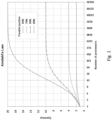
- Amdahl's law (or Amdahl's argument, Fig. 1 ) is a formula which gives the theoretical speedup in latency of the execution of a task at fixed workload that can be expected of a system whose resources are improved. If not addressed properly, this situation can become a bottleneck for future embedded applications.
- an aspect of the present invention provides a simple API (application programming interface), miniaturization of the LMAX disruptor for embedded systems.
- the functionality of the disruptor pattern is described here in relation to two main approaches.
- the term "smart pointer” is used here to refer to a pointer used to make sure that an object is deleted if it is no longer used (referenced), as known for example in C++11.
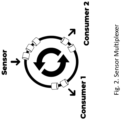
- the first approach is the sensor multiplexer as shown in figure 2 , which is a single producer, multiple consumer solution. Consumers are also referred to here as “subscribers”.
- the term "producer” is used here to refer to the source of the data which might be for example a sensor and is not necessarily part of a system according to embodiments of the invention.
- the data is published by a publisher and hence the publisher may receive a call to publish the data, typically in the form of a data object, from a producer.
- a single producer/publisher object may be provided, in other words the publisher may be considered to be a producer.
- the second approach is an event loop ( figure 3 ) loosely based on this development for financial systems, the event loop presented here is lock-free, high performance and with a degree of determinism that has not been seen before in embedded systems.
- An event loop is a programming construct or design pattern well known to those in the art of computer science. In figure 3 it can be seen that there are multiple producers but possibly only one subscriber.
- the term "event loop” is used here according to the definition in NodeJS programming language, found for example at https://nodejs.dev/learn/the-nodejs-event-loop, which is the most common definition. It means that data arrives from multiple sources in parallel in a multi-threaded manner, but data is consumed in a single-threaded manner, without new consumer workers being created or spawned.
- ROS Robot Operating System
- ROS delivers the messages sequentially to the application. It is similar to a simple event loop.
- the second way to do that is by using the async multithread spinner. In this case, there is no event loop and messages are delivered concurrently to the application.
- a simple benchmark test was developed. It consists of a set of eight sensor providers in the form of publishers. In the client side, we subscribe to these eight sources of data and do some simple data processing consisting of fusion of the data in a JSON object and save it to file.
- Embodiments of the invention are not limited to the use of event loops and may also be used for data multiplexing as described further here.
- the base application is quite like the one presented above for the robotics test bed. In this case, however, the data was received in a mix of SDO (Service Data Object), SDO blocks and PDO (Process Data Object) CAN (controller area network) open messages.
- SDO Service Data Object
- PDO Process Data Object
- CAN controller area network
- the main performance criteria is the rate at which data is processed, or throughput.
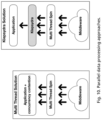
- the traditional multithread and the event-loop approaches described here start to diverge when the total rate of all messages reaches 1500Hz and when tested at a total of 3000Hz, the difference between both approaches is substantial, around 15%, as shown in figure 11 .
- Table1 data processing test parameters Parameter Min Max Threads 4 64 SDO PDO Rate 5Hz 100Hz SDO Block Rate 2Hz 5Hz
- Figure 11 shows the overall performance results with respect to increasing data rate.
- the throughput of the traditional multi-thread application starts to degrade at 1500Hz and is really noticeable reaching 15% degradation when close to 2.8KHz data date.
- the eventloop disclosed here has a throughput that matches the input data rate, i.e., it is the best possible scenario.
- the solution described here needs up to 10% less CPU for data processing. The reason is mainly the cost of context switching in traditional multi-thread applications. As for RAM usage, the solution described here needs more RAM than the alternative application, which is the only trade-off needed when using this software.
- Threads for the various classes of activities and protected synchronization and inter-task communication.
- the scheduling methods are different though in order to prefer predictability in comparison to average case behaviour.
- the software application described here provides, in some embodiments, for lock-free parallel data processing in autonomous embedded systems, such as, by way of example, robotic embedded systems or space embedded systems.
- autonomous embedded systems such as, by way of example, robotic embedded systems or space embedded systems.
- Other systems which may benefit from the advantages offered by this system include autonomous drones, vision navigation systems, autonomous rovers, self-driving vehicles, and others.
- the software application is not restricted to a particular platform but may be installed in most computers, Linux distributions and in a variety of microcontrollers and embedded systems.
- the "Smart Object Pool” comprises memory with pre-allocated spaces, also referred to here as "slots" into which data is placed, for example according to the type of data or to a subscriber.
- a plurality of data may be received concurrently or, optionally, sequentially in time. It is important that the allocation of the memory space does not change during the processes according to embodiments of the invention. The allocation of space, for example according to data type as described elsewhere here, does not change. Only the occupation of the space may change, for example by being replaced with more recent data, for example after previous data has been used as required.
- the producer may be a sensor, but may be any other external provider of data, in particular numerical data.
- the Smart Object Pool may be a lock-free memory management system employing smart pointers, but embodiments of the invention are not limited to this.
- event data are copied by the asynchronous publisher into event objects located in the Smart Object Pool and subsequently moved into a circular lock-free batching queue, for example a ring buffer.
- a copy operation may be performed, that is the data is duplicated in the batching queue, but this behaviour can be modified in special variants of the invention.
- Some members of the event object may not be copied, or copied by reference only.
- the batching queue could hold events of variable size up to a settable maximum, and the user may be given the flexibility to manage memory allocation.
- Event objects may be subsequently transferred from the ring buffer to an asynchronous subscriber, for example by a handler object.
- the asynchronous subscriber or consumer may comprise a "container" or group of listeners and may pass a reference to the object contained in the ring buffer to each registered listener. Once the system has determined that no further transfer of the event data to consumers is required, the asynchronous subscriber may send an appropriate message to the object pool, which frees the event as available for reuse.
- the overall functionality of the method can be configured in the following manner:
- the memory may be pre-allocated to the producer.
- the memory may be allocated such that, for example, different kinds of data are allocated to different memory spaces, or "pools".
- the size of the pool may be allocated in various ways, for example according to the frequency at which the data is generated by the producer.
- the frequency may correspond to the frequency of requests to publish data objects. Examples of different kinds of data may include but are not limited to working state, temperature, battery status and others.
- one smart object pool is provided per producer.
- a system may be configured as a sensor multiplexer, in which case a listening thread may be is created for each registered consumer linked to the publisher.
- the listening threads may pass the event data by reference to its corresponding consumer. Once all consumers have processed the event object, they may be returned to the Smart Object Pool.
- a system may be configured as a lock-free event loop, in which case the event object may be passed to an event emitter, which invokes the consumer.
- the event emitter may take the form of an LMAX disruptor configured to work as a multiple producer / single consumer setup. Once the consumer has processed an event object, this event object is returned to the Smart Object Pool.
- placing copies as opposed to original event objects into the batching queue for processing and recycling processed event objects in the Smart Object Pool avoids the need to periodically and actively free up memory at high cost to CPU, and prevents memory space from being cluttered with event data, which have been processed and are no longer required, thus rendering the overall system more deterministic.
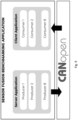
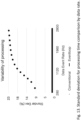
- some embodiments of the present invention may significantly decrease standard deviation for processing time, for example at least 9- fold or better, as evidenced in the CANopen system for CubeSat ( Figure. 12 and Figure. 13 ).
- the improved standard deviation of this method renders it particularly suitable for embedded system with a need for a high degree of reliability, reproducibility and determinism.
- FIG. 16 A system according to some embodiments of the invention is illustrated in figure 16 .
- the system comprises an asynchronous publisher 10, a memory pool 12, a ring buffer 14 and an asynchronous subscriber 16.
- the memory pool 12 may contain a number of pre-allocated object instances (not shown in Figure. 16 ).
- the method may comprise receiving a call at operation 1601 to publish a data object, such as an event, for example at the asynchronous publisher 10.
- the call might come from a producer such as a sensor or other device external to the computer implementing the method.
- the call may identify a memory space that has been pre-allocated to the sensor or a group of sensors producing similar data.
- the allocation of memory space may be transparent to the producer.
- the publisher 10 may initiate the copying, or cloning, of the data object and placing it into the pre-allocated space in the memory at operation 1903.
- the data object or, optionally, a pointer to the object may then be placed into a batching queue, for example the ring buffer 14, at operation 1905.
- the ring buffer may publish the cloned data object, in other words notify subscribers of newly available cloned data. This may take place by delivering the cloned event to one or more subscribers, for example the asynchronous subscriber 16, at operation 1607.
- the subscriber 16 may comprise one or more listeners as mentioned above, in which case the subscriber may then invoke all listeners associated to the publisher 10.
- a decision is made at operation 1609 whether all listeners have finished processing the data. In the affirmative, i.e. after the subscriber, or all listeners comprised in the subscriber, have finished processing the data as indicated at operation 1609, the cloned data object is recycled back to the pool 12 at operation 1611.
- part of the memory space previously occupied by the cloned data object is released for the publication of a new data object.
- the system waits for all the subscriber, or all the listeners 19a-b comprised in the subscribers to finished processing data, at operation 1613 before the decision operation 1609 is repeated.
- references in code to a pointer to a data object such as may be generated by subscribers, may be monitored. When no more such references are detected, it may be assumed that the data object is no longer required. This may be achieved using smart pointers as known in C++11 onwards.
- An important aspect of embodiments of the invention is that when new data is to be published it is not necessary to request a memory space from the operating system, as would normally be required. Because the memory is pre-allocated and the allocation does not change, the memory space is always available for the data. This contributes to the speed of operation of methods according to embodiments of the invention. Asking the operating system for memory is costly in terms of processing power and time, and more importantly it is not a predictable operation and takes an undetermined amount of time.
- FIG. 19 shows an example of a single consumer 19 in the form of a container comprising two listeners A and B, 19a and 19b.
- one listener 19a may require only a part of the data comprised in the data object.
- one listener 19a may require only intensity, e.g. black and white, data while another 19b may additionally require colour data.
- FIG. 17 shows a one producer/multiple subscriber 20 embodiment, i.e. a multiplexer embodiment
- figure 18 shows a multiple producer/single subscriber 20a, 20b, embodiment, i.e., an event loop embodiment.
- the data delivery mechanism is shown in more detail.
- Figure 17 shows, in addition to the features of figure 16 , a consumer sequence barrier 18 between the ring buffer 14 and multiple consumers 19.
- Sequence barriers are part of the LMAX original disruptor pattern. They keep pointers to the next element in the ring buffer: in the case of consumer barrier, it is the pointer to the next data to be processed, in the case of producer barrier (see figure 18 ), is the pointer to the next free slot in the buffer.
- the smart object pool 12 is shown to be divided into separate slots 12a-12g.
- the asynchronous publisher 10 as shown in figure 16 is replaced by a producer 20.
- the producer and publisher are interchangeable.
- one instance of the data multiplexer may be provided for each of different types of data.
- One data multiplexer may be able to handle one type of data only, hence, only one smart object pool is needed. Smart object pools may also be data type dependent.
- the embodiment of figure 17 operates in a similar way to the embodiment of figure 16 . In addition the following operations may take place:
- an object memory slot corresponding to the data is requested from the smart object pool 12 and a pointer or other identifier of the slot containing the data to be published is returned to the producer 20.
- the producer 20 sends the object address/pointer to the next available sequence in the ring buffer 14.
- the data itself can then be accessed via the ring buffer 14 using the address/pointer.
- the ring buffer 14 is connected to a consumer sequence barrier 18.
- the consumer sequence barrier 18 is connected to the consumers 19 and the single smart object pool 12.
- the consumer sequence barrier 18 handles/regulates access to the data in the ring buffer 14, for the consumers 19, for example based on policy data associated with specific consumers 19. For example, a consumer A may only access data from slot 3 of the ring buffer 14, if a certain policy is satisfied.
- the barrier 18 may have a most recent data policy for the consumers 17 so that old events are discarded.
- a policy may be that of independent consumer (subscriber) rates, In other words, different consumers may consume data at different rates.
- Embodiments of the invention may be used to ensure access to the most recent data and that data will be kept in the batching queue until processing by the subscribers is finished.
- the memory slot 12a is returned to the smart memory pool, or released to be available for new data. This may be for example by the customers 19 notifying the consumer sequence barrier 18 and the consumer sequence barrier 18 notifying the smart object pool, as indicated in figure 17 .
- a producer sequence barrier 25 is positioned between the producers 20a, 20b and the ring buffer 14 in addition to a consumer sequence barrier 18 as shown in figure 17 .
- a producer sequence barrier 25 is positioned between the producers 20a, 20b and the ring buffer 14 in addition to a consumer sequence barrier 18 as shown in figure 17 .
- the single consumer 23 comprises multiple listeners 24, 25.
- the subscriber communicates directly with the smart object pools 12, 13, rather than via the consumer sequence barrier 18.
- Each smart object pool comprises a plurality of object memory slots 12a-g, 13a-g, wherein at least memory slot 12a of the plurality of memory slots 12a-g, 13a-g may comprise a number of pre-allocated object instances.
- the single consumer is served by a single thread which is constantly running waiting for data to come from the ring buffer.
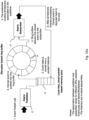
- Figure 19 is a flow diagram illustrating an example data publishing process, according to some embodiments of the present invention, that may be implemented in either of the systems shown in figures 17 and 18 .
- a producer 20, 20a,20b is invoked (for example, via a publish API), to publish data
- a request (s) for a memory slot, e.g. 12a, for the data is sent to a smart access pool, e.g. pool 12, or in the case of multiple producers to the pool for that producer.
- the smart access pool 12 sends the address or a pointer to the appropriate memory slot to the producer.
- the producer upon receiving the address/pointer for the memory slot e.g. 12a, from the smart object pool 12, the producer sends the object address to the next available address in the ring buffer as shown in Figure 18 .
- multiple producers may send the object address to the next available address in the ring buffer via the producer sequence barrier 25 as shown in Figure 19 .
- the consumer sequence barrier 18 receives a request from a consumer or multiple consumers to access data in the ring buffer 14.
- the consumer sequence barrier 18 checks the received request (s), against at least one policy associated with the consumer (s) making the request (s). Based the result of the check(s) (operation 1940), the consumer sequence barrier 18 either allows the consumer (s) to access the one data in the ring buffer 14 at operation 1950 or ends the process by returning a null at operation 1945.
- the consumer sequence barrier determines if the consumer (s) have processed/accessed all required data from the ring buffer. The determination could be made based on at least one policy associated with the consumer(s). Based on the determination, the consumer sequence barrier 18 returns the object memory slot to the one smart object pool at operation 1960 as shown in Figure 18 , or waits for all of the consumer(s) to process/access all the data from the ring buffer (at operation 1955. In an alternate embodiment, the consumer sequence barrier may direct the consumer(s), or listeners associated with a consumer to return the object memory slot to the smart object pool (operation 1960) (as shown in Figure 19 ). In the foregoing one memory slot is discussed but it will be appreciated that the same process may be implemented for multiple memory slots. Once the listeners of the consumer are done processing the data, and all consumers are past that point in the ring-buffer, the data memory slot can be released back to the smart object pool.
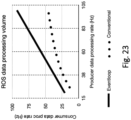
- Figures 20 to 23 are graphs comparing one thread-safe queues and multiple thread-safe queues with methods according to some embodiments of the invention using an event loop, performed using an Odroid-XU4.
- the graphs show Odroid memory only CPU usage in figure 20 , Odroid memory only data throughput in figure 21 , Odroid ROS CPU usage in figure 22 and Odroid ROS data throughput in figure 23 . Similar improvements would be expected for multiplexer embodiments of the invention.
- Figure 24 shows, in addition to the features of figures 16a and 17 , a middleware 30 (such as ROA and CAN) which connects to the eventloop 14 via multiple threads (such as thread 1, thread 2, and thread 3).
- Each thread comprises a middleware listener and a producer.
- thread 1 comprises a middleware listener A 11a coupled to producer 20a.
- the middleware listener 11a publishes the data to the event loop 14 using a publish call via the producer A and/or publisher (as illustrated in Figure 18 ).
- the claimed method may be carried out on a physical entity, whereby producers and consumers are independent software entities, which may either be part of the same physical entity or run independently from said entity.
- the system may be implemented as a single computing device.
- a device may comprise one or more processors which may be microprocessors, controllers or any other suitable type of processors for processing computer executable instructions to control the operation of the device.
- the device may also comprise memory, e.g. random access memory, as well as storage optionally in the form of flash memory.
- additional capabilities may be provided as is well known in the art such as external inputs and outputs, wireless connectivity and others.
- the acts or operations described herein may comprise computer-executable instructions that can be implemented by one or more processors and/or stored on a computer-readable medium or media.
- the computer-executable instructions can include routines, sub-routines, programs, threads of execution, and/or the like.
- results of acts of the methods can be stored in a computer-readable medium, displayed on a display device, and/or the like.
Landscapes
- Engineering & Computer Science (AREA)
- Software Systems (AREA)
- Theoretical Computer Science (AREA)
- Physics & Mathematics (AREA)
- General Engineering & Computer Science (AREA)
- General Physics & Mathematics (AREA)
- Multimedia (AREA)
- Information Retrieval, Db Structures And Fs Structures Therefor (AREA)
Claims (14)
- Verfahren zur parallelen Datenverarbeitung in einem autonomen eingebetteten System, das im Rahmen eines LMAX-Disruptors betrieben wird, implementiert unter Verwendung von C++ ab Version 11, wobei das Verfahren Folgendes umfasst:Empfangen eines Aufrufs zur Veröffentlichung eines Datenobjekts (1601);Klonen des Datenobjekts (1601) und Platzieren desselben in einem vorab zugewiesenen Platz in einem Speicher (1603), wobei der Speicher ein sperrfreies Speicherverwaltungssystem umfasst, das intelligente Zeiger verwendet, wobei ein separater Speicherpool (12, 13) für intelligente Objekte für jeden Produzenten (20a, 20b) bereitgestellt wird und jeder Pool für intelligente Objekte eine Vielzahl von Objektspeicherplätzen (12a-g, 13a-g) umfasst;Platzieren des geklonten Datenobjekts oder eines Zeigers auf das Datenobjekt in eine Stapelwarteschlange (1605), wobei eine Erzeugersperre zwischen mehreren Erzeugern und der Stapelwarteschlange implementiert ist; asynchrones Veröffentlichen (1607) des geklonten Datenobjekts durch die Stapelwarteschlange durch Liefern oder Melden des geklonten Datenobjekts an den Abonnenten (16); undFreigeben des vorab zugewiesenen Platzes im Speicher (1611), nachdem der Abonnent die Verarbeitung des Datenobjekts abgeschlossen hat (1609).
- Verfahren nach Anspruch 1, bei dem das Datenobjekt an mehrere Abonnenten veröffentlicht wird.
- Verfahren nach Anspruch 2, bei dem jeder Abonnent (19) jedes Datenobjekt höchstens einmal empfangen darf.
- Verfahren nach einem vorstehenden Anspruch, das die Implementierung einer Abonnentenfolgesperre (18) zwischen der Stapelwarteschlange und dem einen oder den mehreren Abonnenten umfasst.
- Verfahren nach Anspruch 1, bei dem Datenobjekte von mehreren Produzenten (20a, 20b) an einen einzigen Abonnenten (16) veröffentlicht werden.
- Verfahren nach Anspruch 5, bei dem das Datenobjekt eine Bindung umfasst, die eine direkte Verbindung zu Middleware darstellt.
- Verfahren nach einem vorstehenden Anspruch, bei dem der Speicher so zugewiesen wird, dass verschiedene Arten von Daten verschiedenen Speicherplätzen zugewiesen werden.
- Verfahren nach Anspruch 7, bei dem die Größe des einer Datenart zugewiesenen Speicherplatzes von der Häufigkeit abhängt, mit der die Daten generiert werden.
- Verfahren nach einem vorstehenden Anspruch, bei dem die Stapelwarteschlange einen Ringpuffer (14) umfasst.
- Verfahren nach einem vorstehenden Anspruch, bei dem jeder Abonnent eine Gruppe von Zuhörern umfasst und jeder Abonnent einen Verweis auf das in der Stapelwarteschlange enthaltene Objekt an jeden Zuhörer überträgt.
- Verfahren nach einem vorstehenden Anspruch, das zur Aufgabenplanung implementiert ist, wobei das Datenobjekt eine Aufgabe umfasst.
- Computerlesbares Medium, das Anweisungen umfasst, die, wenn sie in einem Computer implementiert sind, den Computer veranlassen, ein Verfahren nach einem der Ansprüche 1 bis 11 durchzuführen.
- Autonomes eingebettetes Computersystem, das einen oder mehrere Prozessoren und einen Speicher umfasst und so konfiguriert ist, dass es ein Verfahren nach einem der Ansprüche 1 bis 9 implementiert.
- Computersystem nach Anspruch 13, bei dem die Abonnenten Objekte in dem eingebetteten System sind.
Applications Claiming Priority (2)
| Application Number | Priority Date | Filing Date | Title |
|---|---|---|---|
| CH11552019 | 2019-09-13 | ||
| PCT/EP2020/075540 WO2021048401A1 (en) | 2019-09-13 | 2020-09-11 | Parallel data processing in embedded systems |
Publications (3)
| Publication Number | Publication Date |
|---|---|
| EP4028889A1 EP4028889A1 (de) | 2022-07-20 |
| EP4028889C0 EP4028889C0 (de) | 2025-01-08 |
| EP4028889B1 true EP4028889B1 (de) | 2025-01-08 |
Family
ID=67988832
Family Applications (1)
| Application Number | Title | Priority Date | Filing Date |
|---|---|---|---|
| EP20775222.1A Active EP4028889B1 (de) | 2019-09-13 | 2020-09-11 | Parallele datenverarbeitung in eingebetteten systemen |
Country Status (3)
| Country | Link |
|---|---|
| US (1) | US12561183B2 (de) |
| EP (1) | EP4028889B1 (de) |
| WO (1) | WO2021048401A1 (de) |
Families Citing this family (1)
| Publication number | Priority date | Publication date | Assignee | Title |
|---|---|---|---|---|
| JP7831388B2 (ja) * | 2023-05-01 | 2026-03-17 | トヨタ自動車株式会社 | データ処理システム、データの処理順序を管理する方法、及びプログラム |
Citations (4)
| Publication number | Priority date | Publication date | Assignee | Title |
|---|---|---|---|---|
| US20090204755A1 (en) * | 2008-02-08 | 2009-08-13 | Inetco Systems Limited | Multi-reader, multi-writer lock-free ring buffer |
| US7836228B1 (en) * | 2004-06-18 | 2010-11-16 | Oracle America, Inc. | Scalable and lock-free first-in-first-out queue implementation |
| US20130246672A1 (en) * | 2012-03-13 | 2013-09-19 | Microsoft Corporation | Adaptive Multi-Threaded Buffer |
| US20190004854A1 (en) * | 2017-07-03 | 2019-01-03 | Baidu Usa Llc | Centralized scheduling system using event loop for operating autonomous driving vehicles |
Family Cites Families (4)
| Publication number | Priority date | Publication date | Assignee | Title |
|---|---|---|---|---|
| US8190624B2 (en) * | 2007-11-29 | 2012-05-29 | Microsoft Corporation | Data parallel production and consumption |
| US8693319B2 (en) * | 2008-09-25 | 2014-04-08 | Intel Corporation | Scheme for avoiding deadlock in multi-ring interconnect, with additional application to congestion control |
| US20130198419A1 (en) * | 2012-01-30 | 2013-08-01 | Stephen Jones | Lock-free fifo |
| US10678750B2 (en) * | 2015-08-28 | 2020-06-09 | AirWatcha, LLC | On demand file sync |
-
2020
- 2020-09-11 EP EP20775222.1A patent/EP4028889B1/de active Active
- 2020-09-11 US US17/753,715 patent/US12561183B2/en active Active
- 2020-09-11 WO PCT/EP2020/075540 patent/WO2021048401A1/en not_active Ceased
Patent Citations (4)
| Publication number | Priority date | Publication date | Assignee | Title |
|---|---|---|---|---|
| US7836228B1 (en) * | 2004-06-18 | 2010-11-16 | Oracle America, Inc. | Scalable and lock-free first-in-first-out queue implementation |
| US20090204755A1 (en) * | 2008-02-08 | 2009-08-13 | Inetco Systems Limited | Multi-reader, multi-writer lock-free ring buffer |
| US20130246672A1 (en) * | 2012-03-13 | 2013-09-19 | Microsoft Corporation | Adaptive Multi-Threaded Buffer |
| US20190004854A1 (en) * | 2017-07-03 | 2019-01-03 | Baidu Usa Llc | Centralized scheduling system using event loop for operating autonomous driving vehicles |
Non-Patent Citations (6)
| Title |
|---|
| ANONYMOUS: "LMAX Disruptor: Must EventHandler clone object received from EventHandler#onEvent - Stack Overflow", 18 August 2013 (2013-08-18), pages 1 - 2, XP055824251, Retrieved from the Internet <URL:https://stackoverflow.com/questions/18299903/lmax-disruptor-must-eventhandler-clone-object-received-from-eventhandleroneven> [retrieved on 20210714] * |
| ANONYMOUS: "LMAX Disruptor: Must EventHandler clone object received from EventHandler#onEvent - Stack Overflow", 19 August 2013 (2013-08-19), XP055824355, Retrieved from the Internet <URL:https://stackoverflow.com/questions/18299903/lmax-disruptor-must-eventhandler-clone-object-received-from-eventhandleroneven> [retrieved on 20210714] * |
| FANG YUCHENG ET AL: "Modeling and analysis of the disruptor framework in CSP", 2018 IEEE 8TH ANNUAL COMPUTING AND COMMUNICATION WORKSHOP AND CONFERENCE (CCWC), IEEE, 8 January 2018 (2018-01-08), pages 803 - 809, XP033326772, DOI: 10.1109/CCWC.2018.8301703 * |
| INGLES ROLANDO ET AL: "A simple multithreaded C++ framework for high-performance data acquisition systems", 2015 22ND INTERNATIONAL CONFERENCE MIXED DESIGN OF INTEGRATED CIRCUITS & SYSTEMS (MIXDES), DEPARTMENT OF MICROELECTRONICS AND COMPUTER SCIENCE, LODZ UNIVERISTY OF TECHNOLOGY, 25 June 2015 (2015-06-25), pages 153 - 157, XP033196449, DOI: 10.1109/MIXDES.2015.7208501 * |
| JESPER SMITH ET AL: "Real-Time control of Humanoid Robots using OpenJDK", JAVA TECHNOLOGIES FOR REAL-TIME AND EMBEDDED SYSTEMS, ACM, 2 PENN PLAZA, SUITE 701 NEW YORK NY 10121-0701 USA, 13 October 2014 (2014-10-13), pages 29 - 36, XP058059163, ISBN: 978-1-4503-2813-5, DOI: 10.1145/2661020.2661027 * |
| MARTIN THOMPSON ET AL: "Disruptor: High performance alternative to bounded queues for exchanging data between concurrent threads", 1 May 2011 (2011-05-01), XP055646553, Retrieved from the Internet <URL:http://lmax-exchange.github.io/disruptor/files/Disruptor-1.0.pdf> [retrieved on 20191126] * |
Also Published As
| Publication number | Publication date |
|---|---|
| EP4028889C0 (de) | 2025-01-08 |
| EP4028889A1 (de) | 2022-07-20 |
| US12561183B2 (en) | 2026-02-24 |
| US20220342722A1 (en) | 2022-10-27 |
| WO2021048401A1 (en) | 2021-03-18 |
Similar Documents
| Publication | Publication Date | Title |
|---|---|---|
| US11030014B2 (en) | Concurrent distributed graph processing system with self-balance | |
| US10467725B2 (en) | Managing access to a resource pool of graphics processing units under fine grain control | |
| US8984519B2 (en) | Scheduler and resource manager for coprocessor-based heterogeneous clusters | |
| CN114138434B (zh) | 一种大数据任务调度系统 | |
| US20170185452A1 (en) | Apparatus and method for data processing | |
| US9973512B2 (en) | Determining variable wait time in an asynchronous call-back system based on calculated average sub-queue wait time | |
| US20080052726A1 (en) | Application connector parallelism in enterprise application integration systems | |
| CN111597035B (zh) | 基于多线程的仿真引擎时间推进方法及系统 | |
| US9535756B2 (en) | Latency-hiding context management for concurrent distributed tasks in a distributed system | |
| EP1459179A2 (de) | Datenverarbeitungssystem mit mehreren prozessoren und aufgabenablaufplanungsverfahren dafür | |
| CN109445944A (zh) | 一种基于dpdk的网络数据采集处理系统及其方法 | |
| CN112486638B (zh) | 用于执行处理任务的方法、装置、设备和存储介质 | |
| US10673983B2 (en) | Processing a unit of work | |
| US12561183B2 (en) | Parallel data processing in embedded systems | |
| WO2025103006A1 (zh) | 基于服务器无感知计算的数据处理方法和电子设备 | |
| CN110532060A (zh) | 一种混合网络环境数据采集方法及系统 | |
| CN111913791B (zh) | 任务调度方法、装置、设备和计算机可读存储介质 | |
| CN113254143B (zh) | 虚拟化网络功能网元编排调度方法、装置和系统 | |
| CN115361382B (zh) | 基于数据群组的数据处理方法、装置、设备和存储介质 | |
| CN111400021A (zh) | 一种深度学习方法、装置及系统 | |
| KR101448861B1 (ko) | 동기적 메시지 기반 대량 병렬처리 시스템 | |
| Koneru et al. | Resource allocation method using scheduling methods for parallel data processing in cloud | |
| KR20180082560A (ko) | 태스크의 시간-기반 스케줄링을 위한 방법 및 장치 | |
| Bahadur et al. | FBOS: frequency based optimization strategy for thread pool system | |
| CN120803749B (zh) | 一种作业调度方法、装置、电子设备及存储介质 |
Legal Events
| Date | Code | Title | Description |
|---|---|---|---|
| STAA | Information on the status of an ep patent application or granted ep patent |
Free format text: STATUS: UNKNOWN |
|
| STAA | Information on the status of an ep patent application or granted ep patent |
Free format text: STATUS: THE INTERNATIONAL PUBLICATION HAS BEEN MADE |
|
| PUAI | Public reference made under article 153(3) epc to a published international application that has entered the european phase |
Free format text: ORIGINAL CODE: 0009012 |
|
| STAA | Information on the status of an ep patent application or granted ep patent |
Free format text: STATUS: REQUEST FOR EXAMINATION WAS MADE |
|
| 17P | Request for examination filed |
Effective date: 20220111 |
|
| AK | Designated contracting states |
Kind code of ref document: A1 Designated state(s): AL AT BE BG CH CY CZ DE DK EE ES FI FR GB GR HR HU IE IS IT LI LT LU LV MC MK MT NL NO PL PT RO RS SE SI SK SM TR |
|
| DAV | Request for validation of the european patent (deleted) | ||
| DAX | Request for extension of the european patent (deleted) | ||
| GRAP | Despatch of communication of intention to grant a patent |
Free format text: ORIGINAL CODE: EPIDOSNIGR1 |
|
| STAA | Information on the status of an ep patent application or granted ep patent |
Free format text: STATUS: GRANT OF PATENT IS INTENDED |
|
| GRAS | Grant fee paid |
Free format text: ORIGINAL CODE: EPIDOSNIGR3 |
|
| GRAA | (expected) grant |
Free format text: ORIGINAL CODE: 0009210 |
|
| STAA | Information on the status of an ep patent application or granted ep patent |
Free format text: STATUS: THE PATENT HAS BEEN GRANTED |
|
| INTG | Intention to grant announced |
Effective date: 20241112 |
|
| AK | Designated contracting states |
Kind code of ref document: B1 Designated state(s): AL AT BE BG CH CY CZ DE DK EE ES FI FR GB GR HR HU IE IS IT LI LT LU LV MC MK MT NL NO PL PT RO RS SE SI SK SM TR |
|
| REG | Reference to a national code |
Ref country code: GB Ref legal event code: FG4D |
|
| REG | Reference to a national code |
Ref country code: CH Ref legal event code: EP |
|
| REG | Reference to a national code |
Ref country code: DE Ref legal event code: R096 Ref document number: 602020044552 Country of ref document: DE |
|
| REG | Reference to a national code |
Ref country code: IE Ref legal event code: FG4D |
|
| U01 | Request for unitary effect filed |
Effective date: 20250128 |
|
| U07 | Unitary effect registered |
Designated state(s): AT BE BG DE DK EE FI FR IT LT LU LV MT NL PT RO SE SI Effective date: 20250203 |
|
| PG25 | Lapsed in a contracting state [announced via postgrant information from national office to epo] |
Ref country code: RS Free format text: LAPSE BECAUSE OF FAILURE TO SUBMIT A TRANSLATION OF THE DESCRIPTION OR TO PAY THE FEE WITHIN THE PRESCRIBED TIME-LIMIT Effective date: 20250408 |
|
| PG25 | Lapsed in a contracting state [announced via postgrant information from national office to epo] |
Ref country code: PL Free format text: LAPSE BECAUSE OF FAILURE TO SUBMIT A TRANSLATION OF THE DESCRIPTION OR TO PAY THE FEE WITHIN THE PRESCRIBED TIME-LIMIT Effective date: 20250108 |
|
| PG25 | Lapsed in a contracting state [announced via postgrant information from national office to epo] |
Ref country code: ES Free format text: LAPSE BECAUSE OF FAILURE TO SUBMIT A TRANSLATION OF THE DESCRIPTION OR TO PAY THE FEE WITHIN THE PRESCRIBED TIME-LIMIT Effective date: 20250108 |
|
| PG25 | Lapsed in a contracting state [announced via postgrant information from national office to epo] |
Ref country code: IS Free format text: LAPSE BECAUSE OF FAILURE TO SUBMIT A TRANSLATION OF THE DESCRIPTION OR TO PAY THE FEE WITHIN THE PRESCRIBED TIME-LIMIT Effective date: 20250508 Ref country code: NO Free format text: LAPSE BECAUSE OF FAILURE TO SUBMIT A TRANSLATION OF THE DESCRIPTION OR TO PAY THE FEE WITHIN THE PRESCRIBED TIME-LIMIT Effective date: 20250408 |
|
| PG25 | Lapsed in a contracting state [announced via postgrant information from national office to epo] |
Ref country code: HR Free format text: LAPSE BECAUSE OF FAILURE TO SUBMIT A TRANSLATION OF THE DESCRIPTION OR TO PAY THE FEE WITHIN THE PRESCRIBED TIME-LIMIT Effective date: 20250108 |
|
| PG25 | Lapsed in a contracting state [announced via postgrant information from national office to epo] |
Ref country code: GR Free format text: LAPSE BECAUSE OF FAILURE TO SUBMIT A TRANSLATION OF THE DESCRIPTION OR TO PAY THE FEE WITHIN THE PRESCRIBED TIME-LIMIT Effective date: 20250409 |
|
| U1N | Appointed representative for the unitary patent procedure changed after the registration of the unitary effect |
Representative=s name: CROWELL & MORING U.K. LLP; GB |
|
| REG | Reference to a national code |
Ref country code: CH Ref legal event code: U11 Free format text: ST27 STATUS EVENT CODE: U-0-0-U10-U11 (AS PROVIDED BY THE NATIONAL OFFICE) Effective date: 20251001 |
|
| PG25 | Lapsed in a contracting state [announced via postgrant information from national office to epo] |
Ref country code: SM Free format text: LAPSE BECAUSE OF FAILURE TO SUBMIT A TRANSLATION OF THE DESCRIPTION OR TO PAY THE FEE WITHIN THE PRESCRIBED TIME-LIMIT Effective date: 20250108 |
|
| PGFP | Annual fee paid to national office [announced via postgrant information from national office to epo] |
Ref country code: GB Payment date: 20250911 Year of fee payment: 6 |
|
| PG25 | Lapsed in a contracting state [announced via postgrant information from national office to epo] |
Ref country code: CZ Free format text: LAPSE BECAUSE OF FAILURE TO SUBMIT A TRANSLATION OF THE DESCRIPTION OR TO PAY THE FEE WITHIN THE PRESCRIBED TIME-LIMIT Effective date: 20250108 |
|
| PG25 | Lapsed in a contracting state [announced via postgrant information from national office to epo] |
Ref country code: SK Free format text: LAPSE BECAUSE OF FAILURE TO SUBMIT A TRANSLATION OF THE DESCRIPTION OR TO PAY THE FEE WITHIN THE PRESCRIBED TIME-LIMIT Effective date: 20250108 |
|
| U20 | Renewal fee for the european patent with unitary effect paid |
Year of fee payment: 6 Effective date: 20250922 |
|
| PLBE | No opposition filed within time limit |
Free format text: ORIGINAL CODE: 0009261 |
|
| STAA | Information on the status of an ep patent application or granted ep patent |
Free format text: STATUS: NO OPPOSITION FILED WITHIN TIME LIMIT |
|
| 26N | No opposition filed |
Effective date: 20251009 |
|
| PGFP | Annual fee paid to national office [announced via postgrant information from national office to epo] |
Ref country code: CH Payment date: 20251001 Year of fee payment: 6 |