EP4028602B1 - Drywall sheet with tapered kerf construction and method of tapering it - Google Patents
Drywall sheet with tapered kerf construction and method of tapering it Download PDFInfo
- Publication number
- EP4028602B1 EP4028602B1 EP20767901.0A EP20767901A EP4028602B1 EP 4028602 B1 EP4028602 B1 EP 4028602B1 EP 20767901 A EP20767901 A EP 20767901A EP 4028602 B1 EP4028602 B1 EP 4028602B1
- Authority
- EP
- European Patent Office
- Prior art keywords
- flap
- sheet
- slot
- adhesive
- gypsum
- Prior art date
- Legal status (The legal status is an assumption and is not a legal conclusion. Google has not performed a legal analysis and makes no representation as to the accuracy of the status listed.)
- Active
Links
Images
Classifications
-
- E—FIXED CONSTRUCTIONS
- E04—BUILDING
- E04C—STRUCTURAL ELEMENTS; BUILDING MATERIALS
- E04C2/00—Building elements of relatively thin form for the construction of parts of buildings, e.g. sheet materials, slabs, or panels
- E04C2/02—Building elements of relatively thin form for the construction of parts of buildings, e.g. sheet materials, slabs, or panels characterised by specified materials
- E04C2/04—Building elements of relatively thin form for the construction of parts of buildings, e.g. sheet materials, slabs, or panels characterised by specified materials of concrete or other stone-like material; of asbestos cement; of cement and other mineral fibres
- E04C2/043—Building elements of relatively thin form for the construction of parts of buildings, e.g. sheet materials, slabs, or panels characterised by specified materials of concrete or other stone-like material; of asbestos cement; of cement and other mineral fibres of plaster
-
- E—FIXED CONSTRUCTIONS
- E04—BUILDING
- E04C—STRUCTURAL ELEMENTS; BUILDING MATERIALS
- E04C2/00—Building elements of relatively thin form for the construction of parts of buildings, e.g. sheet materials, slabs, or panels
- E04C2/02—Building elements of relatively thin form for the construction of parts of buildings, e.g. sheet materials, slabs, or panels characterised by specified materials
- E04C2/26—Building elements of relatively thin form for the construction of parts of buildings, e.g. sheet materials, slabs, or panels characterised by specified materials composed of materials covered by two or more of groups E04C2/04, E04C2/08, E04C2/10 or of materials covered by one of these groups with a material not specified in one of the groups
-
- E—FIXED CONSTRUCTIONS
- E04—BUILDING
- E04F—FINISHING WORK ON BUILDINGS, e.g. STAIRS, FLOORS
- E04F13/00—Coverings or linings, e.g. for walls or ceilings
- E04F13/07—Coverings or linings, e.g. for walls or ceilings composed of covering or lining elements; Sub-structures therefor; Fastening means therefor
- E04F13/08—Coverings or linings, e.g. for walls or ceilings composed of covering or lining elements; Sub-structures therefor; Fastening means therefor composed of a plurality of similar covering or lining elements
-
- B—PERFORMING OPERATIONS; TRANSPORTING
- B28—WORKING CEMENT, CLAY, OR STONE
- B28B—SHAPING CLAY OR OTHER CERAMIC COMPOSITIONS; SHAPING SLAG; SHAPING MIXTURES CONTAINING CEMENTITIOUS MATERIAL, e.g. PLASTER
- B28B11/00—Apparatus or processes for treating or working the shaped or preshaped articles
- B28B11/08—Apparatus or processes for treating or working the shaped or preshaped articles for reshaping the surface, e.g. smoothing, roughening, corrugating, making screw-threads
- B28B11/0863—Apparatus or processes for treating or working the shaped or preshaped articles for reshaping the surface, e.g. smoothing, roughening, corrugating, making screw-threads for profiling, e.g. making grooves
-
- B—PERFORMING OPERATIONS; TRANSPORTING
- B28—WORKING CEMENT, CLAY, OR STONE
- B28D—WORKING STONE OR STONE-LIKE MATERIALS
- B28D1/00—Working stone or stone-like materials, e.g. brick, concrete or glass, not provided for elsewhere; Machines, devices, tools therefor
- B28D1/02—Working stone or stone-like materials, e.g. brick, concrete or glass, not provided for elsewhere; Machines, devices, tools therefor by sawing
- B28D1/04—Working stone or stone-like materials, e.g. brick, concrete or glass, not provided for elsewhere; Machines, devices, tools therefor by sawing with circular or cylindrical saw-blades or saw-discs
-
- B—PERFORMING OPERATIONS; TRANSPORTING
- B28—WORKING CEMENT, CLAY, OR STONE
- B28D—WORKING STONE OR STONE-LIKE MATERIALS
- B28D1/00—Working stone or stone-like materials, e.g. brick, concrete or glass, not provided for elsewhere; Machines, devices, tools therefor
- B28D1/22—Working stone or stone-like materials, e.g. brick, concrete or glass, not provided for elsewhere; Machines, devices, tools therefor by cutting, e.g. incising
- B28D1/24—Working stone or stone-like materials, e.g. brick, concrete or glass, not provided for elsewhere; Machines, devices, tools therefor by cutting, e.g. incising with cutting discs
-
- B—PERFORMING OPERATIONS; TRANSPORTING
- B28—WORKING CEMENT, CLAY, OR STONE
- B28D—WORKING STONE OR STONE-LIKE MATERIALS
- B28D7/00—Accessories specially adapted for use with machines or devices of the preceding groups
- B28D7/02—Accessories specially adapted for use with machines or devices of the preceding groups for removing or laying dust, e.g. by spraying liquids; for cooling work
-
- B—PERFORMING OPERATIONS; TRANSPORTING
- B32—LAYERED PRODUCTS
- B32B—LAYERED PRODUCTS, i.e. PRODUCTS BUILT-UP OF STRATA OF FLAT OR NON-FLAT, e.g. CELLULAR OR HONEYCOMB, FORM
- B32B13/00—Layered products comprising a a layer of water-setting substance, e.g. concrete, plaster, asbestos cement, or like builders' material
- B32B13/04—Layered products comprising a a layer of water-setting substance, e.g. concrete, plaster, asbestos cement, or like builders' material comprising such water setting substance as the main or only constituent of a layer, which is next to another layer of the same or of a different material
- B32B13/08—Layered products comprising a a layer of water-setting substance, e.g. concrete, plaster, asbestos cement, or like builders' material comprising such water setting substance as the main or only constituent of a layer, which is next to another layer of the same or of a different material of paper or cardboard
-
- B—PERFORMING OPERATIONS; TRANSPORTING
- B32—LAYERED PRODUCTS
- B32B—LAYERED PRODUCTS, i.e. PRODUCTS BUILT-UP OF STRATA OF FLAT OR NON-FLAT, e.g. CELLULAR OR HONEYCOMB, FORM
- B32B3/00—Layered products comprising a layer with external or internal discontinuities or unevennesses, or a layer of non-planar shape; Layered products comprising a layer having particular features of form
- B32B3/02—Layered products comprising a layer with external or internal discontinuities or unevennesses, or a layer of non-planar shape; Layered products comprising a layer having particular features of form characterised by features of form at particular places, e.g. in edge regions
- B32B3/06—Layered products comprising a layer with external or internal discontinuities or unevennesses, or a layer of non-planar shape; Layered products comprising a layer having particular features of form characterised by features of form at particular places, e.g. in edge regions for securing layers together; for attaching the product to another member, e.g. to a support, or to another product, e.g. groove/tongue, interlocking
-
- B—PERFORMING OPERATIONS; TRANSPORTING
- B32—LAYERED PRODUCTS
- B32B—LAYERED PRODUCTS, i.e. PRODUCTS BUILT-UP OF STRATA OF FLAT OR NON-FLAT, e.g. CELLULAR OR HONEYCOMB, FORM
- B32B37/00—Methods or apparatus for laminating, e.g. by curing or by ultrasonic bonding
- B32B37/12—Methods or apparatus for laminating, e.g. by curing or by ultrasonic bonding characterised by using adhesives
-
- B—PERFORMING OPERATIONS; TRANSPORTING
- B32—LAYERED PRODUCTS
- B32B—LAYERED PRODUCTS, i.e. PRODUCTS BUILT-UP OF STRATA OF FLAT OR NON-FLAT, e.g. CELLULAR OR HONEYCOMB, FORM
- B32B7/00—Layered products characterised by the relation between layers; Layered products characterised by the relative orientation of features between layers, or by the relative values of a measurable parameter between layers, i.e. products comprising layers having different physical, chemical or physicochemical properties; Layered products characterised by the interconnection of layers
- B32B7/04—Interconnection of layers
- B32B7/12—Interconnection of layers using interposed adhesives or interposed materials with bonding properties
-
- E—FIXED CONSTRUCTIONS
- E04—BUILDING
- E04F—FINISHING WORK ON BUILDINGS, e.g. STAIRS, FLOORS
- E04F13/00—Coverings or linings, e.g. for walls or ceilings
- E04F13/07—Coverings or linings, e.g. for walls or ceilings composed of covering or lining elements; Sub-structures therefor; Fastening means therefor
- E04F13/08—Coverings or linings, e.g. for walls or ceilings composed of covering or lining elements; Sub-structures therefor; Fastening means therefor composed of a plurality of similar covering or lining elements
- E04F13/0871—Coverings or linings, e.g. for walls or ceilings composed of covering or lining elements; Sub-structures therefor; Fastening means therefor composed of a plurality of similar covering or lining elements having an ornamental or specially shaped visible surface
-
- E—FIXED CONSTRUCTIONS
- E04—BUILDING
- E04F—FINISHING WORK ON BUILDINGS, e.g. STAIRS, FLOORS
- E04F13/00—Coverings or linings, e.g. for walls or ceilings
- E04F13/07—Coverings or linings, e.g. for walls or ceilings composed of covering or lining elements; Sub-structures therefor; Fastening means therefor
- E04F13/08—Coverings or linings, e.g. for walls or ceilings composed of covering or lining elements; Sub-structures therefor; Fastening means therefor composed of a plurality of similar covering or lining elements
- E04F13/0875—Coverings or linings, e.g. for walls or ceilings composed of covering or lining elements; Sub-structures therefor; Fastening means therefor composed of a plurality of similar covering or lining elements having a basic insulating layer and at least one covering layer
-
- B—PERFORMING OPERATIONS; TRANSPORTING
- B32—LAYERED PRODUCTS
- B32B—LAYERED PRODUCTS, i.e. PRODUCTS BUILT-UP OF STRATA OF FLAT OR NON-FLAT, e.g. CELLULAR OR HONEYCOMB, FORM
- B32B2419/00—Buildings or parts thereof
-
- E—FIXED CONSTRUCTIONS
- E04—BUILDING
- E04F—FINISHING WORK ON BUILDINGS, e.g. STAIRS, FLOORS
- E04F2290/00—Specially adapted covering, lining or flooring elements not otherwise provided for
- E04F2290/04—Specially adapted covering, lining or flooring elements not otherwise provided for for insulation or surface protection, e.g. against noise, impact or fire
- E04F2290/041—Specially adapted covering, lining or flooring elements not otherwise provided for for insulation or surface protection, e.g. against noise, impact or fire against noise
-
- Y—GENERAL TAGGING OF NEW TECHNOLOGICAL DEVELOPMENTS; GENERAL TAGGING OF CROSS-SECTIONAL TECHNOLOGIES SPANNING OVER SEVERAL SECTIONS OF THE IPC; TECHNICAL SUBJECTS COVERED BY FORMER USPC CROSS-REFERENCE ART COLLECTIONS [XRACs] AND DIGESTS
- Y10—TECHNICAL SUBJECTS COVERED BY FORMER USPC
- Y10T—TECHNICAL SUBJECTS COVERED BY FORMER US CLASSIFICATION
- Y10T428/00—Stock material or miscellaneous articles
- Y10T428/24—Structurally defined web or sheet [e.g., overall dimension, etc.]
- Y10T428/24479—Structurally defined web or sheet [e.g., overall dimension, etc.] including variation in thickness
- Y10T428/24488—Differential nonuniformity at margin
-
- Y—GENERAL TAGGING OF NEW TECHNOLOGICAL DEVELOPMENTS; GENERAL TAGGING OF CROSS-SECTIONAL TECHNOLOGIES SPANNING OVER SEVERAL SECTIONS OF THE IPC; TECHNICAL SUBJECTS COVERED BY FORMER USPC CROSS-REFERENCE ART COLLECTIONS [XRACs] AND DIGESTS
- Y10—TECHNICAL SUBJECTS COVERED BY FORMER USPC
- Y10T—TECHNICAL SUBJECTS COVERED BY FORMER US CLASSIFICATION
- Y10T428/00—Stock material or miscellaneous articles
- Y10T428/24—Structurally defined web or sheet [e.g., overall dimension, etc.]
- Y10T428/24777—Edge feature
-
- Y—GENERAL TAGGING OF NEW TECHNOLOGICAL DEVELOPMENTS; GENERAL TAGGING OF CROSS-SECTIONAL TECHNOLOGIES SPANNING OVER SEVERAL SECTIONS OF THE IPC; TECHNICAL SUBJECTS COVERED BY FORMER USPC CROSS-REFERENCE ART COLLECTIONS [XRACs] AND DIGESTS
- Y10—TECHNICAL SUBJECTS COVERED BY FORMER USPC
- Y10T—TECHNICAL SUBJECTS COVERED BY FORMER US CLASSIFICATION
- Y10T428/00—Stock material or miscellaneous articles
- Y10T428/24—Structurally defined web or sheet [e.g., overall dimension, etc.]
- Y10T428/24777—Edge feature
- Y10T428/24793—Comprising discontinuous or differential impregnation or bond
Definitions
- the invention relates to improvements in drywall sheets or panels, in particular, to such sheets that facilitate the finishing of end joints with like sheets.
- Conventional drywall sheets are manufactured as rectangular panels with their long edges tapered to facilitate flush taped joints.
- the long edges are typically aligned with a manufacturing process line making the taper easy to form.
- Short edges are not as readily tapered and, accordingly, most drywall products have plain or non-tapered ends sometimes called square ends.
- Drywall sheets also known as gypsum boards
- Drywall sheets have been produced on a limited scale with tapered short ends.
- Various techniques have been employed either during the gypsum sheet casting process or after a sheet has rigidified and has been cut to length. An example of the latter is disclosed in U.S. Patent 4,584,224 .
- Acoustical drywall sheets perforated and clad with a porous scrim are known, for example, from U.S. Patents 8,684,134 , 8,770,345 , and 8,925,677 .
- These acoustical sheets after installation are preferably coated with a relatively smooth acoustically transparent paint.
- This paint or coating has negligible surface hiding properties so that uneven joints between panels or sheets can be conspicuous, especially at conventional non-tapered butt joints.
- EP1674632A2 shows a similar sheet and a method as in claims 1 and 5. It shows a two-component application (filling and adhesive) instead of the specific hot melt adhesive of the invention.
- the invention provides a drywall sheet with its long edges being conventionally tapered and its short edges being modified into a taper in a manner that improves the serviceability of the sheet.
- the modified short edges of the inventive drywall sheet are kerfed or slotted, supplied with an adhesive in the kerf and displaced into a permanent taper.
- the adhesive is a hot-melt product that surprisingly improves the serviceability of the modified edge by increasing its hardness, resilience and elongation characteristics, making the edges more durable as compared to conventionally tapered edges for handling, shipping and installation.
- the drywall sheet has a conventional gypsum core sheathed in front and back papers that are through perforated with a multiple of small holes and covered on its room facing side with a porous non-woven fiberglass scrim or veil, and on its rear face a non-woven fabric.
- the scrim is adhesively attached to the perforated paper face of the drywall sheet and facilitates the inventive tapered edge production by reinforcing the attachment of a flap formed in the kerfing operation, folded up for application of a hot-melt adhesive and then folded down to form the desired taper.
- the adhesive application is metered so that the space under the folded down flap is preferably slightly underfilled to reduce hydraulic forces that could otherwise rupture at the flap connection or otherwise escape from the intended space.
- FIG. 1 illustrates a non-tapered end of a drywall sheet 10.
- the sheet 10 is manufactured with rectangular faces and having a gypsum core 11 sheathed in and bonded to front and rear paper layers 12, 13. Long edges of the rectangular sheet 10 are tapered, as is customary in the industry. The manufactured or factory long edge taper is accomplished by reducing the thickness of the continuum of gypsum in the margins of the core 11.
- the sheet or panel 10 has major dimensions of 4 foot by 8 foot, 10 foot or 12 foot.
- the sheet 10 is nominally 5/8 inch thick and is of an acoustical construction such as disclosed in aforementioned in U.S.
- Patents 8,684,134 , 8,770,345 and 8,925,677 The sheet 10, including the paper cladding 12, 13, is through perforated with circular holes of, for example, a diameter of 0.312 inches (8 mm) with a total open area of between about 12% and 20%.
- a perimeter of the sheet 10, for example, a zone of 5-1/2 inch wide is non-perforated.
- a front face or room side of the sheet is preferably covered to or near its four edges with an adhesively attached porous non-woven glass fiber veil or scrim such as used in the ceiling panel industry, and a rear face of the sheet 10 is preferably covered to or near its four edges with an adhesively attached non-woven glass fiber veil or fabric used in the ceiling panel industry.
- the sheet 10 is originally manufactured with short edges, e.g. those measuring 4 foot, for example, being square or non-tapered.
- the invention provides a method, and a resulting product, by which the non-tapered edges are converted into tapered edges.
- the original tapers on the long edges at the front face of the sheet 10 are indicated at the upper broken line 14.
- a circular sawblade or cutter 16 is driven in rotation by an electric motor 17.
- the blade 16 is in a plane parallel to the plane of the sheet 10 and spaced from the sheet front face a distance sufficient to preferably be below the broken line 14 where the tapers at the long edges of the sheet are at a minimum thickness.
- the blade 16 and motor 17 are driven by a mechanism (not shown) in a path parallel to and along the original non-tapered sheet edge 18 to form a kerf or deep slot 19 in this edge as shown in FIG. 2 .
- the slot or kerf 19, which in the illustrated example lies parallel to the plane of the sheet 10 is spaced about 0.080 inches from the front face, designated 21, of the sheet 10, has a depth of about 2-3/4 inches and a width of about 0.090 inches ideally corresponding to the width of the teeth of the blade 16.
- a strong vacuum is preferably applied to the cutting area of the blade 16 to evacuate as much gypsum dust as practical.
- the original edge 18 can be machined or faced with a suitable tool such as a rotary sawblade prior to operation of the kerf cutting blade 16.
- a flap 22 comprising a thin layer 23 of gypsum material from the core 11 and coextensive areas of the front paper 12 and scrim 15 resulting from the kerf 19 is folded up or away from the sheet 10 preferably by an automatically operated plate 26 that enters the kerf and then rotates the flap about a hinge or fold line 27 associated with the front paper 12 and scrim 15 near the base or bottom of the kerf 19.
- the paper 12 and scrim 15 work as a "living hinge" during folding motion of the flap 22.
- the gypsum flap material 23 is preferably of sufficient thickness, with the reinforcement provided by the paper 12 and scrim 15 to remain intact and be reliably folded open ( FIG. 3 ) and closed ( FIG. 4 ).
- the gypsum 23 of the flap 22 fractures along a line 28 at the base of the kerf or slot 19 from the main body of the gypsum core 11. Any tendency of the face paper 12 to tear or otherwise fail is resisted by the non-woven veil or scrim 15 adhered to it.
- an automatically operated dispenser 31 travels along the sheet edge 18 to deposit quantities of a hot melt adhesive 32 on a side 33 of the original slot 19.
- the dispenser 31, heated to the adhesive working temperature can include multiple orifices or nozzles 34.
- the nozzles 34 apply an accurately measured volume of adhesive 32 in continuous bead form onto the slot side 33.
- the flap 22 With the adhesive 32 dispensed on the open slot side 33, the flap 22 is automatically rotated about the fold or hinge line 27 towards the slot side 33 by a flat platen until the distal end of the flap contacts the outer end of the slot side 33 or is closely adjacent.
- the platen 36 holds the flap 22 in this position until the adhesive sticking to the gypsum forming the slot side 33 and gypsum layer 23, cools and sets thereby fixing the flap 22 in a tapered position.
- the dispensed volume of adhesive 32 is slightly less than the volume or space bounded by the slot side 33 and flap 22 when the flap is pressed to its tapered position. This ensures that the adhesive will leave small void areas 41, 42 near the bottom of the slot 19 and adjacent an outer end of the slot.
- the adhesive bead or beads are of sufficient diameter or cross-section that they are first contacted by the flap gypsum layer 23 and then laterally displaced by this layer.
- the adhesive bead or beads is or are continuous along the full length of the slot 19 but for, preferably, a slight shortfall at both ends of the slot.
- the slotting, flap controlling, and adhesive dispensing equipment can be duplicated to process both ends of the sheet 10 simultaneously.
- An example of a suitable hot melt adhesive is of the EVA copolymer type having an optimal running temperature of 350 degrees F. and a softening point of 108 degrees C. This adhesive 32 is characterized by a degree of elasticity at room temperature.
- the adhesive 32 in the collapsed slot forms a continuous film or layer itself and an integrated composite structure with adherence to the gypsum 11 on both sides of the adhesive.
- the tapered sheet edge made by the inwardly or rearwardly folded flap 22, the adhesive 32 and residual of the gypsum core 11 rearward of the slot 19 has demonstrated the surprising result of improved fastener penetration resistance.
- the adhesive composite edge in bench tests resists penetration of a fastener profile, after peak load, for a distance of about .020 inch compared to the penetration resistance of a conventional tapered edge on a long sheet edge of a distance of about .017 inch.
- This 18% improved penetration resistance on the inventive tapered adhesive containing sheet edges is particularly beneficial when the edge is attached to a joist or hanger shared with another sheet end.
- a screw or nail fastener may be cocked towards the joist or hanger center line particularly when the sheet edge falls short of being precisely on center with the joist or hanger.
- the increased hardness, measured at a 50% increase, and the flexibility of the hot melt adhesive improves the durability of the sheet edge in resisting impacts during handling, shipping and installation of a sheet.
Landscapes
- Engineering & Computer Science (AREA)
- Architecture (AREA)
- Structural Engineering (AREA)
- Civil Engineering (AREA)
- Mechanical Engineering (AREA)
- Mining & Mineral Resources (AREA)
- Chemical & Material Sciences (AREA)
- Ceramic Engineering (AREA)
- Building Environments (AREA)
- Laminated Bodies (AREA)
- Finishing Walls (AREA)
- Panels For Use In Building Construction (AREA)
Description
- The invention relates to improvements in drywall sheets or panels, in particular, to such sheets that facilitate the finishing of end joints with like sheets.
- Conventional drywall sheets are manufactured as rectangular panels with their long edges tapered to facilitate flush taped joints. The long edges are typically aligned with a manufacturing process line making the taper easy to form. Short edges are not as readily tapered and, accordingly, most drywall products have plain or non-tapered ends sometimes called square ends.
- Drywall sheets, also known as gypsum boards, have been produced on a limited scale with tapered short ends. Various techniques have been employed either during the gypsum sheet casting process or after a sheet has rigidified and has been cut to length. An example of the latter is disclosed in
U.S. Patent 4,584,224 . - Acoustical drywall sheets perforated and clad with a porous scrim are known, for example, from
U.S. Patents 8,684,134 ,8,770,345 , and8,925,677 . These acoustical sheets after installation are preferably coated with a relatively smooth acoustically transparent paint. This paint or coating has negligible surface hiding properties so that uneven joints between panels or sheets can be conspicuous, especially at conventional non-tapered butt joints.EP1674632A2 shows a similar sheet and a method as in claims 1 and 5. It shows a two-component application (filling and adhesive) instead of the specific hot melt adhesive of the invention. - Acoustical, perforated drywall sheets present an additional problem where sheet edges are not tapered. Application of joint compound over a wide pattern to conceal the joint tape on abutted flat sheet edges, a regular technique with conventional drywall, would be detrimental to the sound absorbing function since a proportionate fraction of the acoustical holes would be blocked and their function lost.
- The invention provides a drywall sheet with its long edges being conventionally tapered and its short edges being modified into a taper in a manner that improves the serviceability of the sheet. The modified short edges of the inventive drywall sheet are kerfed or slotted, supplied with an adhesive in the kerf and displaced into a permanent taper.
- The adhesive is a hot-melt product that surprisingly improves the serviceability of the modified edge by increasing its hardness, resilience and elongation characteristics, making the edges more durable as compared to conventionally tapered edges for handling, shipping and installation.
- In the preferred form, the drywall sheet has a conventional gypsum core sheathed in front and back papers that are through perforated with a multiple of small holes and covered on its room facing side with a porous non-woven fiberglass scrim or veil, and on its rear face a non-woven fabric. The scrim is adhesively attached to the perforated paper face of the drywall sheet and facilitates the inventive tapered edge production by reinforcing the attachment of a flap formed in the kerfing operation, folded up for application of a hot-melt adhesive and then folded down to form the desired taper.
- The adhesive application is metered so that the space under the folded down flap is preferably slightly underfilled to reduce hydraulic forces that could otherwise rupture at the flap connection or otherwise escape from the intended space.
-
-
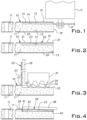
FIG. 1 is a somewhat diagrammatic cross-sectional view of an original non-tapered or square end of a drywall sheet and a circular sawblade and motor for slotting the end; -
FIG. 2 is a view, similar toFIG. 1 , of a sheet end after being slotted; -
FIG. 3 is a view of the drywall sheet end with a flap displaced by folding to allow a deposit of hot melt adhesive from a dispenser into the slotted zone; and -
FIG. 4 is a view with the flap folded to form a tapered edge. -
FIG. 1 illustrates a non-tapered end of adrywall sheet 10. As is conventional, thesheet 10 is manufactured with rectangular faces and having agypsum core 11 sheathed in and bonded to front andrear paper layers rectangular sheet 10 are tapered, as is customary in the industry. The manufactured or factory long edge taper is accomplished by reducing the thickness of the continuum of gypsum in the margins of thecore 11. Typically, the sheet orpanel 10 has major dimensions of 4 foot by 8 foot, 10 foot or 12 foot. In the illustrated example, thesheet 10 is nominally 5/8 inch thick and is of an acoustical construction such as disclosed in aforementioned inU.S. Patents 8,684,134 ,8,770,345 and8,925,677 . Thesheet 10, including the paper cladding 12, 13, is through perforated with circular holes of, for example, a diameter of 0.312 inches (8 mm) with a total open area of between about 12% and 20%. A perimeter of thesheet 10, for example, a zone of 5-1/2 inch wide is non-perforated. A front face or room side of the sheet is preferably covered to or near its four edges with an adhesively attached porous non-woven glass fiber veil or scrim such as used in the ceiling panel industry, and a rear face of thesheet 10 is preferably covered to or near its four edges with an adhesively attached non-woven glass fiber veil or fabric used in the ceiling panel industry. - As is common, the
sheet 10 is originally manufactured with short edges, e.g. those measuring 4 foot, for example, being square or non-tapered. The invention provides a method, and a resulting product, by which the non-tapered edges are converted into tapered edges. - Referring to
FIG. 1 , the original tapers on the long edges at the front face of thesheet 10 are indicated at the upperbroken line 14. A circular sawblade or cutter 16 is driven in rotation by anelectric motor 17. The blade 16 is in a plane parallel to the plane of thesheet 10 and spaced from the sheet front face a distance sufficient to preferably be below thebroken line 14 where the tapers at the long edges of the sheet are at a minimum thickness. - While rotating, the blade 16 and
motor 17 are driven by a mechanism (not shown) in a path parallel to and along the originalnon-tapered sheet edge 18 to form a kerf or deep slot 19 in this edge as shown inFIG. 2 . By way of example, the slot or kerf 19, which in the illustrated example lies parallel to the plane of thesheet 10, is spaced about 0.080 inches from the front face, designated 21, of thesheet 10, has a depth of about 2-3/4 inches and a width of about 0.090 inches ideally corresponding to the width of the teeth of the blade 16. A strong vacuum is preferably applied to the cutting area of the blade 16 to evacuate as much gypsum dust as practical. If desired, theoriginal edge 18 can be machined or faced with a suitable tool such as a rotary sawblade prior to operation of the kerf cutting blade 16. - A
flap 22 comprising athin layer 23 of gypsum material from thecore 11 and coextensive areas of thefront paper 12 andscrim 15 resulting from the kerf 19 is folded up or away from thesheet 10 preferably by an automatically operatedplate 26 that enters the kerf and then rotates the flap about a hinge orfold line 27 associated with thefront paper 12 and scrim 15 near the base or bottom of the kerf 19. Thepaper 12 and scrim 15 work as a "living hinge" during folding motion of theflap 22. Thegypsum flap material 23 is preferably of sufficient thickness, with the reinforcement provided by thepaper 12 and scrim 15 to remain intact and be reliably folded open (FIG. 3 ) and closed (FIG. 4 ). Thegypsum 23 of theflap 22 fractures along aline 28 at the base of the kerf or slot 19 from the main body of thegypsum core 11. Any tendency of theface paper 12 to tear or otherwise fail is resisted by the non-woven veil or scrim 15 adhered to it. - With the
flap 22 maintained away from the original zone of the slot 19 by theplate 26, an automatically operateddispenser 31 travels along thesheet edge 18 to deposit quantities of ahot melt adhesive 32 on aside 33 of the original slot 19. Thedispenser 31, heated to the adhesive working temperature can include multiple orifices ornozzles 34. Thenozzles 34 apply an accurately measured volume of adhesive 32 in continuous bead form onto theslot side 33. - With the
adhesive 32 dispensed on theopen slot side 33, theflap 22 is automatically rotated about the fold or hingeline 27 towards theslot side 33 by a flat platen until the distal end of the flap contacts the outer end of theslot side 33 or is closely adjacent. Theplaten 36 holds theflap 22 in this position until the adhesive sticking to the gypsum forming theslot side 33 andgypsum layer 23, cools and sets thereby fixing theflap 22 in a tapered position. - Preferably the dispensed volume of
adhesive 32 is slightly less than the volume or space bounded by theslot side 33 and flap 22 when the flap is pressed to its tapered position. This ensures that the adhesive will leavesmall void areas - The adhesive bead or beads are of sufficient diameter or cross-section that they are first contacted by the
flap gypsum layer 23 and then laterally displaced by this layer. The adhesive bead or beads is or are continuous along the full length of the slot 19 but for, preferably, a slight shortfall at both ends of the slot. - The slotting, flap controlling, and adhesive dispensing equipment can be duplicated to process both ends of the
sheet 10 simultaneously. - An example of a suitable hot melt adhesive is of the EVA copolymer type having an optimal running temperature of 350 degrees F. and a softening point of 108 degrees C. This
adhesive 32 is characterized by a degree of elasticity at room temperature. - The
adhesive 32 in the collapsed slot forms a continuous film or layer itself and an integrated composite structure with adherence to thegypsum 11 on both sides of the adhesive. The tapered sheet edge made by the inwardly or rearwardly foldedflap 22, the adhesive 32 and residual of thegypsum core 11 rearward of the slot 19 has demonstrated the surprising result of improved fastener penetration resistance. Compared to fastener penetration resistance exhibited by conventional tapered edges on long edges of asheet 10, the adhesive composite edge in bench tests resists penetration of a fastener profile, after peak load, for a distance of about .020 inch compared to the penetration resistance of a conventional tapered edge on a long sheet edge of a distance of about .017 inch. This 18% improved penetration resistance on the inventive tapered adhesive containing sheet edges is particularly beneficial when the edge is attached to a joist or hanger shared with another sheet end. In this circumstance, a screw or nail fastener may be cocked towards the joist or hanger center line particularly when the sheet edge falls short of being precisely on center with the joist or hanger. Still further, the increased hardness, measured at a 50% increase, and the flexibility of the hot melt adhesive improves the durability of the sheet edge in resisting impacts during handling, shipping and installation of a sheet. - It should be evident that this disclosure is by way of example and that various changes may be made within the scope of the appended claims. The invention is therefore not limited to particular details of this disclosure except to the extent that the following claims are necessarily so limited.
Claims (6)
- A drywall sheet with a gypsum core (11) sheathed in front and rear paper layers (12, 13), an edge of the sheet being tapered from a front towards a rear of the sheet, the taper being formed by a flap (22) of a marginal area of the front paper and a thin layer of gypsum attached to an inner side of the front paper margin being folded into a space resulting from a slot (19) cut in the sheet edge to a depth generally equal to the width of the flap (22), the flap (22) being held in place by a continuous layer of a hot melt adhesive (32) occupying at least a major portion of the space of the slot (19) not occupied by the flap (22) and having an elasticity that imparts fastener penetration resistance to the associated edge from a front face of the sheet of a distance greater than a penetration resistance of conventionally tapered edge of the sheet formed by gradual reduction in the thickness of continuous gypsum core (11) material towards the respective sheet edge terminus.
- A drywall sheet as set forth in claim 1, wherein the sheet is through perforated with a multitude of holes and is clad with a non-woven fiberglass scrim on the front paper (12) and a non-woven fabric (15) on the rear paper.
- A drywall sheet as set forth in claim 1, wherein the adhesive (32) volume is less than the volume of the slot (19) not occupied by the flap (22) whereby excessive hydraulic force in the adhesive (32) during final positioning of the flap (22) is avoided.
- A drywall sheet as set forth in claim 1, wherein the gypsum of the flap (22) has a fracture line at a base of the slot (19) resulting from the flap (22) being folded away from the original slot (19) space.
- A method of tapering a square end of a drywall sheet having a paper sheathed gypsum core (11) comprising cutting a deep slot (19) in an edge terminus parallel to and spaced from a front face of the sheet so that gypsum core (11) material and a front paper facer form a flap (22) at a front side of the slot (19), folding the flap (22) so that it hinges with the front paper facer about a line adjacent a base of the slot (19) and the gypsum of the flap (22) is fractured from the gypsum core (11) adjacent the hinge line, with the flap (22) folded from an original position adjacent the slot (19) while it remains attached to the sheet by the front paper layer at the hinge line applying molten hot melt adhesive (32) along a remaining side of the slot (19) and folding the flap (22) into the space of the original slot (19) and into contact with the adhesive (32) in a manner that ensures the adhesive (32) forms a continuous layer occupying the majority of space between the flap (22) and the core (11) and holding the flap (22) in a final position until the hot melt adhesive (32) is set by cooling.
- A method as set forth in claim 5, wherein the adhesive (32) is deposited as a molten bead having a cross-section that interferes with closing flap (22) movement so as to ensure that the adhesive (32) is contacted by the flap (22) and forced laterally of the bead over both the slot side and flap (22).
Applications Claiming Priority (2)
| Application Number | Priority Date | Filing Date | Title |
|---|---|---|---|
| US16/566,909 US10837172B1 (en) | 2019-09-11 | 2019-09-11 | Tapered kerf construction |
| PCT/US2020/047416 WO2021050246A1 (en) | 2019-09-11 | 2020-08-21 | Tapered kerf construction |
Publications (2)
| Publication Number | Publication Date |
|---|---|
| EP4028602A1 EP4028602A1 (en) | 2022-07-20 |
| EP4028602B1 true EP4028602B1 (en) | 2023-10-04 |
Family
ID=72381135
Family Applications (1)
| Application Number | Title | Priority Date | Filing Date |
|---|---|---|---|
| EP20767901.0A Active EP4028602B1 (en) | 2019-09-11 | 2020-08-21 | Drywall sheet with tapered kerf construction and method of tapering it |
Country Status (10)
| Country | Link |
|---|---|
| US (1) | US10837172B1 (en) |
| EP (1) | EP4028602B1 (en) |
| JP (1) | JP7408776B2 (en) |
| KR (1) | KR102662685B1 (en) |
| CN (1) | CN114423915A (en) |
| AU (1) | AU2020345562B2 (en) |
| CA (1) | CA3148681C (en) |
| MX (1) | MX2022002276A (en) |
| PL (1) | PL4028602T3 (en) |
| WO (1) | WO2021050246A1 (en) |
Families Citing this family (2)
| Publication number | Priority date | Publication date | Assignee | Title |
|---|---|---|---|---|
| EP4320318A4 (en) * | 2021-04-08 | 2025-02-19 | Jerry Moscovitch | System and method for producing a drywall board with tapered sides |
| USD1112840S1 (en) | 2023-08-17 | 2026-02-10 | Jerry Moscovitch | Drywall board with tapered edges |
Family Cites Families (13)
| Publication number | Priority date | Publication date | Assignee | Title |
|---|---|---|---|---|
| JPS54161367U (en) * | 1978-04-28 | 1979-11-12 | ||
| BE867143A (en) * | 1978-05-17 | 1978-11-17 | Gyproc Benelux Nv | PLASTERBOARD SHEET WITH ONE OR TWO BEVELED SIDES AND PROCEDURES FOR ACHIEVING SUCH PLATE |
| US4584224A (en) | 1985-03-18 | 1986-04-22 | National Gypsum Company | Tapered edge board |
| JPH08199767A (en) * | 1995-01-31 | 1996-08-06 | Ig Tech Res Inc | Composite panel |
| DE102005050312A1 (en) * | 2004-12-23 | 2006-07-20 | Knauf Gips Kg | plasterboard |
| US9388568B2 (en) * | 2007-04-06 | 2016-07-12 | Pacific Coast Building Products, Inc. | Acoustical sound proofing material with improved fracture characteristics and methods for manufacturing same |
| US9187907B2 (en) * | 2007-06-06 | 2015-11-17 | Steven Schraga | Drywall joint system and method |
| US8684134B2 (en) | 2012-06-27 | 2014-04-01 | Usg Interiors, Llc | Gypsum-panel acoustical monolithic ceiling |
| US8770345B2 (en) | 2012-06-27 | 2014-07-08 | Usg Interiors, Llc | Gypsum-panel acoustical monolithic ceiling |
| US8925677B2 (en) | 2012-06-27 | 2015-01-06 | Usg Interiors, Llc | Gypsum-panel acoustical monolithic ceiling |
| KR101428734B1 (en) * | 2013-09-02 | 2014-09-24 | 노경임 | manufacturing method of arch-type pannel using the ready-made pannel |
| CN206279688U (en) * | 2016-12-23 | 2017-06-27 | 重庆市万盛区万兴建筑材料有限公司 | A kind of shockproof sound-insulating composite wallboard structure |
| CN207934230U (en) * | 2018-02-05 | 2018-10-02 | 刘少伟 | A kind of new type colorful is without Thistle board |
-
2019
- 2019-09-11 US US16/566,909 patent/US10837172B1/en active Active
-
2020
- 2020-08-21 AU AU2020345562A patent/AU2020345562B2/en active Active
- 2020-08-21 KR KR1020227011394A patent/KR102662685B1/en active Active
- 2020-08-21 MX MX2022002276A patent/MX2022002276A/en unknown
- 2020-08-21 CN CN202080065873.4A patent/CN114423915A/en active Pending
- 2020-08-21 WO PCT/US2020/047416 patent/WO2021050246A1/en not_active Ceased
- 2020-08-21 PL PL20767901.0T patent/PL4028602T3/en unknown
- 2020-08-21 JP JP2022509627A patent/JP7408776B2/en active Active
- 2020-08-21 CA CA3148681A patent/CA3148681C/en active Active
- 2020-08-21 EP EP20767901.0A patent/EP4028602B1/en active Active
Also Published As
| Publication number | Publication date |
|---|---|
| JP7408776B2 (en) | 2024-01-05 |
| AU2020345562B2 (en) | 2024-08-01 |
| JP2022547260A (en) | 2022-11-11 |
| US10837172B1 (en) | 2020-11-17 |
| CA3148681A1 (en) | 2021-03-18 |
| CN114423915A (en) | 2022-04-29 |
| PL4028602T3 (en) | 2024-01-03 |
| EP4028602A1 (en) | 2022-07-20 |
| MX2022002276A (en) | 2022-03-22 |
| KR102662685B1 (en) | 2024-04-30 |
| AU2020345562A1 (en) | 2022-03-31 |
| KR20220062560A (en) | 2022-05-17 |
| WO2021050246A1 (en) | 2021-03-18 |
| CA3148681C (en) | 2022-06-14 |
Similar Documents
| Publication | Publication Date | Title |
|---|---|---|
| JP5452917B2 (en) | Laminated roofing single, bundle of laminated roofing single, and method of making laminated roofing single | |
| AU2020345562B2 (en) | Tapered kerf construction | |
| US5687523A (en) | Drywall tape | |
| US10883280B2 (en) | Skirting board and an improved method for manufacturing a skirting board or finishing profiled section | |
| WO1996006730A1 (en) | Drywall tape | |
| MXPA03008000A (en) | Continuous method of making four-tapered edge gypsum board and the gypsum board made therefrom. | |
| AU766484B2 (en) | Trim with tearaway masking strip | |
| JPH0953319A (en) | Woody floor member | |
| US20170138058A1 (en) | Drywall tape, method of making and method of using the same | |
| US3750728A (en) | Installation of wood millwork with pre-applied adhesive | |
| JPH10102743A (en) | Decorative laminated sheet with groove | |
| AU2020434890A1 (en) | Attachment configuration of and method for applying decorative laminates | |
| EP3927908B1 (en) | Joint tape for attachment to a ceiling or a wall | |
| JP3966811B2 (en) | Overlay cutting tape | |
| EP1802825A1 (en) | Method for constructing a ceiling or wall from panels | |
| JP3482430B2 (en) | Construction method of butted part of boards and reinforcement tape | |
| JPH06336812A (en) | Tile sheet | |
| JP2007002580A (en) | Reinforcing structure for perforated plate seams | |
| JP2001301084A (en) | Inorganic decorative board | |
| JP6443022B2 (en) | Decorative plate, decorative plate manufacturing method, and decorative tape sticking auxiliary device | |
| DE102004062077A1 (en) | Ceiling construction method e.g. for ceiling or wall from panels, involves fastening panels to supporting structure by screwing, nailing, stapling or gluing or are directly glued to base by spot gluing or face gluing | |
| JP2002213061A (en) | Wall surface construction method using panel with decroative sheet, and panel with decorative sheet used for this method | |
| JP2017057555A (en) | Panel and door with decorative joint | |
| JPH09250227A (en) | Jotta with cushioning material and joist floor construction method using it | |
| HK40028182A (en) | Tapered plasterboards and methods for making them |
Legal Events
| Date | Code | Title | Description |
|---|---|---|---|
| STAA | Information on the status of an ep patent application or granted ep patent |
Free format text: STATUS: UNKNOWN |
|
| STAA | Information on the status of an ep patent application or granted ep patent |
Free format text: STATUS: THE INTERNATIONAL PUBLICATION HAS BEEN MADE |
|
| PUAI | Public reference made under article 153(3) epc to a published international application that has entered the european phase |
Free format text: ORIGINAL CODE: 0009012 |
|
| STAA | Information on the status of an ep patent application or granted ep patent |
Free format text: STATUS: REQUEST FOR EXAMINATION WAS MADE |
|
| 17P | Request for examination filed |
Effective date: 20220322 |
|
| AK | Designated contracting states |
Kind code of ref document: A1 Designated state(s): AL AT BE BG CH CY CZ DE DK EE ES FI FR GB GR HR HU IE IS IT LI LT LU LV MC MK MT NL NO PL PT RO RS SE SI SK SM TR |
|
| DAV | Request for validation of the european patent (deleted) | ||
| DAX | Request for extension of the european patent (deleted) | ||
| GRAP | Despatch of communication of intention to grant a patent |
Free format text: ORIGINAL CODE: EPIDOSNIGR1 |
|
| STAA | Information on the status of an ep patent application or granted ep patent |
Free format text: STATUS: GRANT OF PATENT IS INTENDED |
|
| INTG | Intention to grant announced |
Effective date: 20230217 |
|
| P01 | Opt-out of the competence of the unified patent court (upc) registered |
Effective date: 20230602 |
|
| GRAS | Grant fee paid |
Free format text: ORIGINAL CODE: EPIDOSNIGR3 |
|
| GRAA | (expected) grant |
Free format text: ORIGINAL CODE: 0009210 |
|
| STAA | Information on the status of an ep patent application or granted ep patent |
Free format text: STATUS: THE PATENT HAS BEEN GRANTED |
|
| AK | Designated contracting states |
Kind code of ref document: B1 Designated state(s): AL AT BE BG CH CY CZ DE DK EE ES FI FR GB GR HR HU IE IS IT LI LT LU LV MC MK MT NL NO PL PT RO RS SE SI SK SM TR |
|
| REG | Reference to a national code |
Ref country code: GB Ref legal event code: FG4D |
|
| REG | Reference to a national code |
Ref country code: CH Ref legal event code: EP |
|
| REG | Reference to a national code |
Ref country code: DE Ref legal event code: R096 Ref document number: 602020018719 Country of ref document: DE |
|
| REG | Reference to a national code |
Ref country code: IE Ref legal event code: FG4D |
|
| REG | Reference to a national code |
Ref country code: LT Ref legal event code: MG9D |
|
| REG | Reference to a national code |
Ref country code: NL Ref legal event code: MP Effective date: 20231004 |
|
| REG | Reference to a national code |
Ref country code: AT Ref legal event code: MK05 Ref document number: 1617918 Country of ref document: AT Kind code of ref document: T Effective date: 20231004 |
|
| PG25 | Lapsed in a contracting state [announced via postgrant information from national office to epo] |
Ref country code: NL Free format text: LAPSE BECAUSE OF FAILURE TO SUBMIT A TRANSLATION OF THE DESCRIPTION OR TO PAY THE FEE WITHIN THE PRESCRIBED TIME-LIMIT Effective date: 20231004 |
|
| PG25 | Lapsed in a contracting state [announced via postgrant information from national office to epo] |
Ref country code: GR Free format text: LAPSE BECAUSE OF FAILURE TO SUBMIT A TRANSLATION OF THE DESCRIPTION OR TO PAY THE FEE WITHIN THE PRESCRIBED TIME-LIMIT Effective date: 20240105 |
|
| PG25 | Lapsed in a contracting state [announced via postgrant information from national office to epo] |
Ref country code: IS Free format text: LAPSE BECAUSE OF FAILURE TO SUBMIT A TRANSLATION OF THE DESCRIPTION OR TO PAY THE FEE WITHIN THE PRESCRIBED TIME-LIMIT Effective date: 20240204 |
|
| PG25 | Lapsed in a contracting state [announced via postgrant information from national office to epo] |
Ref country code: LT Free format text: LAPSE BECAUSE OF FAILURE TO SUBMIT A TRANSLATION OF THE DESCRIPTION OR TO PAY THE FEE WITHIN THE PRESCRIBED TIME-LIMIT Effective date: 20231004 |
|
| PG25 | Lapsed in a contracting state [announced via postgrant information from national office to epo] |
Ref country code: AT Free format text: LAPSE BECAUSE OF FAILURE TO SUBMIT A TRANSLATION OF THE DESCRIPTION OR TO PAY THE FEE WITHIN THE PRESCRIBED TIME-LIMIT Effective date: 20231004 |
|
| PG25 | Lapsed in a contracting state [announced via postgrant information from national office to epo] |
Ref country code: ES Free format text: LAPSE BECAUSE OF FAILURE TO SUBMIT A TRANSLATION OF THE DESCRIPTION OR TO PAY THE FEE WITHIN THE PRESCRIBED TIME-LIMIT Effective date: 20231004 |
|
| PG25 | Lapsed in a contracting state [announced via postgrant information from national office to epo] |
Ref country code: LT Free format text: LAPSE BECAUSE OF FAILURE TO SUBMIT A TRANSLATION OF THE DESCRIPTION OR TO PAY THE FEE WITHIN THE PRESCRIBED TIME-LIMIT Effective date: 20231004 Ref country code: IS Free format text: LAPSE BECAUSE OF FAILURE TO SUBMIT A TRANSLATION OF THE DESCRIPTION OR TO PAY THE FEE WITHIN THE PRESCRIBED TIME-LIMIT Effective date: 20240204 Ref country code: GR Free format text: LAPSE BECAUSE OF FAILURE TO SUBMIT A TRANSLATION OF THE DESCRIPTION OR TO PAY THE FEE WITHIN THE PRESCRIBED TIME-LIMIT Effective date: 20240105 Ref country code: ES Free format text: LAPSE BECAUSE OF FAILURE TO SUBMIT A TRANSLATION OF THE DESCRIPTION OR TO PAY THE FEE WITHIN THE PRESCRIBED TIME-LIMIT Effective date: 20231004 Ref country code: BG Free format text: LAPSE BECAUSE OF FAILURE TO SUBMIT A TRANSLATION OF THE DESCRIPTION OR TO PAY THE FEE WITHIN THE PRESCRIBED TIME-LIMIT Effective date: 20240104 Ref country code: AT Free format text: LAPSE BECAUSE OF FAILURE TO SUBMIT A TRANSLATION OF THE DESCRIPTION OR TO PAY THE FEE WITHIN THE PRESCRIBED TIME-LIMIT Effective date: 20231004 Ref country code: PT Free format text: LAPSE BECAUSE OF FAILURE TO SUBMIT A TRANSLATION OF THE DESCRIPTION OR TO PAY THE FEE WITHIN THE PRESCRIBED TIME-LIMIT Effective date: 20240205 |
|
| PG25 | Lapsed in a contracting state [announced via postgrant information from national office to epo] |
Ref country code: SE Free format text: LAPSE BECAUSE OF FAILURE TO SUBMIT A TRANSLATION OF THE DESCRIPTION OR TO PAY THE FEE WITHIN THE PRESCRIBED TIME-LIMIT Effective date: 20231004 Ref country code: RS Free format text: LAPSE BECAUSE OF FAILURE TO SUBMIT A TRANSLATION OF THE DESCRIPTION OR TO PAY THE FEE WITHIN THE PRESCRIBED TIME-LIMIT Effective date: 20231004 Ref country code: NO Free format text: LAPSE BECAUSE OF FAILURE TO SUBMIT A TRANSLATION OF THE DESCRIPTION OR TO PAY THE FEE WITHIN THE PRESCRIBED TIME-LIMIT Effective date: 20240104 Ref country code: LV Free format text: LAPSE BECAUSE OF FAILURE TO SUBMIT A TRANSLATION OF THE DESCRIPTION OR TO PAY THE FEE WITHIN THE PRESCRIBED TIME-LIMIT Effective date: 20231004 Ref country code: HR Free format text: LAPSE BECAUSE OF FAILURE TO SUBMIT A TRANSLATION OF THE DESCRIPTION OR TO PAY THE FEE WITHIN THE PRESCRIBED TIME-LIMIT Effective date: 20231004 |
|
| REG | Reference to a national code |
Ref country code: DE Ref legal event code: R097 Ref document number: 602020018719 Country of ref document: DE |
|
| PG25 | Lapsed in a contracting state [announced via postgrant information from national office to epo] |
Ref country code: DK Free format text: LAPSE BECAUSE OF FAILURE TO SUBMIT A TRANSLATION OF THE DESCRIPTION OR TO PAY THE FEE WITHIN THE PRESCRIBED TIME-LIMIT Effective date: 20231004 |
|
| PG25 | Lapsed in a contracting state [announced via postgrant information from national office to epo] |
Ref country code: CZ Free format text: LAPSE BECAUSE OF FAILURE TO SUBMIT A TRANSLATION OF THE DESCRIPTION OR TO PAY THE FEE WITHIN THE PRESCRIBED TIME-LIMIT Effective date: 20231004 |
|
| PG25 | Lapsed in a contracting state [announced via postgrant information from national office to epo] |
Ref country code: SK Free format text: LAPSE BECAUSE OF FAILURE TO SUBMIT A TRANSLATION OF THE DESCRIPTION OR TO PAY THE FEE WITHIN THE PRESCRIBED TIME-LIMIT Effective date: 20231004 |
|
| PG25 | Lapsed in a contracting state [announced via postgrant information from national office to epo] |
Ref country code: SM Free format text: LAPSE BECAUSE OF FAILURE TO SUBMIT A TRANSLATION OF THE DESCRIPTION OR TO PAY THE FEE WITHIN THE PRESCRIBED TIME-LIMIT Effective date: 20231004 Ref country code: SK Free format text: LAPSE BECAUSE OF FAILURE TO SUBMIT A TRANSLATION OF THE DESCRIPTION OR TO PAY THE FEE WITHIN THE PRESCRIBED TIME-LIMIT Effective date: 20231004 Ref country code: RO Free format text: LAPSE BECAUSE OF FAILURE TO SUBMIT A TRANSLATION OF THE DESCRIPTION OR TO PAY THE FEE WITHIN THE PRESCRIBED TIME-LIMIT Effective date: 20231004 Ref country code: IT Free format text: LAPSE BECAUSE OF FAILURE TO SUBMIT A TRANSLATION OF THE DESCRIPTION OR TO PAY THE FEE WITHIN THE PRESCRIBED TIME-LIMIT Effective date: 20231004 Ref country code: EE Free format text: LAPSE BECAUSE OF FAILURE TO SUBMIT A TRANSLATION OF THE DESCRIPTION OR TO PAY THE FEE WITHIN THE PRESCRIBED TIME-LIMIT Effective date: 20231004 Ref country code: DK Free format text: LAPSE BECAUSE OF FAILURE TO SUBMIT A TRANSLATION OF THE DESCRIPTION OR TO PAY THE FEE WITHIN THE PRESCRIBED TIME-LIMIT Effective date: 20231004 Ref country code: CZ Free format text: LAPSE BECAUSE OF FAILURE TO SUBMIT A TRANSLATION OF THE DESCRIPTION OR TO PAY THE FEE WITHIN THE PRESCRIBED TIME-LIMIT Effective date: 20231004 |
|
| PLBE | No opposition filed within time limit |
Free format text: ORIGINAL CODE: 0009261 |
|
| STAA | Information on the status of an ep patent application or granted ep patent |
Free format text: STATUS: NO OPPOSITION FILED WITHIN TIME LIMIT |
|
| 26N | No opposition filed |
Effective date: 20240705 |
|
| PG25 | Lapsed in a contracting state [announced via postgrant information from national office to epo] |
Ref country code: SI Free format text: LAPSE BECAUSE OF FAILURE TO SUBMIT A TRANSLATION OF THE DESCRIPTION OR TO PAY THE FEE WITHIN THE PRESCRIBED TIME-LIMIT Effective date: 20231004 |
|
| PG25 | Lapsed in a contracting state [announced via postgrant information from national office to epo] |
Ref country code: SI Free format text: LAPSE BECAUSE OF FAILURE TO SUBMIT A TRANSLATION OF THE DESCRIPTION OR TO PAY THE FEE WITHIN THE PRESCRIBED TIME-LIMIT Effective date: 20231004 |
|
| REG | Reference to a national code |
Ref country code: CH Ref legal event code: PL |
|
| PG25 | Lapsed in a contracting state [announced via postgrant information from national office to epo] |
Ref country code: LU Free format text: LAPSE BECAUSE OF NON-PAYMENT OF DUE FEES Effective date: 20240821 |
|
| GBPC | Gb: european patent ceased through non-payment of renewal fee |
Effective date: 20240821 |
|
| PG25 | Lapsed in a contracting state [announced via postgrant information from national office to epo] |
Ref country code: MC Free format text: LAPSE BECAUSE OF FAILURE TO SUBMIT A TRANSLATION OF THE DESCRIPTION OR TO PAY THE FEE WITHIN THE PRESCRIBED TIME-LIMIT Effective date: 20231004 Ref country code: CH Free format text: LAPSE BECAUSE OF NON-PAYMENT OF DUE FEES Effective date: 20240831 |
|
| REG | Reference to a national code |
Ref country code: BE Ref legal event code: MM Effective date: 20240831 |
|
| PG25 | Lapsed in a contracting state [announced via postgrant information from national office to epo] |
Ref country code: GB Free format text: LAPSE BECAUSE OF NON-PAYMENT OF DUE FEES Effective date: 20240821 |
|
| PG25 | Lapsed in a contracting state [announced via postgrant information from national office to epo] |
Ref country code: BE Free format text: LAPSE BECAUSE OF NON-PAYMENT OF DUE FEES Effective date: 20240831 |
|
| PG25 | Lapsed in a contracting state [announced via postgrant information from national office to epo] |
Ref country code: FR Free format text: LAPSE BECAUSE OF NON-PAYMENT OF DUE FEES Effective date: 20240831 |
|
| PG25 | Lapsed in a contracting state [announced via postgrant information from national office to epo] |
Ref country code: IE Free format text: LAPSE BECAUSE OF NON-PAYMENT OF DUE FEES Effective date: 20240821 |
|
| PG25 | Lapsed in a contracting state [announced via postgrant information from national office to epo] |
Ref country code: FI Free format text: LAPSE BECAUSE OF FAILURE TO SUBMIT A TRANSLATION OF THE DESCRIPTION OR TO PAY THE FEE WITHIN THE PRESCRIBED TIME-LIMIT Effective date: 20231004 |
|
| PGFP | Annual fee paid to national office [announced via postgrant information from national office to epo] |
Ref country code: DE Payment date: 20250827 Year of fee payment: 6 |
|
| PGFP | Annual fee paid to national office [announced via postgrant information from national office to epo] |
Ref country code: PL Payment date: 20250801 Year of fee payment: 6 |
|
| PG25 | Lapsed in a contracting state [announced via postgrant information from national office to epo] |
Ref country code: CY Free format text: LAPSE BECAUSE OF FAILURE TO SUBMIT A TRANSLATION OF THE DESCRIPTION OR TO PAY THE FEE WITHIN THE PRESCRIBED TIME-LIMIT; INVALID AB INITIO Effective date: 20200821 |
|
| PG25 | Lapsed in a contracting state [announced via postgrant information from national office to epo] |
Ref country code: HU Free format text: LAPSE BECAUSE OF FAILURE TO SUBMIT A TRANSLATION OF THE DESCRIPTION OR TO PAY THE FEE WITHIN THE PRESCRIBED TIME-LIMIT; INVALID AB INITIO Effective date: 20200821 |