EP4027752B1 - 5g-basisstation mit eingesetzter upf und datennachrichtenverarbeitungsverfahren dafür - Google Patents
5g-basisstation mit eingesetzter upf und datennachrichtenverarbeitungsverfahren dafür Download PDFInfo
- Publication number
- EP4027752B1 EP4027752B1 EP19953768.9A EP19953768A EP4027752B1 EP 4027752 B1 EP4027752 B1 EP 4027752B1 EP 19953768 A EP19953768 A EP 19953768A EP 4027752 B1 EP4027752 B1 EP 4027752B1
- Authority
- EP
- European Patent Office
- Prior art keywords
- data message
- processing
- upf
- interface
- module
- Prior art date
- Legal status (The legal status is an assumption and is not a legal conclusion. Google has not performed a legal analysis and makes no representation as to the accuracy of the status listed.)
- Active
Links
Images


Classifications
-
- H—ELECTRICITY
- H04—ELECTRIC COMMUNICATION TECHNIQUE
- H04W—WIRELESS COMMUNICATION NETWORKS
- H04W88/00—Devices specially adapted for wireless communication networks, e.g. terminals, base stations or access point devices
- H04W88/08—Access point devices
-
- H—ELECTRICITY
- H04—ELECTRIC COMMUNICATION TECHNIQUE
- H04W—WIRELESS COMMUNICATION NETWORKS
- H04W80/00—Wireless network protocols or protocol adaptations to wireless operation
-
- H—ELECTRICITY
- H04—ELECTRIC COMMUNICATION TECHNIQUE
- H04W—WIRELESS COMMUNICATION NETWORKS
- H04W88/00—Devices specially adapted for wireless communication networks, e.g. terminals, base stations or access point devices
- H04W88/14—Backbone network devices
-
- H—ELECTRICITY
- H04—ELECTRIC COMMUNICATION TECHNIQUE
- H04W—WIRELESS COMMUNICATION NETWORKS
- H04W92/00—Interfaces specially adapted for wireless communication networks
- H04W92/04—Interfaces between hierarchically different network devices
- H04W92/10—Interfaces between hierarchically different network devices between terminal device and access point, i.e. wireless air interface
-
- H—ELECTRICITY
- H04—ELECTRIC COMMUNICATION TECHNIQUE
- H04W—WIRELESS COMMUNICATION NETWORKS
- H04W92/00—Interfaces specially adapted for wireless communication networks
- H04W92/04—Interfaces between hierarchically different network devices
- H04W92/12—Interfaces between hierarchically different network devices between access points and access point controllers
-
- H—ELECTRICITY
- H04—ELECTRIC COMMUNICATION TECHNIQUE
- H04W—WIRELESS COMMUNICATION NETWORKS
- H04W92/00—Interfaces specially adapted for wireless communication networks
- H04W92/04—Interfaces between hierarchically different network devices
- H04W92/045—Interfaces between hierarchically different network devices between access point and backbone network device
Definitions
- the present invention relates to the technical field of mobile communication and, in particular, to a data message processing method for a 5th generation mobile communication (5G) base station deployed with a User Plane Function (UPF), and the 5G base station deployed with the UPF.
- 5G 5th generation mobile communication
- UPF User Plane Function
- a next-generation NodeB (gNB) in a 5G network and a UPF of a 5G core (5GC) are carried by different hardware platforms and evolved using different techniques.
- the gNB is evolved in an x86+FPGA mode.
- An x86+FPGA platform is a general-purpose hardware platform which uses a general-purpose x86 processor as a central processing unit (CPU) and uses a field-programmable gate array (FPGA) as a core device to implement extension and interface functions.
- the 5GC is evolved in a network function virtualization (NFV)/software-defined network (SDN) mode.
- NFV network function virtualization
- SDN software-defined network
- the 5G technologies are mainly applied to a vertical industry and a private network industry.
- An application of wireless communication to the vertical industry is greatly accelerated through a combination of mobile edge computing (MEC) with a data center of a local user.
- MEC mobile edge computing
- a data message processing method is added to a base station, where when identifying a message to be processed, the base station directly unloads the message, strips an outer tunnel message off, and directly forwards user data to a public network.
- an MEC server is deployed near 5G small cells in a ultra-dense network so that an edge server is provided.
- NOKIA ET AL "Architecture and Protocols: Connectivity Service Solution for IAB", 3GPP DRAFT; R3-180994, XP051401628 discloses an IAB node (e.g., a gNB, eNB) with co-located gNB, UE and UPF.
- IAB node e.g., a gNB, eNB
- the present invention provides a 5G base station deployed with a UPF and a data message processing method therefor.
- a UPF of a 5GC is sunk and deployed on the gNB so that a network is more flattened and decentralized, a 5G base station and a 5G core network are deployed and installed more easily, which brings great convenience and safety to the operation and maintenance of the 5GC.
- the present invention provides a 5G base station deployed with a UPF, which includes a hardware platform, the UPF, a logic unit, and a function unit.
- the hardware platform is an x86/FPGA platform and configured to externally perform data interaction with a user terminal through an air interface and with the Internet through a network port and internally be connected to the logic unit and the UPF.
- the UPF is deployed on the 5G base station and configured to perform data interaction with the hardware platform and the logic unit separately.
- the logic unit is configured to perform radio resource management, implement an algorithm for the radio resource management, control radio resources, and process Packet Data Convergence Protocol (PDCP) user data.
- PDCP Packet Data Convergence Protocol
- the function unit is configured to perform, on a data message, processing including, but not limited to, classification, edge computing, application service platform processing, and charging call detail record (CDR) interface processing.
- processing including, but not limited to, classification, edge computing, application service platform processing, and charging call detail record (CDR) interface processing.
- CDR charging call detail record
- the logic unit includes a PDCP module configured to process a received data message according to a PDCP protocol.
- the logic unit further includes a base station GTP-U codec configured to perform GTP-U tunnel encoding or decapsulation on the data message.
- the UPF includes a core network GTP codec configured to perform encapsulation or decoding on the data message.
- the function unit includes a classification module, a classification rule generator, an MEC module, and a charging CDR statistics module.
- the classification rule generator is configured to edit and generate a classification rule of the data message.
- the classification module is configured to receive the data message from the PDCP module or the UPF and classifies the data message according to the classification rule generated by the classification rule generator.
- the MEC module is configured to perform the edge computing on the data message.
- the charging CDR statistics module is configured to perform the charging CDR interface processing on the data message.
- the present invention provides a data message processing method for a 5G base station deployed with a UPF.
- the method includes steps for processing an uplink data message and steps for processing a downlink data message.
- a Layer 2 (L2) physical layer of a hardware platform receives a data message from a user terminal through a wireless air interface, processes the data message, and sends the processed data message to a PDCP module.
- L2 Layer 2
- the PDCP module receives the data message, processes the data message according to a PDCP protocol, and sends the processed data message to a base station GTP codec.
- step S103 the base station GTP codec receives the data message, performs GTP-U tunnel encoding on the received data message, sends the processed data message to an N3 interface module of the base station which performs network interface protocol processing and sends the processed data message to a core network GTP codec through an N3 network interface unit of a 5GC.
- step S104 the N3 network interface unit of the 5GC receives a GTP-U data message from the 5G base station and the core network GTP codec decodes the received data message to obtain a data message of an inner (IP) and sends the data message of the inner IP to the UPF.
- IP an inner
- step S105 the UPF performs quality of service (QoS) processing, normal charging processing, and Packet Forwarding Control Protocol (PFCP) node management processing on the data message and reports management information and new status information generated based on the data message to a Session Management Function (SMF) of the 5GC through an N4 interface; and an interface module of the UPF sends the data message to the hardware platform through an N6 interface.
- QoS quality of service
- PFCP Packet Forwarding Control Protocol
- step S106 the hardware platform performs network layer processing according to a requirement of the N6 interface and sends the data message to a network side through an Ethernet network interface.
- step S201 the hardware platform receives a data message from the network side, sends the data message to an N6 network interface unit of the 5GC for network protocol processing, and sends the data message to the UPF of the 5GC.
- step S202 the UPF receives the data message, performs the QoS processing, the normal charging processing, and the PFCP node management processing on the data message, reports management information and new status information generated based on the data message to the SMF of the 5GC through the N4 interface so that the SMF of the 5GC sends the data message to the core network GTP codec of the 5GC.
- step S203 the core network GTP codec receives the data message, performs GTP-U encapsulation on the received data message and sends the data message to the interface module of the UPF, and the interface module sends the data message to the base station GTP codec through an N3 interface.
- step S204 the base station GTP codec receives the data message through the N3 interface, performs GTP-U decapsulation on the received data message to obtain an independent IP data message, and sends the independent IP data message to the PDCP module.
- step S205 the PDCP module receives the IP data message, processes the IP data message according to the PDCP protocol, and sends the processed IP data message to the L2 physical layer of the hardware platform.
- step S206 the L2 physical layer of the hardware platform processes the data message and sends the data message to the user terminal through an air interface.
- the present invention provides a data message processing method for a 5G base station deployed with a UPF.
- the method includes steps for processing an uplink data message and steps for processing a downlink data message.
- an L2 physical layer of a hardware platform receives a data message from a user terminal through a wireless air interface, processes the data message, and sends the processed data message to a PDCP module.
- step S 102' the PDCP module receives the data message, processes the data message according to a PDCP protocol, and sends the processed data message to the UPF.
- step S103' the UPF receives the data message, performs QoS processing, normal charging processing, and PFCP node management processing on the received data message, and reports management information and new status information generated based on the data message to an SMF of a 5GC through an N4 interface; and an interface module of the UPF sends the data message to the hardware platform through an N6 interface.
- step S 104' the hardware platform performs network layer processing according to a requirement of the N6 interface and sends the data message to a network side through an Ethernet network interface.
- step S201' the hardware platform receives a data message from the network side and sends the data message to the UPF.
- step S202' the UPF receives the data message, performs the QoS processing, the normal charging processing, and the PFCP node management processing on the data message, reports management information and new status information generated based on the data message to the SMF of the 5GC through the N4 interface so that the SMF of the 5GC sends the data message to the PDCP module.
- step S203' the PDCP module receives the data message through an N3 interface, processes the data message according to the PDCP protocol, and sends the processed data message to the L2 physical layer of the hardware platform.
- step S204' the L2 physical layer of the hardware platform processes the data message and sends the data message to the user terminal through an air interface.
- the preceding data message processing method for a 5G base station deployed with a UPF further includes a classification step and a computing and charging step.
- the classification step includes that a classification module receives an uplink data message from the PDCP module or a downlink data message from the UPF, classifies the received data message according to a classification rule generated based on a classification rule generator, and returns the data message to the corresponding PDCP module or UPF.
- the computing and charging step includes that a computing and charging module receives a data message from at least one of the PDCP module, the UPF, and the classification module, performs MEC or charging CDR interface processing on the data message, and returns the data message to the corresponding PDCP module, UPF or classification module.
- classification rule generator sends the classification rule to the classification module after editing and generating the classification rule.
- the UPF is deployed on the 5G base station for the purposes below.
- the 5G base station deployed with the UPF of the present invention also has a user plane data unloading function and an MEC user plane unloading function mentioned in the existing art.
- a serving GPRS support node (SGSN) and a gateway GPRS support node (GGSN) are dedicated network devices, and a 3G base station is customized with dedicated hardware.
- SGSN serving GPRS support node
- GGSN gateway GPRS support node
- Each vendor has its own hardware system.
- the 3G base station and a 3G core network are separately purchased, and there is no solution for the 3G base station and the data plane SGSN/GGSN integration of the 3G core network.
- a network flattening/IP-based design and a paravirtualization design of a 4G core network are used.
- a 4G base station is involved in part of functions of unloading a GTP-U data plane, which are similar to the solution described in a Chinese patent application with Publication No. CN105634980A .
- a UPF of a 5GC is deployed as a whole on a hardware platform of the gNB, so as to implement all functions in CN105634980A with many advantages and characteristics that CN105634980A does not have.
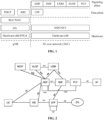
- a 5GC mainly includes network elements shown in FIG. 2 : a network slicing/selection function (NSSF), an authentication server function (AUSF), unified data management (UDM), an access and mobility management function (AMF), a Session Management Function (SMF), a User Plane Function (UPF), a Policy Control Function (PCF), the gNB, and a 5G user equipment (UE).
- NSSF network slicing/selection function
- AUSF authentication server function
- UDM access and mobility management function
- AMF access and mobility management function
- SMF Session Management Function
- UPF User Plane Function
- PCF Policy Control Function
- gNB 5G user equipment
- This embodiment provides a 5G base station deployed with the UPF.
- the UPF of the 5GC is deployed on the gNB, so as to fully utilize x86/FPGA dedicated computing platform resources of the gNB to carry the UPF of the 5GC.
- a hardware platform 101 As shown in FIG. 3 , a hardware platform 101, a UPF 102, a logic unit 103, and a function unit 104 are included.
- the component 101 is a basic hardware platform x86/FPGA of the 5G base station and configured to externally perform data interaction with the 5G UE through an air interface and with the Internet through a network port and internally be connected to a PDCP/RRC protocol layer module in the logic unit 103 and the UPF.
- the x86 is configured to load the PDCP/RRC protocol layer module of the gNB and the UPF of the 5GC
- the FPGA is mainly configured to load a physical layer algorithm of the gNB and responsible for implementing a basic algorithm of radio resource allocation.
- the component 102 is the UPF of the 5GC, the key of the present invention.
- the UPF is deployed on the 5GC base station and configured to perform data interaction with the hardware platform 101 and the logic unit 103 separately.
- the UPF has the same function as it is deployed on an independent x86 hardware platform and has a main difference in performance.
- Main functions of the UPF include the allocation and release of a local communication session endpoint identifier (SEID), N3 interface GTP-U protocol processing, GTP-U error indication processing, N6 interface data packet routing and forwarding, packet cache notification and session monitoring, a Redis data interaction interface, a packet forwarding function between the UPF and a control plane interface, a user port control (UPC) operations administration and maintenance (OAM) configuration, UPC- UE parameter update (UPU) message transmission control, PFCP messaging interface / encoding and decoding / transmission control / session management, N4 interface packet rate of flow describe (PFD) management / association management / heartbeat / load / overload management / the support of an N3 / N4 / N9 / N6 / Nnrf interface, an intra-radio access technology (RAT) mobility anchor, and an inter-RAT mobility anchor, an external session point of a protocol data unit (PDU) interconnected to a data network, data packet routing and forwarding, user plane QoS processing
- the component 103 is the logic unit of the gNB, operates on an x86/FPGA hardware platform of the base station, and implements the same functions and achieves the same performance as a common 5G base station.
- Functions of the logic unit include basic radio resource management and the implementation of an algorithm of the radio resource management through radio link control (RLC)/media access control (MAC) in L2 and the control of radio resources and the processing of PDCP user data through radio resource control (RRC)/PDCP in Layer 3 (L3).
- RLC radio link control
- MAC media access control
- RRC radio resource control
- L3 Layer 3
- the component 104 is the function unit after 102 is deployed on the component 101 and includes capability open platform interfaces such as IP message classification, an MEC platform, an application service platform, and a customized charging system interface CDR.
- capability open platform interfaces such as IP message classification, an MEC platform, an application service platform, and a customized charging system interface CDR.
- a data message processing flow corresponding to the 5G base station in this embodiment is shown in FIG. 4 .
- Data message processing mainly depends on the following components of the 5G base station: the hardware platform 101, a PDCP module 203, a base station GTP codec 201, a core network GTP codec 202, and a UPF 204 of the 5GC.
- the component 201 is a part of the component 203, and 201 and 203 are a part of 103 in FIG. 3 ;
- the component 202 is a part of the component 204, and 202 and 204 are combined into 102 in FIG. 3 , which are shown separately for convenience of description.
- a data message processing method in this embodiment includes steps for processing an uplink data message and steps for processing a downlink data message.
- an L2 physical layer of the component 101 receives a data message from a mobile phone user terminal UE through a wireless air interface, processes the data message, and sends the processed data message to the component 203.
- step S102 the PDCP module 203 receives the data message, processes the data message according to a PDCP protocol, and sends the processed data message to the component 201.
- step S103 the component 201 performs GTP-U tunnel encoding on the processed data message and sends a GTP-U data message to an N3 interface module of the base station which performs network interface protocol processing and sends the processed data message to the component 202 through the N3 network interface unit of the 5GC.
- step S104 the N3 network interface unit of the 5GC receives the GTP-U data message from the 5Gbase station, and the component 202 receives the GTP-U data message, decodes the GTP-U data message to obtain a data message of an inner IP, and sends the data message of the inner IP to the component 204.
- step S105 the component 204 performs QoS processing, normal charging processing, and PFCP node management processing (such as a status/load/heartbeat) on the data message and reports management information and new status information generated by the data message to an SMF of the 5GC through an N4 interface; and an interface module of the UPF sends the data message to the component 101 through an N6 interface.
- QoS processing normal charging processing
- PFCP node management processing such as a status/load/heartbeat
- step S106 the component 101 performs network layer processing according to a requirement of the N6 interface and sends the data message to a network side through an Ethernet network interface.
- step S201 the component 101 receives a data message from an underlying network side and sends the data message to the UPF, the component 204, of the 5GC, where the data message is an IP data message from the N6 interface.
- step S202 the component 204 receives the data message, performs QoS processing, normal charging processing, and PFCP node management processing (such as a status/load/heartbeat) on the data message, reports management information and new status information generated based on the data message to the SMF of the 5GC through the N4 interface, and sends the data message to the component 202.
- QoS processing normal charging processing
- PFCP node management processing such as a status/load/heartbeat
- step S203 the component 202 receives the data message, performs GTP-U encapsulation, and sends the data message to the interface module of the UPF of the 5GC, and the interface module sends the data message to the component 201 through an N3 interface.
- step S204 the component 201 receives the data message through the N3 interface, performs GTP-U decapsulation on the received data message to obtain an independent IP data message, and sends the independent IP data message to the component 203.
- step S205 the component 203 receives the IP data message, processes the IP data message according to the PDCP protocol, and sends the processed IP data message to the L2 physical layer of the hardware platform 101 of the gNB.
- step S206 the L2 physical layer of the hardware platform 101 processes the data message, that is, performs 5G radio resource management and the like, and sends the data message to a mobile phone user through an air interface.
- Embodiment two is different from embodiment one in that in the data message processing method, the component 201, the component 202, and the steps of processing the data message by the component 201 and the component 202 are deleted, that is, the encoding and decoding processes of the base station GTP-U codec and the core network GTP-U codec are deleted, simplifying the N3 interface between the gNB and the UPF of the 5GC.
- a data message processing flow is shown by a dashed line 1 in FIG. 5 . Steps for an uplink data message are described below.
- an L2 physical layer of a component 101 receives a data message from a mobile phone user terminal UE through a wireless air interface, processes the data message, and sends the processed data message to a component 203.
- a PDCP module 203 receives the data message, processes the data message according to a PDCP protocol, and sends the processed data message to a component 204.
- step S103' the component 204 performs a QoS, normal charging, and PFCP node management (such as a status/load/heartbeat) of the data message and reports management information and new status information generated by the data message to an SMF of the 5GC through an N4 interface, and an interface module of the UPF sends the data message to the component 101 according to an N6 interface.
- PFCP node management such as a status/load/heartbeat
- step S104' the component 101 performs network layer processing according to a requirement of the N6 interface and sends the data message to a network side through an Ethernet network interface.
- Steps for a downlink data message are described below.
- step S201' the component 101 receives a data message from an underlying network side and sends the data message to the UPF, the component 204, of the 5GC, where the data message is an IP data message from the N6 interface.
- step S202' the component 204 receives the data message, performs the QoS processing, the normal charging processing, and the PFCP node management processing (such as a status/load/heartbeat) on the data message, reports management information and new status information generated based on the data message to the SMF of the 5GC through the N4 interface, and sends the data message to the component 203.
- the QoS processing such as a status/load/heartbeat
- step S203' the component 203 receives the data message from the component 204 through the N3 interface, processes the data message according to the PDCP protocol, and sends the processed data message to the L2 physical layer of the hardware platform 101 of the gNB.
- step S204' the L2 physical layer of the hardware platform 101 processes the data message, that is, performs 5G radio resource management and the like, and sends the data message to a mobile phone user through an air interface.
- the deletion of a GTP data decapsulation function of the N3 interface between the gNB and the UPF greatly increases a processing speed of a 5G data plane and reduces a data plane processing delay and a data transmission jitter.
- a processing flow of a function unit is added, where the function unit includes a classification module 301, a classification rule generator 304, and a computing and charging module 302 composed of an MEC module and a charging CDR statistics module, which is a characteristic not included in 3GPP protocols and specifications.
- the classification rule generator 304 is configured to edit and generate a classification rule of a data message.
- the classification module 301 is configured to receive a data message from the component 203 or 204 and classifies the data message according to the classification rule generated by the classification rule generator 304.
- the MEC module is configured to perform edge computing on the data message.
- the charging CDR statistics module is configured to perform charging CDR interface processing on the data message.
- a flow shown by a dashed line 2 in FIG. 5 includes a classification step and a computing and charging step.
- the classification step includes that the component 301 receives an uplink data message from a component 203 or a downlink data message from a component 204, classifies the received data message according to the classification rule generated by 304, and returns the data message to the corresponding component.
- the component 304 edits the classification rule for the component 301 and sends the classification rule to the component 301.
- the component 301 executes the rule delivered by the component 304.
- the rule generated by the component 304 is presented based on applications required by a gNB in the 5G network, a UPF of a 5GC, and an SMF/AMF and special properties of a current interconnection application Over-the-Top (OTT).
- OTT Over-the-Top
- the computing and charging step includes that the component 302 receives an IP data message from more than one of the component 203, the component 204, and the component 301, performs MEC or charging CDR interface processing, and returns the data message to the corresponding component, achieving current edge computing/special computing/dedicated data message classification and identification.
Landscapes
- Engineering & Computer Science (AREA)
- Computer Networks & Wireless Communication (AREA)
- Signal Processing (AREA)
- Mobile Radio Communication Systems (AREA)
Claims (9)
- Verfahren zum Verarbeiten von Datennachrichten für eine 5G-Basisstation, die mit einer User Plane Function, UPF (102, 204), eingesetzt wird, mit Schritten zum Verarbeiten einer Uplink-Datennachricht und Schritten zum Verarbeiten einer Downlink-Datennachricht;
wobei die Schritte zum Verarbeiten der Uplink-Datennachricht umfassen:in Schritt S101, Empfangen einer Datennachricht, über eine physikalische Schicht vom Typ Layer 2, L2, einer Hardwareplattform (101), von einem Benutzerendgerät über eine drahtlose Funkschnittstelle, Verarbeiten der Datennachricht und Senden der verarbeiteten Datennachricht an ein Paketdatenkonvergenzprotokoll-Modul, PDCP, (203);in Schritt S102, Empfangen der Datennachricht über das PDCP-Modul (203), Verarbeiten der Datennachricht gemäß einem PDCP-Protokoll und Senden der verarbeiteten Datennachricht an einen Basisstations-GPRS-Tunnelprotokoll- Codec (201), GTP-U;in Schritt S103, Empfangen der Datennachricht über den Basisstations-GTP-U-Codec (201), Durchführen einer GTP-U-Tunnelkodierung der empfangenen Datennachricht, Senden der verarbeiteten Datennachricht an ein N3-Schnittstellenmodul der Basisstation, das die Verarbeitung des Netzschnittstellenprotokolls durchführt, und die verarbeitete Datennachricht über eine N3-Netzschnittstelleneinheit eines 5G-Kemnetzes, 5GC, an einen GTP-Codec (202) des Kernnetzes sendet;in Schritt S104, Empfangen einer GTP-U-Datennachricht von der 5G-Basisstation über die N3-Netzschnittstelleneinheit des 5GC, und Dekodieren der empfangenen Datennachricht über den GTP-Codec (202) des Kernnetzes, um eine Datennachricht eines internen Internetprotokolls, IP, zu erhalten, und Senden der Datennachricht des internen IP an die UPF (102, 204); gekennzeichnet durch:in Schritt S105, Ausführen, über die UPF (102, 204), einer Dienstgüte-Verarbeitung (QoS), einer normalen Gebührenverarbeitung und einer Knotenmanagement-Verarbeitung des Datenpaketweiterleitungs-Steuerungsprotokolls (PFCP) der Datennachricht, und Übermitteln von Managementinformationen und neuen Statusinformationen, die auf der Grundlage der Datennachricht erzeugt wurden, an eine Sitzungsmanagement-Funktion, SMF, des 5GC über eine N4-Schnittstelle, und Senden der Datennachricht an die Hardwareplattform (101) über eine N6-Schnittstelle durch ein Schnittstellenmodul der UPF (102, 204); undin Schritt S 106, Durchführen einer Vermittlungsschichtverarbeitung durch die Hardwareplattform (101) gemäß einer Anforderung der N6-Schnittstelle, und Senden der Datennachricht an eine Netzseite über eine Ethernet-Netzwerkschnittstelle;wobei die Schritte zum Verarbeiten der Downlink-Datennachricht umfassen:in Schritt S201, Empfangen einer Datennachricht von der Netzseite über die Hardwareplattform (101) und Senden der Datennachricht an die UPF (102, 204);in Schritt S202, Empfangen der Datennachricht über die UPF (102, 204), Durchführen der QoS-Verarbeitung, der normalen Gebührenverarbeitung und der PFCP-Knotenmanagement-Verarbeitung der Datennachricht, Übermitteln von Managementinformationen und neuen Statusinformationen, die auf der Grundlage der Datennachricht erzeugt wurden, an die SMF des 5GC über die N4-Schnittstelle, so dass die S1VIF des 5GC die Datennachricht an den GTP-Codec (202) des Kernnetzes des 5GC sendet;in Schritt S203, Empfangen der Datennachricht über den GTP-Codec (202) des Kernnetzes, Durchführen einer GTP-U-Verkapselung der empfangenen Datennachricht und Senden der Datennachricht an das Schnittstellenmodul der UPF (102, 204) und Weiterleiten der Datennachricht über das Schnittstellenmodul an den Basisstations-GTP-U-Codec (201) der 5G-Basisstation über eine N3-Schnittstelle;in Schritt S204, Empfangen der Datennachricht über die N3-Schnittstelle durch den Basisstations-GTP-U-Codec (201), Durchführen einer GTP-U-Entkapselung der empfangenen Datennachricht, um eine unabhängige IP-Datennachricht zu erhalten, und Senden der unabhängigen IP-Datennachricht an das PDCP-Modul (203);in Schritt S205, Empfangen der IP-Datennachricht über das PDCP-Modul (203), Verarbeiten der IP-Datennachricht gemäß dem PDCP-Protokoll und Senden der verarbeiteten IP-Datennachricht an die physikalische Schicht L2 der Hardwareplattform (101); undin Schritt S206, Verarbeiten der Datennachricht über die physikalische Schicht L2 der Hardwareplattform (101), und Senden der Datennachricht an das Benutzerendgerät über eine Funkschnittstelle. - Verfahren zum Verarbeiten von Datennachrichten für eine 5G-Basisstation, die mit einer User Plane Function, UPF (102, 204), eingesetzt wird, mit Schritten zum Verarbeiten einer Uplink-Datennachricht und Schritten zum Verarbeiten einer Downlink-Datennachricht;
wobei die Schritte zum Verarbeiten der Uplink-Datennachricht umfassen:in Schritt S 101', Empfangen einer Datennachricht, über eine physikalische Schicht vom Typ Layer 2, L2, einer Hardwareplattform (101), von einem Benutzerendgerät über eine drahtlose Funkschnittstelle, Verarbeiten der Datennachricht und Senden der verarbeiteten Datennachricht an ein Paketdatenkonvergenzprotokoll-Modul, PDCP, (203);in Schritt S102', Empfangen der Datennachricht über das PDCP-Modul (203), Verarbeiten der Datennachricht gemäß einem PDCP-Protokoll und Senden der verarbeiteten Datennachricht an die UPF (102, 204); gekennzeichnet durch:in Schritt S 103', Empfangen der Datennachricht über die UPF (102, 204), Durchführen einer Dienstgüte-Verarbeitung (QoS), einer normalen Gebührenverarbeitung und einer Knotenmanagement-Verarbeitung des Datenpaketweiterleitungs-Steuerungsprotokolls (PFCP) der empfangenen Datennachricht, und Übermitteln von Managementinformationen und neuen Statusinformationen, die auf der Grundlage der Datennachricht erzeugt wurden, an eine Sitzungsmanagement-Funktion, SMF, eines SG-Kernnetzes, 5GC, über eine N4-Schnittstelle, und Senden der Datennachricht an die Hardwareplattform (101) über eine N6-Schnittstelle durch ein Schnittstellenmodul der UPF (102, 204); undin Schritt S 104', Durchführen einer Vermittlungsschichtverarbeitung durch die Hardwareplattform (101) gemäß einer Anforderung der N6-Schnittstelle, und Senden der Datennachricht an eine Netzseite über eine Ethernet-Netzwerkschnittstelle;wobei die Schritte zum Verarbeiten der Downlink-Datennachricht umfassen:in Schritt S201', Empfangen einer Datennachricht von der Netzseite über die Hardwareplattform (101) und Senden der Datennachricht an die UPF (102, 204);in Schritt S202', Empfangen der Datennachricht über die UPF (102, 204), Durchführen der QoS-Verarbeitung, der normalen Gebührenverarbeitung und der PFCP-Knotenmanagement-Verarbeitung der Datennachricht, Übermitteln von Managementinformationen und neuen Statusinformationen, die auf der Grundlage der Datennachricht erzeugt wurden, an die SMF des 5GC über die N4-Schnittstelle, so dass die SMF des 5GC die Datennachricht an das PDCP-Modul (203) sendet;in Schritt S203', Empfangen der Datennachricht über eine N3-Schnittstelle durch das PDCP-Modul (203), Verarbeiten der Datennachricht gemäß dem PDCP-Protokoll und Senden der verarbeiteten Datennachricht an die physikalische Schicht L2 der Hardwareplattform (101); undin Schritt S204', Verarbeiten der Datennachricht über die physikalische Schicht L2 der Hardwareplattform (101), und Senden der Datennachricht an das Benutzerendgerät über eine Funkschnittstelle. - Verfahren zum Verarbeiten von Datennachrichten nach Anspruch 1 oder 2, das ferner einen Klassifizierungsschritt und einen Schritt zur Abrechnung und Gebührenerfassung umfasst;wobei der Klassifizierungsschritt umfasst: Empfangen, über ein Klassifizierungsmodul (301), einer Uplink-Datennachricht von dem PDCP-Modul (203) oder einer Downlink-Datennachricht von der UPF (102, 204), Klassifizieren der empfangenen Datennachricht gemäß einer Klassifizierungsregel, die auf der Grundlage eines Klassifizierungsregelgenerators (304) erzeugt wird, und Zurücksenden der Datennachricht an das entsprechende PDCP-Modul (203) oder die entsprechende UPF (102, 204); undwobei der Schritt zur Abrechnung und Gebührenerfassung umfasst: Empfangen, über ein Abrechnungs- und Gebührenerfassungsmodul (302), einer Datennachricht von mindestens dem PDCP-Modul (203), der UPF (102, 204) und/oder dem Klassifizierungsmodul (301), das Durchführen von mobilem Edge Computing, MEC, oder Abrechnung von Gesprächsdatensätzen, CDR, Schnittstellenverarbeitung der Datennachricht und Zurücksenden der Datennachricht an das entsprechende PDCP-Modul (203), die UPF (102, 204) oder das Klassifizierungsmodul (301).
- Verfahren zum Verarbeiten von Datennachrichten nach Anspruch 3, wobei der Klassifizierungsregelgenerator (304) die Klassifizierungsregel nach dem Bearbeiten und Erzeugen der Klassifizierungsregel an das Klassifizierungsmodul (301) sendet.
- 5G-Basisstation, die mit einer User Plane Function, UPF (102, 204), eingesetzt wird, dadurch gekennzeichnet, dass sie eine Hardwareplattform (101), die UPF (102, 204), eine Logikeinheit (103) und eine Funktionseinheit (104) umfasst; wobeidie Hardwareplattform (101) eine x86/-FPGA-Plattform (Field Programmable Gate Array) ist und konfiguriert ist, um extern eine Dateninteraktion mit einem Benutzerendgerät über eine Funkschnittstelle und mit dem Internet über einen Netzwerkanschluss durchzuführen und intern mit der Logikeinheit (103) und der UPF (102, 204) verbunden zu werden;die UPF (102, 204) in der 5G-Basisstation eingesetzt wird und so konfiguriert ist, dass sie die Dateninteraktion mit der Hardwareplattform (101) und der Logikeinheit (103) getrennt durchführt;die Logikeinheit (103) so konfiguriert ist, dass sie ein Funkressourcenmanagement durchführt, einen Algorithmus für das Funkressourcenmanagement implementiert, die Funkressourcen steuert und die PDCP-Nutzerdaten (Packet Data Convergence Protocol) verarbeitet; unddie Funktionseinheit (104) so konfiguriert ist, dass sie eine Klassifizierungsverarbeitung, eine Edge-Computing-Verarbeitung, eine Anwendungsdienstplattform-Verarbeitung und eine Schnittstellenverarbeitung für die Abrechnung von Gesprächsdatensätzen, CDR, an einer Datennachricht durchführt;wobei die 5G-Basisstation so konfiguriert ist, dass sie die Schritte nach einem der Ansprüche 1 oder 2 bis 4 durchführt.
- 5G-Basisstation nach Anspruch 5, wobei die Logikeinheit (103) ein PDCP-Modul (203) umfasst, das so konfiguriert ist, dass es eine empfangene Datennachricht gemäß einem PDCP-Protokoll verarbeitet.
- 5G-Basisstation nach Anspruch 6, wobei die Logikeinheit (103) ferner einen Basisstations-GTP-U-Codec (201) umfasst, der so konfiguriert ist, dass er eine GTP-U- Tunnelkodierung oder -entkapselung der Datennachricht durchführt.
- 5G-Basisstation nach Anspruch 7, wobei die UPF (102, 204) einen Kemnetz-GPRS-Tunnelprotokoll-Codec, GTP, (202) umfasst, der so konfiguriert ist, dass er eine Verkapselung oder Dekodierung der Datennachricht vornimmt.
- 5G-Basisstation nach Anspruch 6, wobei die Funktionseinheit (104) ein Klassifizierungsmodul (301), einen Klassifizierungsregelgenerator (304), ein MEC-Modul (Mobile Edge Computing), und ein CDR-Statistikmodul für die Abrechnung umfasst; wobei:der Klassifizierungsregelgenerator (304) so konfiguriert ist, dass er eine Klassifizierungsregel der Datennachricht bearbeitet und erzeugt;das Klassifizierungsmodul (301) so konfiguriert ist, dass es die Datennachricht von dem PDCP-Modul (203) oder der UPF (102, 204) empfängt, und die Datennachricht gemäß der vom Klassifizierungsregelgenerator erzeugten Klassifizierungsregel klassifiziert;das MEC-Modul so konfiguriert ist, dass es das Edge-Computing der Datennachricht durchführt; unddas Abrechnungs-CDR-Statistikmodul so konfiguriert ist, dass es die Abrechnungs-CDR-Schnittstellenverarbeitung der Datennachricht durchführt.
Applications Claiming Priority (2)
| Application Number | Priority Date | Filing Date | Title |
|---|---|---|---|
| CN201911162502.3A CN110913508B (zh) | 2019-11-25 | 2019-11-25 | 一种部署了upf的5g基站的数据报文处理方法 |
| PCT/CN2019/127147 WO2021103224A1 (zh) | 2019-11-25 | 2019-12-20 | 一种部署了upf的5g基站及其数据报文处理方法 |
Publications (3)
| Publication Number | Publication Date |
|---|---|
| EP4027752A1 EP4027752A1 (de) | 2022-07-13 |
| EP4027752A4 EP4027752A4 (de) | 2023-07-19 |
| EP4027752B1 true EP4027752B1 (de) | 2024-08-28 |
Family
ID=69819053
Family Applications (1)
| Application Number | Title | Priority Date | Filing Date |
|---|---|---|---|
| EP19953768.9A Active EP4027752B1 (de) | 2019-11-25 | 2019-12-20 | 5g-basisstation mit eingesetzter upf und datennachrichtenverarbeitungsverfahren dafür |
Country Status (4)
| Country | Link |
|---|---|
| EP (1) | EP4027752B1 (de) |
| CN (1) | CN110913508B (de) |
| ES (1) | ES2989711T3 (de) |
| WO (1) | WO2021103224A1 (de) |
Families Citing this family (23)
| Publication number | Priority date | Publication date | Assignee | Title |
|---|---|---|---|---|
| CN114071791B (zh) * | 2020-08-06 | 2024-01-26 | 北京佰才邦技术股份有限公司 | 用户面功能信息上报方法、接入网设备及核心网设备 |
| CN114079674B (zh) * | 2020-08-10 | 2023-02-21 | 大唐移动通信设备有限公司 | 一种数据处理方法、用户面功能及装置 |
| CN114630342B (zh) * | 2020-12-10 | 2023-08-08 | 中盈优创资讯科技有限公司 | 一种通过upf探测mec状态的方法及装置 |
| CN114980034B (zh) | 2021-02-26 | 2024-10-22 | 维沃移动通信有限公司 | 原生算力业务实现方法、装置、网络设备及终端 |
| CN113079109B (zh) * | 2021-04-07 | 2022-10-04 | 鹏城实验室 | 一种数据报文处理方法、系统、智能终端及存储介质 |
| CN113242560B (zh) * | 2021-04-21 | 2022-11-01 | 南通大学 | 一种upf部署与ue调度多阶段规划方法、装置及设备 |
| CN113225257B (zh) * | 2021-04-27 | 2022-04-12 | 深圳星耀智能计算技术有限公司 | 一种upf数据处理的方法、系统及存储介质 |
| US11743953B2 (en) * | 2021-05-26 | 2023-08-29 | Amazon Technologies, Inc. | Distributed user plane functions for radio-based networks |
| CN115460538B (zh) * | 2021-06-08 | 2025-04-25 | 中移雄安信息通信科技有限公司 | 基于5g mec的车联网基站分流方法、装置、设备及介质 |
| CN113543152B (zh) * | 2021-07-09 | 2024-07-05 | 大唐网络有限公司 | 5g通信系统及数据通信方法、非易失性存储介质 |
| CN113852990A (zh) * | 2021-07-20 | 2021-12-28 | 浪潮软件科技有限公司 | 一种网元控制系统及方法 |
| CN115776736B (zh) * | 2021-09-08 | 2026-03-17 | 大唐移动通信设备有限公司 | 传输隧道的管理方法及装置 |
| CN113965247B (zh) * | 2021-09-30 | 2025-05-27 | 北京九天微星科技发展有限公司 | 一种基于星上upf与5g基站用户面深度融合方法及系统 |
| CN114189270B (zh) * | 2021-10-25 | 2024-05-03 | 西安空间无线电技术研究所 | 一种部署UPF的星载gNB基站及其数据处理方法 |
| CN114205814B (zh) * | 2021-12-03 | 2023-11-21 | 中国联合网络通信集团有限公司 | 一种数据传输方法、装置、系统、电子设备及存储介质 |
| CN115065969B (zh) * | 2022-01-27 | 2025-07-01 | 广州爱浦路网络技术有限公司 | 专网通信方法及系统 |
| CN116801263A (zh) * | 2022-03-18 | 2023-09-22 | 中兴通讯股份有限公司 | 一种网络节点、方法及存储介质 |
| CN114745814B (zh) * | 2022-04-28 | 2025-06-20 | 超讯通信股份有限公司 | 小基站的数据通信方法、小基站数据通信系统 |
| CN115460614B (zh) * | 2022-08-30 | 2024-09-03 | 中国船舶集团有限公司第七一六研究所 | 一种采用级联方式的便携式可扩展5g系统 |
| CN115696655B (zh) * | 2022-10-31 | 2024-05-31 | 北京华电力拓能源科技有限公司 | 一种5g演进型虚拟网络的方法及系统 |
| CN115567975B (zh) * | 2022-12-05 | 2023-03-31 | 北京思朗东芯科技有限责任公司 | 一种数据报文的处理方法、装置、电子设备及存储介质 |
| CN116506871B (zh) * | 2023-04-25 | 2025-10-31 | 北京长焜科技有限公司 | 去中心化的5g分布式fwa组网方法 |
| CN121773688A (zh) * | 2023-08-16 | 2026-03-31 | 华为技术有限公司 | 数据传输的方法和装置 |
Family Cites Families (14)
| Publication number | Priority date | Publication date | Assignee | Title |
|---|---|---|---|---|
| CN104935422B (zh) * | 2015-06-15 | 2018-03-02 | 武汉邮电科学研究院 | 一种基于单模lte实现共模lte基站的方法和系统 |
| KR20180034632A (ko) * | 2015-08-17 | 2018-04-04 | 후아웨이 테크놀러지 컴퍼니 리미티드 | Gtp-u 다운링크 패킷 전송 방법 및 장치 |
| CN105634980B (zh) | 2016-01-07 | 2018-10-12 | 北京佰才邦技术有限公司 | 数据报文处理方法及基站 |
| CN109246765B (zh) * | 2017-06-13 | 2023-12-29 | 中兴通讯股份有限公司 | 一种用户面数据会话的管理方法和装置 |
| CN107333267B (zh) | 2017-06-23 | 2019-11-01 | 电子科技大学 | 一种用于5g超密集组网场景的边缘计算方法 |
| CN112911583A (zh) * | 2017-07-11 | 2021-06-04 | 华为技术有限公司 | 设备接入方法、设备及系统 |
| US10785817B2 (en) * | 2017-09-28 | 2020-09-22 | Apple Inc. | Signaling radio bearer type 3 (SRB3) and secondary cell group (SCG) failure handling |
| CN109672549A (zh) * | 2017-10-16 | 2019-04-23 | 中兴通讯股份有限公司 | 管理方法及装置、网关控制面网元、通信系统及存储介质 |
| US10797894B2 (en) * | 2017-12-28 | 2020-10-06 | Ofinno, Llc | Service type and device type-based policy and charging control |
| CN110012437B (zh) * | 2018-01-05 | 2021-02-23 | 华为技术有限公司 | 一种组播报文的发送方法、装置及系统 |
| US11057803B2 (en) * | 2018-01-11 | 2021-07-06 | Htc Corporation | Method and device of handling mobility to a NR standalone network |
| CN108174421B (zh) * | 2018-03-05 | 2020-07-31 | 重庆邮电大学 | 一种5g网络中基于mec辅助的数据分流方法 |
| CN109151817B (zh) * | 2018-07-27 | 2020-04-07 | 西安电子科技大学 | 一种面向5G用户的uRLLC切片及请求方法 |
| CN109617865B (zh) * | 2018-11-29 | 2021-04-13 | 中国电子科技集团公司第三十研究所 | 一种基于移动边缘计算的网络安全监测与防御方法 |
-
2019
- 2019-11-25 CN CN201911162502.3A patent/CN110913508B/zh active Active
- 2019-12-20 ES ES19953768T patent/ES2989711T3/es active Active
- 2019-12-20 EP EP19953768.9A patent/EP4027752B1/de active Active
- 2019-12-20 WO PCT/CN2019/127147 patent/WO2021103224A1/zh not_active Ceased
Also Published As
| Publication number | Publication date |
|---|---|
| EP4027752A4 (de) | 2023-07-19 |
| CN110913508A (zh) | 2020-03-24 |
| WO2021103224A1 (zh) | 2021-06-03 |
| ES2989711T3 (es) | 2024-11-27 |
| EP4027752A1 (de) | 2022-07-13 |
| CN110913508B (zh) | 2021-07-20 |
Similar Documents
| Publication | Publication Date | Title |
|---|---|---|
| EP4027752A1 (de) | 5g-basisstation mit eingesetzter upf und datennachrichtenverarbeitungsverfahren dafür | |
| US11102828B2 (en) | User plane function selection for isolated network slice | |
| CN110753335B (zh) | 信息传输方法、设备及计算机可读存储介质 | |
| US10827430B2 (en) | Signaling for controlling power usage in radio access networks | |
| US11323335B2 (en) | SLA handling in network slices | |
| US20210112616A1 (en) | Methods and systems for Radio Access Network aggregation and uniform control of multi-RAT networks | |
| US10972936B2 (en) | Method and device for data shunting | |
| EP3962157B1 (de) | Verfahren und vorrichtungen zur mdbv-bestimmung | |
| CN110089194A (zh) | 使配置双连接的无线终端能够进入不活动模式的方法和节点 | |
| US12167229B2 (en) | Policy management method and apparatus | |
| US20250274806A1 (en) | Base Station User Plane Congestion Control | |
| US12463771B2 (en) | Mobile network user plane with access network user plane function | |
| AU2022202480A1 (en) | Access control for user equipment in a connected mode | |
| WO2019213856A1 (zh) | Drb完整性保护的配置方法及装置、计算机存储介质 | |
| GB2632804A (en) | Method, apparatus and computer program relating to a quality of service flow | |
| CN114205059A (zh) | 信息交互方法、装置及存储介质 | |
| WO2026073810A1 (en) | Continuous minimization of drive tests (mdt) with respect to network configuration | |
| WO2025103810A1 (en) | End-to-end high energy consumping protocol data unit (pdu) sessions identification | |
| WO2026026401A1 (zh) | 一种通信方法及相关装置 |
Legal Events
| Date | Code | Title | Description |
|---|---|---|---|
| STAA | Information on the status of an ep patent application or granted ep patent |
Free format text: STATUS: THE INTERNATIONAL PUBLICATION HAS BEEN MADE |
|
| PUAI | Public reference made under article 153(3) epc to a published international application that has entered the european phase |
Free format text: ORIGINAL CODE: 0009012 |
|
| STAA | Information on the status of an ep patent application or granted ep patent |
Free format text: STATUS: REQUEST FOR EXAMINATION WAS MADE |
|
| 17P | Request for examination filed |
Effective date: 20220405 |
|
| AK | Designated contracting states |
Kind code of ref document: A1 Designated state(s): AL AT BE BG CH CY CZ DE DK EE ES FI FR GB GR HR HU IE IS IT LI LT LU LV MC MK MT NL NO PL PT RO RS SE SI SK SM TR |
|
| DAV | Request for validation of the european patent (deleted) | ||
| DAX | Request for extension of the european patent (deleted) | ||
| A4 | Supplementary search report drawn up and despatched |
Effective date: 20230619 |
|
| RIC1 | Information provided on ipc code assigned before grant |
Ipc: H04W 80/00 20090101ALI20230613BHEP Ipc: H04W 92/04 20090101ALI20230613BHEP Ipc: H04W 88/08 20090101AFI20230613BHEP |
|
| GRAP | Despatch of communication of intention to grant a patent |
Free format text: ORIGINAL CODE: EPIDOSNIGR1 |
|
| STAA | Information on the status of an ep patent application or granted ep patent |
Free format text: STATUS: GRANT OF PATENT IS INTENDED |
|
| INTG | Intention to grant announced |
Effective date: 20240503 |
|
| GRAS | Grant fee paid |
Free format text: ORIGINAL CODE: EPIDOSNIGR3 |
|
| GRAA | (expected) grant |
Free format text: ORIGINAL CODE: 0009210 |
|
| STAA | Information on the status of an ep patent application or granted ep patent |
Free format text: STATUS: THE PATENT HAS BEEN GRANTED |
|
| AK | Designated contracting states |
Kind code of ref document: B1 Designated state(s): AL AT BE BG CH CY CZ DE DK EE ES FI FR GB GR HR HU IE IS IT LI LT LU LV MC MK MT NL NO PL PT RO RS SE SI SK SM TR |
|
| REG | Reference to a national code |
Ref country code: CH Ref legal event code: EP |
|
| REG | Reference to a national code |
Ref country code: DE Ref legal event code: R096 Ref document number: 602019058146 Country of ref document: DE |
|
| REG | Reference to a national code |
Ref country code: IE Ref legal event code: FG4D |
|
| REG | Reference to a national code |
Ref country code: ES Ref legal event code: FG2A Ref document number: 2989711 Country of ref document: ES Kind code of ref document: T3 Effective date: 20241127 |
|
| REG | Reference to a national code |
Ref country code: LT Ref legal event code: MG9D |
|
| PG25 | Lapsed in a contracting state [announced via postgrant information from national office to epo] |
Ref country code: NO Free format text: LAPSE BECAUSE OF FAILURE TO SUBMIT A TRANSLATION OF THE DESCRIPTION OR TO PAY THE FEE WITHIN THE PRESCRIBED TIME-LIMIT Effective date: 20241128 |
|
| REG | Reference to a national code |
Ref country code: AT Ref legal event code: MK05 Ref document number: 1719301 Country of ref document: AT Kind code of ref document: T Effective date: 20240828 |
|
| PG25 | Lapsed in a contracting state [announced via postgrant information from national office to epo] |
Ref country code: NL Free format text: LAPSE BECAUSE OF FAILURE TO SUBMIT A TRANSLATION OF THE DESCRIPTION OR TO PAY THE FEE WITHIN THE PRESCRIBED TIME-LIMIT Effective date: 20240828 Ref country code: PT Free format text: LAPSE BECAUSE OF FAILURE TO SUBMIT A TRANSLATION OF THE DESCRIPTION OR TO PAY THE FEE WITHIN THE PRESCRIBED TIME-LIMIT Effective date: 20241230 Ref country code: GR Free format text: LAPSE BECAUSE OF FAILURE TO SUBMIT A TRANSLATION OF THE DESCRIPTION OR TO PAY THE FEE WITHIN THE PRESCRIBED TIME-LIMIT Effective date: 20241129 Ref country code: FI Free format text: LAPSE BECAUSE OF FAILURE TO SUBMIT A TRANSLATION OF THE DESCRIPTION OR TO PAY THE FEE WITHIN THE PRESCRIBED TIME-LIMIT Effective date: 20240828 Ref country code: PL Free format text: LAPSE BECAUSE OF FAILURE TO SUBMIT A TRANSLATION OF THE DESCRIPTION OR TO PAY THE FEE WITHIN THE PRESCRIBED TIME-LIMIT Effective date: 20240828 |
|
| PG25 | Lapsed in a contracting state [announced via postgrant information from national office to epo] |
Ref country code: BG Free format text: LAPSE BECAUSE OF FAILURE TO SUBMIT A TRANSLATION OF THE DESCRIPTION OR TO PAY THE FEE WITHIN THE PRESCRIBED TIME-LIMIT Effective date: 20240828 |
|
| PG25 | Lapsed in a contracting state [announced via postgrant information from national office to epo] |
Ref country code: LV Free format text: LAPSE BECAUSE OF FAILURE TO SUBMIT A TRANSLATION OF THE DESCRIPTION OR TO PAY THE FEE WITHIN THE PRESCRIBED TIME-LIMIT Effective date: 20240828 |
|
| REG | Reference to a national code |
Ref country code: NL Ref legal event code: MP Effective date: 20240828 |
|
| PG25 | Lapsed in a contracting state [announced via postgrant information from national office to epo] |
Ref country code: IS Free format text: LAPSE BECAUSE OF FAILURE TO SUBMIT A TRANSLATION OF THE DESCRIPTION OR TO PAY THE FEE WITHIN THE PRESCRIBED TIME-LIMIT Effective date: 20241228 Ref country code: AT Free format text: LAPSE BECAUSE OF FAILURE TO SUBMIT A TRANSLATION OF THE DESCRIPTION OR TO PAY THE FEE WITHIN THE PRESCRIBED TIME-LIMIT Effective date: 20240828 |
|
| PG25 | Lapsed in a contracting state [announced via postgrant information from national office to epo] |
Ref country code: HR Free format text: LAPSE BECAUSE OF FAILURE TO SUBMIT A TRANSLATION OF THE DESCRIPTION OR TO PAY THE FEE WITHIN THE PRESCRIBED TIME-LIMIT Effective date: 20240828 |
|
| PG25 | Lapsed in a contracting state [announced via postgrant information from national office to epo] |
Ref country code: RS Free format text: LAPSE BECAUSE OF FAILURE TO SUBMIT A TRANSLATION OF THE DESCRIPTION OR TO PAY THE FEE WITHIN THE PRESCRIBED TIME-LIMIT Effective date: 20241128 |
|
| PG25 | Lapsed in a contracting state [announced via postgrant information from national office to epo] |
Ref country code: RS Free format text: LAPSE BECAUSE OF FAILURE TO SUBMIT A TRANSLATION OF THE DESCRIPTION OR TO PAY THE FEE WITHIN THE PRESCRIBED TIME-LIMIT Effective date: 20241128 Ref country code: PT Free format text: LAPSE BECAUSE OF FAILURE TO SUBMIT A TRANSLATION OF THE DESCRIPTION OR TO PAY THE FEE WITHIN THE PRESCRIBED TIME-LIMIT Effective date: 20241230 Ref country code: PL Free format text: LAPSE BECAUSE OF FAILURE TO SUBMIT A TRANSLATION OF THE DESCRIPTION OR TO PAY THE FEE WITHIN THE PRESCRIBED TIME-LIMIT Effective date: 20240828 Ref country code: NO Free format text: LAPSE BECAUSE OF FAILURE TO SUBMIT A TRANSLATION OF THE DESCRIPTION OR TO PAY THE FEE WITHIN THE PRESCRIBED TIME-LIMIT Effective date: 20241128 Ref country code: NL Free format text: LAPSE BECAUSE OF FAILURE TO SUBMIT A TRANSLATION OF THE DESCRIPTION OR TO PAY THE FEE WITHIN THE PRESCRIBED TIME-LIMIT Effective date: 20240828 Ref country code: LV Free format text: LAPSE BECAUSE OF FAILURE TO SUBMIT A TRANSLATION OF THE DESCRIPTION OR TO PAY THE FEE WITHIN THE PRESCRIBED TIME-LIMIT Effective date: 20240828 Ref country code: IS Free format text: LAPSE BECAUSE OF FAILURE TO SUBMIT A TRANSLATION OF THE DESCRIPTION OR TO PAY THE FEE WITHIN THE PRESCRIBED TIME-LIMIT Effective date: 20241228 Ref country code: HR Free format text: LAPSE BECAUSE OF FAILURE TO SUBMIT A TRANSLATION OF THE DESCRIPTION OR TO PAY THE FEE WITHIN THE PRESCRIBED TIME-LIMIT Effective date: 20240828 Ref country code: GR Free format text: LAPSE BECAUSE OF FAILURE TO SUBMIT A TRANSLATION OF THE DESCRIPTION OR TO PAY THE FEE WITHIN THE PRESCRIBED TIME-LIMIT Effective date: 20241129 Ref country code: FI Free format text: LAPSE BECAUSE OF FAILURE TO SUBMIT A TRANSLATION OF THE DESCRIPTION OR TO PAY THE FEE WITHIN THE PRESCRIBED TIME-LIMIT Effective date: 20240828 Ref country code: BG Free format text: LAPSE BECAUSE OF FAILURE TO SUBMIT A TRANSLATION OF THE DESCRIPTION OR TO PAY THE FEE WITHIN THE PRESCRIBED TIME-LIMIT Effective date: 20240828 Ref country code: AT Free format text: LAPSE BECAUSE OF FAILURE TO SUBMIT A TRANSLATION OF THE DESCRIPTION OR TO PAY THE FEE WITHIN THE PRESCRIBED TIME-LIMIT Effective date: 20240828 |
|
| PG25 | Lapsed in a contracting state [announced via postgrant information from national office to epo] |
Ref country code: SM Free format text: LAPSE BECAUSE OF FAILURE TO SUBMIT A TRANSLATION OF THE DESCRIPTION OR TO PAY THE FEE WITHIN THE PRESCRIBED TIME-LIMIT Effective date: 20240828 Ref country code: DK Free format text: LAPSE BECAUSE OF FAILURE TO SUBMIT A TRANSLATION OF THE DESCRIPTION OR TO PAY THE FEE WITHIN THE PRESCRIBED TIME-LIMIT Effective date: 20240828 Ref country code: RO Free format text: LAPSE BECAUSE OF FAILURE TO SUBMIT A TRANSLATION OF THE DESCRIPTION OR TO PAY THE FEE WITHIN THE PRESCRIBED TIME-LIMIT Effective date: 20240828 |
|
| PG25 | Lapsed in a contracting state [announced via postgrant information from national office to epo] |
Ref country code: EE Free format text: LAPSE BECAUSE OF FAILURE TO SUBMIT A TRANSLATION OF THE DESCRIPTION OR TO PAY THE FEE WITHIN THE PRESCRIBED TIME-LIMIT Effective date: 20240828 |
|
| PG25 | Lapsed in a contracting state [announced via postgrant information from national office to epo] |
Ref country code: CZ Free format text: LAPSE BECAUSE OF FAILURE TO SUBMIT A TRANSLATION OF THE DESCRIPTION OR TO PAY THE FEE WITHIN THE PRESCRIBED TIME-LIMIT Effective date: 20240828 |
|
| PG25 | Lapsed in a contracting state [announced via postgrant information from national office to epo] |
Ref country code: SK Free format text: LAPSE BECAUSE OF FAILURE TO SUBMIT A TRANSLATION OF THE DESCRIPTION OR TO PAY THE FEE WITHIN THE PRESCRIBED TIME-LIMIT Effective date: 20240828 Ref country code: IT Free format text: LAPSE BECAUSE OF FAILURE TO SUBMIT A TRANSLATION OF THE DESCRIPTION OR TO PAY THE FEE WITHIN THE PRESCRIBED TIME-LIMIT Effective date: 20240828 |
|
| REG | Reference to a national code |
Ref country code: DE Ref legal event code: R097 Ref document number: 602019058146 Country of ref document: DE |
|
| REG | Reference to a national code |
Ref country code: DE Ref legal event code: R119 Ref document number: 602019058146 Country of ref document: DE |
|
| PLBE | No opposition filed within time limit |
Free format text: ORIGINAL CODE: 0009261 |
|
| STAA | Information on the status of an ep patent application or granted ep patent |
Free format text: STATUS: NO OPPOSITION FILED WITHIN TIME LIMIT |
|
| PG25 | Lapsed in a contracting state [announced via postgrant information from national office to epo] |
Ref country code: MC Free format text: LAPSE BECAUSE OF FAILURE TO SUBMIT A TRANSLATION OF THE DESCRIPTION OR TO PAY THE FEE WITHIN THE PRESCRIBED TIME-LIMIT Effective date: 20240828 |
|
| REG | Reference to a national code |
Ref country code: CH Ref legal event code: PL |
|
| 26N | No opposition filed |
Effective date: 20250530 |
|
| PG25 | Lapsed in a contracting state [announced via postgrant information from national office to epo] |
Ref country code: LU Free format text: LAPSE BECAUSE OF NON-PAYMENT OF DUE FEES Effective date: 20241220 |
|
| PG25 | Lapsed in a contracting state [announced via postgrant information from national office to epo] |
Ref country code: SE Free format text: LAPSE BECAUSE OF FAILURE TO SUBMIT A TRANSLATION OF THE DESCRIPTION OR TO PAY THE FEE WITHIN THE PRESCRIBED TIME-LIMIT Effective date: 20240828 |
|
| REG | Reference to a national code |
Ref country code: BE Ref legal event code: MM Effective date: 20241231 |
|
| PG25 | Lapsed in a contracting state [announced via postgrant information from national office to epo] |
Ref country code: DE Free format text: LAPSE BECAUSE OF NON-PAYMENT OF DUE FEES Effective date: 20250701 |
|
| PG25 | Lapsed in a contracting state [announced via postgrant information from national office to epo] |
Ref country code: BE Free format text: LAPSE BECAUSE OF NON-PAYMENT OF DUE FEES Effective date: 20241231 |
|
| PG25 | Lapsed in a contracting state [announced via postgrant information from national office to epo] |
Ref country code: CH Free format text: LAPSE BECAUSE OF NON-PAYMENT OF DUE FEES Effective date: 20241231 |
|
| PG25 | Lapsed in a contracting state [announced via postgrant information from national office to epo] |
Ref country code: IE Free format text: LAPSE BECAUSE OF NON-PAYMENT OF DUE FEES Effective date: 20241220 |
|
| PGFP | Annual fee paid to national office [announced via postgrant information from national office to epo] |
Ref country code: GB Payment date: 20251219 Year of fee payment: 7 |
|
| PGFP | Annual fee paid to national office [announced via postgrant information from national office to epo] |
Ref country code: FR Payment date: 20251229 Year of fee payment: 7 |
|
| PGFP | Annual fee paid to national office [announced via postgrant information from national office to epo] |
Ref country code: ES Payment date: 20260130 Year of fee payment: 7 |