EP4027592B1 - Paketverarbeitungsverfahren und -vorrichtung - Google Patents
Paketverarbeitungsverfahren und -vorrichtung Download PDFInfo
- Publication number
- EP4027592B1 EP4027592B1 EP20862429.6A EP20862429A EP4027592B1 EP 4027592 B1 EP4027592 B1 EP 4027592B1 EP 20862429 A EP20862429 A EP 20862429A EP 4027592 B1 EP4027592 B1 EP 4027592B1
- Authority
- EP
- European Patent Office
- Prior art keywords
- information
- packet
- proxy
- sff
- index information
- Prior art date
- Legal status (The legal status is an assumption and is not a legal conclusion. Google has not performed a legal analysis and makes no representation as to the accuracy of the status listed.)
- Active
Links
Images





Classifications
-
- H—ELECTRICITY
- H04—ELECTRIC COMMUNICATION TECHNIQUE
- H04L—TRANSMISSION OF DIGITAL INFORMATION, e.g. TELEGRAPHIC COMMUNICATION
- H04L45/00—Routing or path finding of packets in data switching networks
- H04L45/56—Routing software
- H04L45/566—Routing instructions carried by the data packet, e.g. active networks
-
- H—ELECTRICITY
- H04—ELECTRIC COMMUNICATION TECHNIQUE
- H04L—TRANSMISSION OF DIGITAL INFORMATION, e.g. TELEGRAPHIC COMMUNICATION
- H04L12/00—Data switching networks
- H04L12/28—Data switching networks characterised by path configuration, e.g. LAN [Local Area Networks] or WAN [Wide Area Networks]
- H04L12/46—Interconnection of networks
- H04L12/4633—Interconnection of networks using encapsulation techniques, e.g. tunneling
-
- H—ELECTRICITY
- H04—ELECTRIC COMMUNICATION TECHNIQUE
- H04L—TRANSMISSION OF DIGITAL INFORMATION, e.g. TELEGRAPHIC COMMUNICATION
- H04L12/00—Data switching networks
- H04L12/28—Data switching networks characterised by path configuration, e.g. LAN [Local Area Networks] or WAN [Wide Area Networks]
- H04L12/46—Interconnection of networks
- H04L12/4641—Virtual LANs, VLANs, e.g. virtual private networks [VPN]
-
- H—ELECTRICITY
- H04—ELECTRIC COMMUNICATION TECHNIQUE
- H04L—TRANSMISSION OF DIGITAL INFORMATION, e.g. TELEGRAPHIC COMMUNICATION
- H04L45/00—Routing or path finding of packets in data switching networks
- H04L45/34—Source routing
-
- H—ELECTRICITY
- H04—ELECTRIC COMMUNICATION TECHNIQUE
- H04L—TRANSMISSION OF DIGITAL INFORMATION, e.g. TELEGRAPHIC COMMUNICATION
- H04L45/00—Routing or path finding of packets in data switching networks
- H04L45/42—Centralised routing
-
- H—ELECTRICITY
- H04—ELECTRIC COMMUNICATION TECHNIQUE
- H04L—TRANSMISSION OF DIGITAL INFORMATION, e.g. TELEGRAPHIC COMMUNICATION
- H04L45/00—Routing or path finding of packets in data switching networks
- H04L45/74—Address processing for routing
- H04L45/742—Route cache; Operation thereof
-
- H—ELECTRICITY
- H04—ELECTRIC COMMUNICATION TECHNIQUE
- H04L—TRANSMISSION OF DIGITAL INFORMATION, e.g. TELEGRAPHIC COMMUNICATION
- H04L65/00—Network arrangements, protocols or services for supporting real-time applications in data packet communication
- H04L65/10—Architectures or entities
- H04L65/1045—Proxies, e.g. for session initiation protocol [SIP]
-
- H—ELECTRICITY
- H04—ELECTRIC COMMUNICATION TECHNIQUE
- H04L—TRANSMISSION OF DIGITAL INFORMATION, e.g. TELEGRAPHIC COMMUNICATION
- H04L65/00—Network arrangements, protocols or services for supporting real-time applications in data packet communication
- H04L65/1066—Session management
- H04L65/1069—Session establishment or de-establishment
-
- H—ELECTRICITY
- H04—ELECTRIC COMMUNICATION TECHNIQUE
- H04L—TRANSMISSION OF DIGITAL INFORMATION, e.g. TELEGRAPHIC COMMUNICATION
- H04L65/00—Network arrangements, protocols or services for supporting real-time applications in data packet communication
- H04L65/60—Network streaming of media packets
- H04L65/70—Media network packetisation
-
- H—ELECTRICITY
- H04—ELECTRIC COMMUNICATION TECHNIQUE
- H04L—TRANSMISSION OF DIGITAL INFORMATION, e.g. TELEGRAPHIC COMMUNICATION
- H04L67/00—Network arrangements or protocols for supporting network services or applications
- H04L67/50—Network services
- H04L67/56—Provisioning of proxy services
-
- H—ELECTRICITY
- H04—ELECTRIC COMMUNICATION TECHNIQUE
- H04L—TRANSMISSION OF DIGITAL INFORMATION, e.g. TELEGRAPHIC COMMUNICATION
- H04L67/00—Network arrangements or protocols for supporting network services or applications
- H04L67/50—Network services
- H04L67/56—Provisioning of proxy services
- H04L67/563—Data redirection of data network streams
-
- H—ELECTRICITY
- H04—ELECTRIC COMMUNICATION TECHNIQUE
- H04L—TRANSMISSION OF DIGITAL INFORMATION, e.g. TELEGRAPHIC COMMUNICATION
- H04L67/00—Network arrangements or protocols for supporting network services or applications
- H04L67/50—Network services
- H04L67/56—Provisioning of proxy services
- H04L67/565—Conversion or adaptation of application format or content
-
- H—ELECTRICITY
- H04—ELECTRIC COMMUNICATION TECHNIQUE
- H04L—TRANSMISSION OF DIGITAL INFORMATION, e.g. TELEGRAPHIC COMMUNICATION
- H04L67/00—Network arrangements or protocols for supporting network services or applications
- H04L67/50—Network services
- H04L67/56—Provisioning of proxy services
- H04L67/568—Storing data temporarily at an intermediate stage, e.g. caching
-
- H—ELECTRICITY
- H04—ELECTRIC COMMUNICATION TECHNIQUE
- H04L—TRANSMISSION OF DIGITAL INFORMATION, e.g. TELEGRAPHIC COMMUNICATION
- H04L69/00—Network arrangements, protocols or services independent of the application payload and not provided for in the other groups of this subclass
- H04L69/22—Parsing or analysis of headers
Definitions
- Embodiments of this application relate to the communication field, and in particular, to a packet processing method and apparatus.
- a working procedure of a service function forwarder proxy in a conventional technology is as follows:
- the SFF proxy removes a service function chain (Service Function Chain, SFC) header from a received packet, re-encapsulates the packet into a packet that can be transmitted between the SFF proxy and a service function (Service Function, SF) device, and records a correspondence between the SFC header and identification information that can identify the packet, for example, the identification information may be a 5-tuple of the packet.
- SFC Service Function Chain
- SF service function
- the SFF proxy sends the re-encapsulated packet to the SF.
- the SFF proxy continues to encapsulate the packet returned by the SF again. Specifically, the SFF proxy searches for a corresponding SFC header based on the 5-tuple of the packet, re-encapsulates a found SFC header into the packet, and sends the packet to a next-hop device.
- United States patent application US 2018/0295053 A1 discloses an extended service-function chain proxy that is hosted on a network node and connected to a service path formed by one or more network nodes hosting a chain of service-functions applied to packets traversing the service path, wherein the packets each include a service header having a service path identifier and a service index.
- This application provides a packet processing method, apparatus, and system, to avoid impact on packet transmission after an SF updates information used to associate an SFC packet header, according to method claim 1, to system claim 7, and to apparatus claim 13.
- an embodiment of this application provides a packet processing method, where the method is applied to a first SFF proxy.
- the method includes: The first SFF proxy re-encapsulates a first packet from a first device to obtain a second packet, where the first packet includes first identification information and first service function chain (SFC) header encapsulation information, the second packet includes first index information and the first identification information and does not include the first SFC header encapsulation information, and the first index information is associated with the first SFC header encapsulation information and the first identification information; and then sends the second packet to the second device based on the first SFC header encapsulation information.
- SFC service function chain
- the first index information may be further used to indicate that the first index information is generated by the first SFF proxy.
- an SFF proxy that receives the packet may determine, based on the first index information, whether the index information is generated by the SFF proxy.
- This manner is a packet processing manner applicable to a scenario with the plurality of SFF proxies.
- the first index information includes first indication information and second indication information, where the first indication information is used to indicate that the first index information is generated by the first SFF proxy, and the second indication information is used to associate the first SFC header encapsulation information with the first identification information.
- the SFF proxy that receives the packet may determine, based on the first indication information, whether the index information is generated by the SFF proxy, and may find, based on the second indication information, the first SFC header encapsulation information and the first identification information that are associated with the second indication information.
- This manner is the packet processing manner applicable to the scenario with the plurality of SFF proxies.
- the method may further include: The first SFF proxy receives a third packet, where the third packet includes second index information and second identification information.
- the first SFF proxy may determine that the second index information is generated by the first SFF proxy, and search for, based on the second indication information, the first SFC header encapsulation information associated with the second indication information. Then, the first SFF proxy may re-encapsulate the third packet based on the first SFC header encapsulation information, to obtain a fourth packet, where the fourth packet includes the first SFC header encapsulation information and does not include the first index information.
- the first SFF proxy when the first SFF proxy receives the packet and determines, based on the first indication information, that the index information in the packet is generated by the first SFF proxy, the first SFF proxy may determine to locally cache associated data that is associated with the index information. The first SFF proxy may further obtain, based on the second indication information, the first SFC header encapsulation information associated with the second indication information, and re-encapsulate the packet based on the obtained SFC header encapsulation information.
- the third packet may be from the second device.
- the third packet is a packet that is from the second device and that is forwarded by a second SFF proxy to the first SFF proxy.
- the second packet sent by the first SFF proxy to the second device is processed by the second device to obtain the third packet, and the third packet may be returned to the first SFF proxy, or may be sent to the second SFF proxy.
- the second SFF proxy if the second SFF proxy cannot process the packet, the second SFF proxy forwards the packet to the first SFF proxy for processing.
- the method may further include: The first SFF proxy receives and caches third index information from the second SFF proxy, and third identification information and third SFC header encapsulation information that are associated with the third index information; and if the second index information included in the third packet is the same as the third index information, the first SFF proxy obtains the third SFC header encapsulation information associated with the third index information, and re-encapsulates the third packet based on the third SFC header encapsulation information.
- the first SFF proxy may pre-cache the third index information generated by the second SFF proxy and associated data that is associated with the third index information, so that when receiving the packet including the third index information, the first SFF proxy may re-encapsulate the packet based on pre-received associated data.
- the method may further include: If it is determined, based on the second index information, that the second index information is not generated by the first SFF proxy, and no other information associated with the second index information is cached, sending the third packet to the second SFF proxy.
- the first SFF proxy may send the packet to the second SFF proxy for processing. This can ensure service chain processing continuity.
- the second identification information is the same as or different from the first identification information.
- the packet processing method in this application may be applied to a packet processing process between the SFF proxy and the SF, where the SF may be a device that implements the function similar to the NAT.
- processing the second packet includes but is not limited to: changing a first identifier.
- the SF may alternatively be any SF in the conventional technology.
- the method may further include: The first SFF proxy sends, to the second SFF proxy, the first index information, and the first identification information and the first SFC header encapsulation information that are associated with the first index information.
- the first SFF proxy may send, to the second SFF proxy, the first index information generated by the first SFF proxy and associated data that is associated with the first index information, so that when receiving the packet including the first index information, the second SFF proxy may encapsulate the packet based on the associated data without a need to forward the packet to the first SFF proxy. This can reduce network pressure.
- the first identification information is used to identify a service flow to which the first packet belongs.
- the first SFF proxy may perform the packet processing manner in the foregoing method on all service flows to which the first packet belongs.
- the service flow is an IP protocol service flow.
- the SFC header encapsulation information is used to indicate a transmission path of the service flow.
- the first identification information is carried in an extension field of the second packet.
- the index information may be carried in the extension field, and the field is not misread by the SF.
- the extension field is an option field in the first packet.
- an embodiment of this application provides a packet processing system, where the system includes a first SFF proxy, a first device, and a second device.
- the first SFF proxy is configured to re-encapsulate a first packet from the first device to obtain a second packet, where the first packet includes first identification information and first service function chain SFC header encapsulation information, the second packet includes first index information and the first identification information and does not include the first SFC header encapsulation information, and the first index information is associated with the first SFC header encapsulation information and the first identification information.
- the first SFF proxy is further configured to send the second packet to the second device based on the first SFC header encapsulation information.
- the second device is configured to process the second packet to obtain a third packet, where the third packet includes the first index information and second identification information, and the second identification information is the same as or different from the first identification information; and sends the third packet to the first SFF proxy.
- the first SFF proxy is further configured to re-encapsulate the third packet from the second device to obtain a fourth packet, where the third packet includes the second identification information and the first index information, and the fourth packet includes the second identification information and the first SFC header encapsulation information and does not include the first index information.
- the first index information is further used to indicate that the first index information is generated by the first SFF proxy.
- the system further includes a second SFF proxy.
- the second device is configured to process the second packet to obtain the third packet, where the third packet includes the first index information and the second identification information, and the second identification information is the same as or different from the first identification information; and send the third packet to the first SFF proxy or the second SFF proxy.
- the first SFF proxy is further configured to send, to the second SFF proxy, the first index information, and the first identification information and the first SFC header encapsulation information that are associated with the first index information.
- the second SFF proxy is further configured to receive and cache the first index information, the first identification information, and the first SFC header encapsulation information.
- the second SFF proxy is further configured to determine, based on the first index information, that the first index information is generated by the first SFF proxy, detect that the first SFC header encapsulation information associated with the first index information is locally cached, and re-encapsulate the third packet based on the first SFC header encapsulation information, to obtain the fourth packet.
- the second SFF proxy is further configured to determine, based on the first index information, that the first index information is generated by the first SFF proxy, detect that no other information associated with the first index information is locally cached, and send the third packet to the first SFF proxy.
- the first SFF proxy is further configured to receive the third packet from the second device or the second SFF proxy; determine, based on the first index information, that the first index information is generated by the first SFF proxy; obtain the first SFC header encapsulation information associated with the first index information; and re-encapsulate the third packet to obtain the fourth packet, where the fourth packet includes the second identification information and the first SFC header encapsulation information and does not include the first index information.
- an embodiment of this application provides a packet processing apparatus applied to a first SFF proxy.
- the apparatus includes: a memory and a processor, where the memory is coupled to the processor.
- the memory includes program instructions, and when the program instructions are run by the processor, the apparatus is enabled to perform the following steps: re-encapsulating a first packet from a first service function SF device to obtain a second packet, where the first packet includes first identification information and first service function chain SFC header encapsulation information, the second packet includes first index information and the first identification information and does not include the first SFC header encapsulation information, and the first index information is associated with the first SFC header encapsulation information and the first identification information; and sending the second packet to a second device based on the first SFC header encapsulation information.
- the first index information is further used to indicate that the first index information is generated by the first SFF proxy.
- the first index information includes first indication information and second indication information, where the first indication information is used to indicate that the first index information is generated by the first SFF proxy, and the second indication information is used to associate the first SFC header encapsulation information with the first identification information.
- the apparatus when the program instructions are run by the processor, the apparatus is enabled to perform the following steps: receiving a third packet, where the third packet includes second index information and second identification information; if the second index information includes the first indication information and second indication information, determining that the second index information is generated by the first SFF proxy, and searching for, based on the second indication information, the first SFC header encapsulation information associated with the second indication information; and re-encapsulating, based on the first SFC header encapsulation information, the third packet to obtain a fourth packet, where the fourth packet includes the first SFC header encapsulation information and does not include the first index information.
- the third packet is from the second device; or the third packet is a packet that is from the second device and that is forwarded by a second SFF proxy to the first SFF proxy.
- the apparatus when the program instructions are run by the processor, the apparatus is enabled to perform the following steps. Before the receiving a third packet, the following steps further include: receiving and caching third index information from the second SFF proxy, and third identification information and third SFC header encapsulation information that are associated with the third index information; and if the second index information included in the third packet is the same as the third index information, obtaining the third SFC header encapsulation information associated with the third index information, and re-encapsulating the third packet based on the third SFC header encapsulation information.
- the apparatus when the program instructions are run by the processor, the apparatus is enabled to perform the following steps: if it is determined, based on the second index information, that the second index information is not generated by the first SFF proxy, and no other information associated with the second index information is cached, sending the third packet to the second SFF proxy.
- the second identification information is the same as or different from the first identification information.
- the apparatus when the program instructions are run by the processor, the apparatus is enabled to perform the following steps: sending, to the second SFF proxy, the first index information, and the first identification information and the first SFC header encapsulation information that are associated with the first index information.
- the first identification information is used to identify a service flow to which the first packet belongs.
- the service flow is an IP protocol service flow.
- the SFC header encapsulation information is used to indicate a transmission path of the service flow.
- the first identification information is carried in an extension field of the second packet.
- the extension field is an option field in the first packet.
- a and/or B may represent the following three cases: Only A exists, both A and B exist, and only B exists.
- first the terms “first”, “second”, and so on are intended to distinguish between different objects but do not indicate a particular order of the objects.
- a first target object, a second target object, and the like are used to distinguish different target objects, but are not used to describe a specific order of the target objects.
- the word “example” or “for example” is used to represent giving an example, an illustration, or a description. Any embodiment or design scheme described as the word “example” or “for example” in the embodiments of this application should not be explained as being more preferred or having more advantages than another embodiment or design scheme. Exactly, use of the word “example” or “for example” or the like is intended to present a relative concept in a specific manner.
- a plurality of means two or more than two.
- a plurality of processing units refer to two or more processing units; and a plurality of systems refer to two or more systems.
- an SFF proxy may use index information to associate an SFC header encapsulation information (which may also be an SFC header), encapsulate the index information into a packet, and send the packet to an SF. Therefore, after receiving the packet including the index information, the SFF proxy may obtain, based on the index information, the SFC header encapsulation information associated with the index information, to avoid impact on encapsulating the SFC header encapsulation information by the SFF proxy after the SF updates identification information.
- an SFF proxy may use index information to associate an SFC header encapsulation information (which may also be an SFC header), encapsulate the index information into a packet, and send the packet to an SF. Therefore, after receiving the packet including the index information, the SFF proxy may obtain, based on the index information, the SFC header encapsulation information associated with the index information, to avoid impact on encapsulating the SFC header encapsulation information by the SFF proxy after the SF updates identification information.
- FIG. 1 shows one of communication systems (which may also be referred to as a packet processing system) according to an embodiment of this application.
- the communication system may include an SFF proxy, an SF 1, and an SF 2.
- SFF proxy an SFF proxy
- SF 1 an SF 2
- SF 2 an SF 2.
- scenario 1 for a specific implementation of the technical solutions in the scenario, refer to scenario 1.
- FIG. 2 shows one of communication systems according to an embodiment of this application.
- the communication system may include an SFF proxy 1, an SFF proxy 2, an SF 1, and an SF 2.
- scenario 2 for a specific implementation of the technical solutions in the scenario, refer to scenario 2.
- scenario 2 the scenario in which the communication system includes two SFF proxies may also be referred to as a dual-homing scenario.
- a packet sent by the SFF proxy 1 to the SF 1 may be returned to the SFF proxy 1, or may be sent to the SFF proxy 2. Specific steps are described in detail in the following embodiments.
- SFF proxies and SFs there may be one or more SFF proxies and SFs.
- the quantity of the SFF proxies and the SFs in the communication system shown in FIG. 1 or FIG. 2 is merely an example. This is not limited in this application.
- FIG. 3 is a schematic flowchart showing a packet processing method according to an embodiment of this application.
- FIG. 3 is a schematic flowchart showing a packet processing method according to an embodiment of this application.
- Step 101 The SFF proxy receives a first packet.
- the SFF proxy receives the first packet from a first device (not shown in the figure).
- the first packet includes a header encapsulation part and a data part.
- the header encapsulation part includes SFC header encapsulation information, and the information may be used to indicate a transmission path of a service flow to which the first packet belongs on a data link.
- the SFF proxy may send the packet in the service flow to a next-hop device according to an indication of the SFC header encapsulation information.
- the data part may include but is not limited to encapsulation information and service data (or may be referred to as a payload (payload)) of another protocol layer.
- the first device may be an SF device, or may be another network device. This is not limited in this application.
- the data part in the first packet may include identification information (referred to as first identification information hereinafter to be distinguished from identification information of other service flows).
- the first identification information may be used to identify the service flow to which the first packet belongs.
- one or more packets in the service flow all include the first identification information.
- the SFF proxy can identify, based on the identification information, whether one or more received packets belong to the same service flow.
- the service flow in this application may be an IP protocol service flow.
- the service flow is an Internet Protocol version 4 (Internet Protocol version 4, IPv4) service flow, or an Internet Protocol version 6 (Internet Protocol version 6, IPv6) service flow.
- the service flow may alternatively be an Ethernet service flow. This is not limited in this application.
- the identification information may be carried in other protocol layer encapsulation information in the data part.
- the identification information may be a 5-tuple in the IP protocol encapsulation information, or one or more elements in the 5-tuple.
- the first identification information of the first packet may be source address information and destination address information in the 5-tuple.
- the first identification information of the first packet may further be the source address information, the destination address information, and port information in the 5-tuple.
- the identification information may alternatively be a virtual private network identifier (Virtual Private Network Identifier, VPN ID) of the service flow.
- VPN ID Virtual Private Network Identifier
- the identification information may be further carried in the service data.
- the identification information may alternatively be a special value in the service data of a packet, and the special value needs to uniquely identify a service flow to which the packet belongs.
- a condition for selecting the identification information is specifically: The identification information can uniquely identify the service flow.
- the identification information may be specifically set based on an actual requirement. This is not limited in this application.
- Step 102 The SFF proxy generates the index information based on the first identification information, and establishes an association relationship between the index information, and the first identification information and the SFC header encapsulation information.
- the SFF proxy may generate the index information based on the first identification information, where one piece of index information is corresponding to only one piece of identification information, or it may be understood that the index information is in a one-to-one correspondence with the service flow.
- a manner in which the SFF proxy allocates the index information may be: The SFF proxy detects whether the index information corresponding to the first identification information is locally cached. If the SFF proxy detects that the index information corresponding to (or associated with) the first identification information is cached, it indicates that the SFF proxy has allocated the index information to the service flow to which the packet belongs, and performs step 103. If the SFF proxy does not detect that the index information corresponding to the first identification information is locally cached, the SFF proxy allocates, in an available range of the index information, an unoccupied value to the first identification information as the index information.
- the available range may be an index range preset by an apparatus with the SFF proxy.
- the apparatus may be a device, or may be a board on which the SFF proxy is located in the device.
- the device may include two boards (or may be referred to as interface boards): a board 1 and a board 2.
- An SFF proxy 1 may be set on the board 1, and an SFF proxy 2 may be set on the board 2.
- the SFF proxy may select an unoccupied value from an index range (for example, 1 to 100) supported by the board 1, and allocate it to the first identification information.
- the SFF proxy may establish the association relationship between the index information, and the SFC header encapsulation information and the first identification information.
- the SFF proxy may locally generate an index table, and the index table includes one or more pieces of index information and associated data corresponding to each piece of index information, where the associated data includes the SFC header encapsulation information and the first identification information that are associated with the index information.
- the SFF proxy may traverse local configurations, to determine whether the solution described in this application needs to be executed on the packet sent to the SF. If the solution is not executed, the SFF proxy may process the first packet according to a technical solution in an embodiment of a conventional technology. For example, if the SFC header encapsulation information indicates to send the first packet to the SF 2, and the SFF proxy determines, by retrieving the local configurations, that the technical solution described in this application does not need to be implemented for the SF 2, the SFF proxy may remove the SFC header encapsulation information and re-encapsulate the first packet, to generate a packet that meets a transmission protocol between the SFF proxy and the SF 2.
- the SFF proxy may record a correspondence between the SFC header encapsulation information and the identification information in the first packet. Then, the SFF proxy sends the encapsulated packet to the SF 2 and receives a packet returned by the SF 2. The SFF proxy obtains associated SFC header encapsulation information based on identification information in the packet, and re-encapsulates and transmits the packet. It should be noted that cases in which the technical solutions described in this application do not need to be enabled may include the following: The SF does not change the identification information, and the SF is a previous hop of the SFF proxy, and a next hop of the SFF proxy is statically configured.
- the SF returns a packet including updated identification information to the SFF proxy, and the SFF proxy may find an address of the next hop device based on a static configuration.
- the SFF proxy may not use the technical solutions described in this application for the SF of this type.
- Step 103 The SFF proxy re-encapsulates the first packet to obtain a second packet, where the second packet includes the index information and the first identification information and does not include the SFC header encapsulation information.
- the SFF proxy re-encapsulates the first packet based on the index information, to obtain a packet that complies with a transmission protocol between the SFF proxy and a next-hop node.
- a process of re-encapsulating the first packet by the SFF proxy may be as follows: The SFF proxy strips the SFC header encapsulation information from the first packet, obtains the data part, and encapsulates the generated index information into the data part.
- the SFF proxy may further encapsulate second header encapsulation information into the data part, where the second header encapsulation information may be: virtual extensible local area network (Virtual Extensible Local Area Network, VXLAN) header encapsulation information or generic routing encapsulation (Generic Routing Encapsulation, GRE, defined in RFC 2784, is a common tunneling technology) header encapsulation information, IP tunnel (an IPv4 tunnel is defined in RFC 2003 and an IPv6 tunnel, for example, IP-in-IP, is defined in RFC 2473) header encapsulation information, or the like.
- GRE Virtual Extensible Local Area Network
- GRE Generic Routing Encapsulation
- IP tunnel an IPv4 tunnel is defined in RFC 2003 and an IPv6 tunnel, for example, IP-in-IP, is defined in RFC 2473
- a specific format of header encapsulation information may be set according to a protocol between the SFF proxy and the SF. This is not limited in this application.
- the SFF proxy may encapsulate a virtual local area network tag (Virtual Local Area Network tag, VLAN tag) into the data part.
- VLAN tag Virtual Local Area Network tag
- the SFF proxy may send the payload to the SF.
- the SFF proxy may add VXLAN header encapsulation information to the packet, to obtain a second packet that supports the VXLAN protocol.
- the second packet may include but is not limited to: the VXLAN header encapsulation information and the data part (including the identification information and the payload) of the original packet (the first packet).
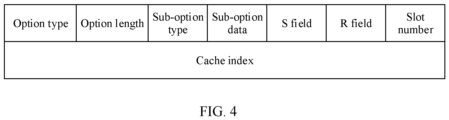
- the index information may be carried in an extension field of the second packet.
- the service flow may be an IP service flow, and in an IP packet, an extension field in which an index packet is located may be an option (Option) field of an IPv4 or IPv6 packet.
- the option field of the IPv4 packet has four experimental options, that is, when a value of the option type (type) is 30, 94, 158, and 222, it indicates that the option field is an extensible experimental option field.
- the value of the option type may be 30, 94, 158, or 222, and is used to indicate that a cache index (cache-index) field carries the index information.
- the option field may further include but is not limited to: an S field (a function of this field is described in the following embodiments), an option length field, a sub-option type field, a sub-option data field, an R field, and a slot number field.
- the option field may not carry the S field.
- S field a function of this field is described in the following embodiments
- the option field may not carry the S field.
- the conventional technology and details are not described herein.
- the SFF proxy may strip an option from the option field, locally cache the option, and establish an association relationship between the stripped option and the index information. For example, if a remaining capacity of the option field is 2 bytes and the index information needs to occupy 4 bytes, the SFF proxy may strip an option (or content) from the option field, for example, strip an option A with a length of 4 bits, change the available capacity of the option field to 6 bytes, and then encapsulate the index information into the option field. The SFF proxy locally caches the option A, and establishes an association relationship between the option A and the index information.
- the SFF proxy may query the associated SFC header encapsulation information and the first identification information based on the index information, further query the option A, strip the index information, and re-encapsulate the option A into the packet.
- Step 104 Send the second packet to the SF 1 based on the SFC header encapsulation information.
- the SFC header encapsulation information is used to indicate the transmission path of the packet, and the SFF proxy may send the second packet to a specified SF, for example, the SF 1, according to the indication of the SFC header encapsulation information.
- the SF 1 is referred to as a second device.
- Step 105 The SFF proxy receives a third packet from the SF 1.
- the SF 1 processes the second packet to obtain the third packet, and returns the third packet to the SFF proxy.
- the third packet includes but is not limited to: second identification information and index information.
- the SF 1 may or may not update the first identification information. Therefore, the third packet may include the second identification information, and the second identification information may be the same as or different from the first identification information.
- Step 106 The SFF proxy obtains, based on the index information, SFC header encapsulation information associated with the index information.
- the SFF proxy may obtain, based on the index information in the third packet, associated data associated with the index information.
- the associated data includes the SFC header encapsulation information and the first identification information.
- the SFF proxy may match the index information with the one or more pieces of index information in the index table, and obtain associated data corresponding to successfully matched index information, where the associated data includes the SFC header encapsulation information and the first identification information that are associated with the index information.
- Step 107 The SFF proxy re-encapsulates the third packet to obtain a fourth packet.
- the SFF proxy may decapsulate the third packet to obtain the original data part, and re-encapsulate the original data part to obtain the fourth packet.
- the SFF proxy may re-encapsulate the obtained SFC header encapsulation information into the original data part.
- the fourth packet obtained after the re-encapsulation may include but is not limited to: the second identification information and the SFC header encapsulation information.
- the SF 2 also exists in the system.
- the SFF proxy needs to send the packet (the fourth packet) to the SF 2.
- the SFF proxy performs the method in steps 101 to 107.
- the SFF proxy re-encapsulates the fourth packet.
- the SFF proxy may determine, based on the identification information of the fourth packet, that the index information associated with the identification information already exists. Therefore, the SFF proxy does not need to generate the index information for the fourth packet, and may directly perform subsequent steps by using the generated index information and the associated data. For specific details, refer to steps 102 to 107. Details are not described herein again.
- the SFF proxy may no longer encapsulate the SFC header encapsulation information into the packet.
- the SFF proxy due to a cache capacity limitation of the SFF proxy, the SFF proxy overwrites index information and associated data that are arranged first in the index table with newly generated index information and associated data.
- the SFF proxy may further set aging time. For example, if the SFF proxy does not use the index information and the associated data within the aging time (for example, 10 minutes), the SFF proxy may delete the index information and the associated data.
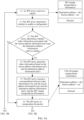
- FIG. 5A and FIG. 5B are an example of a schematic flowchart showing a packet processing method.
- FIG. 5A and FIG. 5B are an example of a schematic flowchart showing a packet processing method.
- An SFF proxy receives a packet.
- the packet includes but is not limited to SFC header encapsulation information and a data part, and the data part further includes IP encapsulation information and a payload.
- the IP encapsulation information further includes: source address information (sal) and destination address information (dal). It should be noted that a packet structure shown in the figure is merely an example. This is not limited in this application.
- the SFF proxy determines whether to enable a configuration.
- the SFF proxy retrieves the configuration and determines to enable the configuration for an SF 1, so that an index information encapsulation manner in this embodiment of this application can be performed.
- the SFF proxy determines whether index information associated with the source address information (sal) and the destination address information (da1) is cached.
- the SFC header encapsulation information indicates the SFF proxy to send the packet to the SF 1.
- the SFF proxy decapsulates the packet and obtains the source address information (sal) and the destination address information (dal).
- the SFF proxy matches the source address information (sal) and the destination address information (da1) with one or more index entries in an index table. If the matching succeeds, it is determined that the index information has been allocated to a data flow to which the packet belongs, and this process proceeds to 16. If the matching fails, it may be determined that the associated index information is not cached, and this process proceeds to 14.
- the SFF proxy generates index information based on the source address information (sal) and the destination address information (dal).
- the SFF proxy selects an unoccupied value within a range allowed by a device, for example, 10, as the index information corresponding to the source address information (sal) and the destination address information (da1).
- the SFF proxy records a correspondence between the index information (10), and the source address information (sa1) and the destination address information (da1), and the SFC header encapsulation information.
- the SFF proxy caches the index table, and the index table includes the one or more index entries. Each index entry includes index information and data associated with the index information.
- the SFF proxy may correspondingly record the index information (10), the source address information (sal) and the destination address information (da1), and the SFC header encapsulation information in an index entry.
- the SFF proxy re-encapsulates the packet.
- re-encapsulating the packet by the SFF proxy may be divided into two parts.
- a first part is encapsulating the index information into an option field.
- a second part is an optional part, to be specific, the SFF proxy encapsulates a header that may support a transmission protocol between the SFF proxy and the SF 1 into the packet.
- the SFF proxy determines that a tunnel between the SFF proxy and the SF 1 is a VXLAN tunnel. For a determining manner, refer to the conventional technology. Details are not described in this application. Then, the SFF proxy encapsulates the decapsulated packet with VXLAN header encapsulation information and sends a re-encapsulated packet to the SF 1.
- the SFF proxy receives the packet returned by the SF 1.
- the SF 1 after processing the packet, the SF 1 returns the packet to the SFF proxy.
- This embodiment describes an example in which the SF 1 updates the source address information (sal) to an sa2.
- the SFF proxy obtains data associated with the index information (10).
- the SFF proxy decapsulates the packet to obtain the index information (10). Then, the SFF proxy may match in the index table based on the index information (10), find the index entry, and extract SFC header encapsulation information associated with the index entry.
- the SFF proxy re-encapsulates the packet.
- the re-encapsulated packet includes the SFC header encapsulation information and the data part.
- the data part further includes the IP encapsulation information and the payload, and the IP encapsulation information further includes the source address information (sa2) and the destination address information (dal).
- the SFF proxy sends the packet to a next-hop device based on the SFC header encapsulation information.
- next-hop device is still an SF
- SFF proxy enables the configuration
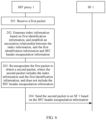
- FIG. 6 is a schematic flowchart showing a packet processing method according to an embodiment of this application.
- FIG. 6 is a schematic flowchart showing a packet processing method according to an embodiment of this application.
- Step 201 An SFF proxy 1 receives a first packet.
- Step 202 The SFF proxy 1 generates index information based on first identification information, and establishes an association relationship between the index information, and the first identification information and SFC header encapsulation information.
- the index information may include first indication information and second indication information, where the first indication information may be used to indicate that the index information is generated by the SFF proxy 1, and the second indication information may be used to associate the SFC header encapsulation information with identification information.
- the second indication information is generated based on the identification information.
- the SFF proxy 1 and an SFF proxy 2 may pre-configure their respective indication information. For example, when the indication information configured by the SFF proxy 1 is 0, it indicates that the index information including the indication information is generated by the SFF proxy 1. When the indication information configured by the SFF proxy 2 is 1, it indicates that index information including the indication information is generated by the SFF proxy 2.
- a specific configuration of the indication information may be set based on an actual requirement. This is not limited in this application.
- the SFF proxy 1 and the SFF proxy 2 may or may not exchange their respective indication information. For example, if the SFF proxy 1 and the SFF proxy 2 exchange their respective indication information, when identifying the index information including the indication information being 1, the SFF proxy 1 may determine that the index information is generated by the SFF proxy 2. If the SFF proxy 1 and the SFF proxy 2 do not exchange their respective indication information, because there are only two SFF proxies in a system, when identifying that a value of the indication information is not a pre-configured value (the value is 0), the SFF proxy 1 may determine that the index information is generated by the SFF proxy 2.
- Step 203 The SFF proxy 1 re-encapsulates the first packet to obtain a second packet, where the second packet includes the index information and the first identification information and does not include the SFC header encapsulation information.
- the SFF proxy 1 may encapsulate the first indication information and the second indication information into an extension field of the packet.
- the SFF proxy 1 may encapsulate the first indication information into an S field.
- the first indication information is 0, it may indicate that the index information is generated by the SFF proxy 1, or if the first indication information is 1, it may indicate that the index information is generated by the SFF proxy 2.
- the second indication information may be encapsulated into an option-index field.
- step 103 For other details, refer to step 103. Details are not described herein.
- Step 204 Send the second packet to an SF 1 based on the SFC header encapsulation information.
- the SF 1 processes the second packet to obtain a third packet, where the third packet includes but is not limited to second identification information and index information.
- the second identification information may be the same as or different from the first identification information.
- the SF 1 may return the third packet to the SFF proxy 1. A procedure thereof is shown in FIG. 7 .
- the SF 1 may send the third packet to the SFF proxy 2. A procedure thereof is shown in FIG. 8 .
- FIG. 7 is an example of a schematic flowchart showing a packet processing method.
- FIG. 7 is an example of a schematic flowchart showing a packet processing method.
- Step 301 An SFF proxy 1 determines, based on index information, that the index information is generated by the SFF proxy 1.
- the SFF proxy 1 obtains index information in a third packet, and the SFF proxy 1 may determine, based on first indication information in the index information, that the index information is generated by the SFF proxy 1.
- Step 302 The SFF proxy 1 obtains, based on the index information, SFC header encapsulation information associated with the index information.
- the SFF proxy 1 may match second indication information with a local index table, and obtain associated data that is successfully matched.
- the associated data includes but is not limited to the SFC header encapsulation information and first identification information.
- Step 303 Re-encapsulate the third packet to obtain a fourth packet.
- FIG. 8 is an example of a schematic flowchart showing a packet processing method.
- FIG. 8 is an example of a schematic flowchart showing a packet processing method.
- Step 401 An SFF proxy 2 determines, based on index information, that the index information is not generated by the SFF proxy 2.
- the SFF proxy 2 obtains index information in a third packet, and determines, based on first indication information in the index information, that the index information is generated by an SFF proxy 1.
- Step 402 The SFF proxy 2 detects, based on the index information, whether SFC header encapsulation information associated with the index information is cached.
- the SFF proxy 1 and the SFF proxy 2 may share their respective index tables.
- For a manner of sharing data refer to the conventional technology. Details are not described in this application.
- the SFF proxy selects the index information (that is, second indication information) from an available range of an apparatus. Therefore, second indication information allocated by a plurality of SFF proxies may be duplicate.
- the SFF proxy when caching index information and associated data shared by another SFF proxy, the SFF proxy also needs to record an SFF proxy that generates the index information.
- the SFF proxy 2 may detect whether the index information is locally cached. In an example, if the SFF proxy 2 detects the index information, the SFF proxy 2 performs step 403. In another example, if the SFF proxy 2 does not detect that the index information and other information associated with the index information are cached, the SFF proxy 2 may further detect whether a communication link is pre-established between the SFF proxy 2 and the SFF proxy 1. Optionally, if the communication link is pre-established between the SFF proxy 1 and the SFF proxy 2, the SFF proxy 2 may send the third packet to the SFF proxy 1 for processing. For a manner of processing the third packet by the SFF proxy 1, refer to steps 302 to 304. Details are not described herein again. Optionally, if no communication link exists between the SFF proxy 1 and the SFF proxy 2, the SFF proxy 2 discards the third packet.
- Step 403 The SFF proxy 2 obtains, based on the index information, the SFC header encapsulation information associated with the index information.
- the SFF proxy 2 finds that the index information generated by the SFF proxy 1 is locally cached, and the SFF proxy 2 may obtain, based on the second indication information in the index information, the SFC header encapsulation information associated with the index information.
- Step 404 Re-encapsulate the third packet to obtain a fourth packet.
- the SFF proxy includes corresponding hardware structures and/or software modules for performing the functions.
- a person skilled in the art should be easily aware that, in combination with the examples described in the embodiments disclosed in this specification, units, algorithms, and steps may be implemented by hardware or a combination of hardware and computer software in the embodiments of this application. Whether a specific function is performed by hardware or hardware driven by computer software depends on particular applications and design constraints of the technical solutions. A person skilled in the art may use different methods to implement the described functions for each particular application, but it should not be considered that the implementation goes beyond the scope of this application.
- division into functional modules may be performed on the SFF proxy based on the foregoing method examples.
- each functional module may be obtained through division based on a corresponding function, or two or more functions may be integrated into one processing module.
- the integrated module may be implemented in a form of hardware, or may be implemented in a form of a software function module. It should be noted that, in this embodiment of this application, division into the modules is an example, and is merely a logical function division. In actual implementation, another division manner may be used.
- FIG. 9 is a possible schematic diagram showing a structure of the SFF proxy 100 in the foregoing embodiments.
- the SFF proxy may include an encapsulation module 101 and a sending module 102.
- the encapsulation module 101 may be configured to perform the step of "re-encapsulate a first packet from the first device to obtain a second packet".
- the module may be configured to support the SFF proxy to perform step 103 and step 203 in the foregoing method embodiments.
- the encapsulation module 101 may be configured to perform the step of "sending the second packet to a second device based on the first SFC header encapsulation information".
- the module may be configured to support the SFF proxy to perform step 104 and step 204 in the foregoing method embodiments.
- the SFF proxy 100 may further include a receiving module 103 and a querying module 104.
- the receiving module 103 may be configured to perform the step of "receiving a third packet”
- the querying module 104 may be configured to perform the step of "if the second index information includes the first indication information and second indication information, determining that the second index information is generated by the first SFF proxy, and searching for, based on the second indication information, the first SFC header encapsulation information associated with the second indication information”.
- the encapsulation module 101 may be further configured to perform the step of "re-encapsulating, based on the first SFC header encapsulation information, the third packet to obtain a fourth packet".
- the receiving module 103 may be configured to perform the step of "receiving and caching third index information from the second SFF proxy, and third identification information and third SFC header encapsulation information that are associated with the third index information".
- the encapsulation module 101 may be further configured to perform the step of "if the second index information included in the third packet is the same as the third index information, obtaining the third SFC header encapsulation information associated with the third index information, and re-encapsulating the third packet based on the third SFC header encapsulation information".
- the sending module 102 may be further configured to perform the step of "if it is determined, based on the second index information, that the second index information is not generated by the first SFF proxy, and no other information associated with the second index information is cached, sending the third packet to the second SFF proxy".
- the sending module 102 may be further configured to perform the step of "sending, to the second SFF proxy, the first index information and the first identification information and the first SFC header encapsulation information that are associated with the first index information".
- FIG. 10 is a schematic block diagram of an apparatus 200 that can run an SFF proxy according to an embodiment of this application.
- the apparatus 200 may include a processor 201 and a transceiver/transceiver pin 202.
- the apparatus 200 further includes a memory 203.
- the processor 201 may be configured to perform steps performed by the apparatus in the foregoing method embodiments, and control a receiver pin to receive a signal, and control a transmitter pin to send a signal.
- bus system 204 Components of the apparatus 200 are coupled together by using a bus 204.
- the bus system 204 further includes a power bus, a control bus, and a status signal bus.
- various buses are marked as the bus system 204 in the figure.
- the memory 203 may be configured to store instructions in the foregoing method embodiments.
- the apparatus 200 may perform steps performed by the SFF proxy in the method embodiments, and the foregoing and other management operations and/or functions of the elements in the apparatus 200 are separately intended to implement corresponding steps of the foregoing methods. For brevity, details are not described herein again.
- an embodiment of this application further provides a computer-readable storage medium.
- the computer-readable storage medium stores a computer program, the computer program includes at least one segment of code, and the at least one segment of code may be executed by an apparatus, to control the apparatus to implement the foregoing method embodiments.
- an embodiment of this application further provides a computer program.
- the computer program is executed by an apparatus, the foregoing method embodiments are implemented.
- the program may be all or partially stored in a storage medium encapsulated with a processor, or may be partially or all stored in a memory not encapsulated with a processor.
- an embodiment of this application further provides a processor.
- the processor is configured to implement the foregoing method embodiments.
- the processor may be a chip.
- the software instruction may include a corresponding software module.
- the software module may be stored in a random access memory (Random Access Memory, RAM), a flash memory, a read-only memory (Read Only Memory, ROM), an erasable programmable read-only memory (Erasable Programmable ROM, EPROM), an electrically erasable programmable read-only memory (Electrically EPROM, EEPROM), a register, a hard disk, a mobile hard disk, a compact disc read-only memory (CD-ROM), or any other form of storage medium well-known in the art.
- a storage medium is coupled to a processor, so that the processor can read information from the storage medium or write information into the storage medium.
- the storage medium may be a component of the processor.
- the processor and the storage medium may be located in an ASIC.
- the ASIC may be located in network equipment.
- the processor and the storage medium may exist in network equipment as discrete components.
- the computer-readable medium includes a computer storage medium and a communication medium.
- the communication medium includes any medium that facilitates transmission of a computer program from one place to another.
- the storage medium may be any available medium accessible to a general-purpose computer or a dedicated computer.
Landscapes
- Engineering & Computer Science (AREA)
- Computer Networks & Wireless Communication (AREA)
- Signal Processing (AREA)
- Multimedia (AREA)
- Computer Security & Cryptography (AREA)
- Business, Economics & Management (AREA)
- General Business, Economics & Management (AREA)
- Data Exchanges In Wide-Area Networks (AREA)
- Mobile Radio Communication Systems (AREA)
Claims (15)
- Paketverarbeitungsverfahren, das auf einen ersten Dienstfunktionsweiterleiter-Proxy, SFF-Proxy (100), angewandt wird, wobei das Verfahren Folgendes umfasst:Empfangen eines ersten Pakets von einem ersten Gerät, wobei das erste Paket erste Kennungsinformationen und erste Dienstfunktionsketten-Header-Einkapselungsinformationen, SFC-Header-Einkapselungsinformationen, umfasst;erneutes Einkapseln des ersten Pakets, um ein zweites Paket zu erlangen; undSenden des zweiten Pakets an ein zweites Gerät basierend auf den ersten SFC-Header-Einkapselungsinformationen,dadurch gekennzeichnet, dassdas Verfahren ferner Erzeugen erster Indexinformationen basierend auf den ersten Kennungsinformationen und Herstellen einer Zuordnungsbeziehung zwischen den ersten Indexinformationen, den ersten Kennungsinformationen und den ersten SFC-Header-Einkapselungsinformationen durch Erzeugen einer Indextabelle umfasst, die ein oder mehrere Indexinformationselemente und zugeordnete Daten beinhaltet, die jedem Indexinformationselement entsprechen, wobei die zugeordneten Daten die SFC-Header-Einkapselungsinformationen und die ersten Kennungsinformationen beinhalten, die den Indexinformationen zugeordnet sind; unddas zweite Paket die ersten Indexinformationen und die ersten Kennungsinformationen umfasst und die ersten SFC-Header-Einkapselungsinformationen nicht umfasst.
- Verfahren nach Anspruch 1, wobei die ersten Indexinformationen ferner dazu verwendet werden, anzugeben, dass die ersten Indexinformationen durch den ersten SFF-Proxy (100) erzeugt werden.
- Verfahren nach Anspruch 2, wobei die ersten Indexinformationen erste Angabeinformationen und zweite Angabeinformationen umfassen, die ersten Angabeinformationen dazu verwendet werden, anzugeben, dass die ersten Indexinformationen durch den SFF-Proxy (100) erzeugt werden, und die zweiten Angabeinformationen dazu verwendet werden, die ersten SFC-Header-Einkapselungsinformationen den ersten Kennungsinformationen zuzuordnen.
- Verfahren nach Anspruch 3, wobei das Verfahren ferner Folgendes umfasst:Empfangen eines dritten Pakets, wobei das dritte Paket zweite Indexinformationen und zweite Kennungsinformationen umfasst;wenn die zweiten Indexinformationen die ersten Angabeinformationen und die zweiten Angabeinformationen umfassen, Bestimmen, dass die zweiten Indexinformationen durch den ersten SFF-Proxy (100) erzeugt werden, und Suchen, basierend auf den zweiten Angabeinformationen, nach den ersten SFC-Header-Einkapselungsinformationen, die den zweiten Angabeinformationen zugeordnet sind; underneutes Einkapseln, basierend auf den ersten SFC-Header-Einkapselungsinformationen, des dritten Pakets, um ein viertes Paket zu erlangen, wobei das vierte Paket die ersten SFC-Header-Einkapselungsinformationen umfasst und die ersten Indexinformationen nicht umfasst.
- Verfahren nach Anspruch 4, wobeidas dritte Paket von dem zweiten Gerät stammt; oderdas dritte Paket ein Paket ist, das von dem zweiten Gerät stammt und das durch einen zweiten SFF-Proxy (100) an den ersten SFF-Proxy (100) weitergeleitet wird.
- Verfahren nach Anspruch 4, wobei das Verfahren vor dem Empfangen eines dritten Pakets ferner Folgendes umfasst:Empfangen und Zwischenspeichern dritter Indexinformationen von einem zweiten SFF-Proxy (100) und dritter Kennungsinformationen und dritter SFC-Header-Einkapselungsinformationen, die den dritten Indexinformationen zugeordnet sind; undwenn die zweiten Indexinformationen, die in dem dritten Paket umfasst sind, die gleichen wie die dritten Indexinformationen sind, Erlangen der dritten SFC-Header-Einkapselungsinformationen, die den dritten Indexinformationen zugeordnet sind, und erneutes Einkapseln des dritten Pakets basierend auf den dritten SFC-Header-Einkapselungsinformationen.
- Paketverarbeitungssystem, wobei das System einen ersten Dienstfunktionsweiterleiter-Proxy, SFF-Proxy (100), ein erstes Gerät und ein zweites Gerät umfasst;der erste SFF-Proxy (100) dazu konfiguriert ist, ein erstes Paket von dem ersten Gerät zu empfangen, wobei das erste Paket erste Kennungsinformationen und erste Dienstfunktionsketten-Header-Einkapselungsinformationen, SFC-Header-Einkapselungsinformationen, umfasst;der erste SFF-Proxy (100) ferner dazu konfiguriert ist, das erste Paket erneut einzukapseln, um ein zweites Paket zu erlangen; undder erste SFF-Proxy (100) ferner dazu konfiguriert ist, das zweite Paket basierend auf den ersten SFC-Header-Einkapselungsinformationen an das zweite Gerät zu senden,dadurch gekennzeichnet, dassder erste SFF-Proxy (100) ferner dazu konfiguriert ist, erste Indexinformationen basierend auf den ersten Kennungsinformationen zu erzeugen und eine Zuordnungsbeziehung zwischen den ersten Indexinformationen, den ersten Kennungsinformationen und den ersten SFC-Header-Einkapselungsinformationen durch Erzeugen einer Indextabelle herzustellen, die ein oder mehrere Indexinformationselemente und zugeordnete Daten beinhaltet, die jedem Indexinformationselement entsprechen, wobei die zugeordneten Daten die SFC-Header-Einkapselungsinformationen und die ersten Kennungsinformationen beinhalten, die den Indexinformationen zugeordnet sind; unddas zweite Paket die ersten Indexinformationen und die ersten Kennungsinformationen umfasst und die ersten SFC-Header-Einkapselungsinformationen nicht umfasst.
- System nach Anspruch 7, wobeidas zweite Gerät dazu konfiguriert ist, das zweite Paket zu verarbeiten, um ein drittes Paket zu erlangen, wobei das dritte Paket die ersten Indexinformationen und die zweiten Kennungsinformationen umfasst und die zweiten Kennungsinformationen die gleichen wie die ersten Kennungsinformationen oder von diesen verschieden sind; und das dritte Paket an den ersten SFF-Proxy (100) zu senden; undder erste SFF-Proxy (100) ferner dazu konfiguriert ist, das dritte Paket von dem zweiten Gerät erneut einzukapseln, um ein viertes Paket zu erlangen, wobei das dritte Paket die zweiten Kennungsinformationen und die ersten Indexinformationen umfasst und das vierte Paket die zweiten Kennungsinformationen und die ersten SFC-Header-Einkapselungsinformationen umfasst und die ersten Indexinformationen nicht umfasst.
- System nach Anspruch 7, wobei die ersten Indexinformationen ferner dazu verwendet werden, anzugeben, dass die ersten Indexinformationen durch den ersten SFF-Proxy (100) erzeugt werden.
- System nach Anspruch 9, wobei das System ferner einen zweiten SFF-Proxy (100) umfasst; und
das zweite Gerät dazu konfiguriert ist, das zweite Paket zu verarbeiten, um ein drittes Paket zu erlangen, wobei das dritte Paket die ersten Indexinformationen und die zweiten Kennungsinformationen umfasst und die zweiten Kennungsinformationen die gleichen wie die ersten Kennungsinformationen oder von diesen verschieden sind; und das dritte Paket an den ersten SFF-Proxy (100) oder den zweiten SFF-Proxy (100) zu senden. - System nach Anspruch 9, wobeider erste SFF-Proxy (100) ferner dazu konfiguriert ist, die ersten Indexinformationen und die ersten Kennungsinformationen und die ersten SFC-Header-Einkapselungsinformationen, die den ersten Indexinformationen zugeordnet sind, an einen zweiten SFF-Proxy (100) zu senden; undder zweite SFF-Proxy (100) ferner dazu konfiguriert ist, die ersten Indexinformationen, die ersten Kennungsinformationen und die ersten SFC-Header-Einkapselungsinformationen zu empfangen und zwischenzuspeichern.
- System nach Anspruch 11, wobei, wenn das zweite Gerät ein drittes Paket an den zweiten SFF-Proxy (100) sendet,
der zweite SFF-Proxy (100) ferner dazu konfiguriert ist, basierend auf den ersten Indexinformationen zu bestimmen, dass die ersten Indexinformationen durch den ersten SFF-Proxy (100) erzeugt werden, zu detektieren, dass die ersten SFC-Header-Einkapselungsinformationen, die den ersten Indexinformationen zugeordnet sind, lokal zwischengespeichert sind, und das dritte Paket basierend auf den ersten SFC-Header-Einkapselungsinformationen erneut einzukapseln, um ein viertes Paket zu erlangen. - Paketverarbeitungsvorrichtung (200), die auf einen ersten Dienstfunktionsweiterleiter-Proxy, SFF-Proxy (100), angewandt wird, wobei die Vorrichtung (200) Folgendes umfasst:einen Speicher (203) und einen Prozessor (201), wobei der Speicher (203) mit dem Prozessor (201) gekoppelt ist; undder Speicher (203) Programmanweisungen umfasst und, wenn die Programmanweisungen durch den Prozessor (201) ausgeführt werden, die Vorrichtung (200) die folgenden Schritte durchführt:Empfangen eines ersten Pakets von einem ersten Dienstfunktionsgerät, SF-Gerät, wobei das erste Paket erste Kennungsinformationen und erste Dienstfunktionsketten-Header-Einkapselungsinformationen, SFC-Header-Einkapselungsinformationen, umfasst;erneutes Einkapseln des ersten Pakets, um ein zweites Paket zu erlangen; undSenden des zweiten Pakets an ein zweites Gerät basierend auf den ersten SFC-Header-Einkapselungsinformationen,dadurch gekennzeichnet, dasswenn die Programmanweisungen durch den Prozessor (201) ausgeführt werden, die Vorrichtung (200) die folgenden Schritte durchführt:Erzeugen erster Indexinformationen basierend auf den ersten Kennungsinformationen und Herstellen einer Zuordnungsbeziehung zwischen den ersten Indexinformationen, den ersten Kennungsinformationen und den ersten SFC-Header-Einkapselungsinformationen durch Erzeugen einer Indextabelle,die ein oder mehrere Indexinformationselement und zugeordnete Daten beinhaltet, die jedem Indexinformationselement entsprechen, wobei die zugeordneten Daten die SFC-Header-Einkapselungsinformationen und die ersten Kennungsinformationen beinhalten, die den Indexinformationen zugeordnet sind; unddas zweite Paket erste Indexinformationen und die ersten Kennungsinformationen umfasst und die ersten SFC-Header-Einkapselungsinformationen nicht umfasst.
- Vorrichtung (200) nach Anspruch 13, wobei die ersten Indexinformationen ferner dazu verwendet werden, anzugeben, dass die ersten Indexinformationen durch den ersten SFF-Proxy (100) erzeugt werden.
- Vorrichtung (200) nach Anspruch 14, wobei die ersten Indexinformationen erste Angabeinformationen und zweite Angabeinformationen umfassen, die ersten Angabeinformationen dazu verwendet werden, anzugeben, dass die ersten Indexinformationen durch den SFF-Proxy (100) erzeugt werden, und die zweiten Angabeinformationen dazu verwendet werden, die ersten SFC-Header-Einkapselungsinformationen den ersten Kennungsinformationen zuzuordnen.
Applications Claiming Priority (2)
| Application Number | Priority Date | Filing Date | Title |
|---|---|---|---|
| CN201910853670.0A CN112565044B (zh) | 2019-09-10 | 2019-09-10 | 报文处理方法及装置 |
| PCT/CN2020/105244 WO2021047317A1 (zh) | 2019-09-10 | 2020-07-28 | 报文处理方法及装置 |
Publications (3)
| Publication Number | Publication Date |
|---|---|
| EP4027592A1 EP4027592A1 (de) | 2022-07-13 |
| EP4027592A4 EP4027592A4 (de) | 2022-11-02 |
| EP4027592B1 true EP4027592B1 (de) | 2025-05-21 |
Family
ID=74866909
Family Applications (1)
| Application Number | Title | Priority Date | Filing Date |
|---|---|---|---|
| EP20862429.6A Active EP4027592B1 (de) | 2019-09-10 | 2020-07-28 | Paketverarbeitungsverfahren und -vorrichtung |
Country Status (6)
| Country | Link |
|---|---|
| US (1) | US11811654B2 (de) |
| EP (1) | EP4027592B1 (de) |
| JP (1) | JP2022548493A (de) |
| CN (1) | CN112565044B (de) |
| BR (1) | BR112022003058A2 (de) |
| WO (1) | WO2021047317A1 (de) |
Families Citing this family (5)
| Publication number | Priority date | Publication date | Assignee | Title |
|---|---|---|---|---|
| CN112787921B (zh) | 2019-11-08 | 2023-05-19 | 华为技术有限公司 | 报文传输方法、代理节点及存储介质 |
| CN113691448B (zh) | 2020-05-18 | 2022-09-23 | 华为技术有限公司 | SRv6业务链中转发报文的方法、SFF及SF设备 |
| CN113132419B (zh) * | 2021-06-17 | 2021-09-24 | 紫光恒越技术有限公司 | 报文转发方法、装置、交换机、路由器及服务器 |
| EP4451625A4 (de) * | 2021-12-31 | 2025-04-30 | Huawei Technologies Co., Ltd. | Nachrichtenübertragungsverfahren, netzwerkvorrichtung und system |
| CN116074074A (zh) * | 2023-01-06 | 2023-05-05 | 天翼云科技有限公司 | 一种云计算中虚拟机流量在安全域中的传输方法及装置 |
Family Cites Families (22)
| Publication number | Priority date | Publication date | Assignee | Title |
|---|---|---|---|---|
| WO2015042913A1 (zh) * | 2013-09-29 | 2015-04-02 | 华为技术有限公司 | 业务内容获取方法、提供方法、设备及系统 |
| CN104980374B (zh) * | 2014-04-04 | 2018-07-03 | 华为技术有限公司 | 一种业务路由报文的封装方法、业务转发实体及控制平面 |
| US9548919B2 (en) * | 2014-10-24 | 2017-01-17 | Cisco Technology, Inc. | Transparent network service header path proxies |
| CN104283891B (zh) * | 2014-10-27 | 2017-12-08 | 新华三技术有限公司 | 将业务功能节点接入业务链网络的方法和装置 |
| CN105743822B (zh) * | 2014-12-11 | 2019-04-19 | 华为技术有限公司 | 一种处理报文的方法及装置 |
| US10587698B2 (en) * | 2015-02-25 | 2020-03-10 | Futurewei Technologies, Inc. | Service function registration mechanism and capability indexing |
| US10122622B2 (en) * | 2015-05-29 | 2018-11-06 | Futurewei Technologies, Inc. | Exchanging application metadata for application context aware service insertion in service function chain |
| KR20170000787A (ko) | 2015-06-24 | 2017-01-03 | 주식회사 케이티 | 서비스 펑션 체이닝의 안정성 보장을 위한 sff-sf 간 링크 구성 방법 |
| CN106330714B (zh) * | 2015-07-02 | 2020-05-29 | 中兴通讯股份有限公司 | 一种实现业务功能链的方法和装置 |
| CN106559333A (zh) * | 2015-09-29 | 2017-04-05 | 中兴通讯股份有限公司 | 报文转发方法、业务链代理装置及代理设备 |
| US9912788B2 (en) * | 2015-11-10 | 2018-03-06 | Telefonaktiebolaget L M Ericsson (Publ) | Systems and methods of an enhanced state-aware proxy device |
| JP6534625B2 (ja) * | 2016-02-17 | 2019-06-26 | 日本電信電話株式会社 | 通信装置および通信方法 |
| US10164875B2 (en) * | 2016-02-22 | 2018-12-25 | Cisco Technology, Inc. | SR app-segment integration with service function chaining (SFC) header metadata |
| US9954774B2 (en) | 2016-03-10 | 2018-04-24 | Cisco Technology, Inc. | Propagating flow characteristics in service function chaining (SFC) headers |
| US20170331741A1 (en) * | 2016-05-11 | 2017-11-16 | Hewlett Packard Enterprise Development Lp | Mac chaining load balancer |
| CN107872356A (zh) * | 2016-09-26 | 2018-04-03 | 中兴通讯股份有限公司 | 业务功能链检测路径的方法和装置 |
| US10187263B2 (en) * | 2016-11-14 | 2019-01-22 | Futurewei Technologies, Inc. | Integrating physical and virtual network functions in a service-chained network environment |
| CN108574638B (zh) * | 2017-03-14 | 2020-10-16 | 华为技术有限公司 | 一种数据报文的转发方法和设备 |
| US10462047B2 (en) * | 2017-04-10 | 2019-10-29 | Cisco Technology, Inc. | Service-function chaining using extended service-function chain proxy for service-function offload |
| US10616085B2 (en) * | 2017-08-31 | 2020-04-07 | Zte Corporation | Residence time measurement for optimizing network services |
| US10637770B2 (en) * | 2018-03-29 | 2020-04-28 | Wipro Limited | Method and system for optimizing service function paths associated with common service functions |
| CN113168064B (zh) | 2018-12-21 | 2024-07-23 | 伊英克公司 | 磁电泳书写介质中的亚阈值寻址和擦除 |
-
2019
- 2019-09-10 CN CN201910853670.0A patent/CN112565044B/zh active Active
-
2020
- 2020-07-28 EP EP20862429.6A patent/EP4027592B1/de active Active
- 2020-07-28 WO PCT/CN2020/105244 patent/WO2021047317A1/zh not_active Ceased
- 2020-07-28 BR BR112022003058A patent/BR112022003058A2/pt unknown
- 2020-07-28 JP JP2022511028A patent/JP2022548493A/ja active Pending
-
2022
- 2022-03-09 US US17/690,874 patent/US11811654B2/en active Active
Also Published As
| Publication number | Publication date |
|---|---|
| WO2021047317A1 (zh) | 2021-03-18 |
| US20220200904A1 (en) | 2022-06-23 |
| EP4027592A4 (de) | 2022-11-02 |
| CN112565044A (zh) | 2021-03-26 |
| US11811654B2 (en) | 2023-11-07 |
| BR112022003058A2 (pt) | 2022-08-09 |
| CN112565044B (zh) | 2023-08-25 |
| JP2022548493A (ja) | 2022-11-21 |
| EP4027592A1 (de) | 2022-07-13 |
Similar Documents
| Publication | Publication Date | Title |
|---|---|---|
| EP4027592B1 (de) | Paketverarbeitungsverfahren und -vorrichtung | |
| US11924108B2 (en) | Processing packets by an offload platform adjunct to a packet switching device | |
| US10237177B2 (en) | Transfer device and transfer system | |
| EP3273643B1 (de) | Verfahren zum senden eines virtuellen erweiterbaren lan-pakets, computervorrichtung und lesbares medium | |
| US11750515B2 (en) | Data transmission method and apparatus | |
| US20150358232A1 (en) | Packet Forwarding Method and VXLAN Gateway | |
| US10412008B2 (en) | Packet processing method, apparatus, and system | |
| EP4037267B1 (de) | Verfahren, vorrichtung und system zum senden von nachrichten | |
| CN111988266B (zh) | 一种处理报文的方法 | |
| EP4068704B1 (de) | Paketsendeverfahren, verfahren zur erzeugung von routing-tabelleneinträgen, vorrichtung und speichermedium | |
| CN112737954B (zh) | 报文处理方法、装置、系统、设备及存储介质 | |
| US9838314B1 (en) | Contextual service mobility in an enterprise fabric network environment | |
| JP2019033534A (ja) | データパケット転送 | |
| JP7580467B2 (ja) | パケット送信方法および装置、ならびに記憶媒体 | |
| CN115426305A (zh) | 报文处理方法、装置及系统 | |
| US11463359B2 (en) | Method and an apparatus for routing data packets in a network | |
| EP3902211B1 (de) | Paketweiterleitungsverfahren und netzwerkvorrichtung | |
| JP2024506089A (ja) | パケット転送方法、装置、およびシステム | |
| CN108156066B (zh) | 报文转发方法和装置 | |
| CN112565045A (zh) | Evpn中报文转发方法、装置、设备及存储介质 | |
| CN112511400B (zh) | 报文处理方法及装置 | |
| CN111010344B (zh) | 报文转发方法、装置、电子设备及机器可读存储介质 | |
| CN110391984B (zh) | 一种报文转发方法及装置 | |
| US11824780B2 (en) | Managing tunnel interface selection between gateways in a computing environment | |
| EP4485892A1 (de) | Nachrichtenverkapselungsverfahren und -vorrichtung, nachrichtenübertragungsverfahren und -vorrichtung sowie netzwerkknoten und speichermedium |
Legal Events
| Date | Code | Title | Description |
|---|---|---|---|
| STAA | Information on the status of an ep patent application or granted ep patent |
Free format text: STATUS: THE INTERNATIONAL PUBLICATION HAS BEEN MADE |
|
| PUAI | Public reference made under article 153(3) epc to a published international application that has entered the european phase |
Free format text: ORIGINAL CODE: 0009012 |
|
| STAA | Information on the status of an ep patent application or granted ep patent |
Free format text: STATUS: REQUEST FOR EXAMINATION WAS MADE |
|
| 17P | Request for examination filed |
Effective date: 20220404 |
|
| AK | Designated contracting states |
Kind code of ref document: A1 Designated state(s): AL AT BE BG CH CY CZ DE DK EE ES FI FR GB GR HR HU IE IS IT LI LT LU LV MC MK MT NL NO PL PT RO RS SE SI SK SM TR |
|
| A4 | Supplementary search report drawn up and despatched |
Effective date: 20221004 |
|
| RIC1 | Information provided on ipc code assigned before grant |
Ipc: H04L 12/46 20060101AFI20220927BHEP |
|
| DAV | Request for validation of the european patent (deleted) | ||
| DAX | Request for extension of the european patent (deleted) | ||
| STAA | Information on the status of an ep patent application or granted ep patent |
Free format text: STATUS: EXAMINATION IS IN PROGRESS |
|
| 17Q | First examination report despatched |
Effective date: 20240111 |
|
| GRAP | Despatch of communication of intention to grant a patent |
Free format text: ORIGINAL CODE: EPIDOSNIGR1 |
|
| STAA | Information on the status of an ep patent application or granted ep patent |
Free format text: STATUS: GRANT OF PATENT IS INTENDED |
|
| INTG | Intention to grant announced |
Effective date: 20250131 |
|
| GRAS | Grant fee paid |
Free format text: ORIGINAL CODE: EPIDOSNIGR3 |
|
| GRAA | (expected) grant |
Free format text: ORIGINAL CODE: 0009210 |
|
| STAA | Information on the status of an ep patent application or granted ep patent |
Free format text: STATUS: THE PATENT HAS BEEN GRANTED |
|
| AK | Designated contracting states |
Kind code of ref document: B1 Designated state(s): AL AT BE BG CH CY CZ DE DK EE ES FI FR GB GR HR HU IE IS IT LI LT LU LV MC MK MT NL NO PL PT RO RS SE SI SK SM TR |
|
| REG | Reference to a national code |
Ref country code: GB Ref legal event code: FG4D |
|
| REG | Reference to a national code |
Ref country code: CH Ref legal event code: EP |
|
| REG | Reference to a national code |
Ref country code: DE Ref legal event code: R096 Ref document number: 602020051798 Country of ref document: DE |
|
| REG | Reference to a national code |
Ref country code: IE Ref legal event code: FG4D |
|
| REG | Reference to a national code |
Ref country code: NL Ref legal event code: MP Effective date: 20250521 |
|
| PG25 | Lapsed in a contracting state [announced via postgrant information from national office to epo] |
Ref country code: FI Free format text: LAPSE BECAUSE OF FAILURE TO SUBMIT A TRANSLATION OF THE DESCRIPTION OR TO PAY THE FEE WITHIN THE PRESCRIBED TIME-LIMIT Effective date: 20250521 Ref country code: PT Free format text: LAPSE BECAUSE OF FAILURE TO SUBMIT A TRANSLATION OF THE DESCRIPTION OR TO PAY THE FEE WITHIN THE PRESCRIBED TIME-LIMIT Effective date: 20250922 Ref country code: ES Free format text: LAPSE BECAUSE OF FAILURE TO SUBMIT A TRANSLATION OF THE DESCRIPTION OR TO PAY THE FEE WITHIN THE PRESCRIBED TIME-LIMIT Effective date: 20250521 |
|
| PGFP | Annual fee paid to national office [announced via postgrant information from national office to epo] |
Ref country code: DE Payment date: 20250604 Year of fee payment: 6 |
|
| REG | Reference to a national code |
Ref country code: LT Ref legal event code: MG9D |
|
| PG25 | Lapsed in a contracting state [announced via postgrant information from national office to epo] |
Ref country code: GR Free format text: LAPSE BECAUSE OF FAILURE TO SUBMIT A TRANSLATION OF THE DESCRIPTION OR TO PAY THE FEE WITHIN THE PRESCRIBED TIME-LIMIT Effective date: 20250822 Ref country code: NO Free format text: LAPSE BECAUSE OF FAILURE TO SUBMIT A TRANSLATION OF THE DESCRIPTION OR TO PAY THE FEE WITHIN THE PRESCRIBED TIME-LIMIT Effective date: 20250821 |
|
| PG25 | Lapsed in a contracting state [announced via postgrant information from national office to epo] |
Ref country code: NL Free format text: LAPSE BECAUSE OF FAILURE TO SUBMIT A TRANSLATION OF THE DESCRIPTION OR TO PAY THE FEE WITHIN THE PRESCRIBED TIME-LIMIT Effective date: 20250521 Ref country code: PL Free format text: LAPSE BECAUSE OF FAILURE TO SUBMIT A TRANSLATION OF THE DESCRIPTION OR TO PAY THE FEE WITHIN THE PRESCRIBED TIME-LIMIT Effective date: 20250521 |
|
| PG25 | Lapsed in a contracting state [announced via postgrant information from national office to epo] |
Ref country code: BG Free format text: LAPSE BECAUSE OF FAILURE TO SUBMIT A TRANSLATION OF THE DESCRIPTION OR TO PAY THE FEE WITHIN THE PRESCRIBED TIME-LIMIT Effective date: 20250521 |
|
| PG25 | Lapsed in a contracting state [announced via postgrant information from national office to epo] |
Ref country code: HR Free format text: LAPSE BECAUSE OF FAILURE TO SUBMIT A TRANSLATION OF THE DESCRIPTION OR TO PAY THE FEE WITHIN THE PRESCRIBED TIME-LIMIT Effective date: 20250521 |
|
| PG25 | Lapsed in a contracting state [announced via postgrant information from national office to epo] |
Ref country code: RS Free format text: LAPSE BECAUSE OF FAILURE TO SUBMIT A TRANSLATION OF THE DESCRIPTION OR TO PAY THE FEE WITHIN THE PRESCRIBED TIME-LIMIT Effective date: 20250821 |
|
| PG25 | Lapsed in a contracting state [announced via postgrant information from national office to epo] |
Ref country code: IS Free format text: LAPSE BECAUSE OF FAILURE TO SUBMIT A TRANSLATION OF THE DESCRIPTION OR TO PAY THE FEE WITHIN THE PRESCRIBED TIME-LIMIT Effective date: 20250921 |
|
| PG25 | Lapsed in a contracting state [announced via postgrant information from national office to epo] |
Ref country code: LV Free format text: LAPSE BECAUSE OF FAILURE TO SUBMIT A TRANSLATION OF THE DESCRIPTION OR TO PAY THE FEE WITHIN THE PRESCRIBED TIME-LIMIT Effective date: 20250521 |
|
| REG | Reference to a national code |
Ref country code: AT Ref legal event code: MK05 Ref document number: 1797796 Country of ref document: AT Kind code of ref document: T Effective date: 20250521 |
|
| PG25 | Lapsed in a contracting state [announced via postgrant information from national office to epo] |
Ref country code: SM Free format text: LAPSE BECAUSE OF FAILURE TO SUBMIT A TRANSLATION OF THE DESCRIPTION OR TO PAY THE FEE WITHIN THE PRESCRIBED TIME-LIMIT Effective date: 20250521 Ref country code: DK Free format text: LAPSE BECAUSE OF FAILURE TO SUBMIT A TRANSLATION OF THE DESCRIPTION OR TO PAY THE FEE WITHIN THE PRESCRIBED TIME-LIMIT Effective date: 20250521 Ref country code: AT Free format text: LAPSE BECAUSE OF FAILURE TO SUBMIT A TRANSLATION OF THE DESCRIPTION OR TO PAY THE FEE WITHIN THE PRESCRIBED TIME-LIMIT Effective date: 20250521 |
|
| PG25 | Lapsed in a contracting state [announced via postgrant information from national office to epo] |
Ref country code: CZ Free format text: LAPSE BECAUSE OF FAILURE TO SUBMIT A TRANSLATION OF THE DESCRIPTION OR TO PAY THE FEE WITHIN THE PRESCRIBED TIME-LIMIT Effective date: 20250521 |
|
| PG25 | Lapsed in a contracting state [announced via postgrant information from national office to epo] |
Ref country code: EE Free format text: LAPSE BECAUSE OF FAILURE TO SUBMIT A TRANSLATION OF THE DESCRIPTION OR TO PAY THE FEE WITHIN THE PRESCRIBED TIME-LIMIT Effective date: 20250521 |
|
| PG25 | Lapsed in a contracting state [announced via postgrant information from national office to epo] |
Ref country code: SK Free format text: LAPSE BECAUSE OF FAILURE TO SUBMIT A TRANSLATION OF THE DESCRIPTION OR TO PAY THE FEE WITHIN THE PRESCRIBED TIME-LIMIT Effective date: 20250521 Ref country code: RO Free format text: LAPSE BECAUSE OF FAILURE TO SUBMIT A TRANSLATION OF THE DESCRIPTION OR TO PAY THE FEE WITHIN THE PRESCRIBED TIME-LIMIT Effective date: 20250521 |
|
| PG25 | Lapsed in a contracting state [announced via postgrant information from national office to epo] |
Ref country code: IT Free format text: LAPSE BECAUSE OF FAILURE TO SUBMIT A TRANSLATION OF THE DESCRIPTION OR TO PAY THE FEE WITHIN THE PRESCRIBED TIME-LIMIT Effective date: 20250521 |
|
| REG | Reference to a national code |
Ref country code: CH Ref legal event code: H13 Free format text: ST27 STATUS EVENT CODE: U-0-0-H10-H13 (AS PROVIDED BY THE NATIONAL OFFICE) Effective date: 20260224 Ref country code: DE Ref legal event code: R097 Ref document number: 602020051798 Country of ref document: DE |
|
| PG25 | Lapsed in a contracting state [announced via postgrant information from national office to epo] |
Ref country code: LU Free format text: LAPSE BECAUSE OF NON-PAYMENT OF DUE FEES Effective date: 20250728 |
|
| REG | Reference to a national code |
Ref country code: BE Ref legal event code: MM Effective date: 20250731 |
|
| PLBE | No opposition filed within time limit |
Free format text: ORIGINAL CODE: 0009261 |
|
| STAA | Information on the status of an ep patent application or granted ep patent |
Free format text: STATUS: NO OPPOSITION FILED WITHIN TIME LIMIT |
|
| REG | Reference to a national code |
Ref country code: CH Ref legal event code: L10 Free format text: ST27 STATUS EVENT CODE: U-0-0-L10-L00 (AS PROVIDED BY THE NATIONAL OFFICE) Effective date: 20260402 |
|
| PG25 | Lapsed in a contracting state [announced via postgrant information from national office to epo] |
Ref country code: BE Free format text: LAPSE BECAUSE OF NON-PAYMENT OF DUE FEES Effective date: 20250731 |
|
| PG25 | Lapsed in a contracting state [announced via postgrant information from national office to epo] |
Ref country code: FR Free format text: LAPSE BECAUSE OF NON-PAYMENT OF DUE FEES Effective date: 20250731 |
|
| PG25 | Lapsed in a contracting state [announced via postgrant information from national office to epo] |
Ref country code: CH Free format text: LAPSE BECAUSE OF NON-PAYMENT OF DUE FEES Effective date: 20250731 |
|
| 26N | No opposition filed |
Effective date: 20260224 |