EP4027348A2 - Verfahren und vorrichtung zur affinitätsvorhersage, verfahren und vorrichtung zum trainieren eines affinitätsvorhersagemodells, vorrichtung und medium - Google Patents
Verfahren und vorrichtung zur affinitätsvorhersage, verfahren und vorrichtung zum trainieren eines affinitätsvorhersagemodells, vorrichtung und medium Download PDFInfo
- Publication number
- EP4027348A2 EP4027348A2 EP21202323.8A EP21202323A EP4027348A2 EP 4027348 A2 EP4027348 A2 EP 4027348A2 EP 21202323 A EP21202323 A EP 21202323A EP 4027348 A2 EP4027348 A2 EP 4027348A2
- Authority
- EP
- European Patent Office
- Prior art keywords
- training
- target
- affinity
- drug
- information
- Prior art date
- Legal status (The legal status is an assumption and is not a legal conclusion. Google has not performed a legal analysis and makes no representation as to the accuracy of the status listed.)
- Ceased
Links
Images




Classifications
-
- G—PHYSICS
- G16—INFORMATION AND COMMUNICATION TECHNOLOGY [ICT] SPECIALLY ADAPTED FOR SPECIFIC APPLICATION FIELDS
- G16B—BIOINFORMATICS, i.e. INFORMATION AND COMMUNICATION TECHNOLOGY [ICT] SPECIALLY ADAPTED FOR GENETIC OR PROTEIN-RELATED DATA PROCESSING IN COMPUTATIONAL MOLECULAR BIOLOGY
- G16B15/00—ICT specially adapted for analysing two-dimensional [2D] or three-dimensional [3D] molecular structures, e.g. structural or functional relations or structure alignment
- G16B15/30—Drug targeting using structural data; Docking or binding prediction
-
- G—PHYSICS
- G06—COMPUTING OR CALCULATING; COUNTING
- G06F—ELECTRIC DIGITAL DATA PROCESSING
- G06F18/00—Pattern recognition
- G06F18/20—Analysing
- G06F18/21—Design or setup of recognition systems or techniques; Extraction of features in feature space; Blind source separation
- G06F18/214—Generating training patterns; Bootstrap methods, e.g. bagging or boosting
-
- G—PHYSICS
- G06—COMPUTING OR CALCULATING; COUNTING
- G06N—COMPUTING ARRANGEMENTS BASED ON SPECIFIC COMPUTATIONAL MODELS
- G06N20/00—Machine learning
- G06N20/20—Ensemble learning
-
- G—PHYSICS
- G16—INFORMATION AND COMMUNICATION TECHNOLOGY [ICT] SPECIALLY ADAPTED FOR SPECIFIC APPLICATION FIELDS
- G16B—BIOINFORMATICS, i.e. INFORMATION AND COMMUNICATION TECHNOLOGY [ICT] SPECIALLY ADAPTED FOR GENETIC OR PROTEIN-RELATED DATA PROCESSING IN COMPUTATIONAL MOLECULAR BIOLOGY
- G16B40/00—ICT specially adapted for biostatistics; ICT specially adapted for bioinformatics-related machine learning or data mining, e.g. knowledge discovery or pattern finding
-
- G—PHYSICS
- G16—INFORMATION AND COMMUNICATION TECHNOLOGY [ICT] SPECIALLY ADAPTED FOR SPECIFIC APPLICATION FIELDS
- G16B—BIOINFORMATICS, i.e. INFORMATION AND COMMUNICATION TECHNOLOGY [ICT] SPECIALLY ADAPTED FOR GENETIC OR PROTEIN-RELATED DATA PROCESSING IN COMPUTATIONAL MOLECULAR BIOLOGY
- G16B40/00—ICT specially adapted for biostatistics; ICT specially adapted for bioinformatics-related machine learning or data mining, e.g. knowledge discovery or pattern finding
- G16B40/20—Supervised data analysis
-
- G—PHYSICS
- G06—COMPUTING OR CALCULATING; COUNTING
- G06F—ELECTRIC DIGITAL DATA PROCESSING
- G06F16/00—Information retrieval; Database structures therefor; File system structures therefor
- G06F16/90—Details of database functions independent of the retrieved data types
Definitions
- the present disclosure relates to the field of computer technologies, and particularly relates to the field of artificial intelligence technologies, such as machine learning technologies, smart medical technologies, or the like, and particularly to an affinity prediction method and apparatus, a method and apparatus for training an affinity prediction model, a device and a medium.
- a target of a human disease is a protein playing a key role in a development of the disease, and may also be referred to as a protein target.
- a drug makes the corresponding protein lose an original function by binding to the target protein, thereby achieving an inhibition effect on the disease.
- a prediction of an affinity between the protein target and a compound molecule (drug) is a quite important link. With the affinity prediction, a high-activity compound molecule which may be tightly bound to the protein target is found and continuously optimized to finally form the drug available for treatment.
- the present disclosure provides an affinity prediction method and apparatus, a method and apparatus for training an affinity prediction model, a device and a medium.
- a method for training an affinity prediction model including:
- an affinity prediction method including:
- a method for screening drug data including:
- an apparatus for training an affinity prediction model including:
- an affinity prediction apparatus including:
- an apparatus for screening drug data including:
- an electronic device including:
- a non-transitory computer readable storage medium with computer instructions stored thereon, wherein the computer instructions are used for causing a computer to perform the method as mentioned above.
- the test data set corresponding to the training target may be added in each training sample, thus effectively improving accuracy and a training effect of the trained affinity prediction model.
- the accuracy of the predicted affinity of the target to be detected with the drug to be detected may be higher by acquiring the test data set corresponding to the target to be detected to participate in the prediction.
- Fig. 1 is a schematic diagram according to a first embodiment of the present disclosure; as shown in Fig. 1 , the present embodiment provides a method for training an affinity prediction model, which may include the following steps: S101: collecting a plurality of training samples, each training sample including information of a training target, information of a training drug and a test data set corresponding to the training target.
- Each training sample may include the information of one training target, the information of one training drug and the test data set corresponding to this training target.
- An apparatus for training an affinity prediction model serves as the subject for executing the method for training an affinity prediction model according to the present embodiment, and may be configured as an electronic entity or a software-integrated application.
- the affinity prediction model may be trained based on a plurality of training samples collected in advance.
- a number of the plural training samples collected in the present embodiment may reach an order of millions and above, and the greater the number of the collected training samples, the higher the accuracy of the trained affinity prediction model.
- the plurality of collected training samples involve a plurality of training target samples, which means that part of the plurality of training samples may have same or different training targets. For example, one hundred thousand training targets may be involved in one million training samples, such that training samples with the same training targets inevitably exist in the one million training samples, but the training samples with the same training targets only mean that these training samples have the same training targets and different training drugs.
- the training sample is required to include, in addition to the information of the training target and the information of the training drug, the test data set corresponding to the training target, so as to further improve a training effect of the affinity prediction model.
- the test data set corresponding to the training target may include a known affinity of the training target with each tested drug for use in training the affinity prediction model.
- the information of the training target in the training sample may be an identifier of the training target, which is used to uniquely identify the training target, or may be an expression means of a protein of the training target.
- the information of the training drug in the training sample may be a molecular formula of a compound of the training drug or other identifier capable of uniquely identifying the training compound.
- the test data set corresponding to the training target may include plural pieces of test data, and a representation form of each piece of test data may be (the information of the training target, information of the tested drug, and an affinity between the training target and the tested drug).
- a representation form of each piece of test data may be (the information of the training target, information of the tested drug, and an affinity between the training target and the tested drug).
- the test data set corresponding to each training target is a special known data set, and the included affinity between the training target and each of a plurality of tested drugs, the information of the training target and the information of the training drug corresponding to the training target may form one training sample for use in the training operation of the affinity prediction model.
- Each training sample may include the information of one training target, the information of one training drug and the test data set corresponding to this training target.
- the affinity prediction model is trained based on the plurality of training samples obtained in the above-mentioned way.
- the plurality of training samples are collected, each training sample includes the information of the training target, the information of the training drug and the test data set corresponding to the training target; and the affinity prediction model is trained using the plurality of training samples; in the technical solution of the present embodiment, the test data set corresponding to the training target is added in each training sample, thus effectively improving the accuracy and the training effect of the trained affinity prediction model.
- FIG. 2 is a schematic diagram according to a second embodiment of the present disclosure; as shown in Fig. 2 , the technical solution of the method for training an affinity prediction model according to the present embodiment of the present disclosure is further described in more detail based on the technical solution of the above-mentioned embodiment shown in Fig. 1 .
- the method for training an affinity prediction model according to the present embodiment may include the following steps: S201: collecting a plurality of training samples, each training sample including information of a training target, information of a training drug and a test data set corresponding to the training target.
- each training target may be represented by t j
- Each of ( c j 1 , t j , y ( c j 1 , t j )) and ( c j 2 , t j , y ( c j 2 , t j )) corresponds to one piece of test data
- c j 1 and c j 2 are information of a tested drug and used for identifying the corresponding tested drug
- t j is the information of the training target and used for identifying the corresponding training target.
- y( c j 1 , t j ) represents a known affinity between the tested drug c j 1 and the training target t j
- y ( c j 2 , t j ) represents a known affinity between the tested drug c j 2 and the training target t j
- the known affinity may be detected experimentally.
- the test data set D t j of the training target t j may include test data of all tested drugs corresponding to the training target t j .
- the information of the training drug in the training sample may be represented by c i .
- S202 selecting a group of training samples from the plurality of training samples to obtain a training sample group.
- a group of training samples may be randomly selected from the plurality of training samples as a training sample group.
- the training sample group may include one, two, or more training samples, which is not limited herein. If the training sample group includes more than two training samples, the training samples in the training sample group may correspond to the same training target, or some training samples may correspond to the same training target, and each of the other training samples corresponds to one training target.
- an affinity prediction model For each training sample in the training sample group, an affinity prediction model may be acquired using the above-mentioned way, and a predicted affinity is predicted and output.
- the training sample group includes only one training sample
- a mean square error between the predicted affinity corresponding to the training sample and the corresponding known affinity is taken directly.
- the predicted affinity corresponding to the training sample means that the data in the training sample is input into the affinity prediction model, and the affinity between the training target t j and the training drug c i in the training sample is predicted by the affinity prediction model.
- the known affinity corresponding to the training sample may be an actual affinity obtained by experiments between the training target and the training drug in the test data set corresponding to the training target.
- the training sample group includes plural training samples
- a sum of mean square errors between the predicted affinities corresponding to the training samples in the training sample group and the corresponding known affinities may be taken as the loss function.
- step S206 adjusting the parameter of the affinity prediction model to make the loss function tend to converge; and returning to step S202, selecting the next training sample group, and continuing the training operation.
- step S207 detecting whether the loss function always converges in a preset number of continuous rounds of training or whether a training round number reaches a preset threshold; if yes, determining the parameter of the affinity prediction model, then determining the affinity prediction model, and ending; otherwise, returning to step S202, selecting the next training sample group, and continuing the training operation.
- Steps S202-S206 show the training process for the affinity prediction model.
- Step S207 is a training ending condition for the affinity prediction model.
- the training ending condition has two cases; in the first training ending condition, whether the loss function always converges in the preset number of continuous rounds of training is determined, and if the loss function always converges, it may be considered that the training operation of the affinity prediction model is completed.
- the preset number of the continuous rounds may be set according to actual requirements, and may be, for example, 80, 100, 200 or other positive integers, which is not limited herein.
- the second training ending condition prevents a situation that the loss function always tends to converge, but never reaches convergence.
- a maximum number of training rounds may be set, and when the number of training rounds reaches the maximum number of training rounds, it may be considered that the training operation of the affinity prediction model is completed.
- the preset threshold may be set to a value on the order of millions or above according to actual requirements, which is not limited herein.
- an attention layer model for processing a sequence may be used to obtain an optimal effect.
- the target may be represented and labeled as ⁇ ( t j ), a drug molecule may be represented and labeled as ⁇ ( c i ), and fusion of the two representations may be labeled as ⁇ ( c i , t j ) .
- affinity prediction model in the present embodiment is not limited to the above-mentioned attention layer model, and a Transformer model or a convolution neural network model, or the like, may also be used, which is not repeated herein.
- the test data set corresponding to the training target may be added in each training sample, thus effectively improving the accuracy and the training effect of the trained affinity prediction model.
- Fig. 3 is a schematic diagram according to a third embodiment of the present disclosure; as shown in Fig. 3 , the present embodiment provides an affinity prediction method, which may include the following steps: S301: acquiring information of a target to be detected, information of a drug to be detected and a test data set corresponding to the target to be detected.
- the test data set includes information of one target to be detected, information of a plurality of tested drugs and an affinity between the target to be detected and each tested drug.
- the test data set includes information of one target to be detected, information of a plurality of tested drugs and an affinity between the target to be detected and each tested drug.
- S302 predicting an affinity between the target to be detected and the drug to be detected using a pre-trained affinity prediction model based on the information of the target to be detected, the information of the drug to be detected and the test data set corresponding to the target to be detected.
- An affinity prediction apparatus serves as the subject for executing the affinity prediction method according to the present embodiment, and similarly, may be configured as an electronic entity or a software-integrated application.
- the target to be detected, the drug to be detected and the test data set corresponding to the target to be detected may be input into the affinity prediction apparatus, and the affinity prediction apparatus may predict and output the affinity between the target to be detected and the drug to be detected based on the input information.
- the adopted pre-trained affinity prediction model may be the affinity prediction model trained in the embodiment shown in Fig. 1 or Fig. 2 .
- the trained affinity prediction model since the test data set of the training target is added into the training sample in the training process, the trained affinity prediction model may have higher precision and better accuracy. Therefore, the thus trained affinity prediction model may effectively guarantee the quite high precision and the quite good accuracy of the predicted affinity between the target to be detected and the drug to be detected.
- the target to be detected, the drug to be detected and the test data set corresponding to the target to be detected are acquired; the affinity between the target to be detected and the drug to be detected is predicted using the pre-trained affinity prediction model based on the target to be detected, the drug to be detected and the test data set corresponding to the target to be detected; since the test data set corresponding to the target to be detected is acquired during the prediction to participate in the prediction, the predicted affinity between the target to be detected and the drug to be detected may have higher accuracy.
- Fig. 4 is a schematic diagram according to a fourth embodiment of the present disclosure; as shown in Fig. 4 , the present embodiment provides a method for screening drug data, which may include the following steps:
- An apparatus for screening drug data serves as the subject for executing the method for screening drug data according to the present embodiment, and the apparatus for screening drug data may screen the several drugs with the highest predicted affinity of each preset target and update the drugs to the corresponding test data set.
- the pre-trained affinity prediction model may be the affinity prediction model trained using the training method according to the above-mentioned embodiment shown in Fig. 1 or Fig. 2 . That is, the test data set of the training target is added into the training sample in the training process, such that the trained affinity prediction model may have higher precision and better accuracy.
- the drug of one preset target is screened, and the test data set of the preset target is updated; the test data set of the preset target may be acquired, reference may be made to relevant descriptions in the above-mentioned embodiment for data included in the test data set, and the data is not repeated here.
- the preset drug library in the present embodiment may include information of thousands or even more of drugs which are not verified experimentally, such as molecular formulas of compounds of the drugs or other unique identification information of the drugs. If the affinity between each drug in the drug library and the preset target is directly verified using an experimental method, an experimental cost is quite high.
- the information of the several drugs with the highest predicted affinity with the preset target may be screened from the preset drug library using the pre-trained affinity prediction model based on the test data set corresponding to the preset target; the number of the several drugs may be set according to actual requirements, and may be, for example, 5, 8, 10, or other positive integers, which is not limited herein.
- the screening operation in step S401 is performed by the affinity prediction model, these drugs have high predicted affinities with the preset target, and availability of these drugs is theoretically high under a condition that the trained affinity prediction model performs an accurate prediction. Therefore, the known affinities between the screened drugs and the preset target may be further detected experimentally, thus avoiding experimentally detecting every drug in the drug library, so as to reduce the experimental cost and improve a drug screening efficiency. Then, the information of the several experimentally detected drugs and the real affinity of each drug with the preset target are updated into the test data set corresponding to the preset target, so as to complete one screening operation.
- the information of the several drugs and the real affinity of each drug with the preset target are updated into the test data set corresponding to the preset target, thus enriching content of test data in the test data set, such that the screening efficiency may be improved when the next screening operation is performed based on the test data set.
- the information of the several drugs with the highest predicted affinity with the preset target may be screened from the preset drug library using the pre-trained affinity prediction model based on the test data set corresponding to the preset target, and then, the real affinity of each of the several screened drugs with the preset target is detected using the experimental method; the information of the several drugs and the real affinity of each drug with the preset target are updated into the test data set corresponding to the preset target, thus effectively avoiding experimentally screening all the drugs, so as to reduce the experimental cost and improve the drug screening efficiency.
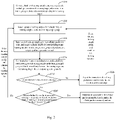
- Fig. 5 is a schematic diagram according to a fifth embodiment of the present disclosure; as shown in Fig. 5 , the technical solution of the method for screening drug data according to the present embodiment of the present application is further described in more detail based on the technical solution of the above-mentioned embodiment shown in Fig. 4 .
- the method for screening drug data according to the present embodiment may specifically include the following steps: S501: predicting a predicted affinity between each drug in the preset drug library and the preset target using the pre-trained affinity prediction model based on the test data set corresponding to the preset target.
- the test data set corresponding to the preset target may also be null.
- the test data set corresponding to the preset target may not be null, and includes the preset target, information of an experimentally verified drug, and the known affinity between the preset target and the drug. At this point, the amount of the relevant information of the drug included in the test data set corresponding to the preset target is not limited herein.
- S502 screening the information of the several drugs with the highest predicted affinity with the preset target from the preset drug library based on the predicted affinity of each drug in the preset drug library with the preset target.
- the steps S501-S502 are an implementation of the above-mentioned embodiment shown in Fig. 4 . That is, the information of each drug in the preset drug library, the information of the preset target, and the test data set of the preset target are input into the pre-trained affinity prediction model, and the affinity prediction model may predict and output the predicted affinity between the drug and the preset target. In this way, the predicted affinity between each drug in the drug library and the preset target may be predicted. Then, all the drugs in the preset drug library may be sequenced according to a descending order of the predicted affinity; and the several drugs with the highest predicted affinity may be screened.
- C s i may be used to represent information of the screened ith drug, i ⁇ [1, K ], and K represents the number of the several drugs.
- y ( C s i , t ) is used to represent the real affinity of the screened ith drug with the preset target t.
- S504 updating the test data set corresponding to the preset target based on the information of the several drugs and the real affinity of each drug with the preset target.
- step S505 detecting whether a number of the updated drugs in the test data set reaches a preset number threshold; if no, returning to step S501 to continuously screen the drugs; otherwise, if yes, ending.
- the number of the updated drugs in the test data set may refer to a number of the drugs with the known affinities acquired experimentally.
- the number of the drugs updated into the test data set may be the number of all the screened drugs.
- the number of the updated drugs in the test data set may be less than the number of the screened drugs.
- the method may return to step S501, the current step number s is updated to s+1, and the screening operation is continuously performed.
- the adopted test data set of the preset target is updated, thereby further improving the accuracy of the affinity of each drug in the drug library with the preset target. Therefore, when the second screening process is performed based on the updated test data set of the preset target, the information of the several drugs with the highest predicted affinity with the preset target screened from the preset drug library may be completely different from or partially the same as the result of the several drugs screened in the previous round.
- step S503 for the experimented drugs, experiments may not be performed again to obtain the rear affinities with the predetermined target. Only the drugs which are not experimented are experimented to obtain the real affinities with the preset target, and only the real affinities of the drugs obtained by experiments in this round with the preset target of the drugs are updated in the test data set, and so on, until the number of the updated drugs in the test data set reaches the preset number threshold, and the cycle is ended. At this point, the data in the test data set is all the real affinities with the preset target obtained through experiments. Subsequently, the information of one or several drugs with the highest known affinity may be selected from the test data set of the preset target, and the selected drugs may be used as lead drug compounds for subsequent verification.
- the test data set corresponding to the preset target obtained by the screening operation in the present embodiment may also be used in the training process of the affinity prediction model in the embodiment shown in Fig. 1 or Fig. 2 , thus effectively guaranteeing the accuracy of the test data set of the preset target in the training sample, and then further improving the precision of the trained affinity prediction model.
- the affinity prediction model in the embodiment shown in Fig. 1 or Fig. 2 is used to screen the drug data in the embodiment shown in Fig. 4 or Fig. 5 , which may also improve the screening accuracy and the screening efficiency of the drug data.
- the test data set corresponding to the preset target obtained by the screening operation in the present embodiment may also be different from the test data set in the training sample in the embodiment shown in Fig. 1 or Fig. 2 .
- the preset target and the drugs since the pre-trained affinity prediction model is first adopted to screen the information of the several drugs, in the test data set finally obtained based on the information of the several drugs, the preset target and the drugs have higher affinities; however, in the test data set in the training sample in the embodiment shown in Fig. 1 or Fig. 2 , the training target and the test drug may have a low affinity, as long as it is obtained through experiments.
- the pre-trained affinity detection model may be utilized to provide an effective drug screening solution, thus avoiding experimentally screening all the drugs in the drug library, so as to effectively reduce the experimental cost and improve the drug screening efficiency.
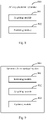
- Fig. 6 is a schematic diagram according to a sixth embodiment of the present disclosure. As shown in Fig. 6 , the present embodiment provides an apparatus for training an affinity prediction model, including:
- the apparatus 600 for training an affinity prediction model according to the present embodiment has the same implementation as the above-mentioned relevant method embodiment by adopting the above-mentioned modules to implement the implementation principle and the technical effects of training the affinity prediction model, and for details, reference may be made to the description of the above-mentioned relevant method embodiment, and details are not repeated herein.
- FIG. 7 is a schematic diagram according to a seventh embodiment of the present disclosure. As shown in Fig. 7 , the technical solution of the apparatus 600 for training an affinity prediction model according to the present embodiment of the present application is further described in more detail based on the technical solution of the above-mentioned embodiment shown in Fig. 6 .
- the test data set corresponding to the training target in each of the plural training samples collected by the collecting module 601 may include a known affinity of the training target with each tested drug.
- the training module 602 includes:
- the constructing unit 6023 is configured to: take a sum of mean square errors between the predicted affinities corresponding to the training samples in the training sample group and the corresponding known affinities as the loss function.
- the apparatus 600 for training an affinity prediction model according to the present embodiment has the same implementation as the above-mentioned relevant method embodiment by adopting the above-mentioned modules to implement the implementation principle and the technical effects of training the affinity prediction model, and for details, reference may be made to the description of the above-mentioned relevant method embodiment, and details are not repeated herein.
- Fig. 8 is a schematic diagram according to an eighth embodiment of the present disclosure; as shown in Fig. 8 , the present embodiment provides an affinity prediction apparatus 800, including:
- the affinity prediction apparatus 800 has the same implementation as the above-mentioned relevant method embodiment by adopting the above-mentioned modules to implement the implementation principle and the technical effects of the affinity prediction, and for details, reference may be made to the description of the above-mentioned relevant method embodiment, and details are not repeated herein.
- Fig. 9 is a schematic diagram according to a ninth embodiment of the present disclosure. As shown in Fig. 9 , the present embodiment provides an apparatus 900 for screening drug data, including:
- the apparatus 900 for screening drug data according to the present embodiment has the same implementation as the above-mentioned relevant method embodiment by adopting the above-mentioned modules to implement the implementation principle and the technical effects of screening drug data, and for details, reference may be made to the description of the above-mentioned relevant method embodiment, and details are not repeated herein.
- the present disclosure further provides an electronic device, a readable storage medium and a computer program product.
- Fig. 10 shows a schematic block diagram of an exemplary electronic device 1000 configured to implement the embodiments of the present disclosure.
- the electronic device is intended to represent various forms of digital computers, such as laptop computers, desktop computers, workstations, servers, blade servers, mainframe computers, and other appropriate computers.
- the electronic device may also represent various forms of mobile apparatuses, such as personal digital assistants, cellular telephones, smart phones, wearable devices, and other similar computing apparatuses.
- the components shown herein, their connections and relationships, and their functions, are meant to be exemplary only, and are not meant to limit implementation of the present disclosure described and/or claimed herein.
- the electronic device 1000 includes a computing unit 1001 which may perform various appropriate actions and processing operations according to a computer program stored in a read only memory (ROM) 1002 or a computer program loaded from a storage unit 1008 into a random access memory (RAM) 1003.
- ROM read only memory
- RAM random access memory
- Various programs and data necessary for the operation of the electronic device 1000 may be also stored in the RAM 1003.
- the computing unit 1001, the ROM 1002, and the RAM 1003 are connected with one other through a bus 1004.
- An input/output (I/O) interface 1005 is also connected to the bus 1004.
- the plural components in the electronic device 1000 are connected to the I/O interface 1005, and include: an input unit 1006, such as a keyboard, a mouse, or the like; an output unit 1007, such as various types of displays, speakers, or the like; the storage unit 1008, such as a magnetic disk, an optical disk, or the like; and a communication unit 1009, such as a network card, a modem, a wireless communication transceiver, or the like.
- the communication unit 1009 allows the electronic device 1000 to exchange information/data with other devices through a computer network, such as the Internet, and/or various telecommunication networks.
- the computing unit 1001 may be a variety of general and/or special purpose processing components with processing and computing capabilities. Some examples of the computing unit 1001 include, but are not limited to, a central processing unit (CPU), a graphic processing unit (GPU), various dedicated artificial intelligence (AI) computing chips, various computing units running machine learning model algorithms, a digital signal processor (DSP), and any suitable processor, controller, microcontroller, or the like.
- the computing unit 1001 performs the methods and processing operations described above, such as the method for training an affinity prediction model, the affinity prediction method or the method for screening drug data.
- the method for training an affinity prediction model, the affinity prediction method or the method for screening drug data may be implemented as a computer software program tangibly contained in a machine readable medium, such as the storage unit 1008.
- part or all of the computer program may be loaded and/or installed into the electronic device 1000 via the ROM 1002 and/or the communication unit 1009.
- the computing unit 1001 may be configured to perform the method for training an affinity prediction model, the affinity prediction method or the method for screening drug data by any other suitable means (for example, by means of firmware).
- Various implementations of the systems and technologies described herein above may be implemented in digital electronic circuitry, integrated circuitry, field programmable gate arrays (FPGA), application specific integrated circuits (ASIC), application specific standard products (ASSP), systems on chips (SOC), complex programmable logic devices (CPLD), computer hardware, firmware, software, and/or combinations thereof.
- the systems and technologies may be implemented in one or more computer programs which are executable and/or interpretable on a programmable system including at least one programmable processor, and the programmable processor may be special or general, and may receive data and instructions from, and transmit data and instructions to, a storage system, at least one input apparatus, and at least one output apparatus.
- Program codes for implementing the method according to the present disclosure may be written in any combination of one or more programming languages. These program codes may be provided to a processor or a controller of a general purpose computer, a special purpose computer, or other programmable data processing apparatuses, such that the program code, when executed by the processor or the controller, causes functions/operations specified in the flowchart and/or the block diagram to be implemented.
- the program code may be executed entirely on a machine, partly on a machine, partly on a machine as a stand-alone software package and partly on a remote machine, or entirely on a remote machine or a server.
- the machine readable medium may be a tangible medium which may contain or store a program for use by or in connection with an instruction execution system, apparatus, or device.
- the machine readable medium may be a machine readable signal medium or a machine readable storage medium.
- the machine readable medium may include, but is not limited to, an electronic, magnetic, optical, electromagnetic, infrared, or semiconductor system, apparatus, or device, or any suitable combination of the foregoing.
- machine readable storage medium may include an electrical connection based on one or more wires, a portable computer disk, a hard disk, a random access memory (RAM), a read only memory (ROM), an erasable programmable read only memory (EPROM or flash memory), an optical fiber, a portable compact disc read only memory (CD-ROM), an optical storage device, a magnetic storage device, or any suitable combination of the foregoing.
- RAM random access memory
- ROM read only memory
- EPROM or flash memory erasable programmable read only memory
- CD-ROM compact disc read only memory
- magnetic storage device or any suitable combination of the foregoing.
- a computer having: a display apparatus (for example, a cathode ray tube (CRT) or liquid crystal display (LCD) monitor) for displaying information to a user; and a keyboard and a pointing apparatus (for example, a mouse or a trackball) by which a user may provide input for the computer.
- a display apparatus for example, a cathode ray tube (CRT) or liquid crystal display (LCD) monitor
- a keyboard and a pointing apparatus for example, a mouse or a trackball
- Other kinds of apparatuses may also be used to provide interaction with a user; for example, feedback provided for a user may be any form of sensory feedback (for example, visual feedback, auditory feedback, or tactile feedback); and input from a user may be received in any form (including acoustic, speech or tactile input).
- the systems and technologies described here may be implemented in a computing system (for example, as a data server) which includes a back-end component, or a computing system (for example, an application server) which includes a middleware component, or a computing system (for example, a user computer having a graphical user interface or a web browser through which a user may interact with an implementation of the systems and technologies described here) which includes a front-end component, or a computing system which includes any combination of such back-end, middleware, or front-end components.
- the components of the system may be interconnected through any form or medium of digital data communication (for example, a communication network). Examples of the communication network include: a local area network (LAN), a wide area network (WAN), the Internet and a blockchain network.
- a computer system may include a client and a server.
- the client and the server are remote from each other and interact through the communication network.
- the relationship between the client and the server is generated by virtue of computer programs which run on respective computers and have a client-server relationship to each other.
- the server may be a cloud server, also called a cloud computing server or a cloud host, and is a host product in a cloud computing service system, so as to overcome the defects of high management difficulty and weak service expansibility in conventional physical host and virtual private server (VPS) service.
- the server may also be a server of a distributed system, or a server incorporating a blockchain.
Landscapes
- Engineering & Computer Science (AREA)
- Physics & Mathematics (AREA)
- Life Sciences & Earth Sciences (AREA)
- Theoretical Computer Science (AREA)
- Health & Medical Sciences (AREA)
- Bioinformatics & Cheminformatics (AREA)
- Medical Informatics (AREA)
- Spectroscopy & Molecular Physics (AREA)
- Data Mining & Analysis (AREA)
- Bioinformatics & Computational Biology (AREA)
- Evolutionary Biology (AREA)
- Chemical & Material Sciences (AREA)
- Software Systems (AREA)
- General Health & Medical Sciences (AREA)
- Biophysics (AREA)
- Biotechnology (AREA)
- Computer Vision & Pattern Recognition (AREA)
- Evolutionary Computation (AREA)
- Artificial Intelligence (AREA)
- Pharmacology & Pharmacy (AREA)
- Crystallography & Structural Chemistry (AREA)
- Medicinal Chemistry (AREA)
- General Physics & Mathematics (AREA)
- General Engineering & Computer Science (AREA)
- Bioethics (AREA)
- Databases & Information Systems (AREA)
- Epidemiology (AREA)
- Public Health (AREA)
- Computing Systems (AREA)
- Mathematical Physics (AREA)
- Investigating Or Analysing Biological Materials (AREA)
- Medical Treatment And Welfare Office Work (AREA)
Applications Claiming Priority (1)
| Application Number | Priority Date | Filing Date | Title |
|---|---|---|---|
| CN202110011160.6A CN112331262A (zh) | 2021-01-06 | 2021-01-06 | 亲和度预测方法及模型的训练方法、装置、设备及介质 |
Publications (2)
| Publication Number | Publication Date |
|---|---|
| EP4027348A2 true EP4027348A2 (de) | 2022-07-13 |
| EP4027348A3 EP4027348A3 (de) | 2022-08-31 |
Family
ID=74302481
Family Applications (1)
| Application Number | Title | Priority Date | Filing Date |
|---|---|---|---|
| EP21202323.8A Ceased EP4027348A3 (de) | 2021-01-06 | 2021-10-13 | Verfahren und vorrichtung zur affinitätsvorhersage, verfahren und vorrichtung zum trainieren eines affinitätsvorhersagemodells, vorrichtung und medium |
Country Status (5)
| Country | Link |
|---|---|
| US (1) | US20220215899A1 (de) |
| EP (1) | EP4027348A3 (de) |
| JP (1) | JP2022106287A (de) |
| KR (1) | KR20220099504A (de) |
| CN (1) | CN112331262A (de) |
Families Citing this family (11)
| Publication number | Priority date | Publication date | Assignee | Title |
|---|---|---|---|---|
| FR3101111B1 (fr) * | 2019-09-24 | 2022-04-08 | Renault Sas | Dispositif d'injection d'air à l'échappement |
| CN113409883B (zh) * | 2021-06-30 | 2022-05-03 | 北京百度网讯科技有限公司 | 信息预测及信息预测模型的训练方法、装置、设备及介质 |
| CN113409884B (zh) * | 2021-06-30 | 2022-07-22 | 北京百度网讯科技有限公司 | 排序学习模型的训练方法及排序方法、装置、设备及介质 |
| CN113643752A (zh) * | 2021-07-29 | 2021-11-12 | 北京百度网讯科技有限公司 | 建立药物协同作用预测模型的方法、预测方法及对应装置 |
| CN114121180B (zh) * | 2021-10-21 | 2025-08-22 | 北京百度网讯科技有限公司 | 药物筛选方法、装置、电子设备及存储介质 |
| CN114663347B (zh) * | 2022-02-07 | 2022-09-27 | 中国科学院自动化研究所 | 无监督的物体实例检测方法及装置 |
| US20260044544A1 (en) * | 2022-07-26 | 2026-02-12 | Lg Electronics Inc. | Artificial intelligence apparatus and chemical material search method thereof |
| CN115206415A (zh) * | 2022-08-08 | 2022-10-18 | 香港中文大学(深圳) | 抗体-蛋白质结合亲和力预测模型的训练方法和装置 |
| CN116920250A (zh) * | 2023-06-07 | 2023-10-24 | 江苏麻神医疗研究院有限公司 | 呼吸给药预测方法及装置、输注泵、系统和存储介质 |
| CN121586930A (zh) * | 2023-08-02 | 2026-02-27 | 国立大学法人大阪大学 | 化合物库生成方法、化合物库生成系统、计算机程序以及学习模型的生成方法 |
| CN119314591B (zh) * | 2024-09-30 | 2025-11-21 | 北京百度网讯科技有限公司 | 药物分子生成和模型训练方法、装置和设备 |
Family Cites Families (10)
| Publication number | Priority date | Publication date | Assignee | Title |
|---|---|---|---|---|
| US20030115030A1 (en) * | 2001-12-19 | 2003-06-19 | Camitro Corporation | Non-linear modelling of biological activity of chemical compounds |
| CA2525231A1 (en) * | 2003-06-10 | 2004-12-23 | Virco Bvba | Computational method for predicting the contribution of mutations to the drug resistance phenotype exhibited by hiv based on a linear regression analysis of the log fold resistance |
| CN102930181B (zh) * | 2012-11-07 | 2015-05-27 | 四川大学 | 基于分子描述符的蛋白质-配体亲和力预测方法 |
| CN103116713B (zh) * | 2013-02-25 | 2015-09-16 | 浙江大学 | 基于随机森林的化合物和蛋白质相互作用预测方法 |
| WO2019191777A1 (en) * | 2018-03-30 | 2019-10-03 | Board Of Trustees Of Michigan State University | Systems and methods for drug design and discovery comprising applications of machine learning with differential geometric modeling |
| US11721441B2 (en) * | 2019-01-15 | 2023-08-08 | Merative Us L.P. | Determining drug effectiveness ranking for a patient using machine learning |
| CN110415763B (zh) * | 2019-08-06 | 2023-05-23 | 腾讯科技(深圳)有限公司 | 药物与靶标的相互作用预测方法、装置、设备及存储介质 |
| CN110689965B (zh) * | 2019-10-10 | 2023-03-24 | 电子科技大学 | 一种基于深度学习的药物靶点亲和力预测方法 |
| CN111105843B (zh) * | 2019-12-31 | 2023-07-21 | 杭州纽安津生物科技有限公司 | 一种hlai型分子与多肽的亲和力预测方法 |
| CN111599403B (zh) * | 2020-05-22 | 2023-03-14 | 电子科技大学 | 一种基于排序学习的并行式药物-靶标相关性预测方法 |
-
2021
- 2021-01-06 CN CN202110011160.6A patent/CN112331262A/zh active Pending
- 2021-10-13 EP EP21202323.8A patent/EP4027348A3/de not_active Ceased
- 2021-12-21 US US17/557,691 patent/US20220215899A1/en active Pending
- 2021-12-21 JP JP2021207057A patent/JP2022106287A/ja active Pending
-
2022
- 2022-01-05 KR KR1020220001784A patent/KR20220099504A/ko not_active Ceased
Non-Patent Citations (2)
| Title |
|---|
| CHRISTOPHE PERE: "What are Loss Functions?. After the post on activation functions... | by Christophe Pere | Towards Data Science", 17 June 2021 (2021-06-17), XP093071835, Retrieved from the Internet <URL:https://towardsdatascience.com/what-is-loss-function-1e2605aeb904> [retrieved on 20230808] * |
| SHIVA VERMA: "Understanding different Loss Functions for Neural Networks | by Shiva Verma | Medium", 20 June 2019 (2019-06-20), XP093071841, Retrieved from the Internet <URL:https://shiva-verma.medium.com/understanding-different-loss-functions-for-neural-networks-dd1ed0274718> [retrieved on 20230808] * |
Also Published As
| Publication number | Publication date |
|---|---|
| JP2022106287A (ja) | 2022-07-19 |
| US20220215899A1 (en) | 2022-07-07 |
| KR20220099504A (ko) | 2022-07-13 |
| EP4027348A3 (de) | 2022-08-31 |
| CN112331262A (zh) | 2021-02-05 |
Similar Documents
| Publication | Publication Date | Title |
|---|---|---|
| US20220215899A1 (en) | Affinity prediction method and apparatus, method and apparatus for training affinity prediction model, device and medium | |
| Ghazal et al. | Feature optimization and identification of ovarian cancer using internet of medical things | |
| KR101991918B1 (ko) | 순환 신경망들을 사용하는 건강 이벤트들의 분석 | |
| US11194860B2 (en) | Question generation systems and methods for automating diagnosis | |
| JP6530085B2 (ja) | 再帰型ニューラル・ネットワークを用いた健康現象の分析 | |
| CN107040397B (zh) | 一种业务参数获取方法及装置 | |
| CN113409884B (zh) | 排序学习模型的训练方法及排序方法、装置、设备及介质 | |
| US20070288215A1 (en) | Techniques for Determining the Effects on a System of a Component that has Four States | |
| EP4575911A1 (de) | Verfahren und vorrichtung zur erfassung von trainingsproben sowie verfahren und vorrichtung für grossmodelloptimierungstraining | |
| KR102192461B1 (ko) | 불확정성을 모델링할 수 있는 뉴럴네트워크 학습 장치 및 방법 | |
| CN110798467A (zh) | 目标对象识别方法、装置、计算机设备及存储介质 | |
| JP2023020910A (ja) | 薬物相乗効果予測モデルの構築方法、予測方法及び対応装置 | |
| WO2022089805A1 (en) | Training protein structure prediction neural networks using reduced multiple sequence alignments | |
| CN114066513A (zh) | 一种用户分类的方法和装置 | |
| CN113782092A (zh) | 一种生存期预测模型的生成方法及装置、存储介质 | |
| US11373760B2 (en) | False detection rate control with null-hypothesis | |
| CN113159934A (zh) | 一种网点客流量的预测方法、系统、电子设备及存储介质 | |
| CN116186603B (zh) | 异常用户的识别方法及装置、计算机存储介质、电子设备 | |
| CN112836765A (zh) | 分布式学习的数据处理方法、装置、电子设备 | |
| CN114969543A (zh) | 推广方法、系统、电子设备和存储介质 | |
| CN113643140A (zh) | 确定医保支出影响因素的方法、装置、设备和介质 | |
| CN115774817A (zh) | 信息处理模型的训练方法、信息处理方法及相关设备 | |
| US20230420073A1 (en) | Machine learning models for determining pathogenic genetic variants | |
| CN117057899A (zh) | 信用风险评估方法、装置和设备 | |
| CN116680515A (zh) | 一种首屏时间的计算方法、装置、电子设备及存储介质 |
Legal Events
| Date | Code | Title | Description |
|---|---|---|---|
| PUAI | Public reference made under article 153(3) epc to a published international application that has entered the european phase |
Free format text: ORIGINAL CODE: 0009012 |
|
| STAA | Information on the status of an ep patent application or granted ep patent |
Free format text: STATUS: REQUEST FOR EXAMINATION WAS MADE |
|
| 17P | Request for examination filed |
Effective date: 20211013 |
|
| AK | Designated contracting states |
Kind code of ref document: A2 Designated state(s): AL AT BE BG CH CY CZ DE DK EE ES FI FR GB GR HR HU IE IS IT LI LT LU LV MC MK MT NL NO PL PT RO RS SE SI SK SM TR |
|
| PUAL | Search report despatched |
Free format text: ORIGINAL CODE: 0009013 |
|
| AK | Designated contracting states |
Kind code of ref document: A3 Designated state(s): AL AT BE BG CH CY CZ DE DK EE ES FI FR GB GR HR HU IE IS IT LI LT LU LV MC MK MT NL NO PL PT RO RS SE SI SK SM TR |
|
| RIC1 | Information provided on ipc code assigned before grant |
Ipc: G16B 40/20 20190101ALI20220726BHEP Ipc: G16B 15/30 20190101AFI20220726BHEP |
|
| STAA | Information on the status of an ep patent application or granted ep patent |
Free format text: STATUS: EXAMINATION IS IN PROGRESS |
|
| 17Q | First examination report despatched |
Effective date: 20230323 |
|
| STAA | Information on the status of an ep patent application or granted ep patent |
Free format text: STATUS: THE APPLICATION HAS BEEN REFUSED |
|
| 18R | Application refused |
Effective date: 20231104 |