EP4026293B1 - Unterstützung für ims leitweglenkung mit mehreren ims-pdu-sitzungen über verschiedene 5gc-slices - Google Patents
Unterstützung für ims leitweglenkung mit mehreren ims-pdu-sitzungen über verschiedene 5gc-slices Download PDFInfo
- Publication number
- EP4026293B1 EP4026293B1 EP20768390.5A EP20768390A EP4026293B1 EP 4026293 B1 EP4026293 B1 EP 4026293B1 EP 20768390 A EP20768390 A EP 20768390A EP 4026293 B1 EP4026293 B1 EP 4026293B1
- Authority
- EP
- European Patent Office
- Prior art keywords
- cscf
- ims
- cscfs
- target
- invite message
- Prior art date
- Legal status (The legal status is an assumption and is not a legal conclusion. Google has not performed a legal analysis and makes no representation as to the accuracy of the status listed.)
- Active
Links
Images






Classifications
-
- H—ELECTRICITY
- H04—ELECTRIC COMMUNICATION TECHNIQUE
- H04L—TRANSMISSION OF DIGITAL INFORMATION, e.g. TELEGRAPHIC COMMUNICATION
- H04L65/00—Network arrangements, protocols or services for supporting real-time applications in data packet communication
- H04L65/10—Architectures or entities
- H04L65/1016—IP multimedia subsystem [IMS]
-
- H—ELECTRICITY
- H04—ELECTRIC COMMUNICATION TECHNIQUE
- H04L—TRANSMISSION OF DIGITAL INFORMATION, e.g. TELEGRAPHIC COMMUNICATION
- H04L65/00—Network arrangements, protocols or services for supporting real-time applications in data packet communication
- H04L65/1066—Session management
- H04L65/1069—Session establishment or de-establishment
-
- H—ELECTRICITY
- H04—ELECTRIC COMMUNICATION TECHNIQUE
- H04L—TRANSMISSION OF DIGITAL INFORMATION, e.g. TELEGRAPHIC COMMUNICATION
- H04L65/00—Network arrangements, protocols or services for supporting real-time applications in data packet communication
- H04L65/1066—Session management
- H04L65/1073—Registration or de-registration
-
- H—ELECTRICITY
- H04—ELECTRIC COMMUNICATION TECHNIQUE
- H04W—WIRELESS COMMUNICATION NETWORKS
- H04W48/00—Access restriction; Network selection; Access point selection
- H04W48/18—Selecting a network or a communication service
-
- H—ELECTRICITY
- H04—ELECTRIC COMMUNICATION TECHNIQUE
- H04W—WIRELESS COMMUNICATION NETWORKS
- H04W60/00—Affiliation to network, e.g. registration; Terminating affiliation with the network, e.g. de-registration
- H04W60/005—Multiple registrations, e.g. multihoming
-
- H—ELECTRICITY
- H04—ELECTRIC COMMUNICATION TECHNIQUE
- H04L—TRANSMISSION OF DIGITAL INFORMATION, e.g. TELEGRAPHIC COMMUNICATION
- H04L65/00—Network arrangements, protocols or services for supporting real-time applications in data packet communication
- H04L65/10—Architectures or entities
- H04L65/1046—Call controllers; Call servers
Definitions
- the present disclosure relates to network slicing and, in the preferred embodiments described herein, network slicing in a Third Generation Partnership Project (3GPP) Fifth Generation (5G) Core network (5GC), which is sometimes referred to as 5GC slicing.
- 3GPP Third Generation Partnership Project
- 5G Fifth Generation
- 5GC Core network
- Network slicing utilizes virtualization technology (e.g., Software Defined Networking (SDN) and Network Functions Virtualization (NFV)) to allow multiple virtual (i.e., logical) networks to be created on top of a common shared physical infrastructure. These virtual networks are referred to as network slices. The network slices can then be customized to meet needs of different use cases.
- virtualization technology e.g., Software Defined Networking (SDN) and Network Functions Virtualization (NFV)
- SDN Software Defined Networking
- NFV Network Functions Virtualization
- Network slicing has been proposed in the Third Generation Partnership Project (3GPP) for the Fifth Generation System (5GS). Further, the concept of Internet Protocol (IP) Multimedia Subsystem (IMS) slicing has been proposed in Patent Cooperation Treaty (PCT) Patent Application Publication No. WO 2019/150245 A1 , entitled NETWORK SLICING IN IMS.
- IP Internet Protocol
- IMS Internet Multimedia Subsystem
- PCT Patent Cooperation Treaty
- WO 2019/150245 A1 entitled NETWORK SLICING IN IMS.
- UE User Equipment
- PDU IMS Protocol Data Unit
- Document US 2010 / 0 150 137 A1 discloses a method for providing multimedia Services to subscriber user equipment (UE) within an IP multimedia Subsystem network (IMS).
- the method may include configuring the IMS to enable a single UE to fork register and cooperate with multiple serving-call session control functions (S-CSCFs).
- S-CSCFs serving-call session control functions
- the single UE signals to register with the IMS and the IMS determines whether the UE is configured to fork register with multiple S-CSCFs. If the UE is configured, the IMS determines which S-CSCFs are eligible for the UE registration and fork registers the UE to multiple S-CSCFs of the eligible S-CSCFs. Consequently, incoming and outgoing calls to/from the UE are routed by the IMS to any of the multiple registered S-CSCFs.
- Document 3GPP TR 23.820 V9.0.0 discloses changes required in the 3GPP IMS specifications so that a consistent state is restored in the IMS Core Network, after, or during a planned, or unplanned stop of a network element.
- I-CSCF Interrogating Call/Session Control Function
- IMS IP Multimedia Subsystem
- the method comprises, in response to receipt of a Session Initiation Protocol (SIP) message, requesting capabilities information relating to a user from a Home Subscriber Server (HSS) of the IMS.
- SIP Session Initiation Protocol
- HSS Home Subscriber Server
- S-CSCF secondary Serving Call/Session Control Function
- the I-CSCF attempts to forward the SIP message to the primary S-CSCF with information relating to the secondary S-CSCF, such that the information can be provided subsequently to the HSS. If the attempt is determined to have failed, the SIP message can be forwarded to the secondary S-CSCF instead.
- IP Internet Protocol
- IMS Internet Multimedia Subsystem
- PDU Protocol Data Unit
- I-CSCF Interrogating Call Session Control Function
- I-CSCF Interrogating Call Session Control Function
- I-CSCF Interrogating Call Session Control Function
- a method performed by a Serving Call Session Control Function, S-CSCF, for an Internet Protocol, IP, Multimedia Subsystem, IMS comprises receiving, from an Interrogating Call Session Control Function, I-CSCF, a Session Initiation Protocol, SIP, invite message for an incoming session for a target User Equipment, UE; determining whether to accept the incoming session based on the SIP invite message; if determined to reject the incoming session, sending a message to the I-CSCF that indicates an error or rejection; and if determined to accept the incoming session, forwarding the SIP invite message to another node.
- I-CSCF Interrogating Call Session Control Function
- SIP Session Initiation Protocol
- a Serving Call Session Control Function for an Internet Protocol, IP, Multimedia Subsystem, IMS, the S-CSCF adapted to perform the method of the second aspect.
- a system comprising an Interrogating Call Session Control Function, I-CSCF, adapted to: receive a Session Initiation Protocol, SIP, invite message for an incoming session, the SIP INVITE message comprising an Internet Protocol, IP, Multimedia Public Identity, IMPU, of a target User Equipment, UE; send, to a Home Subscriber Server, HSS, a query for Serving Call Session Control Functions, S-CSCFs, having registrations for the IMPU of the target UE; receive, from the HSS, information that indicates two or more S-CSCFs having registrations for the IMPU of the target UE; and forward the SIP invite message to at least one of the two or more S-CSCFs; the HSS, wherein the HSS is adapted to: receive the query from the I-CSCF; obtain the information that indicates the two or more S-CSCFs having registrations for the IMPU of the target UE; and send, to the I-
- a computer-readable medium comprising code portions which, when executed on a processor of a Serving Call Session Control Function, S-CSCF, configure the processor to perform the method according to the second aspect.
- Radio Node As used herein, a "radio node” is either a radio access node or a wireless device.
- Radio Access Node As used herein, a "radio access node” or “radio network node” is any node in a radio access network of a cellular communications network that operates to wirelessly transmit and/or receive signals.
- a radio access node include, but are not limited to, a base station (e.g., a New Radio (NR) base station (gNB) in a Third Generation Partnership Project (3GPP) Fifth Generation (5G) NR network or an enhanced or evolved Node B (eNB) in a 3GPP Long Term Evolution (LTE) network), a high-power or macro base station, a low-power base station (e.g., a micro base station, a pico base station, a home eNB, or the like), and a relay node.
- a base station e.g., a New Radio (NR) base station (gNB) in a Third Generation Partnership Project (3GPP) Fifth Generation (5G) NR network or an enhanced or evolved Node B (eNB) in a
- a "core network node” is any type of node in a core network or any node that implements a core network function.
- Some examples of a core network node include, e.g., a Mobility Management Entity (MME), a Packet Data Network Gateway (P-GW), a Service Capability Exposure Function (SCEF), a Home Subscriber Server (HSS), or the like.
- MME Mobility Management Entity
- P-GW Packet Data Network Gateway
- SCEF Service Capability Exposure Function
- HSS Home Subscriber Server
- a core network node examples include a node implementing a Access and Mobility Function (AMF), a UPF, a Session Management Function (SMF), an Authentication Server Function (AUSF), a Network Slice Selection Function (NSSF), a Network Exposure Function (NEF), a Network Function (NF) Repository Function (NRF), a Policy Control Function (PCF), a Unified Data Management (UDM), or the like.
- AMF Access and Mobility Function
- UPF User Planet Control Function
- UPF Unified Data Management
- IP Internet Protocol
- IMS Internet Multimedia System
- a “wireless device” is any type of device that has access to (i.e., is served by) a cellular communications network by wirelessly transmitting and/or receiving signals to a radio access node(s).
- a wireless device include, but are not limited to, a User Equipment device (UE) in a 3GPP network and a Machine Type Communication (MTC) device.
- UE User Equipment device
- MTC Machine Type Communication
- Network Node As used herein, a "network node” is any node that is either part of the radio access network or the core network of a cellular communications network/system.
- a UE can establish two IMS Protocol Data Unit (PDU) sessions using different 5GC network slices using the same IP Multimedia Private Identity (IPMI) / IP Multimedia Public Identity (IMPU).
- IPMI IP Multimedia Private Identity
- IMPU IP Multimedia Public Identity
- a UE can have two IMS registrations over the two IMS PDU sessions - one for regular Multimedia Telephony (MMTEL) service using an enhanced Mobile Broadband (eMBB) 5GC slice and the other one for Mission Critical (MC) IMS services using a MC 5GC slice.
- MMTEL Multimedia Telephony
- eMBB enhanced Mobile Broadband
- MC Mission Critical
- Each IMS registration can have a different Proxy Call Session Control Function (P-CSCF) and can have a different S-CSCF or the same S-CSCF.
- P-CSCF Proxy Call Session Control Function
- the UE can receive regular incoming IMS sessions over the IMS PDU session associated with the eMBB network slice, while the same UE can receive incoming MC IMS sessions over the IMS PDU session associated with the MC 5GC slice.
- IMS nodes that receive an incoming session need to decide which UE contact to use for the incoming session. This implies selecting the correct S-CSCF, the correct P-CSCF, and the correct UE contact.
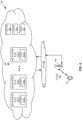
- Figure 1 illustrates this problem that the embodiments of the solutions described herein are solving.
- the Interrogating Call Session Control Function (I-CSCF) needs to ensure that the correct S-CSCF/P-CSCF and UE contact receive the incoming IMS session according to the 5GC slice over which the session arrived.
- Figure 1 implies that a terminating MC call must use S-CSCF2 to end up selecting the MC slice, while a terminating regular Voice of Long Term Evolution (VoLTE) session must use S-CSCF1 to end up selecting the eMBB slice for the target UE.
- VoIP Voice of Long Term Evolution
- the I-CSCF needs to make the correct decision as described above.
- Embodiments of the present disclosure ensure that the I-CSCF and other IMS nodes identify the 5GC slice used for an incoming session to enable locating the proper IMS nodes for terminating the session to the intended target.
- Embodiments of the present disclosure ensure that the I-CSCF and other IMS nodes identify IMS nodes (e.g., S-CSCF/P-CSCF) for terminating an incoming IMS session to an intended UE via a respective 5GC slice when the UE having a single MSISDN has two or more IMS sessions established over two or more 5GC slices using the same IMPI/IMPU.
- IMS nodes e.g., S-CSCF/P-CSCF
- IMS solution Two solutions are disclosed herein, namely, an IMS solution and non-IMS solution.
- IMS-solution additional behavior is provided in the I-CSCF, HSS, and S-CSCF to support the correct routing. These are the IMS nodes involved in a terminating session. Details are described below.
- a UE centric solution and a network-centric solution are disclosed.
- the UE provides, at IMS registration, information that indicates the 5GC slice associated with the IMS PDU session associated with this registration.
- This information that indicates the 5GC slice associated with the IMS PDU session associated with this registration is stored in (or otherwise made available to) all IMS nodes that need it for proper routing of a terminating IMS session and session initiation.
- the network derives the 5GC slice associated with the incoming IMS registration and returns information that indicates the 5GC slice to the UE in the SIP 200 OK response to the IMS registration.
- the network locates the Subscription Permanent Identifier (SUPI) that maps to the International Mobile Subscriber Identity (IMSI) / MSISDN for the registering IMS UE (also referred to herein as IMS user), then locates the PDU session associated with the IMS PDU session over which the IMS registration arrives, and then locates the 5GC slice used for that PDU session.
- SUPI Subscription Permanent Identifier
- Embodiments disclosed herein provide a simple way of allowing an IMS user to establish multiple PDU sessions for different purposes and allowing different S-CSCFs to be used for supporting these services using the same identity (IMPI/IMPU) while ensuring proper routing for terminating sessions.
- FIG. 2 illustrates an example of a system 200 including a 5G Radio Access Network (RAN) 202, a 5G Core Network (5GC) 204, and an Internet Protocol (IP) Multimedia Subsystem (IMS) 206.
- RAN Radio Access Network
- 5GC 5G Core Network
- IP Internet Protocol
- IMS Internet Protocol Multimedia Subsystem
- the 5G RAN 202 and the 5GC 204 are referred to as a 5GS.
- the 5G RAN 202 includes a number of radio access nodes 208 (referred to as New Radio (NR) base stations (gNBs)).
- NR New Radio
- the 5GC 204 includes a number of core network nodes, or core network functions, such as, e.g., an Access and Mobility Function(s) (AMF(s)) 210, a User Plane Function(s) (UPF(s)) 212, a Policy Control Function(s) (PCF(s)) 214, etc.
- the IMS 206 includes a number of IMS nodes such as, e.g., a Serving Call Session Control Function(s) (S-CSCF(s)) 216, a Proxy Call Session Control Function(s) (P-CSCF(s)) 218, I-CSCF(s) 220, etc.
- S-CSCF(s) Serving Call Session Control Function
- P-CSCF(s) Proxy Call Session Control Function
- FIG 3 illustrates the concept of network slicing with respect to the 5GS.
- the 5GS supports multiple services.
- Example services include, but are not limited to, enhanced Mobile Broadband (eMBB), Ultra Reliable Low Latency Communication (URLLC), massive Machine Type Communication (mMTC) or massive Internet of Things (IoT), emergency services, and/or the like.
- eMBB enhanced Mobile Broadband
- URLLC Ultra Reliable Low Latency Communication
- mMTC massive Machine Type Communication
- IoT massive Internet of Things
- emergency services and/or the like.
- each of the services is mapped to a 5GS network slice that is customized to meet the needs of that service. Note that more than one service may be mapped to the same 5GS network slice.
- the 5GS network slices are implemented on the same physical infrastructure.
- FIG. 4 illustrates one example of a wireless communication system 400 in which embodiments of the present disclosure may be implemented.
- the wireless communication system 400 is a 5GS including a 5G RAN 402 and a 5GC 404.
- the wireless communication system 400 also includes an IMS 406.
- the 5G RAN 402 includes a number of base stations 408, which are referred to as gNBs in 3GPP 5G, serving a number of wireless devices 410, which are also referred to herein as UEs 410.
- the base stations 408 are connected to the 5GC 404.
- the 5GC 404 is connected to the IMS 406.
- 5GC slicing is implemented in the 5GC 404, e.g., as described above with respect to Figure 3 .
- the IMS 406 includes a number of IMS network slices 412-1 through 412-N.
- the IMS network slices 412-1 through 412-N include respective S-CSCFs 414-1 through 414-N.
- the IMS network slices 412-1 through 412-N are generally referred to herein as IMS network slices 412, and the S-CSCFs 414-1 through 414-N are generally referred to herein as S-CSCFs 414.
- the S-CSCFs 414 are virtual nodes (e.g., IMS entities that are implemented by a (physical) network node(s) (e.g., as a virtual entity such as, e.g., a virtual machine).
- the IMS 406 also includes one or more P-CSCFs 416, one or more Interrogating Call Session Control Functions (I-CSCFs) 418, and one or more HSSs 420.
- P-CSCFs 416 can be associated with different IMS network slices 412.
- each P-CSCF 416 may be associated with a different one of the IMS network slices 412 or each P-CSCF 416 may be associated with one or more of the IMS network slices 412.
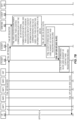
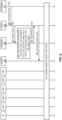
- FIGS. 5A and 5B illustrate a call flow for an IMS-based solution in accordance with some embodiments of the present disclosure.
- the steps of this call flow are as follows:
- the I-CSCF 418 uses "serial forking" to try the S-CSCFs 414 in the list returned by the HSS 420 (in step 502 of Figure 5A ) for the particular subscriber one at a time.
- the HSS 420 also has new functionality in that it returns the list of S-CSCFs.
- the S-CSCF 414 e.g., S-CSCF1 414-1 and S-CSCF2 414-2 of Figures 5A and 5B ) each also has additional behavior since it has to check the incoming SIP INVITE to sees if the S-CSCF 414 has the correct contact to handle the SIP INVITE.
- the conventional S-CSCF selects the most probable UE contact for the SIP INVITE; however, in the embodiment described above, the S-CSCF 414 is looking for an exact match between the UE contact and the requested service from the SIP INVITE.
- FIGS. 6A and 6B illustrate a call flow for another embodiment in which parallel forking is utilized by the I-CSCF 418.
- the steps of this call flow are as follows:
- the I-CSCF 418 attempts to reach all S-CSCFS 414 in the list received for the subscriber (in step 606 of Figure 6A ) at the same time (steps 610a and 610b). Only one S-CSCF 414 (S-CSCF 2 in the example of Figures 6A and 6B ) will accept the session
- FIGS 7A and 7B illustrate a call flow that shows both a UE centric solution (option 1) and a network centric solution (option 2) in accordance with some embodiments of the present disclosure.
- the UE 410 includes information that indicates the 5GC slice used for the IMS PDU session associated with the IMS PDN connection in IMS registration.
- the P-CSCS, S-CSCF, and HSS stores this information in the record associated with the registering IMPI/IMPU pair.
- the HSS 420 locates the 5G record based on the SUPI associated with the IMS subscription IMSI/MSISDN, then fetches the PDU session associated with the Registration IP address information in the contact, extracts the 5GS slice used for this PDU session, and stores it in the HSS 420. This information is returned in the SIP 200 OK to IMS nodes as shown in the call flow.
- the call flows of Figures 8 , 9 , and 10 detail the routing for incoming sessions using the proper IMS registration information, given that the called target is registered in IMS over two different 5GC slices.
- the goal as described above is that the I-CSCF 418 selects the proper S-CSCF 414 for the incoming IMS session associated with the correct service.
- Several terminating session scenarios are described.
- Figure 8 illustrates a terminating session scenario in which an indication of the 5GC slice is included in the SIP invite message for the incoming IMS session in accordance with some embodiments of the present disclosure.
- an indication of the 5GC slice used by the UE originating the session is included in the incoming SIP INVITE to the terminating UE/network.
- This enables the HSS 420 to locate the correct S-CSCF 414 (i.e., the S-CSCF 414 associated with the 5GC slice for the target UE that is registered over the IMS PDU session that matches the 5GC slice for the incoming INVITE).
- the incoming 5GC slice is carried over to the S-CSCF 414 so the S-CSCF 414 can choose the appropriate P-CSCF 414.
- the HSS 420 has stored this information at IMS registration, as described above.
- Figure 9 illustrates a terminating session scenario in which an indication of the 5GC slice is not included in the SIP invite message for the incoming IMS session in accordance with some embodiments of the present disclosure.
- the used 5GC by the UE originating the session slice is NOT included in the incoming SIP INVITE from the external network.
- HSS 420 assumes the 5GC slice to be a particular 5GC slice (e.g., the eMBB slice), the 5GC slice used for regular VoLTE sessions and which this scenario assumes and returns information that indicates the S-CSCF 414 for the target UE 410 that is registered over the IMS PDU session that matches assumed 5GC slice (e.g., the eMBB slice).
- Information that indicates the assumed 5GC slice e.g., eMBB slice
- This information is included in the subsequent SIP INVITE to the S-CSCF 414 so it can choose the appropriate P-CSCF 416.
- Figure 10 illustrates a termination session scenario in which the incoming IMS session is an incoming IMS session that originated from the operator's own network and does not include an indication of the used 5GC slice, in accordance with some embodiments of the present disclosure.
- the incoming session is an incoming session that originated from the operator's own network, and does not include the 5GC slice used by the UE originating the IMS session.
- HSS locates the incoming HSS record associated with the IP contact of the incoming INVITE. HSS then locates the PDU session associated with that contact (since the operator has both the IMS and 5GC record of the originating subscriber), determines the 5GC slice used for that PDU session, and then proceeds as in scenario 1.
- embodiments of the present disclosure may also ensure that the originating SIP INVITE will have the correct 5GC slice used since the 5GC slice inserted by the originating UE can be verified by the P-CSCF 416 if included. If the UE originating the session did not include the indication of the 5GC slice used, the P-CSCF can include it if it has one stored.
- FIG 11 is a schematic block diagram of an IMS physical infrastructure node 1100.
- the IMS network slices 412 are logical or virtual networks that are implemented using virtualization technology on a number of IMS physical infrastructure nodes such as the IMS physical infrastructure node 1100.
- the S-CSCFs 414 and, in some embodiments, the P-CSCF(s) 416, the I-CSCF(s) 418, and/or the HSS 420 are implemented as virtual nodes operating on a number of IMS physical infrastructure nodes 1100.
- IMS nodes e.g., the P-CSCF(s) 416, the I-CSCF(s) 418, and/or the HSS 420
- P-CSCF(s) 416 the I-CSCF(s) 416
- I-CSCF(s) 418 the I-CSCF(s) 418
- HSS 420 the HSS 420
- the IMS physical infrastructure node 1100 includes one or more processors 1102 (e.g., Central Processing Units (CPUs), Application Specific Integrated Circuits (ASICs), Field Programmable Gate Arrays (FPGAs), and/or the like), memory 1104, and a network interface(s) 1106.
- processors 1102 e.g., Central Processing Units (CPUs), Application Specific Integrated Circuits (ASICs), Field Programmable Gate Arrays (FPGAs), and/or the like
- memory 1104 e.g., RAM, RAM, RAM, RAM, and/or the like
- memory 1104 e.g., RAM, RAM, RAM, RAM, RAM, and/or the like
- the IMS nodes (the S-CSCFs 414 and, in some embodiments, the P-CSCF(s) 416, the I-CSCF(s) 418, and/or the HSS 420) are implemented as virtual nodes that utilize physical resources (e.g., the processor(s) 1102, the memory 1104, and the network interface(s) 1106) of one or more of the IMS physical infrastructure nodes 1100.
- physical resources e.g., the processor(s) 1102, the memory 1104, and the network interface(s) 1106
- a computer program including instructions which, when executed by at least one processor, causes the at least one processor to carry out the functionality of an IMS node according to any of the embodiments described herein is provided.
- a carrier comprising the aforementioned computer program product is provided.
- the carrier is one of an electronic signal, an optical signal, a radio signal, or a computer readable storage medium (e.g., a non-transitory computer readable medium such as memory).
- FIG 12 is a schematic block diagram of the IMS physical infrastructure node 1100 according to some other embodiments of the present disclosure.
- the IMS physical infrastructure node 1100 includes one or more modules 1200, each of which is implemented in software.
- the module(s) 1200 provide the functionality of one or more of the IMS nodes described herein.
- FIG. 13 is a schematic block diagram of the UE 400 according to some embodiments of the present disclosure.
- the UE 400 includes one or more processors 1302 (e.g., CPUs, ASICs, FPGAs, and/or the like), memory 1304, and one or more transceivers 1306 each including one or more transmitters 1308 and one or more receivers 1310 coupled to one or more antennas 1312.
- the transceiver(s) 1306 includes radio-front end circuitry connected to the antenna(s) 1312 that is configured to condition signals communicated between the antenna(s) 1312 and the processor(s) 1302, as will be appreciated by on of ordinary skill in the art.
- the processors 1302 are also referred to herein as processing circuitry.
- the transceivers 1306 are also referred to herein as radio circuitry.
- the functionality of the UE 400 described above may be fully or partially implemented in software that is, e.g., stored in the memory 1304 and executed by the processor(s) 1302.
- the UE 400 may include additional components not illustrated in Figure 13 such as, e.g., one or more user interface components (e.g., an input/output interface including a display, buttons, a touch screen, a microphone, a speaker(s), and/or the like and/or any other components for allowing input of information into the UE 400 and/or allowing output of information from the UE 400), a power supply (e.g., a battery and associated power circuitry), etc.
- a power supply e.g., a battery and associated power circuitry
- a computer program including instructions which, when executed by at least one processor, causes the at least one processor to carry out the functionality of the UE 400 according to any of the embodiments described herein is provided.
- a carrier comprising the aforementioned computer program product is provided.
- the carrier is one of an electronic signal, an optical signal, a radio signal, or a computer readable storage medium (e.g., a non-transitory computer readable medium such as memory).
- FIG 14 is a schematic block diagram of the UE 400 according to some other embodiments of the present disclosure.
- the UE 400 includes one or more modules 1400, each of which is implemented in software.
- the module(s) 1400 provide the functionality of the UE 400 described herein.
- any appropriate steps, methods, features, functions, or benefits disclosed herein may be performed through one or more functional units or modules of one or more virtual apparatuses.
- Each virtual apparatus may comprise a number of these functional units.
- These functional units may be implemented via processing circuitry, which may include one or more microprocessor or microcontrollers, as well as other digital hardware, which may include Digital Signal Processor (DSPs), special-purpose digital logic, and the like.
- the processing circuitry may be configured to execute program code stored in memory, which may include one or several types of memory such as Read Only Memory (ROM), Random Access Memory (RAM), cache memory, flash memory devices, optical storage devices, etc.
- Program code stored in memory includes program instructions for executing one or more telecommunications and/or data communications protocols as well as instructions for carrying out one or more of the techniques described herein.
- the processing circuitry may be used to cause the respective functional unit to perform corresponding functions according one or more embodiments of the present disclosure.
Landscapes
- Engineering & Computer Science (AREA)
- Computer Networks & Wireless Communication (AREA)
- Signal Processing (AREA)
- Multimedia (AREA)
- Business, Economics & Management (AREA)
- General Business, Economics & Management (AREA)
- Computer Security & Cryptography (AREA)
- Telephonic Communication Services (AREA)
- Mobile Radio Communication Systems (AREA)
Claims (12)
- Verfahren für Internetprotokoll-,IP-,Multimedia-Subsystem-Routing, IMS-Routing, wobei das Verfahren Folgendes umfasst:• an einer abfragenden Rufsitzungssteuerungsfunktion, I-CSCF, (418, 1100):o Empfangen (500; 600) einer Sitzungseinleitungsprotokoll-Invite-Nachricht, SIP-Invite-Nachricht, für eine eingehende Sitzung, wobei die SIP-Invite-Nachricht eine öffentliche Internetprotokoll-,IP-,Multimedia-Identität, IMPU, einer Ziel-Benutzereinrichtung, UE, umfasst;o Senden (502; 602) einer Abfrage für bedienende Rufsitzungssteuerungsfunktionen, S-CSCFs, (414, 1100) mit Registrierungen für die IMPU der Ziel-UE an einen Heimat-Teilnehmerserver, HSS, (420);o Empfangen (506; 606) von Informationen, die zwei oder mehr S-CSCFs (414-1, 414-2, 1100) mit Registrierungen für die IMPU der Ziel-UE angeben, von dem HSS (420); ando Weiterleiten (510 oder 520; 610a-610b) der SIP-Invite-Nachricht an mindestens eine der zwei oder mehr S-CSCFs (414-1, 414-2, 1100);• am HSS (420):o Empfangen (502; 602) der Abfrage von der I-CSCF (418, 1100);o Erhalten (504; 604) der Informationen, die die zwei oder mehr S-CSCFs (414-1, 414-2, 1100) mit Registrierungen für die IMPU der Ziel-UE angeben; undo Senden (506; 606) der Informationen, die die zwei oder mehr S-CSCFs (414-1, 414-2, 1100) mit Registrierungen für die IMPU der Ziel-UE angeben, an die I-CSCF (418, 1100); und• an jeder S-CSCF (414, 1100) der mindestens einen der zwei oder mehr S-CSCFs (414-1, 414-2, 1100), wobei jede S-CSCF (414, 1100) in einem IMS-Netzwerk-Slice (412-1, ..., 412-N) umfasst ist:o Empfangen (510 oder 520; 610a-610b) der SIP-Invite-Nachricht von der I-CSCF (418, 1100) für die eingehende Sitzung für die Ziel-UE, wobei die Ziel-UE zwei oder mehr IMS-Registrierungen über zwei oder mehr IMS-Protokolldateneinheitssitzungen, IMS-PDU-Sitzungen, aufweist, die unter Verwendung verschiedener Kernnetzwerk-Slices unter Verwendung einer gleichen privaten IP-Multimedia-Identität, IMPI, und IMPU aufgebaut wurden, und jede der zwei oder mehr IMS-Registrierungen mit einer von zwei oder mehr S-CSCFs assoziiert ist;o Bestimmen (512 oder 522; 612a oder 612b), ob die eingehende Sitzung angenommen werden soll, basierend auf der SIP-Invite-Nachricht;o wenn bestimmt wird, die eingehende Sitzung zurückzuweisen, Senden (514; 614a) einer Nachricht an die I-CSCF (418, 1100), die einen Fehler oder eine Zurückweisung angibt; undo wenn bestimmt wird, die eingehende Sitzung anzunehmen, Weiterleiten (524; 614b) der SIP-Invite-Nachricht an einen anderen Knoten (416).
- Verfahren nach Anspruch 1, ferner umfassend an der I-CSCF (418, 1100):- Auswählen (508) einer ersten S-CSCF (414-1, 1100) aus den zwei oder mehr S-CSCFs (414-1, 414-2, 1100);
wobei das Weiterleiten (510 oder 520; 610a-610b) der SIP-Invite-Nachricht an die mindestens eine der zwei oder mehr S-CSCFs (414-1, 414-2, 1100) ein Weiterleiten (510) der SIP-Invite-Nachricht an die erste S-CSCF (414-1, 1100) umfasst. - Verfahren nach Anspruch 2, ferner umfassend an der I-CSCF (418, 1100): Empfangen (514) einer Nachricht von der ersten S-CSCF (414-1, 1100), die einen Fehler oder eine Zurückweisung der eingehenden Sitzung angibt; und
bei Empfangen (514) der Nachricht von der ersten S-CSCF (414-1, 1100), die einen Fehler oder eine Zurückweisung der eingehenden Sitzung angibt:Auswählen (518) einer zweiten S-CSCF (414-2, 1100) aus den zwei oder mehr S-CSCFs (414-1, 414-2, 1100); undWeiterleiten (520) der SIP-Invite-Nachricht an die zweite S-CSCF (414-2, 1100). - Verfahren nach Anspruch 1, wobei das Weiterleiten (510 oder 520; 610a-610b) der SIP-Invite-Nachricht an die mindestens eine der zwei oder mehr S-CSCFs (414-1, 414-2, 1100) ein Weiterleiten (610a-610b) der SIP-Invite-Nachricht an jede der zwei oder mehr S-CSCF (414-1, 414-2, 1100) umfasst.
- Verfahren nach einem der Ansprüche 1 bis 4, wobei an jeder S-CSCF (414) der mindestens einen der zwei oder mehr S-CSCFs (414-1, 414-2, 1100) das Bestimmen (512 oder 522; 612a oder 612b) basierend auf der SIP-Invite-Nachricht, ob die eingehende Sitzung angenommen werden soll, ein Bestimmen (512 oder 522; 612a oder 612b) umfasst, ob eine Übereinstimmung zwischen einem angeforderten Dienst der SIP-Invite-Nachricht und Kontaktinformationen für die Ziel-UE vorliegt, wobei die Kontaktinformationen für die Ziel-UE Informationen umfassen, die einen oder mehrere Dienste angeben, die die Ziel-UE unterstützt, und die während der IP-Multimedia-Subsystem-Registrierung, IMS-Registrierung, der Ziel-UE bei einem mit der S-CSCF (414, 1100) assoziierten IMS-Slice erhalten werden.
- Verfahren nach einem der Ansprüche 1 bis 5, wobei die Ziel-UE zwei oder mehr IMS-Registrierungen über zwei oder mehr IMS-Protokolldateneinheitssitzungen, IMS-PDU-Sitzungen, aufweist, die unter Verwendung verschiedener Kernnetzwerk-Slices unter Verwendung einer gleichen privaten IP-Multimedia-Identität, IMPI, und IMPU aufgebaut wurden, und jede der zwei oder mehr IMS-Registrierungen mit einer der zwei oder mehr S-CSCFs (414-1, 414-2, 1100) assoziiert ist.
- Verfahren, das von einer bedienenden Rufsitzungssteuerungsfunktion, S-CSCF, (414, 1100) für ein Internetprotokoll-,IP-,Multimedia-Subsystem, IMS, (406) durchgeführt wird, wobei die S-CSCF (414, 1100) in einem IMS-Netzwerk-Slice (412-1, ..., 412-N) umfasst ist und das Verfahren Folgendes umfasst:Empfangen (510 oder 520; 610a-610b) einer Sitzungseinleitungsprotokoll-Invite-Nachricht, SIP-Invite-Nachricht, die eine öffentliche Internetprotokoll-,IP-,Multimedia-Identität, IMPU, für eine eingehende Sitzung für die Ziel-UE umfasst, von einer anfragenden Rufsitzungssteuerungsfunktion I-CSCF (418, 1100); wobei die Ziel-UE zwei oder mehr IMS-Registrierungen über zwei oder mehr IMS-Protokolldateneinheitssitzungen, IMS-PDU-Sitzungen, aufweist, die unter Verwendung verschiedener Kernnetzwerk-Slices unter Verwendung einer gleichen privaten IP-Multimedia-Identität, IMPI, und öffentlichen IP-Multimedia-Identität, IMPU, aufgebaut wurden, und jede der zwei oder mehr IMS-Registrierungen mit einer von zwei oder mehr S-CSCFs (414-1, 414-2, 1100) assoziiert ist;Bestimmen (512 oder 522; 612a oder 612b), ob die eingehende Sitzung angenommen werden soll, basierend auf der SIP-Invite-Nachricht;wenn bestimmt wird, die eingehende Sitzung zurückzuweisen, Senden (514; 614a) einer Nachricht an die I-CSCF (418, 1100), die einen Fehler oder eine Zurückweisung angibt; undwenn bestimmt wird, die eingehende Sitzung anzunehmen, Weiterleiten (524; 614b) der SIP-Invite-Nachricht an einen anderen Knoten (416).
- Verfahren nach Anspruch 7, wobei das Bestimmen (512 oder 522; 612a oder 612b) basierend auf der SIP-Invite-Nachricht, ob die eingehende Sitzung angenommen werden soll, ein Bestimmen (512 oder 522; 612a oder 612b) umfasst, ob eine Übereinstimmung zwischen einem angeforderten Dienst der SIP-Invite-Nachricht und Kontaktinformationen für die Ziel-UE vorliegt, wobei die Kontaktinformationen für die Ziel-UE Informationen umfassen, die einen oder mehrere Dienste angeben, die die Ziel-UE unterstützt, und die während der IMS-Registrierung der Ziel-UE bei einem mit der S-CSCF (414, 1100) assoziierten IMS-Slice erhalten werden.
- Verfahren nach Anspruch 7 oder 8, wobei der andere Knoten (416) eine Proxy-Rufsitzungssteuerungsfunktion, P-CSCF, (416) ist.
- Bedienende Rufsitzungssteuerungsfunktion, S-CSCF, (414, 1100) für ein Internetprotokoll-,IP-,Multimedia-Subsystem, IMS, (406), wobei die S-CSCF (414, 1100) dazu ausgelegt ist, das Verfahren nach einem der Ansprüche 7 bis 9 durchzuführen.
- System für Internetprotokoll-,IP-,Multimedia-Subsystem-Routing, IMS-Routing, wobei das System Folgendes umfasst:• eine abfragende Rufsitzungssteuerungsfunktion, I-CSCF, (418, 1100), die zu Folgendem ausgelegt ist:o Empfangen (500; 600) einer Sitzungseinleitungsprotokoll-Invite-Nachricht, SIP-Invite-Nachricht, für eine eingehende Sitzung, wobei die SIP-INVITE-Nachricht eine öffentliche Internetprotokoll-,IP-,Multimedia-Identität, IMPU, einer Ziel-Benutzereinrichtung, UE, umfasst;o Senden (502; 602) einer Abfrage für bedienende Rufsitzungssteuerungsfunktionen, S-CSCFs, (414, 1100) mit Registrierungen für die IMPU der Ziel-UE an einen Heimat-Teilnehmerserver, HSS, (420);o Empfangen (506; 606) von Informationen, die zwei oder mehr S-CSCFs (414-1, 414-2, 1100) mit Registrierungen für die IMPU der Ziel-UE angeben, von dem HSS (420); undo Weiterleiten (510 oder 520; 610a-610b) der SIP-Invite-Nachricht an mindestens eine der zwei oder mehr S-CSCFs (414-1, 414-2, 1100);• den HSS (420), wobei der HSS (420) zu Folgendem ausgelegt ist:o Empfangen (502; 602) der Abfrage von der I-CSCF (418, 1100);o Erhalten (504; 604) der Informationen, die die zwei oder mehr S-CSCFs (414-1, 414-2, 1100) mit Registrierungen für die IMPU der Ziel-UE angeben; undo Senden (506; 606) der Informationen, die die zwei oder mehr S-CSCFs (414-1, 414-2, 1100) mit Registrierungen für die IMPU der Ziel-UE angeben, an die I-CSCF (418, 1100); und• die zwei oder mehr S-CSCFs (414-1, 414-2, 1100), wobei jede S-CSCF (414, 1100) der mindestens einen der zwei oder mehr S-CSCFs (414-1, 414-2, 1100) in einem IMS-Netzwerk-Slice (412-1, ..., 412-N) umfasst ist und jeweils zu Folgendem ausgelegt ist:o Empfangen (510 oder 520; 610a-610b) der SIP-Invite-Nachricht von der I-CSCF (418, 1100) für die eingehende Sitzung für die Ziel-UE, wobei die Ziel-UE zwei oder mehr IMS-Registrierungen über zwei oder mehr IMS-Protokolldateneinheitssitzungen, IMS-PDU-Sitzungen, aufweist, die unter Verwendung verschiedener Kernnetzwerk-Slices unter Verwendung einer gleichen privaten IP-Multimedia-Identität, IMPI, und IMPU aufgebaut wurden, und jede der zwei oder mehr IMS-Registrierungen mit einer von zwei oder mehr S-CSCFs assoziiert ist;o Bestimmen (512 oder 522; 612a oder 612b), ob die eingehende Sitzung angenommen werden soll, basierend auf der SIP-Invite-Nachricht;o wenn bestimmt wird, die eingehende Sitzung zurückzuweisen, Senden (514; 614a) einer Nachricht an die I-CSCF (418, 1100), die einen Fehler oder eine Zurückweisung angibt; undo wenn bestimmt wird, die eingehende Sitzung anzunehmen, Weiterleiten (524; 614b) der SIP-Invite-Nachricht an einen anderen Knoten (416).
- Computerlesbares Medium (1104), umfassend Codeabschnitte, die bei Ausführung auf einem Prozessor (1102) einer bedienenden Rufsitzungssteuerungsfunktion, S-CSCF, (414, 1100) den Prozessor zum Durchführen des Verfahrens nach einem der Ansprüche 7 bis 9 konfigurieren.
Applications Claiming Priority (2)
| Application Number | Priority Date | Filing Date | Title |
|---|---|---|---|
| US201962896029P | 2019-09-05 | 2019-09-05 | |
| PCT/IB2020/058054 WO2021044271A1 (en) | 2019-09-05 | 2020-08-28 | Support for ims routing with multiple ims pdu sessions over different 5gc slices |
Publications (2)
| Publication Number | Publication Date |
|---|---|
| EP4026293A1 EP4026293A1 (de) | 2022-07-13 |
| EP4026293B1 true EP4026293B1 (de) | 2025-03-12 |
Family
ID=72428306
Family Applications (1)
| Application Number | Title | Priority Date | Filing Date |
|---|---|---|---|
| EP20768390.5A Active EP4026293B1 (de) | 2019-09-05 | 2020-08-28 | Unterstützung für ims leitweglenkung mit mehreren ims-pdu-sitzungen über verschiedene 5gc-slices |
Country Status (4)
| Country | Link |
|---|---|
| US (1) | US12273843B2 (de) |
| EP (1) | EP4026293B1 (de) |
| CN (1) | CN114365466B (de) |
| WO (1) | WO2021044271A1 (de) |
Families Citing this family (12)
| Publication number | Priority date | Publication date | Assignee | Title |
|---|---|---|---|---|
| WO2022036336A1 (en) * | 2020-08-13 | 2022-02-17 | Alibaba Group Holding Limited | Network communication method and apparatus |
| EP4096183B1 (de) * | 2021-05-27 | 2023-05-24 | Deutsche Telekom AG | Verfahren zur realisierung von kommunikationssitzungen unter verwendung eines telekommunikationsnetzes und mit mindestens eines benutzergeräts, telekommunikationsnetz, verarbeitungseinheit oder funktionalität, benutzergerät, programm und computerlesbares medium |
| US12395829B2 (en) | 2021-08-30 | 2025-08-19 | T-Mobile Usa, Inc. | IMS slicing based on slice identifiers from HSS |
| US12127149B2 (en) * | 2021-10-19 | 2024-10-22 | At&T Intellectual Property I, L.P. | API driven subscriber IMS registration status changes and IMS routing steering |
| US12074921B2 (en) * | 2021-11-08 | 2024-08-27 | Charter Communications Operating, Llc | Managing IP multimedia subsystem (IMS) registration |
| KR20240142408A (ko) * | 2022-02-03 | 2024-09-30 | 삼성전자주식회사 | 무선 통신 시스템에서 프록시 콜 세션 제어 기능을 복구하는 방법 및 장치 |
| CN118923148A (zh) * | 2022-05-06 | 2024-11-08 | Oppo广东移动通信有限公司 | 无线通信方法、装置、设备、存储介质及程序产品 |
| CN117643043A (zh) * | 2022-06-27 | 2024-03-01 | 北京小米移动软件有限公司 | Ims会话方法、装置、通信设备及存储介质 |
| US12407739B2 (en) | 2022-10-07 | 2025-09-02 | T-Mobile Usa, Inc. | Interconnection border control function and home subscriber server interface for managing voice calls |
| US12021905B2 (en) | 2022-10-19 | 2024-06-25 | T-Mobile Usa, Inc. | Reducing IMS network congestion when a node in the IMS network becomes unavailable |
| US20240373384A1 (en) * | 2023-05-05 | 2024-11-07 | T-Mobile Innovations Llc | Internet protocol multimedia subsystem (ims) slicing in wireless communication networks |
| CN119316397A (zh) * | 2024-09-25 | 2025-01-14 | 中国电信股份有限公司 | 一种消息处理方法和装置、电子设备及存储介质 |
Citations (1)
| Publication number | Priority date | Publication date | Assignee | Title |
|---|---|---|---|---|
| US20180359662A1 (en) * | 2015-12-03 | 2018-12-13 | Lg Electronics Inc. | Method for transmitting and receiving signal related to data-off function |
Family Cites Families (26)
| Publication number | Priority date | Publication date | Assignee | Title |
|---|---|---|---|---|
| US7792528B2 (en) | 2005-06-24 | 2010-09-07 | Aylus Networks, Inc. | Method and system for provisioning IMS networks with virtual service organizations having distinct service logic |
| US8234388B2 (en) | 2005-07-29 | 2012-07-31 | Verizon Patent And Licensing Inc. | Application service invocation based on filter criteria |
| CN100596084C (zh) | 2006-04-20 | 2010-03-24 | 华为技术有限公司 | 移动电路域用户接入ims网络的系统及其接入的注册方法 |
| US7933994B1 (en) * | 2006-09-29 | 2011-04-26 | Sprint Communications Company L.P. | Extracting embedded NAIS (network access identifiers) |
| WO2009012813A1 (en) | 2007-07-23 | 2009-01-29 | Telefonaktiebolaget Lm Ericsson (Publ) | Method and apparatus for use in a communications network |
| EP2174461B1 (de) * | 2007-07-23 | 2010-11-24 | Telefonaktiebolaget LM Ericsson (publ) | Verfahren und vorrichtung zur verwendung in einem kommunikationsnetz |
| US8316457B1 (en) | 2008-04-29 | 2012-11-20 | Sprint Communications Company L.P. | Partitioned IP multimedia subsystem call session control function |
| US8788678B2 (en) | 2008-10-15 | 2014-07-22 | Telefonaktiebolaget Lm Ericsson (Publ) | IP multimedia subsystem user identity handling |
| US8369313B2 (en) * | 2008-12-17 | 2013-02-05 | At&T Intellectual Property I, L.P. | IMS and method of multiple S-CSCF operation in support of single PUID |
| WO2010079307A1 (fr) * | 2009-01-08 | 2010-07-15 | France Telecom | Procede et systeme de regulation du trafic de redemarrage dans un reseau de telecommunications |
| EP2649765B1 (de) | 2010-12-10 | 2018-02-14 | Telefonaktiebolaget LM Ericsson (publ) | Verkehrsleitung über netzwerke und zwischen netzwerken |
| EP2795865B1 (de) * | 2011-12-23 | 2018-04-25 | Telefonaktiebolaget LM Ericsson (publ) | Sitzungsaufbau in einem ip-multimediasubsystemnetz |
| US20150195864A1 (en) | 2014-01-09 | 2015-07-09 | Telefonaktiebolaget L M Ericsson (Publ) | Methods and apparatuses for p-cscf restoration based on ue capabilities |
| US10491641B2 (en) | 2015-02-20 | 2019-11-26 | T-Mobile Usa, Inc. | Inter-IMS service support in telecommunication systems |
| WO2017034352A1 (ko) | 2015-08-25 | 2017-03-02 | 엘지전자 주식회사 | 기지국 접속 방법 및 이를 수행하는 사용자 장치 |
| US9819703B2 (en) * | 2015-09-23 | 2017-11-14 | T-Mobile Usa, Inc. | SIP server with multiple identifiers |
| US10791496B2 (en) | 2016-06-30 | 2020-09-29 | T-Mobile Usa, Inc. | Restoration of serving call session control and application server function |
| KR102316926B1 (ko) | 2016-08-16 | 2021-10-26 | 아이디에이씨 홀딩스, 인크. | 네트워크 슬라이스 재선택 |
| WO2018091076A1 (en) | 2016-11-16 | 2018-05-24 | Telefonaktiebolaget Lm Ericsson (Publ) | Protecting user's anonymity when visiting foreign networks |
| FR3061386A1 (fr) * | 2016-12-22 | 2018-06-29 | Orange | Classification et aiguillage de messages de controle d’une infrastructure de communications |
| EP3641423B1 (de) | 2017-06-17 | 2022-04-20 | LG Electronics Inc. | Verfahren zur registrierung eines endgeräts in einem drahtloskommunikationssystem und vorrichtung dafür |
| EP3646664A1 (de) | 2017-06-29 | 2020-05-06 | Nokia Solutions and Networks Oy | Verbesserte schnittstellen für netzwerkslice-auswahl auf der grundlage von verrechnungsregeln |
| CN109951876B (zh) * | 2017-12-21 | 2023-08-22 | 华为技术有限公司 | 通信方法、相关装置及系统 |
| WO2019150245A1 (en) | 2018-02-02 | 2019-08-08 | Telefonaktiebolaget Lm Ericsson (Publ) | Network slicing in ims |
| WO2019179607A1 (en) | 2018-03-20 | 2019-09-26 | Nokia Solutions And Networks Oy | Network slicing management for the ip multimedia subsystem (ims) domain |
| US11805154B2 (en) | 2018-10-26 | 2023-10-31 | Telefonaktiebolaget Lm Ericsson (Publ) | IMS service leasing |
-
2020
- 2020-08-28 EP EP20768390.5A patent/EP4026293B1/de active Active
- 2020-08-28 US US17/640,381 patent/US12273843B2/en active Active
- 2020-08-28 CN CN202080062502.0A patent/CN114365466B/zh active Active
- 2020-08-28 WO PCT/IB2020/058054 patent/WO2021044271A1/en not_active Ceased
Patent Citations (1)
| Publication number | Priority date | Publication date | Assignee | Title |
|---|---|---|---|---|
| US20180359662A1 (en) * | 2015-12-03 | 2018-12-13 | Lg Electronics Inc. | Method for transmitting and receiving signal related to data-off function |
Also Published As
| Publication number | Publication date |
|---|---|
| US12273843B2 (en) | 2025-04-08 |
| WO2021044271A1 (en) | 2021-03-11 |
| US20220338152A1 (en) | 2022-10-20 |
| CN114365466B (zh) | 2024-04-19 |
| CN114365466A (zh) | 2022-04-15 |
| EP4026293A1 (de) | 2022-07-13 |
Similar Documents
| Publication | Publication Date | Title |
|---|---|---|
| US12273843B2 (en) | Support for IMS routing with multiple IMS PDU sessions over different 5GC slices | |
| US10178585B2 (en) | Enhanced multimedia call control in next generation mobile communication systems | |
| US9654954B2 (en) | Providing an IMS voice session via a packet switch network and an emergency voice session via a circuit switch network | |
| US11323318B2 (en) | Network slicing in IMS | |
| CN110086757B (zh) | 通信方法和通信装置 | |
| WO2020164763A1 (en) | Methods and apparatuses for alternative data over non-access stratum, donas, data delivery in a roaming scenario | |
| CN113785552B (zh) | 会话管理功能选择 | |
| EP4022956A1 (de) | Amf-wiederzuordnungslösung mit netzwerkabschnittsisolation | |
| US12418856B2 (en) | Partial support of access network information | |
| EP2835027A1 (de) | Rückruf an eine benutzervorrichtung, die einen ruf an ein besuchtes ims-netzwerk durchgeführt hat | |
| US20240080651A1 (en) | Rvas network function for hplmn | |
| US20130310088A1 (en) | Short message service mobile originated/mobile terminated without mobile station international subscriber directory number (msisdn) in internet protocol multimedia subsystem (ims) with inter-public land mobile network (plmn) handling | |
| US20230269661A1 (en) | Communication method and apparatus | |
| EP4412180A1 (de) | Verfahren und vorrichtung zur bestimmung einer s-cscf | |
| WO2020049347A1 (en) | User triggered wlan to cellular voice session transfer | |
| US20250097772A1 (en) | External steering of access traffic multipath communication in mobile communication systems | |
| CN103166741B (zh) | 处理目标移动装置的延迟信令的方法 | |
| US20250048214A1 (en) | Network Node, User Equipment and Methods Performed Therein | |
| WO2025171604A1 (en) | Management of ue-satellite-ue communication | |
| US20130267263A1 (en) | Method of Handling Message Transmission and Related Communication Device | |
| EP3742695B1 (de) | Netzwerkdienstsystem und -verfahren | |
| US20150264629A1 (en) | User location based network registration |
Legal Events
| Date | Code | Title | Description |
|---|---|---|---|
| STAA | Information on the status of an ep patent application or granted ep patent |
Free format text: STATUS: UNKNOWN |
|
| STAA | Information on the status of an ep patent application or granted ep patent |
Free format text: STATUS: THE INTERNATIONAL PUBLICATION HAS BEEN MADE |
|
| PUAI | Public reference made under article 153(3) epc to a published international application that has entered the european phase |
Free format text: ORIGINAL CODE: 0009012 |
|
| STAA | Information on the status of an ep patent application or granted ep patent |
Free format text: STATUS: REQUEST FOR EXAMINATION WAS MADE |
|
| 17P | Request for examination filed |
Effective date: 20220330 |
|
| AK | Designated contracting states |
Kind code of ref document: A1 Designated state(s): AL AT BE BG CH CY CZ DE DK EE ES FI FR GB GR HR HU IE IS IT LI LT LU LV MC MK MT NL NO PL PT RO RS SE SI SK SM TR |
|
| DAV | Request for validation of the european patent (deleted) | ||
| DAX | Request for extension of the european patent (deleted) | ||
| STAA | Information on the status of an ep patent application or granted ep patent |
Free format text: STATUS: EXAMINATION IS IN PROGRESS |
|
| 17Q | First examination report despatched |
Effective date: 20230324 |
|
| REG | Reference to a national code |
Ref country code: DE Ref legal event code: R079 Ipc: H04L0065101600 Ref country code: DE Ref legal event code: R079 Ref document number: 602020047615 Country of ref document: DE Free format text: PREVIOUS MAIN CLASS: H04L0029060000 Ipc: H04L0065101600 |
|
| GRAP | Despatch of communication of intention to grant a patent |
Free format text: ORIGINAL CODE: EPIDOSNIGR1 |
|
| STAA | Information on the status of an ep patent application or granted ep patent |
Free format text: STATUS: GRANT OF PATENT IS INTENDED |
|
| RIC1 | Information provided on ipc code assigned before grant |
Ipc: H04L 65/1073 20220101ALI20241211BHEP Ipc: H04L 65/1069 20220101ALI20241211BHEP Ipc: H04L 65/1016 20220101AFI20241211BHEP |
|
| INTG | Intention to grant announced |
Effective date: 20241219 |
|
| GRAS | Grant fee paid |
Free format text: ORIGINAL CODE: EPIDOSNIGR3 |
|
| GRAA | (expected) grant |
Free format text: ORIGINAL CODE: 0009210 |
|
| STAA | Information on the status of an ep patent application or granted ep patent |
Free format text: STATUS: THE PATENT HAS BEEN GRANTED |
|
| AK | Designated contracting states |
Kind code of ref document: B1 Designated state(s): AL AT BE BG CH CY CZ DE DK EE ES FI FR GB GR HR HU IE IS IT LI LT LU LV MC MK MT NL NO PL PT RO RS SE SI SK SM TR |
|
| REG | Reference to a national code |
Ref country code: GB Ref legal event code: FG4D |
|
| REG | Reference to a national code |
Ref country code: CH Ref legal event code: EP |
|
| REG | Reference to a national code |
Ref country code: DE Ref legal event code: R096 Ref document number: 602020047615 Country of ref document: DE |
|
| REG | Reference to a national code |
Ref country code: IE Ref legal event code: FG4D |
|
| PG25 | Lapsed in a contracting state [announced via postgrant information from national office to epo] |
Ref country code: RS Free format text: LAPSE BECAUSE OF FAILURE TO SUBMIT A TRANSLATION OF THE DESCRIPTION OR TO PAY THE FEE WITHIN THE PRESCRIBED TIME-LIMIT Effective date: 20250612 |
|
| PG25 | Lapsed in a contracting state [announced via postgrant information from national office to epo] |
Ref country code: FI Free format text: LAPSE BECAUSE OF FAILURE TO SUBMIT A TRANSLATION OF THE DESCRIPTION OR TO PAY THE FEE WITHIN THE PRESCRIBED TIME-LIMIT Effective date: 20250312 |
|
| PG25 | Lapsed in a contracting state [announced via postgrant information from national office to epo] |
Ref country code: ES Free format text: LAPSE BECAUSE OF FAILURE TO SUBMIT A TRANSLATION OF THE DESCRIPTION OR TO PAY THE FEE WITHIN THE PRESCRIBED TIME-LIMIT Effective date: 20250312 |
|
| REG | Reference to a national code |
Ref country code: LT Ref legal event code: MG9D |
|
| PG25 | Lapsed in a contracting state [announced via postgrant information from national office to epo] |
Ref country code: NO Free format text: LAPSE BECAUSE OF FAILURE TO SUBMIT A TRANSLATION OF THE DESCRIPTION OR TO PAY THE FEE WITHIN THE PRESCRIBED TIME-LIMIT Effective date: 20250612 |
|
| PG25 | Lapsed in a contracting state [announced via postgrant information from national office to epo] |
Ref country code: HR Free format text: LAPSE BECAUSE OF FAILURE TO SUBMIT A TRANSLATION OF THE DESCRIPTION OR TO PAY THE FEE WITHIN THE PRESCRIBED TIME-LIMIT Effective date: 20250312 |
|
| REG | Reference to a national code |
Ref country code: NL Ref legal event code: MP Effective date: 20250312 |
|
| PG25 | Lapsed in a contracting state [announced via postgrant information from national office to epo] |
Ref country code: LV Free format text: LAPSE BECAUSE OF FAILURE TO SUBMIT A TRANSLATION OF THE DESCRIPTION OR TO PAY THE FEE WITHIN THE PRESCRIBED TIME-LIMIT Effective date: 20250312 |
|
| PG25 | Lapsed in a contracting state [announced via postgrant information from national office to epo] |
Ref country code: GR Free format text: LAPSE BECAUSE OF FAILURE TO SUBMIT A TRANSLATION OF THE DESCRIPTION OR TO PAY THE FEE WITHIN THE PRESCRIBED TIME-LIMIT Effective date: 20250613 Ref country code: BG Free format text: LAPSE BECAUSE OF FAILURE TO SUBMIT A TRANSLATION OF THE DESCRIPTION OR TO PAY THE FEE WITHIN THE PRESCRIBED TIME-LIMIT Effective date: 20250312 |
|
| REG | Reference to a national code |
Ref country code: AT Ref legal event code: MK05 Ref document number: 1775982 Country of ref document: AT Kind code of ref document: T Effective date: 20250312 |
|
| PG25 | Lapsed in a contracting state [announced via postgrant information from national office to epo] |
Ref country code: NL Free format text: LAPSE BECAUSE OF FAILURE TO SUBMIT A TRANSLATION OF THE DESCRIPTION OR TO PAY THE FEE WITHIN THE PRESCRIBED TIME-LIMIT Effective date: 20250312 |
|
| PG25 | Lapsed in a contracting state [announced via postgrant information from national office to epo] |
Ref country code: SE Free format text: LAPSE BECAUSE OF FAILURE TO SUBMIT A TRANSLATION OF THE DESCRIPTION OR TO PAY THE FEE WITHIN THE PRESCRIBED TIME-LIMIT Effective date: 20250312 |
|
| PG25 | Lapsed in a contracting state [announced via postgrant information from national office to epo] |
Ref country code: SM Free format text: LAPSE BECAUSE OF FAILURE TO SUBMIT A TRANSLATION OF THE DESCRIPTION OR TO PAY THE FEE WITHIN THE PRESCRIBED TIME-LIMIT Effective date: 20250312 |
|
| PG25 | Lapsed in a contracting state [announced via postgrant information from national office to epo] |
Ref country code: PT Free format text: LAPSE BECAUSE OF FAILURE TO SUBMIT A TRANSLATION OF THE DESCRIPTION OR TO PAY THE FEE WITHIN THE PRESCRIBED TIME-LIMIT Effective date: 20250714 |
|
| PGFP | Annual fee paid to national office [announced via postgrant information from national office to epo] |
Ref country code: DE Payment date: 20250827 Year of fee payment: 6 |
|
| PG25 | Lapsed in a contracting state [announced via postgrant information from national office to epo] |
Ref country code: PL Free format text: LAPSE BECAUSE OF FAILURE TO SUBMIT A TRANSLATION OF THE DESCRIPTION OR TO PAY THE FEE WITHIN THE PRESCRIBED TIME-LIMIT Effective date: 20250312 Ref country code: IT Free format text: LAPSE BECAUSE OF FAILURE TO SUBMIT A TRANSLATION OF THE DESCRIPTION OR TO PAY THE FEE WITHIN THE PRESCRIBED TIME-LIMIT Effective date: 20250312 |
|
| PGFP | Annual fee paid to national office [announced via postgrant information from national office to epo] |
Ref country code: GB Payment date: 20250827 Year of fee payment: 6 |
|
| PG25 | Lapsed in a contracting state [announced via postgrant information from national office to epo] |
Ref country code: AT Free format text: LAPSE BECAUSE OF FAILURE TO SUBMIT A TRANSLATION OF THE DESCRIPTION OR TO PAY THE FEE WITHIN THE PRESCRIBED TIME-LIMIT Effective date: 20250312 |
|
| PG25 | Lapsed in a contracting state [announced via postgrant information from national office to epo] |
Ref country code: EE Free format text: LAPSE BECAUSE OF FAILURE TO SUBMIT A TRANSLATION OF THE DESCRIPTION OR TO PAY THE FEE WITHIN THE PRESCRIBED TIME-LIMIT Effective date: 20250312 Ref country code: CZ Free format text: LAPSE BECAUSE OF FAILURE TO SUBMIT A TRANSLATION OF THE DESCRIPTION OR TO PAY THE FEE WITHIN THE PRESCRIBED TIME-LIMIT Effective date: 20250312 |
|
| PG25 | Lapsed in a contracting state [announced via postgrant information from national office to epo] |
Ref country code: RO Free format text: LAPSE BECAUSE OF FAILURE TO SUBMIT A TRANSLATION OF THE DESCRIPTION OR TO PAY THE FEE WITHIN THE PRESCRIBED TIME-LIMIT Effective date: 20250312 |
|
| PG25 | Lapsed in a contracting state [announced via postgrant information from national office to epo] |
Ref country code: SK Free format text: LAPSE BECAUSE OF FAILURE TO SUBMIT A TRANSLATION OF THE DESCRIPTION OR TO PAY THE FEE WITHIN THE PRESCRIBED TIME-LIMIT Effective date: 20250312 |
|
| PG25 | Lapsed in a contracting state [announced via postgrant information from national office to epo] |
Ref country code: IS Free format text: LAPSE BECAUSE OF FAILURE TO SUBMIT A TRANSLATION OF THE DESCRIPTION OR TO PAY THE FEE WITHIN THE PRESCRIBED TIME-LIMIT Effective date: 20250712 |
|
| REG | Reference to a national code |
Ref country code: DE Ref legal event code: R097 Ref document number: 602020047615 Country of ref document: DE |
|
| PG25 | Lapsed in a contracting state [announced via postgrant information from national office to epo] |
Ref country code: DK Free format text: LAPSE BECAUSE OF FAILURE TO SUBMIT A TRANSLATION OF THE DESCRIPTION OR TO PAY THE FEE WITHIN THE PRESCRIBED TIME-LIMIT Effective date: 20250312 |
|
| PLBE | No opposition filed within time limit |
Free format text: ORIGINAL CODE: 0009261 |
|
| STAA | Information on the status of an ep patent application or granted ep patent |
Free format text: STATUS: NO OPPOSITION FILED WITHIN TIME LIMIT |
|
| REG | Reference to a national code |
Ref country code: CH Ref legal event code: L10 Free format text: ST27 STATUS EVENT CODE: U-0-0-L10-L00 (AS PROVIDED BY THE NATIONAL OFFICE) Effective date: 20260121 |
|
| 26N | No opposition filed |
Effective date: 20251215 |
|
| REG | Reference to a national code |
Ref country code: CH Ref legal event code: H13 Free format text: ST27 STATUS EVENT CODE: U-0-0-H10-H13 (AS PROVIDED BY THE NATIONAL OFFICE) Effective date: 20260324 |
|
| PG25 | Lapsed in a contracting state [announced via postgrant information from national office to epo] |
Ref country code: MC Free format text: LAPSE BECAUSE OF FAILURE TO SUBMIT A TRANSLATION OF THE DESCRIPTION OR TO PAY THE FEE WITHIN THE PRESCRIBED TIME-LIMIT Effective date: 20250312 |
|
| PG25 | Lapsed in a contracting state [announced via postgrant information from national office to epo] |
Ref country code: LU Free format text: LAPSE BECAUSE OF NON-PAYMENT OF DUE FEES Effective date: 20250828 |
|
| PG25 | Lapsed in a contracting state [announced via postgrant information from national office to epo] |
Ref country code: CH Free format text: LAPSE BECAUSE OF NON-PAYMENT OF DUE FEES Effective date: 20250831 |