EP4024711B1 - Active voltage balancing for power modulation device - Google Patents
Active voltage balancing for power modulation device Download PDFInfo
- Publication number
- EP4024711B1 EP4024711B1 EP21217972.5A EP21217972A EP4024711B1 EP 4024711 B1 EP4024711 B1 EP 4024711B1 EP 21217972 A EP21217972 A EP 21217972A EP 4024711 B1 EP4024711 B1 EP 4024711B1
- Authority
- EP
- European Patent Office
- Prior art keywords
- voltage
- gate
- drive signal
- semiconductor switch
- timing
- Prior art date
- Legal status (The legal status is an assumption and is not a legal conclusion. Google has not performed a legal analysis and makes no representation as to the accuracy of the status listed.)
- Active
Links
Images




Classifications
-
- H—ELECTRICITY
- H03—ELECTRONIC CIRCUITRY
- H03K—PULSE TECHNIQUE
- H03K17/00—Electronic switching or gating, i.e. not by contact-making and –breaking
- H03K17/22—Modifications for ensuring a predetermined initial state when the supply voltage has been applied
- H03K17/223—Modifications for ensuring a predetermined initial state when the supply voltage has been applied in field-effect transistor switches
-
- H—ELECTRICITY
- H03—ELECTRONIC CIRCUITRY
- H03K—PULSE TECHNIQUE
- H03K17/00—Electronic switching or gating, i.e. not by contact-making and –breaking
- H03K17/10—Modifications for increasing the maximum permissible switched voltage
-
- H—ELECTRICITY
- H02—GENERATION; CONVERSION OR DISTRIBUTION OF ELECTRIC POWER
- H02M—APPARATUS FOR CONVERSION BETWEEN AC AND AC, BETWEEN AC AND DC, OR BETWEEN DC AND DC, AND FOR USE WITH MAINS OR SIMILAR POWER SUPPLY SYSTEMS; CONVERSION OF DC OR AC INPUT POWER INTO SURGE OUTPUT POWER; CONTROL OR REGULATION THEREOF
- H02M1/00—Details of apparatus for conversion
- H02M1/08—Circuits specially adapted for the generation of control voltages for semiconductor devices incorporated in static converters
- H02M1/088—Circuits specially adapted for the generation of control voltages for semiconductor devices incorporated in static converters for the simultaneous control of series or parallel connected semiconductor devices
-
- H—ELECTRICITY
- H02—GENERATION; CONVERSION OR DISTRIBUTION OF ELECTRIC POWER
- H02J—ELECTRIC POWER NETWORKS; CIRCUIT ARRANGEMENTS OR SYSTEMS FOR SUPPLYING OR DISTRIBUTING ELECTRIC POWER; SYSTEMS FOR STORING ELECTRIC ENERGY
- H02J1/00—Circuit arrangements for DC mains or DC distribution networks
- H02J1/10—Parallel operation of DC sources
- H02J1/106—Parallel operation of DC sources for load balancing, symmetrisation, or sharing
-
- H—ELECTRICITY
- H03—ELECTRONIC CIRCUITRY
- H03K—PULSE TECHNIQUE
- H03K17/00—Electronic switching or gating, i.e. not by contact-making and –breaking
- H03K17/08—Modifications for protecting switching circuit against overcurrent or overvoltage
- H03K17/082—Modifications for protecting switching circuit against overcurrent or overvoltage by feedback from the output to the control circuit
Definitions
- This disclosure relates generally to power modulation devices, and more specifically, to actively balancing a voltage distribution across a plurality of semiconductor switches connected in series in a power modulation device.
- power modulation devices are employed in electric drive systems having relatively high voltage and high power capabilities for driving large electrical loads.
- the voltage limits of semiconductor switches that are typically employed in a power modulation device of such an electric drive system are not sufficiently high to individually support the high voltage requirement to the large electrical load.
- multiple semiconductor switches can be connected in series such that each semiconductor switch shares a portion of the high voltage requirement.
- a voltage imbalance may occur among series-connected semiconductor switches. Such a voltage imbalance may result in accelerated degradation and de-rated performance of the semiconductor switches.
- EP 2 797 215 A1 in accordance with its abstract, states a method for optimizing voltage self-adaption control based on IGBT series loss.
- the method comprises the following steps: detecting a voltage at an IGBT end; adjusting a main switching stage time; and adjusting a preliminary switching stage time.
- WO 2011/147055 A1 in accordance with its abstract, states a control and monitoring system of IGBT (insulated gate bipolar transistor) high voltage series valves comprises an IGBT gate circuit, a valve control and monitoring unit and an optical fiber transmission system.
- the valve control and monitoring unit is connected to the IGBT gate circuit by the optical fiber transmission system.
- the IGBT gate circuit also includes an IGBT periphery circuit mainly composed of capacitor, resistor and collector voltage clamping circuits.
- the optical fiber transmission system includes four optical fiber channels for connecting the IGBT gate circuit with the valve control and monitoring unit and an independent analog signal optical fiber channel for transmitting a valve current signal to the valve control and monitoring system.
- the system satisfies various functions of IGBT switching on, IGBT switching off, voltage loss balance control, valve state monitoring and so on.
- the disclosure provides a system as defined by independent claim 1, an aircraft as defined by independent claim 10 and an active voltage balancing method as defined by independent claim 12.
- Preferred embodiments are defined in the appended dependent claims.
- Electric drive systems that include power modulation devices may be implemented in numerous applications to drive large electrical loads, such as vehicle applications including automobile, watercraft, and aircraft applications.
- an electric drive system may be employed to drive a propulsion system of an all-electric or hybrid electric aircraft.
- FIG. 1 schematically shows an example embodiment of an aircraft 100 including high voltage ( ⁇ kV) and high power ( ⁇ MW) capability electric drive system 102.
- the electric drive system 102 is positioned in a fuselage 104 of the aircraft 100.
- the electric drive system 102 is configured to draw power from a pair of batteries 106A, 106B positioned in wings 108A, 108B that extend from the fuselage 104 of the aircraft 100.
- the electric drive system 102 is configured to provide electrical power to a pair of propulsion motors 110A, 110B.
- the electric drive system 102 includes a power modulation device 112 that is configured to modulate electrical power received from the pair of batteries 106A, 106B to a form that is suitable to drive the pair of propulsion motors 110A, 110B. Due to the high voltage and high power requirements of the propulsion motors, the power modulation device 112 may include a plurality of semiconductor switches in series.
- the power modulation device 112 may include virtually any number of semiconductor switches in series based on the power/voltage capacity of the individual semiconductor switches and the overall power/voltage requirements of the aircraft 100.
- the power modulation device 112 may include a plurality of branches connected in parallel and each branch may include one or more switches. For branches including two or more switches, the switches are connected in series.
- the above described electric drive system is a non-limiting example of an electric drive system including a power modulation device having high power and high voltage capabilities that includes a plurality of semiconductor switches that are configured to cooperatively share a portion of the high voltage requirement of the electric drive system.
- the example electric drive system is described herein as driving a pair of propulsion motors, in some embodiments, the electric drive system may be configured to drive more than two propulsion motors and/or one more non-propulsive motor drives (e.g., engine starter, air compressor, hydraulic pump).
- non-propulsive motor drives e.g., engine starter, air compressor, hydraulic pump.
- the example electric drive system is described herein with reference to aircraft applications, this is in no way limiting.
- the disclosed electric drive systems may be used in any other application, including non-aircraft vehicle applications and non-vehicle applications.
- FIG. 2 schematically shows an example embodiment of an electric drive system 200.
- the electric drive system 200 may be representative of the electric drive system 102 shown in FIG. 1 .
- the electric drive system 200 is configured to draw electrical power from a power source 202 and drive an electrical load 204.
- the power source 202 may take any suitable form.
- the power source 202 may include an alternating current (AC) power source.
- the power source 202 may include a direct current (DC) power source.
- the electrical load 204 may take any suitable form. While the electrical load is primarily described herein with reference to a high power and high voltage electrical motor, this is in no way limiting.
- the electric drive system 200 includes a power modulation device 206 configured to draw electrical power from the power source 202 and modulate the electrical power to a form that is suitable to drive the electrical load 204.
- the power modulation device 206 may take any suitable form. Non-limiting examples of such power modulation devices include inverters and converters.
- the power modulation device 206 includes one or more switching branches 208. Each switching branch 208 includes a plurality of semiconductor switches (e.g., 1-N) 210 electrically connected in series. Each switching branch 208 may include any suitable number of semiconductor switches. In embodiments that include a plurality of switching branches, the switching branches are electrically connected in parallel.
- the total number of switching branches, and correspondingly the total number of semiconductor switches of the power modulation device 206, may depend on the voltage and power capabilities of the individual semiconductor switches such that the total number of semiconductor switches cooperatively share a voltage requirement of the electrical load 204.
- an electric drive system for a 3-phase motor may include three switching branches that makes up a 3-phase inverter.
- an electric drive system for a 4-phase motor may include 4 switching branches that make up a 4-phase inverter. Each of these switching branches may include one or more switches. For switching branches including two or more switches, the switches are connected in series. Note that with a DC source input, the electric drive system is an inverter (DC/AC converter). In embodiments where the input is AC, then the electric drive is an AC/AC converter.
- DC/AC converter DC/AC converter
- the electric drive is an AC/AC converter.
- the principles described herein apply to both DC/AC or AC/AC converters, as well as other types of power modulation devices.
- the electric drive system 200 includes an active voltage balancing system 212 configured to actively balance a voltage distribution across the plurality of semiconductor switches 210 in series within a branch of the power modulation device 206.
- actively balancing the voltage distribution across the plurality of semiconductor switches in series within a branch means tuning drive signals for driving the semiconductor switches to reduce a voltage difference between the voltage across the individual switches, such that ideally (but not necessarily) the voltages across each individual semiconductor switch are equal to one another.
- actively balancing the voltage distribution across the plurality of semiconductor switches in series within a branch means tuning the drive signals to reduce a time difference, such that ideally (but not necessarily) the switches switch at the same time.
- the active voltage balancing system 212 is configured to detect voltage difference(s) between the plurality of semiconductor switches and tune gate drive signals for switching the semiconductor switches based on the voltage difference(s) to compensate for voltage imbalance among the plurality of semiconductor switches.
- the active voltage balancing system 212 is further configured to detect a time difference between when the semiconductor switches are switched and tune the gate drive signals, based on the time difference, to compensate for drive signal asymmetry between the plurality of semiconductor switches.
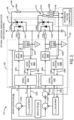
- FIG. 3 is a circuit diagram showing a nonlimiting implementation of the electric drive system 200 of FIG. 2 .
- the active voltage balancing system 212 is configured to actively balance a voltage distribution across a first semiconductor switch 210A and a second semiconductor switch 210B electrically connected in series. It will be appreciated that the active voltage balancing system 212 may be configured to actively balance a voltage distribution across any suitable number of semiconductor switches electrically connected in series.
- the active voltage balancing system 212 includes differential voltage logic 300 configured to detect a voltage difference between the first and second semiconductor switches 210A, 210B.
- the active voltage balancing system 212 further includes edge capture logic 302 configured to detect a time difference between when the first and second semiconductor switches 210A, 210B are switched.
- the active voltage balancing system 212 further includes protection logic 304 configured to protect the first and second semiconductor switches 210A, 210B from an over-voltage condition.
- the differential voltage logic 300, the edge capture logic 302, and the protection logic 304 may take any suitable form including any suitable arrangement of electrical components or hardware having equivalent functionality.
- the active voltage balancing system 212 further includes a micro-controller 306 configured to control switching of the first and second semiconductor switches 210A, 210B to actively balance a voltage distribution across the semiconductor switches based on signals received from the differential voltage logic 300 and the edge capture logic 302.
- the micro-controller 306 may take any suitable form including different types of hardware, software, and/or firmware.
- the differential voltage logic 300 includes a first resistor divider 308 including a first pair of resistors 308A, 308B in series electrically intermediate a source terminal 310A of the first semiconductor switch 210A and a drain terminal 312B of the second semiconductor switch 210B.
- the differential voltage logic 300 further includes a second resistor divider 314 including a second pair of resistors 314A, 314B in series electrically intermediate the source terminal 310B of the second semiconductor switch 210B and the drain terminal 312B of the second semiconductor switch 210B.
- the drain terminal 312B of the second semiconductor switch 210B is electrically connected to common ground 316.
- the resistors of the first and second resistor dividers 308, 314 are sized to sense the half voltage of the total drain-source voltage of the first and second semiconductor switches 210A, 210B and the drain-source voltage of the second semiconductor switch 210B.
- the differential voltage logic 300 further includes a differential voltage comparator 318 that is configured to sense a half voltage of a drain-source voltage of the first and second semiconductor switches 210A, 210B across the first resistor divider 308 and sense a drain-source voltage of the second semiconductor switch 210B across the second resistor divider 314.
- the differential voltage comparator 318 is configured to output a differential voltage signal 320 to the micro-controller 306.
- the differential voltage signal 320 indicates a difference of the voltage across the first semiconductor switch 210A and the voltage across the second semiconductor switch 210B.
- the differential voltage logic 300 may include additional sets of electrical components (e.g., resistor dividers, differential voltage comparators) corresponding to each additional semiconductor switch to detect a voltage across that semiconductor switch.
- additional sets of electrical components e.g., resistor dividers, differential voltage comparators
- the arrangement of electrical components is provided as a non-limiting example and the differential voltage logic 300 may be configured to detect the voltage across the different semiconductor switches in any suitable manner.
- the edge capture logic 302 includes a first gate-source voltage transient detector (GVTD) 322A configured to synthesize a first logic signal 324A corresponding to a change in a gate-source voltage of the first semiconductor switch 210A.
- the first logic signal 324A indicates a transient change in state of the first semiconductor switch 210A between an open state and a closed state.
- the first gate-source voltage transient detector 322A is configured to send the first logic signal 324A to a first gate voltage edge capture unit 326A.
- the first gate voltage edge capture unit 326A is configured to output a first timing signal 328A indicating a time when the first semiconductor switch 210A changes between the open state and the closed state based on the first logic signal 324A.
- a first signal isolator 330A is electrically intermediate the first gate voltage edge capture unit 326A and the micro-controller 306.
- the first signal isolator 330A is configured to filter the first timing signal 328A to provide a first filtered timing signal 332A to the micro-controller 306.
- the first signal isolator 330A is configured to electrically isolate the micro-controller 306 from the portion of the edge capture logic 302 that corresponds to the first semiconductor switch 210A.
- the edge capture logic 302 further includes a second gate-source voltage transient detector (GVTD) 322B configured to synthesize a second logic signal 324B corresponding to a change in a gate-source voltage of the second semiconductor switch 210B.
- the second logic signal 324B indicates a transient change in state of the second semiconductor switch 210B between an open state and a closed state.
- the second gate-source voltage transient detector 322B is configured to send the second logic signal 324B to a second gate voltage edge capture unit 326B.
- the second gate voltage edge capture unit 326B is configured to output a second timing signal 328B indicating a time when the second semiconductor switch 210B changes between the open state and the closed state based on the second logic signal 324B.
- a second signal isolator 330B is electrically intermediate the second gate voltage edge capture unit 326B and the micro-controller 306.
- the second signal isolator 330B is configured to filter the second timing signal 328B to provide a second filtered timing signal 332B to the micro-controller 306.
- the second signal isolator 330B is configured to electrically isolate the micro-controller 306 from the portion of the edge capture logic 302 that corresponds to the second semiconductor switch 210B.
- the micro-controller 306 is configured to output a first gate drive signal (S H ) to drive the first semiconductor switch 210A and a second gate drive signal (S L ) to drive the second semiconductor switch 210B to control switching of the switches.
- the first and second gate drive signals S H , S L are pulse width modulated (PWM) signals.
- the micro-controller 306 includes a modulator 307 that is configured to output a first signal to a first summing box 333A.
- the first summing box 333A is configured to apply a timing adjustment to the first signal based on the first filtered timing signal 332A to generate the first gate drive signal S H .
- the modulator 307 is configured to output a second signal to a second summing box 333B.
- the second summing box 333B is configured to apply a timing adjustment to the second signal based on the second filtered timing signal 332B.
- the output of the second summing box 333B is provided to a third summing box 333C.
- the third summing box 333C is configured to apply a voltage amplitude adjustment based on the differential voltage signal 320 to generate the second gate drive signal S L .
- the illustrated configuration is provided as a non-limiting example.
- the micro-controller 306 may have any suitable configuration to provide such voltage balancing functionality.
- the micro-controller 306 is configured to control the first and second gate voltage edge capture units 326A, 326B during each switching cycle of the semiconductor switches 210A, 210B.
- the micro-controller 306 is configured to output a first auxiliary drive signal (S H_AUX ) at a same time that micro-controller 306 outputs the first gate drive signal S H and output a second auxiliary drive signal (S L_AUX ) at a same time that the micro-controller 306 outputs the second gate drive signal S L .
- Both the first gate drive signal S H and the first auxiliary drive signal S H_AUX are filtered by the first signal isolator 330A to provide a first filtered gate drive signal 334A to a first gate driver 336A and a first filtered auxiliary drive signal 338A to the first gate voltage edge capture unit 326A.
- Both the first gate drive signal S H and the first auxiliary drive signal S H_AUX are delayed by a time T PD2 .
- the first filtered auxiliary drive signal 338A activates the first gate voltage edge capture unit 326A.
- the first filtered gate drive signal 334A activates the first gate driver 336A to control switching of the first semiconductor switch 210A.
- a time between when the first gate drive signal S H is output by the micro-controller 306 and when the first gate driver 336A is activated is a time T PD1 that is greater than the time T PD2 .
- V DR_H gate voltage
- the first GVTD 322A detects the change in voltage and sends the first logic signal 324A to the first gate voltage edge capture unit 326A. Because the first gate voltage edge capture unit 326A is already activated based on receiving the first filtered auxiliary drive signal 338A, the first gate voltage edge capture unit 326A is able to capture the timing of the gate voltage change.
- the first gate voltage edge capture unit 326A sends this timing information back to the micro-controller 306 in the form of the first timing signal 328A, and then, the edge capture detector deactivates for the remainder of the switching cycle.
- the portion of the edge capture logic 302 corresponding to the second semiconductor switch 210B is controlled in the same manner as described above for each switching cycle of the second semiconductor switch 210B.
- the edge capture logic 302 may include additional sets of electrical components (e.g., GVTD, edge capture detector, signal isolator, gate driver) corresponding to each additional semiconductor switch to detect a time difference between when that semiconductor switch is switched relative to the other semiconductor switches.
- additional sets of electrical components e.g., GVTD, edge capture detector, signal isolator, gate driver
- the edge capture logic 302 may be configured to detect a time difference between when the different semiconductor switches are switched in any suitable manner.
- the protection logic 304 includes a first Zener diode 340A and a second Zener diode 340B.
- the first Zener diode 340A is electrically connected across a drain terminal 312A and a source terminal 310A of the first semiconductor switch 210A.
- the second Zener diode 340B is electrically connected across a drain terminal 312B and a source terminal 310B of the second semiconductor switch 210B.
- the first and second Zener diodes 340A, 340B are configured to, in the case of a severe voltage unbalancing, clamp an over-voltage to within a break-down voltage of the first and second series-connected semiconductor switches 210A, 210B to inhibit degradation of the switches.
- the micro-controller 306 is configured to tune the first gate drive signal S H and the second gate drive signal S L based on the differential voltage signal 320 to compensate for a voltage imbalance between the first and second semiconductor switches 210A, 210B. For example, such a voltage imbalance may be due, at least in part, to different variances in physical parameters of the individual semiconductor switches as a result of manufacturing, circuit design, and/or environmental effects.
- the micro-controller 306 is further configured to tune the first gate drive signal S H and the second gate drive signal S L based on a difference in timing of the first and second filtered timing signals 332A, 332B to compensate for drive signal asymmetry between the first and second semiconductor switches 210A, 210B.
- the micro-controller 306 is configured to make adjustments to the first and second gate drive signals S H and S L for the next switching cycle based on the differential voltage signal 320 and the first and second filtered timing signals 332A, 332B received for the current switching cycle.
- the micro-controller 306 may tune the first and second gate drive signals S H , S L in any suitable manner based on the differential voltage signal 320 and the first and second filtered timing signals 332A, 332B.
- the micro-controller 306 is configured to advance a timing of the second gate drive signal S L relative to a timing of the first gate drive signal S H based on the drain-source voltage of the second semiconductor switch 210B being lower than the half voltage of the drain-source voltage of the first and second semiconductor switches during a turn-off transient of the first and second semiconductor switches 210A, 210B.
- the turn-off transient is initiated responsive to the gate voltages of the first and second semiconductor switches 210A, 210B falling based on signals received from the first and second gate drivers 336A, 336B.
- the micro-controller 306 is configured to advance a timing of the first gate drive signal S H relative to a timing of the second gate drive signal S L based on a drain-source voltage of the first semiconductor switch 210A being lower than the half voltage of the drain-source voltage of the first and second semiconductor switches during a turn-off transient of the first and second semiconductor switches.
- the micro-controller 306 is configured to advance a timing of the second gate drive signal S L relative to a timing of the first gate drive signal S H based on the drain-source voltage of the second semiconductor switch 210B being higher than the half voltage of the drain-source voltage of the first and second semiconductor switches during a turn-on transient of the first and second semiconductor switches.
- the turn-on transient is initiated responsive to the gate voltages of the first and second semiconductor switches 210A, 210B rising based on signals received from the first and second gate drivers 336A, 336B.
- the micro-controller 306 is configured to advance a timing of the first gate drive signal S H relative to a timing of the second gate drive signal S L based on the drain-source voltage of the first semiconductor switch 210A being higher than the half voltage of the drain-source voltage of the first and second semiconductor switches during a turn-on transient of the first and second semiconductor switches.
- the above-described adjustments are provided as non-limiting examples that may be performed by the micro-controller 306 to tune the first and second gate drive signals to actively balance a voltage between the first and second semiconductor switches based on feedback in the form of the differential voltage signal and the difference in timing of the first and second timing signals.
- the micro-controller 306 may be configured to compensate for voltage imbalance and drive signal asymmetry in any suitable manner to balance a voltage between the first and second semiconductor switches.
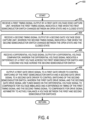
- FIG. 4 is a flowchart of an example method 400 for actively balancing a voltage distribution across a plurality of semiconductor switches in series in a power modulation device.
- method 400 may be performed by the micro-controller 306 of the active voltage balancing system 212 to actively balance voltage across first and second semiconductors 210A, 210B shown in FIGS. 2-3 .
- the method 400 includes receiving a first timing signal output by a first gate voltage edge capture unit, wherein the first timing signal indicates a time when the first semiconductor switch changes between an open state and a closed state.
- the method 400 includes receiving a second timing signal output by a second gate voltage edge capture unit, wherein the second timing signal indicates a time when the second semiconductor switch changes between the open state and the closed state.
- the method 400 includes receiving a differential voltage signal output by a differential voltage comparator, wherein the differential voltage signal indicates a difference of a first voltage across the first semiconductor switch and a second voltage across the second semiconductor switch.
- the method 400 includes outputting a first gate drive signal to a first gate driver to control switching of the first semiconductor switch and outputting a second gate drive signal to a second gate driver to control switching of the second semiconductor switch.
- the first gate drive signal and the second gate drive signal are tuned based on the differential voltage signal to compensate for voltage imbalance and a difference in timing of the first timing signal and the second timing signal to compensate for drive signal asymmetry to actively balance a voltage between the first and second semiconductor switches.
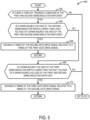
- FIGS. 5 and 6 are flowcharts showing an example method 500 for tuning the first and second gate drive signals to actively balance the voltage distribution across the plurality of semiconductor switches.
- method 500 may be performed by the micro-controller 306 of the active voltage balancing system 212 to actively balance voltage across first and second semiconductors 210A, 210B shown in FIGS. 2-3 .
- the method 500 includes determining whether there is a turn-off transient condition of the first and second semiconductor switches. For example, the turn-off transient condition may occur when the gate voltages of the semiconductor switches go from high to low. If it is determined that there is a turn-off transient condition, then the method 500 moves to 504. Otherwise, the method 500 moves to 512.
- the method 500 includes determining whether a drain-source voltage of the second semiconductor switch is lower than a half voltage of the drain-source voltage of the first and second semiconductor switches. If the drain-source voltage of the second semiconductor switch is lower than the half voltage of the drain-source voltage of the first and second semiconductor switches, the method 500 moves to 506. Otherwise, the method 500 moves to 508. At 506, the method 500 includes advancing a timing of the second gate drive signal relative to a timing of the first gate drive signal for the next switching cycle to actively balance the voltage across the first and second semiconductor switches. At 508, the method 500 includes determining whether a drain-source voltage of the first semiconductor switch is lower than the half voltage of the drain-source voltage of the first and second semiconductor switches.
- the method 500 moves to 510. Otherwise, the method 500 moves to 512.
- the method 500 includes advancing a timing of the first gate drive signal relative to a timing of the second gate drive signal for the next switching cycle to actively balance the voltage across the first and second semiconductor switches.
- the method 500 includes determining whether there is a turn-on transient condition of the first and second semiconductor switches. For example, the turn-on transient condition may occur when the gate voltages of the semiconductor switches go from low to high. If it is determined that there is a turn-on transient condition, then the method 500 moves to 514.
- the method 500 includes determining whether the drain-source voltage of the second semiconductor switch is higher than the half voltage of the drain-source voltage of the first and second semiconductor switches. If the drain-source voltage of the second semiconductor switch is higher than the half voltage of the drain-source voltage of the first and second semiconductor switches, then the method 500 moves to 516. Otherwise, the method 500 moves to 518. At 516, the method 500 includes advancing a timing of the second gate drive signal relative to a timing of the first gate drive signal for the next switching cycle to actively balance the voltage across the first and second semiconductor switches. At 518, the method 500 includes determining whether the drain-source voltage of the first semiconductor switch is higher than the half voltage of the drain-source voltage of the first and second semiconductor switches.
- the method 500 moves to 520. Otherwise, the method 500 returns.
- the method 500 includes advancing a timing of the first gate drive signal relative to a timing of the second gate drive signal for the next switching cycle to actively balance the voltage across the first and second semiconductor switches.
- the above described methods may be performed to tune the first and second gate drive signals to compensate for voltage imbalance and drive signal asymmetry to actively balance a voltage between the first and second semiconductor switches.
- the method may be expanded to actively balance voltage between any suitable number of semiconductor switches connected in series in a power modulation device.
- the specific methods described herein may represent one or more of any number of processing strategies such as event-driven, interrupt-driven, multi-tasking, multi-threading, and the like.
- various actions, operations, and/or functions illustrated may be performed in the sequence illustrated, in parallel, or in some cases omitted.
- the order of processing is not necessarily required to achieve the features and advantages of the example embodiments described herein, but is provided for ease of illustration and description.
- One or more of the illustrated actions, operations, and/or functions may be repeatedly performed depending on the particular strategy being used.
- FIGS. 7A-7D are graphs showing semiconductor switching with and without the active voltage balancing techniques described herein.
- FIG. 7A shows an example turn-off transient condition where the gate voltages of first and second semiconductor switches transition from high to low without active voltage balancing employed. In this example, the voltage of the first semiconductor switch is greater than the voltage of the second semiconductor switch during the turn-off transient causing a voltage imbalance between the first and second semiconductor switches.
- FIG. 7B shows an example turn-off transient condition where active voltage balancing is employed. For example, such active voltage balancing may be performed by the active voltage balancing system 212 shown in FIGS. 2 and 3 using the active voltage balancing methods 400 shown in FIG. 4 and 500 shown in FIGS.
- the voltages of the first and second semiconductor switches are balanced during the turn-off transient condition such that a voltage difference between the voltages across the individual switches is reduced and a time difference between when the semiconductors switch from the on state to the off state is reduced relative to the turn-off transient shown in FIG. 7A where such active voltage balancing techniques are not employed.
- FIG. 7C shows an example turn-on transient condition where the gate voltages of the first and second semiconductor switches transition from low to high without active voltage balancing employed.
- the voltage of the first semiconductor switch is greater than the voltage of the second semiconductor switch during the turn-on transient causing a voltage imbalance between the first and second semiconductor switches.
- FIG. 7D shows an example turn-on transient condition where active voltage balancing is employed.
- active voltage balancing may be performed by the active voltage balancing system 212 shown in FIGS. 2 and 3 using the active voltage balancing methods 400 shown in FIG. 4 and 500 shown in FIGS. 5 and 6 to actively balance voltage between the first and second semiconductor switches.
- the voltages of the first and second semiconductor switches are balanced during the turn-on transient condition such that a voltage difference between the voltages across the individual switches is reduced and a time difference between when the semiconductors switch from the on state to the off state is reduced relative to the turn-off transient shown in FIG. 7C where such active voltage balancing techniques are not employed.
- a system comprises a power modulation device including a first semiconductor switch and a second semiconductor switch in series with the first semiconductor switch, and an active voltage balancing system including a first gate driver configured to control switching of the first semiconductor switch between an open state and a closed state, a second gate driver configured to control switching of the second semiconductor switch between an open state and a closed state, a first gate voltage edge capture unit configured to output a first timing signal indicating a time when the first semiconductor switch changes between the open state and the closed state, a second gate voltage edge capture unit configured to output a second timing signal indicating a time when the second semiconductor switch changes between the open state and the closed state, a differential voltage comparator configured to output a differential voltage signal indicating a difference of a first voltage across the first semiconductor switch and a second voltage across the second semiconductor switch, and a micro-controller configured to receive the first timing signal output by the first gate voltage edge capture unit, receive the second timing signal output by the second gate voltage edge capture unit, receive the differential voltage signal output by the differential voltage comparator,
- the system may further comprise a first Zener diode electrically intermediate a source terminal and a drain terminal of the first semiconductor switch, and a second Zener diode electrically intermediate a source terminal and a drain terminal of the second semiconductor switch.
- the differential voltage comparator may include a first resistor divider including a first pair of resistors in series electrically intermediate a source terminal of the first semiconductor switch and a drain terminal of the second semiconductor switch, and a second resistor divider including a second pair of resistors in series electrically intermediate a source terminal of the second semiconductor switch and the drain terminal of the second semiconductor switch, the drain terminal of the second semiconductor switch may be electrically connected to common ground, and the differential voltage comparator may be configured to sense a half voltage of a drain-source voltage of the first and second semiconductor switches across the first resistor divider as the first voltage, and a drain-source voltage of the second semiconductor switch across the second resistor divider as the second voltage.
- the micro-controller may be further configured to advance a timing of the second gate drive signal relative to a timing of the first gate drive signal based on the drain-source voltage of the second semiconductor switch being lower than the half voltage of the drain-source voltage of the first and second semiconductor switches during a turn-off transient of the first and second semiconductor switches.
- the micro-controller may be further configured to advance a timing of the first gate drive signal relative to a timing of the second gate drive signal based on a drain-source voltage of the first semiconductor switch being lower than the half voltage of the drain-source voltage of the first and second semiconductor switches during a turn-off transient of the first and second semiconductor switches.
- the micro-controller may be further configured to advance a timing of the second gate drive signal relative to a timing of the first gate drive signal based on the drain-source voltage of the second semiconductor switch being higher than the half voltage of the drain-source voltage of the first and second semiconductor switches during a turn-on transient of the first and second semiconductor switches.
- the micro-controller may be further configured to advance a timing of the first gate drive signal relative to a timing of the second gate drive signal based on the drain-source voltage of the first semiconductor switch being higher than the half voltage of the drain-source voltage of the first and second semiconductor switches during a turn-on transient of the first and second semiconductor switches.
- the system may further comprise a first gate-source voltage transient detector configured to synthesize a first logic signal corresponding to a change in a gate-source voltage of the first semiconductor switch and send the first logic signal to the first gate voltage edge capture unit, the first gate voltage edge capture unit may be configured to generate the first timing signal based on the first logic signal, and a second gate-source voltage transient detector configured to synthesize a second logic signal corresponding to a change in a gate-source voltage of the second semiconductor switch and send the second logic signal to the second gate voltage edge capture unit, the second gate voltage edge capture unit may be configured to generate the second timing signal based on the second logic signal.
- a first gate-source voltage transient detector configured to synthesize a first logic signal corresponding to a change in a gate-source voltage of the first semiconductor switch and send the first logic signal to the first gate voltage edge capture unit
- the first gate voltage edge capture unit may be configured to generate the first timing signal based on the first logic signal
- a second gate-source voltage transient detector configured to synth
- the micro-controller may be further configured to output a first auxiliary drive signal to the first gate voltage edge capture unit at a same time that the first gate drive signal is output from the micro-controller, the first gate voltage edge capture unit may be configured to activate based on receiving the first auxiliary drive signal, and output a second auxiliary drive signal to the second gate voltage edge capture unit at a same time that the second gate drive signal is output from the micro-controller, the second gate voltage edge capture unit may be configured to activate based on receiving the second auxiliary drive signal.
- the system may further comprise a first signal isolator electrically intermediate the first gate voltage edge capture unit and the micro-controller and electrically intermediate the first gate driver and the micro-controller
- the first signal isolator may be configured to filter the first timing signal output by the first gate voltage edge capture unit to provide a first filtered timing signal to the micro-controller, filter the first gate drive signal output by the micro-controller to provide a first filtered gate drive signal to the first gate driver, and filter the first auxiliary drive signal output by the micro-controller to provide a first filtered auxiliary drive signal to the first gate voltage edge capture unit
- a second signal isolator electrically intermediate the second gate voltage edge capture unit and the micro-controller and electrically intermediate the second gate driver and the micro-controller
- the second signal isolator may be configured to filter the second timing signal output by the second gate voltage edge capture unit to provide a second filtered timing signal to the micro-controller, filter the second gate drive signal output by the micro-controller to provide a second filtered timing signal
- an active voltage balancing method for controlling a plurality of semiconductor switches including at least first and second semiconductor switches in series in a power modulation device comprises receiving a first timing signal output by a first gate voltage edge capture unit, wherein the first timing signal indicates a time when the first semiconductor switch changes between an open state and a closed state, receiving a second timing signal output by a second gate voltage edge capture unit, wherein the second timing signal indicates a time when the second semiconductor switch changes between the open state and the closed state, receiving a differential voltage signal output by a differential voltage comparator, wherein the differential voltage signal indicates a difference of a first voltage across the first semiconductor switch and a second voltage across the second semiconductor switch, outputting a first gate drive signal to a first gate driver to control switching of the first semiconductor switch, and outputting a second gate drive signal to a second gate driver to control switching of the second semiconductor switch, the first gate drive signal and the second gate drive signal are tuned based on the differential voltage signal to compensate for voltage imbalance and a difference in timing of the first timing signal and the second
- the active voltage balancing method may further comprise advancing a timing of the second gate drive signal relative to a timing of the first gate drive signal based on a drain-source voltage of the second semiconductor switch being lower than a half voltage of a drain-source voltage of the first and second semiconductor switches during a turn-off transient of the first and second semiconductor switches.
- the active voltage balancing method may further comprise advancing a timing of the first gate drive signal relative to a timing of the second gate drive signal based on a drain-source voltage of the first semiconductor switch being lower than a half voltage of a drain-source voltage of the first and second semiconductor switches during a turn-off transient of the first and second semiconductor switches.
- the active voltage balancing method may further comprise advancing a timing of the second gate drive signal relative to a timing of the first gate drive signal based on a drain-source voltage of the second semiconductor switch being higher than a half voltage of a drain-source voltage of the first and second semiconductor switches during a turn-on transient of the first and second semiconductor switches.
- the active voltage balancing method may further comprise advancing a timing of the first gate drive signal relative to a timing of the second gate drive signal based on a drain-source voltage of the first semiconductor switch being higher than a half voltage of a drain-source voltage of the first and second semiconductor switches during a turn-on transient of the first and second semiconductor switches.
- a system comprises a power modulation device including a first semiconductor switch and a second semiconductor switch in series with the first semiconductor switch, and an active voltage balancing system including a first Zener diode electrically intermediate a source terminal and a drain terminal of the first semiconductor switch, a second Zener diode electrically intermediate a source terminal and a drain terminal of the second semiconductor switch, a first gate driver configured to control switching of the first semiconductor switch between an open state and a closed state, a second gate driver configured to control switching of the semiconductor switch between an open state and a closed state, a first gate voltage edge capture unit configured to output a first timing signal indicating a time when the first semiconductor switch changes between the open state and the closed state, a second gate voltage edge capture unit configured to output a second timing signal indicating a time when the second semiconductor switch changes between the open state and the closed state, a differential voltage comparator configured to output a differential voltage signal indicating a difference of a first voltage across the first semiconductor switch and a second voltage across the second semiconductor switch, and
- the differential voltage comparator may include a first resistor divider including a first pair of resistors in series electrically intermediate a source terminal of the first semiconductor switch and a drain terminal of the second semiconductor switch, and a second resistor divider including a second pair of resistors in series electrically intermediate a source terminal of the second semiconductor switch and the drain terminal of the second semiconductor switch, the drain terminal of the second semiconductor switch may be connected to a common ground, and the differential voltage comparator may be configured to sense a half voltage of a drain-source voltage of the first and second semiconductor switches across the first resistor divider as the first voltage, and a drain-source voltage of the second semiconductor switch across the second resistor divider as the second voltage.
- the system may further comprise a first gate-source voltage transient detector configured to synthesize a first logic signal corresponding to a change in a gate-source voltage of the first semiconductor switch and send the first logic signal to the first gate voltage edge capture unit, the first gate voltage edge capture unit may be configured to generate the first timing signal based on the first logic signal, and a second gate-source voltage transient detector configured to synthesize a second logic signal corresponding to a change in a gate-source voltage of the second semiconductor switch and send the second logic signal to the second gate voltage edge capture unit, the second gate voltage edge capture unit may be configured to generate the second timing signal based on the second logic signal.
- a first gate-source voltage transient detector configured to synthesize a first logic signal corresponding to a change in a gate-source voltage of the first semiconductor switch and send the first logic signal to the first gate voltage edge capture unit
- the first gate voltage edge capture unit may be configured to generate the first timing signal based on the first logic signal
- a second gate-source voltage transient detector configured to synth
- the micro-controller may be further configured to output a first auxiliary drive signal to the first gate voltage edge capture unit at a same time that the first gate drive signal is output from the micro-controller, the first gate voltage edge capture unit may be configured to activate based on receiving the first auxiliary drive signal, and output a second auxiliary drive signal to the second gate voltage edge capture unit at a same time that the second gate drive signal is output from the micro-controller, the second gate voltage edge capture unit may be configured to activate based on receiving the second auxiliary drive signal.
- the system may further comprise a first signal isolator electrically intermediate the first gate voltage edge capture unit and the micro-controller and electrically intermediate the first gate driver and the micro-controller
- the first signal isolator may be configured to filter the first timing signal output by the first gate voltage edge capture unit to provide a first filtered timing signal to the micro-controller, filter the first gate drive signal output by the micro-controller to provide a first filtered gate drive signal to the first gate driver, and filter the first auxiliary drive signal output by the micro-controller to provide a first filtered auxiliary drive signal to the first gate voltage edge capture unit
- a second signal isolator electrically intermediate the second gate voltage edge capture unit and the micro-controller and electrically intermediate the second gate driver and the micro-controller
- the second signal isolator may be configured to filter the second timing signal output by the second gate voltage edge capture unit to provide a second filtered timing signal to the micro-controller, filter the second gate drive signal output by the micro-controller to provide a second filtered timing signal
Landscapes
- Engineering & Computer Science (AREA)
- Power Engineering (AREA)
- Power Conversion In General (AREA)
- Electronic Switches (AREA)
Description
- This disclosure relates generally to power modulation devices, and more specifically, to actively balancing a voltage distribution across a plurality of semiconductor switches connected in series in a power modulation device.
- In various applications, power modulation devices are employed in electric drive systems having relatively high voltage and high power capabilities for driving large electrical loads. The voltage limits of semiconductor switches that are typically employed in a power modulation device of such an electric drive system are not sufficiently high to individually support the high voltage requirement to the large electrical load. As such, multiple semiconductor switches can be connected in series such that each semiconductor switch shares a portion of the high voltage requirement. However, due to variances in physical parameters of the individual semiconductor switches as a result of manufacturing, circuit design, and/or environmental effects, a voltage imbalance may occur among series-connected semiconductor switches. Such a voltage imbalance may result in accelerated degradation and de-rated performance of the semiconductor switches.
-
EP 2 797 215 A1 , in accordance with its abstract, states a method for optimizing voltage self-adaption control based on IGBT series loss. The method comprises the following steps: detecting a voltage at an IGBT end; adjusting a main switching stage time; and adjusting a preliminary switching stage time. By means of the method, when the IGBTs are connected in series, the voltage balance degree is improved, the switching loss is reduced, and the switching voltage stress is controllable. -
WO 2011/147055 A1 , in accordance with its abstract, states a control and monitoring system of IGBT (insulated gate bipolar transistor) high voltage series valves comprises an IGBT gate circuit, a valve control and monitoring unit and an optical fiber transmission system. The valve control and monitoring unit is connected to the IGBT gate circuit by the optical fiber transmission system. The IGBT gate circuit also includes an IGBT periphery circuit mainly composed of capacitor, resistor and collector voltage clamping circuits. The optical fiber transmission system includes four optical fiber channels for connecting the IGBT gate circuit with the valve control and monitoring unit and an independent analog signal optical fiber channel for transmitting a valve current signal to the valve control and monitoring system. The system satisfies various functions of IGBT switching on, IGBT switching off, voltage loss balance control, valve state monitoring and so on. - The disclosure provides a system as defined by independent claim 1, an aircraft as defined by independent claim 10 and an active voltage balancing method as defined by independent claim 12. Preferred embodiments are defined in the appended dependent claims.
- The features and functions that have been discussed can be achieved independently in various embodiments or may be combined in yet other embodiments, further details of which can be seen with reference to the following description and drawings.
-
-
FIG. 1 schematically shows an example embodiment of an aircraft that includes an electric drive system. -
FIG. 2 schematically shows an example electric drive system. -
FIG. 3 is a circuit diagram schematically showing aspects of a power modulation device including a plurality of semiconductor switches and an active voltage balancing system configured to actively balance a voltage distribution across the plurality of semiconductor switches. -
FIG. 4 is a flowchart showing an example method for actively balancing a voltage distribution across a plurality of semiconductor switches in series in a power modulation device. -
FIGS. 5 and6 are flowcharts showing an example method for adjusting a timing of gate drive signals for driving a plurality of semiconductor switches to actively balance a voltage distribution across the plurality of semiconductor switches. -
FIGS. 7A-7D are graphs showing semiconductor switching with and without the active voltage balancing techniques described herein. - Electric drive systems that include power modulation devices may be implemented in numerous applications to drive large electrical loads, such as vehicle applications including automobile, watercraft, and aircraft applications. For aircraft applications, as one example, an electric drive system may be employed to drive a propulsion system of an all-electric or hybrid electric aircraft.
FIG. 1 schematically shows an example embodiment of anaircraft 100 including high voltage (~ kV) and high power (~ MW) capabilityelectric drive system 102. Theelectric drive system 102 is positioned in afuselage 104 of theaircraft 100. Theelectric drive system 102 is configured to draw power from a pair ofbatteries wings fuselage 104 of theaircraft 100. Note that the depicted location of thebatteries electric drive system 102 is configured to provide electrical power to a pair ofpropulsion motors electric drive system 102 includes apower modulation device 112 that is configured to modulate electrical power received from the pair ofbatteries propulsion motors power modulation device 112 may include a plurality of semiconductor switches in series. Thepower modulation device 112 may include virtually any number of semiconductor switches in series based on the power/voltage capacity of the individual semiconductor switches and the overall power/voltage requirements of theaircraft 100. In some embodiments, thepower modulation device 112 may include a plurality of branches connected in parallel and each branch may include one or more switches. For branches including two or more switches, the switches are connected in series. - The above described electric drive system is a non-limiting example of an electric drive system including a power modulation device having high power and high voltage capabilities that includes a plurality of semiconductor switches that are configured to cooperatively share a portion of the high voltage requirement of the electric drive system. While the example electric drive system is described herein as driving a pair of propulsion motors, in some embodiments, the electric drive system may be configured to drive more than two propulsion motors and/or one more non-propulsive motor drives (e.g., engine starter, air compressor, hydraulic pump). While the example electric drive system is described herein with reference to aircraft applications, this is in no way limiting. The disclosed electric drive systems may be used in any other application, including non-aircraft vehicle applications and non-vehicle applications.
-
FIG. 2 schematically shows an example embodiment of anelectric drive system 200. For example, theelectric drive system 200 may be representative of theelectric drive system 102 shown inFIG. 1 . Theelectric drive system 200 is configured to draw electrical power from apower source 202 and drive anelectrical load 204. Thepower source 202 may take any suitable form. In some examples, thepower source 202 may include an alternating current (AC) power source. In other examples, thepower source 202 may include a direct current (DC) power source. Additionally, theelectrical load 204 may take any suitable form. While the electrical load is primarily described herein with reference to a high power and high voltage electrical motor, this is in no way limiting. - The
electric drive system 200 includes apower modulation device 206 configured to draw electrical power from thepower source 202 and modulate the electrical power to a form that is suitable to drive theelectrical load 204. Thepower modulation device 206 may take any suitable form. Non-limiting examples of such power modulation devices include inverters and converters. Thepower modulation device 206 includes one or more switchingbranches 208. Eachswitching branch 208 includes a plurality of semiconductor switches (e.g., 1-N) 210 electrically connected in series. Eachswitching branch 208 may include any suitable number of semiconductor switches. In embodiments that include a plurality of switching branches, the switching branches are electrically connected in parallel. The total number of switching branches, and correspondingly the total number of semiconductor switches of thepower modulation device 206, may depend on the voltage and power capabilities of the individual semiconductor switches such that the total number of semiconductor switches cooperatively share a voltage requirement of theelectrical load 204. As one example, an electric drive system for a 3-phase motor may include three switching branches that makes up a 3-phase inverter. As another example, an electric drive system for a 4-phase motor may include 4 switching branches that make up a 4-phase inverter. Each of these switching branches may include one or more switches. For switching branches including two or more switches, the switches are connected in series. Note that with a DC source input, the electric drive system is an inverter (DC/AC converter). In embodiments where the input is AC, then the electric drive is an AC/AC converter. The principles described herein apply to both DC/AC or AC/AC converters, as well as other types of power modulation devices. - The
electric drive system 200 includes an activevoltage balancing system 212 configured to actively balance a voltage distribution across the plurality ofsemiconductor switches 210 in series within a branch of thepower modulation device 206. As used herein, actively balancing the voltage distribution across the plurality of semiconductor switches in series within a branch means tuning drive signals for driving the semiconductor switches to reduce a voltage difference between the voltage across the individual switches, such that ideally (but not necessarily) the voltages across each individual semiconductor switch are equal to one another. Additionally, actively balancing the voltage distribution across the plurality of semiconductor switches in series within a branch means tuning the drive signals to reduce a time difference, such that ideally (but not necessarily) the switches switch at the same time. In particular, the activevoltage balancing system 212 is configured to detect voltage difference(s) between the plurality of semiconductor switches and tune gate drive signals for switching the semiconductor switches based on the voltage difference(s) to compensate for voltage imbalance among the plurality of semiconductor switches. The activevoltage balancing system 212 is further configured to detect a time difference between when the semiconductor switches are switched and tune the gate drive signals, based on the time difference, to compensate for drive signal asymmetry between the plurality of semiconductor switches. By performing these compensation techniques, a voltage distribution across the plurality of semiconductor switches may be actively balanced, even at very high switching frequencies. In this way, an operational performance and lifespan of the semiconductor switches may be increased relative to semiconductor switches of a power modulation device that does not include such an active voltage balancing system. -
FIG. 3 is a circuit diagram showing a nonlimiting implementation of theelectric drive system 200 ofFIG. 2 . In the depicted example, the activevoltage balancing system 212 is configured to actively balance a voltage distribution across afirst semiconductor switch 210A and asecond semiconductor switch 210B electrically connected in series. It will be appreciated that the activevoltage balancing system 212 may be configured to actively balance a voltage distribution across any suitable number of semiconductor switches electrically connected in series. - The active
voltage balancing system 212 includesdifferential voltage logic 300 configured to detect a voltage difference between the first and second semiconductor switches 210A, 210B. The activevoltage balancing system 212 further includesedge capture logic 302 configured to detect a time difference between when the first and second semiconductor switches 210A, 210B are switched. The activevoltage balancing system 212 further includesprotection logic 304 configured to protect the first and second semiconductor switches 210A, 210B from an over-voltage condition. Thedifferential voltage logic 300, theedge capture logic 302, and theprotection logic 304 may take any suitable form including any suitable arrangement of electrical components or hardware having equivalent functionality. - The active
voltage balancing system 212 further includes a micro-controller 306 configured to control switching of the first and second semiconductor switches 210A, 210B to actively balance a voltage distribution across the semiconductor switches based on signals received from thedifferential voltage logic 300 and theedge capture logic 302. Themicro-controller 306 may take any suitable form including different types of hardware, software, and/or firmware. - The
differential voltage logic 300 includes afirst resistor divider 308 including a first pair ofresistors first semiconductor switch 210A and adrain terminal 312B of thesecond semiconductor switch 210B. Thedifferential voltage logic 300 further includes asecond resistor divider 314 including a second pair ofresistors second semiconductor switch 210B and thedrain terminal 312B of thesecond semiconductor switch 210B. Thedrain terminal 312B of thesecond semiconductor switch 210B is electrically connected tocommon ground 316. The resistors of the first andsecond resistor dividers second semiconductor switch 210B. - The
differential voltage logic 300 further includes adifferential voltage comparator 318 that is configured to sense a half voltage of a drain-source voltage of the first and second semiconductor switches 210A, 210B across thefirst resistor divider 308 and sense a drain-source voltage of thesecond semiconductor switch 210B across thesecond resistor divider 314. Thedifferential voltage comparator 318 is configured to output adifferential voltage signal 320 to themicro-controller 306. Thedifferential voltage signal 320 indicates a difference of the voltage across thefirst semiconductor switch 210A and the voltage across thesecond semiconductor switch 210B. - In embodiments that include more than two semiconductor switches in series, the
differential voltage logic 300 may include additional sets of electrical components (e.g., resistor dividers, differential voltage comparators) corresponding to each additional semiconductor switch to detect a voltage across that semiconductor switch. Moreover, the arrangement of electrical components is provided as a non-limiting example and thedifferential voltage logic 300 may be configured to detect the voltage across the different semiconductor switches in any suitable manner. - The
edge capture logic 302 includes a first gate-source voltage transient detector (GVTD) 322A configured to synthesize afirst logic signal 324A corresponding to a change in a gate-source voltage of thefirst semiconductor switch 210A. Thefirst logic signal 324A indicates a transient change in state of thefirst semiconductor switch 210A between an open state and a closed state. The first gate-source voltagetransient detector 322A is configured to send thefirst logic signal 324A to a first gate voltageedge capture unit 326A. The first gate voltageedge capture unit 326A is configured to output afirst timing signal 328A indicating a time when thefirst semiconductor switch 210A changes between the open state and the closed state based on thefirst logic signal 324A. Afirst signal isolator 330A is electrically intermediate the first gate voltageedge capture unit 326A and themicro-controller 306. Thefirst signal isolator 330A is configured to filter the first timing signal 328A to provide a first filteredtiming signal 332A to themicro-controller 306. Thefirst signal isolator 330A is configured to electrically isolate the micro-controller 306 from the portion of theedge capture logic 302 that corresponds to thefirst semiconductor switch 210A. - The
edge capture logic 302 further includes a second gate-source voltage transient detector (GVTD) 322B configured to synthesize asecond logic signal 324B corresponding to a change in a gate-source voltage of thesecond semiconductor switch 210B. Thesecond logic signal 324B indicates a transient change in state of thesecond semiconductor switch 210B between an open state and a closed state. The second gate-source voltagetransient detector 322B is configured to send thesecond logic signal 324B to a second gate voltageedge capture unit 326B. The second gate voltageedge capture unit 326B is configured to output asecond timing signal 328B indicating a time when thesecond semiconductor switch 210B changes between the open state and the closed state based on thesecond logic signal 324B. Asecond signal isolator 330B is electrically intermediate the second gate voltageedge capture unit 326B and themicro-controller 306. Thesecond signal isolator 330B is configured to filter the second timing signal 328B to provide a second filteredtiming signal 332B to themicro-controller 306. Thesecond signal isolator 330B is configured to electrically isolate the micro-controller 306 from the portion of theedge capture logic 302 that corresponds to thesecond semiconductor switch 210B. - The
micro-controller 306 is configured to output a first gate drive signal (SH) to drive thefirst semiconductor switch 210A and a second gate drive signal (SL) to drive thesecond semiconductor switch 210B to control switching of the switches. The first and second gate drive signals SH, SL are pulse width modulated (PWM) signals. Themicro-controller 306 includes amodulator 307 that is configured to output a first signal to a first summingbox 333A. The first summingbox 333A is configured to apply a timing adjustment to the first signal based on the first filtered timing signal 332A to generate the first gate drive signal SH. Themodulator 307 is configured to output a second signal to a second summingbox 333B. The second summingbox 333B is configured to apply a timing adjustment to the second signal based on the second filteredtiming signal 332B. The output of the second summingbox 333B is provided to a third summingbox 333C. The third summingbox 333C is configured to apply a voltage amplitude adjustment based on thedifferential voltage signal 320 to generate the second gate drive signal SL. The illustrated configuration is provided as a non-limiting example. Themicro-controller 306 may have any suitable configuration to provide such voltage balancing functionality. - The
micro-controller 306 is configured to control the first and second gate voltageedge capture units micro-controller 306 is configured to output a first auxiliary drive signal (SH_AUX) at a same time that micro-controller 306 outputs the first gate drive signal SH and output a second auxiliary drive signal (SL_AUX) at a same time that themicro-controller 306 outputs the second gate drive signal SL. Both the first gate drive signal SH and the first auxiliary drive signal SH_AUX are filtered by thefirst signal isolator 330A to provide a first filteredgate drive signal 334A to afirst gate driver 336A and a first filteredauxiliary drive signal 338A to the first gate voltageedge capture unit 326A. Both the first gate drive signal SH and the first auxiliary drive signal SH_AUX are delayed by a time TPD2. The first filteredauxiliary drive signal 338A activates the first gate voltageedge capture unit 326A. The first filteredgate drive signal 334A activates thefirst gate driver 336A to control switching of thefirst semiconductor switch 210A. A time between when the first gate drive signal SH is output by themicro-controller 306 and when thefirst gate driver 336A is activated is a time TPD1 that is greater than the time TPD2. When a gate voltage (VDR_H) of thefirst semiconductor switch 210A rises based on being driven by thefirst gate driver 336A, thefirst GVTD 322A detects the change in voltage and sends thefirst logic signal 324A to the first gate voltageedge capture unit 326A. Because the first gate voltageedge capture unit 326A is already activated based on receiving the first filteredauxiliary drive signal 338A, the first gate voltageedge capture unit 326A is able to capture the timing of the gate voltage change. The first gate voltageedge capture unit 326A sends this timing information back to themicro-controller 306 in the form of thefirst timing signal 328A, and then, the edge capture detector deactivates for the remainder of the switching cycle. The portion of theedge capture logic 302 corresponding to thesecond semiconductor switch 210B is controlled in the same manner as described above for each switching cycle of thesecond semiconductor switch 210B. - In embodiments that include more than two semiconductor switches in series, the
edge capture logic 302 may include additional sets of electrical components (e.g., GVTD, edge capture detector, signal isolator, gate driver) corresponding to each additional semiconductor switch to detect a time difference between when that semiconductor switch is switched relative to the other semiconductor switches. Moreover, the arrangement of electrical components is provided as a non-limiting example and theedge capture logic 302 may be configured to detect a time difference between when the different semiconductor switches are switched in any suitable manner. - The
protection logic 304 includes afirst Zener diode 340A and asecond Zener diode 340B. Thefirst Zener diode 340A is electrically connected across adrain terminal 312A and a source terminal 310A of thefirst semiconductor switch 210A. Thesecond Zener diode 340B is electrically connected across adrain terminal 312B and a source terminal 310B of thesecond semiconductor switch 210B. The first andsecond Zener diodes semiconductor switches - The
micro-controller 306 is configured to tune the first gate drive signal SH and the second gate drive signal SL based on thedifferential voltage signal 320 to compensate for a voltage imbalance between the first and second semiconductor switches 210A, 210B. For example, such a voltage imbalance may be due, at least in part, to different variances in physical parameters of the individual semiconductor switches as a result of manufacturing, circuit design, and/or environmental effects. Themicro-controller 306 is further configured to tune the first gate drive signal SH and the second gate drive signal SL based on a difference in timing of the first and second filtered timing signals 332A, 332B to compensate for drive signal asymmetry between the first and second semiconductor switches 210A, 210B. Themicro-controller 306 is configured to make adjustments to the first and second gate drive signals SH and SL for the next switching cycle based on thedifferential voltage signal 320 and the first and second filtered timing signals 332A, 332B received for the current switching cycle. - The
micro-controller 306 may tune the first and second gate drive signals SH, SL in any suitable manner based on thedifferential voltage signal 320 and the first and second filtered timing signals 332A, 332B. Themicro-controller 306 is configured to advance a timing of the second gate drive signal SL relative to a timing of the first gate drive signal SH based on the drain-source voltage of thesecond semiconductor switch 210B being lower than the half voltage of the drain-source voltage of the first and second semiconductor switches during a turn-off transient of the first and second semiconductor switches 210A, 210B. The turn-off transient is initiated responsive to the gate voltages of the first and second semiconductor switches 210A, 210B falling based on signals received from the first andsecond gate drivers - As another example, the
micro-controller 306 is configured to advance a timing of the first gate drive signal SH relative to a timing of the second gate drive signal SL based on a drain-source voltage of thefirst semiconductor switch 210A being lower than the half voltage of the drain-source voltage of the first and second semiconductor switches during a turn-off transient of the first and second semiconductor switches. - As yet another example, the
micro-controller 306 is configured to advance a timing of the second gate drive signal SL relative to a timing of the first gate drive signal SH based on the drain-source voltage of thesecond semiconductor switch 210B being higher than the half voltage of the drain-source voltage of the first and second semiconductor switches during a turn-on transient of the first and second semiconductor switches. The turn-on transient is initiated responsive to the gate voltages of the first and second semiconductor switches 210A, 210B rising based on signals received from the first andsecond gate drivers - As still another example, the
micro-controller 306 is configured to advance a timing of the first gate drive signal SH relative to a timing of the second gate drive signal SL based on the drain-source voltage of thefirst semiconductor switch 210A being higher than the half voltage of the drain-source voltage of the first and second semiconductor switches during a turn-on transient of the first and second semiconductor switches. - The above-described adjustments are provided as non-limiting examples that may be performed by the
micro-controller 306 to tune the first and second gate drive signals to actively balance a voltage between the first and second semiconductor switches based on feedback in the form of the differential voltage signal and the difference in timing of the first and second timing signals. Themicro-controller 306 may be configured to compensate for voltage imbalance and drive signal asymmetry in any suitable manner to balance a voltage between the first and second semiconductor switches. -
FIG. 4 is a flowchart of anexample method 400 for actively balancing a voltage distribution across a plurality of semiconductor switches in series in a power modulation device. For example,method 400 may be performed by themicro-controller 306 of the activevoltage balancing system 212 to actively balance voltage across first andsecond semiconductors FIGS. 2-3 . At 402, themethod 400 includes receiving a first timing signal output by a first gate voltage edge capture unit, wherein the first timing signal indicates a time when the first semiconductor switch changes between an open state and a closed state. At 404, themethod 400 includes receiving a second timing signal output by a second gate voltage edge capture unit, wherein the second timing signal indicates a time when the second semiconductor switch changes between the open state and the closed state. At 406, themethod 400 includes receiving a differential voltage signal output by a differential voltage comparator, wherein the differential voltage signal indicates a difference of a first voltage across the first semiconductor switch and a second voltage across the second semiconductor switch. At 408, themethod 400 includes outputting a first gate drive signal to a first gate driver to control switching of the first semiconductor switch and outputting a second gate drive signal to a second gate driver to control switching of the second semiconductor switch. The first gate drive signal and the second gate drive signal are tuned based on the differential voltage signal to compensate for voltage imbalance and a difference in timing of the first timing signal and the second timing signal to compensate for drive signal asymmetry to actively balance a voltage between the first and second semiconductor switches. -
FIGS. 5 and6 are flowcharts showing anexample method 500 for tuning the first and second gate drive signals to actively balance the voltage distribution across the plurality of semiconductor switches. For example,method 500 may be performed by themicro-controller 306 of the activevoltage balancing system 212 to actively balance voltage across first andsecond semiconductors FIGS. 2-3 . At 502, themethod 500 includes determining whether there is a turn-off transient condition of the first and second semiconductor switches. For example, the turn-off transient condition may occur when the gate voltages of the semiconductor switches go from high to low. If it is determined that there is a turn-off transient condition, then themethod 500 moves to 504. Otherwise, themethod 500 moves to 512. At 504, themethod 500 includes determining whether a drain-source voltage of the second semiconductor switch is lower than a half voltage of the drain-source voltage of the first and second semiconductor switches. If the drain-source voltage of the second semiconductor switch is lower than the half voltage of the drain-source voltage of the first and second semiconductor switches, themethod 500 moves to 506. Otherwise, themethod 500 moves to 508. At 506, themethod 500 includes advancing a timing of the second gate drive signal relative to a timing of the first gate drive signal for the next switching cycle to actively balance the voltage across the first and second semiconductor switches. At 508, themethod 500 includes determining whether a drain-source voltage of the first semiconductor switch is lower than the half voltage of the drain-source voltage of the first and second semiconductor switches. If the drain-source voltage of the first semiconductor switch is lower than the half voltage of the drain-source voltage of the first and second semiconductor switches, then themethod 500 moves to 510. Otherwise, themethod 500 moves to 512. At 510, themethod 500 includes advancing a timing of the first gate drive signal relative to a timing of the second gate drive signal for the next switching cycle to actively balance the voltage across the first and second semiconductor switches. As shown at 512 ofFIG. 6 , themethod 500 includes determining whether there is a turn-on transient condition of the first and second semiconductor switches. For example, the turn-on transient condition may occur when the gate voltages of the semiconductor switches go from low to high. If it is determined that there is a turn-on transient condition, then themethod 500 moves to 514. Otherwise, themethod 500 returns. At 514, themethod 500 includes determining whether the drain-source voltage of the second semiconductor switch is higher than the half voltage of the drain-source voltage of the first and second semiconductor switches. If the drain-source voltage of the second semiconductor switch is higher than the half voltage of the drain-source voltage of the first and second semiconductor switches, then themethod 500 moves to 516. Otherwise, themethod 500 moves to 518. At 516, themethod 500 includes advancing a timing of the second gate drive signal relative to a timing of the first gate drive signal for the next switching cycle to actively balance the voltage across the first and second semiconductor switches. At 518, themethod 500 includes determining whether the drain-source voltage of the first semiconductor switch is higher than the half voltage of the drain-source voltage of the first and second semiconductor switches. If the drain-source voltage of the first semiconductor switch is higher than the half voltage of the drain-source voltage of the first and second semiconductor switches, then themethod 500 moves to 520. Otherwise, themethod 500 returns. At 520, themethod 500 includes advancing a timing of the first gate drive signal relative to a timing of the second gate drive signal for the next switching cycle to actively balance the voltage across the first and second semiconductor switches. - The above described methods may be performed to tune the first and second gate drive signals to compensate for voltage imbalance and drive signal asymmetry to actively balance a voltage between the first and second semiconductor switches. The method may be expanded to actively balance voltage between any suitable number of semiconductor switches connected in series in a power modulation device. The specific methods described herein may represent one or more of any number of processing strategies such as event-driven, interrupt-driven, multi-tasking, multi-threading, and the like. As such, various actions, operations, and/or functions illustrated may be performed in the sequence illustrated, in parallel, or in some cases omitted. Likewise, the order of processing is not necessarily required to achieve the features and advantages of the example embodiments described herein, but is provided for ease of illustration and description. One or more of the illustrated actions, operations, and/or functions may be repeatedly performed depending on the particular strategy being used.
-
FIGS. 7A-7D are graphs showing semiconductor switching with and without the active voltage balancing techniques described herein.FIG. 7A shows an example turn-off transient condition where the gate voltages of first and second semiconductor switches transition from high to low without active voltage balancing employed. In this example, the voltage of the first semiconductor switch is greater than the voltage of the second semiconductor switch during the turn-off transient causing a voltage imbalance between the first and second semiconductor switches.FIG. 7B shows an example turn-off transient condition where active voltage balancing is employed. For example, such active voltage balancing may be performed by the activevoltage balancing system 212 shown inFIGS. 2 and3 using the activevoltage balancing methods 400 shown inFIG. 4 and 500 shown inFIGS. 5 and6 to actively balance voltage between the first and second semiconductor switches. In this example, the voltages of the first and second semiconductor switches are balanced during the turn-off transient condition such that a voltage difference between the voltages across the individual switches is reduced and a time difference between when the semiconductors switch from the on state to the off state is reduced relative to the turn-off transient shown inFIG. 7A where such active voltage balancing techniques are not employed. -
FIG. 7C shows an example turn-on transient condition where the gate voltages of the first and second semiconductor switches transition from low to high without active voltage balancing employed. In this example, the voltage of the first semiconductor switch is greater than the voltage of the second semiconductor switch during the turn-on transient causing a voltage imbalance between the first and second semiconductor switches.FIG. 7D shows an example turn-on transient condition where active voltage balancing is employed. For example, such active voltage balancing may be performed by the activevoltage balancing system 212 shown inFIGS. 2 and3 using the activevoltage balancing methods 400 shown inFIG. 4 and 500 shown inFIGS. 5 and6 to actively balance voltage between the first and second semiconductor switches. In this example, the voltages of the first and second semiconductor switches are balanced during the turn-on transient condition such that a voltage difference between the voltages across the individual switches is reduced and a time difference between when the semiconductors switch from the on state to the off state is reduced relative to the turn-off transient shown inFIG. 7C where such active voltage balancing techniques are not employed. - In an example, a system comprises a power modulation device including a first semiconductor switch and a second semiconductor switch in series with the first semiconductor switch, and an active voltage balancing system including a first gate driver configured to control switching of the first semiconductor switch between an open state and a closed state, a second gate driver configured to control switching of the second semiconductor switch between an open state and a closed state, a first gate voltage edge capture unit configured to output a first timing signal indicating a time when the first semiconductor switch changes between the open state and the closed state, a second gate voltage edge capture unit configured to output a second timing signal indicating a time when the second semiconductor switch changes between the open state and the closed state, a differential voltage comparator configured to output a differential voltage signal indicating a difference of a first voltage across the first semiconductor switch and a second voltage across the second semiconductor switch, and a micro-controller configured to receive the first timing signal output by the first gate voltage edge capture unit, receive the second timing signal output by the second gate voltage edge capture unit, receive the differential voltage signal output by the differential voltage comparator, output a first gate drive signal to the first gate driver to control switching of the first semiconductor switch, and output a second gate drive signal to the second gate driver to control switching of the second semiconductor switch, wherein the micro-controller is further configured to tune the first gate drive signal and the second gate drive signal based on the differential voltage signal to compensate for voltage imbalance and a difference in timing of the first timing signal and the second timing signal to compensate for drive signal asymmetry to actively balance a voltage between the first and second semiconductor switches. In this example and/or other examples, the system may further comprise a first Zener diode electrically intermediate a source terminal and a drain terminal of the first semiconductor switch, and a second Zener diode electrically intermediate a source terminal and a drain terminal of the second semiconductor switch. In this example and/or other examples, the differential voltage comparator may include a first resistor divider including a first pair of resistors in series electrically intermediate a source terminal of the first semiconductor switch and a drain terminal of the second semiconductor switch, and a second resistor divider including a second pair of resistors in series electrically intermediate a source terminal of the second semiconductor switch and the drain terminal of the second semiconductor switch, the drain terminal of the second semiconductor switch may be electrically connected to common ground, and the differential voltage comparator may be configured to sense a half voltage of a drain-source voltage of the first and second semiconductor switches across the first resistor divider as the first voltage, and a drain-source voltage of the second semiconductor switch across the second resistor divider as the second voltage. In this example and/or other examples, the micro-controller may be further configured to advance a timing of the second gate drive signal relative to a timing of the first gate drive signal based on the drain-source voltage of the second semiconductor switch being lower than the half voltage of the drain-source voltage of the first and second semiconductor switches during a turn-off transient of the first and second semiconductor switches. In this example and/or other examples, the micro-controller may be further configured to advance a timing of the first gate drive signal relative to a timing of the second gate drive signal based on a drain-source voltage of the first semiconductor switch being lower than the half voltage of the drain-source voltage of the first and second semiconductor switches during a turn-off transient of the first and second semiconductor switches. In this example and/or other examples, the micro-controller may be further configured to advance a timing of the second gate drive signal relative to a timing of the first gate drive signal based on the drain-source voltage of the second semiconductor switch being higher than the half voltage of the drain-source voltage of the first and second semiconductor switches during a turn-on transient of the first and second semiconductor switches. In this example and/or other examples, the micro-controller may be further configured to advance a timing of the first gate drive signal relative to a timing of the second gate drive signal based on the drain-source voltage of the first semiconductor switch being higher than the half voltage of the drain-source voltage of the first and second semiconductor switches during a turn-on transient of the first and second semiconductor switches. In this example and/or other examples, the system may further comprise a first gate-source voltage transient detector configured to synthesize a first logic signal corresponding to a change in a gate-source voltage of the first semiconductor switch and send the first logic signal to the first gate voltage edge capture unit, the first gate voltage edge capture unit may be configured to generate the first timing signal based on the first logic signal, and a second gate-source voltage transient detector configured to synthesize a second logic signal corresponding to a change in a gate-source voltage of the second semiconductor switch and send the second logic signal to the second gate voltage edge capture unit, the second gate voltage edge capture unit may be configured to generate the second timing signal based on the second logic signal. In this example and/or other examples, the micro-controller may be further configured to output a first auxiliary drive signal to the first gate voltage edge capture unit at a same time that the first gate drive signal is output from the micro-controller, the first gate voltage edge capture unit may be configured to activate based on receiving the first auxiliary drive signal, and output a second auxiliary drive signal to the second gate voltage edge capture unit at a same time that the second gate drive signal is output from the micro-controller, the second gate voltage edge capture unit may be configured to activate based on receiving the second auxiliary drive signal. In this example and/or other examples, the system may further comprise a first signal isolator electrically intermediate the first gate voltage edge capture unit and the micro-controller and electrically intermediate the first gate driver and the micro-controller, the first signal isolator may be configured to filter the first timing signal output by the first gate voltage edge capture unit to provide a first filtered timing signal to the micro-controller, filter the first gate drive signal output by the micro-controller to provide a first filtered gate drive signal to the first gate driver, and filter the first auxiliary drive signal output by the micro-controller to provide a first filtered auxiliary drive signal to the first gate voltage edge capture unit, and a second signal isolator electrically intermediate the second gate voltage edge capture unit and the micro-controller and electrically intermediate the second gate driver and the micro-controller, the second signal isolator may be configured to filter the second timing signal output by the second gate voltage edge capture unit to provide a second filtered timing signal to the micro-controller, filter the second gate drive signal output by the micro-controller to provide a second filtered gate drive signal to the second gate driver, and filter the second auxiliary drive signal output by the micro-controller to provide a second filtered auxiliary drive signal to the second gate voltage edge capture unit.
- In an example, an active voltage balancing method for controlling a plurality of semiconductor switches including at least first and second semiconductor switches in series in a power modulation device comprises receiving a first timing signal output by a first gate voltage edge capture unit, wherein the first timing signal indicates a time when the first semiconductor switch changes between an open state and a closed state, receiving a second timing signal output by a second gate voltage edge capture unit, wherein the second timing signal indicates a time when the second semiconductor switch changes between the open state and the closed state, receiving a differential voltage signal output by a differential voltage comparator, wherein the differential voltage signal indicates a difference of a first voltage across the first semiconductor switch and a second voltage across the second semiconductor switch, outputting a first gate drive signal to a first gate driver to control switching of the first semiconductor switch, and outputting a second gate drive signal to a second gate driver to control switching of the second semiconductor switch, the first gate drive signal and the second gate drive signal are tuned based on the differential voltage signal to compensate for voltage imbalance and a difference in timing of the first timing signal and the second timing signal to compensate for drive signal asymmetry to actively balance a voltage between the first and second semiconductor switches. In this example and/or other examples, the active voltage balancing method may further comprise advancing a timing of the second gate drive signal relative to a timing of the first gate drive signal based on a drain-source voltage of the second semiconductor switch being lower than a half voltage of a drain-source voltage of the first and second semiconductor switches during a turn-off transient of the first and second semiconductor switches. In this example and/or other examples, the active voltage balancing method may further comprise advancing a timing of the first gate drive signal relative to a timing of the second gate drive signal based on a drain-source voltage of the first semiconductor switch being lower than a half voltage of a drain-source voltage of the first and second semiconductor switches during a turn-off transient of the first and second semiconductor switches. In this example and/or other examples, the active voltage balancing method may further comprise advancing a timing of the second gate drive signal relative to a timing of the first gate drive signal based on a drain-source voltage of the second semiconductor switch being higher than a half voltage of a drain-source voltage of the first and second semiconductor switches during a turn-on transient of the first and second semiconductor switches. In this example and/or other examples, the active voltage balancing method may further comprise advancing a timing of the first gate drive signal relative to a timing of the second gate drive signal based on a drain-source voltage of the first semiconductor switch being higher than a half voltage of a drain-source voltage of the first and second semiconductor switches during a turn-on transient of the first and second semiconductor switches.
- In an example, a system comprises a power modulation device including a first semiconductor switch and a second semiconductor switch in series with the first semiconductor switch, and an active voltage balancing system including a first Zener diode electrically intermediate a source terminal and a drain terminal of the first semiconductor switch, a second Zener diode electrically intermediate a source terminal and a drain terminal of the second semiconductor switch, a first gate driver configured to control switching of the first semiconductor switch between an open state and a closed state, a second gate driver configured to control switching of the semiconductor switch between an open state and a closed state, a first gate voltage edge capture unit configured to output a first timing signal indicating a time when the first semiconductor switch changes between the open state and the closed state, a second gate voltage edge capture unit configured to output a second timing signal indicating a time when the second semiconductor switch changes between the open state and the closed state, a differential voltage comparator configured to output a differential voltage signal indicating a difference of a first voltage across the first semiconductor switch and a second voltage across the second semiconductor switch, and a micro-controller configured to receive the first timing signal output by the first gate voltage edge capture unit, receive the second timing signal output by the second gate voltage edge capture unit, receive the differential voltage signal output by the differential voltage comparator, output a first gate drive signal to the first gate driver to control switching of the first semiconductor switch, and output a second gate drive signal to the second gate driver to control switching of the second semiconductor switch, the micro-controller is further configured to tune the first gate drive signal and the second gate drive signal to compensate for voltage imbalance based on the differential voltage signal and a difference in timing of the first timing signal and the second timing signal to compensate for drive signal asymmetry to actively balance a voltage between the first and second semiconductor switches. In this example and/or other examples, the differential voltage comparator may include a first resistor divider including a first pair of resistors in series electrically intermediate a source terminal of the first semiconductor switch and a drain terminal of the second semiconductor switch, and a second resistor divider including a second pair of resistors in series electrically intermediate a source terminal of the second semiconductor switch and the drain terminal of the second semiconductor switch, the drain terminal of the second semiconductor switch may be connected to a common ground, and the differential voltage comparator may be configured to sense a half voltage of a drain-source voltage of the first and second semiconductor switches across the first resistor divider as the first voltage, and a drain-source voltage of the second semiconductor switch across the second resistor divider as the second voltage. In this example and/or other examples, the system may further comprise a first gate-source voltage transient detector configured to synthesize a first logic signal corresponding to a change in a gate-source voltage of the first semiconductor switch and send the first logic signal to the first gate voltage edge capture unit, the first gate voltage edge capture unit may be configured to generate the first timing signal based on the first logic signal, and a second gate-source voltage transient detector configured to synthesize a second logic signal corresponding to a change in a gate-source voltage of the second semiconductor switch and send the second logic signal to the second gate voltage edge capture unit, the second gate voltage edge capture unit may be configured to generate the second timing signal based on the second logic signal. In this example and/or other examples, the micro-controller may be further configured to output a first auxiliary drive signal to the first gate voltage edge capture unit at a same time that the first gate drive signal is output from the micro-controller, the first gate voltage edge capture unit may be configured to activate based on receiving the first auxiliary drive signal, and output a second auxiliary drive signal to the second gate voltage edge capture unit at a same time that the second gate drive signal is output from the micro-controller, the second gate voltage edge capture unit may be configured to activate based on receiving the second auxiliary drive signal. In this example and/or other examples, the system may further comprise a first signal isolator electrically intermediate the first gate voltage edge capture unit and the micro-controller and electrically intermediate the first gate driver and the micro-controller, the first signal isolator may be configured to filter the first timing signal output by the first gate voltage edge capture unit to provide a first filtered timing signal to the micro-controller, filter the first gate drive signal output by the micro-controller to provide a first filtered gate drive signal to the first gate driver, and filter the first auxiliary drive signal output by the micro-controller to provide a first filtered auxiliary drive signal to the first gate voltage edge capture unit, and a second signal isolator electrically intermediate the second gate voltage edge capture unit and the micro-controller and electrically intermediate the second gate driver and the micro-controller, the second signal isolator may be configured to filter the second timing signal output by the second gate voltage edge capture unit to provide a second filtered timing signal to the micro-controller, filter the second gate drive signal output by the micro-controller to provide a second filtered gate drive signal to the second gate driver, and filter the second auxiliary drive signal output by the micro-controller to provide a second filtered auxiliary drive signal to the second gate voltage edge capture unit.
Claims (15)
- A system (200) comprising:a power modulation device (206) including:a first semiconductor switch (210A); anda second semiconductor switch (210B) in series with the first semiconductor switch (210A); andan active voltage balancing system (212) including:a first gate driver (336A) configured to control switching of the first semiconductor switch (210A) between an open state and a closed state;a second gate driver (336B) configured to control switching of the second semiconductor switch (210B) between an open state and a closed state;a first gate voltage edge capture unit (326A) configured to output a first timing signal indicating a time when the first semiconductor switch (210A) changes between the open state and the closed state;a second gate voltage edge capture unit (326B) configured to output a second timing signal indicating a time when the second semiconductor switch (210B) changes between the open state and the closed state;a differential voltage comparator (318) configured to output a differential voltage signal indicating a difference of a first voltage across the first semiconductor switch (210A) and a second voltage across the second semiconductor switch (210B); anda micro-controller (306) configured to:receive the first timing signal output by the first gate voltage edge capture unit (326A);receive the second timing signal output by the second gate voltage edge capture unit (326B);receive the differential voltage signal output by the differential voltage comparator (318);output a first gate drive signal to the first gate driver (336A) to control switching of the first semiconductor switch (210A); andoutput a second gate drive signal to the second gate driver (336B) to control switching of the second semiconductor switch (210B),wherein the micro-controller (306) is further configured to tune the first gate drive signal and the second gate drive signal based on the differential voltage signal to compensate for voltage imbalance and a difference in timing of the first timing signal and the second timing signal to compensate for drive signal asymmetry to actively balance a voltage between the first and second semiconductor switches (210A, 210B),characterised in that the micro-controller (306) is further configured to advance a timing of the second gate drive signal relative to a timing of the first gate drive signal based on the drain-source voltage of the second semiconductor switch (210B) being lower than the half voltage of the drain-source voltage of the first and second semiconductor switches (210A, 210B) during a turn-off transient of the first and second semiconductor switches (210A, 210B).
- The system (200) of claim 1, further comprising:a first Zener diode (340A) electrically intermediate a source terminal (310A) and a drain terminal (312A) of the first semiconductor switch (210A); anda second Zener diode (340B) electrically intermediate a source terminal (310B) and a drain terminal (312B) of the second semiconductor switch (210B).
- The system (200) of claims 1 or 2, wherein the differential voltage comparator (218) includes:a first resistor divider (308) including a first pair of resistors (308A, 308B) in series electrically intermediate a source terminal (310A) of the first semiconductor switch (210A) and a drain terminal (312B) of the second semiconductor switch (210B); anda second resistor divider (314) including a second pair of resistors (314A, 314B) in series electrically intermediate a source terminal (310B) of the second semiconductor switch (210B) and the drain terminal (312B) of the second semiconductor switch (210B),wherein the drain terminal (312B) of the second semiconductor switch (210B) is electrically connected to common ground (316), andwherein the differential voltage comparator (318) is configured to sense:a half voltage of a drain-source voltage of the first and second semiconductor switches (210A, 210B) across the first resistor divider (308) as the first voltage; anda drain-source voltage of the second semiconductor switch (210B) across the second resistor divider (314) as the second voltage.
- The system (200) of any one of claims 1 to 3, wherein the micro-controller (306) is further configured to advance a timing of the first gate drive signal relative to a timing of the second gate drive signal based on a drain-source voltage of the first semiconductor switch (210A) being lower than the half voltage of the drain-source voltage of the first and second semiconductor switches (210A, 210B) during a turn-off transient of the first and second semiconductor switches (210A, 210B).
- The system (200) of any one of claims 1 to 4, wherein the micro-controller (306) is further configured to advance a timing of the second gate drive signal relative to a timing of the first gate drive signal based on the drain-source voltage of the second semiconductor switch (210B) being higher than the half voltage of the drain-source voltage of the first and second semiconductor switches (210A, 210B) during a turn-on transient of the first and second semiconductor switches (210A, 210B).
- The system (200) of any one of claims 1 to 5, wherein the micro-controller (306) is further configured to advance a timing of the first gate drive signal relative to a timing of the second gate drive signal based on the drain-source voltage of the first semiconductor switch (210A) being higher than the half voltage of the drain-source voltage of the first and second semiconductor switches (210A, 210B) during a turn-on transient of the first and second semiconductor switches (210A, 210B).
- The system (200) of any one of claims 1 to 6, further comprising:a first gate-source voltage transient detector (322A) configured to synthesize a first logic signal corresponding to a change in a gate-source voltage of the first semiconductor switch (210A) and send the first logic signal to the first gate voltage edge capture unit (326A), wherein the first gate voltage edge capture unit (326A) is configured to generate the first timing signal based on the first logic signal; anda second gate-source voltage transient detector (322B) configured to synthesize a second logic signal corresponding to a change in a gate-source voltage of the second semiconductor switch (210B) and send the second logic signal to the second gate voltage edge capture unit (326B), wherein the second gate voltage edge capture unit (326B) is configured to generate the second timing signal based on the second logic signal.
- The system (200) of claim 7, wherein the micro-controller (306) is further configured to:output a first auxiliary drive signal to the first gate voltage edge capture unit (326A) at a same time that the first gate drive signal is output from the micro-controller (306), wherein the first gate voltage edge capture unit (326A) is configured to activate based on receiving the first auxiliary drive signal; andoutput a second auxiliary drive signal to the second gate voltage edge capture unit (326B) at a same time that the second gate drive signal is output from the micro-controller (306), wherein the second gate voltage edge capture (326B) unit is configured to activate based on receiving the second auxiliary drive signal.
- The system (200) of claim 8, further comprising:a first signal isolator (330A) electrically intermediate the first gate voltage edge capture unit (326A) and the micro-controller (306) and electrically intermediate the first gate driver (336A) and the micro-controller (306), wherein the first signal isolator (330A) is configured to filter the first timing signal output by the first gate voltage edge capture unit (326A) to provide a first filtered timing signal to the micro-controller (306), filter the first gate drive signal output by the micro-controller (306) to provide a first filtered gate drive signal to the first gate driver (336A), and filter the first auxiliary drive signal output by the micro-controller (306) to provide a first filtered auxiliary drive signal to the first gate voltage edge capture unit (326A); anda second signal isolator (330B) electrically intermediate the second gate voltage edge capture unit (326B) and the micro-controller (306) and electrically intermediate the second gate driver (336B) and the micro-controller (306), wherein the second signal isolator (330B) is configured to filter the second timing signal output by the second gate voltage edge capture unit (326B) to provide a second filtered timing signal to the micro-controller (306), filter the second gate drive signal output by the micro-controller (306) to provide a second filtered gate drive signal to the second gate driver (336B), and filter the second auxiliary drive signal output by the micro-controller (306) to provide a second filtered auxiliary drive signal to the second gate voltage edge capture unit (326B).
- The system (200) of any one of claims 1 to 8, wherein the system is an electric drive system configured to draw an electrical power from a power source (202) and drive an electrical load (204).
- An aircraft (100) comprising the system (200) of any one of claims 1 to 10.
- An active voltage balancing method (400) for controlling a plurality of semiconductor switches including at least first and second semiconductor switches (210A, 210B) in series in a power modulation device (206), the active voltage balancing method comprising:receiving (402) a first timing signal output by a first gate voltage edge capture unit (326A), wherein the first timing signal indicates a time when the first semiconductor switch (210A) changes between an open state and a closed state;receiving (404) a second timing signal output by a second gate voltage edge capture unit (326B), wherein the second timing signal indicates a time when the second semiconductor switch (210B) changes between the open state and the closed state;receiving (406) a differential voltage signal output by a differential voltage comparator (318), wherein the differential voltage signal indicates a difference of a first voltage across the first semiconductor switch (210A) and a second voltage across the second semiconductor switch (210B);outputting (408) a first gate drive signal to a first gate driver (336A) to control switching of the first semiconductor switch (210A), andoutputting (408) a second gate drive signal to a second gate driver (336B) to control switching of the second semiconductor switch (210B),advancing (506) a timing of the second gate drive signal relative to a timing of the first gate drive signal based on a drain-source voltage of the second semiconductor switch (210B) being lower than a half voltage of a drain-source voltage of the first and second semiconductor switches (210A, 210B) during a turn-off transient of the first and second semiconductor switches (210A, 210B),wherein the first gate drive signal and the second gate drive signal are tuned based on the differential voltage signal to compensate for voltage imbalance and a difference in timing of the first timing signal and the second timing signal to compensate for drive signal asymmetry to actively balance a voltage between the first and second semiconductor switches (210A, 210B).
- The active voltage balancing method (400) of claim 12, further comprising:
advancing (510) a timing of the first gate drive signal relative to a timing of the second gate drive signal based on a drain-source voltage of the first semiconductor switch (210A) being lower than a half voltage of a drain-source voltage of the first and second semiconductor switches (210A, 210B) during a turn-off transient of the first and second semiconductor switches (210A, 210B). - The active voltage balancing method (400) of claim 12 or 13, further comprising:
advancing (516) a timing of the second gate drive signal relative to a timing of the first gate drive signal based on a drain-source voltage of the second semiconductor switch (210B) being higher than a half voltage of a drain-source voltage of the first and second semiconductor switches (210A, 210B) during a turn-on transient of the first and second semiconductor switches (210A, 210B). - The active voltage balancing method (400) of any one of claims 12 to 14, further comprising:
advancing (520) a timing of the first gate drive signal relative to a timing of the second gate drive signal based on a drain-source voltage of the first semiconductor switch (210A) being higher than a half voltage of a drain-source voltage of the first and second semiconductor switches (210A, 210B) during a turn-on transient of the first and second semiconductor switches (210A, 210B).
Applications Claiming Priority (2)
| Application Number | Priority Date | Filing Date | Title |
|---|---|---|---|
| US202163133976P | 2021-01-05 | 2021-01-05 | |
| US17/450,047 US11469754B2 (en) | 2021-01-05 | 2021-10-05 | Active voltage balancing for power modulation device |
Publications (2)
| Publication Number | Publication Date |
|---|---|
| EP4024711A1 EP4024711A1 (en) | 2022-07-06 |
| EP4024711B1 true EP4024711B1 (en) | 2024-04-10 |
Family
ID=79185905
Family Applications (1)
| Application Number | Title | Priority Date | Filing Date |
|---|---|---|---|
| EP21217972.5A Active EP4024711B1 (en) | 2021-01-05 | 2021-12-28 | Active voltage balancing for power modulation device |
Country Status (4)
| Country | Link |
|---|---|
| US (1) | US11469754B2 (en) |
| EP (1) | EP4024711B1 (en) |
| JP (1) | JP7765284B2 (en) |
| CN (1) | CN114726193A (en) |
Family Cites Families (9)
| Publication number | Priority date | Publication date | Assignee | Title |
|---|---|---|---|---|
| US4487458A (en) * | 1982-09-28 | 1984-12-11 | Eaton Corporation | Bidirectional source to source stacked FET gating circuit |
| JP2002095240A (en) | 2000-09-18 | 2002-03-29 | Toshiba Corp | Gate drive circuit for insulated gate semiconductor device and power converter using the same |
| CN101888229B (en) | 2010-05-25 | 2013-03-27 | 中国电力科学研究院 | Novel IGBT high-pressure series valve controlling and monitoring system |
| JP5712794B2 (en) | 2011-05-31 | 2015-05-07 | 株式会社明電舎 | Gate timing control circuit |
| JP5927860B2 (en) | 2011-11-21 | 2016-06-01 | 株式会社明電舎 | Drive device for semiconductor switching element |
| CN103166435B (en) | 2011-12-19 | 2014-12-03 | 中国电力科学研究院 | Voltage self-adaptive control method based on insulated gate bipolar translator (IGBT) series connection loss optimization |
| US9595950B1 (en) * | 2016-05-31 | 2017-03-14 | Ixys Corporation | High-voltage stacked transistor circuit |
| US9843293B1 (en) * | 2016-09-16 | 2017-12-12 | Peregrine Semiconductor Corporation | Gate drivers for stacked transistor amplifiers |
| CN110994961B (en) * | 2019-12-24 | 2020-11-20 | 浙江大学 | Amplitude compensation method and circuit for gate voltage amplitude compensation of power switch tubes running in series |
-
2021
- 2021-10-05 US US17/450,047 patent/US11469754B2/en active Active
- 2021-12-27 JP JP2021211782A patent/JP7765284B2/en active Active
- 2021-12-28 EP EP21217972.5A patent/EP4024711B1/en active Active
-
2022
- 2022-01-05 CN CN202210007897.5A patent/CN114726193A/en active Pending
Also Published As
| Publication number | Publication date |
|---|---|
| US20220216865A1 (en) | 2022-07-07 |
| US11469754B2 (en) | 2022-10-11 |
| JP7765284B2 (en) | 2025-11-06 |
| JP2022105987A (en) | 2022-07-15 |
| CN114726193A (en) | 2022-07-08 |
| EP4024711A1 (en) | 2022-07-06 |
Similar Documents
| Publication | Publication Date | Title |
|---|---|---|
| US9231404B2 (en) | Energy storage device, system with energy storage device and method for driving an energy storage device | |
| US10075094B2 (en) | Battery system comprising a hybrid battery and an NPC inverter which is connected at the input end to the battery, and method for operating an NPC inverter which is connected at the input end to a hybrid battery | |
| US10272785B2 (en) | Fault detection of a bypass diode in a variable voltage convert system | |
| US20130154521A1 (en) | Battery with Variable Output Voltage | |
| CN103262383B (en) | Controllable energy store and method for operating a controllable energy store | |
| US20130249287A1 (en) | System for charging an energy store, and method for operating the charging system | |
| US12036884B2 (en) | Propulsion systems with power sources compatible with different charging stations and dynamically scalable for different vehicle speed and torque modes | |
| US7480160B2 (en) | Traction converter having a line-side four-quadrant controller, and method therefor | |
| MX2007014842A (en) | Inverter operation with over-modulation. | |
| US12074522B2 (en) | Power conversion device with parallel DC-DC coverters and multiple driving modes | |
| US9203336B2 (en) | Drive unit for an electric motor | |
| EP3940956B1 (en) | Control circuitry for power semiconductor switches using control signal feedback | |
| US20130320912A1 (en) | System for charging an energy store, and method for operating the charging system | |
| EP4024711B1 (en) | Active voltage balancing for power modulation device | |
| US20130320888A1 (en) | System comprising an electrically excited machine | |
| US12562727B2 (en) | Variable slew-rate current source gate drivers for hybrid power modules | |
| CN113659969A (en) | Motor system and IGBT switching circuit thereof | |
| US11831305B2 (en) | Circuit arrangement for switching switch elements | |
| US20130307445A1 (en) | System for charging an energy store, and method for operating the charging system | |
| US20250392227A1 (en) | Bidirectional switching assembly | |
| CN109950940B (en) | Valve group charging device and valve group charging control method | |
| US20260121508A1 (en) | Variable slew rate hybrid gate drivers for power modules | |
| JP7531716B2 (en) | POWER CONVERSION DEVICE, AIRCRAFT, AND POWER CONVERSION METHOD | |
| US12051982B2 (en) | Method of clamping output current of three-phase power converter | |
| EP4336718A1 (en) | Switching converter using partial power processing |
Legal Events
| Date | Code | Title | Description |
|---|---|---|---|
| PUAI | Public reference made under article 153(3) epc to a published international application that has entered the european phase |
Free format text: ORIGINAL CODE: 0009012 |
|
| STAA | Information on the status of an ep patent application or granted ep patent |
Free format text: STATUS: THE APPLICATION HAS BEEN PUBLISHED |
|
| AK | Designated contracting states |
Kind code of ref document: A1 Designated state(s): AL AT BE BG CH CY CZ DE DK EE ES FI FR GB GR HR HU IE IS IT LI LT LU LV MC MK MT NL NO PL PT RO RS SE SI SK SM TR |
|
| STAA | Information on the status of an ep patent application or granted ep patent |
Free format text: STATUS: REQUEST FOR EXAMINATION WAS MADE |
|
| 17P | Request for examination filed |
Effective date: 20221216 |
|
| RBV | Designated contracting states (corrected) |
Designated state(s): AL AT BE BG CH CY CZ DE DK EE ES FI FR GB GR HR HU IE IS IT LI LT LU LV MC MK MT NL NO PL PT RO RS SE SI SK SM TR |
|
| RAP3 | Party data changed (applicant data changed or rights of an application transferred) |
Owner name: THE BOEING COMPANY |
|
| GRAP | Despatch of communication of intention to grant a patent |
Free format text: ORIGINAL CODE: EPIDOSNIGR1 |
|
| STAA | Information on the status of an ep patent application or granted ep patent |
Free format text: STATUS: GRANT OF PATENT IS INTENDED |
|
| RIC1 | Information provided on ipc code assigned before grant |
Ipc: H03K 17/10 20060101AFI20231218BHEP |
|
| INTG | Intention to grant announced |
Effective date: 20240109 |
|
| GRAS | Grant fee paid |
Free format text: ORIGINAL CODE: EPIDOSNIGR3 |
|
| GRAA | (expected) grant |
Free format text: ORIGINAL CODE: 0009210 |
|
| STAA | Information on the status of an ep patent application or granted ep patent |
Free format text: STATUS: THE PATENT HAS BEEN GRANTED |
|
| AK | Designated contracting states |
Kind code of ref document: B1 Designated state(s): AL AT BE BG CH CY CZ DE DK EE ES FI FR GB GR HR HU IE IS IT LI LT LU LV MC MK MT NL NO PL PT RO RS SE SI SK SM TR |
|
| P01 | Opt-out of the competence of the unified patent court (upc) registered |
Effective date: 20240301 |
|
| REG | Reference to a national code |
Ref country code: GB Ref legal event code: FG4D |
|
| REG | Reference to a national code |
Ref country code: CH Ref legal event code: EP |
|
| REG | Reference to a national code |
Ref country code: DE Ref legal event code: R096 Ref document number: 602021011601 Country of ref document: DE |
|
| REG | Reference to a national code |
Ref country code: IE Ref legal event code: FG4D |
|
| REG | Reference to a national code |
Ref country code: LT Ref legal event code: MG9D |
|
| REG | Reference to a national code |
Ref country code: NL Ref legal event code: MP Effective date: 20240410 |
|
| REG | Reference to a national code |
Ref country code: AT Ref legal event code: MK05 Ref document number: 1675960 Country of ref document: AT Kind code of ref document: T Effective date: 20240410 |
|
| PG25 | Lapsed in a contracting state [announced via postgrant information from national office to epo] |
Ref country code: NL Free format text: LAPSE BECAUSE OF FAILURE TO SUBMIT A TRANSLATION OF THE DESCRIPTION OR TO PAY THE FEE WITHIN THE PRESCRIBED TIME-LIMIT Effective date: 20240410 |
|
| PG25 | Lapsed in a contracting state [announced via postgrant information from national office to epo] |
Ref country code: NL Free format text: LAPSE BECAUSE OF FAILURE TO SUBMIT A TRANSLATION OF THE DESCRIPTION OR TO PAY THE FEE WITHIN THE PRESCRIBED TIME-LIMIT Effective date: 20240410 |
|
| PG25 | Lapsed in a contracting state [announced via postgrant information from national office to epo] |
Ref country code: IS Free format text: LAPSE BECAUSE OF FAILURE TO SUBMIT A TRANSLATION OF THE DESCRIPTION OR TO PAY THE FEE WITHIN THE PRESCRIBED TIME-LIMIT Effective date: 20240810 |
|
| PG25 | Lapsed in a contracting state [announced via postgrant information from national office to epo] |
Ref country code: BG Free format text: LAPSE BECAUSE OF FAILURE TO SUBMIT A TRANSLATION OF THE DESCRIPTION OR TO PAY THE FEE WITHIN THE PRESCRIBED TIME-LIMIT Effective date: 20240410 |
|
| PG25 | Lapsed in a contracting state [announced via postgrant information from national office to epo] |
Ref country code: HR Free format text: LAPSE BECAUSE OF FAILURE TO SUBMIT A TRANSLATION OF THE DESCRIPTION OR TO PAY THE FEE WITHIN THE PRESCRIBED TIME-LIMIT Effective date: 20240410 Ref country code: FI Free format text: LAPSE BECAUSE OF FAILURE TO SUBMIT A TRANSLATION OF THE DESCRIPTION OR TO PAY THE FEE WITHIN THE PRESCRIBED TIME-LIMIT Effective date: 20240410 |
|
| PG25 | Lapsed in a contracting state [announced via postgrant information from national office to epo] |
Ref country code: GR Free format text: LAPSE BECAUSE OF FAILURE TO SUBMIT A TRANSLATION OF THE DESCRIPTION OR TO PAY THE FEE WITHIN THE PRESCRIBED TIME-LIMIT Effective date: 20240711 |
|
| PG25 | Lapsed in a contracting state [announced via postgrant information from national office to epo] |
Ref country code: PT Free format text: LAPSE BECAUSE OF FAILURE TO SUBMIT A TRANSLATION OF THE DESCRIPTION OR TO PAY THE FEE WITHIN THE PRESCRIBED TIME-LIMIT Effective date: 20240812 |
|
| PG25 | Lapsed in a contracting state [announced via postgrant information from national office to epo] |
Ref country code: ES Free format text: LAPSE BECAUSE OF FAILURE TO SUBMIT A TRANSLATION OF THE DESCRIPTION OR TO PAY THE FEE WITHIN THE PRESCRIBED TIME-LIMIT Effective date: 20240410 |
|
| PG25 | Lapsed in a contracting state [announced via postgrant information from national office to epo] |
Ref country code: AT Free format text: LAPSE BECAUSE OF FAILURE TO SUBMIT A TRANSLATION OF THE DESCRIPTION OR TO PAY THE FEE WITHIN THE PRESCRIBED TIME-LIMIT Effective date: 20240410 |
|
| PG25 | Lapsed in a contracting state [announced via postgrant information from national office to epo] |
Ref country code: PL Free format text: LAPSE BECAUSE OF FAILURE TO SUBMIT A TRANSLATION OF THE DESCRIPTION OR TO PAY THE FEE WITHIN THE PRESCRIBED TIME-LIMIT Effective date: 20240410 |
|
| PG25 | Lapsed in a contracting state [announced via postgrant information from national office to epo] |
Ref country code: LV Free format text: LAPSE BECAUSE OF FAILURE TO SUBMIT A TRANSLATION OF THE DESCRIPTION OR TO PAY THE FEE WITHIN THE PRESCRIBED TIME-LIMIT Effective date: 20240410 |
|
| PG25 | Lapsed in a contracting state [announced via postgrant information from national office to epo] |
Ref country code: PT Free format text: LAPSE BECAUSE OF FAILURE TO SUBMIT A TRANSLATION OF THE DESCRIPTION OR TO PAY THE FEE WITHIN THE PRESCRIBED TIME-LIMIT Effective date: 20240812 Ref country code: PL Free format text: LAPSE BECAUSE OF FAILURE TO SUBMIT A TRANSLATION OF THE DESCRIPTION OR TO PAY THE FEE WITHIN THE PRESCRIBED TIME-LIMIT Effective date: 20240410 Ref country code: NO Free format text: LAPSE BECAUSE OF FAILURE TO SUBMIT A TRANSLATION OF THE DESCRIPTION OR TO PAY THE FEE WITHIN THE PRESCRIBED TIME-LIMIT Effective date: 20240710 Ref country code: LV Free format text: LAPSE BECAUSE OF FAILURE TO SUBMIT A TRANSLATION OF THE DESCRIPTION OR TO PAY THE FEE WITHIN THE PRESCRIBED TIME-LIMIT Effective date: 20240410 Ref country code: IS Free format text: LAPSE BECAUSE OF FAILURE TO SUBMIT A TRANSLATION OF THE DESCRIPTION OR TO PAY THE FEE WITHIN THE PRESCRIBED TIME-LIMIT Effective date: 20240810 Ref country code: HR Free format text: LAPSE BECAUSE OF FAILURE TO SUBMIT A TRANSLATION OF THE DESCRIPTION OR TO PAY THE FEE WITHIN THE PRESCRIBED TIME-LIMIT Effective date: 20240410 Ref country code: GR Free format text: LAPSE BECAUSE OF FAILURE TO SUBMIT A TRANSLATION OF THE DESCRIPTION OR TO PAY THE FEE WITHIN THE PRESCRIBED TIME-LIMIT Effective date: 20240711 Ref country code: FI Free format text: LAPSE BECAUSE OF FAILURE TO SUBMIT A TRANSLATION OF THE DESCRIPTION OR TO PAY THE FEE WITHIN THE PRESCRIBED TIME-LIMIT Effective date: 20240410 Ref country code: ES Free format text: LAPSE BECAUSE OF FAILURE TO SUBMIT A TRANSLATION OF THE DESCRIPTION OR TO PAY THE FEE WITHIN THE PRESCRIBED TIME-LIMIT Effective date: 20240410 Ref country code: BG Free format text: LAPSE BECAUSE OF FAILURE TO SUBMIT A TRANSLATION OF THE DESCRIPTION OR TO PAY THE FEE WITHIN THE PRESCRIBED TIME-LIMIT Effective date: 20240410 Ref country code: AT Free format text: LAPSE BECAUSE OF FAILURE TO SUBMIT A TRANSLATION OF THE DESCRIPTION OR TO PAY THE FEE WITHIN THE PRESCRIBED TIME-LIMIT Effective date: 20240410 Ref country code: RS Free format text: LAPSE BECAUSE OF FAILURE TO SUBMIT A TRANSLATION OF THE DESCRIPTION OR TO PAY THE FEE WITHIN THE PRESCRIBED TIME-LIMIT Effective date: 20240710 |
|
| REG | Reference to a national code |
Ref country code: DE Ref legal event code: R097 Ref document number: 602021011601 Country of ref document: DE |
|
| PG25 | Lapsed in a contracting state [announced via postgrant information from national office to epo] |
Ref country code: DK Free format text: LAPSE BECAUSE OF FAILURE TO SUBMIT A TRANSLATION OF THE DESCRIPTION OR TO PAY THE FEE WITHIN THE PRESCRIBED TIME-LIMIT Effective date: 20240410 |
|
| PG25 | Lapsed in a contracting state [announced via postgrant information from national office to epo] |
Ref country code: EE Free format text: LAPSE BECAUSE OF FAILURE TO SUBMIT A TRANSLATION OF THE DESCRIPTION OR TO PAY THE FEE WITHIN THE PRESCRIBED TIME-LIMIT Effective date: 20240410 |
|
| PG25 | Lapsed in a contracting state [announced via postgrant information from national office to epo] |
Ref country code: CZ Free format text: LAPSE BECAUSE OF FAILURE TO SUBMIT A TRANSLATION OF THE DESCRIPTION OR TO PAY THE FEE WITHIN THE PRESCRIBED TIME-LIMIT Effective date: 20240410 |
|
| PG25 | Lapsed in a contracting state [announced via postgrant information from national office to epo] |
Ref country code: SK Free format text: LAPSE BECAUSE OF FAILURE TO SUBMIT A TRANSLATION OF THE DESCRIPTION OR TO PAY THE FEE WITHIN THE PRESCRIBED TIME-LIMIT Effective date: 20240410 Ref country code: RO Free format text: LAPSE BECAUSE OF FAILURE TO SUBMIT A TRANSLATION OF THE DESCRIPTION OR TO PAY THE FEE WITHIN THE PRESCRIBED TIME-LIMIT Effective date: 20240410 |
|
| PG25 | Lapsed in a contracting state [announced via postgrant information from national office to epo] |
Ref country code: SM Free format text: LAPSE BECAUSE OF FAILURE TO SUBMIT A TRANSLATION OF THE DESCRIPTION OR TO PAY THE FEE WITHIN THE PRESCRIBED TIME-LIMIT Effective date: 20240410 |
|
| PG25 | Lapsed in a contracting state [announced via postgrant information from national office to epo] |
Ref country code: SM Free format text: LAPSE BECAUSE OF FAILURE TO SUBMIT A TRANSLATION OF THE DESCRIPTION OR TO PAY THE FEE WITHIN THE PRESCRIBED TIME-LIMIT Effective date: 20240410 Ref country code: SK Free format text: LAPSE BECAUSE OF FAILURE TO SUBMIT A TRANSLATION OF THE DESCRIPTION OR TO PAY THE FEE WITHIN THE PRESCRIBED TIME-LIMIT Effective date: 20240410 Ref country code: RO Free format text: LAPSE BECAUSE OF FAILURE TO SUBMIT A TRANSLATION OF THE DESCRIPTION OR TO PAY THE FEE WITHIN THE PRESCRIBED TIME-LIMIT Effective date: 20240410 Ref country code: EE Free format text: LAPSE BECAUSE OF FAILURE TO SUBMIT A TRANSLATION OF THE DESCRIPTION OR TO PAY THE FEE WITHIN THE PRESCRIBED TIME-LIMIT Effective date: 20240410 Ref country code: DK Free format text: LAPSE BECAUSE OF FAILURE TO SUBMIT A TRANSLATION OF THE DESCRIPTION OR TO PAY THE FEE WITHIN THE PRESCRIBED TIME-LIMIT Effective date: 20240410 Ref country code: CZ Free format text: LAPSE BECAUSE OF FAILURE TO SUBMIT A TRANSLATION OF THE DESCRIPTION OR TO PAY THE FEE WITHIN THE PRESCRIBED TIME-LIMIT Effective date: 20240410 |
|
| PG25 | Lapsed in a contracting state [announced via postgrant information from national office to epo] |
Ref country code: IT Free format text: LAPSE BECAUSE OF FAILURE TO SUBMIT A TRANSLATION OF THE DESCRIPTION OR TO PAY THE FEE WITHIN THE PRESCRIBED TIME-LIMIT Effective date: 20240410 |
|
| PLBE | No opposition filed within time limit |
Free format text: ORIGINAL CODE: 0009261 |
|
| STAA | Information on the status of an ep patent application or granted ep patent |
Free format text: STATUS: NO OPPOSITION FILED WITHIN TIME LIMIT |
|
| 26N | No opposition filed |
Effective date: 20250113 |
|
| PG25 | Lapsed in a contracting state [announced via postgrant information from national office to epo] |
Ref country code: SI Free format text: LAPSE BECAUSE OF FAILURE TO SUBMIT A TRANSLATION OF THE DESCRIPTION OR TO PAY THE FEE WITHIN THE PRESCRIBED TIME-LIMIT Effective date: 20240410 |
|
| PG25 | Lapsed in a contracting state [announced via postgrant information from national office to epo] |
Ref country code: MC Free format text: LAPSE BECAUSE OF FAILURE TO SUBMIT A TRANSLATION OF THE DESCRIPTION OR TO PAY THE FEE WITHIN THE PRESCRIBED TIME-LIMIT Effective date: 20240410 |
|
| REG | Reference to a national code |
Ref country code: CH Ref legal event code: PL |
|
| PG25 | Lapsed in a contracting state [announced via postgrant information from national office to epo] |
Ref country code: LU Free format text: LAPSE BECAUSE OF NON-PAYMENT OF DUE FEES Effective date: 20241228 |
|
| PG25 | Lapsed in a contracting state [announced via postgrant information from national office to epo] |
Ref country code: SE Free format text: LAPSE BECAUSE OF FAILURE TO SUBMIT A TRANSLATION OF THE DESCRIPTION OR TO PAY THE FEE WITHIN THE PRESCRIBED TIME-LIMIT Effective date: 20240410 |
|
| REG | Reference to a national code |
Ref country code: BE Ref legal event code: MM Effective date: 20241231 |
|
| PG25 | Lapsed in a contracting state [announced via postgrant information from national office to epo] |
Ref country code: BE Free format text: LAPSE BECAUSE OF NON-PAYMENT OF DUE FEES Effective date: 20241231 |
|
| PG25 | Lapsed in a contracting state [announced via postgrant information from national office to epo] |
Ref country code: CH Free format text: LAPSE BECAUSE OF NON-PAYMENT OF DUE FEES Effective date: 20241231 |
|
| PG25 | Lapsed in a contracting state [announced via postgrant information from national office to epo] |
Ref country code: IE Free format text: LAPSE BECAUSE OF NON-PAYMENT OF DUE FEES Effective date: 20241228 |
|
| PGFP | Annual fee paid to national office [announced via postgrant information from national office to epo] |
Ref country code: GB Payment date: 20251229 Year of fee payment: 5 |
|
| PGFP | Annual fee paid to national office [announced via postgrant information from national office to epo] |
Ref country code: FR Payment date: 20251226 Year of fee payment: 5 |
|
| PGFP | Annual fee paid to national office [announced via postgrant information from national office to epo] |
Ref country code: DE Payment date: 20251229 Year of fee payment: 5 |