EP4024069B1 - Method and apparatus for estimating battery temperature, computer program, and storage medium - Google Patents
Method and apparatus for estimating battery temperature, computer program, and storage medium Download PDFInfo
- Publication number
- EP4024069B1 EP4024069B1 EP20870190.4A EP20870190A EP4024069B1 EP 4024069 B1 EP4024069 B1 EP 4024069B1 EP 20870190 A EP20870190 A EP 20870190A EP 4024069 B1 EP4024069 B1 EP 4024069B1
- Authority
- EP
- European Patent Office
- Prior art keywords
- battery
- temperature
- function relationship
- admittances
- temperatures
- Prior art date
- Legal status (The legal status is an assumption and is not a legal conclusion. Google has not performed a legal analysis and makes no representation as to the accuracy of the status listed.)
- Active
Links
Images




Classifications
-
- H—ELECTRICITY
- H01—ELECTRIC ELEMENTS
- H01M—PROCESSES OR MEANS, e.g. BATTERIES, FOR THE DIRECT CONVERSION OF CHEMICAL ENERGY INTO ELECTRICAL ENERGY
- H01M10/00—Secondary cells; Manufacture thereof
- H01M10/42—Methods or arrangements for servicing or maintenance of secondary cells or secondary half-cells
- H01M10/48—Accumulators combined with arrangements for measuring, testing or indicating the condition of cells, e.g. the level or density of the electrolyte
- H01M10/486—Accumulators combined with arrangements for measuring, testing or indicating the condition of cells, e.g. the level or density of the electrolyte for measuring temperature
-
- G—PHYSICS
- G01—MEASURING; TESTING
- G01R—MEASURING ELECTRIC VARIABLES; MEASURING MAGNETIC VARIABLES
- G01R31/00—Arrangements for testing electric properties; Arrangements for locating electric faults; Arrangements for electrical testing characterised by what is being tested not provided for elsewhere
- G01R31/36—Arrangements for testing, measuring or monitoring the electrical condition of accumulators or electric batteries, e.g. capacity or state of charge [SoC]
- G01R31/367—Software therefor, e.g. for battery testing using modelling or look-up tables
-
- G—PHYSICS
- G01—MEASURING; TESTING
- G01K—MEASURING TEMPERATURE; MEASURING QUANTITY OF HEAT; THERMALLY-SENSITIVE ELEMENTS NOT OTHERWISE PROVIDED FOR
- G01K7/00—Measuring temperature based on the use of electric or magnetic elements directly sensitive to heat ; Power supply therefor, e.g. using thermoelectric elements
- G01K7/16—Measuring temperature based on the use of electric or magnetic elements directly sensitive to heat ; Power supply therefor, e.g. using thermoelectric elements using resistive elements
- G01K7/26—Measuring temperature based on the use of electric or magnetic elements directly sensitive to heat ; Power supply therefor, e.g. using thermoelectric elements using resistive elements the element being an electrolyte
-
- G—PHYSICS
- G01—MEASURING; TESTING
- G01K—MEASURING TEMPERATURE; MEASURING QUANTITY OF HEAT; THERMALLY-SENSITIVE ELEMENTS NOT OTHERWISE PROVIDED FOR
- G01K7/00—Measuring temperature based on the use of electric or magnetic elements directly sensitive to heat ; Power supply therefor, e.g. using thermoelectric elements
- G01K7/42—Circuits effecting compensation of thermal inertia; Circuits for predicting the stationary value of a temperature
-
- G—PHYSICS
- G01—MEASURING; TESTING
- G01N—INVESTIGATING OR ANALYSING MATERIALS BY DETERMINING THEIR CHEMICAL OR PHYSICAL PROPERTIES
- G01N27/00—Investigating or analysing materials by the use of electric, electrochemical, or magnetic means
- G01N27/02—Investigating or analysing materials by the use of electric, electrochemical, or magnetic means by investigating impedance
-
- G—PHYSICS
- G01—MEASURING; TESTING
- G01R—MEASURING ELECTRIC VARIABLES; MEASURING MAGNETIC VARIABLES
- G01R23/00—Arrangements for measuring frequencies; Arrangements for analysing frequency spectra
- G01R23/005—Circuits for comparing several input signals and for indicating the result of this comparison, e.g. equal, different, greater, smaller (comparing phase or frequency of 2 mutually independent oscillations in demodulators)
-
- G—PHYSICS
- G01—MEASURING; TESTING
- G01R—MEASURING ELECTRIC VARIABLES; MEASURING MAGNETIC VARIABLES
- G01R31/00—Arrangements for testing electric properties; Arrangements for locating electric faults; Arrangements for electrical testing characterised by what is being tested not provided for elsewhere
- G01R31/36—Arrangements for testing, measuring or monitoring the electrical condition of accumulators or electric batteries, e.g. capacity or state of charge [SoC]
- G01R31/374—Arrangements for testing, measuring or monitoring the electrical condition of accumulators or electric batteries, e.g. capacity or state of charge [SoC] with means for correcting the measurement for temperature or ageing
-
- G—PHYSICS
- G01—MEASURING; TESTING
- G01R—MEASURING ELECTRIC VARIABLES; MEASURING MAGNETIC VARIABLES
- G01R31/00—Arrangements for testing electric properties; Arrangements for locating electric faults; Arrangements for electrical testing characterised by what is being tested not provided for elsewhere
- G01R31/36—Arrangements for testing, measuring or monitoring the electrical condition of accumulators or electric batteries, e.g. capacity or state of charge [SoC]
- G01R31/382—Arrangements for monitoring battery or accumulator variables, e.g. SoC
-
- G—PHYSICS
- G01—MEASURING; TESTING
- G01R—MEASURING ELECTRIC VARIABLES; MEASURING MAGNETIC VARIABLES
- G01R31/00—Arrangements for testing electric properties; Arrangements for locating electric faults; Arrangements for electrical testing characterised by what is being tested not provided for elsewhere
- G01R31/36—Arrangements for testing, measuring or monitoring the electrical condition of accumulators or electric batteries, e.g. capacity or state of charge [SoC]
- G01R31/385—Arrangements for measuring battery or accumulator variables
- G01R31/387—Determining ampere-hour charge capacity or SoC
-
- G—PHYSICS
- G01—MEASURING; TESTING
- G01R—MEASURING ELECTRIC VARIABLES; MEASURING MAGNETIC VARIABLES
- G01R31/00—Arrangements for testing electric properties; Arrangements for locating electric faults; Arrangements for electrical testing characterised by what is being tested not provided for elsewhere
- G01R31/36—Arrangements for testing, measuring or monitoring the electrical condition of accumulators or electric batteries, e.g. capacity or state of charge [SoC]
- G01R31/389—Measuring internal impedance, internal conductance or related variables
-
- Y—GENERAL TAGGING OF NEW TECHNOLOGICAL DEVELOPMENTS; GENERAL TAGGING OF CROSS-SECTIONAL TECHNOLOGIES SPANNING OVER SEVERAL SECTIONS OF THE IPC; TECHNICAL SUBJECTS COVERED BY FORMER USPC CROSS-REFERENCE ART COLLECTIONS [XRACs] AND DIGESTS
- Y02—TECHNOLOGIES OR APPLICATIONS FOR MITIGATION OR ADAPTATION AGAINST CLIMATE CHANGE
- Y02E—REDUCTION OF GREENHOUSE GAS [GHG] EMISSIONS, RELATED TO ENERGY GENERATION, TRANSMISSION OR DISTRIBUTION
- Y02E60/00—Enabling technologies; Technologies with a potential or indirect contribution to GHG emissions mitigation
- Y02E60/10—Energy storage using batteries
Definitions
- the present invention relates to the field of battery technologies, and in particular, to a battery temperature estimation method and apparatus, a computer program, and a storage medium.
- the internal temperature of a power battery of a new energy vehicle is estimated in real time by collecting a current, a voltage, and a battery surface temperature.
- the internal temperature of the power battery of the new energy vehicle is estimated by obtaining a relationship between feature quantities of electrochemical impedance spectroscopy and an ambient temperature in a stable state and measured impedance values.
- the effect of real-time charging and discharging states of the battery on the actually measured impedance values is not considered, and the obtained internal temperature is actually the average temperature of the entire battery rather than the actual temperature inside the battery, so that the estimation precision of the internal temperature of the battery is not high.
- Document CN 104 865 534 B relates to an inner temperature estimation method for a single cell, which comprises an offline part and an online part.
- the offline part executes the steps of a1) acquiring the internal resistance characteristic of the single cell at different temperatures; and a2) acquiring a standard relationship between the inner temperature of the cell and the internal resistance of the cell according to the internal resistance characteristic.
- the online part executes the steps of b1) performing online detection on the current, end voltage and surface temperature of a current working cell; b2) performing online estimation for the internal resistance of the current working cell according to the current and the end voltage; and b3) estimating the internal temperature of the current working cell according to the internal resistance acquired in the step b2), the surface temperature acquired in the step b1) and the standard relationship acquired in the step a2).
- Document CN 106 289 566 B provides a method of estimating secondary battery internal temperature based on electrochemical impedance.
- EP 2 852 999 A1 refers to a method and a system of estimating core temperatures of battery cells in a battery pack.
- a surface temperature of one or more battery cell(s) is received, a current of the one or more battery cell(s) is received, an inlet temperature of coolant provided to the battery pack is received, and a flow rate or velocity of the coolant is received.
- estimations are made including those of a cell-lumped internal electrical resistance of the battery cell(s), a cell-lumped conduction resistance between a core and a surface of the battery cell(s), and a cell- lumped convection resistance between the surface and the coolant.
- an estimation is made of a core temperature of the battery cell(s) based upon the received and estimated values of previous steps.
- US 2012/256569 A1 discloses a battery control device and motor drive system.
- a memory the surface temperature and the internal resistance of an assembled battery detected under the condition where a difference between the surface and the internal temperature is within a predetermined value are stored, and an internal temperature diagnosis unit that diagnoses whether or not the internal temperature estimated by an internal temperature estimation unit is correct, detects the internal resistance with an internal resistance calculation unit when the internal temperature estimation unit estimates the internal temperature, searches for an internal resistance corresponding to the surface temperature equal to the estimated internal temperature value from among the stored internal resistances, and diagnoses the estimated internal temperature value based upon the result of comparison of a search result of the internal resistance and the internal resistance detected during internal temperature estimation.
- the present invention refers to a battery temperature estimation method according to claim 1, an apparatus according to claim 4, a computer program according to claim 9, and a storage medium according to claim 10, which can estimate the internal temperature of the battery by using admittances that are measured in real time and surface temperature of the battery, thereby effectively improving the estimation precision of the internal temperature of the battery.
- the battery temperature estimation method when a battery is in an offline state, a first function relationship is fitted according to corresponding admittances of the battery at different test temperatures, a temperature distribution model of the battery is obtained according to the shape and the size of the battery, and a second function relationship corresponding to internal temperatures and a surface temperature is determined by combining with the first function relationship, the second function relationship being used for estimating the internal temperature of the battery by using the surface temperature and the admittances of the battery. Therefore, the internal temperature of the battery can be estimated by using the admittances that are measured in real time and the surface temperature of the battery, thereby effectively improving the estimation precision of the internal temperature of the battery.
- the battery temperature estimation apparatus when a battery is in an offline state, a first function relationship is fitted according to corresponding admittances of the battery at different test temperatures, a temperature distribution model of the battery is obtained according to the shape and the size of the battery, and a second function relationship corresponding to internal temperatures and a surface temperature is determined by combining with the first function relationship, the second function relationship being used for estimating the internal temperature of the battery by using the surface temperature and the admittances of the battery. Therefore, the internal temperature of the battery can be estimated by using the admittances that are measured in real time and the surface temperature of the battery, thereby effectively improving the estimation precision of the internal temperature of the battery.
- a first function relationship is fitted according to corresponding admittances of the battery at different test temperatures
- a temperature distribution model of the battery is obtained according to the shape and the size of the battery
- a second function relationship corresponding to internal temperatures and a surface temperature is determined by combining with the first function relationship, the second function relationship being used for estimating the internal temperature of the battery by using the surface temperature and the admittances of the battery. Therefore, the internal temperature of the battery can be estimated by using the admittances that are measured in real time and the surface temperature of the battery, thereby effectively improving the estimation precision of the internal temperature of the battery.
- a first function relationship is fitted according to corresponding admittances of the battery at different test temperatures
- a temperature distribution model of the battery is obtained according to the shape and the size of the battery
- a second function relationship corresponding to internal temperatures and a surface temperature is determined by combining with the first function relationship, the second function relationship being used for estimating the internal temperature of the battery by using the surface temperature and the admittances of the battery. Therefore, the internal temperature of the battery can be estimated by using the admittances that are measured in real time and the surface temperature of the battery, thereby effectively improving the estimation precision of the internal temperature of the battery.
- the first determination module 902 is specifically configured to: integrate the first function relationship; and determine the second function relationship of the battery according to the temperature distribution model and the integrated first function relationship.
- the battery is square.
- the electronic device 1000 includes: a memory 1001, a processor 1002, and a computer program stored in the memory 1001 and executable on the processor 1002.
- the processor 1002 when executing the program, implements the battery temperature estimation method in the foregoing embodiments.
- This embodiment further provides a computer-readable storage medium, storing a computer program, the computer program, when executed by a processor, implementing the foregoing battery temperature estimation method.
- any process or method in the flowcharts or described herein in another manner may be understood as indicating a module, a segment, or a part including code of one or more executable instructions for implementing a particular logical function or process step.
- the scope of exemplary embodiments of the present invention includes other implementations which do not follow the order shown or discussed, including performing, according to involved functions, the functions basically simultaneously or in a reverse order, which should be understood by technical personnel in the technical field to which the embodiments of the present invention belong.
- parts of the present invention can be implemented by using hardware, software, firmware, or a combination thereof.
- a plurality of steps or methods may be implemented by using software or firmware that are stored in a memory and are executed by a proper instruction execution system.
- implementation may be performed by any one of the following technologies well known in the art or a combination thereof: a discrete logic circuit of a logic gate circuit for realizing a logic function for a data signal, an application-specific integrated circuit having a suitable combined logic gate circuit, a programmable gate array (PGA), and a field programmable gate array (FPGA).
- PGA programmable gate array
- FPGA field programmable gate array
- a person of ordinary skill in the art may understand that all or some of the steps of the methods in the foregoing embodiments may be implemented by a program instructing relevant hardware.
- the program may be stored in a computer-readable storage medium. When the program is executed, one or a combination of the steps of the method embodiments are performed.
- the functional modules in the embodiments of the present invention may be integrated into one processing module, or each of the units may exist alone physically, or two or more units may be integrated into one module.
- the integrated module may be implemented in the form of hardware, or may be implemented in a form of a software functional module. If implemented in the form of software functional modules and sold or used as an independent product, the integrated module may also be stored in a computer-readable storage medium.
- the storage medium mentioned above may be a read-only memory, a magnetic disk, an optical disc, or the like.
Landscapes
- Physics & Mathematics (AREA)
- General Physics & Mathematics (AREA)
- Chemical & Material Sciences (AREA)
- Chemical Kinetics & Catalysis (AREA)
- Electrochemistry (AREA)
- Health & Medical Sciences (AREA)
- Life Sciences & Earth Sciences (AREA)
- Analytical Chemistry (AREA)
- Biochemistry (AREA)
- General Health & Medical Sciences (AREA)
- Immunology (AREA)
- Pathology (AREA)
- Engineering & Computer Science (AREA)
- Manufacturing & Machinery (AREA)
- General Chemical & Material Sciences (AREA)
- Secondary Cells (AREA)
- Testing Electric Properties And Detecting Electric Faults (AREA)
- Charge And Discharge Circuits For Batteries Or The Like (AREA)
Description
- The present invention relates to the field of battery technologies, and in particular, to a battery temperature estimation method and apparatus, a computer program, and a storage medium.
- In the related art, the internal temperature of a power battery of a new energy vehicle is estimated in real time by collecting a current, a voltage, and a battery surface temperature. Alternatively, the internal temperature of the power battery of the new energy vehicle is estimated by obtaining a relationship between feature quantities of electrochemical impedance spectroscopy and an ambient temperature in a stable state and measured impedance values. However, in such methods, the effect of real-time charging and discharging states of the battery on the actually measured impedance values is not considered, and the obtained internal temperature is actually the average temperature of the entire battery rather than the actual temperature inside the battery, so that the estimation precision of the internal temperature of the battery is not high.
- Document
CN 104 865 534 B relates to an inner temperature estimation method for a single cell, which comprises an offline part and an online part. The offline part executes the steps of a1) acquiring the internal resistance characteristic of the single cell at different temperatures; and a2) acquiring a standard relationship between the inner temperature of the cell and the internal resistance of the cell according to the internal resistance characteristic. The online part executes the steps of b1) performing online detection on the current, end voltage and surface temperature of a current working cell; b2) performing online estimation for the internal resistance of the current working cell according to the current and the end voltage; and b3) estimating the internal temperature of the current working cell according to the internal resistance acquired in the step b2), the surface temperature acquired in the step b1) and the standard relationship acquired in the step a2). - Document
CN 106 289 566 B provides a method of estimating secondary battery internal temperature based on electrochemical impedance. -
EP 2 852 999 A1 refers to a method and a system of estimating core temperatures of battery cells in a battery pack. In one step, a surface temperature of one or more battery cell(s) is received, a current of the one or more battery cell(s) is received, an inlet temperature of coolant provided to the battery pack is received, and a flow rate or velocity of the coolant is received. In another step, estimations are made including those of a cell-lumped internal electrical resistance of the battery cell(s), a cell-lumped conduction resistance between a core and a surface of the battery cell(s), and a cell- lumped convection resistance between the surface and the coolant. In yet another step, an estimation is made of a core temperature of the battery cell(s) based upon the received and estimated values of previous steps. -
US 2012/256569 A1 discloses a battery control device and motor drive system. In a memory, the surface temperature and the internal resistance of an assembled battery detected under the condition where a difference between the surface and the internal temperature is within a predetermined value are stored, and an internal temperature diagnosis unit that diagnoses whether or not the internal temperature estimated by an internal temperature estimation unit is correct, detects the internal resistance with an internal resistance calculation unit when the internal temperature estimation unit estimates the internal temperature, searches for an internal resistance corresponding to the surface temperature equal to the estimated internal temperature value from among the stored internal resistances, and diagnoses the estimated internal temperature value based upon the result of comparison of a search result of the internal resistance and the internal resistance detected during internal temperature estimation. - The present invention refers to a battery temperature estimation method according to claim 1, an apparatus according to claim 4, a computer program according to claim 9, and a storage medium according to
claim 10, which can estimate the internal temperature of the battery by using admittances that are measured in real time and surface temperature of the battery, thereby effectively improving the estimation precision of the internal temperature of the battery. - In the battery temperature estimation method provided in the embodiments of the present invention, when a battery is in an offline state, a first function relationship is fitted according to corresponding admittances of the battery at different test temperatures, a temperature distribution model of the battery is obtained according to the shape and the size of the battery, and a second function relationship corresponding to internal temperatures and a surface temperature is determined by combining with the first function relationship, the second function relationship being used for estimating the internal temperature of the battery by using the surface temperature and the admittances of the battery. Therefore, the internal temperature of the battery can be estimated by using the admittances that are measured in real time and the surface temperature of the battery, thereby effectively improving the estimation precision of the internal temperature of the battery.
- In the battery temperature estimation apparatus provided in the embodiments of the present invention, when a battery is in an offline state, a first function relationship is fitted according to corresponding admittances of the battery at different test temperatures, a temperature distribution model of the battery is obtained according to the shape and the size of the battery, and a second function relationship corresponding to internal temperatures and a surface temperature is determined by combining with the first function relationship, the second function relationship being used for estimating the internal temperature of the battery by using the surface temperature and the admittances of the battery. Therefore, the internal temperature of the battery can be estimated by using the admittances that are measured in real time and the surface temperature of the battery, thereby effectively improving the estimation precision of the internal temperature of the battery.
- In a computer program stored in the memory of an electronic device, when a battery is in an offline state, a first function relationship is fitted according to corresponding admittances of the battery at different test temperatures, a temperature distribution model of the battery is obtained according to the shape and the size of the battery, and a second function relationship corresponding to internal temperatures and a surface temperature is determined by combining with the first function relationship, the second function relationship being used for estimating the internal temperature of the battery by using the surface temperature and the admittances of the battery. Therefore, the internal temperature of the battery can be estimated by using the admittances that are measured in real time and the surface temperature of the battery, thereby effectively improving the estimation precision of the internal temperature of the battery.
- In a computer-readable storage medium, when a battery is in an offline state, a first function relationship is fitted according to corresponding admittances of the battery at different test temperatures, a temperature distribution model of the battery is obtained according to the shape and the size of the battery, and a second function relationship corresponding to internal temperatures and a surface temperature is determined by combining with the first function relationship, the second function relationship being used for estimating the internal temperature of the battery by using the surface temperature and the admittances of the battery. Therefore, the internal temperature of the battery can be estimated by using the admittances that are measured in real time and the surface temperature of the battery, thereby effectively improving the estimation precision of the internal temperature of the battery.
- The additional aspects and advantages of the present invention will be provided in the following description, some of which will become apparent from the following description or may be learned from practices of the present disclosure.
- The foregoing and/or additional aspects and advantages of the present invention will become apparent and comprehensible in the description made with reference to the following accompanying drawings, where:
-
FIG. 1 is a schematic flowchart of a battery temperature estimation method according to an embodiment of the present invention; -
FIG. 2 is a schematic diagram of a curve of a first function relationship according to an embodiment of the present invention; -
FIG. 3 is a schematic diagram of discretization of a square battery in an embodiment of the present invention; -
FIG. 4 is a schematic flowchart of a battery temperature estimation method according to another embodiment of the present invention; -
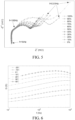
FIG. 5 is a schematic diagram of an EIS curve according to an embodiment of the present invention; -
FIG. 6 is a schematic diagram of response curves of the admittances with temperatures in a state of charge of 50% according to an embodiment of the present invention; -
FIG. 7 is a schematic flowchart of a battery temperature estimation method according to an embodiment of the present invention; -
FIG. 8 is a schematic diagram of a temperature change curve in a battery charging process according to an embodiment of the present invention; -
FIG. 9 is a schematic structural diagram of a battery temperature estimation apparatus according to an embodiment of the present invention; -
FIG. 10 is a schematic structural diagram of a battery temperature estimation apparatus according to another embodiment of the present invention; and -
FIG. 11 is a schematic structural diagram of an electronic device according to an embodiment of the present invention. - The embodiments of the present invention are described below in detail. Examples of the embodiments are shown in the accompanying drawings, and same or similar reference signs in all the accompanying drawings indicate same or similar components or components having same or similar functions. The embodiments described below with reference to the accompanying drawings are exemplary, and are merely intended to explain the present invention and cannot be construed as a limitation to the present invention. On the contrary, the embodiments of the present invention include all changes, modifications, and equivalents falling within the scope of the appended claims.
- To resolve the technical problem in the related art that the effect of real-time charging and discharging states of the battery on the actually measured impedance values is not considered, and the obtained internal temperature is actually the average temperature of the entire battery rather than the actual temperature inside the battery, so that the estimation precision of the internal temperature of the battery is not high, an embodiment of the present invention provides a battery temperature estimation method. When a battery is in an offline state, a first function relationship is fitted according to corresponding admittances of the battery at different test temperatures, a temperature distribution model of the battery is obtained according to the shape and the size of the battery, and a second function relationship corresponding to internal temperatures and a surface temperature is determined by combining with the first function relationship, the second function relationship being used for estimating the internal temperature of the battery by using the surface temperature and the admittances of the battery. Therefore, the internal temperature of the battery can be estimated by using the admittances that are measured in real time and the surface temperature of the battery, thereby effectively improving the estimation precision of the internal temperature of the battery.
-
FIG. 1 is a schematic flowchart of a battery temperature estimation method according to an embodiment of the present invention. - Referring to
FIG. 1 , the method includes the following steps:
S101. Fit, when a battery is in an offline state, a first function relationship according to corresponding admittances of the battery at different test temperatures. - The offline state indicates that the battery is currently in a test environment, or may indicate that the battery is not charged or discharged. This is not limited.
- During specific execution, when a battery is in an offline state, a first function relationship is fitted according to corresponding admittances of the battery at different test temperatures.
- During specific execution, real parts of the corresponding admittances of the battery at different test temperatures may be determined, and the first function relationship is fitted according to the different test temperatures and the real parts of the corresponding admittances. The first function relationship is used for describing a correspondence between different test temperatures and the real parts of the corresponding admittances of the battery. The concept of admittance is introduced to simplify the calculation formula and reduce the calculation amount, thereby reducing the requirement on the chip calculation capacity.
- During specific execution, the first function relationship may be fitted according to the different test temperatures, the real parts of the corresponding admittances, and an Arrhenius formula.
- For example, according to the Arrhenius formula, G' = AeRT//Ea, where A is a constant, Ea is activation energy, and R is a universal gas constant. The relationship between the real parts of the admittances and temperatures may be represented as G' = AebT. Fitting is performed according to testing data, to obtain parameters A= 0.8976, and b = 0.02358.
FIG. 2 is a schematic diagram of a curve of a first function relationship according to an embodiment of the present invention. - S102. Obtain a temperature distribution model of the battery according to the shape and the size of the battery, and determine a second function relationship corresponding to internal temperatures and a surface temperature by combining with the first function relationship, the second function relationship being used for estimating the internal temperature of the battery by using the surface temperature and the admittances of the battery.
- In this embodiment, when a temperature distribution model of the battery is obtained according to the shape and the size of the battery, and a second function relationship corresponding to internal temperatures and a surface temperature is determined by combining with the first function relationship, the first function relationship may be integrated and the second function relationship of the battery may be determined according to the temperature distribution model and the integrated first function relationship.
- The temperature distribution model is used for describing a correspondence among temperatures at different locations inside the battery, the highest internal temperature of the battery, and the surface temperature of the battery.
- During specific execution, a function relationship among temperatures T(x) at different locations, the highest internal temperature of the battery, and the surface temperature of the battery may be determined according to a one-dimensional steady heat-conduction equation and used as the temperature distribution model, for example, T(x) = f(T max, T0, x) =

- The shape of the battery may be, for example, regular or irregular. The shape of the battery may be, for example, hexahedral. In the embodiments of the present invention, an example in which the shape of the battery is square is given, and this is not limited.
- In an example, the square battery may be regarded as being formed by a plurality of battery sheets that are discretized along a thickness direction of the battery. The plurality of battery sheets are, for example, N battery sheets, where N is a positive integer greater than or equal to 2. The battery may be discretized in advance into N battery sheets along the thickness direction.
FIG. 3 is a schematic diagram of discretization of a square battery in an embodiment of the present invention. The square battery is discretized into N battery sheets along the thickness direction, each battery sheet may correspond to a corresponding location on an x coordinate axis, and a plurality of corresponding locations may correspond to x in the foregoing temperature distribution model T(x). - During specific execution, when the temperature distribution model of the battery is obtained according to the shape and the size of the battery, and the second function relationship corresponding to internal temperatures and a surface temperature is determined by combining with the first function relationship, the first function relationship may be integrated and the second function relationship of the battery may be determined according to the temperature distribution model and the integrated first function relationship.
- In an example, the real part of the admittance measured in the first function relationship in the foregoing step is the accumulation of all the real parts of the admittances of the battery, that is,


- In this embodiment, when a battery is in an offline state, a first function relationship is fitted according to corresponding admittances of the battery at different test temperatures, a temperature distribution model of the battery is obtained according to the shape and the size of the battery, and a second function relationship corresponding to internal temperatures and a surface temperature is determined by combining with the first function relationship, the second function relationship being used for estimating the internal temperature of the battery by using the surface temperature and the admittances of the battery. Therefore, the internal temperature of the battery can be estimated by using the admittances that are measured in real time and the surface temperature of the battery, thereby effectively improving the estimation precision of the internal temperature of the battery.
-
FIG. 4 is a schematic flowchart of a battery temperature estimation method according to another embodiment of the present invention. - Referring to
FIG. 4 , the method includes the following steps:
S401. Determine a feature test frequency when the battery is in the offline state, where the feature test frequency is within a target frequency range, and in the target frequency range, impedance of the battery does not change with a state of charge of the battery. - The feature test frequency is obtained through pre-testing, and is a frequency within a target frequency range, and in the target frequency range, impedance of the battery does not change with a state of charge of the battery. The feature test frequency is used for performing in-situ admittance testing on the battery.
- During specific execution, in the process of determining the feature test frequency, electrochemical impedance spectroscopy testing may be performed on the battery in a preset frequency range in different states of charge, the target frequency range is determined from the preset frequency range according to a result of the testing, response values of electrochemical impedance spectroscopy of the battery are tested in a preset state of charge at different temperatures, the response values are converted into the corresponding admittances, and a frequency at which real parts of the admittances change most with temperatures in the target frequency range is determined as the feature test frequency. By performing in-situ admittance testing on the battery based on the feature test frequency, a standard relationship between in-situ admittance testing data and ambient temperature data can be effectively established, thereby reducing an estimation error and improving the estimation precision.
- Certainly, during actual execution, the feature test frequency may be determined in any other possible manners. For example, the feature test frequency may be determined by using the conventional programming technology (such as a simulation method and an engineering method). In another example, the feature test frequency may be determined by using a genetic algorithm and an artificial neural network method.
- The preset frequency range may be preset according to actual testing experience, and the preset frequency range may be 0.01 Hz to 1 kHz.
- In an example, electrochemical impedance spectroscopy testing is performed on the battery in a preset frequency range in different states of charge, and the target frequency range is determined from the preset frequency range according to a result of the testing. For example, at room temperature (25°C), the states of charge (SOC) of a square battery cell having a capacity of 50 Ah are adjusted respectively to 0%, 10%, 20%, 30%, 40%, 50%, 60%, 70%, 80%, 90%, 100% at a rate of 0.5 C, and then electrochemical impedance spectroscopy (EIS) testing is performed. The preset frequency range is 0.01 Hz to 1 kHz, and a frequency interval in which impedance does not change with the state of charge is obtained by analyzing a testing result and is used as a target frequency range. The target frequency range is 100 Hz to 1 kHz.
FIG. 5 is a schematic diagram of an EIS curve according to an embodiment of the present invention. - In an example, response values of electrochemical impedance spectroscopy of the battery are tested in a preset state of charge at different temperatures, the response values are converted into the corresponding admittances, and a frequency at which real parts of the admittances change most with temperatures in the target frequency range is determined as the feature test frequency. For example, in the SOC of 50%, after the square battery is placed in environments with respective temperatures of -20°C, -10°C, 0°C, 10°C, 20°C, 30°C, and 40°C to fully stand, response values of electrochemical impedance spectroscopy at different temperatures are tested, and the response values of the impedance are converted into the corresponding admittances. A frequency at which real parts of the admittances change most with temperatures is determined in the foregoing determined target frequency range of 100 Hz to 1 kHz, and the frequency is determined as the feature test frequency f0 = 200 Hz.
FIG. 6 is a schematic diagram of response curves of the admittances with temperatures in a state of charge of 50% according to an embodiment of the present invention. - S402. Determine real parts of the corresponding admittances of the battery at different test temperatures according to the feature test frequency.
- In an example, the feature test frequency is f0 = 200 Hz. In-situ testing is performed on admittances of the battery in charging and discharging states in environments with temperatures of -20°C, -10°C, 0°C, 10°C, 20°C, 30°C, and 40°C, and real parts G' of the admittances are extracted. After that, step S403 is triggered.
- S403. Fit the first function relationship according to the different test temperatures and the real parts of the corresponding admittances.
- S404. Obtain a temperature distribution model of the battery according to the shape and the size of the battery, and determine a second function relationship corresponding to * internal temperatures and a surface temperature by combining with the first function relationship, the second function relationship being used for estimating the internal temperature of the battery by using the surface temperature and the admittances of the battery.
- In an example, the real part of the admittance measured in the first function relationship in the foregoing step is the accumulation of all the real parts of the admittances of the battery, that is,


- In this embodiment, by performing in-situ admittance testing on the battery based on the feature test frequency, a standard relationship between in-situ admittance testing data and ambient temperature data can be effectively established, thereby reducing an estimation error and improving the estimation precision. When a battery is in an offline state, a first function relationship is fitted according to corresponding admittances of the battery at different test temperatures, a temperature distribution model of the battery is obtained according to the shape and the size of the battery, and a second function relationship corresponding to internal temperatures and a surface temperature is determined by combining with the first function relationship, the second function relationship being used for estimating the internal temperature of the battery by using the surface temperature and the admittances of the battery. Therefore, the internal temperature of the battery can be estimated by using the admittances that are measured in real time and the surface temperature of the battery, thereby effectively improving the estimation precision of the internal temperature of the battery.
-
FIG. 7 is a schematic flowchart of a battery temperature estimation method according to an embodiment of the present invention. - Referring to
FIG. 7 , the method includes the following steps:
S701. Detect a target surface temperature of the to-be-estimated battery, and detect a target admittance of the to-be-estimated battery. - A temperature sensor may be disposed on the to-be-estimated battery in advance, to detect a target surface temperature of the to-be-estimated battery in real time, and detect a target admittance of the to-be-estimated battery in real time.
- S702. Determine the internal temperature of the to-be-estimated battery according to the target surface temperature and the target admittance by using the second function relationship.
- During specific execution, T(x) = f(Tmax,T0,x) is substituted into the integrated first function relationship

- During specific execution of the embodiments of the present invention, for temperatures tested through experiments and the result of estimation in the embodiments of the present invention, reference may be made to
FIG. 8. FIG. 8 is a schematic diagram of a temperature change curve in a battery charging process according to an embodiment of the present invention. Four temperature time curves respectively represent the internal temperature Test of the battery that is estimated in the embodiments of the present invention, equivalent temperature Teq of the entire battery, internal temperature Ti of the battery that is actually tested, and surface temperature T0 of the battery. Compared with the surface temperature of the battery and the equivalent temperature of the entire battery, the internal temperature of the battery that is estimated in the embodiments of the present invention is closer to the internal temperature of the battery that is actually measured. - In this embodiment, the target surface temperature of the to-be-estimated battery and the target admittance of the to-be-estimated battery are detected, and the internal temperature of the to-be-estimated battery is determined according to the target surface temperature and the target admittance by using the second function relationship. The internal temperature distribution of the battery is considered, and the highest internal temperature can be accurately given for estimation of the internal temperature of the field test battery. Therefore, a battery management system may further optimize the working status of the battery according to the internal temperature, thereby ensuring that the battery works in a safe temperature range, eliminating the hidden dangers of flammability and explosiveness, and improving the safety and reliability of battery operation.
-
FIG. 9 is a schematic structural diagram of a battery temperature estimation apparatus according to an embodiment of the present invention. - Referring to
FIG. 9 , theapparatus 900 includes: - a
fitting module 901, configured to fit, when a battery is in an offline state, a first function relationship according to corresponding admittances of the battery at different test temperatures; and - a
first determination module 902, configured to obtain a temperature distribution model of the battery according to the shape and the size of the battery, and determine a second function relationship corresponding to internal temperatures and a surface temperature by combining with the first function relationship, the second function relationship being used for estimating the internal temperature of the battery by using the surface temperature and the admittances of the battery. - In some embodiments, referring to
FIG. 10 , thefitting module 901 includes: - a
first determination sub-module 9011, configured to determine a feature test frequency when the battery is in the offline state, where the feature test frequency is within a target frequency range, and in the target frequency range, impedance of the battery does not change with a state of charge of the battery; - a
second determination sub-module 9012, configured to determine the corresponding admittances of the battery at different test temperatures according to the feature test frequency; and - a fitting sub-module 9013, configured to fit the first function relationship according to the different test temperatures and the corresponding admittances.
- Optionally, in some embodiments, referring to
FIG. 10 , theapparatus 900 further includes: - a
detection module 903, configured to detect a target surface temperature of the to-be-estimated battery, and detect a target admittance of the to-be-estimated battery; and - a
second determination module 904, configured to determine the internal temperature of the to-be-estimated battery according to the target surface temperature and the target admittance by using the second function relationship. - In some embodiments, the
first determination sub-module 9011 is specifically configured to:
perform electrochemical impedance spectroscopy testing on the battery in a preset frequency range in different states of charge; determine the target frequency range from the preset frequency range according to a result of the testing; test response values of electrochemical impedance spectroscopy of the battery in a preset state of charge at different temperatures, and convert the response values into the corresponding admittances; and determine a frequency at which real parts of the admittances change most with temperatures in the target frequency range as the feature test frequency. - In some embodiments, the fitting sub-module 9013 is specifically configured to:
fit the first function relationship according to the different test temperatures, the real parts of the corresponding admittances, and an Arrhenius formula. - In some embodiments, the
first determination module 902 is specifically configured to:
integrate the first function relationship; and determine the second function relationship of the battery according to the temperature distribution model and the integrated first function relationship. - In some embodiments, the battery is square.
- It should be noted that the explanation of the embodiment of the battery temperature estimation method in the above embodiments of
FIG. 1 to FIG. 8 is also applicable to the batterytemperature estimation apparatus 900 of this embodiment, and the implementation principle thereof is similar, so that details are omitted herein. - In this embodiment, when a battery is in an offline state, a first function relationship is fitted according to corresponding admittances of the battery at different test temperatures, a temperature distribution model of the battery is obtained according to the shape and the size of the battery, and a second function relationship corresponding to internal temperatures and a surface temperature is determined by combining with the first function relationship, the second function relationship being used for estimating the internal temperature of the battery by using the surface temperature and the admittances of the battery. Therefore, the internal temperature of the battery can be estimated by using the admittances that are measured in real time and the surface temperature of the battery, thereby effectively improving the estimation precision of the internal temperature of the battery.
-
FIG. 11 is a schematic structural diagram of an electronic device according to an embodiment of the present invention. - The
electronic device 1000 includes: amemory 1001, aprocessor 1002, and a computer program stored in thememory 1001 and executable on theprocessor 1002. Theprocessor 1002, when executing the program, implements the battery temperature estimation method in the foregoing embodiments. - In a possible implementation, the electronic device further includes a
communication interface 1003, configured to perform communication between thememory 1001 and theprocessor 1002. - In this embodiment, when a battery is in an offline state, a first function relationship is fitted according to corresponding admittances of the battery at different test temperatures, a temperature distribution model of the battery is obtained according to the shape and the size of the battery, and a second function relationship corresponding to internal temperatures and a surface temperature is determined by combining with the first function relationship, the second function relationship being used for estimating the internal temperature of the battery by using the surface temperature and the admittances of the battery. Therefore, the internal temperature of the battery can be estimated by using the admittances that are measured in real time and the surface temperature of the battery, thereby effectively improving the estimation precision of the internal temperature of the battery.
- This embodiment further provides a computer-readable storage medium, storing a computer program, the computer program, when executed by a processor, implementing the foregoing battery temperature estimation method.
- It should be noted that in the description of the present invention, the terms "first", "second", and the like are merely used for description, and shall not be understood as an indication or implication of relative importance. In addition, in the description of the present disclosure, unless otherwise stated, "a plurality of" means two or more than two.
- Any process or method in the flowcharts or described herein in another manner may be understood as indicating a module, a segment, or a part including code of one or more executable instructions for implementing a particular logical function or process step. In addition, the scope of exemplary embodiments of the present invention includes other implementations which do not follow the order shown or discussed, including performing, according to involved functions, the functions basically simultaneously or in a reverse order, which should be understood by technical personnel in the technical field to which the embodiments of the present invention belong.
- It should be understood that, parts of the present invention can be implemented by using hardware, software, firmware, or a combination thereof. In the foregoing implementations, a plurality of steps or methods may be implemented by using software or firmware that are stored in a memory and are executed by a proper instruction execution system. For example, if hardware is used for implementation, same as in another implementation, implementation may be performed by any one of the following technologies well known in the art or a combination thereof: a discrete logic circuit of a logic gate circuit for realizing a logic function for a data signal, an application-specific integrated circuit having a suitable combined logic gate circuit, a programmable gate array (PGA), and a field programmable gate array (FPGA).
- A person of ordinary skill in the art may understand that all or some of the steps of the methods in the foregoing embodiments may be implemented by a program instructing relevant hardware. The program may be stored in a computer-readable storage medium. When the program is executed, one or a combination of the steps of the method embodiments are performed.
- In addition, the functional modules in the embodiments of the present invention may be integrated into one processing module, or each of the units may exist alone physically, or two or more units may be integrated into one module. The integrated module may be implemented in the form of hardware, or may be implemented in a form of a software functional module. If implemented in the form of software functional modules and sold or used as an independent product, the integrated module may also be stored in a computer-readable storage medium.
- The storage medium mentioned above may be a read-only memory, a magnetic disk, an optical disc, or the like.
- In the description of the present specification, reference to the description of the terms "one embodiment", "some embodiments", "examples", "specific examples", or "some examples", and the like means that specific features, structures, materials, or characteristics described in connection with the embodiment or example are included in at least one embodiment or example of the present invention. In this specification, exemplary descriptions of the foregoing terms do not necessarily refer to the same embodiment or example. In addition, the described specific features, structures, materials, or characteristics may be combined in a proper manner in any one or more of the embodiments or examples.
- Although the embodiments of the present invention have been shown and described above, it can be understood that, the foregoing embodiments are exemplary and should not be understood as limitation to the present invention. A person of ordinary skill in the art can make changes, modifications, replacements, or variations to the foregoing embodiments within the scope of the present invention as defined in the appended claims.
Claims (10)
- A computer-implemented battery temperature estimation method, comprising:fitting, when a battery is in an offline state, a first function relationship according to different test temperatures, real parts of corresponding admittances of the battery at the different test temperatures, and an Arrhenius formula;obtaining a temperature distribution model of the battery according to the shape and the size of the battery, wherein the temperature distribution model is used for describing the internal temperatures at different locations inside the battery as a function of a highest internal temperature of the battery, and a surface temperature of the battery; anddetermining a second function relationship, wherein the second function relationship is derived by substituting the temperature distribution model into the first relationship and integrating the first relationship over the different locations inside the battery, the second function relationship being used for estimating the internal temperature of the battery by using the surface temperature and the real part of the admittance of the battery;wherein the fitting of the first function relationship according to corresponding real parts of the admittances of the battery at different test temperatures comprises:determining a feature test frequency when the battery is in the offline state, wherein the feature test frequency is within a target frequency range, and in the target frequency range, impedance of the battery does not change with a state of charge of the battery;determining the corresponding real parts of the admittances of the battery at the different test temperatures according to the feature test frequency; andfitting the first function relationship according to the different test temperatures and the corresponding real parts of the admittances.
- The battery temperature estimation method according to claim 1, wherein the determining a feature test frequency comprises:performing electrochemical impedance spectroscopy testing on the battery in a preset frequency range in different states of charge;determining the target frequency range from the preset frequency range according to a result of the testing;testing response values of electrochemical impedance spectroscopy of the battery in a preset state of charge at different temperatures, and converting the response values into the corresponding admittances; anddetermining a frequency at which real parts of the admittances change most with temperatures in the target frequency range as the feature test frequency.
- The battery temperature estimation method according to claim 1 or 2, further comprising:detecting a measured surface temperature of the battery, and detecting a measured admittance of the battery; anddetermining the internal temperature of the battery according to the measured surface temperature and the measured admittance by using the second function relationship.
- A battery temperature estimation apparatus (900), comprising:a fitting module (901), configured to fit, when a battery is in an offline state, a first function relationship according to different test temperatures, real parts of corresponding admittances of the battery at the different test temperatures, and an Arrhenius formula; anda first determination module (902), configured to obtain a temperature distribution model of the battery according to the shape and the size of the battery, wherein the temperature distribution model is used for describing the internal temperatures at different locations inside the battery as a function of a highest internal temperature of the battery, and a surface temperature of the battery; and configured to determine a second function relationship, wherein the second function relationship is derived by substituting the temperature distribution model into the first relationship and integrating the first relationship over the different locations inside the battery,and wherein the function relationship obtained after substitution is used as the second function relationship, the second function relationship being used for estimating the internal temperature of the battery by using the surface temperature and the real parts of the admittances of the battery;wherein the fitting module (901) comprises:a first determination sub-module (9011), configured to determine a feature test frequency when the battery is in the offline state, wherein the feature test frequency is within a target frequency range, and in the target frequency range, impedance of the battery does not change with a state of charge of the battery;a second determination sub-module (9012), configured to determine the corresponding real parts of the admittances of the battery at different test temperatures according to the feature test frequency; anda fitting sub-module (9013), configured to fit the first function relationship according to the different test temperatures and the corresponding real parts of the admittances
- The battery temperature estimation apparatus (900) according to claim 4, further comprising:a detection module (903), configured to detect a measured surface temperature of the battery, and detect a measured admittance of the battery; anda second determination module (904), configured to determine the internal temperature of the battery according to the measured surface temperature and the measured admittance by using the second function relationship.
- The battery temperature estimation apparatus (900) according to claim 4 or 5 wherein the first determination sub-module is specifically configured to:perform electrochemical impedance spectroscopy testing on the battery in a preset frequency range in different states of charge;determine the target frequency range from the preset frequency range according to a result of the testing;test response values of electrochemical impedance spectroscopy of the battery in a preset state of charge at different temperatures, and convert the response values into the corresponding admittances; anddetermine a frequency at which real parts of the admittances change most with temperatures in the target frequency range as the feature test frequency.
- The battery temperature estimation apparatus (900) according to any one of claims 4 to 6. wherein the fitting sub-module is specifically configured to:
fit the first function relationship according to the different test temperatures, the corresponding real parts of the admittances, and the Arrhenius formula. - The battery temperature estimation apparatus (900) according to any one of claims 4 to 7, wherein the battery is square.
- A computer program storable in a memory (1001) of an electronic device (1000) and executable on a processor (1002) of the electronic device (1000) such that the processor, when executing the program, implements the battery temperature estimation method according to any one of claims 1 to 3.
- A computer-readable storage medium, storing a computer program, the program, when executed by a processor, implementing the battery temperature estimation method according to any one of claims 1 to 3.
Applications Claiming Priority (2)
| Application Number | Priority Date | Filing Date | Title |
|---|---|---|---|
| CN201910935416.5A CN112578298B (en) | 2019-09-29 | 2019-09-29 | Battery temperature estimation method, device, electronic equipment and storage medium |
| PCT/CN2020/117853 WO2021057917A1 (en) | 2019-09-29 | 2020-09-25 | Method and apparatus for estimating battery temperature, electronic device, and storage medium |
Publications (3)
| Publication Number | Publication Date |
|---|---|
| EP4024069A1 EP4024069A1 (en) | 2022-07-06 |
| EP4024069A4 EP4024069A4 (en) | 2022-10-26 |
| EP4024069B1 true EP4024069B1 (en) | 2025-01-01 |
Family
ID=75111213
Family Applications (1)
| Application Number | Title | Priority Date | Filing Date |
|---|---|---|---|
| EP20870190.4A Active EP4024069B1 (en) | 2019-09-29 | 2020-09-25 | Method and apparatus for estimating battery temperature, computer program, and storage medium |
Country Status (8)
| Country | Link |
|---|---|
| US (1) | US11846675B2 (en) |
| EP (1) | EP4024069B1 (en) |
| JP (1) | JP7379679B2 (en) |
| KR (1) | KR102778672B1 (en) |
| CN (1) | CN112578298B (en) |
| ES (1) | ES3006690T3 (en) |
| HU (1) | HUE070407T2 (en) |
| WO (1) | WO2021057917A1 (en) |
Families Citing this family (18)
| Publication number | Priority date | Publication date | Assignee | Title |
|---|---|---|---|---|
| CN112994585B (en) * | 2021-04-01 | 2023-07-21 | 安徽江淮汽车集团股份有限公司 | Motor control method, motor, and readable storage medium |
| US20220344734A1 (en) * | 2021-04-14 | 2022-10-27 | Analog Devices, Inc. | Technique for estimation of internal battery temperature |
| CN117396736A (en) * | 2021-04-14 | 2024-01-12 | 美国亚德诺半导体公司 | Technology for estimating battery internal temperature |
| JP7461386B2 (en) * | 2021-06-17 | 2024-04-03 | 寧徳時代新能源科技股▲分▼有限公司 | CHARGING CONTROL METHOD AND DEVICE, BATTERY MANAGEMENT SYSTEM, AND READABLE STORAGE MEDIUM |
| CN114184964B (en) * | 2021-12-08 | 2023-08-29 | 蜂巢能源科技(无锡)有限公司 | Method and device for evaluating internal temperature distribution of battery cell |
| CN113945302B (en) * | 2021-12-20 | 2022-03-08 | 中创新航科技股份有限公司 | Method and device for determining internal temperature of battery |
| CN114720890B (en) * | 2022-03-23 | 2023-04-21 | 四川大学 | Lithium battery internal temperature estimation method based on broadband impedance spectrum |
| KR102841755B1 (en) * | 2022-12-15 | 2025-08-04 | 주식회사 엘지에너지솔루션 | Inspection method for battery |
| KR20240116302A (en) * | 2023-01-20 | 2024-07-29 | 주식회사 엘지에너지솔루션 | Apparatus for diagnosing fault of battery and operating method thereof |
| CN116166918B (en) * | 2023-02-17 | 2026-03-24 | 同济大学 | Methods, equipment, and media for obtaining the rate-of-change matrix in electrochemical impedance analysis |
| CN116839759A (en) * | 2023-03-06 | 2023-10-03 | 华侨大学 | Method, device, equipment and medium for determining temperature at joint of tunnel pipe section |
| CN116576987B (en) * | 2023-05-16 | 2026-05-01 | 昆明理工大学 | Method for predicting internal temperature of battery based on variable frequency impedance measurement |
| CN116429280B (en) * | 2023-06-13 | 2024-07-23 | 广汽埃安新能源汽车股份有限公司 | Method and device for determining whole package temperature of power battery |
| CN117309183B (en) * | 2023-09-21 | 2025-06-03 | 华中科技大学 | A method, device and system for estimating core temperature of cylindrical lithium battery |
| KR102859029B1 (en) * | 2023-11-10 | 2025-09-12 | 주식회사 로보볼트 | Method and apparatus for predicting internal temperature of operating battery |
| CN117849494B (en) * | 2023-12-15 | 2024-09-20 | 广州铁路职业技术学院 | Method and device for predicting rapid temperature rise of transformer with small current and large current |
| CN117895120B (en) * | 2024-03-14 | 2024-05-17 | 因湃电池科技有限公司 | Battery abnormality detection method, device and storage medium |
| CN118625163B (en) * | 2024-08-09 | 2024-10-29 | 宁波均胜新能源研究院有限公司 | Battery thermal runaway warning method, device and electronic equipment |
Citations (1)
| Publication number | Priority date | Publication date | Assignee | Title |
|---|---|---|---|---|
| EP2852999B1 (en) * | 2012-05-23 | 2020-02-19 | The Regents of the University of Michigan | Estimating core temperatures of battery cells in a battery pack |
Family Cites Families (29)
| Publication number | Priority date | Publication date | Assignee | Title |
|---|---|---|---|---|
| US6137269A (en) * | 1999-09-01 | 2000-10-24 | Champlin; Keith S. | Method and apparatus for electronically evaluating the internal temperature of an electrochemical cell or battery |
| CN100440614C (en) | 2007-01-26 | 2008-12-03 | 清华大学 | A real-time method for estimating the temperature difference between inside and outside of Ni-MH power battery |
| JP2010135075A (en) | 2008-12-02 | 2010-06-17 | Calsonic Kansei Corp | Method and device for estimating temperature of battery pack |
| JP2010243481A (en) * | 2009-03-18 | 2010-10-28 | National Institute Of Advanced Industrial Science & Technology | Method, determination device and determination program for determining state relating to temperature of secondary battery |
| WO2011045853A1 (en) | 2009-10-14 | 2011-04-21 | 株式会社 日立製作所 | Battery control device and motor drive system |
| JP2013118724A (en) | 2011-12-01 | 2013-06-13 | Toyota Motor Corp | Control device and control method |
| US20140144507A1 (en) * | 2012-11-23 | 2014-05-29 | Samsung Sdi Co., Ltd. | Solar cell and method of manufacturing the same |
| US9880061B2 (en) | 2013-06-14 | 2018-01-30 | Hrl Laboratories, Llc | Methods and apparatus for sensing the internal temperature of an electrochemical device |
| JP6200359B2 (en) | 2014-03-20 | 2017-09-20 | 古河電気工業株式会社 | Secondary battery internal temperature estimation device and secondary battery internal temperature estimation method |
| JP5768160B1 (en) | 2014-04-16 | 2015-08-26 | エスペック株式会社 | Secondary battery capacity evaluation method and evaluation apparatus |
| JP6382662B2 (en) * | 2014-09-25 | 2018-08-29 | プライムアースEvエナジー株式会社 | Battery temperature estimation method and battery temperature estimation device |
| DE102015117171B4 (en) * | 2014-10-09 | 2019-03-21 | Denso Corporation | BATTERIEZUSTANDSABSCHÄTZVORRICHTUNG |
| JP2016167420A (en) | 2015-03-10 | 2016-09-15 | 富士重工業株式会社 | Temperature control device for on-vehicle secondary battery |
| CN104865534B (en) | 2015-04-29 | 2017-12-26 | 同济大学 | A kind of cell internal temperature method of estimation |
| CN104882643A (en) * | 2015-05-18 | 2015-09-02 | 北京波士顿动力电池有限公司 | Method for representing stability and dynamic variation of temperature inside hard-packaging battery |
| CN105510843B (en) * | 2016-01-08 | 2018-04-27 | 北京北交新能科技有限公司 | A kind of construction method of the low temperature frequency domain electric-thermal model of lithium ion battery |
| CN107219021B (en) * | 2016-03-22 | 2020-10-16 | 罗伯特·博世有限公司 | Method and device for detecting temperature of battery |
| CN106289566B (en) * | 2016-07-19 | 2018-12-11 | 清华大学 | A method of secondary cell internal temperature is estimated based on electrochemical impedance |
| JP6658407B2 (en) | 2016-09-01 | 2020-03-04 | トヨタ自動車株式会社 | Battery temperature estimation method |
| CN106772075B (en) * | 2016-12-09 | 2019-07-05 | 同济大学 | A kind of online battery impedance model optimization method considering temperature gradient |
| CN106842050A (en) * | 2017-01-24 | 2017-06-13 | 中国电力科学研究院 | A kind of battery temperature Forecasting Methodology and device |
| JP6760119B2 (en) | 2017-02-06 | 2020-09-23 | 住友電気工業株式会社 | Battery temperature estimation device, battery temperature estimation method and computer program |
| CN106872904B (en) | 2017-02-23 | 2019-02-26 | 合肥工业大学 | Internal Temperature Estimation Method of Lithium Battery Based on Discrete Sliding Mode Observer |
| JP6826935B2 (en) | 2017-03-30 | 2021-02-10 | 古河電気工業株式会社 | Secondary battery internal temperature estimation device and secondary battery internal temperature estimation method |
| CN107192952B (en) * | 2017-03-31 | 2021-11-19 | 中国电力科学研究院 | Method and device for detecting internal temperature of battery |
| JP6806002B2 (en) | 2017-08-24 | 2020-12-23 | トヨタ自動車株式会社 | Temperature estimation device |
| US10554069B2 (en) * | 2017-12-15 | 2020-02-04 | Medtronic, Inc. | Medical device temperature estimation |
| CN109799005A (en) | 2018-12-20 | 2019-05-24 | 北京长城华冠汽车科技股份有限公司 | Internal temperature of battery estimation method, device, system and vehicle |
| CN109921111B (en) | 2019-03-14 | 2020-08-04 | 上海大学 | Method and system for estimating internal temperature of lithium ion battery |
-
2019
- 2019-09-29 CN CN201910935416.5A patent/CN112578298B/en active Active
-
2020
- 2020-09-25 KR KR1020227011623A patent/KR102778672B1/en active Active
- 2020-09-25 WO PCT/CN2020/117853 patent/WO2021057917A1/en not_active Ceased
- 2020-09-25 EP EP20870190.4A patent/EP4024069B1/en active Active
- 2020-09-25 US US17/764,340 patent/US11846675B2/en active Active
- 2020-09-25 JP JP2022519442A patent/JP7379679B2/en active Active
- 2020-09-25 ES ES20870190T patent/ES3006690T3/en active Active
- 2020-09-25 HU HUE20870190A patent/HUE070407T2/en unknown
Patent Citations (1)
| Publication number | Priority date | Publication date | Assignee | Title |
|---|---|---|---|---|
| EP2852999B1 (en) * | 2012-05-23 | 2020-02-19 | The Regents of the University of Michigan | Estimating core temperatures of battery cells in a battery pack |
Also Published As
| Publication number | Publication date |
|---|---|
| US20220357399A1 (en) | 2022-11-10 |
| EP4024069A4 (en) | 2022-10-26 |
| JP7379679B2 (en) | 2023-11-14 |
| CN112578298A (en) | 2021-03-30 |
| CN112578298B (en) | 2022-03-15 |
| HUE070407T2 (en) | 2025-06-28 |
| WO2021057917A1 (en) | 2021-04-01 |
| ES3006690T3 (en) | 2025-03-18 |
| KR20220057614A (en) | 2022-05-09 |
| US11846675B2 (en) | 2023-12-19 |
| EP4024069A1 (en) | 2022-07-06 |
| JP2022550125A (en) | 2022-11-30 |
| KR102778672B1 (en) | 2025-03-12 |
Similar Documents
| Publication | Publication Date | Title |
|---|---|---|
| EP4024069A1 (en) | Method and apparatus for estimating battery temperature, electronic device, and storage medium | |
| EP3764114B1 (en) | Method, device, system for estimating remaining charging time and storage medium | |
| EP3550317B1 (en) | Method and device for detecting battery micro-short circuit | |
| CN113447828B (en) | A method and system for temperature estimation of lithium battery based on Bayesian neural network | |
| EP2852999B1 (en) | Estimating core temperatures of battery cells in a battery pack | |
| JP6145824B2 (en) | Battery diagnostic device and battery diagnostic method | |
| EP2963433B1 (en) | Method and apparatus for estimating state of battery | |
| US20210382114A1 (en) | Battery diagnosis apparatus and battery diagnosis method based on current pulse method | |
| JP7543552B2 (en) | Battery diagnostic device, battery system, and battery diagnostic method | |
| JP2008522152A (en) | Battery state and parameter estimation system and method | |
| CN113687251A (en) | A fault diagnosis method for abnormal voltage of lithium-ion battery pack based on dual model | |
| CN114152826B (en) | Method for detecting short circuit in lithium ion battery unit | |
| CN110596610A (en) | A method, device and battery for detecting the state of charge and discharge of a battery module | |
| CN112924878B (en) | Battery safety diagnosis method based on relaxation voltage curve | |
| KR102595386B1 (en) | State of Charge Estimation and State of Health Monitoring of Battery Using Neural Networks | |
| CN114930609A (en) | System and method for estimating battery cell surface temperature | |
| CN118858961B (en) | Lithium ion battery micro-short circuit diagnosis method and system based on clustering and charging voltage difference | |
| CN112415409B (en) | Method and device for estimating battery capacity, storage medium and vehicle | |
| CN119644145A (en) | A battery cell fault early warning method and system based on dynamic impedance fitting | |
| CN111537906A (en) | A method for evaluating multiple health parameters of lithium iron phosphate battery systems | |
| CN108693473A (en) | The detection method and device of cell health state SOH | |
| CN114441982A (en) | Battery system performance determination method, device, equipment, medium and program product | |
| EP4016099A1 (en) | Battery diagnostic apparatus and method | |
| Lei et al. | Model-free detection and quantitative assessment of micro short circuits in lithium-ion battery packs based on incremental capacity and unsupervised clustering | |
| CN116047339A (en) | Lithium-ion battery pack SOC estimation method and device based on thermoelectric coupling model |
Legal Events
| Date | Code | Title | Description |
|---|---|---|---|
| STAA | Information on the status of an ep patent application or granted ep patent |
Free format text: STATUS: THE INTERNATIONAL PUBLICATION HAS BEEN MADE |
|
| PUAI | Public reference made under article 153(3) epc to a published international application that has entered the european phase |
Free format text: ORIGINAL CODE: 0009012 |
|
| STAA | Information on the status of an ep patent application or granted ep patent |
Free format text: STATUS: REQUEST FOR EXAMINATION WAS MADE |
|
| 17P | Request for examination filed |
Effective date: 20220331 |
|
| AK | Designated contracting states |
Kind code of ref document: A1 Designated state(s): AL AT BE BG CH CY CZ DE DK EE ES FI FR GB GR HR HU IE IS IT LI LT LU LV MC MK MT NL NO PL PT RO RS SE SI SK SM TR |
|
| A4 | Supplementary search report drawn up and despatched |
Effective date: 20220922 |
|
| RIC1 | Information provided on ipc code assigned before grant |
Ipc: H01M 10/48 20060101ALI20220916BHEP Ipc: G01K 7/42 20060101ALI20220916BHEP Ipc: G01K 7/26 20060101ALI20220916BHEP Ipc: G01R 31/387 20190101ALI20220916BHEP Ipc: G01R 31/389 20190101AFI20220916BHEP |
|
| DAV | Request for validation of the european patent (deleted) | ||
| DAX | Request for extension of the european patent (deleted) | ||
| STAA | Information on the status of an ep patent application or granted ep patent |
Free format text: STATUS: EXAMINATION IS IN PROGRESS |
|
| 17Q | First examination report despatched |
Effective date: 20231130 |
|
| GRAP | Despatch of communication of intention to grant a patent |
Free format text: ORIGINAL CODE: EPIDOSNIGR1 |
|
| STAA | Information on the status of an ep patent application or granted ep patent |
Free format text: STATUS: GRANT OF PATENT IS INTENDED |
|
| INTG | Intention to grant announced |
Effective date: 20240726 |
|
| GRAS | Grant fee paid |
Free format text: ORIGINAL CODE: EPIDOSNIGR3 |
|
| GRAA | (expected) grant |
Free format text: ORIGINAL CODE: 0009210 |
|
| STAA | Information on the status of an ep patent application or granted ep patent |
Free format text: STATUS: THE PATENT HAS BEEN GRANTED |
|
| AK | Designated contracting states |
Kind code of ref document: B1 Designated state(s): AL AT BE BG CH CY CZ DE DK EE ES FI FR GB GR HR HU IE IS IT LI LT LU LV MC MK MT NL NO PL PT RO RS SE SI SK SM TR |
|
| REG | Reference to a national code |
Ref country code: GB Ref legal event code: FG4D |
|
| REG | Reference to a national code |
Ref country code: CH Ref legal event code: EP |
|
| REG | Reference to a national code |
Ref country code: DE Ref legal event code: R096 Ref document number: 602020044270 Country of ref document: DE |
|
| REG | Reference to a national code |
Ref country code: IE Ref legal event code: FG4D |
|
| P01 | Opt-out of the competence of the unified patent court (upc) registered |
Free format text: CASE NUMBER: APP_786/2025 Effective date: 20250108 |
|
| REG | Reference to a national code |
Ref country code: NL Ref legal event code: FP |
|
| REG | Reference to a national code |
Ref country code: ES Ref legal event code: FG2A Ref document number: 3006690 Country of ref document: ES Kind code of ref document: T3 Effective date: 20250318 |
|
| REG | Reference to a national code |
Ref country code: LT Ref legal event code: MG9D |
|
| REG | Reference to a national code |
Ref country code: AT Ref legal event code: MK05 Ref document number: 1756770 Country of ref document: AT Kind code of ref document: T Effective date: 20250101 |
|
| REG | Reference to a national code |
Ref country code: HU Ref legal event code: AG4A Ref document number: E070407 Country of ref document: HU |
|
| PG25 | Lapsed in a contracting state [announced via postgrant information from national office to epo] |
Ref country code: FI Free format text: LAPSE BECAUSE OF FAILURE TO SUBMIT A TRANSLATION OF THE DESCRIPTION OR TO PAY THE FEE WITHIN THE PRESCRIBED TIME-LIMIT Effective date: 20250101 |
|
| PG25 | Lapsed in a contracting state [announced via postgrant information from national office to epo] |
Ref country code: PL Free format text: LAPSE BECAUSE OF FAILURE TO SUBMIT A TRANSLATION OF THE DESCRIPTION OR TO PAY THE FEE WITHIN THE PRESCRIBED TIME-LIMIT Effective date: 20250101 |
|
| PG25 | Lapsed in a contracting state [announced via postgrant information from national office to epo] |
Ref country code: IS Free format text: LAPSE BECAUSE OF FAILURE TO SUBMIT A TRANSLATION OF THE DESCRIPTION OR TO PAY THE FEE WITHIN THE PRESCRIBED TIME-LIMIT Effective date: 20250501 Ref country code: NO Free format text: LAPSE BECAUSE OF FAILURE TO SUBMIT A TRANSLATION OF THE DESCRIPTION OR TO PAY THE FEE WITHIN THE PRESCRIBED TIME-LIMIT Effective date: 20250401 |
|
| PG25 | Lapsed in a contracting state [announced via postgrant information from national office to epo] |
Ref country code: HR Free format text: LAPSE BECAUSE OF FAILURE TO SUBMIT A TRANSLATION OF THE DESCRIPTION OR TO PAY THE FEE WITHIN THE PRESCRIBED TIME-LIMIT Effective date: 20250101 |
|
| PG25 | Lapsed in a contracting state [announced via postgrant information from national office to epo] |
Ref country code: LV Free format text: LAPSE BECAUSE OF FAILURE TO SUBMIT A TRANSLATION OF THE DESCRIPTION OR TO PAY THE FEE WITHIN THE PRESCRIBED TIME-LIMIT Effective date: 20250101 Ref country code: PT Free format text: LAPSE BECAUSE OF FAILURE TO SUBMIT A TRANSLATION OF THE DESCRIPTION OR TO PAY THE FEE WITHIN THE PRESCRIBED TIME-LIMIT Effective date: 20250502 |
|
| PG25 | Lapsed in a contracting state [announced via postgrant information from national office to epo] |
Ref country code: GR Free format text: LAPSE BECAUSE OF FAILURE TO SUBMIT A TRANSLATION OF THE DESCRIPTION OR TO PAY THE FEE WITHIN THE PRESCRIBED TIME-LIMIT Effective date: 20250402 Ref country code: BG Free format text: LAPSE BECAUSE OF FAILURE TO SUBMIT A TRANSLATION OF THE DESCRIPTION OR TO PAY THE FEE WITHIN THE PRESCRIBED TIME-LIMIT Effective date: 20250101 |
|
| PG25 | Lapsed in a contracting state [announced via postgrant information from national office to epo] |
Ref country code: AT Free format text: LAPSE BECAUSE OF FAILURE TO SUBMIT A TRANSLATION OF THE DESCRIPTION OR TO PAY THE FEE WITHIN THE PRESCRIBED TIME-LIMIT Effective date: 20250101 |
|
| PG25 | Lapsed in a contracting state [announced via postgrant information from national office to epo] |
Ref country code: CZ Free format text: LAPSE BECAUSE OF FAILURE TO SUBMIT A TRANSLATION OF THE DESCRIPTION OR TO PAY THE FEE WITHIN THE PRESCRIBED TIME-LIMIT Effective date: 20250101 |
|
| PG25 | Lapsed in a contracting state [announced via postgrant information from national office to epo] |
Ref country code: SE Free format text: LAPSE BECAUSE OF FAILURE TO SUBMIT A TRANSLATION OF THE DESCRIPTION OR TO PAY THE FEE WITHIN THE PRESCRIBED TIME-LIMIT Effective date: 20250101 |
|
| REG | Reference to a national code |
Ref country code: DE Ref legal event code: R097 Ref document number: 602020044270 Country of ref document: DE |
|
| PG25 | Lapsed in a contracting state [announced via postgrant information from national office to epo] |
Ref country code: SM Free format text: LAPSE BECAUSE OF FAILURE TO SUBMIT A TRANSLATION OF THE DESCRIPTION OR TO PAY THE FEE WITHIN THE PRESCRIBED TIME-LIMIT Effective date: 20250101 |
|
| PG25 | Lapsed in a contracting state [announced via postgrant information from national office to epo] |
Ref country code: DK Free format text: LAPSE BECAUSE OF FAILURE TO SUBMIT A TRANSLATION OF THE DESCRIPTION OR TO PAY THE FEE WITHIN THE PRESCRIBED TIME-LIMIT Effective date: 20250101 |
|
| PGFP | Annual fee paid to national office [announced via postgrant information from national office to epo] |
Ref country code: DE Payment date: 20250919 Year of fee payment: 6 |
|
| PGFP | Annual fee paid to national office [announced via postgrant information from national office to epo] |
Ref country code: NL Payment date: 20250918 Year of fee payment: 6 Ref country code: IT Payment date: 20250923 Year of fee payment: 6 |
|
| PGFP | Annual fee paid to national office [announced via postgrant information from national office to epo] |
Ref country code: HU Payment date: 20250922 Year of fee payment: 6 Ref country code: GB Payment date: 20250919 Year of fee payment: 6 |
|
| PGFP | Annual fee paid to national office [announced via postgrant information from national office to epo] |
Ref country code: FR Payment date: 20250922 Year of fee payment: 6 |
|
| PG25 | Lapsed in a contracting state [announced via postgrant information from national office to epo] |
Ref country code: EE Free format text: LAPSE BECAUSE OF FAILURE TO SUBMIT A TRANSLATION OF THE DESCRIPTION OR TO PAY THE FEE WITHIN THE PRESCRIBED TIME-LIMIT Effective date: 20250101 |
|
| PG25 | Lapsed in a contracting state [announced via postgrant information from national office to epo] |
Ref country code: RO Free format text: LAPSE BECAUSE OF FAILURE TO SUBMIT A TRANSLATION OF THE DESCRIPTION OR TO PAY THE FEE WITHIN THE PRESCRIBED TIME-LIMIT Effective date: 20250101 |
|
| PG25 | Lapsed in a contracting state [announced via postgrant information from national office to epo] |
Ref country code: SK Free format text: LAPSE BECAUSE OF FAILURE TO SUBMIT A TRANSLATION OF THE DESCRIPTION OR TO PAY THE FEE WITHIN THE PRESCRIBED TIME-LIMIT Effective date: 20250101 |
|
| PLBE | No opposition filed within time limit |
Free format text: ORIGINAL CODE: 0009261 |
|
| STAA | Information on the status of an ep patent application or granted ep patent |
Free format text: STATUS: NO OPPOSITION FILED WITHIN TIME LIMIT |
|
| REG | Reference to a national code |
Ref country code: CH Ref legal event code: L10 Free format text: ST27 STATUS EVENT CODE: U-0-0-L10-L00 (AS PROVIDED BY THE NATIONAL OFFICE) Effective date: 20251112 |
|
| 26N | No opposition filed |
Effective date: 20251002 |
|
| PGFP | Annual fee paid to national office [announced via postgrant information from national office to epo] |
Ref country code: ES Payment date: 20251030 Year of fee payment: 6 |
|
| REG | Reference to a national code |
Ref country code: CH Ref legal event code: H13 Free format text: ST27 STATUS EVENT CODE: U-0-0-H10-H13 (AS PROVIDED BY THE NATIONAL OFFICE) Effective date: 20260504 |