EP4022473B1 - Dezentralisierte datenauthentifizierung - Google Patents
Dezentralisierte datenauthentifizierung Download PDFInfo
- Publication number
- EP4022473B1 EP4022473B1 EP20856284.3A EP20856284A EP4022473B1 EP 4022473 B1 EP4022473 B1 EP 4022473B1 EP 20856284 A EP20856284 A EP 20856284A EP 4022473 B1 EP4022473 B1 EP 4022473B1
- Authority
- EP
- European Patent Office
- Prior art keywords
- identity
- key
- data item
- request
- identity document
- Prior art date
- Legal status (The legal status is an assumption and is not a legal conclusion. Google has not performed a legal analysis and makes no representation as to the accuracy of the status listed.)
- Active
Links
Images





Classifications
-
- H—ELECTRICITY
- H04—ELECTRIC COMMUNICATION TECHNIQUE
- H04L—TRANSMISSION OF DIGITAL INFORMATION, e.g. TELEGRAPHIC COMMUNICATION
- H04L9/00—Cryptographic mechanisms or cryptographic arrangements for secret or secure communications; Network security protocols
- H04L9/32—Cryptographic mechanisms or cryptographic arrangements for secret or secure communications; Network security protocols including means for verifying the identity or authority of a user of the system or for message authentication, e.g. authorization, entity authentication, data integrity or data verification, non-repudiation, key authentication or verification of credentials
- H04L9/3271—Cryptographic mechanisms or cryptographic arrangements for secret or secure communications; Network security protocols including means for verifying the identity or authority of a user of the system or for message authentication, e.g. authorization, entity authentication, data integrity or data verification, non-repudiation, key authentication or verification of credentials using challenge-response
-
- G—PHYSICS
- G06—COMPUTING OR CALCULATING; COUNTING
- G06F—ELECTRIC DIGITAL DATA PROCESSING
- G06F16/00—Information retrieval; Database structures therefor; File system structures therefor
- G06F16/20—Information retrieval; Database structures therefor; File system structures therefor of structured data, e.g. relational data
- G06F16/27—Replication, distribution or synchronisation of data between databases or within a distributed database system; Distributed database system architectures therefor
-
- G—PHYSICS
- G06—COMPUTING OR CALCULATING; COUNTING
- G06F—ELECTRIC DIGITAL DATA PROCESSING
- G06F21/00—Security arrangements for protecting computers, components thereof, programs or data against unauthorised activity
- G06F21/60—Protecting data
- G06F21/602—Providing cryptographic facilities or services
-
- G—PHYSICS
- G06—COMPUTING OR CALCULATING; COUNTING
- G06F—ELECTRIC DIGITAL DATA PROCESSING
- G06F21/00—Security arrangements for protecting computers, components thereof, programs or data against unauthorised activity
- G06F21/60—Protecting data
- G06F21/64—Protecting data integrity, e.g. using checksums, certificates or signatures
- G06F21/645—Protecting data integrity, e.g. using checksums, certificates or signatures using a third party
-
- H—ELECTRICITY
- H04—ELECTRIC COMMUNICATION TECHNIQUE
- H04L—TRANSMISSION OF DIGITAL INFORMATION, e.g. TELEGRAPHIC COMMUNICATION
- H04L63/00—Network architectures or network communication protocols for network security
- H04L63/04—Network architectures or network communication protocols for network security for providing a confidential data exchange among entities communicating through data packet networks
- H04L63/0428—Network architectures or network communication protocols for network security for providing a confidential data exchange among entities communicating through data packet networks wherein the data content is protected, e.g. by encrypting or encapsulating the payload
- H04L63/0442—Network architectures or network communication protocols for network security for providing a confidential data exchange among entities communicating through data packet networks wherein the data content is protected, e.g. by encrypting or encapsulating the payload wherein the sending and receiving network entities apply asymmetric encryption, i.e. different keys for encryption and decryption
-
- H—ELECTRICITY
- H04—ELECTRIC COMMUNICATION TECHNIQUE
- H04L—TRANSMISSION OF DIGITAL INFORMATION, e.g. TELEGRAPHIC COMMUNICATION
- H04L63/00—Network architectures or network communication protocols for network security
- H04L63/08—Network architectures or network communication protocols for network security for authentication of entities
- H04L63/0807—Network architectures or network communication protocols for network security for authentication of entities using tickets, e.g. Kerberos
-
- H—ELECTRICITY
- H04—ELECTRIC COMMUNICATION TECHNIQUE
- H04L—TRANSMISSION OF DIGITAL INFORMATION, e.g. TELEGRAPHIC COMMUNICATION
- H04L63/00—Network architectures or network communication protocols for network security
- H04L63/12—Applying verification of the received information
-
- H—ELECTRICITY
- H04—ELECTRIC COMMUNICATION TECHNIQUE
- H04L—TRANSMISSION OF DIGITAL INFORMATION, e.g. TELEGRAPHIC COMMUNICATION
- H04L63/00—Network architectures or network communication protocols for network security
- H04L63/12—Applying verification of the received information
- H04L63/126—Applying verification of the received information the source of the received data
-
- H—ELECTRICITY
- H04—ELECTRIC COMMUNICATION TECHNIQUE
- H04L—TRANSMISSION OF DIGITAL INFORMATION, e.g. TELEGRAPHIC COMMUNICATION
- H04L63/00—Network architectures or network communication protocols for network security
- H04L63/14—Network architectures or network communication protocols for network security for detecting or protecting against malicious traffic
- H04L63/1441—Countermeasures against malicious traffic
- H04L63/145—Countermeasures against malicious traffic the attack involving the propagation of malware through the network, e.g. viruses, trojans or worms
-
- H—ELECTRICITY
- H04—ELECTRIC COMMUNICATION TECHNIQUE
- H04L—TRANSMISSION OF DIGITAL INFORMATION, e.g. TELEGRAPHIC COMMUNICATION
- H04L63/00—Network architectures or network communication protocols for network security
- H04L63/14—Network architectures or network communication protocols for network security for detecting or protecting against malicious traffic
- H04L63/1441—Countermeasures against malicious traffic
- H04L63/1483—Countermeasures against malicious traffic service impersonation, e.g. phishing, pharming or web spoofing
-
- H—ELECTRICITY
- H04—ELECTRIC COMMUNICATION TECHNIQUE
- H04L—TRANSMISSION OF DIGITAL INFORMATION, e.g. TELEGRAPHIC COMMUNICATION
- H04L63/00—Network architectures or network communication protocols for network security
- H04L63/20—Network architectures or network communication protocols for network security for managing network security; network security policies in general
-
- H—ELECTRICITY
- H04—ELECTRIC COMMUNICATION TECHNIQUE
- H04L—TRANSMISSION OF DIGITAL INFORMATION, e.g. TELEGRAPHIC COMMUNICATION
- H04L67/00—Network arrangements or protocols for supporting network services or applications
- H04L67/01—Protocols
- H04L67/10—Protocols in which an application is distributed across nodes in the network
- H04L67/1097—Protocols in which an application is distributed across nodes in the network for distributed storage of data in networks, e.g. transport arrangements for network file system [NFS], storage area networks [SAN] or network attached storage [NAS]
-
- H—ELECTRICITY
- H04—ELECTRIC COMMUNICATION TECHNIQUE
- H04L—TRANSMISSION OF DIGITAL INFORMATION, e.g. TELEGRAPHIC COMMUNICATION
- H04L9/00—Cryptographic mechanisms or cryptographic arrangements for secret or secure communications; Network security protocols
- H04L9/08—Key distribution or management, e.g. generation, sharing or updating, of cryptographic keys or passwords
- H04L9/0816—Key establishment, i.e. cryptographic processes or cryptographic protocols whereby a shared secret becomes available to two or more parties, for subsequent use
- H04L9/0819—Key transport or distribution, i.e. key establishment techniques where one party creates or otherwise obtains a secret value, and securely transfers it to the other(s)
- H04L9/0825—Key transport or distribution, i.e. key establishment techniques where one party creates or otherwise obtains a secret value, and securely transfers it to the other(s) using asymmetric-key encryption or public key infrastructure [PKI], e.g. key signature or public key certificates
-
- H—ELECTRICITY
- H04—ELECTRIC COMMUNICATION TECHNIQUE
- H04L—TRANSMISSION OF DIGITAL INFORMATION, e.g. TELEGRAPHIC COMMUNICATION
- H04L9/00—Cryptographic mechanisms or cryptographic arrangements for secret or secure communications; Network security protocols
- H04L9/30—Public key, i.e. encryption algorithm being computationally infeasible to invert or user's encryption keys not requiring secrecy
-
- H—ELECTRICITY
- H04—ELECTRIC COMMUNICATION TECHNIQUE
- H04L—TRANSMISSION OF DIGITAL INFORMATION, e.g. TELEGRAPHIC COMMUNICATION
- H04L9/00—Cryptographic mechanisms or cryptographic arrangements for secret or secure communications; Network security protocols
- H04L9/32—Cryptographic mechanisms or cryptographic arrangements for secret or secure communications; Network security protocols including means for verifying the identity or authority of a user of the system or for message authentication, e.g. authorization, entity authentication, data integrity or data verification, non-repudiation, key authentication or verification of credentials
- H04L9/321—Cryptographic mechanisms or cryptographic arrangements for secret or secure communications; Network security protocols including means for verifying the identity or authority of a user of the system or for message authentication, e.g. authorization, entity authentication, data integrity or data verification, non-repudiation, key authentication or verification of credentials involving a third party or a trusted authority
- H04L9/3213—Cryptographic mechanisms or cryptographic arrangements for secret or secure communications; Network security protocols including means for verifying the identity or authority of a user of the system or for message authentication, e.g. authorization, entity authentication, data integrity or data verification, non-repudiation, key authentication or verification of credentials involving a third party or a trusted authority using tickets or tokens, e.g. Kerberos
-
- H—ELECTRICITY
- H04—ELECTRIC COMMUNICATION TECHNIQUE
- H04L—TRANSMISSION OF DIGITAL INFORMATION, e.g. TELEGRAPHIC COMMUNICATION
- H04L9/00—Cryptographic mechanisms or cryptographic arrangements for secret or secure communications; Network security protocols
- H04L9/32—Cryptographic mechanisms or cryptographic arrangements for secret or secure communications; Network security protocols including means for verifying the identity or authority of a user of the system or for message authentication, e.g. authorization, entity authentication, data integrity or data verification, non-repudiation, key authentication or verification of credentials
- H04L9/3236—Cryptographic mechanisms or cryptographic arrangements for secret or secure communications; Network security protocols including means for verifying the identity or authority of a user of the system or for message authentication, e.g. authorization, entity authentication, data integrity or data verification, non-repudiation, key authentication or verification of credentials using cryptographic hash functions
- H04L9/3239—Cryptographic mechanisms or cryptographic arrangements for secret or secure communications; Network security protocols including means for verifying the identity or authority of a user of the system or for message authentication, e.g. authorization, entity authentication, data integrity or data verification, non-repudiation, key authentication or verification of credentials using cryptographic hash functions involving non-keyed hash functions, e.g. modification detection codes [MDCs], MD5, SHA or RIPEMD
-
- H—ELECTRICITY
- H04—ELECTRIC COMMUNICATION TECHNIQUE
- H04L—TRANSMISSION OF DIGITAL INFORMATION, e.g. TELEGRAPHIC COMMUNICATION
- H04L9/00—Cryptographic mechanisms or cryptographic arrangements for secret or secure communications; Network security protocols
- H04L9/32—Cryptographic mechanisms or cryptographic arrangements for secret or secure communications; Network security protocols including means for verifying the identity or authority of a user of the system or for message authentication, e.g. authorization, entity authentication, data integrity or data verification, non-repudiation, key authentication or verification of credentials
- H04L9/3247—Cryptographic mechanisms or cryptographic arrangements for secret or secure communications; Network security protocols including means for verifying the identity or authority of a user of the system or for message authentication, e.g. authorization, entity authentication, data integrity or data verification, non-repudiation, key authentication or verification of credentials involving digital signatures
-
- H—ELECTRICITY
- H04—ELECTRIC COMMUNICATION TECHNIQUE
- H04L—TRANSMISSION OF DIGITAL INFORMATION, e.g. TELEGRAPHIC COMMUNICATION
- H04L9/00—Cryptographic mechanisms or cryptographic arrangements for secret or secure communications; Network security protocols
- H04L9/50—Cryptographic mechanisms or cryptographic arrangements for secret or secure communications; Network security protocols using hash chains, e.g. blockchains or hash trees
-
- H—ELECTRICITY
- H04—ELECTRIC COMMUNICATION TECHNIQUE
- H04L—TRANSMISSION OF DIGITAL INFORMATION, e.g. TELEGRAPHIC COMMUNICATION
- H04L63/00—Network architectures or network communication protocols for network security
- H04L63/12—Applying verification of the received information
- H04L63/123—Applying verification of the received information received data contents, e.g. message integrity
Definitions
- decentralized approaches prevent a single entity, such as an operator of a certificate authority, from monopolizing or controlling the process of authenticating data or content or verifying the identity of content authors, originators, or distributors.
- a single entity such as an operator of a certificate authority
- Wireless networks can include cellular networks, satellite networks, Institute of Electrical and Electronic Engineers (IEEE) 802.11 wireless networks (i.e., WI-FI ® ), BLUETOOTH ® networks, microwave transmission networks, as well as other networks relying on radio broadcasts.
- the network 116 can also include a combination of two or more networks 116. Examples of networks 116 can include the Internet, intranets, extranets, virtual private networks (VPNs), and similar networks.
- the computing environment 103 can include a server computer or any other system providing computing capability.
- the computing environment 103 can employ a plurality of computing devices that can be arranged in one or more server banks or computer banks or other arrangements. Such computing devices can be located in a single installation or can be distributed among many different geographical locations.
- the computing environment 103 can include a plurality of computing devices that together can include a hosted computing resource, a grid computing resource or any other distributed computing arrangement.
- the computing environment 103 can correspond to an elastic computing resource where the allotted capacity of processing, network, storage, or other computing-related resources can vary over time.
- Various applications or other functionality can be executed in the computing environment 103 according to various embodiments.
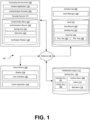
- the components executed on the computing environment 103 include a hosted application 119, a security service 121, and other applications, services, processes, systems, engines, or functionality not discussed in detail herein. While the hosted application 119 and the security service 121 are depicted as operating in the same computing environment, it is understood that that the hosted application 119 and the security service 121 could be operated or executed in separate computing environments. Similarly, the hosted application 119 and the security service 121 could be operated and controlled by the same entity or by different entities, depending on the particular implementation.
- the authentication provider 120 can be executed to authenticate or verify the identity of a user or entity. This can include authenticating or otherwise verifying that a particular service, application, or device is operated or controlled by the user or entity. For example, the authentication provider 120 could be executed to determine that a website available at a particular network address (e.g., http://www.examplebank.com) is, in fact, operated by the company "ExampleBank.”
- various data can be stored in a hosted data store 123 that is accessible to the computing environment 103.
- the hosted data store 123 can be representative of a plurality of hosted data stores 123, which can include relational databases, object-oriented databases, hierarchical databases, hash tables or similar key-value data stores, as well as other data storage applications or data structures.
- the data stored in the hosted data store 123 is associated with the operation of the various applications or functional entities described below.
- This data can include one or more authentication records 126 and one or more verification rules 129.
- An authentication record 126 can represent a relationship between an identity key 131 and a data item 133.
- the relationship may be stored, for example, in order to use the identity key 131 to verify assertions about the data item 133 made based at least in part on one or more verification rules 129.
- An identity key 131 can represent a unique address that specifies the location where an identity document 136 can be found, such as a network address that specifies a network location of the identity document 136.
- the identity key 131 can include the storage location where the identity document 136 can be found, a unique identifier of the identity document 136, and potentially other information.
- the identity key 131 can uniquely identity the identity document 136 with respect to other identity documents 136, the identity key 131 can also be used as a unique identifier for an individual, entity, organization, or data item 133.
- An illustrative example of an identity key 131 is a decentralized identifier (DID) as defined by the World Wide Web Consortium (W3C).
- ID decentralized identifier
- W3C World Wide Web Consortium
- data formats can be used as an identity key 131 in various embodiments of the present disclosure.
- a data item 133 can include any digital representation of data.
- a data item 133 could be a file or a data stream.
- a data item 133 could be an address at which a file, application, or webpage is located (e.g., a URL, URI, or similar link or network address).
- a verification rule 129 can represent a compliance rule or policy used as the basis for an assertion regarding a particular data item 133 or class of data items 133.
- a verification rule 129 may specify the requirements for making an assertion that a data item 133 is secure. This include a requirement that a website pass a security scan performed by the security service 121 or that a file be confirmed by the security service 121 to not include malware.
- a verification rule 129 may specify the requirements for making the assertion regarding the owner or creator of a data item 133, such as the requirements for determining that a particular website owner is the originator of a particular link.
- the client device 106 is representative of a plurality of client devices that can be coupled to the network 116.
- the client device 106 can include a processor-based system such as a computer system.
- a computer system can be embodied in the form of a personal computer (e.g., a desktop computer, a laptop computer, or similar device), a mobile computing device (e.g., personal digital assistants, cellular telephones, smartphones, web pads, tablet computer systems, music players, portable game consoles, electronic book readers, and similar devices), media playback devices (e.g., media streaming devices, BluRay ® players, digital video disc (DVD) players, set-top boxes, and similar devices), a videogame console, or other devices with like capability.
- a personal computer e.g., a desktop computer, a laptop computer, or similar device
- a mobile computing device e.g., personal digital assistants, cellular telephones, smartphones, web pads, tablet computer systems, music players, portable game consoles, electronic book readers, and similar
- the client device 106 can include one or more displays 139, such as liquid crystal displays (LCDs), gas plasma-based flat panel displays, organic light emitting diode (OLED) displays, electrophoretic ink (“E-ink”) displays, projectors, or other types of display devices.
- the display 139 can be a component of the client device 106 or can be connected to the client device 106 through a wired or wireless connection.
- the client device 106 can be configured to execute various applications such as a client application 143 or other applications.
- the client application 143 can be executed by the client device 106 to access network content served up by the computing environment 103 or other servers, thereby rendering a user interface 146 on the display 139.
- the client application 143 can include a browser or a dedicated application (e.g., email applications, social networking applications, messaging applications, banking applications, shopping applications, etc.), and the user interface 146 can include a network page, an application screen, other user mechanism for obtaining user input.
- the identity hub 109 can represent a service or collection of services hosted by one or more computing devices and utilized to securely store identity documentation for individual users and provide the identity documentation in response to authorized requests.
- the identity hub 109 can include a credential manager 149 and a vault 153.
- the identity hub 109 is depicted as separate from the computing environment 103 for clarity, it is understood that the functions of the identity hub 109, including the vault manager 149 and the vault 153, could be implemented within the computing environment 103.
- the identity hub 109, including the vault manager 149 and the vault 153 could be operated by the same entity or different entities, depending on the particular implementation.
- the vault manager 149 can be executed to control access to the vault 153.
- the vault manager 149 can be used to add, remove, or modify various data stored in the vault 153.
- the vault manager 149 can be used to authenticate individual users and limit access to the vault 153 to authorized users or entities.
- the vault 153 represents a secure data store accessible to the credential manager 149.
- Data stored in the vault 153 can be stored in an encrypted form that is accessible only to individual users or entities.
- An individual user or entity can store various types of data in the vault 153, including one or more key records 156.
- the key record 156 can be used to track an association or relationship between a particular identity key 131 and a respective key-pair 159.
- the key-pair 159 can represent an asymmetric cryptographic key-pair that includes a public key 163 and a private key 166.
- the cryptographic keys in the key-pair 159 can be used by an entity or user to confirm or otherwise authenticate their relationship with or control over data associated with the identity key 131, as described later.
- the key-pair 159 can be generated using various approaches, such as elliptic curve cryptography (ECC) approaches or using the Rivest-Shamir-Adleman (RSA) algorithm.
- ECC elliptic curve cryptography
- RSA Rivest-Shamir-Adleman
- the distributed ledger 113 represents a synchronized, eventually consistent, data store spread across multiple nodes in different geographic or network locations. Each node in the distributed ledger 113 can contain a replicated copy of the distributed ledger 113, including all data stored in the distributed ledger 113. Records of transactions involving the distributed ledger 113 can be shared or replicated using a peer-to-peer network connecting the individual nodes that form the distributed ledger 113. Once a transaction or record is recorded in the distributed ledger 113, it can be replicated across the peer-to-peer network until the record is eventually recorded with all nodes. Various consensus methods can be used to ensure that data is written reliably to the distributed ledger 113. Examples of a distributed ledger can include blockchains, distributed hash tables (DHTs), and similar data structures.
- DHTs distributed hash tables
- Various data can also be stored in a distributed ledger 113. This can include one or more identity documents 136. However, any other data discussed in the present disclosure could also be stored in the distributed ledger 113 if the public availability of the data were acceptable in that particular implementation.
- An identity document 136 is a document that provides information for identifying and authenticating a user.
- An identity document 136 can include an identity key 131, which can be used to uniquely identify the identity document 136 and, therefore, the individual or entity associated with the identity document 136.
- An identity document 136 can also include a public key 163 from the asymmetric key-pair 159 associated with the identity key 131, which can used by third-parties to verify the authenticity of the identity document 136.
- the identity document 136 can also include one or more verified claims 169.
- An illustrative example of an identity document 163 is a decentralized identifier document (DID Document) as defined by the W3C. However, data formats can be used as an identity document 163 in various embodiments of the present disclosure.
- DID Document decentralized identifier document
- a verified claim 173 represents one or more verified assertions about a specific entity or data item 133 described by the identity document 136.
- the assertion could be that a data item 133 complies with one or more verification rules 129 (e.g., that a file does not include malware or that a link to a website is a valid link from the operator of the website).
- the assertion could be that a particular entity is who they claim to be or that the originator of content or author of a communication is who they purport to be.
- the verified claim 169 could include one or more claim 173 and respective signatures 176 for each claim 173.
- the signature 176 can include any cryptographic signature used to verify the veracity and authenticity of the claim 173.
- the signature 176 can identify the party making the assertion and also include both a digital signature generated by a private encryption key 166 in possession of the party entity and a digital fingerprint identifying the corresponding public encryption key 163 that can be used to verify the signature 176.
- the signature 176 can also be used to determine whether the claim 173 has been modified without the consent of the entity making the claim 173. For example, an unauthorized change to the claim 173 would result in a mismatch between the signature 176 and the claim 173.
- the authentication provider 120 can first verify the identity of the hosted application 119, which can include verifying the identity of the operator of the hosted application 119. Accordingly, the hosted application 119 can either generate a key-pair 159 that will be used for authenticating the identity of the hosted application 119 or use a preexisting key-pair 159 previously created for that purpose. The hosted application 119 can also generate a new identify key 131 that can be used for authenticating or verifying the identity of the hosted application 119.
- the hosted application 119 can send the identity key 131 to the authentication provider 120 and authentication information for the hosted application 119 to verify or authenticate its identity.
- These authentication credentials could include a username and password, cryptographic certificates, a public key 163 from a preexisting key-pair 159, previously issued authentication tokens or cookies, biometric credentials, etc.
- the authentication provider 120 can then authenticate the identity of the hosted application 119 using the authentication credentials. This could include verifying the username and password, issuing a cryptographic challenge using the certificate or public key 163 and verifying the cryptographic response, verifying the previously issued authentication tokens or cookies, etc.
- the authentication provider 120 can create a verified claim 169 containing a claim 173 asserting the identity of the operator of the hosted application 119 and a signature 176 for the claim 173.
- the verified claim 169 can then be returned to the hosted application 119, which can create and store an identity document 136 in the distributed ledger containing the verified claim 169, the identity key 131, and the public key 163 to be used by the hosted application 119 to prove its identity.
- the hosted application 119 can request that the security service 121 validate a data item 133, such as a file or a network address (e.g., a URL specifying a website or a web application).
- the validation could be to certify that the hosted application 119 is the originator for the data item 133 (e.g., the creator or distributor of a file or the host of a website or web application identified by a network address), or that the data item 133 is secure ( e.g., that a file does not contain known malware or that a web site or web application located at a network address does not contain any known vulnerabilities).
- the request can include a newly generated key-pair 159 specific to the data item 133 and a newly created identity key 131 unique for the data item 133, as well as the identity key 131 used to verify the identity of the hosted application 119 itself.
- the security service 121 can first verify the identity of the hosted application 119. For instance, the security service 121 can retrieve from the distributed ledger 113 the identity document 136 that that contains the verified claim 169 regarding the identity of the hosted application 119 and the public key 163 to be used to verify the identity of the hosted application 119. The security service 121 can then use the public key 163 to initiate a challenge-response exchange to verify the identity of the hosted application 119. In some instances, the security service 121 may use a relay service or resolution service to determine which distributed ledger 113 contains the identity document 136 in those implementations where multiple distributed ledgers 113 are used. An example of such a relay service or resolution service is a DID Resolver, as defined by the W3C.
- the security service 121 can then validate the data item 133. For example, if the data item 133 is a network address (e.g., a URL) for a web site or web application, the security service 121 might first perform an automated threat assessment. The threat assessment could check for common web site misconfigurations or known server or application vulnerabilities. As another example, the security service 121 could verify that the network address was an authentic network address controlled by the operator of the web site or web application ( e.g., instead of a network address pointing to a phishing site). If the data item 133 is a file, then the security service 121 might perform a malware scan to determine whether the file contains malware. As another example, the security service 121 could verify that the operator of the hosted application 119 is the creator or originator of the file. This could be done by verifying a cryptographic signature of the file created by the hosted application 119.
- a network address e.g., a URL
- the security service 121 might first perform an automated threat assessment. The threat assessment could check
- the security service 121 can create one or more verified claims 169 related to the data item 133.
- the security service 121 could create a verified claim 169 that contains a first claim 173 that a network address is controlled by the operator of the hosted application 119 and a second claim 173 that the web site or web application available at the network address contains no known security vulnerabilities.
- the security service 121 could also create a first signature 176 for the first claim 173 and a second signature 176 for the second claim 173 and include these signatures in the verified claim 169.
- the security service 121 could create multiple verified claims 169, each verified claim 169 representing a single claim 173.
- the security service 121 can then return the verified claim 169 for the data item 133 and, in some implementations, the identity key 131 associated with the data item 133.
- the hosted application 119 can create an identity document 136 that includes the identity key 131 associated with the data item 133, the verified claim 169 provided by the security service 121, and a public key 163 associated with the identity key 131.
- the hosted application 119 can then store the identity document 136 in a distributed ledger 113.
- the client application 143 can use the identity document 136 stored in the distributed ledger 113 to validate or otherwise verify the security or authenticity of the data item 133. For example, if a browser requests a web page using a URL, the hosted application 119 may provide the identity key 131 related to the network address to the browser. The browser could then retrieve an identity document 136 for the URL, identify a verified claim 169 in the identity document 136 that includes a claim 173 that the URL is a valid network address for the web page provided by the hosted application 119, and verify the claim 173 using the public key 163 and signature 176.
- the browser could identity a second claim 173 in the identity document 136 indicating that the web page has passed a recent security scan performed by the security service 121 and verify the claim 173 using the public key 163 and the signature 176. If the data item 133 were a file, the client application 143 could use a similar process to verify the authorship and security of the file.
- sequence diagram that provides one example of the operation of the components of the network environment 100. It is understood that the sequence diagram of FIG. 2 provides merely an example of the many different types of functional arrangements that can be employed to implement the operation of the depicted portion of the network environment 100. As an alternative, the sequence diagram of FIG. 2 can be viewed as depicting an example of elements of a method implemented within the network environment 100.
- the hosted application 119 can generate both a key-pair 159 and an identity key 131 to be used for authenticating the identity of the hosted application 119 or the operator of the hosted application 119.
- the hosted application 119 may store the key-pair 159 in the vault 153.
- the hosted application 119 can send a request, which can include authentication credentials for the hosted application 119 and the identity key 131 and key-pair 159, to the vault manager 149.
- the vault manager 149 can create a key-record in the vault 153 that associates the identity key 131 with the key-pair 159. Should the hosted application 119 require the private key 166 associated with the identity key 131, it can request a copy of or access to the private key 166 from the vault manager 149.
- the hosted application 119 can send the key-pair 159 and the identity key 131 to the authentication provider 120 for verification.
- the hosted application 119 can also send authentication credential(s) to the authentication provider 120 to prove the identity of the hosted application 119 itself or the operators of the hosted application 119.
- the authentication provider 120 verifies the authentication credential(s) provided by the hosted application 119.
- the authentication provider 120 could verify that an authentication credential(s) provided by the hosted application 119, such as a user name and password; preshared secret, token, or cookie; or other authentication credential provided by the hosted application 119 match the authentication credential(s) already on file with the authentication provider 120.
- the authentication provider 120 can create and return a verified claim 169 to the hosted application 119 if the authentication credentials are determined to be valid at step 209.
- the verified claim 169 could include a claim 173 asserting that the authentication provider 120 has verified the identity of the hosted application 119 or the operator of the hosted application 119, including that the identity key 131 provided by the hosted application 119 is controlled by the hosted application 119 or the operator of the hosted application 119.
- the verified claim 169 could also include a respective signature 176 for each claim 173 included in the verified claim 169.
- the signature 176 could be generated by the authentication provider 120 using a private key 166 controlled by the authentication provider 120.
- third-parties could verify the claim 173 by comparing the signature 176 to the claim 173 using a respective public key 163 for the private key 166 controlled by the authentication provider 120. If the signature 176 could not be verified using the public key 163 of the authentication provider 120, this could indicate that the claim 173 has been altered without authorization or that the claim 173 was never made by the authentication provider 120. The verified claim 169 is then returned to the hosted application 119.
- the hosted application 119 can create an identity document 136 which can allow other applications or third-parties to verify the identity of the hosted application 119 or the operator of the hosted application 119.
- the hosted application 119 can create an identity document 136 that includes the identity key 131 and the key-pair 159 created at step 203, as well as the verified claim 169 created at step 213.
- the hosted application 119 can cause the identity document 136 to be stored in distributed ledger 113.
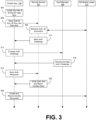
- sequence diagram that provides another example of the operation of the components of the network environment 100. It is understood that the sequence diagram of FIG. 3 provides merely an example of the many different types of functional arrangements that can be employed to implement the operation of the depicted portion of the network environment 100. As an alternative, the sequence diagram of FIG. 3 can be viewed as depicting an example of elements of a method implemented within the network environment 100.
- the hosted application 119 creates a key-pair 159 and an identity key 131 for a respective data item 133 (e.g., a file, a network address or other type of data).
- a respective data item 133 e.g., a file, a network address or other type of data.
- the relationship between the identity key 131 and the data item 133 may also be recorded in the hosted data store 123 as an authentication record 126, which can contain the identity key 131 and a copy of or identifier for the data item 133.
- the hosted application 119 can send a verification request to the security service 121.
- the verification request can include the identity key 131 associated with the data item 133, the data item 133 itself, and the identity key 131 that identifies the hosted application 119.
- the hosted application 119 can also provide an indication of one or more verification rules 129 to be considered when evaluating the data item 133.
- the security service 121 retrieves the identity document 136 associated with the identity key 131 that identifies the hosted application 119 in response to receiving the verification request. For example, the security service 121 can use the identity key 131 to search for the respective identity document 136 stored in the distributed ledger 113 and retrieve it. In instances where multiple distributed ledgers 113 are used, the security service 121 can send the identity key 131 to a relay or resolver service, such as a DID resolver, to determine which distributed ledger 113 contains the identity document 136. In these instances, the relay or resolver service may retrieve the identity document 136 on behalf of the security service 121 and return it to the security service 121.
- a relay or resolver service such as a DID resolver
- the security service 121 can send an authentication challenge to the hosted application 119 to confirm that the hosted application 119 made the request at step 306. Accordingly, the security service 121 can use the public key 163 in the identity document 136 retrieved at step 309 to encrypt a token or nonce for use as an authentication challenge. The authentication challenge can then be sent to the hosted application 119.
- the hosted application 119 can forward the authentication challenge to the vault manager 149.
- the authentication challenge can be forwarded as part of a request for the vault manager 149 to decrypt and sign the authentication challenge using the private key 166 associated with the identity key 131 that authenticates the hosted application 119.
- the hosted application 119 may also include authentication credentials to confirm with vault manager 149 that the operation should be performed on behalf of the hosted application 119.
- the vault manager 149 can decrypt and sign the authentication challenge and provide the decrypted authentication challenge and signature for the authentication challenge to the hosted application 119.
- the vault manager 149 can first retrieve the private key 166 of the key-pair 159 associated with the identity key 131 that identifies the hosted application 119.
- the vault manager 149 can then decrypt the encrypted challenge to recreate the original token or nonce provided by the security service 121.
- the vault manager 149 can then sign the token or nonce with the private key 166 to prove that the owner of the private key 166 for the hosted application 119 decrypted the challenge instead of obtaining the unencrypted token or nonce through other means.
- the vault manager 149 could then provide the unencrypted token or nonce as well as the respective signature to the hosted application 119.
- the hosted application 119 can send an authentication response to the security service 121 to prove its identity. This can include the unencrypted token or nonce from the authentication challenge as well as a signature for the unencrypted token or nonce.
- the security service 121 can verify or validate the data item 133. For example, the security service 121 can evaluate the data item 133 to determine whether the data item 133 complies with one or more verification rules 129 specified by the hosted application 119 in step 306. As another example, the security service 121 can identify a verification rule 129 that applies to the data item 133 and evaluate the data item 133 for compliance. For example, if the data item 133 is a network address for a website, the security service 121 could identify all verification rules 129 applicable to network addresses or websites and evaluate the data item 133 for compliance. Similarly, if the data item 133 is a file, the security service 121 could identify all verification rules 129 applicable to files and evaluate the data item for compliance.
- sequence diagram that provides another example of the operation of the components of the network environment 100. It is understood that the sequence diagram of FIG. 4 provides merely an example of the many different types of functional arrangements that can be employed to implement the operation of the depicted portion of the network environment 100. As an alternative, the sequence diagram of FIG. 4 can be viewed as depicting an example of elements of a method implemented within the network environment 100.
- sequence diagram that provides another example of the operation of the components of the network environment 100. It is understood that the sequence diagram of FIG. 5 provides merely an example of the many different types of functional arrangements that can be employed to implement the operation of the depicted portion of the network environment 100. As an alternative, the sequence diagram of FIG. 5 can be viewed as depicting an example of elements of a method implemented within the network environment 100.
- the client application 143 sends a request for a data item 133 to the hosted application 119.
- the client application 143 recognizes the identity key 131 in the response and retrieves the respective identity document 136. For example, the client application 143 can use the identity key 131 to search for the respective identity document 136 stored in the distributed ledger 113 and retrieve it. In instances where multiple distributed ledgers 113 are used, the client application 143 can send the identity key 131 to a relay or resolver service, such as a DID resolver, to determine which distributed ledger 113 contains the identity document 136. In these instances, the relay or resolver service may retrieve the identity document 136 on behalf of the client application 143 and return it to the security service 121.
- a relay or resolver service such as a DID resolver
- the client application 143 can create and send a cryptographic challenge to the hosted application 119. Accordingly, the client application 143 can use the public key 163 in the identity document 136 retrieved at step 509 to encrypt a token or nonce for use as the cryptographic challenge, which can then be sent to the hosted application 119.
- the vault manager 149 can decrypt and sign the cryptographic challenge and provide the decrypted cryptographic challenge and signature for the cryptographic challenge to the hosted application 119.
- the vault manager 149 can first retrieve the private key 166 of the key-pair 159 associated with the identity key 131 linked to the data item 133.
- the vault manager 149 can then decrypt the encrypted challenge to recreate the original token or nonce provided by the client application 143.
- the vault manager 149 can then sign the token or nonce with the private key 166 to prove that the owner of the private key 166 for the hosted application 119 decrypted the challenge instead of obtaining the unencrypted token or nonce through other approaches.
- the vault manager 149 could then provide the unencrypted token or nonce as well as the respective signature to the hosted application 119.
- the hosted application 119 can then send the unencrypted nonce or token and the signature for the nonce or token to the client application 143.
- This can indicate that the identity document 136 retrieved by the client application 143 is associated with the data item 133 and contains valid verified claims 169 concerning the data item 133.
- the client application 143 can evaluate the verified claims 169 contained in the identity document 136 retrieved at step 509. For example, the client application 143 may evaluate each claim 173 to determine what is asserted about the data item 133 ( e.g., is it secure, does it contain malware, is the link to a valid site or an impostor site, who is the purported author of the file, etc .). The client application 143 may also confirm that the respective signature 176 for each claim 173 in the verified claim 169 is correct to ensure the each claim 173 is valid.
- the client application 143 can also determine whether it trusts the party making the assertion in the claim 173.
- the signature 176 may specify the security service 121 that made the claim 173.
- One security service 121 may be more trusted by the client application 143 than another security service 121 ( e.g., one security service 121 may have a history of being more thorough or being more accurate). Accordingly, the client application 143 may choose to disregard a particular claim 173 if it is made by a particular security service 121 or may require that multiple, untrusted security services 121 make the same assertion in their respective claims 173 in order for a particular assertion by an untrusted security service 121 be trusted.
- the client application 143 renders a user interface 146 based at least in part on the claims 173 contained in the verified claim 169.
- the client application 143 may render a user interface 146 that displays the data item 133 along with an indication of the status of the data item 133.
- the user interface could indicate that a website is secure, that a link is a valid link for a website, that a file does not contain malware, or that the author or distributor of a file is who he or she purports to be.
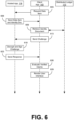
- sequence diagram that provides another example of the operation of the components of the network environment 100. It is understood that the sequence diagram of FIG. 6 provides merely an example of the many different types of functional arrangements that can be employed to implement the operation of the depicted portion of the network environment 100. As an alternative, the sequence diagram of FIG. 6 can be viewed as depicting an example of elements of a method implemented within the network environment 100.
- sequence diagram of FIG. 6 is similar in scope to that of FIG. 5 .
- sequence diagram of FIG. 5 depicts the use of a vault manager 149
- sequence diagram of FIG. 6 depicts an alternative implementation which omits the use of the vault manager 149.
- the client application 143 sends a request for a data item 133 to the hosted application 119.
- the hosted application 119 provides the data item 136 in response, along with a respective identity key 131 identified in a respective authentication record 126.
- the identity key 131 could be provided using various custom protocols or extensions to existing protocols. For example, additional hypertext transport protocol (HTTP) headers could be included in the response to indicate the identity key associated with the data item 133.
- HTTP hypertext transport protocol
- the client application 143 recognizes the identity key 131 in the response and retrieves the respective identity document 136. For example, the client application 143 can use the identity key 131 to search for the respective identity document 136 stored in the distributed ledger 113 and retrieve it. In instances where multiple distributed ledgers 113 are used, the client application 143 can send the identity key 131 to a relay or resolver service, such as a DID resolver, to determine which distributed ledger 113 contains the identity document 136. In these instances, the relay or resolver service may retrieve the identity document 136 on behalf of the client application 143 and return it to the security service 121.
- a relay or resolver service such as a DID resolver
- the client application 143 can create and send a cryptographic challenge to the hosted application 119. Accordingly, the client application 143 can use the public key 163 in the identity document 136 retrieved at step 509 to encrypt a token or nonce for use as the cryptographic challenge, which can then be sent to the hosted application 119.
- the hosted application 119 can decrypt and sign the cryptographic challenge and provide the decrypted cryptographic challenge and signature for the cryptographic challenge to the hosted application 119.
- the hosted application 119 can use the private key 166 of the key-pair 159 associated with the identity key 131 linked to the data item 133 to decrypt the encrypted challenge to recreate the original token or nonce provided by the client application 143.
- the hosted application 119 can then sign the token or nonce with the private key 166 to prove that the owner of the private key 166 for the hosted application 119 decrypted the challenge instead of obtaining the unencrypted token or nonce through other means.
- the hosted application 119 can then send the unencrypted nonce or token and the signature for the nonce or token to the client application 143.
- This can indicate that the identity document 136 retrieved by the c lient application 143 is associated with the data item 133 and contains valid verified claims 169 concerning the data item 133.
- the client application 143 can evaluate the verified claims 169 contained in the identity document 136 retrieved at step 609. For example, the client application 143 may evaluate each claim 173 to determine what is asserted about the data item 133 ( e.g., is it secure, does it contain malware, is the link to a valid site or an impostor site, who is the purported author of the file, etc .) . The client application 143 may also confirm that the respective signature 176 for each claim 173 in the verified claim 169 is correct to ensure the each claim 173 is valid.
- the client application 143 can also determine whether or not it trusts the party making the assertion in the claim 173.
- the signature 176 may specify the security service 121 that made the claim 173.
- One security service 121 may be more trusted by the client application 143 than another security service 121 ( e.g ., one security service 121 may have a history of being more thorough or being more accurate). Accordingly, the client application 143 may choose to disregard a particular claim 173 if it is made by a particular security service 121 or may require that multiple, untrusted security services 121 make the same assertion in their respective claims 173 in order for a particular assertion by an untrusted security service 121 be trusted.
- the client application 143 renders a user interface 146 based at least in part on the claims 173 contained in the verified claim 169.
- the client application 143 may render a user interface 146 that displays the data item 133 along with an indication of the status of the data item 133.
- the user interface could indicate that a website is secure, that a link is a valid link for a website, that a file does not contain malware, or that the author or distributor of a file is who he or she purports to be.
- FIG. 7 depicts an example of a user interface 146 rendered on the display 139 by the client application 143 according to various embodiments of the present disclosure.
- the user interface 146 depicted in FIG. 7 depicts one example of an implementation of the present disclosure, the principals disclosed in the user interface 146 of FIG. 7 could be adapted to other user interfaces 146 used for similar purposes.
- FIG. 7 depicts a user interface 146 rendered by a client application 143, such as a browser, that incorporates the result of the verification process depicted previously in FIG. 5 or FIG. 6 .
- Displayed in the user interface 146 are multiple links that that have been verified using a process such as that depicted previously in FIG. 5 or FIG. 6 .
- a user interface element 703 has been inserted next to each link to indicate the status of the link.
- some links may have an indication that they are "Approved.” This status could indicate that these links comply with all applicable verification rules 129, such as whether the links would direct a user to a website that impersonates a legitimate website or whether a website reachable by the links contains security vulnerabilities.
- other links may have an instruction stating "DO NOT CLICK" to warn users that these links fail to comply with at least one applicable verification rule 129. All these user interface elements 703 contain illustrative examples of how information could be conveyed to a user, other approaches could be used as appropriate.
- FIG. 8 depicts an example of a user interface 146 rendered on the display 139 by the client application 143 according to various embodiments of the present disclosure.
- the user interface 146 depicted in FIG. 8 depicts one example of an implementation of the present disclosure, the principals disclosed in the user interface 146 of FIG. 8 could be adapted to other user interfaces 146 used for similar purposes.
- FIG. 8 depicts a user interface 146 rendered by a client application 143, such as a browser, that incorporates the result of the verification process depicted previously in FIG. 5 or FIG. 6 .
- Displayed in the user interface 146 are multiple links that that have been verified using a process such as that depicted previously in FIG. 5 or FIG. 6 .
- a dialog box 803 has been rendered to indicate the status of the file.
- any status could be rendered in the dialog box 803
- some implementations may choose to only render a dialog box 803 if a file fails to comply with at least one verification rule 129.
- a dialog box 803 might be rendered if a file contains malware or if a file appears not to originate from the purported author or distributor of the file.
- executable means a program file that is in a form that can ultimately be run by the processor.
- Examples of executable programs can be a compiled program that can be translated into machine code in a format that can be loaded into a random access portion of the memory and run by the processor, source code that can be expressed in proper format such as object code that is capable of being loaded into a random access portion of the memory and executed by the processor, or source code that can be interpreted by another executable program to generate instructions in a random access portion of the memory to be executed by the processor.
- An executable program can be stored in any portion or component of the memory, including random access memory (RAM), read-only memory (ROM), hard drive, solid-state drive, Universal Serial Bus (USB) flash drive, memory card, optical disc such as compact disc (CD) or digital versatile disc (DVD), floppy disk, magnetic tape, or other memory components.
- RAM random access memory
- ROM read-only memory
- USB Universal Serial Bus
- CD compact disc
- DVD digital versatile disc
- floppy disk magnetic tape, or other memory components.
- the memory includes both volatile and nonvolatile memory and data storage components. Volatile components are those that do not retain data values upon loss of power. Nonvolatile components are those that retain data upon a loss of power.
- the memory can include random access memory (RAM), read-only memory (ROM), hard disk drives, solid-state drives, USB flash drives, memory cards accessed via a memory card reader, floppy disks accessed via an associated floppy disk drive, optical discs accessed via an optical disc drive, magnetic tapes accessed via an appropriate tape drive, or other memory components, or a combination of any two or more of these memory components.
- the RAM can include static random access memory (SRAM), dynamic random access memory (DRAM), or magnetic random access memory (MRAM) and other such devices.
- the ROM can include a programmable read-only memory (PROM), an erasable programmable read-only memory (EPROM), an electrically erasable programmable read-only memory (EEPROM), or other like memory device.
- each block can represent a module, segment, or portion of code that includes program instructions to implement the specified logical function(s).
- the program instructions can be embodied in the form of source code that includes human-readable statements written in a programming language or machine code that includes numerical instructions recognizable by a suitable execution system such as a processor in a computer system.
- the machine code can be converted from the source code through various processes. For example, the machine code can be generated from the source code with a compiler prior to execution of the corresponding application. As another example, the machine code can be generated from the source code concurrently with execution with an interpreter. Other approaches can also be used.
- each block can represent a circuit or a number of interconnected circuits to implement the specified logical function or functions.
- sequence diagrams show a specific order of execution, it is understood that the order of execution can differ from that which is depicted. For example, the order of execution of two or more blocks can be scrambled relative to the order shown. Also, two or more blocks shown in succession can be executed concurrently or with partial concurrence. Further, in some embodiments, one or more of the blocks shown in the sequence diagrams can be skipped or omitted. In addition, any number of counters, state variables, warning semaphores, or messages might be added to the logical flow described herein, for purposes of enhanced utility, accounting, performance measurement, or providing troubleshooting aids, etc. It is understood that all such variations are within the scope of the present disclosure.
- any logic or application described herein that includes software or code can be embodied in any non-transitory computer-readable medium for use by or in connection with an instruction execution system such as a processor in a computer system or other system.
- the logic can include statements including instructions and declarations that can be fetched from the computer-readable medium and executed by the instruction execution system.
- a "computer-readable medium" can be any medium that can contain, store, or maintain the logic or application described herein for use by or in connection with the instruction execution system.
- the computer-readable medium can include any one of many physical media such as magnetic, optical, or semiconductor media. More specific examples of a suitable computer-readable medium would include, but are not limited to, magnetic tapes, magnetic floppy diskettes, magnetic hard drives, memory cards, solid-state drives, USB flash drives, or optical discs. Also, the computer-readable medium can be a random access memory (RAM) including static random access memory (SRAM) and dynamic random access memory (DRAM), or magnetic random access memory (MRAM). In addition, the computer-readable medium can be a read-only memory (ROM), a programmable read-only memory (PROM), an erasable programmable read-only memory (EPROM), an electrically erasable programmable read-only memory (EEPROM), or other type of memory device.
- RAM random access memory
- SRAM static random access memory
- DRAM dynamic random access memory
- MRAM magnetic random access memory
- the computer-readable medium can be a read-only memory (ROM), a programmable read-only memory (PROM), an
- any logic or application described herein can be implemented and structured in a variety of ways.
- one or more applications described can be implemented as modules or components of a single application.
- one or more applications described herein can be executed in shared or separate computing devices or a combination thereof.
- a plurality of the applications described herein can execute in the same computing device, or in multiple computing devices in the same computing environment.
Landscapes
- Engineering & Computer Science (AREA)
- Computer Security & Cryptography (AREA)
- Computer Networks & Wireless Communication (AREA)
- Signal Processing (AREA)
- General Engineering & Computer Science (AREA)
- Theoretical Computer Science (AREA)
- Computer Hardware Design (AREA)
- Computing Systems (AREA)
- General Physics & Mathematics (AREA)
- Physics & Mathematics (AREA)
- General Health & Medical Sciences (AREA)
- Health & Medical Sciences (AREA)
- Databases & Information Systems (AREA)
- Software Systems (AREA)
- Bioethics (AREA)
- Data Mining & Analysis (AREA)
- Virology (AREA)
- Storage Device Security (AREA)
- Information Transfer Between Computers (AREA)
Claims (15)
- System, das Folgendes umfasst:ein Rechengerät, das einen Prozessor und einen Speicher umfasst; undin dem Speicher gespeicherte maschinenlesbare Befehle, die bei Ausführung durch den Prozessor das Rechengerät zumindest veranlassen zum:Erzeugen (303, 403) eines Identitätsschlüssels (131) für ein Datenelement (133), wobei der Identitätsschlüssel (131) eine eindeutige Adresse repräsentiert, die einen Ort angibt, an dem ein Identitätsdokument (136) gefunden werden kann;Senden (306, 406) einer Anforderung zur Authentifizierung des Datenelements (133) zu einem Sicherheitsdienst (121), wobei die Anforderung den Identitätsschlüssel (131) und das Datenelement (133) umfasst;Empfangen (323, 423) eines verifizierten Anspruchs (169) für das Datenelement (133) von dem Sicherheitsdienst (121), wobei der verifizierte Anspruch (169) eine oder mehrere verifizierte Behauptungen über das durch das Identitätsdokument (136) beschriebene Datenelement (133) repräsentiert;Erzeugen (326, 426) des Identitätsdokuments (136), wobei das Identitätsdokument (136) den Identitätsschlüssel (131) für das Datenelement (133) und den verifizierten Anspruch (169) umfasst; undSpeichern (326, 426) des Identitätsdokuments in einem Distributed Ledger (113).
- System nach Anspruch 1, wobei die maschinenlesbaren Befehle bei Ausführung durch das Rechengerät das Rechengerät ferner zumindest veranlassen zum:Empfangen einer Anforderung für das Datenelement (133); undSenden einer Antwort auf die Anforderung, wobei die Antwort das Datenelement (133) und den Identitätsschlüssel (131) umfasst.
- System nach Anspruch 1 oder 2, wobei:der Identitätsschlüssel (131) ein zweiter Identitätsschlüssel ist;das Identitätsdokument (136) ein zweites Identitätsdokument ist;die Anforderung zur Authentifizierung des Datenelements (133) eine zweite Anforderung zur Authentifizierung ist; unddie maschinenlesbaren Befehle das Rechengerät ferner zumindest veranlassen zum:Senden der Anforderung zur Authentifizierung der Identität eines Bedieners der maschinenlesbaren Befehle zu dem Authentifizierungsdienst (121);Empfangen eines ersten Identitätsschlüssels und eines verifizierten Anspruchs vom Authentifizierungsdienst (121);Erstellen eines ersten Identitätsdokuments, wobei das Identitätsdokument den Identitätsschlüssel und den verifizierten Anspruch umfasst; undSpeichern des ersten Identitätsdokuments in einem Distributed Ledger (113); undSenden der zweiten Anforderung zur Authentifizierung des Datenelements nach dem Speichern des ersten Identitätsdokuments im Distributed Ledger (113) .
- System der Ansprüche 1-3, wobei die maschinenlesbaren Befehle bei Ausführung durch den Prozessor ferner das Rechengerät zumindest veranlassen zum:Erzeugen eines eindeutig mit dem Datenelement (133) assoziierten asymmetrischen Schlüsselpaars (159); undwobei das Identitätsdokument (136) ferner einen öffentlichen Schlüssel (163) des asymmetrischen Schlüsselpaars (159) umfasst.
- System nach Anspruch 4, wobei die maschinenlesbaren Befehle bei Ausführung durch den Prozessor ferner das Rechengerät mindestens veranlassen zum:Empfangen einer Validierungsanforderung, die ein mit dem öffentlichen Schlüssel (163) verschlüsseltes Token umfasst;Entschlüsseln des verschlüsselten Tokens mittels eines privaten Schlüssels (166) des asymmetrischen Schlüsselpaars (159), um ein unverschlüsseltes Token zu erzeugen;Erzeugen einer kryptographischen Signatur des unverschlüsselten Tokens mittels des privaten Schlüssels (166); undBereitstellen einer Validierungsantwort, die das unverschlüsselte Token und die kryptographische Signatur umfasst.
- Computerlesbares Medium, das maschinenlesbare Befehle umfasst, die bei Ausführung durch einen Prozessor eines Rechengeräts das Rechengerät mindestens veranlassen zum:Erzeugen (303, 403) eines Identitätsschlüssels (131) für ein Datenelement (133), wobei der Identitätsschlüssel (131) eine eindeutige Adresse repräsentiert, die einen Ort angibt, an dem ein Identitätsdokument (136) gefunden werden kann;Senden (306, 406) einer Anforderung zur Authentifizierung des Datenelements zu einem Sicherheitsdienst (121), wobei die Anforderung den Identitätsschlüssel (131) und das Datenelement (133) umfasst;Empfangen (323, 423) eines verifizierten Anspruchs (169) für das Datenelement (133) von dem Sicherheitsdienst (121), wobei der verifizierte Anspruch (169) eine oder mehrere verifizierte Behauptungen über das durch das Identitätsdokument (136) beschriebene Datenelement (133) repräsentiert;Erzeugen (326, 426) des Identitätsdokuments (136), wobei das Identitätsdokument (136) den Identitätsschlüssel (131) für das Datenelement (133) und den verifizierten Anspruch (169) umfasst; undSpeichern (326, 426) des Identitätsdokuments (136) in einem Distributed Ledger (113).
- Computerlesbares Medium nach Anspruch 6, wobei die maschinenlesbaren Befehle bei Ausführung durch das Rechengerät das Rechengerät ferner zumindest veranlassen zum:Empfangen einer Anforderung für das Datenelement (133); undSenden einer Antwort auf die Anforderung, wobei die Antwort das Datenelement (133) und den Identitätsschlüssel (131) umfasst.
- Computerlesbares Medium nach Anspruch 6 oder 7, wobei:der Identitätsschlüssel (131) ein zweiter Identitätsschlüssel ist;das Identitätsdokument (136) ein zweites Identitätsdokument ist;die Anforderung zur Authentifizierung des Datenelements (133) eine zweite Anforderung zur Authentifizierung ist; unddie maschinenlesbaren Befehle das Rechengerät ferner zumindest veranlassen zum:Senden der Anforderung zur Authentifizierung der Identität eines Bedieners der maschinenlesbaren Befehle zu dem Authentifizierungsdienst (121);Empfangen eines ersten Identitätsschlüssels und eines verifizierten Anspruchs von dem Authentifizierungsdienst (121);Erstellen eines ersten Identitätsdokuments, wobei das Identitätsdokument den Identitätsschlüssel und den verifizierten Anspruch umfasst; undSpeichern des ersten Identitätsdokuments in einem Distributed Ledger (113); undSenden der zweiten Anforderung zur Authentifizierung des Datenelements nach dem Speichern des ersten Identitätsdokuments in dem Distributed Ledger (113).
- Computerlesbares Medium der Ansprüche 6-8, wobei die maschinenlesbaren Befehle bei Ausführung durch den Prozessor ferner das Rechengerät zumindest veranlassen zum:Erzeugen eines eindeutig mit dem Datenelement (133) assoziierten asymmetrischen Schlüsselpaars (159); undwobei das Identitätsdokument (136) ferner einen öffentlichen Schlüssel (163) des asymmetrischen Schlüsselpaars (159) umfasst.
- Computerlesbares Medium nach Anspruch 9, wobei die maschinenlesbaren Befehle bei Ausführung durch den Prozessor ferner das Rechengerät zumindest veranlassen zum:Empfangen einer Validierungsanforderung, die ein mit dem öffentlichen Schlüssel (163) verschlüsseltes Token umfasst;Entschlüsseln des verschlüsselten Tokens mittels eines privaten Schlüssels (166) des asymmetrischen Schlüsselpaars (159), um ein unverschlüsseltes Token zu erzeugen;Erzeugen einer kryptographischen Signatur des unverschlüsselten Tokens mittels des privaten Schlüssels (166); undBereitstellen einer Validierungsantwort, die das unverschlüsselte Token und die kryptographische Signatur umfasst.
- Verfahren, das Folgendes beinhaltet:Erzeugen (303, 403) eines Identitätsschlüssels (131) für ein Datenelement (133), wobei der Identitätsschlüssel (131) eine eindeutige Adresse repräsentiert, die einen Ort angibt, an dem ein Identitätsdokument (136) gefunden werden kann;Senden (306, 406) einer Anforderung zur Authentifizierung des Datenelements zu einem Sicherheitsdienst (121), wobei die Anforderung den Identitätsschlüssel (131) und das Datenelement (133) umfasst;Empfangen (323, 423) eines verifizierten Anspruchs (169) für das Datenelement (133) von dem Sicherheitsdienst (121), wobei der verifizierte Anspruch (169) eine oder mehrere verifizierte Behauptungen über das durch das Identitätsdokument (136) beschriebene Datenelement (133) repräsentiert;Erzeugen (326, 426) des Identitätsdokuments (136), wobei das Identitätsdokument (136) den Identitätsschlüssel (131) für das Datenelement (133) und den verifizierten Anspruch (169) umfasst; undSpeichern (326, 426) des Identitätsdokuments (136) in einem Distributed Ledger (113).
- Verfahren nach Anspruch 11, das ferner Folgendes beinhaltet:Empfangen einer Anforderung für das Datenelement (133); undSenden einer Antwort auf die Anforderung, wobei die Antwort das Datenelement und den Identitätsschlüssel (131) umfasst.
- Verfahren nach Anspruch 11 oder 12, wobei:der Identitätsschlüssel (131) ein zweiter Identitätsschlüssel ist;das Identitätsdokument (136) ein zweites Identitätsdokument ist;die Anforderung zur Authentifizierung des Datenelements (133) eine zweite Anforderung zur Authentifizierung ist; unddas Verfahren ferner Folgendes beinhaltet:Senden der Anforderung zur Authentifizierung der Identität eines Bedieners der maschinenlesbaren Befehle zu dem Authentifizierungsdienst (121);Empfangen eines ersten Identitätsschlüssels und eines verifizierten Anspruchs von dem Authentifizierungsdienst (121);Erstellen eines ersten Identitätsdokuments, wobei das Identitätsdokument den Identitätsschlüssel und den verifizierten Anspruch umfasst; undSpeichern des ersten Identitätsdokuments in einem Distributed Ledger (113); undSenden der zweiten Anforderung zur Authentifizierung des Datenelements nach dem Speichern des ersten Identitätsdokuments in dem Distributed Ledger (113).
- Verfahren nach den Ansprüchen 11-13, das ferner Folgendes beinhaltet:Erzeugen eines mit dem Datenelement (133) eindeutig assoziierten asymmetrischen Schlüsselpaars (159); undwobei das Identitätsdokument (136) ferner einen öffentlichen Schlüssel (163) des asymmetrischen Schlüsselpaars (159) umfasst.
- Verfahren nach Anspruch 14, das ferner Folgendes beinhaltet:Empfangen einer Validierungsanforderung, die ein mit dem öffentlichen Schlüssel (163) verschlüsseltes Token umfasst;Entschlüsseln des verschlüsselten Tokens mittels eines privaten Schlüssels (166) des asymmetrischen Schlüsselpaars (159), um ein unverschlüsseltes Token zu erzeugen;Erzeugen einer kryptographischen Signatur des unverschlüsselten Tokens mittels des privaten Schlüssels (166); undBereitstellen einer Validierungsantwort, die das unverschlüsselte Token und die kryptographische Signatur umfasst.
Applications Claiming Priority (2)
| Application Number | Priority Date | Filing Date | Title |
|---|---|---|---|
| US16/555,638 US11165579B2 (en) | 2019-08-29 | 2019-08-29 | Decentralized data authentication |
| PCT/US2020/046652 WO2021041075A1 (en) | 2019-08-29 | 2020-08-17 | Decentralized data authentication |
Publications (3)
| Publication Number | Publication Date |
|---|---|
| EP4022473A1 EP4022473A1 (de) | 2022-07-06 |
| EP4022473A4 EP4022473A4 (de) | 2023-08-30 |
| EP4022473B1 true EP4022473B1 (de) | 2024-12-18 |
Family
ID=74680496
Family Applications (1)
| Application Number | Title | Priority Date | Filing Date |
|---|---|---|---|
| EP20856284.3A Active EP4022473B1 (de) | 2019-08-29 | 2020-08-17 | Dezentralisierte datenauthentifizierung |
Country Status (6)
| Country | Link |
|---|---|
| US (3) | US11165579B2 (de) |
| EP (1) | EP4022473B1 (de) |
| JP (1) | JP7426475B2 (de) |
| KR (1) | KR20220067536A (de) |
| CN (1) | CN114586315B (de) |
| WO (1) | WO2021041075A1 (de) |
Families Citing this family (24)
| Publication number | Priority date | Publication date | Assignee | Title |
|---|---|---|---|---|
| EP3903518B1 (de) * | 2018-12-28 | 2026-04-15 | Apple Inc. | Bereitstellung von verifizierten benutzeridentitätsansprüchen |
| US11165579B2 (en) * | 2019-08-29 | 2021-11-02 | American Express Travel Related Services Company, Inc. | Decentralized data authentication |
| US11522858B2 (en) * | 2019-09-13 | 2022-12-06 | Microsoft Technology Licensing, Llc | Event based transfer of did delegated authority |
| US11610012B1 (en) * | 2019-11-26 | 2023-03-21 | Gobeep, Inc. | Systems and processes for providing secure client controlled and managed exchange of data between parties |
| US20210314293A1 (en) * | 2020-04-02 | 2021-10-07 | Hewlett Packard Enterprise Development Lp | Method and system for using tunnel extensible authentication protocol (teap) for self-sovereign identity based authentication |
| LU101758B1 (en) * | 2020-04-28 | 2021-10-28 | Microsoft Technology Licensing Llc | Digital wallet as a relying party in a decentralized network |
| IL274840B2 (en) * | 2020-05-21 | 2024-07-01 | Google Llc | Verifying device and application integrity |
| US11218481B2 (en) * | 2020-06-04 | 2022-01-04 | Verizon Patent And Licensing Inc. | Personal identity system |
| KR102470713B1 (ko) * | 2021-04-29 | 2022-11-25 | (주)소프트제국 | 블록체인 did 기반 증명서 유통 서비스 제공 방법 및 장치 |
| CN118339574A (zh) * | 2021-07-27 | 2024-07-12 | 火星8和伦敦有限公司 | 用于资产鉴定和管理的系统和方法 |
| US11714894B2 (en) * | 2021-12-10 | 2023-08-01 | Fmr Llc | Authenticating client applications using an identity fabric blockchain |
| US11411954B1 (en) | 2021-12-27 | 2022-08-09 | Coretech LT, UAB | Access control policy for proxy services |
| US12210815B2 (en) * | 2022-01-21 | 2025-01-28 | Docusign, Inc. | Identification of document access by a message scanning system |
| KR102582016B1 (ko) * | 2022-04-29 | 2023-09-25 | 케이포시큐리티(주) | 분산 아이디 환경을 위한 다계층 통합 해석기 시스템 및 구동 방법 |
| WO2023218488A1 (en) * | 2022-05-12 | 2023-11-16 | Rimon Technology, Inc | Revocable personal linked data (r_pld): encryption protocol for shared consensus over attributes and keys in lattice-based encryption, supporting direct and indirect revocation and delegated roles |
| CN115150093B (zh) * | 2022-06-13 | 2025-02-28 | 支付宝(杭州)信息技术有限公司 | 多设备协助式核身方法和系统 |
| KR20240014317A (ko) * | 2022-07-25 | 2024-02-01 | 주식회사 아이비씨티 | 개인서명 데이터에 대한 nft 발행을 통한 개인서명의 소유권 증명 시스템 |
| US12341903B2 (en) * | 2022-08-12 | 2025-06-24 | Adobe Inc. | Filling digital documents using multi-tiered user identity models based on decentralized identity |
| US20240086917A1 (en) * | 2022-09-12 | 2024-03-14 | Discover Financial Services | Fraud mitigation using pre-authorization authentication and verification |
| US12326953B2 (en) * | 2022-11-03 | 2025-06-10 | Avago Technologies International Sales Pte. Limited | Blockchain-enforced data access control |
| CN115694842B (zh) * | 2022-11-09 | 2024-02-20 | 中煤科工集团信息技术有限公司 | 工业互联网设备互信及数据交换方法、装置及存储介质 |
| US12267410B2 (en) * | 2022-12-09 | 2025-04-01 | International Business Machines Corporation | Managing access to tape cartridges at a tape archival service provider |
| US12326886B2 (en) * | 2023-07-31 | 2025-06-10 | American Express Travel Related Services Company, Inc. | Facilitating verifier integrations in interpreting unknown schemas |
| CN117040754A (zh) * | 2023-08-04 | 2023-11-10 | 中国电信股份有限公司技术创新中心 | 用于生成、验证去中心化身份的方法和装置、以及存储介质 |
Family Cites Families (25)
| Publication number | Priority date | Publication date | Assignee | Title |
|---|---|---|---|---|
| JP2005190452A (ja) | 2003-12-01 | 2005-07-14 | Ihc:Kk | 認証システム |
| US8060916B2 (en) * | 2006-11-06 | 2011-11-15 | Symantec Corporation | System and method for website authentication using a shared secret |
| US8356333B2 (en) * | 2006-12-12 | 2013-01-15 | Bespoke Innovations Sarl | System and method for verifying networked sites |
| CN104767740A (zh) * | 2009-09-14 | 2015-07-08 | 交互数字专利控股公司 | 用于来自用户平台的可信认证和接入的方法 |
| US8090853B2 (en) * | 2009-12-01 | 2012-01-03 | International Business Machines Corporation | Data access control |
| KR101115511B1 (ko) | 2010-05-04 | 2012-02-27 | 에스케이씨앤씨 주식회사 | 스마트 카드 웹서버를 이용한 인증 시스템 및 방법 |
| CN102143134B (zh) * | 2010-08-05 | 2014-04-30 | 华为技术有限公司 | 分布式身份认证方法、装置与系统 |
| US9094388B2 (en) * | 2013-05-01 | 2015-07-28 | Dmitri Tkachev | Methods and systems for identifying, verifying, and authenticating an identity |
| US10298396B1 (en) | 2015-11-10 | 2019-05-21 | Wells Fargo Bank, N.A. | Identity management service via virtual passport |
| EP3285248B1 (de) * | 2016-08-16 | 2019-07-03 | Alcatel Lucent | Verfahren und system zur detektion eines blockchain-basierten sicherheitsrisikos |
| US11431509B2 (en) * | 2016-09-13 | 2022-08-30 | Queralt, Inc. | Bridging digital identity validation and verification with the FIDO authentication framework |
| CA3014385C (en) * | 2017-08-16 | 2025-09-23 | Royal Bank Of Canada | PLATFORM FOR GENERING AUTHORIZED DATA OBJECTS |
| CN107958371A (zh) | 2017-11-13 | 2018-04-24 | 深圳超级区块链信息技术有限公司 | 一种分布式区块链身份证 |
| US11055419B2 (en) | 2017-12-01 | 2021-07-06 | Alan Health and Science | Decentralized data authentication system for creation of integrated lifetime health records |
| CN108111528A (zh) * | 2017-12-29 | 2018-06-01 | 中链科技有限公司 | 一种基于区块链的防钓鱼方法及系统 |
| US10880285B2 (en) * | 2018-01-03 | 2020-12-29 | Baidu Usa Llc | Self-driving vehicle test authentication |
| US11792180B2 (en) * | 2018-03-27 | 2023-10-17 | Workday, Inc. | Digital credentials for visitor network access |
| US20190306159A1 (en) * | 2018-03-27 | 2019-10-03 | Ca, Inc. | Time-based one-time password for device identification across different applications |
| US11770261B2 (en) * | 2018-03-27 | 2023-09-26 | Workday, Inc. | Digital credentials for user device authentication |
| US11522713B2 (en) * | 2018-03-27 | 2022-12-06 | Workday, Inc. | Digital credentials for secondary factor authentication |
| US11698979B2 (en) * | 2018-03-27 | 2023-07-11 | Workday, Inc. | Digital credentials for access to sensitive data |
| US11641278B2 (en) * | 2018-03-27 | 2023-05-02 | Workday, Inc. | Digital credential authentication |
| CN110149322A (zh) * | 2019-05-06 | 2019-08-20 | 山东公链信息科技有限公司 | 一种不可逆的动态失效重验重建的区块链加密方法 |
| US11165579B2 (en) * | 2019-08-29 | 2021-11-02 | American Express Travel Related Services Company, Inc. | Decentralized data authentication |
| US10735398B1 (en) * | 2020-02-26 | 2020-08-04 | Bandwidth, Inc. | Rolling code authentication techniques |
-
2019
- 2019-08-29 US US16/555,638 patent/US11165579B2/en active Active
-
2020
- 2020-08-17 KR KR1020227005521A patent/KR20220067536A/ko active Pending
- 2020-08-17 JP JP2022508466A patent/JP7426475B2/ja active Active
- 2020-08-17 CN CN202080061087.7A patent/CN114586315B/zh active Active
- 2020-08-17 WO PCT/US2020/046652 patent/WO2021041075A1/en not_active Ceased
- 2020-08-17 EP EP20856284.3A patent/EP4022473B1/de active Active
-
2021
- 2021-09-15 US US17/475,662 patent/US11757641B2/en active Active
-
2023
- 2023-08-01 US US18/363,447 patent/US12323526B2/en active Active
Also Published As
| Publication number | Publication date |
|---|---|
| US20240031155A1 (en) | 2024-01-25 |
| EP4022473A1 (de) | 2022-07-06 |
| CN114586315B (zh) | 2024-09-06 |
| CN114586315A (zh) | 2022-06-03 |
| US20220006634A1 (en) | 2022-01-06 |
| US20210067340A1 (en) | 2021-03-04 |
| US11757641B2 (en) | 2023-09-12 |
| US12323526B2 (en) | 2025-06-03 |
| KR20220067536A (ko) | 2022-05-24 |
| JP2022545627A (ja) | 2022-10-28 |
| WO2021041075A1 (en) | 2021-03-04 |
| JP7426475B2 (ja) | 2024-02-01 |
| US11165579B2 (en) | 2021-11-02 |
| EP4022473A4 (de) | 2023-08-30 |
Similar Documents
| Publication | Publication Date | Title |
|---|---|---|
| US12323526B2 (en) | Decentralized data authentication | |
| CN112333198B (zh) | 安全跨域登录方法、系统及服务器 | |
| US11757640B2 (en) | Non-fungible token authentication | |
| EP3669522B1 (de) | Verwaltung von cybersicherheitsschwachstellen unter verwendung von blockchain-netzwerken | |
| US8839395B2 (en) | Single sign-on between applications | |
| CN112532599B (zh) | 一种动态鉴权方法、装置、电子设备和存储介质 | |
| US11997210B2 (en) | Protection of online applications and webpages using a blockchain | |
| US20210083873A1 (en) | Secure authorization for sensitive information | |
| CN103179134A (zh) | 基于Cookie的单点登录方法、系统及其应用服务器 | |
| JP7309880B2 (ja) | リダイレクションを含むタイムスタンプベースの認証 | |
| US20260074908A1 (en) | User authentication techniques across applications on a user device | |
| Casey et al. | An interoperable architecture for usable password-less authentication | |
| Lim et al. | AuthChain: a decentralized blockchain-based authentication system | |
| HK40066642A (zh) | 用於去中心化的数据认证的系统、方法和计算机可读介质 | |
| Bolgouras et al. | Enabling qualified anonymity for enhanced user privacy in the digital era | |
| HK40066642B (zh) | 用於去中心化的数据认证的系统、方法和计算机可读介质 | |
| van Oorschot | Computer Security and the Internet | |
| Nizam et al. | Issuing and Verifying of Blockchain Based Certificates | |
| WO2026088356A1 (ja) | 提示装置、検証システム、検証方法およびプログラム | |
| Sumitra et al. | Safe Cloud: Secure and Usable Authentication Framework for Cloud Environment | |
| Wouters et al. | Threat Modelling for Security Tokens in Web Applications | |
| DIGITALISATION | PROYECTO FIN DE GRADO |
Legal Events
| Date | Code | Title | Description |
|---|---|---|---|
| STAA | Information on the status of an ep patent application or granted ep patent |
Free format text: STATUS: THE INTERNATIONAL PUBLICATION HAS BEEN MADE |
|
| PUAI | Public reference made under article 153(3) epc to a published international application that has entered the european phase |
Free format text: ORIGINAL CODE: 0009012 |
|
| STAA | Information on the status of an ep patent application or granted ep patent |
Free format text: STATUS: REQUEST FOR EXAMINATION WAS MADE |
|
| 17P | Request for examination filed |
Effective date: 20220204 |
|
| AK | Designated contracting states |
Kind code of ref document: A1 Designated state(s): AL AT BE BG CH CY CZ DE DK EE ES FI FR GB GR HR HU IE IS IT LI LT LU LV MC MK MT NL NO PL PT RO RS SE SI SK SM TR |
|
| DAV | Request for validation of the european patent (deleted) | ||
| DAX | Request for extension of the european patent (deleted) | ||
| P01 | Opt-out of the competence of the unified patent court (upc) registered |
Effective date: 20230509 |
|
| A4 | Supplementary search report drawn up and despatched |
Effective date: 20230801 |
|
| RIC1 | Information provided on ipc code assigned before grant |
Ipc: H04L 9/00 20220101ALI20230726BHEP Ipc: H04L 9/40 20220101ALI20230726BHEP Ipc: G06F 21/64 20130101ALI20230726BHEP Ipc: H04L 9/32 20060101ALI20230726BHEP Ipc: H04L 9/08 20060101ALI20230726BHEP Ipc: G06F 21/55 20130101ALI20230726BHEP Ipc: G06F 21/62 20130101ALI20230726BHEP Ipc: G06F 21/33 20130101AFI20230726BHEP |
|
| GRAP | Despatch of communication of intention to grant a patent |
Free format text: ORIGINAL CODE: EPIDOSNIGR1 |
|
| STAA | Information on the status of an ep patent application or granted ep patent |
Free format text: STATUS: GRANT OF PATENT IS INTENDED |
|
| RIC1 | Information provided on ipc code assigned before grant |
Ipc: H04L 9/00 20220101ALI20240603BHEP Ipc: H04L 9/40 20220101ALI20240603BHEP Ipc: G06F 21/64 20130101ALI20240603BHEP Ipc: H04L 9/32 20060101ALI20240603BHEP Ipc: H04L 9/08 20060101ALI20240603BHEP Ipc: G06F 21/55 20130101ALI20240603BHEP Ipc: G06F 21/62 20130101ALI20240603BHEP Ipc: G06F 21/33 20130101AFI20240603BHEP |
|
| INTG | Intention to grant announced |
Effective date: 20240710 |
|
| GRAS | Grant fee paid |
Free format text: ORIGINAL CODE: EPIDOSNIGR3 |
|
| GRAA | (expected) grant |
Free format text: ORIGINAL CODE: 0009210 |
|
| STAA | Information on the status of an ep patent application or granted ep patent |
Free format text: STATUS: THE PATENT HAS BEEN GRANTED |
|
| AK | Designated contracting states |
Kind code of ref document: B1 Designated state(s): AL AT BE BG CH CY CZ DE DK EE ES FI FR GB GR HR HU IE IS IT LI LT LU LV MC MK MT NL NO PL PT RO RS SE SI SK SM TR |
|
| REG | Reference to a national code |
Ref country code: CH Ref legal event code: EP |
|
| REG | Reference to a national code |
Ref country code: DE Ref legal event code: R096 Ref document number: 602020043484 Country of ref document: DE |
|
| REG | Reference to a national code |
Ref country code: IE Ref legal event code: FG4D |
|
| REG | Reference to a national code |
Ref country code: LT Ref legal event code: MG9D |
|
| PG25 | Lapsed in a contracting state [announced via postgrant information from national office to epo] |
Ref country code: HR Free format text: LAPSE BECAUSE OF FAILURE TO SUBMIT A TRANSLATION OF THE DESCRIPTION OR TO PAY THE FEE WITHIN THE PRESCRIBED TIME-LIMIT Effective date: 20241218 |
|
| PG25 | Lapsed in a contracting state [announced via postgrant information from national office to epo] |
Ref country code: FI Free format text: LAPSE BECAUSE OF FAILURE TO SUBMIT A TRANSLATION OF THE DESCRIPTION OR TO PAY THE FEE WITHIN THE PRESCRIBED TIME-LIMIT Effective date: 20241218 |
|
| PG25 | Lapsed in a contracting state [announced via postgrant information from national office to epo] |
Ref country code: BG Free format text: LAPSE BECAUSE OF FAILURE TO SUBMIT A TRANSLATION OF THE DESCRIPTION OR TO PAY THE FEE WITHIN THE PRESCRIBED TIME-LIMIT Effective date: 20241218 |
|
| PG25 | Lapsed in a contracting state [announced via postgrant information from national office to epo] |
Ref country code: NO Free format text: LAPSE BECAUSE OF FAILURE TO SUBMIT A TRANSLATION OF THE DESCRIPTION OR TO PAY THE FEE WITHIN THE PRESCRIBED TIME-LIMIT Effective date: 20250318 |
|
| REG | Reference to a national code |
Ref country code: NL Ref legal event code: MP Effective date: 20241218 |
|
| PG25 | Lapsed in a contracting state [announced via postgrant information from national office to epo] |
Ref country code: LV Free format text: LAPSE BECAUSE OF FAILURE TO SUBMIT A TRANSLATION OF THE DESCRIPTION OR TO PAY THE FEE WITHIN THE PRESCRIBED TIME-LIMIT Effective date: 20241218 Ref country code: GR Free format text: LAPSE BECAUSE OF FAILURE TO SUBMIT A TRANSLATION OF THE DESCRIPTION OR TO PAY THE FEE WITHIN THE PRESCRIBED TIME-LIMIT Effective date: 20250319 |
|
| PG25 | Lapsed in a contracting state [announced via postgrant information from national office to epo] |
Ref country code: RS Free format text: LAPSE BECAUSE OF FAILURE TO SUBMIT A TRANSLATION OF THE DESCRIPTION OR TO PAY THE FEE WITHIN THE PRESCRIBED TIME-LIMIT Effective date: 20250318 |
|
| PG25 | Lapsed in a contracting state [announced via postgrant information from national office to epo] |
Ref country code: NL Free format text: LAPSE BECAUSE OF FAILURE TO SUBMIT A TRANSLATION OF THE DESCRIPTION OR TO PAY THE FEE WITHIN THE PRESCRIBED TIME-LIMIT Effective date: 20241218 |
|
| REG | Reference to a national code |
Ref country code: AT Ref legal event code: MK05 Ref document number: 1752814 Country of ref document: AT Kind code of ref document: T Effective date: 20241218 |
|
| PG25 | Lapsed in a contracting state [announced via postgrant information from national office to epo] |
Ref country code: SM Free format text: LAPSE BECAUSE OF FAILURE TO SUBMIT A TRANSLATION OF THE DESCRIPTION OR TO PAY THE FEE WITHIN THE PRESCRIBED TIME-LIMIT Effective date: 20241218 |
|
| PG25 | Lapsed in a contracting state [announced via postgrant information from national office to epo] |
Ref country code: PL Free format text: LAPSE BECAUSE OF FAILURE TO SUBMIT A TRANSLATION OF THE DESCRIPTION OR TO PAY THE FEE WITHIN THE PRESCRIBED TIME-LIMIT Effective date: 20241218 |
|
| PG25 | Lapsed in a contracting state [announced via postgrant information from national office to epo] |
Ref country code: ES Free format text: LAPSE BECAUSE OF FAILURE TO SUBMIT A TRANSLATION OF THE DESCRIPTION OR TO PAY THE FEE WITHIN THE PRESCRIBED TIME-LIMIT Effective date: 20241218 |
|
| PG25 | Lapsed in a contracting state [announced via postgrant information from national office to epo] |
Ref country code: IS Free format text: LAPSE BECAUSE OF FAILURE TO SUBMIT A TRANSLATION OF THE DESCRIPTION OR TO PAY THE FEE WITHIN THE PRESCRIBED TIME-LIMIT Effective date: 20250418 |
|
| PG25 | Lapsed in a contracting state [announced via postgrant information from national office to epo] |
Ref country code: PT Free format text: LAPSE BECAUSE OF FAILURE TO SUBMIT A TRANSLATION OF THE DESCRIPTION OR TO PAY THE FEE WITHIN THE PRESCRIBED TIME-LIMIT Effective date: 20250421 |
|
| PG25 | Lapsed in a contracting state [announced via postgrant information from national office to epo] |
Ref country code: EE Free format text: LAPSE BECAUSE OF FAILURE TO SUBMIT A TRANSLATION OF THE DESCRIPTION OR TO PAY THE FEE WITHIN THE PRESCRIBED TIME-LIMIT Effective date: 20241218 |
|
| PG25 | Lapsed in a contracting state [announced via postgrant information from national office to epo] |
Ref country code: AT Free format text: LAPSE BECAUSE OF FAILURE TO SUBMIT A TRANSLATION OF THE DESCRIPTION OR TO PAY THE FEE WITHIN THE PRESCRIBED TIME-LIMIT Effective date: 20241218 Ref country code: RO Free format text: LAPSE BECAUSE OF FAILURE TO SUBMIT A TRANSLATION OF THE DESCRIPTION OR TO PAY THE FEE WITHIN THE PRESCRIBED TIME-LIMIT Effective date: 20241218 |
|
| PG25 | Lapsed in a contracting state [announced via postgrant information from national office to epo] |
Ref country code: SK Free format text: LAPSE BECAUSE OF FAILURE TO SUBMIT A TRANSLATION OF THE DESCRIPTION OR TO PAY THE FEE WITHIN THE PRESCRIBED TIME-LIMIT Effective date: 20241218 |
|
| PG25 | Lapsed in a contracting state [announced via postgrant information from national office to epo] |
Ref country code: CZ Free format text: LAPSE BECAUSE OF FAILURE TO SUBMIT A TRANSLATION OF THE DESCRIPTION OR TO PAY THE FEE WITHIN THE PRESCRIBED TIME-LIMIT Effective date: 20241218 |
|
| PG25 | Lapsed in a contracting state [announced via postgrant information from national office to epo] |
Ref country code: IT Free format text: LAPSE BECAUSE OF FAILURE TO SUBMIT A TRANSLATION OF THE DESCRIPTION OR TO PAY THE FEE WITHIN THE PRESCRIBED TIME-LIMIT Effective date: 20241218 |
|
| PG25 | Lapsed in a contracting state [announced via postgrant information from national office to epo] |
Ref country code: SE Free format text: LAPSE BECAUSE OF FAILURE TO SUBMIT A TRANSLATION OF THE DESCRIPTION OR TO PAY THE FEE WITHIN THE PRESCRIBED TIME-LIMIT Effective date: 20241218 |
|
| REG | Reference to a national code |
Ref country code: DE Ref legal event code: R097 Ref document number: 602020043484 Country of ref document: DE |
|
| PG25 | Lapsed in a contracting state [announced via postgrant information from national office to epo] |
Ref country code: DK Free format text: LAPSE BECAUSE OF FAILURE TO SUBMIT A TRANSLATION OF THE DESCRIPTION OR TO PAY THE FEE WITHIN THE PRESCRIBED TIME-LIMIT Effective date: 20241218 |
|
| PGFP | Annual fee paid to national office [announced via postgrant information from national office to epo] |
Ref country code: DE Payment date: 20250827 Year of fee payment: 6 |
|
| PGFP | Annual fee paid to national office [announced via postgrant information from national office to epo] |
Ref country code: GB Payment date: 20250827 Year of fee payment: 6 |
|
| PGFP | Annual fee paid to national office [announced via postgrant information from national office to epo] |
Ref country code: FR Payment date: 20250825 Year of fee payment: 6 |
|
| PGFP | Annual fee paid to national office [announced via postgrant information from national office to epo] |
Ref country code: IE Payment date: 20250827 Year of fee payment: 6 |
|
| PLBE | No opposition filed within time limit |
Free format text: ORIGINAL CODE: 0009261 |
|
| STAA | Information on the status of an ep patent application or granted ep patent |
Free format text: STATUS: NO OPPOSITION FILED WITHIN TIME LIMIT |
|
| REG | Reference to a national code |
Ref country code: CH Ref legal event code: L10 Free format text: ST27 STATUS EVENT CODE: U-0-0-L10-L00 (AS PROVIDED BY THE NATIONAL OFFICE) Effective date: 20251029 |
|
| 26N | No opposition filed |
Effective date: 20250919 |
|
| REG | Reference to a national code |
Ref country code: CH Ref legal event code: H13 Free format text: ST27 STATUS EVENT CODE: U-0-0-H10-H13 (AS PROVIDED BY THE NATIONAL OFFICE) Effective date: 20260324 |
|
| PG25 | Lapsed in a contracting state [announced via postgrant information from national office to epo] |
Ref country code: MC Free format text: LAPSE BECAUSE OF FAILURE TO SUBMIT A TRANSLATION OF THE DESCRIPTION OR TO PAY THE FEE WITHIN THE PRESCRIBED TIME-LIMIT Effective date: 20241218 |
|
| PG25 | Lapsed in a contracting state [announced via postgrant information from national office to epo] |
Ref country code: LU Free format text: LAPSE BECAUSE OF NON-PAYMENT OF DUE FEES Effective date: 20250817 |
|
| PG25 | Lapsed in a contracting state [announced via postgrant information from national office to epo] |
Ref country code: CH Free format text: LAPSE BECAUSE OF NON-PAYMENT OF DUE FEES Effective date: 20250831 |