EP4021487B1 - Antigenic peptides for prevention and treatment of b-cell malignancy - Google Patents
Antigenic peptides for prevention and treatment of b-cell malignancy Download PDFInfo
- Publication number
- EP4021487B1 EP4021487B1 EP20804279.6A EP20804279A EP4021487B1 EP 4021487 B1 EP4021487 B1 EP 4021487B1 EP 20804279 A EP20804279 A EP 20804279A EP 4021487 B1 EP4021487 B1 EP 4021487B1
- Authority
- EP
- European Patent Office
- Prior art keywords
- antigenic peptide
- peptide
- seq
- antigenic
- tnfrsf13c
- Prior art date
- Legal status (The legal status is an assumption and is not a legal conclusion. Google has not performed a legal analysis and makes no representation as to the accuracy of the status listed.)
- Active
Links
Images






Classifications
-
- A—HUMAN NECESSITIES
- A61—MEDICAL OR VETERINARY SCIENCE; HYGIENE
- A61K—PREPARATIONS FOR MEDICAL, DENTAL OR TOILETRY PURPOSES
- A61K39/00—Medicinal preparations containing antigens or antibodies
- A61K39/0005—Vertebrate antigens
- A61K39/0011—Cancer antigens
- A61K39/001102—Receptors, cell surface antigens or cell surface determinants
- A61K39/001111—Immunoglobulin superfamily
- A61K39/001112—CD19 or B4
-
- A—HUMAN NECESSITIES
- A61—MEDICAL OR VETERINARY SCIENCE; HYGIENE
- A61K—PREPARATIONS FOR MEDICAL, DENTAL OR TOILETRY PURPOSES
- A61K39/00—Medicinal preparations containing antigens or antibodies
- A61K39/0005—Vertebrate antigens
- A61K39/0011—Cancer antigens
- A61K39/001102—Receptors, cell surface antigens or cell surface determinants
- A61K39/001111—Immunoglobulin superfamily
- A61K39/001113—CD22, BL-CAM, siglec-2 or sialic acid- binding Ig-related lectin 2
-
- A—HUMAN NECESSITIES
- A61—MEDICAL OR VETERINARY SCIENCE; HYGIENE
- A61K—PREPARATIONS FOR MEDICAL, DENTAL OR TOILETRY PURPOSES
- A61K39/00—Medicinal preparations containing antigens or antibodies
- A61K39/0005—Vertebrate antigens
- A61K39/0011—Cancer antigens
- A61K39/001102—Receptors, cell surface antigens or cell surface determinants
- A61K39/001116—Receptors for cytokines
- A61K39/001117—Receptors for tumor necrosis factors [TNF], e.g. lymphotoxin receptor [LTR] or CD30
-
- A—HUMAN NECESSITIES
- A61—MEDICAL OR VETERINARY SCIENCE; HYGIENE
- A61K—PREPARATIONS FOR MEDICAL, DENTAL OR TOILETRY PURPOSES
- A61K39/00—Medicinal preparations containing antigens or antibodies
- A61K39/0005—Vertebrate antigens
- A61K39/0011—Cancer antigens
- A61K39/001102—Receptors, cell surface antigens or cell surface determinants
- A61K39/001124—CD20
-
- A—HUMAN NECESSITIES
- A61—MEDICAL OR VETERINARY SCIENCE; HYGIENE
- A61K—PREPARATIONS FOR MEDICAL, DENTAL OR TOILETRY PURPOSES
- A61K39/00—Medicinal preparations containing antigens or antibodies
- A61K39/0005—Vertebrate antigens
- A61K39/0011—Cancer antigens
- A61K39/001102—Receptors, cell surface antigens or cell surface determinants
- A61K39/001129—Molecules with a "CD" designation not provided for elsewhere
-
- A—HUMAN NECESSITIES
- A61—MEDICAL OR VETERINARY SCIENCE; HYGIENE
- A61P—SPECIFIC THERAPEUTIC ACTIVITY OF CHEMICAL COMPOUNDS OR MEDICINAL PREPARATIONS
- A61P35/00—Antineoplastic agents
-
- C—CHEMISTRY; METALLURGY
- C07—ORGANIC CHEMISTRY
- C07K—PEPTIDES
- C07K14/00—Peptides having more than 20 amino acids; Gastrins; Somatostatins; Melanotropins; Derivatives thereof
- C07K14/435—Peptides having more than 20 amino acids; Gastrins; Somatostatins; Melanotropins; Derivatives thereof from animals; from humans
- C07K14/46—Peptides having more than 20 amino acids; Gastrins; Somatostatins; Melanotropins; Derivatives thereof from animals; from humans from vertebrates
- C07K14/47—Peptides having more than 20 amino acids; Gastrins; Somatostatins; Melanotropins; Derivatives thereof from animals; from humans from vertebrates from mammals
- C07K14/4701—Peptides having more than 20 amino acids; Gastrins; Somatostatins; Melanotropins; Derivatives thereof from animals; from humans from vertebrates from mammals not used
- C07K14/4748—Tumour specific antigens; Tumour rejection antigen precursors [TRAP], e.g. MAGE
-
- A—HUMAN NECESSITIES
- A61—MEDICAL OR VETERINARY SCIENCE; HYGIENE
- A61K—PREPARATIONS FOR MEDICAL, DENTAL OR TOILETRY PURPOSES
- A61K39/00—Medicinal preparations containing antigens or antibodies
- A61K2039/555—Medicinal preparations containing antigens or antibodies characterised by a specific combination antigen/adjuvant
- A61K2039/55511—Organic adjuvants
- A61K2039/55516—Proteins; Peptides
-
- A—HUMAN NECESSITIES
- A61—MEDICAL OR VETERINARY SCIENCE; HYGIENE
- A61K—PREPARATIONS FOR MEDICAL, DENTAL OR TOILETRY PURPOSES
- A61K39/00—Medicinal preparations containing antigens or antibodies
- A61K2039/555—Medicinal preparations containing antigens or antibodies characterised by a specific combination antigen/adjuvant
- A61K2039/55511—Organic adjuvants
- A61K2039/55566—Emulsions, e.g. Freund's adjuvant, MF59
Definitions
- the present invention relates to the field of cancer therapy, more particularly by immunotherapeutic methods.
- the present invention provides a peptide, which is useful in cancer immunotherapy, especially for preventing and treating B-cell malignancy.
- non-Hodgkin's lymphoma (NHL) is the seventh leading cause of new cancer cases and accounts for approximately 3% of cancer-related deaths in the United States.
- NHLs diffuse large B-cell lymphoma (DLBCL) is the most common lymphoma subtype comprising 32.5% of all newly diagnosed cases, followed by follicular lymphoma (FL) with 17.1%, and mantle-cell lymphoma (MCL) representing 3-5%.
- FL follicular lymphoma
- MCL mantle-cell lymphoma
- CAR T-cells such as CD19-targeted CAR T-cells
- CD19-targeted CAR T-cells represent the new standard of care for patients with DLBCL that are refractory to at least two prior lines of therapy.
- Two CAR T-cell products [axicabtagene ciloleucel (axi-cel) (KTE-019) and tisagenlecleucel (CTL019) have obtained US Food and Drug Administration approval for the treatment of refractory DLBCL after two lines of therapy. While this represents a significant addition to the treatment armamentarium of DLBCL, approximately 50% of cases will continue to succumb to their disease. As a result, future research must focus on identifying disease-, treatment- or patient-related factors that can help successfully predict treatment outcomes.
- Tumor antigen-based vaccination thus represents a unique approach to cancer therapy that has gained considerable interest as it can enlist the patient's own immune system to recognize, attack and destroy tumors, in a specific and durable manner.
- Tumor cells are indeed known to express a large number of peptide antigens susceptible to be recognized by the immune system.
- Vaccines based on such antigens thus provide great opportunities not only to improve patient's overall survival but also for the monitoring of immune responses and the preparation of GMP-grade product thanks to the low toxicity and low molecular weight of tumor antigens.
- tumor antigens include, among others, by-products of proteins transcribed from normally silent genes or overexpressed genes and from proteins expressed by oncovirus ( Kvistborg et al., Human cancer regression antigens. Curr Opin Immunol. 2013 Apr; 25(2):284-90 ), and neo-antigens, resulting from point mutations of cellular proteins.
- WO 2019/197567 A2 discloses antigenic peptides, which are distinct from, but have amino acid similarity to, fragments of human tumor antigens for treating glioma, kidney cancer, skin cancer, in particular melanoma, lung cancer, ovarian cancer, breast cancer, colorectal cancer, liver cancer, pancreatic cancer, head and neck cancer, urothelial cancer and prostate cancer.
- WO 2019/072871 A2 discloses microbiota sequence variants of tumor-related antigenic epitope sequences and their use in cancer therapy. However, most of the tumor-associated antigens (TAAs) and tumor-specific antigens (TSAs) are (existing) human proteins and are, thus, considered as self-antigens.
- TAAs tumor-associated antigens
- TSAs tumor-specific antigens
- T cells that recognize peptide/self MHC complexes with sufficient affinity are clonally depleted.
- this mechanism of T cell repertoire selection also reduce the possibility to develop immunity against TAAs and TSAs.
- cancer-reactive TCRs are generally of weak affinity.
- most of the vaccine trials performed with selected TAAs and TSAs with high binding affinity for MHC have not been shown to elicit strong immunity, probably reflecting the consequence of thymic selection.
- a potent anti-tumoral response will thus depend on the presentation of immunoreactive peptides and the presence of a sufficient number of reactive cells "trained" to recognize these antigens. There is thus a need in the art to identify alternative antigenic peptides, which can overcome the limitations encountered in this field.
- the invention has for objective to meet the aforementioned needs. This object is achieved by means of the subject-matter set out in the appended claims.
- peptide refers to peptides, oligopeptides, polypeptides, or proteins comprising at least two amino acids joined to each other preferably by a normal peptide bond, or, alternatively, by a modified peptide bond, such as for example in the cases of isosteric peptides.
- (poly)peptide refers to a peptide and/or to a polypeptide.
- peptide refers to a sequential chain of amino acids of any length linked together via peptide bonds (-NHCO-).
- Peptides, polypeptides and proteins can play a structural and/or functional role in a cell in vitro and/or in vivo.
- the terms “peptide”, “polypeptide”, “protein” preferably encompass amino acids chains in size ranging from 2 to at least about 1000 amino acid residues.
- the term “peptide” preferably encompasses herein amino acid chains in size of less than about 30 amino acids, while the terms “polypeptide” and “protein” preferably encompass amino acid chains in size of at least 30 amino acids.
- polypeptide and protein are used herein interchangeably.
- peptide in a preferred embodiment, the terms “peptide”, “polypeptide”, “protein” also include “peptidomimetics” which are defined as peptide analogs containing non-peptidic structural elements, which peptides are capable of mimicking or antagonizing the biological action(s) of a natural parent peptide.
- a peptidomimetic lacks classical peptide characteristics such as enzymatically scissile peptide bonds.
- a peptide, polypeptide or protein can comprise amino acids other than the 20 amino acids defined by the genetic code in addition to these amino acids, or it can be composed of amino acids other than the 20 amino acids defined by the genetic code.
- a peptide, polypeptide or protein in the context of the present invention can equally be composed of amino acids modified by natural processes, such as post-translational maturation processes or by chemical processes, which are well known to a person skilled in the art. Such modifications are fully detailed in the literature. These modifications can appear anywhere in the polypeptide: in the peptide skeleton, in the amino acid chain or even at the carboxy- or amino-terminal ends.
- a peptide or polypeptide can be branched following an ubiquitination or be cyclic with or without branching. This type of modification can be the result of natural or synthetic post-translational processes that are well known to a person skilled in the art.
- peptide in the context of the present invention in particular also include modified peptides, polypeptides and proteins.
- peptide, polypeptide or protein modifications can include acetylation, acylation, ADP-ribosylation, amidation, covalent fixation of a nucleotide or of a nucleotide derivative, covalent fixation of a lipid or of a lipidic derivative, the covalent fixation of a phosphatidylinositol, covalent or non-covalent cross-linking, cyclization, disulfide bond formation, demethylation, glycosylation including pegylation, hydroxylation, iodization, methylation, myristoylation, oxidation, proteolytic processes, phosphorylation, prenylation, racemization, seneloylation, sulfatation, amino acid addition such as arginylation or ubiquitination.
- a (poly)peptide or protein is a "classical" (poly)peptide or protein, whereby a "classical” (poly)peptide or protein is typically composed of amino acids selected from the 20 amino acids defined by the genetic code, linked to each other by a normal peptide bond.
- nucleic acids As well-known in the art, peptides, polypeptides and proteins can be encoded by nucleic acids.
- nucleic acid As well-known in the art, peptides, polypeptides and proteins can be encoded by nucleic acids.
- nucleic acid As well-known in the art, peptides, polypeptides and proteins can be encoded by nucleic acids.
- nucleic acid As well-known in the art, peptides, polypeptides and proteins can be encoded by nucleic acids.
- nucleic acid nucleic acid molecule
- nucleic acid sequence e.g., A, T, G, C and U
- synthetic nucleotides i.e. to a chain of at least two nucleotides.
- nucleic acid e.g., A, T, G, C and U
- nucleotides i.e. to a chain of at least two nucleotides.
- nucleic acid e
- Nucleic acids preferably comprise single stranded, double stranded or partially double stranded DNA or RNA, preferably selected from genomic DNA (gDNA), complementary DNA (cDNA), ribosomal DNA (rDNA), and the transcription product of said DNA, such as RNA.
- Preferred examples of nucleic acids include ribosomal RNA (rRNA), messenger RNA (mRNA); antisense DNA, antisense RNA; complementary RNA and/or DNA sequences, ribozyme, (complementary) RNA/DNA sequences with or without expression elements, a vector; a mini-gene, gene fragments, regulatory elements, promoters, and combinations thereof.
- nucleic acid (molecules) and/or polynucleotides include, e.g., a recombinant polynucleotide, a vector, an oligonucleotide, an RNA molecule such as an rRNA, an mRNA, or a transfer RNA (tRNA), or a DNA molecule as described above.
- a recombinant polynucleotide e.g., a vector, an oligonucleotide, an RNA molecule such as an rRNA, an mRNA, or a transfer RNA (tRNA), or a DNA molecule as described above.
- tRNA transfer RNA
- the nucleic acid (molecule) is a DNA molecule or an RNA molecule; preferably selected from gDNA; cDNA; rRNA; mRNA; antisense DNA; antisense RNA; complementary RNA and/or DNA sequences; RNA and/or DNA sequences with or without expression elements, regulatory elements, and/or promoters; a vector; and combinations thereof. It is within the skill of the person in the art to determine nucleotide sequences which can encode a specific amino acid sequence.
- the (poly)peptides and/or nucleic acids according to the invention may be prepared by any known method in the art including any synthetic method, any recombinant method, any ex vivo generation method, and any combination thereof. Such techniques are fully explained in the literature as mentioned above.
- antigenic peptide refers to a peptide, which is prone to induce/elicit, increase, prolong or maintain an immune response in a subject to whom it is administered.
- the antigenic peptide is a sequence variant of (a fragment/epitope of) a (human) tumor antigen.
- the antigenic peptide is preferably distinct from (a fragment/epitope of) a (human) tumor antigen, but it has preferably amino acid similarity with (a fragment/epitope of) the (human) tumor antigen.
- the antigenic peptide shares the same core sequence with the respective (fragment/epitope of) a (human) tumor antigen.
- the immune response induced/elicited, increased, prolonged or maintained by the antigenic peptide targets the respective (fragment/epitope of) a (human) tumor antigen.
- tumor antigen comprises tumor-specific antigens (TSAs) and tumor-associated antigens (TAAs).
- TSAs tumor-specific antigens
- TAAs tumor-associated antigens
- telomere In humans, those have been classified according to their expression pattern, function or genetic origin, and include overexpressed self-antigens (such as BIRC5); cancer-testis (CT) antigens (such as MAGE-1); mutational antigens, also known as neo-antigens (such as mutants from p53); tissue-specific differentiation antigens (such as the melanoma antigens Melan A/MART-1); viral antigens which are expressed by oncoviruses (such as HPV, EBV); oncofetal antigens (such as alpha-fetoprotein AFP and carcinoembryonic antigen CEA); and universal antigens (telomerase).
- overexpressed self-antigens such as BIRC5
- CT cancer-testis
- mutational antigens also known as neo-antigens (such as mutants from p53)
- tissue-specific differentiation antigens such as the melanoma antigens Melan A/MART-1
- B-cell tumor antigen refers to an antigen associated with and/or involved in the etiology of the B-cell malignancy, e.g. is involved or expressed in the B-cell malignancy.
- the antigen is expressed by or on B cells, including human B cells, such as any of a number of known B cell marker.
- the B-cell tumor antigen is highly expressed (overexpressed) in B-cell lymphomas such as CD19, CD20, CD22, CD37 or TNFRSF13C.
- An antigenic peptide "derived from” a B-cell tumor antigen usually shares the same core sequence as an epitope (the "reference epitope") of said B-cell tumor antigen.
- core sequence refers to the amino acids in the middle of the sequence (also referred as the "central amino acids” of the sequence), e.g. in the middle of an antigenic peptide and/or a (reference) epitope. Accordingly, the core sequence consists of all amino acids except the two most N-terminal and the two most C-terminal amino acids. For example, in a peptide of nine amino acids (e.g. an antigenic peptide according to the present invention or the respective (fragment/epitope of) a (human) tumor antigen), the five middle amino acids represent the core sequence and alterations may only occur at any of the two N-terminal and the two C-terminal amino acid positions.
- a "shared core sequence” (or a “maintained” core sequence) usually means that mutations/differences are allowed only in the two most N-terminal and in the two most C-terminal amino acids of the (reference) epitope/sequence.
- prevalence refers to the cumulative frequency of each protein of the human microbiota wherein the core sequence shared with the respective (fragment/epitope of) a (human) tumor antigen) is found and present in an antigenic peptide.
- a core sequence of interest may be present in one or several distinct antigenic peptides, each of such antigenic peptides may be present in one or distinct proteins expressed in the human microbiota.
- a global prevalence of a core sequence is derived from the frequency of each protein of the human microbiota wherein the core sequence shared with the the respective (fragment/epitope of) a (human) tumor antigen) is found and by considering the frequencies of each protein of the human microbiota where similar peptides (i.e. distinct antigenic peptides) sharing the same core sequence were found.
- microbiota refers to commensal microorganisms found in and on all multicellular organisms studied to date from plants to animals. In particular, microbiota have been found to be crucial for immunologic, hormonal and metabolic homeostasis of their host. Microbiota include bacteria, archaea, protists, fungi and viruses. Accordingly, a “microbiota sequence variant” (or “microbiota variant”) is a sequence variant of a (human) reference sequence (in particular an epitope/a fragment of a human tumor antigen), which occurs in microbiota, such as bacteria (e.g., it may be contained in a microbiota protein, such as a bacterial protein).
- the antigenic peptide of the invention is a microbiota sequence variant (of a reference epitope/fragment of a human B-cell tumor antigen). Accordingly, the antigenic peptide is preferably present (e.g. comprised in) in at least one protein expressed by the human microbiota.
- sequence variant typically shares, in particular over the whole length of the sequence, at least 50% sequence identity with a reference sequence, namely, a fragment/epitope of a (reference) tumor antigen.
- sequence variant shares at least 60%, preferably at least 70%, preferably at least 75%, more preferably at least 80%, even more preferably at least 85%, still more preferably at least 90%, particularly preferably at least 95%, and most preferably at least 99% sequence identity with the reference sequence, namely, a fragment/epitope of a (reference) tumor antigen.
- Sequence identity may be calculated as known in the art, in particular as described below.
- a sequence variant preserves the specific function of the reference sequence, for example its function as tumor epitope and/or its ability to elicit or maintain an immune response.
- the microbiota sequence variant is preferably selected from the group consisting of bacterial sequence variants, archaea sequence variants, protist sequence variants, fungi sequence variants and viral sequence variants. More preferably, the microbiota sequence variant is a bacterial sequence variant.
- microbiota reside on or within any of a number of tissues and biofluids, including the skin, conjunctiva, mammary glands, vagina, placenta, seminal fluid, uterus, ovarian follicles, lung, saliva, oral cavity (in particular oral mucosa), and the gastrointestinal tract, in particular the gut.
- the microbiota sequence variant is preferably a sequence variant of microbiota of the gastrointestinal tract (microorganisms residing in the gastrointestinal tract), more preferably a sequence variant of microbiota of the gut (microorganisms residing in the gut). Accordingly, it is most preferred that the microbiota sequence variant is a (human) gut bacterial sequence variant (i.e. a sequence variant of bacteria residing in the (human) gut).
- microbiota can be found in and on many multicellular organisms (all multicellular organisms studied to date from plants to animals), microbiota found in and on human are preferred. Such microbiota are referred to herein as "human microbiota" (wherein the term human refers specifically to the localization/residence of the microbiota).
- the microbiota sequence variant is a human microbiota sequence variant.
- the antigenic peptide as described herein may be co-administrated or linked, for example by covalent or non-covalent bond, to a protein/peptide having immuno-adjuvant properties, such as providing stimulation of CD4+ Th1 cells. While the antigenic peptide as described herein preferably binds to MHC class I, CD4+ helper epitopes may be additionally used to provide an efficient immune response.
- Th1 helper cells are able to sustain efficient dendritic cell (DC) activation and specific CTL activation by secreting interferon-gamma (IFN- ⁇ ), tumor necrosis factor-alpha (TNF- ⁇ ) and interleukin-2 (IL-2) and enhancing expression of costimulatory signal on DCs and T cells ( Galaine et al., Interest of Tumor-Specific CD4 T Helper 1 Cells for Therapeutic Anticancer Vaccine. Vaccines (Basel). 2015 Jun 30;3(3):490-502 ).
- IFN- ⁇ interferon-gamma
- TNF- ⁇ tumor necrosis factor-alpha
- IL-2 interleukin-2
- the adjuvant peptide/protein may preferably be distinct from the antigenic peptide according to the present invention.
- the adjuvant peptide/protein is capable of recalling immune memory or provides a non-specific help or could be a specific helper peptide.
- helper peptides have been described in the literature for providing a nonspecific T cell help, such as tetanus helper peptide, keyhole limpet hemocyanin peptide or PADRE peptide ( Adotévi et al., Targeting antitumor CD4 helper T cells with universal tumor-reactive helper peptides derived from telomerase for cancer vaccine. Hum Vaccin Immunother.
- h-pAg T13L sequence: TPPAYRPPNAPIL; SEQ ID NO: 474; Bhasin M, Singh H, Raghava GP (2003) MHCBN: a comprehensive database of MHC binding and non-binding peptides. Bioinformatics 19: 665-666 ).
- helper peptides include the UCP2 peptide (for example as described in WO 2013/135553 A1 or in Dosset M, Godet Y, Vauchy C, Beziaud L, Lone YC, Sedlik C, Liard C, Levionnois E, Clerc B, Sandoval F, Daguindau E, Wain-Hobson S, Tartour E, Langlade-Demoyen P, Borg C, Adotévi O: Universal cancer peptide-based therapeutic vaccine breaks tolerance against telomerase and eradicates established tumor. Clin Cancer Res. 2012 Nov 15;18(22):6284-95. doi: 10.1158/1078-0432.CCR-12-0896 .
- helper peptide is the UCP2 peptide (amino acid sequence: KSVWSKLQSIGIRQH; SEQ ID NO: 475, for example as described in WO 2013/135553 A1 or in Dosset et al., Clin Cancer Res. 2012 Nov 15;18(22):6284-95 .
- the antigenic peptide as described herein, or a polypeptide comprising the said antigenic peptide may be linked, for example by covalent or non-covalent bond, to the helper peptide.
- an immunogenic composition refers to a composition that is able to elicit, induce, increase, prolong or maintain an immune response, in particular which elicits, induces, increases, prolongs or maintains an immune response, when it is administered to a mammal, and especially when it is administered to a human individual.
- an immunogenic composition further comprises one or more immuno-adjuvant substances.
- pharmaceutically acceptable excipient or carrier a compound of pharmaceutical grade which improves the delivery, stability or bioavailability of an active agent, and can be metabolized by, and is non-toxic to, a subject to whom it is administered.
- Preferred excipients and carriers according to the invention include any of the excipients or carriers commonly used in pharmaceutical products, such as, for example, water, saline, phosphate buffered saline, dextrose, glycerol, ethanol, as well as combinations thereof.
- isotonic agents for example, sugars, polyalcohols such as mannitol, sorbitol, or sodium chloride in the composition.
- Pharmaceutically acceptable excipients or carriers may further comprise minor amounts of auxiliary substances such as wetting or emulsifying agents, or preservatives.
- vacun it is meant herein a composition capable of stimulating the immune system of a living organism so that protection against a harmful antigen is provided, either through prophylaxis or through therapy.
- Prophylactic vaccines are preferred.
- a vaccine or a vaccine composition further comprises one or more immuno-adjuvant substances.
- a "subject” or “host” preferably refers to a mammal, and most preferably to a human being. Said subject may have, been suspected of having, or be at risk of developing B-cell malignancy.
- B cell malignancy refers to diseases associated with transformation of B cells. It encompasses, among others, B-cell lymphomas, acute lymphocytic (or lymphoblastic) leukemia (ALL), chronic lymphocytic leukemia (CLL, Richter's). In the context of the present invention, B-cell lymphomas are preferred such as non-Hodgkin lymphoma (NHL).
- NHL non-Hodgkin lymphoma
- NHL is selected from the group consisting of indolent (slow-growing) NHL, aggressive NHL, diffuse large B cell lymphoma (DLBCL), NOS (de novo and transformed from indolent), primary mediastinal large B cell lymphoma (PMBCL), T cell/histocyte-rich large B cell lymphoma (TCHRBCL), Burkitt' s lymphoma, mantle cell lymphoma (MCL), and/or follicular lymphoma (FL), optionally, follicular lymphoma Grade 3B (FL3B).
- indolent slow-growing
- DLBCL diffuse large B cell lymphoma
- NOS de novo and transformed from indolent
- PMBCL primary mediastinal large B cell lymphoma
- TCHRBCL T cell/histocyte-rich large B cell lymphoma
- FL follicular lymphoma
- FL3B follicular lymphoma Grade 3B
- the terms “preventing”, “prevention”, “prophylaxis” or “prevent” generally mean to avoid or minimize the onset or development of a disease or condition before its onset, while the terms “treating, “treatment” or “treat” encompass reducing, ameliorating or curing a disease or condition (or symptoms of a disease or condition) after its onset.
- the term “preventing” encompasses "reducing the likelihood of occurrence of” or “reducing the likelihood of reoccurrence”.
- an effective amount or “effective dose” as used herein is an amount which provides the desired effect.
- an effective amount is an amount sufficient to provide a beneficial or desired clinical result.
- the preferred effective amount for a given application can be easily determined by the skilled person taking into consideration, for example, the size, age, weight of the subject, the type of disease/disorder to be prevented or treated, and the amount of time since the disease/disorder began.
- an effective amount of the composition in terms of prevention or treatment, is an amount that is sufficient to induce a humoral and/or cell-mediated immune response directed against the disease/disorder.
- Antigenic Peptide according to the present invention and further antigenic peptides are provided.
- the present invention provides an antigenic peptide consisting of an amino acid sequence as set forth in SEQ ID NO:65 according to claim 1.
- the present invention provides an antigenic peptide according to claim 1 used in combination with an antigenic peptide according to claim 8 consisting of an amino acid sequence as set forth in any one of SEQ ID NOs 1 - 64, 66 - 257 and 476-500 in a pharmaceutical composition.
- the additional antigenic peptide of the pharmaceutical composition consists of an amino acid sequence as set forth in any one of SEQ ID NOs 1 - 64, 66 - 257 and 476-500 (without mutations).
- Amino acid sequences according to SEQ ID NOs 1 - 257 and 476-500 are microbiota sequence variants (microbiota variants, in particular bacterial sequence variants) of human tumor epitopes, in particular of reference epitopes/fragments of human B-cell tumor antigens.
- amino acid sequences according to SEQ ID NOs 1 - 64, 66 - 257 and 476-500 can be found in bacterial proteins and show sequence similarity to reference epitopes/fragments of human B-cell tumor antigens, as illustrated in detail in Table 1A.
- the present inventors have identified a set of antigenic peptides that can be used to induce a specific immune response against tumor cells.
- Those antigenic peptides are distinct from, but have amino acid similarity to, (fragments of) human tumor antigens, especially tumor antigens highly expressed in B-cell lymphomas such as CD19, CD20, CD22, CD37 or TNFRSF13C, as shown in Table 1A, Table 1B and Table 1C.
- the antigenic peptide according to the present invention or the antigenic peptides as described herein have a_core sequence identical with the core sequence of the sequence of the epitope (fragment) of the reference tumor antigen.
- the core sequence displays a high prevalence based on the frequency of the proteins present in the human microbiota where the core sequence is found.
- the antigenic peptide according to the present invention or the antigenic peptides as described herein are comprised in polypeptides and proteins produced by commensal bacteria from the human gut. Accordingly, the antigenic peptide according to the present invention or the antigenic peptides as described herein are not human sequences, but bacterial sequences. Without wishing to be bound by any particular theory, the inventors believe that the human immune repertoire contains T-cell clones that are reactive against bacterial peptides (comprised in proteins produced by commensal bacteria from the gut), which have amino acid similarity to fragments of human tumor antigens.
- the antigenic peptide according to the present invention or the antigenic peptides as described herein can elicit a stronger immune response than the corresponding human peptides, since T cells able to recognize strictly human peptides have been depleted as recognizing self-antigens during maturation, which is not the case for the antigenic peptide according to the present invention or the antigenic peptides as described herein. This may explain why the antigenic peptides described herein are able to induce an immune response, and especially a T-cell response, when these peptides are administered to a (human) individual.
- the antigenic peptides disclosed herein can be prepared using well known techniques.
- the peptides can be prepared synthetically, by recombinant DNA technology or chemical synthesis.
- Peptides disclosed herein can be synthesized individually or as longer polypeptides comprising two or more peptides (e.g., two or more peptides or a peptide and a non- peptide).
- the antigenic peptides can be isolated i.e., purified to be substantially free of other naturally occurring host cell proteins and fragments thereof, e.g., at least about 70%, 80% or 90% purified.
- the antigenic peptide according to the present invention or the antigenic peptides as described herein are isolated antigenic peptides.
- the core sequence represents a major feature of the antigenic peptide according to the present invention or the antigenic peptides as described herein.
- the inventors have thus identified core sequences of highly interest with high prevalence since they are present in several sequence variants of a fragment of a (reference) tumor antigen and/or in several human microbiota proteins with high frequency in a significant portion of the general human population.
- the inventors have selected the antigenic peptides of the invention liable to trigger the best cross-reactive tumor-specific cytotoxic T cell immune response in order to prevent and treat B-cell malignancy.
- the shared core sequence has a high prevalence in the human microbiota, when the prevalence is higher than 30%, preferably higher than 40%, preferably higher than 50%, more preferably higher than 60%, even more preferably higher than 70%, still more preferably higher than 80%, particularly preferably higher than 90%, and most preferably higher than 95%.
- the prevalence of a core sequence is derived from the frequency of each protein of the human microbiota wherein the core sequence shared with the the respective (fragment/epitope of) a (human) tumor antigen) is found and by considering the frequencies of each protein of the human microbiota where similar peptides (i.e. distinct antigenic peptides) sharing the same core sequence were found. For example, to assess whether a core sequence has high prevalence, the frequency of each protein present in the human microbiota wherein said core sequence is found is calculated from a microbiota sequence database. The prevalence is then derived from the cumulative frequency calculated for each protein of the human microbiota where the core sequence of interest is found and present in an antigenic peptide.
- Such database may preferably comprise microbiota (sequence) data of multiple individuals (subjects).
- An example of such a database is the "Integrated reference catalog of the human gut microbiome" (version 1 .0, March 2014; Li et al. MetaHIT Consortium. An integrated catalog of reference genes in the human gut microbiome. Nat Biotechnol. 2014 Aug;32(8):834-41 URL: http://meta.genomics.cn/meta/home ), which includes data from the major human microbiome profiling efforts, the American National Institutes of Health Human Microbiome Project (NIH-HMP) and the European Metagenomics of the Human Intestinal Tract Initiative (MetaHIT).
- NIH-HMP American National Institutes of Health Human Microbiome Project
- MethodaHIT European Metagenomics of the Human Intestinal Tract Initiative
- the invention relates to antigenic peptides having amino acid similarity with a tumor antigen since they are derived from this tumor antigen (or tumor epitope).
- the expression "having amino acid similarity with a tumor antigen” as used herein refers in particular to a sequence variant of fragments of a (reference) human tumor antigen, such as CD22 or the other exemplified human tumor antigens described below in Tables 1A, 1B and 1C.
- a "sequence variant” typically shares, in particular over the whole length of the sequence, at least 50% sequence identity with a reference sequence, namely, a fragment of a (reference) tumor antigen.
- sequence variant shares at least 55%, preferably at least 60%, preferably 66%, preferably at least 70%, preferably at least 77%, more preferably at least 80%, even more preferably at least 88%, still more preferably at least 90% sequence identity with the reference sequence, namely, a fragment of a (reference) tumor antigen.
- Sequence identity may be calculated as known in the art, in particular as described below.
- a sequence variant preserves the specific function of the reference sequence, for example its function as tumor epitope and/or its ability to elicit or maintain an immune response.
- an amino acid sequence variant has an altered sequence in which one or more of the amino acids in the reference sequence is mutated, e.g.
- variant sequences which are at least 90% identical have no more than 10 alterations, i.e. any combination of deletions, insertions or substitutions, per 100 amino acids of the reference sequence.
- comparing the identity (similarity) of two or more sequences are well known in the art.
- the percentage to which two sequences are identical can, e.g., be determined using a mathematical algorithm.
- a preferred, but not limiting, example of a mathematical algorithm which can be used is the algorithm of Karlin et al. (1993), PNAS USA, 90:5873-5877 .
- Such an algorithm is integrated in the BLAST family of programs, e.g. BLAST or NBLAST program (see also Altschul et al., 1990, J. Mol. Biol. 215, 403-410 or Altschul et al.
- programs available in the Wisconsin Sequence Analysis Package, version 9.1 may also be used to determine the % identity between two polynucleotides and the % identity between two (poly)peptide sequences.
- BESTFIT uses the "local homology" algorithm of Smith and Waterman (1981), J. Mol. Biol. 147, 195-197 and finds the best single region of similarity between two sequences.
- the antigenic peptide according to the present invention binds to MHC class I (major histocompatibility complex class I, MHC I) molecules.
- MHC class I molecules present epitopes to killer T cells, also called cytotoxic T lymphocytes (CTLs).
- CTLs cytotoxic T lymphocytes
- a CTL expresses CD8 receptors, in addition to TCRs (T-cell receptors).
- TCRs T-cell receptors
- a CTL's CD8 receptor docks to a MHC class I molecule
- the CTL's TCR fits the epitope within the MHC class I molecule
- the CTL triggers the cell to undergo programmed cell death by apoptosis. This route is particularly useful in prevention and/or treatment of cancer, since cancer cells are directly attacked.
- MHC class I comprises HLA-A, HLA-B, and HLA-C molecules.
- peptides (epitopes) having a length of 8 - 10, amino acids are presented by MHC I.
- the "fragment/epitope" of the (reference) tumor antigen which typically serves as reference sequence, preferably comprises consecutive 9 amino acids of the tumor antigen and eventually 10 amino acids. It is understood that the “fragment/epitope" of the (reference) tumor antigen is not the full-length tumor antigen (protein).
- a “fragment” (of a protein or nucleic acid (sequence)), as used herein, has preferably a maximum length of 95%, 90%, 85%, 80%, 75%, 70%, 65%, 60%, 55%, 50%, 45%, 40%, 35%, 30%, 25%, 20%, 19%, 18%, 17%, 16%, 15%, 14%, 13%, 12%, 11%, 10%, 9%, 8%, 7%, 6%, 5%, 4%, 3%, 2% or 1% of the full-length (reference) protein/nucleic acid/sequence.
- the length of the fragment does not exceed 50% of the length of the (full-length) (reference) protein/nucleic acid.
- the length of the fragment of the (reference) protein/nucleic acid does not exceed 20% or 10% of the length of the (full-length) (reference) protein/nucleic acid.
- an antigenic peptide which comprises or consists of a sequence variant of a fragment/epitope of a human (reference) tumor antigen, especially a microbiota sequence variant of a fragment/epitope of a human tumor antigen.
- the human tumor antigen may be selected from the group consisting of CD19, CD20, CD22, CD37 and TNFRSF13C.
- the fragment/epitope of the human (reference) tumor antigen may be selected from the group consisting of any one of SEQ ID 258-280.
- the antigenic peptide which comprises or consists of a microbiota variant of a human reference peptide according to any one of SEQ ID NOs 258 - 280.
- SEQ ID NOs 258 - 280 refer to human tumor epitopes, in particular reference epitopes/fragments of human B-cell tumor antigens.
- Examples of microbiota variants of human reference peptides according to any one of SEQ ID NOs 258 - 280 are peptides according to SEQ ID NOs 1 - 257 and 476-500 (as illustrated in Table 1A below).
- Preferred microbiota sequence variants are bacterial sequence variants.
- amino acid sequences according to SEQ ID NOs 1 - 257 and 476-500 can be found in bacterial proteins and show sequence similarity to reference epitopes/fragments of human B-cell tumor antigens, as illustrated in detail in Table 1A.
- the antigenic peptide can bind moderately, strongly or very strongly to MHC class I (major histocompatibility complex class I, MHC I) molecules.
- Binding of the at least one antigenic peptide to MHC class I (major histocompatibility complex class I) molecules may be tested by the MHC I in silico or in vitro binding tests as described herein. Accordingly, strong and very strong binders may be selected as described above. Binding to MHC I can be tested ( in silico and/or in vitro as described herein) for the at least one antigenic peptide to MHC I molecules and, additionally, for the (respective reference) tumor antigen (the fragment/epitope of a (reference) tumor antigen) to MHC I molecules, and binding affinities are preferably obtained for both (the fragment/epitope of tumor antigen and the antigenic peptide).
- antigenic peptides can be selected, which bind moderately, strongly or very strongly to MHC I.
- MHC class I binding may be performed using publicly available tools, such as "NetMHCpan", for example the “NetMHCpan 3.0 Server” or the “NetMHCpan 4.0 Server” (Center for biological sequence analysis, Technical University of Denmark DTU; URL: http://www.cbs.dtu.dk/services/NetMHCpan/).
- the NetMHCpan method in particular NetMHCpan 3.0 or a higher version, is trained on more than 180000 quantitative binding data covering 172 MHC molecules from human (HLA-A, B, C, E) and other species.
- the affinity may be predicted by leaving default thresholds for strong and weak binders.
- a calculated affinity below 50nM may indicate "strong binders", and an affinity between 50 and 300nM may indicate “moderate binders”.
- the rank of the predicted affinity may be compared to a set of 400000 random natural peptides, which may be used as a measure of the %rank binding affinity. This value is not affected by inherent bias of certain molecules towards higher or lower mean predicted affinities.
- very strong binders may be defined as having % rank ⁇ 0.5
- strong binders may be defined as having % rank ⁇ 1 .0
- moderate binders may be defined as having % rank from 1 .0 to 2.0
- weak binders may be defined as having a % rank > 2.0.
- a method for in vitro testing is well-known to the skilled person.
- the skilled person may use the experimental protocol as validated for peptides presented by HLA-A*0201 in Tourdot et al., A general strategy to enhance immunogenicity of low-affinity HLA-A2.1 - associated peptides: implication in the identification of cryptic tumor epitopes.
- a reference peptide such as HIV pol 589-597
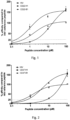
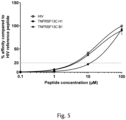
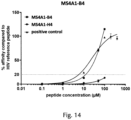
- Relative affinity concentration of each peptide inducing 20% of expression of HLA-A*0201 / concentration of the reference peptide inducing 20% of expression of HLA-A*0201 (where 100 % is the level of HLA-A*0201 expression detected with the reference peptide, e.g. HIV pol 589-597, for example used at a 100 ⁇ concentration).
- a peptide displaying a relative affinity below 1 may be considered as a "strong binder”
- a peptide displaying relative affinity between 1 and 2 may be considered as a “moderate binder”
- a peptide displaying relative affinity more than 3 may be considered as a "weak binder”.
- HLA-A human leukocyte antigens
- HLA-B human leukocyte antigens
- HLA-C human leukocyte antigens
- HLA-A*01, HLA-A*02, HLA-A*24 and HLA-B*07 are examples of different MHC class I alleles that can be expressed from these loci.
- the antigenic peptide according to the invention may bind to HLA-A*01, HLA-A*02, HLA-A*24 and HLA-B*07 molecules.
- the antigenic peptide according to the invention binds to HLA-A*02.
- Cellular localization in particular whether a protein is secreted or comprises a transmembrane domain, can be tested in silico or in vitro by methods well-known to the skilled person.
- “SignalP 4.1 Server” Center for biological sequence analysis, Technical University of Denmark DTU; URL: www.cbs.dtu.dk/services/SignalP) and/or "Phobius” (A combined transmembrane topology and signal peptide predictor, Stockholm Bioinformatics Centre; URL: phobius.sbc.su.se) may be used.
- two prediction tools e.g., SignalP 4.1 Server and Phobius
- SignalP 4.1 Server and Phobius may be combined.
- Signal peptides are ubiquitous protein-sorting signals that target their passenger (cargo) protein for translocation across the cytoplasmic membrane in prokaryotes.
- SignalP 4.1 Server Center for biological sequence analysis, Technical University of Denmark DTU; URL: www.cbs.dtu.dk/services/SignalP
- Phobius A combined transmembrane topology and signal peptide predictor, Sweden Bioinformatics Centre; URL: phobius.sbc.su.se
- two prediction tools e.g., SignalP 4.1 Server and Phobius
- SignalP 4.1 Server Center for biological sequence analysis, Technical University of Denmark DTU; URL: www.cbs.dtu.dk/services/SignalP
- Phobius A combined transmembrane topology and signal peptide predictor, Sweden Bioinformatics Centre; URL: phobius.sbc.su.se
- two prediction tools e.g., SignalP 4.1 Server and Ph
- a protein comprises a transmembrane domain.
- signal peptides and transmembrane domains are hydrophobic, but transmembrane helices typically have longer hydrophobic regions.
- SignalP 4.1 Server and Phobius have the capacity to differentiate signal peptides from transmembrane domains.
- a minimum number of two predicted transmembrane helices is set to differentiate between membrane and cytoplasmic proteins to deliver the final consensus list.
- the microbiota sequence variant of a fragment/epitope of a human tumor antigen is presented in its entirety after the cleavage of the bacterial protein expressed in the human microbiota.
- cleavage refers to the processing of the peptide for MHC presentation, in particular to MHC-I processing.
- cleavage prediction score and/or affinity can be used to predict antigenic cleavage for proper MHC binding (for presentation to CD8 T cells).
- Such "cleavage probability score” may be calculated with software (preferably such score is higher than 70%, preferably higher than 80%, more preferably higher than 90%).
- IEDB Immuno Epitope Database and Analysis Resource, IEDB Analysis Resource, supported by a contract from the National Institute of Allergy and Infectious Diseases, a component of the National Institutes of Health in the Department of Health and Human Services;
- MHC-I processing predictions URL: http://tools.iedb.org/mhcnp/
- NetChop3 The role of the proteasome in generating cytotoxic T cell epitopes: Insights obtained from improved predictions of proteasomal cleavage. M. Nielsen, C. Lundegaard, O. Lund, and C. Kesmir.
- a high score for a peptide suggests that it is effectively cleaved at its N- and/or C-terminus (and not its center), while a low score is associated with peptides cleaved in their center.
- proteasomal cleavage, TAP transport, and MHC class 1 analysis tools can be combined for prediction of peptide presentation.
- the antigenic peptide induces T-cell cross-reactivity against the human epitope of a (reference) tumor antigen.
- T-cell cross-reactivity is a phenomenon of the immune system defined as the recognition of two or more peptide-MHC complexes (pMHCs) by the T-cell receptor (TCR).
- Epitope mimicry relates to the concept of sequence and structure similarity between foreign antigens and self-antigens as a trigger mechanism to elicit a cross reactive immune response against the self-antigens.
- epitope mimicry offers a possible way to bypass the repertoire restriction of human T cells due to clonal depletion of T cells recognizing self-antigens.
- antigens i.e. the antigenic peptide according to the present invention or the antigenic peptides as described herein
- self-antigens e.g. human epitope of a tumor antigen
- it is expected that such antigens are recognized by T cell/TCR that have not been depleted during T cell education process. Accordingly, such antigens are able to elicit a strong immune response leading to clonal expansion of T cell harboring potential cross reactivity with self-antigens.
- HLA-A2 transgenic mice e.g. HHD DR1 mice expressing human HLA-A2 and HLA-DR1 MHC and lacking the murine H-2 class I and class II MHCs and/or HHD DR3 mice expressing human HLA-A2 and HLA-DR3 MHC
- day 0 d0
- d14 d14
- mice Seven days after the boost injection (i.e. on d21), the mice are euthanized and splenocytes are stimulated in vitro with the antigenic peptide of the present invention to assess their capacity to secrete IFN-gamma as assessed by ELISPOT.
- the present invention provides an antigenic peptide in combination with the antigenic peptide of claim 1, which is a microbiota sequence variant of a fragment/epitope of a human tumor antigen, wherein the epitope of a human tumor antigen may consist of any one of SEQ ID Nos 1-64, 66-257 and 476-500.
- Table 1A below provides an overview over the antigenic peptide according to the present invention or further antigenic peptides as described herein with their amino acid sequences and SEQ ID NOs and with the corresponding fragment/epitope of a human tumor antigen (also referred to herein as "human reference peptide").
- Table 1A also provides information to which tumor antigen each antigenic peptide according to the present invention relates.
- SEQ ID NOs 1 to 64, 66 to 257 and 476-500 refer to HLA-A*02 antigenic peptides as described herein.
- Table 1A HLA-A*02 Antigenic peptide according to the invention or as described herein.
- Table 1B below provides an overview over the consensus sequences (MHC Class I Consensus Sequence) of the antigenic peptides described herein with their amino acid sequences and SEQ ID NOs and with the corresponding fragment/epitope of a human tumor antigen (also referred to herein as "human reference peptide") as well as to their core sequence.
- MHC Class I Consensus Sequences of the antigenic peptides Tumor antigen Sequence human reference peptide SEQ ID NO. human reference peptide Core sequence SEQ ID NO. core sequence MHC Class I consensus sequence SEQ ID NO.
- Table 1C below provides an overview over the HLA-A*02 consensus sequences of the antigenic peptides of a pharmaceutical composition or used in combination according to the present invention with their amino acid sequences and SEQ ID NOs and with the corresponding core sequence of a human tumor antigen. Table 1C also provides information to which core sequence and HLA-A*02 consensus sequence each antigenic peptide. Table 1C. HLA-A*02 Consensus Sequences of the antigenic peptide according to the invention or as described herein. Tumor antigen Core sequence SEQ ID NO. core sequence HLA-A*02 consensus sequence SEQ ID NO. consensus sequence SEQ ID NO.
- the antigenic peptides described herein and those according to the present invention can be categorized according to the respective human tumor antigen, to the respective core sequence and to the respective MHC Class I and/or HLA-A*02 Consensus Sequences.
- the antigenic peptide may comprise a (core) sequence according to any one of SEQ ID NOs 281 - 303.
- the antigenic peptide comprises a (core) sequence according to any one of SEQ ID NOs 281, 283 - 289, 293, 294, 302 and 303.
- the antigenic peptide comprises a (core) sequence according to any one of SEQ ID NOs 283, 287, 293, 294, 302 and 303.
- the antigenic peptide comprises a (core) sequence according to any one of SEQ ID NOs 287, 293, 294 and 302.
- the antigenic peptide used in combination or in pharmaceutical composition of the present invention is a microbiota sequence variant of a fragment of the tumor antigen CD19, such as antigenic peptides consisting of an amino acid sequence as set forth in any one of SEQ ID NOs 1 - 40.
- the antigenic peptide according to the present invention is a sequence variant of the CD19 fragment (human reference peptide) "FLLFLTPME" (SEQ ID NO: 258), such as an antigenic peptide consisting of an amino acid sequence as set forth in SEQ ID NO: 1-12, e.g.
- an antigenic peptide consisting of an amino acid sequence as set forth in SEQ ID NO: 34 or 35 is also more preferred that the antigenic is a sequence variant of the CD19 fragment (human reference peptide) "TLAYLIFCL" (SEQ ID NO: 261), such as an antigenic peptide comprising or consisting of an amino acid sequence as set forth in SEQ ID NO: 36-39, e.g. an antigenic peptide consisting of an amino acid sequence as set forth in SEQ ID NO: 39.
- the antigenic peptide is a sequence variant of the CD19 fragment (human reference peptide) "QQMGGFYLC" (SEQ ID NO: 262), such as an antigenic peptide consisting of an amino acid sequence as set forth in SEQ ID NO: 40, e.g. an antigenic peptide comprising or consisting of an amino acid sequence as set forth in SEQ ID NO: 40.
- the antigenic peptide used in combination and in pharmaceutical composition of the present invention is a sequence variant of a fragment of the tumor antigen CD20 (MS4A1; human reference peptide), such as “IALGGLLMI” (SEQ ID NO: 263), “IMNSLSLFA” (SEQ ID NO: 264), “LMIPAGIYA” (SEQ ID NO: 265) or “SLFLGILSV” (SEQ ID NO: 266).
- the antigenic peptide according is a sequence variant of a fragment of the tumor antigen CD20, such as antigenic peptides having a core sequence consisting of an amino acid sequence as set forth in any one of SEQ ID NOs 286 - 289.
- the antigenic peptide is a sequence variant of a fragment of the tumor antigen CD20 comprising or consisting of an MHC Class I Consensus Sequence as set forth in any one of SEQ ID Nos 309 -312.
- the antigenic peptide according to the present invention is a sequence variant of a fragment of the tumor antigen CD20 that bind to a particular HLA molecule (HLA-A2*02), such as an antigenic peptide comprising or consisting of an HLA-A2*02 Consensus Sequence as set forth in any one of SEQ ID Nos 347-374.
- the antigenic peptide is a microbiota sequence variant of a fragment of the tumor antigen CD20, such as antigenic peptides consisting of an amino acid sequence as set forth in any one of SEQ ID NOs 41 - 87. More preferably, the antigenic peptide is a sequence variant of the CD20 fragment (human reference peptide) "IALGGLLMI" (SEQ ID NO: 263), such as an antigenic peptide consisting of an amino acid sequence as set forth in SEQ ID NO: 41-64, e.g.
- an antigenic peptide consisting of an amino acid sequence as set forth in SEQ ID NO: 61 The antigenic peptide according to the present invention is a sequence variant of the CD20 fragment (human reference peptide) "IMNSLSLFA" (SEQ ID NO: 264), the antigenic peptide consisting of an amino acid sequence as set forth in SEQ ID NO: 65.
- Further antigenic peptides used in combination or in pharmaceutical composition of the invention consist of an amino acid sequence as set forth in SEQ ID NO: 70 and 476 - 484, e.g. an antigenic peptide comprising or consisting of an amino acid sequence as set forth in any one of SEQ ID NO: 68, 70 and 477.
- the antigenic peptide used in combination or in pharmaceutical composition is a sequence variant of the CD20 fragment (human reference peptide) "LMIPAGIYA” (SEQ ID NO: 265), such as an antigenic peptide consisting of an amino acid sequence as set forth in SEQ ID NO: 71-80, e.g. an antigenic peptide consisting of an amino acid sequence as set forth in SEQ ID NO: 72. It is also more preferred that the antigenic peptide according s a sequence variant of the CD20 fragment (human reference peptide) "SLFLGILSV” (SEQ ID NO: 266), such as an antigenic peptide consisting of an amino acid sequence as set forth in SEQ ID NO: 81-87, e.g. an antigenic peptide consisting of an amino acid sequence as set forth in SEQ ID NO: 86.
- the antigenic peptide used in combination or in pharmaceutical composition of the present invention is a sequence variant of a fragment of the tumor antigen CD22 (human reference peptide), such as "FLSNDTVQL” (SEQ ID NO: 267), “HLLGPWLLL” (SEQ ID NO: 268), “ILILAICGL” (SEQ ID NO: 269) or “WVFEHPETL” (SEQ ID NO: 270).
- the antigenic peptide is a sequence variant of a fragment of the tumor antigen CD22, such as antigenic peptides having a core sequence consisting of an amino acid sequence as set forth in any one of SEQ ID NOs 290 - 293.
- the antigenic peptide is a sequence variant of a fragment of the tumor antigen CD22 comprising or consisting of an MHC Class I Consensus Sequence as set forth in any one of SEQ ID Nos 313 - 316.
- the antigenic peptide is a sequence variant of a fragment of the tumor antigen CD22 that bind to a particular HLA molecule (HLA-A2*02), such as an antigenic peptide comprising or consisting of an HLA-A2*02 Consensus Sequence as set forth in any one of SEQ ID Nos 375-390.
- HLA-A2*02 HLA-A2*02
- the antigenic peptide according to the present invention is a microbiota sequence variant of a fragment of the tumor antigen CD22, such as antigenic peptides consisting of an amino acid sequence as set forth in any one of SEQ ID NOs 88 - 110.
- the antigenic peptide is a sequence variant of the CD22 fragment (human reference peptide) FLSNDTVQL" (SEQ ID NO: 267), such as an antigenic peptide consisting of an amino acid sequence as set forth in SEQ ID NO: 88-96. It is also more preferred that the antigenic peptide is a sequence variant of the CD22 fragment (human reference peptide) "HLLGPWLLL” (SEQ ID NO: 268), such as an antigenic peptide consisting of an amino acid sequence as set forth in SEQ ID NO: 97-101.
- the antigenic peptide according to the present invention is a sequence variant of the CD22 fragment (human reference peptide) "ILILAICGL” (SEQ ID NO: 269), such as an antigenic peptide consisting of an amino acid sequence as set forth in SEQ ID NO: 102-105. It is also more preferred that the antigenic peptide according to the present invention is a sequence variant of the CD22 fragment (human reference peptide) "WVFEHPETL” (SEQ ID NO: 270), such as an antigenic peptide consisting of an amino acid sequence as set forth in SEQ ID NO: 106-110 and 485 - 488, e.g. an antigenic peptide consisting of an amino acid sequence as set forth in any one of SEQ ID NO: 107, 108, 109 and 110.
- the antigenic peptide used in combination or pharmaceutical composition of the present invention is a sequence variant of a fragment of the tumor antigen CD37 (human reference peptide), such as "GLAFVPLQI” (SEQ ID NO: 271), “GLYFGMLLL” (SEQ ID NO: 272), “ILILAICGL” (SEQ ID NO: 273), “LLLLFATQI” (SEQ ID NO: 274), “SIVGICLGV” (SEQ ID NO: 275) or "SLIKYFLFV” (SEQ ID NO: 276).
- GLAFVPLQI SEQ ID NO: 271
- GLYFGMLLL SEQ ID NO: 272
- ILILAICGL SEQ ID NO: 273
- LLLFATQI SEQ ID NO: 274
- SIVGICLGV SEQ ID NO: 275
- SLIKYFLFV SEQ ID NO: 276
- the antigenic peptide is a sequence variant of a fragment of the tumor antigen CD37, such as antigenic peptides having a core sequence consisting of an amino acid sequence as set forth in any one of SEQ ID NOs 294 - 299. Accordingly, the antigenic peptide is a sequence variant of a fragment of the tumor antigen CD37 comprising or consisting of an MHC Class I Consensus Sequence as set forth in any one of SEQ ID Nos 317 - 322.
- the antigenic peptide according to the present invention is a sequence variant of a fragment of the tumor antigen CD37 that bind to a particular HLA molecule (HLA-A2*02), such as an antigenic peptide comprising or consisting of an HLA-A2*02 Consensus Sequence as set forth in any one of SEQ ID Nos 391-425. More preferably, the antigenic peptide is a microbiota sequence variant of a fragment of the tumor antigen CD37, such as antigenic peptides consisting of an amino acid sequence as set forth in any one of SEQ ID NOs 111 - 162.
- the antigenic peptide according to the present invention is a sequence variant of the CD37 fragment (human reference peptide) "GLAFVPLQI" (SEQ ID NO: 271), such as an antigenic peptide consisting of an amino acid sequence as set forth in SEQ ID NO: 111-130, 400-402 and 489 - 493, e.g. an antigenic peptide consisting of an amino acid sequence as set forth in any one of SEQ ID NO: 114, 117, 119, 120, 491 and 493.
- the antigenic peptide is a sequence variant of the CD37 fragment (human reference peptide) "GLYFGMLLL” (SEQ ID NO: 272), such as an antigenic peptide consisting of an amino acid sequence as set forth in SEQ ID NO: 131-136. It is also more preferred that the antigenic peptide is a sequence variant of the CD37 fragment (human reference peptide) "ILILAICGL” (SEQ ID NO: 273), such as an antigenic peptide consisting of an amino acid sequence as set forth in SEQ ID NO: 137-147.
- the antigenic peptide is a sequence variant of the CD37 fragment (human reference peptide) "LLLLFATQI" (SEQ ID NO: 274), such as an antigenic peptide consisting of an amino acid sequence as set forth in SEQ ID NO: 148-155. It is also more preferred that the antigenic peptide is a sequence variant of the CD37 fragment (human reference peptide) "SIVGICLGV” (SEQ ID NO: 275), such as an antigenic peptide consisting of an amino acid sequence as set forth in SEQ ID NO: 156-157.
- the antigenic peptide is a sequence variant of the CD37 fragment (human reference peptide) "SLIKYFLFV" (SEQ ID NO: 276), such as an antigenic peptide consisting of an amino acid sequence as set forth in SEQ ID NO: 158-162.
- the antigenic peptide used in combination and inpharmaceutical composition of the present invention is a sequence variant of a fragment of the tumor antigen TNFRSF13C (human reference peptide), such as "GLAFVPLQI” (SEQ ID NO: 277), “GLALVLALV” (SEQ ID NO: 278), “LLFGAPALL” (SEQ ID NO: 279), “PLPGLLFGA” or (SEQ ID NO: 280).
- the antigenic peptide is a sequence variant of a fragment of the tumor antigen TNFRSF13C, such as antigenic peptides having a core sequence consisting of an amino acid sequence as set forth in any one of SEQ ID NOs 300- 303.
- the antigenic peptide is a sequence variant of a fragment of the tumor antigen TNFRSF13C comprising or consisting of an MHC Class I Consensus Sequence as set forth in any one of SEQ ID Nos 323 - 326.
- the antigenic peptide is a sequence variant of a fragment of the tumor antigen TNFRSF13C that bind to a particular HLA molecule (HLA-A2*02), such as an antigenic peptide comprising or consisting of an HLA-A2*02 Consensus Sequence as set forth in any one of SEQ ID Nos 426-472.
- the antigenic peptide is a microbiota sequence variant of a fragment of the tumor antigen TNFRSF13C, such as antigenic peptides consisting of an amino acid sequence as set forth in any one of SEQ ID NOs 163 - 257. More preferably, the antigenic peptide is a sequence variant of the TNFRSF13C fragment (human reference peptide) "GLAFVPLQI" (SEQ ID NO: 277), such as an antigenic peptide consisting of an amino acid sequence as set forth in SEQ ID NO: 163-170.
- the antigenic peptide according to the present invention is a sequence variant of the TNFRSF13C fragment (human reference peptide) "GLALVLALV” (SEQ ID NO: 278), such as an antigenic peptide consisting of an amino acid sequence as set forth in SEQ ID NO: 171-209. It is also more preferred that the antigenic peptide is a sequence variant of the TNFRSF13C fragment (human reference peptide) "LLFGAPALL" (SEQ ID NO: 279), such as an antigenic peptide consisting of an amino acid sequence as set forth in SEQ ID NO: 210-225, and 494 - 500, e.g.
- the antigenic peptide according to the present invention comprises or consists of an MHC Class I Consensus Sequence as set forth in any one of SEQ ID Nos 304-312, 315-316 and 325. More preferably, the antigenic peptide according to the present invention comprises or consists of an HLA-A*02 Consensus Sequence as set forth in any one of SEQ ID Nos. 330, 332-333, 336, 341-344,346, 354-355, 360, 363-364, 367, 371-372, 374,387, 390, 392-393, 402 and 450.
- the antigenic peptide used in combination with the antigenic peptide according to claim 1 consists of an amino acid sequence as set forth in any one of SEQ ID NOs 1 - 12, 34 - 35, 36 - 39, 40, 41 - 64, 65 - 70, 476 - 484, 71 - 80, 81 - 87, 106 - 110, 485 - 488, 111 - 130, 489 - 493, 210 - 225, 494 - 500 and 226 - 257; preferably the antigenic peptide consists of an amino acid sequence as set forth in any one of SEQ ID NOs 34 - 35, 65 - 70, 476 - 484, 106 - 110, 485 - 488, 111 - 130, 489 - 493, 210 - 225, 494 - 500 and 226 - 257; more preferably the antigenic peptide consists of an amino acid sequence as set forth in any one of SEQ ID NOs 65 -
- the antigenic peptide used in combination with the antigenic peptide according to claim 1 consists of an amino acid sequence as set forth in any one of SEQ ID NOs 10, 34, 35, 39, 40, 61, 68, 70, 72, 86, 107 - 110, 114, 117, 119, 120, 212, 217, 220, 224, 227, 231, 477, 491 and 493.
- the antigenic peptide according to the present invention consists of an amino acid sequence as set forth in any one of SEQ ID NOs 10, 21, 33, 35, 39, 40, 61, 65, 68, 72, 86, 110, 114 and 220.
- the antigenic peptide consists of an amino acid sequence as set forth in any one of SEQ ID NOs 10, 21, 33, 35, 39, 40, 110, 114 and 220. Most preferably, the antigenic peptide consists of an amino acid sequence as set forth in any one of SEQ ID NOs 10, 110, 114 and 220. Still more preferably, the antigenic peptides consists of an amino acid sequence as set forth in any one of SEQ ID NOs 65, 110, 114 and 220.
- the antigenic peptide of the invention consists of an amino acid sequence as set forth in SEQ ID NO: 65. In some embodiments, the antigenic peptide consists of an amino acid sequence as set forth in SEQ ID NO: 110. In some embodiments, the antigenic peptide consists of an amino acid sequence as set forth in SEQ ID NO: 114. In some embodiments, the antigenic peptide consists of an amino acid sequence as set forth in SEQ ID NO: 220.
- the specific antigenic peptide according to the present invention or the antigenic peptides as described herein allow the raise of a strong immune response against themselves, and most importantly, allow the raise of a strong immune response against peptides having amino acid similarity therewith which are comprised in the tumor antigen, even if the human reference peptides comprised in the tumor antigen may be tolerogenic.
- the antigenic peptide according to the present invention or the antigenic peptides as described herein may be in the form of immunogenic compounds, in particular for use in the prevention or in the treatment of B-cell malignancy.
- Peptide-MHC (pMHC) multimers comprising the antigenic peptide
- the present invention also provides a Peptide-MHC (pMHC) multimer comprising an antigenic peptide according to claim 1.
- pMHC Peptide-MHC
- peptide-MHC multimer refers to a stable multimeric complex composed of major histocompatibility complex (MHC) protein subunits loaded with an antigenic peptide of the invention.
- MHC multimers are oligomeric forms of MHC molecules.
- the main function of an MHC molecule is to bind to an antigen.
- said antigen is the antigenic peptide according to the invention.
- a complex of MHC proteins "loaded" with the antigenic peptide of the invention typically means that the antigenic peptide of the invention is bound to one or more of the MHC proteins.
- the "peptide-MHC multimers” (pMHC) of the invention include a peptide-MHC dimer, trimer, tetramer, pentamer, hexamer, heptamer or octamer. MHC tetramers and pentamers are preferred.
- MHC Major Histocompatibility Complex
- HLA human leucocyte antigens
- the pMHC multimer is a peptide/MHC class I multimer.
- the pMHC multimer is a HLA corresponding to MHC class I/peptide multimer.
- the pMHC multimer may be a HLA-peptide multimer selected from the group consisting of HLA-A-peptide multimer, HLA-B-peptide multimer, HLA-C-peptide multimer, HLA-E-peptide multimer, MICA-peptide multimer and MICB-peptide multimer.
- pHMC multimers Methods for obtaining pHMC multimers are known in the art and described, for example, in WO 96/26962 and WO 01/18053 .
- the pMHC may contain further components, such as a multimerization agent and/or a label (e.g., for visualization).
- labels include fluorescent labels, e.g. fluorescently labelled proteins, such as streptavidin. Fluorescent labels include allophycocyanin (APC), phycoerythrin (PE), R-phycoerythrin (R-PE) and fluorescein isothiocyanate (FITC).
- a preferred label is biotin.
- said pMHC multimer can be used to visualize T cell populations that are specific for the MHC class I peptide complex or a HLAs corresponding to MHC class I/peptide complex as described here above.
- the pMHC multimer may be a multimer where the heavy chain of the MHC is biotinylated, which allows combination as a tetramer with streptavidine.
- Such pMHC tetramer has an increased avidity for the appropriate TCR-carrier T lymphocytes and can therefore be used to visualize reactive populations by immunofluorescence.
- said pMHC multimer can be used for the detection and/or isolation by screening (in flow cytometry or by immunomagnetic screening) of T cell populations that are specific for a pMHC complex as described here above.
- CTL Antigenic peptide-specific cytotoxic T lymphocytes
- the present invention also provides a cytotoxic T lymphocyte (CTL) specific for an antigenic peptide according to claim 1, in particular an activated cytotoxic T lymphocyte (CTL) specific for an antigenic peptide according to claim 1.
- CTL cytotoxic T lymphocyte
- CTL activated cytotoxic T lymphocyte
- cytotoxic T lymphocytes CTL
- activated cytotoxic T lymphocytes CTL
- the method comprising contacting in vitro a CTL with an antigen-loaded human class I or II MHC molecule expressed on the surface of an antigen-presenting cell or an artificial construct mimicking an antigen-presenting cell, wherein said antigen is an antigenic peptide according to the invention.
- Preferred antigen-presenting cells include dendritic cells.
- An artificial construct mimicking an antigen-presenting cell may be, for instance, a peptide-MHC multimer according to the invention.
- the step of contacting the CTL with the antigen-loaded human class I or II MHC molecule expressed on the surface of the antigen-presenting cell or the artificial construct mimicking an antigen-presenting cell may be carried out for a period of time sufficient to activate said CTL in an antigen specific manner.
- the antigenic peptide is a preferred antigenic peptide as described above, such as an antigenic peptide comprising or consisting of an amino acid sequence as set forth in any one of SEQ ID NOs 65, 110, 114 and 220.
- the (activated) T cells that are directed against the antigenic peptides of the invention are useful in therapy.
- the (activated) cytotoxic T lymphocytes (CTL) according to the present invention which are specific for an antigenic peptide of the invention, may have (exhibit/express) memory markers.
- memory markers are preferably memory markers of gut memory cells, such as CCR9, CXCR3, CD103, CX3CR1 and ⁇ 4 ⁇ 7+.
- the (activated) cytotoxic T lymphocytes (CTL) according to the present invention which are specific for an antigenic peptide of the invention, are preferably more/stronger amplified after vaccination with antigenic peptide of the invention (derived from human microbiota sequences) as compared to vaccination with peptides not derived from microbiota sequences, such as the human (reference) sequence and/or a synthetic peptide (e.g., including mutations, which were, e.g., artificially introduced).
- CTL cytotoxic T lymphocytes
- vaccination of subjects with the antigenic peptide of the invention preferably increases the number of (activated) cytotoxic T lymphocytes (CTL) according to the present invention, which are specific for said antigenic peptide of the invention, more than vaccination with respective human peptides or synthetic peptides (not derived from microbiota), which relate to the same reference epitope.
- CTL cytotoxic T lymphocytes
- the (activated) cytotoxic T lymphocytes (CTL) according to the present invention are preferably more/stronger and/or faster amplified after vaccination in subjects having said peptide in the gut (expressed by the subject's microbiota), e.g., the peptide can be found in a stool sample of the subject, as compared to subjects not having said peptide in the gut (not expressed by the subject's microbiota), e.g. subjects where said peptide is not detectable in stool samples.
- subjects having said peptide in the gut may respond faster (faster T cell expansion) and/or have T cells from the desired type Tc1.
- the present invention also provides a cell loaded with the antigenic peptide according to claim 1.
- the antigenic peptide loaded to the cell including the antigenic peptide according to claim 1 preferably comprises or consists of MHC Class I Consensus Sequence as set forth in any one of SEQ ID Nos 304-326, such as an antigenic peptide comprising or consisting of an amino acid sequence as set forth in SEQ ID NOs 1 to 64, 66 to 247 and 476-500.
- antigenic peptides consisting of an amino acid sequence as set forth in any one of SEQ ID NOs 10, 21, 33, 35, 39, 40, 61, 65, 68, 72, 86, 110, 114 and 220 are even more preferred.
- antigenic peptides as described herein consisting of an amino acid sequence as set forth in any one of SEQ ID NOs 10, 21, 33, 35, 39, 40, 110, 114 and 220 are still more preferred.
- antigenic peptides as described herein consisting of an amino acid sequence as set forth in any one of SEQ ID NOs 10, 110, 114 and 220 are still more preferred.
- antigenic peptide composition according to claim 9 consisting of an amino acid sequence as set forth in any one of SEQ ID NOs 65, 110, 114 and 220 are still more preferred. Also combinations thereof are preferred, namely, cells loaded with distinct antigenic peptides combined with the antigenic peptide of claim 1 .
- a preferred cell loaded with the antigenic peptide according to the present invention is an antigen presenting cell (APC), more preferably a dendritic cell (DC).
- APC antigen presenting cell
- DC dendritic cell
- APCs are of particular interest, as their main function is to process antigens and present it on the cell surface to the T cells of the immune system, so as to initiate and modulate T-cell responses in vivo.
- the APCs are loaded with the antigenic peptide according to the invention. This may be done by exposing APCs in vitro with said antigenic peptide (as described in Rizzo MM, Alaniz L, Mazzolini G. Ex vivo loading of autologous dendritic cells with tumor antigens. Methods Mol Biol. 2014;1139:41-4 ; Rolinski J, Hus I. Breaking immunotolerance of tumors: a new perspective for dendritic cell therapy. J Immunotoxicol. 2014 Oct;11(4):311-8 ).
- DCs dendritic cells
- DCs can indeed be distinguished from other cells of peripheral blood by their surface markers, such as S100, p55, CD83, and/or OX62, and may thus be isolated and purified based on said markers using cell cultures techniques well-known in the art.
- nucleic acids encoding the antigenic peptides and host cells comprising nucleic acids
- the present invention also provides a nucleic acid encoding the antigenic peptide according to claim 1.
- a nucleic acid encoding the antigenic peptide according to claim 1.
- preferred embodiments of the antigenic peptide as described above also apply for such a nucleic acid according to the present invention.
- Nucleic acids preferably comprise single stranded, double stranded or partially double stranded nucleic acids, preferably selected from gDNA, cDNA, RNA, antisense DNA, antisense RNA, complementary RNA/DNA sequences with or without expression elements, a mini-gene, gene fragments, regulatory elements, promoters, and combinations thereof.
- Further preferred examples of nucleic acid (molecules) and/or polynucleotides include, e.g., a recombinant polynucleotide, a vector, an oligonucleotide, an RNA molecule such as an rRNA, an mRNA, or a tRNA, or a DNA molecule as described above.
- the nucleic acid (molecule) is a DNA molecule or an RNA molecule; preferably selected from gDNA; cDNA; rRNA; mRNA; antisense DNA; antisense RNA; complementary RNA and/or DNA sequences; RNA and/or DNA sequences with or without expression elements, regulatory elements, and/or promoters; a vector; and combinations thereof.
- nucleic acid e.g., a ribonucleic acid (RNA) inside a cell, whether in vitro, in vivo, in situ or ex vivo, such as to cause intracellular translation of the nucleic acid and production of an encoded peptide of interest.
- RNA ribonucleic acid
- a non-integrative polynucleotide e.g., mRNA.
- nucleic acids such as mRNA
- nucleic acids may be optimized for expression of the antigenic peptide of the invention, e.g. by methods known in the art, such as codon optimization.
- the nucleic acid may be modified, for example, in order to enhance its stability, prolong its lifetime and/or to increase the expression of the antigenic peptide of the invention.
- optimized or modified mRNA mmRNA
- mmRNA which encodes the antigenic peptide according to the present invention
- the mmRNA are distinguished from wild type mRNA in their functional and/or structural design features for optimal delivery of the mRNA and/or for optimal expression of the antigenic peptide of the invention (for example as described in WO 2013/151672 A2 , WO 2013/101690 A1 , WO2013/052523 A ).
- nucleic acids may be delivered "naked" or associated with a carrier, e.g., a cationic carrier.
- Cationic carriers positively charged typically associate easily with nucleic acids, which are negatively charged.
- the carrier may be any of any kind including, for example, polymers, proteins, lipids and nanoparticles.
- Cationic lipids and nanoparticles are preferred for nucleic acid delivery. Accordingly, the present invention also provides a nucleic acid as described herein associated with a carrier (e.g., a lipid, in particular a cationic lipid or an LNP).
- a carrier e.g., a lipid, in particular a cationic lipid or an LNP.
- the nucleic acid molecule may be a vector.
- vector refers to a nucleic acid molecule, preferably to an artificial nucleic acid molecule, i.e. a nucleic acid molecule which does not occur in nature.
- a vector in the context of the present invention is suitable for incorporating or harboring a desired nucleic acid sequence.
- Such vectors may be storage vectors, expression vectors, cloning vectors, transfer vectors etc.
- a storage vector is a vector which allows the convenient storage of a nucleic acid molecule.
- the vector may comprise a sequence corresponding, e.g., to a desired antigenic peptide according to the present invention.
- An expression vector may be used for production of expression products such as RNA, e.g. mRNA, or peptides, polypeptides or proteins.
- an expression vector may comprise sequences needed for transcription of a sequence stretch of the vector, such as a promoter sequence.
- a cloning vector is typically a vector that contains a cloning site, which may be used to incorporate nucleic acid sequences into the vector.
- a cloning vector may be, e.g., a plasmid vector or a bacteriophage vector.
- a transfer vector may be a vector which is suitable for transferring nucleic acid molecules into cells or organisms, for example, viral vectors.
- a vector in the context of the present invention may be, e.g., an RNA vector or a DNA vector.
- a vector is a DNA molecule.
- a vector in the sense of the present application comprises a cloning site, a selection marker, such as an antibiotic resistance factor, and a sequence suitable for multiplication of the vector, such as an origin of replication.
- a vector in the context of the present application is a plasmid vector.
- a vector in the context of the present application is an expression vector.
- a preferred vector is a vector for expression in bacterial cells.
- the vector is useful for expression in so-called “live bacterial vaccine vectors", wherein live bacterial cells (such as bacteria or bacterial spores, e.g., endospores, exospores or microbial cysts) can serve as vaccines.
- live bacterial cells such as bacteria or bacterial spores, e.g., endospores, exospores or microbial cysts
- live bacterial cells such as bacteria or bacterial spores, e.g., endospores, exospores or microbial cysts
- Nucleic acids encoding an antigenic peptide according to the invention or antigenic peptides as described herein may be in the form of naked nucleic acids, or nucleic acids cloned into plasmids or viral vectors ( Tregoning and Kinnear, Using Plasmids as DNA Vaccines for Infectious Diseases. Microbiol Spectr. 2014 Dec;2(6). doi: 10.1128/microbiolspec.PLAS-0028-2014 ), the latter being particularly preferred.
- suitable viral vectors according to the invention include retrovirus, adenovirus, adeno-associated virus (AAV), herpes virus and poxvirus vectors. It is within the skill of the person in the art to clone a nucleic acid into a plasmid or viral vector, using standard recombinant techniques in the art.
- the present invention also provides a host cell comprising the nucleic acid according to claim 4. Also combinations thereof are preferred, namely, host cells comprising distinct nucleic acids encoding distinct antigenic peptides as described herein including the antigenic peptide according to claim 1.
- the nucleic acid comprised in the host cell is preferably a vector.
- the host cell is a bacterial cell.
- Such a host cell may be preferably used for production of the antigenic peptide according to the present invention.
- such a host cell may also be an active component in a vaccine.
- the host cell is a bacterial cell, more preferably a gut bacterial cell.
- gut bacterial cell refers to bacteria residing in the (human) gut.
- Such a bacterial host cell may serve as "live bacterial vaccine vector", wherein live bacterial cells (such as bacteria or bacterial spores, e.g., endospores, exospores or microbial cysts) can serve as vaccines.
- live bacterial cells such as bacteria or bacterial spores, e.g., endospores, exospores or microbial cysts
- live bacterial cells such as bacteria or bacterial spores, e.g., endospores, exospores or microbial cysts
- Bacterial cells such as bacteria or bacterial spores, e.g., endospores, exospores or microbial cysts
- Bacterial cells in particular (entire) gut bacterial species, can be advantageous, as they have the potential to trigger a greater immune response than the (poly)peptides or nucleic acids they contain.
- bacterial cells in particular gut bacteria, according to the invention may be in the form of probiotics, i.e. of live gut bacterium, which can thus be used as food additive due to the health benefits it can provide.
- probiotics i.e. of live gut bacterium
- Those can be for example lyophilized in granules, pills or capsules, or directly mixed with dairy products for consumption.
- Nanoparticles comprising the antigenic peptide
- the present invention also provides a nanoparticle comprising, in particular a nanoparticle loaded with the antigenic peptide according to claim 1 and, optionally, with an adjuvant.
- the antigenic peptide loaded to the nanoparticle in combination with the antigenic peptide according to claim 1 preferably comprises or consists of MHC Class I Consensus Sequence as set forth in any one of SEQ ID Nos 304-326, such as an antigenic peptide comprising or consisting of an amino acid sequence as set forth in any one of SEQ ID NOs 1-64, 66 to 247 and 476-500.
- antigenic peptides consisting of an amino acid sequence as set forth in any one of SEQ ID NOs 10, 21, 33, 35, 39, 40, 61, 68, 72, 86, 110, 114 and 220 are even more preferred.
- antigenic peptides consisting of an amino acid sequence as set forth in any one of SEQ ID NOs 10, 21, 33, 35, 39, 40, 110, 114 and 220 are still more preferred.
- antigenic peptides consisting of an amino acid sequence as set forth in any one of SEQ ID NOs 10, 110, 114 and 220 are still more preferred.
- antigenic peptides as described herein used in combination with the antigenic peptide according to claim 1 consisting of an amino acid sequence as set forth in any one of SEQ ID NOs 65, 110, 114 and 220 are preferred. Also combinations thereof are preferred, namely, nanoparticles loaded with distinct antigenic peptides as described herein including the antigenic peptide according to claim 1.
- Nanoparticles in particular for use as vaccines, are known in the art and described, for example, in Shao et al., Nanoparticle-based immunotherapy for cancer, ACS Nano 2015, 9(1):16-30 ; Zhao et al., Nanoparticle vaccines, Vaccine 2014, 32(3):327-37 ; and Gregory et al., Vaccine delivery using nanoparticles, Front Cell Infect Microbiol. 2013, 3:13, doi: 10.3389/fcimb.2013.00013 . eCollection 2013, Review.
- the nanoparticle is used for delivery of the antigenic peptide and may optionally also act as an adjuvant.
- the antigenic peptide is typically either encapsulated within the nanoparticle or linked/bound to (decorated onto) the surface of the nanoparticle ("coating").
- nanoparticles can protect the payload (antigen/adjuvant) from the surrounding biological milieu, increase the half-life, minimize the systemic toxicity, promote the delivery to APCs, or even directly trigger the activation of TAA-specific T-cells.
- the nanoparticle has a size (diameter) of no more than 300 nm, more preferably of no more than 200 nm and most preferably of no more than 100 nm.
- Such nanoparticles are adequately sheltered from phagocyte uptake, with high structural integrity in the circulation and long circulation times, capable of accumulating at sites of tumor growth, and able to penetrate deep into the tumor mass.
- nanoparticles include polymeric nanoparticles such as poly(ethylene glycol) (PEG) and poly (D,L-lactic-coglycolic acid) (PLGA); inorganic nanoparticles such as gold nanoparticles, iron oxide beads, iron-oxide zinc-oxide nanoparticles, carbon nanotubes and mesoporous silica nanoparticles; liposomes, such as cationic liposomes; immunostimulating complexes (ISCOM); virus-like particles (VLP); and self-assembled proteins.
- PEG poly(ethylene glycol)
- PLGA poly (D,L-lactic-coglycolic acid)
- inorganic nanoparticles such as gold nanoparticles, iron oxide beads, iron-oxide zinc-oxide nanoparticles, carbon nanotubes and mesoporous silica nanoparticles
- liposomes such as cationic liposomes
- ISCOM immunostimulating complexes
- VLP virus-like particles
- Polymeric nanoparticles are nanoparticles based on/comprising polymers, such as poly(D,L-lactide-co-glycolide) (PLG), poly(D,L-lactic-coglycolic acid)(PLGA), poly(y-glutamic acid) ( ⁇ -PGA), poly(ethylene glycol) (PEG), and polystyrene.
- Polymeric nanoparticles may entrap an antigen (e.g., the antigenic peptide or a (poly)peptide comprising the same) or bind to/conjugateto an antigen (e.g., the antigenic peptide or a (poly)peptide comprising the same).
- Polymeric nanoparticles may be used for delivery, e.g.
- g-PGA nanoparticles may be used to encapsulate hydrophobic antigens.
- Polystyrene nanoparticles can conjugate to a variety of antigens as they can be surface-modified with various functional groups.
- Polymers, such as Poly(L-lactic acid) (PLA), PLGA, PEG, and natural polymers such as polysaccharides may also be used to synthesize hydrogel nanoparticles, which are a type of nano-sized hydrophilic three-dimensional polymer network.
- Nanogels have favorable properties including flexible mesh size, large surface area for multivalent conjugation, high water content, and high loading capacity for antigens. Accordingly, a preferred nanoparticle is a nanogel, such as a chitosan nanogel.
- Preferred polymeric nanoparticles are nanoparticles based on/comprising PEG and PLGA.
- Inorganic nanoparticles are nanoparticles based on/comprising inorganic substances, and examples of such nanoparticles include gold nanoparticles, iron oxide beads, iron-oxide zinc-oxide nanoparticles, carbon nanoparticles (e.g., carbon nanotubes) and mesoporous silica nanoparticles.
- Inorganic nanoparticles provide a rigid structure and controllable synthesis. For example, gold nanoparticles can be easily produced in different shapes, such as spheres, rods, cubes. Inorganic nanoparticles may be surface-modified, e.g. with carbohydrates.
- Carbon nanoparticles provide good biocompatibility and may be produced, for example, as nanotubes or (mesoporous) spheres.
- multiple copies of the antigenic peptide according to the present invention may be conjugated onto carbon nanoparticles, e.g. carbon nanotubes.
- Mesoporous carbon nanoparticles are preferred for oral administration.
- Silica-based nanoparticles (SiNPs) are also preferred.
- SiNPs are biocompatible and show excellent properties in selective tumor targeting and vaccine delivery. The abundant silanol groups on the surface of SiNPs may be used for further modification to introduce additional functionality, such as cell recognition, absorption of specific biomolecules, improvement of interaction with cells, and enhancement of cellular uptake.
- Mesoporous silica nanoparticles are particularly preferred.
- Liposomes are typically formed by phospholipids, such as 1,2-dioleoyl-3-trimethylammonium propane (DOTAP). In general, cationic liposomes are preferred. Liposomes are self-assembling with a phospholipid bilayer shell and an aqueous core. Liposomes can be generated as unilameller vesicles (having a single phospholipid bilayer) or as multilameller vesicles (having several concentric phospholipid shells separated by layers of water). Accordingly, antigens can be encapsulated in the core or between different layers/shells. Preferred liposome systems are those approved for human use, such as Inflexal ® V and Epaxal ® .
- Immunostimulating complexes are cage like particles of about 40 nm (diameter), which are colloidal saponin containing micelles, for example made of the saponin adjuvant Quil-A, cholesterol, phospholipids, and the (poly)peptide antigen (such as the antigenic peptide or a polypeptide comprising the same). These spherical particles can trap the antigen by apolar interactions.
- Two types of ISCOMs have been described, both of which consist of cholesterol, phospholipid (typically either phosphatidylethanolamine or phosphatidylcholine) and saponin (such as Quil-A).
- VLP Virus-like particles
- VLPs can be derived from a variety of viruses with sizes ranging from 20 nm to 800 nm, typically in the range of 20 - 150 nm.
- VLPs can be engineered to express additional peptides or proteins either by fusing these peptides/proteins to the particle or by expressing multiple antigens.
- antigens can be chemically coupled onto the viral surface to produce bioconjugate VLPs.
- self-assembled proteins examples include ferritin and major vault protein (MVP).
- Ferritin is a protein that can self-assemble into nearly-spherical 10 nm structure.
- Ninety-six units of MVP can self-assemble into a barrel-shaped vault nanoparticle, with a size of approximately 40 nm wide and 70 nm long.
- Antigens that are genetically fused with a minimal interaction domain can be packaged inside vault nanoparticles by self-assembling process when mixed with MVPs. Accordingly, the antigen (such as the antigenic peptide according to the present invention of a polypeptide comprising the same) may be fused to a self-assembling protein or to a fragment/domain thereof, such as the minimal interaction domain of MVP.
- the present invention also provides a fusion protein comprising a self-assembling protein (or a fragment/domain thereof) and the antigenic peptide according to the present invention.
- NPs nanoparticles
- preferred examples of nanoparticles include iron oxide beads, polystyrene microspheres, poly(y-glutamic acid) ( ⁇ -PGA) NPs, iron oxide-zinc oxide NPs, cationized gelatin NPs, pluronic-stabilized polypropylene sulfide) (PPS) NPs, PLGA NPs, (cationic) liposomes, (pH-responsive) polymeric micelles, PLGA, cancer cell membrane coated PLGA, lipid-calcium-phosphate (LCP) NPs, liposome-protamine-hyaluronic acid (LPH) NPs, polystyrene latex beads, magnetic beads, iron-dextran particles and quantum dot nanocrystals.
- ⁇ -PGA poly(y-glutamic acid)
- PPS pluronic-stabilized polypropylene sulfide
- PLGA NPs
- cationic liposomes cationic lip
- the nanoparticle further comprises an adjuvant, for example a toll-like receptor (TLR) agonist.
- TLR toll-like receptor
- the antigenic peptide can be delivered together with an adjuvant, for example to antigen-presenting cells (APCs), such as dendritic cells (DCs).
- APCs antigen-presenting cells
- DCs dendritic cells
- the adjuvant may be encapsulated by the nanoparticle or bound to/conjugated to the surface of the nanoparticle, preferably similarly to the antigenic peptide.
- polyinosinic:polycytidylic acid also referred to as "poly I:C”
- poly I:C is a mismatched double-stranded RNA with one strand being a polymer of inosinic acid, the other a polymer of cytidylic acid.
- Poly I:C is an immunostimulant known to interact with toll-like receptor 3 (TLR3).
- TLR3 toll-like receptor 3
- Poly I:C is structurally similar to double-stranded RNA, which is the "natural" stimulant of TLR3. Accordingly, poly I:C may be considered a synthetic analog of double-stranded RNA.
- Poly-ICLC is a synthetic complex of carboxymethylcellulose, polyinosinic-polycytidylic acid, and poly-L-lysine double-stranded RNA. Similar to poly I:C, also poly-ICLC is a ligand for TLR3. Poly I:C and poly-ICLC typically stimulate the release of cytotoxic cytokines. A preferred example of poly-ICLC is Hiltonol ® .
- the present invention also provides a pharmaceutical composition comprising at least one of the following:
- the present invention provides a pharmaceutical composition comprises one antigenic peptide according to claim 1 and, optionally, at least one antigenic peptide as defined by claim 8. Moreover, the present invention also provides a pharmaceutical composition comprising (at least) one nanoparticle according to the present invention as described herein. Moreover, the present invention also provides a pharmaceutical composition comprising (at least) one cell according to the present invention as described herein.
- the pharmaceutical composition comprises the antigenic peptide of claim 1,
- the nanoparticle, the cell preferably further comprises an amino acid sequence as set forth in any one of SEQ ID NOs 1 to 64, 66 to 247 and 476-500.
- antigenic peptides consisting of an amino acid sequence as set forth in any one of SEQ ID NOs 10, 21, 33, 35, 39, 40, 61, 68, 72, 86, 110, 114 and 220 are even more preferred as further components of pharmaceutical compositions according to the present invention.
- antigenic peptides as described herein consisting of an amino acid sequence as set forth in any one of SEQ ID NOs 10, 21, 33, 35, 39, 40, 110, 114 and 220 are still more preferred as further components of pharmaceutical compositions according to the invention.
- antigenic peptides consisting of an amino acid sequence as set forth in any one of SEQ ID NOs 10, 110, 114 and 220 are still more preferred as further components of pharmaceutical compositions according to the present invention.
- the pharmaceutical compositions comprising the antigenic peptide of claim 1 and two or three distinct of antigenic peptides as described herein consisting of an amino acid sequence as set forth in any one of SEQ ID NOs 110, 114 and 220 are still more preferred.
- compositions comprising distinct antigenic peptides as described herein.
- the pharmaceutical composition may comprise
- the pharmaceutical composition may comprise at least "two distinct components" (of a pharmaceutical composition according to the present invention), preferably three or four distinct components.
- distinct components refers to
- the "distinct components" are of the same type (e.g., distinct antigenic peptides, distinct nanoparticles, distinct cells, distinct nucleic acids, distinct host cells, or distinct cytotoxic T lymphocytes) and differ from each other only in that they relate to distinct antigenic peptides as described herein.
- the at least three or four distinct active components used in combination with antigenic peptide of claim 1 are preferably of the same type, but differ (only) in that each of them relates to a distinct antigenic peptide. More preferably,
- the most preferable pharmaceutical composition comprises:
- the pharmaceutical composition comprises at least two distinct antigenic peptides as described herein, including the antigenic peptide according to claim 1.
- the pharmaceutical composition comprises - including the antigenic peptide of claim 1 - a first antigenic peptide as described herein, which comprises or consists of a (microbiota) sequence variant of a fragment of the human tumor antigen CD22, and a second antigenic peptide as described herein, which comprises or consists of a (microbiota) sequence variant of a fragment of the human tumor antigen TNFRSF13C.
- the first antigenic peptide comprises or consists of a (microbiota) sequence variant of the CD22 fragment (human reference peptide) "WVFEHPETL” (SEQ ID NO: 270), such as an antigenic peptide consisting of an amino acid sequence as set forth in SEQ ID NO: 106-110 and 485 - 488, e.g.
- an antigenic peptide consisting of an amino acid sequence as set forth in any one of SEQ ID NO: 107, 108, 109 and 110 and the second antigenic peptide comprises or consists of a (microbiota) sequence variant of the TNFRSF13C fragment (human reference peptide) "LLFGAPALL" (SEQ ID NO: 279), such as an antigenic peptide consisting of an amino acid sequence as set forth in SEQ ID NO: 210-225 and 494 - 500, e.g. an antigenic peptide consisting of an amino acid sequence as set forth in any one of SEQ ID NO: 212, 217, 220 and 224, in particular as set forth in SEQ ID NO: 220and 450.
- the first antigenic peptide consists of an amino acid sequence as set forth in SEQ ID NO: 110 and the second antigenic peptide consists of an amino acid sequence as set forth in SEQ ID NO: 220, and 450.
- the pharmaceutical composition comprises an antigenic peptide consisting of SEQ ID NO: 110 and an antigenic peptide consisting of SEQ ID NO: 220.
- the pharmaceutical composition comprises at least three distinct antigenic peptides as described herein, including the antigenic peptide according to claim 1.
- the pharmaceutical composition may comprise - including the antigenic peptide of claim 1 - a first antigenic peptide , which comprises or consists of a (microbiota) sequence variant of a fragment of the human tumor antigen CD22, a second antigenic peptide, which comprises or consists of a (microbiota) sequence variant of a fragment of the human tumor antigen TNFRSF13C and a third antigenic peptide, which comprises or consists of a (microbiota) sequence variant of a fragment of the human tumor antigen CD37.
- a first antigenic peptide which comprises or consists of a (microbiota) sequence variant of a fragment of the human tumor antigen CD22
- a second antigenic peptide which comprises or consists of a (microbiota) sequence variant of a fragment of the human tumor antigen TNFRSF13C
- a third antigenic peptide which comprises or consists of a (microbiota) sequence variant of a fragment of the human tumor antigen
- the pharmaceutical composition further comprises a first antigenic peptide comprising or consisting of a (microbiota) sequence variant of the CD22 fragment (human reference peptide) "WVFEHPETL” (SEQ ID NO: 270), such as an antigenic peptide consisting of an amino acid sequence as set forth in SEQ ID NO: 106-110, and 485 - 488, e.g.
- an antigenic peptide consisting of an amino acid sequence as set forth in any one of SEQ ID NO: 107, 108, 109 and 110, a second antigenic peptide comprising or consisting of a (microbiota) sequence variant of the TNFRSF13C fragment (human reference peptide) "LLFGAPALL" (SEQ ID NO: 279), such as an antigenic peptide consisting of an amino acid sequence as set forth in SEQ ID NO: 210-225, 447-455 and 494 - 500, e.g.
- the pharmaceutical composition comprises at least four distinct antigenic peptides as described herein, including the antigenic peptide according to claim 1.
- the pharmaceutical composition may comprise - including the antigenic peptide of claim 1 - a first antigenic peptide , which comprises or consists of a (microbiota) sequence variant of a fragment of the human tumor antigen CD22, a second antigenic peptide, which comprises or consists of a (microbiota) sequence variant of a fragment of the human tumor antigen TNFRSF13C, a third antigenic peptide, which comprises or consists of a (microbiota) sequence variant of a fragment of the human tumor antigen CD37, a fourth antigenic peptide, which comprises or consists of a (microbiota) sequence variant of a fragment of the human tumor antigen CD19 or CD20.
- a first antigenic peptide which comprises or consists of a (microbiota) sequence variant of a fragment of the human tumor antigen CD22
- a second antigenic peptide which comprises or consists of a (microbiota) sequence variant of a fragment of the human tumor antigen
- the pharmaceutical composition comprises - including the antigenic peptide of claim 1 - a first antigenic peptide comprising or consisting of a (microbiota) sequence variant of the CD22 fragment (human reference peptide) "WVFEHPETL” (SEQ ID NO: 270), such as an antigenic peptide consisting of an amino acid sequence as set forth in SEQ ID NO: 106-110 and 485 - 488, e.g.
- an antigenic peptide consisting of an amino acid sequence as set forth in any one of SEQ ID NO: 107, 108, 109 and 110; a second antigenic peptide comprising or consisting of a (microbiota) sequence variant of the TNFRSF13C fragment (human reference peptide) "LLFGAPALL” (SEQ ID NO: 279), such as an antigenic peptide consisting of an amino acid sequence as set forth in SEQ ID NO: 210-225 and 494 - 500, e.g.
- an antigenic peptide consisting of an amino acid sequence as set forth in any one of SEQ ID NO: 212, 217, 220 and 224, in particular as set forth in SEQ ID NO: 220 and 450; a third antigenic peptide comprising or consisting of a (microbiota) sequence variant of the CD37 fragment (human reference peptide) "GLAFVPLQI" (SEQ ID NO: 271), such as an antigenic peptide consisting of an amino acid sequence as set forth in SEQ ID NO: 111-130 and 489 - 493, e.g.
- an antigenic peptide consisting of an amino acid sequence as set forth in any one of SEQ ID NO: 114, 117, 119, 120, 491 and 493, in particular as set forth in SEQ ID NO: 113-116; and a fourth antigenic peptide comprising or consisting of a (microbiota) sequence variant of the CD20 (MS4A1) fragment (human reference peptide) "IMNSLSLFA" (SEQ ID NO: 264), such as an antigenic peptide comprising or consisting of an amino acid sequence as set forth in SEQ ID NO: 66-70, and 476 - 484, e.g. an antigenic peptide consisting of an amino acid sequence as set forth in any one of SEQ ID NO: 68, 70 and 477.
- a fourth antigenic peptide comprising or consisting of a (microbiota) sequence variant of the CD20 (MS4A1) fragment (human reference peptide) "IMNSLSLFA" (SEQ ID NO: 264), such as
- the pharmaceutical composition comprises including the antigenic peptide of claim 1:
- the pharmaceutical composition comprises - including the antigenic peptide of claim 1:
- the pharmaceutical composition comprises the antigenic peptide of claim 1 and antigenic peptides consisting of an amino acid sequence as set forth in SEQ ID NOs 110, 114, 220.
- the pharmaceutical composition does not comprise further antigenic peptides (in addition to the antigenic peptides of the invention as described above).
- composition may also contain - instead of the above-described preferred combinations of antigenic peptides - a respective combination of nanoparticles of the invention.
- the pharmaceutical composition further comprises one or more pharmaceutically acceptable excipients or carriers.
- composition of the invention may be in any form suitable for the purposes of the invention.
- said composition may be in a form suitable for parenteral, enteral or topical administration, such as a liquid suspension, a solid dosage form (granules, pills, capsules or tablets), or a paste or gel. It is within the skill of the person in the art to select the appropriate form of the composition for the intended purpose.
- composition according to the invention can further comprise other active agents, for example such, which can enhance the effects of the antigenic peptide or immunogenic compound.
- the composition may not comprise any other active agents (i.e., other than the antigenic peptide according to the present invention, the immunogenic compound according to the present invention, the nanoparticle according to the present invention, the cell according to the present invention, the nucleic acid according to the present invention, and/or the host cell according to the present invention).
- the pharmaceutical composition as defined herein is preferably an immunogenic composition, i.e. a composition that is able to induce, increase, prolong or maintain an immune response. This may be achieved by an antigenic peptide according to the present invention or by an immunogenic compound according to the present invention comprised in said composition.
- the pharmaceutical composition further comprises one or more immuno-adjuvant substances.
- a pharmaceutical composition, in particular an immunogenic composition may also be termed "vaccine composition" in the present specification.
- the pharmaceutical composition further comprises at least one immunostimulatory agent, in particular so as to increase, potentiate, prolong or maintain the immune response mediated by the antigenic peptide.
- immunostimulatory agents according to the invention include, without limitation, immune adjuvants, antigen-presenting cells, and combinations thereof.
- the immunostimulatory agent is an immune adjuvant or an antigen-presenting cell (APC).
- the immunostimulatory agent is an immune adjuvant.
- Some immune adjuvants are capable of favoring and prolonging the duration of interaction between an antigen and the immune system, while others are capable of recruiting and activating cells of the natural immunity so as to induce an adaptive response.
- the adjuvants belonging to the former category include, without limitation, mineral compounds such as alum, aluminum hydroxide, aluminum phosphate, calcium phosphate hydroxide; and oil-based emulsions such as paraffin oil, starch oil, Freund's complete/incomplete adjuvant (FCA/FIA), saponins (e.g. from the plants Quillaja, Soybean, Polygala senega).
- the adjuvants of belonging to the latter category include, without limitation, immunostimulatory complexes (ISCOMs) such as cytokines (e.g. GM-CSF; Interleukins such as IL-1, IL-2, IL6, IL8, or IL12; Tumor necrosis factors (TNFs) such as TNF ⁇ or TNF ⁇ ; Interferons IFNS such as IFN ⁇ , IFN ⁇ , IFN ⁇ or IFN ⁇ , etc); ligands of toll-like receptors (TLRs) such as imiquimod, resiquimod or MPL; exosomes such as exosomes derived from dendritic cells (DCs) or from tumor cells; bacterial products such as heat-shock proteins (HSPs such as gp96, hsp90, hsp70, calreticulin, hsp110, hsp170), pathogen-associated molecular patterns (PAMPs), trehalose dimicolate (TDM),
- the immune adjuvant is a protein/peptide having immuno-adjuvant properties, such as providing stimulation of CD4+ Th1 cells, as described herein ("helper" peptides).
- helper peptides
- a preferred example thereof is a non-tumor antigen that recalls immune memory or provides a non-specific help or could be a specific tumor-derived helper peptide, such as tetanus helper peptide, keyhole limpet hemocyanin peptide or PADRE peptide, as described herein.
- Another example is a specific tumor derived helper peptide, which may be presented by MHC II, in particular by HLA-DR, HLA-DP or HLA-DQ, such as fragments of shared overexpressed tumor antigens, e.g.
- the immune adjuvant may be the HHD-DR3 peptide of sequence MAKTIAYDEEARRGLERGLN (SEQ ID NO: 473).
- This peptide represents another example of a helper peptide (having immuno-adjuvant properties).
- Another example is h-pAg T13L (sequence: TPPAYRPPNAPIL; SEQ ID NO: 474; Bhasin M, Singh H, Raghava GP (2003) MHCBN: a comprehensive database of MHC binding and non-binding peptides. Bioinformatics 19: 665-666 ).
- immune adjuvants in particular of helper peptides, include the UCP2 peptide (for example as described in WO 2013/135553 A1 or in Dosset et al., Clin Cancer Res. 2012 Nov 15;18(22):6284-95 ) and the BIRC5 peptide (for example as described in EP2119726 A1 or in Widenmeyer et al., Int J Cancer. 2012 Jul 1;131(1):140-9 ).
- the most preferred helper peptide is the UCP2 peptide (amino acid sequence: KSVWSKLQSIGIRQH; SEQ ID NO: 475).
- the pharmaceutical composition comprises at least two distinct antigenic peptides as described herein, including the antigenic peptide according to claim 1, and a helper peptide, preferably the UCP2 peptide (SEQ ID NO: 475).
- a helper peptide preferably the UCP2 peptide (SEQ ID NO: 475).
- the pharmaceutical composition may further comprise a first antigenic peptide as described herein , which comprises or consists of a sequence variant of a fragment of the human tumor antigen CD22, a second antigenic peptide as described herein, which comprises or consists of a sequence variant of a fragment of the human tumor antigen TNFRSF1 3C and a helper peptide, preferably the UCP2 peptide (SEQ ID NO: 475).
- a first antigenic peptide as described herein which comprises or consists of a sequence variant of a fragment of the human tumor antigen CD22
- a second antigenic peptide as described herein which comprises or consists of a sequence variant of a fragment of the human tumor antigen TNFRSF1 3C and a helper peptide, preferably the UCP2 peptide (SEQ ID NO: 475).
- the pharmaceutical composition further comprises a first antigenic peptide comprising or consisting of a sequence variant of the CD22 fragment (human reference peptide) "WVFEHPETL” (SEQ ID NO: 270), such as an antigenic peptide consisting of an amino acid sequence as set forth in SEQ ID NO: 106-110 a second antigenic peptide comprising or consisting of a sequence variant of the TNFRSF13C fragment (human reference peptide) "LLFGAPALL” (SEQ ID NO: 279), such as an antigenic peptide consisting of an amino acid sequence as set forth in SEQ ID NO: 220, 325 and 450 and a helper peptide, preferably the UCP2 peptide (SEQ ID NO: 475).
- a first antigenic peptide comprising or consisting of a sequence variant of the CD22 fragment (human reference peptide) "WVFEHPETL” (SEQ ID NO: 270)
- WVFEHPETL SEQ ID NO: 270
- the first antigenic peptide consists of an amino acid sequence as set forth in SEQ ID NO: 110 and the second antigenic peptide consists of an amino acid sequence as set forth in SEQ ID NO: 220, and 450.
- the pharmaceutical composition further comprises an antigenic peptide consisting of SEQ ID NO: 110, an antigenic peptide consisting of SEQ ID NO: 220 and the UCP2 helper peptide (SEQ ID NO: 475).
- the pharmaceutical composition further comprises at least three distinct antigenic peptides as described herein, including the antigenic peptide according to claim 1, and a helper peptide, preferably the UCP2 peptide (SEQ ID NO: 475).
- the pharmaceutical composition may comprise - including the antigenic peptide of claim 1 - a first antigenic peptide as described herein, which comprises or consists of a (microbiota) sequence variant of a fragment of the human tumor antigen CD22, a second antigenic peptide as described herein, which comprises or consists of a (microbiota) sequence variant of a fragment of the human tumor antigen TNFRSF13C, a third antigenic peptide as described herein, which comprises or consists of a (microbiota) sequence variant of a fragment of the human tumor antigen CD37 and a helper peptide, preferably the UCP2 peptide (SEQ ID NO: 475).
- a first antigenic peptide as described herein which comprises or consists of a (microbiota) sequence variant of a fragment of the human tumor antigen CD22
- a second antigenic peptide as described herein which comprises or consists of a (microbiota) sequence variant of a fragment of the human
- the pharmaceutical composition further comprises a first antigenic peptide comprising or consisting of a (microbiota) sequence variant of the CD22 fragment (human reference peptide) "WVFEHPETL” (SEQ ID NO: 270), such as an antigenic peptide consisting of an amino acid sequence as set forth in SEQ ID NO: 106-110, a second antigenic peptide comprising or consisting of a (microbiota) sequence variant of the TNFRSF13C fragment (human reference peptide) "LLFGAPALL” (SEQ ID NO: 279), such as an antigenic peptide consisting of an amino acid sequence as set forth in SEQ ID NO: 220 and 450, a third antigenic peptide comprising or consisting of a (microbiota) sequence variant of the CD37 fragment (human reference peptide) "GLAFVPLQI” (SEQ ID NO: 271), such as an antigenic peptide consisting of an amino acid sequence as set forth in SEQ ID NO: 113
- the pharmaceutical composition further comprises at least four distinct antigenic peptides as described herein and a helper peptide, preferably the UCP2 peptide (SEQ ID NO: 475).
- the pharmaceutical composition may comprise - including the antigenic peptide of claim 1 - a first antigenic peptide as described herein, which comprises or consists of a (microbiota) sequence variant of a fragment of the human tumor antigen CD22, a second antigenic peptide as described herein, which comprises or consists of a (microbiota) sequence variant of a fragment of the human tumor antigen TNFRSF13C, a third antigenic peptide as described herein, which comprises or consists of a (microbiota) sequence variant of a fragment of the human tumor antigen CD37, a fourth antigenic peptide as described herein, which comprises or consists of a (microbiota) sequence variant of a fragment of the human tumor antigen CD19 or CD20 and a helper peptide, preferably the UCP2 peptide (SEQ ID NO: 475).
- a first antigenic peptide as described herein which comprises or consists of a (microbiota) sequence variant of a fragment
- the pharmaceutical composition comprises - including the antigenic peptide of claim 1 - a first antigenic peptide as described herein, which comprises or consists of a (microbiota) sequence variant of a fragment of the human tumor antigen CD22, a second antigenic peptideas described herein, which comprises or consists of a (microbiota) sequence variant of a fragment of the human tumor antigen TNFRSF13C, a third antigenic peptide as described herein, which comprises or consists of a (microbiota) sequence variant of a fragment of the human tumor antigen CD37, (optionally) a fourth antigenic peptideas described herein, which comprises or consists of a (microbiota) sequence variant of a fragment of the human tumor antigen CD20, and a helper peptide, preferably the UCP2 peptide (SEQ ID NO: 475).
- a first antigenic peptide as described herein which comprises or consists of a (microbiota) sequence variant of
- the pharmaceutical composition comprises - including the antigenic peptide of claim 1 - a first antigenic peptide comprising or consisting of a (microbiota) sequence variant of the CD22 fragment (human reference peptide) "WVFEHPETL” (SEQ ID NO: 270), such as an antigenic peptide consisting of an amino acid sequence as set forth in SEQ ID NO: 106-110, a second antigenic peptide comprising or consisting of a (microbiota) sequence variant of the TNFRSF13C fragment (human reference peptide) "LLFGAPALL” (SEQ ID NO: 279), such as an antigenic peptide consisting of an amino acid sequence as set forth in SEQ ID NO: 220 and 450, a third antigenic peptide comprising or consisting of a (microbiota) sequence variant of the CD37 fragment (human reference peptide) "GLAFVPLQI” (SEQ ID NO: 271), such as an antigenic peptide consisting of an amino acid sequence as
- polyinosinic:polycytidylic acid also referred to as "poly I:C”
- poly I:C is a mismatched double-stranded RNA with one strand being a polymer of inosinic acid, the other a polymer of cytidylic acid.
- Poly I:C is an immunostimulant known to interact with toll-like receptor 3 (TLR3).
- TLR3 toll-like receptor 3
- Poly I:C is structurally similar to double-stranded RNA, which is the "natural" stimulant of TLR3. Accordingly, poly I:C may be considered a synthetic analog of double-stranded RNA.
- Poly-ICLC is a synthetic complex of carboxymethylcellulose, polyinosinic-polycytidylic acid, and poly-L-lysine double-stranded RNA. Similar to poly I:C, also poly-ICLC is a ligand for TLR3. Poly I:C and poly-ICLC typically stimulate the release of cytotoxic cytokines. A preferred example of poly-ICLC is Hiltonol ® .
- the adjuvant is Montanide, such as Montanide ISA 51 VG and/or Montanide ISA 720 VG.
- Montanide ISA 51 VG is based on a blend of mannide monooleate surfactant and mineral oil
- Montanide ISA 720 VG uses a non-mineral oil ( Aucouturier J, Dupuis L, Deville S, Ascarateil S, Ganne V.
- Montanide ISA 720 and 51 a new generation of water in oil emulsions as adjuvants for human vaccines. Expert Rev Vaccines.
- the immunostimulatory agent is an antigen-presenting cell (APC).
- APCs are also of particular interest, as their main function is to process antigens and present it on the cell surface to the T cells of the immune system, so as to initiate and modulate T-cell responses in vivo.
- the APCs are loaded with the antigenic peptide(s) and/or immunogenic compound(s) according to the invention, which can be done by exposing APCs in vitro with said antigenic peptide(s) and/or immunogenic compound(s) ( Rizzo et al., Methods Mol Biol. 2014;1139:41-4 ; Rolinski and Hus, J Immunotoxicol. 2014 Oct;11(4):311-8 ).
- the APC is a dendritic cell (DC).
- DCs are the most potent APCs and have been reported to be frequently functionally defective in cancer patients.
- DCs can be easily obtained by the skilled person in the art from either healthy compatible donors (i.e. the dendritic cells are HLA-related) or from the patient himself provided that they are functional (i.e. the DCs are autologous), for example by direct isolation from the peripheral blood, or by derivation from peripheral blood cells such as CD14+ monocytes or CD34+ hematopoietic precursors (Emens et al., 2008).
- DCs can indeed be distinguished from other cells of peripheral blood by their surface markers, such as S100, p55, CD83, and/or OX62, and may thus be isolated and purified based on said markers using cell cultures techniques well-known in the art.
- the pharmaceutical composition may further comprise at least one anti-cancer therapeutic agent.
- Said therapeutic agent is thus preferably capable of preventing and/or treating the same type of cancer than the one for which the antigenic peptide according to the invention is used.
- the anti-cancer therapeutic agent is selected from antibodies, CAR-T cells, tumor cell lysates, chemotherapeutic agents, radiotherapeutic agents, immune checkpoint modulators and combinations thereof.
- Antibodies are particularly advantageous in cancer therapy as they can either bind to specific antigens on cancer cell surfaces, thereby directing the therapy to the tumor (i.e. these are referred as tumor-targeting antibodies), or block immune checkpoints that are dysregulated in cancer (i.e. these are referred herein as immunomodulatory antibodies).
- the purpose of the later type of antibodies is to inhibit cancer immune resistance, which can notably be observed against T cells that are specific for tumor antigens.
- immune checkpoints are crucial for the maintenance of self-tolerance (i.e. prevention of autoimmunity) and protect tissues from damage when the immune system is responding to pathogenic infection.
- immune-checkpoints expression can be dysregulated as an important mechanism of immune resistance. Said resistance has notably been observed in melanoma, ovarian, lung, glioblastoma, breast, and pancreatic cancers with regard to the PD-L1 checkpoint ( Konishi et al., B7-H1 expression on non-small cell lung cancer cells and its relationship with tumor-infiltrating lymphocytes and their PD-1 expression. Clin Cancer Res. 2004 Aug 1;10(15):5094-100 ; Ghebeh et al., The B7-H1 (PD-L1) T lymphocyte-inhibitory molecule is expressed in breast cancer patients with infiltrating ductal carcinoma: correlation with important high-risk prognostic factors.
- Neoplasia 2006 Mar;8(3):190-8 ; Hino et al., Tumor cell expression of programmed cell death-1 ligand 1 is a prognostic factor for malignant melanoma. Cancer. 2010 Apr 1;116(7):1757-66 ).
- Other examples of immune checkpoints include, without limitation, PD-L2, PD-1, CD80, CD86, CTLA-4, B7H3, B7H4, PVR, TIGIT, GAL9, LAG-3, GITR, CD137, TIM3, VISTA, VISTA-R ( Pico de Coa ⁇ a et al., Checkpoint blockade for cancer therapy: revitalizing a suppressed immune system. Trends Mol Med. 2015 Aug;21(8):482-91 ; Pardoll DM. The blockade of immune checkpoints in cancer immunotherapy. Nat Rev Cancer. 2012 Mar 22;12(4):252-64 ).
- Antibodies are usually employed for the above purposes either in the form of naked monoclonal antibodies (i.e. non-conjugated), or conjugated to another molecule which can be toxic to cells or radioactive.
- Examples of well-known monoclonal tumor-targeting antibodies used in cancer immunotherapy include, without limitation, alemtuzumab (chronic lymphocytic leukemia), bevacizumab (colorectal cancer, glioblastoma multiforme, cervical cancer, lung cancer, renal cancer), brentuximab/vedotin (lymphomas), blinatumumab (acute lymphoblastic leukemia), catumaxomab (malignant ascites in EPCAM+ cancers), cetuximab (head and neck cancer, colorectal cancer), denosumab (breast, prostate and bone cancers), Gemtuzumab/ozogamicin (acute myeloid keulemia), ibritumomab/tiuxetan (non-Hodgkin lymphoma), panitumumab (colorectal cancer), pertuzumab (breast cancer), obinutuzumab (chronic lymphoc
- CAR T-cell non-Hodgkin's lymphoma (NHL), especially for aggressive B-cell lymphomas.
- CD19-targeted CAR T-cells represent the new standard of care for patients with DLBCL that are refractory to at least two prior lines of therapy.
- Two CAR T-cell products axicabtagene ciloleucel (axi-cel) (KTE-019) (YESCARTA TM ) and tisagenlecleucel (CTL019) (KYMRIAH TM ) have obtained US Food and Drug Administration approval for the treatment of refractory DLBCL after two lines of therapy.
- a third product, lisocabtagene maraleucel (liso-cel) (JCAR017) is currently being evaluated in clinical trials.
- Other CAR T-cells include CD20-CAR-T cells.
- Tumor cell lysates may also be combined with the antigenic peptide(s) according to the invention.
- Tumor cells are indeed capable of priming the immune response, by presenting endogenous peptides-MHC complexes, as well as via dendritic cells (DCs) of the host which can process and present the antigen delivered by said lysates.
- DCs dendritic cells
- the range of antigens against which an immune response can be induced is thereby increased.
- Tumor cell lysates can be easily obtained by treating tumor cells with a heat shock and/or a chemical treatment, and can be autologous (i.e. isolated from the patient), or allogeneic (i.e. isolated from another subject).
- Standard chemotherapeutic drugs and radiotherapeutic agents need not be further described herein as they have been extensively described in the literature, notably by Baskar et al. ( Baskar et al., Cancer and radiation therapy: current advances and future directions. Int J Med Sci. 2012;9(3):193-9 ), Paci et al., ( Paci et al., Review of therapeutic drug monitoring of anticancer drugs part 1--cytotoxics. Eur J Cancer. 2014 Aug;50(12):2010-9 ) and Widmer et al. ( Widmer et al., Review of therapeutic drug monitoring of anticancer drugs part twotargeted therapies. Eur J Cancer. 2014 Aug;50(12):2020-36 ). A list of such drugs and agents is also available on the cancer.gov website (http://www.cancer.gov/about-cancer/treatment/drugs).
- the immune checkpoint modulator for combination with the antigenic peptide as defined herein is an activator or an inhibitor of one or more immune checkpoint point molecule(s) selected from CD27, CD28, CD40, CD122, CD137, OX40, GITR, ICOS, A2AR, B7-H3, B7-H4, BTLA, CD40, CTLA-4, IDO, KIR, LAG3, PD-1, TIM-3, VISTA, CEACAM1, GARP, PS, CSF1R, CD94/NKG2A, TDO, GITR, TNFR and/or FasR/DcR3; or an activator or an inhibitor of one or more ligands thereof.
- one or more immune checkpoint point molecule(s) selected from CD27, CD28, CD40, CD122, CD137, OX40, GITR, ICOS, A2AR, B7-H3, B7-H4, BTLA, CD40, CTLA-4, IDO, KIR, LAG3, PD
- the immune checkpoint modulator is an activator of a (co-)stimulatory checkpoint molecule or an inhibitor of an inhibitory checkpoint molecule or a combination thereof.
- the immune checkpoint modulator is more preferably (i) an activator of CD27, CD28, CD40, CD122, CD137, OX40, GITR and/or ICOS or (ii) an inhibitor of A2AR, B7-H3, B7-H4, BTLA, CD40, CTLA-4, IDO, KIR, LAG3, PD-1, PDL-1, PD-L2, TIM-3, VISTA, CEACAM1, GARP, PS, CSF1R, CD94/NKG2A, TDO, TNFR and/or FasR/DcR3.
- the immune checkpoint modulator is an inhibitor of an inhibitory checkpoint molecule (but preferably no inhibitor of a stimulatory checkpoint molecule). Accordingly, the immune checkpoint modulator is even more preferably an inhibitor of A2AR, B7-H3, B7-H4, BTLA, CTLA-4, IDO, KIR, LAG3, PD-1, PDL-1, PD-L2, TIM-3, VISTA, CEACAM1, GARP, PS, CSF1R, CD94/NKG2A, TDO, TNFR and/or DcR3 or of a ligand thereof.
- the immune checkpoint modulator is an activator of a stimulatory or costimulatory checkpoint molecule (but preferably no activator of an inhibitory checkpoint molecule). Accordingly, the immune checkpoint modulator is more preferably an activator of CD27, CD28, CD40, CD122, CD137, OX40, GITR and/or ICOS or of a ligand thereof.
- the immune checkpoint modulator is a modulator of the CD40 pathway, of the IDO pathway, of the LAG3 pathway, of the CTLA-4 pathway and/or of the PD-1 pathway.
- the immune checkpoint modulator is preferably a modulator of CD40, LAG3, CTLA-4, PD-L1, PD-L2, PD-1 and/or IDO, more preferably the immune checkpoint modulator is an inhibitor of CTLA-4, PD-L1, PD-L2, PD-1, LAG3, and/or IDO or an activator of CD40, even more preferably the immune checkpoint modulator is an inhibitor of CTLA-4, PD-L1, PD-1, LAG3 and/or IDO, even more preferably the immune checkpoint modulator is an inhibitor of LAG3, CTLA-4 and/or PD-1, and most preferably the immune checkpoint modulator is an inhibitor of CTLA-4 and/or PD-1.
- the checkpoint modulator for combination with the antigenic peptide may be selected from known modulators of the CTLA-4 pathway or the PD-1 pathway.
- the checkpoint modulator for combination with the antigenic peptide as defined herein may be selected from known modulators of the CTLA-4 pathway or the PD-1 pathway.
- the immune checkpoint modulator is a PD-1 inhibitor.
- Preferred inhibitors of the CTLA-4 pathway and of the PD-1 pathway include the monoclonal antibodies Yervoy ® (Ipilimumab; Bristol Myers Squibb) and Tremelimumab (Pfizer/Medlmmune) as well as Opdivo ® (Nivolumab; Bristol Myers Squibb), Keytruda ® (Pembrolizumab, also known as Lambrolizumab or MK-3475; Merck), Imfinzi ® (Durvalumab, also known as MEDI4736; Medlmmune/AstraZeneca), Tecentriq ® (Atezolizumab, also known as MPDL3280A; Roche/Genentech), Pidilizumab (CT-011; CureTech), MEDI0680 (AMP-514; AstraZeneca), Bavencio ® (Avelumab; Merck KGaA/Pfizer, also known as MSB-00107
- More preferred checkpoint inhibitors include the CTLA-4 inhibitors Yervoy ® (Ipilimumab; Bristol Myers Squibb) and Tremelimumab (Pfizer/Medlmmune) as well as the PD-1 inhibitors Opdivo ® (Nivolumab; Bristol Myers Squibb), Keytruda ® (Pembrolizumab; Merck), Pidilizumab (CT-011; CureTech), MEDI0680 (AMP-514; AstraZeneca), AMP-224 (a PD-L2 Fc fusion protein; Medlmmune).
- the immune checkpoint modulator for combination with the antigenic peptide as defined herein is selected from the group consisting of Pembrolizumab, Ipilimumab, Nivolumab, Atezolizumab, Durvalumab, Tremelimumab, Avelumab, Spartalizumab, LAG525 (an anti-LAG-3 monoclonal antibody), Epacadostat (also known as INCB24360; an IDO inhibitor), Varlilumab (an anti-CD27 monoclonal antibody), Urelumab (an anti-CD137 monoclonal antibody), AMP-224 and CM-24 (an anti-CEACAM1 monoclonal antibody).
- a lysate from melanoma cells and/or the antibody Ipilimumab can preferably be used, along with an appropriate antigenic peptide.
- Appropriate antigenic peptides may be selected by (i) selecting an appropriate tumor antigen for a certain type of cancer as known in the art and/or as described herein in Table 1B and (ii) selecting an appropriate antigenic peptide according to the invention for the selected tumor antigen, as described above, e.g. in Table 1A.
- the anti-cancer therapeutic agent can also be administered in combination with the composition of the invention, either simultaneously, separately, or sequentially. Should the composition and the therapeutic agent be administered in a separate or sequential manner, those may be administered in distinct pharmaceutical forms.
- the invention relates to a composition of the invention and at least one anti-cancer therapeutic agent as described above, as a combined preparation for a simultaneous, separate, or sequential administration.
- the invention proposes a combined use of the composition the invention and least one anti-cancer therapeutic agent as described above, for a simultaneous, separate, or sequential administration.
- composition of the invention can be particularly useful for therapeutic purposes (as medicament), notably for triggering a specific immune response towards a particular tumor antigen/protein, for example to prevent or treat B-cell malignancy (such as B-cell lymphomas) in a patient in need thereof.
- B-cell malignancy such as B-cell lymphomas
- the present invention provides
- the antigenic peptide used in the prevention and/or in the treatment of B-cell malignancy or the antigenic peptide of claim 1 comprised in any of the nanoparticle, the cell, the nucleic acid, the host cell or the pharmaceutical composition used in the prevention and/or in the treatment of a cancer preferably in combination with antigenic peptides consisting of an amino acid sequence as set forth in any one of SEQ ID NOs SEQ ID NOs 1 to 64, 66 to 257 and 476-500.
- antigenic peptides consist of an amino acid sequence as set forth in any one of SEQ ID NOs 1 - 12, 34 - 35, 36 - 39, 40, 41 - 64, 65 - 70, 476 - 484, 71 - 80, 81 - 87, 106 - 110, 485 - 488, 111 - 130, 489 - 493, 210 - 225, 494 - 500 and 226 - 257; preferably the antigenic peptide consists of an amino acid sequence as set forth in any one of SEQ ID NOs 34 - 35, 65 - 70, 476 - 484, 106 - 110, 485 - 488, 111 - 130, 489 - 493, 210 - 225, 494 - 500 and 226 - 257; more preferably the antigenic peptide consists of an amino acid sequence as set forth in any one of SEQ ID NOs 65 - 70, 476 - 484, 106 - 110, 4
- the antigenic peptide consists of an amino acid sequence as set forth in any one of SEQ ID NOs 10, 34, 35, 39, 40, 61, 68, 70, 72, 86, 107 - 110, 114, 117, 119, 120, 212, 217, 220, 224, 227, 231, 477, 491 and 493.
- antigenic peptides consisting of an amino acid sequence as set forth in any one of SEQ ID NOs 10, 21, 33, 35, 39, 40, 61, 65, 68, 72, 86, 110, 114 and 220 are even more preferred.
- antigenic peptides consisting of an amino acid sequence as set forth in any one of SEQ ID NOs 10, 21, 33, 35, 39, 40, 110, 114 and 220 are still more preferred.
- antigenic peptides consisting of an amino acid sequence as set forth in any one of SEQ ID NOs 10, 110, 114 and 220 are still more preferred.
- a combination of antigenic peptides according to the present invention consisting of an amino acid sequence as set forth in any one of SEQ ID NOs 65, 110, 114 and 220 is more preferred.
- antigenic peptides as described herein in combination with an antigenic peptide according to the present invention for use in the prevention and/or in the treatment of B-cell malignancy.
- more than one of the above described components may be used in the prevention and/or in the treatment of B-cell malignancy.
- at least two different antigenic peptides, at least two different immunogenic compounds, at least two different nanoparticles, at least two different cells, at least two different nucleic acids, at least two different host cells, and/or at least two different pharmaceutical compositions may be used in the prevention and/or in the treatment of B-cell malignancy.
- such different components used in the prevention and/or in the treatment of B-cell malignancy as described above differ in the antigenic peptides as described herein , for example one component relating to a first antigenic peptide, and one component relating to a second antigenic peptide (distinct from the first antigenic peptide).
- at least two distinct immunogenic compounds according to the present invention may be used in the prevention and/or in the treatment of B-cell malignancy.
- at least two distinct antigenic peptides as described herein including an antigenic peptide according to the present invention may be used in the prevention and/or in the treatment of B-cell malignancy.
- At least two distinct nanoparticles according to the present invention may be used in the prevention and/or in the treatment of B-cell malignancy.
- at least two distinct nucleic acids according to the present invention may be used in the prevention and/or in the treatment of B-cell malignancy.
- the present invention provides (at least one) antigenic peptide according to claim 1 as described herein for use in the prevention and/or in the treatment of B-cell malignancy. Moreover, the present invention also provides (at least one) nanoparticle according to claim 2 as described herein for use in the prevention and/or in the treatment of B-cell malignancy. Moreover, the present invention also provides (at least one) cell according to claim 3 as described herein for use in the prevention and/or in the treatment of B-cell malignancy. Moreover, the present invention also provides (at least one) nucleic acid according to claim 4 as described herein for use in the prevention and/or in the treatment of B-cell malignancy.
- the present invention also provides (at least one) host cell according to claim 5 as described herein for use in the prevention and/or in the treatment of B-cell malignancy. Moreover, the present invention also provides (at least one) pharmaceutical composition according to claim 7 as described herein for use in the prevention and/or in the treatment of B-cell malignancy.
- the present disclosure (not claimed) describes a method for preventing (reducing occurrence of) and/or treating a B-cell malignancy or initiating, enhancing or prolonging an anti-tumor-response against a B-cell malignancy in a subject in need thereof comprising administering to the subject
- the B cell malignancy to be treated include leukemia and lymphoma, e.g., acute myeloid (or myelogenous) leukemia (AML), chronic myeloid (or myelogenous) leukemia (CML), acute lymphocytic (or lymphoblastic) leukemia (ALL), B-chronic lymphocytic leukemia (BCLL), chronic lymphocytic leukemia (CLL, Richter's), hairy cell leukemia (HCL), lymphoplasmacytic lymphoma (LPC) or Waldenström's macroglobulinemia, prolymphocytic leukemia (PLL), small lymphocytic lymphoma (SLL), mantle cell lymphoma (MCL), marginal zone lymphoma (MZL), Burkitt lymphoma (BL), Hodgkin lymphoma (HL), non-Hodgkin lymphoma (NHL), anaplastic large cell lymphoma (ALCL), folli
- the B cell malignancy is selected from among acute lymphoblastic leukemia (ALL), adult ALL, chronic lymphoblastic leukemia (CLL), non-Hodgkin lymphoma (NHL), and Diffuse Large B-Cell Lymphoma (DLBCL).
- ALL acute lymphoblastic leukemia
- CLL chronic lymphoblastic leukemia
- NHL non-Hodgkin lymphoma
- the disease or condition is NHL and the NHL is selected from the group consisting of indolent (slow-growing) NHL, aggressive NHL, diffuse large B cell lymphoma (DLBCL), NOS (de novo and transformed from indolent), primary mediastinal large B cell lymphoma (PMBCL), T cell/histocyte-rich large B cell lymphoma (TCHRBCL), Burkitt' s lymphoma, mantle cell lymphoma (MCL), and/or follicular lymphoma (FL), optionally, follicular lymphoma Grade 3B (FL3B).
- indolent (slow-growing) NHL aggressive NHL
- DLBCL diffuse large B cell lymphoma
- NOS de novo and transformed from indolent
- PMBCL primary mediastinal large B cell lymphoma
- TCHRBCL T cell/histocyte-rich large B cell lymphoma
- FL follicular lymphoma
- FL3B follicular
- the present disclosure (not claimed) provides a method for eliciting or improving, in a subject, an immune response against one or multiple epitopes that is dependent on CD8 + cytotoxic T cells, wherein said method comprises administering to said subject any one of:
- An immune response that is dependent on CD8 + response can be determined by evaluating an inflammatory response, a pro-inflammatory cytokine response, including an increase in the expression of one or more of IFN- ⁇ , TNF- ⁇ and IL-2 mRNA or protein relative to the level before administration of the compounds of the invention. It can also be measured by an increase in the frequency or absolute number of antigen-specific T cells after administration of the compounds of the invention, measured by HLA-peptide multimer staining, ELISPOT assays, and delayed type hypersensitivity tests. It can also be indirectly measured by an increase in antigen-specific serum antibodies that are dependent on antigen-specific T helper cells.
- the present disclosure also provides a method for eliciting or improving, in a subject, an immune response against one or multiple antigens or antigenic epitopes that is restricted by multiple MHC class I molecules, wherein said method comprises administering to said subject any one of:
- a method for eliciting or improving, in a subject, an immune response against multiple epitopes as described herein, that is restricted by multiple MHC class I molecules can be determined by evaluating a cytokine response, including an increase in the expression of one or more of IFN- ⁇ , TNF- ⁇ and IL-2 mRNA or protein relative to the level before administration of the compounds of the invention, after in vitro stimulation of T cells with individual peptides binding to discrete MHC class I molecules on antigen presenting cells. Restriction to MHC class I molecules can also be validated by using antigen presenting cells expressing MHC class I molecules, or by using MHC class I blocking antibodies. It can also be measured by an increase in the frequency or absolute number of antigen-specific T cells after administration of the compounds of the invention, measured by HLA-peptide multimer staining, using multimers assembled with MHC class I molecules.
- the present invention also provides
- the invention relates more particularly to a composition as defined above, for use as a vaccine for immunotherapy. Moreover,
- the term "vaccine” refers to a (biological) preparation that provides innate and/or adaptive immunity, typically to a particular disease, preferably B-cell malignancy.
- a vaccine supports in particular an innate and/or an adaptive immune response of the immune system of a subject to be treated.
- the antigenic peptide according to the present invention typically leads to or supports an adaptive immune response in the patient to be treated.
- the vaccine can induce a specific immune response against a tumor antigen, and is thus preferably used to prevent or treat B-cell malignancy.
- the invention relates to a composition as defined above, for use in the prevention and/or treatment of cancer in a subject in need thereof. More preferably, the composition of the invention may be used for manufacturing a medicament to prevent or treat cancer in a subject in need thereof. In other words, the invention relates to the use in a method for preventing or treating cancer in a subject in need thereof, comprising administering an effective amount of the composition of the invention, to said subject.
- the cancer to be prevented and/or treated by the cancer Preferably the cancer to be prevented and/or treated by the cancer to be prevented and/or treated by the cancer to be prevented and/or treated by the cancer to be prevented and/or treated by the cancer to be prevented and/or treated by the cancer to be prevented and/or treated by the cancer to be prevented and/or treated by the cancer to be prevented and/or treated by the cancer to be prevented and/or treated by the cancer to be prevented and/or treated by
- antigenic peptides may be administered "naked” or in the form of immunogenic compounds according to the present invention, cells loaded therewith according to the present invention, nanoparticles according to the present invention, and/or pharmaceutical compositions according to the present invention.
- gut bacteria may be administered in the form of a micro-organism such as a gut bacterial species. Entire gut bacterial species can also be advantageous as they have the potential to trigger a greater immune response than the (poly)peptides or nucleic acids they contain.
- gut bacteria according to the invention may be in the form of probiotics, i.e. of live gut bacterium, which can thus be used as food additive thanks to the health benefits it can provide. Those can be for example lyophilized in granules, pills or capsules, or directly mixed with dairy products for consumption.
- composition of the invention can be directly administered into the subject, into the affected organ (i.e. local administration) or systemically (i.e. enteral or parenteral administration), or even applied ex vivo to cells derived from the subject or a human cell line which are subsequently administered to the subject, or even used in vitro to select a subpopulation of immune cells derived from the subject, which are then re-administered to the said subject.
- Enteral administrations include oral and rectal administrations, as well as administrations via gastric feeding tubes, duodenal feeding tubes or gastrostomy, while parenteral administrations include, among others, subcutaneous, intravenous, intramuscular, intra-arterial, intradermal, intraosseous, intracerebral, and intrathecal injections.
- the administration method will often depend upon the antigenic peptide(s) and/or immunogenic compound(s) present in the composition, and the type of cancer to be treated and other active agents that may be contained in said composition.
- the administration is preferably an intramuscular or an intradermal injection if the immunogenic compound is a nucleic acid as defined above, the oral/nasal administration being particularly preferred if said nucleic acid is cloned into a viral vector.
- the administration is preferably an intramuscular, an intradermal or an oral administration if the antigenic peptide and/or immunogenic compound is a (poly)peptide as defined above or if it is loaded in/on a nanoparticle as described herein.
- the administration is preferably an oral administration if the antigenic peptide and/or immunogenic compound is delivered in the form of a gut bacterium as defined above, notably if the gut bacterium is in the form of probiotics.
- the antigenic peptides and the nucleic acids according to the invention can further be encapsulated so as to facilitate their administration to the subject in need thereof.
- those may be encapsulated into peptide nanocarriers (preferable if the immunogenic compound is a nucleic acid or a (poly)peptide), into virosomes (preferable if the immunogenic compound is a nucleic acid or a (poly)peptide), or into lipid-based carrier systems such as liposome-polycation-DNA complex (preferable if the immunogen is a nucleic acid or a (poly)peptide) ( Trovato M, De Berardinis P. Novel antigen delivery systems. World J Virol.
- composition may also be administered more than once so as to achieve the desired effect.
- said composition is administered repeatedly, at least twice, and preferably more than twice. This can be done over an extended period of time, such as weekly, every other week, monthly, yearly, or even several years after the first administration to ensure that the subject is properly immunized.
- the administration of the antigenic peptide according to the present invention, the cell according to the present invention, and the pharmaceutical composition according to the present invention, in particular in the methods and uses according to the invention, can be carried out alone or in combination with a co-agent useful for treating and/or preventing cancer, such as an anti-cancer therapeutic agent.
- a co-agent useful for treating and/or preventing cancer such as an anti-cancer therapeutic agent.
- Said therapeutic agent is thus preferably capable of preventing and/or treating the same type of cancer as the one for which the antigenic peptide according to the invention is used.
- anti-cancer therapeutic agents include, without limitation, antibodies, CAR-T cells, tumor cell lysates, chemotherapeutic agents, radiotherapeutic agents, immune checkpoint modulators and combinations thereof.
- Antibodies are particularly advantageous in cancer therapy as they can either bind to specific antigens on cancer cell surfaces, thereby directing the therapy to the tumor (i.e. these are referred as tumor-targeting antibodies), or block immune checkpoints that are dysregulated in cancer (i.e. these are referred herein as immunomodulatory antibodies).
- the purpose of the later type of antibodies is to inhibit cancer immune resistance, which can notably be observed against T cells that are specific for tumour antigens.
- immune checkpoints are crucial for the maintenance of self-tolerance (i.e. prevention of autoimmunity) and protect tissues from damage when the immune system is responding to pathogenic infection.
- immune-checkpoints expression can be dysregulated as an important mechanism of immune resistance. Said resistance has notably been observed in melanoma, ovarian, lung, glioblastoma, breast, and pancreatic cancers with regard to the PD-L1 checkpoint ( Konishi et al., B7-H1 expression on non-small cell lung cancer cells and its relationship with tumor-infiltrating lymphocytes and their PD-1 expression. Clin Cancer Res. 2004 Aug 1;10(15):5094-100 ; Ghebeh et al., The B7-H1 (PD-L1) T lymphocyte-inhibitory molecule is expressed in breast cancer patients with infiltrating ductal carcinoma: correlation with important high-risk prognostic factors.
- Neoplasia 2006 Mar;8(3):190-8 ; Hino et al., Tumor cell expression of programmed cell death-1 ligand 1 is a prognostic factor for malignant melanoma. Cancer. 2010 Apr 1;116(7):1757-66 ).
- Other examples of immune checkpoints include, without limitation, PD-L2, PD-1, CD80, CD86, CTLA4, B7H3, B7H4, PVR, TIGIT, GAL9, LAG-3, GITR, CD137, TIM3, VISTA, VISTA-R (Pico de Coa ⁇ a et al., Checkpoint blockade for cancer therapy: revitalizing a suppressed immune system. Trends Mol Med. 2015 Aug;21(8):482-91; Pardoll DM1. The blockade of immune checkpoints in cancer immunotherapy. Nat Rev Cancer. 2012 Mar 22;12(4):252-64 ).
- Antibodies are usually employed for the above purposes either in the form of naked monoclonal antibodies (i.e. non-conjugated), or conjugated to another molecule which can be toxic to cells or radioactive.
- Examples of well-known monoclonal tumor-targeting antibodies used in cancer immunotherapy include, without limitation, alemtuzumab (chronic lymphocytic leukemia), bevacizumab (colorectal cancer, glioblastoma multiforme, cervical cancer, lung cancer, renal cancer), brentuximab/vedotin (lymphomas), blinatumumab (acute lymphoblastic leukemia), catumaxomab (malignant ascites in EPCAM+ cancers), cetuximab (head and neck cancer, colorectal cancer), denosumab (breast, prostate and bone cancers), Gemtuzumab/ozogamicin (acute myeloid keulemia), ibritumomab/tiuxetan (non-Hodgkin lymphoma), panitumumab (colorectal cancer), pertuzumab (breast cancer), obinutuzumab (chronic lymphoc
- CAR T-cell non-Hodgkin's lymphoma (NHL), especially for aggressive B-cell lymphomas.
- CD19-targeted CAR T-cells represent the new standard of care for patients with DLBCL that are refractory to at least two prior lines of therapy.
- Two CAR T-cell products axicabtagene ciloleucel (axi-cel) (KTE-019) (YESCARTA TM ) and tisagenlecleucel (CTL019) (KYMRIAH TM ) have obtained US Food and Drug Administration approval for the treatment of refractory DLBCL after two lines of therapy.
- a third product, lisocabtagene maraleucel (liso-cel) (JCAR017) is currently being evaluated in clinical trials.
- Other CAR T-cells include CD20-CAR-T cells.
- Tumor cell lysates may also be combined with the antigenic peptide(s) according to the invention.
- Tumor cells are indeed capable of priming the immune response, by presenting endogenous peptides-MHC complexes, as well as via dendritic cells (DCs) of the host which can process and present the antigen delivered by said lysates.
- DCs dendritic cells
- the range of antigens against which an immune response can be induced is thereby increased.
- Tumor cell lysates can be easily obtained by treating tumor cells with a heat shock and/or a chemical treatment, and can be autologous (i.e. isolated from the patient), or allogeneic (i.e. isolated from another subject).
- Standard chemotherapeutic drugs and radiotherapeutic agents need not be further described herein as they have been extensively described in the literature, notably by Baskar et al. ( Baskar et al., Cancer and radiation therapy: current advances and future directions. Int J Med Sci. 2012;9(3):193-9 ), Paci et al. ( Paci et al., Review of therapeutic drug monitoring of anticancer drugs part 1--cytotoxics. Eur J Cancer. 2014 Aug;50(12):2010-9 ) and Widmer et al. ( Widmer et al., Review of therapeutic drug monitoring of anticancer drugs part twotargeted therapies. Eur J Cancer. 2014 Aug;50(12):2020-36 ). A list of such drugs and agents is also available on the cancer.gov website (http://www.cancer.gov/about-cancer/treatment/drugs).
- the immune checkpoint modulator for combination with the antigenic peptide as defined herein is an activator or an inhibitor of one or more immune checkpoint point molecule(s) selected from CD27, CD28, CD40, CD122, CD137, OX40, GITR, ICOS, A2AR, B7-H3, B7-H4, BTLA, CD40, CTLA-4, IDO, KIR, LAG3, PD-1, TIM-3, VISTA, CEACAM1, GARP, PS, CSF1R, CD94/NKG2A, TDO, GITR, TNFR and/or FasR/DcR3; or an activator or an inhibitor of one or more ligands thereof.
- one or more immune checkpoint point molecule(s) selected from CD27, CD28, CD40, CD122, CD137, OX40, GITR, ICOS, A2AR, B7-H3, B7-H4, BTLA, CD40, CTLA-4, IDO, KIR, LAG3, PD
- the immune checkpoint modulator is an activator of a (co-)stimulatory checkpoint molecule or an inhibitor of an inhibitory checkpoint molecule or a combination thereof.
- the immune checkpoint modulator is more preferably (i) an activator of CD27, CD28, CD40, CD122, CD137, OX40, GITR and/or ICOS or (ii) an inhibitor of A2AR, B7-H3, B7-H4, BTLA, CD40, CTLA-4, IDO, KIR, LAG3, PD-1, PDL-1, PD-L2, TIM-3, VISTA, CEACAM1, GARP, PS, CSF1R, CD94/NKG2A, TDO, TNFR and/or FasR/DcR3.
- the immune checkpoint modulator is an inhibitor of an inhibitory checkpoint molecule (but preferably no inhibitor of a stimulatory checkpoint molecule). Accordingly, the immune checkpoint modulator is even more preferably an inhibitor of A2AR, B7-H3, B7-H4, BTLA, CTLA-4, IDO, KIR, LAG3, PD-1, PDL-1, PD-L2, TIM-3, VISTA, CEACAM1, GARP, PS, CSF1R, CD94/NKG2A, TDO, TNFR and/or DcR3 or of a ligand thereof.
- the immune checkpoint modulator is an activator of a stimulatory or costimulatory checkpoint molecule (but preferably no activator of an inhibitory checkpoint molecule). Accordingly, the immune checkpoint modulator is more preferably an activator of CD27, CD28, CD40, CD122, CD137, OX40, GITR and/or ICOS or of a ligand thereof.
- the immune checkpoint modulator is a modulator of the CD40 pathway, of the IDO pathway, of the LAG3 pathway, of the CTLA-4 pathway and/or of the PD-1 pathway.
- the immune checkpoint modulator is preferably a modulator of CD40, LAG3, CTLA-4, PD-L1, PD-L2, PD-1 and/or IDO, more preferably the immune checkpoint modulator is an inhibitor of CTLA-4, PD-L1, PD-L2, PD-1, LAG3, and/or IDO or an activator of CD40, even more preferably the immune checkpoint modulator is an inhibitor of CTLA-4, PD-L1, PD-1, LAG3 and/or IDO, even more preferably the immune checkpoint modulator is an inhibitor of LAG3, CTLA-4 and/or PD-1, and most preferably the immune checkpoint modulator is an inhibitor of CTLA-4 and/or PD-1.
- the checkpoint modulator for combination with the antigenic peptide may be selected from known modulators of the CTLA-4 pathway or the PD-1 pathway.
- the checkpoint modulator for combination with the antigenic peptide as defined herein may be selected from known modulators of the CTLA-4 pathway or the PD-1 pathway.
- the immune checkpoint modulator is a PD-1 inhibitor.
- Preferred inhibitors of the CTLA-4 pathway and of the PD-1 pathway include the monoclonal antibodies Yervoy ® (Ipilimumab; Bristol Myers Squibb) and Tremelimumab (Pfizer/Medlmmune) as well as Opdivo ® (Nivolumab; Bristol Myers Squibb), Keytruda ® (Pembrolizumab; also known as Lambrolizumab or MK-3475; Merck), Imfinzi ® (Durvalumab also known as MEDI4736; MedImmune/AstraZeneca), Tecentriq ® (Atezolizumab also known as MPDL3280A; Roche/Genentech), Pidilizumab (CT-011; CureTech), MEDI0680 (AMP-514; AstraZeneca), Bavencio ® (Avelumab; Merck KGaA/Pfizer also known as MSB-0010718C),
- More preferred checkpoint inhibitors include the CTLA-4 inhibitors Yervoy ® (ipilimumab; Bristol Myers Squibb) and Tremelimumab (Pfizer/Medlmmune) as well as the PD-1 inhibitors Opdivo ® (Nivolumab; Bristol Myers Squibb), Keytruda ® (Pembrolizumab; Merck), Pidilizumab (CT-011; CureTech), MEDI0680 (AMP-514; AstraZeneca), AMP-224 (a PD-L2 Fc fusion protein; MedImmune).
- the immune checkpoint modulator for combination with the antigenic peptide as defined herein is selected from the group consisting of Pembrolizumab, Ipilimumab, Nivolumab, Atezolizumab, MEDI4736, Tremelimumab, Avelumab, Spartalizumab, LAG525 (an anti-LAG3 monoclonal antibody), Epacadostat (formely INCB24360; an IDO inhibitor), Varlilumab (an anti-CD27 monoclonal antibody), Urelumab (an anti-CD137 monoclonal antibody), AMP-224 and CM-24 (an anti-CEACAM1 monoclonal antibody).
- the anti-cancer therapeutic agent can also be administered in association with the antigenic peptide according to the present invention, the cell according to the present invention, or the pharmaceutical composition according to the present invention, either at about the same time or consecutively as described herein and in the same or distinct pharmaceutical forms.
- the invention proposes a combined use of the composition the invention and least one anti-cancer therapeutic agent as described above, for a simultaneous, separate, or sequential administration as described herein.
- the present invention also relates to a combination of at least two distinct antigenic peptides as described herein including an antigenic peptide according to claim 1, e.g. for use in the prevention and/or treatment of B-cell malignancy.
- the present invention also relates to a combination of at least two distinct immunogenic compounds according to the present invention, e.g. for use in the prevention and/or treatment of B-cell malignancy.
- the present invention also relates to a combination of at least two distinct nanoparticles according to the present invention, e.g. for use in the prevention and/or treatment of B-cell malignancy.
- the present invention also relates to a combination of at least two distinct nucleic acids according to the present invention, e.g. for use in the prevention and/or treatment of B-cell malignancy.
- At least two antigenic peptides as described herein including an antigenic peptide according to claim 1 may be administered in combination, for example in the same pharmaceutical composition.
- at least 3 antigenic peptides, at least 4 antigenic peptides, at least 5 antigenic peptides, at least 6 antigenic peptides, at least 7 antigenic peptides, at least 8 antigenic peptides, at least 9 antigenic peptides, at least 10 antigenic peptides, at least 11 antigenic peptides, at least 12 antigenic peptides, at least 13 antigenic peptides, at least 14 antigenic peptides, at least 15 antigenic peptides, at least 20 antigenic peptides, at least 25 antigenic peptides, at least 50 antigenic peptides, at least 100 antigenic peptides are administered in combination, for example in the same pharmaceutical composition. It is within the skill of the person in the art to select the combination of antigenic peptides that
- two distinct antigenic peptides including the antigenic peptide according to claim 1 are combined.
- the present invention provides a combination of at least two distinct antigenic peptides including the antigenic peptide according to claim 1, in particular
- such combinations of components, such as antigenic peptides, according to the present invention are preferred, which correspond to the preferred combinations of components, such as antigenic peptides, according to the present invention included in the pharmaceutical composition as described above.
- the antigenic peptide according to claim 1 may also be combined with the corresponding (human) tumor antigen epitope (as described above regarding the peptide "families"). Thereby, selection of T-cell clones, which are very efficient against the tumor, is obtained/supported.
- the antigenic peptide according to the present invention and the corresponding (human) tumor antigen epitope may be co-administered. Such coadministration may be at about the same time (simultaneously) or consecutively, whereby in consecutive administration it is preferred that the antigenic peptide according to the present invention is administered first and the corresponding (human) tumor antigen epitope is administered thereafter.
- the antigenic peptide according to the claim 1 may be administered first, and the corresponding (human) tumor antigen epitope may be used as (re)boost.
- the peptides which are to be combined, such as (a) the antigenic peptide according to claim 1 and the corresponding (human) tumor antigen epitope or (b) two distinct antigenic peptides as described herein including an antigenic peptide according to claim 1, may be administered
- two distinct components in the context of a combination, e.g. for use according to the present invention (a combination therapy), is defined as above (in the context of the pharmaceutical composition). In particular, it refers to
- the "two distinct components”, as referred to herein in the context of a combination for use according to the present invention are preferably active components in the context of the disease (B-cell malignancy) to be prevented and/or treated.
- each of the at least two distinct components may also be useful for preventing and/or treating said cancer, if administered separately (not in combination as described herein) - although the combination (i.e. combined administration) typically potentiates their preventive and/or therapeutic effect (such as the immune response), in particular in a synergistic manner.
- the present invention also provides the combination of (at least) two distinct antigenic peptides as described herein including an antigenic peptide according to claim 1 as described herein.
- the (at least) two distinct antigenic peptides may be in any form, e.g., "naked", comprised in immunogenic compounds, nanoparticles, (pharmaceutical) compositions or cells loaded therewith, or encoded by nucleic acids (e.g., vectors).
- the (at least) two distinct antigenic peptides may be comprised in (at least) two distinct components (to be combined).
- the at least two distinct components of the combination according to the present invention are at least distinct antigenic peptides as described herein including an antigenic peptide according to claim 1 (in any form, e.g. comprised in nanoparticles, cells, pharmaceutical compositions, encoded by the nucleic acids, etc.).
- the at least two distinct components of the combination for use according to the present invention relate to the same type of cancer, for example to the same or distinct antigens associated with this cancer and/or to the same or distinct (reference) epitopes within an antigen associated with this cancer. More preferably, the at least two distinct components relate to the same tumor antigen.
- the at least two distinct components of the combination for use according to the present invention are comprised in the same or distinct compositions. In certain embodiments, the at least two distinct components of the combination for use according to the present invention are administered via the same or distinct routes of administration. In certain embodiments, the at least two distinct components of the combination for use according to the present invention are administered at about the same time (simultaneously) or consecutively.
- the at least two distinct components of the combination for use according to the present invention are administered at about the same time.
- the first component is administered at about the same time as the second component, wherein the at least two distinct components of the combination for use according to the present invention are preferably administered in the same form (i.e., in the same type of formulation, e.g., as nanoparticles, as pharmaceutical compositions, etc.).
- “At about the same time”, as used herein, means in particular simultaneous administration or that directly after administration of the first component, the second component is administered or directly after administration of the second component, the first component is administered.
- “directly after” includes the time necessary to prepare the second administration - in particular the time necessary for exposing and disinfecting the location for the second administration as well as appropriate preparation of the "administration device” (e.g., syringe, pump, etc.).
- Simultaneous administration also includes if the periods of administration of the first component and of the second component overlap or if, for example, one component is administered over a longer period of time, such as 30 min, 1 h, 2 h or even more, e.g. by infusion, and the other component is administered at some time during such a long period.
- Administration of the first component and of the second component at about the same time is in particular preferred if different routes of administration and/or different administration sites are used.
- the at least two distinct components of the combination for use according to the present invention are administered consecutively.
- the first component and the second component are administered consecutively, wherein the at least two distinct components of the combination for use according to the present invention are preferably administered in the same form (i.e., in the same type of formulation, e.g., as nanoparticles, as pharmaceutical compositions, etc.).
- the first component is administered before or after the second component.
- the time between administration of the first component and administration of the second component is preferably no more than one week, more preferably no more than 3 days, even more preferably no more than 2 days and most preferably no more than 24 h. It is particularly preferred that the first component and the second component are administered at the same day with the time between administration of the first component and administration of the second component being preferably no more than 6 hours, more preferably no more than 3 hours, even more preferably no more than 2 hours and most preferably no more than 1 h.
- the first component and the second component are administered via the same route of administration.
- the first component and the second component are administered via the same route of administration, wherein the at least two distinct components of the combination for use according to the present invention are preferably administered in the same form (i.e., in the same type of formulation, e.g., as nanoparticles, as pharmaceutical compositions, etc.).
- the at least two distinct components of the combination for use according to the present invention are administered via distinct routes of administration.
- the first component and the second component are administered via distinct routes of administration, wherein the at least two distinct components of the combination for use according to the present invention are preferably administered in the same form (i.e., in the same type of formulation, e.g., as nanoparticles, as pharmaceutical compositions, etc.).
- the at least two distinct components of the combination for use according to the present invention are comprised in the same composition.
- the first component and the second component are comprised in the same composition, wherein the at least two distinct components of the combination for use according to the present invention are preferably administered in the same form (i.e., in the same type of formulation, e.g., as nanoparticles, etc.).
- the at least two distinct components of the combination for use according to the present invention are comprised in distinct compositions.
- the first component and the second component are comprised in distinct compositions, wherein the at least two distinct components of the combination for use according to the present invention are preferably administered in the same form (i.e., in the same type of formulation, e.g., as nanoparticles, etc.).
- the present invention provides a pharmaceutical composition
- a pharmaceutical composition comprising a first antigenic peptide according to claim 1, which comprises or consists of a sequence variant of a fragment of the human tumor antigen,
- the combination according to the present invention (e.g. for use in the prevention and/or treatment of B-cell malignancy) comprises at least three distinct components as described above, in particular at least three distinct antigenic peptides as described herein including an antigenic peptide according to claim 1.
- the above description regarding the combination of two distinct components applies accordingly for three distinct components.
- the combination according to the present invention (e.g. for use in the prevention and/or treatment of B-cell malignancy) comprises at least four distinct components as described above, in particular at least four distinct antigenic peptides as described herein including an antigenic peptide according to claim 1.
- the above description regarding the combination of two distinct components applies accordingly for four distinct components.
- the combination e.g. for use in the prevention and/or treatment of B-cell malignancy, may also contain - instead of the above-described preferred combinations of antigenic peptides - a respective combination of immunogenic compounds of the invention, a respective combination of nanoparticles of the invention or a respective combination of nucleic acids of the invention.
- EXAMPLE 1 Antigenic peptides have superior affinity to the HLA-A*0201 allele.
- the antigenic peptide of sequence SEQ ID NO: 110 ( «YIFEHPELL» also referred herein as CD22-B1) was compared to the corresponding reference human peptides derived from CD22 ( «WVFEHPETL», SEQ ID NO: 270, also referred herein as CD22-H1).
- the antigenic peptide of sequence SEQ ID NO: 109 («YVFEHPELL» also referred herein as CD22-B11) was compared to the corresponding reference human peptide derived from CD22 ( «WVFEHPETL», SEQ ID NO: 270, also referred herein as CD22-H1).
- the antigenic peptide of sequence SEQ ID NO: 114 ( «FLAFVPLQL» also referred herein as CD37-B1) was compared to the corresponding reference human peptide derived from CD37 ( «GLAFVPLQI » SEQ ID NO: 271, also referred herein as CD37-H1).
- the antigenic peptide of sequence SEQ ID NO: 117 was compared to the corresponding reference human peptide derived from CD37 («GLAFVPLQI » SEQ ID NO: 271, also referred herein as CD37-H1).
- the antigenic peptide of sequence SEQ ID NO: 34 was compared to the corresponding reference human peptide derived from CD19 ( «SLVGILHLQ», SEQ ID NO: 260, also referred herein as CD19-H1).
- the antigenic peptide of sequence SEQ ID NO: 10 ( «TLLFLTPML » also referred herein as CD19-B2) was compared to the corresponding reference human peptide derived from CD19 ( «FLLFLTPME » SEQ ID NO: 258, also referred herein as CD19-H2).
- the antigenic peptide of sequence SEQ ID NO: 39 ( «YLAYLIFEL» also referred herein as CD19-B6) was compared to the corresponding reference human peptide derived from CD19 ( «TLAYLIFCL», SEQ ID NO: 261, also referred herein as CD19-H6).
- the antigenic peptide of sequence SEQ ID NO: 40 ( «LQMGGFYLL» also referred herein as CD19-B7) was compared to the corresponding reference human peptide derived from CD19 ( «QQMGGFYLC», SEQ ID NO: 262, also referred herein as CD19-H7).
- the antigenic peptide of sequence SEQ ID NO: 220 ( «LMFGAPALV» also referred herein as TNFRSF13C-B1) was compared to the corresponding reference human peptide derived from TNFRSF13C ( «LLFGAPALL», SEQ ID NO: 279, also referred herein as TNFRSF13C-H1).
- the antigenic peptide of sequence SEQ ID NO: 231 was compared to the corresponding reference human peptide derived from TNFRSF13C ( «PLPGLLFGA», SEQ ID NO: 280, also referred herein as TNFRSF13C-H3).
- the antigenic peptide of sequence SEQ ID NO: 227 was compared to the corresponding reference human peptide derived from TNFRSF13C ( «PLPGLLFGA», SEQ ID NO: 280, also referred herein as TNFRSF13C-H3).
- the antigenic peptide of sequence SEQ ID NO: 61 was compared to the corresponding reference human peptide derived from MS4A1 (also known as CD20) («IALGGLLMI», SEQ ID NO: 263, also referred herein as MS4A1-H1).
- the antigenic peptide of sequence SEQ ID NO: 72 was compared to the corresponding reference human peptide derived from MS4A1 (also known as CD20) («LMIPAGIYA», SEQ ID NO: 265, also referred herein as MS4A1-H3).
- the antigenic peptide of sequence SEQ ID NO: 65 was compared to the corresponding reference human peptide derived from MS4A1 (also known as CD20) ( «IMNSLSLFA», SEQ ID NO: 264, also referred herein as MS4A1-H4).
- the antigenic peptide of sequence SEQ ID NO: 86 was compared to the corresponding reference human peptide derived from MS4A1 (also known as CD20) («SLFLGILSV», SEQ ID NO: 266, also referred herein as MS4A1-H5).
- the experimental protocol is similar to the one that was validated for peptides presented by the HLA-A*0201 ( Tourdot et al., A general strategy to enhance immunogenicity of low-affinity HLA-A2.1 -associated peptides: implication in the identification of cryptic tumor epitopes. Eur J Immunol. 2000 Dec; 30(12):3411-21 ). Affinity measurement of the peptides is achieved with the human tumoral cell T2 which expresses the HLA-A*0201 molecule, but which is TAP1/2 negative and incapable of presenting endogenous peptides.
- T2 cells (5.10 4 cells per well) are incubated with decreasing concentrations of peptides from 100 ⁇ M to 0.1 ⁇ M (4 points: 100 ⁇ M, 10 ⁇ M, 1 ⁇ M, 0.1 ⁇ M) in serum-free medium (TexMacs) supplemented with 100 ng/ ⁇ l of 2 Microglobulin at 37°C for 16 hours. Cells are then washed two times and marked with the anti-HLA-A2 antibody coupled to PE (clone BB7.2, BD Pharmagen).
- the geometric mean of the labelling associated with the peptide of interest is substracted from background noise and reported as a percentage of the geometric mean of the HLA-A*0202 labelling obtained for the reference peptide HIV pol 589-597 at a concentration of 100 ⁇ M.
- Each peptide is solubilized by taking into account the amino acid composition.
- peptides which do not include any Cystein, Methionin, or Tryptophane the addition of DMSO is possible to up to 10% of the total volume.
- Other peptides are resuspended in water or PBS pH7.4.
- Figures 1 - 5 and 14 illustrate the results for selected examples, namely for the antigenic peptide CD22-B1 in comparison to the corresponding human CD22 fragment CD22-H1 ( Figure 1 ), for the antigenic peptide CD37-B1, in comparison to the corresponding human CD37 fragment CD37-H1 ( Figure 2 ), for the antigenic peptide CD19-B1 in comparison to the corresponding human CD19 fragment CD19-H1 ( Figure 3 ), for the antigenic peptide CD19-B2 in comparison to the corresponding human CD19 fragment CD19-H2 ( Figure 4 ), for the antigenic peptide TNFRSF13C-B1 in comparison to the corresponding human TNFRSF13C fragment TNFRSF13C-H1 ( Figure 5 ) and the antigenic peptide MS4A1-B4 in comparison to the corresponding human MS4A1 fragment MS4A1-B4 ( Figure 14 ).
- the results show that the antigenic peptides as described herein or the antigenic peptide according to the present invention show at least similar binding affinity to HLA-A*0201 as the corresponding human tumor antigen fragments.
- the binding affinity observed for the antigenic peptide according to the present invention or the antigenic peptides as described herein was stronger than that of the corresponding human epitopes.
- the antigenic peptides as described herein reflects their ability to raise an immune response (i.e., their immunogenicity).
- EXAMPLE 2 Immunogenicity of CD22-B1, CD19B1, CD19-B2, CD37B1, TNFRSF13C-B1 and MS4A1-B4 in HLA-A2 transgenic mice and cross-reactivity with the corresponding human peptide.
- HLA-A2 HHD-DR1 humanized mice C57BL/6JB2mtm1UnclAb-/-Tg(HLA-DRA,HLA-DRB1*0101)#GjhTg(HLA-A/H2-D/B2M)1Bpe
- HHD-DR3 humanized mice C57BL/6JB2mtm1UnclAb-/-Tg(HLA-DRA,HLA-DRB1*0301)#GjhTg(HLA-A/H2-D/B2M)1 Bpe
- vacc-pAg vacc-pAg
- a common helper peptide h-pAg UCP2; sequence: KSVWSKLQSIGIRQH; SEQ ID NO: 475; for HHD DR1 mice or h-pAg DR3; sequence MAKTI
- the peptide formulation to be injected was prepared freshly on each day of injection and for each group.
- a mix for 10 animals was prepared using 2 mL luer lock syringes (4606701V, B BRAUN) and luer connectors (Cole-Parmer, 45502-22): 500 ⁇ L of peptide mixture in syringe 1 was emulsified with 500 ⁇ L of IFA contained in syringe 2, at high speed as fast as possible until forming a thick (white foam) emulsion.
- Each emulsion was prepared in excess to compensate for the dead volumes at injection.
- mice were immunized on day 0 (d0) with a prime injection, and on d14 with a boost injection. Each mouse was injected s.c. at tail base with 100 ⁇ L of an oil-based emulsion that contained :
- Splenocytes were prepared by mechanical disruption of the organ followed by 70 ⁇ m-filtering and Ficoll density gradient purification.
- the cell suspensions were further used in an ELISPOT-IFN assay (Table 5).
- the cells were cultured in 200 ⁇ L of complete T cell medium.
- Experimental conditions (duplicates) were as follow: 2x10⁵ total cells per well when cultured in presence of various pAg (10 ⁇ M) or medium-only; and 2x10⁴ total cells when cultured in presence of CD3/CD28-loaded bead particles (T cell Activation/Expansion kit, 130-093-627, Miltenyi) (bead-to-cell ratio of 1:1).
- the cultures were assessed for their capacity to secrete IFN (Diaclone Kit Murine IFN ELISpot, 862.031-005PC), following the manufacturer's instructions ( ⁇ 16-18h incubation time before performing the assay).
- mice All mice were aged of 8 to 13 weeks at the experiment starting date. Both males and females were used in the study. Animals have been housed in groups of 6 per cage at maximum. At time of sacrifice, the spleen T cell population was analysed by flow cytometry, showing that the large majority belonged to the CD4+ T cell subset.
- the IFNy-producing cells were revealed and counted. The data were provided as a number of spots per 1.10 6 total T cells. The individual average values (obtained from the triplicates) were next used to plot the group average values. Statistical analysis for comparison (to the medium condition) were performed using unpaired non-parametric test (Mann Whitney) (**: p ⁇ 0.01; *: p ⁇ 0.05).
- TNFRSF13C-B1 The results ( Figure 7 ) show that immunization of HHD-DR1 mice with TNFRSF13C-B1 allows to induce T-cells that are able to react strongly after challenge with either TNFRSF13C-B1 or the human corresponding peptide TNFRSF13-H1.
- TNFRSF13C-B1 is strongly immunogenic and is able to drive an effective immune response against the corresponding human peptide.
- Figure 17 exemplifies results obtained with one HLA-A2 healthy donor.
- cell amplification allows detection of MS4A1-B4 specific cells (19.7%), TNFRSF13C-B1 specific cells (13%), CD22-B1 specific cells (4.6%) and CD37-B1 specific cells (2.5%).
- CD8+ T cells expanded per above were used to perform cytotoxic assays in presence of different ratios of target and effector cells to assess their cytotoxic capacity, using flow cytometry readout.
- Target cells were T2 cell lines loaded with bacterial peptide or human counterpart peptide.
- Negative control was T2 cells unloaded and T2 cells loaded with irrelevant peptide.
- antigenic peptide-specific human T cells clone expanded in vitro have the capacity to kill T2 cells loaded with all the bacteria peptide, CD22-B1, CD37B1, TNFRSF13C-B1 and MS4A1-B4.
- CD22-B1, CD37B1, TNFRSF13C-B1 and MS4A1-B4-specific human T cells clones expanded in vitro were able to kill T2 cells loaded with the human TNFR13C (BAFF-R) or MS4A1 (CD20) peptide when cross-reactivity is observed with the staining ( Figure 17 ).
- EXAMPLE 4 Further antigenic peptides have superior affinity to the HLA-A*0201 allele.
- sequence SEQ ID NO: 110 ( «YIFEHPELL» also referred to herein as CD22-B1)
- sequence SEQ ID NO: 107 «LIFEHPERV» also referred to herein as CD22-B12
- sequence SEQ ID NO: 108 («RVFEHPELV» also referred to herein as CD22-B13) were compared to the corresponding reference human peptide derived from CD22 ( «WVFEHPETL», SEQ ID NO: 270, also referred herein as CD22-H1).
- sequence SEQ ID NO: 114 ( «FLAFVPLQL» also referred herein as CD37-B1), of sequence SEQ ID NO: 119 («ILAFVPLYL» also referred to herein as CD37-B12), of sequence SEQ ID NO: 120 («IMAFVPLAV» also referred to herein as CD37-B13), of sequence SEQ ID NO: 491 ( «FLAFVPLDV» also referred to herein as CD37-B14) and of sequence SEQ ID NO: 493 ( «VLAFVPLGV» also referred to herein as CD37-B15) were compared to the corresponding reference human peptide derived from CD37 ( «GLAFVPLQI » SEQ ID NO: 271, also referred herein as CD37-H1).
- sequence SEQ ID NO: 220 («LMFGAPALV» also referred herein as TNFRSF13C-B1)
- sequence SEQ ID NO: 212 («FLFGAPASA» also referred to herein as TNFRSF13C-B11)
- sequence SEQ ID NO: 217 ( «LLFGAPAGV» also referred to herein as TNFRSF13C-B12)
- sequence SEQ ID NO: 224 («VLFGAPAYL» also referred to herein as TNFRSF13C-B13) were compared to the corresponding reference human peptide derived from TNFRSF13C ( «LLFGAPALL», SEQ ID NO: 279, also referred herein as TNFRSF13C-H1).
- antigenic peptides of sequence SEQ ID NO: 65 ( «AMNSLSLYI» also referred herein as MS4A1-B4), of sequence SEQ ID NO: 70 ( «YMNSLSLAL» also referred to herein as MS4A1-B42) and of sequence SEQ ID NO: 477 ( «AMNSLSLTV» also referred to herein as MS4A1-B43) were compared to the corresponding reference human peptide derived from MS4A1 (also known as CD20) ( «IMNSLSLFA», SEQ ID NO: 264, also referred herein as MS4A1-H4).
- the experimental protocol is similar to the one that was validated for peptides presented by the HLA-A*0201 ( Tourdot et al., A general strategy to enhance immunogenicity of low-affinity HLA-A2.1-associated peptides: implication in the identification of cryptic tumor epitopes. Fur J Immunol. 2000 Dec; 30(12):3411-21 ). Affinity measurement of the peptides is achieved with the human tumoral cell T2 which expresses the HLA-A*0201 molecule, but which is TAP1/2 negative and incapable of presenting endogenous peptides.
- T2 cells (5.10 4 cells per well) are incubated with decreasing concentrations of peptides from 100 ⁇ M to 0.1 ⁇ M (4 points: 100 ⁇ M, 10 ⁇ M, 1 ⁇ M, 0.1 ⁇ M) in serum-free medium (TexMacs) supplemented with 100 ng/ ⁇ l of ⁇ 2 Microglobulin at 37°C for 16 hours. Cells are then washed two times and marked with the anti-HLA-A2 antibody coupled to PE (clone BB7.2, BD Pharmagen).
- the geometric mean of the labelling associated with the peptide of interest is subtracted from background noise and reported as a percentage of the geometric mean of the HLA-A*0202 labelling obtained for the reference peptide HIV pol 589-597 at a concentration of 100 ⁇ M.
- Each peptide is solubilized by taking into account the amino acid composition.
- peptides which do not include any Cystein, Methionin, or Tryptophane the addition of DMSO is possible to up to 10% of the total volume.
- Other peptides are resuspended in water or PBS pH7.4.
- Results are shown in Figures 19 - 22 .
- the respective antigenic peptide according to the present invention or the antigenic peptides as described herein show a stronger binding affinity to HLA-A*0201.
- the results show that the antigenic peptide according to the present invention or the antigenic peptides as described herein show stronger binding affinity to HLA-A*0201 than the corresponding human tumor antigen fragments.
- a strong binding affinity of the antigenic peptide according to the present invention or the antigenic peptides as described herein reflects their ability to raise an immune response (i.e., their immunogenicity).
Landscapes
- Health & Medical Sciences (AREA)
- Life Sciences & Earth Sciences (AREA)
- Chemical & Material Sciences (AREA)
- General Health & Medical Sciences (AREA)
- Medicinal Chemistry (AREA)
- Pharmacology & Pharmacy (AREA)
- Animal Behavior & Ethology (AREA)
- Public Health (AREA)
- Veterinary Medicine (AREA)
- Immunology (AREA)
- Oncology (AREA)
- Microbiology (AREA)
- Mycology (AREA)
- Epidemiology (AREA)
- Cell Biology (AREA)
- Organic Chemistry (AREA)
- General Chemical & Material Sciences (AREA)
- Nuclear Medicine, Radiotherapy & Molecular Imaging (AREA)
- Chemical Kinetics & Catalysis (AREA)
- Molecular Biology (AREA)
- Proteomics, Peptides & Aminoacids (AREA)
- Gastroenterology & Hepatology (AREA)
- Biochemistry (AREA)
- Biophysics (AREA)
- Genetics & Genomics (AREA)
- Toxicology (AREA)
- Zoology (AREA)
- Peptides Or Proteins (AREA)
- Medicines Containing Antibodies Or Antigens For Use As Internal Diagnostic Agents (AREA)
- Medicines That Contain Protein Lipid Enzymes And Other Medicines (AREA)
- Micro-Organisms Or Cultivation Processes Thereof (AREA)
- Medicinal Preparation (AREA)
- Medicines Containing Material From Animals Or Micro-Organisms (AREA)
Description
- The present invention relates to the field of cancer therapy, more particularly by immunotherapeutic methods. In particular, the present invention provides a peptide, which is useful in cancer immunotherapy, especially for preventing and treating B-cell malignancy.
- Amongst all B-cell malignancies, such as B-cell lymphomas, non-Hodgkin's lymphoma (NHL) is the seventh leading cause of new cancer cases and accounts for approximately 3% of cancer-related deaths in the United States. Among all NHLs, diffuse large B-cell lymphoma (DLBCL) is the most common lymphoma subtype comprising 32.5% of all newly diagnosed cases, followed by follicular lymphoma (FL) with 17.1%, and mantle-cell lymphoma (MCL) representing 3-5%. Over 25,000 new cases of DLBCL are diagnosed annually in the United States, representing an incidence rate of 6.9 per 100,000. Addition of the anti-CD20 monoclonal antibody, namely rituximab, to the standard chemotherapy, R-CHOP, resulted in significant improvement in complete response (CR) rates, event-free (EFS) and overall (OS) survival in DLBCL. Unfortunately, approximately 30-40% of cases relapse or progress after R-CHOP. There are specific subgroups of patients who will have poor responses and outcomes to standard R-CHOP such as MYC-rearranged DLBCL, high-grade B-cell lymphomas with MYC, BCL2 or BCL rearrangements, activated B-cell (ABC) DLBCL that could benefit from novel approaches (Chavez et al., CAR T-cell therapy for B-cell lymphomas: clinical trial results of available products; Ther Adv Hematol. 2019).
- Amongst new approaches, chimeric antigen receptor (CAR) T-cells, such as CD19-targeted CAR T-cells, represent the new standard of care for patients with DLBCL that are refractory to at least two prior lines of therapy. Two CAR T-cell products [axicabtagene ciloleucel (axi-cel) (KTE-019) and tisagenlecleucel (CTL019) have obtained US Food and Drug Administration approval for the treatment of refractory DLBCL after two lines of therapy. While this represents a significant addition to the treatment armamentarium of DLBCL, approximately 50% of cases will continue to succumb to their disease. As a result, future research must focus on identifying disease-, treatment- or patient-related factors that can help successfully predict treatment outcomes.
- Tumor antigen-based vaccination thus represents a unique approach to cancer therapy that has gained considerable interest as it can enlist the patient's own immune system to recognize, attack and destroy tumors, in a specific and durable manner. Tumor cells are indeed known to express a large number of peptide antigens susceptible to be recognized by the immune system. Vaccines based on such antigens thus provide great opportunities not only to improve patient's overall survival but also for the monitoring of immune responses and the preparation of GMP-grade product thanks to the low toxicity and low molecular weight of tumor antigens. Examples of tumor antigens include, among others, by-products of proteins transcribed from normally silent genes or overexpressed genes and from proteins expressed by oncovirus (Kvistborg et al., Human cancer regression antigens. Curr Opin Immunol. 2013 Apr; 25(2):284-90), and neo-antigens, resulting from point mutations of cellular proteins. For example,
WO 2019/197567 A2 discloses antigenic peptides, which are distinct from, but have amino acid similarity to, fragments of human tumor antigens for treating glioma, kidney cancer, skin cancer, in particular melanoma, lung cancer, ovarian cancer, breast cancer, colorectal cancer, liver cancer, pancreatic cancer, head and neck cancer, urothelial cancer and prostate cancer.WO 2019/072871 A2 discloses microbiota sequence variants of tumor-related antigenic epitope sequences and their use in cancer therapy. However, most of the tumor-associated antigens (TAAs) and tumor-specific antigens (TSAs) are (existing) human proteins and are, thus, considered as self-antigens. During thymic selection process, T cells that recognize peptide/self MHC complexes with sufficient affinity are clonally depleted. By offering a protection against auto-immune disease, this mechanism of T cell repertoire selection also reduce the possibility to develop immunity against TAAs and TSAs. This is exemplified by the fact that cancer-reactive TCRs are generally of weak affinity. Furthermore, until now, most of the vaccine trials performed with selected TAAs and TSAs with high binding affinity for MHC have not been shown to elicit strong immunity, probably reflecting the consequence of thymic selection. A potent anti-tumoral response will thus depend on the presentation of immunoreactive peptides and the presence of a sufficient number of reactive cells "trained" to recognize these antigens. There is thus a need in the art to identify alternative antigenic peptides, which can overcome the limitations encountered in this field. - The invention has for objective to meet the aforementioned needs. This object is achieved by means of the subject-matter set out in the appended claims.
- The invention is described in more detail below.
- Unless otherwise defined herein, scientific and technical terms used in the present application shall have the meanings that are commonly understood by those of ordinary skill in the art. Further, unless otherwise required by context, nomenclatures used herein, and techniques of cell and tissue culture are those well-known and commonly used in the art.
- Such techniques are fully explained in the literature, such as Owen et al. (Kuby Immunology, 7th, edition, 2013 - W. H. Freeman) and Sambrook et al. (Molecular cloning: A laboratory manual 4th edition, Cold Spring Harbor Laboratory Press - Cold Spring Harbor, NY, USA, 2012).
- Nevertheless, with respect to the use of different terms throughout the current specification, the following definitions more particularly apply.
- The terms "peptide", "polypeptide", "protein" and variations of these terms refer to peptides, oligopeptides, polypeptides, or proteins comprising at least two amino acids joined to each other preferably by a normal peptide bond, or, alternatively, by a modified peptide bond, such as for example in the cases of isosteric peptides. The term "(poly)peptide" refers to a peptide and/or to a polypeptide. In particular, the terms "peptide", "polypeptide" and "protein" refer to a sequential chain of amino acids of any length linked together via peptide bonds (-NHCO-). Peptides, polypeptides and proteins can play a structural and/or functional role in a cell in vitro and/or in vivo. The terms "peptide", "polypeptide", "protein" preferably encompass amino acids chains in size ranging from 2 to at least about 1000 amino acid residues. The term "peptide" preferably encompasses herein amino acid chains in size of less than about 30 amino acids, while the terms "polypeptide" and "protein" preferably encompass amino acid chains in size of at least 30 amino acids. The terms "polypeptide" and "protein" are used herein interchangeably. In a preferred embodiment, the terms "peptide", "polypeptide", "protein" also include "peptidomimetics" which are defined as peptide analogs containing non-peptidic structural elements, which peptides are capable of mimicking or antagonizing the biological action(s) of a natural parent peptide. A peptidomimetic lacks classical peptide characteristics such as enzymatically scissile peptide bonds. In particular, a peptide, polypeptide or protein can comprise amino acids other than the 20 amino acids defined by the genetic code in addition to these amino acids, or it can be composed of amino acids other than the 20 amino acids defined by the genetic code. In particular, a peptide, polypeptide or protein in the context of the present invention can equally be composed of amino acids modified by natural processes, such as post-translational maturation processes or by chemical processes, which are well known to a person skilled in the art. Such modifications are fully detailed in the literature. These modifications can appear anywhere in the polypeptide: in the peptide skeleton, in the amino acid chain or even at the carboxy- or amino-terminal ends. In particular, a peptide or polypeptide can be branched following an ubiquitination or be cyclic with or without branching. This type of modification can be the result of natural or synthetic post-translational processes that are well known to a person skilled in the art. The terms "peptide", "polypeptide", "protein" in the context of the present invention in particular also include modified peptides, polypeptides and proteins. For example, peptide, polypeptide or protein modifications can include acetylation, acylation, ADP-ribosylation, amidation, covalent fixation of a nucleotide or of a nucleotide derivative, covalent fixation of a lipid or of a lipidic derivative, the covalent fixation of a phosphatidylinositol, covalent or non-covalent cross-linking, cyclization, disulfide bond formation, demethylation, glycosylation including pegylation, hydroxylation, iodization, methylation, myristoylation, oxidation, proteolytic processes, phosphorylation, prenylation, racemization, seneloylation, sulfatation, amino acid addition such as arginylation or ubiquitination. Such modifications are fully detailed in the literature (Proteins Structure and Molecular Properties (1993) 2nd Ed., T. E. Creighton, New York ; Post-translational Covalent Modifications of Proteins (1983) B. C. Johnson, Ed., Academic Press, New York ; Seifter et al. (1990) Analysis for protein modifications and nonprotein cofactors, Meth. Enzymol. 182: 626-646 and Rattan et al., (1992) Protein Synthesis: Post-translational Modifications and Aging, Ann NY Acad Sci, 663: 48-62). Accordingly, the terms "peptide", "polypeptide", "protein" preferably include for example lipopeptides, lipoproteins, glycopeptides, and glycoproteins.
- In a preferred embodiment, a (poly)peptide or protein is a "classical" (poly)peptide or protein, whereby a "classical" (poly)peptide or protein is typically composed of amino acids selected from the 20 amino acids defined by the genetic code, linked to each other by a normal peptide bond.
- As well-known in the art, peptides, polypeptides and proteins can be encoded by nucleic acids. The terms "nucleic acid", "nucleic acid molecule", "nucleic acid sequence", "polynucleotide", "nucleotide sequence" are used herein interchangeable and refer to a precise succession of natural nucleotides (e.g., A, T, G, C and U), or synthetic nucleotides, i.e. to a chain of at least two nucleotides. In particular, the terms "nucleic acid", "nucleic acid molecule", "nucleic acid sequence", "polynucleotide", "nucleotide sequence" refer to DNA or RNA. Nucleic acids preferably comprise single stranded, double stranded or partially double stranded DNA or RNA, preferably selected from genomic DNA (gDNA), complementary DNA (cDNA), ribosomal DNA (rDNA), and the transcription product of said DNA, such as RNA. Preferred examples of nucleic acids include ribosomal RNA (rRNA), messenger RNA (mRNA); antisense DNA, antisense RNA; complementary RNA and/or DNA sequences, ribozyme, (complementary) RNA/DNA sequences with or without expression elements, a vector; a mini-gene, gene fragments, regulatory elements, promoters, and combinations thereof. Further preferred examples of nucleic acid (molecules) and/or polynucleotides include, e.g., a recombinant polynucleotide, a vector, an oligonucleotide, an RNA molecule such as an rRNA, an mRNA, or a transfer RNA (tRNA), or a DNA molecule as described above. It is thus preferred that the nucleic acid (molecule) is a DNA molecule or an RNA molecule; preferably selected from gDNA; cDNA; rRNA; mRNA; antisense DNA; antisense RNA; complementary RNA and/or DNA sequences; RNA and/or DNA sequences with or without expression elements, regulatory elements, and/or promoters; a vector; and combinations thereof. It is within the skill of the person in the art to determine nucleotide sequences which can encode a specific amino acid sequence.
- The (poly)peptides and/or nucleic acids according to the invention may be prepared by any known method in the art including any synthetic method, any recombinant method, any ex vivo generation method, and any combination thereof. Such techniques are fully explained in the literature as mentioned above.
- The term "antigenic peptide" as used herein refers to a peptide, which is prone to induce/elicit, increase, prolong or maintain an immune response in a subject to whom it is administered. In particular, the antigenic peptide is a sequence variant of (a fragment/epitope of) a (human) tumor antigen. In other words, the antigenic peptide is preferably distinct from (a fragment/epitope of) a (human) tumor antigen, but it has preferably amino acid similarity with (a fragment/epitope of) the (human) tumor antigen. Importantly, the antigenic peptide shares the same core sequence with the respective (fragment/epitope of) a (human) tumor antigen. Preferably, the immune response induced/elicited, increased, prolonged or maintained by the antigenic peptide (also) targets the respective (fragment/epitope of) a (human) tumor antigen.
- As used herein, the term "tumor antigen" comprises tumor-specific antigens (TSAs) and tumor-associated antigens (TAAs). In general, the term "tumor antigen" or "tumor protein" designates herein an antigenic substance produced in tumor cells, and sometimes also in normal cells, and which can trigger an immune response upon administration in a subject. In humans, those have been classified according to their expression pattern, function or genetic origin, and include overexpressed self-antigens (such as BIRC5); cancer-testis (CT) antigens (such as MAGE-1); mutational antigens, also known as neo-antigens (such as mutants from p53); tissue-specific differentiation antigens (such as the melanoma antigens Melan A/MART-1); viral antigens which are expressed by oncoviruses (such as HPV, EBV); oncofetal antigens (such as alpha-fetoprotein AFP and carcinoembryonic antigen CEA); and universal antigens (telomerase).
- The term "B-cell tumor antigen", as used herein, refers to an antigen associated with and/or involved in the etiology of the B-cell malignancy, e.g. is involved or expressed in the B-cell malignancy. In other words, the antigen is expressed by or on B cells, including human B cells, such as any of a number of known B cell marker. Preferably, the B-cell tumor antigen is highly expressed (overexpressed) in B-cell lymphomas such as CD19, CD20, CD22, CD37 or TNFRSF13C. An antigenic peptide "derived from" a B-cell tumor antigen usually shares the same core sequence as an epitope (the "reference epitope") of said B-cell tumor antigen.
- The term "core sequence", as used herein, refers to the amino acids in the middle of the sequence (also referred as the "central amino acids" of the sequence), e.g. in the middle of an antigenic peptide and/or a (reference) epitope. Accordingly, the core sequence consists of all amino acids except the two most N-terminal and the two most C-terminal amino acids. For example, in a peptide of nine amino acids (e.g. an antigenic peptide according to the present invention or the respective (fragment/epitope of) a (human) tumor antigen), the five middle amino acids represent the core sequence and alterations may only occur at any of the two N-terminal and the two C-terminal amino acid positions. Accordingly, a "shared core sequence" (or a "maintained" core sequence) usually means that mutations/differences are allowed only in the two most N-terminal and in the two most C-terminal amino acids of the (reference) epitope/sequence.
- The term "prevalence", as used herein, refers to the cumulative frequency of each protein of the human microbiota wherein the core sequence shared with the respective (fragment/epitope of) a (human) tumor antigen) is found and present in an antigenic peptide. Indeed, a core sequence of interest may be present in one or several distinct antigenic peptides, each of such antigenic peptides may be present in one or distinct proteins expressed in the human microbiota. Accordingly, a global prevalence of a core sequence is derived from the frequency of each protein of the human microbiota wherein the core sequence shared with the the respective (fragment/epitope of) a (human) tumor antigen) is found and by considering the frequencies of each protein of the human microbiota where similar peptides (i.e. distinct antigenic peptides) sharing the same core sequence were found.
- The term "microbiota", as used herein, refers to commensal microorganisms found in and on all multicellular organisms studied to date from plants to animals. In particular, microbiota have been found to be crucial for immunologic, hormonal and metabolic homeostasis of their host. Microbiota include bacteria, archaea, protists, fungi and viruses. Accordingly, a "microbiota sequence variant" (or "microbiota variant") is a sequence variant of a (human) reference sequence (in particular an epitope/a fragment of a human tumor antigen), which occurs in microbiota, such as bacteria (e.g., it may be contained in a microbiota protein, such as a bacterial protein). Preferably, the antigenic peptide of the invention is a microbiota sequence variant (of a reference epitope/fragment of a human B-cell tumor antigen). Accordingly, the antigenic peptide is preferably present (e.g. comprised in) in at least one protein expressed by the human microbiota.
- A "sequence variant" typically shares, in particular over the whole length of the sequence, at least 50% sequence identity with a reference sequence, namely, a fragment/epitope of a (reference) tumor antigen. Preferably, the sequence variant shares at least 60%, preferably at least 70%, preferably at least 75%, more preferably at least 80%, even more preferably at least 85%, still more preferably at least 90%, particularly preferably at least 95%, and most preferably at least 99% sequence identity with the reference sequence, namely, a fragment/epitope of a (reference) tumor antigen. Sequence identity may be calculated as known in the art, in particular as described below. Preferably, a sequence variant preserves the specific function of the reference sequence, for example its function as tumor epitope and/or its ability to elicit or maintain an immune response. The microbiota sequence variant is preferably selected from the group consisting of bacterial sequence variants, archaea sequence variants, protist sequence variants, fungi sequence variants and viral sequence variants. More preferably, the microbiota sequence variant is a bacterial sequence variant.
- Anatomically, microbiota reside on or within any of a number of tissues and biofluids, including the skin, conjunctiva, mammary glands, vagina, placenta, seminal fluid, uterus, ovarian follicles, lung, saliva, oral cavity (in particular oral mucosa), and the gastrointestinal tract, in particular the gut. In the context of the present invention the microbiota sequence variant is preferably a sequence variant of microbiota of the gastrointestinal tract (microorganisms residing in the gastrointestinal tract), more preferably a sequence variant of microbiota of the gut (microorganisms residing in the gut). Accordingly, it is most preferred that the microbiota sequence variant is a (human) gut bacterial sequence variant (i.e. a sequence variant of bacteria residing in the (human) gut).
- While microbiota can be found in and on many multicellular organisms (all multicellular organisms studied to date from plants to animals), microbiota found in and on human are preferred. Such microbiota are referred to herein as "human microbiota" (wherein the term human refers specifically to the localization/residence of the microbiota). Within the context of the present invention, the microbiota sequence variant is a human microbiota sequence variant.
- Preferably, the antigenic peptide as described herein may be co-administrated or linked, for example by covalent or non-covalent bond, to a protein/peptide having immuno-adjuvant properties, such as providing stimulation of CD4+ Th1 cells. While the antigenic peptide as described herein preferably binds to MHC class I, CD4+ helper epitopes may be additionally used to provide an efficient immune response. Th1 helper cells are able to sustain efficient dendritic cell (DC) activation and specific CTL activation by secreting interferon-gamma (IFN-γ), tumor necrosis factor-alpha (TNF-α) and interleukin-2 (IL-2) and enhancing expression of costimulatory signal on DCs and T cells (Galaine et al., Interest of Tumor-Specific ).
- For example, the adjuvant peptide/protein may preferably be distinct from the antigenic peptide according to the present invention. Preferably, the adjuvant peptide/protein is capable of recalling immune memory or provides a non-specific help or could be a specific helper peptide. Several helper peptides have been described in the literature for providing a nonspecific T cell help, such as tetanus helper peptide, keyhole limpet hemocyanin peptide or PADRE peptide (Adotévi et al., Targeting antitumor CD4 helper T cells with universal tumor-reactive helper peptides derived from telomerase for cancer vaccine. Hum Vaccin Immunother. 2013 May;9(5):1073-7, Slingluff CL, The present and future of peptide vaccines for cancer: single or multiple, long or short, alone or in combination? Cancer J. 2011 Sep-Oct;17(5):343-50). Accordingly, tetanus helper peptide, keyhole limpet hemocyanin peptide and PADRE peptide are preferred examples of such adjuvant peptide/proteins. The HHD-DR3 peptide of sequence MAKTIAYDEEARRGLERGLN (SEQ ID NO: 473). This peptide represents another example of a helper peptide (having immuno-adjuvant properties), which is preferred in the context of the present invention. Another preferred example is h-pAg T13L (sequence: TPPAYRPPNAPIL; SEQ ID NO: 474; Bhasin M, Singh H, Raghava GP (2003) MHCBN: a comprehensive database of MHC binding and non-binding peptides. Bioinformatics 19: 665-666). Further examples of preferred helper peptides include the UCP2 peptide (for example as described in
WO 2013/135553 A1 or in Dosset M, Godet Y, Vauchy C, Beziaud L, Lone YC, Sedlik C, Liard C, Levionnois E, Clerc B, Sandoval F, Daguindau E, Wain-Hobson S, Tartour E, Langlade-Demoyen P, Borg C, Adotévi O: Universal cancer peptide-based therapeutic vaccine breaks tolerance against telomerase and eradicates established tumor. Clin Cancer Res. 2012 Nov 15;18(22):6284-95. doi: 10.1158/1078-0432.CCR-12-0896. Epub 2012 Oct 2) and the BIRC5 peptide (for example as described inEP2119726 A1 or in Widenmeyer M, Griesemann H, Stevanović S, Feyerabend S, Klein R, Attig S, Hennenlotter J, Wernet D, Kuprash DV, Sazykin AY, Pascolo S, Stenzl A, Gouttefangeas C, Rammensee HG: Promiscuous survivin peptide induces robust CD4+ T-cell responses in the majority of vaccinated cancer patients. Int J Cancer. 2012 . Epub 2011 Sep 14). The most preferred helper peptide is the UCP2 peptide (amino acid sequence: KSVWSKLQSIGIRQH; SEQ ID NO: 475, for example as described inWO 2013/135553 A1 or in Dosset et al., Clin Cancer Res. 2012 Nov 15;18(22):6284-95. In particular, the antigenic peptide as described herein, or a polypeptide comprising the said antigenic peptide, may be linked, for example by covalent or non-covalent bond, to the helper peptide. - As used herein, the term "immunogenic composition" refers to a composition that is able to elicit, induce, increase, prolong or maintain an immune response, in particular which elicits, induces, increases, prolongs or maintains an immune response, when it is administered to a mammal, and especially when it is administered to a human individual. Preferably, an immunogenic composition further comprises one or more immuno-adjuvant substances.
- By "pharmaceutically acceptable excipient or carrier", it is meant herein a compound of pharmaceutical grade which improves the delivery, stability or bioavailability of an active agent, and can be metabolized by, and is non-toxic to, a subject to whom it is administered. Preferred excipients and carriers according to the invention include any of the excipients or carriers commonly used in pharmaceutical products, such as, for example, water, saline, phosphate buffered saline, dextrose, glycerol, ethanol, as well as combinations thereof. In many cases, it will be preferable to include isotonic agents, for example, sugars, polyalcohols such as mannitol, sorbitol, or sodium chloride in the composition. Pharmaceutically acceptable excipients or carriers may further comprise minor amounts of auxiliary substances such as wetting or emulsifying agents, or preservatives.
- By "vaccine", it is meant herein a composition capable of stimulating the immune system of a living organism so that protection against a harmful antigen is provided, either through prophylaxis or through therapy. Prophylactic vaccines are preferred. Preferably, a vaccine or a vaccine composition further comprises one or more immuno-adjuvant substances.
- According to the different aspects and embodiments of the invention described herein, a "subject" or "host" preferably refers to a mammal, and most preferably to a human being. Said subject may have, been suspected of having, or be at risk of developing B-cell malignancy.
- The term "B cell malignancy" refers to diseases associated with transformation of B cells. It encompasses, among others, B-cell lymphomas, acute lymphocytic (or lymphoblastic) leukemia (ALL), chronic lymphocytic leukemia (CLL, Richter's). In the context of the present invention, B-cell lymphomas are preferred such as non-Hodgkin lymphoma (NHL). For instance, NHL is selected from the group consisting of indolent (slow-growing) NHL, aggressive NHL, diffuse large B cell lymphoma (DLBCL), NOS (de novo and transformed from indolent), primary mediastinal large B cell lymphoma (PMBCL), T cell/histocyte-rich large B cell lymphoma (TCHRBCL), Burkitt' s lymphoma, mantle cell lymphoma (MCL), and/or follicular lymphoma (FL), optionally, follicular lymphoma Grade 3B (FL3B).
- As used herein, the terms "preventing", "prevention", "prophylaxis" or "prevent" generally mean to avoid or minimize the onset or development of a disease or condition before its onset, while the terms "treating, "treatment" or "treat" encompass reducing, ameliorating or curing a disease or condition (or symptoms of a disease or condition) after its onset. The term "preventing" encompasses "reducing the likelihood of occurrence of" or "reducing the likelihood of reoccurrence".
- An "effective amount" or "effective dose" as used herein is an amount which provides the desired effect. For therapeutic purposes, an effective amount is an amount sufficient to provide a beneficial or desired clinical result. The preferred effective amount for a given application can be easily determined by the skilled person taking into consideration, for example, the size, age, weight of the subject, the type of disease/disorder to be prevented or treated, and the amount of time since the disease/disorder began. In the context of the present invention, in terms of prevention or treatment, an effective amount of the composition is an amount that is sufficient to induce a humoral and/or cell-mediated immune response directed against the disease/disorder.
- Throughout this specification and the claims which follow, unless the context requires otherwise, the term "comprise", and variations such as "comprises" and "comprising", will be understood to imply the inclusion of a stated member, integer or step but not the exclusion of any other non-stated member, integer or step. The term "consist of" is a particular embodiment of the term "comprise", wherein any other non-stated member, integer or step is excluded. In the context of the present invention, the term "comprise" encompasses the term "consist of". The term "comprising" thus encompasses "including" as well as "consisting" e.g., a composition "comprising" X may consist exclusively of X or may include something additional e.g., X + Y.
- The terms "a" and "an" and "the" and similar reference used in the context of describing the invention (especially in the context of the claims) are to be construed to cover both the singular and the plural, unless otherwise indicated herein or clearly contradicted by context.
- The word "substantially" does not exclude "completely" e.g., a composition which is "substantially free" from Y may be completely free from Y. Where necessary, the word "substantially" may be omitted from the definition of the invention.
- The term "about" in relation to a numerical value x means x ± 10%.
- Additional definitions are provided throughout the specification.
- The present invention may be understood more readily by reference to the following detailed description, including preferred embodiments of the invention, and examples included herein.
- In a first aspect, the present invention provides an antigenic peptide consisting of an amino acid sequence as set forth in SEQ ID NO:65 according to
claim 1. - Furthermore, the present invention provides an antigenic peptide according to
claim 1 used in combination with an antigenic peptide according to claim 8 consisting of an amino acid sequence as set forth in any one of SEQ ID NOs 1 - 64, 66 - 257 and 476-500 in a pharmaceutical composition. The additional antigenic peptide of the pharmaceutical composition consists of an amino acid sequence as set forth in any one of SEQ ID NOs 1 - 64, 66 - 257 and 476-500 (without mutations). Amino acid sequences according to SEQ ID NOs 1 - 257 and 476-500 are microbiota sequence variants (microbiota variants, in particular bacterial sequence variants) of human tumor epitopes, in particular of reference epitopes/fragments of human B-cell tumor antigens. In other words, amino acid sequences according to SEQ ID NOs 1 - 64, 66 - 257 and 476-500 can be found in bacterial proteins and show sequence similarity to reference epitopes/fragments of human B-cell tumor antigens, as illustrated in detail in Table 1A. - The present inventors have identified a set of antigenic peptides that can be used to induce a specific immune response against tumor cells. Those antigenic peptides are distinct from, but have amino acid similarity to, (fragments of) human tumor antigens, especially tumor antigens highly expressed in B-cell lymphomas such as CD19, CD20, CD22, CD37 or TNFRSF13C, as shown in Table 1A, Table 1B and Table 1C. Importantly, the antigenic peptide according to the present invention or the antigenic peptides as described herein have a_core sequence identical with the core sequence of the sequence of the epitope (fragment) of the reference tumor antigen. Moreover, the core sequence displays a high prevalence based on the frequency of the proteins present in the human microbiota where the core sequence is found.
- In particular, the antigenic peptide according to the present invention or the antigenic peptides as described herein are comprised in polypeptides and proteins produced by commensal bacteria from the human gut. Accordingly, the antigenic peptide according to the present invention or the antigenic peptides as described herein are not human sequences, but bacterial sequences. Without wishing to be bound by any particular theory, the inventors believe that the human immune repertoire contains T-cell clones that are reactive against bacterial peptides (comprised in proteins produced by commensal bacteria from the gut), which have amino acid similarity to fragments of human tumor antigens. In particular, the antigenic peptide according to the present invention or the antigenic peptides as described herein can elicit a stronger immune response than the corresponding human peptides, since T cells able to recognize strictly human peptides have been depleted as recognizing self-antigens during maturation, which is not the case for the antigenic peptide according to the present invention or the antigenic peptides as described herein. This may explain why the antigenic peptides described herein are able to induce an immune response, and especially a T-cell response, when these peptides are administered to a (human) individual.
- Accordingly, without being bound to any theory the inventors assume that proteins produced by commensal bacteria from the gut are able to "mimic" tumor antigens, and can be used for triggering a specific immune response against tumor cells. These findings provide further evidence that commensal bacteria may contribute to tumor cells eradication.
- The antigenic peptides disclosed herein can be prepared using well known techniques. For example, the peptides can be prepared synthetically, by recombinant DNA technology or chemical synthesis. Peptides disclosed herein can be synthesized individually or as longer polypeptides comprising two or more peptides (e.g., two or more peptides or a peptide and a non- peptide). The antigenic peptides can be isolated i.e., purified to be substantially free of other naturally occurring host cell proteins and fragments thereof, e.g., at least about 70%, 80% or 90% purified. Preferably,_the antigenic peptide according to the present invention or the antigenic peptides as described herein are isolated antigenic peptides.
- Therefore, the core sequence represents a major feature of the antigenic peptide according to the present invention or the antigenic peptides as described herein. The inventors have thus identified core sequences of highly interest with high prevalence since they are present in several sequence variants of a fragment of a (reference) tumor antigen and/or in several human microbiota proteins with high frequency in a significant portion of the general human population. The inventors have selected the antigenic peptides of the invention liable to trigger the best cross-reactive tumor-specific cytotoxic T cell immune response in order to prevent and treat B-cell malignancy.
- In general, the shared core sequence has a high prevalence in the human microbiota, when the prevalence is higher than 30%, preferably higher than 40%, preferably higher than 50%, more preferably higher than 60%, even more preferably higher than 70%, still more preferably higher than 80%, particularly preferably higher than 90%, and most preferably higher than 95%.
- The prevalence of a core sequence is derived from the frequency of each protein of the human microbiota wherein the core sequence shared with the the respective (fragment/epitope of) a (human) tumor antigen) is found and by considering the frequencies of each protein of the human microbiota where similar peptides (i.e. distinct antigenic peptides) sharing the same core sequence were found. For example, to assess whether a core sequence has high prevalence, the frequency of each protein present in the human microbiota wherein said core sequence is found is calculated from a microbiota sequence database. The prevalence is then derived from the cumulative frequency calculated for each protein of the human microbiota where the core sequence of interest is found and present in an antigenic peptide. Such database may preferably comprise microbiota (sequence) data of multiple individuals (subjects). An example of such a database is the "Integrated reference catalog of the human gut microbiome" (
version 1 .0, March 2014; Li et al. MetaHIT Consortium. An integrated catalog of reference genes in the human gut microbiome. Nat Biotechnol. 2014 Aug;32(8):834-41 URL: http://meta.genomics.cn/meta/home), which includes data from the major human microbiome profiling efforts, the American National Institutes of Health Human Microbiome Project (NIH-HMP) and the European Metagenomics of the Human Intestinal Tract Initiative (MetaHIT). - Accordingly, the invention relates to antigenic peptides having amino acid similarity with a tumor antigen since they are derived from this tumor antigen (or tumor epitope). The expression "having amino acid similarity with a tumor antigen" as used herein, refers in particular to a sequence variant of fragments of a (reference) human tumor antigen, such as CD22 or the other exemplified human tumor antigens described below in Tables 1A, 1B and 1C. A "sequence variant" typically shares, in particular over the whole length of the sequence, at least 50% sequence identity with a reference sequence, namely, a fragment of a (reference) tumor antigen. Preferably, the sequence variant shares at least 55%, preferably at least 60%, preferably 66%, preferably at least 70%, preferably at least 77%, more preferably at least 80%, even more preferably at least 88%, still more preferably at least 90% sequence identity with the reference sequence, namely, a fragment of a (reference) tumor antigen. Sequence identity may be calculated as known in the art, in particular as described below. Preferably, a sequence variant preserves the specific function of the reference sequence, for example its function as tumor epitope and/or its ability to elicit or maintain an immune response. In particular, an amino acid sequence variant has an altered sequence in which one or more of the amino acids in the reference sequence is mutated, e.g. deleted or substituted, or one or more amino acids are inserted into the sequence of the reference amino acid sequence. For example, variant sequences which are at least 90% identical have no more than 10 alterations, i.e. any combination of deletions, insertions or substitutions, per 100 amino acids of the reference sequence.
- Methods for comparing the identity (similarity) of two or more sequences are well known in the art. The percentage to which two sequences are identical can, e.g., be determined using a mathematical algorithm. A preferred, but not limiting, example of a mathematical algorithm which can be used is the algorithm of Karlin et al. (1993), PNAS USA, 90:5873-5877. Such an algorithm is integrated in the BLAST family of programs, e.g. BLAST or NBLAST program (see also Altschul et al., 1990, J. Mol. Biol. 215, 403-410 or Altschul et al. (1997), Nucleic Acids Res, 25:3389-3402), accessible through the home page of the NCBI at world wide web site ncbi.nlm.nih.gov) and FASTA (Pearson (1990), Methods Enzymol. 183, 63-98; Pearson and Lipman (1988), Proc. Natl. Acad. Sci. U. S. A 85, 2444-2448). Sequences which are identical to other sequences to a certain extent can be identified by these programmes. Furthermore, programs available in the Wisconsin Sequence Analysis Package, version 9.1 (Devereux et al., 1984, Nucleic Acids Res., 387-395), for example the programs BESTFIT and GAP, may also be used to determine the % identity between two polynucleotides and the % identity between two (poly)peptide sequences. BESTFIT uses the "local homology" algorithm of Smith and Waterman (1981), J. Mol. Biol. 147, 195-197 and finds the best single region of similarity between two sequences.
- In general, the antigenic peptide according to the present invention binds to MHC class I (major histocompatibility complex class I, MHC I) molecules.
- MHC class I molecules present epitopes to killer T cells, also called cytotoxic T lymphocytes (CTLs). A CTL expresses CD8 receptors, in addition to TCRs (T-cell receptors). When a CTL's CD8 receptor docks to a MHC class I molecule, if the CTL's TCR fits the epitope within the MHC class I molecule, the CTL triggers the cell to undergo programmed cell death by apoptosis. This route is particularly useful in prevention and/or treatment of cancer, since cancer cells are directly attacked. In humans, MHC class I comprises HLA-A, HLA-B, and HLA-C molecules. Typically, peptides (epitopes) having a length of 8 - 10, amino acids are presented by MHC I.
- Similarly, the "fragment/epitope" of the (reference) tumor antigen, which typically serves as reference sequence, preferably comprises consecutive 9 amino acids of the tumor antigen and eventually 10 amino acids. It is understood that the "fragment/epitope" of the (reference) tumor antigen is not the full-length tumor antigen (protein).
- A "fragment" (of a protein or nucleic acid (sequence)), as used herein, has preferably a maximum length of 95%, 90%, 85%, 80%, 75%, 70%, 65%, 60%, 55%, 50%, 45%, 40%, 35%, 30%, 25%, 20%, 19%, 18%, 17%, 16%, 15%, 14%, 13%, 12%, 11%, 10%, 9%, 8%, 7%, 6%, 5%, 4%, 3%, 2% or 1% of the full-length (reference) protein/nucleic acid/sequence. In some embodiments, the length of the fragment does not exceed 50% of the length of the (full-length) (reference) protein/nucleic acid. In other embodiments, the length of the fragment of the (reference) protein/nucleic acid does not exceed 20% or 10% of the length of the (full-length) (reference) protein/nucleic acid.
- In more general terms, disclosed herein is an antigenic peptide, which comprises or consists of a sequence variant of a fragment/epitope of a human (reference) tumor antigen, especially a microbiota sequence variant of a fragment/epitope of a human tumor antigen. The human tumor antigen may be selected from the group consisting of CD19, CD20, CD22, CD37 and TNFRSF13C. The fragment/epitope of the human (reference) tumor antigen may be selected from the group consisting of any one of SEQ ID 258-280.
- For example, disclosed herein is the antigenic peptide which comprises or consists of a microbiota variant of a human reference peptide according to any one of SEQ ID NOs 258 - 280. In particular, SEQ ID NOs 258 - 280 refer to human tumor epitopes, in particular reference epitopes/fragments of human B-cell tumor antigens. Examples of microbiota variants of human reference peptides according to any one of SEQ ID NOs 258 - 280 are peptides according to SEQ ID NOs 1 - 257 and 476-500 (as illustrated in Table 1A below). Preferred microbiota sequence variants (microbiota variants) are bacterial sequence variants. In other words, amino acid sequences according to SEQ ID NOs 1 - 257 and 476-500 can be found in bacterial proteins and show sequence similarity to reference epitopes/fragments of human B-cell tumor antigens, as illustrated in detail in Table 1A.
- The antigenic peptide can bind moderately, strongly or very strongly to MHC class I (major histocompatibility complex class I, MHC I) molecules.
- Binding of the at least one antigenic peptide to MHC class I (major histocompatibility complex class I) molecules, may be tested by the MHC I in silico or in vitro binding tests as described herein. Accordingly, strong and very strong binders may be selected as described above. Binding to MHC I can be tested (in silico and/or in vitro as described herein) for the at least one antigenic peptide to MHC I molecules and, additionally, for the (respective reference) tumor antigen (the fragment/epitope of a (reference) tumor antigen) to MHC I molecules, and binding affinities are preferably obtained for both (the fragment/epitope of tumor antigen and the antigenic peptide).
- After the binding test, such antigenic peptides can be selected, which bind moderately, strongly or very strongly to MHC I.
- Prediction of MHC class I binding (MHC in silico binding test) may be performed using publicly available tools, such as "NetMHCpan", for example the "NetMHCpan 3.0 Server" or the "NetMHCpan 4.0 Server" (Center for biological sequence analysis, Technical University of Denmark DTU; URL: http://www.cbs.dtu.dk/services/NetMHCpan/). The NetMHCpan method, in particular NetMHCpan 3.0 or a higher version, is trained on more than 180000 quantitative binding data covering 172 MHC molecules from human (HLA-A, B, C, E) and other species. In general, the affinity may be predicted by leaving default thresholds for strong and weak binders. For example, for HLA-A*0201 a calculated affinity below 50nM may indicate "strong binders", and an affinity between 50 and 300nM may indicate "moderate binders". In NetMHCpan, for example in NetMHCpan 3.0 or in NetMHCpan 4.0, the rank of the predicted affinity may be compared to a set of 400000 random natural peptides, which may be used as a measure of the %rank binding affinity. This value is not affected by inherent bias of certain molecules towards higher or lower mean predicted affinities. For example (e.g., for HLA-A*0201 ), very strong binders may be defined as having % rank < 0.5, strong binders may be defined as having % rank < 1 .0, moderate binders may be defined as having % rank from 1 .0 to 2.0, and weak binders may be defined as having a % rank > 2.0. A method for in vitro testing is well-known to the skilled person. For example, the skilled person may use the experimental protocol as validated for peptides presented by HLA-A*0201 in Tourdot et al., A general strategy to enhance immunogenicity of low-affinity HLA-A2.1 - associated peptides: implication in the identification of cryptic tumor epitopes. Eur J Immunol. 2000 Dec; 30(1 2):341 1 -21. In this context, a reference peptide, such as HIV pol 589-597, may be additionally used in the test. This enables calculation of the in vitro affinity relative to the binding observed with the reference peptide, e.g. by the following equation: Relative affinity = concentration of each peptide inducing 20% of expression of HLA-A*0201 / concentration of the reference peptide inducing 20% of expression of HLA-A*0201 (where 100 % is the level of HLA-A*0201 expression detected with the reference peptide, e.g. HIV pol 589-597, for example used at a 100µ concentration). For example, a peptide displaying a relative affinity below 1 may be considered as a "strong binder", a peptide displaying relative affinity between 1 and 2 may be considered as a "moderate binder" and a peptide displaying relative affinity more than 3 may be considered as a "weak binder".
- In humans there are three different genetic loci that encode MHC class I molecules (the MHC-molecules of the human are also designated human leukocyte antigens (HLA)): HLA-A, HLA-B, and HLA-C. HLA-
A* 01, HLA-A*02, HLA-A*24 and HLA-B*07 are examples of different MHC class I alleles that can be expressed from these loci. For instance, the antigenic peptide according to the invention may bind to HLA-A* 01, HLA-A*02, HLA-A*24 and HLA-B*07 molecules. In particular, the antigenic peptide according to the invention binds to HLA-A*02. - Cellular localization, in particular whether a protein is secreted or comprises a transmembrane domain, can be tested in silico or in vitro by methods well-known to the skilled person. For example, "SignalP 4.1 Server" (Center for biological sequence analysis, Technical University of Denmark DTU; URL: www.cbs.dtu.dk/services/SignalP) and/or "Phobius" (A combined transmembrane topology and signal peptide predictor, Stockholm Bioinformatics Centre; URL: phobius.sbc.su.se) may be used. Preferably, two prediction tools (e.g., SignalP 4.1 Server and Phobius) may be combined.
- For example, to test whether a protein is secreted, presence of a signal peptide may be assessed. Signal peptides are ubiquitous protein-sorting signals that target their passenger (cargo) protein for translocation across the cytoplasmic membrane in prokaryotes. To test presence of a signal peptide, for example "SignalP 4.1 Server" (Center for biological sequence analysis, Technical University of Denmark DTU; URL: www.cbs.dtu.dk/services/SignalP) and/or "Phobius" (A combined transmembrane topology and signal peptide predictor, Stockholm Bioinformatics Centre; URL: phobius.sbc.su.se) may be used. Preferably, two prediction tools (e.g., SignalP 4.1 Server and Phobius) may be combined.
- Moreover, it may be determined whether a protein comprises a transmembrane domain. Both, signal peptides and transmembrane domains are hydrophobic, but transmembrane helices typically have longer hydrophobic regions. For example, SignalP 4.1 Server and Phobius have the capacity to differentiate signal peptides from transmembrane domains. Preferably, a minimum number of two predicted transmembrane helices is set to differentiate between membrane and cytoplasmic proteins to deliver the final consensus list.
- In one embodiment, the microbiota sequence variant of a fragment/epitope of a human tumor antigen is presented in its entirety after the cleavage of the bacterial protein expressed in the human microbiota. In this context, the term "cleavage" refers to the processing of the peptide for MHC presentation, in particular to MHC-I processing. For example, cleavage prediction score and/or affinity can be used to predict antigenic cleavage for proper MHC binding (for presentation to CD8 T cells). Such "cleavage probability score" may be calculated with software (preferably such score is higher than 70%, preferably higher than 80%, more preferably higher than 90%). For example, "IEDB" (Immune Epitope Database and Analysis Resource, IEDB Analysis Resource, supported by a contract from the National Institute of Allergy and Infectious Diseases, a component of the National Institutes of Health in the Department of Health and Human Services;), which provides, for example, MHC-I processing predictions (URL: http://tools.iedb.org/mhcnp/) may be used. In another example, NetChop3 (The role of the proteasome in generating cytotoxic T cell epitopes: Insights obtained from improved predictions of proteasomal cleavage. M. Nielsen, C. Lundegaard, O. Lund, and C. Kesmir. Immunogenetics., 57(1-2):33-41, 2005; Prediction of proteasome cleavage motifs by neural networks. C. Kesmir, A. Nussbaum, Hansjorg Schild, Vincent Detours, and S. Brunak, Prot. Eng., 15(4): 287-296, 2002; URL: http://www.cbs.dtu.dk/services/NetChop/) may be used for cleavage prediction. This algorithm is based on a neural network trained on experimental data on proteasome cleavage in vitro and known HLA ligands. The output of the network was a score between 0.0 and 1.0. A random predictor would score 0.5 and a perfect predictor would score 1. Accordingly, a high score for a peptide (e.g. above 0.7, preferably above 0.8, more preferably above 0.9, as described above) suggests that it is effectively cleaved at its N- and/or C-terminus (and not its center), while a low score is associated with peptides cleaved in their center. Thereby, information regarding proteasomal cleavage, TAP transport, and
MHC class 1 analysis tools can be combined for prediction of peptide presentation. - In one embodiment, the antigenic peptide induces T-cell cross-reactivity against the human epitope of a (reference) tumor antigen. T-cell cross-reactivity is a phenomenon of the immune system defined as the recognition of two or more peptide-MHC complexes (pMHCs) by the T-cell receptor (TCR).
- Epitope mimicry relates to the concept of sequence and structure similarity between foreign antigens and self-antigens as a trigger mechanism to elicit a cross reactive immune response against the self-antigens. Interestingly, such epitope mimicry offers a possible way to bypass the repertoire restriction of human T cells due to clonal depletion of T cells recognizing self-antigens.
- In particular, antigens (i.e. the antigenic peptide according to the present invention or the antigenic peptides as described herein) distinct from self-antigens (e.g. human epitope of a tumor antigen), but sharing sequence similarity with the self-antigen, (i) can still be recognized due to the cross-reactivity of the T-cell receptor and (ii) it is expected that such antigens are recognized by T cell/TCR that have not been depleted during T cell education process. Accordingly, such antigens are able to elicit a strong immune response leading to clonal expansion of T cell harboring potential cross reactivity with self-antigens.
- T cell receptor cross-reactivity with the epitope of a human (reference) tumor antigen may be measured as shown in the section EXAMPLES by ELlSPOT-IFNy assay. Briefly HLA-A2 transgenic mice (e.g. HHD DR1 mice expressing human HLA-A2 and HLA-DR1 MHC and lacking the murine H-2 class I and class II MHCs and/or HHD DR3 mice expressing human HLA-A2 and HLA-DR3 MHC) are immunized on day 0 (d0) with a prime injection, and on d14 with a boost injection with an antigenic peptide of the present invention and the epitope of a human (reference) tumor antigen. Seven days after the boost injection (i.e. on d21), the mice are euthanized and splenocytes are stimulated in vitro with the antigenic peptide of the present invention to assess their capacity to secrete IFN-gamma as assessed by ELISPOT.
- In particular, the present invention provides an antigenic peptide in combination with the antigenic peptide of
claim 1, which is a microbiota sequence variant of a fragment/epitope of a human tumor antigen, wherein the epitope of a human tumor antigen may consist of any one of SEQ ID Nos 1-64, 66-257 and 476-500. - Table 1A below provides an overview over the antigenic peptide according to the present invention or further antigenic peptides as described herein with their amino acid sequences and SEQ ID NOs and with the corresponding fragment/epitope of a human tumor antigen (also referred to herein as "human reference peptide"). Table 1A also provides information to which tumor antigen each antigenic peptide according to the present invention relates.
SEQ ID NOs 1 to 64, 66 to 257 and 476-500 refer to HLA-A*02 antigenic peptides as described herein.Table 1A. HLA-A*02 Antigenic peptide according to the invention or as described herein. Tumor antigen Sequence human reference peptide SEQ ID NO. human reference peptide Sequence antigenic peptide SEQ ID NO. antigenic peptide CD19 FLLFLTPME 258 FLLFLTPIL 1 CD19 FLLFLTPME 258 FLLFLTPLL 2 CD19 FLLFLTPME 258 FMLFLTPRI 3 CD19 FLLFLTPME 258 GLLFLTPLA 4 CD19 FLLFLTPME 258 GLLFLTPLL 5 CD19 FLLFLTPME 258 GLLFLTPLM 6 CD19 FLLFLTPME 258 ILLFLTPLL 7 CD19 FLLFLTPME 258 SLLFLTPLL 8 CD19 FLLFLTPME 258 TLLFLTPLI 9 CD19 FLLFLTPME 258 TLLFLTPML 10 CD19 FLLFLTPME 258 VLLFLTPML 11 CD19 FLLFLTPME 258 YLLFLTPVL 12 CD19 KLSLGLPGL 259 ALSLGLPGL 13 CD19 KLSLGLPGL 259 ALSLGLPLL 14 CD19 KLSLGLPGL 259 ALSLGLPML 15 CD19 KLSLGLPGL 259 ALSLGLPQL 16 CD19 KLSLGLPGL 259 ALSLGLPRL 17 CD19 KLSLGLPGL 259 AMSLGLPCL 18 CD19 KLSLGLPGL 259 AMSLGLPML 19 CD19 KLSLGLPGL 259 FLSLGLPIL 20 CD19 KLSLGLPGL 259 FLSLGLPKL 21 CD19 KLSLGLPGL 259 ILSLGLPIL 22 CD19 KLSLGLPGL 259 KLSLGLPVL 23 CD19 KLSLGLPGL 259 LLSLGLPFL 24 CD19 KLSLGLPGL 259 LLSLGLPGL 25 CD19 KLSLGLPGL 259 MLSLGLPIL 26 CD19 KLSLGLPGL 259 RLSLGLPGL 27 CD19 KLSLGLPGL 259 SLSLGLPIL 28 CD19 KLSLGLPGL 259 SLSLGLPKL 29 CD19 KLSLGLPGL 259 VLSLGLPLL 30 CD19 KLSLGLPGL 259 VLSLGLPTA 31 CD19 KLSLGLPGL 259 VLSLGLPTV 32 CD19 KLSLGLPGL 259 YLSLGLPIL 33 CD19 SLVGILHLQ 260 LLVGILHLV 34 CD19 SLVGILHLQ 260 SLVGILHII 35 CD19 TLAYLIFCL 261 FLAYLIFGL 36 CD19 TLAYLIFCL 261 FLAYLIFTL 37 CD19 TLAYLIFCL 261 RLAYLIFLL 38 CD19 TLAYLIFCL 261 YLAYLIFEL 39 CD19 QQMGGFYLC 262 LQMGGFYLL 40 CD20 IALGGLLMI 263 AILGGLLLI 41 CD20 IALGGLLMI 263 ALLGGLLLI 42 CD20 IALGGLLMI 263 ALLGGLLML 43 CD20 IALGGLLMI 263 FALGGLLTV 44 CD20 IALGGLLMI 263 FLLGGLLLI 45 CD20 IALGGLLMI 263 FLLGGLLMV 46 CD20 IALGGLLMI 263 GMLGGLLLI 47 CD20 IALGGLLMI 263 GMLGGLLML 48 CD20 IALGGLLMI 263 HILGGLLMV 49 CD20 IALGGLLMI 263 IILGGLLVV 50 CD20 IALGGLLMI 263 ILLGGLLLI 51 CD20 IALGGLLMI 263 LLLGGLLLI 52 CD20 IALGGLLMI 263 LLLGGLLMI 53 CD20 IALGGLLMI 263 NLLGGLLLI 54 CD20 IALGGLLMI 263 SILGGLLLI 55 CD20 IALGGLLMI 263 SLLGGLLLI 56 CD20 IALGGLLMI 263 SLLGGLLML 57 CD20 IALGGLLMI 263 SMLGGLLLI 58 CD20 IALGGLLMI 263 TLLGGLLMI 59 CD20 IALGGLLMI 263 YALGGLLEV 60 CD20 IALGGLLMI 263 YILGGLLMV 61 CD20 IALGGLLMI 263 YMLGGLLLI 62 CD20 IALGGLLMI 263 YVLGGLLMI 63 CD20 IALGGLLMI 263 YVLGGLLMV 64 CD20 IMNSLSLFA 264 AMNSLSLLL 476 CD20 IMNSLSLFA 264 AMNSLSLTV 477 CD20 IMNSLSLFA 264 AMNSLSLYI 65 CD20 IMNSLSLFA 264 GMNSLSLLV 478 CD20 IMNSLSLFA 264 ILNSLSLDI 479 CD20 IMNSLSLFA 264 ILNSLSLKI 66 CD20 IMNSLSLFA 264 ILNSLSLKL 67 CD20 IMNSLSLFA 264 ILNSLSLLL 68 CD20 IMNSLSLFA 264 ILNSLSLTA 480 CD20 IMNSLSLFA 264 LLNSLSLFL 69 CD20 IMNSLSLFA 264 QMNSLSLFL 481 CD20 IMNSLSLFA 264 VLNSLSLYA 482 CD20 IMNSLSLFA 264 VMNSLSLLI 483 CD20 IMNSLSLFA 264 YINSLSLFI 484 CD20 IMNSLSLFA 264 YMNSLSLAL 70 CD20 LMIPAGIYA 265 FLIPAGIFL 71 CD20 LMIPAGIYA 265 ILIPAGIYL 72 CD20 LMIPAGIYA 265 LLIPAGIAV 73 CD20 LMIPAGIYA 265 LLIPAGIEL 74 CD20 LMIPAGIYA 265 LLIPAGIGL 75 CD20 LMIPAGIYA 265 LLIPAGILI 76 CD20 LMIPAGIYA 265 LLIPAGILL 77 CD20 LMIPAGIYA 265 MLIPAGIPA 78 CD20 LMIPAGIYA 265 MMIPAGIAV 79 CD20 LMIPAGIYA 265 VMIPAGIFL 80 CD20 SLFLGILSV 266 FLFLGILGL 81 CD20 SLFLGILSV 266 FLFLGILPL 82 CD20 SLFLGILSV 266 MLFLGILSV 83 CD20 SLFLGILSV 266 YLFLGILGI 84 CD20 SLFLGILSV 266 YLFLGILGL 85 CD20 SLFLGILSV 266 YLFLGILSL 86 CD20 SLFLGILSV 266 YLFLGILYL 87 CD22 FLSNDTVQL 267 FLSNDTVLL 88 CD22 FLSNDTVQL 267 FLSNDTVPL 89 CD22 FLSNDTVQL 267 FLSNDTVSA 90 CD22 FLSNDTVQL 267 FMSNDTVKV 91 CD22 FLSNDTVQL 267 ILSNDTVWL 92 CD22 FLSNDTVQL 267 KMSNDTVVL 93 CD22 FLSNDTVQL 267 RLSNDTVGL 94 CD22 FLSNDTVQL 267 RMSNDTVEI 95 CD22 FLSNDTVQL 267 TLSNDTVWL 96 CD22 HLLGPWLLL 268 ALLGPWLIV 97 CD22 HLLGPWLLL 268 FLLGPWLCL 98 CD22 HLLGPWLLL 268 KLLGPWLSV 99 CD22 HLLGPWLLL 268 LLLGPWLLL 100 CD22 HLLGPWLLL 268 YLLGPWLLV 101 CD22 ILILAICGL 269 ILILAICGV 102 CD22 ILILAICGL 269 IMILAICLV 103 CD22 ILILAICGL 269 RLILAICGL 104 CD22 ILILAICGL 269 YLILAICGV 105 CD22 WVFEHPETL 270 FLFEHPETF 485 CD22 WVFEHPETL 270 HIFEHPEHL 486 CD22 WVFEHPETL 270 KIFEHPELL 106 CD22 WVFEHPETL 270 LIFEHPERV 107 CD22 WVFEHPETL 270 RVFEHPELV 108 CD22 WVFEHPETL 270 RVFEHPERV 487 CD22 WVFEHPETL 270 YTFEHPETI 488 CD22 WVFEHPETL 270 YVFEHPELL 109 CD22 WVFEHPETL 270 YIFEHPETA 110 CD37 GLAFVPLQI 271 ALAFVPLAV 111 CD37 GLAFVPLQI 271 ALAFVPLSV 112 CD37 GLAFVPLQI 271 ALAFVPLWL 489 CD37 GLAFVPLQI 271 AMAFVPLAL 490 CD37 GLAFVPLQI 271 FLAFVPLDV 491 CD37 GLAFVPLQI 271 FLAFVPLIL 113 CD37 GLAFVPLQI 271 FLAFVPLQL 114 CD37 GLAFVPLQI 271 FLAFVPLVL 115 CD37 GLAFVPLQI 271 FMAFVPLQL 116 CD37 GLAFVPLQI 271 GMAFVPLLL 117 CD37 GLAFVPLQI 271 HLAFVPLLV 118 CD37 GLAFVPLQI 271 ILAFVPLYL 119 CD37 GLAFVPLQI 271 IMAFVPLAV 120 CD37 GLAFVPLQI 271 IMAFVPLIV 121 CD37 GLAFVPLQI 271 IMAFVPLVV 122 CD37 GLAFVPLQI 271 LLAFVPLAL 123 CD37 GLAFVPLQI 271 LLAFVPLDV 124 CD37 GLAFVPLQI 271 LLAFVPLML 125 CD37 GLAFVPLQI 271 LLAFVPLPL 492 CD37 GLAFVPLQI 271 LLAFVPLSL 126 CD37 GLAFVPLQI 271 LMAFVPLTL 127 CD37 GLAFVPLQI 271 TLAFVPLAV 128 CD37 GLAFVPLQI 271 VLAFVPLGV 493 CD37 GLAFVPLQI 271 VLAFVPLLV 129 CD37 GLAFVPLQI 271 VMAFVPLVV 130 CD37 GLYFGMLLL 272 FLYFGMLLL 131 CD37 GLYFGMLLL 272 GLYFGMLHM 132 CD37 GLYFGMLLL 272 LLYFGMLGL 133 CD37 GLYFGMLLL 272 LLYFGMLLL 134 CD37 GLYFGMLLL 272 TMYFGMLYL 135 CD37 GLYFGMLLL 272 VLYFGMLLI 136 CD37 ILIDKTSFV 273 CLIDKTSVV 137 CD37 ILIDKTSFV 273 FLIDKTSAA 138 CD37 ILIDKTSFV 273 ILIDKTSGA 139 CD37 ILIDKTSFV 273 ILIDKTSGV 140 CD37 ILIDKTSFV 273 IMIDKTSTV 141 CD37 ILIDKTSFV 273 VIIDKTSSV 142 CD37 ILIDKTSFV 273 VLIDKTSQL 143 CD37 ILIDKTSFV 273 VLIDKTSSV 144 CD37 ILIDKTSFV 273 YLIDKTSNI 145 CD37 ILIDKTSFV 273 YLIDKTSNL 146 CD37 ILIDKTSFV 273 YLIDKTSTV 147 CD37 LLLLFATQI 274 FILLFATHV 148 CD37 LLLLFATQI 274 FLLLFATSV 149 CD37 LLLLFATQI 274 LLLLFATAV 150 CD37 LLLLFATQI 274 LLLLFATSV 151 CD37 LLLLFATQI 274 LMLLFATSV 152 CD37 LLLLFATQI 274 MMLLFATLL 153 CD37 LLLLFATQI 274 YLLLFATNV 154 CD37 LLLLFATQI 274 YLLLFATYL 155 CD37 SIVGICLGV 275 ILVGICLGV 156 CD37 SIVGICLGV 275 SIVGICLNV 157 CD37 SLIKYFLFV 276 KLIKYFLKV 158 CD37 SLIKYFLFV 276 KLIKYFLVV 159 CD37 SLIKYFLFV 276 MMIKYFLCV 160 CD37 SLIKYFLFV 276 NLIKYFLYV 161 CD37 SLIKYFLFV 276 SLIKYFLSI 162 TNFRSF13C ALVLALVLV 277 ALVLALVGV 163 TNFRSF13C ALVLALVLV 277 ALVLALVPV 164 TNFRSF13C ALVLALVLV 277 GLVLALVGV 165 TNFRSF13C ALVLALVLV 277 NLVLALVEV 166 TNFRSF13C ALVLALVLV 277 SLVLALVGV 167 TNFRSF13C ALVLALVLV 277 SLVLALVSV 168 TNFRSF13C ALVLALVLV 277 SLVLALVYV 169 TNFRSF13C ALVLALVLV 277 TLVLALVSV 170 TNFRSF13C GLALVLALV 278 ALALVLALL 171 TNFRSF13C GLALVLALV 278 ALALVLAML 172 TNFRSF13C GLALVLALV 278 ALALVLATV 173 TNFRSF13C GLALVLALV 278 FLALVLAAA 174 TNFRSF13C GLALVLALV 278 FLALVLAAL 175 TNFRSF13C GLALVLALV 278 FLALVLAGL 176 TNFRSF13C GLALVLALV 278 FLALVLAGV 177 TNFRSF13C GLALVLALV 278 FLALVLALL 178 TNFRSF13C GLALVLALV 278 FLALVLAML 179 TNFRSF13C GLALVLALV 278 FLALVLATL 180 TNFRSF13C GLALVLALV 278 GLALVLAAI 181 TNFRSF13C GLALVLALV 278 GLALVLAAL 182 TNFRSF13C GLALVLALV 278 GLALVLAAV 183 TNFRSF13C GLALVLALV 278 GLALVLALL 184 TNFRSF13C GLALVLALV 278 GLALVLALV 185 TNFRSF13C GLALVLALV 278 GLALVLANI 186 TNFRSF13C GLALVLALV 278 GLALVLATL 187 TNFRSF13C GLALVLALV 278 GLALVLATV 188 TNFRSF13C GLALVLALV 278 GLALVLAVV 189 TNFRSF13C GLALVLALV 278 GMALVLAAV 190 TNFRSF13C GLALVLALV 278 ILALVLAMV 191 TNFRSF13C GLALVLALV 278 ILALVLARV 192 TNFRSF13C GLALVLALV 278 ILALVLAYL 193 TNFRSF13C GLALVLALV 278 KLALVLAML 194 TNFRSF13C GLALVLALV 278 LLALVLAEV 195 TNFRSF13C GLALVLALV 278 MLALVLAGL 196 TNFRSF13C GLALVLALV 278 SLALVLALL 197 TNFRSF13C GLALVLALV 278 SLALVLALV 198 TNFRSF13C GLALVLALV 278 SLALVLAML 199 TNFRSF13C GLALVLALV 278 VLALVLAEL 200 TNFRSF13C GLALVLALV 278 VLALVLAEV 201 TNFRSF13C GLALVLALV 278 VLALVLAGV 202 TNFRSF13C GLALVLALV 278 VLALVLALV 203 TNFRSF13C GLALVLALV 278 VLALVLAMV 204 TNFRSF13C GLALVLALV 278 VLALVLATV 205 TNFRSF13C GLALVLALV 278 YLALVLAFL 206 TNFRSF13C GLALVLALV 278 YLALVLALI 207 TNFRSF13C GLALVLALV 278 YLALVLALL 208 TNFRSF13C GLALVLALV 278 YLALVLAML 209 TNFRSF13C LLFGAPALL 279 ALFGAPAAA 494 TNFRSF13C LLFGAPALL 279 ALFGAPAAV 210 TNFRSF13C LLFGAPALL 279 ALFGAPAKL 211 TNFRSF13C LLFGAPALL 279 FLFGAPASA 212 TNFRSF13C LLFGAPALL 279 GLFGAPAFI 213 TNFRSF13C LLFGAPALL 279 ILFGAPAGA 495 TNFRSF13C LLFGAPALL 279 LLFGAPAAL 214 TNFRSF13C LLFGAPALL 279 LLFGAPAGI 215 TNFRSF13C LLFGAPALL 279 LLFGAPAGL 216 TNFRSF13C LLFGAPALL 279 LLFGAPAGV 217 TNFRSF13C LLFGAPALL 279 LLFGAPALL 218 TNFRSF13C LLFGAPALL 279 LMFGAPAFV 219 TNFRSF13C LLFGAPALL 279 LMFGAPALV 220 TNFRSF13C LLFGAPALL 279 MLFGAPAEA 221 TNFRSF13C LLFGAPALL 279 NMFGAPAQV 496 TNFRSF13C LLFGAPALL 279 SLFGAPATA 497 TNFRSF13C LLFGAPALL 279 SMFGAPAHV 222 TNFRSF13C LLFGAPALL 279 TLFGAPAAA 498 TNFRSF13C LLFGAPALL 279 VIFGAPALV 499 TNFRSF13C LLFGAPALL 279 VLFGAPAGI 500 TNFRSF13C LLFGAPALL 279 VLFGAPANL 223 TNFRSF13C LLFGAPALL 279 VLFGAPAYL 224 TNFRSF13C LLFGAPALL 279 YLFGAPAAA 225 TNFRSF13C PLPGLLFGA 280 FLPGLLFSV 226 TNFRSF13C PLPGLLFGA 280 FMPGLLFGA 227 TNFRSF13C PLPGLLFGA 280 FVPGLLFGV 228 TNFRSF13C PLPGLLFGA 280 GLPGLLFEL 229 TNFRSF13C PLPGLLFGA 280 ILPGLLFAI 230 TNFRSF13C PLPGLLFGA 280 ILPGLLFGL 231 TNFRSF13C PLPGLLFGA 280 ILPGLLFLI 232 TNFRSF13C PLPGLLFGA 280 ILPGLLFSL 233 TNFRSF13C PLPGLLFGA 280 ILPGLLFYI 234 TNFRSF13C PLPGLLFGA 280 ILPGLLFYM 235 TNFRSF13C PLPGLLFGA 280 IMPGLLFHI 236 TNFRSF13C PLPGLLFGA 280 IMPGLLFQV 237 TNFRSF13C PLPGLLFGA 280 IMPGLLFYV 238 TNFRSF13C PLPGLLFGA 280 KLPGLLFHA 239 TNFRSF13C PLPGLLFGA 280 KLPGLLFSV 240 TNFRSF13C PLPGLLFGA 280 LLPGLLFGL 241 TNFRSF13C PLPGLLFGA 280 LLPGLLFTL 242 TNFRSF13C PLPGLLFGA 280 LLPGLLFVV 243 TNFRSF13C PLPGLLFGA 280 MLPGLLFAL 244 TNFRSF13C PLPGLLFGA 280 MLPGLLFGL 245 TNFRSF13C PLPGLLFGA 280 MLPGLLFKV 246 TNFRSF13C PLPGLLFGA 280 MLPGLLFVV 247 TNFRSF13C PLPGLLFGA 280 PLPGLLFSV 248 TNFRSF13C PLPGLLFGA 280 RMPGLLFKV 249 TNFRSF13C PLPGLLFGA 280 SLPGLLFFL 250 TNFRSF13C PLPGLLFGA 280 SLPGLLFTL 251 TNFRSF13C PLPGLLFGA 280 SLPGLLFVV 252 TNFRSF13C PLPGLLFGA 280 TLPGLLFPA 253 TNFRSF13C PLPGLLFGA 280 TLPGLLFPV 254 TNFRSF13C PLPGLLFGA 280 VLPGLLFGV 255 TNFRSF13C PLPGLLFGA 280 VLPGLLFYV 256 TNFRSF13C PLPGLLFGA 280 YLPGLLFLM 257 - Table 1B below provides an overview over the consensus sequences (MHC Class I Consensus Sequence) of the antigenic peptides described herein with their amino acid sequences and SEQ ID NOs and with the corresponding fragment/epitope of a human tumor antigen (also referred to herein as "human reference peptide") as well as to their core sequence.
Table 1B. MHC Class I Consensus Sequences of the antigenic peptides. Tumor antigen Sequence human reference peptide SEQ ID NO. human reference peptide Core sequence SEQ ID NO. core sequence MHC Class I consensus sequence SEQ ID NO. consensus sequence CD19 FLLFLTPME 258 LFLTP 281 XXLFLTPXX 304 CD19 KLSLGLPGL 259 SLGLP 282 XXSLGLPXX 305 CD19 SLVGILHLQ 260 VGILH 283 XXVGILHXX 306 CD19 TLAYLIFCL 261 AYLIF 284 XXAYLIFXX 307 CD19 QQMGGFYLC 262 MGGFY 285 XXMGGFYXX 308 CD20 IALGGLLMI 263 LGGLL 286 XXLGGLLXX 309 CD20 IMNSLSLFA 264 NSLSL 287 XXNSLSLXX 310 CD20 LMIPAGIYA 265 IPAGI 288 XXIPAGIXX 311 CD20 SLFLGILSV 266 FLGIL 289 XXFLGILXX 312 CD22 FLSNDTVQL 267 SNDTV 290 XXSNDTVXX 313 CD22 HLLGPWLLL 268 LGPWL 291 XXLGPWLXX 314 CD22 ILILAICGL 269 ILAIC 292 XXILAICXX 315 CD22 WVFEHPETL 270 FEHPE 293 XXFEHPEXX 316 CD37 GLAFVPLQI 271 AFVPL 294 XXAFVPLXX 317 CD37 GLYFGMLLL 272 YFGML 295 XXYFGMLXX 318 CD37 ILIDKTSFV 273 IDKTS 296 XXIDKTSXX 319 CD37 LLLLFATQI 274 LLFAT 297 XXLLFATXX 320 CD37 SIVGICLGV 275 VGICL 298 XXVGICLXX 321 CD37 SLIKYFLFV 276 IKYFL 299 XXIKYFLXX 322 TNFRSF13C ALVLALVLV 277 VLALV 300 XXVLALVXX 323 TNFRSF13C GLALVLALV 278 ALVLA 301 XXALVLAXX 324 TNFRSF13C LLFGAPALL 279 FGAPA 302 XXFGAPAXX 325 TNFRSF13C PLPGLLFGA 280 PGLLF 303 XXPGLLFXX 326 - Table 1C below provides an overview over the HLA-A*02 consensus sequences of the antigenic peptides of a pharmaceutical composition or used in combination according to the present invention with their amino acid sequences and SEQ ID NOs and with the corresponding core sequence of a human tumor antigen. Table 1C also provides information to which core sequence and HLA-A*02 consensus sequence each antigenic peptide.
Table 1C. HLA-A*02 Consensus Sequences of the antigenic peptide according to the invention or as described herein. Tumor antigen Core sequence SEQ ID NO. core sequence HLA-A*02 consensus sequence SEQ ID NO. consensus sequence SEQ ID NO. antigenic peptide CD19 LFLTP 281 FLLFLTPXL 327 1-2 CD19 LFLTP 281 FXLFLTPXX 328 1-3 CD19 LFLTP 281 GLLFLTPXX 329 4-6 CD19 LFLTP 281 TLLFLTPXX 330 9-10 CD19 LFLTP 281 XLLFLTPLL 331 2,5,7-8 CD19 LFLTP 281 XLLFLTPML 332 10-11 CD19 LFLTP 281 XLLFLTPXL 333 1-2,5,7-8,10-12 CD19 SLGLP 282 ALSLGLPXL 334 13-17 CD19 SLGLP 282 AMSLGLPXL 335 18-19 Tumor antigen Core sequence SEQ ID NO. core sequence H LA-A*02 consensus sequence SEQ ID NO. consensus sequence SEQ ID NO. antigenic peptide CD19 SLGLP 282 FLSLGLPXL 336 20-21 CD19 SLGLP 282 LLSLGLPXL 337 24-25 CD19 SLGLP 282 SLSLGLPXL 338 28-29 CD19 SLGLP 282 VLSLGLPXX 339 30-32 CD19 SLGLP 282 XLSLGLPGL 340 13,25,27 CD19 SLGLP 282 XLSLGLPIL 341 20,22,26,28,33 CD19 SLGLP 282 XLSLGLPKL 342 21,29 CD19 SLGLP 282 XLSLGLPXL 343 13-17,20-30,33 CD19 VGILH 283 XLVGILHXX 344 34-35 CD19 AYLIF 284 FLAYLIFXL 345 36-37 CD19 AYLIF 284 XLAYLIFXL 346 36-39 CD20 LGGLL 286 ALLGGLLXX 347 42-43 CD20 LGGLL 286 AXLGGLLLI 348 41,43 CD20 LGGLL 286 FXLGGLLXV 349 44,46 CD20 LGGLL 286 GMLGGLLXX 350 47-48 CD20 LGGLL 286 XLLGGLLXI 351 51-52 CD20 LGGLL 286 SLLGGLLXX 352 56-57 CD20 LGGLL 286 SXLGGLLLI 353 55-56,58 CD20 LGGLL 286 YXLGGLLMV 354 61,64 CD20 LGGLL 286 YXLGGLLXV 355 60-61,64 CD20 LGGLL 286 XLLGGLLLI 356 42,45,51-52,54 CD20 LGGLL 286 XMLGGLLLI 357 47,58,62 CD20 LGGLL 286 XXLGGLLMI 358 53,59,63 CD20 LGGLL 286 XXLGGLLML 359 43,48,57 CD20 LGGLL 286 XXLGGLLMV 360 46,49,61,64 CD20 NSLSL 287 AMNSLSLXX 501 65, 476-477 CD20 NSLSL 287 ILNSLSLXX 361 66-68, 479-480 CD20 NSLSL 287 XLNSLSLXL 362 67-69 CD20 NSLSL 287 XMNSLSLLX 502 476, 478, 483 CD20 NSLSL 287 XMNSLSLXI 503 65, 483 CD20 NSLSL 287 XMNSLSLXL 504 70, 476, 479 CD20 NSLSL 287 XMNSLSLXX 363 65,70, 476-477 CD20 NSLSL 287 XXNSLSLXI 364 65-66, 479,483-484 CD20 IPAGI 288 LLIPAGIXX 365 73-77 CD20 IPAGI 288 MXIPAGIXX 366 78-79 CD20 IPAGI 288 XLIPAGIXL 367 71-72,75,77 CD20 IPAGI 288 XMIPAGIXX 368 79-80 CD20 IPAGI 288 XXIPAGIAV 369 73,79 CD20 FLGIL 289 FLFLGILXL 370 81-82 CD20 FLGIL 289 YLFLGILXL 371 85-87 CD20 FLGIL 289 YLFLGILXX 372 84-87 CD20 FLGIL 289 XLFLGILGL 373 81,85 CD20 FLGIL 289 XLFLGILSX 374 83,86 CD22 SNDTV 290 FLSNDTVXL 375 88-89 CD22 SNDTV 290 FLSNDTVXX 376 88-90 CD22 SNDTV 290 FXSNDTVXX 377 88-91 CD22 SNDTV 290 XMSNDTVXX 378 91,93,95 CD22 SNDTV 290 XLSNDTVWL 379 92,96 CD22 SNDTV 290 XLSNDTVXL 380 88-89,92,94,96 CD22 LGPWL 291 XLLGPWLXL 381 98,100 CD22 LGPWL 291 XLLGPWLXV 382 97,99,101 CD22 LGPWL 291 XLLGPWLXX 383 97-101 CD22 ILAIC 292 IXILAICXV 384 102-103 CD22 ILAIC 292 XLILAICGV 385 102,105 CD22 ILAIC 292 XLILAICGX 386 102,104-105 CD22 FEHPE 293 XIFEHPEXX 387 106-107,110, 486 CD22 FEHPE 293 XXFEHPELL 388 106,109 CD22 FEHPE 293 XXFEHPELX 389 108-109 CD22 FEHPE 293 YXFEHPETX 505 110, 488 CD22 FEHPE 293 YXFEHPEXX 390 109-110, 488 CD37 AFVPL 294 ALAFVPLXV 391 111-112 CD37 AFVPL 294 FLAFVPLXL 392 113-115 CD37 AFVPL 294 FXAFVPLQL 393 115-116 CD37 AFVPL 294 IMAFVPLXV 394 120-122 CD37 AFVPL 294 LLAFVPLXL 395 123,125-126 CD37 AFVPL 294 LLAFVPLXX 396 123-126 CD37 AFVPL 294 XMAFVPLXV 397 120,130 CD37 AFVPL 294 XMAFVPLXL 398 116-117 CD37 AFVPL 294 XLAFVPLAV 399 111,128 CD37 AFVPL 294 XLAFVPLXV 400 111-112,118, 124,128-129 CD37 AFVPL 294 XXAFVPLAV 401 111,120,128 CD37 AFVPL 294 XXAFVPLXL 402 114,116-117, 119,127 CD37 YFGML 295 LLYFGMLXL 403 133-134 CD37 YFGML 295 XLYFGMLXL 404 131,133-134 CD37 YFGML 295 XLYFGMLXX 405 131-134,136 CD37 YFGML 295 XXLYFGMLXL 406 131,133-134,136 CD37 IDKTS 296 ILIDKTSGX 407 139-140 CD37 IDKTS 296 IXIDKTSXV 408 140-141 CD37 IDKTS 296 VLIDKTSXX 409 143-144 CD37 IDKTS 296 VXIDKTSSV 410 142,144 CD37 IDKTS 296 YLIDKTSXX 411 145-146 CD37 IDKTS 296 XLIDKTSXA 412 138-139 CD37 IDKTS 296 XLIDKTSXV 413 137,147 CD37 IDKTS 296 XLIDKTSXX 414 137-139,143-146 CD37 LLFAT 297 FXLLFATXV 415 148-149 CD37 LLFAT 297 LLLLFATXV 416 150-151 CD37 LLFAT 297 LXLLFATXV 417 150-152 CD37 LLFAT 297 YLLLFATXX 418 154-155 CD37 LLFAT 297 XXLLFATSV 419 149,152 CD37 LLFAT 297 XMLLFATXX 420 152-153 CD37 VGICL 298 XXVGICLXV 421 156-157 CD37 IKYFL 299 KLIKYFLXV 422 158-159 CD37 IKYFL 299 XLIKYFLXV 423 158-159,161 CD37 IKYFL 299 XLIKYFLXX 424 158-159,161-162 CD37 IKYFL 299 XXIKYFLXV 425 158-161 TNFRSF13C VLALV 300 ALVLALVXV 426 163-164 TNFRSF13C VLALV 300 SLVLALVXV 427 167-169 TNFRSF13C VLALV 300 XLVLALVXV 428 163-170 TNFRSF13C ALVLA 301 ALALVLAXL 429 171-172 TNFRSF13C ALVLA 301 ALALVLAXX 430 171-173 TNFRSF13C ALVLA 301 FLALVLAAX 431 174-175 TNFRSF13C ALVLA 301 FLALVLAXL 432 175-176,178-180 TNFRSF13C ALVLA 301 GLALVLAXI 433 181,186 TNFRSF13C ALVLA 301 GLALVLAXL 434 182,184,187 TNFRSF13C ALVLA 301 GLALVLAXV 435 183,185,188-190 TNFRSF13C ALVLA 301 GXALVLAVV 436 189-190 TNFRSF13C ALVLA 301 SLALVLALX 437 197-198 TNFRSF13C ALVLA 301 VLALVLAEX 438 200-201 TNFRSF13C ALVLA 301 VLALVLAXV 439 201-205 TNFRSF13C ALVLA 301 YLALVLAXL 440 206,208-209 TNFRSF13C ALVLA 301 XLALVLAEV 441 195,201 TNFRSF13C ALVLA 301 XLALVLALL 442 171,178,184 TNFRSF13C ALVLA 301 XLALVLAML 443 172,179,194 TNFRSF13C ALVLA 301 XLALVLAXL 444 171-172,175-176,178-180, 187,208-209 TNFRSF13C ALVLA 301 XLALVLAXI 445 181,186,207 TNFRSF13C ALVLA 301 XLALVLAXV 446 173,191-192, 198,201-204 TNFRSF13C FGAPA 302 ALFGAPAAX 506 210, 494 TNFRSF13C FGAPA 302 ALFGAPAXX 447 210-211,494 TNFRSF13C FGAPA 302 LLFGAPAXL 448 214,216,218 TNFRSF13C FGAPA 302 LLFGAPAGX 449 215-217 TNFRSF13C FGAPA 302 LMFGAPAXV 450 219-220 TNFRSF13C FGAPA 302 VLFGAPAXL 451 223-224 TNFRSF13C FGAPA 302 VLFGAPAXX 507 223-224, 500 TNFRSF13C FGAPA 302 XLFGAPAAA 508 225, 494, 498 TNFRSF13C FGAPA 302 XLFGAPAXA 452 212,221,225, 494,498 TNFRSF13C FGAPA 302 XLFGAPAXI 453 213,215 TNFRSF13C FGAPA 302 XMFGAPAXV 454 219-220,222, 496 TNFRSF13C FGAPA 302 XMFGAPALV 509 220, 496 TNFRSF13C FGAPA 302 XXFGAPAXV 455 210,217,219-220,222 TNFRSF13C PGLLF 303 FXPGLLFXV 456 226,228 TNFRSF13C PGLLF 303 ILPGLLFYX 457 234-325 TNFRSF13C PGLLF 303 ILPGLLFXI 458 230,232,234 TNFRSF13C PGLLF 303 ILPGLLFXL 459 231,233 TNFRSF13C PGLLF 303 IMPGLLFXX 460 236-238 TNFRSF13C PGLLF 303 KLPGLLFXX 461 239-240 TNFRSF13C PGLLF 303 LLPGLLFXX 462 241-243 TNFRSF13C PGLLF 303 MLPGLLFXX 463 244-247 TNFRSF13C PGLLF 303 SLPGLLFXX 464 250-252 TNFRSF13C PGLLF 303 TLPGLLFPX 465 253-254 TNFRSF13C PGLLF 303 VLPGLLFXV 466 255-256 TNFRSF13C PGLLF 303 XMPGLLFXX 467 227,236-238,249 TNFRSF13C PGLLF 303 XLPGLLFSV 468 226,240,248 TNFRSF13C PGLLF 303 XLPGLLFVV 469 243,247,252 TNFRSF13C PGLLF 303 XLPGLLFXM 470 235,257 TNFRSF13C PGLLF 303 XLPGLLFXL 471 229,231,241-242,250-251 TNFRSF13C PGLLF 303 XLPGLLFXV 472 226,240,246-248,252,254-256 - As can be retrieved from Tables 1A-1C the antigenic peptides described herein and those according to the present invention can be categorized according to the respective human tumor antigen, to the respective core sequence and to the respective MHC Class I and/or HLA-A*02 Consensus Sequences.
- Accordingly, the antigenic peptide may comprise a (core) sequence according to any one of SEQ ID NOs 281 - 303. Preferably, the antigenic peptide comprises a (core) sequence according to any one of SEQ ID NOs 281, 283 - 289, 293, 294, 302 and 303. More preferably, the antigenic peptide comprises a (core) sequence according to any one of SEQ ID NOs 283, 287, 293, 294, 302 and 303. Even more preferably, the antigenic peptide comprises a (core) sequence according to any one of SEQ ID NOs 287, 293, 294 and 302.The antigenic peptide used in combination or in pharmaceutical composition of the present invention is a microbiota sequence variant of a fragment of the tumor antigen CD19, such as antigenic peptides consisting of an amino acid sequence as set forth in any one of SEQ ID NOs 1 - 40. More preferably, the antigenic peptide according to the present invention is a sequence variant of the CD19 fragment (human reference peptide) "FLLFLTPME" (SEQ ID NO: 258), such as an antigenic peptide consisting of an amino acid sequence as set forth in SEQ ID NO: 1-12, e.g. an antigenic peptide consisting of an amino acid sequence as set forth in SEQ ID NO: 10. It is also more preferred that the antigenic peptide according to the present invention is a sequence variant of the CD19 fragment (human reference peptide) "KLSLGLPGL" (SEQ ID NO: 259), such as an antigenic peptide consisting of an amino acid sequence as set forth in SEQ ID NO: 13-33. It is also more preferred that the antigenic peptide is a sequence variant of the CD19 fragment (human reference peptide) "SLVGILHLQ" (SEQ ID NO: 260), such as an antigenic peptide consisting of an amino acid sequence as set forth in SEQ ID NO: 34-35, e.g. an antigenic peptide consisting of an amino acid sequence as set forth in SEQ ID NO: 34 or 35. It is also more preferred that the antigenic is a sequence variant of the CD19 fragment (human reference peptide) "TLAYLIFCL" (SEQ ID NO: 261), such as an antigenic peptide comprising or consisting of an amino acid sequence as set forth in SEQ ID NO: 36-39, e.g. an antigenic peptide consisting of an amino acid sequence as set forth in SEQ ID NO: 39. It is also more preferred that the antigenic peptide is a sequence variant of the CD19 fragment (human reference peptide) "QQMGGFYLC" (SEQ ID NO: 262), such as an antigenic peptide consisting of an amino acid sequence as set forth in SEQ ID NO: 40, e.g. an antigenic peptide comprising or consisting of an amino acid sequence as set forth in SEQ ID NO: 40.
- The antigenic peptide used in combination and in pharmaceutical composition of the present invention is a sequence variant of a fragment of the tumor antigen CD20 (MS4A1; human reference peptide), such as "IALGGLLMI" (SEQ ID NO: 263), "IMNSLSLFA" (SEQ ID NO: 264), "LMIPAGIYA" (SEQ ID NO: 265) or "SLFLGILSV" (SEQ ID NO: 266). Specifically, the antigenic peptide according is a sequence variant of a fragment of the tumor antigen CD20, such as antigenic peptides having a core sequence consisting of an amino acid sequence as set forth in any one of SEQ ID NOs 286 - 289. Accordingly, the antigenic peptide is a sequence variant of a fragment of the tumor antigen CD20 comprising or consisting of an MHC Class I Consensus Sequence as set forth in any one of SEQ ID Nos 309 -312. In a particular embodiment, the antigenic peptide according to the present invention is a sequence variant of a fragment of the tumor antigen CD20 that bind to a particular HLA molecule (HLA-A2*02), such as an antigenic peptide comprising or consisting of an HLA-A2*02 Consensus Sequence as set forth in any one of SEQ ID Nos 347-374. More preferably, the antigenic peptide is a microbiota sequence variant of a fragment of the tumor antigen CD20, such as antigenic peptides consisting of an amino acid sequence as set forth in any one of SEQ ID NOs 41 - 87. More preferably, the antigenic peptide is a sequence variant of the CD20 fragment (human reference peptide) "IALGGLLMI" (SEQ ID NO: 263), such as an antigenic peptide consisting of an amino acid sequence as set forth in SEQ ID NO: 41-64, e.g. an antigenic peptide consisting of an amino acid sequence as set forth in SEQ ID NO: 61 The antigenic peptide according to the present invention is a sequence variant of the CD20 fragment (human reference peptide) "IMNSLSLFA" (SEQ ID NO: 264), the antigenic peptide consisting of an amino acid sequence as set forth in SEQ ID NO: 65. Further antigenic peptides used in combination or in pharmaceutical composition of the invention consist of an amino acid sequence as set forth in SEQ ID NO: 70 and 476 - 484, e.g. an antigenic peptide comprising or consisting of an amino acid sequence as set forth in any one of SEQ ID NO: 68, 70 and 477. It is also more preferred that the antigenic peptide used in combination or in pharmaceutical composition is a sequence variant of the CD20 fragment (human reference peptide) "LMIPAGIYA" (SEQ ID NO: 265), such as an antigenic peptide consisting of an amino acid sequence as set forth in SEQ ID NO: 71-80, e.g. an antigenic peptide consisting of an amino acid sequence as set forth in SEQ ID NO: 72. It is also more preferred that the antigenic peptide according s a sequence variant of the CD20 fragment (human reference peptide) "SLFLGILSV" (SEQ ID NO: 266), such as an antigenic peptide consisting of an amino acid sequence as set forth in SEQ ID NO: 81-87, e.g. an antigenic peptide consisting of an amino acid sequence as set forth in SEQ ID NO: 86.
- In one embodiment, the antigenic peptide used in combination or in pharmaceutical composition of the present invention is a sequence variant of a fragment of the tumor antigen CD22 (human reference peptide), such as "FLSNDTVQL" (SEQ ID NO: 267), "HLLGPWLLL" (SEQ ID NO: 268), "ILILAICGL" (SEQ ID NO: 269) or "WVFEHPETL" (SEQ ID NO: 270). In a preferred embodiment, the antigenic peptide is a sequence variant of a fragment of the tumor antigen CD22, such as antigenic peptides having a core sequence consisting of an amino acid sequence as set forth in any one of SEQ ID NOs 290 - 293. Accordingly, the antigenic peptide is a sequence variant of a fragment of the tumor antigen CD22 comprising or consisting of an MHC Class I Consensus Sequence as set forth in any one of SEQ ID Nos 313 - 316. Specifically, the antigenic peptide is a sequence variant of a fragment of the tumor antigen CD22 that bind to a particular HLA molecule (HLA-A2*02), such as an antigenic peptide comprising or consisting of an HLA-A2*02 Consensus Sequence as set forth in any one of SEQ ID Nos 375-390.More preferably, the antigenic peptide according to the present invention is a microbiota sequence variant of a fragment of the tumor antigen CD22, such as antigenic peptides consisting of an amino acid sequence as set forth in any one of SEQ ID NOs 88 - 110. More preferably, the antigenic peptide is a sequence variant of the CD22 fragment (human reference peptide) FLSNDTVQL" (SEQ ID NO: 267), such as an antigenic peptide consisting of an amino acid sequence as set forth in SEQ ID NO: 88-96. It is also more preferred that the antigenic peptide is a sequence variant of the CD22 fragment (human reference peptide) "HLLGPWLLL" (SEQ ID NO: 268), such as an antigenic peptide consisting of an amino acid sequence as set forth in SEQ ID NO: 97-101. It is also more preferred that the antigenic peptide according to the present invention is a sequence variant of the CD22 fragment (human reference peptide) "ILILAICGL" (SEQ ID NO: 269), such as an antigenic peptide consisting of an amino acid sequence as set forth in SEQ ID NO: 102-105. It is also more preferred that the antigenic peptide according to the present invention is a sequence variant of the CD22 fragment (human reference peptide) "WVFEHPETL" (SEQ ID NO: 270), such as an antigenic peptide consisting of an amino acid sequence as set forth in SEQ ID NO: 106-110 and 485 - 488, e.g. an antigenic peptide consisting of an amino acid sequence as set forth in any one of SEQ ID NO: 107, 108, 109 and 110.
- The antigenic peptide used in combination or pharmaceutical composition of the present invention is a sequence variant of a fragment of the tumor antigen CD37 (human reference peptide), such as "GLAFVPLQI" (SEQ ID NO: 271), "GLYFGMLLL" (SEQ ID NO: 272), "ILILAICGL" (SEQ ID NO: 273), "LLLLFATQI" (SEQ ID NO: 274), "SIVGICLGV" (SEQ ID NO: 275) or "SLIKYFLFV" (SEQ ID NO: 276). In a preferred embodiment, the antigenic peptide is a sequence variant of a fragment of the tumor antigen CD37, such as antigenic peptides having a core sequence consisting of an amino acid sequence as set forth in any one of SEQ ID NOs 294 - 299. Accordingly, the antigenic peptide is a sequence variant of a fragment of the tumor antigen CD37 comprising or consisting of an MHC Class I Consensus Sequence as set forth in any one of SEQ ID Nos 317 - 322. In particular, the antigenic peptide according to the present invention is a sequence variant of a fragment of the tumor antigen CD37 that bind to a particular HLA molecule (HLA-A2*02), such as an antigenic peptide comprising or consisting of an HLA-A2*02 Consensus Sequence as set forth in any one of SEQ ID Nos 391-425. More preferably, the antigenic peptide is a microbiota sequence variant of a fragment of the tumor antigen CD37, such as antigenic peptides consisting of an amino acid sequence as set forth in any one of SEQ ID NOs 111 - 162. More preferably, the antigenic peptide according to the present invention is a sequence variant of the CD37 fragment (human reference peptide) "GLAFVPLQI" (SEQ ID NO: 271), such as an antigenic peptide consisting of an amino acid sequence as set forth in SEQ ID NO: 111-130, 400-402 and 489 - 493, e.g. an antigenic peptide consisting of an amino acid sequence as set forth in any one of SEQ ID NO: 114, 117, 119, 120, 491 and 493. It is also more preferred that the antigenic peptide is a sequence variant of the CD37 fragment (human reference peptide) "GLYFGMLLL" (SEQ ID NO: 272), such as an antigenic peptide consisting of an amino acid sequence as set forth in SEQ ID NO: 131-136. It is also more preferred that the antigenic peptide is a sequence variant of the CD37 fragment (human reference peptide) "ILILAICGL" (SEQ ID NO: 273), such as an antigenic peptide consisting of an amino acid sequence as set forth in SEQ ID NO: 137-147. It is also more preferred that the antigenic peptide is a sequence variant of the CD37 fragment (human reference peptide) "LLLLFATQI" (SEQ ID NO: 274), such as an antigenic peptide consisting of an amino acid sequence as set forth in SEQ ID NO: 148-155. It is also more preferred that the antigenic peptide is a sequence variant of the CD37 fragment (human reference peptide) "SIVGICLGV" (SEQ ID NO: 275), such as an antigenic peptide consisting of an amino acid sequence as set forth in SEQ ID NO: 156-157. It is also more preferred that the antigenic peptide is a sequence variant of the CD37 fragment (human reference peptide) "SLIKYFLFV" (SEQ ID NO: 276), such as an antigenic peptide consisting of an amino acid sequence as set forth in SEQ ID NO: 158-162.
- The antigenic peptide used in combination and inpharmaceutical composition of the present invention is a sequence variant of a fragment of the tumor antigen TNFRSF13C (human reference peptide), such as "GLAFVPLQI" (SEQ ID NO: 277), "GLALVLALV" (SEQ ID NO: 278), "LLFGAPALL" (SEQ ID NO: 279), "PLPGLLFGA" or (SEQ ID NO: 280). In a preferred embodiment, the antigenic peptide is a sequence variant of a fragment of the tumor antigen TNFRSF13C, such as antigenic peptides having a core sequence consisting of an amino acid sequence as set forth in any one of SEQ ID NOs 300- 303. Accordingly, the antigenic peptide is a sequence variant of a fragment of the tumor antigen TNFRSF13C comprising or consisting of an MHC Class I Consensus Sequence as set forth in any one of SEQ ID Nos 323 - 326. Particularly, the antigenic peptide is a sequence variant of a fragment of the tumor antigen TNFRSF13C that bind to a particular HLA molecule (HLA-A2*02), such as an antigenic peptide comprising or consisting of an HLA-A2*02 Consensus Sequence as set forth in any one of SEQ ID Nos 426-472. More preferably, the antigenic peptide is a microbiota sequence variant of a fragment of the tumor antigen TNFRSF13C, such as antigenic peptides consisting of an amino acid sequence as set forth in any one of SEQ ID NOs 163 - 257. More preferably, the antigenic peptide is a sequence variant of the TNFRSF13C fragment (human reference peptide) "GLAFVPLQI" (SEQ ID NO: 277), such as an antigenic peptide consisting of an amino acid sequence as set forth in SEQ ID NO: 163-170. It is also more preferred that the antigenic peptide according to the present invention is a sequence variant of the TNFRSF13C fragment (human reference peptide) "GLALVLALV" (SEQ ID NO: 278), such as an antigenic peptide consisting of an amino acid sequence as set forth in SEQ ID NO: 171-209. It is also more preferred that the antigenic peptide is a sequence variant of the TNFRSF13C fragment (human reference peptide) "LLFGAPALL" (SEQ ID NO: 279), such as an antigenic peptide consisting of an amino acid sequence as set forth in SEQ ID NO: 210-225, and 494 - 500, e.g. an antigenic peptide consisting of an amino acid sequence as set forth in any one of SEQ ID NO: 212, 217, 220 and 224. It is also more preferred that the antigenic peptide according to the present invention is a sequence variant of the TNFRSF13C fragment (human reference peptide) "LLFGAPALL" (SEQ ID NO: 279), such as an antigenic peptide consisting of an amino acid sequence as set forth in SEQ ID NO: 226-257, e.g. an antigenic peptide consisting of an amino acid sequence as set forth in SEQ ID NO: 227.
- Preferably, the antigenic peptide according to the present invention comprises or consists of an MHC Class I Consensus Sequence as set forth in any one of SEQ ID Nos 304-312, 315-316 and 325. More preferably, the antigenic peptide according to the present invention comprises or consists of an HLA-A*02 Consensus Sequence as set forth in any one of SEQ ID Nos. 330, 332-333, 336, 341-344,346, 354-355, 360, 363-364, 367, 371-372, 374,387, 390, 392-393, 402 and 450.
- In some embodiments, the antigenic peptide used in combination with the antigenic peptide according to
claim 1 consists of an amino acid sequence as set forth in any one of SEQ ID NOs 1 - 12, 34 - 35, 36 - 39, 40, 41 - 64, 65 - 70, 476 - 484, 71 - 80, 81 - 87, 106 - 110, 485 - 488, 111 - 130, 489 - 493, 210 - 225, 494 - 500 and 226 - 257; preferably the antigenic peptide consists of an amino acid sequence as set forth in any one of SEQ ID NOs 34 - 35, 65 - 70, 476 - 484, 106 - 110, 485 - 488, 111 - 130, 489 - 493, 210 - 225, 494 - 500 and 226 - 257; more preferably the antigenic peptide consists of an amino acid sequence as set forth in any one of SEQ ID NOs 65 - 70, 476 - 484, 106 - 110, 485 - 488, 111 - 130, 489 - 493, 210 - 225 and 494 - 500. - In some embodiments, the antigenic peptide used in combination with the antigenic peptide according to
claim 1 consists of an amino acid sequence as set forth in any one ofSEQ ID NOs 10, 34, 35, 39, 40, 61, 68, 70, 72, 86, 107 - 110, 114, 117, 119, 120, 212, 217, 220, 224, 227, 231, 477, 491 and 493. Even more preferably, the antigenic peptide according to the present invention consists of an amino acid sequence as set forth in any one ofSEQ ID NOs 10, 21, 33, 35, 39, 40, 61, 65, 68, 72, 86, 110, 114 and 220. Still more preferably, the antigenic peptide consists of an amino acid sequence as set forth in any one ofSEQ ID NOs 10, 21, 33, 35, 39, 40, 110, 114 and 220. Most preferably, the antigenic peptide consists of an amino acid sequence as set forth in any one ofSEQ ID NOs 10, 110, 114 and 220. Still more preferably, the antigenic peptides consists of an amino acid sequence as set forth in any one of SEQ ID NOs 65, 110, 114 and 220. The antigenic peptide of the invention consists of an amino acid sequence as set forth in SEQ ID NO: 65. In some embodiments, the antigenic peptide consists of an amino acid sequence as set forth in SEQ ID NO: 110. In some embodiments, the antigenic peptide consists of an amino acid sequence as set forth in SEQ ID NO: 114. In some embodiments, the antigenic peptide consists of an amino acid sequence as set forth in SEQ ID NO: 220. - As shown in the examples herein, the specific antigenic peptide according to the present invention or the antigenic peptides as described herein allow the raise of a strong immune response against themselves, and most importantly, allow the raise of a strong immune response against peptides having amino acid similarity therewith which are comprised in the tumor antigen, even if the human reference peptides comprised in the tumor antigen may be tolerogenic.
- Advantageously, the antigenic peptide according to the present invention or the antigenic peptides as described herein may be in the form of immunogenic compounds, in particular for use in the prevention or in the treatment of B-cell malignancy.
- In a further aspect, the present invention also provides a Peptide-MHC (pMHC) multimer comprising an antigenic peptide according to
claim 1. - As used herein, the term "peptide-MHC multimer" (pMHC) refers to a stable multimeric complex composed of major histocompatibility complex (MHC) protein subunits loaded with an antigenic peptide of the invention. In general, "MHC multimers" are oligomeric forms of MHC molecules. The main function of an MHC molecule is to bind to an antigen. According to the invention, said antigen is the antigenic peptide according to the invention. Accordingly, a complex of MHC proteins "loaded" with the antigenic peptide of the invention typically means that the antigenic peptide of the invention is bound to one or more of the MHC proteins. The "peptide-MHC multimers" (pMHC) of the invention include a peptide-MHC dimer, trimer, tetramer, pentamer, hexamer, heptamer or octamer. MHC tetramers and pentamers are preferred. The term "Major Histocompatibility Complex" (MHC) is a generic designation meant to encompass the histo-compatibility antigen systems described in different species including the human leucocyte antigens (HLA). In humans there are three major different genetic loci that encode MHC class I molecules: HLA- A, HLA-B, and HLA-C. HLA-
A* 01, HLA-A*02, and HLA-A*11 are examples of different MHC class I alleles that can be expressed from these loci. - In one embodiment of the invention, the pMHC multimer is a peptide/MHC class I multimer. In another particular embodiment, the pMHC multimer is a HLA corresponding to MHC class I/peptide multimer. Accordingly, the pMHC multimer may be a HLA-peptide multimer selected from the group consisting of HLA-A-peptide multimer, HLA-B-peptide multimer, HLA-C-peptide multimer, HLA-E-peptide multimer, MICA-peptide multimer and MICB-peptide multimer.
- Methods for obtaining pHMC multimers are known in the art and described, for example, in
WO 96/26962 WO 01/18053 - In addition to the MHC molecule and the antigenic peptide of the invention, the pMHC may contain further components, such as a multimerization agent and/or a label (e.g., for visualization). Examples of labels include fluorescent labels, e.g. fluorescently labelled proteins, such as streptavidin. Fluorescent labels include allophycocyanin (APC), phycoerythrin (PE), R-phycoerythrin (R-PE) and fluorescein isothiocyanate (FITC). A preferred label is biotin.
- In one embodiment of the invention, said pMHC multimer can be used to visualize T cell populations that are specific for the MHC class I peptide complex or a HLAs corresponding to MHC class I/peptide complex as described here above. For example, the pMHC multimer may be a multimer where the heavy chain of the MHC is biotinylated, which allows combination as a tetramer with streptavidine. Such pMHC tetramer has an increased avidity for the appropriate TCR-carrier T lymphocytes and can therefore be used to visualize reactive populations by immunofluorescence. In another embodiment of the invention, said pMHC multimer can be used for the detection and/or isolation by screening (in flow cytometry or by immunomagnetic screening) of T cell populations that are specific for a pMHC complex as described here above.
- In a further aspect, the present invention also provides a cytotoxic T lymphocyte (CTL) specific for an antigenic peptide according to
claim 1, in particular an activated cytotoxic T lymphocyte (CTL) specific for an antigenic peptide according toclaim 1. - Further disclosed herein is a method for producing cytotoxic T lymphocytes (CTL) specific for an antigenic peptide according to the invention, in particular activated cytotoxic T lymphocytes (CTL) specific for an antigenic peptide according to the invention, the method comprising contacting in vitro a CTL with an antigen-loaded human class I or II MHC molecule expressed on the surface of an antigen-presenting cell or an artificial construct mimicking an antigen-presenting cell, wherein said antigen is an antigenic peptide according to the invention. Preferred antigen-presenting cells include dendritic cells. An artificial construct mimicking an antigen-presenting cell may be, for instance, a peptide-MHC multimer according to the invention. The step of contacting the CTL with the antigen-loaded human class I or II MHC molecule expressed on the surface of the antigen-presenting cell or the artificial construct mimicking an antigen-presenting cell may be carried out for a period of time sufficient to activate said CTL in an antigen specific manner. Preferably, the antigenic peptide is a preferred antigenic peptide as described above, such as an antigenic peptide comprising or consisting of an amino acid sequence as set forth in any one of SEQ ID NOs 65, 110, 114 and 220.
- The (activated) T cells that are directed against the antigenic peptides of the invention are useful in therapy. The (activated) cytotoxic T lymphocytes (CTL) according to the present invention, which are specific for an antigenic peptide of the invention, may have (exhibit/express) memory markers. Such memory markers are preferably memory markers of gut memory cells, such as CCR9, CXCR3, CD103, CX3CR1 and α4β7+.
- The (activated) cytotoxic T lymphocytes (CTL) according to the present invention, which are specific for an antigenic peptide of the invention, are preferably more/stronger amplified after vaccination with antigenic peptide of the invention (derived from human microbiota sequences) as compared to vaccination with peptides not derived from microbiota sequences, such as the human (reference) sequence and/or a synthetic peptide (e.g., including mutations, which were, e.g., artificially introduced). In other words, vaccination of subjects with the antigenic peptide of the invention preferably increases the number of (activated) cytotoxic T lymphocytes (CTL) according to the present invention, which are specific for said antigenic peptide of the invention, more than vaccination with respective human peptides or synthetic peptides (not derived from microbiota), which relate to the same reference epitope.
- The (activated) cytotoxic T lymphocytes (CTL) according to the present invention, which are specific for an antigenic peptide of the invention, are preferably more/stronger and/or faster amplified after vaccination in subjects having said peptide in the gut (expressed by the subject's microbiota), e.g., the peptide can be found in a stool sample of the subject, as compared to subjects not having said peptide in the gut (not expressed by the subject's microbiota), e.g. subjects where said peptide is not detectable in stool samples. In particular, subjects having said peptide in the gut (expressed by the subject's microbiota), may respond faster (faster T cell expansion) and/or have T cells from the desired type Tc1.
- In a further aspect, the present invention also provides a cell loaded with the antigenic peptide according to
claim 1. In particular, preferred embodiments of the antigenic peptide as described above also apply for such a cell according to the present invention. For example, the antigenic peptide loaded to the cell including the antigenic peptide according toclaim 1 preferably comprises or consists of MHC Class I Consensus Sequence as set forth in any one of SEQ ID Nos 304-326, such as an antigenic peptide comprising or consisting of an amino acid sequence as set forth inSEQ ID NOs 1 to 64, 66 to 247 and 476-500. For example, antigenic peptides consisting of an amino acid sequence as set forth in any one ofSEQ ID NOs 10, 21, 33, 35, 39, 40, 61, 65, 68, 72, 86, 110, 114 and 220 are even more preferred. For example, antigenic peptides as described herein consisting of an amino acid sequence as set forth in any one ofSEQ ID NOs 10, 21, 33, 35, 39, 40, 110, 114 and 220 are still more preferred. For example, antigenic peptides as described herein consisting of an amino acid sequence as set forth in any one ofSEQ ID NOs 10, 110, 114 and 220 are still more preferred. For example, antigenic peptide composition according to claim 9 consisting of an amino acid sequence as set forth in any one of SEQ ID NOs 65, 110, 114 and 220 are still more preferred. Also combinations thereof are preferred, namely, cells loaded with distinct antigenic peptides combined with the antigenic peptide ofclaim 1 . - A preferred cell loaded with the antigenic peptide according to the present invention is an antigen presenting cell (APC), more preferably a dendritic cell (DC).
- APCs are of particular interest, as their main function is to process antigens and present it on the cell surface to the T cells of the immune system, so as to initiate and modulate T-cell responses in vivo. In the context of the present invention, it is preferred that the APCs are loaded with the antigenic peptide according to the invention. This may be done by exposing APCs in vitro with said antigenic peptide (as described in Rizzo MM, Alaniz L, Mazzolini G. Ex vivo loading of autologous dendritic cells with tumor antigens. Methods Mol Biol. 2014;1139:41-4; Rolinski J, Hus I. Breaking immunotolerance of tumors: a new perspective for dendritic cell therapy. J Immunotoxicol. 2014 Oct;11(4):311-8).
- Preferred APCs according to the invention are dendritic cells (DCs). It can indeed be advantageous to combine at least one antigenic peptide with DCs, as those are the most potent APCs and have been reported to be frequently functionally defective in cancer patients. DCs can be easily obtained by the skilled person in the art from either healthy compatible donors (i.e. the DCs are HLA-related) or from the patient himself provided that they are functional (i.e. the DCs are autologous), for example by direct isolation from the peripheral blood, or by derivation from peripheral blood cells such as CD14+ monocytes or CD34+ hematopoietic precursors (Figdor CG, de Vries IJ, Lesterhuis WJ, Melief CJ. Dendritic cell immunotherapy: mapping the way. Nat Med. 2004 May;10(5):475-80). DCs can indeed be distinguished from other cells of peripheral blood by their surface markers, such as S100, p55, CD83, and/or OX62, and may thus be isolated and purified based on said markers using cell cultures techniques well-known in the art.
- In a further aspect, the present invention also provides a nucleic acid encoding the antigenic peptide according to
claim 1. In particular, preferred embodiments of the antigenic peptide as described above also apply for such a nucleic acid according to the present invention. - Nucleic acids preferably comprise single stranded, double stranded or partially double stranded nucleic acids, preferably selected from gDNA, cDNA, RNA, antisense DNA, antisense RNA, complementary RNA/DNA sequences with or without expression elements, a mini-gene, gene fragments, regulatory elements, promoters, and combinations thereof. Further preferred examples of nucleic acid (molecules) and/or polynucleotides include, e.g., a recombinant polynucleotide, a vector, an oligonucleotide, an RNA molecule such as an rRNA, an mRNA, or a tRNA, or a DNA molecule as described above. It is thus preferred that the nucleic acid (molecule) is a DNA molecule or an RNA molecule; preferably selected from gDNA; cDNA; rRNA; mRNA; antisense DNA; antisense RNA; complementary RNA and/or DNA sequences; RNA and/or DNA sequences with or without expression elements, regulatory elements, and/or promoters; a vector; and combinations thereof.
- It is of great interest in the fields of therapeutics, diagnostics, reagents and for biological assays to be able to deliver a nucleic acid, e.g., a ribonucleic acid (RNA) inside a cell, whether in vitro, in vivo, in situ or ex vivo, such as to cause intracellular translation of the nucleic acid and production of an encoded peptide of interest. Of particular importance is the delivery and function of a non-integrative polynucleotide. Accordingly, nucleic acids, which do not integrate into the chromosomes of the host, are preferred, such as mRNA. In general, nucleic acids, such as mRNA, may be optimized for expression of the antigenic peptide of the invention, e.g. by methods known in the art, such as codon optimization. In addition, the nucleic acid may be modified, for example, in order to enhance its stability, prolong its lifetime and/or to increase the expression of the antigenic peptide of the invention. Accordingly, optimized or modified mRNA (mmRNA), which encodes the antigenic peptide according to the present invention, is preferred. The mmRNA are distinguished from wild type mRNA in their functional and/or structural design features for optimal delivery of the mRNA and/or for optimal expression of the antigenic peptide of the invention (for example as described in
WO 2013/151672 A2 ,WO 2013/101690 A1 ,WO2013/052523 A ). In general, nucleic acids may be delivered "naked" or associated with a carrier, e.g., a cationic carrier. Cationic carriers (positively charged) typically associate easily with nucleic acids, which are negatively charged. The carrier may be any of any kind including, for example, polymers, proteins, lipids and nanoparticles. Cationic lipids and nanoparticles (in particular lipid nanoparticles, LNPs) are preferred for nucleic acid delivery. Accordingly, the present invention also provides a nucleic acid as described herein associated with a carrier (e.g., a lipid, in particular a cationic lipid or an LNP). - In some embodiments, the nucleic acid molecule may be a vector. The term "vector", as used in the context of the present invention, refers to a nucleic acid molecule, preferably to an artificial nucleic acid molecule, i.e. a nucleic acid molecule which does not occur in nature. A vector in the context of the present invention is suitable for incorporating or harboring a desired nucleic acid sequence. Such vectors may be storage vectors, expression vectors, cloning vectors, transfer vectors etc. A storage vector is a vector which allows the convenient storage of a nucleic acid molecule. Thus, the vector may comprise a sequence corresponding, e.g., to a desired antigenic peptide according to the present invention. An expression vector may be used for production of expression products such as RNA, e.g. mRNA, or peptides, polypeptides or proteins. For example, an expression vector may comprise sequences needed for transcription of a sequence stretch of the vector, such as a promoter sequence. A cloning vector is typically a vector that contains a cloning site, which may be used to incorporate nucleic acid sequences into the vector. A cloning vector may be, e.g., a plasmid vector or a bacteriophage vector. A transfer vector may be a vector which is suitable for transferring nucleic acid molecules into cells or organisms, for example, viral vectors. A vector in the context of the present invention may be, e.g., an RNA vector or a DNA vector. Preferably, a vector is a DNA molecule. For example, a vector in the sense of the present application comprises a cloning site, a selection marker, such as an antibiotic resistance factor, and a sequence suitable for multiplication of the vector, such as an origin of replication. Preferably, a vector in the context of the present application is a plasmid vector. Preferably, a vector in the context of the present application is an expression vector. A preferred vector is a vector for expression in bacterial cells. More preferably, the vector is useful for expression in so-called "live bacterial vaccine vectors", wherein live bacterial cells (such as bacteria or bacterial spores, e.g., endospores, exospores or microbial cysts) can serve as vaccines. Preferred examples thereof are described in da Silva et al., Live bacterial vaccine vectors: an overview; Braz J Microbiol. 2015 Mar 4;45(4):1117-29.
- Nucleic acids encoding an antigenic peptide according to the invention or antigenic peptides as described herein may be in the form of naked nucleic acids, or nucleic acids cloned into plasmids or viral vectors (Tregoning and Kinnear, Using Plasmids as DNA Vaccines for Infectious Diseases. Microbiol Spectr. 2014 Dec;2(6). doi: 10.1128/microbiolspec.PLAS-0028-2014), the latter being particularly preferred. Examples of suitable viral vectors according to the invention include retrovirus, adenovirus, adeno-associated virus (AAV), herpes virus and poxvirus vectors. It is within the skill of the person in the art to clone a nucleic acid into a plasmid or viral vector, using standard recombinant techniques in the art.
- In a further aspect, the present invention also provides a host cell comprising the nucleic acid according to claim 4. Also combinations thereof are preferred, namely, host cells comprising distinct nucleic acids encoding distinct antigenic peptides as described herein including the antigenic peptide according to
claim 1. - Preferably, the nucleic acid comprised in the host cell is preferably a vector. Preferably, the host cell is a bacterial cell. Such a host cell may be preferably used for production of the antigenic peptide according to the present invention. Moreover, such a host cell may also be an active component in a vaccine.
- Preferably, the host cell is a bacterial cell, more preferably a gut bacterial cell. The term "gut bacterial cell" refers to bacteria residing in the (human) gut.
- Such a bacterial host cell may serve as "live bacterial vaccine vector", wherein live bacterial cells (such as bacteria or bacterial spores, e.g., endospores, exospores or microbial cysts) can serve as vaccines. Preferred examples thereof are described in da Silva et al., Live bacterial vaccine vectors: an overview; Braz J Microbiol. 2015 Mar 4;45(4):1117-29.
- Bacterial cells (such as bacteria or bacterial spores, e.g., endospores, exospores or microbial cysts), in particular (entire) gut bacterial species, can be advantageous, as they have the potential to trigger a greater immune response than the (poly)peptides or nucleic acids they contain.
- Alternatively, bacterial cells, in particular gut bacteria, according to the invention may be in the form of probiotics, i.e. of live gut bacterium, which can thus be used as food additive due to the health benefits it can provide. Those can be for example lyophilized in granules, pills or capsules, or directly mixed with dairy products for consumption.
- In a further aspect, the present invention also provides a nanoparticle comprising, in particular a nanoparticle loaded with the antigenic peptide according to
claim 1 and, optionally, with an adjuvant. - In particular, preferred embodiments of the antigenic peptide as described above also apply for such a nanoparticle according to the present invention. For example, the antigenic peptide loaded to the nanoparticle in combination with the antigenic peptide according to
claim 1 preferably comprises or consists of MHC Class I Consensus Sequence as set forth in any one of SEQ ID Nos 304-326, such as an antigenic peptide comprising or consisting of an amino acid sequence as set forth in any one of SEQ ID NOs 1-64, 66 to 247 and 476-500. For example, antigenic peptides consisting of an amino acid sequence as set forth in any one ofSEQ ID NOs 10, 21, 33, 35, 39, 40, 61, 68, 72, 86, 110, 114 and 220 are even more preferred. For example, antigenic peptides consisting of an amino acid sequence as set forth in any one ofSEQ ID NOs 10, 21, 33, 35, 39, 40, 110, 114 and 220 are still more preferred. For example, antigenic peptides consisting of an amino acid sequence as set forth in any one ofSEQ ID NOs 10, 110, 114 and 220 are still more preferred. For example, antigenic peptides as described herein used in combination with the antigenic peptide according toclaim 1 consisting of an amino acid sequence as set forth in any one of SEQ ID NOs 65, 110, 114 and 220 are preferred. Also combinations thereof are preferred, namely, nanoparticles loaded with distinct antigenic peptides as described herein including the antigenic peptide according toclaim 1. - Nanoparticles, in particular for use as vaccines, are known in the art and described, for example, in Shao et al., Nanoparticle-based immunotherapy for cancer, ACS Nano 2015, 9(1):16-30; Zhao et al., Nanoparticle vaccines, Vaccine 2014, 32(3):327-37; and Gregory et al., Vaccine delivery using nanoparticles, Front Cell Infect Microbiol. 2013, 3:13, doi: 10.3389/fcimb.2013.00013. eCollection 2013, Review. In particular, the nanoparticle is used for delivery of the antigenic peptide and may optionally also act as an adjuvant. The antigenic peptide is typically either encapsulated within the nanoparticle or linked/bound to (decorated onto) the surface of the nanoparticle ("coating"). Compared to conventional approaches, nanoparticles can protect the payload (antigen/adjuvant) from the surrounding biological milieu, increase the half-life, minimize the systemic toxicity, promote the delivery to APCs, or even directly trigger the activation of TAA-specific T-cells. Preferably, the nanoparticle has a size (diameter) of no more than 300 nm, more preferably of no more than 200 nm and most preferably of no more than 100 nm. Such nanoparticles are adequately sheltered from phagocyte uptake, with high structural integrity in the circulation and long circulation times, capable of accumulating at sites of tumor growth, and able to penetrate deep into the tumor mass.
- Examples of nanoparticles include polymeric nanoparticles such as poly(ethylene glycol) (PEG) and poly (D,L-lactic-coglycolic acid) (PLGA); inorganic nanoparticles such as gold nanoparticles, iron oxide beads, iron-oxide zinc-oxide nanoparticles, carbon nanotubes and mesoporous silica nanoparticles; liposomes, such as cationic liposomes; immunostimulating complexes (ISCOM); virus-like particles (VLP); and self-assembled proteins.
- Polymeric nanoparticles are nanoparticles based on/comprising polymers, such as poly(D,L-lactide-co-glycolide) (PLG), poly(D,L-lactic-coglycolic acid)(PLGA), poly(y-glutamic acid) (γ-PGA), poly(ethylene glycol) (PEG), and polystyrene. Polymeric nanoparticles may entrap an antigen (e.g., the antigenic peptide or a (poly)peptide comprising the same) or bind to/conjugateto an antigen (e.g., the antigenic peptide or a (poly)peptide comprising the same). Polymeric nanoparticles may be used for delivery, e.g. to certain cells, or sustain antigen release by virtue of their slow biodegradation rate. For example, g-PGA nanoparticles may be used to encapsulate hydrophobic antigens. Polystyrene nanoparticles can conjugate to a variety of antigens as they can be surface-modified with various functional groups. Polymers, such as Poly(L-lactic acid) (PLA), PLGA, PEG, and natural polymers such as polysaccharides may also be used to synthesize hydrogel nanoparticles, which are a type of nano-sized hydrophilic three-dimensional polymer network. Nanogels have favorable properties including flexible mesh size, large surface area for multivalent conjugation, high water content, and high loading capacity for antigens. Accordingly, a preferred nanoparticle is a nanogel, such as a chitosan nanogel. Preferred polymeric nanoparticles are nanoparticles based on/comprising PEG and PLGA.
- Inorganic nanoparticles are nanoparticles based on/comprising inorganic substances, and examples of such nanoparticles include gold nanoparticles, iron oxide beads, iron-oxide zinc-oxide nanoparticles, carbon nanoparticles (e.g., carbon nanotubes) and mesoporous silica nanoparticles. Inorganic nanoparticles provide a rigid structure and controllable synthesis. For example, gold nanoparticles can be easily produced in different shapes, such as spheres, rods, cubes. Inorganic nanoparticles may be surface-modified, e.g. with carbohydrates. Carbon nanoparticles provide good biocompatibility and may be produced, for example, as nanotubes or (mesoporous) spheres. For example, multiple copies of the antigenic peptide according to the present invention (or a (poly)peptide comprising the same) may be conjugated onto carbon nanoparticles, e.g. carbon nanotubes. Mesoporous carbon nanoparticles are preferred for oral administration. Silica-based nanoparticles (SiNPs) are also preferred. SiNPs are biocompatible and show excellent properties in selective tumor targeting and vaccine delivery. The abundant silanol groups on the surface of SiNPs may be used for further modification to introduce additional functionality, such as cell recognition, absorption of specific biomolecules, improvement of interaction with cells, and enhancement of cellular uptake. Mesoporous silica nanoparticles are particularly preferred.
- Liposomes are typically formed by phospholipids, such as 1,2-dioleoyl-3-trimethylammonium propane (DOTAP). In general, cationic liposomes are preferred. Liposomes are self-assembling with a phospholipid bilayer shell and an aqueous core. Liposomes can be generated as unilameller vesicles (having a single phospholipid bilayer) or as multilameller vesicles (having several concentric phospholipid shells separated by layers of water). Accordingly, antigens can be encapsulated in the core or between different layers/shells. Preferred liposome systems are those approved for human use, such as Inflexal® V and Epaxal®.
- Immunostimulating complexes (ISCOM) are cage like particles of about 40 nm (diameter), which are colloidal saponin containing micelles, for example made of the saponin adjuvant Quil-A, cholesterol, phospholipids, and the (poly)peptide antigen (such as the antigenic peptide or a polypeptide comprising the same). These spherical particles can trap the antigen by apolar interactions. Two types of ISCOMs have been described, both of which consist of cholesterol, phospholipid (typically either phosphatidylethanolamine or phosphatidylcholine) and saponin (such as Quil-A).
- Virus-like particles (VLP) are self-assembling nanoparticles formed by self-assembly of biocompatible capsid proteins. Due to the naturally-optimized nanoparticle size and repetitive structural order VLPs can induce potent immune responses. VLPs can be derived from a variety of viruses with sizes ranging from 20 nm to 800 nm, typically in the range of 20 - 150 nm. VLPs can be engineered to express additional peptides or proteins either by fusing these peptides/proteins to the particle or by expressing multiple antigens. Moreover, antigens can be chemically coupled onto the viral surface to produce bioconjugate VLPs.
- Examples of self-assembled proteins include ferritin and major vault protein (MVP). Ferritin is a protein that can self-assemble into nearly-spherical 10 nm structure. Ninety-six units of MVP can self-assemble into a barrel-shaped vault nanoparticle, with a size of approximately 40 nm wide and 70 nm long. Antigens that are genetically fused with a minimal interaction domain can be packaged inside vault nanoparticles by self-assembling process when mixed with MVPs. Accordingly, the antigen (such as the antigenic peptide according to the present invention of a polypeptide comprising the same) may be fused to a self-assembling protein or to a fragment/domain thereof, such as the minimal interaction domain of MVP. Accordingly, the present invention also provides a fusion protein comprising a self-assembling protein (or a fragment/domain thereof) and the antigenic peptide according to the present invention.
- In general, preferred examples of nanoparticles (NPs) include iron oxide beads, polystyrene microspheres, poly(y-glutamic acid) (γ-PGA) NPs, iron oxide-zinc oxide NPs, cationized gelatin NPs, pluronic-stabilized polypropylene sulfide) (PPS) NPs, PLGA NPs, (cationic) liposomes, (pH-responsive) polymeric micelles, PLGA, cancer cell membrane coated PLGA, lipid-calcium-phosphate (LCP) NPs, liposome-protamine-hyaluronic acid (LPH) NPs, polystyrene latex beads, magnetic beads, iron-dextran particles and quantum dot nanocrystals.
- Preferably, the nanoparticle further comprises an adjuvant, for example a toll-like receptor (TLR) agonist. Thereby, the antigenic peptide can be delivered together with an adjuvant, for example to antigen-presenting cells (APCs), such as dendritic cells (DCs). The adjuvant may be encapsulated by the nanoparticle or bound to/conjugated to the surface of the nanoparticle, preferably similarly to the antigenic peptide.
- Particularly preferred adjuvants are polyinosinic:polycytidylic acid (also referred to as "poly I:C") and/or its derivative poly-ICLC. Poly I:C is a mismatched double-stranded RNA with one strand being a polymer of inosinic acid, the other a polymer of cytidylic acid. Poly I:C is an immunostimulant known to interact with toll-like receptor 3 (TLR3). Poly I:C is structurally similar to double-stranded RNA, which is the "natural" stimulant of TLR3. Accordingly, poly I:C may be considered a synthetic analog of double-stranded RNA. Poly-ICLC is a synthetic complex of carboxymethylcellulose, polyinosinic-polycytidylic acid, and poly-L-lysine double-stranded RNA. Similar to poly I:C, also poly-ICLC is a ligand for TLR3. Poly I:C and poly-ICLC typically stimulate the release of cytotoxic cytokines. A preferred example of poly-ICLC is Hiltonol®.
- In a further aspect, the present invention also provides a pharmaceutical composition comprising at least one of the following:
- the antigenic peptide consisting of an amino acid sequence as set forth in SEQ ID NO:65 according to the present invention as described herein,
- the nanoparticle according to the present invention as described herein,
- the cell according to the present invention as described hereinand, optionally, one or more pharmaceutically acceptable excipients or carriers.
- Accordingly, the present invention provides a pharmaceutical composition comprises one antigenic peptide according to
claim 1 and, optionally, at least one antigenic peptide as defined by claim 8. Moreover, the present invention also provides a pharmaceutical composition comprising (at least) one nanoparticle according to the present invention as described herein. Moreover, the present invention also provides a pharmaceutical composition comprising (at least) one cell according to the present invention as described herein. - In particular, in the pharmaceutical composition comprises the antigenic peptide of
claim 1,, the nanoparticle, the cell, preferably further comprises an amino acid sequence as set forth in any one ofSEQ ID NOs 1 to 64, 66 to 247 and 476-500. For example, antigenic peptides consisting of an amino acid sequence as set forth in any one ofSEQ ID NOs 10, 21, 33, 35, 39, 40, 61, 68, 72, 86, 110, 114 and 220 are even more preferred as further components of pharmaceutical compositions according to the present invention. For example, antigenic peptides as described herein consisting of an amino acid sequence as set forth in any one ofSEQ ID NOs 10, 21, 33, 35, 39, 40, 110, 114 and 220 are still more preferred as further components of pharmaceutical compositions according to the invention. For example, antigenic peptides consisting of an amino acid sequence as set forth in any one ofSEQ ID NOs 10, 110, 114 and 220 are still more preferred as further components of pharmaceutical compositions according to the present invention. The pharmaceutical compositions comprising the antigenic peptide ofclaim 1 and two or three distinct of antigenic peptides as described herein consisting of an amino acid sequence as set forth in any one of SEQ ID NOs 110, 114 and 220 are still more preferred. - Also combinations thereof are preferred, namely, pharmaceutical compositions comprising distinct antigenic peptides as described herein. For example, the pharmaceutical composition may comprise
- (i) the antigenic peptide of
claim 1 and at least one distinct antigenic peptide as described herein ; or - (ii) at least two distinct nanoparticles according to the present invention.
- Accordingly, the pharmaceutical composition may comprise at least "two distinct components" (of a pharmaceutical composition according to the present invention), preferably three or four distinct components. In general, the expression "distinct components", as used herein, refers to
- (1) a first component, such as the antigenic peptide according to
claim 1 as described herein, the nanoparticle according toclaim 2 as described herein, the cell according to claim 3 as described herein; and - (2) at least one other component (which is distinct from the first component; while in the case of more than two distinct components each component is distinct from each other component), such as the anti-cancer therapeutic agent as described above, a distinct antigenic peptide as described herein, a distinct immunogenic compound as described herein, a distinct nanoparticle according to the present invention as described herein, a distinct cell according to the present invention as described herein, a distinct nucleic acid according to the present invention as described herein, a distinct host cell according to the present invention as described herein, a distinct cytotoxic T lymphocyte according to the present invention as described herein, or one or more (fragments of) human tumor antigens in any form ("naked"), as immunogenic compound as described herein, as nanoparticle as described herein, as (host) cell as described herein, or as nucleic acid as described herein).Accordingly, the "distinct components" are preferably active components (as described above) in the context of a disease (B-cell malignancy) to be prevented and/or treated. In other words, each of the distinct components may also be useful for preventing and/or treating said cancer, if administered separately (not in combination as described herein) - although the combination (i.e. combined administration) typically potentiates their preventive and/or therapeutic effect (such as the immune response), preferably in a synergistic manner.
- Preferably, the "distinct components" are of the same type (e.g., distinct antigenic peptides, distinct nanoparticles, distinct cells, distinct nucleic acids, distinct host cells, or distinct cytotoxic T lymphocytes) and differ from each other only in that they relate to distinct antigenic peptides as described herein.
- For example, the at least three or four distinct active components used in combination with antigenic peptide of
claim 1 are preferably of the same type, but differ (only) in that each of them relates to a distinct antigenic peptide. More preferably, - a first component relates to the antigenic peptide comprising or consisting of a (microbiota) sequence variant of a fragment of the human tumor antigen CD22;
- a (distinct) second component relates to the antigenic peptide comprising or consisting of a (microbiota) sequence variant of a fragment of the human tumor antigen CD37;
- a (distinct) third component relates to the antigenic peptide comprising or consisting of a (microbiota) sequence variant of a fragment of the human tumor antigen TNFRSF13C; and
- a (distinct) fourth component relates to the antigenic peptide according to
claim 1 consisting of a (microbiota) sequence variant of a fragment of the human tumor antigen MS4A1 (CD20). - The most preferable pharmaceutical composition comprises:
- a first component relates to the antigenic peptide consisting of an amino acid sequence as set forth in SEQ ID NO: 65;
- a (distinct) second component relates to the antigenic peptide consisting of an amino acid sequence as set forth in SEQ ID NO: 114;
- a (distinct) third component relates to the antigenic peptide consisting of an amino acid sequence as set forth in SEQ ID NO: 220; and
- optionally, a (distinct) fourth component relates to the antigenic peptide consisting of an amino acid sequence as set forth in SEQ ID NO: 110.
- Preferably, the pharmaceutical composition comprises at least two distinct antigenic peptides as described herein, including the antigenic peptide according to
claim 1. - Preferably, the pharmaceutical composition comprises - including the antigenic peptide of claim 1 - a first antigenic peptide as described herein, which comprises or consists of a (microbiota) sequence variant of a fragment of the human tumor antigen CD22, and a second antigenic peptide as described herein, which comprises or consists of a (microbiota) sequence variant of a fragment of the human tumor antigen TNFRSF13C. Preferably, the first antigenic peptide comprises or consists of a (microbiota) sequence variant of the CD22 fragment (human reference peptide) "WVFEHPETL" (SEQ ID NO: 270), such as an antigenic peptide consisting of an amino acid sequence as set forth in SEQ ID NO: 106-110 and 485 - 488, e.g. an antigenic peptide consisting of an amino acid sequence as set forth in any one of SEQ ID NO: 107, 108, 109 and 110, and the second antigenic peptide comprises or consists of a (microbiota) sequence variant of the TNFRSF13C fragment (human reference peptide) "LLFGAPALL" (SEQ ID NO: 279), such as an antigenic peptide consisting of an amino acid sequence as set forth in SEQ ID NO: 210-225 and 494 - 500, e.g. an antigenic peptide consisting of an amino acid sequence as set forth in any one of SEQ ID NO: 212, 217, 220 and 224, in particular as set forth in SEQ ID NO: 220and 450. More preferably, the first antigenic peptide consists of an amino acid sequence as set forth in SEQ ID NO: 110 and the second antigenic peptide consists of an amino acid sequence as set forth in SEQ ID NO: 220, and 450. Even more preferably, the pharmaceutical composition comprises an antigenic peptide consisting of SEQ ID NO: 110 and an antigenic peptide consisting of SEQ ID NO: 220.
- More preferably, the pharmaceutical composition comprises at least three distinct antigenic peptides as described herein, including the antigenic peptide according to
claim 1. - In particular, the pharmaceutical composition may comprise - including the antigenic peptide of claim 1 - a first antigenic peptide , which comprises or consists of a (microbiota) sequence variant of a fragment of the human tumor antigen CD22, a second antigenic peptide, which comprises or consists of a (microbiota) sequence variant of a fragment of the human tumor antigen TNFRSF13C and a third antigenic peptide, which comprises or consists of a (microbiota) sequence variant of a fragment of the human tumor antigen CD37. Preferably, the pharmaceutical composition further comprises a first antigenic peptide comprising or consisting of a (microbiota) sequence variant of the CD22 fragment (human reference peptide) "WVFEHPETL" (SEQ ID NO: 270), such as an antigenic peptide consisting of an amino acid sequence as set forth in SEQ ID NO: 106-110, and 485 - 488, e.g. an antigenic peptide consisting of an amino acid sequence as set forth in any one of SEQ ID NO: 107, 108, 109 and 110, a second antigenic peptide comprising or consisting of a (microbiota) sequence variant of the TNFRSF13C fragment (human reference peptide) "LLFGAPALL" (SEQ ID NO: 279), such as an antigenic peptide consisting of an amino acid sequence as set forth in SEQ ID NO: 210-225, 447-455 and 494 - 500, e.g. an antigenic peptide consisting of an amino acid sequence as set forth in any one of SEQ ID NO: 212, 217, 220 and 224, in particular as set forth in SEQ ID NO: 220 and 450 and a third antigenic peptide comprising or consisting of a (microbiota) sequence variant of the CD37 fragment (human reference peptide) "GLAFVPLQI" (SEQ ID NO: 271), such as an antigenic peptide consisting of an amino acid sequence as set forth in SEQ ID NO: 111-130 and 489 - 493, e.g. an antigenic peptide consisting of an amino acid sequence as set forth in any one of SEQ ID NO: 114, 117, 119, 120, 491 and 493, in particular as set forth in SEQ ID NO: 113-116.
- Still more preferably, the pharmaceutical composition comprises at least four distinct antigenic peptides as described herein, including the antigenic peptide according to
claim 1. - In particular, the pharmaceutical composition may comprise - including the antigenic peptide of claim 1 - a first antigenic peptide , which comprises or consists of a (microbiota) sequence variant of a fragment of the human tumor antigen CD22, a second antigenic peptide, which comprises or consists of a (microbiota) sequence variant of a fragment of the human tumor antigen TNFRSF13C, a third antigenic peptide, which comprises or consists of a (microbiota) sequence variant of a fragment of the human tumor antigen CD37, a fourth antigenic peptide, which comprises or consists of a (microbiota) sequence variant of a fragment of the human tumor antigen CD19 or CD20. Preferably, the pharmaceutical composition comprises - including the antigenic peptide of claim 1 - a first antigenic peptide comprising or consisting of a (microbiota) sequence variant of the CD22 fragment (human reference peptide) "WVFEHPETL" (SEQ ID NO: 270), such as an antigenic peptide consisting of an amino acid sequence as set forth in SEQ ID NO: 106-110 and 485 - 488, e.g. an antigenic peptide consisting of an amino acid sequence as set forth in any one of SEQ ID NO: 107, 108, 109 and 110; a second antigenic peptide comprising or consisting of a (microbiota) sequence variant of the TNFRSF13C fragment (human reference peptide) "LLFGAPALL" (SEQ ID NO: 279), such as an antigenic peptide consisting of an amino acid sequence as set forth in SEQ ID NO: 210-225 and 494 - 500, e.g. an antigenic peptide consisting of an amino acid sequence as set forth in any one of SEQ ID NO: 212, 217, 220 and 224, in particular as set forth in SEQ ID NO: 220 and 450; a third antigenic peptide comprising or consisting of a (microbiota) sequence variant of the CD37 fragment (human reference peptide) "GLAFVPLQI" (SEQ ID NO: 271), such as an antigenic peptide consisting of an amino acid sequence as set forth in SEQ ID NO: 111-130 and 489 - 493, e.g. an antigenic peptide consisting of an amino acid sequence as set forth in any one of SEQ ID NO: 114, 117, 119, 120, 491 and 493, in particular as set forth in SEQ ID NO: 113-116; and a fourth antigenic peptide comprising or consisting of a (microbiota) sequence variant of the CD20 (MS4A1) fragment (human reference peptide) "IMNSLSLFA" (SEQ ID NO: 264), such as an antigenic peptide comprising or consisting of an amino acid sequence as set forth in SEQ ID NO: 66-70, and 476 - 484, e.g. an antigenic peptide consisting of an amino acid sequence as set forth in any one of SEQ ID NO: 68, 70 and 477.
- Preferably, the pharmaceutical composition comprises including the antigenic peptide of claim 1:
- a first antigenic peptide as described herein, which comprises or consists of a (microbiota) sequence variant of a fragment of the human tumor antigen CD22,
- a second antigenic peptide as described herein, which comprises or consists of a (microbiota) sequence variant of a fragment of the human tumor antigen TNFRSF13C,
- a third antigenic peptide as described herein, which comprises or consists of a (microbiota) sequence variant of a fragment of the human tumor antigen CD37, and
- optionally, a fourth antigenic peptide as described herein, which comprises or consists of a (microbiota) sequence variant of a fragment of the human tumor antigen CD20.
- More preferably, the pharmaceutical composition comprises - including the antigenic peptide of claim 1:
- a first antigenic peptide comprising or consisting of a (microbiota) sequence variant of the CD22 fragment (human reference peptide) "WVFEHPETL" (SEQ ID NO: 270), such as an antigenic peptide consisting of an amino acid sequence as set forth in SEQ ID NO: 106-110,
- a second antigenic peptide comprising or consisting of a (microbiota) sequence variant of the TNFRSF13C fragment (human reference peptide) "LLFGAPALL" (SEQ ID NO: 279), such as an antigenic peptide consisting of an amino acid sequence as set forth in SEQ ID NO: 220 and 450,
- a third antigenic peptide comprising or consisting of a (microbiota) sequence variant of the CD37 fragment (human reference peptide) "GLAFVPLQI" (SEQ ID NO: 271), such as an antigenic peptide consisting of an amino acid sequence as set forth in SEQ ID NO: 113-116, and
- optionally, a fourth antigenic peptide comprising or consisting of a (microbiota) sequence variant of the CD20 fragment (human reference peptide) "IMNSLSLFA" (SEQ ID NO: 264), such as an antigenic peptide consisting of an amino acid sequence as set forth in SEQ ID NO: 66-70.
- Even more preferably, the pharmaceutical composition comprises the antigenic peptide of
claim 1 and antigenic peptides consisting of an amino acid sequence as set forth in SEQ ID NOs 110, 114, 220. - In some embodiments, the pharmaceutical composition does not comprise further antigenic peptides (in addition to the antigenic peptides of the invention as described above).
- It is understood that the pharmaceutical composition may also contain - instead of the above-described preferred combinations of antigenic peptides - a respective combination of nanoparticles of the invention.
- Preferably, the pharmaceutical composition further comprises one or more pharmaceutically acceptable excipients or carriers.
- The pharmaceutical composition of the invention may be in any form suitable for the purposes of the invention. For example, said composition may be in a form suitable for parenteral, enteral or topical administration, such as a liquid suspension, a solid dosage form (granules, pills, capsules or tablets), or a paste or gel. It is within the skill of the person in the art to select the appropriate form of the composition for the intended purpose.
- The composition according to the invention can further comprise other active agents, for example such, which can enhance the effects of the antigenic peptide or immunogenic compound. Alternatively, the composition may not comprise any other active agents (i.e., other than the antigenic peptide according to the present invention, the immunogenic compound according to the present invention, the nanoparticle according to the present invention, the cell according to the present invention, the nucleic acid according to the present invention, and/or the host cell according to the present invention).
- The pharmaceutical composition as defined herein is preferably an immunogenic composition, i.e. a composition that is able to induce, increase, prolong or maintain an immune response. This may be achieved by an antigenic peptide according to the present invention or by an immunogenic compound according to the present invention comprised in said composition. Preferably, the pharmaceutical composition further comprises one or more immuno-adjuvant substances. A pharmaceutical composition, in particular an immunogenic composition, may also be termed "vaccine composition" in the present specification.
- Preferably, the pharmaceutical composition further comprises at least one immunostimulatory agent, in particular so as to increase, potentiate, prolong or maintain the immune response mediated by the antigenic peptide. Preferred immunostimulatory agents according to the invention include, without limitation, immune adjuvants, antigen-presenting cells, and combinations thereof. Preferably, the immunostimulatory agent is an immune adjuvant or an antigen-presenting cell (APC).
- Preferably, the immunostimulatory agent is an immune adjuvant. Some immune adjuvants are capable of favoring and prolonging the duration of interaction between an antigen and the immune system, while others are capable of recruiting and activating cells of the natural immunity so as to induce an adaptive response. The adjuvants belonging to the former category include, without limitation, mineral compounds such as alum, aluminum hydroxide, aluminum phosphate, calcium phosphate hydroxide; and oil-based emulsions such as paraffin oil, starch oil, Freund's complete/incomplete adjuvant (FCA/FIA), saponins (e.g. from the plants Quillaja, Soybean, Polygala senega). The adjuvants of belonging to the latter category include, without limitation, immunostimulatory complexes (ISCOMs) such as cytokines (e.g. GM-CSF; Interleukins such as IL-1, IL-2, IL6, IL8, or IL12; Tumor necrosis factors (TNFs) such as TNFα or TNFβ ; Interferons IFNS such as IFNα, IFNβ, IFNγ or IFNδ, etc); ligands of toll-like receptors (TLRs) such as imiquimod, resiquimod or MPL; exosomes such as exosomes derived from dendritic cells (DCs) or from tumor cells; bacterial products such as heat-shock proteins (HSPs such as gp96, hsp90, hsp70, calreticulin, hsp110, hsp170), pathogen-associated molecular patterns (PAMPs), trehalose dimicolate (TDM), muramyldipeptide (MDP), polysaccharide (PLS) such as polysaccharide-K.
- More preferably, the immune adjuvant is a protein/peptide having immuno-adjuvant properties, such as providing stimulation of CD4+ Th1 cells, as described herein ("helper" peptides). A preferred example thereof is a non-tumor antigen that recalls immune memory or provides a non-specific help or could be a specific tumor-derived helper peptide, such as tetanus helper peptide, keyhole limpet hemocyanin peptide or PADRE peptide, as described herein. Another example is a specific tumor derived helper peptide, which may be presented by MHC II, in particular by HLA-DR, HLA-DP or HLA-DQ, such as fragments of shared overexpressed tumor antigens, e.g. HER2, NY-ESO-1, hTERT or IL13RA2, as described above. In particular, the immune adjuvant may be the HHD-DR3 peptide of sequence MAKTIAYDEEARRGLERGLN (SEQ ID NO: 473). This peptide represents another example of a helper peptide (having immuno-adjuvant properties). Another example is h-pAg T13L (sequence: TPPAYRPPNAPIL; SEQ ID NO: 474; Bhasin M, Singh H, Raghava GP (2003) MHCBN: a comprehensive database of MHC binding and non-binding peptides. Bioinformatics 19: 665-666). Further examples of immune adjuvants, in particular of helper peptides, include the UCP2 peptide (for example as described in
WO 2013/135553 A1 or in Dosset et al., Clin Cancer Res. 2012 Nov 15;18(22):6284-95) and the BIRC5 peptide (for example as described inEP2119726 A1 or in Widenmeyer et al., Int J Cancer. 2012 ). The most preferred helper peptide is the UCP2 peptide (amino acid sequence: KSVWSKLQSIGIRQH; SEQ ID NO: 475). - Preferably, the pharmaceutical composition comprises at least two distinct antigenic peptides as described herein, including the antigenic peptide according to
claim 1, and a helper peptide, preferably the UCP2 peptide (SEQ ID NO: 475). - In particular, the pharmaceutical composition may further comprise a first antigenic peptide as described herein , which comprises or consists of a sequence variant of a fragment of the human tumor antigen CD22, a second antigenic peptide as described herein, which comprises or consists of a sequence variant of a fragment of the human tumor antigen TNFRSF1 3C and a helper peptide, preferably the UCP2 peptide (SEQ ID NO: 475). Preferably, the pharmaceutical composition further comprises a first antigenic peptide comprising or consisting of a sequence variant of the CD22 fragment (human reference peptide) "WVFEHPETL" (SEQ ID NO: 270), such as an antigenic peptide consisting of an amino acid sequence as set forth in SEQ ID NO: 106-110 a second antigenic peptide comprising or consisting of a sequence variant of the TNFRSF13C fragment (human reference peptide) "LLFGAPALL" (SEQ ID NO: 279), such as an antigenic peptide consisting of an amino acid sequence as set forth in SEQ ID NO: 220, 325 and 450 and a helper peptide, preferably the UCP2 peptide (SEQ ID NO: 475). More preferably, the first antigenic peptide consists of an amino acid sequence as set forth in SEQ ID NO: 110 and the second antigenic peptide consists of an amino acid sequence as set forth in SEQ ID NO: 220, and 450. Even more preferably, the pharmaceutical composition further comprises an antigenic peptide consisting of SEQ ID NO: 110, an antigenic peptide consisting of SEQ ID NO: 220 and the UCP2 helper peptide (SEQ ID NO: 475).
- Still more preferably, the pharmaceutical composition further comprises at least three distinct antigenic peptides as described herein, including the antigenic peptide according to
claim 1, and a helper peptide, preferably the UCP2 peptide (SEQ ID NO: 475). - In particular, the pharmaceutical composition may comprise - including the antigenic peptide of claim 1 - a first antigenic peptide as described herein, which comprises or consists of a (microbiota) sequence variant of a fragment of the human tumor antigen CD22, a second antigenic peptide as described herein, which comprises or consists of a (microbiota) sequence variant of a fragment of the human tumor antigen TNFRSF13C, a third antigenic peptide as described herein, which comprises or consists of a (microbiota) sequence variant of a fragment of the human tumor antigen CD37 and a helper peptide, preferably the UCP2 peptide (SEQ ID NO: 475). Preferably, the pharmaceutical composition further comprises a first antigenic peptide comprising or consisting of a (microbiota) sequence variant of the CD22 fragment (human reference peptide) "WVFEHPETL" (SEQ ID NO: 270), such as an antigenic peptide consisting of an amino acid sequence as set forth in SEQ ID NO: 106-110, a second antigenic peptide comprising or consisting of a (microbiota) sequence variant of the TNFRSF13C fragment (human reference peptide) "LLFGAPALL" (SEQ ID NO: 279), such as an antigenic peptide consisting of an amino acid sequence as set forth in SEQ ID NO: 220 and 450, a third antigenic peptide comprising or consisting of a (microbiota) sequence variant of the CD37 fragment (human reference peptide) "GLAFVPLQI" (SEQ ID NO: 271), such as an antigenic peptide consisting of an amino acid sequence as set forth in SEQ ID NO: 113-116, and a helper peptide, preferably the UCP2 peptide (SEQ ID NO: 475).
- Most preferably, the pharmaceutical composition further comprises at least four distinct antigenic peptides as described herein and a helper peptide, preferably the UCP2 peptide (SEQ ID NO: 475).
- In particular, the pharmaceutical composition may comprise - including the antigenic peptide of claim 1 - a first antigenic peptide as described herein, which comprises or consists of a (microbiota) sequence variant of a fragment of the human tumor antigen CD22, a second antigenic peptide as described herein, which comprises or consists of a (microbiota) sequence variant of a fragment of the human tumor antigen TNFRSF13C, a third antigenic peptide as described herein, which comprises or consists of a (microbiota) sequence variant of a fragment of the human tumor antigen CD37, a fourth antigenic peptide as described herein, which comprises or consists of a (microbiota) sequence variant of a fragment of the human tumor antigen CD19 or CD20 and a helper peptide, preferably the UCP2 peptide (SEQ ID NO: 475).
- Preferably, the pharmaceutical composition comprises - including the antigenic peptide of claim 1 - a first antigenic peptide as described herein, which comprises or consists of a (microbiota) sequence variant of a fragment of the human tumor antigen CD22, a second antigenic peptideas described herein, which comprises or consists of a (microbiota) sequence variant of a fragment of the human tumor antigen TNFRSF13C, a third antigenic peptide as described herein, which comprises or consists of a (microbiota) sequence variant of a fragment of the human tumor antigen CD37, (optionally) a fourth antigenic peptideas described herein, which comprises or consists of a (microbiota) sequence variant of a fragment of the human tumor antigen CD20, and a helper peptide, preferably the UCP2 peptide (SEQ ID NO: 475). More preferably, the pharmaceutical composition comprises - including the antigenic peptide of claim 1 - a first antigenic peptide comprising or consisting of a (microbiota) sequence variant of the CD22 fragment (human reference peptide) "WVFEHPETL" (SEQ ID NO: 270), such as an antigenic peptide consisting of an amino acid sequence as set forth in SEQ ID NO: 106-110, a second antigenic peptide comprising or consisting of a (microbiota) sequence variant of the TNFRSF13C fragment (human reference peptide) "LLFGAPALL" (SEQ ID NO: 279), such as an antigenic peptide consisting of an amino acid sequence as set forth in SEQ ID NO: 220 and 450, a third antigenic peptide comprising or consisting of a (microbiota) sequence variant of the CD37 fragment (human reference peptide) "GLAFVPLQI" (SEQ ID NO: 271), such as an antigenic peptide consisting of an amino acid sequence as set forth in SEQ ID NO: 113-116, (optionally) a fourth antigenic peptide comprising or consisting of a (microbiota) sequence variant of the CD20 fragment (human reference peptide) "IMNSLSLFA" (SEQ ID NO: 264), such as an antigenic peptide consisting of an amino acid sequence as set forth in SEQ ID NO: 66-70, and a helper peptide, preferably the UCP2 peptide (SEQ ID NO: 475).
- Particularly preferred immune adjuvants are polyinosinic:polycytidylic acid (also referred to as "poly I:C") and/or its derivative poly-ICLC. Poly I:C is a mismatched double-stranded RNA with one strand being a polymer of inosinic acid, the other a polymer of cytidylic acid. Poly I:C is an immunostimulant known to interact with toll-like receptor 3 (TLR3). Poly I:C is structurally similar to double-stranded RNA, which is the "natural" stimulant of TLR3. Accordingly, poly I:C may be considered a synthetic analog of double-stranded RNA. Poly-ICLC is a synthetic complex of carboxymethylcellulose, polyinosinic-polycytidylic acid, and poly-L-lysine double-stranded RNA. Similar to poly I:C, also poly-ICLC is a ligand for TLR3. Poly I:C and poly-ICLC typically stimulate the release of cytotoxic cytokines. A preferred example of poly-ICLC is Hiltonol®.
- Most preferably, the adjuvant is Montanide, such as Montanide ISA 51 VG and/or Montanide ISA 720 VG. Those adjuvants are rendering stable water-in-oil emulsions when mixed with water based antigenic media. Montanide ISA 51 VG is based on a blend of mannide monooleate surfactant and mineral oil, whereas Montanide ISA 720 VG uses a non-mineral oil (Aucouturier J, Dupuis L, Deville S, Ascarateil S, Ganne V. Montanide ISA 720 and 51: a new generation of water in oil emulsions as adjuvants for human vaccines. Expert Rev Vaccines. 2002 Jun;1(1):111-8; Ascarateil S, Puget A, Koziol M-E. Safety data of Montanide ISA 51 VG and Montanide ISA 720 VG, two adjuvants dedicated to human therapeutic vaccines. Journal for Immunotherapy of Cancer. 2015;3(Suppl 2):P428. doi:10.1186/2051-1426-3-S2-P428).
- It is also preferred that the immunostimulatory agent is an antigen-presenting cell (APC). APCs are also of particular interest, as their main function is to process antigens and present it on the cell surface to the T cells of the immune system, so as to initiate and modulate T-cell responses in vivo. In the present composition, it is preferred that the APCs are loaded with the antigenic peptide(s) and/or immunogenic compound(s) according to the invention, which can be done by exposing APCs in vitro with said antigenic peptide(s) and/or immunogenic compound(s) (Rizzo et al., Methods Mol Biol. 2014;1139:41-4; Rolinski and Hus, J Immunotoxicol. 2014 Oct;11(4):311-8).
- Preferaby, the APC is a dendritic cell (DC). DCs are the most potent APCs and have been reported to be frequently functionally defective in cancer patients. DCs can be easily obtained by the skilled person in the art from either healthy compatible donors (i.e. the dendritic cells are HLA-related) or from the patient himself provided that they are functional (i.e. the DCs are autologous), for example by direct isolation from the peripheral blood, or by derivation from peripheral blood cells such as CD14+ monocytes or CD34+ hematopoietic precursors (Emens et al., 2008). DCs can indeed be distinguished from other cells of peripheral blood by their surface markers, such as S100, p55, CD83, and/or OX62, and may thus be isolated and purified based on said markers using cell cultures techniques well-known in the art.
- According to a preferred embodiment, the pharmaceutical composition may further comprise at least one anti-cancer therapeutic agent. Said therapeutic agent is thus preferably capable of preventing and/or treating the same type of cancer than the one for which the antigenic peptide according to the invention is used. Preferably, the anti-cancer therapeutic agent is selected from antibodies, CAR-T cells, tumor cell lysates, chemotherapeutic agents, radiotherapeutic agents, immune checkpoint modulators and combinations thereof.
- Antibodies are particularly advantageous in cancer therapy as they can either bind to specific antigens on cancer cell surfaces, thereby directing the therapy to the tumor (i.e. these are referred as tumor-targeting antibodies), or block immune checkpoints that are dysregulated in cancer (i.e. these are referred herein as immunomodulatory antibodies). The purpose of the later type of antibodies is to inhibit cancer immune resistance, which can notably be observed against T cells that are specific for tumor antigens. Indeed, as well-known in the art, under normal physiological conditions, immune checkpoints are crucial for the maintenance of self-tolerance (i.e. prevention of autoimmunity) and protect tissues from damage when the immune system is responding to pathogenic infection. However, in cancer, immune-checkpoints expression can be dysregulated as an important mechanism of immune resistance. Said resistance has notably been observed in melanoma, ovarian, lung, glioblastoma, breast, and pancreatic cancers with regard to the PD-L1 checkpoint (Konishi et al., B7-H1 expression on non-small cell lung cancer cells and its relationship with tumor-infiltrating lymphocytes and their PD-1 expression. Clin Cancer Res. 2004 ; Ghebeh et al., The B7-H1 (PD-L1) T lymphocyte-inhibitory molecule is expressed in breast cancer patients with infiltrating ductal carcinoma: correlation with important high-risk prognostic factors. Neoplasia. 2006 Mar;8(3):190-8; Hino et al., Tumor cell expression of programmed cell death-1 ). Other examples of immune checkpoints include, without limitation, PD-L2, PD-1, CD80, CD86, CTLA-4, B7H3, B7H4, PVR, TIGIT, GAL9, LAG-3, GITR, CD137, TIM3, VISTA, VISTA-R (Pico de Coaña et al., Checkpoint blockade for cancer therapy: revitalizing a suppressed immune system. Trends Mol Med. 2015 Aug;21(8):482-91; Pardoll DM. The blockade of immune checkpoints in cancer immunotherapy. Nat Rev Cancer. 2012 Mar 22;12(4):252-64).
- Antibodies are usually employed for the above purposes either in the form of naked monoclonal antibodies (i.e. non-conjugated), or conjugated to another molecule which can be toxic to cells or radioactive.
- Examples of well-known monoclonal tumor-targeting antibodies used in cancer immunotherapy include, without limitation, alemtuzumab (chronic lymphocytic leukemia), bevacizumab (colorectal cancer, glioblastoma multiforme, cervical cancer, lung cancer, renal cancer), brentuximab/vedotin (lymphomas), blinatumumab (acute lymphoblastic leukemia), catumaxomab (malignant ascites in EPCAM+ cancers), cetuximab (head and neck cancer, colorectal cancer), denosumab (breast, prostate and bone cancers), Gemtuzumab/ozogamicin (acute myeloid keulemia), ibritumomab/tiuxetan (non-Hodgkin lymphoma), panitumumab (colorectal cancer), pertuzumab (breast cancer), obinutuzumab (chronic lymphocytic leukemia), ofatumumab (chronic lymphocytic leukemia), opilimumab (melanoma), ramucirumab (gastric and gastro-oeasophageal cancers), rituximab (chronic lymphocytic leukemia and non-Hodgkin lymphoma), siltuximab (multicentric's Catsleman's disease), tositumomab (non-Hodgkin lymphoma), and trastuzumab (breast, gastric and gastro-oeasophageal cancers); while examples of immunomodulatory antibodies include, without limitation, ipilimumab (melanoma) which blocks the CTLA4-dependent immune checkpoint, nivolumab (melanoma, lung cancer) and prembrolizubmab (melanoma) which both block the PDCD1-dependent immune checkpoint, as well as MPDL3280A, MEDI4736, MEDI0680, and MSB0010718C which all block the PD-L1-dependent immune checkpoint (Sharma and Allison, The future of immune checkpoint therapy. Science. 2015 Apr 3;348(6230):56-61).
- Other antibodies for cancer immunotherapy have been described in Buqué et al., Trial Watch: Immunomodulatory monoclonal antibodies for oncological indications. Oncoimmunology. 2015 ; Redman et al., Mechanisms of action of therapeutic antibodies for cancer. Mol Immunol. 2015 Oct;67(2 Pt A):28-45; Simpson and Caballero, Monoclonal antibodies for the therapy of cancer MC Proc. 2014; 8(Suppl 4): O6 as well as on the antibody society website (list of therapeutic monoclonal antibodies approved or in review in the European Union or United States available on the weblink http://www.antibodysociety.org/news/approved_mabs.php).
- Adoptive cellular immunotherapy with chimeric antigen receptor (CAR) T cells has changed the treatment landscape of B-cell non-Hodgkin's lymphoma (NHL), especially for aggressive B-cell lymphomas. For instance, CD19-targeted CAR T-cells, represent the new standard of care for patients with DLBCL that are refractory to at least two prior lines of therapy. Two CAR T-cell products axicabtagene ciloleucel (axi-cel) (KTE-019) (YESCARTA™) and tisagenlecleucel (CTL019) (KYMRIAH™) have obtained US Food and Drug Administration approval for the treatment of refractory DLBCL after two lines of therapy. A third product, lisocabtagene maraleucel (liso-cel) (JCAR017), is currently being evaluated in clinical trials. Other CAR T-cells include CD20-CAR-T cells.
- Tumor cell lysates may also be combined with the antigenic peptide(s) according to the invention. Tumor cells are indeed capable of priming the immune response, by presenting endogenous peptides-MHC complexes, as well as via dendritic cells (DCs) of the host which can process and present the antigen delivered by said lysates. The range of antigens against which an immune response can be induced is thereby increased. Tumor cell lysates can be easily obtained by treating tumor cells with a heat shock and/or a chemical treatment, and can be autologous (i.e. isolated from the patient), or allogeneic (i.e. isolated from another subject).
- Standard chemotherapeutic drugs and radiotherapeutic agents need not be further described herein as they have been extensively described in the literature, notably by Baskar et al. (Baskar et al., Cancer and radiation therapy: current advances and future directions. Int J Med Sci. 2012;9(3):193-9), Paci et al., (Paci et al., Review of therapeutic drug monitoring of ) and Widmer et al. (Widmer et al., Review of therapeutic drug monitoring of anticancer drugs part twotargeted therapies. Eur J Cancer. 2014 Aug;50(12):2020-36). A list of such drugs and agents is also available on the cancer.gov website (http://www.cancer.gov/about-cancer/treatment/drugs).
- Preferably, the immune checkpoint modulator for combination with the antigenic peptide as defined herein is an activator or an inhibitor of one or more immune checkpoint point molecule(s) selected from CD27, CD28, CD40, CD122, CD137, OX40, GITR, ICOS, A2AR, B7-H3, B7-H4, BTLA, CD40, CTLA-4, IDO, KIR, LAG3, PD-1, TIM-3, VISTA, CEACAM1, GARP, PS, CSF1R, CD94/NKG2A, TDO, GITR, TNFR and/or FasR/DcR3; or an activator or an inhibitor of one or more ligands thereof.
- More preferably, the immune checkpoint modulator is an activator of a (co-)stimulatory checkpoint molecule or an inhibitor of an inhibitory checkpoint molecule or a combination thereof. Accordingly, the immune checkpoint modulator is more preferably (i) an activator of CD27, CD28, CD40, CD122, CD137, OX40, GITR and/or ICOS or (ii) an inhibitor of A2AR, B7-H3, B7-H4, BTLA, CD40, CTLA-4, IDO, KIR, LAG3, PD-1, PDL-1, PD-L2, TIM-3, VISTA, CEACAM1, GARP, PS, CSF1R, CD94/NKG2A, TDO, TNFR and/or FasR/DcR3.
- Even more preferably, the immune checkpoint modulator is an inhibitor of an inhibitory checkpoint molecule (but preferably no inhibitor of a stimulatory checkpoint molecule). Accordingly, the immune checkpoint modulator is even more preferably an inhibitor of A2AR, B7-H3, B7-H4, BTLA, CTLA-4, IDO, KIR, LAG3, PD-1, PDL-1, PD-L2, TIM-3, VISTA, CEACAM1, GARP, PS, CSF1R, CD94/NKG2A, TDO, TNFR and/or DcR3 or of a ligand thereof.
- It is also preferred that the immune checkpoint modulator is an activator of a stimulatory or costimulatory checkpoint molecule (but preferably no activator of an inhibitory checkpoint molecule). Accordingly, the immune checkpoint modulator is more preferably an activator of CD27, CD28, CD40, CD122, CD137, OX40, GITR and/or ICOS or of a ligand thereof.
- It is even more preferred that the immune checkpoint modulator is a modulator of the CD40 pathway, of the IDO pathway, of the LAG3 pathway, of the CTLA-4 pathway and/or of the PD-1 pathway. In particular, the immune checkpoint modulator is preferably a modulator of CD40, LAG3, CTLA-4, PD-L1, PD-L2, PD-1 and/or IDO, more preferably the immune checkpoint modulator is an inhibitor of CTLA-4, PD-L1, PD-L2, PD-1, LAG3, and/or IDO or an activator of CD40, even more preferably the immune checkpoint modulator is an inhibitor of CTLA-4, PD-L1, PD-1, LAG3 and/or IDO, even more preferably the immune checkpoint modulator is an inhibitor of LAG3, CTLA-4 and/or PD-1, and most preferably the immune checkpoint modulator is an inhibitor of CTLA-4 and/or PD-1.
- Accordingly, the checkpoint modulator for combination with the antigenic peptide may be selected from known modulators of the CTLA-4 pathway or the PD-1 pathway. Preferably, the checkpoint modulator for combination with the antigenic peptide as defined herein may be selected from known modulators of the CTLA-4 pathway or the PD-1 pathway. Particularly preferably, the immune checkpoint modulator is a PD-1 inhibitor. Preferred inhibitors of the CTLA-4 pathway and of the PD-1 pathway include the monoclonal antibodies Yervoy® (Ipilimumab; Bristol Myers Squibb) and Tremelimumab (Pfizer/Medlmmune) as well as Opdivo® (Nivolumab; Bristol Myers Squibb), Keytruda® (Pembrolizumab, also known as Lambrolizumab or MK-3475; Merck), Imfinzi® (Durvalumab, also known as MEDI4736; Medlmmune/AstraZeneca), Tecentriq® (Atezolizumab, also known as MPDL3280A; Roche/Genentech), Pidilizumab (CT-011; CureTech), MEDI0680 (AMP-514; AstraZeneca), Bavencio® (Avelumab; Merck KGaA/Pfizer, also known as MSB-0010718C), MIH1 (Affymetrix), LY3300054 (Eli Lilly) and Spartalizumab (also known as PDR001; Novartis). More preferred checkpoint inhibitors include the CTLA-4 inhibitors Yervoy® (Ipilimumab; Bristol Myers Squibb) and Tremelimumab (Pfizer/Medlmmune) as well as the PD-1 inhibitors Opdivo® (Nivolumab; Bristol Myers Squibb), Keytruda® (Pembrolizumab; Merck), Pidilizumab (CT-011; CureTech), MEDI0680 (AMP-514; AstraZeneca), AMP-224 (a PD-L2 Fc fusion protein; Medlmmune).
- It is also preferred that the immune checkpoint modulator for combination with the antigenic peptide as defined herein is selected from the group consisting of Pembrolizumab, Ipilimumab, Nivolumab, Atezolizumab, Durvalumab, Tremelimumab, Avelumab, Spartalizumab, LAG525 (an anti-LAG-3 monoclonal antibody), Epacadostat (also known as INCB24360; an IDO inhibitor), Varlilumab (an anti-CD27 monoclonal antibody), Urelumab (an anti-CD137 monoclonal antibody), AMP-224 and CM-24 (an anti-CEACAM1 monoclonal antibody).
- It is within the skill of ordinary person in the art to select the appropriate immune anti-cancer therapeutic agent for the purposes of the invention. For example, should one wish to prevent or treat melanoma, a lysate from melanoma cells and/or the antibody Ipilimumab can preferably be used, along with an appropriate antigenic peptide. Appropriate antigenic peptides may be selected by (i) selecting an appropriate tumor antigen for a certain type of cancer as known in the art and/or as described herein in Table 1B and (ii) selecting an appropriate antigenic peptide according to the invention for the selected tumor antigen, as described above, e.g. in Table 1A.
- The anti-cancer therapeutic agent can also be administered in combination with the composition of the invention, either simultaneously, separately, or sequentially. Should the composition and the therapeutic agent be administered in a separate or sequential manner, those may be administered in distinct pharmaceutical forms.
- Thus, in another aspect, the invention relates to a composition of the invention and at least one anti-cancer therapeutic agent as described above, as a combined preparation for a simultaneous, separate, or sequential administration. In other terms, the invention proposes a combined use of the composition the invention and least one anti-cancer therapeutic agent as described above, for a simultaneous, separate, or sequential administration.
- As stated above, the composition of the invention can be particularly useful for therapeutic purposes (as medicament), notably for triggering a specific immune response towards a particular tumor antigen/protein, for example to prevent or treat B-cell malignancy (such as B-cell lymphomas) in a patient in need thereof.
- In view thereof, the present invention provides
- the antigenic peptide according to the present invention as described herein,
- the nanoparticle according to the present invention as described herein,
- the cytotoxic T lymphocyte (CTL) according to the invention as described herein,
- the cell according to the present invention as described herein,
- the nucleic acid according to the present invention as described herein,
- the host cell according to the present invention as described herein,
- the pharmaceutical composition according to the present invention as described herein, or
- the combination according to the present invention as described herein
- In particular, preferred embodiments of the antigenic peptide of
claim 1 as described above also apply for the use according to the present invention in the prevention and/or in the treatment of a B-cell malignancy. For example, the antigenic peptide used in the prevention and/or in the treatment of B-cell malignancy or the antigenic peptide ofclaim 1 comprised in any of the nanoparticle, the cell, the nucleic acid, the host cell or the pharmaceutical composition used in the prevention and/or in the treatment of a cancer preferably in combination with antigenic peptides consisting of an amino acid sequence as set forth in any one of SEQ ID NOsSEQ ID NOs 1 to 64, 66 to 257 and 476-500. In some embodiments, antigenic peptides consist of an amino acid sequence as set forth in any one of SEQ ID NOs 1 - 12, 34 - 35, 36 - 39, 40, 41 - 64, 65 - 70, 476 - 484, 71 - 80, 81 - 87, 106 - 110, 485 - 488, 111 - 130, 489 - 493, 210 - 225, 494 - 500 and 226 - 257; preferably the antigenic peptide consists of an amino acid sequence as set forth in any one of SEQ ID NOs 34 - 35, 65 - 70, 476 - 484, 106 - 110, 485 - 488, 111 - 130, 489 - 493, 210 - 225, 494 - 500 and 226 - 257; more preferably the antigenic peptide consists of an amino acid sequence as set forth in any one of SEQ ID NOs 65 - 70, 476 - 484, 106 - 110, 485 - 488, 111 - 130, 489 - 493, 210 - 225 and 494 - 500. More preferably, the antigenic peptide consists of an amino acid sequence as set forth in any one ofSEQ ID NOs 10, 34, 35, 39, 40, 61, 68, 70, 72, 86, 107 - 110, 114, 117, 119, 120, 212, 217, 220, 224, 227, 231, 477, 491 and 493. For example, antigenic peptides consisting of an amino acid sequence as set forth in any one ofSEQ ID NOs 10, 21, 33, 35, 39, 40, 61, 65, 68, 72, 86, 110, 114 and 220 are even more preferred. For example, antigenic peptides consisting of an amino acid sequence as set forth in any one ofSEQ ID NOs 10, 21, 33, 35, 39, 40, 110, 114 and 220 are still more preferred. For example, antigenic peptides consisting of an amino acid sequence as set forth in any one ofSEQ ID NOs 10, 110, 114 and 220 are still more preferred. A combination of antigenic peptides according to the present invention consisting of an amino acid sequence as set forth in any one of SEQ ID NOs 65, 110, 114 and 220 is more preferred. - Also combinations thereof are preferred, namely, distinct antigenic peptides as described herein in combination with an antigenic peptide according to the present invention for use in the prevention and/or in the treatment of B-cell malignancy. In particular, more than one of the above described components may be used in the prevention and/or in the treatment of B-cell malignancy. For example, at least two different antigenic peptides, at least two different immunogenic compounds, at least two different nanoparticles, at least two different cells, at least two different nucleic acids, at least two different host cells, and/or at least two different pharmaceutical compositions may be used in the prevention and/or in the treatment of B-cell malignancy. Preferably, such different components used in the prevention and/or in the treatment of B-cell malignancy as described above differ in the antigenic peptides as described herein , for example one component relating to a first antigenic peptide, and one component relating to a second antigenic peptide (distinct from the first antigenic peptide). For example, at least two distinct immunogenic compounds according to the present invention may be used in the prevention and/or in the treatment of B-cell malignancy. For example, at least two distinct antigenic peptides as described herein including an antigenic peptide according to the present invention may be used in the prevention and/or in the treatment of B-cell malignancy. For example, at least two distinct nanoparticles according to the present invention may be used in the prevention and/or in the treatment of B-cell malignancy. For example, at least two distinct nucleic acids according to the present invention may be used in the prevention and/or in the treatment of B-cell malignancy.
- Accordingly, the present invention provides (at least one) antigenic peptide according to
claim 1 as described herein for use in the prevention and/or in the treatment of B-cell malignancy. Moreover, the present invention also provides (at least one) nanoparticle according toclaim 2 as described herein for use in the prevention and/or in the treatment of B-cell malignancy. Moreover, the present invention also provides (at least one) cell according to claim 3 as described herein for use in the prevention and/or in the treatment of B-cell malignancy. Moreover, the present invention also provides (at least one) nucleic acid according to claim 4 as described herein for use in the prevention and/or in the treatment of B-cell malignancy. Moreover, the present invention also provides (at least one) host cell according toclaim 5 as described herein for use in the prevention and/or in the treatment of B-cell malignancy. Moreover, the present invention also provides (at least one) pharmaceutical composition according to claim 7 as described herein for use in the prevention and/or in the treatment of B-cell malignancy. - Accordingly, the present disclosure (not claimed) describes a method for preventing (reducing occurrence of) and/or treating a B-cell malignancy or initiating, enhancing or prolonging an anti-tumor-response against a B-cell malignancy in a subject in need thereof comprising administering to the subject
- the antigenic peptide according to the present invention,
- the nanoparticle according to the present invention,
- the cell according to the present invention,
- the cytotoxic T lymphocyte (CTL) according to the invention as described herein,
- the nucleic acid according to the present invention,
- the host cell according to the present invention,
- the pharmaceutical composition according to the present invention, or
- the combination according to the present invention as described herein.
- Preferably, the B cell malignancy to be treated include leukemia and lymphoma, e.g., acute myeloid (or myelogenous) leukemia (AML), chronic myeloid (or myelogenous) leukemia (CML), acute lymphocytic (or lymphoblastic) leukemia (ALL), B-chronic lymphocytic leukemia (BCLL), chronic lymphocytic leukemia (CLL, Richter's), hairy cell leukemia (HCL), lymphoplasmacytic lymphoma (LPC) or Waldenström's macroglobulinemia, prolymphocytic leukemia (PLL), small lymphocytic lymphoma (SLL), mantle cell lymphoma (MCL), marginal zone lymphoma (MZL), Burkitt lymphoma (BL), Hodgkin lymphoma (HL), non-Hodgkin lymphoma (NHL), anaplastic large cell lymphoma (ALCL), follicular lymphoma (FL), refractory follicular lymphoma, diffuse large B-cell lymphoma (DLBCL) and multiple myeloma (MM). In some embodiments, the B cell malignancy is selected from among acute lymphoblastic leukemia (ALL), adult ALL, chronic lymphoblastic leukemia (CLL), non-Hodgkin lymphoma (NHL), and Diffuse Large B-Cell Lymphoma (DLBCL). In some embodiments, the disease or condition is NHL and the NHL is selected from the group consisting of indolent (slow-growing) NHL, aggressive NHL, diffuse large B cell lymphoma (DLBCL), NOS (de novo and transformed from indolent), primary mediastinal large B cell lymphoma (PMBCL), T cell/histocyte-rich large B cell lymphoma (TCHRBCL), Burkitt' s lymphoma, mantle cell lymphoma (MCL), and/or follicular lymphoma (FL), optionally, follicular lymphoma Grade 3B (FL3B).
- Moreover, the present disclosure (not claimed) provides a method for eliciting or improving, in a subject, an immune response against one or multiple epitopes that is dependent on CD8+ cytotoxic T cells, wherein said method comprises administering to said subject any one of:
- the antigenic peptide according to the present invention,
- the nanoparticle according to the present invention,
- the cytotoxic T lymphocyte (CTL) according to the invention,
- the cell according to the present invention,
- the nucleic acid according to the present invention,
- the host cell according to the present invention,
- the pharmaceutical composition according to the present invention, or
- the combination according to the present invention as described herein.
- An immune response that is dependent on CD8+ response can be determined by evaluating an inflammatory response, a pro-inflammatory cytokine response, including an increase in the expression of one or more of IFN-γ, TNF-α and IL-2 mRNA or protein relative to the level before administration of the compounds of the invention. It can also be measured by an increase in the frequency or absolute number of antigen-specific T cells after administration of the compounds of the invention, measured by HLA-peptide multimer staining, ELISPOT assays, and delayed type hypersensitivity tests. It can also be indirectly measured by an increase in antigen-specific serum antibodies that are dependent on antigen-specific T helper cells.
- The present disclosure (not claimed) also provides a method for eliciting or improving, in a subject, an immune response against one or multiple antigens or antigenic epitopes that is restricted by multiple MHC class I molecules, wherein said method comprises administering to said subject any one of:
- the antigenic peptide according to the present invention,
- the nanoparticle according to the present invention,
- the cytotoxic T lymphocyte (CTL) according to the invention,
- the cell according to the present invention,
- the nucleic acid according to the present invention,
- the host cell according to the present invention,
- the pharmaceutical composition according to the present invention, or
- the combination according to the present invention as described herein.
- A method for eliciting or improving, in a subject, an immune response against multiple epitopes as described herein, that is restricted by multiple MHC class I molecules can be determined by evaluating a cytokine response, including an increase in the expression of one or more of IFN-γ, TNF-α and IL-2 mRNA or protein relative to the level before administration of the compounds of the invention, after in vitro stimulation of T cells with individual peptides binding to discrete MHC class I molecules on antigen presenting cells. Restriction to MHC class I molecules can also be validated by using antigen presenting cells expressing MHC class I molecules, or by using MHC class I blocking antibodies. It can also be measured by an increase in the frequency or absolute number of antigen-specific T cells after administration of the compounds of the invention, measured by HLA-peptide multimer staining, using multimers assembled with MHC class I molecules.
- Thus, in another aspect, the present invention also provides
- the antigenic peptide according to the present invention,
- the nanoparticle according to the present invention,
- the cell according to the present invention,
- the pharmaceutical composition according to the present invention, or
- the combination according to the present invention as described herein.
- The invention relates more particularly to a composition as defined above, for use as a vaccine for immunotherapy. Moreover,
- the antigenic peptide according to the present invention,
- the nanoparticle according to the present invention,
- the cytotoxic T lymphocyte (CTL) according to the invention,
- the cell according to the present invention,
- the nucleic acid according to the present invention,
- the host cell according to the present invention,
- the pharmaceutical composition according to the present invention, or
- the combination according to the present invention as described herein
- As used in the context of the present invention, the term "vaccine" refers to a (biological) preparation that provides innate and/or adaptive immunity, typically to a particular disease, preferably B-cell malignancy. Thus, a vaccine supports in particular an innate and/or an adaptive immune response of the immune system of a subject to be treated. For example, the antigenic peptide according to the present invention typically leads to or supports an adaptive immune response in the patient to be treated.
- In the context of the present invention, the vaccine (composition) can induce a specific immune response against a tumor antigen, and is thus preferably used to prevent or treat B-cell malignancy.
- Accordingly, in a preferred embodiment, the invention relates to a composition as defined above, for use in the prevention and/or treatment of cancer in a subject in need thereof. More preferably, the composition of the invention may be used for manufacturing a medicament to prevent or treat cancer in a subject in need thereof. In other words, the invention relates to the use in a method for preventing or treating cancer in a subject in need thereof, comprising administering an effective amount of the composition of the invention, to said subject.
- Preferably the cancer to be prevented and/or treated by
- the antigenic peptide according to the present invention,
- the cell according to the present invention,
- the pharmaceutical composition according to the present invention, or
- the combination according to the present invention as described herein
- In general, antigenic peptides may be administered "naked" or in the form of immunogenic compounds according to the present invention, cells loaded therewith according to the present invention, nanoparticles according to the present invention, and/or pharmaceutical compositions according to the present invention.
- In a preferred embodiment, they may be administered in the form of a micro-organism such as a gut bacterial species. Entire gut bacterial species can also be advantageous as they have the potential to trigger a greater immune response than the (poly)peptides or nucleic acids they contain. Alternatively, gut bacteria according to the invention may be in the form of probiotics, i.e. of live gut bacterium, which can thus be used as food additive thanks to the health benefits it can provide. Those can be for example lyophilized in granules, pills or capsules, or directly mixed with dairy products for consumption.
- Methods of administration are well-known to the skilled person in the art. With regard to the composition of the invention, it can be directly administered into the subject, into the affected organ (i.e. local administration) or systemically (i.e. enteral or parenteral administration), or even applied ex vivo to cells derived from the subject or a human cell line which are subsequently administered to the subject, or even used in vitro to select a subpopulation of immune cells derived from the subject, which are then re-administered to the said subject. Enteral administrations include oral and rectal administrations, as well as administrations via gastric feeding tubes, duodenal feeding tubes or gastrostomy, while parenteral administrations include, among others, subcutaneous, intravenous, intramuscular, intra-arterial, intradermal, intraosseous, intracerebral, and intrathecal injections. The administration method will often depend upon the antigenic peptide(s) and/or immunogenic compound(s) present in the composition, and the type of cancer to be treated and other active agents that may be contained in said composition. For example, the administration is preferably an intramuscular or an intradermal injection if the immunogenic compound is a nucleic acid as defined above, the oral/nasal administration being particularly preferred if said nucleic acid is cloned into a viral vector. Alternatively, the administration is preferably an intramuscular, an intradermal or an oral administration if the antigenic peptide and/or immunogenic compound is a (poly)peptide as defined above or if it is loaded in/on a nanoparticle as described herein. Yet, still alternatively, the administration is preferably an oral administration if the antigenic peptide and/or immunogenic compound is delivered in the form of a gut bacterium as defined above, notably if the gut bacterium is in the form of probiotics.
- The antigenic peptides and the nucleic acids according to the invention can further be encapsulated so as to facilitate their administration to the subject in need thereof. For example, those may be encapsulated into peptide nanocarriers (preferable if the immunogenic compound is a nucleic acid or a (poly)peptide), into virosomes (preferable if the immunogenic compound is a nucleic acid or a (poly)peptide), or into lipid-based carrier systems such as liposome-polycation-DNA complex (preferable if the immunogen is a nucleic acid or a (poly)peptide) (Trovato M, De Berardinis P. Novel antigen delivery systems. World J Virol. 2015 Aug 12;4(3):156-68; Saade F, Petrovsky N. Technologies for enhanced efficacy of DNA vaccines. Expert Rev Vaccines. 2012 Feb;11(2):189-209; Li et al., Peptide Vaccine: Progress and Challenges. Vaccines (Basel). 2014 ).
- The composition may also be administered more than once so as to achieve the desired effect. In a preferred embodiment, said composition is administered repeatedly, at least twice, and preferably more than twice. This can be done over an extended period of time, such as weekly, every other week, monthly, yearly, or even several years after the first administration to ensure that the subject is properly immunized.
- The administration of the antigenic peptide according to the present invention, the cell according to the present invention, and the pharmaceutical composition according to the present invention, in particular in the methods and uses according to the invention, can be carried out alone or in combination with a co-agent useful for treating and/or preventing cancer, such as an anti-cancer therapeutic agent.
- Said therapeutic agent is thus preferably capable of preventing and/or treating the same type of cancer as the one for which the antigenic peptide according to the invention is used.
- Particularly preferred anti-cancer therapeutic agents according to the invention include, without limitation, antibodies, CAR-T cells, tumor cell lysates, chemotherapeutic agents, radiotherapeutic agents, immune checkpoint modulators and combinations thereof.
- Antibodies are particularly advantageous in cancer therapy as they can either bind to specific antigens on cancer cell surfaces, thereby directing the therapy to the tumor (i.e. these are referred as tumor-targeting antibodies), or block immune checkpoints that are dysregulated in cancer (i.e. these are referred herein as immunomodulatory antibodies). The purpose of the later type of antibodies is to inhibit cancer immune resistance, which can notably be observed against T cells that are specific for tumour antigens. Indeed, as well-known in the art, under normal physiological conditions, immune checkpoints are crucial for the maintenance of self-tolerance (i.e. prevention of autoimmunity) and protect tissues from damage when the immune system is responding to pathogenic infection. However, in cancer, immune-checkpoints expression can be dysregulated as an important mechanism of immune resistance. Said resistance has notably been observed in melanoma, ovarian, lung, glioblastoma, breast, and pancreatic cancers with regard to the PD-L1 checkpoint (Konishi et al., B7-H1 expression on non-small cell lung cancer cells and its relationship with tumor-infiltrating lymphocytes and their PD-1 expression. Clin Cancer Res. 2004 ; Ghebeh et al., The B7-H1 (PD-L1) T lymphocyte-inhibitory molecule is expressed in breast cancer patients with infiltrating ductal carcinoma: correlation with important high-risk prognostic factors. Neoplasia. 2006 Mar;8(3):190-8; Hino et al., Tumor cell expression of programmed cell death-1 ). Other examples of immune checkpoints include, without limitation, PD-L2, PD-1, CD80, CD86, CTLA4, B7H3, B7H4, PVR, TIGIT, GAL9, LAG-3, GITR, CD137, TIM3, VISTA, VISTA-R (Pico de Coaña et al., Checkpoint blockade for cancer therapy: revitalizing a suppressed immune system. Trends Mol Med. 2015 Aug;21(8):482-91; Pardoll DM1. The blockade of immune checkpoints in cancer immunotherapy. Nat Rev Cancer. 2012 Mar 22;12(4):252-64).
- Antibodies are usually employed for the above purposes either in the form of naked monoclonal antibodies (i.e. non-conjugated), or conjugated to another molecule which can be toxic to cells or radioactive.
- Examples of well-known monoclonal tumor-targeting antibodies used in cancer immunotherapy include, without limitation, alemtuzumab (chronic lymphocytic leukemia), bevacizumab (colorectal cancer, glioblastoma multiforme, cervical cancer, lung cancer, renal cancer), brentuximab/vedotin (lymphomas), blinatumumab (acute lymphoblastic leukemia), catumaxomab (malignant ascites in EPCAM+ cancers), cetuximab (head and neck cancer, colorectal cancer), denosumab (breast, prostate and bone cancers), Gemtuzumab/ozogamicin (acute myeloid keulemia), ibritumomab/tiuxetan (non-Hodgkin lymphoma), panitumumab (colorectal cancer), pertuzumab (breast cancer), obinutuzumab (chronic lymphocytic leukemia), ofatumumab (chronic lymphocytic leukemia), opilimumab (melanoma), ramucirumab (gastric and gastro-oeasophageal cancers), rituximab (chronic lymphocytic leukemia and non-Hodgkin lymphoma), siltuximab (multicentric's Catsleman's disease), tositumomab (non-Hodgkin lymphoma), and trastuzumab (breast, gastric and gastro-oeasophageal cancers); while examples of immunomodulatory antibodies include, without limitation, ipilimumab (melanoma) which blocks the CTLA4-dependent immune checkpoint, nivolumab (melanoma, lung cancer) and prembrolizubmab (melanoma) which both block the PDCD1-dependent immune checkpoint, as well as MPDL3280A, MEDI4736, MEDI0680, and MSB0010718C which all block the PD-L1-dependent immune checkpoint (Sharma and Allison, The future of immune checkpoint therapy. Science. 2015 Apr 3;348(6230):56-61).
- Other antibodies for cancer immunotherapy have been described in Buqué et al. (Buqué et al., Trial Watch: Immunomodulatory monoclonal antibodies for oncological indications. Oncoimmunology. 2015 ), Redman et al. (Redman et al., Mechanisms of action of therapeutic antibodies for cancer. Mol Immunol. 2015 Oct;67(2 Pt A):28-45), and in Simpson and Caballero, Monoclonal antibodies for the therapy of cancer MC Proc. 2014; 8(Suppl 4): O6 as well as on the antibody society website (list of therapeutic monoclonal antibodies approved or in review in the European Union or United States available on the weblink http://www.antibodysociety.org/news/approved_mabs.php).
- Adoptive cellular immunotherapy with chimeric antigen receptor (CAR) T cells has changed the treatment landscape of B-cell non-Hodgkin's lymphoma (NHL), especially for aggressive B-cell lymphomas. For instance, CD19-targeted CAR T-cells, represent the new standard of care for patients with DLBCL that are refractory to at least two prior lines of therapy. Two CAR T-cell products axicabtagene ciloleucel (axi-cel) (KTE-019) (YESCARTA™) and tisagenlecleucel (CTL019) (KYMRIAH™) have obtained US Food and Drug Administration approval for the treatment of refractory DLBCL after two lines of therapy. A third product, lisocabtagene maraleucel (liso-cel) (JCAR017), is currently being evaluated in clinical trials. Other CAR T-cells include CD20-CAR-T cells.
- Tumor cell lysates may also be combined with the antigenic peptide(s) according to the invention. Tumor cells are indeed capable of priming the immune response, by presenting endogenous peptides-MHC complexes, as well as via dendritic cells (DCs) of the host which can process and present the antigen delivered by said lysates. The range of antigens against which an immune response can be induced is thereby increased. Tumor cell lysates can be easily obtained by treating tumor cells with a heat shock and/or a chemical treatment, and can be autologous (i.e. isolated from the patient), or allogeneic (i.e. isolated from another subject).
- Standard chemotherapeutic drugs and radiotherapeutic agents need not be further described herein as they have been extensively described in the literature, notably by Baskar et al. (Baskar et al., Cancer and radiation therapy: current advances and future directions. Int J Med Sci. 2012;9(3):193-9), Paci et al. (Paci et al., Review of therapeutic drug monitoring of ) and Widmer et al. (Widmer et al., Review of therapeutic drug monitoring of anticancer drugs part twotargeted therapies. Eur J Cancer. 2014 Aug;50(12):2020-36). A list of such drugs and agents is also available on the cancer.gov website (http://www.cancer.gov/about-cancer/treatment/drugs).
- Preferably, the immune checkpoint modulator for combination with the antigenic peptide as defined herein is an activator or an inhibitor of one or more immune checkpoint point molecule(s) selected from CD27, CD28, CD40, CD122, CD137, OX40, GITR, ICOS, A2AR, B7-H3, B7-H4, BTLA, CD40, CTLA-4, IDO, KIR, LAG3, PD-1, TIM-3, VISTA, CEACAM1, GARP, PS, CSF1R, CD94/NKG2A, TDO, GITR, TNFR and/or FasR/DcR3; or an activator or an inhibitor of one or more ligands thereof.
- More preferably, the immune checkpoint modulator is an activator of a (co-)stimulatory checkpoint molecule or an inhibitor of an inhibitory checkpoint molecule or a combination thereof. Accordingly, the immune checkpoint modulator is more preferably (i) an activator of CD27, CD28, CD40, CD122, CD137, OX40, GITR and/or ICOS or (ii) an inhibitor of A2AR, B7-H3, B7-H4, BTLA, CD40, CTLA-4, IDO, KIR, LAG3, PD-1, PDL-1, PD-L2, TIM-3, VISTA, CEACAM1, GARP, PS, CSF1R, CD94/NKG2A, TDO, TNFR and/or FasR/DcR3.
- Even more preferably, the immune checkpoint modulator is an inhibitor of an inhibitory checkpoint molecule (but preferably no inhibitor of a stimulatory checkpoint molecule). Accordingly, the immune checkpoint modulator is even more preferably an inhibitor of A2AR, B7-H3, B7-H4, BTLA, CTLA-4, IDO, KIR, LAG3, PD-1, PDL-1, PD-L2, TIM-3, VISTA, CEACAM1, GARP, PS, CSF1R, CD94/NKG2A, TDO, TNFR and/or DcR3 or of a ligand thereof.
- It is also preferred that the immune checkpoint modulator is an activator of a stimulatory or costimulatory checkpoint molecule (but preferably no activator of an inhibitory checkpoint molecule). Accordingly, the immune checkpoint modulator is more preferably an activator of CD27, CD28, CD40, CD122, CD137, OX40, GITR and/or ICOS or of a ligand thereof.
- It is even more preferred that the immune checkpoint modulator is a modulator of the CD40 pathway, of the IDO pathway, of the LAG3 pathway, of the CTLA-4 pathway and/or of the PD-1 pathway. In particular, the immune checkpoint modulator is preferably a modulator of CD40, LAG3, CTLA-4, PD-L1, PD-L2, PD-1 and/or IDO, more preferably the immune checkpoint modulator is an inhibitor of CTLA-4, PD-L1, PD-L2, PD-1, LAG3, and/or IDO or an activator of CD40, even more preferably the immune checkpoint modulator is an inhibitor of CTLA-4, PD-L1, PD-1, LAG3 and/or IDO, even more preferably the immune checkpoint modulator is an inhibitor of LAG3, CTLA-4 and/or PD-1, and most preferably the immune checkpoint modulator is an inhibitor of CTLA-4 and/or PD-1.
- Accordingly, the checkpoint modulator for combination with the antigenic peptide may be selected from known modulators of the CTLA-4 pathway or the PD-1 pathway. Preferably, the checkpoint modulator for combination with the antigenic peptide as defined herein may be selected from known modulators of the CTLA-4 pathway or the PD-1 pathway. Particularly preferably, the immune checkpoint modulator is a PD-1 inhibitor. Preferred inhibitors of the CTLA-4 pathway and of the PD-1 pathway include the monoclonal antibodies Yervoy® (Ipilimumab; Bristol Myers Squibb) and Tremelimumab (Pfizer/Medlmmune) as well as Opdivo® (Nivolumab; Bristol Myers Squibb), Keytruda® (Pembrolizumab; also known as Lambrolizumab or MK-3475; Merck), Imfinzi® (Durvalumab also known as MEDI4736; MedImmune/AstraZeneca), Tecentriq® (Atezolizumab also known as MPDL3280A; Roche/Genentech), Pidilizumab (CT-011; CureTech), MEDI0680 (AMP-514; AstraZeneca), Bavencio® (Avelumab; Merck KGaA/Pfizer also known as MSB-0010718C), MIH1 (Affymetrix), LY3300054 (Eli Lilly) and and Spartalizumab (also known as PDR001; Novartis). More preferred checkpoint inhibitors include the CTLA-4 inhibitors Yervoy® (ipilimumab; Bristol Myers Squibb) and Tremelimumab (Pfizer/Medlmmune) as well as the PD-1 inhibitors Opdivo® (Nivolumab; Bristol Myers Squibb), Keytruda® (Pembrolizumab; Merck), Pidilizumab (CT-011; CureTech), MEDI0680 (AMP-514; AstraZeneca), AMP-224 (a PD-L2 Fc fusion protein; MedImmune).
- It is also preferred that the immune checkpoint modulator for combination with the antigenic peptide as defined herein is selected from the group consisting of Pembrolizumab, Ipilimumab, Nivolumab, Atezolizumab, MEDI4736, Tremelimumab, Avelumab, Spartalizumab, LAG525 (an anti-LAG3 monoclonal antibody), Epacadostat (formely INCB24360; an IDO inhibitor), Varlilumab (an anti-CD27 monoclonal antibody), Urelumab (an anti-CD137 monoclonal antibody), AMP-224 and CM-24 (an anti-CEACAM1 monoclonal antibody).
- It is within the skill of ordinary person in the art to select the appropriate immune anti-cancer therapeutic agent for the purposes of the invention.
- The anti-cancer therapeutic agent can also be administered in association with the antigenic peptide according to the present invention, the cell according to the present invention, or the pharmaceutical composition according to the present invention, either at about the same time or consecutively as described herein and in the same or distinct pharmaceutical forms. Thus, the invention proposes a combined use of the composition the invention and least one anti-cancer therapeutic agent as described above, for a simultaneous, separate, or sequential administration as described herein.
- Furthermore, the present invention also relates to a combination of at least two distinct antigenic peptides as described herein including an antigenic peptide according to
claim 1, e.g. for use in the prevention and/or treatment of B-cell malignancy. Furthermore, the present invention also relates to a combination of at least two distinct immunogenic compounds according to the present invention, e.g. for use in the prevention and/or treatment of B-cell malignancy. Furthermore, the present invention also relates to a combination of at least two distinct nanoparticles according to the present invention, e.g. for use in the prevention and/or treatment of B-cell malignancy. Furthermore, the present invention also relates to a combination of at least two distinct nucleic acids according to the present invention, e.g. for use in the prevention and/or treatment of B-cell malignancy. - Thus, according to a preferred embodiment, at least two antigenic peptides as described herein including an antigenic peptide according to
claim 1 may be administered in combination, for example in the same pharmaceutical composition. For example, at least 3 antigenic peptides, at least 4 antigenic peptides, at least 5 antigenic peptides, at least 6 antigenic peptides, at least 7 antigenic peptides, at least 8 antigenic peptides, at least 9 antigenic peptides, at least 10 antigenic peptides, at least 11 antigenic peptides, at least 12 antigenic peptides, at least 13 antigenic peptides, at least 14 antigenic peptides, at least 15 antigenic peptides, at least 20 antigenic peptides, at least 25 antigenic peptides, at least 50 antigenic peptides, at least 100 antigenic peptides are administered in combination, for example in the same pharmaceutical composition. It is within the skill of the person in the art to select the combination of antigenic peptides that is suitable for the intended purpose. - In a particularly preferred embodiment two distinct antigenic peptides including the antigenic peptide according to claim 1 (e.g., relating to the same type of B-cell malignancy and/or to the same reference antigen) are combined.
- For example, the present invention provides a combination of at least two distinct antigenic peptides including the antigenic peptide according to
claim 1, in particular - (i) the antigenic peptide according to
claim 1, and - (ii) a second antigenic peptide as described herein (distinct from the first)
- In the combinations according to the present invention, such combinations of components, such as antigenic peptides, according to the present invention are preferred, which correspond to the preferred combinations of components, such as antigenic peptides, according to the present invention included in the pharmaceutical composition as described above.
- Moreover, the antigenic peptide according to
claim 1 may also be combined with the corresponding (human) tumor antigen epitope (as described above regarding the peptide "families"). Thereby, selection of T-cell clones, which are very efficient against the tumor, is obtained/supported. In particular, the antigenic peptide according to the present invention and the corresponding (human) tumor antigen epitope may be co-administered. Such coadministration may be at about the same time (simultaneously) or consecutively, whereby in consecutive administration it is preferred that the antigenic peptide according to the present invention is administered first and the corresponding (human) tumor antigen epitope is administered thereafter. In particular, the antigenic peptide according to theclaim 1 may be administered first, and the corresponding (human) tumor antigen epitope may be used as (re)boost. - The peptides, which are to be combined, such as (a) the antigenic peptide according to
claim 1 and the corresponding (human) tumor antigen epitope or (b) two distinct antigenic peptides as described herein including an antigenic peptide according toclaim 1, may be administered - (loaded) in the same cell according to the present invention or in distinct cells according to the present invention,
- (comprised) in the same pharmaceutical composition according to the present invention or in distinct pharmaceutical composition according to the present invention.
- In general, the expression "two distinct components" in the context of a combination, e.g. for use according to the present invention (a combination therapy), is defined as above (in the context of the pharmaceutical composition). In particular, it refers to
- (1) a first component, such as the antigenic peptide according to
claim 1 as described herein, the nanoparticle according to the present invention as described herein, the cell according to the present invention as described herein, or the pharmaceutical composition according to the present invention as described herein; and - (2) a second component (which is distinct from the first component), such as the anti-cancer therapeutic agent as described above, a distinct antigenic peptide according to the present invention as described herein, a distinct cell according to the present invention as described herein a distinct pharmaceutical composition according to the present invention as described herein, or one or more (fragments of) human tumor antigens in any form ("naked"), as immunogenic compound as described herein, as nanoparticle as described herein, as (host) cell as described herein, as nucleic acid as described herein or as pharmaceutical composition as described herein).
- Accordingly, the "two distinct components", as referred to herein in the context of a combination for use according to the present invention (a combination therapy), are preferably active components in the context of the disease (B-cell malignancy) to be prevented and/or treated. In other words, each of the at least two distinct components may also be useful for preventing and/or treating said cancer, if administered separately (not in combination as described herein) - although the combination (i.e. combined administration) typically potentiates their preventive and/or therapeutic effect (such as the immune response), in particular in a synergistic manner.
- Accordingly, the present invention also provides the combination of (at least) two distinct antigenic peptides as described herein including an antigenic peptide according to
claim 1 as described herein. In this context, the (at least) two distinct antigenic peptides may be in any form, e.g., "naked", comprised in immunogenic compounds, nanoparticles, (pharmaceutical) compositions or cells loaded therewith, or encoded by nucleic acids (e.g., vectors). Accordingly, the (at least) two distinct antigenic peptides may be comprised in (at least) two distinct components (to be combined). In a preferred embodiment, the at least two distinct components of the combination according to the present invention are at least distinct antigenic peptides as described herein including an antigenic peptide according to claim 1 (in any form, e.g. comprised in nanoparticles, cells, pharmaceutical compositions, encoded by the nucleic acids, etc.). - Preferably, the at least two distinct components of the combination for use according to the present invention relate to the same type of cancer, for example to the same or distinct antigens associated with this cancer and/or to the same or distinct (reference) epitopes within an antigen associated with this cancer. More preferably, the at least two distinct components relate to the same tumor antigen.
- In certain embodiments, the at least two distinct components of the combination for use according to the present invention are comprised in the same or distinct compositions. In certain embodiments, the at least two distinct components of the combination for use according to the present invention are administered via the same or distinct routes of administration. In certain embodiments, the at least two distinct components of the combination for use according to the present invention are administered at about the same time (simultaneously) or consecutively.
- Preferably, the at least two distinct components of the combination for use according to the present invention are administered at about the same time. In more general, it is preferred that the first component is administered at about the same time as the second component, wherein the at least two distinct components of the combination for use according to the present invention are preferably administered in the same form (i.e., in the same type of formulation, e.g., as nanoparticles, as pharmaceutical compositions, etc.).
- "At about the same time", as used herein, means in particular simultaneous administration or that directly after administration of the first component, the second component is administered or directly after administration of the second component, the first component is administered. The skilled person understands that "directly after" includes the time necessary to prepare the second administration - in particular the time necessary for exposing and disinfecting the location for the second administration as well as appropriate preparation of the "administration device" (e.g., syringe, pump, etc.). Simultaneous administration also includes if the periods of administration of the first component and of the second component overlap or if, for example, one component is administered over a longer period of time, such as 30 min, 1 h, 2 h or even more, e.g. by infusion, and the other component is administered at some time during such a long period. Administration of the first component and of the second component at about the same time is in particular preferred if different routes of administration and/or different administration sites are used.
- It is also preferred that the at least two distinct components of the combination for use according to the present invention are administered consecutively. In more general, it is preferred that the first component and the second component are administered consecutively, wherein the at least two distinct components of the combination for use according to the present invention are preferably administered in the same form (i.e., in the same type of formulation, e.g., as nanoparticles, as pharmaceutical compositions, etc.).
- This means that the first component is administered before or after the second component. In consecutive administration, the time between administration of the first component and administration of the second component is preferably no more than one week, more preferably no more than 3 days, even more preferably no more than 2 days and most preferably no more than 24 h. It is particularly preferred that the first component and the second component are administered at the same day with the time between administration of the first component and administration of the second component being preferably no more than 6 hours, more preferably no more than 3 hours, even more preferably no more than 2 hours and most preferably no more than 1 h.
- Preferably, the first component and the second component are administered via the same route of administration. In more general, it is preferred that the first component and the second component are administered via the same route of administration, wherein the at least two distinct components of the combination for use according to the present invention are preferably administered in the same form (i.e., in the same type of formulation, e.g., as nanoparticles, as pharmaceutical compositions, etc.).
- It is also preferred that the at least two distinct components of the combination for use according to the present invention are administered via distinct routes of administration. In more general, it is preferred that the first component and the second component are administered via distinct routes of administration, wherein the at least two distinct components of the combination for use according to the present invention are preferably administered in the same form (i.e., in the same type of formulation, e.g., as nanoparticles, as pharmaceutical compositions, etc.).
- Preferably, the at least two distinct components of the combination for use according to the present invention are comprised in the same composition. In more general, it is preferred that the first component and the second component are comprised in the same composition, wherein the at least two distinct components of the combination for use according to the present invention are preferably administered in the same form (i.e., in the same type of formulation, e.g., as nanoparticles, etc.).
- It is also preferred that the at least two distinct components of the combination for use according to the present invention are comprised in distinct compositions. In more general, it is preferred that the first component and the second component are comprised in distinct compositions, wherein the at least two distinct components of the combination for use according to the present invention are preferably administered in the same form (i.e., in the same type of formulation, e.g., as nanoparticles, etc.).
- In particular, the present invention provides a pharmaceutical composition comprising a first antigenic peptide according to
claim 1, which comprises or consists of a sequence variant of a fragment of the human tumor antigen, - More preferably, the combination according to the present invention (e.g. for use in the prevention and/or treatment of B-cell malignancy) comprises at least three distinct components as described above, in particular at least three distinct antigenic peptides as described herein including an antigenic peptide according to
claim 1. The above description regarding the combination of two distinct components applies accordingly for three distinct components. - Most preferably, the combination according to the present invention (e.g. for use in the prevention and/or treatment of B-cell malignancy) comprises at least four distinct components as described above, in particular at least four distinct antigenic peptides as described herein including an antigenic peptide according to
claim 1. The above description regarding the combination of two distinct components applies accordingly for four distinct components. - It is understood that the combination, e.g. for use in the prevention and/or treatment of B-cell malignancy, may also contain - instead of the above-described preferred combinations of antigenic peptides - a respective combination of immunogenic compounds of the invention, a respective combination of nanoparticles of the invention or a respective combination of nucleic acids of the invention.
- In the following a brief description of the appended figures will be given. The figures are intended to illustrate the present invention in more detail. However, they are not intended to limit the subject matter of the invention in any way.
- Figure 1:
- shows for Example 1 in vitro affinity for the antigenic peptide CD22-B1 in comparison to the corresponding human CD22 epitope CD22-H1.
- Figure 2:
- shows for Example 1 in vitro affinity for the antigenic peptide CD37-B1 in comparison to the corresponding human CD37 epitope CD37-H1.
- Figure 3:
- shows for Example 1 in vitro affinity for the antigenic peptide CD19-B1 in comparison to the corresponding human CD19 epitope CD19-H1 .
- Figure 4:
- shows for Example 1 in vitro affinity for the antigenic peptide CD19-B2 in comparison to the corresponding human CD19 epitope CD19-H2.
- Figure 5:
- shows for Example 1 in vitro affinity for the antigenic peptide TNFRSF13C-B1 in comparison to the corresponding human TNFRSF13C epitope TNFRSF13C-H1.
- Figure 6:
- shows for Example 2 ELISPOT results for HHD DR1 HLA-A2 transgenic mice vaccinated with the antigenic peptide CD22-B1 as indicated in the figure and cross-reactivity with the human corresponding peptide CD22-H1. The data were provided as a number of spots per 1.106 total T cells.
- Figure 7:
- shows for Example 2 ELISPOT results for HHD DR1 HLA-A2 transgenic mice vaccinated with the antigenic peptide TNFRSF13C-B1 as indicated in the figure and cross-reactivity with the human corresponding peptide TNFRSF13C-H1. The data were provided as a number of spots per 1.106 total T cells.
- Figure 8:
- shows for Example 2 ELISPOT results for HHD DR1 HLA-A2 transgenic mice vaccinated with the antigenic peptide CD37-B1 as indicated in the figure and cross-reactivity with the human corresponding peptide CD37-H1. The data were provided as a number of spots per 1.106 total T cells.
- Figure 9:
- shows for Example 2 ELISPOT results for HHD DR1 HLA-A2 transgenic mice vaccinated with the antigenic peptide CD19-B2 as indicated in the figure and cross-reactivity with the human corresponding peptide CD19-H2. The data were provided as a number of spots per 1.106 total T cells.
- Figure 10:
- shows for Example 2 ELISPOT results for HHD DR1 HLA-A2 transgenic mice vaccinated with the antigenic peptide CD19-B1 as indicated in the figure and cross-reactivity with the human corresponding peptide CD19-H1. The data were provided as a number of spots per 1.106 total T cells.
- Figure 11:
- shows for Example 2 ELISPOT results for HHD DR3 HLA-A2 transgenic mice vaccinated with the antigenic peptide CD22-B1 as indicated in the figure and cross-reactivity with the human corresponding peptide CD22-H1. The data were provided as a number of spots per 1.106 total T cells.
- Figure 12:
- shows for Example 2 ELISPOT results for HHD DR3 HLA-A2 transgenic mice vaccinated with the antigenic peptide TNFRSF13C-B1 as indicated in the figure and cross-reactivity with the human corresponding peptide TNFRSF13C-H1. The data were provided as a number of spots per 1.106 total T cells.
- Figure 13:
- shows for Example 2 ELISPOT results for HHD DR3 HLA-A2 transgenic mice vaccinated with the antigenic peptide CD37-B1 as indicated in the figure and cross-reactivity with the human corresponding peptide CD37-H1. The data were provided as a number of spots per 1.106 total T cells.
- Figure 14:
- shows for Example 1 in vitro affinity for the antigenic peptide MS4A1-B4 in comparison to the corresponding human MS4A1 epitope MS4A1-H4.
- Figure 15:
- shows for Example 2 ELISPOT results for HHD DR1 HLA-A2 transgenic mice vaccinated with the antigenic peptide MS4A1-B4 as indicated in the figure and cross-reactivity with the human corresponding peptide MS4A1-H4. The data were provided as a number of spots per 1.106 total T cells.
- Figure 16:
- shows for Example 2 ELISPOT results for HHD DR3 HLA-A2 transgenic mice vaccinated with the antigenic peptide MS4A1-B4 as indicated in the figure and cross-reactivity with the human corresponding peptide MS4A1-H4. The data were provided as a number of spots per 1.106 total T cells.
- Figure 17:
- shows for Example 3 the detection of CD22-B1, CD37B1, TNFRSF13C-B1 and MS4A1-B4 peptide-specific CD8+ T cells detected in peripheral blood from healthy donors (HLA-A2 positive).
- Figure 18:
- shows for Example 3 the cytotoxic capacity of the CD22-B1, CD37B1, TNFRSF13C-B1 and MS4A1-B4 peptide-specific human T cells clone expanded in vitro by microbiome derived peptide stimulation. CD22-B1, CD37B1, TNFRSF13C-B1 and MS4A1-B4 peptide-specific T cells have the ability to kill T2 cells loaded with bacterial or human peptides.
- Figure 19:
- shows for Example 4 in vitro affinity for the antigenic peptides CD22-B1, CD22-B12 and CD22-B13 in comparison to the corresponding human CD22 epitope CD22-H1.
- Figure 20:
- shows for Example 4 in vitro affinity for the antigenic peptides CD37-B1, CD37-B12, CD37-B13, CD37-B14 and CD37-B15 in comparison to the corresponding human CD37 epitope CD37-H1.
- Figure 21
- shows for Example 4 in vitro affinity for the antigenic peptides TNFRSF13C-B1, TNFRSF13C-B11, TNFRSF13C-B12 and TNFRSF13C-B13 in comparison to the corresponding human TNFRSF13C epitope TNFRSF13C-H1.
- Figure 22:
- shows for Example 4 in vitro affinity for the antigenic peptide MS4A1-B4, MS4A1-B42 and MS4A1-B43 in comparison to the corresponding human MS4A1 epitope MS4A1-H4.
- In the following, particular examples illustrating various embodiments and aspects of the invention are presented.
- Next, binding affinity of various selected antigenic peptides and of the corresponding fragments of human tumor antigens (human reference peptides) to the HLA-A*0201 allele was confirmed in vitro. Namely, the antigenic peptide of sequence SEQ ID NO: 110 («YIFEHPELL» also referred herein as CD22-B1) was compared to the corresponding reference human peptides derived from CD22 («WVFEHPETL», SEQ ID NO: 270, also referred herein as CD22-H1). Moreover, the antigenic peptide of sequence SEQ ID NO: 109 («YVFEHPELL» also referred herein as CD22-B11) was compared to the corresponding reference human peptide derived from CD22 («WVFEHPETL», SEQ ID NO: 270, also referred herein as CD22-H1). Moreover, the antigenic peptide of sequence SEQ ID NO: 114 («FLAFVPLQL» also referred herein as CD37-B1) was compared to the corresponding reference human peptide derived from CD37 («GLAFVPLQI », SEQ ID NO: 271, also referred herein as CD37-H1). Moreover, the antigenic peptide of sequence SEQ ID NO: 117 («GMAFVPLLL» also referred herein as CD37-B11) was compared to the corresponding reference human peptide derived from CD37 («GLAFVPLQI », SEQ ID NO: 271, also referred herein as CD37-H1). Moreover, the antigenic peptide of sequence SEQ ID NO: 34 («LLVGILHLV» also referred herein as CD19-B1) was compared to the corresponding reference human peptide derived from CD19 («SLVGILHLQ», SEQ ID NO: 260, also referred herein as CD19-H1). Moreover, the antigenic peptide of sequence SEQ ID NO: 10 («TLLFLTPML » also referred herein as CD19-B2) was compared to the corresponding reference human peptide derived from CD19 («FLLFLTPME », SEQ ID NO: 258, also referred herein as CD19-H2). Moreover, the antigenic peptide of sequence SEQ ID NO: 39 («YLAYLIFEL» also referred herein as CD19-B6) was compared to the corresponding reference human peptide derived from CD19 («TLAYLIFCL», SEQ ID NO: 261, also referred herein as CD19-H6). Moreover, the antigenic peptide of sequence SEQ ID NO: 40 («LQMGGFYLL» also referred herein as CD19-B7) was compared to the corresponding reference human peptide derived from CD19 («QQMGGFYLC», SEQ ID NO: 262, also referred herein as CD19-H7). Moreover, the antigenic peptide of sequence SEQ ID NO: 220 («LMFGAPALV» also referred herein as TNFRSF13C-B1) was compared to the corresponding reference human peptide derived from TNFRSF13C («LLFGAPALL», SEQ ID NO: 279, also referred herein as TNFRSF13C-H1). Moreover, the antigenic peptide of sequence SEQ ID NO: 231 («ILPGLLFGL» also referred herein as TNFRSF13C-B31) was compared to the corresponding reference human peptide derived from TNFRSF13C («PLPGLLFGA», SEQ ID NO: 280, also referred herein as TNFRSF13C-H3). Moreover, the antigenic peptide of sequence SEQ ID NO: 227 («FMPGLLFGA» also referred herein as TNFRSF13C-B33) was compared to the corresponding reference human peptide derived from TNFRSF13C («PLPGLLFGA», SEQ ID NO: 280, also referred herein as TNFRSF13C-H3). Moreover, the antigenic peptide of sequence SEQ ID NO: 61 («YILGGLLMV» also referred herein as MS4A1-B12) was compared to the corresponding reference human peptide derived from MS4A1 (also known as CD20) («IALGGLLMI», SEQ ID NO: 263, also referred herein as MS4A1-H1). Moreover, the antigenic peptide of sequence SEQ ID NO: 72 («ILIPAGIYL» also referred herein as MS4A1-B3) was compared to the corresponding reference human peptide derived from MS4A1 (also known as CD20) («LMIPAGIYA», SEQ ID NO: 265, also referred herein as MS4A1-H3). Moreover, the antigenic peptide of sequence SEQ ID NO: 65 («AMNSLSLYI» also referred herein as MS4A1-B4) was compared to the corresponding reference human peptide derived from MS4A1 (also known as CD20) («IMNSLSLFA», SEQ ID NO: 264, also referred herein as MS4A1-H4). Moreover, the antigenic peptide of sequence SEQ ID NO: 86 («YLFLGILSL» also referred herein as MS4A1-B5) was compared to the corresponding reference human peptide derived from MS4A1 (also known as CD20) («SLFLGILSV», SEQ ID NO: 266, also referred herein as MS4A1-H5).
- The experimental protocol is similar to the one that was validated for peptides presented by the HLA-A*0201 (Tourdot et al., A general strategy to enhance immunogenicity of low-affinity HLA-A2.1 -associated peptides: implication in the identification of cryptic tumor epitopes. Eur J Immunol. 2000 Dec; 30(12):3411-21). Affinity measurement of the peptides is achieved with the human tumoral cell T2 which expresses the HLA-A*0201 molecule, but which is TAP1/2 negative and incapable of presenting endogenous peptides.
- T2 cells (5.104 cells per well) are incubated with decreasing concentrations of peptides from 100 µM to 0.1 µM (4 points: 100 µM, 10 µM, 1 µM, 0.1 µM) in serum-free medium (TexMacs) supplemented with 100 ng/µl of 2 Microglobulin at 37°C for 16 hours. Cells are then washed two times and marked with the anti-HLA-A2 antibody coupled to PE (clone BB7.2, BD Pharmagen).
- The analysis is achieved by FACS (Macsquant analyzer 10- Miltenyi).
- For each peptide concentration, the geometric mean of the labelling associated with the peptide of interest is substracted from background noise and reported as a percentage of the geometric mean of the HLA-A*0202 labelling obtained for the reference peptide HIV pol 589-597 at a concentration of 100µM. The relative affinity is then determined as follows:

- Each peptide is solubilized by taking into account the amino acid composition. For peptides which do not include any Cystein, Methionin, or Tryptophane, the addition of DMSO is possible to up to 10% of the total volume. Other peptides are resuspended in water or PBS pH7.4.
- The mean relative fluorescence intensity values (data are normalized to the mean fluorescence of HIV peptide, i.e. a value of 100 is equal to the best binding observed with HIV peptide) of T2 cells obtained for the various concentrations of each peptide are shown in Table 2 below:
Table 2. Peptide Name SEQ ID NO. 100 10 1 0.1 CD22-B1 110 164 123 81 0 CD22-B11 109 140.7 123.8 60.5 6.4 CD22-H1 270 158 71 10 2 CD37-B1 114 157 106 35 5 CD37-B11 117 57.8 48.9 1.6 0.0 CD37-H1 271 153 27 0 2 CD19-B1 34 93 40 8 ND CD19-B11 35 108.5 30.5 5.2 0 CD19-H1 260 0 1 0 1 CD19- B2 10 ND 114 41 12 CD19-H2 258 7 7 3 ND CD19-B6 39 ND 52.5 5.4 0 CD19-H6 261 ND 39.6 4.1 0 CD19-B7 40 31.8 4.5 4.8 6 CD19-H7 262 9.3 2 0.1 0 TNFRSF13C-B1 220 90 37 7 1 TNFRSF13C-H1 279 92 17 2 0 TNFRSF13C-B31 231 104.3 71.9 1.5 0 TNFRSF13C-B33 227 99.6 15.5 1.3 0 TNFRSF13C-H3 280 8.4 0 0 0 MS4A1-B12 61 42 7.6 1.1 1.2 MS4A1-H1 263 ND 1.9 0.7 0 MS4A1-B3 72 88.8 87.8 17.8 1.9 MS4A1-H3 265 92.6 35.7 0.9 0 MS4A1-B4 65 115.2 13.1 1.9 0.5 MS4A1-H4 264 13.4 2.6 0.3 0 MS4A1-B5 86 ND 29.8 0.2 0 MS4A1-H5 266 ND 6.5 1.8 0 - Table 3 below summarizes for each tested peptide the concentration required to induce 20% of HLA-A2 expression and the in vitro binding affinity (* normalized against HIV-pol concentration of peptide inducing 20% of HLA-A2 expression performed during the same experiment).
Table 3. ND - Undeterminable Peptide SEQ ID NO Concentration of peptide that induces 20% of HLA-A2 expression (µM) In vitro binding affinity* CD22-B1 110 0.16 0.4 CD22-B11 109 0,2 0,5 CD22-H1 270 1.97 5.3 CD37-B1 114 0.65 1.6 CD37-B11 117 2,30 3 CD37-H1 271 7.35 17.5 CD19-B1 34 3.7 0.7 CD19-B11 35 5,97 0,8 CD19-H1 260 ND ND CD19-B2 10 0.38 1 CD19-H2 258 ND ND CD19-B6 39 3,76 0,4 CD19-H6 261 4,98 0,5 CD19-B7 40 49,63 6,8 CD19-H7 262 >100 ND TNFRSF13C-B1 220 4,35 1,1 TNFRSF13C-H1 279 11,76 3,0 TNFRSF13C-B31 231 1,60 0,40 TNFRSF13C-B33 227 13,20 3,50 TNFRSF13C-H3 280 ND ND MS4A1-B12 61 31,20 3,50 MS4A1-H1 263 ND ND MS4A1-B3 72 0,70 0,10 MS4A1-H3 265 4,83 0,50 MS4A1-B4 65 12.3 2.1 MS4A1-B41 68 2,45 0,30 MS4A1-H4 264 >100 ND MS4A1-B5 86 6,77 0,70 MS4A1-H5 266 ND ND - In addition,
Figures 1 - 5 and14 illustrate the results for selected examples, namely for the antigenic peptide CD22-B1 in comparison to the corresponding human CD22 fragment CD22-H1 (Figure 1 ), for the antigenic peptide CD37-B1, in comparison to the corresponding human CD37 fragment CD37-H1 (Figure 2 ), for the antigenic peptide CD19-B1 in comparison to the corresponding human CD19 fragment CD19-H1 (Figure 3 ), for the antigenic peptide CD19-B2 in comparison to the corresponding human CD19 fragment CD19-H2 (Figure 4 ), for the antigenic peptide TNFRSF13C-B1 in comparison to the corresponding human TNFRSF13C fragment TNFRSF13C-H1 (Figure 5 ) and the antigenic peptide MS4A1-B4 in comparison to the corresponding human MS4A1 fragment MS4A1-B4 (Figure 14 ). - In summary, the results show that the antigenic peptides as described herein or the antigenic peptide according to the present invention show at least similar binding affinity to HLA-A*0201 as the corresponding human tumor antigen fragments. In most cases, the binding affinity observed for the antigenic peptide according to the present invention or the antigenic peptides as described herein was stronger than that of the corresponding human epitopes. Without being bound to any theory it is assumed that such a strong binding affinity of the antigenic peptide according to the present invention the antigenic peptides as described herein reflects their ability to raise an immune response (i.e., their immunogenicity).
- Briefly, HLA-A2 HHD-DR1 humanized mice (C57BL/6JB2mtm1UnclAb-/-Tg(HLA-DRA,HLA-DRB1*0101)#GjhTg(HLA-A/H2-D/B2M)1Bpe) or HHD-DR3 humanized mice (C57BL/6JB2mtm1UnclAb-/-Tg(HLA-DRA,HLA-DRB1*0301)#GjhTg(HLA-A/H2-D/B2M)1 Bpe) were assigned randomly (based on mouse sex and age) to experimental groups, wherein each group was immunized with a specific vaccination peptide (vacc-pAg) combined to a common helper peptide (h-pAg UCP2; sequence: KSVWSKLQSIGIRQH; SEQ ID NO: 475; for HHD DR1 mice or h-pAg DR3; sequence MAKTIAYDEEARRGLERGLN; SEQ ID n° 473; for HHD DR3 mice) (as outlined in Table 4 below).
Table 4. Experimental group composition. h-pAg: 'helper' peptide; vacc-pAg: vaccination peptide. The number of boost injections is indicated into brackets. Group Peptide (vacc-pAg) Helper (h-Ag) Mice Prime Boost Animal Number 1 CD22-B1 (60nMole) UCP2 (105nMole) HHD-DR1 + +(1X) 6 2 CD19-B1 (60nMole) UCP2 (105nMole) HHD-DR1 + +(1X) 6 3 CD19-B2 (60nMole) UCP2 (105nMole) HHD-DR1 + +(1X) 6 4 CD37-B1 (60nMole) UCP2 (105nMole) HHD-DR1 + +(1X) 5 5 TNFRSF13C-B1 (60nMole) UCP2 (105nMole) HHD-DR1 + +(1X) 5 6 CD22-B1 (95nMole) DR3 (65nM) HHD-DR3 + +(1X) 5 7 TNFRSF13C-B1 (95nMole) DR3 (65nM) HHD-DR3 + +(1X) 5 8 CD37-B1 (95nMole) DR3 (65nM) HHD-DR3 + +(1X) 5 9 MS4A1-B4 (60nMole) UCP2 (105nMole) HHD-DR1 + +(1X) 6 10 MS4A1-B4 95nMole DR3 (65nM) HHD-DR3 + +(1X) 5 - The peptides were provided as follows:
- vacc-pAg: CD22-B1, CD19-B1, CD19-B2, CD37-B1, TNFRSF13C-B1 and MS4A1-B4 all produced and provided at a 4 mg/ml (4mM) concentration;
- h-pAg: DR3 or UCP2 re-suspended in pure distilled water at a 10 mg / mL concentration
- The peptide formulation to be injected (emulsion) was prepared freshly on each day of injection and for each group. A mix for 10 animals was prepared using 2 mL luer lock syringes (4606701V, B BRAUN) and luer connectors (Cole-Parmer, 45502-22): 500 µL of peptide mixture in
syringe 1 was emulsified with 500 µL of IFA contained insyringe 2, at high speed as fast as possible until forming a thick (white foam) emulsion. Each emulsion was prepared in excess to compensate for the dead volumes at injection. - The animals were immunized on day 0 (d0) with a prime injection, and on d14 with a boost injection. Each mouse was injected s.c. at tail base with 100 µL of an oil-based emulsion that contained :
- 60nMole of vacc-pAg; 105nMole of UCP2 helper peptide (for HHD-DR1 mice) or 65nMole of DR3 helper peptide (for HHD-DR3 mice)
- 10 µL of PBS to reach a total volume of 50 µL (per mouse);
- Incomplete Freund's Adjuvant (IFA) added at 1:1 (v:v) ratio (50 µL per mouse).
- Seven days after the boost injection (i.e. on d21), the animals were euthanized and the spleen was harvested. Splenocytes were prepared by mechanical disruption of the organ followed by 70 µm-filtering and Ficoll density gradient purification.
- The cell suspensions were further used in an ELISPOT-IFN assay (Table 5). The cells were cultured in 200 µL of complete T cell medium. Experimental conditions (duplicates) were as follow: 2x10⁵ total cells per well when cultured in presence of various pAg (10 µM) or medium-only; and 2x10⁴ total cells when cultured in presence of CD3/CD28-loaded bead particles (T cell Activation/Expansion kit, 130-093-627, Miltenyi) (bead-to-cell ratio of 1:1). The cultures were assessed for their capacity to secrete IFN (Diaclone Kit Murine IFN ELISpot, 862.031-005PC), following the manufacturer's instructions (~16-18h incubation time before performing the assay). The peptides used for restimulation are described in Table 5.
Table 5. Setup of the ELISPOT-IFNγ assay. Group Stimulus Wells Animal Total 1 CD22-H1 (10µM) 3 6 18 CD22-B1 (10µM) 3 6 18 CD3/CD28 bead 3 6 18 Medium 3 6 18 2 CD19-H1 (10µM) 3 6 18 CD19-B1 (10µM) 3 6 18 CD3/CD28 bead 3 6 18 Medium 3 6 18 3 CD19-H2 (10µM) 3 6 18 CD19-B2 (10µM) 3 6 18 CD3/CD28 bead 3 6 18 Medium 3 6 18 4 CD37-H1 (10µM) 3 6 18 CD37-B1 (10µM) 3 6 18 CD3/CD28 bead 3 6 18 Medium 3 6 18 5 TNFRSF13C-H1 (10µM) 3 6 18 TNFRSF13C-B1 (10µM) 3 6 18 CD3/CD28 bead 3 6 18 Medium 3 6 18 6 CD22-H1 (10µM) 3 6 18 CD22-B1 (10µM) 3 6 18 CD3/CD28 bead 3 6 18 Medium 3 6 18 7 TNFRSF13C-H1 (10µM) 3 6 18 TNFRSF13C-B1 (10µM) 3 6 18 CD3/CD28 bead 3 6 18 Medium 3 6 18 8 CD37-H1 (10µM) 3 6 18 CD37-B1 (10µM) 3 6 18 CD3/CD28 bead 3 6 18 Medium 3 6 18 9 MS4A1-B4 (10µM) 3 6 18 MS4A 1-H4 (10µM) 3 6 18 CD3/CD28 bead 3 6 18 Medium 3 6 18 - Spots were counted on a CTL ELISpot reader. Data plotting and statistical analysis were performed with the Prism-5 software (GraphPad Software Inc.).
- All mice were aged of 8 to 13 weeks at the experiment starting date. Both males and females were used in the study. Animals have been housed in groups of 6 per cage at maximum. At time of sacrifice, the spleen T cell population was analysed by flow cytometry, showing that the large majority belonged to the CD4+ T cell subset.
- After plating and incubation with the appropriate stimuli, the IFNy-producing cells were revealed and counted. The data were provided as a number of spots per 1.106 total T cells. The individual average values (obtained from the triplicates) were next used to plot the group average values. Statistical analysis for comparison (to the medium condition) were performed using unpaired non-parametric test (Mann Whitney) (**: p<0.01; *: p<0.05).
- Overall, vaccination with the antigenic peptide according to the present invention or the antigenic peptides as described herein (CD19-B1, CD19-B2, CD22-B1, CD37-B1, TNFRSF13C-B1 and MS4A1-B4) induced significant T cell responses in the ELISPOT-IFNγ assay in HHD DR1 mice (
Figures 6-10 ). Immunogenicity of CD22-B1, CD37-B1, TNFRSF13C-B1 and MS4A1-B4 were confirmed in HHD DR1 mice (Figures 11-13 ). - The results (
Figure 6 ) show that immunization of HHD-DR1 mice with CD22-B1 allows to induce T-cells that are able to react strongly after challenge with either CD22-B1 or the human corresponding peptide CD22-H1. Thus, CD22-B2 is strongly immunogenic and is able to drive an effective immune response against the corresponding human peptide. - These results were confirmed in HHD DR3 mice expressing human HLA-A2 and HLA-DR3 MHC and lacking the murine H-2 class I and class II MHCs (
Figure 11 ). - The results (
Figure 7 ) show that immunization of HHD-DR1 mice with TNFRSF13C-B1 allows to induce T-cells that are able to react strongly after challenge with either TNFRSF13C-B1 or the human corresponding peptide TNFRSF13-H1. Thus, TNFRSF13C-B1 is strongly immunogenic and is able to drive an effective immune response against the corresponding human peptide. - These results were confirmed in HHD DR3 mice expressing human HLA-A2 and HLA-DR3 MHC and lacking the murine H-2 class I and class II MHCs (
Figure 12 ). - The results (
Figure 8 ) show that immunization of HHD-DR1 mice with CD37-B1 allows to induce T-cells that are able to react strongly after challenge with either CD37-B1 or the human corresponding peptide CD37-H1. Thus, CD37-B2 is strongly immunogenic and is able to drive an effective immune response against the corresponding human peptide. - These results were confirmed in HHD DR3 mice expressing human HLA-A2 and HLA-DR3 MHC and lacking the murine H-2 class I and class II MHCs (
Figure 13 ). - The results (
Figure 9 ) show that immunization of HHD-DR1 mice with CD19-B2 allows to induce T-cells that are able to react strongly after challenge with either CD19-B2 or the human corresponding peptide CD19-H2. Thus, CD19-B2 is strongly immunogenic and is able to drive an effective immune response against the corresponding human peptide. - The results (
Figure 10 ) show that immunization of HHD-DR1 mice with CD19-B1 allows to induce T-cells that are able to react strongly after challenge with either CD19-B1 or the human corresponding peptide CD19-H1. Thus, CD19-B1 is strongly immunogenic and is able to drive an effective immune response against the corresponding human peptide. - The results (
Figure 15 ) show that immunization of HHD-DR1 mice with MS4A1-B4 allows to induce T-cells that are able to react strongly after challenge with either MS4A1-B4 or the human corresponding peptide MS4A1-H4. Thus, MS4A1-B4 is strongly immunogenic and is able to drive an effective immune response against the corresponding human peptide. - These results were confirmed in HHD DR3 mice expressing human HLA-A2 and HLA-DR3 MHC and lacking the murine H-2 class I and class II MHCs (
Figure 16 ). - Altogether, these immunogenicity studies described in Examples 2 performed in HHD DR3 and HHD DR1 mice showed that the 6 antigenic peptides of the invention, CD19-B1, CD19-B2, CD22-B1, CD37-B1, TNFRSF13C-B1 and MS4A1-B4 induced strong immune responses. Cross-reactivity of the T cells generated against CD19-B1, CD19-B2, CD22-B1, CD37-B1, TNFRSF13C-B1 and MS4A1-B4 for the corresponding human peptides was shown in HHD DR3 and HHD DR1 mice.
- Accordingly, those results provide experimental evidence that antigen-based immunotherapy is able to improve T cell response in vivo and that the antigenic peptide according to the present invention or the antigenic peptides as described herein are particularly efficient for that purpose.
- Multiple investigations support the notion of presence of a repertoire of specific T cells against microbial peptides. The number of microbial specific T-cells against peptides is expected to be low, but sufficient to be re-activated by a vaccine challenge.
- To identify and functionally characterize circulating CD22-B1, CD37B1, TNFRSF13C-B1 and MS4A1-B4 specific T cells in humans, an in vitro amplification protocol has been developed in order to detect T cells specific for each antigenic peptide and investigate their cytotoxic capacity.
- In vitro amplification method and specific pMHC multimers have been used for identification of CD22-B1, CD37-B1, TNFRSF13C-B1 and MS4A1-B4 specific T cells. pMHC multimers were generated for all the bacteria peptides and their respective human counterpart. PBMCs from several HLA-A*02 healthy donors (up to 19 donors) were collected, enriched after CD137 and CD8 selection and subjected to multiple rounds of in vitro amplification with EO2463 peptides loaded T2 cells to increase the number of specific T cell clones. Detection of OMP peptide specific CD8 T cells using cytometry analysis with the fluorescent multimer was performed on enriched CD8 T cell populations
-
Figure 17 exemplifies results obtained with one HLA-A2 healthy donor. For this donor, cell amplification allows detection of MS4A1-B4 specific cells (19.7%), TNFRSF13C-B1 specific cells (13%), CD22-B1 specific cells (4.6%) and CD37-B1 specific cells (2.5%). - In conclusion, these results demonstrate the presence of CD8 T cells in the blood of healthy HLA-A2 donors that can recognize the microbiome-derived peptides, and importantly also the human counterpart peptides.
- CD8+ T cells expanded per above were used to perform cytotoxic assays in presence of different ratios of target and effector cells to assess their cytotoxic capacity, using flow cytometry readout. Target cells were T2 cell lines loaded with bacterial peptide or human counterpart peptide. Negative control was T2 cells unloaded and T2 cells loaded with irrelevant peptide. As shown in
Figure 18 , antigenic peptide-specific human T cells clone expanded in vitro have the capacity to kill T2 cells loaded with all the bacteria peptide, CD22-B1, CD37B1, TNFRSF13C-B1 and MS4A1-B4. More importantly, CD22-B1, CD37B1, TNFRSF13C-B1 and MS4A1-B4-specific human T cells clones expanded in vitro were able to kill T2 cells loaded with the human TNFR13C (BAFF-R) or MS4A1 (CD20) peptide when cross-reactivity is observed with the staining (Figure 17 ). - Overall, these results demonstrate the presence of T cell clones in healthy volunteers able to recognize microbial peptide and to kill target with microbial peptides and human counterparts. These data are particularly encouraging as T cell clones have been obtained in healthy donors, therefore we could expect that specific T cell clones could be efficiently amplified in patients exposed to the immunization by antigenic peptides of the invention.
- Next, binding affinity of further selected antigenic peptides and of the corresponding fragments of human tumor antigens (human reference peptides) to the HLA-A*0201 allele was confirmed in vitro.
- Namely, the antigenic peptides of sequence SEQ ID NO: 110 («YIFEHPELL» also referred to herein as CD22-B1), of sequence SEQ ID NO: 107 («LIFEHPERV» also referred to herein as CD22-B12), and of sequence SEQ ID NO: 108 («RVFEHPELV» also referred to herein as CD22-B13) were compared to the corresponding reference human peptide derived from CD22 («WVFEHPETL», SEQ ID NO: 270, also referred herein as CD22-H1).
- Moreover, the antigenic peptides of sequence SEQ ID NO: 114 («FLAFVPLQL» also referred herein as CD37-B1), of sequence SEQ ID NO: 119 («ILAFVPLYL» also referred to herein as CD37-B12), of sequence SEQ ID NO: 120 («IMAFVPLAV» also referred to herein as CD37-B13), of sequence SEQ ID NO: 491 («FLAFVPLDV» also referred to herein as CD37-B14) and of sequence SEQ ID NO: 493 («VLAFVPLGV» also referred to herein as CD37-B15) were compared to the corresponding reference human peptide derived from CD37 («GLAFVPLQI », SEQ ID NO: 271, also referred herein as CD37-H1).
- Furthermore, the antigenic peptides of sequence SEQ ID NO: 220 («LMFGAPALV» also referred herein as TNFRSF13C-B1), of sequence SEQ ID NO: 212 («FLFGAPASA» also referred to herein as TNFRSF13C-B11), of sequence SEQ ID NO: 217 («LLFGAPAGV» also referred to herein as TNFRSF13C-B12), and of sequence SEQ ID NO: 224 («VLFGAPAYL» also referred to herein as TNFRSF13C-B13) were compared to the corresponding reference human peptide derived from TNFRSF13C («LLFGAPALL», SEQ ID NO: 279, also referred herein as TNFRSF13C-H1).
- In addition, the antigenic peptides of sequence SEQ ID NO: 65 («AMNSLSLYI» also referred herein as MS4A1-B4), of sequence SEQ ID NO: 70 («YMNSLSLAL» also referred to herein as MS4A1-B42) and of sequence SEQ ID NO: 477 («AMNSLSLTV» also referred to herein as MS4A1-B43) were compared to the corresponding reference human peptide derived from MS4A1 (also known as CD20) («IMNSLSLFA», SEQ ID NO: 264, also referred herein as MS4A1-H4).
- The experimental protocol is similar to the one that was validated for peptides presented by the HLA-A*0201 (Tourdot et al., A general strategy to enhance immunogenicity of low-affinity HLA-A2.1-associated peptides: implication in the identification of cryptic tumor epitopes. Fur J Immunol. 2000 Dec; 30(12):3411-21). Affinity measurement of the peptides is achieved with the human tumoral cell T2 which expresses the HLA-A*0201 molecule, but which is TAP1/2 negative and incapable of presenting endogenous peptides.
- T2 cells (5.104 cells per well) are incubated with decreasing concentrations of peptides from 100 µM to 0.1 µM (4 points: 100 µM, 10 µM, 1 µM, 0.1 µM) in serum-free medium (TexMacs) supplemented with 100 ng/µl of β2 Microglobulin at 37°C for 16 hours. Cells are then washed two times and marked with the anti-HLA-A2 antibody coupled to PE (clone BB7.2, BD Pharmagen).
- The analysis is achieved by FACS (Macsquant analyzer 10- Miltenyi).
- For each peptide concentration, the geometric mean of the labelling associated with the peptide of interest is subtracted from background noise and reported as a percentage of the geometric mean of the HLA-A*0202 labelling obtained for the reference peptide HIV pol 589-597 at a concentration of 100µM.
- Each peptide is solubilized by taking into account the amino acid composition. For peptides which do not include any Cystein, Methionin, or Tryptophane, the addition of DMSO is possible to up to 10% of the total volume. Other peptides are resuspended in water or PBS pH7.4.
- Results are shown in
Figures 19 - 22 . For each of the tested human reference epitopes CD22-H1 (Figure 19 ), CD37-H1 (Figure 20 ), TNFRSF13C-H1 (Figure 21 ) and MS4A1-H4 (Figure 22 ), the respective antigenic peptide according to the present invention or the antigenic peptides as described herein show a stronger binding affinity to HLA-A*0201. - In summary, the results show that the antigenic peptide according to the present invention or the antigenic peptides as described herein show stronger binding affinity to HLA-A*0201 than the corresponding human tumor antigen fragments. As outlined above, without being bound to any theory it is assumed that such a strong binding affinity of the antigenic peptide according to the present invention or the antigenic peptides as described herein reflects their ability to raise an immune response (i.e., their immunogenicity).
Claims (18)
- An antigenic peptide consisting of an amino acid sequence as set forth in SEQ ID NO: 65.
- A nanoparticle loaded with the antigenic peptide according to claim 1.
- A cell loaded with the antigenic peptide according to claim 1.
- A nucleic acid encoding the antigenic peptide according to claim 1.
- A host cell comprising the nucleic acid according to claim 4.
- A cytotoxic T lymphocyte (CTL) specific for the antigenic peptide according to a claim 1.
- A pharmaceutical composition comprising- the antigenic peptide according to claim 1,- the nanoparticle according to claim 2, or- the cell according to claim 3.
- The pharmaceutical composition according to claim 7, wherein the composition comprises the antigenic peptide according to claim 1 and at least one distinct antigenic peptide consisting of an amino acid sequence as set forth in any one of SEQ ID NOs 1 - 64, 66 - 257 and 476-500.
- The pharmaceutical composition according to claim 8 comprising three or four distinct antigenic peptides including the antigenic peptide according to claim 1 and two or three distinct antigenic peptides selected from the group consisting of:- the antigenic peptide consisting of an amino acid sequence as set forth in SEQ ID NO: 110;- the antigenic peptide consisting of an amino acid sequence as set forth in SEQ ID NO: 114; and- the antigenic peptide consisting of an amino acid sequence as set forth in SEQ ID NO: 220.
- The pharmaceutical composition according to any one of claims 7 - 9 further comprising a helper peptide.
- The pharmaceutical composition according to claim 10, wherein the helper peptide consists of an amino acid sequence according to SEQ ID NO: 475.
- The pharmaceutical composition according to any one of claims 7 to 11, wherein the composition comprises:- the antigenic peptide according to claim 1;- the antigenic peptide consisting of SEQ ID NO: 110;- the antigenic peptide consisting of SEQ ID NO: 114;- the antigenic peptide consisting of SEQ ID NO: 220; and- the peptide consisting of an amino acid sequence according to SEQ ID NO: 475.
- The pharmaceutical composition according to any one of claims 7 to 12 further comprising an adjuvant, wherein the adjuvant is Montanide.
- A combination of the antigenic peptide according to claim 1 and an antigenic peptide consisting of an amino acid sequence as set forth in any one of SEQ ID NOs 1 - 64, 66 - 257 and 476 - 500.
- The antigenic peptide according to claim 1,the nanoparticle according to claim 2,the cell according to claim 3,the pharmaceutical composition according to any one of claims 7 to 13, orthe combination according to claim 14for use in medicine.
- The antigenic peptide, the pharmaceutical composition or the combination for use according to claim 15 in the prevention and/or treatment of a B-cell malignancy.
- The antigenic peptide, the pharmaceutical composition or the combination for use according to claim 16, wherein the B-cell malignancy is a B-cell lymphoma selected from the group consisting of non-Hodgkin lymphoma (NHL), diffuse large B cell lymphoma (DLBCL), NOS (de novo and transformed from indolent), primary mediastinal large B cell lymphoma (PMBCL), T cell/histocyte-rich large B cell lymphoma (TCHRBCL), Burkitt's lymphoma, mantle cell lymphoma (MCL), marginal zone lymphoma (MZL), and follicular lymphoma (FL).
- A peptide-MHC (pMHC) multimer comprising the antigenic peptide according to claim 1.
Priority Applications (5)
| Application Number | Priority Date | Filing Date | Title |
|---|---|---|---|
| SM20240048T SMT202400048T1 (en) | 2019-11-15 | 2020-11-13 | Antigenic peptides for prevention and treatment of b-cell malignancy |
| HRP20240116TT HRP20240116T1 (en) | 2019-11-15 | 2020-11-13 | ANTIGENIC PEPTIDES, INTENDED FOR THE PREVENTION AND TREATMENT OF B-CELL MALIGNANT TUMORS |
| RS20240132A RS65262B1 (en) | 2019-11-15 | 2020-11-13 | Antigenic peptides for prevention and treatment of b-cell malignancy |
| EP23220228.3A EP4357356A3 (en) | 2019-11-15 | 2020-11-13 | Antigenic peptides for prevention and treatment of b-cell malignancy |
| SI202030352T SI4021487T1 (en) | 2019-11-15 | 2020-11-13 | Antigenic peptides for prevention and treatment of b-cell malignancy |
Applications Claiming Priority (3)
| Application Number | Priority Date | Filing Date | Title |
|---|---|---|---|
| EP19306475 | 2019-11-15 | ||
| EP2020079257 | 2020-10-16 | ||
| PCT/EP2020/082101 WO2021094562A2 (en) | 2019-11-15 | 2020-11-13 | Antigenic peptides for prevention and treatment of b-cell malignancy |
Related Child Applications (1)
| Application Number | Title | Priority Date | Filing Date |
|---|---|---|---|
| EP23220228.3A Division EP4357356A3 (en) | 2019-11-15 | 2020-11-13 | Antigenic peptides for prevention and treatment of b-cell malignancy |
Publications (2)
| Publication Number | Publication Date |
|---|---|
| EP4021487A2 EP4021487A2 (en) | 2022-07-06 |
| EP4021487B1 true EP4021487B1 (en) | 2023-12-27 |
Family
ID=75911928
Family Applications (2)
| Application Number | Title | Priority Date | Filing Date |
|---|---|---|---|
| EP23220228.3A Pending EP4357356A3 (en) | 2019-11-15 | 2020-11-13 | Antigenic peptides for prevention and treatment of b-cell malignancy |
| EP20804279.6A Active EP4021487B1 (en) | 2019-11-15 | 2020-11-13 | Antigenic peptides for prevention and treatment of b-cell malignancy |
Family Applications Before (1)
| Application Number | Title | Priority Date | Filing Date |
|---|---|---|---|
| EP23220228.3A Pending EP4357356A3 (en) | 2019-11-15 | 2020-11-13 | Antigenic peptides for prevention and treatment of b-cell malignancy |
Country Status (19)
| Country | Link |
|---|---|
| US (2) | US11759508B2 (en) |
| EP (2) | EP4357356A3 (en) |
| JP (1) | JP2023501204A (en) |
| CN (1) | CN114746112A (en) |
| AU (1) | AU2020384926B2 (en) |
| BR (1) | BR112022009100A2 (en) |
| CA (2) | CA3153470A1 (en) |
| DK (1) | DK4021487T5 (en) |
| ES (1) | ES2971929T3 (en) |
| FI (1) | FI4021487T3 (en) |
| HR (1) | HRP20240116T1 (en) |
| HU (1) | HUE065075T2 (en) |
| LT (1) | LT4021487T (en) |
| MX (1) | MX2022005704A (en) |
| PL (1) | PL4021487T3 (en) |
| RS (1) | RS65262B1 (en) |
| SI (1) | SI4021487T1 (en) |
| SM (1) | SMT202400048T1 (en) |
| WO (1) | WO2021094562A2 (en) |
Families Citing this family (6)
| Publication number | Priority date | Publication date | Assignee | Title |
|---|---|---|---|---|
| CN110049774A (en) | 2016-10-07 | 2019-07-23 | 恩特罗姆公司 | Small biota sequence variants of tumor-associated epitopes |
| IL302345B2 (en) | 2016-10-07 | 2024-12-01 | Enterome S A | Immunogenic compounds for cancer treatment |
| CN110022894B (en) | 2016-10-07 | 2024-01-19 | 恩特罗姆公司 | Immunogenic compounds for cancer therapy |
| DK3773689T5 (en) | 2018-04-11 | 2024-08-19 | Enterome S A | ANTIGENIC PEPTIDES FOR THE PREVENTION AND TREATMENT OF CANCER |
| JP2025081784A (en) * | 2022-03-01 | 2025-05-28 | bitBiome株式会社 | Method for identifying amino acid residue sequence, program and recording medium |
| US20260041748A1 (en) * | 2022-07-29 | 2026-02-12 | Lg Chem, Ltd. | Recombinant fusion protein for antigen delivery and uses thereof |
Family Cites Families (23)
| Publication number | Priority date | Publication date | Assignee | Title |
|---|---|---|---|---|
| DE3841091A1 (en) | 1988-12-07 | 1990-06-13 | Behringwerke Ag | SYNTHETIC ANTIGENS, METHOD FOR THEIR PRODUCTION AND THEIR USE |
| DE68907045T2 (en) | 1989-01-17 | 1993-12-02 | Eniricerche Spa | Synthetic peptides and their use as general carriers for the preparation of immunogenic conjugates suitable for the development of synthetic vaccines. |
| IT1237764B (en) | 1989-11-10 | 1993-06-17 | Eniricerche Spa | SYNTHETIC PEPTIDES USEFUL AS UNIVERSAL CARRIERS FOR THE PREPARATION OF IMMUNOGENIC CONJUGATES AND THEIR USE FOR THE DEVELOPMENT OF SYNTHETIC VACCINES. |
| IT1262896B (en) | 1992-03-06 | 1996-07-22 | CONJUGATE COMPOUNDS FORMED FROM HEAT SHOCK PROTEIN (HSP) AND OLIGO-POLY-SACCHARIDES, THEIR USE FOR THE PRODUCTION OF VACCINES. | |
| US5635363A (en) | 1995-02-28 | 1997-06-03 | The Board Of Trustees Of The Leland Stanford Junior University | Compositions and methods for the detection, quantitation and purification of antigen-specific T cells |
| GB9713156D0 (en) | 1997-06-20 | 1997-08-27 | Microbiological Res Authority | Vaccines |
| JP2002539273A (en) | 1999-03-19 | 2002-11-19 | スミスクライン ビーチャム バイオロジカルズ ソシエテ アノニム | vaccine |
| CA2365914A1 (en) | 1999-04-09 | 2000-10-19 | Techlab, Inc. | Recombinant clostridium toxin a protein carrier for polysaccharide conjugate vaccines |
| FR2798128B1 (en) | 1999-09-06 | 2001-11-16 | Inst Nat Sante Rech Med | MEANS OF DETECTION AND PURIFICATION OF T CD8 + LYMPHOCYTE POPULATIONS SPECIFIC TO PEPTIDES PRESENT IN THE HLA CONTEXT |
| US7812116B2 (en) * | 2003-07-03 | 2010-10-12 | Rush University Medical Center | Immunogenic peptides |
| RS53872B2 (en) | 2008-05-14 | 2018-06-29 | Immatics Biotechnologies Gmbh | Novel and powerful mhc-class ii peptides derived from survivin and neurocan |
| WO2013040142A2 (en) * | 2011-09-16 | 2013-03-21 | Iogenetics, Llc | Bioinformatic processes for determination of peptide binding |
| EP2763701B1 (en) | 2011-10-03 | 2018-12-19 | Moderna Therapeutics, Inc. | Modified nucleosides, nucleotides, and nucleic acids, and uses thereof |
| WO2013101690A1 (en) | 2011-12-29 | 2013-07-04 | modeRNA Therapeutics | Modified mrnas encoding cell-penetrating polypeptides |
| EP2639299A1 (en) | 2012-03-16 | 2013-09-18 | Invectys | Universal cancer peptides derived from telomerase |
| WO2013151663A1 (en) | 2012-04-02 | 2013-10-10 | modeRNA Therapeutics | Modified polynucleotides for the production of membrane proteins |
| AU2017254477A1 (en) * | 2016-04-18 | 2018-11-01 | Jennifer G. ABELIN | Improved HLA epitope prediction |
| CN106008695A (en) * | 2016-06-19 | 2016-10-12 | 苏州普罗达生物科技有限公司 | CD19 immunogen polypeptide and application thereof |
| IL302345B2 (en) * | 2016-10-07 | 2024-12-01 | Enterome S A | Immunogenic compounds for cancer treatment |
| EP3679065A4 (en) * | 2017-09-06 | 2021-05-19 | California Institute of Technology | BIFUNCTIONAL SIGNALING AND RECEPTORS PRESENTING ANTIGENS (SABR) |
| JP7232825B2 (en) * | 2017-10-09 | 2023-03-03 | エンテローム エスエー | Microbiota of Tumor-Associated Antigen Epitopes (MICROBIOTA) Sequence Variants |
| DK3773689T5 (en) * | 2018-04-11 | 2024-08-19 | Enterome S A | ANTIGENIC PEPTIDES FOR THE PREVENTION AND TREATMENT OF CANCER |
| WO2020072700A1 (en) * | 2018-10-02 | 2020-04-09 | Dana-Farber Cancer Institute, Inc. | Hla single allele lines |
-
2020
- 2020-11-13 LT LTEPPCT/EP2020/082101T patent/LT4021487T/en unknown
- 2020-11-13 PL PL20804279.6T patent/PL4021487T3/en unknown
- 2020-11-13 CA CA3153470A patent/CA3153470A1/en active Pending
- 2020-11-13 CA CA3290212A patent/CA3290212A1/en active Pending
- 2020-11-13 HR HRP20240116TT patent/HRP20240116T1/en unknown
- 2020-11-13 HU HUE20804279A patent/HUE065075T2/en unknown
- 2020-11-13 JP JP2022525171A patent/JP2023501204A/en active Pending
- 2020-11-13 AU AU2020384926A patent/AU2020384926B2/en active Active
- 2020-11-13 CN CN202080083161.5A patent/CN114746112A/en active Pending
- 2020-11-13 EP EP23220228.3A patent/EP4357356A3/en active Pending
- 2020-11-13 DK DK20804279.6T patent/DK4021487T5/en active
- 2020-11-13 SI SI202030352T patent/SI4021487T1/en unknown
- 2020-11-13 SM SM20240048T patent/SMT202400048T1/en unknown
- 2020-11-13 EP EP20804279.6A patent/EP4021487B1/en active Active
- 2020-11-13 ES ES20804279T patent/ES2971929T3/en active Active
- 2020-11-13 FI FIEP20804279.6T patent/FI4021487T3/en active
- 2020-11-13 WO PCT/EP2020/082101 patent/WO2021094562A2/en not_active Ceased
- 2020-11-13 BR BR112022009100A patent/BR112022009100A2/en unknown
- 2020-11-13 RS RS20240132A patent/RS65262B1/en unknown
- 2020-11-13 MX MX2022005704A patent/MX2022005704A/en unknown
-
2022
- 2022-05-02 US US17/734,694 patent/US11759508B2/en active Active
-
2023
- 2023-07-19 US US18/354,966 patent/US20240033335A1/en active Pending
Non-Patent Citations (1)
| Title |
|---|
| DATABASE UNIPROT [online] 5 December 2018 (2018-12-05), ANONYMOUS: "UPI0009BFB842", XP055810403, retrieved from https://www.uniprot.org/uniparc/UPI0009BFB842 Database accession no. UniParc-UPI0009BFB842 * |
Also Published As
| Publication number | Publication date |
|---|---|
| DK4021487T5 (en) | 2024-07-29 |
| EP4357356A2 (en) | 2024-04-24 |
| US20220323561A1 (en) | 2022-10-13 |
| HRP20240116T1 (en) | 2024-04-12 |
| US11759508B2 (en) | 2023-09-19 |
| FI4021487T3 (en) | 2024-02-06 |
| JP2023501204A (en) | 2023-01-18 |
| SMT202400048T1 (en) | 2024-03-13 |
| ES2971929T3 (en) | 2024-06-10 |
| EP4357356A3 (en) | 2024-07-31 |
| PL4021487T3 (en) | 2024-04-15 |
| CA3153470A1 (en) | 2021-05-20 |
| CN114746112A (en) | 2022-07-12 |
| CA3290212A1 (en) | 2026-03-02 |
| RS65262B1 (en) | 2024-03-29 |
| DK4021487T3 (en) | 2024-02-12 |
| AU2020384926B2 (en) | 2025-09-18 |
| SI4021487T1 (en) | 2024-03-29 |
| HUE065075T2 (en) | 2024-04-28 |
| AU2020384926A1 (en) | 2022-04-28 |
| EP4021487A2 (en) | 2022-07-06 |
| WO2021094562A2 (en) | 2021-05-20 |
| WO2021094562A3 (en) | 2021-09-30 |
| MX2022005704A (en) | 2022-06-08 |
| US20240033335A1 (en) | 2024-02-01 |
| BR112022009100A2 (en) | 2022-07-26 |
| LT4021487T (en) | 2024-02-12 |
Similar Documents
| Publication | Publication Date | Title |
|---|---|---|
| EP3773689B1 (en) | Antigenic peptides for prevention and treatment of cancer | |
| US11759508B2 (en) | Antigenic peptides for treatment of B-cell malignancy | |
| AU2022200872B2 (en) | Immunogenic compounds for cancer therapy | |
| US12364743B2 (en) | Microbiota sequence variants of tumor-related antigenic epitopes | |
| KR102823291B1 (en) | Microbial sequence variants of tumor-associated antigen epitopes | |
| EP4045150B1 (en) | Immunogenic compounds for treatment of adrenal cancer | |
| US20190388532A1 (en) | Immunogenic Compounds For Cancer Therapy | |
| US20250205324A1 (en) | Antigenic peptides for prevention and treatment of cancer |
Legal Events
| Date | Code | Title | Description |
|---|---|---|---|
| REG | Reference to a national code |
Ref country code: HR Ref legal event code: TUEP Ref document number: P20240116T Country of ref document: HR |
|
| STAA | Information on the status of an ep patent application or granted ep patent |
Free format text: STATUS: UNKNOWN |
|
| STAA | Information on the status of an ep patent application or granted ep patent |
Free format text: STATUS: THE INTERNATIONAL PUBLICATION HAS BEEN MADE |
|
| PUAI | Public reference made under article 153(3) epc to a published international application that has entered the european phase |
Free format text: ORIGINAL CODE: 0009012 |
|
| STAA | Information on the status of an ep patent application or granted ep patent |
Free format text: STATUS: REQUEST FOR EXAMINATION WAS MADE |
|
| 17P | Request for examination filed |
Effective date: 20220329 |
|
| AK | Designated contracting states |
Kind code of ref document: A2 Designated state(s): AL AT BE BG CH CY CZ DE DK EE ES FI FR GB GR HR HU IE IS IT LI LT LU LV MC MK MT NL NO PL PT RO RS SE SI SK SM TR |
|
| STAA | Information on the status of an ep patent application or granted ep patent |
Free format text: STATUS: EXAMINATION IS IN PROGRESS |
|
| 17Q | First examination report despatched |
Effective date: 20230112 |
|
| DAV | Request for validation of the european patent (deleted) | ||
| DAX | Request for extension of the european patent (deleted) | ||
| P01 | Opt-out of the competence of the unified patent court (upc) registered |
Effective date: 20230526 |
|
| GRAP | Despatch of communication of intention to grant a patent |
Free format text: ORIGINAL CODE: EPIDOSNIGR1 |
|
| STAA | Information on the status of an ep patent application or granted ep patent |
Free format text: STATUS: GRANT OF PATENT IS INTENDED |
|
| INTG | Intention to grant announced |
Effective date: 20230725 |
|
| GRAS | Grant fee paid |
Free format text: ORIGINAL CODE: EPIDOSNIGR3 |
|
| GRAA | (expected) grant |
Free format text: ORIGINAL CODE: 0009210 |
|
| STAA | Information on the status of an ep patent application or granted ep patent |
Free format text: STATUS: THE PATENT HAS BEEN GRANTED |
|
| AK | Designated contracting states |
Kind code of ref document: B1 Designated state(s): AL AT BE BG CH CY CZ DE DK EE ES FI FR GB GR HR HU IE IS IT LI LT LU LV MC MK MT NL NO PL PT RO RS SE SI SK SM TR |
|
| REG | Reference to a national code |
Ref country code: GB Ref legal event code: FG4D |
|
| REG | Reference to a national code |
Ref country code: CH Ref legal event code: EP |
|
| REG | Reference to a national code |
Ref country code: DE Ref legal event code: R096 Ref document number: 602020023514 Country of ref document: DE |
|
| REG | Reference to a national code |
Ref country code: IE Ref legal event code: FG4D |
|
| REG | Reference to a national code |
Ref country code: PT Ref legal event code: SC4A Ref document number: 4021487 Country of ref document: PT Date of ref document: 20240202 Kind code of ref document: T Free format text: AVAILABILITY OF NATIONAL TRANSLATION Effective date: 20240129 |
|
| REG | Reference to a national code |
Ref country code: FI Ref legal event code: FGE |
|
| REG | Reference to a national code |
Ref country code: DK Ref legal event code: T3 Effective date: 20240208 |
|
| REG | Reference to a national code |
Ref country code: NL Ref legal event code: FP |
|
| REG | Reference to a national code |
Ref country code: SE Ref legal event code: TRGR |
|
| REG | Reference to a national code |
Ref country code: GR Ref legal event code: EP Ref document number: 20240400328 Country of ref document: GR Effective date: 20240312 |
|
| REG | Reference to a national code |
Ref country code: SK Ref legal event code: T3 Ref document number: E 43437 Country of ref document: SK |
|
| REG | Reference to a national code |
Ref country code: HR Ref legal event code: T1PR Ref document number: P20240116 Country of ref document: HR |
|
| REG | Reference to a national code |
Ref country code: HU Ref legal event code: AG4A Ref document number: E065075 Country of ref document: HU |
|
| REG | Reference to a national code |
Ref country code: EE Ref legal event code: FG4A Ref document number: E024085 Country of ref document: EE Effective date: 20240304 |
|
| REG | Reference to a national code |
Ref country code: ES Ref legal event code: FG2A Ref document number: 2971929 Country of ref document: ES Kind code of ref document: T3 Effective date: 20240610 |
|
| REG | Reference to a national code |
Ref country code: AT Ref legal event code: UEP Ref document number: 1643915 Country of ref document: AT Kind code of ref document: T Effective date: 20231227 |
|
| REG | Reference to a national code |
Ref country code: DK Ref legal event code: T5 Effective date: 20240723 |
|
| REG | Reference to a national code |
Ref country code: DE Ref legal event code: R097 Ref document number: 602020023514 Country of ref document: DE |
|
| PLBE | No opposition filed within time limit |
Free format text: ORIGINAL CODE: 0009261 |
|
| STAA | Information on the status of an ep patent application or granted ep patent |
Free format text: STATUS: NO OPPOSITION FILED WITHIN TIME LIMIT |
|
| REG | Reference to a national code |
Ref country code: HR Ref legal event code: ODRP Ref document number: P20240116 Country of ref document: HR Payment date: 20241030 Year of fee payment: 5 |
|
| 26N | No opposition filed |
Effective date: 20240930 |
|
| PGFP | Annual fee paid to national office [announced via postgrant information from national office to epo] |
Ref country code: LU Payment date: 20251022 Year of fee payment: 6 Ref country code: NL Payment date: 20251022 Year of fee payment: 6 |
|
| REG | Reference to a national code |
Ref country code: HR Ref legal event code: ODRP Ref document number: P20240116 Country of ref document: HR Payment date: 20251027 Year of fee payment: 6 |
|
| REG | Reference to a national code |
Ref country code: CH Ref legal event code: U11 Free format text: ST27 STATUS EVENT CODE: U-0-0-U10-U11 (AS PROVIDED BY THE NATIONAL OFFICE) Effective date: 20251201 |
|
| PGFP | Annual fee paid to national office [announced via postgrant information from national office to epo] |
Ref country code: PT Payment date: 20251024 Year of fee payment: 6 |
|
| PGFP | Annual fee paid to national office [announced via postgrant information from national office to epo] |
Ref country code: HU Payment date: 20251117 Year of fee payment: 6 |
|
| PGFP | Annual fee paid to national office [announced via postgrant information from national office to epo] |
Ref country code: IS Payment date: 20251111 Year of fee payment: 6 Ref country code: DE Payment date: 20251022 Year of fee payment: 6 |
|
| PGFP | Annual fee paid to national office [announced via postgrant information from national office to epo] |
Ref country code: LT Payment date: 20251022 Year of fee payment: 6 Ref country code: GB Payment date: 20251022 Year of fee payment: 6 |
|
| PGFP | Annual fee paid to national office [announced via postgrant information from national office to epo] |
Ref country code: MC Payment date: 20251028 Year of fee payment: 6 Ref country code: NO Payment date: 20251024 Year of fee payment: 6 |
|
| PGFP | Annual fee paid to national office [announced via postgrant information from national office to epo] |
Ref country code: SM Payment date: 20251023 Year of fee payment: 6 Ref country code: MK Payment date: 20251028 Year of fee payment: 6 Ref country code: AT Payment date: 20251024 Year of fee payment: 6 |
|
| PGFP | Annual fee paid to national office [announced via postgrant information from national office to epo] |
Ref country code: IT Payment date: 20251022 Year of fee payment: 6 Ref country code: FI Payment date: 20251022 Year of fee payment: 6 Ref country code: DK Payment date: 20251022 Year of fee payment: 6 |
|
| PGFP | Annual fee paid to national office [announced via postgrant information from national office to epo] |
Ref country code: HR Payment date: 20251027 Year of fee payment: 6 Ref country code: FR Payment date: 20251022 Year of fee payment: 6 |
|
| PGFP | Annual fee paid to national office [announced via postgrant information from national office to epo] |
Ref country code: TR Payment date: 20251027 Year of fee payment: 6 Ref country code: AL Payment date: 20251121 Year of fee payment: 6 Ref country code: GR Payment date: 20251024 Year of fee payment: 6 Ref country code: BE Payment date: 20251022 Year of fee payment: 6 |
|
| PGFP | Annual fee paid to national office [announced via postgrant information from national office to epo] |
Ref country code: SE Payment date: 20251022 Year of fee payment: 6 Ref country code: CH Payment date: 20251201 Year of fee payment: 6 |
|
| PGFP | Annual fee paid to national office [announced via postgrant information from national office to epo] |
Ref country code: CY Payment date: 20251023 Year of fee payment: 6 Ref country code: IE Payment date: 20251024 Year of fee payment: 6 Ref country code: CZ Payment date: 20251030 Year of fee payment: 6 |
|
| PGFP | Annual fee paid to national office [announced via postgrant information from national office to epo] |
Ref country code: MT Payment date: 20251029 Year of fee payment: 6 Ref country code: LV Payment date: 20251022 Year of fee payment: 6 |
|
| PGFP | Annual fee paid to national office [announced via postgrant information from national office to epo] |
Ref country code: BG Payment date: 20251028 Year of fee payment: 6 Ref country code: PL Payment date: 20251105 Year of fee payment: 6 |
|
| PGFP | Annual fee paid to national office [announced via postgrant information from national office to epo] |
Ref country code: EE Payment date: 20251028 Year of fee payment: 6 |
|
| PGFP | Annual fee paid to national office [announced via postgrant information from national office to epo] |
Ref country code: RO Payment date: 20251110 Year of fee payment: 6 Ref country code: SK Payment date: 20251029 Year of fee payment: 6 |
|
| PGFP | Annual fee paid to national office [announced via postgrant information from national office to epo] |
Ref country code: RS Payment date: 20251029 Year of fee payment: 6 |
|
| PGFP | Annual fee paid to national office [announced via postgrant information from national office to epo] |
Ref country code: SI Payment date: 20251029 Year of fee payment: 6 Ref country code: ES Payment date: 20251201 Year of fee payment: 6 |