EP4021091A1 - Method and apparatus for reducing power consumption of ue - Google Patents
Method and apparatus for reducing power consumption of ue Download PDFInfo
- Publication number
- EP4021091A1 EP4021091A1 EP20874671.9A EP20874671A EP4021091A1 EP 4021091 A1 EP4021091 A1 EP 4021091A1 EP 20874671 A EP20874671 A EP 20874671A EP 4021091 A1 EP4021091 A1 EP 4021091A1
- Authority
- EP
- European Patent Office
- Prior art keywords
- power consumption
- consumption reduction
- parameter
- ambr
- apn
- Prior art date
- Legal status (The legal status is an assumption and is not a legal conclusion. Google has not performed a legal analysis and makes no representation as to the accuracy of the status listed.)
- Granted
Links
Images






Classifications
-
- H—ELECTRICITY
- H04—ELECTRIC COMMUNICATION TECHNIQUE
- H04W—WIRELESS COMMUNICATION NETWORKS
- H04W52/00—Power management, e.g. Transmission Power Control [TPC] or power classes
- H04W52/02—Power saving arrangements
- H04W52/0209—Power saving arrangements in terminal devices
- H04W52/0212—Power saving arrangements in terminal devices managed by the network, e.g. network or access point is leader and terminal is follower
-
- H—ELECTRICITY
- H04—ELECTRIC COMMUNICATION TECHNIQUE
- H04W—WIRELESS COMMUNICATION NETWORKS
- H04W52/00—Power management, e.g. Transmission Power Control [TPC] or power classes
- H04W52/02—Power saving arrangements
- H04W52/0209—Power saving arrangements in terminal devices
- H04W52/0225—Power saving arrangements in terminal devices using monitoring of external events, e.g. the presence of a signal
- H04W52/0229—Power saving arrangements in terminal devices using monitoring of external events, e.g. the presence of a signal where the received signal is a wanted signal
- H04W52/0232—Power saving arrangements in terminal devices using monitoring of external events, e.g. the presence of a signal where the received signal is a wanted signal according to average transmission signal activity
-
- H—ELECTRICITY
- H04—ELECTRIC COMMUNICATION TECHNIQUE
- H04W—WIRELESS COMMUNICATION NETWORKS
- H04W76/00—Connection management
- H04W76/10—Connection setup
- H04W76/15—Setup of multiple wireless link connections
- H04W76/16—Involving different core network technologies, e.g. a packet-switched [PS] bearer in combination with a circuit-switched [CS] bearer
-
- H—ELECTRICITY
- H04—ELECTRIC COMMUNICATION TECHNIQUE
- H04W—WIRELESS COMMUNICATION NETWORKS
- H04W76/00—Connection management
- H04W76/20—Manipulation of established connections
- H04W76/25—Maintenance of established connections
-
- H—ELECTRICITY
- H04—ELECTRIC COMMUNICATION TECHNIQUE
- H04W—WIRELESS COMMUNICATION NETWORKS
- H04W76/00—Connection management
- H04W76/20—Manipulation of established connections
- H04W76/27—Transitions between radio resource control [RRC] states
-
- H—ELECTRICITY
- H04—ELECTRIC COMMUNICATION TECHNIQUE
- H04W—WIRELESS COMMUNICATION NETWORKS
- H04W76/00—Connection management
- H04W76/30—Connection release
-
- H—ELECTRICITY
- H04—ELECTRIC COMMUNICATION TECHNIQUE
- H04W—WIRELESS COMMUNICATION NETWORKS
- H04W76/00—Connection management
- H04W76/30—Connection release
- H04W76/34—Selective release of ongoing connections
-
- H—ELECTRICITY
- H04—ELECTRIC COMMUNICATION TECHNIQUE
- H04W—WIRELESS COMMUNICATION NETWORKS
- H04W88/00—Devices specially adapted for wireless communication networks, e.g. terminals, base stations or access point devices
- H04W88/02—Terminal devices
- H04W88/06—Terminal devices adapted for operation in multiple networks or having at least two operational modes, e.g. multi-mode terminals
-
- Y—GENERAL TAGGING OF NEW TECHNOLOGICAL DEVELOPMENTS; GENERAL TAGGING OF CROSS-SECTIONAL TECHNOLOGIES SPANNING OVER SEVERAL SECTIONS OF THE IPC; TECHNICAL SUBJECTS COVERED BY FORMER USPC CROSS-REFERENCE ART COLLECTIONS [XRACs] AND DIGESTS
- Y02—TECHNOLOGIES OR APPLICATIONS FOR MITIGATION OR ADAPTATION AGAINST CLIMATE CHANGE
- Y02D—CLIMATE CHANGE MITIGATION TECHNOLOGIES IN INFORMATION AND COMMUNICATION TECHNOLOGIES [ICT], I.E. INFORMATION AND COMMUNICATION TECHNOLOGIES AIMING AT THE REDUCTION OF THEIR OWN ENERGY USE
- Y02D30/00—Reducing energy consumption in communication networks
- Y02D30/70—Reducing energy consumption in communication networks in wireless communication networks
Definitions
- the present invention relates to the field of wireless communications technologies, and in particular, to a method and an apparatus for reducing UE (User Equipment, User Equipment) power consumption.
- UE User Equipment
- NSA Non-Standalone, Non-Standalone
- SA Standalone, Standalone
- An NSA technology means that both LTE (Long Term Evolution, Long Term Evolution) and NR (New Radio, New Radio) are online.
- LTE Long Term Evolution
- NR New Radio, New Radio
- a UE needs to keep two modes online at the same time, and two sets of radio frequency channels need to be kept, and consequently, power consumption is relatively high.
- an operator provides packages with larger traffic, but usually does not provide unlimited high-speed data packages.
- a common practice is as follows: When traffic in a user's package is less than x G Bytes, use of 5G is not limited, and the rate is not limited; and when the traffic used by the user exceeds x G Bytes, an Internet speed of the user is limited, and the user cannot enjoy high-speed experience of 5G.
- an operator limits an Internet speed of the UE, but does not resolve the following scenario problem after the Internet speed is limited: The UE is still attached to a network standard with high power consumption, but enjoys a relatively low Internet speed.
- the present invention provides a method and an apparatus for reducing UE power consumption, so as to resolve a problem that after the Internet speed of a UE that supports 5G is limited, the UE cannot enjoy high-speed Internet access experience of 5G, but needs to endure high power consumption.
- the present invention provides a method and an apparatus for reducing UE power consumption, so as to effectively reduce power consumption of a UE and prolong a standby time of the UE while determining whether an Internet speed of the UE is limited in a 5G mode, thereby improving user experience.
- Specific content of the present invention is as follows:
- the present invention provides a method for reducing user equipment (UE) power consumption, where specific content of the method includes: A UE obtains a network configuration parameter of the UE, where to distinguish from an existing technical solution, the UE is an electronic device that supports a 5th generation mobile communications technology non-standalone (5G NSA) networking mode and/or a 5th generation mobile communications technology standalone (5G SA) networking mode; after the UE obtains the network configuration parameter of the UE, the UE determines a value of the network configuration parameter of the UE and a set threshold, and the UE determines whether the network configuration parameter of the UE is less than the set threshold; and if the network configuration parameter of the UE is less than the set threshold, it indicates that an Internet speed of the UE is limited, and the UE starts a power consumption reduction procedure. In this way, unnecessary power consumption of the UE can be effectively reduced, thereby prolonging a standby time of the UE and improving user experience.
- 5G NSA 5th generation mobile communications technology non-standalone
- the network configuration parameter of the UE when the UE is in the 5G NSA networking mode, includes an access point name-aggregate maximum bit rate (APN-AMBR) parameter, where the APN-AMBR is an upper limit of a sum of bit rates of all non-guaranteed bit rate (non-GBR) bearers of an access point name (APN), the APN-AMBR, which is specific to an APN, is used as a subscription parameter of each APN to limit a cumulative bit rate of all public data network (PDN) connections in a same APN, and a value of the APN-AMBR parameter may indicate an Internet speed allocated by a network operator to the UE; or when the UE is in the 5G SA networking mode, the network configuration parameter of the UE includes an aggregate maximum bit rate parameter of each session (Session-AMBR), where the Session-AMBR is an upper limit of a sum of bit rates of all non-GBR quality of service (QoS) flows
- APN-AMBR access point name-aggregate
- a method for determining, by the UE, whether the network configuration parameter of the UE is less than the set threshold includes: when the UE is in the 5G NSA networking mode, the UE determines whether an uplink speed in the APN-AMBR parameter is less than a set first threshold, and/or the UE determines whether a downlink speed in the APN-AMBR parameter is less than a set second threshold; or when the UE is in the 5G SA networking mode, the UE determines whether an uplink speed in the Session-AMBR parameter is less than a set third threshold, and/or the UE determines whether a downlink speed in the Session-AMBR parameter is less than a set fourth threshold.
- the UE can determine whether the Internet speed of the UE is limited, so that the UE determines whether to perform the power consumption reduction procedure.
- setting the set threshold by the UE before the UE determines whether the network configuration parameter of the UE is less than the set threshold, setting the set threshold by the UE is further included, and a method for setting the set threshold by the UE includes: The UE uses a first value entered by a user as the set threshold; or the UE sets a value of the network configuration parameter of the UE that is obtained when the Internet speed of the UE is not limited as the set threshold. In this way, the UE may determine, based on the set threshold, whether the Internet speed of the UE is limited, so that the UE determines whether to perform the power consumption reduction procedure. In this way, the set threshold can be used as a metric to determine whether the Internet speed of the UE is limited, so that the UE determines whether to perform the power consumption reduction procedure.
- the method further includes: The UE determines whether the UE has performed a power consumption reduction procedure; the UE determines whether the network configuration parameter of the UE is less than the set threshold; and if the UE has performed the power consumption reduction procedure and the network configuration parameter of the UE is not less than the set threshold, the UE starts a restoration procedure, where an operating state of the UE before the UE starts the power consumption reduction procedure is a first operating state, an operating state of the UE after the UE starts the power consumption reduction procedure is a second operating state, and that the UE starts the restoration procedure indicates a process in which the operating state of the UE changes from the second operating state to the first operating state. In this way, the UE may start the restoration procedure based on an actual situation, so as to achieve an optimal operating state.
- a method for starting the power consumption reduction procedure by the UE includes: disabling an LTE and NR dual-connectivity EN-DC capability of the UE. In this way, the UE can effectively reduce power consumption and prolong the standby time, thereby improving user experience.
- the method for starting the power consumption reduction procedure by the UE includes: disabling a millimeter wave function of the UE. In this way, the UE can effectively reduce power consumption and prolong the standby time, thereby improving user experience.
- the method for starting the power consumption reduction procedure by the UE includes: skipping disabling the Long Term Evolution (LTE) and 5G new radio (NR) dual-connectivity EN-DC capability of the UE, skipping measuring a new radio (NR) neighboring cell, and skipping responding to an action of adding a secondary cell group (SCG) on a network side.
- LTE Long Term Evolution
- NR new radio
- SCG secondary cell group
- the method for starting the power consumption reduction procedure by the UE includes:
- the UE retains the LTE and NR dual-connectivity EN-DC capability, so as to reduce antenna resource configuration of the UE. In this way, the UE can effectively reduce power consumption and prolong the standby time, thereby improving user experience.
- the method for starting the power consumption reduction procedure by the UE includes: disabling a new radio-carrier aggregation (NR-CA) function of the UE.
- NR-CA new radio-carrier aggregation
- the method for starting the power consumption reduction procedure by the UE includes: cutting a carrier component (CC) capability of the UE in LTE and NR. In this way, the UE can effectively reduce power consumption and prolong the standby time, thereby improving user experience.
- CC carrier component
- the method for starting the power consumption reduction procedure by the UE includes: The UE disables the LTE and NR dual-connectivity EN-DC capability, and adjusts an LTE access capability category CAT of the UE based on an Internet speed limitation of the UE. In this way, the UE can effectively reduce power consumption and prolong the standby time, thereby improving user experience.
- the method for starting the power consumption reduction procedure by the UE includes: disabling a millimeter wave function of the UE. In this way, the UE can effectively reduce power consumption and prolong the standby time, thereby improving user experience.
- the method for starting the power consumption reduction procedure by the UE includes: The UE continues to camp on NR, so as to reduce the antenna resource configuration of the UE. In this way, the UE can effectively reduce power consumption and prolong the standby time, thereby improving user experience.
- the method for starting the power consumption reduction procedure by the UE includes: The UE continues to camp on NR; and disabling the new radio-carrier aggregation (NR-CA) function of the UE.
- NR-CA new radio-carrier aggregation
- the method for starting the power consumption reduction procedure by the UE includes: The UE uses fewer carrier components (CCs); or the UE uses a lower aggregate bandwidth. In this way, the UE can effectively reduce power consumption and prolong the standby time, thereby improving user experience.
- CCs carrier components
- the present invention provides an apparatus for reducing user equipment (UE) power consumption, where the apparatus includes an obtaining module 300, a determining module 400, a power consumption reduction procedure execution module 500, and a restoration procedure execution module 600.
- the obtaining module 300 is configured to obtain a network configuration parameter of a UE and a power consumption reduction procedure record of the UE, and the UE is an electronic device that supports a 5G NSA networking mode and/or a 5G SA networking mode.
- the determining module 400 is configured to determine whether the network configuration parameter of the UE is less than a set threshold, and determine whether the UE has performed the power consumption reduction procedure, where being less than the set threshold is used to indicate that an Internet speed of the UE is limited.
- the power consumption reduction procedure execution module 500 is configured to: when the determining module 400 determines that the network configuration parameter of the UE is less than the set threshold, execute the power consumption reduction procedure of the UE.
- the restoration procedure execution module 600 is configured to: when the determining module 400 determines that the UE has performed the power consumption reduction procedure, and when the determining module 400 determines that the network configuration parameter of the UE is not less than the set threshold, execute a UE restoration procedure.
- the apparatus for reducing user equipment (UE) power consumption can determine, based on the network configuration parameter of the UE that is obtained by the obtaining module 300, whether the Internet speed of the UE is limited, to determine whether the power consumption reduction procedure execution module 500 performs the power consumption reduction procedure of the UE, so as to effectively reduce power consumption of the UE, prolong a standby time of the UE, and improve user experience.
- UE user equipment
- the network configuration parameter of the UE when the UE is in the 5G NSA networking mode, includes an access point name-aggregate maximum bit rate (APN-AMBR) parameter, where the APN-AMBR is an upper limit of a sum of bit rates of all non-guaranteed bit rate (non-GBR) bearers of an access point name (APN), the APN-AMBR, which is specific to an APN, is used as a subscription parameter of each APN to limit a cumulative bit rate of all PDN connections in a same APN, and a value of the APN-AMBR parameter may indicate an Internet speed allocated by a network operator to the UE; or when the UE is in the 5G SA networking mode, the network configuration parameter of the UE includes an aggregate maximum bit rate parameter of each session (Session-AMBR), where the Session-AMBR defines an upper limit of a sum of bit rates of all non-GBR quality of service (QoS) flows of a PDU
- APN-AMBR access point name-aggregate
- the method for determining, by the determining module 400, whether the network configuration parameter of the UE is less than the set threshold includes: when the UE is in the 5G NSA networking mode, the determining module 400 determines whether an uplink speed in the APN-AMBR parameter is less than a set first threshold, and/or the determining module 400 determines whether a downlink speed in the APN-AMBR parameter is less than a set second threshold; or when the UE is in the 5G SA networking mode, the determining module 400 determines whether an uplink speed in the Session-AMBR parameter is less than a set third threshold, and/or the determining module 400 determines whether a downlink speed in the Session-AMBR parameter is less than a set fourth threshold.
- the apparatus for reducing user equipment (UE) power consumption can determine whether the Internet speed of the UE is limited, so as to determine whether to perform the power consumption reduction procedure.
- the method for executing the UE power consumption reduction procedure by the power consumption reduction procedure execution module 500 includes the methods and steps for performing UE power consumption reduction according to the possible implementations of the first aspect of the present invention.
- the apparatus for reducing user equipment (UE) power consumption can effectively reduce the power consumption of the UE and prolong the standby time of the UE, thereby improving user experience.
- setting the threshold is further included, and a method for setting the set threshold includes: The obtaining module 300 uses a first value entered by the user as the set threshold; or the obtaining module 300 sets a value of the network configuration parameter of the UE that is obtained when the Internet speed of the UE is not limited as the set threshold.
- the set threshold can be used as a metric to determine whether the Internet speed of the UE is limited, so that the apparatus for reducing user equipment (UE) power consumption determines whether to perform the power consumption reduction procedure.
- UE user equipment
- a method for executing the UE restoration procedure by the restoration procedure execution module 600 includes: an operating state of the UE before the power consumption reduction procedure execution module 500 executes the UE power consumption reduction procedure is a first operating state, an operating state of the UE after the power consumption reduction procedure execution module 500 executes the UE power consumption reduction procedure is a second operating state, and that the restoration procedure execution module 600 executes the UE restoration procedure indicates a process in which the UE changes from the second operating state to the first operating state.
- the apparatus for reducing user equipment (UE) power consumption may start the UE restoration procedure based on an actual situation, so that the UE achieves an optimal operating state.
- the present invention provides an apparatus for reducing user equipment (UE) power consumption
- the apparatus for reducing user equipment (UE) power consumption includes: a memory, a processor, and a computer program that is stored in the memory and that can be run on the processor, and when the processor executes the computer program, the UE is enabled to implement the method according to any one of the first aspect or the possible implementations of the first aspect of the present invention.
- unnecessary power consumption of the UE can be effectively reduced, thereby prolonging a standby time of the UE and improving user experience.
- the present invention provides user equipment, where the user equipment includes a memory, a processor, and a computer program that is stored in the memory and can be run on the processor, and when the processor executes the computer program, the UE is enabled to implement the method according to any one of the first aspect or the possible implementations of the first aspect of the present invention.
- unnecessary power consumption of the UE can be effectively reduced, thereby prolonging a standby time of the UE and improving user experience.
- the present invention provides a computer program, where when being run on a processor, the computer program is used to execute program code of the method according to any one of the first aspect or the possible implementations of the first aspect of the present invention.
- unnecessary power consumption of the UE can be effectively reduced, thereby prolonging a standby time of the UE and improving user experience.
- the present invention provides a computer storage medium, where the computer storage medium includes a computer instruction, and when the computer instruction is run on an electronic device, the electronic device is enabled to execute program code of the method according to any one of the first aspect or the possible implementations of the first aspect of the present invention.
- unnecessary power consumption of the UE can be effectively reduced, thereby prolonging a standby time of the UE and improving user experience.
- a problem to be resolved in the present invention is to provide a method and an apparatus for reducing UE power consumption, so as to effectively reduce power consumption of a UE, prolong a standby time of the UE, and improve user experience.
- the UE refers to an electronic device that has a data calculation and processing function and a wireless communication function.
- the UE includes but is not limited to: a smartphone (such as an Android mobile phone, an iOS (iPhone Operating System) mobile phone, or a mobile phone running another operating system), a tablet computer, a palmtop computer, a portable multimedia player, an electronic photo frame, an electronic game console, a notebook computer, a mobile internet device (Mobile Internet Devices), a wearable device (such as a smartwatch, a smart band, smart glasses, or a head mounted device (HMD)), a smart home device, an Internet of Things device, a smart car, or the like.
- a smartphone such as an Android mobile phone, an iOS (iPhone Operating System) mobile phone, or a mobile phone running another operating system
- a tablet computer such as an iOS (iPhone Operating System) mobile phone, or a mobile phone running another operating system
- a portable multimedia player such as an electronic photo frame
- an electronic game console such as a
- “/” means “or” unless otherwise specified.
- “A/B” may represent A or B.
- “and/or” describes only an association relationship for describing associated objects and represents that three relationships may exist.
- “A and/or B” may represent the following three cases: Only A exists, both A and B exist, and only B exists.
- "a plurality of' means two or more than two.
- Embodiments of the present invention provide a method and an apparatus for reducing UE power consumption. It should be noted that the method and the apparatus for reducing UE power consumption are based on a UE in different 5G networking modes. Because the UE may be connected to a base station or a core network in different manners, there are different operations for reducing power consumption.
- FIG. 1 is a schematic diagram of 5G NSA and SA networking modes according to an embodiment of the present invention.
- a module 10 shown in FIG. 1 is a diagram of the 5G SA networking mode
- a module 20 shown in FIG. 1 is a diagram of the 5G NSA networking mode.
- FIG. 1 provides only example diagrams of the 5G SA and NSA networking modes, and there may be other forms of the 5G SA and NSA networking modes, which are not limited by content described in FIG. 1 .
- Embodiment 1 of the present invention provides a method for reducing UE power consumption in a 5G NSA networking mode.
- FIG. 2 is a schematic flowchart of a method for reducing UE power consumption in a non-standalone (5G NSA, Non-Stand Alone) networking mode according to an embodiment of the present invention. As shown in FIG. 2 , the method may include:
- a UE obtains an APN-AMBR (Access Point Name-Aggregate Maximum Bit Rate, Access Point Name-Aggregate Maximum Bit Rate) parameter.
- APN-AMBR Access Point Name-Aggregate Maximum Bit Rate, Access Point Name-Aggregate Maximum Bit Rate
- an LTE (Long Term Evolution, Long Term Evolution) and 5G NR (New Radio, New Radio) dual-connectivity mode is used; and 4G is used as a control plane anchor, a 4G base station (eNB) is a master station, a 5G base station (gNB) is a slave station, and a 4G core network is used.
- a session establishment procedure or a session modification procedure is similar to that in LTE. Therefore, in this embodiment, a process of establishing or modifying a session between the UE and the network side is described by using a 4G PDN (Public Data Network, Public Data Network) session establishment or session modification procedure.
- a UE side may obtain an APN-AMBR parameter, so as to determine whether an Internet speed of the UE is limited.
- the APN-AMBR Access Point Name-Aggregate Maximum Bit Rate, Access Point Name-Aggregate Maximum Bit Rate
- the APN-AMBR is an upper limit of a sum of bit rates of all non-GBR (Non Guaranteed Bit Rate, Non Guaranteed Bit Rate) bearers of an APN (Access Point Name, Access Point Name)
- the APN-AMBR which is specific to an APN, is used as a subscription parameter of each APN to limit a cumulative bit rate of all PDN connections in a same APN. That is, a value of APN-AMBR may be used to reflect an Internet speed allocated by a network operator to the UE.
- a downlink APN-AMBR is executed by a P-GW (PDN GateWay, PDN gateway), and an uplink APN-AMBR is executed by the UE and the P-GW.
- the APN-AMBR parameter obtained in step S201 may include the uplink APN-AMBR and/or the downlink APN-AMBR.
- FIG. 3 is a schematic flowchart of establishing a 4G PDN session in a 5G NSA networking mode according to an embodiment of the present invention. As shown in FIG. 3 , the method may include:
- a UE sends an attach request message to a network (to better describe this solution, a base station, a core network, and the like are collectively referred to as a network side, hereinafter referred to as a "network side").
- the network side sends an attach accept message to the UE.
- the attach accept message includes an APN-AMBR parameter.
- the UE sends a PDN session request to the network side to activate a PDN to obtain a connection.
- the network side sends an activate default EPS (Evolved Packet System) bearer context request message to the UE, where the activate default EPS bearer context request message includes an APN-AMBR parameter.
- EPS Evolved Packet System
- the UE sends an activate default EPS bearer context response message to the network side.
- steps S301-S305 is based on a case in which the UE device may activate a default APN during an attach process when the UE device is powered on, and the UE sends an attach request message to the network side and carries a PDN activation request at the same time.
- the APN-AMBR parameter may be obtained in a process in which the UE, after being attached, performs an APN handover or re-activates an APN. That is, the another method may include only step S303, step S304, and step S305, and the APN-AMBR parameter may be obtained from the EPS bearer context request message in step S304.
- Both the attach request message and the activate default EPS bearer context request message in the 4G PDN connection establishment procedure include the APN-AMBR parameter, and the APN-AMBR parameter may be obtained in the foregoing two phases, so as to determine whether an Internet speed of the UE is limited.
- FIG. 4 is a schematic flowchart of modifying a 4G PDN session in a 5G NSA networking mode according to an embodiment of the present invention. As shown in FIG. 4 , the method may include:
- a network side sends a modify EPS bearer context request to a UE to initiate a PDN session modification process, that is, the PDN modification process is initiated by the network side.
- the modify EPS bearer context request message carries an APN-AMBR parameter.
- the APN-AMBR parameter may be used to determine whether an Internet speed of the UE is limited.
- the UE sends a modify EPS bearer context accept message to the network side.
- the APN-AMBR parameter may be obtained, so as to determine whether the Internet speed of the UE is limited.
- the UE determines whether the APN-AMBR parameter is less than a set threshold.
- the set threshold is a value used to indicate whether the Internet speed of the UE is limited.
- the Internet speed of a 5G package is 1 Gbps-4.5 Gbps (Gigabits per second, 1000 megabits per second), and the set threshold may be set to 1 Gbps.
- the threshold may be set based on an actual scenario of the user. The value of the threshold is not limited in the present invention.
- setting the set threshold Before the step of determining whether the value of the APN-AMBR that is obtained by the UE is less than the set threshold, setting the set threshold is also included.
- Methods for setting the set threshold include:
- Optional threshold setting method 1 The UE uses a first value entered by the user as a set threshold: For example, a function menu bar is added to a system of the UE, so that the user can independently select a threshold in the menu bar. For example, the user may select a threshold in the UE mobile network setting function menu, or the user may enter a threshold in the UE mobile network setting function dialog box, or the user may set a threshold in a UE voice assistant by using a voice input.
- Optional threshold setting method 2 The UE sets a value of a network configuration parameter of the UE that is obtained when the Internet speed of the UE is not limited to the set threshold: For example, when the UE registers with a 5G network for the first time, the UE may obtain the APN-AMBR parameter in the attach process, and the UE may set the APN-AMBR parameter to the threshold.
- the APN-AMBR parameter obtained by the UE includes a value of an uplink speed and a value of a downlink speed.
- a method for determining, by the UE, whether the APN-AMBR is less than the set threshold includes:
- the UE determines whether the value of the uplink speed in the APN-AMBR parameter that is obtained by the UE is less than a set first threshold, for example, the uplink speed in the APN-AMBR parameter is less than 0.5 Gbps.
- the UE determines whether the value of the downlink speed in the APN-AMBR parameter that is obtained by the UE is less than a set second threshold, for example, the downlink speed in the APN-AMBR parameter is less than 1 Gbps.
- the UE determines whether the value of the uplink speed in the APN-AMBR parameter that is obtained by the UE is less than a set third threshold, and the UE determines whether the value of the downlink speed in the APN-AMBR parameter that is obtained by the UE is less than a set fourth threshold, for example, the uplink speed in the APN-AMBR parameter is less than 0.5 Gbps, and the downlink speed in the APN-AMBR parameter is less than 1 Gbps.
- step S203 The UE starts a power consumption reduction procedure.
- the methods for reducing UE power consumption include:
- Method 1 for reducing UE power consumption If the APN-AMBR parameter is less than the set threshold, an EN-DC (Eutra NR Dual Connectivity, Eutra NR Dual Connectivity) capability of the UE is not directly disabled, and only does not measure an NR neighboring cell.
- EN-DC Eutra NR Dual Connectivity, Eutra NR Dual Connectivity
- DC represents dual connectivity
- E represents E-UTRA(N) (Evolved Universal Terrestrial Radio Access (Network)), that is, a 4G radio access network
- N represents 5G NR (New Radio).
- EN-DC Eutra NR Dual Connectivity refers to dual connectivity of the 4G radio access network and the 5G NR.
- the UE is connected to a 4G core network, a 4G base station is a master station, and a 5G base station is a secondary station.
- a dual-connectivity function of the 4G radio access network of the UE and the 5G NR is not directly disabled, and it is merely implemented that the UE no longer measures an NR neighboring cell, and no longer responds to an action of adding an SCG (Secondary Cell Group, secondary cell group) to a network; that is, the UE no longer adds the 5G NR, and the UE is connected only to the 4G network and is not connected to an NR network, thereby reducing power consumption of the UE.
- SCG Secondary Cell Group, secondary cell group
- An implementation of method 1 for reducing UE power consumption includes a plurality of options.
- a specific implementation includes the following options:
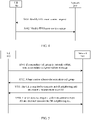
- FIG. 5 is a schematic diagram of a method for starting power consumption reduction by a UE in a 5G NSA networking mode according to an embodiment of the present invention.
- the UE may send an SCG Failure Message (secondary cell group failure message) to the network side, so as to trigger a base station to release the SCG.
- SCG Failure Message secondary cell group failure message
- the UE no longer locally measures the NR neighboring cell, and no longer responds to a measurement event B1 on the network side.
- Table 1 For meanings of specific events, refer to Table 1.
- Event A1 A measured value (RSRP (Reference Signal Received Power, Reference Signal Received Power) or RSRQ (Reference Signal Received Quality, Reference Signal Received Quality)) of a serving cell is greater than a threshold.
- Event A2 The measured value (RSRP or RSRQ) of the serving cell is less than the threshold.
- Event A3 The measured value of a neighboring cell is better than the measured value of the serving cell by a threshold.
- Event A4 The measured value of a neighboring cell is greater than the threshold.
- Event A5 The measured value of the serving cell is less than threshold 1, and the channel quality of the neighboring cell is greater than threshold 2.
- Event B 1 Channel quality of an inter-technology neighboring cell is greater than a threshold.
- Event B2 Channel quality of the serving cell is less than threshold 1, and the channel quality of the inter-technology cell is greater than a threshold 2.
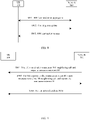
- FIG. 6 is a schematic diagram of another method for starting power consumption reduction by a UE in a 5G NSA networking mode according to an embodiment of the present invention.
- the UE may forge a measurement event A2, and send the event to the network side to report that NR signal energy is a minimum value defined in a protocol, so as to trigger the base station to release the SCG.
- the UE no longer locally measures the NR neighboring cell, and no longer responds to a measurement event B1 on the network side.
- Option 3 If the UE is currently in an RRC idle mode, the UE no longer directly measure the NR neighboring cell, and no longer responds to the measurement event B1 on the network side.
- FIG. 7A-FIG. 7E are schematic diagrams of displaying a network standard icon of a UE according to an embodiment of the present invention.
- FIG. 7A is a schematic diagram of a display state of a 5G icon according to an embodiment of the present invention. As shown in FIG. 7A , the word "5G" indicated by 710 is the 5G icon, and the display state is a state in which the UE normally displays the 5G icon.
- the display state shown in this figure and 710 is merely an example of displaying the 5G icon, and does not constitute a restriction on displaying of the 5G icon.
- the GSMA Groupe Speciale Mobile Association
- Table 2 Icon display scheme Conditions for displaying the 5G icon Impact of the method on the 5G icon
- ConfigA The UE is in a connected mode, and an NR SCG is added. The 5G icon cannot be displayed.
- ConfigB The UE is in a connected mode, and an NR SCG is added; or The 5G icon cannot be displayed.
- the UE is in the idle mode, and an NR cell is detected.
- ConfigC The UE is in the connected mode, and an NR SCG is added; or The 5G icon cannot be displayed.
- the UE is in the connected mode, and no NR SCG is added, but NR is detected; or the UE is in the idle mode, and an NR cell is detected.
- ConfigD The UE needs to support only NR, and it is not necessary to consider whether the UE detects NR or whether NR is in a connected mode.
- the 5G icon can be displayed.
- a beneficial effect of the method is as follows: Under the rule in the icon display scheme ConfigD, the method does not affect displaying of the 5G icon of the UE, and does not reduce user experience. However, under other rules, the UE cannot display the 5G icon, and display states of a network standard icon of the UE may include the states shown in the schematic diagrams shown in FIG. 7B-FIG. 7B . That is, the UE may display a "4G" icon indicated by 720; or the UE may display a "3G" icon indicated by 730; or the UE may display a "CDMA" icon indicated by 740; or as indicated by 750, the UE may not display any network standard icon.
- Method 2 for reducing UE power consumption If the APN-AMBR parameter is less than the set threshold, the EN-DC capability of the UE is directly disabled.
- FIG. 8 is a schematic diagram of another method for starting power consumption reduction by a UE in a 5G NSA networking mode according to an embodiment of the present invention.
- FIG. 8 describes content of method 2 for reducing UE power consumption, and the method mainly includes the following steps:
- AUE sends TAU (Tracking Area Update, Tracking Area Update) signaling.
- TAU Tracking Area Update
- the network side releases an RRC connection of the UE.
- the TAU signaling sent by the UE to the network side carries an IE field, and the IE field may be used to disable an EN-DC capability of the UE.
- step 802 when the UE is in an RRC connected mode, only step 802 needs to be included to implement method 2 for reducing UE power consumption; or when the UE is in an RRC idle mode, step S801, step S802, and step S803 need to be included to implement the method.
- the EN-DC capability of the UE can be completely disabled, so as to reduce power consumption of the UE.
- a prompting method may include:
- a dialog box is displayed on a screen of the UE to notify a user that because an Internet speed of the UE is limited, a function of disabling the 5G will be enabled to reduce power consumption, the 5G icon will disappear, and an icon of another network standard will be displayed; and the user can decide by himself whether to agree to the operation of reducing power consumption, and the user is provided with a confirmation or rejection option in the dialog box; or
- Method 3 for reducing UE power consumption If the APN-AMBR parameter is less than the set threshold, a millimeter wave function of the UE is directly disabled.
- the 5G NR mainly uses two frequencies: FR1 frequency band and FR2 frequency band.
- a frequency range of the FR1 frequency band is 450 MHz-6 GHz, which is also referred to as sub-6 GHz.
- a frequency range of the FR2 frequency band is 24.25 GHz-52.6 GHz, that is, a millimeter wave (mmWave). Because the millimeter wave function only exists on NR, and power consumption is high, if the UE supports the millimeter wave, the millimeter wave function can be directly disabled.
- the millimeter wave function of the UE may be completely disabled, so as to reduce power consumption of the UE.
- Method 4 for reducing UE power consumption If the APN-AMBR parameter is less than the set threshold, the UE retains an EN-DC capability, but another capability of the UE is reduced.
- the UE may continue to retain the EN-DC capability, but another capability of the UE may be reduced, so as to minimize power consumption of the UE while ensuring better user experience.
- Options for reducing another capability of the UE include the following:
- a 3GPP protocol (hereinafter referred to as "protocol") only requires that a quantity of antennas supported by the UE on an LTE operating frequency band should be 1T2R, that is, a downlink requirement is at least 2 ⁇ 2 MIMO (Multi-input Multi-output, Multi-input Multi-output).
- the UE may disable a configuration capability of the 4 ⁇ 4 MIMO, and enable only 2 ⁇ 2 MIMO, so as to reduce antenna resource overheads and reduce power consumption.
- Option 2 For the operating frequency bands of NR, the protocol only requires that a configuration capability of 4 ⁇ 4 MIMO need to be supported on the n7, n38, n41, n77, n78, and n79 frequency bands. There is no such a requirement on another operating frequency band.
- the UE may disable a configuration capability of 4 ⁇ 4 MIMO on another operating frequency band, so as to reduce antenna resource overheads and reduce power consumption.
- the UE may disable an NR-CA function to reduce power consumption.
- CA Carrier Aggregation, Carrier Aggregation
- CA Carrier Aggregation
- the CA technology is to aggregate spectrum resources of a same frequency band or different frequency bands for use by the UE, so as to increase a rate of the UE.
- the NR-CA function is disabled, so as to reduce power consumption.
- Option 4 In an NSA scenario, the UE supports a CA capability in both LTE and NR, that is, both LTE and NR support the capability of multi-CC (Component Carrier, Component Carrier).
- the capability of the UE in LTE and NR may be tailored, that is, the UE side reports only the capability of a single CC of LTE and the capability of a single CC capability of NR to the network side, so as to reduce power consumption of the UE.
- the UE may disable an HPUE (High-Power User Equipment, High-Power User Equipment) capability on all operating frequency bands, so that only the capability of 23 dBm and the capability of 26 dBm are supported on these operating frequency bands.
- HPUE High-Power User Equipment
- the UE is limited to performing transmission at a maximum output power of 23 dBm, so that power of the UE can be effectively reduced.
- the UE may disable a TDM (Time Division Multiplexing, Time Division Multiplexing) capability of uplink transmit power of LTE and NR, so that the UE supports only 20 dBm rather than 23 dBm in both LTE and NR. In this way, uplink power consumption overheads of the UE can be reduced.
- TDM Time Division Multiplexing, Time Division Multiplexing
- All the options in method 4 for reducing UE power consumption need to be implemented by reporting, by the UE, capabilities of the UE again.
- the network side may be notified of the capabilities of the UE by using a TAU or the re-attaching method, so as to effectively reduce power consumption of the UE.
- Method 5 for reducing UE power consumption If the APN-AMBR parameter is less than the set threshold, the EN-DC capability of the UE is disabled, and when the UE provides a service in the LTE mode, capabilities of the UE are further limited.
- the EN-DC capability of the UE is directly disabled, and when the UE provides a service in LTE, the capabilities of the UE are further limited, so that the UE matches a rate limit provided by a current network (for example, the rate limit is reduced to Category 4).
- a rate limit provided by a current network
- Table 3 (only low-rate categories defined by 3GPP are listed), among the categories in LTE that are defined in the protocol, a lower corresponding LTE CAT can be selected based on a rate limit, that is, a level of a transmission rate that can be supported by the UE, so as to reduce power consumption.
- Category 5 Downlink: 300 Mbps; uplink: 75 Mbps.
- Category 6 Downlink: 300 Mbps; uplink: 50 Mbps.
- Method 5 for reducing UE power consumption needs to be implemented by reporting, by the UE, capabilities of the UE again.
- the network side may be notified of the capabilities of the UE by using the TAU signaling or the re-attaching method, so as to effectively reduce power consumption of the UE.
- the UE power consumption reduction procedure in this embodiment of the present invention may be one of the foregoing methods or any combination of the foregoing methods, which is not limited in this embodiment of the present invention.
- step S204 The UE determines whether a power consumption reduction procedure has been performed. If the UE has not performed the power consumption reduction procedure, the procedure is directly ended without changing an operating state of the UE.
- step S205 is performed:
- An operating state of the UE before the UE starts the power consumption reduction procedure is a first operating state
- an operating state of the UE after the UE starts the power consumption reduction procedure is a second operating state
- that the UE starts the restoration procedure indicates a process in which the operating state of the UE changes from the second operating state to the first operating state.
- the method for the restoration procedure includes:
- Method 1 for the restoration procedure If the APN-AMBR parameter is not less than the set threshold, and the UE has performed the power consumption reduction procedure, the UE is re-enabled to locally measure a NR neighboring cell, so as to restore a standard protocol procedure.
- FIG. 9 is a schematic diagram of a method for starting a restoration procedure by a UE in a 5G NSA networking mode according to an embodiment of the present invention.
- a network side requests the UE to measure an NR neighboring cell and report a measurement event B1.
- the UE responds to the measurement event B1, and the UE locally starts measurement of the NR neighboring cell as required, and reports the event B1 to the network side.
- a UE network adds an SCG.
- the UE may be re-enabled to locally measure the NR neighboring cell, so as to restore a normal operating state of the UE.
- Method 2 for the restoration procedure If the APN-AMBR parameter is not less than the set threshold, and the UE has performed the power consumption reduction procedure, an EN-DC capability of the UE is re-enabled.
- a procedure of restoring the UE is the same as that in FIG. 8 .
- the UE sends a TAU to the network side, and the TAU carries an IE field used to re-enable the EN-DC capability of the UE.
- the EN-DC capability of the UE may be re-enabled, so as to restore a normal operating state of the UE.
- Method 3 for the restoration procedure If the APN-AMBR parameter is not less than the set threshold, and the UE has performed the power consumption reduction procedure, a millimeter wave function of the UE is re-enabled.
- the millimeter wave function of the UE may be re-enabled, so as to restore a normal operating state of the UE.
- Method 4 for the restoration procedure If the APN-AMBR parameter is not less than the set threshold, and the UE has performed the power consumption reduction procedure, capabilities of the UE are restored. To report the capabilities of the UE again, the UE may notify the network side of new capabilities of the UE by sending a TAU to the network side or by using the re-attaching method, so as to restore an initial operating state of the UE.
- the capabilities of the UE may be restored, so as to restore a normal operating state of the UE.
- Method 5 for the restoration procedure If the APN-AMBR parameter is not less than the set threshold, and the UE has performed the power consumption reduction procedure, to report the capabilities of the UE again, the UE may notify the network side of new capabilities of the UE by sending a TAU to the network side or by using the re-attaching method, so as to restore an initial operating state of the UE.
- the capabilities of the UE may be restored, so as to restore a normal operating state of the UE.
- the restoration procedure in the 5G NSA networking mode should be in a one-to-one correspondence with the power consumption reduction procedure.
- a beneficial effect of Embodiment 1 of the present invention is as follows: After it is determined whether the APN-AMBR parameter obtained by the UE is less than the set threshold, and it is detected that the Internet speed of the UE is limited, measures that may be taken by the UE to reduce power consumption include: The UE actively releases the SCG, disables the EN-DC capability, disables the millimeter wave function of the UE, and reduces another capability of the UE (a specific method includes disabling a CA, disabling antenna diversity, and reducing an LTECategory). Therefore, power consumption of the UE may be significantly reduced, and the standby time of the user equipment is increased, and user experience is improved.
- the Session-AMBR parameter obtained by the UE will not be less than the set threshold, and a restoration procedure is started to restore the normal operating state of the UE network
- Embodiment 2 of the present invention provides a method for reducing UE power consumption in a 5G SA networking mode.
- FIG. 10 is a schematic flowchart of reducing UE power consumption in a 5G SA networking mode according to an embodiment of the present invention.
- a method for reducing UE power consumption in a 5G SA networking mode includes:
- the UE obtains a Session-AMBR (per Session-Aggregate Maximum Bit Rate, per Session-Aggregate Maximum Bit Rate) parameter.
- Session-AMBR per Session-Aggregate Maximum Bit Rate, per Session-Aggregate Maximum Bit Rate
- Session-AMBR is an upper limit of a sum of bit rates of all non-GBR quality of service (QoS) flows of a protocol data unit (PDU) session, and the Session-AMBR may also be used to reflect an Internet speed allocated by a network service provider to the UE.
- QoS quality of service
- the UE may receive the Session-AMBR on a network side.
- FIG. 11 is a schematic diagram of a 5G PDU session establishment process in a 5G SA networking mode according to an embodiment of the present invention. A difference from PDN session establishment in LTE, a registration procedure and a PDU session establishment procedure are separate in 5G.
- a method shown in FIG. 11 includes: S1101. A UE sends a registration request to a network side;
- the network side sends registration accept signaling to the UE.
- the UE sends PDU session setup request signaling to the network side.
- the network side sends PDU session setup accept signaling to the UE, where the PDU session setup accept signaling carries a Session-AMBR parameter.
- the Session-AMBR parameter received by the UE may be used to determine whether an Internet speed of the UE limited.
- FIG. 12 is a schematic diagram of a 5G PDU session modification process in a 5G SA networking mode according to an embodiment of the present invention.
- the PDU session modification process may be initiated by a UE.
- a method shown in FIG. 12 includes: S1201: The UE sends a PDU session modification request to the network side; step S1202: The network side sends a PDU session modification command to the UE; and S1203: The UE sends a PDU session modification complete message to the network side. The entire PDU session modification process is completed.
- the PDU session modification command sent by the network side to the UE carries a Session-AMBR parameter.
- the Session-AMBR parameter received by the UE may be used to determine whether an Internet speed of the UE limited.
- FIG. 13 is a schematic diagram of another 5G PDU session modification process in a 5G SA networking mode according to an embodiment of the present invention.
- the PDU session modification process may alternatively be initiated by a network side.
- a method shown in FIG. 13 includes: step S1301: The network side sends a PDU session modification command to a UE; and step S1302: The UE sends a PDU session modification complete message to the network side.
- the PDU session modification command sent by the network side to the UE carries a Session-AMBR parameter.
- the Session-AMBR parameter received by the UE may be used to determine whether an Internet speed of the UE limited.
- the UE determines whether the Session-AMBR parameter is less than a set threshold.
- the UE determines whether a value of the Session-AMBR that is obtained by the UE is less than the set threshold, where the set threshold is a value used to indicate whether an Internet speed of the UE is limited.
- the set threshold is a value used to indicate whether an Internet speed of the UE is limited.
- the Internet speed of a 5G package is 1 Gbps-4.5 Gbps
- the set threshold may be set to 1 Gbps.
- the threshold may be set based on an actual scenario of the user. The value of the threshold is not limited in the present invention.
- setting the set threshold Before the step of determining whether the value of the Session-AMBR that is obtained by the UE is less than the set threshold, setting the set threshold is further included.
- Methods for setting the set threshold include:
- Optional threshold setting method 1 The UE uses a first value entered by the user as a set threshold: For example, a function menu bar is added to a system of the UE, so that the user can independently select a threshold in the menu bar. For example, the user may select a threshold in the UE mobile network setting function menu, or the user may enter a threshold in the UE mobile network setting function dialog box, or the user may set a threshold in a UE voice assistant by using a voice input.
- Optional threshold setting method 2 The UE sets a value of a network configuration parameter of the UE that is obtained when the Internet speed of the UE is not limited to the set threshold: For example, when the UE registers with a 5G network for the first time, the UE may obtain the Session-AMBR parameter in the attach process, and the UE may set the Session-AMBR parameter to the threshold.
- the Session-AMBR parameter obtained by the UE includes a value of an uplink speed and a value of a downlink speed.
- a method for determining, by the UE, whether the Session-AMBR is less than the set threshold includes:
- the UE determines whether the value of the uplink speed in the Session-AMBR parameter that is obtained by the UE is less than a set first threshold, for example, the uplink speed in the Session-AMBR parameter is less than 0.5 Gbps.
- the UE determines whether the value of the downlink speed in the Session-AMBR parameter that is obtained by the UE is less than a set second threshold, for example, the downlink speed in the Session-AMBR parameter is less than 1 Gbps.
- the UE determines whether the value of the uplink speed in the Session-AMBR parameter that is obtained by the UE is less than a set third threshold, and the UE determines whether the value of the downlink speed in the Session-AMBR parameter that is obtained by the UE is less than a set fourth threshold, for example, the uplink speed in the Session-AMBR parameter is less than 0.5 Gbps, and the downlink speed in the Session-AMBR parameter is less than 1 Gbps.
- step 1003 The UE starts a power consumption reduction procedure.
- the methods for reducing UE power consumption include: Method 1 for reducing UE power consumption: If the Session-AMBR parameter is less than the set threshold, a millimeter wave function of the UE is directly disabled.
- the 5G NR mainly uses two frequencies: FR1 frequency band and FR2 frequency band.
- a frequency range of the FR1 frequency band is 450 MHz-6 GHz, which is also referred to as sub-6 GHz.
- a frequency range of the FR2 frequency band is 24.25 GHz-52.6 GHz, that is, a millimeter wave (mmWave). Because the millimeter wave function only exists on NR, and power consumption is high, if the UE supports the millimeter wave, the millimeter wave function can be directly disabled.
- the millimeter wave function of the UE may be completely disabled, so as to reduce power consumption of the UE.
- Method 2 for reducing UE power consumption If the Session-AMBR parameter is less than the set threshold, the UE continues to camp on NR, but another capability of the UE is reduced.
- NR still has some other advantages, such as a relatively low delay and a large user capacity.
- the UE may continue to camp on NR, but another capability of the UE may be reduced, so as to minimize power consumption while ensuring a relatively low flow rate experience.
- the specific option of reducing another capability of the UE includes:
- the UE may notify the network side of the capabilities of the UE by sending a TAU to the network side or using the re-registration method, so as to effectively reduce power consumption of the UE.
- Method 3 for reducing UE power consumption If the Session-AMBR parameter is less than the set threshold, the UE uses fewer resources.
- FIG. 14 is a schematic diagram of another method for starting power consumption reduction by a UE in a 5G SA networking mode according to an embodiment of the present invention.
- the UE may alternatively notify, by using a UE assistance message, a network side that fewer CCs are used by the UE, fewer MIMO layers are used by the UE, or a lower aggregate bandwidth is used by the UE.
- the foregoing method for reducing UE power consumption may enable the UE to use fewer resources, thereby reducing power consumption of the UE.
- step S1004 is performed: The UE determines whether the UE has performed the power consumption reduction procedure. If the UE has not performed the power consumption reduction procedure, the procedure is directly ended without changing an operating state of the UE.
- step S1005 is performed:
- An operating state of the UE before the UE starts the power consumption reduction procedure is a first operating state
- an operating state of the UE after the UE starts the power consumption reduction procedure is a second operating state
- that the UE starts the restoration procedure indicates a process in which the operating state of the UE changes from the second operating state to the first operating state.
- the method for the restoration procedure includes:
- the UE may notify the network side by using the UE assistance message, so as to indicate the UE to use a normal CC, the UE to use a normal MIMO Layer, or the UE to use a normal aggregate bandwidth.
- the restoration procedure in the 5G SA networking mode should be in a one-to-one correspondence with the power consumption reduction procedure.
- a beneficial effect of Embodiment 2 of the present invention is as follows: After it is determined whether the Session-AMBR parameter obtained by the UE is less than the set threshold, and it is detected that the Internet speed of the UE is limited, measures that may be taken by the UE to reduce power consumption include disabling the millimeter wave function of the UE, and reducing another capability of the UE (a specific method includes disabling a CA, disabling antenna diversity, and reducing an LTECategory). Therefore, power consumption of the UE may be significantly reduced, and the standby time of the user equipment is increased, and user experience is improved.
- the operator resumes the service of the user, the Session-AMBR parameter obtained by the UE is not less than the set threshold, and a restoration procedure is started to restore the normal operating state of the UE network.
- Embodiment 3 of the present invention provides an apparatus for reducing UE power consumption.
- FIG. 15 is a schematic structural diagram of an apparatus for reducing UE power consumption according to an embodiment of the present invention.
- the apparatus for reducing UE power consumption includes: an obtaining module 300, a determining module 400, a power consumption reduction procedure execution module 500, and a restoration procedure execution module 600.
- the obtaining module 300 is configured to obtain an APN-AMBR parameter, a Session-AMBR parameter, and a UE power consumption reduction procedure record.
- FIG. 16 is a schematic structural diagram of an obtaining module in an apparatus for reducing UE power consumption according to an embodiment of the present invention.
- the obtaining module 300 includes: an AMBR parameter obtaining submodule 310 and a UE power consumption reduction procedure record obtaining submodule 320.
- the AMBR parameter obtaining submodule 310 is configured to obtain an APN-AMBR parameter and a Session-AMBR parameter that are carried in signaling used in a session process between a UE and a network side when the UE is in a 5G NSA or SA networking mode.
- a UE obtains an APN-AMBR parameter; and step S1001 in the method in Embodiment 2 of the present invention: The UE obtains a Session-AMBR parameter. Details are not described herein again.
- the UE power consumption reduction procedure record obtaining submodule 320 is configured to obtain a UE power consumption reduction procedure record, that is, if the UE has performed the power consumption reduction method in this embodiment of the present invention, the UE power consumption reduction procedure record obtaining submodule 320 may obtain a record. For example, if the UE has performed the power consumption reduction procedure, a parameter X set therein is recorded as 1; otherwise, the parameter X is recorded as 0.
- the determining module 400 is configured to determine whether the APN-AMBR parameter, the Session-AMBR parameter, and the UE power consumption reduction procedure record that are obtained by the obtaining module 300 meet a condition for executing the power consumption reduction procedure. If the APN-AMBR parameter, the Session-AMBR parameter, and the UE power consumption reduction procedure record meet the condition for executing the power consumption reduction procedure, the next power consumption reduction procedure will be executed.
- FIG. 17 is a schematic structural diagram of a determining module in an apparatus for reducing UE power consumption according to an embodiment of the present invention.
- the determining module 400 includes: an AMBR parameter and threshold determining submodule 410, and a submodule 420 for determining whether the UE has performed a power consumption reduction procedure.
- the AMBR parameter and threshold determining submodule 410 is configured to determine whether the APN-AMBR parameter and the Session-AMBR parameter that are obtained by the AMBR parameter obtaining submodule 310 are less than set thresholds, so as to determine whether an Internet speed of the UE is limited, and determine whether to further take a power consumption reduction measure.
- step S202 determines whether the APN-AMBR parameter is less than a set threshold
- step S1002 in the method in Embodiment 2 of the present invention: The UE determines whether the Session-AMBR parameter is less than a set threshold. Details are not described herein again.
- the submodule 420 for determining whether the UE has performed a power consumption reduction procedure is configured to determine whether the UE has performed the power consumption reduction procedure.
- a specific method may include: If the parameter X obtained by the UE power consumption reduction procedure record obtaining submodule 320 is greater than 0, it may be determined that the UE has performed the power consumption reduction procedure; otherwise, it may be determined that the UE has not performed the power consumption reduction procedure.
- the power consumption reduction procedure execution module 500 is configured to execute the UE power consumption reduction procedure.
- the UE starts a power consumption reduction procedure; and step S1003 in Embodiment 2 of the present invention: The UE starts a power consumption reduction procedure. Details are not described herein again.
- the restoration procedure execution module 600 is configured to execute a procedure in which the UE restores a normal operating state.
- a specific method for the restoration procedure refer to the methods and steps described in step S205 in Embodiment 1 of the present invention: The UE starts a restoration procedure; and step S1005 in Embodiment 2: The UE starts a restoration procedure. Details are not described herein again.
- the obtaining module 300 performs S201 to obtain an APN-AMBR parameter; and obtains a UE power consumption reduction procedure record parameter X.
- the determining module 400 is configured to perform S202 to determine whether the APN-AMBR parameter is less than a set threshold; and determines whether the UE power consumption reduction procedure record parameter X is greater than 0.
- the power consumption reduction procedure execution module 500 is configured to perform step S203 to start a power consumption reduction procedure.
- the restoration procedure execution module is configured to perform step S205 to start a restoration procedure.
- the obtaining module 300 performs S1001 to obtain a Session-AMBR parameter; and obtains a UE power consumption reduction procedure record parameter X.
- the determining module 400 is configured to perform S1002 to determine whether the Session-AMBR parameter is less than a set threshold; and determines whether the UE power consumption reduction procedure record parameter X is greater than 0.
- the power consumption reduction procedure execution module 500 is configured to perform step S1003 to start a power consumption reduction procedure.
- the restoration procedure execution module is configured to perform step S1005 to start a restoration procedure.
- Embodiment 4 of the present invention provides a UE, where the UE includes a processor and a memory.
- FIG. 18 is a schematic structural diagram of a UE apparatus according to an embodiment of the present invention.
- the structure shown in this embodiment of the present invention does not constitute a specific limitation on a UE.
- the UE may include more or fewer components than those shown in the figure, or some components are combined, or some components are split, or a different component arrangement is used.
- the components shown in the figure may be implemented by hardware, software, or a combination of software and hardware.
- the processor 810 may include one or more processing units.
- the processor 810 may include an application processor (application processor, AP), a modem processor, a graphics processing unit (graphics processing unit, GPU), an image signal processor (image signal processor, ISP), a controller, a memory, a video codec, a digital signal processor (digital signal processor, DSP), a baseband processor, and/or a neural-network processing unit (neural-network processing unit, NPU).
- Different processing units may be independent devices, or may be integrated into one or more processors.
- the memory 820 may be configured to store computer executable program code, where the executable program code includes an instruction.
- the processor 810 runs an instruction stored in the memory 820, so as to perform all the methods and steps for reducing UE power consumption described in Embodiment 1 of the present invention and Embodiment 2 of the present invention.
- the memory 820 may include a program storage area and a data storage area.
- the program storage area may store an operating system, an application program required by at least one function (for example, a sound play function or an image play function), or the like.
- the data storage area may store data (such as audio data or a phone book) created during use of the UE.
- the memory 820 may include a high-speed random access memory, and may also include a non-volatile memory, such as at least one magnetic disk storage device, a flash memory device, or a universal flash storage (universal flash storage, UFS).
- All or some of the foregoing embodiments may be implemented by software, hardware, or a combination thereof.
- the embodiments may be implemented completely or partially in a form of a computer program product.
- the computer program product includes one or more computer instructions.
- the computer may be a general-purpose computer, a special-purpose computer, a computer network, or another programmable apparatus.
- the computer instructions may be stored in a computer readable storage medium or may be transmitted from a computer readable storage medium to another computer readable storage medium.
- the computer instructions may be transmitted from a website, computer, server, or data center to another website, computer, server, or data center in a wired (for example, a coaxial cable, an optical fiber, or a digital subscriber line (DSL)) or wireless (for example, infrared, radio, or microwave) manner.
- the storage medium may be any usable medium accessible by a computer, or a data storage device, such as a server or a data center, integrating one or more usable media.
- the usable medium may be a magnetic medium (for example, a floppy disk, a hard disk, or a magnetic tape), an optical medium (for example, a DVD), a semiconductor medium (for example, a solid state disk (SSD)), or the like.
Landscapes
- Engineering & Computer Science (AREA)
- Computer Networks & Wireless Communication (AREA)
- Signal Processing (AREA)
- Mobile Radio Communication Systems (AREA)
Abstract
Description
- This application claims priority to
Chinese Patent Application No. 201910951471.3, filed with China National Intellectual Property Administration on October 8, 2019 - The present invention relates to the field of wireless communications technologies, and in particular, to a method and an apparatus for reducing UE (User Equipment, User Equipment) power consumption.
- Currently, networking modes in the 5G (5th generation mobile networks or 5th generation wireless systems, 5th generation mobile communications technology) technology of terminal devices may be roughly divided into two types: NSA (Non-Standalone, Non-Standalone) and SA (Standalone, Standalone). An NSA technology means that both LTE (Long Term Evolution, Long Term Evolution) and NR (New Radio, New Radio) are online. In this case, a UE needs to keep two modes online at the same time, and two sets of radio frequency channels need to be kept, and consequently, power consumption is relatively high. In the SA technology, supported specifications are higher than those in 4G (The fourth generation of mobile phone mobile communication technology standards, The fourth generation of mobile phone mobile communication technology standards), that is, a higher rate, a higher bandwidth, and more radio frequency antennas are supported. Therefore, power consumption is also higher than that in 4G.
- When the 5G era comes, an operator provides packages with larger traffic, but usually does not provide unlimited high-speed data packages. A common practice is as follows: When traffic in a user's package is less than x G Bytes, use of 5G is not limited, and the rate is not limited; and when the traffic used by the user exceeds x G Bytes, an Internet speed of the user is limited, and the user cannot enjoy high-speed experience of 5G. In the prior art, after a network package of the UE is used up, an operator limits an Internet speed of the UE, but does not resolve the following scenario problem after the Internet speed is limited: The UE is still attached to a network standard with high power consumption, but enjoys a relatively low Internet speed. In addition, in the prior art, there is a measure for falling back from 4G to 3G (3rd-Generation of Wireless Mobile Telecommunications Technology, 3rd-Generation of Wireless Mobile Telecommunications Technology) (or another network standard such as 2G (Second Generation of Wireless Mobile Telecommunications Technology, Second Generation of Wireless Mobile Telecommunications Technology)) based on remaining traffic, power, and another operating state of the UE. However, in the prior art, particularity of the 5G technology is not resolved; in particular, in the NSA and SA networking modes, no measure for reducing power consumption is proposed. In addition, the prior art does not consider that in a process of falling back from 4G to 3G, corresponding icons change, and a network standard icon of the UE changes from 4G to 3G, thereby reducing sensory experience of the user.
- Based on this background, the present invention provides a method and an apparatus for reducing UE power consumption, so as to resolve a problem that after the Internet speed of a UE that supports 5G is limited, the UE cannot enjoy high-speed Internet access experience of 5G, but needs to endure high power consumption.
- The present invention provides a method and an apparatus for reducing UE power consumption, so as to effectively reduce power consumption of a UE and prolong a standby time of the UE while determining whether an Internet speed of the UE is limited in a 5G mode, thereby improving user experience. Specific content of the present invention is as follows:
- According to a first aspect, the present invention provides a method for reducing user equipment (UE) power consumption, where specific content of the method includes: A UE obtains a network configuration parameter of the UE, where to distinguish from an existing technical solution, the UE is an electronic device that supports a 5th generation mobile communications technology non-standalone (5G NSA) networking mode and/or a 5th generation mobile communications technology standalone (5G SA) networking mode; after the UE obtains the network configuration parameter of the UE, the UE determines a value of the network configuration parameter of the UE and a set threshold, and the UE determines whether the network configuration parameter of the UE is less than the set threshold; and if the network configuration parameter of the UE is less than the set threshold, it indicates that an Internet speed of the UE is limited, and the UE starts a power consumption reduction procedure. In this way, unnecessary power consumption of the UE can be effectively reduced, thereby prolonging a standby time of the UE and improving user experience.
- In a possible implementation of the first aspect of the present invention, when the UE is in the 5G NSA networking mode, the network configuration parameter of the UE includes an access point name-aggregate maximum bit rate (APN-AMBR) parameter, where the APN-AMBR is an upper limit of a sum of bit rates of all non-guaranteed bit rate (non-GBR) bearers of an access point name (APN), the APN-AMBR, which is specific to an APN, is used as a subscription parameter of each APN to limit a cumulative bit rate of all public data network (PDN) connections in a same APN, and a value of the APN-AMBR parameter may indicate an Internet speed allocated by a network operator to the UE; or when the UE is in the 5G SA networking mode, the network configuration parameter of the UE includes an aggregate maximum bit rate parameter of each session (Session-AMBR), where the Session-AMBR is an upper limit of a sum of bit rates of all non-GBR quality of service (QoS) flows of a protocol data unit (PDU) session, and a value of the Session-AMBR parameter may represent an Internet speed allocated by a network operator to the UE. In this way, the network configuration parameter of the UE can be used to determine whether the Internet speed of the UE is limited, so that the UE determines whether to perform a power consumption reduction procedure.
- In a possible implementation of the first aspect of the present invention, a method for determining, by the UE, whether the network configuration parameter of the UE is less than the set threshold includes: when the UE is in the 5G NSA networking mode, the UE determines whether an uplink speed in the APN-AMBR parameter is less than a set first threshold, and/or the UE determines whether a downlink speed in the APN-AMBR parameter is less than a set second threshold; or when the UE is in the 5G SA networking mode, the UE determines whether an uplink speed in the Session-AMBR parameter is less than a set third threshold, and/or the UE determines whether a downlink speed in the Session-AMBR parameter is less than a set fourth threshold. In this way, the UE can determine whether the Internet speed of the UE is limited, so that the UE determines whether to perform the power consumption reduction procedure.
- In a possible implementation of the first aspect of the present invention, before the UE determines whether the network configuration parameter of the UE is less than the set threshold, setting the set threshold by the UE is further included, and a method for setting the set threshold by the UE includes: The UE uses a first value entered by a user as the set threshold; or the UE sets a value of the network configuration parameter of the UE that is obtained when the Internet speed of the UE is not limited as the set threshold. In this way, the UE may determine, based on the set threshold, whether the Internet speed of the UE is limited, so that the UE determines whether to perform the power consumption reduction procedure. In this way, the set threshold can be used as a metric to determine whether the Internet speed of the UE is limited, so that the UE determines whether to perform the power consumption reduction procedure.
- In a possible implementation of the first aspect of the present invention, after the UE starts the power consumption reduction procedure, the method further includes: The UE determines whether the UE has performed a power consumption reduction procedure; the UE determines whether the network configuration parameter of the UE is less than the set threshold; and if the UE has performed the power consumption reduction procedure and the network configuration parameter of the UE is not less than the set threshold, the UE starts a restoration procedure, where an operating state of the UE before the UE starts the power consumption reduction procedure is a first operating state, an operating state of the UE after the UE starts the power consumption reduction procedure is a second operating state, and that the UE starts the restoration procedure indicates a process in which the operating state of the UE changes from the second operating state to the first operating state. In this way, the UE may start the restoration procedure based on an actual situation, so as to achieve an optimal operating state.
- In a possible implementation of the first aspect of the present invention, when the UE is in the 5G NSA networking mode, a method for starting the power consumption reduction procedure by the UE includes: disabling an LTE and NR dual-connectivity EN-DC capability of the UE. In this way, the UE can effectively reduce power consumption and prolong the standby time, thereby improving user experience.
- In a possible implementation of the first aspect of the present invention, when the UE is in the 5G NSA networking mode, the method for starting the power consumption reduction procedure by the UE includes: disabling a millimeter wave function of the UE. In this way, the UE can effectively reduce power consumption and prolong the standby time, thereby improving user experience.
- In a possible implementation of the first aspect of the present invention, when the UE is in the 5G NSA networking mode, the method for starting the power consumption reduction procedure by the UE includes: skipping disabling the Long Term Evolution (LTE) and 5G new radio (NR) dual-connectivity EN-DC capability of the UE, skipping measuring a new radio (NR) neighboring cell, and skipping responding to an action of adding a secondary cell group (SCG) on a network side. In this way, the UE can effectively reduce power consumption and prolong the standby time, thereby improving user experience.
- In a possible implementation of the first aspect of the present invention, when the UE is in the 5G NSA networking mode, the method for starting the power consumption reduction procedure by the UE includes: The UE retains the LTE and NR dual-connectivity EN-DC capability, so as to reduce antenna resource configuration of the UE. In this way, the UE can effectively reduce power consumption and prolong the standby time, thereby improving user experience.
- In a possible implementation of the first aspect of the present invention, when the UE is in the 5G NSA networking mode, the method for starting the power consumption reduction procedure by the UE includes: disabling a new radio-carrier aggregation (NR-CA) function of the UE. In this way, the UE can effectively reduce power consumption and prolong the standby time, thereby improving user experience.
- In a possible implementation of the first aspect of the present invention, when the UE is in the 5G NSA networking mode, the method for starting the power consumption reduction procedure by the UE includes: cutting a carrier component (CC) capability of the UE in LTE and NR. In this way, the UE can effectively reduce power consumption and prolong the standby time, thereby improving user experience.
- In a possible implementation of the first aspect of the present invention, when the UE is in the 5G NSA networking mode, the method for starting the power consumption reduction procedure by the UE includes: The UE disables the LTE and NR dual-connectivity EN-DC capability, and adjusts an LTE access capability category CAT of the UE based on an Internet speed limitation of the UE. In this way, the UE can effectively reduce power consumption and prolong the standby time, thereby improving user experience.
- In a possible implementation of the first aspect of the present invention, when the UE is in the 5G SA networking mode, the method for starting the power consumption reduction procedure by the UE includes: disabling a millimeter wave function of the UE. In this way, the UE can effectively reduce power consumption and prolong the standby time, thereby improving user experience.
- In a possible implementation of the first aspect of the present invention, when the UE is in the 5G SA networking mode, the method for starting the power consumption reduction procedure by the UE includes: The UE continues to camp on NR, so as to reduce the antenna resource configuration of the UE. In this way, the UE can effectively reduce power consumption and prolong the standby time, thereby improving user experience.
- In a possible implementation of the first aspect of the present invention, when the UE is in the 5G SA networking mode, the method for starting the power consumption reduction procedure by the UE includes: The UE continues to camp on NR; and disabling the new radio-carrier aggregation (NR-CA) function of the UE. In this way, the UE can effectively reduce power consumption and prolong the standby time, thereby improving user experience.
- In a possible implementation of the first aspect of the present invention, when the UE is in the 5G SA networking mode, the method for starting the power consumption reduction procedure by the UE includes: The UE uses fewer carrier components (CCs); or the UE uses a lower aggregate bandwidth. In this way, the UE can effectively reduce power consumption and prolong the standby time, thereby improving user experience.
- According to a second aspect, the present invention provides an apparatus for reducing user equipment (UE) power consumption, where the apparatus includes an obtaining
module 300, a determiningmodule 400, a power consumption reductionprocedure execution module 500, and a restorationprocedure execution module 600. The obtainingmodule 300 is configured to obtain a network configuration parameter of a UE and a power consumption reduction procedure record of the UE, and the UE is an electronic device that supports a 5G NSA networking mode and/or a 5G SA networking mode. The determiningmodule 400 is configured to determine whether the network configuration parameter of the UE is less than a set threshold, and determine whether the UE has performed the power consumption reduction procedure, where being less than the set threshold is used to indicate that an Internet speed of the UE is limited. The power consumption reductionprocedure execution module 500 is configured to: when the determiningmodule 400 determines that the network configuration parameter of the UE is less than the set threshold, execute the power consumption reduction procedure of the UE. The restorationprocedure execution module 600 is configured to: when the determiningmodule 400 determines that the UE has performed the power consumption reduction procedure, and when the determiningmodule 400 determines that the network configuration parameter of the UE is not less than the set threshold, execute a UE restoration procedure. In this way, the apparatus for reducing user equipment (UE) power consumption can determine, based on the network configuration parameter of the UE that is obtained by the obtainingmodule 300, whether the Internet speed of the UE is limited, to determine whether the power consumption reductionprocedure execution module 500 performs the power consumption reduction procedure of the UE, so as to effectively reduce power consumption of the UE, prolong a standby time of the UE, and improve user experience. - In a possible implementation of the second aspect of the present invention, when the UE is in the 5G NSA networking mode, the network configuration parameter of the UE includes an access point name-aggregate maximum bit rate (APN-AMBR) parameter, where the APN-AMBR is an upper limit of a sum of bit rates of all non-guaranteed bit rate (non-GBR) bearers of an access point name (APN), the APN-AMBR, which is specific to an APN, is used as a subscription parameter of each APN to limit a cumulative bit rate of all PDN connections in a same APN, and a value of the APN-AMBR parameter may indicate an Internet speed allocated by a network operator to the UE; or when the UE is in the 5G SA networking mode, the network configuration parameter of the UE includes an aggregate maximum bit rate parameter of each session (Session-AMBR), where the Session-AMBR defines an upper limit of a sum of bit rates of all non-GBR quality of service (QoS) flows of a PDU session, and a value of the Session-AMBR parameter may represent an Internet speed allocated by a network operator to the UE. In this way, the network configuration parameter of the UE can be used to determine whether the Internet speed of the UE is limited, so that the apparatus for reducing user equipment (UE) power consumption determines whether to perform the power consumption reduction procedure.
- In a possible implementation of the second aspect of the present invention, the method for determining, by the determining
module 400, whether the network configuration parameter of the UE is less than the set threshold includes: when the UE is in the 5G NSA networking mode, the determiningmodule 400 determines whether an uplink speed in the APN-AMBR parameter is less than a set first threshold, and/or the determiningmodule 400 determines whether a downlink speed in the APN-AMBR parameter is less than a set second threshold; or when the UE is in the 5G SA networking mode, the determiningmodule 400 determines whether an uplink speed in the Session-AMBR parameter is less than a set third threshold, and/or the determiningmodule 400 determines whether a downlink speed in the Session-AMBR parameter is less than a set fourth threshold. In this way, the apparatus for reducing user equipment (UE) power consumption can determine whether the Internet speed of the UE is limited, so as to determine whether to perform the power consumption reduction procedure. - In a possible implementation of the second aspect of the present invention, the method for executing the UE power consumption reduction procedure by the power consumption reduction
procedure execution module 500 includes the methods and steps for performing UE power consumption reduction according to the possible implementations of the first aspect of the present invention. In this way, the apparatus for reducing user equipment (UE) power consumption can effectively reduce the power consumption of the UE and prolong the standby time of the UE, thereby improving user experience. - In a possible implementation of the second aspect of the present invention, before the determining
module 400 determines whether the network configuration parameter of the UE is less than the set threshold, setting the threshold is further included, and a method for setting the set threshold includes: The obtainingmodule 300 uses a first value entered by the user as the set threshold; or the obtainingmodule 300 sets a value of the network configuration parameter of the UE that is obtained when the Internet speed of the UE is not limited as the set threshold. In this way, the set threshold can be used as a metric to determine whether the Internet speed of the UE is limited, so that the apparatus for reducing user equipment (UE) power consumption determines whether to perform the power consumption reduction procedure. - In a possible implementation of the second aspect of the present invention, a method for executing the UE restoration procedure by the restoration
procedure execution module 600 includes: an operating state of the UE before the power consumption reductionprocedure execution module 500 executes the UE power consumption reduction procedure is a first operating state, an operating state of the UE after the power consumption reductionprocedure execution module 500 executes the UE power consumption reduction procedure is a second operating state, and that the restorationprocedure execution module 600 executes the UE restoration procedure indicates a process in which the UE changes from the second operating state to the first operating state. In this way, the apparatus for reducing user equipment (UE) power consumption may start the UE restoration procedure based on an actual situation, so that the UE achieves an optimal operating state. - According to a third aspect, the present invention provides an apparatus for reducing user equipment (UE) power consumption, where the apparatus for reducing user equipment (UE) power consumption includes: a memory, a processor, and a computer program that is stored in the memory and that can be run on the processor, and when the processor executes the computer program, the UE is enabled to implement the method according to any one of the first aspect or the possible implementations of the first aspect of the present invention. In this way, unnecessary power consumption of the UE can be effectively reduced, thereby prolonging a standby time of the UE and improving user experience.
- According to a fourth aspect, the present invention provides user equipment, where the user equipment includes a memory, a processor, and a computer program that is stored in the memory and can be run on the processor, and when the processor executes the computer program, the UE is enabled to implement the method according to any one of the first aspect or the possible implementations of the first aspect of the present invention. In this way, unnecessary power consumption of the UE can be effectively reduced, thereby prolonging a standby time of the UE and improving user experience.
- According to a fifth aspect, the present invention provides a computer program, where when being run on a processor, the computer program is used to execute program code of the method according to any one of the first aspect or the possible implementations of the first aspect of the present invention. In this way, unnecessary power consumption of the UE can be effectively reduced, thereby prolonging a standby time of the UE and improving user experience.
- According to a sixth aspect, the present invention provides a computer storage medium, where the computer storage medium includes a computer instruction, and when the computer instruction is run on an electronic device, the electronic device is enabled to execute program code of the method according to any one of the first aspect or the possible implementations of the first aspect of the present invention. In this way, unnecessary power consumption of the UE can be effectively reduced, thereby prolonging a standby time of the UE and improving user experience.
- To describe technical solutions in embodiments of the present invention more clearly, the following briefly describes accompanying drawings required for describing the embodiments.
-
FIG. 1 is a schematic diagram of 5G NSA and SA networking modes according to an embodiment of the present invention; -
FIG. 2 is a schematic flowchart of reducing UE power consumption in a 5G NSA networking mode according to an embodiment of the present invention; -
FIG. 3 is a schematic flowchart of a 4G PDN session establishment process in a 5G NSA networking mode according to an embodiment of the present invention; -
FIG. 4 is a schematic diagram of a 4G PDN session modification process in a 5G NSA networking mode according to an embodiment of the present invention; -
FIG. 5 is a schematic diagram of a method for starting power consumption reduction by a UE in a 5G NSA networking mode according to an embodiment of the present invention; -
FIG. 6 is a schematic diagram of another method for starting power consumption reduction by a UE in a 5G NSA networking mode according to an embodiment of the present invention; -
FIG. 7A-FIG. 7E are schematic diagrams of displaying a network standard icon of a UE according to an embodiment of the present invention; -
FIG. 8 is a schematic diagram of another method for starting power consumption reduction by a UE in a 5G NSA networking mode according to an embodiment of the present invention; -
FIG. 9 is a schematic diagram of a method for starting a restoration procedure by a UE in a 5G NSA networking mode according to an embodiment of the present invention; -
FIG. 10 is a schematic flowchart of reducing UE power consumption in a 5G SA networking mode according to an embodiment of the present invention; -
FIG. 11 is a schematic diagram of a 5G PDU session establishment process in a 5G SA networking mode according to an embodiment of the present invention; -
FIG. 12 is a schematic diagram of a 5G PDU session modification process in a 5G SA networking mode according to an embodiment of the present invention; -
FIG. 13 is a schematic diagram of another 5G PDU session modification process in a 5G SA networking mode according to an embodiment of the present invention; -
FIG. 14 is a schematic diagram of another method for starting power consumption reduction by a UE in a 5G SA networking mode according to an embodiment of the present invention; -
FIG. 15 is a schematic structural diagram of an apparatus for reducing UE power consumption according to an embodiment of the present invention; -
FIG. 16 is a schematic structural diagram of an obtaining module in an apparatus for reducing UE power consumption according to an embodiment of the present invention; -
FIG. 17 is a schematic structural diagram of a determining module in an apparatus for reducing UE power consumption according to an embodiment of the present invention; and -
FIG. 18 is a schematic structural diagram of a UE apparatus according to an embodiment of the present invention. - The following describes technical solutions in the embodiments of the present invention clearly with reference to the accompanying drawings in the embodiments of the present invention.
- A problem to be resolved in the present invention is to provide a method and an apparatus for reducing UE power consumption, so as to effectively reduce power consumption of a UE, prolong a standby time of the UE, and improve user experience.
- In an implementation of the present invention, the UE refers to an electronic device that has a data calculation and processing function and a wireless communication function. The UE includes but is not limited to: a smartphone (such as an Android mobile phone, an iOS (iPhone Operating System) mobile phone, or a mobile phone running another operating system), a tablet computer, a palmtop computer, a portable multimedia player, an electronic photo frame, an electronic game console, a notebook computer, a mobile internet device (Mobile Internet Devices), a wearable device (such as a smartwatch, a smart band, smart glasses, or a head mounted device (HMD)), a smart home device, an Internet of Things device, a smart car, or the like.
- The foregoing lists some specific types of UEs. However, persons skilled in the art may be aware that the embodiments of the present invention are not limited to the foregoing listed types, but may be further applied to any other types of electronic devices and any other types of operating systems.
- In descriptions in the embodiments of the present invention, "/" means "or" unless otherwise specified. For example, "A/B" may represent A or B. In this specification, "and/or" describes only an association relationship for describing associated objects and represents that three relationships may exist. For example, "A and/or B" may represent the following three cases: Only A exists, both A and B exist, and only B exists. In addition, in the descriptions in the embodiments of the present invention, "a plurality of' means two or more than two.
- Embodiments of the present invention provide a method and an apparatus for reducing UE power consumption. It should be noted that the method and the apparatus for reducing UE power consumption are based on a UE in different 5G networking modes. Because the UE may be connected to a base station or a core network in different manners, there are different operations for reducing power consumption.
FIG. 1 is a schematic diagram of 5G NSA and SA networking modes according to an embodiment of the present invention. Amodule 10 shown inFIG. 1 is a diagram of the 5G SA networking mode, and amodule 20 shown inFIG. 1 is a diagram of the 5G NSA networking mode.FIG. 1 provides only example diagrams of the 5G SA and NSA networking modes, and there may be other forms of the 5G SA and NSA networking modes, which are not limited by content described inFIG. 1 . -
Embodiment 1 of the present invention provides a method for reducing UE power consumption in a 5G NSA networking mode. -
FIG. 2 is a schematic flowchart of a method for reducing UE power consumption in a non-standalone (5G NSA, Non-Stand Alone) networking mode according to an embodiment of the present invention. As shown inFIG. 2 , the method may include: - S201. A UE obtains an APN-AMBR (Access Point Name-Aggregate Maximum Bit Rate, Access Point Name-Aggregate Maximum Bit Rate) parameter.
- In a 5G NSA standard, an LTE (Long Term Evolution, Long Term Evolution) and 5G NR (New Radio, New Radio) dual-connectivity mode is used; and 4G is used as a control plane anchor, a 4G base station (eNB) is a master station, a 5G base station (gNB) is a slave station, and a 4G core network is used. In the 5G NSA networking mode, a session establishment procedure or a session modification procedure is similar to that in LTE. Therefore, in this embodiment, a process of establishing or modifying a session between the UE and the network side is described by using a 4G PDN (Public Data Network, Public Data Network) session establishment or session modification procedure. In the 4G PDN session establishment or session modification procedure, a UE side may obtain an APN-AMBR parameter, so as to determine whether an Internet speed of the UE is limited.
- The APN-AMBR (Access Point Name-Aggregate Maximum Bit Rate, Access Point Name-Aggregate Maximum Bit Rate) is an upper limit of a sum of bit rates of all non-GBR (Non Guaranteed Bit Rate, Non Guaranteed Bit Rate) bearers of an APN (Access Point Name, Access Point Name), and the APN-AMBR, which is specific to an APN, is used as a subscription parameter of each APN to limit a cumulative bit rate of all PDN connections in a same APN. That is, a value of APN-AMBR may be used to reflect an Internet speed allocated by a network operator to the UE. A downlink APN-AMBR is executed by a P-GW (PDN GateWay, PDN gateway), and an uplink APN-AMBR is executed by the UE and the P-GW. The APN-AMBR parameter obtained in step S201 may include the uplink APN-AMBR and/or the downlink APN-AMBR.
-
FIG. 3 is a schematic flowchart of establishing a 4G PDN session in a 5G NSA networking mode according to an embodiment of the present invention. As shown inFIG. 3 , the method may include: - S301. A UE sends an attach request message to a network (to better describe this solution, a base station, a core network, and the like are collectively referred to as a network side, hereinafter referred to as a "network side").
- S302. The network side sends an attach accept message to the UE. The attach accept message includes an APN-AMBR parameter.
- S303. The UE sends a PDN session request to the network side to activate a PDN to obtain a connection.
- S304. The network side sends an activate default EPS (Evolved Packet System) bearer context request message to the UE, where the activate default EPS bearer context request message includes an APN-AMBR parameter.
- S305. The UE sends an activate default EPS bearer context response message to the network side.
- The method described in steps S301-S305 is based on a case in which the UE device may activate a default APN during an attach process when the UE device is powered on, and the UE sends an attach request message to the network side and carries a PDN activation request at the same time.
- In another method in this embodiment, the APN-AMBR parameter may be obtained in a process in which the UE, after being attached, performs an APN handover or re-activates an APN. That is, the another method may include only step S303, step S304, and step S305, and the APN-AMBR parameter may be obtained from the EPS bearer context request message in step S304.
- Both the attach request message and the activate default EPS bearer context request message in the 4G PDN connection establishment procedure include the APN-AMBR parameter, and the APN-AMBR parameter may be obtained in the foregoing two phases, so as to determine whether an Internet speed of the UE is limited.
-
FIG. 4 is a schematic flowchart of modifying a 4G PDN session in a 5G NSA networking mode according to an embodiment of the present invention. As shown inFIG. 4 , the method may include: - S401. A network side sends a modify EPS bearer context request to a UE to initiate a PDN session modification process, that is, the PDN modification process is initiated by the network side. The modify EPS bearer context request message carries an APN-AMBR parameter. The APN-AMBR parameter may be used to determine whether an Internet speed of the UE is limited.
- S402. The UE sends a modify EPS bearer context accept message to the network side.
- In a 4G PDN session modification procedure, the APN-AMBR parameter may be obtained, so as to determine whether the Internet speed of the UE is limited.
- S202. The UE determines whether the APN-AMBR parameter is less than a set threshold.
- That is, it is determined whether a value of the APN-AMBR that is obtained by the UE is less than the set threshold. The set threshold is a value used to indicate whether the Internet speed of the UE is limited. For example, the Internet speed of a 5G package is 1 Gbps-4.5 Gbps (Gigabits per second, 1000 megabits per second), and the set threshold may be set to 1 Gbps. When the value of the APN-AMBR is less than 1 Gbps, it means that the Internet speed of the UE is limited. In this embodiment, the threshold may be set based on an actual scenario of the user. The value of the threshold is not limited in the present invention.
- Before the step of determining whether the value of the APN-AMBR that is obtained by the UE is less than the set threshold, setting the set threshold is also included. Methods for setting the set threshold include:
- Optional threshold setting method 1: The UE uses a first value entered by the user as a set threshold: For example, a function menu bar is added to a system of the UE, so that the user can independently select a threshold in the menu bar. For example, the user may select a threshold in the UE mobile network setting function menu, or the user may enter a threshold in the UE mobile network setting function dialog box, or the user may set a threshold in a UE voice assistant by using a voice input.
- Optional threshold setting method 2: The UE sets a value of a network configuration parameter of the UE that is obtained when the Internet speed of the UE is not limited to the set threshold: For example, when the UE registers with a 5G network for the first time, the UE may obtain the APN-AMBR parameter in the attach process, and the UE may set the APN-AMBR parameter to the threshold.
- The APN-AMBR parameter obtained by the UE includes a value of an uplink speed and a value of a downlink speed. A method for determining, by the UE, whether the APN-AMBR is less than the set threshold includes:
- The UE determines whether the value of the uplink speed in the APN-AMBR parameter that is obtained by the UE is less than a set first threshold, for example, the uplink speed in the APN-AMBR parameter is less than 0.5 Gbps.
- Alternatively, the UE determines whether the value of the downlink speed in the APN-AMBR parameter that is obtained by the UE is less than a set second threshold, for example, the downlink speed in the APN-AMBR parameter is less than 1 Gbps.
- Alternatively, the UE determines whether the value of the uplink speed in the APN-AMBR parameter that is obtained by the UE is less than a set third threshold, and the UE determines whether the value of the downlink speed in the APN-AMBR parameter that is obtained by the UE is less than a set fourth threshold, for example, the uplink speed in the APN-AMBR parameter is less than 0.5 Gbps, and the downlink speed in the APN-AMBR parameter is less than 1 Gbps.
- If the APN-AMBR parameter is less than the set threshold, step S203 is performed: The UE starts a power consumption reduction procedure. There may be a plurality of methods for reducing UE power consumption. The methods for reducing UE power consumption include:
-
Method 1 for reducing UE power consumption: If the APN-AMBR parameter is less than the set threshold, an EN-DC (Eutra NR Dual Connectivity, Eutra NR Dual Connectivity) capability of the UE is not directly disabled, and only does not measure an NR neighboring cell. - "DC" represents dual connectivity; "E" represents E-UTRA(N) (Evolved Universal Terrestrial Radio Access (Network)), that is, a 4G radio access network, and "N" represents 5G NR (New Radio). EN-DC (Eutra NR Dual Connectivity) refers to dual connectivity of the 4G radio access network and the 5G NR. In the 5G NSA networking mode, the UE is connected to a 4G core network, a 4G base station is a master station, and a 5G base station is a secondary station. In this method, a dual-connectivity function of the 4G radio access network of the UE and the 5G NR is not directly disabled, and it is merely implemented that the UE no longer measures an NR neighboring cell, and no longer responds to an action of adding an SCG (Secondary Cell Group, secondary cell group) to a network; that is, the UE no longer adds the 5G NR, and the UE is connected only to the 4G network and is not connected to an NR network, thereby reducing power consumption of the UE.
- An implementation of
method 1 for reducing UE power consumption includes a plurality of options. A specific implementation includes the following options: - Option 1:
FIG. 5 is a schematic diagram of a method for starting power consumption reduction by a UE in a 5G NSA networking mode according to an embodiment of the present invention. As shown inFIG. 5 , if the UE is currently in an RRC (Radio Resource Control, Radio Resource Control) connection establishment state, the UE may send an SCG Failure Message (secondary cell group failure message) to the network side, so as to trigger a base station to release the SCG. In addition, to prevent the network side from adding NR again, the UE no longer locally measures the NR neighboring cell, and no longer responds to a measurement event B1 on the network side. For meanings of specific events, refer to Table 1.Table 1 Event A1 A measured value (RSRP (Reference Signal Received Power, Reference Signal Received Power) or RSRQ (Reference Signal Received Quality, Reference Signal Received Quality)) of a serving cell is greater than a threshold. Event A2 The measured value (RSRP or RSRQ) of the serving cell is less than the threshold. Event A3 The measured value of a neighboring cell is better than the measured value of the serving cell by a threshold. Event A4 The measured value of a neighboring cell is greater than the threshold. Event A5 The measured value of the serving cell is less than threshold 1, and the channel quality of the neighboring cell is greater than threshold 2.Event B 1Channel quality of an inter-technology neighboring cell is greater than a threshold. Event B2 Channel quality of the serving cell is less than threshold 1, and the channel quality of the inter-technology cell is greater than a threshold 2. - Option 2:
FIG. 6 is a schematic diagram of another method for starting power consumption reduction by a UE in a 5G NSA networking mode according to an embodiment of the present invention. As shown inFIG. 6 , if the UE is currently in an RRC connection setup state, and the network side configures a measurement event A2 , the UE may forge a measurement event A2, and send the event to the network side to report that NR signal energy is a minimum value defined in a protocol, so as to trigger the base station to release the SCG. In addition, to prevent the network side from adding NR again, the UE no longer locally measures the NR neighboring cell, and no longer responds to a measurement event B1 on the network side. - Option 3: If the UE is currently in an RRC idle mode, the UE no longer directly measure the NR neighboring cell, and no longer responds to the measurement event B1 on the network side.
- By using the foregoing
method 1 for reducing UE power consumption, power consumption of the UE can be reduced. - The options listed in
method 1 for reducing UE power consumption may affect displaying of a 5G icon. After the SCG is no longer added, whether the 5G icon is displayed depends on a policy for displaying the 5G icon.FIG. 7A-FIG. 7E are schematic diagrams of displaying a network standard icon of a UE according to an embodiment of the present invention.FIG. 7A is a schematic diagram of a display state of a 5G icon according to an embodiment of the present invention. As shown inFIG. 7A , the word "5G" indicated by 710 is the 5G icon, and the display state is a state in which the UE normally displays the 5G icon. The display state shown in this figure and 710 is merely an example of displaying the 5G icon, and does not constitute a restriction on displaying of the 5G icon. Currently, the GSMA (Groupe Speciale Mobile Association) provides the following 5G icon displaying rules. For impact analysis, refer to Table 2.Table 2 Icon display scheme Conditions for displaying the 5G icon Impact of the method on the 5G icon ConfigA The UE is in a connected mode, and an NR SCG is added. The 5G icon cannot be displayed. ConfigB The UE is in a connected mode, and an NR SCG is added; or The 5G icon cannot be displayed. The UE is in the idle mode, and an NR cell is detected. ConfigC The UE is in the connected mode, and an NR SCG is added; or The 5G icon cannot be displayed. The UE is in the connected mode, and no NR SCG is added, but NR is detected; or the UE is in the idle mode, and an NR cell is detected. ConfigD The UE needs to support only NR, and it is not necessary to consider whether the UE detects NR or whether NR is in a connected mode. The 5G icon can be displayed. - A beneficial effect of the method is as follows: Under the rule in the icon display scheme ConfigD, the method does not affect displaying of the 5G icon of the UE, and does not reduce user experience. However, under other rules, the UE cannot display the 5G icon, and display states of a network standard icon of the UE may include the states shown in the schematic diagrams shown in
FIG. 7B-FIG. 7B . That is, the UE may display a "4G" icon indicated by 720; or the UE may display a "3G" icon indicated by 730; or the UE may display a "CDMA" icon indicated by 740; or as indicated by 750, the UE may not display any network standard icon. - Method 2 for reducing UE power consumption: If the APN-AMBR parameter is less than the set threshold, the EN-DC capability of the UE is directly disabled.
-
FIG. 8 is a schematic diagram of another method for starting power consumption reduction by a UE in a 5G NSA networking mode according to an embodiment of the present invention.FIG. 8 describes content of method 2 for reducing UE power consumption, and the method mainly includes the following steps: - S801. Perform an RRC connection setup procedure between a network side and a UE side.
- S802. AUE sends TAU (Tracking Area Update, Tracking Area Update) signaling.
- S803. The network side releases an RRC connection of the UE.
- The TAU signaling sent by the UE to the network side carries an IE field, and the IE field may be used to disable an EN-DC capability of the UE.
- It should be noted that, when the UE is in an RRC connected mode, only step 802 needs to be included to implement method 2 for reducing UE power consumption; or when the UE is in an RRC idle mode, step S801, step S802, and step S803 need to be included to implement the method.
- In the foregoing method 2 for reducing UE power consumption, the EN-DC capability of the UE can be completely disabled, so as to reduce power consumption of the UE.
- However, it should be noted that, in method 2 for reducing UE power consumption, displaying of the 5G icon on the UE is affected. In this embodiment of the present invention, the UE may provide a proper prompt to ensure that the user is notified, so as to prevent the user from being confused about the inability to display the 5G icon. A prompting method may include:
- A dialog box is displayed on a screen of the UE to notify a user that because an Internet speed of the UE is limited, a function of disabling the 5G will be enabled to reduce power consumption, the 5G icon will disappear, and an icon of another network standard will be displayed; and the user can decide by himself whether to agree to the operation of reducing power consumption, and the user is provided with a confirmation or rejection option in the dialog box; or
- a dialog box is displayed on a screen of the UE, and the user is notified, in a voice prompt manner, that because the Internet speed of the UE is limited, a function of disabling the 5G will be enabled to reduce power consumption, the 5G icon will disappear, and an icon of another network mode will be displayed; and the user can decide by himself whether to agree to the operation of reducing power consumption, and the user is provided with a confirmation or rejection option in the dialog box; or
- the UE may not give any prompt.
- Method 3 for reducing UE power consumption: If the APN-AMBR parameter is less than the set threshold, a millimeter wave function of the UE is directly disabled.
- According to the 3GPP 38.101 protocol, the 5G NR mainly uses two frequencies: FR1 frequency band and FR2 frequency band. A frequency range of the FR1 frequency band is 450 MHz-6 GHz, which is also referred to as sub-6 GHz. A frequency range of the FR2 frequency band is 24.25 GHz-52.6 GHz, that is, a millimeter wave (mmWave). Because the millimeter wave function only exists on NR, and power consumption is high, if the UE supports the millimeter wave, the millimeter wave function can be directly disabled.
- In the foregoing method 3 for reducing UE power consumption, the millimeter wave function of the UE may be completely disabled, so as to reduce power consumption of the UE.
- Method 4 for reducing UE power consumption: If the APN-AMBR parameter is less than the set threshold, the UE retains an EN-DC capability, but another capability of the UE is reduced.
- Compared with LTE, NR still has some other advantages, such as a relatively low delay and a larger user capacity. In this method embodiment, the UE may continue to retain the EN-DC capability, but another capability of the UE may be reduced, so as to minimize power consumption of the UE while ensuring better user experience. Options for reducing another capability of the UE include the following:
- Option 1: A 3GPP protocol (hereinafter referred to as "protocol") only requires that a quantity of antennas supported by the UE on an LTE operating frequency band should be 1T2R, that is, a downlink requirement is at least 2∗2 MIMO (Multi-input Multi-output, Multi-input Multi-output). In this case, the UE may disable a configuration capability of the 4∗4 MIMO, and enable only 2∗2 MIMO, so as to reduce antenna resource overheads and reduce power consumption.
- Option 2: For the operating frequency bands of NR, the protocol only requires that a configuration capability of 4∗4 MIMO need to be supported on the n7, n38, n41, n77, n78, and n79 frequency bands. There is no such a requirement on another operating frequency band. The UE may disable a configuration capability of 4∗4 MIMO on another operating frequency band, so as to reduce antenna resource overheads and reduce power consumption.
- Option 3: The UE may disable an NR-CA function to reduce power consumption. CA (Carrier Aggregation, Carrier Aggregation) to aggregate a plurality of carriers for data transmission. Because a frequency band available to each operator is limited and may not be consecutive, if each UE can use only a few of the frequency bands, a rate of the UE is limited. The CA technology is to aggregate spectrum resources of a same frequency band or different frequency bands for use by the UE, so as to increase a rate of the UE. In this embodiment, the NR-CA function is disabled, so as to reduce power consumption.
- Option 4: In an NSA scenario, the UE supports a CA capability in both LTE and NR, that is, both LTE and NR support the capability of multi-CC (Component Carrier, Component Carrier). In this scenario, the capability of the UE in LTE and NR may be tailored, that is, the UE side reports only the capability of a single CC of LTE and the capability of a single CC capability of NR to the network side, so as to reduce power consumption of the UE.
- Option 5: The UE may disable an HPUE (High-Power User Equipment, High-Power User Equipment) capability on all operating frequency bands, so that only the capability of 23 dBm and the capability of 26 dBm are supported on these operating frequency bands. The UE is limited to performing transmission at a maximum output power of 23 dBm, so that power of the UE can be effectively reduced.
- Option 6: The UE may disable a TDM (Time Division Multiplexing, Time Division Multiplexing) capability of uplink transmit power of LTE and NR, so that the UE supports only 20 dBm rather than 23 dBm in both LTE and NR. In this way, uplink power consumption overheads of the UE can be reduced.
- All the options in method 4 for reducing UE power consumption need to be implemented by reporting, by the UE, capabilities of the UE again. Specifically, the network side may be notified of the capabilities of the UE by using a TAU or the re-attaching method, so as to effectively reduce power consumption of the UE.
- Method 5 for reducing UE power consumption: If the APN-AMBR parameter is less than the set threshold, the EN-DC capability of the UE is disabled, and when the UE provides a service in the LTE mode, capabilities of the UE are further limited.
- In method 5 for reducing UE power consumption, the EN-DC capability of the UE is directly disabled, and when the UE provides a service in LTE, the capabilities of the UE are further limited, so that the UE matches a rate limit provided by a current network (for example, the rate limit is reduced to Category 4). Referring to Table 3 (only low-rate categories defined by 3GPP are listed), among the categories in LTE that are defined in the protocol, a lower corresponding LTE CAT can be selected based on a rate limit, that is, a level of a transmission rate that can be supported by the UE, so as to reduce power consumption.
Table 3 Category Rate limit Remarks Category 4 Downlink: 150 Mbps; uplink: 50 Mbps. Downlink: 1 CC; uplink: 1 CC. Category 5 Downlink: 300 Mbps; uplink: 75 Mbps. Downlink: 2 CCs; uplink: 1 CC. Category 6 Downlink: 300 Mbps; uplink: 50 Mbps. Downlink: 2 CCs; uplink: 1 CC. - Method 5 for reducing UE power consumption needs to be implemented by reporting, by the UE, capabilities of the UE again. Specifically, the network side may be notified of the capabilities of the UE by using the TAU signaling or the re-attaching method, so as to effectively reduce power consumption of the UE.
- In this method for reducing UE power consumption, handling of abnormal scenarios such as UE restart, flight mode enabled by the UE, and modem restart also needs to be considered. From a perspective of reducing power consumption, the UE needs to ensure that when these scenarios occur, the UE can still keep the previous power consumption reduction measures effective. It should be noted that the UE power consumption reduction procedure in this embodiment of the present invention may be one of the foregoing methods or any combination of the foregoing methods, which is not limited in this embodiment of the present invention.
- If the APN-AMBR parameter is greater than or equal to the set threshold, step S204 is performed: The UE determines whether a power consumption reduction procedure has been performed. If the UE has not performed the power consumption reduction procedure, the procedure is directly ended without changing an operating state of the UE.
- If the APN-AMBR parameter is greater than or equal to the set threshold, and the UE has performed the power consumption reduction procedure, step S205 is performed: The UE starts a restoration procedure. An operating state of the UE before the UE starts the power consumption reduction procedure is a first operating state, an operating state of the UE after the UE starts the power consumption reduction procedure is a second operating state, and that the UE starts the restoration procedure indicates a process in which the operating state of the UE changes from the second operating state to the first operating state. The method for the restoration procedure includes:
-
Method 1 for the restoration procedure: If the APN-AMBR parameter is not less than the set threshold, and the UE has performed the power consumption reduction procedure, the UE is re-enabled to locally measure a NR neighboring cell, so as to restore a standard protocol procedure. -
FIG. 9 is a schematic diagram of a method for starting a restoration procedure by a UE in a 5G NSA networking mode according to an embodiment of the present invention. - S901. A network side requests the UE to measure an NR neighboring cell and report a measurement event B1.
- S902. The UE responds to the measurement event B1, and the UE locally starts measurement of the NR neighboring cell as required, and reports the event B1 to the network side.
- S903. A UE network adds an SCG.
- In
method 1 for the restoration procedure, the UE may be re-enabled to locally measure the NR neighboring cell, so as to restore a normal operating state of the UE. - Method 2 for the restoration procedure: If the APN-AMBR parameter is not less than the set threshold, and the UE has performed the power consumption reduction procedure, an EN-DC capability of the UE is re-enabled.
- Referring to
FIG. 8 , a procedure of restoring the UE is the same as that inFIG. 8 . However, in step S802, the UE sends a TAU to the network side, and the TAU carries an IE field used to re-enable the EN-DC capability of the UE. - In method 2 for the restoration procedure, the EN-DC capability of the UE may be re-enabled, so as to restore a normal operating state of the UE.
- Method 3 for the restoration procedure: If the APN-AMBR parameter is not less than the set threshold, and the UE has performed the power consumption reduction procedure, a millimeter wave function of the UE is re-enabled.
- In method 3 for the restoration procedure, the millimeter wave function of the UE may be re-enabled, so as to restore a normal operating state of the UE.
- Method 4 for the restoration procedure: If the APN-AMBR parameter is not less than the set threshold, and the UE has performed the power consumption reduction procedure, capabilities of the UE are restored. To report the capabilities of the UE again, the UE may notify the network side of new capabilities of the UE by sending a TAU to the network side or by using the re-attaching method, so as to restore an initial operating state of the UE.
- In method 4 for the restoration procedure, the capabilities of the UE may be restored, so as to restore a normal operating state of the UE.
- Method 5 for the restoration procedure: If the APN-AMBR parameter is not less than the set threshold, and the UE has performed the power consumption reduction procedure, to report the capabilities of the UE again, the UE may notify the network side of new capabilities of the UE by sending a TAU to the network side or by using the re-attaching method, so as to restore an initial operating state of the UE.
- In method 5 for the restoration procedure, the capabilities of the UE may be restored, so as to restore a normal operating state of the UE.
- It should be noted that, in this embodiment, the restoration procedure in the 5G NSA networking mode should be in a one-to-one correspondence with the power consumption reduction procedure.
- A beneficial effect of
Embodiment 1 of the present invention is as follows: After it is determined whether the APN-AMBR parameter obtained by the UE is less than the set threshold, and it is detected that the Internet speed of the UE is limited, measures that may be taken by the UE to reduce power consumption include: The UE actively releases the SCG, disables the EN-DC capability, disables the millimeter wave function of the UE, and reduces another capability of the UE (a specific method includes disabling a CA, disabling antenna diversity, and reducing an LTECategory). Therefore, power consumption of the UE may be significantly reduced, and the standby time of the user equipment is increased, and user experience is improved. When the user performs repayment or an operator resumes the user's service at the beginning of a month, the Session-AMBR parameter obtained by the UE will not be less than the set threshold, and a restoration procedure is started to restore the normal operating state of the UE network - Embodiment 2 of the present invention provides a method for reducing UE power consumption in a 5G SA networking mode.
-
FIG. 10 is a schematic flowchart of reducing UE power consumption in a 5G SA networking mode according to an embodiment of the present invention. In Embodiment 2 of the present invention, a method for reducing UE power consumption in a 5G SA networking mode includes: - S1001. The UE obtains a Session-AMBR (per Session-Aggregate Maximum Bit Rate, per Session-Aggregate Maximum Bit Rate) parameter.
- Similar to the nature of APN-AMBR in LTE, Session-AMBR is an upper limit of a sum of bit rates of all non-GBR quality of service (QoS) flows of a protocol data unit (PDU) session, and the Session-AMBR may also be used to reflect an Internet speed allocated by a network service provider to the UE. In a 5G PDU session establishment process or session modification process, the UE may receive the Session-AMBR on a network side.
-
FIG. 11 is a schematic diagram of a 5G PDU session establishment process in a 5G SA networking mode according to an embodiment of the present invention. A difference from PDN session establishment in LTE, a registration procedure and a PDU session establishment procedure are separate in 5G. - A method shown in
FIG. 11 includes: S1101. A UE sends a registration request to a network side; - S1102. The network side sends registration accept signaling to the UE.
- S1103. The UE sends PDU session setup request signaling to the network side.
- S1104. The network side sends PDU session setup accept signaling to the UE, where the PDU session setup accept signaling carries a Session-AMBR parameter. In this process, the Session-AMBR parameter received by the UE may be used to determine whether an Internet speed of the UE limited.
-
FIG. 12 is a schematic diagram of a 5G PDU session modification process in a 5G SA networking mode according to an embodiment of the present invention. - The PDU session modification process may be initiated by a UE. A method shown in
FIG. 12 includes: S1201: The UE sends a PDU session modification request to the network side; step S1202: The network side sends a PDU session modification command to the UE; and S1203: The UE sends a PDU session modification complete message to the network side. The entire PDU session modification process is completed. The PDU session modification command sent by the network side to the UE carries a Session-AMBR parameter. In this process, the Session-AMBR parameter received by the UE may be used to determine whether an Internet speed of the UE limited. -
FIG. 13 is a schematic diagram of another 5G PDU session modification process in a 5G SA networking mode according to an embodiment of the present invention. - The PDU session modification process may alternatively be initiated by a network side. A method shown in
FIG. 13 includes: step S1301: The network side sends a PDU session modification command to a UE; and step S1302: The UE sends a PDU session modification complete message to the network side. The PDU session modification command sent by the network side to the UE carries a Session-AMBR parameter. In this process, the Session-AMBR parameter received by the UE may be used to determine whether an Internet speed of the UE limited. - S1002. The UE determines whether the Session-AMBR parameter is less than a set threshold.
- The UE determines whether a value of the Session-AMBR that is obtained by the UE is less than the set threshold, where the set threshold is a value used to indicate whether an Internet speed of the UE is limited. For example, the Internet speed of a 5G package is 1 Gbps-4.5 Gbps, and the set threshold may be set to 1 Gbps. When the value of the Session-AMBR is less than 1 Gbps, it means that the Internet speed of the UE is limited. In this embodiment, the threshold may be set based on an actual scenario of the user. The value of the threshold is not limited in the present invention.
- Before the step of determining whether the value of the Session-AMBR that is obtained by the UE is less than the set threshold, setting the set threshold is further included. Methods for setting the set threshold include:
- Optional threshold setting method 1: The UE uses a first value entered by the user as a set threshold: For example, a function menu bar is added to a system of the UE, so that the user can independently select a threshold in the menu bar. For example, the user may select a threshold in the UE mobile network setting function menu, or the user may enter a threshold in the UE mobile network setting function dialog box, or the user may set a threshold in a UE voice assistant by using a voice input.
- Optional threshold setting method 2: The UE sets a value of a network configuration parameter of the UE that is obtained when the Internet speed of the UE is not limited to the set threshold: For example, when the UE registers with a 5G network for the first time, the UE may obtain the Session-AMBR parameter in the attach process, and the UE may set the Session-AMBR parameter to the threshold.
- The Session-AMBR parameter obtained by the UE includes a value of an uplink speed and a value of a downlink speed. A method for determining, by the UE, whether the Session-AMBR is less than the set threshold includes:
- The UE determines whether the value of the uplink speed in the Session-AMBR parameter that is obtained by the UE is less than a set first threshold, for example, the uplink speed in the Session-AMBR parameter is less than 0.5 Gbps.
- Alternatively, the UE determines whether the value of the downlink speed in the Session-AMBR parameter that is obtained by the UE is less than a set second threshold, for example, the downlink speed in the Session-AMBR parameter is less than 1 Gbps.
- Alternatively, the UE determines whether the value of the uplink speed in the Session-AMBR parameter that is obtained by the UE is less than a set third threshold, and the UE determines whether the value of the downlink speed in the Session-AMBR parameter that is obtained by the UE is less than a set fourth threshold, for example, the uplink speed in the Session-AMBR parameter is less than 0.5 Gbps, and the downlink speed in the Session-AMBR parameter is less than 1 Gbps.
- If the Session-AMBR parameter is less than the set threshold,
step 1003 is performed: The UE starts a power consumption reduction procedure. There may be a plurality of methods for reducing UE power consumption. The methods for reducing UE power consumption include:
Method 1 for reducing UE power consumption: If the Session-AMBR parameter is less than the set threshold, a millimeter wave function of the UE is directly disabled. - According to the 3GPP 38.101 protocol, the 5G NR mainly uses two frequencies: FR1 frequency band and FR2 frequency band. A frequency range of the FR1 frequency band is 450 MHz-6 GHz, which is also referred to as sub-6 GHz. A frequency range of the FR2 frequency band is 24.25 GHz-52.6 GHz, that is, a millimeter wave (mmWave). Because the millimeter wave function only exists on NR, and power consumption is high, if the UE supports the millimeter wave, the millimeter wave function can be directly disabled.
- In the foregoing
method 1 for reducing UE power consumption, the millimeter wave function of the UE may be completely disabled, so as to reduce power consumption of the UE. - Method 2 for reducing UE power consumption: If the Session-AMBR parameter is less than the set threshold, the UE continues to camp on NR, but another capability of the UE is reduced.
- Considering that compared with LTE, NR still has some other advantages, such as a relatively low delay and a large user capacity. In this method, the UE may continue to camp on NR, but another capability of the UE may be reduced, so as to minimize power consumption while ensuring a relatively low flow rate experience. The specific option of reducing another capability of the UE includes:
- Option 1: For the operating frequency bands of NR, the protocol only requires that a configuration capability of 4∗4 MIMO need to be supported on the n7, n38, n41, n77, n78, and n79 frequency bands. There is no such a requirement on another operating frequency band. The UE may disable a configuration capability of 4∗4 MIMO on another operating frequency band, so as to reduce antenna resource overheads and reduce power consumption.
- Option 2: The UE may disable the NR CA function to reduce power consumption.
- Option 3: The UE can disable the HPUE capability on all operating frequency bands, so that only the capability of 23 dBm and the capability of 26 dBm are supported on these operating frequency bands.
- All the options in the foregoing method for reducing UE power consumption need to be implemented by reporting, by the UE, capabilities of the UE again. Specifically, the UE may notify the network side of the capabilities of the UE by sending a TAU to the network side or using the re-registration method, so as to effectively reduce power consumption of the UE.
- Method 3 for reducing UE power consumption: If the Session-AMBR parameter is less than the set threshold, the UE uses fewer resources.
-
FIG. 14 is a schematic diagram of another method for starting power consumption reduction by a UE in a 5G SA networking mode according to an embodiment of the present invention. As shown inFIG. 14 , after each RRC connection is established, the UE may alternatively notify, by using a UE assistance message, a network side that fewer CCs are used by the UE, fewer MIMO layers are used by the UE, or a lower aggregate bandwidth is used by the UE. - The foregoing method for reducing UE power consumption may enable the UE to use fewer resources, thereby reducing power consumption of the UE.
- If the Session-AMBR parameter is not less than or equal to the set threshold, step S1004 is performed: The UE determines whether the UE has performed the power consumption reduction procedure. If the UE has not performed the power consumption reduction procedure, the procedure is directly ended without changing an operating state of the UE.
- If the Session-AMBR parameter is greater than or equal to the set threshold, and the UE has performed the power consumption reduction procedure, step S1005 is performed: The UE starts a restoration procedure. An operating state of the UE before the UE starts the power consumption reduction procedure is a first operating state, an operating state of the UE after the UE starts the power consumption reduction procedure is a second operating state, and that the UE starts the restoration procedure indicates a process in which the operating state of the UE changes from the second operating state to the first operating state. The method for the restoration procedure includes:
-
Method 1 for the restoration procedure: If the Session-AMBR parameter is not less than the set threshold, and the UE has performed the power consumption reduction procedure, a millimeter wave function of the UE is re-enabled. - Method 2 for the restoration procedure: If the Session-AMBR parameter is not less than the set threshold, and the UE has performed the power consumption reduction procedure, capabilities of the UE are restored. Specific options for restoring the capabilities of the UE include:
- Option 1: The UE may re-enable a configuration capability of 4∗4 MIMO on all operating frequency bands.
- Option 2: The UE may re-enable the NR CA function.
- Option 3: The UE can re-enable the HPUE capability on all operating frequency bands to restore the capability of 26 dBm.
- Method 3: If the Session-AMBR parameter is not less than the set threshold, and the UE has performed a power consumption reduction procedure, resources used by the UE are restored.
- After each RRC connection is established, the UE may notify the network side by using the UE assistance message, so as to indicate the UE to use a normal CC, the UE to use a normal MIMO Layer, or the UE to use a normal aggregate bandwidth.
- It should be noted that, in this embodiment, the restoration procedure in the 5G SA networking mode should be in a one-to-one correspondence with the power consumption reduction procedure.
- A beneficial effect of Embodiment 2 of the present invention is as follows: After it is determined whether the Session-AMBR parameter obtained by the UE is less than the set threshold, and it is detected that the Internet speed of the UE is limited, measures that may be taken by the UE to reduce power consumption include disabling the millimeter wave function of the UE, and reducing another capability of the UE (a specific method includes disabling a CA, disabling antenna diversity, and reducing an LTECategory). Therefore, power consumption of the UE may be significantly reduced, and the standby time of the user equipment is increased, and user experience is improved. When the user performs repayment or an operator resumes the user's service at the beginning of a month, the operator resumes the service of the user, the Session-AMBR parameter obtained by the UE is not less than the set threshold, and a restoration procedure is started to restore the normal operating state of the UE network.
- Embodiment 3 of the present invention provides an apparatus for reducing UE power consumption.
-
FIG. 15 is a schematic structural diagram of an apparatus for reducing UE power consumption according to an embodiment of the present invention. The apparatus for reducing UE power consumption includes: an obtainingmodule 300, a determiningmodule 400, a power consumption reductionprocedure execution module 500, and a restorationprocedure execution module 600. - The obtaining
module 300 is configured to obtain an APN-AMBR parameter, a Session-AMBR parameter, and a UE power consumption reduction procedure record.FIG. 16 is a schematic structural diagram of an obtaining module in an apparatus for reducing UE power consumption according to an embodiment of the present invention. The obtainingmodule 300 includes: an AMBRparameter obtaining submodule 310 and a UE power consumption reduction procedurerecord obtaining submodule 320. - It should be further noted that the AMBR
parameter obtaining submodule 310 is configured to obtain an APN-AMBR parameter and a Session-AMBR parameter that are carried in signaling used in a session process between a UE and a network side when the UE is in a 5G NSA or SA networking mode. For a specific parameter obtaining manner and a specific parameter source, refer to the methods and steps described in step S201 in the method inEmbodiment 1 of the present invention: A UE obtains an APN-AMBR parameter; and step S1001 in the method in Embodiment 2 of the present invention: The UE obtains a Session-AMBR parameter. Details are not described herein again. - The UE power consumption reduction procedure
record obtaining submodule 320 is configured to obtain a UE power consumption reduction procedure record, that is, if the UE has performed the power consumption reduction method in this embodiment of the present invention, the UE power consumption reduction procedurerecord obtaining submodule 320 may obtain a record. For example, if the UE has performed the power consumption reduction procedure, a parameter X set therein is recorded as 1; otherwise, the parameter X is recorded as 0. - The determining
module 400 is configured to determine whether the APN-AMBR parameter, the Session-AMBR parameter, and the UE power consumption reduction procedure record that are obtained by the obtainingmodule 300 meet a condition for executing the power consumption reduction procedure. If the APN-AMBR parameter, the Session-AMBR parameter, and the UE power consumption reduction procedure record meet the condition for executing the power consumption reduction procedure, the next power consumption reduction procedure will be executed.FIG. 17 is a schematic structural diagram of a determining module in an apparatus for reducing UE power consumption according to an embodiment of the present invention. The determiningmodule 400 includes: an AMBR parameter andthreshold determining submodule 410, and asubmodule 420 for determining whether the UE has performed a power consumption reduction procedure. - It should be further noted that the AMBR parameter and
threshold determining submodule 410 is configured to determine whether the APN-AMBR parameter and the Session-AMBR parameter that are obtained by the AMBRparameter obtaining submodule 310 are less than set thresholds, so as to determine whether an Internet speed of the UE is limited, and determine whether to further take a power consumption reduction measure. For a specific method for determining whether the APN-AMBR parameter and the Session-AMBR parameter are less than the set thresholds, refer to the methods and steps described in step S202 in the method inEmbodiment 1 of the present invention: The UE determines whether the APN-AMBR parameter is less than a set threshold; and step S1002 in the method in Embodiment 2 of the present invention: The UE determines whether the Session-AMBR parameter is less than a set threshold. Details are not described herein again. - The
submodule 420 for determining whether the UE has performed a power consumption reduction procedure is configured to determine whether the UE has performed the power consumption reduction procedure. A specific method may include: If the parameter X obtained by the UE power consumption reduction procedurerecord obtaining submodule 320 is greater than 0, it may be determined that the UE has performed the power consumption reduction procedure; otherwise, it may be determined that the UE has not performed the power consumption reduction procedure. - The power consumption reduction
procedure execution module 500 is configured to execute the UE power consumption reduction procedure. For a specific method for the power consumption reduction procedure, refer to the methods and steps described in step S203 inEmbodiment 1 of the present invention: The UE starts a power consumption reduction procedure; and step S1003 in Embodiment 2 of the present invention: The UE starts a power consumption reduction procedure. Details are not described herein again. - The restoration
procedure execution module 600 is configured to execute a procedure in which the UE restores a normal operating state. For a specific method for the restoration procedure, refer to the methods and steps described in step S205 inEmbodiment 1 of the present invention: The UE starts a restoration procedure; and step S1005 in Embodiment 2: The UE starts a restoration procedure. Details are not described herein again. - It should be noted that the methods and steps performed by the modules in the apparatus embodiment of the present invention need to be in a one-to-one correspondence with corresponding modes.
- For example, if the apparatus is an apparatus for reducing UE power consumption in a 5G NSA networking mode, the obtaining
module 300 performs S201 to obtain an APN-AMBR parameter; and obtains a UE power consumption reduction procedure record parameter X. - The determining
module 400 is configured to perform S202 to determine whether the APN-AMBR parameter is less than a set threshold; and determines whether the UE power consumption reduction procedure record parameter X is greater than 0. - The power consumption reduction
procedure execution module 500 is configured to perform step S203 to start a power consumption reduction procedure. - The restoration procedure execution module is configured to perform step S205 to start a restoration procedure.
- For example, if the apparatus is an apparatus for reducing UE power consumption in a 5G SA networking mode, the obtaining
module 300 performs S1001 to obtain a Session-AMBR parameter; and obtains a UE power consumption reduction procedure record parameter X. - The determining
module 400 is configured to perform S1002 to determine whether the Session-AMBR parameter is less than a set threshold; and determines whether the UE power consumption reduction procedure record parameter X is greater than 0. - The power consumption reduction
procedure execution module 500 is configured to perform step S1003 to start a power consumption reduction procedure. - The restoration procedure execution module is configured to perform step S1005 to start a restoration procedure.
- Embodiment 4 of the present invention provides a UE, where the UE includes a processor and a memory.
FIG. 18 is a schematic structural diagram of a UE apparatus according to an embodiment of the present invention. - It may be understood that the structure shown in this embodiment of the present invention does not constitute a specific limitation on a UE. In some other embodiments of the present invention, the UE may include more or fewer components than those shown in the figure, or some components are combined, or some components are split, or a different component arrangement is used. The components shown in the figure may be implemented by hardware, software, or a combination of software and hardware.
- As shown in
FIG. 18 , theprocessor 810 may include one or more processing units. For example, theprocessor 810 may include an application processor (application processor, AP), a modem processor, a graphics processing unit (graphics processing unit, GPU), an image signal processor (image signal processor, ISP), a controller, a memory, a video codec, a digital signal processor (digital signal processor, DSP), a baseband processor, and/or a neural-network processing unit (neural-network processing unit, NPU). Different processing units may be independent devices, or may be integrated into one or more processors. - The
memory 820 may be configured to store computer executable program code, where the executable program code includes an instruction. Theprocessor 810 runs an instruction stored in thememory 820, so as to perform all the methods and steps for reducing UE power consumption described inEmbodiment 1 of the present invention and Embodiment 2 of the present invention. Thememory 820 may include a program storage area and a data storage area. The program storage area may store an operating system, an application program required by at least one function (for example, a sound play function or an image play function), or the like. The data storage area may store data (such as audio data or a phone book) created during use of the UE. In addition, thememory 820 may include a high-speed random access memory, and may also include a non-volatile memory, such as at least one magnetic disk storage device, a flash memory device, or a universal flash storage (universal flash storage, UFS). - All or some of the foregoing embodiments may be implemented by software, hardware, or a combination thereof. When software is used to implement the embodiments, the embodiments may be implemented completely or partially in a form of a computer program product. The computer program product includes one or more computer instructions. When the computer program instructions are loaded and executed on the computer, the procedure or functions according to the embodiments of the present invention are all or partially generated. The computer may be a general-purpose computer, a special-purpose computer, a computer network, or another programmable apparatus. The computer instructions may be stored in a computer readable storage medium or may be transmitted from a computer readable storage medium to another computer readable storage medium. For example, the computer instructions may be transmitted from a website, computer, server, or data center to another website, computer, server, or data center in a wired (for example, a coaxial cable, an optical fiber, or a digital subscriber line (DSL)) or wireless (for example, infrared, radio, or microwave) manner. The storage medium may be any usable medium accessible by a computer, or a data storage device, such as a server or a data center, integrating one or more usable media. The usable medium may be a magnetic medium (for example, a floppy disk, a hard disk, or a magnetic tape), an optical medium (for example, a DVD), a semiconductor medium (for example, a solid state disk (SSD)), or the like.
- The foregoing embodiments are merely intended for describing the technical solutions of the present invention but not for limiting the present invention. Although the present invention is described in detail with reference to the foregoing embodiments, persons of ordinary skill in the art should understand that they may still make modifications to the technical solutions described in the foregoing embodiments or make equivalent replacements to some technical features thereof, without departing from the scope of the technical solutions of the embodiments of the present invention.
Claims (26)
- A method for reducing user equipment (UE) power consumption, wherein the method comprises:obtaining, by a UE, a network configuration parameter of the UE, wherein the UE is an electronic device that supports a 5th generation mobile communications technology non-standalone (5G NSA) networking mode and/or a 5th generation mobile communications technology standalone (5G SA) networking mode;determining, by the UE, whether the network configuration parameter of the UE is less than a set threshold, wherein being less than the set threshold is used to indicate that an Internet speed of the UE is limited; andif the network configuration parameter of the UE is less than the set threshold, starting, by the UE, a power consumption reduction procedure.
- The method according to claim 1, wherein:when the UE is in the 5G NSA networking mode, the network configuration parameter of the UE comprises an access point name-aggregate maximum bit rate (APN-AMBR) parameter, wherein the APN-AMBR is an upper limit of a sum of bit rates of all non-guaranteed bit rate (non-GBR) bearers of an access point name (APN), the APN-AMBR, which is specific to an APN, is used as a subscription parameter of each APN to limit a cumulative bit rate of all public data network (PDN) connections in a same APN, and a value of the APN-AMBR parameter may indicate an Internet speed allocated by a network operator to the UE; orwhen the UE is in the 5G SA networking mode, the network configuration parameter of the UE comprises an aggregate maximum bit rate parameter of each session (Session-AMBR), wherein the Session-AMBR is an upper limit of a sum of bit rates of all non-GBR quality of service (QoS) flows of a protocol data unit (PDU) session, and a value of the Session-AMBR parameter may represent an Internet speed allocated by a network operator to the UE.
- The method according to claim 1, wherein a method for determining, by the UE, whether the network configuration parameter of the UE is less than the set threshold comprises:when the UE is in the 5G NSA networking mode, determining, by the UE, whether an uplink speed in the APN-AMBR parameter is less than a set first threshold, and/or determining, by the UE, whether a downlink speed in the APN-AMBR parameter is less than a set second threshold; orwhen the UE is in the 5G SA networking mode, determining, by the UE, whether an uplink speed in the Session-AMBR parameter is less than a set third threshold, and/or determining, by the UE, whether a downlink speed in the Session-AMBR parameter is less than a set fourth threshold.
- The method according to claim 1 or 3, wherein before the determining, by the UE, whether the network configuration parameter of the UE is less than the set threshold, setting the set threshold by the UE is further comprised, and a method for setting the threshold by the UE comprises:using, by the UE, a first value entered by a user as the set threshold; orsetting, by the UE, a value of the network configuration parameter of the UE that is obtained when the Internet speed of the UE is not limited as the set threshold.
- The method according to claim 1, wherein after the starting a power consumption reduction procedure by the UE, the method further comprises:determining, by the UE, whether the UE has performed the power consumption reduction procedure;determining, by the UE, whether the network configuration parameter of the UE is less than the set threshold; andif the UE has performed the power consumption reduction procedure and the network configuration parameter of the UE is not less than the set threshold, starting, by the UE, a restoration procedure, whereinan operating state of the UE before the UE starts the power consumption reduction procedure is a first operating state, an operating state of the UE after the UE starts the power consumption reduction procedure is a second operating state, and that the UE starts the restoration procedure indicates a process in which the operating state of the UE changes from the second operating state to the first operating state.
- The method according to claim 1, wherein when the UE is in the 5G NSA networking mode, a method for starting the power consumption reduction procedure by the UE comprises: disabling an LTE and NR dual-connectivity EN-DC capability of the UE.
- The method according to claim 1, wherein when the UE is in the 5G NSA networking mode, a method for starting the power consumption reduction procedure by the UE comprises: disabling a millimeter wave function of the UE.
- The method according to claim 1, wherein when the UE is in the 5G NSA networking mode, a method for starting the power consumption reduction procedure by the UE comprises: skipping disabling the Long Term Evolution (LTE) and 5G new radio (NR) dual-connectivity EN-DC capability of the UE, skipping measuring a new radio (NR) neighboring cell, and skipping responding to an action of adding a secondary cell group (SCG) on a network side.
- The method according to claim 1, wherein when the UE is in the 5G NSA networking mode, a method for starting the power consumption reduction procedure by the UE comprises: retaining, by the UE, the LTE and NR dual-connectivity EN-DC capability, so as to reduce antenna resource configuration of the UE.
- The method according to claim 1, wherein when the UE is in the 5G NSA networking mode, a method for starting the power consumption reduction procedure by the UE comprises: disabling a new radio-carrier aggregation (NR-CA) function of the UE.
- The method according to claim 1, wherein when the UE is in the 5G NSA networking mode, a method for starting the power consumption reduction procedure by the UE comprises cutting a carrier component (CC) capability of the UE in LTE and NR.
- The method according to claim 1, wherein when the UE is in the 5G NSA networking mode, a method for starting the power consumption reduction procedure by the UE comprises: disabling, by the UE, the LTE and NR dual-connectivity EN-DC capability, and adjusting an LTE access capability category CAT of the UE based on an Internet speed limitation of the UE.
- The method according to claim 1, wherein when the UE is in the 5G SA networking mode, the method for starting the power consumption reduction procedure by the UE comprises: disabling a millimeter wave function of the UE.
- The method according to claim 1, wherein when the UE is in the 5G SA networking mode, a method for starting the power consumption reduction procedure by the UE comprises: continuing to camp on, by the UE, NR to reduce antenna resource configuration of the UE.
- The method according to claim 1, wherein when the UE is in the 5G SA networking mode, a method for starting the power consumption reduction procedure by the UE comprises: continuing to camp on, by the UE, NR, and disabling a new radio carrier aggregation NR-CA function of the UE.
- The method according to claim 1, wherein when the UE is in the 5G SA networking mode, a method for starting the power consumption reduction procedure by the UE comprises:using, by the UE, fewer carrier components (CCs); orusing, by the UE, a lower aggregate bandwidth.
- An apparatus for reducing user equipment (UE) power consumption, wherein the apparatus comprises: an obtaining module 300, a determining module 400, a power consumption reduction procedure execution module 500, and a restoration procedure execution module 600, wherein:the obtaining module 300 is configured to obtain a network configuration parameter of a UE and a power consumption reduction procedure record of the UE, wherein the UE is an electronic device that supports a 5G NSA networking mode and/or a 5G SA networking mode;the determining module 400 is configured to determine whether the network configuration parameter of the UE is less than a set threshold, and determine whether the UE has performed a power consumption reduction procedure, wherein being less than the set threshold is used to indicate that an Internet speed of the UE is limited;the power consumption reduction procedure execution module 500 is configured to: when the determining module 400 determines that the network configuration parameter of the UE is less than the set threshold, execute the power consumption reduction procedure of the UE; andthe restoration procedure execution module 600 is configured to: when the determining module 400 determines that the UE has performed the power consumption reduction procedure, and when the determining module 400 determines that the network configuration parameter of the UE is not less than the set threshold, execute a UE restoration procedure.
- The apparatus according to claim 17, wherein:when the UE is in the 5G NSA networking mode, the network configuration parameter of the UE comprises an access point name-aggregate maximum bit rate (APN-AMBR) parameter, wherein the APN-AMBR is an upper limit of a sum of bit rates of all non-guaranteed bit rate (non-GBR) bearers of an access point name (APN), the APN-AMBR, which is specific to an APN, is used as a subscription parameter of each APN to limit a cumulative bit rate of all PDN connections in a same APN, and a value of the APN-AMBR parameter may indicate an Internet speed allocated by a network operator to the UE; orwhen the UE is in the 5G SA networking mode, the network configuration parameter of the UE comprises an aggregate maximum bit rate parameter of each session (Session-AMBR), wherein the Session-AMBR defines an upper limit of a sum of bit rates of all non-GBR quality of service (QoS) flows of a PDU session, and a value of the Session-AMBR parameter may represent an Internet speed allocated by a network operator to the UE.
- The apparatus according to claim 17, wherein a method for determining, by the determining module 400, whether the network configuration parameter of the UE is less than the set threshold comprises:when the UE is in the 5G NSA networking mode, determining, by the determining module 400, whether an uplink speed in the APN-AMBR parameter is less than a set first threshold, and/or determining, by the determining module 400, whether a downlink speed in the APN-AMBR parameter is less than a set second threshold; orwhen the UE is in the 5G SA networking mode, determining, by the determining module 400, whether an uplink speed in the Session-AMBR parameter is less than a set third threshold, and/or determining, by the determining module 400, whether a downlink speed in the Session-AMBR parameter is less than a set fourth threshold.
- The apparatus according to claim 17, wherein a method for executing the UE power consumption reduction procedure by the power consumption reduction procedure execution module 500 comprises the methods and the steps for performing the UE power consumption reduction procedure according to claims 6 to 16.
- The apparatus according to claim 17, wherein before the determining module 400 determines whether the network configuration parameter of the UE is less than the set threshold, setting the threshold is further comprised, and a method for setting the set threshold comprises:using, by the obtaining module 300, a first value entered by a user as a set threshold; orsetting, by the obtaining module 300, a value of the network configuration parameter of the UE that is obtained when the Internet speed of the UE is not limited as a set threshold.
- The apparatus according to claim 17, wherein a method for executing the UE restoration procedure by the restoration procedure execution module 600 comprises:an operating state of the UE before the power consumption reduction procedure execution module 500 executes the UE power consumption reduction procedure is a first operating state, an operating state of the UE after the power consumption reduction procedure execution module 500 executes the UE power consumption reduction procedure is a second operating state, and that the restoration procedure execution module 600 executes the UE restoration procedure indicates a process in which the UE changes from the second operating state to the first operating state.
- An apparatus for reducing user equipment (UE) power consumption, comprising: a memory, a processor, and a computer program that is stored in the memory and that can be run on the processor, wherein when the processor executes the computer program, the UE is enabled to implement the method according to any one of claims 1 to 16.
- User equipment, comprising: a memory, a processor, and a computer program that is stored in the memory and that can be run on the processor, wherein when the processor executes the computer program, the UE is enabled to implement the method according to any one of claims 1 to 16.
- A computer program, wherein when the computer program is run on a processor, the computer program is used to execute program code of the method according to any one of claims 1 to 16.
- A computer readable storage medium, wherein the computer readable storage medium comprises an instruction, and when the instruction is run on a terminal device, the terminal device is enabled to perform the method according to any one of claims 1 to 16.
Applications Claiming Priority (2)
| Application Number | Priority Date | Filing Date | Title |
|---|---|---|---|
| CN201910951471.3A CN112637939B (en) | 2019-10-08 | 2019-10-08 | Method and device for reducing power consumption of UE |
| PCT/CN2020/116390 WO2021068730A1 (en) | 2019-10-08 | 2020-09-21 | Method and apparatus for reducing power consumption of ue |
Publications (3)
| Publication Number | Publication Date |
|---|---|
| EP4021091A1 true EP4021091A1 (en) | 2022-06-29 |
| EP4021091A4 EP4021091A4 (en) | 2022-11-09 |
| EP4021091B1 EP4021091B1 (en) | 2024-04-03 |
Family
ID=75283330
Family Applications (1)
| Application Number | Title | Priority Date | Filing Date |
|---|---|---|---|
| EP20874671.9A Active EP4021091B1 (en) | 2019-10-08 | 2020-09-21 | Method and apparatus for reducing power consumption of ue |
Country Status (4)
| Country | Link |
|---|---|
| US (1) | US12137411B2 (en) |
| EP (1) | EP4021091B1 (en) |
| CN (2) | CN114222356B (en) |
| WO (1) | WO2021068730A1 (en) |
Cited By (1)
| Publication number | Priority date | Publication date | Assignee | Title |
|---|---|---|---|---|
| EP4075877A1 (en) * | 2021-04-14 | 2022-10-19 | T-Mobile Innovations LLC | Dynamic rat determination for common resource blocks |
Families Citing this family (7)
| Publication number | Priority date | Publication date | Assignee | Title |
|---|---|---|---|---|
| CN113329423B (en) * | 2021-05-21 | 2022-09-06 | Oppo广东移动通信有限公司 | Network connection control method, device, terminal device and computer storage medium |
| CN115835244B (en) * | 2021-05-21 | 2026-03-03 | Oppo广东移动通信有限公司 | Control method for network connection, terminal equipment and storage medium |
| CN113691970B (en) * | 2021-08-26 | 2023-02-28 | 中国联合网络通信集团有限公司 | Terminal identification method and device |
| CN116056064B (en) * | 2022-05-30 | 2023-10-20 | 荣耀终端有限公司 | Dual-card communication method and terminal equipment |
| CN114845369B (en) * | 2022-06-30 | 2022-09-16 | 深圳国人无线通信有限公司 | Method and system for executing energy-saving strategy based on terminal state and 5G base station |
| CN115119251B (en) * | 2022-07-05 | 2026-03-17 | 维沃移动通信有限公司 | Dual-connection measurement and control methods and electronic devices |
| CN115361727B (en) * | 2022-08-19 | 2025-07-22 | 联想(北京)有限公司 | Communication processing method, device and system |
Family Cites Families (22)
| Publication number | Priority date | Publication date | Assignee | Title |
|---|---|---|---|---|
| CN101472259B (en) * | 2007-12-28 | 2010-12-08 | 华为技术有限公司 | Method and device for triggering policy control and charging functions |
| US8548475B2 (en) * | 2011-08-17 | 2013-10-01 | Apple Inc. | Method for optimizing power consumption in wireless devices using data rate efficiency factor |
| CN103533598B (en) * | 2012-07-02 | 2019-01-15 | 中兴通讯股份有限公司 | Access acquisition processing, acquisition methods and the device of net network capabilities |
| CN103648088B (en) * | 2013-11-18 | 2016-10-05 | 上海华为技术有限公司 | A kind of network resource control method and device |
| CN104936218A (en) * | 2014-03-21 | 2015-09-23 | 国基电子(上海)有限公司 | User terminal equipment and its power saving method |
| CN106304194B (en) * | 2015-05-26 | 2019-07-02 | 中兴通讯股份有限公司 | Network processing method and device for identification card |
| CN105307228B (en) * | 2015-10-23 | 2018-09-04 | 广东欧珀移动通信有限公司 | A kind of method for switching network of mobile terminal, device and mobile terminal |
| CN105376819B (en) * | 2015-11-28 | 2019-04-16 | Oppo广东移动通信有限公司 | A kind of network formats switching method, device and terminal |
| US10367677B2 (en) | 2016-05-13 | 2019-07-30 | Telefonaktiebolaget Lm Ericsson (Publ) | Network architecture, methods, and devices for a wireless communications network |
| EP3474608B1 (en) * | 2016-07-15 | 2023-08-30 | Samsung Electronics Co., Ltd. | Method and device for controlling state of terminal in mobile communication system |
| EP3547769B1 (en) * | 2016-11-27 | 2021-05-12 | LG Electronics Inc. | Deregistration method in wireless communication system and device therefor |
| CN108174415A (en) * | 2016-12-07 | 2018-06-15 | 中兴通讯股份有限公司 | A kind of notification method, the apparatus and system of the variation of service network rate control strategy |
| ES3031421T3 (en) * | 2017-01-30 | 2025-07-08 | Ericsson Telefon Ab L M | Security context handling in 5g during idle mode |
| CN106879059B (en) * | 2017-02-22 | 2021-06-18 | 新华三技术有限公司 | Method and device for adjusting transmitting power |
| CN107635277B (en) | 2017-07-28 | 2020-09-25 | 深圳市盛路物联通讯技术有限公司 | Power saving management method of terminal equipment of Internet of things and terminal equipment of Internet of things |
| WO2019057269A1 (en) * | 2017-09-20 | 2019-03-28 | Nokia Technologies Oy | Method.apparatus and computer program related to secondary cell group reactivation in multi-radio access technology-dual connectivity |
| CN108430101B (en) * | 2018-03-05 | 2021-06-15 | Oppo广东移动通信有限公司 | Antenna closing method, device, storage medium and electronic device |
| CN110300461B (en) * | 2018-03-23 | 2021-06-01 | 中国移动通信有限公司研究院 | A network connection method, device and terminal |
| US11388628B2 (en) * | 2018-07-26 | 2022-07-12 | Apple Inc. | In order packet delivery for compressed radio bearers |
| CN109639313A (en) * | 2018-12-18 | 2019-04-16 | 维沃移动通信有限公司 | A communication control method, system and circuit |
| CN109379767A (en) * | 2018-12-29 | 2019-02-22 | 出门问问信息科技有限公司 | Method for switching network, device, wearable device and computer readable storage medium |
| CN112399567B (en) * | 2019-08-14 | 2024-11-19 | 华为技术有限公司 | Method and device for transmitting signal |
-
2019
- 2019-10-08 CN CN202111331289.1A patent/CN114222356B/en active Active
- 2019-10-08 CN CN201910951471.3A patent/CN112637939B/en active Active
-
2020
- 2020-09-21 US US17/766,842 patent/US12137411B2/en active Active
- 2020-09-21 WO PCT/CN2020/116390 patent/WO2021068730A1/en not_active Ceased
- 2020-09-21 EP EP20874671.9A patent/EP4021091B1/en active Active
Cited By (2)
| Publication number | Priority date | Publication date | Assignee | Title |
|---|---|---|---|---|
| EP4075877A1 (en) * | 2021-04-14 | 2022-10-19 | T-Mobile Innovations LLC | Dynamic rat determination for common resource blocks |
| EP4075877B1 (en) * | 2021-04-14 | 2025-08-06 | T-Mobile Innovations LLC | Dynamic rat determination for common resource blocks |
Also Published As
| Publication number | Publication date |
|---|---|
| CN114222356B (en) | 2024-04-02 |
| CN112637939A (en) | 2021-04-09 |
| EP4021091A4 (en) | 2022-11-09 |
| WO2021068730A1 (en) | 2021-04-15 |
| CN114222356A (en) | 2022-03-22 |
| US12137411B2 (en) | 2024-11-05 |
| EP4021091B1 (en) | 2024-04-03 |
| US20240089853A1 (en) | 2024-03-14 |
| CN112637939B (en) | 2021-11-30 |
Similar Documents
| Publication | Publication Date | Title |
|---|---|---|
| EP4021091B1 (en) | Method and apparatus for reducing power consumption of ue | |
| JP2021180504A (en) | Radio resource configuration adjustment method, apparatus, and system | |
| CN105940734B (en) | Method and apparatus for uplink transmit power allocation and power headroom reporting | |
| EP2887708B1 (en) | Cluster service quick establishment method, relevant device and system | |
| US20190124563A1 (en) | Communication method and device | |
| EP3843312A1 (en) | Method, base station, and user equipment for implementing carrier aggregation | |
| KR102685069B1 (en) | Flexible downlink control signal monitoring in wireless communications | |
| WO2020119615A1 (en) | Communication method and apparatus and computer readable storage medium | |
| CN110495245A (en) | Enhancing is established in urgent call | |
| CN117320068A (en) | A method, network equipment and terminal equipment for transmitting data | |
| US20240224104A1 (en) | Measurement method and apparatus, measurement configuration method and apparatus, terminal, and network-side device | |
| KR20190007415A (en) | Communication method, network equipment and terminal equipment | |
| US12335931B2 (en) | Communication method and apparatus | |
| US10306520B2 (en) | Handover method between heterogeneous wireless communication techniques and device for same | |
| KR102644416B1 (en) | Multi-USIM interruption and optimized resume | |
| US10476640B2 (en) | Carrier configuration method and device | |
| JP4759579B2 (en) | Method and apparatus for improving MIMO in a wireless communication system | |
| US12284703B2 (en) | Data transport management for dual connectivity 5G-capable wireless devices | |
| JP6450461B2 (en) | Wireless device, network node, and method thereof | |
| CN101795461A (en) | Carrier sensing method, terminal device, base station and mobility management entity | |
| US20240107380A1 (en) | Qos control method and apparatus | |
| TW201735711A (en) | D2D based communication method and terminal | |
| RU2795948C1 (en) | Method and hardware system for reducing ue power consumption | |
| HK40069160A (en) | Method and apparatus for reducing power consumption of ue | |
| HK40069160B (en) | Method and apparatus for reducing power consumption of ue |
Legal Events
| Date | Code | Title | Description |
|---|---|---|---|
| STAA | Information on the status of an ep patent application or granted ep patent |
Free format text: STATUS: THE INTERNATIONAL PUBLICATION HAS BEEN MADE |
|
| PUAI | Public reference made under article 153(3) epc to a published international application that has entered the european phase |
Free format text: ORIGINAL CODE: 0009012 |
|
| STAA | Information on the status of an ep patent application or granted ep patent |
Free format text: STATUS: REQUEST FOR EXAMINATION WAS MADE |
|
| 17P | Request for examination filed |
Effective date: 20220324 |
|
| AK | Designated contracting states |
Kind code of ref document: A1 Designated state(s): AL AT BE BG CH CY CZ DE DK EE ES FI FR GB GR HR HU IE IS IT LI LT LU LV MC MK MT NL NO PL PT RO RS SE SI SK SM TR |
|
| A4 | Supplementary search report drawn up and despatched |
Effective date: 20221010 |
|
| RIC1 | Information provided on ipc code assigned before grant |
Ipc: H04W 52/02 20090101AFI20221004BHEP |
|
| DAV | Request for validation of the european patent (deleted) | ||
| DAX | Request for extension of the european patent (deleted) | ||
| STAA | Information on the status of an ep patent application or granted ep patent |
Free format text: STATUS: EXAMINATION IS IN PROGRESS |
|
| 17Q | First examination report despatched |
Effective date: 20230626 |
|
| GRAP | Despatch of communication of intention to grant a patent |
Free format text: ORIGINAL CODE: EPIDOSNIGR1 |
|
| STAA | Information on the status of an ep patent application or granted ep patent |
Free format text: STATUS: GRANT OF PATENT IS INTENDED |
|
| INTG | Intention to grant announced |
Effective date: 20231123 |
|
| GRAS | Grant fee paid |
Free format text: ORIGINAL CODE: EPIDOSNIGR3 |
|
| GRAA | (expected) grant |
Free format text: ORIGINAL CODE: 0009210 |
|
| STAA | Information on the status of an ep patent application or granted ep patent |
Free format text: STATUS: THE PATENT HAS BEEN GRANTED |
|
| AK | Designated contracting states |
Kind code of ref document: B1 Designated state(s): AL AT BE BG CH CY CZ DE DK EE ES FI FR GB GR HR HU IE IS IT LI LT LU LV MC MK MT NL NO PL PT RO RS SE SI SK SM TR |
|
| REG | Reference to a national code |
Ref country code: CH Ref legal event code: EP |
|
| REG | Reference to a national code |
Ref country code: IE Ref legal event code: FG4D |
|
| REG | Reference to a national code |
Ref country code: DE Ref legal event code: R096 Ref document number: 602020028539 Country of ref document: DE |
|
| REG | Reference to a national code |
Ref country code: NL Ref legal event code: FP |
|
| REG | Reference to a national code |
Ref country code: LT Ref legal event code: MG9D |
|
| REG | Reference to a national code |
Ref country code: AT Ref legal event code: MK05 Ref document number: 1673762 Country of ref document: AT Kind code of ref document: T Effective date: 20240403 |
|
| PG25 | Lapsed in a contracting state [announced via postgrant information from national office to epo] |
Ref country code: IS Free format text: LAPSE BECAUSE OF FAILURE TO SUBMIT A TRANSLATION OF THE DESCRIPTION OR TO PAY THE FEE WITHIN THE PRESCRIBED TIME-LIMIT Effective date: 20240803 |
|
| PG25 | Lapsed in a contracting state [announced via postgrant information from national office to epo] |
Ref country code: BG Free format text: LAPSE BECAUSE OF FAILURE TO SUBMIT A TRANSLATION OF THE DESCRIPTION OR TO PAY THE FEE WITHIN THE PRESCRIBED TIME-LIMIT Effective date: 20240403 |
|
| PG25 | Lapsed in a contracting state [announced via postgrant information from national office to epo] |
Ref country code: FI Free format text: LAPSE BECAUSE OF FAILURE TO SUBMIT A TRANSLATION OF THE DESCRIPTION OR TO PAY THE FEE WITHIN THE PRESCRIBED TIME-LIMIT Effective date: 20240403 Ref country code: HR Free format text: LAPSE BECAUSE OF FAILURE TO SUBMIT A TRANSLATION OF THE DESCRIPTION OR TO PAY THE FEE WITHIN THE PRESCRIBED TIME-LIMIT Effective date: 20240403 |
|
| PG25 | Lapsed in a contracting state [announced via postgrant information from national office to epo] |
Ref country code: GR Free format text: LAPSE BECAUSE OF FAILURE TO SUBMIT A TRANSLATION OF THE DESCRIPTION OR TO PAY THE FEE WITHIN THE PRESCRIBED TIME-LIMIT Effective date: 20240704 |
|
| PG25 | Lapsed in a contracting state [announced via postgrant information from national office to epo] |
Ref country code: PT Free format text: LAPSE BECAUSE OF FAILURE TO SUBMIT A TRANSLATION OF THE DESCRIPTION OR TO PAY THE FEE WITHIN THE PRESCRIBED TIME-LIMIT Effective date: 20240805 |
|
| PG25 | Lapsed in a contracting state [announced via postgrant information from national office to epo] |
Ref country code: ES Free format text: LAPSE BECAUSE OF FAILURE TO SUBMIT A TRANSLATION OF THE DESCRIPTION OR TO PAY THE FEE WITHIN THE PRESCRIBED TIME-LIMIT Effective date: 20240403 |
|
| PG25 | Lapsed in a contracting state [announced via postgrant information from national office to epo] |
Ref country code: CZ Free format text: LAPSE BECAUSE OF FAILURE TO SUBMIT A TRANSLATION OF THE DESCRIPTION OR TO PAY THE FEE WITHIN THE PRESCRIBED TIME-LIMIT Effective date: 20240403 |
|
| PG25 | Lapsed in a contracting state [announced via postgrant information from national office to epo] |
Ref country code: AT Free format text: LAPSE BECAUSE OF FAILURE TO SUBMIT A TRANSLATION OF THE DESCRIPTION OR TO PAY THE FEE WITHIN THE PRESCRIBED TIME-LIMIT Effective date: 20240403 |
|
| PG25 | Lapsed in a contracting state [announced via postgrant information from national office to epo] |
Ref country code: PL Free format text: LAPSE BECAUSE OF FAILURE TO SUBMIT A TRANSLATION OF THE DESCRIPTION OR TO PAY THE FEE WITHIN THE PRESCRIBED TIME-LIMIT Effective date: 20240403 |
|
| PG25 | Lapsed in a contracting state [announced via postgrant information from national office to epo] |
Ref country code: LV Free format text: LAPSE BECAUSE OF FAILURE TO SUBMIT A TRANSLATION OF THE DESCRIPTION OR TO PAY THE FEE WITHIN THE PRESCRIBED TIME-LIMIT Effective date: 20240403 |
|
| PG25 | Lapsed in a contracting state [announced via postgrant information from national office to epo] |
Ref country code: PT Free format text: LAPSE BECAUSE OF FAILURE TO SUBMIT A TRANSLATION OF THE DESCRIPTION OR TO PAY THE FEE WITHIN THE PRESCRIBED TIME-LIMIT Effective date: 20240805 Ref country code: PL Free format text: LAPSE BECAUSE OF FAILURE TO SUBMIT A TRANSLATION OF THE DESCRIPTION OR TO PAY THE FEE WITHIN THE PRESCRIBED TIME-LIMIT Effective date: 20240403 Ref country code: NO Free format text: LAPSE BECAUSE OF FAILURE TO SUBMIT A TRANSLATION OF THE DESCRIPTION OR TO PAY THE FEE WITHIN THE PRESCRIBED TIME-LIMIT Effective date: 20240703 Ref country code: LV Free format text: LAPSE BECAUSE OF FAILURE TO SUBMIT A TRANSLATION OF THE DESCRIPTION OR TO PAY THE FEE WITHIN THE PRESCRIBED TIME-LIMIT Effective date: 20240403 Ref country code: IS Free format text: LAPSE BECAUSE OF FAILURE TO SUBMIT A TRANSLATION OF THE DESCRIPTION OR TO PAY THE FEE WITHIN THE PRESCRIBED TIME-LIMIT Effective date: 20240803 Ref country code: HR Free format text: LAPSE BECAUSE OF FAILURE TO SUBMIT A TRANSLATION OF THE DESCRIPTION OR TO PAY THE FEE WITHIN THE PRESCRIBED TIME-LIMIT Effective date: 20240403 Ref country code: GR Free format text: LAPSE BECAUSE OF FAILURE TO SUBMIT A TRANSLATION OF THE DESCRIPTION OR TO PAY THE FEE WITHIN THE PRESCRIBED TIME-LIMIT Effective date: 20240704 Ref country code: FI Free format text: LAPSE BECAUSE OF FAILURE TO SUBMIT A TRANSLATION OF THE DESCRIPTION OR TO PAY THE FEE WITHIN THE PRESCRIBED TIME-LIMIT Effective date: 20240403 Ref country code: ES Free format text: LAPSE BECAUSE OF FAILURE TO SUBMIT A TRANSLATION OF THE DESCRIPTION OR TO PAY THE FEE WITHIN THE PRESCRIBED TIME-LIMIT Effective date: 20240403 Ref country code: CZ Free format text: LAPSE BECAUSE OF FAILURE TO SUBMIT A TRANSLATION OF THE DESCRIPTION OR TO PAY THE FEE WITHIN THE PRESCRIBED TIME-LIMIT Effective date: 20240403 Ref country code: BG Free format text: LAPSE BECAUSE OF FAILURE TO SUBMIT A TRANSLATION OF THE DESCRIPTION OR TO PAY THE FEE WITHIN THE PRESCRIBED TIME-LIMIT Effective date: 20240403 Ref country code: AT Free format text: LAPSE BECAUSE OF FAILURE TO SUBMIT A TRANSLATION OF THE DESCRIPTION OR TO PAY THE FEE WITHIN THE PRESCRIBED TIME-LIMIT Effective date: 20240403 Ref country code: RS Free format text: LAPSE BECAUSE OF FAILURE TO SUBMIT A TRANSLATION OF THE DESCRIPTION OR TO PAY THE FEE WITHIN THE PRESCRIBED TIME-LIMIT Effective date: 20240703 |
|
| REG | Reference to a national code |
Ref country code: DE Ref legal event code: R097 Ref document number: 602020028539 Country of ref document: DE |
|
| PG25 | Lapsed in a contracting state [announced via postgrant information from national office to epo] |
Ref country code: DK Free format text: LAPSE BECAUSE OF FAILURE TO SUBMIT A TRANSLATION OF THE DESCRIPTION OR TO PAY THE FEE WITHIN THE PRESCRIBED TIME-LIMIT Effective date: 20240403 |
|
| PG25 | Lapsed in a contracting state [announced via postgrant information from national office to epo] |
Ref country code: EE Free format text: LAPSE BECAUSE OF FAILURE TO SUBMIT A TRANSLATION OF THE DESCRIPTION OR TO PAY THE FEE WITHIN THE PRESCRIBED TIME-LIMIT Effective date: 20240403 |
|
| PG25 | Lapsed in a contracting state [announced via postgrant information from national office to epo] |
Ref country code: RO Free format text: LAPSE BECAUSE OF FAILURE TO SUBMIT A TRANSLATION OF THE DESCRIPTION OR TO PAY THE FEE WITHIN THE PRESCRIBED TIME-LIMIT Effective date: 20240403 Ref country code: SK Free format text: LAPSE BECAUSE OF FAILURE TO SUBMIT A TRANSLATION OF THE DESCRIPTION OR TO PAY THE FEE WITHIN THE PRESCRIBED TIME-LIMIT Effective date: 20240403 |
|
| PG25 | Lapsed in a contracting state [announced via postgrant information from national office to epo] |
Ref country code: SM Free format text: LAPSE BECAUSE OF FAILURE TO SUBMIT A TRANSLATION OF THE DESCRIPTION OR TO PAY THE FEE WITHIN THE PRESCRIBED TIME-LIMIT Effective date: 20240403 |
|
| PG25 | Lapsed in a contracting state [announced via postgrant information from national office to epo] |
Ref country code: SM Free format text: LAPSE BECAUSE OF FAILURE TO SUBMIT A TRANSLATION OF THE DESCRIPTION OR TO PAY THE FEE WITHIN THE PRESCRIBED TIME-LIMIT Effective date: 20240403 Ref country code: SK Free format text: LAPSE BECAUSE OF FAILURE TO SUBMIT A TRANSLATION OF THE DESCRIPTION OR TO PAY THE FEE WITHIN THE PRESCRIBED TIME-LIMIT Effective date: 20240403 Ref country code: RO Free format text: LAPSE BECAUSE OF FAILURE TO SUBMIT A TRANSLATION OF THE DESCRIPTION OR TO PAY THE FEE WITHIN THE PRESCRIBED TIME-LIMIT Effective date: 20240403 Ref country code: EE Free format text: LAPSE BECAUSE OF FAILURE TO SUBMIT A TRANSLATION OF THE DESCRIPTION OR TO PAY THE FEE WITHIN THE PRESCRIBED TIME-LIMIT Effective date: 20240403 Ref country code: DK Free format text: LAPSE BECAUSE OF FAILURE TO SUBMIT A TRANSLATION OF THE DESCRIPTION OR TO PAY THE FEE WITHIN THE PRESCRIBED TIME-LIMIT Effective date: 20240403 |
|
| PLBE | No opposition filed within time limit |
Free format text: ORIGINAL CODE: 0009261 |
|
| STAA | Information on the status of an ep patent application or granted ep patent |
Free format text: STATUS: NO OPPOSITION FILED WITHIN TIME LIMIT |
|
| 26N | No opposition filed |
Effective date: 20250106 |
|
| PG25 | Lapsed in a contracting state [announced via postgrant information from national office to epo] |
Ref country code: MC Free format text: LAPSE BECAUSE OF FAILURE TO SUBMIT A TRANSLATION OF THE DESCRIPTION OR TO PAY THE FEE WITHIN THE PRESCRIBED TIME-LIMIT Effective date: 20240403 Ref country code: SI Free format text: LAPSE BECAUSE OF FAILURE TO SUBMIT A TRANSLATION OF THE DESCRIPTION OR TO PAY THE FEE WITHIN THE PRESCRIBED TIME-LIMIT Effective date: 20240403 |
|
| REG | Reference to a national code |
Ref country code: CH Ref legal event code: PL |
|
| PG25 | Lapsed in a contracting state [announced via postgrant information from national office to epo] |
Ref country code: LU Free format text: LAPSE BECAUSE OF NON-PAYMENT OF DUE FEES Effective date: 20240921 |
|
| REG | Reference to a national code |
Ref country code: BE Ref legal event code: MM Effective date: 20240930 |
|
| PG25 | Lapsed in a contracting state [announced via postgrant information from national office to epo] |
Ref country code: BE Free format text: LAPSE BECAUSE OF NON-PAYMENT OF DUE FEES Effective date: 20240930 |
|
| PG25 | Lapsed in a contracting state [announced via postgrant information from national office to epo] |
Ref country code: FR Free format text: LAPSE BECAUSE OF NON-PAYMENT OF DUE FEES Effective date: 20240930 |
|
| PG25 | Lapsed in a contracting state [announced via postgrant information from national office to epo] |
Ref country code: CH Free format text: LAPSE BECAUSE OF NON-PAYMENT OF DUE FEES Effective date: 20240930 |
|
| PG25 | Lapsed in a contracting state [announced via postgrant information from national office to epo] |
Ref country code: IE Free format text: LAPSE BECAUSE OF NON-PAYMENT OF DUE FEES Effective date: 20240921 |
|
| PG25 | Lapsed in a contracting state [announced via postgrant information from national office to epo] |
Ref country code: SE Free format text: LAPSE BECAUSE OF FAILURE TO SUBMIT A TRANSLATION OF THE DESCRIPTION OR TO PAY THE FEE WITHIN THE PRESCRIBED TIME-LIMIT Effective date: 20240403 |
|
| PGFP | Annual fee paid to national office [announced via postgrant information from national office to epo] |
Ref country code: NL Payment date: 20250814 Year of fee payment: 6 |
|
| PGFP | Annual fee paid to national office [announced via postgrant information from national office to epo] |
Ref country code: DE Payment date: 20250730 Year of fee payment: 6 |
|
| PGFP | Annual fee paid to national office [announced via postgrant information from national office to epo] |
Ref country code: GB Payment date: 20250731 Year of fee payment: 6 |
|
| PG25 | Lapsed in a contracting state [announced via postgrant information from national office to epo] |
Ref country code: IT Free format text: LAPSE BECAUSE OF FAILURE TO SUBMIT A TRANSLATION OF THE DESCRIPTION OR TO PAY THE FEE WITHIN THE PRESCRIBED TIME-LIMIT Effective date: 20240403 Ref country code: CY Free format text: LAPSE BECAUSE OF FAILURE TO SUBMIT A TRANSLATION OF THE DESCRIPTION OR TO PAY THE FEE WITHIN THE PRESCRIBED TIME-LIMIT; INVALID AB INITIO Effective date: 20200921 |
|
| PG25 | Lapsed in a contracting state [announced via postgrant information from national office to epo] |
Ref country code: HU Free format text: LAPSE BECAUSE OF FAILURE TO SUBMIT A TRANSLATION OF THE DESCRIPTION OR TO PAY THE FEE WITHIN THE PRESCRIBED TIME-LIMIT; INVALID AB INITIO Effective date: 20200921 |