EP4021083A1 - Apn matching method, terminal and storage medium - Google Patents
Apn matching method, terminal and storage medium Download PDFInfo
- Publication number
- EP4021083A1 EP4021083A1 EP20880572.1A EP20880572A EP4021083A1 EP 4021083 A1 EP4021083 A1 EP 4021083A1 EP 20880572 A EP20880572 A EP 20880572A EP 4021083 A1 EP4021083 A1 EP 4021083A1
- Authority
- EP
- European Patent Office
- Prior art keywords
- list
- apn
- plmn
- matching
- terminal
- Prior art date
- Legal status (The legal status is an assumption and is not a legal conclusion. Google has not performed a legal analysis and makes no representation as to the accuracy of the status listed.)
- Granted
Links
Images



Classifications
-
- H—ELECTRICITY
- H04—ELECTRIC COMMUNICATION TECHNIQUE
- H04W—WIRELESS COMMUNICATION NETWORKS
- H04W48/00—Access restriction; Network selection; Access point selection
- H04W48/08—Access restriction or access information delivery, e.g. discovery data delivery
-
- H—ELECTRICITY
- H04—ELECTRIC COMMUNICATION TECHNIQUE
- H04W—WIRELESS COMMUNICATION NETWORKS
- H04W48/00—Access restriction; Network selection; Access point selection
- H04W48/17—Selecting a data network PoA [Point of Attachment]
-
- H—ELECTRICITY
- H04—ELECTRIC COMMUNICATION TECHNIQUE
- H04W—WIRELESS COMMUNICATION NETWORKS
- H04W48/00—Access restriction; Network selection; Access point selection
- H04W48/20—Selecting an access point
-
- H—ELECTRICITY
- H04—ELECTRIC COMMUNICATION TECHNIQUE
- H04W—WIRELESS COMMUNICATION NETWORKS
- H04W48/00—Access restriction; Network selection; Access point selection
- H04W48/16—Discovering, processing access restriction or access information
-
- H—ELECTRICITY
- H04—ELECTRIC COMMUNICATION TECHNIQUE
- H04W—WIRELESS COMMUNICATION NETWORKS
- H04W60/00—Affiliation to network, e.g. registration; Terminating affiliation with the network, e.g. de-registration
- H04W60/04—Affiliation to network, e.g. registration; Terminating affiliation with the network, e.g. de-registration using triggered events
-
- H—ELECTRICITY
- H04—ELECTRIC COMMUNICATION TECHNIQUE
- H04W—WIRELESS COMMUNICATION NETWORKS
- H04W8/00—Network data management
- H04W8/18—Processing of user or subscriber data, e.g. subscribed services, user preferences or user profiles; Transfer of user or subscriber data
- H04W8/183—Processing at user equipment or user record carrier
Definitions
- This application relates to the field of communication technologies, and in particular, to an APN matching method, a terminal, and a storage medium.
- An APN Access Point Name, access point name
- APNs identify methods for using a data service by a terminal for accessing a network.
- an APN In an existing method for establishing a network connection by using an APN, usually an APN is obtained first, and then an APN corresponding to an operator is used to access a network.
- An existing APN matching method usually correspondences between public land mobile networks (Public Land Mobile Network, PLMN for short) of all operators in China or around the world and APNs are usually preset in a terminal. Each operator usually has a plurality of PLMNs, and therefore there may be a situation in which a plurality of PLMNs correspond to a same group of APNs.
- PLMN Public Land Mobile Network
- the terminal may read an international mobile subscriber identity number (International Mobile Subscriber Identity Number, IMSI for short) from a designated file, read an operator PLMN, namely, a home PLMN, based on first few bits of the IMSI, then find a corresponding APN according to a preset list in the terminal, and select the APN, to ensure that the user uses an accessed network and uses a data service.
- IMSI International Mobile Subscriber Identity Number
- the preset list in the terminal may not be updated accordingly, there may be a situation in which it is difficult to match a corresponding PLMN in a preset APN list, and therefore it may be difficult for the terminal to establish a network connection by using an APN.
- Embodiments of this application provide an APN matching method, a terminal, and a storage medium, so as to resolve the problem in the existing technology that it is difficult to match an APN when an operator adds a new PLMN and the newly added PLMN is not stored in a list for storing a relationship between an operator PLMN and APN information corresponding to the operator PLMN in the terminal.
- an embodiment of this application provides an APN matching method, including:
- the method further includes:
- the obtaining a home public land mobile network HPLMN includes: reading an IMSI from a USIM card, and parsing the IMSI to obtain the HPLMN.
- the performing APN matching in the first list by using a PLMN in a second list if no APN corresponding to the HPLMN is matched in the first list includes:
- the method further includes: performing APN matching in the first list by using an equivalent home public land mobile network EHPLMN if no corresponding APN is matched in the first list by the terminal by using a registered PLMN in the second list.
- the performing APN matching in the first list by using a PLMN in a second list includes: performing matching in the first list in ascending order of values of PLMNs in the second list, and ending the matching when a corresponding APN is matched.
- an embodiment of this application provides a terminal, including:
- the first matching module includes:
- an embodiment of this application provides a storage medium, where the storage medium includes a stored program, and the program, when run, controls a device in which the storage medium is located to perform the foregoing method.
- an embodiment of this application provides a terminal, including a memory and a processor, where the memory is configured to store information including program instructions, the processor is configured to control execution of the program instructions, and the program instructions, when loaded and executed by the processor, implement the foregoing method.
- the APN matching method performs APN matching by using a successfully registered PLMN in the second list when the APN matched by the HPLMN is empty (that is, no corresponding APN is matched).
- the foregoing method greatly increases a success rate of APN matching when an operator adds a new PLMN and the newly added PLMN is not stored in a list for storing a relationship between an operator PLMN and APN information corresponding to the operator PLMN in the terminal or when the terminal is abnormal, and can simultaneously adapt to the 5G, 4G, 3G, 2G, and the like, with high reliability.
- Solution 1 Perform APN matching by using an EHPLMN (Equivalent Home Public Land Mobile Network, equivalent home PLMN).
- EHPLMN Equivalent Home Public Land Mobile Network, equivalent home PLMN
- the EHPLMN is a local PLMN has the same status (equivalent) as a PLMN currently selected by a terminal, and the EHPLMN is stored in a universal subscriber identity module (Universal Subscriber Identity Module, USIM for short) card.
- a universal subscriber identity module Universal Subscriber Identity Module, USIM for short
- the HPLMN corresponding to China Mobile is 46000 and the EHPLMN may include 46002, 46007, or the like.
- the user needs to first perform PDP (Packet Data Protocol) context activation. If no corresponding APN can be matched by using an HPLMN, an EHPLMN in a USIM card is read, and APN matching is performed by using the EHPLMN.
- PDP Packet Data Protocol
- Solution 2 Use an APN allocated by a network during a network register procedure (Attach) by using the 4G (4 rd Generation, 4 th Generation mobile communication technology).
- a network may allocate an APN carried in an attach accept request by default. If the terminal fails to match the APN by using the HPLMN, the terminal may perform PDP context activation by using the APN that is carried by default and that is allocated by the 4G network.
- APN allocated by the network during attach to the 4G network there are some disadvantages as follows:
- an embodiment of this application provides an APN matching method, and a core concept of the method is to perform APN matching by using a successfully registered PLMN when the APN matched by the HPLMN is empty (that is, no corresponding APN is matched).
- the foregoing method greatly increases a success probability of APN matching when an operator adds a new PLMN and the newly added PLMN is not stored in a list for storing a relationship between an operator PLMN and APN information corresponding to the operator PLMN in the terminal or when the terminal is abnormal, and can simultaneously adapt to the 5G, 4G, 3G, 2G, and the like, with high reliability.
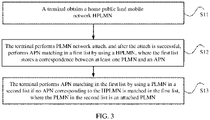
- FIG. 3 is a block flowchart of an APN matching method according to an embodiment of this application.
- the APN matching method is applied to a terminal and includes:
- the terminal may be a wireless terminal.
- the wireless terminal may be a device for providing voice and/or data connectivity only to a user, a handheld device having a wireless connection function, or another processing device connected to a wireless modem.
- the wireless terminal may communicate with one or more core networks through a RAN (Radio Access Network, radio access network).
- RAN Radio Access Network, radio access network
- the wireless terminal may be a mobile terminal, such as a mobile phone (or referred to as a "cellular" phone), and a computer having a mobile terminal, for example, a portable, pocket-sized, handheld, computer-built, or vehicle-mounted mobile apparatus, which exchange language and/or data with the radio access network, for example, a device such as a PCS (Personal Communication Service, personal communication service) phone, a cordless phone, a session initiation protocol (SIP) phone, a WLL (Wireless Local Loop, wireless local loop) station, or a PDA (Personal Digital Assistant, personal digital assistant).
- PCS Personal Communication Service
- SIP session initiation protocol
- WLL Wireless Local Loop
- PDA Personal Digital Assistant
- the wireless terminal may also be referred to as a system, a subscriber unit (Subscriber Unit), a subscriber station (Subscriber Station), a mobile station (Mobile Station), a mobile console (Mobile), a remote station (Remote Station), an access point (Access Point), a remote terminal (Remote Terminal), an access terminal (Access Terminal), a user terminal (User Terminal), a user agent (User Agent), or user equipment.
- Subscriber Unit Subscriber Unit
- Subscriber Station Subscriber Station
- Mobile Station mobile station
- Mobile console Mobile
- Remote station Remote station
- an access point Access Point
- Remote Terminal Remote Terminal
- an access terminal Access Terminal
- User Terminal User Terminal
- User Agent User Agent
- the home public land mobile network HPLMN is a home public land mobile network PLMN of a terminal user. That is, a mobile country code MCC and a mobile network code MNC included in an IMSI in a USIM card of the terminal are consistent with an MCC and an MNC on the HPLMN, and there is only one home PLMN for a user.
- the process of obtaining a home public land mobile network HPLMN includes:
- an AP application processor, application processor
- the modem When a USIM card is inserted into a terminal, an AP (application processor, application processor) of the terminal initiates an HPLMN obtaining request to a modem (Modem), the modem and the USIM card perform communication interaction.
- the modem reads an IMSI from an IMSI file of the USIM card, parses the IMSI to obtain a home public land mobile network HPLMN, and returns the home public land mobile network HPLMN to the AP (application processor, application processor), where the HPLMN is first five bits of the IMSI.
- a list for storing a relationship between an operator PLMN and APN information corresponding to the operator PLMN, that is, the first list, is preset in the terminal.
- the first list is preset in the terminal before the terminal leaves a factory.
- the first list includes relationships between a plurality of operator PLMNs and APNs corresponding to the plurality of operator PLMNs. When a new operator PLMN appears, the new operator PLMN may not match a corresponding APN because the first list is preset in the terminal before leaving the factory.
- step S12 The terminal performs a PLMN network attach, and after the attach is successful, performs APN matching in a first list by using the HPLMN, where the first list stores a correspondence between at least one PLMN and an APN.
- the PLMN is a network established and operated by a government or an operator approved by the government for the purpose of providing land mobile communication services to the public.
- the network needs to be interconnected with a PSTN (Public Switched Phone Network, public switched phone network), to form a whole regional or national scale communication network.
- PSTN Public Switched Phone Network, public switched phone network
- the PLMN includes an MCC (Mobile Country Code, mobile country code) and an MNC (Mobile Network Code, mobile network code).
- MCC Mobile Country Code, mobile country code
- MNC Mobile Network Code, mobile network code
- the process of a network attach by a terminal is roughly as follows: The terminal selects at least one PLMN, and then through an access network device and a core network device corresponding to the selected PLMN, uses one of the selected at least one PLMN for performing a network attach.
- the specific process of a network attach by the terminal includes the following steps:
- a backbone network of an operator is divided into three layers: a core layer, a convergence layer, and an access layer.
- a network from the access layer to the terminal is an access network.
- the access network may be a GPRS (General Packet Radio Service, general packet radio service), GSM (Global System for Mobile Communication, global system for mobile communication), or 3G network, or the like.
- the core layer is to implement an optimized transmission function between backbone networks.
- a core network is a network that provides terminal connection, terminal management, and service bearing at the core layer, namely, the PLMN.
- the core network provides an interface between a bearing network and an external network.
- the access network device may be an eNB (evolved NodeB, evolved NodeB), an RNC (Radio Network Controller, radio network controller), or a BSC (Base Station Controller, base station controller).
- the core network device may be an MME (Mobility Management Entity, mobility management entity), an SGSN (Serving GPRS Support Node, serving GPRS support node), or an MSC (Mobile Switching Center, mobile switching center).
- the access network device is an RNC, and the core network device is an SGSN; in 4G (4 th Generation, 4 th generation mobile communication technology), the access network device is an eNB, and the core network device is an MME; and in 2G (2 nd Generation, 2 nd generation mobile communication technology), the access network device is a BSC, and the core network device is an SGSN.
- a CS Circuit Switch, circuit switch
- the performing APN matching in the first list by using the HPLMN specifically includes: performing identifier matching in the first list by using the HPLMN; and if a field that is the same as an identifier of the HPLMN is matched, obtaining an APN corresponding to the field that is the same as the identifier of the HPLMN, to complete the APN matching.
- the first list may be stored in a database of the terminal, or may be stored in a configuration file.
- the APN matching method further includes: determining whether the terminal is currently in a roaming state; if the terminal is not in the roaming state, further determining whether a currently registered PLMN is stored in a second list, and if the currently registered PLMN is not stored in the second list, storing the currently registered PLMN in the second list, or if the currently registered PLMN is already stored in the second list, skipping an operation of storing the currently registered PLMN in the second list; or if the terminal is in the roaming state, skipping an operation of storing the currently registered PLMN in the second list.
- the currently registered PLMN is obtained by the terminal from the attach accept information returned by the access network device.
- the second list is used for storing PLMNs that are currently registered successfully and/or historically registered successfully and belong to the same operator as the HPLMN (that is, non-roaming), and therefore the foregoing registered PLMN may be a currently registered successfully and non-roaming PLMN or may be a historically registered successfully and non-roaming PLMN.
- the determining whether the terminal is currently in a roaming state specifically includes: determining whether the HPLMN and the currently registered PLMN belong to the same operator; and if not, determining that the terminal is currently in the roaming state, or if yes, determining that the terminal is currently not in roaming state.
- China Mobile has three PLMNs: 46000, 46002, and 46007.
- the HPLMN is 46000 and the PLMN of the attached network is 46002, although the HPLMN is different from the PLMN of the attached network, the two networks both belong to the same operator, namely, China Mobile (China Mobile), and therefore the terminal is not in the roaming state.
- step S03 The terminal performs APN matching in the first list by using a PLMN in a second list if no APN corresponding to the HPLMN is matched in the first list, where the PLMN in the second list is a registered PLMN: Specifically, the terminal traverses the second list, and ends traversing when an APN is matched, or when no APN is matched, selects a next PLMN in the second list for performing matching, until an APN is matched or no APN is matched by using all the PLMNs in the second list.
- the PLMNs in the second list are traversed in a chronological order of network construction of the PLMNs.
- An earlier order in which the PLMN is constructed indicates a greater probability at which an APN corresponding to the PLMN is stored in the first list in the terminal. Therefore, the speed at which the APN is successfully matched may be increased by traversing the PLMNs in the second list in the chronological order of network construction.
- the APN matching in the first list may alternatively be performed by using an equivalent home public land mobile network EHPLMN before or after the terminal performs APN matching in the first list by using the PLMN in the second list.
- the performing, by a terminal, APN matching in the first list by using an equivalent home public land mobile network EHPLMN before performing APN matching in the first list by using the PLMN in the second list may specifically include: performing, by the terminal, APN matching in the first list by using the PLMN in the second list, and if no corresponding APN is matched, performing APN matching in the first list by using the equivalent home public land mobile network EHPLMN.
- the success rate of the APN matching can be further increased, so that when the first list preset in the terminal does not include corresponding information of a newly added operator PLMN and an APN, an APN of the operator is obtained by searching PLMNs that have been successfully registered and the known EHPLMN, and a network connection is established by using the APN, thereby greatly avoiding the situation in which the terminal cannot use an APN to establish a network connection caused by expansion of the PLMNs of the operator.
- the terminal initiates a PDP context activation request to a network side, and the PDP context activation request carries information such as the matched APN or the quality of service.
- the terminal receives information returned by the network side for accepting the PDP context activation request, the PDP context activation process is completed.
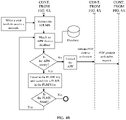
- FIG. 4A-FIG. 4B are an interactive flowchart of an APN matching method according to an embodiment of this application.
- a terminal includes an AP (Application Processor, application processor) and a modem (Modem).
- the application processor interacts with a network end by using the modem, and the interaction process includes:
- the HPLMN in the USIM card of the terminal is 46020
- a correspondence between a PLMN1 (46021) and an APN1 and a correspondence between a PLMN2 (46022) and an APN2 are preset in the first list of the terminal, where 46020, 46021, and 46022 are EPLMNs (Equivalent Public Land Mobile Networks, equivalent PLMNs)
- the PLMN list includes the PLMN1 and the PLMN2
- the PDP context activation request sent by the terminal to the network side may include the PLMN1 or the PLMN2.
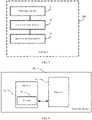
- the first matching module 12 includes:
- the obtaining module 11 is specifically configured to perform the following steps: reading an IMSI from a USIM card, and parsing the IMSI to obtain an HPLMN.
- the second matching module 13 includes:
- the terminal 100 further includes: a third matching module, configured to perform APN matching in the first list by using an equivalent home public land mobile network EHPLMN if no corresponding APN is matched in the first list by the terminal by using the registered PLMN in the second list.
- a third matching module configured to perform APN matching in the first list by using an equivalent home public land mobile network EHPLMN if no corresponding APN is matched in the first list by the terminal by using the registered PLMN in the second list.
- the second matching module 12 is specifically configured to perform the following step: performing matching in the first list in ascending order of values of PLMNs in the second list, and ending the matching when a corresponding APN is matched.
- An embodiment of this application further provides a storage medium, where the storage medium includes a stored program, and the program, when run, controls a device in which the storage medium is located to perform the rule matching method according to any one of the embodiments.
- the computer program when run by a processor, implements functions of the modules/units in the terminal in the embodiment. To avoid repetition, details are not described herein.
- an embodiment of this application provides a terminal 50.
- the terminal 50 of the embodiment includes a processor 51, a memory 52, and a program 53 that is stored in the memory 52 and that can be run on the processor 51.
- the program 53 when run by the processor 51, implements the APN matching method of the embodiment. To avoid repetition, details are not described herein.
- the terminal 50 may be a computing device such as a desktop computer, a notebook, a palmtop computer, and a cloud server.
- the terminal 50 may include, but not limited to, the processor 51, the memory 52, and the like.
- FIG. 6 is merely an example of the terminal 50 and does not constitute a limitation to the terminal 50, and may include more or fewer components than those illustrated, or a combination of specific components, or different components.
- an electronic device may further include an input/output device, a network access device, a bus, or the like.
- the processor 51 may be a central processing unit (Central Processing Unit, CPU), or may be another general-purpose processor, digital signal processor (Digital Signal Processor, DSP), application specific integrated circuit (Application Specific Integrated Circuit, ASIC), field-programmable gate array (Field-Programmable Gate Array, FPGA) or another programmable logic device, a discrete gate, a transistor logic device, a discrete hardware component, or the like.
- the general-purpose processor may be a microprocessor, or the processor may be any conventional processor or the like.
- the memory 52 may be an internal storage unit of the terminal 50 such as a hard disk or an internal memory of the terminal 50.
- the memory 52 may alternatively be an external storage device of the terminal 50, such as a pluggable hard disk, a smart media card (Smart Media Card, SMC), a secure digital (Secure Digital, SD) card, a flash card (Flash Card), or the like provided on the terminal 50.
- the memory 52 may include both an internal storage unit of the terminal 50 and an external storage device.
- the memory 52 is configured to store a computer program and other programs and data required by the electronic device.
- the memory 52 may also be configured to temporarily store data that has been outputted or that is to be outputted.
- the disclosed system, apparatus, and method may be implemented in other manners.
- the described apparatus embodiment is merely an example.
- the unit division is merely logical function division and may be other division in actual implementation.
- a plurality of units or components may be combined or integrated into another system, or some features may be ignored or not performed.
- the displayed or discussed mutual couplings or direct couplings or communication connections may be implemented by using some interfaces.
- the indirect couplings or communication connections between the apparatuses or units may be implemented in electronic, mechanical, or other forms.
- the units described as separate parts may or may not be physically separate, and parts displayed as units may or may not be physical units, may be located in one position, or may be distributed on a plurality of network units. Some or all of the units may be selected based on actual requirements to achieve the objectives of the solutions of the embodiments.
- function units in the embodiments of this application may be integrated into one processing unit, or each of the units may exist alone physically, or two or more units are integrated into one unit.
- the integrated unit may be implemented in a form of hardware, or may be implemented in a form of a hardware and software functional unit.
- the integrated unit implemented in the form of a software functional unit may be stored in a computer-readable storage medium.
- the software functional unit is stored on a storage medium, and includes instructions to cause a computer apparatus (which may be a personal computer, a server, a network apparatus, or the like) or a processor (Processor) to perform all or some of the steps of the embodiment methods of this application.
- the foregoing storage medium includes any medium that can store program code, such as a USB flash drive, a removable hard disk, a read-only memory (Read-Only Memory, ROM), a random access memory (Random Access Memory, RAM), a magnetic disk, or an optical disc.
Landscapes
- Engineering & Computer Science (AREA)
- Computer Security & Cryptography (AREA)
- Computer Networks & Wireless Communication (AREA)
- Signal Processing (AREA)
- Mobile Radio Communication Systems (AREA)
Abstract
Description
- This application claims priority to
Chinese Patent Application No. 201911055000.0, filed with China National Intellectual Property Administration on October 31, 2019 - This application relates to the field of communication technologies, and in particular, to an APN matching method, a terminal, and a storage medium.
- An APN (Access Point Name, access point name) is one of basic configuration parameters of a mobile network data service. Different APNs identify methods for using a data service by a terminal for accessing a network.
- In an existing method for establishing a network connection by using an APN, usually an APN is obtained first, and then an APN corresponding to an operator is used to access a network. In an existing APN matching method, usually correspondences between public land mobile networks (Public Land Mobile Network, PLMN for short) of all operators in China or around the world and APNs are usually preset in a terminal. Each operator usually has a plurality of PLMNs, and therefore there may be a situation in which a plurality of PLMNs correspond to a same group of APNs. After a user inserts a universal subscriber identity module (Universal Subscriber Identity Module, USIM for short) into a terminal, the terminal may read an international mobile subscriber identity number (International Mobile Subscriber Identity Number, IMSI for short) from a designated file, read an operator PLMN, namely, a home PLMN, based on first few bits of the IMSI, then find a corresponding APN according to a preset list in the terminal, and select the APN, to ensure that the user uses an accessed network and uses a data service.
- However, as the quantity of users increases, if the original PLMN is not enough for accommodation, the operator is likely to add a new PLMN. Because the preset list in the terminal may not be updated accordingly, there may be a situation in which it is difficult to match a corresponding PLMN in a preset APN list, and therefore it may be difficult for the terminal to establish a network connection by using an APN.
- Embodiments of this application provide an APN matching method, a terminal, and a storage medium, so as to resolve the problem in the existing technology that it is difficult to match an APN when an operator adds a new PLMN and the newly added PLMN is not stored in a list for storing a relationship between an operator PLMN and APN information corresponding to the operator PLMN in the terminal.
- According to a first aspect, an embodiment of this application provides an APN matching method, including:
- obtaining a home public land mobile network HPLMN;
- performing PLMN network attach, and after the attach is successful, performing APN matching in a first list by using the HPLMN, where the first list stores a correspondence between at least one PLMN and an APN; and
- performing APN matching in the first list by using a PLMN in a second list if no APN corresponding to the HPLMN is matched in the first list, where the PLMN in the second list is a registered PLMN.
- Optionally, after the performing, by the terminal, the PLMN network attach and the attach is successful, the method further includes:
- determining whether a current state is a roaming state;
- determining whether a currently registered PLMN is stored in the second list if the current state is not the roaming state; and
- storing the currently registered PLMN in the second list if the currently registered PLMN is not stored in the second list.
- Optionally, the obtaining a home public land mobile network HPLMN includes:
reading an IMSI from a USIM card, and parsing the IMSI to obtain the HPLMN. - Optionally, the performing APN matching in the first list by using a PLMN in a second list if no APN corresponding to the HPLMN is matched in the first list includes:
- performing APN matching in the first list by using an equivalent home public land mobile network EHPLMN if no APN corresponding to the HPLMN is matched in the first list; and
- performing APN matching in the first list by using a registered PLMN in the second list if no APN corresponding to the EHPLMN is matched in the first list by using the EHPLMN.
- Optionally, the method further includes:
performing APN matching in the first list by using an equivalent home public land mobile network EHPLMN if no corresponding APN is matched in the first list by the terminal by using a registered PLMN in the second list. - Optionally, the performing APN matching in the first list by using a PLMN in a second list includes:
performing matching in the first list in ascending order of values of PLMNs in the second list, and ending the matching when a corresponding APN is matched. - According to a second aspect, an embodiment of this application provides a terminal, including:
- an obtaining module, configured to obtain a home public land mobile network HPLMN;
- a first matching module, configured to perform PLMN network attach, and after the attach is successful, perform APN matching in a first list by using the HPLMN, where the first list stores a correspondence between at least one PLMN and an APN; and
- a second matching module, configured to perform APN matching in the first list by using a PLMN in a second list if no APN corresponding to the HPLMN is matched in the first list, where the PLMN in the second list is a registered PLMN.
- Optionally, the first matching module includes:
- a first determining unit, configured to determine whether a current state is a roaming state;
- a second determining unit, configured to determine whether a currently registered PLMN is stored in the second list if the current state is not the roaming state; and
- a storage unit, configured to store the currently registered PLMN in the second list if the currently registered PLMN is not stored in the second list.
- According to a third aspect, an embodiment of this application provides a storage medium, where the storage medium includes a stored program, and the program, when run, controls a device in which the storage medium is located to perform the foregoing method.
- According to a fourth aspect, an embodiment of this application provides a terminal, including a memory and a processor, where the memory is configured to store information including program instructions, the processor is configured to control execution of the program instructions, and the program instructions, when loaded and executed by the processor, implement the foregoing method.
- It can be understood that the APN matching method provided in the embodiments of this application performs APN matching by using a successfully registered PLMN in the second list when the APN matched by the HPLMN is empty (that is, no corresponding APN is matched). The foregoing method greatly increases a success rate of APN matching when an operator adds a new PLMN and the newly added PLMN is not stored in a list for storing a relationship between an operator PLMN and APN information corresponding to the operator PLMN in the terminal or when the terminal is abnormal, and can simultaneously adapt to the 5G, 4G, 3G, 2G, and the like, with high reliability.
- To explain the technical solutions of the embodiments of this application more clearly, the following will briefly describe the accompanying drawings that need to be used in the description of the embodiments. Apparently, the accompanying drawings in the following description show only some embodiments of this application, and a person of ordinary skill in the art can still derive other accompanying drawings from these accompanying drawings without creative efforts. The accompanying drawings which are incorporated in and constitute a part of the specification illustrate embodiments consistent with this application and together with the specification serve to explain the principles of this application.
-
FIG. 1 is an interactive flowchart of an APN matching method according to the existing technology; -
FIG. 2 is an interactive flowchart of another APN matching method according to the existing technology; -
FIG. 3 is a block flowchart of an APN matching method according to an embodiment of this application; -
FIG. 4A-FIG. 4B are a block flowchart of an APN matching method according to an embodiment of this application; -
FIG. 5 is a structural block diagram of a terminal according to an embodiment of this application; and -
FIG. 6 is a schematic block diagram of a terminal according to an embodiment of this application. - To better understand the technical solutions of this application, the embodiments of this application are described in detail below with reference to the accompanying drawings.
- It should be clarified that the described embodiments are only some but not all of the embodiments of this application. Based on the embodiments of this application, all other embodiments obtained by a person of ordinary skill in the art without creative efforts shall fall within the protection scope of this application.
- Terms used in the embodiments of this application are merely intended to describe specific embodiments, but are not intended to limit this application. The terms "one", "a", "the", "the foregoing", "this", and "the one" of singular forms used in this specification and the appended claims of this application are also intended to include plural forms, unless otherwise specified in the context clearly.
- It should be understood that the term "and/or" used in the text merely describes an association relationship between associated objects, and indicates that three relationships may exist. For example, A and/or B may indicate the following cases: Only A exists, both A and B exist, and only B exists. The character "/" in the text usually indicates an "or" relationship between the associated objects.
- For the situation in which no corresponding PLMN can be found in the preset APN list, the existing technology provides the following solutions: Solution 1: Perform APN matching by using an EHPLMN (Equivalent Home Public Land Mobile Network, equivalent home PLMN).
- Specifically, the EHPLMN is a local PLMN has the same status (equivalent) as a PLMN currently selected by a terminal, and the EHPLMN is stored in a universal subscriber identity module (Universal Subscriber Identity Module, USIM for short) card. For example, the HPLMN corresponding to China Mobile is 46000 and the EHPLMN may include 46002, 46007, or the like.
- As shown in
FIG. 1 , after the network attach (Attach), when a user needs to access the network, the user needs to first perform PDP (Packet Data Protocol) context activation. If no corresponding APN can be matched by using an HPLMN, an EHPLMN in a USIM card is read, and APN matching is performed by using the EHPLMN. - For Solution 1, if no corresponding APN is matched by using the HPLMN, the USIM card needs to have an EHPLMN, and the matching by using the EHPLMN needs to be accurate; otherwise, an error may occur in the APN matching. However, there are a plurality of operators in the world, and therefore it is difficult to avoid the situation in which EHPLMNs are not written into cards of a specific quantity of operators or EHPLMNs of a specific quantity of cards are inaccurate.
- Solution 2: Use an APN allocated by a network during a network register procedure (Attach) by using the 4G (4rd Generation, 4th Generation mobile communication technology).
- Specifically, as shown in
FIG. 2 , during a 4G register procedure (Attach), if the terminal does not report an APN, a network may allocate an APN carried in an attach accept request by default. If the terminal fails to match the APN by using the HPLMN, the terminal may perform PDP context activation by using the APN that is carried by default and that is allocated by the 4G network. For Solution 2, in using the APN allocated by the network during attach to the 4G network, there are some disadvantages as follows: - (1) The APN allocated by the network during attach may be an APN of an IMS, and the terminal cannot access the network by using the APN.
- (2) The APN allocated by the network during attach may not carry DNS (domain name system, domain name system) information, and the terminal cannot access the network by using the APN.
- (3) It is impossible to resolve the problem that the APN is empty in 5G (5th generation mobile networks, 5th generation mobile communication technology), 3G (3rd generation, 3rd generation mobile communication technology), and 2G (2nd generation, 2nd generation mobile communication technology).
- In view of the above, an embodiment of this application provides an APN matching method, and a core concept of the method is to perform APN matching by using a successfully registered PLMN when the APN matched by the HPLMN is empty (that is, no corresponding APN is matched). The foregoing method greatly increases a success probability of APN matching when an operator adds a new PLMN and the newly added PLMN is not stored in a list for storing a relationship between an operator PLMN and APN information corresponding to the operator PLMN in the terminal or when the terminal is abnormal, and can simultaneously adapt to the 5G, 4G, 3G, 2G, and the like, with high reliability.
- The following further describes, with reference to the accompanying drawings, the APN matching method provided in the embodiment of this application.
-
FIG. 3 is a block flowchart of an APN matching method according to an embodiment of this application. - The APN matching method is applied to a terminal and includes:
- Step S01: A terminal obtains a home public land mobile network HPLMN.
- Step S02: The terminal performs a PLMN network attach, and after the attach is successful, performs APN matching in a first list by using the HPLMN, where the first list stores a correspondence between at least one PLMN and an APN.
- Step S03: The terminal performs APN matching in the first list by using a PLMN in a second list if no APN corresponding to the HPLMN is matched in the first list, where the PLMN in the second list is a registered PLMN. It can be understood that the APN matching method provided in the embodiment of this application performs APN matching by using a historically, successfully registered PLMN in the second list when the APN matched by the HPLMN is empty (that is, no corresponding APN is matched). The foregoing method greatly increases a success rate of APN matching when an operator adds a new PLMN and the newly added PLMN is not stored in a list for storing a relationship between an operator PLMN and APN information corresponding to the operator PLMN in the terminal or when the terminal is abnormal, and can simultaneously adapt to the 5G, 4G, 3G, 2G, and the like, with high reliability.
- The following further describes in detail the APN matching method provided in the embodiment of this application.
- For step S01: Obtain a home public land mobile network HPLMN:
Specifically, the terminal may be a wireless terminal. The wireless terminal may be a device for providing voice and/or data connectivity only to a user, a handheld device having a wireless connection function, or another processing device connected to a wireless modem. The wireless terminal may communicate with one or more core networks through a RAN (Radio Access Network, radio access network). The wireless terminal may be a mobile terminal, such as a mobile phone (or referred to as a "cellular" phone), and a computer having a mobile terminal, for example, a portable, pocket-sized, handheld, computer-built, or vehicle-mounted mobile apparatus, which exchange language and/or data with the radio access network, for example, a device such as a PCS (Personal Communication Service, personal communication service) phone, a cordless phone, a session initiation protocol (SIP) phone, a WLL (Wireless Local Loop, wireless local loop) station, or a PDA (Personal Digital Assistant, personal digital assistant). The wireless terminal may also be referred to as a system, a subscriber unit (Subscriber Unit), a subscriber station (Subscriber Station), a mobile station (Mobile Station), a mobile console (Mobile), a remote station (Remote Station), an access point (Access Point), a remote terminal (Remote Terminal), an access terminal (Access Terminal), a user terminal (User Terminal), a user agent (User Agent), or user equipment. - The home public land mobile network HPLMN is a home public land mobile network PLMN of a terminal user. That is, a mobile country code MCC and a mobile network code MNC included in an IMSI in a USIM card of the terminal are consistent with an MCC and an MNC on the HPLMN, and there is only one home PLMN for a user.
- The process of obtaining a home public land mobile network HPLMN includes:
- When a USIM card is inserted into a terminal, an AP (application processor, application processor) of the terminal initiates an HPLMN obtaining request to a modem (Modem), the modem and the USIM card perform communication interaction. The modem reads an IMSI from an IMSI file of the USIM card, parses the IMSI to obtain a home public land mobile network HPLMN, and returns the home public land mobile network HPLMN to the AP (application processor, application processor), where the HPLMN is first five bits of the IMSI.
- A list for storing a relationship between an operator PLMN and APN information corresponding to the operator PLMN, that is, the first list, is preset in the terminal. The first list is preset in the terminal before the terminal leaves a factory. The first list includes relationships between a plurality of operator PLMNs and APNs corresponding to the plurality of operator PLMNs. When a new operator PLMN appears, the new operator PLMN may not match a corresponding APN because the first list is preset in the terminal before leaving the factory.
- For step S12: The terminal performs a PLMN network attach, and after the attach is successful, performs APN matching in a first list by using the HPLMN, where the first list stores a correspondence between at least one PLMN and an APN.
- Specifically, when the terminal is turned on or needs to be reconnected after being disconnected from the network, the terminal needs to perform a PLMN network attach again. The PLMN is a network established and operated by a government or an operator approved by the government for the purpose of providing land mobile communication services to the public. The network needs to be interconnected with a PSTN (Public Switched Phone Network, public switched phone network), to form a whole regional or national scale communication network. The PLMN includes an MCC (Mobile Country Code, mobile country code) and an MNC (Mobile Network Code, mobile network code). For example, the PLMN of China Mobile (China Mobile) is 46000, where the MCC is 460 and the MNC is 00.
- The process of a network attach by a terminal is roughly as follows: The terminal selects at least one PLMN, and then through an access network device and a core network device corresponding to the selected PLMN, uses one of the selected at least one PLMN for performing a network attach.
- The specific process of a network attach by the terminal includes the following steps:
- Step S021: The terminal receives system information sent by an access network device, where the system information includes a PLMN identifier (in one or more embodiments of this application, there are a plurality of the PLMN identifiers).
- Step S022: The terminal sends an attach request to the access network device, where the attach request includes information that the terminal requests to attach to at least one PLMN (usually including one or two PLMNs, which is exemplified by including one PLMN in the following) and an IMSI identifier of the terminal.
- Step S023: The access network device obtains, based on the attach request, information for requesting to attach to one corresponding PLMN included in the attach request, forwards the attach request to a corresponding core network device. It should be known that an identifier of each PLMN corresponds to one PLMN, each PLMN corresponds to one core network device, the identifier of each PLMN also corresponds to one attach request message, and a core network device can communicate with only the PLMN corresponding to the core network device.
- Step S024: After the core network device obtains the PLMN identifier and the IMSI identifier of the terminal, the core network device requests to an HLR (Home Location Register, home location register) for authentication, and authenticates the terminal based on user subscription data issued by the HLR; in addition, the core network device uploads current position information of the terminal to the HLR. After the authentication succeeds, the core network device may send an attach accept message to the access network device, and the access network device returns attach accept information to the terminal, so that the PLMN network attach is successful.
- More specifically, a backbone network of an operator is divided into three layers: a core layer, a convergence layer, and an access layer. A network from the access layer to the terminal is an access network. The access network may be a GPRS (General Packet Radio Service, general packet radio service), GSM (Global System for Mobile Communication, global system for mobile communication), or 3G network, or the like. The core layer is to implement an optimized transmission function between backbone networks. A core network is a network that provides terminal connection, terminal management, and service bearing at the core layer, namely, the PLMN. The core network provides an interface between a bearing network and an external network.
- The access network device may be an eNB (evolved NodeB, evolved NodeB), an RNC (Radio Network Controller, radio network controller), or a BSC (Base Station Controller, base station controller). The core network device may be an MME (Mobility Management Entity, mobility management entity), an SGSN (Serving GPRS Support Node, serving GPRS support node), or an MSC (Mobile Switching Center, mobile switching center).
- More specifically, using a PS (Packet Switch, packet switch) domain of a mobile communication system as an example, in 3G, the access network device is an RNC, and the core network device is an SGSN; in 4G (4th Generation, 4th generation mobile communication technology), the access network device is an eNB, and the core network device is an MME; and in 2G (2nd Generation, 2nd generation mobile communication technology), the access network device is a BSC, and the core network device is an SGSN. Using a CS (Circuit Switch, circuit switch) domain of a mobile communication system as an example, in 3G/2G, the access network device is an RNC (3G)/BSC (2G), and the core network device is an MSC.
- After the PLMN attach is successful, the performing APN matching in the first list by using the HPLMN specifically includes: performing identifier matching in the first list by using the HPLMN; and if a field that is the same as an identifier of the HPLMN is matched, obtaining an APN corresponding to the field that is the same as the identifier of the HPLMN, to complete the APN matching.
- The first list may be stored in a database of the terminal, or may be stored in a configuration file.
- Further, after the terminal performs the PLMN network attach and the attach is successful, the APN matching method further includes:
determining whether the terminal is currently in a roaming state; if the terminal is not in the roaming state, further determining whether a currently registered PLMN is stored in a second list, and if the currently registered PLMN is not stored in the second list, storing the currently registered PLMN in the second list, or if the currently registered PLMN is already stored in the second list, skipping an operation of storing the currently registered PLMN in the second list; or if the terminal is in the roaming state, skipping an operation of storing the currently registered PLMN in the second list. The currently registered PLMN is obtained by the terminal from the attach accept information returned by the access network device. - It should be noted that in one or more embodiments of this application, the second list is used for storing PLMNs that are currently registered successfully and/or historically registered successfully and belong to the same operator as the HPLMN (that is, non-roaming), and therefore the foregoing registered PLMN may be a currently registered successfully and non-roaming PLMN or may be a historically registered successfully and non-roaming PLMN.
- Further, the determining whether the terminal is currently in a roaming state specifically includes: determining whether the HPLMN and the currently registered PLMN belong to the same operator; and if not, determining that the terminal is currently in the roaming state, or if yes, determining that the terminal is currently not in roaming state.
- For example, China Mobile (China Mobile) has three PLMNs: 46000, 46002, and 46007. When the HPLMN is 46000 and the PLMN of the attached network is 46002, although the HPLMN is different from the PLMN of the attached network, the two networks both belong to the same operator, namely, China Mobile (China Mobile), and therefore the terminal is not in the roaming state.
- For step S03: The terminal performs APN matching in the first list by using a PLMN in a second list if no APN corresponding to the HPLMN is matched in the first list, where the PLMN in the second list is a registered PLMN:
Specifically, the terminal traverses the second list, and ends traversing when an APN is matched, or when no APN is matched, selects a next PLMN in the second list for performing matching, until an APN is matched or no APN is matched by using all the PLMNs in the second list. - The terminal may traverse the second list in a temporal order in which the PLMNs are stored in the second list or based on values of the PLMNs, or the like. This is not limited in this embodiment of this application. Preferably, traversing may be performed in ascending order of the values of the PLMNs in the second list (in a case that the PLMNs are values). Usually, the earlier a PLMN of the operators is established, the smaller the value of the PLMN is. Still using China Mobile (China Mobile) as an example, China Mobile (China Mobile) has three PLMNs: 46000, 46002, and 46007, and the order of network construction of the three PLMNs is 46000, 46002, and 46007. Therefore, the PLMNs in the second list are traversed in a chronological order of network construction of the PLMNs. An earlier order in which the PLMN is constructed indicates a greater probability at which an APN corresponding to the PLMN is stored in the first list in the terminal. Therefore, the speed at which the APN is successfully matched may be increased by traversing the PLMNs in the second list in the chronological order of network construction.
- Optionally, in some other embodiments of this application, the APN matching in the first list may alternatively be performed by using an equivalent home public land mobile network EHPLMN before or after the terminal performs APN matching in the first list by using the PLMN in the second list.
- Optionally, the performing, by a terminal, APN matching in the first list by using an equivalent home public land mobile network EHPLMN before performing APN matching in the first list by using the PLMN in the second list may specifically include: if no APN corresponding to the HPLMN is matched in the first list, before performing APN matching in the first list by using the PLMN in the second list, first performing, by the terminal, APN matching in the first list by using the equivalent home public land mobile network EHPLMN; and if no APN corresponding to the EHPLMN is matched in the first list by using the EHPLMN, performing APN matching in the first list by using the PLMN in the second list.
- Optionally, the performing, by a terminal, APN matching in the first list by using an equivalent home public land mobile network EHPLMN before performing the APN matching in the first list by using the PLMN in the second list may further include: first performing APN matching in the first list by using the equivalent home public land mobile network EHPLMN; if no APN corresponding to the EHPLMN is matched in the first list by using the equivalent home public land mobile network EHPLMN, performing APN matching in the first list by using the HPLMN; and if no APN corresponding to the HPLMN is matched in the first list, performing APN matching in the first list by using the PLMN in the second list.
- Optionally, the performing, by a terminal, APN matching in the first list by using an equivalent home public land mobile network EHPLMN before performing APN matching in the first list by using the PLMN in the second list may specifically include: performing, by the terminal, APN matching in the first list by using the PLMN in the second list, and if no corresponding APN is matched, performing APN matching in the first list by using the equivalent home public land mobile network EHPLMN.
- It can be understood that by performing APN matching in the first list by using the equivalent home public land mobile network EHPLMN before or after the terminal performs APN matching in the first list by using the PLMN in the second list, the success rate of the APN matching can be further increased, so that when the first list preset in the terminal does not include corresponding information of a newly added operator PLMN and an APN, an APN of the operator is obtained by searching PLMNs that have been successfully registered and the known EHPLMN, and a network connection is established by using the APN, thereby greatly avoiding the situation in which the terminal cannot use an APN to establish a network connection caused by expansion of the PLMNs of the operator.
- Further, after the APN is matched, the terminal initiates a PDP context activation request to a network side, and the PDP context activation request carries information such as the matched APN or the quality of service. When the terminal receives information returned by the network side for accepting the PDP context activation request, the PDP context activation process is completed.
-
FIG. 4A-FIG. 4B are an interactive flowchart of an APN matching method according to an embodiment of this application. As shown inFIG. 4A-FIG. 4B , a terminal includes an AP (Application Processor, application processor) and a modem (Modem). The application processor interacts with a network end by using the modem, and the interaction process includes: - 1. After a USIM card is inserted successfully, the application processor initiates an HPLMN obtaining request to the modem.
- 2. The modem reads an IMSI from an IMSI file of the USIM card, parses the IMSI to obtain a home public land mobile network HPLMN, and returns the HPLMN to the application processor; and the application processor saves the HPLMN to the terminal.
- 3. The modem initiates an attach request to a network side (including an access layer device and a core layer device).
- 4. The network side returns an attach accept request to the modem, where the attach accept request carries a registered PLMN.
- 5. The application processor initiates a request to the modem for obtaining a currently registered PLMN.
- 6. The modem returns the currently registered PLMN to the application processor.
- 7. The application processor determines whether a current state is a roaming state, and if not, saves the currently registered PLMN to a PLMN list (the PLMN list is the second list in the foregoing description).
- 8. When a user needs to access a network, matching is performed by using the HPLMN and a list that is in a database and that is used for storing a correspondence between a PLMN and an APN (that is, the first list in the foregoing description).
- 9. If the matched APN is empty, the PLMN list is traversed and matching of PLMNs in the PLMN list with the list that is in the database and that is used for storing a correspondence between a PLMN and an APN is performed.
- 10. A PDP context activation request is initiated to the network side by using a matched APN, to obtain network data.
- For example, assuming that the HPLMN in the USIM card of the terminal is 46020, a correspondence between a PLMN1 (46021) and an APN1 and a correspondence between a PLMN2 (46022) and an APN2 are preset in the first list of the terminal, where 46020, 46021, and 46022 are EPLMNs (Equivalent Public Land Mobile Networks, equivalent PLMNs), if the PLMN list includes the PLMN1 and the PLMN2, the PDP context activation request sent by the terminal to the network side may include the PLMN1 or the PLMN2.
- It can be understood that the APN matching method provided in the embodiment of this application performs APN matching by using a successfully registered PLMN in the second list when the APN matched by the HPLMN is empty (that is, no corresponding APN is matched). The foregoing method greatly increases a success rate of APN matching when an operator adds a new PLMN and the newly added PLMN is not stored in a list for storing a relationship between an operator PLMN and APN information corresponding to the operator PLMN in the terminal or when the terminal is abnormal, and can simultaneously adapt to the 5G, 4G, 3G, 2G, and the like, with high reliability.
-
FIG. 5 is a structural block diagram of a terminal according to an embodiment of this application. The embodiment of this application further provides a terminal 100, including: - an obtaining
module 11, configured to obtain a home public land mobile network HPLMN; - a
first matching module 12, configured to perform a PLMN network attach, and after the attach is successful, perform APN matching in a first list by using the HPLMN, where the first list stores a correspondence between at least one PLMN and an APN; and - a
second matching module 13, configured to perform APN matching in the first list by using a PLMN in a second list if no APN corresponding to the HPLMN is matched in the first list, where the second list stores at least one successfully registered PLMN. - Optionally, the
first matching module 12 includes: - a first determining unit, configured to determine whether a current state is a roaming state;
- a second determining unit, configured to determine whether a currently registered PLMN is stored in the second list if the current state is not the roaming state; and
- a storage unit, configured to store the currently registered PLMN in the second list if the currently registered PLMN is not stored in the second list.
- Optionally, the obtaining
module 11 is specifically configured to perform the following steps: reading an IMSI from a USIM card, and parsing the IMSI to obtain an HPLMN. - Optionally, the
second matching module 13 includes: - a first matching unit, configured to perform APN matching in the first list by using an equivalent home public land mobile network EHPLMN if no APN corresponding to the HPLMN is matched in the first list; and
- a second matching unit, configured to perform APN matching in the first list by using a registered PLMN in the second list if no APN corresponding to the EHPLMN is matched in the first list by using the EHPLMN.
- Optionally, the terminal 100 further includes:
a third matching module, configured to perform APN matching in the first list by using an equivalent home public land mobile network EHPLMN if no corresponding APN is matched in the first list by the terminal by using the registered PLMN in the second list. - Optionally, the
second matching module 12 is specifically configured to perform the following step: performing matching in the first list in ascending order of values of PLMNs in the second list, and ending the matching when a corresponding APN is matched. - An embodiment of this application further provides a storage medium, where the storage medium includes a stored program, and the program, when run, controls a device in which the storage medium is located to perform the rule matching method according to any one of the embodiments. To avoid repetition, details are not described herein. Alternatively, the computer program, when run by a processor, implements functions of the modules/units in the terminal in the embodiment. To avoid repetition, details are not described herein.
- Referring to
FIG. 6 , an embodiment of this application provides a terminal 50. The terminal 50 of the embodiment includes aprocessor 51, amemory 52, and aprogram 53 that is stored in thememory 52 and that can be run on theprocessor 51. Theprogram 53, when run by theprocessor 51, implements the APN matching method of the embodiment. To avoid repetition, details are not described herein. - The terminal 50 may be a computing device such as a desktop computer, a notebook, a palmtop computer, and a cloud server. The terminal 50 may include, but not limited to, the
processor 51, thememory 52, and the like. A person skilled in the art can understood thatFIG. 6 is merely an example of the terminal 50 and does not constitute a limitation to the terminal 50, and may include more or fewer components than those illustrated, or a combination of specific components, or different components. For example, an electronic device may further include an input/output device, a network access device, a bus, or the like. - The
processor 51 may be a central processing unit (Central Processing Unit, CPU), or may be another general-purpose processor, digital signal processor (Digital Signal Processor, DSP), application specific integrated circuit (Application Specific Integrated Circuit, ASIC), field-programmable gate array (Field-Programmable Gate Array, FPGA) or another programmable logic device, a discrete gate, a transistor logic device, a discrete hardware component, or the like. The general-purpose processor may be a microprocessor, or the processor may be any conventional processor or the like. - The
memory 52 may be an internal storage unit of the terminal 50 such as a hard disk or an internal memory of the terminal 50. Thememory 52 may alternatively be an external storage device of the terminal 50, such as a pluggable hard disk, a smart media card (Smart Media Card, SMC), a secure digital (Secure Digital, SD) card, a flash card (Flash Card), or the like provided on the terminal 50. Alternatively, thememory 52 may include both an internal storage unit of the terminal 50 and an external storage device. Thememory 52 is configured to store a computer program and other programs and data required by the electronic device. Thememory 52 may also be configured to temporarily store data that has been outputted or that is to be outputted. - It can be clearly understood by a person skilled in the art that for the purpose of convenient and brief description, for a detailed working process of the foregoing system, apparatus, and unit, reference may be made to a corresponding process in the foregoing method embodiments, and details are not described herein again.
- In the several embodiments provided in this application, it should be understood that the disclosed system, apparatus, and method may be implemented in other manners. For example, the described apparatus embodiment is merely an example. For example, the unit division is merely logical function division and may be other division in actual implementation. For example, a plurality of units or components may be combined or integrated into another system, or some features may be ignored or not performed. In addition, the displayed or discussed mutual couplings or direct couplings or communication connections may be implemented by using some interfaces. The indirect couplings or communication connections between the apparatuses or units may be implemented in electronic, mechanical, or other forms.
- The units described as separate parts may or may not be physically separate, and parts displayed as units may or may not be physical units, may be located in one position, or may be distributed on a plurality of network units. Some or all of the units may be selected based on actual requirements to achieve the objectives of the solutions of the embodiments.
- In addition, function units in the embodiments of this application may be integrated into one processing unit, or each of the units may exist alone physically, or two or more units are integrated into one unit. The integrated unit may be implemented in a form of hardware, or may be implemented in a form of a hardware and software functional unit.
- The integrated unit implemented in the form of a software functional unit may be stored in a computer-readable storage medium. The software functional unit is stored on a storage medium, and includes instructions to cause a computer apparatus (which may be a personal computer, a server, a network apparatus, or the like) or a processor (Processor) to perform all or some of the steps of the embodiment methods of this application. The foregoing storage medium includes any medium that can store program code, such as a USB flash drive, a removable hard disk, a read-only memory (Read-Only Memory, ROM), a random access memory (Random Access Memory, RAM), a magnetic disk, or an optical disc.
- The above are merely preferred embodiments of this application, and are not intended to limit this application. Any modifications, equivalents, modifications, or the like made within the spirit and principles of this application shall fall within the protection scope of this application.
Claims (10)
- An APN matching method, comprising:obtaining a home public land mobile network, HPLMN;performing a PLMN network attach, and after the attach is successful, performing APN matching in a first list by using the HPLMN, wherein the first list stores a correspondence between at least one PLMN and an APN; andperforming APN matching in the first list by using a PLMN in a second list if no APN corresponding to the HPLMN is matched in the first list, wherein the PLMN in the second list is a registered PLMN.
- The APN matching method according to claim 1, wherein after the performing, by a terminal, the PLMN network attach and after the attach is successful, the method further comprises:determining whether a current state is a roaming state;determining whether a currently registered PLMN is stored in the second list if the current state is not the roaming state; andstoring the currently registered PLMN in the second list if the currently registered PLMN is not stored in the second list.
- The APN matching method according to claim 1, wherein the obtaining a home public land mobile network, HPLMN, comprises:
reading an IMSI from a USIM card, and parsing the IMSI to obtain the HPLMN. - The APN matching method according to claim 1, wherein the performing APN matching in the first list by using a PLMN in a second list if no APN corresponding to the HPLMN is matched in the first list comprises:performing APN matching in the first list by using an equivalent home public land mobile network, EHPLMN, if no APN corresponding to the HPLMN is matched in the first list; andperforming APN matching in the first list by using a registered PLMN in the second list if no APN corresponding to the EHPLMN is matched in the first list by using the EHPLMN.
- The APN matching method according to claim 1, wherein the method further comprises:
performing APN matching in the first list by using an equivalent home public land mobile network, EHPLMN, if no corresponding APN is matched in the first list by a terminal by using a registered PLMN in the second list. - The APN matching method according to any one of claims 1 to 5, wherein the performing APN matching in the first list by using a PLMN in a second list comprises:
performing matching in the first list in ascending order of values of PLMNs in the second list, and ending the matching until a corresponding APN is matched. - A terminal, comprising:an obtaining module, configured to obtain a home public land mobile network, HPLMN;a first matching module, configured to perform a PLMN network attach, and after the attach is successful, perform APN matching in a first list by using the HPLMN, wherein the first list stores a correspondence between at least one PLMN and an APN; anda second matching module, configured to perform APN matching in the first list by using a PLMN in a second list if no APN corresponding to the HPLMN is matched in the first list, wherein the PLMN in the second list is a registered PLMN.
- The terminal according to claim 7, wherein the first matching module comprises:a first determining unit, configured to determine whether a current state is a roaming state;a second determining unit, configured to determine whether a currently registered PLMN is stored in the second list if the current state is not the roaming state; anda storage unit, configured to store the currently registered PLMN in the second list if the currently registered PLMN is not stored in the second list.
- A storage medium, wherein the storage medium comprises a stored program, and the program, when executed, controls a device in which the storage medium is located to perform the method according to any one of claims 1 to 6.
- A terminal, comprising a memory and a processor, wherein the memory is configured to store information comprising program instructions, the processor is configured to control execution of the program instructions, and the program instructions, when loaded and executed by the processor, implement the method according to any one of claims 1 to 6.
Applications Claiming Priority (2)
| Application Number | Priority Date | Filing Date | Title |
|---|---|---|---|
| CN201911055000.0A CN112822755B (en) | 2019-10-31 | 2019-10-31 | APN matching method, terminal and storage medium |
| PCT/CN2020/103842 WO2021082545A1 (en) | 2019-10-31 | 2020-07-23 | Apn matching method, terminal and storage medium |
Publications (3)
| Publication Number | Publication Date |
|---|---|
| EP4021083A1 true EP4021083A1 (en) | 2022-06-29 |
| EP4021083A4 EP4021083A4 (en) | 2022-10-19 |
| EP4021083B1 EP4021083B1 (en) | 2024-09-04 |
Family
ID=75715577
Family Applications (1)
| Application Number | Title | Priority Date | Filing Date |
|---|---|---|---|
| EP20880572.1A Active EP4021083B1 (en) | 2019-10-31 | 2020-07-23 | Apn matching method, terminal and storage medium |
Country Status (3)
| Country | Link |
|---|---|
| EP (1) | EP4021083B1 (en) |
| CN (1) | CN112822755B (en) |
| WO (1) | WO2021082545A1 (en) |
Families Citing this family (2)
| Publication number | Priority date | Publication date | Assignee | Title |
|---|---|---|---|---|
| CN115811783B (en) * | 2021-09-13 | 2024-12-20 | 广东小天才科技有限公司 | Terminal equipment network registration control method and device, terminal equipment and storage medium |
| CN114585002B (en) * | 2022-02-23 | 2025-09-16 | 上海闻泰信息技术有限公司 | Communication processing method, device, terminal equipment and computer readable storage medium |
Family Cites Families (10)
| Publication number | Priority date | Publication date | Assignee | Title |
|---|---|---|---|---|
| CN101404827B (en) * | 2008-11-20 | 2011-02-16 | 华为终端有限公司 | Mobile terminal and method for launching grouping service by mobile terminal |
| CN101895966A (en) * | 2010-07-23 | 2010-11-24 | 中兴通讯股份有限公司 | Method and device for searching public land mobile network |
| CN103428760A (en) * | 2012-05-15 | 2013-12-04 | 北京三星通信技术研究有限公司 | Method for supporting correct establishment of local IP access (LIPA) service |
| US9179392B2 (en) * | 2012-06-13 | 2015-11-03 | All Purpose Networks LLC | Efficient delivery of real-time asynchronous services over a wireless network |
| CN103987024B (en) * | 2014-05-30 | 2017-12-05 | 华为技术有限公司 | Roam processing method and equipment |
| US9894601B2 (en) * | 2015-08-18 | 2018-02-13 | Ford Global Technologies, Llc | System and method for dynamic wireless carrier swap system |
| CN105517104B (en) * | 2015-12-09 | 2019-02-15 | 中国联合网络通信集团有限公司 | Method and terminal for establishing network connection by terminal through APN |
| KR102610571B1 (en) * | 2016-01-22 | 2023-12-05 | 블랙베리 리미티드 | Determine Access Point Names for Mission Critical Services |
| CN106506728B (en) * | 2016-12-30 | 2019-10-11 | 宇龙计算机通信科技(深圳)有限公司 | An access point name configuration method and mobile terminal |
| CN107426718A (en) * | 2017-08-30 | 2017-12-01 | 深圳传音通讯有限公司 | A kind of mobile terminal and its APN update method |
-
2019
- 2019-10-31 CN CN201911055000.0A patent/CN112822755B/en active Active
-
2020
- 2020-07-23 WO PCT/CN2020/103842 patent/WO2021082545A1/en not_active Ceased
- 2020-07-23 EP EP20880572.1A patent/EP4021083B1/en active Active
Also Published As
| Publication number | Publication date |
|---|---|
| EP4021083A4 (en) | 2022-10-19 |
| CN112822755A (en) | 2021-05-18 |
| CN112822755B (en) | 2022-05-17 |
| WO2021082545A1 (en) | 2021-05-06 |
| EP4021083B1 (en) | 2024-09-04 |
Similar Documents
| Publication | Publication Date | Title |
|---|---|---|
| US10356599B2 (en) | Method and apparatus for creating and using a roaming list based on a user roaming plan | |
| CN110366241B (en) | Communication method, device and system | |
| US10869244B2 (en) | Method and user equipment for fallback for voice call from 5G mobile communication to 4G | |
| EP3958643A1 (en) | Communication method, device, and system | |
| CN110741680B (en) | Method and unit for determining PDU session handover | |
| KR101105259B1 (en) | Method, system and device for supporting addressing the user static ip address in long term evolution system | |
| EP3691178A1 (en) | Handover method, mobility management network element, and communication system | |
| EP3557913A1 (en) | Network slice selection policy updating method and apparatus | |
| US9992760B2 (en) | Method for updating RPLMN information and user equipment | |
| EP2437558A1 (en) | Policy information processing method, device and system | |
| EP3406093B1 (en) | Access point name determination for mission critical services | |
| CN110798829A (en) | Capability management method and communication equipment | |
| CN111065139B (en) | Method and device for starting up and attaching Internet of things device | |
| CN112788740B (en) | Establishing a multi-access connection | |
| EP4021083B1 (en) | Apn matching method, terminal and storage medium | |
| US10390210B2 (en) | Access method, user equipment and server | |
| CN110381495B (en) | Roaming restriction method and device | |
| US20140355593A1 (en) | AP Response Method, AP Discovery Method, AP and Terminal | |
| HK40069833A (en) | Apn matching method, terminal and storage medium | |
| KR101809239B1 (en) | Apn changing apparatus and method, wireless terminal for apn change and record medium | |
| HK40069833B (en) | Apn matching method, terminal and storage medium | |
| CN114080000B (en) | Network slice determination method and device, core network equipment and terminal | |
| CN103843406A (en) | Mobile network sharing method and device | |
| CN111200849B (en) | User route updating method and device | |
| WO2025162874A1 (en) | Network nodes and methods therein for enhanced network slice replacement |
Legal Events
| Date | Code | Title | Description |
|---|---|---|---|
| STAA | Information on the status of an ep patent application or granted ep patent |
Free format text: STATUS: THE INTERNATIONAL PUBLICATION HAS BEEN MADE |
|
| PUAI | Public reference made under article 153(3) epc to a published international application that has entered the european phase |
Free format text: ORIGINAL CODE: 0009012 |
|
| STAA | Information on the status of an ep patent application or granted ep patent |
Free format text: STATUS: REQUEST FOR EXAMINATION WAS MADE |
|
| 17P | Request for examination filed |
Effective date: 20220322 |
|
| AK | Designated contracting states |
Kind code of ref document: A1 Designated state(s): AL AT BE BG CH CY CZ DE DK EE ES FI FR GB GR HR HU IE IS IT LI LT LU LV MC MK MT NL NO PL PT RO RS SE SI SK SM TR |
|
| RAP1 | Party data changed (applicant data changed or rights of an application transferred) |
Owner name: HONOR DEVICE CO., LTD. |
|
| REG | Reference to a national code |
Ref country code: HK Ref legal event code: DE Ref document number: 40069833 Country of ref document: HK |
|
| A4 | Supplementary search report drawn up and despatched |
Effective date: 20220915 |
|
| RIC1 | Information provided on ipc code assigned before grant |
Ipc: H04W 8/18 20090101ALI20220909BHEP Ipc: H04W 60/04 20090101ALI20220909BHEP Ipc: H04W 48/16 20090101ALI20220909BHEP Ipc: H04W 48/00 20090101ALI20220909BHEP Ipc: H04W 48/08 20090101AFI20220909BHEP |
|
| DAV | Request for validation of the european patent (deleted) | ||
| DAX | Request for extension of the european patent (deleted) | ||
| STAA | Information on the status of an ep patent application or granted ep patent |
Free format text: STATUS: EXAMINATION IS IN PROGRESS |
|
| 17Q | First examination report despatched |
Effective date: 20230712 |
|
| GRAP | Despatch of communication of intention to grant a patent |
Free format text: ORIGINAL CODE: EPIDOSNIGR1 |
|
| STAA | Information on the status of an ep patent application or granted ep patent |
Free format text: STATUS: GRANT OF PATENT IS INTENDED |
|
| INTG | Intention to grant announced |
Effective date: 20231208 |
|
| GRAJ | Information related to disapproval of communication of intention to grant by the applicant or resumption of examination proceedings by the epo deleted |
Free format text: ORIGINAL CODE: EPIDOSDIGR1 |
|
| STAA | Information on the status of an ep patent application or granted ep patent |
Free format text: STATUS: EXAMINATION IS IN PROGRESS |
|
| INTC | Intention to grant announced (deleted) | ||
| GRAP | Despatch of communication of intention to grant a patent |
Free format text: ORIGINAL CODE: EPIDOSNIGR1 |
|
| STAA | Information on the status of an ep patent application or granted ep patent |
Free format text: STATUS: GRANT OF PATENT IS INTENDED |
|
| INTG | Intention to grant announced |
Effective date: 20240515 |
|
| GRAS | Grant fee paid |
Free format text: ORIGINAL CODE: EPIDOSNIGR3 |
|
| GRAA | (expected) grant |
Free format text: ORIGINAL CODE: 0009210 |
|
| STAA | Information on the status of an ep patent application or granted ep patent |
Free format text: STATUS: THE PATENT HAS BEEN GRANTED |
|
| AK | Designated contracting states |
Kind code of ref document: B1 Designated state(s): AL AT BE BG CH CY CZ DE DK EE ES FI FR GB GR HR HU IE IS IT LI LT LU LV MC MK MT NL NO PL PT RO RS SE SI SK SM TR |
|
| REG | Reference to a national code |
Ref country code: GB Ref legal event code: FG4D |
|
| REG | Reference to a national code |
Ref country code: CH Ref legal event code: EP |
|
| REG | Reference to a national code |
Ref country code: IE Ref legal event code: FG4D |
|
| REG | Reference to a national code |
Ref country code: DE Ref legal event code: R096 Ref document number: 602020037313 Country of ref document: DE |
|
| REG | Reference to a national code |
Ref country code: NL Ref legal event code: FP |
|
| REG | Reference to a national code |
Ref country code: LT Ref legal event code: MG9D |
|
| PG25 | Lapsed in a contracting state [announced via postgrant information from national office to epo] |
Ref country code: NO Free format text: LAPSE BECAUSE OF FAILURE TO SUBMIT A TRANSLATION OF THE DESCRIPTION OR TO PAY THE FEE WITHIN THE PRESCRIBED TIME-LIMIT Effective date: 20241204 |
|
| PG25 | Lapsed in a contracting state [announced via postgrant information from national office to epo] |
Ref country code: GR Free format text: LAPSE BECAUSE OF FAILURE TO SUBMIT A TRANSLATION OF THE DESCRIPTION OR TO PAY THE FEE WITHIN THE PRESCRIBED TIME-LIMIT Effective date: 20241205 Ref country code: PL Free format text: LAPSE BECAUSE OF FAILURE TO SUBMIT A TRANSLATION OF THE DESCRIPTION OR TO PAY THE FEE WITHIN THE PRESCRIBED TIME-LIMIT Effective date: 20240904 Ref country code: FI Free format text: LAPSE BECAUSE OF FAILURE TO SUBMIT A TRANSLATION OF THE DESCRIPTION OR TO PAY THE FEE WITHIN THE PRESCRIBED TIME-LIMIT Effective date: 20240904 |
|
| PG25 | Lapsed in a contracting state [announced via postgrant information from national office to epo] |
Ref country code: BG Free format text: LAPSE BECAUSE OF FAILURE TO SUBMIT A TRANSLATION OF THE DESCRIPTION OR TO PAY THE FEE WITHIN THE PRESCRIBED TIME-LIMIT Effective date: 20240904 |
|
| PG25 | Lapsed in a contracting state [announced via postgrant information from national office to epo] |
Ref country code: LV Free format text: LAPSE BECAUSE OF FAILURE TO SUBMIT A TRANSLATION OF THE DESCRIPTION OR TO PAY THE FEE WITHIN THE PRESCRIBED TIME-LIMIT Effective date: 20240904 |
|
| PG25 | Lapsed in a contracting state [announced via postgrant information from national office to epo] |
Ref country code: HR Free format text: LAPSE BECAUSE OF FAILURE TO SUBMIT A TRANSLATION OF THE DESCRIPTION OR TO PAY THE FEE WITHIN THE PRESCRIBED TIME-LIMIT Effective date: 20240904 |
|
| PG25 | Lapsed in a contracting state [announced via postgrant information from national office to epo] |
Ref country code: ES Free format text: LAPSE BECAUSE OF FAILURE TO SUBMIT A TRANSLATION OF THE DESCRIPTION OR TO PAY THE FEE WITHIN THE PRESCRIBED TIME-LIMIT Effective date: 20240904 Ref country code: RS Free format text: LAPSE BECAUSE OF FAILURE TO SUBMIT A TRANSLATION OF THE DESCRIPTION OR TO PAY THE FEE WITHIN THE PRESCRIBED TIME-LIMIT Effective date: 20241204 |
|
| PG25 | Lapsed in a contracting state [announced via postgrant information from national office to epo] |
Ref country code: RS Free format text: LAPSE BECAUSE OF FAILURE TO SUBMIT A TRANSLATION OF THE DESCRIPTION OR TO PAY THE FEE WITHIN THE PRESCRIBED TIME-LIMIT Effective date: 20241204 Ref country code: PL Free format text: LAPSE BECAUSE OF FAILURE TO SUBMIT A TRANSLATION OF THE DESCRIPTION OR TO PAY THE FEE WITHIN THE PRESCRIBED TIME-LIMIT Effective date: 20240904 Ref country code: NO Free format text: LAPSE BECAUSE OF FAILURE TO SUBMIT A TRANSLATION OF THE DESCRIPTION OR TO PAY THE FEE WITHIN THE PRESCRIBED TIME-LIMIT Effective date: 20241204 Ref country code: LV Free format text: LAPSE BECAUSE OF FAILURE TO SUBMIT A TRANSLATION OF THE DESCRIPTION OR TO PAY THE FEE WITHIN THE PRESCRIBED TIME-LIMIT Effective date: 20240904 Ref country code: HR Free format text: LAPSE BECAUSE OF FAILURE TO SUBMIT A TRANSLATION OF THE DESCRIPTION OR TO PAY THE FEE WITHIN THE PRESCRIBED TIME-LIMIT Effective date: 20240904 Ref country code: GR Free format text: LAPSE BECAUSE OF FAILURE TO SUBMIT A TRANSLATION OF THE DESCRIPTION OR TO PAY THE FEE WITHIN THE PRESCRIBED TIME-LIMIT Effective date: 20241205 Ref country code: FI Free format text: LAPSE BECAUSE OF FAILURE TO SUBMIT A TRANSLATION OF THE DESCRIPTION OR TO PAY THE FEE WITHIN THE PRESCRIBED TIME-LIMIT Effective date: 20240904 Ref country code: ES Free format text: LAPSE BECAUSE OF FAILURE TO SUBMIT A TRANSLATION OF THE DESCRIPTION OR TO PAY THE FEE WITHIN THE PRESCRIBED TIME-LIMIT Effective date: 20240904 Ref country code: BG Free format text: LAPSE BECAUSE OF FAILURE TO SUBMIT A TRANSLATION OF THE DESCRIPTION OR TO PAY THE FEE WITHIN THE PRESCRIBED TIME-LIMIT Effective date: 20240904 |
|
| REG | Reference to a national code |
Ref country code: AT Ref legal event code: MK05 Ref document number: 1721694 Country of ref document: AT Kind code of ref document: T Effective date: 20240904 |
|
| PG25 | Lapsed in a contracting state [announced via postgrant information from national office to epo] |
Ref country code: PT Free format text: LAPSE BECAUSE OF FAILURE TO SUBMIT A TRANSLATION OF THE DESCRIPTION OR TO PAY THE FEE WITHIN THE PRESCRIBED TIME-LIMIT Effective date: 20250106 Ref country code: IS Free format text: LAPSE BECAUSE OF FAILURE TO SUBMIT A TRANSLATION OF THE DESCRIPTION OR TO PAY THE FEE WITHIN THE PRESCRIBED TIME-LIMIT Effective date: 20250104 |
|
| PG25 | Lapsed in a contracting state [announced via postgrant information from national office to epo] |
Ref country code: RO Free format text: LAPSE BECAUSE OF FAILURE TO SUBMIT A TRANSLATION OF THE DESCRIPTION OR TO PAY THE FEE WITHIN THE PRESCRIBED TIME-LIMIT Effective date: 20240904 Ref country code: SM Free format text: LAPSE BECAUSE OF FAILURE TO SUBMIT A TRANSLATION OF THE DESCRIPTION OR TO PAY THE FEE WITHIN THE PRESCRIBED TIME-LIMIT Effective date: 20240904 |
|
| PG25 | Lapsed in a contracting state [announced via postgrant information from national office to epo] |
Ref country code: AT Free format text: LAPSE BECAUSE OF FAILURE TO SUBMIT A TRANSLATION OF THE DESCRIPTION OR TO PAY THE FEE WITHIN THE PRESCRIBED TIME-LIMIT Effective date: 20240904 Ref country code: EE Free format text: LAPSE BECAUSE OF FAILURE TO SUBMIT A TRANSLATION OF THE DESCRIPTION OR TO PAY THE FEE WITHIN THE PRESCRIBED TIME-LIMIT Effective date: 20240904 |
|
| PG25 | Lapsed in a contracting state [announced via postgrant information from national office to epo] |
Ref country code: CZ Free format text: LAPSE BECAUSE OF FAILURE TO SUBMIT A TRANSLATION OF THE DESCRIPTION OR TO PAY THE FEE WITHIN THE PRESCRIBED TIME-LIMIT Effective date: 20240904 |
|
| PG25 | Lapsed in a contracting state [announced via postgrant information from national office to epo] |
Ref country code: SK Free format text: LAPSE BECAUSE OF FAILURE TO SUBMIT A TRANSLATION OF THE DESCRIPTION OR TO PAY THE FEE WITHIN THE PRESCRIBED TIME-LIMIT Effective date: 20240904 Ref country code: IT Free format text: LAPSE BECAUSE OF FAILURE TO SUBMIT A TRANSLATION OF THE DESCRIPTION OR TO PAY THE FEE WITHIN THE PRESCRIBED TIME-LIMIT Effective date: 20240904 |
|
| REG | Reference to a national code |
Ref country code: DE Ref legal event code: R097 Ref document number: 602020037313 Country of ref document: DE |
|
| PG25 | Lapsed in a contracting state [announced via postgrant information from national office to epo] |
Ref country code: DK Free format text: LAPSE BECAUSE OF FAILURE TO SUBMIT A TRANSLATION OF THE DESCRIPTION OR TO PAY THE FEE WITHIN THE PRESCRIBED TIME-LIMIT Effective date: 20240904 |
|
| PGFP | Annual fee paid to national office [announced via postgrant information from national office to epo] |
Ref country code: GB Payment date: 20250529 Year of fee payment: 6 |
|
| PLBE | No opposition filed within time limit |
Free format text: ORIGINAL CODE: 0009261 |
|
| STAA | Information on the status of an ep patent application or granted ep patent |
Free format text: STATUS: NO OPPOSITION FILED WITHIN TIME LIMIT |
|
| PGFP | Annual fee paid to national office [announced via postgrant information from national office to epo] |
Ref country code: NL Payment date: 20250613 Year of fee payment: 6 |
|
| 26N | No opposition filed |
Effective date: 20250605 |
|
| PG25 | Lapsed in a contracting state [announced via postgrant information from national office to epo] |
Ref country code: SE Free format text: LAPSE BECAUSE OF FAILURE TO SUBMIT A TRANSLATION OF THE DESCRIPTION OR TO PAY THE FEE WITHIN THE PRESCRIBED TIME-LIMIT Effective date: 20240904 |
|
| PGFP | Annual fee paid to national office [announced via postgrant information from national office to epo] |
Ref country code: DE Payment date: 20250604 Year of fee payment: 6 |
|
| REG | Reference to a national code |
Ref country code: CH Ref legal event code: H13 Free format text: ST27 STATUS EVENT CODE: U-0-0-H10-H13 (AS PROVIDED BY THE NATIONAL OFFICE) Effective date: 20260224 |
|
| PG25 | Lapsed in a contracting state [announced via postgrant information from national office to epo] |
Ref country code: LU Free format text: LAPSE BECAUSE OF NON-PAYMENT OF DUE FEES Effective date: 20250723 |
|
| REG | Reference to a national code |
Ref country code: BE Ref legal event code: MM Effective date: 20250731 |
|
| PG25 | Lapsed in a contracting state [announced via postgrant information from national office to epo] |
Ref country code: BE Free format text: LAPSE BECAUSE OF NON-PAYMENT OF DUE FEES Effective date: 20250731 |
|
| PG25 | Lapsed in a contracting state [announced via postgrant information from national office to epo] |
Ref country code: FR Free format text: LAPSE BECAUSE OF NON-PAYMENT OF DUE FEES Effective date: 20250731 |
|
| PG25 | Lapsed in a contracting state [announced via postgrant information from national office to epo] |
Ref country code: CH Free format text: LAPSE BECAUSE OF NON-PAYMENT OF DUE FEES Effective date: 20250731 |