EP4019167A1 - Atomisation of metallic melts using liquid co2 - Google Patents
Atomisation of metallic melts using liquid co2 Download PDFInfo
- Publication number
- EP4019167A1 EP4019167A1 EP20020641.5A EP20020641A EP4019167A1 EP 4019167 A1 EP4019167 A1 EP 4019167A1 EP 20020641 A EP20020641 A EP 20020641A EP 4019167 A1 EP4019167 A1 EP 4019167A1
- Authority
- EP
- European Patent Office
- Prior art keywords
- metal
- fluid
- powder
- molten metal
- nozzle
- Prior art date
- Legal status (The legal status is an assumption and is not a legal conclusion. Google has not performed a legal analysis and makes no representation as to the accuracy of the status listed.)
- Withdrawn
Links
Images


Classifications
-
- B—PERFORMING OPERATIONS; TRANSPORTING
- B22—CASTING; POWDER METALLURGY
- B22F—WORKING METALLIC POWDER; MANUFACTURE OF ARTICLES FROM METALLIC POWDER; MAKING METALLIC POWDER; APPARATUS OR DEVICES SPECIALLY ADAPTED FOR METALLIC POWDER
- B22F9/00—Making metallic powder or suspensions thereof
- B22F9/02—Making metallic powder or suspensions thereof using physical processes
- B22F9/06—Making metallic powder or suspensions thereof using physical processes starting from liquid material
- B22F9/08—Making metallic powder or suspensions thereof using physical processes starting from liquid material by casting, e.g. through sieves or in water, by atomising or spraying
- B22F9/082—Making metallic powder or suspensions thereof using physical processes starting from liquid material by casting, e.g. through sieves or in water, by atomising or spraying atomising using a fluid
-
- B—PERFORMING OPERATIONS; TRANSPORTING
- B22—CASTING; POWDER METALLURGY
- B22F—WORKING METALLIC POWDER; MANUFACTURE OF ARTICLES FROM METALLIC POWDER; MAKING METALLIC POWDER; APPARATUS OR DEVICES SPECIALLY ADAPTED FOR METALLIC POWDER
- B22F1/00—Metallic powder; Treatment of metallic powder, e.g. to facilitate working or to improve properties
- B22F1/06—Metallic powder characterised by the shape of the particles
- B22F1/065—Spherical particles
-
- B—PERFORMING OPERATIONS; TRANSPORTING
- B22—CASTING; POWDER METALLURGY
- B22F—WORKING METALLIC POWDER; MANUFACTURE OF ARTICLES FROM METALLIC POWDER; MAKING METALLIC POWDER; APPARATUS OR DEVICES SPECIALLY ADAPTED FOR METALLIC POWDER
- B22F10/00—Additive manufacturing of workpieces or articles from metallic powder
- B22F10/30—Process control
- B22F10/34—Process control of powder characteristics, e.g. density, oxidation or flowability
-
- B—PERFORMING OPERATIONS; TRANSPORTING
- B22—CASTING; POWDER METALLURGY
- B22F—WORKING METALLIC POWDER; MANUFACTURE OF ARTICLES FROM METALLIC POWDER; MAKING METALLIC POWDER; APPARATUS OR DEVICES SPECIALLY ADAPTED FOR METALLIC POWDER
- B22F2999/00—Aspects linked to processes or compositions used in powder metallurgy
-
- B—PERFORMING OPERATIONS; TRANSPORTING
- B33—ADDITIVE MANUFACTURING TECHNOLOGY
- B33Y—ADDITIVE MANUFACTURING, i.e. MANUFACTURING OF THREE-DIMENSIONAL [3D] OBJECTS BY ADDITIVE DEPOSITION, ADDITIVE AGGLOMERATION OR ADDITIVE LAYERING, e.g. BY 3D PRINTING, STEREOLITHOGRAPHY OR SELECTIVE LASER SINTERING
- B33Y70/00—Materials specially adapted for additive manufacturing
-
- Y—GENERAL TAGGING OF NEW TECHNOLOGICAL DEVELOPMENTS; GENERAL TAGGING OF CROSS-SECTIONAL TECHNOLOGIES SPANNING OVER SEVERAL SECTIONS OF THE IPC; TECHNICAL SUBJECTS COVERED BY FORMER USPC CROSS-REFERENCE ART COLLECTIONS [XRACs] AND DIGESTS
- Y02—TECHNOLOGIES OR APPLICATIONS FOR MITIGATION OR ADAPTATION AGAINST CLIMATE CHANGE
- Y02P—CLIMATE CHANGE MITIGATION TECHNOLOGIES IN THE PRODUCTION OR PROCESSING OF GOODS
- Y02P10/00—Technologies related to metal processing
- Y02P10/25—Process efficiency
Definitions
- the present invention relates generally to a method for use in producing metal powder.
- the present invention relates to a method of producing a metal powder for use in additive manufacturing process.
- additive manufacturing is a manufacturing technology that includes a methodology whereby a heat source melts a feedstock of material which is deposited onto a substrate.
- Computer control of the movement of the heat source, and the source of the feedstock, makes it possible to build complex components.
- AM additive manufacturing
- L-PBF laser powder bed fusion
- a metal powder is normally used, and for the repeatability of the process it is important to have the powder material with reproducible morphological characteristics, such as shape and size.
- the particles in the powder are as close as possible to spherical, and that they have a narrow size distribution. This facilitates good packaging of the powder and allows the powder to flow well.
- Water atomisation whereby the molten metal is treated with a stream of water at high pressure reaching 1000 bar, is a widely used technique to produce powder for additive manufacturing.
- Another technique to produce powder is gas atomisation, whereby an argon gas or a mixture of argon and nitrogen are used to atomise molten metal.
- the resultant metal particles are then sieved into fractions having predetermined size distributions.
- a method of producing a metal powder comprising:
- atomising the metal by the stream of liquid carbon dioxide allows to reduce or even prevent carbon evolution from the metal. This is important when carbon-containing alloys are used, as atomising them with a conventional medium such as water leads to the depletion of carbon from the metal and thus changing the composition in a potentially-undesirable manner.
- the high concentration of CO 2 around the metal during the atomisation process is also believed to promote the formation of spherical particles.
- the fluid is pressurised.
- pressurising the fluid it is possible to achieve high fluid velocities before colliding the fluid with a molten stream of metal. This results in more efficient break down of the molten metal into droplets before the powder solidification occurs.
- the fluid is supercritical carbon dioxide.
- supercritical carbon dioxide possesses both gas-like and liquid-like properties, and therefore has a heat transfer performance different for using conventional gases and/or liquids.
- the use of supercritical CO 2 allows to cool down molten metal more efficiently.
- the jet of fluid is supplied through a nozzle.
- the nozzle is a convergent-divergent nozzle.
- supplying both molten metal and the pressurised carbon dioxide through the nozzle having both a divergent and convergent sections allows for better mixing at the point of exit of the two components due to a change in the speed of the components at the narrowing point, and thus preventing blockage of the nozzle opening.
- the fluid is supplied at at least 5 bar pressure. In yet another embodiment, the fluid is supplied at less than -70 °C.
- these parameters allow to keep carbon dioxide in the liquid state to be used as a flowable atomising medium.
- the metal comprises iron or iron alloy, preferably a steel.
- iron or alloyed steel alloys allows for producing a wide variety of components for automotive, industrial, food processing and medical applications.
- the metal powder comprises substantially spherical solid particles having an aspect ratio between 1 and 1.2.
- the presence of the spherical or near-spherical particles allows for an enhanced powder flowability and better bulk density which, in turn, will lead to a better quality of the finished product. Smooth round particles possess better packing properties and therefore spread more evenly on the powder bed and form a uniform layer.
- Figure 1 shows a prior art water atomisation system 100 for producing metal particles for additive manufacturing.
- the metal is supplied into a ladle or a melter 101 where it is heated up to the desired temperature, and then transferred into a tundish 102 to avoid splashing and give a smoother flow.
- a stream of the molten metal is then supplied into an atomising chamber 103 where it is mixed with water supplied through the nozzles 104a, 104b.
- the molten metal the undergoes atomisation process under contact with water to form micron sized particles. It is understood that water is supplied into the chamber 103 under pressure of up to 1000 bar.
- the water and metal particles form a slurry at the bottom of the chamber 103, said slurry comprising about 90% water and 10% metal particles.
- the slurry then is transferred either in a leaching tank 105 or into a dewatering system 106.
- the recovered water from either process is then transferred into a system 107 for cooling down, filtering and further recycling.
- a pump or a high pressure pump 108 pumps the recycled water back into the atomising system.
- Figure 2 shows an atomiser 200 to be used for producing metal powder according to an embodiment of the present invention. It comprises the chamber 201 where the mixing of the metal and the liquid CO 2 occurs, and the furnace 202 connected to the chamber. A metal 203 is supplied to the furnace 202 and is subsequently heated to reach the melting temperature. It is understood that the metal 201 can be iron or iron alloy. The iron alloy may include, besides other elements typically used in alloys, carbon from 0.03% to greater than 1% to increase hardness and strength of iron. The temperature in the furnace 202 depends on the type of metal or metal alloy and must be sufficient to maintain the metal in a molten state.
- the molten metal 203 is then supplied into the chamber 201 through an opening 204.
- the molten metal 203 flows downwards under gravity and then it is subsequently treated with a one or more jets 205 of fluid.
- the fluid may be supplied into the chamber under pressure, then a pressure system 207 may be used.
- the fluid is supplied into the chamber 201 through a nozzle 206.
- different kind of nozzles can be used, such as Venturi nozzle or de Laval nozzle, with the latter being preferential choice of nozzle.
- By using the de Laval, or divergent-convergent, nozzle it is possible to achieve higher acceleration rates of the passing fluid, thus resulting in a better mixing of the fluid with the molten metal.
- the fluid 205 can be liquid carbon dioxide.
- the pressure of at least 5 bar and the temperature of less than -70 °C are used in order to maintain the liquid state of the carbon dioxide and supply it into the chamber in the liquid form.
- the fluid cab be supercritical carbon dioxide, to achieve a more rapid cooling of the molten metal 203.
- the jet of cold fluid leaves the nozzle 206, it meets the stream of molten metal 204. Due to the rapid expansion of CO 2 , the solid spherical or near-spherical uniform particles of metal powder 208 are formed and further deposited at the bottom of chamber 201.
- the particles have an aspect ratio of between 1 and 2, preferably between 1 and 1.5, more preferably between 1 and 1.2.
- the presence of CO 2 in a high concentration around the particles as they are atomised may assist with the formation of spherical particles.
- the formation of spherical or near-spherical particles leads to a better spreadability of the resultant powder when it is subsequently used for an additive manufacturing process.
- FIG. 3 shows a method 300 which is implemented by a controller.
- the controller is arranged to supply a molten metal 203 through an opening 204 of the furnace into the chamber 201.
- the supply of liquid CO 2 occurs through the at least one nozzle 206. It is understood that the controller also controls the CO 2 supply parameters, such as pressure an/or temeprature.
- the atomised powder 208 is produced by mixing the stream of molten metal 204 with the jet 205 of liquid CO 2 used as atomising medium. If it is determined that all the metal has been transformed into powder, the method proceeds to step 305 at which the evaporation of CO 2 occurs.
- step 302 the process returns to step 302 of supplying more liquid CO 2 into the nozzle. Once all the previous steps 301-305 are completed, the process ends 306. It is understood that by using liquid carbon dioxide the components of the prior art apparatus 100 relating to dewatering, and then filtering and recycling water are not required as water-free liquid carbon dioxide is used instead.
- embodiments of the present invention can be realised in the form of hardware, software or a combination of hardware and software. Any such software may be stored in the form of volatile or non-volatile storage such as, for example, a storage device like a ROM, whether erasable or rewritable or not, or in the form of memory such as, for example, RAM, memory chips, device or integrated circuits or on an optically or magnetically readable medium such as, for example, a CD, DVD, magnetic disk or magnetic tape. It will be appreciated that the storage devices and storage media are embodiments of machine-readable storage that are suitable for storing a program or programs that, when executed, implement embodiments of the present invention.
- embodiments provide a program comprising code for implementing a system or method as claimed in any preceding claim and a machine readable storage storing such a program. Still further, embodiments of the present invention may be conveyed electronically via any medium such as a communication signal carried over a wired or wireless connection and embodiments suitably encompass the same.
Landscapes
- Chemical & Material Sciences (AREA)
- Engineering & Computer Science (AREA)
- Nanotechnology (AREA)
- Manufacture Of Metal Powder And Suspensions Thereof (AREA)
Abstract
A method of producing a metal powder, the method comprising providing a stream of molten metal; and atomising the metal by directing a jet of fluid towards the stream of molten metal, wherein the fluid comprises liquid carbon dioxide. Advantageously, large amounts of powder can be produced having generally spherical particle morphology, without exposing the powder to water.
Description
- The present invention relates generally to a method for use in producing metal powder. In particular, but not exclusively, the present invention relates to a method of producing a metal powder for use in additive manufacturing process.
- In general, additive manufacturing (AM) is a manufacturing technology that includes a methodology whereby a heat source melts a feedstock of material which is deposited onto a substrate. Computer control of the movement of the heat source, and the source of the feedstock, makes it possible to build complex components.
- As mentioned above, in additive manufacturing the material is deposited layer by layer. Some AM methods, for example, melt or soften the material to produce the layers, such as selective laser melting (SLM) or direct metal laser sintering (DMLS), selective laser sintering (SLS), fused deposition modelling (FDM), or fused filament fabrication (FFF). These additive manufacturing processes are summarized by the term laser powder bed fusion (L-PBF).
- For these processes a metal powder is normally used, and for the repeatability of the process it is important to have the powder material with reproducible morphological characteristics, such as shape and size. To provide optimal performance in additive manufacturing operations, it is often desirable that the particles in the powder are as close as possible to spherical, and that they have a narrow size distribution. This facilitates good packaging of the powder and allows the powder to flow well.
- Water atomisation, whereby the molten metal is treated with a stream of water at high pressure reaching 1000 bar, is a widely used technique to produce powder for additive manufacturing. Another technique to produce powder is gas atomisation, whereby an argon gas or a mixture of argon and nitrogen are used to atomise molten metal. For both of these atomisation techniques, the resultant metal particles are then sieved into fractions having predetermined size distributions.
- It has hitherto been the case that gas atomisation produced particles having more spherical morphology than water atomisation, but it has generally been possible to atomise greater amounts of metal in a water atomisation apparatus than in a gas atomisation apparatus. However, it is known that the shape and size of the powder particles are affected by the composition of the powder. Thus, for example, if iron alloy is used, the carbon content of the alloy affects the morphology of the particles during atomisation - the higher the carbon content, the more spherical powder particles are obtained. It is believed that the evolution of CO2 during the water atomisation of alloys having a high carbon content helps to produce this spherical morphology, although under certain circumstances it can also lead to the formation of hollow particles and other undesired shapes.
- It is an object of this invention to at least mitigate one or more problems associated with the prior art and to provide a method for producing a metal powder for additive manufacturing process.
- According to an aspect of the invention for which protection is sought, there is provided a method of producing a metal powder, the method comprising:
- providing a stream of molten metal;
- atomising the metal by directing a jet of fluid towards the stream of molten metal, wherein the fluid comprises liquid carbon dioxide. In an embodiment, the method is a method of producing a metal powder for use in additive manufacturing processes.
- Advantageously, atomising the metal by the stream of liquid carbon dioxide allows to reduce or even prevent carbon evolution from the metal. This is important when carbon-containing alloys are used, as atomising them with a conventional medium such as water leads to the depletion of carbon from the metal and thus changing the composition in a potentially-undesirable manner. The high concentration of CO2 around the metal during the atomisation process is also believed to promote the formation of spherical particles.
- In an embodiment, the fluid is pressurised. Advantageously, by pressurising the fluid it is possible to achieve high fluid velocities before colliding the fluid with a molten stream of metal. This results in more efficient break down of the molten metal into droplets before the powder solidification occurs.
- In another embodiment, the fluid is supercritical carbon dioxide. Advantageously, supercritical carbon dioxide possesses both gas-like and liquid-like properties, and therefore has a heat transfer performance different for using conventional gases and/or liquids. The use of supercritical CO2 allows to cool down molten metal more efficiently.
- In yet another embodiment, the jet of fluid is supplied through a nozzle. In an embodiment, the nozzle is a convergent-divergent nozzle. Advantageously, supplying both molten metal and the pressurised carbon dioxide through the nozzle having both a divergent and convergent sections allows for better mixing at the point of exit of the two components due to a change in the speed of the components at the narrowing point, and thus preventing blockage of the nozzle opening.
- In another embodiment, the fluid is supplied at at least 5 bar pressure. In yet another embodiment, the fluid is supplied at less than -70 °C. Advantageously, these parameters allow to keep carbon dioxide in the liquid state to be used as a flowable atomising medium.
- In an embodiment, the metal comprises iron or iron alloy, preferably a steel. Advantageously, the use of iron or alloyed steel alloys allows for producing a wide variety of components for automotive, industrial, food processing and medical applications.
- In another embodiment, the metal powder comprises substantially spherical solid particles having an aspect ratio between 1 and 1.2. Advantageously, the presence of the spherical or near-spherical particles allows for an enhanced powder flowability and better bulk density which, in turn, will lead to a better quality of the finished product. Smooth round particles possess better packing properties and therefore spread more evenly on the powder bed and form a uniform layer.
- Embodiments of the invention will now be described by way of example only, with reference to the accompanying figures, in which:
-
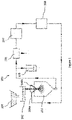
Figure 1 shows a system for producing metal powder using a water atomisation process; -
Figure 2 shows a rough schematic view of liquid CO2 atomiser according to the present invention; and -
Figure 3 shows a flow chart illustrating a method of producing a metal powder in an embodiment of the present invention. -
Figure 1 shows a prior artwater atomisation system 100 for producing metal particles for additive manufacturing. The metal is supplied into a ladle or amelter 101 where it is heated up to the desired temperature, and then transferred into a tundish 102 to avoid splashing and give a smoother flow. A stream of the molten metal is then supplied into anatomising chamber 103 where it is mixed with water supplied through thenozzles chamber 103 under pressure of up to 1000 bar. The water and metal particles form a slurry at the bottom of thechamber 103, said slurry comprising about 90% water and 10% metal particles. The slurry then is transferred either in aleaching tank 105 or into adewatering system 106. The recovered water from either process is then transferred into asystem 107 for cooling down, filtering and further recycling. A pump or ahigh pressure pump 108 pumps the recycled water back into the atomising system. -
Figure 2 shows anatomiser 200 to be used for producing metal powder according to an embodiment of the present invention. It comprises the chamber 201 where the mixing of the metal and the liquid CO2 occurs, and thefurnace 202 connected to the chamber. Ametal 203 is supplied to thefurnace 202 and is subsequently heated to reach the melting temperature. It is understood that the metal 201 can be iron or iron alloy. The iron alloy may include, besides other elements typically used in alloys, carbon from 0.03% to greater than 1% to increase hardness and strength of iron. The temperature in thefurnace 202 depends on the type of metal or metal alloy and must be sufficient to maintain the metal in a molten state. - The
molten metal 203 is then supplied into the chamber 201 through anopening 204. Themolten metal 203 flows downwards under gravity and then it is subsequently treated with a one ormore jets 205 of fluid. The fluid may be supplied into the chamber under pressure, then apressure system 207 may be used. The fluid is supplied into the chamber 201 through anozzle 206. It is understood that different kind of nozzles can be used, such as Venturi nozzle or de Laval nozzle, with the latter being preferential choice of nozzle. Advantageously, by using the de Laval, or divergent-convergent, nozzle it is possible to achieve higher acceleration rates of the passing fluid, thus resulting in a better mixing of the fluid with the molten metal. - The fluid 205 can be liquid carbon dioxide. In this case, the pressure of at least 5 bar and the temperature of less than -70 °C are used in order to maintain the liquid state of the carbon dioxide and supply it into the chamber in the liquid form. Optionally, the fluid cab be supercritical carbon dioxide, to achieve a more rapid cooling of the
molten metal 203. - It is known that during conventional gas and/or water atomisation process of metal particles manufacturing, a migration of carbon may occur for carbon-containing alloys. This is disadvantageous as the final composition of the alloy will change, thus in turn changing its physico-chemical properties. In the present invention this problem is alleviated by using liquid carbon dioxide as atomising medium, thus preventing the depletion of carbon from the final composition. Furthermore, it has been discovered that by using liquid carbon instead of water it is possible to atomise a large amount of molten metal whilst better controlling the shape and size of the resultant metal particles, and avoiding and undesirable chemical reactions that could occur when the metal is exposed to water.
- Once the jet of cold fluid leaves the
nozzle 206, it meets the stream ofmolten metal 204. Due to the rapid expansion of CO2, the solid spherical or near-spherical uniform particles ofmetal powder 208 are formed and further deposited at the bottom of chamber 201. By the "spherical or near-spherical particles" it is understood that the particles have an aspect ratio of between 1 and 2, preferably between 1 and 1.5, more preferably between 1 and 1.2. In addition to the rapid expansion of the CO2, it is hypothesised that the presence of CO2 in a high concentration around the particles as they are atomised may assist with the formation of spherical particles. - Advantageously, the formation of spherical or near-spherical particles leads to a better spreadability of the resultant powder when it is subsequently used for an additive manufacturing process.
- A method of producing a powder using liquid CO2 will be described in more detail below, with respect to
Figure 3 . -
Figure 3 shows amethod 300 which is implemented by a controller. Instep 301 the controller is arranged to supply amolten metal 203 through anopening 204 of the furnace into the chamber 201. Instep 302 the supply of liquid CO2 occurs through the at least onenozzle 206. It is understood that the controller also controls the CO2 supply parameters, such as pressure an/or temeprature. Instep 303 the atomisedpowder 208 is produced by mixing the stream ofmolten metal 204 with thejet 205 of liquid CO2 used as atomising medium. If it is determined that all the metal has been transformed into powder, the method proceeds to step 305 at which the evaporation of CO2 occurs. If it is determined that the molten metal is still present in thefurnace 202, then the process returns to step 302 of supplying more liquid CO2 into the nozzle. Once all the previous steps 301-305 are completed, the process ends 306. It is understood that by using liquid carbon dioxide the components of theprior art apparatus 100 relating to dewatering, and then filtering and recycling water are not required as water-free liquid carbon dioxide is used instead. - It will be appreciated that embodiments of the present invention can be realised in the form of hardware, software or a combination of hardware and software. Any such software may be stored in the form of volatile or non-volatile storage such as, for example, a storage device like a ROM, whether erasable or rewritable or not, or in the form of memory such as, for example, RAM, memory chips, device or integrated circuits or on an optically or magnetically readable medium such as, for example, a CD, DVD, magnetic disk or magnetic tape. It will be appreciated that the storage devices and storage media are embodiments of machine-readable storage that are suitable for storing a program or programs that, when executed, implement embodiments of the present invention. Accordingly, embodiments provide a program comprising code for implementing a system or method as claimed in any preceding claim and a machine readable storage storing such a program. Still further, embodiments of the present invention may be conveyed electronically via any medium such as a communication signal carried over a wired or wireless connection and embodiments suitably encompass the same.
- All of the features disclosed in this specification (including any accompanying claims, abstract and drawings), and/or all of the steps of any method or process so disclosed, may be combined in any combination, except combinations where at least some of such features and/or steps are mutually exclusive.
- Each feature disclosed in this specification (including any accompanying claims, abstract and drawings), may be replaced by alternative features serving the same, equivalent or similar purpose, unless expressly stated otherwise. Thus, unless expressly stated otherwise, each feature disclosed is one example only of a generic series of equivalent or similar features.
- The invention is not restricted to the details of any foregoing embodiments. The invention extends to any novel one, or any novel combination, of the features disclosed in this specification (including any accompanying claims, abstract and drawings), or to any novel one, or any novel combination, of the steps of any method or process so disclosed. The claims should not be construed to cover merely the foregoing embodiments, but also any embodiments which fall within the scope of the claims.
-
- 100 -
- water atomisation system
- 101 -
- ladle/melter
- 102 -
- tundish
- 103 -
- chamber
- 104a, 104b -
- nozzles
- 105 -
- leaching tank
- 106 -
- dewatering system
- 107 -
- cooling/filtering/recycling system
- 108 -
- (High Pressure) Pump
- 200 -
- atomiser
- 201 -
- chamber
- 202 -
- furnace
- 203 -
- molten metal
- 204 -
- opening
- 205 -
- jet
- 206 -
- nozzle
- 207 -
- pressure system
- 208 -
- powder
Claims (9)
- Method of producing a metal powder (208), the method comprising:providing a stream of molten metal (203);atomising the metal by directing a jet of fluid (205) towards the stream of molten metal, wherein the fluid comprises liquid carbon dioxide.
- The method of claim 1, wherein the fluid is pressurised.
- The method of claim 1 or 2, wherein the fluid is supercritical carbon dioxide.
- The method of any preceding claim, wherein the jet of fluid is supplied through a nozzle (206).
- The method of claim 5, wherein the nozzle (206) is a convergent-divergent nozzle.
- The method of claim 1, wherein the fluid (205) is supplied at at least 5 bar pressure.
- The method of claim 1, wherein the fluid (205) is supplied at less than -70 °C.
- The method of any preceding claim, wherein the metal comprises iron or iron alloy.
- The method of any preceding claim, wherein the metal powder (208) comprises substantially spherical solid particles having an aspect ratio between 1 and 1.2.
Priority Applications (1)
| Application Number | Priority Date | Filing Date | Title |
|---|---|---|---|
| EP20020641.5A EP4019167A1 (en) | 2020-12-22 | 2020-12-22 | Atomisation of metallic melts using liquid co2 |
Applications Claiming Priority (1)
| Application Number | Priority Date | Filing Date | Title |
|---|---|---|---|
| EP20020641.5A EP4019167A1 (en) | 2020-12-22 | 2020-12-22 | Atomisation of metallic melts using liquid co2 |
Publications (1)
| Publication Number | Publication Date |
|---|---|
| EP4019167A1 true EP4019167A1 (en) | 2022-06-29 |
Family
ID=74003663
Family Applications (1)
| Application Number | Title | Priority Date | Filing Date |
|---|---|---|---|
| EP20020641.5A Withdrawn EP4019167A1 (en) | 2020-12-22 | 2020-12-22 | Atomisation of metallic melts using liquid co2 |
Country Status (1)
| Country | Link |
|---|---|
| EP (1) | EP4019167A1 (en) |
Cited By (1)
| Publication number | Priority date | Publication date | Assignee | Title |
|---|---|---|---|---|
| CN115780816A (en) * | 2022-12-14 | 2023-03-14 | 吉凯恩(霸州)金属粉末有限公司 | Production process of superfine atomized iron powder for new energy battery |
Citations (2)
| Publication number | Priority date | Publication date | Assignee | Title |
|---|---|---|---|---|
| WO2015114838A1 (en) * | 2014-02-03 | 2015-08-06 | ハード工業有限会社 | Method for producing metal powder and apparatus for producing metal powder |
| CN111250721A (en) * | 2020-03-09 | 2020-06-09 | 深圳市晶莱新材料科技有限公司 | Method for producing Fe-Mn-Pt-based medical 3D printing metal material |
-
2020
- 2020-12-22 EP EP20020641.5A patent/EP4019167A1/en not_active Withdrawn
Patent Citations (2)
| Publication number | Priority date | Publication date | Assignee | Title |
|---|---|---|---|---|
| WO2015114838A1 (en) * | 2014-02-03 | 2015-08-06 | ハード工業有限会社 | Method for producing metal powder and apparatus for producing metal powder |
| CN111250721A (en) * | 2020-03-09 | 2020-06-09 | 深圳市晶莱新材料科技有限公司 | Method for producing Fe-Mn-Pt-based medical 3D printing metal material |
Non-Patent Citations (1)
| Title |
|---|
| TSIRLIS MICHAIL ET AL: "Low-pressure gas atomization of aluminum through a Venturi nozzle", ADVANCED POWDER TECHNOLOGY, ELSEVIER BV, NL, vol. 31, no. 4, 17 February 2020 (2020-02-17), pages 1720 - 1727, XP086159006, ISSN: 0921-8831, [retrieved on 20200217], DOI: 10.1016/J.APT.2020.02.011 * |
Cited By (2)
| Publication number | Priority date | Publication date | Assignee | Title |
|---|---|---|---|---|
| CN115780816A (en) * | 2022-12-14 | 2023-03-14 | 吉凯恩(霸州)金属粉末有限公司 | Production process of superfine atomized iron powder for new energy battery |
| CN115780816B (en) * | 2022-12-14 | 2023-10-27 | 吉凯恩(霸州)金属粉末有限公司 | Production process of superfine atomized iron powder for new energy battery |
Similar Documents
| Publication | Publication Date | Title |
|---|---|---|
| US5310165A (en) | Atomization of electroslag refined metal | |
| EP0409905B1 (en) | Atomising apparatus and process | |
| EP0198613B1 (en) | Improved method of manufacturing metal products | |
| US10273567B2 (en) | Centrifugal atomization of iron-based alloys | |
| US4631013A (en) | Apparatus for atomization of unstable melt streams | |
| US5863618A (en) | Method for producing a chromium carbide-nickel chromium atomized powder | |
| US4897111A (en) | Method for the manufacture of powders from molten materials | |
| GB2154903A (en) | Melt atomization with reduced gas flow and apparatus for atomizing | |
| US6481638B1 (en) | Method and device for producing fine powder by atomizing molten material with gases | |
| US4674554A (en) | Metal product fabrication | |
| JP2016211027A (en) | Method for producing metal powder and production device | |
| US11219948B2 (en) | Method allowing the removal of oxides present on the surface of nodules of a metal powder before using same in an industrial method | |
| JPH03502545A (en) | Method for spraying a melt and apparatus for using the method | |
| EP4019166A1 (en) | Atomisation of metallic melts using carbonated water | |
| EP4197674A1 (en) | Controlled atmosphere and optimised atomisation for powder production | |
| JPS63230806A (en) | Metal powder production gas atomization equipment | |
| Brewin et al. | Production of high alloy powders by water atomization | |
| US12172216B2 (en) | Metallic powders and methods therefor | |
| JPH04266475A (en) | Production of composite material | |
| EP3290136A1 (en) | Method for the production of metallic powders | |
| US20080093045A1 (en) | Method for Producing Metal Products | |
| Tassa et al. | Powders for Additive Manufacturing: From Design to Certification | |
| JPH0441063A (en) | Spray forming method | |
| CN1069292A (en) | Processing method for composite material with metallic base | |
| JPH06623A (en) | Atomized forming method |
Legal Events
| Date | Code | Title | Description |
|---|---|---|---|
| PUAI | Public reference made under article 153(3) epc to a published international application that has entered the european phase |
Free format text: ORIGINAL CODE: 0009012 |
|
| STAA | Information on the status of an ep patent application or granted ep patent |
Free format text: STATUS: THE APPLICATION HAS BEEN PUBLISHED |
|
| AK | Designated contracting states |
Kind code of ref document: A1 Designated state(s): AL AT BE BG CH CY CZ DE DK EE ES FI FR GB GR HR HU IE IS IT LI LT LU LV MC MK MT NL NO PL PT RO RS SE SI SK SM TR |
|
| STAA | Information on the status of an ep patent application or granted ep patent |
Free format text: STATUS: THE APPLICATION IS DEEMED TO BE WITHDRAWN |
|
| 18D | Application deemed to be withdrawn |
Effective date: 20230103 |